EP4430799B1 - Herstellung von kommunikationskanälen - Google Patents
Herstellung von kommunikationskanälen Download PDFInfo
- Publication number
- EP4430799B1 EP4430799B1 EP21810597.1A EP21810597A EP4430799B1 EP 4430799 B1 EP4430799 B1 EP 4430799B1 EP 21810597 A EP21810597 A EP 21810597A EP 4430799 B1 EP4430799 B1 EP 4430799B1
- Authority
- EP
- European Patent Office
- Prior art keywords
- asset
- owner
- computing device
- computing
- identifier
- Prior art date
- Legal status (The legal status is an assumption and is not a legal conclusion. Google has not performed a legal analysis and makes no representation as to the accuracy of the status listed.)
- Active
Links
Images




Classifications
-
- G—PHYSICS
- G06—COMPUTING OR CALCULATING; COUNTING
- G06F—ELECTRIC DIGITAL DATA PROCESSING
- G06F21/00—Security arrangements for protecting computers, components thereof, programs or data against unauthorised activity
- G06F21/60—Protecting data
- G06F21/64—Protecting data integrity, e.g. using checksums, certificates or signatures
-
- H—ELECTRICITY
- H04—ELECTRIC COMMUNICATION TECHNIQUE
- H04L—TRANSMISSION OF DIGITAL INFORMATION, e.g. TELEGRAPHIC COMMUNICATION
- H04L9/00—Cryptographic mechanisms or cryptographic arrangements for secret or secure communications; Network security protocols
- H04L9/32—Cryptographic mechanisms or cryptographic arrangements for secret or secure communications; Network security protocols including means for verifying the identity or authority of a user of the system or for message authentication, e.g. authorization, entity authentication, data integrity or data verification, non-repudiation, key authentication or verification of credentials
- H04L9/3247—Cryptographic mechanisms or cryptographic arrangements for secret or secure communications; Network security protocols including means for verifying the identity or authority of a user of the system or for message authentication, e.g. authorization, entity authentication, data integrity or data verification, non-repudiation, key authentication or verification of credentials involving digital signatures
-
- H—ELECTRICITY
- H04—ELECTRIC COMMUNICATION TECHNIQUE
- H04L—TRANSMISSION OF DIGITAL INFORMATION, e.g. TELEGRAPHIC COMMUNICATION
- H04L9/00—Cryptographic mechanisms or cryptographic arrangements for secret or secure communications; Network security protocols
- H04L9/50—Cryptographic mechanisms or cryptographic arrangements for secret or secure communications; Network security protocols using hash chains, e.g. blockchains or hash trees
-
- G—PHYSICS
- G06—COMPUTING OR CALCULATING; COUNTING
- G06F—ELECTRIC DIGITAL DATA PROCESSING
- G06F2221/00—Indexing scheme relating to security arrangements for protecting computers, components thereof, programs or data against unauthorised activity
- G06F2221/21—Indexing scheme relating to G06F21/00 and subgroups addressing additional information or applications relating to security arrangements for protecting computers, components thereof, programs or data against unauthorised activity
- G06F2221/2101—Auditing as a secondary aspect
Definitions
- NFTs non-fungible tokens
- Blockchain technology may be used to enforce the ownership of such assets and provide confidence in terms of who owns which NFT.
- aspects or embodiments may relate to establishing and/or using a communications channel in order to facilitate communications between verified owner(s) of assets based a blockchain.
- a first aspect of the invention is a method defined by independent claim 1. Embodiments relating to the first aspect and other related aspects are defined by dependent claims 2 to 20.
- a second aspect of the invention is a machine-readable medium defined by independent claim 21.
- a third aspect of the invention is an apparatus defined by independent claim 22.
- a fourth aspect of the invention is a method defined by independent claim 23. Embodiments relating to the fourth aspect and other related aspects are defined by dependent claims 24 to 25.
- a fifth aspect of the invention is a machine-readable medium defined by independent claim 26.
- a sixth aspect of the invention is an apparatus defined by independent claim 27.
- An eighth aspect of the invention is a machine-readable medium defined by independent claim 30.
- a ninth aspect of the invention is an apparatus defined by independent claim 31.
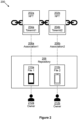
- Figure 1 is a simplified schematic drawing of a computing network 100 in which various embodiments described herein may be implemented.
- the computing network 100 comprises a cloud 102.
- the cloud 102 may be implemented in various ways and may comprise any of the entities depicted in Figure 1 . However, other implementations are possible and Figure 1 is merely given as one possible implementation for implementing various embodiments described herein.
- the cloud 102 may comprise or be communicatively coupled to a plurality of nodes, which may be software and/or hardware implemented (e.g., using virtual machines, physical machines, etc.).
- the plurality of nodes may be used to implement the functionality of various features described herein.
- the computing network 100 may have a different architecture such as based on at least one server (not shown) controlled by at least one entity such as a service provider, admin, manager, etc.
- the computing network 100 may have a different architecture such as a centralized set-up in which a computing device such as a server (e.g., controlled by one entity) manages various functions of the various entities described herein.
- a computing device such as a server (e.g., controlled by one entity) manages various functions of the various entities described herein.
- the computing network may have a different architecture such as a de-centralized set-up in which multiple computing nodes may be communicatively coupled in a distributed/de-centralized arrangement. This could be part of a peer-to-peer (P2P) network.
- P2P peer-to-peer
- the computing network 100 stores a blockchain 104 in the cloud 102 (which may include multiple computing nodes as already mentioned). Although in other implementations, the blockchain 104 may be stored in a different way such as in a centralized set-up. In some cases, any of the computing nodes may implement a blockchain client for interacting with any blockchain platform(s) implemented by the computing network 100.
- the blockchain 104 comprises a plurality of records 104a, 104b, 104c (three are depicted but there may be fewer or many more records). To avoid confusion with later use of the term “block”, the term “record” is used herein to represent the term “block” that may be otherwise associated with blockchain technology.
- the records in the blockchain 104 may represent various information such as transactions that have occurred.
- the blockchain 104 may implement a smart contract in order to enforce such transactions. Such a smart contract may be deployed by an entity that sets-up the blockchain 104.
- the blockchain 104 may be public or private.
- trusted entities e.g., implementing blockchain clients (not shown) for accessing the blockchain 104) may be permitted to have certain access rights to a private blockchain 104 (such as for performing read, write, consensus operations, etc.).
- any new transactions may be verified/approved/rejected by a computing node with access to the blockchain 104 using any appropriate protocol such as by consensus.
- blockchain 104 records may be used to represent ownership (or changes of ownership) of certain assets such as digital assets such as artwork and tangible assets such as objects in the real world.
- NFTs are examples of tokens which can be recorded on the blockchain 104 to indicate such ownership/change of ownership.
- Each owner 106a, 106b is associated with a User Equipment (UE) 108a, 108b, respectively.
- UE User Equipment
- a UE 108a, 108b may be any device (such as a personal computer, laptop, smart phone, smart wearable such as a watch, tablet, Internet of Things (IoT) device, etc.) that an owner 106a, 106b can use to access the computing network 100.
- IoT Internet of Things
- the UE 108a, 108b may provide access to a "digital wallet" (or other mechanism) hosted by a platform such as a service provider for managing payments, accessing digital marketplaces and/or registering/checking ownership of assets.
- a platform such as a service provider for managing payments, accessing digital marketplaces and/or registering/checking ownership of assets.
- assets include digital (cryptographic) coins, NFTs, etc.
- Access to the digital wallet may be provided in various ways in order to ensure that the owner 106a, 106b can interact securely with the platform.
- a passcode may need to be entered by the owner 106a, 106b and/or 2/multi-factor authentication (e.g., via a message code signaled to a device in the owner's possession, through use an authentication "app", a smart card, etc.) may be implemented in various ways in order to prove the identity of the owner.
- first computing device may refer to any computing node within the computing network 100 that is associated with the first owner 106a.
- second computing device may refer to any computing node within the computing network 100 that is associated with the second owner 106b.
- the first computing device corresponds to the first UE 108a and the second computing device corresponds to the second UE 108b.
- the functionality of the first and/or second computing devices may be implemented by different computing nodes in the computing network 100 (such as in the form of virtual machines, etc.).
- the owners 106a, 106b may interact with their UEs 108a, 108b.
- such UEs 108a, 108b may be communicatively coupled to the first and/or second computing device(s) as referred to herein.
- the term "owner” may refer to the actual/direct owner of a particular asset or may refer to a different entity that may be authorized to use/interact with various functionality described herein.
- the "owner” could be a licensee where the actual owner has provided a license to the licensee to use certain functionality as defined by the license.
- computing nodes of the computing network 100 are now described. These are exemplary and any number or combination of these computing nodes may be used, omitted or otherwise implemented in a different way to that shown. As highlighted already, the computing nodes may be implemented in the cloud (via a virtual machine or physical machine) or in a different part of the computing network 100. In other similar words, the computing nodes may be remote to the entities to which they are associated or such entities may implement the computing nodes (e.g., on a local computing device).
- a computing node 110 associated with an admin 112 is communicatively coupled to the computing network 100.
- the admin 112 may be an entity that has set-up, manages or otherwise controls the access to the blockchain 104. In some cases, the admin 112 could implement or facilitate access to a blockchain platform for making use of the functionality of the blockchain 104.
- a computing node 114 associated with a repository 116 is communicatively coupled to the computing network 100.
- the repository 116 may store any information relevant to various functions described herein.
- the repository 116 may store or provide links to assets.
- the assets comprise a set of digital files (e.g., documents, artworks such as representations of "retro phones", images, videos, etc.)
- the repository 116 may store or provide links to such data files.
- the repository 116 could store and/or provide access to minted digital assets.
- the repository 116 may or may not be public.
- the repository 116 may store any other information such as cryptographic keys (e.g., public keys), digital certificates, etc.
- a computing node 118 associated with a manager 120 is communicatively coupled to the computing network 100.
- the manager 120 may control or implement the functionality of various embodiments described herein.
- the manager 120 may set-up, control access to or facilitate the use of a communications channel such as described herein.
- the role of the manager 120 may depend on how the communications channel is to be implemented.
- the communications may be sent via the manager 120 (i.e., the computing node 118 itself) or the communications may be sent directly or indirectly between the computing nodes taking part in the communications (e.g., within a P2P network associated with the computing network 100).
- the manager 120 may implement at least some functionality of the admin 112 and/or repository 116, and vice versa.
- computing node may refer to any entity of the computing network 100 as depicted by Figure 1 .
- the computing node may implement at least one of the various layers of a computing architecture such as comprising an application layer, transport layer and a physical layer.
- a reference to a computing node could refer to a computing device of the physical layer, a node that implements functionality of the transport layer and/or a node that implements functionality of the application layer.
- a computing node may be software and/or hardware implemented (e.g., using virtual machines, physical machines, etc.).
- FIG. 2 is a simplified schematic drawing of part of a blockchain 200 for facilitating the functionality of various embodiments.
- the blockchain 200 comprises two records.
- a first NFT 202a and a second NFT 202b Each NFT 202a, 202b has its own unique identifier, referred to here as Tokenld1 204a and Tokenld2 204b, respectively.
- These unique identifiers may refer to the "tokenld" specified by a standard such as ERC-721 that can be used on the Ethereum blockchain as ERC-721 on Ethereum Virtual Machine (EVM) compatible blockchains.
- ERC-721 Ethereum Virtual Machine
- the unique identifiers 204a, 204b provide a link to the assets referred to in Figure 1 .
- the "repository” mentioned in relation to Figure 1 is depicted as repository 206 in Figure 2 .
- File1 210a and File2 210b are artworks such as "retro phones" and each artwork is unique (e.g., each artwork may have different features or "rarity” factors).
- an owner may own more than one asset but the unique identifier is different for each asset.
- a transaction occurs e.g., where there is a transfer of ownership, this is recorded in the blockchain 200.
- Other information relating to use of the communications channel may or may not be recorded in the blockchain 200.
- there may be different blockchains used for different purposes such as storing small amounts of information (e.g., relating to ownership) or relatively larger amounts of information (such as asset files, cryptographic keys, etc.).
- the (processing) cost of using a blockchain may vary on its implementation and therefore the functionality of the blockchain in relation to the different purposes may vary depending on the cost.
- NFTs may be used to represent ownership of assets including digital assets such as artwork and tangible assets such as objects in the real world.
- Blockchain technology may be used to enforce the ownership of such assets and provide confidence in terms of who owns which NFT.
- Communications may be performed in the computing network 100.
- Various embodiments described herein may make use of the blockchain 104, 200 in various ways in order to facilitate such communications.
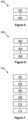
- Figure 3 is a flowchart of a method 300 for facilitating communications in a computing network 100 according to an embodiment.
- the method 300 may be implemented by a computing node in the computing network 100.
- the method 300 may be implemented by the manager 120 depicted by Figure 1 or any other entity that is authorized to facilitate communications in the computing network 100 and/or has access to the blockchain 104.
- the method 300 is a computer-implemented method (i.e., implemented by processing circuitry associated with the computing node).
- the method 300 facilitates communications in a computing network 100 between a first computing device 108a associated with an owner 106a, 212a of a first asset 210a and a second computing device 108b associated with an owner 106b, 212b of a second asset 210b.
- a first identifier 204a is associated with the first asset 210a.
- a second identifier 204b is associated with the second asset 210b.
- a blockchain 104, 200 accessible to the computing network 100 is indicative of an association 208a between the first identifier 204a and the owner 212a of the first asset 210a.
- the blockchain 104, 200 is further indicative of an association 208b between the second identifier 204b and the owner 212b of the second asset 210b.
- the method 300 comprises, at block 302, determining whether a communications channel between the first computing device 108a and the second computing device 108b can be established for facilitating communications in the computing network 100.
- the determining is performed by using the blockchain 104 to verify that the first computing device 108a is associated with the owner 212a of the first asset 210a and that the second computing device 108b is associated with the owner 212b of the second asset 210b.
- the method 300 further comprises, at block 304, causing the communications channel to be established between the first computing device 108a and the second computing device 108b for facilitating the communications.
- the verifying may be implemented in various ways. For example, an indication may be received from and/or provided by a computing node with access to the blockchain 104 that the blockchain 104 has verified the association. In the former case, this may involve sending a request to the computing node to check whether the first computing device 108a is associated with the owner 212a of the first asset 210a and that the second computing device 108b is associated with the owner 212b of the second asset 210b. The computing node may then use the first and second identifier 204a, 204b (e.g., as provided or linked by the request) to establish whether the request is valid based on a check/reading of the blockchain 104. If the request is valid, the computing node may generate the indication. In the latter case, this may involve the computing node performing the verification itself. In some cases, the verification may be performed by a plurality of computing nodes (such as based on a consensus approach).
- the computing node that performs the verification may depend on the architecture. For example, it could be envisaged that the method 300 is implemented by the computing node that has access to the blockchain 104 and can perform the check itself. On the other hand, the method 300 could be implemented by a different computing node that is communicatively coupled to the computing node that has access to the blockchain 104. In any case, the blockchain 104 may be "used" directly or indirectly by the computing node that implements the method 300.
- the communications channel may be established so that certain entities can communicate with each other. That is, the computing devices 108a, 108b associated with the respective owners 212a, 212b may communicate with each other.
- the blockchain 104 may facilitate such communication and prevent third parties from communicating with each other. This could be implemented as an exclusive messaging service. For example, any owner that owns an asset may communicate using the communications channel and third parties may not use the communications channel (unless they subsequently become an owner of one of the (minted) assets).
- the "minting" process may be controlled such that there is a fixed number of assets. Thus, an entity that controls the minting process may control how many entities can use the communications channel and other features and no new "members" may be allowed to use this service.
- an "entity” may refer to a computing node or an individual/member with access to, attempting to access, or forming part of the computing network 100 (e.g., via the computing node). Different entities have different roles. For example, Figure 1 depicts various entities such as the owners 106a, 106b, the UEs 108a, 108b, as well as the various computing nodes such as associated with the admin 112, the repository 116 and the manager 120 (which are themselves “entities”). As used herein, a "member” may refer to an owner or a proposed owner.
- secure messaging services may be implemented without needing to make use of an identity such as a mobile phone number for setting up such secure messaging. This may be useful where an owner does not have access to their device and/or they have privacy concerns about using a device that implements a device identifier or user identifier. Such a communications channel may maintain/ensure privacy and/or security in messaging.
- Various embodiments (including method 300) described may provide such technical benefits and/or other technical benefits such as highlighted below.
- Figure 4 is a simplified schematic drawing of part of a computing network 400 in which various embodiments are implemented. Figure 4 depicts part of the computing network 100. In this regard, reference signs for like or similar features as in Figure 1 are incremented by 300.
- the computing network 400 comprises a cloud 402 (or any other infrastructure as discussed in relation to Figure 1 ).
- a first owner 406a is associated with a first UE 408a and a second owner 406b is associated with a second UE 408b.
- a communications channel 430 is established between the first UE 408a and the second UE 408b.
- this communications channel 430 may vary according to the architecture of the computing network 400.
- the communications channel 430 may be directly between the first UE 408a and the second UE 408b (i.e., a direct link without involving other computing nodes).
- the communications channel 430 may be implemented indirectly between the first UE 408a and the second UE 408b (e.g., an indirect link involving at least one other computing node).
- the establishing of the communications channel 430 may involve a "handshake" procedure where upon verifying that the first UE 408a and the second UE 408b have associated assets 210a, 210b, they can then communicate with each other.
- the establishing of the communications channel 430 may involve connecting to at least one computing node in the computing network 400 and using such at least one computing node to route communications.
- a cryptographic procedure may be implemented such as using cryptographic keys to encrypt and/or verify communications.
- establishing the communications channel may involve setting up or establishing a "transport" layer where the method 300 is implemented by a higher layer such as an "application” layer.
- the application layer and/or application layer may interact with other, lower, layers such as the physical layer represented by the physical architecture of the computing network 400.
- the first identifier 204a identifies a first non-fungible token (NFT) 202a representative of the first asset 210a and the owner 212a of the first asset 210a.
- the second identifier 204b identifies a second NFT 202b representative of the second asset 210b and the owner 212b of the second asset 210b.
- NFT non-fungible token
- the first NFT 202a and the second NFT 202b is stored on the blockchain 200.
- association 208a between the first identifier 204a and the owner 212a of the first asset 210a is represented by the first NFT 202a.
- association 208b between the second identifier 204b and the owner 212b of the second asset 210b is represented by the second NFT 202b.
- At least one of the first and second computing devices 108a, 108b comprise User Equipment (UE) accessible to the respective owner(s) 212a, 212b of the first and second assets 210a, 210b.
- UE User Equipment
- FIG 5 is a flowchart of a method 500 relating to use of a communications channel according to an embodiment.
- the method 500 may be implemented by a computing node in the computing network 100 in the same or similar way as described above in relation to Figure 3 .
- the method 500 comprises, at block 502, receiving information about sending of an encrypted message via the communications channel 430.
- the method 500 further comprises, at block 504, causing a message record to be stored in a computing node associated with the computing network 100.
- the message record is representative of the information about the sending of the encrypted message.
- the method 500 may provide a record of the sending of the encrypted message (i.e., between the first and second UEs 408a, 408b via the communications channel 430).
- Various information may be included in the record such as described below.
- Various entities in the computing network 100 may store the record and the record may or may not be accessible to the owners 106a, 106b and/or other entities.
- the record may or may not include the content of the encrypted message, e.g., in encrypted format.
- the information comprises the first and second identifiers 204a, 204b.
- the information comprises a timestamp associated with a send time and/or receive time of the encrypted message.
- the computing node is a (computing) node of a peer-to-peer (P2P) network associated with the computing network 100 (e.g., the P2P network may be part of the computing network 100 or otherwise communicatively coupled to the computing network 100).
- P2P peer-to-peer
- the computing node is a (computing) node of the computing network 100 authorized to store the message record.
- causing the message record to be stored in the computing node comprises causing the message record to added to the blockchain 104, 200 (e.g., providing the smart contract is satisfied).
- the message record could be stored in the same blockchain 104 as used to enforce ownership.
- the message record could be stored in a different blockchain.
- any reference to storing any information on the blockchain where it is not an NFT
- the blockchain 104, 200 is mentioned. However, it is to be appreciated that such information could be stored on a different blockchain accessible to the computing network 100.
- the encrypted message comprises data (such as a written message, a character string, image, video or any other type of data) associated with the owner 212a of the first asset 210a. Further, the data is encrypted using a cryptographic key associated with the second computing device 108b.
- the cryptographic key comprises a public key of a key pair associated with the second computing device 108b.
- a cryptographic protocol may be used.
- any entity e.g., the first and second computing devices 108a, 108b
- Such cryptographic keys may be a public-private key pair.
- the public key may be shared while the private key may be stored, or otherwise generated on demand from a unique seed using a one-way key generation protocol, on the respective computing device 108a, 108b.
- the public key may be used by another entity to encrypt communications while the private key may be used to sign communications (i.e., by appending a digital signature).
- Any appropriate entity in Figure 1 may store/transport public keys to other computing nodes so that they can encrypt their communications to a target computing device.
- FIG 6 is a flowchart of a method 600 relating to messaging using a communications channel 430 according to an embodiment.
- the method 600 may be implemented by a computing node in the computing network 100 in the same or similar way as described above in relation to Figure 3 .
- the method 600 comprises, at block 602, verifying that a request associated with the owner 212a of the first asset 210a is valid by checking an identity of the first computing device 108a. In some cases, such a check may be performed prior to causing a cryptographic key to be made available to the first computing device 108a.
- the identity of the first computing device 108a may refer to some indication as to the device identity such as a cryptographic identity (e.g., specified by a digital signature).
- the verification may be performed by using a corresponding (public) key associated with the private key used to sign the request in the case that the request was signed by the owner 212a of the first asset 210a.
- the method 600 comprises, at block 604, receiving a request (as described above), associated with the owner 212a of the first asset 210a, for the cryptographic key.
- the request may be indicative of at least one of: the first identifier 204a and/or the second identifier 204b.
- the method 600 further comprises, at block 606, causing the cryptographic key associated with the second computing device 108b to be made available to the first computing device 108a.
- the cryptographic key is made available by using the blockchain 104, 200 to store the (e.g., public) cryptographic key.
- the cryptographic key may read the blockchain 104, 200 if authorized to do so in order to retrieve the key.
- the cryptographic key is made available by using the blockchain 104, 200 to indicate where in the computing network the cryptographic key can be obtained.
- the blockchain 104, 200 may store an address or provide some other link to a computing node in the computing network 100 (e.g., a certificate authority or similar) in which the cryptographic key is stored.
- a computing node may release the cryptographic key on demand or implement a protocol that checks the identify the entity requesting the key.
- the cryptographic key is made available by using the blockchain 104, 200 to provide access to the cryptographic key.
- an entity requesting the key may check the blockchain 104, 200 for information to enable the entity to obtain the key (e.g., from a computing node in the computing network 100).
- the cryptographic key is made available by using the blockchain 104, 200 to implement a handshake procedure between the first and second computing devices 108a, 108b based on information about how to establish the communications channel, where such information is stored in the blockchain.
- the information may specify or facilitate control of a handshake protocol comprising instructions on how the first and second computing devices 108a, 108b are to connect with each other to form the communications channel 430.
- a protocol such as based on a Secure Sockets Layer (SSL) handshake and/or a Transport Layer Security (TLS) handshake may be implemented.
- the blockchain 104, 200 may point to a computing node through which communications can be routed between the first and second computing devices 108a, 108b as part of the handshake procedure.
- a smart contract implemented by the blockchain 104, 200 may enforce that cryptographic key is to be made available and/or otherwise establish the communications channel. For example, an attempt, whether successful or not, to establish the communications channel may be recorded in the blockchain 104, 200. As part of the interaction between the first and second computing devices 108a, 108b and the blockchain 104, 200, the smart contract may check that the first and/or second computing devices 108a, 108b are authorized to receive the key. If authorized, as part of recording a transaction, the interaction may involve the first and/or second computing devices 108a, 108b receiving the cryptographic key, a link to the key or another key to facilitate access to a repository containing the key.
- the received information about the sending of the encrypted message via the communications channel 430 comprises a confirmation that the second computing device 108b received the encrypted message; and/or a signature applied, by the second computing device 108b, to the confirmation.
- a confirmation may be a binary indicator, text string or otherwise.
- such a confirmation may be recorded in any appropriate way in the blockchain 104, 200 (e.g., the actual received information itself or a representation of such information).
- the received information about the sending of the encrypted message via the communications channel 430 comprises: a confirmation that the first computing device 108a sent the encrypted message; and/or a signature applied, by the first computing device 108a, to the confirmation.
- Such confirmation(s) may be a binary indicator, text string or otherwise. Further, such confirmation(s) may be recorded in any appropriate way in the blockchain 104, 200 (e.g., the actual received information itself or a representation of such information).
- the confirmation(s) may allow the blockchain 104, 200 to store a record of the communications that have happened.
- the level of information stored and whether such information is anonymous/public may depend on the implementation.
- FIG 7 is a flowchart of a method 700 relating to use of a blockchain 104 according to an embodiment.
- the method 700 may be implemented by a computing node in the computing network 100 in the same or similar way as described above in relation to Figure 3 .
- the method 700 comprises, at block 702, minting a plurality of assets, the plurality of assets comprising the first and second assets 210a, 210b.
- the method 700 further comprises, at block 704, deploying a smart contract to enforce transactions on the blockchain.
- the method 700 further comprises, at block 706, receiving a transaction request associated with a first proposed owner to record that the first proposed owner is to take ownership of a selected one of the plurality of assets.
- the method 700 further comprises, at block 708, causing a transaction record to be added to the blockchain 104 to link the first proposed owner to the selected one of the plurality of assets.
- a plurality of assets may be minted and when a proposed owner wishes to acquire an asset, they may cause their computing device to send the transaction request to the relevant computing node (e.g., through use of their digital wallet and/or application on their device).
- the first proposed owner may have selected one of the assets or otherwise have the asset assigned to them, depending on the implementation. If the transaction request satisfies the smart contract (e.g., if payment has been made and/or the request is deemed valid), the transaction is recorded as the transaction record.
- the transaction record may associate the owner with the asset (e.g., in some cases, the transaction record may comprise or represent an NFT).
- the method 700 comprises, at block 710, receiving an additional transaction request associated with a second proposed owner to record that the second proposed owner is to take ownership of the selected one of the plurality of assets.
- the method 700 further comprises, at block 712, causing an additional transaction record to be added to the blockchain to link the second proposed owner to the selected one of the plurality of assets.
- Such embodiments refer to the change of ownership of a selected asset and how this may be reflected within the blockchain (e.g., via an additional transaction record or NFT).
- NFT additional transaction record
- Each transaction record associate with a particular asset uses the same unique identifier. However, the transaction record may provide the link to the owner at that time.
- the communications channel 430 is established by providing information needed to set up the communications channel 430 to the first and/or second computing device 108a, 108b.
- the provided information comprises information about how to access a peer-to-peer, P2P, network associated with the computing network 100 for facilitating the communications channel 430.
- Such information may include network addresses, access codes and/or other data that allows communications to be routed via the P2P network.
- the provided information comprises information about a security procedure to be implemented between the first and second computing device 108a, 108b in order to establish the communications channel 430. This may refer to the handshake procedure, information about a security protocol that needs to be followed or other information that allows the first and second computing device 108a, 108b to determine what needs to be done to establish the communications channel 430 therebetween.
- the provided information comprises information about a cryptographic key such as described above.
- the provided information comprises information about how to access the cryptographic key such as described above.
- the provided information comprises information about an identity of and/or link to (e.g., a device identifier/address) the first and/or second computing device 108a, 108b.
- any number, variation or combination of such provided information may allow the first and second computing device 108a, 108b to "locate" each other within the computing network 100 and thereby initiate communications with each other provided they have followed the protocol specified or enforced via the blockchain 104.
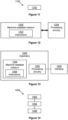
- Figure 8 schematically illustrates a (non-transitory) machine-readable medium 800 for implementing various embodiments described herein.
- the machine-readable medium 800 may be implemented by (e.g., processing circuitry of) a computing node such as described in relation to Figure 3 (and with reference to Figure 1 ) and/or processing circuity of a different computing node communicatively coupled to the computing node implementing the machine-readable medium 800.
- the non-transitory machine-readable medium 800 stores instructions 802 which, when executed by processing circuitry 804, cause the processing circuitry 804 to implement the methods of any of the embodiments described in relation to Figures 3 to 8 .
- Figure 9 is a simplified schematic drawing of an apparatus 900 for implementing various embodiments described herein.
- the apparatus 900 may be implemented by a computing node such as described in relation to Figure 3 .
- the apparatus 900 provides the same functionality as the method 300.
- the apparatus 900 comprises processing circuitry 902 communicatively coupled to an interface 904 (such as a communications interface like a port, wireless channel, wired channel, etc.) for communicating with the computing network 100.
- the apparatus 900 further comprises a machine-readable medium 906 (e.g., non-transitory or otherwise) storing instructions 908 which, when executed by the processing circuitry 902, cause the processing circuitry 902 to implement the method 300.
- the apparatus 900 provides the same functionality as any of the embodiments relating to Figures 3 to 8 .
- Figure 10 is a flowchart of a method 1000 for facilitating communications in a computing network 100 according to an embodiment.
- method 300 refers to a computing node (other than the first or second computing device 108a, 108b)
- the method 1000 is implemented by the first computing device 108a.
- the functionality provided by embodiments relating to Figures 3 to 8 may have corresponding functionality and/or applicability to the method 1000/related embodiments, and vice versa.
- the method 1000 is computer-implemented method for facilitating communications in a computing network 100 between a first computing device 108a associated with an owner 106a, 212a of a first asset 210a and a second computing device 108b associated with an owner 106b, 212b of a second asset 210b.
- a first identifier 204a is associated with the first asset 210a.
- a second identifier 204b is associated with the second asset 210b.
- a blockchain 104, 200 accessible to the computing network 100 is indicative of: an association 208a between the first identifier 204a and the owner 212a of the first asset 210a; and an association 208b between the second identifier 204b and the owner 212b of the second asset 210b.
- the method 1000 comprises, at block 1002, receiving an indication that a communications channel 430 can be established between the first computing device 108a and the second computing device 108b based on verification, using the blockchain 104, that the first computing device 108a is associated with the owner 212a of the first asset 210a and the second computing device 108b is associated with the owner 212b of the second asset 210a.
- This part of block 1002 is related to the applicable part of the method 300.
- Block 1002 further comprises receiving data for sending to the second computing device.
- This data may refer to a message or other data input by the owner 212a.
- the method 1000 further comprises, at block 1004, establishing the communications channel 430 (as described above).
- the method 1000 further comprises, at block 1006, sending the data securely to the second computing device 108b via the communications channel 430.
- the method 1000 may facilitate the functionality mentioned above in relation to the other embodiments and/or provide the same, similar or corresponding technical benefits.
- the method 1000 may provide a way to connect the two owners 212a, 212b via their respective assets 210a, 210b.
- Figure 11 is a flowchart of a method 1100 relating to use of a communications channel according to an embodiment.
- the method 1100 may be implemented in the same way as the method 1000.
- the method 1100 further comprises, at block 1102, sending, to a computing node associated with the computing network, information about the sending of the data.
- the computing node e.g., as referred to in the method 300
- the computing node is configured to store a message record representative of the information about the sending of the data. This storing of the message record may be in the recipient computing node itself or another computing node.
- the information comprises the first and second identifiers 204a, 204b.
- corresponding functionality relating to the embodiments mentioned in relation to Figures 3 to 8 may be implemented by the first computing device 108a.
- Figure 12 schematically illustrates a (non-transitory) machine-readable medium 1200 for implementing various embodiments described herein.
- the machine-readable medium 1200 may be implemented by (e.g., processing circuitry of) the first computing device 108a.
- the non-transitory machine-readable medium 1200 stores instructions 1202 which, when executed by processing circuitry 1204, cause the processing circuitry 1204 to implement the methods relating to any of the embodiments described in relation to Figures 11 to 12 .
- Figure 13 is a simplified schematic drawing of an apparatus 1300 for implementing various embodiments described herein.
- the apparatus 1300 is implemented by the first computing device 108a.
- the apparatus 1300 provides the same functionality as the method 1000.
- the apparatus 1300 comprises processing circuitry 1302 communicatively coupled to an interface 1304 (such as a communications interface like a port, wireless channel, wired channel, etc.) for communicating with the computing network 100.
- the apparatus 1300 further comprises a machine-readable medium 1306 (e.g., non-transitory or otherwise) storing instructions 1308 which, when executed by the processing circuitry 1302, cause the processing circuitry 1302 to implement the method 1000.
- the apparatus 1300 provides the same functionality as any of the embodiments relating to Figures 11 to 12 .
- Figure 14 is a flowchart of a method 1400 for facilitating communications in a computing network 100 according to an embodiment.
- method 1000 refers to the first computing device 108a
- the method 1400 is implemented by the second computing device 108b.
- the functionality provided by embodiments relating to Figures 3 to 8 may have corresponding functionality and/or applicability to the method 1400/related embodiments, and vice versa.
- the method 1400 is computer-implemented method for facilitating communications in a computing network 100 between a first computing device 108a associated with an owner 106a,212a of a first asset 210a and a second computing device 108b associated with an owner 106b, 212b of a second asset 210b.
- a first identifier 204a is associated with the first asset 210a.
- a second identifier 204b is associated with the second asset 210b.
- a blockchain 104, 200 accessible to the computing network 100 is indicative of: an association 208a between the first identifier 204a and the owner 212a of the first asset 210a; and an association 208b between the second identifier 204b and the owner 212b of the second asset 210b.
- the method 1400 comprises, at block 1402, receiving an indication that a communications channel 430 can be established between the first computing device 108a and the second computing device 108b based on verification, using the blockchain 104, that the first computing device 108a is associated with the owner 212a of the first asset 210a and the second computing device 108b is associated with the owner 212b of the second asset 210b.
- the method 1400 further comprises, at block 1404, establishing the communications channel 430.
- the method 1400 further comprises, at block 1406, receiving data sent securely by the first computing device 108a (as in method 1000) via the communications channel 430.
- the method 1400 is thus related to the method 1000 and may facilitate the functionality mentioned above in relation to the other embodiments and/or provide the same, similar or corresponding technical benefits.
- the method 1400 may provide a way to connect the two owners 212a, 212b via their respective assets 210a, 210b.
- Figure 15 is a flowchart of a method 1500 relating to use of a communications channel according to an embodiment.
- the method 1500 may be implemented in the same way as the method 1400.
- the method 1500 further comprises, at block 1502, sending, to a computing node associated with the computing network, information about the receiving of the data.
- the computing node is configured to store a message record representative of the information about the receiving of the data. This storing of the message record may be in the recipient computing node itself or another computing node.
- Figure 16 schematically illustrates a (non-transitory) machine-readable medium 1600 for implementing various embodiments described herein.
- the machine-readable medium 1600 may be implemented by (e.g., processing circuitry of) the second computing device 108b.
- the non-transitory machine-readable medium 1600 stores instructions 1602 which, when executed by processing circuitry 1604, cause the processing circuitry 1604 to implement the methods relating to any of the embodiments described in relation to Figures 14 to 15 .
- Figure 17 is a simplified schematic drawing of an apparatus 1700 for implementing various embodiments described herein.
- the apparatus 1700 is implemented by the second computing device 108b.
- the apparatus 1700 provides the same functionality as the method 1400.
- the apparatus 1700 comprises processing circuitry 1702 communicatively coupled to an interface 1704 (such as a communications interface like a port, wireless channel, wired channel, etc.) for communicating with the computing network 100.
- the apparatus 1700 further comprises a machine-readable medium 1706 (e.g., non-transitory or otherwise) storing instructions 1708 which, when executed by the processing circuitry 1702, cause the processing circuitry 1702 to implement the method 1400.
- the apparatus 1700 provides the same functionality as any of the embodiments relating to Figures 14 to 15 .
- any of the blocks, nodes, instructions or modules described in relation to the figures may be combined with, implement the functionality of or replace any of the blocks, nodes, instructions or modules described in relation to any other of the figures.
- methods may be implemented as machine-readable media or apparatus
- machine-readable media may be implemented as methods or apparatus
- apparatus may be implemented as machine-readable media or methods.
- any of the functionality described in relation to any one of a method, machine readable medium or apparatus described herein may be implemented in any other one of the method, machine readable medium or apparatus described herein.
- Any claims written in single dependent form may be re-written, where appropriate, in multiple dependency form since the various examples described herein may be combined with each other.
- Examples in the present disclosure can be provided as methods, systems or as a combination of machine-readable instructions and processing circuitry.
- Such machine-readable instructions may be included on a non-transitory machine (for example, computer) readable storage medium (including but not limited to disc storage, CD-ROM, optical storage, flash storage, etc.) having computer readable program codes therein or thereon.
- the machine-readable instructions may, for example, be executed by a general-purpose computer, a special purpose computer, an embedded processor or processors of other programmable data processing devices to realize the functions described in the description and diagrams.
- a processor or processing circuitry, or a module thereof may execute the machine-readable instructions.
- functional nodes, modules or apparatus of the system and other devices may be implemented by a processor executing machine readable instructions stored in a memory, or a processor operating in accordance with instructions embedded in logic circuitry.
- the term 'processor' is to be interpreted broadly to include a CPU, processing unit, ASIC, logic unit, or programmable gate array etc.
- the methods and functional modules may all be performed by a single processor or divided amongst several processors.
- Such machine-readable instructions may also be stored in a computer readable storage that can guide the computer or other programmable data processing devices to operate in a specific mode.
- Such machine readable instructions may also be loaded onto a computer or other programmable data processing devices, so that the computer or other programmable data processing devices perform a series of operations to produce computer-implemented processing, thus the instructions executed on the computer or other programmable devices realize functions specified by block(s) in the flow charts and/or in the block diagrams.
- teachings herein may be implemented in the form of a computer program product, the computer program product being stored in a storage medium and comprising a plurality of instructions for making a computer device implement the methods recited in the examples of the present disclosure.
Landscapes
- Engineering & Computer Science (AREA)
- Computer Security & Cryptography (AREA)
- Computer Networks & Wireless Communication (AREA)
- Signal Processing (AREA)
- Theoretical Computer Science (AREA)
- General Health & Medical Sciences (AREA)
- Bioethics (AREA)
- Computer Hardware Design (AREA)
- Software Systems (AREA)
- Physics & Mathematics (AREA)
- General Engineering & Computer Science (AREA)
- General Physics & Mathematics (AREA)
- Health & Medical Sciences (AREA)
- Financial Or Insurance-Related Operations Such As Payment And Settlement (AREA)
Claims (15)
- ein computerimplementiertes Verfahren (300) in einem Computerknoten (118), um eine Kommunikation in einem Computernetzwerk (100) zwischen einem ersten Computergerät (108a), das einem Besitzer (106a, 212a) eines ersten Vermögenswertes (210a) zugeordnet ist, und einem zweiten Computergerät (108b), das einem Besitzer (106b, 212b) eines zweiten Vermögenswertes (210b) zugeordnet ist, zu ermöglichen, wobeiein erster Identifikator (204a) mit dem ersten Vermögenswert verbunden ist, wobei der erste Identifikator ein erstes nicht-fungibles Token, NFT, (202a) identifiziert, das den ersten Vermögenswert und den Besitzer des ersten Vermögenswerts repräsentiert;einen zweiten Identifikator (204b), der mit dem zweiten Vermögenswert assoziiert wird, wobei der zweite Identifikator ein zweites NFT (202b) bezeichnet, der den zweiten Vermögenswert und den Besitzer des zweiten Vermögenswerts darstellt; undder Computerknoten konfiguriert ist, um eine Blockchain (104, 200) zu verwenden, auf die das Computernetzwerk zugreifen kann, und wobei die Blockchain folgendes anzeigt:eine Zuordnung (208a) zwischen dem ersten Identifikator und dem Besitzer des ersten Vermögenswerts; undeine Zuordnung (208b) zwischen dem zweiten Identifikator und dem Besitzer des zweiten Vermögenswerts; undwobei das Verfahren umfasstBestimmen (302), ob ein Kommunikationskanal (430) zwischen dem ersten Computergerät und dem zweiten Computergerät eingerichtet werden kann, um die Kommunikation in dem Computernetzwerk zu erleichtern, unter Verwendung der Blockchain, um zu verifizieren, dass das erste Computergerät mit dem Besitzer des ersten Vermögenswerts verbunden ist und dass das zweite Computergerät mit dem Besitzer des zweiten Vermögenswerts verbunden ist, wobei ein Smart Contract, der durch die Blockchain implementiert ist, so konfiguriert ist, dass er durchsetzt, dass ein kryptografischer Schlüssel dem ersten und/oder dem zweiten Computergerät zum Einrichten des Kommunikationskanals zur Verfügung gestellt wird, wenn das erste und/oder das zweite Computergerät zum Empfangen des kryptografischen Schlüssels autorisiert ist; unddas Einrichten (304) des Kommunikationskanals zwischen dem ersten Computergerät und dem zweiten Computergerät zum Ermöglichen der Kommunikation als Reaktion auf das Verifizieren, dass das erste Computergerät mit dem Besitzer des ersten Vermögenswerts in Verbindung ist und dass das zweite Computergerät mit dem Besitzer des zweiten Vermögenswerts in Verbindung ist, veranlasst wird.
- Verfahren nach Anspruch 1, bei dem:das erste NFT und das zweite NFT in der Blockchain gespeichert sind;die Zuordnung zwischen dem ersten Identifikator und dem Besitzer des ersten Vermögenswerts durch das erste NFT dargestellt wird; und die Zuordnung zwischen dem zweiten Identifikator und dem Besitzer des zweiten Vermögenswerts durch die zweite NFT dargestellt wird; und/odermindestens eines der ersten und zweiten Computergeräte eine Benutzerausrüstung, UE, umfasst, die für den/die jeweiligen Besitzer des ersten und zweiten Vermögenswerts zugänglich ist.
- Verfahren (500) nach einem der Ansprüche 1 oder 2, umfassend Informationen über das Senden einer verschlüsselten Nachricht über den Kommunikationskanal zu empfangen (502); und
Veranlassen (504), dass ein Nachrichtendatensatz in einem Computerknoten gespeichert wird, der mit dem Computernetzwerk verbunden ist, wobei der Nachrichtendatensatz die Information über das Senden der verschlüsselten Nachricht repräsentiert. - Verfahren nach Anspruch 3, wobei die Information wenigstens eine der nachstehenden Angaben umfassti. den ersten und/oder den zweiten Identifikator; undii. einen Zeitstempel, der einer Zeit zugeordnet ist, zu der die verschlüsselte Nachricht gesendet und/oder empfangen wurde;wobei der Computerknoten einer der folgenden ist
und/oderi. ein Knoten eines Peer-to-Peer-Netzwerks (P2P), das mit dem Computernetzwerk verbunden ist; oder
oder und/oderii. ein Knoten des Computernetzwerks, der autorisiert ist, den Nachrichteneintrag zu speichern; wobei das Veranlassen, dass der Nachrichteneintrag in dem Computerknoten gespeichert wird, das Veranlassen umfasst, dass der Nachrichteneintrag zu der Blockchain hinzugefügt wird. - Verfahren nach Anspruch 3 oder 4, wobei die verschlüsselte Nachricht Daten umfasst, die dem Besitzer des ersten Vermögenswerts zugeordnet sind, und wobei die Daten unter Verwendung eines dem zweiten Computergerät zugeordneten Verschlüsselungsschlüssels verschlüsselt werden.
- Verfahren (600) nach Anspruch 5, umfassendEmpfangen (604) einer mit dem Besitzer des ersten Vermögenswerts verbundenen Anforderung des kryptografischen Schlüssels, wobei die Anforderung mindestens eines der folgenden angibt: den ersten Identifikator und/oder den zweiten Identifikator; undBewirken (606), dass der dem zweiten Computergerät zugeordnete kryptografische Schlüssel für das erste Computergerät verfügbar ist.
- Verfahren (600) nach Anspruch 6, das ferner vor dem Bereitstellen des kryptografischen Schlüssels für das erste Computergerät das Verifizieren (602) umfasst, dass die Anfrage gültig ist, indem eine Identität des ersten Computergeräts verifiziert wird;
und/oder
wobei der kryptografische Schlüssel mindestens einem der folgenden durch Verwendung der Blockchain zur Verfügung gestellt wird:Speichern des kryptografischen Schlüssels;zu spezifizieren, wo in dem Computernetzwerk der kryptografische Schlüssel erhalten werden kann; den Zugriff auf den kryptografischen Schlüssel zu ermöglichen; und/oderein Handshake-Prozess zwischen dem ersten und dem zweiten Computergerät auf der Grundlage von Informationen darüber, wie der Kommunikationskanal eingerichtet wird, die in der Blockchain gespeichert sind zu implementieren. - Verfahren nach einem der Ansprüche 3 bis 7, wobei die empfangenen Informationen über die verschlüsselte Nachrichtenübertragung über den Kommunikationskanali. eine Bestätigung, dass das zweite Computergerät die verschlüsselte Nachricht empfangen hat; und eine von dem zweiten Computergerät auf die Bestätigung angewandte Signatur; und/oderii. eine Bestätigung, dass das erste Computergerät die verschlüsselte Nachricht gesendet hat; und eine Signatur, die von dem ersten Computergerät auf die Bestätigung aufgebracht wird.
- Verfahren (700) nach einem der Ansprüche 1 bis 8, umfassend:eine Vielzahl von Vermögenswerten zu prägen (702), wobei die Vielzahl von Vermögenswerten den ersten und zweiten Vermögenswert umfasst;Einsetzen (704) eines Smart Contracts, um Transaktionen auf der Blockchain durchzusetzen; Empfangen (706) einer Transaktionsanfrage, die mit einem ersten vorgeschlagenen Besitzer verbunden ist, umfestzuhalten, dass der erste vorgeschlagene Besitzer das Eigentum an einem aus der Vielzahl von Vermögenswerten ausgewählten Vermögenswert übernehmen soll;Veranlassen (708) des Hinzufügens eines Transaktionsdatensatzes zu der Blockchain in Reaktion auf das Verifizieren, dass die Transaktionsanforderung den Smart Contract erfüllt, um den ersten vorgeschlagenen Besitzer mit dem ausgewählten Vermögenswert aus der Vielzahl von Vermögenswerten zu verknüpfen.
- Vorrichtung (900) zum Ermöglichen von Kommunikationen in einem Computernetzwerk (100) zwischen einem ersten Computergerät (108a), das mit einem Besitzer (106a, 212a) eines ersten Vermögenswerts (210a) verbunden ist, und einem zweiten Computergerät (108b), das mit einem Besitzer (106b, 212b) eines zweiten Vermögenswerts (210b) verbunden ist, wobei:ein erster Identifikator (204a) dem ersten Vermögenswert zugeordnet ist, wobei der erste Identifikator ein erstes nicht-fungibles Token, NFT, (202a) identifiziert, das den ersten Vermögenswert und den Besitzer des ersten Vermögenswerts repräsentiert;einen zweiten Identifikator (204b), der mit dem zweiten Vermögenswert assoziiert wird, wobei der zweite Identifikator einen zweiten NFT (202b) identifiziert, der den zweiten Vermögenswert und den Besitzer des zweiten Vermögenswerts darstellt; unddie Vorrichtung zur Verwendung einer Blockchain (104, 200) konfiguriert ist, die über das Computernetzwerk zugänglich ist, wobei die Blockchain Folgendes anzeigteine Zuordnung (208a) zwischen dem ersten Identifikator und dem Besitzer des ersten Vermögenswerts; undeine Zuordnung (208b) zwischen dem zweiten Identifikator und dem Besitzer des zweiten Vermögenswerts, undwobei die Vorrichtung umfassteine Verarbeitungsschaltung (902), die mit einer Schnittstelle (904) kommunikativ gekoppelt ist, um mit dem Computernetzwerk zu kommunizieren; undein maschinenlesbares Medium (906) zum Speichern von Befehlen (908), die, wenn sie von der Verarbeitungsschaltung ausgeführt werden, die Verarbeitungsschaltung veranlassenBestimmen (302), ob ein Kommunikationskanal (430) zwischen dem ersten Computergerät und dem zweiten Computergerät eingerichtet werden kann, um die Kommunikation in dem Computernetzwerk zu erleichtern, indem die Blockchain verwendet wird, um zu überprüfen, ob das erste Computergerät dem Besitzer des ersten Vermögenswerts zugeordnet ist und das zweite Computergerät dem Besitzer des zweiten Vermögenswerts zugeordnet ist, wobei ein durch die Blockchain implementierter Smart Contract so konfiguriert ist, dass er durchsetzt, dass ein kryptografischer Schlüssel dem ersten und/oder dem zweiten Computergerät zur Verfügung gestellt wird, um den Kommunikationskanal einzurichten, wenn das erste und/oder das zweite Computergerät autorisiert sind, den kryptografischen Schlüssel zu empfangen; und als Reaktion auf die Überprüfung, dass das erste Computergerät dem Besitzer des ersten Vermögenswerts zugeordnet ist und das zweite Computergerät dem Besitzer des zweiten Vermögenswerts zugeordnet ist, veranlasst, dass die Einrichtung (304) des Kommunikationskanals zwischen dem ersten Computergerät und dem zweiten Computergerät erfolgt, um die Kommunikation zu erleichtern.
- Ein computerimplementiertes Verfahren (1000) zum Ermöglichen von Kommunikationen in einem Computernetzwerk (100) zwischen einem ersten Computergerät (108a), das mit einem Besitzer (106a, 212a) eines ersten Vermögenswerts (210a) verbunden ist, und einem zweiten Computergerät (108b), das mit einem Besitzer (106b, 212b) eines zweiten Vermögenswerts (210b) verbunden ist, wobei:das Verfahren (1000) durch das erste Computergerät implementiert wird;ein erster Identifikator (204a) mit dem ersten Vermögenswert verbunden ist, wobei der erste Identifikator ein erstes nicht-fungibles Token, NFT, (202a) identifiziert, das für den ersten Vermögenswert und den Besitzer des ersten Vermögenswerts repräsentativ ist;ein zweiter Identifikator (204b) mit dem zweiten Vermögenswert verbunden ist, wobei der zweite Identifikator ein zweites NFT (202b) identifiziert, das für den zweiten Vermögenswert und den Besitzer des zweiten Vermögenswerts steht; undeine Blockchain (104, 200), die von einem Computerknoten des Computernetzwerks verwendet wird und auf die das Computernetzwerk zugreifen kann, Folgendes anzeigteine Zuordnung (208a) zwischen dem ersten Identifikator und dem Besitzer des ersten Vermögenswerts; undeine Zuordnung (208b) zwischen dem zweiten Identifikator und dem Besitzer des zweiten Vermögenswerts; undwobei das Verfahren (1000) umfasstEmpfangen (1002)eine Anzeige, dass ein Kommunikationskanal (430) zwischen dem ersten Computergerät und dem zweiten Computergerät eingerichtet werden kann, basierend auf der Verifizierung unter Verwendung der Blockchain, dass das erste Computergerät mit dem Besitzer des ersten Vermögenswerts verbunden ist und dass das zweite Computergerät mit dem Besitzer des zweiten Vermögenswerts verbunden ist, wobei ein durch die Blockchain implementierter Smart Contract so konfiguriert ist, dass er durchsetzt, dass ein kryptografischer Schlüssel dem ersten und/oder zweiten Computergerät zum Einrichten des Kommunikationskanals zur Verfügung gestellt wird, wenn das erste und/oder zweite Computergerät zum Empfangen des kryptografischen Schlüssels berechtigt sind; undSenden von Daten zum Senden an das zweite Computergerät;Einrichten (1004) des Kommunikationskanals; undgesichertes Übertragen (1006) der Daten zu dem zweiten Computergerät über den Kommunikationskanal.
- Vorrichtung (1300) zum Ermöglichen einer Kommunikation in einem Computernetzwerk (100) zwischen einem ersten Computergerät (108a), das einem Besitzer (106a, 212a) eines ersten Vermögenswertes (210a) zugeordnet ist, und einem zweiten Computergerät (108b), das einem Besitzer (106b, 212b) eines zweiten Vermögenswertes (210b) zugeordnet ist, wobei:die Vorrichtung (1300) durch das erste Computergerät implementiert wird;ein erster Identifikator (204a) mit dem ersten Vermögenswert verbunden ist, wobei der erste Identifikator ein erstes nicht-fungibles Token, NFT, (202a) identifiziert, das den ersten Vermögenswert und den Besitzer des ersten Vermögenswerts repräsentiert;einen zweiten Identifikator (204b), der dem zweiten Vermögenswert zugeordnet wird, wobei der zweite Identifikator eines zweiten NFT (202b) bezeichnet, der den zweiten Vermögenswert und den Besitzer des zweiten Vermögenswerts repräsentiert; undein Blockchain (104, 200), das von einem Computerknoten des Computernetzes verwendet wird und für das Computernetz zugänglich ist, zeigt aneine Zuordnung (208a) zwischen dem ersten Identifikator und dem Besitzer des ersten Vermögenswerts; undeine Zuordnung (208b) zwischen dem zweiten Identifikator und dem Besitzer des zweiten Vermögenswerts, undwobei die Vorrichtung umfassteine Verarbeitungsschaltung (1302), die kommunikativ mit einer Schnittstelle (1304) zur Kommunikation mit dem Computernetzwerk gekoppelt ist; undein maschinenlesbares Medium (1306) zum Speichern von Befehlen (1308), die bei Ausführung durch die Verarbeitungsschaltung die Verarbeitungsschaltung veranlassen, Folgendes:Empfangen (1002)eine Anzeige, dass ein Kommunikationskanal (430) zwischen dem ersten Computergerät und dem zweiten Computergerät eingerichtet werden kann, basierend auf einer Verifizierung unter Verwendung der Blockchain, dass das erste Computergerät dem Besitzer des ersten Vermögenswerts zugeordnet ist und das zweite Computergerät dem Besitzer des zweiten Vermögenswerts zugeordnet ist, wobei ein durch die Blockchain implementierter Smart Contract konfiguriert ist, um zu erzwingen, dass ein kryptografischer Schlüssel dem ersten und/oder zweiten Computergerät zur Verfügung gestellt wird, um den Kommunikationskanal einzurichten, wenn das erste und/oder zweite Computergerät berechtigt sind, den kryptografischen Schlüssel zu empfangen; unddie Daten an das zweite Computergerät zu senden; den Kommunikationskanal einzurichten (1004); undsicheres Senden (1006) der Daten über den Kommunikationskanal an das zweite Computergerät.
- Ein computerimplementiertes Verfahren (1400) zum Ermöglichen von Kommunikationen in einem Computernetzwerk (100) zwischen einem ersten Computergerät (108a), das mit einem Besitzer (106a, 212a) eines ersten Vermögenswerts (210a) verbunden ist, und einem zweiten Computergerät (108b), das mit einem Besitzer (106b, 212b) eines zweiten Vermögenswerts (210b) verbunden ist, wobei:das Verfahren (1400) durch das zweite Computergerät implementiert wird;ein erster Identifikator (204a) mit dem ersten Vermögenswert verbunden ist, wobei der erste Identifikator ein erstes nicht-fungibles Token, NFT, (202a) identifiziert, das für den ersten Vermögenswert und den Besitzer des ersten Vermögenswerts steht;ein zweiter Identifikator (204b) mit dem zweiten Vermögenswert verbunden ist, wobei der zweite Identifikator ein zweites NFT (202b) identifiziert, das für den zweiten Vermögenswert und den Besitzer des zweiten Vermögenswerts steht; undeine Blockchain (104, 200), die von einem Computerknoten des Computernetzwerks verwendet wird und auf die das Computernetzwerk zugreifen kann, Folgendes anzeigteine Zuordnung (208a) zwischen dem ersten Identifikator und dem Besitzer des ersten Vermögenswerts; undeine Zuordnung (208b) zwischen dem zweiten Identifikator und dem Besitzer des zweiten Vermögenswerts; undwobei das Verfahren umfasstEmpfangen (1402) einer Anzeige, dass ein Kommunikationskanal (430) zwischen dem ersten Computergerät und dem zweiten Computergerät herstellbar ist, basierend auf einer Überprüfung unter Verwendung der Blockchain, dass das erste Computergerät dem Besitzer des ersten Vermögenswertes zugeordnet ist und dass das zweite Computergerät dem Besitzer des zweiten Vermögenswertes zugeordnet ist, wobei ein durch die Blockchain implementierter Smart Contract konfiguriert ist, um zu erzwingen, dass ein kryptografischer Schlüssel dem ersten und/oder zweiten Computergerät zur Verfügung gestellt wird, um den Kommunikationskanal einzurichten, wenn das erste und/oder zweite Computergerät autorisiert ist, den kryptografischen Schlüssel zu empfangen;Einrichten (1404) des Kommunikationskanals; undDaten, die sicher von dem ersten Computergerät über den Kommunikationskanal gesendet werden, zu empfangen (1406).
- Nichtflüchtiges maschinenlesbares Medium (1600), das Anweisungen (1602) speichert, die, wenn sie von einer Verarbeitungsschaltung (1604) ausgeführt werden, die Verarbeitungsschaltung veranlassen, die Verfahren nach einem der Ansprüche 1 bis 9, 11 oder 13 zu implementieren.
- Vorrichtung (1700) zum Ermöglichen einer Kommunikation in einem Computernetzwerk (100) zwischen einem ersten Computergerät (108a), das einem Besitzer (106a, 212a) eines ersten Vermögenswertes (210a) zugeordnet ist, und einem zweiten Computergerät (108b), das einem Besitzer (106b, 212b) eines zweiten Vermögenswertes (210b) zugeordnet ist, wobei:die Vorrichtung (1700) durch das zweite Computergerät implementiert wird;ein erster Identifikator (204a) mit dem ersten Vermögenswert verbunden ist, wobei der erste Identifikator ein erstes nicht-fungibles Token, NFT, (202a) identifiziert, das den ersten Vermögenswert und den Besitzer des ersten Vermögenswerts repräsentiert;ein zweiter Identifikator (204b) mit dem zweiten Vermögenswert verbunden ist, wobei der zweite Identifikator ein zweites NFT (202b) identifiziert, das für den zweiten Vermögenswert und den Besitzer des zweiten Vermögenswerts steht; undeine Blockchain (104, 200), die von einem Computerknoten des Computernetzwerks verwendet wird und auf die durch das Computernetzwerk zugegriffen werden kann, folgendes anzeigteine Verbindung (208a) zwischen dem ersten Identifikator und dem Besitzer des ersten Vermögenswerts; undeine Zuordnung (208b) zwischen dem zweiten Identifikator und dem Besitzer des zweiten Vermögenswerts, undwobei die Vorrichtung umfassteine Verarbeitungsschaltung (1702), die kommunikativ mit einer Schnittstelle (1704) zur Kommunikation mit dem Computernetzwerk verbunden ist; undein maschinenlesbares Medium (1706) zum Speichern von Befehlen (1708), die, wenn sie von der Verarbeitungsschaltung ausgeführt werden, die Verarbeitungsschaltung in die Lage versetzenEmpfangen (1402) einer Anzeige, dass ein Kommunikationskanal (430) zwischen dem ersten Computergerät und dem zweiten Computergerät eingerichtet werden kann, basierend auf der Verifizierung unter Verwendung der Blockchain, dass das erste Computergerät dem Besitzer des ersten Vermögenswerts zugeordnet ist und das zweite Computergerät dem Besitzer des zweiten Vermögenswerts zugeordnet ist, wobei ein durch die Blockchain implementierter Smart Contract so konfiguriert ist, dass er erzwingt, dass ein kryptografischer Schlüssel dem ersten und/oder zweiten Computergerät zum Einrichten des Kommunikationskanals zur Verfügung gestellt wird, wenn das erste und/oder zweite Computergerät zum Empfangen des kryptografischen Schlüssels autorisiert ist;Einrichten (1404) des Kommunikationskanals; undsicher von dem ersten Computergerät über den Kommunikationskanal gesendete Daten zu empfangen (1406).
Applications Claiming Priority (1)
| Application Number | Priority Date | Filing Date | Title |
|---|---|---|---|
| PCT/EP2021/081359 WO2023083449A1 (en) | 2021-11-11 | 2021-11-11 | Establishing communications channels |
Publications (3)
| Publication Number | Publication Date |
|---|---|
| EP4430799A1 EP4430799A1 (de) | 2024-09-18 |
| EP4430799B1 true EP4430799B1 (de) | 2025-03-12 |
| EP4430799C0 EP4430799C0 (de) | 2025-03-12 |
Family
ID=78695710
Family Applications (1)
| Application Number | Title | Priority Date | Filing Date |
|---|---|---|---|
| EP21810597.1A Active EP4430799B1 (de) | 2021-11-11 | 2021-11-11 | Herstellung von kommunikationskanälen |
Country Status (2)
| Country | Link |
|---|---|
| EP (1) | EP4430799B1 (de) |
| WO (1) | WO2023083449A1 (de) |
Family Cites Families (2)
| Publication number | Priority date | Publication date | Assignee | Title |
|---|---|---|---|---|
| US11256788B2 (en) * | 2017-02-13 | 2022-02-22 | Tunego, Inc. | Tokenized media content management |
| KR20210111066A (ko) * | 2020-03-02 | 2021-09-10 | 삼성전자주식회사 | 거래 정보를 제공하는 전자 장치 및 이의 동작 방법 |
-
2021
- 2021-11-11 EP EP21810597.1A patent/EP4430799B1/de active Active
- 2021-11-11 WO PCT/EP2021/081359 patent/WO2023083449A1/en not_active Ceased
Also Published As
| Publication number | Publication date |
|---|---|
| EP4430799A1 (de) | 2024-09-18 |
| EP4430799C0 (de) | 2025-03-12 |
| WO2023083449A1 (en) | 2023-05-19 |
Similar Documents
| Publication | Publication Date | Title |
|---|---|---|
| US12321931B2 (en) | Quantum-safe payment system | |
| US11777726B2 (en) | Methods and systems for recovering data using dynamic passwords | |
| US11049205B2 (en) | System and method for electronically providing legal instrument | |
| US20230108366A1 (en) | Systems for encryption using blockchain distributed ledgers | |
| US10498542B2 (en) | Electronic identification verification methods and systems with storage of certification records to a side chain | |
| JP6524347B2 (ja) | 情報共有システム | |
| CN111492634A (zh) | 使用零知识协议的安全并且机密的保管交易系统、方法和设备 | |
| US12368589B2 (en) | Method to validate ownership and authentication of a digital asset | |
| US20240080191A1 (en) | Collaborative computation across blockchain networks | |
| US20250088353A1 (en) | Quantum-secure digital currency | |
| USRE49968E1 (en) | Electronic identification verification methods and systems with storage of certification records to a side chain | |
| CN117521154A (zh) | 一种数字产品的处理方法、装置、设备、介质及程序产品 | |
| CN115442049A (zh) | 一种在区块链中进行协作的方法、装置、设备及存储介质 | |
| CN115665177A (zh) | 基于区块链的私有云文件保障方法、存储介质及终端 | |
| EP4430799B1 (de) | Herstellung von kommunikationskanälen | |
| CN118337396B (zh) | 基于区块链的隐私保护交易验证方法、装置、设备和介质 | |
| KR102813292B1 (ko) | 콘텐츠 월렛을 활용한 콘텐츠 거래 시스템 및 그 제어 방법 | |
| US20240394679A1 (en) | Securing peer-to-peer transfer of collectible personal 3d digital assets for sale in the metaverse | |
| US20250029098A1 (en) | Blockchain facilitation of asset transfers between computing systems |
Legal Events
| Date | Code | Title | Description |
|---|---|---|---|
| STAA | Information on the status of an ep patent application or granted ep patent |
Free format text: STATUS: UNKNOWN |
|
| STAA | Information on the status of an ep patent application or granted ep patent |
Free format text: STATUS: THE INTERNATIONAL PUBLICATION HAS BEEN MADE |
|
| PUAI | Public reference made under article 153(3) epc to a published international application that has entered the european phase |
Free format text: ORIGINAL CODE: 0009012 |
|
| STAA | Information on the status of an ep patent application or granted ep patent |
Free format text: STATUS: REQUEST FOR EXAMINATION WAS MADE |
|
| 17P | Request for examination filed |
Effective date: 20240611 |
|
| AK | Designated contracting states |
Kind code of ref document: A1 Designated state(s): AL AT BE BG CH CY CZ DE DK EE ES FI FR GB GR HR HU IE IS IT LI LT LU LV MC MK MT NL NO PL PT RO RS SE SI SK SM TR |
|
| GRAP | Despatch of communication of intention to grant a patent |
Free format text: ORIGINAL CODE: EPIDOSNIGR1 |
|
| STAA | Information on the status of an ep patent application or granted ep patent |
Free format text: STATUS: GRANT OF PATENT IS INTENDED |
|
| DAV | Request for validation of the european patent (deleted) | ||
| DAX | Request for extension of the european patent (deleted) | ||
| INTG | Intention to grant announced |
Effective date: 20240930 |
|
| GRAS | Grant fee paid |
Free format text: ORIGINAL CODE: EPIDOSNIGR3 |
|
| GRAA | (expected) grant |
Free format text: ORIGINAL CODE: 0009210 |
|
| STAA | Information on the status of an ep patent application or granted ep patent |
Free format text: STATUS: THE PATENT HAS BEEN GRANTED |
|
| AK | Designated contracting states |
Kind code of ref document: B1 Designated state(s): AL AT BE BG CH CY CZ DE DK EE ES FI FR GB GR HR HU IE IS IT LI LT LU LV MC MK MT NL NO PL PT RO RS SE SI SK SM TR |
|
| REG | Reference to a national code |
Ref country code: GB Ref legal event code: FG4D |
|
| REG | Reference to a national code |
Ref country code: CH Ref legal event code: EP |
|
| REG | Reference to a national code |
Ref country code: DE Ref legal event code: R096 Ref document number: 602021027594 Country of ref document: DE |
|
| REG | Reference to a national code |
Ref country code: IE Ref legal event code: FG4D |
|
| U01 | Request for unitary effect filed |
Effective date: 20250414 |
|
| U07 | Unitary effect registered |
Designated state(s): AT BE BG DE DK EE FI FR IT LT LU LV MT NL PT RO SE SI Effective date: 20250422 |
|
| PG25 | Lapsed in a contracting state [announced via postgrant information from national office to epo] |
Ref country code: RS Free format text: LAPSE BECAUSE OF FAILURE TO SUBMIT A TRANSLATION OF THE DESCRIPTION OR TO PAY THE FEE WITHIN THE PRESCRIBED TIME-LIMIT Effective date: 20250612 |
|
| PG25 | Lapsed in a contracting state [announced via postgrant information from national office to epo] |
Ref country code: ES Free format text: LAPSE BECAUSE OF FAILURE TO SUBMIT A TRANSLATION OF THE DESCRIPTION OR TO PAY THE FEE WITHIN THE PRESCRIBED TIME-LIMIT Effective date: 20250312 |
|
| PG25 | Lapsed in a contracting state [announced via postgrant information from national office to epo] |
Ref country code: NO Free format text: LAPSE BECAUSE OF FAILURE TO SUBMIT A TRANSLATION OF THE DESCRIPTION OR TO PAY THE FEE WITHIN THE PRESCRIBED TIME-LIMIT Effective date: 20250612 |
|
| PG25 | Lapsed in a contracting state [announced via postgrant information from national office to epo] |
Ref country code: HR Free format text: LAPSE BECAUSE OF FAILURE TO SUBMIT A TRANSLATION OF THE DESCRIPTION OR TO PAY THE FEE WITHIN THE PRESCRIBED TIME-LIMIT Effective date: 20250312 |
|
| PG25 | Lapsed in a contracting state [announced via postgrant information from national office to epo] |
Ref country code: GR Free format text: LAPSE BECAUSE OF FAILURE TO SUBMIT A TRANSLATION OF THE DESCRIPTION OR TO PAY THE FEE WITHIN THE PRESCRIBED TIME-LIMIT Effective date: 20250613 |
|
| PG25 | Lapsed in a contracting state [announced via postgrant information from national office to epo] |
Ref country code: SM Free format text: LAPSE BECAUSE OF FAILURE TO SUBMIT A TRANSLATION OF THE DESCRIPTION OR TO PAY THE FEE WITHIN THE PRESCRIBED TIME-LIMIT Effective date: 20250312 |
|
| PG25 | Lapsed in a contracting state [announced via postgrant information from national office to epo] |
Ref country code: PL Free format text: LAPSE BECAUSE OF FAILURE TO SUBMIT A TRANSLATION OF THE DESCRIPTION OR TO PAY THE FEE WITHIN THE PRESCRIBED TIME-LIMIT Effective date: 20250312 |
|
| PG25 | Lapsed in a contracting state [announced via postgrant information from national office to epo] |
Ref country code: CZ Free format text: LAPSE BECAUSE OF FAILURE TO SUBMIT A TRANSLATION OF THE DESCRIPTION OR TO PAY THE FEE WITHIN THE PRESCRIBED TIME-LIMIT Effective date: 20250312 |
|
| PG25 | Lapsed in a contracting state [announced via postgrant information from national office to epo] |
Ref country code: SK Free format text: LAPSE BECAUSE OF FAILURE TO SUBMIT A TRANSLATION OF THE DESCRIPTION OR TO PAY THE FEE WITHIN THE PRESCRIBED TIME-LIMIT Effective date: 20250312 |
|
| PG25 | Lapsed in a contracting state [announced via postgrant information from national office to epo] |
Ref country code: IS Free format text: LAPSE BECAUSE OF FAILURE TO SUBMIT A TRANSLATION OF THE DESCRIPTION OR TO PAY THE FEE WITHIN THE PRESCRIBED TIME-LIMIT Effective date: 20250712 |