EP4429352A1 - Signalsendeverfahren und -vorrichtung sowie signalempfangsverfahren und -vorrichtung - Google Patents
Signalsendeverfahren und -vorrichtung sowie signalempfangsverfahren und -vorrichtung Download PDFInfo
- Publication number
- EP4429352A1 EP4429352A1 EP21962904.5A EP21962904A EP4429352A1 EP 4429352 A1 EP4429352 A1 EP 4429352A1 EP 21962904 A EP21962904 A EP 21962904A EP 4429352 A1 EP4429352 A1 EP 4429352A1
- Authority
- EP
- European Patent Office
- Prior art keywords
- dci
- pdsch
- time
- domain position
- terminal equipment
- Prior art date
- Legal status (The legal status is an assumption and is not a legal conclusion. Google has not performed a legal analysis and makes no representation as to the accuracy of the status listed.)
- Pending
Links
Images







Classifications
-
- H—ELECTRICITY
- H04—ELECTRIC COMMUNICATION TECHNIQUE
- H04L—TRANSMISSION OF DIGITAL INFORMATION, e.g. TELEGRAPHIC COMMUNICATION
- H04L1/00—Arrangements for detecting or preventing errors in the information received
- H04L1/12—Arrangements for detecting or preventing errors in the information received by using return channel
- H04L1/16—Arrangements for detecting or preventing errors in the information received by using return channel in which the return channel carries supervisory signals, e.g. repetition request signals
- H04L1/18—Automatic repetition systems, e.g. Van Duuren systems
- H04L1/1829—Arrangements specially adapted for the receiver end
- H04L1/1854—Scheduling and prioritising arrangements
-
- H—ELECTRICITY
- H04—ELECTRIC COMMUNICATION TECHNIQUE
- H04L—TRANSMISSION OF DIGITAL INFORMATION, e.g. TELEGRAPHIC COMMUNICATION
- H04L1/00—Arrangements for detecting or preventing errors in the information received
- H04L1/12—Arrangements for detecting or preventing errors in the information received by using return channel
- H04L1/16—Arrangements for detecting or preventing errors in the information received by using return channel in which the return channel carries supervisory signals, e.g. repetition request signals
- H04L1/18—Automatic repetition systems, e.g. Van Duuren systems
- H04L1/1812—Hybrid protocols; Hybrid automatic repeat request [HARQ]
-
- H—ELECTRICITY
- H04—ELECTRIC COMMUNICATION TECHNIQUE
- H04L—TRANSMISSION OF DIGITAL INFORMATION, e.g. TELEGRAPHIC COMMUNICATION
- H04L1/00—Arrangements for detecting or preventing errors in the information received
- H04L1/12—Arrangements for detecting or preventing errors in the information received by using return channel
- H04L1/16—Arrangements for detecting or preventing errors in the information received by using return channel in which the return channel carries supervisory signals, e.g. repetition request signals
- H04L1/18—Automatic repetition systems, e.g. Van Duuren systems
- H04L1/1867—Arrangements specially adapted for the transmitter end
- H04L1/1896—ARQ related signaling
-
- H—ELECTRICITY
- H04—ELECTRIC COMMUNICATION TECHNIQUE
- H04L—TRANSMISSION OF DIGITAL INFORMATION, e.g. TELEGRAPHIC COMMUNICATION
- H04L5/00—Arrangements affording multiple use of the transmission path
-
- H—ELECTRICITY
- H04—ELECTRIC COMMUNICATION TECHNIQUE
- H04L—TRANSMISSION OF DIGITAL INFORMATION, e.g. TELEGRAPHIC COMMUNICATION
- H04L5/00—Arrangements affording multiple use of the transmission path
- H04L5/003—Arrangements for allocating sub-channels of the transmission path
- H04L5/0053—Allocation of signalling, i.e. of overhead other than pilot signals
- H04L5/0055—Physical resource allocation for ACK/NACK
-
- H—ELECTRICITY
- H04—ELECTRIC COMMUNICATION TECHNIQUE
- H04W—WIRELESS COMMUNICATION NETWORKS
- H04W72/00—Local resource management
- H04W72/04—Wireless resource allocation
- H04W72/044—Wireless resource allocation based on the type of the allocated resource
- H04W72/0446—Resources in time domain, e.g. slots or frames
-
- H—ELECTRICITY
- H04—ELECTRIC COMMUNICATION TECHNIQUE
- H04W—WIRELESS COMMUNICATION NETWORKS
- H04W72/00—Local resource management
- H04W72/04—Wireless resource allocation
- H04W72/11—Semi-persistent scheduling
-
- H—ELECTRICITY
- H04—ELECTRIC COMMUNICATION TECHNIQUE
- H04W—WIRELESS COMMUNICATION NETWORKS
- H04W72/00—Local resource management
- H04W72/20—Control channels or signalling for resource management
- H04W72/23—Control channels or signalling for resource management in the downlink direction of a wireless link, i.e. towards a terminal
- H04W72/232—Control channels or signalling for resource management in the downlink direction of a wireless link, i.e. towards a terminal the control data signalling from the physical layer, e.g. DCI signalling
-
- H—ELECTRICITY
- H04—ELECTRIC COMMUNICATION TECHNIQUE
- H04W—WIRELESS COMMUNICATION NETWORKS
- H04W72/00—Local resource management
- H04W72/12—Wireless traffic scheduling
- H04W72/1263—Mapping of traffic onto schedule, e.g. scheduled allocation or multiplexing of flows
- H04W72/1273—Mapping of traffic onto schedule, e.g. scheduled allocation or multiplexing of flows of downlink data flows
Definitions
- the embodiments of the present disclosure relate to the technical field of communications.
- a Physical Downlink Shared Channel is one of physical downlink channels in wireless communication systems, and is used to carry downlink data.
- the PDSCH may be dynamically scheduled via downlink control information (DCI) or semi-persistent scheduled (SPS).
- DCI downlink control information
- SPS semi-persistent scheduled
- a plurality of DCI formats for scheduling the PDSCH are defined, such as DCI format 1_0, DCI format 1_1, DCI format 1_2, for different DCI formats, specific information included in the DCI and/or size are different, so as to meet different scheduling demands.
- DCI format 1_0 DCI format 1_1, DCI format 1_2
- specific information included in the DCI and/or size are different, so as to meet different scheduling demands.
- one DCI may only schedule one PDSCH.
- one DCI may only schedule one PDSCH.
- this scheduling mode may have a problem of a high DCI or Physical Downlink Control Channel (PDCCH) monitoring burden, which leads to high complexity and high power consumption of a device.
- PDCH Physical Downlink Control Channel
- the embodiments of the present disclosure provide a method for transmitting signals, a method for receiving signals and an apparatus thereof, feedback of corresponding HARQ-ACK information is supported while supporting scheduling multiple PDSCHs via one DCI.
- an apparatus for transmitting signals configured in a terminal equipment, the apparatus comprises:
- an apparatus for receiving signals configured in a network device, the apparatus comprises:
- an apparatus for transmitting signals configured in a network device, the apparatus comprises: a transmitting unit configured to transmit first indication information and/or third indication information to a terminal equipment, the first indication information being used to configure a value range corresponding to a first information field of a first DCI, and the third indication information being used to configure a time-domain resource assignment table for supporting scheduling of multiple PDSCHs via one DCI, the time-domain resource assignment table corresponding to the first DCI.
- an apparatus for receiving signals configured in a terminal equipment, the apparatus comprises: a receiving unit configured to receive first indication information and/or third indication information transmitted by a network device, the first indication information being used to configure a value range corresponding to a first information field of a first DCI, and the third indication information being used to configure a time-domain resource assignment table for supporting scheduling of multiple PDSCHs via one DCI, the first DCI applying the time-domain resource assignment table.
- One of advantageous effects of the embodiments of the present disclosure lies in: according to the embodiments of the present disclosure, feedback of corresponding HARQ-ACK information is supported while supporting scheduling multiple PDSCHs via one DCI.
- first and second are used to distinguish different elements in terms of appellation, but do not represent a spatial arrangement or time sequence, etc. of these elements, and these elements should not be limited by these terms.
- the term “and/or” includes any and all combinations of one or more of the associated listed terms.
- the terms “include”, “comprise” and “have”, etc. refer to the presence of stated features, elements, members or components, but do not preclude the presence or addition of one or more other features, elements, members or components.
- a communication network or “a wireless communication network” may refer to a network that meets any of the following communication standards, such as Long Term Evolution (LTE), LTE-Advanced (LTE-A), Wideband Code Division Multiple Access (WCDMA), HighSpeed Packet Access (HSPA) and so on.
- LTE Long Term Evolution
- LTE-A LTE-Advanced
- WCDMA Wideband Code Division Multiple Access
- HSPA HighSpeed Packet Access
- communication between devices in a communication system can be carried out according to a communication protocol at any stage, for example may include but be not limited to the following communication protocols: 1G (generation), 2G, 2.5G, 2.75G, 3G, 4G, 4.5G, 5G, New Radio (NR) and so on, and/or other communication protocols that are currently known or will be developed in the future.
- 1G generation
- 2G 2.5G, 2.75G
- 3G 3G
- 4G 4.5G
- 5G New Radio
- a network device refers to, for example, a device that accesses a terminal equipment in a communication system to a communication network and provides services to the terminal equipment.
- the network device may include but be not limited to the following devices: a Base Station (BS), an Access Point (AP), a Transmission Reception Point (TRP), a broadcast transmitter, a Mobile Management Entity (MME), a gateway, a server, a Radio Network Controller (RNC), a Base Station Controller (BSC) and so on.
- BS Base Station
- AP Access Point
- TRP Transmission Reception Point
- MME Mobile Management Entity
- RNC Radio Network Controller
- BSC Base Station Controller
- the base station may include but be not limited to: node B (NodeB or NB), evolution node B (eNodeB or eNB) and a 5G base station (gNB), etc., and may further includes Remote Radio Head (RRH), Remote Radio Unit (RRU), a relay or a low power node (such as femeto, pico, etc.), Integrated Access and Backhaul (IAB) node or IAB-DU or IAB-donor.
- RRH Remote Radio Head
- RRU Remote Radio Unit
- IAB Integrated Access and Backhaul
- base station may include some or all functions of base station, each base station may provide communication coverage to a specific geographic region.
- a cell may refer to a base station and/or its coverage area, which depends on the context in which this term is used. Where there is no confusion, the terms "cell” and " base station " are interchangeable.
- the term "User Equipment (UE)” or “Terminal Equipment (TE) or Terminal Device” refers to, for example, a device that accesses a communication network and receives network services through a network device.
- the terminal equipment can be fixed or mobile, and can also be referred to as Mobile Station (MS), a terminal, Subscriber Station (SS), Access Terminal (AT), IAB-MT, a station and so on.
- MS Mobile Station
- SS Subscriber Station
- AT Access Terminal
- IAB-MT IAB-MT
- the terminal equipment may include but be not limited to the following devices: a Cellular Phone, a Personal Digital Assistant (PDA), a wireless modem, a wireless communication device, a handheld device, a machine-type communication device, a laptop computer, a cordless phone, a smart phone, a smart watch, a digital camera and so on.
- PDA Personal Digital Assistant
- the terminal equipment may also be a machine or apparatus for monitoring or measurement, for example may include but be not limited to: a Machine Type Communication (MTC) terminal, a vehicle-mounted communication terminal, a Device to Device (D2D) terminal, a Machine to Machine (M2M) terminal and so on.
- MTC Machine Type Communication
- D2D Device to Device
- M2M Machine to Machine
- a network side or “a network device side” refers to a side of a network, may be a base station, and may include one or more network devices as described above.
- a user side or “a terminal side” or “a terminal equipment side” refers to a side of a user or terminal, may be a UE, and may include one or more terminal equipment as described above. If it is not specifically mentioned herein, "a device” may refer to a network device, or may refer to a terminal equipment.
- uplink control signal and “Uplink Control Information (UCI)” or “Physical Uplink Control Channel (PUCCH)” are interchangeable, the terms “uplink data signal” and “uplink data information” or “Physical Uplink Shared Channel (PUSCH)” are interchangeable; the terms “downlink control signal” and “Downlink Control Information (DCI)” or “Physical Downlink Control Channel (PDCCH)” are interchangeable, the terms “downlink data signal” and “downlink data information” or “Physical Downlink Shared Channel (PDSCH)” are interchangeable.
- UCI Uplink Control Information
- PUCCH Physical Uplink Control Channel
- PUSCH Physical Uplink Shared Channel
- transmitting or receiving a PUSCH may be understood as transmitting or receiving uplink data carried by a PUSCH
- transmitting or receiving a PUCCH may be understood as transmitting or receiving uplink information (such as UCI) carried by a PUCCH
- transmitting or receiving a PDSCH may be understood as transmitting or receiving downlink data carried by a PDSCH
- transmitting or receiving a PDCCH may be understood as transmitting or receiving downlink information (such as DCI) carried by a PDCCH.
- higher layer signaling may be e.g. radio resource control (RRC) signaling; the RRC signaling includes, for example, an RRC message, for example includes a master information block (MIB), system information, and a dedicated RRC message; or an RRC information element (RRC IE); or an information field included in an RRC message or an RRC information element (or an information field included in the information field).
- RRC radio resource control
- the higher layer signaling may further be Medium Access Control (MAC) signaling; or called a MAC control element (MAC CE).
- MAC Medium Access Control
- MAC CE Medium Access Control element
- the present disclosure is not limited to these.
- FIG. 1 is a schematic diagram of a communication system in the embodiments of the present disclosure, schematically describes situations by taking a terminal equipment and a network device as examples, as shown in FIG. 1 , a communication system 100 may include a network device 101 and terminal equipments 102, 103.
- FIG. 1 only takes two terminal equipments and one network device as examples for description, however the embodiments of the present disclosure are not limited to this.
- transmission of existing or further implementable services can be carried out between the network device 101 and the terminal equipments 102, 103.
- these services may include but be not limited to: enhanced Mobile Broadband (eMBB), massive Machine Type Communication (mMTC), Ultra-Reliable, Low-Latency Communication (URLLC) and relevant communication of a terminal equipment with reduced capacities, etc.
- FIG. 1 shows that two terminal equipments 102 and 103 are within the coverage of network device 101, but the present disclosure is not limited to this.
- the two terminal equipments 102 and 103 may be outside the coverage of the network device 101, or one terminal equipment 102 may be within the coverage of the network device 101 and the other terminal equipment 103 may be outside the coverage of the network device 101.
- a HARQ-ACK codebook may be a Type-1 HARQ-ACK codebook, a Type-2 HARQ-ACK codebook, or a Type-3 HARQ-ACK codebook, etc.
- the Type-1 HARQ-ACK codebook is generated mainly based on semi-static parameters (predefined, or configured by RRC signaling) related to PDSCH scheduling and HARQ-ACK information feedback, its codebook size is generally independent of dynamic scheduling, it has stronger robustness and can avoid that because a UE misses to detect DCI, HARQ-ACK information may not be correctly fed back.
- the Type-2 HARQ-ACK codebook is generated mainly based on dynamic scheduling, its codebook size is generally determined according to dynamic scheduling.
- the codebook size can be reduced and the overhead of uplink control signaling can be reduced.
- HARQ-ACK information may not be correctly fed back.
- the Type3 HARQ-ACK codebook mainly feeds back HARQ-ACK information for a HARQ process, its codebook size is generally related to the number of configured HARQ processes.
- a HARQ-ACK codebook type adopted by a UE may be predefined, or indicated by RRC signaling, or indicated by DCI. And, types of HARQ-ACK codebooks adopted in different situations may be different, so as to meet different feedback demands of HARQ-ACK information.
- transmission blocks carried by different PDSCHs are same or different.
- “multiple PDSCHs” or “at least two PDSCHs” or “more than one PDSCH” scheduled by one DCI refers to different PDSCHs carrying different transmission blocks. More specifically, transmission blocks carried by different PDSCHs may correspond to same or different HARQ processes, wherein the different HARQ processes are identified by different HARQ processes.
- DCI needs to indicate a time-domain resource of a PDSCH when scheduling the PDSCH.
- the DCI includes an information field (or simply referred to as a second information field) for indicating time-domain resources of a PDSCH, the information field indicates time-domain resources of the PDSCH based on an applied time domain resource assignment (TDRA) table (or called a PDSCH TDRA table, or simply referred to as a TDRA table).
- the second information field is, for example, a time domain resource assignment field.
- the information field may indicate an index of a time-domain resource assignment configuration (or simply referred to as a TDRA configuration) in a TDRA table.
- this second information field indicates time-domain resources of a PDSCH by indicating an index (a row index, for example, a value of the row index is greater than or equal to 1) of a TDRA configuration in the TDRA table applied by the DCI, in other words, the DCI schedules the PDSCH by indicating the TDRA configuration in the TDRA table applied by it.
- the value m (assuming that m is an integer greater than or equal to 0) of a second information field of the DCI corresponds to indicating a TDRA configuration with an index being m+1 (that is, row m+1) in the TDRA table applied by the DCI.
- the time domain resource assignment table is predefined, or configured by RRC signaling.
- the TDRA table is configured by RRC signaling
- an index value of the m+1th TDRA configuration, as configured by RRC signaling is m+1, that is, when a value of the second information field is m, it corresponds to the m+1th TDRA configuration as configured by RRC signaling.
- the time domain resource assignment table includes at least one row.
- a row is called a TDRA configuration, that is, the TDRA table includes at least one TDRA configuration.
- One TDRA configuration includes at least one time domain resource configuration (or called a PDSCH time domain resource configuration), which at least includes a symbol position (starting symbol + length) configuration in a slot; moreover, one PDSCH TDRA configuration may further include at least one slot offset (for example, called K0) configuration, K0 represents a slot offset between a PDSCH and a PDCCH, and the K0 configuration is included or not included in the PDSCH time domain resource configuration; the one TDRA configuration may further include other information, and such other information is included or not included in the PDSCH time domain resource configuration, the embodiments of the present disclosure is not limited to this.
- the symbol position configuration in the slot includes, for example, a start and length indicator (SLIV), the SLIV corresponds to a valid combination of a starting symbol (S) and a length (L), or, for example, it corresponds to a starting symbol configuration and a length configuration, the starting symbol configuration and the length configuration are a valid combination.
- SLIV start and length indicator
- a time domain resource assignment table (or simply referred to as a first time domain resource assignment table) for supporting scheduling of multiple (i.e., more than one) PDSCHs via one DCI via new RRC signaling (such as pdsch-TimeDomainAllocationListForMultiPDSCH, or pdsch-TimeDomainAllocationListForMultiPDSCH-r17 ) (for example called third indication information).
- the first time domain resource assignment table includes at least one time domain resource assignment configuration (or called a first time domain resource assignment configuration) for scheduling multiple (i.e., more than one) PDSCHs.
- the first time domain resource assignment configuration for example, includes multiple SLIVs, each of which corresponds to one PDSCH respectively.
- the first time domain resource assignment configuration includes one time domain offset K0 configuration, K0 represents a slot offset between the first PDSCH and a PDCCH carrying a DCI that schedules the PDSCH.
- the first time domain resource assignment configuration includes multiple (that is, more than one) K0 configurations.
- the configuration includes multiple K0s, each K0 corresponds to one PDSCH respectively, respectively representing a slot offset between a corresponding PDSCH and a PDCCH for scheduling the PDSCH.
- the K0 may be included in a PDSCH time domain resource configuration, and corresponds to each SLIV one by one, thereby slot positions of multiple PDSCHs can be determined successively.
- the configuration includes one time domain offset K0 configuration, K0 for example represents a slot offset between the first PDSCH and a PDCCH carrying a DCI that schedules the PDSCH.
- the first time domain resource assignment configuration includes multiple (that is, more than one) time domain offset K0 configurations.
- the configuration includes multiple K0s, each K0 corresponds to one PDSCH respectively, respectively representing a slot offset between a corresponding PDSCH and a PDCCH for scheduling the PDSCH.
- the K0 may be included in a PDSCH time domain resource configuration, and corresponds to each SLIV one by one, thereby slot positions of multiple PDSCHs can be determined successively.
- the terminal equipment determines a PDSCH time domain resource assignment table applied by a DCI (or DCI with DL grant/assignment).
- the terminal equipment may further determine a PDSCH time domain resource assignment table applied by a DCI according to a first list, a column of the first list corresponds to the aforementioned third indication information (such as pdsch-TimeDomainAllocationListForMultiPDSCH, or pdsch-TimeDomainAllocationListForMultiPDSCH-r17 ) used for configuring a PDSCH TDRA table for supporting scheduling of multiple PDSCHs via one DCI.
- the third indication information is for example included in PDSCH-Config.
- the terminal equipment determines a PDSCH time domain resource assignment table applied by a DCI used for scheduling a PDSCH, from a PDSCH time domain resource assignment (TDRA) table that is predefined or configured via higher layer signaling according to the first list.
- TDRA time domain resource assignment
- Table 1 Applicable PDSCH Time Domain Resource Assignment for DCI format 1 0 and DCI format 1_1 RNTI
- PDCCH search space SS/PBCH block and CORESET multiplexing pattern PDSCH- ConfigComm on includes pdsch-TimeDomain AllocationList
- PDSCH-Config includes pdsch-TimeDomai
- PDSCH-Config includes pdsch-TimeDomainAll ocationListFor MultiPDSCH-r17 PDSCH time domain resource allocation to apply SI-RNTI Type0 common 1 - - - Default A for normal CP 2 - - - Default B 3 - - - Default C SI-RNTI Type0A common 1 No - - Default A 2 No - - Default B 3 No - - Default C 1,2,3 Yes - - pdsch-TimeDomainA llocationList provided in PDSCH-ConfigCommo n RA-RNTI, MSGB-RNTI,
- DCI indicates multiple (i.e., more than one) PDSCHs, which means that the DCI (or a second information field in the DCI) indicates a time domain resource assignment configuration used to schedule more than one PDSCH.
- the time domain resource assignment configuration has been described in the preceding text, and will not be repeated here.
- DCI schedules multiple (i.e., more than one) PDSCHs, which means that the DCI indicates multiple PDSCHs, or means that multiple PDSCHs indicated by the DCI include more than one valid PDSCH, or means that there is a PDSCH with a corresponding HARQ process (or HARQ process ID) in multiple PDSCHs indicated by the DCI.
- a valid PDSCH and/or a PDSCH with a corresponding HARQ process refer to a PDSCH that does not overlap with a semi-statically configured uplink symbol and/or a dynamically configured uplink symbol and/or a symbol where semi-statically configured uplink transmission is located and/or a reserved symbol and/or an interval symbol.
- the valid PDSCH is same as or different from the PDSCH with the corresponding HARQ process.
- the valid PDSCH e.g. refers to a PDSCH that does not overlap with a semi-statically configured uplink symbol
- the PDSCH with the corresponding HARQ process e.g.
- a PDSCH that does not overlap with a semi-statically configured uplink symbol and/or a dynamically configured uplink symbol.
- a PDSCH indicated by the DCI overlaps with a semi-statically configured uplink symbol and/or a dynamically configured uplink symbol and/or a symbol where semi-statically configured uplink transmission is located and/or a reserved symbol and/or an interval symbol, the PDSCH is an invalid PDSCH, and/or the PDSCH does not have a corresponding HARQ process (or HARQ process ID).
- a valid PDSCH and/or a PDSCH with a corresponding HARQ process refer(s) to a PDSCH that does not overlap with a semi-statically configured uplink symbol
- the PDSCH does not have a corresponding HARQ process (or HARQ process ID).
- a base station will not transmit this PDSCH, and a UE will not receive this PDSCH.
- the PDSCH does not overlap with / conflict with the semi-statically configured uplink symbol, the PDSCH has a corresponding HARQ process (or HARQ process ID).
- the DCI indicates 4 PDSCHs. Since the second PDSCH indicated by the DCI overlaps with a semi-statically configured uplink symbol, this PDSCH is an invalid PDSCH, and there is no corresponding HARQ process (or HARQ process ID), the other three PDSCHs do not overlap with the semi-statically configured uplink symbol, are valid PDSCHs and have a corresponding HARQ process (or HARQ process ID).
- HARQ process ID indicated by the DCI (or HARQ process number field in the DCI) corresponds to a first PDSCH (or a first valid PDSCH) scheduled by the DCI.
- HARQ process ID indicated by the DCI is 3, since the first PDSCH indicated by the DCI does not overlap with the semi-statically configured uplink symbol, this PDSCH is the first PDSCH scheduled by the DCI, and corresponds to HARQ process ID indicated by the DCI.
- HARQ process IDs of subsequent PDSCHs are added by 1 in a scheduling sequence.
- the second PDSCH indicated by the DCI overlaps with the semi-statically configured uplink symbol, there is no corresponding HARQ process, HARQ process ID is not added by 1, thus HARQ process IDs corresponding to the third and fourth PDSCHs indicated by the DCI are 4 (3+1) and 5 (4+1) successively.
- one time unit (such as a symbol, a slot, a subframe) may be configured by signaling (such as the following indication information for (semi-statically/dynamically) configuring a transmission direction) as uplink, downlink or flexible, wherein a time unit that is not explicitly configured by signaling as uplink or downlink is configured (or defaulted) as a flexible time unit.
- signaling such as the following indication information for (semi-statically/dynamically) configuring a transmission direction) as uplink, downlink or flexible, wherein a time unit that is not explicitly configured by signaling as uplink or downlink is configured (or defaulted) as a flexible time unit.
- one time unit including multiple symbols is configured as uplink, downlink or flexible, all symbols of the time unit are uplink, downlink or flexible.
- a UE receives indication information for (semi-statically) configuring (or indicating) a transmission direction.
- the above-mentioned semi-statically configured uplink symbol is a symbol configured by the indication information for semi-statically configuring a transmission direction as uplink.
- the indication information e.g. is RRC signaling (such as tdd-UL-DL-ConfigurationCommon and/or tdd-UL-DL-ConfigurationDedicated ) .
- the above-mentioned semi-statically configured UL symbol refers to a UL symbol configured by the RRC signaling.
- a valid PDSCH and/or a PDSCH with a corresponding HARQ process refer(s) to a PDSCH that does not overlap with a semi-statically configured uplink symbol
- the valid PDSCH and/or the PDSCH with the corresponding HARQ process is a PDSCH that does not overlap with / conflict with an uplink symbol configured by tdd-UL-DL-ConfigurationCommon and/or tdd-UL-DL-ConfigurationDedicated.
- a UE receives indication information for (dynamically) configuring a transmission direction.
- the above-mentioned dynamically configured uplink symbol is a symbol configured by the indication information for dynamically configuring a transmission direction as uplink.
- the indication information e.g. is a physical layer signaling (such as DCI format 2_0, or a slot format indicator (SFI) in DCI format 2_0).
- the indication information cannot overwrite a transmission direction of a symbol that is semi-statically configured as DL or UL, but it is not limited to this.
- the above-mentioned dynamically configured UL symbol refers to a UL symbol configured by the physical layer signaling.
- a valid PDSCH and/or a PDSCH with a corresponding HARQ process refer(s) to a PDSCH that does not overlap with a dynamically configured uplink symbol
- the valid PDSCH and/or the PDSCH with the corresponding HARQ process is a PDSCH that does not overlap with / conflict with an uplink symbol configured by DCI format 2_0.
- the valid PDSCH and/or the PDSCH with the corresponding HARQ process is a PDSCH that does not overlap with / conflict with an uplink symbol configured by tdd-UL-DL-ConfigurationCommon and/or tdd-UL-DL-ConfigurationDedicated and does not overlap with / conflict with an uplink symbol configured by DCI format 2_0. It is the same for other combinations, they are not listed here.
- semi-statically configured uplink transmission e.g. is CG PUSCH (Type1 or Type2) or PRACH or SRS or PUCCH.
- 'semi-statically configured' for example, means configured via a higher layer signaling.
- a reserved symbol and/or an interval symbol for example, is/are predefined, or configured by a higher layer signaling.
- the reserved symbol and/or interval symbol for example, is/are used to reduce inter-cell interference and/or for uplink/downlink switching.
- the time-domain position where HARQ-ACK information is fed back or transmitted is called a first time-domain position
- its unit may be a slot, a subslot, or a symbol.
- the first time-domain position for example, is UL slot n+k, wherein UL slot n is called a second time-domain position, k is called a first value.
- the first time-domain position for example, is indicated (or configured/provided) by RRC signaling and/or DCI.
- the RRC signaling and/or DCI indicate(s) the first time-domain position by indicating the first value.
- a UE detects (has detected) DCI (or DCI format) that schedules a PDSCH (or PDSCH reception), the DCI schedules one or more (that is, more than one) PDSCHs, the PDSCH(s) scheduled by the DCI end(s) in a DL slot n D .
- the DCI schedules one PDSCH, the PDSCH ends in a DL slot n D .
- the DCI schedules more than one PDSCH, the last PDSCH ends in a DL slot n D , that is, multiple PDSCHs scheduled by the DCI end in a DL slot n D .
- the DCI indicates or does not indicate SPS PDSCH release, and/or, the DCI indicates or does not indicate SCell dormant, and/or the DCI requests or does not request Type-3 HARQ-ACK codebook report.
- a UE detects (has detected) DCI (or DCI format) that indicates SPS PDSCH release, a corresponding PDCCH (or PDCCH reception) (used to carry the DCI) ends in a DL slot n D .
- the DCI schedules one or more PDSCHs or does not schedule a PDSCH.
- a UE detects (has detected) DCI (or DCI format) that indicates SCell dormant, a corresponding PDCCH (or PDCCH reception) (used to carry the DCI) ends in a DL slot n D .
- the DCI schedules one or more PDSCHs or does not schedule a PDSCH.
- a UE detects (has detected) DCI (or DCI format) that requests Type-3 HARQ-ACK codebook report, a corresponding PDCCH (or PDCCH reception) (used to carry the DCI) ends in a DL slot n D .
- the DCI schedules one or more PDSCHs or does not schedule a PDSCH.
- the UE transmits/provides corresponding HARQ-ACK information (to a base station) in PUCCH transmission within a UL slot n+k, where, k e.g. is the number of first time units (such as slots), and is indicated by PDSCH-to-HARQ_feedback timing indicator field (if present) in the DCI, or is provided by dl-DataToUL-ACK, dl-DataToUL-ACK-r16 , or dl-DataToUL-ACKForDCIFormat1_2 (for the latter, PDSCH-to-HARQ_feedback timing indicator field is present or absent in the DCI format, if present, the UE ignores this information field).
- k e.g. is the number of first time units (such as slots)
- PDSCH-to-HARQ_feedback timing indicator field if present
- dl-DataToUL-ACK dl-DataToUL-ACK-r16
- the first time unit is, for example, a slot and/or a subslot and/or a symbol. Symbols included in the subslot is a subset of symbols included in a corresponding slot. In some embodiments, without causing confusion, a subslot may also be called a slot.
- FIG. 3a and FIG. 3b are schematic diagrams of some examples of a time unit.
- a UE transmits a PUCCH in a UL slot n+k, where, k is provided by PDSCH-to-HARQ_feedback timing indicator field (if present) in the DCI (or DCI format) activating SPS PDSCH reception.
- a second time-domain position is, for example, predefined, and/or indicated by a base station.
- the second time-domain position is, for example, an uplink slot that overlaps (or superposes) with a PDCCH or PDSCH (scheduled by DCI, or SPS), or a last uplink slot that overlaps with a PDCCH or PDSCH (scheduled by DCI, or SPS), or a last uplink slot that overlaps with a downlink slot where a PDCCH or PDSCH (scheduled by DCI, or SPS) is located, or an uplink slot that overlaps with an end position of a PDCCH or PDSCH (scheduled by DCI, or SPS), or a last uplink slot that overlaps with a downlink slot where an end position of a PDCCH or PDSCH (scheduled by DCI, or SPS) is located.
- the second time-domain position is, for example, a last UL slot that overlaps with an indicated or scheduled last PDSCH (or the last PDSCH reception), or a last UL slot that overlaps with a DL slot n D of an indicated or scheduled last PDSCH (or the last PDSCH reception), or a last UL slot that overlaps with a last DL slot n D of an indicated or scheduled PDSCH (or the PDSCH reception).
- the uplink slot is based on an SCS used to transmit corresponding HARQ-ACK information
- the downlink slot corresponding to the PDCCH or PDSCH is based on an SCS used to transmit the PDCCH or PDSCH, respectively.
- an SCS used to transmit a PDCCH, an SCS used to transmit a PDSCH, and an SCS used to transmit HARQ-ACK information are the same or different.
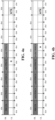
- FIG. 4a and FIG. 4b are schematic diagrams of two examples in which one DCI schedules multiple PDSCHs.
- FIG. 4a shows a situation assuming that the above last PDSCH is a last valid PDSCH scheduled by the DCI
- FIG. 4b shows a situation assuming that the above last PDSCH is a last PDSCH indicated by the DCI, even if the PDSCH is an invalid PDSCH.
- n is the last UL slot (or subslot) that overlaps with PDSCH reception, otherwise, n is the last UL slot (not subslot) that overlaps with a DL slot n D used for PDSCH reception.
- the DCI indicates or schedules multiple PDSCHs
- n is the last UL slot (or subslot) that overlaps with an indicated or scheduled last PDSCH (or the last PDSCH reception).
- n is a last UL slot (not subslot) that overlaps with a DL slot n D (used for) of PDSCH (reception), or a last UL slot (not subslot) that overlaps with a DL slot n D (used for) of an indicated or scheduled last PDSCH (or the last PDSCH reception), or a last UL slot (not subslot) that overlaps with a last DL slot n D (used for) of an indicated or scheduled PDSCH (or the last PDSCH reception).
- n is the last UL slot (or subslot) that overlaps with corresponding PDCCH reception, otherwise, n is the last UL slot that overlaps with a DL slot n D (used for) of a corresponding PDCCH (or PDCCH reception).
- n is the last UL slot (or subslot) that overlaps with SPS PDSCH (or PDSCH reception) reception, otherwise, n is the last UL slot that overlaps with a DL slot n D where the SPS PDSCH is located.
- the first value (k) represents the number of slots and/or the number of subslots and/or the number of symbols.
- the first value may be configured by RRC signaling, and/or indicated by DCI. For example, if a UE is provided with subslotLengthForPUCCH, the first value represents the number of subslots, otherwise, the first value represents the number of slots (not the number of subslots).
- the first value is determined according to a first information field in DCI, and/or RRC signaling.
- the first information field is used to indicate a first value, or the first information field is used to indicate a second value for determining the first value.
- the first information field is used to indicate a first time-domain position.
- a UE determines the first value based on the second value.
- a second value is the first value.
- a UE further determines the first value based on a third value.
- the first value the second value + the third value.
- the third value is for example predefined, or indicated by a base station.
- the first value (k) and the second value (k1) may be replaced.
- the first information field is called, for example, PDSCH-to-HARQ_feedback timing indicator field.
- a value range of the first value or the second value that can be indicated by the first information field may be predefined, or configured by RRC signaling. Different DCI formats (or the first information field in different DCI formats) correspond to same or different value ranges. For the situation in which a value range is configured by RRC signaling, for different DCI formats, RRC signaling used to configure the above value ranges are the same or different.
- a value of the first value is configured via RRC signaling directly, and DCI includes or does not include the above first information field used to indicate the first value.
- RRC signaling used to directly configure a value of the first value is same as or different from RRC signaling used to configure a value range corresponding to a first information field of the DCI.
- the first value is indicated by DCI.
- a value range corresponding to values of a first information field is ⁇ 1, 2, 3, 4, 5, 6, 7, 8 ⁇ . If the value of the first information field is 0, a corresponding value is 1, if the value of the first information field is 1, the corresponding value is 2, and so on. The corresponding value is the first value, or the corresponding value is the second value, and a UE determines the first value according to the second value.
- the first value is indicated by DCI, or configured by RRC signaling.
- the DCI includes a first information field whose values correspond, for example, to a set of values (a set of first or second values) configured by the RRC signaling.
- Each value in this set of values represents the number of slots and/or the number of subslots and/or the number of symbols, respectively. If the value of the first information field is 0, a corresponding value is a first value in this set of values, if the value of the first information field is 1, the corresponding value is a second value in this set of values, and so on.
- the RRC signaling here, for example, is dl-DataToUL-ACK, dl-DataToUL-ACK-r16, dl-DataToUL-ACK-r17, etc.
- dl-DataToUL-ACK-r17 for example, is for FR2-2, but is not limited to this.
- RRC signaling configures a value (a first value or a second value).
- the RRC signaling here for example, is dl-DataToUL-ACK , dl-DataToUL-ACK-r16 , dl-DataToUL-ACK-r17 , etc.
- dl-DataToUL-ACK-r17 for example, is for FR2-2, but is not limited to this.
- the first value is indicated by DCI, or configured by RRC signaling.
- the DCI includes a first information field whose values correspond, for example, to a set of values (a set of first or second values) configured by the RRC signaling.
- Each value in this set of values represents the number of slots and/or the number of subslots and/or the number of symbols, respectively.
- the RRC signaling here, for example, is dl-DataToUL-ACKForDCIFormat1_2 , etc.
- RRC signaling configures a value (a first value or a second value).
- the RRC signaling here for example, is dl-DataToUL-ACKForDCIFormat1_ 2, etc.
- the first value is indicated by the DCI.
- the DCI includes a first information field whose values correspond, for example, to a set of values configured by the RRC signaling.
- the RRC signaling here, for example, is dl-DataToUL-ACK, dl-DataToUL-ACK-r16, dl-DataToUL-ACKForDCIFormat1_2 , etc.
- a value corresponding to a first information field in DCI format 1_1 and 1_2 or configured by RRC signaling is the first value, but is not limited to this.
- the RRC signaling (such as dl-DataToUL-ACK-r16 , corresponding DCI format 1_1) may configure an inapplicable value (hereinafter referred to as a first specific value).
- a value of the first specific value is -1 for example.
- one DCI may only schedule one PDSCH. Therefore, current methods for feeding back HARQ-ACK information in a case where the DCI indicates the first specific value are only applicable for a situation in which one DCI schedules one PDSCH. According to existing methods, when a UE receives a DCI that schedules more than one PDSCH and indicates one first specific value, the UE cannot determine whether or how to feed back HARQ-ACK information corresponding to the more than one PDSCH and/or the DCI.
- the embodiments of the present disclosure provide a method for transmitting signals, which will be described from a terminal equipment.
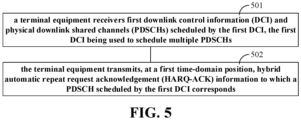
- FIG. 5 is a schematic diagram of a method for transmitting signals in the embodiments of the present disclosure, as shown in FIG. 5 , the method comprises:
- FIG. 5 only schematically describes the embodiments of the present disclosure, but the present disclosure is not limited to this.
- an execution step of the operations can be adjusted appropriately, moreover other some operations can be added or reduced.
- Persons skilled in the art can make appropriate modifications according to the above contents, not limited to the records in the above FIG. 5 .
- the terminal equipment transmits HARQ-ACK information corresponding to the PDSCH scheduled by the first DCI at a first time-domain position, thereby feedback of corresponding HARQ-ACK information is supported while supporting scheduling of multiple PDSCHs via one DCI.
- the first DCI is used to schedule multiple PDSCHs, which means that the first DCI is able to schedule or can schedule multiple PDSCHs, or the first DCI has a capacity of scheduling more than one PDSCH.
- a TDRA table applied by the first DCI is used to support scheduling of multiple PDSCHs via one DCI, which means that the first DCI is able to schedule or can schedule multiple PDSCHs.
- the terminal equipment may further receive a second DCI, the second DCI indicating the above-mentioned first time-domain position.
- the first DCI does not indicate the first time-domain position.
- the first DCI and the second DCI are same or different DCI formats.
- the terminal equipment determines whether to transmit HARQ-ACK information of a PDSCH scheduled by the first DCI at the first time-domain position indicated by the second DCI, according to at least one of the following:
- a PDCCH monitoring occasion used to transmit/receive the second DCI is after a PDCCH monitoring occasion used to transmit/receive the first DCI (or, the second DCI is transmitted/received after the first DCI), or, a PDCCH monitoring occasion used to transmit the second DCI is not earlier than a PDCCH monitoring occasion used to transmit the first DCI (or, the second DCI is transmitted/received not earlier than the first DCI).
- a terminal equipment transmits HARQ-ACK information corresponding to a PDSCH scheduled by the first DCI at a first time-domain position indicated by the second DCI, otherwise, the terminal equipment does not transmit the HARQ-ACK information corresponding to the PDSCH scheduled by the first DCI at the first time-domain position indicated by the second DCI. That is, a UE needs to determine whether to transmit the HARQ-ACK information corresponding to the PDSCH scheduled by the first DCI at the first time-domain position indicated by the second DCI according to a time-domain position relationship between the first DCI and the second DCI.
- a sequential order of PDCCH monitoring occasions is determined according to a start position/start time (such as a first symbol, or a start position of the first symbol) of the PDCCH monitoring occasions. For example, if a start position of a first PDCCH monitoring occasion is after a start position of a second PDCCH monitoring occasion, the first PDCCH monitoring occasion is after the second PDCCH monitoring occasion. Similarly, if a start position of a first PDCCH monitoring occasion is after a start position of a second PDCCH monitoring occasion or they have the same start position, the first PDCCH monitoring occasion is not earlier than the second PDCCH monitoring occasion.
- a start position/start time such as a first symbol, or a start position of the first symbol
- the second DCI is transmitted/received after the first DCI, including that the first DCI and the second DCI are transmitted/received at the same PDCCH monitoring occasion (same or different downlink carriers/cells), an index of a resource (such as CCE or REG) used to transmit/receive the second DCI is greater than an index of a resource (such as CCE or REG) used to transmit/receive the first DCI.
- a resource such as CCE or REG
- a PDCCH monitoring occasion used to transmit/receive the second DCI is after a PDSCH (for example last one) scheduled by the first DCI (or, the second DCI is transmitted/received after a PDSCH (for example last one) scheduled by the first DCI), or, a PDCCH monitoring occasion used to transmit the second DCI is not earlier than a PDSCH scheduled by the first DCI (or, the second DCI is transmitted/received not earlier than a PDSCH (for example last one) scheduled by the first DCI).
- a terminal equipment transmits HARQ-ACK information corresponding to a PDSCH scheduled by the first DCI at a first time-domain position indicated by the second DCI, otherwise, the terminal equipment does not transmit the HARQ-ACK information corresponding to the PDSCH scheduled by the first DCI at the first time-domain position indicated by the second DCI. That is, a UE needs to determine whether to transmit the HARQ-ACK information corresponding to the PDSCH scheduled by the first DCI at the first time-domain position indicated by the second DCI according to a time-domain position relationship between the second DCI and the PDSCH scheduled by the first DCI.
- a PDSCH (for example first) (if any) scheduled by the second DCI is after a PDSCH (for example last one) scheduled by the first DCI, or, a PDSCH (for example first) (if any) scheduled by the second DCI is not earlier than a PDSCH (for example last one) scheduled by the first DCI.
- a terminal equipment transmits HARQ-ACK information corresponding to a PDSCH scheduled by the first DCI at a first time-domain position indicated by the second DCI, otherwise, the terminal equipment does not transmit the HARQ-ACK information corresponding to the PDSCH scheduled by the first DCI at the first time-domain position indicated by the second DCI.
- a UE needs to determine whether to transmit the HARQ-ACK information corresponding to the PDSCH scheduled by the first DCI at the first time-domain position indicated by the second DCI according to a time-domain position relationship between a PDSCH scheduled by the second DCI and the PDSCH scheduled by the first DCI.
- the first DCI indicates a first PDSCH group index
- the second DCI indicates HARQ-ACK information reporting for the first PDSCH group index. Namely, in a case where said two DCIs associate the same PDSCH group, a terminal equipment transmits HARQ-ACK information corresponding to a PDSCH scheduled by the first DCI at a first time-domain position indicated by the second DCI, otherwise, the terminal equipment does not transmit the HARQ-ACK information corresponding to the PDSCH scheduled by the first DCI at the first time-domain position indicated by the second DCI.
- a UE needs to determine whether to transmit the HARQ-ACK information corresponding to the PDSCH scheduled by the first DCI at the first time-domain position indicated by the second DCI according to PDSCH group indexes associated with the first DCI and the second DCI.
- the second DCI indicates HARQ-ACK information reporting based on Type-3 HARQ-ACK codebook.
- the second DCI may further include an information field for requesting or triggering HARQ-ACK information reporting based on Type-3 HARQ-ACK codebook, a value of the information field is 1 (that is, the second DCI indicates HARQ-ACK information reporting based on Type-3 HARQ-ACK codebook).
- a terminal equipment transmits HARQ-ACK information corresponding to a PDSCH scheduled by the first DCI at a first time-domain position indicated by the second DCI, otherwise, the terminal equipment does not transmit the HARQ-ACK information corresponding to the PDSCH scheduled by the first DCI at the first time-domain position indicated by the second DCI. That is, a UE needs to determine whether to transmit the HARQ-ACK information corresponding to the PDSCH scheduled by the first DCI at the first time-domain position indicated by the second DCI according to the above information field of the second DCI.
- the second DCI is used to schedule more than one PDSCH, that is, the second DCI is able to schedule or can schedule more than one PDSCH, or the second DCI has a capacity of scheduling more than one PDSCH.
- a TDRA table applied by the second DCI is used to support scheduling of multiple PDSCHs via one DCI, which means that the second DCI is able to schedule or can schedule multiple PDSCHs.
- the second DCI is not used to schedule more than one PDSCH, that is, the second DCI does not have a capacity of scheduling more than one PDSCH.
- a TDRA table applied by the second DCI is not used to support scheduling of multiple PDSCHs via one DCI, which means that the second DCI is not able to schedule or cannot schedule multiple PDSCHs.
- the above embodiments only illustrate several situations in which a terminal equipment transmits HARQ-ACK information corresponding to a PDSCH scheduled by the first DCI at the above-mentioned first time-domain position, but the present disclosure is not limited to this, appropriate modifications can be also made based on the above embodiments.
- the above and below embodiments may be used individually, or one or more of the above and below embodiments may be combined.
- an SPS is configured and/or activated for a terminal equipment, the first DCI schedules one or more than one PDSCH, and the terminal equipment receives a semi-persistent scheduled PDSCH (SPS PDSCH) after a last PDSCH scheduled by the first DCI; or, the first DCI indicates one or more than one PDSCH, and the terminal equipment receives an SPS PDSCH after the last PDSCH indicated by the first DCI.
- SPS PDSCH semi-persistent scheduled PDSCH
- the terminal equipment transmits HARQ-ACK information corresponding to a PDSCH scheduled by the first DCI at a first time-domain position indicated by the second DCI, otherwise, the terminal equipment does not transmit the HARQ-ACK information corresponding to the PDSCH scheduled by the first DCI at the first time-domain position indicated by the second DCI. That is, a UE needs to determine whether to transmit the HARQ-ACK information corresponding to the PDSCH scheduled by the first DCI at the first time-domain position indicated by the second DCI according to a time-domain position relationship between the PDSCH and the SPS PDSCH scheduled by the first DCI.
- the meaning of scheduling a PDSCH by the DCI and the meaning of indicating a PDSCH by the DCI have been described in the preceding text, and will not be repeated here.
- receiving a semi-persistent scheduled PDSCH (SPS PDSCH) after a PDSCH means that a start position/time (such as a first symbol, or a start position of the first symbol) of the SPS PDSCH is after a start position/time (such as a first symbol, or a start position of the first symbol) of the PDSCH, or, a slot where the SPS PDSCH is located is after a slot where the PDSCH is located, or, a start position/time (such as a first symbol, or a start position of the first symbol) of the SPS PDSCH is after an end position/time (such as a last symbol, or a start position/time of the last symbol) of the PDSCH.
- a start position/time such as a first symbol, or a start position of the first symbol
- a first time-domain position indicated by the second DCI is not later than a time-domain position used to transmit HARQ-ACK information corresponding to the SPS PDSCH, i.e., a time-domain position corresponding to the SPS PDSCH.
- the first time-domain position indicated by the second DCI is earlier than a time-domain position used to transmit HARQ-ACK information corresponding to the SPS PDSCH, or, is the same as a time-domain position used to transmit HARQ-ACK information corresponding to the SPS PDSCH.
- the terminal equipment transmits HARQ-ACK information corresponding to a PDSCH scheduled by the first DCI at a first time-domain position indicated by the second DCI, otherwise, the terminal equipment does not transmit the HARQ-ACK information corresponding to the PDSCH scheduled by the first DCI at the first time-domain position indicated by the second DCI. That is, a UE needs to determine whether to transmit the HARQ-ACK information corresponding to the PDSCH scheduled by the first DCI at the first time-domain position indicated by the second DCI according to a time-domain position relationship between the first time-domain position indicated by the first DCI and a time-domain position corresponding to the SPS PDSCH.
- an SPS is configured and/or activated for a terminal equipment, and receives the above-mentioned second DCI after the time-domain position corresponding to the SPS PDSCH.
- the time-domain position corresponding to the SPS PDSCH is before the second DCI.
- the terminal equipment transmits HARQ-ACK information corresponding to a PDSCH scheduled by the first DCI at a first time-domain position indicated by the second DCI, otherwise, the terminal equipment does not transmit the HARQ-ACK information corresponding to the PDSCH scheduled by the first DCI at the first time-domain position indicated by the second DCI.
- a UE needs to determine whether to transmit the HARQ-ACK information corresponding to the PDSCH scheduled by the first DCI at the first time-domain position indicated by the second DCI according to a time-domain position relationship between the second DCI and the time-domain position corresponding to the SPS PDSCH.
- an SCS used to transmit the first DCI, an SCS used to transmit the second DCI, and an SCS used to transmit the SPS PDSCH are the same or different.
- the first DCI, a PDSCH scheduled by the first DCI, the second DCI, a PDSCH scheduled by the second DCI (if scheduled), and an SPS PDSCH (if received) is transmitted/received in same or different downlink carriers or cells.
- the different downlink carriers or cells for example, correspond to same or different uplink carriers or cells used to transmit HARQ-ACK information, or, the different downlink carriers or cells belong to a same or different cell group.
- the cell group for example is a PUCCH group (such as a first PUCCH group or a secondary PUCCH group), or an MCG, or an SCG.
- the cell group for example is an MCG or an SCG, correspondingly, said uplink carrier or cell for example is Pcell and PScell, respectively.
- the cell group for example is a first PUCCH group or a secondary PUCCH group, correspondingly, said uplink carrier or cell for example is Pcell and said PUCCH-Scell, respectively.
- the above embodiments only illustrate how does a terminal equipment receive a SPS PDSCH in a case where the first DCI schedules or indicates one or more than one PDSCH, but the present disclosure is not limited to this, appropriate modifications can be also made based on the above embodiments.
- the above embodiments may be used individually, or one or more of the above embodiments may be combined.
- the first DCI does not indicate a first time-domain position.
- the first DCI includes a first information field used to indicate a first time-domain position, the first information field indicating a first specific value.
- the first specific value does not have a corresponding first time-domain position, thus the first DCI does not indicate the first time-domain position.
- the first specific value is -1. The meaning of the first specific value has been described in the preceding text and will not be repeated here.
- the first DCI only indicates or schedules one PDSCH. Namely, if the first DCI does not indicate a first time-domain position (i.e., indicates a first specific value), the first DCI only indicates or schedules one PDSCH, thereby said technical problem is solved.
- the first DCI if the first DCI indicates or schedules more than one PDSCH, the first DCI will not indicate said first specific value, even if a value range corresponding to a first information field of the first DCI as configured by RRC signaling (such as first indication information) contains the first specific value.
- the RRC signaling here may be one of said RRC signaling, such as dl-DataToUL-ACK-r16 , or may be new signaling, such as dl-DataToUL-ACK-r17 , and is not limited to these.
- the first DCI indicates or schedules more than one PDSCH, and an SPS is not configured and/or activated for a terminal equipment. Namely, only when an SPS is not configured and/or activated for the terminal equipment, the first DCI may indicate the first specific value when indicating or scheduling more than one PDSCH. In other words, if an SPS is configured and/or activated for the terminal equipment, the first DCI cannot indicate the first specific value when indicating or scheduling more than one PDSCH, or schedules more than one PDSCH when indicating the first specific value.
- the terminal equipment may further receive first indication information, the first indication information being used to configure a value range corresponding to a first information field of the first DCI, the value range including said first specific value.
- the terminal equipment may further report its own capacity information.
- the terminal equipment may transmit second indication information, the second indication information being used to indicate at least one of the following:
- a UE receives a first DCI format detected by the UE in a first PDCCH monitoring occasion, and the first DCI format includes a first information field, such as PDSCH-to-HARQ,feedback timing indicator field , this field provides a first specific value from first indication information.
- a first information field such as PDSCH-to-HARQ,feedback timing indicator field
- the UE If the UE further detects a second DCI format (which may or may not schedule a PDSCH), the UE multiplexes corresponding HARQ-ACK information (HARQ-ACK information corresponding to the PDSCH scheduled by the first DCI format) to a PUCCH transmission or a PUCCH transmission in a slot (a first time-domain position) indicated by a value of PDSCH-to-HARQ_feedback timing indicator field of the second DCI format.
- HARQ-ACK information HARQ-ACK information corresponding to the PDSCH scheduled by the first DCI format
- a UE is not provided with information for configuring Type-2 HARQ-ACK codebook based on a PDSCH group (such as, first information for short) (such as pdsch-HARQ-ACK-Codebook-r16 ), but is not limited to this.
- the UE detects the second DCI format in a (any) PDCCH monitoring occasion after the first DCI format, and a slot (a first time-domain position) indicated by the value of PDSCH-to-HARQ_feedback timing indicator field in the second DCI format is not later than a slot (or subslot or symbol) of HARQ-ACK information used for responding to SPS PDSCH reception (if any) received after the last (valid) PDSCH scheduled by the first DCI format (or a first time-domain position corresponding to the SPS PDSCH).
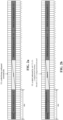
- DCI formats shown in FIGs. 6 to 9 are taken as an example. If a UE detects the first DCI format and the second DCI format, the UE is not provided with first information (such as pdsch-HARQ-ACK-Codebook-r16 ), and a slot (a first time-domain position) indicated by a value of PDSCH-to-HARQ_feedback timing indicator field of the second DCI format is not later than a slot of HARQ-ACK information corresponding to SPS PDSCH reception received after the last PDSCH scheduled by the first DCI format, the UE multiplexes the HARQ-ACK information corresponding to the PDSCH scheduled by the first DCI format to a PUCCH transmission or a PUSCH transmission in a slot indicated by the value of PDSCH_to_HARQ_feedback timing indicator field of the second DCI format.
- first information such as pdsch-HARQ-ACK-Codebook-r16
- the first time-domain position used to transmit HARQ-ACK information corresponding to a PDSCH scheduled by the first DCI is earlier than a time-domain position used to transmit HARQ-ACK information corresponding to a SPS PDSCH.
- the first time-domain position used to transmit HARQ-ACK information corresponding to a PDSCH scheduled by the first DCI is the same as a time-domain position used to transmit HARQ-ACK information corresponding to a SPS PDSCH.
- the UE is provided with first information (such as pdsch-HARQ-ACK-Codebook-r16 ), the UE detects the second DCI format in any PDCCH monitoring occasion after the first PDCCH monitoring occasion, and the second DCI format indicates HARQ-ACK information reporting for same PDSCH group indexes as indicated by the first DCI format, and a slot (a first time-domain position) indicated by the value of PDSCH-to-HARQ _ feedback timing indicator field in the second DCI format is not later than a slot of HARQ-ACK information used for responding to SPS PDSCH reception (if any) received after the last (valid) PDSCH scheduled by the first DCI format.
- first information such as pdsch-HARQ-ACK-Codebook-r16
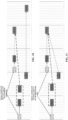
- DCI formats shown in FIGs. 10 and 11 are taken as an example. If a UE detects the first DCI format and the second DCI format, the UE is provided with first information (such as pdsch-HARQ-ACK-Codebook-r16 ), the first DCI format and the second DCI format associate the same PDCCH group index, and a slot (a first time-domain position) indicated by a value of PDSCH-to-HARQ_feedback timing indicator field of the second DCI format is not later than a slot of HARQ-ACK information corresponding to SPS PDSCH reception received after the last PDSCH scheduled by the first DCI format, the UE multiplexes the HARQ-ACK information corresponding to the PDSCH scheduled by the first DCI format to a PUCCH transmission or a PUSCH transmission in a slot indicated by the value of PDSCH-to-HARQ_feedback timing indicator field of the second DCI format.
- first information such as pdsch-HARQ-ACK-Codebook-r16
- PDSCHs scheduled by different DCIs do not intersect, and SPS PDSCH reception is before the second DCI.
- the present disclosure is not limited to this. Similar to the examples of FIGs. 8 and 9 , PDSCHs scheduled by different DCIs may also intersect, and SPS PDSCH reception may also be after the second DCI.
- the first time-domain position used to transmit HARQ-ACK information corresponding to a PDSCH scheduled by the first DCI is earlier than a time-domain position used to transmit HARQ-ACK information corresponding to a SPS PDSCH.
- the first time-domain position used to transmit HARQ-ACK information corresponding to a PDSCH scheduled by the first DCI is the same as a time-domain position used to transmit HARQ-ACK information corresponding to a SPS PDSCH.
- a UE is provided with first information (such as pdsch-HARQ-ACK-Codebook-r16 ), the UE receives the second DCI format at a slot later than a slot of HARQ-ACK information used for responding to SPS PDSCH reception received after the last (valid) PDSCH scheduled by the first DCI format, the second DCI format indicates HARQ-ACK information reporting with the same PDSCH group index as that indicated by the first DCI format.
- first information such as pdsch-HARQ-ACK-Codebook-r16
- DCI formats shown in FIG. 12 are taken as an example. If a UE detects the first DCI format and the second DCI format, the UE is provided with first information (such as pdsch-HARQ-ACK-Codebook-r16 ), the first DCI format and the second DCI format associate/correspond to the same PDCCH group index, and the second DCI format is later than a slot of HARQ-ACK information corresponding to SPS PDSCH reception received after the last PDSCH scheduled by the first DCI format, the UE multiplexes the HARQ-ACK information corresponding to the PDSCH scheduled by the first DCI format to a PUCCH transmission or a PUSCH transmission in a slot indicated by the value of PDSCH-to-HARQ_feedback timing indicator field of the second DCI format.
- first information such as pdsch-HARQ-ACK-Codebook-r16
- the first DCI format and the second DCI format associate/correspond to the same PDCCH group index
- the second DCI format is
- PDSCHs scheduled by different DCIs do not intersect.
- the present disclosure is not limited to this. Similar to the examples of FIGs. 8 and 9 , PDSCHs scheduled by different DCIs may also intersect.
- the UE is provided with pdsch HARQ ACK OneShotFeedback
- the first DCI format does not indicate SPS PDSCH release or SCell dormant
- the UE detects the second DCI format in any PDCCH monitoring occasion after the first DCI format
- the second DCI format includes One-shot HARQ-ACK request field with a value of 1
- the UE includes HARQ-ACK information of a PDSCH scheduled by the first DCI in Type-3 HARQ-ACK codebook, wherein a slot (a first time-domain position) indicated by the value of PDSCH_to_HARQ_feedback timing indicator field of the second DCI format is not later than a slot of HARQ-ACK information used for responding to SPS PDSCH reception (if any) received after the last (valid) PDSCH scheduled by the first DCI format.
- DCI formats shown in FIGs. 13 and 14 are taken as an example. If a UE detects the first DCI format and the second DCI format, the UE is provided with pdsch HARQ ACK OneShotFeedback, a value of One-shot HARQ-ACK request field of the second DCI format is 1, and a slot (a first time-domain position) indicated by a value of PDSCH-to-HARQ_feedback timing indicator field of the second DCI format is not later than a slot of HARQ-ACK information corresponding to SPS PDSCH reception received after the last PDSCH scheduled by the first DCI format, the UE multiplexes the HARQ-ACK information corresponding to the PDSCH scheduled by the first DCI format to a PUCCH transmission or a PUSCH transmission in a slot (a first time-domain position) indicated by the value of PDSCH-to-HARQ_feedback timing indicator field of the second DCI format.
- PDSCHs scheduled by different DCIs do not intersect, and SPS PDSCH reception is before the second DCI.
- the present disclosure is not limited to this. Similar to the examples of FIGs. 8 and 9 , PDSCHs scheduled by different DCIs may also intersect, and SPS PDSCH reception may also be after the second DCI.
- the first time-domain position used to transmit HARQ-ACK information corresponding to a PDSCH scheduled by the first DCI is earlier than a time-domain position used to transmit HARQ-ACK information corresponding to a SPS PDSCH.
- the first time-domain position used to transmit HARQ-ACK information corresponding to a PDSCH scheduled by the first DCI is the same as a time-domain position used to transmit HARQ-ACK information corresponding to a SPS PDSCH.
- the UE is provided with pdsch-HARQ-ACK-OneShotFeedback-r16 , the first DCI format does not indicate SPS PDSCH release or SCell dormant, and the UE receives the second DCI format after a slot of HARQ-ACK information used for responding to SPS PDSCH reception received after the last (valid) PDSCH scheduled by the first DCI format, and the second DCI format includes One-shot HARQ-ACK request field with a value of 1, the UE includes the HARQ-ACK information of the PDSCH scheduled by the first DCI in Type-3 HARQ-ACK codebook.
- DCI formats shown in FIG. 15 are taken as an example. If a UE detects the first DCI format and the second DCI format, the UE is provided with pdsch-HARQ-ACK-OneShotFeedback-r16 , and the second DCI format is later than a slot of HARQ-ACK information corresponding to SPS PDSCH reception received after the last PDSCH scheduled by the first DCI format, and the second DCI format includes One-shot HARQ-ACK request field with a value of 1, the UE multiplexes the HARQ-ACK information corresponding to the PDSCH scheduled by the first DCI format to a PUCCH transmission or a PUSCH transmission in a slot (a first time-domain position) indicated by the value of PDSCH_to_HARQ_feedback timing indicator field of the second DCI format.
- PDSCHs scheduled by different DCIs do not intersect.
- the present disclosure is not limited to this. Similar to the examples of FIGs. 8 and 9 , PDSCHs scheduled by different DCIs may also intersect.
- the terminal equipment transmits HARQ-ACK information corresponding to the PDSCH scheduled by the first DCI at a first time-domain position, thereby feedback of corresponding HARQ-ACK information is supported while supporting scheduling of multiple PDSCHs via one DCI.
- the embodiments of the present disclosure provide a method for receiving signals, which will be described from a network device.
- the method relates to processing on a network device side corresponding to the method in the embodiments of the first aspect, wherein the same contents as the embodiments of the first aspect are not repeated.
- FIG. 16 is a schematic diagram of a method for receiving signals in the embodiments of the present disclosure. As shown in FIG. 16 , the method comprises:
- the network device further transmits second DCI, the second DCI indicating the first time-domain position.
- a physical downlink control channel (PDCCH) monitoring occasion used to transmit the second DCI is after a PDCCH monitoring occasion used to transmit the first DCI; or, the PDCCH monitoring occasion used to transmit the second DCI is not earlier than a PDCCH monitoring occasion used to transmit the first DCI.
- PDCCH physical downlink control channel
- the first DCI indicates a first PDSCH group index
- the second DCI indicates HARQ-ACK information reporting for the first PDSCH group index
- the second DCI includes an information field used to request or trigger HARQ-ACK information reporting based on Type-3 HARQ-ACK codebook, a value of the information field being 1.
- the second DCI is used to schedule (is able to schedule or can schedule) more than one PDSCH; or the second DCI is not used to schedule more than one PDSCH, that is, the second DCI does not have an ability of scheduling more than one PDSCH.
- the first DCI schedules one or more than one PDSCH, and the network device transmits a semi-persistent scheduled PDSCH (SPS PDSCH) after a last PDSCH scheduled by the first DCI; or, the first DCI indicates one or more than one PDSCH, and the network device transmits an SPS PDSCH after the last PDSCH indicated by the first DCI.
- SPS PDSCH semi-persistent scheduled PDSCH
- the first time-domain position is not later than a time-domain position to which the SPS PDSCH corresponds, the time-domain position to which the SPS PDSCH corresponds being used to transmit HARQ-ACK information of the SPS PDSCH.
- the network device transmits second DCI after a time-domain position to which the SPS PDSCH corresponds, the second DCI indicating the first time-domain position.
- the first DCI does not indicate a first time-domain position.
- the first DCI includes a first information field used to indicate a first time-domain position, the first information field indicating a first specific value, wherein the first specific value does not have a corresponding first time-domain position, thereby showing that the first DCI does not indicate the first time-domain position.
- the first specific value may be -1.
- the first DCI only indicates or schedules one PDSCH.
- the first DCI indicates or schedules more than one PDSCH, and an SPS is not configured and/or activated for the terminal equipment.
- the network device may further transmit first indication information, the first indication information being used to configure a value range corresponding to a first information field of the first DCI, the value range including a first specific value.
- the network device may further receive second indication information, the second indication information being used to indicate at least one of the following:
- the terminal equipment transmits HARQ-ACK information corresponding to the PDSCH scheduled by the first DCI at a first time-domain position, thereby feedback of corresponding HARQ-ACK information is supported while supporting scheduling of multiple PDSCHs via one DCI.
- the embodiments of the present disclosure provide a method for transmitting signals, which will be described from a network device.
- FIG. 17 is a schematic diagram of a method for transmitting signals in the embodiments of the present disclosure, as shown in FIG. 17 , the method comprises: 1701, a network device transmits first indication information and/or third indication information to a terminal equipment, the first indication information being used to configure a value range corresponding to a first information field of a first DCI, and the third indication information being used to configure a time-domain resource assignment table for supporting scheduling of more than one PDSCH via one DCI, the time-domain resource assignment table corresponding to the first DCI.
- a network device configures for a terminal equipment a value range corresponding to a first information field of the first DCI, and/or, the network device configures for the terminal equipment a time-domain resource assignment table used to support scheduling of more than one PDSCH via one DCI, the terminal equipment is able to support scheduling of multiple PDSCHs via one DCI, and is able to support feedback of corresponding HARQ-ACK information.
- the first DCI is DCI format 1_1 or DCI format 1_2.
- the network device configures for the terminal equipment a value range corresponding to a first information field and/or said time-domain resource assignment table.
- the first information field is used to determine a first time-domain position, the first time-domain position being used by the terminal equipment to transmit HARQ-ACK information. Relevant contents of the first time-domain position have been described in detail in the embodiments of the first aspect, are incorporated here, and are not repeated here.
- the value range corresponding to the first information field does not include a first specific value. Namely, if the network device configures for the terminal equipment the value range corresponding to said first information field and said time-domain resource assignment table, that is, the first DCI is able to schedule multiple PDSCHs, the network device does not configure the first specific value for the terminal equipment.
- the network device in a case where the network device transmits the first indication information and the value range corresponding to said first information field includes the first specific value, the network device does not transmit the third indication information. Namely, in a case where the network device configures the first specific value for the terminal equipment, the network device does not configure said time-domain resource assignment table for the terminal equipment any more, and the first DCI cannot schedule multiple PDSCHs.
- the network device in a case where the network device transmits first indication information and third indication information and the value range corresponding to said first information field includes the first specific value, the network device does not configure and/or activate an SPS for the terminal equipment. Namely, if the network device configures for the terminal equipment the value range corresponding to said first information field and said time-domain resource assignment table, and the network device configures the first specific value for the terminal equipment, the network device does not configure and/or activate an SPS for the terminal equipment any more.
- the value range corresponding to the first information field does not include a first specific value. Namely, if the network device configures and/or activates an SPS for the terminal equipment, and the network device configures for the terminal equipment the value range corresponding to said first information field and said time-domain resource assignment table, the value range corresponding to the first information field does not include a first specific value, i.e., the network device does not configure said first specific value for the terminal equipment.
- the network device in a case where the network device configures and/or activates an SPS for the terminal equipment, and transmits the first indication information and the value range corresponding to said first information field includes the first specific value, the network device does not transmit the third indication information. Namely, if the network device configures and/or activates an SPS for the terminal equipment, and the network device configures for the terminal equipment the value range corresponding to said first information field, but the value range corresponding to the first information field includes a first specific value, the network device does not configure said time-domain resource assignment table for the terminal equipment, and the terminal equipment cannot schedule more than one PDSCH via one DCI.
- the network device transmits the first indication information (configures the value range corresponding to the first information field), and the value range corresponding to the first information field includes a first specific value; the network device transmits third indication information (configures said time-domain resource assignment table); and the network device configures or activates an SPS for the terminal equipment, these three situations do not exist simultaneously.
- the first specific value is -1. Contents about the first specific value have been described in detail in the embodiments of the first aspect, are incorporated here, and are not repeated here.
- the embodiments of the present disclosure may be implemented separately or in combination with the embodiments of the second aspect, that is, the contents of the embodiments of the second aspect may be incorporated here, which is not limited in the present disclosure.
- the contents of the embodiments of the second aspect may be implemented separately or in combination with the embodiments of the present disclosure, that is, the contents of the embodiments of the present disclosure may be incorporated into the embodiments of the second aspect, which is not limited in the present disclosure.
- FIG. 18 is a schematic diagram of a method for receiving signals in the embodiments of the present disclosure.
- the method comprises: 1801, a terminal equipment receives first indication information and/or third indication information transmitted by a network device, the first indication information being used to configure a value range corresponding to a first information field of a first DCI, and the third indication information being used to configure a time-domain resource assignment table for supporting scheduling of more than one PDSCH via one DCI, the first DCI applying the time-domain resource assignment table.
- the terminal equipment in a case where the terminal equipment receives the first indication information and the value range corresponding to said first information field includes the first specific value, the terminal equipment does not expect to receive third indication information.
- the first specific value is -1. Contents about the first specific value have been described in the preceding text, are incorporated here, and are not repeated here.
- the embodiments of the present disclosure may be implemented separately or in combination with the embodiments of the first aspect, that is, the contents of the embodiments of the first aspect may be incorporated here, the which is not limited in the present disclosure.
- the contents of the embodiments of the second aspect may be implemented separately or in combination with the embodiments of the present disclosure, that is, the contents of the embodiments of the present disclosure may be incorporated into the embodiments of the first aspect, which is not limited in the present disclosure.
- a terminal equipment supports feedback of corresponding HARQ-ACK information while supporting scheduling of multiple PDSCHs via one DCI.
- the embodiments of the present disclosure provide an apparatus for transmitting signals.
- the apparatus may, for example, be a terminal equipment, or may be one or more parts or components configured in the terminal equipment.
- FIG. 19 is a schematic diagram of an example of an apparatus for transmitting signals in the embodiments of the present disclosure, corresponding to the method in the embodiments of the first aspect, the contents same as those in the embodiments of the first aspect are not repeated.
- the apparatus 1900 for transmitting signals comprises:
- the receiving unit 1901 further receives second DCI, the second DCI indicating the first time-domain position.
- a physical downlink control channel (PDCCH) monitoring occasion used to transmit the second DCI is after a PDCCH monitoring occasion used to transmit the first DCI; or, the PDCCH monitoring occasion used to transmit the second DCI is not earlier than a PDCCH monitoring occasion used to transmit the first DCI.
- PDCCH physical downlink control channel
- the second DCI schedules a PDSCH, or does not schedule a PDSCH.
- the second DCI does not schedule a PDSCH, including: the second DCI is used to activate or deactivate an SPS, and/or, the second DCI is used to indicate SCell dormant, and/or, the second DCI adopts DCI format 2_x.
- the first DCI indicates a first PDSCH group index
- the second DCI indicates HARQ-ACK information reporting for the first PDSCH group index
- the second DCI indicates HARQ-ACK information reporting based on Type-3 HARQ-ACK codebook.
- the second DCI includes an information field used to request or trigger HARQ-ACK information reporting based on Type-3 HARQ-ACK codebook, a value of the information field being 1.
- the second DCI is used to schedule more than one PDSCH; or the second DCI is not used to schedule more than one PDSCH.
- the first DCI schedules one or more than one PDSCH, and the terminal equipment receives a semi-persistent scheduled PDSCH (SPS PDSCH) after a last PDSCH scheduled by the first DCI; or, the first DCI indicates one or more than one PDSCH, and the terminal equipment receives an SPS PDSCH after the last PDSCH indicated by the first DCI.
- SPS PDSCH semi-persistent scheduled PDSCH
- the first time-domain position is not later than a time-domain position to which the SPS PDSCH corresponds, the time-domain position to which the SPS PDSCH corresponds being used to transmit HARQ-ACK information of the SPS PDSCH.
- the terminal equipment receives second DCI after a time-domain position to which the SPS PDSCH corresponds, the second DCI indicating the first time-domain position.
- the first DCI does not indicate the first time-domain position.
- the first DCI includes a first information field used to indicate a first time-domain position, the first information field indicating a first specific value, the first specific value does not have a corresponding first time-domain position.
- the first specific value is -1.
- the first DCI only indicates or schedules one PDSCH.
- the first DCI indicates or schedules more than one PDSCH, and an SPS is not configured and/or activated for the terminal equipment.
- the receiving unit 1901 further receives first indication information, the first indication information being used to configure a value range corresponding to a first information field of the first DCI, the value range including a first specific value.
- the transmitting unit 1902 further transmits second indication information, the second indication information being used to indicate at least one of the following:
- the embodiments of the present disclosure further provide an apparatus for receiving signals.
- the apparatus may, for example, be a network device, or may be one or more parts or components configured in the network device.
- FIG. 20 is a schematic diagram of an example of an apparatus for receiving signals in the embodiments of the present disclosure, corresponding to the method in the embodiments of the second aspect, the contents same as those in the embodiments of the second aspect are not repeated.
- the apparatus 2000 for receiving signals comprises:
- the transmitting unit 2001 further transmits second DCI, the second DCI indicating the first time-domain position.
- a physical downlink control channel (PDCCH) monitoring occasion used to transmit the second DCI is after a PDCCH monitoring occasion used to transmit the first DCI; or, the PDCCH monitoring occasion used to transmit the second DCI is not earlier than a PDCCH monitoring occasion used to transmit the first DCI.
- PDCCH physical downlink control channel
- the second DCI schedules a PDSCH, or does not schedule a PDSCH.
- the second DCI does not schedule a PDSCH, including: the second DCI is used to activate or deactivate an SPS, and/or, the second DCI is used to indicate SCell dormant, and/or, the second DCI adopts DCI format 2_x.
- the first DCI indicates a first PDSCH group index
- the second DCI indicates HARQ-ACK information reporting for the first PDSCH group index
- the second DCI indicates HARQ-ACK information reporting based on Type-3 HARQ-ACK codebook.
- the second DCI includes an information field used to request or trigger HARQ-ACK information reporting based on Type-3 HARQ-ACK codebook, a value of the information field being 1.
- the second DCI is used to schedule more than one PDSCH; or the second DCI is not used to schedule more than one PDSCH.
- the first DCI schedules one or more than one PDSCH, and the network device transmits a semi-persistent scheduled PDSCH (SPS PDSCH) after a last PDSCH scheduled by the first DCI; or, the first DCI indicates one or more than one PDSCH, and the network device transmits an SPS PDSCH after the last PDSCH indicated by the first DCI.
- SPS PDSCH semi-persistent scheduled PDSCH
- the first time-domain position is not later than a time-domain position to which the SPS PDSCH corresponds, the time-domain position to which the SPS PDSCH corresponds being used to transmit HARQ-ACK information of the SPS PDSCH.
- the network device transmits second DCI after a time-domain position to which the SPS PDSCH corresponds, the second DCI indicating the first time-domain position.
- the first DCI does not indicate the first time-domain position.
- the first DCI includes a first information field used to indicate a first time-domain position, the first information field indicating a first specific value, the first specific value does not have a corresponding first time-domain position.
- the first specific value is -1.
- the first DCI only indicates or schedules one PDSCH.
- the first DCI indicates or schedules more than one PDSCH, and an SPS is not configured and/or activated for the terminal equipment.
- the transmitting unit 2001 further transmits first indication information, the first indication information being used to configure a value range corresponding to a first information field of the first DCI, the value range including a first specific value.
- the receiving unit 2002 further receives second indication information, the second indication information being used to indicate at least one of the following:
- the embodiments of the present disclosure further provide an apparatus for transmitting signals.
- the apparatus may, for example, be a network device, or may be one or more parts or components configured in the network device.
- FIG. 21 is a schematic diagram of an example of an apparatus for transmitting signals in the embodiments of the present disclosure, corresponding to the method in the embodiments of the third aspect, the contents same as those in the embodiments of the third aspect are not repeated.
- the apparatus 2100 for transmitting signals comprises: a transmitting unit 2101 configured to transmit first indication information and/or third indication information to a terminal equipment, the first indication information being used to configure a value range corresponding to a first information field of a first DCI, and the third indication information being used to configure a time-domain resource allocation table for supporting scheduling of more than one PDSCH via one DCI, the time-domain resource allocation table corresponding to the first DCI.
- the first DCI is DCI format 1_1 or DCI format 1_2.
- the first information field is used to determine a first time-domain position, the first time-domain position being used by the terminal equipment to transmit HARQ-ACK information.
- the value range does not include a first specific value.
- the network device in a case where the network device transmits the first indication information and the value range includes the first specific value, the network device does not transmit the third indication information.
- the network device in a case where the network device transmits the first indication information and the third indication information and the value range includes the first specific value, the network device does not configure and/or activate an SPS for the terminal equipment.
- the value range does not include a first specific value.
- the network device in a case where the network device configures and/or activates an SPS for the terminal equipment, and transmits the first indication information and the value range includes the first specific value, the network device does not transmit the third indication information.
- the first specific value is -1.
- the embodiments of the present disclosure further provide an apparatus for receiving signals.
- the apparatus may, for example, be a terminal equipment, or may be one or more parts or components configured in the terminal equipment.
- FIG. 22 is a schematic diagram of an example of an apparatus for receiving signals in the embodiments of the present disclosure, corresponding to the method in the embodiments of the fourth aspect, the contents same as those in the embodiments of the fourth aspect are not repeated.
- the apparatus 2200 for receiving signals comprises: a receiving unit 2201 configured to receive first indication information and/or third indication information transmitted by a network device, the first indication information being used to configure a value range corresponding to a first information field of a first DCI, and the third indication information being used to configure a time-domain resource assignment table for supporting scheduling of more than one PDSCH via one DCI, the time-domain resource assignment table corresponding to the first DCI.
- the first value is used to determine a first time-domain position, the first time-domain position being used by the terminal equipment to transmit HARQ-ACK information.
- the receiving unit 2201 in a case where the receiving unit 2201 receives the first indication information and the third indication information, the receiving unit 2201 does not expect that the value range includes a first specific value.
- the receiving unit 2201 in a case where the receiving unit 2201 receives the first indication information and the value range includes the first specific value, the receiving unit 2201 does not expect to receive the third indication information.
- the receiving unit 2201 in a case where the receiving unit 2201 receives the first indication information and the third indication information, and the value range includes the first specific value, the receiving unit 2201 does not expect to be configured with and/or activate an SPS.
- the receiving unit 2201 in a case where an SPS is configured and/or activated for the terminal equipment and the receiving unit 2201 receives the first indication information and the third indication information, the receiving unit 2201 does not expect that the value range includes a first specific value.
- the receiving unit 2201 in a case where an SPS is configured and/or activated for the terminal equipment and the receiving unit 2201 receives the first indication information and the value range includes the first specific value, the receiving unit 2201 does not expect to receive the third indication information.
- the first specific value is -1.
- the apparatus 1900/2100 for transmitting signals and the apparatus 2000/2200 for receiving signals may further comprise other components or modules.
- relevant technologies can be referred to.
- the above components or modules can be realized by a hardware facility such as a processor, a memory, a transmitter, a receiver, etc.
- the embodiments of the present disclosure have no limitation to this.
- feedback of corresponding HARQ-ACK information is supported while supporting scheduling of multiple PDSCHs via one DCI.
- the embodiments of the present disclosure further provide a communication system, comprising a network device and a terminal equipment.
- the terminal equipment is configured to perform the method described in the embodiments of the first aspect
- the network device is configured to perform the method described in the embodiments of the second aspect.
- the terminal equipment is configured to perform the method described in the embodiments of the fourth aspect
- the network device is configured to perform the method described in the embodiments of the third aspect.
- the terminal equipment is configured to perform the method described in the embodiments of the first aspect and the embodiments of the fourth aspect
- the network device is configured to perform the method described in the embodiments of the second aspect and the embodiments of the third aspect.
- the embodiments of the present disclosure further provide a terminal equipment, the terminal equipment for example may be a UE, but the present disclosure is not limited to this, it may also be other terminal equipment.
- FIG. 23 is a schematic diagram of a terminal equipment in the embodiments of the present disclosure.
- the terminal equipment 2300 may include a processor 2301 and a memory 2302; the memory 2302 stores data and programs, and is coupled to the processor 2301. It's worth noting that this figure is exemplary; other types of structures can also be used to supplement or replace this structure, so as to realize a telecommunication function or other functions.
- the processor 2301 can be configured to execute a program to implement the method described in the embodiments of the first aspect and/or the method described in the embodiments of the fourth aspect.
- the terminal equipment 2300 may further include: a communication module 2303, an input unit 2304, a display 2305 and a power source 2306.
- the functions of said components are similar to related arts, which are not repeated here. It's worth noting that the terminal equipment 2300 does not have to include all the components shown in FIG. 23 , said components are not indispensable.
- the terminal equipment 2300 may also include components not shown in FIG. 23 , related arts can be referred to.
- the embodiments of the present disclosure further provide a network device, the network device for example may be a base station, but the present disclosure is not limited to this, it may also be other network devices.
- FIG. 24 is a composition schematic diagram of a network device in the embodiments of the present disclosure.
- the network device 2400 may include: a processor 2401 and a memory 2402; the memory 2402 is coupled to the processor 2401.
- the memory 2402 may store various data; moreover, also stores a program for information processing, and executes the program under the control of the processor 2401.
- the processor 2401 can be configured to execute a program to implement the method described in the embodiments of the second aspect and/or the third aspect.
- the network device 2400 may further comprise: transceivers 2403 and 2404.
- the functions of said components are similar to related arts, which are not repeated here. It's worth noting that the network device 2400 does not have to include all the components shown in FIG. 24 .
- the network device 2400 may also include components not shown in FIG. 24 , relevant arts can be referred to.
- the embodiments of the present disclosure further provide a computer program, wherein when a terminal equipment executes the program, the program enables the terminal equipment to execute the method described in the embodiments of the first aspect and/or the fourth aspect.
- the embodiments of the present disclosure further provide a storage medium in which a computer program is stored, wherein the computer program enables a terminal equipment to execute the method described in the embodiments of the first aspect and/or the fourth aspect.
- the embodiments of the present disclosure further provide a computer program, wherein when a network device executes the program, the program enables the network device to execute the method described in the embodiments of the second aspect and/or the third aspect.
- the embodiments of the present disclosure further provide a storage medium in which a computer program is stored, wherein the computer program enables a network device to execute the method described in the embodiments of the first aspect and/or the third aspect.
- the apparatus and method in the present disclosure can be realized by hardware, or can be realized by combining hardware with software.
- the present disclosure relates to such a computer readable program, when the program is executed by a logic component, the computer readable program enables the logic component to realize the apparatus described in the above text or a constituent component, or enables the logic component to realize various methods or steps described in the above text.
- the present disclosure also relates to a storage medium storing the program, such as a hard disk, a magnetic disk, an optical disk, a DVD, a flash memory and the like.
- one or more in the functional block diagram or one or more combinations in the functional block diagram as shown in the drawings may correspond to software modules of a computer program flow, and may also correspond to hardware modules. These software modules may respectively correspond to the steps as shown in the drawings. These hardware modules can be realized by solidifying these software modules e.g. using a field-programmable gate array (FPGA).
- FPGA field-programmable gate array
- a software module can be located in a RAM memory, a flash memory, a ROM memory, an EPROM memory, an EEPROM memory, a register, a hard disk, a mobile magnetic disk, a CD-ROM or a storage medium in any other form as known in this field.
- a storage medium can be coupled to a processor, thereby enabling the processor to read information from the storage medium, and to write the information into the storage medium; or the storage medium can be a constituent part of the processor.
- the processor and the storage medium can be located in an ASIC.
- the software module can be stored in a memory of a mobile terminal, and may also be stored in a memory card of the mobile terminal.
- the software module can be stored in the MEGA-SIM card or the flash memory apparatus with a large capacity.
- One or more in the functional block diagram or one or more combinations in the functional block diagram as described in the drawings can be implemented as a general-purpose processor for performing the functions described in the present disclosure, a digital signal processor (DSP), an application-specific integrated circuit (ASIC), a field-programmable gate array (FPGA) or other programmable logic device, discrete gate or transistor logic device, discrete hardware components or any combination thereof.
- DSP digital signal processor
- ASIC application-specific integrated circuit
- FPGA field-programmable gate array
- One or more in the functional block diagram or one or more combinations in the functional block diagram as described in the drawings can be also implemented as a combination of computer equipment, such as a combination of a DSP and a microprocessor, a plurality of microprocessors, one or more microprocessors combined and communicating with the DSP or any other such configuration.
Landscapes
- Engineering & Computer Science (AREA)
- Signal Processing (AREA)
- Computer Networks & Wireless Communication (AREA)
- Mobile Radio Communication Systems (AREA)
Applications Claiming Priority (1)
| Application Number | Priority Date | Filing Date | Title |
|---|---|---|---|
| PCT/CN2021/128823 WO2023077387A1 (zh) | 2021-11-04 | 2021-11-04 | 信号发送方法、信号接收方法和装置 |
Publications (2)
| Publication Number | Publication Date |
|---|---|
| EP4429352A1 true EP4429352A1 (de) | 2024-09-11 |
| EP4429352A4 EP4429352A4 (de) | 2024-12-11 |
Family
ID=86240362
Family Applications (1)
| Application Number | Title | Priority Date | Filing Date |
|---|---|---|---|
| EP21962904.5A Pending EP4429352A4 (de) | 2021-11-04 | 2021-11-04 | Signalsendeverfahren und -vorrichtung sowie signalempfangsverfahren und -vorrichtung |
Country Status (6)
| Country | Link |
|---|---|
| US (1) | US20240292415A1 (de) |
| EP (1) | EP4429352A4 (de) |
| JP (1) | JP7761762B2 (de) |
| KR (1) | KR20240091261A (de) |
| CN (1) | CN118160387A (de) |
| WO (1) | WO2023077387A1 (de) |
Families Citing this family (1)
| Publication number | Priority date | Publication date | Assignee | Title |
|---|---|---|---|---|
| WO2025035406A1 (zh) * | 2023-08-15 | 2025-02-20 | 富士通株式会社 | 信息发送方法、信息接收方法以及装置 |
Family Cites Families (5)
| Publication number | Priority date | Publication date | Assignee | Title |
|---|---|---|---|---|
| CN111385080B (zh) * | 2018-12-28 | 2024-08-06 | 北京三星通信技术研究有限公司 | 发送上行控制信息的方法及设备 |
| CN112788760B (zh) * | 2019-11-08 | 2022-09-13 | 维沃移动通信有限公司 | 混合自动重传请求应答harq-ack反馈位置的确定方法及通信设备 |
| KR20220124258A (ko) | 2020-01-16 | 2022-09-13 | 오피노 엘엘씨 | 무선 통신 시스템의 승인 송신 |
| US11611983B2 (en) * | 2020-02-20 | 2023-03-21 | Qualcomm Incorporated | Acknowledgement feedback for multi-component carrier scheduling |
| CN113543321B (zh) * | 2020-04-15 | 2024-04-05 | 大唐移动通信设备有限公司 | Harq-ack反馈时序的确定方法及设备 |
-
2021
- 2021-11-04 WO PCT/CN2021/128823 patent/WO2023077387A1/zh not_active Ceased
- 2021-11-04 KR KR1020247018213A patent/KR20240091261A/ko active Pending
- 2021-11-04 EP EP21962904.5A patent/EP4429352A4/de active Pending
- 2021-11-04 JP JP2024525997A patent/JP7761762B2/ja active Active
- 2021-11-04 CN CN202180103943.5A patent/CN118160387A/zh active Pending
-
2024
- 2024-05-01 US US18/651,844 patent/US20240292415A1/en active Pending
Also Published As
| Publication number | Publication date |
|---|---|
| JP2024539374A (ja) | 2024-10-28 |
| KR20240091261A (ko) | 2024-06-21 |
| CN118160387A (zh) | 2024-06-07 |
| JP7761762B2 (ja) | 2025-10-28 |
| EP4429352A4 (de) | 2024-12-11 |
| WO2023077387A1 (zh) | 2023-05-11 |
| US20240292415A1 (en) | 2024-08-29 |
Similar Documents
| Publication | Publication Date | Title |
|---|---|---|
| US12089223B2 (en) | Signal reception or transmission method and apparatus and system | |
| US10812243B2 (en) | Feedback information transmission and reception method and apparatus and communication system | |
| US11134523B2 (en) | Uplink transmission control method and apparatus and communication system | |
| US11395224B2 (en) | Method of operating in idle mode and apparatus using same | |
| US12289764B2 (en) | Method and apparatus for transmitting and receiving uplink control information | |
| WO2014116078A1 (ko) | 무선 통신 시스템에서 단말의 통신 방법 및 장치 | |
| EP3911044A1 (de) | Datenübertragungsverfahren und -vorrichtung | |
| US20230246788A1 (en) | Information feedback method and apparatus | |
| US20240292413A1 (en) | Information feedback method and apparatus | |
| US20240292415A1 (en) | Method for transmitting signals, method for receiving signals and apparatus thereof | |
| US20250175840A1 (en) | Method and apparatus for reporting channel state information | |
| JP2025505013A (ja) | 情報フィードバック方法及び装置 | |
| US20240397526A1 (en) | Data transmitting method, data receiving method and apparatus | |
| US20240260036A1 (en) | Data scheduling method and apparatus, and data sending method and apparatus | |
| KR20230062632A (ko) | 데이터 수신 방법 및 장치 | |
| US20240260053A1 (en) | Information feedback method and apparatus, and information receiving method and apparatus | |
| US20240397527A1 (en) | Information feedback method, information reception method and apparatuses thereof | |
| US20220217701A1 (en) | Wireless communication method and apparatus and communication system | |
| WO2025208542A1 (zh) | 随机接入方法、装置以及通信系统 |
Legal Events
| Date | Code | Title | Description |
|---|---|---|---|
| STAA | Information on the status of an ep patent application or granted ep patent |
Free format text: STATUS: THE INTERNATIONAL PUBLICATION HAS BEEN MADE |
|
| PUAI | Public reference made under article 153(3) epc to a published international application that has entered the european phase |
Free format text: ORIGINAL CODE: 0009012 |
|
| STAA | Information on the status of an ep patent application or granted ep patent |
Free format text: STATUS: REQUEST FOR EXAMINATION WAS MADE |
|
| 17P | Request for examination filed |
Effective date: 20240430 |
|
| AK | Designated contracting states |
Kind code of ref document: A1 Designated state(s): AL AT BE BG CH CY CZ DE DK EE ES FI FR GB GR HR HU IE IS IT LI LT LU LV MC MK MT NL NO PL PT RO RS SE SI SK SM TR |
|
| A4 | Supplementary search report drawn up and despatched |
Effective date: 20241108 |
|
| RIC1 | Information provided on ipc code assigned before grant |
Ipc: H04W 72/1273 20230101ALI20241104BHEP Ipc: H04W 72/232 20230101ALI20241104BHEP Ipc: H04L 1/1867 20230101ALI20241104BHEP Ipc: H04L 1/1829 20230101ALI20241104BHEP Ipc: H04L 5/00 20060101ALI20241104BHEP Ipc: H04W 72/04 20230101AFI20241104BHEP |
|
| DAV | Request for validation of the european patent (deleted) | ||
| DAX | Request for extension of the european patent (deleted) | ||
| RAP1 | Party data changed (applicant data changed or rights of an application transferred) |
Owner name: 1FINITY INC. |