EP4429258A1 - Video processing method, video processing apparatus, and computer-readable storage medium - Google Patents
Video processing method, video processing apparatus, and computer-readable storage medium Download PDFInfo
- Publication number
- EP4429258A1 EP4429258A1 EP22900336.3A EP22900336A EP4429258A1 EP 4429258 A1 EP4429258 A1 EP 4429258A1 EP 22900336 A EP22900336 A EP 22900336A EP 4429258 A1 EP4429258 A1 EP 4429258A1
- Authority
- EP
- European Patent Office
- Prior art keywords
- video
- caption
- translator
- translation
- processing method
- Prior art date
- Legal status (The legal status is an assumption and is not a legal conclusion. Google has not performed a legal analysis and makes no representation as to the accuracy of the status listed.)
- Pending
Links
Images




Classifications
-
- H—ELECTRICITY
- H04—ELECTRIC COMMUNICATION TECHNIQUE
- H04N—PICTORIAL COMMUNICATION, e.g. TELEVISION
- H04N21/00—Selective content distribution, e.g. interactive television or video on demand [VOD]
- H04N21/40—Client devices specifically adapted for the reception of or interaction with content, e.g. set-top-box [STB]; Operations thereof
- H04N21/43—Processing of content or additional data, e.g. demultiplexing additional data from a digital video stream; Elementary client operations, e.g. monitoring of home network or synchronising decoder's clock; Client middleware
- H04N21/431—Generation of visual interfaces for content selection or interaction; Content or additional data rendering
- H04N21/4312—Generation of visual interfaces for content selection or interaction; Content or additional data rendering involving specific graphical features, e.g. screen layout, special fonts or colors, blinking icons, highlights or animations
-
- G—PHYSICS
- G06—COMPUTING OR CALCULATING; COUNTING
- G06F—ELECTRIC DIGITAL DATA PROCESSING
- G06F40/00—Handling natural language data
- G06F40/40—Processing or translation of natural language
-
- G—PHYSICS
- G06—COMPUTING OR CALCULATING; COUNTING
- G06F—ELECTRIC DIGITAL DATA PROCESSING
- G06F3/00—Input arrangements for transferring data to be processed into a form capable of being handled by the computer; Output arrangements for transferring data from processing unit to output unit, e.g. interface arrangements
- G06F3/01—Input arrangements or combined input and output arrangements for interaction between user and computer
- G06F3/048—Interaction techniques based on graphical user interfaces [GUI]
- G06F3/0484—Interaction techniques based on graphical user interfaces [GUI] for the control of specific functions or operations, e.g. selecting or manipulating an object, an image or a displayed text element, setting a parameter value or selecting a range
-
- G—PHYSICS
- G06—COMPUTING OR CALCULATING; COUNTING
- G06F—ELECTRIC DIGITAL DATA PROCESSING
- G06F40/00—Handling natural language data
- G06F40/10—Text processing
- G06F40/166—Editing, e.g. inserting or deleting
-
- G—PHYSICS
- G06—COMPUTING OR CALCULATING; COUNTING
- G06F—ELECTRIC DIGITAL DATA PROCESSING
- G06F40/00—Handling natural language data
- G06F40/40—Processing or translation of natural language
- G06F40/51—Translation evaluation
-
- G—PHYSICS
- G06—COMPUTING OR CALCULATING; COUNTING
- G06F—ELECTRIC DIGITAL DATA PROCESSING
- G06F40/00—Handling natural language data
- G06F40/40—Processing or translation of natural language
- G06F40/58—Use of machine translation, e.g. for multi-lingual retrieval, for server-side translation for client devices or for real-time translation
-
- G—PHYSICS
- G06—COMPUTING OR CALCULATING; COUNTING
- G06Q—INFORMATION AND COMMUNICATION TECHNOLOGY [ICT] SPECIALLY ADAPTED FOR ADMINISTRATIVE, COMMERCIAL, FINANCIAL, MANAGERIAL OR SUPERVISORY PURPOSES; SYSTEMS OR METHODS SPECIALLY ADAPTED FOR ADMINISTRATIVE, COMMERCIAL, FINANCIAL, MANAGERIAL OR SUPERVISORY PURPOSES, NOT OTHERWISE PROVIDED FOR
- G06Q10/00—Administration; Management
- G06Q10/40—Business processes related to social networking or social networking services
-
- G—PHYSICS
- G06—COMPUTING OR CALCULATING; COUNTING
- G06Q—INFORMATION AND COMMUNICATION TECHNOLOGY [ICT] SPECIALLY ADAPTED FOR ADMINISTRATIVE, COMMERCIAL, FINANCIAL, MANAGERIAL OR SUPERVISORY PURPOSES; SYSTEMS OR METHODS SPECIALLY ADAPTED FOR ADMINISTRATIVE, COMMERCIAL, FINANCIAL, MANAGERIAL OR SUPERVISORY PURPOSES, NOT OTHERWISE PROVIDED FOR
- G06Q10/00—Administration; Management
- G06Q10/40—Business processes related to social networking or social networking services
- G06Q10/42—Determination of affinities or common interests between users
-
- H—ELECTRICITY
- H04—ELECTRIC COMMUNICATION TECHNIQUE
- H04N—PICTORIAL COMMUNICATION, e.g. TELEVISION
- H04N21/00—Selective content distribution, e.g. interactive television or video on demand [VOD]
- H04N21/40—Client devices specifically adapted for the reception of or interaction with content, e.g. set-top-box [STB]; Operations thereof
- H04N21/43—Processing of content or additional data, e.g. demultiplexing additional data from a digital video stream; Elementary client operations, e.g. monitoring of home network or synchronising decoder's clock; Client middleware
- H04N21/431—Generation of visual interfaces for content selection or interaction; Content or additional data rendering
- H04N21/4312—Generation of visual interfaces for content selection or interaction; Content or additional data rendering involving specific graphical features, e.g. screen layout, special fonts or colors, blinking icons, highlights or animations
- H04N21/4314—Generation of visual interfaces for content selection or interaction; Content or additional data rendering involving specific graphical features, e.g. screen layout, special fonts or colors, blinking icons, highlights or animations for fitting data in a restricted space on the screen, e.g. EPG data in a rectangular grid
-
- H—ELECTRICITY
- H04—ELECTRIC COMMUNICATION TECHNIQUE
- H04N—PICTORIAL COMMUNICATION, e.g. TELEVISION
- H04N21/00—Selective content distribution, e.g. interactive television or video on demand [VOD]
- H04N21/40—Client devices specifically adapted for the reception of or interaction with content, e.g. set-top-box [STB]; Operations thereof
- H04N21/43—Processing of content or additional data, e.g. demultiplexing additional data from a digital video stream; Elementary client operations, e.g. monitoring of home network or synchronising decoder's clock; Client middleware
- H04N21/442—Monitoring of processes or resources, e.g. detecting the failure of a recording device, monitoring the downstream bandwidth, the number of times a movie has been viewed, the storage space available from the internal hard disk
- H04N21/44213—Monitoring of end-user related data
- H04N21/44222—Analytics of user selections, e.g. selection of programmes or purchase activity
- H04N21/44224—Monitoring of user activity on external systems, e.g. Internet browsing
- H04N21/44226—Monitoring of user activity on external systems, e.g. Internet browsing on social networks
-
- H—ELECTRICITY
- H04—ELECTRIC COMMUNICATION TECHNIQUE
- H04N—PICTORIAL COMMUNICATION, e.g. TELEVISION
- H04N21/00—Selective content distribution, e.g. interactive television or video on demand [VOD]
- H04N21/40—Client devices specifically adapted for the reception of or interaction with content, e.g. set-top-box [STB]; Operations thereof
- H04N21/47—End-user applications
- H04N21/472—End-user interface for requesting content, additional data or services; End-user interface for interacting with content, e.g. for content reservation or setting reminders, for requesting event notification, for manipulating displayed content
- H04N21/47205—End-user interface for requesting content, additional data or services; End-user interface for interacting with content, e.g. for content reservation or setting reminders, for requesting event notification, for manipulating displayed content for manipulating displayed content, e.g. interacting with MPEG-4 objects, editing locally
-
- H—ELECTRICITY
- H04—ELECTRIC COMMUNICATION TECHNIQUE
- H04N—PICTORIAL COMMUNICATION, e.g. TELEVISION
- H04N21/00—Selective content distribution, e.g. interactive television or video on demand [VOD]
- H04N21/40—Client devices specifically adapted for the reception of or interaction with content, e.g. set-top-box [STB]; Operations thereof
- H04N21/47—End-user applications
- H04N21/478—Supplemental services, e.g. displaying phone caller identification, shopping application
- H04N21/4788—Supplemental services, e.g. displaying phone caller identification, shopping application communicating with other users, e.g. chatting
-
- H—ELECTRICITY
- H04—ELECTRIC COMMUNICATION TECHNIQUE
- H04N—PICTORIAL COMMUNICATION, e.g. TELEVISION
- H04N21/00—Selective content distribution, e.g. interactive television or video on demand [VOD]
- H04N21/40—Client devices specifically adapted for the reception of or interaction with content, e.g. set-top-box [STB]; Operations thereof
- H04N21/47—End-user applications
- H04N21/485—End-user interface for client configuration
- H04N21/4856—End-user interface for client configuration for language selection, e.g. for the menu or subtitles
-
- H—ELECTRICITY
- H04—ELECTRIC COMMUNICATION TECHNIQUE
- H04N—PICTORIAL COMMUNICATION, e.g. TELEVISION
- H04N21/00—Selective content distribution, e.g. interactive television or video on demand [VOD]
- H04N21/40—Client devices specifically adapted for the reception of or interaction with content, e.g. set-top-box [STB]; Operations thereof
- H04N21/47—End-user applications
- H04N21/488—Data services, e.g. news ticker
- H04N21/4884—Data services, e.g. news ticker for displaying subtitles
-
- H—ELECTRICITY
- H04—ELECTRIC COMMUNICATION TECHNIQUE
- H04N—PICTORIAL COMMUNICATION, e.g. TELEVISION
- H04N21/00—Selective content distribution, e.g. interactive television or video on demand [VOD]
- H04N21/80—Generation or processing of content or additional data by content creator independently of the distribution process; Content per se
- H04N21/85—Assembly of content; Generation of multimedia applications
- H04N21/854—Content authoring
Definitions
- This disclosure relates to the field of computer technologies, and in particular, to a video processing method, a video processing apparatus, and a computer-readable storage medium.
- a social network can, according to an input of a user, provide various services, such as photo or video sharing, messaging, etc., to facilitate social interaction between users.
- the user can upload digital media to a system for browsing by others.
- the digital media can include image, video, audio, text, and the like.
- the user can post a self-created video onto the social network.
- the other users on the social network can interact with the video creator by means of browsing, likes, comments, and the like.
- the user With the user's increasing dependence on the social network, the user has higher and higher requirements for experience of the social network, especially for quality of caption translation in the video.
- a video processing method comprising:
- a video processing apparatus comprising:
- a video processing apparatus comprising:
- a computer-readable storage medium having thereon stored a computer program which, when executed by a processor, performs one or more steps of the video processing method of any of the embodiments according to the present disclosure.
- a term “comprise” and variations thereof used in this disclosure are intended to be an open-minded term that comprise at least the following elements/features, but do not exclude other elements/features, i.e., “comprising but not limited to”. Furthermore, a term “include” and variations thereof used in this disclosure are intended to be an open-minded term that comprises at least the following elements/features, but do not exclude other elements/features, i.e., “including but not limited to”. Therefore, “comprise” is synonymous with “include”.
- a term “based on” means “based at least in part on”.
- the embodiments of the present disclosure will be described in detail below with reference to the accompanying drawings, but the present disclosure is not limited to these specific embodiments . These specific embodiments can be combined with each other below, and identical or similar concepts or processes may not be repeated in some embodiments. Furthermore, the specific feature, structure, or characteristic can be combined in any suitable manner that would be apparent to one of ordinary skill in the art from this disclosure in one or more embodiments. It should be understood that how an image or video to be applied/processed is obtained is also not limited in the present disclosure. In one embodiment of the present disclosure, the image or video can be acquired from a storage device, such as an internal memory or an external storage device, and in another embodiment of the present disclosure, the image or video can be taken by a camera assembly.
- a storage device such as an internal memory or an external storage device
- the image or video can be a source image or video obtained by a camera device, or an image or video that is obtained by particularly processing the source image or video, for example, preliminary filtering, antialiasing, color adjustment, contrast adjustment, normalization, and the like.
- the preprocessing operation can also comprise other types of preprocessing operations known in the art, which will not be repeated herein.
- the caption translation in the video is provided using crowdsourcing translation.
- Fig. 1 illustrates a flow diagram of a video processing method according to some embodiments of the present disclosure.
- the video processing method comprises: step S1, receiving an original caption added for a video to be translated by a creator of the video; step S3, selecting a translator based on the original caption and a language used by a user on a social network; step S5, providing the selected translator with the video to be translated, and providing, in the video, the translator with an interactive interface for translating the original caption in the video; step S7, receiving a caption translation of the caption returned by the translator from the interactive page; and step S9, displaying, in the video, the caption translation of the caption passing assessment.
- the original caption added for the video to be translated by the creator of the video can be received by providing the creator of the video with an interactive interface for caption management.
- Fig. 2A to 2G illustrate schematic diagrams of interactive interfaces for caption management according to some embodiments of the present disclosure.
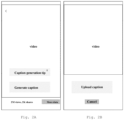
- Fig. 2A when the creator of the video plays the video to be translated, an option of "Generate caption" is displayed in the video, for example in a form of a banner.
- Fig. 2A can also illustrate video views and shares of the video to be translated.
- Fig. 2A can also illustrate a caption generation tip above the option of "Generate caption”. The caption generation tip will disappear after the creator of the video clicks on a Close button. The tip will also automatically disappear after the creator of the video has successfully added the caption.
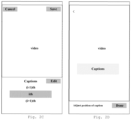
- Fig. 2B can also illustrate a progress of uploading the caption, for example, 20% has been uploaded.
- Fig. 2B also provides an option of Discard, and the Discard button can be clicked when the creator of the video wishes to discard the operation of uploading the caption.
- operation guidance provided by a platform can be opened for learning how to add caption.
- the operation guidance will notify the creator of the video that the original caption can be generated first, and then the original caption can be automatically translated by a translator (for example, a viewer from the world), and a community translator can help optimize the automatically translated caption translation.
- a tip can be presented to notify that the caption will be automatically translated.
- a preview page can be entered, as shown in Fig. 2C .
- a plurality of captions are displayed on the preview page, and the captions are highlighted one by one (for example, sentence by sentence).
- the video can be played in a manner that speech synchronizes with the caption.
- options of Edit, Discard, Save, etc. are also provided.
- the creator of the video can click on corresponding option buttons to perform operations such as edit, discard or save, according to a specific situation.
- the caption added by the creator will be displayed on a corresponding video playing page, as shown in Fig. 2D .
- Fig. 2D there can also comprise a tip of adjusting a position of the caption.
- the creator of the video can adjust the position of the caption on the video playing page by means of, for example, dragging.
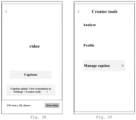
- Fig. 2F illustrates a "Creator tools" page. If a user clicks on "Manage caption", he/she will enter the caption management page, as shown in Fig. 2G .
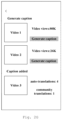
- a caption state of the video On the caption management page of Fig. 2G is displayed a caption state of the video.
- the caption state of the video comprises caption to be generated (i.e., generate caption) and caption added.
- the video is ranked according to the video view.
- the video view is displayed on a video cover on the caption management page, for example, in a language different from a language of the creator.
- a type of the caption translation can also be displayed on the caption management page, for example, whether it belongs to an auto-translation or a community translation.
- the number of auto-translations and the number of community translations can also be displayed separately on the caption management page.
- the video is ranked on the caption management page according to an update time.
- update can be performed at the following time: the caption translation having been added; the caption having being translated by the translator; or the caption translation of the translator being removed by the creator.
- a path of entering the "Add caption” page from the notification bar of "Generate caption” in the played video The creator of the video can also directly enter from the "Creator tools" page shown in Fig. 2F . If a user clicks on the "Manage caption” therein, he/she will enter the caption management page. After the caption management page is entered, the caption can be added by clicking on the "Generate caption” button on the video to be translated; and the caption can also be added by clicking on the cover of the video to be translated to view the video and clicking on the "Generate caption” button on the video.
- the caption can be edited again through the caption management page.
- the language used by the user can comprise at least one of: a system language used by the user, a video language browsed by the user, or a language inputted by the user.
- a system language used by the user For example, if the original caption of the video is English and it is desired to be translated into Chinese or Japanese, a user for whom the system language used by the user, the video language browsed by the user, or the language inputted by the user, comprises English, as well as Chinese or Japanese, can be selected as a translator.
- the selection of a translator who uses a language matching with the languages of the original caption and translation by the user, can more effectively improve the quality of the translation and the efficiency of translation assessment.
- the translator can be a registered or enrolled community translator, or can be an unregistered translator.
- the unregistered translator guidance on registration as a community translator can also be provided for the translator. Selecting the registered translator to provide the translation can further effectively improve the quality of the translation and the efficiency of translation assessment.
- the translator can also be selected according to the type of the video to be translated and a type of videos in which the user is interested. For example, expected interest values of the user for different types of videos are determined according to history behavior data of the user; the type of the videos in which the user is interested is determined according to the expected interest values of the user for the different types of videos; and a user for whom the type of the interested videos match with the type of the video to be translated is selected as the translator.
- Providing the translator with the video of his/her favorite type can improve the translation enthusiasm of the translator, and is also beneficial to improving the quality of the translation and is easy to reduce the cost of translation assessment.
- Figs. 3A to 3C illustrate schematic diagrams of interactive interfaces for translating an original caption in a video according to some embodiments of the present disclosure.
- Fig. 3D illustrates a schematic diagram of guiding registration as a community translator according to some embodiments of the present disclosure.
- step S5 only the selected translator is provided with the video to be translated, and the translator is, in the video, provided with the interactive interface for translating the original caption in the video, as shown in Fig. 3A .
- the translator is provided, in-feed in the video, with a translation of the original caption in the video to be translated.
- Fig. 3A can also illustrate the original caption.
- the interactive interface for translating the original caption in the video is not provided for other users than the selected translator.
- a proofreading page is entered, as shown in Fig. 3B .
- original captions are displayed one by one (for example, sentence by sentence) on the proofreading page and a translation is displayed below each original caption, and an edit position is directed to a translation of a caption selected by the translator.
- the translation can be a machine translation or a caption translation of the caption provided by another translator.
- the edit interface can comprise a pop-up keyboard as shown in Fig. 3C .
- the translator can clear the translation and input his/her own caption translation. After finishing the caption translation, the translator can submit to the platform to wait for assessment. After the assessment are passed, he/she will receive a notification from the platform. That is, the video processing method further comprises: sending a notification to the translator after the caption translation of the translator passes the assessment.
- the translator can also enter a corresponding task management interface to view a state of the caption translation, which is, for example, under review, passing review or assessment, not passing assessment, or the like.
- the providing, in the video, the translator with an interactive interface for translating the original caption in the video further comprises providing the translator with the guidance on registration as the community translator, as shown in Fig. 3D .
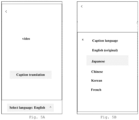
- Fig. 4A illustrates a schematic diagram of a caption translation of the caption viewing page according to some embodiments of the present disclosure.
- Fig. 4B illustrates a schematic diagram of a translator information page according to some embodiments of the present disclosure.
- Fig. 5A illustrates a schematic diagram of a video playing page according to some embodiments of the present disclosure.
- Fig. 5B illustrates a schematic diagram of a caption language management page according to some embodiments of the present disclosure.
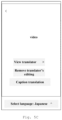
- Fig. 5C illustrates a schematic diagram of a caption translation of the caption viewing page according to other embodiments of the present disclosure.
- the caption translation returned by the translator from the interactive page is received and reviewed.
- the creator of the video can also be notified that there already has a caption translation of the caption passing the assessment.
- the creator of the video can view the caption translation according to a path provided by the notification, such as the caption translation viewing page shown in Fig. 4A .
- the creator of the video can also enter the translator information page to view information about the translator by clicking on a "View translator" button shown in Fig. 4A , as shown in Fig. 4B.
- Fig. 4B illustrates an identity of the translator, for example, whether he/she belongs to a community translator, a language he/she is good at, and can also show thumbnails (for example, video covers) of other translated works of the translator.
- the creator of the video can also go to the video playing page by clicking on the video, as shown in Fig. 5A .
- Fig. 5A on the video playing page, there is displayed the original caption by default, but is provided an option of Language. After the option of Language is clicked, the caption language management page is entered, as shown in Fig. 5B .
- Fig. 5B the language of the original caption is presented, as well as languages of various versions of caption translations.
- the creator of the video can select a caption translation of the caption in a corresponding language and view a corresponding caption translation, as shown in Fig. 5C . Similar to Fig. 4A , Fig. 5C illustrates the caption translation, and displays a "View translator" button.
- the creator of the video can also click on the "View translator” button shown in Fig. 5C , and enter the translator information page to view information about the translator, as shown in Fig. 4B .
- the creator of the video can also remove the translator's caption translation through a "Remove translator's editing" button shown in Fig. 5C .
- the caption translation adopted by the creator of the video will be posted.
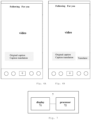
- Fig. 6A illustrates a schematic diagram of a video playing page according to other embodiments of the present disclosure.
- Fig. 6B illustrates a schematic diagram of an interactive interface for translator's interaction with a viewer according to some embodiments of the present disclosure.
- the caption translation passing the assessment is displayed in the video.
- the original caption and the posted caption translation of the video will synchronize with the speech of the video.
- the video processing method further comprises: providing, in the video, the interactive interface for the translator's interaction with the viewer as shown in Fig. 6B .
- Fig. 6B in the video, there is displayed the caption translation passing the assessment, and is displayed a signature of the translator corresponding to the caption translation, for example, a username of the translator.
- the viewer can perform interactions such as likes, etc., for the translator shown in Fig. 6B .
- a complete solution is provided for the crowdsourcing translation of the video, and is capable of more effectively improving the quality of the translation and the efficiency of the translation assessment.
- Fig. 7 illustrates a block diagram of a video processing apparatus according to some embodiments of the present disclosure.
- a video processing apparatus 7 comprises a processor 71 and a display 72.
- the processor 71 is configured to: receive an original caption added for a video to be translated by a creator of the video; select a translator based on the original caption and a language used by a user on a social network; provide the selected translator with the video to be translated, and provide, in the video, the translator with an interactive interface for translating the original caption in the video; and receive a caption translation of the caption returned by the translator from the interactive page.
- the processor 71 is configured to perform the steps S1 to S7.
- the display 72 is configured to display, in the video, a caption translation of the caption passing assessment, for example, performing the step S9.
- the apparatus can also comprise a memory, which can have thereon stored various information generated in operations by the video processing apparatus and the units comprised in the video processing apparatus, programs and data for the operations, and the like.
- the memory can be a volatile memory and/or non-volatile memory.
- the memory can include, but is not limited to, a random access memory (RAM), dynamic random access memory (DRAM), static random access memory (SRAM), read-only memory (ROM), flash memory.
- RAM random access memory
- DRAM dynamic random access memory
- SRAM static random access memory
- ROM read-only memory
- flash memory flash memory
- the memory can also be located outside the video processing apparatus.
- Fig. 8 illustrates a block diagram of a video processing apparatus according to other embodiments of the present disclosure.
- a video processing apparatus 8 can be various types of devices, which can include, for example, but are not limited to, mobile terminals such as a mobile phone, a notebook computer, a digital broadcast receiver, a PDA (Personal Digital Assistant), a PAD (Tablet Personal Computer), a PMP (Portable Multimedia Player), a vehicle-mounted terminal (for example, a vehicle-mounted navigation terminal), and the like, and fixed terminals such as a digital TV, a desktop computer, and the like.
- mobile terminals such as a mobile phone, a notebook computer, a digital broadcast receiver, a PDA (Personal Digital Assistant), a PAD (Tablet Personal Computer), a PMP (Portable Multimedia Player), a vehicle-mounted terminal (for example, a vehicle-mounted navigation terminal), and the like, and fixed terminals such as a digital TV, a desktop computer, and the like.
- PDA Personal Digital Assistant
- PAD Tablet Personal Computer
- PMP Portable Multimedia Player
- vehicle-mounted terminal for example, a vehicle-mounted
- the video processing apparatus 8 comprises: a memory 81 and a processor 82 coupled to the memory 81. It should be noted that the components of the video processing apparatus 8 shown in Fig. 8 are only exemplary and not restrictive, and the video processing apparatus 8 can also have other components according to the needs of practical application.
- the processor 82 can control the other components in the video processing apparatus 8 to perform a desired function.
- the memory 81 is configured to store one or more computer-readable instructions.
- the processor 82 is configured to execute the computer-readable instructions which, when executed by the processor 82, implement the method according to any of the above embodiments. For specific implementations of each step of the method and related explanations, reference can be made to the foregoing embodiments, which are not repeated herein.
- the processor 82 and the memory 81 can be in direct or indirect communication with each other.
- the processor 82 and the memory 81 can communicate through a network.
- the network can comprise a wireless network, a wired network, and/or any combination of wireless and wired networks.
- the processor 82 and the memory 81 can also communicate with each other through a system bus, which is not limited in the present disclosure.
- the processor 82 can be embodied as various suitable processors, processing devices, and the like, such as a central processing unit (CPU), graphics processing unit (GPU), network processor (NP), and the like; but can also be a digital signal processor (DSP), application specific integrated circuit (ASIC), field programmable gate array (FPGA) or other programmable logic device, discrete gate or transistor logic, discrete hardware component.
- the central processing unit (CPU) can be an X86 or ARM architecture, etc.
- the memory 81 can comprise any combination of various forms of computer-readable storage media, such as a volatile memory and/or non-volatile memory.
- the memory 81 can comprise, for example, a system memory, which has thereon stored, for example, an operating system, application program, boot loader, database, other program, and the like.
- Various application programs and various data and the like can also be stored in the storage medium.
- a program constituting the software can be installed from a storage medium or a network to a computer system having a dedicated hardware structure, for example, a computer system of an electronic device 900 shown in Fig. 9 , which when has thereon installed various programs, is capable of performing various functions comprising functions such as those described above and the like.
- a central processing unit (CPU) 901 performs various processing according to a program stored in a read-only memory (ROM) 902 or a program loaded from a storage portion 908 to a random access memory (RAM) 903.
- ROM read-only memory
- RAM random access memory
- the central processing unit is merely exemplary and can be other types of processors such as the various processors described above.
- the ROM 902, RAM 903, and storage portion 908 can be various forms of computer-readable storage media, as described below. It should be noted that although the ROM 902, RAM 903, and storage portion 908 are shown separately in Fig. 9 , one or more of them can be combined or located in a same memory or storage module, or different memories or storage modules.
- the CPU 901, ROM 902, and RAM 903 are connected to each other via a bus 904.
- An input/output interface 905 is also connected to the bus 904.
- an input portion 906 such as a touch screen, a touch pad, a keyboard, a mouse, an image sensor, a microphone, an accelerometer, a gyroscope, and the like
- an output portion 907 comprising a display such as a cathode ray tube (CRT), a liquid crystal display (LCD), a speaker, a vibrator, and the like
- the storage portion 908 comprising a hard disk, a magnetic tape, and the like
- a communication portion 909 comprising a network interface card such as a LAN card, a modem, and the like.
- the communication portion 909 allows communication processing to be performed via a network such as the Internet.
- the various devices or modules in the electronic device 900 shown in Fig. 9 communicate through the bus 904, they can also communicate through a network or another manner, wherein the network can comprise a wireless network, a wired network, and/or any combination of wireless and wired networks.
- a driver 910 is also connected to the input/output interface 905 as needed.
- a removable medium 911 such as a magnetic disk, an optical disk, a magneto-optical disk, a semiconductor memory, or the like is mounted on the drive 910 as needed, so that a computer program read out therefrom is installed in the storage portion 908 as needed.
- a program constituting the software can be installed from a network such as the Internet or a storage medium such as the removable medium 911.
- the process described above with reference to the flow diagram can be implemented as a computer software program.
- a computer program product is comprised, which comprises a computer program carried on a computer-readable medium, the computer program comprising program code for performing the method illustrated by the flow diagram.
- the computer program can be downloaded and installed from a network through the communication device 909, or installed from the storage portion 908, or installed from the ROM 902.
- the computer program when executed by the CPU 901, performs the above functions defined in the method of the embodiment of the present disclosure.
- a computer-readable medium can be any tangible medium that can have thereon contained or stored a program for use by or in conjunction with an instruction execution system, apparatus, or device.
- the computer-readable medium can be a computer-readable signal medium or a computer-readable storage medium or any combination of the two.
- the computer-readable storage medium can be, for example, but is not limited to: an electronic, magnetic, optical, electromagnetic, infrared, or semiconductor system, apparatus, or device, or any combination of the above.
- the computer-readable storage medium can comprise, but are not limited to: an electric connection having one or more wires, a portable computer diskette, a hard disk, a random access memory (RAM), a read-only memory (ROM), an erasable programmable read-only memory (EPROM or flash memory), an optical fiber, a portable compact disc read-only memory (CD-ROM), an optical storage device, a magnetic storage device, or any suitable combination of the above.
- the computer-readable storage medium can be any tangible medium that can have thereon contained or stored a program for use by or in conjunction with an instruction execution system, apparatus, or device.
- the computer-readable signal medium can comprise a data signal propagated in baseband or as part of a carrier wave, in which computer-readable program code is carried.
- a propagated data signal can take any of a variety of forms, comprising but not limited to, an electromagnetic signal, an optical signal, or any suitable combination of the above.
- the computer-readable signal medium can be any computer-readable medium other than the computer-readable storage medium, and it can send, propagate, or transmit a program for use by or in conjunction with an instruction execution system, apparatus, or device.
- the program code contained on the computer-readable medium can be transmitted using any suitable medium, comprising but not limited to: a wire, an optical cable, RF (radio frequency), etc., or any suitable combination of the above.
- the above computer-readable medium can be contained in the above electronic device; or can be separate and not assembled into the electronic device.
- a computer program comprising: instructions which, when executed by a processor, cause the processor to perform the method of any of the embodiments described above.
- the instructions can be embodied as computer program code.
- computer program code for performing operations of the present disclosure can be written in one or more programming languages or any combination thereof, wherein the programming language comprises but is not limited to an object-oriented programming language such as Java, Smalltalk, C++, and also comprises a conventional procedural programming language, such as a "C" programming language or similar programming language.
- the program code can be executed entirely on a user's computer, partly on the user's computer, as a stand-alone software package, partly on the user's computer and partly on a remote computer or entirely on the remote computer or server.
- the remote computer can be connected to the user' s computer through any type of network, comprising a local area network (LAN) or a wide area network (WAN), or can be connected to an external computer (for example, through the Internet using an Internet service provider).
- LAN local area network
- WAN wide area network
- each block in the flow diagrams or block diagrams can represent one module, program segment, or portion of code, which comprises one or more executable instructions for implementing a specified logic function.
- functions noted in the blocks can occur in a different order from the order noted in the drawings. For example, two blocks shown in succession can actually be executed substantially in parallel, and they can sometimes be executed in the reverse order, which depends upon a function involved.
- each block of the block diagrams and/or flow diagrams and a combination of the blocks in the block diagrams and/or flow diagrams can be implemented by a special-purpose hardware-based system that performs the specified function or operation, or a combination of special-purpose hardware and computer instructions.
- the module, component or unit described in the embodiments of the present disclosure can be implemented by software or hardware.
- a name of the module, component, or unit does not in some cases constitute a limitation on the module, component, or unit itself.
- an exemplary hardware logic component that can be used comprises : a field programmable gate array (FPGA), application specific integrated circuit (ASIC), application specific standard product (ASSP), system on chip (SOC), complex programmable logic device (CPLD), and the like.
- FPGA field programmable gate array
- ASIC application specific integrated circuit
- ASSP application specific standard product
- SOC system on chip
- CPLD complex programmable logic device
Landscapes
- Engineering & Computer Science (AREA)
- Theoretical Computer Science (AREA)
- General Physics & Mathematics (AREA)
- Physics & Mathematics (AREA)
- Multimedia (AREA)
- Signal Processing (AREA)
- General Engineering & Computer Science (AREA)
- Health & Medical Sciences (AREA)
- General Health & Medical Sciences (AREA)
- Business, Economics & Management (AREA)
- Artificial Intelligence (AREA)
- Audiology, Speech & Language Pathology (AREA)
- Computational Linguistics (AREA)
- Human Computer Interaction (AREA)
- Quality & Reliability (AREA)
- Human Resources & Organizations (AREA)
- General Business, Economics & Management (AREA)
- Tourism & Hospitality (AREA)
- Strategic Management (AREA)
- Operations Research (AREA)
- Marketing (AREA)
- Economics (AREA)
- Entrepreneurship & Innovation (AREA)
- Databases & Information Systems (AREA)
- Social Psychology (AREA)
- Computer Networks & Wireless Communication (AREA)
- Computer Security & Cryptography (AREA)
- Machine Translation (AREA)
- Two-Way Televisions, Distribution Of Moving Picture Or The Like (AREA)
- Computing Systems (AREA)
Abstract
Description
- This application claims priority to
Chinese Patent Application No. 202111447076.5, entitled "VIDEO PROCESSING METHOD, VIDEO PROCESSING APPARATUS, AND COMPUTER-READABLE STORAGE MEDIUM", and filed on November 30, 2021 - This disclosure relates to the field of computer technologies, and in particular, to a video processing method, a video processing apparatus, and a computer-readable storage medium.
- A social network can, according to an input of a user, provide various services, such as photo or video sharing, messaging, etc., to facilitate social interaction between users.
- With the interaction with the social network, the user can upload digital media to a system for browsing by others. The digital media can include image, video, audio, text, and the like. For example, the user can post a self-created video onto the social network. The other users on the social network can interact with the video creator by means of browsing, likes, comments, and the like.
- With the user's increasing dependence on the social network, the user has higher and higher requirements for experience of the social network, especially for quality of caption translation in the video.
- According to some embodiments of the present disclosure, there is provided a video processing method, comprising:
- receiving an original caption added for a video to be translated by a creator of the video;
- selecting a translator based on the original caption and a language used by a user on a social network;
- providing the selected translator with the video to be translated, and providing, in the video, the translator with an interactive interface for translating the original caption in the video;
- receiving a caption translation of the caption returned by the translator from the interactive interface; and
- displaying, in the video, the caption translation passing assessment.
- According to other embodiments of the present disclosure, there is provided a video processing apparatus, comprising:
- a processor configured to
- receive an original caption added for a video to be translated by a creator of the video;
- select a translator based on the original caption and a language used by a user on a social network;
- provide the selected translator with the video to be translated, and provide, in the video, the translator with an interactive interface for translating the original caption in the video; and
- receive a caption translation of the caption returned by the translator from the interactive interface; and
- a display configured to display, in the video, the caption translation passing assessment.
- According to still other embodiments of the present disclosure, there is provided a video processing apparatus, comprising:
- a memory; and
- a processor coupled to the memory, the processor being configured to perform, based on instructions stored in the memory, one or more steps of the video processing method of any of the embodiments according to the present disclosure.
- According to further embodiments of the present disclosure, there is provided a computer-readable storage medium having thereon stored a computer program which, when executed by a processor, performs one or more steps of the video processing method of any of the embodiments according to the present disclosure.
- The "SUMMARY" is provided to introduce concepts in a simplified form, which will be described in detail below in the following "DETAILED DESCRIPTION OF THE DRAWINGS". The "SUMMARY" is not intended to identify key features or essential features of the claimed technical solutions, nor is it intended to limit the scope of the claimed technical solutions.
- Other features, aspects, and advantages of the present disclosure will become apparent from the following detailed description of exemplary embodiments thereof, which is made with reference to the accompanying drawings.
- Preferred embodiments of the present disclosure will be described below with reference to the accompanying drawings. The accompanying drawings are used for providing a further understanding of the present disclosure. The accompanying drawings, together with the description, are incorporated in and form a part of this specification, and serve to explain the present disclosure. It should be understood that the drawings in the following description relate to only some embodiments of the present disclosure and do not constitute limitations on the present disclosure. In the drawings:
-
Fig. 1 illustrates a flow diagram of a video processing method according to some embodiments of the present disclosure; -
Figs. 2A to 2G illustrate schematic diagrams of interactive interfaces for caption management according to some embodiments of the present disclosure; -
Figs. 3A to 3C illustrate schematic diagrams of interactive interfaces for translating an original caption in a video according to some embodiments of the present disclosure; -
Fig. 3D illustrates a schematic diagram of guiding registration as a community translator according to some embodiments of the present disclosure; -
Fig. 4A illustrates a schematic diagram of a caption translation of the caption viewing page according to some embodiments of the present disclosure; -
Fig. 4B illustrates a schematic diagram of a translator information page according to some embodiments of the present disclosure; -
Fig. 5A illustrates a schematic diagram of a video playing page according to some embodiments of the present disclosure; -
Fig. 5B illustrates a schematic diagram of a caption language management page according to some embodiments of the present disclosure; -
Fig. 5C illustrates a schematic diagram of a caption translation of the caption viewing page according to other embodiments of the present disclosure; -
Fig. 6A illustrates a schematic diagram of a video playing page according to other embodiments of the present disclosure; -
Fig. 6B illustrates a schematic diagram of an interactive interface for translator's interaction with a viewer according to some embodiments of the present disclosure; -
Fig. 7 illustrates a block diagram of a video processing apparatus according to some embodiments of the present disclosure; -
Fig. 8 illustrates a block diagram of a video processing apparatus according to other embodiments of the present disclosure; -
Fig. 9 illustrates a block diagram of an electronic device according to some embodiments of the present disclosure. - It should be understood that sizes of various components shown in the drawings are not necessarily drawn to an actual scale for ease of description. Identical or similar reference numbers are used throughout the drawings to refer to identical or similar components. Therefore, once a certain item is defined in one drawing, it may not be further discussed in subsequent drawings.
- Technical solutions in embodiments of the present disclosure will be described clearly and completely with reference to the drawings in the embodiments of the present disclosure, but it is obvious that the embodiments described are only some of the embodiments of the present disclosure, not all of the embodiments. The following description of the embodiments is merely illustrative in nature and is in no way intended to limit this disclosure, its application, or uses. It should be understood that the present disclosure can be implemented in various forms and should not be construed as limited to the embodiments set forth herein.
- It should be understood that various steps recited in method embodiments of the present disclosure can be performed in a different order, and/or performed in parallel. Moreover, the method embodiments can comprise additional steps and/or omit performing the illustrated steps. The scope of the present disclosure is not limited in this respect. Unless specifically stated otherwise, relative arrangements of components and steps, numerical expressions, and numerical values set forth in these embodiments should be construed as merely illustrative, and do not limit the scope of the present disclosure.
- A term "comprise" and variations thereof used in this disclosure are intended to be an open-minded term that comprise at least the following elements/features, but do not exclude other elements/features, i.e., "comprising but not limited to". Furthermore, a term "include" and variations thereof used in this disclosure are intended to be an open-minded term that comprises at least the following elements/features, but do not exclude other elements/features, i.e., "including but not limited to". Therefore, "comprise" is synonymous with "include". A term "based on" means "based at least in part on".
- Throughout this specification, termed "one embodiment", "some embodiments", or "an embodiment" means that a specific feature, structure, or characteristic described in conjunction with the embodiment is comprised in at least one embodiment of the present invention. For example, the term "one embodiment" means "at least one embodiment"; the term "another embodiment" means "at least one other embodiment"; the term "some embodiments" means "at least some embodiments". Moreover, the phrases "in one embodiment," "in some embodiments," or "in an embodiment" appearing in various places throughout this specification do not necessarily all refer to a same embodiment, but can also refer to the same embodiment.
- It should be noted that notions of "first", "second", and the like mentioned in the present disclosure are only used for distinguishing different devices, modules or units, and are not used for limiting the order or interdependence of functions performed by the devices, modules or units. Unless otherwise specified, the notions "first", "second", and the like are not intended to imply that objects so described must be in a given order in time, space, rank, or any other way.
- It should be noted that modifiers of "a" or "an" mentioned in this disclosure are intended to be illustrative rather than restrictive, and those skilled in the art should appreciate that they should be understood as "one or more" unless otherwise clearly indicated in the context.
- Names of messages or information exchanged between devices in the embodiments of the present disclosure are for illustrative purposes only, and are not intended to limit the scope of these messages or information.
- The embodiments of the present disclosure will be described in detail below with reference to the accompanying drawings, but the present disclosure is not limited to these specific embodiments . These specific embodiments can be combined with each other below, and identical or similar concepts or processes may not be repeated in some embodiments. Furthermore, the specific feature, structure, or characteristic can be combined in any suitable manner that would be apparent to one of ordinary skill in the art from this disclosure in one or more embodiments. It should be understood that how an image or video to be applied/processed is obtained is also not limited in the present disclosure. In one embodiment of the present disclosure, the image or video can be acquired from a storage device, such as an internal memory or an external storage device, and in another embodiment of the present disclosure, the image or video can be taken by a camera assembly. It should be noted that in the context of this specification, a type of the image or video is not specifically limited. Furthermore, the image or video can be a source image or video obtained by a camera device, or an image or video that is obtained by particularly processing the source image or video, for example, preliminary filtering, antialiasing, color adjustment, contrast adjustment, normalization, and the like. It should be noted that the preprocessing operation can also comprise other types of preprocessing operations known in the art, which will not be repeated herein.
- With the user's increasing dependence on a social network, the user has higher and higher requirements for experience of the social network, especially for quality of caption translation in a video. In the related art, only a video poster can edit and post caption information of the video. To further improve the quality of the caption translation in the video, the caption translation in the video is provided using crowdsourcing translation.
-
Fig. 1 illustrates a flow diagram of a video processing method according to some embodiments of the present disclosure. - As shown in
Fig. 1 , the video processing method comprises: step S1, receiving an original caption added for a video to be translated by a creator of the video; step S3, selecting a translator based on the original caption and a language used by a user on a social network; step S5, providing the selected translator with the video to be translated, and providing, in the video, the translator with an interactive interface for translating the original caption in the video; step S7, receiving a caption translation of the caption returned by the translator from the interactive page; and step S9, displaying, in the video, the caption translation of the caption passing assessment. - In the step S1, the original caption added for the video to be translated by the creator of the video can be received by providing the creator of the video with an interactive interface for caption management.
-
Fig. 2A to 2G illustrate schematic diagrams of interactive interfaces for caption management according to some embodiments of the present disclosure. - As shown in
Fig. 2A , when the creator of the video plays the video to be translated, an option of "Generate caption" is displayed in the video, for example in a form of a banner.Fig. 2A can also illustrate video views and shares of the video to be translated.Fig. 2A can also illustrate a caption generation tip above the option of "Generate caption". The caption generation tip will disappear after the creator of the video clicks on a Close button. The tip will also automatically disappear after the creator of the video has successfully added the caption. - If the user clicks on the "Generate caption" button, he/she will enter an "Add caption" page. On the "Add caption" page, the creator of the video can upload the original caption, as shown in
Fig. 2B. Fig. 2B can also illustrate a progress of uploading the caption, for example, 20% has been uploaded.Fig. 2B also provides an option of Discard, and the Discard button can be clicked when the creator of the video wishes to discard the operation of uploading the caption. - For a creator unfamiliar with the caption management, for example, a creator who uses the caption management for the first time, before a caption is added, operation guidance provided by a platform can be opened for learning how to add caption. For example, the operation guidance will notify the creator of the video that the original caption can be generated first, and then the original caption can be automatically translated by a translator (for example, a viewer from the world), and a community translator can help optimize the automatically translated caption translation.
- After the caption has been added by the creator of the video, a tip can be presented to notify that the caption will be automatically translated.
- After the creator of the video finishes uploading the original caption, a preview page can be entered, as shown in
Fig. 2C . As shown inFig. 2C , a plurality of captions are displayed on the preview page, and the captions are highlighted one by one (for example, sentence by sentence). In response to a playing request for the video, the video can be played in a manner that speech synchronizes with the caption. In the preview page ofFig. 2C , options of Edit, Discard, Save, etc. are also provided. The creator of the video can click on corresponding option buttons to perform operations such as edit, discard or save, according to a specific situation. - The caption added by the creator will be displayed on a corresponding video playing page, as shown in
Fig. 2D . InFig. 2D , there can also comprise a tip of adjusting a position of the caption. The creator of the video can adjust the position of the caption on the video playing page by means of, for example, dragging. - After the position of the caption has been adjusted, i.e., the caption has been added, on the page, there is displayed a tip of "Caption added" and is provided an entry to entering a caption management page by the creator of the video from an option of "Creator tools" in "Settings", as shown in
Fig. 2E . -
Fig. 2F illustrates a "Creator tools" page. If a user clicks on "Manage caption", he/she will enter the caption management page, as shown inFig. 2G . On the caption management page ofFig. 2G is displayed a caption state of the video. The caption state of the video comprises caption to be generated (i.e., generate caption) and caption added. - For the video with the to be generated caption, the video is ranked according to the video view. In some embodiments, the video view is displayed on a video cover on the caption management page, for example, in a language different from a language of the creator.
- For the video with caption added, a type of the caption translation can also be displayed on the caption management page, for example, whether it belongs to an auto-translation or a community translation. In some embodiments, for the video with the caption added, the number of auto-translations and the number of community translations can also be displayed separately on the caption management page.
- In some embodiments, the video is ranked on the caption management page according to an update time. For example, update can be performed at the following time: the caption translation having been added; the caption having being translated by the translator; or the caption translation of the translator being removed by the creator.
- In the above embodiments, there is provided a path of entering the "Add caption" page from the notification bar of "Generate caption" in the played video. The creator of the video can also directly enter from the "Creator tools" page shown in
Fig. 2F . If a user clicks on the "Manage caption" therein, he/she will enter the caption management page. After the caption management page is entered, the caption can be added by clicking on the "Generate caption" button on the video to be translated; and the caption can also be added by clicking on the cover of the video to be translated to view the video and clicking on the "Generate caption" button on the video. - For the creator of the video, even if the added caption has been already submitted, the caption can be edited again through the caption management page.
- In the step S3, the language used by the user can comprise at least one of: a system language used by the user, a video language browsed by the user, or a language inputted by the user. For example, if the original caption of the video is English and it is desired to be translated into Chinese or Japanese, a user for whom the system language used by the user, the video language browsed by the user, or the language inputted by the user, comprises English, as well as Chinese or Japanese, can be selected as a translator. The selection of a translator, who uses a language matching with the languages of the original caption and translation by the user, can more effectively improve the quality of the translation and the efficiency of translation assessment.
- The translator can be a registered or enrolled community translator, or can be an unregistered translator. For the unregistered translator, guidance on registration as a community translator can also be provided for the translator. Selecting the registered translator to provide the translation can further effectively improve the quality of the translation and the efficiency of translation assessment.
- In some embodiments, the translator can also be selected according to the type of the video to be translated and a type of videos in which the user is interested. For example, expected interest values of the user for different types of videos are determined according to history behavior data of the user; the type of the videos in which the user is interested is determined according to the expected interest values of the user for the different types of videos; and a user for whom the type of the interested videos match with the type of the video to be translated is selected as the translator. Providing the translator with the video of his/her favorite type can improve the translation enthusiasm of the translator, and is also beneficial to improving the quality of the translation and is easy to reduce the cost of translation assessment.
- The step S5 will be described below in conjunction with
Figs. 3A to 3D. Figs. 3A to 3C illustrate schematic diagrams of interactive interfaces for translating an original caption in a video according to some embodiments of the present disclosure.Fig. 3D illustrates a schematic diagram of guiding registration as a community translator according to some embodiments of the present disclosure. - In the step S5, only the selected translator is provided with the video to be translated, and the translator is, in the video, provided with the interactive interface for translating the original caption in the video, as shown in
Fig. 3A . InFig. 3A , the translator is provided, in-feed in the video, with a translation of the original caption in the video to be translated.Fig. 3A can also illustrate the original caption. The interactive interface for translating the original caption in the video is not provided for other users than the selected translator. - In response to an edit request for the translation from the translator, a proofreading page is entered, as shown in
Fig. 3B . InFig. 3B , original captions are displayed one by one (for example, sentence by sentence) on the proofreading page and a translation is displayed below each original caption, and an edit position is directed to a translation of a caption selected by the translator. The translation can be a machine translation or a caption translation of the caption provided by another translator. - The edit interface can comprise a pop-up keyboard as shown in
Fig. 3C . The translator can clear the translation and input his/her own caption translation. After finishing the caption translation, the translator can submit to the platform to wait for assessment. After the assessment are passed, he/she will receive a notification from the platform. That is, the video processing method further comprises: sending a notification to the translator after the caption translation of the translator passes the assessment. Of course, the translator can also enter a corresponding task management interface to view a state of the caption translation, which is, for example, under review, passing review or assessment, not passing assessment, or the like. - In some embodiments, the providing, in the video, the translator with an interactive interface for translating the original caption in the video further comprises providing the translator with the guidance on registration as the community translator, as shown in
Fig. 3D . - The step S7 will be described below in conjunction with
Figs. 4A to 5C .Fig. 4A illustrates a schematic diagram of a caption translation of the caption viewing page according to some embodiments of the present disclosure.Fig. 4B illustrates a schematic diagram of a translator information page according to some embodiments of the present disclosure.Fig. 5A illustrates a schematic diagram of a video playing page according to some embodiments of the present disclosure.Fig. 5B illustrates a schematic diagram of a caption language management page according to some embodiments of the present disclosure.Fig. 5C illustrates a schematic diagram of a caption translation of the caption viewing page according to other embodiments of the present disclosure. - In the step S7, the caption translation returned by the translator from the interactive page is received and reviewed. In some embodiments, the creator of the video can also be notified that there already has a caption translation of the caption passing the assessment. The creator of the video can view the caption translation according to a path provided by the notification, such as the caption translation viewing page shown in
Fig. 4A . The creator of the video can also enter the translator information page to view information about the translator by clicking on a "View translator" button shown inFig. 4A , as shown inFig. 4B. Fig. 4B illustrates an identity of the translator, for example, whether he/she belongs to a community translator, a language he/she is good at, and can also show thumbnails (for example, video covers) of other translated works of the translator. - The creator of the video can also go to the video playing page by clicking on the video, as shown in
Fig. 5A . InFig. 5A , on the video playing page, there is displayed the original caption by default, but is provided an option of Language. After the option of Language is clicked, the caption language management page is entered, as shown inFig. 5B . InFig. 5B , the language of the original caption is presented, as well as languages of various versions of caption translations. The creator of the video can select a caption translation of the caption in a corresponding language and view a corresponding caption translation, as shown inFig. 5C . Similar toFig. 4A ,Fig. 5C illustrates the caption translation, and displays a "View translator" button. As described above, the creator of the video can also click on the "View translator" button shown inFig. 5C , and enter the translator information page to view information about the translator, as shown inFig. 4B . The creator of the video can also remove the translator's caption translation through a "Remove translator's editing" button shown inFig. 5C . The caption translation adopted by the creator of the video will be posted. - The step S9 will be described below in conjunction with
Figs. 6A to 6B. Fig. 6A illustrates a schematic diagram of a video playing page according to other embodiments of the present disclosure.Fig. 6B illustrates a schematic diagram of an interactive interface for translator's interaction with a viewer according to some embodiments of the present disclosure. - In the step S9, the caption translation passing the assessment is displayed in the video. As shown in
Fig. 6A , the original caption and the posted caption translation of the video will synchronize with the speech of the video. - In some embodiments, the video processing method further comprises: providing, in the video, the interactive interface for the translator's interaction with the viewer as shown in
Fig. 6B . InFig. 6B , in the video, there is displayed the caption translation passing the assessment, and is displayed a signature of the translator corresponding to the caption translation, for example, a username of the translator. The viewer can perform interactions such as likes, etc., for the translator shown inFig. 6B . - In the above embodiments, a complete solution is provided for the crowdsourcing translation of the video, and is capable of more effectively improving the quality of the translation and the efficiency of the translation assessment.
-
Fig. 7 illustrates a block diagram of a video processing apparatus according to some embodiments of the present disclosure. As shown inFig. 7 , avideo processing apparatus 7 comprises aprocessor 71 and adisplay 72. - The
processor 71 is configured to: receive an original caption added for a video to be translated by a creator of the video; select a translator based on the original caption and a language used by a user on a social network; provide the selected translator with the video to be translated, and provide, in the video, the translator with an interactive interface for translating the original caption in the video; and receive a caption translation of the caption returned by the translator from the interactive page. For example, theprocessor 71 is configured to perform the steps S1 to S7. - The
display 72 is configured to display, in the video, a caption translation of the caption passing assessment, for example, performing the step S9. - Furthermore, although not shown, the apparatus can also comprise a memory, which can have thereon stored various information generated in operations by the video processing apparatus and the units comprised in the video processing apparatus, programs and data for the operations, and the like. The memory can be a volatile memory and/or non-volatile memory. For example, the memory can include, but is not limited to, a random access memory (RAM), dynamic random access memory (DRAM), static random access memory (SRAM), read-only memory (ROM), flash memory. Of course, the memory can also be located outside the video processing apparatus.
-
Fig. 8 illustrates a block diagram of a video processing apparatus according to other embodiments of the present disclosure. - In some embodiments, a
video processing apparatus 8 can be various types of devices, which can include, for example, but are not limited to, mobile terminals such as a mobile phone, a notebook computer, a digital broadcast receiver, a PDA (Personal Digital Assistant), a PAD (Tablet Personal Computer), a PMP (Portable Multimedia Player), a vehicle-mounted terminal (for example, a vehicle-mounted navigation terminal), and the like, and fixed terminals such as a digital TV, a desktop computer, and the like. - As shown in
Fig. 8 , thevideo processing apparatus 8 comprises: amemory 81 and aprocessor 82 coupled to thememory 81. It should be noted that the components of thevideo processing apparatus 8 shown inFig. 8 are only exemplary and not restrictive, and thevideo processing apparatus 8 can also have other components according to the needs of practical application. Theprocessor 82 can control the other components in thevideo processing apparatus 8 to perform a desired function. - In some embodiments, the
memory 81 is configured to store one or more computer-readable instructions. Theprocessor 82 is configured to execute the computer-readable instructions which, when executed by theprocessor 82, implement the method according to any of the above embodiments. For specific implementations of each step of the method and related explanations, reference can be made to the foregoing embodiments, which are not repeated herein. - For example, the
processor 82 and thememory 81 can be in direct or indirect communication with each other. For example, theprocessor 82 and thememory 81 can communicate through a network. The network can comprise a wireless network, a wired network, and/or any combination of wireless and wired networks. Theprocessor 82 and thememory 81 can also communicate with each other through a system bus, which is not limited in the present disclosure. - For example, the
processor 82 can be embodied as various suitable processors, processing devices, and the like, such as a central processing unit (CPU), graphics processing unit (GPU), network processor (NP), and the like; but can also be a digital signal processor (DSP), application specific integrated circuit (ASIC), field programmable gate array (FPGA) or other programmable logic device, discrete gate or transistor logic, discrete hardware component. The central processing unit (CPU) can be an X86 or ARM architecture, etc. For example, thememory 81 can comprise any combination of various forms of computer-readable storage media, such as a volatile memory and/or non-volatile memory. Thememory 81 can comprise, for example, a system memory, which has thereon stored, for example, an operating system, application program, boot loader, database, other program, and the like. Various application programs and various data and the like can also be stored in the storage medium. - In addition, according to some embodiments of the present disclosure, in the case where various operations/processing according to the present disclosure is implemented by software and/or firmware, a program constituting the software can be installed from a storage medium or a network to a computer system having a dedicated hardware structure, for example, a computer system of an
electronic device 900 shown inFig. 9 , which when has thereon installed various programs, is capable of performing various functions comprising functions such as those described above and the like. - In
Fig. 9 , a central processing unit (CPU) 901 performs various processing according to a program stored in a read-only memory (ROM) 902 or a program loaded from astorage portion 908 to a random access memory (RAM) 903. In theRAM 903, data needed when theCPU 901 executes the various processing and the like is also stored as needed. The central processing unit is merely exemplary and can be other types of processors such as the various processors described above. TheROM 902,RAM 903, andstorage portion 908 can be various forms of computer-readable storage media, as described below. It should be noted that although theROM 902,RAM 903, andstorage portion 908 are shown separately inFig. 9 , one or more of them can be combined or located in a same memory or storage module, or different memories or storage modules. - The
CPU 901,ROM 902, andRAM 903 are connected to each other via abus 904. An input/output interface 905 is also connected to thebus 904. - The following components are connected to the input/output interface 905: an
input portion 906 such as a touch screen, a touch pad, a keyboard, a mouse, an image sensor, a microphone, an accelerometer, a gyroscope, and the like; anoutput portion 907 comprising a display such as a cathode ray tube (CRT), a liquid crystal display (LCD), a speaker, a vibrator, and the like; thestorage portion 908 comprising a hard disk, a magnetic tape, and the like; and acommunication portion 909 comprising a network interface card such as a LAN card, a modem, and the like. Thecommunication portion 909 allows communication processing to be performed via a network such as the Internet. It is readily appreciated that while the various devices or modules in theelectronic device 900 shown inFig. 9 communicate through thebus 904, they can also communicate through a network or another manner, wherein the network can comprise a wireless network, a wired network, and/or any combination of wireless and wired networks. - A
driver 910 is also connected to the input/output interface 905 as needed. Aremovable medium 911 such as a magnetic disk, an optical disk, a magneto-optical disk, a semiconductor memory, or the like is mounted on thedrive 910 as needed, so that a computer program read out therefrom is installed in thestorage portion 908 as needed. - In the case where the series of processing described above is implemented by software, a program constituting the software can be installed from a network such as the Internet or a storage medium such as the
removable medium 911. - According to an embodiment of the present disclosure, the process described above with reference to the flow diagram can be implemented as a computer software program. For example, in the embodiment of the present disclosure, a computer program product is comprised, which comprises a computer program carried on a computer-readable medium, the computer program comprising program code for performing the method illustrated by the flow diagram. In such an embodiment, the computer program can be downloaded and installed from a network through the
communication device 909, or installed from thestorage portion 908, or installed from theROM 902. The computer program, when executed by theCPU 901, performs the above functions defined in the method of the embodiment of the present disclosure. - It should be noted that in the context of this disclosure, a computer-readable medium can be any tangible medium that can have thereon contained or stored a program for use by or in conjunction with an instruction execution system, apparatus, or device. The computer-readable medium can be a computer-readable signal medium or a computer-readable storage medium or any combination of the two. The computer-readable storage medium can be, for example, but is not limited to: an electronic, magnetic, optical, electromagnetic, infrared, or semiconductor system, apparatus, or device, or any combination of the above. More specific examples of the computer-readable storage medium can comprise, but are not limited to: an electric connection having one or more wires, a portable computer diskette, a hard disk, a random access memory (RAM), a read-only memory (ROM), an erasable programmable read-only memory (EPROM or flash memory), an optical fiber, a portable compact disc read-only memory (CD-ROM), an optical storage device, a magnetic storage device, or any suitable combination of the above. In the present disclosure, the computer-readable storage medium can be any tangible medium that can have thereon contained or stored a program for use by or in conjunction with an instruction execution system, apparatus, or device. However, in the present disclosure, the computer-readable signal medium can comprise a data signal propagated in baseband or as part of a carrier wave, in which computer-readable program code is carried. Such a propagated data signal can take any of a variety of forms, comprising but not limited to, an electromagnetic signal, an optical signal, or any suitable combination of the above. The computer-readable signal medium can be any computer-readable medium other than the computer-readable storage medium, and it can send, propagate, or transmit a program for use by or in conjunction with an instruction execution system, apparatus, or device. The program code contained on the computer-readable medium can be transmitted using any suitable medium, comprising but not limited to: a wire, an optical cable, RF (radio frequency), etc., or any suitable combination of the above.
- The above computer-readable medium can be contained in the above electronic device; or can be separate and not assembled into the electronic device.
- In some embodiments, there is also provided a computer program, comprising: instructions which, when executed by a processor, cause the processor to perform the method of any of the embodiments described above. For example, the instructions can be embodied as computer program code.
- In an embodiment of the present disclosure, computer program code for performing operations of the present disclosure can be written in one or more programming languages or any combination thereof, wherein the programming language comprises but is not limited to an object-oriented programming language such as Java, Smalltalk, C++, and also comprises a conventional procedural programming language, such as a "C" programming language or similar programming language. The program code can be executed entirely on a user's computer, partly on the user's computer, as a stand-alone software package, partly on the user's computer and partly on a remote computer or entirely on the remote computer or server. In the scenario where the remote computer is involved, the remote computer can be connected to the user' s computer through any type of network, comprising a local area network (LAN) or a wide area network (WAN), or can be connected to an external computer (for example, through the Internet using an Internet service provider).
- Flow diagrams and block diagrams in the drawings illustrate the possible architecture, functions, and operations of systems, methods and computer program products according to various embodiments of the present disclosure. In this regard, each block in the flow diagrams or block diagrams can represent one module, program segment, or portion of code, which comprises one or more executable instructions for implementing a specified logic function. It should also be noted that, in some alternative implementations, functions noted in the blocks can occur in a different order from the order noted in the drawings. For example, two blocks shown in succession can actually be executed substantially in parallel, and they can sometimes be executed in the reverse order, which depends upon a function involved. It will also be noted that each block of the block diagrams and/or flow diagrams and a combination of the blocks in the block diagrams and/or flow diagrams can be implemented by a special-purpose hardware-based system that performs the specified function or operation, or a combination of special-purpose hardware and computer instructions.
- The module, component or unit described in the embodiments of the present disclosure can be implemented by software or hardware. A name of the module, component, or unit does not in some cases constitute a limitation on the module, component, or unit itself.
- The functions described above herein can be performed, at least in part, by one or more hardware logic components. For example, without limitation, an exemplary hardware logic component that can be used comprises : a field programmable gate array (FPGA), application specific integrated circuit (ASIC), application specific standard product (ASSP), system on chip (SOC), complex programmable logic device (CPLD), and the like.
- The above description is only some embodiments of the present disclosure and an explanation of technical principles employed. It should be appreciated by those skilled in the art that the disclosure scope involved in the present disclosure is not limited to the technical solution formed by the specific combination of the above features, but also encompasses another technical solution formed by an arbitrary combination of the above technical features or their equivalent features without departing from the above disclosure concepts. For example, it is a technical solution formed by replacing the above features with technical features having functions similar to the disclosed (but not limited to) technical feature in the present disclosure.
- In the description provided herein, numerous specific details are set forth. However, it is understood that the embodiments of this invention can be practiced without these specific details. In other cases, well-known methods, structures and techniques have not been shown in detail in order not to obscure an understanding of this description.
- Furthermore, while operations are depicted in a specific order, this should not be understood as requiring that such operations be performed in the specific order shown or in sequential order. Under certain circumstances, multitasking and parallel processing can be advantageous. Similarly, while several specific implementation details are comprised in the above discussion, these should not be construed as limitations on the scope of the present disclosure. Certain features that are described in the context of separate embodiments can also be implemented in combination in a single embodiment. Conversely, various features that are described in the context of a single embodiment can also be implemented in multiple embodiments separately or in any suitable sub-combination. Although some specific embodiments of the present disclosure have been described in detail by way of examples, it should be understood by those skilled in the art that the above examples are for illustration only and are not intended to limit the scope of the present disclosure. It should be appreciated by those skilled in the art that modifications can be made to the above embodiments without departing from the scope and spirit of the present disclosure. The scope of the present disclosure is defined by the attached claims.
Claims (16)
- A video processing method, comprising:receiving an original caption added for a video to be translated by a creator of the video;selecting a translator based on the original caption and a language used by a user on a social network;providing the selected translator with the video to be translated, and providing, in the video, the translator with an interactive interface for translating the original caption in the video;receiving a caption translation of the caption returned by the translator from the interactive interface; anddisplaying, in the video, the caption translation passing assessment.
- The video processing method according to claim 1, wherein the language used by the user comprises at least one of: a system language used by the user, a video language browsed by the user, or a language inputted by the user.
- The video processing method according to claim 1 or claim 2, wherein the translator comprises an registered community translator.
- The video processing method according to any one of claims 1-3, wherein the selecting a translator further comprises:
selecting the translator according to a type of the video to be translated and a type of videos in which an user is interested. - The video processing method according to claim 4, wherein the selecting the translator according to a type of the video to be translated and a type of videos in which an user is interested comprises:determining expected interest values of an user for different types of videos according to history behavior data of the user;determining the type of the videos in which the user is interested according to the expected interest values of the user for the different types of videos; andselecting a user for whom the type of the interested videos matches with the type of the video to be translated as the translator.
- The video processing method according to any one of claims 1-5, wherein the providing, in the video, the translator with an interactive interface for translating the original caption in the video comprises:providing the translator with a translation of the original caption in the video to be translated in-feed in the video; andentering a proofreading page in response to an edit request for the translation from the translator.
- The video processing method according to any one of claims 1-6, wherein the providing, in the video, the translator with an interactive interface for translating the original caption in the video comprises:
providing the translator with guidance on registration as a community translator. - The video processing method according to any one of claims 1-7, wherein the displaying, in the video, a translation of the caption passing assessment comprises:
displaying, in the video, a signature of the translator corresponding to the caption translation. - The video processing method according to any one of claims 1-8, further comprising:sending a notification to the translator after the caption translation of the translator passes the assessment; and/orproviding, in the video, with the translator an interactive interface for interaction with a viewer.
- The video processing method according to any one of claims 1-9, wherein the original caption added for the video to be translated by the creator of the video is received by providing the creator of the video with an interactive interface for caption management.
- The video processing method according to claim 10, wherein after the original caption is added by the creator of the video, a caption management page is entered, on which a caption state of the video is displayed, the caption state of the video comprising caption to be generated and caption added.
- The video processing method according to claim 11, wherein:for the video with the caption to be generated, Video View is also displayed on the caption management page; andfor the video with the caption added, a type of the caption translation is also displayed on the caption management page.
- A video processing apparatus, comprising:a processor configured toreceive an original caption added for a video to be translated by a creator of the video;select a translator based on the original caption and a language used by a user on a social network;provide the selected translator with the video to be translated, and provide, in the video, the translator with an interactive interface for translating the original caption in the video; andreceive a caption translation of the caption returned by the translator from the interactive page; anda display configured to display, in the video, the caption translation passing assessment.
- A video processing apparatus, comprising:a memory; anda processor coupled to the memory, the processor being configured to perform, based on instructions stored in the memory, one or more steps of the video processing method according to any one of claims 1-12.
- A computer-readable storage medium having thereon stored a computer program which, when executed by a processor, implements the video processing method according to any one of claims 1-12.
- A computer program which, when executed by a processor, implements the video processing method according to any one of claims 1-12.
Applications Claiming Priority (2)
| Application Number | Priority Date | Filing Date | Title |
|---|---|---|---|
| CN202111447076.5A CN114143592B (en) | 2021-11-30 | 2021-11-30 | Video processing method, video processing device and computer-readable storage medium |
| PCT/CN2022/133682 WO2023098531A1 (en) | 2021-11-30 | 2022-11-23 | Video processing method, video processing apparatus, and computer-readable storage medium |
Publications (2)
| Publication Number | Publication Date |
|---|---|
| EP4429258A1 true EP4429258A1 (en) | 2024-09-11 |
| EP4429258A4 EP4429258A4 (en) | 2025-03-05 |
Family
ID=80386155
Family Applications (1)
| Application Number | Title | Priority Date | Filing Date |
|---|---|---|---|
| EP22900336.3A Pending EP4429258A4 (en) | 2021-11-30 | 2022-11-23 | Video processing method, video processing apparatus, and computer-readable storage medium |
Country Status (7)
| Country | Link |
|---|---|
| US (1) | US12271708B2 (en) |
| EP (1) | EP4429258A4 (en) |
| JP (1) | JP2024543970A (en) |
| KR (1) | KR102862444B1 (en) |
| CN (1) | CN114143592B (en) |
| AU (2) | AU2022399687A1 (en) |
| WO (1) | WO2023098531A1 (en) |
Families Citing this family (3)
| Publication number | Priority date | Publication date | Assignee | Title |
|---|---|---|---|---|
| CN114143593B (en) * | 2021-11-30 | 2024-07-19 | 抖音视界有限公司 | Video processing method, video processing apparatus, and computer-readable storage medium |
| CN114143592B (en) * | 2021-11-30 | 2023-10-27 | 抖音视界有限公司 | Video processing method, video processing device and computer-readable storage medium |
| CN115455213A (en) * | 2022-08-31 | 2022-12-09 | 北京字跳网络技术有限公司 | Display method, device, equipment and storage medium of a multimedia work |
Family Cites Families (55)
| Publication number | Priority date | Publication date | Assignee | Title |
|---|---|---|---|---|
| US20060227240A1 (en) * | 2005-03-30 | 2006-10-12 | Inventec Corporation | Caption translation system and method using the same |
| US20070106516A1 (en) * | 2005-11-10 | 2007-05-10 | International Business Machines Corporation | Creating alternative audio via closed caption data |
| US20070211169A1 (en) * | 2006-03-06 | 2007-09-13 | Dotsub Llc | Systems and methods for rendering text onto moving image content |
| EP2095635A2 (en) * | 2006-11-05 | 2009-09-02 | Sean Joseph Leonard | System and methods for rapid subtitling |
| US7992183B1 (en) * | 2007-11-09 | 2011-08-02 | Google Inc. | Enabling users to create, to edit and/or to rate online video captions over the web |
| JP2009289091A (en) * | 2008-05-30 | 2009-12-10 | Brother Ind Ltd | Method, server and program for selecting translator |
| US8260604B2 (en) * | 2008-10-29 | 2012-09-04 | Google Inc. | System and method for translating timed text in web video |
| US8913188B2 (en) * | 2008-11-12 | 2014-12-16 | Cisco Technology, Inc. | Closed caption translation apparatus and method of translating closed captioning |
| JP2010157961A (en) | 2009-01-05 | 2010-07-15 | Kadokawa Marketing Co Ltd | Caption creation system and program |
| US8645134B1 (en) * | 2009-11-18 | 2014-02-04 | Google Inc. | Generation of timed text using speech-to-text technology and applications thereof |
| WO2012030965A2 (en) * | 2010-08-31 | 2012-03-08 | Fox Entertainment Group, Inc. | Localized media content editing |
| US8756050B1 (en) * | 2010-09-14 | 2014-06-17 | Amazon Technologies, Inc. | Techniques for translating content |
| US8620139B2 (en) * | 2011-04-29 | 2013-12-31 | Microsoft Corporation | Utilizing subtitles in multiple languages to facilitate second-language learning |
| US8914276B2 (en) * | 2011-06-08 | 2014-12-16 | Microsoft Corporation | Dynamic video caption translation player |
| JP5451696B2 (en) * | 2011-07-13 | 2014-03-26 | Necビッグローブ株式会社 | Subtitle adding apparatus, content data, subtitle adding method and program |
| US9595020B2 (en) * | 2012-03-15 | 2017-03-14 | International Business Machines Corporation | Dynamic media captions in a social network environment |
| US9418060B1 (en) * | 2012-03-19 | 2016-08-16 | Amazon Technologies, Inc. | Sample translation reviews |
| US10331793B2 (en) | 2012-10-17 | 2019-06-25 | Proz.Com | Method and apparatus to facilitate high-quality translation of texts by multiple translators |
| US20140143218A1 (en) * | 2012-11-20 | 2014-05-22 | Apple Inc. | Method for Crowd Sourced Multimedia Captioning for Video Content |
| EP2946279B1 (en) * | 2013-01-15 | 2019-10-16 | Viki, Inc. | System and method for captioning media |
| CN103167360A (en) | 2013-02-21 | 2013-06-19 | 中国对外翻译出版有限公司 | Method for achieving multilingual subtitle translation |
| US9280753B2 (en) | 2013-04-09 | 2016-03-08 | International Business Machines Corporation | Translating a language in a crowdsourced environment |
| US10025776B1 (en) * | 2013-04-12 | 2018-07-17 | Amazon Technologies, Inc. | Language translation mediation system |
| KR102129536B1 (en) * | 2013-08-06 | 2020-07-03 | 삼성전자주식회사 | Mobile terminal and method for controlling the mobile terminal |
| US9600474B2 (en) * | 2013-11-08 | 2017-03-21 | Google Inc. | User interface for realtime language translation |
| US20180034961A1 (en) * | 2014-02-28 | 2018-02-01 | Ultratec, Inc. | Semiautomated Relay Method and Apparatus |
| CN104378692A (en) | 2014-11-17 | 2015-02-25 | 天脉聚源(北京)传媒科技有限公司 | Method and device for processing video captions |
| JP6250013B2 (en) | 2014-11-26 | 2017-12-20 | ネイバー コーポレーションNAVER Corporation | Content participation translation apparatus and content participation translation method using the same |
| KR20160081032A (en) * | 2014-12-30 | 2016-07-08 | 송광식 | System for managing on-line translation service |
| US10140363B2 (en) | 2015-05-21 | 2018-11-27 | International Business Machines Corporation | Social network crowd translation |
| RU2604984C1 (en) * | 2015-05-25 | 2016-12-20 | Общество с ограниченной ответственностью "Аби Девелопмент" | Translating service based on electronic community |
| US9779372B2 (en) | 2015-06-25 | 2017-10-03 | One Hour Translation, Ltd. | System and method for ensuring the quality of a human translation of content through real-time quality checks of reviewers |
| US20170139904A1 (en) * | 2015-11-16 | 2017-05-18 | Comcast Cable Communications, Llc | Systems and methods for cloud captioning digital content |
| US10255277B2 (en) * | 2016-06-24 | 2019-04-09 | Facebook, Inc. | Crowd matching translators |
| KR20180006728A (en) * | 2016-07-11 | 2018-01-19 | 손솔 | Electronic device for control of displaying caption |
| US9703775B1 (en) | 2016-08-16 | 2017-07-11 | Facebook, Inc. | Crowdsourcing translations on online social networks |
| US20180144747A1 (en) * | 2016-11-18 | 2018-05-24 | Microsoft Technology Licensing, Llc | Real-time caption correction by moderator |
| US20180143956A1 (en) * | 2016-11-18 | 2018-05-24 | Microsoft Technology Licensing, Llc | Real-time caption correction by audience |
| KR20180066398A (en) * | 2016-12-08 | 2018-06-19 | 김미경 | Method for matching caption with voice sound in video image of a system for making, evaluating, and spreading caption |
| CN107688792B (en) | 2017-09-05 | 2020-06-05 | 语联网(武汉)信息技术有限公司 | Video translation method and system |
| US11856315B2 (en) | 2017-09-29 | 2023-12-26 | Apple Inc. | Media editing application with anchored timeline for captions and subtitles |
| US10728623B2 (en) * | 2018-06-06 | 2020-07-28 | Home Box Office, Inc. | Editing timed-text elements |
| KR102226765B1 (en) * | 2018-06-14 | 2021-03-11 | 이동준 | System and method for providing service for translating video subtitles |
| CN110276349B (en) | 2019-06-24 | 2023-08-18 | 腾讯科技(深圳)有限公司 | Video processing method, device, electronic equipment and storage medium |
| JP7434762B2 (en) * | 2019-09-10 | 2024-02-21 | 富士フイルムビジネスイノベーション株式会社 | Information processing equipment and programs |
| US11373048B2 (en) * | 2019-09-11 | 2022-06-28 | International Business Machines Corporation | Translation of multi-format embedded files |
| CN112584252B (en) * | 2019-09-29 | 2022-02-22 | 深圳市万普拉斯科技有限公司 | Instant translation display method and device, mobile terminal and computer storage medium |
| CN112437337B (en) * | 2020-02-12 | 2023-07-07 | 上海哔哩哔哩科技有限公司 | Method, system and equipment for realizing live caption |
| US11776578B2 (en) * | 2020-06-02 | 2023-10-03 | Trapelo Corp. | Automatic modification of values of content elements in a video |
| CN111898388B (en) * | 2020-07-20 | 2024-08-27 | 北京字节跳动网络技术有限公司 | Video subtitle translation and editing method, device, electronic device and storage medium |
| CN112104896B (en) | 2020-08-31 | 2023-04-07 | 火星语盟(深圳)科技有限公司 | Subtitle editing method, terminal, server, system and storage medium |
| CN112954434B (en) | 2021-02-26 | 2023-07-04 | 北京奇艺世纪科技有限公司 | Subtitle processing method, system, electronic device and storage medium |
| US20220383228A1 (en) * | 2021-05-25 | 2022-12-01 | Glocalize Inc. | Multilingual subtitle service system and method for controlling server thereof |
| CN114143593B (en) * | 2021-11-30 | 2024-07-19 | 抖音视界有限公司 | Video processing method, video processing apparatus, and computer-readable storage medium |
| CN114143592B (en) | 2021-11-30 | 2023-10-27 | 抖音视界有限公司 | Video processing method, video processing device and computer-readable storage medium |
-
2021
- 2021-11-30 CN CN202111447076.5A patent/CN114143592B/en active Active
-
2022
- 2022-04-22 US US17/726,642 patent/US12271708B2/en active Active
- 2022-11-23 EP EP22900336.3A patent/EP4429258A4/en active Pending
- 2022-11-23 JP JP2024532477A patent/JP2024543970A/en active Pending
- 2022-11-23 AU AU2022399687A patent/AU2022399687A1/en not_active Abandoned
- 2022-11-23 WO PCT/CN2022/133682 patent/WO2023098531A1/en not_active Ceased
- 2022-11-23 KR KR1020247020364A patent/KR102862444B1/en active Active
-
2026
- 2026-01-05 AU AU2026200035A patent/AU2026200035A1/en active Pending
Also Published As
| Publication number | Publication date |
|---|---|
| KR102862444B1 (en) | 2025-09-18 |
| CN114143592A (en) | 2022-03-04 |
| WO2023098531A1 (en) | 2023-06-08 |
| AU2026200035A1 (en) | 2026-01-22 |
| KR20240110043A (en) | 2024-07-12 |
| CN114143592B (en) | 2023-10-27 |
| US20230169275A1 (en) | 2023-06-01 |
| AU2022399687A1 (en) | 2024-06-27 |
| EP4429258A4 (en) | 2025-03-05 |
| US12271708B2 (en) | 2025-04-08 |
| JP2024543970A (en) | 2024-11-26 |
Similar Documents
| Publication | Publication Date | Title |
|---|---|---|
| CN111970577B (en) | Subtitle editing method and device and electronic equipment | |
| US20260039935A1 (en) | Video processing method and apparatus, readable medium and electronic device | |
| US12271708B2 (en) | Video processing method, video processing apparatus, and computer-readable storage medium | |
| EP4429254A1 (en) | Video processing method, video processing apparatus, and computer-readable storage medium | |
| WO2022068533A1 (en) | Interactive information processing method and apparatus, device and medium | |
| CN110740389B (en) | Video positioning method, video positioning device, computer readable medium and electronic equipment | |
| US11899717B2 (en) | Video processing method, video processing apparatus, and computer-readable storage medium | |
| US20240296871A1 (en) | Method, apparatus, device, storage medium and program product for video generation | |
| US12401844B2 (en) | Video processing method, video processing apparatus, and non-transitory computer-readable storage medium | |
| CN113891168B (en) | Subtitle processing method, subtitle processing device, electronic equipment and storage medium | |
| EP4496317A1 (en) | Video generation method and apparatus, and device, storage medium and program product | |
| JP7861117B2 (en) | Video processing method, video processing device, and computer-readable storage medium | |
| US12412583B2 (en) | Method, apparatus and electronic device for displaying | |
| CN113132789A (en) | Multimedia interaction method, device, equipment and medium | |
| US20260051086A1 (en) | Interaction method, non-transitory computer-readable storage medium and electronic device | |
| US20260029896A1 (en) | Information display method and apparatus for audiobook, electronic device, and storage medium | |
| WO2026026757A1 (en) | Information processing method and apparatus, and electronic device, storage medium and program product | |
| CN115563410A (en) | Search result display method and device, electronic equipment and storage medium | |
| CN120104876A (en) | Recommendation method, recommendation device, electronic device and computer-readable storage medium | |
| CN121531173A (en) | Content processing methods, apparatuses, electronic devices, storage media, and program products | |
| WO2025190415A1 (en) | Information display method and apparatus, device, and storage medium | |
| CN121567899A (en) | Media content generation method, device, medium, electronic equipment and program product | |
| CN119127041A (en) | Interactive method, device, medium, equipment and computer program product | |
| CN116821278A (en) | Display method and device of search information, medium and electronic equipment | |
| CN114912422A (en) | Data processing method, apparatus, medium and electronic device |
Legal Events
| Date | Code | Title | Description |
|---|---|---|---|
| STAA | Information on the status of an ep patent application or granted ep patent |
Free format text: STATUS: THE INTERNATIONAL PUBLICATION HAS BEEN MADE |
|
| PUAI | Public reference made under article 153(3) epc to a published international application that has entered the european phase |
Free format text: ORIGINAL CODE: 0009012 |
|
| STAA | Information on the status of an ep patent application or granted ep patent |
Free format text: STATUS: REQUEST FOR EXAMINATION WAS MADE |
|
| 17P | Request for examination filed |
Effective date: 20240607 |
|
| AK | Designated contracting states |
Kind code of ref document: A1 Designated state(s): AL AT BE BG CH CY CZ DE DK EE ES FI FR GB GR HR HU IE IS IT LI LT LU LV MC ME MK MT NL NO PL PT RO RS SE SI SK SM TR |
|
| A4 | Supplementary search report drawn up and despatched |
Effective date: 20250131 |
|
| DAV | Request for validation of the european patent (deleted) | ||
| DAX | Request for extension of the european patent (deleted) | ||
| RIC1 | Information provided on ipc code assigned before grant |
Ipc: H04N 21/854 20110101ALI20250127BHEP Ipc: H04N 21/488 20110101ALI20250127BHEP Ipc: H04N 21/4788 20110101AFI20250127BHEP |
|
| STAA | Information on the status of an ep patent application or granted ep patent |
Free format text: STATUS: EXAMINATION IS IN PROGRESS |
|
| 17Q | First examination report despatched |
Effective date: 20251002 |