EP4428831A1 - Method for calculating absorption rate of super absorbent polymer on basis of image classification algorithm - Google Patents
Method for calculating absorption rate of super absorbent polymer on basis of image classification algorithm Download PDFInfo
- Publication number
- EP4428831A1 EP4428831A1 EP23883055.8A EP23883055A EP4428831A1 EP 4428831 A1 EP4428831 A1 EP 4428831A1 EP 23883055 A EP23883055 A EP 23883055A EP 4428831 A1 EP4428831 A1 EP 4428831A1
- Authority
- EP
- European Patent Office
- Prior art keywords
- absorption
- frame
- image data
- frame image
- absorbent material
- Prior art date
- Legal status (The legal status is an assumption and is not a legal conclusion. Google has not performed a legal analysis and makes no representation as to the accuracy of the status listed.)
- Pending
Links
Images



Classifications
-
- G—PHYSICS
- G06—COMPUTING OR CALCULATING; COUNTING
- G06V—IMAGE OR VIDEO RECOGNITION OR UNDERSTANDING
- G06V10/00—Arrangements for image or video recognition or understanding
- G06V10/70—Arrangements for image or video recognition or understanding using pattern recognition or machine learning
- G06V10/82—Arrangements for image or video recognition or understanding using pattern recognition or machine learning using neural networks
-
- G—PHYSICS
- G06—COMPUTING OR CALCULATING; COUNTING
- G06N—COMPUTING ARRANGEMENTS BASED ON SPECIFIC COMPUTATIONAL MODELS
- G06N3/00—Computing arrangements based on biological models
- G06N3/02—Neural networks
- G06N3/04—Architecture, e.g. interconnection topology
- G06N3/0475—Generative networks
-
- G—PHYSICS
- G06—COMPUTING OR CALCULATING; COUNTING
- G06N—COMPUTING ARRANGEMENTS BASED ON SPECIFIC COMPUTATIONAL MODELS
- G06N3/00—Computing arrangements based on biological models
- G06N3/02—Neural networks
- G06N3/08—Learning methods
-
- G—PHYSICS
- G06—COMPUTING OR CALCULATING; COUNTING
- G06N—COMPUTING ARRANGEMENTS BASED ON SPECIFIC COMPUTATIONAL MODELS
- G06N3/00—Computing arrangements based on biological models
- G06N3/02—Neural networks
- G06N3/08—Learning methods
- G06N3/09—Supervised learning
-
- G—PHYSICS
- G06—COMPUTING OR CALCULATING; COUNTING
- G06T—IMAGE DATA PROCESSING OR GENERATION, IN GENERAL
- G06T7/00—Image analysis
- G06T7/0002—Inspection of images, e.g. flaw detection
- G06T7/0004—Industrial image inspection
-
- G—PHYSICS
- G06—COMPUTING OR CALCULATING; COUNTING
- G06V—IMAGE OR VIDEO RECOGNITION OR UNDERSTANDING
- G06V10/00—Arrangements for image or video recognition or understanding
- G06V10/40—Extraction of image or video features
- G06V10/62—Extraction of image or video features relating to a temporal dimension, e.g. time-based feature extraction; Pattern tracking
-
- G—PHYSICS
- G06—COMPUTING OR CALCULATING; COUNTING
- G06T—IMAGE DATA PROCESSING OR GENERATION, IN GENERAL
- G06T2207/00—Indexing scheme for image analysis or image enhancement
- G06T2207/10—Image acquisition modality
- G06T2207/10016—Video; Image sequence
-
- G—PHYSICS
- G06—COMPUTING OR CALCULATING; COUNTING
- G06T—IMAGE DATA PROCESSING OR GENERATION, IN GENERAL
- G06T2207/00—Indexing scheme for image analysis or image enhancement
- G06T2207/20—Special algorithmic details
- G06T2207/20081—Training; Learning
-
- G—PHYSICS
- G06—COMPUTING OR CALCULATING; COUNTING
- G06T—IMAGE DATA PROCESSING OR GENERATION, IN GENERAL
- G06T2207/00—Indexing scheme for image analysis or image enhancement
- G06T2207/20—Special algorithmic details
- G06T2207/20084—Artificial neural networks [ANN]
Definitions
- the present invention relates to a method for calculating an absorbing speed of a super absorbent material.
- an absorbent material has been used by calculating the absorbing speed thereof and giving the absorbent material a use that matches its absorbing speed.
- a method for measuring the absorption time manually using a timer after inserting a sample absorbent material into a place of use was used.
- Patent document 1 discloses a method for measuring the change in mass of the absorbent material to roughly determine the time required for an amount of absorbed liquid of the sample to reach the maximum absorbed amount.
- this method has the problem that it can be applied only when the maximum absorption amount and penetration speed coefficient of the sample are known.
- Patent Document 1 Japanese unexamined patent application publication No. 2020-051997
- the present invention unlike conventional methods, is intended to provide a method and system for calculating a degree of absorption of an absorbent material from an image for each frame of absorption video data of the absorbent material.
- a method for generating an artificial neural network model for calculating an absorbing speed of an absorbent material including a step of preparing training data consisting of image data of a predetermined absorbent material and classification data labeled by dividing a corresponding image into whether it is an absorption-in-progress image or an absorption-completion image, a step of constructing an artificial neural network that receives predetermined image data and classifies an input image with a predetermined label, and a machine learning step of training the artificial neural network by inputting the training data into the artificial neural network and updating parameters constituting the artificial neural network.
- the image data of the absorbent material is acquired through a video data acquisition step of acquiring absorption video data for a plurality of absorbent materials, and a frame image data acquisition step of acquiring each frame image data constituting the video data.
- the absorption video data is video data in which a process of water being absorbed and hardened when a predetermined amount of the absorbent material is added while putting a predetermined amount of water in a container and stirring the water.
- a method for calculating an absorbing speed of an absorbent material including an absorbent material video data acquisition step of putting an absorbent material and acquiring video data of the absorbent material for a predetermined period of time, a frame image data acquisition step of acquiring frame image data by separating the video data into each frame image data, a frame image classification step of classifying the frame image by inputting the frame image data into an artificial neural network model, and an absorbing speed calculation step of extracting an absorption end frame and an absorption start frame from the classified frame images and calculating an absorbing speed using the absorption end frame and the absorption start frame.
- the absorbing speed can be calculated by (Equation 1) below.
- Equation 1) absorbing speed (absorption end frame number - absorption start frame number)/fps of video
- a system for calculating an absorbing speed of an absorbent material including a video data acquisition unit that acquires absorption video data of the absorbent material, frame image data acquisition unit that acquires frame image data by separating the absorption video data into each frame image data constituting video data, and an absorbing speed arithmetic unit that calculates an absorbing speed of the absorbent material by calculating an absorption start time and an absorption completion time from the frame image data.
- the present invention further includes a frame image determination unit that receives each frame image data acquired by the frame image data acquisition unit in frame order and distinguishes and determines whether it is an absorption-in-progress image in which the absorbent material is absorbing water, or an absorption-completion image in which water absorption has been completed, and the absorption speed arithmetic unit calculates an absorption start time point from a frame number (start frame number) of an image that the frame image determination unit first determines to be an absorption-in-progress image, and calculates an absorption completion time point from the frame number of an image that the frame image determination unit first determines to be an absorption-completion image;
- the frame image determination unit is configured to include an artificial neural network unit trained in advance to receive each input frame image data, distinguish and determine the input frame image data as an absorption-in-progress image or an absorption-completion image, and output the determination result, and the artificial neural network unit receives sample frame image data obtained by separating the absorption sample image data of multiple sample absorbent materials into each sample frame image data and data labeled as being in a state in which water is being absorbed and in a state in which water absorption has been completed, and is trained so as to match the labeled data to each sample frame image data.
- an effect of measuring the absorbing speed more accurately by applying an image classification algorithm to various absorbent materials through photographing of absorption video can be achieved.
- the present invention relates to a method and system for calculating an absorbing speed of a super absorbent polymer using an image classification algorithm.
- an image classification algorithm used in the present invention a typical convolutional neural network (CNN) can be used, and in addition, image classification models known before the filing date of the present invention can be applied.
- CNN convolutional neural network
- the technical feature of the present invention is not in the image classification model itself, but in calculating the absorbing speed from an absorption video of the super absorbent polymer using the image classification model.
- the present invention includes a video data acquisition unit that acquires absorption video data of the absorbent material.
- the video data acquisition unit performs a video data acquisition step in a method for calculating the absorbing speed of the absorbent material according to the present invention.
- Absorption video data of the absorbent material refers to video data photographed at a predetermined number of frames per second (fps) of an absorption process of a predetermined absorbent material under predetermined conditions.
- the video data acquisition unit is a component that receives the video data, and can be configured to include a typical video camera.
- a 100 mL beaker is filled with 50 mL of 0.9 wt% saline water, and while the saline water is rotated through magnetic stirring at 600 rpm and the entire process of the saline water being absorbed and hardened when 2 g of super absorbent polymer (absorbent material) is added was photographed to acquire video data.
- the video was photographed with a video camera so that a surface inside the beaker was visible at an angle between 30 and 60 degrees as captured in the video.
- the frame image data acquisition unit is a component that separates the video data (absorption video data) acquired or input from the video data acquisition unit into image data in frame units. It is well known to those skilled in the art that a task of separating predetermined video data into each frame image data can be easily implemented through ordinary image processing software or image processing algorithms.
- the frame image data acquisition unit performs a frame image data acquisition procedure in a method for generating the artificial neural network model and method for calculating the absorbing speed of the absorbent material of the present invention.
- the absorption speed arithmetic unit is configured to include an artificial neural network model 31 that receives the acquired frame image data, classifies the frame image, and outputs a score, an absorption progress determination unit 32 that calculates an absorption start time point and an absorption completion time point from an output of the artificial neural network model, and an absorbing speed arithmetic unit 33 that calculates the absorbing speed from the absorption start time point and the absorption completion time point.
- Image determination unit artificial neural network model 31
- the present invention includes a frame image determination unit that receives each frame image data acquired by the frame image data acquisition unit in frame order and distinguishes and determines whether it is an absorption-in-progress image in which the absorbent material is absorbing water, or an absorption-completion image in which water absorption has been completed.
- the image determination unit 31 may be configured with an artificial neural network model.
- the artificial neural network model of the present invention is an example of an image classification algorithm used for calculating the absorbing speed of the super absorbent polymer in the present invention described above.
- a conventional convolutional neural network (CNN) can be used, and in addition, an image classification model known before the filing date of the present invention can be applied.
- the artificial neural network that constitutes the artificial neural network model of the present invention is subjected to machine learning according to a learning procedure described later, and receives each frame image data constituting the absorption video data of the absorbent material described above, distinguishes whether the corresponding image is the absorption-in-progress image or the absorption-completion image, and outputs the probability that the image is the absorption-in-progress image and the probability that the image is the absorption-completion image as scores.
- the score output for each frame image is a value between 0 and 1.
- An example of the score for each frame image output by the artificial neural network model of the present invention trained according to the learning procedure described later is shown in FIG. 4 .
- the artificial neural network model 31 of the present invention includes an artificial neural network that is subj ected to machine learning according to the procedure below.
- the CNN is basically used as an artificial neural network.
- a 100 mL beaker is filled with 50 mL of 0.9 wt% saline water, and while the saline water is rotated through magnetic stirring at 600 rpm, and the entire process of the saline water being absorbed and hardened when 2 g of super absorbent polymer (absorbent material) is added is photographed to acquire video data.
- the video was photographed with a video camera so that a surface inside the beaker was visible at an angle between 30 and 60 degrees as captured in the video.
- the video data is separated into each frame image data to acquired frame image data.
- Such video data and frame image data for training data can be acquired using the video data acquisition unit 10 and the frame image data acquisition unit 20 described above.
- labeled data obtained by labeling whether the frame image is the absorption-in-progress image or the absorption-completion image is merged with the frame image data.
- Labeled data may not be merged with frame image data and may also be handled independently by frame number.
- FIG. 2 shows an example in which each video data for preparing training data is separated into frame image data and labeled.
- the artificial neural network that receives image data and classifies the input image with a predetermined label is constructed.
- the artificial neural network may have the structure of a typical CNN, and a data structure of the CNN as a data processing structure implemented on a computer is well known to those skilled in the art.
- the artificial neural network model 31 of the present invention including the artificial neural network of which training is completed by updating the parameters of each layer constituting the artificial neural network in the machine learning step receives the acquired frame image data from arbitrary absorbent material video data and outputs a score, which is a discriminating value of whether the corresponding image corresponds to the absorption-in-progress image or the absorption-completion image.
- FIG. 4 An example of score output values for absorption video data and frame image data of absorbents A (sample 10) and B (sample 16) is shown in FIG. 4 . It means that the closer the score is to 0, the more absorption is in progress, and the closer the score is to 1, the more absorption is finished.
- the absorption progress determination unit 32 calculates the absorption start time point and absorption completion time point based on the score of each frame image data output by the artificial neural network model 31.
- a frame whose score is stabilized close to zero is selected as a frame at the absorption start time point, and a frame whose score increases by 0.5 or more is selected as a frame at the absorption end time point.
- the absorbing speed arithmetic unit 33 calculates the absorbing speed from the absorption start time point and the absorption completion time point.
- the absorbing speed arithmetic unit 33 calculates the absorbing speed according to Equation 1 below from the calculated absorption start time point and absorption end time point.
- Absorbing speed absorption end time point ⁇ absorption start time point
- the absorbing speed may be calculated from the following Equation 2.
- Absorbing speed (absorption end frame number - absorption start frame number)/fps of video data
- the method for calculating the absorbing speed of the absorbent material according to the present invention is configured to include the following procedures.
- the method includes an absorbent video data acquisition step of putting a predetermined absorbent material into water and acquiring video data of the absorbent material for a predetermined period of time.
- the method includes a frame image data acquisition step of acquiring frame image data by separating the video data into each frame image data, and a frame image classification step of classifying the frame image by inputting the acquired frame image data into an artificial neural network model subjected to machine learning in the manner described above.
- the method includes an absorbing speed calculation step of extracting an absorption end frame and an absorption start frame from the classified frame images and calculating an absorbing speed using the absorption end frame and the absorption start frame, and the absorbing speed can be calculated using (Equation 1) or (Equation 2) described above.
- a method of measuring the absorbing speed of Samples 1 to 16 is as follows.
- the frames of the video data were separated to generate frame images, and the generated frame images were divided into two groups before hardening and after hardening, and labeling was conducted to secure training data.
- the CNN was applied as an image classification algorithm and the neural network model was trained using the labeled training data.
- the researcher directly measured the time using a timer during a process of water being absorbed and hardened.
- the timer was started when Samples 1 to 16 were added to the beaker being stirred, and the timer was terminated in a state where water was absorbed and hardened so that stirring could no longer be performed, and the absorbing speed was measured using the time measured on the timer.
- Table 1 below shows the difference from the absorbing speed measurements according to the examples. The unit of measurement values in each Example and Comparative Example is seconds.
- Sample Example Comparative example Difference(s) Sample 1 29.00 28.70 0.30 Sample 2 16.85 16.55 0.30 Sample 3 24.39 24.19 0.20 Sample 4 31.87 31.13 0.74 Sample 5 40.11 40.01 0.10 Sample 6 88.62 88.15 0.47 Sample 7 16.82 16.42 0.40 Sample 8 16.85 16.32 0.53 Sample 9 23.96 23.36 0.60 Sample 10 25.06 24.52 0.54 Sample 11 32.47 32.33 0.14 Sample 12 31.16 30.76 0.40 Sample 13 41.04 40.67 0.37 Sample 14 31.48 31.10 0.33 Sample 15 85.55 85.39 0.16 Sample 16 90.16 85.59 0.57 Average 0.38
- the absorbing speed measured according to the present invention shows an average difference of 0.38s compared to the absorbing speed of the absorbent material conventionally measured manually using a timer, which shows that the method according to the present invention ensures sufficient accuracy, considering that the conventional method may have errors in operation depending on the researcher.
- Example 2 Sample 1 in Example 1 above was measured 10 times by respectively using the method according to the present invention and the conventional manual measurement method.
- the table below shows the results measured by respective methods.
- Table 2 Number of measurements
- Example Comparative example 1 28.8 29.5 2 29.0 29.5 3 29.0 30.3 4 29.1 28.3 5 29.1 27.0 6 29.0 29.2 7 29.1 28.1 8 28.9 27.9 9 29.1 29.7 10 28.9 27.6 Average 29.0 28.7 Standard deviation 0.1 1.1 (Maximum value - Minimum value) 0.3 3.3
Landscapes
- Engineering & Computer Science (AREA)
- Theoretical Computer Science (AREA)
- Physics & Mathematics (AREA)
- General Physics & Mathematics (AREA)
- Evolutionary Computation (AREA)
- General Health & Medical Sciences (AREA)
- Health & Medical Sciences (AREA)
- Artificial Intelligence (AREA)
- Software Systems (AREA)
- Computing Systems (AREA)
- Biophysics (AREA)
- Life Sciences & Earth Sciences (AREA)
- Data Mining & Analysis (AREA)
- General Engineering & Computer Science (AREA)
- Computational Linguistics (AREA)
- Mathematical Physics (AREA)
- Biomedical Technology (AREA)
- Molecular Biology (AREA)
- Computer Vision & Pattern Recognition (AREA)
- Multimedia (AREA)
- Quality & Reliability (AREA)
- Databases & Information Systems (AREA)
- Medical Informatics (AREA)
- Image Analysis (AREA)
Abstract
Description
- The present invention relates to a method for calculating an absorbing speed of a super absorbent material.
- Conventionally, an absorbent material has been used by calculating the absorbing speed thereof and giving the absorbent material a use that matches its absorbing speed. In the past, in order to calculate this absorbing speed, a method for measuring the absorption time manually using a timer after inserting a sample absorbent material into a place of use was used.
- However, this method was inefficient because researchers had to measure the absorption time manually.
- Patent document 1 discloses a method for measuring the change in mass of the absorbent material to roughly determine the time required for an amount of absorbed liquid of the sample to reach the maximum absorbed amount. However, this method has the problem that it can be applied only when the maximum absorption amount and penetration speed coefficient of the sample are known.
- Related prior art includes the following literature.
- Patent Document 1:
Japanese unexamined patent application publication No. 2020-051997 - The present invention, unlike conventional methods, is intended to provide a method and system for calculating a degree of absorption of an absorbent material from an image for each frame of absorption video data of the absorbent material.
- According to an aspect of the present invention, there is provided a method for generating an artificial neural network model for calculating an absorbing speed of an absorbent material, the method including a step of preparing training data consisting of image data of a predetermined absorbent material and classification data labeled by dividing a corresponding image into whether it is an absorption-in-progress image or an absorption-completion image, a step of constructing an artificial neural network that receives predetermined image data and classifies an input image with a predetermined label, and a machine learning step of training the artificial neural network by inputting the training data into the artificial neural network and updating parameters constituting the artificial neural network.
- In this case, the image data of the absorbent material is acquired through a video data acquisition step of acquiring absorption video data for a plurality of absorbent materials, and a frame image data acquisition step of acquiring each frame image data constituting the video data. In addition, the absorption video data is video data in which a process of water being absorbed and hardened when a predetermined amount of the absorbent material is added while putting a predetermined amount of water in a container and stirring the water.
- According to another aspect of the present invention, there is provided a method for calculating an absorbing speed of an absorbent material including an absorbent material video data acquisition step of putting an absorbent material and acquiring video data of the absorbent material for a predetermined period of time, a frame image data acquisition step of acquiring frame image data by separating the video data into each frame image data, a frame image classification step of classifying the frame image by inputting the frame image data into an artificial neural network model, and an absorbing speed calculation step of extracting an absorption end frame and an absorption start frame from the classified frame images and calculating an absorbing speed using the absorption end frame and the absorption start frame.
- In this case, in the absorbing speed calculation step, the absorbing speed can be calculated by (Equation 1) below. (Equation 1) absorbing speed = (absorption end frame number - absorption start frame number)/fps of video
- According to still another aspect of the present invention, there is provided a system for calculating an absorbing speed of an absorbent material including a video data acquisition unit that acquires absorption video data of the absorbent material, frame image data acquisition unit that acquires frame image data by separating the absorption video data into each frame image data constituting video data, and an absorbing speed arithmetic unit that calculates an absorbing speed of the absorbent material by calculating an absorption start time and an absorption completion time from the frame image data.
- The present invention further includes a frame image determination unit that receives each frame image data acquired by the frame image data acquisition unit in frame order and distinguishes and determines whether it is an absorption-in-progress image in which the absorbent material is absorbing water, or an absorption-completion image in which water absorption has been completed, and the absorption speed arithmetic unit calculates an absorption start time point from a frame number (start frame number) of an image that the frame image determination unit first determines to be an absorption-in-progress image, and calculates an absorption completion time point from the frame number of an image that the frame image determination unit first determines to be an absorption-completion image;
- The frame image determination unit is configured to include an artificial neural network unit trained in advance to receive each input frame image data, distinguish and determine the input frame image data as an absorption-in-progress image or an absorption-completion image, and output the determination result, and the artificial neural network unit receives sample frame image data obtained by separating the absorption sample image data of multiple sample absorbent materials into each sample frame image data and data labeled as being in a state in which water is being absorbed and in a state in which water absorption has been completed, and is trained so as to match the labeled data to each sample frame image data.
- According to the present invention, compared to the conventional method for measuring the absorbing speed of the absorbent material manually using a timer, an effect of measuring the absorbing speed more accurately by applying an image classification algorithm to various absorbent materials through photographing of absorption video can be achieved.
- The following drawings attached to this specification illustrate preferred embodiments of the present invention, and together with the detailed description of the invention described above serve to further understand the technical idea of the present invention. Therefore, the present invention should not be construed as limited to only the matters described in such drawings.
-
FIG. 1 is a diagram showing an outline of a system for calculating an absorbing speed of an absorbent material according to the present invention. -
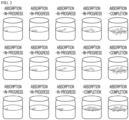
FIG. 2 is a diagram showing an example of an image for each frame of an absorption video according to an embodiment of the present invention. -
FIG. 3 is a diagram that actually shows the frame image of video data photographed in order to prepare training data. -
FIG. 4 is a diagram showing a score calculation output per frame when video data is input to a prediction model trained according to the present invention. - The present invention relates to a method and system for calculating an absorbing speed of a super absorbent polymer using an image classification algorithm. As the image classification algorithm used in the present invention a typical convolutional neural network (CNN) can be used, and in addition, image classification models known before the filing date of the present invention can be applied. It should be noted that the technical feature of the present invention is not in the image classification model itself, but in calculating the absorbing speed from an absorption video of the super absorbent polymer using the image classification model.
- The present invention includes a video data acquisition unit that acquires absorption video data of the absorbent material. The video data acquisition unit performs a video data acquisition step in a method for calculating the absorbing speed of the absorbent material according to the present invention.
- Absorption video data of the absorbent material refers to video data photographed at a predetermined number of frames per second (fps) of an absorption process of a predetermined absorbent material under predetermined conditions. The video data acquisition unit is a component that receives the video data, and can be configured to include a typical video camera.
- An example of acquiring absorption video data of the absorbent material is shown. In the present invention, a 100 mL beaker is filled with 50 mL of 0.9 wt% saline water, and while the saline water is rotated through magnetic stirring at 600 rpm and the entire process of the saline water being absorbed and hardened when 2 g of super absorbent polymer (absorbent material) is added was photographed to acquire video data. In this case, the video was photographed with a video camera so that a surface inside the beaker was visible at an angle between 30 and 60 degrees as captured in the video.
- The frame image data acquisition unit is a component that separates the video data (absorption video data) acquired or input from the video data acquisition unit into image data in frame units. It is well known to those skilled in the art that a task of separating predetermined video data into each frame image data can be easily implemented through ordinary image processing software or image processing algorithms.
- The frame image data acquisition unit performs a frame image data acquisition procedure in a method for generating the artificial neural network model and method for calculating the absorbing speed of the absorbent material of the present invention.
- The absorption speed arithmetic unit is configured to include an artificial
neural network model 31 that receives the acquired frame image data, classifies the frame image, and outputs a score, an absorptionprogress determination unit 32 that calculates an absorption start time point and an absorption completion time point from an output of the artificial neural network model, and an absorbing speedarithmetic unit 33 that calculates the absorbing speed from the absorption start time point and the absorption completion time point. - The present invention includes a frame image determination unit that receives each frame image data acquired by the frame image data acquisition unit in frame order and distinguishes and determines whether it is an absorption-in-progress image in which the absorbent material is absorbing water, or an absorption-completion image in which water absorption has been completed.
- The
image determination unit 31 may be configured with an artificial neural network model. The artificial neural network model of the present invention is an example of an image classification algorithm used for calculating the absorbing speed of the super absorbent polymer in the present invention described above. As the artificial neural network model, a conventional convolutional neural network (CNN) can be used, and in addition, an image classification model known before the filing date of the present invention can be applied. - The artificial neural network that constitutes the artificial neural network model of the present invention is subjected to machine learning according to a learning procedure described later, and receives each frame image data constituting the absorption video data of the absorbent material described above, distinguishes whether the corresponding image is the absorption-in-progress image or the absorption-completion image, and outputs the probability that the image is the absorption-in-progress image and the probability that the image is the absorption-completion image as scores. The score output for each frame image is a value between 0 and 1. An example of the score for each frame image output by the artificial neural network model of the present invention trained according to the learning procedure described later is shown in
FIG. 4 . - The artificial
neural network model 31 of the present invention includes an artificial neural network that is subj ected to machine learning according to the procedure below. The CNN is basically used as an artificial neural network. - First, a 100 mL beaker is filled with 50 mL of 0.9 wt% saline water, and while the saline water is rotated through magnetic stirring at 600 rpm, and the entire process of the saline water being absorbed and hardened when 2 g of super absorbent polymer (absorbent material) is added is photographed to acquire video data. In this case, the video was photographed with a video camera so that a surface inside the beaker was visible at an angle between 30 and 60 degrees as captured in the video.
- Next, the video data is separated into each frame image data to acquired frame image data.
- Such video data and frame image data for training data can be acquired using the video
data acquisition unit 10 and the frame imagedata acquisition unit 20 described above. - Next, labeled data obtained by labeling whether the frame image is the absorption-in-progress image or the absorption-completion image is merged with the frame image data. Labeled data may not be merged with frame image data and may also be handled independently by frame number.
-
FIG. 2 shows an example in which each video data for preparing training data is separated into frame image data and labeled. - Next, the artificial neural network that receives image data and classifies the input image with a predetermined label is constructed. The artificial neural network may have the structure of a typical CNN, and a data structure of the CNN as a data processing structure implemented on a computer is well known to those skilled in the art.
- Next, machine learning is conducted by inputting the training data described above into the constructed artificial neural network, and training of the artificial neural network is completed. The artificial
neural network model 31 of the present invention including the artificial neural network of which training is completed by updating the parameters of each layer constituting the artificial neural network in the machine learning step receives the acquired frame image data from arbitrary absorbent material video data and outputs a score, which is a discriminating value of whether the corresponding image corresponds to the absorption-in-progress image or the absorption-completion image. - An example of score output values for absorption video data and frame image data of absorbents A (sample 10) and B (sample 16) is shown in
FIG. 4 . It means that the closer the score is to 0, the more absorption is in progress, and the closer the score is to 1, the more absorption is finished. - The absorption
progress determination unit 32 calculates the absorption start time point and absorption completion time point based on the score of each frame image data output by the artificialneural network model 31. - In the example of
FIG. 4 , a frame whose score is stabilized close to zero is selected as a frame at the absorption start time point, and a frame whose score increases by 0.5 or more is selected as a frame at the absorption end time point. - It is configured to include the absorbing speed
arithmetic unit 33 that calculates the absorbing speed from the absorption start time point and the absorption completion time point. The absorbing speedarithmetic unit 33 calculates the absorbing speed according to Equation 1 below from the calculated absorption start time point and absorption end time point.
- The absorbing speed may be calculated from the following Equation 2.
Absorbing speed = (absorption end frame number - absorption start frame number)/fps of video data - The method for calculating the absorbing speed of the absorbent material according to the present invention is configured to include the following procedures.
- First, as described in the embodiment described above, the method includes an absorbent video data acquisition step of putting a predetermined absorbent material into water and acquiring video data of the absorbent material for a predetermined period of time.
- Next, the method includes a frame image data acquisition step of acquiring frame image data by separating the video data into each frame image data, and a frame image classification step of classifying the frame image by inputting the acquired frame image data into an artificial neural network model subjected to machine learning in the manner described above.
- Further, the method includes an absorbing speed calculation step of extracting an absorption end frame and an absorption start frame from the classified frame images and calculating an absorbing speed using the absorption end frame and the absorption start frame, and the absorbing speed can be calculated using (Equation 1) or (Equation 2) described above.
- According to the method for calculating the absorbing speed according to the present invention, a method of measuring the absorbing speed of Samples 1 to 16 is as follows.
- After a 100 mL beaker is filled with 50 mL of 0.9 wt% saline water, and while the saline water is rotated through magnetic stirring at 600 rpm, video data in which the entire process of the saline water being absorbed and hardened when 2 g of super absorbent polymer (absorbent material) is added was photographed was acquired. Video data was obtained for 16 types of super absorbent polymer samples.
- Thereafter, the frames of the video data were separated to generate frame images, and the generated frame images were divided into two groups before hardening and after hardening, and labeling was conducted to secure training data.
- Next, the CNN was applied as an image classification algorithm and the neural network model was trained using the labeled training data.
- For each of super absorbent polymer samples 1 to 16, after a 100 mL beaker is filled with 50 mL of 0.9 wt% saline water, and while the saline water is rotated through magnetic stirring at 600 rpm, video data, in which the entire process of the saline water being absorbed and hardened when 2 g of super absorbent polymer (absorbent material) is added was photographed, was acquired and separated into frame images.
- For each sample, frame images were sequentially input into the trained neural network model to extract the frame number of the absorption start image and the frame number of the absorption end image, and the absorbing speed for each sample was calculated by performing arithmetic operation according to (Equation 2) described above.
- The calculated absorbing speed values for samples 1 to 16 are shown in Table 1 below.
- In the comparative example, as in the example described above, it was conducted for each of the superabsorbent resin samples 1 to 16, a 100 ml beaker was filled with 0.9 wt% saline water of 50 mL, and then 2 g of the samples 1 to 16 was added while the water was rotating through magnetic stirring at 600 rpm.
- However, in the comparative example, the researcher directly measured the time using a timer during a process of water being absorbed and hardened. The timer was started when Samples 1 to 16 were added to the beaker being stirred, and the timer was terminated in a state where water was absorbed and hardened so that stirring could no longer be performed, and the absorbing speed was measured using the time measured on the timer.
- Table 1 below shows the difference from the absorbing speed measurements according to the examples. The unit of measurement values in each Example and Comparative Example is seconds.
[Table 1] Sample Example Comparative example Difference(s) Sample 1 29.00 28.70 0.30 Sample 2 16.85 16.55 0.30 Sample 3 24.39 24.19 0.20 Sample 4 31.87 31.13 0.74 Sample 5 40.11 40.01 0.10 Sample 6 88.62 88.15 0.47 Sample 7 16.82 16.42 0.40 Sample 8 16.85 16.32 0.53 Sample 9 23.96 23.36 0.60 Sample 1025.06 24.52 0.54 Sample 11 32.47 32.33 0.14 Sample 12 31.16 30.76 0.40 Sample 13 41.04 40.67 0.37 Sample 14 31.48 31.10 0.33 Sample 15 85.55 85.39 0.16 Sample 1690.16 85.59 0.57 Average 0.38 - As can be seen through the above examples and comparative example, the absorbing speed measured according to the present invention shows an average difference of 0.38s compared to the absorbing speed of the absorbent material conventionally measured manually using a timer, which shows that the method according to the present invention ensures sufficient accuracy, considering that the conventional method may have errors in operation depending on the researcher.
- In addition, it shows that, according to the method for the present invention, there is an effect of automating the process of calculating the absorbing speed of the absorbent material and an effect of accurately calculating the absorbing speed for various samples in a standardized manner.
- In Example 2, Sample 1 in Example 1 above was measured 10 times by respectively using the method according to the present invention and the conventional manual measurement method. The table below shows the results measured by respective methods.
[Table 2] Number of measurements Example Comparative example 1 28.8 29.5 2 29.0 29.5 3 29.0 30.3 4 29.1 28.3 5 29.1 27.0 6 29.0 29.2 7 29.1 28.1 8 28.9 27.9 9 29.1 29.7 10 28.9 27.6 Average 29.0 28.7 Standard deviation 0.1 1.1 (Maximum value - Minimum value) 0.3 3.3 - As shown in Table 2 above, considering that the difference between the maximum and minimum values of the method according to the present invention is much smaller and the standard deviation is smaller than those of the conventional method, it shows that the method according to the present invention is superior in terms of repetition accuracy.
- The followings are the signs and names of the elements used in the drawings and description of the present invention.
- 10
- Absorption video data acquisition unit
- 20
- Frame image data acquisition unit
- 30
- Absorption speed arithmetic unit
- 31
- Image determination unit (artificial neural network model)
- 32
- Absorption progress determination unit
- 33
- Absorbing speed arithmetic unit
Claims (11)
- A method for generating an artificial neural network model, comprising:a step of preparing training data consisting of image data of a predetermined absorbent material and classification data labeled by dividing a corresponding image into whether it is an absorption-in-progress image or an absorption-completion image;a step of constructing an artificial neural network that receives predetermined image data and classifies an input image with a predetermined label; anda machine learning step of training the artificial neural network by inputting the training data into the artificial neural network and updating parameters constituting the artificial neural network.
- The method of claim 1, wherein
the image data of the absorbent material is each frame image data acquired througha video data acquisition step of acquiring absorption video data for a plurality of absorbent materials, anda frame image data acquisition step of acquiring each frame image data constituting the video data. - The method of claim 2, wherein
the absorption video data is video data in which a process of water being absorbed and hardened when a predetermined amount of the absorbent material is added while putting a predetermined amount of water in a container and stirring the water. - A method for calculating an absorbing speed of an absorbent material, comprising:an absorbent material video data acquisition step of putting an absorbent material and acquiring video data of the absorbent material for a predetermined period of time;a frame image data acquisition step of acquiring frame image data by separating the video data into each frame image data;a frame image classification step of classifying the frame image by inputting the frame image data into an artificial neural network model; andan absorbing speed calculation step of extracting an absorption end frame and an absorption start frame from the classified frame images and calculating an absorbing speed using the absorption end frame and the absorption start frame.
- The method of claim 4, wherein
the artificial neural network model is
an artificial neural network model generated according to the method for generating the artificial neural network model according to any one of claims 1 to 3. - The method of claim 4, wherein
in the absorbing speed calculation step, the absorbing speed is calculated by Equation 1 below,absorbing speed = (absorption end frame number - absorption start frame number)/fps of video. - A system for calculating an absorbing speed of an absorbent material, comprising:a video data acquisition unit that acquires absorption video data of the absorbent material;a frame image data acquisition unit that acquires frame image data by separating the absorption video data into each frame image data constituting video data; andan absorbing speed arithmetic unit that calculates an absorbing speed of the absorbent material by calculating an absorption start time and an absorption completion time from the frame image data.
- The system of claim 8, further comprising:a frame image determination unit that receives each frame image data acquired by the frame image data acquisition unit in frame order and distinguishes and determines whether it is an absorption-in-progress image in which the absorbent material is absorbing water, or an absorption-completion image in which water absorption has been completed, whereinthe absorption speed arithmetic unit calculates an absorption start time point from a frame number, that is start frame number of an image that the frame image determination unit first determines to be an absorption-in-progress image, and calculates an absorption completion time point from the frame number of an image that the frame image determination unit first determines to be an absorption-completion image.
- The system of claim 8, wherein
the absorbing speed is calculated by Equation 1 below,Equation 1 absorbing speed = (absorption end frame number - absorption start frame number)/fps of video. - The system of claim 7, wherein
the frame image determination unit is configured to include
an artificial neural network unit trained in advance to receive each input frame image data, distinguish and determine the input frame image data as an absorption-in-progress image or an absorption-completion image, and output the determination result. - The system of claim 10, wherein
the artificial neural network unit
receives sample frame image data obtained by separating the absorption sample image data of multiple sample absorbent materials into each sample frame image data and data labeled as being in a state in which water is being absorbed and in a state in which water absorption has been completed, and is trained so as to match the labeled data to each sample frame image data.
Applications Claiming Priority (3)
| Application Number | Priority Date | Filing Date | Title |
|---|---|---|---|
| KR20220141535 | 2022-10-28 | ||
| KR1020230142281A KR20240060457A (en) | 2022-10-28 | 2023-10-23 | Absorbing speed measuring method for super absorbent poylymer using image classification algorithm |
| PCT/KR2023/016554 WO2024090949A1 (en) | 2022-10-28 | 2023-10-24 | Method for calculating absorption rate of super absorbent polymer on basis of image classification algorithm |
Publications (2)
| Publication Number | Publication Date |
|---|---|
| EP4428831A1 true EP4428831A1 (en) | 2024-09-11 |
| EP4428831A4 EP4428831A4 (en) | 2025-03-19 |
Family
ID=90831245
Family Applications (1)
| Application Number | Title | Priority Date | Filing Date |
|---|---|---|---|
| EP23883055.8A Pending EP4428831A4 (en) | 2022-10-28 | 2023-10-24 | Method for calculating the absorption rate of a superabsorbent polymer based on an image classification algorithm |
Country Status (3)
| Country | Link |
|---|---|
| EP (1) | EP4428831A4 (en) |
| JP (1) | JP7799930B2 (en) |
| WO (1) | WO2024090949A1 (en) |
Family Cites Families (7)
| Publication number | Priority date | Publication date | Assignee | Title |
|---|---|---|---|---|
| KR0139392B1 (en) * | 1994-08-03 | 1998-07-01 | 김은영 | Method for measuring liquid absorption performance of nonwoven absorber and apparatus therefor |
| JP4002179B2 (en) * | 2002-12-26 | 2007-10-31 | 大王製紙株式会社 | Method and apparatus for testing absorption characteristics of body fluid absorbent articles |
| JP7134048B2 (en) * | 2018-09-28 | 2022-09-09 | ホソカワミクロン株式会社 | Measurement evaluation device and evaluation method using it |
| DE102020203293B4 (en) * | 2020-03-13 | 2022-09-08 | Fraunhofer-Gesellschaft zur Förderung der angewandten Forschung eingetragener Verein | A device for detecting water on a surface and a method for detecting water on a surface |
| CN111626202B (en) * | 2020-05-27 | 2023-08-29 | 北京百度网讯科技有限公司 | Method and device for recognizing video |
| KR20220077722A (en) * | 2020-12-02 | 2022-06-09 | 주식회사 엘지화학 | Manufacturing methode of super absorbent polymer |
| JP7616911B2 (en) * | 2021-03-05 | 2025-01-17 | 東海旅客鉄道株式会社 | Seat Wetness Detection System |
-
2023
- 2023-10-24 WO PCT/KR2023/016554 patent/WO2024090949A1/en not_active Ceased
- 2023-10-24 JP JP2024531482A patent/JP7799930B2/en active Active
- 2023-10-24 EP EP23883055.8A patent/EP4428831A4/en active Pending
Also Published As
| Publication number | Publication date |
|---|---|
| EP4428831A4 (en) | 2025-03-19 |
| WO2024090949A1 (en) | 2024-05-02 |
| JP7799930B2 (en) | 2026-01-16 |
| JP2024541549A (en) | 2024-11-08 |
Similar Documents
| Publication | Publication Date | Title |
|---|---|---|
| CN106709917B (en) | Neural network model training method, device and system | |
| EP0628186B1 (en) | Method for identifying normal biomedical specimens | |
| CN112634203B (en) | Image detection method, electronic device, and computer-readable storage medium | |
| CN108682008A (en) | A kind of Leukocyte Image clarity evaluation method and device | |
| CN114066804A (en) | Curved surface fault layer tooth position identification method based on deep learning | |
| CN116433874B (en) | Bronchoscope navigation method, device, equipment and storage medium | |
| CN110349234B (en) | CT cone beam image reconstruction method and system | |
| CN111161272A (en) | Embryo tissue segmentation method based on generation of confrontation network | |
| CN114663383A (en) | Blood cell segmentation and identification method and device, electronic equipment and storage medium | |
| CN119648621B (en) | A method, device, equipment, and medium for vessel segmentation based on large model fine-tuning | |
| CN107121439A (en) | The method of inspection and system of a kind of liquid-transfering sucker | |
| CN113936159B (en) | A method and system for detecting silkworm cocoons based on a control network | |
| EP4428831A1 (en) | Method for calculating absorption rate of super absorbent polymer on basis of image classification algorithm | |
| CN102216161B (en) | Method for aligning a container | |
| CN109934297A (en) | A kind of rice species test method based on deep learning convolutional neural networks | |
| CN109919935B (en) | Head and neck blood vessel segmentation method and device | |
| US8831301B2 (en) | Identifying image abnormalities using an appearance model | |
| CN118521532B (en) | Detection method and device based on lumbar vertebra X-ray image | |
| KR20240060457A (en) | Absorbing speed measuring method for super absorbent poylymer using image classification algorithm | |
| CN118339589A (en) | Absorption rate measurement method of superabsorbent polymers using image classification algorithm | |
| CN108615235B (en) | A method and device for processing temporal ear images | |
| EP4495586A1 (en) | Control device, system, method, and program | |
| CN113780425B (en) | A method for automatic calculation of glomerular filtration rate | |
| CN101176098A (en) | Method for analyzing cell structures and components thereof | |
| CN115808397A (en) | Method and system for detecting unsaturated fatty acid content of milk powder |
Legal Events
| Date | Code | Title | Description |
|---|---|---|---|
| STAA | Information on the status of an ep patent application or granted ep patent |
Free format text: STATUS: THE INTERNATIONAL PUBLICATION HAS BEEN MADE |
|
| PUAI | Public reference made under article 153(3) epc to a published international application that has entered the european phase |
Free format text: ORIGINAL CODE: 0009012 |
|
| STAA | Information on the status of an ep patent application or granted ep patent |
Free format text: STATUS: REQUEST FOR EXAMINATION WAS MADE |
|
| 17P | Request for examination filed |
Effective date: 20240604 |
|
| AK | Designated contracting states |
Kind code of ref document: A1 Designated state(s): AL AT BE BG CH CY CZ DE DK EE ES FI FR GB GR HR HU IE IS IT LI LT LU LV MC ME MK MT NL NO PL PT RO RS SE SI SK SM TR |
|
| A4 | Supplementary search report drawn up and despatched |
Effective date: 20250214 |
|
| RIC1 | Information provided on ipc code assigned before grant |
Ipc: G06V 10/62 20220101ALI20250210BHEP Ipc: G06T 7/00 20170101ALI20250210BHEP Ipc: G01N 33/44 20060101ALI20250210BHEP Ipc: G06N 3/0475 20230101ALI20250210BHEP Ipc: G06N 3/09 20230101ALI20250210BHEP Ipc: G06V 20/40 20220101ALI20250210BHEP Ipc: G06V 10/82 20220101ALI20250210BHEP Ipc: G06V 10/764 20220101ALI20250210BHEP Ipc: G06V 10/774 20220101AFI20250210BHEP |
|
| STAA | Information on the status of an ep patent application or granted ep patent |
Free format text: STATUS: EXAMINATION IS IN PROGRESS |
|
| DAV | Request for validation of the european patent (deleted) | ||
| DAX | Request for extension of the european patent (deleted) | ||
| 17Q | First examination report despatched |
Effective date: 20260206 |