EP4428276A1 - Polyethylene yarn with improved dimensional stability, and functional fabric comprising same - Google Patents
Polyethylene yarn with improved dimensional stability, and functional fabric comprising same Download PDFInfo
- Publication number
- EP4428276A1 EP4428276A1 EP22904629.7A EP22904629A EP4428276A1 EP 4428276 A1 EP4428276 A1 EP 4428276A1 EP 22904629 A EP22904629 A EP 22904629A EP 4428276 A1 EP4428276 A1 EP 4428276A1
- Authority
- EP
- European Patent Office
- Prior art keywords
- yarn
- fabric
- polyethylene
- polyethylene yarn
- cool feeling
- Prior art date
- Legal status (The legal status is an assumption and is not a legal conclusion. Google has not performed a legal analysis and makes no representation as to the accuracy of the status listed.)
- Pending
Links
Images


Classifications
-
- D—TEXTILES; PAPER
- D01—NATURAL OR MAN-MADE THREADS OR FIBRES; SPINNING
- D01F—CHEMICAL FEATURES IN THE MANUFACTURE OF ARTIFICIAL FILAMENTS, THREADS, FIBRES, BRISTLES OR RIBBONS; APPARATUS SPECIALLY ADAPTED FOR THE MANUFACTURE OF CARBON FILAMENTS
- D01F6/00—Monocomponent artificial filaments or the like of synthetic polymers; Manufacture thereof
- D01F6/02—Monocomponent artificial filaments or the like of synthetic polymers; Manufacture thereof from homopolymers obtained by reactions only involving carbon-to-carbon unsaturated bonds
- D01F6/04—Monocomponent artificial filaments or the like of synthetic polymers; Manufacture thereof from homopolymers obtained by reactions only involving carbon-to-carbon unsaturated bonds from polyolefins
-
- D—TEXTILES; PAPER
- D02—YARNS; MECHANICAL FINISHING OF YARNS OR ROPES; WARPING OR BEAMING
- D02G—CRIMPING OR CURLING FIBRES, FILAMENTS, THREADS, OR YARNS; YARNS OR THREADS
- D02G3/00—Yarns or threads, e.g. fancy yarns; Processes or apparatus for the production thereof, not otherwise provided for
- D02G3/02—Yarns or threads characterised by the material or by the materials from which they are made
-
- D—TEXTILES; PAPER
- D02—YARNS; MECHANICAL FINISHING OF YARNS OR ROPES; WARPING OR BEAMING
- D02J—FINISHING OR DRESSING OF FILAMENTS, YARNS, THREADS, CORDS, ROPES OR THE LIKE
- D02J1/00—Modifying the structure or properties resulting from a particular structure; Modifying, retaining, or restoring the physical form or cross-sectional shape, e.g. by use of dies or squeeze rollers
- D02J1/22—Stretching or tensioning, shrinking or relaxing, e.g. by use of overfeed and underfeed apparatus, or preventing stretch
-
- D—TEXTILES; PAPER
- D03—WEAVING
- D03D—WOVEN FABRICS; METHODS OF WEAVING; LOOMS
- D03D13/00—Woven fabrics characterised by the special disposition of the warp or weft threads, e.g. with curved weft threads, with discontinuous warp threads, with diagonal warp or weft
- D03D13/008—Woven fabrics characterised by the special disposition of the warp or weft threads, e.g. with curved weft threads, with discontinuous warp threads, with diagonal warp or weft characterised by weave density or surface weight
-
- D—TEXTILES; PAPER
- D03—WEAVING
- D03D—WOVEN FABRICS; METHODS OF WEAVING; LOOMS
- D03D15/00—Woven fabrics characterised by the material, structure or properties of the fibres, filaments, yarns, threads or other warp or weft elements used
- D03D15/20—Woven fabrics characterised by the material, structure or properties of the fibres, filaments, yarns, threads or other warp or weft elements used characterised by the material of the fibres or filaments constituting the yarns or threads
- D03D15/283—Woven fabrics characterised by the material, structure or properties of the fibres, filaments, yarns, threads or other warp or weft elements used characterised by the material of the fibres or filaments constituting the yarns or threads synthetic polymer-based, e.g. polyamide or polyester fibres
-
- D—TEXTILES; PAPER
- D03—WEAVING
- D03D—WOVEN FABRICS; METHODS OF WEAVING; LOOMS
- D03D15/00—Woven fabrics characterised by the material, structure or properties of the fibres, filaments, yarns, threads or other warp or weft elements used
- D03D15/50—Woven fabrics characterised by the material, structure or properties of the fibres, filaments, yarns, threads or other warp or weft elements used characterised by the properties of the yarns or threads
- D03D15/52—Woven fabrics characterised by the material, structure or properties of the fibres, filaments, yarns, threads or other warp or weft elements used characterised by the properties of the yarns or threads thermal insulating, e.g. heating or cooling
-
- D—TEXTILES; PAPER
- D03—WEAVING
- D03D—WOVEN FABRICS; METHODS OF WEAVING; LOOMS
- D03D15/00—Woven fabrics characterised by the material, structure or properties of the fibres, filaments, yarns, threads or other warp or weft elements used
- D03D15/50—Woven fabrics characterised by the material, structure or properties of the fibres, filaments, yarns, threads or other warp or weft elements used characterised by the properties of the yarns or threads
- D03D15/567—Shapes or effects upon shrinkage
-
- D—TEXTILES; PAPER
- D10—INDEXING SCHEME ASSOCIATED WITH SUBLASSES OF SECTION D, RELATING TO TEXTILES
- D10B—INDEXING SCHEME ASSOCIATED WITH SUBLASSES OF SECTION D, RELATING TO TEXTILES
- D10B2321/00—Fibres made from polymers obtained by reactions only involving carbon-to-carbon unsaturated bonds
- D10B2321/02—Fibres made from polymers obtained by reactions only involving carbon-to-carbon unsaturated bonds polyolefins
- D10B2321/021—Fibres made from polymers obtained by reactions only involving carbon-to-carbon unsaturated bonds polyolefins polyethylene
-
- D—TEXTILES; PAPER
- D10—INDEXING SCHEME ASSOCIATED WITH SUBLASSES OF SECTION D, RELATING TO TEXTILES
- D10B—INDEXING SCHEME ASSOCIATED WITH SUBLASSES OF SECTION D, RELATING TO TEXTILES
- D10B2401/00—Physical properties
- D10B2401/04—Heat-responsive characteristics
-
- D—TEXTILES; PAPER
- D10—INDEXING SCHEME ASSOCIATED WITH SUBLASSES OF SECTION D, RELATING TO TEXTILES
- D10B—INDEXING SCHEME ASSOCIATED WITH SUBLASSES OF SECTION D, RELATING TO TEXTILES
- D10B2401/00—Physical properties
- D10B2401/06—Load-responsive characteristics
- D10B2401/063—Load-responsive characteristics high strength
Definitions
- the following disclosure relates to a polyethylene yarn having improved dimensional stability and a functional fabric including the same, and more particularly, to a polyethylene yarn having improved dimensional stability so that it has a low dimensional deformation rate in post-processing such as weaving and cutting, and a functional fabric including the same.
- a cool feeling is imparted to a cool feeling fiber material by using thermal conductivity of the fiber itself, or by adjusting thermal conductivity on the surface of the fiber material by a coating of a metal component having a high thermal conductivity and the like.
- a cool feeling fiber material using the thermal conductivity of the fiber itself may be manufactured only by a weaving process of a fabric and may maintain the cool feeling even after washing, and thus, is produced substantially in various industrial fields.
- the cool feeling polyethylene yarn as such includes a high molecular weight polyethylene having a high viscosity
- the manufacture is difficult due to the low melt flowability of the raw material.
- a raw material including a high molecular weight polyethylene having a high viscosity is diluted to produce the yarn, but additional problems of complicating the process and making solvent management and recovery difficult arise.
- a low molecular weight polyethylene fiber having a low viscosity is disadvantageous for post-processing such as weaving, knitting, and heat treatment, due to its low strength, high elongation, and low dimensional stability, as compared with the high molecular weight polyethylene fiber having a high viscosity.
- the low molecular weight polyethylene fiber has low industrial availability as compared with the high molecular weight polyethylene fiber and is not utilized for various applications.
- An embodiment of the present invention is directed to providing a polyethylene yarn having improved dimensional stability so that it has a low dimensional deformation rate in post-processing such as weaving and cutting, and a functional fabric which includes the yarn to provide a user with a cool feeling.
- a polyethylene yarn having a maximum thermal shrinkage stress of 0.1 to 0.7 g/d and a melt index (MI, @190°C) of 5 to 25 g/10 min is provided.
- the yarn may have a polydispersity index (PDI) of 5 to 20 and a number average molecular weight (Mn) of 1000 to 10,000 g/mol.
- PDI polydispersity index
- Mn number average molecular weight
- the yarn may have a strength of 6 to 17 g/d as measured according to ASTM D2256 and an elongation of 10 to 25%.
- the yarn may have a crystallinity of 65 to 85%.
- the yarn may have a density of 0.92 to 0.97 g/cm 3 .
- a functional fabric includes the polyethylene yarn described above.
- the fabric may have a cool feeling on contact of 0.05 to 0.25 W/cm 2 , as measured by bringing the fabric at 20 ⁇ 2°C into contact with a hot plate (T-box) at 30 ⁇ 2°C under the conditions of 20 ⁇ 2°C and 65 ⁇ 2% R.H.
- T-box hot plate
- the fabric may have a thermal conductivity of 0.05 to 0.25 W/mK, as measured by bringing the fabric at 20 ⁇ 2°C into contact with a heat source plate (BT-box) at 30 ⁇ 2°C under the conditions of 20 ⁇ 2°C and 65 ⁇ 2% R.H.
- BT-box heat source plate
- the fabric may have a surface density of 150 to 800 g/m 2 .
- the polyethylene yarn according to the present invention is a low molecular weight polyethylene yarn, but has excellent dimensional stability, and may have excellent thermal conductivity.
- the functional fabric according to the present invention includes a polyethylene yarn having excellent thermal conductivity and high dimensional stability, and thus, has a cool feeling and prevents shape deformation even after post-processing, thereby having excellent quality.
- a unit of % or ratio refers to a wt% or a weight ratio and wt% refers to wt% of any one component in a total composition, unless otherwise defined.
- the numerical range used in the present specification includes all values within the range including the lower limit and the upper limit, increments logically derived in a form and span in a defined range, all double limited values, and all possible combinations of the upper limit and the lower limit in the numerical range defined in different forms. Unless otherwise defined in the specification of the present invention, values which may be outside a numerical range due to experimental error or rounding of a value are also included in the defined numerical range.
- a conventional cool feeling polyethylene yarn includes a high molecular weight polyethylene having a high viscosity
- the manufacture is difficult due to the low melt flowability of the raw material.
- a raw material including a high molecular weight polyethylene having a high viscosity is diluted to produce the yarn, but additional problems of complicating the process and making solvent management and recovery difficult arise.
- a low molecular weight polyethylene yarn having a low viscosity is disadvantageous for post-processing such as weaving, knitting, and heat treatment, due to its low strength, high elongation, and low dimensional stability, as compared with the high molecular weight polyethylene yarn having a high viscosity.
- the low molecular weight polyethylene yarn has low industrial availability as compared with the high molecular weight polyethylene yarn and is not utilized for various applications.
- the present applicant developed a polyethylene yarn having high dimensional stability while including a low molecular weight polyethylene having a low viscosity, thereby easily performing a spinning process by an inherent high melt flowability of polyethylene, without dilution in a separate solvent, and providing a polyethylene yarn having excellent dimensional stability so that it has a low dimensional deformation rate in post-processing such as weaving and cutting dyeing, and mechanical properties.
- the polyethylene yarn refers to a monofilament and a multifilament manufactured by a process such as spinning and drawing, using polyethylene chips as a raw material.
- the polyethylene fiber may include 40 to 500 filaments each having a fineness of 1 to 3 denier, and may have a total fineness of 100 to 1,000 denier.
- the polyethylene yarn of the present invention has a maximum thermal shrinkage stress of 0.1 to 0.7 g/d and a melt index (MI, @190°C) of 5 to 10 g/10 min, and though it includes a low molecular weight polyethylene, it has excellent thermal shrinkage, that is, excellent dimensional stability.
- MI melt index
- the polyethylene yarn of the present invention has excellent thermal shrinkage, that is, excellent dimensional stability.
- MI, @190°C melt index
- it is not necessary to dilute the yarn in a separate solvent in a spinning process, thereby simplifying the process, and thus, yarn productivity is very high, shape is not deformed in post-processing such as weaving and twisting, and thermal conductivity may be excellent.
- the polyethylene yarn since the polyethylene yarn has excellent thermal conductivity and dimensional stability, it may be manufactured into a fabric having excellent physical properties such as cool feeling properties.
- the dimensional stability of the polyethylene yarn according to the present invention is a characteristic of resistance to dimensional deformation by heat, pressure, tension, and the like in post-processing such as weaving or knitting of a yarn into a fabric, and may refer to shape stability.
- the cool feeling of a fabric including the polyethylene yarn according to the present invention is a characteristic allowing a user wearing the fabric to feel an appropriate cooling sensation, that is, coolness through a high thermal conductivity of the yarn.
- heat is transferred mainly through lattice vibration called a phonon in the polymer (in particular, in a direction of a molecular chain connected by a covalent bond). That is, the thermal conductivity of the yarn may be adjusted differently depending on the structural characteristics of the polymer itself, such as crystallinity and orientation degree of the yarn, even in the case in which the yarn is a yarn manufactured from the same resin.
- the polyethylene yarn may have a maximum thermal shrinkage stress of 0.1 to 0.7 g/d, specifically 0.2 to 0.5 g/d and a melt index (MI, @190°C) of 5 to 25 g/10 min, specifically 6 to 15 g/10 min, but is not limited thereto.
- MI melt index
- the polyethylene yarn may have better dimensional stability and thermal conductivity.
- the polyethylene yarn as such has a low viscosity at the time of melting, and in a spinning process, spinning is possible without a separate solvent, and thus, spinning efficiency is excellent.
- a polyethylene yarn includes a low molecular weight polyethylene, and may have a polydispersity index (PDI) of 5 to 20, specifically 8 to 18, and more specifically 10 to 15 and a number average molecular weight (Mn) of 1000 to 10,000 g/mol, specifically 2000 to 5000 g/mol.
- the polyethylene yarn having the polydispersity index and the number average molecular weight in the above range secures processability, for example, has good flowability of a melt during melt extrusion of the yarn, prevents occurrence of thermal decomposition, and has no occurrence of breakage during spinning, thereby allowing manufacture of a yarn having uniform physical properties, and providing a yarn having excellent durability.
- a weight average molecular weight is not limited as long as the PDI value described above is satisfied for the number average molecular weight described above, but the weight average molecular weight may be lower than that of a common polyethylene yarn for a cool feeling.
- the weight average molecular weight may be 20,000 to 90,000 g/mol, specifically 35,000 to 75,000 g/mol.
- the polyethylene yarn may have a density of 0.92 to 0.97 g/cm 3 and a crystallinity by spinning of 60 to 90%, specifically 65 to 85%.
- the crystallinity of the polyethylene yarn may be derived with a microcrystalline size in crystallinity analysis using an X-ray diffraction analyzer. As described above, heat is rapidly diffused and dissipated through lattice vibration called a "phonon" in a direction of molecular chain connected by a covalent bond of polyethylene in a range in which crystallinity satisfies the range, and a function to discharge moisture such as sweat and breath is improved, thereby providing a fabric having an excellent cool feeling.
- the polyethylene yarn may have a strength of 6 to 17 g/d, specifically 10 to 15 g/d as measured according to ASTM D2256, and an elongation of 10 to 25%, specifically 12 to 20%.
- the polyethylene yarn having the strength and the elongation in the above range may have excellent weaving properties with relatively high flexibility as well as excellent thermal conductivity, and thus, when woven later to be manufactured into a fabric, a fabric having better quality may be obtained.
- the manufacturing method is not limited as long as the polyethylene yarn of the present invention satisfies the range of the physical properties such as PDI, strength, and elongation, and an embodiment is described in the following.
- polyethylene in the form of chips is introduced into an extruder 100 and melted to obtain a polyethylene melt.
- the molten polyethylene is transported through a spinneret 200 by a screw (not shown) in the extruder 100, and extruded through a plurality of holes formed in the spinneret 200.
- the number of holes of the spinneret 200 may be determined by the denier per filament (DPF) and the fineness of the yarn to be manufactured. For example, when a yarn having a total fineness of 75 deniers is manufactured, the spinneret 200 may have 20 to 75 holes, and when a yarn having a total fineness of 450 deniers is manufactured, the spinneret 200 may have 90 to 450, preferably 100 to 400 holes.
- a melting process in the extruder 100 and an extrusion process by the spinneret 200 may be changed and applied depending on the melt index of the polyethylene chips, but specifically, for example, may be performed at 150 to 315°C, preferably 250 to 315°C, and more preferably 265 to 310°C. That is, it is preferred that the extruder 100 and the spinneret 200 may be maintained at 150 to 315°C, preferably 250 to 315°C, and more preferably 265 to 310°C.
- a ratio (L/D) of a hole length (L) to a hole diameter (D) of the spinneret 200 may be 3 to 40.
- LID is less than 3
- die swell occurs during melt extrusion and it becomes hard to control the elastic behavior of polyethylene to deteriorate spinning properties
- LID is more than 40
- breakage due to necking of molten polyethylene passing through a spinneret and discharge non-uniformity due to pressure drop may occur.
- filaments 11 As the molten polyethylene is discharged from holes of the spinneret 200, solidification of polyethylene starts due to a difference between a spinning temperature and room temperature to form filaments 11 in a semi-solidified state.
- filaments not only the filaments in a semi-solidified state but also completely solidified filaments are collectively referred to as "filaments”.
- a plurality of filaments 11 are cooled in a cooling unit (or "quenching zone") (300) to be completely solidified.
- the filaments 11 may be cooled in an air cooling manner.
- the cooling of the filaments 11 in the cooling unit 300 may be performed using a cooling air at a wind speed of 0.2 to 1 m/sec so that the filaments are cooled to 15 to 40°C.
- the cooling temperature is lower than 15°C, elongation is insufficient due to supercooling so that breakage may occur in a drawing process, and when the cooling temperature is higher than 40°C, a fineness deviation between filaments 11 is increased due to solidification unevenness and breakage may occur in the drawing process.
- the cooling unit may be divided into two or more sections.
- the cooling unit when the cooling unit is composed of two cooling sections, it is preferred to design the cooling unit so that the temperature is gradually lowered from a first cooling unit to a second cooling unit.
- the first cooling unit may be set at 40 to 90°C
- the second cooling unit may be set at 15 to 50°C.
- a wind speed is set highest in the first cooling unit, thereby manufacturing a fiber having a smoother surface.
- the first cooling unit is cooled to 40 to 90°C using a cooling wind at a wind speed of 0.8 to 1.0 m/sec and the second cooling unit is cooled to 15 to 50°C using a cooling wind at a wind speed of 0.3 to 1.0 m/sec, and by adjusting the cooling units under the conditions as such, a yarn having higher crystallinity and a smoother surface may be manufactured.
- the cooled and completed solidified filaments 11 are collected by a collecting machine 400 to form a multifilament 10.
- the polyethylene yarn of the present invention may be manufactured by a direct spinning drawing (DSD) process. That is, the multifilament 10 may be directly transported to a multi-stage drawing unit 500 including a plurality of godet roller units (GR 1 , ... GR n ), subjected to a multi-stage drawing at a total drawing ratio of 2 to 20 times, preferably 3 to 15 times, and then wound up in a winder 600.
- a 1 to 5% drawing may be imparted to provide a yarn having better durability.
- the multifilament 10 are wound up once as an undrawn yarn, and then the undrawn yarn is drawn, thereby manufacturing the polyethylene yarn of the present invention.
- the polyethylene yarn of the present invention may be manufactured by a two-step process in which polyethylene is melt-spun to manufacture an undrawn yarn once, and then the undrawn yarn is drawn.
- the polyethylene yarn finally obtained may not have a crystallinity of 60% or more, and there is a risk of causing lint (peeling) on the fabric manufactured by the yarn.
- the liner speeds of the remaining godet roller units are appropriately determined, so that a total drawing ratio of 2 to 20, preferably 3 to 15 may be applied to the multifilament 10 in the multi-stage drawing unit 500.
- the temperature of the godet roller units (GR 1 , ... GR n ) in the multi-stage drawing unit 500 is appropriately set in a range of 40 to 150°C, thereby performing heat setting of the polyethylene yarn by the multi-stage drawing unit 500.
- the multi-stage drawing unit may be composed of 3 or more, specifically 3 to 5 drawing sections.
- each drawing section may be composed of a plurality of godet roller units.
- the multi-stage drawing unit may be composed of 4 drawing sections, in which drawing may be performed at a total drawing ratio of 7 to 15 times in a first drawing section to a third drawing section, and then a 1 to 3% shrinkage drawing (relaxation) may be performed in a fourth drawing section.
- the total drawing ratio refers to a final drawing ratio of a fiber passing through the first drawing section to the third drawing section, as compared with a fiber before drawing.
- drawing may be performed at 40 to 120°C and a total drawing ratio may be 2 to 5 times.
- drawing may be performed at a higher temperature than the first drawing section, specifically at 90 to 140°C, and may be performed so that the total drawing ratio is 5 to 8 times.
- drawing may be performed at 90 to 140°C, and may be performed so that the total drawing ratio is 7 to 15 times.
- drawing may be performed at a temperature equivalent to or lower than the third drawing section, specifically at 90 to 140°C, and a 1 to 3% shrinkage drawing (relaxation) may be performed.
- the multi-stage drawing and the heat-setting of the multifilament 10 are performed simultaneously by the multi-stage drawing unit 500, and the multi-stage drawn multifilament 10 is wound up in a winder 600, thereby completing the polyethylene yarn of the present invention.
- the functional fabric according to the present invention includes the polyethylene yarn described above, and by including excellent thermal conductivity and high dimensional stability, the fabric may have excellent quality with cool feeling properties.
- the functional fabric according to the present invention may use the polyethylene yarn described above alone, and in order to further impart other functions, a heterogeneous yarn may be further included, but it is preferred to use the polyethylene yarn alone in terms of having both the cool feeling and the dimensional stability.
- the functional fabric includes the yarn described above, thereby having an excellent cool feeling.
- the functional fabric may have a cool feeling on contact of 0.05 to 0.25 W/cm 2 as measured by bringing the fabric at 20 ⁇ 2°C into contact with a hot plate (T-box) at 30 ⁇ 2°C under the conditions of 20 ⁇ 2°C and 65 ⁇ 2% R.H, and a thermal conductivity in a thickness direction of 0.05 to 0.25 W/mk as measured by bringing the fabric at 20 ⁇ 2°C into contact with a heat source plate (BT-box) at 30 ⁇ 2°C under the conditions of 20 ⁇ 2°C and 65 ⁇ 2% R.H.
- T-box hot plate
- BT-box heat source plate
- the cool feeling on contact may be 0.07 to 0.20W/cm 2 and the thermal conductivity in the thickness direction may be 0.07 to 0.20W/mk.
- the functional fabric having a cool feeling as such may provide an appropriate cool feeling to make a user feel comfortable under high temperature environments, when the fabric is manufactured or processed into a product later and worn by the user.
- the functional fabric includes the polyethylene yarn described above, thereby having excellent dimensional stability. Specifically, when the functional fabric is manufactured by weaving or knitting the polyethylene yarn described above, the finally manufactured fabric has almost no dimensional deformation rate for a designed dimension and has few defective products, and may have excellent quality.
- the functional fabric includes the yarn having a specific thermal shrinkage stress described above, thereby having excellent dimensional stability even under harsh conditions of a high temperature.
- the dimensional deformation rate represented by the following Equation 1 may be -2.0% to 2.0%, preferably -1.8% to 1.8%, and more preferably -1.5% to 1.5%, under the conditions of 90 ⁇ 2°C and 65 ⁇ 2% R.H:
- Dimensional deformation rate % FS 1 ⁇ FS 0 / FS 0 ⁇ 100
- FS 0 is a functional fabric dimension (mm) measured after allowing the functional fabric to stand at room temperature (20 ⁇ 2°C, 65 ⁇ 2% R.H) for 24 hours
- FS 1 is a functional fabric dimension (mm) measured after allowing the functional fabric to stand under the conditions of 90 ⁇ 2°C and 65 ⁇ 2% R.H for 24 hours.
- the functional fabric has excellent dimensional stability even under harsh conditions, and thus, secures dimensional stability in post-processing under various external forces such as heat and pressure, thereby having excellent post-processability.
- the functional fabric may be a woven fabric or knitted fabric having a weight per unit area (that is, surface density) of 150 to 800 g/m 2 .
- surface density a weight per unit area
- the fabric has a surface density of less than 150 g/m 2 , fabric compactness is insufficient and many pores exist in the fabric, and these pores reduce the cool feeling of the fabric.
- the fabric has a surface density of more than 800 g/m 2 , the fabric becomes stiff due to the excessively dense structure of the fabric, problems with user's tactile sensation occur, and problems in use arise due to its high weight.
- the fabric as such may be processed into a cool feeling product requiring an appropriate cool feeling.
- the product may be any conventional fiber product, but preferably, may be summer clothes, sportswear, masks, and work clothes for imparting a cool feeling to a human body.
- Both ends of a polyethylene yarn were tied to make a loop-shaped sample, both sides of the loop-shaped sample were placed in a hot chamber of a thermal stress tester (Kanebo Eng., KE-2, Japan), the both sides of the loop sample were hung on a load cell and primary rings, respectively, and a maximum thermal shrinkage stress was measured under the following conditions. At this time, loop circumference length was 10 cm.
- the thermal shrinkage stress value was obtained by a graph through an output device (Type 3086 X-T Recorder, Yokogawa Hokushin Electric, Tokyo, Japan).
- a polyethylene yarn was completely dissolved in the following solvent and then each of the weight average molecular weight (Mw) and the polydispersity index (Mw/Mn: PDI) of the polyethylene yarn were determined, respectively, using the following gel permeation chromatography (GPC).
- Mw weight average molecular weight
- Mw/Mn: PDI polydispersity index
- a universal tensile tester available from Instron (Instron Engineering Corp, Canton, Mass) was used to obtain a strain-stress curve of the polyethylene yarn.
- a sample length was 250 mm
- a tensile speed was 300 mm/min
- an initial load was set to 0.05 g/d.
- the strength (g/d) and the elongation (%) were obtained from a stress and a stretch at break, and the initial modulus (g/d) was determined from a tangent to impart a maximum gradient near the starting point of the curve. The measurement was performed five times for each yarn and the average value was calculated.
- An XRD instrument (X-ray Diffractometer) [manufacturer: PANalytical, model name: EMPYREAN] was used to measure the crystallinity of the polyethylene yarn. Specifically, the polyethylene yarn was cut to prepare a sample having a length of 2.5 cm, the sample was fixed to a sample holder, and the measurement was performed under the following conditions:
- the Korea Apparel Testing & Research Institute was commissioned to perform measurement under 20 ⁇ 2°C and 65 ⁇ 2% R.H, using a KES-F7 device (Thermo Labo II).
- a fabric sample having a size of 20 cm ⁇ 20 cm was prepared, and was allowed to stand for 24 hours under the conditions of a temperature of 20 ⁇ 2°C and 65 ⁇ 2% RH.
- a KES-F7 THERMO LABO II device Kerco., LTD.
- the cool feeling (Q max) of the fabric was measured using a device. Specifically, as illustrated in FIG.
- the fabric sample 23 was placed on a base plate (also referred to as "Water-Box") 21 maintained at 20°C, and a hot plate (T-Box, 22a) heated to 30°C (contact area: 3 cm ⁇ 3 cm) was placed on the fabric sample 23 only for 1 second. That is, the other surface of the fabric sample 23 of which one surface was in contact with a base plate 21 was momentarily brought into contact with T-Box 22a. A contact pressure applied to the fabric sample 23 by the T-Box 22a was 6 gf/cm 2 . Subsequently, a Q max value displayed in a monitor (not shown) connected to the device was recorded. The test was repeated 10 times, and an arithmetic mean of the Q max value was calculated.
- a base plate also referred to as "Water-Box”
- T-Box, 22a hot plate heated to 30°C (contact area: 3 cm ⁇ 3 cm) was placed on the fabric sample 23 only for 1 second. That is, the other surface of the fabric sample 23 of which one surface was in
- a fabric sample having a size of 20 cm ⁇ 20 cm was prepared, and was allowed to stand for 24 hours under the conditions of a temperature of 20 ⁇ 2°C and 65 ⁇ 2% RH. Subsequently, a KES-F7 THERMO LABO II device (Kato Tech Co., LTD.) was used to determine the thermal conductivity and the heat transfer coefficient of the fabric under the test environments of a temperature of 20 ⁇ 2°C and 65 ⁇ 2% RH. Specifically, as illustrated in FIG. 3 , the fabric sample 23 was placed on the base plate 21 maintained at 20°C, and BT-Box 22b (contact area: 5cm ⁇ 5cm) heated to 30°C was placed on the fabric sample 23 for 1 minute.
- Heat was continuously supplied to the BT-Box 22b so that the temperature was maintained at 30°C even while the BT-Box 22b was in contact with the fabric sample 23.
- K thermal conductivity (W/cm.°C)
- D a thickness of the fabric sample 23
- W heat flow loss (Watt)
- k a thermal transfer coefficient (W/cm 2 .°C).
- a fabric sample having a size of 20 cm ⁇ 20 cm was prepared, and was allowed to stand for 24 hours under the conditions of a temperature of 20 ⁇ 2°C and 65 ⁇ 2% RH. Thereafter, a dimension of one edge for the fabric sample was measured.
- the sample was allowed to stand under the conditions of a temperature of 90 ⁇ 2°C and 65 ⁇ 2% RH for 24 hours, and the dimension was measured again by the method described above.
- a device illustrated in FIG. 1 was used to manufacture a polyethylene yarn including 200 filaments and having a total fineness of 400 denier.
- polyethylene chips having a density of 0.93 g/cm 3 and a weight average molecular weight (Mw) of 8.500 g/mol were added to an extruder 100 and melted.
- the molten polyethylene was extruded through a spinneret 200 having 200 holes.
- LID which is a ratio of a hole length (L) to a hole diameter (D) of the spinneret was 6.
- a spinneret temperature was 270°C.
- Filaments 11 formed by being discharged from nozzle holes of the spinneret 200 were sequentially cooled in a cooling unit 300 composed of two sections.
- the filaments were cooled to 60°C by a cooling wind at a wind speed of 1.0 m/sec in the first cooling unit and were finally cooled to 30°C by a cooling wind at a wind speed of 0.5 m/sec in the second cooling unit. After cooling, the filaments were collected into a multifilament yarn 10 by a collecting machine 400.
- the drawing unit was composed of a multi-stage drawing part composed of four sections and was composed of a total of four stages of godet roller units, and each godet roller unit was composed of 2 to 6 godet rollers.
- drawing and heat setting were performed by drawing at a total drawing ratio of 2 times at a highest drawing temperature of 80°C in a first drawing section, drawing at a total drawing ratio of 1.5 times at a highest drawing temperature of 120°C in a second drawing section, drawing at a total drawing ratio of 1.3 times at a highest drawing temperature of 120°C in a third drawing section, and a 2% shrinkage drawing (relaxation) as compared with the third drawing section at a highest drawing temperature of 120°C in a fourth drawing section.
- the drawn multifilament yarn was wound up in a winder 600.
- a winding tension was 0.8 g/d.
- the thermal shrinkage stress graph measured is shown in FIG. 4 .
- the polyethylene yarn manufactured above was woven to manufacture a functional fabric having a surface density of 500 g/m 2 .
- the physical properties of the thus-manufactured fabric were measured, and are shown in the following Table 3.
- Fabrics were manufactured in the same manner as in Example 1, except that the yarn conditions were changed as shown in Table 1.
- the physical properties of the fabric manufactured in the same manner as in Example 1 were measured and are shown in Table 3.
- the thermal shrinkage stress graph measured is shown in FIG. 5 .
- Fabrics were manufactured in the same manner as in Example 1, except that the yarn conditions were changed as shown in Table 2.
- the physical properties of the fabric manufactured in the same manner as in Example 1 were measured and are shown in Table 4.
- a yarn and a fabric were manufactured in the same manner as in Example 1, except that yarn conditions were changed as shown in Table 2 and the number of drawing sections was 2.
- the physical properties of the fabric manufactured in the same manner as in Example 1 were measured and are shown in Table 4.
- Example 1 Example 2
- Example 3 Example 4
- Example 5 Example 6
- Example 7 Example 8
- Example 9 Physical propertie s of yarn Maximum thermal shrinkage stress (g/d) 0.3 0.35 0.30 0.25 0.69 0.32 0.52 0.52 0.43 Melt index (g/10 min) 9.71 10.13 10.92 10.15 15.73 10.82 10.14 6.79 6.34 PDI 16.2 11.9 11.8 12.2 12.5 5.4 19.8 12.3 12.4
- Mn (g/mol) 8223 8522 8543 8531 8319 6533 3134 13527 22001 Crystallinity (%) 71.3 73.2 74.2 75.3 71.8 71.3 68.7 77.1 76.4 Strength (%) 8.2 9.1 9.5 9.8 8.0 13.4 7.2 15.1 15.23 Elongation (%) 17.2 16.3 14.1 12.4
- the yarn according to the examples had an appropriate cool feeling and had excellent dimensional stability.
- Comparative Example 4 it was confirmed that the fabric was manufactured using a yarn having a relatively high crystallinity, but a large amount of fluff occurred, and thus, the fabric had a low cool feeling on contact and a low thermal conductivity.
Landscapes
- Engineering & Computer Science (AREA)
- Textile Engineering (AREA)
- Mechanical Engineering (AREA)
- Chemical & Material Sciences (AREA)
- Chemical Kinetics & Catalysis (AREA)
- General Chemical & Material Sciences (AREA)
- Physics & Mathematics (AREA)
- Thermal Sciences (AREA)
- Artificial Filaments (AREA)
- Woven Fabrics (AREA)
- Yarns And Mechanical Finishing Of Yarns Or Ropes (AREA)
Abstract
Description
- The following disclosure relates to a polyethylene yarn having improved dimensional stability and a functional fabric including the same, and more particularly, to a polyethylene yarn having improved dimensional stability so that it has a low dimensional deformation rate in post-processing such as weaving and cutting, and a functional fabric including the same.
- In recent years, due to improvements in living standards, population growth, and the like, a fiber demand is changing from general purpose yarn for general clothing and industrial fiber to high-function and high-performance, advanced fiber materials having various functions. In particular, development of a fiber material having a cool feeling to impart a comfort feeling to a user in summer or in a high-temperature working environment is actively in progress.
- A cool feeling is imparted to a cool feeling fiber material by using thermal conductivity of the fiber itself, or by adjusting thermal conductivity on the surface of the fiber material by a coating of a metal component having a high thermal conductivity and the like. In particular, a cool feeling fiber material using the thermal conductivity of the fiber itself may be manufactured only by a weaving process of a fabric and may maintain the cool feeling even after washing, and thus, is produced substantially in various industrial fields.
- Conventionally, attempts are being made to apply a cool feeling fiber material using the thermal conductivity of the fiber itself to various fields of technical fiber and fashion clothing requiring a high cool feeling such as sportswear, climbing clothes, and working clothes, using excellent thermal conductivity of a high molecular weight polyethylene (HMWPE) fiber, as disclosed in Japanese Patent Registration Publication No.
JP 2010-236130 A Korean Patent Laid-Open Publication No. 10-2017-0135342 - However, since the cool feeling polyethylene yarn as such includes a high molecular weight polyethylene having a high viscosity, when manufacturing the yarn, the manufacture is difficult due to the low melt flowability of the raw material. Thus, in order to improve the melt flowability of the raw material, a raw material including a high molecular weight polyethylene having a high viscosity is diluted to produce the yarn, but additional problems of complicating the process and making solvent management and recovery difficult arise.
- Meanwhile, a low molecular weight polyethylene fiber having a low viscosity is disadvantageous for post-processing such as weaving, knitting, and heat treatment, due to its low strength, high elongation, and low dimensional stability, as compared with the high molecular weight polyethylene fiber having a high viscosity. Thus, the low molecular weight polyethylene fiber has low industrial availability as compared with the high molecular weight polyethylene fiber and is not utilized for various applications.
- An embodiment of the present invention is directed to providing a polyethylene yarn having improved dimensional stability so that it has a low dimensional deformation rate in post-processing such as weaving and cutting, and a functional fabric which includes the yarn to provide a user with a cool feeling.
- In one general aspect, a polyethylene yarn having a maximum thermal shrinkage stress of 0.1 to 0.7 g/d and a melt index (MI, @190°C) of 5 to 25 g/10 min is provided.
- In the polyethylene yarn according to an exemplary embodiment of the present invention, the yarn may have a polydispersity index (PDI) of 5 to 20 and a number average molecular weight (Mn) of 1000 to 10,000 g/mol.
- In the polyethylene yarn according to an exemplary embodiment of the present invention, the yarn may have a strength of 6 to 17 g/d as measured according to ASTM D2256 and an elongation of 10 to 25%.
- In the polyethylene yarn according to an exemplary embodiment of the present invention, the yarn may have a crystallinity of 65 to 85%.
- In the polyethylene yarn according to an exemplary embodiment of the present invention, the yarn may have a density of 0.92 to 0.97 g/cm3.
- In another general aspect, a functional fabric includes the polyethylene yarn described above.
- In the functional fabric according to an exemplary embodiment of the present invention, the fabric may have a cool feeling on contact of 0.05 to 0.25 W/cm2, as measured by bringing the fabric at 20±2°C into contact with a hot plate (T-box) at 30±2°C under the conditions of 20±2°C and 65±2% R.H.
- In the functional fabric according to an exemplary embodiment of the present invention, the fabric may have a thermal conductivity of 0.05 to 0.25 W/mK, as measured by bringing the fabric at 20±2°C into contact with a heat source plate (BT-box) at 30±2°C under the conditions of 20±2°C and 65±2% R.H.
- In the functional fabric according to an exemplary embodiment of the present invention, the fabric may have a surface density of 150 to 800 g/m2.
- In still another general aspect, a cool feeling product manufactured from the fabric described above is provided.
- The polyethylene yarn according to the present invention is a low molecular weight polyethylene yarn, but has excellent dimensional stability, and may have excellent thermal conductivity.
- In addition, the functional fabric according to the present invention includes a polyethylene yarn having excellent thermal conductivity and high dimensional stability, and thus, has a cool feeling and prevents shape deformation even after post-processing, thereby having excellent quality.
-
-
FIG. 1 is a schematic diagram which schematically illustrates a device for manufacturing a polyethylene yarn. -
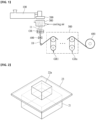
FIG. 2 is a schematic diagram which schematically illustrates a device for measuring a cool feeling on contact with a fabric. -
FIG. 3 is a schematic diagram which schematically illustrates a device for measuring thermal conductivity in a thickness direction of a fabric. -
FIG. 4 is a thermal shrinkage stress graph of a fabric according to Example 1. -
FIG. 5 is a thermal shrinkage stress graph of a fabric according to Example 7. - Technical terms and scientific terms used in the present specification have the general meaning understood by those skilled in the art to which the present invention pertains unless otherwise defined, and a description for the known function and configuration obscuring the gist of the present invention will be omitted in the following description and the accompanying drawings.
- In addition, the singular form used in the present specification may be intended to also include a plural form, unless otherwise indicated in the context.
- In addition, units used in the present specification without particular mention is based on weights, and as an example, a unit of % or ratio refers to a wt% or a weight ratio and wt% refers to wt% of any one component in a total composition, unless otherwise defined.
- In addition, the numerical range used in the present specification includes all values within the range including the lower limit and the upper limit, increments logically derived in a form and span in a defined range, all double limited values, and all possible combinations of the upper limit and the lower limit in the numerical range defined in different forms. Unless otherwise defined in the specification of the present invention, values which may be outside a numerical range due to experimental error or rounding of a value are also included in the defined numerical range.
- The term "comprise" in the present specification is an open-ended description having a meaning equivalent to the term such as "is/are provided", "contain", "have", or "is/are characterized", and does not exclude elements, materials, or processes which are not further listed.
- Since a conventional cool feeling polyethylene yarn includes a high molecular weight polyethylene having a high viscosity, when manufacturing the yarn, the manufacture is difficult due to the low melt flowability of the raw material. Thus, in order to improve the melt flowability of the raw material of the polyethylene yarn, a raw material including a high molecular weight polyethylene having a high viscosity is diluted to produce the yarn, but additional problems of complicating the process and making solvent management and recovery difficult arise.
- Meanwhile, a low molecular weight polyethylene yarn having a low viscosity is disadvantageous for post-processing such as weaving, knitting, and heat treatment, due to its low strength, high elongation, and low dimensional stability, as compared with the high molecular weight polyethylene yarn having a high viscosity. Thus, the low molecular weight polyethylene yarn has low industrial availability as compared with the high molecular weight polyethylene yarn and is not utilized for various applications.
- Thus, the present applicant developed a polyethylene yarn having high dimensional stability while including a low molecular weight polyethylene having a low viscosity, thereby easily performing a spinning process by an inherent high melt flowability of polyethylene, without dilution in a separate solvent, and providing a polyethylene yarn having excellent dimensional stability so that it has a low dimensional deformation rate in post-processing such as weaving and cutting dyeing, and mechanical properties.
- In the present specification, the polyethylene yarn refers to a monofilament and a multifilament manufactured by a process such as spinning and drawing, using polyethylene chips as a raw material. As an example, the polyethylene fiber may include 40 to 500 filaments each having a fineness of 1 to 3 denier, and may have a total fineness of 100 to 1,000 denier.
- The polyethylene yarn of the present invention has a maximum thermal shrinkage stress of 0.1 to 0.7 g/d and a melt index (MI, @190°C) of 5 to 10 g/10 min, and though it includes a low molecular weight polyethylene, it has excellent thermal shrinkage, that is, excellent dimensional stability. Thus, unlike the case of including a high molecular weight polyethylene having a high viscosity, it is not necessary to dilute the yarn in a separate solvent in a spinning process, thereby simplifying the process, and thus, yarn productivity is very high, shape is not deformed in post-processing such as weaving and twisting, and thermal conductivity may be excellent. In addition, since the polyethylene yarn has excellent thermal conductivity and dimensional stability, it may be manufactured into a fabric having excellent physical properties such as cool feeling properties.
- The dimensional stability of the polyethylene yarn according to the present invention is a characteristic of resistance to dimensional deformation by heat, pressure, tension, and the like in post-processing such as weaving or knitting of a yarn into a fabric, and may refer to shape stability. The higher the dimensional stability is, the smaller the dimensional deformation rate in the post-processing is.
- The cool feeling of a fabric including the polyethylene yarn according to the present invention is a characteristic allowing a user wearing the fabric to feel an appropriate cooling sensation, that is, coolness through a high thermal conductivity of the yarn. Specifically, in the case of a polymer, heat is transferred mainly through lattice vibration called a phonon in the polymer (in particular, in a direction of a molecular chain connected by a covalent bond). That is, the thermal conductivity of the yarn may be adjusted differently depending on the structural characteristics of the polymer itself, such as crystallinity and orientation degree of the yarn, even in the case in which the yarn is a yarn manufactured from the same resin.
- As described above, the polyethylene yarn may have a maximum thermal shrinkage stress of 0.1 to 0.7 g/d, specifically 0.2 to 0.5 g/d and a melt index (MI, @190°C) of 5 to 25 g/10 min, specifically 6 to 15 g/10 min, but is not limited thereto. However, within the range, the polyethylene yarn may have better dimensional stability and thermal conductivity. In addition, the polyethylene yarn as such has a low viscosity at the time of melting, and in a spinning process, spinning is possible without a separate solvent, and thus, spinning efficiency is excellent.
- In particular, a polyethylene yarn includes a low molecular weight polyethylene, and may have a polydispersity index (PDI) of 5 to 20, specifically 8 to 18, and more specifically 10 to 15 and a number average molecular weight (Mn) of 1000 to 10,000 g/mol, specifically 2000 to 5000 g/mol. The polyethylene yarn having the polydispersity index and the number average molecular weight in the above range secures processability, for example, has good flowability of a melt during melt extrusion of the yarn, prevents occurrence of thermal decomposition, and has no occurrence of breakage during spinning, thereby allowing manufacture of a yarn having uniform physical properties, and providing a yarn having excellent durability. Here, a weight average molecular weight is not limited as long as the PDI value described above is satisfied for the number average molecular weight described above, but the weight average molecular weight may be lower than that of a common polyethylene yarn for a cool feeling. Specifically, the weight average molecular weight may be 20,000 to 90,000 g/mol, specifically 35,000 to 75,000 g/mol.
- In addition, the polyethylene yarn may have a density of 0.92 to 0.97 g/cm3 and a crystallinity by spinning of 60 to 90%, specifically 65 to 85%. The crystallinity of the polyethylene yarn may be derived with a microcrystalline size in crystallinity analysis using an X-ray diffraction analyzer. As described above, heat is rapidly diffused and dissipated through lattice vibration called a "phonon" in a direction of molecular chain connected by a covalent bond of polyethylene in a range in which crystallinity satisfies the range, and a function to discharge moisture such as sweat and breath is improved, thereby providing a fabric having an excellent cool feeling.
- Further, the polyethylene yarn may have a strength of 6 to 17 g/d, specifically 10 to 15 g/d as measured according to ASTM D2256, and an elongation of 10 to 25%, specifically 12 to 20%. The polyethylene yarn having the strength and the elongation in the above range may have excellent weaving properties with relatively high flexibility as well as excellent thermal conductivity, and thus, when woven later to be manufactured into a fabric, a fabric having better quality may be obtained.
- Hereinafter, a method for manufacturing a polyethylene yarn according to an embodiment of the present invention will be described in detail, with reference to
FIG. 1 . The manufacturing method is not limited as long as the polyethylene yarn of the present invention satisfies the range of the physical properties such as PDI, strength, and elongation, and an embodiment is described in the following. - First, polyethylene in the form of chips is introduced into an
extruder 100 and melted to obtain a polyethylene melt. - The molten polyethylene is transported through a
spinneret 200 by a screw (not shown) in theextruder 100, and extruded through a plurality of holes formed in thespinneret 200. The number of holes of thespinneret 200 may be determined by the denier per filament (DPF) and the fineness of the yarn to be manufactured. For example, when a yarn having a total fineness of 75 deniers is manufactured, thespinneret 200 may have 20 to 75 holes, and when a yarn having a total fineness of 450 deniers is manufactured, thespinneret 200 may have 90 to 450, preferably 100 to 400 holes. - A melting process in the
extruder 100 and an extrusion process by thespinneret 200 may be changed and applied depending on the melt index of the polyethylene chips, but specifically, for example, may be performed at 150 to 315°C, preferably 250 to 315°C, and more preferably 265 to 310°C. That is, it is preferred that theextruder 100 and thespinneret 200 may be maintained at 150 to 315°C, preferably 250 to 315°C, and more preferably 265 to 310°C. - When the spinning temperature is lower than 150°C, polyethylene does not melt uniformly due to the low spinning temperature, so that the spinning may be difficult. However, when the spinning temperature is higher than 315°C, thermal decomposition of polyethylene is caused, so that a desired strength may not be expressed.
- A ratio (L/D) of a hole length (L) to a hole diameter (D) of the
spinneret 200 may be 3 to 40. When LID is less than 3, die swell occurs during melt extrusion and it becomes hard to control the elastic behavior of polyethylene to deteriorate spinning properties, and when LID is more than 40, breakage due to necking of molten polyethylene passing through a spinneret and discharge non-uniformity due to pressure drop may occur. - As the molten polyethylene is discharged from holes of the
spinneret 200, solidification of polyethylene starts due to a difference between a spinning temperature and room temperature to formfilaments 11 in a semi-solidified state. In the present specification, not only the filaments in a semi-solidified state but also completely solidified filaments are collectively referred to as "filaments". - A plurality of
filaments 11 are cooled in a cooling unit (or "quenching zone") (300) to be completely solidified. Thefilaments 11 may be cooled in an air cooling manner. - It is preferred that the cooling of the
filaments 11 in thecooling unit 300 may be performed using a cooling air at a wind speed of 0.2 to 1 m/sec so that the filaments are cooled to 15 to 40°C. When the cooling temperature is lower than 15°C, elongation is insufficient due to supercooling so that breakage may occur in a drawing process, and when the cooling temperature is higher than 40°C, a fineness deviation betweenfilaments 11 is increased due to solidification unevenness and breakage may occur in the drawing process. - In addition, multi-stage cooling is performed during cooling in the cooling unit to perform more uniform crystallization, and thus, moisture and sweat may be discharged more smoothly and a yarn having an excellent cool feeling may be manufactured. More specifically, the cooling unit may be divided into two or more sections. For example, when the cooling unit is composed of two cooling sections, it is preferred to design the cooling unit so that the temperature is gradually lowered from a first cooling unit to a second cooling unit. Specifically, for example, the first cooling unit may be set at 40 to 90°C, and the second cooling unit may be set at 15 to 50°C.
- In addition, a wind speed is set highest in the first cooling unit, thereby manufacturing a fiber having a smoother surface. Specifically, the first cooling unit is cooled to 40 to 90°C using a cooling wind at a wind speed of 0.8 to 1.0 m/sec and the second cooling unit is cooled to 15 to 50°C using a cooling wind at a wind speed of 0.3 to 1.0 m/sec, and by adjusting the cooling units under the conditions as such, a yarn having higher crystallinity and a smoother surface may be manufactured.
- Subsequently, the cooled and completed solidified
filaments 11 are collected by a collectingmachine 400 to form a multifilament 10. - As illustrated in
FIG. 1 , the polyethylene yarn of the present invention may be manufactured by a direct spinning drawing (DSD) process. That is, the multifilament 10 may be directly transported to amulti-stage drawing unit 500 including a plurality of godet roller units (GR1, ... GRn), subjected to a multi-stage drawing at a total drawing ratio of 2 to 20 times, preferably 3 to 15 times, and then wound up in awinder 600. In addition, in the last drawing section in the multi-stage drawing, shrinkage a 1 to 5% drawing (relaxation) may be imparted to provide a yarn having better durability. - Alternatively, the multifilament 10 are wound up once as an undrawn yarn, and then the undrawn yarn is drawn, thereby manufacturing the polyethylene yarn of the present invention. That is, the polyethylene yarn of the present invention may be manufactured by a two-step process in which polyethylene is melt-spun to manufacture an undrawn yarn once, and then the undrawn yarn is drawn.
- When the total drawing ratio applied in the drawing process is less than 2, the polyethylene yarn finally obtained may not have a crystallinity of 60% or more, and there is a risk of causing lint (peeling) on the fabric manufactured by the yarn.
- However, when the total drawing ratio is more than 15 times, breakage may occur, the strength of the finally obtained polyethylene yarn is not appropriate, so that the weaving properties of the polyethylene yarn may not be good, and the fabric manufactured using the yarn is too stiff, so that a user may feel uncomfortable.
- When a linear speed of the first godet roller unit (GR1) which determines the spinning speed of the melt spinning of the present invention is determined, the liner speeds of the remaining godet roller units are appropriately determined, so that a total drawing ratio of 2 to 20, preferably 3 to 15 may be applied to the multifilament 10 in the
multi-stage drawing unit 500. - According to an exemplary embodiment of the present invention, the temperature of the godet roller units (GR1, ... GRn) in the
multi-stage drawing unit 500 is appropriately set in a range of 40 to 150°C, thereby performing heat setting of the polyethylene yarn by themulti-stage drawing unit 500. Specifically, for example, the multi-stage drawing unit may be composed of 3 or more, specifically 3 to 5 drawing sections. In addition, each drawing section may be composed of a plurality of godet roller units. - Specifically, for example, the multi-stage drawing unit may be composed of 4 drawing sections, in which drawing may be performed at a total drawing ratio of 7 to 15 times in a first drawing section to a third drawing section, and then a 1 to 3% shrinkage drawing (relaxation) may be performed in a fourth drawing section. The total drawing ratio refers to a final drawing ratio of a fiber passing through the first drawing section to the third drawing section, as compared with a fiber before drawing.
- More specifically, in the first drawing section, drawing may be performed at 40 to 120°C and a total drawing ratio may be 2 to 5 times. In the second drawing section, drawing may be performed at a higher temperature than the first drawing section, specifically at 90 to 140°C, and may be performed so that the total drawing ratio is 5 to 8 times. In the third drawing section, drawing may be performed at 90 to 140°C, and may be performed so that the total drawing ratio is 7 to 15 times. In the fourth section, drawing may be performed at a temperature equivalent to or lower than the third drawing section, specifically at 90 to 140°C, and a 1 to 3% shrinkage drawing (relaxation) may be performed.
- The multi-stage drawing and the heat-setting of the multifilament 10 are performed simultaneously by the
multi-stage drawing unit 500, and the multi-stage drawn multifilament 10 is wound up in awinder 600, thereby completing the polyethylene yarn of the present invention. - The functional fabric according to the present invention includes the polyethylene yarn described above, and by including excellent thermal conductivity and high dimensional stability, the fabric may have excellent quality with cool feeling properties.
- The functional fabric according to the present invention may use the polyethylene yarn described above alone, and in order to further impart other functions, a heterogeneous yarn may be further included, but it is preferred to use the polyethylene yarn alone in terms of having both the cool feeling and the dimensional stability.
- Specifically, the functional fabric includes the yarn described above, thereby having an excellent cool feeling. Specifically, the functional fabric may have a cool feeling on contact of 0.05 to 0.25 W/cm2 as measured by bringing the fabric at 20±2°C into contact with a hot plate (T-box) at 30±2°C under the conditions of 20±2°C and 65±2% R.H, and a thermal conductivity in a thickness direction of 0.05 to 0.25 W/mk as measured by bringing the fabric at 20±2°C into contact with a heat source plate (BT-box) at 30±2°C under the conditions of 20±2°C and 65±2% R.H. More specifically, the cool feeling on contact may be 0.07 to 0.20W/cm2 and the thermal conductivity in the thickness direction may be 0.07 to 0.20W/mk. The functional fabric having a cool feeling as such may provide an appropriate cool feeling to make a user feel comfortable under high temperature environments, when the fabric is manufactured or processed into a product later and worn by the user.
- In addition, the functional fabric includes the polyethylene yarn described above, thereby having excellent dimensional stability. Specifically, when the functional fabric is manufactured by weaving or knitting the polyethylene yarn described above, the finally manufactured fabric has almost no dimensional deformation rate for a designed dimension and has few defective products, and may have excellent quality.
- In addition, the functional fabric includes the yarn having a specific thermal shrinkage stress described above, thereby having excellent dimensional stability even under harsh conditions of a high temperature. Specifically, the dimensional deformation rate represented by the following Equation 1 may be -2.0% to 2.0%, preferably -1.8% to 1.8%, and more preferably -1.5% to 1.5%, under the conditions of 90±2°C and 65±2% R.H:

- As such, the functional fabric has excellent dimensional stability even under harsh conditions, and thus, secures dimensional stability in post-processing under various external forces such as heat and pressure, thereby having excellent post-processability.
- In addition, the functional fabric may be a woven fabric or knitted fabric having a weight per unit area (that is, surface density) of 150 to 800 g/m2. When the fabric has a surface density of less than 150 g/m2, fabric compactness is insufficient and many pores exist in the fabric, and these pores reduce the cool feeling of the fabric. However, when the fabric has a surface density of more than 800 g/m2, the fabric becomes stiff due to the excessively dense structure of the fabric, problems with user's tactile sensation occur, and problems in use arise due to its high weight.
- The fabric as such may be processed into a cool feeling product requiring an appropriate cool feeling. The product may be any conventional fiber product, but preferably, may be summer clothes, sportswear, masks, and work clothes for imparting a cool feeling to a human body.
- Hereinafter, the present disclosure will be described in more detail through the following examples. However, the following exemplary embodiments are only a reference for describing the present invention in detail, and the present invention is not limited thereto, and may be implemented in various forms.
- In addition, unless otherwise defined, all technical terms and scientific terms have the same meanings as those commonly understood by a person skilled in the art to which the present invention pertains. The terms used herein are only for effectively describing a certain exemplary embodiment, and not intended to limit the present invention. Further, unless otherwise stated, the unit of added materials herein may be wt%.
- The physical properties were measured as follows.
- Both ends of a polyethylene yarn were tied to make a loop-shaped sample, both sides of the loop-shaped sample were placed in a hot chamber of a thermal stress tester (Kanebo Eng., KE-2, Japan), the both sides of the loop sample were hung on a load cell and primary rings, respectively, and a maximum thermal shrinkage stress was measured under the following conditions. At this time, loop circumference length was 10 cm.
- Load cell: a load cell measurable to 500 gf
- Initial temperature: room temperature (20±2°C)
- Heating rate: 300°C/120 sec
- Primary load: 0.06667 g/d
- The thermal shrinkage stress value was obtained by a graph through an output device (Type 3086 X-T Recorder, Yokogawa Hokushin Electric, Tokyo, Japan).
- A polyethylene yarn was completely dissolved in the following solvent and then each of the weight average molecular weight (Mw) and the polydispersity index (Mw/Mn: PDI) of the polyethylene yarn were determined, respectively, using the following gel permeation chromatography (GPC).
- Analytical instrument: HLC-8321 GPC/HT available from Tosoh Corporation
- Column: PLgel guard (7.5×50 mm) + 2 × PLgel mixed-B (7.5×300 mm)
- Column temperature: 160°C
- Solvent: trichlorobenzene (TCB) + 0.04 wt% of dibutylhydroxytoluene (BHT) (after drying with 0.1% CaCl2)
- Injector, Detector temperature: 160°C
- Detector: RI Detector
- Flow velocity: 1.0 ml/min
- Injection amount: 300 mL
- Sample concentration: 1.5mg/mL
- Standard sample: polystyrene
- According to the method of ASTM D2256, a universal tensile tester available from Instron (Instron Engineering Corp, Canton, Mass) was used to obtain a strain-stress curve of the polyethylene yarn. A sample length was 250 mm, a tensile speed was 300 mm/min, and an initial load was set to 0.05 g/d. The strength (g/d) and the elongation (%) were obtained from a stress and a stretch at break, and the initial modulus (g/d) was determined from a tangent to impart a maximum gradient near the starting point of the curve. The measurement was performed five times for each yarn and the average value was calculated.
- An XRD instrument (X-ray Diffractometer) [manufacturer: PANalytical, model name: EMPYREAN] was used to measure the crystallinity of the polyethylene yarn. Specifically, the polyethylene yarn was cut to prepare a sample having a length of 2.5 cm, the sample was fixed to a sample holder, and the measurement was performed under the following conditions:
- Light source (X-ray Source): Cu-Kα radiation
- Power: 45 KV × 25mA
- Mode: continuous scan mode
- Scan angle range: 10 to 40°
- Scan speed: 0.1°/sec
- The Korea Apparel Testing & Research Institute was commissioned to perform measurement under 20±2°C and 65±2% R.H, using a KES-F7 device (Thermo Labo II).
- Specifically, a fabric sample having a size of 20 cm×20 cm was prepared, and was allowed to stand for 24 hours under the conditions of a temperature of 20±2°C and 65±2% RH. Subsequently, a KES-F7 THERMO LABO II device (Kato Tech Co., LTD.) was used to measure the thermal conductivity and the heat transfer coefficient of the fabric under the test environments of a temperature of 20±2°C and 65±2% RH The cool feeling (Q max) of the fabric was measured using a device. Specifically, as illustrated in
FIG. 2 , thefabric sample 23 was placed on a base plate (also referred to as "Water-Box") 21 maintained at 20°C, and a hot plate (T-Box, 22a) heated to 30°C (contact area: 3 cm×3 cm) was placed on thefabric sample 23 only for 1 second. That is, the other surface of thefabric sample 23 of which one surface was in contact with abase plate 21 was momentarily brought into contact with T-Box 22a. A contact pressure applied to thefabric sample 23 by the T-Box 22a was 6 gf/cm2. Subsequently, a Q max value displayed in a monitor (not shown) connected to the device was recorded. The test was repeated 10 times, and an arithmetic mean of the Q max value was calculated. - A fabric sample having a size of 20 cm×20 cm was prepared, and was allowed to stand for 24 hours under the conditions of a temperature of 20±2°C and 65±2% RH. Subsequently, a KES-F7 THERMO LABO II device (Kato Tech Co., LTD.) was used to determine the thermal conductivity and the heat transfer coefficient of the fabric under the test environments of a temperature of 20±2°C and 65±2% RH. Specifically, as illustrated in
FIG. 3 , thefabric sample 23 was placed on thebase plate 21 maintained at 20°C, and BT-Box 22b (contact area: 5cm×5cm) heated to 30°C was placed on thefabric sample 23 for 1 minute. Heat was continuously supplied to the BT-Box 22b so that the temperature was maintained at 30°C even while the BT-Box 22b was in contact with thefabric sample 23. A heat quantity supplied for temperature maintenance of the BT-Box 22b (that is, heat flow loss) was displayed on a monitor connected to the device. The test was repeated 5 times, and an arithmetic mean of the heat flow loss was calculated. Subsequently, the thermal conductivity and the heat transfer coefficient of the fabric were calculated using the following Equations 2 and 3:

fabric sample 23, A is a contact area (= 25 cm2) of the BT-Box 22b, ΔT is a temperature difference (= 10°C) between both surfaces of thefabric sample 23, W is heat flow loss (Watt), and k is a thermal transfer coefficient (W/cm2.°C). - A fabric sample having a size of 20 cm×20 cm was prepared, and was allowed to stand for 24 hours under the conditions of a temperature of 20±2°C and 65±2% RH. Thereafter, a dimension of one edge for the fabric sample was measured.
- Thereafter, the sample was allowed to stand under the conditions of a temperature of 90±2°C and 65±2% RH for 24 hours, and the dimension was measured again by the method described above. Subsequently, the dimensional deformation rate of the fabric was calculated by the following Equation 1:

- A device illustrated in
FIG. 1 was used to manufacture a polyethylene yarn including 200 filaments and having a total fineness of 400 denier. - First, polyethylene chips having a density of 0.93 g/cm3 and a weight average molecular weight (Mw) of 8.500 g/mol were added to an
extruder 100 and melted. The molten polyethylene was extruded through aspinneret 200 having 200 holes. LID which is a ratio of a hole length (L) to a hole diameter (D) of the spinneret was 6. A spinneret temperature was 270°C. -
Filaments 11 formed by being discharged from nozzle holes of thespinneret 200 were sequentially cooled in acooling unit 300 composed of two sections. The filaments were cooled to 60°C by a cooling wind at a wind speed of 1.0 m/sec in the first cooling unit and were finally cooled to 30°C by a cooling wind at a wind speed of 0.5 m/sec in the second cooling unit. After cooling, the filaments were collected into amultifilament yarn 10 by a collectingmachine 400. - Subsequently, the multifilament yarn was transported to a
drawing unit 500. The drawing unit was composed of a multi-stage drawing part composed of four sections and was composed of a total of four stages of godet roller units, and each godet roller unit was composed of 2 to 6 godet rollers. - Specifically, drawing and heat setting were performed by drawing at a total drawing ratio of 2 times at a highest drawing temperature of 80°C in a first drawing section, drawing at a total drawing ratio of 1.5 times at a highest drawing temperature of 120°C in a second drawing section, drawing at a total drawing ratio of 1.3 times at a highest drawing temperature of 120°C in a third drawing section, and a 2% shrinkage drawing (relaxation) as compared with the third drawing section at a highest drawing temperature of 120°C in a fourth drawing section.
- Subsequently, the drawn multifilament yarn was wound up in a
winder 600. A winding tension was 0.8 g/d. - The physical properties of the thus-manufactured yarn were measured, and are shown in the following Table 1.
- The thermal shrinkage stress graph measured is shown in
FIG. 4 . - The polyethylene yarn manufactured above was woven to manufacture a functional fabric having a surface density of 500 g/m2. The physical properties of the thus-manufactured fabric were measured, and are shown in the following Table 3.
- Fabrics were manufactured in the same manner as in Example 1, except that the yarn conditions were changed as shown in Table 1. In addition, the physical properties of the fabric manufactured in the same manner as in Example 1 were measured and are shown in Table 3. In the case of Example 7, the thermal shrinkage stress graph measured is shown in
FIG. 5 . - Fabrics were manufactured in the same manner as in Example 1, except that the yarn conditions were changed as shown in Table 2. In addition, the physical properties of the fabric manufactured in the same manner as in Example 1 were measured and are shown in Table 4.
- A yarn and a fabric were manufactured in the same manner as in Example 1, except that yarn conditions were changed as shown in Table 2 and the number of drawing sections was 2. In addition, the physical properties of the fabric manufactured in the same manner as in Example 1 were measured and are shown in Table 4.
- A yarn and a fabric were manufactured in the same manner as in Example 1, except that yarn conditions were changed as shown in Table 2 and the number of drawing sections was 6. In addition, the physical properties of the fabric manufactured in the same manner as in Example 1 were measured and are shown in Table 4.
[Table 1] Example 1 Example 2 Example 3 Example 4 Example 5 Example 6 Example 7 Example 8 Example 9 Physical propertie s of yarn Maximum thermal shrinkage stress (g/d) 0.3 0.35 0.30 0.25 0.69 0.32 0.52 0.52 0.43 Melt index (g/10 min) 9.71 10.13 10.92 10.15 15.73 10.82 10.14 6.79 6.34 PDI 16.2 11.9 11.8 12.2 12.5 5.4 19.8 12.3 12.4 Mn (g/mol) 8223 8522 8543 8531 8319 6533 3134 13527 22001 Crystallinity (%) 71.3 73.2 74.2 75.3 71.8 71.3 68.7 77.1 76.4 Strength (%) 8.2 9.1 9.5 9.8 8.0 13.4 7.2 15.1 15.23 Elongation (%) 17.2 16.3 14.1 12.4 17.8 11.4 23.2 9.13 8.15 [Table 2] Comparative Example 1 Comparative Example 2 Comparative Example 3 Comparative Example 4 Physical properties of yarn Maximum thermal shrinkage stress (g/d) 0.8 0.92 0.93 0.05 Melt index (g/10 min) 10.7 2.1 10.7 10.9 PDI 24.8 6.9 16.1 15.7 Mn (g/mol) 4525 12451 8754 8321 Crystallinity (%) 65.1 67.6 61.2 74.1 Strength (%) 6.8 8.2 7.5 9.3 Elongation (%) 21.1 10.2 20.5 7.5 [Table 3] Exampl e 1 Example 2 Example 3 Example 4 Example 5 Example 6 Example 7 Example 8 Example 9 Physical properti es of fabric Cool feeling on contact (W/cm2) 0.17 0.17 0.18 0.195 0.16 0.18 0.10 0.17 0.16 Thermal conductivity in thickness direction (W/mK) 0.08 0.12 0.16 0.18 0.09 0.10 0.06 0.12 0.13 Dimensional deformation rate (%) 1.5 1.2 1.0 0.8 1.6 1.4 1.8 2.1 2.3 [Table 4] Comparative Example 1 Comparative Example 2 Comparative Example 3 Comparative Example 4 Physical properties of fabric Cool feeling on contact (W/cm2) 0.08 0.10 0.08 0.10 Thermal conductivity in thickness direction (W/mK) 0.05 0.06 0.05 0.09 Dimensional deformation rate (%) 3.8 2.3 4.8 1.8 - Referring to Tables 1 to 4, it was confirmed that the yarn according to the examples had an appropriate cool feeling and had excellent dimensional stability. In particular, in Comparative Example 4, it was confirmed that the fabric was manufactured using a yarn having a relatively high crystallinity, but a large amount of fluff occurred, and thus, the fabric had a low cool feeling on contact and a low thermal conductivity.
- Hereinabove, although the present invention has been described by specific matters, limited exemplary embodiments, and drawings, they have been provided only for assisting the entire understanding of the present invention, and the present invention is not limited to the exemplary embodiments, and various modifications and changes may be made by those skilled in the art to which the present invention pertains from the description.
- Therefore, the spirit of the present invention should not be limited to the above-described exemplary embodiments, and the following claims as well as all modified equally or equivalently to the claims are intended to fall within the scope and spirit of the invention.
[Detailed Description of Main Elements] 10: Multifilament 11: Filament 21: Base plate 23: Fabric 22a: T-box 22b: BT-box 100: Extruder 200: Spinneret 300: Cooling unit 400: Collecting machine 500: Drawing unit 700: Winder
Claims (10)
- A polyethylene yarn having a maximum thermal shrinkage stress of 0.1 to 0.7 g/d and
a melt index (MI, @190°C) of 5 to 25 g/10 min. - The polyethylene yarn of claim 1, wherein
the yarn has a polydispersity index (PDI) of 5 to 20 and a number average molecular weight (Mn) of 1000 to 10,000 g/mol. - The polyethylene yarn of claim 1, wherein
the yarn has a strength of 6 to 17 g/d as measured according to ASTM D2256 and an elongation of 10 to 25%. - The polyethylene yarn of claim 1, wherein
the yarn has a crystallinity of 65 to 85%. - The polyethylene yarn of claim 1, wherein
the yarn has a density of 0.92 to 0.97 g/cm3. - A functional fabric comprising the polyethylene yarn of any one of claims 1 to 5.
- A functional fabric of claim 6, wherein
the fabric has a cool feeling on contact of 0.05 to 0.25 W/cm2, as measured by bringing the fabric at 20±2°C into contact with a hot plate (T-box) at 30±2°C under conditions of 20±2°C and 65±2% R.H. - A functional fabric of claim 6, wherein
the fabric has a thermal conductivity of 0.05 to 0.25 W/mK, as measured by bringing the fabric at 20±2°C into contact with a heat source plate (BT-box) at 30±2°C under conditions of 20±2°C and 65±2% R.H. - A functional fabric of claim 6, wherein
the fabric has a surface density of 150 to 800 g/m2. - A cool feeling product manufactured from the fabric of claim 6.
Applications Claiming Priority (2)
| Application Number | Priority Date | Filing Date | Title |
|---|---|---|---|
| KR1020210175083A KR102480920B1 (en) | 2021-12-08 | 2021-12-08 | Polyethylene yarn with improved size stability and functional fabric containing the same |
| PCT/KR2022/019719 WO2023106799A1 (en) | 2021-12-08 | 2022-12-06 | Polyethylene yarn with improved dimensional stability, and functional fabric comprising same |
Publications (2)
| Publication Number | Publication Date |
|---|---|
| EP4428276A1 true EP4428276A1 (en) | 2024-09-11 |
| EP4428276A4 EP4428276A4 (en) | 2025-08-13 |
Family
ID=84547587
Family Applications (1)
| Application Number | Title | Priority Date | Filing Date |
|---|---|---|---|
| EP22904629.7A Pending EP4428276A4 (en) | 2021-12-08 | 2022-12-06 | POLYETHYLENE YARN WITH IMPROVED DIMENSIONAL STABILITY AND FUNCTIONAL FABRIC THEREFORE |
Country Status (7)
| Country | Link |
|---|---|
| US (1) | US12571135B2 (en) |
| EP (1) | EP4428276A4 (en) |
| JP (1) | JP7770569B2 (en) |
| KR (1) | KR102480920B1 (en) |
| CN (1) | CN118302566A (en) |
| TW (1) | TWI790905B (en) |
| WO (1) | WO2023106799A1 (en) |
Families Citing this family (3)
| Publication number | Priority date | Publication date | Assignee | Title |
|---|---|---|---|---|
| US12692629B2 (en) * | 2020-10-08 | 2026-07-28 | Kolon Industries, Inc. | High-strength polyethylene yarn having an improved shrinkage rate and method for manufacturing the same |
| KR102735576B1 (en) * | 2021-06-29 | 2024-11-28 | 코오롱인더스트리 주식회사 | Polyethylene yarn with improved post-processing properties and fabric containing the same |
| KR102480929B1 (en) * | 2021-12-02 | 2022-12-23 | 코오롱인더스트리 주식회사 | Polyethylene yarn with improved weaving properties and functional fabric containing the same |
Family Cites Families (24)
| Publication number | Priority date | Publication date | Assignee | Title |
|---|---|---|---|---|
| FI93865C (en) | 1992-05-29 | 1995-06-12 | Borealis Holding As | Melt spun strong polyethylene fiber |
| JP3234327B2 (en) * | 1993-01-12 | 2001-12-04 | ユニチカ株式会社 | High shrinkable conjugate fiber and its manufacturing method |
| KR0135342B1 (en) | 1994-12-22 | 1998-04-23 | 한동근 | Double coat pigments and color cosmetics containing them |
| JP4911190B2 (en) | 2009-03-31 | 2012-04-04 | 東洋紡績株式会社 | Comfortable fabric |
| KR20120095733A (en) | 2011-02-21 | 2012-08-29 | 정말분 | About the corpse brute which appears and disappears in nighttime the axial storehouse work idyllic binding together string where the extirpation function is included and the manufacturing method |
| KR101361871B1 (en) * | 2011-03-03 | 2014-02-12 | 도요보 가부시키가이샤 | Highly functional polyethylene fiber, and dyed highly functional polyethylene fiber |
| CN104271819A (en) | 2012-05-07 | 2015-01-07 | 帝人株式会社 | Modified cross-section fiber with excellent cool feeling |
| KR101775142B1 (en) * | 2014-11-19 | 2017-09-05 | 주식회사 휴비스 | A polyethylene multifilament fiber with high tenacity and its manufacturing process |
| KR20170135342A (en) | 2016-05-31 | 2017-12-08 | 동명기술 주식회사 | Method for manufacturing high molecular weight polyethylene fiber and fiber manufactured by the same |
| KR101954356B1 (en) | 2017-06-23 | 2019-03-05 | 주식회사 휴비스 | Dope Dyed Polyethylene Multifilament Fiber and Method for Manufacturing the Same |
| KR101981759B1 (en) * | 2018-01-05 | 2019-05-27 | 주식회사 휴비스 | High-strength polyethylene fibers with improved processing property |
| KR102167737B1 (en) * | 2018-09-28 | 2020-10-19 | 코오롱인더스트리 주식회사 | Polyethylene Yarn, Method for Manufacturing The Same, and Skin Cooling Fabric Comprising The Same |
| KR102137243B1 (en) * | 2018-10-17 | 2020-07-23 | 코오롱인더스트리 주식회사 | Polyethylene Yarn, Method for Manufacturing The Same, and Skin Cooling Fabric Comprising The Same |
| PH12022551361A1 (en) * | 2019-12-27 | 2023-11-20 | Kolon Inc | Skin cooling fabric, polyethylene yarn therefor, and method for manufacturing polyethylene yarn |
| US12637789B2 (en) | 2019-12-27 | 2026-05-26 | Kolon Industries, Inc. | Polyethylene yarn of high tenacity having high dimensional stability and method for manufacturing the same |
| TWI727576B (en) * | 2019-12-27 | 2021-05-11 | 南韓商可隆工業股份有限公司 | Polyethylene yarn, method for manufacturing the same, and skin cooling fabric comprising the same |
| CN114502784B (en) * | 2019-12-27 | 2023-06-09 | 可隆工业株式会社 | Polyethylene yarn, method of manufacturing the same, and skin cooling fabric comprising the same |
| MY206320A (en) | 2019-12-27 | 2024-12-09 | Kolon Inc | Polyethylene yarn, method for manufacturing the same, and skin cooling fabric comprising the same |
| US12692629B2 (en) * | 2020-10-08 | 2026-07-28 | Kolon Industries, Inc. | High-strength polyethylene yarn having an improved shrinkage rate and method for manufacturing the same |
| WO2022092854A1 (en) * | 2020-10-29 | 2022-05-05 | 코오롱인더스트리 주식회사 | Functional fabric |
| US20230357966A1 (en) * | 2020-12-30 | 2023-11-09 | Kolon Industries, Inc. | Cut-resistant polyethylene yarn |
| JP2023543296A (en) * | 2020-12-30 | 2023-10-13 | コーロン インダストリーズ インク | Cut-resistant polyethylene yarn |
| KR102735576B1 (en) * | 2021-06-29 | 2024-11-28 | 코오롱인더스트리 주식회사 | Polyethylene yarn with improved post-processing properties and fabric containing the same |
| KR102480929B1 (en) * | 2021-12-02 | 2022-12-23 | 코오롱인더스트리 주식회사 | Polyethylene yarn with improved weaving properties and functional fabric containing the same |
-
2021
- 2021-12-08 KR KR1020210175083A patent/KR102480920B1/en active Active
-
2022
- 2022-01-26 TW TW111103352A patent/TWI790905B/en active
- 2022-12-06 WO PCT/KR2022/019719 patent/WO2023106799A1/en not_active Ceased
- 2022-12-06 US US18/713,654 patent/US12571135B2/en active Active
- 2022-12-06 EP EP22904629.7A patent/EP4428276A4/en active Pending
- 2022-12-06 JP JP2024534278A patent/JP7770569B2/en active Active
- 2022-12-06 CN CN202280077787.4A patent/CN118302566A/en active Pending
Also Published As
| Publication number | Publication date |
|---|---|
| US12571135B2 (en) | 2026-03-10 |
| JP7770569B2 (en) | 2025-11-14 |
| TW202323606A (en) | 2023-06-16 |
| EP4428276A4 (en) | 2025-08-13 |
| JP2024544235A (en) | 2024-11-28 |
| CN118302566A (en) | 2024-07-05 |
| WO2023106799A1 (en) | 2023-06-15 |
| KR102480920B1 (en) | 2022-12-26 |
| TWI790905B (en) | 2023-01-21 |
| US20250011976A1 (en) | 2025-01-09 |
Similar Documents
| Publication | Publication Date | Title |
|---|---|---|
| US12571135B2 (en) | Polyethylene yarn with improved dimensional stability and functional fabric including the same | |
| US12571134B2 (en) | Polyethylene yarn with improved weaving properties and functional fabric including the same | |
| TWI752440B (en) | Cut resistant polyethylene yarn, method for manufacturing the same, and protective article produced using the same | |
| KR102137243B1 (en) | Polyethylene Yarn, Method for Manufacturing The Same, and Skin Cooling Fabric Comprising The Same | |
| KR20200036171A (en) | Polyethylene Yarn, Method for Manufacturing The Same, and Skin Cooling Fabric Comprising The Same | |
| KR20200002119A (en) | Skin Cooling Fabric, Polyethylene Yarn Therefor, and Method for Manufacturing Polyethylene Yarn | |
| EP4190953A1 (en) | Polyethylene yarn having improved post-processability, and fabric comprising same | |
| TWI821846B (en) | Cut-resistant polyethylene yarn, cut-resistant fabric and protective product | |
| JP7814478B2 (en) | High-strength polyethylene yarn with improved shrinkage rate and method for producing the same | |
| EP3943647B1 (en) | Polyethylene yarn, method for manufacturing same, and cool-feeling fabric comprising same | |
| KR102795769B1 (en) | Polyethylene yarn with improved weaving properties and functional fabric containing the same | |
| US20220341066A1 (en) | Polyethylene yarn, method for manufacturing the same, and skin cooling fabric comprising the same | |
| KR102480911B1 (en) | Dope dyed polyethylene yarn and functional fabric containing the same | |
| KR102817106B1 (en) | Shaped cross-section polyethylene yarn and functional fabric comprising the same | |
| KR102534492B1 (en) | Cut-resistance complex fiber | |
| KR20240084256A (en) | Dope dyed polyethylene yarn and functional fabric containing the same | |
| KR20240121050A (en) | polyethylene yarn and functional fabric containing the same | |
| KR20230094187A (en) | Shaped cross-section polyethylene yarn and functional fabric comprising the same | |
| KR20260031187A (en) | Manufacturing method of polyethylene yarn reduced surface roughness | |
| JP3188054B2 (en) | Mixed fiber long-fiber nonwoven fabric and method for producing the same |
Legal Events
| Date | Code | Title | Description |
|---|---|---|---|
| STAA | Information on the status of an ep patent application or granted ep patent |
Free format text: STATUS: THE INTERNATIONAL PUBLICATION HAS BEEN MADE |
|
| PUAI | Public reference made under article 153(3) epc to a published international application that has entered the european phase |
Free format text: ORIGINAL CODE: 0009012 |
|
| STAA | Information on the status of an ep patent application or granted ep patent |
Free format text: STATUS: REQUEST FOR EXAMINATION WAS MADE |
|
| 17P | Request for examination filed |
Effective date: 20240603 |
|
| AK | Designated contracting states |
Kind code of ref document: A1 Designated state(s): AL AT BE BG CH CY CZ DE DK EE ES FI FR GB GR HR HU IE IS IT LI LT LU LV MC ME MK MT NL NO PL PT RO RS SE SI SK SM TR |
|
| DAV | Request for validation of the european patent (deleted) | ||
| DAX | Request for extension of the european patent (deleted) | ||
| A4 | Supplementary search report drawn up and despatched |
Effective date: 20250711 |
|
| RIC1 | Information provided on ipc code assigned before grant |
Ipc: D01F 6/04 20060101AFI20250707BHEP Ipc: D01D 5/088 20060101ALI20250707BHEP Ipc: D01D 5/098 20060101ALI20250707BHEP Ipc: D02J 1/22 20060101ALI20250707BHEP Ipc: D03D 15/50 20210101ALI20250707BHEP Ipc: D03D 15/283 20210101ALI20250707BHEP |