EP4428232A1 - Isoliertes cas13-protein und verwendung davon - Google Patents
Isoliertes cas13-protein und verwendung davon Download PDFInfo
- Publication number
- EP4428232A1 EP4428232A1 EP22889405.1A EP22889405A EP4428232A1 EP 4428232 A1 EP4428232 A1 EP 4428232A1 EP 22889405 A EP22889405 A EP 22889405A EP 4428232 A1 EP4428232 A1 EP 4428232A1
- Authority
- EP
- European Patent Office
- Prior art keywords
- sequence
- protein
- seq
- nucleic acid
- cas13m
- Prior art date
- Legal status (The legal status is an assumption and is not a legal conclusion. Google has not performed a legal analysis and makes no representation as to the accuracy of the status listed.)
- Pending
Links
Images




Classifications
-
- C—CHEMISTRY; METALLURGY
- C12—BIOCHEMISTRY; BEER; SPIRITS; WINE; VINEGAR; MICROBIOLOGY; ENZYMOLOGY; MUTATION OR GENETIC ENGINEERING
- C12N—MICROORGANISMS OR ENZYMES; COMPOSITIONS THEREOF; PROPAGATING, PRESERVING, OR MAINTAINING MICROORGANISMS; MUTATION OR GENETIC ENGINEERING; CULTURE MEDIA
- C12N5/00—Undifferentiated human, animal or plant cells, e.g. cell lines; Tissues; Cultivation or maintenance thereof; Culture media therefor
- C12N5/10—Cells modified by introduction of foreign genetic material
-
- C—CHEMISTRY; METALLURGY
- C12—BIOCHEMISTRY; BEER; SPIRITS; WINE; VINEGAR; MICROBIOLOGY; ENZYMOLOGY; MUTATION OR GENETIC ENGINEERING
- C12N—MICROORGANISMS OR ENZYMES; COMPOSITIONS THEREOF; PROPAGATING, PRESERVING, OR MAINTAINING MICROORGANISMS; MUTATION OR GENETIC ENGINEERING; CULTURE MEDIA
- C12N15/00—Mutation or genetic engineering; DNA or RNA concerning genetic engineering, vectors, e.g. plasmids, or their isolation, preparation or purification; Use of hosts therefor
- C12N15/09—Recombinant DNA-technology
- C12N15/11—DNA or RNA fragments; Modified forms thereof; Non-coding nucleic acids having a biological activity
-
- C—CHEMISTRY; METALLURGY
- C12—BIOCHEMISTRY; BEER; SPIRITS; WINE; VINEGAR; MICROBIOLOGY; ENZYMOLOGY; MUTATION OR GENETIC ENGINEERING
- C12N—MICROORGANISMS OR ENZYMES; COMPOSITIONS THEREOF; PROPAGATING, PRESERVING, OR MAINTAINING MICROORGANISMS; MUTATION OR GENETIC ENGINEERING; CULTURE MEDIA
- C12N15/00—Mutation or genetic engineering; DNA or RNA concerning genetic engineering, vectors, e.g. plasmids, or their isolation, preparation or purification; Use of hosts therefor
- C12N15/09—Recombinant DNA-technology
- C12N15/11—DNA or RNA fragments; Modified forms thereof; Non-coding nucleic acids having a biological activity
- C12N15/113—Non-coding nucleic acids modulating the expression of genes, e.g. antisense oligonucleotides; Antisense DNA or RNA; Triplex- forming oligonucleotides; Catalytic nucleic acids, e.g. ribozymes; Nucleic acids used in co-suppression or gene silencing
-
- C—CHEMISTRY; METALLURGY
- C12—BIOCHEMISTRY; BEER; SPIRITS; WINE; VINEGAR; MICROBIOLOGY; ENZYMOLOGY; MUTATION OR GENETIC ENGINEERING
- C12N—MICROORGANISMS OR ENZYMES; COMPOSITIONS THEREOF; PROPAGATING, PRESERVING, OR MAINTAINING MICROORGANISMS; MUTATION OR GENETIC ENGINEERING; CULTURE MEDIA
- C12N15/00—Mutation or genetic engineering; DNA or RNA concerning genetic engineering, vectors, e.g. plasmids, or their isolation, preparation or purification; Use of hosts therefor
- C12N15/09—Recombinant DNA-technology
- C12N15/11—DNA or RNA fragments; Modified forms thereof; Non-coding nucleic acids having a biological activity
- C12N15/113—Non-coding nucleic acids modulating the expression of genes, e.g. antisense oligonucleotides; Antisense DNA or RNA; Triplex- forming oligonucleotides; Catalytic nucleic acids, e.g. ribozymes; Nucleic acids used in co-suppression or gene silencing
- C12N15/1136—Non-coding nucleic acids modulating the expression of genes, e.g. antisense oligonucleotides; Antisense DNA or RNA; Triplex- forming oligonucleotides; Catalytic nucleic acids, e.g. ribozymes; Nucleic acids used in co-suppression or gene silencing against growth factors, growth regulators, cytokines, lymphokines or hormones
-
- C—CHEMISTRY; METALLURGY
- C12—BIOCHEMISTRY; BEER; SPIRITS; WINE; VINEGAR; MICROBIOLOGY; ENZYMOLOGY; MUTATION OR GENETIC ENGINEERING
- C12N—MICROORGANISMS OR ENZYMES; COMPOSITIONS THEREOF; PROPAGATING, PRESERVING, OR MAINTAINING MICROORGANISMS; MUTATION OR GENETIC ENGINEERING; CULTURE MEDIA
- C12N15/00—Mutation or genetic engineering; DNA or RNA concerning genetic engineering, vectors, e.g. plasmids, or their isolation, preparation or purification; Use of hosts therefor
- C12N15/09—Recombinant DNA-technology
- C12N15/11—DNA or RNA fragments; Modified forms thereof; Non-coding nucleic acids having a biological activity
- C12N15/113—Non-coding nucleic acids modulating the expression of genes, e.g. antisense oligonucleotides; Antisense DNA or RNA; Triplex- forming oligonucleotides; Catalytic nucleic acids, e.g. ribozymes; Nucleic acids used in co-suppression or gene silencing
- C12N15/1138—Non-coding nucleic acids modulating the expression of genes, e.g. antisense oligonucleotides; Antisense DNA or RNA; Triplex- forming oligonucleotides; Catalytic nucleic acids, e.g. ribozymes; Nucleic acids used in co-suppression or gene silencing against receptors or cell surface proteins
-
- C—CHEMISTRY; METALLURGY
- C12—BIOCHEMISTRY; BEER; SPIRITS; WINE; VINEGAR; MICROBIOLOGY; ENZYMOLOGY; MUTATION OR GENETIC ENGINEERING
- C12N—MICROORGANISMS OR ENZYMES; COMPOSITIONS THEREOF; PROPAGATING, PRESERVING, OR MAINTAINING MICROORGANISMS; MUTATION OR GENETIC ENGINEERING; CULTURE MEDIA
- C12N15/00—Mutation or genetic engineering; DNA or RNA concerning genetic engineering, vectors, e.g. plasmids, or their isolation, preparation or purification; Use of hosts therefor
- C12N15/09—Recombinant DNA-technology
- C12N15/63—Introduction of foreign genetic material using vectors; Vectors; Use of hosts therefor; Regulation of expression
- C12N15/79—Vectors or expression systems specially adapted for eukaryotic hosts
- C12N15/85—Vectors or expression systems specially adapted for eukaryotic hosts for animal cells
-
- C—CHEMISTRY; METALLURGY
- C12—BIOCHEMISTRY; BEER; SPIRITS; WINE; VINEGAR; MICROBIOLOGY; ENZYMOLOGY; MUTATION OR GENETIC ENGINEERING
- C12N—MICROORGANISMS OR ENZYMES; COMPOSITIONS THEREOF; PROPAGATING, PRESERVING, OR MAINTAINING MICROORGANISMS; MUTATION OR GENETIC ENGINEERING; CULTURE MEDIA
- C12N15/00—Mutation or genetic engineering; DNA or RNA concerning genetic engineering, vectors, e.g. plasmids, or their isolation, preparation or purification; Use of hosts therefor
- C12N15/09—Recombinant DNA-technology
- C12N15/87—Introduction of foreign genetic material using processes not otherwise provided for, e.g. co-transformation
- C12N15/90—Stable introduction of foreign DNA into chromosome
- C12N15/902—Stable introduction of foreign DNA into chromosome using homologous recombination
- C12N15/907—Stable introduction of foreign DNA into chromosome using homologous recombination in mammalian cells
-
- C—CHEMISTRY; METALLURGY
- C12—BIOCHEMISTRY; BEER; SPIRITS; WINE; VINEGAR; MICROBIOLOGY; ENZYMOLOGY; MUTATION OR GENETIC ENGINEERING
- C12N—MICROORGANISMS OR ENZYMES; COMPOSITIONS THEREOF; PROPAGATING, PRESERVING, OR MAINTAINING MICROORGANISMS; MUTATION OR GENETIC ENGINEERING; CULTURE MEDIA
- C12N9/00—Enzymes; Proenzymes; Compositions thereof; Processes for preparing, activating, inhibiting, separating or purifying enzymes
- C12N9/14—Hydrolases (3)
- C12N9/16—Hydrolases (3) acting on ester bonds (3.1)
- C12N9/22—Ribonucleases [RNase]; Deoxyribonucleases [DNase]
-
- C—CHEMISTRY; METALLURGY
- C12—BIOCHEMISTRY; BEER; SPIRITS; WINE; VINEGAR; MICROBIOLOGY; ENZYMOLOGY; MUTATION OR GENETIC ENGINEERING
- C12Q—MEASURING OR TESTING PROCESSES INVOLVING ENZYMES, NUCLEIC ACIDS OR MICROORGANISMS; COMPOSITIONS OR TEST PAPERS THEREFOR; PROCESSES OF PREPARING SUCH COMPOSITIONS; CONDITION-RESPONSIVE CONTROL IN MICROBIOLOGICAL OR ENZYMOLOGICAL PROCESSES
- C12Q1/00—Measuring or testing processes involving enzymes, nucleic acids or microorganisms; Compositions therefor; Processes of preparing such compositions
- C12Q1/68—Measuring or testing processes involving enzymes, nucleic acids or microorganisms; Compositions therefor; Processes of preparing such compositions involving nucleic acids
- C12Q1/6813—Hybridisation assays
- C12Q1/6816—Hybridisation assays characterised by the detection means
-
- C—CHEMISTRY; METALLURGY
- C12—BIOCHEMISTRY; BEER; SPIRITS; WINE; VINEGAR; MICROBIOLOGY; ENZYMOLOGY; MUTATION OR GENETIC ENGINEERING
- C12N—MICROORGANISMS OR ENZYMES; COMPOSITIONS THEREOF; PROPAGATING, PRESERVING, OR MAINTAINING MICROORGANISMS; MUTATION OR GENETIC ENGINEERING; CULTURE MEDIA
- C12N2310/00—Structure or type of the nucleic acid
- C12N2310/10—Type of nucleic acid
- C12N2310/20—Type of nucleic acid involving clustered regularly interspaced short palindromic repeats [CRISPR]
-
- C—CHEMISTRY; METALLURGY
- C12—BIOCHEMISTRY; BEER; SPIRITS; WINE; VINEGAR; MICROBIOLOGY; ENZYMOLOGY; MUTATION OR GENETIC ENGINEERING
- C12N—MICROORGANISMS OR ENZYMES; COMPOSITIONS THEREOF; PROPAGATING, PRESERVING, OR MAINTAINING MICROORGANISMS; MUTATION OR GENETIC ENGINEERING; CULTURE MEDIA
- C12N2320/00—Applications; Uses
- C12N2320/10—Applications; Uses in screening processes
Definitions
- the present invention relates to the technical field of gene editing, and in particular to an isolated Cas13 protein and use thereof.
- CRISPR-Cas13 is an RNA targeting and editing system based on a bacterial immune system, which can protect the bacterial from virus attack.
- This system is basically similar to a CRISPR-Cas9 system, but different from a DNA-targeting CRISPR-Cas9 system in that the Cas13 protein can cleaves an RNA in a targeting manner.
- the CRISPR-Cas13 is of type VI in a second major type of a CRISPR-Cas system. It contains a single effector protein Cas13. When assembled with a CRISPR RNA (e.g. crRNA), it can form an RNA-targeting effector complex guided by the crRNA. Many Cas13 proteins have two different types of ribonuclease activities. One type is pretreatment of a pre-crRNA to form a type VI mature interference complex, which an RNase is responsible for; and the other type of RNase activity is provided by two higher eukaryotes and prokaryotes nucleotide-binding (HEPN) domains. The HEPN domains can help to cleave an RNA, such as an ssRNA, and when there is a folding structure in the target RNA, Cas13 generally prefers cleavage in a non-base-paired ssRNA region.
- HEPN eukaryotes and prokaryotes nucleot
- CRISPR-Cas13 can be divided into several subtypes (A, B, C and D) according to phylogeny.
- the present invention discloses an isolated Cas13 protein, wherein the amino acid sequence of the Cas13 protein comprises a sequence having ⁇ 50% sequence identity with the sequence as shown in any one of SEQ ID NO: 1-SEQ ID NO: 7, and SEQ ID NO: 60.
- the aforementioned Cas13 protein is obtained by the inventor after repeated screening and attempts among many proteins, which has activities such as capable of forming a complex with a gRNA, forming a complex with a gRNA and binding to a target nucleic acid, being guided to a target nucleic acid by a gRNA, and/or targeting or modifying a target nucleic acid.
- the amino acid sequence of the aforementioned Cas13 protein can also include a sequence having ⁇ 50%, >_ 60%, >_ 70%, >_ 75%, >_ 80%, >_ 85%, >_ 90%, >_ 92%, >_ 95%, ⁇ 96%, >_ 97%, >_ 98%, >_ 99%, >_ 99.5% or 100% sequence identity with the sequence as shown in any one of SEQ ID NO: 1-SEQ ID NO: 7 and SEQ ID NO: 60. That is, the amino acid sequence shown in the aforementioned sequence is only a part of the sequence of the Cas13 protein, and the Cas13 protein may further include other functional or non-functional domains.
- the amino acid sequence of the aforementioned Cas13 protein can also be a sequence having ⁇ 50%, >_ 60%, >_ 70%, ⁇ 75%, ⁇ 80%, ⁇ 85%, ⁇ 90%, ⁇ 92%, ⁇ 95%, ⁇ 96%, ⁇ 97%, ⁇ 98%, ⁇ 99%, ⁇ 99.5% or 100% sequence identity with the sequence as shown in any one of SEQ ID NO: 1-SEQ ID NO: 7 and SEQ ID NO: 60. That is, the protein composed of the amino acid sequence shown in the aforementioned sequence is the Cas13 protein.
- the Cas13 protein can form a complex with a gRNA.
- the Cas13 protein can be guided to a target nucleic acid by a gRNA. It can be understood that, after the Cas13 protein is guided to the target nucleic acid by the gRNA, optionally, the target nucleic acid may be or may not be targeted or modified. For example, in some cases, after the Cas13 protein is guided to the target nucleic acid by the gRNA, the target nucleic acid may not be targeted and modified (e.g., the target nucleic acid is not cleaved), and those skilled in the art can only use its ability of recognizing the target nucleic acid, for example to enable the target nucleic acid to be bound but not cleaved.
- the target nucleic acid can be targeted or modified (e.g., the target nucleic acid is cleaved). For example, a target mRNA is cleaved and thus a translation level is reduced.
- the Cas13 protein can be guided to the target nucleic acid by the gRNA, and target or modify the target nucleic acid.
- one or more of the following activities can be produced: cleaving one or more target nucleic acids, visualizing or detecting one or more target nucleic acids, labeling one or more target nucleic acids, transporting one or more target nucleic acids, masking one or more target nucleic acids, binding to one or more target nucleic acids, increasing a transcription and/or translation level of a gene corresponding to a target nucleic acid, and reducing the transcription and/or translation level of the gene corresponding to the target nucleic acid.
- the targeting the target nucleic acid is cleaving the target nucleic acid or binding to the target nucleic acid.
- the targeting the target nucleic acid is binding to the target nucleic acid.
- the binding can be binding caused by base complementary pairing between a gRNA guide sequence and the target sequence.
- the targeting the target nucleic acid is cleaving the target nucleic acid.
- the target nucleic acid is an RNA.
- the RNA is optionally selected from an mRNA, a miRNA, an rRNA, a tRNA, a snRNA and a structural RNA.
- the Cas13 protein can be guided to the target nucleic acid by the gRNA, and then the target nucleic acid can optionally be cleaved or not.
- the target nucleic acid is an mRNA.
- the Cas13 protein can be guided to the target nucleic acid by the gRNA, and then the target nucleic acid can optionally be cleaved or not.
- the target nucleic acid is a PTBP1 (polypyrimidine tract binding protein 1) mRNA, an AQp1 (aquaporin 1) mRNA, a VEGFA (vascular endothelial growth factor A) mRNA, a VEGFR1 (vascular endothelial growth factor receptor 1) mRNA, or a VEGFR2 (vascular endothelial growth factor receptor-2) mRNA.
- PTBP1 polypyrimidine tract binding protein 1
- AQp1 aquaporin 1
- VEGFA vascular endothelial growth factor A
- VEGFR1 vascular endothelial growth factor receptor 1
- VEGFR2 vascular endothelial growth factor receptor-2
- the target nucleic acid is the PTBP1 (polypyrimidine tract binding protein 1) mRNA or the AQp1 (aquaporin 1) mRNA. That is, it is also used for knocking down the level of the AQp1 mRNA, thereby reducing the generation of aqueous humor, lowering a intraocular pressure, and treating a disease such as glaucoma; or it can be used for knocking down the level of the PTBP1 mRNA, thereby realizing the transdifferentiation of a brain astrocyte into a neuron, so as to treat a disease such as Parkinson's disease.
- PTBP1 polypyrimidine tract binding protein 1
- AQp1 aquaporin 1
- the target nucleic acid is the VEGFA mRNA, the VEGFR1 mRNA or the VEGFR2 mRNA, which can be used for treating age-related macular degeneration (AMD) by knocking down the mRNA level.
- AMD age-related macular degeneration
- the Cas13 protein is derived from the same kingdom, phylum, class, order, family, genus or species as a protein including the amino acid sequence as shown in any one of SEQ ID NO: 1-SEQ ID NO: 7 and SEQ ID NO: 60.
- the protein including the sequence of SEQ ID NO: 1 is accordingly Cas13m.1
- the protein including the sequence of SEQ ID NO: 2 is accordingly Cas13m.2
- the protein including the sequence of SEQ ID NO: 3 is accordingly Cas13m.3
- the protein including the sequence of SEQ ID NO: 4 is accordingly Cas13m.4
- the protein including the sequence of SEQ ID NO: 5 is accordingly Cas13m.5
- the protein including the sequence of SEQ ID NO: 6 is accordingly CasRfg.1
- the protein including the sequence of SEQ ID NO: 7 is accordingly CasRfg.2
- the protein including the sequence of SEQ ID NO: 60 is accordingly Cas13m.6.
- the Cas13m.1 protein is derived from Cytophagales bacterium; the Cas13m.2 protein is derived from a bacterium including a genome numbered CNA0011077 in CNGB database; the Cas13m.3 protein is derived from Bacteroidetes bacterium; the Cas13m.4 protein is derived from a bacterium including a genome numbered CNA0007373 in CNGB database; the Cas13m.5 protein is derived from Bacteroidetes bacterium; the Cas13m.6 protein is derived from Prevotellaceae bacterium; the CasRfg.1 protein is derived from a bacterium including a genome numbered GCA_003940745.1 in a NCBI database; and the CasRfg.2 protein is derived from a bacterium including a genome numbered CNA0009477 in the CNGB database.
- the Cas13 protein is derived from:
- ANI Average nucleotide identity
- the present invention is defined by the aforementioned threshold, and it is considered that each species having an ANI value ⁇ 95% with the aforementioned genome is of the same species, in which the Cas13 protein has homology and function similarity with the protein claimed by the present invention, and thus belongs to the scope of the present invention.
- the isolated Cas13 protein is derived from a species with a genome having an ANI value ⁇ 95% with a genome numbered GCA_003940745.1, GCA_013298125.1, GCA_902762805.1 or GCA_013298545.1 in NCBI database or a genome numbered CNA0011077, CNA0007373 or CNA0009477 in CNGB database.
- the isolated Cas13 protein is derived from a species with a genome having an ANI value ⁇ 95% with a genome numbered GCA_013298125.1, GCA_902762805.1 or GCA_013298545.1 in NCBI database or a genome numbered CNA0011077, CNA0007373 or CNA0009477 in CNGB database.
- the isolated Cas13 protein is derived from a bacterium including a genome numbered GCA_003940745.1, GCA_013298125.1, GCA_902762805.1 or GCA_013298545.1 in NCBI database or a genome numbered CNA0011077, CNA0007373 or CNA0009477 in CNGB database.
- the isolated Cas13 protein is derived from the isolate strain of sewage WW, bin5.concoct.b16b17b19.071, RUG10805 or bin17.concoct.ball.095.
- the present invention further discloses an isolated Cas13 protein, including amino acid sequences as shown in the following motifs 1-15: motif 1: L-x(3)-R-N-x-Y-[ST]-H (SEQ ID NO: 84) motif 2: R-x(3)-K-x-[VI]-N-G-F-G-R (SEQ ID NO: 85) motif 3: P-Y-[IV]-T-x(5)-Y-x-[IV]-x(2)-N-x-I-G-L (SEQ ID NO: 86) motif 4: P-x-L-x(2)-D-x(3)-[NK] motif 5: P-x-[AC]-x-L-S-x(2)-[ED]-[LF]-P-A-x(2)-F (SEQ ID NO: 87) motif 6: [LI]-P-x-K-L motif 7: [KT]-x-[AL]-x(2)-[KVE]-[IL] motif 8: A-[DRK]-x-L-x
- A, F, C, U, D, N, E, Q, G, H, L, I, K, O, M, P, R, S, T, V, W, Y are standard amino acid codes
- "x" is any amino acid
- a numbers in a bracket after x represent multiple consecutive x's
- the content in "[ ]” is an optional amino acid code
- "-" is a separator.
- the Cas13 protein includes the motifs 1-15 from the N-terminal to the C-terminal sequentially.
- the motif 1 is selected from the motif 16, the motif 2 is selected from the motif 17, the motif 3 is selected from the motif 18, the motif 4 is selected from the motif 19, the motif 5 is selected from the motif 20, the motif 6 is selected from the motif 21, the motif 7 is selected from the motif 22, the motif 8 is selected from the motif 23, the motif 9 is selected from the motif 24, the motif 10 is selected from the motif 25, the motif 11 is selected from the motif 26, the motif 12 is selected from the motif 27, the motif 13 is selected from the motif 28, the motif 14 is selected from the motif 29, and the motif 15 is selected from the motif 30.
- amino acid sequences as shown in the motifs 16-30 are as follows:
- the amino acid sequence of the Cas13 protein includes a sequence having ⁇ 50%, >_ 60%, >_ 70%, >_ 75%, >_ 80%, >_ 85%, > 90%, >_ 92%, >_ 95%, >_ 96%, >_ 97%, >_ 98%, ⁇ 99%, > 99.5% or 100% sequence identity with the sequence as shown in any one of SEQ ID NO: 2, SEQ ID NO: 3, and SEQ ID NO: 60.
- any amino acid residue in the amino acid sequence of the Cas13 protein is subjected to conservative amino acid replacement on the basis of a wild-type sequence, and the wild-type sequence includes the sequence as shown in any one of SEQ ID NO: 2, SEQ ID NO: 3 and SEQ ID NO: 60.
- the amino acid sequence of the Cas 13 protein includes a sequence as shown in any one of SEQ ID NO: 2, SEQ ID NO: 3 and SEQ ID NO: 60.
- one or more amino acid residues (e.g., a catalytic residue) in the amino acid sequence of the Cas13 protein can be mutated, so that the Cas13 protein completely or partially loses its nuclease activity under the guidance of a gRNA.
- an RxxxxH motif of a HEPN (higher eukaryotes and pro-karyotes nucleotide) domain of an RNase is mutated to inactivate the HEPN domain.
- the nuclease activity can be reduced by mutation or modification, such as reduced by at least 10%, at least 20%, at least 30%, at least 40%, at least 50%, at least 60%, at least 70%, at least 80%, at least 90%, at least 95%, at least 97% or 100% compared with that of a wild-type Cas13 protein.
- the Cas13 protein can form a complex with a gRNA.
- the Cas13 protein can be guided to a target nucleic acid by a gRNA.
- the Cas13 protein is derived from the same kingdom, phylum, class, order, family, genus or species as a protein including the sequence as shown in any one of SEQ ID NO: 1-SEQ ID NO: 7 and SEQ ID NO: 60.
- the Cas13 protein is unnatural.
- the Cas13 protein of the present invention can be modified, for example, linked to a modifying moiety (e.g. another polypeptide, oligopeptide or other molecules).
- a modifying moiety e.g. another polypeptide, oligopeptide or other molecules.
- the modification of the protein will not adversely affect a desired activity (e.g., an activity of binding to a gRNA, an endonuclease activity, an activity of binding to a specific site of a target nucleic acid under the guidance of a gRNA, and an activity of binding to a specific site of a target nucleic acid under the guidance of a gRNA and cleaving the target nucleic acid) of the protein. Therefore, the present invention is further intended to include such a modified protein.
- the Cas13 protein of the present invention can be functionally linked (by chemical coupling, covalent linkage, gene fusion, non-covalent linkage or other means) to one or more modifying moieties.
- the present invention discloses a conjugate including the aforementioned Cas13 protein and a modifying moiety (i.e. a heterologous functional part) for modifying the Cas13 protein.
- the modifying moiety of the conjugate is selected from another polypeptide, an oligopeptide, a detectable label, a pharmaceutical agent, other molecules, and any combination thereof.
- the modifying moiety is selected from: a localization tag for providing subcellular localization, a tag for facilitating tracking, separation or purification, a translation activation domain, a translation suppression domain, a nuclease domain, a deaminase domain, a methylase domain, a demethylase domain, and a regulatory splicing domain (e.g., for regulating RNA splicing).
- the localization tag for providing subcellular localization is selected from a nuclear localization signal (NLS) and a nuclear export signal (NES) sequence.
- NLS nuclear localization signal
- NES nuclear export signal
- the NLS include, but are not limited to, NLS sequences derived from the following: a NLS sequence derived from a SV40 virus large T antigen; a NLS sequence derived from a nucleoplasmin; a c-myc NLS sequence; a hRNPA1 M9 NLS sequence; a NLS sequence of a IBB domain of an importin- ⁇ ; a NLS sequence of a myoma T protein; a NLS sequence of human p 53; a NLS sequence of mouse c-abl IV; a NLS sequence of an influenza virus NS1; a NLS sequence of a hepatitis virus delta antigen; a NLS sequence of a mouse Mx1 protein; a NLS sequence of a human poly(ADP-ribose) polyme
- the conjugate includes one or more nuclear localization signals (NLSs). In some embodiments, the conjugate includes one or more nuclear export signals (NESs). In some embodiments, the conjugate includes 1, 2, 3, 4, 5, 6, 7, 8, 9, 10 or more nuclear localization signals.
- NLSs nuclear localization signals
- NESs nuclear export signals
- the conjugate includes 1, 2, 3, 4, 5, 6, 7, 8, 9, 10 or more nuclear localization signals.
- the nuclear output signal includes at least four hydrophobic residues.
- the tag for facilitating tracking, separation or purification is selected from an epitope tag, a fluorescent protein (e.g., a green fluorescent protein (GFP), YFP, RFP, CFP, mCherry, tdTomato, etc.), a HIS tag (e.g., a 6 ⁇ His tag), a hemagglutinin (HA) tag, a FLAG tag, a glutathione S-transferase (GST) tag, and a maltose-binding protein (MBP) tag;
- GFP green fluorescent protein
- RFP red fluorescent protein
- CFP CFP
- mCherry mCherry
- tdTomato tdTomato
- HIS tag e.g., a 6 ⁇ His tag
- HA hemagglutinin
- FLAG tag e.g., a FLAG tag
- GST glutathione S-transferase
- MBP maltose-binding protein
- the translation activation domain is selected from domains of eIF4E and other translation initiation factors, a yeast poly(A)-binding protein, and GLD2.
- the translation suppression domain is selected from: a Pumilio protein, a deaminase (e.g., a deaminase CAF1), and an Argonaute protein.
- the nuclease domain is selected from: FOK I, a PIN endonuclease domain, a NYN domain, a SMR domain from SOT1, and an RNase domain from staphylococcal nuclease.
- the deaminase domain is derived from cytidine deaminase or adenosine deaminase.
- the deaminase domain is selected from: a PPR (pentatricopeptide repeat) protein, an ADAR family protein, and an APOBEC family protein.
- the methylase domain is derived from an m6A methyltransferase.
- the demethylase domain is derived from an RNA demethylase ALKBH5.
- the regulatory splicing domain is selected from: SRSF1, hnRNP A1 and RBM4.
- the conjugate includes the aforementioned Cas13 protein, and one or more modifying moieties. In some embodiments, the conjugate consists of the aforementioned Cas13 protein, and one or more modifying moieties. In some embodiments, the conjugate consists of the aforementioned Cast 3 protein, one or more modifying moieties, and a linker for connecting the Cast 3 protein and the modifying moieties. In some cases, the multiple modifying moieties may be the same or different.
- the conjugate includes or does not include the linker for connecting the Cast 3 protein and the modifying moieties.
- the conjugate includes a Cas13 protein, a modifying moiety, and a linker for connecting the Cas13 protein and the modifying moiety.
- the conjugate consists of a Cas13 protein, a modifying moiety, and a linker for connecting the Cas13 protein and the modifying moiety.
- the conjugate does not include the linker for connecting the Cas13 protein and the modifying moiety. In some embodiments, the conjugate is formed by directly connecting the Cas13 protein and the modifying moiety, including directly connecting via a covalent bond.
- the linker may be an amino acid, an amino acid sequence, or other chemical groups. In some embodiments, the linker may be an amino acid, an amino acid derivative, or PEG (polyethylene glycol).
- the linker is a linear polypeptide formed by connecting one or more amino acid residues through peptide bonds, wherein the amino acid residues may be natural or unnatural, and for example may be modified.
- linker examples include a linker containing one or more (e.g., 1, 2, 3, 4 or 5) amino acids (e.g., Glu or Ser) or amino acid derivatives (e.g., Ahx, ⁇ -Ala, GABA or Ava), or PEG, etc.
- amino acids e.g., Glu or Ser
- amino acid derivatives e.g., Ahx, ⁇ -Ala, GABA or Ava
- Non-limiting examples for example, a subcellular localization signal (e.g., NLS or NES), a tag (e.g., a HA tag, a Flag tag), etc. as the linker, are also within the scope of the present invention.
- a subcellular localization signal e.g., NLS or NES
- a tag e.g., a HA tag, a Flag tag
- the conjugate can interact with a gRNA.
- the conjugate can form a complex with a gRNA.
- the conjugate can form a complex with a gRNA, and the complex binds to a target nucleic acid.
- the conjugate can be guided to a target nucleic acid by a gRNA.
- the conjugate can be guided to a target nucleic acid by a gRNA, and target or modify the target nucleic acid.
- the target nucleic acid may be or may not be targeted or modified.
- the target nucleic acid may not be targeted and modified (e.g., the target nucleic acid is not cleaved), and those skilled in the art can only use its ability of binding to the target nucleic acid.
- the target nucleic acid can be targeted or modified. For example, a target mRNA is cleaved and thus a translation level is reduced.
- the modifying moiety may be connected to an amino terminal of, the vicinity of the amino terminal of, a carboxyl terminal, and/or the vicinity of the carboxyl terminal of the Cas13 protein. In some embodiments, the modifying moiety is connected to the amino terminal and/or carboxyl terminal of the Cas13 protein. In some embodiments, the modifying moiety is connected to the vicinity of the amino terminal or the vicinity of the carboxyl terminal of the Cas13 protein. In some embodiments, when the modifying moiety is within about 1, 2, 3, 4, 5, 10, 15, 20, 25, 30, 40, 50 or more amino acids from the amino terminal or carboxyl terminal along the polypeptide chain, the modifying moiety is considered to be in the vicinity of the amino terminal or carboxyl terminal.
- the conjugate includes one or more nuclear localization signals and/or nuclear export signals with sufficient intensity to drive the conjugate to accumulate in a detectable amount in and/or outside the nucleus of a eukaryotic cell. Detection of the accumulated amount of the Cas13 protein or conjugate in a specific part of the cell can be performed by any suitable technique.
- the conjugate is unnatural.
- the present invention further discloses a gRNA which can form a complex with the aforementioned Cas13 protein or the aforementioned conjugate.
- the aforementioned gRNA can guide the aforementioned Cas13 protein or conjugate to a target nucleic acid.
- the Cas13 protein or conjugate can be guided to the target nucleic acid by the gRNA, and target or modify the target nucleic acid.
- the complex is guided to the target nucleic acid by the gRNA, and then the complex targets or modifies the target nucleic acid.
- the targeting the target nucleic acid is cleaving the target nucleic acid or binding to the target nucleic acid.
- the gRNA includes a guide sequence which can be complementary to a target nucleic acid, and a direct repeat sequence which can interact with the Cast3 protein or the conjugate.
- the guide sequence can be complementary (completely or partially complementary) to the target nucleic acid, and the direct repeat sequence can interact with the Cas13 protein or the conjugate.
- the gRNA when used in combination with the Cas13m protein (Cas13m.1 - Cas13m.6) of the present invention, a protein having ⁇ 50% sequence identity with the Cas13m protein, or a conjugate containing the same, the direct repeat sequence of the gRNAis located at the 3' terminal of the guide sequence.
- the direct repeat sequence of the gRNA is located at the 5' terminal of the guide sequence.
- the gRNA includes a guide sequence and a direct repeat sequence, wherein a secondary structure of the direct repeat sequence includes a complementary paired first stem, a non-complementary bulge structure, a complementary paired second stem and a non-complementary loop structure which are connected in sequence.
- the gRNA is characterized in that: a. the first stem consists of 4-7 base pairs; b. one of the sequences of the non-complementary bulge structure is 2-6 nucleotides in length; c. the second stem consists of 4-7 base pairs; and/or d. the non-complementary loop structure (excluding the pair of bases that are complementary paired at the junction between the loop and the stem) has a sequence length of 5-8 nucleotides.
- one of the sequences of the first stem is selected from: GUUG, GUUGU, GUUGUA and GUUGUUA.
- the gRNA incudes a guide sequence and a direct repeat sequence, wherein the direct repeat sequence is selected from a sequence having ⁇ 90% sequence identity, or a sequence having ⁇ 95% sequence identity with the sequence as shown in any one of SEQ ID NO: 15-SEQ ID NO: 21 and SEQ ID NO: 62.
- the direct repeat sequence is selected from any one of SEQ ID NO: 15-SEQ ID NO: 21 and SEQ ID NO: 62.
- the gRNA includes a guide sequence and a direct repeat sequence, wherein the guide sequence is ⁇ 10 nt (10 nucleotides), >_ 11 nt, ⁇ 12 nt, ⁇ 13 nt, ⁇ 14 nt, ⁇ 15 nt, ⁇ 16 nt, >_ 17 nt, ⁇ 18 nt, >_ 19 nt, >_ 20 nt, >_ 21 nt, >_ 22 nt, >_ 23 nt, >_ 24 nt, >_ 25 nt, >_ 26 nt, >_ 27 nt, >_ 28 nt, >_ 29 nt, >_ 30 nt, >_ 31 nt, >_ 32 nt, >_ 33 nt, >_ 34 nt, >_ 35 nt, >_ 40 nt, >_ 50 nt or ⁇ 60 nt in length.
- the gRNA includes a guide sequence and a direct repeat sequence, wherein the guide sequence is ⁇ 10 nt (10 nucleotides), ⁇ _ 11 nt, ⁇ 12 nt, ⁇ 13 nt, ⁇ 14 nt, ⁇ 15 nt, ⁇ 16 nt, ⁇ _ 17 nt, ⁇ _ 18 nt, ⁇ _ 19 nt, ⁇ _ 20 nt, ⁇ _ 21 nt, ⁇ _ 22 nt, ⁇ _ 23 nt, ⁇ _ 24 nt, ⁇ _ 25 nt, ⁇ _ 26 nt, ⁇ _ 27 nt, ⁇ _ 28 nt, ⁇ _ 29 nt, ⁇ _ 30 nt, ⁇ _ 31 nt, ⁇ _ 32 nt, ⁇ _ 33 nt, ⁇ _ 34 nt, ⁇ _ 35 nt, ⁇ _ 40 nt, ⁇ _ 50 nt or ⁇ 60 .
- the gRNA includes a guide sequence and a direct repeat sequence, wherein the guide sequence ranges from 10 nt-60 nt, 10 nt-50 nt, 10 nt-40 nt, 12 nt-35 nt, 15 nt-35 nt, 15 nt-30 nt, 20 nt-35 nt, 20 nt-30 nt, 25 nt-35 nt or 25 nt-30 nt in length.
- the gRNA includes a guide sequence and a direct repeat sequence, wherein the direct repeat sequence is ⁇ 10 nt, ⁇ 15 nt, ⁇ 20 nt, ⁇ 25 nt, ⁇ 30 nt, ⁇ 35 nt, ⁇ 40 nt, ⁇ 45 nt, >_ 50 nt, >_ 60 nt, >_ 70 nt, >_ 80 nt, >_ 90 nt, >_ 100 nt, >_ 150 nt, >_ 200 nt or ⁇ 300 nt in length.
- the direct repeat sequence is ⁇ 10 nt, ⁇ 15 nt, ⁇ 20 nt, ⁇ 25 nt, ⁇ 30 nt, ⁇ 35 nt, ⁇ 40 nt, ⁇ 45 nt, >_ 50 nt, >_ 60 nt, >_ 70 nt, >_ 80 nt, >_ 90 nt, >_ 100 nt, >_ 150 n
- the gRNA includes a guide sequence and a direct repeat sequence, wherein the direct repeat sequence is ⁇ 10 nt, ⁇ 15 nt, ⁇ 20 nt, ⁇ 25 nt, ⁇ 30 nt, ⁇ 35 nt, ⁇ 40 nt, ⁇ 45 nt, ⁇ _ 50 nt, ⁇ _ 60 nt, ⁇ _ 70 nt, ⁇ _ 80 nt, ⁇ _ 90 nt, ⁇ _ 100 nt, ⁇ _ 150 nt, ⁇ _ 200 nt or ⁇ 300 nt in length.
- the direct repeat sequence is ⁇ 10 nt, ⁇ 15 nt, ⁇ 20 nt, ⁇ 25 nt, ⁇ 30 nt, ⁇ 35 nt, ⁇ 40 nt, ⁇ 45 nt, ⁇ _ 50 nt, ⁇ _ 60 nt, ⁇ _ 70 nt, ⁇ _ 80 nt, ⁇ _ 90 nt
- the gRNA includes a guide sequence and a direct repeat sequence, wherein the direct repeat sequence ranges from 10 nt-300 nt, 10 nt-200 nt, 10 nt-100 nt, 15 nt-80 nt, 15 nt-50 nt, 15 nt-40 nt, 15 nt-35 nt, or 20 nt-40 nt in length.
- the direct repeat sequence is located at the 3' terminal of the guide sequence. In some embodiments, the direct repeat sequence is located at the 5' terminal of the guide sequence.
- the target nucleic acid is PTBP1 (polypyrimidine tract binding protein 1) mRNA, AQp1 (aquaporin 1) mRNA, VEGFA mRNA, VEGFR1 mRNAor VEGFR2 mRNA.
- the target nucleic acid is PTBP1 mRNA or AQp1 mRNA. In some embodiments, the target nucleic acid is VEGFA mRNA, VEGFR1 mRNA or VEGFR2 mRNA.
- the present invention further discloses a composition including:
- the gRNA includes a guide sequence which can be complementary to a target nucleic acid, and the target nucleic acid is the PTBP1 mRNA or the AQp1 mRNA.
- the nucleic acid is a DNA. In some embodiments, the nucleic acid is an RNA.
- the present invention also discloses a nucleic acid, including:
- the nucleic acid is a DNA. In some embodiments, the nucleic acid is an RNA.
- the present invention further discloses a vector, including:
- the nucleotide sequence encoding the Cas13 protein is one or more, and the nucleotide sequence encoding the conjugate is one or more.
- the vector includes a regulatory element.
- the regulatory element can regulate the expression of the nucleotide sequence.
- the regulatory element is a promoter and/or enhancer. In some embodiments, the regulatory element is a promoter.
- the vector is selected from a cloning vector and an expression vector. In some embodiments, the vector is a plasmid or viral vector.
- the vector can express the Cas13 protein or conjugate of the present invention in a cell. In some embodiments, the vector can express the Cas13 protein or conjugate of the present invention in a eukaryotic cell. In some embodiments, the vector can express the Cas13 protein or conjugate of the present invention in a human cell.
- the vector is an unnatural vector.
- the present invention further discloses a delivery composition, including a delivery vector and at least one selected from: the aforementioned Cas13 protein, conjugate, gRNA, composition, nucleic acid and vector.
- the delivery vector is at least one selected from of a delivery particle, a delivery vesicle and a virus vector.
- the present invention further discloses a cell, including at least one of the aforementioned Cas13 protein, conjugate, gRNA, composition, nucleic acid and vector.
- the cell is a eukaryotic cell.
- the target nucleic acid is derived from an animal cell, a plant cell or a microbial cell.
- an animal or plant cannot be produced from the cell.
- an animal or plant cannot be produced from the eukaryotic cell.
- the eukaryotic cell includes a stem cell and a stem cell line.
- the stem cell is not an embryonic stem cell
- the stem cell line is not an embryonic stem cell line.
- the target nucleic acid in these cells has been targeted or modified.
- the present invention further discloses a method of targeting or modifying a target nucleic acid, including delivering at least one selected from: the aforementioned Cas13 protein, conjugate, gRNA, composition, nucleic acid, vector and cell.
- the delivery takes place ex vivo, in vitro or in vivo.
- the method of targeting or modifying the target nucleic acid is used for modifying a cell, a cell line or an organism by changing the target nucleic acid.
- the target nucleic acid is derived from an animal cell, a plant cell or a microbial cell.
- the target nucleic acid is PTBP1 (polypyrimidine tract binding protein 1) mRNA, AQp1 (aquaporin 1) mRNA, VEGFA mRNA, VEGFR1 mRNAor VEGFR2 mRNA.
- the target nucleic acid is PTBP1 (polypyrimidine tract binding protein 1) mRNA or AQp1 (aquaporin 1) mRNA.
- the target nucleic acid is VEGFA mRNA, VEGFR1 mRNA or VEGFR2 mRNA.
- the method of targeting or modifying the target nucleic acid does not include a method for diagnosing and treating a disease.
- the method of targeting or modifying the target nucleic acid includes a method for diagnosing and treating a disease.
- the present invention further discloses use of the aforementioned Cas13 protein, conjugate, gRNA, composition, nucleic acid or vector cell in preparation of a medicament for diagnosing, preventing or treating a disease in a subject.
- the subject is a human individual.
- the present invention further discloses a method for administrating the Cas13 protein, conjugate, gRNA, composition, nucleic acid or vector cell to a subject in an effective amount to diagnose, prevent or treat a disease.
- the present invention further discloses a method for detecting a nucleic acid, including the step of allowing the following a and b to form a complex, and binding the complex to a target nucleic acid to be tested:
- the method includes allowing the aforementioned conjugate to form a complex with the gRNA, and binding the complex with the target nucleic acid, wherein the conjugate contains a detectable label, in which a signal change is caused by the binding, cleavage or modification of the complex to the target nucleic acid,, and the content of the target nucleic acid in a sample to be tested is analyzed by observing the signal change of the detectable label.
- the detectable label includes a fluorescent group, a color-developing agent, a developer or a radioisotope.
- the present invention has the following beneficial effects.
- the isolated Cas13 protein of the present invention is a novel Cas13 enzyme, which can be used in a CRISPR/Cas system. Also, as verified by experiments, the Cas13 protein of the present invention can have good editing efficiency for both an exogenous reporter gene and an endogenous gene when exerting its Cas13 nuclease activity.
- a protein or polypeptide referred to as a "Cas13 protein” or having a “Cas enzyme activity” or “Cas endonuclease activity” refers to a CRISPR associated (Cas) polypeptide or protein encoded by a CRISPR associated (Cas) gene.
- the Cast3 protein or polypeptide can be guided to a target sequence in a target nucleic acid when being complexed or functionally combined with one or more guide RNAs (gRNAs).
- gRNAs guide RNAs
- the Cas endonuclease recognizes, targets or modifies a specific target site (a target sequence or a nucleotide sequence near the target sequence) in a target nucleic acid, for example a target site in an RNA (e.g. A coding RNA, e.g. mRNA) molecule.
- a target site e.g. A coding RNA, e.g. mRNA
- HEPN domain has the meaning generally recognized in the art.
- the HEPN domain has been proved to be an RNase domain, and has the ability to bind to and cleave a target RNA molecule.
- the target RNA can be any suitable form of RNA, including but not limited to a coding RNA and a non-coding RNA.
- CRISPR, class 2, type VI effector proteins all contain two HEPN domains, including, for example, Cas13a, Cas13b, Cas13c, Cas13d, Cas13e and Cas13f, and each of their HEPN domains has a conserved RxxxxH motif, which is the characteristic of the HEPN domain.
- gRNA and “guide RNA” are used interchangeably, and they have the meanings commonly understood by those skilled in the art.
- the gRNA generally refers to a RNA molecule (or a collective name of a group of RNA molecules) that can bind to a Cas13 protein and facilitate to guide/target the Cas13 protein to a specific position (target sequence) within a target nucleic acid/target polynucleotide (e.g., a DNA or mRNA molecule).
- target nucleic acid/target polynucleotide e.g., a DNA or mRNA molecule.
- the gRNA contains a guide sequence and a direct repeat (DR) sequence.
- DR direct repeat
- the gRNA may contain one or more modifications (e.g., base modification, scaffold modification, modification of an internucleoside bond, etc.) to provide the same function as an unmodified gRNA, or to provide a new or enhanced feature (e.g., improved stability) to the gRNA.
- modifications e.g., base modification, scaffold modification, modification of an internucleoside bond, etc.
- guide sequence and “targeting domain” are used interchangeably, and refer to a continuous nucleotide sequence in a gRNA, which is partially or completely complementary to the target sequence in the target nucleic acid, and can hybridize with the target sequence in the target nucleic acid through base pairing promoted by the Cas13 protein.
- Complete complementarity between the guide sequence of the present invention and the target sequence is not necessary, as long as there is sufficient complementarity to cause hybridization and promote the formation of a CRISPR/Cas complex.
- a suitable direct repeat (DR) sequence can be found from a CRISPR locus structure of a procaryotic organism (e.g., a bacterium and an archaebacterium) through experimental screening.
- the size of the direct repeat sequence is usually within tens of bp, and partial fragments of it are reverse complementary to each other, which means that a secondary structure, such as a stem-loop structure (often called a hairpin structure), is formed inside the RNA molecule, while other fragments are embodied as unstructured.
- the direct repeat sequence is a constant part of a gRNA molecule, which contains a strong secondary structure, which facilitates the interaction between the Cas13 protein and the gRNA molecule.
- target nucleic acid refers to a polynucleotide containing a target sequence, and are often used interchangeably herein.
- the target nucleic acid can include any polynucleotide, such as a DNA (target DNA) or an RNA (target RNA).
- target RNA refers to a nucleic acid to be targeted or modified by the Cas13 protein as guided by the gRNA.
- target nucleic acid can be any polynucleotide endogenous or exogenous to a cell (e.g., a eukaryotic cell).
- the "target nucleic acid” may be a polynucleotide existed in a eukaryotic cell, or a sequence (or a part thereof) encoding a gene product (e.g., protein) or a non-coding sequence (or a part thereof).
- the "target nucleic acid” can include one or more disease-associated genes and polynucleotides, as well as genes and polynucleotides related to biochemical pathways of signaling.
- the "disease-associated" gene or polynucleotide refers to any gene or polynucleotide that produces a transcription or translation product at an abnormal level or in an abnormal form in a cell derived from a tissue affected by the disease, as compared with that of a non-disease control tissue or cell.
- the target nucleic acid is a coding RNA.
- the target nucleic acid is a non-coding RNA.
- the target nucleic acid includes an mRNA, a miRNA, an rRNA, a tRNA, a snRNA, and a structural RNA.
- the target nucleic acid is an mRNA.
- the target nucleic acid is the whole mRNA molecule. In some cases, the target nucleic acid is a DNA. In some cases, the target nucleic acid is a whole chromosome DNA molecule.
- the "target RNA”, “target nucleic acid” and “target” mean a specific sequence or a reverse complementary sequence thereof that is desired to be bound, targeted or modified by using a CRISPR system.
- target sequence refers to a small stretch of sequence in a target nucleic acid molecule, which can be complementary (completely or partially complementary) to the guide sequence of the gRNA molecule.
- the length of the target sequence is often tens of bp, and for example, it can be about 10 bp, about 20 bp, about 30 bp, about 40 bp, about 50 bp or about 60 bp.
- targeting is defined to include one or more of the following: cleaving one or more target nucleic acids, visualizing or detecting one or more target nucleic acids, labeling one or more target nucleic acids, transporting one or more target nucleic acids, masking one or more target nucleic acids, binding to one or more target nucleic acids, increasing a transcription and/or translation level of a gene corresponding to a target sequence, and reducing the transcription and/or translation level of the gene corresponding to the target sequence.
- modification is defined to include one or more of the following: base substitution of a nucleic acid, a base deletion of nucleic acid, base insertion of nucleic acid, methylation of nucleic acid, demethylation of nucleic acid, and deamination of nucleic acid.
- cleavage/cleaving refers to allowing a covalent bond (e.g., a covalent phosphodiester bond) in a ribosyl phosphodiester backbone of a polynucleotide to be broken, including but not limited to: allowing a single-stranded polynucleotide to be broken, allowing either single strand of a double-stranded polynucleotide containing two complementary single strands to be broken, and allowing both single strands of the double-stranded polynucleotide containing two complementary single strands to be broken.
- a covalent bond e.g., a covalent phosphodiester bond
- the Cas13 protein or conjugate of the present invention can be fused or associated with one or more heterologous functional moieties (e.g., by a fusion protein, a linker peptide, etc.).
- a Cas13 mutant completely or partially losing a nuclease activity is partially fused with a heterologous functional moiety.
- These functional domains can have various activities, such as a methylase activity, a demethylase activity, a deaminase activity, a translation activation activity, a translation suppression activity, an RNA cleavage activity, a nucleic acid binding activity, a base editing activity, and a switching activity (e.g., light induction).
- activities such as a methylase activity, a demethylase activity, a deaminase activity, a translation activation activity, a translation suppression activity, an RNA cleavage activity, a nucleic acid binding activity, a base editing activity, and a switching activity (e.g., light induction).
- the heterologous functional moiety may include, but is not limited to, a localization signal (e.g., a nuclear localization signal NLS and a nuclear export signal NES), a label or a detection label (e.g., a fluorescent dye such as FITC or DAPI), a targeting moiety, an antigenic determinant tag (e.g., Hismyc, V5, FLAG, HA, VSV-G, Trx, etc.), a deaminase or deamination domain (e.g., ADAR1, ADAR2, APOBEC, AID or TAD), a methylase, a demethylase, a ssRNA cleavage active domain, a dsRNA cleavage active domain, a DNA or RNA ligase, or any combination of the above.
- a localization signal e.g., a nuclear localization signal NLS and a nuclear export signal NES
- a label or a detection label e.g.
- the Cas13 protein of the present invention can be fused with a deaminase, combined with a gRNA, and then used for targeting a target RNA, so as to realize single-base editing of the target RNA molecule.
- the heterologous functional moiety may be a detectable label.
- a CRISPR-CAS complex contacts or binds to the target nucleic acid
- the conjugate containing the Cas13 nuclease cleaves or modifies the target nucleic acid, and the presence of the target nucleic acid in the sample to be tested is analyzed by observing the presence of the detectable label.
- the detectable label is for example a fluorescent group, a color-developing agent, a developer or a radioisotope.
- a method for measuring the binding of the Cas13 protein or conjugate to the target nucleic acid is known in the art, including but not limited to a chromatin immunoprecipitation assay, a gel mobility change assay, a reporter gene assay, and a microplate capture and detection assay.
- a method for measuring cleavage or modification of the target nucleic acid is known in the art, including an in vitro or in vivo cleavage assay.
- complex refers to a ribonucleoprotein complex formed by the binding of the gRNA and the Cas13 protein.
- the ribonucleoprotein complex can recognize (and sometimes further cleave or modify) a target sequence complementary to the guide sequence of the gRNA or a target nucleic acid in which the target sequence is located.
- nucleic acid molecule or polypeptide As used herein, the term “unnatural” means "modified”, which means that artificial means is involved.
- the term means that the nucleic acid molecule or the polypeptide is at least substantially free of at least one other component that is naturally associated with them in nature and associated with them when found. Furthermore, this term can indicate that a nucleic acid molecule or polypeptide has a sequence that is not existed in nature.
- conjugate refers to a modified Cas13 protein.
- the conjugate includes a Cas13 protein part and a modifying moiety.
- the modifying moiety can be a protein or polypeptide (or any functional fragment of them), an oligopeptide and other small molecules (including but not limited to a sugar molecule).
- the conjugate can be a fusion protein.
- sequence identity identity or percent identity
- sequence identity is used for referring to the matching of sequences between two polypeptides or two nucleic acids.
- sequence identity identity or percent identity
- Percent sequence identity between two sequences is a function of the number of matching positions shared by the two sequences divided by the number of positions to be compared ⁇ 100%.
- two sequences are compared when they are aligned to produce the maximum sequence identity.
- alignment can be made by using published and commercially-available alignment algorithms and programs, such as but not limited to Clustal ⁇ , MAFFT, Probcons, T-Coffee, Probalign, BLAST, which can be reasonably selected and used by those skilled in the art.
- Those skilled in the art can determine the appropriate parameters for aligning sequences, including, for example, any algorithm needed to achieve preferred alignment or optimal alignment for the whole length of the compared sequences, and any algorithm needed to achieve preferred alignment or optimal alignment for the local parts of the compared sequences.
- sequence identity is related to sequence similarity. Identity or similarity comparison can be made by visual comparison (naked eyes), and more generally by means of a sequence comparison program. These computer programs can calculate the percentage (%) of identity or similarity among two or more sequences, and can also calculate the sequence identity shared by two or more amino acid or nucleic acid sequences.
- polypeptide refers to a polymer having amino acids of any length.
- the polymer may be linear or branched, it may contain modified amino acids, and it may be interrupted by non-amino acids. These terms also cover amino acid polymers that have been modified; and these modifications are, for example, disulfide bond formation, glycosylation, lipidation, acetylation, phosphorylation or any other manipulation, such as conjugation with a labeling component.
- amino acid includes natural and/or unnatural or synthetic amino acids, including glycine and D and L optical isomers, as well as amino acid analogs and peptide mimics.
- domain refers to a part of a protein sequence that can be existed and function independently of the rest of the protein chain.
- the term "vector” refers to a nucleic acid carrier into which a polynucleotide can be inserted.
- a vector can enable a protein encoded by the inserted polynucleotide to be expressed
- the vector is called an expression vector.
- the vector can enter a host cell by manners of transformation, transduction or transfection, so that a genetic material element carried by the vector can be expressed in the host cell.
- the vector is well known to those skilled in the art, and includes but is not limited to: a plasmid; a cosmid; a phagemid; an artificial chromosome, such as a yeast artificial chromosome (YAC) or a bacterial artificial chromosome (BAC); a phage such as phage ⁇ , and an animal virus.
- a plasmid such as a yeast artificial chromosome (YAC) or a bacterial artificial chromosome (BAC)
- YAC yeast artificial chromosome
- BAC bacterial artificial chromosome
- phage such as phage ⁇
- An animal virus that can be used as a vector includes, but is not limited to, a retrovirus (including a lentivirus), an adenovirus, an adeno-associated virus, a herpes virus (e.g., a herpes simplex virus), a poxvirus, a baculovirus, a papillomavirus, a papovavirus (such as SV40).
- a vector can contain a variety of elements for controlling expression, including but not limited to: a promoter sequence, a transcription initiation sequence, an enhancer sequence, a selection element, and a reporter gene. Additionally, the vector may also contain a replication origin.
- the vector includes, but is not limited to, a single-stranded, double-stranded or partially double-stranded nucleic acid molecule; a nucleic acid molecule containing one or more free ends or not containing a free end (e.g., a circular nucleic acid molecule); a nucleic acid molecule containing a DNA, an RNA or both; and other kinds of polynucleotides known in the art.
- Certain vectors can autonomously replicate in a host cell into which they are introduced. Other vectors are integrated into the genome of the host cell after being introduced into the host cell, and thus replicate along with the host genome. Furthermore, certain vectors can guide the expression of genes to which they are operably linked.
- Such a vector is referred to herein as an "expression vector".
- the vector used in a eukaryotic cell and producing expression in the eukaryotic cell can be called a “eukaryotic expression vector” here.
- a common expression vector used in a recombinant DNA technology is often in a form of plasmid.
- a vector can be introduced into a host cell and thus produces a transcript, protein, or peptide, including the protein, conjugate, isolated nucleic acid, complex, composition, and the like as described herein.
- the recombinant expression vector can contain the nucleic acid of the present invention in a form suitable for expressing the nucleic acid in a host cell, which means that the recombinant expression vector contains one or more regulatory elements, which can be selected based on the host cell used for expression and operably linked to a nucleic acid sequence to be expressed.
- operably linked is intended to mean that a Cas protein coding sequence or gRNA coding sequence in the vector is linked to one or more regulatory elements in a way that allows the nucleotide sequence to be expressed (e.g., to be expressed in an in vitro transcription/translation system or in a host cell when the vector is introduced into the host cell).
- a promoter 1 is placed upstream of a coding sequence of the Cas13 protein.
- the transcription of a Cas13 gene can be started under the drive of the promoter 1.
- regulatory element is intended to include a promoter, an enhancer, an internal ribosome entry site (IRES), and other expression control elements (e.g., a transcription termination signal, such as a polyadenylation signal and a poly U sequence).
- the regulatory element includes those that guide nucleotide sequences to be expressed continuously in many types of host cells, and those that guide nucleotide sequences to be expressed only in certain host cells (e.g., a tissue-specific regulatory sequence).
- a tissue-specific promoter can guide the expression mainly in a desired tissue of interest, such as muscle, a neuron, bone, skin, blood, a specific organ (e.g., liver, pancreas), or a specific cell type (e.g., a lymphocyte).
- the regulatory element can also guide expression in a time-dependent manner, such as a cell cycle-dependent or developmental stage-dependent manner, which may or may not be tissue-specific or cell-type specific.
- the vector includes one or more pol III promoters (e.g., 1, 2, 3, 4, 5, or more pol III promoters), one or more pol II promoters (e.g., 1, 2, 3, 4, 5, or more pol II promoters), one or more pol I promoters (e.g., 1, 2, 3, 4, 5, or more pol I promoters), or a combination thereof.
- pol III promoters include, but are not limited to, U6 and H1 promoters.
- pol II promoter examples include, but are not limited to, a retrovirus Rous sarcoma virus (RSV) LTR promoter (optionally with an RSV enhancer), a cytomegalovirus (CMV) promoter (optionally with a CMV enhancer), a SV40 promoter, a dihydrofolate reductase promoter, a ⁇ -actin promoter, a phosphoglycerokinase (PGK) promoter, and an EF1 ⁇ promoter.
- RSV Rous sarcoma virus
- CMV cytomegalovirus
- SV40 promoter a SV40 promoter
- dihydrofolate reductase promoter a ⁇ -actin promoter
- PGK phosphoglycerokinase
- PGK phosphoglycerokinase
- an expression vector may depend on factors such as the selection of a host cell to be transformed and a desired expression level.
- the vector can be introduced into the host cell to express the Cas13 protein, conjugate or CRISPR complex of the present invention.
- promoter has a meaning well-known to those skilled in the art, which refers to a stretch of non-coding nucleotide sequence located upstream of a gene and capable of initiating the expression of a downstream gene.
- a constitutive promoter is such a nucleotide sequence that, when operably linked to a polynucleotide encoding or defining a gene product, leads to the production of the gene product in a cell under most or all physiological conditions of the cell.
- An inducible promoter is such a nucleotide sequence that, when operably linked to a polynucleotide encoding or defining a gene product, leads to the production of the gene product in a cell basically only when an inducer corresponding to the promoter is existed in the cell.
- a tissue-specific promoter is such a nucleotide sequence that, when operably linked to a polynucleotide encoding or defining a gene product, leads to the production of the gene product in a cell basically only when the cell is a cell of the tissue type corresponding to the promoter.
- the term "host cell” refers to a cell that can be used for introducing a vector, including but not limited to a prokaryotic cell such as Escherichia coli or Bacillus subtilis, a fungal cell such as a yeast cell or Aspergillus, or an animal cell such as a fibroblast, a CHO cell, a COS cell, a NSO cell, a HeLa cell, a BHK cell, a HEK 293 cell or other human cell.
- a prokaryotic cell such as Escherichia coli or Bacillus subtilis
- a fungal cell such as a yeast cell or Aspergillus
- an animal cell such as a fibroblast, a CHO cell, a COS cell, a NSO cell, a HeLa cell, a BHK cell, a HEK 293 cell or other human cell.
- the term "expression” or “expressing” refers to a process of transcription from a DNA template into a polynucleotide (such as transcription into an mRNA or other RNA transcripts) and/or a process by which the transcribed mRNAis subsequently translated into a peptide, polypeptide or protein.
- the transcript and encoded polypeptide can be collectively referred to as a "gene product” or a “gene expression product”.
- expression of a gene or nucleic acid encompasses not only cell gene expression, but also transcription and translation of one or more nucleic acids in a cloning system or under any other context.
- linker refers to a group that connects a protein with a modifying moiety.
- the group may be an amino acid, an amino acid sequence, or other chemical groups.
- it may an amino acid (e.g., Glu or Ser), an amino acid derivative, and PEG (polyethylene glycol).
- the "linker” refers to a linear polypeptide formed by connecting one or more amino acid residues through peptide bonds, wherein the amino acid residues may be natural or unnatural, and for example may be modified.
- the linker of the present invention can be an artificially-synthesized amino acid sequence or a naturally occurring polypeptide sequence, such as a polypeptide with a hinge region function.
- linker polypeptide is well known in the art.
- a linker may be newly discovered or well known in the art, and examples of it include but are not limited to a linker containing one or more (e.g., 1, 2, 3, 4 or 5) amino acids (e.g., Glu or Ser) or amino acid derivatives (e.g., Ahx, ⁇ -Ala, GABA or Ava), or PEG, etc.
- the gRNA of the present invention may contain one or more modifications (e.g., base modification, scaffold modification, etc.) to provide the same function as an unmodified gRNA, or to provide a new or enhanced feature (e.g., improved stability) to the gRNA.
- modifications e.g., base modification, scaffold modification, etc.
- a new or enhanced feature e.g., improved stability
- suitable gRNA containing the modifications include a gRNA containing a modified scaffold or an unnatural internucleoside bond.
- the gRNA modification includes, for example, a phosphorothioate modification, a 2'-O-methyl modification, a 2'-O-methoxyethyl (MOE) modification, a 2'-deoxy modification, a phosphorothioate internucleotide linkage, a phosphonoacetate (PACE) internucleotide linkage, a phosphorothioate (thioPACE) internucleotide linkage, a locked nucleic acid (LNA) or a cyclohexenyl substituted furanose ring.
- a phosphorothioate modification a 2'-O-methyl modification, a 2'-O-methoxyethyl (MOE) modification, a 2'-deoxy modification, a phosphorothioate internucleotide linkage, a phosphonoacetate (PACE) internucleotide linkage, a phosphorothioate (thi
- the furanose ring of or the furanose ring and internucleotide bond of the gRNA of the present invention can be substituted by a non-furanose group.
- One such nucleic acid (which has been shown to have excellent hybridization properties) is called a peptide nucleic acid (PNA).
- PNA peptide nucleic acid
- a sugar scaffold of the polynucleotide is replaced by an amide-containing scaffold.
- the furanose ring in the gRNA molecule can also be substituted by a cyclohexenyl ring, and thus is called a cyclohexenyl nucleic acid (CeNA).
- Another modification includes a locked nucleic acid (LNA), in which a 2'-hydroxyl group is connected to the 4'-carbon atom of a sugar ring to form a 2'-C, 4'-C-oxymethylene bond, thereby forming a bicyclic sugar moiety.
- LNA locked nucleic acid
- the gRNA of the present invention may also include base modification or substitution.
- the gRNA of the present invention may contain an unmodified or natural base (e.g., purine bases adenine A and guanine G and pyrimidine bases thymine T, cytosine C and uracil U).
- the gRNA of the present invention may contain a modified base, including, for example, other synthetic and natural bases such as 5-methylcytosine, 5-hydroxymethylcytosine, xanthine, hypoxanthine, 2-aminoadenine, other derivatives of adenine and guanine, 5-uracil (pseudouracil), 4-thiouracil, other derivatives of cytosine, other derivatives of uracil, and derivatives of thymine.
- other synthetic and natural bases such as 5-methylcytosine, 5-hydroxymethylcytosine, xanthine, hypoxanthine, 2-aminoadenine, other derivatives of adenine and guanine, 5-uracil (pseudouracil), 4-thiouracil, other derivatives of cytosine, other derivatives of uracil, and derivatives of thymine.
- the modification can be at any position in the molecular structure of the gRNA.
- the 5' or 3' terminal of the gRNA may have an additional nucleotide connected to the guide sequence.
- a non-limiting example is that for example 2 additional guanine nucleotides may be contained at the 5' terminal to improve targeting specificity.
- the terms "delivering particle”, “delivering particle system” and “particle” are used interchangeably.
- the particle is used for delivering the Cas13 protein, conjugate, gRNA, complex, nucleic acid, composition, etc. of the present invention. It is known that several types of particle delivery systems and/or formulations can be used in different ranges of biomedical applications. Generally speaking, the particle is defined as a small object of which the transport and characteristics are expressed as a whole unit. The particle is further classified according to its diameter. The size of a coarse particle is between 2,500-10,000 nanometers. The size of a fine particle is between 100-2,500 nanometers. The size of an ultrafine particle or a nanoparticle is generally between 1-100 nanometers. Many different conventional techniques can be used for particle characterization (including, for example, characterization of morphology, dimensions, etc.).
- the particle delivery system within the scope of the present invention can be provided in any form, including but not limited to: a liposome (including, for example, an immunoliposome), a virion (including, for example, an artificial virion), an extracellular vesicle (including, for example, an exosome, a microvesicle and an apoptotic body), a particle (e.g., a nanoparticle), a microbubble, gene gun, electroporation, sonoporation, calcium phosphate-mediated transfection, cationic transfection, dendritic transfection, heat shock transfection, nuclear transfection, magnetic transfection, lipid transfection, puncture transfection, optical transfection, nucleic acid uptake enhanced by a proprietary agent, and microinjection.
- a liposome including, for example, an immunoliposome
- a virion including, for example, an artificial virion
- an extracellular vesicle including, for example, an exosome, a microvesicle and an
- exosome refers to an endogenous nanovesicle that transports certain substances (including but not limited to an RNA and a protein).
- liposome is a spherical vesicle structure, which is composed of a single-layer or multi-layer lipid bilayer surrounding an internal aqueous compartment and a relatively impermeable external lipophilic phospholipid bilayer.
- the liposomes have attracted considerable attention as a drug delivery vectors, because they are biocompatible and non-toxic, can deliver hydrophilic and lipophilic drug molecules, protect their contents from being degraded by plasma enzymes, and transport across a biofilm and a blood-brain barrier.
- the liposome can be made from several different types of lipids; however, a phospholipid is most commonly used to produce the liposome as the drug carrier. Several other additives can be added into the liposome to modify its structure and characteristics.
- the liposome can be used for delivery or administration according to the present invention.
- the cell of the present invention includes, but is not limited to, a prokaryotic cell such as an Escherichia coli cell, and an eukaryotic cell such as a yeast cell, an insect cell, a plant cell and an animal cell (such as a mammalian cell, for example a mouse cell, a human cell, etc., for example a human stem cell, a human stem cell line, such as a human hematopoietic stem cell, a hematopoietic progenitor cell, etc.).
- a prokaryotic cell such as an Escherichia coli cell
- an eukaryotic cell such as a yeast cell
- an insect cell such as a mammalian cell, for example a mouse cell, a human cell, etc.
- a human stem cell such as a human hematopoietic stem cell, a hematopoietic progenitor cell, etc.
- eukaryotic cell includes, but is not limited to, a host cell, a cell line and a cell progeny, for example.
- the host cell, cell line and cell progeny may be optionally selected from in vitro, ex vivo or in vivo.
- drug means a drug that is administered to a subject.
- agent capable of being used for treatment
- the beneficial effect includes the realization of diagnostic determination; improving a disease, a symptom, a disorder, or a pathological condition; reducing or preventing the onset of a disease, a symptom, a disorder or a pathological condition; and generally conflicting against a disease, a symptom, a disorder or a pathological condition.
- the term "subject” includes, but is not limited to, various animals, such as mammals, such as bovine, equine, ovine, porcine, canine, feline, rabbit, rodent (e.g., mouse or rat), non-human primate (e.g., macaque or cynomolgus macaques) or human.
- the subject e.g., human
- suffers from a condition e.g., a condition caused by a disease-associated gene defect.
- the term "effective amount” or “therapeutically effective amount” refers to the amount of a medicament sufficient to achieve a beneficial or desired result.
- the therapeutically effective amount can be changed depending on one or more of the subject and disease condition to be treated, the body weight and age of the subject, the severity of the disease condition, the mode of administration, etc., and can be easily determined by those of ordinary skills in the art. This term is also applicable to providing a dosage for providing an image for detection by any of the imaging methods described here.
- the specific dosage may vary depending on one or more of the following: the specific medicament as selected, the administration regimen as followed, whether the medicament is administered in combination with other compounds, the dosing time, the tissue to be imaged, and a physical delivery system carrying the medicament.
- the term a process of "administering" to an individual can take place in vitro, ex vivo or in vivo.
- substitution refers to the substitution (i.e. substitution) between amino acid molecules with similar traits.
- the traits include, but are not limited to, the ionic property, hydrophobicity and molecular weight of the molecule. Therefore, the substitution can be, for example, (1) substitution among aromatic amino acids (Phe, Trp, Tyr), (2) substitution among nonpolar aliphatic amino acids (Gly, Ala, Val, Leu, Met, Ile, Pro), (3) substitution among uncharged polar amino acids (Ser, Thr, Cys, Asn, Gln), (4) substitution among basic amino acids (Lys, Arg, His), or (5) substitution among acidic amino acids (Asp, Glu).
- the Cas13 protein of the present invention was obtain by the following method:
- the (about millions of) proteins of a whole genome was predicted from the microbial genomes of NCBI Gebank and CNGB databases by a software, and then a CRISPR array on the genome was predicted by a CRISPRCasFinder software. The default parameter settings were used for initial screening.
- the protein sequences within 10 kb upstream and downstream of the CRISPR Array were compared with a known Cas13, and the alignment results with an evalue greater than 1*e -5 were filtered out.
- the Cas13 protein having a sequence identity >_ 95% and a self-coverage ⁇ 90% was filtered out, and then about 100 candidate proteins were obtained via selection by the inventor.
- the Cas13 proteins of the present invention Cas 13m.1 (SEQ ID NO: 1), Cas13m.2 (SEQ ID NO: 2), Cas13m.3 (SEQ ID NO: 3), Cas13m.4 (SEQ ID NO: 4), Cas13m.5 (SEQ ID NO: 5), Cas13m.6 (SEQ ID NO: 60), CasRfg.1 (SEQ ID NO: 6), and CasRfg.2 (SEQ ID NO: 7) were obtained finally.
- the amino acid sequence of the aforementioned Cas13 protein was as shown in Table 1 below. Table 1.
- Amino acid sequence of Cas13 protein Name Amino acid sequence Cas13m.1 (1025 aa) Cas13m.2 (1192 aa) Cas13m.3 (1272 aa) Cas13m.4 (1183 aa) Cas13m.5 (1190 aa) Cas13m.6 (1188aa) CasRfg.1 (1158 aa) CasRfg.2 (931 aa)
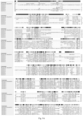
- the amino acid sequences of the 5 proteins Cas13m.1-Cas13m.5 or the 6 proteins Cas13m.1-Cas13m.6 were aligned in multiple sequences, and the positions corresponding to the RxxxxH motifs of other proteins were identified as the RxxxxH motifs of the catalytic activity centers of the Cas13m.1 and Cas13m.3 proteins, which were also underlined in the aforementioned table.
- the alignment result also showed that the 6 proteins, Cas13m.1-Cas13m.6, contained RNxYxH and RNxxxH motifs from the N-terminal to the C-terminal sequentially, and X was independently selected from naturally occurring amino acid residues.
- CasRfg.1 and CasRfg.2 proteins contained a RxxxxH motif and a RNxxxH motif from the N-terminal to the C-terminal sequentially.
- the genomic sequence sources of the aforementioned Cas13 proteins were shown in Table 2 below. Table 2.
- Source of genome sequence of Cas13 protein Protein Database Genome No The position of corresponding coding sequence in the genome Annotations on the source of species in the database Cas13m.1 NCBI Genbank GCA_01 3298125 .1 JAAFJP010000015.1:94 576:97653:+ Species name: Cytophagales bacterium (CFB group bacteria) Isolate: bin5.concoct.b 16b 17b 19.071 Cas 13m.2 CNGB CNA001 1077 LW1-s151260_scaffolds_8411 :1555:5133:+ Species name: metagenome Cas 13m.3 NCBI Genbank GCA_90 2762805 .1 CACWPQ010000015.1: 53195:57013:+ Name of species: uncultured Bacteroidetes bacterium (CFB group) Isolate: RUG10805 Cas13m.4
- the natural (wild type) DNA coding sequence of the aforementioned Cas13 protein was as follows:
- the locus structure of the aforementioned Cast 3 protein was shown in Fig. 1 , and in Fig. 1 the locus structure of the Cas13 protein of the present invention was compared with those of various published subtypes of Cas13, wherein CRISPR represented the CRISPR Array (a DNA sequence containing a corresponding DR sequence), and Cas13e.1 and Cas13f.1 were derived from the Chinese patent with the publication number of CN112410377A . It could be seen from the figure that the locus structures of Cas13m.1-Cas13m.5 had basically the same characteristics, and the locus structures of Cas13m.1-Cas13m.6 had basically the same characteristics.
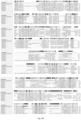
- Fig. 2 showed the position of the RxxxxH motif of each Cas13 protein in the amino acid chain in the present invention.
- Two RxxxxH motifs of Cas13m.1, Cas13m.2, Cas13m.3, Cas13m.4, Cas13m.5 and Cas13m.6 proteins were obviously spaced far apart, which was basically spaced more than 920 aa apart except that of Cas13m.1.
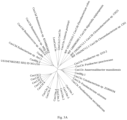
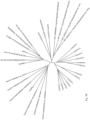
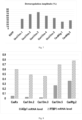
- On-line MAFFT version 7(E-INS-i algorithm) was utilized to construct phylogenetic trees for the newly discovered Cas13 protein (Cas13m.1-Cas13m.5 or Cas13m.1-Cas13m.6) of the present invention and the previously discovered various Cas13 subtypes (Cas13a, Cas13b, Cas13c, Cas13d, Cas13e and Cas13f), wherein partial protein sequences were published in NCBI, and Cas13e and Cas13f were available from the patent with the publication number of CN112410377A.
- RNA secondary structures of the corresponding direct repeat sequences of Cas13m.1-Cas13m.6, CasRfg.1 and CasRfg.2 proteins of the present invention were predicted by RNAfold. It was as shown in Fig. 4 . It could be seen from the figure that the DR sequences corresponding to Cas13m.1-Cas13m.6 had conserved secondary structures.
- RNAfold was used to further analyze the RNA secondary structure of the aforementioned direct repeat sequences.
- the corresponding direct repeat sequences of Cas13m.1, Cas13m.2, Cas13m.3, Cas13m.4 and Cas13m.5 had the following characteristics: obviously, they all had a conserved secondary structure, wherein A was a schematic diagram of the conserved secondary structure, including a complementary paired first stem (stem 1), a non-complementary bulge structure (bulge), a complementary paired second stem (stem 2), and a non-complementary loop structure (loop structure), the stem 1 and the stem 2 respectively contained complementary paired bases; and B-F were the secondary structures of the corresponding direct repeat sequences of Cas13m.1, Cas13m.2, Cas13m.3, Cas13m.4 and Cas13m.5 respectively, wherein the stem 1 contained 4 base pairs (5'-GUUG-3'), 5 base pairs (5'-GUUGU-3'), 6 base pairs (5'
- the three-dimensional structures of the Cas13m proteins were predicted by using the protein structure database program AlphaFold v2.0, as shown in Fig. 5 , wherein A, B and C were Cas13m.2, Cas13m.3 and Cas13m.6, respectively. Although two RxxxxH motifs (dark marks) were spaced far apart in the amino acid chain, they were very close in spatial location.
- CasRfg.1 By alignment of the CasRfg.1 protein with the Cas13 protein included in NCBI by BLASTp, it was found that the evalue value for alignment with Cas13c was the lowest compared with those of other Cas13 subtypes; and as combined with the phylogenetic tree analysis in Figs. 3A-3B , CasRfg.1 was classified as a Cas13c subtype.
- CasRfg.2 protein with the Cas13 protein included in NCBI by BLASTp By alignment of the CasRfg.2 protein with the Cas13 protein included in NCBI by BLASTp, it was found that the evalue value for alignment with Cas13d was the lowest compared with those of other Cas13 subtypes; and as combined with the phylogenetic tree analysis in Figs. 3A-3B , CasRfg.2 was classified as a Cas13d subtype.
- the constructed recombinant vectors were named Cas13m.1-pET28a, Cas13m.2-pET28a, Cas13m.3-pET28a, Cas13m.4-pET28a, Cas13m.5-pET28a, CasRfg.1-pET28a and CasRfg.2-pET28a, respectively.
- the recombinant vectors were respectively used for expressing a Cas13m.1 recombinant protein (with the sequence of SEQ ID NO: 22), a Cas13m.2 recombinant protein (with the sequence of SEQ ID NO: 23), a Cas13m.3 recombinant protein (with the sequence of SEQ ID NO: 24)), a Cas13m.4 recombinant protein (with the sequence of SEQ ID NO: 25), a Cas13m.5 recombinant protein (with the sequence of SEQ ID NO: 26), a CasRfg.1 recombinant protein (with the sequence of SEQ ID NO: 27), and a CasRfg.2 recombinant protein (with the sequence of SEQ ID NO: 28).
- the architecture of the recombinant Cas13 series proteins was His tag-NLS-Cas13-SV40 NLS-nucleoplasmin NLS.
- the architecture of the recombinant Cas13 series proteins contained a NLS sequence, and the aforementioned recombinant Cas13 series proteins were purified by IMAC (Ni Sepharose 6 Fast Flow, CYTIVA) with 6 His at the N-terminal as a purification tag. Upon SDS-PAGE electrophoresis, it could be seen that a band of various purified recombinant proteins was presented in the interval of 100-250 kDa.
- a recombinant vector Cas13m.6-pET28a (with the sequence of SEQ ID NO: 83) was constructed by employing the same method as that of the aforementioned Example 2, and transformed into an expression strain BL21-CodonPlus(DE3)-RIPL. Subsequently, a Cas13m.6 recombinant protein (with an architecture of His tag-NLS-Cas13-SV40 NLS-nucleoplasmin NLS) was expressed and purified by the same method as above. Upon SDS-PAGE electrophoresis, it could be seen that a band of the finally purified recombinant Cas13m.6 protein was presented in the interval of 100-250 kDa.
- EGFP enhanced green fluorescent protein
- sequence of an EGFP-targeting spacer was tgccgttcttctgcttgtcggccatgatat (SEQ ID NO: 30).
- the sequence of the exogenous EGFP expression vector was as shown in SEQ ID NO: 31, the sequence of the Cas13m.2 verification vector was as shown in SEQ ID NO: 32, the sequence of the Cas13m.3 verification vector was as shown in SEQ ID NO: 33, the sequence of the Cas13m.5 verification vector was as shown in SEQ ID NO: 34, and the sequence of the CasRfg.2 verification vector was as shown in SEQ ID NO: 35.
- the Cas13m.1 verification vector and the Cas13m.4 verification vector both had the same nucleotide backbone sequence as that of the Cas13m.3 verification vector, except that the coding sequence of Cast 3 protein and the coding sequence of DR sequence had been replaced accordingly.
- the CasRfg.1 verification vector had the same nucleotide backbone sequence as that of the CasRfg.2 verification vector, except that the coding sequence ofCas13 protein and the coding sequence of DR sequence had been replaced accordingly.
- the aforementioned verification vector contained a codon-optimized coding sequence of Cas13 protein, which could express a Cas13 protein linked with NLS, and could also express a gRNA which could target EGFP and contained the corresponding DR sequence of Cas13.
- the guide sequence of the gRNA corresponded to the aforementioned spacer sequence (SEQ ID NO: 30).
- a plasmid expressing the exogenous gene EGFP (referred to as EGFP for short) was transfected into a 293T cell in a 24-well plate with the aforementioned various plasmids as verification vectors at a ratio of 1:2 (300 ng:600 ng) respectively.
- the transfection method was as follows: The 293T cells were digested by trypsin (0.25% of Trypsin, EDTA, Thermo, 11058021), counted, and plated into a 24-well plates at 2 ⁇ 10 5 cells according to 500 ⁇ L per well.
- the complex was prepared according to the following steps:
- the 293T cells obtained after 48 h of transfection in the aforementioned step 2 were digested with trypsin (0.25% of Trypsin, EDTA, Thermo, 11058021), and centrifuged at 300 g for 5 min, the supernatant was discarded, and the cells in each well were resuspended with 500 ⁇ L of PBS.
- the EGFP fluorescent expression was detected by a flow cytometer, wherein the cell debris were removed by FCS-A and SSC-A gating, and then detection was conducted by the flow cytometer.
- the blank control group did not participate in the comparison.
- the codon-optimized Cas13m.2, Cas13m.3, Cas13m.5, CasRfg.2, and CasRx (one of Cas 13 d) expression vectors carrying an universal gRNA scaffold expression cassette were respectively synthesized in a reagent company, which were Cas13m.2-BsaI (with the sequence as shown in SEQ ID NO: 36).
- Cas13m.3-BsaI (with the sequence as shown in SEQ ID NO: 37), Cas13m.5-Bsa (with the sequence as shown in SEQ ID NO: 38), CasRfg.2-BsaI (with the sequence as shown in SEQ ID NO: 39) and CasRx-BpiI (with the sequence as shown in SEQ ID NO: 40).
- the endogenous sites selected in the experiment were AQp1 and PTBP1, wherein AQp1 was verified by using a 293T cell line (293T-AQp1 cells) with high expression of AQp1, and PTBP1 was verified by using a 293T cell line.
- a method for constructing the 293T cell line with high expression of AQp1 a vector Lv-AQp1-T2a-GFP with over-expression of the AQP1 gene and the EGFP gene was constructed with the sequence as shown in SEQ ID NO: 41. AQp1 and EGFP were spaced apart by a 2A peptide.
- the Lv-AQp1-T2a-GFP plasmid was packaged into a lentivirus and transduced into 293T cells to form a cell line stably overexpressing the AQp1 gene.
- the guide sequence of an AQp1-targeting gRNA was selected as GAAGACAAAGAGGGUCGUGG (SEQ ID NO: 42)
- the guide sequence of an PTBP1-targeting gRNA was selected as: GUGGUUGGAGAACUGGAUGUAGAUGGGCUG (SEQ ID NO: 43)
- a target site-targeted fragment was obtained by using a primer annealing manner, and the primers of it were as follows:
- the primer annealing reaction system was as follows: it was incubated in a PCR instrument at 95°C for 5 minutes, then immediately taken out and incubated on ice for 5 minutes, so that the primers were annealed to each other to form a double-stranded DNA with sticky ends: Oligo-F (10 ⁇ M) 2 ⁇ l Oligo-R (10 ⁇ M) 2 ⁇ l 2 ⁇ l of 10 ⁇ endonuclease reaction buffer 2 ⁇ l Deionized water up to 20 ⁇ l
- 293T-AQp1 cells were transfected with the AQp1-targeting plasmids (verification vector plasmids targeting the endogenous gene mRNA) of Cas13m.2, Cas13m.3, Cas13m.5, CasRfg.2 and CasRx obtained in the previous step at 800 ng in a 24-well plate.
- the negative control group was transfected with the CasRx-BpiI plasmid.
- the 293T cells were transfected with the PTBP1-targeting plasmids of Cas13m.2, Cas13m.3, Cas13m.5, CasRfg.2 and CasRx at 800 ng in a 24-well plate.
- the negative control group was transfected with the CasRx-BpiI plasmid.
- the transfection method was as follows:
- the complex was added into the cells and mixed, and then detected with a QuantStudio TM 5 Real-Time PCR System, 96-well after 72 h.
- the cells were subjected to RNA extraction with a SteadyPure Universal RNA Extraction Kit AG21017 kit, and the mRNA concentration was detected with an ultramicro spectrophotometer.
- the mRNA product was reverse transcribed by using an Evo M-MLV Mix Kit with gDNA Clean for qPCR AG11728 reverse transcription kit, and the reverse transcribed product was detected by using a SYBR Green Premix Pro Taq HS qPCR Kit (Low Rox Plus) AG11720 qPCR kit.
- a reaction system was configured according to the instructions of the SYBR Green Premix Pro Taq HS qPCR Kit (Low Rox Plus) AG11720, and detected by using a QuantStudio TM 5 Real-Time PCR System, 96-well.
- the change of the target RNA was calculated by using a relative quantitative method, namely a 2- ⁇ Ct method.
- the endogenous site selected in this experiment was AQp1, and AQp1 was verified by using the 293T cell line with high expression of AQp1 of the previous example.
- the guide sequence of an AQp1-targeting gRNA was GAAGACAAAGAGGGUCGUGG
- the verification vectors as used were as follows Serial Number gRNA structure (5'-3') Cas13m.2 Guide sequence-direct repeat sequence Cas13m.3 Guide sequence-direct repeat sequence Cas13m.5 Guide sequence-direct repeat sequence CasRfg.2 Direct repeat sequence-guide sequence Cas13m.2-r Direct repeat sequence-guide sequence Cas13m.3-r Direct repeat sequence-guide sequence Cas13m.5-r Direct repeat sequence-guide sequence CasRfg.2-r Guide sequence-direct repeat sequence
- the verification vectors targeting the endogenous gene AQp1 mRNA of Cas13m.2, Cas13m.3, Cas13m.5 and CasRfg.2 had been constructed in the experimental example 5, and the verification vectors targeting the endogenous gene AQp1 mRNA of Cas13m.2-r, Cas13m.3-r, Cas13m.5-r, and CasRfg.2-r with adjusted gRNA structures (the positions of the guide sequence and the direct repeat sequence were reversed) (other sequences except the gRNA coding sequence were the same as those of the verification vectors of Cas13m.2, Cas13m.3, Cas13m.5 and CasRfg.2) were synthesized in a reagent company.
- 293T-AQp1 cells were transfected with the verification vectors targeting the endogenous gene AQp1 mRNA of Cas13m.2, Cas13m.3, Cas13m.5, CasRfg.2, Cas13m.2-r, Cas13m.3-r, Cas13m.5-r, and CasRfg.2-r, and a control plasmid (which was the same as the verification vector plasmid targeting the endogenous gene AQp1 mRNA of CasRx in the aforementioned Example 5) at 800 ng in a 24-well plate.
- the negative control group was transfected with the CasRx-BpiI plasmid in the aforementioned Example 5.
- the transfection method was as follows:
- the complex was added into the cells and mixed, and then detected with a QuantStudio TM 5 Real-Time PCR System, 96-well after 72 h.
- RNA extraction was subjected to RNA extraction with a SteadyPure Universal RNA Extraction Kit AG21017 kit, and the RNA concentration was detected with an ultramicro spectrophotometer.
- the RNA product was reverse transcribed by using an Evo M-MLV Mix Kit with gDNA Clean for qPCR AG11728 reverse transcription kit, and the reverse transcribed product was detected by using a SYBR Green Premix Pro Taq HS qPCR Kit (Low Rox Plus) AG11720 qPCR kit.
- the primers used in the qPCR included the primer pair for detecting AQp1 as shown in SEQ ID Nos: 56-57 and the primer pair for detecting the internal reference GAPDH as shown in SEQ ID Nos: 58-59.
- a reaction system was configured according to the instructions of the SYBR Green Premix Pro Taq HS qPCR Kit (Low Rox Plus) AG11720, and detected by using a QuantStudio TM 5 Real-Time PCR System, 96-well.
- the qPCR results were as follows:
- the relative expression level of the target RNA was calculated by using a relative quantitative method, namely a 2- ⁇ Ct method.
- Example 7 The editing activity of Cas13m.6 on an exogenous gene in a cell and the activity comparison between the Casl3m and published proteins
- An EGFP-targeting validation vector Cas13m.6 was obtained by preparation, with the full-length sequence as shown in SEQ ID NO: 105 (7,690 bp).
- NCBI disclosed two Cas13 proteins, namely a C13-38 protein (GenBank: MBQ9236733.1) and a C13-40 protein (NCBI Reference Sequence: WP_025000926.1), and corresponding DR sequences thereof.
- the DR sequence corresponding to C13-38 was:
- the DR sequence corresponding to C13-40 was: 5'-GUUGUUUUUACCUUUCAAACAGAAGGCAGAUACAACA-3' (SEQ ID NO: 66)
- C13-38 and C13-40 verification vectors were constructed according to the aforementioned method, and their nucleotide backbone sequences were the same as that of the Cas13m.3 verification vector of Example 4, except that the coding sequence of Cas13 protein and the coding sequence of DR sequence had been replaced accordingly.
- the aforementioned Cas13m.6, C13-38 and C13-40 verification vectors all contained the coding sequence of Cas13 protein, which could express a Cas13 protein linked with NLS, and could also express the EGFP-targeting gRNA (the guide sequences of the gRNAs corresponding to C13-38 and C13-40 were both located at the 5' terminal of the DR sequence).
- the guide sequence of the gRNA corresponded to the aforementioned spacer sequence (SEQ ID NO: 30). All the aforementioned vectors were synthesized by a reagent company by a conventional method.
- the 293T cells were transfected with a plasmid expressing the exogenous gene EGFP and the Cas13 verification vector plasmids (the Cas13m.6 verification vector, the C13-38 verification vector, the C13-40 verification vector, or other Cas13m verification vectors obtained by preparation in Example 4) at the ratio of 300 ng:600 ng.
- the Cas13 verification vector plasmids the Cas13m.6 verification vector, the C13-38 verification vector, the C13-40 verification vector, or other Cas13m verification vectors obtained by preparation in Example 4
- Table 8 Experimental Grouping Name Transfected with the EGFP vector Transfected with the EGFP-targeting Cas13 verification vector Comments 293T Cell control EGFP * Control transfected with EGFP only Cas 13m.2 * * Verification vector Cas 13m.3 * * Verification vector Cas 13m.5 * * Verification vector Cas13m.6 * * Verification vector C13-38 * * Verification vector C13-40 * * Verification vector Note: * represented containing related items, and blank represented there was no related items
- this example used the same method as that of Example 5.
- An expression vector Cas13m.6-BsaI was constructed, and its sequence was as shown in SEQ ID NO: 77.
- the endogenous sites selected in the experiment were AQp1 and PTBP1, wherein AQp1 was verified by using the aforementioned 293T cell line (293T-AQp1 cells) with high expression of AQp1, and PTBP1 was verified by using a 293T cell line.
- the guide sequence of the AQp1-targeting gRNA was selected as: [0409] AGGGCAGAACCGATGCTGATGAAGAC (SEQ ID NO: 68)
- the guide sequence targeting PTBP1 was selected as: GUGGUUGGAGAACUGGAUGUAGAUGGGCUG (SEQ ID NO: 43)
- a target site-targeted fragment was obtained by using a primer annealing manner, and the primers of it were as follows:
- a Bsa I-digested Cas13m.6-BsaI vector was linked with the annealing products by T4.
- the CasRx-BpiI plasmid was digested with BpiI, and linked with the annealing products by T4.
- the verification vectors targeting the endogenous genes AQp1 and PTBP1 were obtained.
- the verification vector was transfected into the 293T cells and the 293T-AQp1 cells, respectively.
- the negative control group was transfected with the CasRx-BpiI plasmid.
- Detection was conducted by qPCR, and the mRNA levels of AQp1 and PTBP1 were calculated by the 2- ⁇ Ct method. The experiment of this example was conducted in triplicate, and the result data was the average of three tests. The result was shown in Table 10 below. Table 10. Relative expression level of target mRNA Groups AQp1 mRNA level PTBP1 mRNA level Negative Control 1.00 1.00 CasRx 0.03 0.59 Cas13m.6 0.01 0.51
- Cas13m.2 and Cas13m.3 showed the highest level of knocking down, followed by Cas13m.5.
- Cas13m.2 and Cas13m.3 showed a higher level of knock-down than those of Cas13m.1, Cas13m.4 and Cas 13m.5.
- motifs 1-15 The conserved motifs (motifs 1-15) of high-activity Cas13m proteins (Cas13m.2, Cas13m.3, Cas13m.6) were identified at positions corresponding to the aforementioned key residues (amino acid residues interacting with the crRNA and the catalytic residues of the HEPN domain) of the PbuCas13b protein, and they were written in a commonly used Prosite form, as shown in Table 11 below.
- the motifs 1-15 appeared more frequently in Cas13m.2, Cas13m.3 and Cas13m.6, and the motifs 16-30 were further definitions of the motifs 1-15. Table 11.
- the three-dimensional structures of the Cas13m protein and PbuCas13b were predicted by the program AlphaFold v2.0, and then the proteins were superimposed by PyMOL V2.5.1.
- the three-dimensional spatial locations of the motifs 1-15 of the Cas13m protein in the protein were very similar to those of the corresponding sequences of PbuCas13b. Taking Cas13m.6 as an example, it was superimposed with PbuCas13b. A-N in Fig. 10 respectively showed the overlapping of the motifs 1-15 of Cas13m.6 and the corresponding sequences of PbuCas13b.
- motifs 1-13 could enable the Cas13m.2, Cas13m.3 and Cas13m.6 proteins to interact with their respective DR sequences, and the motifs 14 and 15 were catalytic activity centers. It could be understood by those skilled in the art that, the homologous protein or mutant of Cas13m.2, Cas13m.3 or Cas13m.6 was also expected to show the target nucleic acid binding activity or endonuclease activity when it contains the motifs 1-15, especially when amino acid residues other than the motifs 1-15 were subjected to conservative amino acid replacement on the basis of a wild-type sequence.
- the aforementioned homologous protein or mutant might have a sequence identity >_ 50% with the Cas13m.2, Cas13m.3 or Cas13m.6 protein (e.g., a sequence identity ⁇ 60%, >_ 70%, >_ 80%, >_ 85%, >_ 90%, >_ 95%, >_ 96%, >_ 97%, >_ 98%, >_ 99% or ⁇ 99.5%).
- the source of the aforementioned homologous protein could also be of the same kingdom, phylum, class, order, family, genus or species as the source of the Cas13m.2, Cas13m.3 or Cas13m.6 protein.
- this paper provided a Cas13 protein having this consensus motif (a conjugate containing it, a nucleic acid encoding these proteins or conjugates, a vector containing these nucleic acids, and a method of using these proteins/nucleic acids).
- the PTBP1 gene was selected as the target gene for off-target verification.
- the controls shRNA1 and shRNA2 respectively intercepted 21 nt from the head and tail of the target sequence used by Cas13 as the targets, specifically as follows:
- ShRNA1 target site GCCCATCTACATCCAGTTCTC (SEQ ID NO: 73)
- ShRNA2 target site CAGCCCATCTACATCCAGTTC (SEQ ID NO: 74)
- the aforementioned primers were respectively annealed according to shRNA1: PTBP1-g3-shRNA-1F/PTBP1-g3-shRNA-1R and shRNA2: PTBP1-g3-shRNA-2F/PTBP1-g3-shRNA-2R, so as to obtain annealed products.
- the vector pAAV-CMV-EGFP was subjected to double enzyme digestion via BsaI and NotI to obtain a linearized backbone.
- the backbone was connected with the annealing products of shRNA1 and shRNA2, respectively, and then transformed into Escherichia coli to obtain the control vectors shRNA1 and shRNA2 (which could express shRNA1 and shRNA2 respectively under the drive by an U6 promoter).
- the vector CasRx-blank was constructed by a conventional method.
- the CasRx-blank was obtained by replacing the coding sequence GGGTCTTCGAGAAGACCT (SEQ ID NO: 103) of the guide sequence of the gRNA with GATCAACATTAAATGTGAGCGAGT (SEQ ID NO: 104) (the coded gRNA could target the LacZ of E. coli.), on the basis of the aforementioned CasRx-BpiI plasmid.
- the PTBP1-targeting plasmids of Cas13m.2, Cas13m.3, Cas13m.5, CasRfg.2 and CasRx (named Cas13m.2-PTBP1, Cas13m.3-PTBP1, Cas13m.5-PTBP1, CasRfg.2-PTBP1, and CasRx-PTBP1 respectively) constructed in Example 5 were also used.
- the sequence of the backbone vector pAAV-CMV-EGFP was as shown in SEQ ID NO: 79.
- the 293T cells were transfected with the plasmid to be verified at 500 ng in a 24-well plate.
- the transfection method was as follows:
- the cells were subjected to RNA extraction with a SteadyPure Universal RNA Extraction Kit AG21017 kit, and the RNA concentration was detected with an ultramicro spectrophotometer.
- the extracted RNA was sent to a reagent company for RNA sequencing.
- Samples were sequenced by PE150bp RNA-Seq, and several fastq files obtained by sequencing were aligned with the reference genome of the target species by HISAT2 or STAR software, respectively, to obtain several BAM files after the alignment.
- the expression levels of the obtained transcripts and various genes were detected by kallisto, RSEM or HTSeq.
- a PTBP1-targeting gRNA was transcribed by using a T7 in vitro transcription kit T7 High Yield RNA Transcription Kit, Vazyme, TR101-01.
- the sequence of the gRNA molecular obtained by transcription in vitro was as follows:
- RNaseAlert was a novel RNA substrate, one end of which was labeled with a fluorescent reporter molecule (fluorophor) and the other end was labeled with a quencher.
- the physical proximity of the quencher would suppress the fluorescence of the phosphor to an extremely low level.
- the RNA substrate was cleaved, and the phosphor and the quencher were separated. When the phosphor was excited by a light at 490 nm, it would emit a green fluorescence signal at 520 nm.
- the RNaseAlert substrate When Cas13 had the collateral cleavage activity (i.e., the non-specific RNA cleaving activity activated by the target RNA), the RNaseAlert substrate would also be cleaved to emit a green fluorescent signal that could be detected.
- the following RNaseAlert collateral cleavage system was formulated: Cas13 protein (Cas13m) 45 nM gRNA 22.5 nM RNase Inhibitor 2 ⁇ L 293T cell RNA 100 ng RNaseAlert 10 ⁇ L 10X RNaseAlert ® -1 Buffer 10 ⁇ L RNase-free deionized water up to 100 ⁇ l Note: the RNA group of the 293T cells were extracted according to the instructions of the SteadyPure Universal RNA Extraction Kit. The Cas13m recombinant protein purified in Example 2 was used. The Cas13 protein and the gRNA were not added in the reaction systems of the RNase group (a positive control group added with the RNase) and the blank group (a blank control group).
- the reaction was carried out at 37°C for 1 h, and the fluorescence at 520 nm was detected every 30 min by the microplate reader.
- the relative fluorescence intensity of each of Cas13m.2, Cas13m.3 and Cas13m.6 was lower than 10, and the fluorescence intensity did not increase over time, and no collateral cleavage activity was observed.
Landscapes
- Health & Medical Sciences (AREA)
- Life Sciences & Earth Sciences (AREA)
- Genetics & Genomics (AREA)
- Engineering & Computer Science (AREA)
- Chemical & Material Sciences (AREA)
- Organic Chemistry (AREA)
- Zoology (AREA)
- Wood Science & Technology (AREA)
- Biomedical Technology (AREA)
- Bioinformatics & Cheminformatics (AREA)
- Molecular Biology (AREA)
- Biotechnology (AREA)
- General Engineering & Computer Science (AREA)
- Microbiology (AREA)
- General Health & Medical Sciences (AREA)
- Biochemistry (AREA)
- Biophysics (AREA)
- Physics & Mathematics (AREA)
- Plant Pathology (AREA)
- Medicinal Chemistry (AREA)
- Cell Biology (AREA)
- Proteomics, Peptides & Aminoacids (AREA)
- Mycology (AREA)
- Analytical Chemistry (AREA)
- Immunology (AREA)
- Endocrinology (AREA)
- Peptides Or Proteins (AREA)
- Enzymes And Modification Thereof (AREA)
- Micro-Organisms Or Cultivation Processes Thereof (AREA)
Applications Claiming Priority (3)
| Application Number | Priority Date | Filing Date | Title |
|---|---|---|---|
| CN202111306149 | 2021-11-05 | ||
| CN202210518826.1A CN116083398B (zh) | 2021-11-05 | 2022-05-13 | 分离的Cas13蛋白及其应用 |
| PCT/CN2022/129825 WO2023078384A1 (zh) | 2021-11-05 | 2022-11-04 | 分离的Cas13蛋白及其应用 |
Publications (2)
| Publication Number | Publication Date |
|---|---|
| EP4428232A1 true EP4428232A1 (de) | 2024-09-11 |
| EP4428232A4 EP4428232A4 (de) | 2026-01-28 |
Family
ID=86199736
Family Applications (1)
| Application Number | Title | Priority Date | Filing Date |
|---|---|---|---|
| EP22889405.1A Pending EP4428232A4 (de) | 2021-11-05 | 2022-11-04 | Isoliertes cas13-protein und verwendung davon |
Country Status (4)
| Country | Link |
|---|---|
| US (1) | US20240279630A1 (de) |
| EP (1) | EP4428232A4 (de) |
| CN (2) | CN116083398B (de) |
| WO (1) | WO2023078384A1 (de) |
Cited By (1)
| Publication number | Priority date | Publication date | Assignee | Title |
|---|---|---|---|---|
| CN119661651A (zh) * | 2024-12-31 | 2025-03-21 | 南京农业大学 | 抗菌肽cr19及其应用 |
Families Citing this family (6)
| Publication number | Priority date | Publication date | Assignee | Title |
|---|---|---|---|---|
| CN114075572B (zh) * | 2021-11-16 | 2024-07-26 | 珠海中科先进技术研究院有限公司 | 一种与门基因电路及获取该与门基因电路的方法 |
| WO2024230837A1 (zh) * | 2023-05-11 | 2024-11-14 | 广州瑞风生物科技有限公司 | 指导rna、基因编辑系统及其应用 |
| WO2025061113A1 (zh) * | 2023-09-19 | 2025-03-27 | 广州瑞风生物科技有限公司 | Cas12蛋白及其应用 |
| WO2025103411A1 (zh) * | 2023-11-14 | 2025-05-22 | 广州瑞风生物科技有限公司 | Cas蛋白、CRISPR-Cas系统及其应用 |
| CN117230043B (zh) * | 2023-11-14 | 2024-04-12 | 广州瑞风生物科技有限公司 | Cas13蛋白及其应用 |
| WO2024078645A2 (zh) * | 2023-12-28 | 2024-04-18 | 广州瑞风生物科技有限公司 | Cas蛋白及其应用 |
Family Cites Families (9)
| Publication number | Priority date | Publication date | Assignee | Title |
|---|---|---|---|---|
| CN118995694A (zh) * | 2017-04-12 | 2024-11-22 | 博德研究所 | 新型vi型crispr直系同源物和系统 |
| AU2018290843B2 (en) * | 2017-06-26 | 2025-04-24 | Massachusetts Institute Of Technology | CRISPR/Cas-adenine deaminase based compositions, systems, and methods for targeted nucleic acid editing |
| CA3111432A1 (en) * | 2018-07-31 | 2020-02-06 | The Broad Institute, Inc. | Novel crispr enzymes and systems |
| WO2020142754A2 (en) * | 2019-01-04 | 2020-07-09 | Mammoth Biosciences, Inc. | Programmable nuclease improvements and compositions and methods for nucleic acid amplification and detection |
| EP4031660A1 (de) * | 2019-09-20 | 2022-07-27 | The Broad Institute, Inc. | Neuartige typ-vi-crispr-enzyme und systeme |
| JP7412586B2 (ja) * | 2020-02-28 | 2024-01-12 | ヒュイダジェネ・セラピューティックス・カンパニー・リミテッド | VI-E型及びVI-F型CRISPR-Casシステム並びにそれらの使用 |
| CN113337488B (zh) * | 2020-03-02 | 2024-04-19 | 中国科学院分子细胞科学卓越创新中心 | 一种分离的Cas13蛋白 |
| WO2021175230A1 (zh) * | 2020-03-02 | 2021-09-10 | 中国科学院分子细胞科学卓越创新中心 | 一种分离的Cas13蛋白 |
| CN112522271B (zh) * | 2020-12-23 | 2023-06-27 | 广州瑞风生物科技有限公司 | 一种sgRNA及其应用 |
-
2022
- 2022-05-13 CN CN202210518826.1A patent/CN116083398B/zh active Active
- 2022-11-04 EP EP22889405.1A patent/EP4428232A4/de active Pending
- 2022-11-04 WO PCT/CN2022/129825 patent/WO2023078384A1/zh not_active Ceased
- 2022-11-04 CN CN202280073436.6A patent/CN118510892A/zh active Pending
-
2024
- 2024-05-02 US US18/652,819 patent/US20240279630A1/en active Pending
Cited By (2)
| Publication number | Priority date | Publication date | Assignee | Title |
|---|---|---|---|---|
| CN119661651A (zh) * | 2024-12-31 | 2025-03-21 | 南京农业大学 | 抗菌肽cr19及其应用 |
| CN119661651B (zh) * | 2024-12-31 | 2025-10-14 | 南京农业大学 | 抗菌肽cr19及其应用 |
Also Published As
| Publication number | Publication date |
|---|---|
| US20240279630A1 (en) | 2024-08-22 |
| CN116083398A (zh) | 2023-05-09 |
| WO2023078384A1 (zh) | 2023-05-11 |
| CN118510892A (zh) | 2024-08-16 |
| CN116083398B (zh) | 2024-01-05 |
| EP4428232A4 (de) | 2026-01-28 |
Similar Documents
| Publication | Publication Date | Title |
|---|---|---|
| EP4428232A1 (de) | Isoliertes cas13-protein und verwendung davon | |
| KR102851101B1 (ko) | Rna를 편집하기 위한 방법 및 조성물 | |
| AU2019357450B2 (en) | Methods and compositions for editing RNAs | |
| US10323073B2 (en) | CRISPR-based methods and products for increasing frataxin levels and uses thereof | |
| JP7440043B2 (ja) | 遺伝子発現調節のための人為的なゲノム操作 | |
| JP2024050582A (ja) | 新規のomni-50crisprヌクレアーゼ | |
| AU2018321105B2 (en) | Improved transposase polypeptide and uses thereof | |
| WO2017136520A1 (en) | Mitochondrial genome editing and regulation | |
| JP2025087691A (ja) | 糖原病1a型を治療するための組成物および方法 | |
| EP3896162B1 (de) | Steuerungssystem mit künstlich manipulierter schwann zellen (sc) funktion | |
| WO2020069029A1 (en) | Novel crispr nucleases | |
| JP2024522112A (ja) | エンジニアリングされたCas12iヌクレアーゼ、エフェクタータンパク質及びその用途 | |
| KR20230124553A (ko) | 글리코겐축적병 1a형을 치료하기 위한 조성물 및 방법 | |
| AU2022215636A1 (en) | Omni 90-99, 101, 104-110, 114, 116, 118-123, 125, 126, 128, 129, and 131-138 crispr nucleases | |
| CN120981567A (zh) | Cas13蛋白、CRISPR-Cas系统及其应用 | |
| US20250250590A1 (en) | Crispr-cas13 system and use thereof | |
| US20240287486A1 (en) | Improved cas 12a/nls mediated therapeutic gene editing platforms | |
| JP2024507451A (ja) | Crisprに基づく転写抑制用融合タンパク質 | |
| WO2021252970A2 (en) | Genetic modification | |
| WO2025036482A1 (en) | Type ii cas protein, crispr-cas system and uses thereof | |
| US20230323335A1 (en) | Miniaturized cytidine deaminase-containing complex for modifying double-stranded dna | |
| HK40081918A (en) | Methods and compositions for editing rna | |
| US20040063922A1 (en) | Methods and compositions for catalytic DNA exchange in a sequence specific manner | |
| HK40081918B (en) | Methods and compositions for editing rna | |
| TW202440938A (zh) | 用於抑制微管解聚蛋白2(stmn2)轉錄物中異常剪接的基因編輯方法 |
Legal Events
| Date | Code | Title | Description |
|---|---|---|---|
| STAA | Information on the status of an ep patent application or granted ep patent |
Free format text: STATUS: THE INTERNATIONAL PUBLICATION HAS BEEN MADE |
|
| PUAI | Public reference made under article 153(3) epc to a published international application that has entered the european phase |
Free format text: ORIGINAL CODE: 0009012 |
|
| STAA | Information on the status of an ep patent application or granted ep patent |
Free format text: STATUS: REQUEST FOR EXAMINATION WAS MADE |
|
| 17P | Request for examination filed |
Effective date: 20240605 |
|
| AK | Designated contracting states |
Kind code of ref document: A1 Designated state(s): AL AT BE BG CH CY CZ DE DK EE ES FI FR GB GR HR HU IE IS IT LI LT LU LV MC ME MK MT NL NO PL PT RO RS SE SI SK SM TR |
|
| DAV | Request for validation of the european patent (deleted) | ||
| DAX | Request for extension of the european patent (deleted) | ||
| RIC1 | Information provided on ipc code assigned before grant |
Ipc: C12N 9/22 20060101AFI20251007BHEP Ipc: C12N 5/10 20060101ALI20251007BHEP Ipc: C12N 15/113 20100101ALI20251007BHEP Ipc: C12N 15/90 20060101ALI20251007BHEP |
|
| A4 | Supplementary search report drawn up and despatched |
Effective date: 20260105 |
|
| RIC1 | Information provided on ipc code assigned before grant |
Ipc: C12N 9/22 20060101AFI20251219BHEP Ipc: C12N 5/10 20060101ALI20251219BHEP Ipc: C12N 15/113 20100101ALI20251219BHEP Ipc: C12N 15/90 20060101ALI20251219BHEP |