EP4424902A1 - Garment steamer with a descaling tray and an ironing board - Google Patents
Garment steamer with a descaling tray and an ironing board Download PDFInfo
- Publication number
- EP4424902A1 EP4424902A1 EP23159199.1A EP23159199A EP4424902A1 EP 4424902 A1 EP4424902 A1 EP 4424902A1 EP 23159199 A EP23159199 A EP 23159199A EP 4424902 A1 EP4424902 A1 EP 4424902A1
- Authority
- EP
- European Patent Office
- Prior art keywords
- tray
- ironing board
- garment
- garment steamer
- soleplate
- Prior art date
- Legal status (The legal status is an assumption and is not a legal conclusion. Google has not performed a legal analysis and makes no representation as to the accuracy of the status listed.)
- Withdrawn
Links
Images





Classifications
-
- D—TEXTILES; PAPER
- D06—TREATMENT OF TEXTILES OR THE LIKE; LAUNDERING; FLEXIBLE MATERIALS NOT OTHERWISE PROVIDED FOR
- D06F—LAUNDERING, DRYING, IRONING, PRESSING OR FOLDING TEXTILE ARTICLES
- D06F79/00—Accessories for hand irons
- D06F79/02—Stands or supports neither attached to, nor forming part of, the iron or ironing board
-
- D—TEXTILES; PAPER
- D06—TREATMENT OF TEXTILES OR THE LIKE; LAUNDERING; FLEXIBLE MATERIALS NOT OTHERWISE PROVIDED FOR
- D06F—LAUNDERING, DRYING, IRONING, PRESSING OR FOLDING TEXTILE ARTICLES
- D06F73/00—Apparatus for smoothing or removing creases from garments or other textile articles by formers, cores, stretchers, or internal frames, with the application of heat or steam
-
- D—TEXTILES; PAPER
- D06—TREATMENT OF TEXTILES OR THE LIKE; LAUNDERING; FLEXIBLE MATERIALS NOT OTHERWISE PROVIDED FOR
- D06F—LAUNDERING, DRYING, IRONING, PRESSING OR FOLDING TEXTILE ARTICLES
- D06F75/00—Hand irons
- D06F75/08—Hand irons internally heated by electricity
- D06F75/10—Hand irons internally heated by electricity with means for supplying steam to the article being ironed
Definitions
- the invention relates to a garment steamer having a tray for use in a descaling operation.
- the invention may be used in the field of garment care.
- Garment steamers are known to be used for ironing or steaming garments to remove creases through the use of heat and moisture from steam.
- One type of garment steamer comprises a base unit, which base unit houses a water tank.
- a steamer head which can be alternatively referred to as an iron head or a handheld unit, is connected to the base unit by a flexible hose cord through which steam and/or water is delivered from the base unit to the steamer head.
- a steam generator is included in the base unit and/or the steamer head.
- the steamer head is provided with a soleplate, also known as a treatment plate, delimiting one or more steam vents through which steam is discharged onto a fabric being treated.
- a descaling operation/procedure tends to be recommended for such garment steamers in order to maintain efficient steam generation and to extend operating lifetime, particularly if relatively hard water is being used.
- the descaling operation is usually conducted by the user holding the steamer head and allowing scale (together with hot water and/or steam) to be flushed out of the steamer head and into the air or a sink. Holding the steamer head throughout the descaling operation tends to be necessary because of the risks, associated with hot water and steam discharge, to others, such as members of the user's family, and especially children.
- a descaling tray can be provided for receiving hot water, steam and/or scale discharged during the descaling operation. Whilst such a descaling tray can provide various benefits, in particular relating to safety and effectiveness of the descaling operation, such a descaling tray can risk being misplaced, partly as a result of the descaling operation being a maintenance procedure that takes place, for example, every few weeks. Misplacing the descaling tray can mean that the descaling operation is not performed when it should be, or that the descaling operation is performed without the descaling tray. This can increase the likelihood that the descaling operation is performed improperly, ineffectively or in a way that compromises safety of the user and/or those around them.
- the garment steamer according to the invention comprises
- the coupling means which can be alternatively termed “a coupling system", can assist the user to easily retrieve the tray when the descaling operation is due to be performed, noting that the descaling operation tends to take place, depending on factors such as water hardness and frequency of use of the garment steamer, for example every few weeks.
- the capability to couple the tray to the ironing board of the garment steamer can assist to minimize the risk of the tray being misplaced (in other words located somewhere different from the rest of the garment steamer).
- the tray can be straightforwardly kept together with the ironing board, and thus the garment steamer as a whole, even while the garment steamer is being transported from one location to another location.
- the coupling means can assist to ensure compliance with descaling recommendations for the garment steamer.
- the user may be more likely to implement the descaling operation when recommended to do so.
- the user may be more likely to use the tray for the descaling operation rather than some other receptacle, such as a sink, that is not specifically designed for this purpose.
- the coupling means can assist to ensure that the descaling operation is performed properly, effectively and safely. It is noted that performing of the descaling operation properly and effectively can assist with ensuring that the garment steamer functions reliably over its operating lifetime.
- the ironing board has a garment-facing side against which a garment is supportable, and an underside, with the garment-facing side and the underside facing in opposite directions, and with the coupling means being arranged to detachably couple the tray to the underside.
- the tray By the tray being couplable to the underside of the ironing board, the tray can be positioned in a way that minimizes the risk of the tray hampering ironing or steaming of a garment supported by the garment-facing side. Moreover, the tray can be conveniently hidden from view when coupled to the ironing board.
- the coupling means comprises at least one resilient fastener adapted to releasably secure part of the tray to the ironing board.
- the resilient fastener(s) can assist to make coupling of the tray to and detaching of the tray from the ironing board relatively straightforward for the user to implement.
- the at least one resilient fastener comprises a resilient member and a securing member, with the resilient member being arranged to bias the securing member into engagement with the part of the tray.
- the resilient member comprises, e.g. is defined by, a spring.
- the at least one resilient fastener comprises a tactile portion contactable and moveable by a user, for instance by a user's finger, to cause movement of the securing member against the bias provided by the resilient member, e.g. spring.
- the user may move the tactile portion so that the securing member is positioned to enable the part of the tray to be moved beyond the securing member towards the ironing board.
- the securing member can engage the part in order to secure the part to the ironing board.
- the user may move the tactile portion so that the securing member is positioned to enable the part of the tray to be moved beyond the securing member and away from the ironing board.
- the securing member can comprise a latch portion for contacting the part of the tray, with the latch portion being shaped such that moving of the part of the tray thereagainst moves the securing member against the bias.
- the coupling means comprises a support member against which a portion of the tray is restable while the at least one resilient fastener secures the part of the tray, with the support member and the resilient fastener being thereby arranged to hold the tray to the ironing board.
- the portion that rests against the support member is at or proximal to a first end of the tray, and the part that is releasably secured by the resilient fastener is at or proximal to a second end of the tray that is opposite the first end.
- This may provide a relatively straightforwardly manufacturable, secure and easy-to-use coupling component of the tray.
- the at least one resilient fastener comprises a snap-fit fastener.
- a snap-fit fastener may make coupling of the tray to and detachment of the tray from the ironing board relatively staightforward to implement.
- one or more guiding elements is or are provided on the ironing board and arranged, via contact with the tray, to enable guiding of the tray so that the part is engaged by the snap-fit fastener.
- the guiding element(s) can thus assist the user with positioning the tray correctly with respect to the snap-fit fastener(s) when coupling the tray to the ironing board.
- the tray can be pushed towards the ironing board to cause the tray to be engaged by the snap-fit fastener(s).
- the coupling means is arranged such that a rotational movement about an axis extending perpendicular to the ironing board couples the tray to and detaches the tray from the ironing board.
- One or more fastening members for example hook(s) is or are preferably arranged to allow the tray to be positioned in an initial orientation proximal to the ironing board, and to engage the tray upon rotational movement of the tray about the axis.
- the fastening member(s), e.g. hook(s), can, for example, be integral to the ironing board.
- the fastening member(s) is or are moulded together with a main body of the ironing board.
- the tray can form an upper surface on which the soleplate is dockable, in other words mountable, to enable the descaling operation to be performed.
- the tray comprises a recess (forming a recipient) for receiving scale and/or water from the steamer head during the descaling operation.
- a rim preferably extends at least partly around the recess, with the soleplate of the steamer head being supportable on the rim.
- the upper surface can be regarded as being included in the rim.
- the tray further comprises a flange extending at least partly around the recess, with the coupling means being adapted to detachably couple the tray to the ironing board via the flange.
- the flange can assist the user to manipulate the tray, for example when moving the tray containing water and/or scale.
- the flange can also assist with stowing of the tray after use, by assisting coupling of the tray to the ironing board.
- the portion and/or the part of the tray is or are included in the flange.
- the tray preferably comprises attaching means arranged at a front end of the tray to attach a tip of the steamer head to the tray.
- the attaching means which can be alternatively termed “an attachment system”, can assist to reduce the risk of the steamer head, and the tip of the steamer head in particular, unintentionally separating from the tray during the descaling operation.
- the attaching means can assist to ensure safe implementing of the descaling operation.
- the tip of the steamer head that is attachable to the tray via the attaching means preferably comprises a tip of the steamer head's casing.
- Attaching the steamer head to the tray via its casing may provide a relatively robust and long-lasting solution, particularly in comparison to, for example, attaching the steamer head to the tray via a tip of the steamer head's soleplate due to the relatively high temperatures to which the soleplate is heated.
- the tray forms a lower surface adapted to cooperate with an external horizontal supporting surface
- the tray comprises a plurality of supporting ribs comprising lower portions being flush with the lower surface, with the supporting ribs being arranged to backwardly protrude beyond a rear end of the soleplate when docked on the tray.
- the lower portions By the lower portions backwardly protruding beyond the rear end of the soleplate when the soleplate is docked on the tray, the risk of backwards tipping of the tray, with the soleplate of the steamer head docked thereon, can be minimized.
- the lower portions e.g. in combination with the attaching means, can assist the steamer head to be supported on the tray, with the tray sitting stably on the external horizontal supporting surface, without the user being required to hold the steamer head.
- the invention relates to a garment steamer comprising a steamer head, an ironing board and a tray.
- the steamer head has a soleplate that is dockable on the tray to enable a descaling operation to be performed.
- Coupling means detachably couples the tray to the ironing board when the soleplate is not being docked on the tray.
- Fig.1 depicts a steamer head 100 of a garment steamer according to an example.
- the steamer head 100 comprises a soleplate 102.
- Steam generated by a steam generator (not visible) included in the garment steamer is releasable to a garment via at least one steam vent (not visible) delimited by the soleplate 102.
- the soleplate 102 comprises a metal alloy or a metal, e.g. aluminium. Such a metallic soleplate 102 is preferably coated, for instance with a material adapted to facilitate gliding of the soleplate 102 over a fabric.
- the steamer head 100 comprises a casing 101 to which the soleplate 102 is coupled.
- a casing 101 can be made of any suitable material, such as a plastic material, e.g. an engineering thermoplastic.
- the steamer head 100 includes a handle 103 that, when grasped by the user, enables the steamer head 100 to be held by the user and moved over a garment.
- the garment steamer comprises a base unit comprising a water tank, and a hose cord for connecting the steamer head 100 to the base unit.
- the water tank stores water used to generate steam. To this end, the water stored in the water tank is supplied to the steam generator.
- the steam generator is included in the base unit, and the steam generated by the steam generator is supplied to the steamer head 100 via the hose cord.
- the steamer head 100 preferably includes a steam heater arranged to reheat steam and/or water received from the steam generator, prior to the steam exiting the steamer head via the at least one steam vent.
- the steam heater may assist to minimise the risk of spitting of water onto the garment being treated.
- the steamer head 100 can comprise a steam chamber arranged to generate steam from water supplied, e.g. pumped, thereto from the water tank included in the base unit.
- the garment steamer comprises a tray 104 on which the soleplate 102 is dockable, in other words mountable, to enable a descaling operation to be performed.
- the tray 104 can be regarded as being included in, for example defining, an accessory.
- the tray 104 can be made of any suitable mechanically and thermally robust material.
- the tray 104 is made of a plastic material.
- the tray 104 is made of polypropylene, e.g. recycled polypropylene.
- the tray 104 can be manufactured in any suitable manner.
- the tray 104 is manufactured by plastic injection moulding, for example by injection moulding using polypropylene.
- Vaporizing of water, in particular in the steam heater or steam chamber of the steamer head 100, can result in a build-up of scale over time.
- the descaling operation can remove at least some of this scale.
- the descaling operation can, for example, be implemented using a user-selectable descaling mode of the garment steamer.
- the garment steamer includes a user interface configured to enable the user to select the descaling mode of the garment steamer.
- a descaling solution that is different from the water used in normal operation of the garment steamer can be used, for instance by the descaling solution being introduced into the steam heater or steam chamber of the steamer head 100, for the descaling operation.
- the descaling solution preferably comprises, e.g. is defined by, aqueous acetic acid.
- aqueous acetic acid can be provided in any suitable manner, for instance as a mixture of distilled water and white vinegar.
- scale and/or water is or are flushed out from the steamer head 100, for example via the steam vent(s) delimited by the soleplate 102.
- the scale and/or water flushed out from the steamer head 100 is or are receivable in the tray 104 during the descaling operation.
- the tray 104 preferably comprises a recess 105 for receiving scale and/or water from the steamer head 100 during the descaling operation.
- the tray 104 forms an upper surface US on which the soleplate 102 is dockable, in other words mountable, to enable the descaling operation to be performed.
- the soleplate 102 is preferably supportable on a rim 106 that extends at least partly around the recess 105.
- the upper surface US can be regarded as being included in the rim 106.
- the shape of the upper surface US and/or the rim 106 preferably follows the profile of the soleplate 102. This can facilitate docking of the soleplate 102 on the tray 104 by providing an intuitive visual guide to the user for how to dock the soleplate 102 on the tray 104.
- the upper surface US is arranged to support the soleplate 102 at an angle relative to a lower surface LS of the tray 104 that cooperates with, e.g. rests on, an external horizontal supporting surface.
- a first plane of the upper surface US is angled with respect to a second plane of the lower surface LS.
- this angle is in the range 0 to 5 degrees, preferably 3 degrees, such that when the lower surface LS is arranged on a horizontal surface, the front part of the tray 104 is lower than its rear part.
- a tray 104 having the upper surface US at an angle relative to a lower surface LS is illustrated in Fig.3C .
- the tray 104 can support the steamer head 100 at a desired angle during the descaling process.
- Such an angle can, for instance, be selected to ensure that the descaling solution is able to contact relevant parts of the interior of the steamer head 100 during the descaling operation, in particular relevant parts of the steam heater or steam chamber at which scale is liable to build up.
- one or more soleplate retention members R1, R2 is or are arranged around the upper surface US and upstand(s) from the upper surface US.
- the soleplate retention member(s) R1, R2 can assist to minimize or prevent forwards, backwards and/or sidewards lateral movement of the soleplate 102 on the upper surface US when the soleplate 102 is docked on the tray 104.
- the one or more soleplate retention members R1, R2 include(s) a front soleplate retention member R1 arranged at or proximal to a front end of the tray 104.
- the front soleplate retention member R1 can assist to minimize or prevent forwards movement of the soleplate 102 on the upper surface US when the soleplate 102 is docked on the tray 104.
- the front soleplate retention member R1 preferably extends around the upper surface US from a left side of the tray 104 to the front end to a right side of the tray 104.
- the front soleplate retention member R1 can assist to minimize or prevent (at least) forwards and sidewards lateral movement of the soleplate 102 on the upper surface US when the soleplate 102 is docked on the tray 104.
- the one or more soleplate retention members R1, R2 include(s) a rear soleplate retention member R2 arranged at or proximal to a back end 112 of the tray 104.
- the rear soleplate retention member R2 can assist to minimize or prevent backwards movement of the soleplate 102 on the upper surface US when the soleplate 102 is docked on the tray 104.
- the tray 104 comprises a flange 107 extending at least partly around the recess 105.
- a flange 107 can be regarded as projecting laterally outwards away from the recess 105.
- the flange 107 can assist the user to manipulate the tray 104, for example when moving the tray 104 containing water and/or scale.
- the flange 107 can also assist with stowing of the tray 104 after use, for instance by assisting coupling of the tray 104 to an ironing board 120, as described in more detail herein below with reference to Figs.3A to 6F .
- the one or more soleplate retention members R1, R2 is or are arranged between the upper surface US and the flange 107, for example between the rim 106 and the flange 107.
- the garment steamer comprises an ironing board 120.
- a garment is supportable by the ironing board 120 during steaming and/or ironing of the garment using the steamer head 100.
- the ironing board 120 has a garment-facing side 122 against which a garment is supportable, and an underside 124, with the garment-facing side 122 and the underside 124 facing in opposite directions.
- the garment-facing side 122 faces in a first direction
- the underside 124 faces in a second direction that is opposite to the first direction.
- the garment steamer includes a pole assembly (not visible) for supporting the ironing board 120.
- the garment steamer can be regarded as a stand steamer.
- the pole assembly is preferably a telescopic pole assembly.
- height adjustment of the ironing board 120 can be implemented by extending and collapsing the telescopic pole assembly.
- the ironing board 120 is preferably tiltable between a vertical orientation and a horizontal orientation.
- the vertical orientation can be used for steaming hanging garments, and the horizontal orientation can be used for ironing.
- the horizontal orientation is also used for the descaling operation, when the ironing board 120 is used to provide the external horizontal supporting surface.
- the garment steamer includes a support base arranged to support the base unit and/or the pole assembly.
- the garment steamer comprises coupling means to detachably couple the tray 104 to the ironing board 120 when the soleplate 102 is not being docked on the tray 104.
- the coupling means can assist the user to easily retrieve the tray 104 when the descaling operation is due to be performed, noting that the descaling operation tends to take place, depending on factors such as water hardness and frequency of use of the garment steamer, every few weeks.
- the capability to couple the tray 104 to the ironing board 120 of the garment steamer can assist to minimize the risk of the tray 104 being misplaced (in other words located somewhere different from the rest of the garment steamer), and thus assists to ensure compliance with descaling recommendations for the garment steamer.
- the user may be more likely to implement the descaling operation when recommended to do so.
- the user may be more likely to use the tray 104 for the descaling operation rather than some other receptacle, such as a sink, that is not specifically designed for this purpose.
- the coupling means can assist to ensure that the descaling operation is performed properly, effectively and safely. It is noted that performing of the descaling operation properly and effectively can assist with ensuring that the garment steamer functions reliably over its operating lifetime.
- the coupling means is arranged to detachably couple the tray 104 to the underside 124 of the ironing board 120.
- the tray 104 By the tray 104 being couplable to the underside 124 of the ironing board 120, the tray 104 can be positioned in a way that minimizes the risk of the tray 104 hampering ironing or steaming of a garment supported by the garment-facing side 122. Moreover, the tray 104 can be conveniently hidden from view when coupled to the ironing board 120.
- the coupling means comprises at least one resilient fastener 126; 132; 138A, 138B adapted to releasably secure part 127; 127A, 127B of the tray 104 to the ironing board 120.
- the at least one resilient fastener 126; 132; 138A, 138B comprises a resilient member 128; 134; 140A, 140B and a securing member 129; 135; 141A, 141B, with the resilient member 128; 134; 140A, 140B being arranged to bias the securing member 129; 135; 141A, 141B into engagement with the part 127; 127A, 127B of the tray 104.
- the resilient member 128 comprises, e.g. is defined by, a spring. Any suitable type of spring can be contemplated for inclusion in the resilient member 128, such as a helical spring, as shown in Figs.3C and 3D , a leaf spring, etc.
- the at least one resilient fastener 126 comprises a tactile portion 130 contactable and moveable by a user, for instance by a user's finger, to cause movement of the securing member 129 against the bias provided by the resilient member 128, e.g. spring.
- the user may move the tactile portion 130 so that the securing member 129 is positioned to enable the part 127 of the tray 104 to be moved beyond the securing member 129 towards the ironing board 120.
- the securing member 129 can engage a bottom surface of the part 127 in order to secure the part 127 to the ironing board 120.
- the user may move the tactile portion 130 so that the securing member 129 is positioned to enable the part 127 of the tray 104 to be moved beyond the securing member 129 away from the ironing board 120. It is noted that the movement of the tray 104 towards and away from the ironing board 120 is denoted in Fig.3A by the double-headed arrow.
- the tactile portion 130 can have any suitable design.
- the tactile portion 130 comprises one or more protrusions 131A, 131B for assisting the user to establish firm contact with the tactile portion 130 when moving the tactile portion 130.
- the securing member 135 can comprise a latch portion 136 for contacting the part 127 of the tray 104, with the latch portion 136 being shaped such that moving of the part 127 of the tray 104 against the latch portion 136 moves the securing member 135 against the bias provided by the resilient member 134, e.g. spring.
- the latch portion 136 is shaped such that moving of the part 127 of the tray 104 against an upwardly facing surface 137 of the latch portion 136 during pulling of the tray 104 away from the ironing board 120 moves the securing member 135 against the bias provided by the resilient member 134, e.g. spring, thereby enabling the tray 104 to be released.
- the resilient member 134 e.g. spring
- the latch portion 136 can be shaped such that moving of the part 127 of the tray 104 against a downwardly facing surface of the latch portion 136 during pushing of the tray 104 towards from the ironing board 120 moves the securing member 135 against the bias provided by the resilient member 134, e.g. spring, thereby enabling the part 127 of the tray 104 to be advanced closer to the ironing board 120, beyond the latch portion 136. Subsequent movement of the securing member 135, due to the bias provided by the resilient member 134, can then secure the part 127 of the tray 104 in position proximal to the ironing board 120.
- the resilient member 134 e.g. spring
- the coupling means comprises a support member 123 against which a portion 125 of the tray 104 is restable while the at least one resilient fastener 126; 132 secures the part 127 of the tray 104, with the support member 123 and the resilient fastener 126; 132 being thereby arranged to hold the tray 104 to the ironing board 120.
- the portion 125 is preferably at or proximal to a first end of the tray 104, with the part 127 being at or proximal to a second end of the tray 104 that is opposite the first end. This may provide a relatively straightforwardly manufacturable, secure and easy-to-use coupling component of the tray 104.
- the portion 125 and/or the part 127 of the tray 104 is or are included in the flange 107 that extends at least partly around the recess 105.
- the coupling means can generally be regarded as comprising mounting feature(s) MF provided on the ironing board 120, for example on the underside 124 of the ironing board 120.
- the coupling means/mounting feature(s) MF can be made of any suitable material.
- the coupling means/mounting features comprise(s) a plastic material, for example polypropylene, e.g. recycled polypropylene.
- the at least one resilient fastener 126; 132; 138A, 138B comprises a snap-fit fastener 138A, 138B.
- a snap-fit fastener 138A, 138B may make coupling of the tray 104 to and detachment of the tray 104 from the ironing board 120 relatively staightforward to implement.
- the at least one resilient fastener 126; 132; 138A, 138B comprises a first snap-fit fastener 138A that is spaced apart from a second snap-fit fastener 138B.
- the first snap-fit fastener 138A engages a first part 127A of the tray 104
- the second snap-fit fastener 138B engages a second part 127B of the tray 104.
- first snap-fit fastener 138A is arranged opposite the second snap-fit fastener 138B.
- grasping and pulling on the tray 104 may cause flexing of the resilient member 140A, 140B to enable the part 127A, 127B of the tray 104 to be disengaged from the securing member 141A, 141B.
- the tray 104 can then be used in the descaling operation.
- flexing of the first resilient member 140A of the first snap-fit fastener 138A and flexing of the second resilient member 140B of the second snap-fit fastener 138B enables the first part 127A and the second part 127B of the tray 104 to be respectively disengaged from a first securing member 141A and a second securing member 141B of the snap-fit fastener 138A, 138B.
- the user can push the tray 104 towards the ironing board 120 such that a top surface of the part 127A, 127B, e.g. a top surface of each of the first part 127A and the second part 127B, of the tray 104 bears against the securing member 141A, 141B to cause flexing of the resilient member 140A, 140B.
- a top surface of the part 127A, 127B e.g. a top surface of each of the first part 127A and the second part 127B, of the tray 104 bears against the securing member 141A, 141B to cause flexing of the resilient member 140A, 140B.
- the part 127A, 127B of the tray 104 can be advanced towards the ironing board 120, beyond the securing member 141A, 141B so that when the user releases the tray 104 the tray 104 is retained against the ironing board 120 by a bottom surface of the part 127A, 127B being engaged by the securing member 141A, 141B.
- the snap-fit fastener can have any suitable design.
- the snap-fit fastener 138A, 138B comprises, e.g. is, a cantilever snap-fit fastener 138A, 138B.
- one or more guiding elements 144A, 144B is or are provided on the ironing board 120 and arranged, via contact with the tray 104, to enable guiding of the tray 104 so that the part 127A, 127B is engaged by the snap-fit fastener 138A, 138B.
- the guiding element(s) 144A, 144B can thus assist the user with positioning the tray 104 correctly with respect to the snap-fit fastener(s) 138A, 138B when coupling the tray 104 to the ironing board 120.
- the tray 104 can be pushed towards the ironing board 120 until the part 127A, 127B is engaged by the securing member 141A, 141B, as previously described.
- a first guiding element 144A is arranged to contact the tray 104 at or proximal to a front end of the tray 104, with a second guiding element 144B being arranged to contact the tray 104 at or proximal to the back end 112 of the tray 104.
- the first guiding element 144A is arranged to contact the flange 107 of the tray 104 proximal to the front end of the tray 104 and/or the second guiding element 144B is arranged to contact the flange 107 of the tray 104 at the back end 112 of the tray 104.
- the coupling means is arranged such that a rotational movement couples the tray 104 to and detaches the tray 104 from the ironing board 120.
- a rotational movement couples the tray 104 to and detaches the tray 104 from the ironing board 120.
- FIGs.6A to 6F An example of this is shown in Figs.6A to 6F .
- One or more fastening members 146A, 146B, 146C is or are preferably arranged to allow the tray 104 to be positioned in an initial orientation proximal to the ironing board 120, and to engage the tray 104, for example the flange 107, upon rotational movement of the tray 104 about the axis A1 from the initial orientation to a subsequent orientation.
- This rotation is denoted in Fig.6E by the arrow 148
- axial movement of the tray 104 so that the tray 104 is positioned proximal to the ironing board 120 is denoted in Figs.6C and 6D by the arrow 150.
- rotational movement of the tray 104 about the axis A1 in a first rotational direction 148 couples the tray 104 to the ironing board 120, and rotational movement of the tray 104 about the axis A1 in a second rotational direction opposite to the first rotational direction enables detachment of the tray 104 from the ironing board 120.
- the first rotational direction is clockwise when the ironing board 120 is viewed from underneath, in other words facing the underside 124 of the ironing board 120.
- detachment of the tray 104 from the ironing board 120 comprises anti-clockwise rotation of the tray 104 about the axis A1.
- the fastening member(s) 146A, 146B, 146C e.g. hook(s), can, for example, be integral to the ironing board 120.
- the fastening member(s) 146A, 146B, 146C is or are moulded together with a main body of the ironing board 120.
- the tray 104 comprises attaching means 108 arranged at a front end of the tray 104 to attach a tip 109 of the steamer head 100 to the tray 104.
- the attaching means 108 can assist to reduce the risk of the steamer head 100, and the tip 109 in particular, unintentionally separating from the tray 104 during the descaling operation. Thus, the attaching means 108 can assist to ensure safe implementing of the descaling operation.
- the tray 104 forms the lower surface LS adapted to cooperate with an external horizontal and flat supporting surface.
- the cooperation of the lower surface LS of the tray 104 with the external horizontal supporting surface means that the tray 104 is supportable on the external horizontal supporting surface by the lower surface LS resting on the external horizontal supporting surface.
- the external horizontal supporting surface can support the tray 104 with the soleplate 102 of the steamer head 100 docked thereon when the lower surface LS is cooperating with, for example resting on, the external horizontal supporting surface.
- the external horizontal supporting surface can, for example, be provided by the garment-facing side 122 of the ironing board 120, provided that the horizontal orientation is being adopted by the ironing board 120.
- the lower surface LS can be adapted to cooperate with the external horizontal support surface in any suitable manner.
- the lower surface LS is included in a support foot of the tray 104.
- the lower surface LS is included in a support foot that extends around at least part of a periphery of an underside of the tray 104.
- a plurality of supporting ribs 110A, 110B, 110C backwardly protrude beyond a rear end 111 of the soleplate 102 when docked on the tray 104.
- the supporting ribs 110A, 110B, 110C comprise lower portions LP1, LP2 that are flush with the lower surface LS of the tray 104.
- each of the supporting ribs 110, 110B, 110C comprises a lower portion LP1, LP2 flush with the lower surface LS of the tray 104.
- the lower portions LP1, LP2 being flush with the lower surface LS means that the lower portions LP1, LP2 also cooperate with, for example rest on, the external horizontal supporting surface.
- the steamer head 100 can be supported on the tray 104, with the tray 104 sitting stably on the external horizontal supporting surface, without the user being required to hold the steamer head 100.
- the attaching means 108 and the lower portions LP1, LP2 of the supporting ribs 110A, 110B, 110C are combined, with the former reducing the risk of the tip 109 of the steamer head 100 separating from the tray 104 and the latter reducing the risk of backwards tipping of the tray 104 together with the steamer head 100.
- the steamer head 100 can be stably supported by the tray 104 during the descaling operation. User convenience can thus be enhanced due to the user not being required to hold the steamer head 100, and/or user safety can be improved.
- the hose cord connects to the handle 103 of the steamer head 100.
- the hose cord can connect to, and backwardly extend away from, the handle 103.
- the hose cord can connect to, and backwardly extend away from, a rear portion of the casing 101 other than the handle 103.
- the hose cord preferably backwardly extends away from a rear of the steamer head 100. This can assist to minimize the risk of the hose cord impeding movement of the steamer head 100, in particular when the steamer head 100 is being moved over a garment.
- the hose cord backwardly extending away from the rear of the steamer head 100 can increase the risk of tilting of the steamer head 100 during the descaling operation, this risk can be alleviated by the attaching means 108.
- the lower portions LP1, LP2 of the supporting ribs 110A, 110B, 110C can assist to reduce the risk of backwards tipping of the tray 104 together with the steamer head 100.
- the handle 103 of the steamer head 100 backwardly extends beyond a rearmost portion of the casing 101.
- This extension of the handle 103 can assist with maneuverability of the steamer head 100. Whilst the handle 103 backwardly extending beyond the rearmost portion of the casing 101 can increase the risk of tilting of the steamer head 100 during the descaling operation, this risk can be alleviated by the attaching means 108 and/or the supporting ribs 110A, 110B, 110C, as previously described.
- the plurality of supporting ribs 110A, 110B, 110C comprises a pair of ribs 110A, 110B that are spaced apart from each other across the back end 112 of the tray 104.
- the pair of ribs 110A, 110B can assist with balancing the tray 104 on the external horizontal supporting surface.
- the plurality of supporting ribs 110A, 110B, 110C comprises a central rib 110C arranged between the pair of ribs 110A, 1 10B.
- the central rib 110C can add additional stability proximal to the back end 112 of the tray 104.
- the optional central rib 110C can assist to reinforce the stabilization provided by the pair of ribs 110A, 110B.
- the central rib 110C preferably backwardly protrudes by a shorter length than each of the pair of ribs 110A, 110B.
- the tip 109 of the steamer head 100 that is attachable to the tray 104 via the attaching means 108 preferably comprises a tip of the casing 101.
- Attaching the steamer head 100 to the tray 104 via its casing 101 may provide a relatively robust and long-lasting solution, particularly in comparison to, for example, attaching the steamer head 100 to the tray 104 via a tip of the steamer head's 100 soleplate 102 due to the relatively high temperatures to which the soleplate 102 is heated.
- the attaching means 108 comprises a cavity 113 for receiving the tip 109 of the steamer head 100, e.g. the tip 109 comprising the tip of the casing 101. This may provide a relatively straightforwardly manufacturable way of implementing the attaching means 108.
- the cavity 113 is preferably partly defined by an upper wall portion 114, with the upper wall portion 114 being arranged to contact an upper surface of the tip 109 of the steamer head 100 when the soleplate 102 is docked on the tray 104.
- the upper wall portion 114 can assist to minimize the risk of tilting of the steamer head 100 (in particular a tilting where the rear extremity of the handle 103 would tend to get closer to the tray 104).
- the upper wall portion 114 is arranged to contact an upwardly facing surface of the tip of the steamer head's 100 casing 101 when the soleplate 102 is docked on the tray 104.
Landscapes
- Engineering & Computer Science (AREA)
- Textile Engineering (AREA)
- Irons (AREA)
Abstract
The invention relates to a garment steamer comprising a steamer head (100), an ironing board and a tray (104). The steamer head has a soleplate (102) that is dockable on the tray to enable a descaling operation to be performed. The garment steamer also comprises coupling means to detachably couple the tray to the ironing board when the soleplate is not being docked on the tray.
Description
- The invention relates to a garment steamer having a tray for use in a descaling operation.
- The invention may be used in the field of garment care.
- Garment steamers are known to be used for ironing or steaming garments to remove creases through the use of heat and moisture from steam.
- One type of garment steamer comprises a base unit, which base unit houses a water tank. A steamer head, which can be alternatively referred to as an iron head or a handheld unit, is connected to the base unit by a flexible hose cord through which steam and/or water is delivered from the base unit to the steamer head. A steam generator is included in the base unit and/or the steamer head. The steamer head is provided with a soleplate, also known as a treatment plate, delimiting one or more steam vents through which steam is discharged onto a fabric being treated.
- A descaling operation/procedure tends to be recommended for such garment steamers in order to maintain efficient steam generation and to extend operating lifetime, particularly if relatively hard water is being used. The descaling operation is usually conducted by the user holding the steamer head and allowing scale (together with hot water and/or steam) to be flushed out of the steamer head and into the air or a sink. Holding the steamer head throughout the descaling operation tends to be necessary because of the risks, associated with hot water and steam discharge, to others, such as members of the user's family, and especially children.
- However, a descaling tray can be provided for receiving hot water, steam and/or scale discharged during the descaling operation. Whilst such a descaling tray can provide various benefits, in particular relating to safety and effectiveness of the descaling operation, such a descaling tray can risk being misplaced, partly as a result of the descaling operation being a maintenance procedure that takes place, for example, every few weeks. Misplacing the descaling tray can mean that the descaling operation is not performed when it should be, or that the descaling operation is performed without the descaling tray. This can increase the likelihood that the descaling operation is performed improperly, ineffectively or in a way that compromises safety of the user and/or those around them.
- It is an object of the invention to propose a garment steamer that avoids or mitigates one or more of the above-mentioned problems.
- The invention is defined by the independent claims. The dependent claims define advantageous embodiments.
- To this end, the garment steamer according to the invention comprises
- a steamer head comprising a soleplate,
- an ironing board,
- a tray on which the soleplate is dockable to enable a descaling operation of the steamer head, and
- coupling means to detachably couple the tray to the ironing board when the soleplate is not being docked on the tray.
- The coupling means, which can be alternatively termed "a coupling system", can assist the user to easily retrieve the tray when the descaling operation is due to be performed, noting that the descaling operation tends to take place, depending on factors such as water hardness and frequency of use of the garment steamer, for example every few weeks.
- The capability to couple the tray to the ironing board of the garment steamer can assist to minimize the risk of the tray being misplaced (in other words located somewhere different from the rest of the garment steamer). By coupling the tray to the ironing board, the tray can be straightforwardly kept together with the ironing board, and thus the garment steamer as a whole, even while the garment steamer is being transported from one location to another location. By assisting to avoid misplacing of the tray, the coupling means can assist to ensure compliance with descaling recommendations for the garment steamer.
- By reducing the risk of the tray being misplaced, the user may be more likely to implement the descaling operation when recommended to do so. Alternatively or additionally, the user may be more likely to use the tray for the descaling operation rather than some other receptacle, such as a sink, that is not specifically designed for this purpose. Hence the coupling means can assist to ensure that the descaling operation is performed properly, effectively and safely. It is noted that performing of the descaling operation properly and effectively can assist with ensuring that the garment steamer functions reliably over its operating lifetime.
- In at least some embodiments, the ironing board has a garment-facing side against which a garment is supportable, and an underside, with the garment-facing side and the underside facing in opposite directions, and with the coupling means being arranged to detachably couple the tray to the underside.
- By the tray being couplable to the underside of the ironing board, the tray can be positioned in a way that minimizes the risk of the tray hampering ironing or steaming of a garment supported by the garment-facing side. Moreover, the tray can be conveniently hidden from view when coupled to the ironing board.
- In some embodiments, the coupling means comprises at least one resilient fastener adapted to releasably secure part of the tray to the ironing board. The resilient fastener(s) can assist to make coupling of the tray to and detaching of the tray from the ironing board relatively straightforward for the user to implement.
- In some embodiments, the at least one resilient fastener comprises a resilient member and a securing member, with the resilient member being arranged to bias the securing member into engagement with the part of the tray.
- For example, the resilient member comprises, e.g. is defined by, a spring.
- In some embodiments, the at least one resilient fastener comprises a tactile portion contactable and moveable by a user, for instance by a user's finger, to cause movement of the securing member against the bias provided by the resilient member, e.g. spring.
- During coupling of the tray to the ironing board, the user may move the tactile portion so that the securing member is positioned to enable the part of the tray to be moved beyond the securing member towards the ironing board. Following release of the tactile portion while the part of the tray remains in position beyond the securing member, the securing member can engage the part in order to secure the part to the ironing board. During release of the tray from the ironing board, the user may move the tactile portion so that the securing member is positioned to enable the part of the tray to be moved beyond the securing member and away from the ironing board.
- As an alternative or in addition to the tactile portion, the securing member can comprise a latch portion for contacting the part of the tray, with the latch portion being shaped such that moving of the part of the tray thereagainst moves the securing member against the bias.
- In some embodiments, the coupling means comprises a support member against which a portion of the tray is restable while the at least one resilient fastener secures the part of the tray, with the support member and the resilient fastener being thereby arranged to hold the tray to the ironing board.
- Preferably, the portion that rests against the support member is at or proximal to a first end of the tray, and the part that is releasably secured by the resilient fastener is at or proximal to a second end of the tray that is opposite the first end. This may provide a relatively straightforwardly manufacturable, secure and easy-to-use coupling component of the tray.
- In some embodiments, the at least one resilient fastener comprises a snap-fit fastener. Such a snap-fit fastener may make coupling of the tray to and detachment of the tray from the ironing board relatively staightforward to implement.
- In some embodiments, one or more guiding elements is or are provided on the ironing board and arranged, via contact with the tray, to enable guiding of the tray so that the part is engaged by the snap-fit fastener. The guiding element(s) can thus assist the user with positioning the tray correctly with respect to the snap-fit fastener(s) when coupling the tray to the ironing board.
- For example, once the tray is positioned via contact with the guiding element(s), the tray can be pushed towards the ironing board to cause the tray to be engaged by the snap-fit fastener(s).
- In some embodiments, the coupling means is arranged such that a rotational movement about an axis extending perpendicular to the ironing board couples the tray to and detaches the tray from the ironing board. This can provide a relatively simple and cost-effective solution for the coupling means, since the design can be realized via distribution of existing parts on the ironing board, e.g. the underside of the ironing board, rather than necessarily requiring additional parts or components dedicated to achieiving the detachable coupling of the tray to the ironing board.
- One or more fastening members, for example hook(s), is or are preferably arranged to allow the tray to be positioned in an initial orientation proximal to the ironing board, and to engage the tray upon rotational movement of the tray about the axis.
- The fastening member(s), e.g. hook(s), can, for example, be integral to the ironing board. For instance, the fastening member(s) is or are moulded together with a main body of the ironing board.
- More generally, the tray can form an upper surface on which the soleplate is dockable, in other words mountable, to enable the descaling operation to be performed.
- In at least some embodiments, the tray comprises a recess (forming a recipient) for receiving scale and/or water from the steamer head during the descaling operation.
- A rim preferably extends at least partly around the recess, with the soleplate of the steamer head being supportable on the rim. In such embodiments, the upper surface can be regarded as being included in the rim.
- In some embodiments, the tray further comprises a flange extending at least partly around the recess, with the coupling means being adapted to detachably couple the tray to the ironing board via the flange. The flange can assist the user to manipulate the tray, for example when moving the tray containing water and/or scale. The flange can also assist with stowing of the tray after use, by assisting coupling of the tray to the ironing board.
- In some embodiments, the portion and/or the part of the tray is or are included in the flange.
- The tray preferably comprises attaching means arranged at a front end of the tray to attach a tip of the steamer head to the tray. The attaching means, which can be alternatively termed "an attachment system", can assist to reduce the risk of the steamer head, and the tip of the steamer head in particular, unintentionally separating from the tray during the descaling operation. Thus, the attaching means can assist to ensure safe implementing of the descaling operation.
- The tip of the steamer head that is attachable to the tray via the attaching means preferably comprises a tip of the steamer head's casing.
- Attaching the steamer head to the tray via its casing may provide a relatively robust and long-lasting solution, particularly in comparison to, for example, attaching the steamer head to the tray via a tip of the steamer head's soleplate due to the relatively high temperatures to which the soleplate is heated.
- In some embodiments, the tray forms a lower surface adapted to cooperate with an external horizontal supporting surface, and the tray comprises a plurality of supporting ribs comprising lower portions being flush with the lower surface, with the supporting ribs being arranged to backwardly protrude beyond a rear end of the soleplate when docked on the tray.
- By the lower portions backwardly protruding beyond the rear end of the soleplate when the soleplate is docked on the tray, the risk of backwards tipping of the tray, with the soleplate of the steamer head docked thereon, can be minimized. The lower portions, e.g. in combination with the attaching means, can assist the steamer head to be supported on the tray, with the tray sitting stably on the external horizontal supporting surface, without the user being required to hold the steamer head.
- Detailed explanations and other aspects of the invention will be given below.
- Particular aspects of the invention will now be explained with reference to the embodiments described hereinafter and considered in connection with the accompanying drawings, in which identical parts or sub-steps are designated in the same manner:
-
Fig. 1 depicts a steamer head and a tray of a garment steamer according to an example of the invention, -
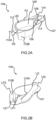
Figs.2A and 2B respectively provide views of an upper surface and a lower surface of a tray according to an example of the invention, -
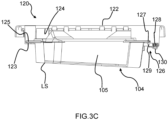
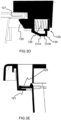
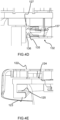
Figs.3A to 3E provide various views of a tray coupled to an ironing board according to a first example of the invention, -
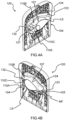
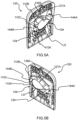
Figs.4A to 4E provide various views of a tray coupled to an ironing board according to a second example of the invention, -
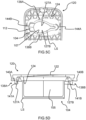
Figs.5A to 5D provide various views of a tray coupled to an ironing board according to a third example of the invention, and -
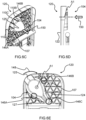
Figs.6A to 6F provide various views of a tray coupled to an ironing board according to a fourth example of the invention. - The invention relates to a garment steamer comprising a steamer head, an ironing board and a tray. The steamer head has a soleplate that is dockable on the tray to enable a descaling operation to be performed. Coupling means detachably couples the tray to the ironing board when the soleplate is not being docked on the tray.
-
Fig.1 depicts asteamer head 100 of a garment steamer according to an example. Thesteamer head 100 comprises asoleplate 102. - Steam generated by a steam generator (not visible) included in the garment steamer is releasable to a garment via at least one steam vent (not visible) delimited by the
soleplate 102. - The
soleplate 102 comprises a metal alloy or a metal, e.g. aluminium. Such ametallic soleplate 102 is preferably coated, for instance with a material adapted to facilitate gliding of thesoleplate 102 over a fabric. - In at least some embodiments, the
steamer head 100 comprises acasing 101 to which thesoleplate 102 is coupled. Such acasing 101 can be made of any suitable material, such as a plastic material, e.g. an engineering thermoplastic. - Preferably, the
steamer head 100 includes ahandle 103 that, when grasped by the user, enables thesteamer head 100 to be held by the user and moved over a garment. - In some embodiments, the garment steamer comprises a base unit comprising a water tank, and a hose cord for connecting the
steamer head 100 to the base unit. The water tank stores water used to generate steam. To this end, the water stored in the water tank is supplied to the steam generator. - In some embodiments, the steam generator is included in the base unit, and the steam generated by the steam generator is supplied to the
steamer head 100 via the hose cord. - In such embodiments, the
steamer head 100 preferably includes a steam heater arranged to reheat steam and/or water received from the steam generator, prior to the steam exiting the steamer head via the at least one steam vent. The steam heater may assist to minimise the risk of spitting of water onto the garment being treated. - In alternative embodiments, the
steamer head 100 can comprise a steam chamber arranged to generate steam from water supplied, e.g. pumped, thereto from the water tank included in the base unit. - Referring to
Figs. 1 ,2A and 2B , the garment steamer comprises atray 104 on which thesoleplate 102 is dockable, in other words mountable, to enable a descaling operation to be performed. Thetray 104 can be regarded as being included in, for example defining, an accessory. - The
tray 104 can be made of any suitable mechanically and thermally robust material. In some embodiments, thetray 104 is made of a plastic material. For example, thetray 104 is made of polypropylene, e.g. recycled polypropylene. - The
tray 104 can be manufactured in any suitable manner. In some embodiments, thetray 104 is manufactured by plastic injection moulding, for example by injection moulding using polypropylene. - Vaporizing of water, in particular in the steam heater or steam chamber of the
steamer head 100, can result in a build-up of scale over time. The descaling operation can remove at least some of this scale. - The descaling operation can, for example, be implemented using a user-selectable descaling mode of the garment steamer. For example, the garment steamer includes a user interface configured to enable the user to select the descaling mode of the garment steamer.
- Alternatively or additionally, a descaling solution that is different from the water used in normal operation of the garment steamer can be used, for instance by the descaling solution being introduced into the steam heater or steam chamber of the
steamer head 100, for the descaling operation. - In such embodiments, the descaling solution preferably comprises, e.g. is defined by, aqueous acetic acid. The aqueous acetic acid can be provided in any suitable manner, for instance as a mixture of distilled water and white vinegar.
- More generally, during the descaling operation, scale and/or water is or are flushed out from the
steamer head 100, for example via the steam vent(s) delimited by thesoleplate 102. The scale and/or water flushed out from thesteamer head 100 is or are receivable in thetray 104 during the descaling operation. - When the
soleplate 102 is docked on thetray 104, thesoleplate 102 faces an interior of thetray 104. Thetray 104 preferably comprises arecess 105 for receiving scale and/or water from thesteamer head 100 during the descaling operation. - In at least some embodiments, such as shown in
Fig.2A , thetray 104 forms an upper surface US on which thesoleplate 102 is dockable, in other words mountable, to enable the descaling operation to be performed. - The
soleplate 102 is preferably supportable on arim 106 that extends at least partly around therecess 105. In such embodiments, the upper surface US can be regarded as being included in therim 106. - The shape of the upper surface US and/or the
rim 106 preferably follows the profile of thesoleplate 102. This can facilitate docking of thesoleplate 102 on thetray 104 by providing an intuitive visual guide to the user for how to dock thesoleplate 102 on thetray 104. - In some embodiments, the upper surface US is arranged to support the
soleplate 102 at an angle relative to a lower surface LS of thetray 104 that cooperates with, e.g. rests on, an external horizontal supporting surface. In other words, a first plane of the upper surface US is angled with respect to a second plane of the lower surface LS. Preferably, this angle is in the range 0 to 5 degrees, preferably 3 degrees, such that when the lower surface LS is arranged on a horizontal surface, the front part of thetray 104 is lower than its rear part. Atray 104 having the upper surface US at an angle relative to a lower surface LS is illustrated inFig.3C . - Thus, the
tray 104 can support thesteamer head 100 at a desired angle during the descaling process. Such an angle can, for instance, be selected to ensure that the descaling solution is able to contact relevant parts of the interior of thesteamer head 100 during the descaling operation, in particular relevant parts of the steam heater or steam chamber at which scale is liable to build up. - In some embodiments, and as best shown in
Fig.2A , one or more soleplate retention members R1, R2 is or are arranged around the upper surface US and upstand(s) from the upper surface US. - The soleplate retention member(s) R1, R2 can assist to minimize or prevent forwards, backwards and/or sidewards lateral movement of the
soleplate 102 on the upper surface US when thesoleplate 102 is docked on thetray 104. - In some embodiments, such as that shown in
Fig.2A , the one or more soleplate retention members R1, R2 include(s) a front soleplate retention member R1 arranged at or proximal to a front end of thetray 104. The front soleplate retention member R1 can assist to minimize or prevent forwards movement of thesoleplate 102 on the upper surface US when thesoleplate 102 is docked on thetray 104. - The front soleplate retention member R1 preferably extends around the upper surface US from a left side of the
tray 104 to the front end to a right side of thetray 104. Thus, the front soleplate retention member R1 can assist to minimize or prevent (at least) forwards and sidewards lateral movement of thesoleplate 102 on the upper surface US when thesoleplate 102 is docked on thetray 104. - Alternatively or additionally, the one or more soleplate retention members R1, R2 include(s) a rear soleplate retention member R2 arranged at or proximal to a
back end 112 of thetray 104. The rear soleplate retention member R2 can assist to minimize or prevent backwards movement of thesoleplate 102 on the upper surface US when thesoleplate 102 is docked on thetray 104. - In some embodiments, such as shown in
Figs.1 ,2A and 2B , thetray 104 comprises aflange 107 extending at least partly around therecess 105. Such aflange 107 can be regarded as projecting laterally outwards away from therecess 105. - The
flange 107 can assist the user to manipulate thetray 104, for example when moving thetray 104 containing water and/or scale. Theflange 107 can also assist with stowing of thetray 104 after use, for instance by assisting coupling of thetray 104 to anironing board 120, as described in more detail herein below with reference toFigs.3A to 6F . - In some embodiments, the one or more soleplate retention members R1, R2 is or are arranged between the upper surface US and the
flange 107, for example between therim 106 and theflange 107. - Referring to
Figs.3A to 6F , the garment steamer comprises anironing board 120. A garment is supportable by theironing board 120 during steaming and/or ironing of the garment using thesteamer head 100. - In at least some embodiments, the
ironing board 120 has a garment-facingside 122 against which a garment is supportable, and anunderside 124, with the garment-facingside 122 and theunderside 124 facing in opposite directions. In other words, the garment-facingside 122 faces in a first direction and theunderside 124 faces in a second direction that is opposite to the first direction. - In some embodiments, the garment steamer includes a pole assembly (not visible) for supporting the
ironing board 120. In such embodiments, the garment steamer can be regarded as a stand steamer. - The pole assembly is preferably a telescopic pole assembly. In such embodiments, height adjustment of the
ironing board 120 can be implemented by extending and collapsing the telescopic pole assembly. - Alternatively or additionally, the
ironing board 120 is preferably tiltable between a vertical orientation and a horizontal orientation. The vertical orientation can be used for steaming hanging garments, and the horizontal orientation can be used for ironing. In some embodiments, the horizontal orientation is also used for the descaling operation, when theironing board 120 is used to provide the external horizontal supporting surface. - In some embodiments, the garment steamer includes a support base arranged to support the base unit and/or the pole assembly.
- More generally, the garment steamer comprises coupling means to detachably couple the
tray 104 to theironing board 120 when thesoleplate 102 is not being docked on thetray 104. - The coupling means can assist the user to easily retrieve the
tray 104 when the descaling operation is due to be performed, noting that the descaling operation tends to take place, depending on factors such as water hardness and frequency of use of the garment steamer, every few weeks. - The capability to couple the
tray 104 to theironing board 120 of the garment steamer can assist to minimize the risk of thetray 104 being misplaced (in other words located somewhere different from the rest of the garment steamer), and thus assists to ensure compliance with descaling recommendations for the garment steamer. - By reducing the risk of the
tray 104 being misplaced, the user may be more likely to implement the descaling operation when recommended to do so. Alternatively or additionally, the user may be more likely to use thetray 104 for the descaling operation rather than some other receptacle, such as a sink, that is not specifically designed for this purpose. Hence the coupling means can assist to ensure that the descaling operation is performed properly, effectively and safely. It is noted that performing of the descaling operation properly and effectively can assist with ensuring that the garment steamer functions reliably over its operating lifetime. - In some embodiments, such as those shown in
Figs.3A to 6F , the coupling means is arranged to detachably couple thetray 104 to theunderside 124 of theironing board 120. By thetray 104 being couplable to theunderside 124 of theironing board 120, thetray 104 can be positioned in a way that minimizes the risk of thetray 104 hampering ironing or steaming of a garment supported by the garment-facingside 122. Moreover, thetray 104 can be conveniently hidden from view when coupled to theironing board 120. - In some embodiments, such as those shown in
Figs.3A to 3E ,4A to 4E and5A to 5D , the coupling means comprises at least oneresilient fastener 126; 132; 138A, 138B adapted to releasablysecure part 127; 127A, 127B of thetray 104 to theironing board 120. - Any suitable type of
resilient fastener 126; 132; 138A, 138B can be employed for this purpose. In some embodiments, the at least oneresilient fastener 126; 132; 138A, 138B comprises aresilient member 128; 134; 140A, 140B and a securingmember 129; 135; 141A, 141B, with theresilient member 128; 134; 140A, 140B being arranged to bias the securingmember 129; 135; 141A, 141B into engagement with thepart 127; 127A, 127B of thetray 104. - In some embodiments, such as shown in
Figs.3A to 3E , theresilient member 128 comprises, e.g. is defined by, a spring. Any suitable type of spring can be contemplated for inclusion in theresilient member 128, such as a helical spring, as shown inFigs.3C and3D , a leaf spring, etc. - In some embodiments, and with continued reference to
Figs.3C and3D , the at least oneresilient fastener 126 comprises atactile portion 130 contactable and moveable by a user, for instance by a user's finger, to cause movement of the securingmember 129 against the bias provided by theresilient member 128, e.g. spring. - During coupling of the
tray 104 to theironing board 120, the user may move thetactile portion 130 so that the securingmember 129 is positioned to enable thepart 127 of thetray 104 to be moved beyond the securingmember 129 towards the ironingboard 120. Following release of thetactile portion 130 while thepart 127 of thetray 104 remains in position beyond the securingmember 129, the securingmember 129 can engage a bottom surface of thepart 127 in order to secure thepart 127 to theironing board 120. - During release of the
tray 104 from theironing board 120, the user may move thetactile portion 130 so that the securingmember 129 is positioned to enable thepart 127 of thetray 104 to be moved beyond the securingmember 129 away from theironing board 120. It is noted that the movement of thetray 104 towards and away from theironing board 120 is denoted inFig.3A by the double-headed arrow. - The
tactile portion 130 can have any suitable design. In some embodiments, and as best shown inFig.3D , thetactile portion 130 comprises one ormore protrusions tactile portion 130 when moving thetactile portion 130. - As an alternative or in addition to such a
tactile portion 130, and referring to theresilient fastener 132 depicted inFigs.4C and4D , the securingmember 135 can comprise alatch portion 136 for contacting thepart 127 of thetray 104, with thelatch portion 136 being shaped such that moving of thepart 127 of thetray 104 against thelatch portion 136 moves the securingmember 135 against the bias provided by theresilient member 134, e.g. spring. - In some embodiments, such as shown in
Fig.4D , thelatch portion 136 is shaped such that moving of thepart 127 of thetray 104 against an upwardly facingsurface 137 of thelatch portion 136 during pulling of thetray 104 away from theironing board 120 moves the securingmember 135 against the bias provided by theresilient member 134, e.g. spring, thereby enabling thetray 104 to be released. - Alternatively or additionally, the
latch portion 136 can be shaped such that moving of thepart 127 of thetray 104 against a downwardly facing surface of thelatch portion 136 during pushing of thetray 104 towards from theironing board 120 moves the securingmember 135 against the bias provided by theresilient member 134, e.g. spring, thereby enabling thepart 127 of thetray 104 to be advanced closer to theironing board 120, beyond thelatch portion 136. Subsequent movement of the securingmember 135, due to the bias provided by theresilient member 134, can then secure thepart 127 of thetray 104 in position proximal to theironing board 120. - In some embodiments, such as shown in
Figs.3C ,3E ,4C and4E , the coupling means comprises asupport member 123 against which aportion 125 of thetray 104 is restable while the at least oneresilient fastener 126; 132 secures thepart 127 of thetray 104, with thesupport member 123 and theresilient fastener 126; 132 being thereby arranged to hold thetray 104 to theironing board 120. - In such embodiments, the
portion 125 is preferably at or proximal to a first end of thetray 104, with thepart 127 being at or proximal to a second end of thetray 104 that is opposite the first end. This may provide a relatively straightforwardly manufacturable, secure and easy-to-use coupling component of thetray 104. - For example, the
portion 125 and/or thepart 127 of thetray 104 is or are included in theflange 107 that extends at least partly around therecess 105. - It is noted that the coupling means can generally be regarded as comprising mounting feature(s) MF provided on the
ironing board 120, for example on theunderside 124 of theironing board 120. - The coupling means/mounting feature(s) MF can be made of any suitable material. In some embodiments, the coupling means/mounting features comprise(s) a plastic material, for example polypropylene, e.g. recycled polypropylene.
- In some embodiments, such as shown in
Figs.5A to 5D , the at least oneresilient fastener 126; 132; 138A, 138B comprises a snap-fit fastener fit fastener tray 104 to and detachment of thetray 104 from theironing board 120 relatively staightforward to implement. - In some embodiments, such as shown in
Figs.5A to 5D , the at least oneresilient fastener 126; 132; 138A, 138B comprises a first snap-fit fastener 138A that is spaced apart from a second snap-fit fastener 138B. In such embodiments, the first snap-fit fastener 138A engages afirst part 127A of thetray 104, and the second snap-fit fastener 138B engages asecond part 127B of thetray 104. - For example, the first snap-
fit fastener 138A is arranged opposite the second snap-fit fastener 138B. - When the user wishes to detach the
tray 104 from theironing board 120, grasping and pulling on thetray 104 may cause flexing of theresilient member part tray 104 to be disengaged from the securingmember tray 104 can then be used in the descaling operation. - For example, flexing of the first
resilient member 140A of the first snap-fit fastener 138A and flexing of the secondresilient member 140B of the second snap-fit fastener 138B enables thefirst part 127A and thesecond part 127B of thetray 104 to be respectively disengaged from a first securingmember 141A and asecond securing member 141B of the snap-fit fastener - When the user wishes to couple the
tray 104 to theironing board 120, the user can push thetray 104 towards the ironingboard 120 such that a top surface of thepart first part 127A and thesecond part 127B, of thetray 104 bears against the securingmember resilient member resilient member part tray 104 can be advanced towards the ironingboard 120, beyond the securingmember tray 104 thetray 104 is retained against the ironingboard 120 by a bottom surface of thepart member - The snap-fit fastener can have any suitable design. In some embodiments, such as shown in
Figs. 5A to 5D , the snap-fit fastener fit fastener - In some embodiments, and as best shown in
Figs.5A to 5C , one ormore guiding elements ironing board 120 and arranged, via contact with thetray 104, to enable guiding of thetray 104 so that thepart fit fastener tray 104 correctly with respect to the snap-fit fastener(s) 138A, 138B when coupling thetray 104 to theironing board 120. Once thetray 104 is positioned via contact with the guiding element(s) 144A, 144B, thetray 104 can be pushed towards the ironingboard 120 until thepart member - In some embodiments, a
first guiding element 144A is arranged to contact thetray 104 at or proximal to a front end of thetray 104, with asecond guiding element 144B being arranged to contact thetray 104 at or proximal to theback end 112 of thetray 104. - For example, the
first guiding element 144A is arranged to contact theflange 107 of thetray 104 proximal to the front end of thetray 104 and/or thesecond guiding element 144B is arranged to contact theflange 107 of thetray 104 at theback end 112 of thetray 104. - In some embodiments, and as an alternative or in addition to the
resilient fastener 126; 132; 138A, 138B, the coupling means is arranged such that a rotational movement couples thetray 104 to and detaches thetray 104 from theironing board 120. An example of this is shown inFigs.6A to 6F . - This can provide a relatively simple and cost-effective solution for the coupling means, since the design can be realized via distribution of existing parts on the
ironing board 120, e.g. the underside of theironing board 120, rather than necessarily requiring additional parts or components dedicated to achieiving the detachable coupling of thetray 104 to theironing board 120. - In such embodiments, and as best shown in
Figs.6D and 6E , rotational movement of thetray 104 about an axis A1 extending perpendicular to theironing board 120, for example extending normal to theunderside 124 of theironing board 120, couples thetray 104 to and detaches thetray 104 from theironing board 120. - One or
more fastening members tray 104 to be positioned in an initial orientation proximal to theironing board 120, and to engage thetray 104, for example theflange 107, upon rotational movement of thetray 104 about the axis A1 from the initial orientation to a subsequent orientation. This rotation is denoted inFig.6E by thearrow 148, while axial movement of thetray 104 so that thetray 104 is positioned proximal to theironing board 120 is denoted inFigs.6C and 6D by thearrow 150. - In some embodiments, rotational movement of the
tray 104 about the axis A1 in a firstrotational direction 148 couples thetray 104 to theironing board 120, and rotational movement of thetray 104 about the axis A1 in a second rotational direction opposite to the first rotational direction enables detachment of thetray 104 from theironing board 120. - It is noted that in the non-limiting example shown in
Figs.6A to 6E , the first rotational direction is clockwise when theironing board 120 is viewed from underneath, in other words facing theunderside 124 of theironing board 120. In this example, detachment of thetray 104 from theironing board 120 comprises anti-clockwise rotation of thetray 104 about the axis A1. - The fastening member(s) 146A, 146B, 146C, e.g. hook(s), can, for example, be integral to the
ironing board 120. For instance, the fastening member(s) 146A, 146B, 146C is or are moulded together with a main body of theironing board 120. - In some embodiments, and referring again to
Figs.1 and2A , thetray 104 comprises attaching means 108 arranged at a front end of thetray 104 to attach atip 109 of thesteamer head 100 to thetray 104. - The attaching means 108 can assist to reduce the risk of the
steamer head 100, and thetip 109 in particular, unintentionally separating from thetray 104 during the descaling operation. Thus, the attaching means 108 can assist to ensure safe implementing of the descaling operation. - In some embodiments, and as best shown in
Fig.2B , thetray 104 forms the lower surface LS adapted to cooperate with an external horizontal and flat supporting surface. For example, the cooperation of the lower surface LS of thetray 104 with the external horizontal supporting surface means that thetray 104 is supportable on the external horizontal supporting surface by the lower surface LS resting on the external horizontal supporting surface. - In this way, the external horizontal supporting surface can support the
tray 104 with thesoleplate 102 of thesteamer head 100 docked thereon when the lower surface LS is cooperating with, for example resting on, the external horizontal supporting surface. - The external horizontal supporting surface can, for example, be provided by the garment-facing
side 122 of theironing board 120, provided that the horizontal orientation is being adopted by theironing board 120. - The lower surface LS can be adapted to cooperate with the external horizontal support surface in any suitable manner. In some embodiments, such as shown in
Fig.2B , the lower surface LS is included in a support foot of thetray 104. For example, the lower surface LS is included in a support foot that extends around at least part of a periphery of an underside of thetray 104. - In some embodiments, a plurality of supporting
ribs rear end 111 of thesoleplate 102 when docked on thetray 104. - The supporting
ribs tray 104. For example, each of the supportingribs tray 104. - The lower portions LP1, LP2 being flush with the lower surface LS means that the lower portions LP1, LP2 also cooperate with, for example rest on, the external horizontal supporting surface.
- By the lower portions LP1, LP2 backwardly protruding beyond the
rear end 111 of thesoleplate 102 when docked on thetray 104, the risk of backwards tipping of thetray 104, with thesoleplate 102 of thesteamer head 100 docked thereon, can be minimized. - It is also noted that the
steamer head 100 can be supported on thetray 104, with thetray 104 sitting stably on the external horizontal supporting surface, without the user being required to hold thesteamer head 100. - In some embodiments, the attaching means 108 and the lower portions LP1, LP2 of the supporting
ribs tip 109 of thesteamer head 100 separating from thetray 104 and the latter reducing the risk of backwards tipping of thetray 104 together with thesteamer head 100. Thus, thesteamer head 100 can be stably supported by thetray 104 during the descaling operation. User convenience can thus be enhanced due to the user not being required to hold thesteamer head 100, and/or user safety can be improved. - In some embodiments, the hose cord connects to the
handle 103 of thesteamer head 100. In such embodiments, the hose cord can connect to, and backwardly extend away from, thehandle 103. In alternative embodiments, the hose cord can connect to, and backwardly extend away from, a rear portion of thecasing 101 other than thehandle 103. - More generally, the hose cord preferably backwardly extends away from a rear of the
steamer head 100. This can assist to minimize the risk of the hose cord impeding movement of thesteamer head 100, in particular when thesteamer head 100 is being moved over a garment. - Whilst the hose cord backwardly extending away from the rear of the
steamer head 100 can increase the risk of tilting of thesteamer head 100 during the descaling operation, this risk can be alleviated by the attachingmeans 108. Alternatively or additionally, the lower portions LP1, LP2 of the supportingribs tray 104 together with thesteamer head 100. - In some embodiments, such as shown in
Fig.1 , thehandle 103 of thesteamer head 100 backwardly extends beyond a rearmost portion of thecasing 101. - This extension of the
handle 103 can assist with maneuverability of thesteamer head 100. Whilst thehandle 103 backwardly extending beyond the rearmost portion of thecasing 101 can increase the risk of tilting of thesteamer head 100 during the descaling operation, this risk can be alleviated by the attaching means 108 and/or the supportingribs - In some embodiments, such as those shown in
Figs.1 ,2A and 2B , the plurality of supportingribs ribs back end 112 of thetray 104. The pair ofribs tray 104 on the external horizontal supporting surface. - In some embodiments, the plurality of supporting
ribs central rib 110C arranged between the pair ofribs 110A, 1 10B. Thecentral rib 110C can add additional stability proximal to theback end 112 of thetray 104. In particular, the optionalcentral rib 110C can assist to reinforce the stabilization provided by the pair ofribs - In such embodiments, the
central rib 110C preferably backwardly protrudes by a shorter length than each of the pair ofribs - The
tip 109 of thesteamer head 100 that is attachable to thetray 104 via the attaching means 108 preferably comprises a tip of thecasing 101. - Attaching the
steamer head 100 to thetray 104 via itscasing 101 may provide a relatively robust and long-lasting solution, particularly in comparison to, for example, attaching thesteamer head 100 to thetray 104 via a tip of the steamer head's 100soleplate 102 due to the relatively high temperatures to which thesoleplate 102 is heated. - In some embodiments, and as best shown in
Fig.2A , the attaching means 108 comprises acavity 113 for receiving thetip 109 of thesteamer head 100, e.g. thetip 109 comprising the tip of thecasing 101. This may provide a relatively straightforwardly manufacturable way of implementing the attachingmeans 108. - In such embodiments, the
cavity 113 is preferably partly defined by anupper wall portion 114, with theupper wall portion 114 being arranged to contact an upper surface of thetip 109 of thesteamer head 100 when thesoleplate 102 is docked on thetray 104. By contacting the upper surface of thetip 109 of thesoleplate 102, theupper wall portion 114 can assist to minimize the risk of tilting of the steamer head 100 (in particular a tilting where the rear extremity of thehandle 103 would tend to get closer to the tray 104). - In some embodiments, such as shown in
Fig.1 , theupper wall portion 114 is arranged to contact an upwardly facing surface of the tip of the steamer head's 100casing 101 when thesoleplate 102 is docked on thetray 104. - The above embodiments as described are only illustrative, and not intended to limit the technique approaches of the present invention. Although the present invention is described in details referring to the preferable embodiments, those skilled in the art will understand that the technique approaches of the present invention can be modified or equally displaced without departing from the protective scope of the claims of the present invention. In the claims, the word "comprising" does not exclude other elements or steps, and the indefinite article "a" or "an" does not exclude a plurality. Any reference signs in the claims should not be construed as limiting the scope.
Claims (15)
- A garment steamer comprising:- a steamer head (100) comprising a soleplate (102),- an ironing board (120),- a tray (104) on which the soleplate is dockable to enable a descaling operation of the steamer head, and- coupling means to detachably couple the tray to the ironing board when the soleplate is not being docked on the tray.
- The garment steamer according to claim 1, wherein the ironing board (120) has a garment-facing side (122) against which a garment is supportable, and an underside (124), the garment-facing side and the underside facing in opposite directions, the coupling means being arranged to detachably couple the tray (104) to the underside.
- The garment steamer according to claim 1 or claim 2, wherein the coupling means comprises at least one resilient fastener (126; 132; 138A, 138B) adapted to releasably secure part (127; 127A, 127B) of the tray (104) to the ironing board (120).
- The garment steamer according to claim 3, wherein the at least one resilient fastener (126; 132; 138A, 138B) comprises a resilient member (128; 134; 140A, 140B) and a securing member (129; 135; 141A, 141B), the resilient member being arranged to bias the securing member into engagement with the part (127; 127A, 127B) of the tray (104).
- The garment steamer according to claim 4, wherein the resilient member (128) comprises a spring, and the at least one resilient fastener (126) comprises a tactile portion (130) contactable and moveable by a user to cause movement of the securing member (129) against the bias provided by the spring.
- The garment steamer according to claim 4, wherein the securing member (135) comprises a latch portion (136) for contacting the part (127) of the tray (104), the latch portion being shaped such that moving of the part of the tray thereagainst moves the securing member against the bias.
- The garment steamer according to any one of claims 3 to 6, wherein the coupling means comprises a support member (123) against which a portion (125) of the tray (104) is restable while the at least one resilient fastener (126; 132; 138A, 138B) secures the part (127) of the tray, the support member and the resilient fastener being thereby arranged to hold the tray to the ironing board (120).
- The garment steamer according to claim 7, wherein the portion (125) is at or proximal to a first end of the tray (104), and the part (127) is at or proximal to a second end of the tray that is opposite the first end.
- The garment steamer according to claim 4, wherein the at least one resilient fastener comprises a snap-fit fastener (138A, 138B).
- The garment steamer according to claim 9, wherein one or more guiding elements (144A, 144B) is or are provided on the ironing board (120), the guiding elements being arranged, via contact with the tray (104), to enable guiding of the tray so that the part (127A, 127B) is engaged by the snap-fit fastener (138A, 138B).
- The garment steamer according to claim 1 or claim 2, wherein the coupling means is arranged such that a rotational movement about an axis (A1) extending perpendicular to the ironing board (120) couples the tray (104) to and detaches the tray from the ironing board.
- The garment steamer according to any one of claims 1 to 11, wherein the tray (104) comprises:- a recess (105) for receiving scale and/or water from the steamer head (100) during the descaling operation, and- a rim (106) extending at least partly around the recess, the soleplate (102) being supportable on the rim.
- The garment steamer according to claim 12, wherein the tray (104) further comprises a flange (107) extending at least partly around the recess (105), the coupling means being adapted to detachably couple the tray (104) to the ironing board (120) via the flange.
- The garment steamer according to any one of claims 1 to 13, wherein the tray (104) comprises attaching means (108) arranged at a front end of the tray to attach a tip (109) of the steamer head (100) to the tray.
- The garment steamer according to any one of claims 1 to 14, wherein:- the tray (104) forms a lower surface (LS) adapted to cooperate with an external horizontal supporting surface, and- the tray comprises a plurality of supporting ribs (110A, 110B, 110C) comprising lower portions (LP1, LP2) being flush with said lower surface, the supporting ribs being arranged to backwardly protrude beyond a rear end (111) of the soleplate (102) when docked on the tray.
Priority Applications (4)
| Application Number | Priority Date | Filing Date | Title |
|---|---|---|---|
| EP23159199.1A EP4424902A1 (en) | 2023-02-28 | 2023-02-28 | Garment steamer with a descaling tray and an ironing board |
| CN202380094934.3A CN120769941A (en) | 2023-02-28 | 2023-12-13 | Garment steamer with descaling tray |
| KR1020257032352A KR20250157408A (en) | 2023-02-28 | 2023-12-13 | Garment steamer with water stain removal tray |
| PCT/EP2023/085604 WO2024179709A1 (en) | 2023-02-28 | 2023-12-13 | Garment steamer with descaling tray |
Applications Claiming Priority (1)
| Application Number | Priority Date | Filing Date | Title |
|---|---|---|---|
| EP23159199.1A EP4424902A1 (en) | 2023-02-28 | 2023-02-28 | Garment steamer with a descaling tray and an ironing board |
Publications (1)
| Publication Number | Publication Date |
|---|---|
| EP4424902A1 true EP4424902A1 (en) | 2024-09-04 |
Family
ID=85410453
Family Applications (1)
| Application Number | Title | Priority Date | Filing Date |
|---|---|---|---|
| EP23159199.1A Withdrawn EP4424902A1 (en) | 2023-02-28 | 2023-02-28 | Garment steamer with a descaling tray and an ironing board |
Country Status (4)
| Country | Link |
|---|---|
| EP (1) | EP4424902A1 (en) |
| KR (1) | KR20250157408A (en) |
| CN (1) | CN120769941A (en) |
| WO (1) | WO2024179709A1 (en) |
Citations (6)
| Publication number | Priority date | Publication date | Assignee | Title |
|---|---|---|---|---|
| KR870012364U (en) * | 1986-01-24 | 1987-08-04 | 이기문 | Iron stand and protective cover |
| WO2014163388A1 (en) * | 2013-04-02 | 2014-10-09 | Lg Electronics Inc. | Laundry treating apparatus |
| WO2020053909A1 (en) * | 2018-09-14 | 2020-03-19 | De' Longhi Appliances S.R.L. Con Unico Socio | Support base for an iron |
| WO2021009786A1 (en) * | 2019-07-18 | 2021-01-21 | De' Longhi Appliances S.R.L. Con Unico Socio | Container to collect the washing water of an iron |
| EP3536849B1 (en) * | 2018-03-05 | 2021-02-17 | Tsann Kuen (Zhangzhou) Enterprise Co., Ltd. | Locking mechanism and an ironing device having the same |
| EP3926088A1 (en) * | 2020-06-19 | 2021-12-22 | Koninklijke Philips N.V. | A garment steamer |
-
2023
- 2023-02-28 EP EP23159199.1A patent/EP4424902A1/en not_active Withdrawn
- 2023-12-13 KR KR1020257032352A patent/KR20250157408A/en active Pending
- 2023-12-13 CN CN202380094934.3A patent/CN120769941A/en active Pending
- 2023-12-13 WO PCT/EP2023/085604 patent/WO2024179709A1/en active Pending
Patent Citations (6)
| Publication number | Priority date | Publication date | Assignee | Title |
|---|---|---|---|---|
| KR870012364U (en) * | 1986-01-24 | 1987-08-04 | 이기문 | Iron stand and protective cover |
| WO2014163388A1 (en) * | 2013-04-02 | 2014-10-09 | Lg Electronics Inc. | Laundry treating apparatus |
| EP3536849B1 (en) * | 2018-03-05 | 2021-02-17 | Tsann Kuen (Zhangzhou) Enterprise Co., Ltd. | Locking mechanism and an ironing device having the same |
| WO2020053909A1 (en) * | 2018-09-14 | 2020-03-19 | De' Longhi Appliances S.R.L. Con Unico Socio | Support base for an iron |
| WO2021009786A1 (en) * | 2019-07-18 | 2021-01-21 | De' Longhi Appliances S.R.L. Con Unico Socio | Container to collect the washing water of an iron |
| EP3926088A1 (en) * | 2020-06-19 | 2021-12-22 | Koninklijke Philips N.V. | A garment steamer |
Also Published As
| Publication number | Publication date |
|---|---|
| CN120769941A (en) | 2025-10-10 |
| KR20250157408A (en) | 2025-11-04 |
| WO2024179709A1 (en) | 2024-09-06 |
Similar Documents
| Publication | Publication Date | Title |
|---|---|---|
| EP4424901A1 (en) | Accessory and garment steamer comprising the same | |
| EP3656270B1 (en) | Extraction cleaner | |
| EP0935944B1 (en) | Vacuum cleaner | |
| JP2021520966A (en) | Detachable handle for cookware | |
| EP1795107A2 (en) | Floor cleaner and method for controlling same | |
| EP4424902A1 (en) | Garment steamer with a descaling tray and an ironing board | |
| SE533616C2 (en) | Folding highchair with table | |
| CN111549512A (en) | Apparatus for steam treating laundry | |
| WO1990006078A1 (en) | Laryngoscope and disposable blade | |
| EP4609024A1 (en) | Detachable docking unit for a garment steamer | |
| KR101995347B1 (en) | cordless dual spin damp cloth cleaner | |
| EP4647545A1 (en) | Stand steamer comprising support base and detachable water tank | |
| US5371960A (en) | Iron including cord reel and water tank | |
| CZ343598A3 (en) | Vacuum cleaner | |
| JP6815332B2 (en) | Ironing appliances with iron and base including storage for ironing | |
| WO2024149517A1 (en) | Cradle for docking an iron head and steaming device comprising the cradle | |
| WO2024012722A1 (en) | Garment steamer with detachable docking unit | |
| JP2000300897A (en) | Steam iron | |
| KR20250036878A (en) | Garment steamer with detachable docking unit | |
| JP2019180923A (en) | Steamer | |
| JP3067853U (en) | Handle device | |
| JP6762902B2 (en) | Steamer | |
| EP0541383A1 (en) | An iron with device for storing the electric cable | |
| CN207362562U (en) | A kind of desktop flatiron with lock fixed mechanism | |
| CN218599803U (en) | Outdoor cooker |
Legal Events
| Date | Code | Title | Description |
|---|---|---|---|
| PUAI | Public reference made under article 153(3) epc to a published international application that has entered the european phase |
Free format text: ORIGINAL CODE: 0009012 |
|
| STAA | Information on the status of an ep patent application or granted ep patent |
Free format text: STATUS: THE APPLICATION HAS BEEN PUBLISHED |
|
| AK | Designated contracting states |
Kind code of ref document: A1 Designated state(s): AL AT BE BG CH CY CZ DE DK EE ES FI FR GB GR HR HU IE IS IT LI LT LU LV MC ME MK MT NL NO PL PT RO RS SE SI SK SM TR |
|
| STAA | Information on the status of an ep patent application or granted ep patent |
Free format text: STATUS: THE APPLICATION IS DEEMED TO BE WITHDRAWN |
|
| 18D | Application deemed to be withdrawn |
Effective date: 20250305 |