EP4424643A1 - Synthesis of piezomagnetic epsilon-fe2o3 crystals - Google Patents
Synthesis of piezomagnetic epsilon-fe2o3 crystals Download PDFInfo
- Publication number
- EP4424643A1 EP4424643A1 EP23382201.4A EP23382201A EP4424643A1 EP 4424643 A1 EP4424643 A1 EP 4424643A1 EP 23382201 A EP23382201 A EP 23382201A EP 4424643 A1 EP4424643 A1 EP 4424643A1
- Authority
- EP
- European Patent Office
- Prior art keywords
- nanoparticles
- piezomagnetic
- cations
- silica
- teos
- Prior art date
- Legal status (The legal status is an assumption and is not a legal conclusion. Google has not performed a legal analysis and makes no representation as to the accuracy of the status listed.)
- Withdrawn
Links
Images






Classifications
-
- C—CHEMISTRY; METALLURGY
- C01—INORGANIC CHEMISTRY
- C01G—COMPOUNDS CONTAINING METALS NOT COVERED BY SUBCLASSES C01D OR C01F
- C01G49/00—Compounds of iron
- C01G49/02—Oxides; Hydroxides
- C01G49/06—Ferric oxide [Fe2O3]
-
- C—CHEMISTRY; METALLURGY
- C01—INORGANIC CHEMISTRY
- C01G—COMPOUNDS CONTAINING METALS NOT COVERED BY SUBCLASSES C01D OR C01F
- C01G49/00—Compounds of iron
- C01G49/0018—Mixed oxides or hydroxides
-
- C—CHEMISTRY; METALLURGY
- C01—INORGANIC CHEMISTRY
- C01G—COMPOUNDS CONTAINING METALS NOT COVERED BY SUBCLASSES C01D OR C01F
- C01G49/00—Compounds of iron
- C01G49/0018—Mixed oxides or hydroxides
- C01G49/0054—Mixed oxides or hydroxides containing one rare earth metal, yttrium or scandium
-
- H—ELECTRICITY
- H01—ELECTRIC ELEMENTS
- H01F—MAGNETS; INDUCTANCES; TRANSFORMERS; SELECTION OF MATERIALS FOR THEIR MAGNETIC PROPERTIES
- H01F1/00—Magnets or magnetic bodies characterised by the magnetic materials therefor; Selection of materials for their magnetic properties
- H01F1/0036—Magnets or magnetic bodies characterised by the magnetic materials therefor; Selection of materials for their magnetic properties showing low dimensional magnetism, i.e. spin rearrangements due to a restriction of dimensions, e.g. showing giant magnetoresistivity
- H01F1/0045—Zero dimensional, e.g. nanoparticles, soft nanoparticles for medical/biological use
- H01F1/0063—Zero dimensional, e.g. nanoparticles, soft nanoparticles for medical/biological use in a non-magnetic matrix, e.g. granular solids
-
- B—PERFORMING OPERATIONS; TRANSPORTING
- B82—NANOTECHNOLOGY
- B82Y—SPECIFIC USES OR APPLICATIONS OF NANOSTRUCTURES; MEASUREMENT OR ANALYSIS OF NANOSTRUCTURES; MANUFACTURE OR TREATMENT OF NANOSTRUCTURES
- B82Y25/00—Nanomagnetism, e.g. magnetoimpedance, anisotropic magnetoresistance, giant magnetoresistance or tunneling magnetoresistance
-
- C—CHEMISTRY; METALLURGY
- C01—INORGANIC CHEMISTRY
- C01P—INDEXING SCHEME RELATING TO STRUCTURAL AND PHYSICAL ASPECTS OF SOLID INORGANIC COMPOUNDS
- C01P2002/00—Crystal-structural characteristics
- C01P2002/50—Solid solutions
- C01P2002/52—Solid solutions containing elements as dopants
- C01P2002/54—Solid solutions containing elements as dopants one element only
-
- C—CHEMISTRY; METALLURGY
- C01—INORGANIC CHEMISTRY
- C01P—INDEXING SCHEME RELATING TO STRUCTURAL AND PHYSICAL ASPECTS OF SOLID INORGANIC COMPOUNDS
- C01P2002/00—Crystal-structural characteristics
- C01P2002/60—Compounds characterised by their crystallite size
-
- C—CHEMISTRY; METALLURGY
- C01—INORGANIC CHEMISTRY
- C01P—INDEXING SCHEME RELATING TO STRUCTURAL AND PHYSICAL ASPECTS OF SOLID INORGANIC COMPOUNDS
- C01P2002/00—Crystal-structural characteristics
- C01P2002/70—Crystal-structural characteristics defined by measured X-ray, neutron or electron diffraction data
- C01P2002/77—Crystal-structural characteristics defined by measured X-ray, neutron or electron diffraction data by unit-cell parameters, atom positions or structure diagrams
-
- C—CHEMISTRY; METALLURGY
- C01—INORGANIC CHEMISTRY
- C01P—INDEXING SCHEME RELATING TO STRUCTURAL AND PHYSICAL ASPECTS OF SOLID INORGANIC COMPOUNDS
- C01P2004/00—Particle morphology
- C01P2004/01—Particle morphology depicted by an image
- C01P2004/04—Particle morphology depicted by an image obtained by TEM, STEM, STM or AFM
-
- C—CHEMISTRY; METALLURGY
- C01—INORGANIC CHEMISTRY
- C01P—INDEXING SCHEME RELATING TO STRUCTURAL AND PHYSICAL ASPECTS OF SOLID INORGANIC COMPOUNDS
- C01P2004/00—Particle morphology
- C01P2004/51—Particles with a specific particle size distribution
-
- C—CHEMISTRY; METALLURGY
- C01—INORGANIC CHEMISTRY
- C01P—INDEXING SCHEME RELATING TO STRUCTURAL AND PHYSICAL ASPECTS OF SOLID INORGANIC COMPOUNDS
- C01P2004/00—Particle morphology
- C01P2004/60—Particles characterised by their size
- C01P2004/64—Nanometer sized, i.e. from 1-100 nanometer
-
- C—CHEMISTRY; METALLURGY
- C01—INORGANIC CHEMISTRY
- C01P—INDEXING SCHEME RELATING TO STRUCTURAL AND PHYSICAL ASPECTS OF SOLID INORGANIC COMPOUNDS
- C01P2004/00—Particle morphology
- C01P2004/80—Particles consisting of a mixture of two or more inorganic phases
- C01P2004/82—Particles consisting of a mixture of two or more inorganic phases two phases having the same anion, e.g. both oxidic phases
-
- C—CHEMISTRY; METALLURGY
- C01—INORGANIC CHEMISTRY
- C01P—INDEXING SCHEME RELATING TO STRUCTURAL AND PHYSICAL ASPECTS OF SOLID INORGANIC COMPOUNDS
- C01P2006/00—Physical properties of inorganic compounds
- C01P2006/42—Magnetic properties
Definitions
- the present invention discloses a new up-scalable synthesis of ⁇ -Fe 2 O 3 nanoparticles with sizes above 25 nm, and its processing under high pressures and temperatures. Furthermore, the invention discloses a piezomagnetic form of ⁇ -Fe 2 O 3 , its synthesis and use in different applications.
- ⁇ -Fe 2 O 3 is an orthorhombic polymorph of iron (III) oxide. It presents a large magnetic anisotropy that makes it interesting for technological applications related to magnetic memories and to the development of self-biased non-reciprocal devices which are appealing for the forthcoming generations of wireless communications.
- ⁇ -Fe 2 O 3 is appealing to develop miniaturized non-reciprocal devices such as circulators, for the next generation of wireless communications (6G), which will tentatively operate at frequencies above 100 GHz, still not defined.
- Circulators exploit the non-reciprocal interaction of the electromagnetic waves with insulating magnetic materials, typically iron-based magnetic oxides known as ferrites, especially at frequencies in the vicinity of the ferromagnetic resonance (FMR) frequency of such materials.
- FMR ferromagnetic resonance
- the circulator uses pre-magnetized ferrites that present a FMR in the range of the transmitted waves (i.e. above 100 GHz for 6G applications).
- the FMR of the state of the art engineering ferrites spinels, garnets, hexagonal ferrites
- spinels, garnets, hexagonal ferrites are well below 100 GHz, and can only be increased to above 100 GHz by applying external magnetic fields. Therefore, it is crucial to have suitable ferrites with FMR above 100 GHz, that can be sintered, shaped into suitable parts and magnetized.
- ⁇ -Fe 2 O 3 presents a FMR close to 180 GHz, and this FMR can be broadly tuned from 40 GHz to 200 GHz by appropriate substitutions of Fe 3+ by other transition metals.
- An important limitation for the use of ⁇ -Fe 2 O 3 in applications is that it is required that said material retains its remanent magnetization for long periods of time (e.g. memories, self-biased non-reciprocal devices).
- ⁇ -Fe 2 O 3 nanoparticles with sizes in the range of 20-25 nm are still affected by superparamagnetic relaxation, while in the case of the larger particles of high aspect ratio prepared following the reverse micelle method [3] these effects are not observed. Therefore it is critical to achieve nanoparticles of ⁇ -Fe 2 O 3 with sizes above 25 nm.
- ⁇ -Fe 2 O 3 is typically obtained in the form of nanoparticles.
- the ⁇ -Fe 2 O 3 crystals transform to the stable polymorph ⁇ -Fe 2 O 3 if their size exceeds a critical value (-100 nm).
- a critical value typically -100 nm.
- an essential aspect of stabilizing this polymorph is limiting the growth of the crystals during high-temperature thermal treatments required for its formation (typically 900 °C to 1200°C).
- the growth limitation is commonly achieved by confining the particles within a hard matrix of silica.
- a further problem addressed in the prior art is the need for the upscaling of the production of ⁇ -Fe 2 O 3 with typical sizes above 25 nm in order to be suitable for use in the industry.
- a problem to be solved is finding a synthetic method that allows upscaling the production of ⁇ -Fe 2 O 3 with typical sizes exceeding 25 nm.
- the present invention discloses a novel method for the synthesis of piezomagnetic ⁇ -Fe 2 O 3 nanoparticles of size above 25nm.
- magnetization which can be permanent is induced into such crystals or pieces made of ⁇ -Fe 2 O 3 .
- One example of a method to induce such magnetization by mechanical straining is Spark Plasma Sintering (SPS) treatments, by using high pressure and high temperature.
- SPS Spark Plasma Sintering
- a first aspect of the invention relates to a sol-gel synthetic method for obtaining piezomagnetic stabilized ⁇ -Fe 2 O 3 nanoparticles of size larger than 25 nm (measured for example by TEM, using the software imaged), particularly a sol-gel method using as cations Y +3 Ce 3+ , La 3+ , Dy 3+ , Sb 3+ , Cd 2+ , Bi 3+ cations. It comprises the steps of:
- Silica precursors are to be understood according to the present invention as precursors that can polymerize by any polymerization technique known in the state of the art, which result in the formation of a SiOz matrix after their polymerization.
- Silica precursors comprise a compound that is capable of forming silica with or without after a heat treatment.
- the application of a heat treatment to the silica preferably at temperatures above 500 °C, and even more preferably at a temperature of greater than or equal to 800° C, will densify such silica, which will aid the subsequent formation of the ⁇ -Fe 2 O 3 nanoparticles inside the silica matrix.
- the silica precursor may be chosen from organic, organometallic and mineral compounds comprising silicon.
- silica precursors may be silica or colloidal silica precursors.
- colloidal silica denotes amorphous silica particles suspended in a solvent.
- silica precursors is a metal silicate, more preferably sodium silicate.
- Non-limiting examples of such silica precursors include silicon alcoxides, silicon tetrachloride, silicates such as ammonium silicate or silicic acid, sodium silicate, and mixtures thereof.
- Non-limiting examples of silicon alcoxides include tetramethoxysilane, tetraethyl orthosilicate (TEOS), (3-mercaptopropyl)-trimethoxysilane, (3-aminopropyl)triethoxysilane, N-(3-trimethoxysilylpropyl)-pyrrole, 3-(2,4 dinitrophenylamino)propyltriethoxysilane, N-(2-aminoethyl)-3-aminopropyltrimethoxysilane, phenyltriethoxysilane and methyltriethoxysilane.
- TEOS is particularly preferred.
- the cation nitrate hexahydrate (X(NO 3 ) 3 .6H 2 O) is Y(NO 3 ) 3 .6H 2 O, wherein the content of Y +3 cations ranges between 5 % at. to 25 % at., or is Ce(NO 3 ) 3 .6H 2 O, wherein the content of Ce +3 cations is from 3% at. to 5 % at.
- Piezomagnetism is defined as a linear coupling between the magnetic polarization and mechanical strain.
- a piezomagnetic material generates a magnetic field upon application of mechanical strain, and is mechanically strained after application of an external magnetic field to the material.
- the synthetic method includes after the application of step f) a further application of a step g) of mechanical deformation or strain, preferably a further step g) of pressing and sintering the product obtained in step f), preferably at a pressure between 50 MPa and 250 MPa and a temperature between 250 °C and 900 °C, and preferably by means of Spark Plasma Sintering.
- This induces magnetization such as for example permanent magnetization into the piezomagnetic ⁇ -Fe 2 O 3 nanoparticles.
- piezomagnetic ⁇ -Fe 2 O 3 nanoparticles having a stable orthorhombic polymorph structure and a particle size above 25 nm (measured for example with TEM, using the software imaged), ranging preferably between 31 nm and 72 nm, wherein said piezomagnetic ⁇ -Fe 2 O 3 nanoparticles are confined within a matrix of silica, wherein the weight percentage of the piezomagnetic ⁇ -Fe 2 O 3 nanoparticles with respect to silica matrix is preferably in the range 25% wt.
- said piezomagnetic ⁇ -Fe 2 O 3 nanoparticles are stabilized with a content of a metal cation selected from at least one of Y 3+ , Ce 3+ , La 3+ , Dy 3+ , Sb 3+ , Cd 2+ , Bi 3+ cations, ranging between 3% to 40% at., more preferably between 5 % at. to 25 % at., and wherein the Fe +3 cations of the stable orthorhombic polymorph structure are not substituted by said metal cations.
- a metal cation selected from at least one of Y 3+ , Ce 3+ , La 3+ , Dy 3+ , Sb 3+ , Cd 2+ , Bi 3+ cations, ranging between 3% to 40% at., more preferably between 5 % at. to 25 % at.
- the size of the nanoparticles (in diameter) according to the invention was measured by transmission electron microscopy (TEM), using the imaged software to measure the length and width of typically rod-shaped or roughly elliptical particles, measuring both the shortest and longest dimensions of the nanoparticles.
- TEM transmission electron microscopy
- Figs. 1-7 represent the length of such nanoparticles (largest particle dimension), and their aspect ratio can be obtained by dividing the length by the width (shortest particle dimension, in the direction perpendicular to the length).
- a particular advantageous aspect of the invention is the permanent magnetization of said ⁇ -Fe 2 O 3 nanoparticles, wherein the nanoparticles are obtainable by pressing and sintering at a pressure between 50 MPa and 250 MPa and a temperature between 250 °C and 900 °C, preferably by means of Spark Plasma Sintering, resulting in permanently-magnetized ⁇ -Fe 2 O 3 nanoparticles.
- the piezomagnetic ⁇ -Fe 2 O 3 nanoparticles are stabilized with the metal cations Y 3+ ranging between 5 % at. to 25 % at., or with the metal Ce 3+ cations ranging between 3% at. to 5% at.
- the cation nitrate hexahydrate is Y(NO 3 ) 3 ⁇ 6H 2 O, wherein content of Y +3 cations is ranging between 5 % at. to 25 % at. or it is Ce(NO 3 ) 3 ⁇ 6H 2 O, wherein the content of Ce +3 cations is of 3 % at. to 5% at.
- the characterization of the materials containing Y 3+ by transmission electron microscopy shows size distributions that clearly exceed 25 nm. The effect is more obvious for larger content of the Y 3+ cation.
- the characterization by X-ray diffraction also confirms the increase of the average crystal sizes and the lattice parameters indicate that Y 3+ is not incorporated in the ⁇ -Fe 2 O 3 structure.
- the method of the present invention allows increasing by a factor of ⁇ 20 the amount of ⁇ -Fe 2 O 3 obtained in one batch. In this way, we solve the problem of producing larger particle sizes of ⁇ -Fe 2 O 3 in large amounts in one batch, without using organic solvents or toxic surfactants.
- the method is sustainable and appealing for industrial production of this ⁇ -Fe 2 O 3 phase.
- the larger nanoparticles do not show magnetic relaxation (see figure 8 below for the case of Y 3+ addition).
- the effect of cation addition is also to increase the size of the particles (tables 2 to 5), although in some of these impurities are also contained.
- Cd 2+ and Bi 3+ a crystallization of the SiOz matrix is observed which entails the formation of large amounts of hematite.
- Sb 3+ the X-ray diffraction before removing the SiOz matrix does not show either SiOz crystallization, nor formation of large amounts of hematite, nor the presence of other impurity phases.
- Another aspect of the invention is the use of the said piezomagnetic ⁇ -Fe 2 O 3 nanoparticles for the manufacturing of a wireless communication device, particularly a self-biased non-reciprocal device.
- a further aspect is a wireless communication device, comprising the said piezomagnetic ⁇ -Fe 2 O 3 nanoparticles wherein the wireless communication device is preferably a self-biased non-reciprocal device.
- ⁇ -Fe 2 O 3 nanoparticles were prepared by sol-gel method using silica matrix as a hard template including Y 3+ in the solution. Seven samples were prepared by changing the Yttrium content. Fe(NO 3 ) 3 .9H 2 O and Y(NO 3 ) 3 .6H 2 O from Thermo Fisher and Tetraethyl orthosilicate(TEOS) from Sigma Aldrich were used as precursors for the metal oxide and SiO 2 , respectively. Milli-Q water and Absolute Ethanol (PanReac AppliChem) were used as the solvents.
- TEOS 20 mL TEOS was taken as the basis of all calculation while keeping weight percentage of the iron oxide with respect to silica as 25%:75%.
- the molar ratio of TEOS: Ethanol: H 2 O was taken as 1:5:6.
- Different samples were prepared by changing the wt.% of Y ranging from 1% to 25% of the total metal content.
- nanoparticles were collected by etching the as-prepared powders in a 10 M NaOH solution at 80°C under reflux for 48 hours. ⁇ 1.2 g of powder was collected for each batch.
- ⁇ -Ce 0.06 Fe 1.94 O 3 nanoparticles were prepared by sol-gel method using silica matrix as a hard template Fe(NO 3 ) 3 .9H 2 O and Ce(NO 3 ) 3 .6H 2 O from Thermo Fisher and Tetraethyl orthosilicate(TEOS) from Sigma Aldrich were used as the metal oxide and SiOz precursors respectively. Milli-Q water and Absolute Ethanol (PanReac AppliChem) were used as the solvents.
- TEOS 10 mL TEOS was taken as the basis of all calculation while keeping weight percentage of the iron oxide with respect to silica as 25%:75%.
- the molar ratio of TEOS: Ethanol: H 2 O was taken as 1:5:6.
- Atomic % ratio of Ce :Fe were 3:97.
- nanoparticles were collected by etching the as prepared powders in 10 M NaOH solution at 80°C under reflux for 48 hours. ⁇ 0.6 g of powder was collected.
- ⁇ -La x Fe 2-x O 3 nanoparticles were prepared by sol-gel method using silica matrix as a hard template.
- Fe(NO 3 ) 3 .9H 2 O and La(NO 3 ) 3 .6H 2 O from Thermo Fisher and Tetraethyl orthosilicate(TEOS) from Sigma Aldrich were used as the metal oxide and SiOz precursors respectively.
- Milli-Q water and Absolute Ethanol (PanReac AppliChem) were used as the solvents.
- TEOS 20 mL TEOS was taken as the basis of all calculation while keeping weight percentage of the iron oxide with respect to silica as 25%:75%.
- the molar ratio of TEOS: Ethanol: H 2 O was taken as 1:5:6.
- Two samples were prepared for 3 atomic % and 10 at.% ratio of La.:Fe.
- nanoparticles were collected by etching the as prepared powders in 10 M NaOH solution at 80°C under reflux for 48 hours. ⁇ 1.2 g of powder was collected.
- ⁇ -Dy x Fe 2-x O 3 nanoparticles were prepared by sol-gel method using silica matrix as a hard template.
- Fe(NO 3 ) 3 .9H 2 O and Dy(NO 3 ) 3 .5H 2 O from Thermo Fisher and Tetraethyl orthosilicate(TEOS) from Sigma Aldrich were used as the metal oxide and SiOz precursors respectively.
- Milli-Q water and Absolute Ethanol (PanReac AppliChem) were used as the solvents.
- TEOS 20 mL TEOS was taken as the basis of all calculation while keeping weight percentage of the iron oxide with respect to silica as 25%:75%.
- the molar ratio of TEOS: Ethanol: H 2 O was taken as 1:5:6.
- Two samples were prepared for 3 at. % and 10 at. % ratio of Dy.:Fe .
- a stoichiometric amount of H 2 O and Ethanol were taken in a beaker and mixed together followed by addition of stoichiometric amount of Dy(NO 3 ) 3 .5H 2 O and Fe(NO 3 ) 3 .9H 2 O.
- TEOS TEOS was added to this solution at 0.7 ml/min rate using a syringe pump at high stirring rate. After adding TEOS, the solution was left for stirring for 2 hours. Finally, the solution was equally distributed in 3 petri dishes of 9 cm diameter and was kept inside a plastic box for further gelation and syneresis. The gelation took place after ⁇ 7 days.
- the as prepared gel was grinded manually followed by annealing at 1100°C for 3 hours at a rate of 80°C/h.
- nanoparticles were collected by etching the as prepared powders in 10 M NaOH solution at 80°C under reflux for 48 hours. ⁇ 1.2 g of powder was collected.
- ⁇ -Sb 0.06 Fe 1.94 O 3 nanoparticles were prepared by sol-gel method using silica matrix as a hard template.
- Fe(NO 3 ) 3 .9H 2 O from Thermo Fisher and SbCl 3 and Tetraethyl orthosilicate(TEOS) from Sigma Aldrich were used as the metal oxide and SiO 2 precursors respectively.
- Milli-Q water and Absolute Ethanol (PanReac AppliChem) were used as the solvents.
- SbCl 3 is not soluble in the hydroethanolic mixture, glacial acetic acid from Labbox Labware S.L . was used as a chelating agent for stabilization.
- TEOS 20 mL TEOS was taken as the basis of all calculation while keeping weight percentage of the iron oxide with respect to silica as 25%:75%.
- the molar ratio of TEOS: Ethanol: H 2 O was taken as 1:5:6.
- nanoparticles were collected by etching the as prepared powders in 10 M NaOH solution at 80°C under reflux for 48 hours. -1.2 g of powder was collected.
- ⁇ -Bi 0.06 Fe 1.94 O 3 nanoparticles were prepared by sol-gel method using silica matrix as a hard template.
- Fe(NO 3 ) 3 .9H 2 O from Thermo Fisher and Bi(CH 3 COO) 3 and Tetraethyl orthosilicate(TEOS) from Sigma Aldrich were used as the metal oxide and SiO 2 precursors respectively.
- Milli-Q water and Absolute Ethanol (PanReac AppliChem) were used as the solvents.
- Bi(CH 3 COO) 3 is not soluble in the hydroethanolic mixture, glacial acetic acid from Labbox Labware S.L . was used as a chelating agent for stabilization.
- 10 mL TEOS was taken as the basis of all calculation while keeping weight percentage of the iron oxide with respect to silica as 25%:75%.
- the molar ratio of TEOS: Ethanol: H 2 O was taken as 1:5:6.
- nanoparticles were collected by etching the as prepared powders in 10 M NaOH solution at 80°C under reflux for 48 hours. ⁇ 0.6 g of powder was collected.
- ⁇ -Cd 0.06 Fe 1.94 O 3 nanoparticles were prepared by sol-gel method using silica matrix as a hard template.
- Fe(NO 3 ) 3 .9H 2 O from Thermo Fisher and Cd(CH 3 COO) 2 and Tetraethyl orthosilicate(TEOS) from Sigma Aldrich were used as the metal oxide and SiO 2 precursors respectively.
- Milli-Q water and Absolute Ethanol (PanReac AppliChem) were used as the solvents.
- TEOS 10 mL TEOS was taken as the basis of all calculation while keeping weight percentage of the iron oxide with respect to silica as 25%:75%.
- the molar ratio of TEOS: Ethanol: H 2 O was taken as 1:5:6.
- nanoparticles were collected by etching the as prepared powders in 10 M NaOH solution at 80°C under reflux for 48 hours. ⁇ 0.6 g of powder was collected.
- the particle size of ⁇ -Fe 2 O 3 increases with the amount of Y 3+ content during the preparation method. Until 15% Y content, we see the increase of the total particle volume ( Figure 1 ). After that the volume distribution shows decrease for 20% and 25% Y content. From the TEM images in Figure 2 , we notice that particle shapes start to distort and assumingly start to melt for 20% Y content. Also, the lattice parameters of ⁇ -Fe 2 O 3 does not change for different Y content (Table 1) which means that Y 3+ does not substitute any Fe 3+ cation in the ⁇ -Fe 2 O 3 structure. The amount of hematite content varied from 5 to 20% for all the samples.
- larger particles (5%, 10%, 15% Y) are magnetically more stable with time compared to the smaller particles (1% Y) (see Figure 8 ) which ensures the prominence of larger particles for the device application. Similar characteristics are seen in the case of Ce 3+ .
- TEM image shows rod shapes of the particles while the lattice parameters are similar to the ⁇ -Fe 2 O 3 .
- Table 1 Lattice parameters and average crystal size of ⁇ -Fe 2 O 3 nanoparticles prepared with different contents of Y 3+ . at.
Landscapes
- Chemical & Material Sciences (AREA)
- Organic Chemistry (AREA)
- Inorganic Chemistry (AREA)
- Engineering & Computer Science (AREA)
- Life Sciences & Earth Sciences (AREA)
- Biomedical Technology (AREA)
- General Health & Medical Sciences (AREA)
- Molecular Biology (AREA)
- Nanotechnology (AREA)
- Power Engineering (AREA)
- Health & Medical Sciences (AREA)
- General Life Sciences & Earth Sciences (AREA)
- Geology (AREA)
- Compounds Of Iron (AREA)
Abstract
The present invention discloses an up-scalable synthesis method of piezomagnetic ε-Fe2O3 nanoparticles with sizes above 25 nm, and its further processing under mechanical straining, for example by applying high pressures and temperatures, to induce magnetization into crystals or parts made of ε-Fe2O3. This processing can take advantage of the discovered piezomagnetic properties of ε-Fe2O3 to obtain sintered magnetized parts suitable for integration into planar microstrip circulators for the forecasted 6G evolution of wireless communications. Therefore, it further discloses the use of the piezomagnetic form of ε-Fe2O3 for non-reciprocal devices such as circulators, for wireless communications.
Description
- The present invention discloses a new up-scalable synthesis of ε-Fe2O3 nanoparticles with sizes above 25 nm, and its processing under high pressures and temperatures. Furthermore, the invention discloses a piezomagnetic form of ε-Fe2O3, its synthesis and use in different applications.
- ε-Fe2O3 is an orthorhombic polymorph of iron (III) oxide. It presents a large magnetic anisotropy that makes it interesting for technological applications related to magnetic memories and to the development of self-biased non-reciprocal devices which are appealing for the forthcoming generations of wireless communications.
- In particular, ε-Fe2O3 is appealing to develop miniaturized non-reciprocal devices such as circulators, for the next generation of wireless communications (6G), which will tentatively operate at frequencies above 100 GHz, still not defined. Circulators exploit the non-reciprocal interaction of the electromagnetic waves with insulating magnetic materials, typically iron-based magnetic oxides known as ferrites, especially at frequencies in the vicinity of the ferromagnetic resonance (FMR) frequency of such materials. A key point to allow miniaturization and cost reduction is that these new devices are self-biased, i.e. that their operation does not require external magnetic fields to magnetize the ferrites, as it is presently the case for circulators that can operate above 100 GHz. This requires that the circulator uses pre-magnetized ferrites that present a FMR in the range of the transmitted waves (i.e. above 100 GHz for 6G applications). However, the FMR of the state of the art engineering ferrites (spinels, garnets, hexagonal ferrites) are well below 100 GHz, and can only be increased to above 100 GHz by applying external magnetic fields. Therefore, it is crucial to have suitable ferrites with FMR above 100 GHz, that can be sintered, shaped into suitable parts and magnetized.
- In these regards, the interest in ε-Fe2O3 is that it presents a FMR close to 180 GHz, and this FMR can be broadly tuned from 40 GHz to 200 GHz by appropriate substitutions of Fe3+ by other transition metals. An important limitation for the use of ε-Fe2O3 in applications is that it is required that said material retains its remanent magnetization for long periods of time (e.g. memories, self-biased non-reciprocal devices). Indeed, we have observed that ε-Fe2O3 nanoparticles with sizes in the range of 20-25 nm are still affected by superparamagnetic relaxation, while in the case of the larger particles of high aspect ratio prepared following the reverse micelle method [3] these effects are not observed. Therefore it is critical to achieve nanoparticles of ε-Fe2O3 with sizes above 25 nm.
- ε-Fe2O3 is typically obtained in the form of nanoparticles. The ε-Fe2O3 crystals transform to the stable polymorph α-Fe2O3 if their size exceeds a critical value (-100 nm). Thus, an essential aspect of stabilizing this polymorph is limiting the growth of the crystals during high-temperature thermal treatments required for its formation (typically 900 °C to 1200°C). The growth limitation is commonly achieved by confining the particles within a hard matrix of silica.
- In spite of the above limitation, different approaches for preparing ε-Fe2O3 result in nanoparticles of high aspect ratio with lengths that can in some cases exceed 1 µm. These preparation approaches include the reverse micelle sol-gel method and the use of a silica gel coating embedding ε-Fe2O3. These methods use group (II) metal ions specifically, Ba2+ ions, and surfactants, as support for the stabilization of ε-Fe2O3 in larger particle sizes. But both methods have the limitation of not being easily scalable. Reverse micelle method uses surfactants and organic solvents to prepare the micelles. Though this method is popular for preparing particles with controlled particle size, one of its major disadvantages is the challenges and costs of scaling it up due to the large amount of organic solvents used during the micelle formation. In the case of using a silica coating embedding ε-Fe2O3 to prepare larger sized ε-Fe2O3, the approach has potential in coating applications, but has similar disadvantages as the reverse micelle method regarding upscaling. In contrast, the sol-gel method allows preparing in one batch large amounts of ε-Fe2O3 compared to the other methods, but it has the drawback that the average sizes of the nanoparticles do not exceed ~25 nm.
- A further problem addressed in the prior art is the need for the upscaling of the production of ε-Fe2O3 with typical sizes above 25 nm in order to be suitable for use in the industry.
- Thus, a problem to be solved is finding a synthetic method that allows upscaling the production of ε-Fe2O3 with typical sizes exceeding 25 nm.
- The present invention discloses a novel method for the synthesis of piezomagnetic ε-Fe2O3 nanoparticles of size above 25nm. Upon the application of strain or elastic deformation on crystals or parts made from such piezomagnetic ε-Fe2O3, magnetization which can be permanent is induced into such crystals or pieces made of ε-Fe2O3. One example of a method to induce such magnetization by mechanical straining is Spark Plasma Sintering (SPS) treatments, by using high pressure and high temperature. Hence this further step of sintering offers an additional way of controlling the magnetization of sintered parts intended to be used in planar microstrip circulators.
- A first aspect of the invention relates to a sol-gel synthetic method for obtaining piezomagnetic stabilized ε-Fe2O3 nanoparticles of size larger than 25 nm (measured for example by TEM, using the software imaged), particularly a sol-gel method using as cations Y+3 Ce3+, La3+, Dy3+, Sb3+, Cd2+, Bi3+ cations. It comprises the steps of:
- a) mixing, a stoichiometric amount of a solution consisting of water (preferably Mili-Q water) and alcohol (preferably absolute ethanol), with a stoichiometric solution consisting of Fe(NO3)3.9H2O and the said cations nitrate hexahydrate wherein content of the cations is ranging between 3 % at. to 40 % at., and more preferably 5% at. to 25% at.,
- b) adding an organosilicate, preferably tetraethyl orthosilicate (TEOS), or a silica precursor, preferably sodium silicate, to the mixture obtained in step (a), and stirring for a period of at least 2 h, preferably using a syringe pump, wherein the molar ratio organosilicate to water to alcohol (preferably of TEOS: ethanol: H2O), or the molar ratio of silica precursor: alcohol: H2O, is 1:5:6,
- c) carrying out gelation of the mixture obtained in step (b) during a period of time of at least 7 days,
- d) carrying out syneresis of the mixture obtained in step (c),
- e) grinding the gel obtained in step (d) and annealing the gel at a preferred temperature of 1050-1150 °C, preferably 1100 °C, for at least 3 h, preferably at a rate of 70-90 °C/h, more preferably 80 °C/h, and
- f) etching the powder obtained in step (e) in a base solution, preferably a NaOH solution, at a concentration of 3-12 M, more preferably 6-10 M, even more preferably 10 M, at a preferred temperature of 60-100 °C, more preferably 80 °C, under reflux for at least 24 h, more preferably for at least 48 h.
- Silica precursors are to be understood according to the present invention as precursors that can polymerize by any polymerization technique known in the state of the art, which result in the formation of a SiOz matrix after their polymerization. Silica precursors comprise a compound that is capable of forming silica with or without after a heat treatment. The application of a heat treatment to the silica, preferably at temperatures above 500 °C, and even more preferably at a temperature of greater than or equal to 800° C, will densify such silica, which will aid the subsequent formation of the ε-Fe2O3 nanoparticles inside the silica matrix. The silica precursor may be chosen from organic, organometallic and mineral compounds comprising silicon.
- These silica precursors may be silica or colloidal silica precursors. Typically, the term colloidal silica denotes amorphous silica particles suspended in a solvent.
- A preferred example of such silica precursors is a metal silicate, more preferably sodium silicate.
- Non-limiting examples of such silica precursors (that polymerize to give a SiOz matrix) include silicon alcoxides, silicon tetrachloride, silicates such as ammonium silicate or silicic acid, sodium silicate, and mixtures thereof.
- Non-limiting examples of silicon alcoxides include tetramethoxysilane, tetraethyl orthosilicate (TEOS), (3-mercaptopropyl)-trimethoxysilane, (3-aminopropyl)triethoxysilane, N-(3-trimethoxysilylpropyl)-pyrrole, 3-(2,4 dinitrophenylamino)propyltriethoxysilane, N-(2-aminoethyl)-3-aminopropyltrimethoxysilane, phenyltriethoxysilane and methyltriethoxysilane. Among these silicon alcoxydes TEOS is particularly preferred.
- In an embodiment of the invention the cation nitrate hexahydrate (X(NO3)3.6H2O) is Y(NO3)3.6H2O, wherein the content of Y+3 cations ranges between 5 % at. to 25 % at., or is Ce(NO3)3.6H2O, wherein the content of Ce+3 cations is from 3% at. to 5 % at.
- Moreover, it was surprisingly found that the ε-Fe2O3 nanoparticles produced according to the method of the invention with steps a) to f), show piezomagnetic properties. Moreover, it was also found that if these ε-Fe2O3 nanoparticles were strained or deformed elastically by means of the application of a pressure or force, with or without the presence of concurrent heating, a magnetic field got induced into the crystals or pieces made up of these piezomagnetic ε-Fe2O3 nanoparticles, which could also induce a permanent magnetic field into the crystals or pieces.
- Piezomagnetism is defined as a linear coupling between the magnetic polarization and mechanical strain. In other words, a piezomagnetic material generates a magnetic field upon application of mechanical strain, and is mechanically strained after application of an external magnetic field to the material.
- In a preferred embodiment, the synthetic method includes after the application of step f) a further application of a step g) of mechanical deformation or strain, preferably a further step g) of pressing and sintering the product obtained in step f), preferably at a pressure between 50 MPa and 250 MPa and a temperature between 250 °C and 900 °C, and preferably by means of Spark Plasma Sintering. This induces magnetization such as for example permanent magnetization into the piezomagnetic ε-Fe2O3 nanoparticles.
- Another aspect of the invention discloses piezomagnetic ε-Fe2O3 nanoparticles having a stable orthorhombic polymorph structure and a particle size above 25 nm (measured for example with TEM, using the software imaged), ranging preferably between 31 nm and 72 nm, wherein said piezomagnetic ε-Fe2O3 nanoparticles are confined within a matrix of silica, wherein the weight percentage of the piezomagnetic ε-Fe2O3 nanoparticles with respect to silica matrix is preferably in the
range 25% wt. :75% wt., and wherein said piezomagnetic ε-Fe2O3 nanoparticles are stabilized with a content of a metal cation selected from at least one of Y3+, Ce3+, La3+, Dy3+, Sb3+, Cd2+, Bi3+ cations, ranging between 3% to 40% at., more preferably between 5 % at. to 25 % at., and wherein the Fe+3 cations of the stable orthorhombic polymorph structure are not substituted by said metal cations. - The size of the nanoparticles (in diameter) according to the invention was measured by transmission electron microscopy (TEM), using the imaged software to measure the length and width of typically rod-shaped or roughly elliptical particles, measuring both the shortest and longest dimensions of the nanoparticles.
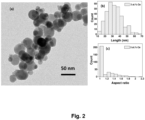
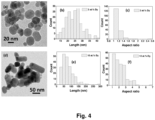
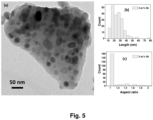
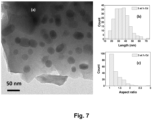
- The size distributions observed in
Figs. 1-7 below represent the length of such nanoparticles (largest particle dimension), and their aspect ratio can be obtained by dividing the length by the width (shortest particle dimension, in the direction perpendicular to the length). - A particular advantageous aspect of the invention is the permanent magnetization of said ε-Fe2O3 nanoparticles, wherein the nanoparticles are obtainable by pressing and sintering at a pressure between 50 MPa and 250 MPa and a temperature between 250 °C and 900 °C, preferably by means of Spark Plasma Sintering, resulting in permanently-magnetized ε-Fe2O3 nanoparticles.
- In a further embodiment the piezomagnetic ε-Fe2O3 nanoparticles are stabilized with the metal cations Y3+ ranging between 5 % at. to 25 % at., or with the metal Ce3+ cations ranging between 3% at. to 5% at.
- Another aspect is the synthetic method for producing the above disclosed ε-Fe2O3 nanoparticles which incorporates into the solutions other cations significantly larger than Fe3+ (rFe3+=69 pm). It was found according to the present invention that when using such larger cations, these are not incorporated into the ε-Fe2O3 structure. Furthermore, the cation selection is crucial, and will be based on the existence of common precursors that are soluble in the hydroethanolic medium.
- In one embodiment, we have developed a method to prepare ε-Fe2O3 nanoparticles of increased sizes by incorporating Y3+ (rY3+=104 pm) which is the most satisfactory concerning upscaling and particle sizes. In another, we have developed the same approach with other cations significantly larger than Fe3+ and which can be solubilized in the synthesis sol: Ce3+, La3+, Dy3+, Sb3+, Cd2+, Bi3+.
- In a preferred embodiment the cation nitrate hexahydrate is Y(NO3)3·6H2O, wherein content of Y+3 cations is ranging between 5 % at. to 25 % at. or it is Ce(NO3)3·6H2O, wherein the content of Ce+3 cations is of 3 % at. to 5% at.
- The characterization of the materials containing Y3+ by transmission electron microscopy (see
Fig. 1 ) shows size distributions that clearly exceed 25 nm. The effect is more obvious for larger content of the Y3+ cation. The characterization by X-ray diffraction (see Table 1) also confirms the increase of the average crystal sizes and the lattice parameters indicate that Y3+ is not incorporated in the ε-Fe2O3 structure. - Compared to the current approaches to preparing large ε-Fe2O3 nanoparticles known in the state of the art, the method of the present invention allows increasing by a factor of ~20 the amount of ε-Fe2O3 obtained in one batch. In this way, we solve the problem of producing larger particle sizes of ε-Fe2O3 in large amounts in one batch, without using organic solvents or toxic surfactants. The method is sustainable and appealing for industrial production of this ε-Fe2O3 phase. The larger nanoparticles do not show magnetic relaxation (see
figure 8 below for the case of Y3+ addition). - In the examples using Ce3+, La3+, Dy3+, Sb3+, Cd2+, Bi3+, the effect of cation addition is also to increase the size of the particles (tables 2 to 5), although in some of these impurities are also contained. For Cd2+ and Bi3+, a crystallization of the SiOz matrix is observed which entails the formation of large amounts of hematite. In the case of Sb3+, the X-ray diffraction before removing the SiOz matrix does not show either SiOz crystallization, nor formation of large amounts of hematite, nor the presence of other impurity phases.
- Another aspect of the invention is the use of the said piezomagnetic ε-Fe2O3 nanoparticles for the manufacturing of a wireless communication device, particularly a self-biased non-reciprocal device.
- A further aspect is a wireless communication device, comprising the said piezomagnetic ε-Fe2O3 nanoparticles wherein the wireless communication device is preferably a self-biased non-reciprocal device.
- Unless otherwise defined, all technical and scientific terms used herein have the same meaning as commonly understood by one of ordinary skilled in the art to which this invention belongs. Methods and materials similar or equivalent to those described herein can be used in the practice of the present invention. Throughout the description and claims the word "comprise" and its variations are not intended to exclude other technical features, additives, components, or steps. Additional objects, advantages and features of the invention will become apparent to those skilled in the art upon examination of the description or may be learned by practice of the invention. The following examples, drawings and sequence listing are provided by way of illustration and are not intended to be limiting of the present invention.
-
-
Fig.1 . TEM images of ε-Fe2O3 nanoparticles prepared with different Y3+ content. (a-g) 1,3,5,10,15,20 and 25 at. % Y chronologically. (h-n) Particle volume distribution of the corresponding samples calculated from more than 150 particles. (o) Mean particle size calculated from TEM and XRD data with the Aspect ratio of the samples. -
Fig. 2 . (a) TEM image of ε-Fe2O3 nanoparticles prepared 3 at. % Ce3+. (b) Size distribution and (c) Aspect ratio resulting from measuring 326 particles from different TEM images. -
Fig. 3 . (a) TEM image of ε-Fe2O3 nanoparticles prepared with 3 at. % La3+. (b & c) Size distribution and aspect ratio distribution resulting from measuring more than 200 particles from different TEM images. (d) TEM image of ε-Fe2O3 nanoparticles prepared with 10 at. % La3+. (e & f) Size distribution and aspect ratio distribution resulting from measuring more than 150 particles from different TEM images. -
Fig. 4 . (a) TEM image of ε-Fe2O3 nanoparticles prepared with 3 at. % Dy3+. (b & c) Size distribution and aspect ratio distribution resulting from measuring 175 particles from different TEM images. (d) TEM image of ε-Fe2O3 nanoparticles prepared with 10 at. % Dy3+. (e & f) Size distribution and aspect ratio distribution resulting from measuring more than 200 particles from different TEM images -
Fig. 5 . (a) TEM image of ε-Fe2O3 nanoparticles prepared with 3 at. % Sb3+. (b & c) Size distribution and aspect ratio distribution resulting from measuring more than 200 particles from different TEM images. -
Fig. 6 . (a) TEM image of ε-Fe2O3 nanoparticles prepared with 3 at. % Bi3+. (b & c) Size distribution and aspect ratio distribution resulting from measuring 250 particles from different TEM images. -
Fig. 7 (a) TEM image of ε-Fe2O3 nanoparticles prepared with 3 at. % Cd2+. (b & c) Size distribution and aspect ratio distribution resulting from measuring 200 particles from different TEM images. -
Fig. 8 . Magnetic relaxation expressed as the variation with time of the remanent magnetic moment relative to the moment at time zero for ε-Fe2O3 nanoparticles prepared with different Y3+ contents in the sol. -
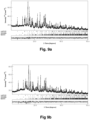
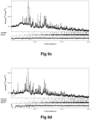
Fig. 9 . X-Ray diffraction diagram of- a)
La 3+ 3 at. % - b)
La 3+ 10 at. % - c)
Dy 3+ 3 at. % - d)
Dy 3+ 10 at. % - e)
Sb 3+ 3 at. % - f)
Bi 3+ 3 at. % with SiOz matrix not removed (large peak at 21 degree is crystalline SiO2). - g)
Cd 2+ 3 at. % with SiO2 matrix not removed (large peak at 21 degree is crystalline SiO2).
- a)
- ε-Fe2O3 nanoparticles were prepared by sol-gel method using silica matrix as a hard template including Y3+ in the solution. Seven samples were prepared by changing the Yttrium content. Fe(NO3)3.9H2O and Y(NO3)3.6H2O from Thermo Fisher and Tetraethyl orthosilicate(TEOS) from Sigma Aldrich were used as precursors for the metal oxide and SiO2, respectively. Milli-Q water and Absolute Ethanol (PanReac AppliChem) were used as the solvents.
- 20 mL TEOS was taken as the basis of all calculation while keeping weight percentage of the iron oxide with respect to silica as 25%:75%. The molar ratio of TEOS: Ethanol: H2O was taken as 1:5:6. Different samples were prepared by changing the wt.% of Y ranging from 1% to 25% of the total metal content.
- First, stoichiometric amounts of H2O and Ethanol were mixed in a beaker, where then the desired stoichiometric amounts of Y(NO3)3.6H2O and Fe(NO3)3.9H2O were dissolved. After the metal precursors were dissolved properly, TEOS was added to this solution at 0.7 ml/min rate using a syringe pump at high stirring rate. After adding TEOS, the solution was left under stirring for 2 hours. Finally, the solution was equally distributed in 4 petri dishes of 9 cm diameter that were kept inside a plastic box for further gelation and syneresis. The gelation took place after ~7 days. The as-prepared gel was grinded manually and annealed at 1100°C for 3 hours at a rate of 80°C/h.
- Finally, the nanoparticles were collected by etching the as-prepared powders in a 10 M NaOH solution at 80°C under reflux for 48 hours. ~1.2 g of powder was collected for each batch.
- Preparation of ε-Ce0.06Fe1.94O3 nanoparticles were prepared by sol-gel method using silica matrix as a hard template Fe(NO3)3.9H2O and Ce(NO3)3.6H2O from Thermo Fisher and Tetraethyl orthosilicate(TEOS) from Sigma Aldrich were used as the metal oxide and SiOz precursors respectively. Milli-Q water and Absolute Ethanol (PanReac AppliChem) were used as the solvents.
- 10 mL TEOS was taken as the basis of all calculation while keeping weight percentage of the iron oxide with respect to silica as 25%:75%. The molar ratio of TEOS: Ethanol: H2O was taken as 1:5:6. Atomic % ratio of Ce :Fe were 3:97.
- First, a stoichiometric amount of H2O and Ethanol were taken in a beaker and mixed together followed by addition of stoichiometric amount of Ce(NO3)3.6H2O and Fe(NO3)3.9H2O. After the metal precursors were dissolved properly, TEOS was added to this solution at 0.7 ml/min rate using a syringe pump at high stirring rate. After adding TEOS, the solution was left for stirring for 2 hours. Finally, the solution was equally distributed in 3 petri dishes of 9 cm diameter and was kept inside a plastic box for further gelation and syneresis. The gelation took place after ~7 days. The as prepared gel was grinded manually followed by annealing at 1100°C for 3 hours at a rate of 80°C/h.
- Finally, the nanoparticles were collected by etching the as prepared powders in 10 M NaOH solution at 80°C under reflux for 48 hours. ~0.6 g of powder was collected.
- Preparation of ε-LaxFe2-xO3nanoparticles were prepared by sol-gel method using silica matrix as a hard template. Fe(NO3)3.9H2O and La(NO3)3.6H2O from Thermo Fisher and Tetraethyl orthosilicate(TEOS) from Sigma Aldrich were used as the metal oxide and SiOz precursors respectively. Milli-Q water and Absolute Ethanol (PanReac AppliChem) were used as the solvents.
- 20 mL TEOS was taken as the basis of all calculation while keeping weight percentage of the iron oxide with respect to silica as 25%:75%. The molar ratio of TEOS: Ethanol: H2O was taken as 1:5:6. Two samples were prepared for 3 atomic % and 10 at.% ratio of La.:Fe.
- First, a stoichiometric amount of H2O and Ethanol were taken in a beaker and mixed together followed by addition of stoichiometric amount of La(NO3)3.6H2O and Fe(NO3)3.9H2O. After the metal precursors were dissolved properly, TEOS was added to this solution at 0.7 ml/min rate using a syringe pump at high stirring rate. After adding TEOS, the solution was left for stirring for 2 hours. Finally, the solution was equally distributed in 3 petri dishes of 9 cm diameter and was kept inside a plastic box for further gelation and syneresis. The gelation took place after ~7 days. The as prepared gel was grinded manually followed by annealing at 1100°C for 3 hours at a rate of 80°C/h.
- Finally, the nanoparticles were collected by etching the as prepared powders in 10 M NaOH solution at 80°C under reflux for 48 hours. ~1.2 g of powder was collected.
- Preparation of ε-DyxFe2-xO3 nanoparticles were prepared by sol-gel method using silica matrix as a hard template. Fe(NO3)3.9H2O and Dy(NO3)3.5H2O from Thermo Fisher and Tetraethyl orthosilicate(TEOS) from Sigma Aldrich were used as the metal oxide and SiOz precursors respectively. Milli-Q water and Absolute Ethanol (PanReac AppliChem) were used as the solvents.
- 20 mL TEOS was taken as the basis of all calculation while keeping weight percentage of the iron oxide with respect to silica as 25%:75%. The molar ratio of TEOS: Ethanol: H2O was taken as 1:5:6. Two samples were prepared for 3 at. % and 10 at. % ratio of Dy.:Fe . First, a stoichiometric amount of H2O and Ethanol were taken in a beaker and mixed together followed by addition of stoichiometric amount of Dy(NO3)3.5H2O and Fe(NO3)3.9H2O. After the metal precursors were dissolved properly, TEOS was added to this solution at 0.7 ml/min rate using a syringe pump at high stirring rate. After adding TEOS, the solution was left for stirring for 2 hours. Finally, the solution was equally distributed in 3 petri dishes of 9 cm diameter and was kept inside a plastic box for further gelation and syneresis. The gelation took place after ~7 days. The as prepared gel was grinded manually followed by annealing at 1100°C for 3 hours at a rate of 80°C/h.
- Finally, the nanoparticles were collected by etching the as prepared powders in 10 M NaOH solution at 80°C under reflux for 48 hours. ~1.2 g of powder was collected.
- Preparation of ε-Sb0.06Fe1.94O3 nanoparticles were prepared by sol-gel method using silica matrix as a hard template. Fe(NO3)3.9H2O from Thermo Fisher and SbCl3 and Tetraethyl orthosilicate(TEOS) from Sigma Aldrich were used as the metal oxide and SiO2 precursors respectively. Milli-Q water and Absolute Ethanol (PanReac AppliChem) were used as the solvents. As SbCl3 is not soluble in the hydroethanolic mixture, glacial acetic acid from Labbox Labware S.L. was used as a chelating agent for stabilization.
- 20 mL TEOS was taken as the basis of all calculation while keeping weight percentage of the iron oxide with respect to silica as 25%:75%. The molar ratio of TEOS: Ethanol: H2O was taken as 1:5:6.
- First, a stoichiometric amount of H2O and Ethanol were taken in a beaker and mixed together followed by addition of stoichiometric amount of SbCl3 and Fe(NO3)3.9H2O. Also 20 mL glacial acetic acid was added in this solution to get a clear solution. After the metal precursors were dissolved properly, TEOS was added to this solution at 0.7 ml/min rate using a syringe pump at high stirring rate. After adding TEOS, the solution was left for stirring for 2 hours. Finally, the solution was equally distributed in 6 petri dishes of 9 cm diameter and was kept inside a plastic box for further gelation and syneresis. The gelation took place after ~3 days. The as prepared gel was grinded manually followed by annealing at 1100°C for 3 hours at a rate of 80°C/h.
- Finally, the nanoparticles were collected by etching the as prepared powders in 10 M NaOH solution at 80°C under reflux for 48 hours. -1.2 g of powder was collected.
- Preparation of ε-Bi0.06Fe1.94O3 nanoparticles were prepared by sol-gel method using silica matrix as a hard template. Fe(NO3)3.9H2O from Thermo Fisher and Bi(CH3COO)3 and Tetraethyl orthosilicate(TEOS) from Sigma Aldrich were used as the metal oxide and SiO2 precursors respectively. Milli-Q water and Absolute Ethanol (PanReac AppliChem) were used as the solvents. As Bi(CH3COO)3 is not soluble in the hydroethanolic mixture, glacial acetic acid from Labbox Labware S.L. was used as a chelating agent for stabilization. 10 mL TEOS was taken as the basis of all calculation while keeping weight percentage of the iron oxide with respect to silica as 25%:75%. The molar ratio of TEOS: Ethanol: H2O was taken as 1:5:6.
- First, a stoichiometric amount of H2O and Bi(CH3COO)3 was taken in a beaker and mixed together with 10 mL glacial acetic acid followed by addition of stoichiometric amount of ethanol and Fe(NO3)3.9H2O. After the metal precursors were dissolved properly, TEOS was added to this solution at 0.7 ml/min rate using a syringe pump at high stirring rate. After adding TEOS, the solution was left for stirring for 2 hours. Finally, the solution was equally distributed in 6 petri dishes of 9 cm diameter and was kept inside a plastic box for further gelation and syneresis. The gelation took place after ~3 days. The as prepared gel was grinded manually followed by annealing at 1100°C for 3 hours at a rate of 80°C/h.
- Finally, the nanoparticles were collected by etching the as prepared powders in 10 M NaOH solution at 80°C under reflux for 48 hours. ~0.6 g of powder was collected.
- Preparation of ε-Cd0.06Fe1.94O3 nanoparticles were prepared by sol-gel method using silica matrix as a hard template. Fe(NO3)3.9H2O from Thermo Fisher and Cd(CH3COO)2 and Tetraethyl orthosilicate(TEOS) from Sigma Aldrich were used as the metal oxide and SiO2 precursors respectively. Milli-Q water and Absolute Ethanol (PanReac AppliChem) were used as the solvents.
- 10 mL TEOS was taken as the basis of all calculation while keeping weight percentage of the iron oxide with respect to silica as 25%:75%. The molar ratio of TEOS: Ethanol: H2O was taken as 1:5:6.
- First, a stoichiometric amount of H2O and Ethanol were taken in a beaker and mixed together followed by addition of stoichiometric amount of Cd(CH3COO)2 and Fe(NO3)3.9H2O. After the metal precursors were dissolved properly, TEOS was added to this solution at 0.7 ml/min rate using a syringe pump at high stirring rate. After adding TEOS, the solution was left for stirring for 2 hours. Finally, the solution was equally distributed in 3 petri dishes of 9 cm diameter and was kept inside a plastic box for further gelation and syneresis. The gelation took place after ~7 days. The as prepared gel was grinded manually followed by annealing at 1100°C for 3 hours at a rate of 80°C/h.
- Finally, the nanoparticles were collected by etching the as prepared powders in 10 M NaOH solution at 80°C under reflux for 48 hours. ~0.6 g of powder was collected.
- The particle size of ε-Fe2O3 increases with the amount of Y3+ content during the preparation method. Until 15% Y content, we see the increase of the total particle volume (
Figure 1 ). After that the volume distribution shows decrease for 20% and 25% Y content. From the TEM images inFigure 2 , we notice that particle shapes start to distort and assumingly start to melt for 20% Y content. Also, the lattice parameters of ε-Fe2O3 does not change for different Y content (Table 1) which means that Y3+ does not substitute any Fe3+ cation in the ε-Fe2O3 structure. The amount of hematite content varied from 5 to 20% for all the samples. Also, larger particles (5%, 10%, 15% Y) are magnetically more stable with time compared to the smaller particles (1% Y) (seeFigure 8 ) which ensures the prominence of larger particles for the device application. Similar characteristics are seen in the case of Ce3+. TEM image shows rod shapes of the particles while the lattice parameters are similar to the ε-Fe2O3. - In tables 1 to 5 the crystal sizes of ε-Fe2O3 nanoparticles prepared with different contents and type of metals are presented based on the X-Ray diffractograms.
Table 1: Lattice parameters and average crystal size of ε-Fe2O3 nanoparticles prepared with different contents of Y3+. at. % Y3+ a (Å) b (Å) c (Å) crystal size (Å) 1 5.0936(4) 8.7897(8) 9.4697(6) 253±2 3 5.0924(3) 8.7886(7) 9.4725(6) 301±2 5 5.0928(2) 8.7869(4) 9.4728(4) 380±2 10 5.0929(2) 8.7858(4) 9.4722(3) 512±4 15 5.0940(3) 8.7848(5) 9.4728(5) 540±5 20 5.0929(3) 8.7861(5) 9.4741(5) 478±6 25 5.0936(7) 8.793(1) 9.478(1) 363±5 Table 2: Lattice parameters and average crystal size of ε-Fe2O3 prepared with 3 at. % Ce3+. at. % Ce3+ a (Å) b (Å) c (Å) crystal size (Å) 3 5.0926(4) 8.7886(8) 9.4742(7) 333 ± 2 Table 3: Lattice parameters and average crystal size of ε-Fe2O3 prepared with 3 at. % and 10 at. % La3+. at. % La3+ a (Å) b (Å) c (Å) crystal size (Å) 3 5.0917(2) 8.7866(5) 9.4719(4) 354 ± 2 10 5.0924(2) 8.7860(6) 9.4710(4) 533 ± 7 Table 4: Lattice parameters and average crystal size of ε-Fe2O3 prepared with 3 at. % and 10 at. % Dy3+. at. % Dy3+ a (Å) b (Å) c (Å) crystal size (Å) 3 5.0955(3) 8.7910(7) 9.4736(6) 296 ± 1 10 5.0928(4) 8.7864(8) 9.4748(8) 470 ± 10 Table 5: Lattice parameters and average crystal size of ε-Fe2O3 prepared with 3 at. % Sb3+ at. % Sb3+ a (Å) b (Å) c (Å) crystal size (Å) 3 5.0941(3) 8.7894 (6) 9.4783(5) 273 ± 2
Claims (7)
- A sol-gel method for obtaining stabilized piezomagnetic ε-Fe2O3 nanoparticles, comprising the following steps:a. mixing, a stoichiometric amount of a solution consisting of water and alcohol with an stoichiometric solution consisting of Fe(NO3)3.9H2O and X(NO3)3.6H2O, wherein X refers to any of the Y3+, Ce3+, La3+, Dy3+, Sb3+, Cd2+, Bi3+ cations and wherein the content of the said cations ranges between 3% at. to 40% at.,b. adding an organosilicate, preferably tetraethyl orthosilicate (TEOS), or a silica precursor, preferably sodium silicate, to the mixture obtained in step (a), and stirring during a period of time of at least 2 h, wherein the molar ratio organosilicate: alcohol: H2O or the molar ratio silica precursor: alcohol: H2O, is 1:5:6,c. carrying out gelation of the mixture obtained in step (b) during a period of time of at least 7 days,d. carrying out syneresis of the mixture obtained in step (c),e. grinding the gel obtained in the step (d) and annealing the gel at preferred temperature of 1050-1150 °C for at least 3 h, preferably at a rate of 70-90 °C/h, andf. etching the powder obtained in step (e) in a base solution, preferably a NaOH solution, preferably at a concentration of 3-12 M, at a preferred temperature of 60-100 °C under reflux for at least 24 h.
- A sol-gel method according to claim 1 wherein the X(NO3)3.6H2O is Y(NO3)3.6H2O wherein content of Y+3 cations is ranging between 5 % at. to 25 % at., or is Ce(NO3)3.6H2O wherein the content of Ce+3 cations is from 3 % at. to 5% at.
- A sol-gel method according to claims 1 or 2, further comprising after step f), a step g) of pressing and sintering the product obtained, at a pressure between 50 MPa and 250 MPa and temperature between 250 °C and 900 °C, preferably by means of Spark Plasma Sintering, resulting in the induction of permanent magnetization of the ε-Fe2O3 nanoparticles.
- Piezomagnetic ε-Fe2O3 nanoparticles obtained by a method according to any one of claims 1-3, which have a stable orthorhombic polymorph structure and a particle size above 25 nm, ranging preferably between 31 nm and 72 nm,wherein the piezomagnetic ε-Fe2O3 nanoparticles are confined within a matrix of silica, wherein the weight percentage of the piezomagnetic ε-Fe2O3 nanoparticles with respect to silica matrix is preferably in the range 25%:75% wt.,the piezomagnetic ε-Fe2O3 nanoparticles are stabilized with a content of a metal cation selected from at least one of Y3+, Ce3+, La3+, Dy3+, Sb3+, Cd2+, Bi3+ cations ranging between 3% to 40% at., more preferably between 5% at. to 25% at., and wherein the Fe+3 cations of the stable orthorhombic polymorph structure are not substituted by said metal cations.
- Nanoparticles according to claim 4, wherein the metal cations are Y3+ cations ranging between 5 % at. to 25 % at. or Ce+3 cations ranging between 3% at. to 5% at.
- Use of the piezomagnetic ε-Fe2O3 nanoparticles of claim 4 or 5, for the manufacture of a wireless communication device, particularly a self-biased non-reciprocal device.
- Wireless communication device, comprising the ε-Fe2O3 piezomagnetic nanoparticles according to claim 4 or 5 wherein the wireless communication device is preferably a self-biased non-reciprocal device.
Priority Applications (2)
| Application Number | Priority Date | Filing Date | Title |
|---|---|---|---|
| EP23382201.4A EP4424643A1 (en) | 2023-03-03 | 2023-03-03 | Synthesis of piezomagnetic epsilon-fe2o3 crystals |
| PCT/EP2024/055560 WO2024184296A1 (en) | 2023-03-03 | 2024-03-04 | SYNTHESIS OF PIEZOMAGNETIC EPSILON-Fe2O3 CRYSTALS |
Applications Claiming Priority (1)
| Application Number | Priority Date | Filing Date | Title |
|---|---|---|---|
| EP23382201.4A EP4424643A1 (en) | 2023-03-03 | 2023-03-03 | Synthesis of piezomagnetic epsilon-fe2o3 crystals |
Publications (1)
| Publication Number | Publication Date |
|---|---|
| EP4424643A1 true EP4424643A1 (en) | 2024-09-04 |
Family
ID=85505399
Family Applications (1)
| Application Number | Title | Priority Date | Filing Date |
|---|---|---|---|
| EP23382201.4A Withdrawn EP4424643A1 (en) | 2023-03-03 | 2023-03-03 | Synthesis of piezomagnetic epsilon-fe2o3 crystals |
Country Status (2)
| Country | Link |
|---|---|
| EP (1) | EP4424643A1 (en) |
| WO (1) | WO2024184296A1 (en) |
Citations (3)
| Publication number | Priority date | Publication date | Assignee | Title |
|---|---|---|---|---|
| US8335037B2 (en) * | 2007-10-24 | 2012-12-18 | The University Of Tokyo | Millimeter wave band nonreciprocal device |
| JP6856196B2 (en) * | 2016-12-28 | 2021-04-07 | 国立研究開発法人産業技術総合研究所 | Magnetic particles and their manufacturing method |
| US20210227730A1 (en) * | 2018-06-06 | 2021-07-22 | The University Of Tokyo | Radio wave-absorbing laminate film, production method therefor, and element including same |
-
2023
- 2023-03-03 EP EP23382201.4A patent/EP4424643A1/en not_active Withdrawn
-
2024
- 2024-03-04 WO PCT/EP2024/055560 patent/WO2024184296A1/en not_active Ceased
Patent Citations (3)
| Publication number | Priority date | Publication date | Assignee | Title |
|---|---|---|---|---|
| US8335037B2 (en) * | 2007-10-24 | 2012-12-18 | The University Of Tokyo | Millimeter wave band nonreciprocal device |
| JP6856196B2 (en) * | 2016-12-28 | 2021-04-07 | 国立研究開発法人産業技術総合研究所 | Magnetic particles and their manufacturing method |
| US20210227730A1 (en) * | 2018-06-06 | 2021-07-22 | The University Of Tokyo | Radio wave-absorbing laminate film, production method therefor, and element including same |
Also Published As
| Publication number | Publication date |
|---|---|
| WO2024184296A1 (en) | 2024-09-12 |
Similar Documents
| Publication | Publication Date | Title |
|---|---|---|
| Vinnik et al. | Ni substitution effect on the structure, magnetization, resistivity and permeability of zinc ferrites | |
| Praveena et al. | Effect of Gd3+ on dielectric and magnetic properties of Y3Fe5O12 | |
| JP6255783B2 (en) | COMPOSITE MAGNETIC MATERIAL, ITS MANUFACTURING METHOD, AND COMPOSITE MAGNETIC MATERIAL MATERIAL SET | |
| Rashad et al. | Controlling the composition, microstructure, electrical and magnetic properties of LiFe5O8 powders synthesized by sol gel auto-combustion method using urea as a fuel | |
| Wang et al. | Phase and magnetic properties evolutions of Y3− x (CaZr) xFe5− xO12 by the sol–gel method | |
| Karimunnesa et al. | Effect of holmium substitution on the structural, magnetic and transport properties of CoFe2-xHoxO4 ferrites | |
| Lakshmi et al. | Multiferroism and magnetoelectric coupling in single-phase Yb and X (X= Nb, Mn, Mo) co-doped BiFeO3 ceramics | |
| Suo et al. | Effect of Al3+ ion-substituted Ni–Mg–Co ferrite prepared by sol–gel auto-combustion on lattice structure and magnetic properties | |
| JP5105503B2 (en) | ε Iron oxide production method | |
| WO2015194647A1 (en) | Magnetic iron oxide nanopowder and process for producing same | |
| CN104867639A (en) | A kind of preparation method of sintered NdFeB permanent magnet material | |
| Belous et al. | Al-doped yttrium iron garnets Y3AlFe4O12: Synthesis and properties | |
| CN110323025A (en) | Ferrite sintered magnet | |
| CN105006325B (en) | Method for preparing composite ferrite powder with exchange coupling effect through grinding | |
| CN114573334B (en) | Garnet ferrite with high power, high Curie temperature and low line width and its preparation method | |
| Saini et al. | Role of Ce concentration on the structural and magnetic properties of functional magnetic oxide particles | |
| JP7338361B2 (en) | ferrite sintered magnet | |
| Barati | Characterization and preparation of nanocrystalline MgCuZn ferrite powders synthesized by sol–gel auto-combustion method | |
| Xu et al. | Composition and microstructural control of Sm 2 Fe 17 N 3 powders: a promising candidate for next-generation permanent magnets | |
| Khalifeh et al. | Improving Dy, Ce, Bi: YIG phase formation and magnetic features via heat treatment and chemical composition | |
| CN108831659B (en) | A method for preparing nanometer NdFeN permanent magnet powder and nanometer permanent magnet powder | |
| JP4813507B2 (en) | Magnetic material, magnetic memory using the same, and temperature sensor | |
| Khanam et al. | Synthesis of piezomagnetic epsilon-Fe2O3 crystals | |
| WO2024184296A1 (en) | SYNTHESIS OF PIEZOMAGNETIC EPSILON-Fe2O3 CRYSTALS | |
| Granados-Miralles et al. | Permanent Magnets Based on Hard Ferrite Ceramics |
Legal Events
| Date | Code | Title | Description |
|---|---|---|---|
| PUAI | Public reference made under article 153(3) epc to a published international application that has entered the european phase |
Free format text: ORIGINAL CODE: 0009012 |
|
| STAA | Information on the status of an ep patent application or granted ep patent |
Free format text: STATUS: THE APPLICATION HAS BEEN PUBLISHED |
|
| AK | Designated contracting states |
Kind code of ref document: A1 Designated state(s): AL AT BE BG CH CY CZ DE DK EE ES FI FR GB GR HR HU IE IS IT LI LT LU LV MC ME MK MT NL NO PL PT RO RS SE SI SK SM TR |
|
| STAA | Information on the status of an ep patent application or granted ep patent |
Free format text: STATUS: THE APPLICATION IS DEEMED TO BE WITHDRAWN |
|
| 18D | Application deemed to be withdrawn |
Effective date: 20250305 |