EP4422262A1 - Handhabung der ue-mobilität in gegenwart von nes-zellen - Google Patents
Handhabung der ue-mobilität in gegenwart von nes-zellen Download PDFInfo
- Publication number
- EP4422262A1 EP4422262A1 EP24153337.1A EP24153337A EP4422262A1 EP 4422262 A1 EP4422262 A1 EP 4422262A1 EP 24153337 A EP24153337 A EP 24153337A EP 4422262 A1 EP4422262 A1 EP 4422262A1
- Authority
- EP
- European Patent Office
- Prior art keywords
- energy saving
- saving state
- target cell
- network energy
- measurement
- Prior art date
- Legal status (The legal status is an assumption and is not a legal conclusion. Google has not performed a legal analysis and makes no representation as to the accuracy of the status listed.)
- Pending
Links
Images



Classifications
-
- H—ELECTRICITY
- H04—ELECTRIC COMMUNICATION TECHNIQUE
- H04B—TRANSMISSION
- H04B17/00—Monitoring; Testing
- H04B17/30—Monitoring; Testing of propagation channels
- H04B17/309—Measuring or estimating channel quality parameters
- H04B17/318—Received signal strength
- H04B17/328—Reference signal received power [RSRP]; Reference signal received quality [RSRQ]
-
- H—ELECTRICITY
- H04—ELECTRIC COMMUNICATION TECHNIQUE
- H04W—WIRELESS COMMUNICATION NETWORKS
- H04W24/00—Supervisory, monitoring or testing arrangements
- H04W24/10—Scheduling measurement reports ; Arrangements for measurement reports
-
- H—ELECTRICITY
- H04—ELECTRIC COMMUNICATION TECHNIQUE
- H04W—WIRELESS COMMUNICATION NETWORKS
- H04W36/00—Hand-off or reselection arrangements
- H04W36/0005—Control or signalling for completing the hand-off
- H04W36/0083—Determination of parameters used for hand-off, e.g. generation or modification of neighbour cell lists
-
- H—ELECTRICITY
- H04—ELECTRIC COMMUNICATION TECHNIQUE
- H04W—WIRELESS COMMUNICATION NETWORKS
- H04W52/00—Power management, e.g. Transmission Power Control [TPC] or power classes
- H04W52/02—Power saving arrangements
- H04W52/0203—Power saving arrangements in the radio access network or backbone network of wireless communication networks
- H04W52/0206—Power saving arrangements in the radio access network or backbone network of wireless communication networks in access points, e.g. base stations
-
- H—ELECTRICITY
- H04—ELECTRIC COMMUNICATION TECHNIQUE
- H04W—WIRELESS COMMUNICATION NETWORKS
- H04W56/00—Synchronisation arrangements
- H04W56/001—Synchronization between nodes
- H04W56/0015—Synchronization between nodes one node acting as a reference for the others
Definitions
- the example and non-limiting embodiments relate generally to handover and, more particularly, to a cell in a network energy savings state.
- NES network energy savings
- an example method comprising: determining, with a user equipment, to use a measurement and reporting configuration based, at least partially, upon a network energy saving state of a target cell; measuring, with the user equipment, with use of the measurement and reporting configuration; and determining, with the user equipment, to transmit a measurement report based upon the determined measurement and reporting configuration.
- an example apparatus comprising: at least one processor; and at least one non-transitory memory storing instructions that, when executed with the at least one processor, cause the apparatus to perform: determining, with the apparatus, to use a measurement and reporting configuration based, at least partially, upon a network energy saving state of a target cell; measuring, with the apparatus, with use of the measurement and reporting configuration; and determining, with the apparatus, to transmit a measurement report based upon the determined measurement and reporting configuration.
- an example apparatus comprising: means for determining, with a user equipment, to use a measurement and reporting configuration based, at least partially, upon a network energy saving state of a target cell; means for measuring, with the user equipment, with use of the measurement and reporting configuration; and means for determining, with the user equipment, to transmit a measurement report based upon the determined measurement and reporting configuration.
- an example apparatus comprising: circuitry configured for determining, with a user equipment, to use a measurement and reporting configuration based, at least partially, upon a network energy saving state of a target cell; circuitry configured for measuring, with the user equipment, with use of the measurement and reporting configuration; and circuitry configured for determining, with the user equipment, to transmit a measurement report based upon the determined measurement and reporting configuration.
- an example embodiment is provided with a non-transitory program storage device readable by an apparatus, tangibly embodying a program of instructions executable with the apparatus for performing operations, the operations comprising: determining, with a user equipment, to use a measurement and reporting configuration based, at least partially, upon a network energy saving state of a target cell; measuring, with the user equipment, with use of the measurement and reporting configuration; and determining, with the user equipment, to transmit a measurement report based upon the determined measurement and reporting configuration.
- an example method comprising: sending, with a network node to a user equipment, at least one of: an information for the user equipment to use to determine whether a target cell is in a network energy saving state, or a measurement and reporting configuration that is based at least partially on a network energy saving state of the target cell; and receiving, with the network node, a measurement report based, at least partially, upon at least one of the sent information or the sent measurement and reporting configuration.
- an example apparatus comprising: at least one processor; and at least one non-transitory memory storing instructions that, when executed with the at least one processor, cause the apparatus to perform: sending, with the apparatus to a user equipment, at least one of: an information for the user equipment to use to determine whether a target cell is in a network energy saving state, or a measurement and reporting configuration that is based at least partially on a network energy saving state of the target cell; and receiving, with the apparatus, a measurement report based, at least partially, upon at least one of the sent information or the sent measurement and reporting configuration.
- an example apparatus comprising: means for sending, with the apparatus to a user equipment, at least one of: an information for the user equipment to use to determine whether a target cell is in a network energy saving state, or a measurement and reporting configuration that is based at least partially on a network energy saving state of the target cell; and means for receiving, with the apparatus, a measurement report based, at least partially, upon at least one of the sent information or the sent measurement and reporting configuration.
- an example apparatus comprising: circuitry configured for sending, with the apparatus to a user equipment, at least one of: an information for the user equipment to use to determine whether a target cell is in a network energy saving state, or a measurement and reporting configuration that is based at least partially on a network energy saving state of the target cell; and circuitry configured for receiving, with the apparatus, a measurement report based, at least partially, upon at least one of the sent information or the sent measurement and reporting configuration.
- an example embodiment is provided with a non-transitory program storage device readable by an apparatus, tangibly embodying a program of instructions executable with the apparatus for performing operations, the operations comprising: sending, with a network node to a user equipment, at least one of: an information for the user equipment to use to determine whether a target cell is in a network energy saving state, or a measurement and reporting configuration that is based at least partially on a network energy saving state of the target cell; and receiving, with the network node, a measurement report based, at least partially, upon at least one of the sent information or the sent measurement and reporting configuration.
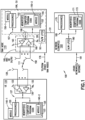
- FIG. 1 shows a block diagram of one possible and non-limiting example in which the examples may be configured to operate in accordance with a cellular communication standard such as, for example, long term evolution, LTE, or fifth generation, 5G, also known as New Radio, NR, 5G-Advanced (i.e. NR Rel-18 and beyond) as well as 6G in which all specified by the 3rd generation partnership project, 3GPP.
- a user equipment (UE) 110, radio access network (RAN) node 170, and network element(s) 190 are illustrated.
- the user equipment (UE) 110 is in wireless communication with a wireless network 100.
- a UE is a wireless device that can access the wireless network 100.
- the UE 110 includes one or more processors 120, one or more memories 125, and one or more transceivers 130 interconnected through one or more buses 127.
- Each of the one or more transceivers 130 includes a receiver, Rx, 132 and a transmitter, Tx, 133.
- the one or more buses 127 may be address, data, or control buses, and may include any interconnection mechanism, such as a series of lines on a motherboard or integrated circuit, fiber optics or other optical communication equipment, and the like.
- the one or more transceivers 130 are connected to one or more antennas 128.
- the one or more memories 125 include computer program code 123.
- the LTE 110 includes a module 140, comprising one of or both parts 140-1 and/or 140-2, which may be implemented in a number of ways.
- the module 140 may be implemented in hardware as module 140-1, such as being implemented as part of the one or more processors 120.
- the module 140-1 may be implemented also as an integrated circuit or through other hardware such as a programmable gate array.
- the module 140 may be implemented as module 140-2, which is implemented as computer program code 123 and is executed by the one or more processors 120.
- the one or more memories 125 and the computer program code 123 may be configured to, with the one or more processors 120, cause the user equipment 110 to perform one or more of the operations as described herein.
- the UE 110 communicates with RAN node 170 via a wireless link 111.
- the RAN node 170 in this example is a base station that provides access by wireless devices such as the LTE 110 to the wireless network 100.
- the RAN node 170 may be, for example, a base station for 5G, also called New Radio (NR).
- the RAN node 170 may be a NG-RAN node, which is defined as either a gNB or a ng-eNB.
- a gNB is a node providing NR user plane and control plane protocol terminations towards the UE, and connected via the NG interface to a 5GC (such as, for example, the network element(s) 190).
- the ng-eNB is a node providing E-UTRA user plane and control plane protocol terminations towards the UE, and connected via the NG interface to the 5GC.
- the NG-RAN node may include multiple gNBs, which may also include a central unit (CU) (gNB-CU) 196 and distributed unit(s) (DUs) (gNB-DUs), of which DU 195 is shown.
- the DU may include or be coupled to and control a radio unit (RU).
- the gNB-CU is a logical node hosting RRC, SDAP and PDCP protocols of the gNB or RRC and PDCP protocols of the en-gNB that controls the operation of one or more gNB-DUs.
- the gNB-CU terminates the F1 interface connected with the gNB-DU.
- the F1 interface is illustrated as reference 198, although reference 198 also illustrates a link between remote elements of the RAN node 170 and centralized elements of the RAN node 170, such as between the gNB-CU 196 and the gNB-DU 195.
- the gNB-DU is a logical node hosting RLC, MAC and PHY layers of the gNB or en-gNB, and its operation is partly controlled by gNB-CU.
- One gNB-CU supports one or multiple cells.
- One cell is supported by only one gNB-DU.
- the gNB-DU terminates the F1 interface 198 connected with the gNB-CU.
- the DU 195 is considered to include the transceiver 160, e.g., as part of a RU, but some examples of this may have the transceiver 160 as part of a separate RU, e.g., under control of and connected to the DU 195.
- the RAN node 170 may also be an eNB (evolved NodeB) base station, for LTE (long term evolution), or any other suitable base station or node.
- eNB evolved NodeB
- the RAN node 170 includes one or more processors 152, one or more memories 155, one or more network interfaces (N/W I/F(s)) 161, and one or more transceivers 160 interconnected through one or more buses 157.
- Each of the one or more transceivers 160 includes a receiver, Rx, 162 and a transmitter, Tx, 163.
- the one or more transceivers 160 are connected to one or more antennas 158.
- the one or more memories 155 include computer program code 153.
- the CU 196 may include the processor(s) 152, memories 155, and network interfaces 161. Note that the DU 195 may also contain its own memory/memories and processor(s), and/or other hardware, but these are not shown.
- the RAN node 170 includes a module 150, comprising one of or both parts 150-1 and/or 150-2, which may be implemented in a number of ways.
- the module 150 may be implemented in hardware as module 150-1, such as being implemented as part of the one or more processors 152.
- the module 150-1 may be implemented also as an integrated circuit or through other hardware such as a programmable gate array.
- the module 150 may be implemented as module 150-2, which is implemented as computer program code 153 and is executed by the one or more processors 152.
- the one or more memories 155 and the computer program code 153 are configured to, with the one or more processors 152, cause the RAN node 170 to perform one or more of the operations as described herein.
- the functionality of the module 150 may be distributed, such as being distributed between the DU 195 and the CU 196, or be implemented solely in the DU 195.
- the one or more network interfaces 161 communicate over a network such as via the links 176 and 131.
- Two or more gNBs 170 may communicate using, e.g., link 176.
- the link 176 may be wired or wireless or both and may implement, for example, an Xn interface for 5G, an X2 interface for LTE, or other suitable interface for other standards.
- the one or more buses 157 may be address, data, or control buses, and may include any interconnection mechanism, such as a series of lines on a motherboard or integrated circuit, fiber optics or other optical communication equipment, wireless channels, and the like.
- the one or more transceivers 160 may be implemented as a remote radio head (RRH) 195 for LTE or a distributed unit (DU) 195 for gNB implementation for 5G, with the other elements of the RAN node 170 possibly being physically in a different location from the RRH/DU, and the one or more buses 157 could be implemented in part as, for example, fiber optic cable or other suitable network connection to connect the other elements (e.g., a central unit (CU), gNB-CU) of the RAN node 170 to the RRH/DU 195.
- Reference 198 also indicates those suitable network link(s).
- the cell makes up part of a base station. That is, there can be multiple cells per base station. For example, there could be three cells for a single carrier frequency and associated bandwidth, each cell covering one-third of a 360 degree area so that the single base station's coverage area covers an approximate oval or circle. Furthermore, each cell can correspond to a single carrier and a base station may use multiple carriers. So if there are three 120 degree cells per carrier and two carriers, then the base station has a total of 6 cells.
- the wireless network 100 may include a network element or elements 190 that may include core network functionality, and which provides connectivity via a link or links 181 with a further network, such as a telephone network and/or a data communications network (e.g., the Internet).
- core network functionality for 5G may include access and mobility management function(s) (AMF(S)) and/or user plane functions (UPF(s)) and/or session management function(s) (SMF(s)).
- AMF(S) access and mobility management function(s)
- UPF(s) user plane functions
- SGW Ses Management Entity
- MME Mobility Management Entity
- SGW Serving Gateway
- the RAN node 170 is coupled via a link 131 to a network element 190.
- the link 131 may be implemented as, e.g., an NG interface for 5G, or an S1 interface for LTE, or other suitable interface for other standards.
- the network element 190 includes one or more processors 175, one or more memories 171, and one or more network interfaces (N/W I/F(s)) 180, interconnected through one or more buses 185.
- the one or more memories 171 include computer program code 173.
- the one or more memories 171 and the computer program code 173 are configured to, with the one or more processors 175, cause the network element 190 to perform one or more operations.
- the wireless network 100 may implement network virtualization, which is the process of combining hardware and software network resources and network functionality into a single, software-based administrative entity, a virtual network.
- Network virtualization involves platform virtualization, often combined with resource virtualization.
- Network virtualization is categorized as either external, combining many networks, or parts of networks, into a virtual unit, or internal, providing network-like functionality to software containers on a single system. Note that the virtualized entities that result from the network virtualization are still implemented, at some level, using hardware such as processors 152 or 175 and memories 155 and 171, and also such virtualized entities create technical effects.
- the computer readable memories 125, 155, and 171 may be of any type suitable to the local technical environment and may be implemented using any suitable data storage technology, such as semiconductor based memory devices, flash memory, magnetic memory devices and systems, optical memory devices and systems, fixed memory and removable memory.
- the computer readable memories 125, 155, and 171 may be means for performing storage functions.
- the processors 120, 152, and 175 may be of any type suitable to the local technical environment, and may include one or more of general purpose computers, special purpose computers, microprocessors, digital signal processors (DSPs) and processors based on a multi-core processor architecture, as non-limiting examples.
- the processors 120, 152, and 175 may be means for performing functions, such as controlling the UE 110, RAN node 170, and other functions as described herein.
- the various embodiments of the user equipment 110 can include, but are not limited to, cellular telephones such as smart phones, tablets, personal digital assistants (PDAs) having wireless communication capabilities, portable computers having wireless communication capabilities, image capture devices such as digital cameras having wireless communication capabilities, gaming devices having wireless communication capabilities, music storage and playback appliances having wireless communication capabilities, Internet appliances permitting wireless Internet access and browsing, tablets with wireless communication capabilities, as well as portable units or terminals that incorporate combinations of such functions.
- cellular telephones such as smart phones, tablets, personal digital assistants (PDAs) having wireless communication capabilities, portable computers having wireless communication capabilities, image capture devices such as digital cameras having wireless communication capabilities, gaming devices having wireless communication capabilities, music storage and playback appliances having wireless communication capabilities, Internet appliances permitting wireless Internet access and browsing, tablets with wireless communication capabilities, as well as portable units or terminals that incorporate combinations of such functions.
- PDAs personal digital assistants
- portable computers having wireless communication capabilities
- image capture devices such as digital cameras having wireless communication capabilities
- gaming devices having wireless communication capabilities
- music storage and playback appliances having wireless communication capabilities
- RRM radio resource management
- a NW deployment is depicted in FIG. 2 .
- the large ellipse represents the coverage area of a cell served with a macro base station (BS), denoted as “coverage cell”.
- the smaller ellipses represent the coverage areas of small cells, denoted as “capacity cells”.
- the coverage cell provides basic "underlay” coverage in the network of a certain area, and the small cells are overlaid over the coverage cell for capacity boosting purposes particularly within so-called "hot spot zones”.
- LTEs can be served by the coverage cell or by a capacity cell such as illustrated with UE1 in FIG. 2 .
- Capacity cells can be active (as shown in FIG. 2 with the capacity cells 1, 2 and 3) or in network energy saving (NES) state (as shown in FIG. 2 with the grey capacity cells 4, 5 and 6) during low load/empty periods by applying one or multiple energy saving techniques as listed below (and such as described in TR 38.864 for example):
- the NES state of the several capacity cells can be turned changed depending on the need, e.g., to offload the traffic or to boost the overall capacity in addition to the coverage cell's capacity. While in NES state, and when there are no Tx/Rx operations, the BS can enter sleep states as defined in TR 38.864 and listed below:
- the network may configure a RRC_CONNECTED user equipment to perform measurements and reporting which can either be derived based on SS/PBCH block and/or CSI-RS measurements.
- Each configuration (MeasConfig) includes:
- the NES state may entail that the cell is not detectable (no SSB transmission, e.g. in certain SSB beams) or that the (light) SSBs are transmitted with a long periodicity.
- the serving cell which configures the RRM measurements and reporting for the UE, may not be aware of the target cell(s) NES state, and especially may not be informed about a change in the NES state (e.g., the target cell moves to a NES state after the measurement is configured).
- a cell in a NES mode may need a significant amount of time to reactivate its currently shutdown components and to become fully operational and available as a target cell such as, for example, if a UE through RRM measurements has identified the cell as a suitable target cell.
- Such reactivation delay would introduce an undesired latency in the HO procedure and, hence, may increase the total packet delay and the LTE energy consumption.
- a target cell may prefer to limit the transitions to an active state (i.e., avoid ping-pong between NES states) and remain in an NES mode for a while until there is a strong need such as, for example, multiple UEs identifying the cell as a suitable candidate.
- features as described herein may be used to configure a LTE to perform and report RRM measurements of target cell(s) which may be in a NES state.
- Mobility aspects have been discussed in this 3GPP email discussion: R2-2213703. Most of the discussion is focused on whether a UE configured with a CHO shall determine the NES state of the target cell, or be informed by the source cell about the target cell NES state. Likewise, there are discussions on whether the UE is aware of the source cell's NES state.
- the possible enhancement is to enable the NG-RAN nodes to exchange the cell NES state, in order to avoid handing over non-NES-capable UEs to a NES cell. This is within the scope of RAN3. No RAN2 enhancements is needed.
- Intel proposes to postpone target cell NES mode as part of CHO trigger: Observation No. 4: For Scenario 2 where the CHO execution condition also considers the NES mode of target candidate PCells, depending on the NES mode definition, potential frequent reconfiguration of the NES mode of the candidate PCells will need to be considered.
- Fujitsu (R2-2212641): Observation 1: The network can configure the target cell considering the NES state of its cell. The network can decide to prevent the NES cell as CHO target cell. Observation 2: The UE evaluates the target cell indicated in the CHO configuration without NES state consideration. Proposal 2: NES state aware CHO is not considered in Rel-18 NES.
- NES it is difficult to determine how much performance the target cell can provide by referring only to the NES state. That is, it is difficult for the UE to directly determine the cell most suitable among several candidates.
- the source cell may configure the LTE to perform enhanced RRM measurements and reporting related to a target cell potentially being in a NES mode to facilitate the handover decision towards the target cell.
- This may comprise:
- the second measurement and reporting configuration dedicated to NES may include:
- LTEs can be configured to determine the current NES state of the target cell based on an implicit or explicit indication:
- the UE may assume that the determination of a target cell in NES state remains valid for the next x measurement occasions. For example, the UE may not need to perform the decoding of the NES state information bit at every measurement.
- the LTE receives instructions to prioritize reporting non-NES cells, it can limit or avoid measuring and reporting NES cells that were determined (using one of the options explained above) or identified by the serving cell.
- FIG. 3 shows one type of example of a signaling flow when a LTE is configured to determine the NES of a target cell.
- This example signaling flow will be described with reference the example network shown to FIG. 2 comprising the coverage cell 10 and one of the capacity cells, cell 2, which is in NES.
- the UE 110 (UE#1 in cell 2) is in a RRC connected state in the coverage cell 10 and receives reference signals from other cells (such as the capacity cell 2 in this example).
- the coverage cell 10 comprises the RAN node 170, and the capacity cell 2 comprises another RAN node.
- the LTE receives instructions on how to determine the NES state of any potential target cell as described above.
- it can be an indication of the RS type and/or RS periodicity that would define a NES state of a cell, or list of PCIs and/or frequency layers in NES state.
- the instructions may be provided by means of dedicated signaling such as, for example, using the RRCReconfiguration or a MAC control element.
- an explicit IE could be added to legacy RS content to announce the NES state of the cell (such as, for example, an NES bit in SSB broadcast).
- the determination could be based on implicit or explicit indication such as, for example, provided through the received reference signals. According to the example showed in FIG.
- the UE may be instructed to consider the cell in NES state if DRS is received instead of legacy SSB.
- the UE might not receive such instructions, but determines the NES state autonomously such as, for example, also based on receiving DRS instead of legacy SSB.
- the UE may receive instructions on how to determine a cell is in NES state and, optionally, a list of cells in NES.
- the source cell or coverage cell 10 configures the UE with a first measurement and reporting configuration (such as MeasConfig1, ReportConfigNR1 for example) as per legacy specification to be used for target cells that are not in NES state.
- a first measurement and reporting configuration such as MeasConfig1, ReportConfigNR1 for example
- the source cell or coverage cell 10 also configures the LTE with a second measurement and reporting configuration (such as MeasConfig2, ReportConfigNR2 for example) to be used for target cells that are in NES state.
- the difference between two configurations could be in a MeasTriggerQuantity, i.e. specific RSRP/RSRQ threshold is defined for NES cells.
- DRS discovery reference signal
- the DRS only contains the primary and secondary synchronization signals (PSS and SSS), whereas the SSB includes these and the physical broadcast channel, which carries the master information block and demodulation reference signals.
- the configuration could indicate to only measure DRS and not SSB, or only measure CSI-RS.
- the difference could be in the reference signal type to be used for performing measurements and reports.
- Discovery reference signals also called light SSB (e.g., PSS+SSS only) can be used instead of legacy SSB, CSI-RS.
- DRS is also used in LTE small cell with a similar function as 5G NR, as a synchronization signal.
- the UE may determine at step 5 (305) that the target cell (cell 4 in this example) is in NES state, if not already known from step 2 in which the source cell might have provided information on cells in NES state.
- the LTE may apply the second measurement and reporting configuration received from the serving cell.
- the UE may measure the received signal, and at step 8 (308), the UE may report the measurements based on the second configuration (ReportConfigNR2) where DRS are measured and specific RSRP/RSRQ threshold are used for triggering the reporting event.
- the serving cell may identify the capacity cell (cell 4 in this example) as a potential suitable cell for HO, determines whether the capacity cell is in NES state, and decide whether to trigger HO or not. The HO decision could be based on the following considerations:
- the source cell may decide that the HO towards the capacity cell is not allowed, and considers other reported cells for HO.
- the serving cell may rely on legacy means such as:
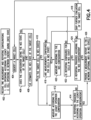
- FIG. 4 illustrates a flow chart in regard to one example method. It is worth noting that the order of determining whether measurement and reporting is configured for a cell identified to be in NES state can be interchanged.
- the UE may receive two measurement and reporting configurations as indicated by block 402. This may include 1. the cell operating according to legacy, and 2. the cell operating in NES state.
- the UE may identify a target cell as indicated by block 404.
- the UE may determine if the configuration defines the NES state of the target cell as indicated by block 406. If no, the UE may estimate the NES state of the target cell as indicated by block 408. If yes, the UE may determine if the target cell is in NES state as indicated by block 410.
- the UE may measure according to the legacy operation configuration as indicated by block 412 using the first measurement and reporting configuration (such as MeasConfig1, ReportConfigNR1 for example) received at 303 and 402.
- the LTE may then determine if reporting is triggered according to the legacy operation configuration as indicated by block 414. If the determination at block 414 is no, the process may return to block 412. If the determination at block 414 is yes, the process may proceed to the measurement reporting as indicated by block 426.
- the UE may determine if measurements are configured for cells in NES state as indicated by block 416. If the determination at block 416 is no, the process may proceed to block 418 to skip further evaluation of the target cell as indicated by block 416 and return to the process step at 404 to identify another different target cell. If the determination at block 416 is yes, the UE may measure according to the NES configuration as indicated by block 420; using the second measurement and reporting configuration (such as MeasConfig2, ReportConfigNR2 for example) received at 303 and 402.
- the second measurement and reporting configuration such as MeasConfig2, ReportConfigNR2 for example
- the UE may then determine if reporting is configured for cells in the NES state as indicate by block 422. If the determination at block 422 is no, the process may proceed to block 418 to skip further evaluation of the target cell and return to the process step at 404 to identify another different target cell. If the determination at block 422 is yes, the UE may determine if reporting is triggered according to the NES configuration as indicated by block 424. If the determination at block 424 is no, the process may proceed back to block 420. If the determination at block 424 is yes, the LTE may proceed to the measurement reporting as indicated by block 426.
- UE assistance may be leveraged to enhance HO operation, in terms of RRM measurement and reporting, in the presence of NES target cells.
- a capacity cell's energy saving potential may be improved, particularly when the capacity cell is in NES state, by controlling the HO and avoiding ping-pong effects.
- the UE may be configured with multiple RRM configurations for the same cell/frequency layer, which may enable the network to save signaling overhead, because it does not need to reconfigure the LTE measurement configuration whenever the target cell changes NES state.
- the network could also provide multiple measurement configurations for RRC Idle/Inactive UEs.
- the cell reselection criteria (Srxlev and Squal, see TS 38.304) may be made dependent on the determined NES state.
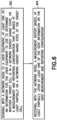
- an example method comprising determining, with a user equipment, to use a measurement and reporting configuration based, at least partially, upon a network energy saving state of a target cell as indicated with 502; measuring, with the user equipment, with use of the measurement and reporting configuration as indicated with 504; and determining, with the user equipment, to transmit a measurement report based upon the determined measurement and reporting configuration as indicated with 506.
- the method may further comprise receiving, with the user equipment, at least two different sets of measurement and reporting configurations; and wherein the determining to use the measurement and reporting configuration comprises selecting, with the user equipment, one of the at least two different sets of measurement and reporting configurations.
- the at least two different sets of measurement and reporting configurations may comprise: a first set of measurement and reporting configuration configured to be used by the user equipment for a target cell which is not in the network energy saving state, and a second set of measurement and reporting configuration configured to be used by the user equipment for a target cell that is in the network energy saving state.
- the method may further comprise receiving, with the user equipment, at least one of: an indication regarding how to determine when the target cell is in the network energy saving state, an indication of at least one target cell being in the network energy saving state, or an indication of one or more target cells potentially switching to the network energy saving state.
- the indication may comprise at least one of: a list of physical cell identity and frequencies of cells and layers in network energy saving state, an indication of when a network energy saving state change will happen, or an instruction or information for the user equipment to prioritize measuring and/or reporting of cells which are not in a network energy saving state.
- the method may further comprise determining, with the user equipment, whether the target cell is in the network energy saving state.
- the determining whether the target cell is in the network energy saving state may comprise implicitly determining the network energy saving state based upon at least one of: determining the target cell is using a different reference signal type as compared to a cell which is not in a network energy saving state, determining the target cell is using a longer reference signal periodicity as compared to a cell which is not in a network energy saving state, an indication received from a serving cell based upon reference signal periodicity, determining the target cell is using a longer reference signal periodicity for a subset of synchronization signal block beams as compared to a legacy cell, or determining the target cell is transmitting only a subset of synchronization signal block beams as compared to a legacy cell.
- the determining of the measurement and reporting configuration may comprise determining whether the target cell is indicated with the received indication.
- the determining whether the target cell is in the network energy saving state may comprise one of: use of the received indication of the at least one target cell being in the network energy saving state, or use of the received indication regarding how to determine when the target cell is in the network energy saving state.
- the determining of the network energy saving state of the target cell may be explicitly indicated in dedicated RRC signaling or a MAC control element or system information.
- the determining of the network energy saving state of the target cell may be explicitly indicated based on content of the SSB which includes information related to the network energy saving state.
- the method may further comprise transmitting the measurement report including sending information regarding an estimated network energy saving state of the target cell.
- the method may further comprise setting, with the user equipment, a timer limit, from the determining of whether the target cell is in the network energy saving state, to repeat the determining of whether the target cell is in the network energy saving state.
- the method may further comprise prioritizing, with the user equipment, wherein the prioritizing comprises at least one of : measuring regarding a target cell which is not in a network energy saving state before measuring regarding a target cell which is in a network energy saving state, reporting regarding a target cell which is not in a network energy saving state before reporting regarding a target cell which is in a network energy saving state, or preventing the measuring and reporting based upon determining that another cell is not in the network energy saving state.
- the method may further comprise receiving, with the user equipment, prioritization information, where the prioritization information is configured to be used by the user equipment to performing measurement and/or report.
- At least one of the at least two different sets of measurement and reporting configurations may comprise at least one of: different RSRP or RSRQ measurement triggers for different network energy saving states, reporting event thresholds or hysteresis for different network energy saving states, or different measurement and reporting conditions for different network energy saving cell states.
- At least two of the at least two different sets of measurement and reporting configurations may comprise different reference signals.
- an example apparatus comprising: at least one processor; and at least one non-transitory memory storing instructions that, when executed with the at least one processor, cause the apparatus to perform: determining, with the apparatus, to use a measurement and reporting configuration based, at least partially, upon a network energy saving state of a target cell; measuring, with the apparatus, with use of the measurement and reporting configuration; and determining, with the apparatus, to transmit a measurement report based upon the determined measurement and reporting configuration.
- the instructions when executed with the at least one processor, may cause the apparatus to perform: receiving, with the apparatus, at least two different sets of measurement and reporting configurations; and wherein the determining to use the measurement and reporting configuration comprises selecting, with the apparatus, one of the at least two different sets of measurement and reporting configurations.
- the at least two different sets of measurement and reporting configurations may comprise: a first set of measurement and reporting configuration configured to be used by the apparatus for a target cell which is not in the network energy saving state, and a second set of measurement and reporting configuration configured to be used by the apparatus for a target cell that is in the network energy saving state.
- the instructions when executed with the at least one processor, may cause the apparatus to perform at least one of: an indication regarding how to determine when the target cell is in the network energy saving state, an indication of at least one target cell being in the network energy saving state, or an indication of one or more target cells potentially switching to the network energy saving state.
- the indication may comprise at least one of: a list of physical cell identity and frequencies of cells and layers in network energy saving state, an indication of when a network energy saving state change will happen, or an instruction or information for the apparatus to prioritize measuring and/or reporting of cells which are not in a network energy saving state.
- the instructions when executed with the at least one processor, may cause the apparatus to perform determining, with the apparatus, whether the target cell is in the network energy saving state.
- the determining whether the target cell is in the network energy saving state may comprise implicitly determining the network energy saving state based upon at least one of: determining the target cell is using a different reference signal type as compared to a cell which is not in a network energy saving state, determining the target cell is using a longer reference signal periodicity as compared to a cell which is not in a network energy saving state, an indication received from a serving cell based upon reference signal periodicity, determining the target cell is using a longer reference signal periodicity for a subset of synchronization signal block beams as compared to a legacy cell, or determining the target cell is transmitting only a subset of synchronization signal block beams as compared to a legacy cell.
- the determining of the measurement and reporting configuration may comprise determining whether the target cell is indicated with the received indication.
- the determining whether the target cell is in the network energy saving state may comprise one of: use of the received indication of the at least one target cell being in the network energy saving state, or use of the received indication regarding how to determine when the target cell is in the network energy saving state.
- the determining of the network energy saving state of the target cell may be explicitly indicated in dedicated RRC signaling or a MAC control element or system information.
- the determining of the network energy saving state of the target cell may be explicitly indicated based on content of the SSB which includes information related to the network energy saving state.
- the instructions when executed with the at least one processor, may cause the apparatus to perform transmitting the measurement report including sending information regarding an estimated network energy saving state of the target cell.
- the instructions when executed with the at least one processor, may cause the apparatus to perform setting, with the apparatus, a timer limit, from the determining of whether the target cell is in the network energy saving state, to repeat the determining of whether the target cell is in the network energy saving state.
- the instructions when executed with the at least one processor, may cause the apparatus to perform prioritizing, with the apparatus, wherein the prioritizing comprises at least one of : measuring regarding a target cell which is not in a network energy saving state before measuring regarding a target cell which is in a network energy saving state, reporting regarding a target cell which is not in a network energy saving state before reporting regarding a target cell which is in a network energy saving state, or preventing the measuring and reporting based upon determining that another cell is not in the network energy saving state.
- the instructions when executed with the at least one processor, cause the apparatus to perform receiving, with the apparatus, prioritization information, where the prioritization information is configured to be used by the apparatus to performing measurement and/or report.
- At least one of the at least two different sets of measurement and reporting configurations may comprise at least one of: different RSRP or RSRQ measurement triggers for different network energy saving states, reporting event thresholds or hysteresis for different network energy saving states, or different measurement and reporting conditions for different network energy saving cell states. At least two of the at least two different sets of measurement and reporting configurations may comprise different reference signals.
- an example apparatus comprising: means for determining, with a user equipment, to use a measurement and reporting configuration based, at least partially, upon a network energy saving state of a target cell; means for measuring, with the user equipment, with use of the measurement and reporting configuration; and means for determining, with the user equipment, to transmit a measurement report based upon the determined measurement and reporting configuration.
- an example apparatus comprising: circuitry configured for determining, with a user equipment, to use a measurement and reporting configuration based, at least partially, upon a network energy saving state of a target cell; circuitry configured for measuring, with the user equipment, with use of the measurement and reporting configuration; and circuitry configured for determining, with the user equipment, to transmit a measurement report based upon the determined measurement and reporting configuration.
- an example apparatus comprising a non-transitory program storage device readable by an apparatus, tangibly embodying a program of instructions executable with the apparatus for performing operations, the operations comprising: determining, with a user equipment, to use a measurement and reporting configuration based, at least partially, upon a network energy saving state of a target cell; measuring, with the user equipment, with use of the measurement and reporting configuration; and determining, with the user equipment, to transmit a measurement report based upon the determined measurement and reporting configuration.
- an example method may be provided comprising: as indicated with 602 sending, with a network node to a user equipment, at least one of: an information for the user equipment to use to determine whether a target cell is in a network energy saving state, or a measurement and reporting configuration that is based at least partially on a network energy saving state of the target cell; and receiving, with the network node, a measurement report based, at least partially, upon at least one of the sent information or the sent measurement and reporting configuration as indicated with 604.
- the information may be configured for the user equipment to use for identifying at least one of: one or more target cells in the network energy saving state, or one or more target cells potentially switching to the network energy saving state.
- the information may comprise information for the user equipment to use to estimate whether the target cell is in the network energy saving state.
- the information may include instructions for determining whether the target cell is in a network energy saving state.
- the sending may comprise sending at least two different sets of the measurement and reporting configurations.
- the at least two different sets of measurement and reporting configurations may comprise: a first set of measurement and reporting configuration configured to be used by the user equipment for a target cell which is not in the network energy saving state, and a second set of measurement and reporting configuration configured to be used by the user equipment for a target cell that is in the network energy saving state.
- the information may comprise at least one of: a list of physical cell identity and frequencies of cells and layers in network energy saving state, an indication of when a network energy saving state change will happen, or an instruction or information for the user equipment to prioritize measuring and/or reporting of cells which are not in a network energy saving state.
- the at least two different sets of measurement and reporting configurations may comprise at least one of: different RSRP or RSRQ measurement triggers for different network energy saving states, reporting event thresholds or hysteresis for different network energy saving states, or different measurement and reporting conditions for different network energy saving cell states.
- an apparatus comprising: at least one processor; and at least one non-transitory memory storing instructions that, when executed with the at least one processor, cause the apparatus to perform: sending, with the apparatus to a user equipment, at least one of: an information for the user equipment to use to determine whether a target cell is in a network energy saving state, or a measurement and reporting configuration that is based at least partially on a network energy saving state of the target cell; and receiving, with the apparatus, a measurement report based, at least partially, upon at least one of the sent information or the sent measurement and reporting configuration.
- the information may be configured for the user equipment to use for identifying at least one of: one or more target cells in the network energy saving state, or one or more target cells potentially switching to the network energy saving state.
- the information may comprise information for the user equipment to use to estimate whether the target cell is in the network energy saving state.
- the information may include instructions for determining whether the target cell is in a network energy saving state.
- the sending may comprise sending at least two different sets of the measurement and reporting configurations.
- the at least two different sets of measurement and reporting configurations may comprise: a first set of measurement and reporting configuration configured to be used by the user equipment for a target cell which is not in the network energy saving state, and a second set of measurement and reporting configuration configured to be used by the user equipment for a target cell that is in the network energy saving state.
- the information may comprise at least one of: a list of physical cell identity and frequencies of cells and layers in network energy saving state, an indication of when a network energy saving state change will happen, or an instruction or information for the user equipment to prioritize measuring and/or reporting of cells which are not in a network energy saving state.
- the at least two different sets of measurement and reporting configurations may comprise at least one of: different RSRP or RSRQ measurement triggers for different network energy saving states, reporting event thresholds or hysteresis for different network energy saving states, or different measurement and reporting conditions for different network energy saving cell states.
- an apparatus comprising: means for sending, with the apparatus to a user equipment, at least one of: an information for the user equipment to use to determine whether a target cell is in a network energy saving state, or a measurement and reporting configuration that is based at least partially on a network energy saving state of the target cell; and means for receiving, with the apparatus, a measurement report based, at least partially, upon at least one of the sent information or the sent measurement and reporting configuration.
- an apparatus comprising: circuitry configured for sending, with the apparatus to a user equipment, at least one of: an information for the user equipment to use to determine whether a target cell is in a network energy saving state, or a measurement and reporting configuration that is based at least partially on a network energy saving state of the target cell; and circuitry configured for receiving, with the apparatus, a measurement report based, at least partially, upon at least one of the sent information or the sent measurement and reporting configuration.
- an apparatus comprising a non-transitory program storage device readable by an apparatus, tangibly embodying a program of instructions executable with the apparatus for performing operations, the operations comprising: sending, with a network node to a user equipment, at least one of: an information for the user equipment to use to determine whether a target cell is in a network energy saving state, or a measurement and reporting configuration that is based at least partially on a network energy saving state of the target cell; and receiving, with the network node, a measurement report based, at least partially, upon at least one of the sent information or the sent measurement and reporting configuration.
- Example 1 A method comprising: determining, with a user equipment, to use a measurement and reporting configuration based, at least partially, upon a network energy saving state of a target cell; measuring, with the user equipment, with use of the measurement and reporting configuration; and determining, with the user equipment, to transmit a measurement report based upon the determined measurement and reporting configuration.
- Example 2 The method of Example 1 further comprising: receiving, with the user equipment, at least two different sets of measurement and reporting configurations; and wherein the determining to use the measurement and reporting configuration comprises selecting, with the user equipment, one of the at least two different sets of measurement and reporting configurations.
- Example 3 The method of Example 2 where the at least two different sets of measurement and reporting configurations comprise: a first set of measurement and reporting configuration configured to be used by the user equipment for a target cell which is not in the network energy saving state, and a second set of measurement and reporting configuration configured to be used by the user equipment for a target cell that is in the network energy saving state.
- Example 4 The method of any one of Examples 1-3 further comprising receiving, with the user equipment, at least one of: an indication regarding how to determine when the target cell is in the network energy saving state, an indication of at least one target cell being in the network energy saving state, or an indication of one or more target cells potentially switching to the network energy saving state.
- Example 5 The method of Example 4 where the indication comprises at least one of: a list of physical cell identity and frequencies of cells and layers in network energy saving state, an indication of when a network energy saving state change will happen, or an instruction or information for the user equipment to prioritize measuring and/or reporting of cells which are not in a network energy saving state.
- Example 6 The method of any one of Examples 1-5 further comprising determining, with the user equipment, whether the target cell is in the network energy saving state.
- Example 7 The method of Example 6 where the determining whether the target cell is in the network energy saving state comprises implicitly determining the network energy saving state based upon at least one of: determining the target cell is using a different reference signal type as compared to a cell which is not in a network energy saving state, determining the target cell is using a longer reference signal periodicity as compared to a cell which is not in a network energy saving state, an indication received from a serving cell based upon reference signal periodicity, determining the target cell is using a longer reference signal periodicity for a subset of synchronization signal block beams as compared to a legacy cell, or determining the target cell is transmitting only a subset of synchronization signal block beams as compared to a legacy cell.
- Example 8 The method of Example 4 where the determining of the measurement and reporting configuration comprises determining whether the target cell is indicated with the received indication.
- Example 9 The method of Example 4 where the determining whether the target cell is in the network energy saving state comprises one of: use of the received indication of the at least one target cell being in the network energy saving state, or use of the received indication regarding how to determine when the target cell is in the network energy saving state.
- Example 10 The method of Example 4 where the determining of the network energy saving state of the target cell is explicitly indicated in dedicated RRC signaling or a MAC control element or system information.
- Example 11 The method of Example 10 where the determining of the network energy saving state of the target cell is explicitly indicated based on content of the SSB which includes information related to the network energy saving state.
- Example 12 The method of any one of Examples 1-11 where the method further comprises transmitting the measurement report including sending information regarding an estimated network energy saving state of the target cell.
- Example 13 The method of Example 6 further comprising setting, with the user equipment, a timer limit, from the determining of whether the target cell is in the network energy saving state, to repeat the determining of whether the target cell is in the network energy saving state.
- Example 14 The method of any one of Examples 1-13 further comprising prioritizing, with the user equipment, wherein the prioritizing comprises at least one of: measuring regarding a target cell which is not in a network energy saving state before measuring regarding a target cell which is in a network energy saving state, reporting regarding a target cell which is not in a network energy saving state before reporting regarding a target cell which is in a network energy saving state, or preventing the measuring and reporting based upon determining that another cell is not in the network energy saving state.
- Example 15 The method of Example 14 further comprising receiving, with the user equipment, prioritization information, where the prioritization information is configured to be used by the user equipment to performing measurement and/or report.
- Example 16 The method of Example 2 where at least one of the at least two different sets of measurement and reporting configurations comprises at least one of different RSRP or RSRQ measurement triggers for different network energy saving states, reporting event thresholds or hysteresis for different network energy saving states, or different measurement and reporting conditions for different network energy saving cell states.
- Example 17 The method of Example 2 where at least two of the at least two different sets of measurement and reporting configurations comprise different reference signals.
- Example 18 A method comprising: sending, with a network node to a user equipment, at least one of: an information for the user equipment to use to determine whether a target cell is in a network energy saving state, or a measurement and reporting configuration that is based at least partially on a network energy saving state of the target cell; and receiving, with the network node, a measurement report based, at least partially, upon at least one of the sent information or the sent measurement and reporting configuration.
- Example 19 The method of Example 18 where the information is configured for the user equipment to use for identifying at least one of: one or more target cells in the network energy saving state, or one or more target cells potentially switching to the network energy saving state.
- Example 20 The method of Example 18 where the information comprises information for the user equipment to use to estimate whether the target cell is in the network energy saving state.
- Example 21 The method of Example 20 where the information includes instructions for determining whether the target cell is in a network energy saving state.
- Example 22 The method of Example 18 where the sending comprises sending at least two different sets of the measurement and reporting configurations.
- Example 23 The method of Example 22 where the at least two different sets of measurement and reporting configurations comprise: a first set of measurement and reporting configuration configured to be used by the user equipment for a target cell which is not in the network energy saving state, and a second set of measurement and reporting configuration configured to be used by the user equipment for a target cell that is in the network energy saving state.
- Example 24 The method of Example 18 where the information comprises at least one of: a list of physical cell identity and frequencies of cells and layers in network energy saving state, an indication of when a network energy saving state change will happen, or an instruction or information for the user equipment to prioritize measuring and/or reporting of cells which are not in a network energy saving state.
- Example 25 The method of Example 23 where the at least two different sets of measurement and reporting configurations comprise at least one of: different RSRP or RSRQ measurement triggers for different network energy saving states, reporting event thresholds or hysteresis for different network energy saving states, or different measurement and reporting conditions for different network energy saving cell states.
- Example 26 An apparatus comprising means for performing any one of the methods according to Examples 1-17 or Examples 18-25.
- Example 27 An apparatus comprising: at least one processor; and at least one non-transitory memory storing instructions that, when executed with the at least one processor, cause the apparatus to perform: determining, with the apparatus, to use a measurement and reporting configuration based, at least partially, upon a network energy saving state of a target cell; measuring, with the apparatus, with use of the measurement and reporting configuration; and determining, with the apparatus, to transmit a measurement report based upon the determined measurement and reporting configuration.
- Example 28 The apparatus of Example 27 where the instructions, when executed with the at least one processor, cause the apparatus to perform: receiving, with the apparatus, at least two different sets of measurement and reporting configurations; and wherein the determining to use the measurement and reporting configuration comprises selecting, with the apparatus, one of the at least two different sets of measurement and reporting configurations.
- Example 29 The apparatus of Example 28 where the at least two different sets of measurement and reporting configurations comprise: a first set of measurement and reporting configuration configured to be used by the apparatus for a target cell which is not in the network energy saving state, and a second set of measurement and reporting configuration configured to be used by the apparatus for a target cell that is in the network energy saving state.
- Example 30 The apparatus of any one of Examples 27 to 29 where the instructions, when executed with the at least one processor, cause the apparatus to receive at least one of: an indication regarding how to determine when the target cell is in the network energy saving state, an indication of at least one target cell being in the network energy saving state, or an indication of one or more target cells potentially switching to the network energy saving state.
- Example 31 The apparatus of Example 30 where the indication comprises at least one of: a list of physical cell identity and frequencies of cells and layers in network energy saving state, an indication of when a network energy saving state change will happen, or an instruction or information for the apparatus to prioritize measuring and/or reporting of cells which are not in a network energy saving state.
- Example 32 The apparatus of any one of Examples 27 to 31 where the instructions, when executed with the at least one processor, cause the apparatus to perform determining, with the apparatus, whether the target cell is in the network energy saving state.
- Example 33 The apparatus of Example 32 where the determining whether the target cell is in the network energy saving state comprises implicitly determining the network energy saving state based upon at least one of: determining the target cell is using a different reference signal type as compared to a cell which is not in a network energy saving state, determining the target cell is using a longer reference signal periodicity as compared to a cell which is not in a network energy saving state, an indication received from a serving cell based upon reference signal periodicity, determining the target cell is using a longer reference signal periodicity for a subset of synchronization signal block beams as compared to a legacy cell, or determining the target cell is transmitting only a subset of synchronization signal block beams as compared to a legacy cell.
- Example 34 The apparatus of Example 30 where the determining of the measurement and reporting configuration comprises determining whether the target cell is indicated with the received indication.
- Example 35 The apparatus of Example 30 where the determining whether the target cell is in the network energy saving state comprises one of: use of the received indication of the at least one target cell being in the network energy saving state, or use of the received indication regarding how to determine when the target cell is in the network energy saving state.
- Example 36 The apparatus of Example 30 where the determining of the network energy saving state of the target cell is explicitly indicated in dedicated RRC signaling or a MAC control element or system information.
- Example 37 The apparatus of Example 36 where the determining of the network energy saving state of the target cell is explicitly indicated based on content of the SSB which includes information related to the network energy saving state.
- Example 38 The apparatus of any one of Examples 27 to 37 where the instructions, when executed with the at least one processor, cause the apparatus to perform transmitting the measurement report including sending information regarding an estimated network energy saving state of the target cell.
- Example 39 The apparatus of Example 32 where the instructions, when executed with the at least one processor, cause the apparatus to perform setting, with the apparatus, a timer limit, from the determining of whether the target cell is in the network energy saving state, to repeat the determining of whether the target cell is in the network energy saving state.
- Example 40 The apparatus of any one of Examples 27-39 where the instructions, when executed with the at least one processor, cause the apparatus to perform prioritizing, with the apparatus, wherein the prioritizing comprises at least one of: measuring regarding a target cell which is not in a network energy saving state before measuring regarding a target cell which is in a network energy saving state, reporting regarding a target cell which is not in a network energy saving state before reporting regarding a target cell which is in a network energy saving state, or preventing the measuring and reporting based upon determining that another cell is not in the network energy saving state.
- Example 41 The apparatus of Example 40 where the instructions, when executed with the at least one processor, cause the apparatus to perform receiving, with the apparatus, prioritization information, where the prioritization information is configured to be used by the apparatus to performing measurement and/or report.
- Example 42 The apparatus of Example 28 where at least one of the at least two different sets of measurement and reporting configurations comprises at least one of: different RSRP or RSRQ measurement triggers for different network energy saving states, reporting event thresholds or hysteresis for different network energy saving states, or different measurement and reporting conditions for different network energy saving cell states.
- Example 43 The apparatus of Example 28 where at least two of the at least two different sets of measurement and reporting configurations comprise different reference signals.
- non-transitory is a limitation of the medium itself (i.e., tangible, not a signal) as opposed to a limitation on data storage persistency (e.g., RAM vs. ROM).
- circuitry may refer to one or more or all of the following:
- circuitry also covers an implementation of merely a hardware circuit or processor (or multiple processors) or portion of a hardware circuit or processor and its (or their) accompanying software and/or firmware.
- circuitry also covers, for example and if applicable to the particular claim element, a baseband integrated circuit or processor integrated circuit for a mobile device or a similar integrated circuit in server, a cellular network device, or other computing or network device.
Landscapes
- Engineering & Computer Science (AREA)
- Computer Networks & Wireless Communication (AREA)
- Signal Processing (AREA)
- Quality & Reliability (AREA)
- Physics & Mathematics (AREA)
- Electromagnetism (AREA)
- Mobile Radio Communication Systems (AREA)
Applications Claiming Priority (1)
| Application Number | Priority Date | Filing Date | Title |
|---|---|---|---|
| US202363447156P | 2023-02-21 | 2023-02-21 |
Publications (1)
| Publication Number | Publication Date |
|---|---|
| EP4422262A1 true EP4422262A1 (de) | 2024-08-28 |
Family
ID=89707789
Family Applications (1)
| Application Number | Title | Priority Date | Filing Date |
|---|---|---|---|
| EP24153337.1A Pending EP4422262A1 (de) | 2023-02-21 | 2024-01-23 | Handhabung der ue-mobilität in gegenwart von nes-zellen |
Country Status (2)
| Country | Link |
|---|---|
| US (1) | US20240284323A1 (de) |
| EP (1) | EP4422262A1 (de) |
Families Citing this family (3)
| Publication number | Priority date | Publication date | Assignee | Title |
|---|---|---|---|---|
| US12581436B2 (en) * | 2023-03-17 | 2026-03-17 | Qualcomm Incorporated | Cell measurements in energy saving mode |
| US20250287301A1 (en) * | 2024-03-07 | 2025-09-11 | Dish Wireless L.L.C. | Wireless network energy savings |
| US20250317845A1 (en) * | 2024-04-03 | 2025-10-09 | Qualcomm Incorporated | Backhaul signaling to support network energy saving |
Family Cites Families (7)
| Publication number | Priority date | Publication date | Assignee | Title |
|---|---|---|---|---|
| CN104519557B (zh) * | 2013-09-29 | 2020-01-17 | 中兴通讯股份有限公司 | 一种实现小小区唤醒的方法与接入网元设备 |
| CN109286950B (zh) * | 2017-07-21 | 2021-04-06 | 维沃移动通信有限公司 | 测量上报的配置方法、测量上报方法及装置 |
| KR20230097791A (ko) * | 2021-12-24 | 2023-07-03 | 삼성전자주식회사 | 무선 통신 시스템에서 기지국 에너지 소모를 감소시키는 방법 및 장치 |
| US20230389120A1 (en) * | 2022-05-29 | 2023-11-30 | Alireza Babaei | Network Energy Saving |
| TW202408274A (zh) * | 2022-08-04 | 2024-02-16 | 美商內數位專利控股公司 | 節能網路中之wtru行動及胞元重選 |
| US20240107441A1 (en) * | 2022-09-28 | 2024-03-28 | Electronics And Telecommunications Research Institute | Method and apparatus for mobility management of intermittent cell access in communication system |
| CN118524465A (zh) * | 2023-02-17 | 2024-08-20 | 华为技术有限公司 | 一种用于通信的方法、装置、存储介质和程序产品 |
-
2024
- 2024-01-23 EP EP24153337.1A patent/EP4422262A1/de active Pending
- 2024-02-16 US US18/443,478 patent/US20240284323A1/en active Pending
Non-Patent Citations (6)
| Title |
|---|
| FARIS ALFARHAN ET AL: "Cell DTX/DRX", vol. 3GPP RAN 2, no. Toulouse, FR; 20221114 - 20221118, 4 November 2022 (2022-11-04), XP052216408, Retrieved from the Internet <URL:https://www.3gpp.org/ftp/TSG_RAN/WG2_RL2/TSGR2_120/Docs/R2-2212324.zip R2-2212324 (R18 NES WI AI 8.3.2 DTX-DRX).doc> [retrieved on 20221104] * |
| INTERDIGITAL: "Frequency domain NES aspects", vol. RAN WG2, no. Online; 20221010 - 20221019, 30 September 2022 (2022-09-30), XP052263605, Retrieved from the Internet <URL:https://ftp.3gpp.org/tsg_ran/WG2_RL2/TSGR2_119bis-e/Docs/R2-2210283.zip R2-2210283 (R18 NES WI AI 8.3.2 NES frequency domain).doc> [retrieved on 20220930] * |
| LEI LIU ET AL: "Discussion on CHO enhancements for NES", vol. 3GPP RAN 2, no. Athens, GR; 20230227 - 20230303, 17 February 2023 (2023-02-17), XP052245583, Retrieved from the Internet <URL:https://www.3gpp.org/ftp/TSG_RAN/WG2_RL2/TSGR2_121/Docs/R2-2300940.zip R2-2300940 Discussion on CHO enhancements for NES.DOC> [retrieved on 20230217] * |
| SHERIF ELAZZOUNI ET AL: "NES Connected mode mobility", vol. 3GPP RAN 2, no. Athens, GR; 20230227 - 20230303, 17 February 2023 (2023-02-17), XP052245187, Retrieved from the Internet <URL:https://www.3gpp.org/ftp/TSG_RAN/WG2_RL2/TSGR2_121/Docs/R2-2300542.zip R2-2300542 NES Connected Mode Mobility.docx> [retrieved on 20230217] * |
| SHERIF ELAZZOUNI ET AL: "NES Connected mode mobility", vol. 3GPP RAN 2, no. Toulouse, FR; 20221114 - 20221118, 3 November 2022 (2022-11-03), XP052215707, Retrieved from the Internet <URL:https://www.3gpp.org/ftp/TSG_RAN/WG2_RL2/TSGR2_120/Docs/R2-2211602.zip R2-2211602 NES Connected Mode Mobility.docx> [retrieved on 20221103] * |
| ZTE CORPORATION ET AL: "Supporting multiple power states", vol. RAN WG2, no. Electronic; 20221010 - 20221019, 30 September 2022 (2022-09-30), XP052263979, Retrieved from the Internet <URL:https://ftp.3gpp.org/tsg_ran/WG2_RL2/TSGR2_119bis-e/Docs/R2-2210667.zip R2-2210667_Supporting multiple power states.docx> [retrieved on 20220930] * |
Also Published As
| Publication number | Publication date |
|---|---|
| US20240284323A1 (en) | 2024-08-22 |
Similar Documents
| Publication | Publication Date | Title |
|---|---|---|
| US12170960B2 (en) | Methods and systems for handling power saving signals to improve power saving performance of UE | |
| EP3963953B1 (de) | Bestimmung der pdcch-überwachung während der einschaltdauer im energiesparmodus | |
| JP7331152B2 (ja) | デュアルsim・ueデータ送信方法およびデバイス、記憶媒体、ならびにユーザ機器 | |
| EP3413660B1 (de) | Auf eine superzelle angewandtes kommunikationsverfahren und mobiles gerät | |
| US20240284323A1 (en) | Ue mobility handling in the presence of nes cells | |
| EP2946593B1 (de) | Verhinderung der übertragung von messberichten eines nutzergeräts wenn sich das nutzergerät in einem inaktiven modus befindet und drx anwendet | |
| US9420533B2 (en) | Discontinuous reception | |
| EP2876967A1 (de) | DRX-Operation mit dualer Konnektivität | |
| KR20240026241A (ko) | 무선 자원 제어 접속 모드에 대한 무선 자원 관리 완화 | |
| US20240098538A1 (en) | Rrm measurement activity reporting and usage | |
| KR20210047327A (ko) | 통신 방법 및 장치 | |
| CN115606253B (zh) | 用于功率节省模式下的无线电资源管理的方法和装置 | |
| EP2708071A1 (de) | Energieeinsparung in einem multi-rat-kommunikationsnetz | |
| US20240373265A1 (en) | Ue based pdcch monitoring adaptation during sdt | |
| EP3468292A1 (de) | Übergangsverfahren und vorrichtung zur übertragungsmodus | |
| CN117082607A (zh) | 用于增强的ue功率节省的5g nr trs/csi-rs信令方面 | |
| WO2013139161A1 (zh) | 用于无线网络中的无线资源调度的方法和装置 | |
| WO2012127279A1 (en) | Switching cells on and off on a need basis in a wireless communications system | |
| US20140204820A1 (en) | Method and Arrangement in a Telecommunication System | |
| EP4344114B1 (de) | Pdcch-überwachungsverfahren und -vorrichtung sowie vorrichtung und speichermedium | |
| CN121693949A (zh) | 在不连续接收期间监测测量限制 | |
| CN116709544A (zh) | 一种drx传输方法及相关设备 | |
| KR20220125335A (ko) | 제어 채널을 모니터링하지 않는 데이터 수신 | |
| CN119678581A (zh) | 小区dtx/drx中的信令和小区睡眠模式配置 | |
| US12426032B2 (en) | Scheduling request transmitting method and terminal |
Legal Events
| Date | Code | Title | Description |
|---|---|---|---|
| PUAI | Public reference made under article 153(3) epc to a published international application that has entered the european phase |
Free format text: ORIGINAL CODE: 0009012 |
|
| STAA | Information on the status of an ep patent application or granted ep patent |
Free format text: STATUS: THE APPLICATION HAS BEEN PUBLISHED |
|
| AK | Designated contracting states |
Kind code of ref document: A1 Designated state(s): AL AT BE BG CH CY CZ DE DK EE ES FI FR GB GR HR HU IE IS IT LI LT LU LV MC ME MK MT NL NO PL PT RO RS SE SI SK SM TR |
|
| STAA | Information on the status of an ep patent application or granted ep patent |
Free format text: STATUS: REQUEST FOR EXAMINATION WAS MADE |
|
| 17P | Request for examination filed |
Effective date: 20250227 |
|
| STAA | Information on the status of an ep patent application or granted ep patent |
Free format text: STATUS: EXAMINATION IS IN PROGRESS |
|
| 17Q | First examination report despatched |
Effective date: 20260317 |