EP4420547A1 - Aerosol generation apparatus, control method, control apparatus and readable storage medium - Google Patents
Aerosol generation apparatus, control method, control apparatus and readable storage medium Download PDFInfo
- Publication number
- EP4420547A1 EP4420547A1 EP22882555.0A EP22882555A EP4420547A1 EP 4420547 A1 EP4420547 A1 EP 4420547A1 EP 22882555 A EP22882555 A EP 22882555A EP 4420547 A1 EP4420547 A1 EP 4420547A1
- Authority
- EP
- European Patent Office
- Prior art keywords
- microwave
- frequency
- atomization chamber
- microwave assembly
- operating frequency
- Prior art date
- Legal status (The legal status is an assumption and is not a legal conclusion. Google has not performed a legal analysis and makes no representation as to the accuracy of the status listed.)
- Pending
Links
Images

Classifications
-
- A—HUMAN NECESSITIES
- A24—TOBACCO; CIGARS; CIGARETTES; SIMULATED SMOKING DEVICES; SMOKERS' REQUISITES
- A24F—SMOKERS' REQUISITES; MATCH BOXES; SIMULATED SMOKING DEVICES
- A24F47/00—Smokers' requisites not otherwise provided for
-
- A—HUMAN NECESSITIES
- A24—TOBACCO; CIGARS; CIGARETTES; SIMULATED SMOKING DEVICES; SMOKERS' REQUISITES
- A24F—SMOKERS' REQUISITES; MATCH BOXES; SIMULATED SMOKING DEVICES
- A24F40/00—Electrically operated smoking devices; Component parts thereof; Manufacture thereof; Maintenance or testing thereof; Charging means specially adapted therefor
- A24F40/10—Devices using liquid inhalable precursors
-
- A—HUMAN NECESSITIES
- A24—TOBACCO; CIGARS; CIGARETTES; SIMULATED SMOKING DEVICES; SMOKERS' REQUISITES
- A24F—SMOKERS' REQUISITES; MATCH BOXES; SIMULATED SMOKING DEVICES
- A24F40/00—Electrically operated smoking devices; Component parts thereof; Manufacture thereof; Maintenance or testing thereof; Charging means specially adapted therefor
- A24F40/40—Constructional details, e.g. connection of cartridges and battery parts
-
- A—HUMAN NECESSITIES
- A24—TOBACCO; CIGARS; CIGARETTES; SIMULATED SMOKING DEVICES; SMOKERS' REQUISITES
- A24F—SMOKERS' REQUISITES; MATCH BOXES; SIMULATED SMOKING DEVICES
- A24F40/00—Electrically operated smoking devices; Component parts thereof; Manufacture thereof; Maintenance or testing thereof; Charging means specially adapted therefor
- A24F40/40—Constructional details, e.g. connection of cartridges and battery parts
- A24F40/46—Shape or structure of electric heating means
- A24F40/465—Shape or structure of electric heating means specially adapted for induction heating
-
- A—HUMAN NECESSITIES
- A24—TOBACCO; CIGARS; CIGARETTES; SIMULATED SMOKING DEVICES; SMOKERS' REQUISITES
- A24F—SMOKERS' REQUISITES; MATCH BOXES; SIMULATED SMOKING DEVICES
- A24F40/00—Electrically operated smoking devices; Component parts thereof; Manufacture thereof; Maintenance or testing thereof; Charging means specially adapted therefor
- A24F40/50—Control or monitoring
-
- H—ELECTRICITY
- H05—ELECTRIC TECHNIQUES NOT OTHERWISE PROVIDED FOR
- H05B—ELECTRIC HEATING; ELECTRIC LIGHT SOURCES NOT OTHERWISE PROVIDED FOR; CIRCUIT ARRANGEMENTS FOR ELECTRIC LIGHT SOURCES, IN GENERAL
- H05B6/00—Heating by electric, magnetic or electromagnetic fields
- H05B6/64—Heating using microwaves
- H05B6/66—Circuits
- H05B6/68—Circuits for monitoring or control
-
- H—ELECTRICITY
- H05—ELECTRIC TECHNIQUES NOT OTHERWISE PROVIDED FOR
- H05B—ELECTRIC HEATING; ELECTRIC LIGHT SOURCES NOT OTHERWISE PROVIDED FOR; CIRCUIT ARRANGEMENTS FOR ELECTRIC LIGHT SOURCES, IN GENERAL
- H05B6/00—Heating by electric, magnetic or electromagnetic fields
- H05B6/64—Heating using microwaves
- H05B6/70—Feed lines
- H05B6/705—Feed lines using microwave tuning
-
- H—ELECTRICITY
- H05—ELECTRIC TECHNIQUES NOT OTHERWISE PROVIDED FOR
- H05B—ELECTRIC HEATING; ELECTRIC LIGHT SOURCES NOT OTHERWISE PROVIDED FOR; CIRCUIT ARRANGEMENTS FOR ELECTRIC LIGHT SOURCES, IN GENERAL
- H05B6/00—Heating by electric, magnetic or electromagnetic fields
- H05B6/64—Heating using microwaves
- H05B6/80—Apparatus for specific applications
Definitions
- the present application relates to the field of electronic atomization technology, specifically, to an aerosol generating apparatus, a control method, a control apparatus and readable storage medium.
- a Heat Not Burning (HNB) device is a combination of heating device and aerosol-forming substrate (processed plant leaf products).
- the external heating device heats the aerosol-forming substrate to a temperature at which the aerosol-forming substrate can generate aerosol but cannot burn, allowing the aerosol-forming substrate to generate aerosol required by a user under the condition that the aerosol-forming substrate does not burn.
- the HNB appliances in the market mainly adopt a heating manner of resistance heating, that is, a central heating plate or a heating needle is inserted into the aerosol-forming substrate from the center of the aerosol-forming substrate to heat.
- This kind of appliance needs to be preheated for a long time before use, and cannot extract and stop freely.
- the aerosol-forming substrate is unevenly carbonized, resulting in insufficient baking of the aerosol-forming substrate and a low utilization rate.
- the heating plate of the HNB appliance easily generates dirty in the extractor of the aerosol-forming substrate and in the base of the heating plate, which is difficult to be cleaned, and the temperature of a portion of the aerosol-forming substrate that contacts the heating element will become too high, thus causing the aerosol-forming substrate to crack partially and release substances harmful to the human body. Therefore, the microwave heating technology is gradually replacing the resistance heating and has become a new heating method.
- the microwave heating technology has the characteristics of high efficiency, timeliness, selectivity and no delay in heating, and has a heating effect only on substances with specific dielectric properties.
- the advantages of atomization using microwave heating are as follows. a.
- the microwave heating is radiant heating without heat conduction, and can realize a timely extracting or stop; b. No heating plate is needed, thus there are no problems of fragmenting the heating plate and cleaning the heating plate; c.
- the utilization rate of the aerosol-forming substrate is high, taste consistency is high, and the taste is approximate to that of cigarette.
- the present application aims to solve at least one of the technical problems existing in the prior art or in the related art.
- the embodiment of the present application proposes a control method for an aerosol generating apparatus.
- the aerosol generating apparatus includes an atomization chamber, a microwave assembly, and a microwave detector.
- the microwave assembly is configured to feed a microwave into the atomization chamber, and the microwave detector is configured to collect standing-wave ratios (SWRs) of the microwave in the atomization chamber.
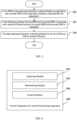
- the control method includes: adjusting an operating frequency of the microwave assembly according to a set frequency-adjusting value during an operation of the microwave assembly; determining a target operating frequency of the microwave assembly based on the SWRs of the microwave in the atomization chamber before and after an adjustment; and controlling the microwave assembly to operate according to the target operating frequency.
- the control method for the aerosol generating apparatus is used to control the operation of the aerosol generating apparatus.
- the aerosol generating apparatus includes the housing, the atomization chamber, the microwave assembly and the microwave detector.
- the atomization chamber is formed inside the housing, and the aerosol-forming substrate may be arranged inside the atomization chamber.
- the microwave assembly is arranged outside the housing. The microwave assembly may feed the microwave into the atomization chamber. The microwave acts on the aerosol-forming substrate inside the atomization chamber. The aerosol-forming substrate releases aerosol under the action of the microwaves.
- the microwave detector is arranged on the housing, and may detect the SWR of the microwave in the atomization chamber.
- the microwave assembly may output microwaves of multiple frequency bands into the atomization chamber.
- the atomization chamber is set to be in a bandwidth range from 1M to 20M, and the frequency bands of the microwaves output by the microwave assembly may be selected as 902MHz to 928MHz, 2.400GHz to 2.500GHz, 5.7255GHz to 5.875GHz, and 24GHz to 24.25GHz.
- the control method for the aerosol generating apparatus includes controlling a frequency-hopping operation of the microwave assembly. Specifically, during the frequency-hopping operation of the microwave assembly, the operating frequency of the microwave assembly is adjusted according to a set frequency-adjusting value, so that the microwave assembly feeds microwave of different frequencies into the atomization chamber.
- the microwave detector continuously collects the SWRs of the microwave in the atomization chamber. The collected SWRs of the microwave may reflect the microwave feed efficiency in the atomization chamber.
- a frequency is selected from the operating frequencies of the microwave assembly to obtain the target operating frequency. After the target operating frequency is determined, the microwave assembly is controlled to feed microwave into the atomization chamber based on the target operating frequency.
- the present application controls the frequency-hopping operation of the microwave assembly to feed microwaves into the atomization chamber, and may select the target operating frequency based on the detected microwave SWRs in the atomization chamber, thereby feeding the microwaves into the atomization chamber with a high efficiency, improving the atomization effect of the aerosol-forming substrate in the aerosol generating apparatus, and avoiding incomplete atomization of the aerosol-forming substrate.
- the aerosol-forming substrate is atomized under the action of the microwaves in the atomization chamber, and the aerosol generated by atomization will affect the SWR of the microwave in the atomization chamber.
- this application realizes the adjustment of the operating frequency of the microwave assembly during the operation of the aerosol generating apparatus, and improves the efficiency of feeding microwaves into the atomization chamber.
- control method for the aerosol generating apparatus according to the technical solutions of the present application further has technical features as follows.
- adjusting the operating frequency of the microwave assembly according to the set frequency-adjusting value during the operation of the microwave assembly includes: determining a second frequency based on a first frequency and the set frequency-adjusting value when the microwave assembly operates according to the first frequency; and controlling the microwave assembly to operate according to the second frequency.
- the first frequency is an initial operating frequency of the microwave assembly, that is, when the aerosol atomizing device starts operating, the microwave assembly feeds a microwave of the first frequency into the atomization chamber.
- the second frequency is calculated based on the first frequency and the set frequency-adjusting value, and the microwave assembly is controlled to operate according to the second frequency.
- the initial operating frequency and a frequency-hopping step length of the microwave assembly need to be determined.
- the initial operating frequency of the microwave assembly is the first frequency
- the frequency-hopping step length is the frequency-adjusting value.
- the first frequency and the frequency-adjusting value are configured in a local storage area before the aerosol atomizing device leaves a factory. After the aerosol atomizing device starts operating, the first frequency and the frequency-adjusting value are directly called to control the frequency-hopping operation of the microwave assembly.
- the present application controls the frequency-hopping operation of the microwave assembly through a fixed frequency-adjusting value, thereby stably adjusting the operating frequency of the microwave assembly and improving the stability of the frequency-hopping operation of the microwave assembly, and avoiding a decrease in the effect of microwave feed of the microwave assembly in the atomization chamber due to inconsistent frequency hopping steps of the frequency-hopping operation of the microwave assembly.
- the frequency-adjusting value ranges from 0.5MHz to 40MHz.
- the present application sets the frequency-adjusting value to be in a range of greater than or equal to 0.5MHz and less than or equal to 40MHz.
- By setting the frequency-adjusting value to greater than or equal to 0.5MHz it can be ensured that an adjustment of the microwave frequency is large enough for each frequency hopping, so that the SWR in the atomization chamber can be changed.
- By setting the frequency-adjusting value to less than or equal to 40MHz the problem that the target operating frequency cannot be accurately obtained due to an excessive adjustment of the operating frequency of the microwave assembly can be avoided.
- the set frequency-adjusting value may be added to the first frequency, or the set frequency-adjusting value may be subtracted from the first frequency.
- the control method before a step of controlling the microwave assembly to operate according to the second frequency, further comprises: controlling the microwave assembly to operate with a second set power under a condition that the microwave assembly is operating with a first set power.
- the second set power is less than the first set power.
- the operating power of the microwave assembly is controlled to be reduced. Specifically, at the initial operation stage, the microwave assembly operates at the initial frequency, that is, when the microwave assembly operates at the first frequency, the microwave assembly is controlled to operate at the first set power, so as to ensure the effect of the microwave feed.
- the first set power is a higher operating power.
- the operating power of the microwave assembly is lowered, that is, the microwave assembly is controlled to operate with the second set power. In the process of controlling the microwave assembly to adjust the operating frequency, the microwave assembly is controlled to operate at a lowered operating power, thus reducing an energy consumption of the microwave assembly during the frequency-hopping operation.
- the microwave assembly will output microwaves of different frequency bands at different frequency-hopping stages, and microwaves of different frequency bands have different atomization effects on the aerosol-forming substrate.
- the present application lowers the operating power during the frequency-hopping operation of the microwave assembly, which can avoid a waste of electric energy.
- controlling the microwave assembly to operate according to the target operating frequency includes: controlling the microwave assembly to operate with a third set power according to the target operating frequency.
- the third set power is greater than the second set power.
- the third set power is greater than the second set power, that is, after the target operating frequency is determined, the microwave assembly is controlled to increase the current operating power to operate with a higher power and controlled to output microwaves according to the target operating frequency.
- the target operating frequency is selected according to the SWRs of the microwave in the atomization chamber during the frequency-hopping operation of the microwave assembly. That is, the efficiency of the microwave feed in the atomization chamber can be ensured when the microwave assembly feeds the microwave into the atomization chamber according to the target operating frequency.
- the microwave assembly is controlled to feed microwaves into the atomization chamber with the third set power greater than the second set power, thereby further enhancing the efficiency of the microwave assembly feeding microwaves into the atomization chamber, and improving the atomization effect of the aerosol-forming substrate in the atomization chamber.
- determining the target operating frequency of the microwave assembly based on the SWRs of the microwave in the atomization chamber before and after the adjustment includes: obtaining a first SWR in the atomization chamber before the adjustment and a second SWR in the atomization chamber after the adjustment; calculating a first difference between the first SWR and a preset SWR and a second difference between the second SWR and the preset SWR; and determining the target operating frequency based on the first difference and the second difference.
- the SWRs in the atomization chamber before and after the frequency hopping of the microwave assembly are detected by the microwave detector.
- the first SWR before the frequency hopping and the second SWR after the frequency hopping are obtained.
- the preset SWR is a default SWR, namely a desired SWR in the atomization chamber by the user.
- the operating frequency of the microwave assembly is determined, thereby obtaining the target operating frequency.
- the microwave assembly can perform frequency hopping once or more. In the process of performing the frequency hopping each time, the microwave assembly selects a next frequency hopping direction based on the first difference and the second difference.
- the current operating frequency of the microwave assembly is 2.43GHz
- the detected first SWR is 1.6.
- the current frequency hopping adjustment is performed by increasing the operating frequency, and the operating frequency of the microwave assembly is adjusted to 2.44GHz.
- the detected second SWR is 1.5 and the preset SWR is 1. It can be obtained that the first difference is 0.6, and the second difference is 0.5. It is determined that the current adjustment manner of increasing the frequency makes the microwave SWRs in the chamber become increasingly closer to the preset SWR.
- the next frequency hopping adjustment may be performed in the manner of increasing the frequency to adjust the frequency hopping.
- the current frequency of the microwave assembly is adjusted to 2.43 GHz, and the detected first SWR is 1.6.
- the current frequency hopping adjustment is performed by increasing the operating frequency, and the operating frequency of the microwave assembly is adjusted to 2.44GHz.
- the detected second SWR is 1.7 and the preset SWR is 1. It can be obtained that the first difference is 0.6, and the second difference is 0.7. It is determined that the current adjustment manner of increasing the frequency makes the microwave SWRs in the cavity become increasingly farther from the preset SWR.
- the next frequency hopping adjustment may be performed in the manner of lowering the frequency to adjust the frequency hopping.
- the microwave SWRs in the atomization chamber are detected before and after each frequency hopping adjustment.
- the direction of the next frequency hopping adjustment is determined to ensure that when the microwave assembly performs frequency hopping adjustment, the effect of microwave feed in the atomization chamber can be improved.
- the preset SWR may be selected as 1.
- the microwave SWR in the atomization chamber is closer to 1, it means that the effect of microwave feed in the atomization chamber is better.
- determining the target operating frequency based on the first difference and the second difference includes: determining an operating frequency corresponding to the second SWR as the target operating frequency, when the first difference is greater than the second difference; and determining the target operating frequency according to an operating frequency corresponding to the first SWR and the set frequency-adjusting value, when the first difference is less than the second difference.
- the microwave assembly under the circumstance that the microwave assembly only needs to perform frequency hopping once, if it is detected that the first difference is greater than the second difference, and it is determined that the effect of microwave feed in the atomization chamber is better when the microwave assembly operates at the operating frequency corresponding to the second SWR, then the operating frequency corresponding to the second SWR will be used as the target operating frequency. If it is detected that the first difference is smaller than the second difference, and it is determined that the effect of microwave feed in the atomization chamber is better when the microwave assembly operates at the operating frequency corresponding to the first SWR, then the operating frequency corresponding to the first SWR will be used as the target operating frequency.
- the operating frequency of the microwave assembly with better effect of microwave feed is determined, thus obtaining the target operating frequency and controlling the microwave assembly to operate according to the target operating frequency, and improving the effect of microwave feed in the atomization chamber.
- the control method before controlling the microwave assembly to operate according to the target operating frequency, the control method further includes: obtaining the number of times the microwave assembly adjusts the operating frequency according to the set frequency-adjusting value; returning to perform a step of adjusting the operating frequency of the microwave assembly according to the set frequency-adjusting value, when the number of times is less than a set number of times.
- the microwave assembly under the circumstance that the microwave assembly needs to perform multiple frequency hopping adjustments, before controlling the microwave assembly to operate according to the target operating frequency, the number of times the microwave assembly adjusts the operating frequency is detected. When it is detected that the number of times of adjusting reaches the set number of times, the microwave assembly is controlled to start operating according to the target operating frequency. When it is detected that the number of times of adjusting is less than the set number of times, the current operating frequency will continue to be adjusted according to the set frequency-adjusting value until the number of times of adjusting reaches the set number of times. After multiple frequency hopping adjustments, this present application selects the target operating frequency obtained finally to control the operation of the microwave assembly, thereby improving the effect of microwave feed into the atomization chamber of the microwave assembly.
- the set number of times ranges from 1 to 8 times.
- the microwave assembly since the microwave assembly lowers the operating power during the frequency-hopping operation, that is, the microwave assembly will operate with a lower operating power. If the set number of times is greater than 8 times, the overall efficiency of microwave feed into the atomization chamber of the microwave assembly will be affected. If the set number of times is less than 1 time, the operating frequency of the microwave assembly cannot be adjusted reasonably.
- the control method before controlling the microwave assembly to operate according to the target operating frequency, the control method further includes: obtaining a third SWR corresponding to the target operating frequency; and returning to perform a step of adjusting the operating frequency of the microwave assembly according to the set frequency-adjusting value, when the third SWR is within a preset SWR range.
- the current SWR of the microwave in the atomization chamber namely, the third SWR corresponding to the target operating frequency
- the microwave assembly is controlled to start operating according to the target operating frequency.
- the current operating frequency will continue to be adjusted according to the set frequency-adjusting value until the third SWR is in the preset SWR range.
- the present application controls the number of times the microwave assembly performs the frequency hopping adjustments based on the microwave SWRs in the atomization chamber, which can ensure that the microwave assembly operates based on the target operating frequency to achieve the best effect of microwave feed.
- the present application proposes a control apparatus for an aerosol generating apparatus.
- the aerosol generating apparatus includes an atomization chamber, a microwave assembly, and a microwave detector.
- the microwave assembly is configured to feed a microwave into the atomization chamber, and the microwave detector is configured to collect standing-wave ratios (SWRs) of the microwave in the atomization chamber.
- the control apparatus includes: an adjusting module, configured to adjust an operating frequency of the microwave assembly according to a set frequency-adjusting value during an operation of the microwave assembly; a determining module, configured to determine a target operating frequency of the microwave assembly based on the SWRs of the microwave in the atomization chamber before and after an adjustment; and a control module, configured to control the microwave assembly to operate according to the target operating frequency.
- the control apparatus for the aerosol generating apparatus is used to control the operation of the aerosol generating apparatus.
- the aerosol generating apparatus includes the housing, the atomization chamber, the microwave assembly and the microwave detector.
- the atomization chamber is formed inside the housing, and the aerosol-forming substrate may be arranged inside the atomization chamber.
- the microwave assembly is arranged outside the housing. The microwave assembly may feed the microwave into the atomization chamber. The microwave acts on the aerosol-forming substrate inside the atomization chamber. The aerosol-forming substrate releases aerosol under the action of the microwaves.
- the microwave detector is arranged on the housing, and may detect the SWR of the microwave in the atomization chamber.
- the microwave assembly can output microwaves in multiple frequency bands into the atomization chamber.
- the atomization chamber is set to be in a bandwidth range from 1M to 20M, and the microwave frequency bands output by the microwave assembly can be selected as 902MHz to 928MHz, 2.400GHz to 2.500GHz, 5.7255GHz to 5.875GHz, and 24GHz to 24.25GHz.
- the control method for the aerosol generating apparatus includes controlling a frequency-hopping operation of the microwave assembly. Specifically, during the frequency-hopping operation of the microwave assembly, the operating frequency of the microwave assembly is adjusted according to a set frequency-adjusting value, so that the microwave assembly feeds microwave of different frequencies into the atomization chamber.
- the microwave detector continuously collects the SWRs of the microwave in the atomization chamber. The collected SWRs of the microwave may reflect the microwave feed efficiency in the atomization chamber.
- a frequency is selected from the operating frequencies of the microwave assembly to obtain the target operating frequency. After the target operating frequency is determined, the microwave assembly is controlled to feed microwave into the atomization chamber based on the target operating frequency.
- the present application controls the frequency-hopping operation of the microwave assembly to feed microwaves into the atomization chamber, and may select the target operating frequency based on the detected microwave SWRs in the atomization chamber, thereby feeding the microwaves into the atomization chamber with a high efficiency, improving the atomization effect of the aerosol-forming substrate in the aerosol generating apparatus, and avoiding incomplete atomization of the aerosol-forming substrate.
- the aerosol-forming substrate is atomized under the action of the microwaves in the atomization chamber, and the aerosol generated by atomization will affect the SWR of the microwave in the atomization chamber.
- this application realizes the adjustment of the operating frequency of the microwave assembly during the operation of the aerosol generating apparatus, and improves the efficiency of feeding microwaves into the atomization chamber.
- the embodiment of the present application proposes an aerosol generating apparatus, including the control apparatus for the aerosol generating apparatus in the second aspect. Therefore, the aerosol generating apparatus may achieve all the same beneficial effects as the control apparatus for the aerosol generating apparatus in the second aspect, which will not be described in detail herein.
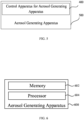
- the embodiment of the present application proposes an aerosol generating apparatus, including: a memory and a processor.
- the memory has programs or instructions stored thereon.
- the processor when executing the programs or the instructions stored on the memory, implements the control method for the aerosol generating apparatus in the first aspect. Therefore, the aerosol generating apparatus may achieve all the same beneficial effects as the control method for the aerosol generating apparatus in the first aspect, which will not be described in detail herein.
- the aerosol generating apparatus proposed by the present application includes following technical features.
- the aerosol generating apparatus further includes a housing, having the atomization chamber formed therein for arranging an aerosol-forming substrate; and the microwave assembly, arranged on the housing and connected to the processor, and configured to feed the microwave into the atomization chamber.
- the aerosol generating apparatus includes the housing, the atomization chamber, and the microwave assembly.
- the atomization chamber is formed inside the housing.
- the aerosol-forming substrate may be arranged inside the atomization chamber.
- the microwave assembly is arranged outside the housing. The microwave assembly may feed the microwave into the atomization chamber. The microwave acts on the aerosol-forming substrate inside the atomization chamber, and the aerosol-forming substrate releases aerosol under the action of the microwave.
- the aerosol generating apparatus further includes the microwave detector arranged on the housing and configured to collect the microwave SWRs in the atomization chamber.
- the microwave detector is arranged on the housing, and the microwave detector can detect the SWR of the microwave in the atomization chamber.
- the aerosol generating apparatus further includes a resonant column.
- a first end of the resonant column is connected to a bottom wall of the atomization chamber, and a second end of the resonant column faces an opening of the atomization chamber.
- the aerosol generating apparatus includes the resonant column.
- the resonant column is arranged in the atomization chamber, the first end of the resonant column is connected to the bottom wall of the atomization chamber, and the second end of the resonant column faces the opening of the atomization chamber.
- this application can convey the microwave generated by the microwave assembly in a direction from the first end to the second end of the resonant column. Since the aerosol-forming substrate is arranged in an area close to the second end of the resonant column, it is ensured that the microwave can act on the aerosol-forming substrate, thereby improving the atomization effect of the aerosol-forming substrate under the action of microwaves.
- the embodiment of the present application proposes a readable storage medium, having programs or instructions stored thereon.
- the programs or the instructions when executed by a processor, implement steps of the control method for the aerosol generating apparatus of any one of the embodiments. Therefore, the readable storage medium may achieve all the same beneficial effects as the control method for the aerosol generating apparatus of any one of the embodiments above, which will not be described in detail herein.
- FIGS. 1 to 6 A control method of an aerosol generating apparatus, a control apparatus for an aerosol generating apparatus, an aerosol generating apparatus and a readable storage medium according to some embodiments of the present application will be described referring to FIGS. 1 to 6 .
- the first embodiment of the present application provides a control method for an aerosol generating apparatus.
- the aerosol generating apparatus includes: an atomization chamber, a microwave assembly, and a microwave detector.
- the microwave assembly is configured to feed a microwave into the atomization chamber, and the microwave detector is configured to collect a standing-wave ratio (SWR) of the microwave in the atomization chamber.
- SWR standing-wave ratio
- the control method for the aerosol generating apparatus include following steps.
- Step 102 During an operation of the microwave assembly, an operating frequency of the microwave assembly is adjusted according to a set frequency-adjusting value.
- a target operating frequency of the microwave assembly is determined based on the SWRs of the microwave in the atomization chamber before and after an adjustment.
- Step 106 The microwave assembly is controlled to operate according to the target operating frequency.
- the control method for the aerosol generating apparatus is used to control the operation of the aerosol generating apparatus.
- the aerosol generating apparatus includes the housing, the atomization chamber, the microwave assembly and the microwave detector.
- the atomization chamber is formed inside the housing, and the aerosol-forming substrate may be arranged inside the atomization chamber.
- the microwave assembly is arranged outside the housing. The microwave assembly may feed the microwave into the atomization chamber. The microwave acts on the aerosol-forming substrate inside the atomization chamber. The aerosol-forming substrate releases aerosol under the action of the microwaves.
- the microwave detector is arranged on the housing, and may detect the SWR of the microwave in the atomization chamber.
- the microwave assembly may output microwaves of multiple frequency bands into the atomization chamber.
- the atomization chamber is set to be in a bandwidth range from 1M to 20M, and the frequency bands of the microwaves output by the microwave assembly may be selected as 902MHz to 928MHz, 2.400GHz to 2.500GHz, 5.7255GHz to 5.875GHz, and 24GHz to 24.25GHz.
- the control method for the aerosol generating apparatus includes controlling a frequency-hopping operation of the microwave assembly. Specifically, during the frequency-hopping operation of the microwave assembly, the operating frequency of the microwave assembly is adjusted according to a set frequency-adjusting value, so that the microwave assembly feeds microwave of different frequencies into the atomization chamber.
- the microwave detector continuously collects the SWRs of the microwave in the atomization chamber. The collected SWRs of the microwave may reflect the microwave feed efficiency in the atomization chamber.
- a frequency is selected from the operating frequencies of the microwave assembly to obtain the target operating frequency. After the target operating frequency is determined, the microwave assembly is controlled to feed microwave into the atomization chamber based on the target operating frequency.
- the present application controls the frequency-hopping operation of the microwave assembly to feed microwaves into the atomization chamber, and may select the target operating frequency based on the detected microwave SWRs in the atomization chamber, thereby feeding the microwaves into the atomization chamber with a high efficiency, improving the atomization effect of the aerosol-forming substrate in the aerosol generating apparatus, and avoiding incomplete atomization of the aerosol-forming substrate.
- the aerosol-forming substrate is atomized under the action of the microwaves in the atomization chamber, and the aerosol generated by atomization will affect the SWR of the microwave in the atomization chamber.
- this application realizes the adjustment of the operating frequency of the microwave assembly during the operation of the aerosol generating apparatus, and improves the efficiency of feeding microwaves into the atomization chamber.
- adjusting the operating frequency of the microwave assembly according to the set frequency-adjusting value during the operation of the microwave assembly includes following steps.
- a second frequency is determined based on the first frequency and the set frequency-adjusting value.
- the microwave assembly is controlled to operate according to the second frequency.
- the first frequency is an initial operating frequency of the microwave assembly, that is, when the aerosol atomizing device starts operating, the microwave assembly feeds a microwave of the first frequency into the atomization chamber.
- the second frequency is calculated based on the first frequency and the set frequency-adjusting value, and the microwave assembly is controlled to operate according to the second frequency.
- the initial operating frequency and a frequency-hopping step length of the microwave assembly need to be determined.
- the initial operating frequency of the microwave assembly is the first frequency
- the frequency-hopping step length is the frequency-adjusting value.
- the first frequency and the frequency-adjusting value are configured in a local storage area before the aerosol atomizing device leaves a factory. After the aerosol atomizing device starts operating, the first frequency and the frequency-adjusting value are directly called to control the frequency-hopping operation of the microwave assembly.
- the present application controls the frequency-hopping operation of the microwave assembly through a fixed frequency-adjusting value, thereby stably adjusting the operating frequency of the microwave assembly and improving the stability of the frequency-hopping operation of the microwave assembly, and avoiding a decrease in the effect of microwave feed of the microwave assembly in the atomization chamber due to inconsistent frequency hopping steps of the frequency-hopping operation of the microwave assembly.
- the frequency-adjusting value ranges from 0.5MHz to 40MHz.
- the present application sets the frequency-adjusting value to be in a range of greater than or equal to 0.5MHz and less than or equal to 40MHz.
- By setting the frequency-adjusting value to greater than or equal to 0.5MHz it can be ensured that an adjustment of the microwave frequency is large enough for each frequency hopping, so that the SWR in the atomization chamber can be changed.
- By setting the frequency-adjusting value to less than or equal to 40MHz the problem that the target operating frequency cannot be accurately obtained due to an excessive adjustment of the operating frequency of the microwave assembly can be avoided.
- the set frequency-adjusting value may be added to the first frequency, or the set frequency-adjusting value may be subtracted from the first frequency.
- the microwave assembly Under the condition that the microwave assembly is operating with a first set power, the microwave assembly is controlled to operate with a second set power, where the second set power is less than the first set power.
- the operating power of the microwave assembly is controlled to be reduced. Specifically, at the initial operation stage, the microwave assembly operates at the initial frequency, that is, when the microwave assembly operates at the first frequency, the microwave assembly is controlled to operate at the first set power, so as to ensure the effect of the microwave feed.
- the first set power is a higher operating power.
- the operating power of the microwave assembly is lowered, that is, the microwave assembly is controlled to operate with the second set power. In the process of controlling the microwave assembly to adjust the operating frequency, the microwave assembly is controlled to operate at a lowered operating power, thus reducing an energy consumption of the microwave assembly during the frequency-hopping operation.
- the microwave assembly will output microwaves of different frequency bands at different frequency-hopping stages, and microwaves of different frequency bands have different atomization effects on the aerosol-forming substrate.
- the present application lowers the operating power during the frequency-hopping operation of the microwave assembly, which can avoid a waste of electric energy.
- controlling the microwave assembly to operate according to the target operating frequency includes: controlling the microwave assembly to operate with a third set power according to the target operating frequency, where the third set power is greater than the second set power.
- the third set power is greater than the second set power, that is, after the target operating frequency is determined, the microwave assembly is controlled to increase the current operating power to operate with a higher power and controlled to output microwaves according to the target operating frequency.
- the target operating frequency is selected according to the SWRs of the microwave in the atomization chamber during the frequency-hopping operation of the microwave assembly. That is, the efficiency of the microwave feed in the atomization chamber can be ensured when the microwave assembly feeds the microwave into the atomization chamber according to the target operating frequency.
- the microwave assembly is controlled to feed microwaves into the atomization chamber with the third set power greater than the second set power, thereby further enhancing the efficiency of the microwave assembly feeding microwaves into the atomization chamber, and improving the atomization effect of the aerosol-forming substrate in the atomization chamber.
- determining the target operating frequency of the microwave assembly based on the SWRs of the microwave in the atomization chamber before and after the adjustment includes following steps.
- a first SWR in the atomization chamber is obtained before the adjustment, and a second SWR in the atomization chamber is obtained after the adjustment.
- Step 304 a first difference between the first SWR and the preset SWR is calculated, and a second difference between the second SWR and the preset SWR is calculated.
- the target operating frequency is determined based on the first difference and the second difference.
- the SWRs in the atomization chamber before and after the frequency hopping of the microwave assembly are detected by the microwave detector.
- the first SWR before the frequency hopping and the second SWR after the frequency hopping are obtained.
- the preset SWR is a default SWR, namely a desired SWR in the atomization chamber by the user.
- the operating frequency of the microwave assembly is determined, thereby obtaining the target operating frequency.
- the microwave assembly can perform frequency hopping once or more. In the process of performing the frequency hopping each time, the microwave assembly selects a next frequency hopping direction based on the first difference and the second difference.
- the current operating frequency of the microwave assembly is 2.43GHz
- the detected first SWR is 1.6.
- the current frequency hopping adjustment is performed by increasing the operating frequency, and the operating frequency of the microwave assembly is adjusted to 2.44GHz.
- the detected second SWR is 1.5 and the preset SWR is 1. It can be obtained that the first difference is 0.6, and the second difference is 0.5. It is determined that the current adjustment manner of increasing the frequency makes the microwave SWRs in the chamber become increasingly closer to the preset SWR.
- the next frequency hopping adjustment may be performed in the manner of increasing the frequency to adjust the frequency hopping.
- the current frequency of the microwave assembly is adjusted to 2.43 GHz, and the detected first SWR is 1.6.
- the current frequency hopping adjustment is performed by increasing the operating frequency, and the operating frequency of the microwave assembly is adjusted to 2.44GHz.
- the detected second SWR is 1.7 and the preset SWR is 1. It can be obtained that the first difference is 0.6, and the second difference is 0.7. It is determined that the current adjustment manner of increasing the frequency makes the microwave SWRs in the chamber become increasingly farther from the preset SWR.
- the next frequency hopping adjustment may be performed in the manner of lowering the frequency to adjust the frequency hopping.
- the microwave SWRs in the atomization chamber are detected before and after each frequency hopping adjustment.
- the direction of the next frequency hopping adjustment is determined to ensure that when the microwave assembly performs frequency hopping adjustment, the effect of microwave feed in the atomization chamber can be improved.
- the preset SWR may be selected as 1.
- the microwave SWR in the atomization chamber is closer to 1, it means that the effect of microwave feed in the atomization chamber is better.
- determining the target operating frequency based on the first difference and the second difference includes: determining an operating frequency corresponding to the second SWR as the target operating frequency, when the first difference is greater than the second difference, and determining the target operating frequency according to an operating frequency corresponding to the first SWR and the set frequency-adjusting value, when the first difference is less than the second difference.
- the microwave assembly under the circumstance that the microwave assembly only needs to perform frequency hopping once, if it is detected that the first difference is greater than the second difference, and it is determined that the effect of microwave feed in the atomization chamber is better when the microwave assembly operates at the operating frequency corresponding to the second SWR, then the operating frequency corresponding to the second SWR will be used as the target operating frequency. If it is detected that the first difference is smaller than the second difference, and it is determined that the effect of microwave feed in the atomization chamber is better when the microwave assembly operates at the operating frequency corresponding to the first SWR, then the operating frequency corresponding to the first SWR will be used as the target operating frequency.
- the operating frequency of the microwave assembly with better effect of microwave feed is determined, thus obtaining the target operating frequency and controlling the microwave assembly to operate according to the target operating frequency, and improving the effect of microwave feed in the atomization chamber.
- the method before controlling the microwave assembly to operate according to the target operating frequency, the method also includes: obtaining the number of times that the microwave assembly adjusts the operating frequency according to the set frequency-adjusting value; when the number of times is less than the set number of times, returning to perform the step of adjusting the operating frequency of the microwave assembly according to the set frequency-adjusting value.
- the microwave assembly under the circumstance that the microwave assembly needs to perform multiple frequency hopping adjustments, before controlling the microwave assembly to operate according to the target operating frequency, the number of times the microwave assembly adjusts the operating frequency is detected. When it is detected that the number of times of adjusting reaches the set number of times, the microwave assembly is controlled to start operating according to the target operating frequency. When it is detected that the number of times of adjusting is less than the set number of times, the current operating frequency will continue to be adjusted according to the set frequency-adjusting value until the number of times of adjusting reaches the set number of times. After multiple frequency hopping adjustments, this present application selects the target operating frequency obtained finally to control the operation of the microwave assembly, thereby improving the effect of microwave feed into the atomization chamber of the microwave assembly.
- the set number of times ranges from 1 to 8 times.
- the microwave assembly since the microwave assembly lowers the operating power during the frequency-hopping operation, that is, the microwave assembly will operate with a lower operating power. If the set number of times is greater than 8 times, the overall efficiency of microwave feed into the atomization chamber of the microwave assembly will be affected. If the set number of times is less than 1 time, the operating frequency of the microwave assembly cannot be adjusted reasonably.
- the method before controlling the microwave assembly to operate according to the target operating frequency, the method further includes: obtaining a third SWR corresponding to the target operating frequency; when the third SWR is within a preset SWR range, returning to perform the step of adjusting the operating frequency of the microwave assembly according to the set frequency-adjusting value.
- the current SWR of the microwave in the atomization chamber namely, the third SWR corresponding to the target operating frequency
- the microwave assembly is controlled to start operating according to the target operating frequency.
- the current operating frequency will continue to be adjusted according to the set frequency-adjusting value until the third SWR is in the preset SWR range.
- the present application controls the number of times the microwave assembly performs the frequency hopping adjustments based on the microwave SWRs in the atomization chamber, which can ensure that the microwave assembly operates based on the target operating frequency to achieve the best effect of microwave feed.
- the aerosol generating apparatus includes: an atomization chamber, a microwave assembly, and a microwave detector.
- the microwave assembly is configured to feed a microwave into the atomization chamber, and the microwave detector is configured to collect a standing-wave ratio (SWR) of the microwave in the atomization chamber.
- the control apparatus includes:
- the control apparatus 400 for the aerosol generating apparatus is used to control the operation of the aerosol generating apparatus.
- the aerosol generating apparatus includes the housing, the atomization chamber, the microwave assembly and the microwave detector.
- the atomization chamber is formed inside the housing, and the aerosol-forming substrate may be arranged inside the atomization chamber.
- the microwave assembly is arranged outside the housing. The microwave assembly may feed the microwave into the atomization chamber. The microwave acts on the aerosol-forming substrate inside the atomization chamber. The aerosol-forming substrate releases aerosol under the action of the microwaves.
- the microwave detector is arranged on the housing, and may detect the SWR of the microwave in the atomization chamber.
- the microwave assembly can output microwaves in multiple frequency bands into the atomization chamber.
- the atomization chamber is set to be in a bandwidth range from 1M to 20M, and the microwave frequency bands output by the microwave assembly can be selected as 902MHz to 928MHz, 2.400GHz to 2.500GHz, 5.7255GHz to 5.875GHz, and 24GHz to 24.25GHz.
- the control method for the aerosol generating apparatus includes controlling a frequency-hopping operation of the microwave assembly. Specifically, during the frequency-hopping operation of the microwave assembly, the operating frequency of the microwave assembly is adjusted according to a set frequency-adjusting value, so that the microwave assembly feeds microwave of different frequencies into the atomization chamber.
- the microwave detector continuously collects the SWRs of the microwave in the atomization chamber. The collected SWRs of the microwave may reflect the microwave feed efficiency in the atomization chamber.
- a frequency is selected from the operating frequencies of the microwave assembly to obtain the target operating frequency. After the target operating frequency is determined, the microwave assembly is controlled to feed microwave into the atomization chamber based on the target operating frequency.
- the present application controls the frequency-hopping operation of the microwave assembly to feed microwaves into the atomization chamber, and may select the target operating frequency based on the detected microwave SWRs in the atomization chamber, thereby feeding the microwaves into the atomization chamber with a high efficiency, improving the atomization effect of the aerosol-forming substrate in the aerosol generating apparatus, and avoiding incomplete atomization of the aerosol-forming substrate.
- the aerosol-forming substrate is atomized under the action of the microwaves in the atomization chamber, and the aerosol generated by atomization will affect the SWR of the microwave in the atomization chamber.
- this application realizes the adjustment of the operating frequency of the microwave assembly during the operation of the aerosol generating apparatus, and improves the efficiency of feeding microwaves into the atomization chamber.
- the adjusting module 402 is also configured to determine a second frequency based on the first frequency and the set frequency-adjusting value, when the microwave assembly operates according to a first frequency.
- the control module 406 is further configured to control the microwave assembly to operate according to the second frequency.
- the first frequency is an initial operating frequency of the microwave assembly, that is, when the aerosol atomizing device starts operating, the microwave assembly feeds a microwave of the first frequency into the atomization chamber.
- the second frequency is calculated based on the first frequency and the set frequency-adjusting value, and the microwave assembly is controlled to operate according to the second frequency.
- the initial operating frequency and a frequency-hopping step length of the microwave assembly need to be determined.
- the initial operating frequency of the microwave assembly is the first frequency
- the frequency-hopping step length is the frequency-adjusting value.
- the first frequency and the frequency-adjusting value are configured in a local storage area before the aerosol atomizing device leaves a factory. After the aerosol atomizing device starts operating, the first frequency and the frequency-adjusting value are directly called to control the frequency-hopping operation of the microwave assembly.
- the present application controls the frequency-hopping operation of the microwave assembly through a fixed frequency-adjusting value, thereby stably adjusting the operating frequency of the microwave assembly and improving the stability of the frequency-hopping operation of the microwave assembly, and avoiding a decrease in the effect of microwave feed of the microwave assembly in the atomization chamber due to inconsistent frequency hopping steps of the frequency-hopping operation of the microwave assembly.
- the frequency-adjusting value ranges from 0.5MHz to 40MHz.
- the present application sets the frequency-adjusting value to be in a range of greater than or equal to 0.5MHz and less than or equal to 40MHz.
- By setting the frequency-adjusting value to greater than or equal to 0.5MHz it can be ensured that an adjustment of the microwave frequency is large enough for each frequency hopping, so that the SWR in the atomization chamber can be changed.
- By setting the frequency-adjusting value to less than or equal to 40MHz the problem that the target operating frequency cannot be accurately obtained due to an excessive adjustment of the operating frequency of the microwave assembly can be avoided.
- the set frequency-adjusting value may be added to the first frequency, or the set frequency-adjusting value may be subtracted from the first frequency.
- control module 406 is also configured to control the microwave assembly to operate with a second set power under the condition that the microwave assembly is operating with a first set power, where the second set power is smaller than the first set power.
- the operating power of the microwave assembly is controlled to be reduced. Specifically, at the initial operation stage, the microwave assembly operates at the initial frequency, that is, when the microwave assembly operates at the first frequency, the microwave assembly is controlled to operate at the first set power, so as to ensure the effect of the microwave feed.
- the first set power is a higher operating power.
- the operating power of the microwave assembly is lowered, that is, the microwave assembly is controlled to operate with the second set power. In the process of controlling the microwave assembly to adjust the operating frequency, the microwave assembly is controlled to operate at a lowered operating power, thus reducing an energy consumption of the microwave assembly during the frequency-hopping operation.
- the microwave assembly will output microwaves of different frequency bands at different frequency-hopping stages, and microwaves of different frequency bands have different atomization effects on the aerosol-forming substrate.
- the present application lowers the operating power during the frequency-hopping operation of the microwave assembly, which can avoid a waste of electric energy.
- control module 406 is also configured to control the microwave assembly to operate with a third set power according to the target operating frequency, where the third set power is greater than the second set power.
- the third set power is greater than the second set power, that is, after the target operating frequency is determined, the microwave assembly is controlled to increase the current operating power to operate with a higher power and controlled to output microwaves according to the target operating frequency.
- the target operating frequency is selected according to the SWRs of the microwave in the atomization chamber during the frequency-hopping operation of the microwave assembly. That is, the efficiency of the microwave feed in the atomization chamber can be ensured when the microwave assembly feeds the microwave into the atomization chamber according to the target operating frequency.
- the microwave assembly is controlled to feed microwaves into the atomization chamber with the third set power greater than the second set power, thereby further enhancing the efficiency of the microwave assembly feeding microwaves into the atomization chamber, and improving the atomization effect of the aerosol-forming substrate in the atomization chamber.
- the obtaining module is also configured to obtain a first SWR in the atomization chamber before the adjustment and a second SWR in the atomization chamber after the adjustment.
- the control apparatus 400 for the aerosol generating apparatus also includes:
- the SWRs in the atomization chamber before and after the frequency hopping of the microwave assembly are detected by the microwave detector.
- the first SWR before the frequency hopping and the second SWR after the frequency hopping are obtained.
- the preset SWR is a default SWR, namely a desired SWR in the atomization chamber by the user.
- the operating frequency of the microwave assembly is determined, thereby obtaining the target operating frequency.
- the microwave assembly can perform frequency hopping once or more. In the process of performing the frequency hopping each time, the microwave assembly selects a next frequency hopping direction based on the first difference and the second difference.
- the current operating frequency of the microwave assembly is 2.43GHz
- the detected first SWR is 1.6.
- the current frequency hopping adjustment is performed by increasing the operating frequency, and the operating frequency of the microwave assembly is adjusted to 2.44GHz.
- the detected second SWR is 1.5 and the preset SWR is 1. It can be obtained that the first difference is 0.6, and the second difference is 0.5. It is determined that the current adjustment manner of increasing the frequency makes the microwave SWRs in the chamber become increasingly closer to the preset SWR.
- the next frequency hopping adjustment may be performed in the manner of increasing the frequency to adjust the frequency hopping.
- the current frequency of the microwave assembly is adjusted to 2.43 GHz, and the detected first SWR is 1.6.
- the current frequency hopping adjustment is performed by increasing the operating frequency, and the operating frequency of the microwave assembly is adjusted to 2.44GHz.
- the detected second SWR is 1.7 and the preset SWR is 1. It can be obtained that the first difference is 0.6, and the second difference is 0.7. It is determined that the current adjustment manner of increasing the frequency makes the microwave SWRs in the chamber become increasingly farther from the preset SWR.
- the next frequency hopping adjustment may be performed in the manner of lowering the frequency to adjust the frequency hopping.
- the microwave SWRs in the atomization chamber are detected before and after each frequency hopping adjustment.
- the direction of the next frequency hopping adjustment is determined to ensure that when the microwave assembly performs frequency hopping adjustment, the effect of microwave feed in the atomization chamber can be improved.
- the preset SWR may be selected as 1.
- the microwave SWR in the atomization chamber is closer to 1, it means that the effect of microwave feed in the atomization chamber is better.
- the determining module is also configured to determine the target operating frequency based on the first difference and the second difference, including: determining an operating frequency corresponding to the second SWR as the target operating frequency, when the first difference is greater than the second difference, and determining the target operating frequency according to an operating frequency corresponding to the first SWR and the set frequency-adjusting value , when the first difference is less than the second difference.
- the microwave assembly under the circumstance that the microwave assembly only needs to perform frequency hopping once, if it is detected that the first difference is greater than the second difference, and it is determined that the effect of microwave feed in the atomization chamber is better when the microwave assembly operates at the operating frequency corresponding to the second SWR, then the operating frequency corresponding to the second SWR will be used as the target operating frequency. If it is detected that the first difference is smaller than the second difference, and it is determined that the effect of microwave feed in the atomization chamber is better when the microwave assembly operates at the operating frequency corresponding to the first SWR, then the operating frequency corresponding to the first SWR will be used as the target operating frequency.
- the operating frequency of the microwave assembly with better effect of microwave feed is determined, thus obtaining the target operating frequency and controlling the microwave assembly to operate according to the target operating frequency, and improving the effect of microwave feed in the atomization chamber.
- the obtaining module is further configured to obtain the number of times that the microwave assembly adjusts the operating frequency according to the set frequency-adjusting value.
- the control module 406 is further configured to return to perform the step of adjusting the operating frequency of the microwave assembly according to the set frequency-adjusting value when the number of times is less than the set number of times.
- the microwave assembly under the circumstance that the microwave assembly needs to perform multiple frequency hopping adjustments, before controlling the microwave assembly to operate according to the target operating frequency, the number of times the microwave assembly adjusts the operating frequency is detected. When it is detected that the number of times of adjusting reaches the set number of times, the microwave assembly is controlled to start operating according to the target operating frequency. When it is detected that the number of times of adjusting is less than the set number of times, the current operating frequency will continue to be adjusted according to the set frequency-adjusting value until the number of times of adjusting reaches the set number of times. After multiple frequency hopping adjustments, this present application selects the target operating frequency obtained finally to control the operation of the microwave assembly, thereby improving the effect of microwave feed into the atomization chamber of the microwave assembly.
- the set number of times ranges from 1 to 8 times.
- the microwave assembly since the microwave assembly lowers the operating power during the frequency-hopping operation, that is, the microwave assembly will operate with a lower operating power. If the set number of times is greater than 8 times, the overall efficiency of microwave feed into the atomization chamber of the microwave assembly will be affected. If the set number of times is less than 1 time, the operating frequency of the microwave assembly cannot be adjusted reasonably.
- the obtaining module is also configured to obtain a third SWR corresponding to the target operating frequency.
- the control module 406 is also configured to return to perform the step of adjusting the operating frequency of the microwave assembly according to the set frequency-adjusting value when the third SWR is in the preset SWR range.
- the current SWR of the microwave in the atomization chamber namely, the third SWR corresponding to the target operating frequency
- the microwave assembly is controlled to start operating according to the target operating frequency.
- the current operating frequency will continue to be adjusted according to the set frequency-adjusting value until the third SWR is in the preset SWR range.
- the present application controls the number of times the microwave assembly performs the frequency hopping adjustments based on the microwave SWRs in the atomization chamber, which can ensure that the microwave assembly operates based on the target operating frequency to achieve the best effect of microwave feed.
- a third embodiment of the present application proposes an aerosol generating apparatus 500, which includes the control apparatus 400 for the aerosol generating apparatus in the Embodiment 2. Therefore, the aerosol generating apparatus may achieve all the same beneficial effects as the control apparatus 400 for the aerosol generating apparatus in the above Embodiment 2, which will not be described in detail herein.
- the aerosol generating apparatus 500 further includes: a housing, in which an atomization chamber is formed for arranging the aerosol-forming substrate; a microwave assembly, which is arranged on the housing and connected to the processor, and configured to feed a microwave into the atomization chamber.
- the aerosol generating apparatus 500 includes the housing, the atomization chamber, and the microwave assembly.
- the atomization chamber is formed inside the housing.
- the aerosol-forming substrate may be arranged inside the atomization chamber.
- the microwave assembly is arranged outside the housing. The microwave assembly may feed the microwave into the atomization chamber. The microwave acts on the aerosol-forming substrate inside the atomization chamber, and the aerosol-forming substrate releases aerosol under the action of the microwave.
- the aerosol generating apparatus 500 further includes a microwave detector, which is arranged on the housing and configured to collect the SWR of the microwave in the atomization chamber.
- the microwave detector is arranged on the housing, and the microwave detector can detect the SWR of the microwave in the atomization chamber.
- the aerosol generating apparatus 500 further includes a resonant column.
- a first end of the resonant column is connected to a bottom wall of the atomization chamber, and a second end of the resonant column faces an opening of the atomization chamber.
- the aerosol generating apparatus 500 includes the resonant column.
- the resonant column is arranged in the atomization chamber, the first end of the resonant column is connected to the bottom wall of the atomization chamber, and the second end of the resonant column faces the opening of the atomization chamber.
- this application can convey the microwave generated by the microwave assembly in a direction from the first end to the second end of the resonant column. Since the aerosol-forming substrate is arranged in an area close to the second end of the resonant column, it is ensured that the microwave can act on the aerosol-forming substrate, thereby improving the atomization effect of the aerosol-forming substrate under the action of microwaves.
- a fourth embodiment of the present application proposes an aerosol generating apparatus 600, which includes a memory 602 and a processor 604.
- the memory 602 stores programs or instructions.
- the processor 604 executes the programs or instructions stored in the memory 602, to implement the control method for the aerosol generating apparatus 600 in the Embodiment 1, therefore, the aerosol generating apparatus may achieve all the same beneficial effects as the control method for the aerosol generating apparatus 600 in the above Embodiment 1, which will not be described in detail herein.
- the aerosol generating apparatus 600 further includes: a housing, in which an atomization chamber is formed for arranging the aerosol-forming substrate; a microwave assembly, which is arranged on the housing and connected to the processor 604, and configured to feed a microwave into the atomization chamber.
- the aerosol generating apparatus 600 includes the housing, the atomization chamber, and the microwave assembly.
- the atomization chamber is formed inside the housing.
- the aerosol-forming substrate may be arranged inside the atomization chamber.
- the microwave assembly is arranged outside the housing. The microwave assembly may feed the microwave into the atomization chamber. The microwave acts on the aerosol-forming substrate inside the atomization chamber, and the aerosol-forming substrate releases aerosol under the action of the microwave.
- the aerosol generating apparatus 600 further includes a microwave detector, which is arranged on the housing and configured to collect the SWR of the microwave in the atomization chamber.
- the microwave detector is installed on the housing, and the microwave detector can detect the SWR of the microwave in the atomization chamber.
- the aerosol generating apparatus 600 further includes a resonant column.
- a first end of the resonant column is connected to a bottom wall of the atomization chamber, and a second end of the resonant column faces an opening of the atomization chamber.
- the aerosol generating apparatus 600 includes the resonant column.
- the resonant column is arranged in the atomization chamber, the first end of the resonant column is connected to the bottom wall of the atomization chamber, and the second end of the resonant column faces the opening of the atomization chamber.
- this application can convey the microwave generated by the microwave assembly in a direction from the first end to the second end of the resonant column. Since the aerosol-forming substrate is arranged in an area close to the second end of the resonant column, it is ensured that the microwave can act on the aerosol-forming substrate, thereby improving the atomization effect of the aerosol-forming substrate under the action of microwaves.
- a fifth embodiment of the present application proposes a readable storage medium.
- Programs or instructions are stored on the readable storage medium.
- the steps of the control method for the aerosol generating apparatus of any one of the above possible embodiments are implemented. Therefore, the readable storage medium can achieve all the same beneficial effects as the control method for the aerosol generating apparatus of any one of the above possible embodiments, which will not be described in detail herein.
- the term “multiple” refers to two or more than two.
- the orientation or positional relationship indicated by the terms “upper”, “lower”, etc. is based on the orientation or positional relationship shown in the drawings.
- the orientation or positional relationship is only for the convenience of describing the present application and simplifying the description, but does not indicate or imply that the device or element referred to must have a specific orientation and be constructed and operated in a specific orientation, therefore the orientation or positional relationship cannot be understood as a limitation of the present application.
- the terms “connection”, “installation”, “fixing”, etc. should be understood in a broad sense.
- connection may be a fixed connection, a detachable connection, or an integral connection, and it may be a direct connection, or it may be an indirectly connection implemented through intermediaries.
- connection may be a fixed connection, a detachable connection, or an integral connection, and it may be a direct connection, or it may be an indirectly connection implemented through intermediaries.
Landscapes
- Physics & Mathematics (AREA)
- Electromagnetism (AREA)
- Special Spraying Apparatus (AREA)
Abstract
Description
- This application claims the priority of
Chinese patent application No. 202111220283.7, filed on October 20, 2021 - The present application relates to the field of electronic atomization technology, specifically, to an aerosol generating apparatus, a control method, a control apparatus and readable storage medium.
- A Heat Not Burning (HNB) device is a combination of heating device and aerosol-forming substrate (processed plant leaf products). The external heating device heats the aerosol-forming substrate to a temperature at which the aerosol-forming substrate can generate aerosol but cannot burn, allowing the aerosol-forming substrate to generate aerosol required by a user under the condition that the aerosol-forming substrate does not burn.
- Currently, the HNB appliances in the market mainly adopt a heating manner of resistance heating, that is, a central heating plate or a heating needle is inserted into the aerosol-forming substrate from the center of the aerosol-forming substrate to heat. This kind of appliance needs to be preheated for a long time before use, and cannot extract and stop freely. The aerosol-forming substrate is unevenly carbonized, resulting in insufficient baking of the aerosol-forming substrate and a low utilization rate. Secondly, the heating plate of the HNB appliance easily generates dirty in the extractor of the aerosol-forming substrate and in the base of the heating plate, which is difficult to be cleaned, and the temperature of a portion of the aerosol-forming substrate that contacts the heating element will become too high, thus causing the aerosol-forming substrate to crack partially and release substances harmful to the human body. Therefore, the microwave heating technology is gradually replacing the resistance heating and has become a new heating method. The microwave heating technology has the characteristics of high efficiency, timeliness, selectivity and no delay in heating, and has a heating effect only on substances with specific dielectric properties. The advantages of atomization using microwave heating are as follows. a. The microwave heating is radiant heating without heat conduction, and can realize a timely extracting or stop; b. No heating plate is needed, thus there are no problems of fragmenting the heating plate and cleaning the heating plate; c. The utilization rate of the aerosol-forming substrate is high, taste consistency is high, and the taste is approximate to that of cigarette.
- In the existing technology, after the aerosol generated by the aerosol-forming substrate enters the atomization chamber, microwave absorption characteristics in the atomization chamber change, thus resulting in a deterioration of the effect of microwave atomization.
- The present application aims to solve at least one of the technical problems existing in the prior art or in the related art.
- In view of this, in the first aspect, the embodiment of the present application proposes a control method for an aerosol generating apparatus. The aerosol generating apparatus includes an atomization chamber, a microwave assembly, and a microwave detector. The microwave assembly is configured to feed a microwave into the atomization chamber, and the microwave detector is configured to collect standing-wave ratios (SWRs) of the microwave in the atomization chamber. The control method includes: adjusting an operating frequency of the microwave assembly according to a set frequency-adjusting value during an operation of the microwave assembly; determining a target operating frequency of the microwave assembly based on the SWRs of the microwave in the atomization chamber before and after an adjustment; and controlling the microwave assembly to operate according to the target operating frequency.
- The control method for the aerosol generating apparatus provided in this embodiment is used to control the operation of the aerosol generating apparatus. The aerosol generating apparatus includes the housing, the atomization chamber, the microwave assembly and the microwave detector. The atomization chamber is formed inside the housing, and the aerosol-forming substrate may be arranged inside the atomization chamber. The microwave assembly is arranged outside the housing. The microwave assembly may feed the microwave into the atomization chamber. The microwave acts on the aerosol-forming substrate inside the atomization chamber. The aerosol-forming substrate releases aerosol under the action of the microwaves. The microwave detector is arranged on the housing, and may detect the SWR of the microwave in the atomization chamber.
- It may be understood that the microwave assembly may output microwaves of multiple frequency bands into the atomization chamber. The atomization chamber is set to be in a bandwidth range from 1M to 20M, and the frequency bands of the microwaves output by the microwave assembly may be selected as 902MHz to 928MHz, 2.400GHz to 2.500GHz, 5.7255GHz to 5.875GHz, and 24GHz to 24.25GHz.
- The control method for the aerosol generating apparatus includes controlling a frequency-hopping operation of the microwave assembly. Specifically, during the frequency-hopping operation of the microwave assembly, the operating frequency of the microwave assembly is adjusted according to a set frequency-adjusting value, so that the microwave assembly feeds microwave of different frequencies into the atomization chamber. During the frequency-hopping operation of the microwave assembly, the microwave detector continuously collects the SWRs of the microwave in the atomization chamber. The collected SWRs of the microwave may reflect the microwave feed efficiency in the atomization chamber. According to the microwave SWRs detected at different operating frequencies, a frequency is selected from the operating frequencies of the microwave assembly to obtain the target operating frequency. After the target operating frequency is determined, the microwave assembly is controlled to feed microwave into the atomization chamber based on the target operating frequency. The present application controls the frequency-hopping operation of the microwave assembly to feed microwaves into the atomization chamber, and may select the target operating frequency based on the detected microwave SWRs in the atomization chamber, thereby feeding the microwaves into the atomization chamber with a high efficiency, improving the atomization effect of the aerosol-forming substrate in the aerosol generating apparatus, and avoiding incomplete atomization of the aerosol-forming substrate.
- It can be understood that the aerosol-forming substrate is atomized under the action of the microwaves in the atomization chamber, and the aerosol generated by atomization will affect the SWR of the microwave in the atomization chamber. By controlling the frequency-hopping operation of the microwave assembly and selecting the target operating frequency according to the detected microwave SWRs, this application realizes the adjustment of the operating frequency of the microwave assembly during the operation of the aerosol generating apparatus, and improves the efficiency of feeding microwaves into the atomization chamber.
- The control method for the aerosol generating apparatus according to the technical solutions of the present application further has technical features as follows.
- In a possible embodiment, adjusting the operating frequency of the microwave assembly according to the set frequency-adjusting value during the operation of the microwave assembly, includes: determining a second frequency based on a first frequency and the set frequency-adjusting value when the microwave assembly operates according to the first frequency; and controlling the microwave assembly to operate according to the second frequency.
- In this embodiment, the first frequency is an initial operating frequency of the microwave assembly, that is, when the aerosol atomizing device starts operating, the microwave assembly feeds a microwave of the first frequency into the atomization chamber. Under a condition that the microwave assembly outputs the microwave of the first frequency, the second frequency is calculated based on the first frequency and the set frequency-adjusting value, and the microwave assembly is controlled to operate according to the second frequency.
- In the process of controlling the frequency-hopping operation of the microwave assembly, the initial operating frequency and a frequency-hopping step length of the microwave assembly need to be determined. The initial operating frequency of the microwave assembly is the first frequency, and the frequency-hopping step length is the frequency-adjusting value. The first frequency and the frequency-adjusting value are configured in a local storage area before the aerosol atomizing device leaves a factory. After the aerosol atomizing device starts operating, the first frequency and the frequency-adjusting value are directly called to control the frequency-hopping operation of the microwave assembly.
- The present application controls the frequency-hopping operation of the microwave assembly through a fixed frequency-adjusting value, thereby stably adjusting the operating frequency of the microwave assembly and improving the stability of the frequency-hopping operation of the microwave assembly, and avoiding a decrease in the effect of microwave feed of the microwave assembly in the atomization chamber due to inconsistent frequency hopping steps of the frequency-hopping operation of the microwave assembly.
- It can be understood that the frequency-adjusting value ranges from 0.5MHz to 40MHz.
- The present application sets the frequency-adjusting value to be in a range of greater than or equal to 0.5MHz and less than or equal to 40MHz. By setting the frequency-adjusting value to greater than or equal to 0.5MHz, it can be ensured that an adjustment of the microwave frequency is large enough for each frequency hopping, so that the SWR in the atomization chamber can be changed. By setting the frequency-adjusting value to less than or equal to 40MHz, the problem that the target operating frequency cannot be accurately obtained due to an excessive adjustment of the operating frequency of the microwave assembly can be avoided.
- It should be noted that in the process of controlling the frequency-hopping operation of the microwave assembly according to the frequency-adjusting value, the set frequency-adjusting value may be added to the first frequency, or the set frequency-adjusting value may be subtracted from the first frequency.
- In a possible embodiment, before a step of controlling the microwave assembly to operate according to the second frequency, the control method further comprises: controlling the microwave assembly to operate with a second set power under a condition that the microwave assembly is operating with a first set power. The second set power is less than the first set power.
- In this embodiment, before controlling the microwave assembly to perform a frequency hopping, the operating power of the microwave assembly is controlled to be reduced. Specifically, at the initial operation stage, the microwave assembly operates at the initial frequency, that is, when the microwave assembly operates at the first frequency, the microwave assembly is controlled to operate at the first set power, so as to ensure the effect of the microwave feed. The first set power is a higher operating power. Before a frequency hopping, the operating power of the microwave assembly is lowered, that is, the microwave assembly is controlled to operate with the second set power. In the process of controlling the microwave assembly to adjust the operating frequency, the microwave assembly is controlled to operate at a lowered operating power, thus reducing an energy consumption of the microwave assembly during the frequency-hopping operation.
- It should be understood that, during the frequency-hopping operation of the microwave assembly, the microwave assembly will output microwaves of different frequency bands at different frequency-hopping stages, and microwaves of different frequency bands have different atomization effects on the aerosol-forming substrate. The present application lowers the operating power during the frequency-hopping operation of the microwave assembly, which can avoid a waste of electric energy.
- In a possible embodiment, controlling the microwave assembly to operate according to the target operating frequency includes: controlling the microwave assembly to operate with a third set power according to the target operating frequency. The third set power is greater than the second set power.
- In this embodiment, the third set power is greater than the second set power, that is, after the target operating frequency is determined, the microwave assembly is controlled to increase the current operating power to operate with a higher power and controlled to output microwaves according to the target operating frequency. The target operating frequency is selected according to the SWRs of the microwave in the atomization chamber during the frequency-hopping operation of the microwave assembly. That is, the efficiency of the microwave feed in the atomization chamber can be ensured when the microwave assembly feeds the microwave into the atomization chamber according to the target operating frequency. After the target operating frequency is determined, the microwave assembly is controlled to feed microwaves into the atomization chamber with the third set power greater than the second set power, thereby further enhancing the efficiency of the microwave assembly feeding microwaves into the atomization chamber, and improving the atomization effect of the aerosol-forming substrate in the atomization chamber.
- In a possible embodiment, determining the target operating frequency of the microwave assembly based on the SWRs of the microwave in the atomization chamber before and after the adjustment includes: obtaining a first SWR in the atomization chamber before the adjustment and a second SWR in the atomization chamber after the adjustment; calculating a first difference between the first SWR and a preset SWR and a second difference between the second SWR and the preset SWR; and determining the target operating frequency based on the first difference and the second difference.
- In this embodiment, during the frequency-hopping operation of the microwave assembly, the SWRs in the atomization chamber before and after the frequency hopping of the microwave assembly are detected by the microwave detector. The first SWR before the frequency hopping and the second SWR after the frequency hopping are obtained. The preset SWR is a default SWR, namely a desired SWR in the atomization chamber by the user. By calculating the first difference and the second difference, and by numerically comparing the first difference and the second difference, the effect of adjusting the operating frequency of the microwave assembly can be determined. Specifically, when it is detected that the first difference is greater than the second difference, it is determined that adjusting the operating frequency of the microwave assembly at this time has made the effect of microwave feed in the atomization chamber to be improved. When it is detected that the first difference is less than the second difference, it is determined that adjusting the operating frequency of the microwave assembly at this time has made the effect of microwave feed in the atomization chamber to be reduced. During the frequency-hopping operation of the microwave assembly, according to the collected microwave SWRs in the atomization chamber, the operating frequency of the microwave assembly, which makes the effect of the microwave feed better, is determined, thereby obtaining the target operating frequency.
- It should be understood that, during the frequency-hopping operation of the microwave assembly, the microwave assembly can perform frequency hopping once or more. In the process of performing the frequency hopping each time, the microwave assembly selects a next frequency hopping direction based on the first difference and the second difference.
- In some embodiments, the current operating frequency of the microwave assembly is 2.43GHz, and the detected first SWR is 1.6. The current frequency hopping adjustment is performed by increasing the operating frequency, and the operating frequency of the microwave assembly is adjusted to 2.44GHz. The detected second SWR is 1.5 and the preset SWR is 1. It can be obtained that the first difference is 0.6, and the second difference is 0.5. It is determined that the current adjustment manner of increasing the frequency makes the microwave SWRs in the chamber become increasingly closer to the preset SWR. The next frequency hopping adjustment may be performed in the manner of increasing the frequency to adjust the frequency hopping.
- In some other embodiments, the current frequency of the microwave assembly is adjusted to 2.43 GHz, and the detected first SWR is 1.6. The current frequency hopping adjustment is performed by increasing the operating frequency, and the operating frequency of the microwave assembly is adjusted to 2.44GHz. The detected second SWR is 1.7 and the preset SWR is 1. It can be obtained that the first difference is 0.6, and the second difference is 0.7. It is determined that the current adjustment manner of increasing the frequency makes the microwave SWRs in the cavity become increasingly farther from the preset SWR. The next frequency hopping adjustment may be performed in the manner of lowering the frequency to adjust the frequency hopping.
- In these embodiments of the present application, during the multiple frequency hopping adjustments, the microwave SWRs in the atomization chamber are detected before and after each frequency hopping adjustment. According to the microwave SWRs in the atomization chamber detected before and after the current adjustment, the direction of the next frequency hopping adjustment is determined to ensure that when the microwave assembly performs frequency hopping adjustment, the effect of microwave feed in the atomization chamber can be improved.
- In some embodiments, the preset SWR may be selected as 1. When the microwave SWR in the atomization chamber is closer to 1, it means that the effect of microwave feed in the atomization chamber is better.
- In a possible embodiment, determining the target operating frequency based on the first difference and the second difference includes: determining an operating frequency corresponding to the second SWR as the target operating frequency, when the first difference is greater than the second difference; and determining the target operating frequency according to an operating frequency corresponding to the first SWR and the set frequency-adjusting value, when the first difference is less than the second difference.
- In this embodiment, under the circumstance that the microwave assembly only needs to perform frequency hopping once, if it is detected that the first difference is greater than the second difference, and it is determined that the effect of microwave feed in the atomization chamber is better when the microwave assembly operates at the operating frequency corresponding to the second SWR, then the operating frequency corresponding to the second SWR will be used as the target operating frequency. If it is detected that the first difference is smaller than the second difference, and it is determined that the effect of microwave feed in the atomization chamber is better when the microwave assembly operates at the operating frequency corresponding to the first SWR, then the operating frequency corresponding to the first SWR will be used as the target operating frequency. During the frequency-hopping operation of the microwave assembly, based on the collected microwave SWRs in the atomization chamber, the operating frequency of the microwave assembly with better effect of microwave feed is determined, thus obtaining the target operating frequency and controlling the microwave assembly to operate according to the target operating frequency, and improving the effect of microwave feed in the atomization chamber.
- In a possible embodiment, before controlling the microwave assembly to operate according to the target operating frequency, the control method further includes: obtaining the number of times the microwave assembly adjusts the operating frequency according to the set frequency-adjusting value; returning to perform a step of adjusting the operating frequency of the microwave assembly according to the set frequency-adjusting value, when the number of times is less than a set number of times.
- In this embodiment, under the circumstance that the microwave assembly needs to perform multiple frequency hopping adjustments, before controlling the microwave assembly to operate according to the target operating frequency, the number of times the microwave assembly adjusts the operating frequency is detected. When it is detected that the number of times of adjusting reaches the set number of times, the microwave assembly is controlled to start operating according to the target operating frequency. When it is detected that the number of times of adjusting is less than the set number of times, the current operating frequency will continue to be adjusted according to the set frequency-adjusting value until the number of times of adjusting reaches the set number of times. After multiple frequency hopping adjustments, this present application selects the target operating frequency obtained finally to control the operation of the microwave assembly, thereby improving the effect of microwave feed into the atomization chamber of the microwave assembly.
- In some embodiments, the set number of times ranges from 1 to 8 times.
- In these embodiments, since the microwave assembly lowers the operating power during the frequency-hopping operation, that is, the microwave assembly will operate with a lower operating power. If the set number of times is greater than 8 times, the overall efficiency of microwave feed into the atomization chamber of the microwave assembly will be affected. If the set number of times is less than 1 time, the operating frequency of the microwave assembly cannot be adjusted reasonably.
- In a possible embodiment, before controlling the microwave assembly to operate according to the target operating frequency, the control method further includes: obtaining a third SWR corresponding to the target operating frequency; and returning to perform a step of adjusting the operating frequency of the microwave assembly according to the set frequency-adjusting value, when the third SWR is within a preset SWR range.
- In this embodiment, under the circumstance that the microwave assembly needs to perform multiple frequency hopping adjustments, before controlling the microwave assembly to operate according to the target operating frequency, the current SWR of the microwave in the atomization chamber, namely, the third SWR corresponding to the target operating frequency, is detected. After it is detected that the third SWR is within the preset SWR range, it is determined that the microwave assembly has been adjusted to the optimal operating frequency range, and the microwave assembly is controlled to start operating according to the target operating frequency. After it is detected that the third SWR is not within the preset SWR range, the current operating frequency will continue to be adjusted according to the set frequency-adjusting value until the third SWR is in the preset SWR range. The present application controls the number of times the microwave assembly performs the frequency hopping adjustments based on the microwave SWRs in the atomization chamber, which can ensure that the microwave assembly operates based on the target operating frequency to achieve the best effect of microwave feed.
- In a second aspect, the present application proposes a control apparatus for an aerosol generating apparatus. The aerosol generating apparatus includes an atomization chamber, a microwave assembly, and a microwave detector. The microwave assembly is configured to feed a microwave into the atomization chamber, and the microwave detector is configured to collect standing-wave ratios (SWRs) of the microwave in the atomization chamber. The control apparatus includes: an adjusting module, configured to adjust an operating frequency of the microwave assembly according to a set frequency-adjusting value during an operation of the microwave assembly; a determining module, configured to determine a target operating frequency of the microwave assembly based on the SWRs of the microwave in the atomization chamber before and after an adjustment; and a control module, configured to control the microwave assembly to operate according to the target operating frequency.
- The control apparatus for the aerosol generating apparatus provided in this embodiment is used to control the operation of the aerosol generating apparatus. The aerosol generating apparatus includes the housing, the atomization chamber, the microwave assembly and the microwave detector. The atomization chamber is formed inside the housing, and the aerosol-forming substrate may be arranged inside the atomization chamber. The microwave assembly is arranged outside the housing. The microwave assembly may feed the microwave into the atomization chamber. The microwave acts on the aerosol-forming substrate inside the atomization chamber. The aerosol-forming substrate releases aerosol under the action of the microwaves. The microwave detector is arranged on the housing, and may detect the SWR of the microwave in the atomization chamber.
- It can be understood that the microwave assembly can output microwaves in multiple frequency bands into the atomization chamber. The atomization chamber is set to be in a bandwidth range from 1M to 20M, and the microwave frequency bands output by the microwave assembly can be selected as 902MHz to 928MHz, 2.400GHz to 2.500GHz, 5.7255GHz to 5.875GHz, and 24GHz to 24.25GHz.
- The control method for the aerosol generating apparatus includes controlling a frequency-hopping operation of the microwave assembly. Specifically, during the frequency-hopping operation of the microwave assembly, the operating frequency of the microwave assembly is adjusted according to a set frequency-adjusting value, so that the microwave assembly feeds microwave of different frequencies into the atomization chamber. During the frequency-hopping operation of the microwave assembly, the microwave detector continuously collects the SWRs of the microwave in the atomization chamber. The collected SWRs of the microwave may reflect the microwave feed efficiency in the atomization chamber. According to the microwave SWRs detected at different operating frequencies, a frequency is selected from the operating frequencies of the microwave assembly to obtain the target operating frequency. After the target operating frequency is determined, the microwave assembly is controlled to feed microwave into the atomization chamber based on the target operating frequency. The present application controls the frequency-hopping operation of the microwave assembly to feed microwaves into the atomization chamber, and may select the target operating frequency based on the detected microwave SWRs in the atomization chamber, thereby feeding the microwaves into the atomization chamber with a high efficiency, improving the atomization effect of the aerosol-forming substrate in the aerosol generating apparatus, and avoiding incomplete atomization of the aerosol-forming substrate.
- It can be understood that the aerosol-forming substrate is atomized under the action of the microwaves in the atomization chamber, and the aerosol generated by atomization will affect the SWR of the microwave in the atomization chamber. By controlling the frequency-hopping operation of the microwave assembly and selecting the target operating frequency according to the detected microwave SWRs, this application realizes the adjustment of the operating frequency of the microwave assembly during the operation of the aerosol generating apparatus, and improves the efficiency of feeding microwaves into the atomization chamber.
- In a third aspect, the embodiment of the present application proposes an aerosol generating apparatus, including the control apparatus for the aerosol generating apparatus in the second aspect. Therefore, the aerosol generating apparatus may achieve all the same beneficial effects as the control apparatus for the aerosol generating apparatus in the second aspect, which will not be described in detail herein.
- In a fourth aspect, the embodiment of the present application proposes an aerosol generating apparatus, including: a memory and a processor. The memory has programs or instructions stored thereon. The processor, when executing the programs or the instructions stored on the memory, implements the control method for the aerosol generating apparatus in the first aspect. Therefore, the aerosol generating apparatus may achieve all the same beneficial effects as the control method for the aerosol generating apparatus in the first aspect, which will not be described in detail herein.
- In addition, the aerosol generating apparatus proposed by the present application includes following technical features.
- In a possible embodiment, the aerosol generating apparatus further includes a housing, having the atomization chamber formed therein for arranging an aerosol-forming substrate; and the microwave assembly, arranged on the housing and connected to the processor, and configured to feed the microwave into the atomization chamber.
- In this embodiment, the aerosol generating apparatus includes the housing, the atomization chamber, and the microwave assembly. The atomization chamber is formed inside the housing. The aerosol-forming substrate may be arranged inside the atomization chamber. The microwave assembly is arranged outside the housing. The microwave assembly may feed the microwave into the atomization chamber. The microwave acts on the aerosol-forming substrate inside the atomization chamber, and the aerosol-forming substrate releases aerosol under the action of the microwave.
- In a possible embodiment, the aerosol generating apparatus further includes the microwave detector arranged on the housing and configured to collect the microwave SWRs in the atomization chamber.
- In this embodiment, the microwave detector is arranged on the housing, and the microwave detector can detect the SWR of the microwave in the atomization chamber.
- In a possible embodiment, the aerosol generating apparatus further includes a resonant column. A first end of the resonant column is connected to a bottom wall of the atomization chamber, and a second end of the resonant column faces an opening of the atomization chamber.
- In this embodiment, the aerosol generating apparatus includes the resonant column. The resonant column is arranged in the atomization chamber, the first end of the resonant column is connected to the bottom wall of the atomization chamber, and the second end of the resonant column faces the opening of the atomization chamber. Through the resonant column arranged inside the atomization chamber, this application can convey the microwave generated by the microwave assembly in a direction from the first end to the second end of the resonant column. Since the aerosol-forming substrate is arranged in an area close to the second end of the resonant column, it is ensured that the microwave can act on the aerosol-forming substrate, thereby improving the atomization effect of the aerosol-forming substrate under the action of microwaves.
- In a fifth aspect, the embodiment of the present application proposes a readable storage medium, having programs or instructions stored thereon. The programs or the instructions, when executed by a processor, implement steps of the control method for the aerosol generating apparatus of any one of the embodiments. Therefore, the readable storage medium may achieve all the same beneficial effects as the control method for the aerosol generating apparatus of any one of the embodiments above, which will not be described in detail herein.
- The additional aspects and advantages of the present application will become apparent from the description below, or may be learned by practice of the present application.
- The above aspects and/or additional aspects and advantages of the present application will become apparent and better understood from the description of the embodiments in conjunction with the following drawings, where:
-
FIG. 1 shows a first flowchart of a control method for an aerosol generating apparatus in a first embodiment of the present application; -
FIG. 2 shows a second flowchart of the control method for the aerosol generating apparatus in the first embodiment of the present application; -
FIG. 3 shows a third flowchart of the control method for the aerosol generating apparatus in the first embodiment of the present application; -
FIG. 4 shows a structural block view of a control apparatus for an aerosol generating apparatus in a second embodiment of the present application; -
FIG. 5 shows a structural block view of an aerosol generating apparatus in a third embodiment of the present application; -
FIG. 6 shows a structural block view of an aerosol generating apparatus in a fourth embodiment of the present application. - To make the purposes, features, and advantages of the present application to be more clearly understood, the present application will be further described in detail hereinafter in conjunction with the accompanying drawings and specific embodiments. It should be noted that, as long as there is no conflict, the embodiments of the present application and the features in the embodiments can be combined with each other.
- Many details are set forth in the following description to make the present application to be fully understood. However, the present application may also be implemented in other ways different from those described hereinafter. Therefore, the protection scope of the present application is not limited to the specific embodiments disclosed below.
- A control method of an aerosol generating apparatus, a control apparatus for an aerosol generating apparatus, an aerosol generating apparatus and a readable storage medium according to some embodiments of the present application will be described referring to
FIGS. 1 to 6 . - As shown in
FIG. 1 , the first embodiment of the present application provides a control method for an aerosol generating apparatus. The aerosol generating apparatus includes: an atomization chamber, a microwave assembly, and a microwave detector. The microwave assembly is configured to feed a microwave into the atomization chamber, and the microwave detector is configured to collect a standing-wave ratio (SWR) of the microwave in the atomization chamber. - The control method for the aerosol generating apparatus include following steps.
- At Step 102: During an operation of the microwave assembly, an operating frequency of the microwave assembly is adjusted according to a set frequency-adjusting value.
- At Step 104: A target operating frequency of the microwave assembly is determined based on the SWRs of the microwave in the atomization chamber before and after an adjustment.
- At Step 106: The microwave assembly is controlled to operate according to the target operating frequency.
- The control method for the aerosol generating apparatus provided in this embodiment is used to control the operation of the aerosol generating apparatus. The aerosol generating apparatus includes the housing, the atomization chamber, the microwave assembly and the microwave detector. The atomization chamber is formed inside the housing, and the aerosol-forming substrate may be arranged inside the atomization chamber. The microwave assembly is arranged outside the housing. The microwave assembly may feed the microwave into the atomization chamber. The microwave acts on the aerosol-forming substrate inside the atomization chamber. The aerosol-forming substrate releases aerosol under the action of the microwaves. The microwave detector is arranged on the housing, and may detect the SWR of the microwave in the atomization chamber.
- It may be understood that the microwave assembly may output microwaves of multiple frequency bands into the atomization chamber. The atomization chamber is set to be in a bandwidth range from 1M to 20M, and the frequency bands of the microwaves output by the microwave assembly may be selected as 902MHz to 928MHz, 2.400GHz to 2.500GHz, 5.7255GHz to 5.875GHz, and 24GHz to 24.25GHz.
- The control method for the aerosol generating apparatus includes controlling a frequency-hopping operation of the microwave assembly. Specifically, during the frequency-hopping operation of the microwave assembly, the operating frequency of the microwave assembly is adjusted according to a set frequency-adjusting value, so that the microwave assembly feeds microwave of different frequencies into the atomization chamber. During the frequency-hopping operation of the microwave assembly, the microwave detector continuously collects the SWRs of the microwave in the atomization chamber. The collected SWRs of the microwave may reflect the microwave feed efficiency in the atomization chamber. According to the microwave SWRs detected at different operating frequencies, a frequency is selected from the operating frequencies of the microwave assembly to obtain the target operating frequency. After the target operating frequency is determined, the microwave assembly is controlled to feed microwave into the atomization chamber based on the target operating frequency. The present application controls the frequency-hopping operation of the microwave assembly to feed microwaves into the atomization chamber, and may select the target operating frequency based on the detected microwave SWRs in the atomization chamber, thereby feeding the microwaves into the atomization chamber with a high efficiency, improving the atomization effect of the aerosol-forming substrate in the aerosol generating apparatus, and avoiding incomplete atomization of the aerosol-forming substrate.
- It can be understood that the aerosol-forming substrate is atomized under the action of the microwaves in the atomization chamber, and the aerosol generated by atomization will affect the SWR of the microwave in the atomization chamber. By controlling the frequency-hopping operation of the microwave assembly and selecting the target operating frequency according to the detected microwave SWRs, this application realizes the adjustment of the operating frequency of the microwave assembly during the operation of the aerosol generating apparatus, and improves the efficiency of feeding microwaves into the atomization chamber.
- As shown in
FIG. 2 , in the above embodiment, adjusting the operating frequency of the microwave assembly according to the set frequency-adjusting value during the operation of the microwave assembly includes following steps. - At
Step 202, when the microwave assembly operates according to a first frequency, a second frequency is determined based on the first frequency and the set frequency-adjusting value. - At
Step 204, the microwave assembly is controlled to operate according to the second frequency. - In this embodiment, the first frequency is an initial operating frequency of the microwave assembly, that is, when the aerosol atomizing device starts operating, the microwave assembly feeds a microwave of the first frequency into the atomization chamber. Under a condition that the microwave assembly outputs the microwave of the first frequency, the second frequency is calculated based on the first frequency and the set frequency-adjusting value, and the microwave assembly is controlled to operate according to the second frequency.
- In the process of controlling the frequency-hopping operation of the microwave assembly, the initial operating frequency and a frequency-hopping step length of the microwave assembly need to be determined. The initial operating frequency of the microwave assembly is the first frequency, and the frequency-hopping step length is the frequency-adjusting value. The first frequency and the frequency-adjusting value are configured in a local storage area before the aerosol atomizing device leaves a factory. After the aerosol atomizing device starts operating, the first frequency and the frequency-adjusting value are directly called to control the frequency-hopping operation of the microwave assembly.
- The present application controls the frequency-hopping operation of the microwave assembly through a fixed frequency-adjusting value, thereby stably adjusting the operating frequency of the microwave assembly and improving the stability of the frequency-hopping operation of the microwave assembly, and avoiding a decrease in the effect of microwave feed of the microwave assembly in the atomization chamber due to inconsistent frequency hopping steps of the frequency-hopping operation of the microwave assembly.
- It can be understood that the frequency-adjusting value ranges from 0.5MHz to 40MHz.
- The present application sets the frequency-adjusting value to be in a range of greater than or equal to 0.5MHz and less than or equal to 40MHz. By setting the frequency-adjusting value to greater than or equal to 0.5MHz, it can be ensured that an adjustment of the microwave frequency is large enough for each frequency hopping, so that the SWR in the atomization chamber can be changed. By setting the frequency-adjusting value to less than or equal to 40MHz, the problem that the target operating frequency cannot be accurately obtained due to an excessive adjustment of the operating frequency of the microwave assembly can be avoided.
- It should be noted that in the process of controlling the frequency-hopping operation of the microwave assembly according to the frequency-adjusting value, the set frequency-adjusting value may be added to the first frequency, or the set frequency-adjusting value may be subtracted from the first frequency.
- In any one of the above embodiments, before the step of controlling the microwave assembly to operate according to the second frequency, following steps are also included.
- Under the condition that the microwave assembly is operating with a first set power, the microwave assembly is controlled to operate with a second set power, where the second set power is less than the first set power.
- In this embodiment, before controlling the microwave assembly to perform a frequency hopping, the operating power of the microwave assembly is controlled to be reduced. Specifically, at the initial operation stage, the microwave assembly operates at the initial frequency, that is, when the microwave assembly operates at the first frequency, the microwave assembly is controlled to operate at the first set power, so as to ensure the effect of the microwave feed. The first set power is a higher operating power. Before a frequency hopping, the operating power of the microwave assembly is lowered, that is, the microwave assembly is controlled to operate with the second set power. In the process of controlling the microwave assembly to adjust the operating frequency, the microwave assembly is controlled to operate at a lowered operating power, thus reducing an energy consumption of the microwave assembly during the frequency-hopping operation.
- It should be understood that, during the frequency-hopping operation of the microwave assembly, the microwave assembly will output microwaves of different frequency bands at different frequency-hopping stages, and microwaves of different frequency bands have different atomization effects on the aerosol-forming substrate. The present application lowers the operating power during the frequency-hopping operation of the microwave assembly, which can avoid a waste of electric energy.
- In any of the above embodiments, controlling the microwave assembly to operate according to the target operating frequency includes: controlling the microwave assembly to operate with a third set power according to the target operating frequency, where the third set power is greater than the second set power.
- In this embodiment, the third set power is greater than the second set power, that is, after the target operating frequency is determined, the microwave assembly is controlled to increase the current operating power to operate with a higher power and controlled to output microwaves according to the target operating frequency. The target operating frequency is selected according to the SWRs of the microwave in the atomization chamber during the frequency-hopping operation of the microwave assembly. That is, the efficiency of the microwave feed in the atomization chamber can be ensured when the microwave assembly feeds the microwave into the atomization chamber according to the target operating frequency. After the target operating frequency is determined, the microwave assembly is controlled to feed microwaves into the atomization chamber with the third set power greater than the second set power, thereby further enhancing the efficiency of the microwave assembly feeding microwaves into the atomization chamber, and improving the atomization effect of the aerosol-forming substrate in the atomization chamber.
- As shown in
FIG. 3 , in any one of the above embodiments, determining the target operating frequency of the microwave assembly based on the SWRs of the microwave in the atomization chamber before and after the adjustment includes following steps. - At
Step 302, a first SWR in the atomization chamber is obtained before the adjustment, and a second SWR in the atomization chamber is obtained after the adjustment. - At
Step 304, a first difference between the first SWR and the preset SWR is calculated, and a second difference between the second SWR and the preset SWR is calculated. - At
Step 306, the target operating frequency is determined based on the first difference and the second difference. - In this embodiment, during the frequency-hopping operation of the microwave assembly, the SWRs in the atomization chamber before and after the frequency hopping of the microwave assembly are detected by the microwave detector. The first SWR before the frequency hopping and the second SWR after the frequency hopping are obtained. The preset SWR is a default SWR, namely a desired SWR in the atomization chamber by the user. By calculating the first difference and the second difference, and by numerically comparing the first difference and the second difference, the effect of adjusting the operating frequency of the microwave assembly can be determined. Specifically, when it is detected that the first difference is greater than the second difference, it is determined that adjusting the operating frequency of the microwave assembly at this time has made the effect of microwave feed in the atomization chamber to be improved. When it is detected that the first difference is less than the second difference, it is determined that adjusting the operating frequency of the microwave assembly at this time has made the effect of microwave feed in the atomization chamber to be reduced. During the frequency-hopping operation of the microwave assembly, according to the collected microwave SWRs in the atomization chamber, the operating frequency of the microwave assembly, which makes the effect of the microwave feed better, is determined, thereby obtaining the target operating frequency.
- It should be understood that, during the frequency-hopping operation of the microwave assembly, the microwave assembly can perform frequency hopping once or more. In the process of performing the frequency hopping each time, the microwave assembly selects a next frequency hopping direction based on the first difference and the second difference.
- In some embodiments, the current operating frequency of the microwave assembly is 2.43GHz, and the detected first SWR is 1.6. The current frequency hopping adjustment is performed by increasing the operating frequency, and the operating frequency of the microwave assembly is adjusted to 2.44GHz. The detected second SWR is 1.5 and the preset SWR is 1. It can be obtained that the first difference is 0.6, and the second difference is 0.5. It is determined that the current adjustment manner of increasing the frequency makes the microwave SWRs in the chamber become increasingly closer to the preset SWR. The next frequency hopping adjustment may be performed in the manner of increasing the frequency to adjust the frequency hopping.
- In some other embodiments, the current frequency of the microwave assembly is adjusted to 2.43 GHz, and the detected first SWR is 1.6. The current frequency hopping adjustment is performed by increasing the operating frequency, and the operating frequency of the microwave assembly is adjusted to 2.44GHz. The detected second SWR is 1.7 and the preset SWR is 1. It can be obtained that the first difference is 0.6, and the second difference is 0.7. It is determined that the current adjustment manner of increasing the frequency makes the microwave SWRs in the chamber become increasingly farther from the preset SWR. The next frequency hopping adjustment may be performed in the manner of lowering the frequency to adjust the frequency hopping.
- In these embodiments of the present application, during the multiple frequency hopping adjustments, the microwave SWRs in the atomization chamber are detected before and after each frequency hopping adjustment. According to the microwave SWRs in the atomization chamber detected before and after the current adjustment, the direction of the next frequency hopping adjustment is determined to ensure that when the microwave assembly performs frequency hopping adjustment, the effect of microwave feed in the atomization chamber can be improved.
- In some embodiments, the preset SWR may be selected as 1. When the microwave SWR in the atomization chamber is closer to 1, it means that the effect of microwave feed in the atomization chamber is better.
- In any one of the above embodiments, determining the target operating frequency based on the first difference and the second difference includes: determining an operating frequency corresponding to the second SWR as the target operating frequency, when the first difference is greater than the second difference, and determining the target operating frequency according to an operating frequency corresponding to the first SWR and the set frequency-adjusting value, when the first difference is less than the second difference.
- In this embodiment, under the circumstance that the microwave assembly only needs to perform frequency hopping once, if it is detected that the first difference is greater than the second difference, and it is determined that the effect of microwave feed in the atomization chamber is better when the microwave assembly operates at the operating frequency corresponding to the second SWR, then the operating frequency corresponding to the second SWR will be used as the target operating frequency. If it is detected that the first difference is smaller than the second difference, and it is determined that the effect of microwave feed in the atomization chamber is better when the microwave assembly operates at the operating frequency corresponding to the first SWR, then the operating frequency corresponding to the first SWR will be used as the target operating frequency. During the frequency-hopping operation of the microwave assembly, based on the collected microwave SWRs in the atomization chamber, the operating frequency of the microwave assembly with better effect of microwave feed is determined, thus obtaining the target operating frequency and controlling the microwave assembly to operate according to the target operating frequency, and improving the effect of microwave feed in the atomization chamber.
- In any one of the above embodiments, before controlling the microwave assembly to operate according to the target operating frequency, the method also includes: obtaining the number of times that the microwave assembly adjusts the operating frequency according to the set frequency-adjusting value; when the number of times is less than the set number of times, returning to perform the step of adjusting the operating frequency of the microwave assembly according to the set frequency-adjusting value.
- In this embodiment, under the circumstance that the microwave assembly needs to perform multiple frequency hopping adjustments, before controlling the microwave assembly to operate according to the target operating frequency, the number of times the microwave assembly adjusts the operating frequency is detected. When it is detected that the number of times of adjusting reaches the set number of times, the microwave assembly is controlled to start operating according to the target operating frequency. When it is detected that the number of times of adjusting is less than the set number of times, the current operating frequency will continue to be adjusted according to the set frequency-adjusting value until the number of times of adjusting reaches the set number of times. After multiple frequency hopping adjustments, this present application selects the target operating frequency obtained finally to control the operation of the microwave assembly, thereby improving the effect of microwave feed into the atomization chamber of the microwave assembly.
- In some embodiments, the set number of times ranges from 1 to 8 times.
- In these embodiments, since the microwave assembly lowers the operating power during the frequency-hopping operation, that is, the microwave assembly will operate with a lower operating power. If the set number of times is greater than 8 times, the overall efficiency of microwave feed into the atomization chamber of the microwave assembly will be affected. If the set number of times is less than 1 time, the operating frequency of the microwave assembly cannot be adjusted reasonably.
- In any one of the above embodiments, before controlling the microwave assembly to operate according to the target operating frequency, the method further includes: obtaining a third SWR corresponding to the target operating frequency; when the third SWR is within a preset SWR range, returning to perform the step of adjusting the operating frequency of the microwave assembly according to the set frequency-adjusting value.
- In this embodiment, under the circumstance that the microwave assembly needs to perform multiple frequency hopping adjustments, before controlling the microwave assembly to operate according to the target operating frequency, the current SWR of the microwave in the atomization chamber, namely, the third SWR corresponding to the target operating frequency, is detected. After it is detected that the third SWR is within the preset SWR range, it is determined that the microwave assembly has been adjusted to the optimal operating frequency range, and the microwave assembly is controlled to start operating according to the target operating frequency. After it is detected that the third SWR is not within the preset SWR range, the current operating frequency will continue to be adjusted according to the set frequency-adjusting value until the third SWR is in the preset SWR range. The present application controls the number of times the microwave assembly performs the frequency hopping adjustments based on the microwave SWRs in the atomization chamber, which can ensure that the microwave assembly operates based on the target operating frequency to achieve the best effect of microwave feed.
- As shown in
FIG. 4 , the second embodiment of the present application proposes acontrol apparatus 400 for an aerosol generating apparatus. The aerosol generating apparatus includes: an atomization chamber, a microwave assembly, and a microwave detector. The microwave assembly is configured to feed a microwave into the atomization chamber, and the microwave detector is configured to collect a standing-wave ratio (SWR) of the microwave in the atomization chamber. The control apparatus includes: - an
adjusting module 402, configured to adjust an operating frequency of the microwave assembly according to a set frequency-adjusting value, during an operation of the microwave assembly; - a determining
module 404, configured to determine a target operating frequency of the microwave assembly based on the SWRs of the microwave in the atomization chamber before and after an adjustment; - a
control module 406, configured to control the microwave assembly to operate according to the target operating frequency. - The
control apparatus 400 for the aerosol generating apparatus provided in this embodiment is used to control the operation of the aerosol generating apparatus. The aerosol generating apparatus includes the housing, the atomization chamber, the microwave assembly and the microwave detector. The atomization chamber is formed inside the housing, and the aerosol-forming substrate may be arranged inside the atomization chamber. The microwave assembly is arranged outside the housing. The microwave assembly may feed the microwave into the atomization chamber. The microwave acts on the aerosol-forming substrate inside the atomization chamber. The aerosol-forming substrate releases aerosol under the action of the microwaves. The microwave detector is arranged on the housing, and may detect the SWR of the microwave in the atomization chamber. - It can be understood that the microwave assembly can output microwaves in multiple frequency bands into the atomization chamber. The atomization chamber is set to be in a bandwidth range from 1M to 20M, and the microwave frequency bands output by the microwave assembly can be selected as 902MHz to 928MHz, 2.400GHz to 2.500GHz, 5.7255GHz to 5.875GHz, and 24GHz to 24.25GHz.
- The control method for the aerosol generating apparatus includes controlling a frequency-hopping operation of the microwave assembly. Specifically, during the frequency-hopping operation of the microwave assembly, the operating frequency of the microwave assembly is adjusted according to a set frequency-adjusting value, so that the microwave assembly feeds microwave of different frequencies into the atomization chamber. During the frequency-hopping operation of the microwave assembly, the microwave detector continuously collects the SWRs of the microwave in the atomization chamber. The collected SWRs of the microwave may reflect the microwave feed efficiency in the atomization chamber. According to the microwave SWRs detected at different operating frequencies, a frequency is selected from the operating frequencies of the microwave assembly to obtain the target operating frequency. After the target operating frequency is determined, the microwave assembly is controlled to feed microwave into the atomization chamber based on the target operating frequency. The present application controls the frequency-hopping operation of the microwave assembly to feed microwaves into the atomization chamber, and may select the target operating frequency based on the detected microwave SWRs in the atomization chamber, thereby feeding the microwaves into the atomization chamber with a high efficiency, improving the atomization effect of the aerosol-forming substrate in the aerosol generating apparatus, and avoiding incomplete atomization of the aerosol-forming substrate.
- It can be understood that the aerosol-forming substrate is atomized under the action of the microwaves in the atomization chamber, and the aerosol generated by atomization will affect the SWR of the microwave in the atomization chamber. By controlling the frequency-hopping operation of the microwave assembly and selecting the target operating frequency according to the detected microwave SWRs, this application realizes the adjustment of the operating frequency of the microwave assembly during the operation of the aerosol generating apparatus, and improves the efficiency of feeding microwaves into the atomization chamber.
- In any one of the above embodiments, the adjusting
module 402 is also configured to determine a second frequency based on the first frequency and the set frequency-adjusting value, when the microwave assembly operates according to a first frequency. - The
control module 406 is further configured to control the microwave assembly to operate according to the second frequency. - In this embodiment, the first frequency is an initial operating frequency of the microwave assembly, that is, when the aerosol atomizing device starts operating, the microwave assembly feeds a microwave of the first frequency into the atomization chamber. Under a condition that the microwave assembly outputs the microwave of the first frequency, the second frequency is calculated based on the first frequency and the set frequency-adjusting value, and the microwave assembly is controlled to operate according to the second frequency.
- In the process of controlling the frequency-hopping operation of the microwave assembly, the initial operating frequency and a frequency-hopping step length of the microwave assembly need to be determined. The initial operating frequency of the microwave assembly is the first frequency, and the frequency-hopping step length is the frequency-adjusting value. The first frequency and the frequency-adjusting value are configured in a local storage area before the aerosol atomizing device leaves a factory. After the aerosol atomizing device starts operating, the first frequency and the frequency-adjusting value are directly called to control the frequency-hopping operation of the microwave assembly.
- The present application controls the frequency-hopping operation of the microwave assembly through a fixed frequency-adjusting value, thereby stably adjusting the operating frequency of the microwave assembly and improving the stability of the frequency-hopping operation of the microwave assembly, and avoiding a decrease in the effect of microwave feed of the microwave assembly in the atomization chamber due to inconsistent frequency hopping steps of the frequency-hopping operation of the microwave assembly.
- It can be understood that the frequency-adjusting value ranges from 0.5MHz to 40MHz.
- The present application sets the frequency-adjusting value to be in a range of greater than or equal to 0.5MHz and less than or equal to 40MHz. By setting the frequency-adjusting value to greater than or equal to 0.5MHz, it can be ensured that an adjustment of the microwave frequency is large enough for each frequency hopping, so that the SWR in the atomization chamber can be changed. By setting the frequency-adjusting value to less than or equal to 40MHz, the problem that the target operating frequency cannot be accurately obtained due to an excessive adjustment of the operating frequency of the microwave assembly can be avoided.
- It should be noted that in the process of controlling the frequency-hopping operation of the microwave assembly according to the frequency-adjusting value, the set frequency-adjusting value may be added to the first frequency, or the set frequency-adjusting value may be subtracted from the first frequency.
- In any of the above embodiments, the
control module 406 is also configured to control the microwave assembly to operate with a second set power under the condition that the microwave assembly is operating with a first set power, where the second set power is smaller than the first set power. - In this embodiment, before controlling the microwave assembly to perform a frequency hopping, the operating power of the microwave assembly is controlled to be reduced. Specifically, at the initial operation stage, the microwave assembly operates at the initial frequency, that is, when the microwave assembly operates at the first frequency, the microwave assembly is controlled to operate at the first set power, so as to ensure the effect of the microwave feed. The first set power is a higher operating power. Before a frequency hopping, the operating power of the microwave assembly is lowered, that is, the microwave assembly is controlled to operate with the second set power. In the process of controlling the microwave assembly to adjust the operating frequency, the microwave assembly is controlled to operate at a lowered operating power, thus reducing an energy consumption of the microwave assembly during the frequency-hopping operation.
- It should be understood that, during the frequency-hopping operation of the microwave assembly, the microwave assembly will output microwaves of different frequency bands at different frequency-hopping stages, and microwaves of different frequency bands have different atomization effects on the aerosol-forming substrate. The present application lowers the operating power during the frequency-hopping operation of the microwave assembly, which can avoid a waste of electric energy.
- In any one of the above embodiments, the
control module 406 is also configured to control the microwave assembly to operate with a third set power according to the target operating frequency, where the third set power is greater than the second set power. - In this embodiment, the third set power is greater than the second set power, that is, after the target operating frequency is determined, the microwave assembly is controlled to increase the current operating power to operate with a higher power and controlled to output microwaves according to the target operating frequency. The target operating frequency is selected according to the SWRs of the microwave in the atomization chamber during the frequency-hopping operation of the microwave assembly. That is, the efficiency of the microwave feed in the atomization chamber can be ensured when the microwave assembly feeds the microwave into the atomization chamber according to the target operating frequency. After the target operating frequency is determined, the microwave assembly is controlled to feed microwaves into the atomization chamber with the third set power greater than the second set power, thereby further enhancing the efficiency of the microwave assembly feeding microwaves into the atomization chamber, and improving the atomization effect of the aerosol-forming substrate in the atomization chamber.
- In any one of the above embodiments, the obtaining module is also configured to obtain a first SWR in the atomization chamber before the adjustment and a second SWR in the atomization chamber after the adjustment.
- The
control apparatus 400 for the aerosol generating apparatus also includes: - a calculation module, configured to calculate a first difference between the first SWR and the preset SWR, and a second difference between the second SWR and the preset SWR; and
- a determining module configured to determine the target operating frequency based on the first difference and the second difference.
- In this embodiment, during the frequency-hopping operation of the microwave assembly, the SWRs in the atomization chamber before and after the frequency hopping of the microwave assembly are detected by the microwave detector. The first SWR before the frequency hopping and the second SWR after the frequency hopping are obtained. The preset SWR is a default SWR, namely a desired SWR in the atomization chamber by the user. By calculating the first difference and the second difference, and by numerically comparing the first difference and the second difference, the effect of adjusting the operating frequency of the microwave assembly can be determined. Specifically, when it is detected that the first difference is greater than the second difference, it is determined that adjusting the operating frequency of the microwave assembly at this time has made the effect of microwave feed in the atomization chamber to be improved. When it is detected that the first difference is less than the second difference, it is determined that adjusting the operating frequency of the microwave assembly at this time has made the effect of microwave feed in the atomization chamber to be reduced. During the frequency-hopping operation of the microwave assembly, according to the collected microwave SWRs in the atomization chamber, the operating frequency of the microwave assembly, which makes the effect of the microwave feed better, is determined, thereby obtaining the target operating frequency.
- It should be understood that, during the frequency-hopping operation of the microwave assembly, the microwave assembly can perform frequency hopping once or more. In the process of performing the frequency hopping each time, the microwave assembly selects a next frequency hopping direction based on the first difference and the second difference.
- In some embodiments, the current operating frequency of the microwave assembly is 2.43GHz, and the detected first SWR is 1.6. The current frequency hopping adjustment is performed by increasing the operating frequency, and the operating frequency of the microwave assembly is adjusted to 2.44GHz. The detected second SWR is 1.5 and the preset SWR is 1. It can be obtained that the first difference is 0.6, and the second difference is 0.5. It is determined that the current adjustment manner of increasing the frequency makes the microwave SWRs in the chamber become increasingly closer to the preset SWR. The next frequency hopping adjustment may be performed in the manner of increasing the frequency to adjust the frequency hopping.
- In some other embodiments, the current frequency of the microwave assembly is adjusted to 2.43 GHz, and the detected first SWR is 1.6. The current frequency hopping adjustment is performed by increasing the operating frequency, and the operating frequency of the microwave assembly is adjusted to 2.44GHz. The detected second SWR is 1.7 and the preset SWR is 1. It can be obtained that the first difference is 0.6, and the second difference is 0.7. It is determined that the current adjustment manner of increasing the frequency makes the microwave SWRs in the chamber become increasingly farther from the preset SWR. The next frequency hopping adjustment may be performed in the manner of lowering the frequency to adjust the frequency hopping.
- In these embodiments of the present application, during the multiple frequency hopping adjustments, the microwave SWRs in the atomization chamber are detected before and after each frequency hopping adjustment. According to the microwave SWRs in the atomization chamber detected before and after the current adjustment, the direction of the next frequency hopping adjustment is determined to ensure that when the microwave assembly performs frequency hopping adjustment, the effect of microwave feed in the atomization chamber can be improved.
- In some embodiments, the preset SWR may be selected as 1. When the microwave SWR in the atomization chamber is closer to 1, it means that the effect of microwave feed in the atomization chamber is better.
- In any one of the above embodiments, the determining module is also configured to determine the target operating frequency based on the first difference and the second difference, including: determining an operating frequency corresponding to the second SWR as the target operating frequency, when the first difference is greater than the second difference, and determining the target operating frequency according to an operating frequency corresponding to the first SWR and the set frequency-adjusting value , when the first difference is less than the second difference.
- In this embodiment, under the circumstance that the microwave assembly only needs to perform frequency hopping once, if it is detected that the first difference is greater than the second difference, and it is determined that the effect of microwave feed in the atomization chamber is better when the microwave assembly operates at the operating frequency corresponding to the second SWR, then the operating frequency corresponding to the second SWR will be used as the target operating frequency. If it is detected that the first difference is smaller than the second difference, and it is determined that the effect of microwave feed in the atomization chamber is better when the microwave assembly operates at the operating frequency corresponding to the first SWR, then the operating frequency corresponding to the first SWR will be used as the target operating frequency. During the frequency-hopping operation of the microwave assembly, based on the collected microwave SWRs in the atomization chamber, the operating frequency of the microwave assembly with better effect of microwave feed is determined, thus obtaining the target operating frequency and controlling the microwave assembly to operate according to the target operating frequency, and improving the effect of microwave feed in the atomization chamber.
- In any one of the above embodiments, the obtaining module is further configured to obtain the number of times that the microwave assembly adjusts the operating frequency according to the set frequency-adjusting value.
- The
control module 406 is further configured to return to perform the step of adjusting the operating frequency of the microwave assembly according to the set frequency-adjusting value when the number of times is less than the set number of times. - In this embodiment, under the circumstance that the microwave assembly needs to perform multiple frequency hopping adjustments, before controlling the microwave assembly to operate according to the target operating frequency, the number of times the microwave assembly adjusts the operating frequency is detected. When it is detected that the number of times of adjusting reaches the set number of times, the microwave assembly is controlled to start operating according to the target operating frequency. When it is detected that the number of times of adjusting is less than the set number of times, the current operating frequency will continue to be adjusted according to the set frequency-adjusting value until the number of times of adjusting reaches the set number of times. After multiple frequency hopping adjustments, this present application selects the target operating frequency obtained finally to control the operation of the microwave assembly, thereby improving the effect of microwave feed into the atomization chamber of the microwave assembly.
- In some embodiments, the set number of times ranges from 1 to 8 times.
- In these embodiments, since the microwave assembly lowers the operating power during the frequency-hopping operation, that is, the microwave assembly will operate with a lower operating power. If the set number of times is greater than 8 times, the overall efficiency of microwave feed into the atomization chamber of the microwave assembly will be affected. If the set number of times is less than 1 time, the operating frequency of the microwave assembly cannot be adjusted reasonably.
- In any one of the above embodiments, the obtaining module is also configured to obtain a third SWR corresponding to the target operating frequency.
- The
control module 406 is also configured to return to perform the step of adjusting the operating frequency of the microwave assembly according to the set frequency-adjusting value when the third SWR is in the preset SWR range. - In this embodiment, under the circumstance that the microwave assembly needs to perform multiple frequency hopping adjustments, before controlling the microwave assembly to operate according to the target operating frequency, the current SWR of the microwave in the atomization chamber, namely, the third SWR corresponding to the target operating frequency, is detected. After it is detected that the third SWR is within the preset SWR range, it is determined that the microwave assembly has been adjusted to the optimal operating frequency range, and the microwave assembly is controlled to start operating according to the target operating frequency. After it is detected that the third SWR is not within the preset SWR range, the current operating frequency will continue to be adjusted according to the set frequency-adjusting value until the third SWR is in the preset SWR range. The present application controls the number of times the microwave assembly performs the frequency hopping adjustments based on the microwave SWRs in the atomization chamber, which can ensure that the microwave assembly operates based on the target operating frequency to achieve the best effect of microwave feed.
- As shown in
FIG. 5 , a third embodiment of the present application proposes anaerosol generating apparatus 500, which includes thecontrol apparatus 400 for the aerosol generating apparatus in the Embodiment 2. Therefore, the aerosol generating apparatus may achieve all the same beneficial effects as thecontrol apparatus 400 for the aerosol generating apparatus in the above Embodiment 2, which will not be described in detail herein. - In any one of the above embodiments, the
aerosol generating apparatus 500 further includes: a housing, in which an atomization chamber is formed for arranging the aerosol-forming substrate; a microwave assembly, which is arranged on the housing and connected to the processor, and configured to feed a microwave into the atomization chamber. - In this embodiment, the
aerosol generating apparatus 500 includes the housing, the atomization chamber, and the microwave assembly. The atomization chamber is formed inside the housing. The aerosol-forming substrate may be arranged inside the atomization chamber. The microwave assembly is arranged outside the housing. The microwave assembly may feed the microwave into the atomization chamber. The microwave acts on the aerosol-forming substrate inside the atomization chamber, and the aerosol-forming substrate releases aerosol under the action of the microwave. - In any one of the above embodiments, the
aerosol generating apparatus 500 further includes a microwave detector, which is arranged on the housing and configured to collect the SWR of the microwave in the atomization chamber. - In this embodiment, the microwave detector is arranged on the housing, and the microwave detector can detect the SWR of the microwave in the atomization chamber.
- In any of the above embodiments, the
aerosol generating apparatus 500 further includes a resonant column. A first end of the resonant column is connected to a bottom wall of the atomization chamber, and a second end of the resonant column faces an opening of the atomization chamber. - In this embodiment, the
aerosol generating apparatus 500 includes the resonant column. The resonant column is arranged in the atomization chamber, the first end of the resonant column is connected to the bottom wall of the atomization chamber, and the second end of the resonant column faces the opening of the atomization chamber. Through the resonant column arranged inside the atomization chamber, this application can convey the microwave generated by the microwave assembly in a direction from the first end to the second end of the resonant column. Since the aerosol-forming substrate is arranged in an area close to the second end of the resonant column, it is ensured that the microwave can act on the aerosol-forming substrate, thereby improving the atomization effect of the aerosol-forming substrate under the action of microwaves. - As shown in
FIG. 6 , a fourth embodiment of the present application proposes anaerosol generating apparatus 600, which includes amemory 602 and aprocessor 604. Thememory 602 stores programs or instructions. Theprocessor 604 executes the programs or instructions stored in thememory 602, to implement the control method for theaerosol generating apparatus 600 in the Embodiment 1, therefore, the aerosol generating apparatus may achieve all the same beneficial effects as the control method for theaerosol generating apparatus 600 in the above Embodiment 1, which will not be described in detail herein. - In any one of the above embodiments, the
aerosol generating apparatus 600 further includes: a housing, in which an atomization chamber is formed for arranging the aerosol-forming substrate; a microwave assembly, which is arranged on the housing and connected to theprocessor 604, and configured to feed a microwave into the atomization chamber. - In this embodiment, the
aerosol generating apparatus 600 includes the housing, the atomization chamber, and the microwave assembly. The atomization chamber is formed inside the housing. The aerosol-forming substrate may be arranged inside the atomization chamber. The microwave assembly is arranged outside the housing. The microwave assembly may feed the microwave into the atomization chamber. The microwave acts on the aerosol-forming substrate inside the atomization chamber, and the aerosol-forming substrate releases aerosol under the action of the microwave. - In any of the above embodiments, the
aerosol generating apparatus 600 further includes a microwave detector, which is arranged on the housing and configured to collect the SWR of the microwave in the atomization chamber. - In this embodiment, the microwave detector is installed on the housing, and the microwave detector can detect the SWR of the microwave in the atomization chamber.
- In any of the above embodiments, the
aerosol generating apparatus 600 further includes a resonant column. A first end of the resonant column is connected to a bottom wall of the atomization chamber, and a second end of the resonant column faces an opening of the atomization chamber. - In this embodiment, the
aerosol generating apparatus 600 includes the resonant column. The resonant column is arranged in the atomization chamber, the first end of the resonant column is connected to the bottom wall of the atomization chamber, and the second end of the resonant column faces the opening of the atomization chamber. Through the resonant column arranged inside the atomization chamber, this application can convey the microwave generated by the microwave assembly in a direction from the first end to the second end of the resonant column. Since the aerosol-forming substrate is arranged in an area close to the second end of the resonant column, it is ensured that the microwave can act on the aerosol-forming substrate, thereby improving the atomization effect of the aerosol-forming substrate under the action of microwaves. - A fifth embodiment of the present application proposes a readable storage medium. Programs or instructions are stored on the readable storage medium. When the programs or instructions are executed by a processor, the steps of the control method for the aerosol generating apparatus of any one of the above possible embodiments are implemented. Therefore, the readable storage medium can achieve all the same beneficial effects as the control method for the aerosol generating apparatus of any one of the above possible embodiments, which will not be described in detail herein.
- It should be noted that, in the claims, the description and the drawings of the present application, the term "multiple" refers to two or more than two. Unless otherwise clearly defined, the orientation or positional relationship indicated by the terms "upper", "lower", etc., is based on the orientation or positional relationship shown in the drawings. The orientation or positional relationship is only for the convenience of describing the present application and simplifying the description, but does not indicate or imply that the device or element referred to must have a specific orientation and be constructed and operated in a specific orientation, therefore the orientation or positional relationship cannot be understood as a limitation of the present application. The terms "connection", "installation", "fixing", etc., should be understood in a broad sense. For example, "connection" may be a fixed connection, a detachable connection, or an integral connection, and it may be a direct connection, or it may be an indirectly connection implemented through intermediaries. For those of ordinary skill in the art, the specific meanings of the above terms in the present application may be understood according to specific circumstances.
- In the claims, the description and the drawings of the present application, the terms "one embodiment", "some embodiments", "specific embodiments", etc., mean that the specific features, structures, materials, or characteristics described in connection with the embodiment or example are included in at least one embodiment or example the present application. In this specification, the illustrative description of the above terms does not necessarily refer to the same embodiment or example. Furthermore, the specific features, structures, materials, or characteristics described may be combined in any suitable manner in any one or more embodiments or examples.
- The above embodiments are only preferred embodiments of the present application, and not intended to limit the present application. For those skilled in the art, the present application may have various modifications and changes. Any modifications, equivalent replacements, improvements, etc., made within the spirits and principles of the application shall be included in the protection scope of the application.
Claims (15)
- A control method for an aerosol generating apparatus, characterized in that, the aerosol generating apparatus comprises an atomization chamber, a microwave assembly, and a microwave detector, wherein the microwave assembly is configured to feed a microwave into the atomization chamber, and the microwave detector is configured to collect standing-wave ratios (SWRs) of the microwave in the atomization chamber; the control method comprises:adjusting an operating frequency of the microwave assembly according to a set frequency-adjusting value during an operation of the microwave assembly;determining a target operating frequency of the microwave assembly based on the SWRs of the microwave in the atomization chamber before and after an adjustment; andcontrolling the microwave assembly to operate according to the target operating frequency.
- The control method for the aerosol generating apparatus according to claim 1, wherein adjusting the operating frequency of the microwave assembly according to the set frequency-adjusting value during the operation of the microwave assembly, comprises:determining a second frequency based on a first frequency and the set frequency-adjusting value when the microwave assembly operates according to the first frequency; andcontrolling the microwave assembly to operate according to the second frequency.
- The control method for the aerosol generating apparatus according to claim 2, wherein before a step of controlling the microwave assembly to operate according to the second frequency, the control method further comprises:controlling the microwave assembly to operate with a second set power under a condition that the microwave assembly is operating with a first set power;wherein the second set power is less than the first set power.
- The control method for the aerosol generating apparatus according to claim 3, wherein controlling the microwave assembly to operate according to the target operating frequency comprises:controlling the microwave assembly to operate with a third set power according to the target operating frequency;wherein the third set power is greater than the second set power.
- The control method for the aerosol generating apparatus according to any one of claims 1 to 4, wherein determining the target operating frequency of the microwave assembly based on the SWRs of the microwave in the atomization chamber before and after the adjustment comprises:obtaining a first SWR in the atomization chamber before the adjustment and a second SWR in the atomization chamber after the adjustment;calculating a first difference between the first SWR and a preset SWR and a second difference between the second SWR and the preset SWR; anddetermining the target operating frequency based on the first difference and the second difference.
- The control method for the aerosol generating apparatus according to claim 5, wherein determining the target operating frequency based on the first difference and the second difference comprises:determining an operating frequency corresponding to the second SWR as the target operating frequency, when the first difference is greater than the second difference; anddetermining the target operating frequency according to an operating frequency corresponding to the first SWR and the set frequency-adjusting value, when the first difference is less than the second difference.
- The control method for the aerosol generating apparatus according to claim 5, wherein before controlling the microwave assembly to operate according to the target operating frequency, the control method further comprises:obtaining the number of times the microwave assembly adjusts the operating frequency according to the set frequency-adjusting value;returning to perform a step of adjusting the operating frequency of the microwave assembly according to the set frequency-adjusting value, when the number of times is less than a set number of times.
- The control method for the aerosol generating apparatus according to claim 5, wherein before controlling the microwave assembly to operate according to the target operating frequency, the control method further comprises:obtaining a third SWR corresponding to the target operating frequency; andreturning to perform a step of adjusting the operating frequency of the microwave assembly according to the set frequency-adjusting value, when the third SWR is within a preset SWR range.
- A control apparatus for an aerosol generating apparatus, characterized in that, the aerosol generating apparatus comprises an atomization chamber, a microwave assembly, and a microwave detector, wherein the microwave assembly is configured to feed a microwave into the atomization chamber, and the microwave detector is configured to collect standing-wave ratios (SWRs) of the microwave in the atomization chamber; the control apparatus comprises:an adjusting module, configured to adjust an operating frequency of the microwave assembly according to a set frequency-adjusting value during an operation of the microwave assembly;a determining module, configured to determine a target operating frequency of the microwave assembly based on the SWRs of the microwave in the atomization chamber before and after an adjustment; anda control module, configured to control the microwave assembly to operate according to the target operating frequency.
- An aerosol generating apparatus, characterized by comprising the control apparatus for the aerosol generating apparatus according to claim 9.
- An aerosol generating apparatus, characterized by comprising:a memory, having programs or instructions stored thereon; anda processor, wherein the processor, when executing the programs or the instructions stored on the memory, implements steps of the control method for the aerosol generating apparatus according to any one of claims 1 to 8.
- The aerosol generating apparatus according to claim 11, further comprising:a housing having the atomization chamber formed inside the housing for arranging an aerosol-forming substrate; andthe microwave assembly arranged on the housing and connected to the processor and configured to feed the microwave into the atomization chamber.
- The aerosol generating apparatus according to claim 12, further comprising:
the microwave detector arranged on the housing and configured to collect the microwave SWRs in the atomization chamber. - The aerosol generating apparatus according to claim 12 or 13, further comprising a resonant column, wherein a first end of the resonant column is connected to a bottom wall of the atomization chamber, and a second end of the resonant column faces an opening of the atomization chamber.
- A readable storage medium, characterized by having programs or instructions stored thereon, wherein, the programs or the instructions, when executed by a processor, implement steps of the control method for the aerosol generating apparatus according to any one of claims 1 to 8.
Applications Claiming Priority (2)
| Application Number | Priority Date | Filing Date | Title |
|---|---|---|---|
| CN202111220283.7A CN115989904A (en) | 2021-10-20 | 2021-10-20 | Aerosol generating device, control method, control device, and readable storage medium |
| PCT/CN2022/120229 WO2023065944A1 (en) | 2021-10-20 | 2022-09-21 | Aerosol generation apparatus, control method, control apparatus and readable storage medium |
Publications (2)
| Publication Number | Publication Date |
|---|---|
| EP4420547A1 true EP4420547A1 (en) | 2024-08-28 |
| EP4420547A4 EP4420547A4 (en) | 2025-02-19 |
Family
ID=85989168
Family Applications (1)
| Application Number | Title | Priority Date | Filing Date |
|---|---|---|---|
| EP22882555.0A Pending EP4420547A4 (en) | 2021-10-20 | 2022-09-21 | AEROSOL GENERATING APPARATUS, CONTROL METHOD, CONTROL APPARATUS, AND READABLE RECORDING MEDIUM |
Country Status (4)
| Country | Link |
|---|---|
| EP (1) | EP4420547A4 (en) |
| JP (1) | JP2024535622A (en) |
| CN (1) | CN115989904A (en) |
| WO (1) | WO2023065944A1 (en) |
Family Cites Families (13)
| Publication number | Priority date | Publication date | Assignee | Title |
|---|---|---|---|---|
| JP2009183312A (en) * | 2006-07-14 | 2009-08-20 | Katsutoshi Tabuse | Microwave induction heating device |
| DE102014211575A1 (en) * | 2014-06-17 | 2015-12-17 | Hauni Maschinenbau Ag | Microwave measuring device, arrangement and method for checking rod-shaped articles or a material strand of the tobacco-processing industry and machine of the tobacco-processing industry |
| CN105114993B (en) * | 2015-08-06 | 2017-07-28 | 广东美的厨房电器制造有限公司 | Microwave heating equipment and method for heating and controlling |
| CN106287866B (en) * | 2016-08-04 | 2018-11-23 | 广东美的厨房电器制造有限公司 | Control method, device and the semiconductor microwave oven of semiconductor microwave oven |
| KR102534795B1 (en) * | 2018-04-04 | 2023-05-19 | 엘지전자 주식회사 | Microwave heating system having improved frequency scanning and heating algorithm |
| CN108552614A (en) * | 2018-07-16 | 2018-09-21 | 云南中烟工业有限责任公司 | A kind of microwave resonance atomizer for electronic cigarette |
| PT3747289T (en) * | 2019-06-06 | 2022-04-21 | Nvx Labs Gmbh | MICROWAVE HEATING UNIT AND METHOD |
| KR102389832B1 (en) * | 2019-06-18 | 2022-04-22 | 주식회사 케이티앤지 | Apparatus for generating aerosol by using microwave and method thereof |
| CN110279152B (en) * | 2019-06-19 | 2022-05-10 | 云南巴菰生物科技股份有限公司 | Microwave electronic cigarette |
| CN110279151A (en) * | 2019-06-19 | 2019-09-27 | 云南巴菰生物科技有限公司 | A kind of microwave heating is not burnt smoking set |
| CN110662322B (en) * | 2019-09-02 | 2022-11-15 | 成都亚彦科技有限公司 | Microwave output control method and device, storage medium and terminal equipment |
| KR20210071459A (en) * | 2019-12-06 | 2021-06-16 | 주식회사 이노아이티 | Microwave heating device |
| CN112044370A (en) * | 2020-09-27 | 2020-12-08 | 深圳易佳特科技有限公司 | An aerosol generating device heated by microwave |
-
2021
- 2021-10-20 CN CN202111220283.7A patent/CN115989904A/en active Pending
-
2022
- 2022-09-21 JP JP2024522671A patent/JP2024535622A/en active Pending
- 2022-09-21 WO PCT/CN2022/120229 patent/WO2023065944A1/en not_active Ceased
- 2022-09-21 EP EP22882555.0A patent/EP4420547A4/en active Pending
Also Published As
| Publication number | Publication date |
|---|---|
| CN115989904A (en) | 2023-04-21 |
| WO2023065944A1 (en) | 2023-04-27 |
| JP2024535622A (en) | 2024-09-30 |
| EP4420547A4 (en) | 2025-02-19 |
Similar Documents
| Publication | Publication Date | Title |
|---|---|---|
| EP3672366B1 (en) | Combined rf and thermal heating system and methods of operation thereof | |
| EP4035539A1 (en) | Baking object, method for fabrication of baking object, and method for microwave heating of baking object | |
| EP2306785A1 (en) | Microwave heating device | |
| CN105433747A (en) | Baking oven and control method thereof | |
| CN101855498B (en) | An oven | |
| CN115670031A (en) | Aerosol generating device, control method, control device and readable storage medium | |
| JP4120416B2 (en) | High frequency heating device | |
| CN105114993B (en) | Microwave heating equipment and method for heating and controlling | |
| CN118077962A (en) | Aerosol generating device and control method thereof | |
| CN111083822B (en) | Combined RF and thermal heating system with warm-up time estimation | |
| WO2023065944A1 (en) | Aerosol generation apparatus, control method, control apparatus and readable storage medium | |
| WO2023138167A1 (en) | Aerosol generating apparatus, control method, control apparatus, and readable storage medium | |
| CN116602458A (en) | Heating control method of microwave heating type smoking set | |
| CN111669859A (en) | A kind of semiconductor microwave heating equipment and control method thereof | |
| CN109714849A (en) | A kind of hand-held heating device | |
| JP7771403B2 (en) | Aerosol generating device, control method thereof, control device, and readable storage medium | |
| CN106369644B (en) | Semiconductor microwave oven and its method for heating and controlling and device | |
| KR20240027802A (en) | Aerosol generating device, control method, control device and readable storage medium | |
| RU2786494C1 (en) | Device, method and system with heating without burning for tobacco products | |
| CN209629511U (en) | Heater plate intelligent temperature control detachable pan-cake pot | |
| KR20120071985A (en) | A cooking apparatus | |
| KR101731389B1 (en) | A cooking apparatus using microwave | |
| CN111380083A (en) | Microwave oven and heating control method, device and system thereof | |
| KR20120019277A (en) | A cooking apparatus using microwave | |
| CN102148615A (en) | Resetting method of sensor and microwave oven using method |
Legal Events
| Date | Code | Title | Description |
|---|---|---|---|
| STAA | Information on the status of an ep patent application or granted ep patent |
Free format text: STATUS: THE INTERNATIONAL PUBLICATION HAS BEEN MADE |
|
| PUAI | Public reference made under article 153(3) epc to a published international application that has entered the european phase |
Free format text: ORIGINAL CODE: 0009012 |
|
| STAA | Information on the status of an ep patent application or granted ep patent |
Free format text: STATUS: REQUEST FOR EXAMINATION WAS MADE |
|
| 17P | Request for examination filed |
Effective date: 20240517 |
|
| AK | Designated contracting states |
Kind code of ref document: A1 Designated state(s): AL AT BE BG CH CY CZ DE DK EE ES FI FR GB GR HR HU IE IS IT LI LT LU LV MC MK MT NL NO PL PT RO RS SE SI SK SM TR |
|
| RAP3 | Party data changed (applicant data changed or rights of an application transferred) |
Owner name: SHENZHEN MERIT TECHNOLOGY CO., LTD. Owner name: SHENZHEN SMOORE TECHNOLOGY LIMITED |
|
| DAV | Request for validation of the european patent (deleted) | ||
| DAX | Request for extension of the european patent (deleted) | ||
| A4 | Supplementary search report drawn up and despatched |
Effective date: 20250122 |
|
| RIC1 | Information provided on ipc code assigned before grant |
Ipc: H05B 6/64 20060101ALI20250116BHEP Ipc: A24F 40/465 20200101ALI20250116BHEP Ipc: A24F 47/00 20200101AFI20250116BHEP |
|
| RAP3 | Party data changed (applicant data changed or rights of an application transferred) |
Owner name: SHENZHEN MERIT TECHNOLOGY CO., LTD. Owner name: SHENZHEN SMOORE TECHNOLOGY LIMITED |