EP4416631B1 - Tokenisierung komplexer nummern unter verwendung eines verteilten kontos - Google Patents
Tokenisierung komplexer nummern unter verwendung eines verteilten kontos Download PDFInfo
- Publication number
- EP4416631B1 EP4416631B1 EP22715913.4A EP22715913A EP4416631B1 EP 4416631 B1 EP4416631 B1 EP 4416631B1 EP 22715913 A EP22715913 A EP 22715913A EP 4416631 B1 EP4416631 B1 EP 4416631B1
- Authority
- EP
- European Patent Office
- Prior art keywords
- digital token
- token value
- distributed ledger
- value
- smart contract
- Prior art date
- Legal status (The legal status is an assumption and is not a legal conclusion. Google has not performed a legal analysis and makes no representation as to the accuracy of the status listed.)
- Active
Links
Images






Classifications
-
- G—PHYSICS
- G06—COMPUTING OR CALCULATING; COUNTING
- G06F—ELECTRIC DIGITAL DATA PROCESSING
- G06F21/00—Security arrangements for protecting computers, components thereof, programs or data against unauthorised activity
- G06F21/60—Protecting data
- G06F21/64—Protecting data integrity, e.g. using checksums, certificates or signatures
-
- G—PHYSICS
- G06—COMPUTING OR CALCULATING; COUNTING
- G06Q—INFORMATION AND COMMUNICATION TECHNOLOGY [ICT] SPECIALLY ADAPTED FOR ADMINISTRATIVE, COMMERCIAL, FINANCIAL, MANAGERIAL OR SUPERVISORY PURPOSES; SYSTEMS OR METHODS SPECIALLY ADAPTED FOR ADMINISTRATIVE, COMMERCIAL, FINANCIAL, MANAGERIAL OR SUPERVISORY PURPOSES, NOT OTHERWISE PROVIDED FOR
- G06Q40/00—Finance; Insurance; Tax strategies; Processing of corporate or income taxes
- G06Q40/04—Trading; Exchange, e.g. stocks, commodities, derivatives or currency exchange
-
- H—ELECTRICITY
- H04—ELECTRIC COMMUNICATION TECHNIQUE
- H04L—TRANSMISSION OF DIGITAL INFORMATION, e.g. TELEGRAPHIC COMMUNICATION
- H04L9/00—Cryptographic mechanisms or cryptographic arrangements for secret or secure communications; Network security protocols
- H04L9/06—Cryptographic mechanisms or cryptographic arrangements for secret or secure communications; Network security protocols the encryption apparatus using shift registers or memories for block-wise or stream coding, e.g. DES systems or RC4; Hash functions; Pseudorandom sequence generators
- H04L9/0643—Hash functions, e.g. MD5, SHA, HMAC or f9 MAC
-
- H—ELECTRICITY
- H04—ELECTRIC COMMUNICATION TECHNIQUE
- H04L—TRANSMISSION OF DIGITAL INFORMATION, e.g. TELEGRAPHIC COMMUNICATION
- H04L9/00—Cryptographic mechanisms or cryptographic arrangements for secret or secure communications; Network security protocols
- H04L9/50—Cryptographic mechanisms or cryptographic arrangements for secret or secure communications; Network security protocols using hash chains, e.g. blockchains or hash trees
-
- H—ELECTRICITY
- H04—ELECTRIC COMMUNICATION TECHNIQUE
- H04L—TRANSMISSION OF DIGITAL INFORMATION, e.g. TELEGRAPHIC COMMUNICATION
- H04L2209/00—Additional information or applications relating to cryptographic mechanisms or cryptographic arrangements for secret or secure communication H04L9/00
- H04L2209/42—Anonymization, e.g. involving pseudonyms
-
- H—ELECTRICITY
- H04—ELECTRIC COMMUNICATION TECHNIQUE
- H04L—TRANSMISSION OF DIGITAL INFORMATION, e.g. TELEGRAPHIC COMMUNICATION
- H04L2209/00—Additional information or applications relating to cryptographic mechanisms or cryptographic arrangements for secret or secure communication H04L9/00
- H04L2209/56—Financial cryptography, e.g. electronic payment or e-cash
Definitions
- the present disclosure relates generally to systems and methods to exchange digital tokens having complex number values, and more particularly to the use of distributed ledgers to record the transfer of and/or automatically exchange complex number value tokens.
- monetary value has been represented solely by magnitude.
- US fiat currency is denominated in dollars which are real numbers.
- Digital currencies have also followed this model.
- tokens on the Ethereum network, such as Ether are represented by real number values.
- typical exchanges such as stock market exchanges, fiat currency exchanges, and cryptocurrency exchanges maintain order books to match buyers with sellers based on the magnitudes of the price a buyer is willing to pay (also referred to herein as “the bid price") and the price at which a seller is willing to sell (also referred to herein as the "ask price").
- the buyers and sellers may also be ranked based on the time in which they enter the bid and ask prices.
- high frequency traders monitoring the order books may gain unfair advantages over other traders who have a higher latency, before entering into or exiting a trade.
- WO2019/242285 A1 discloses a blockchain-based equity asset value token money creating method and system, and a blockchain-based equity asset value token money transaction method and system which seeks to accurately reflect an equity asset value, lower costs, improve the use efficiency of token money, safely and efficiently finish a token money transaction, and lay a foundation for real-time transaction of the equity asset.
- a digital token having complex token values with at least two components, such as a magnitude and a phase, or a real and imaginary component.
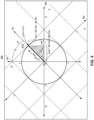
- the digital token value may also have an angular frequency component (also referred to herein as a "frequency") or multiple frequency components for adjusting the phase of the digital token value and/or a coordinate system rotation for the digital token value over time.
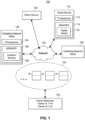
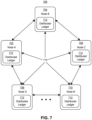
- Transfer of the digital token is recorded in a distributed ledger (e.g., blockchain) maintained by validating network nodes.
- the nodes receive transactions broadcasted to a distributed ledger network from client devices interacting with the distributed ledger.
- the transactions may indicate that a particular complex number value (e.g., 2-8i, or 5e i ⁇ ) is being transferred from a first owner having a first address to a second owner having a second address.
- a particular complex number value e.g., 2-8i, or 5e i ⁇
- the complex value exchange smart contract may set the rules for when to match a bid price with an ask price and how to order the bid prices and the ask prices in an order book. For example, bid prices having the same magnitude may be ordered according to their respective phases, where the lower phases are ordered above higher phases. For example, a first bid with a magnitude of 6 and a phase of 0 may be ranked or ordered above a second bid with the same magnitude of 6 but a phase of ⁇ /2 radians.
- the complex value exchange smart contract identifies a match, the digital token value is exchanged from the selling party to the buying party, and the transfer is recorded in the distributed ledger.
- the complex digital token value 202 may have a frequency component, ⁇ , such that the complex digital token value 202 changes over time. In this manner, it may be even more difficult for a potential attacker to determine the exchange value of the digital tokens at a particular address because the complex digital token value 202 is constantly changing. Moreover, the changing values make it more difficult for high frequency traders to analyze order books and quickly place orders that will fill right away.
- the frequency ⁇ may be expressed as a change in angular rotation over time, (e.g., radians per second). If the frequency is 2 ⁇ radians per second, then the complex digital token value 202 performs one full rotation on the unit circle every second. Accordingly, the complex digital token value 202 rotates at a frequency of 1 Hz.
- an owner may broadcast a transaction to the blockchain 1202, and more specifically, the smart contract indicating a transfer of 3 + 4i digital tokens to owner B.
- owner A may call a function in the smart contract for transferring digital tokens from one address to another address and may provide owner A's address, owner B's address, and the amount of the digital token to transfer (3 + 4i) to the function.
- the smart contract may transfer 3 + 4i digital tokens from owner A's address to owner B's address.
- the smart contract may increase the real number component of owner B's digital tokens by 3 to generate an overall real number value owned by owner B, and may increase the imaginary number component of owner B's digital tokens by 4i to generate an overall imaginary number value owned by owner B.
- the complex value smart contract may also determine the magnitude of the digital tokens owned by owner B as the square root of the sum of the squares of the overall real number value and the imaginary real number value, and the phase as the inverse tangent of the overall imaginary number value over the overall real number value.
- the smart contract may decrease the real number component of owner A's digital tokens by 3 to generate an overall real number value owned by owner A, and may decrease the imaginary number component of owner A's digital tokens by 4i to generate an overall imaginary number value owned by owner A.
- the complex value smart contract may also determine the magnitude of the digital tokens owned by owner A as the square root of the sum of the squares of the overall real number value and the imaginary real number value, and the phase as the inverse tangent of the overall imaginary number value over the overall real number value.
- the complex value smart contract may multiply each of the complex digital token values owned by a particular user or address to generate an overall complex digital token value owned by the particular user or address.
- the complex value smart contract may add complex digital token values in some instances and multiply complex digital token values in other instances. For example, if owner A initially obtains 10 + 6i digital tokens, the complex value smart contract may determine that owner A has 10 + 6i digital tokens. Then in the example shown in FIG. 12 , owner A transfers 3 + 4i digital tokens to owner B who has 3 - 4i digital tokens. The complex value smart contract may multiply (3 - 4i) * (3 + 4i) to determine that owner B has 25 digital tokens. To determine owner A's current value, the complex value smart contract may divide owner A's previous value 10 + 6i by 3 + 4i to determine that owner A has 2.16 - 0.88i digital tokens.
- the complex token system 100 may also deploy a complex value exchange smart contract to the distributed ledger to allow users to buy and sell cryptocurrencies, fiat currencies, or other assets using the digital token having complex values. In this manner, the complex token system 100 may provide a decentralized exchange for trading complex digital token values.
- FIG. 13 depicts an exemplary complex value exchange smart contract state 1306 in a distributed ledger network for matching buyers and sellers based on the magnitudes of the bid and ask prices, the phase of the bid and ask prices, and/or some combination thereof.
- the smart contract may be deployed by any participant in the blockchain network (e.g., a client device 110) to establish the complex value exchange smart contract state 1306 for exchanging complex digital token values between parties.
- the deployed smart contract may expose methods and data to other participants in the blockchain network.
- the smart contract may include a function for receiving requests to receive and transmit complex digital token values (e.g., bid and ask prices).
- the function may identify parties requesting to transmit and receive the same complex digital token value (e.g., both parties request to transmit and receive 2 - 5i digital tokens, or the magnitude and the current phase of the bid and ask prices are the same at a particular time interval). Then the function may exchange the matching complex digital token value between the identified parties.
- Some of the data in the smart contract state may be private data that may only be altered by calling a method of the smart contract or only altered by authorized blockchain participants.
- One way of altering the smart contract state 1306 is to broadcast a transaction to the blockchain 1302. If the broadcast transaction satisfies consensus rules, network validators may include the transaction in a block 1304. Inclusion in the blockchain 1302 of a transaction sending data to the smart contract may cause validating nodes to update a state database, thus allowing network participants access to a rich state mechanism.
- Complex value exchange smart contract state 1306 may include pieces of data to identify the smart contract, such a contract ID.
- the contract owner may also specify identities of owners of the digital token.
- the owners are identified by cryptographic public keys assigned to the respective owners.
- Subsequent data sent to the smart contract may include a message signed by private keys corresponding to the public keys identifying the owners in the smart contract, thus providing cryptographic proof that a transaction was originated by one of the owners.
- the private and public keys may be managed solely by the owners to minimize the attack surface for any attackers that might attempt to forge a transaction (e.g., the owners generate public/private cryptographic key pairs offline and only provide the public key to other network participants).
- An owner's private keys may be generated according to a securely stored seed value (e.g., on a piece of physical paper or multiple copies of a piece of paper) such that the private keys may be recovered in the case of a data loss.
- a user (owner A) requesting to buy a cryptocurrency, fiat currency, or other asset for no more than a maximum amount of digital tokens may broadcast a transaction to the blockchain 1302, and more specifically, the smart contract indicating a request to buy a particular cryptocurrency, fiat currency, or other asset for a first digital token value (the bid price).
- Owner A may specify that the first digital token value is 5e i ⁇ /4 .
- Owner A may also request a particular frequency in which the first digital token value will change over time by for example, transmitting a transaction fee to the smart contract.
- the smart contract includes a default frequency for the first digital token value.
- the first digital token value may be represented as 5e i ⁇ /4( ⁇ _lt) , where ⁇ _1 is the first frequency for the first digital token value.
- a user (owner B) requesting to sell a cryptocurrency, fiat currency, or other asset for no less than a minimum amount of digital tokens may broadcast a transaction to the blockchain 1302, and more specifically, the smart contract indicating a request to sell a particular cryptocurrency, fiat currency, or other asset for a second digital token value (the ask price).
- Owner B may specify that the second digital token value is 5e i ⁇ /2 .
- Owner B may also request a particular frequency in which the second digital token value will change over time by for example, transmitting a transaction fee to the smart contract.
- the smart contract includes a default frequency for the second digital token value.
- the second digital token value may be represented as 5e i ⁇ /2( ⁇ _2t) , where ⁇ _2 is the second frequency for the second digital token value.
- smart contract data may be thought of like the private and public data in an object created according to an object-oriented programming paradigm in that they may be directly updated from outside the object or they may be updated only in limited ways, such as by calling a function of the smart contract.
- smart contract data includes the frequency values for the first and second digital token values, ⁇ _1, ⁇ _2.
- the first frequency value ( ⁇ _1) may be 2 ⁇ radians per second
- the second frequency value ( ⁇ _2) may also be 2 ⁇ radians per second.
- the first and second frequency values are different and are determined based on the transaction fees that the respective owners sent to the smart contract.
- one or both of the frequency values may be set to 0 so that the corresponding digital token value(s) do(es) not change over time.
- a function of the smart contract may determine whether the first and second digital token values match at a particular time interval. For example, the smart contract may determine whether the magnitudes match at the particular time interval and adjust the smart contract data to indicate whether the magnitudes match. The smart contract may also determine whether the current phases match at the particular time interval and adjust the smart contract data to indicate whether the current phases match.
- the complex value exchange smart contract may set the rules for when to match a bid price with an ask price.
- the smart contract may identify a match between a bid price and an ask price when the magnitudes match or when the real number components match.
- the smart contract may identify a match between a bid price and an ask price when both the magnitudes and the phases match or both the real number components and the imaginary components match.
- the complex value exchange smart contract may also adjust the bid price and/or the ask price based on the respective frequencies assigned to the bid price and the ask price and the current time interval. The smart contract may identify a match when the current bid price and/or ask price match at a particular time interval.
- the complex value exchange smart contract may exchange the digital token value from owner A to owner B and record the transfer in the distributed ledger.
- the complex value exchange smart contract may call function from the complex value smart contract in FIG. 12 to execute the transfer.
Landscapes
- Engineering & Computer Science (AREA)
- Business, Economics & Management (AREA)
- Computer Security & Cryptography (AREA)
- Theoretical Computer Science (AREA)
- Accounting & Taxation (AREA)
- Finance (AREA)
- Computer Networks & Wireless Communication (AREA)
- Signal Processing (AREA)
- General Physics & Mathematics (AREA)
- Physics & Mathematics (AREA)
- Technology Law (AREA)
- Strategic Management (AREA)
- Marketing (AREA)
- Economics (AREA)
- General Business, Economics & Management (AREA)
- Development Economics (AREA)
- Power Engineering (AREA)
- Health & Medical Sciences (AREA)
- Bioethics (AREA)
- General Health & Medical Sciences (AREA)
- Computer Hardware Design (AREA)
- Software Systems (AREA)
- General Engineering & Computer Science (AREA)
- Financial Or Insurance-Related Operations Such As Payment And Settlement (AREA)
- Management, Administration, Business Operations System, And Electronic Commerce (AREA)
Claims (20)
- Verfahren zum Aufzeichnen eines Werteaustauschs in einem Distributed Ledger, wobei das Verfahren Folgendes umfasst:Interagieren mit einem Distributed Ledger, das von einer Mehrzahl von Teilnehmern in einem Distributed-Ledger-Netzwerk verwaltet wird, durch einen oder mehrere Prozessoren, wobei das Distributed Ledger einen Satz von Konsensregeln beinhaltet;Erzeugen einer Transaktion durch einen oder mehrere Prozessoren, die einen Wertaustausch eines digitalen Tokens angibt, wobei die Transaktion in dem Distributed Ledger gespeichert wird und wobei der digitale Tokenwert ein komplexer Zahlenwert mit mindestens zwei Komponenten ist; undSenden der Transaktion an mindestens einen anderen Teilnehmer in einem Distributed-Ledger-Netzwerk von Teilnehmern, die das Distributed Ledger verwalten, wobei die Mehrzahl von Teilnehmern in Reaktion auf ein Bestimmen, dass die Daten den Satz von Konsensregeln erfüllen, Daten an das Distributed Ledger anhängen.
- Verfahren nach Anspruch 1, wobei die mindestens zwei Komponenten für die digitalen Tokenwerte (i) eine Größe und eine Phase oder (ii) eine reale und eine imaginäre Zahlenkomponente beinhalten.
- Verfahren nach Anspruch 2, wobei die Phase eine Anfangsphase ist und jeder digitale Tokenwert zeitabhängig ist und ferner eine Frequenzkomponente beinhaltet, so dass sich eine aktuelle Phase des digitalen Tokenwerts mit der Zeit ändert.
- Verfahren nach Anspruch 3, das ferner Folgendes umfasst:Bereitstellen einer Anforderung für einen spezifischen digitalen Tokenwert mit einer spezifischen Größe und einer spezifischen Phase, wobei die aktuelle Phase des digitalen Tokenwerts basierend auf einer Kombination aus der Anfangsphase des digitalen Tokenwerts, der Frequenzkomponente für den digitalen Tokenwert und einer aktuellen Zeit bestimmt wird; undEmpfangen des digitalen Tokenwerts zu einem Zeitpunkt, zu dem eine Größe des digitalen Tokenwerts mit der angeforderten Größe übereinstimmt und die aktuelle Phase des digitalen Tokenwerts mit der angeforderten Phase übereinstimmt.
- Verfahren nach Anspruch 4, wobei die Anforderung für den spezifischen digitalen Tokenwert einem Smart Contract bereitgestellt wird, der in dem Distributed Ledger gespeichert ist und zu Folgendem ausgelegt ist:Empfangen von Anforderungen zum Empfangen und Senden digitaler Tokenwerte;Identifizieren von Parteien, die das Senden und Empfangen eines gleichen digitalen Tokenwerts anfordern; undAustauschen des gleichen digitalen Tokenwerts zwischen den identifizierten Parteien.
- Verfahren nach Anspruch 5, wobei der Smart Contract dazu ausgelegt ist, zu bestimmen, dass eine erste Partei, die das Senden eines ersten digitalen Tokenwerts anfordert, und eine zweite Partei, die das Empfangen eines zweiten digitalen Tokenwerts anfordert, das Senden und Empfangen des gleichen digitalen Tokenwerts anfordern, wenn eine erste Größe des ersten digitalen Tokenwerts mit einer zweiten Größe des zweiten digitalen Tokenwerts übereinstimmt.
- Verfahren nach Anspruch 6, wobei der Smart Contract ferner dazu ausgelegt ist, zu bestimmen, dass die erste und die zweite Partei das Senden und Empfangen des gleichen digitalen Tokenwert anfordern, wenn eine zweite Phase des zweiten digitalen Tokenwerts mit einer Kombination aus einer ersten Phase des ersten digitalen Tokenwerts, einer ersten Frequenzkomponente des ersten digitalen Tokenwerts und der aktuellen Zeit übereinstimmt.
- Verfahren nach Anspruch 7, wobei der Smart Contract ferner dazu ausgelegt ist, für jeden digitalen Tokenwert, der in den Anforderungen beinhaltet ist, einen gleichen Frequenzkomponentenwert einzustellen.
- Verfahren nach Anspruch 7, wobei die erste Frequenzkomponente basierend auf einer Transaktionsgebühr angepasst wird, die dem Smart Contract bereitgestellt wird.
- Verfahren nach einem der Ansprüche 3 bis 7, wobei die Frequenzkomponente jedes digitalen Tokenwerts eine erste Frequenzkomponente ist, ein Koordinatensystem für den digitalen Tokenwert mit einer Rate rotiert, die einer zweiten Frequenzkomponente entspricht, und die aktuelle Phase des digitalen Tokenwerts basierend auf einer Kombination aus der Anfangsphase des digitalen Tokenwerts, der ersten Frequenzkomponente für den digitalen Tokenwert, der zweiten Frequenzkomponente für den digitalen Tokenwert und einer aktuellen Zeit bestimmt wird.
- Verfahren nach einem der vorhergehenden Ansprüche, wobei jeder digitale Tokenwert als ein nicht fungibles Token (NFT) in dem Distributed Ledger dargestellt wird.
- Verfahren nach einem der vorhergehenden Ansprüche, wobei der Satz von Konsensregeln mindestens eine Konsensregel beinhaltet, dass digitale Tokenwerte, die in dem Distributed Ledger aufgezeichnet sind, komplexe Zahlenwerte mit mindestens zwei Komponenten beinhalten.
- Validierender Netzwerkknoten in einem Distributed-Ledger-Netzwerk, der Folgendes umfasst:einen Sendeempfänger, der dazu ausgelegt ist, Distributed-Ledger-Daten mit Peer-Netzwerkknoten auszutauschen, wobei die Distributed-Ledger-Daten digitale Tokenwerte beinhalten, die zwischen Teilnehmern in dem Distributed-Ledger-Netzwerk ausgetauscht werden, wobei die digitalen Tokenwerte komplexe Zahlenwerte mit mindestens zwei Komponenten sind;ein Speichermedium, das dazu ausgelegt ist, eine Kopie des Distributed Ledgers zu speichern; undeinen oder mehrere Prozessoren, die zu Folgendem ausgelegt sind:Anwenden eines Satzes von Konsensregeln auf Distributed-Ledger-Daten, die von den Peer-Netzwerkknoten empfangen werden; undAnhängen von Distributed-Ledger-Daten, die von Peer-Knoten empfangen werden, an die Kopie des Distributed Ledgers, wenn die Distributed-Ledger-Daten die Konsensregeln erfüllen.
- Validierender Netzwerkknoten nach Anspruch 13, wobei der Satz von Konsensregeln ferner mindestens eines von Folgenden beinhaltet:Formatierungsanforderungen für Transaktionen oder Blöcke von Transaktionen;einen Mechanismus zum Bestimmen, welcher der Peer-Netzwerkknoten eine nächste Transaktion oder einen nächsten Block von Transaktionen zu dem Distributed Ledger hinzufügen wird;einen kryptografischen Hash-Algorithmus zum Hash-Codieren der Daten, die in jeder der Transaktionen beinhaltet sind; oderdass im Distributed Ledger aufgezeichnete digitale Tokenwerte komplexe Werte mit mindestens zwei Komponenten beinhalten.
- Validierender Netzwerkknoten nach Anspruch 13 oder Anspruch 14, wobei der eine oder die mehreren Prozessoren ferner dazu ausgelegt sind, Code in Smart Contracts auszuführen und Zustandsdatenbanken für die Smart Contracts zu aktualisieren, einschließlich eines Smart Contracts, der zu Folgendem ausgelegt ist:Empfangen von Anforderungen zum Empfangen und Senden digitaler Tokenwerte;Identifizieren von Parteien, die das Senden und Empfangen eines gleichen digitalen Tokenwerts anfordern; undAustauschen des gleichen digitalen Tokenwerts zwischen den identifizierten Parteien.
- Validierender Netzwerkknoten nach Anspruch 15, wobei die mindestens zwei Komponenten für die digitalen Tokenwerte (i) eine Größe und eine Phase oder (ii) eine reale und eine imaginäre Zahlenkomponente beinhalten, und wobei der Smart Contract ferner dazu ausgelegt ist, zu bestimmen, dass eine erste Partei, die das Senden eines ersten digitalen Tokenwerts anfordert, und eine zweite Partei, die das Empfangen eines zweiten digitalen Tokenwerts anfordert, das Senden und Empfangen des gleichen digitalen Tokenwerts anfordern, wenn (i) eine erste Größe des ersten digitalen Tokenwerts mit einer zweiten Größe des zweiten digitalen Tokenwerts übereinstimmt, und/oder (ii) eine zweite Phase des zweiten digitalen Tokenwerts mit einer Kombination aus einer ersten Phase des ersten digitalen Tokenwerts, einer ersten Frequenzkomponente des ersten digitalen Tokenwerts und einer aktuellen Zeit übereinstimmt.
- Verfahren zum Bereitstellen eines Smart Contracts zum Verwalten von Austauschen von realem und imaginärem Wert unter Verwendung eines Distributed Ledgers, das von einer Mehrzahl von Teilnehmern verwaltet wird, wobei das Verfahren Folgendes umfasst:
Erzeugen eines Smart Contracts durch einen oder mehrere Prozessoren, der zu Folgendem ausgelegt ist:Empfangen von Anforderungen zum Empfangen und Senden digitaler Tokenwerte, wobei die digitalen Tokenwerte komplexe Zahlenwerte mit mindestens zwei Komponenten sind;Identifizieren von Parteien, die das Senden und Empfangen eines gleichen digitalen Tokenwerts anfordern; undAustauschen des gleichen digitalen Tokenwert zwischen den identifizierten Parteien; undBereitstellen des Smart Contracts durch den einen oder die mehreren Prozessoren an eine Adresse, die in dem Distributed Ledger gespeichert ist, das von der Mehrzahl von Teilnehmern in einem Distributed-Ledger-Netzwerk verwaltet wird. - Verfahren nach Anspruch 17, wobei die mindestens zwei Komponenten für die digitalen Tokenwerte (i) eine Größe und eine Phase oder (ii) eine reale und eine imaginäre Zahlenkomponente beinhalten, und der Smart Contract ferner dazu ausgelegt ist, zu bestimmen, dass eine erste Partei, die das Senden eines ersten digitalen Tokenwerts anfordert, und eine zweite Partei, die das Empfangen eines zweiten digitalen Tokenwerts anfordert, das Senden und Empfangen des gleichen digitalen Tokenwerts anfordern, wenn eine erste Größe des ersten digitalen Tokenwerts mit einer zweiten Größe des zweiten digitalen Tokenwerts übereinstimmt.
- Verfahren nach Anspruch 18, wobei eine Phase eines digitalen Tokenwerts eine Anfangsphase ist und jeder digitale Tokenwert zeitabhängig ist und ferner eine Frequenzkomponente beinhaltet, so dass sich eine aktuelle Phase des digitalen Tokenwerts mit der Zeit ändert, und wobei der Smart Contract ferner dazu ausgelegt ist, zu bestimmen, dass die erste und die zweite Partei das Senden und Empfangen des gleichen digitalen Tokenwerts anfordern, wenn eine zweite Phase des zweiten digitalen Tokenwerts mit einer Kombination aus einer ersten Phase des ersten digitalen Tokenwerts, einer ersten Frequenzkomponente des ersten digitalen Tokenwerts und der aktuellen Zeit übereinstimmt.
- Verfahren nach Anspruch 19, wobei der Smart Contract ferner dazu ausgelegt ist, für jeden digitalen Tokenwert, der in den Anforderungen beinhaltet ist, einen gleichen Frequenzkomponentenwert einzustellen.
Applications Claiming Priority (3)
| Application Number | Priority Date | Filing Date | Title |
|---|---|---|---|
| US202163256498P | 2021-10-15 | 2021-10-15 | |
| US202163262741P | 2021-10-19 | 2021-10-19 | |
| PCT/US2022/021473 WO2023063987A1 (en) | 2021-10-15 | 2022-03-23 | Complex number tokenization using a distributed ledger |
Publications (3)
| Publication Number | Publication Date |
|---|---|
| EP4416631A1 EP4416631A1 (de) | 2024-08-21 |
| EP4416631B1 true EP4416631B1 (de) | 2025-03-26 |
| EP4416631C0 EP4416631C0 (de) | 2025-03-26 |
Family
ID=81326779
Family Applications (1)
| Application Number | Title | Priority Date | Filing Date |
|---|---|---|---|
| EP22715913.4A Active EP4416631B1 (de) | 2021-10-15 | 2022-03-23 | Tokenisierung komplexer nummern unter verwendung eines verteilten kontos |
Country Status (3)
| Country | Link |
|---|---|
| US (3) | US12079868B2 (de) |
| EP (1) | EP4416631B1 (de) |
| WO (1) | WO2023063987A1 (de) |
Families Citing this family (7)
| Publication number | Priority date | Publication date | Assignee | Title |
|---|---|---|---|---|
| US20240073026A1 (en) * | 2022-08-24 | 2024-02-29 | Bank Of America Corporation | System and method for partitioning digital resources using a networked resource platform |
| WO2024100156A1 (en) * | 2022-11-08 | 2024-05-16 | Marc Deschenaux | Universal securities wrapper |
| US20240257084A1 (en) * | 2023-01-27 | 2024-08-01 | Coinbase, Inc. | Self-executing program for outbound messages |
| US12271892B2 (en) * | 2023-04-27 | 2025-04-08 | Livegage, Inc. | System and method for implementing a blockchain platform that creates and manages secured tokens |
| US20250007741A1 (en) * | 2023-06-30 | 2025-01-02 | Omnumi, Inc. | Systems, methods, and computer readable medium for controlling blockchain operation |
| US20250078182A1 (en) * | 2023-08-31 | 2025-03-06 | EL-DAR AL-KHASSEH LTITWER AL-OMRANI Ltd. | Decentralized protocol for tokenizing real estate appreciation |
| EP4553732A1 (de) * | 2023-11-09 | 2025-05-14 | Giesecke+Devrient advance52 GmbH | Sichere transaktionseinheit, elektronisches tokentransaktionssystem und verfahren in einer sicheren transaktionseinheit |
Family Cites Families (6)
| Publication number | Priority date | Publication date | Assignee | Title |
|---|---|---|---|---|
| US11102648B2 (en) * | 2015-08-18 | 2021-08-24 | Proteqsit Llc | System, method, and apparatus for enhanced personal identification |
| US11816642B2 (en) * | 2017-03-20 | 2023-11-14 | Steven Victor Wasserman | Blockchain digital currency: systems and methods for use in enterprise blockchain banking |
| EP3649601B1 (de) * | 2017-08-01 | 2025-03-12 | Digital Asset (Switzerland) GmbH | Verfahren und vorrichtung zur automatisierten gebundenen abwicklung digitaler assets |
| AU2019203281B2 (en) * | 2018-05-11 | 2024-05-16 | Wolfgang Flatow | Management system |
| CN108921523A (zh) * | 2018-06-20 | 2018-11-30 | 郑文宸 | 基于区块链的权益资产价值代币的创建、交易方法及系统 |
| US20220027992A1 (en) * | 2020-07-23 | 2022-01-27 | Plants Map, Inc. | Non-fungible cryptographic tokens for tracking trees |
-
2022
- 2022-03-23 EP EP22715913.4A patent/EP4416631B1/de active Active
- 2022-03-23 WO PCT/US2022/021473 patent/WO2023063987A1/en not_active Ceased
- 2022-03-23 US US17/702,251 patent/US12079868B2/en active Active
-
2024
- 2024-07-24 US US18/782,727 patent/US12475512B2/en active Active
-
2025
- 2025-10-20 US US19/363,075 patent/US20260044896A1/en active Pending
Also Published As
| Publication number | Publication date |
|---|---|
| US20240378671A1 (en) | 2024-11-14 |
| WO2023063987A1 (en) | 2023-04-20 |
| US12475512B2 (en) | 2025-11-18 |
| US12079868B2 (en) | 2024-09-03 |
| EP4416631C0 (de) | 2025-03-26 |
| US20260044896A1 (en) | 2026-02-12 |
| US20230119843A1 (en) | 2023-04-20 |
| EP4416631A1 (de) | 2024-08-21 |
Similar Documents
| Publication | Publication Date | Title |
|---|---|---|
| EP4416631B1 (de) | Tokenisierung komplexer nummern unter verwendung eines verteilten kontos | |
| US11669811B2 (en) | Blockchain-based digital token utilization | |
| US10965446B2 (en) | Blockchain-based automated user matching | |
| US12481988B2 (en) | System and method for securing crypto-asset transactions | |
| US11153069B2 (en) | Data authentication using a blockchain approach | |
| US11005646B2 (en) | Blockchain stochastic timer transaction synchronization | |
| US10693646B2 (en) | Event execution using a blockchain approach | |
| US12470383B2 (en) | Collaborative computation across blockchain networks | |
| Ye et al. | An anonymous and fair auction system based on blockchain: Z. Ye et al. | |
| US20250182202A1 (en) | Tokenizing Credit Risk Using a Distributed Ledger | |
| US20200202349A1 (en) | Multiple asset transactions | |
| US12608709B2 (en) | Decentralized systems and methods for response generation to API calls | |
| Chen et al. | SmartStore: A blockchain and clustering based intelligent edge storage system with fairness and resilience | |
| US20240126904A1 (en) | Systems and Methods for Managing Access to Confidential Data | |
| KR20220122418A (ko) | 블록체인 기반의 부동산 계약 및 사후관리 시스템 | |
| Xu et al. | Blockchain‐Based Trust Auction for Dynamic Virtual Machine Provisioning and Allocation in Clouds | |
| US20210217091A1 (en) | Systems and methods for encrypted, dark messaging continuity and bid negotiation over peer to peer (p2p) communication | |
| US20240289757A1 (en) | Digital Wallet Implementing a Proportional Values Method of Aggregation | |
| US20240242204A1 (en) | Blockchain-Based System for Management of Digital Tokens | |
| US12314938B2 (en) | Multilayer system and method for securing a blockchain-based token using random temporal windowing | |
| Sonnino et al. | AStERISK: auction-based shared economy resolution markets for blockchain platforms | |
| Nath | Cryptocurrency and Privacy-Disruptive Technology Disarray the Laws | |
| COLETTE et al. | Use of the blockchain to ensure cloud data integrity in the frame of renewable energy communities | |
| Singhal et al. | How Bitcoin Works | |
| Chudnovsky et al. | FRED: A Frontrunning Resistant Darkpool |
Legal Events
| Date | Code | Title | Description |
|---|---|---|---|
| STAA | Information on the status of an ep patent application or granted ep patent |
Free format text: STATUS: UNKNOWN |
|
| STAA | Information on the status of an ep patent application or granted ep patent |
Free format text: STATUS: THE INTERNATIONAL PUBLICATION HAS BEEN MADE |
|
| PUAI | Public reference made under article 153(3) epc to a published international application that has entered the european phase |
Free format text: ORIGINAL CODE: 0009012 |
|
| STAA | Information on the status of an ep patent application or granted ep patent |
Free format text: STATUS: REQUEST FOR EXAMINATION WAS MADE |
|
| 17P | Request for examination filed |
Effective date: 20240419 |
|
| AK | Designated contracting states |
Kind code of ref document: A1 Designated state(s): AL AT BE BG CH CY CZ DE DK EE ES FI FR GB GR HR HU IE IS IT LI LT LU LV MC MK MT NL NO PL PT RO RS SE SI SK SM TR |
|
| GRAP | Despatch of communication of intention to grant a patent |
Free format text: ORIGINAL CODE: EPIDOSNIGR1 |
|
| STAA | Information on the status of an ep patent application or granted ep patent |
Free format text: STATUS: GRANT OF PATENT IS INTENDED |
|
| DAV | Request for validation of the european patent (deleted) | ||
| DAX | Request for extension of the european patent (deleted) | ||
| INTG | Intention to grant announced |
Effective date: 20241009 |
|
| GRAJ | Information related to disapproval of communication of intention to grant by the applicant or resumption of examination proceedings by the epo deleted |
Free format text: ORIGINAL CODE: EPIDOSDIGR1 |
|
| STAA | Information on the status of an ep patent application or granted ep patent |
Free format text: STATUS: REQUEST FOR EXAMINATION WAS MADE |
|
| GRAP | Despatch of communication of intention to grant a patent |
Free format text: ORIGINAL CODE: EPIDOSNIGR1 |
|
| STAA | Information on the status of an ep patent application or granted ep patent |
Free format text: STATUS: GRANT OF PATENT IS INTENDED |
|
| INTC | Intention to grant announced (deleted) | ||
| INTG | Intention to grant announced |
Effective date: 20241129 |
|
| GRAS | Grant fee paid |
Free format text: ORIGINAL CODE: EPIDOSNIGR3 |
|
| GRAA | (expected) grant |
Free format text: ORIGINAL CODE: 0009210 |
|
| STAA | Information on the status of an ep patent application or granted ep patent |
Free format text: STATUS: THE PATENT HAS BEEN GRANTED |
|
| AK | Designated contracting states |
Kind code of ref document: B1 Designated state(s): AL AT BE BG CH CY CZ DE DK EE ES FI FR GB GR HR HU IE IS IT LI LT LU LV MC MK MT NL NO PL PT RO RS SE SI SK SM TR |
|
| REG | Reference to a national code |
Ref country code: GB Ref legal event code: FG4D |
|
| REG | Reference to a national code |
Ref country code: CH Ref legal event code: EP |
|
| REG | Reference to a national code |
Ref country code: DE Ref legal event code: R096 Ref document number: 602022012284 Country of ref document: DE |
|
| REG | Reference to a national code |
Ref country code: IE Ref legal event code: FG4D |
|
| U01 | Request for unitary effect filed |
Effective date: 20250422 |
|
| U07 | Unitary effect registered |
Designated state(s): AT BE BG DE DK EE FI FR IT LT LU LV MT NL PT RO SE SI Effective date: 20250428 |
|
| PG25 | Lapsed in a contracting state [announced via postgrant information from national office to epo] |
Ref country code: RS Free format text: LAPSE BECAUSE OF FAILURE TO SUBMIT A TRANSLATION OF THE DESCRIPTION OR TO PAY THE FEE WITHIN THE PRESCRIBED TIME-LIMIT Effective date: 20250626 |
|
| PG25 | Lapsed in a contracting state [announced via postgrant information from national office to epo] |
Ref country code: NO Free format text: LAPSE BECAUSE OF FAILURE TO SUBMIT A TRANSLATION OF THE DESCRIPTION OR TO PAY THE FEE WITHIN THE PRESCRIBED TIME-LIMIT Effective date: 20250626 |
|
| PG25 | Lapsed in a contracting state [announced via postgrant information from national office to epo] |
Ref country code: HR Free format text: LAPSE BECAUSE OF FAILURE TO SUBMIT A TRANSLATION OF THE DESCRIPTION OR TO PAY THE FEE WITHIN THE PRESCRIBED TIME-LIMIT Effective date: 20250326 |
|
| PG25 | Lapsed in a contracting state [announced via postgrant information from national office to epo] |
Ref country code: GR Free format text: LAPSE BECAUSE OF FAILURE TO SUBMIT A TRANSLATION OF THE DESCRIPTION OR TO PAY THE FEE WITHIN THE PRESCRIBED TIME-LIMIT Effective date: 20250627 |
|
| REG | Reference to a national code |
Ref country code: CH Ref legal event code: PK Free format text: BERICHTIGUNGEN |
|
| PG25 | Lapsed in a contracting state [announced via postgrant information from national office to epo] |
Ref country code: SM Free format text: LAPSE BECAUSE OF FAILURE TO SUBMIT A TRANSLATION OF THE DESCRIPTION OR TO PAY THE FEE WITHIN THE PRESCRIBED TIME-LIMIT Effective date: 20250326 |
|
| PG25 | Lapsed in a contracting state [announced via postgrant information from national office to epo] |
Ref country code: ES Free format text: LAPSE BECAUSE OF FAILURE TO SUBMIT A TRANSLATION OF THE DESCRIPTION OR TO PAY THE FEE WITHIN THE PRESCRIBED TIME-LIMIT Effective date: 20250326 |
|
| PG25 | Lapsed in a contracting state [announced via postgrant information from national office to epo] |
Ref country code: PL Free format text: LAPSE BECAUSE OF FAILURE TO SUBMIT A TRANSLATION OF THE DESCRIPTION OR TO PAY THE FEE WITHIN THE PRESCRIBED TIME-LIMIT Effective date: 20250326 |
|
| RAP2 | Party data changed (patent owner data changed or rights of a patent transferred) |
Owner name: LAPAIN, LLC |
|
| RIN2 | Information on inventor provided after grant (corrected) |
Inventor name: WITHAM, LARRY RANDAL |
|
| U1K | Transfer of rights of the unitary patent after the registration of the unitary effect |
Owner name: LAPAIN, LLC; US |
|
| PG25 | Lapsed in a contracting state [announced via postgrant information from national office to epo] |
Ref country code: SK Free format text: LAPSE BECAUSE OF FAILURE TO SUBMIT A TRANSLATION OF THE DESCRIPTION OR TO PAY THE FEE WITHIN THE PRESCRIBED TIME-LIMIT Effective date: 20250326 |
|
| PG25 | Lapsed in a contracting state [announced via postgrant information from national office to epo] |
Ref country code: IS Free format text: LAPSE BECAUSE OF FAILURE TO SUBMIT A TRANSLATION OF THE DESCRIPTION OR TO PAY THE FEE WITHIN THE PRESCRIBED TIME-LIMIT Effective date: 20250726 |
|
| PG25 | Lapsed in a contracting state [announced via postgrant information from national office to epo] |
Ref country code: CZ Free format text: LAPSE BECAUSE OF FAILURE TO SUBMIT A TRANSLATION OF THE DESCRIPTION OR TO PAY THE FEE WITHIN THE PRESCRIBED TIME-LIMIT Effective date: 20250326 |
|
| PLBE | No opposition filed within time limit |
Free format text: ORIGINAL CODE: 0009261 |
|
| STAA | Information on the status of an ep patent application or granted ep patent |
Free format text: STATUS: NO OPPOSITION FILED WITHIN TIME LIMIT |
|
| REG | Reference to a national code |
Ref country code: CH Ref legal event code: L10 Free format text: ST27 STATUS EVENT CODE: U-0-0-L10-L00 (AS PROVIDED BY THE NATIONAL OFFICE) Effective date: 20260211 |
|
| 26N | No opposition filed |
Effective date: 20260105 |
|
| U20 | Renewal fee for the european patent with unitary effect paid |
Year of fee payment: 5 Effective date: 20260209 |
|
| REG | Reference to a national code |
Ref country code: CH Ref legal event code: R14 Free format text: ST27 STATUS EVENT CODE: U-0-0-R10-R14 (AS PROVIDED BY THE NATIONAL OFFICE) Effective date: 20260326 |
|
| REG | Reference to a national code |
Ref country code: CH Ref legal event code: U11 Free format text: ST27 STATUS EVENT CODE: U-0-0-U10-U11 (AS PROVIDED BY THE NATIONAL OFFICE) Effective date: 20260401 |
|
| PGFP | Annual fee paid to national office [announced via postgrant information from national office to epo] |
Ref country code: GB Payment date: 20260106 Year of fee payment: 5 |