EP4415313A1 - Sicherheitsrichtlinienbestimmung und anwendung - Google Patents
Sicherheitsrichtlinienbestimmung und anwendung Download PDFInfo
- Publication number
- EP4415313A1 EP4415313A1 EP23155403.1A EP23155403A EP4415313A1 EP 4415313 A1 EP4415313 A1 EP 4415313A1 EP 23155403 A EP23155403 A EP 23155403A EP 4415313 A1 EP4415313 A1 EP 4415313A1
- Authority
- EP
- European Patent Office
- Prior art keywords
- value
- risk
- variable
- security policy
- measurements
- Prior art date
- Legal status (The legal status is an assumption and is not a legal conclusion. Google has not performed a legal analysis and makes no representation as to the accuracy of the status listed.)
- Withdrawn
Links
Images





Classifications
-
- H—ELECTRICITY
- H04—ELECTRIC COMMUNICATION TECHNIQUE
- H04W—WIRELESS COMMUNICATION NETWORKS
- H04W12/00—Security arrangements; Authentication; Protecting privacy or anonymity
- H04W12/60—Context-dependent security
- H04W12/67—Risk-dependent, e.g. selecting a security level depending on risk profiles
-
- G—PHYSICS
- G06—COMPUTING OR CALCULATING; COUNTING
- G06F—ELECTRIC DIGITAL DATA PROCESSING
- G06F21/00—Security arrangements for protecting computers, components thereof, programs or data against unauthorised activity
- G06F21/50—Monitoring users, programs or devices to maintain the integrity of platforms, e.g. of processors, firmware or operating systems
- G06F21/57—Certifying or maintaining trusted computer platforms, e.g. secure boots or power-downs, version controls, system software checks, secure updates or assessing vulnerabilities
- G06F21/577—Assessing vulnerabilities and evaluating computer system security
-
- G—PHYSICS
- G06—COMPUTING OR CALCULATING; COUNTING
- G06N—COMPUTING ARRANGEMENTS BASED ON SPECIFIC COMPUTATIONAL MODELS
- G06N5/00—Computing arrangements using knowledge-based models
- G06N5/04—Inference or reasoning models
- G06N5/048—Fuzzy inferencing
-
- H—ELECTRICITY
- H04—ELECTRIC COMMUNICATION TECHNIQUE
- H04L—TRANSMISSION OF DIGITAL INFORMATION, e.g. TELEGRAPHIC COMMUNICATION
- H04L63/00—Network architectures or network communication protocols for network security
- H04L63/14—Network architectures or network communication protocols for network security for detecting or protecting against malicious traffic
- H04L63/1433—Vulnerability analysis
-
- H—ELECTRICITY
- H04—ELECTRIC COMMUNICATION TECHNIQUE
- H04W—WIRELESS COMMUNICATION NETWORKS
- H04W12/00—Security arrangements; Authentication; Protecting privacy or anonymity
- H04W12/12—Detection or prevention of fraud
- H04W12/121—Wireless intrusion detection systems [WIDS]; Wireless intrusion prevention systems [WIPS]
- H04W12/122—Counter-measures against attacks; Protection against rogue devices
-
- H—ELECTRICITY
- H04—ELECTRIC COMMUNICATION TECHNIQUE
- H04W—WIRELESS COMMUNICATION NETWORKS
- H04W12/00—Security arrangements; Authentication; Protecting privacy or anonymity
- H04W12/30—Security of mobile devices; Security of mobile applications
- H04W12/37—Managing security policies for mobile devices or for controlling mobile applications
-
- H—ELECTRICITY
- H04—ELECTRIC COMMUNICATION TECHNIQUE
- H04W—WIRELESS COMMUNICATION NETWORKS
- H04W12/00—Security arrangements; Authentication; Protecting privacy or anonymity
- H04W12/60—Context-dependent security
- H04W12/63—Location-dependent; Proximity-dependent
Definitions
- the present invention relates to security policy/level determination and application, and in particular to a computer-implemented method, a computer program, and an information programming apparatus.
- the Internet of Things is the world's answer to the demand for global connectivity. Having gradually gained traction, a connected world of devices is now crystallizing, and it is expected there will be 75 billion such devices by 2025 ( Furnell et al. "Understanding the full cost of cyber security breaches.” Computer Fraud & Security 2020, no. 12 (2020): 6-12 ). Furthermore, as 5G technology plays an increasingly important role in our lives, the hyperconnected landscape will grow, acting as a catalyst and demanding even greater loT security. On the one hand, while the need to establish a secure-by-design loT framework is at the top of many business agendas, it is rarely implemented to the extent necessary. On the other hand, as recent research highlighted, the cost of security is a significant cause of hesitation ( K.
- a security level determination and application method is desired. Such a method may for example be applied in loT systems.
- a computer-implemented method (of implementing a security policy/level for a device), comprising: receiving a value for each of a plurality of measurements relating to a device, the measurements representing at least two of: an (a remaining) energy level of a battery in the device; an available (storage space in a) memory of a processor in the device; a clock speed of a processor in the device; a bandwidth of a communication channel (between the device and another device with which the device is configured to communicate) of the device; a distance between the device and another device with which the device is configured to communicate (the other device); a frequency of movement of the device; and a received signal strength indication, RSSI, of a signal from the other device with which the device is configured to communicate; performing an (a fuzzy) inference process to determine the security policy for the device; and applying the determined security policy (comprising transmitting and receiving communications with the other device according to the determined security policy), wherein the inference process comprises: providing
- a computer-implemented method comprising: receiving a value for each of a plurality of measurements relating to a device, the measurements representing at least two of: an (a remaining) energy level of a battery in the device; an available (storage space in a) memory of a processor in the device; a clock speed of a processor in the device; a bandwidth of a communication channel (between the device and another device with which the device is configured to communicate) of the device; a distance between the device and another device with which the device is configured to communicate (the other device); a frequency of movement of the device; and a received signal strength indication, RSSI, of a signal from the other device with which the device is configured to communicate; performing an inference process to determine a security policy for the device; and applying the determined security policy (comprising transmitting and receiving communications with the other device according to the determined security policy), wherein the inference process comprises: using a plurality of membership functions
- Determining the security policy may comprise determining to apply a first security policy when the determined numerical value is in a first range (or below a first threshold) and determining to apply a second security policy, (having higher (and more resource-intensive) security requirements than the first security policy), when the numerical value is in a second range (or above/below a second threshold).
- the first and second ranges do not overlap.
- the numerical value may represent the capability of the device to implement security policies as well as the risk of attack on the device.
- the rules defining mappings between the risk linguistic variables and combinations of linguistic variables of the measurements may comprise if-then rules and/or if-and-then rules.
- the device may be part of an internet-of-things system.
- the device may be a sensor for detecting a physiological measurement of a patient.
- the device may be part of a system for detecting (and analyzing) physiological measurements of a patient.
- the system may include a server and an apparatus to perform analysis of the physiological measurements located remotely from the patient.
- the device may be configured to communicate with the other device by transmitting the physiological data to the other device.
- the computer-implemented method may be performed by the device.
- the computer-implemented method may be performed by an apparatus different from the device.
- the method may comprise performing the computer-implemented method of implementing a security policy for a plurality of said devices.
- the other device may be a base station device.
- Receiving the values may comprise measuring the values.
- the method may further comprise, before determining the plurality of truth values, normalizing the measurements' values.
- the method may comprise performing the inference process and applying the security policy determined as a result of the inference process when a threshold amount of time has expired since the most recent occurrence of performing the inference process.
- the method may comprise: monitoring the values of the measurements; and performing the inference process and applying the security policy determined as a result of the inference process when, for any of the measurements, the value of the measurement passes a trigger threshold value.
- the trigger threshold value may be unique to each measurement.
- the method may comprise: monitoring the values of the measurements; and performing the inference process and applying the security policy determined as a result of the inference process when, for any of the measurements, a difference between a current value and a value used in the most recent occurrence of the inference process is above a threshold change amount.
- the threshold change amount may be unique to each measurement.
- the method may comprise (receiving the values and) performing the inference process and applying the security policy determined as a result of the inference process when the device changes location (by a threshold distance or more).
- the method may comprise (receiving the values and) performing the inference process and applying the security policy determined as a result of the inference process when a new device is added to the system or when the device connects with a new device or when the device receives a connection request from a new device.
- the method may comprise receiving a value of a measurement representing an environment of the device, the value of the measurement being a score indicating a threat of attack on the device based on the environment.
- the environment may be any of: indoors; outdoors; in a home; and in a hospital.
- the method may comprise (receiving the values and) performing the inference process and applying the security policy determined as a result of the inference process when the device moves to a different environment.
- the method may comprise determining the security policy for communication with another (the other) device.
- the method may comprise transmitting information indicating the determined security policy to the other device with which the device is configured to communicate.
- the method may comprise transmitting information indicating the determined security policy to any other devices with which the devices is configured to communicate.
- Applying the determined security policy may comprise encrypting data/communications transmitted from the device (to the other device) according to an encryption level/policy/specification/function corresponding to the security policy.
- a security policy may be determined from among a plurality of security policies.
- Each security policy may be defined by an encryption policy and/or an authentication policy.
- Applying the first security policy may comprise encrypting data/communications transmitted from the device (to the other device) according to a first encryption level/policy/specification/function and applying the second security policy comprises encrypting data/communications transmitted from the device (to the other device) according to a second encryption level/policy/specification/function which is more secure (and more resource-intensive) than the first encryption level.
- Determining the security policy may comprise determining to apply a first security policy when the determined numerical value is in/within a first range (or below a first threshold), determining to apply a second security policy when the numerical value is in/within a second range (or above the first threshold and below a second threshold), and determining to apply a third security policy when the numerical value is in/within a third range (or above the second threshold).
- the ranges do not overlap each other.
- the third security policy may have higher (and more resource-intensive) security requirements than the second security policy and the second security policy may have higher (and more resource-intensive) security requirements than the first security policy.
- Determining the security policy may comprise determining to apply a first security policy when the determined numerical value is in/within a first range (or below a first threshold), determining to apply a second security policy when the numerical value is in/within a second range (or above the first threshold and below a second threshold), determining to apply a third security policy when the numerical value is in/within a third range (or above the second threshold and below a third threshold), and determining to apply a fourth security policy when the numerical value is in/within a fourth range (or above the third threshold).
- Determining the security policy may comprise determining to apply a first security policy when the determined numerical value is in/within a first range (or below a first threshold), determining to apply a second security policy when the numerical value is in/within a second range (or above the first threshold and below a second threshold), determining to apply a third security policy when the numerical value is in/within a third range (or above the second threshold and below a third threshold), determining to apply a fourth security policy when the numerical value is in/within a fourth range (or above the third threshold and below a fourth threshold), and determining to apply a fifth security policy when the numerical value is in/within a fifth range (or above the fourth threshold).
- Determining the security policy may comprise, based on a plurality of (non-overlapping) ranges of values that the determined numerical value could take, selecting a security policy corresponding to the range in which the determined numerical value falls. Each security policy may correspond to a range of values that the determined numerical value could take.
- Applying the first security policy may comprise applying no encryption and/or no authentication to data/communications transmitted from the device (to the other device).
- the (first) encryption level corresponding to the first/lowest security policy may comprise no encryption.
- the (first) authentication level corresponding to the first/lowest security policy may comprise no authentication.
- the second security policy may comprise: Message-Digest algorithm 5, MD5, encryption and/or an authentication header, AH, authentication policy; or Secure Hash Algorithm, SHA, encryption and/or an authentication header, AH, authentication policy; or data encryption standard, DES, and Secure Hash Algorithm, SHA, encryption and/or ESP, encapsulating security payload; or advanced encryption standard, AES, and Secure Hash Algorithm, SHA, encryption and/or encapsulating security payload, ESP, authentication.
- the third security policy may comprise: Secure Hash Algorithm, SHA, encryption and/or an authentication header, AH, authentication policy; or data encryption standard, DES, and Secure Hash Algorithm, SHA, encryption and/or ESP, encapsulating security payload; or advanced encryption standard, AES, and Secure Hash Algorithm, SHA, encryption and/or encapsulating security payload, ESP, authentication.
- the fourth security policy may comprise: data encryption standard, DES, and Secure Hash Algorithm, SHA, encryption and/or ESP, encapsulating security payload; or advanced encryption standard, AES, and Secure Hash Algorithm, SHA, encryption and/or encapsulating security payload, ESP, authentication.
- the fifth security policy may comprise advanced encryption standard, AES, and Secure Hash Algorithm, SHA, encryption and/or encapsulating security payload, ESP, authentication.
- the first security policy may comprise no encryption and/or no authentication.
- the second security policy may comprise Message-Digest algorithm 5, MD5, encryption and/or an authentication header, AH, authentication policy.
- the third security policy may comprise Secure Hash Algorithm, SHA, encryption and/or an authentication header, AH, authentication policy.
- the fourth security policy may comprise data encryption standard, DES, and Secure Hash Algorithm, SHA, encryption and/or ESP, encapsulating security payload.
- the fifth security policy may comprise advanced encryption standard, AES, and Secure Hash Algorithm, SHA, encryption and/or encapsulating security payload, ESP, authentication.
- the method may comprise receiving a value for each of a plurality of measurements representing: the (remaining) energy level of the battery in the device; the available (storage space in) memory of the processor in the device; and a threat of attack on the device based on factors external to the device.
- the measurement representing the threat of attack on the device may comprise: the distance between the device and another device with which the device is configured to communicate; or the RSSI of a signal from the other device with which the device is configured to communicate; or a combination of the distance between the device and another device with which the device is configured to communicate and the RSSI of a signal from the other device with which the device is configured to communicate.
- Providing a plurality of membership functions may comprise retrieving them from memory and/or receiving them externally and/or receiving them through user input and/or devising them as part of the method and/or retrieving them from an external/internal storage, etc.
- a computer program which, when run on a computer, (or comprising instructions which, when executed by the computer) causes the computer to carry out a method (of implementing a security policy/level for a device), comprising: receiving a value for each of a plurality of measurements (relating to a device), the measurements representing at least two of: an (a remaining) energy level of a battery in the device; an available (storage space in a) memory of a processor in the device; a clock speed of a processor in the device; a bandwidth of a communication channel (between the device and another device with which the device is configured to communicate) of the device; a distance between the device and another device with which the device is configured to communicate (the other device); a frequency of movement of the device; and a received signal strength indication, RSSI, of a signal from the other device with which the device is configured to communicate; performing an (a fuzzy) inference process to determine the security policy for the device; and applying the determined security policy (compri).
- an information processing apparatus comprising a memory and a processor connected to the memory, wherein the processor is configured to implement a security policy/level for a device by: receiving a value for each of a plurality of measurements, the measurements representing at least two of: an (a remaining) energy level of a battery in the device; an available (storage space in a) memory of a processor in the device; a clock speed of a processor in the device; a bandwidth of a communication channel (between the device and another device with which the device is configured to communicate) of the device; a distance between the device and another device with which the device is configured to communicate (the other device); a frequency of movement of the device; and a received signal strength indication, RSSI, of a signal from the other device with which the device is configured to communicate; performing an (a fuzzy) inference process to determine the security policy for the device; and applying the determined security policy (comprising transmitting and receiving communications with the other device according to the determined security policy), wherein the
- a computer program which, when run on a computer, (or comprising instructions which, when executed by the computer) causes the computer to carry out the method of the second aspect.
- an information processing apparatus comprising a memory and a processor connected to the memory, wherein the processor is configured to implement a security policy/level for a device by carrying out the method of the second aspect.
- IoT the acronym for "Internet of things” which describes physical objects (or groups of such objects) that are embedded with sensors, processing ability, software, and other technologies that connect and exchange data with other devices and systems over the Internet or other communications networks.
- e-Health refers to "electronic heath", an emerging healthcare practice supported by electronic processes and communication. This terminology covers a broad range of electronic/digital processes in the healthcare related domains. This also includes health applications and links on mobile phones, referred to as mHealth or m-Health.
- ISMS Information Security Management System
- Information security risk management is an integral part of an information security management system. It defines the process of analysing what could happen and what the consequences might be, and helps organisations determine what should be done and when, to reduce risk to an acceptable level. Information security risk management is an iterative process to ensure that information security risks are systematically: (i) identified, (ii) analysed and (iii) treated in accordance with an organization's predefined local policy.
- Vulnerability evaluation refers to the assessment of the possible weaknesses in the system at hand. This would be achieved through a systematic review of internal security weaknesses and/or gaps in an information system and evaluating if the system is susceptible to any known vulnerabilities.
- Threat assessment While Vulnerability assessments focus on internal weaknesses that might undermine an organization's security, Threat assessments focus on external aspects, such as: neighbouring entities, tactics, and techniques that might be used to threaten an organization.
- Risk management is a calculated assessment of both threats and vulnerabilities. A sound risk management strategy allows risks to be properly identified, fully analysed, and effectively mitigated. This process helps organizations understand not only the vulnerabilities that exist but the scale of the damage that could occur should they be exploited. Threat and vulnerability assessment are in general conducted under the umbrella of risk management in order to strengthen an organization's security.
- Fuzzy Logic an approach to computing based on "degrees of truth” rather than the usual “true or false” (1 or 0) Boolean logic.
- the concept of "Fuzzy set theory” was first introduced in the 1960s by Pr. Zadeh.
- Fuzzy Inference System is a logical system that implements a nonlinear mapping, using a Fuzzy Logic Engine, in order to derive outputs based on fuzzy reasoning using a set of fuzzy if-then rules.
- Fuzzification is the process of assigning the numerical input of a system (crisp values) to fuzzy sets with some degree of membership (truth value). This degree of membership may be anywhere within the interval [0,1]. If it is 0 then the value does not belong to the given fuzzy set, and if it is 1 then the value completely belongs within the fuzzy set. Any value between 0 and 1 represents the degree of uncertainty that the value belongs in the set.
- fuzzy sets are typically described by words (linguistic variables), and so by assigning the system input to fuzzy sets, they may be manipulated and processed in a linguistically natural manner.
- De-Fuzzification is the process of producing a quantifiable result in crisp logic, given fuzzy sets and corresponding membership degrees. It is the process that maps a fuzzy set to a crisp set. Defuzzification is interpreting the membership degrees of the fuzzy sets into a specific decision or real value.
- Proactive loT security meaning security policies (for example for loT systems) which aim to take action before an attack rather than in response to an attack) is critical in our ever-connected world. While many businesses and leaders have identified this, the reality is currently different to the intention - there is a lack of effective security implementation techniques, for example for loT systems. Furthermore, proactive loT security will shape the loT landscape, but there are barriers that need to be broken first. Encouraging loT security adoption depends on generating awareness of loT security benefits and making readily available efficient, scalable, and accessible loT security frameworks. In short, loT security needs to be democratized. The more businesses, large or small, that are able to operate and deliver in a secure framework, the quicker the loT may reach its full potential. Making loT security more accessible and increasing the awareness of loT security benefits will drastically reduce the challenges that limit loT security adoption.
- This disclosure considers using artificial intelligence technologies to optimise decision-making in order to secure loT devices in a highly evolving, diverse and heterogeneous landscape.
- An objective is to improve security requirements through proactive security measures and optimised decision making.
- Proactive security decision-making in an loT environment is useful in order to protect: (i) the devices themselves, (ii) their interactions and (iii) their environment from malicious intruders, unauthorized users, and cyber-attacks.
- An adaptive security decision-making model may adjust to the dynamism of (i) Things (devices), (ii) their interactions, and (iii) the environment, and to the varying degrees of risk of the overall system being compromised. This may be achieved through dynamically determining whether changes and adaptations should be made to a security policy/level or not - and, if such changes/adaptations are to be made, to select the 'best' (most suitable) security model/policy for a given situation. Ideally, any changes/adaptations aim to achieve the greatest benefit for the smallest risk.
- Part of the decision-making may include consideration of a trade-off between cost and security, that is between costly security measures and dynamically changing risk levels.
- An adaptive decision-making model may learn and adapt to an ever-changing loT environment by: (i)combining adaptive risk-based decision models, adaptive security and privacy models, and actuators to make effective adaptive reaction, and (ii) integrating different metrics for validation and verification, adaptive risk assessment, and predictive analytics models for estimation and prediction of security and privacy risks and impacts.
- This disclosure relates an adaptive security framework (a security level determination and application method, or an inference process for determining a security level), for example for loT devices.
- Some challenges in addressing security issues may be considered to be (i) the limited computation, storage, and energy resources available (in a device), and (ii) the ever-changing circumstances affecting the overall threat of attack on a device (including internal and external factors).
- loT-based technologies have significant applications in e-Health and have the potential to revolutionize the delivery of healthcare services.
- IoT devices may collect, process, and transmit continuously healthcare data thereby reducing the cost of patient monitoring and improving the quality of healthcare services.
- IoT powered e-Health solutions connect information, people, devices, processes, and context to improve outcomes.
- the intelligent devices which may be now seamlessly interconnected, may indeed provide a great value for healthcare providers.
- the collected medical information may be used to make actionable decisions based on algorithms and evidence-based models and may significantly impact how healthcare may be supervised, controlled, managed, and delivered. Harnessing the power of loT for e-Health may generate more opportunities for improving many areas in healthcare systems.
- Some of the most promising use cases include: (i) preventive healthcare, (ii) proactive monitoring, (iii) follow-up care and (iv) chronic care disease management.
- FIG. 2 illustrates possible devices (corporal detection devices) which may be used in an e-Health loT system.
- the corporal detection devices in networks, together with sensors in our life environment, allow the continuous and real-time collection of an individual's health information and their related behaviour. Captured in a continuous and aggregated manner, this information may be exploited to allow monitoring, treatments, and interventions in real-time.
- the healthcare industry remains one of fastest to adopt the loT.
- the main reason for this trend is that the integration of loT functions in medical devices greatly improves the quality and effectiveness of medical service, providing an especially high value for patients with chronic conditions.
- Bionics, for example is improved by loT sensors for the collection of patient data from around the world and big data analysis is used to efficiently diagnose different types of diseases. However, this all starts with the loT sensors themselves. Thanks to the latest advancement in miniaturisation of integrated circuitry, a wide range of sensors may now be used as part of a wireless Body area network.
- the possible devices shown in Figure 2 range from a simple Oximeter & pulse sensor to more sophisticated electromyography sensors.
- Such sensors may collect data related to heart activity ( K. Venugopal, A. Kumar, "Centralized heart rate monitoring and automated message alert system using WBAN", International Journal of Scientific and Research Publications, Vol. 3, no 9, September 2013 ) , blood pressure ( B. Yuvaradni et al, "Health Monitoring Services Using Wireless Body Area Network", Imperial Journal of Interdisciplinary Research (IJIR), Vol.2, no.5. Pp.1648-1651, 2016 ) and glucose level ( Rasyid, F. et al, “Implementation of blood glucose levels monitoring system based on Wireless Body Area Network", 2016 IEEE International Conference on Consumer Electronics-Taiwan (ICCE-TW), Nantou, pp. 1-2, 2016 ).
- heart activity K. Venugopal, A. Kumar, “Centralized heart rate monitoring and automated message alert system using WBAN", International Journal of Scientific and Research Publications, Vol. 3, no 9, September 2013
- WBAN wireless body area networks
- Figure 3 illustrates a WBAN connecting to other networks.
- This emerging interdisciplinary domain would allow inexpensive and continuous health monitoring with real-time updates of medical records through the Internet.
- WBAN connects independent nodes (e.g. sensors and actuators) that are situated in the clothes, on the body or under the skin of a person.
- the network typically expands over the whole human body and the nodes are connected through a wireless communication channel.
- WBAN helps in monitoring vital signs of a patient and may monitor patient's history in routine life activities to provide them accurate treatment. Doctors may check the complete details of patients from a remote location and may recommend a suitable medication and/or treatment.
- the embedded sensors in the human body gather different physiological data about the patient's health.
- the collected data is then wirelessly transmitted to external nearby units which transmit the received data to distant devices for further operations (long term storage, thorough analytics, etc.).
- loT devices which may tend to be vulnerable to attacks. Since communication in loT systems is mainly wireless, eavesdropping attacks represent a real threat. Also, loT devices are usually unattended and thus vulnerable to physical attacks. Furthermore, most loT devices have limited energy, storage, and computation capabilities, limiting their ability to implement complex security models onboard.
- proactive security prevents attacks from happening in the first place. Specifically, proactive security improves a cyber security stance by correcting vulnerabilities that make a system susceptible to cyber-attacks before cybercriminals exploit them to get into the network and/or undermine the overall system.
- context is highly volatile and ever changing. Specifically, context may be defined through:
- this disclosure presents a new risk-based adaptive security method to evaluate a new risk measure and determine the most appropriate countermeasure associated with the estimated risk value.
- the newly proposed risk management strategy considers both: (i) external threats and (ii) internal vulnerabilities. This strategy allows for security risks to be properly identified, fully analysed, and effectively mitigated. This disclosure would help stakeholders from different organizations to better understand not only the vulnerabilities that might exist but also the scale of the damage that could occur should they be exploited. Threat and vulnerability assessment may be conducted under the umbrella of the disclosed adaptive security management framework in order to strengthen security.
- the disclosed methods, apparatuses, and programs may be employed in any system, for example an loT system.
- the disclosed methods, apparatuses, and programs may be employed in an e-Health loT setting.
- This disclosure highlights the benefits that a fuzzy-based adaptive security measure may yield for such highly constrained systems with very limited resources.
- This disclosure may be considered as addressing the challenge of finding the right trade-off between security measures and performance while taking the available resources into consideration.
- Prior art adaptive security tools are either: (i) implemented offline and manually triggered by a human operator, and/or (ii) applied reactively following a proven exposure to a specific and/or a well-known threat.
- ISRM Information Security Risk Management
- ISO/IEC 27005 Information technology - Security Techniques - Information security risk management, ISO/IEC Standard 27005:2011, International Organization for Standardization ).
- ISO/IEC Standard 27005 2011, International Organization for Standardization .
- a general approach to systematically manage information security risks is outlined in the ISO 27005 standard. The same basic building blocks and processes may be universally identified in nearly all ISRM standards, best practices and many other information security frameworks or risk management approaches.
- Figure 4 illustrates this general approach to systematically manage information security risks, which generally includes five different activities where (1) context establishment is followed by (2) risk assessment, with (3) risk treatment (and possibly acceptance of residual risks) concluding each iteration. Risks are further continuously (4) monitored and reviewed and (5) communicated within organizations.
- a focus of this disclosure is on Risk assessment, which as shown in figure 4 , may be considered to include three main steps: (i) risk identification, (ii) Risk estimation, and (iii) risk evaluation. A more detailed view of what each of these three steps may comprise is illustrated in Figure 5 .
- This disclosure is directed to designing and implementing an adaptive security framework, for example for loT devices.
- a challenge in addressing the security issues may be the combination of: (i) the limited, computation, storage and energy, resources available, and (ii) the ever-changing specifications (internal and externals). This description includes the following points:
- Fuzzy logic is considered one of the most used techniques to design sophisticated decision-making systems. This is mostly due to its resemblance to the human cognitive process while being able to generate precise solutions from uncertain or imprecise inputs. Fuzzy Inference Systems fit in-between purely mathematical approaches and purely logic-based approaches ( S.N. Sivanandam et al., Introduction to Fuzzy Logic using MATLAB, Vol. 1, Springer, Berlin, 2007 ). While classical reasoning approaches require precise equations to model real-world behaviours, fuzzy based systems are able to handle input data ambiguities.
- fuzzy logic Being inspired by the human decision-making process, fuzzy logic offers an intuitive scheme to represent a problem in linguistic variables, and subsequently, carry out the reasoning process through an inference engine powered by an if-else style rules base. Choosing appropriate values for risk as part of a risk assessment process is a challenging task. That is, bearing in mind the diverse nature for the inputs (internal vulnerabilities and external threats), computing such a parameter is challenging.
- Figure 6 illustrates a general security framework (A) and the framework disclosed herein in that context (B).
- fuzzy logic is used for finding the right values for Risk assessment.
- the choice to use fuzzy logic is not arbitrary - on the contrary, it is justified by the many advantages that fuzzy-based approaches have over conventional techniques, such as its relatively simple mathematical concepts and tolerance to imprecise data.
- Other benefits include flexibility and the intuitiveness behind the fuzzy-based approach's cognitive process.
- fuzzy inference systems are lightweight computation-wise. This may be particularly advantageous for constrained devices with limited resources, e.g. devices in (e-Health) loT systems.
- the methods disclosed herein may be implemented within each loT device individually for determining and applying a security level.
- the methods include an inference process for determining a security level which may be implemented as follows, among other ways:
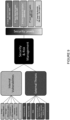
- FIG. 7 provides an overview (specifically, a 3-layered view) of the disclosed methodology.
- the methodology comprises phase I: validation of inputs, phase II: fuzzy inference system, and phase III: output.
- Phase I comprises receiving inputs upon which the fuzzy inference will be based.
- the inputs may include internal and external inputs.
- This phase may comprise classifying the inputs as internal or external.
- Internal inputs define Internal Vulnerabilities, whereas external inputs (the inputs covering external aspects), related to the device's environment or any other external factors, for instance, are taken into account when assessing external Threats.
- Phase II comprises fuzzification, processing of a risk engine (risk evaluation fuzzy engine) which uses fuzzy logic, and defuzzification. These aspects will be described later.
- risk engine risk evaluation fuzzy engine
- defuzzification uses fuzzy logic
- both Internal Vulnerabilities and External Threats may be combined to decide on an overall Risk value.
- Phase III comprises risk/security level selection and implementation of the corresponding security measures. That is, the risk value is used to decide on the most suitable (cyber) security measure(s) to be implemented in order to protect the device.
- Figure 8 illustrates a method of implementing (determining and applying) a security level/policy for a device.
- Step S80 comprises receiving a value for each of a plurality of measurements.
- the measurements represent at least two of
- the measurements may be representative of other quantities/parameters as well or instead of those above.
- Step S90 comprises performing an inference process to determine a security level for the device, and step S100 comprises applying the determined security level (i.e. transmitting (and receiving) communications with the other device according to the determined security level).
- Step S90 may be considered a fuzzy inference process and comprises steps S92-S98.
- Step S92 comprises, for each measurement, using a plurality of membership functions provided for the measurement to determine a plurality of truth values, respectively, and providing for each measurement a plurality of variable-value pairs each comprising a linguistic variable and a corresponding determined truth value.
- a plurality of membership functions is provided for each measurement and correspond respectively to a plurality of linguistic variables for describing the magnitude of the measurement's value.
- the linguistic variables may be considered "fuzzy sets", the membership function defining a mapping between a value and a degree of membership (truth value) of that value in each fuzzy set.
- Each membership function defines a mapping between the measurement's value and a truth value indicative of how well the measurement's value is described by the corresponding linguistic variable.
- a measurement's value may be described as the linguistic variables "low”, “medium”, or “high”.
- the membership functions include three membership functions: one for "low”, one for "medium”, and one for "high”.
- the membership function corresponding to the linguistic variable "low” defines a mapping between a given value of the measurement and a truth value indicative of how well the linguistic variable "low” describes the given value. Examples of membership functions will be described later.
- Step S94 comprises determining a plurality of output variable-value pairs.
- the output variable-value pairs correspond respectively to a plurality of variable-value pair combinations each comprising one determined variable-value pair per each of the plurality of measurements.
- Each variable-value pair for a given measurement may be combined with every variable-value pair for every other measurement to provide the combinations. If there are N measurements n1, n2, n3, ... nN, and the measurements have the following numbers of possible linguistic variables: m1 for measurement n1, m2 for measurement n2, etc., then the number of possible combinations is m1*m2....*mN.
- Each output variable-value pair comprises one of a plurality of risk linguistic variables for describing the magnitude of risk of attack on the device and a risk truth value.
- the risk linguistic variable is determined based on the linguistic variables of the corresponding variable-value pair combination and using rules defining mappings between the risk linguistic variables and combinations of linguistic variables of the measurements.
- the rules may be if-else rules. For example, one rule may define that if measurement n1 has the variable "low” and if measurement n2 has the variable "medium”, then the risk linguistic variable for that combination is "low".
- the risk truth value is determined based on the truth values of the corresponding variable-value pair combination and using at least one formula (or "rule" - though this is not part of the rules illustrated in e.g. Figures 13 and 14 ) defining a mathematical combination of the truth values (i.e. a formula/rule defining how to combine said truth values to determine a said risk truth value).
- the rules used to determine the risk linguistic variable may have different weights which may be used when determining the risk linguistic variables based on the linguistic variables (representing the measurements) and the rules. For example, a first rule could have a higher weight than a second rule and therefore the particular combination of linguistic variables prescribed by the first rule could have more of an impact on the risk linguistic variable than the combination of linguistic variables prescribed by the second rule.
- Step S96 comprises consolidating/aggregating the plurality of output variable-value pairs to determine a numerical value representing the risk of attack on the device (the risk level). This value may also indicate the device's capability to implement security levels. This may be performed according to procedures or "rules" (though not part of the rules illustrated in e.g. Figures 13 and 14 ) defining how to consolidate output variable-value pairs. Step S96 may involve the use of membership functions for the risk linguistic variables.
- the center of gravity (COG) method may be used in step S96. Steps S94 and S96 may be combined together in a single step/process.
- Step S98 comprises determining the security level to apply according to the determined numerical value indicating the risk of attack on the device. Ranges of the numerical value may correspond to security levels. Step S98 may comprise determining to apply a first security level when the determined numerical value is below a first threshold and determining to apply a second security level, which may have higher (and e.g. more resource-intensive) security requirements than the first security level, when the numerical value is above a second threshold.
- the method may be considered a method of implementing a security level for communication between the device and another device.
- the method may be carried out for a plurality of "other devices". That is, the disclosure provides a method of implementing a plurality of security levels for communication between a device and a plurality of other devices, respectively, comprising performing the method described above for communication with each other device.
- DOS denial of service
- One of the widely used attacks are of the DOS type (denial of service) which try to exhaust the available resources (whether it is memory (flooding with messages/events that need to be saved and/or transmitted), energy (for computation and/or communication), bandwidth (flooding the available channels with noise and/or packets, etc)) to make a device unable to counteract an attack.
- Other/alternative measurements for determining a security level may include any other measure of communication quality between the device and the other device communicating with the device (e.g. base station).
- a device in an indoor environment may be considered more secure than a device in an outdoor environment.
- hospitals usefully follow restricted access policies for security reasons, hygienic and infection risks considerations, and for the privacy of the patients and their families. So, a hospital may be considered more secure than an outdoor setting.
- device's in a hospital may handle sensitive information about a patient's wellbeing. This makes a hospital environment particular. The location of the device therefore may be taken into account when designing an adaptive security approach. That is, the location/environment of the device (e.g. indoor, outdoors, hospital) may be a measurement used to determine the security level.
- Figure 9 illustrates an overview of the disclosed methodology.
- Figure 9 shows internal and external inputs (internal vulnerabilities and external threats).
- the method may comprise receiving only internal inputs or only external inputs, or both.
- Figure 9 indicates five example security levels. Level 1 represents the highest possible security level (i.e. the highest security requirements, or the strongest security) whereas level 5 represents the lowest level (basically clear communication without any dedicated security measures).
- Each security level may be defined by an Authentication function and an Encryption function (which may include no authentication/no encryption).
- the different security levels that may be implemented may have different/specific performance requirements.
- Figure 10 shows the requirements that need to be investigated beforehand in order to assess the impact of each security level on the device's overall performance.
- security level 1 has the following performance requirements: energy E1, memory M1, computation C1, delay Nd1, packet los Np1, and throughput Nt1.
- These requirements may be defined as performance specifications that the device must meet in order to implement them, or they may be defined as the drain on the device's resources, for example over a period of time.
- security level 3 will drain computation power C3 from the device over a period of time (e.g. one hour).
- security measures may have a direct impact on energy consumption, memory usage, and computation power, and may also directly affect the device's communication network performance by affecting network delays, Packet loss ratios, and overall network throughput.
- GUI graphical user interface
- a user may use the GUI to input information such as values of measurements and/or rules and/or a location/environment in which the device is currently located or will be located and/or information about security levels.
- the information about security levels may include encryption and/or authentication functions/policies to be implemented with a security level.
- the GUI may be provided on/by an apparatus separate from the device, and may be used to provide input data for the one device or for a plurality of such devices.
- the GUI may be provided by/on the device itself.
- the GUI may allow the selection of measurements/input values to use in the inference process.
- the GUI may allow the selection of a measurement for which an input value will be entered.
- the GUI may display the measurements being used for the inference process.
- the GUI may display the security levels and their authentication/encryption functions/policies currently available for use (i.e. which the device may determine to use).
- a device determines and implements a security policy itself in this example.
- each loT device uses three measurements for determining the security level, namely: Available energy, Available memory, and the current score for external Threat. These three measurements represent the inputs for the Fuzzy Inference System (values of these measurements are used).
- the obtained output is a weight parameter for Risk chosen between 0 and 1, i.e. the numerical value described above. This is then used to determine a security level which is then applied.
- FIG 11 illustrates an overview of this example.
- a first step, on the left, is the Fuzzification process, where the numerical inputs, called crisp values, or simply values, are matched with the corresponding linguistic variables and truth values are determined. This corresponds to step S92.
- the second step, Inference System represents the core of the fuzzy logic system. It is the step in which the Fuzzy Inference Engine solicits a Rules' Base in order to compute the fuzzy values of the outputs (the risk truth values). This corresponds to step S94.
- the third step is Defuzzification, which represents the reverse process of fuzzification.
- the risk linguistic variables' values for the system output are projected according to their risk membership functions in order to determine a crisp (numerical) value for the corresponding risk - the numerical value described above. This corresponds to step S96.
- the underlying details for all these three steps are described in the following subsections.
- the method of this example also includes the other steps of Figure 8 but these are not shown in Figure 11 .
- fuzzification is the process of transforming crisp quantities into fuzzy values (crisp to fuzzy). This conversion is based on membership functions, which are used to determine a grade for each linguistic variable (i.e. a truth value indicating how well the linguistic variable corresponding to the membership function describes the value of the measurement) It represents the first level of a fuzzy inference system, in which the real scalar values of the inputs are changed into fuzzy values.
- the method in this example comprises receiving values for three measurements (energy, storage, threat). Different membership functions are defined for each of the inputs as depicted in Figure 12 .
- Figure 12.(a) represents the membership functions for the first input, namely Energy level. Its corresponding linguistic variables are: (i) low, (ii) medium, and (iii) high. Likewise, Figure 12.(b) shows the membership functions for the second input, which is Available Memory. It consists of the three linguistic variables: (i) low, (ii) medium, and (iii) high. Finally, Figure 10.(c) shows the membership functions for Threat level. Its corresponding linguistic variables are: (i) low, (ii) medium, (iii) high, and (iv) critical.
- the measurement "threat level” may be defined by a combination of measurements related to the environment of the device, for example any of those shown in Figure 9 . It may correspond to only one of those measurements, for example distance to the other device with which the device is configured to communicate. It may be decided by a user (subject-matter expert) based on the current environment/circumstances of the device/system.
- Energy may be the energy remaining in the device's battery measured by the device.
- Storage may be the remaining available storage space in the device's memory measured by the device.
- the inference system step represents the decision-making process of the method, an operation of the fuzzy logic engine.
- This decision-making process is performed through a decisive fuzzy inference engine, in which the decision is made over a suitable predefined rule base.
- Each entry in this rule base has an IF-THEN statement, with "AND” or “OR” connectors to make the necessary links amongst the fuzzy variables.
- Creating the rule base may be performed before the method is carried out, for example by a subject-matter expert and/or computationally and/or using historical data and/or trial-and-error.
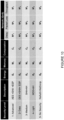
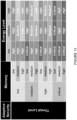
- the rule base for this example is represented by Figure 13 , which shows the risk linguistic variables ("low”, “medium”, “high”, “critical") resulting from each combination of linguistic variables for the measurements. There are 36 different cases, representing all the possible linguistic variable combinations of the three measurements, that is, 36 variable-value pair combinations.
- the following examples show the structure of the "IF-THEN" statements used to implement the rule base:
- Figure 14 illustrates the 21 rules of the rule base used to determine a risk linguistic variable based on a combination of linguistic variables (one for each measurement: energy, storage, threat).
- a rule only uses two conditions, this is because the rule applies for all combinations with these two conditions. That is, the risk linguistic variable is always low according to a combination of the linguistic variable "low” for memory and the linguistic variable "low” for threat, for any linguistic variable for "energy”. This is why there are only 21 rules for the 36 combinations of linguistic variables.
- Each of the 36 combinations may lead to a risk linguistic variable and a risk truth value, i.e. an output variable-value pair.
- the risk truth value of a combination is determined based on the truth values associated with the linguistic variables of the combination, as described above.
- the measurement value for memory may be such that the membership function for the linguistic variable "low” is zero.
- the rules which do give rise to output variable-value pairs may be referred to as "activated" rules.
- Defuzzification is the process of producing a quantifiable value (numerical value) based on the corresponding fuzzy logic variables (risk linguistic variables) and their corresponding membership degrees/truth values, as described above. This may be considered a fuzzy to crisp conversion. In this example, this process is implemented through the four corresponding membership functions illustrated in Figure 13 .
- fuzzy logic may rely on (and approximates) the human cognitive experience and understanding of a system.
- the rule-base used in the example uses 21 different entries, shown in Figure 14 , to implement all the 36 possible combinations shown in Figure 13 .
- Figure 16 is a graphical depiction showing how the numerical value output (y-axis) varies with each measurement (x-axis) (whilst the other two measurement values are held constant). That is, Figure 16 illustrates a visual representation for the input/output correlation, i.e. figure 16 shows the impact that each input has on the overall output independently from the values of two other inputs.
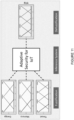
- Figure 17 shows the impact in a different way.
- Figure 17(a) shows the impact of threat and energy on the numerical value (with memory held constant), for example.
- Figure 17 (a-c) show the joint impact of the measurements two-by-two on the system output (numerical value).
- Figures 18 and 19 show two running examples with different values for the three inputs and the resulting output.
- the available energy value is 25%
- the available memory is 75%
- the perceived external threat level is 0.85
- the overall risk value would be equal to: 0.624.
- the second example if only 15% on energy is available; and 25% of memory may still be used; and the perceived external threat is estimated to be 0.35, then the overall system risk value will be equal to 0.587.
- the first three columns on the left represent the three inputs, from left to right: energy, memory and threat, respectively, while the column on the right represents the output: security level (or risk).
- the 21 rows represent the rules shown in Figure 14 .
- the disclosed methodology may be applied in any scenario involving adaptive risk evaluation.
- an overall adaptive security system design would start by properly identifying the required inputs and how they might affect the output.
- the second stage would focus on implementing the Fuzzy Inference System for decision making.
- appropriate security measures/levels would be set.
- the disclosed methodology aims at improving cyber-security of constrained devices by implementing security measures depending on context, for example in a real-time manner and without human intervention.
- the computed risk score (numerical value) is optimised and adapted accordingly, thus optimising the overall system response by finding the right performance balance between security and service availability.
- this disclosure relates to a computer-implementable proactive method for automatically performing adaptive security and privacy preserving operations, comprising:
- Figure 21 is a block diagram of an information processing apparatus 10 or a computing device 10, such as a data storage server, which embodies the present invention, and which may be used to implement some or all of the operations of a method embodying the present invention, and perform some or all of the tasks of apparatus of an embodiment.
- the computing device 10 may be used to implement any of the method steps described above, e.g. any of steps S80-S100.
- the computing device 10 comprises a processor 993 and memory 994.
- the computing device also includes a network interface 997 for communication with other such computing devices, for example with other computing devices of invention embodiments.
- the computing device also includes one or more input mechanisms such as keyboard and mouse 996, and a display unit such as one or more monitors 995. These elements may facilitate user interaction.
- the components are connectable to one another via a bus 992.
- the memory 994 may include a computer readable medium, which term may refer to a single medium or multiple media (e.g., a centralized or distributed database and/or associated caches and servers) configured to carry computer-executable instructions.
- Computer-executable instructions may include, for example, instructions and data accessible by and causing a computer (e.g., one or more processors) to perform one or more functions or operations.
- the computer-executable instructions may include those instructions for implementing a method disclosed herein, or any method steps disclosed herein, for example any of steps S80-S100.
- computer-readable storage medium may also include any medium that is capable of storing, encoding or carrying a set of instructions for execution by the machine and that cause the machine to perform any one or more of the method steps of the present disclosure.
- the term “computer-readable storage medium” may accordingly be taken to include, but not be limited to, solid-state memories, optical media and magnetic media.
- such computer-readable media may include non-transitory computer-readable storage media, including Random Access Memory (RAM), Read-Only Memory (ROM), Electrically Erasable Programmable Read-Only Memory (EEPROM), Compact Disc Read-Only Memory (CD-ROM) or other optical disk storage, magnetic disk storage or other magnetic storage devices, flash memory devices (e.g., solid state memory devices).
- the processor 993 is configured to control the computing device and execute processing operations, for example executing computer program code stored in the memory 994 to implement any of the method steps described herein.
- the memory 994 stores data being read and written by the processor 993 and may store rules and/or values and/or lengths of time (to compare against thresholds) and/or information about security levels and/or encryption algorithms and/or authentication algorithms and/or input data and/or other data, described above, and/or programs for executing any of the method steps described above.
- a processor may include one or more general-purpose processing devices such as a microprocessor, central processing unit, or the like.
- the processor may include a complex instruction set computing (CISC) microprocessor, reduced instruction set computing (RISC) microprocessor, very long instruction word (VLIW) microprocessor, or a processor implementing other instruction sets or processors implementing a combination of instruction sets.
- the processor may also include one or more special-purpose processing devices such as an application specific integrated circuit (ASIC), a field programmable gate array (FPGA), a digital signal processor (DSP), network processor, or the like.
- ASIC application specific integrated circuit
- FPGA field programmable gate array
- DSP digital signal processor
- a processor is configured to execute instructions for performing the operations and operations discussed herein.
- the processor 993 may be considered to comprise any of the modules described above. Any operations described as being implemented by a module may be implemented as a method by a computer and e.g. by the processor 993.
- the display unit 995 may display a representation of data stored by the computing device, such as a representation of what security level is determined/applied and/or GUI windows and/or interactive representations enabling a user to interact with the apparatus 10 by e.g. drag and drop or selection interaction, and/or any other output described above, and may also display a cursor and dialog boxes and screens enabling interaction between a user and the programs and data stored on the computing device.
- the input mechanisms 996 may enable a user to input data and instructions to the computing device, such as enabling a user to input any user input described above.
- the network interface (network I/F) 997 may be connected to a network, such as the Internet, and is connectable to other such computing devices via the network.
- the network I/F 997 may control data input/output from/to other apparatus via the network.
- Other peripheral devices such as microphone, speakers, printer, power supply unit, fan, case, scanner, trackerball etc may be included in the computing device.
- Methods embodying the present invention may be carried out on a computing device/apparatus 10 such as that illustrated in Figure 21 .
- a computing device need not have every component illustrated in Figure 21 , and may be composed of a subset of those components.
- the apparatus 10 may comprise the processor 993 and the memory 994 connected to the processor 993.
- the apparatus 10 may comprise the processor 993, the memory 994 connected to the processor 993, and the display 995.
- a method embodying the present invention may be carried out by a single computing device in communication with one or more data storage servers via a network.
- the computing device may be a data storage itself storing at least a portion of the data.
- a method embodying the present invention may be carried out by a plurality of computing devices operating in cooperation with one another.
- One or more of the plurality of computing devices may be a data storage server storing at least a portion of the data.
- the invention may be implemented in digital electronic circuitry, or in computer hardware, firmware, software, or in combinations of them.
- the invention may be implemented as a computer program or computer program product, i.e., a computer program tangibly embodied in a non-transitory information carrier, e.g., in a machine-readable storage device, or in a propagated signal, for execution by, or to control the operation of, one or more hardware modules.
- a computer program may be in the form of a stand-alone program, a computer program portion or more than one computer program and may be written in any form of programming language, including compiled or interpreted languages, and it may be deployed in any form, including as a stand-alone program or as a module, component, subroutine, or other unit suitable for use in a data processing environment.
- a computer program may be deployed to be executed on one module or on multiple modules at one site or distributed across multiple sites and interconnected by a communication network.
- Method steps of the invention may be performed by one or more programmable processors executing a computer program to perform functions of the invention by operating on input data and generating output.
- Apparatus of the invention may be implemented as programmed hardware or as special purpose logic circuitry, including e.g., an FPGA (field programmable gate array) or an ASIC (application-specific integrated circuit).
- processors suitable for the execution of a computer program include, by way of example, both general and special purpose microprocessors, and any one or more processors of any kind of digital computer.
- a processor will receive instructions and data from a read-only memory or a random access memory or both.
- the essential elements of a computer are a processor for executing instructions coupled to one or more memory devices for storing instructions and data.
Landscapes
- Engineering & Computer Science (AREA)
- Computer Security & Cryptography (AREA)
- Computer Networks & Wireless Communication (AREA)
- Signal Processing (AREA)
- General Engineering & Computer Science (AREA)
- Computer Hardware Design (AREA)
- Software Systems (AREA)
- Theoretical Computer Science (AREA)
- Computing Systems (AREA)
- Physics & Mathematics (AREA)
- General Physics & Mathematics (AREA)
- Automation & Control Theory (AREA)
- Evolutionary Computation (AREA)
- Data Mining & Analysis (AREA)
- Computational Linguistics (AREA)
- Mathematical Physics (AREA)
- Artificial Intelligence (AREA)
- Fuzzy Systems (AREA)
- Computer And Data Communications (AREA)
Priority Applications (3)
| Application Number | Priority Date | Filing Date | Title |
|---|---|---|---|
| EP23155403.1A EP4415313A1 (de) | 2023-02-07 | 2023-02-07 | Sicherheitsrichtlinienbestimmung und anwendung |
| US18/520,835 US20240267737A1 (en) | 2023-02-07 | 2023-11-28 | Security policy determination and application |
| JP2024011050A JP2024112292A (ja) | 2023-02-07 | 2024-01-29 | セキュリティポリシーの判定及び適用 |
Applications Claiming Priority (1)
| Application Number | Priority Date | Filing Date | Title |
|---|---|---|---|
| EP23155403.1A EP4415313A1 (de) | 2023-02-07 | 2023-02-07 | Sicherheitsrichtlinienbestimmung und anwendung |
Publications (1)
| Publication Number | Publication Date |
|---|---|
| EP4415313A1 true EP4415313A1 (de) | 2024-08-14 |
Family
ID=85199122
Family Applications (1)
| Application Number | Title | Priority Date | Filing Date |
|---|---|---|---|
| EP23155403.1A Withdrawn EP4415313A1 (de) | 2023-02-07 | 2023-02-07 | Sicherheitsrichtlinienbestimmung und anwendung |
Country Status (3)
| Country | Link |
|---|---|
| US (1) | US20240267737A1 (de) |
| EP (1) | EP4415313A1 (de) |
| JP (1) | JP2024112292A (de) |
Families Citing this family (2)
| Publication number | Priority date | Publication date | Assignee | Title |
|---|---|---|---|---|
| CN117768247B (zh) * | 2024-02-22 | 2024-05-14 | 广东电网有限责任公司中山供电局 | 市场交易物联网数据的安全性检测方法、装置和电子设备 |
| CN118114307B (zh) * | 2024-04-30 | 2024-08-20 | 徐州医科大学 | 一种面向wban的数据全生命周期动态安全计算模型 |
Citations (2)
| Publication number | Priority date | Publication date | Assignee | Title |
|---|---|---|---|---|
| US20080102797A1 (en) * | 2003-08-12 | 2008-05-01 | 3E Technologies, International, Inc. | Method and system for wireless intrusion detection, prevention and security management |
| EP4057569A1 (de) * | 2021-03-12 | 2022-09-14 | AO Kaspersky Lab | System und verfahren zur konfiguration von iot-vorrichtungen in abhängigkeit vom netztyp |
Family Cites Families (2)
| Publication number | Priority date | Publication date | Assignee | Title |
|---|---|---|---|---|
| US20080083029A1 (en) * | 2006-09-29 | 2008-04-03 | Alcatel | Intelligence Network Anomaly Detection Using A Type II Fuzzy Neural Network |
| US9704318B2 (en) * | 2015-03-30 | 2017-07-11 | Afero, Inc. | System and method for accurately sensing user location in an IoT system |
-
2023
- 2023-02-07 EP EP23155403.1A patent/EP4415313A1/de not_active Withdrawn
- 2023-11-28 US US18/520,835 patent/US20240267737A1/en active Pending
-
2024
- 2024-01-29 JP JP2024011050A patent/JP2024112292A/ja active Pending
Patent Citations (2)
| Publication number | Priority date | Publication date | Assignee | Title |
|---|---|---|---|---|
| US20080102797A1 (en) * | 2003-08-12 | 2008-05-01 | 3E Technologies, International, Inc. | Method and system for wireless intrusion detection, prevention and security management |
| EP4057569A1 (de) * | 2021-03-12 | 2022-09-14 | AO Kaspersky Lab | System und verfahren zur konfiguration von iot-vorrichtungen in abhängigkeit vom netztyp |
Non-Patent Citations (5)
| Title |
|---|
| B. YUVARADNI ET AL.: "Health Monitoring Services Using Wireless Body Area Network", IMPERIAL JOURNAL OF INTERDISCIPLINARY RESEARCH (IJIR, vol. 2, no. 5, 2016, pages 1648 - 1651 |
| FURNELL ET AL.: "Understanding the full cost of cyber security breaches", COMPUTER FRAUD & SECURITY 2020, vol. 12, 2020, pages 6 - 12, XP086418634, DOI: 10.1016/S1361-3723(20)30127-5 |
| K. VENUGOPALA. KUMAR: "Centralized heart rate monitoring and automated message alert system using WBAN", INTERNATIONAL JOURNAL OF SCIENTIFIC AND RESEARCH PUBLICATIONS, vol. 3, no. 9, September 2013 (2013-09-01) |
| RASYID, F ET AL.: "Implementation of blood glucose levels monitoring system based on Wireless Body Area Network", 2016 IEEE INTERNATIONAL CONFERENCE ON CONSUMER ELECTRONICS-TAIWAN (ICCE-TW), NANTOU, 2016, pages 1 - 2, XP032931246, DOI: 10.1109/ICCE-TW.2016.7521005 |
| S.N. SIVANANDAM ET AL.: "Introduction to Fuzzy Logic using MATLAB", vol. 1, 2007, SPRINGER |
Also Published As
| Publication number | Publication date |
|---|---|
| JP2024112292A (ja) | 2024-08-20 |
| US20240267737A1 (en) | 2024-08-08 |
Similar Documents
| Publication | Publication Date | Title |
|---|---|---|
| Zaman et al. | Security threats and artificial intelligence based countermeasures for internet of things networks: a comprehensive survey | |
| Javed et al. | Internet of things (IoT) design considerations for developers and manufacturers | |
| US20240267737A1 (en) | Security policy determination and application | |
| Gwassi et al. | Cyber-XAI-Block: an end-to-end cyber threat detection & fl-based risk assessment framework for iot enabled smart organization using xai and blockchain technologies | |
| Al-Dalati | Digital twins and cybersecurity in healthcare systems | |
| Bampatsikos et al. | Trust score prediction and management in iot ecosystems using markov chains and madm techniques | |
| Chinnaperumal et al. | Secure and intelligent 5G-enabled remote patient monitoring using ANN and Choquet integral fuzzy VIKOR | |
| Sharma et al. | Enhancing healthcare security: Time‐based authentication for privacy‐preserving IoMT sensor monitoring framework leveraging blockchain technology | |
| Misbah et al. | Securing Internet of Medical Things: An Advanced Federated Learning Approach. | |
| Abdelbasit | Cybersecurity attacks detection for MQTT-IoT networks using machine learning ensemble techniques | |
| Hireche et al. | Fault tolerance and security management in IoMT | |
| Butpheng et al. | A Secure IoT and Cloud Computing‐Enabled e‐Health Management System | |
| Garg et al. | Machine Learning-Based Security Approaches for Wireless Body Area Networks | |
| Mekki et al. | A privacy-preserving scheme using chaos theory for wireless body area network | |
| Khan et al. | Fed-iomt-block: A privacy-preserving framework for secure federated learning in consumer-centric internet of medical things | |
| Singh et al. | Preserving security in terms of authentication on blockchain-based wireless sensor network (WSN) | |
| Thiruchelvam et al. | Safeguarding patient data: advanced security in wireless body area networks and AI-driven healthcare systems | |
| Jasim et al. | Network Fortification: Leveraging Support Vector Machine for Enhanced Security in Wireless Body Area Networks. | |
| Samant et al. | A lightweight trusted framework for secure data exchange and threat mitigation in IoT-enabled healthcare environments | |
| Shandilya et al. | IoT security: An introduction | |
| Sharma et al. | Enhancing IoMT security: a novel blockchain-based anomaly detection framework leveraging explainable AI | |
| Mishra et al. | Intrusion detection in Internet of Things based e-healthcare system-a systematic review | |
| Dehnashi | Deep Reinforcement Learning (DRL) Model to Detect Bit-and-Piece DDoS Attacks Against Low Powered (6LowPAN) Wirelessly Connected Devices on the Internet of Things (IoT) Network Systems | |
| Tiwari et al. | Challenges and solutions for countering emerging security threats to iot devices | |
| Bhole et al. | Towards Unveiling Vulnerabilities and Securing IoT Devices: An Ontology-Based Approach |
Legal Events
| Date | Code | Title | Description |
|---|---|---|---|
| PUAI | Public reference made under article 153(3) epc to a published international application that has entered the european phase |
Free format text: ORIGINAL CODE: 0009012 |
|
| STAA | Information on the status of an ep patent application or granted ep patent |
Free format text: STATUS: THE APPLICATION HAS BEEN PUBLISHED |
|
| AK | Designated contracting states |
Kind code of ref document: A1 Designated state(s): AL AT BE BG CH CY CZ DE DK EE ES FI FR GB GR HR HU IE IS IT LI LT LU LV MC ME MK MT NL NO PL PT RO RS SE SI SK SM TR |
|
| STAA | Information on the status of an ep patent application or granted ep patent |
Free format text: STATUS: THE APPLICATION IS DEEMED TO BE WITHDRAWN |
|
| 18D | Application deemed to be withdrawn |
Effective date: 20250215 |