EP4413758B1 - Netzwerkknoten, benutzergerät und verfahren zur handhabung von kommunikationen mit mehreren sim-modulen - Google Patents
Netzwerkknoten, benutzergerät und verfahren zur handhabung von kommunikationen mit mehreren sim-modulen Download PDFInfo
- Publication number
- EP4413758B1 EP4413758B1 EP22790095.8A EP22790095A EP4413758B1 EP 4413758 B1 EP4413758 B1 EP 4413758B1 EP 22790095 A EP22790095 A EP 22790095A EP 4413758 B1 EP4413758 B1 EP 4413758B1
- Authority
- EP
- European Patent Office
- Prior art keywords
- wireless communications
- indication
- network
- capability
- communications network
- Prior art date
- Legal status (The legal status is an assumption and is not a legal conclusion. Google has not performed a legal analysis and makes no representation as to the accuracy of the status listed.)
- Active
Links
Images





Classifications
-
- H—ELECTRICITY
- H04—ELECTRIC COMMUNICATION TECHNIQUE
- H04W—WIRELESS COMMUNICATION NETWORKS
- H04W8/00—Network data management
- H04W8/22—Processing or transfer of terminal data, e.g. status or physical capabilities
- H04W8/24—Transfer of terminal data
-
- H—ELECTRICITY
- H04—ELECTRIC COMMUNICATION TECHNIQUE
- H04W—WIRELESS COMMUNICATION NETWORKS
- H04W60/00—Affiliation to network, e.g. registration; Terminating affiliation with the network, e.g. de-registration
- H04W60/005—Multiple registrations, e.g. multihoming
-
- H—ELECTRICITY
- H04—ELECTRIC COMMUNICATION TECHNIQUE
- H04W—WIRELESS COMMUNICATION NETWORKS
- H04W8/00—Network data management
- H04W8/18—Processing of user or subscriber data, e.g. subscribed services, user preferences or user profiles; Transfer of user or subscriber data
- H04W8/20—Transfer of user or subscriber data
- H04W8/205—Transfer to or from user equipment or user record carrier
-
- H—ELECTRICITY
- H04—ELECTRIC COMMUNICATION TECHNIQUE
- H04W—WIRELESS COMMUNICATION NETWORKS
- H04W72/00—Local resource management
- H04W72/50—Allocation or scheduling criteria for wireless resources
- H04W72/51—Allocation or scheduling criteria for wireless resources based on terminal or device properties
-
- H—ELECTRICITY
- H04—ELECTRIC COMMUNICATION TECHNIQUE
- H04W—WIRELESS COMMUNICATION NETWORKS
- H04W84/00—Network topologies
- H04W84/02—Hierarchically pre-organised networks, e.g. paging networks, cellular networks, WLAN [Wireless Local Area Network] or WLL [Wireless Local Loop]
- H04W84/04—Large scale networks; Deep hierarchical networks
- H04W84/042—Public Land Mobile systems, e.g. cellular systems
-
- H—ELECTRICITY
- H04—ELECTRIC COMMUNICATION TECHNIQUE
- H04W—WIRELESS COMMUNICATION NETWORKS
- H04W88/00—Devices specially adapted for wireless communication networks, e.g. terminals, base stations or access point devices
- H04W88/02—Terminal devices
- H04W88/06—Terminal devices adapted for operation in multiple networks or having at least two operational modes, e.g. multi-mode terminals
Definitions
- Embodiments herein relate to a user equipment (UE), a first network node, and methods performed therein regarding wireless communication. Furthermore, a computer program product and a computer-readable storage medium are also provided herein. In particular, embodiments herein relate to handling communication, such as handling operation of a multi- Subscriber Identity Module (SIM) user equipment.
- SIM Subscriber Identity Module
- UEs also known as wireless communication devices, mobile stations, stations (STA) and/or wireless devices, communicate via a Radio Access Network (RAN) with one or more core networks (CN).
- the RAN covers a geographical area which is divided into service areas or cell areas, with each service area or cell area being served by radio network node such as an access node, e.g., a Wi-Fi access point or a radio base station (RBS), which in some networks may also be called, for example, a NodeB, a gNodeB, or an eNodeB.
- the service area or cell area is a geographical area where radio coverage is provided by the radio network node.
- the radio network node operates on radio frequencies to communicate over an air interface with the UEs within range of the radio network node.
- the radio network node communicates over a downlink (DL) to the UE, and the UE communicates over an uplink (UL) to the radio network node.
- DL downlink
- UL uplink
- a Universal Mobile Telecommunications System is a third generation telecommunication network, which evolved from the second generation (2G) Global System for Mobile Communications (GSM).
- the UMTS terrestrial radio access network (UTRAN) is essentially a RAN using wideband code division multiple access (WCDMA) and/or High-Speed Packet Access (HSPA) for communication with user equipment.
- WCDMA wideband code division multiple access
- HSPA High-Speed Packet Access
- 3GPP Third Generation Partnership Project
- telecommunications suppliers propose and agree upon standards for present and future generation networks and UTRAN specifically, and investigate enhanced data rate and radio capacity.
- 3GPP Third Generation Partnership Project
- radio network nodes may be connected, e.g., by landlines or microwave, to a controller node, such as a radio network controller (RNC) or a base station controller (BSC), which supervises and coordinates various activities of the plural radio network nodes connected thereto.
- RNC radio network controller
- BSC base station controller
- the RNCs are typically connected to one or more core networks.
- the Evolved Packet System comprises the Evolved Universal Terrestrial Radio Access Network (E-UTRAN), also known as the Long-Term Evolution (LTE) radio access network, and the Evolved Packet Core (EPC), also known as System Architecture Evolution (SAE) core network.
- E-UTRAN also known as the Long-Term Evolution (LTE) radio access network
- EPC also known as System Architecture Evolution (SAE) core network.
- SAE System Architecture Evolution
- E-UTRAN/LTE is a 3GPP radio access technology wherein the radio network nodes are directly connected to the EPC core network.
- the Radio Access Network (RAN) of an EPS has an essentially "flat" architecture comprising radio network nodes connected directly to one or more core networks.
- Transmit-side beamforming means that the transmitter can amplify the transmitted signals in a selected direction or directions, while suppressing the transmitted signals in other directions.
- a receiver can amplify signals from a selected direction or directions, while suppressing unwanted signals from other directions.
- Next generation systems are expected to support a wide range of use cases with varying requirements ranging from fully mobile devices to stationary internet of things (IoT) or fixed wireless broadband devices.
- the traffic pattern associated with many use cases may be expected to consist of short or long bursts of data traffic with varying length of waiting period in between, here called inactive state.
- both license assisted access and standalone unlicensed operation are to be supported.
- the procedure of Physical Random Access Channel (PRACH) transmission and/or Scheduling Request (SR) transmission in unlicensed spectrum may be investigated in 3GPP.
- PRACH Physical Random Access Channel
- SR Scheduling Request
- SIM Multiple Subscriber Identity Module
- Multi-SIM devices are devices which enable use of multiple subscriptions in one device using more than one Universal Mobile Telecommunications System (UMTS) Subscriber Identity Module (USIM).
- UMTS Universal Mobile Telecommunications System
- Multi-SIM UE's can support concurrent registration to more than one network simultaneously and, e.g., if a UE has two different radios implemented, such as both dual receive (Rx) and dual transmit (Tx) capability, it would be possible for the UE to behave as two separate UEs and communicate with two networks at the same time.
- Rx dual receive
- Tx dual transmit
- MUSIMs USIMs
- a user may have a work SIM, a private SIM, and other SIMs for other purposes, which may be used in one or more UEs.
- mobile devices such as, a smartphone, a smartwatch and other wearables, need to have multi-SIM capability to be able to connect to the same mobile number.
- Multi-SIM capability for voice calls means that a user may be reached at the same mobile number via these devices without connecting via the smartphone.
- MUSIM devices e.g., UEs with more than one receiver (Rx) and/or transmitter (Tx), may simultaneously connect to more than one network such as a Public Land Mobile Network (PLMN).
- PLMN Public Land Mobile Network
- Factors such as, e.g., different possible network configurations and a changing demand for diverse types of operations, e.g., multi-carrier, can affect the complexity of such frameworks. For example, for UEs with dual Rx and dual Tx radios, certain services on one network may require both radios to satisfy quality of service (QoS) requirements, leaving no resources for another network.
- QoS quality of service
- a wireless device such as a UE
- decisions may need to be made regarding what communication(s) to prioritize.
- a network may, e.g., continue scheduling data to a UE that is no longer able to receive data, which in turn deteriorates network performance.
- certain services may require, e.g., both radios of a dual radio UE, leaving no resources for communications with another network.
- Document US 2021/120524 A1 describes different embodiments directed to multiple subscriber identity modules operation in a UE in communication with a network.
- the UE can report a set of "delta" configuration to the semi-static capability it reported earlier to the network instead of reporting a reduction from the original capability.
- the "delta” can be reported any time there is change in configuration on any network the UE is in connected mode with, that resulted in a change in the set of capabilities the UE reports.
- Document WO 2019/095254 A1 decribes a method where the UE provides assistance information to LTE and NR networks in a multi radio access technology with dual connectivity.
- Document WO 2021/069085 A1 describes method for facilitating paging of a multi-SIM UE.
- An object herein is to provide improved handling of operation of a multi-SIM UE. More specifically, embodiments of the present disclosure provide a way for a UE to signal its capability to network(s), in a manner that does not require any specification changes. Thus, the UE signals or provides its full capability to one or more networks to which the UE is registered. To indicate changes in the UE capability, which may require resource reduction, e.g., release of one or more carrier frequencies, an indication is provided to one or more networks with which the UE communicates, and which were previously informed of the full UE capability. The indication may be in the form of, e.g., a so-called MUSIM-related assistance information.
- the UE assistance information can be provided using an existing In-Device Coexistence (IDC) Assistance Information, which can be reused, along with an additional indication on multiple SIM usage/connectivity.
- IDC In-Device Coexistence
- the additional indication in accordance with embodiments of the present disclosure may be provided, from the UE to the network, that a (previous) IDC Assistance Information message is signalled because the UE is connected to multiple networks and has simultaneous communication issues.
- the object is achieved by providing a method performed by a UE having multiple SIMs, for simultaneous communication with two or more wireless communications networks.
- the method comprises:
- the object is achieved by providing a method performed by a first network node associated with a wireless communications network.
- the method comprises: receiving, from a UE, information on a full capability of the UE (102), wherein the UE has at least two SIMs and is simultaneously registered with the wireless communications network and at least a second wireless communications network;
- a computer program product comprising instructions, which, when executed on at least one processor of a user equipment, UE, or of a first network node, cause the UE to carry out any of the methods herein, as performed by the UE and the first network node, respectively.
- a computer-readable storage medium having stored thereon a computer program product comprising instructions which, when executed on at least one processor, of a user equipment, UE, or of a first network node, cause the UE or the first network node to carry out any of the methods herein, as performed by the UE and the first network node, respectively.
- the object is further achieved by providing a UE and a first network node configured to perform the methods herein, respectively.
- a UE having multiple SIMs for simultaneous communication with two or more wireless communications networks.
- the UE is configured to provide, to a first network node associated with a first wireless communications network associated with a first SIM, information on full capability of the UE, wherein the UE is registered with the first wireless communications network.
- the UE is further configured to provide, to a second network node associated with a second wireless communications network associated with a second SIM, the information on the full capability of the UE, wherein the UE is registered with the second wireless communications network such that the UE is simultaneously registered with the first wireless communications network and the second wireless communications network.
- the UE is further configured to split the full capability among the first and second SIMs into a first reduced capability and a second reduced capability; and then to provide a first indication of the first reduced capability to the first network node; and/or to provide a second indication of the second reduced capability to the second network node wherein at least one of the first indication of the first reduced capability and/or the second indication of the second reduced capability is provided in an In-Device-Coexistence, IDC, assistance information in combination with a multiple SIM indication, and wherein at least one of the first indication of the first reduced capability and the second indication of the second reduced capability comprises an indication of one or more carrier frequencies that are not to be used as compared to carrier frequencies in the full capacity.
- IDC In-Device-Coexistence
- the first network node is configured to receive from a UE, information on a full capability of the UE, wherein the UE has at least two SIMs, and is simultaneously registered with the first wireless communications network and at least a second wireless communications network.
- the first network node is further configured to receive, from the UE, a first indication of a first reduced capability of the UE indicating a split of the full capability of the UE among the at least two SIMs; wherein the first indication of the first reduced capability is received in an In-Device-Coexistence, IDC, assistance information in combination with a multiple SIM indication, and wherein the first indication of the first reduced capability comprises an indication of one or more carrier frequencies that are not to be used as compared to carrier frequencies in the full capacity and to provide, to the UE, a reconfiguration instruction, in response to the received first indication of the first reduced capability of the UE.
- Embodiments herein allow allocation of resources for communication between UE and multiple wireless communications networks in a more efficient, dynamic manner. Before a reduced capability is to be reported with a respective indication, the UE reports its full capability to respective network node, such that no changes to Radio Resource Control (RRC) protocol specification are needed. Also, granularity is improved for cases in which the UE needs to free up specific radio frequency (RF) chains for multi-SIM purposes.
- RRC Radio Resource Control
- RF radio frequency
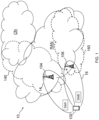
- FIG. 1 is a schematic overview depicting a wireless communications network 10.
- the wireless communications network 10 comprises one or more RANs and one or more CNs.
- the wireless communications network 10 may use one or a number of different technologies.
- Embodiments herein relate to recent technology trends that are of particular interest in a New Radio (NR) context, however, embodiments are also applicable in further developments of existing wireless communications systems such as e.g. LTE or Wideband Code Division Multiple Access (WCDMA).
- NR New Radio
- WCDMA Wideband Code Division Multiple Access
- a user equipment (UE) 102 such as a mobile station, a wireless device, a non-access point (non-AP) STA, a STA, and/or a wireless terminal, is communicating via e.g. one or more Access Networks (AN), e.g. RAN, to one or more core networks (CN).
- AN Access Networks
- CN core networks
- UE is a non-limiting term which means any terminal, wireless communications terminal or device, user equipment, NB-IoT device, Machine Type Communication (MTC) device, Device to Device (D2D) terminal, or node, e.g. smart phone, laptop, mobile phone, sensor, relay, mobile tablets or even a small base station capable of communicating using radio communication with a radio network node within an area served by the radio network node.
- MTC Machine Type Communication
- D2D Device to Device
- the wireless communications network 10 comprises one or more first network nodes.
- the wireless communications network 10 comprises a first network node 104, e.g., an access node, an access controller, a base station, e.g. a radio base station such as a gNodeB (gNB), an evolved Node B (eNB, eNode B), a NodeB, a base transceiver station, a radio remote unit, an Access Point Base Station, a base station router, a Wireless Local Area Network (WLAN) access point or an Access Point Station (AP STA), MME, AMF, a stand-alone access point, or any other network unit or node capable of communicating with a wireless device within a service area 14 served by the radio network node depending e.g., on a radio access technology and terminology used.
- the service area 14 may also be referred to as a beam or a beam group of a first radio access technology (RAT), such as 5G, LTE, Wi-Fi, or similar.
- the first network node 104 may be associated with and provide radio communication in a first wireless communications network 140, such as, e.g., a first Public Land Mobile Network (PLMN) or a first Non-Public Network (NPN).
- PLMN Public Land Mobile Network
- NPN Non-Public Network
- the first wireless communications network 140 may be implemented as a combination of a PLMN and an NPN.
- the wireless communications network 10 comprises a second network node 106, e.g., an access node, an access controller, a base station, e.g. a radio base station such as a gNodeB (gNB), an evolved Node B (eNB, eNode B), a NodeB, a base transceiver station, a radio remote unit, an Access Point Base Station, a base station router, a Wireless Local Area Network (WLAN) access point or an Access Point Station (AP STA), MME, AMF, a stand-alone access point, or any other network unit or node capable of communicating with a wireless device within a service area 16 served by the radio network node depending e.g., on a radio access technology and terminology used.
- a radio base station e.gNodeB
- eNB evolved Node B
- eNode B evolved Node B
- NodeB a base transceiver station
- a radio remote unit e.gNodeB
- the service area 16 may also be referred to as a beam or a beam group of a first radio access technology (RAT), such as 5G, LTE, Wi-Fi, or similar.
- the second network node 106 may be associated with and provide radio communication in a second wireless communications network 160, such as, e.g., a second PLMN or a second NPN.
- the second wireless communications network 160 may be implemented as a combination of a PLMN and an NPN.
- Embodiments of the present disclosure relate to multi-SIM, or MUSIM, devices that can enable users to be registered to multiple networks, such as PLMNs, NPNs, or a combination thereof.
- networks such as PLMNs, NPNs, or a combination thereof.
- UEs equipped with dual radio capabilities might enable simultaneous connection to two networks, i.e., can support RRC Connected mode in both networks, without a need to interrupt the service of the other.
- the UE 102 is a multi-SIM UE and it may have a first SIM, shown as SIM1, and a second SIM, shown as SIM2, though it should be appreciated that the UE 102 may have more than two SIMs.
- the first wireless communications network 140 such as the first PLMN or NPN
- the second wireless communications network 160 such as the second PLMN or NPN, is associated with the second SIM of the wireless communication device.
- the UE 102 is registered with both the first and second wireless communications networks 140, 160, which may be respective PLMNs, NPNs, or a combination of PLMN(s) and NPN(s).
- a PLMN is defined as a wireless communications network that provides a combination of wireless communication services offered by an operator.
- an NPN is defined as a private network that is deployed for private use by an entity such as a government or company.
- the different SIMs are associated with different PLMNs or NPNs.
- the UE 102 may have more than one SIM which is associated with the same PLMN or NPN, e.g., the UE 102 may have two SIMs from the same operator.
- Some aspects of the present disclosure may be implemented in connection with the RRC protocol.
- the present disclosure may be implemented in a cloud environment.
- the UE 102 may have more than one radio, such as, e.g., both dual receive (Rx) and dual transmit (Tx) capability.
- the radios may support RRC Connected mode in a network, e.g., one of the first and second wireless communications networks 140, 160, without interrupting service of the other network, e.g., the other one of the first and second wireless communications networks 140, 160.
- the number of Rx/Tx radio chains may play a role on how multi-SIM UEs are managed.
- different possible network configurations and a changing demand for diverse types of operations, e.g., multi-carrier may affect the complexity of handling communications of multi-SIM UEs UE with multiple networks.
- certain services might require both radios to satisfy quality of service (QoS) requirements, leaving no resources for another network.
- QoS quality of service
- Properly and timely informing the networks of current capabilities of registered multi-SIM UEs would allow efficient management of resources.
- effectively signalling UE capabilities is also paramount for other radio access scenarios.
- dual radio UEs are not limited to MUSIM applications, and they can exploit advantages offered by dual connectivity (DC), e.g. (NG)EN-DC cases, or carrier aggregation features.
- a UE such as a multi-SIM enabled UE
- the UE 102 indicates full capabilities to all of the wireless communications networks.
- the UE indicates, using the IDC assistance information, a list of carrier frequencies and/or carrier frequency combinations that need to be released.
- a new indication is introduced, from the UE 102 to the network, that the (previous) IDC assistance information message is signaled because the UE is connected to multiple networks and has simultaneous communication issues.
- the UE 102 indicates the list of carrier frequencies and/or carrier frequency combinations that need to be released as part of new MUSIM related assistance information.
- an indication for MUSIM operation is provided in a new information element (IE) within the UE assistance information, and this indication may be associated with the IDC assistance information.
- IE new information element
- a UE has two SIMs, but it should be appreciated that embodiments of the present disclosure also apply to scenarios with more than two SIMs, and the person skilled in the art will appreciate how the methods described herein would be performed in scenarios with more than two SIMs.
- Multi-SIM may also refer to multi-USIM (MUSIM), and SIM may also refer to USIM.
- the UE 102 may have multiple SIMs. In some embodiments, different multiple SIMs are associated with different wireless communications networks, where a wireless communications network may be a PLMN or a NPN. In some embodiments, it is also possible that the UE 102 has more than one SIM which is associated with the same wireless communications network, e.g. the UE 102 has two SIMs from the same operator. In some embodiments, multiple SIMs are associated to different wireless communications networks, and the methods described herein may also be applied to the scenarios where multiple SIMs are associated with the same wireless communications network.
- PLMNs are described as examples of wireless communications networks with which the UE 102 communicates, without loss of generality, embodiments herein apply to any kind of wireless communications networks, including NPNs.
- UE capabilities are handled more efficiently in multi-SIM scenarios.
- Example capabilities which may be affected may comprise and/or relate to, e.g., a number of radio frontends, number of carriers, bandwidth, buffer sizes/memories, soft-buffer sizes/memories, processing capacity, number of PDN connections/PDU sessions, number and/or types of bearers/flows, Dual/Multi-Connectivity and/or Carrier Aggregation (CA) capabilities.
- the CA capabilities and other capabilities may be same or different for uplink (UL) and downlink (DL) communications, respectively.
- a multi-SIM UE such as the UE 102, is involved in simultaneous activity/communication with two (or more) wireless communications networks at the same time.
- the UE 102 may be in an RRC_CONNECTED mode with both wireless communications networks and, e.g., engage in Internet Protocol (IP) Multimedia Subsystem (IMS) voice communication through one wireless communications network, e.g. a PLMN, while having data transfer in the other wireless communications network.
- IP Internet Protocol
- IMS Internet Multimedia Subsystem
- the UE 102 may still be active in another wireless communications network and may need one of its Rx/Tx chains to monitor paging occasions in the other wireless communications network.
- the UE 120 may provide IDC assistance information and/or MUSIM related assistance information to the wireless communications network where it is in the RRC_CONNECTED mode, to assist the wireless communications network on providing a reduced UE configuration.
- the UE 102 may provide its capability information to network A, which corresponds to a situation when the UE 102 is only using one of the SIMs. This means that it corresponds to a single-SIM UE and all capabilities that are available in the UE 102, e.g., frequencies, carrier combinations, features, processing, etc., are available for use with network A.
- a multi-SIM capable UE can communicate with two different wireless communications networks simultaneously.
- the UE 102 when the UE 102 is registered with PLMN1 and PLMN2, or other types of wireless communications networks, at the same time, the UE 102 will, as in the case when the UE 102 is registered with one wireless communications network only, provide full capabilities to network A and network B, but an updated IDC assistance information or MUSIM assistance information sent to network A takes into consideration that network B may also require resources, e.g., for processing, carrier aggregation, or other features, for situations when simultaneous communication with network A and network B is necessary and/or desired and reduces the UE capabilities for each network.
- resources e.g., for processing, carrier aggregation, or other features
- a multi-carrier-capable UE that is registered with two different wireless communications networks and where communication may occur simultaneously with both wireless communications networks, may indicate in the IDC assistance information that specific frequencies or frequency combinations cannot be used due to MUSIM usage. This is to avoid a situation when one of the networks may configure the UE such that not enough radio capability in the UE is left for communication with the other wireless communications network.
- FIG. 2 illustrates an example of communication between a UE, such as the UE 102, and first and second network nodes, such as the first and second network nodes 104, 106, associated with respective different networks, e.g., first and second wireless communications networks 140, 160, in accordance with embodiments of the present disclosure.
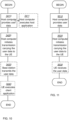
- FIGs. 3 and 4 described below, show the methods performed by the UE 102 and the first network node, separately.
- Optional actions in FIG. 2 are shown using a dashed line. It should be appreciated that the actions of FIG. 2 may be performed in any suitable order.
- the UE 102 may obtain configurations of services for the first and second wireless communications networks.
- the UE 102 optionally obtains configuration(s) (e.g., from an associated user) of particular service(s) to be used for particular networks, such as PLMN(s) or NPN(s).
- the UE 102 may be configured such that the first wireless communications network is required or preferred to voice service(s) and the second wireless communications network is required or preferred for another service(s), such as e.g., data service(s).
- the UE 102 may register with the first wireless communications network.
- the UE 102 may register with the second wireless communications network.
- the UE 102 is simultaneously registered with the first and second wireless communications networks.
- the first wireless communications network and the second wireless communications network are different networks.
- the first wireless communications network and the second wireless communications network are the same network.
- the first wireless communications network is a first PLMN, or a first NPN
- the second wireless communications network is a second PLMN or a second NPN.
- the first and second wireless communications networks may both be PLMNs or NPNs.
- the first wireless communications network is a PLMN and the second wireless communications network is an NPN.
- the first wireless communications network is an NPN and the second wireless communications network is an PLMN.
- one or both the first and second wireless communications networks are a combination of a PLMN and an NPN.
- the UE 102 provides to the first network node 104, associated with the first wireless communications network associated with the first SIM, information on the full capability of the UE 102.
- the information on the full capability may comprise information on one or more out of: a) a number of carriers supported by the UE; b) one or more carrier combinations supported by the UE; c) one or more processing capabilities of the UE; d) one or more features supported by the UE; e) a number of radio frontends that the UE has; f) a bandwidth supported by the UE; g) a buffer or memory size supported by the UE; h) a number of PDN connections or PDU connections supported by the UE; i) one or more carrier aggregation related capabilities of the UE; and j) one or more dual connectivity related capabilities of the UE.
- the information on the full capability of the UE 102 may include any suitable information.
- the UE 102 provides to the second network node 106, associated with the second wireless communications network associated with the second SIM, information on the full capability of the UE 102.
- the UE 102 splits its full capability among the first and second SIMs.
- the UE 102 splits the full capability among the first and second SIMs into a first reduced capability and a second reduced capability, which may be, e.g., in response to a certain event.
- the UE 102 splits its capability based on a configuration of the UE 102.
- the UE 102 may be configured, e.g. by an end user, such that data traffic is preferred and/or allowed to be communicated over one SIM, while voice is preferred and/or allowed to be communicated over another SIM.
- the UE 102 splits its capability randomly.
- the UE 102 provides a first indication of the first reduced capability of the UE to the first network node.
- the first indication of the first reduced capability is provided in an In-Device-Coexistence (IDC) assistance information.
- IDC In-Device-Coexistence
- the first indication of the first reduced capability is provided in the form of a MUSIM assistance information.
- the first network node 104 In response to receiving, from the UE 102, the information on, i.e., the received first indication of, the first reduced capability of the UE, the first network node 104 provides a first (re)configuration instruction to the UE.
- the first reconfiguration instruction may be, e.g., an RRC reconfiguration message.
- the UE 102 may thus receive the first (re)configuration instruction from the first network node 104, as also shown in FIG. 3 discussed below.
- the first network node 104 node may provide the first (re)configuration instruction to the UE 102 in response to an event, e.g., an incoming video call or another event such as active data communication. Accordingly, in some embodiments, the first network node 104 provides the (re)configuration instruction to the UE 102 in response to the received information on, i.e. the received first indication of, the first reduced capability of the UE 102 and additionally in response to an event.
- an event e.g., an incoming video call or another event such as active data communication.
- the first network node 104 provides the (re)configuration instruction to the UE 102 in response to the received information on, i.e. the received first indication of, the first reduced capability of the UE 102 and additionally in response to an event.
- the UE 102 alternatively or additionally, provides a second indication of the second reduced capability of the UE to the second network node 106.
- the second indication may be provided in an IDC assistance information, as a MUSIM assistance information, or as a combination thereof.
- At least one of the first indication of the first reduced capability and the second indication of the second reduced capability comprises a MUSIM assistance information.
- the second network node 106 may provide a second (re)configuration instruction to the UE.
- the second reconfiguration instruction may be, e.g., an RRC reconfiguration message.
- the UE 102 may thus receive the second (re)configuration instruction from the second network node 106, as also shown in FIG. 3 discussed below.
- the second network node 106 may provide the second (re)configuration instruction to the UE 102 in response to an event, e.g., an incoming video call or another event such as, e.g., active data communication. Accordingly, in some embodiments, the second network node 106 provides the second (re)configuration instruction to the UE 102 in response to the received information on, i.e., the received second indication of, the second reduced capability of the UE 102 and additionally in response to an event.
- an event e.g., an incoming video call or another event such as, e.g., active data communication.
- the second network node 106 provides the second (re)configuration instruction to the UE 102 in response to the received information on, i.e., the received second indication of, the second reduced capability of the UE 102 and additionally in response to an event.
- the UE 102 may (re)configure at least one RRC resource for communications with the second network node 106 associated with the second wireless communications network, based on the received second (re)configuration instruction.
- the UE 102 may configure its RRC resources in accordance with the received reconfiguration instruction, such as, e.g., the RRC reconfiguration message.
- the UE 102 may register with a first wireless communications network, e.g., first wireless communications network 140 of FIG. 1 .
- the UE 102 may register with a second wireless communications network, e.g., second wireless communications network 160 of FIG. 1 .
- the UE 102 is simultaneously registered with the first and second wireless communications networks.
- the first wireless communications network and the second wireless communications network are different networks.
- the first wireless communications network and the second wireless communications network are the same network.
- the UE 102 is registered with a wireless communications network, such as with a PLMN or an NPN, means that the UE 102 receives and/or transmits signals with that wireless communications network when in a connected mode.
- the UE 102 may also be registered with the wireless communications network when in idle mode, in which case the UE 102 is at least ready to receive some signals (e.g., paging signals) from that wireless communications network.
- the UE 102 provides to the first network node 104, associated with the first wireless communications network associated with the first SIM, information on the full capability of UE.
- the information on the full capability may comprise information on one or more out of: a) a number of carriers supported by the UE; b) one or more carrier combinations supported by the UE; c) one or more processing capabilities of the UE; d) one or more features supported by the UE; e) a number of radio frontends that the UE has; f) a bandwidth supported by the UE; g) a buffer or memory size supported by the UE; h) a number of PDN connections or PDU connections supported by the UE; i) one or more carrier aggregation related capabilities of the UE; and j) one or more dual connectivity related capabilities of the UE.
- the information on the full capability of the UE 102 may include any suitable information.
- the UE 102 provides to the second network node 106, associated with the second wireless communications network associated with the second SIM, information on the full capability of UE. In this way, no changes to reporting capability of the UE 102 are required in accordance with embodiments of the present disclosure, as the UE 102 may report its full capability to all wireless communications networks with which the UE 102 is registered.
- this action may be optional, e.g., when the UE 102 is connected only to the first wireless communications network.
- the UE 102 splits the full capability among the first and second SIMs.
- the UE 102 splits the full capability among the first and second SIMs into a first reduced capability and a second reduced capability.
- the UE 102 may split the full capability in response to an event. In some embodiments, the UE 102 splits its full capability randomly.
- the UE 102 may be configured such that certain type of traffic is preferred/allowed to be communicated over one or more SIMs, and another type of traffic is preferred/allowed to be communicated over one or more other SIMs.
- the UE 102 may be configured, e.g., by an end user, such that data traffic is preferred and/or allowed to be communicated over one SIM, while voice is preferred and/or allowed to be communicated over another SIM.
- the UE 102 may consider the expected services its SIMs are configured to use, when indicating, e.g., splitting, capabilities for the SIMs.
- the UE 102 may be simultaneously communicating with the first and second wireless communications networks, or with more than two wireless communications networks. Furthermore, in some embodiments, the UE 102 is in an RRC_CONNECTED mode in one wireless communications network, e.g., in one of the first and second wireless communications networks, while the UE 102 is in an RRC_IDLE/RRC_INACTIVE mode in another wireless communications network, e.g., in another one of the first and second wireless communications networks. For example, while in the RRC_CONNECTED mode in one network, the UE 102 may still be active in another wireless communications network and needs one of its Rx/Tx chains to monitor paging occasions in the other wireless communications network.
- the UE 102 provides the first indication of the first reduced capability of the UE to the first network node.
- the first indication of the first reduced capability includes one or more carrier frequencies, e.g., a list of carrier frequencies and/or carrier frequency combinations, that are not to be used as compared to carrier frequencies in the full capacity of the UE 102.
- the first indication of the first reduced capability may be used for a current configuration of the UE 102, which may need to be changed by releasing one or more carrier frequencies.
- the IDC assistance information or the MUSIM assistance information may indicate only one frequency/carrier. If, however the first SIM is expected to serve voice traffic, the IDC assistance information or the MUSIM assistance information may indicate all frequencies/frequency combinations except that one frequency which is to serve the voice traffic. Thus, the UE 102 may provide a first indication of its (reduced) capabilities which indicates which resources, such as, e.g., frequency/carrier or frequency/carrier combination(s), are available for use.
- the UE 102 may configure at least one RRC resource based on the received reconfiguration instruction.
- the UE 102 may (re)configure its RRC resources in accordance with the received reconfiguration instruction, such as, e.g., the RRC reconfiguration message.
- the reconfiguration instruction from the first network node 104 and/or the first reduced capability may be used for future UE configurations, which may avoid the use of the carrier frequencies indicated in the first reduced capability.
- the second indication of the reduced capability may be used for future UE configurations, which may avoid the use of the carrier frequencies indicated in the second reduced capability.
- the second indication of the second reduced capability is provided in an IDC assistance information.
- both the first indication of the first reduced capability and the second indication of the second reduced capability are provided in an IDC assistance information.
- the second indication of the second reduced capability is provided in the form of a MUSIM assistance information.
- both the first indication of the first reduced capability and the second indication of the second reduced capability are provided as the MUSIM assistance information.
- the second indication of the second reduced capability is provided as a combination of the IDC and MUSIM assistance information.
- the second indication of the second reduced capability is provided in an IDC assistance information.
- existing IDC assistance information may be extended with MUSIM information.
- the second indication of the (second) reduced capability may be added directly to the existing IDC assistance information.
- an indication indicating a direction of IDC interference may be added to the IDC assistance information.
- the second indication of the second reduced capability may include an indication that the required capability limitations are caused by a multi-SIM operation.
- the second indication of the second reduced capability is provided in the form of a MUSIM assistance information.
- the second indication for MUSIM operation may be provided in a new IE within the UE assistance information. This second indication may be then associated with the IDC assistance information.
- At least one of the first indication of the first reduced capability and the second indication of the second reduced capability is provided in an IDC assistance information.
- the UE 102 may receive a second (re)configuration instruction from the second network node 106, in response to the second indication of the second reduced capability provided to the second network node 106.
- the second reconfiguration instruction may be, e.g., an RRC reconfiguration message.
- the UE 102 may (re)configure its current configuration, which may need to be changed by, e.g., releasing one or more carrier frequencies.
- the reconfiguration instruction from the second network node 106 and/or the second reduced capability may be used for future UE configurations, which may avoid the use of the carrier frequencies indicated in the second reduced capability.
- FIG. 3 may be performed in any suitable order.
- communications of the UE with the first and second network nodes may occur simultaneously.
- the UE 102 communicates with the second network node before the UE communicates with the first network node.
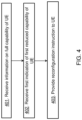
- FIG. 4 illustrates an example of a method performed by the first network node associated with a first wireless communications network.
- the first network node 104 may be exemplified as the first network node 104 but also as the second network node 106 associated with first and second wireless communications networks 140, 160, respectively, in accordance with embodiments of the present disclosure.
- the method of FIG. 4 is described in connection with the first network node 104 (see also FIG. 2 ), for illustration purposes only, as any network node may communicate with a UE, such as the UE 102, in accordance with embodiments of the present disclosure.
- Optional actions are shown using a dashed line.
- the first network node 104 receives information on the full capability of the UE 102.
- the first network node 104 receives, from the UE 102, information on the full capability of the UE 102, wherein the UE 102 has at least two SIMs, and is simultaneously registered with the first wireless communications network and at least one other wireless communications network.
- the first network node 104 receives information on a reduced capability of the UE 102.
- the UE 102 may, e.g., upon an event, split its full capacity among the UE's SIMs, such as, e.g., among the first and second SIMs.
- the first network node 104 receives, from the UE 102, the first indication of the first reduced capability of the UE 102 indicating a split of the full capability of the UE 102 among the at least two SIMs.
- the first indication of the first reduced capability is provided in the IDC assistance information in combination with a MUSIM indication. In case the first network node is illustrated as the second network node 106 the first indication would be exemplified as the second indication.
- the first network node 104 provides a (re)configuration instruction to the UE 102, in response to the received information on, i.e., the received first indication of, the first reduced capability of the UE 102.
- the first network node 104 may take into account the UE's reduced capabilities when sending an RRC (re)configuration message.
- an immediate reconfiguration may not be necessary if the UE 120 is inactive, e.g., no voice/data communication.
- the first network node 104 may not send the reconfiguration instruction right away upon receiving the information on the reduced capability.
- FIG. 5 additionally illustrates a method performed by the UE 102, showing a UE behavior when its capabilities are impacted during simultaneous communication using multiple SIMs, in accordance with some embodiments.
- the UE 102 is shown to have SIMs A and B, each used for communication with networks A and B, e.g., first and second wireless communications networks 140, 160, or any other wireless communications networks, respectively.
- the UE 102 provides the networks A and B with the full UE capabilities, action 501.
- the UE 102 may split its capabilities among the SIMs A and B, action 502.
- the indication of the reduced capability is provided, from the UE 102 to the network, using an IDC assistance information.
- the devices are designed to support different radio access technologies (RAT) for parallel usage.
- RAT radio access technologies
- the devices are equipped with multiple radio transceivers, which are located extremely close to each other.
- these transceivers may interfere with each other, resulting in an IDC interference.
- new UE IDC assistance information was introduced to mitigate the IDC interference for NR Rel-16.
- the UE 102 may signal to the NR network a frequency list or a frequency combination list that should be avoided during NR operation.
- the existing IDC assistance information may be used to indicate to a network a reduced capability of the UE.
- the IDC assistance information may thus be extended with a MUSIM information.
- an additional indication may be added to the existing IDC assistance information.
- the indication that uses the IDC assistance information indicates a direction of IDC interference.
- the UE 102 may support the following carriers: f1a, f1b, f1c, f1d, f2a and f2b.
- equal split of the carriers may not be possible, such that the UE 102 would need to assign all carriers on f1 to SIM1 (IDC for SIM1 indicates f2a and f2b) and all carriers on f2 to SIM2 (IDC for SIM2 indicates f1a, f1b, f1c and f1d), or vice versa, e.g. depending on how many carriers the already active SIM is already using, depending on other criteria, or decided randomly which of the SIMs can be configured with up to 4 carriers, while the other SIM can only be configured with at most 2 carriers.
- the UE 102 may e.g. support the following carriers: f 1a , f 1b , f 1c , f 2 , f 3a and f 3b in the frequency bands f 1 , f 2 , and f 3 , respectively. For convenience, it may be assumed that all carriers have the same bandwidth.
- SIM1 is associate with voice
- SIM2 is associated with data.
- the UE 102 indicates to the wireless communications network, i.e. to the network node associated with the network, which one or more resources, e.g. carrier frequencies, are not available for use in communication of the UE 102 with the wireless communications network.
- the wireless communications network i.e. to the network node associated with the network, which one or more resources, e.g. carrier frequencies, are not available for use in communication of the UE 102 with the wireless communications network.
- the UE 120 may indicate that the capability reduction is for multi-SIM operation, such that the network can optimize the UE configuration in accordance with the actual UE capability and the current situation with regard to simultaneous connectivity to multiple networks using different SIMs.
- Option 1 Extend IDC assistance information with MUSIM information
- This indication can be added directly to the existing IDC assistance information, e.g. by using the spare values, e.g. for the AffectedCarrierFreq IE some more detailed information can be introduced for the interferenceDirection than only 'nr'.
- the UE 102 could use one radio for LTE and one for NR, so that 'nr' would not be the correct description. Rather, the spare value could be replaced by e.g. 'musim', with reference to TS 38.331:
- the IDC assistance information includes a list of affected carriers and/or affected carrier combinations (affectedCarrierFreqList and affectedCarrierFreqCombList), a 1-bit indication may not provide sufficient granularity. Therefore, a parallel list may be used, where each entry corresponds to the affected carrier or affected carrier combination in the combined list(s).
- a parallel list may be used, where each entry corresponds to the affected carrier or affected carrier combination in the combined list(s).
- FIG. 6 depicts an example of a UE, such as the UE 102, in accordance with embodiments herein.
- the UE 102 have at least a first SIM and a second SIM.
- the UE 102 comprises a providing unit 612, e.g. a transmitter or a transceiver.
- the UE 102, the processing circuitry 611, and/or the providing unit 612 are configured to provide, to a first network node associated with the first wireless communications network associated with the first SIM, information on full capability of the UE 102, wherein the UE 102 is registered with the first wireless communications network.
- the UE 102, the processing circuitry 611, and/or the providing unit 612 are further configured to provide the first indication of the first reduced capability to the first network node, and/or to provide the second indication of the second reduced capability to the second network node.
- the methods according to the embodiments described herein for the UE 102 are respectively implemented using e.g., a computer program product 626 or a computer program, comprising instructions, i.e., software code portions, which, when executed on at least one processor, cause the at least one processor to carry out the actions described herein, as performed by the UE 102.
- the computer program product 626 may be stored on a computer-readable storage medium 627, e.g. a disc, a universal serial bus (USB) stick or similar.
- the computer-readable storage medium 627, having stored thereon the computer program product may comprise the instructions which, when executed on at least one processor, cause the at least one processor to carry out the actions described herein, as performed by the UE 102.
- FIG. 7 depicts an example of a first network node, such as the first network node 104 or the second network node 106, referred to as a network node, in accordance with embodiments herein. It should be appreciated that the first network 104 and the second network node 106 (see FIGs. 1 and 2 ) may have the same or similar configurations, and are therefore not described separately herein.
- the first network node comprises processing circuitry 711, e.g. one or more processors, configured to perform the methods herein.
- processing circuitry 711 e.g. one or more processors, configured to perform the methods herein.
- the first network node comprises a receiving unit 712, e.g. a receiver or a transceiver.
- the first network node, the processing circuitry 711, and/or the receiving unit 712 are configured to receive, from the UE 102, information on a full capability of the UE 102, wherein the UE 102 has at least two SIMs, e.g., multiple SIMs, and is simultaneously registered with the wireless communications network and at least one another network.
- the first network node, the processing circuitry 711, and/or the receiving unit 712 are configured to receive, from the UE 102, the first indication of the first reduced capability of the UE 102 indicating a split of the full capability of the UE 102 among the at least two SIMs.
- the first network node further comprises a memory 715.
- the memory 715 comprises one or more units to be used to store data on, such as indications, contexts, measurements, thresholds, data related to nodes, and applications to perform the methods disclosed herein when being executed, and similar.
- the first network node may comprise a communication interface 720 such as comprising a transmitter, a receiver and/or a transceiver.
- the methods according to the embodiments described herein for the the first network node are respectively implemented using e.g., a computer program product 726 or a computer program, comprising instructions, i.e., software code portions, which, when executed on at least one processor, cause the at least one processor to carry out the actions described herein, as performed by the the first network node.
- the computer program product 726 may be stored on a computer-readable storage medium 727, e.g. a disc, a universal serial bus (USB) stick or similar.
- the computer-readable storage medium 727, having stored thereon the computer program product may comprise the instructions which, when executed on at least one processor, cause the at least one processor to carry out the actions described herein, as performed by the the first network node.
- the computer-readable storage medium may be a transitory or a non-transitory computer-readable storage medium.
- embodiments herein may disclose a first network node for handling communication in a wireless communications network, wherein the network node comprises processing circuitry and a memory, the memory comprising instructions executable by the processing circuitry whereby the first network node is operative to perform any of the methods herein.
- the non-limiting term wireless device or user equipment refers to any type of wireless device communicating with a network node and/or with another wireless device in a cellular or mobile communication system.
- UE user equipment
- loT capable device target device, device to device (D2D) UE, proximity capable UE (aka ProSe UE), machine type UE or UE capable of machine to machine (M2M) communication, Tablet, mobile terminals, smart phone, laptop embedded equipped (LEE), laptop mounted equipment (LME), USB dongles, etc.
- Embodiments are applicable to any RAT or multi-RAT systems, where the wireless device receives and/or transmit signals (e.g. data) e.g. New Radio (NR), Wi-Fi, Long Term Evolution (LTE), LTE-Advanced, Wideband Code Division Multiple Access (WCDMA), Global System for Mobile communications/enhanced Data rate for GSM Evolution (GSM/EDGE), Worldwide Interoperability for Microwave Access (WiMax), or Ultra Mobile Broadband (UMB), just to mention a few possible implementations.
- signals e.g. New Radio (NR), Wi-Fi, Long Term Evolution (LTE), LTE-Advanced, Wideband Code Division Multiple Access (WCDMA), Global System for Mobile communications/enhanced Data rate for GSM Evolution (GSM/EDGE), Worldwide Interoperability for Microwave Access (WiMax), or Ultra Mobile Broadband (UMB), just to mention a few possible implementations.
- processors or “controller” as used herein does not exclusively refer to hardware capable of executing software and may implicitly include, without limitation, digital signal processor (DSP) hardware and/or program or application data. Other hardware, conventional and/or custom, may also be included. Designers of communications devices will appreciate the cost, performance, and maintenance trade-offs inherent in these design choices.
- DSP digital signal processor
- FIG. 8 shows a telecommunication network connected via an intermediate network to a host computer in accordance with some embodiments.
- a communication system includes a telecommunication network 3210, such as a 3GPP-type cellular network, which comprises access network 3211, such as a radio access network, and core network 3214.
- Access network 3211 comprises a plurality of base stations 3212a, 3212b, 3212c, such as NBs, eNBs, gNBs or other types of wireless access points being examples of the first network node above, each defining a corresponding coverage area 3213a, 3213b, 3213c.
- Intermediate network 3220 may be one of, or a combination of more than one of, a public, private or hosted network; intermediate network 3220, if any, may be a backbone network or the Internet; in particular, intermediate network 3220 may comprise two or more sub-networks (not shown).
- the communication system of FIG. 8 as a whole enables connectivity between the connected UEs 3291, 3292 and host computer 3230.
- the connectivity may be described as an over-the-top (OTT) connection 3250.
- Host computer 3230 and the connected UEs 3291, 3292 are configured to communicate data and/or signalling via OTT connection 3250, using access network 3211, core network 3214, any intermediate network 3220 and possible further infrastructure (not shown) as intermediaries.
- OTT connection 3250 may be transparent in the sense that the participating communication devices through which OTT connection 3250 passes are unaware of routing of uplink and downlink communications.
- base station 3212 may not or need not be informed about the past routing of an incoming downlink communication with data originating from host computer 3230 to be forwarded (e.g., handed over) to a connected UE 3291. Similarly, base station 3212 need not be aware of the future routing of an outgoing uplink communication originating from the UE 3291 towards the host computer 3230.
- host computer 3310 comprises hardware 3315 including communication interface 3316 configured to set up and maintain a wired or wireless connection with an interface of a different communication device of communication system 3300.
- Host computer 3310 further comprises processing circuitry 3318, which may have storage and/or processing capabilities.
- processing circuitry 3318 may comprise one or more programmable processors, application-specific integrated circuits, field programmable gate arrays or combinations of these (not shown) adapted to execute instructions.
- Host computer 3310 further comprises software 3311, which is stored in or accessible by host computer 3310 and executable by processing circuitry 3318.
- Software 3311 includes host application 3312.
- Host application 3312 may be operable to provide a service to a remote user, such as UE 3330 connecting via OTT connection 3350 terminating at UE 3330 and host computer 3310. In providing the service to the remote user, host application 3312 may provide user data which is transmitted using OTT connection 3350.
- hardware 3325 of base station 3320 further includes processing circuitry 3328, which may comprise one or more programmable processors, application-specific integrated circuits, field programmable gate arrays or combinations of these (not shown) adapted to execute instructions.
- Base station 3320 further has software 3321 stored internally or accessible via an external connection.
- Communication system 3300 further includes UE 3330 already referred to. It's hardware 3333 may include radio interface 3337 configured to set up and maintain wireless connection 3370 with a base station serving a coverage area in which UE 3330 is currently located. Hardware 3333 of UE 3330 further includes processing circuitry 3338, which may comprise one or more programmable processors, application-specific integrated circuits, field programmable gate arrays or combinations of these (not shown) adapted to execute instructions. UE 3330 further comprises software 3331, which is stored in or accessible by UE 3330 and executable by processing circuitry 3338. Software 3331 includes client application 3332. Client application 3332 may be operable to provide a service to a human or non-human user via UE 3330, with the support of host computer 3310.
- an executing host application 3312 may communicate with the executing client application 3332 via OTT connection 3350 terminating at UE 3330 and host computer 3310.
- client application 3332 may receive request data from host application 3312 and provide user data in response to the request data.
- OTT connection 3350 may transfer both the request data and the user data.
- Client application 3332 may interact with the user to generate the user data that it provides.
- OTT connection 3350 has been drawn abstractly to illustrate the communication between host computer 3310 and UE 3330 via base station 3320, without explicit reference to any intermediary devices and the precise routing of messages via these devices.
- Network infrastructure may determine the routing, which it may be configured to hide from UE 3330 or from the service provider operating host computer 3310, or both. While OTT connection 3350 is active, the network infrastructure may further take decisions by which it dynamically changes the routing (e.g., on the basis of load balancing consideration or reconfiguration of the network).
- Wireless connection 3370 between UE 3330 and base station 3320 is in accordance with the teachings of the embodiments described throughout this disclosure.
- One or more of the various embodiments improve the performance of OTT services provided to UE 3330 using OTT connection 3350, in which wireless connection 3370 forms the last segment.
- the teachings of these embodiments make it possible efficiently handle UEs of multi SIM.
- the data communication e.g. the handling or managing setup of communication may be performed in an efficient manner resulting in an improved battery lifetime and reduced response time.
- a measurement procedure may be provided for the purpose of monitoring data rate, latency and other factors on which the one or more embodiments improve.
- the measurement procedure and/or the network functionality for reconfiguring OTT connection 3350 may be implemented in software 3311 and hardware 3315 of host computer 3310 or in software 3331 and hardware 3333 of UE 3330, or both.
- sensors (not shown) may be deployed in or in association with communication devices through which OTT connection 3350 passes; the sensors may participate in the measurement procedure by supplying values of the monitored quantities exemplified above, or supplying values of other physical quantities from which software 3311, 3331 may compute or estimate the monitored quantities.
- the reconfiguring of OTT connection 3350 may include message format, retransmission settings, preferred routing etc.; the reconfiguring need not affect base station 3320, and it may be unknown or imperceptible to base station 3320. Such procedures and functionalities may be known and practiced in the art.
- measurements may involve proprietary UE signalling facilitating host computer 3310's measurements of throughput, propagation times, latency and the like.
- the measurements may be implemented in that software 3311 and 3331 causes messages to be transmitted, in particular empty or 'dummy' messages, using OTT connection 3350 while it monitors propagation times, errors, etc.
- FIG. 10 shows methods implemented in a communication system including a host computer, a base station and a user equipment in accordance with some embodiments.
- FIG. 11 is a flowchart illustrating a method implemented in a communication system, in accordance with one embodiment.
- the communication system includes a host computer, a base station and a UE which may be those described with reference to FIGs. 8 and 9 .
- the host computer provides user data.
- the host computer provides the user data by executing a host application.
- the host computer initiates a transmission carrying the user data to the UE.
- the transmission may pass via the base station, in accordance with the teachings of the embodiments described throughout this disclosure.
- step 3530 (which may be optional), the UE receives the user data carried in the transmission.
- FIG. 13 shows methods implemented in a communication system including a host computer, a base station and a user equipment in accordance with some embodiments.
Landscapes
- Engineering & Computer Science (AREA)
- Computer Networks & Wireless Communication (AREA)
- Signal Processing (AREA)
- Databases & Information Systems (AREA)
- Mobile Radio Communication Systems (AREA)
Claims (17)
- Verfahren, das von einer Benutzereinrichtung, UE, (102) mit mehreren Teilnehmerkennungsmodulen, SIM, zur simultanen Kommunikation mit zwei oder mehr Drahtloskommunikationsnetzwerken durchgeführt wird, wobei das Verfahren Folgendes umfasst:Bereitstellen (304) von Informationen über die volle Leistungsfähigkeit der UE (102) für einen ersten Netzwerkknoten (104), der mit einem ersten Drahtloskommunikationsnetzwerk assoziiert ist, das mit einem ersten SIM assoziiert ist, wobei die UE (102) bei dem ersten Drahtloskommunikationsnetzwerk registriert ist;Bereitstellen (305) der Informationen über die volle Leistungsfähigkeit der UE (102) für einen zweiten Netzwerkknoten (106), der mit einem zweiten Drahtloskommunikationsnetzwerk assoziiert ist, das mit einem zweiten SIM assoziiert ist, wobei die UE (102) bei dem zweiten Drahtloskommunikationsnetzwerk registriert ist, so dass die UE (102) simultan bei dem ersten Drahtloskommunikationsnetzwerk und dem zweiten Drahtloskommunikationsnetzwerk registriert ist;Teilen (306) der vollen Leistungsfähigkeit zwischen dem ersten und zweiten SIM in eine erste reduzierte Leistungsfähigkeit und eine zweite reduzierte Leistungsfähigkeit;Bereitstellen (307) einer ersten Angabe der ersten reduzierten Leistungsfähigkeit für den ersten Netzwerkknoten; und/oderBereitstellen (310) einer zweiten Angabe der zweiten reduzierten Leistungsfähigkeit für den ersten Netzwerkknoten, und dadurch gekennzeichnet, dass mindestens eine von der ersten Angabe der ersten reduzierten Leistungsfähigkeit und/oder der zweiten Angabe der zweiten reduzierten Leistungsfähigkeit in einer In-Device-Coexistence-Hilfsinformation, IDC-Hilfsinformation, in Kombination mit einer Mehrfach-SIM-Angabe, MUSIM-Angabe, bereitgestellt wird, und wobei mindestens eine von der ersten Angabe der ersten reduzierten Leistungsfähigkeit und der zweiten Angabe der zweiten reduzierten Leistungsfähigkeit eine Angabe einer oder mehrerer Trägerfrequenzen umfasst, die im Vergleich zu Trägerfrequenzen bei voller Kapazität nicht verwendet werden sollen.
- Verfahren nach Anspruch 1, wobei die Informationen über die volle Leistungsfähigkeit Informationen über eines oder mehrere von Folgenden umfassen: a) eine Anzahl von Trägern, die von der UE (102) unterstützt wird; b) eine oder mehrere Trägerkombinationen, die von der UE (102) unterstützt werden; c) eine oder mehrere Verarbeitungsfähigkeiten der UE (102); d) ein oder mehrere Merkmale, die von der UE (102) unterstützt werden; e) eine Anzahl von Funk-FrontEnds, die die UE (102) aufweist; f) eine Bandbreite, die von der UE (102) unterstützt wird; g) eine Puffer- oder Speichergröße, die von der UE (102) unterstützt wird; h) eine Anzahl von Paketdatennetzwerkverbindungen, PDN-Verbindungen, oder Protokolldateneinheitsverbindungen, PDU-Verbindungen, die von der UE (102) unterstützt wird; i) eine oder mehrere trägeraggregationsbezogene Fähigkeiten der UE (102); und j) eine oder mehrere dualkonnektivitätsbezogene Fähigkeiten der UE (102).
- Verfahren nach einem der Ansprüche 1 bis 2, wobei das erste Drahtloskommunikationsnetzwerk und das zweite Drahtloskommunikationsnetzwerk verschiedene Netzwerke oder ein gleiches Netzwerk sind.
- Verfahren nach Anspruch 3, wobei das erste Drahtloskommunikationsnetzwerk ein erstes öffentliches Landfunknetzwerk, PLMN, oder ein erstes nicht öffentliches Netzwerk, NPN, ist und wobei das zweite Drahtloskommunikationsnetzwerk ein zweites PLMN oder ein zweites NPN ist.
- Verfahren nach einem der Ansprüche 1 bis 4, wobei das Teilen der vollen Leistungsfähigkeit zwischen der ersten und der zweiten SIM in Reaktion auf ein Ereignis durchgeführt wird.
- Verfahren nach einem der Ansprüche 1 bis 5, ferner umfassend:Empfangen (308, 311) einer Konfigurationsanweisung von mindestens einem des ersten und des zweiten Netzwerkknotens in Reaktion auf mindestens eine von der ersten Angabe der ersten reduzierten Leistungsfähigkeit, die für den ersten Netzwerkknoten bereitgestellt wird, und der zweiten Angabe der zweiten reduzierten Leistungsfähigkeit, die für den zweiten Netzwerkknoten (106) bereitgestellt wird; undKonfigurieren (309, 312) mindestens einer Funkressourcensteuerungsressource, RRC-Ressource, basierend auf der empfangenen Konfigurationsanweisung.
- Verfahren, das von einem ersten Netzwerkknoten durchgeführt wird, der mit einem ersten Drahtlosenkommunikationsnetzwerk assoziiert ist, wobei das Verfahren Folgendes umfasst:Empfangen (401) von Informationen über eine volle Leistungsfähigkeit einer Benutzereinrichtung, UE, (102) von der UE (102), wobei die UE (102) mindestens zwei Teilnehmerkennungsmodule, SIMs, aufweist und simultan bei dem ersten Drahtloskommunikationsnetzwerk und mindestens einem zweiten Drahtloskommunikationsnetzwerk registriert ist;Empfangen (402) einer ersten Angabe einer ersten reduzierten Leistungsfähigkeit der UE (102) von der UE (102), die eine Teilung der vollen Leistungsfähigkeit der UE (102) zwischen den mindestens zwei SIMs angibt, dadurch gekennzeichnet, dass die erste Angabe der ersten reduzierten Leistungsfähigkeit in einer In-Device-Coexistence-Hilfsinformation, IDC-Hilfsinformation, in Kombination mit einer Mehrfach-SIM-Angabe empfangen wird, und wobei die erste Angabe der ersten reduzierten Leistungsfähigkeit eine Angabe einer oder mehrerer Trägerfrequenzen umfasst, die im Vergleich zu Trägerfrequenzen bei voller Leistungsfähigkeit nicht verwendet werden sollen; undBereitstellen (403) einer Rekonfigurationsanweisung für die UE (102) in Reaktion auf die empfangene erste Angabe der ersten reduzierten Leistungsfähigkeit der UE (102).
- Verfahren nach Anspruch 7, wobei die Informationen über die volle Leistungsfähigkeit Informationen über eines oder mehrere von Folgenden umfassen: a) eine Anzahl von Trägern, die von der UE (102) unterstützt wird; b) eine oder mehrere Trägerkombinationen, die von der UE (102) unterstützt werden; c) eine oder mehrere Verarbeitungsfähigkeiten der UE (102); d) ein oder mehrere Merkmale, die von der UE (102) unterstützt werden; e) eine Anzahl von Funk-FrontEnds, die die UE (102) aufweist; f) eine Bandbreite, die von der UE (102) unterstützt wird; g) eine Puffer- oder Speichergröße, die von der UE (102) unterstützt wird; h) eine Anzahl von Paketdatennetzwerkverbindungen, PDN-Verbindungen, oder Protokolldateneinheitsverbindungen, PDU-Verbindungen, die von der UE (102) unterstützt wird; i) eine oder mehrere trägeraggregationsbezogene Fähigkeiten der UE (102); und j) eine oder mehrere dualkonnektivitätsbezogene Fähigkeiten der UE (102).
- Verfahren nach einem der die Ansprüche 7 oder 8,
wobei das erste Drahtloskommunikationsnetzwerk und das zweite Drahtloskommunikationsnetzwerk verschiedene Netzwerke oder ein gleiches Netzwerk sind. - Verfahren nach Anspruch 9, wobei das erste Drahtloskommunikationsnetzwerk ein erstes öffentliches Landfunknetzwerk, PLMN, oder ein erstes nicht öffentliches Netzwerk, NPN, ist und wobei das zweite Drahtloskommunikationsnetzwerk ein zweites PLMN oder ein zweites NPN ist.
- Verfahren nach einem der Ansprüche 7 bis 10, wobei die Rekonfigurationsanweisung ferner in Reaktion auf ein Ereignis für die UE (102) bereitgestellt wird.
- Benutzereinrichtung, UE, (102) mit mehreren Teilnehmerkennungsmodulen, SIM, zur simultanen Kommunikation mit zwei oder mehr Drahtloskommunikationsnetzwerken, wobei die UE zu Folgendem konfiguriert ist:Bereitstellen von Informationen über die volle Leistungsfähigkeit der UE (102) für einen ersten Netzwerkknoten (104), der mit einem ersten Drahtloskommunikationsnetzwerk assoziiert ist, das mit einem ersten SIM assoziiert ist, wobei die UE (102) bei dem ersten Drahtloskommunikationsnetzwerk registriert ist;Bereitstellen von Informationen über die volle Leistungsfähigkeit der UE (102) für einen zweiten Netzwerkknoten (106), der mit einem zweiten Drahtloskommunikationsnetzwerk assoziiert ist, das mit einem zweiten SIM assoziiert ist, wobei die UE (102) bei dem zweiten Drahtloskommunikationsnetzwerk registriert ist, so dass die UE (102) simultan bei dem ersten Drahtloskommunikationsnetzwerk und dem zweiten Drahtloskommunikationsnetzwerk registriert ist;Teilen der vollen Leistungsfähigkeit zwischen dem ersten und zweiten SIM in eine erste reduzierte Leistungsfähigkeit und eine zweite reduzierte Leistungsfähigkeit;Bereitstellen einer ersten Angabe der ersten reduzierten Leistungsfähigkeit für den ersten Netzwerkknoten; und/oderBereitstellen einer zweiten Angabe der zweiten reduzierten Leistungsfähigkeit für den ersten Netzwerkknoten, dadurch gekennzeichnet, dass mindestens eine von der ersten Angabe der ersten reduzierten Leistungsfähigkeit und/oder der zweiten Angabe der zweiten reduzierten Leistungsfähigkeit in einer In-Device-Coexistence-Hilfsinformation, IDC-Hilfsinformation, in Kombination mit einer Mehrfach-SIM-Angabe bereitgestellt wird, und wobei mindestens eine von der ersten Angabe der ersten reduzierten Leistungsfähigkeit und der zweiten Angabe der zweiten reduzierten Leistungsfähigkeit eine Angabe einer oder mehrerer Trägerfrequenzen umfasst, die im Vergleich zu Trägerfrequenzen bei voller Kapazität nicht verwendet werden sollen.
- UE (102) nach Anspruch 12, wobei die UE zum Durchführen des Verfahrens nach einem der Ansprüche 2 bis 6 konfiguriert ist.
- Erster Netzwerkknoten, der mit einem ersten Drahtloskommunikationsnetzwerk assoziiert ist, wobei der erste Netzwerkknoten zu Folgendem konfiguriert ist:Empfangen von Informationen über eine volle Leistungsfähigkeit einer Benutzereinrichtung, UE, (102) von der UE (102), wobei die UE (102) mindestens zwei Teilnehmerkennungsmodule, SIMs, aufweist und simultan bei dem ersten Drahtloskommunikationsnetzwerk und mindestens einem zweiten Drahtloskommunikationsnetzwerk registriert ist;Empfangen einer ersten Angabe einer ersten reduzierten Leistungsfähigkeit der UE (102) von der UE (102), die eine Teilung der vollen Leistungsfähigkeit der UE (102) zwischen den mindestens zwei SIMs angibt, dadurch gekennzeichnet, dass die erste Angabe der ersten reduzierten Leistungsfähigkeit in einer In-Device-Coexistence-Hilfsinformation, IDC-Hilfsinformation, in Kombination mit einer Mehrfach-SIM-Angabe empfangen wird, und wobei die erste Angabe der ersten reduzierten Leistungsfähigkeit eine Angabe einer oder mehrerer Trägerfrequenzen umfasst, die im Vergleich zu Trägerfrequenzen bei voller Leistungsfähigkeit nicht verwendet werden sollen; undBereitstellen einer Rekonfigurationsanweisung für die UE (102) in Reaktion auf die empfangene erste Angabe der ersten reduzierten Leistungsfähigkeit der UE (102) .
- Erster Netzwerkknoten nach Anspruch 14, wobei der erste Netzwerkknoten zum Durchführen des Verfahrens nach einem Ansprüche 8 bis 11 konfiguriert ist.
- Computerprogrammprodukt, umfassend Anweisungen, die bei Ausführung auf mindestens einem Prozessor einer Benutzereinrichtung, UE, oder eines ersten Netzwerkknotens die UE zum Durchführen des Verfahrens nach einem der Ansprüche 1 bis 6 veranlassen bzw. den ersten Netzwerkknoten zum Durchführen des Verfahrens nach einem der Ansprüche 7 bis 11 veranlassen.
- Computerlesbares Speichermedium mit einem darauf gespeicherten Computerprogrammprodukt, das Anweisungen umfasst, die bei Ausführung auf mindestens einem Prozessor einer Benutzereinrichtung, UE, oder eines ersten Netzwerkknotens die UE zum Durchführen des Verfahrens nach einem der Ansprüche 1 bis 7 veranlassen bzw. den ersten Netzwerkknoten zum Durchführen des Verfahrens nach einem der Ansprüche 7 bis 11 veranlassen.
Applications Claiming Priority (2)
| Application Number | Priority Date | Filing Date | Title |
|---|---|---|---|
| US202163262150P | 2021-10-06 | 2021-10-06 | |
| PCT/SE2022/050890 WO2023059250A1 (en) | 2021-10-06 | 2022-10-05 | Network node, user equipment, and methods for handling communications using multiple sim modules |
Publications (2)
| Publication Number | Publication Date |
|---|---|
| EP4413758A1 EP4413758A1 (de) | 2024-08-14 |
| EP4413758B1 true EP4413758B1 (de) | 2025-04-09 |
Family
ID=83692737
Family Applications (1)
| Application Number | Title | Priority Date | Filing Date |
|---|---|---|---|
| EP22790095.8A Active EP4413758B1 (de) | 2021-10-06 | 2022-10-05 | Netzwerkknoten, benutzergerät und verfahren zur handhabung von kommunikationen mit mehreren sim-modulen |
Country Status (3)
| Country | Link |
|---|---|
| US (1) | US20240406715A1 (de) |
| EP (1) | EP4413758B1 (de) |
| WO (1) | WO2023059250A1 (de) |
Families Citing this family (4)
| Publication number | Priority date | Publication date | Assignee | Title |
|---|---|---|---|---|
| US20250081039A1 (en) * | 2023-09-05 | 2025-03-06 | Dish Wireless L.L.C. | Intelligent simultaneous core |
| WO2025051424A1 (en) * | 2023-09-08 | 2025-03-13 | Nokia Technologies Oy | Managing multiple simultaneous registrations to a single network or multiple networks using a same access type |
| WO2025059321A1 (en) * | 2023-09-15 | 2025-03-20 | Apple Inc. | Sim selection for routing user plane traffic |
| US20250330796A1 (en) * | 2024-04-18 | 2025-10-23 | Samsung Eletrônica da Amazônia Ltda. | Method performed by a dual-sim ue, a second network node (plmn-1) and a third network node (plmn-2), operating in a wireless communication network |
Family Cites Families (5)
| Publication number | Priority date | Publication date | Assignee | Title |
|---|---|---|---|---|
| WO2019095254A1 (en) * | 2017-11-17 | 2019-05-23 | Apple Inc. | Temporary handling of wireless communication device capabilities |
| WO2021069085A1 (en) * | 2019-10-11 | 2021-04-15 | Lenovo (Singapore) Pte. Ltd. | Paging for multiple sims |
| EP4055985B1 (de) | 2019-11-04 | 2025-06-25 | Telefonaktiebolaget LM Ericsson (publ) | Dynamische multi-sim-fähigkeiten |
| EP4070621A1 (de) * | 2019-12-05 | 2022-10-12 | Interdigital Patent Holdings, Inc. | Systeminformationserfassung und funkruf für teilnehmergeräte mit mehreren universellen teilnehmeridentitätsmodulen |
| US11812405B2 (en) * | 2019-12-10 | 2023-11-07 | Intel Corporation | User equipment operation with multiple subscriber identity modules |
-
2022
- 2022-10-05 EP EP22790095.8A patent/EP4413758B1/de active Active
- 2022-10-05 US US18/698,391 patent/US20240406715A1/en active Pending
- 2022-10-05 WO PCT/SE2022/050890 patent/WO2023059250A1/en not_active Ceased
Also Published As
| Publication number | Publication date |
|---|---|
| US20240406715A1 (en) | 2024-12-05 |
| WO2023059250A1 (en) | 2023-04-13 |
| EP4413758A1 (de) | 2024-08-14 |
Similar Documents
| Publication | Publication Date | Title |
|---|---|---|
| EP4413758B1 (de) | Netzwerkknoten, benutzergerät und verfahren zur handhabung von kommunikationen mit mehreren sim-modulen | |
| US11743861B2 (en) | Radio network node, user plane function (UPF) and methods performed therein for paging policy differentiation | |
| US10993199B2 (en) | Radio network node, UE and methods performed therein for handling communication in a wireless communication network | |
| US20220131646A1 (en) | First communication device, second communication device and methods performed therein for controlling transmission | |
| US20250294492A1 (en) | User equipment, network node, and methods for handling communications | |
| US20220201553A1 (en) | Radio network node, network node and methods performed therein for controlling transmission | |
| EP4186272B1 (de) | Ressourcenbeschränkung | |
| US20240129839A1 (en) | Radio network node, network node and methods performed therein | |
| EP3884691B1 (de) | Netzwerkknoten, funknetzwerkknoten und verfahren zur sprachübereinstimmungsunterstützung | |
| WO2021225513A1 (en) | Methods, network node, first radio network node for handling communication | |
| US20250240225A1 (en) | Radio Network Node, User Equipment and Methods Performed Therein | |
| US20240022958A1 (en) | Radio Network Node, User Equipment, and Methods Performed Therein | |
| OA21612A (en) | User equipment, network node, and methods for handling communications. | |
| WO2024217700A1 (en) | Wireless communications device and methods for handling communications with two or more networks | |
| US20250185094A1 (en) | Methods, and network nodes for handling communication in a wireless communications network | |
| WO2024058704A1 (en) | User equipment, network node, and methods for handling communications | |
| WO2024014999A1 (en) | Network nodes, and methods performed in a wireless communication network | |
| WO2023022643A1 (en) | Master node, secondary node, and methods performed in a wireless communication network | |
| WO2022139658A1 (en) | Radio network node, user equipment and methods performed therein |
Legal Events
| Date | Code | Title | Description |
|---|---|---|---|
| STAA | Information on the status of an ep patent application or granted ep patent |
Free format text: STATUS: UNKNOWN |
|
| STAA | Information on the status of an ep patent application or granted ep patent |
Free format text: STATUS: THE INTERNATIONAL PUBLICATION HAS BEEN MADE |
|
| PUAI | Public reference made under article 153(3) epc to a published international application that has entered the european phase |
Free format text: ORIGINAL CODE: 0009012 |
|
| STAA | Information on the status of an ep patent application or granted ep patent |
Free format text: STATUS: REQUEST FOR EXAMINATION WAS MADE |
|
| 17P | Request for examination filed |
Effective date: 20240209 |
|
| AK | Designated contracting states |
Kind code of ref document: A1 Designated state(s): AL AT BE BG CH CY CZ DE DK EE ES FI FR GB GR HR HU IE IS IT LI LT LU LV MC ME MK MT NL NO PL PT RO RS SE SI SK SM TR |
|
| RIC1 | Information provided on ipc code assigned before grant |
Ipc: H04W 72/51 20230101ALN20241014BHEP Ipc: H04W 88/06 20090101ALN20241014BHEP Ipc: H04W 60/00 20090101ALN20241014BHEP Ipc: H04W 8/24 20090101AFI20241014BHEP |
|
| GRAP | Despatch of communication of intention to grant a patent |
Free format text: ORIGINAL CODE: EPIDOSNIGR1 |
|
| STAA | Information on the status of an ep patent application or granted ep patent |
Free format text: STATUS: GRANT OF PATENT IS INTENDED |
|
| RIC1 | Information provided on ipc code assigned before grant |
Ipc: H04W 72/51 20230101ALN20241114BHEP Ipc: H04W 88/06 20090101ALN20241114BHEP Ipc: H04W 60/00 20090101ALN20241114BHEP Ipc: H04W 8/24 20090101AFI20241114BHEP |
|
| DAV | Request for validation of the european patent (deleted) | ||
| DAX | Request for extension of the european patent (deleted) | ||
| INTG | Intention to grant announced |
Effective date: 20241126 |
|
| GRAS | Grant fee paid |
Free format text: ORIGINAL CODE: EPIDOSNIGR3 |
|
| GRAA | (expected) grant |
Free format text: ORIGINAL CODE: 0009210 |
|
| STAA | Information on the status of an ep patent application or granted ep patent |
Free format text: STATUS: THE PATENT HAS BEEN GRANTED |
|
| AK | Designated contracting states |
Kind code of ref document: B1 Designated state(s): AL AT BE BG CH CY CZ DE DK EE ES FI FR GB GR HR HU IE IS IT LI LT LU LV MC ME MK MT NL NO PL PT RO RS SE SI SK SM TR |
|
| REG | Reference to a national code |
Ref country code: GB Ref legal event code: FG4D |
|
| REG | Reference to a national code |
Ref country code: CH Ref legal event code: EP |
|
| REG | Reference to a national code |
Ref country code: DE Ref legal event code: R096 Ref document number: 602022013037 Country of ref document: DE |
|
| REG | Reference to a national code |
Ref country code: IE Ref legal event code: FG4D |
|
| REG | Reference to a national code |
Ref country code: NL Ref legal event code: MP Effective date: 20250409 |
|
| PG25 | Lapsed in a contracting state [announced via postgrant information from national office to epo] |
Ref country code: NL Free format text: LAPSE BECAUSE OF FAILURE TO SUBMIT A TRANSLATION OF THE DESCRIPTION OR TO PAY THE FEE WITHIN THE PRESCRIBED TIME-LIMIT Effective date: 20250409 |
|
| REG | Reference to a national code |
Ref country code: AT Ref legal event code: MK05 Ref document number: 1784690 Country of ref document: AT Kind code of ref document: T Effective date: 20250409 |
|
| PG25 | Lapsed in a contracting state [announced via postgrant information from national office to epo] |
Ref country code: FI Free format text: LAPSE BECAUSE OF FAILURE TO SUBMIT A TRANSLATION OF THE DESCRIPTION OR TO PAY THE FEE WITHIN THE PRESCRIBED TIME-LIMIT Effective date: 20250409 Ref country code: ES Free format text: LAPSE BECAUSE OF FAILURE TO SUBMIT A TRANSLATION OF THE DESCRIPTION OR TO PAY THE FEE WITHIN THE PRESCRIBED TIME-LIMIT Effective date: 20250409 Ref country code: PT Free format text: LAPSE BECAUSE OF FAILURE TO SUBMIT A TRANSLATION OF THE DESCRIPTION OR TO PAY THE FEE WITHIN THE PRESCRIBED TIME-LIMIT Effective date: 20250811 |
|
| REG | Reference to a national code |
Ref country code: LT Ref legal event code: MG9D |
|
| PG25 | Lapsed in a contracting state [announced via postgrant information from national office to epo] |
Ref country code: GR Free format text: LAPSE BECAUSE OF FAILURE TO SUBMIT A TRANSLATION OF THE DESCRIPTION OR TO PAY THE FEE WITHIN THE PRESCRIBED TIME-LIMIT Effective date: 20250710 Ref country code: NO Free format text: LAPSE BECAUSE OF FAILURE TO SUBMIT A TRANSLATION OF THE DESCRIPTION OR TO PAY THE FEE WITHIN THE PRESCRIBED TIME-LIMIT Effective date: 20250709 |
|
| PG25 | Lapsed in a contracting state [announced via postgrant information from national office to epo] |
Ref country code: PL Free format text: LAPSE BECAUSE OF FAILURE TO SUBMIT A TRANSLATION OF THE DESCRIPTION OR TO PAY THE FEE WITHIN THE PRESCRIBED TIME-LIMIT Effective date: 20250409 |
|
| PG25 | Lapsed in a contracting state [announced via postgrant information from national office to epo] |
Ref country code: BG Free format text: LAPSE BECAUSE OF FAILURE TO SUBMIT A TRANSLATION OF THE DESCRIPTION OR TO PAY THE FEE WITHIN THE PRESCRIBED TIME-LIMIT Effective date: 20250409 |
|
| PG25 | Lapsed in a contracting state [announced via postgrant information from national office to epo] |
Ref country code: HR Free format text: LAPSE BECAUSE OF FAILURE TO SUBMIT A TRANSLATION OF THE DESCRIPTION OR TO PAY THE FEE WITHIN THE PRESCRIBED TIME-LIMIT Effective date: 20250409 |
|
| PG25 | Lapsed in a contracting state [announced via postgrant information from national office to epo] |
Ref country code: AT Free format text: LAPSE BECAUSE OF FAILURE TO SUBMIT A TRANSLATION OF THE DESCRIPTION OR TO PAY THE FEE WITHIN THE PRESCRIBED TIME-LIMIT Effective date: 20250409 |
|
| PG25 | Lapsed in a contracting state [announced via postgrant information from national office to epo] |
Ref country code: RS Free format text: LAPSE BECAUSE OF FAILURE TO SUBMIT A TRANSLATION OF THE DESCRIPTION OR TO PAY THE FEE WITHIN THE PRESCRIBED TIME-LIMIT Effective date: 20250709 |
|
| PG25 | Lapsed in a contracting state [announced via postgrant information from national office to epo] |
Ref country code: IS Free format text: LAPSE BECAUSE OF FAILURE TO SUBMIT A TRANSLATION OF THE DESCRIPTION OR TO PAY THE FEE WITHIN THE PRESCRIBED TIME-LIMIT Effective date: 20250809 |
|
| PG25 | Lapsed in a contracting state [announced via postgrant information from national office to epo] |
Ref country code: LV Free format text: LAPSE BECAUSE OF FAILURE TO SUBMIT A TRANSLATION OF THE DESCRIPTION OR TO PAY THE FEE WITHIN THE PRESCRIBED TIME-LIMIT Effective date: 20250409 |