EP4410796A1 - Method for producing alkoxysilyl alkylaminopropyl-modified polysiloxane compound - Google Patents
Method for producing alkoxysilyl alkylaminopropyl-modified polysiloxane compound Download PDFInfo
- Publication number
- EP4410796A1 EP4410796A1 EP22875757.1A EP22875757A EP4410796A1 EP 4410796 A1 EP4410796 A1 EP 4410796A1 EP 22875757 A EP22875757 A EP 22875757A EP 4410796 A1 EP4410796 A1 EP 4410796A1
- Authority
- EP
- European Patent Office
- Prior art keywords
- silacyclopentane
- aza
- modified polysiloxane
- compound
- dimethoxy
- Prior art date
- Legal status (The legal status is an assumption and is not a legal conclusion. Google has not performed a legal analysis and makes no representation as to the accuracy of the status listed.)
- Pending
Links
Images




Classifications
-
- C—CHEMISTRY; METALLURGY
- C07—ORGANIC CHEMISTRY
- C07F—ACYCLIC, CARBOCYCLIC OR HETEROCYCLIC COMPOUNDS CONTAINING ELEMENTS OTHER THAN CARBON, HYDROGEN, HALOGEN, OXYGEN, NITROGEN, SULFUR, SELENIUM OR TELLURIUM
- C07F7/00—Compounds containing elements of Groups 4 or 14 of the Periodic Table
- C07F7/02—Silicon compounds
- C07F7/08—Compounds having one or more C—Si linkages
- C07F7/18—Compounds having one or more C—Si linkages as well as one or more C—O—Si linkages
-
- C—CHEMISTRY; METALLURGY
- C08—ORGANIC MACROMOLECULAR COMPOUNDS; THEIR PREPARATION OR CHEMICAL WORKING-UP; COMPOSITIONS BASED THEREON
- C08G—MACROMOLECULAR COMPOUNDS OBTAINED OTHERWISE THAN BY REACTIONS ONLY INVOLVING UNSATURATED CARBON-TO-CARBON BONDS
- C08G77/00—Macromolecular compounds obtained by reactions forming a linkage containing silicon with or without sulfur, nitrogen, oxygen or carbon in the main chain of the macromolecule
- C08G77/04—Polysiloxanes
- C08G77/38—Polysiloxanes modified by chemical after-treatment
- C08G77/382—Polysiloxanes modified by chemical after-treatment containing atoms other than carbon, hydrogen, oxygen or silicon
- C08G77/388—Polysiloxanes modified by chemical after-treatment containing atoms other than carbon, hydrogen, oxygen or silicon containing nitrogen
-
- C—CHEMISTRY; METALLURGY
- C07—ORGANIC CHEMISTRY
- C07F—ACYCLIC, CARBOCYCLIC OR HETEROCYCLIC COMPOUNDS CONTAINING ELEMENTS OTHER THAN CARBON, HYDROGEN, HALOGEN, OXYGEN, NITROGEN, SULFUR, SELENIUM OR TELLURIUM
- C07F7/00—Compounds containing elements of Groups 4 or 14 of the Periodic Table
- C07F7/02—Silicon compounds
- C07F7/08—Compounds having one or more C—Si linkages
- C07F7/18—Compounds having one or more C—Si linkages as well as one or more C—O—Si linkages
- C07F7/1804—Compounds having Si-O-C linkages
- C07F7/1872—Preparation; Treatments not provided for in C07F7/20
- C07F7/188—Preparation; Treatments not provided for in C07F7/20 by reactions involving the formation of Si-O linkages
-
- C—CHEMISTRY; METALLURGY
- C08—ORGANIC MACROMOLECULAR COMPOUNDS; THEIR PREPARATION OR CHEMICAL WORKING-UP; COMPOSITIONS BASED THEREON
- C08G—MACROMOLECULAR COMPOUNDS OBTAINED OTHERWISE THAN BY REACTIONS ONLY INVOLVING UNSATURATED CARBON-TO-CARBON BONDS
- C08G77/00—Macromolecular compounds obtained by reactions forming a linkage containing silicon with or without sulfur, nitrogen, oxygen or carbon in the main chain of the macromolecule
- C08G77/48—Macromolecular compounds obtained by reactions forming a linkage containing silicon with or without sulfur, nitrogen, oxygen or carbon in the main chain of the macromolecule in which at least two but not all the silicon atoms are connected by linkages other than oxygen atoms
- C08G77/54—Nitrogen-containing linkages
Definitions
- This invention relates to a method for producing an alkoxysilylalkylaminopropyl-modified polysiloxane compound.
- Aminoalkyl-modified polysiloxane compounds which are referred to as "amino-modified silicones," hereinafter, find a variety of uses including resin modifiers, textile treating agents, cosmetic components, and paint additives where the reactivity of amino group is utilized.
- Amino-modified silicones can be synthesized by a wide variety of methods.
- Patent Document 1 discloses a method of producing a both end amino-modified silicone by dealcoholization condensation of a both end silanol-modified polysiloxane compound with an aminoalkylalkoxysilane compound.
- an amino-modified silicone having an alkoxysilylalkyl group as a substituent on nitrogen is obtained.
- Patent Document 2 discloses a method of producing a both end alkoxysilylmethylaminopropyl-modified polysiloxane, which is a compound having an ⁇ -alkoxysilyl structure introduced as a substituent on nitrogen, by reacting a both end amino-modified silicone with chloromethyltriethoxysilane.
- Patent Document 3 discloses a method of producing an amino-modified silicone having an alkoxysilylalkyl group as a substituent on nitrogen by reacting an amino-modified silicone with 3-glycidyloxypropyltrimethoxysilane which is an alkoxysilane compound having an epoxy group.
- Such an amino-modified silicone having an alkoxysilylalkyl group as a substituent on nitrogen can form a cured coating through hydrolytic condensation of its alkoxysilylalkyl group.
- a coating can also be formed by co-hydrolytic condensation of the amino-modified silicone having an alkoxysilylalkyl group with a condensation curable silicone compound. Through this mechanism, water repellency and flexibility attributable to the polysiloxane site of the amino-modified silicone are imparted to the cured coating of condensation curable silicone compound.
- a polysiloxane-modified resin can be synthesized by mixing an amino-modified silicone having an alkoxysilylalkyl group with a resin having a functional group capable of reacting with an amino group.
- This modified resin is useful in that not only the properties attributable to the polysiloxane site, but also the adhesion-enhancing effect attributable to the alkoxysilyl group can be imparted thereto.
- an amino-modified silicone having an alkoxysilylalkyl group as a substituent on nitrogen may be produced by carrying out dealcoholization condensation of a silanol-modified polysiloxane compound with a bis(alkoxysilylalkyl)amine such as bis(trimethoxysilylpropyl)amine.
- This method is difficult to advance selective condensation reaction with only one alkoxysilyl group of the bis(alkoxysilylalkyl)amine, with a possibility that both trialkoxysilyl groups of the bis(alkoxysilylalkyl)amine react with a silanol group of the silanol-modified polysiloxane compound.
- the intramolecular amino group is available in admixture with not only the desired secondary amino group, alkoxysilylmethylaminopropyl group, but also a tertiary amino group, bis(alkoxysilylmethyl)aminopropyl group and a primary amino group, aminopropyl group.
- the bis(alkoxysilylmethyl)aminopropyl group which is a tertiary amino group possesses a hydrolyzable silyl group, but not an NH structure, failing to form a covalent bond with a reactive resin or the like.
- the aminopropyl group which is a primary amino group does not possess an alkoxysilyl group, there is a possibility that curability is aggravated.
- the method of producing a both end alkoxysilylalkylaminoalkyl-modified polysiloxane compound as described in Patent Document 3 eliminates the problem of chloride ions as in the method of Patent Document 2 because it relies on the ring-opening reaction of an epoxy group with an amino group. In the reaction of epoxy group with amino group, however, the epoxy group undergoes ring-opening to form a hydroxy group with the progress of reaction. The hydroxy group can undergo intermolecular or intramolecular condensation with the alkoxysilyl group from the alkoxysilane compound having an epoxy group to form a higher molecular weight compound. This leaves a possibility to form insolubles, inviting turbidity and aggravating storage stability.
- An object of the invention which has been made under the above-mentioned circumstances, is to provide a method of producing an alkoxysilylalkylaminoalkyl-modified polysiloxane compound with advantages including a sufficient conversion at low temperature within a short time, a low polymer content, satisfactory storage stability, and little coloration.
- the inventor has found that when a silanol-modified polysiloxane compound is reacted with a cyclic silazane compound having an alkoxysilyl group, selective reaction takes place between a silanol group of the silanol-modified polysiloxane compound and a cyclic silazane site of the cyclic silazane compound having an alkoxysilyl group.
- an alkoxysilylalkylaminoalkyl-modified polysiloxane compound is produced without forming by-products.
- the invention is predicated on this finding.
- the invention provides a method as defined below.
- an alkoxysilylalkylaminopropyl-modified polysiloxane compound is readily produced because reaction takes place within a short time without forming by-products.
- the alkoxysilylalkylaminopropyl-modified polysiloxane compound of quality is obtained because reactants are not exposed to elevated temperature in the course.
- alkoxysilylalkylaminopropyl-modified polysiloxane compound in principle, contains the amino group in its molecule which essentially possesses a NH structure and essentially has an alkoxysilylalkyl group, the reactivity of amino group and the effect of alkoxysilyl group are available.
- the invention provides a method for producing an alkoxysilylalkylaminopropyl-modified polysiloxane compound having the general formula (3), referred to as "Compound (3)”, hereinafter, comprising the step of reacting a silanol-modified polysiloxane compound having the general formula (1), referred to as “Compound (1)”, hereinafter, with an alkoxysilyl-containing cyclic silazane compound having the general formula (2), referred to as "Compound (2)”, hereinafter.
- R 1 is each independently a C 1 -C 10 , preferably C 1 -C 6 , more preferably C 1 -C 3 substituted or unsubstituted monovalent hydrocarbon group.
- the monovalent hydrocarbon group R 1 may be straight, branched or cyclic and examples thereof include straight alkyl groups such as methyl, ethyl, n-propyl, n-butyl, n-pentyl, n-hexyl, n-heptyl, n-octyl and decyl; branched alkyl groups such as isopropyl, isobutyl, sec-butyl, tert-butyl, neopentyl, thexyl and 2-ethylhexyl; cyclic alkyl groups such as cyclopentyl and cyclohexyl; alkenyl groups such as vinyl, allyl, propenyl, butenyl and pentenyl; aryl groups such as phenyl and tolyl; and aralkyl groups such as benzyl and phenethyl.
- straight alkyl groups such as methyl, ethyl
- methyl, ethyl, n-propyl, vinyl and phenyl are preferred from the aspect of availability of reactants.
- the hydrogen atoms may be substituted by fluorine or chlorine.
- the substituted monovalent hydrocarbon group include fluoroalkyl groups such as 3,3,3-trifluoropropyl and chloroalkyl groups such as chloromethyl and chloropropyl.
- X is hydrogen or R 1 3 Si- wherein R 1 is as defined above.
- Compound (1) examples include 1-hydroxypolysiloxane compounds such as 1-hydroxy-1,1,3,3,5,5,7,7,7-nonamethyltetrasiloxane, 1-hydroxy-1,1,3,3,5,5,7,7-octamethyl-7-vinyltetrasiloxane, 1-hydroxy-1,1,3,3,5,5,7,7-octamethyl-7-chloromethyltetrasiloxane, 1-hydroxy-1,1,3,3,5,5,7,7-octamethyl-7-chloropropyltetrasiloxane, 1-hydroxy-1,1,3,3,5,5-hexavinyl-7,7,7-trimethyltetrasiloxane, 1-hydroxy-1,1,3,3,5,5-hexaphenyl-7,7,7-trimethyltetrasiloxane, 1-hydroxy-1,3,5-tris(3,3,3-trifluoropropyl)-1,3,5,7,7,7-hexamethyltetrasiloxane, 1-hydroxy-1,1,
- R 2 and R 3 are each independently a C 1 -C 6 , preferably C 1 -C 3 unsubstituted monovalent hydrocarbon group.
- the monovalent hydrocarbon groups R 2 and R 3 may be straight, branched or cyclic and examples thereof include straight alkyl groups such as methyl, ethyl, n-propyl, n-butyl, n-pentyl and n-hexyl; branched alkyl groups such as isopropyl, isobutyl, sec-butyl and tert-butyl; cyclic alkyl groups such as cyclopentyl and cyclohexyl; alkenyl groups such as vinyl, allyl, propenyl, butenyl and pentenyl; and aryl groups such as phenyl.
- methyl and ethyl are preferred from the aspect of availability of reactants.
- R 4 is a C 1 -C 20 , preferably C 1 -C 10 , more preferably C 1 -C 6 divalent hydrocarbon group which may contain sulfur, silicon, ester bond or urea bond.
- the divalent hydrocarbon group R 4 may be straight, branched or cyclic and examples thereof include straight alkylene groups such as methylene, ethylene, trimethylene, tetramethylene, hexamethylene, octamethylene, and decylene; branched alkylene groups such as methylethylene and methyltrimethylene; cyclic alkylene groups such as cyclohexylene and methylenecyclohexylenemethylene; straight alkenylene groups such as propenylene, butenylene, hexenylene and octenylene; branched alkenylene groups such as isopropenylene and isobutenylene; arylene groups such as phenylene; and aralkylene groups such as methylenephenylene, methylenephenylenemethylene, and methylenephenyleneethylene.
- straight alkylene groups such as methylene, ethylene, trimethylene, tetramethylene, hexamethylene, octamethylene,
- straight alkylene groups are preferred, and C 1 -C 6 straight alkylene groups are more preferred from the aspect of availability of reactants.
- sulfur-containing divalent hydrocarbon group R 4 examples include thioalkylene and alkylenethioalkylene groups.
- Examples of the silicon-containing divalent hydrocarbon group R 4 include alkylenedialkylsilylalkylene and substituent groups having the general formula (5).
- alkylene group examples are as exemplified above, with C 1 -C 6 straight alkylene groups being preferred.
- R 1 is as defined above.
- R 4' is each independently oxygen or a C 1 -C 20 , preferably C 1 -C 10 , more preferably C 1 -C 6 divalent hydrocarbon group.
- the total number of carbon atoms in two R 4' is equal to that in R 4 .
- Examples of the divalent hydrocarbon group R 4' are as exemplified above for R 4 .
- Examples of the ester bond-containing divalent hydrocarbon group R 4 include substituent groups having the general formula (6).
- Examples of the urea bond-containing divalent hydrocarbon group R 4 include substituent groups having the general formula (7).
- R 4" is each independently a single bond or a C 1 -C 10 , preferably C 1 -C 6 , more preferably C 1 -C 3 divalent hydrocarbon group.
- the total number of carbon atoms in two R 4" is equal to that in R 4 .
- Examples of the divalent hydrocarbon group R 4" are as exemplified above for R 4 , but of 1 to 10 carbon atoms.
- R 5 is hydrogen or a C 1 -C 10 , preferably C 1 -C 6 , more preferably C 1 -C 3 unsubstituted monovalent hydrocarbon group.
- Examples of the monovalent hydrocarbon group R 5 are as exemplified above for R 1 . Hydrogen is preferred from the aspect of availability of reactants.
- Compound (2) examples include
- Compound (2) can be prepared by the well-known method described in JP-A 2011-102267 or the like.
- Y is a substituent group having the general formula (4) or R 1 3 Si wherein R 1 is as defined above.
- R 2 to R 4 , q, and r are as defined above.
- the mixing ratio of Compound (1) and Compound (2) is preferably such that 1 to 2 moles, more preferably 1 to 1.5 moles, even more preferably 1 to 1.2 moles of Compound (2) is present per mole of silanol group in Compound (1).
- the reaction may be carried out by adding Compound (2) to Compound (1) or vice versa.
- the reaction temperature is preferably 0 to 200°C, more preferably 0 to 150°C, even more preferably 10 to 60°C from the aspect of product stability.
- the reaction time is preferably 5 minutes to 40 hours, more preferably 10 minutes to 20 hours, even more preferably 10 minutes to 5 hour from the aspect of product stability.
- reaction is preferably carried out in an inert gas atmosphere such as nitrogen or argon in order to prevent dehydrating condensation of Compound (1) or hydrolysis of Compound (2) or (3).
- inert gas atmosphere such as nitrogen or argon
- reaction takes place in a solventless system, a solvent may be used.
- the solvent examples include C 5 -C 20 aliphatic hydrocarbon solvents such as pentane, hexane, cyclohexane, heptane, octane, nonane, decane, isooctane, and isododecane; C 6 -C 10 aromatic hydrocarbon solvents such as benzene, toluene and xylene; ether solvents such as diethyl ether, tetrahydrofuran, dioxane and dipropylene glycol dimethyl ether; ester solvents such as ethyl acetate and butyl acetate; aprotic polar solvents such as acetonitrile, N,N-dimethylforamide, and N-methylpyrrolidone; and silicone solvents such as hexamethyldisiloxane, octamethyltrisiloxane, decamethyltetrasiloxane, tris(trimethylsiloxy
- Compound (3) resulting from the above reaction may be isolated or purified by any purifying methods used in ordinary organic synthesis such as vacuum stripping, various chromatography processes, treatment with adsorbents such as activated carbon, and filtration.
- Examples of Compound (3) include
- Et stands for ethyl (the same holds true, hereinafter).
- a four-necked glass flask equipped with a stirrer, thermometer, and reflux condenser was purged with nitrogen, charged with 126.1 g (40 wt% THF solution, 0.2752 mol) of sodium hexamethyldisilazide, and cooled at 5°C.
- 99.3 g (0.250 mol) of (triethoxysilylmethyl)-(triethoxysilylpropyl)amine was added dropwise over 1 hour. Stirring was continued at the temperature for a further 1 hour.
- the conversion rate was determined from the area values of reactant and product on gas chromatography, referred to as GC analysis, hereinafter, according to the following calculation: area value of product / area value of reactant + area value of product ⁇ 100 .
- a four-necked glass flask equipped with a stirrer, thermometer, and reflux condenser was purged with nitrogen and charged with 10 g (0.032 mol) of 1-hydroxy-1,1,3,3,5,5,7,7,7-nonamethyltetrasiloxane (A).
- A 1-hydroxy-1,1,3,3,5,5,7,7,7-nonamethyltetrasiloxane
- 9.9 g (0.032 mol) of 2,2-dimethoxy-N-trimethoxysilylpropyl-1-aza-2-silacyclopentane was added from a dropping funnel, followed by 1 hour of stirring at room temperature.
- the conversion rate was 96% when calculated on the basis of 1-hydroxy-1,1,3,3,5,5,7,7,7-nonamethyltetrasiloxane according to the following formula.
- the formation rate of by-product (C) was 1% when calculated according to the following formula.
- Conversion rate GC area value of B + GC area value of C / GC are value of A + GC area value of B + GC area value of C ⁇ 100
- the conversion rate was 89% when calculated as in Example 1-1 on the basis of 1-hydroxy-1,1,3,3,5,5,7,7,7-nonamethyltetrasiloxane.
- the formation rate of by-product (C) was 39%.
- the reaction solution obtained in Comparative Example 1-1 was heated at 130°C. As methanol formed with the progress of reaction, it was removed out of the system. The distillation of methanol was continued until the reaction temperature reached 155°C. Thereafter, the reaction solution was cooled to room temperature.
- a four-necked glass flask equipped with a stirrer, thermometer, and reflux condenser was purged with nitrogen and charged with 225 g (0.15 mol as silanol) of a silanol-modified polydimethylsiloxane having a number average molecular weight of 3,000 as analyzed by gel permeation chromatography (GPC), which was stirred.
- GPC gel permeation chromatography
- Reaction was carried out as in Example 1-2 aside from changing the amount of the silanol-modified polydimethylsiloxane to 15.0 g (0.0100 mol as silanol) and using 4.1 g (0.011 mol) of 2,2-dimethoxy-N-trimethoxysilyloctyl-1-aza-2-silacyclopentane instead of 51.0 g of 2,2-dimethoxy-N-trimethoxysilylpropyl-1-aza-2-silacyclopentane.
- Reaction was carried out as in Example 1-2 aside from changing the amount of the silanol-modified polydimethylsiloxane to 15.0 g (0.010 mol as silanol) and using 4.8 g (0.011 mol) of 2-ethoxy-2-methyl-N-triethoxysilyloctyl-1-aza-2-silacyclopentane instead of 51.0 g of 2,2-dimethoxy-N-trimethoxysilylpropyl-1-aza-2-silacyclopentane.
- Reaction was carried out as in Example 1-2 aside from changing the amount of the silanol-modified polydimethylsiloxane to 15.0 g (0.010 mol as silanol) and using 3.9 g (0.011 mol) of 2-methoxy-2-methyl-N-trimethoxysilylpropylthioethyl-1-aza-2-silacyclopentane instead of 51.0 g of 2,2-dimethoxy-N-trimethoxysilylpropyl-1-aza-2-silacyclopentane.
- Reaction was carried out as in Example 1-2 aside from changing the silanol-modified polydimethylsiloxane to 50 g (0.10 mol as silanol) of a silanol-modified polydimethylsiloxane having a Mn of 1,000 as measured by GPC and changing the amount of 2,2-dimethoxy-N-trimethoxysilylpropyl-1-aza-2-silacyclopentane to 32.5 g (0.105 mol).
- Reaction was carried out as in Example 1-2 aside from changing the amount of the silanol-modified polydimethylsiloxane to 15 g (0.010 mol as silanol) and using 3.9 g (0.011 mol) of 2,2-diethoxy-N-triethoxysilylmethyl-1-aza-2-silacyclopentane instead of 2,2-dimethoxy-N-trimethoxysilylpropyl-1-aza-2-silacyclopentane.
- Patent Document 2 a four-necked glass flask equipped with a stirrer, thermometer, and reflux condenser was purged with nitrogen and charged with 80 g (0.053 mol as amino group) of an amino-modified polydimethylsiloxane, 7.7 g (0.076 mol) of triethylamine and 40 g of toluene and heated at 90°C. To the flask, 15 g (0.072 mol) of chloromethyltriethoxysilane was added from a dropping funnel, followed by 20 hours of stirring at the temperature.
- Examples 1-1 to 1-8 demonstrate that in the reaction of a silanol-modified polysiloxane compound with an alkoxysilyl-containing cyclic silazane compound, a silanol site briefly reacts with a cyclic silazane site at room temperature.
- the formation rate of by-product is low and reaction takes place at a high selectivity as seen from the results of Example 1-1 and Comparative Examples 1-1 and 1-2.
- Comparative Examples 1-1 and 1-2 show that in the reaction of a silanol-modified polysiloxane compound with a bis(alkoxysilylalkyl)amine at room temperature, the conversion rate was insufficient and some reactants remained. Alcohol must be removed by heating before the conversion rate can be increased. Despite high temperature/long time reaction, one of the reactants remained in Comparative Examples 1-3 and 1-4.
- a vial was charged with each of both end alkoxysilylalkylaminomethyl-modified polysiloxane compounds 1 to 10 obtained in Examples 1-2 to 1-8 and Comparative Examples 1-2 to 1-4 while taking care so as to avoid moisture entry, and purged with nitrogen.
- the vial was allowed to stand at room temperature (25°C) for one month. Changes of outer appearance and color were visually observed and compared with those of the reaction solution immediately after reaction. The results are shown in Table 1.
Landscapes
- Chemical & Material Sciences (AREA)
- Organic Chemistry (AREA)
- Chemical Kinetics & Catalysis (AREA)
- Health & Medical Sciences (AREA)
- Medicinal Chemistry (AREA)
- Polymers & Plastics (AREA)
- General Chemical & Material Sciences (AREA)
- Silicon Polymers (AREA)
Abstract


Description
- This invention relates to a method for producing an alkoxysilylalkylaminopropyl-modified polysiloxane compound.
- Aminoalkyl-modified polysiloxane compounds, which are referred to as "amino-modified silicones," hereinafter, find a variety of uses including resin modifiers, textile treating agents, cosmetic components, and paint additives where the reactivity of amino group is utilized.
- Amino-modified silicones can be synthesized by a wide variety of methods.
- For example, Patent Document 1 discloses a method of producing a both end amino-modified silicone by dealcoholization condensation of a both end silanol-modified polysiloxane compound with an aminoalkylalkoxysilane compound.
- Also, by reacting an amino-modified silicone with a haloalkylalkoxysilane compound, an amino-modified silicone having an alkoxysilylalkyl group as a substituent on nitrogen is obtained.
- For example,
Patent Document 2 discloses a method of producing a both end alkoxysilylmethylaminopropyl-modified polysiloxane, which is a compound having an α-alkoxysilyl structure introduced as a substituent on nitrogen, by reacting a both end amino-modified silicone with chloromethyltriethoxysilane. - Further, Patent Document 3 discloses a method of producing an amino-modified silicone having an alkoxysilylalkyl group as a substituent on nitrogen by reacting an amino-modified silicone with 3-glycidyloxypropyltrimethoxysilane which is an alkoxysilane compound having an epoxy group.
- Such an amino-modified silicone having an alkoxysilylalkyl group as a substituent on nitrogen can form a cured coating through hydrolytic condensation of its alkoxysilylalkyl group.
- A coating can also be formed by co-hydrolytic condensation of the amino-modified silicone having an alkoxysilylalkyl group with a condensation curable silicone compound. Through this mechanism, water repellency and flexibility attributable to the polysiloxane site of the amino-modified silicone are imparted to the cured coating of condensation curable silicone compound.
- Moreover, a polysiloxane-modified resin can be synthesized by mixing an amino-modified silicone having an alkoxysilylalkyl group with a resin having a functional group capable of reacting with an amino group. This modified resin is useful in that not only the properties attributable to the polysiloxane site, but also the adhesion-enhancing effect attributable to the alkoxysilyl group can be imparted thereto.
-
- Patent Document 1:
JP-A 2001-011186 - Patent Document 2:
US 20170005436 A1 - Patent Document 3:
JP-A 2016-069390 - According to the method of Patent Document 1, an amino-modified silicone having an alkoxysilylalkyl group as a substituent on nitrogen may be produced by carrying out dealcoholization condensation of a silanol-modified polysiloxane compound with a bis(alkoxysilylalkyl)amine such as bis(trimethoxysilylpropyl)amine. This method, however, is difficult to advance selective condensation reaction with only one alkoxysilyl group of the bis(alkoxysilylalkyl)amine, with a possibility that both trialkoxysilyl groups of the bis(alkoxysilylalkyl)amine react with a silanol group of the silanol-modified polysiloxane compound. Although it is necessary to withdraw the alcohol formed with the progress of reaction, the alcohol cannot be fully withdrawn unless the temperature is elevated higher than the boiling point of the alcohol because the amount of alcohol formed is small relative to the weight of the reaction solution. There is left a problem that the product is readily colored.
- In the method of
Patent Document 2, since triethylamine hydrochloride forms with the progress of reaction, it is removed by filtration. However, some of triethylamine hydrochloride is dissolved in the target compound and contained as chloride ions. There is left a problem that the product is readily colored in the series of synthesis, isolation and storage steps. - Also, since the reaction of primary amino group of the both end amino-modified silicone with chloromethyltriethoxysilane takes place in an non-selective manner, the intramolecular amino group is available in admixture with not only the desired secondary amino group, alkoxysilylmethylaminopropyl group, but also a tertiary amino group, bis(alkoxysilylmethyl)aminopropyl group and a primary amino group, aminopropyl group. Of these groups, the bis(alkoxysilylmethyl)aminopropyl group which is a tertiary amino group possesses a hydrolyzable silyl group, but not an NH structure, failing to form a covalent bond with a reactive resin or the like. On the other hand, since the aminopropyl group which is a primary amino group does not possess an alkoxysilyl group, there is a possibility that curability is aggravated.
- The method of producing a both end alkoxysilylalkylaminoalkyl-modified polysiloxane compound as described in Patent Document 3 eliminates the problem of chloride ions as in the method of
Patent Document 2 because it relies on the ring-opening reaction of an epoxy group with an amino group. In the reaction of epoxy group with amino group, however, the epoxy group undergoes ring-opening to form a hydroxy group with the progress of reaction. The hydroxy group can undergo intermolecular or intramolecular condensation with the alkoxysilyl group from the alkoxysilane compound having an epoxy group to form a higher molecular weight compound. This leaves a possibility to form insolubles, inviting turbidity and aggravating storage stability. - Since the reaction of epoxy group with amino group takes place non-selectively like the reaction of
Patent Document 2, the product is a mixture of compounds having primary, secondary and tertiary amino groups. A problem similar toPatent Document 2 remains unsolved. - An object of the invention, which has been made under the above-mentioned circumstances, is to provide a method of producing an alkoxysilylalkylaminoalkyl-modified polysiloxane compound with advantages including a sufficient conversion at low temperature within a short time, a low polymer content, satisfactory storage stability, and little coloration.
- Making extensive investigations to attain the above object, the inventor has found that when a silanol-modified polysiloxane compound is reacted with a cyclic silazane compound having an alkoxysilyl group, selective reaction takes place between a silanol group of the silanol-modified polysiloxane compound and a cyclic silazane site of the cyclic silazane compound having an alkoxysilyl group. Thus an alkoxysilylalkylaminoalkyl-modified polysiloxane compound is produced without forming by-products. The invention is predicated on this finding.
- The invention provides a method as defined below.
- 1. A method for producing an alkoxysilylalkylaminopropyl-modified polysiloxane compound, comprising the step of reacting a silanol-modified polysiloxane compound having the general formula (1):

- wherein R1 is each independently a C1-C10 substituted or unsubstituted monovalent hydrocarbon group, X is hydrogen or R1 3Si wherein R1 is as defined above, and p is an integer of 1 to 1,000, with an alkoxysilyl-containing cyclic silazane compound having the general formula (2):

- wherein R2 and R3 are each independently a C1-C6 unsubstituted monovalent hydrocarbon group, R4 is a C1-C20 divalent hydrocarbon group which may contain sulfur, silicon, ester bond or urea bond, q is 0 or 1, and r is 0, 1 or 2,
- the alkoxysilylalkylaminopropyl-modified polysiloxane compound having the general formula (3):

- wherein R1 to R4, p, q, and r are as defined above, and Y is a substituent group having the general formula (4):

- wherein R2 to R4, q, and r are as defined above, or R1 3Si wherein R1 is as defined above.
- wherein R1 is each independently a C1-C10 substituted or unsubstituted monovalent hydrocarbon group, X is hydrogen or R1 3Si wherein R1 is as defined above, and p is an integer of 1 to 1,000, with an alkoxysilyl-containing cyclic silazane compound having the general formula (2):
- 2. The method for producing an alkoxysilylalkylaminopropyl-modified polysiloxane compound according to 1 wherein the silanol-modified polysiloxane compound having formula (1) and the alkoxysilyl-containing cyclic silazane compound having formula (2) are combined in such a ratio that 1.0 to 1.2 moles of the alkoxysilyl-containing cyclic silazane compound is present per mole of silanol group in the silanol-modified polysiloxane compound.
- According to the invention, an alkoxysilylalkylaminopropyl-modified polysiloxane compound is readily produced because reaction takes place within a short time without forming by-products. The alkoxysilylalkylaminopropyl-modified polysiloxane compound of quality is obtained because reactants are not exposed to elevated temperature in the course.
- Since the alkoxysilylalkylaminopropyl-modified polysiloxane compound, in principle, contains the amino group in its molecule which essentially possesses a NH structure and essentially has an alkoxysilylalkyl group, the reactivity of amino group and the effect of alkoxysilyl group are available.
-
- [
FIG. 1] FIG. 1 is a diagram showing the IR spectrum of 2,2-dimethoxy-N-(trimethoxysilyloctyl)-1-aza-2-silacyclopentane obtained in Synthesis Example 1. - [
FIG. 2] FIG. 2 is a diagram showing the 1H-NMR spectrum of 2,2-dimethoxy-N-(trimethoxysilyloctyl)-1-aza-2-silacyclopentane obtained in Synthesis Example 1. - [
FIG. 3] FIG. 3 is a diagram showing the IR spectrum of 2-ethoxy-2-methyl-N-(triethoxysilyloctyl)-1-aza-2-silacyclopentane obtained in Synthesis Example 2. - [
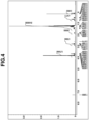
FIG. 4] FIG. 4 is a diagram showing the 1H-NMR spectrum of 2-ethoxy-2-methyl-N-(triethoxysilyloctyl)-1-aza-2-silacyclopentane obtained in Synthesis Example 2. - [
FIG. 5] FIG. 5 is a diagram showing the IR spectrum of 2-methoxy-2-methyl-N-(trimethoxysilylpropylthioethyl)-1-aza-2-silacyclopentane obtained in Synthesis Example 3. - [
FIG. 6] FIG. 6 is a diagram showing the 1H-NMR spectrum of 2-methoxy-2-methyl-N-(trimethoxysilylpropylthioethyl)-1-aza-2-silacyclopentane obtained in Synthesis Example 3. - [
FIG. 7] FIG. 7 is a diagram showing the IR spectrum of 2,2-diethoxy-N-triethoxysilylmethyl-1-aza-2-silacyclopentane obtained in Synthesis Example 4. - [
FIG. 8] FIG. 8 is a diagram showing the 1H-NMR spectrum of 2,2-diethoxy-N-triethoxysilylmethyl-1-aza-2-silacyclopentane obtained in Synthesis Example 4. - Now the invention is described in detail.
- The invention provides a method for producing an alkoxysilylalkylaminopropyl-modified polysiloxane compound having the general formula (3), referred to as "Compound (3)", hereinafter, comprising the step of reacting a silanol-modified polysiloxane compound having the general formula (1), referred to as "Compound (1)", hereinafter, with an alkoxysilyl-containing cyclic silazane compound having the general formula (2), referred to as "Compound (2)", hereinafter.

- In formulae (1) and (3), R1 is each independently a C1-C10, preferably C1-C6, more preferably C1-C3 substituted or unsubstituted monovalent hydrocarbon group.
- The monovalent hydrocarbon group R1 may be straight, branched or cyclic and examples thereof include straight alkyl groups such as methyl, ethyl, n-propyl, n-butyl, n-pentyl, n-hexyl, n-heptyl, n-octyl and decyl; branched alkyl groups such as isopropyl, isobutyl, sec-butyl, tert-butyl, neopentyl, thexyl and 2-ethylhexyl; cyclic alkyl groups such as cyclopentyl and cyclohexyl; alkenyl groups such as vinyl, allyl, propenyl, butenyl and pentenyl; aryl groups such as phenyl and tolyl; and aralkyl groups such as benzyl and phenethyl.
- Of these, methyl, ethyl, n-propyl, vinyl and phenyl are preferred from the aspect of availability of reactants.
- In the monovalent hydrocarbon group R1, some or all of the hydrogen atoms may be substituted by fluorine or chlorine. Examples of the substituted monovalent hydrocarbon group include fluoroalkyl groups such as 3,3,3-trifluoropropyl and chloroalkyl groups such as chloromethyl and chloropropyl.
- In formula (1), X is hydrogen or R1 3Si- wherein R1 is as defined above.
- Examples of Compound (1) include 1-hydroxypolysiloxane compounds such as 1-hydroxy-1,1,3,3,5,5,7,7,7-nonamethyltetrasiloxane, 1-hydroxy-1,1,3,3,5,5,7,7-octamethyl-7-vinyltetrasiloxane, 1-hydroxy-1,1,3,3,5,5,7,7-octamethyl-7-chloromethyltetrasiloxane, 1-hydroxy-1,1,3,3,5,5,7,7-octamethyl-7-chloropropyltetrasiloxane, 1-hydroxy-1,1,3,3,5,5-hexavinyl-7,7,7-trimethyltetrasiloxane, 1-hydroxy-1,1,3,3,5,5-hexaphenyl-7,7,7-trimethyltetrasiloxane, 1-hydroxy-1,3,5-tris(3,3,3-trifluoropropyl)-1,3,5,7,7,7-hexamethyltetrasiloxane, 1-hydroxy-1,1,3,3,5,5,7-heptavinyl-7,7-dimethyltetrasiloxane, 1-hydroxy-1,1,3,3,5,5,7-heptamethyl-7,7-diphenyltetrasiloxane, 1-hydroxy-1,1,3,3,5,5,7,7-octaphenyl-7-methyltetrasiloxane, 1-hydroxy-1,1,3,3,5,5,7,7,7-nonaphenyltetrasiloxane, α-hydroxy-ω-methylpolydimethylpolysiloxane, α-hydroxy-ω-vinylpolydimethylpolysiloxane, α-hydroxy-ω-chloromethyldimethylpolysiloxane, α-hydroxy-ω-chloropropyldimethylpolysiloxane, and α-hydroxy-ω-phenyldimethylpolysiloxane; dihydroxypolysiloxane compounds such as 1,7-dihydroxy-1,1,3,3,5,5,7,7-octamethyltetrasiloxane, 1,7-dihydroxy-1,1,3,3,5,5,7-heptamethyl-7-vinyltetrasiloxane, 1,7-dihydroxy-1,3,5-tris(3,3,3-trifluoropropyl)-1,3,5,7,7-pentamethyltetrasiloxane, and α,ω-dihydroxydimethylpolysiloxane; and dialkylsilanediols such as dibutylsilanediol, diphenylsilanediol, and dicyclopentylsilanediol.
- In formulae (2) and (3), R2 and R3 are each independently a C1-C6, preferably C1-C3 unsubstituted monovalent hydrocarbon group.
- The monovalent hydrocarbon groups R2 and R3 may be straight, branched or cyclic and examples thereof include straight alkyl groups such as methyl, ethyl, n-propyl, n-butyl, n-pentyl and n-hexyl; branched alkyl groups such as isopropyl, isobutyl, sec-butyl and tert-butyl; cyclic alkyl groups such as cyclopentyl and cyclohexyl; alkenyl groups such as vinyl, allyl, propenyl, butenyl and pentenyl; and aryl groups such as phenyl.
- Of these, methyl and ethyl are preferred from the aspect of availability of reactants.
- R4 is a C1-C20, preferably C1-C10, more preferably C1-C6 divalent hydrocarbon group which may contain sulfur, silicon, ester bond or urea bond.
- The divalent hydrocarbon group R4 may be straight, branched or cyclic and examples thereof include straight alkylene groups such as methylene, ethylene, trimethylene, tetramethylene, hexamethylene, octamethylene, and decylene; branched alkylene groups such as methylethylene and methyltrimethylene; cyclic alkylene groups such as cyclohexylene and methylenecyclohexylenemethylene; straight alkenylene groups such as propenylene, butenylene, hexenylene and octenylene; branched alkenylene groups such as isopropenylene and isobutenylene; arylene groups such as phenylene; and aralkylene groups such as methylenephenylene, methylenephenylenemethylene, and methylenephenyleneethylene.
- Of these, straight alkylene groups are preferred, and C1-C6 straight alkylene groups are more preferred from the aspect of availability of reactants.
- Examples of the sulfur-containing divalent hydrocarbon group R4 include thioalkylene and alkylenethioalkylene groups.
- Examples of the silicon-containing divalent hydrocarbon group R4 include alkylenedialkylsilylalkylene and substituent groups having the general formula (5).
- Examples of the alkylene group are as exemplified above, with C1-C6 straight alkylene groups being preferred.

- Herein R1 is as defined above.
- In formula (5), R4' is each independently oxygen or a C1-C20, preferably C1-C10, more preferably C1-C6 divalent hydrocarbon group. The total number of carbon atoms in two R4' is equal to that in R4. Examples of the divalent hydrocarbon group R4' are as exemplified above for R4.
- Examples of the ester bond-containing divalent hydrocarbon group R4 include substituent groups having the general formula (6). Examples of the urea bond-containing divalent hydrocarbon group R4 include substituent groups having the general formula (7).

- In formulae (6) and (7), R4" is each independently a single bond or a C1-C10, preferably C1-C6, more preferably C1-C3 divalent hydrocarbon group. The total number of carbon atoms in two R4" is equal to that in R4. Examples of the divalent hydrocarbon group R4" are as exemplified above for R4, but of 1 to 10 carbon atoms.
- In formula (7), R5 is hydrogen or a C1-C10, preferably C1-C6, more preferably C1-C3 unsubstituted monovalent hydrocarbon group. Examples of the monovalent hydrocarbon group R5 are as exemplified above for R1. Hydrogen is preferred from the aspect of availability of reactants.
- In formulae (2) and (3), q is 0 or 1, and r is 0, 1 or 2.
- Examples of Compound (2) include
- cyclic silazane compounds having a trialkoxysilylalkyl group such as 2,2-dimethoxy-N-(trimethoxysilylpropyl)-1-aza-2-silacyclopentane, 2,2-dimethoxy-N-(trimethoxysilylmethyl)-1-aza-2-silacyclopentane, 2,2-dimethoxy-N-(trimethoxysilylhexyl)-1-aza-2-silacyclopentane, 2,2-dimethoxy-N-(trimethoxysilyloctyl)-1-aza-2-silacyclopentane, 2-methoxy-2-methyl-N-(trimethoxysilylpropyl)-1-aza-2-silacyclopentane, 2-methoxy-2-methyl-N-(trimethoxysilylhexyl)-1-aza-2-silacyclopentane, 2-methoxy-2-methyl-N-(trimethoxysilyloctyl)-1-aza-2-silacyclopentane, 2,2-diethoxy-N-(triethoxysilylpropyl)-1-aza-2-silacyclopentane, 2,2-diethoxy-N-(triethoxysilylmethyl)-1-aza-2-silacyclopentane, 2,2-diethoxy-N-(triethoxysilylhexyl)-1-aza-2-silacyclopentane, 2,2-diethoxy-N-(triethoxysilyloctyl)-1-aza-2-silacyclopentane, 2-ethoxy-2-methyl-N-(triethoxysilylpropyl)-1-aza-2-silacyclopentane, 2-ethoxy-2-methyl-N-(triethoxysilylhexyl)-1-aza-2-silacyclopentane, 2-ethoxy-2-methyl-N-(triethoxysilyloctyl)-1-aza-2-silacyclopentane, 2,2-dimethoxy-N-(trimethoxysilylthiomethyl)-1-aza-2-silacyclopentane, 2,2-dimethoxy-N-(trimethoxysilylthiomethyl)-1-aza-2-silacyclopentane, 2-methoxy-2-methyl-N-(trimethoxysilylthiomethyl)-1-aza-2-silacyclopentane, 2-methoxy-2-methyl-N-(trimethoxysilylthiomethyl)-1-aza-2-silacyclopentane, 2,2-dimethoxy-N-(trimethoxysilylthiopropyl)-1-aza-2-silacyclopentane, 2,2-dimethoxy-N-(trimethoxysilylthiopropyl)-1-aza-2-silacyclopentane, 2-methoxy-2-methyl-N-(trimethoxysilylthiopropyl)-1-aza-2-silacyclopentane, 2-methoxy-2-methyl-N-(trimethoxysilylthiopropyl)-1-aza-2-silacyclopentane, 2,2-dimethoxy-N-[(trimethoxysilyl)ethyldimethylsiloxydimethylsilyl(methyl)propyl]-1-aza-2-silacyclopentane, 2-methoxy-2-methyl-N-[(trimethoxysilyl)ethyldimethylsiloxy-dimethylsilyl(methyl)propyl]-1-aza-2-silacyclopentane, 2,2-dimethoxy-N-(3-trimethoxysilylpropoxycarbonylethyl)-1-aza-2-silacyclopentane, 2,2-diethoxy-N-(3-triethoxysilylpropoxycarbonylethyl)-1-aza-2-silacyclopentane, 2,2-dimethoxy-N-(3-trimethoxysilylpropoxycarbonyl(methyl)ethyl)-1-aza-2-silacyclopentane, 2,2-diethoxy-N-(3-triethoxysilylpropoxycarbonyl(methyl)ethyl)-1-aza-2-silacyclopentane, 2,2-dimethoxy-N-(3-trimethoxysilylpropyplureidoethyl)-1-aza-2-silacyclopentane, 2-methoxy-2-methyl-N-(3-trimethoxysilylpropylureidoethyl)-1-aza-2-silacyclopentane, 2,2-diethoxy-N-(3-triethoxysilylpropylureidoethyl)-1-aza-2-silacyclopentane, 2-ethoxy-2-methyl-N-(3-triethoxysilylpropylureidoethyl)-1-aza-2-silacyclopentane, 2,2-dimethoxy-N-(trimethoxysilylethyldimethylsiloxydimethylsilylpropyl(methyl))-1-aza-2-silacyclopentane, and 2,2-dimethoxy-N-(1,1,1-trimethoxy-3,3,5,5,7,7-hexamethyltetrasiloxydimethylsilylpropyl)-1-aza-2-silacyclopentane;
- cyclic silazane compounds having an alkyldialkoxysilylalkyl group such as 2,2-dimethoxy-N-(methyldimethoxysilylpropyl)-1-aza-2-silacyclopentane, 2,2-dimethoxy-N-(methyldimethoxysilylmethyl)-1-aza-2-silacyclopentane, 2,2-dimethoxy-N-(methyldimethoxysilylhexyl)-1-aza-2-silacyclopentane, 2,2-dimethoxy-N-(methyldimethoxysilyloctyl)-1-aza-2-silacyclopentane, 2-methoxy-2-methyl-N-(methyldimethoxysilylhexyl)-1-aza-2-silacyclopentane, 2-methoxy-2-methyl-N-(methyldimethoxysilyloctyl)-1-aza-2-silacyclopentane, 2,2-diethoxy-N-(methyldiethoxysilylpropyl)-1-aza-2-silacyclopentane, 2,2-diethoxy-N-(methyldiethoxysilylmethyl)-1-aza-2-silacyclopentane, 2,2-diethoxy-N-(methyldiethoxysilylhexyl)-1-aza-2-silacyclopentane, 2,2-diethoxy-N-(methyldiethoxysilyloctyl)-1-aza-2-silacyclopentane, 2-ethoxy-2-methyl-N-(methyldiethoxysilylhexyl)-1-aza-2-silacyclopentane, 2-ethoxy-2-methyl-N-(methyldiethoxysilyloctyl)-1-aza-2-silacyclopentane, 2,2-dimethoxy-N-(methyldimethoxysilylthioethyl)-1-aza-2-silacyclopentane, 2,2-dimethoxy-N-(methyldimethoxysilylthioethyl)-1-aza-2-silacyclopentane, 2-methoxy-2-methyl-N-(methyldimethoxysilylthioethyl)-1-aza-2-silacyclopentane, 2-methoxy-2-methyl-N-(methyldimethoxysilylthioethyl)-1-aza-2-silacyclopentane, 2,2-dimethoxy-N-(methyldimethoxysilylthiopropyl)-1-aza-2-silacyclopentane, 2,2-dimethoxy-N-(methyldimethoxysilylthiopropyl)-1-aza-2-silacyclopentane, 2-methoxy-2-methyl-N-(methyldimethoxysilylthiopropyl)-1-aza-2-silacyclopentane, 2-methoxy-2-methyl-N-(methyldimethoxysilylthiopropyl)-1-aza-2-silacyclopentane, 2,2-dimethoxy-N-(3-methyldimethoxysilylpropoxycarbonylethyl)-1-aza-2-silacyclopentane, 2,2-diethoxy-N-(3-methyldiethoxysilylpropoxycarbonylethyl)-1-aza-2-silacyclopentane, 2,2-dimethoxy-N-(3-methyldimethoxysilylpropoxycarbonyl(methyl)ethyl)-1-aza-2-silacyclopentane, and 2,2-diethoxy-N-(3-methyldiethoxysilylpropoxycarbonyl(methyl)ethyl)-1-aza-2-silacyclopentane;
- cyclic silazane compounds having a dialkylalkoxysilylalkyl group such as 2,2-dimethoxy-N-(dimethylmethoxysilylmethyl)-1-aza-2-silacyclopentane, 2,2-dimethoxy-N-(dimethylmethoxysilylhexyl)-1-aza-2-silacyclopentane, 2,2-dimethoxy-N-(dimethylmethoxysilyloctyl)-1-aza-2-silacyclopentane, 2-methoxy-2-methyl-N-(dimethylmethoxysilylhexyl)-1-aza-2-silacyclopentane, 2-methoxy-2-methyl-N-(dimethylmethoxysilyloctyl)-1-aza-2-silacyclopentane, 2,2-dimethoxy-N-(diethylmethoxysilylhexyl)-1-aza-2-silacyclopentane, 2,2-dimethoxy-N-(diethylmethoxysilyloctyl)-1-aza-2-silacyclopentane, 2-methoxy-2-methyl-N-(diethylmethoxysilylhexyl)-1-aza-2-silacyclopentane, 2-methoxy-2-methyl-N-(diethylmethoxysilyloctyl)-1-aza-2-silacyclopentane, 2,2-dimethoxy-N-(diphenylmethoxysilylhexyl)-1-aza-2-silacyclopentane, 2,2-dimethoxy-N-(diphenylmethoxysilyloctyl)-1-aza-2-silacyclopentane, 2-methoxy-2-methyl-N-(diphenylmethoxysilylhexyl)-1-aza-2-silacyclopentane, 2-methoxy-2-methyl-N-(diphenylmethoxysilyloctyl)-1-aza-2-silacyclopentane, and 2,2-diethoxy-N-(dimethylethoxysilylmethyl)-1-aza-2-silacyclopentane.
- It is noted that Compound (2) can be prepared by the well-known method described in
JP-A 2011-102267 - In formula (3), Y is a substituent group having the general formula (4) or R1 3Si wherein R1 is as defined above.

- Herein R2 to R4, q, and r are as defined above.
- In the method of the invention, the mixing ratio of Compound (1) and Compound (2), though not particularly limited, is preferably such that 1 to 2 moles, more preferably 1 to 1.5 moles, even more preferably 1 to 1.2 moles of Compound (2) is present per mole of silanol group in Compound (1).
- The reaction may be carried out by adding Compound (2) to Compound (1) or vice versa.
- The reaction temperature, though not particularly limited, is preferably 0 to 200°C, more preferably 0 to 150°C, even more preferably 10 to 60°C from the aspect of product stability.
- The reaction time, though not particularly limited, is preferably 5 minutes to 40 hours, more preferably 10 minutes to 20 hours, even more preferably 10 minutes to 5 hour from the aspect of product stability.
- It is noted that the reaction is preferably carried out in an inert gas atmosphere such as nitrogen or argon in order to prevent dehydrating condensation of Compound (1) or hydrolysis of Compound (2) or (3).
- Although the reaction takes place in a solventless system, a solvent may be used.
- Examples of the solvent include C5-C20 aliphatic hydrocarbon solvents such as pentane, hexane, cyclohexane, heptane, octane, nonane, decane, isooctane, and isododecane; C6-C10 aromatic hydrocarbon solvents such as benzene, toluene and xylene; ether solvents such as diethyl ether, tetrahydrofuran, dioxane and dipropylene glycol dimethyl ether; ester solvents such as ethyl acetate and butyl acetate; aprotic polar solvents such as acetonitrile, N,N-dimethylforamide, and N-methylpyrrolidone; and silicone solvents such as hexamethyldisiloxane, octamethyltrisiloxane, decamethyltetrasiloxane, tris(trimethylsiloxy)methylsilane, octamethylcyclotetrasiloxane, and decamethylcyclopentasiloxane, which may be used alone or in admixture.
- Compound (3) resulting from the above reaction may be isolated or purified by any purifying methods used in ordinary organic synthesis such as vacuum stripping, various chromatography processes, treatment with adsorbents such as activated carbon, and filtration.
- Examples of Compound (3) include
- 1-(alkoxysilylalkylaminopropyl)polysiloxane compounds wherein Y is R1 3Si such as 1-(3-trimethoxysilylpropylaminopropyl)-1,1-dimethoxy-3,3,5,5,7,7,9,9,9-nonamethylpentasiloxane, 1-(3-triethoxysilylpropylaminopropyl)-1,1-diethoxy-3,3,5,5,7,7,9,9,9-nonamethylpentasiloxane, 1-(8-trimethoxysilylpropylaminooctyl)-1,1-dimethoxy-3,3,5,5,7,7,9,9,9-nonamethylpentasiloxane, 1-(8-triethoxysilylpropylaminopropyl)-1,1-diethoxy-3,3,5,5,7,7,9,9,9-nonamethylpentasiloxane, 1 -(8-triethoxysilylpropylaminopropyl)-1 -ethoxy-1,3,3,5,5,7,7,9,9,9-decamethylpentasiloxane, 1-(3-trimethoxysilylpropylaminopropyl)-1,1-dimethoxy-3,3,5,5,7,7,9,9,9-nonamethylpentasiloxane, 1-(3-trimethoxysilylpropylaminopropyl)-1,1-dimethoxy-3,3,5,5,7,7,9,9-octamethyl-9-vinylpentasiloxane, 1-(3-trimethoxysilylpropylaminopropyl)-1,1-dimethoxy-3,3,5,5,7,7,9,9-octamethyl-9-chloromethylpentasiloxane, 1-(3-trimethoxysilylpropylaminopropyl)-1,1-dimethoxy-3,3,5,5,7,7,9,9-octamethyl-9-chloropropylpentasiloxane, 1-(3-trimethoxysilylpropylaminopropyl)-1,1-dimethoxy-3,3,5,5,7,7-hexavinyl-9,9,9-trimethylpentasiloxane, 1-(3-trimethoxysilylpropylaminopropyl)-1,1-dimethoxy-3,3,5,5,7,7-hexaphenyl-9,9,9-trimethylpentasiloxane, 1-(3-trimethoxysilylpropylaminopropyl)-1,1-dimethoxy-3,5,7-tris(3,3,3-trifluoropropyl)-3,5,7,9,9,9-hexamethylpentasiloxane, 1-(3-trimethoxysilylpropylaminopropyl)-1,1-dimethoxy-3,3,5,5,7,7,9-heptavinyl-9,9-dimethylpentasiloxane, 1-(3-trimethoxysilylpropylaminopropyl)-1,1-dimethoxy-3,3,5,5,7,7,9-heptamethyl-9,9-diphenylpentasiloxane, 1-(3-trimethoxysilylpropylaminopropyl)-1,1-dimethoxy-3,3,5,5,7,7,9,9-octaphenyl-7-methylpentasiloxane, 1-(3-trimethoxysilylpropylaminopropyl)-1,1-dimethoxy-3,3,5,5,7,7,9,9,9-nonaphenyl-pentasiloxane, α-(3-trimethoxysilylpropylaminopropyl)-α,α-dimethoxy-ω-methylpolydimethylpolysiloxane, α-(3-triethoxysilylpropylaminopropyl)-α,α-diethoxy-ω-methylpolydimethylpolysiloxane, α-(3-trimethoxysilylpropylaminopropyl)-α,α-dimethoxy-ω-vinylpolydimethylpolysiloxane, α-(3-trimethoxysilylpropylaminopropyl)-α,α-dimethoxy-ω-chloromethyldimethylpolysiloxane, α-(3-trimethoxysilylpropylaminopropyl)-α,α-dimethoxy-ω-chloropropyldimethylpolysiloxane, and α-(3-trimethoxysilylpropylaminopropyl)-α,α-dimethoxy-ω-phenyldimethylpolysiloxane; and
- α,ω-bis(alkoxysilylalkylaminopropyl)polysiloxane compounds wherein Y is a group of formula (4) such as 1,11-bis(3-trimethoxysilylpropylaminopropyl)-1,1,11,11-tetramethoxy-3,3,5,5,7,7,9,9-octamethylhexasiloxane, 1,11-bis(3-triethoxysilylpropylaminopropyl)-1,1,11,11-tetraethoxy-3,3,5,5,7,7,9,9-octamethylhexasiloxane, 1,11-bis(3-trimethoxysilylpropylaminopropyl)-1,1,11,11-tetramethoxy-3,3,5,5,7,7,9-heptamethyl-9-vinylhexasiloxane, 1,11-bis(3-trimethoxysilylpropylaminopropyl)-1,1,11,11-tetramethoxy-3,5,7-tris(3,3,3-trifluoropropyl)-3,5,7,9,9-pentamethylhexasiloxane, α,ω-bis(3-trimethoxysilylpropylaminopropyl)-α,α,ω,α-tetramethoxydimethylpolysiloxane, α,ω-bis(3-triethoxysilylpropylaminopropyl)-α,α,ω,ω-tetraethoxydimethylpolysiloxane, α,ω-bis(8-trimethoxysilylpropylaminooctyl)-α,α,ω,ω-tetramethoxydimethylpolysiloxane, α,ω-bis(8-triethoxysilylpropylaminooctyl)-α,α,ω,ω-tetraethoxydimethylpolysiloxane, α,ω-bis(trimethoxysilylpropylaminomethyl)-α,α,ω,ω-tetramethoxydimethylpolysiloxane, α,ω-bis(triethoxysilylpropylaminomethyl)-α,α,ω,ω-tetraethoxydimethylpolysiloxane, α,ω-bis(dimethylmethoxysilylpropylaminomethyl)-α,α,ω,ω-tetramethoxydimethylpolysiloxane, and
- Synthesis Examples, Examples, and Comparative Examples are given below for further illustrating the invention although the invention is not limited thereto.
-

- Herein Me stands for methyl (the same holds true, hereinafter).
- A four-necked glass flask equipped with a stirrer, thermometer, distillation column, and reflux condenser was purged with nitrogen, to which 122 g (0.296 mol) of (trimethoxysilylpropyl)-(trimethoxysilyloctyl)amine, 132 g of toluene, and 0.75 g (0.0050 mol) of trifluoromethanesulfonic acid were added and heated under reflux. To the mixture, 58.4 g (0.311 mol) of N-trimethylsilyl-N-methylaniline was added and stirred. Trimethylmethoxysilane formed in the course of reaction was withdrawn together with toluene through the distillation column until the reaction temperature reached 150°C.
- On distillation of the reaction solution, 66 g of a fraction having a boiling point of 170°C/0.5 kPa was obtained (yield 58%). The fraction was analyzed by IR and 1H-NMR spectroscopy. The results are shown in
FIGS. 1 and2 . -

- Herein Et stands for ethyl (the same holds true, hereinafter).
- A four-necked glass flask equipped with a stirrer, thermometer, distillation column, and reflux condenser was purged with nitrogen, to which 162 g (0.348 mol) of (methyldiethoxysilylpropyl)-(triethoxysilyloctyl)amine, 114 g of toluene, and 1.0 g (0.0067 mol) of trifluoromethanesulfonic acid were added and heated under reflux. To the mixture, 68.5 g (0.382 mol) of N-trimethylsilyl-N-methylaniline was added and stirred. Trimethylethoxysilane formed in the course of reaction was withdrawn together with toluene through the distillation column until the reaction temperature reached 150°C.
- On distillation of the reaction solution, 110 g of a fraction having a boiling point of 177°C/0.2 kPa was obtained (yield 75%). The fraction was analyzed by IR and 1H-NMR spectroscopy. The results are shown in
FIGS. 3 and4 . -

- A four-necked glass flask equipped with a stirrer, thermometer, distillation column, and reflux condenser was purged with nitrogen, to which 86.0 g (0.221 mol) of (methyldimethoxysilylpropyl)-(trimethoxysilylpropylthioethyl)amine, 110 g of toluene, and 0.4 g (0.003 mol) of trifluoromethanesulfonic acid were added and heated under reflux. To the mixture, 44.0 g (0.245 mol) of N-trimethylsilyl-N-methylaniline was added and stirred. Trimethylmethoxysilane formed in the course of reaction was withdrawn together with toluene through the distillation column until the reaction temperature reached 140°C.
- On distillation of the reaction solution, 54 g of a fraction having a boiling point of 140-150°C/0.4 kPa was obtained (yield 69%). The fraction was analyzed by IR and 1H-NMR spectroscopy. The results are shown in
FIGS. 5 and6 . -

- A four-necked glass flask equipped with a stirrer, thermometer, and reflux condenser was purged with nitrogen, charged with 126.1 g (40 wt% THF solution, 0.2752 mol) of sodium hexamethyldisilazide, and cooled at 5°C. To the flask, 99.3 g (0.250 mol) of (triethoxysilylmethyl)-(triethoxysilylpropyl)amine was added dropwise over 1 hour. Stirring was continued at the temperature for a further 1 hour.
- On GC-MS analysis of the reaction solution, it was found that 2,2-diethoxy-N-triethoxysilylmethyl-1-aza-2-silacyclopentane formed at a conversion rate of 97%. On filtration and subsequent distillation of the reaction solution, 2,2-diethoxy-N-triethoxysilylmethyl-1-aza-2-silacyclopentane was collected as 54.0 g of a fraction having a boiling point of 105°C/0.4 kPa. The fraction was analyzed by IR and 1H-NMR spectroscopy. The results are shown in
FIGS. 7 and8 . - It is noted that the conversion rate was determined from the area values of reactant and product on gas chromatography, referred to as GC analysis, hereinafter, according to the following calculation:

-

- A four-necked glass flask equipped with a stirrer, thermometer, and reflux condenser was purged with nitrogen and charged with 10 g (0.032 mol) of 1-hydroxy-1,1,3,3,5,5,7,7,7-nonamethyltetrasiloxane (A). To the flask, 9.9 g (0.032 mol) of 2,2-dimethoxy-N-trimethoxysilylpropyl-1-aza-2-silacyclopentane was added from a dropping funnel, followed by 1 hour of stirring at room temperature. A gas chromatography (GC) analysis of the reaction solution revealed that the desired Compound (B) formed with no residues of 1-hydroxy-1,1,3,3,5,5,7,7,7-nonamethyltetrasiloxane and 2,2-dimethoxy-N-trimethoxysilylpropyl-1-aza-2-silacyclopentane.
- The conversion rate was 96% when calculated on the basis of 1-hydroxy-1,1,3,3,5,5,7,7,7-nonamethyltetrasiloxane according to the following formula. The formation rate of by-product (C) was 1% when calculated according to the following formula.

- Formation rate of C = (GC area value of C)/(GC area value of B + GC area value of C)
-

- Reaction was carried out as in Example 1-1 aside from using 11 g (0.032 mol) of bis(3-trimethoxysilylpropyl)amine instead of 9.9 g of 2,2-dimethoxy-N-trimethoxysilylpropyl-1-aza-2-silacyclopentane. A GC analysis of the reaction solution revealed that the desired Compound (B) formed, and some 1-hydroxy-1,1,3,3,5,5,7,7,7-nonamethyltetrasiloxane and bis(3-trimethoxysilylpropyl)amine remained.
- The conversion rate was 89% when calculated as in Example 1-1 on the basis of 1-hydroxy-1,1,3,3,5,5,7,7,7-nonamethyltetrasiloxane. The formation rate of by-product (C) was 39%.
- The reaction solution obtained in Comparative Example 1-1 was heated at 130°C. As methanol formed with the progress of reaction, it was removed out of the system. The distillation of methanol was continued until the reaction temperature reached 155°C. Thereafter, the reaction solution was cooled to room temperature.
- On GC analysis of the reaction solution at this point of time as in Example 1-1, the conversion rate was 100% when calculated on the basis of 1-hydroxy-1,1,3,3,5,5,7,7,7-nonamethyltetrasiloxane. The formation rate of by-product (C) was 33%.
- In this way, 1-(3-trimethoxysilylpropylaminopropyl)-1,1-dimethoxy-3,3,5,5,7,7,9,9,9-nonamethylpentasiloxane (Compound 8), 18 g, was obtained as a yellow transparent liquid.
-

- A four-necked glass flask equipped with a stirrer, thermometer, and reflux condenser was purged with nitrogen and charged with 225 g (0.15 mol as silanol) of a silanol-modified polydimethylsiloxane having a number average molecular weight of 3,000 as analyzed by gel permeation chromatography (GPC), which was stirred. To the flask, 51.0 g (0.165 mol) of 2,2-dimethoxy-N-trimethoxysilylpropyl-1-aza-2-silacyclopentane was added from a dropping funnel, followed by 1 hour of stirring at room temperature. On GC analysis of the reaction solution, the disappearance of 2,2-dimethoxy-N-trimethoxysilylpropyl-1-aza-2-silacyclopentane was confirmed and regarded as the end of reaction. An IR analysis of the product revealed the disappearance of the peak attributable to silanol.
- In this way, both end alkoxysilylalkylaminopropyl-modified polysiloxane compound 1, 268.5 g, was obtained as a colorless transparent liquid.
-

- Reaction was carried out as in Example 1-2 aside from using 63.0 g (0.165 mol) of 2,2-diethoxy-N-triethoxysilylpropyl-1-aza-2-silacyclopentane instead of 51.0 g of 2,2-dimethoxy-N-trimethoxysilylpropyl-1-aza-2-silacyclopentane.
- An IR analysis of the product revealed the disappearance of the peak attributable to silanol. Both end alkoxysilylpropylaminopropyl-modified
polysiloxane compound 2, 286.5 g, was obtained as a colorless transparent liquid. -

- Reaction was carried out as in Example 1-2 aside from changing the amount of the silanol-modified polydimethylsiloxane to 15.0 g (0.0100 mol as silanol) and using 4.1 g (0.011 mol) of 2,2-dimethoxy-N-trimethoxysilyloctyl-1-aza-2-silacyclopentane instead of 51.0 g of 2,2-dimethoxy-N-trimethoxysilylpropyl-1-aza-2-silacyclopentane.
- An IR analysis of the product revealed the disappearance of the peak attributable to silanol. Both end alkoxysilylalkylaminooctyl-modified polysiloxane compound 3, 18 g, was obtained as a colorless transparent liquid.
-

- Reaction was carried out as in Example 1-2 aside from changing the amount of the silanol-modified polydimethylsiloxane to 15.0 g (0.010 mol as silanol) and using 4.8 g (0.011 mol) of 2-ethoxy-2-methyl-N-triethoxysilyloctyl-1-aza-2-silacyclopentane instead of 51.0 g of 2,2-dimethoxy-N-trimethoxysilylpropyl-1-aza-2-silacyclopentane.
- An IR analysis of the product revealed the disappearance of the peak attributable to silanol. Both end alkoxysilylalkylaminooctyl-modified polysiloxane compound 4, 19 g, was obtained as a colorless transparent liquid.
-

- Reaction was carried out as in Example 1-2 aside from changing the amount of the silanol-modified polydimethylsiloxane to 15.0 g (0.010 mol as silanol) and using 3.9 g (0.011 mol) of 2-methoxy-2-methyl-N-trimethoxysilylpropylthioethyl-1-aza-2-silacyclopentane instead of 51.0 g of 2,2-dimethoxy-N-trimethoxysilylpropyl-1-aza-2-silacyclopentane.
- An IR analysis of the product revealed the disappearance of the peak attributable to silanol. Both end alkoxysilylpropylaminoalkyl-modified polysiloxane compound 5, 18 g, was obtained as a colorless transparent liquid.
-

- Reaction was carried out as in Example 1-2 aside from changing the silanol-modified polydimethylsiloxane to 50 g (0.10 mol as silanol) of a silanol-modified polydimethylsiloxane having a Mn of 1,000 as measured by GPC and changing the amount of 2,2-dimethoxy-N-trimethoxysilylpropyl-1-aza-2-silacyclopentane to 32.5 g (0.105 mol).
- An IR analysis of the product revealed the disappearance of the peak attributable to silanol. Both end alkoxysilylpropylaminopropyl-modified polysiloxane compound 6, 81 g, was obtained as a colorless transparent liquid.
-

- Reaction was carried out as in Example 1-2 aside from changing the amount of the silanol-modified polydimethylsiloxane to 15 g (0.010 mol as silanol) and using 3.9 g (0.011 mol) of 2,2-diethoxy-N-triethoxysilylmethyl-1-aza-2-silacyclopentane instead of 2,2-dimethoxy-N-trimethoxysilylpropyl-1-aza-2-silacyclopentane.
- An IR analysis of the product revealed the disappearance of the peak attributable to silanol. Both end alkoxysilylpropylaminomethyl-modified polysiloxane compound 7, 18 g, was obtained as a colorless transparent liquid.
-

- According to the teaching of
Patent Document 2, a four-necked glass flask equipped with a stirrer, thermometer, and reflux condenser was purged with nitrogen and charged with 80 g (0.053 mol as amino group) of an amino-modified polydimethylsiloxane, 7.7 g (0.076 mol) of triethylamine and 40 g of toluene and heated at 90°C. To the flask, 15 g (0.072 mol) of chloromethyltriethoxysilane was added from a dropping funnel, followed by 20 hours of stirring at the temperature. - On GC analysis of the reaction solution at this point of time, part of chloromethyltriethoxysilane remained. The reaction solution was filtered to remove the triethylamine hydrochloride which formed in the course of reaction, after which the residue was washed with toluene. Then toluene was removed from the filtrate, yielding both end alkoxysilylalkylaminomethyl-modified polysiloxane compound 9 as a brown transparent material.
-

- According to the teaching of Patent Document 3, a four-necked glass flask equipped with a stirrer, thermometer, and reflux condenser was purged with nitrogen, charged with 75 g (0.050 mol as amino group) of an amino-modified polydimethylsiloxane, and heated at 100°C. To the flask, 18.8 g (0.050 mol) of 3-glycidoxypropyltrimethoxysilane was added from a dropping funnel, followed by 12 hours of stirring at the temperature. A GC analysis revealed a minute residue of 3-glycidoxypropyltrimethoxysilane. Without further operation, both end alkoxysilylalkylaminopropyl-modified
polysiloxane compound 10 was obtained as colorless slightly turbid one. - The results of Examples 1-1 to 1-8 demonstrate that in the reaction of a silanol-modified polysiloxane compound with an alkoxysilyl-containing cyclic silazane compound, a silanol site briefly reacts with a cyclic silazane site at room temperature. In particular, the formation rate of by-product is low and reaction takes place at a high selectivity as seen from the results of Example 1-1 and Comparative Examples 1-1 and 1-2.
- In contrast, Comparative Examples 1-1 and 1-2 show that in the reaction of a silanol-modified polysiloxane compound with a bis(alkoxysilylalkyl)amine at room temperature, the conversion rate was insufficient and some reactants remained. Alcohol must be removed by heating before the conversion rate can be increased. Despite high temperature/long time reaction, one of the reactants remained in Comparative Examples 1-3 and 1-4.
- A vial was charged with each of both end alkoxysilylalkylaminomethyl-modified polysiloxane compounds 1 to 10 obtained in Examples 1-2 to 1-8 and Comparative Examples 1-2 to 1-4 while taking care so as to avoid moisture entry, and purged with nitrogen. The vial was allowed to stand at room temperature (25°C) for one month. Changes of outer appearance and color were visually observed and compared with those of the reaction solution immediately after reaction. The results are shown in Table 1.

- As seen from Table 1, both end alkoxysilylalkylaminopropyl-modified polysiloxane compounds 1 to 7 obtained in Examples 1-2 to 1-8 showed no changes of outer appearance, state and flow both immediately after preparation and after the lapse of 1 month.
- For both end alkoxysilylalkylaminopropyl-modified polysiloxane compound obtained in Comparative Example 1-2, the product was colored because of exposure to high temperature during preparation (Comparative Example 2-1). For both end alkoxysilylalkylaminopropyl-modified polysiloxane compound obtained in Comparative Example 1-3, substantial coloration was noticed in the course of reaction because the method involved generation of chloride ions (Comparative Example 2-2).
- For both end alkoxysilylalkylaminopropyl-modified polysiloxane compound obtained in Comparative Example 1-4, no coloration was noticed, but the solution was turbid, indicating formation of high molecular weight compounds. After the lapse of 1 month, the both end alkoxysilylalkylaminopropyl-modified polysiloxane compound solidified and lost flow. It is believed that as the alcohol resulting from ring-opening of the epoxy group underwent intramolecular and intermolecular condensation, the compound built up its viscosity and solidified (Comparative Example 2-3).
Claims (2)
- A method for producing an alkoxysilylalkylaminopropyl-modified polysiloxane compound, comprising the step of reacting a silanol-modified polysiloxane compound having the general formula (1):
 wherein R1 is each independently a C1-C10 substituted or unsubstituted monovalent hydrocarbon group, X is hydrogen or R1 3Si wherein R1 is as defined above, and p is an integer of 1 to 1,000, with an alkoxysilyl-containing cyclic silazane compound having the general formula (2):
 wherein R2 and R3 are each independently a C1-C6 unsubstituted monovalent hydrocarbon group, R4 is a C1-C20 divalent hydrocarbon group which may contain sulfur, silicon, ester bond or urea bond, q is 0 or 1, and r is 0, 1 or 2,the alkoxysilylalkylaminopropyl-modified polysiloxane compound having the general formula (3):
 wherein R1 to R4, p, q, and r are as defined above, and Y is a substituent group having the general formula (4):
 wherein R2 to R4, q, and r are as defined above, or R1 3Si wherein R1 is as defined above.
 - The method for producing an alkoxysilylalkylaminopropyl-modified polysiloxane compound according to claim 1 wherein the silanol-modified polysiloxane compound having formula (1) and the alkoxysilyl-containing cyclic silazane compound having formula (2) are combined in such a ratio that 1.0 to 1.2 moles of the alkoxysilyl-containing cyclic silazane compound is present per mole of silanol group in the silanol-modified polysiloxane compound.
Applications Claiming Priority (2)
| Application Number | Priority Date | Filing Date | Title |
|---|---|---|---|
| JP2021158821A JP7683444B2 (en) | 2021-09-29 | 2021-09-29 | Method for producing alkoxysilylalkylaminopropyl-modified polysiloxane compound |
| PCT/JP2022/033655 WO2023053885A1 (en) | 2021-09-29 | 2022-09-08 | Method for producing alkoxysilyl alkylaminopropyl-modified polysiloxane compound |
Publications (2)
| Publication Number | Publication Date |
|---|---|
| EP4410796A1 true EP4410796A1 (en) | 2024-08-07 |
| EP4410796A4 EP4410796A4 (en) | 2025-10-15 |
Family
ID=85782406
Family Applications (1)
| Application Number | Title | Priority Date | Filing Date |
|---|---|---|---|
| EP22875757.1A Pending EP4410796A4 (en) | 2021-09-29 | 2022-09-08 | Process for preparing an alkoxysilylalkylaminopropyl-modified polysiloxane compound |
Country Status (5)
| Country | Link |
|---|---|
| US (1) | US20250043080A1 (en) |
| EP (1) | EP4410796A4 (en) |
| JP (1) | JP7683444B2 (en) |
| KR (1) | KR20240070628A (en) |
| WO (1) | WO2023053885A1 (en) |
Families Citing this family (3)
| Publication number | Priority date | Publication date | Assignee | Title |
|---|---|---|---|---|
| US12071562B2 (en) * | 2021-09-29 | 2024-08-27 | Shin-Etsu Chemical Co., Ltd. | Cyclic silazane compound having alkoxysilyl group, method for producing same, and composition, cured product and covered substrate containing same |
| JP7797818B2 (en) * | 2021-09-29 | 2026-01-14 | 信越化学工業株式会社 | Curable composition, cured product, and coated substrate |
| CN117510532A (en) * | 2023-10-23 | 2024-02-06 | 山东大学 | Oligoaminopropylsiloxane and synthesis method thereof |
Family Cites Families (12)
| Publication number | Priority date | Publication date | Assignee | Title |
|---|---|---|---|---|
| JPH07110897B2 (en) * | 1988-01-29 | 1995-11-29 | 信越化学工業株式会社 | One-terminal aminoalkyl-stopped organosiloxane compound |
| JP3959579B2 (en) | 1999-06-25 | 2007-08-15 | 信越化学工業株式会社 | Method for producing nitrogen atom-containing polysiloxane |
| JP2001354678A (en) | 2000-06-16 | 2001-12-25 | Dow Corning Toray Silicone Co Ltd | Organosilicon compound and method for producing the same |
| WO2007061846A2 (en) | 2005-11-22 | 2007-05-31 | Henkel Corporation | Moisture-curable silylated polymers for fast moisture curing compositions |
| JP2008163116A (en) | 2006-12-27 | 2008-07-17 | Wacker Asahikasei Silicone Co Ltd | Resin composition for sealing semiconductor, and semiconductor device |
| JP5407776B2 (en) | 2009-11-11 | 2014-02-05 | 信越化学工業株式会社 | Organosilicon compound having amino group and method for producing the same |
| JP2012233040A (en) | 2011-04-28 | 2012-11-29 | Shin-Etsu Chemical Co Ltd | Room temperature curable organopolysiloxane composition |
| IN2014CN03639A (en) | 2011-10-20 | 2015-07-03 | Delphi Int Operations Lux Srl | |
| EP2820068B1 (en) | 2012-03-01 | 2021-06-30 | Dow Silicones Corporation | Method of forming particles from an oil-in-water emulsion |
| US20170075184A1 (en) | 2014-05-12 | 2017-03-16 | Clearink Displays, Inc. | Two particle total internal reflection image display |
| JP2016069390A (en) | 2014-09-26 | 2016-05-09 | 富士フイルム株式会社 | Ink composition for inkjet recording, white decorative material, base material with decorative material, and method for producing the same |
| EP3578612A1 (en) | 2018-06-08 | 2019-12-11 | 3M Innovative Properties Company | Polysiloxane-based protective coating composition for hard surfaces |
-
2021
- 2021-09-29 JP JP2021158821A patent/JP7683444B2/en active Active
-
2022
- 2022-09-08 WO PCT/JP2022/033655 patent/WO2023053885A1/en not_active Ceased
- 2022-09-08 US US18/696,573 patent/US20250043080A1/en active Pending
- 2022-09-08 EP EP22875757.1A patent/EP4410796A4/en active Pending
- 2022-09-08 KR KR1020247013680A patent/KR20240070628A/en active Pending
Also Published As
| Publication number | Publication date |
|---|---|
| KR20240070628A (en) | 2024-05-21 |
| JP2023049212A (en) | 2023-04-10 |
| WO2023053885A1 (en) | 2023-04-06 |
| EP4410796A4 (en) | 2025-10-15 |
| JP7683444B2 (en) | 2025-05-27 |
| US20250043080A1 (en) | 2025-02-06 |
Similar Documents
| Publication | Publication Date | Title |
|---|---|---|
| US20250043080A1 (en) | Method for producing alkoxysilyl alkylaminopropyl-modified polysiloxane compound | |
| JP5402699B2 (en) | Method for producing cyclic silazane compound | |
| KR102341724B1 (en) | Aminoalkylalkoxydisiloxane compound and method for preparing the same | |
| EP2055708A1 (en) | Novel epoxy compound and process for production thereof | |
| KR101803591B1 (en) | Organoxysilane compounds having silyl-protected secondary amino group and making method | |
| US10329313B2 (en) | Organosilicon compounds having (meth)acrylate groups and a process for preparation thereof | |
| CN107001638A (en) | Method for producing the organo-silicon compound with amino | |
| US5136064A (en) | Olefinic and acetylenic azasilacyclopentanes | |
| EP1600450B1 (en) | Silane compound having at least two protected functional groups and method for preparing the same | |
| EP3950773B1 (en) | Diterminally silanol-modified perfluoropolyether compound and preparation thereof | |
| JP6052140B2 (en) | Organoxysilane compound having bissilylamino group and process for producing the same | |
| EP1149837A2 (en) | Organosilicon compounds | |
| EP0586241B1 (en) | Azasilacycloalkyl functional alkoxysilanes and azasilacycloalkyl functional tetramethyldisiloxanes | |
| JP4344936B2 (en) | Method for producing organosilicon compound containing amino groups at both ends | |
| JP6879260B2 (en) | Organosilicon compounds having a glycoluril ring and methods for producing them | |
| EP0195997B1 (en) | Chlorosilane compounds | |
| JP3972162B2 (en) | Process for producing isocyanato group-containing organosilicon compounds | |
| US5162560A (en) | Olefinic and acetylenic azasilacyclopentanes | |
| WO2014059276A1 (en) | Multi-thiol mercaptoalkoxysilane compositions | |
| JP2001354678A (en) | Organosilicon compound and method for producing the same | |
| JP2021017427A (en) | Bishaloalkylsiloxane compound and method of producing the same, and method of producing siloxane compound with both terminals functionalized |
Legal Events
| Date | Code | Title | Description |
|---|---|---|---|
| STAA | Information on the status of an ep patent application or granted ep patent |
Free format text: STATUS: THE INTERNATIONAL PUBLICATION HAS BEEN MADE |
|
| PUAI | Public reference made under article 153(3) epc to a published international application that has entered the european phase |
Free format text: ORIGINAL CODE: 0009012 |
|
| STAA | Information on the status of an ep patent application or granted ep patent |
Free format text: STATUS: REQUEST FOR EXAMINATION WAS MADE |
|
| 17P | Request for examination filed |
Effective date: 20240417 |
|
| AK | Designated contracting states |
Kind code of ref document: A1 Designated state(s): AL AT BE BG CH CY CZ DE DK EE ES FI FR GB GR HR HU IE IS IT LI LT LU LV MC MK MT NL NO PL PT RO RS SE SI SK SM TR |
|
| DAV | Request for validation of the european patent (deleted) | ||
| DAX | Request for extension of the european patent (deleted) | ||
| REG | Reference to a national code |
Ref country code: DE Ref legal event code: R079 Free format text: PREVIOUS MAIN CLASS: C07F0007180000 Ipc: C08G0077540000 |
|
| A4 | Supplementary search report drawn up and despatched |
Effective date: 20250916 |
|
| RIC1 | Information provided on ipc code assigned before grant |
Ipc: C08G 77/54 20060101AFI20250910BHEP Ipc: C07F 7/18 20060101ALI20250910BHEP |
|
| GRAP | Despatch of communication of intention to grant a patent |
Free format text: ORIGINAL CODE: EPIDOSNIGR1 |
|
| STAA | Information on the status of an ep patent application or granted ep patent |
Free format text: STATUS: GRANT OF PATENT IS INTENDED |