EP4410788A1 - Cyano compound, and preparation method therefor and use thereof - Google Patents
Cyano compound, and preparation method therefor and use thereof Download PDFInfo
- Publication number
- EP4410788A1 EP4410788A1 EP22875040.2A EP22875040A EP4410788A1 EP 4410788 A1 EP4410788 A1 EP 4410788A1 EP 22875040 A EP22875040 A EP 22875040A EP 4410788 A1 EP4410788 A1 EP 4410788A1
- Authority
- EP
- European Patent Office
- Prior art keywords
- compound represented
- alkyl
- formula
- aryl
- halogenated
- Prior art date
- Legal status (The legal status is an assumption and is not a legal conclusion. Google has not performed a legal analysis and makes no representation as to the accuracy of the status listed.)
- Granted
Links
Images


Classifications
-
- A—HUMAN NECESSITIES
- A61—MEDICAL OR VETERINARY SCIENCE; HYGIENE
- A61K—PREPARATIONS FOR MEDICAL, DENTAL OR TOILETRY PURPOSES
- A61K45/00—Medicinal preparations containing active ingredients not provided for in groups A61K31/00 - A61K41/00
- A61K45/06—Mixtures of active ingredients without chemical characterisation, e.g. antiphlogistics and cardiaca
-
- A—HUMAN NECESSITIES
- A61—MEDICAL OR VETERINARY SCIENCE; HYGIENE
- A61K—PREPARATIONS FOR MEDICAL, DENTAL OR TOILETRY PURPOSES
- A61K31/00—Medicinal preparations containing organic active ingredients
- A61K31/33—Heterocyclic compounds
- A61K31/395—Heterocyclic compounds having nitrogen as a ring hetero atom, e.g. guanethidine or rifamycins
- A61K31/40—Heterocyclic compounds having nitrogen as a ring hetero atom, e.g. guanethidine or rifamycins having five-membered rings with one nitrogen as the only ring hetero atom, e.g. sulpiride, succinimide, tolmetin, buflomedil
- A61K31/407—Heterocyclic compounds having nitrogen as a ring hetero atom, e.g. guanethidine or rifamycins having five-membered rings with one nitrogen as the only ring hetero atom, e.g. sulpiride, succinimide, tolmetin, buflomedil condensed with other heterocyclic ring systems, e.g. ketorolac, physostigmine
-
- A—HUMAN NECESSITIES
- A61—MEDICAL OR VETERINARY SCIENCE; HYGIENE
- A61K—PREPARATIONS FOR MEDICAL, DENTAL OR TOILETRY PURPOSES
- A61K31/00—Medicinal preparations containing organic active ingredients
- A61K31/33—Heterocyclic compounds
- A61K31/395—Heterocyclic compounds having nitrogen as a ring hetero atom, e.g. guanethidine or rifamycins
- A61K31/40—Heterocyclic compounds having nitrogen as a ring hetero atom, e.g. guanethidine or rifamycins having five-membered rings with one nitrogen as the only ring hetero atom, e.g. sulpiride, succinimide, tolmetin, buflomedil
-
- A—HUMAN NECESSITIES
- A61—MEDICAL OR VETERINARY SCIENCE; HYGIENE
- A61K—PREPARATIONS FOR MEDICAL, DENTAL OR TOILETRY PURPOSES
- A61K31/00—Medicinal preparations containing organic active ingredients
- A61K31/33—Heterocyclic compounds
- A61K31/395—Heterocyclic compounds having nitrogen as a ring hetero atom, e.g. guanethidine or rifamycins
- A61K31/40—Heterocyclic compounds having nitrogen as a ring hetero atom, e.g. guanethidine or rifamycins having five-membered rings with one nitrogen as the only ring hetero atom, e.g. sulpiride, succinimide, tolmetin, buflomedil
- A61K31/4025—Heterocyclic compounds having nitrogen as a ring hetero atom, e.g. guanethidine or rifamycins having five-membered rings with one nitrogen as the only ring hetero atom, e.g. sulpiride, succinimide, tolmetin, buflomedil not condensed and containing further heterocyclic rings, e.g. cromakalim
-
- A—HUMAN NECESSITIES
- A61—MEDICAL OR VETERINARY SCIENCE; HYGIENE
- A61K—PREPARATIONS FOR MEDICAL, DENTAL OR TOILETRY PURPOSES
- A61K31/00—Medicinal preparations containing organic active ingredients
- A61K31/33—Heterocyclic compounds
- A61K31/395—Heterocyclic compounds having nitrogen as a ring hetero atom, e.g. guanethidine or rifamycins
- A61K31/41—Heterocyclic compounds having nitrogen as a ring hetero atom, e.g. guanethidine or rifamycins having five-membered rings with two or more ring hetero atoms, at least one of which being nitrogen, e.g. tetrazole
- A61K31/425—Thiazoles
- A61K31/427—Thiazoles not condensed and containing further heterocyclic rings
-
- A—HUMAN NECESSITIES
- A61—MEDICAL OR VETERINARY SCIENCE; HYGIENE
- A61K—PREPARATIONS FOR MEDICAL, DENTAL OR TOILETRY PURPOSES
- A61K31/00—Medicinal preparations containing organic active ingredients
- A61K31/33—Heterocyclic compounds
- A61K31/395—Heterocyclic compounds having nitrogen as a ring hetero atom, e.g. guanethidine or rifamycins
- A61K31/435—Heterocyclic compounds having nitrogen as a ring hetero atom, e.g. guanethidine or rifamycins having six-membered rings with one nitrogen as the only ring hetero atom
- A61K31/44—Non condensed pyridines; Hydrogenated derivatives thereof
- A61K31/445—Non condensed piperidines, e.g. piperocaine
- A61K31/4523—Non condensed piperidines, e.g. piperocaine containing further heterocyclic ring systems
- A61K31/454—Non condensed piperidines, e.g. piperocaine containing further heterocyclic ring systems containing a five-membered ring with nitrogen as a ring hetero atom, e.g. pimozide, domperidone
-
- A—HUMAN NECESSITIES
- A61—MEDICAL OR VETERINARY SCIENCE; HYGIENE
- A61P—SPECIFIC THERAPEUTIC ACTIVITY OF CHEMICAL COMPOUNDS OR MEDICINAL PREPARATIONS
- A61P31/00—Antiinfectives, i.e. antibiotics, antiseptics, chemotherapeutics
- A61P31/12—Antivirals
- A61P31/14—Antivirals for RNA viruses
-
- A—HUMAN NECESSITIES
- A61—MEDICAL OR VETERINARY SCIENCE; HYGIENE
- A61P—SPECIFIC THERAPEUTIC ACTIVITY OF CHEMICAL COMPOUNDS OR MEDICINAL PREPARATIONS
- A61P31/00—Antiinfectives, i.e. antibiotics, antiseptics, chemotherapeutics
- A61P31/12—Antivirals
- A61P31/14—Antivirals for RNA viruses
- A61P31/16—Antivirals for RNA viruses for influenza or rhinoviruses
-
- A—HUMAN NECESSITIES
- A61—MEDICAL OR VETERINARY SCIENCE; HYGIENE
- A61P—SPECIFIC THERAPEUTIC ACTIVITY OF CHEMICAL COMPOUNDS OR MEDICINAL PREPARATIONS
- A61P31/00—Antiinfectives, i.e. antibiotics, antiseptics, chemotherapeutics
- A61P31/12—Antivirals
- A61P31/14—Antivirals for RNA viruses
- A61P31/18—Antivirals for RNA viruses for HIV
-
- C—CHEMISTRY; METALLURGY
- C07—ORGANIC CHEMISTRY
- C07D—HETEROCYCLIC COMPOUNDS
- C07D207/00—Heterocyclic compounds containing five-membered rings not condensed with other rings, with one nitrogen atom as the only ring hetero atom
- C07D207/02—Heterocyclic compounds containing five-membered rings not condensed with other rings, with one nitrogen atom as the only ring hetero atom with only hydrogen or carbon atoms directly attached to the ring nitrogen atom
- C07D207/04—Heterocyclic compounds containing five-membered rings not condensed with other rings, with one nitrogen atom as the only ring hetero atom with only hydrogen or carbon atoms directly attached to the ring nitrogen atom having no double bonds between ring members or between ring members and non-ring members
- C07D207/10—Heterocyclic compounds containing five-membered rings not condensed with other rings, with one nitrogen atom as the only ring hetero atom with only hydrogen or carbon atoms directly attached to the ring nitrogen atom having no double bonds between ring members or between ring members and non-ring members with hetero atoms or with carbon atoms having three bonds to hetero atoms with at the most one bond to halogen, e.g. ester or nitrile radicals, directly attached to ring carbon atoms
- C07D207/16—Carbon atoms having three bonds to hetero atoms with at the most one bond to halogen, e.g. ester or nitrile radicals
-
- C—CHEMISTRY; METALLURGY
- C07—ORGANIC CHEMISTRY
- C07D—HETEROCYCLIC COMPOUNDS
- C07D207/00—Heterocyclic compounds containing five-membered rings not condensed with other rings, with one nitrogen atom as the only ring hetero atom
- C07D207/02—Heterocyclic compounds containing five-membered rings not condensed with other rings, with one nitrogen atom as the only ring hetero atom with only hydrogen or carbon atoms directly attached to the ring nitrogen atom
- C07D207/18—Heterocyclic compounds containing five-membered rings not condensed with other rings, with one nitrogen atom as the only ring hetero atom with only hydrogen or carbon atoms directly attached to the ring nitrogen atom having one double bond between ring members or between a ring member and a non-ring member
- C07D207/22—Heterocyclic compounds containing five-membered rings not condensed with other rings, with one nitrogen atom as the only ring hetero atom with only hydrogen or carbon atoms directly attached to the ring nitrogen atom having one double bond between ring members or between a ring member and a non-ring member with hetero atoms or with carbon atoms having three bonds to hetero atoms with at the most one bond to halogen, e.g. ester or nitrile radicals, directly attached to ring carbon atoms
- C07D207/24—Oxygen or sulfur atoms
- C07D207/26—2-Pyrrolidones
- C07D207/263—2-Pyrrolidones with only hydrogen atoms or radicals containing only hydrogen and carbon atoms directly attached to other ring carbon atoms
- C07D207/267—2-Pyrrolidones with only hydrogen atoms or radicals containing only hydrogen and carbon atoms directly attached to other ring carbon atoms with only hydrogen atoms or radicals containing only hydrogen and carbon atoms directly attached to the ring nitrogen atom
-
- C—CHEMISTRY; METALLURGY
- C07—ORGANIC CHEMISTRY
- C07D—HETEROCYCLIC COMPOUNDS
- C07D403/00—Heterocyclic compounds containing two or more hetero rings, having nitrogen atoms as the only ring hetero atoms, not provided for by group C07D401/00
- C07D403/02—Heterocyclic compounds containing two or more hetero rings, having nitrogen atoms as the only ring hetero atoms, not provided for by group C07D401/00 containing two hetero rings
- C07D403/12—Heterocyclic compounds containing two or more hetero rings, having nitrogen atoms as the only ring hetero atoms, not provided for by group C07D401/00 containing two hetero rings linked by a chain containing hetero atoms as chain links
-
- C—CHEMISTRY; METALLURGY
- C07—ORGANIC CHEMISTRY
- C07D—HETEROCYCLIC COMPOUNDS
- C07D491/00—Heterocyclic compounds containing in the condensed ring system both one or more rings having oxygen atoms as the only ring hetero atoms and one or more rings having nitrogen atoms as the only ring hetero atoms, not provided for by groups C07D451/00 - C07D459/00, C07D463/00, C07D477/00 or C07D489/00
- C07D491/02—Heterocyclic compounds containing in the condensed ring system both one or more rings having oxygen atoms as the only ring hetero atoms and one or more rings having nitrogen atoms as the only ring hetero atoms, not provided for by groups C07D451/00 - C07D459/00, C07D463/00, C07D477/00 or C07D489/00 in which the condensed system contains two hetero rings
- C07D491/10—Spiro-condensed systems
- C07D491/113—Spiro-condensed systems with two or more oxygen atoms as ring hetero atoms in the oxygen-containing ring
-
- C—CHEMISTRY; METALLURGY
- C07—ORGANIC CHEMISTRY
- C07D—HETEROCYCLIC COMPOUNDS
- C07D495/00—Heterocyclic compounds containing in the condensed system at least one hetero ring having sulfur atoms as the only ring hetero atoms
- C07D495/02—Heterocyclic compounds containing in the condensed system at least one hetero ring having sulfur atoms as the only ring hetero atoms in which the condensed system contains two hetero rings
- C07D495/10—Spiro-condensed systems
-
- A—HUMAN NECESSITIES
- A61—MEDICAL OR VETERINARY SCIENCE; HYGIENE
- A61K—PREPARATIONS FOR MEDICAL, DENTAL OR TOILETRY PURPOSES
- A61K2300/00—Mixtures or combinations of active ingredients, wherein at least one active ingredient is fully defined in groups A61K31/00 - A61K41/00
Definitions
- the present invention belongs to the field of medicinal chemistry and chemical synthesis, in particular, the invention relates to cyano compounds, a preparation method therefor and use thereof.
- Coronaviruses are single-stranded positive-sense RNA viruses, and some coronaviruses can spread widely among people and cause severe symptoms.
- coronaviruses that can infect humans, namely HCoV-229E, HCoV-OC43, HCoV-NL63, HCoV-HKU1, SARS-CoV, MERS-CoV and SARS-CoV-2.
- Most of the functional proteins of coronaviruses are encoded by the ORF1ab gene, which is first translated into a polyprotein, and then cleaved into multiple active proteins by 3CL protease and PL protease. Therefore, inhibiting the activity of 3CL protease can effectively inhibit the replication of the viruses.
- 3CL proteases in different coronaviruses have a high degree of structural homology, so 3CL protease inhibitors have a broad-spectrum anti-coronavirus activity.
- Enterovirus 71 is a picornavirus, and is one of the common viruses that cause hand, foot and mouth disease, and may also cause meningitis, brainstem encephalitis, myocarditis and other diseases. In recent years, enterovirus 71 has repeatedly broken out in infants and young children, and there is still a lack of effective therapeutic drugs in clinical practice.
- RNA viruses/picornaviruses including coronaviruses/enterovirus 71.
- the inventors Based on the crystal structure of 3CL protease, the inventors rationally designed a class of cyano compounds, which can effectively inhibit coronaviruse and/or picornaviruse 3CL protease activity, effectively inhibit 3CL protease activity of various picornaviruses including enterovirus 71 in vitro, effectively inhibit the replication of picornaviruses at a cell level and can be used for preparing a medicament for a disease induced by coronaviruses and/or picornaviruses.
- the inventors have completed the present disclosure on the basis of this.
- the primary object of the present invention is to provide a cyano compound represented by general formula I, a racemate, an enantiomer, a diastereoisomer and a pharmaceutically acceptable salt thereof.
- the second object of the present invention is to provide a preparation method of such compounds.
- the third object of the present invention is to provide a pharmaceutical composition comprising such compounds.
- the fourth object of the present invention is the use of such compounds in the preparation of 3CL protease inhibitors.
- the fifth object of the present invention is the use of such compounds in the preparation of a medicament for preventing or treating a disease induced by coronaviruses and/or picornaviruses.
- the technical solution adopted in the present invention is that:
- the present invention provides a cyano compound represented by general formula I, a racemate, an enantiomer, a diastereoisomer and a pharmaceutically acceptable salt thereof.
- the present invention provides a method for preparing the compound of general formula I.
- the technical solution of the present invention has at least the following technical effects:
- the compound of the present invention has a 3CL protease inhibitory activity, can inhibit the hydrolysis of protein complexes expressed by genes of coronaviruses and picornaviruses, and then inhibits virus replication and development, and can be used for the prevention and treatment of diseases caused by coronavirus or picornavirus infection.
- the present invention relates to a cyano compound represented by general formula I, a racemate, an enantiomer, a diastereoisomer or a pharmaceutically acceptable salt thereof: wherein
- R 2 and R 3 are each independently selected from H, D, C 1 -C 6 alkyl, adamantyl and C 3 -C 7 cycloalkyl, or, R 2 and R 3 and the carbon atom attached thereto together form a 3- to 8-membered carbocyclic ring.
- R 2 and R 3 are each independently selected from H, isopropyl, tert-butyl, cyclopentyl, and adamantyl, or, R 2 and R 3 and the carbon atom attached thereto together form cyclopropyl and cyclopentyl.
- one of R 2 and R 3 is selected from H, and the other is selected from isopropyl, tert-butyl, cyclopentyl, and adamantyl, or, R 2 and R 3 and the carbon atom attached thereto together form cyclopropyl and cyclopentyl.
- R 4 is selected from H, C 1 -C 6 alkyl, C 3 -C 8 cycloalkyl, C 6 -C 10 aryl, C 1 -C 6 alkyl substituted C 6 -C 10 aryl, C 1 -C 6 alkoxy substituted C 6 -C 10 aryl and halogenated C 6 -C 10 aryl;
- R 4 is selected from C 1 -C 6 alkyl and C 6 -C 10 aryl, R 5 is selected from H; or, R 4 and R 5 are connected to each other to form C 2 -C 6 alkylene, thereby connecting X and Y.
- R 4 and R 5 are connected to each other to form CH 2 CH 2 and CH 2 CH 2 CH 2 , thereby connecting X and Y.
- X and Y are each independently selected from O and S, and R 4 and R 5 are connected to each other to form CH 2 CH 2 , thereby connecting X and Y.
- both X and Y are selected from S, or both X and Y are selected from O, and R 4 and R 5 are connected to each other to form CH 2 CH 2 , thereby connecting X and Y.
- X is selected from S
- Y is absent
- R 4 is selected from phenyl and isopropyl
- R 5 is selected from H.
- R 6 is selected from
- R 7 is selected from H.
- R 8 is selected from H, C 1 -C 6 alkyl, C 1 -C 6 alkoxy, C 3 -C 7 cycloalkyl, halogenated C 1 -C 6 alkyl, halogenated C 3 -C 7 cycloalkyl, -NR 13 R 14 , C 6 -C 10 aryl, halogenated C 6 -C 10 aryl, C 1 -C 6 alkyl substituted C 6 -C 10 aryl, halogenated C 1 -C 6 alkyl substituted C 6 -C 10 aryl, 5- to 10-membered heteroaryl and halogenated 5- to 10-membered heteroaryl.
- R 8 is selected from C 1 -C 6 alkyl, halogenated C 1 -C 6 alkyl, C 1 -C 6 alkoxy, -NR 13 R 14 , C 3 -C 7 cycloalkyl, halogenated C 3 -C 7 cycloalkyl, phenyl, halophenyl, C 1 -C 6 alkyl substituted phenyl, halogenated C 1 -C 6 alkyl substituted phenyl and 5- to 6-membered heteroaryl.
- R 9 is selected from C 1 -C 6 alkyl, C 3 -C 7 cycloalkyl, halogenated C 1 -C 6 alkyl, halogenated C 3 -C 7 cycloalkyl, -NR 15 R 16 , C 6 -C 10 aryl, halogenated C 6 -C 10 aryl, C 1 -C 6 alkyl substituted C 6 -C 10 aryl, halogenated C 1 -C 6 alkyl substituted C 6 -C 10 aryl, 5- to 10-membered heteroaryl and halogenated 5- to 10-membered heteroaryl.
- R 9 is selected from C 1 -C 6 alkyl, C 3 -C 7 cycloalkyl, phenyl, C 1 -C 6 alkyl substituted phenyl and halogenated C 1 -C 6 alkyl substituted phenyl.
- R 13 and R 14 are each independently selected from H and C 1 -C 6 alkyl.
- R 15 and R 16 are each independently selected from H and C 1 -C 6 alkyl.
- R 8 is selected from CH 3 , CF 3 , CH 2 CF 3 , CF 2 CF 3 , methoxy, cyclopropyl, phenyl, and pyridin-3-yl.
- R 9 is selected from CH 3 , cyclopropyl, phenyl, p-methylphenyl, and p-trifluoromethylphenyl.
- the cyano compound represented by general formula I is selected from the cyano compound represented by general formula IA: wherein, R 1 , R 2 , R 3 , R 4 , R 5 , X and Y are as defined above.
- the cyano compound represented by general formula I is selected from the cyano compound represented by general formula IB: wherein, each substituent is as defined above.
- the cyano compound represented by general formula I is selected from any one of the cyano compound represented by the following general formula: or wherein, R 1 , R 2 , R 3 and R 6 are as defined above.
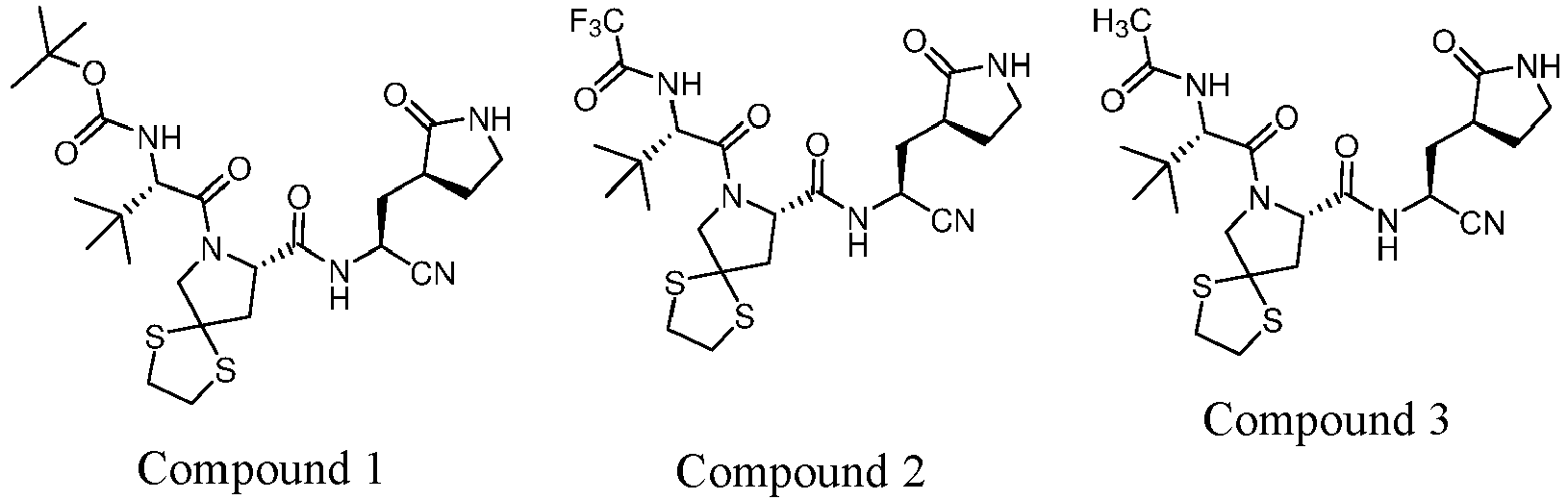
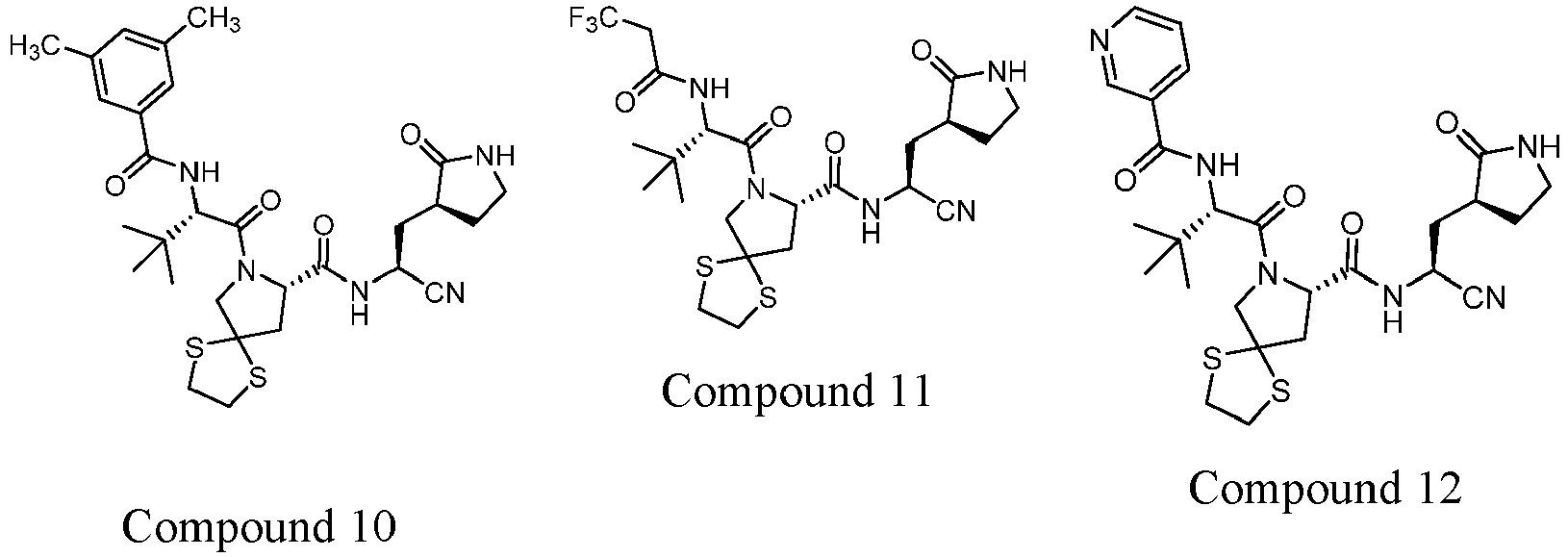
- the compound represented by general formula I of the present invention is selected from the following compounds:
- the present invention provides a method for preparing the compound represented by general formula I, and the method is one of following methods:
- Another aspect of the present invention further provides a pharmaceutical composition, which comprises one or more selected from a cyano compound of general formula I, a racemate, an enantiomer and a diastereomer thereof, and their pharmaceutically acceptable salts.
- the pharmaceutical composition may further include one or more pharmaceutically acceptable adjuvants, diluents, carriers, excipients or adjuvants.
- Another aspect of the present invention further provides a pharmaceutical composition, which comprises a cyano compound of formula I, or a racemate, an enantiomer, a diastereoisomer or a pharmaceutically acceptable salt thereof, and a pharmaceutically acceptable excipient; optionally, the pharmaceutical composition further comprises ritonavir or a pharmaceutically acceptable salt thereof.
- Another aspect of the present invention further provides a pharmaceutical combination, which comprises a cyano compound of general formula I, a racemate, an enantiomer, a diastereoisomer or a pharmaceutically acceptable salt thereof, and ritonavir or a pharmaceutically acceptable salt thereof.
- Another aspect of the present invention further provides a pharmaceutical composition, which comprises a cyano compound of general formula I or a pharmaceutically acceptable salt thereof, ritonavir or a pharmaceutically acceptable salt thereof, and a pharmaceutically acceptable excipient.
- the compound of the present invention has an inhibitory activity on coronavirus 3CL proteases and picornavirus 3CL proteases.
- another aspect of the present invention provides a coronavirus 3CL protease inhibitor and/or a picornavirus 3CL protease inhibitor, which comprises one or more selected from a cyano compound of general formula I, a racemate, an enantiomer and a diastereomer thereof, and their pharmaceutically acceptable salts, or the above-mentioned pharmaceutical composition.
- the present invention further provides the above-mentioned cyano compound, the racemate, the enantiomer, the diastereomer and the pharmaceutically acceptable salt thereof, or their mixture, or use of the pharmaceutical composition in the preparation of a medicament selected from a medicament for inhibiting coronavirus 3CL protease activity, a medicament for preventing and/or treating coronavirus infection, a medicament for inhibiting picornavirus 3CL protease activity, and a medicament for preventing and/or treating picornavirus infection.
- the present invention further provides a method of inhibiting 3CL protease, the method comprises administering one or more selected from the cyano compound of general formula I, the racemate, the enantiomer and the diastereomer thereof, and their pharmaceutically acceptable salts of the present invention, or the pharmaceutical composition of the present invention to a subject in need thereof.
- the present invention further provides a method of preventing and/or treating a disease or condition, the method comprises administering one or more selected from the cyano compound of general formula I, the racemate, the enantiomer and the diastereomer thereof, and their pharmaceutically acceptable salts of the present invention, or the pharmaceutical composition of the present invention to a subject in need thereof, the disease or condition is a 3CL protease mediated disease or condition, in particular a disease or condition associated with coronavirus infection and/or picornavirus infection.
- the present invention further provides one or more of the cyano compound of general formula I, the racemate, the enantiomer and the diastereomer thereof, and their pharmaceutically acceptable salts described above, use of the pharmaceutical composition thereof in the preparation of a medicament for preventing or treating a related disease caused by coronavirus and/or picornavirus infection.
- the present invention further provides a method for preventing or treating a related disease caused by coronavirus and/or picornavirus infection.
- the method comprises administering to a patient a therapeutically effective amount of a pharmaceutical formulation comprising one or more of the cyano compound of general formula I, the racemate, the enantiomer and the diastereomer thereof, and their pharmaceutically acceptable salts of the present invention.
- the coronavirus is selected from SARS-CoV, MERS-CoV, H229E-CoV, HKU1-CoV, NL63-CoV, OC43-CoV or SARS-CoV-2.
- the related disease caused by the coronavirus infection is selected from respiratory tract infection, pneumonia or a complication thereof.
- C 1 -C 10 alkyl means a straight or branched saturated hydrocarbon group having 1, 2, 3, 4, 5, 6, 7, 8, 9 or 10 carbon atoms.
- specific examples of the alkyl include, but are not limited to, methyl, ethyl, propyl, butyl, pentyl, hexyl, isopropyl, isobutyl, sec-butyl, tert-butyl, isopentyl, 2-methylbutyl, 1-methylbutyl, 1-ethylpropyl, 1,2-dimethylpropyl, neopentyl, 1,1-dimethylpropyl, 4-methylpentyl, 3-methylpentyl, 2-methylpentyl, 1-methylpentyl, 2-ethylbutyl, 1-ethylbutyl, 3,3-dimethylbutyl, 2,2-dimethylbutyl, 1,1-dimethylbutyl, 2,3-dimethylbutyl, 1,3-dimethyl
- Alkylene can be understood to mean a straight or branched saturated divalent hydrocarbon group.
- C 2 -C 6 alkylene can be understood to mean a straight or branched saturated divalent hydrocarbon group containing 2-6 carbon atoms, including but not limited to CH 2 CH 2 , CH 2 CH 2 CH 2 , CH 2 CH 2 CH 2 CH 2 , CH 2 CH 2 CH 2 CH 2 CH 2 , CH 2 CH 2 CH 2 CH 2 CH 2 , etc.
- C 3 -C 8 cycloalkyl means a cyclic alkyl containing 3-8 ring carbon atoms.
- C 3 -C 7 cycloalkyl means a cyclic alkyl containing 3-7 ring carbon atoms, the cycloalkyl in the present disclosure includes but not limited to cyclopropyl, methylcyclopropyl, ethylcyclopropyl, dimethylcyclopropyl, cyclobutyl, methylcyclobutyl, ethylcyclobutyl, cyclopentyl, cyclohexyl, etc.
- C 1 -C 10 alkoxy means a straight branched or cyclic alkoxy containing 1-10 carbon atoms.
- C 1 -C 6 alkoxy means a straight, branched or cyclic alkoxy containing 1-6 carbon atoms.
- the alkoxy in the present disclosure includes but not limited to methoxy, ethoxy, propoxy, isopropoxy, butoxy, isobutoxy, tert-butoxy, pentyloxy, isopentyloxy, cyclopentyloxy, hexyloxy, cyclohexyloxy, etc.
- Aryl refers to an all-carbon monocyclic or fused polycyclic aromatic ring group having a conjugated ⁇ -electron system.
- the aryl can have 6-20 carbon atoms, 6-14 carbon atoms or 6-12 carbon atoms.
- C 6 -C 20 aryl can be understood to mean an aryl with 6-20 carbon atoms.
- C 6 aryl such as phenyl; or a ring with 9 carbon atoms (“C 9 aryl”), such as indanyl or indenyl; or a ring with 10 carbon atoms (“C 10 aryl”), such as tetrahydronaphthyl, dihydronaphthyl or naphthyl; or a ring with 13 carbon atoms (“C 13 aryl”), such as fluorenyl; or a ring with 14 carbon atoms (“C 14 aryl”), such as anthracenyl.
- C 6 -C 10 aryl can be understood to mean an aryl containing 6-10 carbon atoms.
- C 6 aryl such as phenyl
- C 9 aryl such as indanyl or indenyl
- C 10 aryl a ring with 10 carbon atoms
- Heteroaryl is an aromatic ring group containing 5-20 ring atoms, one or more of the ring atoms is a heteroatom selected from N, O or S, and the rest of the ring atoms are carbon.
- “5- to 20-membered heteroaryl” can be understood to mean a heteroaryl having 5-20 ring atoms, especially 5 or 6 or 9 or 10 or 13 or 14 ring atoms, and containing 1-7 heteroatoms independently selected from N, O and S.
- “5- to 10-membered heteroaryl” can be understood to mean a heteroaryl having 5-10 ring atoms, especially 5 or 6 or 9 or 10 ring atoms, and containing 1-5 heteroatoms independently selected from N, O and S.
- 5- to 6-membered heteroaryl can be understood to mean a heteroaryl having 5 or 6 ring atoms and containing 1-3 heteroatoms independently selected from N, O and S.
- the heteroaryl described in the present invention can be selected from thienyl, furyl, pyrrolyl, oxazolyl, thiazolyl, imidazolyl, pyrazolyl, isoxazolyl, isothiazolyl, oxadiazolyl, triazolyl, thiadiazolyl, and the like, and the benzo derivatives thereof, such as benzofuryl, benzothienyl, benzothiazolyl, benzoxazolyl, benzisoxazolyl, benzoimidazolyl, benzotriazolyl, indazolyl, indolyl, isoindolyl, and the like; or pyridyl, pyridazinyl, pyrimidinyl, pyrazinyl
- Halogen is selected from fluorine, chlorine, bromine and iodine.
- Halo includes monohalo, polyhalo or perhalo, that is, one, more or all hydrogen atoms are substituted with halogen.
- Substituted means that one or more hydrogen atoms on a group are substituted with one or more substituents.
- “Therapeutically effective amount” means an amount of a compound of the present invention that (i) treats a particular disease, condition, or disorder, (ii) attenuates, ameliorates, or eliminates one or more symptoms of a particular disease, condition, or disorder, or (iii) delays the onset of one or more symptoms of a particular disease, condition, or disorder described herein.
- the amount of a compound of the present disclosure which constitutes a “therapeutically effective amount” will vary depending on the compound, the conditions and their severity, the manner of administration, and the age of the mammal to be treated, but can be determined routinely by those skilled in the art according to their own knowledge and the present disclosure.
- “Pharmaceutically acceptable salt” refers to salts of pharmaceutically acceptable acids or bases, including salts formed between compounds and inorganic or organic acids, and salts formed between compounds and inorganic or organic bases.
- pharmaceutical combination refers to a combination comprising two or more active ingredients or pharmaceutically acceptable salts thereof.
- the active ingredients in the pharmaceutical combination or the pharmaceutically acceptable salts thereof can be administered simultaneously.
- the active ingredients in the pharmaceutical combination or the pharmaceutically acceptable salts thereof can also be administered separately or sequentially.
- “Pharmaceutical composition” refers to a mixture of one or more of the compounds or salts thereof according to the present disclosure and a pharmaceutically acceptable adjuvant.
- An object of the pharmaceutical composition is to facilitate administering the compound according to the present disclosure to an organism.
- “Pharmaceutically acceptable adjuvant” refers to those adjuvants which have no significant irritating effect on the organism and do not impair the bioactivity and properties of the active compound. Suitable adjuvants are well known to those skilled in the art, and are such as a carbohydrate, a wax, a water-soluble and/or water-swellable polymer, a hydrophilic or hydrophobic material, gelatin, an oil, a solvent, water, and the like.
- Step 1 The starting material SMA (2.74 g, 11.85 mmol), 35 ml of dichloromethane and 35 ml of DMF were added into a reaction flask and cooled down to 0°C.
- the starting material SMB (3.56 g, 11.86 mmol), benzotriazole- 1-yloxytris(dimethylamino)phosphonium hexafluorophosphate (BOP, 6.29 g, 14.22 mmol) and N-methylmorpholine (NMM, 3.91 ml, 35.56 mmol) were added and brought to room temperature for reaction for 10 h.
- Step 2 INT-1 (3.71 g, 8.58 mmol), 37 ml of THF, 37 ml of purified water and lithium hydroxide monohydrate (0.72 g, 17.16 mmol) were added into a reaction flask, and reacted at room temperature for 2 h.
- Ammonia-methanol solution 700 ml, 7 mol/L
- starting material SMD 100 g, 0.349 mol
- the reaction liquid was concentrated until the remaining reaction liquid was about 250 ml.
- 300 ml of isopropanol was added and further concentrated until the remaining reaction liquid was about 250 ml (repeated three times).
- the resulting reaction liquid was subjected to nitrogen replacement and cooled down to 10 ⁇ 5°C.
- 500 ml of hydrogen chloride-isopropanol solution (4 mol/L) was added into the reaction kettle.
- reaction liquid was concentrated under reduced pressure until the remaining reaction liquid was about 250 ml in volume. 300 ml of isopropanol was added and further concentrated under reduced pressure until the remaining reaction liquid was about 250 ml in volume (repeated twice).
- Example 24 Test for inhibitory activity of compounds on SARS-CoV-2 3CLpro
- the inhibitory activity of the tested compounds on the enzymatic activity of SARS-CoV-2 3CL pro was evaluated by fluorescence resonance energy transfer method.
- the volume of the entire enzymatic reaction system is 120 ⁇ L, the final concentration of the protease is 30 nM, and the final concentration of the substrate is 20 ⁇ M.
- the buffer of the reaction system includes 50 mM Tris pH 7.3, 1 mM EDTA.
- the SARS-CoV-2 3CL pro protease and different concentrations of the compounds were added to a 96-well plate, incubated at 30°C for 10 min, and then the substrate was added and the plate was quickly put into a microplate reader for reading.
- the excitation and emission light were 320 nM and 405 nM, respectively.
- the test time was 3.5 min, and the fluorescence value was read every 35 s.
- the readings of the first 2 min were used for fitting to obtain the reaction rate, and compared with the control group (DMSO), the inhibition rate was calculated.
- the IC 50 value and the inhibition rate curve were obtained by fitting using the software GraphPad Prism 8.
- Example 24-2 Test for inhibitory activity of compound 2 on mutant 3CL protease of SARS-CoV-2 Omicron strain
- reaction buffer containing 20 mM Tris-HCl, 1 mM EDTA, 0.01% BSA, 1 mM DTT, and 100 mM NaCl.
- the compounds to be tested were diluted to different concentrations in dimethyl sulfoxide (DMSO) with the Echo pipetting system and transferred to a 384-well plate.
- DMSO dimethyl sulfoxide
- the mutant 3CL protease was diluted with the reaction buffer, and added to the 384-well plate at an amount of 10 ⁇ L/well, centrifuged at 1000 rpm for 1 min, and then incubated at room temperature for 30 minutes. Then the substrate was added at 10 ⁇ L/well, and centrifuged at 1000 rpm for 30 s to start the enzyme reaction.
- the final concentration of the enzyme was 50 nM
- the final concentration of the substrate was 20 ⁇ M
- the concentration of the compound ranged from 10000 nM to 0.51 nM.
- the Kinetic Reduction Vmax mode on the Flexstation 3 microplate reader was selected, the fluorescence value at 490 nm wavelength was continuously read every 75 seconds, a total of 35 times, to obtain the reaction rate value (V), and the inhibition rate was calculated, and XLfit software was used to perform four-parameter fitting to obtain the half inhibitory concentration (IC 50 ).
- Inhibition rate V max ⁇ V compound / V max ⁇ V min * 100 % wherein V max is the reaction rate value for a well containing only the enzyme and the substrate, V min is the reaction rate value for a well containing only the substrate, and V compound is the reaction rate value for a well containing the compound to be tested, the enzyme and the substrate.
- Example 24-3 Test for inhibitory activity of compound 2 on 3CL protease of coronavirus from different sources
- 3CL protease A recombinant full-length coronavirus 3CL protease was made in house according to the coronavirus genome sequence, the genome GenBank numbers of SARS-CoV, MERS-CoV, H229E-CoV, HKU1-CoV, NL63-CoV and OC43-CoV used therein are AAP13442.1, MT387202.1, AF304460.1, AY597011.2, AY567487.2 and AY903459.1, respectively, and the DNA sequences required for the expression of the 3CL protease proteins of the six coronaviruses were purchased from Nanjing GenScript Biotechnology Co., Ltd.
- the 3CL protease substrate was purchased from Nanjing GenScript Biotechnology Co., Ltd.
- the chymotrypsin substrate was purchased from GL Biochemical Co., Ltd.
- a reaction buffer (containing 50 mM Tris and 1 mM EDTA) was formulated.
- the compound to be tested was dissolved in DMSO to prepare a 100 mM stock solution, and further 2-fold serially diluted with the reaction buffer, with a total of 11 concentrations.
- the 3CL protease and different concentrations of the compounds were added to a 96-well plate, incubated at room temperature for 10 minutes, and then the substrate was added and the plate was quickly put into a microplate reader for reading.
- the volume of the entire enzymatic reaction system was 120 ⁇ L, and the final concentrations of SARS-CoV, MERS-CoV, H229E-CoV, HKU1-CoV, NL63-CoV and OC43-CoV proteases were 30 nM, 80 nM, 30 nM, 20 nM, 30 nM and 10 nM respectively, and the final concentration of the substrate was 10 ⁇ M.
- the excitation and emission wavelengths were 340 nm and 490 nm, respectively, when reading.
- Vero E6 cells were used in the test, and Vero E6 cells (50,000 cells/well) were added to a 48-well plate, a medium containing gradient concentrations of the compounds was added at 100 ⁇ L/well, and SARS-CoV-2 was added one hour later, the multiplicity of infection (MOI) was 0.01. After co-incubating for 1 hour, the supernatant was aspirated, the residue was washed and the medium containing gradient concentrations of the compounds was added again at 200 ⁇ L/well, and incubated at 37°C for 24 hours. After 24 hours, the cell supernatant was collected, the viral RNA in the supernatant was extracted, and the virus copy number in the supernatant was determined by real-time fluorescent quantitative PCR. The compound inhibition rate was calculated according to the virus copy number, and the EC 50 of the compound was calculated by prism 6.0.
- the test results showed that the compound 2 inhibited the SARS-CoV-2 WIV04 strain with a half effective concentration EC 50 of 0.57 +/- 0.04 ⁇ M, and inhibited the SARS-CoV-2 B.
- Vero E6 cells the method of determining the virus copy number in the culture supernatant by real-time fluorescent quantitative PCR in Vero E6 cells was used to study the inhibitory effect of compound 2 on SARS-CoV-2 original strain (WIV04 strain), Delta strain (B. 1.617.2), and Omicron strain (B.1.1.529) in cell replication. Since Vero E6 cells highly expressed the efflux transporter P-gp, 0.5 ⁇ M of a P-gp inhibitor CP-100356 was added and incubated with the compound.
- Vero E6 was purchased from ATCC (Catalog number: CRL-1586), SARS-CoV-2 original strain (SARS-CoV-2-WIV04 strain), Delta strain (B.1.617.2), Omicron strain ((B.1.1.529) were obtained from the Microbial Bacteria (Virus) Species Collection Centre of Wuhan Institute of Virology, Chinese Academy of Sciences.
- the Vero E6 cells were digested with trypsin and placed in a culture medium (90% DMEM, 10% fetal calf serum), inoculated into a 48-well plate at 50,000 cells per well, and cultured overnight.
- the compound to be tested was dissolved in DMSO to prepare a 40 mM stock solution, and further serially diluted with a medium containing 0.5 ⁇ M of Pgp inhibitors to obtain the required concentration.
- the final concentration of the compound to be tested in the experiment ranged from 1 ⁇ M to 0.004 ⁇ M.
- the cell supernatant was removed, the diluted compound (containing Pgp inhibitor 0.5 ⁇ M) was added to each well, incubated for 1 h.
- Vero E6 cells were digested and placed in a culture medium (90% DMEM, 10% fetal bovine serum), inoculated into a 96-well plate at 20000 cells per well, and cultured overnight.
- the compound to be tested was dissolved in DMSO to prepare a 40 mM stock solution, and further serially diluted with a culture medium or a culture medium containing 0.5 ⁇ M Pgp inhibitor to obtain the concentration required for the test.
- the final concentration of the compound to be tested in the experiment ranged from 500 ⁇ M to 1.95 ⁇ M.
- the cell supernatant in the 96-well plate was removed, the medium for the compound to be tested (as a monotherapy or containing 0.5 ⁇ M of a Pgp inhibitor) was added at 100 ⁇ L/well and incubated for 24 h; the CCK8 detection kit was used to determine cell viability, and the inhibition rate and median cytotoxic concentration (CC 50 ) were calculated.
- Test results As shown in Table 4, when combined with the P-gp inhibitor CP-100356, compound 2 can dose-dependently inhibit the replication of delta strain in Vero E6 cells with an IC 50 of 0.040 ⁇ M. In the original strain, compound 2 combined with the P-gp inhibitor also exerted a strong inhibitory effect, with an IC 50 of 0.027 ⁇ M. In addition, compound 2 combined with the P-gp inhibitor can significantly inhibit the replication of Omicron strain in Vero E6 cells, with an IC 50 of 0.12 ⁇ M. Compound 2 alone and in combination with the P-gp inhibitor had no obvious cytotoxicity on the proliferation of Vero E6 cells, CC 50 > 500 ⁇ M.
- K18-hACE2 transgenic mice 7-8 week-old K18-hACE2 transgenic mice were purchased from Jiangsu Jicui Gempharmatech Co., Ltd.
- the SARS-CoV-2 delta strain virus was obtained from the Microbial Bacteria (Virus) Species Collection Centre of Wuhan Institute of Virology, Chinese Academy of Sciences.
- reagent name Brand Catalog number Qiagen 74106 RNeasy Mini Kit Qiagen 74106 TaKaRa PrimeScript TM RT reagent Kit with gDNA Eraser Takara RR047A TaKaRa SYBR ® Premix Ex Taq TM II Takara RR820A Fetal Bovine Serum Gibco 10099-141C DMEM medium Gibco C11995500BT Tissue fixative BOSTER AR1068 Aquacide II (sodium methylcellulose) Millipore 17851 DMEM medium (powder, high sugar) Gibco 12100046 Purple crystal Sinopharm Group 71012314
- K18-hACE2 transgenic mice were infected with the delta strain of SARS-CoV-2 by intranasal drops on day 0. 2 hours after infection, the vehicle and compound 2 at 50 mg/kg or 200 mg/kg (combined with cytochrome P450 inhibitor ritonavir at 50 mg/kg) were administered by gavage, BID for 2 days (wherein 1 dose was administrated on day 0, 2 doses on day 1, 1 dose on day 2) or 4 days (wherein 1 dose was administrated on day 0, and 2 doses on the day 1, day 2, and day 3, respectively). The body weight changes of the mice were recorded, and lung and brain tissues were collected at the end point.
- the left lung was fixed in formaldehyde, and then used for histopathological examination after embedding, sectioning and H&E staining.
- the right lung and brain tissue were each divided into two parts. One part was ground and the homogenate was taken to extract RNA which was then reverse-transcribed, and the virus copy number was determined by real-time fluorescent quantitative PCR. The other part was ground and the homogenate was taken to determine the virus titre by plaque test.
- the plaque test method is as follows: Vero E6 cells were inoculated in a 24-well plate at 12,000 cells per well and cultured overnight. The stock of tissue homogenate was 10-fold serially diluted in DMEM medium for later use.
- the cell supernatant was removed, add the diluted tissue homogenate was added and incubated for 1 h, then the supernatant was removed, the medium containing 1% sodium methylcellulose and 2% FBS was added, and cultured for 4 days. Then the medium was removed, paraformaldehyde was used for fixation, 1% (w/v) crystal violet was used for staining, and the number of plaques in each well was counted.
- Test results As shown in Table 5, 2 days after infection, compared with the model group (the average virus copy number was 9.19 ⁇ 0.30 log10 copies/g), in the case of being combined with ritonavir, compound 2 at 50 mg/kg and 200 mg /kg significantly reduced the viral load in the lung, with an average copy number of 7.66 ⁇ 0.27 log10 copies/g and 6.79 ⁇ 0.30 log10 copies/g, respectively, wherein the virus copy number decreased by 2.4 log10 copies/g at the dose of 200 mg/kg. 4 days after infection, a sustained inhibitory effect of compound 2 on viral copy number was observed. In terms of virus titre, as shown in FIG. 3 , a significant inhibitory effect of compound 2 was observed.
- the virus replication was completely inhibited at a dose of 200 mg/kg, and no titre was detected.
- the virus titre decreased by more than 3 log10 PFU/g, and compound 2 showed a sustained inhibitory effect on the virus titre 4 days after infection.
- body weight as shown in FIG. 4, 4 days after infection, the body weight of the mice in the model group lost about 10%, while the body weight of the compound 2 administration group did not decrease significantly, indicating that compound 2 did not show obvious toxicity under continuous administration.
- compound 2 could significantly reduce the virus copy number in the brains of the mice at doses of 50 mg/kg and 200 mg/kg, especially at the dose of 200 mg/kg, the virus copy number was comparable to that of the uninfected normal group.
- the virus titre in the brain 4 days after infection was shown in FIG. 5 .
- no virus titre was determined at the two doses of compound 2, showing a strong inhibitory effect of compound 2.
- the histopathological analysis of the lung showed that compared with the model group, compound 2 at a dose of 200 mg/kg significantly improved lung damage, including reducing the degree of alveolar atrophy or dilation and the degree of alveolar membrane thickening.
- mice 2 and 4 days after infection (mean ⁇ SD) Group Lung tissue (log10 copies/g) Brain tissue (log10 copies/mg) Day 2 Day 4 Day 2 Day 4 Model group 9.19 ⁇ 0.30 9.35 ⁇ 0.30 1.34 ⁇ 0.78 7.17 ⁇ 0.27 Compound 2 - 200 mg/kg + Ritonavir - 50 mg/kg 6.79 ⁇ 0.30 7.48 ⁇ 0.63 1.04 ⁇ 0.24 0.99 ⁇ 0.42 Compound 2-50 mg/kg + Ritonavir - 50 mg/kg 7.66 ⁇ 0.27 7.88 ⁇ 0.74 0.77 ⁇ 0.20 2.88 ⁇ 1.26 Normal group 5.76 ⁇ 0.32 6.27 ⁇ 0.18 1.08 ⁇ 0.06 1.08 ⁇ 0.06
- Example 27 Selectivity of compound 2 for kinases
- KinaseProfiler is a test product provided by Eurofins, Catalog number: 50-005KP10, this product contains 413 kinases.
- Each kinase selected was tested with the compound using the Eurofins standard KinaseProfiler analysis method and following the relevant standard operating procedures. Protein kinases were detected by radioactive method, while lipid kinases were detected by HTRF method. The ATP concentration in the experiment was 10 ⁇ M. Detailed information on each kinase is available on the Eurofins website at: https://www.eurofmsdiscoveryservices.com/catalogmanagement/viewItem/Full-Human-Panel-10-uM-ATP-KinaseProfiler/50-005KP 10.
- Example 28 Selectivity of compound 2 for safety targets
- Safety47 Panel Dose Response SAFETYscan is a test product provided by Eurofins, Catalog number: 87-1003DR. This product contains 78 tests related to 47 safety targets.
- the experimental methods used include: cAMP assay, calcium flux assay, hormone nuclear receptor assay, kinase binding assay, enzyme activity assay, neurotransmitter transporter assay, ion channel assay, and transporter assay. Specific methods for each experiment are available on the eurofins website at the following URL: https://www.eurofmsdiscoveryservices.com/catalogmanagement/viewItem/Safety4 7-Panel-Dose-Response-SAFETYscan-DiscoverX/87-1003DR.
- Human plasma was purchased from BioIVT, anticoagulated with EDTA K2, and stored at -80°C.
- 96-well equilibrium dialysis plates were purchased from HTDialysis LLC.
- Equilibrium dialysis membranes were purchased from Gales Ferry.
- An alkaline solution with 14.2 g/L of disodium hydrogen phosphate and 8.77 g/L of sodium chloride was formulated with ultrapure water, and the alkaline solution can be stored at 4°C for 7 days.
- An acidic solution with 12.0 g/L of sodium dihydrogen phosphate and 8.77 g/L of sodium chloride was formulated with ultrapure water, and the acidic solution can be stored at 4°C for 7 days.
- the alkaline solution was titrated with an acidic solution to a pH of 7.4, and the buffer can be stored at 4°C for 7 days. The pH value of the buffer was measured on the day of the experiment, and the pH value was adjusted if it exceeded the range of 7.4 ⁇ 0.1.
- the dialysis membrane was soaked in ultrapure water for 60 minutes to separate the membrane into two pieces, then soaked in 20% ethanol for 20 minutes, and finally soaked in the buffer used for dialysis for 20 minutes.
- the frozen plasma was thawed rapidly at room temperature.
- the plasma was centrifuged at 3,220 g for 10 min at 4°C to remove clots, and the supernatant was collected into a new centrifuge tube. The pH of the plasma was measured and recorded.
- a 10 mM stock solution of the analyte was formulated in DMSO. 2 ⁇ L of stock solution (10 mM) was diluted with 98 ⁇ L of DMSO to obtain a working solution (200 ⁇ M). 3 ⁇ L of the working solution was taken and 597 ⁇ L of human plasma was added to obtain a final concentration of 1 ⁇ M (0.5% DMSO). The mixture was fully vortexed.
- the peak area of the analyte of the buffer side and the plasma side was determined.
- the ratio of sample peak area to internal standard peak area of buffer side represents the free concentration of the compound.
- the ratio of sample peak area to internal standard peak area of plasma side represents the sum of the free concentration and binding concentration of the compound.
- the ratio of sample peak area to internal standard peak area of initial plasma sample represents the total concentration of the compound at the beginning of the sample incubation.
- Example 30 Tissue distribution test of compound 2 by single gavage
- Balb/c mice purchased from Shanghai Minchang Biotechnology Co., Ltd.
- half male and half male weighing 18-25 g.
- the Balb/c mice were administered compound 2 by single gavage at a dose of 100 mg/kg and a volume of 10 mL/kg.
- SBP systolic blood pressure
- DBP diastolic blood pressure
- MBP mean arterial blood pressure
- mice 32 cynomolgus monkeys (Groups 1 and 4, 5 animals/sex/group, Groups 2 and 3, 3 animals/sex/group, 4 groups in total) were randomized and administered compound 2 by nasal feeding (40, 160 and 600 mg/kg/day) or control formulation (98.9% vehicle formulation + 1.1% MTBE, 0 mg/kg/day) twice a day for a total of 14 days, and the animals recovered for 14 days after administration. All animals were included in this study to evaluate the effect of the administration on ECG parameters including heart rate, PR interval, QRS duration, QT interval, and QTcF, and on blood pressure during the pre-dose period, dosing period, and recovery period.
- ECG parameters including heart rate, PR interval, QRS duration, QT interval, and QTcF
- Test results Under the conditions of this test, cynomolgus monkeys were administered compound 2 (40, 160 and 600 mg/kg/day) by nasal gavage for 14 days, twice a day, and there was no change in the cardiovascular system related to the test product; there was no arrhythmia related to the test product; and there were no changes in ECG parameters or blood pressure related to the test product during the entire test.
Landscapes
- Health & Medical Sciences (AREA)
- Chemical & Material Sciences (AREA)
- Organic Chemistry (AREA)
- Life Sciences & Earth Sciences (AREA)
- Veterinary Medicine (AREA)
- Medicinal Chemistry (AREA)
- Pharmacology & Pharmacy (AREA)
- Animal Behavior & Ethology (AREA)
- General Health & Medical Sciences (AREA)
- Public Health (AREA)
- Epidemiology (AREA)
- Virology (AREA)
- Molecular Biology (AREA)
- Communicable Diseases (AREA)
- Oncology (AREA)
- Chemical Kinetics & Catalysis (AREA)
- General Chemical & Material Sciences (AREA)
- Nuclear Medicine, Radiotherapy & Molecular Imaging (AREA)
- AIDS & HIV (AREA)
- Tropical Medicine & Parasitology (AREA)
- Pulmonology (AREA)
- Pharmaceuticals Containing Other Organic And Inorganic Compounds (AREA)
- Heterocyclic Carbon Compounds Containing A Hetero Ring Having Nitrogen And Oxygen As The Only Ring Hetero Atoms (AREA)
Abstract
Description
- The present invention claims the right of priority of the following applications: patent application No.
202111168232.4 entitled "CYANO COMPOUNDS, AND A PREPARATION METHOD AND USE THEREOF" and submitted to the China National Intellectual Property Administration on Thursday, September 30, 2021 China patent application No. 202210973184.4 entitled "CYANO COMPOUNDS, AND A PREPARATION METHOD AND USE THEREOF" and submitted to the China National Intellectual Property Administration on Monday, August 15, 2022 - The present invention belongs to the field of medicinal chemistry and chemical synthesis, in particular, the invention relates to cyano compounds, a preparation method therefor and use thereof.
- Coronaviruses are single-stranded positive-sense RNA viruses, and some coronaviruses can spread widely among people and cause severe symptoms. There are currently 7 known coronaviruses that can infect humans, namely HCoV-229E, HCoV-OC43, HCoV-NL63, HCoV-HKU1, SARS-CoV, MERS-CoV and SARS-CoV-2. Most of the functional proteins of coronaviruses are encoded by the ORF1ab gene, which is first translated into a polyprotein, and then cleaved into multiple active proteins by 3CL protease and PL protease. Therefore, inhibiting the activity of 3CL protease can effectively inhibit the replication of the viruses. 3CL proteases in different coronaviruses have a high degree of structural homology, so 3CL protease inhibitors have a broad-spectrum anti-coronavirus activity.
- In addition to coronaviruses, 3CL protease also plays an important role in the hydrolysis of polyproteins encoded by picornaviruses, and 3CL protease inhibitors can effectively inhibit the replication of picornaviruses. Enterovirus 71 is a picornavirus, and is one of the common viruses that cause hand, foot and mouth disease, and may also cause meningitis, brainstem encephalitis, myocarditis and other diseases. In recent years, enterovirus 71 has repeatedly broken out in infants and young children, and there is still a lack of effective therapeutic drugs in clinical practice.
- Therefore, there remains a need for compounds that can inhibit RNA viruses/picornaviruses including coronaviruses/enterovirus 71.
- Based on the crystal structure of 3CL protease, the inventors rationally designed a class of cyano compounds, which can effectively inhibit coronaviruse and/or picornaviruse 3CL protease activity, effectively inhibit 3CL protease activity of various picornaviruses including enterovirus 71 in vitro, effectively inhibit the replication of picornaviruses at a cell level and can be used for preparing a medicament for a disease induced by coronaviruses and/or picornaviruses. The inventors have completed the present disclosure on the basis of this.
- The primary object of the present invention is to provide a cyano compound represented by general formula I, a racemate, an enantiomer, a diastereoisomer and a pharmaceutically acceptable salt thereof.
- The second object of the present invention is to provide a preparation method of such compounds.
- The third object of the present invention is to provide a pharmaceutical composition comprising such compounds.
- The fourth object of the present invention is the use of such compounds in the preparation of 3CL protease inhibitors.
- The fifth object of the present invention is the use of such compounds in the preparation of a medicament for preventing or treating a disease induced by coronaviruses and/or picornaviruses.
- In order to accomplish the above objects, the technical solution adopted in the present invention is that:
In one aspect, the present invention provides a cyano compound represented by general formula I, a racemate, an enantiomer, a diastereoisomer and a pharmaceutically acceptable salt thereof.
- In another aspect, the present invention provides a method for preparing the compound of general formula I.
- The technical solution of the present invention has at least the following technical effects:
The compound of the present invention has a 3CL protease inhibitory activity, can inhibit the hydrolysis of protein complexes expressed by genes of coronaviruses and picornaviruses, and then inhibits virus replication and development, and can be used for the prevention and treatment of diseases caused by coronavirus or picornavirus infection. - The present invention relates to a cyano compound represented by general formula I, a racemate, an enantiomer, a diastereoisomer or a pharmaceutically acceptable salt thereof:

- R1 is selected from -COR8 and -SO2R9;
- R2 and R3 are each independently selected from H, D, C1-C10 alkyl, adamantyl and C3-C7 cycloalkyl, or, R2 and R3 and the carbon atom attached thereto together form a 3- to 8-membered carbocyclic ring;
- X is selected from O, S, S(=O)2 and S=O;
- Y is absent or selected from O, S, S(=O)2 and S=O;
- R4 is selected from H, C1-C10 alkyl, C3-C8 cycloalkyl, C6-C20 aryl, C1-C10 alkyl substituted C6-C20 aryl, C1-C10 alkoxy substituted C6-C20 aryl and halogenated C6-C20 aryl;
- R5 is selected from H, C1-C10 alkyl and C3-C7 cycloalkyl;
- or, R4 and R5 are connected to each other to form C2-C6 alkylene, thereby connecting X and Y;
- R6 is selected from

- R7 is selected from H and D;
- R8 is selected from H, C1-C10 alkyl, C1-C10 alkoxy, C3-C7 cycloalkyl, halogenated C1-C10 alkyl, halogenated C3-C7 cycloalkyl, -NR13R14, C6-C20 aryl, halogenated C6-C20 aryl, C1-C10 alkyl substituted C6-C20 aryl, halogenated C1-C10 alkyl substituted C6-C20 aryl, 5- to 20-membered heteroaryl and halogenated 5- to 20-membered heteroaryl;
- R9 is selected from C1-C10 alkyl, C3-C7 cycloalkyl, halogenated C1-C10 alkyl, halogenated C3-C7 cycloalkyl, -NR15R16, C6-C20 aryl, halogenated C6-C20 aryl, C1-C10 alkyl substituted C6-C20 aryl, halogenated C1-C10 alkyl substituted C6-C20 aryl, 5- to 20-membered heteroaryl and halogenated 5- to 20-membered heteroaryl;
- R13 and R14 are each independently selected from Hand C1-C10 alkyl;
- R15 and R16 are each independently selected from H and C1-C10 alkyl.
- In some embodiments, R2 and R3 are each independently selected from H, D, C1-C6 alkyl, adamantyl and C3-C7 cycloalkyl, or, R2 and R3 and the carbon atom attached thereto together form a 3- to 8-membered carbocyclic ring.
- In some embodiments, R2 and R3 are each independently selected from H, isopropyl, tert-butyl, cyclopentyl, and adamantyl, or, R2 and R3 and the carbon atom attached thereto together form cyclopropyl and cyclopentyl.
- In some embodiments, one of R2 and R3 is selected from H, and the other is selected from isopropyl, tert-butyl, cyclopentyl, and adamantyl, or, R2 and R3 and the carbon atom attached thereto together form cyclopropyl and cyclopentyl.
- In some embodiments, R4 is selected from H, C1-C6 alkyl, C3-C8 cycloalkyl, C6-C10 aryl, C1-C6 alkyl substituted C6-C10 aryl, C1-C6 alkoxy substituted C6-C10 aryl and halogenated C6-C10 aryl;
- R5 is selected from H, C1-C6 alkyl and C3-C7 cycloalkyl;
- or, R4 and R5 are connected to each other to form C2-C6 alkylene, thereby connecting X and Y.
- In some embodiments, X is selected from O, S, S(=O)2 and S=O; Y is absent or selected from O, S and S=O; R4 is selected from C1-C6 alkyl and C6-C10 aryl, R5 is selected from H; or, R4 and R5 are connected to each other to form C2-C6 alkylene, thereby connecting X and Y.
- In some embodiments, R4 and R5 are connected to each other to form CH2CH2 and CH2CH2CH2, thereby connecting X and Y.
- In some embodiments, X and Y are each independently selected from O, S and S=O, and R4 and R5 are connected to each other to form CH2CH2 and CH2CH2CH2, thereby connecting X and Y.
- In some embodiments, X and Y are each independently selected from O and S, and R4 and R5 are connected to each other to form CH2CH2, thereby connecting X and Y.
- In some embodiments, both X and Y are selected from S, or both X and Y are selected from O, and R4 and R5 are connected to each other to form CH2CH2, thereby connecting X and Y.
- In some embodiments, X is selected from S, Y is absent, R4 is selected from phenyl and isopropyl, and R5 is selected from H.
- In some embodiments, R6 is selected from

- In some embodiments, R7 is selected from H.
- In some embodiments, R8 is selected from H, C1-C6 alkyl, C1-C6 alkoxy, C3-C7 cycloalkyl, halogenated C1-C6 alkyl, halogenated C3-C7 cycloalkyl, -NR13R14, C6-C10 aryl, halogenated C6-C10 aryl, C1-C6 alkyl substituted C6-C10 aryl, halogenated C1-C6 alkyl substituted C6-C10 aryl, 5- to 10-membered heteroaryl and halogenated 5- to 10-membered heteroaryl.
- In some embodiments, R8 is selected from C1-C6 alkyl, halogenated C1-C6 alkyl, C1-C6 alkoxy, -NR13R14, C3-C7 cycloalkyl, halogenated C3-C7 cycloalkyl, phenyl, halophenyl, C1-C6 alkyl substituted phenyl, halogenated C1-C6 alkyl substituted phenyl and 5- to 6-membered heteroaryl.
- In some embodiments, R9 is selected from C1-C6 alkyl, C3-C7 cycloalkyl, halogenated C1-C6 alkyl, halogenated C3-C7 cycloalkyl, -NR15R16, C6-C10 aryl, halogenated C6-C10 aryl, C1-C6 alkyl substituted C6-C10 aryl, halogenated C1-C6 alkyl substituted C6-C10 aryl, 5- to 10-membered heteroaryl and halogenated 5- to 10-membered heteroaryl.
- In some embodiments, R9 is selected from C1-C6 alkyl, C3-C7 cycloalkyl, phenyl, C1-C6 alkyl substituted phenyl and halogenated C1-C6 alkyl substituted phenyl.
- In some embodiments, R13 and R14 are each independently selected from H and C1-C6 alkyl.
- In some embodiments, R15 and R16 are each independently selected from H and C1-C6 alkyl.
- In some embodiments, R8 is selected from CH3, CF3, CH2CF3, CF2CF3, methoxy,


- In some embodiments, R9 is selected from CH3, cyclopropyl, phenyl, p-methylphenyl, and p-trifluoromethylphenyl.
- In some embodiments, the cyano compound represented by general formula I is selected from the cyano compound represented by general formula IA:

- In some embodiments, the cyano compound represented by general formula I is selected from the cyano compound represented by general formula IB:

- In some embodiments, the cyano compound represented by general formula I is selected from any one of the cyano compound represented by the following general formula:


- In some embodiments, the compound represented by general formula I of the present invention is selected from the following compounds:




- The present invention provides a method for preparing the compound represented by general formula I, and the method is one of following methods:
- Method i:

- ia) a compound represented by formula IV is obtained via condensation reaction of a compound represented by formula II and a compound represented by formula III;
- preferably, the step ia) is that: the compound represented by formula II is reacted with the compound represented by formula III under the action of a condensing agent and a base in a solvent at a temperature of -20°C to 50°C for 0.1-12 h, thereby obtaining the compound represented by formula IV;
- wherein, the solvent is one of or a mixture of more than one of the following: tetrahydrofuran, dichloromethane, N,N-dimethylformamide, N,N-dimethylacetamide, ethyl acetate and 1,4-dioxane;
- optionally, the condensing agent is one of or a mixture of more than one of the following: 2-(7-azabenzotriazole)-N,N,N',N'-tetramethyluronium hexafluorophosphate, 1-ethyl-(3-dimethylaminopropyl)carbodiimide hydrochloride, 1-hydroxybenzotriazole, 2-hydroxypyridine-N-oxide, 1-propyl phosphoric anhydride, 1H-benzotriazol-1-yloxytripyrrolidinyl hexafluorophosphate, N,N'-carbonyldiimidazole and O-benzotriazole-tetramethyluronium hexafluorophosphate;
- optionally, the base is N,N-diisopropylethylamine, triethylamine and N-methylmorpholine;
- ib) the compound represented by formula IV is dehydrated to obtain the compound represented by general formula I;
- preferably, the step ib) is that: the compound represented by formula IV is reacted with a dehydrating agent in an anhydrous solvent at a temperature of -20°C to 50°C for 1-24 h to obtain the compound represented by general formula I;
- wherein, the anhydrous solvent is one of or a mixture of more than one of the following: tetrahydrofuran, dichloromethane, toluene, 1,4-dioxane and pyridine;
- the dehydrating agent is trifluoroacetic anhydride and methyl N-(triethylammoniumsulfonyl)carbamate; or
- ia) a compound represented by formula IV is obtained via condensation reaction of a compound represented by formula II and a compound represented by formula III;
- Method ii:

- iia) a compound represented by formula VI is obtained by via condensation reaction of a compound represented by formula V and the compound represented by formula III, wherein PG in the compound represented by formula V is an amino protecting group;
- preferably, the step iia) is that: the compound represented by formula V is reacted with the compound represented by formula III under the action of a condensing agent and a base in a solvent at a temperature of -20°C to 50°C for 0.1-12 h, thereby obtaining the compound represented by formula VI,
- wherein, the solvent is one of or a mixture of more than one of the following: tetrahydrofuran, dichloromethane, N,N-dimethylformamide, N,N-dimethylacetamide, ethyl acetate and 1,4-dioxane,
- the condensing agent is one of or a mixture of more than one of the following: 2-(7-azabenzotriazole)-N,N,N',N'-tetramethyluronium hexafluorophosphate, 1-ethyl-(3-dimethylaminopropyl)carbodiimide hydrochloride, 1-hydroxybenzotriazole, 2-hydroxypyridine-N-oxide, 1-propyl phosphoric anhydride, 1H-benzotriazol-1-yloxytripyrrolidinyl hexafluorophosphate, N,N'-carbonyldiimidazole and O-benzotriazole-tetramethyluronium hexafluorophosphate;
- the base is N,N-diisopropylethylamine, triethylamine and N-methylmorpholine;
- The amino protecting group PG is tert-butoxycarbonyl, benzyl and p-methoxybenzyl;
- iib) the compound represented by formula VI is deprotected to obtain a compound represented by formula VII;
preferably, the step iib) is that: at a temperature of -20°C to 50°C, the compound represented by formula VI is reacted with an organic solution of trifluoroacetic acid or hydrogen chloride or Pd/C/H2 to obtain the compound represented by formula VII; - iic) the compound represented by formula IV is obtained by aminoacylation, sulfonylation or condensation reaction of the compound represented by formula VII;
preferably, the step iic) is that:- at a temperature of -20°C to 50°C, the compound represented by formula VII is subjected to an aminoacylation reaction with acid chloride or acid anhydride under the condition of adding a base to obtain the compound represented by formula IV; or,
- at a temperature of -20°C to 50°C, the compound represented by formula VII is subjected to a sulfonylation reaction with sulfonyl chloride or sulfonic anhydride under the condition of adding a base to obtain the compound represented by formula IV; or,
- at a temperature of -20°C to 50°C, the compound represented by formula VII is subjected to a condensation reaction with a carboxyl compound under the condition of a condensing agent and a base to obtain the compound represented by formula IV;
- optionally, the base is N,N-diisopropylethylamine, triethylamine and N-methylmorpholine;
- optionally, the condensing agent is one of or a mixture of more than one of the following: 2-(7-azabenzotriazole)-N,N,N',N'-tetramethyluronium hexafluorophosphate, 1-ethyl-(3-dimethylaminopropyl)carbodiimide hydrochloride, 1-hydroxybenzotriazole, 2-hydroxypyridine-N-oxide, 1-propyl phosphoric anhydride, 1H-benzotriazol-1-yloxytripyrrolidinyl hexafluorophosphate, N,N'-carbonyldiimidazole and O-benzotriazole-tetramethyluronium hexafluorophosphate,
- iid) the compound represented by formula IV is dehydrated to obtain the compound represented by general formula I;
- preferably, the step iid) is that: the compound represented by formula IV is reacted with a dehydrating agent in an anhydrous solvent at a temperature of -20°C to 50°C for 1-24 h to obtain the compound represented by general formula I;
- wherein, the anhydrous solvent is one of or a mixture of more than one of the following: tetrahydrofuran, dichloromethane, toluene, 1,4-dioxane and pyridine;
- optionally, the dehydrating agent is trifluoroacetic anhydride and methyl N-(triethylammoniumsulfonyl)carbamate,
- wherein, each substituent is as defined above.
- iia) a compound represented by formula VI is obtained by via condensation reaction of a compound represented by formula V and the compound represented by formula III, wherein PG in the compound represented by formula V is an amino protecting group;
- Another aspect of the present invention further provides a pharmaceutical composition, which comprises one or more selected from a cyano compound of general formula I, a racemate, an enantiomer and a diastereomer thereof, and their pharmaceutically acceptable salts. The pharmaceutical composition may further include one or more pharmaceutically acceptable adjuvants, diluents, carriers, excipients or adjuvants.
- Another aspect of the present invention further provides a pharmaceutical composition, which comprises a cyano compound of formula I, or a racemate, an enantiomer, a diastereoisomer or a pharmaceutically acceptable salt thereof, and a pharmaceutically acceptable excipient; optionally, the pharmaceutical composition further comprises ritonavir or a pharmaceutically acceptable salt thereof.
- Another aspect of the present invention further provides a pharmaceutical combination, which comprises a cyano compound of general formula I, a racemate, an enantiomer, a diastereoisomer or a pharmaceutically acceptable salt thereof, and ritonavir or a pharmaceutically acceptable salt thereof.
- Another aspect of the present invention further provides a pharmaceutical composition, which comprises a cyano compound of general formula I or a pharmaceutically acceptable salt thereof, ritonavir or a pharmaceutically acceptable salt thereof, and a pharmaceutically acceptable excipient.
- Experiments prove that the compound of the present invention has an inhibitory activity on coronavirus 3CL proteases and picornavirus 3CL proteases.
- Therefore, another aspect of the present invention provides a coronavirus 3CL protease inhibitor and/or a picornavirus 3CL protease inhibitor, which comprises one or more selected from a cyano compound of general formula I, a racemate, an enantiomer and a diastereomer thereof, and their pharmaceutically acceptable salts, or the above-mentioned pharmaceutical composition.
- The present invention further provides the above-mentioned cyano compound, the racemate, the enantiomer, the diastereomer and the pharmaceutically acceptable salt thereof, or their mixture, or use of the pharmaceutical composition in the preparation of a medicament selected from a medicament for inhibiting coronavirus 3CL protease activity, a medicament for preventing and/or treating coronavirus infection, a medicament for inhibiting picornavirus 3CL protease activity, and a medicament for preventing and/or treating picornavirus infection.
- The present invention further provides a method of inhibiting 3CL protease, the method comprises administering one or more selected from the cyano compound of general formula I, the racemate, the enantiomer and the diastereomer thereof, and their pharmaceutically acceptable salts of the present invention, or the pharmaceutical composition of the present invention to a subject in need thereof.
- The present invention further provides a method of preventing and/or treating a disease or condition, the method comprises administering one or more selected from the cyano compound of general formula I, the racemate, the enantiomer and the diastereomer thereof, and their pharmaceutically acceptable salts of the present invention, or the pharmaceutical composition of the present invention to a subject in need thereof, the disease or condition is a 3CL protease mediated disease or condition, in particular a disease or condition associated with coronavirus infection and/or picornavirus infection.
- The present invention further provides one or more of the cyano compound of general formula I, the racemate, the enantiomer and the diastereomer thereof, and their pharmaceutically acceptable salts described above, use of the pharmaceutical composition thereof in the preparation of a medicament for preventing or treating a related disease caused by coronavirus and/or picornavirus infection.
- The present invention further provides a method for preventing or treating a related disease caused by coronavirus and/or picornavirus infection. The method comprises administering to a patient a therapeutically effective amount of a pharmaceutical formulation comprising one or more of the cyano compound of general formula I, the racemate, the enantiomer and the diastereomer thereof, and their pharmaceutically acceptable salts of the present invention.
- In some embodiments, the coronavirus is selected from SARS-CoV, MERS-CoV, H229E-CoV, HKU1-CoV, NL63-CoV, OC43-CoV or SARS-CoV-2.
- In some embodiments, the related disease caused by the coronavirus infection is selected from respiratory tract infection, pneumonia or a complication thereof.
- "C1-C10 alkyl" means a straight or branched saturated hydrocarbon group having 1, 2, 3, 4, 5, 6, 7, 8, 9 or 10 carbon atoms. Specific examples of the alkyl include, but are not limited to, methyl, ethyl, propyl, butyl, pentyl, hexyl, isopropyl, isobutyl, sec-butyl, tert-butyl, isopentyl, 2-methylbutyl, 1-methylbutyl, 1-ethylpropyl, 1,2-dimethylpropyl, neopentyl, 1,1-dimethylpropyl, 4-methylpentyl, 3-methylpentyl, 2-methylpentyl, 1-methylpentyl, 2-ethylbutyl, 1-ethylbutyl, 3,3-dimethylbutyl, 2,2-dimethylbutyl, 1,1-dimethylbutyl, 2,3-dimethylbutyl, 1,3-dimethylbutyl, 1,2-dimethylbutyl, etc.; "C1-C6 alkyl" means a straight or branched alkyl containing 1-6 carbon atoms, including but not limited to methyl, ethyl, propyl, isopropyl, butyl, isobutyl, tert-butyl, pentyl, isopentyl, hexyl, etc.
- "Alkylene" can be understood to mean a straight or branched saturated divalent hydrocarbon group. "C2-C6 alkylene" can be understood to mean a straight or branched saturated divalent hydrocarbon group containing 2-6 carbon atoms, including but not limited to CH2CH2, CH2CH2CH2, CH2CH2CH2CH2, CH2CH2CH2CH2CH2, CH2CH2CH2CH2CH2CH2, etc.
- "C3-C8 cycloalkyl" means a cyclic alkyl containing 3-8 ring carbon atoms. "C3-C7 cycloalkyl" means a cyclic alkyl containing 3-7 ring carbon atoms, the cycloalkyl in the present disclosure includes but not limited to cyclopropyl, methylcyclopropyl, ethylcyclopropyl, dimethylcyclopropyl, cyclobutyl, methylcyclobutyl, ethylcyclobutyl, cyclopentyl, cyclohexyl, etc.
- "C1-C10 alkoxy" means a straight branched or cyclic alkoxy containing 1-10 carbon atoms. "C1-C6 alkoxy" means a straight, branched or cyclic alkoxy containing 1-6 carbon atoms. The alkoxy in the present disclosure includes but not limited to methoxy, ethoxy, propoxy, isopropoxy, butoxy, isobutoxy, tert-butoxy, pentyloxy, isopentyloxy, cyclopentyloxy, hexyloxy, cyclohexyloxy, etc.
- "Aryl" refers to an all-carbon monocyclic or fused polycyclic aromatic ring group having a conjugated π-electron system. The aryl can have 6-20 carbon atoms, 6-14 carbon atoms or 6-12 carbon atoms. "C6-C20 aryl" can be understood to mean an aryl with 6-20 carbon atoms. Especially a ring with 6 carbon atoms ("C6 aryl"), such as phenyl; or a ring with 9 carbon atoms ("C9 aryl"), such as indanyl or indenyl; or a ring with 10 carbon atoms ("C10 aryl"), such as tetrahydronaphthyl, dihydronaphthyl or naphthyl; or a ring with 13 carbon atoms ("C13 aryl"), such as fluorenyl; or a ring with 14 carbon atoms ("C14 aryl"), such as anthracenyl. "C6-C10 aryl" can be understood to mean an aryl containing 6-10 carbon atoms. Especially a ring with 6 carbon atoms ("C6 aryl"), such as phenyl; or a ring with 9 carbon atoms ("C9 aryl"), such as indanyl or indenyl; or a ring with 10 carbon atoms ("C10 aryl"), such as tetrahydronaphthyl, dihydronaphthyl or naphthyl.
- "Heteroaryl" is an aromatic ring group containing 5-20 ring atoms, one or more of the ring atoms is a heteroatom selected from N, O or S, and the rest of the ring atoms are carbon. "5- to 20-membered heteroaryl" can be understood to mean a heteroaryl having 5-20 ring atoms, especially 5 or 6 or 9 or 10 or 13 or 14 ring atoms, and containing 1-7 heteroatoms independently selected from N, O and S. "5- to 10-membered heteroaryl" can be understood to mean a heteroaryl having 5-10 ring atoms, especially 5 or 6 or 9 or 10 ring atoms, and containing 1-5 heteroatoms independently selected from N, O and S. "5- to 6-membered heteroaryl" can be understood to mean a heteroaryl having 5 or 6 ring atoms and containing 1-3 heteroatoms independently selected from N, O and S. The heteroaryl described in the present invention can be selected from thienyl, furyl, pyrrolyl, oxazolyl, thiazolyl, imidazolyl, pyrazolyl, isoxazolyl, isothiazolyl, oxadiazolyl, triazolyl, thiadiazolyl, and the like, and the benzo derivatives thereof, such as benzofuryl, benzothienyl, benzothiazolyl, benzoxazolyl, benzisoxazolyl, benzoimidazolyl, benzotriazolyl, indazolyl, indolyl, isoindolyl, and the like; or pyridyl, pyridazinyl, pyrimidinyl, pyrazinyl, triazinyl, and the like, and the benzo derivatives thereof such as quinolyl, quinazolinyl, isoquinolinyl, and the like; or azocinyl, indolizinyl, purinyl, and the like and the benzo derivatives thereof; or cinnolinyl, phthalazinyl, quinazolinyl, quinoxalinyl, naphthyridinyl, pteridinyl, carbazolyl, acridinyl, phenazinyl, phenothiazinyl or phenoxazinyl, and the like.
- "Halogen" is selected from fluorine, chlorine, bromine and iodine.
- "Halo" includes monohalo, polyhalo or perhalo, that is, one, more or all hydrogen atoms are substituted with halogen.
- "Substituted" means that one or more hydrogen atoms on a group are substituted with one or more substituents.
- The term "optional" or "optionally" mean that the subsequently described event or circumstance may or may not occur, and the description includes the occurrence and the non-occurrence of the event or circumstance.
- "Therapeutically effective amount" means an amount of a compound of the present invention that (i) treats a particular disease, condition, or disorder, (ii) attenuates, ameliorates, or eliminates one or more symptoms of a particular disease, condition, or disorder, or (iii) delays the onset of one or more symptoms of a particular disease, condition, or disorder described herein. The amount of a compound of the present disclosure which constitutes a "therapeutically effective amount" will vary depending on the compound, the conditions and their severity, the manner of administration, and the age of the mammal to be treated, but can be determined routinely by those skilled in the art according to their own knowledge and the present disclosure.
- "Pharmaceutically acceptable salt" refers to salts of pharmaceutically acceptable acids or bases, including salts formed between compounds and inorganic or organic acids, and salts formed between compounds and inorganic or organic bases.
- The term "pharmaceutical combination" refers to a combination comprising two or more active ingredients or pharmaceutically acceptable salts thereof. In some embodiments of the present invention, the active ingredients in the pharmaceutical combination or the pharmaceutically acceptable salts thereof can be administered simultaneously. In some embodiments of the present invention, the active ingredients in the pharmaceutical combination or the pharmaceutically acceptable salts thereof can also be administered separately or sequentially.
- "Pharmaceutical composition" refers to a mixture of one or more of the compounds or salts thereof according to the present disclosure and a pharmaceutically acceptable adjuvant. An object of the pharmaceutical composition is to facilitate administering the compound according to the present disclosure to an organism.
- "Pharmaceutically acceptable adjuvant" refers to those adjuvants which have no significant irritating effect on the organism and do not impair the bioactivity and properties of the active compound. Suitable adjuvants are well known to those skilled in the art, and are such as a carbohydrate, a wax, a water-soluble and/or water-swellable polymer, a hydrophilic or hydrophobic material, gelatin, an oil, a solvent, water, and the like.
-
-
FIG. 1 is a graph showing the inhibitory rate-concentration ofcompound 2 on the in vitro activity of the WIV04 strain of SARS-CoV-2. -
FIG. 2 is a graph showing the inhibitory rate-concentration ofcompound 2 on the in vitro activity of the B.1.351 strain of SARS-CoV-2. -
FIG. 3 is a graph showing the inhibitory effect ofcompound 2 on the virus titre in the lungs ofmice 2 days after infection (FIG. A) and 4 days after infection (FIG. B) in example 26. -
FIG. 4 is a graph showing the body weight changes of mice in example 26. -
FIG. 5 is a graph showing the inhibitory effect ofcompound 2 on the virus titre in the brains ofmice 4 days after infection in example 26. - The present disclosure is further described by way of examples below. In the following examples, starting materials are commercially available or can be prepared by methods documented in the literature/organic synthetic methods known in the art.
-

- Step 1: The starting material SMA (2.74 g, 11.85 mmol), 35 ml of dichloromethane and 35 ml of DMF were added into a reaction flask and cooled down to 0°C. The starting material SMB (3.56 g, 11.86 mmol), benzotriazole- 1-yloxytris(dimethylamino)phosphonium hexafluorophosphate (BOP, 6.29 g, 14.22 mmol) and N-methylmorpholine (NMM, 3.91 ml, 35.56 mmol) were added and brought to room temperature for reaction for 10 h. After the reaction was completed, an appropriate amount of dichloromethane was added, and the organic phase was washed successively with 1N aqueous hydrochloric acid solution and saturated brine. After the washing, the organic phase was dried over anhydrous sodium sulphate, and the organic phase was concentrated to dryness, and 3.71 g of INT-1 was obtained by column chromatography; ESI-MS: 433.2 m/z [M+H]+; 1H NMR (400 MHz, DMSO-d 6): δH: 6.75 (d, J = 9.2 Hz, 1H), 4.38 (t, J = 8.2 Hz, 1H), 4.25 (d, J = 10.9 Hz, 1H), 4.11 (d, J = 9.3 Hz, 1H), 3.93 (t, J = 9.3 Hz, 1H), 3.62 (s, 3H), 3.40-3.31 (m, 4H), 2.70 (dd, J = 13.1, 7.9 Hz, 1H), 2.37 (dd, J = 13.2, 8.4 Hz, 1H), 1.37 (s, 9H), 0.94 (s, 9H).
- Step 2: INT-1 (3.71 g, 8.58 mmol), 37 ml of THF, 37 ml of purified water and lithium hydroxide monohydrate (0.72 g, 17.16 mmol) were added into a reaction flask, and reacted at room temperature for 2 h. After the reaction was completed, the reaction liquid was adjusted with concentrated hydrochloric acid to pH = 4, and filtered to obtain 3.4 g of compound 1-1; ESI-MS: 419.2 m/z [M+H]+; 1H NMR (400 MHz, DMSO-d 6): δH:12.68 (s, 1H), 6.71 (d, J = 9.4 Hz, 1H), 4.38-4.19 (m, 2H), 4.11 (d, J = 9.4 Hz, 1H), 3.88 (d, J = 10.9 Hz, 1H), 3.41-3.29 (m, 4H), 2.69 (dd, J = 13.1, 7.9 Hz, 1H), 2.34 (dd, J = 13.2, 8.9 Hz, 1H), 1.38 (s, 9H), 0.94 (s, 9H).
-

- Ammonia-methanol solution (700 ml, 7 mol/L) and starting material SMD (100 g, 0.349 mol) were added into a reaction flask, stirred to dissolve, and reacted for 36 h at a constant temperature of 25 ± 5°C. After the reaction was completed, the reaction liquid was concentrated until the remaining reaction liquid was about 250 ml. 300 ml of isopropanol was added and further concentrated until the remaining reaction liquid was about 250 ml (repeated three times). The resulting reaction liquid was subjected to nitrogen replacement and cooled down to 10 ± 5°C. 500 ml of hydrogen chloride-isopropanol solution (4 mol/L) was added into the reaction kettle. After the addition, the temperature was raised to 25 ± 5°C, and the temperature was kept at 25 ± 5°C for 9 hours. After the reaction was completed, the reaction liquid was concentrated under reduced pressure until the remaining reaction liquid was about 250 ml in volume. 300 ml of isopropanol was added and further concentrated under reduced pressure until the remaining reaction liquid was about 250 ml in volume (repeated twice). 100 ml of isopropanol was added, stirred for 30 ± 5 min and filtered, and the filter cake was rinsed with 50 ml of isopropanol to obtain a wet product; The wet product was dried under vacuum at 45 ± 5°C to obtain 66.7 g of compound 1-2, yield: 92%; 1H NMR (400 MHz, DMSO-d 6): δH:8.45 (d, J = 5.1 Hz, 3H), 8.25 - 8.04 (m, 1H), 7.95 (s, 1H), 7.67 - 7.49 (m, 1H), 3.85-3.80 (m, 1H), 3.19-3.13 (m, 2H), 2.59 - 2.51 (m, 1H), 2.32-2.27 (m, 1H), 2.05-1.98 (m, 1H), 1.82 - 1.66 (m, 2H); ESI-MS: 172.1 m/z [M+H]+.
-

- Compound 1-1 (419 mg, 1 mmol) was placed in a two-necked flask, and 5 mL of dichloromethane was added under nitrogen protection, and then 2-(7-azabenzotriazole)-N,N,N',N'-tetramethyluronium hexafluorophosphate (400 mg, 1.1 mmol) was added and stirred at room temperature for 1 h. Compound 1-2 (1 mmol) was dissolved in 1 mL of dichloromethane and added to the above system, then N,N-diisopropylethylamine (0.5 mL, 1 mmol) was added under an ice-water bath, and the ice-water bath was removed. The system was stirred overnight at room temperature. Workup was performed, 50 mL of dichloromethane was added, washed with 1M aqueous hydrochloric acid three times, and washed with saturated aqueous sodium bicarbonate solution three times. The organic phase was washed with saturated saline solution, dried over anhydrous sodium sulphate, and spin-dried by filtration to afford compound 1-3 (a white solid, 469 mg, yield 82%). ESI-MS: m/z 572.3[M+H]+.
- Compound 1-3 (114 mg, 0.2 mmol) and Burgess reagent (1.5 eq) were added to a two-necked flask, nitrogen was charged and discharged for three time, then dichloromethane dried over molecular sieves was added and stirred at room temperature overnight. Thin layer chromatography showed that the raw materials was substantially completely reacted. Workup was performed, column chromatography was performed to afford compound 1 (a white solid, 52 mg, yield 47%), ESI-MS: 554.3 m/z [M+H]+.
-

- Compound 1-3 (572 mg, 1 mmol) was dissolved in 3 mL of 4M hydrogen chloride/1,4-dioxane solution, or dissolved in 2 mL of dichloromethane, then 2 mL of trifluoroacetic acid was added dropwise and stirred at ambient temperature. Thin layer chromatography showed that the reaction of raw materials was substantially completely, and then the solvent was fully spin-dried. The obtained crude product was dissolved in 2 mL of dichloromethane under nitrogen protection, and triethylamine (3 mmol) was added, then the system was placed in an ice-water bath, and trifluoroacetic anhydride (1.2 mmol) was added dropwise. Thin layer chromatography showed that the raw materials was substantially completely reacted, and then 50 mL of dichloromethane was added and washed three times with 1M aqueous hydrochloric acid solution and three times with saturated aqueous sodium bicarbonate solution. The organic phase was washed with saturated saline solution, dried over anhydrous sodium sulphate, and passed through a column to afford compound 2-1 (a white solid, 265 mg, yield 46%). ESI-MS: m/z 568.3[M+H]+.
- Compound 2-1 (113 mg, 0.2 mmol) and Burgess reagent (1.5 eq) were added to a two-necked flask, nitrogen was charged and discharged for three time, then dichloromethane dried over molecular sieves was added and stirred at room temperature overnight. Thin layer chromatography showed that the raw materials was substantially completely reacted. Workup was performed, column chromatography was performed to afford compound 2 (a white solid, 41 mg, yield 47%), 1H NMR (400 MHz, DMSO-d 6) δ 9.46 (d, J = 8.7 Hz, 1H), 9.05 (d, J = 8.6 Hz, 1H), 7.67 (s, 1H), 4.97 (ddd, J = 11.0, 8.5, 5.0 Hz, 1H), 4.53 (d, J = 8.7 Hz, 1H), 4.34 (dd, J = 9.9, 7.1 Hz, 1H), 4.26-4.14 (m, 1H), 3.92 (d, J = 10.9 Hz, 1H), 3.50-3.34 (m, 4H), 3.22-3.11 (m, 1H), 3.06 (td, J = 9.3, 7.1 Hz, 1H), 2.68-2.58 (m, 1H), 2.50-2.43 (m, 1H), 2.31 (dd, J = 13.0, 10.0 Hz, 1H), 2.23-2.07 (m, 2H), 1.71 (tdd, J = 14.9, 10.3, 7.4 Hz, 2H), 0.99 (s, 9H). ESI-MS: 550.3 m/z [M+H]+.
-
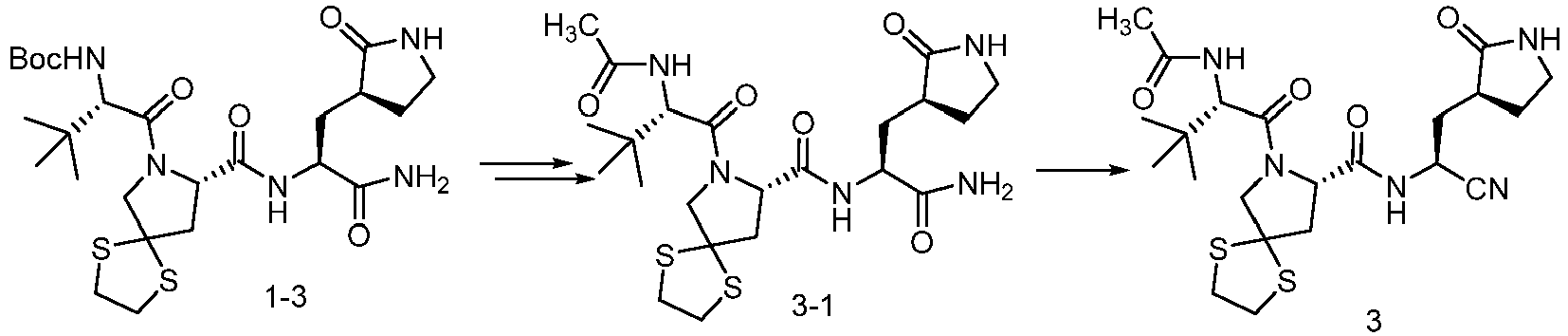
- According to the same method in example 2, the difference lies in that: acetic anhydride was used instead of trifluoroacetic anhydride to afford compound 3 (a white solid, 45 mg, yield 45%), ESI-MS: 496.3 m/z [M+H]+.
-

- According to the same method in example 2, the difference lies in that: cyclopropane formic anhydride was used instead of trifluoroacetic anhydride to afford compound 4 (a white solid, 32 mg, yield 31%), ESI-MS: 522.3 m/z [M+H]+.
-

- According to the same method in example 1, the difference lies in that: 5-1 was used instead of 1-1 to afford compound 5 (a white solid, 22 mg, yield 20%), 1H NMR (400 MHz, DMSO-d 6) δ 9.03 (d, J = 8.4 Hz, 1H), 7.67 (s, 1H), 7.41 (dd, J = 9.1, 2.6 Hz, 1H), 4.96 (ddd, J = 10.6, 8.4, 5.4 Hz, 1H), 4.58-4.50 (m, 1H), 4.34 (dd, J = 9.8, 7.2 Hz, 1H), 4.26-4.21 (m, 1H), 3.89 (d, J = 11.0 Hz, 1H), 3.45-3.33 (m, 4H), 3.22-3.03 (m, 2H), 2.64-2.57 (m, 1H), 2.45 (ddd, J = 10.1, 8.5, 4.5 Hz, 1H), 2.31 (dd, J = 12.9, 9.8 Hz, 1H), 2.20-2.10 (m, 2H), 1.84-1.67 (m, 2H), 1.39-1.31 (m, 2H), 1.24 (t, J = 9.5 Hz, 2H), 0.97 (s, 9H). ESI-MS: 540.2 m/z [M+H] +.
-

- According to the same method in example 1, the difference lies in that: 6-1 was used instead of 1-1 to afford compound 6 (a white solid, 38 mg, yield 37%), ESI-MS: 512.2 m/z [M+H]+.
-
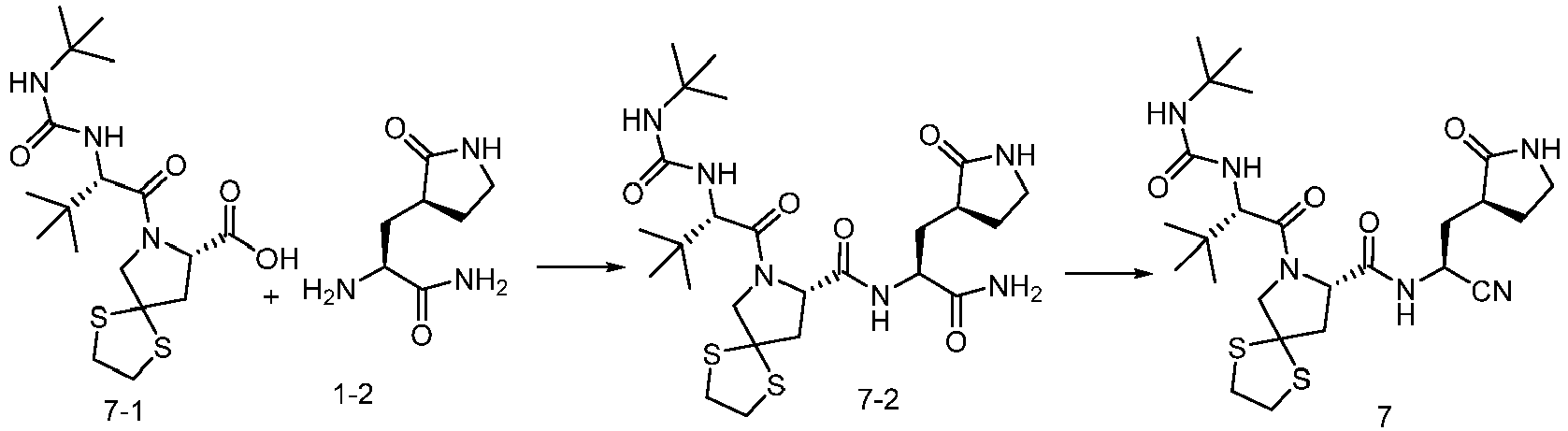
- According to the same method in example 1, the difference lies in that: 7-1 was used instead of 1-1 to afford compound 7 (a white solid, 49 mg, yield 44%), ESI-MS: 553.3 m/z [M+H]+.
-
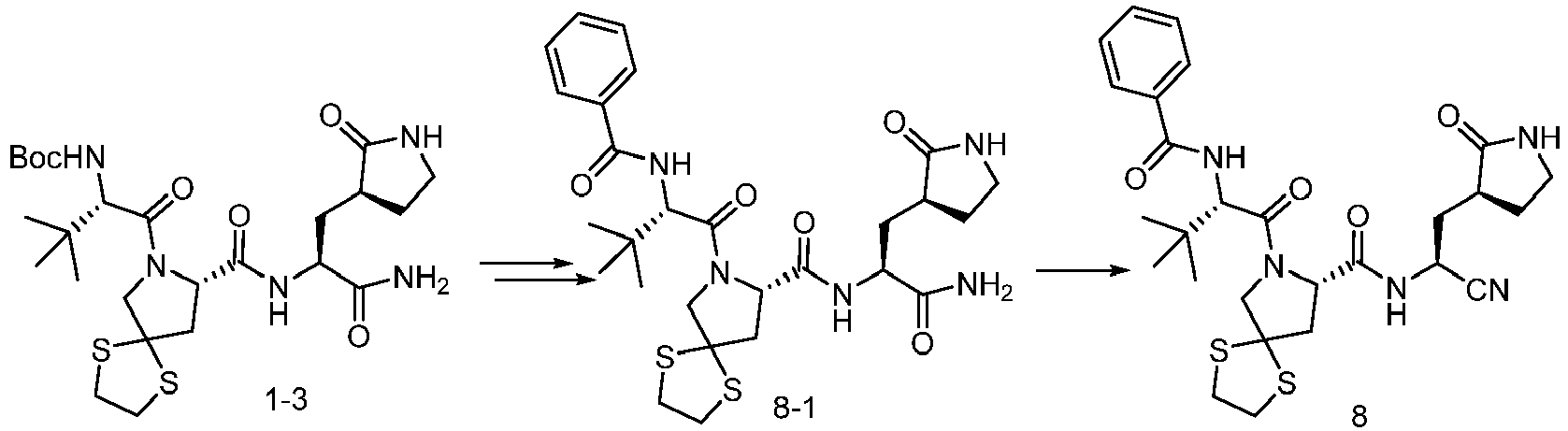
- According to the same method in example 2, the difference lies in that: benzoic anhydride was used instead of trifluoroacetic anhydride to afford compound 8 (a white solid, 44 mg, yield 39%), ESI-MS: 558.3 m/z [M+H]+.
-
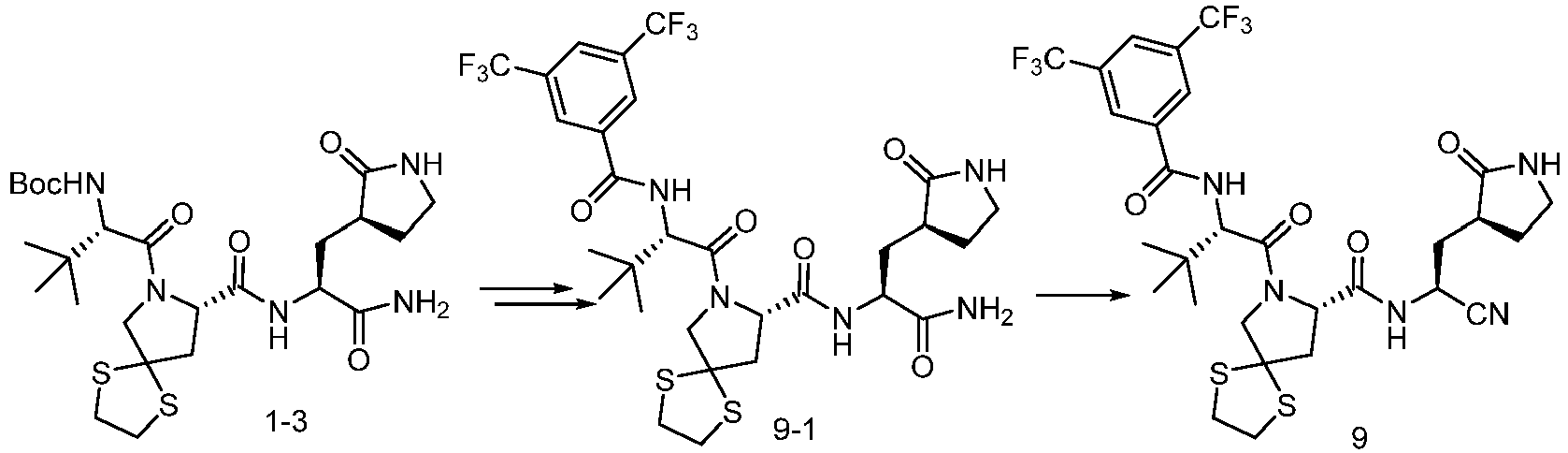
- According to the same method in example 2, the difference lies in that: 3,5-bis(trifluoromethyl)benzoyl chloride was used instead of trifluoroacetic anhydride to afford compound 9 (a white solid, 39 mg, yield 28%), ESI-MS: 694.2 m/z [M+H]+.
-

- According to the same method in example 2, the difference lies in that: 3,5-dimethylbenzoyl chloride was used instead of trifluoroacetic anhydride to afford compound 10 (a white solid, 31 mg, yield 26%), ESI-MS: 586.2 m/z [M+H]+.
-

- According to the same method in example 2, the difference lies in that: 3,3,3-trifluoropropionic anhydride was used instead of trifluoroacetic anhydride to afford compound 11 (a white solid, 28 mg, yield 25%), ESI-MS: 564.2 m/z [M+H]+.
-

- According to the same method in example 2, the difference lies in that: 3-pyridineformyl chloride was used instead of trifluoroacetic anhydride to afford compound 12 (a white solid, 39 mg, yield 35%), ESI-MS: 559.2 m/z [M+H]+.
-

- According to the same method in example 2, the difference lies in that: pentafluoropropionyl chloride was used instead of trifluoroacetic anhydride to afford compound 13 (a white solid, 41 mg, yield 34%), ESI-MS: 600.2 m/z [M+H]+.
-

- According to the same method in example 1, the difference lies in that: 14-1 was used instead of 1-1 to afford compound 14 (a white solid, 32 mg, yield 29%), ESI-MS: 550.2 m/z [M+H]+.
-

- According to the same method in example 2, the difference lies in that: methanesulfonic anhydride was used instead of trifluoroacetic anhydride to afford compound 15 (a white solid, 38 mg, yield 36%), 1H NMR (400 MHz, Methanol-d 4) δ 5.06 (dd, J = 11.5, 4.5 Hz, 1H), 4.46 (dd, J = 10.3, 7.1 Hz, 1H), 4.27 (dd, J = 11.0, 1.6 Hz, 1H), 4.02-3.89 (m, 2H), 3.45 (qt, J = 8.6, 4.7 Hz, 4H), 3.30-3.23 (m, 1H), 2.92 (s, 3H), 2.78 (tdd, J = 10.3, 8.5, 4.0 Hz, 1H), 2.68 (ddd, J = 13.0, 7.2, 1.6 Hz, 1H), 2.51 (dd, J = 13.0, 10.3 Hz, 1H), 2.45-2.27 (m, 2H), 1.94-1.77 (m, 2H), 1.05 (s, 9H). ESI-MS: 532.2 m/z [M+H] +.
-

- According to the same method in example 2, the difference lies in that: cyclopropanesulfonyl chloride was used instead of trifluoroacetic anhydride to afford compound 16 (a white solid, 29 mg, yield 26%), 1H NMR (400 MHz, Methanol-d 4) δ 5.06 (dd, J = 11.5, 4.5 Hz, 1H), 4.44 (dd, J = 10.3, 7.0 Hz, 1H), 4.28 (dd, J = 11.0, 1.6 Hz, 1H), 4.00-3.94 (m, 2H), 3.52-3.38 (m, 4H), 3.31-3.21 (m, 1H), 2.79 (tdd, J = 10.4, 8.5, 4.1 Hz, 1H), 2.72-2.65 (m, 1H), 2.57 (ddd, J = 7.9, 6.2, 3.9 Hz, 1H), 2.51 (dd, J = 13.0, 10.4 Hz, 1H), 2.43-2.29 (m, 2H), 1.92-1.74 (m, 2H), 1.34-1.29 (m, 1H), 1.14 (qt, J = 6.4, 3.8 Hz, 1H), 1.06 (s, 9H), 1.01 (ddt, J = 7.9, 5.8, 2.7 Hz, 2H), 0.97-0.87 (m, 1H). ESI-MS: 558.2 m/z [M+H] +.
-

- According to the same method in example 2, the difference lies in that: benzenesulfonyl chloride was used instead of trifluoroacetic anhydride to afford compound 17 (a white solid, 35 mg, yield 29%), ESI-MS: 594.2 m/z [M+H]+.
-

- According to the same method in example 1, the difference lies in that: 18-1 was used instead of 1-1 to afford compound 18 (a white solid, 44 mg, yield 42%), ESI-MS: 518.2 m/z [M+H]+.
-

- According to the same method in example 1, the difference lies in that: 19-1 was used instead of 1-1 to afford compound 19 (a white solid, 41 mg, yield 36%), ESI-MS: 568.2 m/z [M+H]+.
-

- According to the same method in example 1, the difference lies in that: 20-1 was used instead of 1-1 to afford compound 20 (a white solid, 45 mg, yield 35%), ESI-MS: 648.2 m/z [M+H]+.
-

- According to the same method in example 1, the difference lies in that: 21-1 was used instead of 1-1 to afford compound 21 (a white solid, 34 mg, yield 31%), ESI-MS: 640.2 m/z [M+H]+.
-

- According to the same method in example 1, the difference lies in that: 22-1 was used instead of 1-1 and 22-1 was used instead of 1-2 to afford compound 22 (a white solid, 22 mg, yield 18%), ESI-MS: 614.2 m/z [M+H]+.
-

- Compound 23-1 (497 mg, 1 mmol) was placed in a two-necked flask, and 5 mL of dichloromethane was added under nitrogen protection, and then 2-(7-azabenzotriazole)-N,N,N',N'-tetramethyluronium hexafluorophosphate (400 mg, 1.1 mmol) was added and stirred at room temperature for 1 h. Compound 1-2 (or a corresponding salt thereof, 1 mmol) was dissolved in 1 mL of dichloromethane and added to the above system, then N,N-diisopropylethylamine (0.5 mL, 1 mmol) was added under an ice-water bath, and the ice-water bath was removed. The system was stirred overnight at room temperature. Workup was performed, 50 mL of dichloromethane was added, washed with 1M aqueous hydrochloric acid three times, and washed with saturated aqueous sodium bicarbonate solution three times. The organic phase was washed with saturated saline solution, dried over anhydrous sodium sulphate, and spin-dried by filtration to afford compound 23-2 (a white solid, 421 mg, yield 65%). ESI-MS: m/z 650.3[M+H]+.
- Compound 23-2 (325 mg, 0.5 mmol) was dissolved in 1.5 mL of 4M hydrogen chloride/1,4-dioxane solution, or dissolved in 1 mL of dichloromethane, then 1 mL of trifluoroacetic acid was added dropwise and stirred at ambient temperature. Thin layer chromatography showed that the raw materials was substantially completely reacted, and then the solvent was fully spin-dried. The obtained crude product was dissolved in 2 mL of dichloromethane under nitrogen protection, and triethylamine (1.5 mmol) was added, then the system was placed in an ice-water bath, and trifluoroacetic anhydride (0.6 mmol) was added dropwise. Thin layer chromatography showed that the raw materials was substantially completely reacted, and then 25 mL of dichloromethane was added and washed three times with 1M aqueous hydrochloric acid solution and three times with saturated aqueous sodium bicarbonate solution. The organic phase was washed with saturated saline solution, dried over anhydrous sodium sulphate, and passed through a column to afford compound 23-3 (a white solid, 167 mg, yield 52%). ESI-MS: m/z 646.3[M+H]+.
- Compound 23-3 (130 mg, 0.2 mmol) and Burgess reagent (1.5 eq) were added to a two-necked flask, nitrogen was charged and discharged for three time, then dichloromethane dried over molecular sieves was added and stirred at room temperature overnight. Thin layer chromatography showed that the raw materials was substantially completely reacted. Workup was performed, column chromatography was performed to afford compound 23 (a white solid, 37 mg, yield 29%), ESI-MS: 628.2 m/z [M+H]+.
- The inhibitory activity of the tested compounds on the enzymatic activity of SARS-CoV-2 3CLpro was evaluated by fluorescence resonance energy transfer method. The volume of the entire enzymatic reaction system is 120 µL, the final concentration of the protease is 30 nM, and the final concentration of the substrate is 20 µM. The buffer of the reaction system includes 50 mM Tris pH 7.3, 1 mM EDTA. The SARS-CoV-2 3CLpro protease and different concentrations of the compounds were added to a 96-well plate, incubated at 30°C for 10 min, and then the substrate was added and the plate was quickly put into a microplate reader for reading. The excitation and emission light were 320 nM and 405 nM, respectively. The test time was 3.5 min, and the fluorescence value was read every 35 s. In the final result, the readings of the first 2 min were used for fitting to obtain the reaction rate, and compared with the control group (DMSO), the inhibition rate was calculated. The IC50 value and the inhibition rate curve were obtained by fitting using the
software GraphPad Prism 8. - The experimental results are shown in Table 1. The results show that the compounds of the present invention have potent inhibitory effects on SARS-CoV-2 3CLpro. The range of IC50 value is that: A means < 0.1 µM, B means 0.1-1 µM, C means 1-10 µM.
Table 1: Inhibitory effects of compounds 1-23 on SARS-CoV-2 3CLpro Compound number Compound structural formula IC50 (µM) 1 
A 2 
A 3 
A 4 
A 5 
A 6 
B 7 
A 8 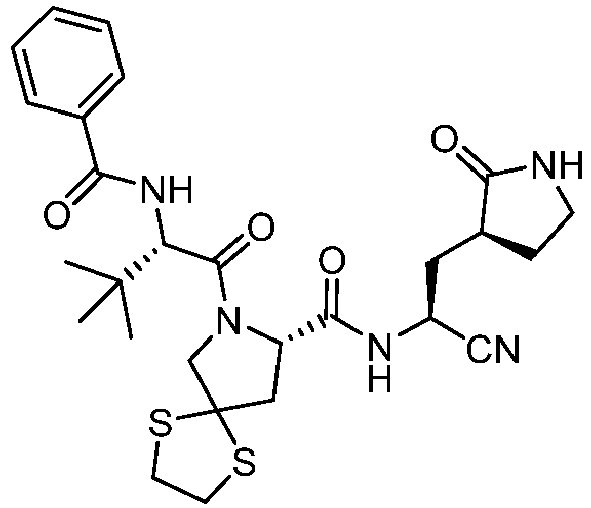
C 9 
C 10 
C 11 
B 12 
C 13 
A 14 
A 15 
A 16 
A 17 
C 18 
A 19 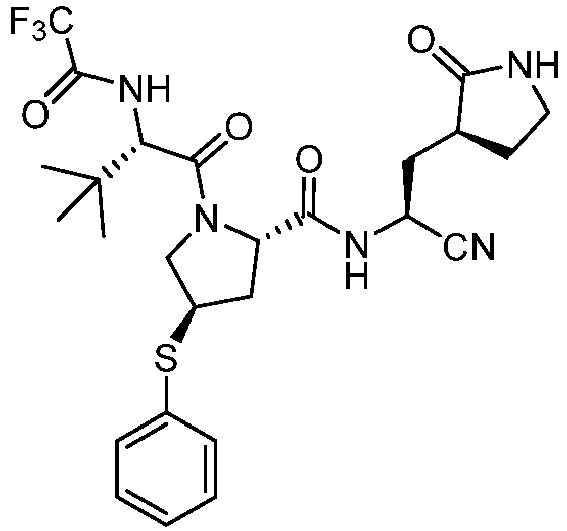
C 20 
B 21 
A 22 
A 23 
A - Experimental principle: The inhibitory effects of the compounds of the invention on the activity of the mutant 3CL protease (P132H) of the Omicron strain were studied by using a method for generate fluorescence resonance energy transfer (FRET) by the reaction of enzyme and substrate.
- The experimental materials are shown in the table below:
Reagent material Brand Catalog number: 3CL protease-P132H mutant Shanghai Profession and Creation Co., Ltd. / Dabcyl-KTSAVLQSGFRKME-Edans (Coronavirus main protease fluorescent substrate) Beyotime P9733 DTT (Dithiothreitol) Invitrogen P2325 BSA (Bovine Serum Albumin) Sigma V900933 EDTA (ethylenediaminetetraacetic acid) Invitrogen AM9260G Tris-HCl (trishydroxymethylaminomethane) Sangon Biotech B548127 -
Equipment name Brand Model Echo Nanoliter-Scale Sonic Shifting System Labcyte Echo 650 Flexstation 3 microplate readerMolecMar Devices FLEX3 Centrifuge Eppendorf 5810 - Prepare a reaction buffer containing 20 mM Tris-HCl, 1 mM EDTA, 0.01% BSA, 1 mM DTT, and 100 mM NaCl. The compounds to be tested were diluted to different concentrations in dimethyl sulfoxide (DMSO) with the Echo pipetting system and transferred to a 384-well plate. The mutant 3CL protease was diluted with the reaction buffer, and added to the 384-well plate at an amount of 10 µL/well, centrifuged at 1000 rpm for 1 min, and then incubated at room temperature for 30 minutes. Then the substrate was added at 10 µL/well, and centrifuged at 1000 rpm for 30 s to start the enzyme reaction. In the reaction system, the final concentration of the enzyme was 50 nM, the final concentration of the substrate was 20 µM, and the concentration of the compound ranged from 10000 nM to 0.51 nM. Then the Kinetic Reduction Vmax mode on the
Flexstation 3 microplate reader was selected, the fluorescence value at 490 nm wavelength was continuously read every 75 seconds, a total of 35 times, to obtain the reaction rate value (V), and the inhibition rate was calculated, and XLfit software was used to perform four-parameter fitting to obtain the half inhibitory concentration (IC50). The inhibition rate calculation method is as follows:
- Experimental results: For the 3CL protease with P132H mutation in the SARS-CoV-2 Omicron strain,
compound 2 still maintained a significant inhibitory activity (IC50 of three independent tests was 0.022 ± 0.00090 µM).Table 2: Inhibitory effect of compound 2 on 3CL protease activity of SARS-CoV-2 Omicron strain3CL protease Compound 2 IC50 (µM) (n = 3*) SARS-CoV-2 (Omicron strain) 0.022 ± 0.00090 * refers to three independent replicate experiments. - Experiment purpose: to study the inhibitory effect of
compound 2 on the 3CL protease activity derived from six other coronaviruses capable of infecting humans. These six viruses are: SARS-CoV, MERS-CoV, OC43-CoV, H229E-CoV, NL63-CoV, and HKU1-CoV. - 3CL protease: A recombinant full-length coronavirus 3CL protease was made in house according to the coronavirus genome sequence, the genome GenBank numbers of SARS-CoV, MERS-CoV, H229E-CoV, HKU1-CoV, NL63-CoV and OC43-CoV used therein are AAP13442.1, MT387202.1, AF304460.1, AY597011.2, AY567487.2 and AY903459.1, respectively, and the DNA sequences required for the expression of the 3CL protease proteins of the six coronaviruses were purchased from Nanjing GenScript Biotechnology Co., Ltd.
- The 3CL protease substrate was purchased from Nanjing GenScript Biotechnology Co., Ltd.
- The chymotrypsin substrate was purchased from GL Biochemical Co., Ltd.
- Other reagents are listed in the table below:
Reagent material Brand Catalog number: Chymotrypsin derived from bovine pancreas Sigma C4129 Tris Sigma BCBX3837 EDTA Sigma 0001434776 - A reaction buffer (containing 50 mM Tris and 1 mM EDTA) was formulated. The compound to be tested was dissolved in DMSO to prepare a 100 mM stock solution, and further 2-fold serially diluted with the reaction buffer, with a total of 11 concentrations. The 3CL protease and different concentrations of the compounds were added to a 96-well plate, incubated at room temperature for 10 minutes, and then the substrate was added and the plate was quickly put into a microplate reader for reading. The volume of the entire enzymatic reaction system was 120 µL, and the final concentrations of SARS-CoV, MERS-CoV, H229E-CoV, HKU1-CoV, NL63-CoV and OC43-CoV proteases were 30 nM, 80 nM, 30 nM, 20 nM, 30 nM and 10 nM respectively, and the final concentration of the substrate was 10 µM. The excitation and emission wavelengths were 340 nm and 490 nm, respectively, when reading. The test time was 10 minutes, and the fluorescence value was read every 1 minute. In the final result, the readings of the first 5 min were used for fitting to obtain the reaction rate, the inhibition rate was calculated and the calculation formula is: Inhibition Rate = 1 - (Reaction Rate of Test Group/Reaction Rate of Control Group).
- Experimental results: The results are shown in Table 3.
Compound 2 exhibited a good inhibitory effect on 3CL proteases derived from other six coronaviruses, suggesting thatcompound 2 may have a broad-spectrum anti-coronavirus activity.Table 3: Inhibitory effect of compound 2 on 3CL proteases from other coronaviruses3CL protease source Compound 2 IC50 (µM) HKU1-CoV 0.0049 OC43-CoV 0.010 SARS-CoV-1 0.024 MERS-CoV 0.060 H229E-CoV 0.13 NL63-CoV 0.85 - Vero E6 cells were used in the test, and Vero E6 cells (50,000 cells/well) were added to a 48-well plate, a medium containing gradient concentrations of the compounds was added at 100 µL/well, and SARS-CoV-2 was added one hour later, the multiplicity of infection (MOI) was 0.01. After co-incubating for 1 hour, the supernatant was aspirated, the residue was washed and the medium containing gradient concentrations of the compounds was added again at 200 µL/well, and incubated at 37°C for 24 hours. After 24 hours, the cell supernatant was collected, the viral RNA in the supernatant was extracted, and the virus copy number in the supernatant was determined by real-time fluorescent quantitative PCR. The compound inhibition rate was calculated according to the virus copy number, and the EC50 of the compound was calculated by prism 6.0.
- The test results showed that the
compound 2 inhibited the SARS-CoV-2 WIV04 strain with a half effective concentration EC50 of 0.57 +/- 0.04 µM, and inhibited the SARS-CoV-2 B. 1.351 strain with EC50 of 0.73 +/- 0.06 µM, and the EC50 curves are shown inFIGs 1 and 2 . - Experiment purpose: In this experiment, the method of determining the virus copy number in the culture supernatant by real-time fluorescent quantitative PCR in Vero E6 cells was used to study the inhibitory effect of
compound 2 on SARS-CoV-2 original strain (WIV04 strain), Delta strain (B. 1.617.2), and Omicron strain (B.1.1.529) in cell replication. Since Vero E6 cells highly expressed the efflux transporter P-gp, 0.5 µM of a P-gp inhibitor CP-100356 was added and incubated with the compound. - Vero E6 was purchased from ATCC (Catalog number: CRL-1586), SARS-CoV-2 original strain (SARS-CoV-2-WIV04 strain), Delta strain (B.1.617.2), Omicron strain ((B.1.1.529) were obtained from the Microbial Bacteria (Virus) Species Collection Centre of Wuhan Institute of Virology, Chinese Academy of Sciences.
- Other reagents are listed in the table below:
Reagent name Brand Catalog number: TaKaRa MiniBEST Viral RNA/DNA Extraction Kit Ver.5.0 Takara 9766 TaKaRa PrimeScript™ RT reagent Kit with gDNA Eraser Takara RR047A TaKaRa SYBR® Premix Ex Taq ™ II Takara RR820A Fetal Bovine Serum Gibco R2768 DMEM medium Gibco C11995500BT CCK8 Beyotime C0039 Chloroquine Phosphate SIGMA C6628-50G Trypsin BIOSHARP BL512A -
- Biosafety cabinet (AC2-3S1, ESCO, Singapore)
- Carbon dioxide incubator (Thermo Scientific HERAcell 150i, Thermo Scientific, USA)
- Pure water equipment (ShenYuan SYS ultrapure water machine, Chengdu)
- StepOne Plus Real-time PCR system (4376600, ABI, USA)
- TC20™ Automated Cell Counter (1450102, BIO-RAD, USA)
- T100™ Thermal Cycler (1861096, BIO-RAD, USA)
- Centrifuge (Micro21/21R Thermo, Thermo Scientific, USA)
- The Vero E6 cells were digested with trypsin and placed in a culture medium (90% DMEM, 10% fetal calf serum), inoculated into a 48-well plate at 50,000 cells per well, and cultured overnight. The compound to be tested was dissolved in DMSO to prepare a 40 mM stock solution, and further serially diluted with a medium containing 0.5 µM of Pgp inhibitors to obtain the required concentration. The final concentration of the compound to be tested in the experiment ranged from 1 µM to 0.004 µM. The cell supernatant was removed, the diluted compound (containing Pgp inhibitor 0.5 µM) was added to each well, incubated for 1 h. Different strains of SARS-CoV-2 were added in a biosafety level 3 (BSL-3) laboratory, and the multiplicity of infection (MOI) was 0.01 or 0.001. After incubation for 1 h, the supernatant was removed, the residue was washed with PBS, the diluted compound (containing Pgp inhibitor 0.5 µM) was added at 200 µL/well, and the supernatant was collected 24 or 72 hours after infection. The virus RNA in the supernatant was extracted and real-time fluorescence quantitative PCR was used to determine the virus copy number in the supernatant, the compound inhibition rate was calculated according to the virus copy number, and
GraphPad Prism 8 was used to calculate the IC50 of the compound. - In the cytotoxicity test, Vero E6 cells were digested and placed in a culture medium (90% DMEM, 10% fetal bovine serum), inoculated into a 96-well plate at 20000 cells per well, and cultured overnight. The compound to be tested was dissolved in DMSO to prepare a 40 mM stock solution, and further serially diluted with a culture medium or a culture medium containing 0.5 µM Pgp inhibitor to obtain the concentration required for the test. The final concentration of the compound to be tested in the experiment ranged from 500 µM to 1.95 µM. The cell supernatant in the 96-well plate was removed, the medium for the compound to be tested (as a monotherapy or containing 0.5 µM of a Pgp inhibitor) was added at 100 µL/well and incubated for 24 h; the CCK8 detection kit was used to determine cell viability, and the inhibition rate and median cytotoxic concentration (CC50) were calculated.
- Test results: As shown in Table 4, when combined with the P-gp inhibitor CP-100356,
compound 2 can dose-dependently inhibit the replication of delta strain in Vero E6 cells with an IC50 of 0.040 µM. In the original strain,compound 2 combined with the P-gp inhibitor also exerted a strong inhibitory effect, with an IC50 of 0.027 µM. In addition,compound 2 combined with the P-gp inhibitor can significantly inhibit the replication of Omicron strain in Vero E6 cells, with an IC50 of 0.12 µM.Compound 2 alone and in combination with the P-gp inhibitor had no obvious cytotoxicity on the proliferation of Vero E6 cells, CC50 > 500 µM.Table 4: Inhibitory effect of compound 2 combined with P-gp inhibitor on SARS-CoV-2 replication in Vero E6cells Experiment Compound 2 + 0.5 µM CP-100356 IC50 (µM) Select Index SI SI = (CC50/IC50) Vero E6 original strain (WIV04) 0.027 (mean, n = 2) > 18519 Vero E6 delta strain (B.1.617.2) 0.040 (mean, n = 2) > 12500 Vero E6 Omicron strain (B.1.1.529) 0.12 > 4167 Vero E6 monotherapy CC50 > 500 µM Vero E6 combined with P-gp inhibitor CC50 > 500 µM - Experiment purpose: This study evaluated the antiviral activity of
compound 2 on the SARS-CoV-2 delta strain in K18 transgenic mice stably expressing human angiotensin-converting enzyme 2 (ACE2) (K18-hACE2). - 7-8 week-old K18-hACE2 transgenic mice were purchased from Jiangsu Jicui Gempharmatech Co., Ltd. The SARS-CoV-2 delta strain virus was obtained from the Microbial Bacteria (Virus) Species Collection Centre of Wuhan Institute of Virology, Chinese Academy of Sciences.
- Ritonavir was purchased from Shanghai Desano Inc.
- Vero E6 cells were purchased from ATCC (Catalog number: CRL-1586).
- Other reagents are listed in the table below:
Reagent name Brand Catalog number: Qiagen 74106 RNeasy Mini Kit Qiagen 74106 TaKaRa PrimeScript™ RT reagent Kit with gDNA Eraser Takara RR047A TaKaRa SYBR® Premix Ex Taq ™ II Takara RR820A Fetal Bovine Serum Gibco 10099-141C DMEM medium Gibco C11995500BT Tissue fixative BOSTER AR1068 Aquacide II (sodium methylcellulose) Millipore 17851 DMEM medium (powder, high sugar) Gibco 12100046 Purple crystal Sinopharm Group 71012314 -
- Biosafety cabinet (AC2-3S1, ESCO, Singapore)
- Carbon dioxide incubator (Thermo Scientific HERAcell 150i, Thermo Scientific, USA)
- Pure water equipment (ShenYuan SYS ultrapure water machine, Chengdu)
- StepOne Plus Real-time PCR system (4376600, ABI, USA)
- TC20™ Automated Cell Counter (1450102, BIO-RAD, USA)
- T100™ Thermal Cycler (1861096, BIO-RAD, USA)
- Centrifuge (Micro21/21R Thermo, Thermo Scientific, USA)
- Tissue grinder (JXFSTPRP-CL, Shanghai Jingxin Industrial Development Co., Ltd.)
- Experimental steps: K18-hACE2 transgenic mice were infected with the delta strain of SARS-CoV-2 by intranasal drops on
day 0. 2 hours after infection, the vehicle andcompound 2 at 50 mg/kg or 200 mg/kg (combined with cytochrome P450 inhibitor ritonavir at 50 mg/kg) were administered by gavage, BID for 2 days (wherein 1 dose was administrated onday day day day 1,day 2, andday 3, respectively). The body weight changes of the mice were recorded, and lung and brain tissues were collected at the end point. Among them, the left lung was fixed in formaldehyde, and then used for histopathological examination after embedding, sectioning and H&E staining. The right lung and brain tissue were each divided into two parts. One part was ground and the homogenate was taken to extract RNA which was then reverse-transcribed, and the virus copy number was determined by real-time fluorescent quantitative PCR. The other part was ground and the homogenate was taken to determine the virus titre by plaque test. The plaque test method is as follows: Vero E6 cells were inoculated in a 24-well plate at 12,000 cells per well and cultured overnight. The stock of tissue homogenate was 10-fold serially diluted in DMEM medium for later use. The cell supernatant was removed, add the diluted tissue homogenate was added and incubated for 1 h, then the supernatant was removed, the medium containing 1% sodium methylcellulose and 2% FBS was added, and cultured for 4 days. Then the medium was removed, paraformaldehyde was used for fixation, 1% (w/v) crystal violet was used for staining, and the number of plaques in each well was counted. - Test results: As shown in Table 5, 2 days after infection, compared with the model group (the average virus copy number was 9.19 ± 0.30 log10 copies/g), in the case of being combined with ritonavir,
compound 2 at 50 mg/kg and 200 mg /kg significantly reduced the viral load in the lung, with an average copy number of 7.66 ± 0.27 log10 copies/g and 6.79 ± 0.30 log10 copies/g, respectively, wherein the virus copy number decreased by 2.4 log10 copies/g at the dose of 200 mg/kg. 4 days after infection, a sustained inhibitory effect ofcompound 2 on viral copy number was observed. In terms of virus titre, as shown inFIG. 3 , a significant inhibitory effect ofcompound 2 was observed. 2 days after infection, the virus replication was completely inhibited at a dose of 200 mg/kg, and no titre was detected. Compared with the model group at a dose of 50 mg/kg, the virus titre decreased by more than 3 log10 PFU/g, andcompound 2 showed a sustained inhibitory effect on thevirus titre 4 days after infection. In terms of body weight, as shown inFIG. 4, 4 days after infection, the body weight of the mice in the model group lost about 10%, while the body weight of thecompound 2 administration group did not decrease significantly, indicating thatcompound 2 did not show obvious toxicity under continuous administration. We further determined the viral load in the brains of the mice, and 2 days after infection, no obvious infection occurred in each group. 4 days after infection, compared with the model group,compound 2 could significantly reduce the virus copy number in the brains of the mice at doses of 50 mg/kg and 200 mg/kg, especially at the dose of 200 mg/kg, the virus copy number was comparable to that of the uninfected normal group. We further determined the virus titre in thebrain 4 days after infection, and the results are shown inFIG. 5 . Compared with the model group, no virus titre was determined at the two doses ofcompound 2, showing a strong inhibitory effect ofcompound 2. In addition, the histopathological analysis of the lung showed that compared with the model group,compound 2 at a dose of 200 mg/kg significantly improved lung damage, including reducing the degree of alveolar atrophy or dilation and the degree of alveolar membrane thickening.Table 5 Viral loads in the lungs and brains of mice Group Lung tissue (log10 copies/g) Brain tissue (log10 copies/mg) Day 2Day 4Day 2Day 4Model group 9.19 ± 0.30 9.35 ± 0.30 1.34 ± 0.78 7.17 ± 0.27 Compound 2 - 200 mg/kg + Ritonavir - 50 mg/kg 6.79 ± 0.30 7.48 ± 0.63 1.04 ± 0.24 0.99 ± 0.42 Compound 2-50 mg/kg + Ritonavir - 50 mg/kg 7.66 ± 0.27 7.88 ± 0.74 0.77 ± 0.20 2.88 ± 1.26 Normal group 5.76 ± 0.32 6.27 ± 0.18 1.08 ± 0.06 1.08 ± 0.06 - Experiment purpose: The inhibitory activity of
compound 2 on 413 kinases was determined on the KinaseProfile experimental platform to study the selectivity ofcompound 2 on kinases. - Full Human Panel [10 uM ATP] KinaseProfiler is a test product provided by Eurofins, Catalog number: 50-005KP10, this product contains 413 kinases.
- Each kinase selected was tested with the compound using the Eurofins standard KinaseProfiler analysis method and following the relevant standard operating procedures. Protein kinases were detected by radioactive method, while lipid kinases were detected by HTRF method. The ATP concentration in the experiment was 10 µM. Detailed information on each kinase is available on the Eurofins website at: https://www.eurofmsdiscoveryservices.com/catalogmanagement/viewItem/Full-Human-Panel-10-uM-ATP-KinaseProfiler/50-005KP 10.
- Experimental results: For the 413 kinases, the inhibition rate of
compound 2 was less than 30% at a concentration of 10 µM, showing no significant inhibitory effect, suggesting thatcompound 2 had excellent selectivity. - Experiment purpose: The effect of
compound 2 on 47 safety-related targets was determined on the Safetyscan experimental platform. - Safety47 Panel Dose Response SAFETYscan is a test product provided by Eurofins, Catalog number: 87-1003DR. This product contains 78 tests related to 47 safety targets.
- For the 78 tests related to the 47 safe targets, the experimental methods used include: cAMP assay, calcium flux assay, hormone nuclear receptor assay, kinase binding assay, enzyme activity assay, neurotransmitter transporter assay, ion channel assay, and transporter assay. Specific methods for each experiment are available on the eurofins website at the following URL: https://www.eurofmsdiscoveryservices.com/catalogmanagement/viewItem/Safety4 7-Panel-Dose-Response-SAFETYscan-DiscoverX/87-1003DR.
- Experimental results: For 47 safety-related targets,
compound 2 had no significant inhibitory or activating effect at a concentration of 100 µM (EC50 were all greater than 100 µM), suggesting thatcompound 2 had excellent selectivity. - Human plasma was purchased from BioIVT, anticoagulated with EDTA K2, and stored at -80°C. 96-well equilibrium dialysis plates were purchased from HTDialysis LLC. Equilibrium dialysis membranes were purchased from Gales Ferry.
- An alkaline solution with 14.2 g/L of disodium hydrogen phosphate and 8.77 g/L of sodium chloride was formulated with ultrapure water, and the alkaline solution can be stored at 4°C for 7 days. An acidic solution with 12.0 g/L of sodium dihydrogen phosphate and 8.77 g/L of sodium chloride was formulated with ultrapure water, and the acidic solution can be stored at 4°C for 7 days. The alkaline solution was titrated with an acidic solution to a pH of 7.4, and the buffer can be stored at 4°C for 7 days. The pH value of the buffer was measured on the day of the experiment, and the pH value was adjusted if it exceeded the range of 7.4 ± 0.1.
- The dialysis membrane was soaked in ultrapure water for 60 minutes to separate the membrane into two pieces, then soaked in 20% ethanol for 20 minutes, and finally soaked in the buffer used for dialysis for 20 minutes.
- The frozen plasma was thawed rapidly at room temperature.
- The plasma was centrifuged at 3,220 g for 10 min at 4°C to remove clots, and the supernatant was collected into a new centrifuge tube. The pH of the plasma was measured and recorded.
- A 10 mM stock solution of the analyte was formulated in DMSO. 2 µL of stock solution (10 mM) was diluted with 98 µL of DMSO to obtain a working solution (200 µM). 3 µL of the working solution was taken and 597 µL of human plasma was added to obtain a final concentration of 1 µM (0.5% DMSO). The mixture was fully vortexed.
- 120 µL of plasma sample containing the drug was added to one side of the dialysis membrane, and an equal volume of dialysate (phosphate buffer) was added to the other side thereof. The experiment was performed in parallel duplicate. The dialysis plate was sealed, put into the incubation device, and incubated at 37°C, 5% CO2 and about 100 rpm for 6 hours. After the completion of the incubation, the sealing film was removed and 50 µL was pipetted from the buffer and plasma sides in each well, respectively, into separate wells of a new plate.
- 50 µL of blank plasma was added to the phosphate buffer sample, and an equal volume of blank phosphate buffer was added to the plasma sample. 300 µL room temperature quencher (containing internal standard acetonitrile (IS, 500 nM labetalol, 100 nM alprazolam and 2 µM ketoprofen)) was added to precipitate proteins. The resulting mixture was vortexed for 5 minutes and centrifuged at 3220 g for 30 min at 4°C, and 100 µL of the supernatant was transferred to a new plate. According to the LC/MS response signal and peak shape of the analyte, the supernatant was diluted with 100 µL or 200 µL of water and mixed evenly and the sample was analysed using LC/MS.
- All calculations were performed by Microsoft Excel. The peak area of the analyte of the buffer side and the plasma side was determined. The formula for calculating the plasma protein binding rate of the analyte and the control drug is as follows: Free rate = (ratio of sample peak area to internal standard peak area of buffer side/ratio of sample peak area to internal standard peak area of plasma side) * 100%, binding rate = 1-free rate, and recovery rate = (ratio of sample peak area to internal standard peak area of buffer side + ratio of sample peak area to internal standard peak area of plasma side)/(ratio of sample peak area to internal standard peak area of initial plasma sample) * 100%. The ratio of sample peak area to internal standard peak area of buffer side represents the free concentration of the compound. The ratio of sample peak area to internal standard peak area of plasma side represents the sum of the free concentration and binding concentration of the compound. The ratio of sample peak area to internal standard peak area of initial plasma sample represents the total concentration of the compound at the beginning of the sample incubation.
- See Table 6. When 1
µM compound 2 was incubated at 37°C for 6 hours, the average free rate was 46.63%, the binding rate was 53.37%, and the recovery rate was 88.02%.Table 6 Human plasma protein binding assay results of compound 2Compound Free rate (F%) Binding rate (%) Recovery rate (%) Repeat 1Repeat 2Average value Compound 2 48.71 44.55 46.63 53.37 88.02 - A total of 60 Balb/c mice (purchased from Shanghai Minchang Biotechnology Co., Ltd.) were used, half male and half male, weighing 18-25 g.
- The Balb/c mice were administered
compound 2 by single gavage at a dose of 100 mg/kg and a volume of 10 mL/kg. - Before administration and 5 min, 0.25, 1.0, 2.0, 3.0, 5.0, 7.0 and 10 h after administration (6 mice at each time point, half male and half male); at the above set time points, 0.2 ml of blood was collected through the retroocular venous plexus, placed in an EDTA-K2 test tube, centrifuged at 11,000 rpm for 5 min, and the plasma was isolated and frozen in a -70°C refrigerator; After the whole blood collection at the time point of 0.25, 1.0, 3.0, and 7.0 h, the lung tissue was dissected immediately and collected. The residual blood and contents on the surface of the tissue were rinsed with cold saline, blotted dry, labelled, and stored at -70°C for testing. The content of
compound 2 in plasma and lung tissue was determined by LC/MS-MS, and the lung blood ratio was calculated. - After administration of
compound 2 by single gavage to Balb/c mice, the ratio of lung tissue exposure to plasma exposure was 0.62, and the exposure ofcompound 2 in lung tissue was high. - In the cynomolgus monkey repeated dosing toxicity study for 2 weeks, the effect of
compound 2 on the cardiovascular system was concomitantly investigated. - 32 cynomolgus monkeys, half male and half male, aged 2.5-5 years old at the time of administration.
- Animal source: Yunnan Yingmao Biotechnology Co., Ltd.; Guangxi Xiongsen Primate Experimental Animal Breeding and Development Co., Ltd.; Zhongke Lingrui (Zhanjiang) Biotechnology Co., Ltd.
- The systolic blood pressure (SBP), diastolic blood pressure (DBP) and mean arterial blood pressure (MBP) of all conscious animals were measured using an intelligent non-invasive sphygmomanometer BP-98E with a Provantis/v10.2.3.1 electronic data acquisition system (PV-02).
- Experimental steps: 32 cynomolgus monkeys (
Groups Groups compound 2 by nasal feeding (40, 160 and 600 mg/kg/day) or control formulation (98.9% vehicle formulation + 1.1% MTBE, 0 mg/kg/day) twice a day for a total of 14 days, and the animals recovered for 14 days after administration. All animals were included in this study to evaluate the effect of the administration on ECG parameters including heart rate, PR interval, QRS duration, QT interval, and QTcF, and on blood pressure during the pre-dose period, dosing period, and recovery period. - Test results: Under the conditions of this test, cynomolgus monkeys were administered compound 2 (40, 160 and 600 mg/kg/day) by nasal gavage for 14 days, twice a day, and there was no change in the cardiovascular system related to the test product; there was no arrhythmia related to the test product; and there were no changes in ECG parameters or blood pressure related to the test product during the entire test.
Claims (12)
- A cyano compound represented by general formula I, or a racemate, an enantiomer, a diastereoisomer or a pharmaceutically acceptable salt thereof:
 R1 is selected from -COR8 and -SO2R9;R2 and R3 are each independently selected from H, D, C1-C10 alkyl, adamantyl and C3-C7 cycloalkyl, or, R2 and R3 and the carbon atom attached thereto together form a 3- to 8-membered carbocyclic ring;X is selected from O, S, S(=O)2 and S=O;Y is absent or selected from O, S, S(=O)2 and S=O;R4 is selected from H, C1-C10 alkyl, C3-C8 cycloalkyl, C6-C20 aryl, C1-C10 alkyl substituted C6-C20 aryl, C1-C10 alkoxy substituted C6-C20 aryl and halogenated C6-C20 aryl;R5 is selected from H, C1-C10 alkyl and C3-C7 cycloalkyl;or, R4 and R5 are connected to each other to form C2-C6 alkylene, thereby connecting X and Y;R6 is selected from
 R7 is selected from H and D;R8 is selected from H, C1-C10 alkyl, C1-C10 alkoxy, C3-C7 cycloalkyl, halogenated C1-C10 alkyl, halogenated C3-C7 cycloalkyl, -NR13R14, C6-C20 aryl, halogenated C6-C20 aryl, C1-C10 alkyl substituted C6-C20 aryl, halogenated C1-C10 alkyl substituted C6-C20 aryl, 5- to 20-membered heteroaryl and halogenated 5- to 20-membered heteroaryl;R9 is selected from C1-C10 alkyl, C3-C7 cycloalkyl, halogenated C1-C10 alkyl, halogenated C3-C7 cycloalkyl, -NR15R16, C6-C20 aryl, halogenated C6-C20 aryl, C1-C10 alkyl substituted C6-C20 aryl, halogenated C1-C10 alkyl substituted C6-C20 aryl, 5- to 20-membered heteroaryl and halogenated 5- to 20-membered heteroaryl;R13 and R14 are each independently selected from Hand C1-C10 alkyl;R15 and R16 are each independently selected from H and C1-C10 alkyl.
 - The cyano compound, or the racemate, the enantiomer, the diastereoisomer or the pharmaceutically acceptable salt thereof according to claim 1, characterized in that,R2 and R3 are each independently selected from H, D, C1-C6 alkyl, adamantyl and C3-C7 cycloalkyl, or, R2 and R3 and the carbon atom attached thereto together form a 3- to 8-membered carbocyclic ring; orR2 and R3 are each independently selected from H, isopropyl, tert-butyl, cyclopentyl, and adamantyl, or, R2 and R3 and the carbon atom attached thereto together form cyclopropyl and cyclopentyl; orone of R2 and R3 is selected from H, and the other is selected from isopropyl, tert-butyl, cyclopentyl, and adamantyl, or, R2 and R3 and the carbon atom attached thereto together form cyclopropyl and cyclopentyl.
- The cyano compound, or the racemate, the enantiomer, the diastereoisomer or the pharmaceutically acceptable salt thereof according to claim 1 or 2, characterized in that,R4 is selected from H, C1-C6 alkyl, C3-C8 cycloalkyl, C6-C10 aryl, C1-C6 alkyl substituted C6-C10 aryl, C1-C6 alkoxy substituted C6-C10 aryl and halogenated C6-C10 aryl;R5 is selected from H, C1-C6 alkyl and C3-C7 cycloalkyl;or, R4 and R5 are connected to each other to form C2-C6 alkylene, thereby connecting X and Y; or, R4 and R5 are connected to each other to form CH2CH2 and CH2CH2CH2, thereby connecting X and Y.
- The cyano compound, or the racemate, the enantiomer, the diastereoisomer or the pharmaceutically acceptable salt thereof according to any one of claims 1-3, characterized in that,R8 is selected from H, C1-C6 alkyl, C1-C6 alkoxy, C3-C7 cycloalkyl, halogenated C1-C6 alkyl, halogenated C3-C7 cycloalkyl, -NR13R14, C6-C10 aryl, halogenated C6-C10 aryl, C1-C6 alkyl substituted C6-C10 aryl, halogenated C1-C6 alkyl substituted C6-C10 aryl, 5- to 10-membered heteroaryl and halogenated 5- to 10-membered heteroaryl, R13 and R14 are each independently selected from H and C1-C6 alkyl; orR8 is selected from C1-C6 alkyl, halogenated C1-C6 alkyl, C1-C6 alkoxy, - NR13R14, C3-C7 cycloalkyl, halogenated C3-C7 cycloalkyl, phenyl, halophenyl, C1-C6 alkyl substituted phenyl, halogenated C1-C6 alkyl substituted phenyl and 5- to 6-membered heteroaryl, R13 and R14 are each independently selected from H and C1-C6 alkyl; orR8 is selected from CH3, CF3, CH2CF3, CF2CF3, methoxy,


 R9 is selected from C1-C6 alkyl, C3-C7 cycloalkyl, halogenated C1-C6 alkyl, halogenated C3-C7 cycloalkyl, -NR15R16, C6-C10 aryl, halogenated C6-C10 aryl, C1-C6 alkyl substituted C6-C10 aryl, halogenated C1-C6 alkyl substituted C6-C10 aryl, 5-to 10-membered heteroaryl and halogenated 5- to 10-membered heteroaryl, R15 and R16 are each independently selected from H and C1-C6 alkyl; orR9 is selected from C1-C6 alkyl, C3-C7 cycloalkyl, phenyl, C1-C6 alkyl substituted phenyl and halogenated C1-C6 alkyl substituted phenyl; orR9 is selected from CH3, cyclopropyl, phenyl, p-methylphenyl, and p-trifluoromethylphenyl.
 - The cyano compound, or the racemate, the enantiomer, the diastereoisomer or the pharmaceutically acceptable salt thereof according to any one of claims 1-4, characterized in that,X is selected from O, S, S(=O)2 and S=O; Y is absent or selected from O, S and S=O; R4 is selected from C1-C6 alkyl and C6-C10 aryl, R5 is selected from H; or, R4 and R5 are connected to each other to form C2-C6 alkylene, thereby connecting X and Y; orX and Y are each independently selected from O, S and S=O, and R4 and R5 are connected to each other to form CH2CH2 and CH2CH2CH2, thereby connecting X and Y; orX and Y are each independently selected from O and S, and R4 and R5 are connected to each other to form CH2CH2, thereby connecting X and Y.
- The cyano compound, or the racemate, the enantiomer, the diastereoisomer or the pharmaceutically acceptable salt thereof according to any one of claims 1-5, characterized in that,the cyano compound represented by general formula I is selected from the cyano compound represented by general formula IA:
 wherein R1, R2, R3, R4, R5, X and Y are defined as described in any one of claims 1-5.
 - The cyano compound, or the racemate, the enantiomer, the diastereoisomer or the pharmaceutically acceptable salt thereof according to any one of claims 1-5, characterized in that,the cyano compound represented by general formula I is selected from the cyano compound represented by following general formula:


 wherein R1, R2, R3 and R6 are defined as described in any one of claims 1-5.
 - The cyano compound, or the racemate, the enantiomer, the diastereoisomer or the pharmaceutically acceptable salt thereof according to claim 1, characterized in that,
the compound represented by general formula I is selected from the following compounds: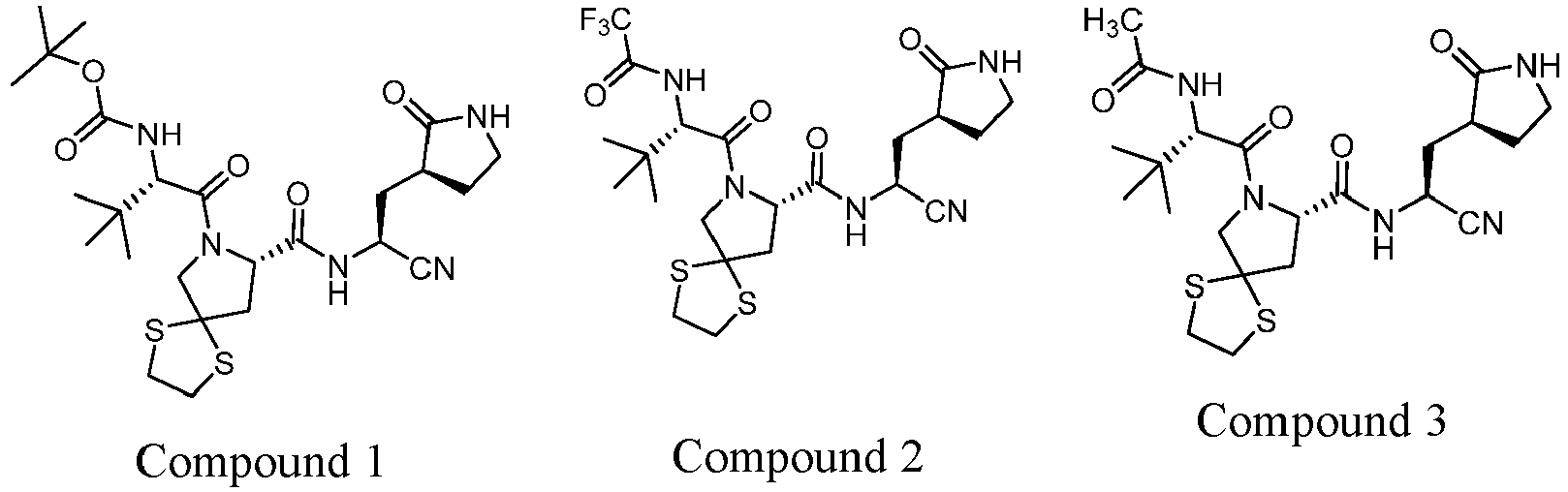

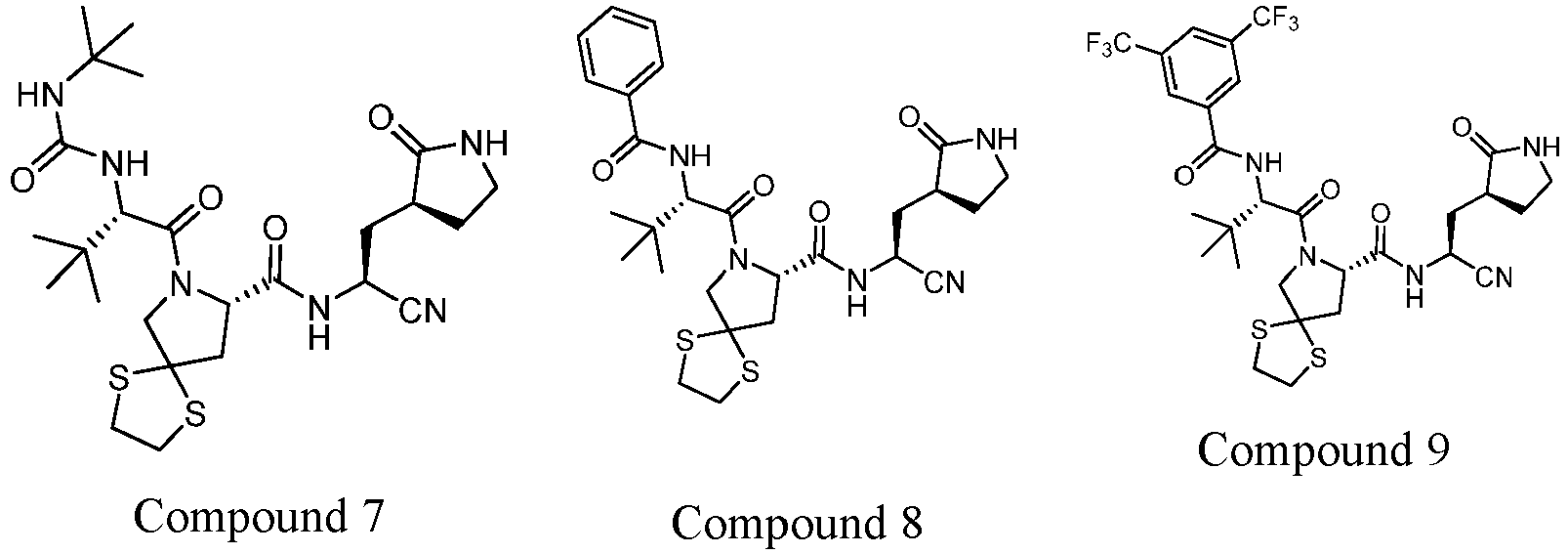


- A method for preparing the compound represented by general formula I, characterized in that the method is one of the following methods:Method i:
 ia) a compound represented by formula IV is obtained via a condensation reaction of a compound represented by formula II and a compound represented by formula III;preferably, the step ia) is that: the compound represented by formula II is reacted with the compound represented by formula III under the action of a condensing agent and a base in a solvent at a temperature of -20°C to 50°C for 0.1-12 h, thereby obtaining the compound represented by formula IV,optionally, the solvent is one of or a mixture of more than one of the following: tetrahydrofuran, dichloromethane, N,N-dimethylformamide, N,N-dimethylacetamide, ethyl acetate and 1,4-dioxane,optionally, the condensing agent is one of or a mixture of more than one of the following: 2-(7-azabenzotriazole)-N,N,N',N'-tetramethyluronium hexafluorophosphate, 1-ethyl-(3-dimethylaminopropyl)carbodiimide hydrochloride, 1-hydroxybenzotriazole, 2-hydroxypyridine-N-oxide, 1-propyl phosphoric anhydride, 1H-benzotriazol-1-yloxytripyrrolidinyl hexafluorophosphate, N,N'-carbonyldiimidazole and O-benzotriazole-tetramethyluronium hexafluorophosphate;optionally, the base is N,N-diisopropylethylamine, triethylamine and N-methylmorpholine;ib) the compound represented by formula IV is dehydrated to obtain the compound represented by general formula I;preferably, the step ib) is that: the compound represented by formula IV is reacted with a dehydrating agent in an anhydrous solvent at a temperature of -20°C to 50°C for 1-24 h to obtain the compound represented by general formula I;optionally, the anhydrous solvent is one of or a mixture of more than one of the following: tetrahydrofuran, dichloromethane, toluene, 1,4-dioxane and pyridine;optionally, the dehydrating agent is trifluoroacetic anhydride or methyl N-(triethylammoniumsulfonyl)carbamate; orMethod ii:
 iia) a compound represented by formula VI is obtained by via a condensation reaction of a compound represented by formula V and the compound represented by formula III, wherein PG in the compound represented by formula V is an amino protecting group;preferably, the step iia) is that: the compound represented by formula V is reacted with the compound represented by formula III under the action of a condensing agent and a base in a solvent at a temperature of -20°C to 50°C for 0.1-12 h, thereby obtaining the compound represented by formula VI;optionally, the solvent is one of or a mixture of more than one of the following: tetrahydrofuran, dichloromethane, N,N-dimethylformamide, N,N-dimethylacetamide, ethyl acetate and 1,4-dioxane,optionally, the condensing agent is one of or a mixture of more than one of the following: 2-(7-azabenzotriazole)-N,N,N',N'-tetramethyluronium hexafluorophosphate, 1-ethyl-(3-dimethylaminopropyl)carbodiimide hydrochloride, 1-hydroxybenzotriazole, 2-hydroxypyridine-N-oxide, 1-propyl phosphoric anhydride, 1H-benzotriazol-1-yloxytripyrrolidinyl hexafluorophosphate, N,N'-carbonyldiimidazole and O-benzotriazole-tetramethyluronium hexafluorophosphate;optionally, the base is N,N-diisopropylethylamine, triethylamine and N-methylmorpholine;optionally, the amino protecting group PG is tert-butoxycarbonyl, benzyl and p-methoxybenzyl;iib) the compound represented by formula VI is deprotected to obtain a compound represented by formula VII;
preferably, the step iib) is that: at a temperature of -20°C to 50°C, the compound represented by formula VI is reacted with an organic solution of trifluoroacetic acid or hydrogen chloride or Pd/C/H2 to obtain the compound represented by formula VII;iic) the compound represented by formula IV is obtained by aminoacylation, sulfonylation or a condensation reaction of the compound represented by formula VII;
preferably, the step iic) is that:at a temperature of -20°C to 50°C, the compound represented by formula VII is subjected to an aminoacylation reaction with acid chloride or acid anhydride under the condition of adding a base to obtain the compound represented by formula IV;at a temperature of -20°C to 50°C, the compound represented by formula VII is subjected to a sulfonylation reaction with sulfonyl chloride or sulfonic anhydride under the condition of adding a base to obtain the compound represented by formula IV;at a temperature of -20°C to 50°C, the compound represented by formula VII is subjected to a condensation reaction with a carboxyl compound under the condition of a condensing agent and a base to obtain the compound represented by formula IV;optionally, the base is N,N-diisopropylethylamine, triethylamine and N-methylmorpholine;optionally, the condensing agent is one of or a mixture of more than one of the following: 2-(7-azabenzotriazole)-N,N,N',N'-tetramethyluronium hexafluorophosphate, 1-ethyl-(3-dimethylaminopropyl)carbodiimide hydrochloride, 1-hydroxybenzotriazole, 2-hydroxypyridine-N-oxide, 1-propyl phosphoric anhydride, 1H-benzotriazol-1-yloxytripyrrolidinyl hexafluorophosphate, N,N'-carbonyldiimidazole and O-benzotriazole-tetramethyluronium hexafluorophosphate;iid) the compound represented by formula IV is dehydrated to obtain the compound represented by general formula I;preferably, the step iid) is that: the compound represented by formula IV is reacted with a dehydrating agent in an anhydrous solvent at a temperature of -20°C to 50°C for 1-24 h to obtain the compound represented by general formula I;optionally, the anhydrous solvent is one of or a mixture of more than one of the following: tetrahydrofuran, dichloromethane, toluene, 1,4-dioxane and pyridine;optionally, the dehydrating agent is trifluoroacetic anhydride or methyl N-(triethylammoniumsulfonyl)carbamate;wherein R1, R2, R3, R4, R5, R6, R7, X and Y are defined as described in any one of claims 1-8. - A pharmaceutical composition, characterized in that the pharmaceutical composition comprises the cyano compound, or the racemate, the enantiomer, the diastereoisomer or the pharmaceutically acceptable salt thereof according to any one of claims 1-8, and a pharmaceutically acceptable excipient; optionally, the pharmaceutical composition further comprises ritonavir or a pharmaceutically acceptable salt thereof.
- A pharmaceutical combination, characterized in that the pharmaceutical composition comprises the cyano compound, or the racemate, the enantiomer, the diastereoisomer or the pharmaceutically acceptable salt thereof according to any one of claims 1-8, and ritonavir or a pharmaceutically acceptable salt thereof.
- Use of the cyano compound, or the racemate, the enantiomer, the diastereoisomer or the pharmaceutically acceptable salt thereof according to any one of claims 1-8, the pharmaceutical composition according to claim 10 or pharmaceutical combination according to claim 11 in the preparation of a medicament selected from a medicament for inhibiting coronavirus 3CL protease activity, a medicament for preventing and/or treating coronavirus infection, a medicament for inhibiting picornavirus 3CL protease activity, and a medicament for preventing and/or treating picornavirus infection; optionally, the coronavirus is selected from SARS-CoV, MERS-CoV, H229E-CoV, HKU1-CoV, NL63-CoV, OC43-CoV and SARS-CoV-2.
Applications Claiming Priority (3)
| Application Number | Priority Date | Filing Date | Title |
|---|---|---|---|
| CN202111168232 | 2021-09-30 | ||
| CN202210973184 | 2022-08-15 | ||
| PCT/CN2022/122384 WO2023051657A1 (en) | 2021-09-30 | 2022-09-29 | Cyano compound, and preparation method therefor and use thereof |
Publications (3)
| Publication Number | Publication Date |
|---|---|
| EP4410788A1 true EP4410788A1 (en) | 2024-08-07 |
| EP4410788A4 EP4410788A4 (en) | 2025-02-26 |
| EP4410788B1 EP4410788B1 (en) | 2026-03-04 |
Family
ID=85781328
Family Applications (1)
| Application Number | Title | Priority Date | Filing Date |
|---|---|---|---|
| EP22875040.2A Active EP4410788B1 (en) | 2021-09-30 | 2022-09-29 | Cyano compound, and preparation method therefor and use thereof |
Country Status (12)
| Country | Link |
|---|---|
| US (1) | US20240408065A1 (en) |
| EP (1) | EP4410788B1 (en) |
| JP (1) | JP7729984B2 (en) |
| KR (1) | KR20240054338A (en) |
| CN (3) | CN116113631B (en) |
| AU (1) | AU2022357033B2 (en) |
| CA (1) | CA3230035A1 (en) |
| DK (1) | DK4410788T3 (en) |
| FI (1) | FI4410788T3 (en) |
| PT (1) | PT4410788T (en) |
| TW (1) | TW202328145A (en) |
| WO (1) | WO2023051657A1 (en) |
Families Citing this family (3)
| Publication number | Priority date | Publication date | Assignee | Title |
|---|---|---|---|---|
| MX2023002233A (en) | 2020-08-24 | 2023-03-15 | Gilead Sciences Inc | Phospholipid compounds and uses thereof. |
| TWI811812B (en) | 2020-10-16 | 2023-08-11 | 美商基利科學股份有限公司 | Phospholipid compounds and uses thereof |
| CN120529905A (en) * | 2023-01-16 | 2025-08-22 | 海南先声药业有限公司 | Antiviral drug composition and preparation method thereof |
Family Cites Families (9)
| Publication number | Priority date | Publication date | Assignee | Title |
|---|---|---|---|---|
| TW201817714A (en) * | 2016-08-30 | 2018-05-16 | 英商葛蘭素史密斯克藍智慧財產權有限公司 | Compounds that inhibit 3C and 3CL proteases and methods of use thereof |
| CN109134419A (en) * | 2017-06-15 | 2019-01-04 | 国科维思(北京)药物研究有限公司 | A kind of 2,2- dimethyl -1,3- dioxolanes analog derivative, preparation method and use |
| WO2020198062A1 (en) * | 2019-03-22 | 2020-10-01 | Achillion Pharmaceuticals, Inc. | Pharmaceutical compounds for the treatment of complement mediated disorders |
| CN113181339B (en) * | 2020-01-29 | 2022-02-22 | 中国科学院上海药物研究所 | Medicinal application of aldehyde compound |
| BR112022016131A2 (en) * | 2020-02-14 | 2022-10-25 | Nlc Pharma Ltd | COMPOUNDS FOR THE TREATMENT OF CORONA VIRUS INFECTION |
| US11123329B1 (en) * | 2020-03-23 | 2021-09-21 | Vicore Pharma Ab | Use of angiotensin II type 2 receptor agonist |
| US11124497B1 (en) * | 2020-04-17 | 2021-09-21 | Pardes Biosciences, Inc. | Inhibitors of cysteine proteases and methods of use thereof |
| CN112778310B (en) * | 2020-04-20 | 2025-05-30 | 中国科学院上海药物研究所 | Application of nucleoside analogs or combination preparations containing nucleoside analogs in antiviral treatment |
| EP4352042A4 (en) * | 2021-05-28 | 2025-07-16 | Purdue Research Foundation | Compounds for the treatment of SARS |
-
2022
- 2022-09-29 CN CN202280005454.0A patent/CN116113631B/en active Active
- 2022-09-29 WO PCT/CN2022/122384 patent/WO2023051657A1/en not_active Ceased
- 2022-09-29 US US18/695,756 patent/US20240408065A1/en active Pending
- 2022-09-29 EP EP22875040.2A patent/EP4410788B1/en active Active
- 2022-09-29 JP JP2024518875A patent/JP7729984B2/en active Active
- 2022-09-29 AU AU2022357033A patent/AU2022357033B2/en active Active
- 2022-09-29 CN CN202311097958.2A patent/CN117209555B/en active Active
- 2022-09-29 KR KR1020247010718A patent/KR20240054338A/en active Pending
- 2022-09-29 PT PT228750402T patent/PT4410788T/en unknown
- 2022-09-29 CA CA3230035A patent/CA3230035A1/en active Pending
- 2022-09-29 CN CN202311114591.0A patent/CN117209556A/en active Pending
- 2022-09-29 DK DK22875040.2T patent/DK4410788T3/en active
- 2022-09-29 TW TW111137006A patent/TW202328145A/en unknown
- 2022-09-29 FI FIEP22875040.2T patent/FI4410788T3/en active
Also Published As
| Publication number | Publication date |
|---|---|
| US20240408065A1 (en) | 2024-12-12 |
| CN117209555A (en) | 2023-12-12 |
| WO2023051657A1 (en) | 2023-04-06 |
| EP4410788A4 (en) | 2025-02-26 |
| PT4410788T (en) | 2026-04-30 |
| CA3230035A1 (en) | 2023-04-06 |
| KR20240054338A (en) | 2024-04-25 |
| CN117209555B (en) | 2024-12-03 |
| AU2022357033A1 (en) | 2024-03-21 |
| JP7729984B2 (en) | 2025-08-26 |
| CN117209556A (en) | 2023-12-12 |
| CN116113631B (en) | 2023-09-26 |
| FI4410788T3 (en) | 2026-04-16 |
| CN116113631A (en) | 2023-05-12 |
| DK4410788T3 (en) | 2026-04-20 |
| AU2022357033B2 (en) | 2026-01-08 |
| TW202328145A (en) | 2023-07-16 |
| JP2024534628A (en) | 2024-09-20 |
| EP4410788B1 (en) | 2026-03-04 |
Similar Documents
| Publication | Publication Date | Title |
|---|---|---|
| EP4410788B1 (en) | Cyano compound, and preparation method therefor and use thereof | |
| CN113289018B (en) | Application of old medicines such as auranofin and the like and compositions thereof in resisting single positive strand RNA viruses | |
| CN114699419B (en) | Application of PLpro protein inhibitors in drugs for the treatment or prevention of novel coronavirus infection | |
| CN113332363B (en) | Application of tea extract and its composition in anti-coronavirus | |
| WO2023185763A1 (en) | Peptidomimetic compound, and preparation method, pharmaceutical composition and use therefor | |
| CN113262224A (en) | Application of nelfinavir in preparing medicine for preventing and treating new coronary pneumonia | |
| WO2023033098A1 (en) | Bicyclic nitrogen-containing heterocyclic derivative having virus growth inhibitory activity and pharmaceutical composition containing same | |
| WO2023052772A1 (en) | Amido derivatives for use in the treatment of rna viral infections | |
| TW202304888A (en) | Ether-linked antiviral compounds | |
| EA050902B1 (en) | CYANO COMPOUNDS, THE METHOD OF THEIR PRODUCTION AND THEIR APPLICATION | |
| KR20100066142A (en) | Composition for preventing or treating picornavirus and coronavirus induced diseases containing 3,5-diaryl-4,5-dihydro pyrazol derivatives or pharmaceutically acceptable salts thereof as an active ingredient | |
| EP4303219A1 (en) | 8-(picolinamide) substituted coumarin compound, and preparation method therefor and use thereof | |
| HK40091978A (en) | Cyano compound, and preparation method therefor and use thereof | |
| HK40091978B (en) | Cyano compound, and preparation method therefor and use thereof | |
| TW202434216A (en) | Crystallization of spirocyclic compound and preparation method thereof | |
| EP4652993A1 (en) | Antiviral pharmaceutical composition and preparation method therefor | |
| US20140004590A1 (en) | Thioxothiazolidine inhibitors | |
| CN121758467A (en) | Tri-ring compound and application thereof |
Legal Events
| Date | Code | Title | Description |
|---|---|---|---|
| STAA | Information on the status of an ep patent application or granted ep patent |
Free format text: STATUS: THE INTERNATIONAL PUBLICATION HAS BEEN MADE |
|
| PUAI | Public reference made under article 153(3) epc to a published international application that has entered the european phase |
Free format text: ORIGINAL CODE: 0009012 |
|
| STAA | Information on the status of an ep patent application or granted ep patent |
Free format text: STATUS: REQUEST FOR EXAMINATION WAS MADE |
|
| 17P | Request for examination filed |
Effective date: 20240328 |
|
| AK | Designated contracting states |
Kind code of ref document: A1 Designated state(s): AL AT BE BG CH CY CZ DE DK EE ES FI FR GB GR HR HU IE IS IT LI LT LU LV MC MK MT NL NO PL PT RO RS SE SI SK SM TR |
|
| DAV | Request for validation of the european patent (deleted) | ||
| DAX | Request for extension of the european patent (deleted) | ||
| A4 | Supplementary search report drawn up and despatched |
Effective date: 20250123 |
|
| RIC1 | Information provided on ipc code assigned before grant |
Ipc: A61P 31/18 20060101ALI20250117BHEP Ipc: A61P 31/16 20060101ALI20250117BHEP Ipc: A61P 31/14 20060101ALI20250117BHEP Ipc: A61K 31/38 20060101ALI20250117BHEP Ipc: C07D 335/02 20060101ALI20250117BHEP Ipc: C07D 309/02 20060101ALI20250117BHEP Ipc: C07D 307/02 20060101ALI20250117BHEP Ipc: C07D 207/26 20060101ALI20250117BHEP Ipc: C07D 403/14 20060101ALI20250117BHEP Ipc: C07D 403/12 20060101AFI20250117BHEP |
|
| GRAP | Despatch of communication of intention to grant a patent |
Free format text: ORIGINAL CODE: EPIDOSNIGR1 |
|
| STAA | Information on the status of an ep patent application or granted ep patent |
Free format text: STATUS: GRANT OF PATENT IS INTENDED |
|
| INTG | Intention to grant announced |
Effective date: 20250410 |
|
| GRAJ | Information related to disapproval of communication of intention to grant by the applicant or resumption of examination proceedings by the epo deleted |
Free format text: ORIGINAL CODE: EPIDOSDIGR1 |
|
| STAA | Information on the status of an ep patent application or granted ep patent |
Free format text: STATUS: REQUEST FOR EXAMINATION WAS MADE |
|
| GRAP | Despatch of communication of intention to grant a patent |
Free format text: ORIGINAL CODE: EPIDOSNIGR1 |
|
| STAA | Information on the status of an ep patent application or granted ep patent |
Free format text: STATUS: GRANT OF PATENT IS INTENDED |
|
| INTC | Intention to grant announced (deleted) | ||
| INTG | Intention to grant announced |
Effective date: 20250908 |
|
| GRAS | Grant fee paid |
Free format text: ORIGINAL CODE: EPIDOSNIGR3 |
|
| GRAA | (expected) grant |
Free format text: ORIGINAL CODE: 0009210 |
|
| STAA | Information on the status of an ep patent application or granted ep patent |
Free format text: STATUS: THE PATENT HAS BEEN GRANTED |
|
| AK | Designated contracting states |
Kind code of ref document: B1 Designated state(s): AL AT BE BG CH CY CZ DE DK EE ES FI FR GB GR HR HU IE IS IT LI LT LU LV MC MK MT NL NO PL PT RO RS SE SI SK SM TR |
|
| REG | Reference to a national code |
Ref country code: CH Ref legal event code: F10 Free format text: ST27 STATUS EVENT CODE: U-0-0-F10-F00 (AS PROVIDED BY THE NATIONAL OFFICE) Effective date: 20260304 Ref country code: GB Ref legal event code: FG4D |
|
| REG | Reference to a national code |
Ref country code: CH Ref legal event code: R17 Free format text: ST27 STATUS EVENT CODE: U-0-0-R10-R17 (AS PROVIDED BY THE NATIONAL OFFICE) Effective date: 20260320 |
|
| REG | Reference to a national code |
Ref country code: IE Ref legal event code: FG4D |
|
| REG | Reference to a national code |
Ref country code: DE Ref legal event code: R096 Ref document number: 602022031861 Country of ref document: DE |
|
| REG | Reference to a national code |
Ref country code: FI Ref legal event code: FGE |
|
| REG | Reference to a national code |
Ref country code: DK Ref legal event code: T3 Effective date: 20260417 |
|
| REG | Reference to a national code |
Ref country code: NL Ref legal event code: FP |
|
| REG | Reference to a national code |
Ref country code: PT Ref legal event code: SC4A Ref document number: 4410788 Country of ref document: PT Date of ref document: 20260430 Kind code of ref document: T Free format text: AVAILABILITY OF NATIONAL TRANSLATION Effective date: 20260423 |