EP4410210A2 - System und verfahren zur erzeugung eines sensorischen stimulus - Google Patents
System und verfahren zur erzeugung eines sensorischen stimulus Download PDFInfo
- Publication number
- EP4410210A2 EP4410210A2 EP24183340.9A EP24183340A EP4410210A2 EP 4410210 A2 EP4410210 A2 EP 4410210A2 EP 24183340 A EP24183340 A EP 24183340A EP 4410210 A2 EP4410210 A2 EP 4410210A2
- Authority
- EP
- European Patent Office
- Prior art keywords
- neuromarker
- electroencephalographic
- alpha
- subject
- alpha phase
- Prior art date
- Legal status (The legal status is an assumption and is not a legal conclusion. Google has not performed a legal analysis and makes no representation as to the accuracy of the status listed.)
- Withdrawn
Links
Images




Classifications
-
- A—HUMAN NECESSITIES
- A61—MEDICAL OR VETERINARY SCIENCE; HYGIENE
- A61B—DIAGNOSIS; SURGERY; IDENTIFICATION
- A61B5/00—Measuring for diagnostic purposes; Identification of persons
- A61B5/24—Detecting, measuring or recording bioelectric or biomagnetic signals of the body or parts thereof
- A61B5/316—Modalities, i.e. specific diagnostic methods
- A61B5/369—Electroencephalography [EEG]
- A61B5/375—Electroencephalography [EEG] using biofeedback
-
- A—HUMAN NECESSITIES
- A61—MEDICAL OR VETERINARY SCIENCE; HYGIENE
- A61B—DIAGNOSIS; SURGERY; IDENTIFICATION
- A61B5/00—Measuring for diagnostic purposes; Identification of persons
- A61B5/24—Detecting, measuring or recording bioelectric or biomagnetic signals of the body or parts thereof
- A61B5/316—Modalities, i.e. specific diagnostic methods
- A61B5/369—Electroencephalography [EEG]
- A61B5/372—Analysis of electroencephalograms
- A61B5/374—Detecting the frequency distribution of signals, e.g. detecting delta, theta, alpha, beta or gamma waves
-
- A—HUMAN NECESSITIES
- A61—MEDICAL OR VETERINARY SCIENCE; HYGIENE
- A61B—DIAGNOSIS; SURGERY; IDENTIFICATION
- A61B5/00—Measuring for diagnostic purposes; Identification of persons
- A61B5/24—Detecting, measuring or recording bioelectric or biomagnetic signals of the body or parts thereof
- A61B5/316—Modalities, i.e. specific diagnostic methods
- A61B5/369—Electroencephalography [EEG]
- A61B5/377—Electroencephalography [EEG] using evoked responses
-
- A—HUMAN NECESSITIES
- A61—MEDICAL OR VETERINARY SCIENCE; HYGIENE
- A61B—DIAGNOSIS; SURGERY; IDENTIFICATION
- A61B5/00—Measuring for diagnostic purposes; Identification of persons
- A61B5/72—Signal processing specially adapted for physiological signals or for diagnostic purposes
- A61B5/7203—Signal processing specially adapted for physiological signals or for diagnostic purposes for noise prevention, reduction or removal
-
- A—HUMAN NECESSITIES
- A61—MEDICAL OR VETERINARY SCIENCE; HYGIENE
- A61B—DIAGNOSIS; SURGERY; IDENTIFICATION
- A61B5/00—Measuring for diagnostic purposes; Identification of persons
- A61B5/72—Signal processing specially adapted for physiological signals or for diagnostic purposes
- A61B5/7235—Details of waveform analysis
- A61B5/7253—Details of waveform analysis characterised by using transforms
- A61B5/7257—Details of waveform analysis characterised by using transforms using Fourier transforms
-
- A—HUMAN NECESSITIES
- A61—MEDICAL OR VETERINARY SCIENCE; HYGIENE
- A61B—DIAGNOSIS; SURGERY; IDENTIFICATION
- A61B5/00—Measuring for diagnostic purposes; Identification of persons
- A61B5/74—Details of notification to user or communication with user or patient; User input means
- A61B5/7405—Details of notification to user or communication with user or patient; User input means using sound
-
- A—HUMAN NECESSITIES
- A61—MEDICAL OR VETERINARY SCIENCE; HYGIENE
- A61B—DIAGNOSIS; SURGERY; IDENTIFICATION
- A61B5/00—Measuring for diagnostic purposes; Identification of persons
- A61B5/74—Details of notification to user or communication with user or patient; User input means
- A61B5/742—Details of notification to user or communication with user or patient; User input means using visual displays
- A61B5/743—Displaying an image simultaneously with additional graphical information, e.g. symbols, charts, function plots
-
- G—PHYSICS
- G16—INFORMATION AND COMMUNICATION TECHNOLOGY [ICT] SPECIALLY ADAPTED FOR SPECIFIC APPLICATION FIELDS
- G16H—HEALTHCARE INFORMATICS, i.e. INFORMATION AND COMMUNICATION TECHNOLOGY [ICT] SPECIALLY ADAPTED FOR THE HANDLING OR PROCESSING OF MEDICAL OR HEALTHCARE DATA
- G16H20/00—ICT specially adapted for therapies or health-improving plans, e.g. for handling prescriptions, for steering therapy or for monitoring patient compliance
- G16H20/10—ICT specially adapted for therapies or health-improving plans, e.g. for handling prescriptions, for steering therapy or for monitoring patient compliance relating to drugs or medications, e.g. for ensuring correct administration to patients
-
- G—PHYSICS
- G16—INFORMATION AND COMMUNICATION TECHNOLOGY [ICT] SPECIALLY ADAPTED FOR SPECIFIC APPLICATION FIELDS
- G16H—HEALTHCARE INFORMATICS, i.e. INFORMATION AND COMMUNICATION TECHNOLOGY [ICT] SPECIALLY ADAPTED FOR THE HANDLING OR PROCESSING OF MEDICAL OR HEALTHCARE DATA
- G16H20/00—ICT specially adapted for therapies or health-improving plans, e.g. for handling prescriptions, for steering therapy or for monitoring patient compliance
- G16H20/40—ICT specially adapted for therapies or health-improving plans, e.g. for handling prescriptions, for steering therapy or for monitoring patient compliance relating to mechanical, radiation or invasive therapies, e.g. surgery, laser therapy, dialysis or acupuncture
-
- G—PHYSICS
- G16—INFORMATION AND COMMUNICATION TECHNOLOGY [ICT] SPECIALLY ADAPTED FOR SPECIFIC APPLICATION FIELDS
- G16H—HEALTHCARE INFORMATICS, i.e. INFORMATION AND COMMUNICATION TECHNOLOGY [ICT] SPECIALLY ADAPTED FOR THE HANDLING OR PROCESSING OF MEDICAL OR HEALTHCARE DATA
- G16H50/00—ICT specially adapted for medical diagnosis, medical simulation or medical data mining; ICT specially adapted for detecting, monitoring or modelling epidemics or pandemics
- G16H50/20—ICT specially adapted for medical diagnosis, medical simulation or medical data mining; ICT specially adapted for detecting, monitoring or modelling epidemics or pandemics for computer-aided diagnosis, e.g. based on medical expert systems
-
- A—HUMAN NECESSITIES
- A61—MEDICAL OR VETERINARY SCIENCE; HYGIENE
- A61B—DIAGNOSIS; SURGERY; IDENTIFICATION
- A61B2505/00—Evaluating, monitoring or diagnosing in the context of a particular type of medical care
- A61B2505/09—Rehabilitation or training
Definitions
- the present invention pertains to the field of self-paced brain neuromodulation and more particularly, but not exclusively, to methods and systems for analyzing and representing neurophysiological data.
- the invention may be used in interactive games wherein a subject uses a neurofeedback or for the training of a subject to modify the perception of pain or reinforce self-modulation of pain pathways.
- Self-paced brain neuromodulation is a training procedure that teaches self-control of brain function to a subject by measuring brain waves and providing real-time stimuli in response. During this procedure, the subject becomes aware of the changes occurring during training and will be able to assess his progress in order to achieve optimum performances. More specifically, the perceptualization of a specific brain activity allows the subject to learn to increase or decrease the said brain activity thanks to experimental psychology paradigms such as operant condition or self-regulation.
- experimental psychology paradigms such as operant condition or self-regulation.
- Self-paced brain neuromodulation represents a great deal of interest especially for patients non-responding to classical clinical treatment such as medicaments, surgery or physical therapy and facing a therapeutic dead-end.
- the self-paced brain neuromodulation method, disclosed in the present invention modifies a subject pain perception, also known as nociception.
- John et al. discloses a method for presenting a pain quantification index and a target index to perform a self-paced brain neuromodulation allowing the subject to reduce the sensation and intensity of pain.
- Said pain quantification index is estimated by comparison to a reference brain wave data obtained from a population normative data indicative of various reference brain wave activity (i.e. brain wave activity representative of pain absence in a subject).
- a reference brain wave data obtained from a population normative data indicative of various reference brain wave activity (i.e. brain wave activity representative of pain absence in a subject).
- brain activity reference is a time-consuming procedure and does not represent a reliable reference for all subject since it does not take in consideration the large variability of pathologies and therefore performances between subjects. Precisely, a subject experiencing pain is likely to exhibit changes in multiple brain areas so that the intervention is inherently non-specific.
- the present invention discloses an improved self-paced brain neuromodulation.
- the neural activity of a subject is evaluated through the calculation of a brain activity neuromarker and the variation of said neuromarker with respect to a reference state is reported in real time to the subject in order to enable said subject to modulate its neural activity, in particular towards an improved nociception state, by self-paced neuromodulation.
- the present invention relates to a system for generating a sensorial stimulus using electroencephalographic data acquired from a subject, the system comprising:
- This aspect of the present invention allows advantageously to provide to the subject a real time feedback concerning phase coherence between alpha waves recorded from different areas of his brain and optionally concerning alpha waves amplitude.
- This feedback allows the training of the subject for modifying nociception or in the reinforcement of self-modulation of pain pathways.
- This feedback may be used as well in interactive games wherein the subject uses the neuromarker feedback to modify the sensorial stimuli outputted by the system.
- the system further comprises an acquisition set-up for acquiring at least two electroencephalographic signals from a subject.
- the output generator comprises visual means to produce visual stimuli representing the numerical value of the alpha phase neuromarker.
- the output generator comprises auditory means to produce auditory stimuli representing the numerical value of the alpha phase neuromarker.
- the present invention also relates to a computer-implemented method for generating a sensorial stimulus using electroencephalographic data acquired from a subject, the method comprising the following steps:
- the alpha phase neuromarker is an alpha phase concentration neuromarker (APC) which concerns the phase coherence between alpha waves recorded from different areas of his brain, and the step of calculating the alpha phase concentration neuromarker comprises:
- the alpha phase neuromarker is an alpha phase synchrony neuromarker, dependent from the amplitude and phase of the alpha waves, and the step of calculating the alpha phase synchrony neuromarker comprises:
- the alpha phase synchrony neuromarker calculation step is followed by a normalization step comprising:
- the calculation step is preceded by the step of removing the noise and/or artefact from the electroencephalographic signals.
- Yet another aspect of the present invention relates to a computer program product for generating a sensorial stimulus, the computer program product comprising instructions which, when the program is executed by a computer, cause the computer to carry out the steps of the method according to any one of the embodiments described hereabove.
- Yet another aspect of the present invention relates to a computer-readable storage medium comprising instructions which, when the program is executed by a computer, cause the computer to carry out the steps of the method according to any one of the embodiments described hereabove.
- a first aspect of the present invention relates to a method for modifying nociception in a subject using electroencephalographic data acquired from the brain of a subject, the method comprising the following steps:
- the method for modifying nociception is a computer-implemented method.
- Another feature of the present invention relates to a method for generating a first sensorial stimulus using electroencephalographic data acquired from the brain of a subject, the method comprising the following steps:
- first sensorial stimulus may be understood more generally as “sensorial stimulus” as described in the following description.
- This aspect of the present invention allows advantageously to provide the subject with an instantaneous feedback concerning the phase coherence between alpha waves recorded from different areas of his brain. This feedback prompts the subject to dynamically modifying nociception reducing his clinical symptoms in a typical dose-response effect.
- the step b) of the method according to the first aspect of the present invention is preceded by the step of removing the noise and/or artefact from the electroencephalographic signals.
- the sensorial stimulus representing alpha phase concentration neuromarker is communicated to the subject.
- the sensorial stimulus is communicated to the subject in real time.
- the sensorial stimulus representation the numerical value of the alpha phase concentration neuromarker is a visual stimulus.
- the sensorial stimulus representation the numerical value of the alpha phase concentration neuromarker is an auditive stimulus.
- the method according to the first aspect of the present invention is controlled by a subject.
- the method according to the first aspect of the present invention is supervised by a skilled physician.
- the subject suffers from a chronic pain.
- the subject is a cancer survivor suffering from chemotherapy-induced peripheral neuropathy.
- the method according to the first aspect of the present invention is a long-term cure for the subject.
- the present invention further relates to a system for modifying nociception in a subject, the system comprising:
- the present invention further relates to a computer program product for modifying nociception in a subject, the computer program product comprising instructions which, when the program is executed by a computer, cause the computer to carry out the steps of the method described hereabove.
- the present invention further relates to a computer-readable storage medium comprising instructions which, when the program is executed by a computer, cause the computer to carry out the steps of the method described hereabove.
- a second aspect of the present invention relates to a method for training a subject to reinforce self-modulation of pain pathways using electroencephalographic data acquired from the brain of a subject, the method comprising the following steps:
- the method for training a subject to reinforce self-modulation of pain pathways is a computer-implemented method.
- Yet another feature of the present invention relates to a method for generating a second sensorial stimulus using electroencephalographic data acquired from the brain of a subject, the method comprising the following steps:
- second sensorial stimulus may be understood more generally as “sensorial stimulus” as described in the following description.
- This second aspect of the present invention allows advantageously to provide to the subject an instantaneous feedback concerning both amplitude of the alpha waves and phase coherence between alpha waves recorded from different areas of his brain. This feedback allows the training of the subject in the reinforcement of self-modulation of pain pathways.
- step d) of the method according to the second aspect of the present invention is followed by a normalization step comprising:
- the step c) of the method according to the second aspect of the present invention is preceded by the step of removing the noise and artefact from the electroencephalographic signal.
- the sensorial stimulus representing alpha phase synchrony neuromarker is communicated to the subject.
- the sensorial stimulus is communicated to the subject in real time.
- the sensorial stimulus is a visual representation of the alpha phase synchrony neuromarker numerical value.
- the subject is affected by a chronic pain or a cognitive-related disorder.
- the present invention further relates to a system for training a subject to reinforce self-modulation of pain pathways, the system comprising:
- the present invention further relates to a computer program product for training a subject to reinforce self-modulation of pain pathways, the computer program product comprising instructions which, when the program is executed by a computer, cause the computer to carry out the steps of the method according to the second aspect of the present invention.
- the present invention further relates to a computer-readable storage medium comprising instructions which, when the program is executed by a computer, cause the computer to carry out the steps of the method according to the second aspect of the present invention.
- the present invention in some embodiments thereof, relates to neurophysiology and, more particularly, but not exclusively, to computer-implemented method and system for analyzing neurophysiological data for the purpose of modifying perception of pain, such as, but not limited to, chronic pain.
- electroencephalographic signals and neural signals are both used to define signals relating to the electrical activity of neurons registered by electroencephalogram devices.
- FIG. 1 a block diagram shows the main steps included in the computer-implemented methods implemented in the present invention embodiments.
- the computer implemented methods of the present invention processes electroencephalographic signals and calculate neuromarker associated to the brain waves in the alpha band.
- Alpha waves are considered as "resting/idle state" neural oscillations in the frequency range of 7.5-12.5 Hz arising from synchronous and coherent (in phase or constructive) electrical activity of populations of neurons such as the thalamic pacemaker cells in humans.
- the synchrony of alpha waves was shown to be involved in the corticostriatal communication in a way that suggest that alpha synchrony actually modulates the nucleus accumbens (NAc) activity ( “Directed Communication between Nucleus Accumbens and Neocortex in Humans Is Differentially Supported by Synchronization in the Theta and Alpha Band", PloS one, Horschig et al., 2015).
- NAc nucleus accumbens
- the nucleus accumbens is a dopaminaregic area of the mesolimbic pathway that participates in the central representation of pain but also gates activity in ascending nociceptive pathways ( " The indirect pathway of the nucleus accumbens shell amplifies neuropathic pain " , Nature neuroscience, Ren et al., 2016).
- the present invention comprises a preliminary step 101 of receiving the electroencephalographic signals acquired using electroencephalography from at least two electrodes, positioned onto predetermined areas of the scalp of the subject in order to obtain a multi-channel electroencephalographic signals.
- the electroencephalographic signals are acquired by at least 4, 8, 10, 15, 16, 17, 18, 19, 20, 21, 32, 64, 128 or 256 electrodes.
- the electrodes are placed on the scalp according to the 10 - 10 or 10 - 20 system, dense-array positioning or any other electrodes positioning known by the man skilled in the art.
- the electrodes montage may be unipolar or bipolar.
- the electrodes are placed accordingly to the 10 - 20 system with locations Fp1, Fp2, F7, F3, Fz, F4, F8, T3, C3, Cz, C4, T4, T5, P3, Pz, P4, T6, O1, 02, A1 and A2.
- various types of suitable headsets or electrode systems are available for acquiring such neural signals.
- EGI electroencephalographic signals
- Epoc headset commercially available from Emotiv
- Waveguard headset commercially available from ANT Neuro
- Versus headset commercially available from SenseLabs
- DSI 6 headset commercially available from Wearable sensing
- Xpress system commercially available from BrainProducts
- Mobita system commercially available from TMSi
- Porti32 system commercially available from TMSi
- ActiChamp system commercially available from BrainProducts
- Geodesic system commercially available from EGI.
- the electroencephalographic signals are acquired using implanted microelectrodes arrays or deep brain implants.
- the electrical signals arising from neural activity are acquired directly or indirectly using any cerebral imaging technique known by one skilled in the art.
- the electroencephalographic signals received may be obtained with a standard recording module with sampling frequency of at least 24Hz, preferably 32 Hz, 64 Hz, 128 Hz, 250 Hz or any other sampling frequency known by the man skilled in the art.
- the electroencephalographic signals are received in real time.
- the present invention further comprises a step of pre-processing of the electroencephalographic signals 102 in order to remove or reject noise.
- the electroencephalographic signals are further preprocessed in order to remove or reject artefact.
- the electroencephalographic signals from individual scalp electrodes is digitally filtered with at least one filter chosen from group: low-frequency reject filter, high-frequency reject filter, bandpass filter, band stop filter.
- electroencephalographic signals may be filtered using first-order Butterworth band-pass filter and a third-order Butterworth notch filter; a skilled artisan would be able to select a suitable range of frequencies to reject.
- delta band typically from about 1 Hz to about 4 Hz
- theta band typically from about 3 to about 8 Hz
- alpha band typically from about 7 to about 13 Hz
- low beta band typically from about 12 to about 18 Hz
- beta band typically from about 17 to about 23 Hz
- high beta band typically from about 22 to about 30 Hz.
- Higher frequency bands such as, but not limited to, gamma band (typically from about 30 to about 80 Hz), are also contemplated.
- the artefacts are corrected from the electroencephalographic signal using one or a combination of the following techniques: adaptive filtering, Wiener filtering and Bayes filtering, Hilbert-Huang Transform filter regression, blind source separation (BSS), wavelet transform method, empirical mode decomposition, nonlinear mode decomposition and the like.
- One of the main source of physiological noise arises from eye movements and more precisely from eye blinks which generates large amplitude signals in the electroencephalographic signals.
- Those ocular artefacts present a wide spectral distribution thus perturbing all classic electroencephalographic bands, including the alpha band which is the band of interest in the method disclosed by the present invention.
- the ocular artefacts are corrected using blind source separation (BSS) or regression on an electrooculogram trace.
- BSS blind source separation
- the blind source separation for ocular artefacts removal uses Fourier co-spectral matrices as descriptors of the electroencephalographic signals, and these matrices are jointly diagonalized, providing the mixing and the separating matrices (" On the blind source separation of human electroencephalogram by approximate joint diagonalization of second order statistics ", Clinical Neurophysiology, Congedo et al., 2008 ).
- the neuromarker derived from the alpha brain waves are calculated 103 on these filtered electroencephalographic signals.
- a sensorial stimulus representing the neuromarker derived from the alpha-band is generated by an output generator, as show in Figure 1 , step 104.
- said sensorial stimulus representing the alpha-derived neuromarker is further communicated to the subject.
- the acquisition and filtering processes according to the embodiments described hereabove are computed in real time and the sensorial stimuli are generated from the output generator in real time and communicated to the subject in real time.
- One or more forms of sensory stimulation may be used including, but not limited to auditory, olfactory, tactile, somatosensory, gustatory, vestibular, or other sensory systems stimuli.
- the sensory stimulation is a visual stimulation providing a visual representation of the numerical value calculated for the alpha-derived neuromarker.
- the acquisition is a continuous acquisition such that electroencephalographic data are collected continuously before, during and after the generation of a stimulus.
- a first aspect of the present invention relates to a self-paced neuromodulation method computer implemented for modifying nociception in a subject using electroencephalographic data acquired from the brain of a subject.
- the nociception modification is achieved by computing and communicating to the subject an alpha-derived neuromarker value expressing the phase coherence between alpha waves recorded from different electroencephalographic channels: the alpha phase concentration neuromarker.
- the at least two electroencephalographic signals acquired and filtered as described in the embodiment above, are decomposed into their frequencies components by Fourier transform in a temporal window.
- Said temporal window ranging from 0.5 s to 5 s, optionally the temporal window may be of 0.5 seconds, 1 second, 1.5 seconds, 2 seconds, 2.5 seconds, 3 seconds, 3.5 seconds, 4 seconds, 4.5 seconds or 5 seconds.
- the signal transformation may be computed by numerical integration of a series of ordered pairs, discrete Fourier transform, or fast Fourier transform.
- the Fourier transform is computed after processing the signal with a window function of about 1 s every x seconds, wherein x ranges from 0.05 s to 1 s.
- the window function is a Hamming window.
- the complex Fourier coefficients are averaged in the band of alpha waves for each channel. These averaged complex coefficients may be normalized in order to have their absolute value equal to the unity.
- a sensorial stimulus representing the value of the alpha phase concentration neuromarker is generated by an output generator.
- said sensorial stimulus representing the value of the alpha phase concentration neuromarker is communicated to the subject.
- a second aspect of the present disclosure relates to a self-paced neuromodulation method computer implemented for training a subject in the self-modulation reinforcement of pain pathways using electroencephalographic data acquired from the brain of a subject.
- the alpha-derived neuromarker calculated is an alpha phase synchrony neuromarker dependent from the amplitude and phase of the alpha waves.
- the at least two electroencephalographic signals acquired as described in the embodiments above, are filtered to remove noise and artefact accordingly to the embodiment described above.
- the at least two electroencephalographic signals are filtered with a band-pass filter in at least one frequency band.
- one of the at least one band-pass filter filters the at least two electroencephalographic signals in the frequency band of alpha waves.
- a spatial averaging operation is computed over the electroencephalographic channels obtaining an averaged signal of the at least two electroencephalographic signals.
- a moving average window of about 2 s every ⁇ t, wherein ⁇ t ranges from 0.05 s to 1 s.
- the alpha phase synchrony neuromarker ( APS ) is computed as a Frobenius squared norm a of the averaged signal on a temporal window.
- Said temporal window ranging from 0.5 s to 5 s, optionally the temporal window may be of 0.5 seconds, 1 second, 1.5 seconds, 2 seconds, 2.5 seconds, 3 seconds, 3.5 seconds, 4 seconds, 4.5 seconds or 5 seconds.
- the alpha phase synchrony neuromarker is normalized by the global field power of the averaged signal p. Said global field power is computed for the averaged signal on a temporal window, wherein said temporal window corresponds to the temporal window on which is calculated the alpha phase synchrony neuromarker.
- a sensorial stimulus representing the alpha phase synchrony neuromarker is generated by an output generator.
- a sensorial stimulus representing the alpha phase synchrony neuromarker is communicated to the subject.
- the electroencephalographic data can be analyzed immediately after acquisition in a real time processing or it can be recorded and stored and thereafter analyzed in a second time.
- the self-paced neuromodulation methods of the present invention are beneficial for any subject experiencing pain.
- the subject may experience a transitory pain or chronic pain, a nociceptive pain, a neuropathic pain, a psychogenic pain, a breakthrough pain and/or a phantom pain.
- the self-paced neuromodulation methods of the present invention are especially beneficial for subject suffering from chronic pain such as chronic primary pain, chronic cancer pain, chronic posttraumatic pain, chronic headache and orofacial pain, chronic visceral pain or chronic musculoskeletal pain.
- the self-paced neuromodulation methods of the present invention are especially beneficial for subject suffering from chronic musculoskeletal pain such as lower back pain, myalgia, fibromyalgia, stress fractures, tunnel syndrome including carpal tunnel syndrome, cubital tunnel syndrome and tarsal tunnel syndrome, arthritic pain, muscle pain, repetitive strain injury, inflammations, fibrosis or tissue degradation.
- chronic musculoskeletal pain such as lower back pain, myalgia, fibromyalgia, stress fractures, tunnel syndrome including carpal tunnel syndrome, cubital tunnel syndrome and tarsal tunnel syndrome, arthritic pain, muscle pain, repetitive strain injury, inflammations, fibrosis or tissue degradation.
- the self-paced neuromodulation methods of the present invention are especially beneficial for subject suffering from chemotherapy-induced peripheral neuropathy.
- inflammatory pain means pain due to edema or swelling of any inflamed tissue, including inflammatory joint pain.
- Inflammatory joint pain includes rheumatoid arthritic pain.
- acute pain means any pain, including, but not limited to, joint pain, osteoarthritic pain, rheumatoid arthritic pain, inflammatory pain, pain from a burn, pain from a cut, surgical pain, pain from fibromyalgia, bone cancer pain, menstrual pain, back pain, headache, static allodynia, and dynamic allodynia, that lasts from 1 minute to 91 days, 1 minute to 31 days, 1 minute to 7 days, 1 minute to 5 days, 1 minute to 3 days, 1 minute to 2 days, 1 hour to 91 days, 1 hour to 31 days, 1 hour to 7 days, 1 hour to 5 days, 1 hour to 3 days, 1 hour to 2 days, 1 hour to 24 hours, 1 hour to 12 hours, or 1 hour to 6 hours, per occurrence if left untreated.
- Acute pain includes, but is not limited to, joint pain, osteoarthritic pain, rheumatoid arthritic pain, inflammatory pain, pain from a burn, pain from a cut, surgical pain, pain from fibromyalgia, bone cancer pain, menstrual pain, back pain, headache, static allodynia, dynamic allodynia, acute joint pain, acute osteoarthritic pain, acute rheumatoid arthritic pain, acute inflammatory pain, acute headache, acute menstrual pain, acute back pain, and acute pain from fibromyalgia.
- Acute pain may be selected from acute joint pain, acute osteoarthritic pain, acute rheumatoid arthritic pain, acute inflammatory pain, acute headache, acute menstrual pain, and acute back pain.
- Acute pain may be selected from acute joint pain, acute osteoarthritic pain, acute rheumatoid arthritic pain, and acute inflammatory pain.
- Acute pain may be selected from acute joint pain, acute osteoarthritic pain, and acute rheumatoid arthritic pain.
- Acute pain may be selected from acute joint pain and acute osteoarthritic pain.
- disorder or conditions for which a subject would benefit from the self-paced neuromodulation methods of the present invention can be classified according to the present embodiments include, without limitation, depression, attention deficit hyperactivity disorder (ADHD), stroke, traumatic brain injury (TBI), mild TBI (commonly known as brain concussion), posttraumatic stress disorder (PTSD), epilepsy, Parkinson, multiple sclerosis, agitation, Alzheimer's disease/dementia, anxiety, panic, phobic disorder, bipolar disorder, borderline personality disorder, behavior control problems, body dysmorphic disorder, cognitive-related disorders (e.g., mild cognitive impairment), dissociative disorders, eating disorder, appetite disorder, fatigue, hiccups, impulse-control problems, irritability, mood problems, movement problems, obsessive-compulsive disorder, personality disorders, schizophrenia and other psychotic disorders, seasonal affective disorder, sexual disorders, sleep disorders, stuttering, substance abuse, Tourette's Syndrome, Trichotillomania, or violent/self-destructive behaviors.
- ADHD attention deficit hyper
- the invention also relates to a system for modifying nociception in a subject, the system comprising:
- the present invention further relates to a system to reinforce self-modulation of pain pathways in a subject, the system comprising:
- Yet another aspect of the present invention relates to a system for self-paced brain neuromodulation, the system comprising:
- a further aspect of the present invention relates to a system for generating a sensorial stimulation, the system comprising:
- the system further comprises an acquisition set-up for acquiring at least two electroencephalographic signals from a subject.
- the system may further comprise a communication module configured to allow the communication between an acquisition module configured to control measurements of an electrocardiographic signal of the subject and a remote acquisition set-up.
- the communication module is further configured to retrieve data and may be equipped to perform wireless data transfer.
- the acquisition set-up comprises any means known by one skilled in the art enabling acquisition (i.e. capture, record and/or transmission) of electroencephalographic signals as defined in the present invention, preferably electrodes or headset as explained hereabove.
- the acquisition set-up comprises an amplifier unit for magnifying and/or converting the electroencephalographic signals from analog to digital format.
- the present invention further relates to a computer program product for modifying nociception in a subject, the computer program product comprising instructions which, when the program is executed by a computer, cause the computer to carry out the steps of the computer-implemented method for modifying nociception according to anyone of the embodiments described hereabove in relation with the first aspect of the invention.
- the present invention further relates to a computer program product to reinforce self-modulation of pain pathways in a subject, the computer program product comprising instructions which, when the program is executed by a computer, cause the computer to carry out the steps of the computer-implemented method to reinforce self-modulation of pain pathways according to anyone of the embodiments described hereabove in relation with the second aspect of the invention.
- the data processing system is a dedicated circuitry or a general purpose computer, configured for receiving the data and executing the operations described in the embodiment described above.
- the data processing system comprises a processor and a computer program.
- the processor receives digitalized neural signals and processes the digitalized electroencephalographic signals under the instructions of the computer program to compute the neuromarker.
- the computing device comprises a network connection enabling remote implementation of the method according to the present invention.
- electroencephalographic signals are wirelessly communicated to the data processing device.
- the output generator wirelessly receives the alpha-derived neuromarker from the data processing device.
- the present invention further relates to a computer-readable storage medium comprising instructions which, when the program is executed by a computer, cause the computer to carry out the steps of the computer-implemented method according to anyone of the embodiments described hereabove.
- Computer programs implementing the method of the present embodiments can commonly be distributed to users on a distribution computer-readable storage medium such as, but not limited to, an SD card, an external storage device, a microchip, a flash memory device and a portable hard drive. From the distribution medium, the computer programs can be copied to a hard disk or a similar intermediate storage medium. The computer programs can be run by loading the computer instructions either from their distribution medium or their intermediate storage medium into the execution memory of the computer, configuring the computer to act in accordance with the method of this invention. All these operations are well- known to those skilled in the art of computer systems.
- the output generator comprises any means for reporting an alpha-derived neuromarker value.
- the alpha-derived neuromarker value is reported using visual means, auditory means, olfactory means, tactile means (e.g. vibratory or haptic feedback) and/or gustatory means.
- the alpha-derived neuromarker value is reported using a display such as lights; LEDs; a screen; a smartphone, a computer monitor or a television; or a head-mounted display.
- the self-paced neuromodulation methods of the present invention are used to train self-paced neuromodulation of a subject during multiple training session.
- the number of training sessions may be of 5, 10, 15, 20, 25, 30, 35, 40, 45 or 50, preferably about 20.
- each training session consists of multiple blocks, preferably 6 blocks, each of about a few minutes, notably 5 minutes.
- the training sessions are made by the subject during a period of time ranging from about a few days to about a few weeks.
- the reporting of the alpha-derived neuromarker value enables the perceptualization of a specific brain activity, such as nociception, allowing the subject to learn to increase or decrease said specific brain activity.
- the reporting of the alpha-derived neuromarker value comprises a visual reporting wherein a target, representing in real-time the alpha-derived neuromarker value of the subject, is displayed. Said target, representing the alpha-derived neuromarker value, may move along one or more directions on a display screen.
- the normalization of the alpha-derived neuromarker allows an easy representation of the alpha-derived neuromarker, since the values' scale of the alpha-derived neuromarker is fixed and independent from the subject.
- the alpha-derived neuromarker value is represented in relation to a reference state.
- the target representing the subject alpha-derived neuromarker value may move toward or away from a location corresponding to a representation of said reference state.
- the reference state may be defined as the alpha-derived neuromarker value obtained by the subject at the beginning of each training session or the alpha-derived neuromarker value obtained when the subject is doing a certain task, such as, but not limited to, reading, speaking, listening etc.
- the reference state may be defined by the alpha-derived neuromarker value obtain by the subject before the beginning of the self-paced neuromodulation training (i.e. before the first training session).
- the reference state may be further defined as an average alpha-derived neuromarker value obtained from a representative population not including the subject undergoing the self-paced neuromodulation training.
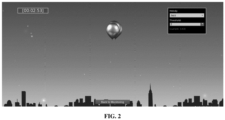
- an object on the screen which position, size, color, or any other parameters can be modulated by said alpha-derived neuromarker value, is reported to the subject.
- it can be the representation of a plane or a hot-air balloon, whose altitude is modulated by the alpha-derived neuromarker value, as shown in Figure 2 .
- Said visual means may alternatively be a lights source such as but not limited to LEDs or LASERs device.
- a sound the amplitude of which is directly modulated by said alpha-derived neuromarker value, is reported to the subject.
- the sound can be a simple beep, water flowing, waves, rain, dongs, any kind of music, or any other sound which can be modulated in amplitude or frequency.
- the learning process can be implemented according to the principles of operand conditioning.
- the generation of the targeted cerebral activity, improving alpha phase concentration or alpha phase synchrony can be rewarded by a positive stimulus (positive reinforcement) such as, by means of non-limiting example, diffusion of pleasant music, showing of nice images and/or an interesting video.
- a positive stimulus positive reinforcement
- a deterioration of the alpha-derived neuromarker, obtained from the subject is associated with the removal of the pleasant stimulus (negative reinforcement).
- Said alpha-derived neuromarker deterioration can also be associated with the communication of negative stimuli (positive punishment) such as, by means of non-limiting example, diffusion of unpleasant music, interruption of a pleasant music and/or interruption of an interesting video.
- negative stimuli positive punishment
- the improvement of the alpha-derived neuromarker value back to a better state is rewarded by the removal of an unpleasant negative stimulation (negative punishment) and further positive reinforcement.
- the learning process is implemented according to the principles of self-control by giving the subject a continuous real time representation of the alpha-derived neuromarker in order to allow said subject to gain control and modify the alpha-derived neuromarker through the desired state.
- the learning process can be implemented with any other learning strategy or combination of them.
- the system for biofeedback training described in patent publication EP 3 181 043 is used to promote subject learning by providing a reward to the subject; said reward being based on the difference between the alpha-derived neuromarker and a computed threshold calculated according to the computer-implemented method of said patent publication.
- the self-paced neuromodulation methods of the present invention are a long-term cure for the subject.
- the self-paced neuromodulation methods are controlled by a subject.
- the self-paced neuromodulation methods are supervised by a skilled physician.
- the skilled physician may train, especially during the first session, the subject to the utilization of the methods for self-paced neuromodulation.
- the self-paced neuromodulation methods are used by the subject alone.
- the subject may use the self-paced neuromodulation methods at his residence.
- the methods and the systems of the present invention may be further used to implement neurofeedback games.
- a desired brain state i.e. monitored using alpha phase neuromarker
- full control of the game controller is enabled.
- the subject is able to play the video game seamlessly.
- the game is configured to that if the subject does not maintain the desired brain state, speed and steering control of the game decrease.
- Example 1 Validation of the system and method to reinforce self-modulation of pain pathways in a subject
- EEG data were acquired on-line and the stimulation representing the alpha synchrony neuromarker value was communicated in real-time to the subject.
- the present method will be considered successful if an improvement of clinical score parameters will be observed over time from the subject.
- the electroencephalography (EEG) data was collected using a 19-channels smartBCI EEG system (Saint-Petersburg, Russia) with 19 silver-chloride electrodes fitted to a neoprene cap.
- the 19 electrodes were approximately located at the extended 10-20 locations Fp1, Fp2, F7, F3, Fz, F4, F8, T3, C3, Cz, C4, T4, T5, P3, Pz, P4, T6, O1, and O2, while referenced to linked ear lobes A1 and A2.
- Each electrode was connected to the subject's scalp by the mean of electrolyte gel using a syringe with blunt needle.
- the headset was connected wirelessly to the participant laptop and interfaced with the Mensia NeuroRT Training.
- Mensia NeuroRT Training is a general neurofeedback software for research offering a subject database management, online eye blink removal by blind source separation techniques and artefact detection by Riemannian geometry techniques.
- Mensia NeuroRT Training further comprises a custom neurofeedback pipeline according to the embodiments of the present invention which is implemented in order to reinforce alpha synchrony (upward training) as an attempt to replicate and characterize learning response and specificity of training.
- the effectiveness of the system of the present invention lies in the subject's ability to modulate their brain activity, either by operant conditioning or voluntary control. To that purpose, the digitized brain signals are analyzed to extract a representation of the targeted cortical area real time activity, which is translated into a visual or auditory cue.
- the sensory feedback constitutes the rewards mechanism that promotes learning.
- EEG electroencephalographic alpha-synchrony neurofeedback training. Each session was composed of 6 blocks of 5 minutes, preceded by recording of 2 minutes wherein the subject keeps the eyes-open (EO) and recording of 2 minutes wherein the subject keeps the eyes-closed (EC).
- Inclusion criteria comprised the presence of chronic back pain resistant any form of standard therapeutic approach including a week-long intensive multidisciplinary approach made of drug, physiotherapy, psychotherapy.
- the control population was recruited from participants who responded positively to the one-week intensive treatment.
- In order to limit heterogeneity of EEG recordings only female participants were included in the study so as to discard known gender-related sources of EEG variability. Patients were told they could leave the research protocol at any time and without condition.
- EMG electromyographic
- clinical scales both recorded before and after the neurofeedback training, for all subjects.
- the clinical scales were taken at 6 and 12 months follow-up.
- EMG score is evaluated considering the median frequency of the spinal erector muscle (Dolan 1995), which is a proxy for muscular function, typically done during a hip motion with tight leg and measured:
- the health questionnaires including:
- Electroencephalographic signal was processed as described on-line to show to the subject a figurative representation of the alpha phase synchrony neuromarker.
- the processing of EEG time series in real time is an essential component of the therapeutic method described here.
- the entire dataset was post-processed to extract the evolution of two pre-specified neuromarkers: the alpha phase synchrony, sensitive to both amplitude and phase which was trained and the alpha phase concentration (APC) solely sensitive to phase and ideally relating more specifically to the modulation of the nucleus accumbens, which it is believed to relate more specifically to the symptoms of chronic pain and their evolution.
- the alpha phase synchrony sensitive to both amplitude and phase which was trained
- the alpha phase concentration (APC) solely sensitive to phase and ideally relating more specifically to the modulation of the nucleus accumbens, which it is believed to relate more specifically to the symptoms of chronic pain and their evolution.
- permutation statistics can be implemented where the distribution of the chosen statistics to be tested was estimated from the data permuted under the null-hypothesis. Specifically, the longitudinal time series (EO, EC, and training) for each neuromarkers (APS and APC) were permuted under the null hypothesis that the data showed no temporal monotonic trend.
- Figure 3 shows the alpha phase synchrony neuromarker evolution between session for EEG signal acquired for the subject with eyes open (EO), eyes closed (EC) and during the self-paced neuromodulation training averaged across all blocks of a session.
- Data acquired with eyes closed shows an elevated alpha activity as compared to the ones acquired with open eyes.
- the alpha phase synchrony neuromarker level before training shows an elevation over the eyes open recording, which possibly captures the brain activity related to the mental task proposed by the neuromodulation training.
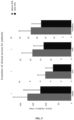
- Figure 5 shows the progression for Dallas scale, self-reported Body Pain (EVA), Anxiety and Depression scale (HAD) and Hamilton scores for the 16 patients included in the study. Median and median absolute deviation are plotted before and after the neurofeedback sessions. Clinical scores show reduction between before and after the self-paced neuromodulation training, reflecting the impact of the training.
- EVA self-reported Body Pain
- HAD Anxiety and Depression scale
- Hamilton scores for the 16 patients included in the study.
- Median and median absolute deviation are plotted before and after the neurofeedback sessions.
- Clinical scores show reduction between before and after the self-paced neuromodulation training, reflecting the impact of the training.
- Intra-session learning analysis is meant to verify that subjects were able to regulate specifically the trained neuromarker and looks at intra-session changes over blocks averaged across all patients. Each block was averaged across 20 sessions for 16 patients.
- the evolution of alpha phase synchrony (APS) and phase concentration (APC) at each five-minute-long training blocks showed a significant increase (permutation test: p ⁇ 0.001) in the median alpha synchrony (APS) across patients from block 1 to 6. This increase reflects changes in brain activity induced by the subject doing the neurofeedback training task.
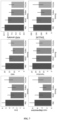
- Figure 6 shows the progression for EMG scores for only 10 of the 16 patients included in the study (the other 6 refusing to complete the EMG recording).
- the EMG scores representing the median frequencies, indicates a gain in the recruitment of motor units with bigger diameters and more dynamics, the opposite of a muscular tiredness.
- Median and median absolute deviation are plotted before and after the neurofeedback sessions. It can be observed that the group shows an improvement of EMG scores for flexion and for extension of the right spinal erector muscle, but it is not statistically significant after correction.
- alpha phase concentration neuromarker specific to phase rather than amplitude, was found to correlate significantly with the reduction of clinical symptoms in a typical dose-response effect.
- This example reports on a pilot study offering an alpha phase synchronization personalized brain rehabilitation intervention to a population of multiresistant chronic lower back pain subjects.
- the intervention showed a significant and lasting response of most measured clinical scales, which is even more considering the severity of the population. It was shown first that the clinical improvement was lasting up to a year after the intervention and second that the subject did control (intrasession trends) and learned to better control (intersession trends) their alpha phase synchrony neuromarker. Third, the alpha phase concentration neuromarker was found to correlate significantly with the reduction of clinical symptoms in a typical dose-response effect. Finally, the intervention favorable safety profile and its availability as a home-use intervention makes it a potentially disruptive tool for less severe population in the context of non-steroidal antiinflammatory drugs (NSAID) and opioid abuses.
- NSAID non-steroidal antiinflammatory drugs
Landscapes
- Health & Medical Sciences (AREA)
- Life Sciences & Earth Sciences (AREA)
- Engineering & Computer Science (AREA)
- Medical Informatics (AREA)
- Public Health (AREA)
- General Health & Medical Sciences (AREA)
- Biomedical Technology (AREA)
- Physics & Mathematics (AREA)
- Surgery (AREA)
- Pathology (AREA)
- Animal Behavior & Ethology (AREA)
- Molecular Biology (AREA)
- Biophysics (AREA)
- Heart & Thoracic Surgery (AREA)
- Veterinary Medicine (AREA)
- Psychiatry (AREA)
- Epidemiology (AREA)
- Primary Health Care (AREA)
- Signal Processing (AREA)
- Psychology (AREA)
- Artificial Intelligence (AREA)
- Computer Vision & Pattern Recognition (AREA)
- Physiology (AREA)
- Nuclear Medicine, Radiotherapy & Molecular Imaging (AREA)
- Mathematical Physics (AREA)
- Data Mining & Analysis (AREA)
- Chemical & Material Sciences (AREA)
- Bioinformatics & Cheminformatics (AREA)
- Medicinal Chemistry (AREA)
- Urology & Nephrology (AREA)
- Databases & Information Systems (AREA)
- Radiology & Medical Imaging (AREA)
- Measurement And Recording Of Electrical Phenomena And Electrical Characteristics Of The Living Body (AREA)
Applications Claiming Priority (3)
| Application Number | Priority Date | Filing Date | Title |
|---|---|---|---|
| US15/707,190 US11154234B2 (en) | 2017-09-18 | 2017-09-18 | Method for the management of nociception |
| EP18779579.4A EP3685400B8 (de) | 2017-09-18 | 2018-09-18 | System zur erzeugung eines sensorischen stimulus |
| PCT/EP2018/075208 WO2019053285A1 (en) | 2017-09-18 | 2018-09-18 | SYSTEM AND METHOD FOR GENERATING SENSORY STIMULUS |
Related Parent Applications (2)
| Application Number | Title | Priority Date | Filing Date |
|---|---|---|---|
| EP18779579.4A Division EP3685400B8 (de) | 2017-09-18 | 2018-09-18 | System zur erzeugung eines sensorischen stimulus |
| EP18779579.4A Division-Into EP3685400B8 (de) | 2017-09-18 | 2018-09-18 | System zur erzeugung eines sensorischen stimulus |
Publications (2)
| Publication Number | Publication Date |
|---|---|
| EP4410210A2 true EP4410210A2 (de) | 2024-08-07 |
| EP4410210A3 EP4410210A3 (de) | 2024-10-09 |
Family
ID=63713821
Family Applications (2)
| Application Number | Title | Priority Date | Filing Date |
|---|---|---|---|
| EP18779579.4A Active EP3685400B8 (de) | 2017-09-18 | 2018-09-18 | System zur erzeugung eines sensorischen stimulus |
| EP24183340.9A Withdrawn EP4410210A3 (de) | 2017-09-18 | 2018-09-18 | System und verfahren zur erzeugung eines sensorischen stimulus |
Family Applications Before (1)
| Application Number | Title | Priority Date | Filing Date |
|---|---|---|---|
| EP18779579.4A Active EP3685400B8 (de) | 2017-09-18 | 2018-09-18 | System zur erzeugung eines sensorischen stimulus |
Country Status (6)
| Country | Link |
|---|---|
| US (2) | US11154234B2 (de) |
| EP (2) | EP3685400B8 (de) |
| JP (1) | JP2020534976A (de) |
| CA (1) | CA3076080A1 (de) |
| ES (1) | ES3001524T3 (de) |
| WO (1) | WO2019053285A1 (de) |
Families Citing this family (5)
| Publication number | Priority date | Publication date | Assignee | Title |
|---|---|---|---|---|
| US11786694B2 (en) | 2019-05-24 | 2023-10-17 | NeuroLight, Inc. | Device, method, and app for facilitating sleep |
| CN110558977A (zh) * | 2019-09-09 | 2019-12-13 | 西北大学 | 基于机器学习模糊特征选择的癫痫发作脑电信号分类方法 |
| US20220061740A1 (en) * | 2020-08-28 | 2022-03-03 | New York University | System and method for concussive impact monitoring |
| WO2023238832A1 (ja) * | 2022-06-07 | 2023-12-14 | 国立大学法人千葉大学 | 慢性腰痛緩和システム |
| US11642067B1 (en) | 2022-08-15 | 2023-05-09 | King Abdulaziz University | System and method for unsupervised adaptive threshold neurofeedback treatment |
Citations (2)
| Publication number | Priority date | Publication date | Assignee | Title |
|---|---|---|---|---|
| WO2008124566A2 (en) | 2007-04-05 | 2008-10-16 | New York University | System and method for pain detection and computation of a pain quantification index |
| EP3181043A1 (de) | 2015-12-18 | 2017-06-21 | Mensia Technologies | Automatisierte schwelle für unüberwachte nervenrückkopplungssitzungen |
Family Cites Families (7)
| Publication number | Priority date | Publication date | Assignee | Title |
|---|---|---|---|---|
| US4846190A (en) * | 1983-08-23 | 1989-07-11 | John Erwin R | Electroencephalographic system data display |
| US8494905B2 (en) | 2007-06-06 | 2013-07-23 | The Nielsen Company (Us), Llc | Audience response analysis using simultaneous electroencephalography (EEG) and functional magnetic resonance imaging (fMRI) |
| US8326408B2 (en) | 2008-06-18 | 2012-12-04 | Green George H | Method and apparatus of neurological feedback systems to control physical objects for therapeutic and other reasons |
| US8892207B2 (en) * | 2011-04-20 | 2014-11-18 | Medtronic, Inc. | Electrical therapy for facilitating inter-area brain synchronization |
| US20160220836A1 (en) | 2015-01-30 | 2016-08-04 | Board Of Trustees Of The University Of Arkansas | Device and method of phase-locking brain stimulation to electroencephalographic rhythms |
| US20170065199A1 (en) | 2015-09-03 | 2017-03-09 | Christian Meisel | Monitoring human brain excitability using synchronization measures |
| ITUB20153636A1 (it) * | 2015-09-15 | 2017-03-15 | Brainsigns S R L | Metodo per stimare uno stato mentale, in particolare un carico di lavoro, e relativo apparato |
-
2017
- 2017-09-18 US US15/707,190 patent/US11154234B2/en active Active
-
2018
- 2018-09-18 CA CA3076080A patent/CA3076080A1/en active Pending
- 2018-09-18 JP JP2020537049A patent/JP2020534976A/ja active Pending
- 2018-09-18 US US16/648,346 patent/US12178589B2/en active Active
- 2018-09-18 WO PCT/EP2018/075208 patent/WO2019053285A1/en not_active Ceased
- 2018-09-18 EP EP18779579.4A patent/EP3685400B8/de active Active
- 2018-09-18 ES ES18779579T patent/ES3001524T3/es active Active
- 2018-09-18 EP EP24183340.9A patent/EP4410210A3/de not_active Withdrawn
Patent Citations (2)
| Publication number | Priority date | Publication date | Assignee | Title |
|---|---|---|---|---|
| WO2008124566A2 (en) | 2007-04-05 | 2008-10-16 | New York University | System and method for pain detection and computation of a pain quantification index |
| EP3181043A1 (de) | 2015-12-18 | 2017-06-21 | Mensia Technologies | Automatisierte schwelle für unüberwachte nervenrückkopplungssitzungen |
Non-Patent Citations (7)
Also Published As
| Publication number | Publication date |
|---|---|
| US20200214586A1 (en) | 2020-07-09 |
| EP3685400C0 (de) | 2024-12-18 |
| WO2019053285A1 (en) | 2019-03-21 |
| CA3076080A1 (en) | 2019-03-21 |
| US12178589B2 (en) | 2024-12-31 |
| EP3685400B8 (de) | 2025-01-22 |
| EP4410210A3 (de) | 2024-10-09 |
| EP3685400B1 (de) | 2024-12-18 |
| US11154234B2 (en) | 2021-10-26 |
| ES3001524T3 (en) | 2025-03-05 |
| US20190082991A1 (en) | 2019-03-21 |
| EP3685400A1 (de) | 2020-07-29 |
| JP2020534976A (ja) | 2020-12-03 |
Similar Documents
| Publication | Publication Date | Title |
|---|---|---|
| US12076570B2 (en) | Systems and methods for cooperative invasive and noninvasive brain stimulation | |
| EP3685400B1 (de) | System zur erzeugung eines sensorischen stimulus | |
| JP7203388B2 (ja) | 快不快の判別 | |
| WO2019152135A1 (en) | Devices and methods for delivering mechanical stimulation to nerve, mechanoreceptor, and cell targets | |
| KR20170086056A (ko) | 개선된 신호 분석에 기초한 스코어링 방법 | |
| Wyckoff et al. | Neurofeedback and brain–computer interfaces | |
| Milner et al. | Slow cortical potential neurofeedback in chronic tinnitus therapy: A case report | |
| US20190314599A1 (en) | System and method for sensory training and assessment | |
| Tost et al. | Repetitive active and passive cognitive stimulations induce EEG changes in patients with Rett syndrome | |
| KR102814696B1 (ko) | 생체신호 기반 틱 장애인 뇌의 운동피질 안정화를 위한 뉴로-바이오 피드백 방법 및 장치 | |
| US20180228394A1 (en) | Systems and Methods for Assisting a Subject to Learn to Independently Identify and Alter His or Her Brain State | |
| Fu et al. | Impairment of inhibitory control due to repetitive subconcussions from indirect brain impacts: evidence from event-related potentials and resting-state EEG complexity in parachuters | |
| Schaeffer et al. | Enhancement of sleep slow wave activity using transcranial electrical stimulation with temporal interference | |
| Miyashiro et al. | Altered auditory feedback perception following an 8-week mindfulness meditation practice | |
| Syrjänen et al. | Individual temporal and spatial dynamics of learning to control central Beta activity in neurofeedback training | |
| Aristizabal et al. | Neurofeedback beta down training in women with high state-trait anxiety and elevated beta patterns in temporal lobes: A pilot study | |
| Gani et al. | The Effect of Myopia on Brain Signals: Insights from EEG Studies | |
| RU2844624C1 (ru) | Система нейрореабилитации на основе интерфейса мозг-компьютер с контурами мультимодальных обратных связей для коррекции когнитивных и моторных нарушений различной природы | |
| WO2019079779A1 (en) | METHOD AND SYSTEM FOR SELF-DETERMINATION OF BRAIN MODIFICATIONS | |
| de Vasconcelos Gato | Neural Activity and Pain Variation in a Spinal Cord Injury Patient During Brain-machine Interface Control | |
| Tost Abadías | Cognitive function evaluation in pediatric patients with neurodevelopmental disorders by means of EEG data | |
| Van Bree | The Mysterious Mu Wave: The Effects Of tDCS On Visuomotor Integration And Processing | |
| Lagos Benítez | Time-frequency analysis for responses evoked by nociceptive and non-nociceptive stimuli based on EEG signals | |
| Atwell | A Brain Computer Interface that Predicts Different Hand Movements from Pre-motor EEG Activity | |
| Keil et al. | Articles in PresS. J Neurophysiol (November 6, 2013). doi: 10.1152/jn. 00387.2013 |
Legal Events
| Date | Code | Title | Description |
|---|---|---|---|
| PUAI | Public reference made under article 153(3) epc to a published international application that has entered the european phase |
Free format text: ORIGINAL CODE: 0009012 |
|
| STAA | Information on the status of an ep patent application or granted ep patent |
Free format text: STATUS: THE APPLICATION HAS BEEN PUBLISHED |
|
| AC | Divisional application: reference to earlier application |
Ref document number: 3685400 Country of ref document: EP Kind code of ref document: P |
|
| AK | Designated contracting states |
Kind code of ref document: A2 Designated state(s): AL AT BE BG CH CY CZ DE DK EE ES FI FR GB GR HR HU IE IS IT LI LT LU LV MC MK MT NL NO PL PT RO RS SE SI SK SM TR |
|
| PUAL | Search report despatched |
Free format text: ORIGINAL CODE: 0009013 |
|
| AK | Designated contracting states |
Kind code of ref document: A3 Designated state(s): AL AT BE BG CH CY CZ DE DK EE ES FI FR GB GR HR HU IE IS IT LI LT LU LV MC MK MT NL NO PL PT RO RS SE SI SK SM TR |
|
| RIC1 | Information provided on ipc code assigned before grant |
Ipc: A61B 5/377 20210101AFI20240903BHEP |
|
| STAA | Information on the status of an ep patent application or granted ep patent |
Free format text: STATUS: THE APPLICATION IS DEEMED TO BE WITHDRAWN |
|
| 18D | Application deemed to be withdrawn |
Effective date: 20250410 |