EP4409450B1 - Verfahren zur analyse der schwachstellen eines informationssystems gegenüber einem cyberangriff - Google Patents
Verfahren zur analyse der schwachstellen eines informationssystems gegenüber einem cyberangriff Download PDFInfo
- Publication number
- EP4409450B1 EP4409450B1 EP22797410.2A EP22797410A EP4409450B1 EP 4409450 B1 EP4409450 B1 EP 4409450B1 EP 22797410 A EP22797410 A EP 22797410A EP 4409450 B1 EP4409450 B1 EP 4409450B1
- Authority
- EP
- European Patent Office
- Prior art keywords
- compromise
- attack
- cyber
- asset
- computer
- Prior art date
- Legal status (The legal status is an assumption and is not a legal conclusion. Google has not performed a legal analysis and makes no representation as to the accuracy of the status listed.)
- Active
Links
Images


Classifications
-
- H—ELECTRICITY
- H04—ELECTRIC COMMUNICATION TECHNIQUE
- H04L—TRANSMISSION OF DIGITAL INFORMATION, e.g. TELEGRAPHIC COMMUNICATION
- H04L63/00—Network architectures or network communication protocols for network security
- H04L63/14—Network architectures or network communication protocols for network security for detecting or protecting against malicious traffic
- H04L63/1408—Network architectures or network communication protocols for network security for detecting or protecting against malicious traffic by monitoring network traffic
- H04L63/1425—Traffic logging, e.g. anomaly detection
-
- H—ELECTRICITY
- H04—ELECTRIC COMMUNICATION TECHNIQUE
- H04L—TRANSMISSION OF DIGITAL INFORMATION, e.g. TELEGRAPHIC COMMUNICATION
- H04L63/00—Network architectures or network communication protocols for network security
- H04L63/14—Network architectures or network communication protocols for network security for detecting or protecting against malicious traffic
- H04L63/1433—Vulnerability analysis
-
- G—PHYSICS
- G06—COMPUTING OR CALCULATING; COUNTING
- G06F—ELECTRIC DIGITAL DATA PROCESSING
- G06F21/00—Security arrangements for protecting computers, components thereof, programs or data against unauthorised activity
- G06F21/50—Monitoring users, programs or devices to maintain the integrity of platforms, e.g. of processors, firmware or operating systems
- G06F21/57—Certifying or maintaining trusted computer platforms, e.g. secure boots or power-downs, version controls, system software checks, secure updates or assessing vulnerabilities
- G06F21/577—Assessing vulnerabilities and evaluating computer system security
-
- H—ELECTRICITY
- H04—ELECTRIC COMMUNICATION TECHNIQUE
- H04L—TRANSMISSION OF DIGITAL INFORMATION, e.g. TELEGRAPHIC COMMUNICATION
- H04L63/00—Network architectures or network communication protocols for network security
- H04L63/14—Network architectures or network communication protocols for network security for detecting or protecting against malicious traffic
- H04L63/1441—Countermeasures against malicious traffic
Definitions
- the field of the invention is that of cybersecurity and more particularly that of the analysis of the vulnerability of an information system to a computer attack.
- US 7,926,113 B1 describes systems and methods for managing multiple vulnerability scanners distributed across one or more networks. By distributing multiple scanners across a network, the workload of each scanner can be reduced. In addition, scanners can be placed directly behind firewalls for more in-depth analysis. In addition, scanners can be placed closer to the networks being scanned. By placing vulnerability scanners closer, the actual scanning traffic does not traverse the core network switching and routing fabric, thus avoiding potential network outages due to scanning activity. In addition, the shorter distance between scanners and scanned targets speeds up scan times by reducing the distance packets must travel.
- the invention aims to propose a tool for analyzing risks related to cyber threats that overcomes these drawbacks.
- the invention proposes a method for estimating the probability of success of a computer attack without having to carry out the intrusion test, a method that exploits the level of sophistication of the MOAs targeting an organization and the level of sophistication of the security procedures deployed by the organization both in terms of passive defense procedures and in terms of active defense procedures.
- This process allows, on the one hand, to scale up the principle of intrusion testing, since simulations can be carried out in a reasonable time and with harmonized results across all of an organization's information systems and for all known project owners.
- this process ensures a scalable nature since the results can be kept up to date over time, depending on the evolution of the interest of the project owners in the organization, their sophistication and their repertoires of attack procedures as well as depending on the evolution of the security procedures deployed by the organization.
- the invention relates to a computer-implemented method for analyzing the vulnerability of an information system to a computer attack carried out by an attacker.
- the information system is made up of a plurality of IT assets, i.e. IT assets also referred to as "support assets" according to the terminology used by ANSSI in the EBIOS RM method.
- a map of the information system can be produced in the form of a graph whose nodes represent the IT assets (networks, user terminals, applications, etc.) constituting the information system and whose edges represent the possible propagation links of a computer attack between the IT assets (for example, an attacker can propagate from a web application to the server hosting it).
- the computer attack aims to propagate from one or more input IT assets on one or more compromise paths, each consisting of a succession of at least one IT asset including an input IT asset.
- the attack aims to reach one or more target IT assets from the input IT asset(s) by propagating step by step on one or more compromise paths, each consisting of a succession of IT assets (i.e. assets successively connected by edges of the graph) including an input IT asset and a target IT asset.
- a target IT asset also constitutes an input IT asset, the corresponding compromise path being limited to this asset.
- the computer attack is carried out according to a given Mode of Operation of Attack (MOA), i.e. its technical and contextual identity card grouping together contextual information and all the tactics, techniques, procedures used by the attacker.
- MOA Mode of Operation of Attack
- the MOA for which the vulnerability analysis is carried out is typically representative of a risk scenario corresponding to the combination of a type of attack (ransomware or espionage for example), a type of malicious actor (state or criminal for example) and a context of the targeted organization (sector of activity, size, country for example).
- the MOA considered may be a "representative" and aggregated MOA of the operating modes deployed in reality by the attacker groups relevant to the scenario considered (for example the various advanced persistent threats known as “Advanced Persistent Threats” such as APT28, APT29, or even groups exploiting ransomware such as Sodinokibi).
- Advanced Persistent Threats such as APT28, APT29, or even groups exploiting ransomware such as Sodinokibi.
- the IT attack carried out by the attacker may include one or more attack procedures aimed at defeating the IT asset.
- the intrusion kill chain describes the phases of a cyberattack, including the delivery phase (the attacker delivers the weapon to the target via, for example, email attachments, websites, or USB drives), the exploitation phase (the malware code is triggered and acts on the target network to exploit the identified vulnerability), the installation phase (the malware installs an access point, i.e., a backdoor, usable by an external attacker), the command and control phase (the malware provides the attacker with permanent access to the target network), and the target actions phase (the attacker takes actions to achieve their objectives, such as data exfiltration, data destruction, or encryption for ransom).
- the delivery phase the attacker delivers the weapon to the target via, for example, email attachments, websites, or USB drives
- the exploitation phase the malware code is triggered and acts on the target network to exploit the identified vulnerability
- the installation phase the malware installs an access point, i.e., a backdoor, usable by an external attacker
- the command and control phase the malware provides the attacker with permanent access to the target network
- the target actions phase the attacker takes actions to
- Attack procedures may depend not only on the attacker, but also on the nature of the targeted IT asset (e.g., a web server, an office computer, or an industrial control system) and the attacker's intended objective on the asset (e.g., a simple bounce point in the network, data espionage, sabotage, denial of service, etc.).
- the list of attack procedures executed by the MOA may, for example, be that provided by the MITRE ATT&CK framework ("Adversarial Tactics, Techniques, and Common Knowledge").
- One or more security measures may be activated at the level of each IT asset to provide defense against attack procedures aimed at defeating the IT asset.
- the attack procedures executed by the MOA which aim to defeat an IT asset can be associated with the defense measures corresponding and in particular be grouped into procedures aimed at compromising a cybersecurity procedure ensuring passive defense and measures aimed at compromising a cybersecurity procedure ensuring active defense. More specifically, the attack procedures can be grouped into procedures aimed at compromising the cybersecurity procedure of the protection type, procedures aimed at compromising the cybersecurity procedure of the detection type and procedures aimed at compromising the cybersecurity procedure of the response type.
- the invention performs a granular and precise modeling of the actions performed by the attacker during the compromise attempt (for example, a first asset is only a bounce within the network and only its integrity is then targeted with specific attack procedures, while a second asset must be compromised in confidentiality and other attack procedures to collect and exfiltrate sensitive data are then deployed by the attacker).
- Such granular and precise modeling extends to the defense measures that prove to be relevant for each IT asset and for each type of attack.
- the invention thus makes it possible to consider attack and defense techniques specific to each IT asset (for example, to take into account the fact that the offensive and defensive catalogs are different between a desktop computer, a smartphone, a production tool, etc.).
- the invention also allows for consideration of crucial security measures within organizations that are not related to CVE vulnerability correction, such as those mentioned above.
- the method according to the invention estimates the probability of success of the computer attack carried out by the attacker on the IS for a given phase of the intrusion attack chain. This method is thus preferably repeated for each of the phases (delivery, operation, installation, etc.) of the intrusion attack chain.
- the method according to the invention For each phase of the intrusion attack chain, the method according to the invention carries out Monte Carlo simulations in order to estimate the probability of success of the computer attack carried out by the attacker to compromise a given computer asset.
- the method then comprises more particularly, for each of the compromise paths considered (for example all the possible paths in the graph mapping the IS), the carrying out of a plurality of simulations of propagation of the computer attack on the compromise path, where in each simulation it is determined whether and how the attack has succeeded or not in propagating in the information system.
- each simulation includes the implementation of the following steps for each of the IT assets in the compromise path.
- Each simulation also includes, for each IT asset, an ECH step consisting of determining a failure of the IT asset by comparing, on the one hand, the capacity of the cybersecurity procedure ensuring passive defense to block the IT attack with the capacity of the IT attack to compromise the cybersecurity procedure ensuring passive defense and, on the other hand, the capacity of the cybersecurity procedure ensuring active defense to block the IT attack with the capacity of the IT attack to compromise the cybersecurity procedure ensuring active defense (i.e. by comparing, on the one hand, the first defensive score and the first offensive score and, on the other hand, the second defensive score and the second offensive score).
- each simulation also includes, for each IT asset, a COMP step consisting of determining a compromise of the IT asset in the event of a determined failure of said asset and of each of the IT assets upstream of said asset in the compromise path when said asset is not the input IT asset.
- the method comprises a step consisting of determining a vulnerability indicator of an IT asset in the compromise path based on the number of simulations for which a compromise of said asset has been determined. This step is for example carried out for the target IT asset. It can be carried out for all or part of the IT assets in the compromise path.
- the above is valid for a compromise path and not for the attack in its entirety which can take different paths in parallel (the attacker can for example test several paths and defeat the assets constituting them, before finding or not finding a path which will allow him to reach his target).
- the depth of the complete attack can then be for example defined as the length of the longest path containing exclusively supporting assets successively compromised on a compromise path.
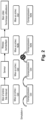
- the invention thus has the advantage of making it possible to study the depth that the attacker has managed to reach in the IS. Even if he has not managed to achieve his final objective (the compromise of the target IT asset, for example the user terminals in the example of the Figure 3 ), he was able to succeed in compromising assets along the way. Impacts will therefore still be suffered by the organization and this state of affairs can be modeled by the invention by, for example, associating an impact profile (financial but also material losses, data losses, communications losses, etc.) with the compromise of each asset and thus providing an indicator of the impact of the attack even if it is blocked and does not compromise the target asset.
- an impact profile financial but also material losses, data losses, communications losses, etc.
- This impact calculation takes into account, on the one hand, the level of depth reached by the attack and the nature of the successful actions on each compromised asset and, on the other hand, the cybersecurity procedures of the remediation type activated at the level of the compromised assets.
- Successful actions typically increase the impact indicator depending on their nature (for example, if a first asset is compromised in Integrity and a second asset is compromised in Confidentiality, then the probability that a business impact indicator is higher is N%,), while cybersecurity procedures of the remediation type allow this indicator to be reduced.
- This impact calculation may notably use a remediation score calculated in a similar manner to the defensive scores described below, by using random draws controlled by the sophistication of each of the security measures that ensure the remediation-type cybersecurity function and the uncertainty about this sophistication. This score makes it possible to reduce the potential impact of a successful offensive action on an asset.
- the method according to the invention may comprise for each simulation a step consisting, for each of the assets in the compromise path, in pseudo-randomly determining a capacity of a cybersecurity procedure of the remediation type activated at the level of the IT asset to remedy the IT attack and a step consisting in calculating an impact of the attack during which an impact associated with an asset for which a compromise is determined is reduced by means of the capacity of the cybersecurity procedure of the remediation type activated at the level of said asset.
- An IS impact may then be calculated for each simulation by, for example, summing the impacts associated with each compromised asset.
- an impact probability distribution may be calculated from the IS impacts calculated for each of the simulations (for example, 30% of the simulations result in a production incapacity duration of 2 hours, 20% in a production incapacity duration of 5 hours, 10% in a production incapacity duration of 10 hours, etc.).
- the invention has the advantage of providing a precise impact calculation by making it possible not to consider that the impact is only triggered in a binary way (successful attack or not), and above all to be able to break down the total impact of an attack on each action and on each asset.
- This impact calculation constitutes valuable data for decision-making within organizations, and to direct vigilance on certain assets more than on others.
- the invention further comprises repeating the steps of performing a plurality of simulations and determining an indicator of compromise for another compromise path.
- the invention thus makes it possible to consider all possible paths that the attack is likely to follow in order to compromise the IS.
- the invention comprises repeating the steps of performing a plurality of simulations and determining an indicator of compromise after modifying a cybersecurity procedure activated at one of the IT assets of the compromise path and evaluating the impact of said modification by comparing the indicators of compromise determined by the first iteration of said steps and by said reiteration of said steps.
- the pseudo-random value forming the first, respectively second, defensive score can then be determined from the first, respectively second, defense indicators drawn for each of the security measures that provide a cybersecurity function of the protection type, respectively of the response type, for example by averaging these first, respectively second, defense indicators.
- the average can be a weighted average to highlight those security measures that are most effective against the MOA.
- each attack procedure can be weighted when considering a “representative” MOA.
- the weighting of an attack procedure can similarly be applied to the security measures that make it possible to protect against it. In the case where a If a defense measure can be effective against several attack procedures with different weightings, it is possible to sum the relevant weightings and normalize everything in the end.
- determining whether an IT asset has been compromised also includes comparing the ability of the IT attack to compromise the detection-type cybersecurity procedure enabled at the IT asset with the ability of that detection-type cybersecurity procedure to detect the attack.
- the asset can first be checked whether the first defensive score SDP is higher than the first offensive score SOP (its scores being linked to the cyber protection function). If so (“Y"), the asset is not defeated (NECH block). If not (“N"), it is checked whether the third defensive score SDD is higher than the third offensive score SOD (its scores being linked to the cyber detection function). If not ("N"), the asset is defeated (ECH block). If so (“Y”), it is checked whether the second defensive score SDR is higher than the second offensive score SOR (its scores being linked to the cyber response function). If not (“N”), the asset is defeated (ECH block). If so (“Y”), the asset is not defeated (NECH block).
- each of the capabilities of the protection-type cybersecurity procedure, respectively the response-type can benefit from a bonus based on a capability of an identification-type cybersecurity procedure activated at the IT asset level.
- the capability of the detection-type cybersecurity procedure can also benefit from such a bonus.
- the invention is not limited to the method described above but also extends to a data processing unit configured to implement this method as well as to a computer program product comprising instructions which, when the program is executed by a computer, lead the latter to implement this method.
Landscapes
- Engineering & Computer Science (AREA)
- Computer Security & Cryptography (AREA)
- Computer Hardware Design (AREA)
- General Engineering & Computer Science (AREA)
- Computing Systems (AREA)
- Theoretical Computer Science (AREA)
- Software Systems (AREA)
- Computer Networks & Wireless Communication (AREA)
- Signal Processing (AREA)
- General Physics & Mathematics (AREA)
- Physics & Mathematics (AREA)
- Storage Device Security (AREA)
- Management, Administration, Business Operations System, And Electronic Commerce (AREA)
- Debugging And Monitoring (AREA)
Claims (14)
- Verfahren, das von einem Rechner zur Schwachstellenanalyse eines Informationssystems gegenüber einem von einem Angreifer durchgeführten Cyberangriff durchgeführt wird, wobei sich der Cyberangriff über einen oder mehrere Kompromittierungspfade ausbreitet, die jeweils aus einer Abfolge aus mindestens einer IT-Ressource bestehen, einschließlich einer Eingangs-IT-Ressource, wobei das Verfahren für den oder für jeden von den Kompromittierungspfaden umfasst:• die Durchführung einer Vielzahl von Simulationen der Ausbreitung des Cyberangriffs auf dem Kompromittierungspfad, wobei jede Simulation für jede der IT-Ressourcen des Kompromittierungspfads die folgenden Schritte umfasst:∘ Bestimmen eines ersten Defensivwerts (SDP), der für eine Fähigkeit eines Cybersicherheitsverfahrens, das eine passive Verteidigung der IT-Ressource gewährleistet, den Cyberangriff zu blockieren, repräsentativ ist, mittels Durchführung mindestens einer Zufallsauswahl mit einer Auswahlwahrscheinlichkeit, die von einer Komplexität des Cybersicherheitsverfahrens, das die passive Verteidigung gewährleistet, und von einer Unsicherheit hinsichtlich dieser Komplexität abhängt;∘ Bestimmen eines ersten Offensivwerts (SOP), der für eine Fähigkeit des Cyberangriffs repräsentativ ist, das Cybersicherheitsverfahren, das die passive Verteidigung der IT-Ressource gewährleistet, zu kompromittieren, mittels Durchführung mindestens einer Zufallsauswahl mit einer Auswahlwahrscheinlichkeit, die von einer Komplexität des Cyberangriffs zur Kompromittierung des Cybersicherheitsverfahrens, das die passive Verteidigung gewährleistet, und von einer Unsicherheit hinsichtlich dieser Komplexität abhängt;∘ Bestimmen eines zweiten Defensivwerts (SDR), der für eine Fähigkeit eines Cybersicherheitsverfahrens, das eine aktive Verteidigung der IT-Ressource gewährleistet, den Cyberangriff zu blockieren, repräsentativ ist, mittels Durchführung mindestens einer Zufallsauswahl mit einer Auswahlwahrscheinlichkeit, die von einer Komplexität des Cybersicherheitsverfahrens, das die aktive Verteidigung gewährleistet, und von einer Unsicherheit hinsichtlich dieser Komplexität abhängt;∘ Bestimmen eines zweiten Offensivwerts (SOR), der für eine Fähigkeit des Cyberangriffs repräsentativ ist, das Cybersicherheitsverfahren, das die aktive Verteidigung der IT-Ressource gewährleistet, zu kompromittieren, mittels Durchführung mindestens einer Zufallsauswahl mit einer Auswahlwahrscheinlichkeit, die von einer Komplexität des Cyberangriffs zur Kompromittierung des Cybersicherheitsverfahrens, das die aktive Verteidigung gewährleistet, und von einer Unsicherheit hinsichtlich dieser Komplexität abhängt;∘ Bestimmen eines Ausfalls (ECH) der IT-Ressource durch Vergleichen des ersten Offensivwerts mit dem ersten Defensivwert und durch Vergleichen des zweiten Offensivwerts mit dem zweiten Defensivwert;∘ Bestimmen einer Kompromittierung (COMP) der IT-Ressource im Falle eines festgestellten Ausfalls der Ressource und der oder jeder von den IT-Ressourcen, die der Ressource des Kompromittierungspfads vorgelagert ist/sind, wenn die Ressource nicht die Eingangs-IT-Ressource ist;• die Bestimmung eines Schwachstellenindikators für eine IT-Ressource des Kompromittierungspfads auf der Basis der Anzahl der Simulationen, für die eine Kompromittierung der Ressource festgestellt wurde.
- Verfahren nach Anspruch 1, wobei:• der vom Angreifer auf eine IT-Ressource durchgeführte Cyberangriff ein oder mehrere Angriffsverfahren umfasst, die darauf abzielen, das Cybersicherheitsverfahren, das die passive Verteidigung gewährleistet, oder das Cybersicherheitsverfahren, das die aktive Verteidigung gewährleistet, zu kompromittieren;• die mindestens eine Zufallsauswahl mit einer Auswahlwahrscheinlichkeit, die von einer Komplexität des Cyberangriffs abhängt, das Cybersicherheitsverfahren, das die passive Verteidigung beziehungsweise die aktive Verteidigung gewährleistet, zu kompromittieren, und von einer Unsicherheit hinsichtlich dieser Komplexität für jede der IT-Ressourcen des Kompromittierungspfads und für jedes der Angriffsverfahren, die darauf abzielen, das Cybersicherheitsverfahren, das die passive Verteidigung beziehungsweise die aktive Verteidigung gewährleistet, zu kompromittieren, die Zufallsauswahl eines ersten beziehungsweise zweiten Offensivitätsindikators mit einer Auswahlwahrscheinlichkeit umfasst, die von einer Komplexität des Angriffsverfahrens und von einer Unsicherheit hinsichtlich dieser Komplexität abhängt; und• der erste beziehungsweise zweite Offensivwert aus den ersten beziehungsweise zweiten Offensivitätsindikatoren bestimmt wird, die für jedes der Angriffsverfahren ermittelt wurden, die darauf abzielen, das Cybersicherheitsverfahren zu kompromittieren, das die aktive beziehungsweise passive Verteidigung gewährleistet.
- Verfahren nach Anspruch 2, wobei:• das Cybersicherheitsverfahren, das die passive Verteidigung beziehungsweise die aktive Verteidigung gewährleistet, das im Bereich einer IT-Ressource aktiviert ist, eine oder mehrere Sicherheitsmaßnahmen umfasst, die eine Cybersicherheitsfunktion vom Typ passive Verteidigung beziehungsweise vom Typ aktive Verteidigung gegen Angriffsverfahren gewährleisten, die darauf abzielen, das Cybersicherheitsverfahren, das die passive Verteidigung beziehungsweise die aktive Verteidigung gewährleistet, zu kompromittieren;• die mindestens eine Zufallsauswahl mit einer Auswahlwahrscheinlichkeit, die von einer Komplexität des Cybersicherheitsverfahrens, das die passive Verteidigung beziehungsweise die aktive Verteidigung gewährleistet, und von einer Unsicherheit hinsichtlich dieser Komplexität abhängt, für jede der IT-Ressourcen des Kompromittierungspfads und für jede der Sicherheitsmaßnahmen, die eine Cybersicherheitsfunktion vom Typ passive Verteidigung beziehungsweise vom Typ aktive Verteidigung gewährleisten, die Zufallsauswahl eines ersten beziehungsweise zweiten Verteidigungsindikators mit einer Auswahlwahrscheinlichkeit umfasst, die von der Komplexität der Sicherheitsmaßnahme und einer Unsicherheit hinsichtlich dieser Komplexität abhängt; und• der erste beziehungsweise zweite Defensivwert aus den ersten beziehungsweise zweiten Verteidigungsindikatoren bestimmt wird, die für jede der Sicherheitsmaßnahmen bestimmt wurden, die eine Cybersicherheitsfunktion vom Typ passive Verteidigung beziehungsweise vom Typ aktive Verteidigung gewährleisten.
- Verfahren nach einem der Ansprüche 1 bis 3, das ferner die pseudozufällige Bestimmung einer Fähigkeit eines Cybersicherheitsverfahrens vom Typ aktivierte Erkennung im Bereich der IT-Ressource, den Cyberangriff zu erkennen, einer Fähigkeit eines Cybersicherheitsverfahrens vom Typ aktivierte Reaktion im Bereich der IT-Ressource, den Cyberangriff zu blockieren, einer Fähigkeit des Cyberangriffs, das Cybersicherheitsverfahren vom Typ Erkennung zu kompromittieren, und einer Fähigkeit des Cyberangriffs, das Cybersicherheitsverfahren vom Typ Reaktion zu kompromittieren, umfasst.
- Verfahren nach Anspruch 4, wobei ein Nicht-Ausfall einer IT-Ressource bestimmt wird:• wenn der erste Defensivwert größer ist als der erste Offensivwert, oder• andernfalls, sowohl wenn die Fähigkeit des Cybersicherheitsverfahrens vom Typ Erkennung, den Cyberangriff zu erkennen, größer ist als die Fähigkeit des Cyberangriffs, das Cybersicherheitsverfahren vom Typ Erkennung zu kompromittieren, als auch wenn die Fähigkeit des Cybersicherheitsverfahrens vom Typ Reaktion, den Cyberangriff zu blockieren, größer ist als die Fähigkeit des Cyberangriffs, das Cybersicherheitsverfahren vom Typ Reaktion zu kompromittieren.
- Verfahren nach einem der Ansprüche 1 bis 5, wobei sowohl der erste als auch der zweite Defensivwert um einen Bonus erhöht wird, der auf einer Fähigkeit eines im Bereich der IT-Ressource aktivierten Cybersicherheitsverfahrens vom Typ Identifizierung basiert.
- Verfahren nach einem der Ansprüche 1 bis 6, das ferner in einer Ausbreitungssimulation des Cyberangriffs auf einem Kompromittierungspfad die Feststellung umfasst, dass der Angriff bei einer Nicht-Feststellung eines Ausfalls für mindestens eine der IT-Ressourcen des Kompromittierungspfads blockiert wird.
- Verfahren nach Anspruch 7, das ferner die Feststellung umfasst, dass der Angriff durch das Cybersicherheitsverfahren blockiert wird, das die passive Verteidigung gewährleistet, oder durch das Cybersicherheitsverfahren, das die aktive Verteidigung einer IT-Ressource gewährleistet, die als nicht ausgefallen bestimmt wurde.
- Verfahren nach Anspruch 7, das ferner die Feststellung eines Tiefenniveaus des auf einem Kompromittierungspfad blockierten Cyberangriffs als die IT-Ressource umfasst, die der ersten IT-Ressource des Kompromittierungspfads vorausgeht, für die kein Ausfall festgestellt wurde.
- Verfahren nach einem der Ansprüche 1 bis 9, wobei jede Simulation ferner einen Schritt umfasst, der für jede der Ressourcen des Kompromittierungspfads darin besteht, pseudozufällig eine Fähigkeit eines im Bereich der IT-Ressource aktivierten Cybersicherheitsverfahrens vom Typ Abwehr zu bestimmen, den Cyberangriff abzuwehren, sowie einen Schritt, der darin besteht, eine Auswirkung des Angriffs zu berechnen, bei dem eine Auswirkung, die einer Ressource zugeordnet ist, für die eine Kompromittierung festgestellt wurde, mittels der Fähigkeit des im Bereich der Ressource aktivierten Cybersicherheitsverfahrens vom Typ Abwehr reduziert wird.
- Verfahren nach einem der Ansprüche 1 bis 10, das ferner die Wiederholung der Schritte der Durchführung einer Vielzahl von Simulationen und der Bestimmung eines Kompromittierungsindikators nach Änderung eines Cybersicherheitsverfahrens im Bereich einer der IT-Ressourcen des Kompromittierungspfads und der Bewertung der Auswirkungen dieser Änderung durch Vergleich der Kompromittierungsindikatoren umfasst, die durch die erste Wiederholung der Schritte und durch die Wiederholung der Schritte bestimmt wurden.
- Verfahren nach einem der Ansprüche 1 bis 10, das ferner die Wiederholung der Schritte der Durchführung einer Vielzahl von Simulationen und der Bestimmung eines Kompromittierungsindikators für einen anderen Kompromittierungspfad umfasst, der die Zielressource einschließt.
- Datenverarbeitungseinheit, die zur Durchführung des Verfahrens nach einem der Ansprüche 1 bis 12 ausgelegt ist.
- Rechnerprogrammprodukt, das Anweisungen umfasst, die, wenn das Programm von einem Rechner ausgeführt wird, diesen veranlassen, das Verfahren nach einem der Ansprüche 1 bis 12 auszuführen.
Applications Claiming Priority (2)
| Application Number | Priority Date | Filing Date | Title |
|---|---|---|---|
| FR2110359A FR3127595B1 (fr) | 2021-09-30 | 2021-09-30 | Procédé d’analyse de la vulnérabilité d’un système d’information à une attaque informatique |
| PCT/FR2022/051835 WO2023052728A1 (fr) | 2021-09-30 | 2022-09-28 | Procédé d'analyse de la vulnérabilité d'un système d'information à une attaque informatique |
Publications (3)
| Publication Number | Publication Date |
|---|---|
| EP4409450A1 EP4409450A1 (de) | 2024-08-07 |
| EP4409450B1 true EP4409450B1 (de) | 2025-06-25 |
| EP4409450C0 EP4409450C0 (de) | 2025-06-25 |
Family
ID=79601902
Family Applications (1)
| Application Number | Title | Priority Date | Filing Date |
|---|---|---|---|
| EP22797410.2A Active EP4409450B1 (de) | 2021-09-30 | 2022-09-28 | Verfahren zur analyse der schwachstellen eines informationssystems gegenüber einem cyberangriff |
Country Status (7)
| Country | Link |
|---|---|
| US (1) | US12542803B2 (de) |
| EP (1) | EP4409450B1 (de) |
| CA (1) | CA3234003A1 (de) |
| ES (1) | ES3041943T3 (de) |
| FR (1) | FR3127595B1 (de) |
| IL (1) | IL311808A (de) |
| WO (1) | WO2023052728A1 (de) |
Families Citing this family (6)
| Publication number | Priority date | Publication date | Assignee | Title |
|---|---|---|---|---|
| US12519815B2 (en) * | 2022-02-28 | 2026-01-06 | KnowBe4, Inc. | Determining template difficulty based on security maturity |
| US12481759B2 (en) * | 2023-06-13 | 2025-11-25 | AO Kaspersky Lab | System and method of anti-virus scanning of objects on a mobile device |
| CN116800548A (zh) * | 2023-08-28 | 2023-09-22 | 北京天云海数技术有限公司 | 一种基于自动化对抗模拟攻击的智能报告生成方法及系统 |
| US20250274472A1 (en) * | 2024-02-26 | 2025-08-28 | Mastercard International Incorporated | Systems and Methods for Use in Assessments in Connection with Cyber Attacks |
| US20250343815A1 (en) * | 2024-05-03 | 2025-11-06 | Indian Institute Of Technology Kanpur | System and method for cybersecurity risk management |
| CN120128434B (zh) * | 2025-05-14 | 2025-09-09 | 北京亚鸿世纪科技发展有限公司 | 一种基于知识图谱的网络安全态势感知预测方法及装置 |
Family Cites Families (25)
| Publication number | Priority date | Publication date | Assignee | Title |
|---|---|---|---|---|
| AU2002243763A1 (en) * | 2001-01-31 | 2002-08-12 | Internet Security Systems, Inc. | Method and system for configuring and scheduling security audits of a computer network |
| EP1331570B1 (de) * | 2002-01-18 | 2005-03-23 | Hewlett-Packard Company | Datenverarbeitungssystem und Verfahren zur Steuerung von Bildschirmen |
| US7926113B1 (en) * | 2003-06-09 | 2011-04-12 | Tenable Network Security, Inc. | System and method for managing network vulnerability analysis systems |
| US9426169B2 (en) * | 2012-02-29 | 2016-08-23 | Cytegic Ltd. | System and method for cyber attacks analysis and decision support |
| US9264444B2 (en) * | 2013-05-21 | 2016-02-16 | Rapid7, Llc | Systems and methods for determining an objective security assessment for a network of assets |
| US11153333B1 (en) * | 2018-03-07 | 2021-10-19 | Amdocs Development Limited | System, method, and computer program for mitigating an attack on a network by effecting false alarms |
| US10540400B2 (en) * | 2015-06-16 | 2020-01-21 | Business Objects Software, Ltd. | Providing suggestions based on user context while exploring a dataset |
| US9886582B2 (en) * | 2015-08-31 | 2018-02-06 | Accenture Global Sevices Limited | Contextualization of threat data |
| EP3762851A4 (de) * | 2018-03-05 | 2021-11-10 | Ezotech Inc. | System und verfahren für die automatisierte sicherheitsprüfung |
| US11429862B2 (en) * | 2018-03-20 | 2022-08-30 | Sri International | Dynamic adaptation of deep neural networks |
| JP6995726B2 (ja) * | 2018-09-26 | 2022-01-17 | フォルシアクラリオン・エレクトロニクス株式会社 | 脆弱性評価装置、脆弱性評価システム及びその方法 |
| US10834142B2 (en) * | 2018-10-09 | 2020-11-10 | International Business Machines Corporation | Artificial intelligence assisted rule generation |
| US11521089B2 (en) * | 2018-11-29 | 2022-12-06 | Sap Se | In-database predictive pipeline incremental engine |
| US11283825B2 (en) * | 2018-12-03 | 2022-03-22 | Accenture Global Solutions Limited | Leveraging attack graphs of agile security platform |
| US11522900B2 (en) * | 2019-05-10 | 2022-12-06 | Cybeta, LLC | System and method for cyber security threat assessment |
| US12574393B2 (en) * | 2019-08-29 | 2026-03-10 | Darktrace Holdings Limited | Cyber security system utilizing interactions between detected and hypothesize cyber-incidents |
| US11297091B2 (en) * | 2019-09-24 | 2022-04-05 | Bank Of America Corporation | HTTP log integration to web application testing |
| JP7074739B2 (ja) * | 2019-10-21 | 2022-05-24 | 矢崎総業株式会社 | 脆弱性評価装置 |
| CN110929264B (zh) * | 2019-11-21 | 2022-08-30 | 中国工商银行股份有限公司 | 漏洞检测方法、装置、电子设备及可读存储介质 |
| US11876826B2 (en) * | 2020-09-18 | 2024-01-16 | Soorena Merat | Assessing cyber competence by analyzing human biometrics using neural network model |
| US12155657B2 (en) * | 2020-10-16 | 2024-11-26 | Somos, Inc. | Systems and methods for an internet of things device registry display |
| US12542794B2 (en) * | 2021-04-08 | 2026-02-03 | Cybowall Ltd. | System and method for identifying cyber-attacks on a computing device of a protected network |
| US11895150B2 (en) * | 2021-07-28 | 2024-02-06 | Accenture Global Solutions Limited | Discovering cyber-attack process model based on analytical attack graphs |
| US20230092190A1 (en) * | 2021-09-22 | 2023-03-23 | The Regents Of The University Of California | Two-layer side-channel attacks detection method and devices |
| US12361136B2 (en) * | 2022-08-10 | 2025-07-15 | Microsoft Technology Licensing, Llc | Identification of a resource attack path by connecting code, configuration, and telemetry |
-
2021
- 2021-09-30 FR FR2110359A patent/FR3127595B1/fr active Active
-
2022
- 2022-09-28 WO PCT/FR2022/051835 patent/WO2023052728A1/fr not_active Ceased
- 2022-09-28 IL IL311808A patent/IL311808A/en unknown
- 2022-09-28 CA CA3234003A patent/CA3234003A1/fr active Pending
- 2022-09-28 US US18/696,471 patent/US12542803B2/en active Active
- 2022-09-28 EP EP22797410.2A patent/EP4409450B1/de active Active
- 2022-09-28 ES ES22797410T patent/ES3041943T3/es active Active
Also Published As
| Publication number | Publication date |
|---|---|
| CA3234003A1 (fr) | 2023-04-06 |
| WO2023052728A1 (fr) | 2023-04-06 |
| ES3041943T3 (en) | 2025-11-17 |
| FR3127595B1 (fr) | 2023-10-06 |
| IL311808A (en) | 2024-05-01 |
| US12542803B2 (en) | 2026-02-03 |
| US20240388598A1 (en) | 2024-11-21 |
| EP4409450A1 (de) | 2024-08-07 |
| EP4409450C0 (de) | 2025-06-25 |
| FR3127595A1 (fr) | 2023-03-31 |
Similar Documents
| Publication | Publication Date | Title |
|---|---|---|
| EP4409450B1 (de) | Verfahren zur analyse der schwachstellen eines informationssystems gegenüber einem cyberangriff | |
| Kalhoro et al. | Extracting key factors of cyber hygiene behaviour among software engineers: A systematic literature review | |
| McGuire et al. | Cyber crime: A review of the evidence | |
| Baker et al. | 2011 data breach investigations report | |
| Simoiu et al. | " I was told to buy a software or lose my computer. I ignored it": A study of ransomware | |
| Bilge et al. | Before we knew it: an empirical study of zero-day attacks in the real world | |
| IL257849B2 (en) | Systems and methods for detecting and scoring anomalies | |
| Kaur et al. | Cybersecurity threats in FinTech | |
| Hnamte et al. | An extensive survey on intrusion detection systems: Datasets and challenges for modern scenario | |
| Awang et al. | Identification of information security threats using data mining approach in campus network | |
| Halvorsen et al. | Evaluating the observability of network security monitoring strategies with TOMATO | |
| US20250363219A1 (en) | Devices, systems, and methods for categorizing, prioritizing, and mitigating cyber security risks | |
| Spring et al. | Global adversarial capability modeling | |
| Kumaran et al. | Understanding cybercrime: A study of malware analysis, phishing attacks, and sentiment trends | |
| Bhardwaj et al. | Sql injection attack detection, evidence collection, and notifying system using standard intrusion detection system in network forensics | |
| STĂNCIULESCU et al. | Cyber threats and exploring the sources of cyber threat intelligence | |
| Banerjee et al. | Digital forensics as a service: analysis for forensic knowledge | |
| Aquino et al. | Enhancing cyber security in the Philippine academe: A risk-based it project assessment approach | |
| Mohan et al. | Automatic Attack Detection with Machine Learning and Secure Log for Cloud Forensics | |
| Ahmed | Data-driven framework and experimental validation for security monitoring of networked systems | |
| Stibbe et al. | Rational choice on a hacker forum: The effect of risk and reward cues on target selection for account hijacking | |
| Ostler | Defensive cyber battle damage assessment through attack methodology modeling | |
| El Hajal | Proposal of an innovative method to implement, measure, and validate the security level of a system based on system modelling. | |
| Hoheisel | Ransomware as a tool for diversion and coverup. A possible modus operandi for advanced persistent threats? | |
| Tyagi et al. | Emerging Technologies and Cyber Security |
Legal Events
| Date | Code | Title | Description |
|---|---|---|---|
| STAA | Information on the status of an ep patent application or granted ep patent |
Free format text: STATUS: UNKNOWN |
|
| STAA | Information on the status of an ep patent application or granted ep patent |
Free format text: STATUS: THE INTERNATIONAL PUBLICATION HAS BEEN MADE |
|
| PUAI | Public reference made under article 153(3) epc to a published international application that has entered the european phase |
Free format text: ORIGINAL CODE: 0009012 |
|
| STAA | Information on the status of an ep patent application or granted ep patent |
Free format text: STATUS: REQUEST FOR EXAMINATION WAS MADE |
|
| 17P | Request for examination filed |
Effective date: 20240328 |
|
| AK | Designated contracting states |
Kind code of ref document: A1 Designated state(s): AL AT BE BG CH CY CZ DE DK EE ES FI FR GB GR HR HU IE IS IT LI LT LU LV MC MK MT NL NO PL PT RO RS SE SI SK SM TR |
|
| DAV | Request for validation of the european patent (deleted) | ||
| DAX | Request for extension of the european patent (deleted) | ||
| GRAP | Despatch of communication of intention to grant a patent |
Free format text: ORIGINAL CODE: EPIDOSNIGR1 |
|
| STAA | Information on the status of an ep patent application or granted ep patent |
Free format text: STATUS: GRANT OF PATENT IS INTENDED |
|
| INTG | Intention to grant announced |
Effective date: 20250214 |
|
| GRAS | Grant fee paid |
Free format text: ORIGINAL CODE: EPIDOSNIGR3 |
|
| GRAA | (expected) grant |
Free format text: ORIGINAL CODE: 0009210 |
|
| STAA | Information on the status of an ep patent application or granted ep patent |
Free format text: STATUS: THE PATENT HAS BEEN GRANTED |
|
| AK | Designated contracting states |
Kind code of ref document: B1 Designated state(s): AL AT BE BG CH CY CZ DE DK EE ES FI FR GB GR HR HU IE IS IT LI LT LU LV MC MK MT NL NO PL PT RO RS SE SI SK SM TR |
|
| REG | Reference to a national code |
Ref country code: GB Ref legal event code: FG4D Free format text: NOT ENGLISH |
|
| REG | Reference to a national code |
Ref country code: CH Ref legal event code: EP |
|
| REG | Reference to a national code |
Ref country code: CH Ref legal event code: EP |
|
| REG | Reference to a national code |
Ref country code: IE Ref legal event code: FG4D Free format text: LANGUAGE OF EP DOCUMENT: FRENCH |
|
| REG | Reference to a national code |
Ref country code: DE Ref legal event code: R096 Ref document number: 602022016585 Country of ref document: DE |
|
| U01 | Request for unitary effect filed |
Effective date: 20250716 |
|
| RAP4 | Party data changed (patent owner data changed or rights of a patent transferred) |
Owner name: CITALID CYBERSECURITE |
|
| U07 | Unitary effect registered |
Designated state(s): AT BE BG DE DK EE FI FR IT LT LU LV MT NL PT RO SE SI Effective date: 20250820 |
|
| PG25 | Lapsed in a contracting state [announced via postgrant information from national office to epo] |
Ref country code: NO Free format text: LAPSE BECAUSE OF FAILURE TO SUBMIT A TRANSLATION OF THE DESCRIPTION OR TO PAY THE FEE WITHIN THE PRESCRIBED TIME-LIMIT Effective date: 20250925 Ref country code: GR Free format text: LAPSE BECAUSE OF FAILURE TO SUBMIT A TRANSLATION OF THE DESCRIPTION OR TO PAY THE FEE WITHIN THE PRESCRIBED TIME-LIMIT Effective date: 20250926 |
|
| PG25 | Lapsed in a contracting state [announced via postgrant information from national office to epo] |
Ref country code: HR Free format text: LAPSE BECAUSE OF FAILURE TO SUBMIT A TRANSLATION OF THE DESCRIPTION OR TO PAY THE FEE WITHIN THE PRESCRIBED TIME-LIMIT Effective date: 20250625 |
|
| PG25 | Lapsed in a contracting state [announced via postgrant information from national office to epo] |
Ref country code: RS Free format text: LAPSE BECAUSE OF FAILURE TO SUBMIT A TRANSLATION OF THE DESCRIPTION OR TO PAY THE FEE WITHIN THE PRESCRIBED TIME-LIMIT Effective date: 20250925 |
|
| U20 | Renewal fee for the european patent with unitary effect paid |
Year of fee payment: 4 Effective date: 20250911 |
|
| REG | Reference to a national code |
Ref country code: CH Ref legal event code: U11 Free format text: ST27 STATUS EVENT CODE: U-0-0-U10-U11 (AS PROVIDED BY THE NATIONAL OFFICE) Effective date: 20251031 |
|
| REG | Reference to a national code |
Ref country code: ES Ref legal event code: FG2A Ref document number: 3041943 Country of ref document: ES Kind code of ref document: T3 Effective date: 20251117 |
|
| PG25 | Lapsed in a contracting state [announced via postgrant information from national office to epo] |
Ref country code: IS Free format text: LAPSE BECAUSE OF FAILURE TO SUBMIT A TRANSLATION OF THE DESCRIPTION OR TO PAY THE FEE WITHIN THE PRESCRIBED TIME-LIMIT Effective date: 20251025 |
|
| PG25 | Lapsed in a contracting state [announced via postgrant information from national office to epo] |
Ref country code: SM Free format text: LAPSE BECAUSE OF FAILURE TO SUBMIT A TRANSLATION OF THE DESCRIPTION OR TO PAY THE FEE WITHIN THE PRESCRIBED TIME-LIMIT Effective date: 20250625 |
|
| PGFP | Annual fee paid to national office [announced via postgrant information from national office to epo] |
Ref country code: CH Payment date: 20251031 Year of fee payment: 4 |
|
| PG25 | Lapsed in a contracting state [announced via postgrant information from national office to epo] |
Ref country code: CZ Free format text: LAPSE BECAUSE OF FAILURE TO SUBMIT A TRANSLATION OF THE DESCRIPTION OR TO PAY THE FEE WITHIN THE PRESCRIBED TIME-LIMIT Effective date: 20250625 |
|
| PG25 | Lapsed in a contracting state [announced via postgrant information from national office to epo] |
Ref country code: PL Free format text: LAPSE BECAUSE OF FAILURE TO SUBMIT A TRANSLATION OF THE DESCRIPTION OR TO PAY THE FEE WITHIN THE PRESCRIBED TIME-LIMIT Effective date: 20250625 |
|
| PG25 | Lapsed in a contracting state [announced via postgrant information from national office to epo] |
Ref country code: SK Free format text: LAPSE BECAUSE OF FAILURE TO SUBMIT A TRANSLATION OF THE DESCRIPTION OR TO PAY THE FEE WITHIN THE PRESCRIBED TIME-LIMIT Effective date: 20250625 |
|
| PGFP | Annual fee paid to national office [announced via postgrant information from national office to epo] |
Ref country code: ES Payment date: 20251017 Year of fee payment: 4 |
|
| PLBE | No opposition filed within time limit |
Free format text: ORIGINAL CODE: 0009261 |
|
| STAA | Information on the status of an ep patent application or granted ep patent |
Free format text: STATUS: NO OPPOSITION FILED WITHIN TIME LIMIT |