EP4408111A1 - Kommunikationsverfahren, kommunikationsvorrichtung, kommunikationsvorrichtung und speichermedium - Google Patents
Kommunikationsverfahren, kommunikationsvorrichtung, kommunikationsvorrichtung und speichermedium Download PDFInfo
- Publication number
- EP4408111A1 EP4408111A1 EP21957901.8A EP21957901A EP4408111A1 EP 4408111 A1 EP4408111 A1 EP 4408111A1 EP 21957901 A EP21957901 A EP 21957901A EP 4408111 A1 EP4408111 A1 EP 4408111A1
- Authority
- EP
- European Patent Office
- Prior art keywords
- information
- timing range
- timing
- time offset
- range
- Prior art date
- Legal status (The legal status is an assumption and is not a legal conclusion. Google has not performed a legal analysis and makes no representation as to the accuracy of the status listed.)
- Pending
Links
- 238000004891 communication Methods 0.000 title claims abstract description 155
- 238000000034 method Methods 0.000 title claims abstract description 78
- 230000011664 signaling Effects 0.000 claims description 37
- 238000012545 processing Methods 0.000 claims description 33
- 230000005540 biological transmission Effects 0.000 abstract description 47
- 238000005516 engineering process Methods 0.000 description 18
- 230000000875 corresponding effect Effects 0.000 description 15
- 238000010586 diagram Methods 0.000 description 13
- 238000007726 management method Methods 0.000 description 12
- 238000010295 mobile communication Methods 0.000 description 6
- 230000010267 cellular communication Effects 0.000 description 4
- 230000003287 optical effect Effects 0.000 description 4
- 230000005236 sound signal Effects 0.000 description 4
- 230000001413 cellular effect Effects 0.000 description 3
- 230000006870 function Effects 0.000 description 3
- 230000003993 interaction Effects 0.000 description 3
- 230000009471 action Effects 0.000 description 2
- 230000008859 change Effects 0.000 description 2
- 230000002596 correlated effect Effects 0.000 description 2
- 235000019580 granularity Nutrition 0.000 description 2
- 239000000047 product Substances 0.000 description 2
- 230000001133 acceleration Effects 0.000 description 1
- 230000006978 adaptation Effects 0.000 description 1
- 238000003491 array Methods 0.000 description 1
- 230000003190 augmentative effect Effects 0.000 description 1
- 239000003795 chemical substances by application Substances 0.000 description 1
- 238000010276 construction Methods 0.000 description 1
- 238000013500 data storage Methods 0.000 description 1
- 238000013461 design Methods 0.000 description 1
- 238000011161 development Methods 0.000 description 1
- 230000000694 effects Effects 0.000 description 1
- 238000003384 imaging method Methods 0.000 description 1
- 239000004973 liquid crystal related substance Substances 0.000 description 1
- 230000007774 longterm Effects 0.000 description 1
- 238000012986 modification Methods 0.000 description 1
- 230000004048 modification Effects 0.000 description 1
- 230000002093 peripheral effect Effects 0.000 description 1
- 238000011160 research Methods 0.000 description 1
- 230000004044 response Effects 0.000 description 1
- 230000008054 signal transmission Effects 0.000 description 1
- 230000003068 static effect Effects 0.000 description 1
- 239000013589 supplement Substances 0.000 description 1
Images



Classifications
-
- H—ELECTRICITY
- H04—ELECTRIC COMMUNICATION TECHNIQUE
- H04W—WIRELESS COMMUNICATION NETWORKS
- H04W56/00—Synchronisation arrangements
- H04W56/001—Synchronization between nodes
- H04W56/0015—Synchronization between nodes one node acting as a reference for the others
-
- G—PHYSICS
- G01—MEASURING; TESTING
- G01S—RADIO DIRECTION-FINDING; RADIO NAVIGATION; DETERMINING DISTANCE OR VELOCITY BY USE OF RADIO WAVES; LOCATING OR PRESENCE-DETECTING BY USE OF THE REFLECTION OR RERADIATION OF RADIO WAVES; ANALOGOUS ARRANGEMENTS USING OTHER WAVES
- G01S19/00—Satellite radio beacon positioning systems; Determining position, velocity or attitude using signals transmitted by such systems
- G01S19/01—Satellite radio beacon positioning systems transmitting time-stamped messages, e.g. GPS [Global Positioning System], GLONASS [Global Orbiting Navigation Satellite System] or GALILEO
- G01S19/13—Receivers
- G01S19/24—Acquisition or tracking or demodulation of signals transmitted by the system
- G01S19/25—Acquisition or tracking or demodulation of signals transmitted by the system involving aiding data received from a cooperating element, e.g. assisted GPS
- G01S19/258—Acquisition or tracking or demodulation of signals transmitted by the system involving aiding data received from a cooperating element, e.g. assisted GPS relating to the satellite constellation, e.g. almanac, ephemeris data, lists of satellites in view
-
- H—ELECTRICITY
- H04—ELECTRIC COMMUNICATION TECHNIQUE
- H04B—TRANSMISSION
- H04B7/00—Radio transmission systems, i.e. using radiation field
- H04B7/14—Relay systems
- H04B7/15—Active relay systems
- H04B7/185—Space-based or airborne stations; Stations for satellite systems
-
- H—ELECTRICITY
- H04—ELECTRIC COMMUNICATION TECHNIQUE
- H04B—TRANSMISSION
- H04B7/00—Radio transmission systems, i.e. using radiation field
- H04B7/14—Relay systems
- H04B7/15—Active relay systems
- H04B7/185—Space-based or airborne stations; Stations for satellite systems
- H04B7/1851—Systems using a satellite or space-based relay
-
- H—ELECTRICITY
- H04—ELECTRIC COMMUNICATION TECHNIQUE
- H04B—TRANSMISSION
- H04B7/00—Radio transmission systems, i.e. using radiation field
- H04B7/14—Relay systems
- H04B7/15—Active relay systems
- H04B7/185—Space-based or airborne stations; Stations for satellite systems
- H04B7/1851—Systems using a satellite or space-based relay
- H04B7/18513—Transmission in a satellite or space-based system
-
- H—ELECTRICITY
- H04—ELECTRIC COMMUNICATION TECHNIQUE
- H04B—TRANSMISSION
- H04B7/00—Radio transmission systems, i.e. using radiation field
- H04B7/14—Relay systems
- H04B7/15—Active relay systems
- H04B7/185—Space-based or airborne stations; Stations for satellite systems
- H04B7/1851—Systems using a satellite or space-based relay
- H04B7/18519—Operations control, administration or maintenance
-
- H—ELECTRICITY
- H04—ELECTRIC COMMUNICATION TECHNIQUE
- H04L—TRANSMISSION OF DIGITAL INFORMATION, e.g. TELEGRAPHIC COMMUNICATION
- H04L27/00—Modulated-carrier systems
- H04L27/26—Systems using multi-frequency codes
- H04L27/2601—Multicarrier modulation systems
- H04L27/2602—Signal structure
- H04L27/26025—Numerology, i.e. varying one or more of symbol duration, subcarrier spacing, Fourier transform size, sampling rate or down-clocking
-
- H—ELECTRICITY
- H04—ELECTRIC COMMUNICATION TECHNIQUE
- H04W—WIRELESS COMMUNICATION NETWORKS
- H04W56/00—Synchronisation arrangements
-
- H—ELECTRICITY
- H04—ELECTRIC COMMUNICATION TECHNIQUE
- H04W—WIRELESS COMMUNICATION NETWORKS
- H04W56/00—Synchronisation arrangements
- H04W56/001—Synchronization between nodes
-
- H—ELECTRICITY
- H04—ELECTRIC COMMUNICATION TECHNIQUE
- H04W—WIRELESS COMMUNICATION NETWORKS
- H04W56/00—Synchronisation arrangements
- H04W56/004—Synchronisation arrangements compensating for timing error of reception due to propagation delay
- H04W56/0045—Synchronisation arrangements compensating for timing error of reception due to propagation delay compensating for timing error by altering transmission time
-
- H—ELECTRICITY
- H04—ELECTRIC COMMUNICATION TECHNIQUE
- H04W—WIRELESS COMMUNICATION NETWORKS
- H04W84/00—Network topologies
- H04W84/02—Hierarchically pre-organised networks, e.g. paging networks, cellular networks, WLAN [Wireless Local Area Network] or WLL [Wireless Local Loop]
- H04W84/04—Large scale networks; Deep hierarchical networks
- H04W84/06—Airborne or Satellite Networks
Definitions
- the present disclosure relates to, but is not limited to, the field of communication technology, and more particularly to a communication method, a communication apparatus, a communication device and a storage medium.
- an enhanced mobile broad band (eMBB) business type mainly requires a large bandwidth, a high speed and others
- an ultra-reliable low latency communication (URLLC) business type mainly requires a high reliability, a low latency and others
- a massive machine type communication (mMTC) business type mainly requires big data. Therefore, a new generation of wireless communication system requires a flexible and configurable design to support transmissions of multiple business types.
- satellite communication is considered to be an important aspect of the future development of the wireless communication technology.
- the satellite communication refers to a communication in which a radio communication device on the ground uses a satellite as a relay.
- a satellite communication system consists of a satellite part and a ground part.
- the satellite communication is featured by a large communication range, and a communication may be performed between any two points as long as they are within the coverage of radio waves emitted by the satellite.
- the satellite communication has a high reliability and is not easily affected by land disasters.
- the satellite communication may have following benefits.
- the satellite communication extends the coverage range, and may solve communication problems in areas which cannot be covered by the current cellular communication system or may be covered but with a high cost, such as oceans, deserts, remote mountainous areas, etc.
- the satellite communication supports an emergency communication.
- an infrastructure of a cellular communication is unavailable in extreme situations, such as disasters, like an earthquake, the satellite communication may quickly establish a communication connection.
- the satellite communication provides industry applications. For example, for a business that requires a long-distance transmission but is delay-sensitive, the satellite communication may be used to reduce the delay of the business transmission.
- Embodiments of the present disclosure provide a communication method, a communication apparatus, a communication device, and a storage medium.
- a communication method is provided, which is performed by a network device in a non-terrestrial network (NTN), and includes: sending first information.
- the first information includes: timing range information and first indication information; the timing range information is configured to indicate a timing range for a time offset; and the first indication information is configured to indicate the time offset determined from the timing range.
- the timing range information includes: a first timing range.
- the first information further includes: reference timing information indicating a reference timing time.
- the reference timing time and the first indication information are configured to indicate the time offset determined from the first timing range.
- the method further includes: determining the reference timing information based on ephemeris information of a satellite.
- the reference timing time includes one of: one or more slots corresponding to a predetermined subcarrier spacing (SCS); or one or more slots.
- SCS subcarrier spacing
- the timing range information includes: a second timing range or second indication information indicating the second timing range.
- the first indication information is configured to indicate the time offset determined from the second timing range.
- the timing range information includes: ephemeris information.
- the ephemeris information is configured to determine a second timing range for the time offset.
- the first indication information is configured to indicate the time offset determined from the second timing range.
- sending the first information includes: sending a high-layer signaling or a physical layer signaling carrying the first information.
- a communication method which is performed by a user equipment (UE), and includes: receiving first information, which includes timing range information and first indication information; determining a timing range for a time offset based on the timing range information; and determining the time offset from the timing range based on the first indication information.
- first information which includes timing range information and first indication information
- the first information includes: reference timing information indicating a reference timing time. Determining the timing range for the time offset based on the timing range information includes: determining a first timing range for the time offset based on the first timing range included in the timing range information. Determining the time offset from the timing range based on the first indication information includes: determining the time offset from the first timing range based on the first indication information and the reference timing time.
- the reference timing information is determined based on ephemeris information of a satellite.
- the reference timing information includes one of: one or more slots corresponding to a predetermined SCS; or one or more slots.
- determining the timing range for the time offset based on the timing range information includes one of:
- determining the second timing range for the time offset based on the ephemeris information included in the timing range information includes: determining the second timing range for the time offset based on the ephemeris information and a preset correspondence relationship.
- the correspondence relationship is a correspondence relationship between the ephemeris information and the second timing range.
- receiving the first information includes: receiving a high-layer signaling or a physical layer signaling carrying the first information.
- a communication apparatus which is applied to a network device in an NTN, and includes: a sending module configured to send first information.
- the first information includes: timing range information and first indication information; the timing range information is configured to indicate a timing range for a time offset; and the first indication information is configured to indicate the time offset determined from the timing range.
- the timing range information includes: a first timing range.
- the first information further includes: reference timing information indicating a reference timing time.
- the reference timing time and the first indication information are configured to indicate the time offset determined from the first timing range.
- the apparatus includes: a processing module configured to determine the reference timing information based on ephemeris information of a satellite.
- the reference timing time includes one of: one or more slots corresponding to a predetermined SCS; or one or more slots.
- the timing range information includes: a second timing range or second indication information indicating the second timing range.
- the first indication information is configured to indicate the time offset determined from the second timing range.
- the timing range information includes: ephemeris information.
- the ephemeris information is configured to determine a second timing range for the time offset.
- the first indication information is configured to indicate the time offset determined from the second timing range.
- the sending module is configured to send a high-layer signaling or a physical layer signaling carrying the first information.
- a communication apparatus which is applied to a UE, and includes: a receiving module configured to receive first information including timing range information and first indication information; and a processing module configured to determine a timing range for a time offset based on the timing range information, and determine the time offset from the timing range based on the first indication information.
- the first information includes: reference timing information indicating a reference timing time.
- the processing module is configured to determine a first timing range for the time offset based on the first timing range included in the timing range information.
- the processing module is configured to determine the time offset from the first timing range based on the first indication information and the reference timing time.
- the reference timing information is determined based on ephemeris information of a satellite.
- the reference timing information includes one of: one or more slots corresponding to a predetermined SCS; or one or more slots.
- the processing module is configured to: determine a second timing range for the time offset based on the second timing range included in the timing range information; or determine a second timing range for the time offset based on second indication information indicating the second timing range and included in the timing range information; or determine a second timing range for the time offset based on ephemeris information included in the timing range information.
- the processing module is configured to determine the second timing range for the time offset based on the ephemeris information and a preset correspondence relationship.
- the correspondence relationship is a correspondence relationship between the ephemeris information and the second timing range.
- the receiving module is configured to receive a high-layer signaling or a physical layer signaling carrying the first information.
- a communication device which includes: a processor; and a memory configured to store a processor-executable instruction.
- the processor is configured to implement the communication method of any embodiment of the present disclosure when running the executable instruction.
- a computer storage medium which has stored therein a computer executable program that, when executed by a processor, causes the communication method of any embodiment of the present disclosure to be implemented.
- the first information may be sent to the UE through the network device in the NTN.
- the first information includes: the timing range information and the first indication information.
- the timing range information indicates the timing range for the time offset.
- the first indication information indicates the time offset determined from the timing range.
- embodiments of the present disclosure may inform the UE of the timing range and the first indication information in a satellite communication scenario through the network device in the NTN, so that the UE may determine the time offset suitable for a current satellite communication scenario based on the first indication information; thereby improving the accuracy of the time offset determined in different satellite communication scenarios, and improving the reliability of the transmission between the network device in the NTN and the UE.
- first, second, and third may be used in embodiments of the present disclosure for describing various information, the information should not be limited by these terms. These terms are only used for distinguishing information of the same type from each other.
- first information may also be referred to as second information, and similarly, the second information may also be referred to as the first information, without departing from the scope of embodiments of the present disclosure.
- the term “if' may be construed to mean “when” or “upon” or “in response to determining” depending on the context.
- the wireless communication system is a communication system based on a cellular mobile communication technology, and may include several user equipment 110 and several base stations 120.
- the user equipment 110 may be a device that provides voice and/or data connectivity to a user.
- the user equipment 110 may communicate with one or more core networks via a radio access network (RAN).
- RAN radio access network
- the user equipment 110 may be an Internet of Things user equipment, such as a sensor device, a mobile phone (or referred to as a "cellular" phone) and a computer with an Internet of Things user equipment.
- it may be a fixed, portable, pocket-sized, handheld, built-in computer or vehicle-mounted apparatus.
- the user equipment 110 may be a station (STA), a subscriber unit, a subscriber station, a mobile station, a mobile, a remote station, an access point, a remote terminal, an access terminal, a user terminal, a user agent, a user device, or a user equipment (UE).
- the user equipment 110 may be a device of an unmanned aerial vehicle.
- the user equipment 110 may be a vehicle-mounted device, for example, an electronic control unit with a wireless communication function, or a wireless user equipment externally connected with an electronic control unit.
- the user equipment 110 may be a roadside device, such as a street lamp, a signal lamp or other roadside devices with a wireless communication function.
- the base station 120 may be a network side device in the wireless communication system.
- the wireless communication system may be a 4th generation mobile communication (4G) system, also referred to as a long term evolution (LTE) system.
- 4G 4th generation mobile communication
- 5G 5th generation mobile communication
- 5G NR 5th generation NR
- the wireless communication system may be a next generation system of the 5G system.
- An access network in the 5G system may be referred to as a new generation-radio access network (NG-RAN).
- NG-RAN new generation-radio access network
- the base station 120 may be an evolved base station (eNB) used in the 4G system.
- the base station 120 may be a centralized distributed architecture base station (gNB) used in the 5G system.
- eNB evolved base station
- gNB distributed architecture base station
- the base station 120 adopts the centralized distributed architecture it usually includes a central unit (CU) and at least two distributed units (DUs).
- CU central unit
- DUs distributed units
- a protocol stack of a packet data convergence protocol (PDCP) layer, a radio link control (RLC) layer and a medium access control (MAC) layer is provided in the central unit.
- a protocol stack of a physical (PHY) layer is provided in the distributed unit.
- the specific implementation of the base station 120 is not limited in embodiments of the present disclosure.
- a wireless connection can be established between the base station 120 and the user equipment 110 through a wireless radio.
- the wireless radio is a wireless radio based on the 4th generation mobile communication network technology (4G) standard.
- the wireless radio is a wireless radio based on the 5th generation mobile communication network technology (5G) standard.
- the wireless radio is a new radio.
- the wireless radio may also be a wireless radio based on the next generation mobile communication network technology standard of the 5G.
- an end to end (E2E) connection may also be established between UEs 110, for example, a vehicle to vehicle (V2V) communication, a vehicle to infrastructure (V2I) communication and a vehicle to pedestrian (V2P) communication in a vehicle to everything (V2X) communication.
- V2V vehicle to vehicle
- V2I vehicle to infrastructure
- V2P vehicle to pedestrian
- the above user equipment may be considered as a terminal device of the following embodiments.
- the above wireless communication system may further include a network management device 130.
- the network management device 130 may be a core network device in the wireless communication system, for example, the network management device 130 may be a mobility management entity (MME) in an evolved packet core (EPC). Alternatively, the network management device may be other core network devices, such as a serving gateway (SGW), a public data network gateway (PGW), a policy and charging rules function (PCRF) or a home subscriber server (HSS).
- SGW serving gateway
- PGW public data network gateway
- PCRF policy and charging rules function
- HSS home subscriber server
- the implementation form of the network management device 130 is not limited in embodiments of the present disclosure.
- a transmission delay For transmissions (including uplink and downlink transmissions), a time offset is introduced to compensate for the transmission delay.
- an uplink transmission and a downlink transmission at a base station side are timing aligned.
- the uplink transmission (gNB UL) and the downlink transmission (gNB DL) of the base station (gNB) are timing aligned, that is, frames marked n in the gNB UL and the gNB DL in FIG. 2 are aligned.
- a transmission delay exists between the gNB UL and a downlink transmission of a user equipment (UE DL).
- An uplink transmission timing advance (TA) of the UE needs to take into account a transmission delay from the UE to a satellite, so that uplink transmissions of different UEs may reach the gNB within a predetermined time range.
- TA uplink transmission timing advance
- an uplink transmission and a downlink transmission at a base station side are not timing aligned.
- the uplink transmission and the downlink transmission of the gNB are not aligned, that is, frames marked n in the gNB UL and the gNB DL in FIG. 3 are not aligned, a shift (gNB DL-UL frame timing shift) exists in a time domain, and a transmission delay exists between the downlink transmission of the gNB (gNB DL) and a downlink transmission of a UE (UE DL).
- an uplink transmission timing advance (TA) of the UE needs to take into account a transmission delay from a terminal to a satellite, so that uplink transmissions of different UEs may reach the gNB within a predetermined time range.
- TA uplink transmission timing advance
- the timing shift (gNB DL-UL frame timing shift) of the uplink transmission and the downlink transmission of the gNB in the time domain will be taken into account.
- a time offset may be applied to at least one of the following transmissions, but not limited to the following transmissions: a physical uplink shared channel (PUSCH) transmission scheduled by downlink control information (DCI), a transmission of hybrid automatic repeat request (HARQ) feedback information, and a media access control (MAC) control element (CE).
- PUSCH physical uplink shared channel
- DCI downlink control information
- HARQ hybrid automatic repeat request
- CE media access control control
- the time offset includes: a timing offset (Koffset).
- the timing offset is applied to the transmission of the HARQ feedback information.
- a last slot in which a UE receives a physical downlink shared channel (PDSCH) is slot n
- the UE transmits a physical uplink control channel (PUCCH) including corresponding HARQ-ACK information in slot n+K 1 +Koffset; where the K 1 is a number of slots.
- the timing offset is applied to a PUSCH of the DCI.
- the UE receives the DCI scheduling the PUSCH transmission in slot n, and the DCI indicates that a slot shift is K 2 ; then the UE transmits the PUSCH in slot n ⁇ 2 ⁇ PUSCH 2 ⁇ PDCCH + K 2 + Koffset ; where the ⁇ PUSCH and the ⁇ PDCCH are subcarrier spacing configurations of the PUSCH and the physical downlink shared channel (PDSCH), respectively.
- PDSCH physical downlink shared channel
- a value of the Koffset depends on a transmission delay from the UE to a network device (for example, a base station). For a scenario of satellite communication, if different satellites are in space orbits at different altitudes, the values of the Koffset will be different.
- a range of the time offset used in different scenarios may be different.
- the range of the time offset depends on orbit information and position information of a reference point.
- the range of the time offset is greater than or equal to 0 and less than or equal to 450 ms.
- the range of the time offset supports all satellite communication scenarios.
- a granularity indicated by the range of the time offset is relatively large, resulting in additional signaling overhead.
- different ranges of the time offset support different satellite communication scenarios.
- different application scenarios and value ranges corresponding to the application scenarios need to be defined.
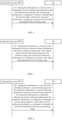
- embodiments of the present disclosure provide a communication method, which is performed by a network device in an NTN, and includes a following step.
- first information is sent.
- the first information includes: timing range information and first indication information; the timing range information is configured to indicate a timing range for a time offset; and the first indication information is configured to indicate the time offset determined from the timing range.
- the method according to embodiments of the present disclosure is applied to the NTN, which includes, but not limited to: a network in which a satellite is used as a relay for a communication.
- the method according to embodiments of the present disclosure may be performed by the network device in the NTN.
- the network device in the NTN includes: an access network device or a core network device.
- the access network device may be, but not limited to, various types of base stations.
- it may be a 2G base station, a 3G base station, a 4G base station, a 5G base station or other evolved base stations.
- the core network device may be various physical entities or logical entities, such as a mobility management entity or a serving gateway.
- the core network device sends the first information to the base station, and the base station forwards the first information to a UE.
- the time offset includes: a timing offset (Koffset).
- a communication method is performed by the network device in the NTN, and may include: sending first information to a UE.
- the first information includes: timing range information and first indication information.
- the timing range information indicates a timing range for a Koffset.
- the first indication information indicates the Koffset determined from the timing range.
- the Koffset may be used to compensate for a timing deviation of an uplink and a downlink of the UE.
- the Koffset is greater than or equal to a timing advance. For example, if the timing advance is 10 milliseconds (ms), the Koffset is 12 ms.
- a transmission delay of a transmission between the network device (for example, the base station) and the UE in the NTN may be supplemented by the time offset, thereby improving the reliability of a data transmission between the network device in the NTN and the UE.
- the timing range information includes: a first timing range or a second timing range.
- the first timing range may be considered as a unified timing range (also called unified value range).
- the base station sends a unified timing range of 0 to 1000 ms or 0 to 500 ms to some or all UEs in a cell.
- the unified timing range supports all application scenarios of the satellite communication.
- the second timing range may be considered as one of a predetermined number of timing ranges specified in a communication protocol.
- the second timing range may be 0 to 100 ms, 101 to 200 ms, 201 to 300 ms, 301 to 400 ms, or 401 to 500 ms.
- Table 1 sequence number second timing range 1 0 to 100 ms 2 101 to 200 ms 3 201 to 300 ms 4 301 to 400 ms 5 401 to 500 ms
- the predetermined number of second timing ranges may be stored in the base station in advance.
- the base station may carry one of the second timing ranges and send it to the UE.
- the predetermined number may be greater than 1.
- the predetermined number of second timing ranges may not be the ranges shown in Table 1.
- the predetermined number of second timing ranges may also be 0 to 200 ms, 201 to 400 ms, 401 to 600 ms, or the like.
- each element in the above Table 1 exists independently. These elements are illustratively listed in a same table, but it does not mean that all elements in the table must exist at the same time as shown in the table. A value of each element in Table 1 does not depend on a value of any other element in Table 1. Therefore, those skilled in the art may understand that the value of each element in Table 1 corresponds to an independent embodiment.
- the first timing range may be divided into one or more second timing ranges.
- the first timing range is 0 to 500 ms; and the first timing range may be divided into 5 second timing ranges, which are 0 to 100 ms, 101 to 200 ms, 201 to 300 ms, 301 to 400 ms, and 401 to 500 ms.
- the first timing range is greater than or equal to the second timing range.
- the first timing range is 0 to 500 ms
- the second timing range is 301 to 400 ms.
- the first timing range and the second timing range have no specific relationship.
- the first timing range is 0 to 200 ms
- the second timing range is 150 ms to 250 ms.
- the first indication information may be information of a first predetermined number of bits.
- the first predetermined number of bits may be one or more bits.
- the communication protocol pre-defines a correspondence relationship between the first indication information and the Koffset of the timing range for the Koffset.
- the timing range for the Koffset is 0 to 100 ms.
- the first indication information may be indicated by 4 bits, when the first indication information is "0000", it indicates that the Koffset is 0 ms; when the first indication information is "0001", it indicates that the Koffset is 10 ms; when the first indication information is "0010", it indicates that the Koffset is 20 ms; and so on.
- the first indication information may be indicated by 8 bits, when the first indication information is "00000000", it indicates that the Koffset is 0 ms; when the first indication information is "00000001”, it indicates that the Koffset is 1 ms; when the first indication information is "00000010”, it indicates that the Koffset is 2 ms; when the first indication information is "00000011", it indicates that the Koffset is 3 ms; and so on.
- the network device in the NTN may inform the UE of the timing range and the first indication information in the satellite communication scenario, so that the UE may determine a time offset suitable for a current satellite communication scenario based on the first indication information; thereby improving the accuracy of the time offset determined in different satellite communication scenarios, and improving the reliability of the transmission between the network device in the NTN and the UE.
- Embodiments of the present disclosure provide a communication method, which is performed by the network device in the NTN, and includes: sending a high-layer signaling or a physical layer signaling carrying the first information.
- the high-layer signaling includes: a radio resource control (RRC) signaling or a media access control (MAC) control element (CE) signaling.
- RRC radio resource control
- MAC media access control
- CE control element
- the physical layer signaling includes: a downlink control information (DCI) signaling.
- DCI downlink control information
- the network device in the NTN may also send the first information via an existing system message or a dedicated system message.
- the network device in the NTN may send the first information by carrying it in the high-layer signaling, the physical layer signaling, the system message, etc., thereby improving an utilization efficiency of the high-layer signaling, the physical layer signaling, or the system message, and saving the signaling overhead.
- embodiments of the present disclosure provide a communication method, which is performed by a network device in an NTN and may include a following step.
- first information is sent.
- the first information includes: reference timing information indicating a reference timing time, a first timing range, and first indication information.
- the reference timing time and the first indication information are configured to indicate a time offset determined from the first timing range.
- the first indication information is the first indication information in the step S41
- the first timing range is the first timing range in the step S41
- the time offset is the time offset in the step S41.
- Embodiments of the present disclosure provide a communication method, which is performed by the network device in the NTN, and may include: determining the reference timing information based on ephemeris information of a satellite.
- the ephemeris information of the satellite may also refer to orbit information of the satellite, and the ephemeris information of the satellite may indicate orbit statuses of the satellite at different times.
- the network device in the NTN may determine an altitude range of the satellite according to information of the satellite or the orbit information of the satellite, and determine the reference timing information based on the altitude range.
- the altitude range of the satellite is positively correlated with the reference timing time indicated by the reference timing information.
- an accurate reference timing time may be determined based on an actual trajectory of the satellite, and thus an accurate time offset may be determined.
- the reference timing time includes: one or more slots. For example, if one slot is 1 ms, and if the reference timing time includes 1 slot, the reference timing time is 1 ms; and if the reference timing time includes 10 slots, the reference timing time is 10 ms.
- the reference timing time includes: one or more slots corresponding to a predetermined subcarrier spacing (SCS).
- the predetermined subcarrier spacing may refer to any SCS.
- the predetermined SCS may be 15 KHZ, 30 KHZ, or 240 KHZ, etc.
- 1 symbol is 66.67 microseconds ( ⁇ s); if one slot includes 14 symbols, then one slot is approximately 1 ms.
- the reference timing time includes: one slot corresponding to the predetermined SCS, the reference timing time is 1 ms. If the reference timing time includes: 12 slots corresponding to the predetermined SCS, the reference timing time is 12 ms.
- the reference timing time may also include: multiple symbols corresponding to the predetermined SCS.
- a product of the reference timing time and a value indicated by the first indication information is used to indicate the time offset determined from the first timing range.
- the first indication information is "0001", and the reference timing time indicated by the reference timing information is 10 ms; the value indicated by the first indication information is 1, and the reference timing time is 10 ms, then it is determined that the first indication information and the reference timing time indicate that the time offset in the first timing range of 0 to 1000 ms is 10 ms.
- the first indication information is "0011", and the reference timing time indicated by the reference timing information is 10 ms; the value indicated by the first indication information is 3, and the reference timing time is 10 ms, then it is determined that the first indication information and the reference timing time indicate that the time offset in the first timing range of 0 to 1000 ms is 30 ms.
- the first indication information is "0011", and the reference timing time indicated by the reference timing information is 100 ms; the value indicated by the first indication information is 3, and the reference timing time is 100 ms, then it is determined that the first indication information and the reference timing time indicate that the time offset in the first timing range of 0 to 1000 ms is 300 ms.
- the network device in the NTN may send the first timing range to the UE to support all application scenarios of the satellite communication, and send the reference timing information and the first indication information to the UE.
- the UE may be indicated the time offset in the first timing range with different granularities based on different reference timing information and the first indication information. This allows the UE to precisely determine the time offset in various application scenarios of the satellite communication through the unified timing range, thereby improving the reliability of the transmission between the network device in the NTN and the UE in these application scenarios.
- a larger reference timing time may be configured, so that even if the first indication information with a relatively less number of bits is used, an accurate time offset of the transmission between the network device in the NTN and the UE can also be indicated. In this way, the number of bits of the first indication information may be saved, and the signaling overhead may be reduced.
- embodiments of the present disclosure provide a communication method, which is performed by a network device in an NTN and may include a following step.
- first information is sent.
- the first information includes: a second timing range and first indication information, or second indication information indicating a second timing range and first indication information, or ephemeris information and first indication information.
- the ephemeris information is configured to determine a second timing range for a time offset.
- the first indication information is configured to indicate the time offset determined from the second timing range.
- the first indication information is the first indication information in the step S41
- the second timing range is the second timing range in the step S41
- the time offset is the time offset in the step S41.
- the second indication information is information of a second predetermined number of bits.
- the second predetermined number of bits may be one or more bits.
- a communication protocol pre-defines a correspondence relationship between the second indication information and the second timing range. For example, when the second indication information is "001", it indicates that the second timing range is 0 to 100 ms; when the second indication information is "010", it indicates that the second timing range is 101 to 200 ms; when the second indication information is "011", it indicates that the second timing range is 201 to 300 ms; when the second indication information is "0100", it indicates that the second timing range is 301 to 400 ms; when the second indication information is "0101", it indicates that the second timing range is 401 to 500 ms; and so on.
- a UE may determine the second timing range based on the second indication information.
- ephemeris information of a satellite may also refer to orbit information of the satellite.
- the ephemeris information or the orbit information of the satellite may be used to determine an altitude range of the satellite.
- the altitude range of the satellite is positively correlated with upper and lower limit values of the second timing range. For example, if the altitude of the satellite is lower than 600 kilometers (km), the second timing range is 0 to 40 ms; if the altitude of the satellite is 600 to 12000 km, the second timing range is 40 to 600ms; and so on.
- the UE may determine the second timing range based on the ephemeris information.
- the ephemeris information may also be sent to the UE via a system message.
- the ephemeris information may be carried in the system message and sent via the system message, which may reduce the signaling overhead.
- the communication protocol pre-defines a correspondence relationship between the first indication information and the time offset of the second timing range. In this way, the time offset in the second timing range may be indicated via the first indication information.
- the second timing range sent by a base station to a UE is 0 to 100 ms
- the first indication information is "0001".
- the first indication information "0001" indicates 10
- it is determined that the first indication information indicates that the time offset in the second timing range of 0 to 100 ms is 10 ms.
- the second timing range sent by a base station to a UE is 0 to 100 ms
- the first indication information is "0101”.
- the first indication information "0101" indicates 50, then it is determined that the first indication information indicates that the time offset in the second timing range of 0 to 100 ms is 50 ms.
- the second timing range sent by a base station to a UE is 101 to 200 ms
- the first indication information is "0101".
- the first indication information "0101" indicates 50, then it is determined that the first indication information indicates that the time offset in the second timing range of 101 to 201 ms is 150 ms.
- the second timing range sent by a base station to the UE is 0 to 100 ms
- the first indication information is "00000001".
- the first indication information "00000001" indicates 1, then it is determined that the first indication information indicates that the time offset in the second timing range of 0 to 100 ms is 1 ms.
- the network device in the NTN may send second timing ranges corresponding to different satellite communication scenarios to the UE, and send the first indication information to the UE, so that the UE may determine an accurate time offset from the second timing range based on the first indication information, thereby improving the reliability of the transmission between the network device in the NTN and the UE in different satellite communication scenarios.
- a communication method will be described, which is performed by a UE, and its descriptions are similar to the above descriptions of the communication method performed by the network device in the NTN. Moreover, for technical details not disclosed in embodiments of the communication method performed by the UE, reference may be made to the descriptions of examples of the communication method performed by the network device in the NTN, which will not be described in detail here.
- embodiments of the present disclosure provide a communication method, which is performed by a UE and includes the steps S71ti to S73:
- step S71 first information is received.
- the first information includes timing range information and first indication information.
- step S72 a timing range for a time offset is determined based on the timing range information.
- step S73 the time offset is determined from the timing range based on the first indication information.
- the timing range information includes one of: a first timing range, a second timing range, second indication information indicating a second timing range, and ephemeris information.
- the ephemeris information may be used to determine the second timing range.
- the first information may be the first information in the step S41 or S51
- the timing range information may be the timing range information in the step S41
- the first indication information may be the first indication information in the step S41
- the ephemeris information may be the ephemeris information in the step S51.
- the first information includes: reference timing information indicating a reference timing time.
- the step S72 includes: determining a first timing range for the time offset based on the first timing range included in the timing range information.
- the step S73 includes: determining the time offset from the first timing range based on the first indication information and the reference timing time.
- Embodiments of the present disclosure provide a communication method, which is performed by the UE, and may include: receiving first information that includes reference timing information indicating a reference timing time, a first timing range, and first indication information; and determining a time offset from the first timing range based on the first indication information and the reference timing time.
- Embodiments of the present disclosure provide a communication method, which is performed by the UE, and may include: determining the time offset from the first timing range based on a product of a value indicated by the first indication information and the reference timing time.
- the reference timing information is determined based on ephemeris information of a satellite.
- the reference timing information includes one of: one or more slots corresponding to a predetermined SCS; or one or more slots.
- the step S72 includes one of: determining a second timing range for the time offset based on the second timing range included in the timing range information; determining a second timing range for the time offset based on second indication information indicating the second timing range and included in the timing range information; or determining a second timing range for the time offset based on ephemeris information included in the timing range information.
- determining the second timing range for the time offset based on the ephemeris information included in the timing range information includes: determining the second timing range for the time offset based on the ephemeris information and a preset correspondence relationship.
- the correspondence relationship is a correspondence relationship between the ephemeris information and the second timing range.
- Embodiments of the present disclosure provide a communication method, which is performed by the UE, and may include: receiving first information that includes a second timing range and first indication information; and determining the time offset from the second timing range based on the first indication information.
- Embodiments of the present disclosure provide a communication method, which is performed by the UE, and may include: receiving first information that includes second indication information and first indication information; determining a second timing range based on the second indication information; and determining a time offset from the second timing range based on the first indication information.
- Embodiments of the present disclosure provide a communication method, which is performed by the UE, and may include: pre-storing a correspondence relationship between the second indication information and the second timing range.
- Embodiments of the present disclosure provide a communication method, which is performed by the UE, and may include: receiving first information that includes ephemeris information and first indication information; determining a second timing range based on the ephemeris information; and determining a time offset from the second timing range based on the first indication information.
- Embodiments of the present disclosure provide a communication method, which is performed by the UE, and may include: pre-storing a correspondence relationship between the ephemeris information and the second timing range.
- Embodiments of the present disclosure provide a communication method, which is performed by the UE, and may include: pre-storing a correspondence relationship between the ephemeris information and the timing range.
- Embodiments of the present disclosure provide a communication method, which is performed by the UE, and may include: receiving first indication information and ephemeris information; determining a second timing range based on the ephemeris information and a preset correspondence relationship; and determining a time offset from the second timing range based on the first indication information.
- Embodiments of the present disclosure provide a communication method, which is performed by the UE, and may include: receiving first indication information and parsing ephemeris information from a system message; determining a second timing range based on the ephemeris information and a preset correspondence relationship; and determining a time offset from the second timing range based on the first indication information.
- Embodiments of the present disclosure provide a communication method, which is performed by the UE, and may include: receiving a high-layer signaling carrying the first information; or receiving a physical layer signaling carrying the first information; or receiving a system message carrying the first information.
- embodiments of the present disclosure provide a communication apparatus, which is applied to a network device in an NTN and includes: a sending module 41.
- the sending module 41 is configured to send first information.
- the first information includes: timing range information and first indication information.
- the timing range information indicates a timing range for a time offset; and the first indication information indicates the time offset determined from the timing range.
- the timing range information includes: a first timing range.
- the first information further includes: reference timing information indicating a reference timing time.
- the reference timing time and the first indication information are configured to indicate the time offset determined from the first timing range.
- Embodiments of the present disclosure provide a communication apparatus, which is applied to the network device in the NTN and may include: a sending module 41 configured to send first information.
- the first information includes: reference timing information indicating a reference timing time, a first timing range and first indication information.
- the reference timing time and the first indication information are used to indicate a timing offset determined from the first timing range.
- Embodiments of the present disclosure provide a communication apparatus, which is applied to the network device in the NTN and may include: a processing module configured to determine the reference timing information based on ephemeris information of a satellite.
- the reference timing time includes one of: one or more slots corresponding to a predetermined SCS; or one or more slots.
- the timing range information includes: a second timing range or second indication information indicating the second timing range.
- the first indication information is configured to indicate the time offset determined from the second timing range.
- the timing range information includes: ephemeris information.
- the ephemeris information is configured to determine a second timing range for the time offset.
- the first indication information is configured to indicate the time offset determined from the second timing range.
- Embodiments of the present disclosure provide a communication apparatus, which is applied to the network device in the NTN and may include: a sending module 41 configured to send first information.
- the first information includes: a second timing range and first indication information.
- the first indication information is configured to indicate a time offset determined from the second timing range.
- Embodiments of the present disclosure provide a communication apparatus, which is applied to the network device in the NTN and may include: a sending module 41 configured to send first information.
- the first information includes: second indication information indicating a second timing range and first indication information.
- the first indication information is configured to indicate a time offset determined from the second timing range.
- Embodiments of the present disclosure provide a communication apparatus, which is applied to the network device in the NTN and may include: a sending module 41 configured to send first information.
- the first information includes: ephemeris information and first indication information.
- the ephemeris information is configured to determine a second timing range for a time offset.
- the first indication information is configured to indicate the time offset determined from the second timing range.
- Embodiments of the present disclosure provide a communication apparatus, which is applied to the network device in the NTN and may include: a sending module 41 configured to send a high-layer signaling or a physical layer signaling or a system message carrying first information.
- embodiments of the present disclosure provide a communication apparatus, which is applied to a UE and includes: a receiving module 61 configured to receive first information that includes timing range information and first indication information; and a processing module 62 configured to determine a timing range for a time offset based on the timing range information.
- the processing module 62 is configured to determine the time offset from the timing range based on the first indication information.
- Embodiments of the present disclosure provide a communication apparatus, which is applied to the UE and may include: a receiving module 61 configured to receive first information that includes reference timing information indicating a reference timing time, a first timing range, and a first indication range; and a processing module 62 configured to determine a time offset from the first timing range based on the first indication information and the reference timing time.
- the reference timing information is determined based on ephemeris information of a satellite.
- the reference timing information includes one of: one or more slots corresponding to a predetermined SCS; or one or more slots.
- Embodiments of the present disclosure provide a communication apparatus, which is applied to the UE and may include: a receiving module 61 configured to receive first information that includes a second timing range and first indication information; and a processing module 62 configured to determine a time offset from the second timing range based on the first indication information.
- Embodiments of the present disclosure provide a communication apparatus, which is applied to the UE and may include: a receiving module 61 configured to receive first information that includes second indication information indicating a second timing range and first indication information; and a processing module 62 configured to determine the second timing range based on the second indication information; and determine a time offset from the second timing range based on the first indication information.
- Embodiments of the present disclosure provide a communication apparatus, which is applied to the UE and may include: a receiving module 61 configured to receive first information that includes ephemeris information and first indication information; and a processing module 62 configured to determine a second timing range based on the ephemeris information; and determine a time offset from the second timing range based on the first indication information.
- Embodiments of the present disclosure provide a communication apparatus, which is applied to the UE and may include: a processing module 62 configured to determine a second timing range for a time offset based on ephemeris information and a preset correspondence relationship.
- the correspondence relationship is a correspondence relationship between the ephemeris information and the second timing range.
- Embodiments of the present disclosure provide a communication apparatus, which is applied to the UE and may include: a receiving module 61 configured to perform at least one of: receiving a high-layer signaling carrying the first information; receiving a physical layer signaling carrying the first information; or receiving a system message carrying the first information.
- Embodiments of the present disclosure provide a communication device, which includes: a processor; and a memory configured to store a processor-executable instruction.
- the processor is configured to implement the communication method according to any embodiment of the present disclosure when running the executable instruction.
- the communication device may be a network device in an NTN or a UE.
- the network device in the NTN includes: a base station.
- the processor may include various types of storage media, which are non-transitory computer storage media that can continue to memorize information stored thereon when the user equipment is powered off.
- the processor may be connected to the memory through a bus or the like, to read executable programs stored in the memory, for example, at least one of the methods as shown in FIG. 4 to FIG. 7 .
- Embodiments of the present disclosure also provide a computer storage medium, which has stored therein a computer executable program that, when executed by a processor, causes the communication method according to any embodiment of the present disclosure to be implemented, such as at least one of the methods shown in FIG. 4 to FIG. 7 .
- FIG. 10 is a schematic block diagram showing a user equipment 800 according to an illustrative embodiment.
- the user equipment 800 may be a mobile phone, a computer, a digital broadcast user equipment, a messaging device, a game console, a tablet device, a medical device, a fitness device, a personal digital assistant, or the like.
- the user equipment 800 may include one or more of the following components: a processing component 802, a memory 804, a power component 806, a multimedia component 808, an audio component 810, an input/output (I/O) interface 812, a sensor component 814, and a communication component 816.
- a processing component 802 a memory 804, a power component 806, a multimedia component 808, an audio component 810, an input/output (I/O) interface 812, a sensor component 814, and a communication component 816.
- the processing component 802 typically controls overall operations of the user equipment 800, such as the operations associated with display, phone calls, data communications, camera operations, and recording operations.
- the processing component 802 may include one or more processors 820 to execute instructions to perform all or some of the steps in the above-described methods.
- the processing component 802 may include one or more modules which facilitate the interaction between the processing component 802 and other components.
- the processing component 802 may include a multimedia module to facilitate the interaction between the multimedia component 808 and the processing component 802.
- the memory 804 is configured to store various types of data to support the operation of the user equipment 800. Examples of such data include instructions for any applications or methods operated on the user equipment 800, contact data, phonebook data, messages, pictures, videos, etc.
- the memory 804 may be implemented using any type of volatile or non-volatile memory devices, or a combination thereof, such as a static random access memory (SRAM), an electrically erasable programmable read-only memory (EEPROM), an erasable programmable read-only memory (EPROM), a programmable read-only memory (PROM), a read-only memory (ROM), a magnetic memory, a flash memory, a magnetic or optical disk.
- SRAM static random access memory
- EEPROM electrically erasable programmable read-only memory
- EPROM erasable programmable read-only memory
- PROM programmable read-only memory
- ROM read-only memory
- magnetic memory a magnetic memory
- flash memory a flash memory
- magnetic or optical disk a magnetic
- the power component 806 provides power to various components of the user equipment 800.
- the power component 806 may include a power management system, one or more power sources, and any other components associated with the generation, management, and distribution of power in the user equipment 800.
- the multimedia component 808 includes a screen providing an output interface between the user equipment 800 and the user.
- the screen may include a liquid crystal display (LCD) and a touch panel (TP). If the screen includes the touch panel, the screen may be implemented as a touch screen to receive input signals from the user.
- the touch panel includes one or more touch sensors to sense touches, swipes, and gestures on the touch panel. The touch sensors may not only sense a boundary of a touch or swipe action, but also sense a period of time and a pressure associated with the touch or swipe action.
- the multimedia component 808 includes a front camera and/or a rear camera.
- the front camera and/or the rear camera may receive an external multimedia datum while the user equipment 800 is in an operation mode, such as a photographing mode or a video mode.
- an operation mode such as a photographing mode or a video mode.
- Each of the front camera and the rear camera may be a fixed optical lens system or have focus and optical zoom capability.
- the audio component 810 is configured to output and/or input audio signals.
- the audio component 810 includes a microphone (MIC) configured to receive an external audio signal when the user equipment 800 is in an operation mode, such as a call mode, a recording mode, and a voice recognition mode.
- the received audio signal may be further stored in the memory 804 or transmitted via the communication component 816.
- the audio component 810 further includes a speaker to output audio signals.
- the I/O interface 812 provides an interface between the processing component 802 and peripheral interface modules, such as keyboards, click wheels, buttons, and the like.
- the buttons may include, but are not limited to, a home button, a volume button, a starting button, and a locking button.
- the sensor component 814 includes one or more sensors to provide status assessments of various aspects of the user equipment 800. For instance, the sensor component 814 may detect an open/closed status of the user equipment 800, relative positioning of components, e.g., the display and the keypad, of the user equipment 800. The sensor component 814 may also detect a change in position of the user equipment 800 or a component of the user equipment 800, a presence or absence of user contact with the user equipment 800, an orientation or an acceleration/deceleration of the user equipment 800, and a change in temperature of the user equipment 800. The sensor component 814 may include a proximity sensor configured to detect the presence of nearby objects without any physical contact.
- the sensor component 814 may further include a light sensor, such as a CMOS or CCD image sensor, for use in imaging applications.
- the sensor component 814 may further include an accelerometer sensor, a gyroscope sensor, a magnetic sensor, a pressure sensor, or a temperature sensor.
- the communication component 816 is configured to facilitate communication, wired or wireless, between the user equipment 800 and other devices.
- the user equipment 800 can access a wireless network based on a communication standard, such as WiFi, 2G, or 3G, or a combination thereof.
- the communication component 816 receives a broadcast signal or broadcast associated information from an external broadcast management system via a broadcast channel.
- the communication component 816 further includes a near field communication (NFC) module to facilitate short-range communications.
- the NFC module may be implemented based on a radio frequency identification (RFID) technology, an infrared data association (IrDA) technology, an ultra-wideband (UWB) technology, a Bluetooth (BT) technology, and other technologies.
- RFID radio frequency identification
- IrDA infrared data association
- UWB ultra-wideband
- BT Bluetooth
- the user equipment 800 may be implemented with one or more application specific integrated circuits (ASICs), digital signal processors (DSPs), digital signal processing devices (DSPDs), programmable logic devices (PLDs), field programmable gate arrays (FPGAs), controllers, micro-controllers, microprocessors, or other electronic elements, for performing the above-mentioned method.
- ASICs application specific integrated circuits
- DSPs digital signal processors
- DSPDs digital signal processing devices
- PLDs programmable logic devices
- FPGAs field programmable gate arrays
- controllers micro-controllers, microprocessors, or other electronic elements, for performing the above-mentioned method.
- non-transitory computer-readable storage medium including instructions, such as included in the memory 804, executable by the processor 820 in the user equipment 800, for completing the above-mentioned method.
- the non-transitory computer-readable storage medium may be a ROM, a random access memory (RAM), a CD-ROM, a magnetic tape, a floppy disc, an optical data storage device, and the like.
- an embodiment of the present disclosure shows a structure of a base station.
- the base station 900 may be provided as a network side device.
- the base station 900 includes a processing component 922, which further includes one or more processors, and a memory resource represented by a memory 932 configured to store instructions executable by the processing component 922, such as application programs.
- the application programs stored in the memory 932 may include one or more modules each corresponding to a set of instructions.
- the processing component 922 is configured to execute instructions to perform any of the foregoing methods performed by the base station, for example, the methods shown in FIG. 4 to FIG. 10 .
- the base station 900 may also include a power component 926 configured to perform the power management of the base station 900, a wired or wireless network interface 950 configured to connect the base station 900 to a network, and an input/output (I/O) interface 958.
- the base station 900 may operate an operating system stored in the memory 932, such as Windows Server TM, Mac OS XTM, UnixTM, LinuxTM, FreeBSDTM, or the like.
Landscapes
- Engineering & Computer Science (AREA)
- Computer Networks & Wireless Communication (AREA)
- Signal Processing (AREA)
- Physics & Mathematics (AREA)
- General Physics & Mathematics (AREA)
- Astronomy & Astrophysics (AREA)
- Aviation & Aerospace Engineering (AREA)
- Radar, Positioning & Navigation (AREA)
- Remote Sensing (AREA)
- Mathematical Physics (AREA)
- Mobile Radio Communication Systems (AREA)
Applications Claiming Priority (1)
| Application Number | Priority Date | Filing Date | Title |
|---|---|---|---|
| PCT/CN2021/120382 WO2023044772A1 (zh) | 2021-09-24 | 2021-09-24 | 通信方法、通信装置、通信设备及存储介质 |
Publications (2)
| Publication Number | Publication Date |
|---|---|
| EP4408111A1 true EP4408111A1 (de) | 2024-07-31 |
| EP4408111A4 EP4408111A4 (de) | 2024-12-25 |
Family
ID=85719228
Family Applications (1)
| Application Number | Title | Priority Date | Filing Date |
|---|---|---|---|
| EP21957901.8A Pending EP4408111A4 (de) | 2021-09-24 | 2021-09-24 | Kommunikationsverfahren, kommunikationsvorrichtung, kommunikationsvorrichtung und speichermedium |
Country Status (6)
| Country | Link |
|---|---|
| US (1) | US20250133517A1 (de) |
| EP (1) | EP4408111A4 (de) |
| JP (1) | JP2024536806A (de) |
| KR (1) | KR20240055904A (de) |
| CN (1) | CN116171537B (de) |
| WO (1) | WO2023044772A1 (de) |
Family Cites Families (9)
| Publication number | Priority date | Publication date | Assignee | Title |
|---|---|---|---|---|
| WO2017171284A1 (en) * | 2016-03-30 | 2017-10-05 | Lg Electronics Inc. | Method for determining transmission timing in v2x ue |
| CN111565472B (zh) * | 2019-02-14 | 2022-05-20 | 大唐移动通信设备有限公司 | 一种确定定时提前量的方法及设备 |
| CN113163481B (zh) * | 2020-01-23 | 2022-12-27 | 中国移动通信有限公司研究院 | 一种上行传输定时的确定方法、终端及基站 |
| US20210250885A1 (en) * | 2020-02-10 | 2021-08-12 | Mediatek Singapore Pte. Ltd. | Method And Apparatus For Timing And Frequency Synchronization In Non-Terrestrial Network Communications |
| BR112022015881A2 (pt) * | 2020-02-13 | 2022-10-04 | Panasonic Ip Corp America | Dispositivo de transmissão e método de transmissão |
| CN120091404B (zh) * | 2020-02-18 | 2026-03-10 | 华为技术有限公司 | 通信方法及装置 |
| US11563484B2 (en) * | 2020-02-28 | 2023-01-24 | Qualcomm Incorporated | Uplink frequency and timing compensation in a non-terrestrial network |
| WO2022061739A1 (zh) * | 2020-09-25 | 2022-03-31 | 北京小米移动软件有限公司 | 传输时延补偿方法、装置、通信设备和存储介质 |
| CN112911699B (zh) * | 2021-01-14 | 2022-10-18 | 之江实验室 | 一种基于非地面通信网络的时间同步方法 |
-
2021
- 2021-09-24 EP EP21957901.8A patent/EP4408111A4/de active Pending
- 2021-09-24 JP JP2024518148A patent/JP2024536806A/ja active Pending
- 2021-09-24 CN CN202180003043.3A patent/CN116171537B/zh active Active
- 2021-09-24 KR KR1020247013198A patent/KR20240055904A/ko active Pending
- 2021-09-24 US US18/690,544 patent/US20250133517A1/en active Pending
- 2021-09-24 WO PCT/CN2021/120382 patent/WO2023044772A1/zh not_active Ceased
Also Published As
| Publication number | Publication date |
|---|---|
| CN116171537A (zh) | 2023-05-26 |
| US20250133517A1 (en) | 2025-04-24 |
| KR20240055904A (ko) | 2024-04-29 |
| JP2024536806A (ja) | 2024-10-08 |
| EP4408111A4 (de) | 2024-12-25 |
| CN116171537B (zh) | 2026-01-09 |
| WO2023044772A1 (zh) | 2023-03-30 |
Similar Documents
| Publication | Publication Date | Title |
|---|---|---|
| CN111937450B (zh) | 无线通信的方法、装置、设备及存储介质 | |
| US20230353234A1 (en) | Transmission latency compensation method, apparatus, communication device and storage medium | |
| EP4221031B1 (de) | Verfahren und vorrichtung zur bestimmung der effektiven zeit, kommunikationsvorrichtung und speichermedium | |
| US12113630B2 (en) | Method and device for determining resource multiplexing, method and device for information demodulation and medium thereof | |
| EP4645968A1 (de) | Informationsmeldeverfahren und -vorrichtung sowie kommunikationsvorrichtung und speichermedium | |
| US12507243B2 (en) | Transmission scheduling method and communication device triggered by indication information of at least two second cells contained in the information field of a downlink control information (DCI) and the mapping relationship between the indication information and the second cells | |
| EP4358639A1 (de) | Verfahren und vorrichtung zum starten eines drx-timers, kommunikationsvorrichtung und speichermedium | |
| CN114731231B (zh) | Pucch资源确定方法及装置、通信设备及计算机存储介质 | |
| US12581366B2 (en) | Method and apparatus for transmission of buffered downlink data trame under multi-connection | |
| EP4109996A1 (de) | Verfahren und vorrichtung zur verarbeitung von uplink-übertragungen sowie kommunikationsvorrichtung und speichermedium | |
| EP4408111A1 (de) | Kommunikationsverfahren, kommunikationsvorrichtung, kommunikationsvorrichtung und speichermedium | |
| CN115039457B (zh) | 一种通信处理方法、装置、通信设备及存储介质 | |
| EP4319000A1 (de) | Verfahren und vorrichtung für harq-feedback sowie kommunikationsvorrichtung und speichermedium | |
| US20240064787A1 (en) | Method for information processing, communication device, and non-transitory computer storage medium | |
| RU2846068C2 (ru) | Способ связи, устройство связи и носитель информации | |
| US20230300825A1 (en) | Logic channel multiplexing method and apparatus, communication device, and storage medium | |
| EP4694447A1 (de) | Messverfahren und -vorrichtung, kommunikationsvorrichtung und speichermedium | |
| JP7644841B2 (ja) | タイムオフセット値更新方法及び装置、通信デバイス、並びに記憶媒体 | |
| EP4668629A1 (de) | Verfahren und vorrichtung für hybride automatische wiederholungsanfrage (harq) sowie kommunikationsvorrichtung und speichermedium | |
| EP4482246A1 (de) | Verfahren und vorrichtung zur bestimmung der ressourcenposition eines kanals, kommunikationsvorrichtung und speichermedium | |
| US20250126603A1 (en) | Information processing method and apparatus, communication device, and storage medium |
Legal Events
| Date | Code | Title | Description |
|---|---|---|---|
| STAA | Information on the status of an ep patent application or granted ep patent |
Free format text: STATUS: THE INTERNATIONAL PUBLICATION HAS BEEN MADE |
|
| PUAI | Public reference made under article 153(3) epc to a published international application that has entered the european phase |
Free format text: ORIGINAL CODE: 0009012 |
|
| STAA | Information on the status of an ep patent application or granted ep patent |
Free format text: STATUS: REQUEST FOR EXAMINATION WAS MADE |
|
| 17P | Request for examination filed |
Effective date: 20240327 |
|
| AK | Designated contracting states |
Kind code of ref document: A1 Designated state(s): AL AT BE BG CH CY CZ DE DK EE ES FI FR GB GR HR HU IE IS IT LI LT LU LV MC MK MT NL NO PL PT RO RS SE SI SK SM TR |
|
| REG | Reference to a national code |
Ref country code: DE Ref legal event code: R079 Free format text: PREVIOUS MAIN CLASS: H04W0074080000 Ipc: H04W0056000000 |
|
| A4 | Supplementary search report drawn up and despatched |
Effective date: 20241122 |
|
| RIC1 | Information provided on ipc code assigned before grant |
Ipc: H04L 27/26 20060101ALI20241118BHEP Ipc: H04W 84/06 20090101ALI20241118BHEP Ipc: H04B 17/309 20150101ALI20241118BHEP Ipc: H04W 74/08 20240101ALI20241118BHEP Ipc: H04B 7/185 20060101ALI20241118BHEP Ipc: H04W 56/00 20090101AFI20241118BHEP |
|
| DAV | Request for validation of the european patent (deleted) | ||
| DAX | Request for extension of the european patent (deleted) |