EP4408037A1 - Informationsempfangsverfahren und -vorrichtung, informationsmeldeverfahren und -vorrichtung sowie vorrichtung und computerspeichermedium - Google Patents
Informationsempfangsverfahren und -vorrichtung, informationsmeldeverfahren und -vorrichtung sowie vorrichtung und computerspeichermedium Download PDFInfo
- Publication number
- EP4408037A1 EP4408037A1 EP22871884.7A EP22871884A EP4408037A1 EP 4408037 A1 EP4408037 A1 EP 4408037A1 EP 22871884 A EP22871884 A EP 22871884A EP 4408037 A1 EP4408037 A1 EP 4408037A1
- Authority
- EP
- European Patent Office
- Prior art keywords
- information
- access network
- radio access
- network device
- service
- Prior art date
- Legal status (The legal status is an assumption and is not a legal conclusion. Google has not performed a legal analysis and makes no representation as to the accuracy of the status listed.)
- Pending
Links
Images




Classifications
-
- H—ELECTRICITY
- H04—ELECTRIC COMMUNICATION TECHNIQUE
- H04W—WIRELESS COMMUNICATION NETWORKS
- H04W24/00—Supervisory, monitoring or testing arrangements
- H04W24/02—Arrangements for optimising operational condition
-
- H—ELECTRICITY
- H04—ELECTRIC COMMUNICATION TECHNIQUE
- H04L—TRANSMISSION OF DIGITAL INFORMATION, e.g. TELEGRAPHIC COMMUNICATION
- H04L67/00—Network arrangements or protocols for supporting network services or applications
- H04L67/01—Protocols
- H04L67/131—Protocols for games, networked simulations or virtual reality
-
- H—ELECTRICITY
- H04—ELECTRIC COMMUNICATION TECHNIQUE
- H04W—WIRELESS COMMUNICATION NETWORKS
- H04W28/00—Network traffic management; Network resource management
- H04W28/16—Central resource management; Negotiation of resources or communication parameters, e.g. negotiating bandwidth or QoS [Quality of Service]
-
- H—ELECTRICITY
- H04—ELECTRIC COMMUNICATION TECHNIQUE
- H04W—WIRELESS COMMUNICATION NETWORKS
- H04W4/00—Services specially adapted for wireless communication networks; Facilities therefor
- H04W4/12—Messaging; Mailboxes; Announcements
-
- Y—GENERAL TAGGING OF NEW TECHNOLOGICAL DEVELOPMENTS; GENERAL TAGGING OF CROSS-SECTIONAL TECHNOLOGIES SPANNING OVER SEVERAL SECTIONS OF THE IPC; TECHNICAL SUBJECTS COVERED BY FORMER USPC CROSS-REFERENCE ART COLLECTIONS [XRACs] AND DIGESTS
- Y02—TECHNOLOGIES OR APPLICATIONS FOR MITIGATION OR ADAPTATION AGAINST CLIMATE CHANGE
- Y02D—CLIMATE CHANGE MITIGATION TECHNOLOGIES IN INFORMATION AND COMMUNICATION TECHNOLOGIES [ICT], I.E. INFORMATION AND COMMUNICATION TECHNOLOGIES AIMING AT THE REDUCTION OF THEIR OWN ENERGY USE
- Y02D30/00—Reducing energy consumption in communication networks
- Y02D30/70—Reducing energy consumption in communication networks in wireless communication networks
Definitions
- This application belongs to the technical field of communications, and in particular to an information receiving method and apparatus, an information reporting method and apparatus, a device, and a computer storage medium.
- HDRLL High Data Rate Low Latency
- XR extended reality
- a service source end such as an application server (application server)
- RAN Radio Access Network
- Embodiments of this application provide an information receiving method and apparatus, an information reporting method and apparatus, a device, and a computer storage medium, which can solve the problem that a service source end cannot adjust HDRLL services based on the feedback from the RAN side.
- an information receiving method including:
- the first information includes one or more of the following: a situation of transmission of the radio access network device; information of one or more transmission units; information of an HDRLL service; a transmission condition of the radio access network device; configuration information of the radio access network device; and a QoS adjustment request of the HDRLL service.
- an information reporting method including:
- first information includes one or more of the following: a situation of transmission of the radio access network device; information of one or more transmission units; information of an HDRLL service; a transmission condition of the radio access network device; configuration information of the radio access network device; and a QoS adjustment request of the HDRLL service.
- an information receiving apparatus including: a second receiving module, configured to receive first information; and an execution module, configured to execute a first operation according to the first information, where the first information includes one or more of the following: a situation of transmission of a radio access network device; information of one or more transmission units; information of an HDRLL service; a transmission condition of the radio access network device; configuration information of the radio access network device; and a QoS adjustment request of the HDRLL service.
- an information reporting apparatus including: a first sending module, configured to send first information to a first communication device, where the first information includes one or more of the following: a situation of transmission of a radio access network device; information of one or more transmission units; information of an HDRLL service; a transmission condition of the radio access network device; configuration information of the radio access network device; and a QoS adjustment request of the HDRLL service.
- a communication device including: a processor, a memory, and a program stored on the memory and executable on the processor, where the program, when executed by the processor, implements steps of the method as described in the first aspect or the second aspect.
- a readable storage medium stores a program or an instruction, where the program or instruction, when executed by a processor, executes steps of the method as described in the first aspect or the second aspect.
- a computer program/program product is provided.
- the computer program/program product is stored in a storage medium.
- the computer program/program product is executed by at least one processor to implement steps of the processing method as described in the first aspect or the second aspect.
- a chip includes a processor and a communication interface; the communication interface is coupled to the processor; and the processor is configured to run a program or an instruction to implement steps of the processing method as described in the first aspect or the second aspect.
- a communication device is provided and is configured to execute steps of the processing method as described in the first aspect or the second aspect.
- the first communication device can perform adaptive service feature adjustment (in, such as, a video encoding way and a service generation/sending way) or QoS adjustment on the HDRLL service according to the first information reported by the radio access network device, to help the radio access network device in better completing data transmission, thus improving the system performance and the user experience.
- adaptive service feature adjustment in, such as, a video encoding way and a service generation/sending way
- QoS adjustment on the HDRLL service according to the first information reported by the radio access network device, to help the radio access network device in better completing data transmission, thus improving the system performance and the user experience.
- first and second are used to distinguish similar objects, but are unnecessarily used to describe a specific sequence or order. It should be understood that terms used like this is interchangeable where appropriate, so that the embodiments of this application can be implemented in an order other than those illustrated or described here.
- objects distinguished by “first”, “second”, and the like are usually of the same class and do not limit the number of objects.
- the first object can be one or multiple.
- "and” used in this specification and the claims represents at least one of the connected objects. Symbol “/” usually represents an "or" relationship between front and back associated objects.
- New Radio, NR New Radio
- LTE Long Term Evolution
- LTE-Advanced, LTE-A long term evolution
- CDMA code division multiple access
- time division multiple access Time Division Multiple Access
- FDMA frequency division multiple access
- OFDMA Orthogonal Frequency Division Multiple Access
- SC-FDMA single-carrier Frequency-Division Multiple Access
- system and “network” in the embodiments of this application are often used interchangeably, and the described technology can be applied to both the aforementioned systems and radio technologies, as well as other systems and radio technologies.
- the following description describes the NR system for the example purpose and uses the term NR in most of the following descriptions. However, these technologies can also be applied to applications other than the NR system application, such as a 6 th generation (6 th Generation, 6G) communication system.
- 6G 6 th generation
- XR refers to a combination of real and virtual environments and human-computer interaction devices, and is implemented using a computer technology and a wearable device.
- X represents a variable, which can be a current or future spatial computing technology.
- XR includes an augmented reality (Augmented Reality, AR), mixed reality (Mixed Reality, MR), a virtual reality (Virtual Reality, VR), and regions between them.
- AR Augmented Reality
- MR Mixed reality
- VR Virtual Reality
- the AR is a technology that "seamlessly" integrates real-world information with virtual-world information.
- the MR is a combination of the VR and the AR, which perfectly combines the virtual reality and the augmented reality to provide a new visual environment.
- an XR service has a high data rate, a high reliability requirement, a low latency requirement, a non-integer periodicity, a packet arrival time jitter, a multi-service stream, a varying packet size, and other characteristics, which pose a high requirement for mobile communication systems.
- a multimedia service (such as XR) includes transmission of various data streams. From the perspective of data types, the multimedia service can be classified into a video stream, an audio stream, action transformation, and other control streams.
- the full view transmission scheme is to transmit all 360° surround pictures to a terminal.
- the FOV transmission scheme is to divide a 360° panoramic field of view into several field of views, and generates a video file for each field of view, where the video file only contains high-resolution visual information within the field of view and some low-resolution visual information around it, and transmits a corresponding field of view file to the user according to a position of a field of view posture of the user.
- This transmission scheme involves transmission of various data streams including FOV streams and non-FOV streams.
- I-frame It is an intra-frame, which is a key frame, meaning that the entire frame of picture is retained. Decoding can be completed only by the current frame of data, which requires a large amount of information occupied by the data.
- P-frame It is a forward predictive coded frame.
- the P-frame represents a difference between a current frame and a previous key frame (or P-frame).
- P-frame During decoding, a previously cached picture needs to be superimposed with a difference defined in the current frame to generate a final picture.
- a compression ratio of the P-frame is high, but it may cause diffusion of a decoding error.
- B-frame It is a bidirectional interpolated prediction frame, recording differences between a current frame and previous and latter frames. To decode a B-frame, both a previous cached picture and a decoded picture need to be obtained. A final picture is obtained by superimposing the previous and latter pictures with the current frame of data. A compression ratio of the B-frame is the highest.
- connection and interaction are carried out in the form of network nodes.
- Important network nodes include an application function (Application Function, AF), an access and mobility management function (Access and Mobility Management Function, AMF), a session management function (Session Management Function, SMF), a user plane function (User Plane Function, UPF), a radio access network (Radio Access Network, RAN) device, and a terminal (such as user equipment (User Equipment, UE)).
- Application Function Application Function
- AMF Access and Mobility Management Function
- SMF Session Management Function
- UPF user plane function
- Radio Access Network Radio Access Network
- RAN Radio Access Network
- terminal such as user equipment (User Equipment, UE)
- the radio access network device can be a base station.
- the base station can be referred to as a node B, an evolution node B, an access point, a base transceiver station (Base Transceiver Station, BTS), a radio base station, a radio transceiver, a basic service set (Basic Service Set, BSS), an extended service set (Extended Service Set, ESS), a B node, a next generation Node B (gNB), a home B node, a home evolution type B node, a wireless local area network (Wireless Local Area Network, WLAN) access point, a wireless fidelity (Wireless Fidelity, WiFi) node, a transmitting receiving point (Transmitting Receiving Point, TRP), a radio access network node, or any other suitable term in the art, as long as the same technical effects are achieved.
- the base station is not limited to a specified technical vocabulary. It should be noted that, in the embodiments of this application, only the base station in the new radio (New
- the terminal can be a mobile phone, a tablet personal computer (Tablet Personal Computer), a laptop computer (Laptop Computer) or also referred to as a laptop, a personal digital assistant (Personal Digital Assistant, PDA), a handheld computer, a netbook, ultra-mobile personal computer (Ultra-Mobile Personal Computer, UMPC), a mobile internet device (Mobile Internet Device, MID), an augmented reality (augmented reality, AR)/virtual reality (Virtual Reality, VR) device, a robot, a wearable device (Wearable Device), vehicle user equipment (Vehicle User Equipment, VUE), pedestrian user equipment (Pedestrian User Equipment, PUE), a smart home (home devices with wireless communication functions, such as a refrigerator, a television, a washing machine, or furniture), and other terminal side devices.
- the wearable device includes: a smart watch, a smart hand ring, a smart headphone, smart glasses, a smart jewelry (a smart bracelet, a smart chain, a smart ring, a smart necklace, a smart bangle, a smart anklet, and the like), a smart wristband, smart clothing, a game console, and the like. It should be noted that, in the embodiments of this application, a specific type of the terminal is not limited.
- Step 401 the embodiments of this application provide an information reporting method. Specific steps include: Step 401.
- Step 401 A radio access network device sends first information to a first communication device, where the first information includes one or more of the following:
- a content in the QoS adjustment request includes one or more of the following: (a) a QoS flow Identifier value (QoS Flow ID, QFI); (b) a 5G QoS Identifier (5G QoS ID, 5QI) value; and (c) a priority.
- the first communication device may include one or more of the following: a core network device (such as an application function (Application Function, AF) and an application server (Application server)).
- a core network device such as an application function (Application Function, AF) and an application server (Application server)).
- the situation of transmission of the radio access network device can include one or more of the following:
- the information of one or more transmission units can include one or more of the following:
- the information of generation time includes one or more of the following: (a) a generation periodicity of each transmission unit; (b) a generation number of transmission units within unit time, such as a frame rate; (c) a generation time interval between different transmission units; (d) a generation periodicity of a transmission unit group composed of a plurality of transmission units; (e) a generation number of transmission unit groups within unit time; and (f) a generation time interval between different transmission unit groups, such as a generation interval between right-eye data and left-eye data.
- a content of the first information has one of the following characteristics:
- the content in the first information can also be the ratios or correspondence relationships between different pieces of information, such as the ratios or correspondence relationships between the ratios of the transmission delays of different transmission units and the ratios of the data volumes of different transmission units.
- step 501 may include the following:
- the radio access network device sends the first information to the first communication device through a first channel (or described as a dedicated channel), where the first channel is a dedicated channel between the first communication device and the radio access network device.
- the method may further include the following:
- the radio access network device performs mapping according to the situation of transmission of the radio access network device, or the transmission condition of the radio access network device, or the configuration information of the radio access network device, or information recommended by the radio access network device and related to the HDRLL service, to obtain the QoS adjustment request of the HDRLL service.
- step 501 the method further includes the following:
- the second information represents that the first communication device has successfully received the first information.
- the second information can include first indication information
- the first indication information can include one or more of the following:
- the radio access network device stops or pauses the sending of the first information to the first communication device according to the second information, including one of the following ways:
- the second timer can be started according to the indication bit in the first indication information included in the second information.
- the second timer is mainly configured to distinguish the first timer directly indicated by the first indication information.
- step 501 may include one of the following ways: Way 1: The radio access network device sends the first information to the first communication device according to a reporting periodicity.
- the reporting periodicity is configured by the radio access network device, configured by the first communication device, or configured according to a local policy of the radio access network device.
- the radio access network device receives second indication information from the first communication device; and the radio access network device sends the first information to the first communication device according to the second indication information.
- the radio access network device sends the first information to the first communication device according to first time (or described as a time window/timer), namely, the radio access network device sends the first information to the first communication device according to time triggering.
- the radio access network device sends the first information to the first communication device according to first time, which can include:
- a start condition of the first time includes one or more of the following:
- a length of the first time is configured by the radio access network device, configured by the first communication device, or configured according to a local policy of the radio access network device.
- a unit of the transmission delay or the re-buffer times or the duration or the generation periodicity or the unit time or the generation time or the first timer or the second timer or the reporting periodicity or the first time or the start periodicity includes one of the following: second, millisecond, frame, subframe, slot, and symbol.
- the first communication device can perform adaptive service feature adjustment (in, such as, a video encoding way and a service generation/sending way) or QoS adjustment on the HDRLL service according to the first information reported by the radio access network device, to help the radio access network device in better completing data transmission, thus improving the system performance and the user experience.
- adaptive service feature adjustment in, such as, a video encoding way and a service generation/sending way
- QoS adjustment on the HDRLL service according to the first information reported by the radio access network device, to help the radio access network device in better completing data transmission, thus improving the system performance and the user experience.
- step 501 the embodiments of this application provide an information receiving method. Specific steps include: step 501 and step 502.
- Step 501 A first communication device receives first information from a radio access network device.
- Step 502 The first communication device executes a first operation according to the first information, where the first information includes one or more of the following:
- the transmission units can include one or more of the following: (a) a packet, where the packet includes one or more of the following: an IP packet, a left-eye packet provided for a user, and a right-eye packet provided for the user; (b) a frame; (c) an I-frame; (d) a P-frame; (e) a B-frame; (f) a data stream; and (g) an application data unit.
- the information of an HDRLL service can include one or more of the following: (a) a data rate of the HDRLL service; (b) a generation way of the HDRLL service; (c) a sending way of the HDRLL service; (d) a quantization parameter of the HDRLL service; and (e) an encoding way of the HDRLL service.
- the transmission condition of the radio access network device can include one or more of the following: (a) a channel quality indication; (b) an unexpected service volume; (c) a channel deep fading indication; and (d) a terminal scheduling congestion indication.
- the configuration information of the radio access network device can include one or more of the following: (a) configuration information of CDRX; (b) CDRX configuration update information; (c) WUS configuration information; (d) monitoring occasion of PDCCH; and (e) information of PDCCH monitoring adaptation.
- a content in the QoS adjustment request includes one or more of the following: (a) a QFI value; (b) a 5QI value; and (c) a priority.
- the first communication device herein may include one or more of the following: a core network device and an application server.
- a content of the first information has one of the following characteristics:
- the content in the first information can also be the ratios or correspondence relationships between different pieces of information, such as the ratios or correspondence relationships between the ratios of the transmission delays of different transmission units and the ratios of the data volumes of different transmission units.
- the method further includes the following:
- the first communication device executes a first operation according to the first information, where the first operation includes one of the following:
- the adjustment described above includes one or more of the following: (a) adjusting the QoS, such as initiating a Qos modification (modification) process; and (b) adjusting a service feature of the HDRLL service.
- the service feature includes one or more of the following:
- a code rate is increased or decreased, or a quantization parameter is increased or decreased, or an alpha value is adjusted.
- step 501 includes the following:
- the first communication device receives the first information from the radio access network device through a first channel, where the first channel is a dedicated channel between the first communication device and the radio access network device.
- step 501 the method further includes the following:
- the first communication device sends second information to the radio access network device, where the second information is used for assisting the radio access network device in stopping or pausing the sending of the first information.
- the first communication device will send a stop/pause indication information as long as it receives the first information (for example, a power configuration of the radio access network device or capability information of a RAN is received, or the first communication device will not use the first information reported by the radio access network device); or, the first communication device sends the stop/pause indication information after making a determination according to the first information.
- the first information for example, a power configuration of the radio access network device or capability information of a RAN is received, or the first communication device will not use the first information reported by the radio access network device.
- the second information represents that the first communication device has successfully received the first information.
- the second information can include first indication information, and the first indication information includes one or more of the following:
- the method further includes the following:
- the first communication device receives the first information from the radio access network device within second time (or a time window or a timer), and sends, in a case of satisfying a second condition, second information to the radio access network device, where the second information is used for assisting the radio access network device in stopping or pausing the sending of the first information.
- the second condition includes one or more of the following:
- the first information sent indicates that: it is recommended that a quantization parameter for video encoding is 18, and a quantization parameter used by the first communication device is indeed 18, (The radio access network device does not know the configuration of the first communication device clearly, such as, the quantization parameters, the ratios of the number of different transmission units, the generation way of the HDRLL service, and the like, and the value recommended by the radio access network device may be exactly the current configuration of the first communication device).
- a length within the second time is configured by the first communication device, or configured according to a local policy of the first communication device.
- a unit herein of the transmission delay or the re-buffer times or the duration or the generation periodicity or the unit time or the generation time or the first timer or the second time or the generation time interval includes one of the following: second, millisecond, frame, subframe, slot, and symbol.
- the first communication device can perform adaptive service feature adjustment (in, such as, a video encoding way and a service generation/sending way) or QoS adjustment on the HDRLL service according to the first information reported by the radio access network device, to help the radio access network device in better completing data transmission, thus improving the system performance and the user experience.
- adaptive service feature adjustment in, such as, a video encoding way and a service generation/sending way
- QoS adjustment on the HDRLL service according to the first information reported by the radio access network device
- the first information includes a situation of transmission of a radio access network device.
- a packet data convergence protocol Packet Data Convergence Protocol, PDCP
- radio Link Control Radio Link Control, RLC
- gNB base station
- the first communication device performs adaptive increase adjustment according to the information, such as adjusting the service sending way (such as adjusting the service sending way to alternately sending left-eye service packets and right-eye service packets) or adjusting the video encoding way/configuration (such as adjusting the ratios of the packet sizes of the I-frame and the P-frame and the number proportions of the I-frame and the P-frame), so as to reduce the PER of the RAN side and obtain a better user experience.
- the first communication device can modify a QoS according to the received information and trigger a QoS modification (modification) process to select a more suitable QoS for data transmission, so as to improve the user experience.
- the radio access network device maps the recommended increase/decrease error probability or the recommended increase/decrease error probability value to a QoS adjustment request and sends the QoS adjustment request to the first communication device.
- a specific content of the QoS adjustment request includes, but is not limited to, one or more of the following: a QFI value (QFI value), a 5QI value (5QI value), and a priority.
- the first information includes a data volume or a service packet size of a transmission unit.
- Embodiment III The first information includes a sending way of the HDRLL service.
- the radio access network device can recommend to the first communication device to use the way of alternately sending the left-eye service packets and right-eye service packets, as shown in type 2 in FIG. 7 .
- a specific process is as follows: A channel between the RAN and the first communication device is established in the CN, and the channel is used to carry the first information.
- the first information indicates a recommendation for alternately sending the left-eye service packets and right-eye service packets, with a time interval of 6 ms between the sending of the left-eye service packets and the sending of the right-eye service packets.
- the first communication device adjusts the service generation way according to the first information, namely, adjusts the service generation way to alternately generating left-eye data and right-eye data, with an interval of 6 ms between the generation of the left-eye data and the generation of the right-eye data.
- the radio access network device can use limited radio resources to transmit the service packets to a user within a required time delay, to provide a better user experience. If the first communication device considers that the parameters recommended by the radio access network device are unreasonable, the first communication device may not adjust the parameters.
- Embodiment IV The first information includes: ratios or correspondence relationships between different contents.
- the radio access network device reports the recommended transmission delays of the transmission units and the ratios or correspondence relationships of the data rates of different transmission units to the first communication device according to a current receiving situation.
- the first communication device adjusts the ratios of the data rates of different transmission units according to a current delay requirement to ensure the transmission quality of a system.
- Embodiment V The first information is RAN configuration information.
- a medium access control (Medium Access Control, MAC) layer of the radio access network device reports current power (power)-related configuration information (such as the configuration information (such as a discontinuous reception (Discontinuous Reception, DRX) cycle and a start position of the CDRX and other information), CDRX configuration update information (such as the DRX cycle changing from 10 ms to 16 ms), configuration information of a wake-up signal (wake-up signal, WUS) (such as a monitoring occasion (monitoring occasion), monitoring periodicity, and monitoring duration of the WUS signal), information of monitoring occasion of PDCCH, and information of PDCCH monitoring adaptation (such as skipping a start position/time of PDCCH monitoring and skipping a duration of monitoring)) to the first communication device. Then, the first communication device adjusts start transmission time of the transmission units according to this information to match the power-related configuration of the radio access network device, reduce a waiting delay of the service packet, and bring a better user experience.
- power-related configuration information such as the configuration
- the terminal when a service packet sent by the first communication device reaches the radio access network device, the terminal is in a DRX_off state.
- the radio access network device can schedule and transmit the service packet only when the terminal turns to a DRX on duration (on duration) state, thus generating an extra waiting delay. This has a great impact on delay-sensitive HDRLL services.
- the radio access network device reports a configured CDRX start offset, CDRX cycle, and duration to the first communication device.
- the first communication device adjusts generation times/a generation periodicity/sending times of services, so that the service packet reaches the radio access network device at the time of the on_duration state of the terminal or at the start time of the on_duration state of the terminal, which reduces the waiting delay of the service packet, brings a better user experience, and reduces the user power consumption. For example, if the service packet reaches the radio access network device at the start time of the on_duration state, the radio access network device schedules and transmits the service packet. This can reduce meaningless PDCCH monitoring of the terminal and then reduce the power consumption.
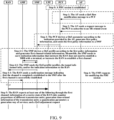
- Embodiment VI A dedicated channel is established between an AF and the radio access network device.
- a subscription event and the channel establishment are carried out simultaneously.
- Step 1 The AF sends a QoS flow modification message to a policy control function (Policy Control Function, PCF).
- Policy Control Function Policy Control Function
- the QoS flow modification message includes an indication that is configured to instruct the PCF to establish a first channel.
- Step 2 The AF sends a request message to the PCF to subscribe to an XR related event.
- the request message needs to carry: a target address IP.
- Step 3 The PCF derives a QoS parameter according to the indication (indication) provided by the AF (along with some other existing parameters provided by the AF), generates first policy information (such as a policy and charging control rule (PCC rule), and sends the first policy information to a session management function (Session Management Function, SMF).
- the sent message further carries indication information.
- the indication information is used for instructing the first channel to report the event or for instructing the SMF to establish a channel to report the event.
- Step 4-1 The SMF derives a QoS profile (QoS profile) according to the first policy information and generates first channel-related information (such as tunnel info (tunnel info)). Meanwhile, the SMF needs to carry indication information that instructs the RAN does not need to establish a Data Radio Bearer (Data Radio Bearer, DRB) with the terminal, or instructs the RAN to establish a first channel.
- QoS profile QoS profile
- first channel-related information such as tunnel info (tunnel info)
- the SMF needs to carry indication information that instructs the RAN does not need to establish a Data Radio Bearer (Data Radio Bearer, DRB) with the terminal, or instructs the RAN to establish a first channel.
- DRB Data Radio Bearer
- Step 4-2 The SMF sends the QoS profile, the tunnel info, and/or the indication information to the RAN.
- Step 4-3 According to the information provided in step 3-2, the radio access network device sends a confirmation message indicating that the channel is completely established to the SMF after the first channel is successfully established.
- Step 5 The radio access network device reports at least one of the following through the first channel: a situation of transmission of a high data rate low latency (HDRLL) service of the radio access network device; information of one or more transmission units; information of an HDRLL service; a transmission condition of the radio access network device; configuration information of the radio access network device; and QoS adjustment request (or described as a QoS adjustment indication).
- HDRLL high data rate low latency
- Embodiment VII The scheme of establishing a dedicated channel between an AF and the radio access network device.
- a subscription event and channel establishment are independent and are associated subsequently.
- Step 1-1 The radio access network device sends a request message for establishing a channel to the SMF.
- the request message carries indication information indicating that the established channel is for event reporting.
- Step 1-2 According to the indication information in step 1-1, the SMF generates first channel-related information (tunnel info) (an interaction process with other network elements is omitted here). Meanwhile, the SMF carries indication information that instructs the radio access network device does not need to establish a DRB with the terminal or instructs the RAN to establish a first channel, and sends the QoS profile, the tunnel info, and/or the indication information to the radio access network device.
- first channel-related information tunnel info
- Step 1-3 According to the information provided in step 1-2, the radio access network device sends a confirmation message indicating that the channel is completely established to the SMF after the first channel is successfully established.
- Step 2 The SMF sends the channel-related information (such as at least one of the tunnel info, a terminal identifier (UE ID), a session identifier, or a channel identifier) to the AF (the channel-related information may be forwarded by several network elements).
- the channel-related information such as at least one of the tunnel info, a terminal identifier (UE ID), a session identifier, or a channel identifier
- the channel-related information may be forwarded by several network elements.
- Step 3 The AF sends a request message to the PCF to subscribe to an XR related event.
- the request message needs to carry: a target address IP and the identifier information obtained in step 2 (including: the tunnel info, the terminal identifier, the session identifier and/or the channel identifier).
- Step 4 The PCF sends the target address IP and the identifier information obtained in step 2 to the SMF according to the subscription event.
- Step 5 The SMF sends the target address IP and the identifier information obtained in step 4 to the RAN.
- the purpose of this message is to associate the radio access network device with the AF (according to the target IP address) and the previously established channel (according to the identifier information), or to activate the previously established channel.
- Step 6 The radio access network device reports at least one of the following through the established channel: information of a receive state of the radio access network device side; number proportions of different transmission units; generation time-related information of the transmission units; a quantization parameter; a generation way of services; and a QoS adjustment request.
- the apparatus 1100 includes:
- the situation of transmission of the radio access network device includes one or more of the following:
- the information of one or more transmission units includes one or more of the following:
- the information of generation time includes one or more of the following:
- the information of an HDRLL service includes one or more of the following:
- the transmission condition of the radio access network device includes one or more of the following:
- the configuration information of the radio access network device includes one or more of the following:
- a content of the first information has one of the following characteristics:
- the first sending module is further configured to: send the first information to the first communication device through a first channel, where the first channel is a dedicated channel between the first communication device and the radio access network device.
- the transmission units include one or more of the following:
- the apparatus further includes: a mapping module, configured to perform mapping according to the situation of transmission of the radio access network device, or the transmission condition of the radio access network device, or the configuration information of the radio access network device, or information recommended by the radio access network device and related to the HDRLL service, to obtain the QoS adjustment request of the HDRLL service.
- a mapping module configured to perform mapping according to the situation of transmission of the radio access network device, or the transmission condition of the radio access network device, or the configuration information of the radio access network device, or information recommended by the radio access network device and related to the HDRLL service, to obtain the QoS adjustment request of the HDRLL service.
- a content in the QoS adjustment request includes one or more of the following:
- the apparatus further includes:
- the second information represents that the first communication device has successfully received the first information.
- the second information includes first indication information
- the first indication information includes one or more of the following:
- the first processing module is further configured to:
- the first sending module is further configured to:
- the reporting periodicity is configured by the radio access network device, configured by the first communication device, or configured according to a local policy of the radio access network device.
- the first sending module is further configured to:
- a start condition of the first time includes one or more of the following:
- the start periodicity is configured by the radio access network device, configured by the first communication device, or configured according to a local policy of the radio access network device.
- a length of the first time is configured by the radio access network device, configured by the first communication device, or configured according to a local policy of the radio access network device. It can be understood that a length of the first time may be 0, that is, the start condition of the first time is also a first condition. When the start condition of the first time is satisfied, the radio access network device sends the first information to the first communication device.
- a unit of the transmission delay or the re-buffer times or the duration or the generation periodicity or the unit time or the generation time or the first timer or the second timer or the reporting periodicity or the first time or the start periodicity includes one of the following: second, millisecond, frame, subframe, slot, and symbol.
- the first communication device includes one or more of the following: a core network device and an application server.
- the apparatus provided in the embodiments of this application can implement various processes implemented by the method embodiment shown in FIG. 4 and achieve the same technical effects. To avoid repetition, details are not described herein again.
- the apparatus 1200 includes:
- the situation of transmission of the radio access network device includes:
- the information of one or more transmission units includes one or more of the following:
- the information of generation time includes one or more of the following:
- the information of an HDRLL service includes one or more of the following:
- the transmission condition of the radio access network device includes one or more of the following:
- the configuration information of the radio access network device includes one or more of the following:
- a content of the first information has one of the following characteristics:
- the second receiving module is further configured to: receive the first information from the radio access network device through a first channel, where the first channel is a dedicated channel between the first communication device and the radio access network device.
- the apparatus further includes:
- the second condition includes one or more of the following:
- the second information represents that the first communication device has successfully received the first information.
- the second information includes first indication information
- the first indication information includes one or more of the following:
- a length within the second time is configured by the first communication device, or configured according to a local policy of the first communication device.
- the adjustment includes one or more of the following:
- the service feature includes one or more of the following:
- a unit of the transmission delay or the re-buffer times or the duration or the generation periodicity or the unit time or the generation time or the first timer or the second time or the generation time interval includes one of the following: second, millisecond, frame, subframe, slot, and symbol.
- the first communication device includes one or more of the following: a core network device and an application server.
- the apparatus provided in the embodiments of this application can implement various processes implemented by the method embodiment shown in FIG. 5 and achieve the same technical effects. To avoid repetition, details are not described herein again.
- the embodiments of this application further provide a communication device 1300, including a processor 1301, a memory 1302, and a program or an instruction stored on the memory 1302 and operable on the processor 1301.
- a communication device 1300 including a processor 1301, a memory 1302, and a program or an instruction stored on the memory 1302 and operable on the processor 1301.
- the program or instruction when executed by the processor 1301, implements the various processes of the method embodiment in FIG. 4 described above and can achieve the same technical effects.
- the communication device 1300 is a network side device
- the program or instruction, when executed by the processor 1301 implements the various processes of the method embodiment in FIG. 5 described above and can achieve the same technical effects. To avoid repetition, details are not described herein again.
- the embodiments of this application further provide a computer program/program product.
- the computer program/program product is stored in a non-volatile storage medium.
- the computer program/program product is executed by at least one processor to implement the steps of the processing method as described in FIG. 4 or FIG. 5 .
- the embodiments of this application further provide a readable storage medium.
- the readable storage medium can be either non-volatile or volatile.
- the readable storage medium stores a program or an instruction.
- the program or instruction when executed by a processor, implements the various process of the method embodiment as shown in FIG. 4 or FIG. 5 described above and can achieve the same technical effects. To avoid repetition, details are not described herein again.
- the processor is the processor in the terminal or network side device in the embodiments described above.
- the readable storage medium includes a computer-readable storage medium, for example, a computer read-only memory (Read-Only Memory, ROM), a random access memory (Random Access Memory, RAM), a magnetic disk, or an optical disk.
- the embodiments of this application further provide a chip.
- the chip includes a processor and a communication interface.
- the communication interface is coupled to the processor.
- the processor is configured to run a program or an instruction to implement the various processes of the method embodiment as shown in FIG. 4 or FIG. 5 and can achieve the same technical effects. To avoid repetition, details are not described herein again.
- the chip mentioned in the embodiments of this application can also be referred to as a system-on-chip, a system chip, a chip system, or a system-on-a-chip and the like.
- the methods in the foregoing embodiments may be implemented by means of software and a necessary general hardware platform, and certainly, may also be implemented by hardware, but in many cases, the former manner is a better implementation.
- the technical solutions of this application essentially or parts contributing to the related art may be implemented in a form of a computer software product.
- the computer software product is stored in a storage medium (such as a ROM/RAM, a magnetic disk, or an optical disc) and includes several instructions for instructing a terminal (which may be a mobile phone, a computer, a server, an air conditioner, a network device, or the like) to execute the methods described in the various embodiments of this application.
Landscapes
- Engineering & Computer Science (AREA)
- Computer Networks & Wireless Communication (AREA)
- Signal Processing (AREA)
- Quality & Reliability (AREA)
- Mobile Radio Communication Systems (AREA)
Applications Claiming Priority (2)
| Application Number | Priority Date | Filing Date | Title |
|---|---|---|---|
| CN202111109325.XA CN115942258B (zh) | 2021-09-22 | 2021-09-22 | 信息接收、信息上报方法、装置、设备及计算机存储介质 |
| PCT/CN2022/119273 WO2023045838A1 (zh) | 2021-09-22 | 2022-09-16 | 信息接收、信息上报方法、装置、设备及计算机存储介质 |
Publications (2)
| Publication Number | Publication Date |
|---|---|
| EP4408037A1 true EP4408037A1 (de) | 2024-07-31 |
| EP4408037A4 EP4408037A4 (de) | 2025-02-12 |
Family
ID=85720051
Family Applications (1)
| Application Number | Title | Priority Date | Filing Date |
|---|---|---|---|
| EP22871884.7A Pending EP4408037A4 (de) | 2021-09-22 | 2022-09-16 | Informationsempfangsverfahren und -vorrichtung, informationsmeldeverfahren und -vorrichtung sowie vorrichtung und computerspeichermedium |
Country Status (4)
| Country | Link |
|---|---|
| US (1) | US20240224084A1 (de) |
| EP (1) | EP4408037A4 (de) |
| CN (1) | CN115942258B (de) |
| WO (1) | WO2023045838A1 (de) |
Families Citing this family (3)
| Publication number | Priority date | Publication date | Assignee | Title |
|---|---|---|---|---|
| US20240063975A1 (en) * | 2022-08-18 | 2024-02-22 | Mediatek Inc. | Dynamic adjustment methods for reference signal reception and apparatus thereof |
| US12457075B2 (en) * | 2022-11-04 | 2025-10-28 | Nokia Technologies Oy | Channel state information overhead reduction by network signaled user equipment specific adjustments before measurements |
| CN119450750A (zh) * | 2023-07-28 | 2025-02-14 | 大唐移动通信设备有限公司 | 信息发送、接收方法、网络设备、终端、装置及存储介质 |
Family Cites Families (13)
| Publication number | Priority date | Publication date | Assignee | Title |
|---|---|---|---|---|
| AUPQ274199A0 (en) * | 1999-09-09 | 1999-09-30 | Ericsson Australia Pty Ltd | Information transmission rate control across a core network |
| CN101262695A (zh) * | 2007-03-09 | 2008-09-10 | 华为技术有限公司 | 一种接入网进行无线资源管理的方法和装置 |
| CN101299876B (zh) * | 2007-04-30 | 2011-07-06 | 华为技术有限公司 | 同步方法、通信切换方法、无线网络以及节点 |
| US8917598B2 (en) * | 2007-12-21 | 2014-12-23 | Qualcomm Incorporated | Downlink flow control |
| CN101370290A (zh) * | 2008-09-12 | 2009-02-18 | 华为技术有限公司 | 一种跨接入网寻呼的方法、系统及装置 |
| CN101489259B (zh) * | 2009-02-24 | 2011-03-02 | 中兴通讯股份有限公司 | 数据业务处理方法、系统以及接入网 |
| US8494554B2 (en) * | 2011-06-03 | 2013-07-23 | Apple Inc. | Mobile device location estimation |
| EP3358880A4 (de) * | 2015-10-23 | 2018-09-26 | Huawei Technologies Co., Ltd. | Verfahren, vorrichtung und system zur kontrolle der dienstgüte |
| CN112073216B (zh) * | 2018-02-05 | 2025-09-02 | 华为技术有限公司 | 获取链路质量的方法和装置 |
| CN112533232B (zh) * | 2019-09-19 | 2022-06-10 | 维沃移动通信有限公司 | 一种节能信号监听时刻的确定方法、配置方法及相关设备 |
| US12445895B2 (en) * | 2019-11-07 | 2025-10-14 | Samsung Electronics Co., Ltd. | Device and method for supporting quality of service in wireless communication system |
| CN111405637B (zh) * | 2020-03-19 | 2022-10-11 | 中国联合网络通信集团有限公司 | 通信方法及装置 |
| CN113452474B (zh) * | 2020-03-27 | 2022-12-02 | 华为技术有限公司 | 扩展现实数据传输方法及装置 |
-
2021
- 2021-09-22 CN CN202111109325.XA patent/CN115942258B/zh active Active
-
2022
- 2022-09-16 WO PCT/CN2022/119273 patent/WO2023045838A1/zh not_active Ceased
- 2022-09-16 EP EP22871884.7A patent/EP4408037A4/de active Pending
-
2024
- 2024-03-19 US US18/609,590 patent/US20240224084A1/en active Pending
Also Published As
| Publication number | Publication date |
|---|---|
| CN115942258A (zh) | 2023-04-07 |
| CN115942258B (zh) | 2026-02-27 |
| US20240224084A1 (en) | 2024-07-04 |
| EP4408037A4 (de) | 2025-02-12 |
| WO2023045838A1 (zh) | 2023-03-30 |
Similar Documents
| Publication | Publication Date | Title |
|---|---|---|
| US20240224084A1 (en) | Information receiving method and apparatus, information reporting method and apparatus, device, and computer storage medium | |
| CN113766567B (zh) | 一种通信方法及装置 | |
| US20230231787A1 (en) | Communication method and an apparatus | |
| US11523460B2 (en) | Method and apparatus for adaptive discontinous reception configuration | |
| WO2022056863A1 (zh) | 一种切换方法及装置 | |
| WO2023179322A1 (zh) | 一种通信方法及装置 | |
| CN117749694A (zh) | 一种多路径的数据流引流方法及装置 | |
| CN115942297B (zh) | 信息接收、信息上报方法、装置、设备及计算机存储介质 | |
| WO2024067374A1 (zh) | 一种通信方法及装置 | |
| CN116996975A (zh) | Drx配置方法及装置、存储介质、终端设备、网络设备 | |
| US12615546B2 (en) | Method and apparatus of reporting buffer status | |
| JP7855073B2 (ja) | 情報伝送方法、装置、端末及びネットワーク側機器 | |
| CN116248885B (zh) | 信息传输方法、装置、终端及网络侧设备 | |
| TWI822455B (zh) | 業務發送和接收方法、裝置及存儲介質 | |
| US20250274813A1 (en) | Method and apparatus for determining packet loss, communication device, and readable storage medium | |
| WO2023231025A1 (en) | Wireless communication method and device for extended reality traffic | |
| WO2025130718A1 (zh) | 处理数据包的方法和通信装置 | |
| WO2024169477A1 (zh) | 上行链路控制信息的发送方法及装置 | |
| WO2024169723A1 (zh) | 信息传输方法和装置 | |
| EP4552307A1 (de) | Anzeige von bewusstsein der erweiterten realität (xr) und xr-verkehrseigenschaften | |
| WO2025065648A1 (zh) | 未使用的传输时机的指示方法和装置 | |
| KR20250135281A (ko) | 통신 방법 및 장치 | |
| CN118400769A (zh) | 通信方法及装置、存储介质、终端设备、网络设备 | |
| CN116233919A (zh) | 信息传输方法、装置、终端及网络侧设备 | |
| CN119450597A (zh) | 业务传输方法和装置 |
Legal Events
| Date | Code | Title | Description |
|---|---|---|---|
| STAA | Information on the status of an ep patent application or granted ep patent |
Free format text: STATUS: THE INTERNATIONAL PUBLICATION HAS BEEN MADE |
|
| PUAI | Public reference made under article 153(3) epc to a published international application that has entered the european phase |
Free format text: ORIGINAL CODE: 0009012 |
|
| STAA | Information on the status of an ep patent application or granted ep patent |
Free format text: STATUS: REQUEST FOR EXAMINATION WAS MADE |
|
| 17P | Request for examination filed |
Effective date: 20240226 |
|
| AK | Designated contracting states |
Kind code of ref document: A1 Designated state(s): AL AT BE BG CH CY CZ DE DK EE ES FI FR GB GR HR HU IE IS IT LI LT LU LV MC MK MT NL NO PL PT RO RS SE SI SK SM TR |
|
| DAV | Request for validation of the european patent (deleted) | ||
| DAX | Request for extension of the european patent (deleted) | ||
| A4 | Supplementary search report drawn up and despatched |
Effective date: 20250114 |
|
| RIC1 | Information provided on ipc code assigned before grant |
Ipc: H04W 28/16 20090101ALI20250108BHEP Ipc: H04W 24/02 20090101ALI20250108BHEP Ipc: H04L 67/131 20220101ALI20250108BHEP Ipc: H04W 4/12 20090101AFI20250108BHEP |
|
| STAA | Information on the status of an ep patent application or granted ep patent |
Free format text: STATUS: EXAMINATION IS IN PROGRESS |
|
| 17Q | First examination report despatched |
Effective date: 20260203 |