EP4407981B1 - A transmitter, a receiver and methods therein for validation of a video sequence - Google Patents
A transmitter, a receiver and methods therein for validation of a video sequence Download PDFInfo
- Publication number
- EP4407981B1 EP4407981B1 EP23153865.3A EP23153865A EP4407981B1 EP 4407981 B1 EP4407981 B1 EP 4407981B1 EP 23153865 A EP23153865 A EP 23153865A EP 4407981 B1 EP4407981 B1 EP 4407981B1
- Authority
- EP
- European Patent Office
- Prior art keywords
- encoded image
- 220lcb
- image frames
- image frame
- data structure
- Prior art date
- Legal status (The legal status is an assumption and is not a legal conclusion. Google has not performed a legal analysis and makes no representation as to the accuracy of the status listed.)
- Active
Links
Images

Classifications
-
- H—ELECTRICITY
- H04—ELECTRIC COMMUNICATION TECHNIQUE
- H04N—PICTORIAL COMMUNICATION, e.g. TELEVISION
- H04N21/00—Selective content distribution, e.g. interactive television or video on demand [VOD]
- H04N21/40—Client devices specifically adapted for the reception of or interaction with content, e.g. set-top-box [STB]; Operations thereof
- H04N21/43—Processing of content or additional data, e.g. demultiplexing additional data from a digital video stream; Elementary client operations, e.g. monitoring of home network or synchronising decoder's clock; Client middleware
- H04N21/44—Processing of video elementary streams, e.g. splicing a video clip retrieved from local storage with an incoming video stream or rendering scenes according to encoded video stream scene graphs
- H04N21/4405—Processing of video elementary streams, e.g. splicing a video clip retrieved from local storage with an incoming video stream or rendering scenes according to encoded video stream scene graphs involving video stream decryption
-
- H—ELECTRICITY
- H04—ELECTRIC COMMUNICATION TECHNIQUE
- H04N—PICTORIAL COMMUNICATION, e.g. TELEVISION
- H04N7/00—Television systems
- H04N7/16—Analogue secrecy systems; Analogue subscription systems
- H04N7/167—Systems rendering the television signal unintelligible and subsequently intelligible
-
- G—PHYSICS
- G06—COMPUTING OR CALCULATING; COUNTING
- G06F—ELECTRIC DIGITAL DATA PROCESSING
- G06F21/00—Security arrangements for protecting computers, components thereof, programs or data against unauthorised activity
- G06F21/60—Protecting data
- G06F21/64—Protecting data integrity, e.g. using checksums, certificates or signatures
-
- H—ELECTRICITY
- H04—ELECTRIC COMMUNICATION TECHNIQUE
- H04L—TRANSMISSION OF DIGITAL INFORMATION, e.g. TELEGRAPHIC COMMUNICATION
- H04L63/00—Network architectures or network communication protocols for network security
- H04L63/04—Network architectures or network communication protocols for network security for providing a confidential data exchange among entities communicating through data packet networks
- H04L63/0428—Network architectures or network communication protocols for network security for providing a confidential data exchange among entities communicating through data packet networks wherein the data content is protected, e.g. by encrypting or encapsulating the payload
- H04L63/0442—Network architectures or network communication protocols for network security for providing a confidential data exchange among entities communicating through data packet networks wherein the data content is protected, e.g. by encrypting or encapsulating the payload wherein the sending and receiving network entities apply asymmetric encryption, i.e. different keys for encryption and decryption
-
- H—ELECTRICITY
- H04—ELECTRIC COMMUNICATION TECHNIQUE
- H04L—TRANSMISSION OF DIGITAL INFORMATION, e.g. TELEGRAPHIC COMMUNICATION
- H04L63/00—Network architectures or network communication protocols for network security
- H04L63/12—Applying verification of the received information
- H04L63/123—Applying verification of the received information received data contents, e.g. message integrity
-
- H—ELECTRICITY
- H04—ELECTRIC COMMUNICATION TECHNIQUE
- H04L—TRANSMISSION OF DIGITAL INFORMATION, e.g. TELEGRAPHIC COMMUNICATION
- H04L9/00—Cryptographic mechanisms or cryptographic arrangements for secret or secure communications; Network security protocols
- H04L9/32—Cryptographic mechanisms or cryptographic arrangements for secret or secure communications; Network security protocols including means for verifying the identity or authority of a user of the system or for message authentication, e.g. authorization, entity authentication, data integrity or data verification, non-repudiation, key authentication or verification of credentials
- H04L9/3236—Cryptographic mechanisms or cryptographic arrangements for secret or secure communications; Network security protocols including means for verifying the identity or authority of a user of the system or for message authentication, e.g. authorization, entity authentication, data integrity or data verification, non-repudiation, key authentication or verification of credentials using cryptographic hash functions
-
- H—ELECTRICITY
- H04—ELECTRIC COMMUNICATION TECHNIQUE
- H04L—TRANSMISSION OF DIGITAL INFORMATION, e.g. TELEGRAPHIC COMMUNICATION
- H04L9/00—Cryptographic mechanisms or cryptographic arrangements for secret or secure communications; Network security protocols
- H04L9/32—Cryptographic mechanisms or cryptographic arrangements for secret or secure communications; Network security protocols including means for verifying the identity or authority of a user of the system or for message authentication, e.g. authorization, entity authentication, data integrity or data verification, non-repudiation, key authentication or verification of credentials
- H04L9/3247—Cryptographic mechanisms or cryptographic arrangements for secret or secure communications; Network security protocols including means for verifying the identity or authority of a user of the system or for message authentication, e.g. authorization, entity authentication, data integrity or data verification, non-repudiation, key authentication or verification of credentials involving digital signatures
-
- H—ELECTRICITY
- H04—ELECTRIC COMMUNICATION TECHNIQUE
- H04N—PICTORIAL COMMUNICATION, e.g. TELEVISION
- H04N19/00—Methods or arrangements for coding, decoding, compressing or decompressing digital video signals
- H04N19/10—Methods or arrangements for coding, decoding, compressing or decompressing digital video signals using adaptive coding
- H04N19/102—Methods or arrangements for coding, decoding, compressing or decompressing digital video signals using adaptive coding characterised by the element, parameter or selection affected or controlled by the adaptive coding
- H04N19/103—Selection of coding mode or of prediction mode
-
- H—ELECTRICITY
- H04—ELECTRIC COMMUNICATION TECHNIQUE
- H04N—PICTORIAL COMMUNICATION, e.g. TELEVISION
- H04N19/00—Methods or arrangements for coding, decoding, compressing or decompressing digital video signals
- H04N19/10—Methods or arrangements for coding, decoding, compressing or decompressing digital video signals using adaptive coding
- H04N19/134—Methods or arrangements for coding, decoding, compressing or decompressing digital video signals using adaptive coding characterised by the element, parameter or criterion affecting or controlling the adaptive coding
- H04N19/136—Incoming video signal characteristics or properties
-
- H—ELECTRICITY
- H04—ELECTRIC COMMUNICATION TECHNIQUE
- H04N—PICTORIAL COMMUNICATION, e.g. TELEVISION
- H04N19/00—Methods or arrangements for coding, decoding, compressing or decompressing digital video signals
- H04N19/10—Methods or arrangements for coding, decoding, compressing or decompressing digital video signals using adaptive coding
- H04N19/134—Methods or arrangements for coding, decoding, compressing or decompressing digital video signals using adaptive coding characterised by the element, parameter or criterion affecting or controlling the adaptive coding
- H04N19/167—Position within a video image, e.g. region of interest [ROI]
-
- H—ELECTRICITY
- H04—ELECTRIC COMMUNICATION TECHNIQUE
- H04N—PICTORIAL COMMUNICATION, e.g. TELEVISION
- H04N19/00—Methods or arrangements for coding, decoding, compressing or decompressing digital video signals
- H04N19/10—Methods or arrangements for coding, decoding, compressing or decompressing digital video signals using adaptive coding
- H04N19/169—Methods or arrangements for coding, decoding, compressing or decompressing digital video signals using adaptive coding characterised by the coding unit, i.e. the structural portion or semantic portion of the video signal being the object or the subject of the adaptive coding
- H04N19/17—Methods or arrangements for coding, decoding, compressing or decompressing digital video signals using adaptive coding characterised by the coding unit, i.e. the structural portion or semantic portion of the video signal being the object or the subject of the adaptive coding the unit being an image region, e.g. an object
- H04N19/172—Methods or arrangements for coding, decoding, compressing or decompressing digital video signals using adaptive coding characterised by the coding unit, i.e. the structural portion or semantic portion of the video signal being the object or the subject of the adaptive coding the unit being an image region, e.g. an object the region being a picture, frame or field
-
- H—ELECTRICITY
- H04—ELECTRIC COMMUNICATION TECHNIQUE
- H04N—PICTORIAL COMMUNICATION, e.g. TELEVISION
- H04N19/00—Methods or arrangements for coding, decoding, compressing or decompressing digital video signals
- H04N19/46—Embedding additional information in the video signal during the compression process
-
- H—ELECTRICITY
- H04—ELECTRIC COMMUNICATION TECHNIQUE
- H04N—PICTORIAL COMMUNICATION, e.g. TELEVISION
- H04N21/00—Selective content distribution, e.g. interactive television or video on demand [VOD]
- H04N21/20—Servers specifically adapted for the distribution of content, e.g. VOD servers; Operations thereof
- H04N21/23—Processing of content or additional data; Elementary server operations; Server middleware
- H04N21/234—Processing of video elementary streams, e.g. splicing of video streams or manipulating encoded video stream scene graphs
- H04N21/2343—Processing of video elementary streams, e.g. splicing of video streams or manipulating encoded video stream scene graphs involving reformatting operations of video signals for distribution or compliance with end-user requests or end-user device requirements
-
- H—ELECTRICITY
- H04—ELECTRIC COMMUNICATION TECHNIQUE
- H04N—PICTORIAL COMMUNICATION, e.g. TELEVISION
- H04N21/00—Selective content distribution, e.g. interactive television or video on demand [VOD]
- H04N21/20—Servers specifically adapted for the distribution of content, e.g. VOD servers; Operations thereof
- H04N21/23—Processing of content or additional data; Elementary server operations; Server middleware
- H04N21/234—Processing of video elementary streams, e.g. splicing of video streams or manipulating encoded video stream scene graphs
- H04N21/2347—Processing of video elementary streams, e.g. splicing of video streams or manipulating encoded video stream scene graphs involving video stream encryption
- H04N21/23473—Processing of video elementary streams, e.g. splicing of video streams or manipulating encoded video stream scene graphs involving video stream encryption by pre-encrypting
-
- H—ELECTRICITY
- H04—ELECTRIC COMMUNICATION TECHNIQUE
- H04N—PICTORIAL COMMUNICATION, e.g. TELEVISION
- H04N21/00—Selective content distribution, e.g. interactive television or video on demand [VOD]
- H04N21/20—Servers specifically adapted for the distribution of content, e.g. VOD servers; Operations thereof
- H04N21/23—Processing of content or additional data; Elementary server operations; Server middleware
- H04N21/234—Processing of video elementary streams, e.g. splicing of video streams or manipulating encoded video stream scene graphs
- H04N21/2347—Processing of video elementary streams, e.g. splicing of video streams or manipulating encoded video stream scene graphs involving video stream encryption
- H04N21/23476—Processing of video elementary streams, e.g. splicing of video streams or manipulating encoded video stream scene graphs involving video stream encryption by partially encrypting, e.g. encrypting the ending portion of a movie
-
- H—ELECTRICITY
- H04—ELECTRIC COMMUNICATION TECHNIQUE
- H04N—PICTORIAL COMMUNICATION, e.g. TELEVISION
- H04N21/00—Selective content distribution, e.g. interactive television or video on demand [VOD]
- H04N21/20—Servers specifically adapted for the distribution of content, e.g. VOD servers; Operations thereof
- H04N21/25—Management operations performed by the server for facilitating the content distribution or administrating data related to end-users or client devices, e.g. end-user or client device authentication, learning user preferences for recommending movies
- H04N21/266—Channel or content management, e.g. generation and management of keys and entitlement messages in a conditional access system, merging a VOD unicast channel into a multicast channel
- H04N21/26613—Channel or content management, e.g. generation and management of keys and entitlement messages in a conditional access system, merging a VOD unicast channel into a multicast channel for generating or managing keys in general
-
- H—ELECTRICITY
- H04—ELECTRIC COMMUNICATION TECHNIQUE
- H04N—PICTORIAL COMMUNICATION, e.g. TELEVISION
- H04N21/00—Selective content distribution, e.g. interactive television or video on demand [VOD]
- H04N21/80—Generation or processing of content or additional data by content creator independently of the distribution process; Content per se
- H04N21/83—Generation or processing of protective or descriptive data associated with content; Content structuring
- H04N21/835—Generation of protective data, e.g. certificates
-
- H—ELECTRICITY
- H04—ELECTRIC COMMUNICATION TECHNIQUE
- H04N—PICTORIAL COMMUNICATION, e.g. TELEVISION
- H04N7/00—Television systems
- H04N7/16—Analogue secrecy systems; Analogue subscription systems
- H04N7/167—Systems rendering the television signal unintelligible and subsequently intelligible
- H04N7/1675—Providing digital key or authorisation information for generation or regeneration of the scrambling sequence
-
- H—ELECTRICITY
- H04—ELECTRIC COMMUNICATION TECHNIQUE
- H04L—TRANSMISSION OF DIGITAL INFORMATION, e.g. TELEGRAPHIC COMMUNICATION
- H04L2209/00—Additional information or applications relating to cryptographic mechanisms or cryptographic arrangements for secret or secure communication H04L9/00
- H04L2209/30—Compression, e.g. Merkle-Damgard construction
-
- H—ELECTRICITY
- H04—ELECTRIC COMMUNICATION TECHNIQUE
- H04L—TRANSMISSION OF DIGITAL INFORMATION, e.g. TELEGRAPHIC COMMUNICATION
- H04L2209/00—Additional information or applications relating to cryptographic mechanisms or cryptographic arrangements for secret or secure communication H04L9/00
- H04L2209/60—Digital content management, e.g. content distribution
- H04L2209/608—Watermarking
Definitions
- the present invention relates to a transmitter, and a method therein, for enabling validation of a video sequence. Also, the present invention relates to a receiver, and a method therein, for validating the video sequence. Especially, the validation is enabled by providing the video sequence with a data structure and a digital signature.
- a digital signature provides a layer of validation and security to a digital message, such as a video sequence comprising encoded image frames, that is transmitted through a non-secure channel from a transmitter to a receiver.
- the transmitter may generate the digital signature by encrypting, using a private encryption key of a private-public encryption key pair, one or more cryptographic hash values of the video sequence.
- the cryptographic hash values may be frame-wise cryptographic hash values, wherein each cryptographic hash value may be a hash value of a respective encoded image frame's image data, or a hash value of that encoded image frame's image data in combination with optional further information.
- both the generated digital signature and the frame-wise cryptographic hash values used to generate the digital signature are provided to the video sequence by the transmitter before transmitting the video sequence to the receiver.
- a receiver needs to verify both the digital signature and the received encoded image frames.
- the receiver of the video sequence decrypts the received digital signature using a public key of the transmitter's private-public encryption key pair and compares the decrypted received digital signature with the received one or more cryptographic hash values. If the decrypted received digital signature is equal to, e.g., matches, the received cryptographic hash values, the received digital signature is verified. Thereby, it is verified that the video sequence received by the receiver was digitally signed by the alleged transmitter.
- the receiver In addition to the verification of the digital signature, the receiver needs to verify that the video sequence received is the same as the video sequence transmitted by the transmitter.
- One way of verifying a sequence of received encoded image frames is for the receiver to generate cryptographic hash values of the encoded image frames in the received video sequence in the same way as the transmitter generated the cryptographic hash values.
- the receiver compares its generated cryptographic hash values with the received cryptographic hash values, and if they are the same, e.g., match each other, the received video sequence has been verified as the same as the transmitted video sequence.
- bitrate required for transmitting the video sequence increases.
- available bitrate may be a limiting factor when transmitting video sequences over the communication channel there is a need to reduce the bitrate required for transmitting the digital signature and the cryptographic hash values without sacrificing or deteriorating the ability for a receiver to validate the video sequence.
- a further objective is to reduce the size of the additional data thereby decreasing the required bitrate for transmission.
- a yet further objective is to provide the video sequence with the additional data as a data structure and a digital signature which data structure and a digital signature enable the video sequence to be validated and at the same time require reduced amount of available bitrate resources for transmission.
- a still further objective is to propose a transmitter and computer program with these capabilities.
- a further objective is to perform validation of the video sequence provided with the data structure and the digital signature.
- a yet further objective is to propose a receiver and computer program with these capabilities.
- the method comprises performing lossless compression of each encoded image frame of the video sequence to obtain a respective losslessly compressed (LC) encoded image frame.
- LC losslessly compressed
- the method comprises, among the obtained LC encoded image frames, identifying one or more small LC encoded image frames each having a data size that is smaller than a predefined number of bytes.
- the method comprises generating a data structure comprising the identified one or more small LC encoded image frames, and individual hashes of either: all encoded image frames lacking a respective small LC encoded image frame; or all other obtained LC encoded image frames being different from the one or more small LC encoded image frames.
- the individual hashes are obtained by individually hashing each one of the all encoded image frames lacking a respective small LC encoded image frame, or by individually hashing each one of the all other obtained LC encoded image frame, respectively.
- the method comprises generating a digital signature for the video sequence; and providing the data structure and the digital signature to the video sequence. Thereby enabling a receiver to validate the video sequence.
- the size of the data structure can be reduced without compromising with the data structure's usefulness when validating the video sequence.
- data structure should be understood as any structure, element, or unit configured to be provided to the video sequence and configured to comprise information as a text sequence of text, as a binary sequence, i.e., a bitstream, as a sequence of bytes, i.e., a byte stream, or as a combination thereof, just to give some examples.
- the data structure is sometimes referred to as a document.
- the data structure is configured to comprise one or more small LC encoded image frames and one or more individual hashes.
- the data structure may also comprise metadata, i.e., data that may relate to information comprised in the data structure.
- the metadata may relate to the one or more small LC encoded image frames and/or to the one or more individual hashes.
- the data structure comprises information about the location and optionally also the size of one or more small LC encoded image frames.
- the location and the size are two examples of metadata that can be comprised in the data structure.
- Another example of metadata is the type of the small LC encoded image frame.
- the small LC encoded image frame may be of a first type or of a second type, and consequently this information may be comprised in the data structure as metadata.
- a digital signature is meant a digital code which is provided to the transmitted video sequence to verify the transmitter's identity.
- the digital code is generated and authenticated by private/public key encryption.
- the transmitter generates the digital code using a private key of an encryption key pair of the transmitter and a receiver authenticates the digital code using a public key of the transmitter's encryption key pair.
- performing lossless compression of each encoded image frame compressing each encoded image frame, without loss of image information, into a compressed encoded image frame.
- the compressed encoded image frame may have a data size that is equal to or smaller than the encoded image frame.
- the compressed encoded image frame has a data size that is larger than the encoded image frame, in such case the encoded image frame may be used as the compressed encoded image frame.
- the lossless compression may result in a compressed encoded image frame comprising a reference to another encoded image frame.
- the another encoded image frame may be a previous encoded image frame in the video sequence or a stored encoded image frame. Importantly, no image information is lost when performing the lossless compression.
- the original encoded image frame can be perfectly reconstructed from the compressed encoded image with no loss in image quality.
- the action of reconstructing the original encoded image frame from the compressed encoded image frame may be referred to as decompressing the compressed encoded image frame into the originally encoded image frame.
- the compressed encoded image frame is in this disclosure referred to as a losslessly compressed (LC) encoded image frame.
- lossless compression algorithms are Huffman coding, arithmetic encoding, codebook-based encoding and run-length encoding.
- a device performing the lossless compression as described above is herein referred to as a lossless compressing module configured to perform lossless compression of encoded image frames.
- a losslessly compressed (LC) encoded image frame is meant an image frame resulting from lossless compression of an encoded image frame.
- the hash function may be a cryptographic hash function that provides a safety level considered adequate in view of the sensitivity of the video sequence to be signed and/or in view of the value at stake if the video sequence is manipulated by an unauthorized party.
- hash functions are Secure Hash Algorithm 256-bit (SHA-256), Secure Hash Algorithm3 512-bit (SHA3-512) and Rivest-Shamir-Adleman 1024-bit (RSA-1024).
- the hash function shall be predefined (e.g., it shall be reproducible) so that the individual hashes can be regenerated when the digital signature and/or data structure is to be verified by the receiver.
- an individual hash is meant an individual cryptographic hash value obtained by applying a hash function to an individual encoded image frame or an individual LC encoded image frame.
- a method performed by a receiver for validating a video sequence provided with a data structure and a digital signature, wherein the video sequence comprises encoded image frames.
- the method comprises receiving , from a transmitter, the video sequence comprising encoded image frames and being provided with the data structure and the digital signature.
- the received data structure comprises:
- the method comprises verifying the received digital signature using the received data structure; and verifying the received encoded image frames as being equal to the transmitted encoded image frames using the received data structure. Whereby the received video sequence is validated as being equal to the transmitted video sequence when the received digital signature and the received encoded image frames are verified.
- a transmitter for enabling validation of a video sequence by providing the video sequence with a data structure and a digital signature, wherein the transmitter comprises processing circuitry configured to cause the transmitter to perform any of the actions of the method of the first aspect.
- a receiver for validating a video sequence provided with a data structure and a digital signature wherein the receiver comprises processing circuitry configured to cause the receiver to perform any of the actions of the method of the second aspect.
- a non-transitory computer-readable medium having stored thereon computer code instructions adapted to carry out the method of the first aspect when executed by a device having processing capability.
- a non-transitory computer-readable medium having stored thereon computer code instructions adapted to carry out the method of the second aspect when executed by a device having processing capability.
- the second, third, fourth, fifth, and sixth aspects may generally have the same features and advantages as the first aspect.
- the present invention relates to the reduction in size of the additional data while not deteriorating the reliability of the validation.
- the additional data is a data structure and a digital signature.
- the present invention relates to the reduction in size of the data structure by reducing the size of the data structure's content while keeping the validation reliable.
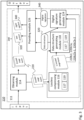
- the system 100 comprises a transmitter 110 configured to enable validation of the video sequence.
- the transmitter 110 may comprise or may be connected to one or more cameras 112.
- the transmitter 110 may be comprised in a camera 112.
- the transmitter 110 and the one or more cameras 112 may be referred to as a camera system.
- the camera system may be comprised in one single unit, i.e., one unit comprising the transmitter 110 and one or more cameras 112, or in several separate units.
- the camera 112 may be a monitoring camera, sometimes also referred to as surveillance camera.
- the camera 112 may be a fixed camera such as a stationary camera, or a movable camera such as a pan, tilt and zoom (PTZ) camera.
- the camera 112 may be a visible light camera, a thermal camera, or a camera comprising both a visible light camera and a thermal camera.
- the camera 112 may include several components relating to e.g., image capturing such as a capturing module, and image processing such as an encoding module, which are common in conventional camera systems and whose purpose and operations are well known to those having ordinary skill in the art. Such components have been omitted from the illustration and description of figure 1 for clarity reasons.
- the transmitter 110 is configured to communicate over a communications network 120 with a receiver 130.
- the communications network 120 may be a wired or wireless communications network over which the transmitter 110 transmits video sequences to the receiver 130.
- the receiver 130 may comprise or may be connected to a display device 150 configured to display, to an operator, video sequences received by the receiver 130.
- the transmitter 110 and the receiver 130 are configured to communicate with a data storage 122 either directly or via the communications network 120.
- the data storage 122 may be configured to store data relating to video sequences such as data relating to encoded image frames and/or to LC encoded image frames.
- the data storage 122 may comprise pre-defined encoded image frames 220e.
- the pre-defined encoded image frames 220e may be stored in the data storage 122 as a lookup table wherein each stored pre-defined encoded image frame 220e is identified by an identifier, sometimes referred to as an index or a key.
- the lookup table is a code book, and the index/key is a codeword.
- the data storage 122 may be a non-volatile memory. Further, the data storage may comprise a common library.
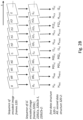
- FIG. 2A schematically illustrates an exemplifying video sequence 200 according to embodiments.
- the video sequence 200 comprises a number of encoded image frames 220.
- An encoded image frame used as a reference for prediction-coding other frames is called a reference frame.
- Frames encoded without information from other frames are referred to as intra-coded frames, intra-frames, I-frames or key frames.
- Frames that use prediction from one or more reference frames are referred to as inter-coded frames or inter-frames.
- a P-frame is an inter-frame that uses prediction from one or more preceding reference frames (or one or more frames for prediction of each region) and a B-frame is an inter-frame that uses prediction from a (possibly weighted) average of two reference frames, one or more preceding frames and/or one or more succeeding frames.
- a frame is sometimes referred to as a picture.
- the encoded image frames 220 may be arranged in one or more groups of pictures (GOPs).
- the encoded image frames 220 are arranged in a plurality of GOPs out of which a first GOP 210a and a second GOP 210b are illustrated.
- the first GOP 210a consists of a first I-frame I0, a first P-frame P00, a second P-frame P01, and a third P-frame P02; and the second GOP 210b consists of a first I-frame 11, a first P-frame P10, a second P-frame P11, and a third P-frame P12.
- HEVC High Efficiency Video Coding
- AVC Advanced Video Coding
- VVC Versatile Video Coding
- AV1 AOMedia Video 1
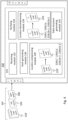
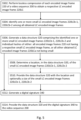
- a method performed by the transmitter 110 for enabling validation of a video sequence 200 by providing the video sequence 200 with a data structure 320 and a digital signature 340, will now be described with reference to the flowchart of figure 5 and with reference to figure 3 schematically illustrating the transmitter 110 according to embodiments.
- the video sequence 200 comprises encoded image frames 220, and the video sequence 200 may be composed of at least one group of pictures (GOPs) 210a, 210b.
- the sequence of encoded image frames may comprise the encoded image frames I0, P00, P01, P02, I1, P10, P11, P12, P13, and I2, wherein the encoded image frames I0, P00, P01, and P02 may be comprised in one GOP, the encoded image frames I1, P10, P11, P12, and P13 may be comprised in another GOP, and the encoded image frame I2 may be comprised in yet another GOP.
- the encoded image frames 220 of the video sequence 200 may have been obtained from the camera 112 that captured a number of image frames depicting a scene and that encoded the captured image frames into the encoded image frames 220.
- the camera 112 may provide an obtaining module 114 of the transmitter 110 with the encoded image frames 220.
- the camera 112 realises the obtaining module of the transmitter 110.
- the obtaining module 114 of the transmitter 110 could be realised by an internal data storage configured to receive encoded image frames 220 from the camera 112 and to store the received encoded image frames 220 in the internal data storage.
- step S502 the transmitter 110 performs lossless compression of each encoded image frame 220 of the video sequence 200 to obtain a respective LC encoded image frame 220LC. This is done to obtain a respective LC encoded image frame having a size that is equal to or less than the size of the encoded image frame 220 on which the lossless compression was performed while at the same time obtain the respective LC encoded image frame with the same image quality as the encoded image frame 220 on which the lossless compression was performed.
- the sequence of LC encoded image frames comprises the LC encoded image frames I0 LC , P00 LC , P01 LC , P02 LC , I1 LC , P10 LC , P11 LC , P12 LC , P13 LC , and I2 LC .
- the lossless compression may be performed based on one or more out of Huffman coding, arithmetic encoding, codebook-based encoding and run-length encoding, just to give some examples.
- Step S502 may be performed by a lossless compressing module 116 comprised in the transmitter 110 and being configured to perform lossless compression of encoded image frames.
- an aim of the lossless compression is to obtain a respective LC encoded image frame 220LC that has a data size that is equal to or less than the data size of its respective encoded image frame 220.
- lossless compression will not always result in that the respective LC encoded image frame 220LC has an equal or reduced data size as compared to the data size of its respective encoded image frame 220. Therefore, the lossless compressing module 116 compares the size of the respective LC encoded image frame 220LC with the size of its respective encoded image frame 220, and if the respective LC encoded image frame 220LC has a larger size, the lossless compressing module 116 will output its respective encoded image frame 220 as the LC encoded image frame.
- An alternative way of reducing the size of the LC encoded image frame is to create the LC encoded image frame such that it lacks image information but comprises a reference to, and possibly a difference vis-à-vis, another encoded image frame, such as a stored predefined encoded image frame 220e. This may be the case when the transmitter 110 determines that the encoded image frame on which the lossless compression is performed is a skip frame.
- a skip frame is meant a type of an inter frame that represent image data by only referring (e.g., by only including references) to image data in other frames without any residual values.
- a decoder uses the referenced image data as a representation of the image data represented by the skip frame without making any adjustments (as residual values are lacking).
- the transmitter 110 identifies, among the obtained LC encoded image frames 220LC, one or more small LC encoded image frames 220LCb-1, 220LCb-2 each having a data size that is smaller than a predefined number of bytes.
- the predefined number of bytes may be set in dependence on the hash function used. For example, the predefined number of bytes may be 64 bytes (512 bits), 48 bytes (384 bits) or 32 bytes (256 bits) for SHA-2 hashes, and 20 bytes (160 bits) for SHA-1 hashes.
- An identifying module 117 comprised in the transmitter 110 and being configured to identify the one or more small LC encoded image frames may perform step S504.
- the identifying module 117 may be comprised in the lossless compressing module 116.
- the identifying module 117 may be comprised in a data structure generating module 118 of the transmitter 110.
- the data structure generating module 118 will be described below.
- One or more identified small LC encoded image frames 220LCb-1, 220LCb-2 may be of a first type of small LC encoded image frames 220LCb-1 wherein each is either equal to the (original) encoded image frame 220 having a data size that is smaller than the predefined number of bytes and on which the lossless compression was performed, or equal to the LC encoded image frame 220LC of the (original) encoded image frame 220 when the LC encoded image frame 220LC is smaller than the (original) encoded image frame 220 and has a data size that is smaller than the predefined number of bytes.
- the former may for example be the case when the lossless compression of the encoded image frame 220, having a data size that is smaller than the predefined number of bytes, resulted in the same encoded image frame 220 or when the lossless compression of the encoded image frame 220 would result in an LC encoded image frame 220LC being larger than the encoded image frame 220.
- the lossless compressing module 116 performing the lossless compression outputs the original encoded image frame 220 as the LC encoded image frame 220LCb-1.
- At least one of the identified one or more small LC encoded image frames 220LCb-1, 220LCb-2 is a small LC encoded image frame 220LCb-1 of a first type and is equal to its respective encoded image frame 220 or equal to the LC encoded image frame 220LC of the encoded image frame 220.
- one or more identified small LC encoded image frames 220LCb-1, 220LCb-2 may be of a second type of small LC encoded image frame 220LCb-2 wherein each is equal to a part of a stored encoded image frame 220e and comprises an identifier of the stored encoded image frame 220e and possibly also a difference.
- the encoded image frame 220 on which the lossless compression was performed is identical with the stored encoded image frame 220e or is partly identical with the stored encoded image frame 220e.
- the encoded image frame is a skip frame, there is no difference between the stored encoded image frame 220e and the encoded image frame 220, and consequently the small LC encoded image frame 220 LC b-2 of the second type only comprises the identifier of the stored encoded image frame 220e and no difference.
- the encoded image 220 frame may be partly identical with the stored encoded image frame 220e and then the small LC encoded image frame 220LCb-2 of the second type may comprise the identifier of the stored encoded image frame 220e and the difference.
- the difference may relate to a part of an otherwise constant image frame that is updated or changed at certain time points.
- the difference may relate to a counter, or a clock comprised in the encoded image frame 220, and the difference is the only that make the encoded image frame 220 different from the stored encoded image frame 220e.
- the difference comprised in the small LC encoded image frame 220LCb-2 of the second type relates to the counter value or the time of the clock.
- At least one of the identified one or more small LC encoded image frames 220LCb-1, 220LCb-2 is a small LC encoded image frame 220LCb-2 of a second type and comprises an identifier of a stored predefined encoded image frame 220e and a possible difference between the small LC encoded image frame 220LCb-2 of the second type and the stored predefined encoded image frame 220e.
- the individual hashes may be individual hashes of all other obtained LC encoded image frames 220LCa being different from the one or more small LC encoded image frames 220LCb-1, 220LCb-2 as shown in an alternative second data structure 320-2 of figure 2B .
- the individual hashes are individual hashes of either all encoded image frames 220 lacking a respective small LC encoded image frame 220LCb-1, 220LCb-2, or all other obtained LC encoded image frames 220LCa being different from the one or more small LC encoded image frames 220LCb-1, 220LCb-2.
- the transmitter 110 obtains the individual hashes by individually hashing each one of the all encoded image frames 220 lacking a respective small LC encoded image frame 220LCb-1, 220LCb-2, or by individually hashing each one of the all other obtained LC encoded image frame 220LCa, respectively.
- the data structure is, as will be described below, to be used by the receiver 130 when validating the video sequence.
- the transmitter 110 comprises a data structure generating module 118 configured to generate the data structure and the data structure generating module 118 may perform step S506.
- the LC encoded image frames P01 LC , P02 LC , I1 LC , P12 LC , and I2 LC are identified as being small LC encoded image frames 220LCb-1, 220LCb-2, and therefore, both the first data structure 320-1 and the alternative second data structure 320-2 illustrated comprise theses small LC encoded image frames P01 LC , P02 LC , I1 LC , P12 LC , and I2 LC .
- the first data structure 320-1 comprises individual hashes of all encoded image frames 220 lacking a respective small LC encoded image frame 220LCb-1, 220LCb-2.
- the (first) data structure also comprises the individual hashes H I0 , H P00 , H P10 , and H P13 .
- the alternative second data structure 320-2 comprises, in addition to the small LC encoded image frames, individual hashes of the all other obtained LC encoded image frames 220LCa being different from the identified small LC encoded image frames 220LCb-1, 220LCb-2.
- the alternative (second) data structure also comprises individual hashes H I0LC , H P00LC , H P10LC , and H P13LC which are the individual hashes of the LC encoded image frames I0 LC , P00 LC , P10 LC , and P13 LC .
- the data structure 320 may be referred to as a document comprising a reduced hash list.
- the hash list is reduced since it does not only comprise hashes for all the encoded image frames as a complete hash list does, but the reduced hash list comprises instead of the hashes of the small LC encoded image frames, the small LC encoded image frames as they are, i.e. unhashed. This is in contrast to cases wherein the data structure is a document comprising the complete hash list consisting of a respective individual hash for each encoded image frame of the video sequence.
- the present data structure 320 comprises the LC encoded image frame for each LC encoded image frame being identified as small and the individual hashes of either all encoded image frames 220 lacking a respective small LC encoded image frames or all LC encoded image frame having a size being equal to or larger than the predefined number of bytes.
- the reduced hash list only consists of the identified one or more small LC encoded image frames 220LCb-1, 220LCb-2; and the individual hashes of either all encoded image frames 220 lacking a respective small LC encoded image frames 220LCb-1, 220LCb-2, or all other obtained LC encoded image frames 220LCa being different from the one or more small LC encoded image frames 220LCb-1, 220LCb-2.
- the transmitter 110 generates one data structure 320 and one digital signature 340 per one or more GOPs 210a, 210b.
- the transmitted video sequence can be validated by the receiver 130 per GOP instead of per the entire video sequence.
- the receiver 130 since if one or more encoded image frames or GOPs cannot be validated, the receiver can still trust the authenticity of the validated GOPs and the validated GOPs' encoded image frames. That is in contrast with the case when the video sequence has to be validated in its entirety, wherein the receiver cannot trust the authenticity of any of the encoded image frames of the video sequence if the entire video sequence cannot be validated.
- each one of the small LC encoded image frames may be located. This may for example, simplify for a receiver 130 to find and extract small LC encoded image frames from a received data structure. As will be described below when describing the method performed by the receiver 130, the receiver 130 may use the extracted small LC encoded image frames to generate, i.e., reconstruct, their corresponding transmitted encoded image frames and the hashes thereof when verifying the received encoded image frames.
- some embodiments comprise a step S508 , wherein the transmitter 110 determines, for each small LC encoded image frame 220 LC b-1, 220LCb-2, the location of each small LC encoded image frame 220LCb-1, 220LCb-2 in the data structure 320.
- the transmitter 110 may also determine a data size of each small LC encoded image frame 220LCb-1, 220LCb-2.
- Step S508 may be performed by a determining module 119 comprised in the transmitter 110 and being configured to determine the location of each small LC encoded image frame in the data structure.
- the determining module 119 may be comprised in the lossless compressing module 116.
- the determining module 119 may be comprised in the data structure generating module 118 of the transmitter 110.
- Embodiments may also comprise a step S510 wherein the transmitter 110 provides the data structure 320 with information specifying the location in the data structure 320 and optionally the data size of each small LC encoded image frame 220LCb-1, 220LCb-2.
- the providing of the location specifying information to the data structure 320 may be performed by the data structure generating module 118.
- the transmitter 110 In order to enable validation of the video sequence, a digital signature is also needed. Therefore, in action S512 , the transmitter 110 generates a digital signature 340 for the video sequence 200. This step may be performed by a digital signature generating module 124 configured to generate digital signatures and being comprised in the transmitter 110.
- the transmitter 110 may have access to a private-public key pair, and may generate the digital signature by encrypting, with a private key of the private-public key pair, either:
- a private key of the private-public key pair may be stored in a secure storage only accessible by the transmitter 110.
- the secure storage may be a secure element (SE), e.g., a secure operating system (OS) in a tamper-resistant processor chip or secure component, or a trusted platform module (TPM), e.g. a secure cryptoprocessor or secure chip.
- SE secure element
- OS secure operating system
- TPM trusted platform module
- a public key of the transmitter's private-public key pair may be stored in a data storage, e.g., the data storage 122, accessible by the receiver 130.
- the public key of the transmitter's private-public key pair may be transmitted with the video sequence 200 to the receiver 130.
- the public key of the transmitter's private-public key pair may be comprised in or appended to the video sequence 200.
- the transmitter 110 provides the data structure 320 and the digital signature 340 to the video sequence 200. Thereby enabling a receiver 130 to validate the video sequence 200.
- a providing module 126 comprised in the transmitter 110 and being configured to provide data structures and digital signatures to video sequences may perform step S514.
- the transmitter 110 may provide the data structure 320 and the digital signature 340 in a supplemental information unit (SIU) of the video sequence 200.
- the supplemental information unit is a unit or message configured to comprise supplemental information about or relating to the video sequence.
- the supplemental information unit may for example be a Supplemental Enhancement Information (SEI) message in the H.26x encoding format, or a Metadata Open Bitstream Unit (OBU) in the AV1 encoding format.
- SEI Supplemental Enhancement Information
- OBU Metadata Open Bitstream Unit
- a receiver 130 may validate a received video sequence using a received digital signature and a received data structure as will be described in detail below.
- the receiver 130 for validating a video sequence 200' provided with a data structure 320 and a digital signature 340, will now be described with reference to the flowchart of figure 6 and to the embodiment of the receiver 130 schematically illustrated in figure 4 .
- the video sequence 200' comprises encoded image frames 220'.
- step S602 the receiver 130 receives, from the transmitter 110, the video sequence 200' comprising encoded image frames 220' and being provided with the data structure 320 and the digital signature 340.
- the video sequence 200' received by the receiver 130 and the video sequence 200 transmitted by the transmitter 110 are identical.
- a transmitted video sequence may be manipulated after its transmittal and before its reception, therefore the reference numeral 200 is used for the transmitted video sequence and the reference numeral 200' is used for the received video sequence.
- Step S602 may be performed by a receiving module 132 comprised in the receiver 130 and being configured to receive video sequences.
- the received data structure 320 comprises one or more small LC encoded image frames 220LCb-1, 220LCb-2, wherein each small LC encoded image frame 220LCb-1, 220LCb-2 has a data size that is smaller than a predefined number of bytes and is an LC version of a respective transmitted encoded image frame 220 comprised in a video sequence 200 transmitted from the transmitter 110.
- the received data structure 320 also comprises individual hashes of either all transmitted encoded image frames 220 lacking a respective small LC encoded image frame 220LCb-1, 220LCb-2, or all other LC encoded image frames 220LCa being different from the one or more small LC encoded image frames 220LCb-1, 220LCb-2.
- Each one of the all other LC encoded image frames 220LCa is an LC version of a respective transmitted encoded image frame 220 comprised in the transmitted video sequence 200.
- the predefined number of bytes may be set in dependence on the hash function used. As the transmitter 110 and the receiver 130 use the same hash function it is understood that the predefined number of bytes set at the transmitter 110 is the same as the predefined number of bytes used at the receiver 130.
- the predefined number of bytes may be preset in the receiver 130 or information about the predefined number of bytes used by the transmitter 110 may be transmitted, e.g., together with the video sequence, from the transmitter 110 to the receiver 130.
- step S604 the receiver 130 verifies the received digital signature 340 using the received data structure 320.
- Step S604 may be performed by a verifying module 134 comprised in the receiver 130 and being configured to verify digital signatures.
- the receiver 130 has access to a public key of a private-public key pair of the transmitter 110.
- the receiver 130 verifies the received digital signature 340 by decrypting the received digital signature 340 using the public key and by verifying the received digital signature 340 when a hash of the received data structure 320 matches the received digital signature 340 as decrypted.
- the received digital signature 340 is verified when a hash of all individual hashes for all LC encoded image frames as given by the received data structure 340 matches the received digital signature 340 as decrypted.
- the received digital signature 340 is verified when a hash of all individual hashes for all encoded image frames as given by the received data structure 340 matches the received digital signature 340 as decrypted.
- step S606 the receiver 130 verifies the received encoded image frames 220' as being equal to the transmitted encoded image frames 220 using the received data structure 320.
- Step S606 may be performed by the verifying module 134 comprised in the receiver 130 and being configured to verify encoded image frames.
- the received video sequence 200' is validated as being equal to the transmitted video sequence 200 when the received digital signature 340 and the received encoded image frames 220' are verified.
- step S606 The verification of the received encoded image frames 220' (step S606) will now be described in more detail with reference to some different embodiments. Before going into the details, it could be said that in general the verification is made by comparing hashes of the received encoded image frames with hashes of the encoded image frame as given by the received data structure (as in some first embodiments below), by comparing hashes of LC received encoded image frames with hashes of the LC encoded image frame as given by the received data structure (as in some second embodiments below) or by comparing the received data structure with a generated data structure (as in some third embodiments below).
- the data structure 320 transmitted by the transmitter 110 and received by the receiver 130 comprises, in addition to the one or more small LC encoded image frames 220LCb-1, 220LCb-2, the individual hashes of either: all transmitted encoded image frames 220 lacking a respective small LC encoded image frames 220LCb-1, 220LCb-2 (as in some first embodiments below), or all other LC encoded image frames 220LCa being different from the one or more small LC encoded image frames 220LCb-1, 220LCb-2 (as in some second and third embodiments below).
- the received data structure 320 comprises, in addition to the small LC encoded image frames 220LCb-1, 220LCb-2, individual hashes of all transmitted encoded image frames 220 lacking a respective small LC encoded image frames 220LCb-1, 220LCb-2.
- the receiver 130 has to generate hashes of the received encoded image frames and has to determine the individual hash(-es) of the respective encoded image frame of the one or more small LC encoded image frames' 220LCb-1, 220LCb-2 comprised in the received data structure 320.
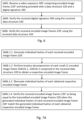
- step S606 of the received encoded image frames 220' as being equal to the transmitted encoded image frames 220 using the received data structure 320 comprises four sub-steps S606.1.1 - S606.1.4, which are illustrated in figure 7A .
- sub-step S606.1.1 the receiver 130 generates individual hashes of each received encoded image frame 220' comprised in the received video sequence 200'.
- a hash generating module 136 comprised in the receiver 130 may perform the generation of the individual hashes.
- sub-step S606.1.2 the receiver 130 performs lossless decompression of each of the one or more small LC encoded image frames 220LCb-1, 220LCb-2 comprised in the received data structure 320 to obtain a respective encoded image frame.
- lossless decompression algorithms are Huffman decoding, arithmetic decoding, codebook-based decoding, and run-length decoding.
- a lossless decompressing module 138 comprised in the receiver 130 may perform the lossless decompression.
- sub-step S606.1.3 the receiver 130 generates individual hashes of each obtained respective encoded image frame 220. This may be performed by the hash generating module 136.
- sub-step S606.1.4 the receiver 130 verifies the received encoded image frames 220' as being equal to the transmitted encoded image frames 220 when the generated individual hashes of each received encoded image frame 220' comprised in the received video sequence 200' match the generated individual hashes of each obtained respective encoded image frame 220. This may be performed by the verifying module 134.
- the received data structure 320 comprises, in addition to the small LC encoded image frames 220LCb-1, 220LCb-2, individual hashes of all other LC encoded image frames 220LCa being different from the one or more small LC encoded image frames 220LCb-1, 220LCb-2.
- the verifying (step S606) of the received encoded image frames 220' as being equal to the transmitted encoded image frames 220 using the received data structure 320 comprises four sub-steps S606.2.1 - S606.2.4, which are illustrated in figure 7B .
- sub-step S606.2.1 the receiver 130 performs lossless compression of each received encoded image frame 220' comprised in the received video sequence 200' to obtain respective LC received encoded image frames 220LC'; 220LCa', 220LCb-1', 220LCb-2'.
- Some examples of lossless compression algorithms are Huffman coding, arithmetic encoding, codebook-based encoding, and run-length encoding.
- a lossless compressing module 140 comprised in the receiver 130 may perform the lossless compression.
- sub-step S606.2.2 the receiver 130 generates individual hashes of all obtained respective LC received encoded image frames 220LC'; 220LCa', 220LCb-1', 220LCb-2'. This may be performed by the hash generating module 136.
- the receiver 130 In sub-step S606.2.3 the receiver 130 generates individual hashes for all the LC encoded image frames 220LC; 220LCa, 220LCb-1, 220LCb-2 as given by the received data structure 320. As the individual hashes of the all other LC encoded image frames 220LCa being different from the one or more small LC encoded image frames 220LCb-1, 220LCb-2 are comprised in the received data structure 320, the receiver 130 can retrieve them directly from the data structure 320. In addition, the receiver 130 retrieves the one or more small LC encoded image frames 220LCb-1, 220LCb-2 comprised in the received data structure 320 and then individually hashes them.
- the receiver 130 will generate the individual hashes differently depending on whether or not the one or more small LC encoded image frame 220LCb-1, 220LCb-2 is of the first type or the second type.
- Sub-step S606.2.3 may be performed by the hash generating module. A detailed description of the generation of the individual hashes will be given after the description of sub-step S606.2.4.
- sub-step S606.2.4 the receiver 130 verifies the received encoded image frames 220' as being equal to the transmitted encoded image frames 220 when the generated individual hashes for all the LC encoded image frames 220LC; 220LCa, 220LCb-1, 220LCb-2 as given by the received data structure 320 match the generated individual hashes of all obtained respective LC received encoded image frames 220LC'; 220LCa', 220LCb-1', 220LCb-2'. This may be performed by the verifying module 134.
- one or more small LC encoded image frame 220LCb-1 is of the first type and is equal to the encoded image frame 220 having a data size that is smaller than the predefined number of bytes or equal to the LC encoded image frame 220LC of the encoded image frame 220 when the LC encoded image frame 220LC is smaller than the encoded image frame 220 and has a data size that is smaller than the predefined number of bytes.
- the encoded image frame 220 is the original encoded image frame transmitted by the transmitter 110.
- the small LC encoded image frame 220LCb-1 is equal to the encoded image frame 220 when the LC encoded image frame obtained, by the transmitter's lossless compressing module 116 when performing lossless compression on the original encoded image frame, had a size that was larger than the original encoded image frame and the lossless compressing module 116 outputs the original encoded image frame as the obtained LC encode image frame.
- the one or more of the small LC encoded image frames 220LCb-1, 220LCb-2 is a small LC encoded image frame 220LCb-1 of a first type and is equal to its respective transmitted encoded image frame 220 or equal to the LC encoded image frame 220LC of the encoded image frame 220.
- the received data structure 320 further comprises information specifying a location, in the data structure 320, and optionally a size, of the small LC encoded image frame 220LCb-1 of the first type.
- the generating of individual hashes for all the LC encoded image frames 220LCa, 220LCb-1, 220LCb-2 as given by the received data structure 320 comprises:
- one or more small LC encoded image frame 220LCb-2 is of the second type .
- the transmitter 110 determines that the respective (original) encoded image frame 220 of the small LC encoded image frame 220LCb-2 of the second type is equal to a part of a stored encoded image frame 220e.
- the transmitter 110 e.g., by means of the lossless compressing module 116, determines that the respective encoded image frame 220 is a skip frame that is identical to a stored encoded image frame 220e
- the small LC encoded image frame 220LCb-2 of the second type may be generated to comprise only an identifier of the stored encoded image frame 220e without any other image data.
- the transmitter 110 may determines that the respective encoded image frame 220 is partly identical to a stored encoded image frame 220e. Then, the small LC encoded image frame 220LCb-2 of the second type may be generated to comprise an identifier of the stored encoded image frame 220e and a difference relative the stored encoded image frame 220e.
- one or more of the small LC encoded image frames 220LCb-1, 220LCb-2 is a small LC encoded image frame 220LCb-2 of a second type and comprises an identifier of a stored predefined encoded image frame 220e and a possible difference between the respective transmitted encoded image frame 220 and the stored predefined encoded image frame 220e.
- the received data structure 320 further comprises information specifying a location, in the data structure 320, and optionally the data size, of the small LC encoded image frame 220LCb-2 of the second type.
- the generating of individual hashes for all the LC encoded image frames 220LCa, 220LCb-1, 220LCb-2 as given by the received data structure 320 comprises:
- the received data structure 320 comprises individual hashes of all other LC encoded image frames 220LCa being different from the one or more small LC encoded image frames 220LCb-1, 220LCb-2.
- the receiver 130 In order to verify the received encoded image frames 220' the receiver 130 generates a data structure comprising one or more small LC encoded image frames and individual hashes of all LC encoded image frames being different from the one or more small encoded image frames, and compares it with the received data structure.
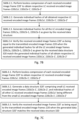
- the verifying (step S606) of the received encoded image frames 220' as being equal to the transmitted encoded image frames 220 using the received data structure 320 comprises three sub-steps S606.3.1 - S606.3.3, which are illustrated in figure 7C .
- sub-step S606.3.1 the receiver 130 performs lossless compression of each received encoded image frame 220' comprised in the received video sequence 200' to obtain respective LC received encoded image frames 220LCa', 220LCb-1', 220LCb-2'.
- Some examples of lossless compression algorithms are Huffman coding, arithmetic encoding, codebook-based encoding, and run-length encoding.
- the lossless compressing module (not shown) comprised in the receiver 130 may perform the lossless compression.
- sub-step S606.3.2 the receiver 130 generates a data structure 320' comprising:
- sub-step S606.3.3 the receiver 130 verifies the received encoded image frames 220' as being equal to the transmitted encoded image frames 220 when the generated data structure 320' matches the received data structure 320. This may be performed by the verifying module 134.
- Embodiments also relate to a non-transitory computer-readable medium having stored thereon computer code instructions adapted to carry out embodiments of the methods described herein when executed by a device having processing capability.
- the transmitter 110 may be configured to implement a method for enabling validation of a video sequence by providing the video sequence with the data structure and the digital signature
- the receiver 130 may be configured to implement a method for validating the video sequence by providing the video sequence with the data structure and the digital signature.
- the transmitter 110 and the receiver 130 respectively, may include processing circuitry 111, 131, respectively, which is configured to implement the various method steps described herein.
- the processing circuitry 111, 131 may be dedicated and specifically designed to implement one or more of the method steps.
- the circuitry may be in the form of one or more integrated circuits, such as one or more application specific integrated circuits or one or more field-programmable gate arrays.
- the transmitter 110 may hence comprise processing circuitry 111 which, when in use:
- the receiver 130 may comprise processing circuitry 131 which, when in use:
- the circuitry may instead be in the form of a processor, such as a microprocessor, which in association with computer code instructions stored on a (non-transitory) computer-readable medium, such as a non-volatile memory, causes the transmitter 110 and the receiver 130, respectively, to carry out the respective method disclosed herein.
- a processor such as a microprocessor
- non-volatile memory include read-only memory, flash memory, ferroelectric RAM, magnetic computer storage devices, optical discs, and the like.
- each of the method steps described above may thus correspond to a portion of computer code instructions stored on the computer-readable medium, that, when executed by the processor, causes the transmitter 110 and the receiver 130, respectively, to carry out the respective method disclosed herein.
Landscapes
- Engineering & Computer Science (AREA)
- Signal Processing (AREA)
- Computer Security & Cryptography (AREA)
- Multimedia (AREA)
- Computer Networks & Wireless Communication (AREA)
- General Engineering & Computer Science (AREA)
- Computer Hardware Design (AREA)
- Computing Systems (AREA)
- Theoretical Computer Science (AREA)
- Databases & Information Systems (AREA)
- Health & Medical Sciences (AREA)
- Bioethics (AREA)
- General Health & Medical Sciences (AREA)
- Software Systems (AREA)
- Physics & Mathematics (AREA)
- General Physics & Mathematics (AREA)
- Compression Or Coding Systems Of Tv Signals (AREA)
- Compression, Expansion, Code Conversion, And Decoders (AREA)
Priority Applications (6)
| Application Number | Priority Date | Filing Date | Title |
|---|---|---|---|
| EP23153865.3A EP4407981B1 (en) | 2023-01-30 | 2023-01-30 | A transmitter, a receiver and methods therein for validation of a video sequence |
| KR1020230184161A KR102821757B1 (ko) | 2023-01-30 | 2023-12-18 | 비디오 시퀀스의 검증을 위한 송신기, 수신기 및 그 안의 방법 |
| TW112151223A TW202433891A (zh) | 2023-01-30 | 2023-12-28 | 用於驗證視訊序列的發射器、接收器及其方法 |
| US18/408,946 US12418672B2 (en) | 2023-01-30 | 2024-01-10 | Transmitter, a receiver and methods. therein for validation of a video sequence |
| JP2024007740A JP7675229B2 (ja) | 2023-01-30 | 2024-01-23 | ビデオシーケンスの検証のための送信機、受信機、ならびに送信機および受信機における方法 |
| CN202410107424.1A CN118413328B (zh) | 2023-01-30 | 2024-01-25 | 用于验证视频序列的发射机、接收机以及其中的方法 |
Applications Claiming Priority (1)
| Application Number | Priority Date | Filing Date | Title |
|---|---|---|---|
| EP23153865.3A EP4407981B1 (en) | 2023-01-30 | 2023-01-30 | A transmitter, a receiver and methods therein for validation of a video sequence |
Publications (3)
| Publication Number | Publication Date |
|---|---|
| EP4407981A1 EP4407981A1 (en) | 2024-07-31 |
| EP4407981B1 true EP4407981B1 (en) | 2025-04-16 |
| EP4407981C0 EP4407981C0 (en) | 2025-04-16 |
Family
ID=85150976
Family Applications (1)
| Application Number | Title | Priority Date | Filing Date |
|---|---|---|---|
| EP23153865.3A Active EP4407981B1 (en) | 2023-01-30 | 2023-01-30 | A transmitter, a receiver and methods therein for validation of a video sequence |
Country Status (6)
| Country | Link |
|---|---|
| US (1) | US12418672B2 (https=) |
| EP (1) | EP4407981B1 (https=) |
| JP (1) | JP7675229B2 (https=) |
| KR (1) | KR102821757B1 (https=) |
| CN (1) | CN118413328B (https=) |
| TW (1) | TW202433891A (https=) |
Families Citing this family (3)
| Publication number | Priority date | Publication date | Assignee | Title |
|---|---|---|---|---|
| JP2024154900A (ja) * | 2023-04-20 | 2024-10-31 | キヤノン株式会社 | 撮像装置、撮像装置の制御方法及びプログラム |
| EP4734530A1 (en) * | 2024-10-23 | 2026-04-29 | Fraunhofer-Gesellschaft zur Förderung der angewandten Forschung e.V. | Authentication of data streams |
| KR102798171B1 (ko) * | 2024-12-23 | 2025-04-21 | 주식회사 디지캡 | 실시간 생성 콘텐츠와 메타데이터를 바인딩하여 송출하는 콘텐츠 전송 장치와 송출된 콘텐츠를 수신하는 수신 장치 |
Family Cites Families (10)
| Publication number | Priority date | Publication date | Assignee | Title |
|---|---|---|---|---|
| US7120252B1 (en) * | 2001-08-16 | 2006-10-10 | Mcafee, Inc. | System and method for automatically protecting private video content using cryptographic security for legacy systems |
| JP2004040246A (ja) * | 2002-06-28 | 2004-02-05 | Canon Inc | 情報処理装置、情報処理方法 |
| US8503521B2 (en) | 2007-01-16 | 2013-08-06 | Chih-Ta Star SUNG | Method of digital video reference frame compression |
| JP2009130719A (ja) | 2007-11-26 | 2009-06-11 | Sanyo Electric Co Ltd | 送信方法および受信方法ならびにそれらを利用したデータ処理装置 |
| EP2107711B1 (en) | 2008-03-03 | 2010-11-24 | Fujitsu Ltd. | Method and apparatus for digital signature authentication, and computer product |
| JP5428835B2 (ja) * | 2009-12-21 | 2014-02-26 | 富士通株式会社 | 署名装置、署名方法、および署名プログラム |
| WO2015024603A1 (en) * | 2013-08-23 | 2015-02-26 | Nec Europe Ltd. | Method and system for authenticating a data stream |
| US10944974B2 (en) * | 2017-01-11 | 2021-03-09 | Raytheon Company | Method for encoding and processing raw UHD video via an existing HD video architecture |
| EP4020998A1 (en) | 2020-12-23 | 2022-06-29 | Axis AB | Encoding of modified video |
| CN113365065B (zh) * | 2021-06-09 | 2024-04-26 | 湖南大学 | 用于rpa机器人屏幕录制的无损视频编码方法和解码方法 |
-
2023
- 2023-01-30 EP EP23153865.3A patent/EP4407981B1/en active Active
- 2023-12-18 KR KR1020230184161A patent/KR102821757B1/ko active Active
- 2023-12-28 TW TW112151223A patent/TW202433891A/zh unknown
-
2024
- 2024-01-10 US US18/408,946 patent/US12418672B2/en active Active
- 2024-01-23 JP JP2024007740A patent/JP7675229B2/ja active Active
- 2024-01-25 CN CN202410107424.1A patent/CN118413328B/zh active Active
Also Published As
| Publication number | Publication date |
|---|---|
| KR20240119828A (ko) | 2024-08-06 |
| CN118413328A (zh) | 2024-07-30 |
| KR102821757B1 (ko) | 2025-06-16 |
| EP4407981C0 (en) | 2025-04-16 |
| JP2024112776A (ja) | 2024-08-21 |
| TW202433891A (zh) | 2024-08-16 |
| JP7675229B2 (ja) | 2025-05-12 |
| US20240259580A1 (en) | 2024-08-01 |
| EP4407981A1 (en) | 2024-07-31 |
| CN118413328B (zh) | 2025-10-31 |
| US12418672B2 (en) | 2025-09-16 |
Similar Documents
| Publication | Publication Date | Title |
|---|---|---|
| EP4407981B1 (en) | A transmitter, a receiver and methods therein for validation of a video sequence | |
| JP7729855B2 (ja) | レイヤにおいて符号化されたビデオストリームの署名の検証 | |
| US20230116909A1 (en) | Signed video data with salted hashes | |
| US10277656B2 (en) | Method and system for delivering media data | |
| US12445636B2 (en) | Method and device for signing an encoded video sequence | |
| Tew et al. | Separable authentication in encrypted HEVC video | |
| JP2022100261A (ja) | 修飾されたビデオのエンコーディング | |
| CN116800446A (zh) | 一种视频加密、解密方法及装置 | |
| CN117640958A (zh) | 视频码流的认证方法、计算机设备及存储介质 | |
| Tew et al. | HEVC video authentication using data embedding technique | |
| CN117528149A (zh) | 秘钥更新方法、码流加密方法、码流解密方法及相关装置 | |
| US12610073B2 (en) | Transcodable signed video data | |
| EP4622261A1 (en) | Method for signing an encoded video stream using a plurality of devices, and a corresponding authentication method | |
| KR102936868B1 (ko) | 영상 콘텐츠의 무결성 검증 방법 및 시스템 | |
| TW202420828A (zh) | 降低位元率之簽署視訊 | |
| WO2026071899A1 (ru) | Способ и система защиты подлинности видео, генерируемых моделью машинного обучения | |
| CN118338045A (zh) | 视频码流加密方法、视频码流解密方法及相关装置 |
Legal Events
| Date | Code | Title | Description |
|---|---|---|---|
| PUAI | Public reference made under article 153(3) epc to a published international application that has entered the european phase |
Free format text: ORIGINAL CODE: 0009012 |
|
| STAA | Information on the status of an ep patent application or granted ep patent |
Free format text: STATUS: REQUEST FOR EXAMINATION WAS MADE |
|
| 17P | Request for examination filed |
Effective date: 20230822 |
|
| AK | Designated contracting states |
Kind code of ref document: A1 Designated state(s): AL AT BE BG CH CY CZ DE DK EE ES FI FR GB GR HR HU IE IS IT LI LT LU LV MC ME MK MT NL NO PL PT RO RS SE SI SK SM TR |
|
| GRAP | Despatch of communication of intention to grant a patent |
Free format text: ORIGINAL CODE: EPIDOSNIGR1 |
|
| STAA | Information on the status of an ep patent application or granted ep patent |
Free format text: STATUS: GRANT OF PATENT IS INTENDED |
|
| INTG | Intention to grant announced |
Effective date: 20250114 |
|
| GRAS | Grant fee paid |
Free format text: ORIGINAL CODE: EPIDOSNIGR3 |
|
| GRAA | (expected) grant |
Free format text: ORIGINAL CODE: 0009210 |
|
| STAA | Information on the status of an ep patent application or granted ep patent |
Free format text: STATUS: THE PATENT HAS BEEN GRANTED |
|
| AK | Designated contracting states |
Kind code of ref document: B1 Designated state(s): AL AT BE BG CH CY CZ DE DK EE ES FI FR GB GR HR HU IE IS IT LI LT LU LV MC ME MK MT NL NO PL PT RO RS SE SI SK SM TR |
|
| REG | Reference to a national code |
Ref country code: GB Ref legal event code: FG4D |
|
| REG | Reference to a national code |
Ref country code: CH Ref legal event code: EP |
|
| REG | Reference to a national code |
Ref country code: IE Ref legal event code: FG4D |
|
| REG | Reference to a national code |
Ref country code: DE Ref legal event code: R096 Ref document number: 602023002870 Country of ref document: DE |
|
| U01 | Request for unitary effect filed |
Effective date: 20250513 |
|
| U07 | Unitary effect registered |
Designated state(s): AT BE BG DE DK EE FI FR IT LT LU LV MT NL PT RO SE SI Effective date: 20250519 |
|
| PG25 | Lapsed in a contracting state [announced via postgrant information from national office to epo] |
Ref country code: ES Free format text: LAPSE BECAUSE OF FAILURE TO SUBMIT A TRANSLATION OF THE DESCRIPTION OR TO PAY THE FEE WITHIN THE PRESCRIBED TIME-LIMIT Effective date: 20250416 |
|
| PG25 | Lapsed in a contracting state [announced via postgrant information from national office to epo] |
Ref country code: NO Free format text: LAPSE BECAUSE OF FAILURE TO SUBMIT A TRANSLATION OF THE DESCRIPTION OR TO PAY THE FEE WITHIN THE PRESCRIBED TIME-LIMIT Effective date: 20250716 Ref country code: GR Free format text: LAPSE BECAUSE OF FAILURE TO SUBMIT A TRANSLATION OF THE DESCRIPTION OR TO PAY THE FEE WITHIN THE PRESCRIBED TIME-LIMIT Effective date: 20250717 |
|
| PG25 | Lapsed in a contracting state [announced via postgrant information from national office to epo] |
Ref country code: PL Free format text: LAPSE BECAUSE OF FAILURE TO SUBMIT A TRANSLATION OF THE DESCRIPTION OR TO PAY THE FEE WITHIN THE PRESCRIBED TIME-LIMIT Effective date: 20250416 |
|
| PG25 | Lapsed in a contracting state [announced via postgrant information from national office to epo] |
Ref country code: HR Free format text: LAPSE BECAUSE OF FAILURE TO SUBMIT A TRANSLATION OF THE DESCRIPTION OR TO PAY THE FEE WITHIN THE PRESCRIBED TIME-LIMIT Effective date: 20250416 |
|
| PG25 | Lapsed in a contracting state [announced via postgrant information from national office to epo] |
Ref country code: RS Free format text: LAPSE BECAUSE OF FAILURE TO SUBMIT A TRANSLATION OF THE DESCRIPTION OR TO PAY THE FEE WITHIN THE PRESCRIBED TIME-LIMIT Effective date: 20250716 |
|
| PG25 | Lapsed in a contracting state [announced via postgrant information from national office to epo] |
Ref country code: IS Free format text: LAPSE BECAUSE OF FAILURE TO SUBMIT A TRANSLATION OF THE DESCRIPTION OR TO PAY THE FEE WITHIN THE PRESCRIBED TIME-LIMIT Effective date: 20250816 |
|
| PG25 | Lapsed in a contracting state [announced via postgrant information from national office to epo] |
Ref country code: SM Free format text: LAPSE BECAUSE OF FAILURE TO SUBMIT A TRANSLATION OF THE DESCRIPTION OR TO PAY THE FEE WITHIN THE PRESCRIBED TIME-LIMIT Effective date: 20250416 |
|
| PG25 | Lapsed in a contracting state [announced via postgrant information from national office to epo] |
Ref country code: CZ Free format text: LAPSE BECAUSE OF FAILURE TO SUBMIT A TRANSLATION OF THE DESCRIPTION OR TO PAY THE FEE WITHIN THE PRESCRIBED TIME-LIMIT Effective date: 20250416 |
|
| U20 | Renewal fee for the european patent with unitary effect paid |
Year of fee payment: 4 Effective date: 20251217 |
|
| PG25 | Lapsed in a contracting state [announced via postgrant information from national office to epo] |
Ref country code: SK Free format text: LAPSE BECAUSE OF FAILURE TO SUBMIT A TRANSLATION OF THE DESCRIPTION OR TO PAY THE FEE WITHIN THE PRESCRIBED TIME-LIMIT Effective date: 20250416 |
|
| PLBE | No opposition filed within time limit |
Free format text: ORIGINAL CODE: 0009261 |
|
| STAA | Information on the status of an ep patent application or granted ep patent |
Free format text: STATUS: NO OPPOSITION FILED WITHIN TIME LIMIT |
|
| REG | Reference to a national code |
Ref country code: CH Ref legal event code: L10 Free format text: ST27 STATUS EVENT CODE: U-0-0-L10-L00 (AS PROVIDED BY THE NATIONAL OFFICE) Effective date: 20260225 |
|
| 26N | No opposition filed |
Effective date: 20260119 |