EP4407729A2 - Battery system - Google Patents
Battery system Download PDFInfo
- Publication number
- EP4407729A2 EP4407729A2 EP23215064.9A EP23215064A EP4407729A2 EP 4407729 A2 EP4407729 A2 EP 4407729A2 EP 23215064 A EP23215064 A EP 23215064A EP 4407729 A2 EP4407729 A2 EP 4407729A2
- Authority
- EP
- European Patent Office
- Prior art keywords
- intermediate plate
- unit
- unit cell
- hydrogen sulfide
- battery
- Prior art date
- Legal status (The legal status is an assumption and is not a legal conclusion. Google has not performed a legal analysis and makes no representation as to the accuracy of the status listed.)
- Pending
Links
Images


Classifications
-
- H—ELECTRICITY
- H01—ELECTRIC ELEMENTS
- H01M—PROCESSES OR MEANS, e.g. BATTERIES, FOR THE DIRECT CONVERSION OF CHEMICAL ENERGY INTO ELECTRICAL ENERGY
- H01M10/00—Secondary cells; Manufacture thereof
- H01M10/42—Methods or arrangements for servicing or maintenance of secondary cells or secondary half-cells
- H01M10/4228—Leak testing of cells or batteries
-
- H—ELECTRICITY
- H01—ELECTRIC ELEMENTS
- H01M—PROCESSES OR MEANS, e.g. BATTERIES, FOR THE DIRECT CONVERSION OF CHEMICAL ENERGY INTO ELECTRICAL ENERGY
- H01M10/00—Secondary cells; Manufacture thereof
- H01M10/42—Methods or arrangements for servicing or maintenance of secondary cells or secondary half-cells
- H01M10/48—Accumulators combined with arrangements for measuring, testing or indicating the condition of cells, e.g. the level or density of the electrolyte
- H01M10/482—Accumulators combined with arrangements for measuring, testing or indicating the condition of cells, e.g. the level or density of the electrolyte for several batteries or cells simultaneously or sequentially
-
- G—PHYSICS
- G01—MEASURING; TESTING
- G01L—MEASURING FORCE, STRESS, TORQUE, WORK, MECHANICAL POWER, MECHANICAL EFFICIENCY, OR FLUID PRESSURE
- G01L5/00—Apparatus for, or methods of, measuring force, work, mechanical power, or torque, specially adapted for specific purposes
- G01L5/16—Apparatus for, or methods of, measuring force, work, mechanical power, or torque, specially adapted for specific purposes for measuring several components of force
- G01L5/161—Apparatus for, or methods of, measuring force, work, mechanical power, or torque, specially adapted for specific purposes for measuring several components of force using variations in ohmic resistance
- G01L5/1627—Apparatus for, or methods of, measuring force, work, mechanical power, or torque, specially adapted for specific purposes for measuring several components of force using variations in ohmic resistance of strain gauges
-
- H—ELECTRICITY
- H01—ELECTRIC ELEMENTS
- H01M—PROCESSES OR MEANS, e.g. BATTERIES, FOR THE DIRECT CONVERSION OF CHEMICAL ENERGY INTO ELECTRICAL ENERGY
- H01M10/00—Secondary cells; Manufacture thereof
- H01M10/04—Construction or manufacture in general
- H01M10/0468—Compression means for stacks of electrodes and separators
-
- H—ELECTRICITY
- H01—ELECTRIC ELEMENTS
- H01M—PROCESSES OR MEANS, e.g. BATTERIES, FOR THE DIRECT CONVERSION OF CHEMICAL ENERGY INTO ELECTRICAL ENERGY
- H01M10/00—Secondary cells; Manufacture thereof
- H01M10/04—Construction or manufacture in general
- H01M10/0481—Compression means other than compression means for stacks of electrodes and separators
-
- H—ELECTRICITY
- H01—ELECTRIC ELEMENTS
- H01M—PROCESSES OR MEANS, e.g. BATTERIES, FOR THE DIRECT CONVERSION OF CHEMICAL ENERGY INTO ELECTRICAL ENERGY
- H01M10/00—Secondary cells; Manufacture thereof
- H01M10/05—Accumulators with non-aqueous electrolyte
- H01M10/052—Li-accumulators
-
- H—ELECTRICITY
- H01—ELECTRIC ELEMENTS
- H01M—PROCESSES OR MEANS, e.g. BATTERIES, FOR THE DIRECT CONVERSION OF CHEMICAL ENERGY INTO ELECTRICAL ENERGY
- H01M10/00—Secondary cells; Manufacture thereof
- H01M10/05—Accumulators with non-aqueous electrolyte
- H01M10/052—Li-accumulators
- H01M10/0525—Rocking-chair batteries, i.e. batteries with lithium insertion or intercalation in both electrodes; Lithium-ion batteries
-
- H—ELECTRICITY
- H01—ELECTRIC ELEMENTS
- H01M—PROCESSES OR MEANS, e.g. BATTERIES, FOR THE DIRECT CONVERSION OF CHEMICAL ENERGY INTO ELECTRICAL ENERGY
- H01M10/00—Secondary cells; Manufacture thereof
- H01M10/05—Accumulators with non-aqueous electrolyte
- H01M10/056—Accumulators with non-aqueous electrolyte characterised by the materials used as electrolytes, e.g. mixed inorganic/organic electrolytes
- H01M10/0561—Accumulators with non-aqueous electrolyte characterised by the materials used as electrolytes, e.g. mixed inorganic/organic electrolytes the electrolyte being constituted of inorganic materials only
- H01M10/0562—Solid materials
-
- H—ELECTRICITY
- H01—ELECTRIC ELEMENTS
- H01M—PROCESSES OR MEANS, e.g. BATTERIES, FOR THE DIRECT CONVERSION OF CHEMICAL ENERGY INTO ELECTRICAL ENERGY
- H01M10/00—Secondary cells; Manufacture thereof
- H01M10/42—Methods or arrangements for servicing or maintenance of secondary cells or secondary half-cells
- H01M10/4207—Methods or arrangements for servicing or maintenance of secondary cells or secondary half-cells for several batteries or cells simultaneously or sequentially
-
- H—ELECTRICITY
- H01—ELECTRIC ELEMENTS
- H01M—PROCESSES OR MEANS, e.g. BATTERIES, FOR THE DIRECT CONVERSION OF CHEMICAL ENERGY INTO ELECTRICAL ENERGY
- H01M10/00—Secondary cells; Manufacture thereof
- H01M10/42—Methods or arrangements for servicing or maintenance of secondary cells or secondary half-cells
- H01M10/48—Accumulators combined with arrangements for measuring, testing or indicating the condition of cells, e.g. the level or density of the electrolyte
-
- H—ELECTRICITY
- H01—ELECTRIC ELEMENTS
- H01M—PROCESSES OR MEANS, e.g. BATTERIES, FOR THE DIRECT CONVERSION OF CHEMICAL ENERGY INTO ELECTRICAL ENERGY
- H01M50/00—Constructional details or processes of manufacture of the non-active parts of electrochemical cells other than fuel cells, e.g. hybrid cells
- H01M50/10—Primary casings; Jackets or wrappings
- H01M50/102—Primary casings; Jackets or wrappings characterised by their shape or physical structure
- H01M50/105—Pouches or flexible bags
-
- H—ELECTRICITY
- H01—ELECTRIC ELEMENTS
- H01M—PROCESSES OR MEANS, e.g. BATTERIES, FOR THE DIRECT CONVERSION OF CHEMICAL ENERGY INTO ELECTRICAL ENERGY
- H01M50/00—Constructional details or processes of manufacture of the non-active parts of electrochemical cells other than fuel cells, e.g. hybrid cells
- H01M50/20—Mountings; Secondary casings or frames; Racks, modules or packs; Suspension devices; Shock absorbers; Transport or carrying devices; Holders
- H01M50/204—Racks, modules or packs for multiple batteries or multiple cells
-
- H—ELECTRICITY
- H01—ELECTRIC ELEMENTS
- H01M—PROCESSES OR MEANS, e.g. BATTERIES, FOR THE DIRECT CONVERSION OF CHEMICAL ENERGY INTO ELECTRICAL ENERGY
- H01M50/00—Constructional details or processes of manufacture of the non-active parts of electrochemical cells other than fuel cells, e.g. hybrid cells
- H01M50/20—Mountings; Secondary casings or frames; Racks, modules or packs; Suspension devices; Shock absorbers; Transport or carrying devices; Holders
- H01M50/204—Racks, modules or packs for multiple batteries or multiple cells
- H01M50/207—Racks, modules or packs for multiple batteries or multiple cells characterised by their shape
- H01M50/209—Racks, modules or packs for multiple batteries or multiple cells characterised by their shape adapted for prismatic or rectangular cells
-
- H—ELECTRICITY
- H01—ELECTRIC ELEMENTS
- H01M—PROCESSES OR MEANS, e.g. BATTERIES, FOR THE DIRECT CONVERSION OF CHEMICAL ENERGY INTO ELECTRICAL ENERGY
- H01M50/00—Constructional details or processes of manufacture of the non-active parts of electrochemical cells other than fuel cells, e.g. hybrid cells
- H01M50/20—Mountings; Secondary casings or frames; Racks, modules or packs; Suspension devices; Shock absorbers; Transport or carrying devices; Holders
- H01M50/204—Racks, modules or packs for multiple batteries or multiple cells
- H01M50/207—Racks, modules or packs for multiple batteries or multiple cells characterised by their shape
- H01M50/211—Racks, modules or packs for multiple batteries or multiple cells characterised by their shape adapted for pouch cells
-
- H—ELECTRICITY
- H01—ELECTRIC ELEMENTS
- H01M—PROCESSES OR MEANS, e.g. BATTERIES, FOR THE DIRECT CONVERSION OF CHEMICAL ENERGY INTO ELECTRICAL ENERGY
- H01M50/00—Constructional details or processes of manufacture of the non-active parts of electrochemical cells other than fuel cells, e.g. hybrid cells
- H01M50/20—Mountings; Secondary casings or frames; Racks, modules or packs; Suspension devices; Shock absorbers; Transport or carrying devices; Holders
- H01M50/262—Mountings; Secondary casings or frames; Racks, modules or packs; Suspension devices; Shock absorbers; Transport or carrying devices; Holders with fastening means, e.g. locks
- H01M50/264—Mountings; Secondary casings or frames; Racks, modules or packs; Suspension devices; Shock absorbers; Transport or carrying devices; Holders with fastening means, e.g. locks for cells or batteries, e.g. straps, tie rods or peripheral frames
-
- H—ELECTRICITY
- H01—ELECTRIC ELEMENTS
- H01M—PROCESSES OR MEANS, e.g. BATTERIES, FOR THE DIRECT CONVERSION OF CHEMICAL ENERGY INTO ELECTRICAL ENERGY
- H01M2220/00—Batteries for particular applications
- H01M2220/20—Batteries in motive systems, e.g. vehicle, ship, plane
-
- H—ELECTRICITY
- H01—ELECTRIC ELEMENTS
- H01M—PROCESSES OR MEANS, e.g. BATTERIES, FOR THE DIRECT CONVERSION OF CHEMICAL ENERGY INTO ELECTRICAL ENERGY
- H01M2300/00—Electrolytes
- H01M2300/0017—Non-aqueous electrolytes
- H01M2300/0065—Solid electrolytes
- H01M2300/0068—Solid electrolytes inorganic
-
- Y—GENERAL TAGGING OF NEW TECHNOLOGICAL DEVELOPMENTS; GENERAL TAGGING OF CROSS-SECTIONAL TECHNOLOGIES SPANNING OVER SEVERAL SECTIONS OF THE IPC; TECHNICAL SUBJECTS COVERED BY FORMER USPC CROSS-REFERENCE ART COLLECTIONS [XRACs] AND DIGESTS
- Y02—TECHNOLOGIES OR APPLICATIONS FOR MITIGATION OR ADAPTATION AGAINST CLIMATE CHANGE
- Y02E—REDUCTION OF GREENHOUSE GAS [GHG] EMISSIONS, RELATED TO ENERGY GENERATION, TRANSMISSION OR DISTRIBUTION
- Y02E60/00—Enabling technologies; Technologies with a potential or indirect contribution to GHG emissions mitigation
- Y02E60/10—Energy storage using batteries
Definitions
- the present disclosure relates to battery systems.
- JP 2022-46077 A discloses a battery system that cools a secondary battery with a cooler when generation of hydrogen sulfide is predicted or detected in the secondary battery using a sulfur-based material for at least one of the positive electrode and the solid electrolyte.
- JP 2022-46077 A by detecting pressure in a battery case containing the secondary battery or hydrogen sulfide concentration (sulfur concentration) in the battery case, hydrogen sulfide gas that has been generated from the secondary battery is detected.
- JP 2022-46077 A generation of hydrogen sulfide gas cannot be detected, until the hydrogen sulfide gas generated from the secondary battery fills the battery case, and pressure in the battery case rises, or until hydrogen sulfide concentration in the battery case increases.
- the present disclosure makes it possible to detect the generation of hydrogen sulfide before the hydrogen sulfide gas fills the battery case.
- the battery system of the present disclosure includes a unit cell that is a sulfide-based all-solid-state battery, a battery module in which a plurality of the unit cells is stacked between a pair of restraining members, an intermediate plate disposed between the stacked unit cells, a detection unit configured to detect a load applied to the intermediate plate, and an estimation unit configured to estimate generation of hydrogen sulfide in the unit cell based on a change in the load applied to the intermediate plate.
- the unit cell is constituted of a sulfide-based all-solid-state battery.
- the sulfide-based all-solid-state battery contains a sulfur component in at least one of the positive electrode material and the solid electrolyte material.
- the unit cells constitute the battery module by being stacked between the pair of restraining members.
- the intermediate plate is disposed between the stacked unit cells.
- the detection unit detects the load applied to the intermediate plate. When the hydrogen sulfide gas is generated inside the unit cell, internal pressure of the unit cell increases, and a volume of the unit cell increases. As the volume of the unit cell increases, the load applied to the intermediate plate changes.
- the estimation unit estimates the generation of hydrogen sulfide in the unit cell based on the change in the load applied to the intermediate plate. Since the estimation unit estimates the generation of hydrogen sulfide in the unit cell based on the change in the load applied to the intermediate plate, the battery system will be able to detect the generation of hydrogen sulfide before the battery case is filled with hydrogen sulfide gas.
- the intermediate plate may be fixed to a base member in a cantilevered state.
- the restraining members are fixed to the base member.
- the detection unit may be a strain gauge provided on the intermediate plate.
- the intermediate plate is fixed to the base member in a cantilevered state, the restraining members being fixed to the base member. Therefore, when the hydrogen sulfide gas is generated inside any one of the unit cells and the volume of the unit cell increases, the load applied to the intermediate plate changes and the intermediate plate bends with the fixed end as a support point. By detecting this bending with the strain gauge provided on the intermediate plate, the battery system can estimate the generation of hydrogen sulfide in the unit cell.
- the estimation unit may be configured to determine a direction of a bending strain detected by the strain gauge.
- the estimation unit based on a relationship between the direction of the bending strain and a position of the intermediate plate in a stacking direction of the unit cells, may be configured to identify an arrangement position of the unit cell where hydrogen sulfide is generated.
- the intermediate plate may be configured to be displaced in a stacking direction of the unit cells.
- the detection unit may be a sensor configured to detect displacement of the intermediate plate.
- the intermediate plate is displaceable in the stacking direction of the unit cells. Therefore, when the hydrogen sulfide gas is generated inside any one of the unit cells and the volume of the unit cell increases, the load applied to the intermediate plate changes, and the intermediate plate displaces (or moves) in the stacking direction. By detecting this displacement with a sensor, a battery system can estimate the generation of hydrogen sulfide in the unit cell.
- the estimation unit may be configured to determine a direction of the displacement of the intermediate plate detected by the sensor.
- the estimation unit based on a relationship between the direction of the displacement of the intermediate plate and a position of the intermediate plate in the stacking direction of the unit cells, may be configured to identify an arrangement position of the unit cell where hydrogen sulfide is generated.
- the unit cell may be a laminated all-solid-state battery including a laminate film as an exterior member.
- the unit cell is the laminated all-solid-state battery, and the exterior member is constituted of the laminate film.
- the laminate film is more flexible than a metal case that constitutes a rectangular battery and the like. Therefore, when the internal pressure of the unit cell increases, the volume of the unit cell increases relatively easily. Therefore, the battery system can relatively accurately estimate the generation of hydrogen sulfide in the unit cell based on the change in the load applied to the intermediate plate.
- the unit cell may include a sulfide-based solid electrolyte.
- the generation of hydrogen sulfide can be detected before the hydrogen sulfide gas fills the battery case.
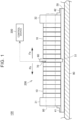
- FIG. 1 is a diagram schematically showing an overall configuration of a battery system 100 according to the present embodiment.
- the battery system 100 includes a battery module 200 and a control device 300.
- the battery module 200 is an assembled battery in which a plurality of unit cells 10 is connected.
- the unit cells 10 are stacked between a pair of end plates 31 and 32.
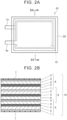
- FIGS. 2A and 2B are diagrams illustrating a schematic configuration of the unit cell 10 according to the present embodiment.
- FIG. 2A is a top view of the unit cell 10.
- the unit cell 10 is a laminated all-solid-state battery using a laminate film as an exterior member 20.
- a negative electrode terminal (negative electrode tab) 1a and a positive electrode terminal (positive electrode tab) 5a protrude from the exterior member 20.
- the laminate film may be, for example, a pouch made of an aluminum laminate film, or may be a three-layer film in which an aluminum foil is sandwiched between a plurality of resin films.
- FIG. 2B shows an all-solid-state battery stack 15 housed in the exterior member 20, and shows an IIB-IIB cross-section of FIG. 2A .
- the all-solid-state battery stack 15 includes, for example, three all-solid-state battery elements 8 in which a negative electrode current collector layer 1, a negative electrode active material layer 2, a solid electrolyte layer 3, a positive electrode active material layer 4, and a positive electrode current collector layer 5 are stacked in this order in each all-solid-state battery element 8. Three all-solid-state battery elements 8 are stacked on each other. Adjacent all-solid-state battery elements 8 share the negative electrode current collector layer 1 or the positive electrode current collector layer 5.
- the stacking order of the negative electrode current collector layer 1, the negative electrode active material layer 2, the solid electrolyte layer 3, the positive electrode active material layer 4, and the positive electrode current collector layer 5 is opposite in adjacent all-solid-state battery elements 8.
- the negative electrode current collector layer 1 is connected to the negative electrode terminal 1a.
- the positive electrode current collector layer 5 is connected to the positive electrode terminal 5a.
- the number of all-solid-state battery elements 8 included in the all-solid-state battery stack 15 may be one, or may be four or more.
- An insulating film 7 provides insulation between the all-solid-state battery stack 15 and the exterior member (laminate film) 20.
- the unit cell 10 is a sulfide-based all-solid-state battery.
- a sulfide-based all-solid-state battery contains a sulfur component in at least one of the material of the positive electrode active material layer 4 and the material of the solid electrolyte layer 3.
- the solid electrolyte layer 3 contains a sulfide-based solid electrolyte.
- the sulfide-based solid electrolyte may use phosphorus pentasulfide (P 2 S 5 ) and lithium sulfide (Li 2 S) as starting materials.
- the positive electrode active material layer 4 may contain, for example, lithium cobalt oxide, lithium nickel oxide, lithium iron phosphate, and the like.
- the positive electrode active material layer 4 is made of a sulfur-based positive electrode active material.
- the sulfur-based positive electrode active material may be an organic sulfur compound or an inorganic sulfur compound. Note that both the solid electrolyte layer 3 and the positive electrode active material layer 4 may contain the sulfur component.
- FIGS. 3A and 3B are diagrams illustrating a method of stacking the unit cells 10.
- the unit cell 10 is shaped in a flat plate, and as shown in FIG. 3A , the unit cells 10 may be stacked such that the exterior member 20 of the unit cells 10 are in contact with each other. Also, the unit cells 10 may be stacked with flat plate-shaped spacers (not shown) interposed between the unit cells 10. Note that, as shown in FIG. 3B , a pair of frame pairs 81 and 82 having inner surfaces corresponding to the outer shape of the unit cell 10 may be used to cover the unit cell 10, and the unit cells 10 covered with the pair of frame pairs 81 and 82 may be stacked with each other.
- an intermediate plate 60 is disposed between the unit cell 10 and the unit cell 10 at the central portion in the stacking direction of the unit cells 10.
- the unit cells 10 and the intermediate plate 60 are sandwiched between the pair of end plates 31 and 32 in a stacked state.
- a predetermined binding load is applied to the unit cells 10, the intermediate plate 60, and the pair of end plates 31 and 32 by a binding band 80, for example.
- the pair of end plates 31 and 32 is fixed to a bottom plate 50 by brackets 41 and 42. Note that, the pair of end plates 31 and 32 is an example of "a pair of restraining members" in the present disclosure.
- the intermediate plate 60 is fixed by being fitted into a groove 51 formed in the bottom plate 50. Thereby, the intermediate plate 60 is fixed to the bottom plate 50 in a cantilevered state.
- a strain gauge 70 is provided on the intermediate plate 60.
- the strain gauge 70 may be a foil strain gauge or a semiconductor strain gauge.
- the strain gauge 70 detects a bending strain of the intermediate plate 60.
- the battery module 200 includes the unit cells 10 and the intermediate plate 60, which are stacked between the pair of end plates 31 and 32, the bottom plate 50, and the like.
- the battery module 200 is fixed to a battery case 90.
- the battery case 90 is a housing that accommodates the battery module 200.
- the control device 300 includes a processor such as a central processing unit (CPU), a memory such as a read only memory (ROM) and a random access memory (RAM), an input/output port, and the like, and controls charging and discharging of the battery module 200.
- the control device 300 estimates the generation of hydrogen sulfide (H 2 S) in the unit cell 10 based on a detection signal of the strain gauge 70.
- the control device 300 functions as an "estimation unit" of the present disclosure.
- FIG. 4 is a flowchart showing an example of a hydrogen sulfide generation estimation process executed by the control device 300. This flowchart is repeatedly processed every predetermined period.
- step (hereinafter abbreviated as "S") 10 based on the detection signal of the strain gauge 70, a change amount of the load L (load change amount) ⁇ L applied to the intermediate plate 60 is acquired.
- any one of the unit cells 10 of the battery module 200 for some reason, when the sulfur component contained in the solid electrolyte layer 3 or the positive electrode active material layer 4 reacts with moisture to generate hydrogen sulfide, a volume of the unit cell 10 increases by the gas pressure.
- the load applied to the intermediate plate 60 changes.
- a force Fa acts on the intermediate plate 60 in the direction indicated by a continuous line arrow.
- a force Fb acts on the intermediate plate 60 in the direction indicated by a dotted line arrow.
- S12 it is determined that hydrogen sulfide is generated in the unit cell 10, and the current routine ends.
- an arrangement position of the unit cell 10 where hydrogen sulfide is generated can also be identified. For example, as shown in FIG. 1 , in the case where the strain gauge 70 is provided on the left side surface of the intermediate plate 60, the strain gauge 70 outputs the detection signal in the direction of tension (elongation direction) when the force Fa acts on the intermediate plate 60, and the strain gauge 70 outputs the detection signal in the direction of compression (contraction direction) when the force Fb acts on the intermediate plate 60.
- the detection signal of the strain gauge 70 when the detection signal of the strain gauge 70 is in the direction of tension, it can be determined that hydrogen sulfide is generated in any one of the unit cells 10 on the left side of the intermediate plate 60.
- the detection signal of the strain gauge 70 when the detection signal of the strain gauge 70 is in the direction of compression, it can be determined that hydrogen sulfide is generated in any one of the unit cells 10 on the right side of the intermediate plate 60.
- the change in the load applied to the intermediate plate 60 is detected by the bending strain detected by the strain gauge 70 provided on the intermediate plate 60 disposed between the stacked unit cells 10. Since the generation of hydrogen sulfide in the unit cell 10 is estimated based on the change in the load applied to the intermediate plate 60, hydrogen sulfide generated in the unit cell 10 can be detected before the battery case 90 is filled with hydrogen sulfide.
- the pair of end plates 31 and 32 and the intermediate plate 60 are fixed to the bottom plate 50.
- the pair of end plates 31 and 32 and the intermediate plate 60 may be directly fixed to the battery case 90. Modifications
- FIG. 5 is a diagram showing a schematic configuration of a battery module 200a in a modification.
- an intermediate plate 61 located in the central portion of a plurality of stacked unit cells 10 is not fixed to a bottom plate 55. Therefore, the intermediate plate 61 can be displaced (or moved) in the stacking direction of the unit cells 10.
- a displacement sensor (displacement gauge) 71 is provided in a portion of a bottom plate 55 facing the intermediate plate 61.
- the displacement sensor 71 may be a variable resistance displacement sensor of which resistance changes according to the displacement of the intermediate plate 61, or may be a non-contact linear displacement sensor using the Hall effect.
- any one of the unit cells 10 of the battery module 200 for some reason, when the sulfur component contained in a solid electrolyte layer 3 or a positive electrode active material layer 4 reacts with moisture to generate hydrogen sulfide, a volume of the unit cell 10 increases by gas pressure. As the volume of the unit cell 10 increases, the load applied to the intermediate plate 61 changes.
- a force Fa acts on the intermediate plate 61 in the direction indicated by a continuous line arrow.
- a force Fb acts on the intermediate plate 61 in the direction indicated by a dotted line arrow.
- the change in the load applied to the intermediate plate 61 is detected from the displacement detected by the displacement sensor 71 that detects the displacement of the intermediate plate 61 disposed between the stacked unit cells 10. Since the generation of hydrogen sulfide in the unit cell 10 is estimated based on the change in the load applied to the intermediate plate 61, hydrogen sulfide generated in the unit cell 10 can be detected before the battery case 90 is filled with hydrogen sulfide.
- the intermediate plate 60 including the strain gauge 70 or a combination of the intermediate plate 61 and the displacement sensor 71 is provided at the central portion in the stacking direction of the unit cells 10.
- these positions are not limited to the central portion.
- a plurality of intermediate plates 60 may be disposed, for example, at equal intervals in the stacking direction of the unit cells 10.
- a plurality of combinations of the intermediate plate 61 and the displacement sensor 71 may be disposed at equal intervals in the stacking direction of the unit cells 10, for example.
- both the intermediate plate 60 provided with the strain gauge 70 and the combination of the intermediate plate 61 and the displacement sensor 71 may be provided in one battery module with a space therebetween.
- the battery system 100 may be mounted on an electrified vehicle or may be stationary.
Landscapes
- Chemical & Material Sciences (AREA)
- Chemical Kinetics & Catalysis (AREA)
- Electrochemistry (AREA)
- General Chemical & Material Sciences (AREA)
- Engineering & Computer Science (AREA)
- Manufacturing & Machinery (AREA)
- General Physics & Mathematics (AREA)
- Physics & Mathematics (AREA)
- Inorganic Chemistry (AREA)
- Condensed Matter Physics & Semiconductors (AREA)
- Materials Engineering (AREA)
- Secondary Cells (AREA)
- Battery Mounting, Suspending (AREA)
Abstract
Description
- The present disclosure relates to battery systems.
-
Japanese Unexamined Patent Application Publication No. 2022-46077 JP 2022-46077 A - In
JP 2022-46077 A - In the configuration of
JP 2022-46077 A - The present disclosure makes it possible to detect the generation of hydrogen sulfide before the hydrogen sulfide gas fills the battery case.
- The battery system of the present disclosure includes a unit cell that is a sulfide-based all-solid-state battery, a battery module in which a plurality of the unit cells is stacked between a pair of restraining members, an intermediate plate disposed between the stacked unit cells, a detection unit configured to detect a load applied to the intermediate plate, and an estimation unit configured to estimate generation of hydrogen sulfide in the unit cell based on a change in the load applied to the intermediate plate.
- In this configuration, the unit cell is constituted of a sulfide-based all-solid-state battery. In the present disclosure, the sulfide-based all-solid-state battery contains a sulfur component in at least one of the positive electrode material and the solid electrolyte material. The unit cells constitute the battery module by being stacked between the pair of restraining members. The intermediate plate is disposed between the stacked unit cells. The detection unit detects the load applied to the intermediate plate. When the hydrogen sulfide gas is generated inside the unit cell, internal pressure of the unit cell increases, and a volume of the unit cell increases. As the volume of the unit cell increases, the load applied to the intermediate plate changes. The estimation unit estimates the generation of hydrogen sulfide in the unit cell based on the change in the load applied to the intermediate plate. Since the estimation unit estimates the generation of hydrogen sulfide in the unit cell based on the change in the load applied to the intermediate plate, the battery system will be able to detect the generation of hydrogen sulfide before the battery case is filled with hydrogen sulfide gas.
- The intermediate plate may be fixed to a base member in a cantilevered state. The restraining members are fixed to the base member. The detection unit may be a strain gauge provided on the intermediate plate.
- In this configuration, the intermediate plate is fixed to the base member in a cantilevered state, the restraining members being fixed to the base member. Therefore, when the hydrogen sulfide gas is generated inside any one of the unit cells and the volume of the unit cell increases, the load applied to the intermediate plate changes and the intermediate plate bends with the fixed end as a support point. By detecting this bending with the strain gauge provided on the intermediate plate, the battery system can estimate the generation of hydrogen sulfide in the unit cell.
- The estimation unit may be configured to determine a direction of a bending strain detected by the strain gauge. The estimation unit, based on a relationship between the direction of the bending strain and a position of the intermediate plate in a stacking direction of the unit cells, may be configured to identify an arrangement position of the unit cell where hydrogen sulfide is generated.
- The intermediate plate may be configured to be displaced in a stacking direction of the unit cells. The detection unit may be a sensor configured to detect displacement of the intermediate plate.
- In this configuration, the intermediate plate is displaceable in the stacking direction of the unit cells. Therefore, when the hydrogen sulfide gas is generated inside any one of the unit cells and the volume of the unit cell increases, the load applied to the intermediate plate changes, and the intermediate plate displaces (or moves) in the stacking direction. By detecting this displacement with a sensor, a battery system can estimate the generation of hydrogen sulfide in the unit cell.
- The estimation unit may be configured to determine a direction of the displacement of the intermediate plate detected by the sensor. The estimation unit, based on a relationship between the direction of the displacement of the intermediate plate and a position of the intermediate plate in the stacking direction of the unit cells, may be configured to identify an arrangement position of the unit cell where hydrogen sulfide is generated.
- The unit cell may be a laminated all-solid-state battery including a laminate film as an exterior member.
- In this configuration, the unit cell is the laminated all-solid-state battery, and the exterior member is constituted of the laminate film. The laminate film is more flexible than a metal case that constitutes a rectangular battery and the like. Therefore, when the internal pressure of the unit cell increases, the volume of the unit cell increases relatively easily. Therefore, the battery system can relatively accurately estimate the generation of hydrogen sulfide in the unit cell based on the change in the load applied to the intermediate plate.
- The unit cell may include a sulfide-based solid electrolyte.
- According to this configuration, it is possible to detect that the sulfur component contained in the sulfide-based solid electrolyte reacts with moisture to generate hydrogen sulfide.
- According to the present disclosure, the generation of hydrogen sulfide can be detected before the hydrogen sulfide gas fills the battery case.
- Features, advantages, and technical and industrial significance of exemplary embodiments of the invention will be described below with reference to the accompanying drawings, in which like signs denote like elements, and wherein:
-
FIG. 1 is a diagram schematically showing an overall configuration of a battery system according to the present embodiment; -
FIG. 2A is a diagram illustrating a schematic configuration of a unit cell; -
FIG. 2B is a diagram illustrating a schematic configuration of the unit cell; -
FIG. 3A is a diagram illustrating a method of stacking the unit cells; -
FIG. 3B is a diagram illustrating a method of stacking the unit cells; -
FIG. 4 is a flowchart showing an example of a hydrogen sulfide generation estimation process executed by a control device; and -
FIG. 5 is a diagram showing a schematic configuration of a battery module in a modification. - Hereinafter, embodiments of the present disclosure will be described in detail with reference to the drawings. It should be noted that the same or corresponding portions in the drawings are designated by the same reference signs and repetitive description will be omitted.
-
FIG. 1 is a diagram schematically showing an overall configuration of abattery system 100 according to the present embodiment. Thebattery system 100 includes abattery module 200 and acontrol device 300. Thebattery module 200 is an assembled battery in which a plurality ofunit cells 10 is connected. Theunit cells 10 are stacked between a pair ofend plates -
FIGS. 2A and 2B are diagrams illustrating a schematic configuration of theunit cell 10 according to the present embodiment.FIG. 2A is a top view of theunit cell 10. Theunit cell 10 is a laminated all-solid-state battery using a laminate film as anexterior member 20. A negative electrode terminal (negative electrode tab) 1a and a positive electrode terminal (positive electrode tab) 5a protrude from theexterior member 20. The laminate film may be, for example, a pouch made of an aluminum laminate film, or may be a three-layer film in which an aluminum foil is sandwiched between a plurality of resin films. -
FIG. 2B shows an all-solid-state battery stack 15 housed in theexterior member 20, and shows an IIB-IIB cross-section ofFIG. 2A . The all-solid-state battery stack 15 includes, for example, three all-solid-state battery elements 8 in which a negative electrodecurrent collector layer 1, a negative electrodeactive material layer 2, asolid electrolyte layer 3, a positive electrodeactive material layer 4, and a positive electrodecurrent collector layer 5 are stacked in this order in each all-solid-state battery element 8. Three all-solid-state battery elements 8 are stacked on each other. Adjacent all-solid-state battery elements 8 share the negative electrodecurrent collector layer 1 or the positive electrodecurrent collector layer 5. The stacking order of the negative electrodecurrent collector layer 1, the negative electrodeactive material layer 2, thesolid electrolyte layer 3, the positive electrodeactive material layer 4, and the positive electrodecurrent collector layer 5 is opposite in adjacent all-solid-state battery elements 8. The negative electrodecurrent collector layer 1 is connected to thenegative electrode terminal 1a. The positive electrodecurrent collector layer 5 is connected to thepositive electrode terminal 5a. Note that, the number of all-solid-state battery elements 8 included in the all-solid-state battery stack 15 may be one, or may be four or more. An insulatingfilm 7 provides insulation between the all-solid-state battery stack 15 and the exterior member (laminate film) 20. - The
unit cell 10 is a sulfide-based all-solid-state battery. In the present disclosure, a sulfide-based all-solid-state battery contains a sulfur component in at least one of the material of the positive electrodeactive material layer 4 and the material of thesolid electrolyte layer 3. In the present embodiment, thesolid electrolyte layer 3 contains a sulfide-based solid electrolyte. For example, the sulfide-based solid electrolyte may use phosphorus pentasulfide (P2S5) and lithium sulfide (Li2S) as starting materials. In this case, the positive electrodeactive material layer 4 may contain, for example, lithium cobalt oxide, lithium nickel oxide, lithium iron phosphate, and the like. When thesolid electrolyte layer 3 consists of an oxide-based solid electrolyte, the positive electrodeactive material layer 4 is made of a sulfur-based positive electrode active material. The sulfur-based positive electrode active material may be an organic sulfur compound or an inorganic sulfur compound. Note that both thesolid electrolyte layer 3 and the positive electrodeactive material layer 4 may contain the sulfur component. - Referring to
FIG. 1 , theunit cells 10 are disposed and stacked between the pair ofend plates FIGS. 3A and 3B are diagrams illustrating a method of stacking theunit cells 10. Theunit cell 10 is shaped in a flat plate, and as shown inFIG. 3A , theunit cells 10 may be stacked such that theexterior member 20 of theunit cells 10 are in contact with each other. Also, theunit cells 10 may be stacked with flat plate-shaped spacers (not shown) interposed between theunit cells 10. Note that, as shown inFIG. 3B , a pair of frame pairs 81 and 82 having inner surfaces corresponding to the outer shape of theunit cell 10 may be used to cover theunit cell 10, and theunit cells 10 covered with the pair of frame pairs 81 and 82 may be stacked with each other. - Returning to
FIG. 1 , anintermediate plate 60 is disposed between theunit cell 10 and theunit cell 10 at the central portion in the stacking direction of theunit cells 10. Theunit cells 10 and theintermediate plate 60 are sandwiched between the pair ofend plates unit cells 10, theintermediate plate 60, and the pair ofend plates band 80, for example. The pair ofend plates bottom plate 50 bybrackets end plates - In the present embodiment, the
intermediate plate 60 is fixed by being fitted into agroove 51 formed in thebottom plate 50. Thereby, theintermediate plate 60 is fixed to thebottom plate 50 in a cantilevered state. - A
strain gauge 70 is provided on theintermediate plate 60. Thestrain gauge 70 may be a foil strain gauge or a semiconductor strain gauge. Thestrain gauge 70 detects a bending strain of theintermediate plate 60. - The
battery module 200 includes theunit cells 10 and theintermediate plate 60, which are stacked between the pair ofend plates bottom plate 50, and the like. Thebattery module 200 is fixed to abattery case 90. Thebattery case 90 is a housing that accommodates thebattery module 200. - The
control device 300 includes a processor such as a central processing unit (CPU), a memory such as a read only memory (ROM) and a random access memory (RAM), an input/output port, and the like, and controls charging and discharging of thebattery module 200. In the present embodiment, thecontrol device 300 estimates the generation of hydrogen sulfide (H2S) in theunit cell 10 based on a detection signal of thestrain gauge 70. Thecontrol device 300 functions as an "estimation unit" of the present disclosure. -
FIG. 4 is a flowchart showing an example of a hydrogen sulfide generation estimation process executed by thecontrol device 300. This flowchart is repeatedly processed every predetermined period. First, in step (hereinafter abbreviated as "S") 10, based on the detection signal of thestrain gauge 70, a change amount of the load L (load change amount) ΔL applied to theintermediate plate 60 is acquired. - In any one of the
unit cells 10 of thebattery module 200, for some reason, when the sulfur component contained in thesolid electrolyte layer 3 or the positive electrodeactive material layer 4 reacts with moisture to generate hydrogen sulfide, a volume of theunit cell 10 increases by the gas pressure. When the volume of theunit cell 10 increases, the load applied to theintermediate plate 60 changes. InFIG. 1 , when hydrogen sulfide is generated in theunit cell 10 on the left side of theintermediate plate 60, a force Fa acts on theintermediate plate 60 in the direction indicated by a continuous line arrow. InFIG. 1 , when hydrogen sulfide is generated in theunit cell 10 on the right side of theintermediate plate 60, a force Fb acts on theintermediate plate 60 in the direction indicated by a dotted line arrow. - When the force Fa or the force Fb acts on the
intermediate plate 60, a bending moment is applied to theintermediate plate 60, and the bending strain is detected by thestrain gauge 70. In S10, a magnitude of this bending strain is acquired as the load change amount ΔL applied to theintermediate plate 60. - In subsequent S11, it is determined whether the load change amount ΔL is equal to or greater than a predetermined value A. When the load change amount ΔL is less than the predetermined value A, a negative determination is made (S 11: NO), and the current routine ends. When the load change amount ΔL is equal to or greater than the predetermined value A, a positive determination is made (S11: YES), and the process proceeds to S12. Note that the predetermined value A is set in advance by experiments and the like.
- In S12, it is determined that hydrogen sulfide is generated in the
unit cell 10, and the current routine ends. Note that, in S12, by determining whether the bending strain detected by thestrain gauge 70 is in the direction of compression or in the direction of tension, an arrangement position of theunit cell 10 where hydrogen sulfide is generated can also be identified. For example, as shown inFIG. 1 , in the case where thestrain gauge 70 is provided on the left side surface of theintermediate plate 60, thestrain gauge 70 outputs the detection signal in the direction of tension (elongation direction) when the force Fa acts on theintermediate plate 60, and thestrain gauge 70 outputs the detection signal in the direction of compression (contraction direction) when the force Fb acts on theintermediate plate 60. Therefore, when the detection signal of thestrain gauge 70 is in the direction of tension, it can be determined that hydrogen sulfide is generated in any one of theunit cells 10 on the left side of theintermediate plate 60. When the detection signal of thestrain gauge 70 is in the direction of compression, it can be determined that hydrogen sulfide is generated in any one of theunit cells 10 on the right side of theintermediate plate 60. - According to the present embodiment, the change in the load applied to the
intermediate plate 60 is detected by the bending strain detected by thestrain gauge 70 provided on theintermediate plate 60 disposed between thestacked unit cells 10. Since the generation of hydrogen sulfide in theunit cell 10 is estimated based on the change in the load applied to theintermediate plate 60, hydrogen sulfide generated in theunit cell 10 can be detected before thebattery case 90 is filled with hydrogen sulfide. - In the present embodiment, the pair of
end plates intermediate plate 60 are fixed to thebottom plate 50. However, the pair ofend plates intermediate plate 60 may be directly fixed to thebattery case 90. Modifications -
FIG. 5 is a diagram showing a schematic configuration of abattery module 200a in a modification. In thebattery module 200a, anintermediate plate 61 located in the central portion of a plurality ofstacked unit cells 10 is not fixed to abottom plate 55. Therefore, theintermediate plate 61 can be displaced (or moved) in the stacking direction of theunit cells 10. A displacement sensor (displacement gauge) 71 is provided in a portion of abottom plate 55 facing theintermediate plate 61. Thedisplacement sensor 71 may be a variable resistance displacement sensor of which resistance changes according to the displacement of theintermediate plate 61, or may be a non-contact linear displacement sensor using the Hall effect. - In the modification as well, generation of hydrogen sulfide in the
unit cell 10 is estimated by a process shown in the flowchart ofFIG. 4 . In the modification, inS 10, a change amount of the load L (load change amount) ΔL applied to theintermediate plate 61 is acquired based on a detection signal of thedisplacement sensor 71. - In any one of the
unit cells 10 of thebattery module 200, for some reason, when the sulfur component contained in asolid electrolyte layer 3 or a positive electrodeactive material layer 4 reacts with moisture to generate hydrogen sulfide, a volume of theunit cell 10 increases by gas pressure. As the volume of theunit cell 10 increases, the load applied to theintermediate plate 61 changes. InFIG. 5 , when hydrogen sulfide is generated in theunit cell 10 on the left side of theintermediate plate 61, a force Fa acts on theintermediate plate 61 in the direction indicated by a continuous line arrow. InFIG. 5 , when hydrogen sulfide is generated in theunit cell 10 on the right side of theintermediate plate 61, a force Fb acts on theintermediate plate 61 in the direction indicated by a dotted line arrow. - When the force Fa or the force Fb acts on the
intermediate plate 61, theintermediate plate 61 is displaced in the stacking direction of theunit cells 10, and thus the displacement of theintermediate plate 61 is detected by thedisplacement sensor 71. In S10, a magnitude of this displacement is acquired as the load change amount ΔL applied to theintermediate plate 61. The processes of S11 and S12 are the same as in the above embodiment. - In S12, based on the direction of displacement detected by the
displacement sensor 71, it is also possible to identify an arrangement position of theunit cell 10 where hydrogen sulfide is generated. For example, inFIG. 5 , when a force Fa acts on theintermediate plate 61 and theintermediate plate 61 is displaced rightward, it can be determined that hydrogen sulfide is generated in any one of theunit cells 10 on the left side of theintermediate plate 61. Also, inFIG. 5 , when a force Fb acts on theintermediate plate 61 and theintermediate plate 61 is displaced leftward, it can be determined that hydrogen sulfide is generated in any one of theunit cells 10 on the right side of theintermediate plate 61. - Also in this modification, the change in the load applied to the
intermediate plate 61 is detected from the displacement detected by thedisplacement sensor 71 that detects the displacement of theintermediate plate 61 disposed between thestacked unit cells 10. Since the generation of hydrogen sulfide in theunit cell 10 is estimated based on the change in the load applied to theintermediate plate 61, hydrogen sulfide generated in theunit cell 10 can be detected before thebattery case 90 is filled with hydrogen sulfide. - In the above embodiment and modification, the
intermediate plate 60 including thestrain gauge 70 or a combination of theintermediate plate 61 and thedisplacement sensor 71 is provided at the central portion in the stacking direction of theunit cells 10. However, these positions are not limited to the central portion. A plurality ofintermediate plates 60 may be disposed, for example, at equal intervals in the stacking direction of theunit cells 10. Alternatively, a plurality of combinations of theintermediate plate 61 and thedisplacement sensor 71 may be disposed at equal intervals in the stacking direction of theunit cells 10, for example. Moreover, both theintermediate plate 60 provided with thestrain gauge 70 and the combination of theintermediate plate 61 and thedisplacement sensor 71 may be provided in one battery module with a space therebetween. - Note that the
battery system 100 may be mounted on an electrified vehicle or may be stationary. - The embodiment disclosed herein should be considered as illustrative and not restrictive in all respects. The scope of the present disclosure is shown by the claims, rather than the above embodiments, and is intended to include all modifications within the meaning and the scope equivalent to those of the claims.
Claims (7)
- A battery system (100) comprising:a unit cell (10) that is a sulfide-based all-solid-state battery;a battery module (200; 200a) in which a plurality of the unit cells (10) is stacked between a pair of restraining members (31, 32);an intermediate plate (60; 61) disposed between the stacked unit cells (10);a detection unit configured to detect a load applied to the intermediate plate (60; 61); andan estimation unit (300) configured to estimate generation of hydrogen sulfide in the unit cell (10) based on a change in the load applied to the intermediate plate (60; 61).
- The battery system (100) according to claim 1, wherein:the intermediate plate (60) is fixed to a base member (50) in a cantilevered state, the restraining members (31, 32) being fixed to the base member (50); andthe detection unit is a strain gauge (70) provided on the intermediate plate (60).
- The battery system (100) according to claim 2, wherein the estimation unit (300) is configured to determine a direction of a bending strain detected by the strain gauge (70), and based on a relationship between the direction of the bending strain and a position of the intermediate plate (60) in a stacking direction of the unit cells (10), identify an arrangement position of the unit cell (10) where hydrogen sulfide is generated.
- The battery system (100) according to claim 1, wherein:the intermediate plate (61) is configured to be displaced in a stacking direction of the unit cells (10); andthe detection unit is a sensor (71) that detects displacement of the intermediate plate (61).
- The battery system (100) according to claim 4, wherein the estimation unit (300) is configured to determine a direction of the displacement of the intermediate plate (61) detected by the sensor (71), and based on a relationship between the direction of the displacement of the intermediate plate (61) and a position of the intermediate plate (61) in the stacking direction of the unit cells (10), identify an arrangement position of the unit cell (10) where hydrogen sulfide is generated.
- The battery system (100) according to any one of claims 1 to 5, wherein the unit cell (10) is a laminated all-solid-state battery including a laminate film as an exterior member (20).
- The battery system (100) according to claim 6, wherein the unit cell (10) includes a sulfide-based solid electrolyte.
Priority Applications (1)
| Application Number | Priority Date | Filing Date | Title |
|---|---|---|---|
| EP25172025.6A EP4683039A3 (en) | 2023-01-24 | 2023-12-07 | Battery system |
Applications Claiming Priority (1)
| Application Number | Priority Date | Filing Date | Title |
|---|---|---|---|
| JP2023008609A JP7729356B2 (en) | 2023-01-24 | 2023-01-24 | Battery System |
Related Child Applications (1)
| Application Number | Title | Priority Date | Filing Date |
|---|---|---|---|
| EP25172025.6A Division EP4683039A3 (en) | 2023-01-24 | 2023-12-07 | Battery system |
Publications (2)
| Publication Number | Publication Date |
|---|---|
| EP4407729A2 true EP4407729A2 (en) | 2024-07-31 |
| EP4407729A3 EP4407729A3 (en) | 2024-10-23 |
Family
ID=89122012
Family Applications (2)
| Application Number | Title | Priority Date | Filing Date |
|---|---|---|---|
| EP23215064.9A Pending EP4407729A3 (en) | 2023-01-24 | 2023-12-07 | Battery system |
| EP25172025.6A Pending EP4683039A3 (en) | 2023-01-24 | 2023-12-07 | Battery system |
Family Applications After (1)
| Application Number | Title | Priority Date | Filing Date |
|---|---|---|---|
| EP25172025.6A Pending EP4683039A3 (en) | 2023-01-24 | 2023-12-07 | Battery system |
Country Status (5)
| Country | Link |
|---|---|
| US (1) | US20240247990A1 (en) |
| EP (2) | EP4407729A3 (en) |
| JP (1) | JP7729356B2 (en) |
| KR (1) | KR20240117034A (en) |
| CN (1) | CN118398933A (en) |
Citations (1)
| Publication number | Priority date | Publication date | Assignee | Title |
|---|---|---|---|---|
| JP2022046077A (en) | 2020-09-10 | 2022-03-23 | 日産自動車株式会社 | Battery system and battery cooling method |
Family Cites Families (9)
| Publication number | Priority date | Publication date | Assignee | Title |
|---|---|---|---|---|
| JP2002289265A (en) * | 2001-03-23 | 2002-10-04 | Mitsubishi Heavy Ind Ltd | Lithium secondary battery monitoring device |
| JP2006269345A (en) * | 2005-03-25 | 2006-10-05 | Nec Lamilion Energy Ltd | Overvoltage detecting method, device, and battery pack |
| JP2010165585A (en) * | 2009-01-16 | 2010-07-29 | Toyota Motor Corp | Power storage device |
| WO2011055429A1 (en) * | 2009-11-04 | 2011-05-12 | トヨタ自動車株式会社 | Battery and battery system |
| WO2011074097A1 (en) * | 2009-12-17 | 2011-06-23 | トヨタ自動車株式会社 | Sulfide-containing solid electrolyte cell, battery pack comprising the cell, vehicle system comprising the battery pack, and method for sensing hydrogen sulfide |
| JP6184938B2 (en) * | 2014-12-25 | 2017-08-23 | 本田技研工業株式会社 | Electric vehicle equipped with power storage module |
| HUE071136T2 (en) * | 2020-03-27 | 2025-08-28 | Samsung Sdi Co Ltd | Battery pack pressurized with a fluid spring |
| JP2022014295A (en) * | 2020-07-06 | 2022-01-19 | トヨタ自動車株式会社 | All-solid battery pack |
| JP2022159809A (en) * | 2021-04-05 | 2022-10-18 | 古河電気工業株式会社 | Bipolar type storage battery and assembled storage battery device |
-
2023
- 2023-01-24 JP JP2023008609A patent/JP7729356B2/en active Active
- 2023-11-27 CN CN202311598266.6A patent/CN118398933A/en active Pending
- 2023-12-01 KR KR1020230172063A patent/KR20240117034A/en active Pending
- 2023-12-01 US US18/525,937 patent/US20240247990A1/en active Pending
- 2023-12-07 EP EP23215064.9A patent/EP4407729A3/en active Pending
- 2023-12-07 EP EP25172025.6A patent/EP4683039A3/en active Pending
Patent Citations (1)
| Publication number | Priority date | Publication date | Assignee | Title |
|---|---|---|---|---|
| JP2022046077A (en) | 2020-09-10 | 2022-03-23 | 日産自動車株式会社 | Battery system and battery cooling method |
Also Published As
| Publication number | Publication date |
|---|---|
| EP4683039A3 (en) | 2026-02-25 |
| EP4407729A3 (en) | 2024-10-23 |
| JP2024104421A (en) | 2024-08-05 |
| US20240247990A1 (en) | 2024-07-25 |
| EP4683039A2 (en) | 2026-01-21 |
| CN118398933A (en) | 2024-07-26 |
| KR20240117034A (en) | 2024-07-31 |
| JP7729356B2 (en) | 2025-08-26 |
Similar Documents
| Publication | Publication Date | Title |
|---|---|---|
| US12092698B2 (en) | Degradation-determination system and method for determining degradation of secondary battery | |
| US10003203B2 (en) | All-solid-state secondary battery system | |
| JP5067302B2 (en) | Charging depth measuring mechanism and measuring method, and secondary battery equipped with the measuring mechanism | |
| US20160093844A1 (en) | Battery stack | |
| EP3806180B1 (en) | Battery module | |
| EP4318730B1 (en) | Shock test apparatus for pouch-shaped battery cells and shock test method for pouch-shaped battery cells using the same | |
| EP4407729A2 (en) | Battery system | |
| JP5693302B2 (en) | Battery system | |
| US12057543B2 (en) | Battery cell manufacturing device | |
| JP2007066612A (en) | Battery structure and battery module | |
| EP4009417B1 (en) | Pouch-shaped secondary battery including pressure sensing device configured to measure internal pressure | |
| JP7639800B2 (en) | Energy Storage Devices | |
| JP2024131787A (en) | Inspection Equipment | |
| JP2019200931A (en) | Power storage device | |
| JP7713980B2 (en) | Electricity storage device and stack | |
| CN114597337A (en) | Battery pole piece and power battery | |
| CN113451666A (en) | Battery system, method of operating the same, and battery pack and vehicle including the same | |
| JP2020166975A (en) | Battery module | |
| JP7605991B2 (en) | Battery module equipped with pressure sensor for thermal runaway detection | |
| US20240145800A1 (en) | Battery pack | |
| JP2019200933A (en) | Power storage device | |
| KR20250030830A (en) | Battery module and battery device comprising the same |
Legal Events
| Date | Code | Title | Description |
|---|---|---|---|
| PUAI | Public reference made under article 153(3) epc to a published international application that has entered the european phase |
Free format text: ORIGINAL CODE: 0009012 |
|
| STAA | Information on the status of an ep patent application or granted ep patent |
Free format text: STATUS: REQUEST FOR EXAMINATION WAS MADE |
|
| 17P | Request for examination filed |
Effective date: 20240106 |
|
| AK | Designated contracting states |
Kind code of ref document: A2 Designated state(s): AL AT BE BG CH CY CZ DE DK EE ES FI FR GB GR HR HU IE IS IT LI LT LU LV MC ME MK MT NL NO PL PT RO RS SE SI SK SM TR |
|
| PUAL | Search report despatched |
Free format text: ORIGINAL CODE: 0009013 |
|
| AK | Designated contracting states |
Kind code of ref document: A3 Designated state(s): AL AT BE BG CH CY CZ DE DK EE ES FI FR GB GR HR HU IE IS IT LI LT LU LV MC ME MK MT NL NO PL PT RO RS SE SI SK SM TR |
|
| RIC1 | Information provided on ipc code assigned before grant |
Ipc: H01M 10/48 20060101ALI20240918BHEP Ipc: H01M 10/0562 20100101ALI20240918BHEP Ipc: H01M 10/04 20060101AFI20240918BHEP |
|
| GRAP | Despatch of communication of intention to grant a patent |
Free format text: ORIGINAL CODE: EPIDOSNIGR1 |
|
| STAA | Information on the status of an ep patent application or granted ep patent |
Free format text: STATUS: GRANT OF PATENT IS INTENDED |
|
| INTG | Intention to grant announced |
Effective date: 20260220 |