EP4407628B1 - System und verfahren zur identifizierung, analyse und zählung von wiederholungen körperlicher übungen durch eine person, insbesondere zur verwendung in rehabilitationsprogrammen - Google Patents
System und verfahren zur identifizierung, analyse und zählung von wiederholungen körperlicher übungen durch eine person, insbesondere zur verwendung in rehabilitationsprogrammen Download PDFInfo
- Publication number
- EP4407628B1 EP4407628B1 EP23153803.4A EP23153803A EP4407628B1 EP 4407628 B1 EP4407628 B1 EP 4407628B1 EP 23153803 A EP23153803 A EP 23153803A EP 4407628 B1 EP4407628 B1 EP 4407628B1
- Authority
- EP
- European Patent Office
- Prior art keywords
- neural network
- exercise
- phase
- individual
- backbone
- Prior art date
- Legal status (The legal status is an assumption and is not a legal conclusion. Google has not performed a legal analysis and makes no representation as to the accuracy of the status listed.)
- Active
Links
Images




Classifications
-
- G—PHYSICS
- G16—INFORMATION AND COMMUNICATION TECHNOLOGY [ICT] SPECIALLY ADAPTED FOR SPECIFIC APPLICATION FIELDS
- G16H—HEALTHCARE INFORMATICS, i.e. INFORMATION AND COMMUNICATION TECHNOLOGY [ICT] SPECIALLY ADAPTED FOR THE HANDLING OR PROCESSING OF MEDICAL OR HEALTHCARE DATA
- G16H50/00—ICT specially adapted for medical diagnosis, medical simulation or medical data mining; ICT specially adapted for detecting, monitoring or modelling epidemics or pandemics
- G16H50/20—ICT specially adapted for medical diagnosis, medical simulation or medical data mining; ICT specially adapted for detecting, monitoring or modelling epidemics or pandemics for computer-aided diagnosis, e.g. based on medical expert systems
-
- G—PHYSICS
- G16—INFORMATION AND COMMUNICATION TECHNOLOGY [ICT] SPECIALLY ADAPTED FOR SPECIFIC APPLICATION FIELDS
- G16H—HEALTHCARE INFORMATICS, i.e. INFORMATION AND COMMUNICATION TECHNOLOGY [ICT] SPECIALLY ADAPTED FOR THE HANDLING OR PROCESSING OF MEDICAL OR HEALTHCARE DATA
- G16H20/00—ICT specially adapted for therapies or health-improving plans, e.g. for handling prescriptions, for steering therapy or for monitoring patient compliance
- G16H20/30—ICT specially adapted for therapies or health-improving plans, e.g. for handling prescriptions, for steering therapy or for monitoring patient compliance relating to physical therapies or activities, e.g. physiotherapy, acupressure or exercising
-
- G—PHYSICS
- G16—INFORMATION AND COMMUNICATION TECHNOLOGY [ICT] SPECIALLY ADAPTED FOR SPECIFIC APPLICATION FIELDS
- G16H—HEALTHCARE INFORMATICS, i.e. INFORMATION AND COMMUNICATION TECHNOLOGY [ICT] SPECIALLY ADAPTED FOR THE HANDLING OR PROCESSING OF MEDICAL OR HEALTHCARE DATA
- G16H40/00—ICT specially adapted for the management or administration of healthcare resources or facilities; ICT specially adapted for the management or operation of medical equipment or devices
- G16H40/60—ICT specially adapted for the management or administration of healthcare resources or facilities; ICT specially adapted for the management or operation of medical equipment or devices for the operation of medical equipment or devices
- G16H40/67—ICT specially adapted for the management or administration of healthcare resources or facilities; ICT specially adapted for the management or operation of medical equipment or devices for the operation of medical equipment or devices for remote operation
Definitions
- the invention operates in the physical rehabilitation field, with the scope of helping patients by supporting them in their rehabilitation programs provided by a physician.
- document EP 3627514 A1 describes a system comprising three-axes accelerometers and three-axes gyroscopes as wireless motion sensors, attached around the injured joint, and detecting, monitoring, and reporting the quality of the exercises patients are doing both to the physiotherapist and to the patient.
- a physical activity monitoring device receiving a workout regimen including a plurality of exercises.
- the device outputs information regarding user's progress toward completion of the selected exercise, based on physical activity attributes.
- the device is based on a support vector machine for identifying exercises, and it counts repetition in real time by peak-counting.
- Another method for exercise recognition is proposed in WO 2020/205276 A1 .
- This method includes identifying repetitions of an exercise being performed by the user based on the motion data received from the at least one motion sensor.
- the method further includes calculating a performance score for the user based on the motion data received from the at least one motion sensor, wherein the performance score is calculated using a neural network trained using feedback provided by one or more expert reviewers based on review of video of one or more training users performing the exercise.
- US 2022/080262 A1 discloses a method and an apparatus to generate motion data and process them with the aim of providing new personalized performance metrics learned through machine learning techniques.
- the technical task at the basis of the present invention is to propose a system and method for identifying, analysing, and counting repetitions of physical exercises by an individual, which overcome the drawbacks of the prior art cited above.
- another object of the present invention is to propose a system and method for identifying, analysing, and counting repetitions of physical exercises by an individual, which allow the rehabilitation of patients with motor-movement disorders.
- Another object of the present invention is to propose a system and method for identifying, analysing, and counting repetitions of physical exercises by an individual, that is applicable also to complex exercises, composed of a sequence of movements.
- Another object of the present invention is to propose a system and method for identifying, analysing, and counting repetitions of physical exercises by an individual, that is more flexible than prior art solutions, in that it can be scaled by adding new exercises based on specific needs.
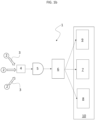
- number 1 indicates a system comprising at least one inertial sensor 2 that is wearable by an individual, for example a patient of a rehabilitation program.
- Each inertial sensor 2 is configured to sample corresponding signals which are representative of biometric and/or medical parameters of the individual so as to obtain sampled data.
- the inertial sensor 2 is configured to sample corresponding inertial data, i.e., accelerations and angular velocities, which are representative of the individual movement of the individual so as to obtain sampled data.
- inertial data i.e., accelerations and angular velocities
- the inertial sensor 2 is a 6-axis inertial sensor comprising an accelerometer and a gyroscope, which are referred to as "sensing elements" in this context.
- each inertial sensor 2 is configured to sample signals at a frequency of at least 30 Hz, and to stream the acquired signal by BLE (acronym for "Bluetooth Low Energy”) technology.
- BLE Bluetooth Low Energy
- Inertial sensor 2 used in the system 1 are already known in the market and will not be further detailed.
- inertial sensors 2 there are three inertial sensors 2 so arranged:
- This configuration of inertial sensors 2a, 2b is used for monitoring the neck and the upper limbs.
- inertial sensors 2 there are three inertial sensors 2 so arranged:
- This configuration of inertial sensors 2a, 2c is used for monitoring the neck and the lower limbs.
- inertial sensors 2 there are five inertial sensors 2 so arranged:
- inertial sensors 2a, 2b, 2c is used for monitoring the neck, the upper limbs, and the lower limbs.
- the sampled data coming from the inertial sensors 2 are channelized in a plurality of channels 3 and provided as input to a normalization unit 4.
- the incoming sampled data arrives at the normalization unit 4 in raw batches of potentially unequal length.
- the system 1 comprises eighteen channels 3, where eighteen is given by three inertial sensors multiplied by two sensing elements multiplied by three axes.
- the system 1 comprises thirty channels 3, where thirty is given by five inertial sensors multiplied by two sensing elements multiplied by three axes.
- the system 1 comprises six channels 3, where six is given by one inertial sensor multiplied by two sensing elements multiplied by three axes.
- each channel 3 is configured to transmit the sampled data acquired from the corresponding inertial sensor 2 to the normalization unit 4.
- each channel 3 the sampled data are transmitted in a chronological order, that is the order of acquisition by the corresponding inertial sensor 2.
- the normalization unit 4 is configured to apply a normalization formula to the sampled data of each channel 3.
- each channel 3 of sampled data has a first constant value subtracted and is then divided by a second constant value.
- the first constant value is the mean of a previously observed dataset of that channel 3
- the second constant value is the standard deviation of a previously observed dataset of that channel 3.
- the normalization unit 4 comprises a buffer to store normalized data. This allows more flexibility with data arriving in batches of irregular length.
- the normalized data exiting the normalization unit 4 are sent as input to a fusion unit 5 that in response is configured to provide as output a single flow data obtained at least as a concatenation of the data coming from the normalization unit 4.
- the buffer of the normalization unit 4 when the buffer of the normalization unit 4 is full, then it starts the transmission of the stored normalized data from the buffer to the fusion unit 5.
- the fusion unit 5 serves for converting the normalized data to an internal format suited for further processing.
- the fusion unit 5 allows to use a variable number of inertial sensors 2, allowing the system 1 to automatically attribute importance to the sensors relevant for each exercise.
- the fusion unit 5 is configured to concatenate the data coming from the normalization unit 4 and then to further normalize them.
- the fusion unit 5 is configured to concatenate the data coming from the normalization unit 4 and then to apply a transform function so as to eliminate unnecessary data, for example uninformative dimensions.
- the same concatenation operation is performed so as to obtain a 6 * i * N dimensional signal where i > 3 is the number of inertial sensors 2 used, and then apply a transform, for example a dimensionality reduction operation.
- dimension-reduction techniques may be applied: principal component analysis (PCA), truncated singular value decomposition, kernel PCA, t-distributed stochastic neighbor embedding, auto-encoder neural network, or any other unsupervised or supervised dimension-reduction technique.
- PCA principal component analysis
- kernel PCA truncated singular value decomposition
- t-distributed stochastic neighbor embedding t-distributed stochastic neighbor embedding
- auto-encoder neural network or any other unsupervised or supervised dimension-reduction technique.
- the same concatenation operation is performed so as to obtain a 6 * i * N dimensional signal where 0 ⁇ i ⁇ 3 is the number of inertial sensors 2 used.
- an equivalent model can be trained on the 6 * i ⁇ 18 channels, simply by changing the number of input dimensions for the input layer of the backbone neural network 6, outlined below.
- the system 1 further comprises a backbone neural network 6 that in response to receiving as input the multivariate time series, is configured to extract features arranged in a spatial vector.
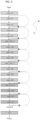
- the backbone neural network 6 is a convolutional residual neural network comprising a stack of parametric 1D convolutions.
- the structure of the backbone convolutional residual neural network 6 is illustrated in figure 3 .
- ResNet residual neural network
- ResNet is a known network that was originally conceived in the field of computer vision image classification.
- ResNet is a stack of parametric 2D convolutions.
- the residual neural network 6 has 1D convolutions replacing the former 2D convolutions of the ResNet according to the state of the art.
- the backbone neural network 6 is configured to map a multivariate time series of dimension 18 * N into a spatial vector of size 512.
- the backbone residual neural network 6 strongly exploits the notable aspect of known ResNet, namely the residual connections between convolutional layers. This aspect allows the network to pass gradients more accurately in the phase of back-propagation in training, avoiding the "vanishing gradient” problem, and allowing the network to be deeper and hence extract richer sets of features from the input. It also smooths the loss function allowing better minima to be found by gradient descent.
- the backbone neural network 6 is pre-trained using a technique called "SimCLR", that stands for “Simple Framework for Contrastive Learning of Visual Representation”.
- the backbone neural network 6 can be further fine-tuned on the labelled data, in conjunction with the first, second and third neural networks that will be introduced hereafter.
- SimCLR pretraining the backbone neural network 6 learns to extract invariant relevant information from the signals acquired by the inertial sensors 2.
- SimCLR pretraining applies contrastive loss to a network's representations of two artificially modified, also known as "augmented", versions of the same input datum x. Training a network to minimise this loss allows it to learn the invariant spatial features that represent the data.
- the distribution of valid augmentations is defined to mimic the onsets that system 1 has to ignore, for example related to the positioning of the sensors, or differences in speed, amplitude, or smoothness of movement. These augmentations shall be random so that each time they are applied to the same signal, they will produce a different output.
- the scope of the above-described pre-training is to allow the backbone neural network 6 to learn a robust vectorial representation of the signal, which should ignore noise and irrelevant features present in the sensor measurement (e.g., white or mechanical noise or patient shaking) and uninformative dynamic-related patterns (e.g., how fast or far a movement is executed).
- noise and irrelevant features present in the sensor measurement e.g., white or mechanical noise or patient shaking
- uninformative dynamic-related patterns e.g., how fast or far a movement is executed.
- Annotated data are not required. This is very important because it allows the backbone neural network 6 to be trained on large amounts of unannotated, and therefore inexpensive, data.
- the backbone neural network 6 is configured to perform a similar dimensionality mapping but can extract even richer feature sets by exploiting alternative convolutional, recurrent, LSTM, attention or other neural network architectures, or classical feature-extraction algorithms including decision trees, random forest, gradient boosted forest, support vector machine, k-means clustering, polynomial regression, logistic regression, rules-based kernel filtering (Sobel Filter, Canny Filter, Laplace Filter).
- convolutional layers recurrent layers
- LSTM attention layers
- fully connected layers random decision tree forest, gradient boosted decision tree forest, support vector machine, k-means clustering, polynomial regression, logistic regression or rules-based kernel filtering.
- the system 1 further comprises a first neural network 7 configured to detect exercise events in response to the receipt of the extracted features coming from the backbone neural network 6.
- the first neural network 7 is configured to predict a binary classification output, namely a single number that has to be interpreted as the probability of whether the individual is performing an exercise.
- the first neural network 7 is a 2-layer multilayer Perceptron.
- the first neural network 7 also applies a ReLU (Rectified Linear Unit) activation function.
- ReLU Rectified Linear Unit
- the first neural network 7 can apply other types of nonlinear activation functions, such as GELU (Gaussian Error Linear Unit) or sigmoid.
- GELU Gausian Error Linear Unit
- sigmoid sigmoid
- the second and third neural networks 8, 9 are activated.
- the first neural network 7 aims at increasing the overall precision of the system 1, decreasing the number of false positive repetitions counted.
- the first neural network 7 In order to function correctly the first neural network 7 must recognize the typical pattern of exercises (highly repetitive) from patterns associated with other activities with which the users are typically engaged in between exercises, which might also show a repetitive pattern, like for example walking.
- supervised learning is employed for teaching to the first neural network 7 to recognize temporal intervals of exercise against temporal intervals of other activities.
- the first neural network 7 is trained using a dataset of labelled examples with annotations regarding the temporal segments in which the individuals were performing the exercises.
- a binary cross entropy loss function which is referred to as L A , is used to tune the parameters of the first neural network 7.
- the first neural network 7 is chosen among other neural network architectures that solve the same task of converting the feature vector from the backbone neural network 6 into a binary classification prediction.
- Examples of such alternatives include convolutional layers, recurrent layers, LSTM, attention layers, or any other neural network-based architectures.
- the first neural network 7 may be replaced by an alternative feature classification algorithm that is not based on neural networks, for example a support vector machine, classification tree, random forest classifier, gradient boosted classification forest, k-means clustering, or any of the other techniques known in the field.
- an alternative feature classification algorithm that is not based on neural networks, for example a support vector machine, classification tree, random forest classifier, gradient boosted classification forest, k-means clustering, or any of the other techniques known in the field.
- the first neural network 7 receives as input the spatial vector from the backbone neural network 6 and outputs a single scalar value denoting the probability of being inside the exercise execution.
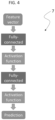
- the dataflow of the first neural network 7 is depicted in figure 4 .
- the system 1 further comprises a second neural network 8 configured to classify the exercise event as belonging to a pool or library of K exercises assigned to the individual by a physician, in response to the receipt of the detected exercise event from the first neural network 7.
- a second neural network 8 configured to classify the exercise event as belonging to a pool or library of K exercises assigned to the individual by a physician, in response to the receipt of the detected exercise event from the first neural network 7.
- the second neural network 8 is a 2-layer multilayer Perceptron.
- the second neural network 8 is a multiclass neural network with K distinct probabilistic output units, where the j-th output is interpreted as the probability, estimated by the network, that the individual is performing the j-th exercise.
- the dataflow in the second neural network 8 follows the same structure as that of the first neural network 7.
- the second neural network 8 is trained using a dataset of labelled examples with annotations encoding the exercise that the individual is performing.
- a categorical-cross-entropy loss function is used to tune the parameters of the second neural network 8 for matching the ground truth annotations. This quantity is referred to as L E .
- multi-class classification loss functions may be used, for example focal loss, Kullback-Leibler divergence loss, hinge loss, cosine similarity, or any other loss function that is meaningful in this context.
- the second neural network 8 is responsible for recognizing the exercise being performed by the individual. Supposing that the exercise library is composed of K possible different exercises, the second neural network 8 outputs a probability vector composed of K entries where the j-th entry denotes the probability that the individual is performing the j-th exercise.
- the second neural network 8 receives as input the spatial vector from the backbone neural network 6 and outputs a K dimensional vector that is normalized through a softmax activation function to obtain a valid probability distribution.
- the second neural network 8 may be chosen among other neural network architectures that solve the same task of converting the feature vector from the backbone neural network 6 into a K-dimensional prediction vector.
- Examples of such alternatives include convolutional layers, recurrent layers, LSTM, attention layers, or any other neural network-based architectures.
- the second neural network 8 may be replaced by an alternative feature multiclass classification algorithm that is not based on neural networks, for example a support vector machine, classification tree, random forest classifier, gradient boosted classification forest, k-means clustering, or any of the other techniques known in the field.
- the system 1 further comprises a third neural network 9 that, in response to the identification of a correct exercise event by the second neural network 8 and based on the features extracted by the backbone neural network 6, is configured to count repetitions of said identified exercise.
- phases a complex rehabilitation exercise is decomposed into smaller movements (here called "phases") units consisting of specific coherent movements of one or more limbs.
- a specific coherent movement can be defined as a movement from a rest position to a position of maximal displacement and back to rest, where "rest, movement towards maximal displacement, movement back to the rest position" are the small movement units also called “phases”.
- Coherent movements are movements performed continuously without pauses in between.
- Decomposing the exercise in the aforementioned way allows to create a simple finite state machine that can be used for counting an exercise's repetitions.
- the end of a repetition occurs when the unique phase composing the exercise ends.
- the repetition counter is incremented by 1.
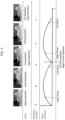
- a half of a period of a periodic function is used to model the exercise phase (e.g., sin(t) for t in [0, pi]).
- phase indicator function f(t) f(t)
- the phase indicator function f(t) is implemented as a smoothed sawtooth function, that is smoothed through a gaussian kernel.
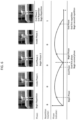
- a subject laying down performs an extension of its upper limbs.
- the phase indicator is 0 in the initial position, when the subject lays both arms on its thighs; the phase indicator increases to reach 1 at the maximum extension of its upper limbs, afterwards the phase indicator decreases till 0 when the subject reaches the initial position again: at that point, the repetition counter increases by 1 unit.
- the subject performs a 2-phased exercise: while sitting on a support, the subject starts with the arms spread outwards; during the first exercise phase the subjects moves the left arm on its knee and then retraces the movement to the initial position; during the second exercise phase the subject moves the right arm on its knee and then retraces.
- the repetition counter is incremented of 1 unit after both phases are completed.
- Exercise complexity has been defined according to five difficulty levels. Each level has been described considering the following criteria:
- Exercise complexity definition is summarized in the table of figure 7 .
- the third neural network 9 receives as input the spatial vector from the backbone neural network 6 and outputs a single scalar value which is a prediction of the phase indicator function.
- the third neural network 9 is a 2-layer multilayer Perceptron that produces a continuous regression of the phase indicator function.
- the third neural network 9 may be chosen among other neural network architectures that solve the same task of converting the feature vector from the backbone neural network 6 into a regression of the phase indicator function.
- Examples of such alternatives include convolutional layers, recurrent layers, LSTM, attention layers, or any other neural network-based architectures.
- the third neural network 9 may be replaced by an alternative continuous regression algorithm that is not based on neural networks, for example polynomial regression, random forest regressor, gradient boosted regression forest, or any of the other techniques known in the field.
- the third neural network 9 subsequently applies in post-processing a Finite State Machine (FSM) to the predicted value of the phase indicator function over time.
- FSM Finite State Machine
- This FSM acts as a counting function that counts the number of phases that have been enacted of a single repetition.
- the third neural network 9 is trained end-to-end with annotated data to solve a regression problem, where the loss L c is a distance function between the network output and the ground-truth phase indicator. In one embodiment this distance function is the mean squared error between the prediction and the true phase indicator function f(t).
- this loss function may be replaced by other suitable distance functions, including but not limited to the cross-entropy loss on the interval [0,1], smoothed mean absolute error, log hyperbolic cosine loss, quantile loss, or concordance correlation coefficient loss.
- the sum of these outputs of the FSM is the real-time predicted count of exercise repetitions.
- the dataflow of the third neural network 9 is depicted in figure 6 .
- the third neural network 9 creates a nonlinear transformation mapping from the input space of the feature vector extracted by the backbone neural network 6 to a one-dimensional space, in which the phase of the exercise is represented by a regular curve.
- the third neural network 9 is able to count phase transitions of the transformed signal and divide by the number of phases that make up a repetition.
- the phase indicator function may be conceived as an abstraction layer, through which different exercises with different patterns are transformed to the same patterns, which definitively depends only on the fraction of completion of the repetition.
- the three neural networks 7, 8, 9 could be united in one functional block 10 sharing a single backbone neural network 6. This is shown in the embodiment of fig. 1b .
- the three neural networks 7, 8 and 9 may retain distinct backbone neural networks 6, or two of them may share a backbone neural network 6 and the other have a distinct backbone neural network 6.
- the backbone neural network 6 for each of the three neural networks 7, 8 and 9 may even possess an architecture distinct from that of the others, for example other convolutional, attention, LSTM, recurrent architectures, or indeed any suitable neural network feature extraction architecture.
- L DA stands for domain adaptation loss and will be introduced below.
- the coefficients c A , c E , c C , and c DA are used to scale the relative importance of each loss term, which is very important for this kind of multi-objective minimization problem, since the losses might be competing with each other and live on different scales.
- coefficients might be adaptive and might be searched with a cross-validated grid search to set them to their optimal value.
- the domain adaptation loss is a key ingredient introduced here for improving the performance of the system on complex exercises and allowing to make use of large amounts of unlabeled (and therefore unexpensive) data, collected while new user use the system.
- domain adaptation loss accounts for the fact that labelled data acquired from patients is expensive and might not be possible to collect for privacy related issues.
- the subjects in the pool A on which supervised learning is performed, might not be completely representative of the pool B , to which it is desired to apply the inference.
- An example is the subjects belonging to the two pools having different degrees of movement impairment.
- the domain adaptation loss is used to find a trade-off so that the losses of the activity, exercise and counting units are minimized without relying only on features which are specific to the samples in the database D A .
- the domain adaptation loss acts only on the features extracted by the backbone and forces them to share the same probability distribution between D A and D B .
- the output of the system 1 may be forwarded to a device equipped with a monitor that shows in real-time to the user the output of inference method described below (for example the number of repetitions executed, the correctness of the ongoing exercise or possible issues related to the exercise execution).
- the system 1 comprises a multi-headed neural network, its functionality is split into two distinct phases: a learning phase, where the parameters of the system are tuned on the data, and an inference phase where the outcomes of the system are suitably presented to the subject during its exercise sessions.
- the claimed system 1 tracks the performance of the subject over time, by tracking a quality score given to each exercise session it performs.
- the quality score is a number bounded between 0 and 1, where 1 means a perfect execution.
- SessionScore Average([Score(1), ..., Score(K)]).
- the learning phase can be made incremental, and newly acquired data can improve the performances of the system over time.
- the learning phase of the system is composed of two sub-phases:
- the learning phase has already been introduced above, together with the disclosure of the system.
- a computer-implemented method for counting repetitions of physical exercises by an individual is addressed with number 100.
- the method 100 comprises at least the following steps:
- the inertial sensors 2 are arranged on multiple points of the body of an individual and start sampling signals that are representative of biometric and/or medical parameters.
- the sampled data are represented as the channels 3 and provided as input to the normalization unit 4, where they arrived in a chronological order.
- the normalization unit 4 applies a normalization formula to the sampled data.
- the normalized data are stored in the buffer within the normalization unit 4.
- the buffer is preferably a circular buffer, whose dimension is chosen depending on the specific exercise performed by the individual: shorter exercises require a shorter buffer, whereas longer exercises require a longer buffer.
- This operation is performed with a stride of m seconds (i.e., each m seconds the updated data contained in the buffer is forwarded to the units downstream for inference).
- stride The exact value of the stride is chosen considering the trade-off between performances, responsiveness, and resource requirements constraints.
- the fusion unit 5 provides a multivariate time series that is obtained by at least a concatenation of the normalized data coming from the normalization unit 4.
- the multivariate time series are fed to the backbone neural network 6 that extracts features arranged in a spatial vector of size 512.
- the backbone neural network 6 is a convolutional ResNet configured to map a multivariate time series of dimension 18 * N into a spatial vector of size 512.
- the spatial vector is sent to the three neural networks 7, 8, 9.
- the first neural network 7 acts as an enabler for the second and third neural networks 8 and 9.
- the second and third neural networks 8, 9 are enabled.
- the second neural network 8 processes the features extracted by the backbone neural network 6 and assesses the correctness of the exercise executed by the individual.
- Possible applications of the second neural network 8 are:
- the third neural network 9 processes the features extracted by the backbone neural network 6 and outputs the number of correctly executed repetitions.
- the third neural network 9 has the following properties:
- the specific counting algorithm applied by the third neural network 9 comprises:
- the smoothing filter stage comprises a Butterworth low-pass filter applied to the predicted phase indicator function.
- the smoothing filter stage can use other algorithms to perform the filtering, including but not limited to adaptive filtering, Kalman filtering, or a neural network denoising autoencoder.
- the FSM changes state based on the smoothed predicted phase indicator function exceeding or subceeding certain predefined thresholds.
- the FSM changes state based on one or more conditions determined from the smoothed predicted phase indicator function, including but not limited to conditions on: the gradient (first derivative w.r.t time), higher order derivatives w.r.t time, or thresholds that vary based on other values such as the current phase counter or repetition counter.
- the claimed invention helps reducing the amount of data needed for training because many different exercises usually share common sub-movements. By feeding the system with samples from all types of exercises, the system can effectively learn the simplest movements, regardless of the exercises they belong to, therefore reducing drastically the data required for training.
- the claimed invention allows to detect even complex exercises, composed of a sequence of movements on different axes in several phases, also involving more limbs (e.g., bilateral exercises), usually adopted into clinical practice as part of rehabilitation protocols.
- the claimed invention is more flexible since it allows a quick and easy addition of new exercises.
- the claimed invention works properly both for healthy and impaired subjects and can be used both in the clinic and at home.
- the system can assist patients in performing physical rehabilitation programs without the physical presence of a physician.
- exercise definition also includes ADLs, which are "Activities of Daily Living” that refer to people's daily activities (such as, for instance, personal hygiene or grooming, dressing, toileting, transferring or ambulating, eating, etc). ADLs may indeed be split in phases, so patients may be monitored in their improvement in performing these activities.
- ADLs are "Activities of Daily Living” that refer to people's daily activities (such as, for instance, personal hygiene or grooming, dressing, toileting, transferring or ambulating, eating, etc).
- ADLs may indeed be split in phases, so patients may be monitored in their improvement in performing these activities.
- the system is able to identify, analyse and count repetitions of physical exercises executed by the subjects and, from this, it may be used to provide real-time feedback to the subjects, for example assessing the correctness of the exercises and tracking their improvements.
Landscapes
- Health & Medical Sciences (AREA)
- Engineering & Computer Science (AREA)
- Public Health (AREA)
- Medical Informatics (AREA)
- General Health & Medical Sciences (AREA)
- Epidemiology (AREA)
- Primary Health Care (AREA)
- Biomedical Technology (AREA)
- Physical Education & Sports Medicine (AREA)
- Biophysics (AREA)
- Life Sciences & Earth Sciences (AREA)
- Data Mining & Analysis (AREA)
- Databases & Information Systems (AREA)
- Pathology (AREA)
- Measurement Of The Respiration, Hearing Ability, Form, And Blood Characteristics Of Living Organisms (AREA)
Claims (13)
- System (1) zur Identifizierung, Analyse und Zählung von Wiederholungen körperlicher Übungen durch eine Person, wobei das System (1) umfasst:- mindestens einen Trägheitssensor (2), der von der Person getragen werden kann und so ausgelegt ist, dass er entsprechende Signale abtastet, die für biometrische und/oder medizinische Parameter der Person repräsentativ sind, um abgetastete Daten zu erhalten;- eine Normalisierungseinheit (4), die ausgelegt ist, um die abgetasteten Daten von dem mindestens einen Trägheitssensor (2) zu empfangen und zu normalisieren, um normalisierte Daten zu erhalten;- eine Fusionseinheit (5), die ausgelegt ist, um Sätze von normalisierten Daten von der Normalisierungseinheit (4) zu empfangen und einen einzelnen Datenfluss in Form einer multivariaten Zeitreihe auszugeben, die durch mindestens eine Verkettung der von der Normalisierungseinheit (4) kommenden normalisierten Daten erhalten wird;wobei das System dadurch gekennzeichnet ist, dass es ferner Folgendes umfasst:- ein neuronales Backbone-Netzwerk (6), das als Reaktion auf das Empfangen der multivariaten Zeitreihe als Eingabe ausgelegt ist, um Merkmale zu extrahieren, die in einem räumlichen Vektor angeordnet sind, wobei das neuronale Backbone-Netzwerk (6) durch eine SimCLR-Technik (Simple Framework for Contrastive Learning of Visual Representation) vortrainiert wurde;- ein erstes neuronales Netzwerk (7), das ausgelegt ist, um Übungsereignisse als Reaktion auf den Empfang der extrahierten Merkmale aus dem neuronalen Backbone-Netzwerk (6) zu erkennen, wobei das erste neuronale Netzwerk (7) trainiert wurde, um Übungsereignisse unter Verwendung eines Datensatzes von etikettierten Beispielen mit Anmerkungen betreffend zeitliche Segmente, in denen Personen die Übungen durchführten, zu erkennen, wobei eine binäre Kreuzentropieverlustfunktion LA verwendet wird, um Parameter des ersten neuronalen Netzwerks (7) abzustimmen;- ein zweites neuronales Netzwerk (8), das als Reaktion auf ein von dem ersten neuronalen Netzwerk (7) erkanntes Übungsereignis und auf der Grundlage der von dem neuronalen Backbone-Netzwerk (6) extrahierten Merkmale ausgelegt ist, um das Übungsereignis aus einem Pool von K verschiedenen Übungen zu identifizieren, die der Person zugewiesen werden können, wobei das zweite neuronale Netzwerk (8) trainiert wurde, um die Übungen unter Verwendung eines Datensatzes von etikettierten Beispielen mit Anmerkungen zu identifizieren, die die Übung kodieren, die die Person durchführt, wobei eine kategoriale Kreuzentropieverlustfunktion LE verwendet wird, um Parameter des zweiten neuronalen Netzwerks (8) abzustimmen, um Grundwahrheitsanmerkungen abzugleichen;- ein drittes neuronales Netzwerk (9), das als Reaktion auf die Identifizierung eines Übungsereignisses durch das zweite neuronale Netzwerk (8) und auf der Grundlage der durch das neuronale Backbone-Netzwerk (6) extrahierten Merkmale ausgelegt ist, um Wiederholungen der identifizierten Übung zu zählen, wobei das dritte neuronale Netzwerk (9) trainiert wurde, um eine jede Übung in ein oder mehrere Zeitsegmente oder Phasen zu zerlegen und eine nachfolgende diskretisierende Zählfunktion auf die Phasen anzuwenden, wobei das dritte neuronale Netzwerk (9) Ende-zu-Ende mit annotierten Daten trainiert wurde, um ein Regressionsproblem zu lösen, wobei der Verlust Lc eine Abstandsfunktion zwischen dem Ausgang des dritten neuronalen Netzwerks und einem Ground-Truth-Phasenindikator ist;- eine Version des neuronalen Backbone-Netzwerks (6), die an die Aufgaben der binären Übungsklassifizierung, der Multiklassenübungsklassifizierung und der Regression der Phasenindikatorfunktion angepasst wurde, indem das neuronale Backbone-Netzwerk (6) in Kombination mit den drei neuronalen Netzwerken (7), (8) und (9) auf markierte Daten feinabgestimmt wird, um die oben genannten Aufgaben zu erfüllen, wobei die neuronalen Netzwerke (6, 7, 8, 9) während der Feinabstimmung angewiesen werden, einen Verlust zu minimieren, der sich wie folgt zusammensetzt: L = CA * LA + CE * LE+ CC * Lc + CDA * LDA, welches durch Gradientenabstieg minimiert wird, wobei LDA für Domänenadaptionsverlust steht und CA, CE, CC, und CDA Koeffizienten sind, die zur Skalierung entsprechender Verlustterme verwendet werden,wobei das neuronale Backbone-Netzwerk (6) ein neuronales Faltungsrestnetzwerk (6) ist, das einen Stapel parametrischer 1D-Faltungen umfasst, wobei das neuronale Backbone-Netzwerk (6) ausgelegt ist, um eine multivariate Zeitreihe der Dimension 18 * N in einen räumlichen Vektor der Größe 512 abzubilden.
- System (1) nach Anspruch 1, wobei der mindestens eine Trägheitssensor (2) ein 6-Achsen-Trägheitssensor ist, der einen Beschleunigungsmesser und ein Gyroskop umfasst.
- System (1) nach einem der vorhergehenden Ansprüche, ferner umfassend eine Vielzahl von Kanälen (3) zum Übertragen von abgetasteten Daten von dem Trägheitssensor (2) zu der Normalisierungseinheit (4), wobei ein jeder der Kanäle (3) ausgelegt ist, um die abgetasteten Daten in einer chronologischen Reihenfolge zu empfangen und zu übertragen.
- System (1) nach einem der vorhergehenden Ansprüche, wobei die Normalisierungseinheit (4) einen Puffer zum Speichern normalisierter Daten umfasst.
- System (1) nach einem der vorhergehenden Ansprüche, wobei das erste neuronale Netzwerk (7), das zweite neuronale Netzwerk (8) und das dritte neuronale Netzwerk (9) jeweils ein zweischichtiges mehrschichtiges Perceptron ist.
- System (1) nach einem der Ansprüche 1 bis 4, wobei das erste neuronale Netzwerk (7), das zweite neuronale Netzwerk (8) und/oder das dritte neuronale Netzwerk (8) aus einer Kombination einer beliebigen der folgenden Architekturen ausgewählt ist: Faltungsschichten, wiederkehrende Schichten, LSTM, Aufmerksamkeitsschichten, vollständig verbundene Schichten, Zufallsentscheidungsbaumwald, gradientenverstärkte Entscheidungsbaumwald, Unterstützungsvektormaschine, k-Mittel-Clustering, polynomiale Regression, logistische Regression.
- System (1) nach einem der vorhergehenden Ansprüche, wobei eine jede Phase einer Übung mit einer Phasenindikatorfunktion f(t) mit den folgenden Eigenschaften modelliert wird:• f(t) im Bereich [0, 1] liegt;• f(t) = 0, wenn die Person die Übung nicht durchführt;• wobei Tb den Beginn der Übungsphase bezeichnet und Te das Ende der Übungsphase bezeichnet, f(Tb) = f(Te) = 0;• wobei Tm den Mittelpunkt der Übungsphase bezeichnet, wobei Tb < Tm < Te, f(Tm) = 1;• f(t) monoton in [Tb, Tm[ ansteigend ist;• f(t) monoton [Tm, Te[ fallend ist.
- System (1) nach Anspruch 7, wobei die Phasenindikatorfunktion f(t) als geglättete Sägezahnfunktion implementiert ist, die durch einen Gauß-Kern geglättet ist.
- System (1) nach Anspruch 8, wobei das dritte neuronale Netzwerk (9) eine Finite-State-Maschine, FSM, beinhaltet, die dazu ausgelegt ist, eine geglättete Regressionsvorhersage der Phasenindikatorfunktion f(t) zu akzeptieren und entweder den numerischen Wert "1" auszugeben, wenn eine Phase einer Wiederholung einer Übung abgeschlossen wurde, oder den numerischen Wert "0" in einem jeden anderen Fall, basierend darauf, wenn die geglättete Regressionsvorhersage bestimmte vordefinierte logische Bedingungen erfüllt, die eine Kombination aus einem der Folgenden sind: Schwellenwerte für den Funktionswert, Schwellenwerte für den Gradienten, Schwellenwerte für die Ableitungen zweiter oder höherer Ordnung, adaptive Schwellenwerte basierend auf dem Zustand und/oder Ausgaben der FSM.
- Computerimplementiertes Verfahren (100) zur Identifizierung, Analyse und Zählung von Wiederholungen körperlicher Übungen durch eine Person unter Verwendung des Systems (1) nach einem der vorhergehenden Ansprüche, wobei das Verfahren (100) die folgenden Schritte umfasst:- Anordnen mindestens eines Trägheitssensors in einem Körperteil der Person (101);- Abtasten von Signalen, die für biometrische und/oder medizinische Parameter der Person repräsentativ sind, unter Verwendung des mindestens einen Trägheitssensors, um abgetastete Daten (102) zu erhalten;- Normalisieren der abgetasteten Daten (103);- Verketten der normalisierten abgetasteten Daten, um einen einzelnen Datenfluss in Form einer multivariaten Zeitreihe (104) zu erhalten;- Extrahieren von Merkmalen aus den multivariaten Zeitreihen unter Verwendung des neuronalen Backbone-Netzwerks des Systems, wobei das neuronale Backbone-Netzwerk durch eine SimCLR-Technik (Simple Framework for Contrastive Learning of Visual Representation (105) vortrainiert wurde;- Erkennen von Übungsereignissen als Reaktion auf den Empfang der extrahierten Merkmale unter Verwendung des ersten neuronalen Netzwerks des Systems (106);- als Reaktion auf ein von dem ersten neuronalen Netzwerk erkanntes Übungsereignis und basierend auf den von dem neuronalen Backbone-Netzwerk extrahierten Merkmalen, Identifizieren des Übungsereignisses aus einem Pool von K verschiedenen Übungen mittels des zweiten neuronalen Netzwerks des Systems (107);- als Reaktion auf die Identifizierung eines Übungsereignisses durch das zweite neuronale Netzwerk und basierend auf den durch das neuronale Backbone-Netzwerk extrahierten Merkmalen, Zählen von Wiederholungen der identifizierten Übung mittels des dritten neuronalen Netzwerks des Systems, wobei das dritte neuronale Netzwerk trainiert wurde, um eine jede Übung in einem oder mehreren Zeitsegmenten oder Phasen (108) zu zerlegen.
- Verfahren (100) nach Anspruch 10, wobei eine jede Phase einer Übung mit einer Phasenindikatorfunktion f(t) mit den folgenden Eigenschaften modelliert wird:• f(t) im Bereich [0, 1] liegt;• f(t) = 0, wenn die Person die Übung nicht durchführt;• wobei Tb den Beginn der Übungsphase bezeichnet und Te das Ende der Übungsphase bezeichnet, f(Tb) = f(Te) = 0;• wobei Tm den Mittelpunkt der Übungsphase bezeichnet, wobei Tb < Tm < Te, f(Tm) = 1;• f(t) monoton in [Tb, Tm[ ansteigend ist;• f(t) monoton [Tm, Te[ fallend ist.
- Verfahren (100) nach Anspruch 11, wobei der Schritt zum Zählen der Wiederholungen (108) die folgenden Teilschritte umfasst:- Anwenden eines glättenden Tiefpassfilters, um störende Schwingungen zu entfernen und die Menge an Rauschen in der Phasenindikatorfunktion zu reduzieren;- Initialisieren eines Phasenzählers zu N, d.h. der Anzahl der Phasen, aus denen sich die Übung zusammensetzt;- bis der Phasenzähler Null ist, Wiederholen eines Zyklus, der Folgendes umfasst:• Initialisieren einer Finite-State-Machine des dritten neuronalen Netzes in einen Ausgangszustand;• sobald die gefilterte Phasenindikatorfunktion bestimmte logische Bedingungen erfüllt, Anwenden eines Zustandsübergangs auf den Zustand, der auf eine Zustandsübung eingestellt ist, andernfalls wird er unverändert gelassen;• sobald die gefilterte Phasenindikatorfunktion andere logische Bedingungen erfüllt, Zurücksetzen des Zustands auf den Ausgangszustand und Verringern des Phasenzählers einer Einheit;- wenn der Phasenzähler Null erreicht, Erhöhen der Anzahl der erkannten Wiederholungen um eine Einheit und Zurücksetzen des Phasenzählers auf N.
- Computerprogramm, aufweisend Anweisungen, die, wenn sie von einer Computervorrichtung ausgeführt werden, die Computervorrichtung dazu veranlassen, das Verfahren nach einem der Ansprüche 10 bis 12 durchzuführen.
Priority Applications (1)
| Application Number | Priority Date | Filing Date | Title |
|---|---|---|---|
| EP23153803.4A EP4407628B1 (de) | 2023-01-27 | 2023-01-27 | System und verfahren zur identifizierung, analyse und zählung von wiederholungen körperlicher übungen durch eine person, insbesondere zur verwendung in rehabilitationsprogrammen |
Applications Claiming Priority (1)
| Application Number | Priority Date | Filing Date | Title |
|---|---|---|---|
| EP23153803.4A EP4407628B1 (de) | 2023-01-27 | 2023-01-27 | System und verfahren zur identifizierung, analyse und zählung von wiederholungen körperlicher übungen durch eine person, insbesondere zur verwendung in rehabilitationsprogrammen |
Publications (3)
| Publication Number | Publication Date |
|---|---|
| EP4407628A1 EP4407628A1 (de) | 2024-07-31 |
| EP4407628C0 EP4407628C0 (de) | 2025-06-04 |
| EP4407628B1 true EP4407628B1 (de) | 2025-06-04 |
Family
ID=85132884
Family Applications (1)
| Application Number | Title | Priority Date | Filing Date |
|---|---|---|---|
| EP23153803.4A Active EP4407628B1 (de) | 2023-01-27 | 2023-01-27 | System und verfahren zur identifizierung, analyse und zählung von wiederholungen körperlicher übungen durch eine person, insbesondere zur verwendung in rehabilitationsprogrammen |
Country Status (1)
| Country | Link |
|---|---|
| EP (1) | EP4407628B1 (de) |
Families Citing this family (1)
| Publication number | Priority date | Publication date | Assignee | Title |
|---|---|---|---|---|
| CN119131515B (zh) * | 2024-11-13 | 2025-03-28 | 山东师范大学 | 基于深度辅助对比学习的胃部代表性图像分类方法及系统 |
Family Cites Families (4)
| Publication number | Priority date | Publication date | Assignee | Title |
|---|---|---|---|---|
| RO133954A2 (ro) | 2018-09-21 | 2020-03-30 | Kineto Tech Rehab S.R.L. | Sistem şi metodă pentru moni- torizarea optimizată a articulaţiilor în kinetoterapie |
| US20220176201A1 (en) | 2019-03-29 | 2022-06-09 | Alive Fitness Llc | Methods and systems for exercise recognition and analysis |
| AU2020101986A4 (en) | 2020-08-26 | 2020-10-01 | S. Arvind | AAM-Physical Fitness: ANALYSIS OF PHYSICAL FITNESS AND ACTIVITY LEVEL USING MACHINE LEARNING, DEEP LEARNING PROGRAMMING. |
| US20220080262A1 (en) * | 2020-09-14 | 2022-03-17 | Train121 Inc. | Method and apparatus to generate motion data of a barbell and to process the generated motion data |
-
2023
- 2023-01-27 EP EP23153803.4A patent/EP4407628B1/de active Active
Also Published As
| Publication number | Publication date |
|---|---|
| EP4407628A1 (de) | 2024-07-31 |
| EP4407628C0 (de) | 2025-06-04 |
Similar Documents
| Publication | Publication Date | Title |
|---|---|---|
| Serpush et al. | Wearable sensor‐based human activity recognition in the smart healthcare system | |
| Tarafdar et al. | Recognition of human activities for wellness management using a smartphone and a smartwatch: A boosting approach | |
| Nafea et al. | Multi-sensor human activity recognition using CNN and GRU | |
| Pham et al. | Combining skeleton and accelerometer data for human fine-grained activity recognition and abnormal behaviour detection with deep temporal convolutional networks | |
| Mohd Noor | Feature learning using convolutional denoising autoencoder for activity recognition | |
| Tao et al. | Attention-based sensor fusion for human activity recognition using IMU signals | |
| Sikder et al. | Log-sum distance measures and its application to human-activity monitoring and recognition using data from motion sensors | |
| Dedhia et al. | Pose estimation and virtual gym assistant using MediaPipe and machine learning | |
| Rahman et al. | [Retracted] Automated Detection of Rehabilitation Exercise by Stroke Patients Using 3‐Layer CNN‐LSTM Model | |
| CN120108644B (zh) | 一种应用于康复指导的下肢运动数据实时分析方法和系统 | |
| Hajjej et al. | Deep human motion detection and multi-features analysis for smart healthcare learning tools | |
| EP4407628B1 (de) | System und verfahren zur identifizierung, analyse und zählung von wiederholungen körperlicher übungen durch eine person, insbesondere zur verwendung in rehabilitationsprogrammen | |
| CN120199486A (zh) | 基于多模态时序数据融合的孤独症评估系统和方法 | |
| WO2021142532A1 (en) | Activity recognition with deep embeddings | |
| Kamoji et al. | Prediction of Parkinson's disease using machine learning and deep transfer learning from different feature sets | |
| Tanigaki et al. | Predicting performance improvement of human activity recognition model by additional data collection | |
| Chowdhury et al. | Zerohar: Sensor context augments zero-shot wearable action recognition | |
| Zou et al. | STFNet: Enhanced and lightweight spatiotemporal fusion network for wearable human activity recognition | |
| Zhao | A parallel CNN architecture for sport activity recognition based on minimal movement data | |
| Manocha et al. | A novel edge analytics assisted motor movement recognition framework using multi-stage Convo-GRU model | |
| Swain et al. | Yoga pose monitoring system using deep learning | |
| Paulo et al. | Trajectory-based gait pattern shift detection for assistive robotics applications | |
| Guayacán et al. | Quantification of parkinsonian kinematic patterns in body-segment regions during locomotion | |
| Jeong et al. | Physical workout classification using wrist accelerometer data by deep convolutional neural networks | |
| Jayakarthik et al. | Fall detection scheme based on deep learning model for high-quality life |
Legal Events
| Date | Code | Title | Description |
|---|---|---|---|
| PUAI | Public reference made under article 153(3) epc to a published international application that has entered the european phase |
Free format text: ORIGINAL CODE: 0009012 |
|
| STAA | Information on the status of an ep patent application or granted ep patent |
Free format text: STATUS: THE APPLICATION HAS BEEN PUBLISHED |
|
| STAA | Information on the status of an ep patent application or granted ep patent |
Free format text: STATUS: REQUEST FOR EXAMINATION WAS MADE |
|
| AK | Designated contracting states |
Kind code of ref document: A1 Designated state(s): AL AT BE BG CH CY CZ DE DK EE ES FI FR GB GR HR HU IE IS IT LI LT LU LV MC ME MK MT NL NO PL PT RO RS SE SI SK SM TR |
|
| 17P | Request for examination filed |
Effective date: 20240724 |
|
| RBV | Designated contracting states (corrected) |
Designated state(s): AL AT BE BG CH CY CZ DE DK EE ES FI FR GB GR HR HU IE IS IT LI LT LU LV MC ME MK MT NL NO PL PT RO RS SE SI SK SM TR |
|
| GRAP | Despatch of communication of intention to grant a patent |
Free format text: ORIGINAL CODE: EPIDOSNIGR1 |
|
| STAA | Information on the status of an ep patent application or granted ep patent |
Free format text: STATUS: GRANT OF PATENT IS INTENDED |
|
| INTG | Intention to grant announced |
Effective date: 20250206 |
|
| GRAS | Grant fee paid |
Free format text: ORIGINAL CODE: EPIDOSNIGR3 |
|
| GRAA | (expected) grant |
Free format text: ORIGINAL CODE: 0009210 |
|
| STAA | Information on the status of an ep patent application or granted ep patent |
Free format text: STATUS: THE PATENT HAS BEEN GRANTED |
|
| RAP1 | Party data changed (applicant data changed or rights of an application transferred) |
Owner name: ARC INTELLICARE LTD |
|
| AK | Designated contracting states |
Kind code of ref document: B1 Designated state(s): AL AT BE BG CH CY CZ DE DK EE ES FI FR GB GR HR HU IE IS IT LI LT LU LV MC ME MK MT NL NO PL PT RO RS SE SI SK SM TR |
|
| REG | Reference to a national code |
Ref country code: GB Ref legal event code: FG4D |
|
| REG | Reference to a national code |
Ref country code: CH Ref legal event code: EP |
|
| REG | Reference to a national code |
Ref country code: DE Ref legal event code: R096 Ref document number: 602023003745 Country of ref document: DE |
|
| REG | Reference to a national code |
Ref country code: IE Ref legal event code: FG4D |
|
| U01 | Request for unitary effect filed |
Effective date: 20250703 |
|
| U07 | Unitary effect registered |
Designated state(s): AT BE BG DE DK EE FI FR IT LT LU LV MT NL PT RO SE SI Effective date: 20250709 |
|
| PG25 | Lapsed in a contracting state [announced via postgrant information from national office to epo] |
Ref country code: ES Free format text: LAPSE BECAUSE OF FAILURE TO SUBMIT A TRANSLATION OF THE DESCRIPTION OR TO PAY THE FEE WITHIN THE PRESCRIBED TIME-LIMIT Effective date: 20250604 |
|
| PG25 | Lapsed in a contracting state [announced via postgrant information from national office to epo] |
Ref country code: NO Free format text: LAPSE BECAUSE OF FAILURE TO SUBMIT A TRANSLATION OF THE DESCRIPTION OR TO PAY THE FEE WITHIN THE PRESCRIBED TIME-LIMIT Effective date: 20250904 Ref country code: GR Free format text: LAPSE BECAUSE OF FAILURE TO SUBMIT A TRANSLATION OF THE DESCRIPTION OR TO PAY THE FEE WITHIN THE PRESCRIBED TIME-LIMIT Effective date: 20250905 |
|
| PG25 | Lapsed in a contracting state [announced via postgrant information from national office to epo] |
Ref country code: PL Free format text: LAPSE BECAUSE OF FAILURE TO SUBMIT A TRANSLATION OF THE DESCRIPTION OR TO PAY THE FEE WITHIN THE PRESCRIBED TIME-LIMIT Effective date: 20250604 |
|
| PG25 | Lapsed in a contracting state [announced via postgrant information from national office to epo] |
Ref country code: HR Free format text: LAPSE BECAUSE OF FAILURE TO SUBMIT A TRANSLATION OF THE DESCRIPTION OR TO PAY THE FEE WITHIN THE PRESCRIBED TIME-LIMIT Effective date: 20250604 |
|
| PG25 | Lapsed in a contracting state [announced via postgrant information from national office to epo] |
Ref country code: RS Free format text: LAPSE BECAUSE OF FAILURE TO SUBMIT A TRANSLATION OF THE DESCRIPTION OR TO PAY THE FEE WITHIN THE PRESCRIBED TIME-LIMIT Effective date: 20250904 |
|
| PG25 | Lapsed in a contracting state [announced via postgrant information from national office to epo] |
Ref country code: IS Free format text: LAPSE BECAUSE OF FAILURE TO SUBMIT A TRANSLATION OF THE DESCRIPTION OR TO PAY THE FEE WITHIN THE PRESCRIBED TIME-LIMIT Effective date: 20251004 |
|
| PG25 | Lapsed in a contracting state [announced via postgrant information from national office to epo] |
Ref country code: SM Free format text: LAPSE BECAUSE OF FAILURE TO SUBMIT A TRANSLATION OF THE DESCRIPTION OR TO PAY THE FEE WITHIN THE PRESCRIBED TIME-LIMIT Effective date: 20250604 |
|
| PG25 | Lapsed in a contracting state [announced via postgrant information from national office to epo] |
Ref country code: CZ Free format text: LAPSE BECAUSE OF FAILURE TO SUBMIT A TRANSLATION OF THE DESCRIPTION OR TO PAY THE FEE WITHIN THE PRESCRIBED TIME-LIMIT Effective date: 20250604 |
|
| PG25 | Lapsed in a contracting state [announced via postgrant information from national office to epo] |
Ref country code: SK Free format text: LAPSE BECAUSE OF FAILURE TO SUBMIT A TRANSLATION OF THE DESCRIPTION OR TO PAY THE FEE WITHIN THE PRESCRIBED TIME-LIMIT Effective date: 20250604 |