EP4407548A2 - Verfahren und system zur bereitstellung eines sicheren transaktionsprozesses - Google Patents
Verfahren und system zur bereitstellung eines sicheren transaktionsprozesses Download PDFInfo
- Publication number
- EP4407548A2 EP4407548A2 EP24177016.3A EP24177016A EP4407548A2 EP 4407548 A2 EP4407548 A2 EP 4407548A2 EP 24177016 A EP24177016 A EP 24177016A EP 4407548 A2 EP4407548 A2 EP 4407548A2
- Authority
- EP
- European Patent Office
- Prior art keywords
- invoice
- processing device
- central platform
- platform unit
- signed
- Prior art date
- Legal status (The legal status is an assumption and is not a legal conclusion. Google has not performed a legal analysis and makes no representation as to the accuracy of the status listed.)
- Pending
Links
Images



Classifications
-
- G—PHYSICS
- G06—COMPUTING OR CALCULATING; COUNTING
- G06Q—INFORMATION AND COMMUNICATION TECHNOLOGY [ICT] SPECIALLY ADAPTED FOR ADMINISTRATIVE, COMMERCIAL, FINANCIAL, MANAGERIAL OR SUPERVISORY PURPOSES; SYSTEMS OR METHODS SPECIALLY ADAPTED FOR ADMINISTRATIVE, COMMERCIAL, FINANCIAL, MANAGERIAL OR SUPERVISORY PURPOSES, NOT OTHERWISE PROVIDED FOR
- G06Q30/00—Commerce
- G06Q30/04—Billing or invoicing
-
- G—PHYSICS
- G06—COMPUTING OR CALCULATING; COUNTING
- G06F—ELECTRIC DIGITAL DATA PROCESSING
- G06F21/00—Security arrangements for protecting computers, components thereof, programs or data against unauthorised activity
- G06F21/60—Protecting data
- G06F21/64—Protecting data integrity, e.g. using checksums, certificates or signatures
-
- G—PHYSICS
- G06—COMPUTING OR CALCULATING; COUNTING
- G06Q—INFORMATION AND COMMUNICATION TECHNOLOGY [ICT] SPECIALLY ADAPTED FOR ADMINISTRATIVE, COMMERCIAL, FINANCIAL, MANAGERIAL OR SUPERVISORY PURPOSES; SYSTEMS OR METHODS SPECIALLY ADAPTED FOR ADMINISTRATIVE, COMMERCIAL, FINANCIAL, MANAGERIAL OR SUPERVISORY PURPOSES, NOT OTHERWISE PROVIDED FOR
- G06Q20/00—Payment architectures, schemes or protocols
- G06Q20/08—Payment architectures
- G06Q20/10—Payment architectures specially adapted for electronic funds transfer [EFT] systems; specially adapted for home banking systems
- G06Q20/102—Bill distribution or payments
-
- G—PHYSICS
- G06—COMPUTING OR CALCULATING; COUNTING
- G06Q—INFORMATION AND COMMUNICATION TECHNOLOGY [ICT] SPECIALLY ADAPTED FOR ADMINISTRATIVE, COMMERCIAL, FINANCIAL, MANAGERIAL OR SUPERVISORY PURPOSES; SYSTEMS OR METHODS SPECIALLY ADAPTED FOR ADMINISTRATIVE, COMMERCIAL, FINANCIAL, MANAGERIAL OR SUPERVISORY PURPOSES, NOT OTHERWISE PROVIDED FOR
- G06Q20/00—Payment architectures, schemes or protocols
- G06Q20/08—Payment architectures
- G06Q20/14—Payment architectures specially adapted for billing systems
-
- G—PHYSICS
- G06—COMPUTING OR CALCULATING; COUNTING
- G06Q—INFORMATION AND COMMUNICATION TECHNOLOGY [ICT] SPECIALLY ADAPTED FOR ADMINISTRATIVE, COMMERCIAL, FINANCIAL, MANAGERIAL OR SUPERVISORY PURPOSES; SYSTEMS OR METHODS SPECIALLY ADAPTED FOR ADMINISTRATIVE, COMMERCIAL, FINANCIAL, MANAGERIAL OR SUPERVISORY PURPOSES, NOT OTHERWISE PROVIDED FOR
- G06Q20/00—Payment architectures, schemes or protocols
- G06Q20/38—Payment protocols; Details thereof
- G06Q20/382—Payment protocols; Details thereof insuring higher security of transaction
- G06Q20/3825—Use of electronic signatures
-
- G—PHYSICS
- G06—COMPUTING OR CALCULATING; COUNTING
- G06Q—INFORMATION AND COMMUNICATION TECHNOLOGY [ICT] SPECIALLY ADAPTED FOR ADMINISTRATIVE, COMMERCIAL, FINANCIAL, MANAGERIAL OR SUPERVISORY PURPOSES; SYSTEMS OR METHODS SPECIALLY ADAPTED FOR ADMINISTRATIVE, COMMERCIAL, FINANCIAL, MANAGERIAL OR SUPERVISORY PURPOSES, NOT OTHERWISE PROVIDED FOR
- G06Q20/00—Payment architectures, schemes or protocols
- G06Q20/38—Payment protocols; Details thereof
- G06Q20/382—Payment protocols; Details thereof insuring higher security of transaction
- G06Q20/3829—Payment protocols; Details thereof insuring higher security of transaction involving key management
-
- G—PHYSICS
- G06—COMPUTING OR CALCULATING; COUNTING
- G06Q—INFORMATION AND COMMUNICATION TECHNOLOGY [ICT] SPECIALLY ADAPTED FOR ADMINISTRATIVE, COMMERCIAL, FINANCIAL, MANAGERIAL OR SUPERVISORY PURPOSES; SYSTEMS OR METHODS SPECIALLY ADAPTED FOR ADMINISTRATIVE, COMMERCIAL, FINANCIAL, MANAGERIAL OR SUPERVISORY PURPOSES, NOT OTHERWISE PROVIDED FOR
- G06Q40/00—Finance; Insurance; Tax strategies; Processing of corporate or income taxes
- G06Q40/10—Tax strategies
-
- G—PHYSICS
- G06—COMPUTING OR CALCULATING; COUNTING
- G06Q—INFORMATION AND COMMUNICATION TECHNOLOGY [ICT] SPECIALLY ADAPTED FOR ADMINISTRATIVE, COMMERCIAL, FINANCIAL, MANAGERIAL OR SUPERVISORY PURPOSES; SYSTEMS OR METHODS SPECIALLY ADAPTED FOR ADMINISTRATIVE, COMMERCIAL, FINANCIAL, MANAGERIAL OR SUPERVISORY PURPOSES, NOT OTHERWISE PROVIDED FOR
- G06Q40/00—Finance; Insurance; Tax strategies; Processing of corporate or income taxes
- G06Q40/12—Accounting
-
- H—ELECTRICITY
- H04—ELECTRIC COMMUNICATION TECHNIQUE
- H04L—TRANSMISSION OF DIGITAL INFORMATION, e.g. TELEGRAPHIC COMMUNICATION
- H04L9/00—Cryptographic mechanisms or cryptographic arrangements for secret or secure communications; Network security protocols
- H04L9/32—Cryptographic mechanisms or cryptographic arrangements for secret or secure communications; Network security protocols including means for verifying the identity or authority of a user of the system or for message authentication, e.g. authorization, entity authentication, data integrity or data verification, non-repudiation, key authentication or verification of credentials
- H04L9/3236—Cryptographic mechanisms or cryptographic arrangements for secret or secure communications; Network security protocols including means for verifying the identity or authority of a user of the system or for message authentication, e.g. authorization, entity authentication, data integrity or data verification, non-repudiation, key authentication or verification of credentials using cryptographic hash functions
- H04L9/3239—Cryptographic mechanisms or cryptographic arrangements for secret or secure communications; Network security protocols including means for verifying the identity or authority of a user of the system or for message authentication, e.g. authorization, entity authentication, data integrity or data verification, non-repudiation, key authentication or verification of credentials using cryptographic hash functions involving non-keyed hash functions, e.g. modification detection codes [MDCs], MD5, SHA or RIPEMD
-
- H—ELECTRICITY
- H04—ELECTRIC COMMUNICATION TECHNIQUE
- H04L—TRANSMISSION OF DIGITAL INFORMATION, e.g. TELEGRAPHIC COMMUNICATION
- H04L9/00—Cryptographic mechanisms or cryptographic arrangements for secret or secure communications; Network security protocols
- H04L9/32—Cryptographic mechanisms or cryptographic arrangements for secret or secure communications; Network security protocols including means for verifying the identity or authority of a user of the system or for message authentication, e.g. authorization, entity authentication, data integrity or data verification, non-repudiation, key authentication or verification of credentials
- H04L9/3247—Cryptographic mechanisms or cryptographic arrangements for secret or secure communications; Network security protocols including means for verifying the identity or authority of a user of the system or for message authentication, e.g. authorization, entity authentication, data integrity or data verification, non-repudiation, key authentication or verification of credentials involving digital signatures
-
- H—ELECTRICITY
- H04—ELECTRIC COMMUNICATION TECHNIQUE
- H04L—TRANSMISSION OF DIGITAL INFORMATION, e.g. TELEGRAPHIC COMMUNICATION
- H04L9/00—Cryptographic mechanisms or cryptographic arrangements for secret or secure communications; Network security protocols
- H04L9/50—Cryptographic mechanisms or cryptographic arrangements for secret or secure communications; Network security protocols using hash chains, e.g. blockchains or hash trees
-
- G—PHYSICS
- G06—COMPUTING OR CALCULATING; COUNTING
- G06Q—INFORMATION AND COMMUNICATION TECHNOLOGY [ICT] SPECIALLY ADAPTED FOR ADMINISTRATIVE, COMMERCIAL, FINANCIAL, MANAGERIAL OR SUPERVISORY PURPOSES; SYSTEMS OR METHODS SPECIALLY ADAPTED FOR ADMINISTRATIVE, COMMERCIAL, FINANCIAL, MANAGERIAL OR SUPERVISORY PURPOSES, NOT OTHERWISE PROVIDED FOR
- G06Q2220/00—Business processing using cryptography
Definitions
- the present invention relates to the field of secure transactions.
- the present invention relates to a method and system for providing a secure invoicing process.
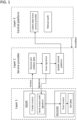
- FIG. 1 shows an exemplary system to discuss loopholes, scalability limitation, fragmented processes, and security concerns of the currently available systems providing invoicing processes.
- FIG. 1 shows a decentralized process flow for an invoicing process which is similar to processes used nowadays.
- layer 1 refers to an issuer and a receiver
- layer 2 refers to a service provider (SP)
- layer 3 refers to a central platform.
- the central platform is a central government platform served by a tax authority or any other government authority.
- the issuer such as a business and company, creates an invoice with all relevant information.
- the invoice may be an electronic invoice (eInvoice).
- the invoice is sent from the issuer to the service provider.
- the invoice is integrated with the service provider.
- the issuer receives a signature, such as a Unique Identifier Number, from the service provider for signing the invoice.
- a signature such as a Unique Identifier Number
- the receiver is, for example, a customer or any other recipient for the invoice.
- the service provider is usually accredited from the central platform, such as a tax authority serving the central platform.
- the service provider receives and validates data, such as the invoice, from the issuer.
- the service provider allows the issuer to send the invoice to the receiver.
- the service provider updates the central platform by forwarding the data, such as the invoice, to the central platform.
- the central platform stores the data and the operator of the central platform, such as the tax authority, may run manual audits on the stored data.
- the receiver can scan the invoice to obtain data from the invoice and validate the data.
- the invoice is provided with a QR code that the receiver can scan to validate the data.
- an additional layer (see layer 2) is positioned between the issuer and the central platform.
- the role of layer 2 including the service provider is merely to receive, validate, and transmit data. This layer does not contribute to any extra security measure or control and is only limited to validating basic data.
- the Unique Invoice Identifier Number is handled by the authorities, such as the tax authorities, and a QR code for the invoice is generated.
- the receiver gets the invoice and scans this QR code, the receiver is taken to the website of the service provider where all the invoice details are available.
- a method for providing a secure invoicing process comprises the steps of creating, by a processing device comprising a public key published on a public blockchain and a private key, an invoice, signing, by the processing device, the invoice with the private key of the processing device, and transmitting, by the processing device, the signed invoice to a central platform unit serving a central platform. Furthermore, the method comprises the step of determining, by the central platform unit, whether to store the signed invoice on a private blockchain.
- a system for providing a secure invoicing process comprises a processing device and a central platform unit.
- the processing device comprises a public key published on a public blockchain and a private key and is configured to create an invoice, sign the invoice with the private key of the processing device, and transmit the signed invoice to the central platform unit serving a central platform.
- the central platform unit is configured to store the signed invoice on a private blockchain.
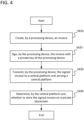
- FIG. 4 shows a method for providing a secure invoicing process according to an embodiment.
- the method may comprise the step of creating (S410), by a processing device, an invoice.
- the processing device may be a device used by an issuer of an invoice, such as an eInvoice.
- the processing device is a virtual fiscal device.
- the processing device may belong to layer 1 and may be used by a business or company to create invoices.
- the processing device may further store a sequence of invoice numbers, such as Unique identifications (IDs) for eInvoices, in order to be able to identify each invoice created by the processing device.
- IDs Unique identifications
- the processing device may comprise a public key published on a public blockchain and a private key.
- Publishing the public key on a public blockchain means that any public blockchain technology can be used for storing or recording the public key of the processing device for attestation. Both the public key and the private key are impossible to counterfeit, ensuring the authenticity of each issuer, transaction, and document (described in more details below).
- the public blockchain also called a permissionless blockchain, may be a network that anyone can freely access and participate in. If there are more than one processing device present, each processing device can freely access the public blockchain and the public blockchain may record the public keys of each processing device. Further advantages of the public blockchain are that the public blockchain is transparent, i.e. the public keys recorded there are traceable and accessible to the public, highly decentralized, i.e. there is no single entity or group controlling operations within the network, trustless, i.e. users can execute transactions via the network in a peer-to-peer manner without relying on the trust of a third party, and censorship-resistant, i.e. no entity can restrict anyone from participating in the operations of the public blockchain network. By recording the public keys on the public blockchain, everyone can derive the public keys for verifying authentication of the invoice, as described later.
- the private key of the processing device must be kept secret and is therefore not published on the public blockchain.
- the private key is securely stored on the processing device.
- the public key and the private key are known in the field of public-key cryptography, or asymmetric cryptography, where pairs of related keys are used. Each key pair, consisting of the public key and a corresponding private key, may be generated with known cryptographic algorithms.
- the processing device generates or issues the key pair of public key and corresponding private key and transmits the public key from the processing device to a central platform unit serving a central platform.
- the central platform unit may publish the public key on the public blockchain.
- the central platform may be a central government platform, such as a platform operated by the tax authority. It is not necessary to perform the steps of generating the key pair and transmitting the public key to the central platform unit each time an invoice is created. These steps may be performed once during an onboarding process where the company using the processing device may be registered on the central platform and the processing device used for issuing the invoice may be added. Adding the processing device may mean adding, i.e. publishing, the public key of the processing device to the public blockchain. The registration process is described in more detail with respect to FIG. 6 below.
- the method may further comprise the step of signing (S420), by the processing device, the previously created invoice with the private key of the processing device and transmitting (S430), by the processing device, the signed invoice to the central platform unit serving the central platform.
- S420 signing
- S430 transmitting
- Every invoice issued by a business or company may be signed with the private key of the processing device, even when the processing device is offline.
- the invoices may be marked, signed securely by the private key and submitted to the central platform to avoid counterfeiting or duplication.
- the central platform unit may determine (S440) whether to store the signed invoice on a private blockchain.
- the private blockchain is used to keep records of all activities.
- the private blockchain also called permissioned blockchain, limits access to approved users and may be controlled by a single person, organization, or a group of individuals.
- the private blockchain is controlled by the operator of the central platform, such as by the tax authority.
- Advantages of the private blockchain are their scalability and discreteness due to its limited access.
- the private blockchain is used for storing or recording the signed invoices to ensure that the invoice data cannot be freely accessed to everyone. Thus, the signed invoices are securely stored.
- authenticity can be enhanced.
- the validation of the invoices and the issuers of the invoices can be verified against the public and private blockchains. Further details regarding authenticity processes are provided below.
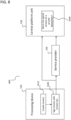
- FIG. 5 shows a system 500 comprising a processing device 510 and a central platform unit 520 for providing a secure invoicing process according to an embodiment.
- the processing device 510 and the central platform unit 520 may be equal to the processing device and central platform unit described with respect to FIG. 4 .
- a detailed description of the processing device and central platform unit is omitted at this point for conciseness reasons.
- step S410 the steps S410, S420, and S440 of FIG. 4 are shown, wherein the processing device 510 creates the invoice (step S410) and signs the invoice with the private key (step S420) .
- the signed invoice is transmitted from the processing device 510 to the central platform unit 520 serving the central platform, wherein the central platform unit 520 determines whether to store the signed invoice on the private blockchain (step S440).
- the system operates under centralized governance by the operator of the central platform, such as the tax authority using a central government platform, where all the keys are issued and invoice data is stored.
- the signed invoice is directly sent from the processing device 510 to the central platform unit 520.
- layer 1 with the processing device 510 and layer 3 with the central platform unit 520 Layer 2 with the service provider is no longer required, leading to a more secure and efficient invoicing process.
- FIG. 6 illustrates an exemplary registration process for a processing device 510 and a central platform unit 520.
- the processing device 510 and the central platform unit 520 may be equal to the processing devices and central platform units described with respect to FIGs. 4 and 5 . Thus, a detailed description of the processing device and central platform unit is omitted at this point for conciseness reasons.
- the processing device 510 may generate a key pair of public key and corresponding private key for the registration process (see step S610 in FIG. 6 ).
- the processing device 510 may securely store the private key (see step S620) and may transmit the public key to the central platform unit 520 (see step S630).
- the central platform unit 520 may receive the public key from the processing device 510 to be registered (see step S640) and may publish the public key on a public blockchain (see step S650) .
- the public keys can be derived from the public blockchain when it is desired to verify authentication of an invoice.
- FIG. 7 shows a method for providing a secure invoicing process according to another embodiment.
- the steps S410, S420, and S430 are equal to the steps S410, S420, and S430 of FIGs. 4 and 5 .
- a detailed description of these steps is omitted at this point for conciseness reasons, and it is referred to the description given above.
- the central platform unit 520 may determine (S440) whether to store the signed invoice on a private blockchain. For example, the central platform unit 520 performs an authentication process to analyze the signed invoice and determine whether to store the signed invoice on the private blockchain. The authentication process is exemplary described with respect to FIG. 7 .
- the central platform unit 520 uses (S441) the public key published on the public blockchain for the specific processing device, which has transmitted the signed invoice, for authenticating the signed invoice. If the authenticity of the signed invoice is verified by the central platform unit 520 (YES in FIG. 7 ), the central platform unit 520 may store the signed invoice on the private blockchain. If the authenticity of the signed invoice is not verified by the central platform unit 520 (NO in FIG. 7 ), the central platform unit 520 may discard S443 the signed invoice. This means that the signed invoice is not stored on the private blockchain. This works because of the public key - private key relationship. To create a digital signature, the processing device 510 signs each created invoice using its private key.
- the central processing unit 520 can verify that the signature on the invoice came from the processing device 510 by using its public key. If the signature is present and it matches the public key of the processing device 510, the central processing unit 520 can proceed with confidence that the source of the invoice is in fact the processing device 510.
- the processing device 510 may directly transmit the signed invoice to the central processing unit 520.
- a service provider which receives the signed invoice from the processing device 510 and ensures that the signed invoice is transmitted to the central processing unit 520.
- a service provider may be used.
- an offline modus for the processing device 510 can be introduced. This is exemplary shown in FIG. 8 .
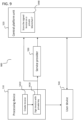
- FIG. 8 shows a system 800 comprising the processing device 510, the central platform unit 520, and a service provider 530 for providing a secure invoicing process.
- the processing device 510 and the central platform unit 520 have been described in detail above and, thus, a detailed description is omitted at this point.
- the processing device 510 may transmit the signed invoice to the central platform unit 520. This is done by either directly sending the signed invoice to the central platform unit 520 or sending the signed invoice to the service provider 530 which then sends the signed invoice to the central platform unit 520.
- the processing device 510 can be in an offline modus for power interruption.
- Offline modus means that the processing device 510 is offline and does not send any signals, not even invoices, to another unit.
- the processing device 510 sends signals and invoices to another unit when being in the online modus, for example when the power interruption has been overcome.
- the processing device 510 When being in the offline modus, the processing device 510 is not able to transmit any created invoices. In order to avoid that already created and signed invoices are lost during the offline modus, the processing device 510 may collect and store the signed invoices. Once the processing device 510 is in an online modus, the signed invoices stored during the offline modus may be transmitted from the processing device 510 to the service provider 530 or the central platform unit 520.
- the service provider 530 may be an additional unit for ensuring authenticity and enhancing security.
- the service provider 530 may validate the invoice data received, authenticate the invoices received, and forward validated and authenticated invoices to the central platform unit 520.
- the service provider 530 uses the public key published on the public blockchain for authenticating the signed invoice received from the processing device 510. Since the processing device 510 signs the created invoice using its private key to create a digital signature, the service provider 530 can verify that the signature on the invoice came from the processing device 510 by using its public key.
- the service provider 530 may transmit the signed invoice received from the processing device 510 to the central platform unit 520 if the authenticity of the signed invoice is verified by the service provider 530. Thus, it is ensured that only authenticated invoices are forwarded or pushed to the central platform, improving the security and authenticity of the whole system 800.
- the central platform unit 520 may again determine whether to store the signed invoice on the private blockchain (see step S440 described above).
- the herein described invoicing process may be called a hybrid approach to ensure not only the accuracy of the invoice data but also to guarantee the authenticity of those received, for example, through an offline workflow, contributing to a secure and reliable invoicing ecosystem.
- FIG. 9 shows another system 900 comprising the processing device 510, the central platform unit 520, optionally the service provider 530, and a user device 540 for providing a secure invoicing process according to another embodiment.
- the processing device 510, the central platform unit 520, and the service provider 530 have been described in detail above and, thus, a detailed description is omitted at this point.
- the system may further comprise the user device 540.
- the user device 540 may be any user terminal, such as a smartphone or the like, that is used by the receiver of the invoice.
- the receiver of the invoice is a customer addressed by the invoice.
- the user device 540 may be used for recording an invoice.
- the issuer generates and signs an invoice and sends it to the user device 540.
- the invoice may include a QR code or any other code created for offline verification which the user device 540 can scan in order to obtain the invoice data.
- any other technique for obtaining the invoice data can be used, such as image processing or the like.
- the user device 540 may scan the invoice, e.g. the QR code of the invoice to verify the invoice against the blockchain data the validity of the displaying invoice data.
- the invoice to be recorded may be the signed invoice from the processing device 510 or a fake-singed invoice.
- the user device 540 may automatically discard the invoice or an alert is given to warn the user of the user device 540 of a potential security risk. Thus, the security for the user is improved.
- the user device 540 may also alert the central platform unit 520.
- the user device 540 may use the public key from the public blockchain for authenticating the signed invoice. Since the public key is stored on the public blockchain, the user device 540 can easily derive the public key of the specific processing device 510. For verifying the authenticity of the signed invoice, the public key is shared by the central platform, for example, to a government application (App) installed on the user device 540. The government App may ensure that the invoices can be validated at any time by the user device 540, enabling businesses and consumers to easily verify the authenticity of invoices even for invoices issued offline.
- App government application
- the user device 540 can verify that the signature on the invoice came from the processing device 510 by using its public key. If the signed invoice cannot be successfully authenticated, an alert may be given to warn the user device 540 that a security risk may result, for example, from a fake invoice.
- the user device 540 may record an invoice and may submit the recorded invoice to the central platform unit 520.
- the invoice is the signed invoice created by the processing device 510.
- the central platform unit 520 may store the recorded invoice and compare the recorded invoice with data stored on the private blockchain.
- the data stored on the private blockchain comprises signed invoices that have been previously received from the processing device 510 and stored on the private blockchain (see step S440 described above). If the recorded invoice and the data stored on the private blockchain mismatch, an alert may be transmitted from the central platform unit 520 to the user device 540.
- the alert may warn the user device 540 that the recorded invoice is unknown to the central platform unit 520, because it does not match with an invoice stored on the private blockchain.
- the user device 540 displays the alert as a warning to the user of the user device 540.
- the alert may serve as a prompt for the operator of the central platform, such as the tax authority, to initiate an audit.
- invoices once recorded or scanned from consumers using the user device 540, may be securely stored within the central platform, such as a central government platform, and the system may wait for the submission of these invoices even if they were issued offline.
- an alert may be automatically triggered for a mismatch between the submitted and stored invoices. This alert may additionally serve as a prompt for the operator of the central platform, such as the tax authority, to initiate an audit.
- security is enhanced and auditing processes are streamlined by proactively identifying potential issues and security risks.
- the user device 540 may play a critical role as auditors in the system
- recording the invoices for authenticating the invoices may be a useful tool by offering benefits and a way that the business and consumers can be auditors of the system.
- AI Artificial Intelligence
- the system utilizes blockchain and AI reporting to generate red flags indicating potential misuse by identifying anomalies, such as processing devices operating outside the system or issues with the key sequence issued to businesses or fake processing devices. These red flags may serve as warnings, allowing prompt intervention and mitigating the risk of system abuse.
- the central platform unit 520 may use a trained Machine Learning (ML) model, such as a neural network trained with supervised learning techniques, for analyzing invoices recorded by the user device 540 and identifying security risks.
- ML Machine Learning
- the trained ML model is used to detect inconsistencies in invoices recorded by the user device 540.
- the user device 540 may record the invoice and the recorded invoice may be transmitted to the central platform unit 520 which uses the trained ML model.
- the input of the trained ML model may be the invoice data of the recorded invoice.
- the output may be either an alert warning the central platform unit 520 that the recorded invoice has an anomaly, or a notification that the recorded invoice is correct.
- the trained ML model detects that a sequence of invoice numbers is missing in the recorded invoice, the trained ML model flags the system and alerts the central platform unit 520. Flagging the system may mean notifying the central platform unit 520 of a security risk.
- the central platform unit 520 may either send a warning to the user device 540, notifying the user of the user device 540 that there is a security risk, or may notify the user of the user device 540 that the recorded invoice is correct.
- the overall security of the system is improved.
- the trained Machine Learning model may be trained on many labelled invoices in order to detect security risks. Labelled invoices mean that it is known whether or not the invoice with the respective invoice data is a security risk. Thus, the training data may comprise correlations between previous labelled invoices and security risk. With these correlations, the ML model can be trained, wherein the invoice data functions as input for the ML model and the indications regarding a security risk function as the outputs of the ML model.
- the invoicing process is revolutionized by enhancing the security, ensuring authenticity, fostering interoperability, and empowering both businesses and users as auditors.
- Interoperability is secured by seamless communication and data exchange between business to exchange data through blockchain and convert consumers as auditors.
- a tool is provided to empower both businesses and consumers with benefits to scan the invoices.
- the innovative approach goes beyond the above exemplary systems by introducing an offline mode, robust blockchain security measures, and unforgeable validation keys.
- a comprehensive approach is employed to ensure the integrity and authenticity of every invoice issued by a business or company.
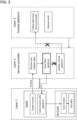
- the above exemplary system of FIG. 1 is decentralized to service providers.
- the herein described systems are centralized to the operator of the central platform, such as the tax authority.
- FIG. 1 only allows an online modus.
- the herein described systems allow both an online and offline modus.
- the herein described systems can securely issue invoices and verify them offline.
- the security mechanisms in the above exemplary system of FIG. 1 depend on the service provider. This bears various security risks if the service provider is untrustworthy. In contrast thereto, the herein described systems are blockchain secured, ensuring that no modification or alterations happen.
- the service provider in the above exemplary system of FIG. 1 secures them by issuing Unique IDs to invoices sent to them.
- signature keys issued to the devices registered from the central platform are used.
- the keys described herein are impossible to counterfeit, ensuring the authenticity of each issuer, transaction, and document.
- the service provider of the above exemplary system of FIG. 1 is responsible for storing and processing invoices.
- the herein described system is infinitely scalable.
- EPI electronic data interchange
Landscapes
- Business, Economics & Management (AREA)
- Engineering & Computer Science (AREA)
- Accounting & Taxation (AREA)
- Finance (AREA)
- Computer Security & Cryptography (AREA)
- Theoretical Computer Science (AREA)
- General Physics & Mathematics (AREA)
- Physics & Mathematics (AREA)
- General Business, Economics & Management (AREA)
- Development Economics (AREA)
- Strategic Management (AREA)
- Economics (AREA)
- Signal Processing (AREA)
- Computer Networks & Wireless Communication (AREA)
- Marketing (AREA)
- Technology Law (AREA)
- General Health & Medical Sciences (AREA)
- Health & Medical Sciences (AREA)
- Bioethics (AREA)
- General Engineering & Computer Science (AREA)
- Computer Hardware Design (AREA)
- Software Systems (AREA)
- Management, Administration, Business Operations System, And Electronic Commerce (AREA)
Priority Applications (1)
| Application Number | Priority Date | Filing Date | Title |
|---|---|---|---|
| EP24177016.3A EP4407548A3 (de) | 2024-05-21 | 2024-05-21 | Verfahren und system zur bereitstellung eines sicheren transaktionsprozesses |
Applications Claiming Priority (1)
| Application Number | Priority Date | Filing Date | Title |
|---|---|---|---|
| EP24177016.3A EP4407548A3 (de) | 2024-05-21 | 2024-05-21 | Verfahren und system zur bereitstellung eines sicheren transaktionsprozesses |
Publications (2)
| Publication Number | Publication Date |
|---|---|
| EP4407548A2 true EP4407548A2 (de) | 2024-07-31 |
| EP4407548A3 EP4407548A3 (de) | 2024-11-20 |
Family
ID=91193566
Family Applications (1)
| Application Number | Title | Priority Date | Filing Date |
|---|---|---|---|
| EP24177016.3A Pending EP4407548A3 (de) | 2024-05-21 | 2024-05-21 | Verfahren und system zur bereitstellung eines sicheren transaktionsprozesses |
Country Status (1)
| Country | Link |
|---|---|
| EP (1) | EP4407548A3 (de) |
Family Cites Families (8)
| Publication number | Priority date | Publication date | Assignee | Title |
|---|---|---|---|---|
| EP4148642B1 (de) * | 2014-05-09 | 2025-12-24 | Veritaseum, Inc. | Vorrichtungen, systeme und verfahren zur ermöglichung von werttransfer mit niedrigem vertrauen und null vertrauen |
| CN110546663A (zh) * | 2017-03-08 | 2019-12-06 | 锡克拜控股有限公司 | 用于在数据库中登记信息的高级方法、系统和装置 |
| US20200026834A1 (en) * | 2018-07-23 | 2020-01-23 | One Kosmos Inc. | Blockchain identity safe and authentication system |
| US11615416B2 (en) * | 2018-10-12 | 2023-03-28 | Eugenia Roxanne Miller | Child support and centralized distributed network |
| CN109617698B (zh) * | 2019-01-09 | 2021-08-03 | 腾讯科技(深圳)有限公司 | 发放数字证书的方法、数字证书颁发中心和介质 |
| US11270238B2 (en) * | 2019-01-28 | 2022-03-08 | Kyndryl, Inc. | Utilizing blockchain technology with mobile robotic machines |
| CN111062059B (zh) * | 2019-11-06 | 2021-05-25 | 支付宝(杭州)信息技术有限公司 | 用于业务处理的方法和装置 |
| GB2597703A (en) * | 2020-07-30 | 2022-02-09 | Nchain Holdings Ltd | Blockchain based tax mechanism |
-
2024
- 2024-05-21 EP EP24177016.3A patent/EP4407548A3/de active Pending
Also Published As
| Publication number | Publication date |
|---|---|
| EP4407548A3 (de) | 2024-11-20 |
Similar Documents
| Publication | Publication Date | Title |
|---|---|---|
| US20210351931A1 (en) | System and method for securely processing an electronic identity | |
| US20190295069A1 (en) | Systems and methods for integrating cryptocurrency wallet identifiers with digital certificates | |
| US8989383B2 (en) | Data authentication using plural electronic keys | |
| US11356258B2 (en) | Methods and systems for distributed cryptographically secured data validation | |
| CN110535648B (zh) | 电子凭证生成及验证和密钥控制方法、装置、系统和介质 | |
| EP3008852B1 (de) | System und verfahren für verschlüsselung | |
| CN112199721A (zh) | 认证信息处理方法、装置、设备及存储介质 | |
| CN110189184B (zh) | 一种电子发票存储方法和装置 | |
| US20240113881A1 (en) | Authorized users and experiences authenticated/managed by non-fungible token (nft) ownership | |
| EP3883204B1 (de) | System und verfahren zur sicheren erzeugung, zum austausch und zur verwaltung von benutzeridentitätsdaten unter verwendung einer blockchain | |
| CN111429191A (zh) | 基于区块链的电子发票流转管理方法、装置及系统 | |
| CA2947514A1 (en) | Payment confirmation system and method | |
| CN110599140A (zh) | 一种数字货币的验证方法及系统 | |
| US11271752B2 (en) | Automatic form completion from a set of federated data providers | |
| Stapleton et al. | Security Without Obscurity: A Guide to PKI Operations | |
| CN116720839B (zh) | 基于区块链技术的金融信息管理方法及其监管系统 | |
| CN110599270A (zh) | 电子票据生成方法、装置和计算机设备 | |
| CN113793149B (zh) | 离线交易认证系统、方法及中心服务器、客户端 | |
| EP4407548A2 (de) | Verfahren und system zur bereitstellung eines sicheren transaktionsprozesses | |
| CN112163917B (zh) | 基于区块链的票据处理方法、装置、介质及电子设备 | |
| CN117454437B (zh) | 交易处理方法、存储介质及电子设备 | |
| Kustov et al. | Mutual Recognition Mechanism Based on DVCS Oracle in the Blockchain Platform: DVCS Oracle in the Global Supply Chain | |
| TWI828001B (zh) | 使用多安全層級驗證客戶身分與交易服務之系統及方法 | |
| CN116776393B (zh) | 产业赋能合同签署方法、装置、计算机设备及存储介质 | |
| US20250125974A1 (en) | Systems and methods for digital data object secure custody |
Legal Events
| Date | Code | Title | Description |
|---|---|---|---|
| PUAI | Public reference made under article 153(3) epc to a published international application that has entered the european phase |
Free format text: ORIGINAL CODE: 0009012 |
|
| STAA | Information on the status of an ep patent application or granted ep patent |
Free format text: STATUS: THE APPLICATION HAS BEEN PUBLISHED |
|
| AK | Designated contracting states |
Kind code of ref document: A2 Designated state(s): AL AT BE BG CH CY CZ DE DK EE ES FI FR GB GR HR HU IE IS IT LI LT LU LV MC ME MK MT NL NO PL PT RO RS SE SI SK SM TR |
|
| PUAL | Search report despatched |
Free format text: ORIGINAL CODE: 0009013 |
|
| AK | Designated contracting states |
Kind code of ref document: A3 Designated state(s): AL AT BE BG CH CY CZ DE DK EE ES FI FR GB GR HR HU IE IS IT LI LT LU LV MC ME MK MT NL NO PL PT RO RS SE SI SK SM TR |
|
| RIC1 | Information provided on ipc code assigned before grant |
Ipc: H04L 9/00 20220101ALI20241017BHEP Ipc: H04L 9/32 20060101ALI20241017BHEP Ipc: G06Q 20/38 20120101ALI20241017BHEP Ipc: G06Q 30/04 20120101AFI20241017BHEP |
|
| STAA | Information on the status of an ep patent application or granted ep patent |
Free format text: STATUS: REQUEST FOR EXAMINATION WAS MADE |
|
| 17P | Request for examination filed |
Effective date: 20241210 |