EP4404538A1 - Anfrageverarbeitungsverfahren und -vorrichtung, computerausrüstung und speichervorrichtung - Google Patents
Anfrageverarbeitungsverfahren und -vorrichtung, computerausrüstung und speichervorrichtung Download PDFInfo
- Publication number
- EP4404538A1 EP4404538A1 EP23765753.1A EP23765753A EP4404538A1 EP 4404538 A1 EP4404538 A1 EP 4404538A1 EP 23765753 A EP23765753 A EP 23765753A EP 4404538 A1 EP4404538 A1 EP 4404538A1
- Authority
- EP
- European Patent Office
- Prior art keywords
- reserved
- application
- service
- service cluster
- application usage
- Prior art date
- Legal status (The legal status is an assumption and is not a legal conclusion. Google has not performed a legal analysis and makes no representation as to the accuracy of the status listed.)
- Pending
Links
Images
Classifications
-
- H—ELECTRICITY
- H04—ELECTRIC COMMUNICATION TECHNIQUE
- H04L—TRANSMISSION OF DIGITAL INFORMATION, e.g. TELEGRAPHIC COMMUNICATION
- H04L47/00—Traffic control in data switching networks
- H04L47/10—Flow control; Congestion control
- H04L47/12—Avoiding congestion; Recovering from congestion
- H04L47/125—Avoiding congestion; Recovering from congestion by balancing the load, e.g. traffic engineering
-
- G—PHYSICS
- G06—COMPUTING OR CALCULATING; COUNTING
- G06F—ELECTRIC DIGITAL DATA PROCESSING
- G06F9/00—Arrangements for program control, e.g. control units
- G06F9/06—Arrangements for program control, e.g. control units using stored programs, i.e. using an internal store of processing equipment to receive or retain programs
- G06F9/46—Multiprogramming arrangements
- G06F9/50—Allocation of resources, e.g. of the central processing unit [CPU]
- G06F9/5005—Allocation of resources, e.g. of the central processing unit [CPU] to service a request
- G06F9/5027—Allocation of resources, e.g. of the central processing unit [CPU] to service a request the resource being a machine, e.g. CPUs, Servers, Terminals
-
- G—PHYSICS
- G06—COMPUTING OR CALCULATING; COUNTING
- G06F—ELECTRIC DIGITAL DATA PROCESSING
- G06F9/00—Arrangements for program control, e.g. control units
- G06F9/06—Arrangements for program control, e.g. control units using stored programs, i.e. using an internal store of processing equipment to receive or retain programs
- G06F9/46—Multiprogramming arrangements
- G06F9/48—Program initiating; Program switching, e.g. by interrupt
- G06F9/4806—Task transfer initiation or dispatching
- G06F9/4843—Task transfer initiation or dispatching by program, e.g. task dispatcher, supervisor, operating system
- G06F9/485—Task life-cycle, e.g. stopping, restarting, resuming execution
-
- G—PHYSICS
- G06—COMPUTING OR CALCULATING; COUNTING
- G06F—ELECTRIC DIGITAL DATA PROCESSING
- G06F9/00—Arrangements for program control, e.g. control units
- G06F9/06—Arrangements for program control, e.g. control units using stored programs, i.e. using an internal store of processing equipment to receive or retain programs
- G06F9/46—Multiprogramming arrangements
- G06F9/50—Allocation of resources, e.g. of the central processing unit [CPU]
- G06F9/5005—Allocation of resources, e.g. of the central processing unit [CPU] to service a request
- G06F9/5027—Allocation of resources, e.g. of the central processing unit [CPU] to service a request the resource being a machine, e.g. CPUs, Servers, Terminals
- G06F9/505—Allocation of resources, e.g. of the central processing unit [CPU] to service a request the resource being a machine, e.g. CPUs, Servers, Terminals considering the load
-
- G—PHYSICS
- G06—COMPUTING OR CALCULATING; COUNTING
- G06F—ELECTRIC DIGITAL DATA PROCESSING
- G06F9/00—Arrangements for program control, e.g. control units
- G06F9/06—Arrangements for program control, e.g. control units using stored programs, i.e. using an internal store of processing equipment to receive or retain programs
- G06F9/46—Multiprogramming arrangements
- G06F9/50—Allocation of resources, e.g. of the central processing unit [CPU]
- G06F9/5061—Partitioning or combining of resources
- G06F9/5072—Grid computing
-
- H—ELECTRICITY
- H04—ELECTRIC COMMUNICATION TECHNIQUE
- H04L—TRANSMISSION OF DIGITAL INFORMATION, e.g. TELEGRAPHIC COMMUNICATION
- H04L67/00—Network arrangements or protocols for supporting network services or applications
- H04L67/01—Protocols
- H04L67/10—Protocols in which an application is distributed across nodes in the network
- H04L67/1001—Protocols in which an application is distributed across nodes in the network for accessing one among a plurality of replicated servers
- H04L67/1004—Server selection for load balancing
- H04L67/1008—Server selection for load balancing based on parameters of servers, e.g. available memory or workload
-
- H—ELECTRICITY
- H04—ELECTRIC COMMUNICATION TECHNIQUE
- H04L—TRANSMISSION OF DIGITAL INFORMATION, e.g. TELEGRAPHIC COMMUNICATION
- H04L67/00—Network arrangements or protocols for supporting network services or applications
- H04L67/01—Protocols
- H04L67/10—Protocols in which an application is distributed across nodes in the network
- H04L67/1001—Protocols in which an application is distributed across nodes in the network for accessing one among a plurality of replicated servers
- H04L67/1031—Controlling of the operation of servers by a load balancer, e.g. adding or removing servers that serve requests
-
- H—ELECTRICITY
- H04—ELECTRIC COMMUNICATION TECHNIQUE
- H04L—TRANSMISSION OF DIGITAL INFORMATION, e.g. TELEGRAPHIC COMMUNICATION
- H04L67/00—Network arrangements or protocols for supporting network services or applications
- H04L67/50—Network services
- H04L67/60—Scheduling or organising the servicing of application requests, e.g. requests for application data transmissions using the analysis and optimisation of the required network resources
-
- G—PHYSICS
- G06—COMPUTING OR CALCULATING; COUNTING
- G06F—ELECTRIC DIGITAL DATA PROCESSING
- G06F2209/00—Indexing scheme relating to G06F9/00
- G06F2209/48—Indexing scheme relating to G06F9/48
- G06F2209/485—Resource constraint
-
- G—PHYSICS
- G06—COMPUTING OR CALCULATING; COUNTING
- G06F—ELECTRIC DIGITAL DATA PROCESSING
- G06F2209/00—Indexing scheme relating to G06F9/00
- G06F2209/50—Indexing scheme relating to G06F9/50
- G06F2209/5014—Reservation
-
- G—PHYSICS
- G06—COMPUTING OR CALCULATING; COUNTING
- G06F—ELECTRIC DIGITAL DATA PROCESSING
- G06F2209/00—Indexing scheme relating to G06F9/00
- G06F2209/50—Indexing scheme relating to G06F9/50
- G06F2209/503—Resource availability
-
- G—PHYSICS
- G06—COMPUTING OR CALCULATING; COUNTING
- G06F—ELECTRIC DIGITAL DATA PROCESSING
- G06F2209/00—Indexing scheme relating to G06F9/00
- G06F2209/50—Indexing scheme relating to G06F9/50
- G06F2209/509—Offload
Definitions
- the present disclosure relates to the field of computer technology, and specifically, to a method, a device, a computer device and a storage medium for request processing.
- Application instances based on Function-as-a-Service are usually deployed in application services in an established service cluster and may be used to respond to application usage requests initiated by users.
- FaaS Function-as-a-Service
- the above cold start process takes a long time, which in turn affects the time to respond to the application usage requests and reduces the speed and efficiency of responses to requests.
- the embodiments of the present disclosure provide at least a method, a device, a computer device and a storage medium for request processing.
- embodiments of the present disclosure provide a method of request processing, comprising:
- the method further comprises:
- deploying the at least one target application instance corresponding to the target application in the target application service comprises:
- forwarding, by using the traffic scheduler, the application usage request to the scalable service cluster comprises:
- the method further comprises creating the reserved service cluster, including:
- creating the second number of reserved services and deploying the third number of reserved instances in each of the reserved services completely created comprises:
- the method comprises: obtaining a reserved instance matching the application usage request and a response result determined for the application usage request, and feeding the response result back to a user terminal sending the application usage request.
- embodiments of the present disclosure also provide a device for request processing, comprising:
- the device further comprises:
- the first creation module is configured to obtain application codes corresponding to the target application, and load the application codes into the storage location corresponding to the target application service;
- the first forwarding module is configured to determine, by using the traffic scheduler, identification information carried in the application usage request; select, by using the identification information, from a plurality of different scalable service clusters, the scalable service cluster to be used and corresponding to the target application indicated by the identification information; and forward the application usage request to the scalable service cluster to be used.
- the device further comprises: a second creation module configured to create the reserved service cluster according to the following steps:
- the second creation module is configured to select, from a plurality of service containers, a usable target service container for each of the reserved services in the second number of reserved services; for each of the reserved service, create the reserved service in a target service container corresponding to the reserved service, and deploy, in the target service container, the third number of reserved instances for the reserved service.
- the device further comprises: a feedback module configured to after running, by the reservation service cluster, the reservation instance matching the application usage request, obtain the reserved instance matching the application usage request and a response result determined for the application usage request, and feeding the response result back to a user terminal sending the application usage request.
- a feedback module configured to after running, by the reservation service cluster, the reservation instance matching the application usage request, obtain the reserved instance matching the application usage request and a response result determined for the application usage request, and feeding the response result back to a user terminal sending the application usage request.
- an optional implementation of the present disclosure further provides a computer device, a processor, and a memory, the memory storing machine-readable instructions executable by the processor, and the processor being configured to execute the machine-readable instructions stored in the memory, the machine-readable instructions, upon execution by the processor, causing the processor to perform the steps of the above-mentioned first aspect, or any possible implementation of the first aspect.
- an optional implementation of the present disclosure further provides a computer-readable storage medium storing a computer program thereon, the computer program, upon running by a computer device, causing the processor to perform the above-mentioned first aspect, or any possible implementation of the first aspects.
- an optional implementation of the present disclosure further provides a computer program product, the computer program product, upon running by a computer, causing the computer to perform the above-mentioned first aspect, or any steps in possible implementation of the first aspect.
- the method, device, computer equipment and storage medium of request processing provided by the embodiments of the present disclosure, in a case that it is determined that there is no idle and usable created instance in the scalable service cluster, send, by using the traffic scheduler, the application usage request to the pre-created reserved service cluster, and run, by the reserved service cluster, a reserved instance matching the application usage request. It is possible to achieve a fast response to the application usage request using the created reserved instance, improving the speed and efficiency of the responses to requests.
- the speed and efficiency of responses to requests may be effectively improved by pre-creating the reserved service clusters and flexibly forwarding, by using the traffic scheduler, the application usage requests in scalable service clusters and reserved service clusters.
- the method, device, computer equipment and storage medium of request processing may, after determining that there is currently no idle and usable created instance in the scalable service cluster, by creating a new target application service and deploying an application instance in the scalable service cluster, it is enabled to utilize the idle and usable application instances to respond quickly to new application usage requests forwarded by the traffic scheduler in subsequent times, improving the speed and efficiency of responding to new application usage requests.
- the embodiments of the present disclosure provide a method, a device, a computer device and a storage medium of request processing where by creating a reserved service cluster in advance and flexibly forwarding, by using a traffic scheduler, the application usage request in the scalable service cluster and the reserved service cluster, a problem of waiting for creating a new application instance before responding to application usage requests, which increases the time for responding to application usage requests, may be avoided, effectively improving the speed and efficiency of responses to requests.
- the executer of the method of request processing provided in the present disclosure is generally a computer device having a certain computing capability.
- the method of request processing may be implemented by the processor calling computer-readable instructions stored in the memory.
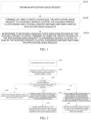
- FIG. 1 is a flowchart of a method of request processing according to an embodiment of the present disclosure, which may comprise the following steps:
- the application usage request may be a request initiated by the user side to use the target application.
- it may be a request to load an application page corresponding to the target application, a request to access the target application, and the like.
- the obtained application usage request may include one or more requests.
- the obtained application usage request includes a plurality of obtaining application usage requests
- the plurality of application usage requests may be initiated in a concurrent manner at the same time.
- the application usage requests is forwarded to a scalable service cluster; the scalable service cluster is used to run a created instance matching various application usage requests.
- the traffic scheduler is used to forward the obtained various application usage requests to the corresponding scalable service cluster.
- the traffic scheduler may be a Gateway scheduler.
- the scalable service cluster may include one or more created application services. Each application service may include one or more created instances.
- the scalable service cluster is used to run various created instances included, which may be used to respond to various application usage requests. Specifically, the number of created application services in the scalable service cluster and the number of created instances in each created application service may be determined according to the applications served by the scalable service cluster.
- the scalable service cluster may include one or more scalable service clusters. Each scalable service cluster corresponds to different applications, and various created application service in the same scalable service cluster corresponds to the same application. That is, for any scalable service cluster, various created application services included in the scalable service cluster are services for the same application, and various created instances in various created application services included in the scalable service cluster are used to respond to various application usage requests for the same application. For example, the application served by scalable service cluster A is application A, then various created application services A in scalable service cluster A are a service for application A, and various created instances A in various created application services A are used to respond to various application usage requests for application A.
- the scalable service cluster may be a Serverless auto-scaling cluster where Serverless stands for Serverless computing, also known as FaaS.
- the Serverless auto-scaling cluster is a fully resilient service cluster that relies on functions provided by the serverless provider for auto-scaling.
- the traffic scheduler may first be utilized to determine the scalable service cluster corresponding to the application usage request, and send the application usage request to the scalable service cluster.
- the traffic scheduler may be utilized to determine the scalable service cluster for the application usage request, and then send the application usage request to the scalable service cluster.
- the non-idle state indication is used to indicate that the scalable service cluster currently has no idle and usable created instance, which is the information fed back by the scalable service cluster.
- the reserved service cluster is a pre-created service cluster, which includes one or more idle reserved services created in advance, and each reserved service includes one or more idle reserved instances.
- the reserved service cluster may serve as a back-up service cluster. Only after forwarding the application usage request to the scalable service cluster and receiving the non-idle status indication, the traffic scheduler forwards the application usage request to the reserved service cluster corresponding to the application usage request, to utilize the idle reserved instances in the reserved service cluster to respond to the application usage request.
- the idle and usable instance may be run by the scalable service cluster, and the idle and usable created instances may be utilized by the idle and usable created instances to respond to the application usage request, thereby determining a response result corresponding to the application usage request.
- the scalable service cluster may generate a non-idle status indication and feed it back to the traffic scheduler.
- the non-idle status indication may specifically be a status code.
- the traffic scheduler may determine a reserved service cluster that may be used to respond to the application usage request, and forward the application usage request to the determined reserved service cluster.
- the reservation service cluster may run the reserved instance that matches the application usage request, and use the running reserved instance to respond to the application usage request, thereby determining a response result corresponding to the application usage request.
- the traffic scheduler is utilized to send the application usage request to the pre-created reserved service cluster.
- the speed and efficiency of the response to the request may be effectively improved by pre-creating the reserved service cluster, and by utilizing the traffic scheduler to flexibly forward the application usage requests in the scalable service clusters and the reserved service clusters.
- the reserved instance that matches the application usage request after running, by the reservation service cluster, the reserved instance that matches the application usage request, it is also possible to obtain the reserved instance that matches the application usage request and the response result determined for the application usage request, and feed the response result back to the user terminal that sent the application usage request.
- the response result is the result determined for the application usage request after the reserved instance responds to the request.
- the response result may be the determined application page information corresponding to the application usage request, function information corresponding to the application usage request, and so on.
- the user terminal may be a terminal device, a browser, a personal mobile terminal, and the like, and the specific user terminal is not limited by the embodiments of the present disclosure.
- the response result may be obtained, and the response result may be fed back to the user terminal that initiated the application usage request.
- the obtained application page information may be fed back to the browser, and then the browser may render and display the application page based on the application page information.
- the computing resources in the reserved instance may be released to obtain an idle and usable reserved instance.
- the step of performing service expansion in the scalable service cluster may be performed asynchronously.
- the service expansion may be performed in accordance with the following steps:
- Step 1 a new target application service corresponding to the application usage request is created by using a service expansion function corresponding to the scalable service cluster.
- the above-mentioned service expansion function may be the automatic expansion capacity corresponding to the expandable service cluster
- the above-mentioned new target application service is the service for the target application corresponding to the application trial request.
- the new target application service is the same service as the application service that has been created in the scalable service cluster.
- the target application corresponding to the application usage request may be determined first, and then the service expansion function corresponding to the scalable service cluster may be directly utilized to create a new target application service in the scalable service cluster.
- Step 2 at least one target application instance corresponding to a target application is deployed in the target application service.
- the target application instance has the same function as the created instance in the scalable service cluster, and is used to respond to various application usage requests for the target application.
- at least one target application instance corresponding to the target application may be deployed in the target application service, and the specific number of deployed target application instances may be set according to the actual development needs and is not limited here.
- the deployment may be performed according to the maximum number of target application instances that the target application service may support for deployment.
- the number of target application instances required to respond to all application usage requests may be determined based on the number of currently obtaining application usage requests, and the target application instances may be deployed according to this number.
- the application code is the code required for loading the target application.
- the storage location corresponding to the target application service is the memory corresponding to the scalable service cluster.
- the application code may be directly pulled at the location where the application code corresponding to the target application is stored, and the pulled application code is loaded into the memory corresponding to the target application service.
- Sub-step 2 in response to the application code being successfully loaded, a port information obtaining operation is perform on an application port corresponding to the application codes.
- each target application instance may be correspondingly assigned an application port, and the application port is used for information transmission between the target application service and the target application instance, such as the transmission of application usage requests, and the transmission of response results corresponding to the application usage requests.
- the application port corresponding to the application code is the port of the target application instance.
- the port information obtaining operation may be performed on the application port assigned to the target application instance, that is, the port listening operation may be performed.
- Sub-step 3 in response to the port information obtaining operation being completed, it is determined that the target application instance is deployed successfully .
- the target application instance is successfully deployed in the target application service.
- the deployment process of each target application instance may refer to the above sub-steps 1 to 3.
- Step 3 the target application service having the successfully deployed target application instance is added into the scalable service cluster, where the target application instance is used to respond to a new application usage request for the target application.
- a target application service that has successfully deployed at least one target application instance may be used as a newly expanded service in the scalable service cluster.
- the newly created target application service in the scalable service cluster may be used as a new created application service in the scalable service cluster, and each successfully deployed target application instance may be used as a new created application service in the scalable service cluster.
- the successfully deployed target application instance described above may be utilized for responding to newly received subsequent application usage requests.
- S102-1 identification information carried in the application usage request may be determined by using the traffic scheduler.
- the identification information may be the application identification of the target application corresponding to the application use request.
- it may be an application identification number (Identity Document, ID), application name, and so on.
- the traffic scheduler may be utilized to parse the application usage request and determine the application identifier carried therein.
- the scalable service cluster to be used and corresponding to the target application indicated by the identification information is selected from a plurality of different scalable service clusters by using the identification information, and the application usage request is forwarded to the scalable service cluster to be used.
- the scalable service cluster may include a plurality of scalable service clusters, and different scalable service clusters may serve different applications. That is, different applications may correspond to different scalable service clusters, and each application may correspond to unused identification information. Thus, different identification information may be directed to point to the scalable service cluster corresponding to the service identification information.
- the scalable service cluster to be used and pointed to by the identification information may be filtered out from the plurality of different scalable service clusters, and the application usage request may be forwarded to the scalable service cluster to be used.
- the method of request processing according to the embodiment of the present disclosure also includes the step of creating a reserved service cluster: S 1: a first number of reserved instances to be deployed is determined based on a request reception peak value of a target application corresponding to the application usage request at each time period and a processing resource amount of the reserved instance corresponding to the target application.
- the request reception peak value is the maximum number of application usage requests received by the target application at each time period.
- the amount of processing resources of a reserved instance is used to represent the maximum number of application usage requests that the reserved instance may respond to at the same time.
- the maximum number of application usage requests that the reserved instance may respond to at the same time may be determined based on the amount of resources required to process each application usage request and the amount of processing resources of the reserved instance.
- the number of time periods may be set according to actual development needs. For example, the time intervals corresponding to each time period are 10 minutes, 1 hour, and so on, and when the time interval is 1 hour, 24 time periods may be set in one day.
- the first number is the number of reserved instances that need to be deployed.
- a maximum request reception peak value may be determined from a plurality of request reception peak values. Then, a second maximum number of application usage requests that need to be simultaneously processed by the reserved instances is determined based on the first maximum number of application usage requests that may be simultaneously processed by the created instances in the scalable service cluster corresponding to the target application, and by subtracting the first maximum number by the maximum request reception peak. The first number of reserved instances to be deployed is determined based on the amount of processing resources for each of the reserved instances and the amount of resources required to process the second maximum number of application usage requests.
- the maximum number of instances deployed is the maximum number of reserved instances that may be deployed for each reserved service.
- S3 the second number of reserved services are created, and a third number of reserved instances are deployed in each of the reserved services completely created, and the second number of reserved services having successfully deployed reserved instances are treated as the reserved service cluster, where a sum of the respective third numbers of reserved instances corresponding to the individual reserved services is equal to the first number.
- a second number of reserved services may be created first, and a third number of reserved instances may be deployed in each of the completed created reserved service.
- the third number of reserved instances deployed in each reserved service is less than or equal to the maximum number of instances deployed, and the sum of the third number of reserved instances corresponding to each reserved service is equal to the first number.
- each of the second number of reserved services created may be a non-scalable service.
- a second number of reserved services with successfully deployed reserved services may be used as a reserved service cluster.
- the reserved service cluster is also a service cluster that cannot be automatically scalable.
- a usable target service container may also be selected from the plurality of service containers for each of the second number of reserved services.
- the service container may be a docker container
- the reserved service created in the docker container may be a service that may be scalable.
- a predetermined number of reserved services may be created in each service container.
- the target service container is the service container filtered for creating reserved services, and each target service container is in an idle and usable status.
- the docker container is an open source application container engine that allows developers to package their applications in a uniform way and put packages into a portable container, and then publish them to any server with the docker engine installed.
- the target number of target service containers to be used may be determined based on the predetermined number and the second number. Then, a target number of target service containers that may be used is selected from the plurality of service containers.
- the reserved service is created in a target service container corresponding to the reserved service, and a third number of reserved instances are deployed for the reserved service, in the target service container.
- any selected target service container may be the target service container corresponding to the reserved service.
- a reserved service may be created in each target service container, and a third number of reserved instances may be deployed for the successfully created reserved service, and finally, a second number of reserved services may be successfully created in the target number of target service containers, and a third number of reserved instances are deployed for each reserved service.
- Kubernetes may be used to create a second number of reserved services and deploy a third number of reserved instances in each reserved service.
- kubernetes, K8s for short, is an open source for managing containerized applications on a plurality of hosts in the cloud platform, and the goal of Kubernetes is to make the deployment of containerized applications simple and efficient.
- the specific implementation flowchart of a method of request processing may comprise the following steps: S201: an application usage request is obtained.
- S202 the application usage request is forwarded to a scalable service cluster by using a traffic scheduler.
- S203 it is determining whether the non-idle status indication fed back by the scalable service cluster is received.
- S204 the application usage request is forwarded to a reserved service cluster by the traffic scheduler, to run, by the reversed service cluster, a reserved instance matching the application usage request.
- the running reserved instance may be utilized to respond to the application usage request, thereby determining the response result of the application usage request.
- a new target application service corresponding to the application usage request is created by using the service expansion function corresponding to the scalable service cluster, and at least one target application instance corresponding to a target application is deployed in the target application service.
- a response result to the application usage request may be determined by responding to the application usage request utilizing the running created instance. Afterwards, the above S205 may be executed to feed the determined response result back to the user terminal.
- the embodiments of the present disclosure also provide a device for request processing corresponding to the method of request processing, and since the principle of solving problems by the device in the embodiments of the disclosure is similar to the above method of request processing of the embodiments of the disclosure, the implementation of the device may be referred to the method, and the implementation will not be repeated again.
- a schematic diagram of a device for request processing according to embodiments of the present disclosure comprises:
- the device further comprises:
- the first creation module 304 is configured to obtain the application codes corresponding to the target application, and load the application codes into the storage location corresponding to the target application service;
- the first forwarding module 302 is configured to determine, by using the traffic scheduler, identification information carried in the application usage request; select, by using the identification information, from a plurality of different scalable service clusters, the scalable service cluster to be used and corresponding to the target application indicated by the identification information; and forward the application usage request to the scalable service cluster to be used.
- the device further comprises: the second creation module 305 configured to create the reserved service clusters according to the following steps:
- the device further comprises: a feedbacking module 306 configured to after running the reserved instance matching the application usage request through the reserved service cluster, obtain a reserved instance matching the application usage request and a response result determined for the application usage request, and feed the response result back to a user terminal sending the application usage request.
- a feedbacking module 306 configured to after running the reserved instance matching the application usage request through the reserved service cluster, obtain a reserved instance matching the application usage request and a response result determined for the application usage request, and feed the response result back to a user terminal sending the application usage request.
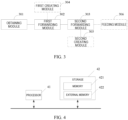
- the embodiments of the present disclosure also provide a computer device, as shown in FIG. 4 , a schematic structural diagram of a computer device according to the embodiments of the present disclosure, comprising: a processor 41 and a memory 42; the memory 42 storing machine-readable instructions executable by the processor 41, and the processor 41 configured to execute the machine-readable instructions stored in the memory 42, in response to the machine-readable instructions being executed by the processor 41, the processor 41 executing the following steps: S101: obtaining an application usage request; S102: forwarding, by using a traffic scheduler, the application usage request to a scalable service cluster; the scalable service cluster being used to run a created instance matching various application usage requests; and S103: in response to receiving a non-idle state indication fed back by the scalable service cluster is received, forwarding, by using the traffic scheduler, the application usage request to a reserved service cluster, to run, by the reversed service cluster, a reserved instance matching the application usage request.
- S101 obtaining an application usage request
- S102 forwarding,
- the above memory 42 comprises a memory 421 and an external memory 422; the memory 421 here is also called an internal memory, configured to temporarily store the operation data in the processor 41, as well as the data exchanged with external memory 422 such as a hard disk, the processor 41 exchanges data with the external memory 422 through the memory 421.
- the embodiments of the present disclosure also provide a computer-readable storage medium.
- the computer-readable storage medium stores a computer program. When the computer program is run by a processor, the steps of the method of request processing described in the above method embodiments are executed.
- the storage medium may be a volatile or non-volatile computer-readable storage medium.
- the computer program product of the method of request processing according to the embodiments of the present disclosure includes a computer-readable storage medium storing program code.
- the instructions included in the program code may be used to execute the steps of the request processing method described in the above method embodiments. Specifically, it may be referred to the above method embodiments, and will not be repeated again here.
- the computer program product may be implemented specifically by means of hardware, software or a combination thereof.
- the computer program product is specifically embodied as a computer storage medium.
- the computer program product is specifically embodied as a software product, such as a Software Development Kit (SDK) and so on.
- SDK Software Development Kit
- the units illustrated as separate components may or may not be physically separated, and the components shown as units may or may not be physical units. That is, they may be located in one place, or they may be distributed to a plurality of network units. Some or all of the units may be selected according to actual needs to achieve the purpose of embodiments.
- various functional units in various embodiments of the present disclosure may be integrated into one processing unit, or various units may exist physically alone, or two or more units may be integrated into one unit.
- the functions are implemented in the form of software functional units and sold or used as independent products, they may be stored in a non-volatile computer-readable storage medium that is executable by a processor.
- the technical solution of the embodiments of the present disclosure is essentially or the part that contributes to the existing technology or the part of the technical solution may be embodied in the form of a software product, and the computer software product is stored in a storage medium, and includes several instructions to cause a computer device (which may be a personal computer, a server, or a network device, etc.) to execute all or part of the steps of the method described in various embodiments of the present disclosure.
- the aforementioned storage media include: U disk, mobile hard disk, Read-Only Memory (ROM), Random Access Memory (RAM), magnetic disk or optical disk and other media that may store program codes.
Landscapes
- Engineering & Computer Science (AREA)
- Software Systems (AREA)
- Theoretical Computer Science (AREA)
- Physics & Mathematics (AREA)
- General Engineering & Computer Science (AREA)
- Computer Networks & Wireless Communication (AREA)
- Signal Processing (AREA)
- General Physics & Mathematics (AREA)
- Mathematical Physics (AREA)
- Computer Hardware Design (AREA)
- Stored Programmes (AREA)
Applications Claiming Priority (2)
| Application Number | Priority Date | Filing Date | Title |
|---|---|---|---|
| CN202210228680.7A CN114615340B (zh) | 2022-03-08 | 2022-03-08 | 一种请求处理方法、装置、计算机设备和存储装置 |
| PCT/CN2023/076651 WO2023169175A1 (zh) | 2022-03-08 | 2023-02-17 | 一种请求处理方法、装置、计算机设备和存储装置 |
Publications (2)
| Publication Number | Publication Date |
|---|---|
| EP4404538A1 true EP4404538A1 (de) | 2024-07-24 |
| EP4404538A4 EP4404538A4 (de) | 2025-01-22 |
Family
ID=81860821
Family Applications (1)
| Application Number | Title | Priority Date | Filing Date |
|---|---|---|---|
| EP23765753.1A Pending EP4404538A4 (de) | 2022-03-08 | 2023-02-17 | Anfrageverarbeitungsverfahren und -vorrichtung, computerausrüstung und speichervorrichtung |
Country Status (4)
| Country | Link |
|---|---|
| US (1) | US12131191B2 (de) |
| EP (1) | EP4404538A4 (de) |
| CN (1) | CN114615340B (de) |
| WO (1) | WO2023169175A1 (de) |
Families Citing this family (4)
| Publication number | Priority date | Publication date | Assignee | Title |
|---|---|---|---|---|
| CN114615340B (zh) | 2022-03-08 | 2023-10-20 | 抖音视界有限公司 | 一种请求处理方法、装置、计算机设备和存储装置 |
| CN115185635A (zh) * | 2022-06-24 | 2022-10-14 | 北京华艺世嘉网络有限公司 | 应用服务的调度方法、装置、设备及存储介质 |
| CN115617517B (zh) * | 2022-10-12 | 2023-11-10 | 中航信移动科技有限公司 | 一种用于应用pod控制的数据处理系统 |
| CN115379000B (zh) * | 2022-10-26 | 2023-03-24 | 小米汽车科技有限公司 | 服务平台的扩容方法、装置、电子设备以及存储介质 |
Family Cites Families (38)
| Publication number | Priority date | Publication date | Assignee | Title |
|---|---|---|---|---|
| US7647523B2 (en) * | 2002-06-12 | 2010-01-12 | International Business Machines Corporation | Dynamic binding and fail-over of comparable web service instances in a services grid |
| US7171470B2 (en) * | 2003-02-20 | 2007-01-30 | International Business Machines Corporation | Grid service scheduling of related services using heuristics |
| GB0610302D0 (en) * | 2006-05-24 | 2006-07-05 | Ibm | A method, apparatus and computer program for validating that a clients request has been routed to an appropriate server |
| US8260940B1 (en) * | 2007-06-29 | 2012-09-04 | Amazon Technologies, Inc. | Service request management |
| US8478812B2 (en) * | 2009-09-29 | 2013-07-02 | Core Wireless S.A.R.L. | Method and apparatus for providing device compatibility information |
| JP2011248683A (ja) * | 2010-05-27 | 2011-12-08 | Canon Inc | クラウドコンピューティングシステム、サーバーコンピュータ、デバイス接続方法及びプログラム |
| US9075660B2 (en) * | 2012-03-29 | 2015-07-07 | Alcatel Lucent | Apparatus and method for providing service availability to a user via selection of data centers for the user |
| JP5951111B2 (ja) * | 2012-11-09 | 2016-07-13 | 株式会社日立製作所 | 管理計算機、計算機システム、及びインスタンス管理方法 |
| KR20140080949A (ko) * | 2012-12-21 | 2014-07-01 | 한국전자통신연구원 | 라우팅 장치 및 방법 |
| US9537728B2 (en) * | 2013-11-26 | 2017-01-03 | International Business Machines Corporation | Minimizing service restart by optimally resizing service pools |
| US10097431B1 (en) * | 2014-06-06 | 2018-10-09 | Amazon Technologies, Inc. | Routing to tenant services utilizing a service directory |
| US9256467B1 (en) * | 2014-11-11 | 2016-02-09 | Amazon Technologies, Inc. | System for managing and scheduling containers |
| JP2018512084A (ja) * | 2015-01-30 | 2018-05-10 | カルガリー サイエンティフィック インコーポレイテッド | 高度にスケーラブルでフォールトトレラントなリモートアクセスアーキテクチャと、当該リモートアクセスアーキテクチャに接続する方法 |
| CN105763602B (zh) * | 2016-01-29 | 2017-12-01 | 腾讯科技(深圳)有限公司 | 一种数据请求处理的方法、服务器及系统 |
| CN107665143B (zh) | 2016-07-27 | 2020-10-16 | 华为技术有限公司 | 资源管理方法、装置及系统 |
| US11349931B2 (en) * | 2016-08-31 | 2022-05-31 | Sap Se | Session management for collaboration sessions |
| CN108023742B (zh) * | 2016-10-31 | 2021-08-27 | 阿里巴巴集团控股有限公司 | 一种应用的扩容方法、装置和系统 |
| CN108076082A (zh) * | 2016-11-09 | 2018-05-25 | 阿里巴巴集团控股有限公司 | 一种应用集群的扩容方法、装置和系统 |
| US20180295044A1 (en) * | 2017-04-05 | 2018-10-11 | Linkedin Corporation | Automated management of service instances |
| CN107145393A (zh) * | 2017-04-27 | 2017-09-08 | 努比亚技术有限公司 | 一种负载调整方法、设备及计算机可读存储介质 |
| CN110474940B (zh) | 2018-05-10 | 2023-01-13 | 超级魔方(北京)科技有限公司 | 请求调度方法、装置、电子设备、及介质 |
| CN111385114B (zh) * | 2018-12-28 | 2022-04-26 | 华为技术有限公司 | Vnf服务实例化方法及装置 |
| CN109766175A (zh) * | 2018-12-28 | 2019-05-17 | 深圳晶泰科技有限公司 | 面向高性能计算在云上的资源弹性伸缩系统及其调度方法 |
| CN110138862B (zh) * | 2019-05-16 | 2022-03-04 | 北京字节跳动网络技术有限公司 | 基于应用服务的业务处理方法、装置、网关设备及介质 |
| CN110289982B (zh) * | 2019-05-17 | 2022-08-23 | 平安科技(深圳)有限公司 | 容器应用的扩容方法、装置、计算机设备及存储介质 |
| CN110221920B (zh) * | 2019-06-04 | 2022-02-18 | 合肥讯飞数码科技有限公司 | 部署方法、装置、存储介质及系统 |
| CN111475235B (zh) * | 2020-04-13 | 2023-09-12 | 北京字节跳动网络技术有限公司 | 函数计算冷启动的加速方法、装置、设备及存储介质 |
| CN112214330B (zh) * | 2020-11-04 | 2024-11-26 | 腾讯科技(深圳)有限公司 | 集群中主节点的部署方法、装置及计算机可读存储介质 |
| US11595248B2 (en) * | 2020-12-22 | 2023-02-28 | Vmw Are, Inc. | Scalable notification delivery for networked computing environments |
| CN112631687B (zh) * | 2020-12-31 | 2024-08-02 | 中国农业银行股份有限公司 | 一种服务集群的配置方法、装置及设备 |
| CN112650575B (zh) | 2021-01-15 | 2023-08-18 | 百度在线网络技术(北京)有限公司 | 资源调度方法、装置和云端服务系统 |
| KR102650892B1 (ko) * | 2021-04-12 | 2024-03-26 | 한국전자통신연구원 | 지역적으로 분산된 다중 클라우드 환경에서의 컨테이너 오케스트레이션 장치 및 이를 이용한 방법 |
| CN113157418B (zh) | 2021-04-25 | 2023-08-25 | 腾讯科技(深圳)有限公司 | 服务器资源分配方法和装置、存储介质及电子设备 |
| CN115248730A (zh) * | 2021-04-27 | 2022-10-28 | 华为云计算技术有限公司 | 提供服务的方法及装置 |
| CN113190329A (zh) * | 2021-05-24 | 2021-07-30 | 青岛聚看云科技有限公司 | 服务器及容器云集群资源自动伸缩的方法 |
| CN113382061B (zh) * | 2021-06-08 | 2023-02-03 | 中国工商银行股份有限公司 | 基于云环境的服务处理方法、装置及系统 |
| CN114090183B (zh) * | 2021-11-25 | 2023-07-21 | 抖音视界有限公司 | 一种应用启动方法、装置、计算机设备和存储介质 |
| CN114615340B (zh) * | 2022-03-08 | 2023-10-20 | 抖音视界有限公司 | 一种请求处理方法、装置、计算机设备和存储装置 |
-
2022
- 2022-03-08 CN CN202210228680.7A patent/CN114615340B/zh active Active
-
2023
- 2023-02-17 EP EP23765753.1A patent/EP4404538A4/de active Pending
- 2023-02-17 WO PCT/CN2023/076651 patent/WO2023169175A1/zh not_active Ceased
-
2024
- 2024-04-18 US US18/639,016 patent/US12131191B2/en active Active
Also Published As
| Publication number | Publication date |
|---|---|
| CN114615340B (zh) | 2023-10-20 |
| WO2023169175A1 (zh) | 2023-09-14 |
| US12131191B2 (en) | 2024-10-29 |
| EP4404538A4 (de) | 2025-01-22 |
| CN114615340A (zh) | 2022-06-10 |
| US20240264872A1 (en) | 2024-08-08 |
Similar Documents
| Publication | Publication Date | Title |
|---|---|---|
| EP4404538A1 (de) | Anfrageverarbeitungsverfahren und -vorrichtung, computerausrüstung und speichervorrichtung | |
| CN115328663B (zh) | 基于PaaS平台进行资源调度的方法、装置、设备和存储介质 | |
| CN108449410B (zh) | 一种云平台中消息管理方法、系统及相关装置 | |
| US10402424B1 (en) | Dynamic tree determination for data processing | |
| EP3073374B1 (de) | Fadenerzeugungsverfahren, dienstanforderungverarbeitungsverfahren und zugehörige vorrichtung | |
| CN111338773B (zh) | 一种分布式定时任务调度方法、调度系统及服务器集群 | |
| US8150889B1 (en) | Parallel processing framework | |
| WO2020177564A1 (zh) | Vnf的生命周期管理方法及装置 | |
| CN110750780B (zh) | 基于多业务系统的用户角色权限融合方法、装置以及设备 | |
| CN111796838B (zh) | Mpp数据库自动部署方法及装置 | |
| CN103995787A (zh) | 一种摄像头应用的调控方法及装置 | |
| CN113206877A (zh) | 一种会话保持方法及装置 | |
| CN109800083A (zh) | 一种微服务协同调用的方法、装置、系统及存储介质 | |
| CN113014608B (zh) | 一种流量分发控制方法、装置、电子设备及存储介质 | |
| CN111541762A (zh) | 数据处理的方法、管理服务器、设备及存储介质 | |
| CN114327846A (zh) | 集群的扩容方法、装置、电子设备及计算机可读存储介质 | |
| US20200310828A1 (en) | Method, function manager and arrangement for handling function calls | |
| CN118394548A (zh) | 一种微前端跨应用信息共享方法与微前端架构 | |
| CN114070820A (zh) | 一种域名重定向方法、装置、介质及电子设备 | |
| CN114615276B (zh) | 一种内容分发网络域名调度方法及装置 | |
| US20170331912A1 (en) | Multi-account login and communication | |
| CN114090183A (zh) | 一种应用启动方法、装置、计算机设备和存储介质 | |
| WO2024251107A1 (zh) | 容器编排与数据访问方法、电子设备及存储介质 | |
| CN117608654A (zh) | 一种业务系统配置方法及终端 | |
| CN110163596A (zh) | 一种资源额度分享系统及方法 |
Legal Events
| Date | Code | Title | Description |
|---|---|---|---|
| STAA | Information on the status of an ep patent application or granted ep patent |
Free format text: STATUS: THE INTERNATIONAL PUBLICATION HAS BEEN MADE |
|
| PUAI | Public reference made under article 153(3) epc to a published international application that has entered the european phase |
Free format text: ORIGINAL CODE: 0009012 |
|
| STAA | Information on the status of an ep patent application or granted ep patent |
Free format text: STATUS: REQUEST FOR EXAMINATION WAS MADE |
|
| 17P | Request for examination filed |
Effective date: 20240417 |
|
| AK | Designated contracting states |
Kind code of ref document: A1 Designated state(s): AL AT BE BG CH CY CZ DE DK EE ES FI FR GB GR HR HU IE IS IT LI LT LU LV MC ME MK MT NL NO PL PT RO RS SE SI SK SM TR |
|
| REG | Reference to a national code |
Ref country code: DE Ref legal event code: R079 Free format text: PREVIOUS MAIN CLASS: H04L0067630000 Ipc: G06F0009500000 |
|
| A4 | Supplementary search report drawn up and despatched |
Effective date: 20241219 |
|
| RIC1 | Information provided on ipc code assigned before grant |
Ipc: H04L 47/125 20220101ALI20241213BHEP Ipc: H04L 67/60 20220101ALI20241213BHEP Ipc: H04L 67/1031 20220101ALI20241213BHEP Ipc: H04L 67/1008 20220101ALI20241213BHEP Ipc: G06F 9/48 20060101ALI20241213BHEP Ipc: H04L 67/63 20220101ALI20241213BHEP Ipc: G06F 9/50 20060101AFI20241213BHEP |
|
| DAV | Request for validation of the european patent (deleted) | ||
| DAX | Request for extension of the european patent (deleted) |