EP4404527A1 - Dienstplanungsverfahren und -vorrichtung, vorrichtung und computerlesbares speichermedium - Google Patents
Dienstplanungsverfahren und -vorrichtung, vorrichtung und computerlesbares speichermedium Download PDFInfo
- Publication number
- EP4404527A1 EP4404527A1 EP22882464.5A EP22882464A EP4404527A1 EP 4404527 A1 EP4404527 A1 EP 4404527A1 EP 22882464 A EP22882464 A EP 22882464A EP 4404527 A1 EP4404527 A1 EP 4404527A1
- Authority
- EP
- European Patent Office
- Prior art keywords
- service
- port
- label
- network
- target
- Prior art date
- Legal status (The legal status is an assumption and is not a legal conclusion. Google has not performed a legal analysis and makes no representation as to the accuracy of the status listed.)
- Pending
Links
Images



Classifications
-
- H—ELECTRICITY
- H04—ELECTRIC COMMUNICATION TECHNIQUE
- H04L—TRANSMISSION OF DIGITAL INFORMATION, e.g. TELEGRAPHIC COMMUNICATION
- H04L43/00—Arrangements for monitoring or testing data switching networks
- H04L43/08—Monitoring or testing based on specific metrics, e.g. QoS, energy consumption or environmental parameters
-
- H—ELECTRICITY
- H04—ELECTRIC COMMUNICATION TECHNIQUE
- H04L—TRANSMISSION OF DIGITAL INFORMATION, e.g. TELEGRAPHIC COMMUNICATION
- H04L41/00—Arrangements for maintenance, administration or management of data switching networks, e.g. of packet switching networks
- H04L41/50—Network service management, e.g. ensuring proper service fulfilment according to agreements
- H04L41/5003—Managing SLA; Interaction between SLA and QoS
-
- H—ELECTRICITY
- H04—ELECTRIC COMMUNICATION TECHNIQUE
- H04L—TRANSMISSION OF DIGITAL INFORMATION, e.g. TELEGRAPHIC COMMUNICATION
- H04L45/00—Routing or path finding of packets in data switching networks
- H04L45/302—Route determination based on requested QoS
-
- H—ELECTRICITY
- H04—ELECTRIC COMMUNICATION TECHNIQUE
- H04L—TRANSMISSION OF DIGITAL INFORMATION, e.g. TELEGRAPHIC COMMUNICATION
- H04L45/00—Routing or path finding of packets in data switching networks
- H04L45/302—Route determination based on requested QoS
- H04L45/306—Route determination based on the nature of the carried application
-
- H—ELECTRICITY
- H04—ELECTRIC COMMUNICATION TECHNIQUE
- H04L—TRANSMISSION OF DIGITAL INFORMATION, e.g. TELEGRAPHIC COMMUNICATION
- H04L45/00—Routing or path finding of packets in data switching networks
- H04L45/50—Routing or path finding of packets in data switching networks using label swapping, e.g. multi-protocol label switch [MPLS]
-
- H—ELECTRICITY
- H04—ELECTRIC COMMUNICATION TECHNIQUE
- H04L—TRANSMISSION OF DIGITAL INFORMATION, e.g. TELEGRAPHIC COMMUNICATION
- H04L67/00—Network arrangements or protocols for supporting network services or applications
- H04L67/50—Network services
- H04L67/51—Discovery or management thereof, e.g. service location protocol [SLP] or web services
-
- H—ELECTRICITY
- H04—ELECTRIC COMMUNICATION TECHNIQUE
- H04L—TRANSMISSION OF DIGITAL INFORMATION, e.g. TELEGRAPHIC COMMUNICATION
- H04L67/00—Network arrangements or protocols for supporting network services or applications
- H04L67/50—Network services
- H04L67/60—Scheduling or organising the servicing of application requests, e.g. requests for application data transmissions using the analysis and optimisation of the required network resources
-
- H—ELECTRICITY
- H04—ELECTRIC COMMUNICATION TECHNIQUE
- H04L—TRANSMISSION OF DIGITAL INFORMATION, e.g. TELEGRAPHIC COMMUNICATION
- H04L67/00—Network arrangements or protocols for supporting network services or applications
- H04L67/50—Network services
- H04L67/60—Scheduling or organising the servicing of application requests, e.g. requests for application data transmissions using the analysis and optimisation of the required network resources
- H04L67/63—Routing a service request depending on the request content or context
Definitions
- This application relates to the field of cloud computing technologies, and in particular, to a service scheduling method and apparatus, device, and a computer-readable storage medium.
- a cloud network deployed by the cloud vendor usually establishes, according to a border gateway protocol (border gateway protocol, BGP), a BGP neighbor with an internet service provider (internet service provider, ISP) network deployed by a carrier, to achieve communication.
- BGP border gateway protocol
- ISP internet service provider
- a solution used by the cloud vendor is: detecting network quality of a communication line between the cloud network and each ISP network, determining a line with better network quality, and then providing a cloud service for the customer through the line.
- a problem of this solution is as follows: When the line is congested or a network capacity is insufficient, all services can be provided for the customer only through a candidate line, that is, a high-level service and a low-level service are provided for the customer through a same candidate line. Consequently, for the high-level service, network experience of the customer is degraded.
- This application discloses a service scheduling method and apparatus, device, and a computer-readable storage medium, to provide better network quality for a customer.
- this application provides a service scheduling method.
- the method includes: receiving service configuration information input by a user, where the service configuration information includes a network service level required by a service; obtaining a first service packet, where the first service packet carries content and a target level label of the service, and the target level label is used to identify the network service level required by the service; then matching the target level label with a plurality of level labels in a first routing table, where the first routing table includes the plurality of level labels and a port label corresponding to each level label; when the target level label matches any one of the plurality of level labels, determining a target port label based on the level label obtained through matching, where the target port label is used to identify a target port of a point of presence (point of presence, POP); and finally, controlling the POP to send the first service packet from the target port to a client.
- the service configuration information includes a network service level required by a service
- obtaining a first service packet where the first service packet carries content and a target level label of
- a corresponding network resource is configured for the service, so that services that require different network resources may be sent to the client by using different network resources.
- the service configuration information further includes a port number of a server port
- the obtaining a first service packet includes: receiving a second service packet sent by a server via the server port, where the second service packet is a packet generated by the server in response to a service request of the service sent by the client; and then adding the target level label to the second service packet based on the port number of the server port, to obtain the first service packet.
- the user notifies the server of the network service level required by the service by configuring the port number of the server port, to add a corresponding target level label to the second service packet.
- the service configuration information further includes a port number of a server port
- the obtaining a first service packet includes: sending the service configuration information to a server, so that the server adds a target level label to a second service packet based on the port number of the server port, where the second service packet is a packet generated by the server in response to a service request of the service sent by the client; and then receiving the first service packet sent by the server via the server port, where the first service packet is the second service packet to which the target level label is added.
- the server may determine, based on the port number of the server port configured by the user, the port that sends the second service packet, so that a device receiving the second service packet determines the network service level required by the service.
- controlling the POP to send the first service packet from the target port to a client includes: adding the target port label to the first service packet; and sending, to the POP, the first service packet to which the target port label is added, so that the POP sends the first service packet from the target port to the client based on the target port label.
- forwarding of the POP is controlled by adding the target port label to the first service packet, and a complex forwarding policy or a newly added protocol is not needed to be configured for the POP, so that configuration of the POP and a manner of forwarding a service packet by the POP can be simplified.
- the method before the matching the target level label with a plurality of level labels in a first routing table, the method further includes: detecting network performances of a network segment to which the client belongs on a plurality of ports of the POP, where the plurality of ports are connected to a plurality of internet service provider ISP networks; selecting M ports from the plurality of ports based on the network service level required by the service, where M is an integer greater than 1; determining that a network performance of the network segment is optimal on the target port in the M ports; and then obtaining the target port label corresponding to the target port, and storing the target port label and the target level label to the first routing table in an associated manner.
- a network resource may be dynamically configured for the service based on an actual situation, so that a service that requires a better network resource is always sent to the client by using a high-level network.
- the method before the detecting network performances of a network segment to which the client belongs on a plurality of ports of the POP, the method further includes: collecting traffic of the network segment, and determining that the traffic of the network segment is greater than a threshold. In this way, costs of detecting the network performance of the network segment may be reduced.
- the method further includes: when the target level label does not match any one of the plurality of level labels, forwarding the first service packet to the POP based on a second routing table, where the second routing table includes a next-hop address, and the next-hop address is an internet protocol (internet protocol, IP) address of the POP.
- IP internet protocol
- this application provides a service scheduling apparatus.
- the apparatus includes a service management unit and a forwarding unit.
- the service management unit is configured to receive service configuration information input by a user, where the service configuration information includes a network service level required by a service.
- the forwarding unit is configured to: obtain a first service packet, where the first service packet carries content and a target level label of the service, and the target level label is used to identify the network service level required by the service; match the target level label with a plurality of level labels in a first routing table, where the first routing table includes the plurality of level labels and a port label corresponding to each level label; when the target level label matches any one of the plurality of level labels, determine a target port label based on the level label obtained through matching, where the target port label is used to identify a target port of a POP; and then control the POP to send the first service packet from the target port to a client.
- the service configuration information further includes a port number of a server port; and the forwarding unit is configured to: receive a second service packet sent by a server via the server port, where the second service packet is a packet generated by the server in response to a service request of the service sent by the client; and add a target level label to the second service packet based on the port number of the server port, to obtain the first service packet.
- the configuration information further includes a port number of a server port; the service management unit is configured to send the service configuration information to the server, so that the server adds a target level label to a second service packet based on the port number of the server port, where the second service packet is a packet generated by the server in response to a service request of the service sent by the client; and the forwarding unit is configured to receive the first service packet sent by the server via the server port, where the first service packet is the second service packet to which the target level label is added.
- the forwarding unit is configured to: add the target port label to the first service packet; and send, to the POP, the first service packet to which the target port label is added, so that the POP sends the first service packet from the target port to the client based on the target port label.
- the apparatus further includes a data collection unit, where the data collection unit is configured to detect network performances of a network segment to which the client belongs on a plurality of ports of the POP, and the plurality of ports are connected to a plurality of internet service provider ISP networks; and the service management unit is further configured to: select M ports from the plurality of ports based on the network service level required by the service, where M is an integer greater than 1; then determine that a network performance of the network segment is optimal on the target port in the M ports; and then obtain the target port label corresponding to the target port, and store the target port label and the target level label to the first routing table in an associated manner.
- M is an integer greater than 1
- the data collection unit is further configured to collect traffic of the network segment; and the service management unit is further configured to determine that traffic of the network segment is greater than a threshold.
- the forwarding unit is further configured to: when the target level label does not match any one of the plurality of level labels, forward the first service packet to the POP based on a second routing table, where the second routing table includes a next-hop address, and the next-hop address is an internet protocol IP address of the POP.
- this application provides a computing device.
- the computing device includes a processor and a memory, the memory stores computer instructions, and the processor executes the computer instructions, so that the computing device is enabled to perform the method described in any one of the first aspect or the implementations of the first aspect.
- this application provides a computer-readable storage medium.
- the computer-readable storage medium stores computer instructions; and when the computer instructions are executed by a computing device, the computing device performs the method described in any one of the first aspect or the implementations of the first aspect.
- An ISP network is deployed by a carrier, to provide services such as a dial-up internet service, online browsing, file download, and email sending and receiving. It is an entrance and bridge for an internet end user to access an internet (internet).
- a BGP is a routing protocol that implements route reachability between different autonomous systems (autonomous systems, ASs).
- AS autonomous systems
- an AS is a set of networks that use a same routing policy and that are managed by an entity (for example, a cloud vendor or the carrier). Therefore, a network deployed by the cloud vendor (which is hereinafter referred to as a cloud network) and the ISP network may be interconnected based on the BGP.
- a BGP neighbor is established between the cloud network and a plurality of ISP networks (including an ISP 1, an ISP 2, and an ISP 3).
- resources including a computing resource, a storage resource, and a network resource
- the cloud vendor may allocate a proper network resource to the client of the user based on network quality of communication lines (a line 1, a line 2, and a line 3 shown in FIG. 1 ) between the cloud network and the ISP networks, to provide better network quality for the client of the user.
- the cloud vendor provides the cloud service for the client by using the ISP 1 network.
- the cloud vendor may further allocate another ISP network (for example, the ISP 2 in FIG. 1 ) to the client, to provide network redundancy protection for the user.
- this application provides a service system.
- a user may configure a network service level (namely, a service level) required by a service.
- the system may configure a corresponding network resource for the service based on the network service level required by the service, so that services of different levels may be sent to a client by using different network resources. This achieves an objective that a high-level service has a high-quality network resource.
- FIG. 2 is a schematic diagram of a structure of a service system according to this application.
- the system includes a server 100, a service scheduling apparatus 200, a POP 300, and a client 400.
- the server 100 After the client 400 sends a service request to the server 100, the server 100 generates a corresponding service packet based on the service request, and sends the service packet to the service scheduling apparatus 200.
- the service scheduling apparatus 200 receives the service packet, and allocates a corresponding network resource to the service packet based on a network service level required by a service, to indicate the POP 300 to send the service packet to the client 400.
- the client 400 may obtain a service provided by the server 100.
- the server 100 means resources (including a computing resource, a storage resource, and a network resource) purchased by a user from a cloud vendor.
- the server 100 may specifically include a plurality of devices (including a computing device, a storage device, and a network device), for example, a plurality of devices in a data center (data center, DC) built by the cloud vendor or a plurality of devices in an equipment room.
- the user is a user who registers a cloud account and purchases a resource from the cloud vendor.
- the server 100 is configured to provide a cloud service for the client 400, and the client 400 may include a mobile phone, a portable computer or a tablet computer.
- the user is a video platform.
- the video platform purchases a cloud service of a video on demand service from the cloud vendor.
- the client 400 includes the following two types: a live streamer client and an audience client.
- the cloud service provided by the server 100 for the client 400 includes: The live streamer client may upload a produced short video to the server 100 for caching, and the audience client may obtain the short video from the server 100.
- the server 100 may provide the cloud service for the client 400 in a form of a service packet.
- the server 100 is specifically configured to receive the service request sent by the client 400, and generate, based on the service request, a service packet carrying service content. It should be understood that, because the service content is carried in the service packet, in this case, after receiving the service packet, the client 400 may obtain the corresponding service content, and obtain the cloud service.
- the user may purchase a cloud service for a plurality of services, and different services have different requirements for the network resource.
- a latency requirement of a video live broadcast service is higher than a latency requirement of the video on demand service. Therefore, a network resource requirement of the video live broadcast service is higher than a network resource requirement of the video on demand service.
- a better network resource needs to be provided in a process of providing the video live broadcast service for the client 400. Therefore, the service system provided in this application includes the service scheduling apparatus 200.
- the server 100 is further configured to send the service packet to the service scheduling apparatus 200.
- the service scheduling apparatus 200 is configured to receive the service packet sent by the server 100, and allocate a corresponding network resource to the service packet based on the network service level required by the service, to indicate the POP 300 to send the service packet to the client 400. Details are as follows:
- the service scheduling apparatus 200 is configured to receive service configuration information input by a user, where the service configuration information includes the network service level required by the service.
- the service scheduling apparatus 200 is further configured to send the configuration information to the server 100.
- the server 100 is further configured to add a corresponding level label to the generated service packet based on the configuration information, and send, to the service scheduling apparatus 200, the service packet to which the level label is added.
- the service scheduling apparatus 200 is further configured to receive the service packet sent by the server 100, and add the level label to the service packet based on the configuration information.
- the service scheduling apparatus 200 is further configured to collect network data of a cloud network.
- the network data includes but is not limited to: network performances of a plurality of network segments, traffic of the plurality of network segments, and route monitoring information.
- the network segment is a network segment to which the client 400 belongs.
- the network performance of the network segment includes but is not limited to the following parameters: a packet loss rate and the latency.
- the packet loss rate means a ratio of a quantity of lost data packets to a total quantity of transmitted data packets in data packets transmitted through the network segment.
- the latency means time consumed when a single data packet is transmitted through the network segment.
- the route monitoring information includes border gateway protocol monitoring protocol (border gateway protocol monitoring protocol, BMP) routing information stored in the POP 300, namely, all BGP routing information received by the POP 300 from a BGP peer and withdrawn BGP routing information.
- BMP border gateway protocol monitoring protocol
- a BGP peer of the POP 300 is an ISP network that establishes a connection with the POP 300 according to a BGP.
- the route monitoring information further includes BGP routing information selected by the POP 300 from the BMP routing information according to a BGP route selection rule.
- the service scheduling apparatus 200 is further configured to calculate, based on the network data and the service configuration information, different routing entries for services that need different network services, to obtain a first routing table.
- the first routing table includes a plurality of level labels and a port label corresponding to each level label.
- the level label is used to identify the network service level (namely, a service level) required by the service, and a port label corresponding to the level label is used to identify a port on the POP 300.
- the service scheduling apparatus 200 is further configured to match the level label carried in the service packet with the plurality of level labels in the first routing table, and if the matching succeeds, add the corresponding port label to the service packet, and send, to the POP 300, the service packet to which the port label is added.
- the POP 300 is a local access point of the cloud network, and the cloud network is a network resource rented by the user.
- the POP 300 may be a router, a switch, a server, or another data communication device. This is not limited in this application.
- the POP 300 is configured to establish a communication connection between the cloud network and a plurality of ISP networks (for example, an ISP 1, an ISP 2, and an ISP 3 in FIG. 2 ), so that the client 400 can access the cloud network, to obtain the cloud service provided by the server 100.
- ISP networks for example, an ISP 1, an ISP 2, and an ISP 3 in FIG. 2
- the POP 300 includes a plurality of ports, and one port is connected to one ISP network.
- port connected to the ISP network on the POP 300 may have different names.
- different standards, different versions of a same standard, different vendors, and different application scenarios may have different names for "port connected to the ISP network on the POP 300".
- "port connected to the ISP network on the POP 300” may also sometimes be referred to as an "egress line”.
- each of the plurality of ports corresponds to one port label.
- the port label of the port may be preset by the user, or may be defined by the POP 300.
- the POP 300 is further configured to store a correspondence between the port and the port label, and send the port label to the service scheduling apparatus 200, so that the service scheduling apparatus 200 can configure the first routing table.
- the POP 300 is further configured to receive a service packet that is sent by the service scheduling apparatus 200 and that carries the port label, and send the service packet to the client 400 by using a port indicated by the port label.
- the service system provided in this application can configure the corresponding network resource for the service based on the network service level required by the service, so that services of different levels can be sent to the client by using different network resources.
- a high-priority service can preferentially use a high-quality network resource.
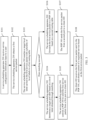
- FIG. 3 is a schematic flowchart of a service scheduling method according to this application. The method includes but is not limited to the following steps.
- a service scheduling apparatus 200 receives service configuration information input by a user.
- the service configuration information includes a network service level required by a service.
- the network service level indicates network quality.
- the service scheduling apparatus 200 provides a plurality of network service levels for the user for selection.
- the service configuration information further includes a port number of a server port A, and the server port A is a port of a server 100.
- service packets of different services may be transmitted by using different ports.
- a hypertext transfer protocol hypertext transfer protocol, HTTP
- HTTP hypertext transfer protocol
- the service configuration information further includes identifier information of the user.
- an identifier of the user may be an elastic public network (elastic IP, EIP) address purchased by the user.
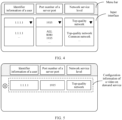
- the service scheduling apparatus 200 provides a user interface (user interface, UI) for the user, and the user completes inputting of the service configuration information by performing an operation on the UI.
- the UI includes a menu bar and an input interface, and the menu bar includes three items: identifier information of the user, a port number of a server port, and the network service level.
- the network service level includes a top-quality network and a common network. A network service level of the top-quality network is higher than a network service level of the common network, that is, network quality of the top-quality network is better than network quality of the common network.
- a network service level configured by the user for the video live broadcast service may be the top-quality network.
- the service scheduling apparatus 200 obtains a first service packet.
- the first service packet carries content and a target level label of the service, where the target level label is used to identify the network service level required by the service.
- that the service scheduling apparatus 200 obtains a first service packet includes: The service scheduling apparatus 200 receives a second service packet sent by the server 100. Specifically, in response to a service request of the service sent by a client 400, the server 100 generates the second service packet based on the service request, where the second service packet carries the content of the service. The server 100 receives the service configuration information sent by the service scheduling apparatus 200, and adds the target level label to the second service packet based on the service configuration information, to obtain the first service packet.
- the server 100 stores a correspondence between port numbers of a plurality of server ports and a plurality of level labels.
- the port numbers of the plurality of server ports include the port number of the server port A
- the plurality of level labels include the target level label.
- that the server 100 adds the target level label to the second service packet based on the service configuration information includes:
- the server 100 monitors the server port A. When determining to send the service packet from the server port A, the server 100 determines the target level label based on the foregoing correspondence, and adds the target level label to the second service packet.
- the target level label may be a DSCP value, for example, 12 or 16.
- the target level label may alternatively be a letter, a character string, a digit, a combination of a digit and a letter, or the like.
- the target level label may be added to a header of the service packet, a tail of the service packet, or the service packet. This is not limited in this application.
- that the service scheduling apparatus 200 obtains a first service packet includes: The service scheduling apparatus 200 receives the second service packet sent by the server 100. Then, the service scheduling apparatus 200 adds the target level label to the second service packet based on the service configuration information, to obtain the first service packet.
- the service scheduling apparatus 200 stores the correspondence between the port numbers of the plurality of server ports and the plurality of level labels.
- the port numbers of the plurality of server ports include the port number of the server port A
- the service scheduling apparatus 200 matches the target level label carried in the first service packet with a plurality of level labels in a first routing table. If the target level label matches any one of the plurality of level labels, S104, S105 and S108 are performed; or if the target level label does not match any one of the plurality of level labels, S106 to S108 are performed.
- the service scheduling apparatus 200 stores the first routing table.
- the first routing table includes the plurality of level labels and a port label corresponding to each level label, where the plurality of level labels include the target level label, and the port label corresponding to each level label is used to identify a port of a POP 300.
- the service scheduling apparatus 200 may configure the first routing table by using the following steps: Step 1: The service scheduling apparatus 200 detects network performances of a plurality of network segments.
- the plurality of network segments include a network segment to which the client 400 belongs.
- the network performance of the network segment includes but is not limited to the following parameters: a packet loss rate and a latency.
- the packet loss rate means a ratio of a quantity of lost data packets to a total quantity of transmitted data packets in data packets transmitted through the network segment.
- the latency means time consumed when a single data packet is transmitted through the network segment.
- the service scheduling apparatus 200 collects routing information sent by a plurality of ISP networks to the POP 300, determines the plurality of network segments based on the routing information, and detects the network performances of these network segments. It should be understood that, during actual application, to ensure that the client 400 can access the server 100, before sending the service request to the server 100, the client 400 first sends the routing information to the server 100 by using the ISP network and the POP 300, and then forwards the service request based on the routing information.
- the POP 300 is connected to the plurality of ISP networks. Therefore, the POP 300 receives the routing information reported by the plurality of ISP networks.
- the service scheduling apparatus 200 may obtain a plurality of source IP address segments based on the collected routing information.
- the plurality of source IP address segments herein are the plurality of network segments in which the service scheduling apparatus 200 needs to detect the network performances.
- the POP 300 after receiving the routing information reported by the plurality of ISP networks, the POP 300 periodically sends the routing information to the service scheduling apparatus 200, so that the service scheduling apparatus 200 obtains the routing information.
- the service scheduling apparatus 200 may monitor the port of the POP 300. After the port of the POP 300 receives the routing information reported by the ISP network, the POP 300 is controlled to send the routing information to the service scheduling apparatus 200.
- the service scheduling apparatus 200 may detect the network performances of the plurality of network segments in the following manner.
- the service scheduling apparatus 200 detects a network performance of one network segment:
- the service scheduling apparatus 200 controls the POP 300 to separately send, from a plurality of ports, probe packets (for example, ping packets) to clients belonging to the network segment, and then determines a network performance of the network segment on each port based on probe response packets received by the POP 300.
- probe packets for example, ping packets
- the port receives a probe response packet returned by the client, and obtains the packet loss rate and the latency by analyzing the probe packet sent from the port and the received probe response packet, to serve as the network performance of the network segment on the port. Therefore, in embodiments of this application, the network performance of the network segment on one port may be understood as a network performance of an ISP network corresponding to the port.
- a network performance of one network segment on one port may be obtained in the following manner:
- the service scheduling apparatus 200 separately sends, from one port, probe packets to a plurality of clients belonging to a same network segment, to obtain a plurality of corresponding probe response packets, then obtains a plurality of network performances based on the plurality of probe response packets, superimposes the plurality of network performances, and uses the superimposed network performance as the network performance of the network segment on one port. It can be learned from the foregoing descriptions that the network performance of the network segment includes at least one of the packet loss rate and the latency.
- the plurality of network performances may be superimposed in the following manner: calculating an average value of a plurality of packet loss rates, calculating an average value of a plurality of latencies, and then using the average value of the plurality of packet loss rates and the average value of the plurality of latencies as the superimposed network performance.
- POP 300 has two ports: a port 1 and a port 2, and a client 1 and a client 2 belong to a network segment A.
- the service scheduling apparatus 200 controls the POP 300 to separately send the ping packets to the client 1 and the client 2 from the port 1, to obtain a network performance 1 and a network performance 2.
- the service scheduling apparatus 200 further controls the POP 300 to separately send the ping packets to the client 1 and the client 2 from the port 2, to obtain a network performance 3 and a network performance 4.
- the service scheduling apparatus 200 superimposes the network performance 1 and the network performance 2, and uses the superimposed network performance as a network performance of the network segment A on the port 1; and the service scheduling apparatus 200 superimposes the network performance 3 and the network performance 4, and uses the superimposed network performance as a network performance of the network segment A on the port 2.
- the service scheduling apparatus 200 may further perform S1032.
- Step CD The service scheduling apparatus 200 collects traffic of the plurality of network segments, and performs network performance detection on a network segment whose traffic is greater than a threshold.
- a NetStream (NetStream) protocol is deployed on the port of the POP 300.
- Egress traffic of the port may be monitored in real time according to NetStream, traffic sent to different network segments is analyzed, and then information obtained through analysis is sent to the service scheduling apparatus 200.
- the service scheduling apparatus 200 may determine traffic of each network segment. Then, the service scheduling apparatus 200 determines the network segment whose traffic is greater than the threshold in the plurality of network segments, and performs network performance detection on the network segment whose traffic is greater than the threshold.
- Step 3 The service scheduling apparatus 200 collects route monitoring information, and determines a plurality of ports of the POP 300.
- the route monitoring information includes border gateway protocol monitoring protocol (border gateway protocol monitoring protocol, BMP) routing information stored in the POP 300, namely, all BGP routing information received by the POP 300 from a BGP peer and withdrawn BGP routing information.
- BMP border gateway protocol monitoring protocol
- a BGP peer of the POP 300 is an ISP network that establishes a connection with the POP 300 according to a BGP.
- the route monitoring information further includes BGP routing information selected by the POP 300 from the BMP routing information according to a BGP route selection rule.
- the POP 300 may periodically send the route monitoring information to the service scheduling apparatus 200.
- the service scheduling apparatus 200 may monitor the port of the POP 300.
- the POP 300 is controlled to send the BGP routing information or the BGP route update message to the service scheduling apparatus 200.
- the service scheduling apparatus 200 may determine, based on the route monitoring information, the plurality of ISP networks connected to the POP 300 and a port that is on the POP 300 and that is connected to each ISP network.
- Step 4 The service scheduling apparatus 200 obtains port labels of the plurality of ports of the POP 300.
- the POP 300 includes the plurality of ports, and each port has one port label.
- the port label may be defined by the POP 300, or may be set by the user. This is not limited herein.
- the POP 300 sends the port labels of the plurality of ports to the service scheduling apparatus 200, so that the service scheduling apparatus 200 may obtain the port labels of the plurality of ports.
- Step 5 The service scheduling apparatus 200 allocates M ports to the service based on the service configuration information, where M is an integer greater than 1.
- the service scheduling apparatus 200 obtains, based on the service configuration information, the network service level required by the service, and then selects the M ports from the foregoing plurality of ports based on the network service level required by the service, to serve as ports for transmitting the service packet of the service.
- the service scheduling apparatus 200 may allocate more ports to the service. In this way, the service packet of the service may be sent to the client 400 by using the plurality of ports. In other words, a network with an optimal network performance may be selected from the plurality of ISP networks to send the service packet of the service to the client 400, so that the client 400 requesting the service obtains better service experience.
- the POP 300 includes three ports: the port 1, the port 2, and a port 3.
- the port 1 is configured to connect to an ISP network deployed by a carrier A
- the port 2 is configured to connect to an ISP network deployed by a carrier B
- the port 3 is configured to connect to an ISP network deployed by a carrier C.
- ports that may be allocated by the service scheduling apparatus 200 to the service include the port 1, the port 2, and the port 3.
- a port that is allocated by the service scheduling apparatus 200 to the service includes the port 1.
- execution sequences of S1031, S1033, and S1034 is not limited in this embodiment of this application. That is, the execution sequences of S1031, S1033, and S1034 may be interchanged, or may be simultaneously performed.
- Step 6 The service scheduling apparatus 200 determines, based on the network performances of the plurality of network segments detected in S1031, a port corresponding to an optimal network performance of each network segment in the M ports and a port label of the port.
- One network segment is used as an example. Because the network segment may have different network performances on different ports, in order to enable a client requesting a service to obtain a better service (for example, obtain the service packet more quickly), the service scheduling apparatus 200 may determine, based on network performances of the network segment on a plurality of ports, a port of the M ports with an optimal network performance of the network segment, to transmit the service packet by using the port.
- the service scheduling apparatus 200 separately detects network performances of the network segment A on the port 1, the port 2, and the port 3.
- Network performance of the network segment A on the port 3 > Network performance of the network segment A on the port 1 > Network performance of the network segment A on the port 2.
- the M ports include the port 1 and the port 3.
- the service scheduling apparatus 200 selects, based on the network performances of the network segment A on the port 1 and the port 3, the port 3 from the port 1 and the port 3 as a port for transmitting the service packet.
- Step 7 The service scheduling apparatus 200 obtains the first routing table through configuration based on a level label that is in the service configuration information and that corresponds to the network service level required by the service, prefixes of the plurality of network segment, and the plurality of port labels determined in S1035.
- the first routing table includes the plurality of level labels, the prefixes of the plurality of network segment, a plurality of port labels, and a plurality of next-hop addresses.
- the plurality of level labels correspond to a plurality of network service levels, and the plurality of level labels include the foregoing target level label.
- the prefixes of the plurality of network segment are network segment prefixes to which a destination IP address belongs, and the prefixes of the plurality of network segment include prefixes of a network segment to which the client requesting the service belongs.
- the plurality of port labels include a target port label. All the plurality of next-hop addresses are IP addresses of the POP 300, for example, the first routing table shown in Table 1.
- the port label in the first routing table is determined by the service scheduling apparatus 200 based on the network service level required by the service and network performances of different network segments on different ports, the port label in the first routing table corresponds to the prefix and a level label of the network segment.
- Table 1 First routing table Level label Prefix (prefix) of a network segment Port label Next-hop address G1 1.1.1.0/24 P1 IP address of a POP 300 G1 2.2.2.0/24 P2 IP address of the POP 300 ... ... ... ... G2 1.1.1.0/24 P5 IP address of the POP 300
- the service scheduling apparatus 200 determines the target port label based on the level label obtained through matching.
- the target port label is used to identify a first port of the POP 300.
- the service scheduling apparatus 200 controls the POP 300 to send the first service packet from the first port to the client 400.
- that the service scheduling apparatus 200 controls the POP 300 to send the first service packet from the first port to the client 400 includes: The service scheduling apparatus 200 adds the target port label to the first service packet, and then sends, to the POP 300, the first service packet to which the target port label is added. After receiving the first service packet to which the target port label is added, the POP 300 sends the first service packet from the first port to the client 400 based on the target port label.
- the service scheduling apparatus 200 forwards the first service packet to the POP 300 based on a second routing table.
- the service scheduling apparatus 200 further stores the second routing table.
- the second routing table includes prefixes of the plurality of network segment and a plurality of next-hop addresses. Similar to the first routing table, the prefixes of the plurality of network segment include the prefixes of the network segment to which the client requesting the service belongs, and the plurality of next-hop addresses are all IP addresses of the POP 300. In this way, when the target level label carried in the first service packet does not match any level label in the first routing table, the service scheduling apparatus 200 may still forward the first service packet to the POP 300, so that the client 400 may obtain the first service packet.
- the service scheduling apparatus 200 may further perform S 1032. If the service scheduling apparatus 200 performs S 1032, the first routing table does not include prefixes of a part of network segments (namely, prefixes of network segments whose traffic is less than the threshold), so that destination IP addresses of a part of service packets do not belong to prefixes of any network segment in the first routing table. The part of service packets cannot be forwarded based on the first routing table. Therefore, the second routing table may further include the prefixes of network segments whose traffic is less than the threshold and corresponding next-hop addresses (namely, IP addresses of the POP 300). In this way, the service scheduling apparatus 200 may forward the foregoing service packets to the POP 300, so that clients belonging to the network segments whose traffic is less than the threshold may obtain the service packets.
- the first routing table does not include prefixes of a part of network segments (namely, prefixes of network segments whose traffic is less than the threshold), so that destination IP addresses of a part of service packets do not
- the service scheduling apparatus 200 may design the first routing table and the second routing table by using a pipeline (pipeline) model, where the first routing table is used as a first-level routing table, and the second routing table is used as a second-level routing table.
- the service scheduling apparatus 200 may first match the target level label and a destination IP address in the first service packet with the first routing table, and if the matching fails, match the destination IP address in the first service packet with the second routing table, to send the first service packet to the POP 300.
- the POP 300 sends the first service packet from a second port to the client 400.
- the second port and the first port may be a same port, or may be different ports.
- the POP 300 determines the second port according to the BGP route selection rule, and then sends the first service packet from the second port to the client 400.
- the POP 300 detects network quality of communication lines between a cloud network and the plurality of ISP networks, determines a line with optimal network quality, to determine the second port, and then sends the first service packet from the second port to the client 400.
- the client 400 receives the first service packet sent by the POP 300, and obtains content of the requested service based on the first service packet.
- the user purchases an EIP service provided by the cloud vendor, to provide a video on demand service externally.
- the user may input configuration information of the video on demand service on a UI provided by the service scheduling apparatus 200.
- the configuration information of the video on demand service includes: the identifier information of the user (an EIP address of the EIP service purchased by the user herein, namely, 1.1.1.1), the port number of the server port (ALL, namely, all ports of the server 100), and a required network service level (the common network).
- the service scheduling apparatus 200 may send a service packet of the video on demand service to a client by using the common network.
- the user After a period of time, the user expands the video live broadcast service, and expects that the video live broadcast service can use a better network resource.
- the user may continue to create new service configuration information on the UI shown in FIG. 5 .
- the user taps a "create" option on the UI, and inputs configuration information of the video live broadcast service.
- the configuration information of the video live broadcast service includes: the identifier information of the user (the EIP address of the EIP service purchased by the user herein, namely, 1.1.1.1), the port number (1935) of the server port, and the required network service level (the top-quality network).
- the service scheduling apparatus 200 may send a service packet of the video live broadcast service to the client by using the top-quality network.
- the service scheduling apparatus 200 may provide different levels of network resources for different services.
- the user may not need to purchase a new EIP service for the new service.
- the user may directly configure service configuration information of the new service based on the purchased EIP service.
- the service scheduling apparatus 200 may allocate a corresponding network resource to the new service by using the service configuration information of the new service, to provide the new service to the client.
- the service scheduling apparatus 200 is flexibly deployed, and may be specifically deployed in a cloud environment.
- the cloud environment is an entity that a cloud vendor uses a basic resource to provide a cloud service for a user in a cloud computing mode.
- the cloud environment includes a cloud data center and a cloud service platform.
- the cloud data center includes a large quantity of basic resources (including a computing resource, a storage resource, and a network resource) that are provided by a cloud service provider.
- the service scheduling apparatus 200 may be a server that is in the cloud data center and that is configured to implement service scheduling, or may be a virtual machine that is created in the cloud data center and that is configured to implement service scheduling, or may be a software apparatus deployed on a server or a virtual machine in the cloud data center.
- the software apparatus is configured to implement service scheduling.
- the software apparatus may be independently deployed on the server or the virtual machine in the cloud data center.
- the service scheduling apparatus 200 may be logically divided into a plurality of parts, and each part has a different function (for the plurality of parts, refer to a plurality of functional units shown in FIG. 7 and related descriptions thereof in the following). Therefore, the service scheduling apparatus 200 may also be deployed on a plurality of servers in the cloud data center in a distributed manner, or deployed on a plurality of virtual machines in the cloud data center in a distributed manner, or deployed on the virtual machine and the server in the cloud data center in a distributed manner.
- the service scheduling apparatus 200 is abstracted by the cloud vendor on the cloud service platform into a service scheduling cloud service and provided to a cloud tenant.
- the cloud tenant purchases the cloud service on the cloud service platform (the cloud service may be pre-charged and then settled based on a final resource usage)
- the cloud environment provides the service scheduling cloud service to the cloud tenant through the service scheduling apparatus 200 deployed in the cloud data center.
- the user may input service configuration information by using a UI, and upload the service configuration information to the service scheduling apparatus 200 in the cloud environment.
- the service scheduling apparatus 200 completes configuration of a first routing table based on the received service configuration information and collected network data (including network performances of a plurality of network segments, route monitoring information, and the like). Then, after obtaining a first service packet, the service scheduling apparatus 200 may complete forwarding of the first service packet based on a target level label carried in the first service packet.
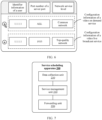
- FIG. 7 is a schematic diagram of a structure of a service scheduling apparatus 200 according to this application. It should be understood that FIG. 7 shows only an example of a structure division manner of the service scheduling apparatus 200 based on functions. A specific structure division manner of the service scheduling apparatus 200 is not limited in this application.
- the service scheduling apparatus 200 includes a service management unit 210, a forwarding unit 220, and a data collection unit 230.
- the service management unit 210, the forwarding unit 220, and the data collection unit 230 cooperate with each other, to implement the steps performed by the service scheduling apparatus 200 in the foregoing method embodiments
- the service management unit 210 is configured to perform S101 and steps S1035 to S1037.
- the forwarding unit 220 is configured to perform S102, the step of matching the target level label carried in the first service packet with the plurality of level labels in the first routing table in S103, and steps S104 to S106.
- the data collection unit 230 is configured to perform S1031 to S1034.
- the forwarding unit 220 may be deployed on the server or the virtual machine in the cloud environment, or may be deployed on a switch (for example, a P4 programmable switch).
- FIG. 8 is a schematic diagram of a hardware structure of a computing device 500 in which a service scheduling apparatus 200 is deployed.
- the computing device 500 includes a memory 510, a processor 520, a communication interface 530, and a bus 540.
- the memory 510, the processor 520, and the communication interface 530 may be communicatively connected to each other through the bus 540.
- the memory 510 may be a read-only memory (read-only memory, ROM), a static storage device, a dynamic storage device, or a random access memory (random access memory, RAM).
- the memory 510 may store computer instructions, for example, computer instructions in the service management unit 210, computer instructions in the forwarding unit 220, or computer instructions in the data collection unit 230.
- the processor 520 and the communication interface 530 are configured to perform some or all of the methods described in the foregoing steps S101 to S106.
- the memory 510 may further store data, for example, intermediate data or result data generated by the processor 520 in an execution process, for example, the service configuration information, a target level label, or a target port label that are input by the user.
- the processor 520 may be a general-purpose central processing unit (central processing unit, CPU), a microprocessor, an application-specific integrated circuit (application-specific integrated circuit, ASIC), a graphics processing unit (graphics processing unit, GPU), or one or more integrated circuits.
- CPU central processing unit
- ASIC application-specific integrated circuit
- GPU graphics processing unit
- the processor 520 may be an integrated circuit chip and has a signal processing capability. In an implementation process, some or all functions of the service scheduling apparatus 200 may be implemented through an integrated logic circuit of hardware in the processor 520 or instructions in a form of software.
- the processor 520 may also be a general-purpose processor, a data signal processor (data signal processor, DSP), a field programmable gate array (field programmable gate array, FPGA) or another programmable logic device, a discrete gate, a transistor logic device, or a discrete hardware component.
- the processor 520 may implement or perform the methods, steps, and logical block diagrams that are disclosed in embodiments of this application.
- the general-purpose processor may be a microprocessor, or the processor may be any conventional processor or the like.
- Steps of the methods disclosed with reference to embodiments of this application may be directly executed and completed by using a hardware decoding processor, or may be executed and completed by using a combination of hardware and software modules in a decoding processor.
- the software module may be located in a mature storage medium in the art, such as the random access memory, a flash memory, the read-only memory, a programmable read-only memory, an electrically erasable programmable memory, or a register.
- the storage medium is located in the memory 510.
- the processor 520 reads information in the memory 510, and completes some or all functions of the service scheduling apparatus 200 in combination with hardware of the processor 520.
- the communication interface 530 uses, by way of example rather than limitation, a transceiver module such as a transceiver, to implement communication between the computing device 500 and another device or a communication network.
- a transceiver module such as a transceiver
- the service configuration information input by the user may be obtained by using the communication interface 530, the first service packet or a first service packet to which the target level label is added may be sent to a POP 300.
- the bus 540 may include a path for transmitting information between components (for example, the memory 510, the processor 520, and the communication interface 530) in the computing device 500.
- FIG. 9 is a schematic diagram of a hardware structure of a computing device system in which a service scheduling apparatus 200 is deployed.
- the computing device system includes a plurality of computing devices 600, and the plurality of computing devices 600 in the computing device system may cooperatively implement a function of the service scheduling apparatus 200 by executing computer instructions through an internal processor.
- each computing device 600 includes a memory 610, a processor 620, a communication interface 630, and a bus 640.
- the memory 610, the processor 620, and the communication interface 630 may be communicatively connected to each other through the bus 640.
- the memory 610 may be a ROM, a RAM, a static storage device, or a dynamic storage device.
- the memory 610 may store computer instructions. When the computer instructions stored in the memory 610 are executed by the processor 620, the processor 620 and the communication interface 630 are configured to perform some of the methods described in steps S101 to S106.
- the memory 610 may further store data, for example, intermediate data or result data generated by the processor 620 in an execution process, for example, the service configuration information, a target level label, or a target port label that are input by the user.
- the processor 620 may use a general-purpose CPU, a GPU, an ASIC, a microprocessor, or one or more integrated circuits. Alternatively, the processor 620 may be an integrated circuit chip and has a signal processing capability. In an implementation process, some or all functions of the service scheduling apparatus 200 in this application may be implemented through an integrated logic circuit of hardware in the processor 620 or instructions in a form of software. Alternatively, the processor 620 may be a DSP, an FPGA, another programmable logic device, a general-purpose processor, a discrete gate, a discrete hardware component, or a transistor logic device. The processor 520 may implement or perform the methods, steps, and logical block diagrams that are disclosed in embodiments of this application.
- the general-purpose processor may be a microprocessor, or the processor may be any conventional processor or the like. Steps of the methods disclosed with reference to embodiments of this application may be directly executed and completed by using a hardware decoding processor, or may be executed and completed by using a combination of hardware and software modules in a decoding processor.
- the software module may be located in a mature storage medium in the art, such as the random access memory, a flash memory, the read-only memory, a programmable read-only memory, an electrically erasable programmable memory, or a register.
- the storage medium is located in the memory 610.
- the processor 620 reads information in the memory 610, and completes some functions of the service scheduling apparatus 200 in combination with hardware of the processor 620.
- the communication interface 630 uses, by way of example rather than limitation, a transceiver module such as a transceiver, to implement communication between the computing device 600 and another device or a communication network.
- a transceiver module such as a transceiver
- a first routing table calculated by another computing device may be obtained by using the communication interface 630, the first service packet or a first service packet to which the target level label is added may be sent to a POP 300.
- the bus 640 may include a path for transmitting information between components (for example, the memory 610, the processor 620, and the communication interface 630) in the computing device 600.
- a communication path is established between each computing device 600 by using the communication network.
- the service scheduling apparatus 200 for example, one or more of the service management unit 210, the forwarding unit 220, and the data collection unit 230 in the service scheduling apparatus 200
- All or some of the foregoing embodiments may be implemented by using software, hardware, or a combination thereof.
- the software is used for implementation, all or some of embodiments may be implemented in a form of a computer program product.
- a computer program product that provides a service scheduling apparatus 200 includes one or more computing instructions executed by the service scheduling apparatus 200. When these computer program instructions are loaded and executed on a computer, all or some of the procedures or functions according to embodiments of this application are generated.
- the computer may be a general-purpose computer, a dedicated computer, a computer network, or another programmable apparatus.
- the computer instructions may be stored in a computer-readable storage medium or may be transmitted from a computer-readable storage medium to another computer-readable storage medium.
- the computer instructions may be transmitted from a website, computer, server, or data center to another website, computer, server, or data center in a wired (for example, a coaxial cable, an optical fiber, or a twisted pair) or wireless (for example, infrared, radio, or microwave) manner.
- the computer-readable storage medium stores computer program instructions that provide the service scheduling apparatus 200.
- the computer-readable storage medium may be any usable medium accessible by the computer, or a data storage device, such as a server or a data center, integrating one or more usable media.
- the usable medium may be a magnetic medium (for example, a floppy disk, a hard disk, or a magnetic tape), an optical medium (for example, a compact disc), a semiconductor medium (for example, a solid state disk (solid state disk, SSD)), or the like.
Landscapes
- Engineering & Computer Science (AREA)
- Computer Networks & Wireless Communication (AREA)
- Signal Processing (AREA)
- Environmental & Geological Engineering (AREA)
- Data Exchanges In Wide-Area Networks (AREA)
Applications Claiming Priority (2)
| Application Number | Priority Date | Filing Date | Title |
|---|---|---|---|
| CN202111211896.4A CN115996188A (zh) | 2021-10-18 | 2021-10-18 | 业务调度方法、装置、设备及计算机可读存储介质 |
| PCT/CN2022/116540 WO2023065848A1 (zh) | 2021-10-18 | 2022-09-01 | 业务调度方法、装置、设备及计算机可读存储介质 |
Publications (2)
| Publication Number | Publication Date |
|---|---|
| EP4404527A1 true EP4404527A1 (de) | 2024-07-24 |
| EP4404527A4 EP4404527A4 (de) | 2024-12-04 |
Family
ID=85992823
Family Applications (1)
| Application Number | Title | Priority Date | Filing Date |
|---|---|---|---|
| EP22882464.5A Pending EP4404527A4 (de) | 2021-10-18 | 2022-09-01 | Dienstplanungsverfahren und -vorrichtung, vorrichtung und computerlesbares speichermedium |
Country Status (4)
| Country | Link |
|---|---|
| US (1) | US12549640B2 (de) |
| EP (1) | EP4404527A4 (de) |
| CN (1) | CN115996188A (de) |
| WO (1) | WO2023065848A1 (de) |
Cited By (1)
| Publication number | Priority date | Publication date | Assignee | Title |
|---|---|---|---|---|
| CN119806734A (zh) * | 2024-12-18 | 2025-04-11 | 北京百度网讯科技有限公司 | 应用于云服务平台的调度方法及装置、设备和介质 |
Families Citing this family (2)
| Publication number | Priority date | Publication date | Assignee | Title |
|---|---|---|---|---|
| CN116455846B (zh) * | 2023-06-14 | 2023-11-14 | 杭州海康威视数字技术股份有限公司 | 跨vlan网络获取设备信息的方法、装置及电子设备 |
| CN118827790B (zh) * | 2024-03-12 | 2025-11-21 | 中国移动通信集团福建有限公司 | 云应用访问方法、装置、电子设备和存储介质 |
Family Cites Families (13)
| Publication number | Priority date | Publication date | Assignee | Title |
|---|---|---|---|---|
| US6301244B1 (en) * | 1998-12-11 | 2001-10-09 | Nortel Networks Limited | QoS-oriented one-to-all route selection method for communication networks |
| US7444669B1 (en) * | 2000-05-05 | 2008-10-28 | Microsoft Corporation | Methods and systems for providing variable rates of service for accessing networks, methods and systems for accessing the internet |
| US7209977B2 (en) * | 2001-10-01 | 2007-04-24 | International Business Machines Corporation | Method and apparatus for content-aware web switching |
| US7480371B2 (en) * | 2003-05-13 | 2009-01-20 | International Business Machines Corporation | Method and system for billing network access capacities shared between internet service providers |
| US9167501B2 (en) * | 2011-08-29 | 2015-10-20 | Telefonaktiebolaget L M Ericsson (Publ) | Implementing a 3G packet core in a cloud computer with openflow data and control planes |
| US8724626B1 (en) * | 2013-10-07 | 2014-05-13 | tw telecom holdings inc. | Redirecting network traffic based on content |
| CN105337894B (zh) * | 2014-06-24 | 2018-11-30 | 华为技术有限公司 | 一种为业务报文提供服务质量QoS的装置、系统和方法 |
| CN109150576B (zh) * | 2017-06-28 | 2021-01-05 | 华为技术有限公司 | 一种内容数据传输方法及设备 |
| CN108494755B (zh) * | 2018-03-13 | 2020-04-03 | 华为技术有限公司 | 一种传输应用程序编程接口api请求的方法及装置 |
| CN110830373B (zh) * | 2018-08-14 | 2022-02-11 | 上海层峰网络科技有限公司 | 一种实现sdn网络中业务的qos服务质量区分的方法和装置 |
| CN111510384B (zh) * | 2019-01-31 | 2023-03-10 | 伊姆西Ip控股有限责任公司 | 处理服务产生的数据的方法、电子设备和计算机可读介质 |
| CN110177054B (zh) * | 2019-05-22 | 2022-08-19 | 新华三技术有限公司 | 一种端口队列调度方法、装置、网络控制器及存储介质 |
| US12028248B2 (en) * | 2021-05-27 | 2024-07-02 | Cisco Technology, Inc. | Using global virtual network instance (VNI) labels to signal a service chain |
-
2021
- 2021-10-18 CN CN202111211896.4A patent/CN115996188A/zh active Pending
-
2022
- 2022-09-01 EP EP22882464.5A patent/EP4404527A4/de active Pending
- 2022-09-01 WO PCT/CN2022/116540 patent/WO2023065848A1/zh not_active Ceased
-
2024
- 2024-04-15 US US18/635,893 patent/US12549640B2/en active Active
Cited By (1)
| Publication number | Priority date | Publication date | Assignee | Title |
|---|---|---|---|---|
| CN119806734A (zh) * | 2024-12-18 | 2025-04-11 | 北京百度网讯科技有限公司 | 应用于云服务平台的调度方法及装置、设备和介质 |
Also Published As
| Publication number | Publication date |
|---|---|
| US12549640B2 (en) | 2026-02-10 |
| WO2023065848A1 (zh) | 2023-04-27 |
| US20240259475A1 (en) | 2024-08-01 |
| EP4404527A4 (de) | 2024-12-04 |
| CN115996188A (zh) | 2023-04-21 |
Similar Documents
| Publication | Publication Date | Title |
|---|---|---|
| US12549640B2 (en) | Service scheduling method and apparatus, device, and computer-readable storage medium | |
| US10708146B2 (en) | Data driven intent based networking approach using a light weight distributed SDN controller for delivering intelligent consumer experience | |
| CN103828299B (zh) | 用于通信网络的云计算增强网关 | |
| CN111193666A (zh) | 使用自适应机器学习探测预测应用体验质量度量 | |
| US20170048148A1 (en) | Method, apparatus, and system for load balancing of service chain | |
| CN109040243B (zh) | 一种报文处理方法及装置 | |
| WO2018152919A1 (zh) | 一种路径选取方法及系统、网络加速节点及网络加速系统 | |
| MX2010006846A (es) | Metodo para configuracion de acls en dispositivo de red basado en informacion de flujo. | |
| CN112788060B (zh) | 数据包传输方法和装置、存储介质和电子设备 | |
| US20130055257A1 (en) | Communication method and communication apparatus | |
| EP3449600A1 (de) | Datengestützte absichtsbasierte vernetzung mit einem leichtgewichtigen verteilten sdn-steuergerät für intelligente verbrauchererfahrungen | |
| JP2007336512A (ja) | 統計情報収集システム及び統計情報収集装置 | |
| US10630579B1 (en) | Ensuring separate paths for network traffic between source devices and a destination device | |
| US10038609B2 (en) | Network traffic analysis | |
| CN108347376A (zh) | 一种调整转发路径的方法、装置及系统 | |
| CN117255046A (zh) | 一种通信方法及相关设备 | |
| CN121283889A (zh) | 一种通信方法、装置、设备及存储介质 | |
| US11336549B2 (en) | Systems and methods for dynamically optimizing TCP flow in WAN networks | |
| CN110380981B (zh) | 一种流量分发方法及设备 | |
| CN113422699A (zh) | 数据流处理方法、装置、计算机可读存储介质及电子设备 | |
| CN108737378B (zh) | 一种基于介质访问控制层的双模通信组网方法及系统 | |
| CN115278396B (zh) | 一种网络交换设备、数据流处理控制方法及相关设备 | |
| CN106231613B (zh) | 一种分发策略生成方法、装置及网络优化系统 | |
| CN117579534A (zh) | 智能路由方法、装置、电子设备及存储介质 | |
| JP4871775B2 (ja) | 統計情報収集装置 |
Legal Events
| Date | Code | Title | Description |
|---|---|---|---|
| STAA | Information on the status of an ep patent application or granted ep patent |
Free format text: STATUS: THE INTERNATIONAL PUBLICATION HAS BEEN MADE |
|
| PUAI | Public reference made under article 153(3) epc to a published international application that has entered the european phase |
Free format text: ORIGINAL CODE: 0009012 |
|
| STAA | Information on the status of an ep patent application or granted ep patent |
Free format text: STATUS: REQUEST FOR EXAMINATION WAS MADE |
|
| 17P | Request for examination filed |
Effective date: 20240419 |
|
| AK | Designated contracting states |
Kind code of ref document: A1 Designated state(s): AL AT BE BG CH CY CZ DE DK EE ES FI FR GB GR HR HU IE IS IT LI LT LU LV MC MK MT NL NO PL PT RO RS SE SI SK SM TR |
|
| A4 | Supplementary search report drawn up and despatched |
Effective date: 20241107 |
|
| RIC1 | Information provided on ipc code assigned before grant |
Ipc: H04L 67/63 20220101ALI20241031BHEP Ipc: H04L 45/50 20220101ALI20241031BHEP Ipc: H04L 41/5003 20220101ALI20241031BHEP Ipc: H04L 45/30 20220101ALI20241031BHEP Ipc: H04L 43/08 20220101AFI20241031BHEP |
|
| DAV | Request for validation of the european patent (deleted) | ||
| DAX | Request for extension of the european patent (deleted) | ||
| STAA | Information on the status of an ep patent application or granted ep patent |
Free format text: STATUS: EXAMINATION IS IN PROGRESS |
|
| 17Q | First examination report despatched |
Effective date: 20251105 |