EP4404289A1 - Coffee ground composition and secondary battery anode material comprising same - Google Patents
Coffee ground composition and secondary battery anode material comprising same Download PDFInfo
- Publication number
- EP4404289A1 EP4404289A1 EP23188079.0A EP23188079A EP4404289A1 EP 4404289 A1 EP4404289 A1 EP 4404289A1 EP 23188079 A EP23188079 A EP 23188079A EP 4404289 A1 EP4404289 A1 EP 4404289A1
- Authority
- EP
- European Patent Office
- Prior art keywords
- secondary battery
- anode material
- battery anode
- coffee ground
- ground composition
- Prior art date
- Legal status (The legal status is an assumption and is not a legal conclusion. Google has not performed a legal analysis and makes no representation as to the accuracy of the status listed.)
- Pending
Links
- 239000000203 mixture Substances 0.000 title claims abstract description 73
- 239000010405 anode material Substances 0.000 title claims abstract description 68
- 238000004833 X-ray photoelectron spectroscopy Methods 0.000 claims description 48
- 239000005543 nano-size silicon particle Substances 0.000 claims description 32
- 238000005259 measurement Methods 0.000 claims description 24
- IJGRMHOSHXDMSA-UHFFFAOYSA-N Atomic nitrogen Chemical compound N#N IJGRMHOSHXDMSA-UHFFFAOYSA-N 0.000 claims description 14
- 239000002245 particle Substances 0.000 claims description 14
- 238000002441 X-ray diffraction Methods 0.000 claims description 12
- 238000001069 Raman spectroscopy Methods 0.000 claims description 10
- 229910052757 nitrogen Inorganic materials 0.000 claims description 7
- 239000006183 anode active material Substances 0.000 abstract description 54
- XUIMIQQOPSSXEZ-UHFFFAOYSA-N Silicon Chemical compound [Si] XUIMIQQOPSSXEZ-UHFFFAOYSA-N 0.000 abstract description 51
- 229910052710 silicon Inorganic materials 0.000 abstract description 50
- 239000010703 silicon Substances 0.000 abstract description 50
- 238000002360 preparation method Methods 0.000 abstract description 21
- WHXSMMKQMYFTQS-UHFFFAOYSA-N Lithium Chemical compound [Li] WHXSMMKQMYFTQS-UHFFFAOYSA-N 0.000 abstract description 16
- 229910052744 lithium Inorganic materials 0.000 abstract description 16
- 238000007599 discharging Methods 0.000 abstract description 13
- 230000001976 improved effect Effects 0.000 abstract description 7
- 239000003344 environmental pollutant Substances 0.000 abstract description 3
- XLYOFNOQVPJJNP-UHFFFAOYSA-N water Chemical compound O XLYOFNOQVPJJNP-UHFFFAOYSA-N 0.000 description 43
- VYPSYNLAJGMNEJ-UHFFFAOYSA-N Silicium dioxide Chemical compound O=[Si]=O VYPSYNLAJGMNEJ-UHFFFAOYSA-N 0.000 description 42
- OKTJSMMVPCPJKN-UHFFFAOYSA-N Carbon Chemical compound [C] OKTJSMMVPCPJKN-UHFFFAOYSA-N 0.000 description 39
- 238000000034 method Methods 0.000 description 38
- 238000002156 mixing Methods 0.000 description 36
- 239000006185 dispersion Substances 0.000 description 30
- 239000012153 distilled water Substances 0.000 description 30
- 230000008569 process Effects 0.000 description 24
- 239000000377 silicon dioxide Substances 0.000 description 21
- HBMJWWWQQXIZIP-UHFFFAOYSA-N silicon carbide Chemical compound [Si+]#[C-] HBMJWWWQQXIZIP-UHFFFAOYSA-N 0.000 description 20
- 229910010271 silicon carbide Inorganic materials 0.000 description 18
- 229910052799 carbon Inorganic materials 0.000 description 17
- 238000004519 manufacturing process Methods 0.000 description 17
- KWYUFKZDYYNOTN-UHFFFAOYSA-M Potassium hydroxide Chemical compound [OH-].[K+] KWYUFKZDYYNOTN-UHFFFAOYSA-M 0.000 description 12
- HEMHJVSKTPXQMS-UHFFFAOYSA-M Sodium hydroxide Chemical compound [OH-].[Na+] HEMHJVSKTPXQMS-UHFFFAOYSA-M 0.000 description 12
- 238000010438 heat treatment Methods 0.000 description 12
- 238000001035 drying Methods 0.000 description 11
- 239000000463 material Substances 0.000 description 11
- 229910001868 water Inorganic materials 0.000 description 11
- 239000004372 Polyvinyl alcohol Substances 0.000 description 10
- BLRPTPMANUNPDV-UHFFFAOYSA-N Silane Chemical compound [SiH4] BLRPTPMANUNPDV-UHFFFAOYSA-N 0.000 description 10
- 239000003945 anionic surfactant Substances 0.000 description 10
- 229920002451 polyvinyl alcohol Polymers 0.000 description 10
- 239000011148 porous material Substances 0.000 description 10
- 235000012239 silicon dioxide Nutrition 0.000 description 10
- 238000004458 analytical method Methods 0.000 description 9
- 239000002131 composite material Substances 0.000 description 9
- 229910002804 graphite Inorganic materials 0.000 description 9
- 239000010439 graphite Substances 0.000 description 9
- 229920005575 poly(amic acid) Polymers 0.000 description 9
- 229910000077 silane Inorganic materials 0.000 description 9
- 235000015112 vegetable and seed oil Nutrition 0.000 description 9
- 239000008158 vegetable oil Substances 0.000 description 9
- -1 polyphenol compounds Chemical class 0.000 description 8
- 238000003763 carbonization Methods 0.000 description 7
- 229910052751 metal Inorganic materials 0.000 description 7
- 239000002184 metal Substances 0.000 description 7
- 229910021382 natural graphite Inorganic materials 0.000 description 7
- 239000004094 surface-active agent Substances 0.000 description 7
- PXHVJJICTQNCMI-UHFFFAOYSA-N Nickel Chemical compound [Ni] PXHVJJICTQNCMI-UHFFFAOYSA-N 0.000 description 6
- 229910003481 amorphous carbon Inorganic materials 0.000 description 6
- 239000003575 carbonaceous material Substances 0.000 description 6
- 230000008859 change Effects 0.000 description 6
- 230000000052 comparative effect Effects 0.000 description 6
- 239000007772 electrode material Substances 0.000 description 6
- 238000005516 engineering process Methods 0.000 description 6
- 238000002474 experimental method Methods 0.000 description 6
- 239000012467 final product Substances 0.000 description 6
- 239000002153 silicon-carbon composite material Substances 0.000 description 6
- 239000006227 byproduct Substances 0.000 description 5
- 239000011248 coating agent Substances 0.000 description 5
- 238000000576 coating method Methods 0.000 description 5
- 239000010410 layer Substances 0.000 description 5
- 239000003921 oil Substances 0.000 description 5
- 238000003921 particle size analysis Methods 0.000 description 5
- 239000002994 raw material Substances 0.000 description 5
- 239000002904 solvent Substances 0.000 description 5
- 239000002699 waste material Substances 0.000 description 5
- IAZDPXIOMUYVGZ-UHFFFAOYSA-N Dimethylsulphoxide Chemical compound CS(C)=O IAZDPXIOMUYVGZ-UHFFFAOYSA-N 0.000 description 4
- 239000002033 PVDF binder Substances 0.000 description 4
- AXCZMVOFGPJBDE-UHFFFAOYSA-L calcium dihydroxide Chemical compound [OH-].[OH-].[Ca+2] AXCZMVOFGPJBDE-UHFFFAOYSA-L 0.000 description 4
- 239000000920 calcium hydroxide Substances 0.000 description 4
- 229910001861 calcium hydroxide Inorganic materials 0.000 description 4
- 239000013078 crystal Substances 0.000 description 4
- 230000000694 effects Effects 0.000 description 4
- XLYOFNOQVPJJNP-UHFFFAOYSA-M hydroxide Chemical compound [OH-] XLYOFNOQVPJJNP-UHFFFAOYSA-M 0.000 description 4
- 239000011259 mixed solution Substances 0.000 description 4
- 235000019198 oils Nutrition 0.000 description 4
- 229920002981 polyvinylidene fluoride Polymers 0.000 description 4
- 239000002409 silicon-based active material Substances 0.000 description 4
- 239000000243 solution Substances 0.000 description 4
- 230000007847 structural defect Effects 0.000 description 4
- 238000005406 washing Methods 0.000 description 4
- RYGMFSIKBFXOCR-UHFFFAOYSA-N Copper Chemical compound [Cu] RYGMFSIKBFXOCR-UHFFFAOYSA-N 0.000 description 3
- KFZMGEQAYNKOFK-UHFFFAOYSA-N Isopropanol Chemical compound CC(C)O KFZMGEQAYNKOFK-UHFFFAOYSA-N 0.000 description 3
- HBBGRARXTFLTSG-UHFFFAOYSA-N Lithium ion Chemical compound [Li+] HBBGRARXTFLTSG-UHFFFAOYSA-N 0.000 description 3
- 239000006230 acetylene black Substances 0.000 description 3
- 229910021383 artificial graphite Inorganic materials 0.000 description 3
- 239000011230 binding agent Substances 0.000 description 3
- 235000011116 calcium hydroxide Nutrition 0.000 description 3
- 238000010000 carbonizing Methods 0.000 description 3
- 239000001913 cellulose Substances 0.000 description 3
- 229920002678 cellulose Polymers 0.000 description 3
- 238000006243 chemical reaction Methods 0.000 description 3
- 239000004020 conductor Substances 0.000 description 3
- 229910052802 copper Inorganic materials 0.000 description 3
- 239000010949 copper Substances 0.000 description 3
- 239000003792 electrolyte Substances 0.000 description 3
- 239000000835 fiber Substances 0.000 description 3
- 230000014509 gene expression Effects 0.000 description 3
- 150000002500 ions Chemical class 0.000 description 3
- 229910001416 lithium ion Inorganic materials 0.000 description 3
- 229910044991 metal oxide Inorganic materials 0.000 description 3
- 150000004706 metal oxides Chemical class 0.000 description 3
- 229910052759 nickel Inorganic materials 0.000 description 3
- 238000001878 scanning electron micrograph Methods 0.000 description 3
- 239000000126 substance Substances 0.000 description 3
- 230000002195 synergetic effect Effects 0.000 description 3
- 229920003169 water-soluble polymer Polymers 0.000 description 3
- CSCPPACGZOOCGX-UHFFFAOYSA-N Acetone Chemical compound CC(C)=O CSCPPACGZOOCGX-UHFFFAOYSA-N 0.000 description 2
- 235000001674 Agaricus brunnescens Nutrition 0.000 description 2
- XKRFYHLGVUSROY-UHFFFAOYSA-N Argon Chemical compound [Ar] XKRFYHLGVUSROY-UHFFFAOYSA-N 0.000 description 2
- 229920002134 Carboxymethyl cellulose Polymers 0.000 description 2
- OIFBSDVPJOWBCH-UHFFFAOYSA-N Diethyl carbonate Chemical compound CCOC(=O)OCC OIFBSDVPJOWBCH-UHFFFAOYSA-N 0.000 description 2
- 229920002943 EPDM rubber Polymers 0.000 description 2
- KMTRUDSVKNLOMY-UHFFFAOYSA-N Ethylene carbonate Chemical compound O=C1OCCO1 KMTRUDSVKNLOMY-UHFFFAOYSA-N 0.000 description 2
- 229920002488 Hemicellulose Polymers 0.000 description 2
- SECXISVLQFMRJM-UHFFFAOYSA-N N-Methylpyrrolidone Chemical compound CN1CCCC1=O SECXISVLQFMRJM-UHFFFAOYSA-N 0.000 description 2
- 241000533293 Sesbania emerus Species 0.000 description 2
- BQCADISMDOOEFD-UHFFFAOYSA-N Silver Chemical compound [Ag] BQCADISMDOOEFD-UHFFFAOYSA-N 0.000 description 2
- 229920002472 Starch Polymers 0.000 description 2
- RTAQQCXQSZGOHL-UHFFFAOYSA-N Titanium Chemical compound [Ti] RTAQQCXQSZGOHL-UHFFFAOYSA-N 0.000 description 2
- XLOMVQKBTHCTTD-UHFFFAOYSA-N Zinc monoxide Chemical compound [Zn]=O XLOMVQKBTHCTTD-UHFFFAOYSA-N 0.000 description 2
- 239000000654 additive Substances 0.000 description 2
- 239000000853 adhesive Substances 0.000 description 2
- 230000001070 adhesive effect Effects 0.000 description 2
- 229910052782 aluminium Inorganic materials 0.000 description 2
- XAGFODPZIPBFFR-UHFFFAOYSA-N aluminium Chemical compound [Al] XAGFODPZIPBFFR-UHFFFAOYSA-N 0.000 description 2
- 239000006256 anode slurry Substances 0.000 description 2
- 239000007864 aqueous solution Substances 0.000 description 2
- 239000003225 biodiesel Substances 0.000 description 2
- 230000015572 biosynthetic process Effects 0.000 description 2
- 239000002041 carbon nanotube Substances 0.000 description 2
- 239000006257 cathode slurry Substances 0.000 description 2
- 239000011247 coating layer Substances 0.000 description 2
- 238000009264 composting Methods 0.000 description 2
- 229920001577 copolymer Polymers 0.000 description 2
- GVJHHUAWPYXKBD-UHFFFAOYSA-N d-alpha-tocopherol Natural products OC1=C(C)C(C)=C2OC(CCCC(C)CCCC(C)CCCC(C)C)(C)CCC2=C1C GVJHHUAWPYXKBD-UHFFFAOYSA-N 0.000 description 2
- 238000009831 deintercalation Methods 0.000 description 2
- 239000008367 deionised water Substances 0.000 description 2
- 229910021641 deionized water Inorganic materials 0.000 description 2
- 238000003912 environmental pollution Methods 0.000 description 2
- 239000003337 fertilizer Substances 0.000 description 2
- 235000013305 food Nutrition 0.000 description 2
- 239000000446 fuel Substances 0.000 description 2
- 238000000227 grinding Methods 0.000 description 2
- 230000007062 hydrolysis Effects 0.000 description 2
- 238000006460 hydrolysis reaction Methods 0.000 description 2
- 239000002440 industrial waste Substances 0.000 description 2
- 229920005610 lignin Polymers 0.000 description 2
- 239000007788 liquid Substances 0.000 description 2
- 239000002931 mesocarbon microbead Substances 0.000 description 2
- GRVDJDISBSALJP-UHFFFAOYSA-N methyloxidanyl Chemical compound [O]C GRVDJDISBSALJP-UHFFFAOYSA-N 0.000 description 2
- BFXIKLCIZHOAAZ-UHFFFAOYSA-N methyltrimethoxysilane Chemical compound CO[Si](C)(OC)OC BFXIKLCIZHOAAZ-UHFFFAOYSA-N 0.000 description 2
- 229920005569 poly(vinylidene fluoride-co-hexafluoropropylene) Polymers 0.000 description 2
- 229920000642 polymer Polymers 0.000 description 2
- 150000008442 polyphenolic compounds Chemical class 0.000 description 2
- 235000013824 polyphenols Nutrition 0.000 description 2
- 102000004169 proteins and genes Human genes 0.000 description 2
- 108090000623 proteins and genes Proteins 0.000 description 2
- 238000010298 pulverizing process Methods 0.000 description 2
- 230000009467 reduction Effects 0.000 description 2
- 238000011160 research Methods 0.000 description 2
- 238000007789 sealing Methods 0.000 description 2
- 229910052709 silver Inorganic materials 0.000 description 2
- 239000004332 silver Substances 0.000 description 2
- 238000007764 slot die coating Methods 0.000 description 2
- 239000002689 soil Substances 0.000 description 2
- 239000010935 stainless steel Substances 0.000 description 2
- 229910001220 stainless steel Inorganic materials 0.000 description 2
- 239000008107 starch Substances 0.000 description 2
- 235000019698 starch Nutrition 0.000 description 2
- 229920003048 styrene butadiene rubber Polymers 0.000 description 2
- 235000000346 sugar Nutrition 0.000 description 2
- 150000008163 sugars Chemical class 0.000 description 2
- 229910052719 titanium Inorganic materials 0.000 description 2
- 239000010936 titanium Substances 0.000 description 2
- 229960001295 tocopherol Drugs 0.000 description 2
- 229930003799 tocopherol Natural products 0.000 description 2
- 235000010384 tocopherol Nutrition 0.000 description 2
- 239000011732 tocopherol Substances 0.000 description 2
- 238000001291 vacuum drying Methods 0.000 description 2
- 238000003809 water extraction Methods 0.000 description 2
- GVJHHUAWPYXKBD-IEOSBIPESA-N α-tocopherol Chemical compound OC1=C(C)C(C)=C2O[C@@](CCC[C@H](C)CCC[C@H](C)CCCC(C)C)(C)CCC2=C1C GVJHHUAWPYXKBD-IEOSBIPESA-N 0.000 description 2
- VZSRBBMJRBPUNF-UHFFFAOYSA-N 2-(2,3-dihydro-1H-inden-2-ylamino)-N-[3-oxo-3-(2,4,6,7-tetrahydrotriazolo[4,5-c]pyridin-5-yl)propyl]pyrimidine-5-carboxamide Chemical compound C1C(CC2=CC=CC=C12)NC1=NC=C(C=N1)C(=O)NCCC(N1CC2=C(CC1)NN=N2)=O VZSRBBMJRBPUNF-UHFFFAOYSA-N 0.000 description 1
- 229920000049 Carbon (fiber) Polymers 0.000 description 1
- 229910000925 Cd alloy Inorganic materials 0.000 description 1
- 239000005046 Chlorosilane Substances 0.000 description 1
- 229920002153 Hydroxypropyl cellulose Polymers 0.000 description 1
- 229910015965 LiNi0.8Mn0.1Co0.1O2 Inorganic materials 0.000 description 1
- 229910001290 LiPF6 Inorganic materials 0.000 description 1
- 229920000881 Modified starch Polymers 0.000 description 1
- MKYBYDHXWVHEJW-UHFFFAOYSA-N N-[1-oxo-1-(2,4,6,7-tetrahydrotriazolo[4,5-c]pyridin-5-yl)propan-2-yl]-2-[[3-(trifluoromethoxy)phenyl]methylamino]pyrimidine-5-carboxamide Chemical compound O=C(C(C)NC(=O)C=1C=NC(=NC=1)NCC1=CC(=CC=C1)OC(F)(F)F)N1CC2=C(CC1)NN=N2 MKYBYDHXWVHEJW-UHFFFAOYSA-N 0.000 description 1
- NIPNSKYNPDTRPC-UHFFFAOYSA-N N-[2-oxo-2-(2,4,6,7-tetrahydrotriazolo[4,5-c]pyridin-5-yl)ethyl]-2-[[3-(trifluoromethoxy)phenyl]methylamino]pyrimidine-5-carboxamide Chemical compound O=C(CNC(=O)C=1C=NC(=NC=1)NCC1=CC(=CC=C1)OC(F)(F)F)N1CC2=C(CC1)NN=N2 NIPNSKYNPDTRPC-UHFFFAOYSA-N 0.000 description 1
- AFCARXCZXQIEQB-UHFFFAOYSA-N N-[3-oxo-3-(2,4,6,7-tetrahydrotriazolo[4,5-c]pyridin-5-yl)propyl]-2-[[3-(trifluoromethoxy)phenyl]methylamino]pyrimidine-5-carboxamide Chemical compound O=C(CCNC(=O)C=1C=NC(=NC=1)NCC1=CC(=CC=C1)OC(F)(F)F)N1CC2=C(CC1)NN=N2 AFCARXCZXQIEQB-UHFFFAOYSA-N 0.000 description 1
- 239000004698 Polyethylene Substances 0.000 description 1
- 229920000265 Polyparaphenylene Polymers 0.000 description 1
- 239000004743 Polypropylene Substances 0.000 description 1
- GWEVSGVZZGPLCZ-UHFFFAOYSA-N Titan oxide Chemical compound O=[Ti]=O GWEVSGVZZGPLCZ-UHFFFAOYSA-N 0.000 description 1
- JAWMENYCRQKKJY-UHFFFAOYSA-N [3-(2,4,6,7-tetrahydrotriazolo[4,5-c]pyridin-5-ylmethyl)-1-oxa-2,8-diazaspiro[4.5]dec-2-en-8-yl]-[2-[[3-(trifluoromethoxy)phenyl]methylamino]pyrimidin-5-yl]methanone Chemical compound N1N=NC=2CN(CCC=21)CC1=NOC2(C1)CCN(CC2)C(=O)C=1C=NC(=NC=1)NCC1=CC(=CC=C1)OC(F)(F)F JAWMENYCRQKKJY-UHFFFAOYSA-N 0.000 description 1
- 230000002411 adverse Effects 0.000 description 1
- 239000002280 amphoteric surfactant Substances 0.000 description 1
- 239000010775 animal oil Substances 0.000 description 1
- 150000001450 anions Chemical class 0.000 description 1
- 229910052786 argon Inorganic materials 0.000 description 1
- QVGXLLKOCUKJST-UHFFFAOYSA-N atomic oxygen Chemical compound [O] QVGXLLKOCUKJST-UHFFFAOYSA-N 0.000 description 1
- 239000004917 carbon fiber Substances 0.000 description 1
- 229910021393 carbon nanotube Inorganic materials 0.000 description 1
- 238000005266 casting Methods 0.000 description 1
- 230000015556 catabolic process Effects 0.000 description 1
- 239000003093 cationic surfactant Substances 0.000 description 1
- 239000006231 channel black Substances 0.000 description 1
- 239000003638 chemical reducing agent Substances 0.000 description 1
- KOPOQZFJUQMUML-UHFFFAOYSA-N chlorosilane Chemical compound Cl[SiH3] KOPOQZFJUQMUML-UHFFFAOYSA-N 0.000 description 1
- 229920001940 conductive polymer Polymers 0.000 description 1
- 239000000356 contaminant Substances 0.000 description 1
- 230000008602 contraction Effects 0.000 description 1
- 239000002180 crystalline carbon material Substances 0.000 description 1
- 230000003247 decreasing effect Effects 0.000 description 1
- 238000006731 degradation reaction Methods 0.000 description 1
- 238000001739 density measurement Methods 0.000 description 1
- 238000011161 development Methods 0.000 description 1
- 238000009792 diffusion process Methods 0.000 description 1
- IEJIGPNLZYLLBP-UHFFFAOYSA-N dimethyl carbonate Chemical compound COC(=O)OC IEJIGPNLZYLLBP-UHFFFAOYSA-N 0.000 description 1
- NJLLQSBAHIKGKF-UHFFFAOYSA-N dipotassium dioxido(oxo)titanium Chemical compound [K+].[K+].[O-][Ti]([O-])=O NJLLQSBAHIKGKF-UHFFFAOYSA-N 0.000 description 1
- SMVRDGHCVNAOIN-UHFFFAOYSA-L disodium;1-dodecoxydodecane;sulfate Chemical compound [Na+].[Na+].[O-]S([O-])(=O)=O.CCCCCCCCCCCCOCCCCCCCCCCCC SMVRDGHCVNAOIN-UHFFFAOYSA-L 0.000 description 1
- 238000010494 dissociation reaction Methods 0.000 description 1
- 230000005593 dissociations Effects 0.000 description 1
- 238000007580 dry-mixing Methods 0.000 description 1
- 229920001971 elastomer Polymers 0.000 description 1
- 239000008151 electrolyte solution Substances 0.000 description 1
- 239000000839 emulsion Substances 0.000 description 1
- 230000007613 environmental effect Effects 0.000 description 1
- 238000001704 evaporation Methods 0.000 description 1
- 239000000945 filler Substances 0.000 description 1
- 229920001973 fluoroelastomer Polymers 0.000 description 1
- 239000006260 foam Substances 0.000 description 1
- 239000011888 foil Substances 0.000 description 1
- 239000000295 fuel oil Substances 0.000 description 1
- 239000006232 furnace black Substances 0.000 description 1
- 239000007789 gas Substances 0.000 description 1
- 230000005484 gravity Effects 0.000 description 1
- 229910021385 hard carbon Inorganic materials 0.000 description 1
- 239000012761 high-performance material Substances 0.000 description 1
- 229920001477 hydrophilic polymer Polymers 0.000 description 1
- 230000002209 hydrophobic effect Effects 0.000 description 1
- 239000001863 hydroxypropyl cellulose Substances 0.000 description 1
- 235000010977 hydroxypropyl cellulose Nutrition 0.000 description 1
- 230000006872 improvement Effects 0.000 description 1
- 238000003780 insertion Methods 0.000 description 1
- 230000037431 insertion Effects 0.000 description 1
- 238000009830 intercalation Methods 0.000 description 1
- 230000016507 interphase Effects 0.000 description 1
- 239000003273 ketjen black Substances 0.000 description 1
- 238000010030 laminating Methods 0.000 description 1
- 239000006233 lamp black Substances 0.000 description 1
- 239000010687 lubricating oil Substances 0.000 description 1
- 239000011159 matrix material Substances 0.000 description 1
- VNWKTOKETHGBQD-UHFFFAOYSA-N methane Chemical compound C VNWKTOKETHGBQD-UHFFFAOYSA-N 0.000 description 1
- 244000005700 microbiome Species 0.000 description 1
- 230000000116 mitigating effect Effects 0.000 description 1
- 235000019426 modified starch Nutrition 0.000 description 1
- 239000002105 nanoparticle Substances 0.000 description 1
- 239000002736 nonionic surfactant Substances 0.000 description 1
- 239000004745 nonwoven fabric Substances 0.000 description 1
- 150000002894 organic compounds Chemical class 0.000 description 1
- 239000005416 organic matter Substances 0.000 description 1
- 239000001301 oxygen Substances 0.000 description 1
- 229910052760 oxygen Inorganic materials 0.000 description 1
- 229920002239 polyacrylonitrile Polymers 0.000 description 1
- 229920000573 polyethylene Polymers 0.000 description 1
- 229920001155 polypropylene Polymers 0.000 description 1
- 229920000036 polyvinylpyrrolidone Polymers 0.000 description 1
- 239000001267 polyvinylpyrrolidone Substances 0.000 description 1
- 235000013855 polyvinylpyrrolidone Nutrition 0.000 description 1
- 239000000843 powder Substances 0.000 description 1
- 238000004064 recycling Methods 0.000 description 1
- 238000011946 reduction process Methods 0.000 description 1
- 239000004627 regenerated cellulose Substances 0.000 description 1
- 238000012827 research and development Methods 0.000 description 1
- 239000005060 rubber Substances 0.000 description 1
- 239000002210 silicon-based material Substances 0.000 description 1
- 239000011856 silicon-based particle Substances 0.000 description 1
- 239000002002 slurry Substances 0.000 description 1
- 229910052708 sodium Inorganic materials 0.000 description 1
- 239000011734 sodium Substances 0.000 description 1
- 229910021384 soft carbon Inorganic materials 0.000 description 1
- 239000007787 solid Substances 0.000 description 1
- 239000007784 solid electrolyte Substances 0.000 description 1
- 238000004611 spectroscopical analysis Methods 0.000 description 1
- 239000003381 stabilizer Substances 0.000 description 1
- 238000003756 stirring Methods 0.000 description 1
- 238000003860 storage Methods 0.000 description 1
- BDHFUVZGWQCTTF-UHFFFAOYSA-M sulfonate Chemical compound [O-]S(=O)=O BDHFUVZGWQCTTF-UHFFFAOYSA-M 0.000 description 1
- 229920005608 sulfonated EPDM Polymers 0.000 description 1
- 230000001629 suppression Effects 0.000 description 1
- 238000003786 synthesis reaction Methods 0.000 description 1
- 238000012360 testing method Methods 0.000 description 1
- BFKJFAAPBSQJPD-UHFFFAOYSA-N tetrafluoroethene Chemical group FC(F)=C(F)F BFKJFAAPBSQJPD-UHFFFAOYSA-N 0.000 description 1
- 239000006234 thermal black Substances 0.000 description 1
- 239000002562 thickening agent Substances 0.000 description 1
- OGIDPMRJRNCKJF-UHFFFAOYSA-N titanium oxide Inorganic materials [Ti]=O OGIDPMRJRNCKJF-UHFFFAOYSA-N 0.000 description 1
- 238000012546 transfer Methods 0.000 description 1
- 235000013311 vegetables Nutrition 0.000 description 1
- 238000003911 water pollution Methods 0.000 description 1
- 239000011787 zinc oxide Substances 0.000 description 1
- 239000004711 α-olefin Substances 0.000 description 1
Images






Classifications
-
- H—ELECTRICITY
- H01—ELECTRIC ELEMENTS
- H01M—PROCESSES OR MEANS, e.g. BATTERIES, FOR THE DIRECT CONVERSION OF CHEMICAL ENERGY INTO ELECTRICAL ENERGY
- H01M4/00—Electrodes
- H01M4/02—Electrodes composed of, or comprising, active material
- H01M4/36—Selection of substances as active materials, active masses, active liquids
- H01M4/362—Composites
- H01M4/364—Composites as mixtures
-
- H—ELECTRICITY
- H01—ELECTRIC ELEMENTS
- H01M—PROCESSES OR MEANS, e.g. BATTERIES, FOR THE DIRECT CONVERSION OF CHEMICAL ENERGY INTO ELECTRICAL ENERGY
- H01M4/00—Electrodes
- H01M4/02—Electrodes composed of, or comprising, active material
- H01M4/04—Processes of manufacture in general
-
- C—CHEMISTRY; METALLURGY
- C01—INORGANIC CHEMISTRY
- C01B—NON-METALLIC ELEMENTS; COMPOUNDS THEREOF; METALLOIDS OR COMPOUNDS THEREOF NOT COVERED BY SUBCLASS C01C
- C01B32/00—Carbon; Compounds thereof
- C01B32/05—Preparation or purification of carbon not covered by groups C01B32/15, C01B32/20, C01B32/25, C01B32/30
-
- C—CHEMISTRY; METALLURGY
- C01—INORGANIC CHEMISTRY
- C01B—NON-METALLIC ELEMENTS; COMPOUNDS THEREOF; METALLOIDS OR COMPOUNDS THEREOF NOT COVERED BY SUBCLASS C01C
- C01B32/00—Carbon; Compounds thereof
- C01B32/90—Carbides
- C01B32/914—Carbides of single elements
- C01B32/956—Silicon carbide
-
- C—CHEMISTRY; METALLURGY
- C01—INORGANIC CHEMISTRY
- C01B—NON-METALLIC ELEMENTS; COMPOUNDS THEREOF; METALLOIDS OR COMPOUNDS THEREOF NOT COVERED BY SUBCLASS C01C
- C01B33/00—Silicon; Compounds thereof
- C01B33/02—Silicon
-
- H—ELECTRICITY
- H01—ELECTRIC ELEMENTS
- H01M—PROCESSES OR MEANS, e.g. BATTERIES, FOR THE DIRECT CONVERSION OF CHEMICAL ENERGY INTO ELECTRICAL ENERGY
- H01M10/00—Secondary cells; Manufacture thereof
- H01M10/05—Accumulators with non-aqueous electrolyte
- H01M10/052—Li-accumulators
-
- H—ELECTRICITY
- H01—ELECTRIC ELEMENTS
- H01M—PROCESSES OR MEANS, e.g. BATTERIES, FOR THE DIRECT CONVERSION OF CHEMICAL ENERGY INTO ELECTRICAL ENERGY
- H01M4/00—Electrodes
- H01M4/02—Electrodes composed of, or comprising, active material
- H01M4/04—Processes of manufacture in general
- H01M4/0471—Processes of manufacture in general involving thermal treatment, e.g. firing, sintering, backing particulate active material, thermal decomposition, pyrolysis
-
- H—ELECTRICITY
- H01—ELECTRIC ELEMENTS
- H01M—PROCESSES OR MEANS, e.g. BATTERIES, FOR THE DIRECT CONVERSION OF CHEMICAL ENERGY INTO ELECTRICAL ENERGY
- H01M4/00—Electrodes
- H01M4/02—Electrodes composed of, or comprising, active material
- H01M4/13—Electrodes for accumulators with non-aqueous electrolyte, e.g. for lithium-accumulators; Processes of manufacture thereof
- H01M4/133—Electrodes based on carbonaceous material, e.g. graphite-intercalation compounds or CFx
-
- H—ELECTRICITY
- H01—ELECTRIC ELEMENTS
- H01M—PROCESSES OR MEANS, e.g. BATTERIES, FOR THE DIRECT CONVERSION OF CHEMICAL ENERGY INTO ELECTRICAL ENERGY
- H01M4/00—Electrodes
- H01M4/02—Electrodes composed of, or comprising, active material
- H01M4/13—Electrodes for accumulators with non-aqueous electrolyte, e.g. for lithium-accumulators; Processes of manufacture thereof
- H01M4/134—Electrodes based on metals, Si or alloys
-
- H—ELECTRICITY
- H01—ELECTRIC ELEMENTS
- H01M—PROCESSES OR MEANS, e.g. BATTERIES, FOR THE DIRECT CONVERSION OF CHEMICAL ENERGY INTO ELECTRICAL ENERGY
- H01M4/00—Electrodes
- H01M4/02—Electrodes composed of, or comprising, active material
- H01M4/13—Electrodes for accumulators with non-aqueous electrolyte, e.g. for lithium-accumulators; Processes of manufacture thereof
- H01M4/139—Processes of manufacture
- H01M4/1393—Processes of manufacture of electrodes based on carbonaceous material, e.g. graphite-intercalation compounds or CFx
-
- H—ELECTRICITY
- H01—ELECTRIC ELEMENTS
- H01M—PROCESSES OR MEANS, e.g. BATTERIES, FOR THE DIRECT CONVERSION OF CHEMICAL ENERGY INTO ELECTRICAL ENERGY
- H01M4/00—Electrodes
- H01M4/02—Electrodes composed of, or comprising, active material
- H01M4/13—Electrodes for accumulators with non-aqueous electrolyte, e.g. for lithium-accumulators; Processes of manufacture thereof
- H01M4/139—Processes of manufacture
- H01M4/1395—Processes of manufacture of electrodes based on metals, Si or alloys
-
- H—ELECTRICITY
- H01—ELECTRIC ELEMENTS
- H01M—PROCESSES OR MEANS, e.g. BATTERIES, FOR THE DIRECT CONVERSION OF CHEMICAL ENERGY INTO ELECTRICAL ENERGY
- H01M4/00—Electrodes
- H01M4/02—Electrodes composed of, or comprising, active material
- H01M4/36—Selection of substances as active materials, active masses, active liquids
-
- H—ELECTRICITY
- H01—ELECTRIC ELEMENTS
- H01M—PROCESSES OR MEANS, e.g. BATTERIES, FOR THE DIRECT CONVERSION OF CHEMICAL ENERGY INTO ELECTRICAL ENERGY
- H01M4/00—Electrodes
- H01M4/02—Electrodes composed of, or comprising, active material
- H01M4/36—Selection of substances as active materials, active masses, active liquids
- H01M4/38—Selection of substances as active materials, active masses, active liquids of elements or alloys
- H01M4/386—Silicon or alloys based on silicon
-
- H—ELECTRICITY
- H01—ELECTRIC ELEMENTS
- H01M—PROCESSES OR MEANS, e.g. BATTERIES, FOR THE DIRECT CONVERSION OF CHEMICAL ENERGY INTO ELECTRICAL ENERGY
- H01M4/00—Electrodes
- H01M4/02—Electrodes composed of, or comprising, active material
- H01M4/36—Selection of substances as active materials, active masses, active liquids
- H01M4/58—Selection of substances as active materials, active masses, active liquids of inorganic compounds other than oxides or hydroxides, e.g. sulfides, selenides, tellurides, halogenides or LiCoFy; of polyanionic structures, e.g. phosphates, silicates or borates
- H01M4/583—Carbonaceous material, e.g. graphite-intercalation compounds or CFx
- H01M4/587—Carbonaceous material, e.g. graphite-intercalation compounds or CFx for inserting or intercalating light metals
-
- H—ELECTRICITY
- H01—ELECTRIC ELEMENTS
- H01M—PROCESSES OR MEANS, e.g. BATTERIES, FOR THE DIRECT CONVERSION OF CHEMICAL ENERGY INTO ELECTRICAL ENERGY
- H01M4/00—Electrodes
- H01M4/02—Electrodes composed of, or comprising, active material
- H01M4/62—Selection of inactive substances as ingredients for active masses, e.g. binders, fillers
- H01M4/624—Electric conductive fillers
- H01M4/625—Carbon or graphite
-
- C—CHEMISTRY; METALLURGY
- C01—INORGANIC CHEMISTRY
- C01P—INDEXING SCHEME RELATING TO STRUCTURAL AND PHYSICAL ASPECTS OF SOLID INORGANIC COMPOUNDS
- C01P2002/00—Crystal-structural characteristics
- C01P2002/70—Crystal-structural characteristics defined by measured X-ray, neutron or electron diffraction data
- C01P2002/72—Crystal-structural characteristics defined by measured X-ray, neutron or electron diffraction data by d-values or two theta-values, e.g. as X-ray diagram
-
- C—CHEMISTRY; METALLURGY
- C01—INORGANIC CHEMISTRY
- C01P—INDEXING SCHEME RELATING TO STRUCTURAL AND PHYSICAL ASPECTS OF SOLID INORGANIC COMPOUNDS
- C01P2002/00—Crystal-structural characteristics
- C01P2002/70—Crystal-structural characteristics defined by measured X-ray, neutron or electron diffraction data
- C01P2002/74—Crystal-structural characteristics defined by measured X-ray, neutron or electron diffraction data by peak-intensities or a ratio thereof only
-
- C—CHEMISTRY; METALLURGY
- C01—INORGANIC CHEMISTRY
- C01P—INDEXING SCHEME RELATING TO STRUCTURAL AND PHYSICAL ASPECTS OF SOLID INORGANIC COMPOUNDS
- C01P2002/00—Crystal-structural characteristics
- C01P2002/80—Crystal-structural characteristics defined by measured data other than those specified in group C01P2002/70
- C01P2002/82—Crystal-structural characteristics defined by measured data other than those specified in group C01P2002/70 by IR- or Raman-data
-
- C—CHEMISTRY; METALLURGY
- C01—INORGANIC CHEMISTRY
- C01P—INDEXING SCHEME RELATING TO STRUCTURAL AND PHYSICAL ASPECTS OF SOLID INORGANIC COMPOUNDS
- C01P2002/00—Crystal-structural characteristics
- C01P2002/80—Crystal-structural characteristics defined by measured data other than those specified in group C01P2002/70
- C01P2002/85—Crystal-structural characteristics defined by measured data other than those specified in group C01P2002/70 by XPS, EDX or EDAX data
-
- C—CHEMISTRY; METALLURGY
- C01—INORGANIC CHEMISTRY
- C01P—INDEXING SCHEME RELATING TO STRUCTURAL AND PHYSICAL ASPECTS OF SOLID INORGANIC COMPOUNDS
- C01P2004/00—Particle morphology
- C01P2004/60—Particles characterised by their size
- C01P2004/61—Micrometer sized, i.e. from 1-100 micrometer
-
- C—CHEMISTRY; METALLURGY
- C01—INORGANIC CHEMISTRY
- C01P—INDEXING SCHEME RELATING TO STRUCTURAL AND PHYSICAL ASPECTS OF SOLID INORGANIC COMPOUNDS
- C01P2004/00—Particle morphology
- C01P2004/60—Particles characterised by their size
- C01P2004/62—Submicrometer sized, i.e. from 0.1-1 micrometer
-
- C—CHEMISTRY; METALLURGY
- C01—INORGANIC CHEMISTRY
- C01P—INDEXING SCHEME RELATING TO STRUCTURAL AND PHYSICAL ASPECTS OF SOLID INORGANIC COMPOUNDS
- C01P2004/00—Particle morphology
- C01P2004/80—Particles consisting of a mixture of two or more inorganic phases
-
- C—CHEMISTRY; METALLURGY
- C01—INORGANIC CHEMISTRY
- C01P—INDEXING SCHEME RELATING TO STRUCTURAL AND PHYSICAL ASPECTS OF SOLID INORGANIC COMPOUNDS
- C01P2006/00—Physical properties of inorganic compounds
- C01P2006/11—Powder tap density
-
- C—CHEMISTRY; METALLURGY
- C01—INORGANIC CHEMISTRY
- C01P—INDEXING SCHEME RELATING TO STRUCTURAL AND PHYSICAL ASPECTS OF SOLID INORGANIC COMPOUNDS
- C01P2006/00—Physical properties of inorganic compounds
- C01P2006/40—Electric properties
-
- H—ELECTRICITY
- H01—ELECTRIC ELEMENTS
- H01M—PROCESSES OR MEANS, e.g. BATTERIES, FOR THE DIRECT CONVERSION OF CHEMICAL ENERGY INTO ELECTRICAL ENERGY
- H01M4/00—Electrodes
- H01M4/02—Electrodes composed of, or comprising, active material
- H01M2004/021—Physical characteristics, e.g. porosity, surface area
-
- H—ELECTRICITY
- H01—ELECTRIC ELEMENTS
- H01M—PROCESSES OR MEANS, e.g. BATTERIES, FOR THE DIRECT CONVERSION OF CHEMICAL ENERGY INTO ELECTRICAL ENERGY
- H01M4/00—Electrodes
- H01M4/02—Electrodes composed of, or comprising, active material
- H01M2004/026—Electrodes composed of, or comprising, active material characterised by the polarity
- H01M2004/027—Negative electrodes
-
- Y—GENERAL TAGGING OF NEW TECHNOLOGICAL DEVELOPMENTS; GENERAL TAGGING OF CROSS-SECTIONAL TECHNOLOGIES SPANNING OVER SEVERAL SECTIONS OF THE IPC; TECHNICAL SUBJECTS COVERED BY FORMER USPC CROSS-REFERENCE ART COLLECTIONS [XRACs] AND DIGESTS
- Y02—TECHNOLOGIES OR APPLICATIONS FOR MITIGATION OR ADAPTATION AGAINST CLIMATE CHANGE
- Y02E—REDUCTION OF GREENHOUSE GAS [GHG] EMISSIONS, RELATED TO ENERGY GENERATION, TRANSMISSION OR DISTRIBUTION
- Y02E60/00—Enabling technologies; Technologies with a potential or indirect contribution to GHG emissions mitigation
- Y02E60/10—Energy storage using batteries
Definitions
- the present disclosure relates to a coffee ground composition and a secondary battery anode material comprising the same.
- carbon-based, metal-based, and oxide-based materials used as anode active materials for lithium secondary batteries not only have diverse types, but also play a key role in improving high-output, high-density energy power so that many studies and commercialization are being conducted.
- Silicon among them is in the limelight as one of the new anode active materials by having an electrochemical reduction potential of 0.4 V and a high capacity of 4,200 mAh/g.
- silicon has a very high capacity, volume expansion and contraction of 300% or more occurs in silicon by charging and discharging processes unlike carbon-based or metal-based anode active materials.
- SEI solid-electrolyte interphase
- Nano-sized carbon-based materials that are widely used as composites with such silicon may improve the rate capability characteristics of silicon due to high electrical conductivity, large surface area, and thermal and chemical stability.
- Korean Patent No. 10-0903503 publication date of May 8, 2009 (hereinafter referred to as Conventional Art 1) has conventionally been disclosed.
- Such Conventional Art 1 was a technology for providing an anode active material having remarkably improved lifespan characteristics by containing carbon nanotubes having a length of 0.1 ⁇ m or more and less than 10 ⁇ m and silicon particles disposed in the inner space of the carbon nanotubes (CNTs), a preparation method thereof, and a lithium secondary battery provided with the anode active material.
- Korean Patent No. 10-1613518, publication date of March 4, 2016 (hereinafter referred to as Conventional Art 2) has conventionally been disclosed.
- Conventional Art 2 was related to a method for preparing a carbon-silicon composite electrode material containing silicon nanoparticles and a porous carbon structure having an inverse opal structure, a carbon-silicon composite electrode material prepared by the method, and a secondary battery comprising the carbon-silicon composite electrode material.
- Conventional Art 2 could prepare a carbon-silicon composite electrode material containing silicon nanoparticles and a porous carbon structure having an inverse opal structure by a simple method through dry and wet mixing.
- Conventional Art 2 was a technology in which a secondary battery manufactured using a carbon-silicon composite electrode material containing silicon nanoparticles and a porous carbon structure having an inverse opal structure has excellent charge and discharge capacity and lifespan characteristics, and it was possible to control the composition of a carbon-silicon composite electrode material containing silicon nanoparticles and a porous carbon structure having an inverse opal structure.
- Korean Patent Publication No. 10-2015-0113314 publication date of October 8, 2015 (hereinafter referred to as Conventional Art 3) has conventionally been disclosed.
- Such Conventional Art 3 relates to an anode material, a non-aqueous lithium secondary battery having the same, and a manufacturing method thereof, and was intended to provide an anode material having a simple preparation process, high initial efficiency, and excellent electrochemical properties.
- Conventional Art 3 may form a mixture by dry mixing a spherical carbon-based material, silicon nanoparticles, and an amorphous carbon raw material, and may adsorb the silicon nanoparticles and the amorphous carbon raw material on the surface of the carbon-based material by putting the mixture into a solvent and then stirring and drying it.
- Korean Patent Publication No. 10-2022-0052251 publication date of April 27, 2022 (hereinafter referred to as Conventional Art 4) has conventionally been disclosed.
- Such Conventional Art 4 relates to a method for manufacturing a metal-carbon composite using coffee grounds as a carbon source and a reducing agent, and more particularly, was a technology providing a method for manufacturing a metal-carbon composite, the method including the steps of: preparing a metal oxide-coffee ground composite by mixing a metal oxide and dried coffee grounds; and carbonizing and reducing the prepared metal oxide-coffee ground composite by performing heat treatment.
- the metal-carbon composite manufacturing method was a technology which is eco-friendly by recycling coffee grounds discarded, and is economical since the manufacturing time can be shortened by simultaneously performing the carbonization process of the coffee grounds and the reduction process of the metal oxide through a single process.
- Korean Patent No. 10-1334594 publication date of June 18, 2012 (hereinafter referred to as Conventional Art 5) has conventionally been disclosed.
- Such Conventional Art 5 was a technology providing an anode material, as a secondary battery anode material capable of intercalating and deintercalating ions, and a secondary battery comprising the anode material, wherein the anode material is comprised of a core containing a crystalline carbon-based material, and a composite coating layer containing one or more materials selected from the group consisting of low-crystalline carbon and amorphous carbon and a hydrophilic material, and wherein the composite coating has a structure in which a filler composed of the other components is contained in a matrix composed of one or more materials selected from the group consisting of low-crystalline carbon and amorphous carbon, and one component selected from a hydrophilic material.
- silicon a high-performance material
- silicon is an anode material having a theoretical capacity (4,200mAh/g) 10 times higher than that of graphite, but it is also a material with many problems during charging and discharging.
- problems in charging and discharging a silicon anode active material may be divided into three major categories.
- a peeling phenomenon may occur as a conductive path between silicon and graphite is broken.
- silicon and graphite are synthesized and used, since charging during synthesis causes volume expansion to the extent of destroying the SEI layer, consuming lithium and generating gas.
- Such volume expansion may be improved by inserting silicon into the pores of the coffee grounds and carbonizing them, and since there is an improvement effect such as electrical conductivity and capacity increase due to carbonization, the development thereof is required.
- the present disclosure was created to solve the above problems, and an object of the present disclosure is to provide a coffee ground composition which can suppress the phenomenon of silicon crushing and peeling due to volume expansion during charging and discharging, and has improved charging and discharging characteristics such as initial efficiency, capacity, and lifespan characteristics, and a secondary battery anode material comprising the same.
- a coffee ground composition according to an embodiment of the present disclosure may have a tap density of 0.48 g/cm 3 and a particle diameter D50 of 317.14 ⁇ m.
- the anode material may show two peaks at 2 ⁇ between 30 and 40 degrees, may show three peaks at 2 ⁇ between 40 and 45 degrees, and may show two peaks at 2 ⁇ between 45 and 50 degrees in XRD analysis.
- the present disclosure can contribute to the protection of the natural environment through the preparation of a lithium secondary battery high-capacity silicon anode active material prepared using coffee grounds, an environmental pollutant, and can lower a lithium secondary battery anode material preparation cost with the high-capacity silicon anode active material using the coffee grounds.
- the present disclosure can suppress the phenomenon of silicon crushing and peeling due to volume expansion during charging and discharging.
- the present disclosure can improve charging and discharging characteristics such as initial efficiency, capacity, and lifespan characteristics.
- first and second refer to one for distinguishing one element from another element, and the scope of rights should not be limited by these terms.
- a first element may be termed a second element, and similarly, a second element may be termed a first element.
- connection When an element is referred to as "connected” to another element, it should be understood that the element may be directly connected to the other element, but another element may exist in the middle thereof.
- an element when an element is referred to as being “directly connected” to another element, it should be understood that another element does not exist in the middle thereof.
- other expressions describing the relationship between elements such as “between” and “directly between” or “neighboring to” and “directly neighboring to” should be interpreted similarly.
- the coffee grounds of the present disclosure are a by-product remaining after roasting and pulverizing coffee beans and then performing hydrolysis and heat treatment to extract coffee liquid, and is waste of which 99.8% is discarded.
- Components such as proteins, fibers, sugars, polyphenol compounds, cellulose, hemicellulose, lignin, etc. remain in the coffee grounds.
- Tocopherol and polyphenolic and non-polyphenolic compounds that have not been extracted during the coffee hot water extraction process and Maillard reaction polymers that have been produced during the roasting process remain in the coffee grounds, and carbon, nitrogen, and silicon remain during carbonization.
- coffee grounds are supplied as a boiler fuel source for coffee production plants, and some of them are used as animal feed, fertilizer additives, functional material source, biodiesel raw material, culture soil mixture for mushroom cultivation, and activated carbon. In the coffee industry, they are produced in large quantities in the process of making coffee food, and only an extremely small part is recycled in the composting process.
- coffee grounds in the present disclosure are coffee grounds (coffee by-product, coffee waste) collected from a coffee shop, and are preferably contained in a mixing amount of 3 to 19% by weight based on the total weight.
- a method for preparing a silicon anode active material in which a nano-silicon mixture is inserted into coffee ground pores may be configured to include a nano-silicon preparation step (S11) of preparing nano-silicon, a surfactant preparation step (S12) of preparing an anion surfactant, a silane preparation step (S13) of preparing silane, a mixed dispersion preparation step (S14) of preparing a mixed dispersion based on ultrapure distilled water, a coffee ground preparation step (S15) of drying coffee grounds to prepare the coffee grounds, a polyvinyl alcohol mixing step (S21) of mixing polyvinyl alcohol with the mixed dispersion, a polyamic acid mixing step (S22) of mixing polyamic acid with the mixed dispersion, a graphite mixing step (S23) of mixing graphite with the mixed dispersion, a vegetable oil mixing step (S24) of mixing vegetable oil with the mixed dispersion,
- nano-silicon may be composed of one or more selected from the group consisting of silicon (Si), silicon dioxide (Silica, SiO 2 ), and silicon carbide (SiC), the size thereof may be most preferably 20 to 100nm considering the miscibility with other components, and nano-silicon may be preferably contained in mixing amounts of 0.5 to 4% by weight of silicon dioxide (SiO2) and 0.2 to 1.3% by weight of silicon carbide (SiC) based on the total weight.
- silicon silicon
- SiO2 silicon dioxide
- SiC silicon carbide
- the surfactant may be composed of one or more selected from the group consisting of anionic surfactants, cationic surfactants, nonionic surfactants, amphoteric surfactants, and special surfactants, and the surfactant is preferably an anionic surfactant considering the synergistic action with other components, and is preferably contained in mixing amounts of 1 to 9% by weight of a primary anionic surfactant and 7 to 8% by weight of a secondary anionic surfactant based on the total weight.
- silane may be composed of one or more selected from the group consisting of chlorosilane, alkoxysilane, and silazane, and silane is most preferably alkoxysilane (methyltrimethoxysilane: (CH3O)3SiCH3), and is preferably contained in a mixing amount of 6 to 7% by weight based on the total weight.
- distilled water may be composed of one or more selected from the group consisting of primary distilled water, secondary distilled water, and tertiary distilled water, it is most preferable to use, as tertiary distilled water, ultrapure distilled water (tertiary distilled water) in which the conductivity value in water is 0.055uS or less and contaminants (particles, ions, microorganisms, organic matter, etc.) are 100% removed, and distilled water is preferably contained in a mixing amount of 35 to 60% by weight based on the total weight.
- the coffee grounds are a by-product remaining after roasting and pulverizing coffee beans and then performing hydrolysis and heat treatment to extract coffee liquid, and is waste of which 99.8% is discarded.
- Components such as proteins, fibers, sugars, polyphenol compounds, cellulose, hemicellulose, lignin, etc. remain in the coffee grounds.
- Tocopherol and polyphenolic and non-polyphenolic compounds that have not been extracted during the coffee hot water extraction process and Maillard reaction polymers that have been produced during the roasting process remain in the coffee grounds, and carbon, nitrogen, and silicon remain during carbonization.
- coffee grounds are supplied as a boiler fuel source for coffee production plants, and some of them are used as animal feed, fertilizer additives, functional material source, biodiesel raw material, culture soil mixture for mushroom cultivation, and activated carbon. In the coffee industry, they are produced in large quantities in the process of making coffee food, and only an extremely small part is recycled in the composting process.
- coffee grounds in the present disclosure are coffee grounds (coffee by-product, coffee waste) collected from a coffee shop, and the coffee grounds are preferably contained in a mixing amount of 3 to 19% by weight based on the total weight.
- a water-soluble polymer may be composed of one or more selected from the group consisting of polyvinyl alcohol, starch, rubber, starch derivatives, cellulose derivatives, and nonionic water-soluble polymers, polyvinyl alcohol is preferable considering the synergistic effect with other components, and the water-soluble polymer is preferably contained in a mixing amount of 0.1 to 0.5% by weight based on the total weight.
- polyamic acid is preferably a hydrophilic polymer that can be used for the use of an emulsion stabilizer, a thickener, a film former, and an adhesive, and polyamic acid is preferably contained in a mixing amount of 1 to 1.5% by weight based on the total weight.
- an anode active material to be mixed may be composed of one or more selected from the group consisting of natural graphite, artificial graphite, low crystalline carbon-based (soft/hard carbon) one, and a metal-based (silicon) one, natural graphite is preferable considering the synergistic action with other components, and the anode active material is preferably contained in a mixing amount of 10 to 15% by weight based on the total weight.
- oil may be composed of one or more selected from the group consisting of vegetable oil, animal oil, fuel oil, solid oil, industrial oil, and lubricating oil, low-cost vegetable oil is preferable, and oil is preferably contained in a mixing amount of 7 to 8% by weight based on the total weight.
- the uniformly dispersed final mixed dispersion should be subjected to a heat treatment process before layers are generated by specific gravity, and the final mixed dispersion may obtain a silicon anode active material final product by performing heat treatment and carbonization processes in air at 800 to 900°C.
- the method for preparing a silicon anode active material includes preparing two or more kinds of nano-silicon (A1) having a size of 20 to 100 nm, preparing an anionic surfactant (A2) and silane (A3) and then preparing ultrapure distilled water, which is tertiary distilled water as an aqueous solution for preparing a first mixed dispersion, firstly mixing A1, A2, and A3 with ultrapure distilled water as a starting process for preparing a silicon anode active material, and adding the anionic surfactant to the first mixed dispersion in order to mix the first mixed dispersion and coffee grounds (C1), and mixing and dispersing it.
- A1 nano-silicon
- A2 anionic surfactant
- silane silane
- B1 to B7 are dispersed using an ultrasonic disperser to prepare a mixed dispersion, and additionally coffee grounds (C1), polyvinyl alcohol (C2), polyamic acid (C3), natural graphite (C4), vegetable oil (C5), etc. are mixed in order.
- coffee grounds C1
- C2 polyvinyl alcohol
- C3 polyamic acid
- C4 natural graphite
- C5 vegetable oil
- B7 can obtain a silicon anode active material final product by primarily evaporating moisture from the sixth mixed dispersion at 300 to 380°C and carbonizing it at 800 to 900°C for 1 hour.
- the nano-silicon preparation step (S11) may be more preferably configured by including the steps of drying 20 nm silicon dioxide (CNVision Co., Ltd.: CNSi-01) in a mixing amount of 1 to 0.68% by weight of the total 100% by weight of ultrapure distilled water at 100 to 130°C to prepare it, drying 50 nm silicon carbide (Avention: silicon carbide) in a mixing amount of 1 to 0.26% by weight of the total 100% by weight of ultrapure distilled water at 100 to 130°C to prepare it, and drying silicon to remove moisture contained in silicon.
- 20 nm silicon dioxide CNVision Co., Ltd.: CNSi-01
- Avention silicon carbide
- an anionic surfactant that lowers the surface tension by adsorbing an anion generated by dissociation in water on the surface of an aqueous solution is any one component of sodium lauryl ether sulfate, sodium ⁇ -olefin sulfonate, and alkyldimethylamine oxide, and may be used in a mixing amount of 1 to 7.5% by weight of the total 100% by weight of ultrapure distilled water.
- alkoxysilane methyltrimethoxysilane: (CH3O)3SiCH3 used to allow the inorganic surface to have hydrophobic properties
- alkoxysilane methyltrimethoxysilane: (CH3O)3SiCH3 used to allow the inorganic surface to have hydrophobic properties
- a mixing amount 1 to 6.25% by weight of the total 100% by weight of ultrapure distilled water.
- nano-silicon, an anionic surfactant, silane, coffee grounds, polyvinyl alcohol, polyamic acid, natural graphite, and vegetable oil may be mixed and dispersed in ultrapure distilled water (deionized water).
- the coffee ground preparation step (S15) is a step of preparing coffee grounds by drying coffee grounds collected from a coffee shop at 130°C, and it is characterized in that there is no water washing process in the entire process from collection to the anode active material final product since the coffee grounds are used in a mixing amount of 10 to 3.66% by weight of the total 100% by weight of ultrapure distilled water, and the coffee grounds used in the above process do not go through the activated carbonization process by performing heat treatment after the processes of immersing the coffee grounds in a hydroxide solution (potassium hydroxide: KOH, sodium hydroxide: NaOH, calcium hydroxide: Ca(OH) 2 ) in order to obtain a plurality of pores and removing the hydroxide solution from the coffee grounds.
- a hydroxide solution potassium hydroxide: KOH, sodium hydroxide: NaOH, calcium hydroxide: Ca(OH) 2
- polyvinyl alcohol described above may be mixed in an amount of 1 to 0.5% by weight of the total 100% by weight of the ultra-pure distilled water mixed solution.
- polyamic acid described above may be mixed in an amount of 1 to 1.37% by weight of the total 100% by weight of the ultrapure distilled water mixed solution.
- natural graphite (T-360: Xiamen TOB New Energy Technology Co., Ltd.) described above may be mixed in an amount of 1 to 15% by weight of the total 100% by weight of the ultra-pure distilled water mixed solution.
- vegetable oil described above may be mixed in an amount of 1 to 7.5% by weight of the total 100% by weight of the ultra-pure distilled water mixed solution.
- the final mixed dispersion heat treatment process step (S31) is the sixth mixed dispersion final heat treatment process, and may be configured by including the steps of primarily performing drying at 300 to 380°C and secondly performing heat treatment at 800 to 900°C.
- the aforementioned coffee grounds in which nano-silicon and graphite are mixed are pulverized with an automatic grinding mill and screened with an ultrasonic vibrating screen sieve (160#-96 ⁇ m) so that a coffee ground nano-silicon anode active material composite capable of being used as an anode material may be obtained.
- An anode according to the present disclosure includes the anode active material according to the present disclosure described above.
- the anode according to the present disclosure may be manufactured by dissolving or dispersing the aforementioned anode active material according to the present disclosure, a conductive material, and/or a binder, etc. in a solvent to prepare an anode mixture, applying the anode mixture to at least one surface of an anode current collector, and then drying and compressing it, or may be manufactured by casting the anode mixture on a separate support and then laminating a film obtained by peeling it from the support on the anode current collector.
- the anode current collector is not particularly limited as long as it has high conductivity while it does not cause chemical change in the battery.
- copper, stainless steel, aluminum, nickel, titanium, fired carbon, a copper or stainless steel surface which is surface-treated with carbon, nickel, titanium, silver, or the like, an aluminum-cadmium alloy, and the like may be used.
- the anode current collector may have a thickness of typically 3 ⁇ m to 500 ⁇ m, and fine irregularities may be formed on the surface of the current collector to strengthen bonding force of the anode active material.
- it may be used in various forms such as films, sheets, foils, nets, porous bodies, foams, and non-woven fabrics.
- the anode active material may be contained in an amount of 80 to 99% by weight, more specifically, 85 to 98% by weight based on the total weight of the anode active material layer. When it is contained in the above amount range, excellent capacity characteristics may be exhibited.
- the conductive material is used to impart conductivity to the electrode, and in a battery to be configured, any material that does not cause chemical change and has electronic conductivity can be used without particular limitation. Specific examples thereof may include: graphite such as natural graphite or artificial graphite; carbon-based materials such as carbon black, acetylene black, Ketjenblack, channel black, furnace black, lamp black, thermal black, and carbon fiber; metal powders or metal fibers such as copper, nickel, aluminum, and silver; conductive whiskers such as zinc oxide and potassium titanate; conductive metal oxides such as titanium oxide; conductive polymers such as polyphenylene derivatives; or the like, and they may be used alone or in a mixture of two or more thereof.
- the conductive material may be contained in an amount of 1% by weight to 30% by weight based on the total weight of the anode active material layer.
- the binder serves to improve the adhesion between the particles of the anode active material and the adhesive strength between the anode active material and the current collector.
- Specific examples thereof may include polyvinylidene fluoride (PVDF), poly(vinylidene fluoride-co-hexafluoropropylene) (PVDF-co-HFP) copolymer, polyvinyl alcohol, polyacrylonitrile, carboxymethylcellulose (CMC), starch, hydroxypropyl cellulose, regenerated cellulose, polyvinylpyrrolidone, tetrafluoroethylene, polyethylene, polypropylene, ethylene-propylene-diene monomer (EPDM), sulfonated EPDM, styrenebutadiene rubber (SBR), fluororubber, various copolymers thereof, or the like, and they may be used alone or in a mixture of two or more thereof.
- the binder may be contained in an amount of 1% by weight to 30% by weight based
- the solvent used in preparing the anode mixture may be a solvent generally used in the art, and for example, dimethyl sulfoxide (DMSO), isopropyl alcohol, N-methylpyrrolidone (NMP), acetone, water, and the like may be used alone or in the form of a mixture thereof.
- DMSO dimethyl sulfoxide
- NMP N-methylpyrrolidone
- acetone water, and the like
- the amount of the solvent used may be appropriately adjusted in consideration of the application thickness of the slurry, preparation yield, viscosity, and the like.
- the anode according to the present disclosure may be usefully used for manufacturing a lithium secondary battery.
- the lithium secondary battery according to the present disclosure includes an anode, a cathode positioned opposite to the anode, a separator interposed between the anode and the cathode, and an electrolyte, wherein the anode is an anode manufactured by applying the anode active material according to the present disclosure described above.
- the secondary battery may selectively further include a battery container accommodating an electrode assembly of the cathode, the anode, and the separator, and a sealing member sealing the battery container.
- the lithium secondary battery may be manufactured according to a conventional secondary battery manufacturing method except for using the anode according to the present disclosure.
- a coffee ground composition was prepared by drying coffee by-products and coffee waste.
- silicon dioxide, silicon carbide, a surfactant, and silane are sequentially put into 57.28% by weight of ultrapure distilled water (deionized water), and then mixing and dispersion are performed for 30 minutes with an ultrasonic disperser (VCX-750) to prepare a first mixed dispersion.
- ultrapure distilled water deionized water
- VCX-750 ultrasonic disperser
- the coffee grounds collected from coffee shops rather than the coffee grounds passing through an activated carbonization process by performing heat treatment after the processes of immersing the coffee grounds in a hydroxide solution (potassium hydroxide: KOH, sodium hydroxide: NaOH, calcium hydroxide: Ca(OH)2) and removing the hydroxide solution from the coffee grounds were used as the coffee grounds, and there is no water washing process in the entire process from collecting the coffee grounds used in the above process to the anode active material final product.
- a hydroxide solution potassium hydroxide: KOH, sodium hydroxide: NaOH, calcium hydroxide: Ca(OH)2
- an anode active material in which nano-silicon is inserted into the coffee grounds may be obtained by heat-treating the sixth mixed dispersion at 900°C to carbonize the coffee grounds.
- the coffee grounds into which nano-silicon is inserted obtained through this process may be used as an anode active material without water washing process.
- Coffee grounds in which nano-silicon and graphite are mixed are pulverized with an automatic grinding mill and selected to a size that would pass through an ultrasonic vibrating screen (160#-96 ⁇ m) sieve to prepare a secondary battery anode material.
- An anode active material was prepared in the same manner as in Example 1 except that 7.32% by weight of coffee grounds, 1.36% by weight of SiO 2 , 0.52% by weight of SiC, and 52.68% by weight of ultrapure distilled water were contained in Example 1.
- An anode active material was prepared in the same manner as in Example 1 except that 10.98% by weight of coffee grounds, 2.04% by weight of SiO 2 , 0.78% by weight of SiC, and 48.08% by weight of ultrapure distilled water were contained in Example 1.
- An anode active material was prepared in the same manner as in Example 1 except that 14.64% by weight of coffee grounds, 2.72% by weight of SiO 2 , 1.04% by weight of SiC, and 43.48% by weight of ultrapure distilled water were contained in Example 1.
- An anode active material was prepared in the same manner as in Example 1 except that 18.3% by weight of coffee grounds, 3.4% by weight of SiO 2 , 1.3% by weight of SiC, and 33.88% by weight of ultrapure distilled water were contained in Example 1.
- An anode active material was prepared in the same manner as in Example 1 except that 18.3% by weight of coffee grounds, 0% by weight of SiO 2 , 1.3% by weight of SiC, and 42.28% by weight of ultrapure distilled water were contained in Example 1.
- An anode active material was prepared in the same manner as in Example 1 except that 18.3% by weight of coffee grounds, 3.4% by weight of SiO 2 , 0% by weight of SiC, and 40.18% by weight of ultrapure distilled water were contained in Example 1.
- Example 1 which is judged to have the most excellent performance, as described below, additional experiments for the following Examples 1-1 to 1-8 were conducted by adjusting the ratios of coffee grounds, SiO2, and SiC to ⁇ 5, 10, 20, and 30% by weight, respectively.
- Full cells (65 mm ⁇ 50 mm 5T) were manufactured with anode active materials obtained by mixing materials according to Examples and Comparative Examples mentioned above, and the data was measured.
- An electrode was used as the anode according to the present disclosure, the electrode manufactured by preparing an anode slurry using a silicon anode material in which nano-silicon is inserted into the pores of the coffee grounds, artificial graphite (MCMB: mesocarbon microbeads), acetylene black, carboxymethyl cellulose (CMC), and styrenebutadiene rubber (SBR) at a mixing ratio of 15: 79: 2: 2: 2% by weight, coating the anode slurry to a thickness of 180 ⁇ m on an anode current collector with a Xiamen TOB New Energy Technology Co., Ltd's coating machine (slot die coating machine), and then drying it for 6 hours under vacuum drying conditions of 130°C.
- MCMB mesocarbon microbeads
- CMC carboxymethyl cellulose
- SBR styrenebutadiene rubber
- An electrode was used as the cathode, the electrode manufactured by preparing a cathode slurry using NMC811 (LiNi 0 . 8 Mn 0 . 1 Co 0 . 1 O 2 ), acetylene black: and polyvinylidene fluoride (PVDF) at a mixing ratio of 96: 2: 2% by weight, coating the cathode slurry to a thickness of 250 ⁇ m on a cathode current collector with a Xiamen TOB New Energy Technology Co., Ltd's coating machine (slot die coating machine), and then drying it for 6 hours under vacuum drying conditions of 130°C.
- NMC811 LiNi 0 . 8 Mn 0 . 1 Co 0 . 1 O 2
- PVDF polyvinylidene fluoride
- the full cells were assembled in an argon-filled glove box.
- the electrolyte contains 1M of lithium hexafluorophosphate (LiPF 6 ), and the full cells were fabricated by using an electrolyte solution in which ethylene carbonate (EC): dimethyl carbonate (DMC): diethyl carbonate (DEC) were mixed at a volume ratio of 1:1:1 as the electrolyte and applying a wet separator as the separator.
- EC ethylene carbonate
- DMC dimethyl carbonate
- DEC diethyl carbonate
- the full cells fabricated in Manufacturing Example were charged to 4.2 V and discharged until it became 2.8 V to measure the charge capacities (mAh/g), discharge capacities (mAh/g), and initial charge/discharge efficiencies (%).
- FIGS. 12 and 13 are graphs showing 50 cycle charge/discharge measurement results of batteries having silicon anode active materials for lithium secondary batteries in which nano-silicon is inserted into coffee grounds applied thereto, and, as the measurement results, it can be seen that the mixing amount of Example 1 shows the most excellent charge/discharge cycle characteristics.
- the present disclosure may insert nano-silicon into the pores of the coffee grounds to control expansion of nano-silicon as much as possible, and may prepare the anode active materials using coffee grounds, which are an environmental pollutant, to reduce environmental protection and preparation cost.
- water pollution problems in the preparation process may be prevented without a water washing process in the entire process of the anode active materials.
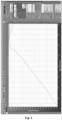
- FIG. 1 is a graph showing XRD measurement results of a coffee ground composition according to an embodiment of the present disclosure
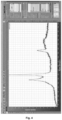
- FIG. 2 is a graph showing XRD measurement results of a secondary battery anode material comprising a coffee ground composition according to an embodiment of the present disclosure.
- the coffee ground composition shows two peaks at 2 ⁇ between 30 and 40 degrees, one peak at 2 ⁇ between 40 and 45 degrees, and one peak at 2 ⁇ between 45 and 50 degrees in XRD analysis.
- Table 4 No. 2 ⁇ , ° c.s.d. d, ⁇ c.s.d. Height, counts c.s.d.
- the secondary battery anode material shows two peaks at 2 ⁇ between 30 and 40 degrees, three peaks at 2 ⁇ between 40 and 45 degrees, and two peaks at 2 ⁇ between 45 and 50 degrees in XRD analysis.
- Table 6 No. 2 ⁇ , ° c.s.d. d, ⁇ c.s.d. Height, counts c.s.d.
- the degrees of orientation of secondary battery anode materials may be obtained from the XRD patterns obtained from X-ray diffraction measurement, and specifically, it could be found that the secondary battery anode materials have orientation peak intensity ratios (1110 / 1004) of the XRD patterns of 0.44. That is, when the orientation peak intensity ratios are 0.44, the space in the particles into which the lithium ions are simultaneously entered increases when lithium ions are inserted into the particles so that the output characteristics may be improved, and it may possible to improve life characteristics by reducing the expansion rate of the electrode by suppressing the expansion in one direction due to the variety of expansion directions during charging and low orientation.
- orientation peak intensity ratios (I110/I004) of Examples 1-1 to 1-8 obtained as additional experimental results by Examples 1-1 to 1-8 are the same as below (see Table 8).
- the secondary battery anode material comprising a coffee ground composition according to the present disclosure has a degree of divergence (DD) value defined by Equation 1 below of 5.96 or more.
- Degree of divergence DD I a / I total * 100
- Table 9 shows the results of calculating the I a and I total values and degree of divergence (DD) values described above based on XRD data for Example 1 and additionally experimented Examples 1-1 to 1-8. [Table 9] Ex. 1 Ex. 1-1 Ex. 1-2 Ex. 1-3 Ex. 1-4 Ex. 1-5 Ex. 1-6 Ex. 1-7 Ex.
- FIG. 3 is a graph showing Raman spectroscopic measurement results of a coffee ground composition according to an embodiment of the present disclosure
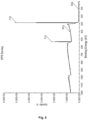
- FIG. 4 is a graph showing Raman spectroscopic measurement results of the secondary battery anode material comprising a coffee ground composition according to an embodiment of the present disclosure.
- the secondary battery anode material shows effective peaks due to ID (D band) and IG (G band) at around 1,350 cm -1 and 1,580 cm -1 , respectively, and the intensity ratios (ID/IG) of the D band and G band are ranged from 0.41 to 0.98.
- the D band is a peak representing the sp3 bond of the silicon oxycarbide and may represent a carbon crystal having structural defects
- the G band is a peak representing the sp2 bond of the silicon oxycarbide and may represent a carbon crystal having no structural defects.
- the D band is a peak representing the sp3 bond of the silicon oxycarbide and may represent a carbon crystal having structural defects
- the G band is a peak representing the sp2 bond of the silicon oxycarbide and may represent a carbon crystal having no structural defects.
- 'around' means an area adjacent to the extent that it can be seen with the corresponding wave number described in the specification of the present disclosure.
- the meaning of showing an effective peak around 1,350 cm -1 not only means the case of showing an effective peak at 1,350 cm -1 without a single error, but also means the range of wave numbers to the extent that can be considered to show an effective peak typically at 1,350 cm -1 in the art to which the present disclosure pertains. That is, although the wave numbers at which a peak is observed may change under various analysis conditions such as an analyzer, analysis equipment, or analysis sample, it refers to a range of wave numbers to the extent that can be typically commonly used as those observed at the corresponding wave number.
- FIG. 5 is a graph showing X-ray photoelectron spectroscopy (XPS) measurement results of a coffee ground composition according to an embodiment of the present disclosure
- FIG. 6 is a graph showing of X-ray photoelectron spectroscopy (XPS) measurement results of the secondary battery anode material comprising a coffee ground composition according to an embodiment of the present disclosure.
- XPS X-ray photoelectron spectroscopy
- X-ray photoelectron spectroscopy (XPS) measurement was performed on the above-mentioned coffee ground composition of Example 0, a graph of the resultant is shown in FIG. 5 , and the measurement values are shown in Table 11 below.
- Table 11 Name Start BE Peak BE End BE Height CPS FWHM cV Area (P) CPS.cV Atomic % SF C1s 291.08 284.6 281.18 100496.06 1.36 177422.59 89.16 1 N1s 402.18 399.54 397.18 857.42 1.25 1261.98 0.37 1.8 O1s 536.88 532.53 528.48 18958.97 2.61 52068.76 10.26 2.93 Si2p 105.08 101.88 99.88 228.64 1.43 372.19 0.21 0.817
- the full width at half maximum of the O1s peak measured through XPS may represent the sigma bond of oxygen, and in the present application, may represent the amount of water (H 2 O) that has not reacted with silicon on the surface of the anode material. Therefore, it may mean that silicon on the surface of the anode material reacts less with water as the full width at half maximum increases.
- the coffee ground composition showed a first XPS effective peak, a second XPS effective peak, a third XPS effective peak, and a fourth XPS effective peak in binding energy ranges of 281.18 to 291.08 eV, 397.18 to 402.18 eV, 528.48 to 536.88 eV, and 99.88 to 105.08 eV, respectively.
- the 'significant or effective' peak in the present disclosure means a peak that is repeatedly detected in a pattern that can be seen in the art as substantially the same without being significantly affected by analysis conditions or analysis performers in analysis data such as Raman, XRD, or the like, and it is clear that those skilled in the art to which the present disclosure pertains may easily determine whether the corresponding peak is an effective peak or not.
- the secondary battery anode material showed a first XPS effective peak, a second XPS effective peak, a third XPS effective peak, and a fourth XPS effective peak in binding energy ranges of 281.08 to 292.08 eV, 395.68 to 403.78 eV, 528.48 to 537.58 eV, and 99.08 to 108.48 eV, respectively.
- Table 13 below relates to XPS experiment data for Examples 1-1 to 1-8 in which additional experiments were conducted.
- Table 13 Name Start BE Peak BE End BE Height CPS FWHM eV Area (P) CPS.eV Area (N) Atomic % Ex. 1-1 C1s 297.08 285.07 277.08 771751.4 2.63 2629914 36883.98 86.6 N1s 405.58 402.08 394.08 7702.16 1.19 31754.18 287.4 0.67 O1s 541.08 533.15 524.58 178548.1 3.3 674060 3914.23 9.19 Si2p 110.08 104.19 93.08 26515.31 3.34 107519.7 1503.3 3.53 Ex.
- FIGS. 7 and 14 show the tap density and particle size analysis results of a coffee ground composition according to an embodiment of the present disclosure
- FIGS. 8 and 14 show the tap density and particle size analysis results of the secondary battery anode material comprising the coffee ground composition according to an embodiment of the present disclosure.
- the secondary battery anode material had a tap density of 0.93 g/cm 3 and a particle diameter D50 of 19.93 ⁇ m.
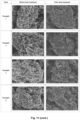
- Example 1-1 to 1-8 for additional experiments are as shown in FIG. 15 .
- Samples 1 to 8 in FIG. 15 correspond to Examples 1-1 to 1-8, respectively. It was confirmed that the secondary battery anode materials comprising the coffee ground composition had tap densities of 0.93 to 1.02 g/cm 3 .
- Example D(v,0.5) ⁇ m Example D(v,0.5) ⁇ m
- Example 1-1 27.38660
- Example 1-5 19.89845
- Example 1-2 20.90966
- Example 1-6 24.81601
- Example 1-3 18.15269
- Example 1-7 29.45513
- Example 1-4 19.00167
- Example 1-8 23.97124
Landscapes
- Chemical & Material Sciences (AREA)
- Chemical Kinetics & Catalysis (AREA)
- Electrochemistry (AREA)
- General Chemical & Material Sciences (AREA)
- Organic Chemistry (AREA)
- Engineering & Computer Science (AREA)
- Inorganic Chemistry (AREA)
- Manufacturing & Machinery (AREA)
- Composite Materials (AREA)
- Materials Engineering (AREA)
- Battery Electrode And Active Subsutance (AREA)
Abstract
The present disclosure is to provide a coffee ground composition which can suppress the phenomenon of silicon crushing and peeling due to volume expansion during charging and discharging, and has improved charging and discharging characteristics such as initial efficiency, capacity, and lifespan characteristics, and a secondary battery anode material comprising the same.The present disclosure can contribute to the protection of the natural environment through the preparation of a lithium secondary battery high-capacity silicon anode active material prepared using coffee grounds, an environmental pollutant, and can lower a lithium secondary battery anode material preparation cost with the high-capacity silicon anode active material using the coffee grounds.In addition, the present disclosure not only can suppress the phenomenon of silicon crushing and peeling due to volume expansion during charging and discharging, but also can improve charging and discharging characteristics such as initial efficiency, capacity, and lifespan characteristics.
Description
- This application claims the priority of Korean Patent Application No.
KR 10-2023-0006702 filed on 17 January 2023 - The present disclosure relates to a coffee ground composition and a secondary battery anode material comprising the same.
- Global interest in new energy sources is increasing as the demand for ultra-large power storage systems soars along with various electronic devices that have recently been miniaturized and lightweighted. Among them, research and development are focused on the field of lithium secondary batteries, which are eco-friendly, have high energy densities, and can be rapidly charged/discharged.
- In particular, carbon-based, metal-based, and oxide-based materials used as anode active materials for lithium secondary batteries not only have diverse types, but also play a key role in improving high-output, high-density energy power so that many studies and commercialization are being conducted.
- Silicon among them is in the limelight as one of the new anode active materials by having an electrochemical reduction potential of 0.4 V and a high capacity of 4,200 mAh/g.
- However, although silicon has a very high capacity, volume expansion and contraction of 300% or more occurs in silicon by charging and discharging processes unlike carbon-based or metal-based anode active materials.
- Such a large volume change in silicon forms an unstable solid-electrolyte interphase (SEI) and causes deintercalation from the current collector to exhibit low lifespan characteristics and capacity reduction.
- In addition, since the lithium ion diffusion rate of a silicon material is also slow due to a low electrical conductivity of silicon, this adversely affects the rate capability characteristics of silicon.
- Therefore, a method capable of obtaining high lifespan characteristics and high capacity characteristics by mitigating these rapid volume changes, researches of improving rate performance through short ion transfer distances by manufacturing structures with high surface area are ongoing.
- Nano-sized carbon-based materials that are widely used as composites with such silicon may improve the rate capability characteristics of silicon due to high electrical conductivity, large surface area, and thermal and chemical stability.
- In addition, since the effect of increasing capacity and improving lifespan characteristics can also be obtained by providing a structure that can mitigate the volume change of silicon, there is a tendency of conducting a lot of research on it.
- In this regard,
Korean Patent No. 10-0903503, publication date of May 8, 2009 - Such
Conventional Art 1 was a technology for providing an anode active material having remarkably improved lifespan characteristics by containing carbon nanotubes having a length of 0.1 µm or more and less than 10 µm and silicon particles disposed in the inner space of the carbon nanotubes (CNTs), a preparation method thereof, and a lithium secondary battery provided with the anode active material. - In addition,
Korean Patent No. 10-1613518, publication date of March 4, 2016 -
Conventional Art 2 was related to a method for preparing a carbon-silicon composite electrode material containing silicon nanoparticles and a porous carbon structure having an inverse opal structure, a carbon-silicon composite electrode material prepared by the method, and a secondary battery comprising the carbon-silicon composite electrode material. - Accordingly,
Conventional Art 2 could prepare a carbon-silicon composite electrode material containing silicon nanoparticles and a porous carbon structure having an inverse opal structure by a simple method through dry and wet mixing. In addition,Conventional Art 2 was a technology in which a secondary battery manufactured using a carbon-silicon composite electrode material containing silicon nanoparticles and a porous carbon structure having an inverse opal structure has excellent charge and discharge capacity and lifespan characteristics, and it was possible to control the composition of a carbon-silicon composite electrode material containing silicon nanoparticles and a porous carbon structure having an inverse opal structure. - In addition,
Korean Patent Publication No. 10-2015-0113314, publication date of October 8, 2015 - Such
Conventional Art 3 relates to an anode material, a non-aqueous lithium secondary battery having the same, and a manufacturing method thereof, and was intended to provide an anode material having a simple preparation process, high initial efficiency, and excellent electrochemical properties. In addition,Conventional Art 3 may form a mixture by dry mixing a spherical carbon-based material, silicon nanoparticles, and an amorphous carbon raw material, and may adsorb the silicon nanoparticles and the amorphous carbon raw material on the surface of the carbon-based material by putting the mixture into a solvent and then stirring and drying it. In addition, it was a technology capable of obtaining an anode material by heat-treating a carbon-based material to which the silicon nanoparticles and the amorphous carbon raw material are adsorbed to form a coating layer containing silicon nanoparticles and amorphous carbon on the surface of the carbon-based material. - Meanwhile,
Korean Patent Publication No. 10-2022-0052251, publication date of April 27, 2022 - Such
Conventional Art 4 relates to a method for manufacturing a metal-carbon composite using coffee grounds as a carbon source and a reducing agent, and more particularly, was a technology providing a method for manufacturing a metal-carbon composite, the method including the steps of: preparing a metal oxide-coffee ground composite by mixing a metal oxide and dried coffee grounds; and carbonizing and reducing the prepared metal oxide-coffee ground composite by performing heat treatment. - Accordingly, in
Conventional Art 4, the metal-carbon composite manufacturing method was a technology which is eco-friendly by recycling coffee grounds discarded, and is economical since the manufacturing time can be shortened by simultaneously performing the carbonization process of the coffee grounds and the reduction process of the metal oxide through a single process. - In addition,
Korean Patent No. 10-1334594, publication date of June 18, 2012 - Such
Conventional Art 5 was a technology providing an anode material, as a secondary battery anode material capable of intercalating and deintercalating ions, and a secondary battery comprising the anode material, wherein the anode material is comprised of a core containing a crystalline carbon-based material, and a composite coating layer containing one or more materials selected from the group consisting of low-crystalline carbon and amorphous carbon and a hydrophilic material, and wherein the composite coating has a structure in which a filler composed of the other components is contained in a matrix composed of one or more materials selected from the group consisting of low-crystalline carbon and amorphous carbon, and one component selected from a hydrophilic material. - As such, silicon, a high-performance material, is an anode material having a theoretical capacity (4,200mAh/g) 10 times higher than that of graphite, but it is also a material with many problems during charging and discharging.
- Problems in charging and discharging a silicon anode active material may be divided into three major categories. First, due to a volume change of about 400% of the silicon anode active material, cracks may occur in particles outside silicon, resulting in performance degradation. In addition, a peeling phenomenon may occur as a conductive path between silicon and graphite is broken. In addition, when silicon and graphite are synthesized and used, since charging during synthesis causes volume expansion to the extent of destroying the SEI layer, consuming lithium and generating gas.
- Such volume expansion may be improved by inserting silicon into the pores of the coffee grounds and carbonizing them, and since there is an improvement effect such as electrical conductivity and capacity increase due to carbonization, the development thereof is required.
- The present disclosure was created to solve the above problems, and an object of the present disclosure is to provide a coffee ground composition which can suppress the phenomenon of silicon crushing and peeling due to volume expansion during charging and discharging, and has improved charging and discharging characteristics such as initial efficiency, capacity, and lifespan characteristics, and a secondary battery anode material comprising the same.
- However, the technical tasks to be achieved in the present disclosure are not limited to the above-mentioned technical tasks, another technical tasks not mentioned will be able to be clearly understood by those skilled in the art to which the present disclosure belongs from the description below.
- A coffee ground composition according to an embodiment of the present disclosure may have a tap density of 0.48 g/cm3 and a particle diameter D50 of 317.14 µm.
- In a secondary battery anode material comprising a coffee ground composition according to an embodiment of another aspect of the present disclosure, the anode material may show two peaks at 2θ between 30 and 40 degrees, may show three peaks at 2θ between 40 and 45 degrees, and may show two peaks at 2θ between 45 and 50 degrees in XRD analysis.
- The present disclosure can contribute to the protection of the natural environment through the preparation of a lithium secondary battery high-capacity silicon anode active material prepared using coffee grounds, an environmental pollutant, and can lower a lithium secondary battery anode material preparation cost with the high-capacity silicon anode active material using the coffee grounds.
- In addition, the present disclosure can suppress the phenomenon of silicon crushing and peeling due to volume expansion during charging and discharging.
- In addition, the present disclosure can improve charging and discharging characteristics such as initial efficiency, capacity, and lifespan characteristics.
-
-
FIG. 1 is a graph showing XRD measurement results of a coffee ground composition according to an embodiment of the present disclosure. -
FIG. 2 is a graph showing XRD measurement results of a secondary battery anode material comprising a coffee ground composition according to an embodiment of the present disclosure. -
FIG. 3 is a graph showing Raman spectroscopic measurement results of a coffee ground composition according to an embodiment of the present disclosure. -
FIG. 4 is a graph showing Raman spectroscopic measurement results of the secondary battery anode material comprising a coffee ground composition according to an embodiment of the present disclosure. -
FIG. 5 is a graph showing X-ray photoelectron spectroscopy (XPS) measurement results of a coffee ground composition according to an embodiment of the present disclosure. -
FIG. 6 is a graph showing of X-ray photoelectron spectroscopy (XPS) measurement results of the secondary battery anode material comprising a coffee ground composition according to an embodiment of the present disclosure. -
FIG. 7 shows the tap density and particle size analysis results of a coffee ground composition according to an embodiment of the present disclosure. -
FIG. 8 shows the tap density and particle size analysis results of a secondary battery anode material comprising a coffee ground composition according to an embodiment of the present disclosure. -
FIG. 9 is an SEM image showing coffee grounds collected from a coffee shop. -
FIG. 10 is an SEM image showing the insertion of nano-silicon into macropores and micropores of coffee grounds. -
FIG. 11 is SEM images before and after heat treatment of a silicon anode active material in which a nano-silicon mixture is inserted into pores of coffee grounds. -
FIGS. 12 and13 are graphs showing charge and discharge characteristics of a battery for testing silicon active materials. -
FIGS. 14 and15 are tables of experimental data for tap densities for Examples 0 and 1 and Examples 1-1 to 1-8. InFIG. 14 , sample No. 1 is for Example 0, and sample No. 6 is for Example 1. -
FIGS. 16 and17 are flowcharts of a method for preparing a silicon anode active material according to an embodiment of the present disclosure. - Hereinafter, embodiments of the present disclosure will be described in detail so that those skilled in the art to which the present disclosure pertains can easily carry out the present disclosure with reference to the accompanying drawings. However, since the description of the present disclosure is only an embodiment for structural or functional description, the scope of rights of the present disclosure should not be construed as being limited by the embodiments described in the text. That is, since the embodiment can be changed in various ways and can have various forms, it should be understood that the scope of rights of the present disclosure includes equivalents capable of realizing the technical idea. In addition, since the object or effect presented in the present disclosure does not mean that a specific embodiment should include all of them or only such an effect, the scope of rights of the present disclosure should not be construed as being limited thereby.
- The meaning of terms described in the present disclosure should be understood as follows.
- Terms such as "first" and "second" refer to one for distinguishing one element from another element, and the scope of rights should not be limited by these terms. For example, a first element may be termed a second element, and similarly, a second element may be termed a first element. When an element is referred to as "connected" to another element, it should be understood that the element may be directly connected to the other element, but another element may exist in the middle thereof. On the other hand, when an element is referred to as being "directly connected" to another element, it should be understood that another element does not exist in the middle thereof. Meanwhile, other expressions describing the relationship between elements, such as "between" and "directly between" or "neighboring to" and "directly neighboring to" should be interpreted similarly.
- A singular expression should be understood to include a plurality of expressions unless the context clearly indicates otherwise, terms such as "comprise", "have", or the like are intended to designate that an installed feature, number, step, operation, component, part, or combination thereof is present, and it should be understood that the possibility of presence or addition of one or more other features, numbers, steps, operations, components, parts, or combinations thereof is not precluded.
- All terms used herein, unless otherwise defined, have the same meaning as commonly understood by those skilled in the art to which the present disclosure pertains. Terms defined in commonly used dictionaries should be interpreted as consistent with meanings in the context of the related art, and cannot be interpreted as having ideal or excessively formal meanings unless explicitly defined in the present disclosure.
- The coffee grounds of the present disclosure are a by-product remaining after roasting and pulverizing coffee beans and then performing hydrolysis and heat treatment to extract coffee liquid, and is waste of which 99.8% is discarded. Components such as proteins, fibers, sugars, polyphenol compounds, cellulose, hemicellulose, lignin, etc. remain in the coffee grounds. Tocopherol and polyphenolic and non-polyphenolic compounds that have not been extracted during the coffee hot water extraction process and Maillard reaction polymers that have been produced during the roasting process remain in the coffee grounds, and carbon, nitrogen, and silicon remain during carbonization.
- Unless these coffee grounds are recycled, a large amount thereof is treated as industrial waste to cause environmental pollution. In Korea, coffee grounds are supplied as a boiler fuel source for coffee production plants, and some of them are used as animal feed, fertilizer additives, functional material source, biodiesel raw material, culture soil mixture for mushroom cultivation, and activated carbon. In the coffee industry, they are produced in large quantities in the process of making coffee food, and only an extremely small part is recycled in the composting process.
- It is most preferable that coffee grounds in the present disclosure are coffee grounds (coffee by-product, coffee waste) collected from a coffee shop, and are preferably contained in a mixing amount of 3 to 19% by weight based on the total weight.
- As shown in
FIG. 16 , a method for preparing a silicon anode active material in which a nano-silicon mixture is inserted into coffee ground pores, according to the present disclosure, may be configured to include a nano-silicon preparation step (S11) of preparing nano-silicon, a surfactant preparation step (S12) of preparing an anion surfactant, a silane preparation step (S13) of preparing silane, a mixed dispersion preparation step (S14) of preparing a mixed dispersion based on ultrapure distilled water, a coffee ground preparation step (S15) of drying coffee grounds to prepare the coffee grounds, a polyvinyl alcohol mixing step (S21) of mixing polyvinyl alcohol with the mixed dispersion, a polyamic acid mixing step (S22) of mixing polyamic acid with the mixed dispersion, a graphite mixing step (S23) of mixing graphite with the mixed dispersion, a vegetable oil mixing step (S24) of mixing vegetable oil with the mixed dispersion, a final mixed dispersion heat treatment process step (S31), a silicon active material obtaining step (S32) of obtaining a silicon active material of a certain size with an ultrasonic vibrating screen, a final product obtaining step (S33) of inserting nano-silicon into the coffee ground pores to obtain a silicon anode active material final product, and an anode active material obtaining step (S34) of obtaining a silicon anode active material in which a nano-silicon mixture (SiO2, SiC) is inserted into the coffee ground pores. - As an example of a means for carrying out such a method for preparing a silicon anode active material, nano-silicon may be composed of one or more selected from the group consisting of silicon (Si), silicon dioxide (Silica, SiO2), and silicon carbide (SiC), the size thereof may be most preferably 20 to 100nm considering the miscibility with other components, and nano-silicon may be preferably contained in mixing amounts of 0.5 to 4% by weight of silicon dioxide (SiO2) and 0.2 to 1.3% by weight of silicon carbide (SiC) based on the total weight.
- In addition, the surfactant may be composed of one or more selected from the group consisting of anionic surfactants, cationic surfactants, nonionic surfactants, amphoteric surfactants, and special surfactants, and the surfactant is preferably an anionic surfactant considering the synergistic action with other components, and is preferably contained in mixing amounts of 1 to 9% by weight of a primary anionic surfactant and 7 to 8% by weight of a secondary anionic surfactant based on the total weight.
- In addition, silane may be composed of one or more selected from the group consisting of chlorosilane, alkoxysilane, and silazane, and silane is most preferably alkoxysilane (methyltrimethoxysilane: (CH3O)3SiCH3), and is preferably contained in a mixing amount of 6 to 7% by weight based on the total weight.
- Furthermore, distilled water may be composed of one or more selected from the group consisting of primary distilled water, secondary distilled water, and tertiary distilled water, it is most preferable to use, as tertiary distilled water, ultrapure distilled water (tertiary distilled water) in which the conductivity value in water is 0.055uS or less and contaminants (particles, ions, microorganisms, organic matter, etc.) are 100% removed, and distilled water is preferably contained in a mixing amount of 35 to 60% by weight based on the total weight.
- Meanwhile, the coffee grounds are a by-product remaining after roasting and pulverizing coffee beans and then performing hydrolysis and heat treatment to extract coffee liquid, and is waste of which 99.8% is discarded. Components such as proteins, fibers, sugars, polyphenol compounds, cellulose, hemicellulose, lignin, etc. remain in the coffee grounds. Tocopherol and polyphenolic and non-polyphenolic compounds that have not been extracted during the coffee hot water extraction process and Maillard reaction polymers that have been produced during the roasting process remain in the coffee grounds, and carbon, nitrogen, and silicon remain during carbonization.
- Unless these coffee grounds are recycled, a large amount thereof is treated as industrial waste to cause environmental pollution. In Korea, coffee grounds are supplied as a boiler fuel source for coffee production plants, and some of them are used as animal feed, fertilizer additives, functional material source, biodiesel raw material, culture soil mixture for mushroom cultivation, and activated carbon. In the coffee industry, they are produced in large quantities in the process of making coffee food, and only an extremely small part is recycled in the composting process.
- It is most preferable that coffee grounds in the present disclosure are coffee grounds (coffee by-product, coffee waste) collected from a coffee shop, and the coffee grounds are preferably contained in a mixing amount of 3 to 19% by weight based on the total weight.
- In addition, a water-soluble polymer may be composed of one or more selected from the group consisting of polyvinyl alcohol, starch, rubber, starch derivatives, cellulose derivatives, and nonionic water-soluble polymers, polyvinyl alcohol is preferable considering the synergistic effect with other components, and the water-soluble polymer is preferably contained in a mixing amount of 0.1 to 0.5% by weight based on the total weight.
- In addition, polyamic acid is preferably a hydrophilic polymer that can be used for the use of an emulsion stabilizer, a thickener, a film former, and an adhesive, and polyamic acid is preferably contained in a mixing amount of 1 to 1.5% by weight based on the total weight.
- Furthermore, an anode active material to be mixed may be composed of one or more selected from the group consisting of natural graphite, artificial graphite, low crystalline carbon-based (soft/hard carbon) one, and a metal-based (silicon) one, natural graphite is preferable considering the synergistic action with other components, and the anode active material is preferably contained in a mixing amount of 10 to 15% by weight based on the total weight.
- Finally, oil may be composed of one or more selected from the group consisting of vegetable oil, animal oil, fuel oil, solid oil, industrial oil, and lubricating oil, low-cost vegetable oil is preferable, and oil is preferably contained in a mixing amount of 7 to 8% by weight based on the total weight.
- In addition, in order to solve the object of the present disclosure, the uniformly dispersed final mixed dispersion should be subjected to a heat treatment process before layers are generated by specific gravity, and the final mixed dispersion may obtain a silicon anode active material final product by performing heat treatment and carbonization processes in air at 800 to 900°C.
- That is, as shown in
FIG. 17 , the method for preparing a silicon anode active material according to the present disclosure includes preparing two or more kinds of nano-silicon (A1) having a size of 20 to 100 nm, preparing an anionic surfactant (A2) and silane (A3) and then preparing ultrapure distilled water, which is tertiary distilled water as an aqueous solution for preparing a first mixed dispersion, firstly mixing A1, A2, and A3 with ultrapure distilled water as a starting process for preparing a silicon anode active material, and adding the anionic surfactant to the first mixed dispersion in order to mix the first mixed dispersion and coffee grounds (C1), and mixing and dispersing it. - As shown in
FIG. 17 , B1 to B7 are dispersed using an ultrasonic disperser to prepare a mixed dispersion, and additionally coffee grounds (C1), polyvinyl alcohol (C2), polyamic acid (C3), natural graphite (C4), vegetable oil (C5), etc. are mixed in order. - Here, B7 can obtain a silicon anode active material final product by primarily evaporating moisture from the sixth mixed dispersion at 300 to 380°C and carbonizing it at 800 to 900°C for 1 hour.
- In the method for preparing a silicon anode active material of the present disclosure according to
FIG. 16 , the nano-silicon preparation step (S11) may be more preferably configured by including the steps of drying 20 nm silicon dioxide (CNVision Co., Ltd.: CNSi-01) in a mixing amount of 1 to 0.68% by weight of the total 100% by weight of ultrapure distilled water at 100 to 130°C to prepare it, drying 50 nm silicon carbide (Avention: silicon carbide) in a mixing amount of 1 to 0.26% by weight of the total 100% by weight of ultrapure distilled water at 100 to 130°C to prepare it, and drying silicon to remove moisture contained in silicon. - In the surfactant preparation step (S12), an anionic surfactant that lowers the surface tension by adsorbing an anion generated by dissociation in water on the surface of an aqueous solution is any one component of sodium lauryl ether sulfate, sodium α-olefin sulfonate, and alkyldimethylamine oxide, and may be used in a mixing amount of 1 to 7.5% by weight of the total 100% by weight of ultrapure distilled water.
- In the silane preparation step (S13), alkoxysilane (methyltrimethoxysilane: (CH3O)3SiCH3) used to allow the inorganic surface to have hydrophobic properties may be used in a mixing amount of 1 to 6.25% by weight of the total 100% by weight of ultrapure distilled water.
- In the mixed dispersion preparation step (S14), nano-silicon, an anionic surfactant, silane, coffee grounds, polyvinyl alcohol, polyamic acid, natural graphite, and vegetable oil may be mixed and dispersed in ultrapure distilled water (deionized water).
- The coffee ground preparation step (S15) is a step of preparing coffee grounds by drying coffee grounds collected from a coffee shop at 130°C, and it is characterized in that there is no water washing process in the entire process from collection to the anode active material final product since the coffee grounds are used in a mixing amount of 10 to 3.66% by weight of the total 100% by weight of ultrapure distilled water, and the coffee grounds used in the above process do not go through the activated carbonization process by performing heat treatment after the processes of immersing the coffee grounds in a hydroxide solution (potassium hydroxide: KOH, sodium hydroxide: NaOH, calcium hydroxide: Ca(OH)2) in order to obtain a plurality of pores and removing the hydroxide solution from the coffee grounds.
- In the polyvinyl alcohol mixing step (S21), polyvinyl alcohol described above may be mixed in an amount of 1 to 0.5% by weight of the total 100% by weight of the ultra-pure distilled water mixed solution.
- In the polyamic acid mixing step (S22), polyamic acid described above may be mixed in an amount of 1 to 1.37% by weight of the total 100% by weight of the ultrapure distilled water mixed solution.
- In the graphite mixing step (S23), natural graphite (T-360: Xiamen TOB New Energy Technology Co., Ltd.) described above may be mixed in an amount of 1 to 15% by weight of the total 100% by weight of the ultra-pure distilled water mixed solution.
- In the vegetable oil mixing step (S24), vegetable oil described above may be mixed in an amount of 1 to 7.5% by weight of the total 100% by weight of the ultra-pure distilled water mixed solution.
- The final mixed dispersion heat treatment process step (S31) is the sixth mixed dispersion final heat treatment process, and may be configured by including the steps of primarily performing drying at 300 to 380°C and secondly performing heat treatment at 800 to 900°C.
- Further in the silicon active material obtaining step (S32), the aforementioned coffee grounds in which nano-silicon and graphite are mixed are pulverized with an automatic grinding mill and screened with an ultrasonic vibrating screen sieve (160#-96 µm) so that a coffee ground nano-silicon anode active material composite capable of being used as an anode material may be obtained.
- An anode according to the present disclosure includes the anode active material according to the present disclosure described above.
- The anode according to the present disclosure may be manufactured by dissolving or dispersing the aforementioned anode active material according to the present disclosure, a conductive material, and/or a binder, etc. in a solvent to prepare an anode mixture, applying the anode mixture to at least one surface of an anode current collector, and then drying and compressing it, or may be manufactured by casting the anode mixture on a separate support and then laminating a film obtained by peeling it from the support on the anode current collector.
- The anode current collector is not particularly limited as long as it has high conductivity while it does not cause chemical change in the battery. For example, copper, stainless steel, aluminum, nickel, titanium, fired carbon, a copper or stainless steel surface which is surface-treated with carbon, nickel, titanium, silver, or the like, an aluminum-cadmium alloy, and the like may be used. In addition, the anode current collector may have a thickness of typically 3 µm to 500 µm, and fine irregularities may be formed on the surface of the current collector to strengthen bonding force of the anode active material. For example, it may be used in various forms such as films, sheets, foils, nets, porous bodies, foams, and non-woven fabrics.
- The anode active material may be contained in an amount of 80 to 99% by weight, more specifically, 85 to 98% by weight based on the total weight of the anode active material layer. When it is contained in the above amount range, excellent capacity characteristics may be exhibited.
- The conductive material is used to impart conductivity to the electrode, and in a battery to be configured, any material that does not cause chemical change and has electronic conductivity can be used without particular limitation. Specific examples thereof may include: graphite such as natural graphite or artificial graphite; carbon-based materials such as carbon black, acetylene black, Ketjenblack, channel black, furnace black, lamp black, thermal black, and carbon fiber; metal powders or metal fibers such as copper, nickel, aluminum, and silver; conductive whiskers such as zinc oxide and potassium titanate; conductive metal oxides such as titanium oxide; conductive polymers such as polyphenylene derivatives; or the like, and they may be used alone or in a mixture of two or more thereof. The conductive material may be contained in an amount of 1% by weight to 30% by weight based on the total weight of the anode active material layer.
- In addition, the binder serves to improve the adhesion between the particles of the anode active material and the adhesive strength between the anode active material and the current collector. Specific examples thereof may include polyvinylidene fluoride (PVDF), poly(vinylidene fluoride-co-hexafluoropropylene) (PVDF-co-HFP) copolymer, polyvinyl alcohol, polyacrylonitrile, carboxymethylcellulose (CMC), starch, hydroxypropyl cellulose, regenerated cellulose, polyvinylpyrrolidone, tetrafluoroethylene, polyethylene, polypropylene, ethylene-propylene-diene monomer (EPDM), sulfonated EPDM, styrenebutadiene rubber (SBR), fluororubber, various copolymers thereof, or the like, and they may be used alone or in a mixture of two or more thereof. The binder may be contained in an amount of 1% by weight to 30% by weight based on the total weight of the anode active material layer.
- Meanwhile, the solvent used in preparing the anode mixture may be a solvent generally used in the art, and for example, dimethyl sulfoxide (DMSO), isopropyl alcohol, N-methylpyrrolidone (NMP), acetone, water, and the like may be used alone or in the form of a mixture thereof. The amount of the solvent used may be appropriately adjusted in consideration of the application thickness of the slurry, preparation yield, viscosity, and the like.
- Next, the lithium secondary battery according to the present disclosure will be described.
- The anode according to the present disclosure may be usefully used for manufacturing a lithium secondary battery.
- Specifically, the lithium secondary battery according to the present disclosure includes an anode, a cathode positioned opposite to the anode, a separator interposed between the anode and the cathode, and an electrolyte, wherein the anode is an anode manufactured by applying the anode active material according to the present disclosure described above.
- Meanwhile, the secondary battery may selectively further include a battery container accommodating an electrode assembly of the cathode, the anode, and the separator, and a sealing member sealing the battery container.
- The lithium secondary battery may be manufactured according to a conventional secondary battery manufacturing method except for using the anode according to the present disclosure.
- Hereinafter, preferred examples and comparative examples of the present disclosure will be described in more detail.
- A coffee ground composition was prepared by drying coffee by-products and coffee waste.
- 0.68% by weight of 20 nm silicon dioxide (CNVision SiO2: CNSi-01) and 0.26% by weight of 50 nm silicon carbide (Avention SiC: silicon carbide) were dried to 130°C and prepared, and then 7.5% by weight of an additional portion-containing anionic surfactant and 6.25% by weight of silane are prepared.
- Next, silicon dioxide, silicon carbide, a surfactant, and silane are sequentially put into 57.28% by weight of ultrapure distilled water (deionized water), and then mixing and dispersion are performed for 30 minutes with an ultrasonic disperser (VCX-750) to prepare a first mixed dispersion.
- An additional surfactant portion and 3.66% by weight of coffee grounds which are collected from coffee shops and dried at 130°C are put into the first mixed dispersion and dispersed for 30 minutes with an ultrasonic disperser to prepare a second mixed dispersion.
- In order to obtain a plurality of pores, the coffee grounds collected from coffee shops rather than the coffee grounds passing through an activated carbonization process by performing heat treatment after the processes of immersing the coffee grounds in a hydroxide solution (potassium hydroxide: KOH, sodium hydroxide: NaOH, calcium hydroxide: Ca(OH)2) and removing the hydroxide solution from the coffee grounds were used as the coffee grounds, and there is no water washing process in the entire process from collecting the coffee grounds used in the above process to the anode active material final product.
- After putting 0.5% by weight of polyvinyl alcohol into the second mixed dispersion, it is dispersed for 30 minutes with an ultrasonic disperser to prepare a third mixed dispersion.
- After putting 1.37% by weight of polyamic acid into the third mixed dispersion, it is dispersed for 30 minutes with an ultrasonic disperser to prepare a fourth mixed dispersion.
- After putting 15% by weight of natural graphite (T-360: Xiamen TOB New Energy Technology Co., Ltd.) into the fourth mixed dispersion, it is dispersed for 30 minutes with an ultrasonic disperser to prepare a fifth mixed dispersion.
- After putting 7.5% by weight of vegetable organic compound (Oil: vegetable oil) into the fifth mixed dispersion, it is dispersed for 30 minutes with an ultrasonic disperser to prepare the final sixth mixed dispersion.
- As shown in
FIG. 10 , an anode active material in which nano-silicon is inserted into the coffee grounds may be obtained by heat-treating the sixth mixed dispersion at 900°C to carbonize the coffee grounds. - The coffee grounds into which nano-silicon is inserted obtained through this process may be used as an anode active material without water washing process.
- Coffee grounds in which nano-silicon and graphite are mixed are pulverized with an automatic grinding mill and selected to a size that would pass through an ultrasonic vibrating screen (160#-96 µm) sieve to prepare a secondary battery anode material.
- An anode active material was prepared in the same manner as in Example 1 except that 7.32% by weight of coffee grounds, 1.36% by weight of SiO2, 0.52% by weight of SiC, and 52.68% by weight of ultrapure distilled water were contained in Example 1.
- An anode active material was prepared in the same manner as in Example 1 except that 10.98% by weight of coffee grounds, 2.04% by weight of SiO2, 0.78% by weight of SiC, and 48.08% by weight of ultrapure distilled water were contained in Example 1.
- An anode active material was prepared in the same manner as in Example 1 except that 14.64% by weight of coffee grounds, 2.72% by weight of SiO2, 1.04% by weight of SiC, and 43.48% by weight of ultrapure distilled water were contained in Example 1.
- An anode active material was prepared in the same manner as in Example 1 except that 18.3% by weight of coffee grounds, 3.4% by weight of SiO2, 1.3% by weight of SiC, and 33.88% by weight of ultrapure distilled water were contained in Example 1.
- An anode active material was prepared in the same manner as in Example 1 except that 0% by weight of coffee grounds, 3.4% by weight of SiO2, 1.3% by weight of SiC, and 57.18% by weight of ultrapure distilled water were contained in Example 1.
- An anode active material was prepared in the same manner as in Example 1 except that 18.3% by weight of coffee grounds, 0% by weight of SiO2, 1.3% by weight of SiC, and 42.28% by weight of ultrapure distilled water were contained in Example 1.
- An anode active material was prepared in the same manner as in Example 1 except that 18.3% by weight of coffee grounds, 3.4% by weight of SiO2, 0% by weight of SiC, and 40.18% by weight of ultrapure distilled water were contained in Example 1.
- The contents of each material for Examples 1 to 5 and Comparative Examples 1 to 3 are shown in Table 1 below.
[Table 1] Ex. 1 Ex. 2 Ex. 3 Ex. 4 Ex. 5 Com. Ex. 1 Com. Ex. 2 Com. Ex. 3 % by weight of coffee grounds 3.66 7.32 10.98 14.64 18.3 0 18.3 18.3 % by weight of SiO2 0.68 1.36 2.04 2.72 3.4 3.4 0 3.4 % by weight of SiC 0.26 0.52 0.78 1.04 1.3 1.3 1.3 0 - In addition, based on Example 1, which is judged to have the most excellent performance, as described below, additional experiments for the following Examples 1-1 to 1-8 were conducted by adjusting the ratios of coffee grounds, SiO2, and SiC to ± 5, 10, 20, and 30% by weight, respectively.
- The experimental method for Examples 1-1 to 1-8 was experimented in the same manner as in Example 1, but only the contents for coffee grounds, SiO2, and SiC were varied as shown in Table 2 below.
[Table 2] Ex. 1-1 Ex. 1-2 Ex. 1-3 Ex. 1-4 Ex. 1-5 Ex. 1-6 Ex. 1-7 Ex. 1-8 % by weight of coffee grounds 3.477 3.843 3.294 4.026 2.928 4.392 2.562 4.758 % by weight of SiO2 0.646 0.714 0.612 0.748 0.544 0.816 0.476 0.884 % by weight of SiC 0.247 0.273 0.234 0.286 0.208 0.312 0.182 0.338 - Full cells (65 mm×50 mm 5T) were manufactured with anode active materials obtained by mixing materials according to Examples and Comparative Examples mentioned above, and the data was measured.
- An electrode was used as the anode according to the present disclosure, the electrode manufactured by preparing an anode slurry using a silicon anode material in which nano-silicon is inserted into the pores of the coffee grounds, artificial graphite (MCMB: mesocarbon microbeads), acetylene black, carboxymethyl cellulose (CMC), and styrenebutadiene rubber (SBR) at a mixing ratio of 15: 79: 2: 2: 2% by weight, coating the anode slurry to a thickness of 180 µm on an anode current collector with a Xiamen TOB New Energy Technology Co., Ltd's coating machine (slot die coating machine), and then drying it for 6 hours under vacuum drying conditions of 130°C.
- An electrode was used as the cathode, the electrode manufactured by preparing a cathode slurry using NMC811 (LiNi0.8Mn0.1Co0.1O2), acetylene black: and polyvinylidene fluoride (PVDF) at a mixing ratio of 96: 2: 2% by weight, coating the cathode slurry to a thickness of 250 µm on a cathode current collector with a Xiamen TOB New Energy Technology Co., Ltd's coating machine (slot die coating machine), and then drying it for 6 hours under vacuum drying conditions of 130°C.
- The full cells were assembled in an argon-filled glove box.
- The electrolyte contains 1M of lithium hexafluorophosphate (LiPF6), and the full cells were fabricated by using an electrolyte solution in which ethylene carbonate (EC): dimethyl carbonate (DMC): diethyl carbonate (DEC) were mixed at a volume ratio of 1:1:1 as the electrolyte and applying a wet separator as the separator.
- The full cells fabricated in Manufacturing Example were charged to 4.2 V and discharged until it became 2.8 V to measure the charge capacities (mAh/g), discharge capacities (mAh/g), and initial charge/discharge efficiencies (%).
- In addition, the 50 cycle characteristics of the full cell fabricated for each sample in Manufacturing Example mentioned above were obtained.
- The charge and discharge capacities and initial charge/discharge efficiencies mentioned above are shown in Table 3 below.
Table 3 Initial charge capacity (mAh/g) Initial discharge capacity (mAh/g) Initial charge/discharge efficiency (%) Ex. 1 288.5 287.3 99.58 Ex. 2 278.5 276.5 99.28 Ex. 3 248.3 246.2 99.15 Ex. 4 249.5 247.1 99.03 Ex. 5 243.1 241.3 99.25 Com. Ex. 1 256.7 255.2 99.41 Com. Ex. 2 252.9 251.2 99.32 Com. Ex. 3 231.4 230.9 99.78 -
FIGS. 12 and13 are graphs showing 50 cycle charge/discharge measurement results of batteries having silicon anode active materials for lithium secondary batteries in which nano-silicon is inserted into coffee grounds applied thereto, and, as the measurement results, it can be seen that the mixing amount of Example 1 shows the most excellent charge/discharge cycle characteristics. - There have conventionally been disadvantages in that, when nano-silicon is applied as the anode active materials, volume expansion occurs due to charging and discharging, and accordingly, the capacities are decreased. However, in order to prevent volume expansion, the present disclosure may insert nano-silicon into the pores of the coffee grounds to control expansion of nano-silicon as much as possible, and may prepare the anode active materials using coffee grounds, which are an environmental pollutant, to reduce environmental protection and preparation cost.
- In particular, water pollution problems in the preparation process may be prevented without a water washing process in the entire process of the anode active materials.
-
FIG. 1 is a graph showing XRD measurement results of a coffee ground composition according to an embodiment of the present disclosure, andFIG. 2 is a graph showing XRD measurement results of a secondary battery anode material comprising a coffee ground composition according to an embodiment of the present disclosure. - First, XRD measurement was performed on the above-mentioned coffee ground composition of Example 0, and a graph of the result is shown in
FIG. 1 . - Referring to
FIG. 1 and Tables 4 and 5 below, it could be found that the coffee ground composition shows two peaks at 2θ between 30 and 40 degrees, one peak at 2θ between 40 and 45 degrees, and one peak at 2θ between 45 and 50 degrees in XRD analysis.[Table 4] No. 2θ, ° c.s.d. d, Å c.s.d. Height, counts c.s.d. FWHM, ° 1 15.95585 0.01595 5.55002 0.00551 1568.2 18.3 3.5101 2 20.24954 0.03512 4.38186 0.00752 2739 29.9 6.410 Ei 3 34.98507 0.11943 2.56269 0.00847 208.4 4.1 4.0649 4 38.29594 0.08758 2.3484 0.00517 155.7 3.2 2.7371 5 42.71823 0.45693 2.11497 0.02156 294.4 6.4 9.1236 6 47.47143 1.23417 1.91369 0.04687 111.2 2.8 13.3632 7 107.9959 0.71807 0.95216 0.00434 25.6 1.2 24.9301 8 131.4489 3.41216 0.84501 0.01135 18.5 2.8 7.284 [Table 5] No. c.s.d. Int. I., counts° c.s.d. Int. W., ° c.s.d. Size, Å c.s.d. 1 0.0406 8574.86 271.82 5.468 0.237 23.8692 0.2763 2 0.0275 18948.75 240.69 6.9181 0.1634 13.1479 0.0565 3 1.1622 1306.68 952.33 6.2695 4.6914 21.402 6.1189 4 0.1395 858.33 337.03 5.5126 2.2764 32.0896 1.6355 5 0.8314 3385.64 945.76 11.5008 3.4629 9.7651 0.8899 6 0.3967 1581.59 153.16 14.2247 1.7313 6.7828 0.2014 7 3.0577 1129.3 290.56 44.0306 13.3209 5.6621 0.6945 8 0.8841 148.85 22.65 8.0345 2.4455 27.7075 3.3628 - In addition, the coffee ground composition of Example 0 could be found to have diffraction lines with peaks at 2θ = 29.3 ± 0.2°, 95.1 ± 0.2°, 99.4 ± 0.2°, and 121.9 ± 0.2° in XRD analysis.
- In addition, XRD measurement was performed on the above-mentioned secondary battery anode material of Example 1, and a graph of the result is shown in
FIG. 2 . - Referring to
FIG. 2 and Tables 6 and 7 below, it could be found that the secondary battery anode material shows two peaks at 2θ between 30 and 40 degrees, three peaks at 2θ between 40 and 45 degrees, and two peaks at 2θ between 45 and 50 degrees in XRD analysis.[Table 6] No. 2θ, ° c.s.d. d, Å c.s.d. Height, counts c.s.d. FWHM, ° 1 13.221 0.32579 6.69129 0.16416 28.4 0.9 3.5855 2 26.49351 0.00125 3.36161 0.00016 322107.1 477.5 0.1654 3 33.57262 0.03485 2.6672 0.00269 109.5 3.3 0.4502 4 35.56649 0.00521 2.52212 0.00036 1576.3 28.3 0.2979 5 42.32318 0.00252 2.13379 0.00012 3840.5 48.6 0.1491 6 43.27883 0.00803 2.08886 0.00037 2179.1 33.5 0.3108 7 44.47235 0.00264 2.03553 0.00011 9683.6 83.5 0.2407 8 46.11116 0.0149 1.96693 0.0006 732.9 14.4 0.4544 9 46.18308 0.02022 1.96403 0.00081 220.3 4.5 0.8248 10 50.61159 0.00611 1.80208 0.0002 1032.2 20.3 0.3608 11 54.58757 0.00159 1.67984 0.00005 12630.1 98.5 0.2152 12 56.41998 0.00722 1.62955 0.00019 203 5.6 0.5163 13 59.80644 0.00431 1.54512 0.0001 2169.8 35.6 0.3793 14 63.32515 0.04022 1.46747 0.00084 107.8 3.3 0.6022 15 71.65694 0.01893 1.31593 0.0003 398.6 11.3 0.6502 16 75.30553 0.0225 1.26097 0.00032 37 1.4 0.1984 17 77.4107 0.00133 1.23185 0.00002 5531.7 68.8 0.1577 18 80.35829 0.05577 1.19393 0.00069 52.6 1.9 0.3702 19 83.50945 0.00182 1.1567 0.00002 4090.9 56.7 0.2845 20 85.28637 0.01264 1.13709 0.00014 361.8 10.8 0.4127 21 86.95462 0.00374 1.11951 0.00004 1321.4 28.5 0.2333 22 92.46747 0.03084 1.06664 0.00027 60.9 2.4 0.1074 23 93.16921 0.01633 1.06044 0.00014 57.6 2.3 0.1804 24 93.96362 0.01042 1.05356 0.00009 314.5 10.7 0.2229 25 98.51483 0.02228 1.01669 0.00017 57.3 2.2 0.4261 26 101.7293 0.00392 0.99309 0.00003 1789.2 34.2 0.481 27 104.3288 0.05486 0.97534 0.00036 71.1 2.8 1.0146 28 105.8754 0.01728 0.96531 0.00011 40.7 1.6 0.177 29 106.2077 0.02543 0.9632 0.00016 123.8 4.7 0.5854 30 107.3394 0.01134 0.95616 0.00007 38.3 1.6 0.093 31 115.5072 0.0168 0.91077 0.00008 33.2 1.4 0.1249 32 119.8739 0.03901 0.89003 0.00018 66.7 2.5 0.5546 33 123.392 0.02721 0.8749 0.00011 149.6 5.5 0.5173 [Table 7] No. c.s.d. Int. I., counts° c.s.d. Int. W., ° c.s.d. Size, Å c. s.d. 1 0.8562 108.89 32.29 3.8275 1.2566 23.2962 5.5632 2 0.0014 70617.48 208.51 0.2192 0.001 515.5118 4.4224 3 0.0504 85.33 5.54 0.7794 0.0741 192.4922 21.5691 4 0.0048 733.63 3.91 0.4654 0.0108 292.5367 4.7143 5 0.0029 715.53 8.22 0.1863 0.0045 596.6186 11.6087 6 0.0159 1271.77 13.59 0.5836 0.0152 287.2282 14.6568 7 0.0045 3943.24 13.31 0.4072 0.0049 372.3448 6.9713 8 0.0218 574.14 13.15 0.7834 0.0334 198.4381 9.5307 9 0.0598 307.31 14.53 1.3951 0.0946 109.3591 7.9246 10 0.0107 638.4 4.09 0.6185 0.0161 254.3599 7.543 11 0.0019 3798.28 12.33 0.3007 0.0033 433.8263 3.8857 12 0.0214 116.14 5.32 0.5722 0.0421 182.3735 7.5444 13 0.0058 1345.18 4.56 0.62 0.0123 252.3492 3.8737 14 0.0317 71.16 4.4 0.6599 0.0611 161.8685 8.5308 15 0.0169 381.8 4.33 0.9579 0.0379 157.3852 4.0977 16 0.0464 7.83 2.1 0.2118 0.0648 528.3041 123.6163 17 0.0011 1078.93 5.16 0.195 0.0034 674.1869 4.8336 18 0.1057 36.66 2.74 0.6974 0.0778 293.3273 83.7581 19 0.0024 1817.75 4.86 0.4443 0.0074 390.9421 3.2908 20 0.0249 264.26 4.13 0.7304 0.0332 273.3427 16.4806 21 0.004 485.66 3.43 0.3675 0.0105 490.1019 8.4556 22 0.0293 7.47 2.05 0.1226 0.0386 1117.255 304.64 23 0.041 16.98 2.37 0.2947 0.0526 669.1058 151.9562 24 0.0118 114.5 2.94 0.3641 0.0218 545.6516 28.7791 25 0.0507 49.96 3.42 0.8723 0.094 298.3277 35.4984 26 0.0075 1555.07 6.05 0.8692 0.02 273.2968 4.2605 27 0.1541 153.48 7.36 2.1585 0.1882 133.3184 20.2478 28 0.073 8.77 4.57 0.2153 0.1206 777.7512 320.7102 29 0.0477 88.17 5.6 0.712 0.0719 236.0729 19.228 30 0.0306 4.33 1.22 0.1131 0.0366 1506.405 495.6901 31 0.0601 7.01 1.78 0.2114 0.0624 1245.017 599.1691 32 0.0793 65.65 3.95 0.9841 0.0962 298.6719 42.7145 33 0.0383 137.91 3.85 0.9221 0.0598 338.3044 25.049 - In addition, the degrees of orientation of secondary battery anode materials may be obtained from the XRD patterns obtained from X-ray diffraction measurement, and specifically, it could be found that the secondary battery anode materials have orientation peak intensity ratios (1110 / 1004) of the XRD patterns of 0.44. That is, when the orientation peak intensity ratios are 0.44, the space in the particles into which the lithium ions are simultaneously entered increases when lithium ions are inserted into the particles so that the output characteristics may be improved, and it may possible to improve life characteristics by reducing the expansion rate of the electrode by suppressing the expansion in one direction due to the variety of expansion directions during charging and low orientation.
- In addition, the orientation peak intensity ratios (I110/I004) of Examples 1-1 to 1-8 obtained as additional experimental results by Examples 1-1 to 1-8 are the same as below (see Table 8).
Table 8 Ex. 1-1 Ex. 1-2 Ex. 1-3 Ex. 1-4 Ex. 1-5 Ex. 1-6 Ex. 1-7 Ex. 1-8 (100) 3083.6 2689.6 3007.4 2653.7 2582 4224.6 3454.5 1503.2 (004) 4033.3 3314.2 4028.5 3502.8 3656.1 7394.6 4265.1 2160.9 (I110/ 1004) 0.7645 35244 0.8115 382 0.7465 31 0.7575 939 0.7062 17 0.57130 88 0.8099 458 0.6956 361 - Meanwhile, the secondary battery anode material comprising a coffee ground composition according to the present disclosure has a degree of divergence (DD) value defined by
Equation 1 below of 5.96 or more.
- In
Equation 1, Ia may be a total value of peak intensities appearing at 2θ = 42.4 ± 0.2°, 43.4 ± 0.2°, 44.6 ± 0.2°, and 77.5 ± 0.2° when measuring XRD using CuKα rays, and Itotal may be a total value of peak intensities appearing at 2θ = 26.5 ± 0.2°, 42.4 ± 0.2°, 43.4 ± 0.2°, 44.6 ± 0.2°, 54.7 ± 0.2°, and 77.5 ± 0.2° when measuring XRD using the CuKα rays. - Table 9 below shows the results of calculating the Ia and Itotal values and degree of divergence (DD) values described above based on XRD data for Example 1 and additionally experimented Examples 1-1 to 1-8.
[Table 9] Ex. 1 Ex. 1-1 Ex. 1-2 Ex. 1-3 Ex. 1-4 Ex. 1-5 Ex. 1-6 Ex. 1-7 Ex. 1-8 Ia 21234.9 10482.4 9001.4 9935.4 9237.3 9036.9 15253.1 12027.6 5140.2 Itotal 355972.1 121218.5 101506.1 121421.1 106768.9 104822.6 214863.9 135820.7 66840.6 DD 5.965327 8.647524924 8.8678414 8.1825976 8.6516767 8.621137 7.0989589 8.8554985 7.6902362 DD: Degree of Divergence - It was confirmed that the DD degree of divergence (DD) values in Examples 1-1 to 1-8 were 5.96 to 8.86.
-
FIG. 3 is a graph showing Raman spectroscopic measurement results of a coffee ground composition according to an embodiment of the present disclosure, andFIG. 4 is a graph showing Raman spectroscopic measurement results of the secondary battery anode material comprising a coffee ground composition according to an embodiment of the present disclosure. - First, Raman spectroscopic measurement was performed on the above-mentioned coffee ground composition of Example 0, and a graph of the result is shown in
FIG. 3 . - In addition, Raman spectroscopic measurement was performed on the above-mentioned secondary battery anode material of Example 1, and a graph of the result is shown in
FIG. 4 . - Referring to
FIG. 4 and Table 10 below, as a result of Raman spectroscopic measurement, it could be found that the secondary battery anode material shows effective peaks due to ID (D band) and IG (G band) at around 1,350 cm-1 and 1,580 cm-1, respectively, and the intensity ratios (ID/IG) of the D band and G band are ranged from 0.41 to 0.98. The D band is a peak representing the sp3 bond of the silicon oxycarbide and may represent a carbon crystal having structural defects, and the G band is a peak representing the sp2 bond of the silicon oxycarbide and may represent a carbon crystal having no structural defects.[Table 10] No. ID (D band) IG (G band) ID/ IG 1 88.6667 146.889 0.603631 2 40.4286 98.5714 0.410145 3 59.2857 120.286 0.492873 4 698.622 711.091 0.982465 - Here, the D band is a peak representing the sp3 bond of the silicon oxycarbide and may represent a carbon crystal having structural defects, and the G band is a peak representing the sp2 bond of the silicon oxycarbide and may represent a carbon crystal having no structural defects.
- In addition, in the present disclosure, 'around' means an area adjacent to the extent that it can be seen with the corresponding wave number described in the specification of the present disclosure. For example, in the present disclosure, the meaning of showing an effective peak around 1,350 cm-1 not only means the case of showing an effective peak at 1,350 cm-1 without a single error, but also means the range of wave numbers to the extent that can be considered to show an effective peak typically at 1,350 cm-1 in the art to which the present disclosure pertains. That is, although the wave numbers at which a peak is observed may change under various analysis conditions such as an analyzer, analysis equipment, or analysis sample, it refers to a range of wave numbers to the extent that can be typically commonly used as those observed at the corresponding wave number.
-
FIG. 5 is a graph showing X-ray photoelectron spectroscopy (XPS) measurement results of a coffee ground composition according to an embodiment of the present disclosure, andFIG. 6 is a graph showing of X-ray photoelectron spectroscopy (XPS) measurement results of the secondary battery anode material comprising a coffee ground composition according to an embodiment of the present disclosure. - First, X-ray photoelectron spectroscopy (XPS) measurement was performed on the above-mentioned coffee ground composition of Example 0, a graph of the resultant is shown in
FIG. 5 , and the measurement values are shown in Table 11 below.[Table 11] Name Start BE Peak BE End BE Height CPS FWHM cV Area (P) CPS.cV Atomic % SF C1s 291.08 284.6 281.18 100496.06 1.36 177422.59 89.16 1 N1s 402.18 399.54 397.18 857.42 1.25 1261.98 0.37 1.8 O1s 536.88 532.53 528.48 18958.97 2.61 52068.76 10.26 2.93 Si2p 105.08 101.88 99.88 228.64 1.43 372.19 0.21 0.817 - Referring to
FIG. 5 and Table 11, as a result of XPS measurement of the coffee ground composition, it could be found that the full width at half maximum (FWHM) of the O1s peak on the measured surface was 2.61, and it could be found that the content of the nitrogen element was 0.37 atomic %. - Here, the full width at half maximum of the O1s peak measured through XPS may represent the sigma bond of oxygen, and in the present application, may represent the amount of water (H2O) that has not reacted with silicon on the surface of the anode material. Therefore, it may mean that silicon on the surface of the anode material reacts less with water as the full width at half maximum increases.
- That is, when the full width at half maximum of the XPS O1s peak on the surface of the anode material is 2.0 or more, the reaction between silicon and water on the surface of the anode material may be sufficiently suppressed. Accordingly, it may be possible to suppress a decrease in discharge capacity and capacity efficiency of the secondary battery during the time period from the preparation of the anode material to the formation of the anode.
- In addition, it could be found that the coffee ground composition showed a first XPS effective peak, a second XPS effective peak, a third XPS effective peak, and a fourth XPS effective peak in binding energy ranges of 281.18 to 291.08 eV, 397.18 to 402.18 eV, 528.48 to 536.88 eV, and 99.88 to 105.08 eV, respectively.
- Here, the 'significant or effective' peak in the present disclosure means a peak that is repeatedly detected in a pattern that can be seen in the art as substantially the same without being significantly affected by analysis conditions or analysis performers in analysis data such as Raman, XRD, or the like, and it is clear that those skilled in the art to which the present disclosure pertains may easily determine whether the corresponding peak is an effective peak or not.
- Meanwhile, X-ray photoelectron spectroscopy (XPS) measurement was performed on the above-mentioned secondary battery anode material of Example 1, a graph of the result is shown in
FIG. 6 , and the measured values are shown in Table 12 below.[Table 12] Name Start BE Peak BE End BE Height CPS FWHM cV Area (P) CPS.cV Atomic % SF C1s 292.08 284.6 281.08 68400.67 1.42 127187.1 53.22 1 N1s 403.78 400.4 395.68 615.2 3.1 2334.29 0.58 1.8 O1s 537.58 533.36 528.48 72369.81 2.09 170354.1 27.96 2.93 Si2p 108.48 104.02 99.08 15619.48 2.18 38729.75 18.24 0.817 - Referring to
FIG. 6 and Table 12, as a result of XPS measurement of the secondary battery anode material, it could be found that the full width at half maximum (FWHM) of the O1s peak on the measured surface was 2.09, and the anode material had a content of the nitrogen element by X-ray photoelectron spectroscopy (XPS) of 0.58 atomic %. - In addition, it could be found that the secondary battery anode material showed a first XPS effective peak, a second XPS effective peak, a third XPS effective peak, and a fourth XPS effective peak in binding energy ranges of 281.08 to 292.08 eV, 395.68 to 403.78 eV, 528.48 to 537.58 eV, and 99.08 to 108.48 eV, respectively.
- Table 13 below relates to XPS experiment data for Examples 1-1 to 1-8 in which additional experiments were conducted.
[Table 13] Name Start BE Peak BE End BE Height CPS FWHM eV Area (P) CPS.eV Area (N) Atomic % Ex. 1-1 C1s 297.08 285.07 277.08 771751.4 2.63 2629914 36883.98 86.6 N1s 405.58 402.08 394.08 7702.16 1.19 31754.18 287.4 0.67 O1s 541.08 533.15 524.58 178548.1 3.3 674060 3914.23 9.19 Si2p 110.08 104.19 93.08 26515.31 3.34 107519.7 1503.3 3.53 Ex. 1-2 C1s 297.08 285.06 277.58 916627.5 2.59 3083972 43251.71 87.23 N1s 408 401.01 394 4337.41 1.2 15581.3 140.91 0.28 O1s 541.08 533.35 527.08 199145.5 3.44 800152.7 4647.2 9.37 Si2p 110.08 104.65 93.08 29050.09 2.24 110401.7 1544 3.11 Ex. 1-3 C1s 297.08 285.07 277.08 933107.1 2.59 3151347 44197.01 88.21 N1s 408 399.99 394 4532.95 0.44 14129.34 127.69 0.25 O1s 541.58 533.34 523.58 187889 3.44 747555.5 4341.67 8.67 Si2p 109.58 104.35 97.08 26781.36 3.37 102811.6 1437.61 2.87 Ex. 1-4 C1s 298.08 285.07 277.08 876461.3 2.63 2967935 41624.63 84.27 N1s 407.08 399.9 390.08 6682.98 4.56 44916.62 405.9 0.82 O1s 540.58 533.67 526.08 236629.5 3.34 928417.9 5393.5 10.92 Si2p 110.08 104.39 94.08 39071.35 3.08 141098.1 1973 3.99 Ex. 1-5 C1s 298.08 285.06 277.08 697679.7 2.62 2358345 33075.02 83.23 N1s 405.58 400.31 393.58 8351.34 3.91 46952.3 424.42 1.07 O1s 540.08 533.31 527.08 202005.1 3.17 771866.5 4482.78 11.28 Si2p 110.08 104.3 96.58 35155.97 3.06 125693.3 1757.5 4.42 Ex. 1-6 C1s 297.08 285.06 277.08 652661.2 2.64 2195924 30797.17 87.21 N1s 408 399.47 394 4647.71 1.8 29769.01 268.93 0.76 O1s 540.58 533.27 523.08 136377.7 3.27 527721.1 3064.75 8.68 Si2p 109.58 104.33 96.58 21824.95 3.38 84729.04 1184.75 3.35 Ex. 1-7 C1s 298.08 285.13 277.08 653899.5 2.64 2210659 31005.33 86.88 N1s 406.58 401.43 394.58 6770.31 4.93 37810.46 342.05 0.96 O1s 540.58 533.62 523.08 142773.8 1.95 545161.7 3166.9 8.87 Si2p 109.08 104.29 97.08 24241.72 3.04 83798.36 1171.7 3.28 Ex. 1-8 C1s 298.08 285.1 277.08 647837.9 2.63 2182007 30602.9 83.97 N1s 408 399.8 394 4762.69 2.44 26997.4 243.95 0.67 O1s 540.58 533.26 527.08 185901.4 3.21 693776.9 4029.09 11.06 Si2p 110.08 104.26 97.58 31800.3 2.96 112188.2 1568.64 4.3 - It was confirmed that the full width at half maximum (FWHM) values of the 01s peaks of the surface measured through X-ray photoelectron spectroscopy (XPS) in Examples 1-1 to 1-8 were 1.95 to 3.44.
- In addition, it was confirmed that the contents of the nitrogen element by X-ray photoelectron spectroscopy (XPS) in Examples 1-1 to 1-8 were 0.25 to 1.07 atomic %.
-
FIGS. 7 and14 show the tap density and particle size analysis results of a coffee ground composition according to an embodiment of the present disclosure, andFIGS. 8 and14 show the tap density and particle size analysis results of the secondary battery anode material comprising the coffee ground composition according to an embodiment of the present disclosure. - First, tap density and particle size analyses were performed on the coffee ground composition of Example 0, and the results are shown in
FIGS. 7 and14 . - Referring to
FIGS. 7 and14 , it could be found that the coffee ground composition had a tap density of 0.48 g/cm3 and a particle diameter D50 of 317.14 µm. - In addition, tap density and particle size analyses were performed on the secondary battery anode material of Example 1, and the results are shown in
FIGS. 8 and14 . - Referring to
FIG. 8 and Table 14, it could be found that the secondary battery anode material had a tap density of 0.93 g/cm3 and a particle diameter D50 of 19.93 µm. - In addition, the tap density measurement results for Examples 1-1 to 1-8 for additional experiments are as shown in
FIG. 15 .Samples 1 to 8 inFIG. 15 correspond to Examples 1-1 to 1-8, respectively. It was confirmed that the secondary battery anode materials comprising the coffee ground composition had tap densities of 0.93 to 1.02 g/cm3. - In addition, the particle diameter (D(v,0.5) µm) experimental data for Examples 1-1 to 1-8 for additional experiments are shown in Table 14.
Table 14] Example D(v,0.5) µm Example D(v,0.5) µm Example 1-1 27.38660 Example 1-5 19.89845 Example 1-2 20.90966 Example 1-6 24.81601 Example 1-3 18.15269 Example 1-7 29.45513 Example 1-4 19.00167 Example 1-8 23.97124 - It was confirmed that the particle diameters D50 for Examples 1-1 to 1-8 were 18.15 to 29.46 µm.
- As described above, when secondary battery anode materials having the above-described tap densities are pressed at a constant pressure during electrode manufacturing, deformation is minimized so that expansion due to charging and discharging may be suppressed. Accordingly, improved effects such as suppression of expansion of the electrode may be exhibited when the electrode is used as the secondary battery anode materials due to improved tap density and orientation.
- As described above, the detailed description of the present disclosure has been made by the embodiments, but since the above-described embodiments have only been described as preferred examples of the present disclosure, it should not be understood that the present disclosure is limited only to the above-described embodiments, and the scope of rights of the present disclosure should be understood as the claims to be described later and equivalent concepts thereof.
-
- 1.
Korean Patent No. 10-0903503 (publication date of May 8, 2009 - 2.
Korean Patent No. 10-1613518,(publication date of March 4, 2016 - 3.
Korean Patent Publication No. 10-2015-0113314 (publication date of October 8, 2015 - 4.
Korean Patent Publication No. 10-2022-0052251 (publication date of April 27, 2022 - 5.
Korean Patent No. 10-1334594 (publication date of June 18, 2012
Claims (16)
- A coffee ground composition having a tap density of 0.48 g/cm3 and a particle diameter D50 of 317.14 µm.
- The coffee ground composition of claim 1, wherein the coffee ground composition shows two peaks at 2θ between 30 and 40 degrees, shows one peak at 2θ between 40 and 45 degrees, and shows one peak at 2θ between 45 and 50 degrees in XRD analysis.
- The coffee ground composition of claim 1, wherein the coffee ground composition has diffraction lines with peaks at 2θ = 29.3 ± 0.2°, 95.1 ± 0.2°, 99.4 ± 0.2°, and 121.9 ± 0.2° during XRD measurement.
- The coffee ground composition of claim 1, wherein the coffee ground composition has a full width at half maximum (FWHM) of the O1s peak on the surface measured through X-ray photoelectron spectroscopy (XPS) of 2.61.
- The coffee ground composition of claim 1, wherein the coffee ground composition has a content of the nitrogen element by X-ray photoelectron spectroscopy (XPS) of 0.37 atomic %.
- The coffee ground composition of claim 1, wherein the coffee ground composition shows a first XPS effective peak, a second XPS effective peak, a third XPS effective peak, and a fourth XPS effective peak in binding energy ranges of 281.18 to 291.08 eV, 397.18 to 402.18 eV, 528.48 to 536.88 eV, and 99.88 to 105.08 eV, respectively.
- A secondary battery anode material comprising a coffee ground composition into which nano-silicon is inserted, wherein the secondary battery anode material comprising a coffee ground composition shows two peaks at 2θ between 30 and 40 degrees, shows three peaks at 2θ between 40 and 45 degrees, and shows two peaks at 2θ between 45 and 50 degrees in XRD analysis.
- The secondary battery anode material of claim 7, wherein the secondary battery anode material comprising the coffee ground composition has an orientation peak intensity ratio (1110 / 1004) of the XRD pattern of 0.44 to 0.81.
- The secondary battery anode material of claim 7, wherein the secondary battery anode material comprising the coffee ground composition has a degree of divergence (DD) value defined by Equation 1 below of 5.96 to 8.86,

- The secondary battery anode material of claim 7, wherein as a result of Raman spectroscopic measurement, the secondary battery anode material comprising the coffee ground composition shows effective peaks due to D band and G band at around 1,350 cm-1 and 1,580 cm-1, respectively, and the intensity ratios (ID/IG) of the D band and G band are ranged from 0.41 to 0.98.
- The secondary battery anode material of claim 7, wherein the secondary battery anode material comprising the coffee ground composition has a full width at half maximum (FWHM) value of the 01s peaks of the surface measured through X-ray photoelectron spectroscopy (XPS) of 1.95 to 3.44.
- The secondary battery anode material of claim 7, wherein the secondary battery anode material comprising the coffee ground composition has a content of the nitrogen element by X-ray photoelectron spectroscopy (XPS) of 0.25 to 1.07 atomic %.
- The secondary battery anode material of claim 7, wherein the secondary battery anode material comprising the coffee ground composition shows a first XPS effective peak, a second XPS effective peak, a third XPS effective peak, and a fourth XPS effective peak in binding energy ranges of 281.08 to 292.08 eV, 395.68 to 403.78 eV, 528.48 to 537.58 eV, and 99.08 to 108.48 eV, respectively.
- The secondary battery anode material of claim 7, wherein the secondary battery anode material comprising the coffee ground composition has an initial charge capacity of 243.1 to 288.5 mAh/g and an initial discharge capacity of 241.3 to 287.3 mAh/g.
- The secondary battery anode material of claim 7, wherein the secondary battery anode material comprising the coffee ground composition has a tap density of 0.93 to 1.02 g/cm3.
- The secondary battery anode material of claim 7, wherein the secondary battery anode material comprising the coffee ground composition has a particle diameters D50 of 18.15 to 29.46 µm.
Applications Claiming Priority (1)
| Application Number | Priority Date | Filing Date | Title |
|---|---|---|---|
| KR1020230006702A KR102574545B1 (en) | 2023-01-17 | 2023-01-17 | Coffee foil composition and negative electrode material for secondary battery comprising same |
Publications (1)
| Publication Number | Publication Date |
|---|---|
| EP4404289A1 true EP4404289A1 (en) | 2024-07-24 |
Family
ID=87517465
Family Applications (1)
| Application Number | Title | Priority Date | Filing Date |
|---|---|---|---|
| EP23188079.0A Pending EP4404289A1 (en) | 2023-01-17 | 2023-07-27 | Coffee ground composition and secondary battery anode material comprising same |
Country Status (5)
| Country | Link |
|---|---|
| US (1) | US20240243253A1 (en) |
| EP (1) | EP4404289A1 (en) |
| JP (1) | JP7663258B2 (en) |
| KR (2) | KR102574545B1 (en) |
| WO (1) | WO2024154864A1 (en) |
Citations (8)
| Publication number | Priority date | Publication date | Assignee | Title |
|---|---|---|---|---|
| JP2006196234A (en) * | 2005-01-12 | 2006-07-27 | Hitachi Industries Co Ltd | Negative electrode material for lithium secondary battery, method for producing the same, and lithium secondary battery |
| KR100903503B1 (en) | 2007-11-02 | 2009-06-17 | 삼성에스디아이 주식회사 | A negative electrode active material, a manufacturing method thereof, and a lithium secondary battery having the negative electrode active material |
| KR101334594B1 (en) | 2010-12-08 | 2013-11-29 | 주식회사 엘지화학 | Anode Active Material and Secondary Battery Comprising the Same |
| KR20150113314A (en) | 2014-03-27 | 2015-10-08 | 전자부품연구원 | Negative active material, Lithium secondary battery comprising the negative active material and manufacturing method thereof |
| KR101613518B1 (en) | 2014-08-25 | 2016-04-19 | 서강대학교산학협력단 | Carbon-silicon composite electrode material and preparing method of the same |
| KR20220052251A (en) | 2020-10-20 | 2022-04-27 | 숭실대학교산학협력단 | Method for manufacturing metal-carbon composite using coffee waste |
| KR20230006702A (en) | 2021-07-02 | 2023-01-11 | 주식회사 씨원글로벌 | the carbonic acid exhaust apparatus of the draft beer feeder |
| EP4266441A1 (en) * | 2022-04-21 | 2023-10-25 | Magnatech Co., Ltd | Method for preparing silicon anode active material in which nano-silicon mixture is inserted into pores of coffee ground |
Family Cites Families (10)
| Publication number | Priority date | Publication date | Assignee | Title |
|---|---|---|---|---|
| JP4985410B2 (en) | 1995-03-06 | 2012-07-25 | ソニー株式会社 | Method for producing negative electrode material for non-aqueous electrolyte secondary battery |
| JP2007134286A (en) * | 2005-11-14 | 2007-05-31 | Hitachi Plant Technologies Ltd | Negative electrode material for lithium secondary battery and lithium secondary battery |
| US20110180749A1 (en) * | 2008-09-29 | 2011-07-28 | The Nisshin Oillio Group, Ltd. | Battery component and battery |
| JPWO2014038494A1 (en) | 2012-09-06 | 2016-08-08 | 株式会社クレハ | Nonaqueous electrolyte secondary battery negative electrode material |
| WO2014038491A1 (en) * | 2012-09-06 | 2014-03-13 | 株式会社クレハ | Carbonaceous material for negative electrodes of nonaqueous electrolyte secondary batteries, and method for producing same |
| KR101730436B1 (en) * | 2015-02-17 | 2017-04-27 | 인하대학교 산학협력단 | Energy-storing Porous Carbon-based Nanosheet Obtained from the Coffee Grounds |
| JP2016196234A (en) | 2015-04-03 | 2016-11-24 | 株式会社豊田自動織機 | Hybrid vehicle drive device |
| KR101898110B1 (en) * | 2016-08-31 | 2018-09-12 | 부산대학교 산학협력단 | A secondary battery anode utilizing exhausted coffee-powder and Si complex and method of manufacturing the same |
| KR102096547B1 (en) * | 2018-06-21 | 2020-04-02 | 한국과학기술연구원 | Silicon-encapsulated carbon composite material for secondary battery anode material and manufacturing method thereof |
| CN111204731B (en) | 2020-01-07 | 2022-05-27 | 大连理工大学 | A kind of preparation method of hard carbon negative electrode material for sodium ion battery |
-
2023
- 2023-01-17 KR KR1020230006702A patent/KR102574545B1/en active Active
- 2023-04-19 WO PCT/KR2023/005260 patent/WO2024154864A1/en not_active Ceased
- 2023-07-20 JP JP2023118573A patent/JP7663258B2/en active Active
- 2023-07-25 US US18/226,057 patent/US20240243253A1/en active Pending
- 2023-07-27 EP EP23188079.0A patent/EP4404289A1/en active Pending
- 2023-08-30 KR KR1020230114685A patent/KR20240115382A/en active Pending
Patent Citations (8)
| Publication number | Priority date | Publication date | Assignee | Title |
|---|---|---|---|---|
| JP2006196234A (en) * | 2005-01-12 | 2006-07-27 | Hitachi Industries Co Ltd | Negative electrode material for lithium secondary battery, method for producing the same, and lithium secondary battery |
| KR100903503B1 (en) | 2007-11-02 | 2009-06-17 | 삼성에스디아이 주식회사 | A negative electrode active material, a manufacturing method thereof, and a lithium secondary battery having the negative electrode active material |
| KR101334594B1 (en) | 2010-12-08 | 2013-11-29 | 주식회사 엘지화학 | Anode Active Material and Secondary Battery Comprising the Same |
| KR20150113314A (en) | 2014-03-27 | 2015-10-08 | 전자부품연구원 | Negative active material, Lithium secondary battery comprising the negative active material and manufacturing method thereof |
| KR101613518B1 (en) | 2014-08-25 | 2016-04-19 | 서강대학교산학협력단 | Carbon-silicon composite electrode material and preparing method of the same |
| KR20220052251A (en) | 2020-10-20 | 2022-04-27 | 숭실대학교산학협력단 | Method for manufacturing metal-carbon composite using coffee waste |
| KR20230006702A (en) | 2021-07-02 | 2023-01-11 | 주식회사 씨원글로벌 | the carbonic acid exhaust apparatus of the draft beer feeder |
| EP4266441A1 (en) * | 2022-04-21 | 2023-10-25 | Magnatech Co., Ltd | Method for preparing silicon anode active material in which nano-silicon mixture is inserted into pores of coffee ground |
Non-Patent Citations (1)
| Title |
|---|
| LIU SHIH-FU ET AL: "Biowaste-derived Si@SiOx/C anodes for sustainable lithium-ion batteries", ELECTROCHIMICA ACTA, ELSEVIER, AMSTERDAM, NL, vol. 403, 13 November 2021 (2021-11-13), XP086918267, ISSN: 0013-4686, [retrieved on 20211113], DOI: 10.1016/J.ELECTACTA.2021.139580 * |
Also Published As
| Publication number | Publication date |
|---|---|
| KR102574545B1 (en) | 2023-09-08 |
| US20240243253A1 (en) | 2024-07-18 |
| KR20240115382A (en) | 2024-07-25 |
| WO2024154864A1 (en) | 2024-07-25 |
| KR102574545B9 (en) | 2025-06-12 |
| JP2024101519A (en) | 2024-07-29 |
| JP7663258B2 (en) | 2025-04-16 |
Similar Documents
| Publication | Publication Date | Title |
|---|---|---|
| EP3026736B1 (en) | Anode active material for lithium secondary battery | |
| EP1961701B1 (en) | Graphite particle, carbon-graphite composite particle and their production processes | |
| US7781103B2 (en) | Negative active material for lithium secondary battery and negative electrode and lithium secondary battery comprising same | |
| US8404385B2 (en) | Mixed carbon material including graphite powder cores and surface carbon material on a surface thereof and negative electrode for nonaqueous secondary battery | |
| EP2602851B1 (en) | Method for producing an anode active material for lithium secondary battery | |
| EP4455080A1 (en) | Phosphorus-carbon composite material, phosphorus-carbon composite material production method, negative electrode active material, negative electrode for lithium secondary battery, and lithium secondary battery | |
| EP2306560A1 (en) | Mixed carbon material and negative electrode for nonaqueous rechargeable battery | |
| KR102912638B1 (en) | Negative active material for rechargeable lithium battery, method of preparing the same, and rechargeable lithium battery including the same | |
| EP2913299B1 (en) | Negative active material for rechargeable lithium battery, method of preparing the same, and rechargeable lithium battery including the same | |
| KR102912057B1 (en) | Silicon-carbon composite, preparation method thereof, and negative electrode active material and lithium secondary battery comprising the same | |
| JP2018029049A (en) | Composite active material for silicon-based lithium secondary battery and method for producing the same | |
| JP2018170246A (en) | Composite active material for lithium secondary battery and manufacturing method therefor | |
| KR102176590B1 (en) | Method of preparing anode active material for rechargeable lithium battery and rechargeable lithium battery | |
| JP2017134937A (en) | Composite active material for lithium secondary battery and method for producing the same | |
| JP2018170247A (en) | Composite active material for lithium secondary battery and method for producing the same | |
| EP3067970B1 (en) | Negative electrode material for secondary battery, and secondary battery using same | |
| KR102496671B1 (en) | Manufacturing method of silicon negative active material with nano silicon mixture inserted into pores of coffee grounds | |
| EP4266441A1 (en) | Method for preparing silicon anode active material in which nano-silicon mixture is inserted into pores of coffee ground | |
| EP4404289A1 (en) | Coffee ground composition and secondary battery anode material comprising same | |
| US20240204197A1 (en) | Cathode composition | |
| EP4664544A1 (en) | Negative electrode for lithium-ion battery, method for manufacturing negative electrode material, and method for identifying same | |
| JP2005032571A (en) | Graphite particle for nonaqueous electrolytic solution secondary battery negative electrode and its production method, nonaqueous electrolytic solution secondary battery negative electrode and nonaqueous electrolytic solution secondary battery | |
| KR102533226B1 (en) | Manufacturing method of silicon anode active material by inserting nano silicon mixture into pores of coffee grounds including ball mill process and high voltage pulse dispersion process | |
| JP7818645B2 (en) | Positive electrode active material, lithium ion secondary battery, and method for producing positive electrode active material | |
| EP4607611A1 (en) | Anode active material and lithium secondary battery including the same |
Legal Events
| Date | Code | Title | Description |
|---|---|---|---|
| PUAI | Public reference made under article 153(3) epc to a published international application that has entered the european phase |
Free format text: ORIGINAL CODE: 0009012 |
|
| STAA | Information on the status of an ep patent application or granted ep patent |
Free format text: STATUS: THE APPLICATION HAS BEEN PUBLISHED |
|
| AK | Designated contracting states |
Kind code of ref document: A1 Designated state(s): AL AT BE BG CH CY CZ DE DK EE ES FI FR GB GR HR HU IE IS IT LI LT LU LV MC ME MK MT NL NO PL PT RO RS SE SI SK SM TR |
|
| STAA | Information on the status of an ep patent application or granted ep patent |
Free format text: STATUS: REQUEST FOR EXAMINATION WAS MADE |
|
| 17P | Request for examination filed |
Effective date: 20250124 |