EP4404193A2 - Verfahren und vorrichtung zur stereosignalkodierung sowie verfahren und vorrichtung zur stereosignaldekodierung - Google Patents
Verfahren und vorrichtung zur stereosignalkodierung sowie verfahren und vorrichtung zur stereosignaldekodierung Download PDFInfo
- Publication number
- EP4404193A2 EP4404193A2 EP24163267.8A EP24163267A EP4404193A2 EP 4404193 A2 EP4404193 A2 EP 4404193A2 EP 24163267 A EP24163267 A EP 24163267A EP 4404193 A2 EP4404193 A2 EP 4404193A2
- Authority
- EP
- European Patent Office
- Prior art keywords
- channel signal
- lsf
- lsf parameter
- parameter
- quantized
- Prior art date
- Legal status (The legal status is an assumption and is not a legal conclusion. Google has not performed a legal analysis and makes no representation as to the accuracy of the status listed.)
- Pending
Links
Images


Classifications
-
- G—PHYSICS
- G10—MUSICAL INSTRUMENTS; ACOUSTICS
- G10L—SPEECH ANALYSIS TECHNIQUES OR SPEECH SYNTHESIS; SPEECH RECOGNITION; SPEECH OR VOICE PROCESSING TECHNIQUES; SPEECH OR AUDIO CODING OR DECODING
- G10L19/00—Speech or audio signals analysis-synthesis techniques for redundancy reduction, e.g. in vocoders; Coding or decoding of speech or audio signals, using source filter models or psychoacoustic analysis
- G10L19/008—Multichannel audio signal coding or decoding using interchannel correlation to reduce redundancy, e.g. joint-stereo, intensity-coding or matrixing
-
- G—PHYSICS
- G10—MUSICAL INSTRUMENTS; ACOUSTICS
- G10L—SPEECH ANALYSIS TECHNIQUES OR SPEECH SYNTHESIS; SPEECH RECOGNITION; SPEECH OR VOICE PROCESSING TECHNIQUES; SPEECH OR AUDIO CODING OR DECODING
- G10L19/00—Speech or audio signals analysis-synthesis techniques for redundancy reduction, e.g. in vocoders; Coding or decoding of speech or audio signals, using source filter models or psychoacoustic analysis
- G10L19/02—Speech or audio signals analysis-synthesis techniques for redundancy reduction, e.g. in vocoders; Coding or decoding of speech or audio signals, using source filter models or psychoacoustic analysis using spectral analysis, e.g. transform vocoders or subband vocoders
- G10L19/032—Quantisation or dequantisation of spectral components
- G10L19/038—Vector quantisation, e.g. TwinVQ audio
-
- G—PHYSICS
- G10—MUSICAL INSTRUMENTS; ACOUSTICS
- G10L—SPEECH ANALYSIS TECHNIQUES OR SPEECH SYNTHESIS; SPEECH RECOGNITION; SPEECH OR VOICE PROCESSING TECHNIQUES; SPEECH OR AUDIO CODING OR DECODING
- G10L19/00—Speech or audio signals analysis-synthesis techniques for redundancy reduction, e.g. in vocoders; Coding or decoding of speech or audio signals, using source filter models or psychoacoustic analysis
- G10L19/04—Speech or audio signals analysis-synthesis techniques for redundancy reduction, e.g. in vocoders; Coding or decoding of speech or audio signals, using source filter models or psychoacoustic analysis using predictive techniques
- G10L19/06—Determination or coding of the spectral characteristics, e.g. of the short-term prediction coefficients
-
- G—PHYSICS
- G10—MUSICAL INSTRUMENTS; ACOUSTICS
- G10L—SPEECH ANALYSIS TECHNIQUES OR SPEECH SYNTHESIS; SPEECH RECOGNITION; SPEECH OR VOICE PROCESSING TECHNIQUES; SPEECH OR AUDIO CODING OR DECODING
- G10L19/00—Speech or audio signals analysis-synthesis techniques for redundancy reduction, e.g. in vocoders; Coding or decoding of speech or audio signals, using source filter models or psychoacoustic analysis
- G10L19/04—Speech or audio signals analysis-synthesis techniques for redundancy reduction, e.g. in vocoders; Coding or decoding of speech or audio signals, using source filter models or psychoacoustic analysis using predictive techniques
- G10L19/16—Vocoder architecture
- G10L19/167—Audio streaming, i.e. formatting and decoding of an encoded audio signal representation into a data stream for transmission or storage purposes
-
- H—ELECTRICITY
- H04—ELECTRIC COMMUNICATION TECHNIQUE
- H04S—STEREOPHONIC SYSTEMS
- H04S1/00—Two-channel systems
-
- G—PHYSICS
- G10—MUSICAL INSTRUMENTS; ACOUSTICS
- G10L—SPEECH ANALYSIS TECHNIQUES OR SPEECH SYNTHESIS; SPEECH RECOGNITION; SPEECH OR VOICE PROCESSING TECHNIQUES; SPEECH OR AUDIO CODING OR DECODING
- G10L19/00—Speech or audio signals analysis-synthesis techniques for redundancy reduction, e.g. in vocoders; Coding or decoding of speech or audio signals, using source filter models or psychoacoustic analysis
- G10L19/02—Speech or audio signals analysis-synthesis techniques for redundancy reduction, e.g. in vocoders; Coding or decoding of speech or audio signals, using source filter models or psychoacoustic analysis using spectral analysis, e.g. transform vocoders or subband vocoders
- G10L19/032—Quantisation or dequantisation of spectral components
-
- G—PHYSICS
- G10—MUSICAL INSTRUMENTS; ACOUSTICS
- G10L—SPEECH ANALYSIS TECHNIQUES OR SPEECH SYNTHESIS; SPEECH RECOGNITION; SPEECH OR VOICE PROCESSING TECHNIQUES; SPEECH OR AUDIO CODING OR DECODING
- G10L19/00—Speech or audio signals analysis-synthesis techniques for redundancy reduction, e.g. in vocoders; Coding or decoding of speech or audio signals, using source filter models or psychoacoustic analysis
- G10L19/04—Speech or audio signals analysis-synthesis techniques for redundancy reduction, e.g. in vocoders; Coding or decoding of speech or audio signals, using source filter models or psychoacoustic analysis using predictive techniques
- G10L19/06—Determination or coding of the spectral characteristics, e.g. of the short-term prediction coefficients
- G10L19/07—Line spectrum pair [LSP] vocoders
Definitions
- This application relates to the audio field, and more specifically, to a stereo signal encoding method and apparatus, and a stereo signal decoding method and apparatus.
- an encoder side first performs inter-channel time difference estimation on a stereo signal, performs time alignment based on an estimation result, then performs time-domain downmixing on a time-aligned signal, and finally separately encodes a primary channel signal and a secondary channel signal that are obtained after the downmixing, to obtain an encoded bitstream.
- Encoding the primary channel signal and the secondary channel signal may include: determining a linear prediction coefficient (linear prediction coefficient, LPC) of the primary channel signal and an LPC of the secondary channel signal, respectively converting the LPC of the primary channel signal and the LPC of the secondary channel signal into a line spectral frequency (line spectral frequency, LSF) parameter of the primary channel signal and an LSF parameter of the secondary channel signal, and then performing quantization encoding on the LSF parameter of the primary channel signal and the LSF parameter of the secondary channel signal.
- LPC linear prediction coefficient
- a process of performing quantization encoding on the LSF parameter of the primary channel signal and the LSF parameter of the secondary channel signal may include: quantizing the LSF parameter of the primary channel signal to obtain a quantized LSF parameter of the primary channel signal; and performing reusing determining based on a distance between the LSF parameter of the primary channel signal and the LSF parameter of the secondary channel signal, and if the distance between the LSF parameter of the primary channel signal and the LSF parameter of the secondary channel signal is less than or equal to a threshold, determining that the LSF parameter of the secondary channel signal meets a reusing condition, that is, quantization encoding does not need to be performed on the LSF parameter of the secondary channel signal, but a determining result is to be written into a bitstream.
- a decoder side may directly use the quantized LSF parameter of the primary channel signal as a quantized LSF parameter of the secondary channel signal based on the determining result.
- the decoder side directly uses the quantized LSF parameter of the primary channel signal as the quantized LSF parameter of the secondary channel signal. This causes relatively severe distortion of the quantized LSF parameter of the secondary channel signal. Consequently, a proportion of frames with a relatively large distortion deviation is relatively high, and quality of a stereo signal obtained through decoding is reduced.
- This application provides a stereo signal encoding method and apparatus, and a stereo signal decoding method and apparatus, to help reduce distortion of a quantized LSF parameter of a secondary channel signal when an LSF parameter of a primary channel signal and an LSF parameter of the secondary channel signal meet a reusing condition, so as to reduce a proportion of frames with a relatively large distortion deviation and improve quality of a stereo signal obtained through decoding.
- a stereo signal encoding method includes: determining a target adaptive broadening factor based on a quantized LSF parameter of a primary channel signal in a current frame and an LSF parameter of a secondary channel signal in the current frame; and writing the quantized LSF parameter of the primary channel signal in the current frame and the target adaptive broadening factor into a bitstream.
- the target adaptive broadening factor is first determined based on the quantized LSF parameter of the primary channel signal and the LSF parameter of the secondary channel signal, and the quantized LSF parameter of the primary channel signal and the target adaptive broadening factor are written into the bitstream and then transmitted to a decoder side, so that the decoder side can determine a quantized LSF parameter of the secondary channel signal based on the target adaptive broadening factor.
- this method helps reduce distortion of the quantized LSF parameter of the secondary channel signal, so as to reduce a proportion of frames with a relatively large distortion deviation.
- the determined adaptive broadening factor is an adaptive broadening factor ⁇ that minimizes a weighted distance between a spectrum-broadened LSF parameter of the primary channel signal and the LSF parameter of the secondary channel signal. Therefore, determining a quantized LSF parameter of the secondary channel signal based on the target adaptive broadening factor obtained by quantizing the adaptive broadening factor ⁇ helps further reduce distortion of the quantized LSF parameter of the secondary channel signal, so as to further help reduce a proportion of frames with a relatively large distortion deviation.
- the encoding method further includes: determining a quantized LSF parameter of the secondary channel signal based on the target adaptive broadening factor and the quantized LSF parameter of the primary channel signal.
- the quantized LSF parameter of the secondary channel signal may be obtained by performing pull-to-average processing on the quantized LSF parameter of the primary channel signal. This helps further reduce distortion of the quantized LSF parameter of the secondary channel signal.
- a weighted distance between a quantized LSF parameter obtained by performing spectrum broadening on the quantized LSF parameter of the primary channel signal based on the target adaptive broadening factor and the LSF parameter of the secondary channel signal is the shortest.
- the target adaptive broadening factor is an adaptive broadening factor ⁇ that minimizes the weighted distance between the spectrum-broadened LSF parameter of the primary channel signal and the LSF parameter of the secondary channel signal. Therefore, determining the quantized LSF parameter of the secondary channel signal based on the target adaptive broadening factor ⁇ helps further reduce distortion of the quantized LSF parameter of the secondary channel signal, so as to further help reduce a proportion of frames with a relatively large distortion deviation.
- a weighted distance between an LSF parameter obtained by performing spectrum broadening on the quantized LSF parameter of the primary channel signal based on the target adaptive broadening factor and the LSF parameter of the secondary channel signal is the shortest.
- the LSF parameter obtained by performing spectrum broadening on the quantized LSF parameter of the primary channel signal based on the target adaptive broadening factor is obtained according to the following steps:
- the target adaptive broadening factor is a target adaptive broadening factor ⁇ that minimizes the weighted distance between the spectrum-broadened LSF parameter of the primary channel signal and the LSF parameter of the secondary channel signal. Therefore, determining the quantized LSF parameter of the secondary channel signal based on the target adaptive broadening factor ⁇ helps further reduce distortion of the quantized LSF parameter of the secondary channel signal, so as to further help reduce a proportion of frames with a relatively large distortion deviation.
- the quantized LSF parameter of the secondary channel signal is an LSF parameter obtained by performing spectrum broadening on the quantized LSF parameter of the primary channel signal based on the target adaptive broadening factor, complexity can be reduced.
- single-stage prediction is performed on the quantized LSF parameter of the primary channel signal based on the target adaptive broadening factor, and a result of the single-stage prediction is used as the quantized LSF parameter of the secondary channel signal.
- the encoding method before the determining a target adaptive broadening factor based on a quantized LSF parameter of a primary channel signal in a current frame and an LSF parameter of a secondary channel signal in the current frame, the encoding method further includes: determining that the LSF parameter of the secondary channel signal meets a reusing condition.
- Whether the LSF parameter of the secondary channel signal meets the reusing condition may be determined according to the prior art, for example, in the determining manner described in the background.
- a stereo signal decoding method includes: obtaining a quantized LSF parameter of a primary channel signal in a current frame through decoding; obtaining a target adaptive broadening factor of a stereo signal in the current frame through decoding; and broadening the quantized LSF parameter of the primary channel signal based on the target adaptive broadening factor to obtain a broadened LSF parameter of the primary channel signal, where the broadened LSF parameter of the primary channel signal is a quantized LSF parameter of a secondary channel signal in the current frame, or the broadened LSF parameter of the primary channel signal is used to determine a quantized LSF parameter of a secondary channel signal in the current frame.
- the quantized LSF parameter of the secondary channel signal is determined based on the target adaptive broadening factor.
- a similarity between a linear prediction spectral envelope of the primary channel signal and a linear prediction spectral envelope of the secondary channel signal is used. This helps reduce distortion of the quantized LSF parameter of the secondary channel signal, so as to help reduce a proportion of frames with a relatively large distortion deviation.
- LSF SB represents the broadened LSF parameter of the primary channel signal
- LSF P ( i ) represents a vector of the quantized LSF parameter of the primary channel signal
- i represents a vector index
- ⁇ q represents the target adaptive broadening factor
- LSF S represents a mean vector of an LSF parameter of the secondary channel signal
- 1 ⁇ i ⁇ M i is an integer
- M represents a linear prediction parameter.
- the quantized LSF parameter of the secondary channel signal may be obtained by performing pull-to-average processing on the quantized LSF parameter of the primary channel signal. This helps further reduce distortion of the quantized LSF parameter of the secondary channel signal.
- the performing spectrum broadening on the quantized LSF parameter of the primary channel signal in the current frame based on the target adaptive broadening factor to obtain a broadened LSF parameter of the primary channel signal includes: converting the quantized LSF parameter of the primary channel signal, to obtain a linear prediction coefficient; modifying the linear prediction coefficient based on the target adaptive broadening factor, to obtain a modified linear prediction coefficient; and converting the modified linear prediction coefficient to obtain a converted LSF parameter, and using the converted LSF parameter as the broadened LSF parameter of the primary channel signal.
- the quantized LSF parameter of the secondary channel signal may be obtained by performing linear prediction on the quantized LSF parameter of the primary channel signal. This helps further reduce distortion of the quantized LSF parameter of the secondary channel signal.
- the quantized LSF parameter of the secondary channel signal is the broadened LSF parameter of the primary channel signal.
- a stereo signal encoding apparatus includes modules configured to perform the encoding method according to any one of the first aspect or the possible implementations of the first aspect.
- a stereo signal decoding apparatus includes modules configured to perform the decoding method according to any one of the second aspect or the possible implementations of the second aspect.
- a stereo signal encoding apparatus includes a memory and a processor.
- the memory is configured to store a program.
- the processor is configured to execute the program.
- the processor implements the encoding method according to any one of the first aspect or the possible implementations of the first aspect.
- a stereo signal decoding apparatus includes a memory and a processor.
- the memory is configured to store a program.
- the processor is configured to execute the program.
- the processor implements the decoding method according to any one of the second aspect or the possible implementations of the second aspect.
- a computer-readable storage medium stores program code to be executed by an apparatus or a device, and the program code includes an instruction used to implement the encoding method according to any one of the first aspect or the possible implementations of the first aspect.
- a computer-readable storage medium stores program code to be executed by an apparatus or a device, and the program code includes an instruction used to implement the decoding method according to any one of the second aspect or the possible implementations of the second aspect.
- a chip includes a processor and a communications interface.
- the communications interface is configured to communicate with an external device.
- the processor is configured to implement the encoding method according to any one of the first aspect or the possible implementations of the first aspect.
- the chip may further include a memory.
- the memory stores an instruction.
- the processor is configured to execute the instruction stored in the memory.
- the processor is configured to implement the encoding method according to any one of the first aspect or the possible implementations of the first aspect.
- the chip may be integrated into a terminal device or a network device.
- a chip includes a processor and a communications interface.
- the communications interface is configured to communicate with an external device.
- the processor is configured to implement the decoding method according to any one of the second aspect or the possible implementations of the second aspect.
- the chip may further include a memory.
- the memory stores an instruction.
- the processor is configured to execute the instruction stored in the memory.
- the processor is configured to implement the decoding method according to any one of the second aspect or the possible implementations of the second aspect.
- the chip may be integrated into a terminal device or a network device.
- an embodiment of this application provides a computer program product including an instruction.
- the computer program product When the computer program product is run on a computer, the computer is enabled to perform the encoding method according to the first aspect.
- an embodiment of this application provides a computer program product including an instruction.
- the computer program product When the computer program product is run on a computer, the computer is enabled to perform the decoding method according to the second aspect.
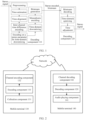
- FIG. 1 is a schematic structural diagram of a stereo encoding and decoding system in time domain according to an example embodiment of this application.
- the stereo encoding and decoding system includes an encoding component 110 and a decoding component 120.
- a stereo signal in this application may be an original stereo signal, may be a stereo signal including two signals included in signals on a plurality of channels, or may be a stereo signal including two signals jointly generated from a plurality of signals included in signals on a plurality of channels.
- the encoding component 110 is configured to encode the stereo signal in time domain.
- the encoding component 110 may be implemented in a form of software, hardware, or a combination of software and hardware. This is not limited in the embodiments of this application.
- That the encoding component 110 encodes the stereo signal in time domain may include the following steps.
- the stereo signal may be collected by a collection component and sent to the encoding component 110.
- the collection component and the encoding component 110 may be disposed in a same device.
- the collection component and the encoding component 110 may be disposed in different devices.
- the time-domain preprocessed left-channel signal and the time-domain preprocessed right-channel signal are signals on two channels in a preprocessed stereo signal.
- the time-domain preprocessing may include at least one of high-pass filtering processing, pre-emphasis processing, sample rate conversion, and channel switching. This is not limited in the embodiments of this application.
- a cross-correlation function between a left-channel signal and a right-channel signal may be calculated based on the time-domain preprocessed left-channel signal and the time-domain preprocessed right-channel signal. Then, a maximum value of the cross-correlation function is searched for, and the maximum value is used as the inter-channel time difference between the time-domain preprocessed left-channel signal and the time-domain preprocessed right-channel signal.
- a cross-correlation function between a left-channel signal and a right-channel signal may be calculated based on the time-domain preprocessed left-channel signal and the time-domain preprocessed right-channel signal. Then, long-time smoothing is performed on a cross-correlation function between a left-channel signal and a right-channel signal in a current frame based on a cross-correlation function between a left-channel signal and a right-channel signal in each of previous L frames (L is an integer greater than or equal to 1) of the current frame, to obtain a smoothed cross-correlation function.
- a maximum value of the smoothed cross-correlation function is searched for, and an index value corresponding to the maximum value is used as an inter-channel time difference between a time-domain preprocessed left-channel signal and a time-domain preprocessed right-channel signal in the current frame.
- inter-frame smoothing may be performed on an estimated inter-channel time difference in a current frame based on inter-channel time differences in previous M frames (M is an integer greater than or equal to 1) of the current frame, and a smoothed inter-channel time difference is used as a final inter-channel time difference between a time-domain preprocessed left-channel signal and a time-domain preprocessed right-channel signal in the current frame.
- one or two signals in the left-channel signal and the right-channel signal in the current frame may be compressed or pulled based on the estimated inter-channel time difference in the current frame and an inter-channel time difference in a previous frame, so that no inter-channel time difference exists between the time-aligned left-channel signal and the time-aligned right-channel signal.
- the stereo parameter for time-domain downmixing is used to perform time-domain downmixing on the time-aligned left-channel signal and the time-aligned right-channel signal.
- the primary channel signal is used to represent related information between channels, and may also be referred to as a downmixed signal or a center channel signal.
- the secondary channel signal is used to represent difference information between channels, and may also be referred to as a residual signal or a side channel signal.
- the secondary channel signal is the weakest.
- the stereo signal has the best effect.
- the decoding component 120 is configured to decode the stereo encoded bitstream generated by the encoding component 110, to obtain the stereo signal.
- the encoding component 110 may be connected to the decoding component 120 in a wired or wireless manner, and the decoding component 120 may obtain, through a connection between the decoding component 120 and the encoding component 110, the stereo encoded bitstream generated by the encoding component 110.
- the encoding component 110 may store the generated stereo encoded bitstream in a memory, and the decoding component 120 reads the stereo encoded bitstream in the memory.
- the decoding component 120 may be implemented in a form of software, hardware, or a combination of software and hardware. This is not limited in the embodiments of this application.
- a process in which the decoding component 120 decodes the stereo encoded bitstream to obtain the stereo signal may include the following steps:
- the encoding component 110 and the decoding component 120 may be disposed in a same device, or may be disposed in different devices.
- the device may be a mobile terminal that has an audio signal processing function, such as a mobile phone, a tablet computer, a laptop portable computer, a desktop computer, a Bluetooth sound box, a recording pen, or a wearable device, or may be a network element that has an audio signal processing capability in a core network or a wireless network. This is not limited in the embodiments of this application.
- the encoding component 110 is disposed in a mobile terminal 130.
- the decoding component 120 is disposed in a mobile terminal 140.
- the mobile terminal 130 and the mobile terminal 140 are electronic devices that are independent of each other and that have an audio signal processing capability.
- the mobile terminal 130 and the mobile terminal 140 each may be a mobile phone, a wearable device, a virtual reality (virtual reality, VR) device, an augmented reality (augmented reality, AR) device, or the like.
- the mobile terminal 130 is connected to the mobile terminal 140 through a wireless or wired network.
- the mobile terminal 130 may include a collection component 131, the encoding component 110, and a channel encoding component 132.
- the collection component 131 is connected to the encoding component 110, and the encoding component 110 is connected to the encoding component 132.
- the mobile terminal 140 may include an audio playing component 141, the decoding component 120, and a channel decoding component 142.
- the audio playing component 141 is connected to the decoding component 120
- the decoding component 120 is connected to the channel decoding component 142.
- the mobile terminal 130 After collecting a stereo signal by using the collection component 131, the mobile terminal 130 encodes the stereo signal by using the encoding component 110, to obtain a stereo encoded bitstream. Then, the mobile terminal 130 encodes the stereo encoded bitstream by using the channel encoding component 132 to obtain a transmission signal.
- the mobile terminal 130 sends the transmission signal to the mobile terminal 140 through the wireless or wired network.
- the mobile terminal 140 After receiving the transmission signal, the mobile terminal 140 decodes the transmission signal by using the channel decoding component 142 to obtain the stereo encoded bitstream, decodes the stereo encoded bitstream by using the decoding component 120 to obtain the stereo signal, and plays the stereo signal by using the audio playing component 141.
- the encoding component 110 and the decoding component 120 are disposed in a same network element 150 having an audio signal processing capability in a core network or a wireless network is used for description in this embodiment of this application.
- the network element 150 includes a channel decoding component 151, the decoding component 120, the encoding component 110, and a channel encoding component 152.
- the channel decoding component 151 is connected to the decoding component 120
- the decoding component 120 is connected to the encoding component 110
- the encoding component 110 is connected to the channel encoding component 152.
- the channel decoding component 151 decodes the transmission signal to obtain a first stereo encoded bitstream.
- the decoding component 120 decodes the stereo encoded bitstream to obtain a stereo signal.
- the encoding component 110 encodes the stereo signal to obtain a second stereo encoded bitstream.
- the channel encoding component 152 encodes the second stereo encoded bitstream to obtain the transmission signal.
- the another device may be a mobile terminal that has an audio signal processing capability, or may be another network element that has an audio signal processing capability. This is not limited in the embodiments of this application.
- the encoding component 110 and the decoding component 120 in the network element may transcode a stereo encoded bitstream sent by the mobile terminal.
- a device on which the encoding component 110 is installed may be referred to as an audio encoding device.
- the audio encoding device may also have an audio decoding function. This is not limited in the embodiments of this application.
- the audio encoding device may further process a multi-channel signal, and the multi-channel signal includes at least two channel signals.
- the encoding component 110 may encode the primary channel signal and the secondary channel signal by using an algebraic code excited linear prediction (algebraic code excited linear prediction, ACELP) encoding method.
- algebraic code excited linear prediction algebraic code excited linear prediction, ACELP
- the ACELP encoding method usually includes: determining an LPC coefficient of the primary channel signal and an LPC coefficient of the secondary channel signal, converting each of the LPC coefficient of the primary channel signal and the LPC coefficient of the secondary channel signal into an LSF parameter, and performing quantization encoding on the LSF parameter of the primary channel signal and the LSF parameter of the secondary channel signal; searching adaptive code excitation to determine a pitch period and an adaptive codebook gain, and separately performing quantization encoding on the pitch period and the adaptive codebook gain; searching algebraic code excitation to determine a pulse index and a gain of the algebraic code excitation, and separately performing quantization encoding on the pulse index and the gain of the algebraic code excitation.
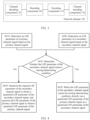
- FIG. 4 shows an example method in which the encoding component 110 performs quantization encoding on the LSF parameter of the primary channel signal and the LSF parameter of the secondary channel signal.
- S410 Determine the LSF parameter of the primary channel signal based on the primary channel signal.
- S420 Determine the LSF parameter of the secondary channel signal based on the secondary channel signal.
- step S410 There is no execution sequence between step S410 and step S420.
- S430 Determine, based on the LSF parameter of the primary channel signal and the LSF parameter of the secondary channel signal, whether the LSF parameter of the secondary channel signal meets a reusing determining condition.
- the reusing determining condition may also be referred to as a reusing condition for short.
- step S440 is performed. If the LSF parameter of the secondary channel signal meets the reusing determining condition, step S450 is performed.
- a quantized LSF parameter of the secondary channel signal may be obtained based on a quantized LSF parameter of the primary channel signal.
- the quantized LSF parameter of the primary channel signal is used as the quantized LSF parameter of the secondary channel signal.
- the quantized LSF parameter of the primary channel signal is reused as the quantized LSF parameter of the secondary channel signal.
- Determining whether the LSF parameter of the secondary channel signal meets the reusing determining condition may be referred to as performing reusing determining on the LSF parameter of the secondary channel signal.
- the reusing determining condition is that a distance between the original LSF parameter of the primary channel signal and the original LSF parameter of the secondary channel signal is less than or equal to a preset threshold
- the distance between the LSF parameter of the primary channel signal and the LSF parameter of the secondary channel signal is greater than the preset threshold, it is determined that the LSF parameter of the secondary channel signal does not meet the reusing determining condition; or if the distance between the LSF parameter of the primary channel signal and the LSF parameter of the secondary channel signal is less than or equal to the preset threshold, it may be determined that the LSF parameter of the secondary channel signal meets the reusing determining condition.
- the distance between the LSF parameter of the primary channel signal and the LSF parameter of the secondary channel signal may be used to represent a difference between the LSF parameter of the primary channel signal and the LSF parameter of the secondary channel signal.
- the distance between the LSF parameter of the primary channel signal and the LSF parameter of the secondary channel signal may be calculated in a plurality of manners.
- LSF p ( i ) is an LSF parameter vector of the primary channel signal
- LSF s is an LSF parameter vector of the secondary channel signal
- i is a vector index
- i 1, , or M
- M is a linear prediction order
- w i is an i th weighting coefficient.
- WD n 2 may also be referred to as a weighted distance.
- the foregoing formula is merely an example method for calculating the distance between the LSF parameter of the primary channel signal and the LSF parameter of the secondary channel signal, and the distance between the LSF parameter of the primary channel signal and the LSF parameter of the secondary channel signal may be alternatively calculated by using another method. For example, subtraction may be performed on the LSF parameter of the primary channel signal and the LSF parameter of the secondary channel signal.
- Performing reusing determining on the original LSF parameter of the secondary channel signal may also be referred to as performing quantization determining on the LSF parameter of the secondary channel signal. If a determining result is to quantize the LSF parameter of the secondary channel signal, quantization encoding may be performed on the original LSF parameter of the secondary channel signal, and an index obtained after the quantization encoding is written into a bitstream, to obtain the quantized LSF parameter of the secondary channel signal.
- the determining result in this step may be written into the bitstream, to transmit the determining result to a decoder side.
- S440 Quantize the LSF parameter of the secondary channel signal to obtain the quantized LSF parameter of the secondary channel signal, and quantize the LSF parameter of the primary channel signal to obtain the quantized LSF parameter of the primary channel signal.
- quantizing the LSF parameter of the secondary channel signal to obtain the quantized LSF parameter of the secondary channel signal is merely an example.
- the quantized LSF parameter of the secondary channel signal may be alternatively obtained by using another method. This is not limited in this embodiment of this application.
- S450 Quantize the LSF parameter of the primary channel signal to obtain the quantized LSF parameter of the primary channel signal.
- the quantized LSF parameter of the primary channel signal is directly used as the quantized LSF parameter of the secondary channel signal. This can reduce an amount of data that needs to be transmitted from an encoder side to the decoder side, so as to reduce network bandwidth occupation.
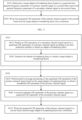
- FIG. 5 is a schematic flowchart of a stereo signal encoding method according to an embodiment of this application.
- the encoding component 110 may perform the method shown in FIG. 5 .
- S510 Determine a target adaptive broadening factor based on a quantized LSF parameter of a primary channel signal in a current frame and an LSF parameter of a secondary channel signal in the current frame.
- the quantized LSF parameter of the primary channel signal in the current frame and the LSF parameter of the secondary channel signal in the current frame may be obtained according to methods in the prior art, and details are not described herein.
- S530 Write the quantized LSF parameter of the primary channel signal in the current frame and the target adaptive broadening factor into a bitstream.
- the target adaptive broadening factor is determined based on the quantized LSF parameter of the primary channel signal in the current frame, that is, a similarity between a linear prediction spectral envelope of the primary channel signal and a linear prediction spectral envelope of the secondary channel signal (as shown in FIG. 15 ) may be used.
- the encoding component 110 may not need to write a quantized LSF parameter of the secondary channel signal into the bitstream, but write the target adaptive broadening factor into the bitstream.
- the decoding component 120 can obtain the quantized LSF parameter of the secondary channel signal based on the quantized LSF parameter of the primary channel signal and the target adaptive broadening factor. This helps improve encoding efficiency.
- S520 may be further included: determine the quantized LSF parameter of the secondary channel signal based on the target adaptive broadening factor and the quantized LSF parameter of the primary channel signal.
- the quantized LSF parameter that is of the secondary channel signal and that is determined on an encoder side is used for subsequent processing on the encoder side.
- the quantized LSF parameter of the secondary channel signal may be used for inter prediction, to obtain another parameter or the like.
- the quantized LSF parameter of the secondary channel is determined based on the target adaptive broadening factor and the quantized LSF parameter of the primary channel signal, so that a processing result obtained based on the quantized LSF parameter of the secondary channel in a subsequent operation can be consistent with a processing result on a decoder side.
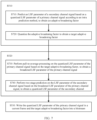
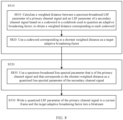
- S510 may include the following steps: S610: Predict the LSF parameter of the secondary channel signal based on the quantized LSF parameter of the primary channel signal according to an intra prediction method, to obtain an adaptive broadening factor; and S620: Quantize the adaptive broadening factor to obtain the target adaptive broadening factor.
- S520 may include the following steps: S630: Perform pull-to-average processing on the quantized LSF parameter of the primary channel signal based on the target adaptive broadening factor to obtain a broadened LSF parameter of the primary channel signal; and S640: Use the broadened LSF parameter of the primary channel signal as the quantized LSF parameter of the secondary channel signal.
- the adaptive broadening factor ⁇ used in the process of performing pull-to-average processing on the quantized LSF parameter of the primary channel signal in S610 should enable spectral distortion between an LSF parameter obtained after spectrum broadening is performed on the quantized LSF parameter of the primary channel signal and the LSF parameter of the secondary channel signal to be relatively small.
- the adaptive broadening factor ⁇ used in the process of performing pull-to-average processing on the quantized LSF parameter of the primary channel signal may minimize the spectral distortion between the LSF parameter obtained after spectrum broadening is performed on the quantized LSF parameter of the primary channel signal and the LSF parameter of the secondary channel signal.
- the LSF parameter obtained after spectrum broadening is performed on the quantized LSF parameter of the primary channel signal may be referred to as a spectrum-broadened LSF parameter of the primary channel signal.
- the spectral distortion between the spectrum-broadened LSF parameter of the primary channel signal and the LSF parameter of the secondary channel signal may be estimated by calculating a weighted distance between the spectrum-broadened LSF parameter of the primary channel signal and the LSF parameter of the secondary channel signal.
- LSF SB is a spectrum-broadened LSF parameter vector of the primary channel signal
- LSF s is an LSF parameter vector of the secondary channel signal
- i is a vector index
- i 1, , or M
- M is a linear prediction order
- w i is an i th weighting coefficient.
- An LSF parameter vector may also be briefly referred to as an LSF parameter.
- Weighting coefficient selection has a great influence on accuracy of estimating the spectral distortion between the spectrum-broadened LSF parameter of the primary channel signal and the LSF parameter of the secondary channel signal.
- the weighting coefficient w i may be obtained through calculation based on an energy spectrum of a linear prediction filter corresponding to the LSF parameter of the secondary channel signal.
- a ( ⁇ ) represents a linear prediction spectrum of the secondary channel signal
- LSF s is an LSF parameter vector of the secondary channel signal
- i is a vector index
- i 1, ..., or M
- M is a linear prediction order
- ⁇ - p represents calculation for the -p th power of a 2-norm of a vector
- p is a decimal greater than 0 and less than 1.
- the encoding sampling rate is 16 KHz, and the linear prediction order M is 20.
- weighting coefficient used to estimate the spectral distortion between the spectrum-broadened LSF parameter of the primary channel signal and the LSF parameter of the secondary channel signal may be alternatively used. This is not limited in this embodiment of this application.
- LSF SB i ⁇ ⁇ LSF P i + 1 ⁇ ⁇ ⁇ LSF S ⁇ i .
- LSF SB is a spectrum-broadened LSF parameter vector of the primary channel signal
- ⁇ is the adaptive broadening factor
- LSF P is a quantized LSF parameter vector of the primary channel signal
- LSF S is a mean vector of the LSF parameter of the secondary channel signal
- i is a vector index
- i 1, ..., or M
- M is a linear prediction order.
- LSF S is an LSF parameter vector of the secondary channel signal
- LSF P is a quantized LSF parameter vector of the primary channel signal
- LSF S is a mean vector of the LSF parameter of the secondary channel signal
- i is a vector index
- i 1, ..., or M
- M is a linear prediction order.
- the adaptive broadening factor may be obtained through calculation according to the formula. After the adaptive broadening factor is obtained through calculation according to the formula, the adaptive broadening factor may be quantized, to obtain the target adaptive broadening factor.
- a method for quantizing the adaptive broadening factor in S620 may be linear scalar quantization, or may be nonlinear scalar quantization.
- the adaptive broadening factor may be quantized by using a relatively small quantity of bits, for example, 1 bit or 2 bits.
- a codebook of quantizing the adaptive broadening factor by using 1 bit may be represented by ⁇ ⁇ 0 , ⁇ 1 ⁇ .
- the codebook may be obtained through pre-training.
- the codebook may include ⁇ 0.95, 0.70 ⁇ .
- a quantization process is to perform one-by-one searching in the codebook to find a codeword with a shortest distance from the calculated adaptive broadening factor ⁇ in the codebook, and use the codeword as the target adaptive broadening factor, which is denoted as ⁇ q .
- An index corresponding to the codeword with the shortest distance from the calculated adaptive broadening factor ⁇ in the codebook is encoded and written into the bitstream.
- LSF SB is a spectrum-broadened LSF parameter vector of the primary channel signal
- ⁇ q is the target adaptive broadening factor
- LSF P is a quantized LSF parameter vector of the primary channel signal
- LSF S is a mean vector of the LSF parameter of the secondary channel
- i is a vector index
- i 1, ..., or M
- M is a linear prediction order.
- S510 may include S710 and S720
- S520 may include S730 and S740.
- S710 Predict the LSF parameter of the secondary channel signal based on the quantized LSF parameter of the primary channel signal according to an intra prediction method, to obtain an adaptive broadening factor.
- S730 Perform pull-to-average processing on the quantized LSF parameter of the primary channel signal based on the target adaptive broadening factor, to obtain a broadened LSF parameter of the primary channel signal.
- S740 Perform two-stage prediction on the LSF parameter of the secondary channel signal based on the broadened LSF parameter of the primary channel signal, to obtain the quantized LSF parameter of the secondary channel.
- two-stage prediction may be performed on the LSF parameter of the secondary channel signal based on the broadened LSF parameter of the primary channel signal to obtain a predicted vector of the LSF parameter of the secondary channel signal, and the predicted vector of the LSF parameter of the secondary channel signal is used as the quantized LSF parameter of the secondary channel signal.
- LSF SB is a spectrum-broadened LSF parameter vector of the primary channel signal
- P _ LSF S is the predicted vector of the LSF parameter of the secondary channel signal
- Pre ⁇ LSF SB ( i ) ⁇ represents two-stage prediction performed on the LSF parameter of the secondary channel signal.
- two-stage prediction may be performed on the LSF parameter of the secondary channel signal according to an inter prediction method based on a quantized LSF parameter of a secondary channel signal in a previous frame and the LSF parameter of the secondary channel signal in the current frame to obtain a two-stage predicted vector of the LSF parameter of the secondary channel signal, a predicted vector of the LSF parameter of the secondary channel signal is obtained based on the two-stage predicted vector of the LSF parameter of the secondary channel signal and the spectrum-broadened LSF parameter of the primary channel signal, and the predicted vector of the LSF parameter of the secondary channel signal is used as the quantized LSF parameter of the secondary channel signal.
- P _ LSF S is the predicted vector of the LSF parameter of the secondary channel signal
- LSF SB is a spectrum-broadened LSF parameter vector of the primary channel signal
- LSF S ′ is the two-stage predicted vector of the LSF parameter of the secondary channel signal
- i is a vector index
- i 1, , or M
- M is a linear prediction order.
- An LSF parameter vector may also be briefly referred to as an LSF parameter.
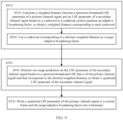
- S510 may include the following steps: S810: Calculate a weighted distance between a spectrum-broadened LSF parameter of the primary channel signal and the LSF parameter of the secondary channel signal based on a codeword in a codebook used to quantize an adaptive broadening factor, to obtain a weighted distance corresponding to each codeword; and S820: Use a codeword corresponding to a shortest weighted distance as the target adaptive broadening factor.
- S520 may include S830: Use a spectrum-broadened LSF parameter that is of the primary channel signal and that corresponds to the shortest weighted distance as the quantized LSF parameter of the secondary channel signal.
- S830 may also be understood as follows: Use a spectrum-broadened LSF parameter that is of the primary channel signal and that corresponds to the target adaptive broadening factor as the quantized LSF parameter of the secondary channel signal.
- codeword corresponding to the shortest weighted distance is merely an example.
- a codeword corresponding to a weighted distance that is less than or equal to a preset threshold may be alternatively used as the target adaptive broadening factor.
- the codebook used to quantize the adaptive broadening factor may include 2 N_BITS codewords, and the codebook used to quantize the adaptive broadening factor may be represented as ⁇ ⁇ 0 , ⁇ 1 , ⁇ , ⁇ 2N _ BITS-1 ⁇ .
- a spectrum-broadened LSF parameter LSF SB_n corresponding to the n th codeword ⁇ n in the codebook used to quantize the adaptive broadening factor may be obtained based on the n th codeword, and then a weighted distance WD n 2 between the spectrum-broadened LSF parameter corresponding to the n th codeword and the LSF parameter of the secondary channel signal may be calculated.
- LSF SB _ n i ⁇ n ⁇ LSF P i + 1 ⁇ ⁇ n ⁇ LSF S ⁇ i .
- LSF SB_n is the spectrum-broadened LSF parameter vector corresponding to the n th codeword
- ⁇ n is the n th codeword in the codebook used to quantize the adaptive broadening factor
- LSF P is a quantized LSF parameter vector of the primary channel signal
- LSF S is a mean vector of the LSF parameter of the secondary channel signal
- i is a vector index
- i 1, ..., or M
- M is a linear prediction order.
- LSF SB_n is the spectrum-broadened LSF parameter vector corresponding to the n th codeword
- LSF S is an LSF parameter vector of the secondary channel signal
- i is a vector index
- i 1, ..., or M
- M is a linear prediction order
- w i is an i th weighting coefficient.
- a weighting coefficient determining method in this implementation may be the same as the weighting coefficient determining method in the first possible implementation, and details are not described herein again.
- Weighted distances between spectrum-broadened LSF parameters corresponding to all codewords in the codebook used to quantize the adaptive broadening factor and the LSF parameter of the secondary channel signal may be represented as WD 0 2 WD 1 2 ⁇ WD 2 N _ BITS ⁇ 1 2 .
- WD 0 2 WD 1 2 ⁇ WD 2 N _ BITS ⁇ 1 2 is searched for a minimum value.
- the following describes, by using an example in which 1 bit is used to perform quantization encoding on the adaptive broadening factor, a second possible implementation of determining the target adaptive broadening factor based on the quantized LSF parameter of the primary channel signal and the LSF parameter of the secondary channel signal.
- a codebook of quantizing the adaptive broadening factor by using 1 bit may be represented by ⁇ ⁇ 0 , ⁇ 1 ⁇ .
- the codebook may be obtained through pre-training, for example, ⁇ 0.95, 0.70 ⁇ .
- LSF SB _0 i ⁇ 0 ⁇ LSF P i + 1 ⁇ ⁇ 0 ⁇ LSF S ⁇ i .
- LSF SB_ 1 i ⁇ 1 ⁇ LSF P i + 1 ⁇ ⁇ 1 ⁇ LSF S ⁇ i .
- LSF SB _0 is a spectrum-broadened LSF parameter vector corresponding to the first codeword
- ⁇ 0 is the first codeword in the codebook used to quantize the adaptive broadening factor
- LSF SB _1 is a spectrum-broadened LSF parameter vector corresponding to the second codeword
- ⁇ 1 is the second codeword in the codebook used to quantize the adaptive broadening factor
- LSF P is a quantized LSF parameter vector of the primary channel signal
- LSF S is a mean vector of the LSF parameter of the secondary channel signal
- i is a vector index
- i 1, ..., or M
- M is a linear prediction order.
- LSF SB _0 is the spectrum-broadened LSF parameter vector corresponding to the first codeword
- LSF SB _1 is the spectrum-broadened LSF parameter vector corresponding to the second codeword
- LSF S is an LSF parameter vector of the secondary channel signal
- M is a linear prediction order
- w i is an i th weighting coefficient
- An LSF parameter vector may also be briefly referred to as an LSF parameter.
- Weighted distances between spectrum-broadened LSF parameters corresponding to all codewords in the codebook used to quantize the adaptive broadening factor and the LSF parameter of the secondary channel signal may be represented as ⁇ WD 0 2 , WD 1 2 ⁇ . ⁇ WD 0 2 , WD 1 2 ⁇ is searched for a minimum value.
- S510 may include S910 and S920, and S520 may include S930.
- S910 Calculate a weighted distance between a spectrum-broadened LSF parameter of the primary channel signal and the LSF parameter of the secondary channel signal based on a codeword in a codebook used to quantize an adaptive broadening factor, to obtain a weighted distance corresponding to each codeword.
- S920 Use a codeword corresponding to a shortest weighted distance as the target adaptive broadening factor.
- S930 Perform two-stage prediction on the LSF parameter of the secondary channel signal based on a spectrum-broadened LSF parameter that is of the primary channel signal and that corresponds to the shortest weighted distance, to obtain the quantized LSF parameter of the secondary channel signal.
- S510 may include: determining, as the target adaptive broadening factor, a second codeword in the codebook used to quantize the adaptive broadening factor, where the quantized LSF parameter of the primary channel signal is converted based on the second codeword to obtain a linear prediction coefficient, the linear prediction coefficient is modified to obtain a spectrum-broadened linear prediction coefficient, the spectrum-broadened linear prediction coefficient is converted to obtain a spectrum-broadened LSF parameter, and a weighted distance between the spectrum-broadened LSF parameter and the LSF parameter of the secondary channel signal is the shortest.
- S520 may include: using, as the quantized LSF parameter of the secondary channel signal, an LSF parameter obtained by performing spectrum broadening on the quantized LSF parameter of the primary channel signal based on the target adaptive broadening factor.
- the second codeword in the codebook used to quantize the adaptive broadening factor may be determined as the target adaptive broadening factor according to the following several steps.
- Step 1 Convert the quantized LSF parameter of the primary channel signal into the linear prediction coefficient.
- Step 2 Modify the linear prediction coefficient based on each codeword in the codebook used to quantize the adaptive broadening factor, to obtain a spectrum-broadened linear prediction coefficient corresponding to each codeword.
- the codebook used to quantize the adaptive broadening factor may include 2 N_BITS codewords, and the codebook used to quantize the adaptive broadening factor may be represented as ⁇ ⁇ 0 , ⁇ 1 , ⁇ , ⁇ 2 N_BITS -1 ⁇ .
- a i is the linear prediction coefficient obtained after converting the quantized LSF parameter of the primary channel signal into the linear prediction coefficient
- ⁇ n is the n th codeword in the codebook used to quantize the adaptive broadening factor
- M is a linear prediction order
- n 0,1, ⁇ ,2 N_BITS - 1.
- a i is the linear prediction coefficient obtained after converting the quantized line spectral frequency parameter of the primary channel signal into the linear prediction coefficient
- an i ′ is the spectrum-broadened linear prediction coefficient corresponding to the n th codeword
- ⁇ n is the n th codeword in the codebook used to quantize the adaptive broadening factor
- M is a linear prediction order
- n 0,1, ⁇ ,2 N_BITS -1.
- Step 3 Convert the spectrum-broadened linear prediction coefficient corresponding to each codeword into an LSF parameter, to obtain a spectrum-broadened LSF parameter corresponding to each codeword.
- Step 4 Calculate a weighted distance between the spectrum-broadened LSF parameter corresponding to each codeword and the line spectral frequency parameter of the secondary channel signal, to obtain a quantized adaptive broadening factor and an intra-predicted vector of the LSF parameter of the secondary channel signal.
- LSF SB_n is a spectrum-broadened LSF parameter vector corresponding to the n th codeword
- LSF s is an LSF parameter vector of the secondary channel signal
- i is a vector index
- i 1, ..., or M
- M is a linear prediction order
- w i is an i th weighting coefficient.
- An LSF parameter vector may also be briefly referred to as an LSF parameter.
- the sampling rate of linear prediction processing may be 12.8 KHz, and the linear prediction order M is 16.
- Weighted distances between spectrum-broadened LSF parameters corresponding to all codewords in the codebook used to quantize the adaptive broadening factor and the LSF parameter of the secondary channel signal may be represented as WD 0 2 WD 1 2 ⁇ WD 2 N _ BITS ⁇ 1 2 .
- the weighted distances between the spectrum-broadened LSF parameters corresponding to all the codewords in the codebook used to quantize the adaptive broadening factor and the LSF parameter of the secondary channel signal are searched for a minimum value.
- LSF SB is the intra-predicted vector of the LSF parameter of the secondary channel signal
- M is a linear prediction order.
- the intra-predicted vector of the LSF parameter of the secondary channel signal may be used as the quantized LSF parameter of the secondary channel signal.
- two-stage prediction may be alternatively performed on the LSF parameter of the secondary channel signal, to obtain the quantized LSF parameter of the secondary channel signal.
- LSF parameter of the secondary channel signal For a specific implementation, refer to S740. Details are not described herein again.
- multi-stage prediction that is more than two-stage prediction may be alternatively performed on the LSF parameter of the secondary channel signal. Any existing method in the prior art may be used to perform prediction that is more than two-stage prediction, and details are not described herein.
- the foregoing content describes how the encoding component 110 obtains, based on the quantized LSF parameter of the primary channel signal and the original LSF parameter of the secondary channel signal, the adaptive broadening factor to be used to determine the quantized LSF parameter of the secondary channel signal on the encoder side, to reduce distortion of the quantized LSF parameter that is of the secondary channel signal and that is determined by the encoder side based on the adaptive broadening factor, so as to reduce a distortion rate of frames.
- the encoding component 110 may perform quantization encoding on the adaptive broadening factor, and write the adaptive broadening factor into the bitstream, to transmit the adaptive broadening factor to the decoder side, so that the decoder side can determine the quantized LSF parameter of the secondary channel signal based on the adaptive broadening factor and the quantized LSF parameter of the primary channel signal. This can reduce distortion of the quantized LSF parameter that is of the secondary channel signal and that is obtained by the decoder side, so as to reduce a distortion rate of frames.
- a decoding method used by the decoding component 120 to decode a primary channel signal corresponds to a method used by the encoding component 110 to encode a primary channel signal.
- a decoding method used by the decoding component 120 to decode a secondary channel signal corresponds to a method used by the encoding component 110 to encode a secondary channel signal.
- Decoding the primary channel signal by using the ACELP decoding method includes decoding an LSF parameter of the primary channel signal.
- decoding the secondary channel signal by using the ACELP decoding method includes decoding an LSF parameter of the secondary channel signal.
- a process of decoding the LSF parameter of the primary channel signal and the LSF parameter of the secondary channel signal may include the following steps:
- the decoding component 120 directly uses the quantized LSF parameter of the primary channel signal as the quantized LSF parameter of the secondary channel signal. This increases distortion of the quantized LSF parameter of the secondary channel signal, thereby increasing a distortion rate of frames.
- this application provides a new decoding method.
- FIG. 10 is a schematic flowchart of a decoding method according to an embodiment of this application.
- the decoding component 120 may perform the decoding method shown in FIG. 10 .
- S1010 Obtain a quantized LSF parameter of a primary channel signal in a current frame through decoding.
- the decoding component 120 decodes a received bitstream to obtain an encoding index beta_index of an adaptive broadening factor, and finds, in a codebook based on the encoding index beta_index of the adaptive broadening factor, a codeword corresponding to the encoding index beta_index.
- the codeword is a target adaptive broadening factor, and is denoted as ⁇ q .
- ⁇ beta_index is the codeword corresponding to the encoding index beta_index in the codebook.
- S1020 Obtain a target adaptive broadening factor of a stereo signal in the current frame through decoding.
- S1030 Perform spectrum broadening on the quantized LSF parameter of the primary channel signal in the current frame based on the target adaptive broadening factor, to obtain a broadened LSF parameter of the primary channel signal.
- LSF SB is a spectrum-broadened LSF parameter vector of the primary channel signal
- ⁇ q is a quantized adaptive broadening factor
- LSF P is a quantized LSF parameter vector of the primary channel
- LSF S is a mean vector of an LSF parameter of a secondary channel
- i is a vector index
- i 1, ..., or M
- M is a linear prediction order.
- the performing spectrum broadening on the quantized LSF parameter of the primary channel signal in the current frame based on the target adaptive broadening factor to obtain a broadened LSF parameter of the primary channel signal may include: converting the quantized LSF parameter of the primary channel signal, to obtain a linear prediction coefficient; modifying the linear prediction coefficient based on the target adaptive broadening factor, to obtain a modified linear prediction coefficient; and converting the modified linear prediction coefficient to obtain a converted LSF parameter, and using the converted LSF parameter as the broadened LSF parameter of the primary channel signal.
- the broadened LSF parameter of the primary channel signal is a quantized LSF parameter of the secondary channel signal in the current frame.
- the broadened LSF parameter of the primary channel signal may be directly used as the quantized LSF parameter of the secondary channel signal.
- the broadened LSF parameter of the primary channel signal is used to determine a quantized LSF parameter of the secondary channel signal in the current frame. For example, two-stage prediction or multi-stage prediction may be performed on the LSF parameter of the secondary channel signal, to obtain the quantized LSF parameter of the secondary channel signal.
- the broadened LSF parameter of the primary channel signal may be predicted again in a prediction manner in the prior art, to obtain the quantized LSF parameter of the secondary channel signal. For this step, refer to an implementation in the encoding component 110. Details are not described herein again.
- the LSF parameter of the secondary channel signal is determined based on the quantized LSF parameter of the primary channel signal by using a feature that primary channel signals have similar spectral structures and resonance peak locations. Compared with a manner of directly using the quantized LSF parameter of the primary channel signal as the quantized LSF parameter of the secondary channel signal, this can make full use of the quantized LSF parameter of the primary channel signal to improve encoding efficiency, and help reserve a feature of the LSF parameter of the secondary channel signal to reduce distortion of the LSF parameter of the secondary channel signal.
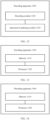
- FIG. 11 is a schematic block diagram of an encoding apparatus 1100 according to an embodiment of this application. It should be understood that the encoding apparatus 1100 is merely an example.
- a determining module 1110 and an encoding module 1120 may be included in the encoding component 110 of the mobile terminal 130 or the network element 150.
- the determining module 1110 is configured to determine a target adaptive broadening factor based on a quantized LSF parameter of a primary channel signal in a current frame and an LSF parameter of a secondary channel signal in the current frame.
- the encoding module 1120 is configured to write the quantized LSF parameter of the primary channel signal in the current frame and the target adaptive broadening factor into a bitstream.
- the determining module is specifically configured to:
- the determining module is specifically configured to:
- a weighted distance between an LSF parameter obtained by performing spectrum broadening on the quantized LSF parameter of the primary channel signal based on the target adaptive broadening factor and the LSF parameter of the secondary channel signal is the shortest.
- a weighted distance between an LSF parameter obtained by performing spectrum broadening on the quantized LSF parameter of the primary channel signal based on the target adaptive broadening factor and the LSF parameter of the secondary channel signal is the shortest.
- the determining module is specifically configured to obtain, according to the following steps, the LSF parameter obtained by performing spectrum broadening on the quantized LSF parameter of the primary channel signal based on the target adaptive broadening factor:
- the determining module is further configured to determine a quantized LSF parameter of the secondary channel signal based on the target adaptive broadening factor and the quantized LSF parameter of the primary channel signal.
- the quantized LSF parameter of the secondary channel signal is an LSF parameter obtained by performing spectrum broadening on the quantized LSF parameter of the primary channel signal based on the target adaptive broadening factor.
- the determining module is further configured to determine that the LSF parameter of the secondary channel signal meets a reusing condition.
- the encoding apparatus 1100 may be configured to perform the method described in FIG. 5 .
- the encoding apparatus 1100 may be configured to perform the method described in FIG. 5 .
- details are not described herein again.
- FIG. 12 is a schematic block diagram of a decoding apparatus 1200 according to an embodiment of this application. It should be understood that the decoding apparatus 1200 is merely an example.
- a decoding module 1220 and a spectrum broadening module 1230 may be included in the decoding component 120 of the mobile terminal 140 or the network element 150.
- the decoding module 1220 is configured to obtain a quantized LSF parameter of a primary channel signal in the current frame through decoding.
- the decoding module 1220 is further configured to obtain a target adaptive broadening factor of a stereo signal in the current frame through decoding.
- the spectrum broadening module 1230 is configured to determine a quantized LSF parameter of a secondary channel signal in the current frame based on a broadened LSF parameter of the primary channel signal.
- LSF SB represents the broadened LSF parameter of the primary channel signal
- LSF P ( i ) represents a vector of the quantized LSF parameter of the primary channel signal
- i represents a vector index
- ⁇ q represents the target adaptive broadening factor
- LSF S represents a mean vector of an LSF parameter of the secondary channel signal
- 1 ⁇ i ⁇ M i is an integer
- M represents a linear prediction parameter.
- the spectrum broadening module 1230 is specifically configured to: convert the quantized LSF parameter of the primary channel signal, to obtain a linear prediction coefficient; modify the linear prediction coefficient based on the target adaptive broadening factor, to obtain a modified linear prediction coefficient; and convert the modified linear prediction coefficient to obtain a converted LSF parameter, and use the converted LSF parameter as the broadened LSF parameter of the primary channel signal.
- the quantized LSF parameter of the secondary channel signal is the broadened LSF parameter of the primary channel signal.
- the decoding apparatus 1200 may be configured to perform the decoding method described in FIG. 10 .
- the decoding apparatus 1200 may be configured to perform the decoding method described in FIG. 10 .
- details are not described herein again.
- FIG. 13 is a schematic block diagram of an encoding apparatus 1300 according to an embodiment of this application. It should be understood that the encoding apparatus 1300 is merely an example.
- a memory 1310 is configured to store a program.
- the processor 1320 is configured to execute the program stored in the memory, and when the program in the memory is executed, the processor 1320 is configured to: determine a target adaptive broadening factor based on a quantized LSF parameter of a primary channel signal in a current frame and an LSF parameter of a secondary channel signal in the current frame; and write the quantized LSF parameter of the primary channel signal in the current frame and the target adaptive broadening factor into a bitstream.
- the processor is configured to:
- the processor is configured to:
- a weighted distance between an LSF parameter obtained by performing spectrum broadening on the quantized LSF parameter of the primary channel signal based on the target adaptive broadening factor and the LSF parameter of the secondary channel signal is the shortest.
- a weighted distance between an LSF parameter obtained by performing spectrum broadening on the quantized LSF parameter of the primary channel signal based on the target adaptive broadening factor and the LSF parameter of the secondary channel signal is the shortest.
- the processor is specifically configured to obtain, according to the following steps, the LSF parameter obtained by performing spectrum broadening on the quantized LSF parameter of the primary channel signal based on the target adaptive broadening factor: converting the quantized LSF parameter of the primary channel signal based on the target adaptive broadening factor, to obtain a linear prediction coefficient; modifying the linear prediction coefficient to obtain a modified linear prediction coefficient; and converting the modified linear prediction coefficient to obtain the LSF parameter obtained by performing spectrum broadening on the quantized LSF parameter of the primary channel signal based on the target adaptive broadening factor.
- the quantized LSF parameter of the secondary channel signal is an LSF parameter obtained by performing spectrum broadening on the quantized LSF parameter of the primary channel signal based on the target adaptive broadening factor
- the processor before determining the target adaptive broadening factor based on the quantized LSF parameter of the primary channel signal in the current frame and the LSF parameter of the secondary channel signal in the current frame, the processor is further configured to determine that the LSF parameter of the secondary channel signal meets a reusing condition.
- the encoding apparatus 1300 may be configured to perform the encoding method described in FIG. 5 .
- the encoding apparatus 1300 may be configured to perform the encoding method described in FIG. 5 .
- details are not described herein again.
- FIG. 14 is a schematic block diagram of a decoding apparatus 1400 according to an embodiment of this application. It should be understood that the decoding apparatus 1400 is merely an example.
- a memory 1410 is configured to store a program.
- the processor 1420 is configured to execute the program stored in the memory, and when the program in the memory is executed, the processor is configured to: obtain a quantized LSF parameter of a primary channel signal in a current frame through decoding; obtain a target adaptive broadening factor of a stereo signal in the current frame through decoding; and determine a quantized LSF parameter of a secondary channel signal in the current frame based on a broadened LSF parameter of the primary channel signal.
- LSF SB represents the broadened LSF parameter of the primary channel signal
- LSF P ( i ) represents a vector of the quantized LSF parameter of the primary channel signal
- i represents a vector index
- ⁇ q represents the target adaptive broadening factor
- LSF S represents a mean vector of an LSF parameter of the secondary channel signal
- 1 ⁇ i ⁇ M i is an integer
- M represents a linear prediction parameter.
- the processor is configured to: convert the quantized LSF parameter of the primary channel signal, to obtain a linear prediction coefficient; modify the linear prediction coefficient based on the target adaptive broadening factor, to obtain a modified linear prediction coefficient; and convert the modified linear prediction coefficient to obtain a converted LSF parameter, and use the converted LSF parameter as the broadened LSF parameter of the primary channel signal.
- the quantized LSF parameter of the secondary channel signal is the broadened LSF parameter of the primary channel signal.
- the decoding apparatus 1400 may be configured to perform the decoding method described in FIG. 10 .
- the decoding apparatus 1400 may be configured to perform the decoding method described in FIG. 10 .
- details are not described herein again.
- the disclosed system, apparatus, and method may be implemented in another manner.
- the described apparatus embodiments are merely examples.
- division into the units is merely logical function division.
- a plurality of units or components may be combined or integrated into another system, or some features may be ignored or not performed.
- the displayed or discussed mutual couplings or direct couplings or communication connections may be implemented by using some interfaces.
- the indirect couplings or communication connections between the apparatuses or units may be implemented in electronic, mechanical, or other forms.
- the units described as separate parts may or may not be physically separate, and parts displayed as units may or may not be physical units, may be located in one location, or may be distributed on a plurality of network units. Some or all of the units may be selected based on an actual requirement to achieve the objectives of the solutions of the embodiments.
- function units in the embodiments of this application may be integrated into one processing unit, or each of the units may exist alone physically, or two or more units may be integrated into one unit.
- the processor in the embodiments of this application may be a central processing unit (central processing unit, CPU).
- the processor may alternatively be another general-purpose processor, a digital signal processor (digital signal processor, DSP), an application-specific integrated circuit (application-specific integrated circuit, ASIC), a field programmable gate array (field programmable gate array, FPGA) or another programmable logic device, a discrete gate or a transistor logic device, a discrete hardware component, or the like.
- the general-purpose processor may be a microprocessor, or the processor may be any conventional processor or the like.
- the functions When the functions are implemented in a form of a software function unit and sold or used as an independent product, the functions may be stored in a computer-readable storage medium. Based on such an understanding, the technical solutions of this application essentially, or the part contributing to the prior art, or some of the technical solutions may be implemented in a form of a software product.
- the computer software product is stored in a storage medium, and includes several instructions for instructing a computer device (which may be a personal computer, a server, or a network device) to perform all or some of the steps of the methods described in the embodiments of this application.
- the foregoing storage medium includes any medium that can store program code, such as a USB flash drive, a removable hard disk, a read-only memory (read-only memory, ROM), a random access memory (random access memory, RAM), a magnetic disk, or a compact disc.
- program code such as a USB flash drive, a removable hard disk, a read-only memory (read-only memory, ROM), a random access memory (random access memory, RAM), a magnetic disk, or a compact disc.
Landscapes
- Engineering & Computer Science (AREA)
- Physics & Mathematics (AREA)
- Signal Processing (AREA)
- Acoustics & Sound (AREA)
- Computational Linguistics (AREA)
- Health & Medical Sciences (AREA)
- Audiology, Speech & Language Pathology (AREA)
- Human Computer Interaction (AREA)
- Multimedia (AREA)
- Spectroscopy & Molecular Physics (AREA)
- Mathematical Physics (AREA)
- Compression, Expansion, Code Conversion, And Decoders (AREA)
Applications Claiming Priority (3)
| Application Number | Priority Date | Filing Date | Title |
|---|---|---|---|
| CN201810713020.1A CN110660400B (zh) | 2018-06-29 | 2018-06-29 | 立体声信号的编码、解码方法、编码装置和解码装置 |
| PCT/CN2019/093403 WO2020001569A1 (zh) | 2018-06-29 | 2019-06-27 | 立体声信号的编码、解码方法、编码装置和解码装置 |
| EP19826542.3A EP3800637B1 (de) | 2018-06-29 | 2019-06-27 | Codierungs- und decodierungsverfahren für stereoaudiosignal, codierungsvorrichtung und decodierungsvorrichtung |
Related Parent Applications (2)
| Application Number | Title | Priority Date | Filing Date |
|---|---|---|---|
| EP19826542.3A Division EP3800637B1 (de) | 2018-06-29 | 2019-06-27 | Codierungs- und decodierungsverfahren für stereoaudiosignal, codierungsvorrichtung und decodierungsvorrichtung |
| EP19826542.3A Division-Into EP3800637B1 (de) | 2018-06-29 | 2019-06-27 | Codierungs- und decodierungsverfahren für stereoaudiosignal, codierungsvorrichtung und decodierungsvorrichtung |
Publications (2)
| Publication Number | Publication Date |
|---|---|
| EP4404193A2 true EP4404193A2 (de) | 2024-07-24 |
| EP4404193A3 EP4404193A3 (de) | 2024-09-18 |
Family
ID=68986261
Family Applications (2)
| Application Number | Title | Priority Date | Filing Date |
|---|---|---|---|
| EP19826542.3A Active EP3800637B1 (de) | 2018-06-29 | 2019-06-27 | Codierungs- und decodierungsverfahren für stereoaudiosignal, codierungsvorrichtung und decodierungsvorrichtung |
| EP24163267.8A Pending EP4404193A3 (de) | 2018-06-29 | 2019-06-27 | Verfahren und vorrichtung zur stereosignalkodierung sowie verfahren und vorrichtung zur stereosignaldekodierung |
Family Applications Before (1)
| Application Number | Title | Priority Date | Filing Date |
|---|---|---|---|
| EP19826542.3A Active EP3800637B1 (de) | 2018-06-29 | 2019-06-27 | Codierungs- und decodierungsverfahren für stereoaudiosignal, codierungsvorrichtung und decodierungsvorrichtung |
Country Status (7)
| Country | Link |
|---|---|
| US (4) | US11501784B2 (de) |
| EP (2) | EP3800637B1 (de) |
| KR (3) | KR20250090379A (de) |
| CN (2) | CN115132214A (de) |
| BR (1) | BR112020026954A2 (de) |
| ES (1) | ES2983490T3 (de) |
| WO (1) | WO2020001569A1 (de) |
Families Citing this family (1)
| Publication number | Priority date | Publication date | Assignee | Title |
|---|---|---|---|---|
| US12149263B2 (en) | 2022-12-12 | 2024-11-19 | Cisco Technology, Inc. | Computationally efficient and bitrate scalable soft vector quantization |
Family Cites Families (19)
| Publication number | Priority date | Publication date | Assignee | Title |
|---|---|---|---|---|
| SE519552C2 (sv) * | 1998-09-30 | 2003-03-11 | Ericsson Telefon Ab L M | Flerkanalig signalkodning och -avkodning |
| US7013269B1 (en) * | 2001-02-13 | 2006-03-14 | Hughes Electronics Corporation | Voicing measure for a speech CODEC system |
| US7003454B2 (en) * | 2001-05-16 | 2006-02-21 | Nokia Corporation | Method and system for line spectral frequency vector quantization in speech codec |
| US8457319B2 (en) * | 2005-08-31 | 2013-06-04 | Panasonic Corporation | Stereo encoding device, stereo decoding device, and stereo encoding method |
| JPWO2008016098A1 (ja) * | 2006-08-04 | 2009-12-24 | パナソニック株式会社 | ステレオ音声符号化装置、ステレオ音声復号装置およびこれらの方法 |
| DE102008015702B4 (de) | 2008-01-31 | 2010-03-11 | Fraunhofer-Gesellschaft zur Förderung der angewandten Forschung e.V. | Vorrichtung und Verfahren zur Bandbreitenerweiterung eines Audiosignals |
| CN101335000B (zh) * | 2008-03-26 | 2010-04-21 | 华为技术有限公司 | 编码的方法及装置 |
| EP2214165A3 (de) * | 2009-01-30 | 2010-09-15 | Fraunhofer-Gesellschaft zur Förderung der angewandten Forschung e.V. | Vorrichtung, Verfahren und Computerprogramm zur Änderung eines Audiosignals mit einem Transientenereignis |
| CN102243876B (zh) * | 2010-05-12 | 2013-08-07 | 华为技术有限公司 | 预测残差信号的量化编码方法及装置 |
| PL3035330T3 (pl) * | 2011-02-02 | 2020-05-18 | Telefonaktiebolaget Lm Ericsson (Publ) | Określanie międzykanałowej różnicy czasu wielokanałowego sygnału audio |
| JP6063555B2 (ja) * | 2012-04-05 | 2017-01-18 | 華為技術有限公司Huawei Technologies Co.,Ltd. | マルチチャネルオーディオエンコーダ及びマルチチャネルオーディオ信号を符号化する方法 |
| EP2838086A1 (de) * | 2013-07-22 | 2015-02-18 | Fraunhofer-Gesellschaft zur Förderung der angewandten Forschung e.V. | Reduktion von Kammfilterartefakten in einem Mehrkanal-Downmix mit adaptivem Phasenabgleich |
| EP2830052A1 (de) * | 2013-07-22 | 2015-01-28 | Fraunhofer-Gesellschaft zur Förderung der angewandten Forschung e.V. | Audiodecodierer, Audiocodierer, Verfahren zur Bereitstellung von mindestens vier Audiokanalsignalen auf Basis einer codierten Darstellung, Verfahren zur Bereitstellung einer codierten Darstellung auf Basis von mindestens vier Audiokanalsignalen und Computerprogramm mit Bandbreitenerweiterung |
| CN106030703B (zh) * | 2013-12-17 | 2020-02-04 | 诺基亚技术有限公司 | 音频信号编码器 |
| CN105336333B (zh) * | 2014-08-12 | 2019-07-05 | 北京天籁传音数字技术有限公司 | 多声道声音信号编码方法、解码方法及装置 |
| EP3067889A1 (de) * | 2015-03-09 | 2016-09-14 | Fraunhofer-Gesellschaft zur Förderung der angewandten Forschung e.V. | Verfahren und vorrichtung zur transformation für signal-adaptive kernelschaltung bei der audiocodierung |
| JP6804528B2 (ja) * | 2015-09-25 | 2020-12-23 | ヴォイスエイジ・コーポレーション | ステレオ音声信号をプライマリチャンネルおよびセカンダリチャンネルに時間領域ダウンミックスするために左チャンネルと右チャンネルとの間の長期相関差を使用する方法およびシステム |
| EP3405950B1 (de) * | 2016-01-22 | 2022-09-28 | Fraunhofer-Gesellschaft zur Förderung der angewandten Forschung e.V. | Stereokodierung von audio signalen unter verwendung von einer ild-basierten normalisierung vor einer mid-/side-entscheidung |
| RU2725178C1 (ru) * | 2016-11-08 | 2020-06-30 | Фраунхофер-Гезелльшафт Цур Фердерунг Дер Ангевандтен Форшунг Е.Ф. | Устройство и способ для кодирования или декодирования многоканального сигнала с использованием коэффициента передачи побочного сигнала и коэффициента передачи остаточного сигнала |
-
2018
- 2018-06-29 CN CN202210696787.4A patent/CN115132214A/zh active Pending
- 2018-06-29 CN CN201810713020.1A patent/CN110660400B/zh active Active
-
2019
- 2019-06-27 EP EP19826542.3A patent/EP3800637B1/de active Active
- 2019-06-27 EP EP24163267.8A patent/EP4404193A3/de active Pending
- 2019-06-27 KR KR1020257018928A patent/KR20250090379A/ko active Pending
- 2019-06-27 KR KR1020237035513A patent/KR102819703B1/ko active Active
- 2019-06-27 ES ES19826542T patent/ES2983490T3/es active Active
- 2019-06-27 KR KR1020217001234A patent/KR102592670B1/ko active Active
- 2019-06-27 WO PCT/CN2019/093403 patent/WO2020001569A1/zh not_active Ceased
- 2019-06-27 BR BR112020026954-9A patent/BR112020026954A2/pt unknown
-
2020
- 2020-12-28 US US17/135,548 patent/US11501784B2/en active Active
-
2022
- 2022-10-10 US US17/962,878 patent/US11776553B2/en active Active
-
2023
- 2023-08-18 US US18/451,975 patent/US12112761B2/en active Active
-
2024
- 2024-09-03 US US18/823,108 patent/US20240428807A1/en active Pending
Also Published As
| Publication number | Publication date |
|---|---|
| US20230039606A1 (en) | 2023-02-09 |
| US11776553B2 (en) | 2023-10-03 |
| US11501784B2 (en) | 2022-11-15 |
| KR102819703B1 (ko) | 2025-06-13 |
| BR112020026954A2 (pt) | 2021-03-30 |
| KR20210019546A (ko) | 2021-02-22 |
| KR20230152156A (ko) | 2023-11-02 |
| KR102592670B1 (ko) | 2023-10-24 |
| EP3800637A1 (de) | 2021-04-07 |
| US20240428807A1 (en) | 2024-12-26 |
| US20230395084A1 (en) | 2023-12-07 |
| EP3800637A4 (de) | 2021-08-25 |
| US12112761B2 (en) | 2024-10-08 |
| WO2020001569A1 (zh) | 2020-01-02 |
| CN115132214A (zh) | 2022-09-30 |
| US20210118455A1 (en) | 2021-04-22 |
| KR20250090379A (ko) | 2025-06-19 |
| CN110660400A (zh) | 2020-01-07 |
| EP4404193A3 (de) | 2024-09-18 |
| CN110660400B (zh) | 2022-07-12 |
| ES2983490T3 (es) | 2024-10-23 |
| EP3800637B1 (de) | 2024-05-08 |
Similar Documents
| Publication | Publication Date | Title |
|---|---|---|
| US20250316278A1 (en) | Method and apparatus for determining weighting factor during stereo signal encoding | |
| EP3664089B1 (de) | Verfahren und vorrichtung zur codierung von stereosignalen | |
| US20240428807A1 (en) | Audio Signal Encoding Method and Apparatus | |
| US20250037727A1 (en) | Stereo Signal Encoding Method and Apparatus, and Stereo Signal Decoding Method and Apparatus | |
| EP3975174B1 (de) | Verfahren und vorrichtung zur stereocodierung sowie stereodecodierungsverfahren und -vorrichtung | |
| BR122025000400A2 (pt) | Método e aparelho de codificação de sinal estéreo | |
| BR122025000380A2 (pt) | Método e aparelho de codificação de sinal estéreo |
Legal Events
| Date | Code | Title | Description |
|---|---|---|---|
| PUAI | Public reference made under article 153(3) epc to a published international application that has entered the european phase |
Free format text: ORIGINAL CODE: 0009012 |
|
| STAA | Information on the status of an ep patent application or granted ep patent |
Free format text: STATUS: REQUEST FOR EXAMINATION WAS MADE |
|
| 17P | Request for examination filed |
Effective date: 20240313 |
|
| AC | Divisional application: reference to earlier application |
Ref document number: 3800637 Country of ref document: EP Kind code of ref document: P |
|
| AK | Designated contracting states |
Kind code of ref document: A2 Designated state(s): AL AT BE BG CH CY CZ DE DK EE ES FI FR GB GR HR HU IE IS IT LI LT LU LV MC MK MT NL NO PL PT RO RS SE SI SK SM TR |
|
| REG | Reference to a national code |
Ref country code: DE Ref legal event code: R079 Free format text: PREVIOUS MAIN CLASS: G10L0019070000 Ipc: G10L0019008000 |
|
| PUAL | Search report despatched |
Free format text: ORIGINAL CODE: 0009013 |
|
| AK | Designated contracting states |
Kind code of ref document: A3 Designated state(s): AL AT BE BG CH CY CZ DE DK EE ES FI FR GB GR HR HU IE IS IT LI LT LU LV MC MK MT NL NO PL PT RO RS SE SI SK SM TR |
|
| RIC1 | Information provided on ipc code assigned before grant |
Ipc: G10L 19/07 20130101ALI20240814BHEP Ipc: G10L 19/008 20130101AFI20240814BHEP |
|
| STAA | Information on the status of an ep patent application or granted ep patent |
Free format text: STATUS: EXAMINATION IS IN PROGRESS |
|
| 17Q | First examination report despatched |
Effective date: 20251015 |