EP4404091A1 - Verfahren zum sicheren, effizienten starten von hyperkonvergierten systemen mittels hybrider zentralisierung - Google Patents
Verfahren zum sicheren, effizienten starten von hyperkonvergierten systemen mittels hybrider zentralisierung Download PDFInfo
- Publication number
- EP4404091A1 EP4404091A1 EP23209831.9A EP23209831A EP4404091A1 EP 4404091 A1 EP4404091 A1 EP 4404091A1 EP 23209831 A EP23209831 A EP 23209831A EP 4404091 A1 EP4404091 A1 EP 4404091A1
- Authority
- EP
- European Patent Office
- Prior art keywords
- boot
- node
- data
- prefetch
- modules
- Prior art date
- Legal status (The legal status is an assumption and is not a legal conclusion. Google has not performed a legal analysis and makes no representation as to the accuracy of the status listed.)
- Withdrawn
Links
Images


Classifications
-
- G—PHYSICS
- G06—COMPUTING OR CALCULATING; COUNTING
- G06F—ELECTRIC DIGITAL DATA PROCESSING
- G06F21/00—Security arrangements for protecting computers, components thereof, programs or data against unauthorised activity
- G06F21/50—Monitoring users, programs or devices to maintain the integrity of platforms, e.g. of processors, firmware or operating systems
- G06F21/57—Certifying or maintaining trusted computer platforms, e.g. secure boots or power-downs, version controls, system software checks, secure updates or assessing vulnerabilities
- G06F21/575—Secure boot
-
- G—PHYSICS
- G06—COMPUTING OR CALCULATING; COUNTING
- G06F—ELECTRIC DIGITAL DATA PROCESSING
- G06F21/00—Security arrangements for protecting computers, components thereof, programs or data against unauthorised activity
- G06F21/50—Monitoring users, programs or devices to maintain the integrity of platforms, e.g. of processors, firmware or operating systems
- G06F21/57—Certifying or maintaining trusted computer platforms, e.g. secure boots or power-downs, version controls, system software checks, secure updates or assessing vulnerabilities
-
- H—ELECTRICITY
- H04—ELECTRIC COMMUNICATION TECHNIQUE
- H04L—TRANSMISSION OF DIGITAL INFORMATION, e.g. TELEGRAPHIC COMMUNICATION
- H04L9/00—Cryptographic mechanisms or cryptographic arrangements for secret or secure communications; Network security protocols
- H04L9/32—Cryptographic mechanisms or cryptographic arrangements for secret or secure communications; Network security protocols including means for verifying the identity or authority of a user of the system or for message authentication, e.g. authorization, entity authentication, data integrity or data verification, non-repudiation, key authentication or verification of credentials
Definitions
- Hyper-converged systems are becoming increasingly popular, due to their ability to provide distributed computing inclusive of software defined networking (SDN) on a single platform.
- SDN software defined networking
- these systems often require secure, rapid startup from a centralized storage system.
- centralized storage which is often encrypted, and additionally require signed software to verify the integrity of the software prior to boot.
- signed software e.g., classified, Critical Program Information (CPI), etc.
- CPI Critical Program Information
- the system may include a controller.
- the controller may include one or more processors configured to execute program instructions causing the one or more processors to perform a parallelized boot of a plurality of nodes.
- the performing of the parallelized boot may include retrieving node boot data associated with the respective node from a centralized storage.
- the one or more boot prefetch modules may be configured to perform the retrieving of the node boot data prior to the respective node being booted.
- the one or more boot prefetch modules may be coordinated in retrieving the node boot data and be configured to perform decryption and/or signature verification.
- the one or more boot prefetch modules may be coordinated in retrieving the node boot data and be configured to perform decryption and/or signature verification.
- Centralized storage is generally more flexible and efficient (e.g., doesn't require multiple copies of the same data in multiple storage locations) than other storage schemes but includes additional challenges.
- nodes With centralized storage, there is a desire to ensure that nodes receive the correct data (e.g., software data, configuration data, etc.) according to each node's requirements and configuration.
- data e.g., software data, configuration data, etc.
- nodes are often the last things to power up (e.g., booting) in a system. Further, they are often trying to simultaneously boot while performing verification of image signatures and optionally decryption of the software data.
- the data i.e., node boot data
- the boot prefetch module (or multiple boot prefetch modules) may use such a pipeline to fetch/retrieve the blocks, verify the blocks, and optionally decrypt the blocks to be ready for each node before the nodes initiate a boot process (i.e., power up).
- a pipeline may be used before and/or during a node performing a first stage booting.
- some embodiments may utilize a first encryption (and first verification) of the node boot data as it is stored on the centralized storage such as encryption of the entire amount of node boot data needed by a particular node-or, if stored as blocks, first encryption/verification of each individual block.
- a first encryption and first verification may be decrypted and verified, respectfully, by the boot prefetch module.
- certifying storage solutions for encryption illustrates an advantage of centralized storage and the present disclosure.
- certifying each storage location for encryption such as NSA Type 1 encryption may be expensive.
- a centralized storage may only need to be certified once, reducing costs compared to certifying many distributed storage locations.
- a boot prefetch module may leverage the advantages of secondary encryption techniques to provide a relatively cost-effective and improved secure solution for fast boot up of systems.
- each node stores all of its node boot data on the centralized storage
- random data transfer requests of the centralized storage as all nodes attempt to boot will cause degradation of the performance and ability of the centralized storage to service all requests.
- data requests may be optimized (e.g., relatively optimized) for maximizing the streaming of data.
- the node boot data may include a first portion (i.e., first block) of an amount of data needed for a particular node to boot and/or perform some functionality of a set of functionalities, and the remaining portion of data may be retrieved at a different time.
- first portion i.e., first block
- the first portion may be retrieved early in the boot process in an efficient, orchestrated way to expedite the boot process and/or functionality attainment of nodes.
- a boot prefetch module (e.g., a "smart" boot/startup prefetch engine) is included.
- the boot prefetch module includes decryption and/or signature verification capabilities.
- the boot prefetch module can coordinate with other boot prefetch engines either directly and/or indirectly. This may enable a system to boot from a centralized storage while ensuring security.
- the boot prefetch module may be preprogrammed to know the order of execution and dependencies of nodes to further enhance the prefetching performance. Further, the boot prefetch module may be configured to utilize a second layer of encryption to further protect sensitive software nodes. This approach provides a flexible context to rapidly boot/startup distributed compute systems while maintaining security requirements.
- boot As used in the present disclosure, “boot”, “startup”, “power up”, and the like are generally interchangeable.
- Module generally refers to a self-contained component of a larger system.
- a module is a piece of code that performs a specific task or set of tasks. Modules can be used to create a larger system by combining multiple modules together and can be written in a variety of programming languages, such as C, C++, Java, Python, and JavaScript. Modules provide a more efficient and cost-effective system by reducing the amount of code that needs to be maintained. Modules may provide a more secure system by isolating code into separate modules, which can be tested and verified independently.
- Node generally refers to a single point in a network or system that can send and receive data.
- Nodes can create a distributed system, where multiple nodes are connected and communicate.
- Nodes can also be used to create a distributed computing system, where tasks are distributed across multiple nodes or a distributed application, where an application is distributed across multiple nodes.
- a node is a virtual machine or other virtualized computing resource hosted on a physical server or other hardware.
- Virtual nodes can create a distributed system, storage system, computing system, or application, as described above.
- Protocols generally refer to a set of rules and standards that govern the exchange of data between two or more systems. Protocols can ensure data is transmitted and received consistently and reliably. Common protocols used for data retrieval include File Transfer Protocol (FTP), Hypertext Transfer Protocol (HTTP), and Secure File Transfer Protocol (SFTP). Relatively secure protocols include Transport Layer Security (TLS) and Secure Sockets Layer (SSL). Relatively efficient protocols include Quality of Service (QoS) and Quality of Experience (QoE). Generally, protocols may utilize error correction, retransmission, checksums, and/or digital signatures to improve accuracy and reliability.
- FTP File Transfer Protocol
- HTTP Hypertext Transfer Protocol
- SFTP Secure File Transfer Protocol
- Relatively secure protocols include Transport Layer Security (TLS) and Secure Sockets Layer (SSL).
- Relatively efficient protocols include Quality of Service (QoS) and Quality of Experience (QoE). Generally, protocols may utilize error correction, retransmission, checksums, and/or digital signatures to improve accuracy and reliability
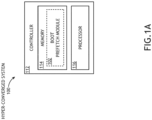
- FIG. 1A illustrates a conceptual block diagram of a boot prefetch module 102, in accordance with one or more embodiments of the present disclosure.
- the system 100 is a hyper-converged system.
- the system 100 may include a controller 112.
- the processors 116 may be configured to execute program instructions (e.g., software) causing the one or more processors 116 to perform steps and the like of the present disclosure.
- FIG. 1B illustrates a conceptual block diagram of a boot prefetch module 102, in accordance with one or more embodiments of the present disclosure.
- the boot prefetch module 102 is configured to coordinate with a centralized storage 104 and a plurality of nodes 106.
- the boot prefetch module 102 is configured to retrieve node boot data 108 from the centralized storage 104.
- the node boot data 108 may be used to preload software prior to the local compute node 106 being ready to execute the software.
- the boot prefetch module 102 is configured to detect resource contention on the centralized storage 104 and to back off and retry when collisions occur. Further, the boot prefetch module 102 may be configured to prefetch the node boot data 108 with high assurance encryption.
- FIG. 1C is a conceptual block diagram of a set of boot prefetch modules 102 associated with a set of nodes 106, in accordance with one or more embodiments of the present disclosure.
- more than one boot prefetch module 102 may be utilized.
- each node 106 may, but is not necessarily required to, be associated with its own boot prefetch module 102 (or multiple boot prefetch modules 102).
- each boot prefetch module 102 proxies for one or more nodes 106.
- coordinating the boot prefetch modules 102 would likely be optimal. However, coordinating the boot prefetch modules 102 is not necessarily required to achieve at least some of the benefits of multi-boot prefetch module systems.
- the boot prefetch modules 102 may be coordinated, either directly or indirectly.
- the boot prefetch modules 102 may be indirectly coordinated via prior knowledge of boot sequence of nodes 106 that is based on prior recorded history of the node 106 boot sequence.
- the boot prefetch modules 102 may be configured to retrieve node boot data 108 at certain time steps based on the prior knowledge such that the boot prefetch modules 102 are essentially coordinated and optimized in the retrieval of data, without necessarily needed to directly communicate with each other.
- the boot prefetch modules 102 may be configured to communicate with each other to coordinate (e.g., plan, sequence, etc.) when and which boot prefetch modules 102 will retrieve node boot data 108 for which nodes 106.
- a change in the system e.g., change in functionality, purpose, configuration data, or the like
- the boot prefetch modules 102 may be configured to determine which nodes 106 should be prioritized based on such a change.
- the configuration data may indicate which type of function/application is to be run, and the function (e.g., finite element analysis (FEA)) may be associated with certain nodes requiring relatively more data than others.
- the boot prefetch modules 102 may determine this collectively, or through some centralized process, and communicate such information to each other directly (or the like) so that each boot prefetch module 102 is configured to some degree to prioritize the booting of which nodes 106 or types of nodes. Consequently, for example, some unassociated boot prefetch modules 102 may wait to retrieve from the centralized storage 104 based on, for example, a change in dependencies.
- at least a portion of the boot prefetch modules 102 may be configured to communicate with each other using any protocol known in the art.
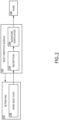
- FIG. 2 is a flow diagram illustrating steps performed in a method for a parallelized boot using a boot prefetch module 102, in accordance with one or more embodiments of the present disclosure. As shown, the method begins at step 200.
- the boot prefetch module 102 is configured to retrieve node boot data 108 associated with each respective node 106 of the plurality of nodes 106 from the centralized storage 104.
- the node boot data 108 is encrypted with a layer of encryption such as Commercial Solutions for Classified (CsFC) encryption, NSA-approved cryptography, or FIPS encryption.
- CsFC Commercial Solutions for Classified
- NSA-approved cryptography is cryptography that consists of an approved algorithm, an implementation that has been approved for the protection of classified information and/or controlled unclassified information in a specific environment, and a supporting key management infrastructure (as defined in, e.g., NIST Special Publication 800-53 Rev. 5, generally available at doi.org/10.6028/NIST.SP.800-53r5).
- the retrieving of the node boot data 108 of each respective node 106 is based on security requirements of the plurality of nodes 106. This may include requirements for encryption, authentication, and/or access control. For example, a node 106 may need to be booted with encryption enabled in order to access a secure resource. In another example, a node 106 may need to be booted with authentication enabled in order to access a shared resource. In yet another example, a node 106 may need to be booted with access control enabled in order to access a restricted resource. For instance, the security requirements may be based on the encryption, authentication, and/or access control needed for the node to access a secure resource and the node boot data 108 for the node that requires the security requirements first may be retrieved first based on the security requirements.
- the boot prefetch module 102 is configured to perform the retrieving of the node boot data 108 prior to the respective node 106 being booted.
- the node boot data 108 may be readily available, improving the speed and efficiency of the overall boot process.
- the boot prefetch module 102 is configured to detect resource contention on the centralized storage 104 and to back off and retry when collisions occur. This may be accomplished by using techniques such as exponential backoff or random backoff.
- the boot prefetch module 102 is configured to retrieve the node boot data 108 with a second encryption (e.g., high-assurance encryption, FIPS, and the like).
- a second encryption e.g., high-assurance encryption, FIPS, and the like.
- the node boot data 108 may be encrypted on the centralized storage using NSA Type 1 encryption and the boot prefetch module 102 may apply a second encryption such as FIPS during the retrieving of the node boot data 108.
- This may be accomplished by using encryption techniques known in the art such as, but not limited to, symmetric key encryption, asymmetric key encryption, and/or public key encryption. For instance, this may be accomplished by using encryption techniques such as Advanced Encryption Standard (AES), Rivest-Shamir-Adleman (RSA), and/or Elliptic Curve Cryptography (ECC).
- AES Advanced Encryption Standard
- RSA Rivest-Shamir-Adleman
- ECC Elliptic Curve Cryptography
- the node boot data 108 is used to preload software prior to the local compute node 106 being ready to execute the software.
- a pre-boot execution environment PXE
- a network boot protocol may be used.
- the memory 114 may be located remotely with respect to the physical location of the processors and controller 112.
- the one or more processors 116 of controller 112 may access a remote memory (e.g., server), accessible through a network (e.g., internet, intranet and the like).
- the memory medium 114 stores the program instructions for causing the one or more processors 116 to carry out the various steps described through the present disclosure.
- All of the methods described herein may include storing results of one or more steps of the method embodiments in a storage medium.
- the results may include any of the results described herein and may be stored in any manner known in the art.
- the storage medium may include any storage medium described herein or any other suitable storage medium known in the art.
- the results can be accessed in the storage medium and used by any of the method or system embodiments described herein, formatted for display to a user, used by another software module, method, or system, etc.
- the results may be stored "permanently,” “semi-permanently,” temporarily, or for some period of time.
- the storage medium may be random access memory (RAM), and the results may not necessarily persist indefinitely in the storage medium.
- the controller 112 of the system 100 may be configured to receive and/or acquire data or information from other systems by a transmission medium that may include wireline and/or wireless portions.
- the controller 112 of the system 100 may be configured to transmit data or information (e.g., the output of one or more processes disclosed herein) to one or more systems or subsystems by a transmission medium that may include wireline and/or wireless portions.
- the transmission medium may serve as a data link between the controller 112 and other subsystems of the system 100.
- the controller 112 may send data to external systems via a transmission medium (e.g., network connection).
- a letter following a reference numeral is intended to reference an embodiment of the feature or element that may be similar, but not necessarily identical, to a previously described element or feature bearing the same reference numeral (e.g., 1, 1a, 1b).
- reference numeral e.g. 1, 1a, 1b
- Such shorthand notations are used for purposes of convenience only and should not be construed to limit the disclosure in any way unless expressly stated to the contrary.
- any reference to “in embodiments, "one embodiment” or “some embodiments” means that a particular element, feature, structure, or characteristic described in connection with the embodiment is included in at least one embodiment disclosed herein.
- the appearances of the phrase “in some embodiments” in various places in the specification are not necessarily all referring to the same embodiment, and embodiments may include one or more of the features expressly described or inherently present herein, or any combination or sub-combination of two or more such features, along with any other features which may not necessarily be expressly described or inherently present in the instant disclosure.
- embodiments of the methods disclosed herein may include one or more of the steps described herein. Further, such steps may be carried out in any desired order and two or more of the steps may be carried out simultaneously with one another. Two or more of the steps disclosed herein may be combined in a single step, and in some embodiments, one or more of the steps may be carried out as two or more sub-steps. Further, other steps or sub-steps may be carried in addition to, or as substitutes to one or more of the steps disclosed herein.
Landscapes
- Engineering & Computer Science (AREA)
- Computer Security & Cryptography (AREA)
- Computer Hardware Design (AREA)
- General Engineering & Computer Science (AREA)
- Software Systems (AREA)
- Theoretical Computer Science (AREA)
- Physics & Mathematics (AREA)
- General Physics & Mathematics (AREA)
- Computer Networks & Wireless Communication (AREA)
- Signal Processing (AREA)
- Stored Programmes (AREA)
Applications Claiming Priority (1)
| Application Number | Priority Date | Filing Date | Title |
|---|---|---|---|
| US18/098,446 US12299130B2 (en) | 2023-01-18 | 2023-01-18 | Method for secure, efficient startup of hyper-converged systems using hybrid centralization |
Publications (1)
| Publication Number | Publication Date |
|---|---|
| EP4404091A1 true EP4404091A1 (de) | 2024-07-24 |
Family
ID=88834043
Family Applications (1)
| Application Number | Title | Priority Date | Filing Date |
|---|---|---|---|
| EP23209831.9A Withdrawn EP4404091A1 (de) | 2023-01-18 | 2023-11-14 | Verfahren zum sicheren, effizienten starten von hyperkonvergierten systemen mittels hybrider zentralisierung |
Country Status (2)
| Country | Link |
|---|---|
| US (1) | US12299130B2 (de) |
| EP (1) | EP4404091A1 (de) |
Families Citing this family (1)
| Publication number | Priority date | Publication date | Assignee | Title |
|---|---|---|---|---|
| CN118171257B (zh) * | 2024-05-14 | 2024-08-06 | 南湖实验室 | 一种基于机密虚拟机的零信任远程认证服务部署系统 |
Citations (2)
| Publication number | Priority date | Publication date | Assignee | Title |
|---|---|---|---|---|
| US20060026429A1 (en) * | 2004-07-27 | 2006-02-02 | Hitachi, Ltd. | Method and system for setting up hosting environments in safety |
| US20100070800A1 (en) * | 2008-09-15 | 2010-03-18 | Juniper Networks, Inc. | Automatic hardware-based recovery of a compromised computer |
Family Cites Families (12)
| Publication number | Priority date | Publication date | Assignee | Title |
|---|---|---|---|---|
| US6727920B1 (en) | 1999-03-11 | 2004-04-27 | Micron Technology, Inc. | Multiple operating system quick boot utility |
| US20010047473A1 (en) | 2000-02-03 | 2001-11-29 | Realtime Data, Llc | Systems and methods for computer initialization |
| US7334099B2 (en) * | 2002-06-28 | 2008-02-19 | Microsoft Corporation | Method and system for managing image files |
| US20040143696A1 (en) | 2003-01-21 | 2004-07-22 | Francis Hsieh | Data storage system for fast booting of computer |
| KR100506203B1 (ko) | 2003-09-17 | 2005-08-05 | 삼성전자주식회사 | 부팅 및 부트 코드 업데이트 방법 및 시스템 |
| US20080209198A1 (en) | 2007-02-26 | 2008-08-28 | Majni Timothy W | Boot Acceleration For Computer Systems |
| US8429390B2 (en) | 2009-12-24 | 2013-04-23 | Insyde Software Corp. | Method for performing quick boot and general boot at bios stage |
| US11755534B2 (en) * | 2017-02-14 | 2023-09-12 | Qnap Systems, Inc. | Data caching method and node based on hyper-converged infrastructure |
| KR102851783B1 (ko) | 2020-01-30 | 2025-08-27 | 삼성전자주식회사 | 보안 장치, 전자 장치, 보안 부트 관리 시스템, 부트 이미지 생성 방법 및 부트 체인 실행 방법 |
| US11782727B2 (en) * | 2020-05-29 | 2023-10-10 | Micron Technology, Inc. | Read prediction during a system boot procedure |
| CN112733208B (zh) | 2020-12-31 | 2021-10-19 | 宸芯科技有限公司 | 一种芯片的安全boot方法、装置、安全芯片和计算机设备 |
| US11416263B1 (en) | 2021-02-12 | 2022-08-16 | Western Digital Technologies, Inc. | Boosted boot procedure by background re-arrangement of read patterns |
-
2023
- 2023-01-18 US US18/098,446 patent/US12299130B2/en active Active
- 2023-11-14 EP EP23209831.9A patent/EP4404091A1/de not_active Withdrawn
Patent Citations (2)
| Publication number | Priority date | Publication date | Assignee | Title |
|---|---|---|---|---|
| US20060026429A1 (en) * | 2004-07-27 | 2006-02-02 | Hitachi, Ltd. | Method and system for setting up hosting environments in safety |
| US20100070800A1 (en) * | 2008-09-15 | 2010-03-18 | Juniper Networks, Inc. | Automatic hardware-based recovery of a compromised computer |
Non-Patent Citations (1)
| Title |
|---|
| INTEL: "Preboot Execution Environment (PXE) Specification, Version 2.1", INTERNET CITATION, 20 September 1999 (1999-09-20), XP002402606, Retrieved from the Internet <URL:http://www.pix.net/software/pxeboot/archive/pxespec.pdf> [retrieved on 20061011] * |
Also Published As
| Publication number | Publication date |
|---|---|
| US20240241958A1 (en) | 2024-07-18 |
| US12299130B2 (en) | 2025-05-13 |
Similar Documents
| Publication | Publication Date | Title |
|---|---|---|
| US10116645B1 (en) | Controlling use of encryption keys | |
| US11184157B1 (en) | Cryptographic key generation and deployment | |
| US20220006835A1 (en) | Tls integration of post quantum cryptographic algorithms | |
| US8874922B2 (en) | Systems and methods for multi-layered authentication/verification of trusted platform updates | |
| US10218696B2 (en) | Targeted secure software deployment | |
| US9252946B2 (en) | Method and system to securely migrate and provision virtual machine images and content | |
| US8412952B1 (en) | Systems and methods for authenticating requests from a client running trialware through a proof of work protocol | |
| US10963593B1 (en) | Secure data storage using multiple factors | |
| US10003467B1 (en) | Controlling digital certificate use | |
| US20200372183A1 (en) | Digitally Signing Software Packages With Hash Values | |
| US12200118B1 (en) | Application programming interface to generate data key pairs | |
| EP3952205B1 (de) | Cryptographic service utilizing commodity hardware | |
| CN105453034A (zh) | 在管理器控制的系统中处理客户事件 | |
| CN110224811B (zh) | 物联网加密处理方法、装置及系统 | |
| US10230738B2 (en) | Procedure for platform enforced secure storage in infrastructure clouds | |
| CN115412275A (zh) | 一种基于可信执行环境的隐私计算系统及方法 | |
| EP3803662B1 (de) | Datenverarbeitung | |
| US9755832B2 (en) | Password-authenticated public key encryption and decryption | |
| US12244705B1 (en) | Offloading compute-intensive operations from real-time processor through an inter-processor queue | |
| US12010146B2 (en) | Method, system and apparatus for unified security configuration management | |
| EP4404091A1 (de) | Verfahren zum sicheren, effizienten starten von hyperkonvergierten systemen mittels hybrider zentralisierung | |
| US20240056295A1 (en) | Verifiable remote resource management for cryptographic devices | |
| US11626985B1 (en) | Data reencryption techniques | |
| US9735965B1 (en) | Systems and methods for protecting notification messages | |
| US11126734B2 (en) | Method, device and computer program product for data processing |
Legal Events
| Date | Code | Title | Description |
|---|---|---|---|
| PUAI | Public reference made under article 153(3) epc to a published international application that has entered the european phase |
Free format text: ORIGINAL CODE: 0009012 |
|
| STAA | Information on the status of an ep patent application or granted ep patent |
Free format text: STATUS: THE APPLICATION HAS BEEN PUBLISHED |
|
| AK | Designated contracting states |
Kind code of ref document: A1 Designated state(s): AL AT BE BG CH CY CZ DE DK EE ES FI FR GB GR HR HU IE IS IT LI LT LU LV MC ME MK MT NL NO PL PT RO RS SE SI SK SM TR |
|
| STAA | Information on the status of an ep patent application or granted ep patent |
Free format text: STATUS: REQUEST FOR EXAMINATION WAS MADE |
|
| 17P | Request for examination filed |
Effective date: 20250123 |
|
| GRAP | Despatch of communication of intention to grant a patent |
Free format text: ORIGINAL CODE: EPIDOSNIGR1 |
|
| STAA | Information on the status of an ep patent application or granted ep patent |
Free format text: STATUS: GRANT OF PATENT IS INTENDED |
|
| RIC1 | Information provided on ipc code assigned before grant |
Ipc: G06F 21/57 20130101AFI20250605BHEP |
|
| INTG | Intention to grant announced |
Effective date: 20250613 |
|
| STAA | Information on the status of an ep patent application or granted ep patent |
Free format text: STATUS: THE APPLICATION IS DEEMED TO BE WITHDRAWN |
|
| 18D | Application deemed to be withdrawn |
Effective date: 20251014 |