EP4404048A1 - Service providing system, service providing device, printing apparatus, and method of controlling service providing system - Google Patents
Service providing system, service providing device, printing apparatus, and method of controlling service providing system Download PDFInfo
- Publication number
- EP4404048A1 EP4404048A1 EP24152846.2A EP24152846A EP4404048A1 EP 4404048 A1 EP4404048 A1 EP 4404048A1 EP 24152846 A EP24152846 A EP 24152846A EP 4404048 A1 EP4404048 A1 EP 4404048A1
- Authority
- EP
- European Patent Office
- Prior art keywords
- service
- amount
- remaining
- container
- dedicated
- Prior art date
- Legal status (The legal status is an assumption and is not a legal conclusion. Google has not performed a legal analysis and makes no representation as to the accuracy of the status listed.)
- Granted
Links
Images



Classifications
-
- G—PHYSICS
- G06—COMPUTING OR CALCULATING; COUNTING
- G06F—ELECTRIC DIGITAL DATA PROCESSING
- G06F3/00—Input arrangements for transferring data to be processed into a form capable of being handled by the computer; Output arrangements for transferring data from processing unit to output unit, e.g. interface arrangements
- G06F3/12—Digital output to print unit, e.g. line printer, chain printer
- G06F3/1201—Dedicated interfaces to print systems
- G06F3/1202—Dedicated interfaces to print systems specifically adapted to achieve a particular effect
- G06F3/1218—Reducing or saving of used resources, e.g. avoiding waste of consumables or improving usage of hardware resources
- G06F3/1219—Reducing or saving of used resources, e.g. avoiding waste of consumables or improving usage of hardware resources with regard to consumables, e.g. ink, toner, paper
-
- G—PHYSICS
- G06—COMPUTING OR CALCULATING; COUNTING
- G06K—GRAPHICAL DATA READING; PRESENTATION OF DATA; RECORD CARRIERS; HANDLING RECORD CARRIERS
- G06K15/00—Arrangements for producing a permanent visual presentation of the output data, e.g. computer output printers
- G06K15/40—Details not directly involved in printing, e.g. machine management, management of the arrangement as a whole or of its constitutive parts
- G06K15/407—Managing marking material, e.g. checking available colours
- G06K15/4075—Determining remaining quantities of ink or toner
-
- B—PERFORMING OPERATIONS; TRANSPORTING
- B41—PRINTING; LINING MACHINES; TYPEWRITERS; STAMPS
- B41J—TYPEWRITERS; SELECTIVE PRINTING MECHANISMS, i.e. MECHANISMS PRINTING OTHERWISE THAN FROM A FORME; CORRECTION OF TYPOGRAPHICAL ERRORS
- B41J2/00—Typewriters or selective printing mechanisms characterised by the printing or marking process for which they are designed
- B41J2/005—Typewriters or selective printing mechanisms characterised by the printing or marking process for which they are designed characterised by bringing liquid or particles selectively into contact with a printing material
- B41J2/01—Ink jet
- B41J2/17—Ink jet characterised by ink handling
- B41J2/175—Ink supply systems ; Circuit parts therefor
- B41J2/17566—Ink level or ink residue control
-
- G—PHYSICS
- G06—COMPUTING OR CALCULATING; COUNTING
- G06F—ELECTRIC DIGITAL DATA PROCESSING
- G06F3/00—Input arrangements for transferring data to be processed into a form capable of being handled by the computer; Output arrangements for transferring data from processing unit to output unit, e.g. interface arrangements
- G06F3/12—Digital output to print unit, e.g. line printer, chain printer
- G06F3/1201—Dedicated interfaces to print systems
- G06F3/1223—Dedicated interfaces to print systems specifically adapted to use a particular technique
- G06F3/1237—Print job management
- G06F3/1239—Restricting the usage of resources, e.g. usage or user levels, credit limit, consumables, special fonts
-
- G—PHYSICS
- G06—COMPUTING OR CALCULATING; COUNTING
- G06F—ELECTRIC DIGITAL DATA PROCESSING
- G06F3/00—Input arrangements for transferring data to be processed into a form capable of being handled by the computer; Output arrangements for transferring data from processing unit to output unit, e.g. interface arrangements
- G06F3/12—Digital output to print unit, e.g. line printer, chain printer
- G06F3/1201—Dedicated interfaces to print systems
- G06F3/1278—Dedicated interfaces to print systems specifically adapted to adopt a particular infrastructure
- G06F3/1285—Remote printer device, e.g. being remote from client or server
Definitions
- the present disclosure relates to a service providing system, a service providing device, a printing apparatus, and a method of controlling the service providing system.
- JP-A-2017-049767 discloses a system for delivering a specific ink cartridge to a printer user.
- the system disclosed in JP-A-2017-049767 puts the printing apparatus in a state in which the specific ink cartridge cannot be used when a contract for a service for delivering the specific ink cartridge is canceled.
- JP-A-2017-049767 when a user subscribes to a service, the installed ink cartridge is replaced with a specific ink cartridge, and when the service contract is canceled, the specific ink cartridge is unusable. In this way, in the related art, it is not possible to perform printing for the remaining amount of the printing material contained in the container installed before the user subscribes to the service after the user withdraws from the service.
- the service providing system includes a providing unit that delivers a second container that is a container to be installed in place of a first container that is a container that was installed in the printing apparatus before subscribing to the service, a storage unit that stores remaining amount data indicating an amount of printing material remaining in the first container, and a permission unit that permits, at a time of withdrawal from the service, the printing apparatus to perform printing using the second container according to a remaining amount indicated by the remaining amount data stored in the storage unit.
- the service providing device includes a providing unit that delivers a second container that is a container to be installed in place of a first container that is a container that was installed in the printing apparatus before the user subscribes to the service, and a permission unit that acquires, from a storage unit that stores remaining amount data indicating an amount of printing material remaining in the first container, the remaining amount data at a time of withdrawal from the service, and permits the printing apparatus to perform printing using the second container according to a remaining amount indicated by the remaining amount data.
- the printing apparatus in a printing apparatus that performs printing using a container containing printing material, includes a storage unit that stores remaining amount data indicating a remaining amount when a user of the printing apparatus subscribes to a service for delivering the container, the remaining amount being an amount of printing material contained in a first container that is a container that was installed in the printing apparatus before the user subscribes to a service, and a permission unit that permits, at a time of withdrawal, printing using a second container that is a container to be installed in place of the first container according to a remaining amount indicated by the remaining amount data stored in the storage unit.
- the method in a method of controlling a service providing system that provides a service for delivering a container containing printing material used for a printing apparatus to perform printing, includes delivering a second container that is a container to be installed in place of a first container that is a container that was installed in the printing apparatus before subscribing to the service, storing remaining amount data indicating an amount of printing material contained by the first container, and permitting the printing apparatus to perform printing using the second container according to a remaining amount indicated by the stored remaining amount data at a time of withdrawal from the service.
- FIG. 1 is a diagram showing the configuration of a service providing system 1000.
- the service providing system 1000 is a system that provides a subscription-based service.
- the ink cartridge 121 is delivered to the user P.
- the multifunction machine 1 corresponds to an example of a "printing apparatus”.
- the ink cartridge 121 corresponds to an example of a "container”.
- the ink contained in the ink cartridge 121 corresponds to an example of "printing material”.
- the ink cartridge 121 provided by the service will be referred to as a "dedicated ink cartridge” and will be given the reference numeral "121A”. Furthermore, in the following description, the ink cartridge 121 that is not provided by the service is referred to as a “non-dedicated ink cartridge” and is given the reference numeral "121B”.
- the non-dedicated ink cartridge 121B is the ink cartridge 121 purchased by the user P at a store such as an electronics retail store, for example.
- the dedicated ink cartridge 121A corresponds to an example of a "second container”.
- the non-dedicated ink cartridge 121B corresponds to an example of a "first container”.
- the service providing system 1000 includes a management server 2 that manages a service.
- This management server 2 corresponds to an example of a "service providing device".
- An example of the matters managed by the management server 2 includes the amount of ink remaining in the dedicated ink cartridge 121A.
- the management server 2 is a server device connected to a communication network NW.
- the communication network NW is a network such as the Internet, a private circuit, or a public circuit.
- the management server 2 communicates with a delivery server 3 via the communication network NW.
- the delivery server 3 is a server device that instructs a delivery person to deliver goods.
- the delivery server 3 is owned by a delivery company, for example, and gives a delivery instruction to a delivery person who is an employee of the delivery company.
- each of the management server 2 and the delivery server 3 is represented by one block in each figure, this does not necessarily mean that each server is configured by a single server device.
- each of the management server 2 and the delivery server 3 may include a plurality of server devices with different processing content.
- the management server 2 and the delivery server 3 may be configured by the same server device.
- the service providing system 1000 includes the multifunction machine 1.
- the multifunction machine 1 is a device that is referred to as a multi function peripheral (MFP), and can perform various processes such as printing and scanning.
- the multifunction machine 1 has the ink cartridge 121 installed therein and performs printing by receiving ink from the installed ink cartridge 121.
- the multifunction machine 1 is connected to a local network LN constructed by a communication device 4 and communicates with devices connected to the communication network NW via the communication device 4. Further, the multifunction machine 1 communicates with a terminal device 5 connected to the local network LN.
- the communication device 4 is provided at a delivery destination KO of the dedicated ink cartridge 121A.
- the communication device 4 is connected to the communication network NW and communicates with the management server 2 via the communication network NW.
- the communication device 4 functions as an interface device that connects the multifunction machine 1 and the terminal device 5 to the communication network NW.
- the service providing system 1000 includes the terminal device 5.
- the terminal device 5 is a computer.
- the terminal device 5 is connected to the local network LN and communicates with the multifunction machine 1 connected to the local network LN and the management server 2 connected to the communication network NW.
- the terminal device 5 shown in FIG. 1 is a laptop computer, it may be a desktop computer or a tablet computer.
- the terminal device 5 may communicate with the management server 2 without going through the local network LN.
- the terminal device 5 may communicate with the multifunction machine 1 using a communication method that performs one-to-one communication.
- An example of this communication method is a direct communication method such as Wi-Fi Direct. Wi-Fi is a registered trademark.
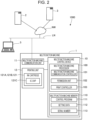
- FIG. 2 is a block diagram showing the configuration of the multifunction machine 1.
- the multifunction machine 1 includes a multifunction machine control device 10, a multifunction machine communication unit 11, and a printing unit 12.
- the multifunction machine control device 10 includes a multifunction machine processor 100 including one or a plurality of central processing units (CPUs), micro-processing units (MPU) or application specific integrated circuits (ASIC), and the like, and a multifunction machine memory 110, and controls the respective units of the multifunction machine 1.
- CPUs central processing units
- MPU micro-processing units
- ASIC application specific integrated circuits
- the multifunction machine memory 110 stores a program executed by the multifunction machine processor 100 and data processed by the multifunction machine processor 100.
- the multifunction machine memory 110 stores a control program 111 executed by the multifunction machine processor 100, setting data 112, a serial number 113, and various other pieces of data.
- the multifunction machine memory 110 has a non-volatile storage area.
- the multifunction machine memory 110 may include a volatile storage area and constitute a work area of the multifunction machine processor 100.
- the multifunction machine memory 110 is composed of, for example, a read only memory (ROM) and a random access memory (RAM).
- the setting data 112 is data related to the setting of the multifunction machine 1.
- the setting data 112 has a combination of a setting item and a setting value for each setting item.
- the serial number 113 is an identification number for identifying the multifunction machine 1.
- the multifunction machine communication unit 11 includes communication hardware conforming to a predetermined communication standard such as connectors and communication circuits, and communicates with devices connected to the local network LN and the communication network NW under the control of the multifunction machine control device 10. That is, the multifunction machine communication unit 11 communicates with the terminal device 5 and the management server 2.
- a predetermined communication standard such as connectors and communication circuits
- the printing unit 12 includes an ink jet head that ejects ink onto a print medium to form dots, a carriage that moves the ink jet head in the scanning direction, a carriage drive motor that drives the carriage, a transport mechanism that transports the print medium, a mechanism in which the ink cartridge 121 is installed and a maintenance mechanism that maintains the ink jet head.
- the printing unit 12 prints an image on a print medium by performing printing under the control of the multifunction machine control device 10.
- the ink cartridge 121 includes an integrated circuit (IC) chip 121C.
- the multifunction machine control device 10 acquires the amount of ink remaining in the ink cartridge 121 from the detection value by the remaining amount detection sensor provided for the ink cartridge 121 or the amount of ink used for printing, records the remaining amount of ink on the IC chip 121C of the installed ink cartridge 121. Note that information indicating that the cartridge is the dedicated ink cartridge 121A is recorded on the IC chip 121C of the dedicated ink cartridge 121A.
- the multifunction machine processor 100 functions as a multifunction machine communication controller 101, a permission unit 102, and a print controller 103 by reading out and executing the control program 111 in the multifunction machine memory 110.
- the multifunction machine communication controller 101 communicates with the terminal device 5 and the management server 2 via the multifunction machine communication unit 11.
- the multifunction machine communication controller 101 transmits a group of dedicated remaining amount data including a plurality of pieces of dedicated remaining amount data to the management server 2 every time the multifunction machine 1 performs printing.
- the dedicated remaining amount data is data indicating the amount of ink remaining in the dedicated ink cartridge 121.
- the multifunction machine communication controller 101 of the present embodiment transmits dedicated remaining amount data of each of C (cyan), M (magenta), Y (yellow), and K (black) to the management server 2.
- the serial number 113 stored in the multifunction machine memory 110 is added to the dedicated remaining amount data group transmitted to the management server 2.
- the multifunction machine communication controller 101 When the non-dedicated ink cartridge 121B is installed in the multifunction machine 1, the multifunction machine communication controller 101, upon receiving a request from the management server 2, transmits the non-dedicated remaining amount data group including a plurality of pieces of non-dedicated remaining amount data to the management server 2.
- the non-dedicated remaining amount data is data indicating the amount of ink remaining in the dedicated ink cartridge 121.
- the multifunction machine communication controller 101 of the present embodiment transmits the non-dedicated remaining amount data of each of CMYK to the management server 2.
- the serial number 113 stored in the multifunction machine memory 110 is added to the non-dedicated remaining amount data group transmitted to the management server 2.
- the multifunction machine communication controller 101 reads the remaining amount of ink from the IC chip 121C of the non-dedicated ink cartridge 121B for each of CMYK, and transmits non-dedicated remaining amount data indicating the read remaining amount of ink to the management server 2.
- the permission unit 102 permits the multifunction machine 1 to perform printing using the dedicated ink cartridge 121A when a predetermined condition is satisfied in a case where the user P withdraws from the service. Details of the permission unit 102 will be described later.
- the print controller 103 controls printing by the printing unit 12.
- the print controller 103 causes the printing unit 12 to perform printing regardless of the permission unit 102.
- the print controller 103 causes the printing unit 12 to perform printing regardless of the control by the permission unit 102 when the user P has subscribed to the service and the dedicated ink cartridge 121A is installed in the multifunction machine 1.
- the print controller 103 controls printing to be available within the amount of ink permitted by the permission unit 102.
- the print controller 103 updates the remaining amount of ink recorded on the IC chip 121C of the ink cartridge 121 each time the printing unit 12 performs printing.
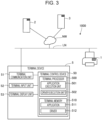
- FIG. 3 is a block diagram showing the configuration of the terminal device 5.
- the terminal device 5 includes a terminal control device 50, a terminal communication unit 51, a terminal input unit 52, and a terminal display unit 53.
- the terminal control device 50 includes a terminal processor 500 including a CPU, an MPU, and the like, and a terminal memory 510, and controls the respective units of the terminal device 5.
- the terminal memory 510 stores a program executed by the terminal processor 500 and data processed by the terminal processor 500.
- the terminal memory 510 stores an application 511 executed by the terminal processor 500, a driver 512, and various other pieces of data.
- the terminal memory 510 includes a non-volatile storage area.
- the terminal memory 510 may include a volatile storage area and constitute a work area for terminal processor 500.
- the terminal memory 510 is composed of, for example, a ROM, a RAM, and the like.
- the application 511 is an application program related to a service.
- the application 511 may be a dedicated application program related to a service, or may be a browser.
- the driver 512 is a program that causes the multifunction machine 1 to print an image.
- the terminal communication unit 51 includes communication hardware such as a communication circuit that conforms to a predetermined communication standard, and communicates with the multifunction machine 1 connected to the local network LN and the management server 2 under the control of the terminal control device 50.
- the terminal input unit 52 includes a keyboard, a mouse, and other input means, detects the operation of the user P on the input means, and outputs the detected operation to the terminal control device 50.
- the terminal control device 50 executes a process corresponding to the user P's operation on the input means based on the input from the terminal input unit 52.
- the terminal display unit 53 includes a display, and displays various information on the display under the control of the terminal control device 50.
- the terminal processor 500 functions as an application execution unit 501 by reading and executing the application 511. Furthermore, the terminal processor 500 functions as a driver execution unit 502 by reading and executing the driver 512.
- the application execution unit 501 executes a process related to a subscription to a service and a process related to a withdrawal from a service.
- the application execution unit 501 displays a user interface on the terminal display unit 53 for the user to subscribe to the service.
- the serial number 113, delivery destination information indicating the delivery destination KO of the dedicated ink cartridge 121A, and the like are input to the user interface.
- the delivery destination information is, for example, information about the address of the delivery destination KO.
- the application execution unit 501 transmits request-for-subscription information including the information input into the user interface to the management server 2 via the terminal communication unit 51.
- the application execution unit 501 displays a user interface on the terminal display unit 53 for the user P who subscribed to the service to withdraw from the service.
- a member identification (ID) for identifying a membership of the service and the like are input to the user interface.
- the application execution unit 501 transmits request-for-withdrawal information including information input to the user interface to the management server 2 via the terminal communication unit 51.
- the driver execution unit 502 generates print data to transmit the generated print data to the multifunction machine 1 via the terminal communication unit 51.
- the print data includes image data of an image to be printed, print commands based on the command system of the multifunction machine 1, and the like.
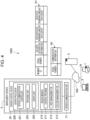
- FIG. 4 is a block diagram showing the configuration of the management server 2.
- the management server 2 has a server control device 20.
- the server control device 20 includes a server processor 200 configured by one or a plurality of CPUs, MPUs, and the like, and a server memory 210, and controls the respective units of the management server 2.
- Server memory 210 corresponds to an example of a "storage unit”.
- Server memory 210 stores a program executed by the server processor 200 and data processed by the server processor 200.
- the server memory 210 stores a control program 211 executed by the server processor 200, a first management DB 212, a second management DB 213, and various other pieces of data.
- Server memory 210 includes a non-volatile storage area.
- Server memory 210 may include a volatile storage area and constitute a work area for the server processor 200.
- the server memory 210 is composed of, for example, a ROM, a RAM, and the like.
- the first management DB 212 is a database that manages data related to a service.
- the first management DB 212 has a record R1 for each member subscribed to the service.
- One record R1 includes a member ID, the serial number 113, delivery destination information, a non-dedicated remaining amount data group, and a dedicated remaining amount data group.
- the second management DB 213 is a database that manages data related to the multifunction machine 1.
- the second management DB 213 has a record R2 for each multifunction machine 1.
- the record R2 includes the serial number 113 and communication information for communicating with the multifunction machine 1.
- An example of the communication information includes a predetermined address.
- the management server 2 includes a server communication unit 21.
- the server communication unit 21 includes communication hardware that conforms to a predetermined communication standard, and communicates with the terminal device 5 and the multifunction machine 1 under the control of the server control device 20.
- the server processor 200 functions as a server communication controller 201, a providing unit 202, and an update unit 203.
- the server communication controller 201 communicates with the terminal device 5 and the multifunction machine 1 via the server communication unit 21.
- the providing unit 202 provides the dedicated ink cartridge 121A to the user P who has subscribed to the service.
- the providing unit 202 provides the dedicated ink cartridge 121A to the user P who has subscribed to the service by transmitting, to the delivery server 3, a delivery request for delivering the dedicated ink cartridge 121A.
- the providing unit 202 transmits delivery request information to the delivery server 3 in the delivery request.
- the delivery request information includes delivery destination information.
- the update unit 203 updates the first management DB 212.
- the update unit 203 performs an update related to a subscription to the service and an update related to a withdrawal from the service.
- the update unit 203 generates the record R1 and stores the generated record R1 in the first management DB 212 as an update related to a subscription to the service.
- the update unit 203 generates the member ID when the server communication controller 201 receives the request-for-subscription information from the terminal device 5.
- the update unit 203 generates the record R1 including the generated member ID, the serial number 113 included in the received request-for-subscription information, the delivery destination information included in the received request-for-subscription information, a non-dedicated remaining amount data group indicating a blank, and a dedicated remaining amount data group indicating a blank.
- the update unit 203 stores the generated record R1 in the first management DB 212.
- the server communication controller 201 transmits the member ID included in the newly stored record R1 to the terminal device 5 as a response to the request-for-subscription information.
- the updating unit 203 newly stores the record R1 in the first management DB 212
- the providing unit 202 makes a request of the delivery server 3 for deliver. Specifically, the providing unit 202 transmits to the delivery server 3 delivery request information including the delivery destination information about the newly stored record R1.
- the update unit 203 deletes the record R1 as an update related to a withdrawal from the service.
- the update unit 203 identifies the record R1 having the member ID included in the received request-for-withdrawal information from the first management DB 212.
- the update unit 203 deletes the identified record R1 from the first management DB 212.
- the update unit 203 updates the information included in the record R1.
- the update unit 203 updates the non-dedicated remaining amount data group included in the record R1 to the received non-dedicated remaining amount data group.
- the serial number 113 is attached to the non-dedicated remaining amount data group transmitted from the multifunction machine 1.
- the update unit 203 identifies the record R1 having the serial number 113, and updates the non-dedicated remaining amount data group of the identified record R1 to the received non-dedicated remaining amount data group.
- the update unit 203 updates the dedicated remaining amount data group included in the record R1 to the received dedicated remaining amount data group.
- the serial number 113 is attached to the dedicated remaining amount data group transmitted from the multifunction machine 1.
- the update unit 203 identifies the record R1 having the serial number 113, and updates the dedicated remaining amount data group of the identified record R1 to the received dedicated remaining amount data group.
- FIG. 5 is a flowchart showing the operations of the terminal device 5, the management server 2, and the multifunction machine 1.
- a flowchart FA shows the operation of the terminal device 5
- a flowchart FB shows the operation of the management server 2
- a flowchart FC shows the operation of the multifunction machine 1.
- the application execution unit 501 transmits request-for-subscription information to the management server 2 (step SA1).
- the server communication controller 201 receives the request-for-subscription information from the management server 2 (step SB1).
- the update unit 203 updates the subscription to the service based on the request-for-subscription information received in step SB1 (step SB2).
- the server communication controller 201 identifies the record R2 having the serial number 113 included in the request-for-subscription information received in step SB1 from the second management DB 213 (step SB3).
- the server communication controller 201 uses the communication information about the record R2 identified in step SB3 to transmit the request information to the multifunction machine 1 (step SB4).
- the request information is information for requesting a non-dedicated remaining amount data group.
- multifunction machine communication controller 101 receives the request information from the management server 2 (step SC1).
- the multifunction machine communication controller 101 reads the remaining amount of ink from each of the non-dedicated ink cartridges 121B installed in the multifunction machine 1 (step SC2).
- the multifunction machine communication controller 101 transmits the non-dedicated remaining amount data group to the management server 2 as a response to the request information (step SC3).
- the non-dedicated remaining amount data included in the non-dedicated remaining amount data group transmitted in step SC3 indicates the remaining amount of ink read in step SC2.
- the serial number 113 stored in the multifunction machine memory 110 is added to the non-dedicated remaining amount data group transmitted in step SC3.
- the server communication controller 201 receives the non-dedicated remaining amount data group from the multifunction machine 1 (step SB5).
- the update unit 203 identifies, from the first management DB 212, the record R1 having the serial number 113 added to the non-dedicated remaining amount data group received in step SB5 (step SB6).
- the update unit 203 updates the non-dedicated remaining amount data group of the record R1 identified in step SB6 to the non-dedicated remaining amount data group received in step SB5 (step SB7).
- the management server 2 can store the amount of ink remaining in the non-dedicated ink cartridge 121B installed when the user P subscribes to the service.
- FIG. 6 is a flowchart showing operations of the terminal device 5, the management server 2, and the multifunction machine 1.
- a flowchart FD shows the operation of the terminal device 5
- a flowchart FE shows the operation of the management server 2
- a flowchart FF shows the operation of the multifunction machine 1.
- the application execution unit 501 transmits request-for-withdrawal information to the management server 2 (step SD1).
- the server communication controller 201 receives the request-for-withdrawal information from the terminal device 5 (step SE1).
- the server communication controller 201 identifies the record R1 having the serial number 113 included in the request-for-withdrawal information received in step SE1 from the first management DB 212 (step SE2).
- the providing unit 202 determines whether the total amount of remaining ink indicated by the non-dedicated remaining amount data group of the record R1 identified in step SE2 is equal to or less than the total amount of remaining ink indicated by the group of dedicated remaining amount data of the record R1 (step SE3).
- step SE4 the server communication controller 201 transmits first withdrawal information to the multifunction machine 1 (step SE4).
- the first withdrawal information is information indicating that the user P has withdrawn from the service, and includes the non-dedicated remaining amount data group of the record R1 identified in step SE2. Note that the first withdrawal information may include the dedicated remaining amount data group of the record R1 identified in step SE2.
- step SE4 the server communication controller 201 identifies, from the second management DB 213, the record R2 of the serial number 113 included in the request-for-withdrawal information received in step SE1. Then, the server communication controller 201 generates first withdrawal information to transmit the generated first withdrawal information to the multifunction machine 1 using the communication information about the record R2 identified from the second management DB 213.
- step SE3 when it is determined that the total amount of remaining ink indicated by the non-dedicated remaining amount data group is more than the total amount of remaining ink indicated by the dedicated remaining amount data group (step SE3: NO), the providing unit 202 delivers the new dedicated ink cartridge 121A to the user P (step SE5).
- step SE5 the providing unit 202 transmits the delivery request information to the delivery server 3.
- the delivery request information transmitted in step SE5 includes delivery destination information included in the record R1 identified in step SE2, information indicating delivery of the new dedicated ink cartridges 121A for all CMYK colors, and the like.
- the delivery server 3 instructs the delivery person to deliver the dedicated ink cartridges 121A for all colors to the delivery destination KO indicated by the delivery destination information in the received delivery request information.
- the server communication controller 201 transmits second withdrawal information to the multifunction machine 1 (step SE6).
- the second withdrawal information is information indicating that the user P has withdrawn from the service, and includes the non-dedicated remaining amount data group of the record R1 identified in step SE2. Further, the second withdrawal information includes information indicating that the new dedicated ink cartridge 121A has been provided to the user P. Note that, as in the first withdrawal information, the second withdrawal information may include the dedicated remaining amount data group of the record R1 identified in step SE2.
- the multifunction machine communication controller 101 receives either the first withdrawal information or the second withdrawal information (step SF1).
- the permission unit 102 performs a permission process based on the withdrawal information received in step SF1 (step SF2).
- the permission process is a process related to permission for printing using the dedicated ink cartridge 121A.
- FIG. 7 is a flowchart FG showing the operation of the permission unit 102 in the permission process.
- the permission unit 102 determines whether the amount of ink remaining in the non-dedicated ink cartridges 121B when the user P subscribes the service is zero for all colors (step SG1).
- step SG1 the permission unit 102 determines whether each of the non-dedicated remaining amount data included in the withdrawal information received in step SF1 indicates that the remaining amount of ink is zero. When all the non-dedicated remaining amount data indicates zero, the permission unit 102 makes an affirmative determination in step SG1. On the other hand, when there is non-dedicated remaining amount data that does not indicate zero among the plurality of pieces of non-dedicated remaining amount data, the permission unit 102 makes a negative determination in step SG1.
- step SG2 When it is determined that the amount of ink remaining in the non-dedicated ink cartridges 121B is zero for all colors (step SG1: YES), the permission unit 102 does not permit printing using the dedicated ink cartridge 121A (step SG2).
- step SG2 the permission unit 102 sets a setting value indicating non-permission for a permission/non-permission item in the setting data 112.
- the permission/non-permission item is an item for setting whether to permit printing using the dedicated ink cartridge 121A.
- the print controller 103 does not perform printing when a setting value of non-permission is set for the permission/non-permission item.
- the permission unit 102 When it is determined that the amount of ink remaining in the non-dedicated ink cartridges 121B for all colors is not zero, that is, there is a remaining amount of ink in any of the non-dedicated ink cartridges 121B (step SG1: NO), the permission unit 102 performs a process of step SG3.
- the permission unit 102 determines whether the amount of ink remaining in the non-dedicated ink cartridges 121B when the user P subscribes to the service is equal to or less than the amount of ink remaining in the dedicated ink cartridges 121A installed when the user P withdraws from the service for all colors (step SG3).
- step SG3 the permission unit 102 reads the remaining amount of ink for all colors from the IC chip 121C of the dedicated ink cartridge 121A.
- the permission unit 102 compares the remaining amount of ink indicated by the non-dedicated remaining amount data of the withdrawal information received in step SE1 with the read remaining amount of ink for each color.
- the permission unit 102 makes an affirmative determination in step SG3.
- the permission unit 102 makes a negative determination in step SG3.
- step SG3 When making the affirmative determination in step SG3, the permission unit 102 performs a first permission (step SG4).
- the first permission indicates that printing using the dedicated ink cartridge 121A is permitted even after the user withdraws from the service. Further, for each of CMYK, the first permission indicates permission to use ink in the dedicated ink cartridge 121A for printing by the amount of ink remaining in a non-dedicated ink cartridge ICB at the time of subscribing to the service.
- step SG4 permission unit 102 sets a setting value indicating permission for the permission/non-permission item in the setting data 112. Further, the permission unit 102 records the amount of ink in the dedicated ink cartridge 121A that is permitted to use for each of CMYK in the multifunction machine memory 110. Note that when the permission unit 102 permits printing, the print controller 103 subtracts the amount of ink consumed by printing from the amount of ink recorded in the multifunction machine memory 110 by the permission unit 102 each time printing is executed.
- Example 1 shows an example of the first permission.
- Example 1 for each of CMYK, it is assumed that the amount of ink remaining in the non-dedicated ink cartridge 121B at the time of subscribing to the service is 5 g (grams). In Example 1, for each of CMYK, it is assumed that the amount of ink remaining in the dedicated ink cartridge 121A installed when the user withdraws from the service is 10 g. In this example, for each of CMYK, the permission unit 102 permits to use 5 g of ink in the dedicated ink cartridge 121A for printing as the first permission.
- the permission unit 102 sets the setting data 112 to a setting value indicating permission for the permission/non-permission item, and records the information in the multifunction machine memory 110 that the amount of ink in the dedicated ink cartridge 121A that is permitted to use for each of CMYK is 5 g.
- step SG3 when the permission unit 102 makes a negative determination in step SG3, the permission unit 102 determines whether the withdrawal information received in step SF1 is the first withdrawal information or the second withdrawal information (step SG5 ).
- step SG6 the permission unit 102 determines whether there is a second color whose amount can cover an addition amount (step SG6).
- the second remaining amount is an amount of ink remaining in the dedicated ink cartridge 121A corresponding to the first color when the user withdraws from the service.
- the addition amount is an amount obtained by adding a difference between the first remaining amount and the second remaining amount to an amount of ink remaining in the non-dedicated ink cartridge 121B corresponding to the second color when the user subscribes to the service.
- Example 2 shows an example of the addition amount, the first remaining amount, the second remaining amount, the first color, and the second color.
- Example 2 it is assumed that when the user subscribes to the service, the amount of ink remaining in the non-dedicated ink cartridge 121B for C (cyan) is 5 g, the amount of ink remaining in the non-dedicated ink cartridge 121B for M (magenta) is 5 g, the amount of ink remaining in the non-dedicated ink cartridge 121B for Y (yellow) is 5 g, and the amount of ink remaining in the non-dedicated ink cartridge 121B for K (black) is 10 g.
- the amount of ink remaining in the dedicated ink cartridge 121A for C (cyan) is 6 g
- the amount of ink remaining in the dedicated ink cartridge 121A for M (magenta) is 5 g
- the amount of ink remaining in the dedicated ink cartridge 121A for Y (yellow) is 5 g
- the amount of ink remaining in the dedicated ink cartridge 121A for K (black) is 9 g.
- C (cyan) is the second color whose amount can cover the addition amount, so that the permission unit 102 makes an affirmative determination in step SG6.
- step SG6 When it is determined that there is a second color whose amount can cover the addition amount (step SG6: YES), the permission unit 102 performs second permission (step SG7).
- the second permission indicates that printing using the dedicated ink cartridge 121A is permitted even after the user withdraws from the service.
- the second permission indicates permission to use ink in the dedicated ink cartridge 121A for printing by the amount of ink remaining in the dedicated ink cartridge 121A installed at the time of withdrawal from the service.
- the second permission indicates permission to use ink in the dedicated ink cartridge 121A for printing by the addition amount.
- the second permission indicates permission to use ink in the dedicated ink cartridge 121A for printing by the amount of ink remaining in the dedicated ink cartridge 121A installed at the time of withdrawal from the service.
- the other colors are colors other than the first color and the second color permitted to use by the addition amount.
- the permission unit 102 sets a setting value indicating permission for the permission/non-permission item in the setting data 112 in step SG7. Furthermore, the permission unit 102 records in the multifunction machine memory 110 the amount of ink in the dedicated ink cartridge 121A permitted to use for each of CMYK.
- Example 3 shows an example of the second permission.
- Example 3 it is assumed that when the user subscribes to the service, the amount of ink remaining in the non-dedicated ink cartridge 121B for C (cyan) is 5 g, the amount of ink remaining in the non-dedicated ink cartridge 121B for M (magenta) is 5 g, the amount of ink remaining in the non-dedicated ink cartridge 121B for Y (yellow) is 5 g, and the amount of ink remaining in the non-dedicated ink cartridge 121B for K (black) is 10 g.
- Example 3 it is assumed that when the user withdraws from the service, the amount of ink remaining in the dedicated ink cartridge 121A for C (cyan) is 6 g, the amount of ink remaining in the dedicated ink cartridge 121A for M (magenta) is 5 g, the amount of ink remaining in the dedicated ink cartridge 121A for Y (yellow) is 5 g, and the amount of ink remaining in the dedicated ink cartridge 121A for K (black) is 9 g. Further, in Example 3, K is the first color, and C (cyan) is the second color whose amount can cover the addition amount.
- the permission unit 102 determines that the second color with the largest cumulative usage amount in the multifunction machine 1 is a second color that is permitted to use by the addition amount.
- the permission unit 102 acquires the cumulative usage amount of ink for all colors from a predetermined storage area, and determines that the second color with the largest acquired cumulative usage amount is a second color that is permitted to use by the addition amount.
- the cumulative usage amount may be stored in the multifunction machine 1 or may be stored in a predetermined server device connected to the communication network NW.
- Example 4 shows an example of the second permission.
- Example 4 it is assumed that when the user subscribes to the service, the amount of ink remaining in the non-dedicated ink cartridge 121B for C (cyan) is 5 g, the amount of ink remaining in the non-dedicated ink cartridge 121B for M (magenta) is 5 g, the amount of ink remaining in the non-dedicated ink cartridge 121B for Y (yellow) is 5 g, and the amount of ink remaining in the non-dedicated ink cartridge 121B for K (black) is 10 g.
- Example 4 it is assumed that when the user withdraws from the service, the amount of ink remaining in the dedicated ink cartridge 121A for C (cyan) is 6 g, the amount of ink remaining in the dedicated ink cartridge 121A for M (magenta) is 6 g, the amount of ink remaining in the dedicated ink cartridge 121A for Y (yellow) is 5 g, and the amount of ink remaining in the dedicated ink cartridge 121A for K (black) is 9 g. Further, in Example 4, K is the first color, and C (cyan) and M (magenta) are the second colors whose amount can cover the addition amount.
- Example 4 when the cumulative usage amount of C (cyan) is larger than that of M (magenta), the permission unit 102 performs the second permission similar to Example 3.
- step SG6 when it is determined that there is no second color whose amount can cover the addition amount (step SG6: NO), the permission unit 102 performs third permission (step SG8).
- the third permission indicates that printing using the dedicated ink cartridge 121A is permitted even after withdrawal from the service. Further, for the first color, the third permission indicates permission to use ink in the dedicated ink cartridge 121A for printing by the amount of ink remaining in the dedicated ink cartridge 121A installed at the time of withdrawal from the service. In addition, for a plurality of second colors among the second colors, the third permission indicates permission to use ink in the dedicated ink cartridge 121A for printing by the amount of ink obtained by considering a difference between the first remaining amount and the second remaining amount. In addition, for ink in other colors, the third permission indicates permission to use ink in the dedicated ink cartridge 121A for printing by the amount of ink remaining in the dedicated ink cartridge 121A installed at the time of withdrawal from the service.
- the other colors are colors other than the first color and the second color obtained by considering a difference between the first remaining amount and the second remaining amount is considered.
- the permission unit 102 sets a setting value indicating permission for the permission/non-permission item in the setting data 112 in step SG8. Furthermore, the permission unit 102 records in the multifunction machine memory 110 the amount of ink in the dedicated ink cartridge 121A permitted to use for each of CMYK.
- Example 5 shows an example of the third permission.
- Example 3 it is assumed that when the user withdraws from the service, the amount of ink remaining in the dedicated ink cartridge 121A for C (cyan) is 6 g, the amount of ink remaining in the dedicated ink cartridge 121A for M (magenta) is 6 g, and the amount of ink remaining in the dedicated ink cartridge 121A for Y (yellow) is 6 g, and the amount of ink remaining in the dedicated ink cartridge 121A for K (black) is 8 g. Further, in Example 5, K is the first color, and each of CMY is the second color whose amount cannot cover the addition amount.
- step SG5 when it is determined that the withdrawal information received in step SF1 is the second withdrawal information (step SG5: second withdrawal information), the permission unit 102 performs fourth permission (step SG9).
- the fourth permission indicates that printing using the dedicated ink cartridge 121A is permitted even after the user withdraws from the service.
- the fourth permission indicates permission to use ink in the dedicated ink cartridge 121A for printing by the amount of ink remaining in the dedicated ink cartridge 121A installed at the time of withdrawal from the service. Further, for the first color, the fourth permission permits to use ink in the newly provided dedicated ink cartridge 121A for printing by a difference between the first remaining amount and the second remaining amount.
- the fourth permission indicates permission to use ink in the dedicated ink cartridge 121A for printing by the amount of ink remaining in the dedicated ink cartridge 121A installed at the time of withdrawal from the service.
- the permission unit 102 sets a setting value indicating permission for the permission/non-permission item in the setting data 112 in step SG9. Furthermore, the permission unit 102 records in the multifunction machine memory 110 the amount of ink in the dedicated ink cartridge 121A permitted to use for each of CMYK.
- Example 6 shows an example of the fourth permission.
- Example 6 it is assumed that when the user subscribes to the service, the amount of ink remaining in the non-dedicated ink cartridge 121B for C (cyan) is 5 g, the amount of ink remaining in the non-dedicated ink cartridge 121B for M (magenta) is 5 g, the amount of ink remaining in the non-dedicated ink cartridge 121B for Y (yellow) is 5 g, and the amount of ink remaining in the non-dedicated ink cartridge 121B for K (black) is 10 g.
- Example 6 it is assumed that when the user withdraws from the service, the amount of ink remaining in the dedicated ink cartridge 121A for C (cyan) is 5 g, the amount of ink remaining in the dedicated ink cartridge 121A for M (magenta) is 5 g, the amount of ink remaining in the dedicated ink cartridge 121A for Y (yellow) is 5 g, and the amount of ink remaining in the dedicated ink cartridge 121A for K (black) is 9 g. In Example 6, K (black) is the first color.
- the permission unit 102 permits to use 9 g of ink in the dedicated ink cartridge 121A for printing as the fourth permission. In example 6, for K (black), the permission unit 102 permits to use 1 g of ink in the dedicated ink cartridge 121A to be newly delivered for printing as the fourth permission. In example 6, for each of CMY, the permission unit 102 permits to use 5 g of ink in the dedicated ink cartridge 121A for printing as the fourth permission.
- FIG. 8 is a flowchart FH showing the operation of the multifunction machine 1.
- the permission unit 102 determines whether the amount of ink in the dedicated ink cartridge 121A permitted to use has been consumed in printing (step SH1). When the amount of ink recorded in the multifunction machine memory 110 is zero for any of CMYK, the permission unit 102 makes an affirmative determination in step SH1.
- step SH2 When it is determined that the amount of ink in the dedicated ink cartridge 121A has been consumed for printing (step SH1: YES), the permission unit 102 does not permit printing using the dedicated ink cartridge 121A (step SH2).
- printing by the multifunction machine 1 using the dedicated ink cartridge 121B is permitted according to the remaining amount of ink indicated by the non-dedicated remaining amount data stored in the server memory 210. Therefore, it is possible to perform printing by the amount of ink remaining in the ink cartridge 121 that was installed before the user subscribes to the service after the user withdraws from the service.
- the ink cartridge 121 for each of a plurality of colors can be installed in the multifunction machine 1.
- the multifunction machine memory 110 stores non-dedicated remaining amount data of each of a plurality of colors. For the first color in which the remaining amount indicated by the non-dedicated remaining amount data is greater than the amount of ink remaining in the dedicated ink cartridge 121A when the user P withdraws from the service, the permission unit 102 permits to use the dedicated ink cartridge 121A for printing using the dedicated ink cartridge 121A by the amount of ink remaining in the dedicated ink cartridge 121A when the user P withdraws from the service.
- the permission unit 102 permits to use the dedicated ink cartridge 121A by the addition amount for printing using the dedicated ink cartridge 121A.
- the addition amount is an amount obtained by adding a difference between the remaining amount indicated by the non-dedicated remaining amount data corresponding to the first color and the amount of ink remaining in the dedicated ink cartridge 121A corresponding to the first color when the user P withdraws from the service to the remaining amount indicated by the non-dedicated remaining amount data corresponding to the second color.
- the amount by which the amount of ink remaining in the ink cartridge 121 installed before the user subscribes to the service cannot be covered by the amount of ink remaining in the ink cartridge 121 installed at the time of withdrawal from the service can be covered by the amount of ink in the dedicated ink cartridge 121A corresponding to the second color. Therefore, it is possible to appropriately perform printing for the amount of ink remaining in the ink cartridge 121 that was installed before the user subscribes to the service after the user withdraws from the service.
- the permission unit 102 determines that the second color with the largest usage amount in the multifunction machine 1 is a second color that is permitted to use by the addition amount.
- the providing unit 202 delivers the new dedicated ink cartridge 121A.
- the permission unit 102 permits the multifunction machine 1 to perform printing using the new dedicated ink cartridge 121A by the amount of ink corresponding to a difference between the remaining amount of ink indicated by the non-dedicated remaining amount data and the amount of ink remaining in the dedicated ink cartridge 121A when the user P withdraws from the service.
- the method of controlling the service providing system 1000 includes delivering the dedicated ink cartridge 121A, storing the non-dedicated remaining amount data indicating the amount of ink remaining in the non-dedicated ink cartridge 121B, and permitting the multifunction machine 1 to perform printing using the dedicated ink cartridge 121A according to the remaining amount of ink indicated by the non-dedicated remaining amount data stored when the user P withdraws from the service.
- the second embodiment differs from the first embodiment in the method of determining the second color that is permitted to use by the addition amount.
- the permission unit 102 of the second embodiment determines the second color that can most reduce the imbalance in the remaining amount of ink between the second colors is a second color that is permitted to use by the addition amount.
- the amount of ink remaining in the non-dedicated ink cartridge 121B for C is 6 g
- the amount of ink remaining in the non-dedicated ink cartridge 121B for M is 5 g
- the amount of ink remaining in the non-dedicated ink cartridge 121B for Y is 6 g
- the amount of ink remaining in the non-dedicated ink cartridge 121B for K is 10 g.
- the amount of ink remaining in the dedicated ink cartridge 121A for C is 6 g
- the amount of ink remaining in the dedicated ink cartridge 121A for M is 7 g
- the amount of ink remaining in the dedicated ink cartridge 121A for Y is 8 g
- the amount of ink remaining in the dedicated ink cartridge 121A for K is 9 g.
- K corresponds to the first color
- each of C, M, and Y corresponds to the second color.
- the first remaining amount is 10 g and the second remaining amount is 9 g.
- the color that is configured to most reduce the imbalance in the remaining amount of ink between C, M, and Y is M that has the least remaining amount of ink. Therefore, in this example, for M among the second colors C, M, and Y, the permission unit 102 permits to use 6 g of ink in the dedicated ink cartridge 121A for printing. As a result, 6g, 6g, 6g, and 9g of ink for C, M, Y, and K, respectively, are permitted to use when the user withdraws from the service, and the imbalance in the remaining amount of ink between CMY is reduced compared to when the user subscribes the service.
- the permission unit 102 determines that the second color that is configured to most reduce the imbalance in the remaining amount between the second colors is a second color that is permitted to use by the addition amount.
- the amount by which the remaining amount of ink in the ink cartridge 121 installed before the user subscribes to the service cannot be covered by the remaining amount of ink in the ink cartridge 121 installed at the time of withdrawal from the service is covered by the amount of ink in the dedicated ink cartridge 121A of the color that is configured to most reduce the imbalance in the remaining amount of ink between the second colors. Therefore, while efficiently consuming ink, it is possible to perform printing for the amount of ink remaining in the ink cartridge 121 that was installed before the user subscribes to the service after the user withdraws from the service.
- the third embodiment is different from the first embodiment and the second embodiment in that the multifunction machine memory 110 stores the non-dedicated remaining amount data of each of CMYK.
- the print controller 103 updates the remaining amount of ink recorded on the IC chip 121C of the non-dedicated ink cartridge 121B every time the printing unit 12 performs printing.
- the print controller 103 updates the remaining amount of ink indicated by the non-dedicated remaining amount data stored in the multifunction machine memory 110.
- the multifunction machine memory 110 corresponds to an example of a "storage unit".
- the non-dedicated remaining amount data is stored in the multifunction machine memory 110, the non-dedicated remaining amount data is not stored in the server memory 210. Therefore, the withdrawal information transmitted by the management server 2 does not include the non-dedicated remaining amount data group.
- the permission unit 102 of the third embodiment reads the non-dedicated remaining amount data stored in the multifunction machine memory 110 and executes the operation of FIG. 7 .
- the multifunction machine 1 that performs printing using the ink cartridge 121 includes the multifunction machine memory 110 that stores non-dedicated remaining amount data indicating the amount of ink remaining in the non-dedicated ink cartridge 121B that was installed in the multifunction machine 1 before the user subscribes the service, and the permission unit 102 that permits printing using the dedicated ink cartridge 121A according to the remaining amount of ink indicated by the non-dedicated remaining amount data stored in the multifunction machine memory 110 when the user P withdraws from the service.
- the multifunction machine 1 includes a serial type ink jet head, but the ink jet head included in the multifunction machine 1 is not limited to a serial type.
- the multifunction machine 1 is illustrated as an example of a printing apparatus, but the printing apparatus is not limited to the multifunction machine 1.
- the printing apparatus may be a device that does not have a scanning function, or a device that has another function such as a facsimile function.
- the inkjet method is exemplified as the printing method of the multifunction machine 1, but the printing method of the multifunction machine 1 is not limited to the inkjet method, and may be another printing method such as an electrophotographic method.
- the printing method of the multifunction machine 1 is an electrophotographic method
- the toner cartridge installed in the multifunction machine 1 corresponds to an example of a "container”
- the toner contained in the toner cartridge corresponds to an example of "printing material”.
- the permission unit 102 is described as a functional unit of the multifunction machine processor 100.
- server processor 200 may function as the permission unit 102.
- the management server 2 transmits the content permitted by the permission unit 102 to the multifunction machine 1, and the multifunction machine 1 performs printing using the dedicated ink cartridge 121A within the range of the permitted content.
- the management server 2 includes the providing unit 202 that delivers the dedicated ink cartridge 121A and the permission unit 102 that acquires the non-dedicated remaining amount data from the server memory 210 that stores the non-dedicated remaining amount data when the user withdraws from the service and permits the multifunction machine 1 to perform printing using the dedicated ink cartridge 121 according to the remaining amount of ink indicated by the non-dedicated remaining amount data. According to this, the effects same as those of the service providing system 1000 of the first embodiment are achieved.
- the functions of the multifunction machine processor 100, the server processor 200, and the terminal processor 500 may be implemented by processors or a plurality of semiconductor chips.
- the respective units shown in FIG. 2 , FIG. 3 , and FIG. 4 are an example, and is not particularly limited. It is not necessarily required to implement hardware corresponding to respective units, but it is of course possible to construct a configuration in which the functions of the respective units are implemented by executing a program by one processor. Part of the functions implemented by software may be implemented by hardware, or part of the functions implemented by hardware may be implemented by software. In addition, the specific detailed configurations of other units of the multifunction machine 1, the management server 2, and the terminal device 5 can be changed in any manner.
- the operation step units shown in FIGs. 5 , 6 , 7 , and 8 are divided in accordance with the main processing content in order to facilitate understanding of the operations of the respective devices of the service providing system 1000.
- the present disclosure is not limited by how the processing is divided into processing units or the names of the processing units.
- the process may be divided into more steps.
- One step unit may be divided so as to include more processes.
- the order of the steps may be changed as appropriate.
Landscapes
- Engineering & Computer Science (AREA)
- Theoretical Computer Science (AREA)
- General Engineering & Computer Science (AREA)
- Physics & Mathematics (AREA)
- General Physics & Mathematics (AREA)
- Human Computer Interaction (AREA)
- Accessory Devices And Overall Control Thereof (AREA)
- Facsimiles In General (AREA)
Abstract
Description
- The present application is based on, and claims priority from
JP Application Serial Number 2023-007115, filed January 20, 2023 - The present disclosure relates to a service providing system, a service providing device, a printing apparatus, and a method of controlling the service providing system.
- In the related art, systems have been known that provide a user of a printing apparatus with a container containing printing material used for the printing apparatus to perform printing. For example,
JP-A-2017-049767 JP-A-2017-049767 - According to
JP-A-2017-049767 - According to an aspect of the present disclosure, in a service providing system that provides a service for delivering a container containing printing material used for a printing apparatus to perform printing, the service providing system includes a providing unit that delivers a second container that is a container to be installed in place of a first container that is a container that was installed in the printing apparatus before subscribing to the service, a storage unit that stores remaining amount data indicating an amount of printing material remaining in the first container, and a permission unit that permits, at a time of withdrawal from the service, the printing apparatus to perform printing using the second container according to a remaining amount indicated by the remaining amount data stored in the storage unit.
- According to another aspect of the present disclosure, in a service providing device that provides a service for delivering a container containing printing material used for a printing apparatus to perform printing to a user of the printing apparatus, the service providing device includes a providing unit that delivers a second container that is a container to be installed in place of a first container that is a container that was installed in the printing apparatus before the user subscribes to the service, and a permission unit that acquires, from a storage unit that stores remaining amount data indicating an amount of printing material remaining in the first container, the remaining amount data at a time of withdrawal from the service, and permits the printing apparatus to perform printing using the second container according to a remaining amount indicated by the remaining amount data.
- According to still another aspect of the present disclosure, in a printing apparatus that performs printing using a container containing printing material, the printing apparatus includes a storage unit that stores remaining amount data indicating a remaining amount when a user of the printing apparatus subscribes to a service for delivering the container, the remaining amount being an amount of printing material contained in a first container that is a container that was installed in the printing apparatus before the user subscribes to a service, and a permission unit that permits, at a time of withdrawal, printing using a second container that is a container to be installed in place of the first container according to a remaining amount indicated by the remaining amount data stored in the storage unit.
- According to still another aspect of the present disclosure, in a method of controlling a service providing system that provides a service for delivering a container containing printing material used for a printing apparatus to perform printing, the method includes delivering a second container that is a container to be installed in place of a first container that is a container that was installed in the printing apparatus before subscribing to the service, storing remaining amount data indicating an amount of printing material contained by the first container, and permitting the printing apparatus to perform printing using the second container according to a remaining amount indicated by the stored remaining amount data at a time of withdrawal from the service.
-
-
FIG. 1 is a diagram showing the configuration of a service providing system. -
FIG. 2 is a diagram showing the configuration of a multifunction machine. -
FIG. 3 is a diagram showing the configuration of a terminal device. -
FIG. 4 is a diagram showing the configuration of a management server. -
FIG. 5 is a flowchart showing operations of the terminal device, the management server, and the multifunction machine. -
FIG. 6 is a flowchart showing operations of the terminal device, the management server, and the multifunction machine. -
FIG. 7 is a flowchart showing the operation of a permission unit in a permission process. -
FIG. 8 is a flowchart showing the operation of the multifunction machine. -
FIG. 1 is a diagram showing the configuration of aservice providing system 1000. Theservice providing system 1000 is a system that provides a subscription-based service. In this service, in a case where a user P of amultifunction machine 1 has subscribed to the service, when the amount of ink remaining in anink cartridge 121 used for printing by themultifunction machine 1 is low, theink cartridge 121 is delivered to the user P. Themultifunction machine 1 corresponds to an example of a "printing apparatus". Theink cartridge 121 corresponds to an example of a "container". The ink contained in theink cartridge 121 corresponds to an example of "printing material". - In the following description, the
ink cartridge 121 provided by the service will be referred to as a "dedicated ink cartridge" and will be given the reference numeral "121A". Furthermore, in the following description, theink cartridge 121 that is not provided by the service is referred to as a "non-dedicated ink cartridge" and is given the reference numeral "121B". The non-dedicatedink cartridge 121B is theink cartridge 121 purchased by the user P at a store such as an electronics retail store, for example. Thededicated ink cartridge 121A corresponds to an example of a "second container". The non-dedicatedink cartridge 121B corresponds to an example of a "first container". - The
service providing system 1000 includes amanagement server 2 that manages a service. Thismanagement server 2 corresponds to an example of a "service providing device". An example of the matters managed by themanagement server 2 includes the amount of ink remaining in thededicated ink cartridge 121A. Themanagement server 2 is a server device connected to a communication network NW. The communication network NW is a network such as the Internet, a private circuit, or a public circuit. - The
management server 2 communicates with adelivery server 3 via the communication network NW. Thedelivery server 3 is a server device that instructs a delivery person to deliver goods. Thedelivery server 3 is owned by a delivery company, for example, and gives a delivery instruction to a delivery person who is an employee of the delivery company. - Although each of the
management server 2 and thedelivery server 3 is represented by one block in each figure, this does not necessarily mean that each server is configured by a single server device. For example, each of themanagement server 2 and thedelivery server 3 may include a plurality of server devices with different processing content. Themanagement server 2 and thedelivery server 3 may be configured by the same server device. - The
service providing system 1000 includes themultifunction machine 1. Themultifunction machine 1 is a device that is referred to as a multi function peripheral (MFP), and can perform various processes such as printing and scanning. Themultifunction machine 1 has theink cartridge 121 installed therein and performs printing by receiving ink from the installedink cartridge 121. Themultifunction machine 1 is connected to a local network LN constructed by a communication device 4 and communicates with devices connected to the communication network NW via the communication device 4. Further, themultifunction machine 1 communicates with aterminal device 5 connected to the local network LN. - The communication device 4 is provided at a delivery destination KO of the
dedicated ink cartridge 121A. The communication device 4 is connected to the communication network NW and communicates with themanagement server 2 via the communication network NW. The communication device 4 functions as an interface device that connects themultifunction machine 1 and theterminal device 5 to the communication network NW. - The
service providing system 1000 includes theterminal device 5. Theterminal device 5 is a computer. Theterminal device 5 is connected to the local network LN and communicates with themultifunction machine 1 connected to the local network LN and themanagement server 2 connected to the communication network NW. Although theterminal device 5 shown inFIG. 1 is a laptop computer, it may be a desktop computer or a tablet computer. When theterminal device 5 can be connected to the communication network NW without going through the local network LN, theterminal device 5 may communicate with themanagement server 2 without going through the local network LN. Further, theterminal device 5 may communicate with themultifunction machine 1 using a communication method that performs one-to-one communication. An example of this communication method is a direct communication method such as Wi-Fi Direct. Wi-Fi is a registered trademark. - Next, the configurations of the
multifunction machine 1, theterminal device 5, and themanagement server 2 will be described. First, the configuration of themultifunction machine 1 will be described.FIG. 2 is a block diagram showing the configuration of themultifunction machine 1. - The
multifunction machine 1 includes a multifunctionmachine control device 10, a multifunctionmachine communication unit 11, and aprinting unit 12. The multifunctionmachine control device 10 includes amultifunction machine processor 100 including one or a plurality of central processing units (CPUs), micro-processing units (MPU) or application specific integrated circuits (ASIC), and the like, and amultifunction machine memory 110, and controls the respective units of themultifunction machine 1. - The
multifunction machine memory 110 stores a program executed by themultifunction machine processor 100 and data processed by themultifunction machine processor 100. Themultifunction machine memory 110 stores acontrol program 111 executed by themultifunction machine processor 100, settingdata 112, aserial number 113, and various other pieces of data. Themultifunction machine memory 110 has a non-volatile storage area. Themultifunction machine memory 110 may include a volatile storage area and constitute a work area of themultifunction machine processor 100. Themultifunction machine memory 110 is composed of, for example, a read only memory (ROM) and a random access memory (RAM). - The setting
data 112 is data related to the setting of themultifunction machine 1. The settingdata 112 has a combination of a setting item and a setting value for each setting item. Theserial number 113 is an identification number for identifying themultifunction machine 1. - The multifunction
machine communication unit 11 includes communication hardware conforming to a predetermined communication standard such as connectors and communication circuits, and communicates with devices connected to the local network LN and the communication network NW under the control of the multifunctionmachine control device 10. That is, the multifunctionmachine communication unit 11 communicates with theterminal device 5 and themanagement server 2. - The
printing unit 12 includes an ink jet head that ejects ink onto a print medium to form dots, a carriage that moves the ink jet head in the scanning direction, a carriage drive motor that drives the carriage, a transport mechanism that transports the print medium, a mechanism in which theink cartridge 121 is installed and a maintenance mechanism that maintains the ink jet head. Theprinting unit 12 prints an image on a print medium by performing printing under the control of the multifunctionmachine control device 10. - The
ink cartridge 121 includes an integrated circuit (IC)chip 121C. Each time printing is performed, the multifunctionmachine control device 10 acquires the amount of ink remaining in theink cartridge 121 from the detection value by the remaining amount detection sensor provided for theink cartridge 121 or the amount of ink used for printing, records the remaining amount of ink on theIC chip 121C of the installedink cartridge 121. Note that information indicating that the cartridge is thededicated ink cartridge 121A is recorded on theIC chip 121C of thededicated ink cartridge 121A. - The
multifunction machine processor 100 functions as a multifunctionmachine communication controller 101, apermission unit 102, and aprint controller 103 by reading out and executing thecontrol program 111 in themultifunction machine memory 110. - The multifunction
machine communication controller 101 communicates with theterminal device 5 and themanagement server 2 via the multifunctionmachine communication unit 11. - When the
dedicated ink cartridge 121A is installed in themultifunction machine 1, the multifunctionmachine communication controller 101 transmits a group of dedicated remaining amount data including a plurality of pieces of dedicated remaining amount data to themanagement server 2 every time themultifunction machine 1 performs printing. The dedicated remaining amount data is data indicating the amount of ink remaining in thededicated ink cartridge 121. The multifunctionmachine communication controller 101 of the present embodiment transmits dedicated remaining amount data of each of C (cyan), M (magenta), Y (yellow), and K (black) to themanagement server 2. Theserial number 113 stored in themultifunction machine memory 110 is added to the dedicated remaining amount data group transmitted to themanagement server 2. - When the
non-dedicated ink cartridge 121B is installed in themultifunction machine 1, the multifunctionmachine communication controller 101, upon receiving a request from themanagement server 2, transmits the non-dedicated remaining amount data group including a plurality of pieces of non-dedicated remaining amount data to themanagement server 2. The non-dedicated remaining amount data is data indicating the amount of ink remaining in thededicated ink cartridge 121. The multifunctionmachine communication controller 101 of the present embodiment transmits the non-dedicated remaining amount data of each of CMYK to themanagement server 2. Theserial number 113 stored in themultifunction machine memory 110 is added to the non-dedicated remaining amount data group transmitted to themanagement server 2. The multifunctionmachine communication controller 101 reads the remaining amount of ink from theIC chip 121C of thenon-dedicated ink cartridge 121B for each of CMYK, and transmits non-dedicated remaining amount data indicating the read remaining amount of ink to themanagement server 2. - The
permission unit 102 permits themultifunction machine 1 to perform printing using thededicated ink cartridge 121A when a predetermined condition is satisfied in a case where the user P withdraws from the service. Details of thepermission unit 102 will be described later. - The
print controller 103 controls printing by theprinting unit 12. When thenon-dedicated ink cartridge 121B is installed in themultifunction machine 1, theprint controller 103 causes theprinting unit 12 to perform printing regardless of thepermission unit 102. Theprint controller 103 causes theprinting unit 12 to perform printing regardless of the control by thepermission unit 102 when the user P has subscribed to the service and thededicated ink cartridge 121A is installed in themultifunction machine 1. When the user P withdraws from the service and thededicated ink cartridge 121A is installed in themultifunction machine 1, theprint controller 103 controls printing to be available within the amount of ink permitted by thepermission unit 102. - In addition, when the
ink cartridge 121 is installed in themultifunction machine 1, theprint controller 103 updates the remaining amount of ink recorded on theIC chip 121C of theink cartridge 121 each time theprinting unit 12 performs printing. - Next, the configuration of the
terminal device 5 will be described.FIG. 3 is a block diagram showing the configuration of theterminal device 5. - The
terminal device 5 includes aterminal control device 50, aterminal communication unit 51, aterminal input unit 52, and aterminal display unit 53. - The
terminal control device 50 includes aterminal processor 500 including a CPU, an MPU, and the like, and aterminal memory 510, and controls the respective units of theterminal device 5. Theterminal memory 510 stores a program executed by theterminal processor 500 and data processed by theterminal processor 500. Theterminal memory 510 stores anapplication 511 executed by theterminal processor 500, adriver 512, and various other pieces of data. Theterminal memory 510 includes a non-volatile storage area. Theterminal memory 510 may include a volatile storage area and constitute a work area forterminal processor 500. Theterminal memory 510 is composed of, for example, a ROM, a RAM, and the like. - The
application 511 is an application program related to a service. Theapplication 511 may be a dedicated application program related to a service, or may be a browser. Thedriver 512 is a program that causes themultifunction machine 1 to print an image. - The
terminal communication unit 51 includes communication hardware such as a communication circuit that conforms to a predetermined communication standard, and communicates with themultifunction machine 1 connected to the local network LN and themanagement server 2 under the control of theterminal control device 50. - The
terminal input unit 52 includes a keyboard, a mouse, and other input means, detects the operation of the user P on the input means, and outputs the detected operation to theterminal control device 50. Theterminal control device 50 executes a process corresponding to the user P's operation on the input means based on the input from theterminal input unit 52. - The
terminal display unit 53 includes a display, and displays various information on the display under the control of theterminal control device 50. - The
terminal processor 500 functions as anapplication execution unit 501 by reading and executing theapplication 511. Furthermore, theterminal processor 500 functions as adriver execution unit 502 by reading and executing thedriver 512. - The
application execution unit 501 executes a process related to a subscription to a service and a process related to a withdrawal from a service. - The
application execution unit 501 displays a user interface on theterminal display unit 53 for the user to subscribe to the service. Theserial number 113, delivery destination information indicating the delivery destination KO of thededicated ink cartridge 121A, and the like are input to the user interface. Note that the delivery destination information is, for example, information about the address of the delivery destination KO. Theapplication execution unit 501 transmits request-for-subscription information including the information input into the user interface to themanagement server 2 via theterminal communication unit 51. - The
application execution unit 501 displays a user interface on theterminal display unit 53 for the user P who subscribed to the service to withdraw from the service. A member identification (ID) for identifying a membership of the service and the like are input to the user interface. Theapplication execution unit 501 transmits request-for-withdrawal information including information input to the user interface to themanagement server 2 via theterminal communication unit 51. - The
driver execution unit 502 generates print data to transmit the generated print data to themultifunction machine 1 via theterminal communication unit 51. The print data includes image data of an image to be printed, print commands based on the command system of themultifunction machine 1, and the like. - Next, the configuration of the
management server 2 will be described.FIG. 4 is a block diagram showing the configuration of themanagement server 2. - The
management server 2 has aserver control device 20. Theserver control device 20 includes aserver processor 200 configured by one or a plurality of CPUs, MPUs, and the like, and aserver memory 210, and controls the respective units of themanagement server 2.Server memory 210 corresponds to an example of a "storage unit". -
Server memory 210 stores a program executed by theserver processor 200 and data processed by theserver processor 200. Theserver memory 210 stores acontrol program 211 executed by theserver processor 200, afirst management DB 212, asecond management DB 213, and various other pieces of data.Server memory 210 includes a non-volatile storage area.Server memory 210 may include a volatile storage area and constitute a work area for theserver processor 200. Theserver memory 210 is composed of, for example, a ROM, a RAM, and the like. - The
first management DB 212 is a database that manages data related to a service. Thefirst management DB 212 has a record R1 for each member subscribed to the service. One record R1 includes a member ID, theserial number 113, delivery destination information, a non-dedicated remaining amount data group, and a dedicated remaining amount data group. - The
second management DB 213 is a database that manages data related to themultifunction machine 1. Thesecond management DB 213 has a record R2 for eachmultifunction machine 1. The record R2 includes theserial number 113 and communication information for communicating with themultifunction machine 1. An example of the communication information includes a predetermined address. - The
management server 2 includes aserver communication unit 21. Theserver communication unit 21 includes communication hardware that conforms to a predetermined communication standard, and communicates with theterminal device 5 and themultifunction machine 1 under the control of theserver control device 20. - The
server processor 200 functions as aserver communication controller 201, a providingunit 202, and anupdate unit 203. - The
server communication controller 201 communicates with theterminal device 5 and themultifunction machine 1 via theserver communication unit 21. - The providing
unit 202 provides thededicated ink cartridge 121A to the user P who has subscribed to the service. The providingunit 202 provides thededicated ink cartridge 121A to the user P who has subscribed to the service by transmitting, to thedelivery server 3, a delivery request for delivering thededicated ink cartridge 121A. The providingunit 202 transmits delivery request information to thedelivery server 3 in the delivery request. The delivery request information includes delivery destination information. - The
update unit 203 updates thefirst management DB 212. Theupdate unit 203 performs an update related to a subscription to the service and an update related to a withdrawal from the service. - The
update unit 203 generates the record R1 and stores the generated record R1 in thefirst management DB 212 as an update related to a subscription to the service. Theupdate unit 203 generates the member ID when theserver communication controller 201 receives the request-for-subscription information from theterminal device 5. Next, theupdate unit 203 generates the record R1 including the generated member ID, theserial number 113 included in the received request-for-subscription information, the delivery destination information included in the received request-for-subscription information, a non-dedicated remaining amount data group indicating a blank, and a dedicated remaining amount data group indicating a blank. Next, theupdate unit 203 stores the generated record R1 in thefirst management DB 212. - Note that when the
update unit 203 stores a new record R1 in thefirst management DB 212, theserver communication controller 201 transmits the member ID included in the newly stored record R1 to theterminal device 5 as a response to the request-for-subscription information. Further, when theupdate unit 203 newly stores the record R1 in thefirst management DB 212, the providingunit 202 makes a request of thedelivery server 3 for deliver. Specifically, the providingunit 202 transmits to thedelivery server 3 delivery request information including the delivery destination information about the newly stored record R1. - The
update unit 203 deletes the record R1 as an update related to a withdrawal from the service. When theserver communication controller 201 receives the request-for-withdrawal information from theterminal device 5, theupdate unit 203 identifies the record R1 having the member ID included in the received request-for-withdrawal information from thefirst management DB 212. Next, theupdate unit 203 deletes the identified record R1 from thefirst management DB 212. - The
update unit 203 updates the information included in the record R1. When theserver communication controller 201 receives the non-dedicated remaining amount data group from themultifunction machine 1, theupdate unit 203 updates the non-dedicated remaining amount data group included in the record R1 to the received non-dedicated remaining amount data group. As described above, theserial number 113 is attached to the non-dedicated remaining amount data group transmitted from themultifunction machine 1. Theupdate unit 203 identifies the record R1 having theserial number 113, and updates the non-dedicated remaining amount data group of the identified record R1 to the received non-dedicated remaining amount data group. When theserver communication controller 201 receives the dedicated remaining amount data group from themultifunction machine 1, theupdate unit 203 updates the dedicated remaining amount data group included in the record R1 to the received dedicated remaining amount data group. As described above, theserial number 113 is attached to the dedicated remaining amount data group transmitted from themultifunction machine 1. Theupdate unit 203 identifies the record R1 having theserial number 113, and updates the dedicated remaining amount data group of the identified record R1 to the received dedicated remaining amount data group. - Next, the operation of each unit of the
service providing system 1000 will be described. First, the operation of each unit of theservice providing system 1000 when the user P subscribes to the service will be described. -
FIG. 5 is a flowchart showing the operations of theterminal device 5, themanagement server 2, and themultifunction machine 1. InFIG. 5 , a flowchart FA shows the operation of theterminal device 5, a flowchart FB shows the operation of themanagement server 2, and a flowchart FC shows the operation of themultifunction machine 1. - As shown in the flowchart FA, the
application execution unit 501 transmits request-for-subscription information to the management server 2 (step SA1). - As shown in the flowchart FB, the
server communication controller 201 receives the request-for-subscription information from the management server 2 (step SB1). - Next, the
update unit 203 updates the subscription to the service based on the request-for-subscription information received in step SB1 (step SB2). - Next, the
server communication controller 201 identifies the record R2 having theserial number 113 included in the request-for-subscription information received in step SB1 from the second management DB 213 (step SB3). - Next, the
server communication controller 201 uses the communication information about the record R2 identified in step SB3 to transmit the request information to the multifunction machine 1 (step SB4). The request information is information for requesting a non-dedicated remaining amount data group. - As shown in flowchart FC, multifunction
machine communication controller 101 receives the request information from the management server 2 (step SC1). - Next, by communicating with the
IC chip 121C, the multifunctionmachine communication controller 101 reads the remaining amount of ink from each of thenon-dedicated ink cartridges 121B installed in the multifunction machine 1 (step SC2). - Next, the multifunction
machine communication controller 101 transmits the non-dedicated remaining amount data group to themanagement server 2 as a response to the request information (step SC3). The non-dedicated remaining amount data included in the non-dedicated remaining amount data group transmitted in step SC3 indicates the remaining amount of ink read in step SC2. Further, theserial number 113 stored in themultifunction machine memory 110 is added to the non-dedicated remaining amount data group transmitted in step SC3. - As shown in the flowchart FB, the
server communication controller 201 receives the non-dedicated remaining amount data group from the multifunction machine 1 (step SB5). - Next, the
update unit 203 identifies, from thefirst management DB 212, the record R1 having theserial number 113 added to the non-dedicated remaining amount data group received in step SB5 (step SB6). - Next, the
update unit 203 updates the non-dedicated remaining amount data group of the record R1 identified in step SB6 to the non-dedicated remaining amount data group received in step SB5 (step SB7). - By performing the operation shown in
FIG. 5 , themanagement server 2 can store the amount of ink remaining in thenon-dedicated ink cartridge 121B installed when the user P subscribes to the service. - Next, the operation of each unit of the
service providing system 1000 when the user P withdraws from the service will be described. -
FIG. 6 is a flowchart showing operations of theterminal device 5, themanagement server 2, and themultifunction machine 1. InFIG. 6 , a flowchart FD shows the operation of theterminal device 5, a flowchart FE shows the operation of themanagement server 2, and a flowchart FF shows the operation of themultifunction machine 1. - As shown in the flowchart FD, the
application execution unit 501 transmits request-for-withdrawal information to the management server 2 (step SD1). - As shown in the flowchart FE, the
server communication controller 201 receives the request-for-withdrawal information from the terminal device 5 (step SE1). - Next, the
server communication controller 201 identifies the record R1 having theserial number 113 included in the request-for-withdrawal information received in step SE1 from the first management DB 212 (step SE2). - Next, the providing
unit 202 determines whether the total amount of remaining ink indicated by the non-dedicated remaining amount data group of the record R1 identified in step SE2 is equal to or less than the total amount of remaining ink indicated by the group of dedicated remaining amount data of the record R1 (step SE3). - When the providing
unit 202 determines that the total amount of remaining ink indicated by the non-dedicated remaining amount data group is equal to or less than the total amount of remaining ink indicated by the dedicated remaining amount data group (step SE3: YES), theserver communication controller 201 transmits first withdrawal information to the multifunction machine 1 (step SE4). - The first withdrawal information is information indicating that the user P has withdrawn from the service, and includes the non-dedicated remaining amount data group of the record R1 identified in step SE2. Note that the first withdrawal information may include the dedicated remaining amount data group of the record R1 identified in step SE2.
- In step SE4, the
server communication controller 201 identifies, from thesecond management DB 213, the record R2 of theserial number 113 included in the request-for-withdrawal information received in step SE1. Then, theserver communication controller 201 generates first withdrawal information to transmit the generated first withdrawal information to themultifunction machine 1 using the communication information about the record R2 identified from thesecond management DB 213. - Returning to the description of step SE3, when it is determined that the total amount of remaining ink indicated by the non-dedicated remaining amount data group is more than the total amount of remaining ink indicated by the dedicated remaining amount data group (step SE3: NO), the providing
unit 202 delivers the newdedicated ink cartridge 121A to the user P (step SE5). - In step SE5, the providing
unit 202 transmits the delivery request information to thedelivery server 3. The delivery request information transmitted in step SE5 includes delivery destination information included in the record R1 identified in step SE2, information indicating delivery of the newdedicated ink cartridges 121A for all CMYK colors, and the like. When thedelivery server 3 receives the delivery request information, thedelivery server 3 instructs the delivery person to deliver thededicated ink cartridges 121A for all colors to the delivery destination KO indicated by the delivery destination information in the received delivery request information. - When the providing
unit 202 provides the newdedicated ink cartridge 121A, theserver communication controller 201 transmits second withdrawal information to the multifunction machine 1 (step SE6). - The second withdrawal information is information indicating that the user P has withdrawn from the service, and includes the non-dedicated remaining amount data group of the record R1 identified in step SE2. Further, the second withdrawal information includes information indicating that the new
dedicated ink cartridge 121A has been provided to the user P. Note that, as in the first withdrawal information, the second withdrawal information may include the dedicated remaining amount data group of the record R1 identified in step SE2. - As shown in the flowchart FF, the multifunction
machine communication controller 101 receives either the first withdrawal information or the second withdrawal information (step SF1). - Next, the
permission unit 102 performs a permission process based on the withdrawal information received in step SF1 (step SF2). The permission process is a process related to permission for printing using thededicated ink cartridge 121A. -
FIG. 7 is a flowchart FG showing the operation of thepermission unit 102 in the permission process. Thepermission unit 102 determines whether the amount of ink remaining in thenon-dedicated ink cartridges 121B when the user P subscribes the service is zero for all colors (step SG1). - In step SG1, the
permission unit 102 determines whether each of the non-dedicated remaining amount data included in the withdrawal information received in step SF1 indicates that the remaining amount of ink is zero. When all the non-dedicated remaining amount data indicates zero, thepermission unit 102 makes an affirmative determination in step SG1. On the other hand, when there is non-dedicated remaining amount data that does not indicate zero among the plurality of pieces of non-dedicated remaining amount data, thepermission unit 102 makes a negative determination in step SG1. - When it is determined that the amount of ink remaining in the
non-dedicated ink cartridges 121B is zero for all colors (step SG1: YES), thepermission unit 102 does not permit printing using thededicated ink cartridge 121A (step SG2). - In step SG2, the
permission unit 102 sets a setting value indicating non-permission for a permission/non-permission item in the settingdata 112. The permission/non-permission item is an item for setting whether to permit printing using thededicated ink cartridge 121A. When thededicated ink cartridge 121A is installed, theprint controller 103 does not perform printing when a setting value of non-permission is set for the permission/non-permission item. - When it is determined that the amount of ink remaining in the
non-dedicated ink cartridges 121B for all colors is not zero, that is, there is a remaining amount of ink in any of thenon-dedicated ink cartridges 121B (step SG1: NO), thepermission unit 102 performs a process of step SG3. Here, thepermission unit 102 determines whether the amount of ink remaining in thenon-dedicated ink cartridges 121B when the user P subscribes to the service is equal to or less than the amount of ink remaining in thededicated ink cartridges 121A installed when the user P withdraws from the service for all colors (step SG3). - In step SG3, the
permission unit 102 reads the remaining amount of ink for all colors from theIC chip 121C of thededicated ink cartridge 121A. Next, thepermission unit 102 compares the remaining amount of ink indicated by the non-dedicated remaining amount data of the withdrawal information received in step SE1 with the read remaining amount of ink for each color. When the remaining amount of ink indicated by the non-dedicated remaining amount data is equal to or less than the read remaining amount of ink for all colors, thepermission unit 102 makes an affirmative determination in step SG3. On the other hand, when the remaining ink amount indicated by the non-dedicated remaining amount data is greater than the read remaining amount of ink for at least one of the colors, thepermission unit 102 makes a negative determination in step SG3. - When making the affirmative determination in step SG3, the
permission unit 102 performs a first permission (step SG4). - The first permission indicates that printing using the
dedicated ink cartridge 121A is permitted even after the user withdraws from the service. Further, for each of CMYK, the first permission indicates permission to use ink in thededicated ink cartridge 121A for printing by the amount of ink remaining in a non-dedicated ink cartridge ICB at the time of subscribing to the service. - Specifically, in step SG4,
permission unit 102 sets a setting value indicating permission for the permission/non-permission item in the settingdata 112. Further, thepermission unit 102 records the amount of ink in thededicated ink cartridge 121A that is permitted to use for each of CMYK in themultifunction machine memory 110. Note that when thepermission unit 102 permits printing, theprint controller 103 subtracts the amount of ink consumed by printing from the amount of ink recorded in themultifunction machine memory 110 by thepermission unit 102 each time printing is executed. - Example 1 shows an example of the first permission.
- In Example 1, for each of CMYK, it is assumed that the amount of ink remaining in the
non-dedicated ink cartridge 121B at the time of subscribing to the service is 5 g (grams). In Example 1, for each of CMYK, it is assumed that the amount of ink remaining in thededicated ink cartridge 121A installed when the user withdraws from the service is 10 g. In this example, for each of CMYK, thepermission unit 102 permits to use 5 g of ink in thededicated ink cartridge 121A for printing as the first permission. - In Example 1, the
permission unit 102 sets the settingdata 112 to a setting value indicating permission for the permission/non-permission item, and records the information in themultifunction machine memory 110 that the amount of ink in thededicated ink cartridge 121A that is permitted to use for each of CMYK is 5 g. - Returning to the description of step SG3, when the
permission unit 102 makes a negative determination in step SG3, thepermission unit 102 determines whether the withdrawal information received in step SF1 is the first withdrawal information or the second withdrawal information (step SG5 ). - When it is determined that the withdrawal information received in step SF1 is the first withdrawal information (step SG5: first withdrawal information), the
permission unit 102 determines whether there is a second color whose amount can cover an addition amount (step SG6). - Here, the addition amount will be described. Prior to describing the addition amount, a first color, a second color, a first remaining amount, and a second remaining amount will be described. The first color is a color in which the remaining amount of ink indicated by the non-dedicated remaining amount data is greater than the amount of ink remaining in the
dedicated ink cartridge 121A when the user P withdraws from the service. The second color is a color in which the remaining amount of ink indicated by the non-dedicated remaining amount data is less than the amount of ink remaining in thededicated ink cartridge 121A when the user P withdraws from the service. The first remaining amount is a remaining amount of ink indicated by the non-dedicated remaining amount data corresponding to the first color when the user subscribes to the service. The second remaining amount is an amount of ink remaining in thededicated ink cartridge 121A corresponding to the first color when the user withdraws from the service. The addition amount is an amount obtained by adding a difference between the first remaining amount and the second remaining amount to an amount of ink remaining in thenon-dedicated ink cartridge 121B corresponding to the second color when the user subscribes to the service. - Example 2 shows an example of the addition amount, the first remaining amount, the second remaining amount, the first color, and the second color.
- In Example 2, it is assumed that when the user subscribes to the service, the amount of ink remaining in the
non-dedicated ink cartridge 121B for C (cyan) is 5 g, the amount of ink remaining in thenon-dedicated ink cartridge 121B for M (magenta) is 5 g, the amount of ink remaining in thenon-dedicated ink cartridge 121B for Y (yellow) is 5 g, and the amount of ink remaining in thenon-dedicated ink cartridge 121B for K (black) is 10 g. In this example, when withdrawing from the service, the amount of ink remaining in thededicated ink cartridge 121A for C (cyan) is 6 g, the amount of ink remaining in thededicated ink cartridge 121A for M (magenta) is 5 g, the amount of ink remaining in thededicated ink cartridge 121A for Y (yellow) is 5 g, and the amount of ink remaining in thededicated ink cartridge 121A for K (black) is 9 g. - In Example 2, the first color is K (black) and the second color is C (cyan). Further, in Example 2, the first remaining amount is 10 g, and the second remaining amount is 9 g. Further, in Example 2, the addition amount is 6g (=5g+(10g-9g)).
- Note that in the case of Example 2, C (cyan) is the second color whose amount can cover the addition amount, so that the
permission unit 102 makes an affirmative determination in step SG6. - When it is determined that there is a second color whose amount can cover the addition amount (step SG6: YES), the
permission unit 102 performs second permission (step SG7). - The second permission indicates that printing using the
dedicated ink cartridge 121A is permitted even after the user withdraws from the service. In addition, for the first color, the second permission indicates permission to use ink in thededicated ink cartridge 121A for printing by the amount of ink remaining in thededicated ink cartridge 121A installed at the time of withdrawal from the service. Further, for one second color among the second colors whose amount can cover the addition amount, the second permission indicates permission to use ink in thededicated ink cartridge 121A for printing by the addition amount. Further, for other colors, the second permission indicates permission to use ink in thededicated ink cartridge 121A for printing by the amount of ink remaining in thededicated ink cartridge 121A installed at the time of withdrawal from the service. Here, the other colors are colors other than the first color and the second color permitted to use by the addition amount. - Specifically, the
permission unit 102 sets a setting value indicating permission for the permission/non-permission item in the settingdata 112 in step SG7. Furthermore, thepermission unit 102 records in themultifunction machine memory 110 the amount of ink in thededicated ink cartridge 121A permitted to use for each of CMYK. - Example 3 shows an example of the second permission.
- In Example 3, it is assumed that when the user subscribes to the service, the amount of ink remaining in the
non-dedicated ink cartridge 121B for C (cyan) is 5 g, the amount of ink remaining in thenon-dedicated ink cartridge 121B for M (magenta) is 5 g, the amount of ink remaining in thenon-dedicated ink cartridge 121B for Y (yellow) is 5 g, and the amount of ink remaining in thenon-dedicated ink cartridge 121B for K (black) is 10 g. In Example 3, it is assumed that when the user withdraws from the service, the amount of ink remaining in thededicated ink cartridge 121A for C (cyan) is 6 g, the amount of ink remaining in thededicated ink cartridge 121A for M (magenta) is 5 g, the amount of ink remaining in thededicated ink cartridge 121A for Y (yellow) is 5 g, and the amount of ink remaining in thededicated ink cartridge 121A for K (black) is 9 g. Further, in Example 3, K is the first color, and C (cyan) is the second color whose amount can cover the addition amount. - In example 3, for K (black), the
permission unit 102 permits to use 9 g of ink in thededicated ink cartridge 121A for printing as the second permission. Further, in Example 3, for C (cyan), thepermission unit 102 permits to use 6g (=5g+(10g-9g)) of ink in thededicated ink cartridge 121A for printing as the second permission. Further, in Example 3, for each of M (magenta) and Y (yellow), thepermission unit 102 permits to use 5 g of ink in thededicated ink cartridge 121A for printing as the second permission. - Note that when performing the second permission, in a case where there is a plurality of second colors whose amount can cover the addition amount, the
permission unit 102 determines that the second color with the largest cumulative usage amount in themultifunction machine 1 is a second color that is permitted to use by the addition amount. Thepermission unit 102 acquires the cumulative usage amount of ink for all colors from a predetermined storage area, and determines that the second color with the largest acquired cumulative usage amount is a second color that is permitted to use by the addition amount. Note that the cumulative usage amount may be stored in themultifunction machine 1 or may be stored in a predetermined server device connected to the communication network NW. - Example 4 shows an example of the second permission.
- In Example 4, it is assumed that when the user subscribes to the service, the amount of ink remaining in the
non-dedicated ink cartridge 121B for C (cyan) is 5 g, the amount of ink remaining in thenon-dedicated ink cartridge 121B for M (magenta) is 5 g, the amount of ink remaining in thenon-dedicated ink cartridge 121B for Y (yellow) is 5 g, and the amount of ink remaining in thenon-dedicated ink cartridge 121B for K (black) is 10 g. In Example 4, it is assumed that when the user withdraws from the service, the amount of ink remaining in thededicated ink cartridge 121A for C (cyan) is 6 g, the amount of ink remaining in thededicated ink cartridge 121A for M (magenta) is 6 g, the amount of ink remaining in thededicated ink cartridge 121A for Y (yellow) is 5 g, and the amount of ink remaining in thededicated ink cartridge 121A for K (black) is 9 g. Further, in Example 4, K is the first color, and C (cyan) and M (magenta) are the second colors whose amount can cover the addition amount. - In Example 4, when the cumulative usage amount of C (cyan) is larger than that of M (magenta), the
permission unit 102 performs the second permission similar to Example 3. - On the other hand, in Example 4, when the cumulative usage amount of M (magenta) is larger than that of C (cyan), the
permission unit 102 permits to use 9 g of ink in thededicated ink cartridge 121A for printing for K (black) as the second permission. Furthermore, in this case, for M (magenta), thepermission unit 102 permits to use 6g (=5g+(10g-9g)) of ink in thededicated ink cartridge 121A for printing as the second permission. Further, in Example 3, for each of C (cyan) and Y (yellow), thepermission unit 102 permits to use 5 g of ink in thededicated ink cartridge 121A for printing as the second permission. Note that although an example in which the amount of ink is controlled in grams is described above, the unit of the amount of ink to be controlled is not limited to this. - Returning to the description of step SG6, when it is determined that there is no second color whose amount can cover the addition amount (step SG6: NO), the
permission unit 102 performs third permission (step SG8). - The third permission indicates that printing using the
dedicated ink cartridge 121A is permitted even after withdrawal from the service. Further, for the first color, the third permission indicates permission to use ink in thededicated ink cartridge 121A for printing by the amount of ink remaining in thededicated ink cartridge 121A installed at the time of withdrawal from the service. In addition, for a plurality of second colors among the second colors, the third permission indicates permission to use ink in thededicated ink cartridge 121A for printing by the amount of ink obtained by considering a difference between the first remaining amount and the second remaining amount. In addition, for ink in other colors, the third permission indicates permission to use ink in thededicated ink cartridge 121A for printing by the amount of ink remaining in thededicated ink cartridge 121A installed at the time of withdrawal from the service. Here, the other colors are colors other than the first color and the second color obtained by considering a difference between the first remaining amount and the second remaining amount is considered. - Specifically, the
permission unit 102 sets a setting value indicating permission for the permission/non-permission item in the settingdata 112 in step SG8. Furthermore, thepermission unit 102 records in themultifunction machine memory 110 the amount of ink in thededicated ink cartridge 121A permitted to use for each of CMYK. - Example 5 shows an example of the third permission.
- In example 5, it is assumed that when the user subscribes to the service, the amount of ink remaining in the
non-dedicated ink cartridge 121B for C (cyan) is 5 g, the amount of ink remaining in thenon-dedicated ink cartridge 121B for M (magenta) is 5 g, the amount of ink remaining in thenon-dedicated ink cartridge 121B for Y (yellow) is 5 g, and the amount of ink remaining in thenon-dedicated ink cartridge 121B for K (black) is 10 g. In Example 3, it is assumed that when the user withdraws from the service, the amount of ink remaining in thededicated ink cartridge 121A for C (cyan) is 6 g, the amount of ink remaining in thededicated ink cartridge 121A for M (magenta) is 6 g, and the amount of ink remaining in thededicated ink cartridge 121A for Y (yellow) is 6 g, and the amount of ink remaining in thededicated ink cartridge 121A for K (black) is 8 g. Further, in Example 5, K is the first color, and each of CMY is the second color whose amount cannot cover the addition amount. - In Example 5, for K (black), the
permission unit 102 permits to use 8 g of ink in thededicated ink cartridge 121A for printing as the third permission. Further, in Example 5, for two colors of CMY, thepermission unit 102 permits to use 6g (=(5g+1g)) of ink in thededicated ink cartridge 121A for printing as the second permission. In Example 5, for one color of CMY, thepermission unit 102 permits to use 5 g of ink in thededicated ink cartridge 121A for printing as the second permission. - Returning to the description of step SG5, when it is determined that the withdrawal information received in step SF1 is the second withdrawal information (step SG5: second withdrawal information), the
permission unit 102 performs fourth permission (step SG9). - The fourth permission indicates that printing using the
dedicated ink cartridge 121A is permitted even after the user withdraws from the service. For the first color, the fourth permission indicates permission to use ink in thededicated ink cartridge 121A for printing by the amount of ink remaining in thededicated ink cartridge 121A installed at the time of withdrawal from the service. Further, for the first color, the fourth permission permits to use ink in the newly provideddedicated ink cartridge 121A for printing by a difference between the first remaining amount and the second remaining amount. For colors other than the first color, the fourth permission indicates permission to use ink in thededicated ink cartridge 121A for printing by the amount of ink remaining in thededicated ink cartridge 121A installed at the time of withdrawal from the service. - Specifically, the
permission unit 102 sets a setting value indicating permission for the permission/non-permission item in the settingdata 112 in step SG9. Furthermore, thepermission unit 102 records in themultifunction machine memory 110 the amount of ink in thededicated ink cartridge 121A permitted to use for each of CMYK. - Example 6 shows an example of the fourth permission.
- In Example 6, it is assumed that when the user subscribes to the service, the amount of ink remaining in the
non-dedicated ink cartridge 121B for C (cyan) is 5 g, the amount of ink remaining in thenon-dedicated ink cartridge 121B for M (magenta) is 5 g, the amount of ink remaining in thenon-dedicated ink cartridge 121B for Y (yellow) is 5 g, and the amount of ink remaining in thenon-dedicated ink cartridge 121B for K (black) is 10 g. In Example 6, it is assumed that when the user withdraws from the service, the amount of ink remaining in thededicated ink cartridge 121A for C (cyan) is 5 g, the amount of ink remaining in thededicated ink cartridge 121A for M (magenta) is 5 g, the amount of ink remaining in thededicated ink cartridge 121A for Y (yellow) is 5 g, and the amount of ink remaining in thededicated ink cartridge 121A for K (black) is 9 g. In Example 6, K (black) is the first color. - In example 6, for K (black), the
permission unit 102 permits to use 9 g of ink in thededicated ink cartridge 121A for printing as the fourth permission. In example 6, for K (black), thepermission unit 102 permits to use 1 g of ink in thededicated ink cartridge 121A to be newly delivered for printing as the fourth permission. In example 6, for each of CMY, thepermission unit 102 permits to use 5 g of ink in thededicated ink cartridge 121A for printing as the fourth permission. - Next, the operation of the
multifunction machine 1 after the permission process will be described.FIG. 8 is a flowchart FH showing the operation of themultifunction machine 1. - For each of CMYK, the
permission unit 102 determines whether the amount of ink in thededicated ink cartridge 121A permitted to use has been consumed in printing (step SH1). When the amount of ink recorded in themultifunction machine memory 110 is zero for any of CMYK, thepermission unit 102 makes an affirmative determination in step SH1. - When it is determined that the amount of ink in the
dedicated ink cartridge 121A has been consumed for printing (step SH1: YES), thepermission unit 102 does not permit printing using thededicated ink cartridge 121A (step SH2). - As described above, the
service providing system 1000 provides a service of delivering theink cartridge 121 containing ink used for themultifunction machine 1 to perform printing to the user P of themultifunction machine 1. Theservice providing system 1000 includes a providingunit 202 that delivers thededicated ink cartridge 121A to be installed in place of thenon-dedicated ink cartridge 121B installed in themultifunction machine 1 before the user subscribes to the service. Theservice providing system 1000 includes theserver memory 210 that stores non-dedicated remaining amount data indicating the amount of ink remaining in thenon-dedicated ink cartridge 121B. When the user withdraws from the service, theservice providing system 1000 includes thepermission unit 102 that permits themultifunction machine 1 to perform printing using thededicated ink cartridge 121B according to the remaining amount of ink indicated by the non-dedicated remaining amount data stored in theserver memory 210. - According to this, after the user withdraws from the service, printing by the
multifunction machine 1 using thededicated ink cartridge 121B is permitted according to the remaining amount of ink indicated by the non-dedicated remaining amount data stored in theserver memory 210. Therefore, it is possible to perform printing by the amount of ink remaining in theink cartridge 121 that was installed before the user subscribes to the service after the user withdraws from the service. - The
ink cartridge 121 for each of a plurality of colors can be installed in themultifunction machine 1. Themultifunction machine memory 110 stores non-dedicated remaining amount data of each of a plurality of colors. For the first color in which the remaining amount indicated by the non-dedicated remaining amount data is greater than the amount of ink remaining in thededicated ink cartridge 121A when the user P withdraws from the service, thepermission unit 102 permits to use thededicated ink cartridge 121A for printing using thededicated ink cartridge 121A by the amount of ink remaining in thededicated ink cartridge 121A when the user P withdraws from the service. In addition, for the second color whose remaining amount indicated by the non-dedicated remaining amount data is less than the amount of ink remaining in thededicated ink cartridge 121A when the user P withdraws from the service, thepermission unit 102 permits to use thededicated ink cartridge 121A by the addition amount for printing using thededicated ink cartridge 121A. The addition amount is an amount obtained by adding a difference between the remaining amount indicated by the non-dedicated remaining amount data corresponding to the first color and the amount of ink remaining in thededicated ink cartridge 121A corresponding to the first color when the user P withdraws from the service to the remaining amount indicated by the non-dedicated remaining amount data corresponding to the second color. - According to this, for the first color, when an amount of ink remaining in the
ink cartridge 121 installed before the user subscribes to the service cannot be covered by a remaining amount of ink in theink cartridge 121 installed at the time of withdrawal from the service, the amount by which the amount of ink remaining in theink cartridge 121 installed before the user subscribes to the service cannot be covered by the amount of ink remaining in theink cartridge 121 installed at the time of withdrawal from the service can be covered by the amount of ink in thededicated ink cartridge 121A corresponding to the second color. Therefore, it is possible to appropriately perform printing for the amount of ink remaining in theink cartridge 121 that was installed before the user subscribes to the service after the user withdraws from the service. - When there is a plurality of second colors, the
permission unit 102 determines that the second color with the largest usage amount in themultifunction machine 1 is a second color that is permitted to use by the addition amount. - As a result, when an amount of ink remaining in the
ink cartridge 121 installed before the user subscribes to the service cannot be covered by an amount of ink remaining in theink cartridge 121 installed when the user withdraws from the service, the amount by which the remaining amount of ink in theink cartridge 121 installed before the user subscribes to the service cannot be covered by the remaining amount of ink in theink cartridge 121 installed when the user withdraws from the service can be covered by the amount of ink in thededicated ink cartridge 121 of the color most used by the user P. Therefore, while taking into consideration the color most used by the user P, it is possible to perform printing for the amount of ink remaining in theink cartridge 121 that was installed before the user subscribes to the service after the user withdraws from the service. - When the remaining amount of ink indicated by the non-dedicated remaining amount data is greater than the amount of ink remaining in the
dedicated ink cartridge 121A when the user P withdrew from the service, the providingunit 202 delivers the newdedicated ink cartridge 121A. When the providingunit 202 provides the newdedicated ink cartridge 121A, thepermission unit 102 permits themultifunction machine 1 to perform printing using the newdedicated ink cartridge 121A by the amount of ink corresponding to a difference between the remaining amount of ink indicated by the non-dedicated remaining amount data and the amount of ink remaining in thededicated ink cartridge 121A when the user P withdraws from the service. - According to this, even when the amount of ink remaining in the
ink cartridge 121 installed before the user subscribes to the service is greater than the amount of ink remaining in theink cartridge 121 installed at the time of withdrawal from the service, it is possible to perform printing using thededicated ink cartridge 121A by the amount of ink remaining in thenon-dedicated ink cartridge 121B installed when the user subscribes to the service. Therefore, printing for the amount of ink remaining in theink cartridge 121 that was installed before the user subscribes to the service can be reliably performed after the user withdraws from the service. - The method of controlling the
service providing system 1000 includes delivering thededicated ink cartridge 121A, storing the non-dedicated remaining amount data indicating the amount of ink remaining in thenon-dedicated ink cartridge 121B, and permitting themultifunction machine 1 to perform printing using thededicated ink cartridge 121A according to the remaining amount of ink indicated by the non-dedicated remaining amount data stored when the user P withdraws from the service. - According to this, the effects same as those of the
service providing system 1000 described above can be obtained. - Next, the second embodiment will be described. The second embodiment differs from the first embodiment in the method of determining the second color that is permitted to use by the addition amount. The
permission unit 102 of the second embodiment determines the second color that can most reduce the imbalance in the remaining amount of ink between the second colors is a second color that is permitted to use by the addition amount. - For example, it is assumed that when the user subscribes to the service, the amount of ink remaining in the
non-dedicated ink cartridge 121B for C is 6 g, the amount of ink remaining in thenon-dedicated ink cartridge 121B for M is 5 g, the amount of ink remaining in thenon-dedicated ink cartridge 121B for Y is 6 g, and the amount of ink remaining in thenon-dedicated ink cartridge 121B for K is 10 g. In this example, it is assumed that when the user withdraws from the service, the amount of ink remaining in thededicated ink cartridge 121A for C is 6 g, the amount of ink remaining in thededicated ink cartridge 121A for M is 7 g, the amount of ink remaining in thededicated ink cartridge 121A for Y is 8 g, and the amount of ink remaining in thededicated ink cartridge 121A for K is 9 g. In this example, K corresponds to the first color, and each of C, M, and Y corresponds to the second color. In this example, the first remaining amount is 10 g and the second remaining amount is 9 g. In this example, the color that is configured to most reduce the imbalance in the remaining amount of ink between C, M, and Y is M that has the least remaining amount of ink. Therefore, in this example, for M among the second colors C, M, and Y, thepermission unit 102 permits to use 6 g of ink in thededicated ink cartridge 121A for printing. As a result, 6g, 6g, 6g, and 9g of ink for C, M, Y, and K, respectively, are permitted to use when the user withdraws from the service, and the imbalance in the remaining amount of ink between CMY is reduced compared to when the user subscribes the service. - As described above, when there is a plurality of second colors, the
permission unit 102 determines that the second color that is configured to most reduce the imbalance in the remaining amount between the second colors is a second color that is permitted to use by the addition amount. - According to this, when an amount of ink remaining in the
ink cartridge 121 installed before the user subscribes to the service cannot be covered by an amount of ink remaining in theink cartridge 121 installed at the time of withdrawal from the service, the amount by which the remaining amount of ink in theink cartridge 121 installed before the user subscribes to the service cannot be covered by the remaining amount of ink in theink cartridge 121 installed at the time of withdrawal from the service is covered by the amount of ink in thededicated ink cartridge 121A of the color that is configured to most reduce the imbalance in the remaining amount of ink between the second colors. Therefore, while efficiently consuming ink, it is possible to perform printing for the amount of ink remaining in theink cartridge 121 that was installed before the user subscribes to the service after the user withdraws from the service. - The third embodiment is different from the first embodiment and the second embodiment in that the
multifunction machine memory 110 stores the non-dedicated remaining amount data of each of CMYK. In the third embodiment, when thenon-dedicated ink cartridge 121B is installed in themultifunction machine 1, theprint controller 103 updates the remaining amount of ink recorded on theIC chip 121C of thenon-dedicated ink cartridge 121B every time theprinting unit 12 performs printing. Furthermore, in the third embodiment, when thenon-dedicated ink cartridge 121B is installed in themultifunction machine 1, theprint controller 103 updates the remaining amount of ink indicated by the non-dedicated remaining amount data stored in themultifunction machine memory 110. In the third embodiment, themultifunction machine memory 110 corresponds to an example of a "storage unit". - In the third embodiment, since the non-dedicated remaining amount data is stored in the
multifunction machine memory 110, the non-dedicated remaining amount data is not stored in theserver memory 210. Therefore, the withdrawal information transmitted by themanagement server 2 does not include the non-dedicated remaining amount data group. When the withdrawal information is transmitted from themanagement server 2, thepermission unit 102 of the third embodiment reads the non-dedicated remaining amount data stored in themultifunction machine memory 110 and executes the operation ofFIG. 7 . - As described above, the
multifunction machine 1 that performs printing using theink cartridge 121 includes themultifunction machine memory 110 that stores non-dedicated remaining amount data indicating the amount of ink remaining in thenon-dedicated ink cartridge 121B that was installed in themultifunction machine 1 before the user subscribes the service, and thepermission unit 102 that permits printing using thededicated ink cartridge 121A according to the remaining amount of ink indicated by the non-dedicated remaining amount data stored in themultifunction machine memory 110 when the user P withdraws from the service. - According to this, the effects same as those of the
service providing system 1000 of the first embodiment are achieved. - Each of the above-described embodiments shows only an aspect of the present disclosure, and any modification and application can be made within the scope of the present disclosure.
- In each of the above-described embodiments, the
multifunction machine 1 includes a serial type ink jet head, but the ink jet head included in themultifunction machine 1 is not limited to a serial type. - In each of the embodiments described above, the
multifunction machine 1 is illustrated as an example of a printing apparatus, but the printing apparatus is not limited to themultifunction machine 1. The printing apparatus may be a device that does not have a scanning function, or a device that has another function such as a facsimile function. - In each of the embodiments described above, the inkjet method is exemplified as the printing method of the
multifunction machine 1, but the printing method of themultifunction machine 1 is not limited to the inkjet method, and may be another printing method such as an electrophotographic method. Note that when the printing method of themultifunction machine 1 is an electrophotographic method, the toner cartridge installed in themultifunction machine 1 corresponds to an example of a "container", and the toner contained in the toner cartridge corresponds to an example of "printing material". - In each of the embodiments described above, the
permission unit 102 is described as a functional unit of themultifunction machine processor 100. However,server processor 200 may function as thepermission unit 102. In this configuration, themanagement server 2 transmits the content permitted by thepermission unit 102 to themultifunction machine 1, and themultifunction machine 1 performs printing using thededicated ink cartridge 121A within the range of the permitted content. In this embodiment, themanagement server 2 includes the providingunit 202 that delivers thededicated ink cartridge 121A and thepermission unit 102 that acquires the non-dedicated remaining amount data from theserver memory 210 that stores the non-dedicated remaining amount data when the user withdraws from the service and permits themultifunction machine 1 to perform printing using thededicated ink cartridge 121 according to the remaining amount of ink indicated by the non-dedicated remaining amount data. According to this, the effects same as those of theservice providing system 1000 of the first embodiment are achieved. - The functions of the
multifunction machine processor 100, theserver processor 200, and theterminal processor 500 may be implemented by processors or a plurality of semiconductor chips. - The respective units shown in
FIG. 2 ,FIG. 3 , andFIG. 4 are an example, and is not particularly limited. It is not necessarily required to implement hardware corresponding to respective units, but it is of course possible to construct a configuration in which the functions of the respective units are implemented by executing a program by one processor. Part of the functions implemented by software may be implemented by hardware, or part of the functions implemented by hardware may be implemented by software. In addition, the specific detailed configurations of other units of themultifunction machine 1, themanagement server 2, and theterminal device 5 can be changed in any manner. - The operation step units shown in
FIGs. 5 ,6 ,7 , and8 are divided in accordance with the main processing content in order to facilitate understanding of the operations of the respective devices of theservice providing system 1000. Thus, the present disclosure is not limited by how the processing is divided into processing units or the names of the processing units. Depending on the processing content, the process may be divided into more steps. One step unit may be divided so as to include more processes. Moreover, the order of the steps may be changed as appropriate.
Claims (7)
- A service providing system that provides a service for delivering a container containing printing material used for a printing apparatus to perform printing, the service providing system comprising:a providing unit that delivers a second container that is a container to be installed in place of a first container that is a container that was installed in the printing apparatus before subscribing to the service;a storage unit that stores remaining amount data indicating an amount of printing material remaining in the first container; anda permission unit that permits, at a time of withdrawal from the service, the printing apparatus to perform printing using the second container according to a remaining amount indicated by the remaining amount data stored in the storage unit.
- The service providing system according to claim 1, whereinthe container for each of a plurality of colors is configured to installed in the printing apparatus, whereinthe storage unit stores the remaining amount data of each of the plurality of colors, whereinfor a first color in which a remaining amount indicated by the remaining amount data is greater than an amount of printing material remaining in the second container when a user of the printing apparatus withdraws from the service,the permission unitpermits to use the second container for printing using the second container by an amount of printing material remaining in the second container when the user withdraws from the service, andfor a second color in which a remaining amount indicated by the remaining amount data is less than an amount of printing material remaining in the second container when the user withdraws from the service,permits to use the second container for printing using the second container by an addition amount, whereinthe addition amount is an amount obtained by adding a difference between a remaining amount indicated by the remaining amount data corresponding to the first color and an amount of printing material remaining in the second container corresponding to the first color when the user withdraws from the service to a remaining amount indicated by the remaining amount data corresponding to the second color.
- The service providing system according to claim 2, whereinwhen there is the plurality of second colors,the permission unitdetermines that a second color with a largest usage amount in the printing apparatus is a second color that is permitted to use by the addition amount.
- The service providing system according to claim 2, whereinwhen there is the plurality of second colors,the permission unitdetermines that a second color that is configured to most reduce an imbalance in a remaining amount between the second colors is a second color that is permitted to use by the addition amount.
- The service providing system according to claim 1-4, whereinwhen a remaining amount indicated by the remaining amount data is greater than an amount of printing material remaining in the second container when the user withdraws from the service,the providing unitdelivers a new second container, and whereinwhen the providing unit delivers the new second container,the permission unitpermits the printing apparatus to perform printing using the new second container by an amount corresponding to a difference between a remaining amount indicated by the remaining amount data and an amount of printing material remaining in the second container when the user withdraws from the service.
- A service providing device that provides a service for delivering a container containing printing material used for a printing apparatus to perform printing to a user of the printing apparatus, the service providing device comprising:a providing unit that delivers a second container that is a container to be installed in place of a first container that is a container that was installed in the printing apparatus before the user subscribes to the service; anda permission unit that acquires, from a storage unit that stores remaining amount data indicating an amount of printing material remaining in the first container, the remaining amount data at a time of withdrawal from the service, and permits the printing apparatus to perform printing using the second container according to a remaining amount indicated by the remaining amount data.
- A printing apparatus that performs printing using a container containing printing material, the printing apparatus comprising:a storage unit that stores remaining amount data indicating a remaining amount when a user of the printing apparatus subscribes to a service for delivering the container, the remaining amount being an amount of printing material contained in a first container that is a container that was installed in the printing apparatus before the user subscribes to a service; anda permission unit that permits, at a time of withdrawal from the service, printing using a second container that is a container to be installed in place of the first container according to a remaining amount indicated by the remaining amount data stored in the storage unit.
Applications Claiming Priority (1)
| Application Number | Priority Date | Filing Date | Title |
|---|---|---|---|
| JP2023007115A JP2024103002A (en) | 2023-01-20 | 2023-01-20 | SERVICE PROVIDING SYSTEM, SERVICE PROVIDING APPARATUS, PRINTING APPARATUS, AND METHOD FOR CONTROLLING SERVICE PROVIDING SYSTEM |
Publications (2)
| Publication Number | Publication Date |
|---|---|
| EP4404048A1 true EP4404048A1 (en) | 2024-07-24 |
| EP4404048B1 EP4404048B1 (en) | 2025-03-26 |
Family
ID=89661992
Family Applications (1)
| Application Number | Title | Priority Date | Filing Date |
|---|---|---|---|
| EP24152846.2A Active EP4404048B1 (en) | 2023-01-20 | 2024-01-19 | Service providing system, service providing device, printing apparatus, and method of controlling service providing system |
Country Status (4)
| Country | Link |
|---|---|
| US (1) | US12626082B2 (en) |
| EP (1) | EP4404048B1 (en) |
| JP (1) | JP2024103002A (en) |
| CN (1) | CN118372555A (en) |
Citations (4)
| Publication number | Priority date | Publication date | Assignee | Title |
|---|---|---|---|---|
| JP2017049767A (en) | 2015-09-01 | 2017-03-09 | ブラザー工業株式会社 | Management server and communication system |
| US20220171585A1 (en) * | 2020-11-27 | 2022-06-02 | Brother Kogyo Kabushiki Kaisha | Method for switching image forming apparatus, information processing apparatus, and switching system |
| JP2022176853A (en) * | 2021-05-17 | 2022-11-30 | ブラザー工業株式会社 | PRINTING APPARATUS, PRINTING PROCESSING SYSTEM AND PRINTING PROCESSING METHOD |
| JP2023007115A (en) | 2021-07-01 | 2023-01-18 | 富士通株式会社 | Array sensor protection circuit, and array sensor |
Family Cites Families (10)
| Publication number | Priority date | Publication date | Assignee | Title |
|---|---|---|---|---|
| JP5093085B2 (en) * | 2008-12-16 | 2012-12-05 | ブラザー工業株式会社 | Status monitor program, information processing apparatus and printing apparatus for executing the status program |
| JP5699549B2 (en) * | 2010-11-08 | 2015-04-15 | ブラザー工業株式会社 | Printing system and program |
| JP2016012165A (en) * | 2014-06-27 | 2016-01-21 | セイコーエプソン株式会社 | Print control device, control method of print control device and printing system |
| JP7156135B2 (en) * | 2019-03-28 | 2022-10-19 | ブラザー工業株式会社 | image recorder |
| JP7447624B2 (en) * | 2020-03-30 | 2024-03-12 | ブラザー工業株式会社 | Server, computer program for server, and method |
| JP7424209B2 (en) * | 2020-05-25 | 2024-01-30 | ブラザー工業株式会社 | Servers, printers, computer programs for servers, and computer programs for printers |
| JP7465452B2 (en) * | 2020-09-30 | 2024-04-11 | ブラザー工業株式会社 | Printing device and printing processing program |
| JP7666078B2 (en) * | 2021-03-31 | 2025-04-22 | ブラザー工業株式会社 | Management program, management device, management system and management method |
| JP7831104B2 (en) * | 2022-04-01 | 2026-03-17 | ブラザー工業株式会社 | Image forming apparatus and control method |
| JP2023175525A (en) * | 2022-05-30 | 2023-12-12 | ブラザー工業株式会社 | Printing equipment and printing equipment with consumables |
-
2023
- 2023-01-20 JP JP2023007115A patent/JP2024103002A/en active Pending
-
2024
- 2024-01-16 CN CN202410060723.4A patent/CN118372555A/en active Pending
- 2024-01-19 EP EP24152846.2A patent/EP4404048B1/en active Active
- 2024-01-19 US US18/418,041 patent/US12626082B2/en active Active
Patent Citations (4)
| Publication number | Priority date | Publication date | Assignee | Title |
|---|---|---|---|---|
| JP2017049767A (en) | 2015-09-01 | 2017-03-09 | ブラザー工業株式会社 | Management server and communication system |
| US20220171585A1 (en) * | 2020-11-27 | 2022-06-02 | Brother Kogyo Kabushiki Kaisha | Method for switching image forming apparatus, information processing apparatus, and switching system |
| JP2022176853A (en) * | 2021-05-17 | 2022-11-30 | ブラザー工業株式会社 | PRINTING APPARATUS, PRINTING PROCESSING SYSTEM AND PRINTING PROCESSING METHOD |
| JP2023007115A (en) | 2021-07-01 | 2023-01-18 | 富士通株式会社 | Array sensor protection circuit, and array sensor |
Also Published As
| Publication number | Publication date |
|---|---|
| EP4404048B1 (en) | 2025-03-26 |
| US20240256813A1 (en) | 2024-08-01 |
| US12626082B2 (en) | 2026-05-12 |
| JP2024103002A (en) | 2024-08-01 |
| CN118372555A (en) | 2024-07-23 |
Similar Documents
| Publication | Publication Date | Title |
|---|---|---|
| JP3278394B2 (en) | Information processing apparatus, information processing method, and storage medium | |
| CN102446076B (en) | Printing system, printing method, print server, and control method | |
| EP1553489B1 (en) | Printer apparatus and control method therefor | |
| US20100245899A1 (en) | Image forming apparatus | |
| US7777904B2 (en) | Coordinated concurrent printing of print jobs containing pages that are incompatible with a single printer | |
| JP6135355B2 (en) | Printing system, information processing apparatus, printing apparatus, and program | |
| US7227659B2 (en) | Print controller and image forming apparatus | |
| US9323484B2 (en) | Print instruction apparatus, printer, printing system, print instruction method, and non-transitory computer readable medium | |
| US6471325B2 (en) | Image printing system and printing method of the same | |
| EP4404048B1 (en) | Service providing system, service providing device, printing apparatus, and method of controlling service providing system | |
| US11249693B2 (en) | Image forming apparatus and control method therefor | |
| US20070130298A1 (en) | Image formation apparatus, network system, and program product for network operation at low cost | |
| US20180335982A1 (en) | Printing apparatus and print job displaying method | |
| US20080030756A1 (en) | Print job eligibility based on named snapshots of printer settings | |
| US11350008B2 (en) | Image recording apparatus and image recording job grouping method | |
| US20160313951A1 (en) | Printing apparatus, control method therefor, and storage medium | |
| JPH0687548A (en) | Cut paper sheet printer | |
| JP2001080176A (en) | Data processing device, image recording device, control method of data processing device, control method of image recording device, and storage medium | |
| US20250245709A1 (en) | Print control apparatus, control method for print control apparatus, and storage medium | |
| US20250159094A1 (en) | Service provision system, information processing device, and program | |
| US20250005480A1 (en) | Information processing apparatus, information processing system, information processing method, and recording medium | |
| JP2026013921A (en) | Information processing device, information processing method, and program | |
| US20050165978A1 (en) | Apparatus and method of managing device jobs using hosts | |
| KR100274640B1 (en) | Divece and Method for Display of Printable Memory | |
| WO2024075188A1 (en) | Terminal device, image processing device, and program |
Legal Events
| Date | Code | Title | Description |
|---|---|---|---|
| PUAI | Public reference made under article 153(3) epc to a published international application that has entered the european phase |
Free format text: ORIGINAL CODE: 0009012 |
|
| STAA | Information on the status of an ep patent application or granted ep patent |
Free format text: STATUS: THE APPLICATION HAS BEEN PUBLISHED |
|
| AK | Designated contracting states |
Kind code of ref document: A1 Designated state(s): AL AT BE BG CH CY CZ DE DK EE ES FI FR GB GR HR HU IE IS IT LI LT LU LV MC ME MK MT NL NO PL PT RO RS SE SI SK SM TR |
|
| STAA | Information on the status of an ep patent application or granted ep patent |
Free format text: STATUS: REQUEST FOR EXAMINATION WAS MADE |
|
| 17P | Request for examination filed |
Effective date: 20240731 |
|
| RBV | Designated contracting states (corrected) |
Designated state(s): AL AT BE BG CH CY CZ DE DK EE ES FI FR GB GR HR HU IE IS IT LI LT LU LV MC ME MK MT NL NO PL PT RO RS SE SI SK SM TR |
|
| GRAP | Despatch of communication of intention to grant a patent |
Free format text: ORIGINAL CODE: EPIDOSNIGR1 |
|
| STAA | Information on the status of an ep patent application or granted ep patent |
Free format text: STATUS: GRANT OF PATENT IS INTENDED |
|
| INTG | Intention to grant announced |
Effective date: 20241127 |
|
| GRAS | Grant fee paid |
Free format text: ORIGINAL CODE: EPIDOSNIGR3 |
|
| GRAA | (expected) grant |
Free format text: ORIGINAL CODE: 0009210 |
|
| STAA | Information on the status of an ep patent application or granted ep patent |
Free format text: STATUS: THE PATENT HAS BEEN GRANTED |
|
| AK | Designated contracting states |
Kind code of ref document: B1 Designated state(s): AL AT BE BG CH CY CZ DE DK EE ES FI FR GB GR HR HU IE IS IT LI LT LU LV MC ME MK MT NL NO PL PT RO RS SE SI SK SM TR |
|
| REG | Reference to a national code |
Ref country code: GB Ref legal event code: FG4D |
|
| REG | Reference to a national code |
Ref country code: CH Ref legal event code: EP |
|
| REG | Reference to a national code |
Ref country code: DE Ref legal event code: R096 Ref document number: 602024000030 Country of ref document: DE |
|
| REG | Reference to a national code |
Ref country code: IE Ref legal event code: FG4D |
|
| PG25 | Lapsed in a contracting state [announced via postgrant information from national office to epo] |
Ref country code: RS Free format text: LAPSE BECAUSE OF FAILURE TO SUBMIT A TRANSLATION OF THE DESCRIPTION OR TO PAY THE FEE WITHIN THE PRESCRIBED TIME-LIMIT Effective date: 20250626 |
|
| PG25 | Lapsed in a contracting state [announced via postgrant information from national office to epo] |
Ref country code: FI Free format text: LAPSE BECAUSE OF FAILURE TO SUBMIT A TRANSLATION OF THE DESCRIPTION OR TO PAY THE FEE WITHIN THE PRESCRIBED TIME-LIMIT Effective date: 20250326 |
|
| REG | Reference to a national code |
Ref country code: LT Ref legal event code: MG9D |
|
| PG25 | Lapsed in a contracting state [announced via postgrant information from national office to epo] |
Ref country code: NO Free format text: LAPSE BECAUSE OF FAILURE TO SUBMIT A TRANSLATION OF THE DESCRIPTION OR TO PAY THE FEE WITHIN THE PRESCRIBED TIME-LIMIT Effective date: 20250626 |
|
| PG25 | Lapsed in a contracting state [announced via postgrant information from national office to epo] |
Ref country code: HR Free format text: LAPSE BECAUSE OF FAILURE TO SUBMIT A TRANSLATION OF THE DESCRIPTION OR TO PAY THE FEE WITHIN THE PRESCRIBED TIME-LIMIT Effective date: 20250326 |
|
| PG25 | Lapsed in a contracting state [announced via postgrant information from national office to epo] |
Ref country code: LV Free format text: LAPSE BECAUSE OF FAILURE TO SUBMIT A TRANSLATION OF THE DESCRIPTION OR TO PAY THE FEE WITHIN THE PRESCRIBED TIME-LIMIT Effective date: 20250326 |
|
| PG25 | Lapsed in a contracting state [announced via postgrant information from national office to epo] |
Ref country code: BG Free format text: LAPSE BECAUSE OF FAILURE TO SUBMIT A TRANSLATION OF THE DESCRIPTION OR TO PAY THE FEE WITHIN THE PRESCRIBED TIME-LIMIT Effective date: 20250326 Ref country code: GR Free format text: LAPSE BECAUSE OF FAILURE TO SUBMIT A TRANSLATION OF THE DESCRIPTION OR TO PAY THE FEE WITHIN THE PRESCRIBED TIME-LIMIT Effective date: 20250627 |
|
| REG | Reference to a national code |
Ref country code: NL Ref legal event code: MP Effective date: 20250326 |
|
| PG25 | Lapsed in a contracting state [announced via postgrant information from national office to epo] |
Ref country code: NL Free format text: LAPSE BECAUSE OF FAILURE TO SUBMIT A TRANSLATION OF THE DESCRIPTION OR TO PAY THE FEE WITHIN THE PRESCRIBED TIME-LIMIT Effective date: 20250326 |
|
| PG25 | Lapsed in a contracting state [announced via postgrant information from national office to epo] |
Ref country code: SE Free format text: LAPSE BECAUSE OF FAILURE TO SUBMIT A TRANSLATION OF THE DESCRIPTION OR TO PAY THE FEE WITHIN THE PRESCRIBED TIME-LIMIT Effective date: 20250326 |
|
| REG | Reference to a national code |
Ref country code: AT Ref legal event code: MK05 Ref document number: 1779580 Country of ref document: AT Kind code of ref document: T Effective date: 20250326 |
|
| PG25 | Lapsed in a contracting state [announced via postgrant information from national office to epo] |
Ref country code: SM Free format text: LAPSE BECAUSE OF FAILURE TO SUBMIT A TRANSLATION OF THE DESCRIPTION OR TO PAY THE FEE WITHIN THE PRESCRIBED TIME-LIMIT Effective date: 20250326 |
|
| PG25 | Lapsed in a contracting state [announced via postgrant information from national office to epo] |
Ref country code: ES Free format text: LAPSE BECAUSE OF FAILURE TO SUBMIT A TRANSLATION OF THE DESCRIPTION OR TO PAY THE FEE WITHIN THE PRESCRIBED TIME-LIMIT Effective date: 20250326 Ref country code: PT Free format text: LAPSE BECAUSE OF FAILURE TO SUBMIT A TRANSLATION OF THE DESCRIPTION OR TO PAY THE FEE WITHIN THE PRESCRIBED TIME-LIMIT Effective date: 20250728 |
|
| PG25 | Lapsed in a contracting state [announced via postgrant information from national office to epo] |
Ref country code: PL Free format text: LAPSE BECAUSE OF FAILURE TO SUBMIT A TRANSLATION OF THE DESCRIPTION OR TO PAY THE FEE WITHIN THE PRESCRIBED TIME-LIMIT Effective date: 20250326 Ref country code: IT Free format text: LAPSE BECAUSE OF FAILURE TO SUBMIT A TRANSLATION OF THE DESCRIPTION OR TO PAY THE FEE WITHIN THE PRESCRIBED TIME-LIMIT Effective date: 20250326 |
|
| PG25 | Lapsed in a contracting state [announced via postgrant information from national office to epo] |
Ref country code: AT Free format text: LAPSE BECAUSE OF FAILURE TO SUBMIT A TRANSLATION OF THE DESCRIPTION OR TO PAY THE FEE WITHIN THE PRESCRIBED TIME-LIMIT Effective date: 20250326 |
|
| PG25 | Lapsed in a contracting state [announced via postgrant information from national office to epo] |
Ref country code: EE Free format text: LAPSE BECAUSE OF FAILURE TO SUBMIT A TRANSLATION OF THE DESCRIPTION OR TO PAY THE FEE WITHIN THE PRESCRIBED TIME-LIMIT Effective date: 20250326 |
|
| PG25 | Lapsed in a contracting state [announced via postgrant information from national office to epo] |
Ref country code: RO Free format text: LAPSE BECAUSE OF FAILURE TO SUBMIT A TRANSLATION OF THE DESCRIPTION OR TO PAY THE FEE WITHIN THE PRESCRIBED TIME-LIMIT Effective date: 20250326 |
|
| PG25 | Lapsed in a contracting state [announced via postgrant information from national office to epo] |
Ref country code: SK Free format text: LAPSE BECAUSE OF FAILURE TO SUBMIT A TRANSLATION OF THE DESCRIPTION OR TO PAY THE FEE WITHIN THE PRESCRIBED TIME-LIMIT Effective date: 20250326 |
|
| PG25 | Lapsed in a contracting state [announced via postgrant information from national office to epo] |
Ref country code: IS Free format text: LAPSE BECAUSE OF FAILURE TO SUBMIT A TRANSLATION OF THE DESCRIPTION OR TO PAY THE FEE WITHIN THE PRESCRIBED TIME-LIMIT Effective date: 20250726 |
|
| REG | Reference to a national code |
Ref country code: DE Ref legal event code: R097 Ref document number: 602024000030 Country of ref document: DE |
|
| PG25 | Lapsed in a contracting state [announced via postgrant information from national office to epo] |
Ref country code: DK Free format text: LAPSE BECAUSE OF FAILURE TO SUBMIT A TRANSLATION OF THE DESCRIPTION OR TO PAY THE FEE WITHIN THE PRESCRIBED TIME-LIMIT Effective date: 20250326 |
|
| PG25 | Lapsed in a contracting state [announced via postgrant information from national office to epo] |
Ref country code: CZ Free format text: LAPSE BECAUSE OF FAILURE TO SUBMIT A TRANSLATION OF THE DESCRIPTION OR TO PAY THE FEE WITHIN THE PRESCRIBED TIME-LIMIT Effective date: 20250326 |
|
| PLBE | No opposition filed within time limit |
Free format text: ORIGINAL CODE: 0009261 |
|
| STAA | Information on the status of an ep patent application or granted ep patent |
Free format text: STATUS: NO OPPOSITION FILED WITHIN TIME LIMIT |
|
| REG | Reference to a national code |
Ref country code: CH Ref legal event code: L10 Free format text: ST27 STATUS EVENT CODE: U-0-0-L10-L00 (AS PROVIDED BY THE NATIONAL OFFICE) Effective date: 20260211 |
|
| 26N | No opposition filed |
Effective date: 20260105 |
|
| PGFP | Annual fee paid to national office [announced via postgrant information from national office to epo] |
Ref country code: DE Payment date: 20260127 Year of fee payment: 3 |
|
| PGFP | Annual fee paid to national office [announced via postgrant information from national office to epo] |
Ref country code: FR Payment date: 20260126 Year of fee payment: 3 |