EP4403748A1 - Sealing between ceramic and metallic component of a gas turbine engine - Google Patents
Sealing between ceramic and metallic component of a gas turbine engine Download PDFInfo
- Publication number
- EP4403748A1 EP4403748A1 EP24152997.3A EP24152997A EP4403748A1 EP 4403748 A1 EP4403748 A1 EP 4403748A1 EP 24152997 A EP24152997 A EP 24152997A EP 4403748 A1 EP4403748 A1 EP 4403748A1
- Authority
- EP
- European Patent Office
- Prior art keywords
- silicon
- component
- based coating
- section
- coating
- Prior art date
- Legal status (The legal status is an assumption and is not a legal conclusion. Google has not performed a legal analysis and makes no representation as to the accuracy of the status listed.)
- Pending
Links
- 239000000919 ceramic Substances 0.000 title claims abstract description 28
- 238000007789 sealing Methods 0.000 title claims abstract description 23
- 238000000576 coating method Methods 0.000 claims abstract description 81
- 239000011248 coating agent Substances 0.000 claims abstract description 76
- XUIMIQQOPSSXEZ-UHFFFAOYSA-N Silicon Chemical compound [Si] XUIMIQQOPSSXEZ-UHFFFAOYSA-N 0.000 claims abstract description 69
- 229910052710 silicon Inorganic materials 0.000 claims abstract description 69
- 239000010703 silicon Substances 0.000 claims abstract description 69
- 230000003993 interaction Effects 0.000 claims abstract description 6
- 238000003754 machining Methods 0.000 claims description 18
- 239000011153 ceramic matrix composite Substances 0.000 claims description 13
- 238000000034 method Methods 0.000 claims description 13
- 229910000323 aluminium silicate Inorganic materials 0.000 claims description 8
- LIVNPJMFVYWSIS-UHFFFAOYSA-N silicon monoxide Chemical class [Si-]#[O+] LIVNPJMFVYWSIS-UHFFFAOYSA-N 0.000 claims description 7
- 229910052814 silicon oxide Inorganic materials 0.000 claims description 7
- 238000000227 grinding Methods 0.000 claims description 5
- 238000003801 milling Methods 0.000 claims description 5
- 230000003746 surface roughness Effects 0.000 claims description 5
- XLYOFNOQVPJJNP-UHFFFAOYSA-N water Substances O XLYOFNOQVPJJNP-UHFFFAOYSA-N 0.000 claims description 5
- 241000588731 Hafnia Species 0.000 claims description 4
- IJBYNGRZBZDSDK-UHFFFAOYSA-N barium magnesium Chemical compound [Mg].[Ba] IJBYNGRZBZDSDK-UHFFFAOYSA-N 0.000 claims description 4
- 230000004888 barrier function Effects 0.000 claims description 4
- KZHJGOXRZJKJNY-UHFFFAOYSA-N dioxosilane;oxo(oxoalumanyloxy)alumane Chemical compound O=[Si]=O.O=[Si]=O.O=[Al]O[Al]=O.O=[Al]O[Al]=O.O=[Al]O[Al]=O KZHJGOXRZJKJNY-UHFFFAOYSA-N 0.000 claims description 4
- 230000007613 environmental effect Effects 0.000 claims description 4
- CJNBYAVZURUTKZ-UHFFFAOYSA-N hafnium(IV) oxide Inorganic materials O=[Hf]=O CJNBYAVZURUTKZ-UHFFFAOYSA-N 0.000 claims description 4
- 229910000167 hafnon Inorganic materials 0.000 claims description 4
- 229910052863 mullite Inorganic materials 0.000 claims description 4
- 229910052761 rare earth metal Inorganic materials 0.000 claims description 4
- -1 rare earth silicates Chemical class 0.000 claims description 4
- 150000004760 silicates Chemical class 0.000 claims description 4
- 229910010271 silicon carbide Inorganic materials 0.000 claims description 4
- 229910052845 zircon Inorganic materials 0.000 claims description 4
- GFQYVLUOOAAOGM-UHFFFAOYSA-N zirconium(iv) silicate Chemical compound [Zr+4].[O-][Si]([O-])([O-])[O-] GFQYVLUOOAAOGM-UHFFFAOYSA-N 0.000 claims description 4
- 229920002134 Carboxymethyl cellulose Polymers 0.000 description 5
- 235000010948 carboxy methyl cellulose Nutrition 0.000 description 5
- 229920006184 cellulose methylcellulose Polymers 0.000 description 5
- 238000012710 chemistry, manufacturing and control Methods 0.000 description 5
- 239000000446 fuel Substances 0.000 description 5
- 229910052751 metal Inorganic materials 0.000 description 3
- 239000002184 metal Substances 0.000 description 3
- 230000009467 reduction Effects 0.000 description 3
- 230000008901 benefit Effects 0.000 description 2
- 238000006243 chemical reaction Methods 0.000 description 2
- 239000000835 fiber Substances 0.000 description 2
- 230000002787 reinforcement Effects 0.000 description 2
- 230000003068 static effect Effects 0.000 description 2
- 239000000126 substance Substances 0.000 description 2
- 241000270299 Boa Species 0.000 description 1
- 230000008859 change Effects 0.000 description 1
- 238000002485 combustion reaction Methods 0.000 description 1
- 238000004891 communication Methods 0.000 description 1
- 230000006835 compression Effects 0.000 description 1
- 238000007906 compression Methods 0.000 description 1
- 238000007796 conventional method Methods 0.000 description 1
- 238000012937 correction Methods 0.000 description 1
- 230000000694 effects Effects 0.000 description 1
- 238000009413 insulation Methods 0.000 description 1
- 239000000463 material Substances 0.000 description 1
- 239000011159 matrix material Substances 0.000 description 1
- 230000007246 mechanism Effects 0.000 description 1
- 238000012986 modification Methods 0.000 description 1
- 230000004048 modification Effects 0.000 description 1
- 230000004044 response Effects 0.000 description 1
- 239000004753 textile Substances 0.000 description 1
Images
Classifications
-
- F—MECHANICAL ENGINEERING; LIGHTING; HEATING; WEAPONS; BLASTING
- F01—MACHINES OR ENGINES IN GENERAL; ENGINE PLANTS IN GENERAL; STEAM ENGINES
- F01D—NON-POSITIVE DISPLACEMENT MACHINES OR ENGINES, e.g. STEAM TURBINES
- F01D9/00—Stators
- F01D9/02—Nozzles; Nozzle boxes; Stator blades; Guide conduits, e.g. individual nozzles
- F01D9/04—Nozzles; Nozzle boxes; Stator blades; Guide conduits, e.g. individual nozzles forming ring or sector
-
- C—CHEMISTRY; METALLURGY
- C04—CEMENTS; CONCRETE; ARTIFICIAL STONE; CERAMICS; REFRACTORIES
- C04B—LIME, MAGNESIA; SLAG; CEMENTS; COMPOSITIONS THEREOF, e.g. MORTARS, CONCRETE OR LIKE BUILDING MATERIALS; ARTIFICIAL STONE; CERAMICS; REFRACTORIES; TREATMENT OF NATURAL STONE
- C04B41/00—After-treatment of mortars, concrete, artificial stone or ceramics; Treatment of natural stone
- C04B41/80—After-treatment of mortars, concrete, artificial stone or ceramics; Treatment of natural stone of only ceramics
- C04B41/81—Coating or impregnation
- C04B41/85—Coating or impregnation with inorganic materials
- C04B41/87—Ceramics
-
- C—CHEMISTRY; METALLURGY
- C04—CEMENTS; CONCRETE; ARTIFICIAL STONE; CERAMICS; REFRACTORIES
- C04B—LIME, MAGNESIA; SLAG; CEMENTS; COMPOSITIONS THEREOF, e.g. MORTARS, CONCRETE OR LIKE BUILDING MATERIALS; ARTIFICIAL STONE; CERAMICS; REFRACTORIES; TREATMENT OF NATURAL STONE
- C04B41/00—After-treatment of mortars, concrete, artificial stone or ceramics; Treatment of natural stone
- C04B41/009—After-treatment of mortars, concrete, artificial stone or ceramics; Treatment of natural stone characterised by the material treated
-
- C—CHEMISTRY; METALLURGY
- C04—CEMENTS; CONCRETE; ARTIFICIAL STONE; CERAMICS; REFRACTORIES
- C04B—LIME, MAGNESIA; SLAG; CEMENTS; COMPOSITIONS THEREOF, e.g. MORTARS, CONCRETE OR LIKE BUILDING MATERIALS; ARTIFICIAL STONE; CERAMICS; REFRACTORIES; TREATMENT OF NATURAL STONE
- C04B41/00—After-treatment of mortars, concrete, artificial stone or ceramics; Treatment of natural stone
- C04B41/45—Coating or impregnating, e.g. injection in masonry, partial coating of green or fired ceramics, organic coating compositions for adhering together two concrete elements
- C04B41/50—Coating or impregnating, e.g. injection in masonry, partial coating of green or fired ceramics, organic coating compositions for adhering together two concrete elements with inorganic materials
- C04B41/5024—Silicates
-
- C—CHEMISTRY; METALLURGY
- C04—CEMENTS; CONCRETE; ARTIFICIAL STONE; CERAMICS; REFRACTORIES
- C04B—LIME, MAGNESIA; SLAG; CEMENTS; COMPOSITIONS THEREOF, e.g. MORTARS, CONCRETE OR LIKE BUILDING MATERIALS; ARTIFICIAL STONE; CERAMICS; REFRACTORIES; TREATMENT OF NATURAL STONE
- C04B41/00—After-treatment of mortars, concrete, artificial stone or ceramics; Treatment of natural stone
- C04B41/45—Coating or impregnating, e.g. injection in masonry, partial coating of green or fired ceramics, organic coating compositions for adhering together two concrete elements
- C04B41/50—Coating or impregnating, e.g. injection in masonry, partial coating of green or fired ceramics, organic coating compositions for adhering together two concrete elements with inorganic materials
- C04B41/5025—Coating or impregnating, e.g. injection in masonry, partial coating of green or fired ceramics, organic coating compositions for adhering together two concrete elements with inorganic materials with ceramic materials
- C04B41/5035—Silica
-
- C—CHEMISTRY; METALLURGY
- C04—CEMENTS; CONCRETE; ARTIFICIAL STONE; CERAMICS; REFRACTORIES
- C04B—LIME, MAGNESIA; SLAG; CEMENTS; COMPOSITIONS THEREOF, e.g. MORTARS, CONCRETE OR LIKE BUILDING MATERIALS; ARTIFICIAL STONE; CERAMICS; REFRACTORIES; TREATMENT OF NATURAL STONE
- C04B41/00—After-treatment of mortars, concrete, artificial stone or ceramics; Treatment of natural stone
- C04B41/45—Coating or impregnating, e.g. injection in masonry, partial coating of green or fired ceramics, organic coating compositions for adhering together two concrete elements
- C04B41/50—Coating or impregnating, e.g. injection in masonry, partial coating of green or fired ceramics, organic coating compositions for adhering together two concrete elements with inorganic materials
- C04B41/5025—Coating or impregnating, e.g. injection in masonry, partial coating of green or fired ceramics, organic coating compositions for adhering together two concrete elements with inorganic materials with ceramic materials
- C04B41/5042—Zirconium oxides or zirconates; Hafnium oxides or hafnates
-
- C—CHEMISTRY; METALLURGY
- C04—CEMENTS; CONCRETE; ARTIFICIAL STONE; CERAMICS; REFRACTORIES
- C04B—LIME, MAGNESIA; SLAG; CEMENTS; COMPOSITIONS THEREOF, e.g. MORTARS, CONCRETE OR LIKE BUILDING MATERIALS; ARTIFICIAL STONE; CERAMICS; REFRACTORIES; TREATMENT OF NATURAL STONE
- C04B41/00—After-treatment of mortars, concrete, artificial stone or ceramics; Treatment of natural stone
- C04B41/45—Coating or impregnating, e.g. injection in masonry, partial coating of green or fired ceramics, organic coating compositions for adhering together two concrete elements
- C04B41/50—Coating or impregnating, e.g. injection in masonry, partial coating of green or fired ceramics, organic coating compositions for adhering together two concrete elements with inorganic materials
- C04B41/5053—Coating or impregnating, e.g. injection in masonry, partial coating of green or fired ceramics, organic coating compositions for adhering together two concrete elements with inorganic materials non-oxide ceramics
- C04B41/5057—Carbides
-
- C—CHEMISTRY; METALLURGY
- C04—CEMENTS; CONCRETE; ARTIFICIAL STONE; CERAMICS; REFRACTORIES
- C04B—LIME, MAGNESIA; SLAG; CEMENTS; COMPOSITIONS THEREOF, e.g. MORTARS, CONCRETE OR LIKE BUILDING MATERIALS; ARTIFICIAL STONE; CERAMICS; REFRACTORIES; TREATMENT OF NATURAL STONE
- C04B41/00—After-treatment of mortars, concrete, artificial stone or ceramics; Treatment of natural stone
- C04B41/45—Coating or impregnating, e.g. injection in masonry, partial coating of green or fired ceramics, organic coating compositions for adhering together two concrete elements
- C04B41/52—Multiple coating or impregnating multiple coating or impregnating with the same composition or with compositions only differing in the concentration of the constituents, is classified as single coating or impregnation
-
- C—CHEMISTRY; METALLURGY
- C04—CEMENTS; CONCRETE; ARTIFICIAL STONE; CERAMICS; REFRACTORIES
- C04B—LIME, MAGNESIA; SLAG; CEMENTS; COMPOSITIONS THEREOF, e.g. MORTARS, CONCRETE OR LIKE BUILDING MATERIALS; ARTIFICIAL STONE; CERAMICS; REFRACTORIES; TREATMENT OF NATURAL STONE
- C04B41/00—After-treatment of mortars, concrete, artificial stone or ceramics; Treatment of natural stone
- C04B41/45—Coating or impregnating, e.g. injection in masonry, partial coating of green or fired ceramics, organic coating compositions for adhering together two concrete elements
- C04B41/52—Multiple coating or impregnating multiple coating or impregnating with the same composition or with compositions only differing in the concentration of the constituents, is classified as single coating or impregnation
- C04B41/522—Multiple coatings, for one of the coatings of which at least one alternative is described
-
- C—CHEMISTRY; METALLURGY
- C04—CEMENTS; CONCRETE; ARTIFICIAL STONE; CERAMICS; REFRACTORIES
- C04B—LIME, MAGNESIA; SLAG; CEMENTS; COMPOSITIONS THEREOF, e.g. MORTARS, CONCRETE OR LIKE BUILDING MATERIALS; ARTIFICIAL STONE; CERAMICS; REFRACTORIES; TREATMENT OF NATURAL STONE
- C04B41/00—After-treatment of mortars, concrete, artificial stone or ceramics; Treatment of natural stone
- C04B41/53—After-treatment of mortars, concrete, artificial stone or ceramics; Treatment of natural stone involving the removal of at least part of the materials of the treated article, e.g. etching, drying of hardened concrete
-
- C—CHEMISTRY; METALLURGY
- C04—CEMENTS; CONCRETE; ARTIFICIAL STONE; CERAMICS; REFRACTORIES
- C04B—LIME, MAGNESIA; SLAG; CEMENTS; COMPOSITIONS THEREOF, e.g. MORTARS, CONCRETE OR LIKE BUILDING MATERIALS; ARTIFICIAL STONE; CERAMICS; REFRACTORIES; TREATMENT OF NATURAL STONE
- C04B41/00—After-treatment of mortars, concrete, artificial stone or ceramics; Treatment of natural stone
- C04B41/80—After-treatment of mortars, concrete, artificial stone or ceramics; Treatment of natural stone of only ceramics
- C04B41/81—Coating or impregnation
- C04B41/89—Coating or impregnation for obtaining at least two superposed coatings having different compositions
-
- F—MECHANICAL ENGINEERING; LIGHTING; HEATING; WEAPONS; BLASTING
- F01—MACHINES OR ENGINES IN GENERAL; ENGINE PLANTS IN GENERAL; STEAM ENGINES
- F01D—NON-POSITIVE DISPLACEMENT MACHINES OR ENGINES, e.g. STEAM TURBINES
- F01D11/00—Preventing or minimising internal leakage of working-fluid, e.g. between stages
- F01D11/005—Sealing means between non relatively rotating elements
-
- F—MECHANICAL ENGINEERING; LIGHTING; HEATING; WEAPONS; BLASTING
- F01—MACHINES OR ENGINES IN GENERAL; ENGINE PLANTS IN GENERAL; STEAM ENGINES
- F01D—NON-POSITIVE DISPLACEMENT MACHINES OR ENGINES, e.g. STEAM TURBINES
- F01D25/00—Component parts, details, or accessories, not provided for in, or of interest apart from, other groups
- F01D25/24—Casings; Casing parts, e.g. diaphragms, casing fastenings
-
- F—MECHANICAL ENGINEERING; LIGHTING; HEATING; WEAPONS; BLASTING
- F05—INDEXING SCHEMES RELATING TO ENGINES OR PUMPS IN VARIOUS SUBCLASSES OF CLASSES F01-F04
- F05D—INDEXING SCHEME FOR ASPECTS RELATING TO NON-POSITIVE-DISPLACEMENT MACHINES OR ENGINES, GAS-TURBINES OR JET-PROPULSION PLANTS
- F05D2230/00—Manufacture
- F05D2230/90—Coating; Surface treatment
-
- F—MECHANICAL ENGINEERING; LIGHTING; HEATING; WEAPONS; BLASTING
- F05—INDEXING SCHEMES RELATING TO ENGINES OR PUMPS IN VARIOUS SUBCLASSES OF CLASSES F01-F04
- F05D—INDEXING SCHEME FOR ASPECTS RELATING TO NON-POSITIVE-DISPLACEMENT MACHINES OR ENGINES, GAS-TURBINES OR JET-PROPULSION PLANTS
- F05D2240/00—Components
- F05D2240/10—Stators
- F05D2240/11—Shroud seal segments
-
- F—MECHANICAL ENGINEERING; LIGHTING; HEATING; WEAPONS; BLASTING
- F05—INDEXING SCHEMES RELATING TO ENGINES OR PUMPS IN VARIOUS SUBCLASSES OF CLASSES F01-F04
- F05D—INDEXING SCHEME FOR ASPECTS RELATING TO NON-POSITIVE-DISPLACEMENT MACHINES OR ENGINES, GAS-TURBINES OR JET-PROPULSION PLANTS
- F05D2300/00—Materials; Properties thereof
- F05D2300/20—Oxide or non-oxide ceramics
- F05D2300/22—Non-oxide ceramics
- F05D2300/222—Silicon
-
- F—MECHANICAL ENGINEERING; LIGHTING; HEATING; WEAPONS; BLASTING
- F05—INDEXING SCHEMES RELATING TO ENGINES OR PUMPS IN VARIOUS SUBCLASSES OF CLASSES F01-F04
- F05D—INDEXING SCHEME FOR ASPECTS RELATING TO NON-POSITIVE-DISPLACEMENT MACHINES OR ENGINES, GAS-TURBINES OR JET-PROPULSION PLANTS
- F05D2300/00—Materials; Properties thereof
- F05D2300/60—Properties or characteristics given to material by treatment or manufacturing
- F05D2300/611—Coating
Definitions
- a gas turbine engine typically includes a fan section, a compressor section, a combustor section, and a turbine section. Air entering the compressor section is compressed and delivered into the combustion section where it is mixed with fuel and ignited to generate a high-speed exhaust gas flow. The high-speed exhaust gas flow expands through the turbine section to drive the compressor and the fan section.
- a section of a gas turbine engine includes a ceramic component, a metallic component, a seal situated between the metallic component and the ceramic component at a sealing interface, a silicon-based coating disposed on the ceramic component at the sealing interface, and a non-reactive coating disposed on the metallic component at the sealing interface.
- the non-reactive coating provides thermochemical protection against interaction between the ceramic component (104) and the metallic component (102), and/or between the silicon-based coating (108) and the metallic component (102).
- At least one of the silicon-based coating and the non-reactive coating are machinable by at least one of grinding, ultrasonic machining, water guided laser, and milling.
- the silicon-based coating has a surface roughness Ra of less than about 200 ⁇ in (5.08 ⁇ m).
- the silicon-based coating includes at least one of rare earth silicates, alkaline earth silicates, alkaline earth aluminosilicates, silicon, silicon oxides, silicon carbides, silicon oxycarbides, barium-magnesium aluminosilicate, mullite, zircon, hafnon, and combinations thereof.
- the silicon-based coating includes at least one of silicon, silicon oxides or silicon oxycarbides.
- the silicon-based coating is at least 50 atomic percent silicon (50 at% silicon).
- the silicon-based coating has a thickness of between about 20 and about 100 mils (between about 0.508 mm and about 2.54 mm).
- the non-reactive coating is zirconia- or hafnia-based.
- the silicon-based coating acts as an environmental barrier.
- the ceramic component is a ceramic matrix composite component.
- the seal is a ceramic matrix composite seal.
- the seal comprises or consists of a ceramic matrix composite.
- a method of providing a seal in a gas turbine engine includes providing a seal at a sealing interface between a ceramic component and a metallic component, disposing a silicon-based coating on the ceramic component at the sealing interface, and disposing a non-reactive coating on the metallic component at the sealing interface.
- the non-reactive coating provides thermochemical protection against interaction between the ceramic component (104) and the metallic component (102), and/or between the silicon-based coating (108) and the metallic component (102).
- the method also includes machining at least one of the silicon-based coating and the non-reactive coating by at least one of grinding, ultrasonic machining, water guided laser, and milling.
- the machining may smooth a surface of the silicon-based coating or the non-reactive coating.
- the silicon-based coating has a surface roughness Ra of less than about 200 ⁇ in (5.08 ⁇ m) after the machining.
- the silicon-based coating includes at least one of rare earth silicates, alkaline earth silicates, alkaline earth aluminosilicates, silicon, silicon oxides, silicon carbides, silicon oxycarbides, barium-magnesium aluminosilicate, mullite, hafnon, zircon, and combinations thereof.
- the silicon-based coating is at least 50 atomic percent silicon (50 at% silicon).
- the non-reactive coating is zirconia- or hafnia-based.
- the silicon-based coating acts as an environmental barrier.
- the ceramic component is a ceramic matrix composite component.
- the seal is a ceramic matrix composite seal.
- the seal comprises or consists of a ceramic matrix composite.
- FIG. 1 schematically illustrates a gas turbine engine 20.
- the gas turbine engine 20 is disclosed herein as a two-spool turbofan that generally incorporates a fan section 22, a compressor section 24, a combustor section 26 and a turbine section 28.
- the fan section 22 may include a single-stage fan 42 having a plurality of fan blades 43.
- the fan blades 43 may have a fixed stagger angle or may have a variable pitch to direct incoming airflow from an engine inlet.
- the fan 42 drives air along a bypass flow path B in a bypass duct 13 defined within a housing 15 such as a fan case or nacelle, and also drives air along a core flow path C for compression and communication into the combustor section 26 then expansion through the turbine section 28.
- a splitter 29 aft of the fan 42 divides the air between the bypass flow path B and the core flow path C.
- the housing 15 may surround the fan 42 to establish an outer diameter of the bypass duct 13.
- the splitter 29 may establish an inner diameter of the bypass duct 13.
- the exemplary engine 20 generally includes a low speed spool 30 and a high speed spool 32 mounted for rotation about an engine central longitudinal axis A relative to an engine static structure 36 via several bearing systems 38. It should be understood that various bearing systems 38 at various locations may alternatively or additionally be provided, and the location of bearing systems 38 may be varied as appropriate to the application.
- the low speed spool 30 generally includes an inner shaft 40 that interconnects, a first (or low) pressure compressor 44 and a first (or low) pressure turbine 46.
- the inner shaft 40 is connected to the fan 42 through a speed change mechanism, which in the exemplary gas turbine engine 20 is illustrated as a geared architecture 48 to drive the fan 42 at a lower speed than the low speed spool 30.
- the inner shaft 40 may interconnect the low pressure compressor 44 and low pressure turbine 46 such that the low pressure compressor 44 and low pressure turbine 46 are rotatable at a common speed and in a common direction.
- the low pressure turbine 46 drives both the fan 42 and low pressure compressor 44 through the geared architecture 48 such that the fan 42 and low pressure compressor 44 are rotatable at a common speed.
- the high speed spool 32 includes an outer shaft 50 that interconnects a second (or high) pressure compressor 52 and a second (or high) pressure turbine 54.
- a combustor 56 is arranged in the exemplary gas turbine 20 between the high pressure compressor 52 and the high pressure turbine 54.
- a mid-turbine frame 57 of the engine static structure 36 may be arranged generally between the high pressure turbine 54 and the low pressure turbine 46.
- the mid-turbine frame 57 further supports bearing systems 38 in the turbine section 28.
- the inner shaft 40 and the outer shaft 50 are concentric and rotate via bearing systems 38 about the engine central longitudinal axis A which is collinear with their longitudinal axes.
- Airflow in the core flow path C is compressed by the low pressure compressor 44 then the high pressure compressor 52, mixed and burned with fuel in the combustor 56, then expanded through the high pressure turbine 54 and low pressure turbine 46.
- the mid-turbine frame 57 includes airfoils 59 which are in the core flow path C.
- the turbines 46, 54 rotationally drive the respective low speed spool 30 and high speed spool 32 in response to the expansion.
- gear system 48 may be located aft of the low pressure compressor, or aft of the combustor section 26 or even aft of turbine section 28, and fan 42 may be positioned forward or aft of the location of gear system 48.
- the low pressure compressor 44, high pressure compressor 52, high pressure turbine 54 and low pressure turbine 46 each include one or more stages having a row of rotatable airfoils. Each stage may include a row of vanes adjacent the rotatable airfoils.
- the rotatable airfoils are schematically indicated at 47, and the vanes are schematically indicated at 49.
- the engine 20 may be a high-bypass geared aircraft engine.
- the bypass ratio can be greater than or equal to 10.0 and less than or equal to about 18.0, or more narrowly can be less than or equal to 16.0.
- the geared architecture 48 may be an epicyclic gear train, such as a planetary gear system or a star gear system.
- the epicyclic gear train may include a sun gear, a ring gear, a plurality of intermediate gears meshing with the sun gear and ring gear, and a carrier that supports the intermediate gears.
- the sun gear may provide an input to the gear train.
- the ring gear (e.g., star gear system) or carrier (e.g., planetary gear system) may provide an output of the gear train to drive the fan 42.
- a gear reduction ratio may be greater than or equal to 2.3, or more narrowly greater than or equal to 3.0, and in some embodiments the gear reduction ratio is greater than or equal to 3.4.
- the gear reduction ratio may be less than or equal to 4.0.
- the fan diameter is significantly larger than that of the low pressure compressor 44.
- the low pressure turbine 46 can have a pressure ratio that is greater than or equal to 8.0 and in some embodiments is greater than or equal to 10.0.
- the low pressure turbine pressure ratio can be less than or equal to 13.0, or more narrowly less than or equal to 12.0.
- Low pressure turbine 46 pressure ratio is pressure measured prior to an inlet of low pressure turbine 46 as related to the pressure at the outlet of the low pressure turbine 46 prior to an exhaust nozzle. It should be understood, however, that the above parameters are only exemplary of one embodiment of a geared architecture engine and that the present invention is applicable to other gas turbine engines including direct drive turbofans. All of these parameters are measured at the cruise condition described below.
- the fan section 22 of the engine 20 is designed for a particular flight condition -- typically cruise at about 0.8 Mach and about 35,000 feet (10,668 meters).
- the flight condition of 0.8 Mach and 35,000 ft (10,668 meters), with the engine at its best fuel consumption - also known as "bucket cruise Thrust Specific Fuel Consumption ('TSFC')" - is the industry standard parameter of lbm of fuel being burned divided by lbf of thrust the engine produces at that minimum point.
- 'TSFC' Thrust Specific Fuel Consumption
- Fan pressure ratio is the pressure ratio across the fan blade 43 alone, without a Fan Exit Guide Vane (“FEGV”) system.
- a distance is established in a radial direction between the inner and outer diameters of the bypass duct 13 at an axial position corresponding to a leading edge of the splitter 29 relative to the engine central longitudinal axis A.
- the fan pressure ratio is a spanwise average of the pressure ratios measured across the fan blade 43 alone over radial positions corresponding to the distance.
- the fan pressure ratio can be less than or equal to 1.45, or more narrowly greater than or equal to 1.25, such as between 1.30 and 1.40.
- “Corrected fan tip speed” is the actual fan tip speed in ft/sec divided by an industry standard temperature correction of [(Tram °R) / (518.7 °R)] 0.5 .
- the corrected fan tip speed can be less than or equal to 1150.0 ft / second (350.5 meters/second), and can be greater than or equal to 1000.0 ft / second (304.8 meters/second).
- the turbine section 28 may include seals between adjacent platforms of the vanes of the rows of vanes.
- the turbine section 28 may include seals between tips of the blades in the rows of blades and engine 20 casing structures, known as blade outer air seals or BOAS.
- BOAS blade outer air seals
- FIG. 2 schematically illustrates two components in the gas turbine engine 20.
- the first component 102 is a metallic component and the second component 104 is a ceramic component, such as a ceramic matrix composite.
- Ceramic matrix composites (“CMCs") are known in the art and will not be described in detail herein, but generally include ceramic-based reinforcements such as fibers (which may be continuous) disposed in a ceramic-based matrix material.
- the reinforcements can be two-dimensional/three-dimensional textiles made from unidirectional, woven, braided, knitted, or nonwoven fibers.
- the components 102/104 are arranged adjacent one another with an interface 106 between them.
- the components 102/104 can be any component of the gas turbine engine 20, but in one example are not in the path of the core air flow C.
- the component 102 is an engine 20 casing structure and the component 104 is a component that is attached to the engine casing structure such as a hook of a vane in the turbine section 28 or compressor section 24, a nozzle liner such as for the example nozzle discussed above, or flanges of a blade outer air seal.
- a seal 105 is situated at a sealing interface 106 between the components 102/104.
- the seal 105 can be any kind of ceramic matrix composite seal.
- a silicon-based coating 108 is disposed on the second component 104 at the sealing interface 106.
- the silicon-based coating 108 is machinable in that it can be subject to grinding, ultrasonic machining, water guided laser, milling, or another machining method after being applied by any conventional method to reduce it thickness and/or smooth its surface without any negative effects to its integrity.
- the silicon-based coating 108 provides a smoother sealing surface than the underlying CMC component 104 either before or after machining, which contributes to improved efficacy of the seal between the components 102/104.
- the silicon-based coating 108 has a final surface roughness Ra of less than about 200 ⁇ in (5.08 ⁇ m) after being applied, or after machining if the silicon-based coating 108 is subject to machining.
- the silicon-based coating 108 may include rare earth silicates, alkaline earth silicates, alkaline earth aluminosilicates, silicon, silicon oxides, silicon carbides, silicon oxycarbides, barium-magnesium aluminosilicate, mullite, zircon, or hafnon.
- the silicon-based coating 108 includes silicon, silicon oxides or silicon oxycarbides.
- the silicon-based coating 108 is at least 50 atomic percent silicon (50 at% silicon).
- the silicon-based coating 108 has a thickness between about 20 and about 100 mils (between about 0.508 mm and about 2.54 mm). Because the coating 108 is relatively thin, it can be used in areas of the engine 20 with tight tolerances for adjacent components, such as between a vane and vane support, between a vane and blade outer air seal, and between a blade outer air seal and blade outer air seal carrier.
- the silicon-based coating can accommodate stress buildup at the sealing interface 106 and has good coefficient of thermal expansion match with the component 104.
- the silicon-based coating 108 is the outermost coating on the component 104 at the sealing interface 106. In some examples, the silicon-based coating 108 acts as an environmental barrier.
- other coatings are also disposed on the component 104.
- a non-reactive coating 110 is disposed on the component 102.
- the non-reactive coating 110 is generally non-reactive with respect to the component 102, the component 104 and any coatings thereon, including the silicon-based coating 108, and provides thermochemical insulation (or protection) between the metal of the component 102 and the CMC component 104 and any coatings thereon, including the silicon-based coatings 108.
- Thermochemical protection is defined as protection against unwanted chemical interactions. Such unwanted chemical reactions between the metal of the component 102 and the CMC component 104 and any coatings thereon, including the CMC component 104 can degrade or otherwise interfere with the longevity or effectiveness of the seal 105, sealing interface 106, and each of the components 102/104.
- the non-reactive coating can be machinable like the silicon-based coating 108.
- the non-reactive coating 110 is free of free silicon.
- the non-reactive coating 110 may be, for instance, zirconia- or hafnia-based material.
- one or more metallic bond coat layers may be disposed between the component 102 and the non-reactive coating 110 to enhance bonding between the non-reactive coating 110 and the component 102.
- the non-reactive 110 has a final surface roughness Ra of less than about 200 ⁇ in (5.08 ⁇ m) after being applied, or after machining if the non-reactive coating 110 is subject to machining.
- the non-reactive coating 110 provides a smoother sealing surface than the underlying metal component 102 either before or after machining, which contributes to improved efficacy of the seal between the components 102/104.
Landscapes
- Chemical & Material Sciences (AREA)
- Engineering & Computer Science (AREA)
- Ceramic Engineering (AREA)
- Materials Engineering (AREA)
- Structural Engineering (AREA)
- Organic Chemistry (AREA)
- Inorganic Chemistry (AREA)
- Mechanical Engineering (AREA)
- General Engineering & Computer Science (AREA)
- Turbine Rotor Nozzle Sealing (AREA)
Abstract
A section of a gas turbine engine includes a ceramic component (104), a metallic component (102), a seal (105) situated between the metallic component (102) and the ceramic component (104) at a sealing interface (106), a silicon-based coating (108) disposed on the ceramic component (104) at the sealing interface (106), and a non-reactive coating (110) disposed on the metallic component (102) at the sealing interface (106). The non-reactive coating (110) provides thermochemical protection against interaction between the ceramic component (104) and the metallic component (102), and/or between the silicon-based coating (108) and the metallic component (102).
Description
- A gas turbine engine typically includes a fan section, a compressor section, a combustor section, and a turbine section. Air entering the compressor section is compressed and delivered into the combustion section where it is mixed with fuel and ignited to generate a high-speed exhaust gas flow. The high-speed exhaust gas flow expands through the turbine section to drive the compressor and the fan section.
- Various areas of the gas turbine engine include ceramic components adjacent to metallic components. Due to the chemical makeup of the ceramic and metallic components, there may be unwanted chemical reactions between the two.
- A section of a gas turbine engine according to a first aspect of the invention, among other possible things includes a ceramic component, a metallic component, a seal situated between the metallic component and the ceramic component at a sealing interface, a silicon-based coating disposed on the ceramic component at the sealing interface, and a non-reactive coating disposed on the metallic component at the sealing interface. The non-reactive coating provides thermochemical protection against interaction between the ceramic component (104) and the metallic component (102), and/or between the silicon-based coating (108) and the metallic component (102).
- In an example of the foregoing, at least one of the silicon-based coating and the non-reactive coating are machinable by at least one of grinding, ultrasonic machining, water guided laser, and milling.
- In a further example of any of the foregoing, the silicon-based coating has a surface roughness Ra of less than about 200 µin (5.08 µm).
- In a further example of any of the foregoing, the silicon-based coating includes at least one of rare earth silicates, alkaline earth silicates, alkaline earth aluminosilicates, silicon, silicon oxides, silicon carbides, silicon oxycarbides, barium-magnesium aluminosilicate, mullite, zircon, hafnon, and combinations thereof.
- In a further example of any of the foregoing, the silicon-based coating includes at least one of silicon, silicon oxides or silicon oxycarbides.
- In a further example of any of the foregoing, the silicon-based coating is at least 50 atomic percent silicon (50 at% silicon).
- In a further example of any of the foregoing, the silicon-based coating has a thickness of between about 20 and about 100 mils (between about 0.508 mm and about 2.54 mm).
- In a further example of any of the foregoing, the non-reactive coating is zirconia- or hafnia-based.
- In a further example of any of the foregoing, the silicon-based coating acts as an environmental barrier.
- In a further example of any of the foregoing, the ceramic component is a ceramic matrix composite component.
- In a further example of any of the foregoing, the seal is a ceramic matrix composite seal.
- In a further example of any of the foregoing, the seal comprises or consists of a ceramic matrix composite.
- A method of providing a seal in a gas turbine engine according to another aspect of the invention, among other possible things includes providing a seal at a sealing interface between a ceramic component and a metallic component, disposing a silicon-based coating on the ceramic component at the sealing interface, and disposing a non-reactive coating on the metallic component at the sealing interface. The non-reactive coating provides thermochemical protection against interaction between the ceramic component (104) and the metallic component (102), and/or between the silicon-based coating (108) and the metallic component (102).
- In a further example of the foregoing, the method also includes machining at least one of the silicon-based coating and the non-reactive coating by at least one of grinding, ultrasonic machining, water guided laser, and milling. The machining may smooth a surface of the silicon-based coating or the non-reactive coating.
- In a further example of any of the foregoing, the silicon-based coating has a surface roughness Ra of less than about 200 µin (5.08 µm) after the machining.
- In a further example of any of the foregoing, the silicon-based coating includes at least one of rare earth silicates, alkaline earth silicates, alkaline earth aluminosilicates, silicon, silicon oxides, silicon carbides, silicon oxycarbides, barium-magnesium aluminosilicate, mullite, hafnon, zircon, and combinations thereof.
- In a further example of any of the foregoing, the silicon-based coating is at least 50 atomic percent silicon (50 at% silicon).
- In a further example of any of the foregoing, the non-reactive coating is zirconia- or hafnia-based.
- In a further example of any of the foregoing, the silicon-based coating acts as an environmental barrier.
- In a further example of any of the foregoing, the ceramic component is a ceramic matrix composite component.
- In a further example of any of the foregoing, the seal is a ceramic matrix composite seal.
- In a further example of any of the foregoing, the seal comprises or consists of a ceramic matrix composite.
-
-
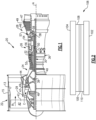
Figure 1 schematically illustrates an example gas turbine engine. -
Figure 2 schematically illustrates a ceramic component adjacent to a metallic component in the gas turbine engine ofFigure 1 . -
Figure 1 schematically illustrates agas turbine engine 20. Thegas turbine engine 20 is disclosed herein as a two-spool turbofan that generally incorporates afan section 22, acompressor section 24, acombustor section 26 and aturbine section 28. Thefan section 22 may include a single-stage fan 42 having a plurality offan blades 43. Thefan blades 43 may have a fixed stagger angle or may have a variable pitch to direct incoming airflow from an engine inlet. Thefan 42 drives air along a bypass flow path B in abypass duct 13 defined within ahousing 15 such as a fan case or nacelle, and also drives air along a core flow path C for compression and communication into thecombustor section 26 then expansion through theturbine section 28. Asplitter 29 aft of thefan 42 divides the air between the bypass flow path B and the core flow path C. Thehousing 15 may surround thefan 42 to establish an outer diameter of thebypass duct 13. Thesplitter 29 may establish an inner diameter of thebypass duct 13. Although depicted as a two-spool turbofan gas turbine engine in the disclosed nonlimiting embodiment, it should be understood that the concepts described herein are not limited to use with two-spool turbofans as the teachings may be applied to other types of turbine engines including three-spool architectures. Theengine 20 may incorporate a variable area nozzle for varying an exit area of the bypass flow path B and/or a thrust reverser for generating reverse thrust. - The
exemplary engine 20 generally includes alow speed spool 30 and ahigh speed spool 32 mounted for rotation about an engine central longitudinal axis A relative to an enginestatic structure 36 viaseveral bearing systems 38. It should be understood thatvarious bearing systems 38 at various locations may alternatively or additionally be provided, and the location ofbearing systems 38 may be varied as appropriate to the application. - The
low speed spool 30 generally includes aninner shaft 40 that interconnects, a first (or low)pressure compressor 44 and a first (or low)pressure turbine 46. Theinner shaft 40 is connected to thefan 42 through a speed change mechanism, which in the exemplarygas turbine engine 20 is illustrated as a gearedarchitecture 48 to drive thefan 42 at a lower speed than thelow speed spool 30. Theinner shaft 40 may interconnect thelow pressure compressor 44 andlow pressure turbine 46 such that thelow pressure compressor 44 andlow pressure turbine 46 are rotatable at a common speed and in a common direction. In other embodiments, thelow pressure turbine 46 drives both thefan 42 andlow pressure compressor 44 through the gearedarchitecture 48 such that thefan 42 andlow pressure compressor 44 are rotatable at a common speed. Although this application discloses gearedarchitecture 48, its teaching may benefit direct drive engines having no geared architecture. Thehigh speed spool 32 includes anouter shaft 50 that interconnects a second (or high)pressure compressor 52 and a second (or high)pressure turbine 54. Acombustor 56 is arranged in theexemplary gas turbine 20 between thehigh pressure compressor 52 and thehigh pressure turbine 54. Amid-turbine frame 57 of the enginestatic structure 36 may be arranged generally between thehigh pressure turbine 54 and thelow pressure turbine 46. Themid-turbine frame 57 further supports bearingsystems 38 in theturbine section 28. Theinner shaft 40 and theouter shaft 50 are concentric and rotate viabearing systems 38 about the engine central longitudinal axis A which is collinear with their longitudinal axes. - Airflow in the core flow path C is compressed by the
low pressure compressor 44 then thehigh pressure compressor 52, mixed and burned with fuel in thecombustor 56, then expanded through thehigh pressure turbine 54 andlow pressure turbine 46. Themid-turbine frame 57 includesairfoils 59 which are in the core flow path C. Theturbines low speed spool 30 andhigh speed spool 32 in response to the expansion. It will be appreciated that each of the positions of thefan section 22,compressor section 24,combustor section 26,turbine section 28, and fandrive gear system 48 may be varied. For example,gear system 48 may be located aft of the low pressure compressor, or aft of thecombustor section 26 or even aft ofturbine section 28, andfan 42 may be positioned forward or aft of the location ofgear system 48. - The
low pressure compressor 44,high pressure compressor 52,high pressure turbine 54 andlow pressure turbine 46 each include one or more stages having a row of rotatable airfoils. Each stage may include a row of vanes adjacent the rotatable airfoils. The rotatable airfoils are schematically indicated at 47, and the vanes are schematically indicated at 49. - The
engine 20 may be a high-bypass geared aircraft engine. The bypass ratio can be greater than or equal to 10.0 and less than or equal to about 18.0, or more narrowly can be less than or equal to 16.0. The gearedarchitecture 48 may be an epicyclic gear train, such as a planetary gear system or a star gear system. The epicyclic gear train may include a sun gear, a ring gear, a plurality of intermediate gears meshing with the sun gear and ring gear, and a carrier that supports the intermediate gears. The sun gear may provide an input to the gear train. The ring gear (e.g., star gear system) or carrier (e.g., planetary gear system) may provide an output of the gear train to drive thefan 42. A gear reduction ratio may be greater than or equal to 2.3, or more narrowly greater than or equal to 3.0, and in some embodiments the gear reduction ratio is greater than or equal to 3.4. The gear reduction ratio may be less than or equal to 4.0. The fan diameter is significantly larger than that of thelow pressure compressor 44. Thelow pressure turbine 46 can have a pressure ratio that is greater than or equal to 8.0 and in some embodiments is greater than or equal to 10.0. The low pressure turbine pressure ratio can be less than or equal to 13.0, or more narrowly less than or equal to 12.0.Low pressure turbine 46 pressure ratio is pressure measured prior to an inlet oflow pressure turbine 46 as related to the pressure at the outlet of thelow pressure turbine 46 prior to an exhaust nozzle. It should be understood, however, that the above parameters are only exemplary of one embodiment of a geared architecture engine and that the present invention is applicable to other gas turbine engines including direct drive turbofans. All of these parameters are measured at the cruise condition described below. - A significant amount of thrust is provided by the bypass flow B due to the high bypass ratio. The
fan section 22 of theengine 20 is designed for a particular flight condition -- typically cruise at about 0.8 Mach and about 35,000 feet (10,668 meters). The flight condition of 0.8 Mach and 35,000 ft (10,668 meters), with the engine at its best fuel consumption - also known as "bucket cruise Thrust Specific Fuel Consumption ('TSFC')" - is the industry standard parameter of lbm of fuel being burned divided by lbf of thrust the engine produces at that minimum point. The engine parameters described above, and those in the next paragraph are measured at this condition unless otherwise specified. - "Fan pressure ratio" is the pressure ratio across the
fan blade 43 alone, without a Fan Exit Guide Vane ("FEGV") system. A distance is established in a radial direction between the inner and outer diameters of thebypass duct 13 at an axial position corresponding to a leading edge of thesplitter 29 relative to the engine central longitudinal axis A. The fan pressure ratio is a spanwise average of the pressure ratios measured across thefan blade 43 alone over radial positions corresponding to the distance. The fan pressure ratio can be less than or equal to 1.45, or more narrowly greater than or equal to 1.25, such as between 1.30 and 1.40. "Corrected fan tip speed" is the actual fan tip speed in ft/sec divided by an industry standard temperature correction of [(Tram °R) / (518.7 °R)]0.5. The corrected fan tip speed can be less than or equal to 1150.0 ft / second (350.5 meters/second), and can be greater than or equal to 1000.0 ft / second (304.8 meters/second). - Various areas of the
engine 20 include seals. For instance, theturbine section 28 may include seals between adjacent platforms of the vanes of the rows of vanes. As another example, theturbine section 28 may include seals between tips of the blades in the rows of blades andengine 20 casing structures, known as blade outer air seals or BOAS. Other examples are also contemplated. -
Figure 2 schematically illustrates two components in thegas turbine engine 20. Thefirst component 102 is a metallic component and thesecond component 104 is a ceramic component, such as a ceramic matrix composite. Ceramic matrix composites ("CMCs") are known in the art and will not be described in detail herein, but generally include ceramic-based reinforcements such as fibers (which may be continuous) disposed in a ceramic-based matrix material. In the case of ceramic matrix composite seals, the reinforcements can be two-dimensional/three-dimensional textiles made from unidirectional, woven, braided, knitted, or nonwoven fibers. Thecomponents 102/104 are arranged adjacent one another with aninterface 106 between them. - The
components 102/104 can be any component of thegas turbine engine 20, but in one example are not in the path of the core air flow C. In one particular example, thecomponent 102 is anengine 20 casing structure and thecomponent 104 is a component that is attached to the engine casing structure such as a hook of a vane in theturbine section 28 orcompressor section 24, a nozzle liner such as for the example nozzle discussed above, or flanges of a blade outer air seal. - A
seal 105 is situated at a sealinginterface 106 between thecomponents 102/104. Theseal 105 can be any kind of ceramic matrix composite seal. - A silicon-based
coating 108 is disposed on thesecond component 104 at the sealinginterface 106. The silicon-basedcoating 108 is machinable in that it can be subject to grinding, ultrasonic machining, water guided laser, milling, or another machining method after being applied by any conventional method to reduce it thickness and/or smooth its surface without any negative effects to its integrity. In general, the silicon-basedcoating 108 provides a smoother sealing surface than theunderlying CMC component 104 either before or after machining, which contributes to improved efficacy of the seal between thecomponents 102/104. For example, the silicon-basedcoating 108 has a final surface roughness Ra of less than about 200 µin (5.08 µm) after being applied, or after machining if the silicon-basedcoating 108 is subject to machining. - The silicon-based
coating 108 may include rare earth silicates, alkaline earth silicates, alkaline earth aluminosilicates, silicon, silicon oxides, silicon carbides, silicon oxycarbides, barium-magnesium aluminosilicate, mullite, zircon, or hafnon. In a particular example, the silicon-basedcoating 108 includes silicon, silicon oxides or silicon oxycarbides. In one example, the silicon-basedcoating 108 is at least 50 atomic percent silicon (50 at% silicon). - In one example, the silicon-based
coating 108 has a thickness between about 20 and about 100 mils (between about 0.508 mm and about 2.54 mm). Because thecoating 108 is relatively thin, it can be used in areas of theengine 20 with tight tolerances for adjacent components, such as between a vane and vane support, between a vane and blade outer air seal, and between a blade outer air seal and blade outer air seal carrier. The silicon-based coating can accommodate stress buildup at the sealinginterface 106 and has good coefficient of thermal expansion match with thecomponent 104. - The silicon-based
coating 108 is the outermost coating on thecomponent 104 at the sealinginterface 106. In some examples, the silicon-basedcoating 108 acts as an environmental barrier. - In some examples, other coatings are also disposed on the
component 104. - A
non-reactive coating 110 is disposed on thecomponent 102. Thenon-reactive coating 110 is generally non-reactive with respect to thecomponent 102, thecomponent 104 and any coatings thereon, including the silicon-basedcoating 108, and provides thermochemical insulation (or protection) between the metal of thecomponent 102 and theCMC component 104 and any coatings thereon, including the silicon-basedcoatings 108. Thermochemical protection is defined as protection against unwanted chemical interactions. Such unwanted chemical reactions between the metal of thecomponent 102 and theCMC component 104 and any coatings thereon, including theCMC component 104 can degrade or otherwise interfere with the longevity or effectiveness of theseal 105, sealinginterface 106, and each of thecomponents 102/104. The non-reactive coating can be machinable like the silicon-basedcoating 108. In general, thenon-reactive coating 110 is free of free silicon. Thenon-reactive coating 110 may be, for instance, zirconia- or hafnia-based material. In some particular examples, one or more metallic bond coat layers may be disposed between thecomponent 102 and thenon-reactive coating 110 to enhance bonding between thenon-reactive coating 110 and thecomponent 102. For example, the non-reactive 110 has a final surface roughness Ra of less than about 200 µin (5.08 µm) after being applied, or after machining if thenon-reactive coating 110 is subject to machining. - In general, the
non-reactive coating 110 provides a smoother sealing surface than theunderlying metal component 102 either before or after machining, which contributes to improved efficacy of the seal between thecomponents 102/104. - As used herein, the term "about" has the typical meaning in the art, however in a particular example "about" can mean deviations of up to 10% of the values described herein.
- Although a combination of features is shown in the illustrated examples, not all of them need to be combined to realize the benefits of various embodiments of this disclosure. In other words, a system designed according to an embodiment of this disclosure will not necessarily include all of the features shown in any one of the figures or all of the portions schematically shown in the figures. Moreover, selected features of one example embodiment may be combined with selected features of other example embodiments.
- Although an embodiment of this invention has been disclosed, a worker of ordinary skill in this art would recognize that certain modifications would come within the scope of this disclosure. For that reason, the following claims should be studied to determine the true scope and content of this disclosure.
Claims (13)
- A section of a gas turbine engine (20), comprising:a ceramic component (104);a metallic component (102);a seal (105) situated between the metallic component (102) and the ceramic component (104) at a sealing interface (106);a silicon-based coating (108) disposed on the ceramic component (104) at the sealing interface (106); anda non-reactive coating (110) disposed on the metallic component (102) at the sealing interface (106), the non-reactive coating (110) providing thermochemical protection against interaction between the ceramic component (104) and the metallic component (102), and between the silicon-based coating (108) and the metallic component (102).
- The section of claim 1, wherein the silicon-based coating (108) and/or the non-reactive coating (110) are machinable by grinding, ultrasonic machining, water guided laser, and/or milling.
- The section of claim 1 or 2, wherein the silicon-based coating (108) has a thickness of between about 20 mil (0.508 mm) and about 100 mils (2.54 mm).
- A method of providing a seal (105) in a gas turbine engine (20), the method comprising:providing a seal (105) at a sealing interface (106) between a ceramic component (104) and a metallic component (102);disposing a silicon-based coating (108) on the ceramic component (104) at the sealing interface (106); anddisposing a non-reactive coating (110) on the metallic component (102) at the sealing interface (106), the non-reactive coating (110) providing thermochemical protection against interaction between the ceramic component (104) and the metallic component (102), and between the silicon-based coating (108) and the metallic component (102).
- The method of claim 4, further comprising machining the silicon-based coating (108) and/or the non-reactive coating (110) by grinding, ultrasonic machining, water guided laser, and/or milling, wherein the machining smooths a surface of the silicon-based coating (108) or the non-reactive coating (110).
- The section or method of any preceding claim, wherein the silicon-based coating (108) has a surface roughness Ra of less than about 200 µin (5.08 µm) after the machining.
- The section or method of any preceding claim, wherein the silicon-based coating (108) includes at least one of rare earth silicates, alkaline earth silicates, alkaline earth aluminosilicates, silicon, silicon oxides, silicon carbides, silicon oxycarbides, barium-magnesium aluminosilicate, mullite, hafnon, zircon, and combinations thereof.
- The section of claim 7, wherein the silicon-based coating (108) includes silicon, silicon oxides and/or silicon oxycarbides.
- The section or method of any preceding claim, wherein the silicon-based coating (108) is at least 50 atomic percent silicon.
- The section or method of any preceding claim, wherein the non-reactive coating (110) is zirconia- or hafnia-based.
- The section or method of any preceding claim, wherein the silicon-based coating (108) acts as an environmental barrier.
- The section or method of any preceding claim, wherein the ceramic component (104) is a ceramic matrix composite component.
- The section or method of any preceding claim, wherein the seal (105) is a ceramic matrix composite seal.
Applications Claiming Priority (1)
| Application Number | Priority Date | Filing Date | Title |
|---|---|---|---|
| US18/157,450 US20240246872A1 (en) | 2023-01-20 | 2023-01-20 | Sealing interface |
Publications (1)
| Publication Number | Publication Date |
|---|---|
| EP4403748A1 true EP4403748A1 (en) | 2024-07-24 |
Family
ID=89662190
Family Applications (1)
| Application Number | Title | Priority Date | Filing Date |
|---|---|---|---|
| EP24152997.3A Pending EP4403748A1 (en) | 2023-01-20 | 2024-01-19 | Sealing between ceramic and metallic component of a gas turbine engine |
Country Status (2)
| Country | Link |
|---|---|
| US (1) | US20240246872A1 (en) |
| EP (1) | EP4403748A1 (en) |
Citations (3)
| Publication number | Priority date | Publication date | Assignee | Title |
|---|---|---|---|---|
| FR3059323A1 (en) * | 2016-11-29 | 2018-06-01 | Safran Ceramics | ASSEMBLY OF A CMC PIECE ASSEMBLED ON A METALLIC ELEMENT, METHOD OF MANUFACTURING SUCH AN ASSEMBLY |
| US20230015977A1 (en) * | 2021-07-16 | 2023-01-19 | Raytheon Technologies Corporation | Ceramic component having silicon layer and barrier layer |
| US20230019497A1 (en) * | 2021-07-16 | 2023-01-19 | Raytheon Technologies Corporation | Seal system having silicon layer and barrier layer |
Family Cites Families (6)
| Publication number | Priority date | Publication date | Assignee | Title |
|---|---|---|---|---|
| US7989086B2 (en) * | 2003-11-05 | 2011-08-02 | Hamilton Sundstrand Corporation | High temperature seal for joining ceramic components such as cells in a ceramic oxygen generator |
| US8876481B2 (en) * | 2011-01-05 | 2014-11-04 | General Electric Company | Turbine airfoil component assembly for use in a gas turbine engine and methods for fabricating same |
| US10294802B2 (en) * | 2014-12-05 | 2019-05-21 | Rolls-Royce American Technologies, Inc. | Turbine engine components with chemical vapor infiltrated isolation layers |
| US20170030211A1 (en) * | 2015-07-28 | 2017-02-02 | General Electric Company | Seals with a conformable coating for turbomachinery |
| US10519807B2 (en) * | 2017-04-19 | 2019-12-31 | Rolls-Royce Corporation | Seal segment retention ring with chordal seal feature |
| DE102017207238A1 (en) * | 2017-04-28 | 2018-10-31 | Siemens Aktiengesellschaft | Sealing system for blade and housing |
-
2023
- 2023-01-20 US US18/157,450 patent/US20240246872A1/en active Pending
-
2024
- 2024-01-19 EP EP24152997.3A patent/EP4403748A1/en active Pending
Patent Citations (3)
| Publication number | Priority date | Publication date | Assignee | Title |
|---|---|---|---|---|
| FR3059323A1 (en) * | 2016-11-29 | 2018-06-01 | Safran Ceramics | ASSEMBLY OF A CMC PIECE ASSEMBLED ON A METALLIC ELEMENT, METHOD OF MANUFACTURING SUCH AN ASSEMBLY |
| US20230015977A1 (en) * | 2021-07-16 | 2023-01-19 | Raytheon Technologies Corporation | Ceramic component having silicon layer and barrier layer |
| US20230019497A1 (en) * | 2021-07-16 | 2023-01-19 | Raytheon Technologies Corporation | Seal system having silicon layer and barrier layer |
Also Published As
| Publication number | Publication date |
|---|---|
| US20240246872A1 (en) | 2024-07-25 |
Similar Documents
| Publication | Publication Date | Title |
|---|---|---|
| US11624292B2 (en) | Feather seal for CMC BOAS | |
| EP3792454A1 (en) | Intersegment seal for cmc boas assembly | |
| EP4086436A1 (en) | Gas turbine vane assembly | |
| EP4063619A1 (en) | A blade outer air seal for a gas turbine engine | |
| EP2971691B1 (en) | A gas turbine liner for a fan case comprising a torque stop | |
| EP4350126A1 (en) | Blade outer air seal cooling arrangement | |
| EP4379192A1 (en) | Seal slot with coating | |
| EP4379191A1 (en) | Seal slot with coating and method of coating a seal slot | |
| EP4345256B1 (en) | Gas turbine engine and gas turbine engine component | |
| EP4385969A1 (en) | Article and method of making an article by chemical vapor infiltration | |
| EP4086435B1 (en) | Variable thickness machinable coating for platform seals | |
| EP4403748A1 (en) | Sealing between ceramic and metallic component of a gas turbine engine | |
| EP4386181A1 (en) | Gas turbine engine coating with thermal protection | |
| EP4386180A1 (en) | Gas turbine engine coating with thermal protection | |
| EP4325029B1 (en) | Gas turbine engine stator vanes formed of ceramic matrix composites and having attachment flanges | |
| EP4361400A1 (en) | Seal with coating and method of fabricating | |
| EP4385968A1 (en) | Article and method of making a ceramic matrix composite article | |
| EP4071337B1 (en) | Ceramic component with support structure | |
| EP4417788A1 (en) | Gas turbine engine blade and method of sizing a damper for a gas turbine engine blade | |
| EP4435232A1 (en) | Gas turbine engine blade and method of making a gas turbine engine blade | |
| US12291971B1 (en) | Blade outer air seal with graded coating | |
| EP4080018B1 (en) | Vane arc segment with flange having step and method of fabricating a vane arc segment |
Legal Events
| Date | Code | Title | Description |
|---|---|---|---|
| PUAI | Public reference made under article 153(3) epc to a published international application that has entered the european phase |
Free format text: ORIGINAL CODE: 0009012 |
|
| STAA | Information on the status of an ep patent application or granted ep patent |
Free format text: STATUS: THE APPLICATION HAS BEEN PUBLISHED |
|
| AK | Designated contracting states |
Kind code of ref document: A1 Designated state(s): AL AT BE BG CH CY CZ DE DK EE ES FI FR GB GR HR HU IE IS IT LI LT LU LV MC ME MK MT NL NO PL PT RO RS SE SI SK SM TR |
|
| STAA | Information on the status of an ep patent application or granted ep patent |
Free format text: STATUS: REQUEST FOR EXAMINATION WAS MADE |
|
| 17P | Request for examination filed |
Effective date: 20250124 |