EP4403263B1 - Système de broyage de farine optimisé avec rendement de broyage amélioré et procédé associé - Google Patents
Système de broyage de farine optimisé avec rendement de broyage amélioré et procédé associé Download PDFInfo
- Publication number
- EP4403263B1 EP4403263B1 EP23152934.8A EP23152934A EP4403263B1 EP 4403263 B1 EP4403263 B1 EP 4403263B1 EP 23152934 A EP23152934 A EP 23152934A EP 4403263 B1 EP4403263 B1 EP 4403263B1
- Authority
- EP
- European Patent Office
- Prior art keywords
- flour
- moisture
- milling machine
- grains
- flour milling
- Prior art date
- Legal status (The legal status is an assumption and is not a legal conclusion. Google has not performed a legal analysis and makes no representation as to the accuracy of the status listed.)
- Active
Links
Images








Classifications
-
- B—PERFORMING OPERATIONS; TRANSPORTING
- B02—CRUSHING, PULVERISING, OR DISINTEGRATING; PREPARATORY TREATMENT OF GRAIN FOR MILLING
- B02C—CRUSHING, PULVERISING, OR DISINTEGRATING IN GENERAL; MILLING GRAIN
- B02C25/00—Control arrangements specially adapted for crushing or disintegrating
-
- B—PERFORMING OPERATIONS; TRANSPORTING
- B02—CRUSHING, PULVERISING, OR DISINTEGRATING; PREPARATORY TREATMENT OF GRAIN FOR MILLING
- B02C—CRUSHING, PULVERISING, OR DISINTEGRATING IN GENERAL; MILLING GRAIN
- B02C4/00—Crushing or disintegrating by roller mills
- B02C4/02—Crushing or disintegrating by roller mills with two or more rollers
- B02C4/06—Crushing or disintegrating by roller mills with two or more rollers specially adapted for milling grain
Definitions
- the present invention relates to devices, systems, and methods for improving yield of milling machines by optimizing flour mill.
- it relates to devices, systems, and methods for generating dampening control that can be tested, benchmarked, and selected in a virtual environment (modelling structure, digital twin representation) before deploying the best or otherwise selected one in a real mill.
- the tempering process is a sensitive key process in wheat flour milling that technically requires proper adjustments to achieve a desired level of flour quality and yield.
- the present invention provides an automated system enabled to predict the moisture content of wheat at the end of tempering and to optimize steering of the flour mill.
- the present invention relates to an intelligent, self-adaptive regulation and control device for the automated regulation and control of milling systems as grinding and roller systems, in particular mill installations with a roller mill, but also mill systems and grinding installations in general.
- Milling in particular grain milling, is also referred to as an art.
- the number of relevant factors that influence the grinding quality and also the yield of the processed final product is extraordinarily high in the milling industry. It is therefore often necessary for a miller, as human expert, to manually adjust and set the entire grinding or milling installation following analysis of the starting/raw material based on his intuition and know-how in order to obtain the best possible results in terms of the expected quality and yield of the final product (e.g. ash content, yield, baking quality, etc.).
- the grinding properties of the starting material are fundamental for the grinding process. Since the grinding installation must typically be regulated by the head miller, the head miller also has decisive influence on and control of the characteristics of the produced flour. This starts with the choice of the wheat class, which can refer to both the market class and to the place or region of production of the wheat, to influence certain grain attributes such as a certain protein range.
- the miller also controls the wheat blend/grists, which are added to the grinding installation.
- the miller can also measure the mill flow, roller speed, speed differentials, distribution of the fluted rollers, e.g.
- the miller has additional regulation options in combination with sieving and cleaning and finally in the grinding current selection for mixing the final flour produced. All these parameters and regulation options are used by the miller to consistently produce flour of a certain quality.
- Flour milling is a process where grains are added into a flour milling machine to obtain flour from the grains.
- Wheat is one of an important and primary grain used for consumption across the world. Wheat flour is used for making bread, tortillas, and such consumable dishes that are consumed almost daily in the world.
- the wheat is prepared and grinded in the flour mill.
- the wheat grains are first cleaned to remove wheat straws, unwanted grains, and any other waste materials. Water is added to the cleaned raw wheat in a cleaning section of a flour mill and kept for some time. Water is added with an objective to reach a defined moisture target value of the grain which yields optimal milling conditions. Adding water and keeping it for a defined amount of time is called as conditioning.
- the conditioning process is a continuous process. After addition of the moisture, the wheat is kept for a defined period of time in tempering bins for a time of typically 8 - 24 hours (also referred to as conditioning). Post the defined period of time, the moisture wheat is processed into flour by the flour milling machine. Current flour milling is a time-consuming process requiring 6-12 hours to prepare the grains, mill the grains and obtain the flour.
- Optimal milling performance hereby can be defined as one or a combination of following influence factors, providing significant commercial benefit for a flour producer: (i) Maximum achievable milling yield, while complying with quality specifications; (ii) Maximum achievable flour production rate based on flow rate of wheat into the milling section, while complying with quality specifications; and (iii) Moisture of flour consistently as close as possible to a target value set by quality specifications.
- the milling performance includes but are not limited to: (i) Type of wheat; (ii) Type of flour to be produced and quality specifications; (iii) Ambient conditions (temperature, humidity, pressure) at time of conditioning and milling; (iv) Grain temperature; (v) Process settings in the milling section (e.g., roller mill gaps, roller wear, sifter sieve configuration and such configurations); (vi) Moisture of raw wheat; (vii) Moisture of conditioned wheat (wheat mixed with moisture for a defined period of time) when entering the flour milling machine; and (viii) Duration of conditioning of the wheat, and varying time lag between dampening and milling.
- the flour mills leave some carbon footprints.
- Suboptimal production of flour may lead to more power consumption and in turn increase the carbon footprint. Due to the large number of flour mills globally, the suboptimal productions may have significant negative global impact of the order of several million tons of carbon emissions annually. Also, the suboptimal production may lead to more raw material per ton of flour and their associated costs.
- the document WO 2010/135152 A1 discloses a system for wheat milling, in particular for commercial scale milling of wheat are disclosed.
- the system processes in multiple tempering steps of controlled duration and cubing of the wheat kernel between two tempering steps.
- the cubing between the temperingg breaks the kernels, or stresses the kernels, in a manner that enables a high degree of separation of the bran and endosperm early in the flour production process.
- the process includes tempering for a first period between one hour and 2 hours, cubing in a roll crusher with longitudinal corrugation on one roll and circumferential corrugation on a second roll, removing fines from the cubed kernels, and further tempering of the cubed kernels for a period between hour and 2 hours.
- WO 2022/178605 A1 shows a modular grain crusher system comprising valves, a PLC connected to the valves, and an external optimizer connected to the PLC, in which the external optimizer determines a pressure reference (A), and controls a crushing pressure the basis of the pressure reference (A) obtained.
- the document US 11,065,626 B2 discloses a system for automated optimization of a grinding line by a self-optimizing, adaptive product process for grinding and crushing cereals and seeds. The grinding and crushing takes place in at least one roller mill which includes a roller pair. To detect the temperature of the surfaces of the rollers, at least two temperature sensors are disposed on at least one of the rollers. The detected temperature measurement values are used for optimal adjustment and signal generation of the roller setting.
- the system should be enabled to automatically achieve a desired level of flour quality at maximum yield by proper and automated adjustments of the tempering process as a key process in the wheat flour milling.
- the system should provide automated and precise forecast and prediction of the moisture content of the wheat at the end of the tempering process or at the end of each stage of the tempering process.
- the above-mentioned objects related to a milling system for improving milling yield of a flour milling machine to obtain optimized milling yield of flour by an optimized milling process for grains as raw material to be processed by the milling machine are achieved, particularly, in that the system comprises a flour milling machine comprising an electronic controller, a water dosing unit, an operations data storage for storing historical flour milling machine operations data, and a first processing unit coupled to the operations data, in that the first processing unit comprises a machine interface for receiving historical flour milling machine operations data from the operations data storage, and a machine-learning-based modelling engine for generating at least one digital model structure based on historical flour milling operation data, the historical flour milling machine operations data at least comprise historical raw material and/or operational and/or environmental characteristics parameter values of a flour milling machine, and the digital model structure being trained by applying the historical flour milling machine operations data as input values, wherein the raw material and/or operational and/or environmental characteristics parameters at least comprise types of grains and/or temperature of the grains and
- the digital model structure can e.g. capture non-linear dependencies between types of grains, temperature of the grains during milling, moisture in the raw grains dampening time to condition the grains, moisture in conditioned grains, flour consistency specifications, ambient conditions at the flour milling machine, flour milling machine settings, types of flours produced from the grains, and yield of the flour milling machine and determine the target moisture to generate maximum yield using the one or more machine learning model structures.
- the system can e.g. further comprise a second processing unit, coupled to the first processing unit and the flour milling machine.
- the second processing unit includes a second machine interface for receiving ambient conditions at the flour milling machine from an input source, a type of grain and a value of moisture in the grains, and a second processing unit for executing the at least one machine learning model structure to generate an optimal control strategy to determine the target moisture, based on the ambient conditions and the value of moisture in the grains.
- the flour milling machine operations data includes types of grains, temperature of the grains during milling, moisture in the raw grains, dampening time to condition the grains, moisture in conditioned grains, flour consistency specifications, ambient conditions at the flour milling machine, flour milling machine settings, types of flours produced from the grains, and yield of the flour milling machine for the grains at different temperatures, different moisture levels, different dampening periods, different ambient conditions and different flour milling machine settings, wherein the flour milling machine settings comprise roller mill gaps, sifter sieve configuration, and roller wears
- the flour milling machine can e.g. comprise a manufacturing execution unit to enable adjustment of moisture addition setpoints.
- the system includes a data exchange repository coupled to the first processing unit and the flour milling machine for exchanging data associated with the operation of the flour milling machine, logging the data and storing the one or more machine learning model structures.
- a method for improving milling yield of a flour milling machine to obtain optimized milling yield and raw material usage including receiving, from an operation data storage, a historical flour milling machine operations data, generating, by a modelling engine of a first processing unit, at least one machine learning model structure to determine a target moisture based on historical flour milling machine operations data using machine learning, training the digital model structure with a training data to determine an influence of moisture levels among influencing factors on flour yield, wherein the influencing factors comprise types of grains, temperature of the grains, moisture in the raw grains, duration of conditioning to condition the grains, moisture in conditioned grains, flour consistency specifications, ambient conditions at the flour milling machine, flour milling machine settings, types of flours produced from the grains, and yield of the flour milling machine and determine the target moisture to generate maximum yield using the one or more machine learning model structures, wherein the training data comprises instances from historical flour milling machine operations data having the influencing factors, determining a target moisture for a given set of influencing factors using the at least one digital model structure for obtaining maximum flour yield; communicating the
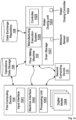
- FIG. 1 to FIG. 20 schematically illustrate an architecture for a milling system 1 comprising at least one flour milling machine 102 providing optimized milling yield 16/1602 and providing an optimized milling process for granular or grainy raw material 1501 to be processed to flour 1502 by the milling machine 102.
- the granular or grainy raw material 1501 can comprise grains and/or grain fruits of sweet grasses (poaceae) and/or legumes as chickpeas etc.
- grains inter alia, denote, fruits from cereal plants which are typically special cultivars of sweet grasses (botanically: Poaceae) with said grain fruits.
- Cereals belong to the class of angiosperms (flowering plants) within the seed plants including the deciduous trees, legumes, and nightshade family, in which the seed plant is enclosed in an ovary.
- One goal of a milling process is, inter alia, to optimize the achieved flour of the milling process in respect to the ash.
- the term of flour or grain milling machine 102 also referred to as flour or grain mill, covers all technological processes for obtaining powdered (flour-like) or just dehusked or crushed products from coarse, solid vegetable matter, here on the one hand the preparation of grain into flour, semolina, haze and meal and on the other hand within the scope of hulling milling only the dehulling, the hulling, if necessary the subsequent crushing of the grain kernel.
- the technical goal of the milling process is to produce flour that is as bran-free as possible and bran that is as flour-free as possible by maximizing the achieved yield of flour.
- the yield of type 550 flour is typically around 76-82% on average for wheat.
- the milling system 1 comprises one or more flour milling machines 102, a first processing unit 104 and/or computing device, an operations data storage 106, a data exchange repository 108, and a second processing unit 110 and/or computing device.
- the one or more flour milling machine 102s, the first processing unit 104, the operations data storage 106, the data exchange repository 108, and the second processing unit 110 may be communicatively coupled directly or through a data transmission network or a suitable data transmission data link between the units..
- the one or more flour milling machines 102 grind/mill the grains to flour.
- the flour milling machine 102 may include a controller 1025 for controlling the overall operation of the flour milling machine 102.
- the flour milling machine 102 is not explained in detail as the construction and operations are well known in the art.
- the flour milling machine 102 includes various sections including a grain storage 1021 section.
- the grain storage 1021 section is used for storing grains that would be used for milling.
- the grains are put into the grain storage 1021 post cleaning.
- the grains are cleaned to remove unwanted materials such as sticks, stones, straws, empty kernels, and such materials. Cleaning may be performed using various techniques such as using air currents, screens and such techniques to separate the grains from the chaff and other undesirable materials.
- Wheat is one of the important grain that is generally used for making flour. The rest of the disclosure is explained with reference to wheat, while the disclosure can be equally applied to other grains. Wheat has mainly three constituents known as germ, bran and endosperm. Post the cleaning, the cleaned wheat is 'conditioned'. Conditioning refers to soaking the grains in moisture 202 for a defined period of time 204 to prepare the wheat for milling or grinding. The conditioning is performed to adjust the moisture 202 level of the wheat to separate the bran from the endosperm. In some examples, wheat is conditioned to 16% moisture 202 to enable the bran to flatten the bran into large flakes during the milling process.
- the grain storage 1021 includes a moisture sensor 1022 to measure a value of moisture 202 in the wheat.
- the moisture sensor 1022 communicates the value of moisture 202 in the wheat to the first processing unit 104.
- the flour milling machine 102 grinds the wheat to flour as per the flour machine settings and consistency defined by an operator.
- Optimal milling performance hereby can be defined as one or a combination of following influence factors that provide a maximum achievable milling yield, while complying with quality specifications 1504.
- the influence factors include type of wheat (or grains) 1502, type of flour to be produced 1503 and quality specifications 1504, ambient conditions 1505 (that includes temperature, humidity, and pressure) at time of conditioning and milling, grain temperature 1506, process settings 1507 in the milling section (e.g., roller mill gaps, roller wear, sifter sieve configuration, and such configurations), moisture of raw wheat 1508, moisture of conditioned wheat 1509 (wheat mixed with moisture for a defined period of time 204) when entering the flour milling machine 102, and duration of conditioning of the wheat 1510, and varying time lag 1511 between dampening and milling.
- optimal amount of moisture 202 plays an important role.
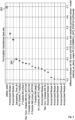
- FIG. 2 shows an analysis of various factors that influence the production of the wheat flour in the flour milling machine 102 and their relative importance (relative importance obtained through predictive modelling for the flour output rate (kg/h)).
- the analysis shows that water (moisture) added for conditioning the wheat is the most important feature that impacts the flour.
- Another important factor that can be observed from the analysis is dampening (or conditioning) time 204. These factors, that is, the moisture 202 and dampening can be used in maximizing the amount of flour produced in the mill.
- Other features such as recipe type and ambient conditions 1505 also influence the milling yield and can be used to maximize the flour production.
- the disclosure implements the first processing unit 104.
- the first processing unit 104 is used for improving milling yield of the flour milling machine 102 to obtain optimized milling yield for a given raw material usage.
- the first processing unit 104 may be a digital data processing unit or device, a server, a computer or a cloud device that can be accessed directly or over the network.
- the first processing unit 104 includes an input interface 1041 to receive input from a user or an operator.
- the first processing unit 104 includes a machine interface 1042.
- the machine interface 1042 receives historical flour milling machine operations data from the operations data storage 106.
- the historical flour milling machine operations data includes the data such as types of grains fed to the flour milling machine, temperature of the grains during milling, moisture in the raw grains, dampening time to condition the grains, moisture in conditioned grains, flour consistency specifications, ambient conditions 1505 at the flour milling machine 102, flour milling machine 102 settings, types of flours produced 1503 from the grains, and yield of the flour milling machine 102 for the grains at different temperatures, different moisture levels, different dampening periods, different ambient conditions 1505 and different flour milling machine 102 settings.
- the flour milling machine 102 settings include roller mill gaps, sifter sieve configuration, and roller wears.
- the historical flour milling machine operations may have been captured automatically and stored in the operations data storage 106 or may have been manually recorded and stored in the operations data storage 106.
- the machine interface 1042 also receives ambient conditions 1505 at the flour milling machine 102 from an input source.
- the input source may be a local weather report portal that provides information on temperature, humidity and atmospheric conditions of a local area that includes the flour milling machine 102.
- the types of grains may include, inter alia, mainly Triticum vulgare (aestivum), Triticum durum and Triticum compactum.
- Triticum vulgare aestivum
- Triticum durum Triticum durum
- Triticum compactum Triticum vulgare
- wheats used from six different wheat classes that include hard red winter, hard red spring, soft red winter, durum, hard white wheat, and soft white wheat.
- the type of wheat used for the flouring may be based on the recipe of the flour.
- Temperature of the grains during milling may vary from season to season. In some examples, the grains are milled in the room temperature. In some examples, the grains are warmed or cooled with moisture before milling, referred to as conditioning temperature.
- a lot of flour milling operators condition the wheat to a range of 22-28 °C for better moisture absorption and ease of milling, and the temperature of the wheat is known to rise by 3-5 °C during tempering. Moisture in the raw grains are generally between 8% to 25%. Many times the flour milling organizations procure wheat having 15- 20% moisture as the wheat in aforementioned range preserves the quality of grain for longer durations. In some examples, the flour milling organizations dry the procured wheat to arrive at a range of 13-18% moisture for best results.
- the dampening time 204 (interchangeably referred to as conditioning time) to condition the wheat refers to the time that is provided to enable water to penetrate the kernels of the wheat.
- some flour milling organizations use mixers such as low-speed mixers and dampeners for dampening process.
- the dampening time 204 may depend on the flouring requirements and moisture in the wheat. If the wheat has high moisture, the conditioning time may be less required. If the wheat has low moisture and the wheat is hard, more conditioning time may be required, sometimes up to 72 hours to increase the moisture content in the wheat. The moisture in conditioned grains is one of the important factor that determines the quality of flour.
- the moisture content around milling is generally maintained is about 16.0-17.0%
- the moisture content that is generally maintained is about 15.5-16.0%
- the moisture content that is maintained is about 15.0-15.5%
- the moisture content that is maintained is about 14.5-15.0%.
- the flour consistency specifications are requirements of flouring.
- the consistency specifications include fine milled, coarsely milled, and semi-finely milled flours.
- the ambient conditions 1505 at the flour milling machine 102 include temperature, atmospheric pressure, and humidity at the time of milling. The temperature is known to rise at the flour milling machine 102 by a few degrees during milling due to friction while milling.
- the flour milling machine 102 settings include roller mill gaps, roller wear, sifter sieve configuration and the like that is used for making flour of different consistencies.
- the types of flours produced from the grains may be based on the recipe of the flour. Examples of flour include, but are not limited to, all-purpose flour, bread flour, cake flour, and pastry flour.
- the first processing unit 104 includes a modelling engine 1043 to process historical flour milling machine operations.
- the modelling engine 1043 may collect relevant data and instances that can be used for training and testing a machine learning model structure.
- the modelling engine 1043 uses may use predictive modeling to capture the non-linear dependencies of the influencing factors and particularly to determine water (moisture) to be added for conditioning the wheat to maximize flour extraction.
- the predictive modeling may refer to a statistical technique that is capable of predicting related, future events or related behavior.
- the predictive digital modeling involves forecasting or predicting related or future outcomes or events by analyzing different patterns based on past events.
- the predictive modeling includes analyzing the historical flour milling machine operations to capture the non-linear dependencies of the influencing factors.
- the modelling engine 1043 may use a process of predictive analysis that includes, inter alia, descriptive analysis of the historical flour milling machine operations, data preparation, data modeling and performance estimation.
- the step of descriptive analysis of the historical flour milling machine operations data includes analysis of data to understand various relationships and dependencies.
- descriptive analysis may include analysis of influence factors and impact on the flour production.
- the descriptive analysis may involve recognizing the flour milling machine 102 yield or the quantity of wheat flour generated in an exemplary flour milling operation using a x type of wheat at a given temperature, with a requirement of flour to be coarse when the ambient condition in the flour milling machine 102 was hot, humid and having normal pressure at a time of milling, type of setting in the flour milling machine 102, y amount of moisture in the raw wheat, z amount of moisture in the conditioned wheat, and a duration of conditioned wheat.
- the descriptive analysis step of the historical flour milling machine operations data involves analyzing and identifying various relationships and dependencies from such several instances and their impact on flour production. In some examples, the instances may be in order of several thousands or millions or more or less.
- the step of data preparation may include preparing the historical flour milling machine operations data.
- the values may be outliers.
- a moisture content in the conditioned wheat may be abnormal to be termed as outlier in one of the historical milling operations. In such instances, the outlier value may be removed or normalized based on the other values.
- the flour mill output may be significantly higher than expected than general output for a given wheat input. In such instances, such instances may be discarded or normalized based on the other data.
- the step of data modeling involves using modeling the prepared data by choosing appropriate machine learning techniques. Since predictive modelling uses known results to generate, process, and validate a model structure that is used to forecast future events and outcomes, known predictive modeling techniques may be used. Some examples of predictive modeling techniques include but are not limited to decision trees, regression, Bayesian analysis and neural networks. In some examples, neural networks and regression may be used in data modeling for the historical flour milling machine operations data.
- the modelling engine 1043 generates a digital model structure of the flour milling machine 102 based on the predictive modeling. In one example, the digital model structure may be a machine learning module generated using machine learning techniques.
- the digital model structure may be an artificial intelligence (Al) model structure generated by combining the historical flour milling machine operations data with intelligent, iterative processing algorithms to learn from patterns and features in the data that they analyze.
- the digital model structure may be an output of a training process and can be a representation of the real-world flour milling machine 102.
- the digital model structure may implement the non-linear dependencies of the influencing factors that affects milling performance and flour yielding of the flour milling machine 102.
- the factor of water (moisture) to be added for conditioning the wheat to maximize flour extraction for a given amount of wheat may be determined.
- performance estimation may be performed, e.g. by measuring parameter values processing.
- Neural networks may refer to method modelled on a human mind that teaches a processing unit to process data in a way the human does.
- the neural networks may be employed for identifying non-linear relationships preferably emulating the way that a human identifies in accordance with the disclosure.
- the neural networks include multiple layers of receptive fields that are small neuron collections configured to process portions of the data. The output of each layer is successively tiled such that the input overlaps to obtain a representation of the data.
- framework such as Caffe that uses MATLAB and Python programming languages may be used in implementing the neural networks along with appropriate python analytics libraries.
- a pre-defined dataset from the historical flour milling machine operations data comprising, for example, 40000 rounds of operations are used as a training dataset for training the digital model structure, although more data operations can be used.
- the training dataset comprises labels associated with each round of operation.
- the labelled data are pre-processed and stored in a Python script format.
- the training dataset may be then divided into 2 subsets.
- First subset called the training set comprises 4/5 th portion of the training dataset that are used for training the data model structure.
- the first subset may include of about 85-90% of the training dataset for training the data model structure.
- the second subset called a test set comprises 1/5 th portion of the training dataset data of operation are used for calculating and validating accuracy of the model structure as shown in 304.
- the test set can have 50-15% of the training dataset of the operation.
- the digital model structure performs classification using the training set.
- the classification is a training process that may involve supervised or unsupervised machine learning, in which the digital model structure learns from the training set provided therefor.
- the digital model structure uses this learning to classify new observations.
- the digital model structure learns from various operations in which different influencing factors lead to different flour output.
- the digital model structure captures the non-linear dependencies of the influencing factors that affects milling performance of the flour milling machine 102 and particularly, the effect of the influencing factor of water (moisture) on flour extraction for different amounts of wheat.
- the training dataset includes instances where the flour outcomes were obtained for different combinations of influencing factors.
- hard spring wheat with a moisture content of 16% led to a flour yield of 92% for a wholemeal flour.
- another instance showed that hard spring wheat with a moisture content of 17% led to a flour yield of 95% for a wholemeal flour.
- a hard red winter wheat with a moisture content of 15.5% led to a flour yield of 84% for a brownish flour.
- one instance showed that hard red winter wheat with a moisture content of 16% led to a flour yield of 85% for a brownish flour.
- the test set of the training dataset may be used for testing the digital model structure.
- the larger the training set better the results on the test data.
- the training set is lesser than 75% to 80%, the results may not show a high level of accuracy.
- the training set is about 70% and the test set is about 30% of the training dataset which did not provide great performance of the digital model structure.
- the training set and the test set with a temporal overlap may work best for training and testing, which leads to a good performance of predictive model structure on the test set (shown by 302).
- the digital model structure may be able to perform simulate an operation of the flour milling machine 102.
- the flour milling machine 102 operators can make one or more policies and test the one or more policies on the digital model structure to determine performance of each of the policies.
- the policies may refer to providing various influencing factors to the digital model structure to determine the flour milling machine 102 output virtually.
- the operator can input a first wheat type at a given temperature, with a requirement of flour to be fine, providing the ambient condition in the flour milling machine 102, settings in the flour milling machine 102, amount of moisture in the raw wheat, amount of moisture in the conditioned wheat, a duration of conditioned wheat, ant type of flour, etc., to determine the flour yield.
- the operator can make n-number of policies and test the policies to determine one or more optimal policies that yield best results.
- the disclosure uses the digital model structure as a retrospective simulation of the performance of the flour milling machine 102, as enabler of an offline optimization of moisture addition policy.
- the digital model structure enables testing of different policies on this retrospective simulation and quantifying and benchmarking improvement potential (in terms of flour output increase).
- policies are data-driven optimization strategies that are easier to implement and maintain in practice compared to data-hungry machine learning algorithms. Some examples of such optimization strategies are explained in the following paragraphs.
- FIG. 4 illustrates an example where a result of execution of the global approach policy by the digital model structure is shown as a plot 400.
- the y-axis indicates a yield for a given wheat for a given recipe
- the x-axis indicates moisture values that can be added
- average yield curve 402 indicates the variation in flour yield for different moisture levels.
- the digital model structure executes the policy to indicate that the maximum yield for the given wheat can be obtained when 0.026 g/m 3 moisture is added to the wheat.
- the operator can make a seasonal based approach policy where different recipes and ambient conditions 1505 as per seasons are input as part of influence factors 150, and moisture addition values that yield the maximum flour yield, based on the training data may be generated, that is a moisture addition value for summer season, a moisture addition value for a winter season, a moisture addition value for an autumn season, a moisture addition value for a monsoon season and the like.
- the operator can improvise this seasonal based approach policy to a floating seasonal approach where different recipes, and different ambient conditions 1505 as per seasons are input as part of influence factors 150 and interpolated, and moisture addition values that yield the maximum flour yield, based on the training data may be generated, that is a moisture addition value for core seasons, transitioning seasons and different ambient conditions 1505 for a given day.
- the operator can make policies that can be based on multiple influence factors 150. For example, the operator can make a temperature-controlled approach policy, where for the different recipes, at different temperatures may be input and moisture addition values that yield the maximum flour yield based on the training data may be generated, that is, a moisture addition value for different temperature bins.
- FIG. 5 illustrates an example where a result of execution of the temperature-controlled approach policy by the digital model structure is shown in a form of a table 500.
- the recipes are numbered and shown on left hand side of the table 500, temperature ranges of the grain storage 1021 is shown in first row of the table 500 and rest of the table 500 shows various moisture values for 9 different milling recipes, split by outside temperature at time of conditioning that yields the maximum flour yield.
- the table 1 below shows results of increase in the flour yield in virtual test in the digital model structure with nine milling recipes, based on two years of data collected.
- Approach Modelled performance increase (% increase of flour output) Seasonal 0.7 Daily floating seasonal 0.5 Temperature-controlled 1.6
- the one or more rule-based, threshold-based or otherwise triggered parameter values or signaling may be deployed in the flour milling machine 102 directly through a controller 1025.
- the first processing unit 104 may communicate the one or more parameter values through the machine interface 1042.
- the controller 1025 may communicate with the water dosing controller 1024 of the water dosing unit 1023 to provide moisture values to control/provide required moisture content as per the one or more policies. Accordingly the water dosing controller 1024 controls the amount of moisture provided to the grain storage 1021.
- the moisture sensor 1022 in the grain storage 1021 may continuously monitor the moisture in the wheat and may provide feedback to water dosing controller 1024 and/or the controller 1025 about the moisture levels in the wheat.
- the moisture addition/control is automated in the flour milling machine 102.
- the tempering process in the milling system 1 can be a key process in the wheat flour milling that requires proper adjustments to achieve a desired level of flour quality and yield. This is because the moisture content of the grain depends on the tempering, and thus it can be an important feature to automatically predict the moisture content of the grain, e.g. the wheat, at the end of the stage of tempering.
- the forecast of a moisture content after the tempering process by the milling system 1 can e.g. realized by a machine-learning based digital modeling structure, based on measured grain or wheat properties (e.g. comprising initial wheat moisture content, wheat protein content and wheat temperature), process parameters (targeted wheat moisture content, wheat flow rate, water flow rate, wheat quantity and resting time) and tempering conditions (water quantity and day weather).
- the increase of wheat moisture achieved during one tempering stage typically varies between 0% and 5%.
- a ElasticNet model structure can be preferrable since it typically outperforms others in determining the final increase of wheat moisture with an average prediction errors of 0.21%.
- milling is at the heart of the milling system 1.
- the goal of the process is to break the grains into particles and reduce those particles into flour.
- Conditioning the wheat grains plays a major role in the efficiency of the process, as already discussed above.
- the entire process is mainly linear, composed of several ordered steps comprise: cleaning, conditioning, and milling.
- the cleaning process has as its objective to get rid of all impurities or foreign materials that could damage machines or impact flour quality.
- the conditioning or tempering of wheat grains seeks to increase the moisture content of the wheat grains. By increasing the moisture content to a certain percentage, the milling operations run more smoothly and efficiently.
- milling occurs by the flour milling machine 102 which can e.g. be divided into two operations: breaking the grains into particles and reducing the particle size. Those two operations can be conducted successively in a multi-stage environment.
- the modelling engine 1043 can e.g. generate one or more steering parameters automatically based on a specific set of flour milling operation data 150.
- the steering parameters e.g. the target moisture of the grain material 150111 can e.g. also preliminary be communicated to an operator who, in return, can choose an optimal policy and may deploy the policy through the first processing unit 104.
- the modelling engine 1043 steers and operates the controller 1025 directly, the controller 1025 communicating an optimal policies to the flour milling machine 102 through the machine interface 1042.
- the controller 1025 may communicate with the water dosing controller 1024 of the water dosing unit 1023 to provide moisture values to control/provide to the grain storage 1021.
- the water dosing controller 1024 of the water dosing unit 1023 controls and steers the tempering process whereby water is added to grains, e.g. wheat grains, followed by a period of resting in an empty silo to let the water penetrate in the wheat.
- the impact of the tempering process on flour quality and flour yield can be measured and captured as historic parameter values.
- flour yield and flour quality are impacted during the milling process.
- the milling system need to achieve an optimized trade-off, in particular for the manufacture of white flour, which should not be contaminated by the bran.
- the wheat moisture is also an indicator for good storage. Wheat can be stored longer if its moisture content is kept below approximately 14%. However, before milling, to optimize the yield, the moisture has to be raised, e.g. to about 16%. This increase of moisture has the effect of hardening the bran while making the endosperm more friable. In producing white flour, the goal is to extract as much endosperm as possible from the grain without any bran contamination. Tempering thus helps during milling to separate the endosperm from the bran, which by consequence improves the final flour quality and yield. Moreover, tempering helps compensate the loss of moisture that occurs during milling operations. However, adjusting the tempering process manually is difficult as it is affected by several factors.
- the miller by his experience and knowledge, has to adjust tempering parameters (in particular moisture content) depending on the wheat quality, wheat mixes and environmental conditions.
- tempering parameters in particular moisture content
- a target moisture content is established, representing the moisture content to be reached at the end of the tempering stage.
- This target moisture content with the flow of the wheat grains and the initial moisture content of the wheat determines the flow of water used during the tempering process.
- Other parameters to be controlled are the flow of wheat grains, wheat quantity, the duration of the resting time and the number of tempering stages.
- the proposed machine-learning-based modelling engine 1043 can e.g. be based on a regression modeling structure 10432.
- the following different steps can e.g. be performed: First, the training data are collected. Second, the data is formatted, cleaned, and transformed to make it ready for a regression modeling structure 10432.Third, the modeling structure 10432 is trained. Lastly, validation measures the performance of the modeling structure 10432 on new data. A machine-based comparison of the performance of the different modeling structures 10432 can also be applied.
- no predictive machine-learning based modelling and signaling engine 1043 exist.
- the data collection i.e. the capturing of the historical flour milling operation data 1061 points have to be identified along the processing chain and the data collected at those checkpoints. It is important that the data capture reflect the process workflow and the milling system 1.
- Most data are available from the sensor equipment of the mill system 1 which can e.g. be stored in an SQL Server database linked to the Supervisory Control and Data Acquisition (SCADA).
- SCADA Supervisory Control and Data Acquisition
- the data can e.g. be recorded periodically, e.g. every 10 minutes.
- the data can e.g. include the quantity of wheat transferred from one stage to another and the quantity of water used. From that data it is possible to generate the resting time in each stage of the tempering process.
- the wheat quality and control parameters of the tempering stage are e.g. be stored.
- a data file can e.g. be created that contains the capture flour milling operation data 1250, in particular data about the quantity of wheat used, the different tempering stage conditions and parameters adjusted as well as the milling
- the captured flour milling operation data 1250 i.e. the sensory and operational data collected are typically not ready to be used. For this reason, it is formatted, cleaned, and transformed. Inconsistent data can be found during the formatting of the data. Based on statistical filter analysis or machine learning algorithms outliers present in the dataset can e.g. be detected. With the help of clustering techniques, it is possible to spot outliers and check the real causes of the existence of the outliers. By verifying their information inputs, corrections can be made. This implies deleting the example if the data doesn't make sense, correcting it if possible or keeping it as it is if there are no incoherencies in the example.
- Data imputation consists of filling in partially missing data with substituted values. Then, the cleaned data must be transformed to the right format to process it in a machine learning modeling structure efficiently. If independent variables have vastly different scale sizes and the machine learning algorithm is sensible to those different scales, it is recommended to apply feature scaling on the data Finally, all the data can e.g. be merged in one table, where e.g. each row represents an example of the milling process run. Each column represents a feature variable. The last column holds the output variable that has to be predicted, i.e. the target moisture. To train and evaluate afterwards the learning structure, the prepared data can e.g. be split to two datasets where, for example, 85% of the dataset is used for training the model and 15% is used for testing the mode.
- the digital model structure10432 can be selected and trained to predict the output variable, i.e. the target moisture content of the input grains 150111 to the flour milling machine 102.
- a regression modeling s structure showed to be well suited for the purpose. Deep learning models such as neural networks may have disadvantages to be considered for the regression modeling structure due to the small size of the dataset available.
- different regression modeling structures can e.g. be applied, such as linear regression, polynomial regression, stepwise regression, ridge regression and ElasticNet regression.
- several modeling structures 10432 can e.g. be built, optimized, and compared.
- Multicollinearity happens when independent variables are highly correlated to each other. In the present case, it can cause the modeling structure 10432 to overfit and impact the forecast performance of the optimal target moisture.
- a correlation matrix can e.g. be used to provide a good indication on the possible existence of multicollinearity between pairs of independent variables.
- VIF Variance Inflation Factor
- each of the k-folds will be used to test the modeling structure 10432 and the rest will be used to train the model.
- the average of the prediction accuracy on each k-fold represents the model performance.
- a validation step can be conducted.
- the validation of the digital modeling structure 10432 can e.g. be conducted on the test set, as discussed above.
- the metrics used to evaluate the performance of the model can e.g. be based on the R-square and Mean Square Error (MSE).
- MSE Mean Square Error
- the R-square allows to generate the degree of variation explained by the modeling structure 10432. It is a metric that fluctuates between 0 and 1. A value close to 1 indicates that the model structure 10432 explains most of the variation of the data, thus making the model accurate for future prediction.
- MSE measures the average error of the predicted values from the model compared to the real values. A small MSE indicates low distant average errors between the regression modeling structure 10432.
- Figure 17 illustrates the operation of the system 1, where (1) The Al or modelling engine 1043 has been trained on 2.5 years of data ⁇ 110,000 decisions; (2) The Al has learnt dependencies on influencing factors, including flour moisture; (3) It is now possible to not only mimic the miller's decisions, but also to give decision support to optimize the decisions; and (4) Steering parameters are signaled to the controller or alternatively recommendations are sent by email 3x per day and manually entered by miller.
- the milling system 1 provides a highly scalable approach since a plurality of flour milling machines 102 can be controlled and steered by the controller of the milling system 1.
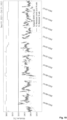
- Figure 18 illustrates Proof of Concept (PoC) results of an automatically steered flour moisture control for yield optimization, with and without the machine-leaning based control signaling for the target moisture of the grains to be milled.
- figure 19 illustrates benchmark data of an inventive milling system 1 captured during the year 2012. The setpoint in the benchmark involves a given set-off to the actual moisture which can be substituted for the benchmark.
- figure 20 shows the measured results for the performance increase of the milling system 1 induced by the inventive machine-learning based automated control and steering system.
- the operator can fine-tune and deploy one or more parameter settings (policies) through the first processing unit 104.
- the operator may make one or more policies that require minimal operator intervention.
- the operator can have a policy requiring minor updates in a given day, such as once a day, at beginning of a job where the operator can set the moisture setpoint in the flour milling machine 102 based on output moisture target of the policy. This can be implemented by obtaining recommendations for assisted manual user input from the policies.
- the flour milling machine 102 may include manufacturing execution system 1026 through which the operator can provide input.
- the manufacturing execution system 1026 may include interface such as monitor, keyboard, mouse and other interfaces for the operate to manually input and view condition of the flour milling machine 102.
- the operator may make one or more policies that may need more updates or frequent updates (such as hourly or due to frequent changes in influence factors 150) in a given day.
- an automated solution may be implemented, where the one or more policies may be deployed in an edge computer which is the second processing unit 110 or a cloud computing device, and based on the updates, the new moisture setpoints may be generated and deployed automatically in the flour milling machine 102.
- the digital model structure may be executed in the second processing unit 110 and the one or more policies may be tested or generated in the second processing unit 110. Further, the moisture values generated from the digital model structure may be implemented in the flour milling machine 102 in a similar manner as described above for the first processing unit 104.
- the modelling engine 1043 may be used to directly control the addition of moisture content in the flour milling machine 102.
- the modelling engine 1043 may communicate with the controller 1025/the water dosing controller 1024 to provide target moisture values to control/provide moisture to the wheat in the grain storage 1021.
- this implementation may be less preferred.
- the flour milling machine 102 is triggered to operate to flour milling machine 102 to mill the wheat to flour, and the amount of the flour or flour output is measured.
- FIG. 6 illustrates a result of test instances indicating performance increase for 9 recipes for the exemplary temperature controlled policy described above.
- the y-axis indicates a milling recipe while the x-axis indicates a mean absolute change in yield.
- the bars in the figure indicate the yield by bins, while the lines at the edge of the bars indicate a performance increase.
- FIG. 7 illustrates a histogram of a modelled performance increase, optimistic, pessimistic, and mean scenario (taking into digital model uncertainty), based on two years of data from an industrial flour milling machines.
- the y-axis indicates a count, while the x-axis indicates a mean absolute change in yield.
- the right hashed bars in the figure indicate an optimistic absolute change vs. real flow rate with a mean of 114.3.
- the left hashed bars in the figure indicate a pessimistic absolute change vs. real flow rate with a mean of 55.2.
- the cross hashed bars in the figure indicate a predicted absolute change vs. real flow rate with a mean of 84.7.
- the moisture of the flour below is required to be maintained typically at 15%.
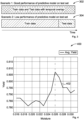
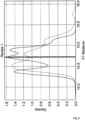
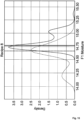
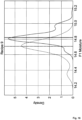
- Charts shown in FIG. 8-FIG.16 show worst case estimations of finished flour moisture after application of the optimization strategy for various milling recipes where line curves indicate actual moisture, and dotted lines indicate modelled moisture. It can be seen from the execution of the digital model structure that the modelled moisture is comparable to the actual moisture observed in flour production.
- FIG. 8 shows a line curve that indicates actual moisture and a dotted line that indicates modelled moisture with the optimal moisture for maximum flour yield seen at 14.7 for recipe 1 for maximum flour yield.
- FIG. 9 shows a graph for recipe 2 with line curve that indicates actual moisture and dotted line that indicate modelled moisture with the optimal moisture for maximum flour yield seen at around 15.0 for maximum flour yield.
- FIG. 10 shows a graph for recipe 3 with line curve that indicates actual moisture, and dotted line curve that indicates modelled moisture with the optimal moisture for actual moisture seen at 14.8 and modeled moisture seen at around 14.75 for maximum flour yield.
- FIG. 11 shows a graph for recipe 4 with line curve that indicates actual moisture, and dotted line that indicates modelled moisture, with the optimal moisture for actual moisture seen at 14.6 and modeled moisture seen at around 14.15 for maximum flour yield.
- FIG. 12 shows a graph for recipe 5 with line curve that indicates actual moisture, and dotted line that indicates modelled moisture, with the optimal moisture for actual moisture seen at 14.65 and modeled moisture seen at around 14.4 for maximum flour yield.
- FIG. 13 shows a graph for recipe 6 having a line curve that indicates actual moisture, and dotted line that indicates modelled moisture, with the optimal moisture for actual moisture seen at 14.75 and modeled moisture seen at around 15.05 for maximum flour yield.
- FIG. 11 shows a graph for recipe 4 with line curve that indicates actual moisture, and dotted line that indicates modelled moisture, with the optimal moisture for actual moisture seen at 14.6 and modeled moisture seen at around 14.15 for maximum flour yield.
- FIG. 12 shows a graph for recipe 5 with line curve that indicates actual moisture, and dotted line that indicates modelled moisture, with the optimal moisture
- FIG. 14 shows a graph for recipe 7 shows line curve that indicates actual moisture, and dotted line that indicates modelled moisture, with the optimal moisture for actual moisture seen at 15.1 and modeled moisture seen at around 14.82 for maximum flour yield.
- FIG. 15 shows a graph for recipe 8 that includes line curve that indicates actual moisture, and dotted line indicated modelled moisture, with the optimal moisture for actual moisture seen at 14.75 and modeled moisture seen at around 14.6 for maximum flour yield.
- FIG. 16 shows a graph for recipe 9 with a line curve that indicates actual moisture, and dotted line that indicates modelled moisture, with the optimal moisture for actual moisture seen at around 14.8 and modeled moisture seen at around 14.7 for maximum flour yield.
- the digital model structure generated may be an artificial intelligence (Al) model structure that can operate automatically.
- the Al model structure may generate and deploy one or more policies as described above.
- the disclosure has been able to consistently provide higher flour output and lower raw material usage. From the test results, the disclosure demonstrates an increased amount of extracted flour by up to 1.6% while maintaining quality specifications 1504. As a result, there is a positive global impact of reducing several million tons of carbon-di-oxide annually if deployed across the vast installed base of wheat mills. Furthermore, there is no additional cost overhead as there is no requirement for additional sensors for installation, as the disclosure can work with data provided from various commercial weather services. The disclosure provides a robust, data-driven optimization of the grain milling process to maximize commercial value for the flour producer and minimize raw material usage.
- a digital model structure may be generated that determines a relation of moisture with milling performance to generate a maximum yield from the flour milling machine 102.
- the digital model structure may be implemented in the first processing unit 104 or the second processing unit 110.
- One or more policies may be created by the operator and tested on the digital model structure, or one or more policies may be created by the digital model structure itself.
- an optimal policy from the one or more policies as a result of testing may be chosen and implemented in the first processing unit 104 or the second processing unit 110 or the controller 1025 of the flour milling machine 102.
- a target moisture may be calculated by executing the optimal policy for a given input of influence factors 150.
- step 4 the target moisture level is communicated by the first processing unit 104 or the second processing unit 110 to the water dosing controller 1024 of the water dosing unit 1023 through the controller 1025 via the machine interface 1042.
- step 5 the water dosing controller 1024 controls the moisture levels in the grain storage 1021 based on the target moisture level and feedback from the moisture sensor 1022.
- the first processing unit 104 and the second processing unit 110 may be implemented as a device having a processor and a memory.
- the term "processor” refers to a computational element that is operable to respond to and processes instructions that drive the system.
- the processor includes, but is not limited to, a microprocessor, a microcontroller, a complex instruction set computing (CISC) microprocessor, a reduced instruction set (RISC) microprocessor, a very long instruction word (VLIW) microprocessor, or any other type of processing circuit.
- CISC complex instruction set computing
- RISC reduced instruction set
- VLIW very long instruction word
- the term "processor” may refer to one or more individual processors, processing devices and various elements associated with a processing device that may be shared by other processing devices. Additionally, the one or more individual processors, processing devices and elements are arranged in various architectures for responding to and processing the instructions that drive the system.
- the processor and accompanying components have connectivity to the memory via the bus.
- the memory includes both dynamic memory (e.g., RAM, magnetic disk, writable optical disk, etc.) and static memory (e.g., ROM, CD-ROM, etc.) for storing executable instructions that when executed perform the steps described herein for improving milling yield of a flour milling machine 102 to obtain optimized milling yield.
- the memory also stores the data associated with or generated by the execution of the inventive steps.
- the memory may be volatile memory and/or non-volatile memory.
- the memory may be coupled for communication with the processor.
- the processor may execute instructions and/or code stored in the memory.
- a variety of computer-readable storage media may be stored in and accessed from the memory.
- the memory may include any suitable elements for storing data and machine-readable instructions, such as read only memory, random access memory, erasable programmable read only memory, electrically erasable programmable read only memory, a hard drive, a removable media drive for handling compact disks, digital video disks, diskettes, magnetic tape cartridges, memory cards, and the like.
- first processing unit 104 and the second processing unit 110 may be implemented as a circuit or a specialized processing chip.
- the first processing unit 104 and the second processing unit 110 may be implemented or executed by one or multiple computing devices, which may be connected to a network (e.g., the internet or a local area network).
- Examples of digital processing units may include, but are not limited to, a digital computer devices, a laptop computer(s), mobile computing device(s), a server computer, a series of server computers, a mainframe computer(s), or a computing cloud (s).
- the first processing unit 104 and the second processing unit 110 may be physical or virtual devices.
- the processing unit may be any device capable of performing operations, such as a dedicated processor, a portion of a processor, a virtual processor, a portion of a virtual processor, a portion of a virtual device, or a virtual device.
- a processor may be a physical processor or a virtual processor.
- a virtual processor may correspond to one or more parts of one or more physical processors.
- the instructions/logic may be distributed and executed across one or more processors, virtual or physical, to execute the instructions/logic.
- the first processing unit 104 and the second processing unit 110 may be a computer-program product programmed for improving milling yield of a flour milling machine 102 to obtain optimized milling yield by generating a digital model structure.
- the processing unit may be a computer readable medium on which program code sections of a computer program are saved, the program code sections being loadable into and/or executable in a system to make the system execute the steps for performing the said purpose.
- the processing unit may be incorporated in one or more physical packages (e.g., chips).
- a physical package includes an arrangement of one or more materials, components, and/or wires on a structural assembly (e.g., a baseboard) to provide one or more characteristics such as physical strength, conservation of size, and/or limitation of electrical interaction. It is contemplated that in certain embodiments, the processing unit can be implemented in a single chip.
- the processing unit includes a communication mechanism such as a bus for passing information among the components of the processing unit.
- the processing unit includes one or more processing units and a memory unit.
- the memory unit is communicatively coupled to the one or more processing units.
- the one or more processing units are simply referred to as processor, and the memory unit is simply referred to as memory.
- the processor has connectivity to the bus to execute instructions and process information stored in the memory.
- the processor may include one or more processing cores with each core configured to perform independently.
- a multi-core processor enables multiprocessing within a single physical package. Examples of a multi-core processor include two, four, eight, or greater numbers of processing cores.
- the processor may include one or more microprocessors configured in tandem via the bus to enable independent execution of instructions, pipelining, and multithreading.
- the processor may also be accompanied by one or more specialized components to perform certain processing functions and tasks such as one or more digital signal processors (DSP), or one or more application-specific integrated circuits (ASIC).
- DSP digital signal processors
- ASIC application-specific integrated circuits
- a DSP typically is configured to process real-world signals (e.g., sound) in real time independently of the processor.
- an ASIC can be configured to perform specialized functions not easily performed by a general purposed processor.
- Other specialized components to aid in performing the inventive functions described herein include one or more field programmable gate arrays (FPGA) (not shown), one or more controllers (not shown), or one or more other special-purpose computer chips.
- FPGA field programmable gate arrays
- the modelling engine 1043 may be any logic circuitry that responds to and processes instructions fetched from the memory (not shown).
- the modelling engine 1043 may be provided by a microprocessor unit, e.g., those manufactured by Intel Corporation of Mountain View, California; those manufactured by Motorola Corporation of Schaumburg, Illinois; the ARM processor and TEGRA system on a chip (SoC) manufactured by Nvidia of Santa Clara, California.
- the modelling engine 1043 may utilize instruction-level parallelism, thread-level parallelism, different levels of cache, and multi-core processors.
- a multi-core processor may include two or more modelling engines on a single computing component.
- the memory may include one or more memory chips capable of storing data and allowing any storage location to be directly accessed by the modelling engine 1043.
- the memory may be Dynamic Random-Access Memory (DRAM) or any variants, including static Random-Access Memory (SRAM), Enhanced DRAM (EDRAM), Single Data Rate Synchronous DRAM (SDR SDRAM), Double Data Rate SDRAM (DDR SDRAM), and Direct Rambus DRAM (DRDRAM).
- DRAM Dynamic Random-Access Memory
- SRAM static Random-Access Memory
- EDRAM Enhanced DRAM
- SDR SDRAM Single Data Rate Synchronous DRAM
- DDR SDRAM Double Data Rate SDRAM
- DRAM Direct Rambus DRAM
- the memory may be non-volatile; e.g., non-volatile read access memory (NVRAM), flash memory non-volatile static RAM (nvSRAM), or Ferroelectric RAM (FeRAM).
- NVRAM non-volatile read access memory
- nvSRAM flash memory non-volatile static RAM
- Appropriate network connections can e.g., include a local area network (LAN) and a wide area network (WAN) but may also include other networks.
- LAN local area network
- WAN wide area network
- the first processing unit 104, the second processing unit 110, the operations data storage 106, the data exchange repository 108 and the flour milling machine 102 can be connected to the network through a network interface.
- the first processing unit 104, the second processing unit 110, the operations data storage 106, the data exchange repository 108 and the flour milling machine 102 includes means for establishing communications over the WAN, such as the Internet.
- the existence of any of various well-known protocols such as TCP/IP, Ethernet, FTP, HTTP, and the like is presumed.
- an application program used by the first processing unit 104, the second processing unit 110, the operations data storage 106, the data exchange repository 108 and the flour milling machine 102 may include computer executable instructions for invoking functionality related to determining a safe route and displaying the safe route for the user.
- the instruction sets and subroutines of may be stored on storage device, such as storage device coupled to computer, may be executed by one or more processors and one or more memory architectures included within computer.
- one or more of storage devices may include but are not limited to: hard disk drives; flash drives, tape drives; optical drives; RAID arrays; random access memories (RAM); and read-only memories (ROM).
- RAM random access memories
- ROM read-only memories
- Examples of user devices (and/or computer) may include, but are not limited to, a personal computer, a laptop computer, a smart/data-enabled, cellular phone, a notebook computer, a tablet, a server, a television, a smart television, a media capturing device, and a dedicated network device.
Landscapes
- Engineering & Computer Science (AREA)
- Food Science & Technology (AREA)
- Adjustment And Processing Of Grains (AREA)
Claims (8)
- Système de mouture (1) comprenant au moins une machine à moudre la farine (102) fournissant un rendement de mouture optimisé (16/1602) et fournissant un processus de mouture optimisé pour une matière première granulaire ou granuleuse (1501) à transformer en farine (1502) par la machine à moudre (102), la matière première granulaire ou granuleuse (1501) comprenant au moins des grains et/ou des fruits à grains de graminées odorantes (poacées), le système de mouture (1) comprenant :une machine à minoterie (102) comprenant un contrôleur électronique (1025), une unité de dosage d'eau (1023) ;un stockage de données d'opérations (106) pour stocker des données d'opérations historiques de machine de minoterie (1061) ;une première unité de traitement (104) couplée aux données d'opérations (1061), dans lequella première unité de traitement (104) comprend :une interface machine (1042) pour recevoir des données d'opérations historiques de machine de minoterie (1061) à partir du stockage de données d'opérations (106) ;un moteur de modélisation basé sur l'apprentissage automatique (1043) pour générer au moins une structure de modèle numérique (10432) sur la base de données d'opérations de minoterie historiques (1061), les données d'opérations de minoterie historiques (1061) comprenant au moins des valeurs de paramètres de caractéristiques de matière première et/ou opérationnelles et/ou environnementales historiques d'une minoterie (102), et la structure de modèle numérique (10432) étant formée en appliquant les données d'opérations de minoterie historiques (1061) en tant que valeurs d'entrée, les paramètres de caractéristiques de matière première et/ou opérationnelles et/ou environnementales comprenant au moins des types de grains (15013) et/ou la température des grains (15014) et/ou l'humidité des grains (15011) et/ou la durée de conditionnement (15014) et/ou l'humidité dans les grains conditionnés (150141) et/ou les spécifications de farine (150221) et/ou les conditions ambiantes (1503) au niveau de la minoterie (102) et/ou des réglages de la minoterie (1504) et/ou des types de farines produites (15021) à partir des grains et/ou du rendement de la minoterie (102), et, après apprentissage, pour déterminer pour un ensemble donné de données d'opérations de meunerie (150) le rendement de meunerie optimisé en tant que rendement maximal (1602) en utilisant l'une ou plusieurs structures de modèle d'apprentissage automatique (10432) en générant une humidité cible (150111) pour un ensemble donné de données d'opérations de meunerie (150) en utilisant l'une ou plusieurs structures de modèle numérique (10432) pour obtenir un rendement maximal en farine (1602), l'humidité cible (10231) étant transmise au contrôleur (1025) ;dans lequel l'unité de dosage d'eau (1023) comprend un contrôleur de dosage d'eau (1024) pour recevoir l'humidité cible et ajuster l'humidité des grains en fonction de l'humidité cible pendant la production par la minoterie (102).
- Système selon la revendication 1, dans lequel la structure de modèle numérique capture les dépendances non linéaires entre les types de grains (15013), la température (15014) des grains pendant la mouture, l'humidité dans les grains, le temps de mouillage (10233) pour conditionner les grains, l'humidité dans les grains conditionnés (10234), les paramètres de spécification de la farine (15022), les conditions ambiantes et/ou environnementales (1503) au niveau de la minoterie (102), les réglages (1020) de la minoterie (102), les types de farines produites (15021), et le rendement (160) de la minoterie (102) et déterminer l'humidité cible (150111) pour générer un rendement maximal (1602) à l'aide de l'une ou plusieurs structures de modèle d'apprentissage automatique (10432).
- Système selon la revendication 1, comprenant en outre une seconde unité de traitement (110), couplée à la première unité de traitement (104) et à la minoterie (102), comprenant :une seconde interface de machine pour recevoir des conditions ambiantes et/ou environnementales (1505) au niveau de la minoterie (102) à partir d'une source d'entrée, d'un type de grain et d'une valeur d'humidité dans les grains ; etune seconde unité de traitement pour exécuter l'au moins une structure de modèle numérique pour générer une stratégie de commande optimale pour déterminer l'humidité cible (10231), sur la base des conditions ambiantes et/ou environnementales (1505) et de la valeur de l'humidité dans les grains.
- Système selon la revendication 1, dans lequel les données d'opérations de la minoterie comprennent les types de grains, la température (1506) des grains pendant le broyage, l'humidité dans les grains bruts (1508), la durée du conditionnement (1510) pour conditionner les grains, l'humidité dans les grains conditionnés (1509), les spécifications de consistance de la farine (1504), les conditions ambiantes (1505) au niveau de la minoterie (102), les réglages de la minoterie (1507), les types de farines produites (1503) à partir des grains et le rendement de la minoterie (102) pour les grains à différentes températures, différents niveaux d'humidité, différentes périodes de mouillage, différentes conditions ambiantes (1505) et différents réglages de la minoterie (102), les réglages de la minoterie comprenant des espaces de broyeur à rouleaux, une configuration de tamis et l'usure des rouleaux.
- Système selon la revendication 1, dans lequel la minoterie (102) comprend une unité d'exécution de fabrication pour permettre l'ajustement de l'humidité cible.
- Système selon la revendication 1, dans lequel le système comprend un référentiel d'échange de données (108) couplé à la première unité de traitement (104) et à la minoterie (102) pour échanger des données associées au fonctionnement de la minoterie (102), enregistrer les données et stocker l'une ou plusieurs structures de modèle d'apprentissage automatique.
- Système selon la revendication 1, dans lequel le système comprend un référentiel d'échange de données (108) couplé à la première unité de traitement (104) et à la minoterie (102) pour échanger des données associées au fonctionnement de la minoterie (102), enregistrer les données et stocker l'une ou plusieurs structures de modèle d'apprentissage automatique.
- Procédé pour améliorer le rendement de mouture d'une minoterie (102) afin d'obtenir un rendement de mouture et une utilisation de matière première optimisés, comprenant :la réception, à partir d'un stockage de données d'opération (106), de données historiques d'opérations de minoterie ;la génération, par un moteur de modélisation basé sur l'apprentissage automatique (1043) d'une première unité de traitement (104), d'au moins une structure de modèle d'apprentissage automatique pour déterminer une humidité cible sur la base de données historiques d'opérations de minoterie à l'aide de l'apprentissage automatique ;l'apprentissage de la structure du modèle numérique avec des données d'apprentissage pour déterminer une influence des niveaux d'humidité parmi les facteurs d'influence sur le rendement en farine, les facteurs d'influence comprenant des types de grains (1502), la température des grains (1506), l'humidité des grains bruts (1508), la durée du conditionnement (1510) pour conditionner les grains, l'humidité dans les grains conditionnés (1509), 'es spécifications de consistance de la farine (1504), les conditions ambiantes (1505) au niveau de la minoterie (102), ;es réglages de la minoterie (1507), des types de farines produites (1503) à partir des grains, et le rendement de la minoterie (102) et pour déterminer l'humidité cible pour générer un rendement maximal à l'aide de l'une ou plusieurs structures de modèle d'apprentissage automatique, les données d'apprentissage comprenant des instances de minoterie historique des données d'opérations de machine ayant les facteurs d'influence ;la détermination d'une humidité cible pour un ensemble donné de facteurs d'influence à l'aide de l'une ou plusieurs structures de modèle numérique pour obtenir un rendement de farine maximal ;la communication de l'humidité cible au contrôleur ; etla réception, par un contrôleur de dosage d'eau (1024), de l'humidité cible, et l'ajout d'humidité aux grains sur la base de l'humidité cible.
Priority Applications (3)
| Application Number | Priority Date | Filing Date | Title |
|---|---|---|---|
| EP23152934.8A EP4403263B1 (fr) | 2023-01-23 | 2023-01-23 | Système de broyage de farine optimisé avec rendement de broyage amélioré et procédé associé |
| CN202480008813.7A CN120641221A (zh) | 2023-01-23 | 2024-01-22 | 具有改进的碾磨产率的优化面粉磨机系统及其方法 |
| PCT/EP2024/051443 WO2024156668A1 (fr) | 2023-01-23 | 2024-01-22 | Système de minoterie optimisé ayant un rendement de mouture amélioré et procédé associé |
Applications Claiming Priority (1)
| Application Number | Priority Date | Filing Date | Title |
|---|---|---|---|
| EP23152934.8A EP4403263B1 (fr) | 2023-01-23 | 2023-01-23 | Système de broyage de farine optimisé avec rendement de broyage amélioré et procédé associé |
Publications (2)
| Publication Number | Publication Date |
|---|---|
| EP4403263A1 EP4403263A1 (fr) | 2024-07-24 |
| EP4403263B1 true EP4403263B1 (fr) | 2024-11-27 |
Family
ID=85036338
Family Applications (1)
| Application Number | Title | Priority Date | Filing Date |
|---|---|---|---|
| EP23152934.8A Active EP4403263B1 (fr) | 2023-01-23 | 2023-01-23 | Système de broyage de farine optimisé avec rendement de broyage amélioré et procédé associé |
Country Status (3)
| Country | Link |
|---|---|
| EP (1) | EP4403263B1 (fr) |
| CN (1) | CN120641221A (fr) |
| WO (1) | WO2024156668A1 (fr) |
Families Citing this family (2)
| Publication number | Priority date | Publication date | Assignee | Title |
|---|---|---|---|---|
| CN120431461B (zh) * | 2025-04-14 | 2025-10-24 | 云南林业职业技术学院 | 基于物联网边缘计算与混合数字孪生的铁皮石斛动态栽培方法 |
| CN121372641A (zh) * | 2025-12-24 | 2026-01-23 | 江南大学附属医院 | 一种中医研磨控制系统 |
Family Cites Families (3)
| Publication number | Priority date | Publication date | Assignee | Title |
|---|---|---|---|---|
| CA2762424C (fr) * | 2009-05-21 | 2018-06-19 | Ardent Mills, Llc | Procede et systeme pour mouture de ble |
| EP3500370B1 (fr) * | 2016-08-22 | 2020-06-24 | Bühler AG | Dispositif de supervision et de commande pour une optimisation automatisée d'une ligne de broyage d'un système de rouleaux et un procédé correspondant |
| BR102021003363B1 (pt) * | 2021-02-23 | 2022-03-08 | Bunge Alimentos S/A | Sistema e método de laminação de grãos |
-
2023
- 2023-01-23 EP EP23152934.8A patent/EP4403263B1/fr active Active
-
2024
- 2024-01-22 CN CN202480008813.7A patent/CN120641221A/zh active Pending
- 2024-01-22 WO PCT/EP2024/051443 patent/WO2024156668A1/fr not_active Ceased
Also Published As
| Publication number | Publication date |
|---|---|
| EP4403263A1 (fr) | 2024-07-24 |
| CN120641221A (zh) | 2025-09-12 |
| WO2024156668A1 (fr) | 2024-08-02 |
Similar Documents
| Publication | Publication Date | Title |
|---|---|---|
| WO2024156668A1 (fr) | Système de minoterie optimisé ayant un rendement de mouture amélioré et procédé associé | |
| CN118780683B (zh) | 一种制药过程质量智能管控机器人及管控方法 | |
| Zareiforoush et al. | Design, development and performance evaluation of an automatic control system for rice whitening machine based on computer vision and fuzzy logic | |
| CN119622538B (zh) | 基于错峰与危险态势感知的设备状态感知系统 | |
| Dal-Pastro et al. | Data-driven modeling of milling and sieving operations in a wheat milling process | |
| Das et al. | Novel combination artificial neural network models could not outperform individual models for weather-based cashew yield prediction | |
| CN116665805B (zh) | 一种基于数字孪生的白酒发酵预测和反馈干预系统 | |
| CN118096085B (zh) | 一种基于物联网的面粉产线设备运维管理方法 | |
| CN114721270A (zh) | 一种砻谷碾米协同控制方法、装置及存储介质 | |
| CN119443420B (zh) | 建筑垃圾资源化利用的实时监控与优化方法及系统 | |
| Buribayev et al. | Building a system for predicting the yield of grain crops based on machine learning using the XGBRegressor algorithm | |
| Yang et al. | Moisture content online detection system based on multi-sensor fusion and convolutional neural network | |
| Aghili et al. | Data-driven approach to fault detection for hospital HVAC system | |
| Parrenin et al. | A decision support tool for the first stage of the tempering process of organic wheat grains in a mill | |
| CN104991984A (zh) | 一种用于煮糖结晶的数据监测方法和系统 | |
| Mahant et al. | Seeding the future: a review of artificial intelligence’s pivotal role in seed technology | |
| CN114117894A (zh) | 一种基于神经网络算法的粮油生产线自动控制系统 | |
| CN120105330A (zh) | 基于大数据分析的干燥塔能源管理与加热优化方法 | |
| Kittusamy et al. | IOT based Machine Learning Algorithms for Data Science on Quality Control Process | |
| CN119972332A (zh) | 一种双进双出磨煤机制粉系统智能在线优化控制方法 | |
| CN117205989B (zh) | 砻谷机预测控制方法、装置、设备及存储介质 | |
| Parrenin et al. | Predicting the moisture content of organic wheat in the first stage of tempering | |
| CN120508024A (zh) | 一种用于大米精加工设备的智能控制方法及系统 | |
| Diachenko et al. | An Improved Approach to Prediction of Maize Disease Occurrence Based on Weather Monitoring and Machine Learning: Case of the Forest-Steppe and Northern Steppe of Ukraine | |
| Lee et al. | The strategy to simulate the cross-pollination rate for the co-existence of genetically modified (GM) and non-GM crops by using FPSOSVR |
Legal Events
| Date | Code | Title | Description |
|---|---|---|---|
| PUAI | Public reference made under article 153(3) epc to a published international application that has entered the european phase |
Free format text: ORIGINAL CODE: 0009012 |
|
| STAA | Information on the status of an ep patent application or granted ep patent |
Free format text: STATUS: REQUEST FOR EXAMINATION WAS MADE |
|
| 17P | Request for examination filed |
Effective date: 20240124 |
|
| AK | Designated contracting states |
Kind code of ref document: A1 Designated state(s): AL AT BE BG CH CY CZ DE DK EE ES FI FR GB GR HR HU IE IS IT LI LT LU LV MC ME MK MT NL NO PL PT RO RS SE SI SK SM TR |
|
| GRAP | Despatch of communication of intention to grant a patent |
Free format text: ORIGINAL CODE: EPIDOSNIGR1 |
|
| STAA | Information on the status of an ep patent application or granted ep patent |
Free format text: STATUS: GRANT OF PATENT IS INTENDED |
|
| RBV | Designated contracting states (corrected) |
Designated state(s): AL AT BE BG CH CY CZ DE DK EE ES FI FR GB GR HR HU IE IS IT LI LT LU LV MC ME MK MT NL NO PL PT RO RS SE SI SK SM TR |
|
| INTG | Intention to grant announced |
Effective date: 20240821 |
|
| GRAS | Grant fee paid |
Free format text: ORIGINAL CODE: EPIDOSNIGR3 |
|
| GRAA | (expected) grant |
Free format text: ORIGINAL CODE: 0009210 |
|
| STAA | Information on the status of an ep patent application or granted ep patent |
Free format text: STATUS: THE PATENT HAS BEEN GRANTED |
|
| AK | Designated contracting states |
Kind code of ref document: B1 Designated state(s): AL AT BE BG CH CY CZ DE DK EE ES FI FR GB GR HR HU IE IS IT LI LT LU LV MC ME MK MT NL NO PL PT RO RS SE SI SK SM TR |
|
| REG | Reference to a national code |
Ref country code: GB Ref legal event code: FG4D |
|
| REG | Reference to a national code |
Ref country code: CH Ref legal event code: EP |
|
| REG | Reference to a national code |
Ref country code: IE Ref legal event code: FG4D |
|
| REG | Reference to a national code |
Ref country code: DE Ref legal event code: R096 Ref document number: 602023001121 Country of ref document: DE |
|
| REG | Reference to a national code |
Ref country code: LT Ref legal event code: MG9D |
|
| P01 | Opt-out of the competence of the unified patent court (upc) registered |
Free format text: CASE NUMBER: APP_9392/2025 Effective date: 20250225 |
|
| REG | Reference to a national code |
Ref country code: NL Ref legal event code: MP Effective date: 20241127 |
|
| PG25 | Lapsed in a contracting state [announced via postgrant information from national office to epo] |
Ref country code: PT Free format text: LAPSE BECAUSE OF FAILURE TO SUBMIT A TRANSLATION OF THE DESCRIPTION OR TO PAY THE FEE WITHIN THE PRESCRIBED TIME-LIMIT Effective date: 20250327 Ref country code: HR Free format text: LAPSE BECAUSE OF FAILURE TO SUBMIT A TRANSLATION OF THE DESCRIPTION OR TO PAY THE FEE WITHIN THE PRESCRIBED TIME-LIMIT Effective date: 20241127 Ref country code: IS Free format text: LAPSE BECAUSE OF FAILURE TO SUBMIT A TRANSLATION OF THE DESCRIPTION OR TO PAY THE FEE WITHIN THE PRESCRIBED TIME-LIMIT Effective date: 20250327 |
|
| PG25 | Lapsed in a contracting state [announced via postgrant information from national office to epo] |
Ref country code: FI Free format text: LAPSE BECAUSE OF FAILURE TO SUBMIT A TRANSLATION OF THE DESCRIPTION OR TO PAY THE FEE WITHIN THE PRESCRIBED TIME-LIMIT Effective date: 20241127 Ref country code: NL Free format text: LAPSE BECAUSE OF FAILURE TO SUBMIT A TRANSLATION OF THE DESCRIPTION OR TO PAY THE FEE WITHIN THE PRESCRIBED TIME-LIMIT Effective date: 20241127 |
|
| REG | Reference to a national code |
Ref country code: AT Ref legal event code: MK05 Ref document number: 1745224 Country of ref document: AT Kind code of ref document: T Effective date: 20241127 |
|
| PG25 | Lapsed in a contracting state [announced via postgrant information from national office to epo] |
Ref country code: BG Free format text: LAPSE BECAUSE OF FAILURE TO SUBMIT A TRANSLATION OF THE DESCRIPTION OR TO PAY THE FEE WITHIN THE PRESCRIBED TIME-LIMIT Effective date: 20241127 |
|
| PG25 | Lapsed in a contracting state [announced via postgrant information from national office to epo] |
Ref country code: ES Free format text: LAPSE BECAUSE OF FAILURE TO SUBMIT A TRANSLATION OF THE DESCRIPTION OR TO PAY THE FEE WITHIN THE PRESCRIBED TIME-LIMIT Effective date: 20241127 |
|
| PG25 | Lapsed in a contracting state [announced via postgrant information from national office to epo] |
Ref country code: NO Free format text: LAPSE BECAUSE OF FAILURE TO SUBMIT A TRANSLATION OF THE DESCRIPTION OR TO PAY THE FEE WITHIN THE PRESCRIBED TIME-LIMIT Effective date: 20250227 |
|
| PG25 | Lapsed in a contracting state [announced via postgrant information from national office to epo] |
Ref country code: LV Free format text: LAPSE BECAUSE OF FAILURE TO SUBMIT A TRANSLATION OF THE DESCRIPTION OR TO PAY THE FEE WITHIN THE PRESCRIBED TIME-LIMIT Effective date: 20241127 Ref country code: GR Free format text: LAPSE BECAUSE OF FAILURE TO SUBMIT A TRANSLATION OF THE DESCRIPTION OR TO PAY THE FEE WITHIN THE PRESCRIBED TIME-LIMIT Effective date: 20250228 Ref country code: AT Free format text: LAPSE BECAUSE OF FAILURE TO SUBMIT A TRANSLATION OF THE DESCRIPTION OR TO PAY THE FEE WITHIN THE PRESCRIBED TIME-LIMIT Effective date: 20241127 |
|
| PG25 | Lapsed in a contracting state [announced via postgrant information from national office to epo] |
Ref country code: PL Free format text: LAPSE BECAUSE OF FAILURE TO SUBMIT A TRANSLATION OF THE DESCRIPTION OR TO PAY THE FEE WITHIN THE PRESCRIBED TIME-LIMIT Effective date: 20241127 |
|
| PG25 | Lapsed in a contracting state [announced via postgrant information from national office to epo] |
Ref country code: RS Free format text: LAPSE BECAUSE OF FAILURE TO SUBMIT A TRANSLATION OF THE DESCRIPTION OR TO PAY THE FEE WITHIN THE PRESCRIBED TIME-LIMIT Effective date: 20250227 |
|
| PG25 | Lapsed in a contracting state [announced via postgrant information from national office to epo] |
Ref country code: SM Free format text: LAPSE BECAUSE OF FAILURE TO SUBMIT A TRANSLATION OF THE DESCRIPTION OR TO PAY THE FEE WITHIN THE PRESCRIBED TIME-LIMIT Effective date: 20241127 |
|
| PG25 | Lapsed in a contracting state [announced via postgrant information from national office to epo] |
Ref country code: DK Free format text: LAPSE BECAUSE OF FAILURE TO SUBMIT A TRANSLATION OF THE DESCRIPTION OR TO PAY THE FEE WITHIN THE PRESCRIBED TIME-LIMIT Effective date: 20241127 |
|
| PG25 | Lapsed in a contracting state [announced via postgrant information from national office to epo] |
Ref country code: EE Free format text: LAPSE BECAUSE OF FAILURE TO SUBMIT A TRANSLATION OF THE DESCRIPTION OR TO PAY THE FEE WITHIN THE PRESCRIBED TIME-LIMIT Effective date: 20241127 |
|
| PG25 | Lapsed in a contracting state [announced via postgrant information from national office to epo] |
Ref country code: RO Free format text: LAPSE BECAUSE OF FAILURE TO SUBMIT A TRANSLATION OF THE DESCRIPTION OR TO PAY THE FEE WITHIN THE PRESCRIBED TIME-LIMIT Effective date: 20241127 |
|
| PG25 | Lapsed in a contracting state [announced via postgrant information from national office to epo] |
Ref country code: SK Free format text: LAPSE BECAUSE OF FAILURE TO SUBMIT A TRANSLATION OF THE DESCRIPTION OR TO PAY THE FEE WITHIN THE PRESCRIBED TIME-LIMIT Effective date: 20241127 |
|
| PG25 | Lapsed in a contracting state [announced via postgrant information from national office to epo] |
Ref country code: CZ Free format text: LAPSE BECAUSE OF FAILURE TO SUBMIT A TRANSLATION OF THE DESCRIPTION OR TO PAY THE FEE WITHIN THE PRESCRIBED TIME-LIMIT Effective date: 20241127 |
|
| REG | Reference to a national code |
Ref country code: DE Ref legal event code: R097 Ref document number: 602023001121 Country of ref document: DE |
|
| PG25 | Lapsed in a contracting state [announced via postgrant information from national office to epo] |
Ref country code: SE Free format text: LAPSE BECAUSE OF FAILURE TO SUBMIT A TRANSLATION OF THE DESCRIPTION OR TO PAY THE FEE WITHIN THE PRESCRIBED TIME-LIMIT Effective date: 20241127 |
|
| PG25 | Lapsed in a contracting state [announced via postgrant information from national office to epo] |
Ref country code: MC Free format text: LAPSE BECAUSE OF FAILURE TO SUBMIT A TRANSLATION OF THE DESCRIPTION OR TO PAY THE FEE WITHIN THE PRESCRIBED TIME-LIMIT Effective date: 20241127 Ref country code: LU Free format text: LAPSE BECAUSE OF NON-PAYMENT OF DUE FEES Effective date: 20250123 |
|
| PLBE | No opposition filed within time limit |
Free format text: ORIGINAL CODE: 0009261 |
|
| STAA | Information on the status of an ep patent application or granted ep patent |
Free format text: STATUS: NO OPPOSITION FILED WITHIN TIME LIMIT |
|
| REG | Reference to a national code |
Ref country code: CH Ref legal event code: L10 Free format text: ST27 STATUS EVENT CODE: U-0-0-L10-L00 (AS PROVIDED BY THE NATIONAL OFFICE) Effective date: 20251008 |
|
| PG25 | Lapsed in a contracting state [announced via postgrant information from national office to epo] |
Ref country code: BE Free format text: LAPSE BECAUSE OF NON-PAYMENT OF DUE FEES Effective date: 20250131 |
|
| REG | Reference to a national code |
Ref country code: BE Ref legal event code: MM Effective date: 20250131 |
|
| 26N | No opposition filed |
Effective date: 20250828 |
|
| PG25 | Lapsed in a contracting state [announced via postgrant information from national office to epo] |
Ref country code: IE Free format text: LAPSE BECAUSE OF NON-PAYMENT OF DUE FEES Effective date: 20250123 |
|
| REG | Reference to a national code |
Ref country code: CH Ref legal event code: U11 Free format text: ST27 STATUS EVENT CODE: U-0-0-U10-U11 (AS PROVIDED BY THE NATIONAL OFFICE) Effective date: 20260201 |
|
| PGFP | Annual fee paid to national office [announced via postgrant information from national office to epo] |
Ref country code: DE Payment date: 20260120 Year of fee payment: 4 |
|
| PGFP | Annual fee paid to national office [announced via postgrant information from national office to epo] |
Ref country code: IT Payment date: 20260131 Year of fee payment: 4 |
|
| PGFP | Annual fee paid to national office [announced via postgrant information from national office to epo] |
Ref country code: FR Payment date: 20260123 Year of fee payment: 4 |
|
| PGFP | Annual fee paid to national office [announced via postgrant information from national office to epo] |
Ref country code: TR Payment date: 20260119 Year of fee payment: 4 |
|
| PGFP | Annual fee paid to national office [announced via postgrant information from national office to epo] |
Ref country code: CH Payment date: 20260201 Year of fee payment: 4 |