EP4403222A2 - Phosphorylierte tri-blockcopolymere mit pathogenvirulenzunterdrückenden eigenschaften - Google Patents
Phosphorylierte tri-blockcopolymere mit pathogenvirulenzunterdrückenden eigenschaften Download PDFInfo
- Publication number
- EP4403222A2 EP4403222A2 EP24176683.1A EP24176683A EP4403222A2 EP 4403222 A2 EP4403222 A2 EP 4403222A2 EP 24176683 A EP24176683 A EP 24176683A EP 4403222 A2 EP4403222 A2 EP 4403222A2
- Authority
- EP
- European Patent Office
- Prior art keywords
- aba
- peg
- triblock copolymer
- daltons
- peg20k
- Prior art date
- Legal status (The legal status is an assumption and is not a legal conclusion. Google has not performed a legal analysis and makes no representation as to the accuracy of the status listed.)
- Granted
Links
Images





Classifications
-
- A—HUMAN NECESSITIES
- A61—MEDICAL OR VETERINARY SCIENCE; HYGIENE
- A61K—PREPARATIONS FOR MEDICAL, DENTAL OR TOILETRY PURPOSES
- A61K31/00—Medicinal preparations containing organic active ingredients
- A61K31/74—Synthetic polymeric materials
- A61K31/765—Polymers containing oxygen
- A61K31/77—Polymers containing oxygen of oxiranes
-
- A—HUMAN NECESSITIES
- A61—MEDICAL OR VETERINARY SCIENCE; HYGIENE
- A61K—PREPARATIONS FOR MEDICAL, DENTAL OR TOILETRY PURPOSES
- A61K31/00—Medicinal preparations containing organic active ingredients
- A61K31/74—Synthetic polymeric materials
- A61K31/765—Polymers containing oxygen
-
- A—HUMAN NECESSITIES
- A61—MEDICAL OR VETERINARY SCIENCE; HYGIENE
- A61K—PREPARATIONS FOR MEDICAL, DENTAL OR TOILETRY PURPOSES
- A61K31/00—Medicinal preparations containing organic active ingredients
- A61K31/74—Synthetic polymeric materials
- A61K31/80—Polymers containing hetero atoms not provided for in groups A61K31/755 - A61K31/795
-
- A—HUMAN NECESSITIES
- A61—MEDICAL OR VETERINARY SCIENCE; HYGIENE
- A61K—PREPARATIONS FOR MEDICAL, DENTAL OR TOILETRY PURPOSES
- A61K47/00—Medicinal preparations characterised by the non-active ingredients used, e.g. carriers or inert additives; Targeting or modifying agents chemically bound to the active ingredient
- A61K47/06—Organic compounds, e.g. natural or synthetic hydrocarbons, polyolefins, mineral oil, petrolatum or ozokerite
- A61K47/08—Organic compounds, e.g. natural or synthetic hydrocarbons, polyolefins, mineral oil, petrolatum or ozokerite containing oxygen, e.g. ethers, acetals, ketones, quinones, aldehydes, peroxides
- A61K47/10—Alcohols; Phenols; Salts thereof, e.g. glycerol; Polyethylene glycols [PEG]; Poloxamers; PEG/POE alkyl ethers
-
- A—HUMAN NECESSITIES
- A61—MEDICAL OR VETERINARY SCIENCE; HYGIENE
- A61K—PREPARATIONS FOR MEDICAL, DENTAL OR TOILETRY PURPOSES
- A61K47/00—Medicinal preparations characterised by the non-active ingredients used, e.g. carriers or inert additives; Targeting or modifying agents chemically bound to the active ingredient
- A61K47/30—Macromolecular organic or inorganic compounds, e.g. inorganic polyphosphates
- A61K47/34—Macromolecular compounds obtained otherwise than by reactions only involving carbon-to-carbon unsaturated bonds, e.g. polyesters, polyamino acids, polysiloxanes, polyphosphazines, copolymers of polyalkylene glycol or poloxamers
-
- A—HUMAN NECESSITIES
- A61—MEDICAL OR VETERINARY SCIENCE; HYGIENE
- A61K—PREPARATIONS FOR MEDICAL, DENTAL OR TOILETRY PURPOSES
- A61K9/00—Medicinal preparations characterised by special physical form
- A61K9/0087—Galenical forms not covered by A61K9/02 - A61K9/7023
- A61K9/0095—Drinks; Beverages; Syrups; Compositions for reconstitution thereof, e.g. powders or tablets to be dispersed in a glass of water; Veterinary drenches
-
- A—HUMAN NECESSITIES
- A61—MEDICAL OR VETERINARY SCIENCE; HYGIENE
- A61P—SPECIFIC THERAPEUTIC ACTIVITY OF CHEMICAL COMPOUNDS OR MEDICINAL PREPARATIONS
- A61P1/00—Drugs for disorders of the alimentary tract or the digestive system
-
- A—HUMAN NECESSITIES
- A61—MEDICAL OR VETERINARY SCIENCE; HYGIENE
- A61P—SPECIFIC THERAPEUTIC ACTIVITY OF CHEMICAL COMPOUNDS OR MEDICINAL PREPARATIONS
- A61P31/00—Antiinfectives, i.e. antibiotics, antiseptics, chemotherapeutics
- A61P31/04—Antibacterial agents
-
- C—CHEMISTRY; METALLURGY
- C08—ORGANIC MACROMOLECULAR COMPOUNDS; THEIR PREPARATION OR CHEMICAL WORKING-UP; COMPOSITIONS BASED THEREON
- C08G—MACROMOLECULAR COMPOUNDS OBTAINED OTHERWISE THAN BY REACTIONS ONLY INVOLVING UNSATURATED CARBON-TO-CARBON BONDS
- C08G65/00—Macromolecular compounds obtained by reactions forming an ether link in the main chain of the macromolecule
- C08G65/02—Macromolecular compounds obtained by reactions forming an ether link in the main chain of the macromolecule from cyclic ethers by opening of the heterocyclic ring
- C08G65/32—Polymers modified by chemical after-treatment
- C08G65/329—Polymers modified by chemical after-treatment with organic compounds
- C08G65/335—Polymers modified by chemical after-treatment with organic compounds containing phosphorus
- C08G65/3353—Polymers modified by chemical after-treatment with organic compounds containing phosphorus containing oxygen in addition to phosphorus
-
- C—CHEMISTRY; METALLURGY
- C08—ORGANIC MACROMOLECULAR COMPOUNDS; THEIR PREPARATION OR CHEMICAL WORKING-UP; COMPOSITIONS BASED THEREON
- C08G—MACROMOLECULAR COMPOUNDS OBTAINED OTHERWISE THAN BY REACTIONS ONLY INVOLVING UNSATURATED CARBON-TO-CARBON BONDS
- C08G81/00—Macromolecular compounds obtained by interreacting polymers in the absence of monomers, e.g. block polymers
Definitions
- Phosphate is a key universal cue for bacteria to either enhance their virulence, for example when local phosphate is scarce, or to suppress virulence when phosphate is abundant. Phosphate can become depleted in the mammalian gut following physiologic stress and serves as a major trigger for colonizing bacteria to express virulence and invasiveness. This process cannot be reversed with oral or intravenous inorganic phosphate, as phosphate is nearly completely absorbed in the proximal small intestine.
- PEG 15-20 is not a pure tri-block polymer but rather a mixture of polymers of varying molecular weights. This situation limits the ability to further interrogate the molecular mechanisms by which the polymers protect both in vitro and in vivo, and the limited content of phosphate inhibits the opportunity to further improve the efficacy of the polymers.
- the disclosure provides materials and methods for treating, preventing or suppressing diseases and conditions associated with pathogenic microbe-mediated epithelial diseases or disorders such as gastrointestinal infections or inflammation, or gastrointestinal anastomoses or anastomotic leaks, such as esophageal or intestinal anastomoses or anastomotic leaks.
- pathogenic microbe-mediated epithelial diseases or disorders such as gastrointestinal infections or inflammation, or gastrointestinal anastomoses or anastomotic leaks, such as esophageal or intestinal anastomoses or anastomotic leaks.
- the materials for use in such circumstances are phosphorylated polyethylene glycol compounds of a defined structure, such as an A-B-A triblock copolymer structure (ABA-PEG-Pi).
- the ABA-PEG-Pi materials of the disclosure comprise a hydrophobic core such as a diphenylmethyl moiety and the materials exhibit a substantially similar molecular weight wherein about 80%, 90%, 95%, 96%, 97% 98%, 99%, 99.5% or 99.9% of the ABA-PEG-Pi molecules have the same molecular weight (plus or minus 5% or 10%).
- the particular structure of the ABA-PEG-Pi and the relatively constant structure result in effects on epithelial cell diseases and disorders mediated by obligate or opportunistic microbial pathogens.
- One aspect of the disclosure is drawn to a triblock copolymer comprising: (a) a hydrophobic core; and (b) at least two polyethylene glycol chains wherein at least one polyethylene glycol chain is a phosphorylated polyethylene glycol comprising more than two phosphate groups.
- the hydrophobic core is a "B" block copolymer and the PEG chains are generally considered “A” block copolymers using the triblock copolymer terminology of the disclosure. It is recognized that triblock copolymers can be indicated as having an A-B-A or an A-B-A' triblock copolymer structure depending on whether the at least two PEG chains are the same or not.
- the hydrophobic core is a carbocyclic or heterocyclic ring, including embodiments wherein the ring is aromatic, such as a single ring or a plurality of rings.
- the hydrophobic core is a diphenylmethyl moiety.
- the hydrophobic core is a 4,4'-(propane-2,2-diyl)diphenolate salt.
- the copolymer has a molecular weight of at least 8,000 daltons, at least 12,000 daltons, at least 15,000 daltons, at least 16,000 daltons, at least 20,000 daltons, or is between 15,000-20,000 daltons. In some embodiments, the copolymer is in solution. In some embodiments, the dispersity ( ⁇ ) of the triblock copolymer disclosed herein is less than or equal to 1.10. In some embodiments, the triblock copolymer is a phosphorylated form of ABA-PEG-PGly or ABA-PEG-PEEGE.
- Another aspect of the disclosure is directed to a method of producing the triblock copolymer comprising (a) covalently attaching at least two polyethylene glycol chains to a hydrophobic core comprising a carbocyclic or heterocyclic ring; and (b) covalently attaching at least two phosphate groups to at least one polyethylene glycol chain.
- at least two polyethylene glycol chains are each covalently attached to at least two phosphate groups.
- Yet another aspect of the disclosure is a method of treating anastomosis comprising administering a therapeutically effective amount of a composition comprising a triblock copolymer disclosed herein to a subject in need.
- the triblock copolymer has a molecular weight of at least 8,000 daltons, 12,000 daltons, 15,000 daltons, 16,000 daltons, 20,000 daltons, or between 15,000-20,000 daltons.
- Still another aspect of the disclosure is a method of treating anastomotic leakage comprising administering a therapeutically effective amount of a composition comprising a triblock copolymer disclosed herein to a subject in need.
- the triblock copolymer has a molecular weight of at least 8,000 daltons, 12,000 daltons, 15,000 daltons, 16,000 daltons, 20,000 daltons, or between 15,000-20,000 daltons.
- the disclosure provides a method of preventing anastomotic leakage comprising administering an effective amount of a composition comprising a triblock copolymer disclosed herein to a subject at risk of anastomotic leakage.
- the triblock copolymer has a molecular weight of at least 8,000 daltons, 12,000 daltons, 15,000 daltons, 16,000 daltons, 20,000 daltons, or between 15,000-20,000 daltons.
- Yet another aspect of the disclosure is directed to a method of suppressing anastomotic leakage comprising administering an effective amount of a composition comprising a triblock copolymer disclosed herein to a subject at risk of anastomotic leakage.
- the triblock copolymer has a molecular weight of at least 8,000 daltons, 12,000 daltons, 15,000 daltons, 16,000 daltons, 20,000 daltons, or between 15,000-20,000 daltons.
- Another aspect of the disclosure is drawn to a method of inhibiting, e.g., preventing, microbial virulence, such as the virulence of Pseudomonas aeruginosa or the virulence of Enterococcus faecalis.
- Virulence is herein defined as the relative ability of a microorganism, such as P. aeruginosa or E. faecalis, to cause disease, which is a measure of the degree of pathogenicity. Stated alternatively, virulence reflects the capability of a microorganism to cause disease. Virulence in P. aeruginosa can be characterized by the P2 (or virulent) phenotype, wherein P.
- aeruginosa one or more of the following features: produces toxin(s), exhibits swarming motility, activates expression of the quorum-sensing system (QS), has elevated expression of PstS, and/or increases production of pyocyanin and/or pyoverdin.
- Virulence in E. faecalis can be characterized by increased collagenase production. Accordingly, the disclosure provides a method of inhibiting microbial virulence in the gastrointestinal tract comprising administering an effective amount of a composition comprising a triblock copolymer as disclosed herein to a subject at risk of inducing microbial virulence.
- the triblock copolymer has a molecular weight of at least 8,000 daltons, 12,000 daltons, 15,000 daltons, 16,000 daltons, 20,000 daltons, or between 15,000-20,000 daltons.
- the microbe is Pseudomonas aeruginosa. In some embodiments, the microbe is Enterococcus faecalis.
- the methods of inhibiting microbial virulence are related to another aspect of the disclosure providing a method of treating a gastrointestinal microbe capable of developing a virulent phenotype comprising administering an effective amount of a composition comprising a triblock copolymer as disclosed herein to a subject comprising the gastrointestinal microbe.
- the triblock copolymer has a molecular weight of at least 8,000 daltons, 12,000 daltons, 15,000 daltons, 16,000 daltons, 20,000 daltons, or between 15,000-20,000 daltons.
- the gastrointestinal microbe capable of developing a virulent phenotype is Pseudomonas aeruginosa.
- the gastrointestinal microbe capable of developing a virulent phenotype is Enterococcus faecalis.
- a phosphorylated polyethylene glycol compound of high molecular weight allows phosphate to be distributed along the entire gut and into the distal intestine where microbes such as bacteria are most abundant.
- the phosphorylated polyethylene glycol compounds of the disclosure have a triblock copolymer structure of ABA, with "A” referring to any polyethylene glycol, or derivative thereof, that is at least 8,000 daltons, 12,000 daltons, 15,000 daltons, 16,000 daltons, 20,000 daltons, or is between 15,000-20,000 daltons.
- the "B” component of the triblock structure is a hydrophobic compound capable of covalent linkage to two PEG molecules of the disclosure, or derivatives thereof.
- Exemplary hydrophobic cores are bisphenol A (BPA) and bisphenol E (BPE).
- ABA refers to the triblock structural organization of the compounds, with two like polymers, e.g., PEG, bracketing a "B” structure that is a hydrophobic core such as any aliphatic, carbocyclic, heterocyclic, or aromatic structure that is hydrophobic, e.g. any of the bisphenols.
- PEG refers to polyethylene glycol
- PEG-Pi refers to a phosphorylated polyethylene glycol.
- EEGE is ethoxyethyl glycidyl ether and “PEEGE” is polyethoxyethyl glycidyl ether.
- EEGE is de-protected and, once de-protected, EEGE groups become hydroxy groups and the structure is referred to as a polyglycidol, such as ABA-PEG-PGly.
- Compounds identified as ABA-PEG10k-E8, ABA-PEG16k-E12, and ABA-PEG20k-E18 refer to triblock copolymers having the ABA structure with 8 EEGE groups (E8) and PEG groups of 10k in ABA-PEG8k-E8.
- E8k-E8 the compound has the ABA structure with 12 EEGE groups (E12) and PEG groups of 16k.
- ABA-PEG20k-E18 has an ABA structure with 18 EEGE groups and PEG groups of 20k.
- G10 refers to 10 hydroxyl groups created by de-protection of EEGE (the “G” is a reference to the compound as a polyglycidol), while “G14” and “G20” refer to 14 and 20 hydroxyl groups, respectively.
- Compounds defined as ABA- PEG10k- Pi10, ABA- PEG16k- Pi14, and ABA- PEG20k- Pi20 refer to compounds having the ABA triblock copolymer structure with 10, 14, or 20 phosphoryl groups (e.g., phosphate groups), respectively, resulting from phosphorylation of a polyglycidol. Consistent with the naming convention explained above, PEG10k, PEG16k, and PEG20k refer to PEG groups of 10k, 16k and 20k, respectively.
- the number of functional groups e.g., EEGE
- the size of PEG molecules bearing those functional groups can vary, including PEG molecules in a compound totaling at least 8,000 daltons, at least 12,000 daltons, at least 15,000 daltons, at least 16,000 daltons, at least 20,000 daltons or between 15,000-20,000 daltons.
- the phosphate content of compounds delivered to the intestine is particularly important for any protective effect because local phosphate concentrations support bacterial growth while at the same time suppressing bacterial virulence [28].
- the mechanism underlying this effect involves phosphosensory/phosphoregulatory circuits that are a universal feature of most bacteria and play a key role in virulence [29].
- Tetrahydrofuran (THF, HPLC, inhibitor free, Aldrich) was purified with solvent purification system (Mbraun SPS-800) and distilled from a sodium naphthalenide solution directly before use.
- Diphenylmethylpotassium (DPMK) was prepared as described. Initially, a potassium naphthalenide solution was prepared in dry THF with 1:4 molar ratio of naphthalene to potassium. After stirring for 12 hours, 0.66 mole equivalents of diphenylmethane were introduced into the solution via syringe, and the solution was allowed to stir at room temperature for at least 12 hours prior to use.
- ABA-PEG-Pis (Pi: Poly phosphoric acid) were prepared by phosphorylation of ABA-PEG-PGly, which was performed in a flame-dried flask under dry nitrogen atmosphere.
- ABA-PEG-PGly was dissolved in anhydrous THF at 50°C, and a ten-fold equivalent molar amount of POCl 3 was added at once via gas-tight syringe. The solution was stirred under nitrogen pressure for 3 hours, and then quenched by the addition of a small amount of water. After evaporation of THF and dialysis against Milli-Q water, the sample was lyophilized to give a white flocculent product.
- PEG-Pi phosphorylated PEG-based block copolymers without a hydrophobic core
- ABA-PEG-PEEGEs For ABA-PEG-PEEGEs, ABA-PEG-PGlys, PEG-PEEGEs and PEG-PGlys, THF was used for elution at 35°C with an elution rate of 0.8 mL/minute.
- Three Waters Styragel columns were used and calibrated by polystyrene standards (Aldrich).
- ABA-PEG-Pis and PEG-Pis were measured in 0.1 M NaNO 3 (aq) at 25°C with an elution rate of 1.0 mL/minute on the same setup, except three Waters Ultrahydrogel columns in series were used and calibrated by PEG standards (Aldrich).
- monodispersed means the polymer itself, meaning all the polymer chains have nearly identical chain lengths.
- amphiphilic block copolymers in selective solvent for example ABA-PEG-Pi in aqueous solutions
- water is a good solvent for a hydrophilic block, but a poor solvent for a hydrophobic block.
- a block copolymer can self-assemble into aggregated structures, such as micelles, vesicles, and the like. Sometimes, micelles/vesicles and much larger structures further aggregated from micelles/vesicles can co-exist in the same solution.
- block copolymers Even for block copolymers with very narrow dispersity, under some circumstances, the block copolymers can form non-uniform structures in solutions. Even when a block copolymer forms uniform aggregated structures in solution, these structures can be monodispersed, meaning all the aggregates have nearly identical size and shape.
- PstS is the phosphate-binding component of the ABC-type transporter complex pstSACB involved in phosphate transport into the bacterial cytoplasm.
- the pSensor consists of a pUCP24 vector backbone and Gateway C.1 cassette (Invitrogen) in frame with the EGFP reporter gene (derived from pBI-EGFP) cloned into the Sma 1 and Pst 1 lHin d III sites of the pUCP24 MCS region, respectively.
- the region upstream of pstS was amplified by PCR (Platinum PCR SuperMix (Invitrogen) using primers PstS_F: CACCTATCCCAAAACCCCTGGTCA (SEQ ID NO:1) and PstS_R: CAAACGCTTGAGTTTCATGCCTTG (SEQ ID NO:2), and cloned into the Gateway entry vector (pCR8/GW/Topo kit (Invitrogen)). Nucleotide sequence and orientation of the inserts were confirmed by sequencing, inserts were transferred into pSensor vector via LR reaction using Gateway LR Clonase II Enzyme Mix (Invitrogen). Throughout the study, vector constructs were propagated in One Shot TOP10 Chemically Competent E.
- DCM citrate media
- PPB Potassium phosphate buffer, pH 6.0
- Washed cells were resuspended in DCM-Pi0.1+Gm100 or DCM-Pi25+Gm100, respectively, and grown overnight.
- bacterial cells were washed in DCM-Pi0.1 and resuspended in DCM-Pi0.1+Gm100 supplemented with 2 mM ABA-PEG-Pis or ABA-PEG-PGlys and adjusted to pH 6.0 with KOH. After overnight growth, fluorescence (excitation 485/10, emission 528/20) and absorbance (600 nm) were measured with a FLx800 fluorescent reader (Biotek Instruments). Fluorescence readings were normalized to absorbance. Culture conditions were 37°C with shaking at 180 rpm (C25 Incubator Shaker, New Brunswick Scientific, Edison, NJ).
- P. aeruginosa Pyocyanin production following exposure to virulence activating factor U-50,488, kappa opioid agonist.
- P. aeruginosa was known to be triggered to express enhanced virulence when exposed to kappa opioid, host factors known to be released into the gut during physiologic stress [17].
- P. aeruginosa MPAO1-P1 which is highly sensitive to U-50,488, was used in these experiments.
- MPAO1-P1 was grown on tryptic soy agar plates overnight, and a few colonies were used to inoculate liquid TSB for overnight growth. Overnight cultures were used to inoculate fresh TSB at 1: 100 dilution and allowed to grow out for 1 hour. Next, 200 ⁇ M U-50,488 (Sigma) was added, and growth was continued for 10 hours. Pyocyanin was extracted and measured as described above.
- Pyoverdin production P. aeruginosa MPAO1-P1 was used in these experiments.
- the design of the experiments was similar to the experiments described above for PstS expression except they were performed without Gm in the DCM media.
- Pyoverdin was measured by fluorescence (400/10 excitation, 460/40 emission) using FLx800 fluorescent reader (Biotek Instruments). Data were normalized to cell density measured as absorbance at 600 nm.
- C . elegans N2 nematodes provided by the Caenorhabditis Genetic Center (CGC), University of Minnesota, were used in these experiments. Synchronization and pre-fasting of worms was performed by transferring them onto plain plates with kanamycin as previously described [3].
- P. aeruginosa MPAO1-P1 was grown overnight in tryptone/yeast extract medium (TY, tryptone, 10 g/L; yeast extract, 5 g/L) and diluted at 1:100 in 0.1 ⁇ TY (TY diluted 10-fold with water). Potassium phosphate buffer, pH 6.0, was included in the 0.1 ⁇ TY to a final concentration of 0.1 mM.
- the kappa-opioid receptor agonist U-50,488 was added to a final concentration of 50 ⁇ M followed by 2 hours growth as previously described [18, 19].
- Two ml of the microbial culture was adjusted to room temperature and poured in the 30-mm-diameter dishes into which pre-fasting nematodes (10 nematodes per plate) were transferred.
- P. aeruginosa was grown overnight in TY media diluted 1:100 in either 0.1 ⁇ TY or 0.1 ⁇ TY containing polymers at 2 mM (or 5% in selected experiments, as indicated) final concentration and adjusted to pH 5.2 with KOH. Plates were incubated at room temperature, without shaking, and mortality was defined if worms did not respond to the touch of a platinum picker.
- SEM Scanning electron microscopy
- P. aeruginosa MPAO1 was grown in tryptic soy broth (TSB) overnight. Overnight cultures (2 ml) were centrifuged at 6,000 rpm, 5 minutes, room temperature, and pellets were gently washed (3 times) with DCM-Pi0.1 (see description of PstS expression, above). Washed pellets were suspended in 1 ml of DCM-Pi0.1 or 2 mM ABA-PEG20k-Pi20 or 2 mM PEG20k-Pi20. ABA-PEG20k-Pi20 and PEG20k-Pi20 solutions were prepared in DCM-Pi0.1.
- the samples were dried with a Leica CPD300 critical point dryer and coated with Pt(80)/Pd(20) to a thickness of 2 nm using a Cressington sputter coater, model 208HR.
- SEM images were obtained using a Zeiss Merlin FE-SEM with an accelerating voltage of 1 kV and a working distance of 3 mm.
- PEG chains contain only one or two terminal hydroxyl groups suitable for further functionalization.
- sequential anionic copolymerization of ethylene oxide (EO) with a functional epoxide monomer, ethoxy ethyl glycidyl ether (EEGE), an ethoxyl ethylacetal protected glycidol was used to acquire block copolymers with polyethylene oxide as backbone, along with controllable hydroxyl groups [20-22].
- ABA-PEG-Pi involved the initial synthesis of symmetric block copolymer ABA-PEG-PEEGE from Bisphenol A, followed by de-protection of PEEGE block to recover the pendant hydroxyl groups, and the subsequent functionalization of all the hydroxyl groups of the block copolymer with phosphate
- ABA-PEG-Pis Three ABA-PEG-Pis, ABA- PEG10k-Pi10, ABA- PEG16k-Pi14 and ABA-PEG20k-Pi20 were synthesized. 10k, 16k and 20k corresponded to the different molecular weight of PEG block.
- the chain length of the PEG and PEEGE blocks could be varied by adjusting the feed ratio of EO and EEGE monomer to the initiator BPA, and the composition of the block copolymer can be determined by the integrals of specific signals from each block in 1H-NMR spectra.
- I c ⁇ b is the integration of Peak c ⁇ h in Figure 2 .
- Nomenclature of the polymers Take ABA-PEG10k-E8 / ABA-PEG10k-G10 / ABA-PEG10k-Pi10 as examples. 10k is the designed molecular weight of PEG block; E8 means the designed repeating units of EEGE block is 8; G10 means the designed repeating units of Glycerol is 10. Because hydrolysis of EEGE block released 8 alcohol groups plus 2 primary alcohol groups at the chain ends, the total is 10 repeating units for Glycerol; Pi10 indicates that the designed repeating units of the phosphorylated Glycerol block is 10. Other polymer designations disclosed herein follow this nomenclature scheme.
- EEGE was chosen to be the outer block, due to the advantages that: (i) it has a similar main chain to PEG and can be co-polymerized with EO through an anionic mechanism, (ii) this structural similarity also indicates that PEG-PEEGE should be non-toxic and safe, which is relevant to the use of ABA-PEG-PEEGE in biomedical applications, and (iii) the protective ethoxy ethylacetal groups can be easily removed by acidic hydrolysis, yielding pendant hydroxyl group in each repeating unit, offering perfect functionalization sites for phosphorylation. Complete hydrolysis could be verified by the disappearance of specific EEGE signals i, j and k, comparing Fig.2A and Fig.2B .
- the number-average molecular weights of ABA-PEG-Pi measured by GPC for ABA-PEG10k- Pi10, ABA-PEG16k-Pi14 and ABA-PEG20k-Pi20 were 12.9k, 18.7k and 25.8k, respectively, and corresponded well with those determined from NMR results also shown in Table 1 (12.8k, 18.2k and 25.0k, respectively), which further confirmed that the degree of functionalization of the available hydroxyl groups was complete.
- phosphoric acid titration experiments were performed to identify the average number of phosphate groups per polymer chain. Briefly, 0.1M of sodium hydroxide (NaOH) solution was titrated into the ABA-PEG-Pi/PEG-Pi solution, and the pH changes were monitored using a pH meter with automatic temperature compensation.
- Figure 2E shows a typical titration curve. The pH value of the solution increased with the gradual addition of NaOH (left axis), two buffer region (gray column area) were observed; after simply taking the first derivation (right axis), two equivalence points were clearly visualized.
- V 2 is the mass of ABA-PEG-Pi polymer used in the titration
- M n is the number average molecular weight of ABA-PEG-Pi polymer.
- the average number of phosphate groups per polymer chain N phosphate for ABA-PEG10K-Pi10, ABA-PEG16K-Pi14 and ABA-PEG20k-Pi20 were determined to be 9.8 ⁇ 0.2, 13.0 ⁇ 0.8, and 19.5 ⁇ 0.5, respectively.
- the number-average molecular weights measured by GPC for PEG20k-E18, PEG20k-G20 and PEG20k-Pi20 were 36.5k, 31.6k and 26.2k, respectively, which are very close to the values of ABA-PEG20k-Pi20, making PEG20k-Pi20 an excellent analogue to ABA-PEG20k-Pi20.
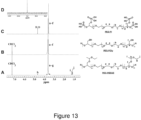
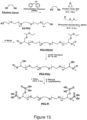
- Detailed molecular weight characterization results, GPC elution curves and NMR spectra are summarized in Table 2 and in Figures 8 and 13 .
- ABA-PEG-Pis inhibit phosphate signaling in P. aeruginosa under phosphate-limiting conditions.
- PstS is the phosphate-binding component of the ABC-type transporter complex pstSACB involved in phosphate transport into the bacterial cytoplasm.
- PstS is known to be induced by phosphate limitation and suppressed in a phosphate-rich extracellular environment.
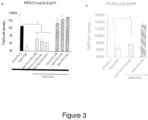
- the pSensor-PstS-EGFP plasmid (see Example 1) was electroporated in the P. aeruginosa, MPAO1-P1 strain to yield the MPAO1-P1/pstS-EGFP reporter strain.
- the expression of PstS was detected by fluorescence (excitation 485/10, emission 528/20) normalized to cell density measured by the absorbance at 600 nm.
- fluorescence excitation 485/10, emission 528/20
- non-phosphorylated parent polymers ABA-PEG 10k-G 10 (G10 means that the designed number of repeating glycerol units is 10), ABA-PEG16k-G14, and ABA-PEG20k-G20 did not suppress PstS expression demonstrating that there was no effect of the nascent ABA structure on the PstS expression via some type of non-specific interaction ( Figure 3A ).
- Reiterative experiments were then performed that used the ⁇ PvdD/pstS-EGFP strain, a pyoverdin-deficient mutant derivative of MPAO1-P1 harboring pSensor-PstS-EGFP.
- ABA-PEG-Pis significantly decrease pyocyanin production by P. aeruginosa under phosphate limited conditions and during exposure to opioids.
- pyocyanin a water-soluble blue-green phenazine compound.
- Pyocyanin is one of the major toxins of P. aeruginosa that induces rapid apoptosis of human neutrophils, and thus defines the virulence of this highly lethal opportunistic pathogen.
- the production of pyocyanin is controlled by the quorum sensing system (QS), a central virulence circuit in P. aeruginosa and other pathogens.
- QS quorum sensing system
- the PstS-PhoB phosphate regulon a two component membrane regulator, is activated during phosphate limitation and is involved in the transcriptional activation of QS.
- enrichment of media with phosphate leads to suppression of pyocyanin production [23, 24].
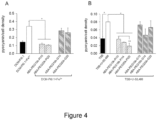
- ABA-PEG-Pi was examined to determine whether Pi can suppress pyocyanin production in P. aeruginosa in phosphate-limited medium using DCM-Pi0.1.
- a MPAO1-P2 strain was used that produces a higher amount of pyocyanin compared to the MPAO1-P1 strain [16].
- All three ABA-PEG-Pi polymers reduced pyocyanin at the expected background level, with ABA-PEG20k-Pi20 being the most effective.
- the paired molecular weight non-phosphorylated polymers were less effective in these experiments, again indicating that that the phosphate content of a polymer is relevant to its suppressive effect on pyocyanin production.
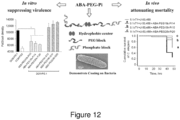
- the hydrophobic core BPA in ABA-PEG20k-Pi20 significantly contributed to bacterial coating and its in vivo protection against lethality.
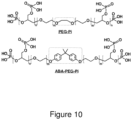
- PEG20k-Pi20 was synthesized. This polymer has a similar structure to ABA-PEG20k-Pi20, but lacks the hydrophobic core ( Figure 10 ).
- results showed that both phosphorylated polymers suppressed PstS expression to the same degree, demonstrating that both can serve as phosphate delivery molecules.
- C The hydrophobic core BPA in ABA-PEG20k-Pi20 significantly contributed to bacterial coating and its in vivo protection against lethality.
- PEG20k-Pi20 was synthesized. This polymer has a similar structure to ABA-PEG20k-Pi20, but lacks the hydrophobic core ( Figure 10 ).
- results showed that both phosphorylated polymers suppressed PstS expression to the same degree, demonstrating that both can serve as phosphate delivery molecules.
- C
- mice were divided into the following groups.
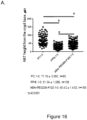
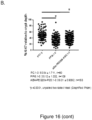
- Group 1 contained starvation-positive, antibiotic-positive mice receiving no phosphorylated PEG but exposed to the pathogen community. Data from three groups of mice were analyzed. Absolute ( Figure 16A ) and relative to crypt depth ( Figure 16B ) Ki67 distributions were counted on 90 crypts cumulative of 3 mice in each group.
- Group 2 contained starvation-positive, antibiotic-positive mice receiving 3% PPi-6 and exposed to the pathogen community.
- Group 3 contained starvation-positive, antibiotic-positive mice receiving 1% ABA-PEG20k-Pi20 and exposed to the pathogen community. Data from three mice were analyzed, totaling 168 crypts for Ki67 counts.
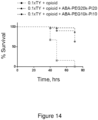
- mice drinking water containing 3% PPi6 or water containing 1% ABA-PEG20k-Pi20 exhibited 0% mortality rates (post-operative day 2) following exposure to the pathogen community.
- both phosphorylated polymers PPi-6 and phosphorylated PEGs promoted survival of mice.
- PPi-6 Sodium hexametaphosphate (PPi-6) profoundly suppresses the collagenase production in gram negative strains S. marcescens and P. aeruginosa and PPi-6 supplementation in the drinking water protects mice from colonic anastomosis leakage induced by these strains.
- PPi-6 only slightly attenuated collagenase production in E. faecalis.
- ABA-PEG20k-Pi20 suppresses collagenase activity in E. faecalis and promotes anastomotic healing in a mouse model of anastomotic leak caused by intestinal injection of E. ffnecalis.
- mice Two groups of mice were involved in this study. All mice were subjected to colon anastomosis followed by an enema of E. faecalis E2 at POD1. The first group received water, and the second group received 1% ABA-PEG20k-Pi20 dissolved in water. At the time of sacrifice at POD7, the tissues and luminal contents were collected at the site of anastomosis, homogenized, and used for culturing. Total Enterococcus colonization at the anastomosis site and luminal content were determined by culture analysis using Enterococcal selective plates (BD Difco) on which all Enterococcus species produced black-pigmented colonies. The CFU count was normalized to the sample weight.
- BD Difco Enterococcal selective plates
- the total Enterococcus population was not significantly different between the two groups in both the lumen and the tissue at the anastomotic site.
- the collagenolytic population was evaluated on Enterococcal plates covered with skim milk on which collagenolytic species produced black colonies with a clearing halo surrounding the colony.
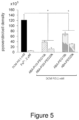
- the amount of collagenolytic colonies of E. faecalis was significantly reduced by ABA-PEG20k-Pi20 in both tissue and luminal contents.
- Mucus layers at anastomotic sites are enriched with phosphate in mice treated with ABA-PEG20k-Pi20.
- Phosphate concentration was measured in mucus layer scrapped off from 1 cm 2 area at the site of anastomosis at the time of sacrifice at POD7.
- the non-phosphorylated parent polymer ABA-PEG20k is less effective compared to ABA-PEG20k-Pi20.
- the phosphorylated polymer ABA-PEG20k-Pi20 is more potent compared to its parent non-phosphorylated compound ABA-PEG20k for suppression of collagenolytic activity of E. faecalis.
- a comparative analysis was performed for ABA-PEG20k-Pi20 versus ABA-PEG20k in our mouse model and found that ABA-PEG20k is less effective compared to ABA-PEG20k-Pi20. Both anastomotic leak scores and number of collagenolytic colonies of E. faecalis were significantly higher in ABA-PEG20k group.
- PPi-6 The inability of PPi-6 to suppress the collagenolytic activity of E. faecalis in vitro relates to its inability in vivo to improve anastomotic healing.
- Orally delivered 6-mer polyphosphate (PPi-6) has been recently proved as a potent protective compound in anastomotic leak induced by gram-negative collagenolytic strains of S. marcescens and P. aeruginosa.
- the efficacy of this compound in vivo correlated to its ability to profoundly suppress collagenase activity in these strains in vivo.
- PPi-6 does not affect the collagenolytic activity in E. faecalis, and does not promote a growth.
- Preparing a bowel is a critical step in colonic surgery. In most cases, it includes mechanical cleansing and a treatment with oral non-absorbable antibiotics. However, as it becomes evident, this procedure cannot guaranty the bacterial clearance, and there are multiple evidences that bacterial pathogens such E. faecalis and P. aeruginosa are often cultured from leaking anastomosis. These bacteria were shown to complicate anastomotic healing by degradation of collagen and thereby preventing normal extracellular matrix rearrangement that is required for wound healing. Given the emergence of multi-drug resistant bacteria, novel formulations are required for bowel preparation. Among components of a bowel preparation, those responsible for decrease of bacterial collagenolytic activities should be considered.
- Such components are to be directed to specific bacterial phenotype rather than to antibiotic-like effect.
- scientific-based approaches are required. It was recently demonstrated a potency of a phosphate-based therapy using PPi-6 to improve anastomotic healing by suppressing collagenase activity of gram-negative pathogens.
- a potential of yet another phosphate-based therapeutic compound, a phosphorylated triblock copolymer ABA-PEG20k-Pi20 to suppress the collagenolytic activity in gram-positive bacterium Enterococcus faecalis, a pathogen tightly associated with anastomotic leak.
- the polymer ABA-PEG20k-Pi20 was synthesized de novo and verified for its ability to coat bacteria and make its phosphate available for delivery and virulence suppression.
- ABA-PEG20k-Pi20 delivers phosphate to the site of anastomosis, significantly attenuates collagenolytic populations of E. faecalis at anastomotic sites and enhances anastomotic healing.
- the ability of ABA-PEG20k-Pi20 to suppress collagenolytic activity is critical for its in vivo protective effect as its non-phosphorylated parent compound ABA-PEG20k and inorganic polyphosphate PPi-6 that were less effective for prevention of collagenolytic activity of E.
- faecalis were also less protective to prevent anastomotic leak caused by this pathogen.
- ABA-PEG20k-Pi20 could be combined with PPi-6 to formulate a bowel preparation against broad range collagenolytic pathogens.
Landscapes
- Health & Medical Sciences (AREA)
- Chemical & Material Sciences (AREA)
- Medicinal Chemistry (AREA)
- Life Sciences & Earth Sciences (AREA)
- Pharmacology & Pharmacy (AREA)
- Veterinary Medicine (AREA)
- Public Health (AREA)
- General Health & Medical Sciences (AREA)
- Animal Behavior & Ethology (AREA)
- Epidemiology (AREA)
- Chemical Kinetics & Catalysis (AREA)
- General Chemical & Material Sciences (AREA)
- Organic Chemistry (AREA)
- Nuclear Medicine, Radiotherapy & Molecular Imaging (AREA)
- Engineering & Computer Science (AREA)
- Polymers & Plastics (AREA)
- Communicable Diseases (AREA)
- Bioinformatics & Cheminformatics (AREA)
- Oncology (AREA)
- Proteomics, Peptides & Aminoacids (AREA)
- Oil, Petroleum & Natural Gas (AREA)
- Inorganic Chemistry (AREA)
- Medicinal Preparation (AREA)
- Pharmaceuticals Containing Other Organic And Inorganic Compounds (AREA)
Applications Claiming Priority (4)
| Application Number | Priority Date | Filing Date | Title |
|---|---|---|---|
| US201662402655P | 2016-09-30 | 2016-09-30 | |
| US201762483132P | 2017-04-07 | 2017-04-07 | |
| EP17857533.8A EP3518895B1 (de) | 2016-09-30 | 2017-09-29 | Phosphorylierte tri-blockcopolymere mit pathogenvirulenzunterdrückenden eigenschaften |
| PCT/US2017/054424 WO2018064536A1 (en) | 2016-09-30 | 2017-09-29 | Phosphorylated tri-block copolymers with pathogen virulence-suppressing properties |
Related Parent Applications (1)
| Application Number | Title | Priority Date | Filing Date |
|---|---|---|---|
| EP17857533.8A Division EP3518895B1 (de) | 2016-09-30 | 2017-09-29 | Phosphorylierte tri-blockcopolymere mit pathogenvirulenzunterdrückenden eigenschaften |
Publications (4)
| Publication Number | Publication Date |
|---|---|
| EP4403222A2 true EP4403222A2 (de) | 2024-07-24 |
| EP4403222A3 EP4403222A3 (de) | 2024-10-23 |
| EP4403222B1 EP4403222B1 (de) | 2025-11-19 |
| EP4403222C0 EP4403222C0 (de) | 2025-11-19 |
Family
ID=61760225
Family Applications (2)
| Application Number | Title | Priority Date | Filing Date |
|---|---|---|---|
| EP24176683.1A Active EP4403222B1 (de) | 2016-09-30 | 2017-09-29 | Phosphorylierte tri-blockcopolymere mit pathogenvirulenzunterdrückenden eigenschaften |
| EP17857533.8A Active EP3518895B1 (de) | 2016-09-30 | 2017-09-29 | Phosphorylierte tri-blockcopolymere mit pathogenvirulenzunterdrückenden eigenschaften |
Family Applications After (1)
| Application Number | Title | Priority Date | Filing Date |
|---|---|---|---|
| EP17857533.8A Active EP3518895B1 (de) | 2016-09-30 | 2017-09-29 | Phosphorylierte tri-blockcopolymere mit pathogenvirulenzunterdrückenden eigenschaften |
Country Status (4)
| Country | Link |
|---|---|
| US (2) | US11571443B2 (de) |
| EP (2) | EP4403222B1 (de) |
| CN (1) | CN110325175A (de) |
| WO (1) | WO2018064536A1 (de) |
Families Citing this family (6)
| Publication number | Priority date | Publication date | Assignee | Title |
|---|---|---|---|---|
| WO2019209844A1 (en) * | 2018-04-23 | 2019-10-31 | The University Of Chicago | Materials and methods of using an inhibitor of plasminogen activation to treat anastomotic leak |
| WO2022013642A1 (en) * | 2020-07-16 | 2022-01-20 | 3M Innovative Properties Company | Phosphate-containing copolymers for virulence suppression |
| EP4182361A1 (de) | 2020-07-16 | 2023-05-24 | 3M Innovative Properties Company | Phosphonathaltige polymere zur unterdrückung der virulenz |
| EP4419205A4 (de) | 2021-10-20 | 2025-06-11 | Solventum Intellectual Properties Company | Phosphat und arginin enthaltende zusammensetzungen und die abgabe solcher zusammensetzungen zur unterdrückung der virulenz |
| US20250041334A1 (en) * | 2021-12-10 | 2025-02-06 | Solventum Intellectual Properties Company | Compositions for Virulence Suppression |
| EP4712772A1 (de) | 2023-05-19 | 2026-03-25 | Solventum Intellectual Properties Company | Zusammensetzungen zur reinigung und unterdrückung der virulenz |
Family Cites Families (7)
| Publication number | Priority date | Publication date | Assignee | Title |
|---|---|---|---|---|
| US20020164374A1 (en) * | 1997-10-29 | 2002-11-07 | John Jackson | Polymeric systems for drug delivery and uses thereof |
| JP5271475B2 (ja) | 2002-11-26 | 2013-08-21 | ザ ユニヴァーシティー オヴ シカゴ | 微生物媒介上皮疾患の予防及び治療のための材料並びに方法 |
| WO2007101264A2 (en) * | 2006-02-28 | 2007-09-07 | The University Of Chicago | Method for treating endothelial and epithelial cell disorders by administering high molecular weight peg-like compounds |
| MX2011009988A (es) | 2009-03-23 | 2011-11-18 | Univ Chicago | Metodos para la prevencion y el tratamiento de trastornos epiteliales inducidos por radiaciones. |
| US9937199B2 (en) | 2012-08-17 | 2018-04-10 | The University Of Chicago | Materials and methods for preventing and treating anastomotic leaks |
| US20140271885A1 (en) * | 2013-03-15 | 2014-09-18 | Intezyne Technologies, Inc. | Copolymers for stable micelle formulations |
| US9394407B2 (en) * | 2014-06-30 | 2016-07-19 | Pall Corporation | Hydrophilic block copolymers and membranes prepared therefrom (I) |
-
2017
- 2017-09-29 CN CN201780074195.6A patent/CN110325175A/zh active Pending
- 2017-09-29 EP EP24176683.1A patent/EP4403222B1/de active Active
- 2017-09-29 EP EP17857533.8A patent/EP3518895B1/de active Active
- 2017-09-29 WO PCT/US2017/054424 patent/WO2018064536A1/en not_active Ceased
- 2017-09-29 US US16/338,330 patent/US11571443B2/en active Active
-
2023
- 2023-01-18 US US18/156,058 patent/US20230285446A1/en active Pending
Non-Patent Citations (29)
| Title |
|---|
| BANERJEE, IPANGULE, R. C.;KANE, R. S.: "Antifouling Coatings: Recent Developments in the Design of Surfaces that Prevent Fouling by Proteins, Bacteria, and Marine Organisms", ADV. MATER., vol. 23, 2011, pages 690 - 718, XP055344239, DOI: 10.1002/adma.201001215 |
| BERGWITZ, C.JUPPNER, H.: "Phosphate Sensing", ADV. CHRONIC. KIDNEY DIS., vol. 18, 2011, pages 132 - 144 |
| C. BERGWITZH. JUPPNER, ADV CHRONIC KIDNEY DIS, vol. 18, 2011, pages 132 - 144 |
| CAMPS, MBARANI, A.GREGORI, GBOUCHEZ, A.LE BERRE, BBRESSY, C.BLACHE, Y.BRIAND, J. F: "Antifouling Coatings Influence both Abundance and Community Structure of Colonizing Biofilms: a Case Study in the Northwestern Mediterranean Sea", APPL. ENVIRON. MICROBIOL., vol. 80, 2014, pages 4821 - 4831 |
| D. SMITHJ. N. ADKINSS. M. KIMA. ALVERDYD. GOLDFELDM. A. FIRESTONEJ. H. COLLIERB. JABRIM. TIRRELLO. ZABORINA, ANTIMICROB AGENTS CHEMOTHER, vol. 58, 2014, pages 966 - 977 |
| DIMITRIOU, M. DZHOU, Z. L.YOO, H. SKILLOPS, K. L.FINLAY, J. A.CONE, GSUNDARAM, H. S.LYND, N. A.BARTEAU, K. P.CAMPOS, L. M: "A General Approach to Controlling the Surface Composition of Poly(ethylene oxide)-Based Block Copolymers for Antifouling Coatings.", LANGMUIR, vol. 27, 2011, pages 13762 - 13772 |
| GAO, Q.YU, MSU, YXIE, M.ZHAO, X.LI, P.MA, P. X.: "Rationally Designed Dual Functional Block Copolymers for Bottlebrush-like Coatings: In vitro and In vivo Antimicrobial, Antibiofilm, and Antifouling Properties.", ACTA BIOTTIATER., vol. 51, 2017, pages 112 - 124 |
| JENSEN, V.LONS, DZAOUI, C.BREDENBRUCH, F.MEISSNER, A.DIETERICH, G.MUNCH, R.HAUSSLER, S: "Rhlr Expression in Pseudomonas Aeruginosa is Modulated by the Pseudomonas Quinolone Signal via PhoB-Dependent and -Independent Pathways", J. BACTERIOL., vol. 188, 2006, pages 8601 - 8606 |
| KOLATE, A.BARADIA, D.PATIL, SVHORA, I.KORE, GMISRA, A.: "PEG - a Versatile Conjugating Ligand for Drugs and Drug Delivery Systems.", J. CONTROL. RELEASE, vol. 192, 2014, pages 67 - 81, XP029060789, DOI: 10.1016/j.jconrel.2014.06.046 |
| LI, Z. YLI, P. P.HUANG, J. L.: "Synthesis of Amphiphilic Copolymer Brushes: Poly(Ethylene Oxide)-graft-Polystyrene.", J. POLYM. SCI. A POLYM. CHEM., vol. 44, 2006, pages 4361 - 4371 |
| LIECHTY, W. B.KRYSCIO, D. RSLAUGHTER, B. V.;PEPPAS, N. A.: "Polymers for Drug Delivery Systems.", ANNU. REV. CHEM. BIOMOL. ENG., vol. 1, 2010, pages 149 - 173, XP008132839, DOI: 10.1146/annurev-chembioeng-073009-100847 |
| LUONG, P. M.SHOGAN, B. D.ZABORIN, A.BELOGORTSEVA, N.SHROUT, J. D.ZABORINA, O.ALVERDY, J. C.: "Emergence of the P2 Phenotype in Pseudomonas aeruginosa PAO1 Strains Involves Various Mutations in mexT or mexF.", J. BACTERIOL., vol. 196, 2014, pages 504 - 513 |
| MANGOLD, C.WURM, F.OBERMEIER, B.FREY, H.: "Hetero-Multifunctional Poly(ethylene glycol) Copolymers with Multiple Hydroxyl Groups and a Single Terminal Functionality.", MACROMOL. RAPID COMM., vol. 31, 2010, pages 258 - 264 |
| MERZ, A. J.SO, MSHEETZ, M. P.: "Pilus Retraction Powers Bacterial Twitching Motility", NATURE, vol. 407, 2000, pages 98 - 102 |
| PRICE, R. J.CUTLIBERTSON, B. HSU, D. C.: "Selective Decontamination of the Digestive Tract and Oropharynx: After 30 Years Of Debate is the Definitive Answer in Sight?", CURR. OPIN. CRIT. CARE., vol. 22, 2016, pages 161 - 166 |
| TEILLANT, A.GANDRA, SBARTER, D.MORGAN, D. J.LAXMINARAYAN, R: "Potential Burden of Antibiotic Resistance on Surgery and Cancer Chemotherapy Antibiotic Prophylaxis in the USA: a Literature Review and Modelling Study", LANCET INFECT. DIS., vol. 15, 2015, pages 1429 - 1437 |
| VALE, P. F. M., L.DOESCHL-WILSON, A.KING, K. C.POPAT, R.;DOMINGO-SANANES, M. RALLEN, J. E.SOARES, M. P.KIIMMERLI, RBEYOND KILLING: "Can We Find New Ways to Manage Infection?", EVOL. MED. PUBLIC HEALTH, vol. 1, 2016, pages 148 - 157 |
| VILAR, G.TULLA-PUCHE, J.ALBERICIO, F.: "Polymers and Drug Delivery Systems.", CURR. DRUG DELIV., vol. 9, 2012, pages 367 - 394 |
| WANG, Y. P.PITET, L. M.FINLAY, J. A.BREWER, L. H.CONE, G.BETTS, D. E.CALLOW, M. E.CALLOW, J. A.WENDT, D. E.HILLMYER, M. A.: "Investigation of the Role of Hydrophilic Chain Length in Amphiphilic Perfluoropolyether/Poly(ethylene glycol) Networks: Towards High-performance Antifouling Coatings", BIOFOULING, vol. 27, 2011, pages 1139 - 1150 |
| WU, L. CZABORINA, OZABORIN, ACHANG, E. B.MUSCH, MHOLBROOK, C.SHAPIRO, J.TURNER, J. R.WU, G. H.LEE, K. Y. C.: "High-molecular-weight Polyethylene Glycol Prevents Lethal Sepsis due to Intestinal Pseudomonas Aeruginosa", GASTROENTEROLOGY, vol. 126, 2004, pages 488 - 498 |
| XIAO, G. PDEZIEL, E.HE, J. X.LEPINE, F.LESIC, B.CASTONGUAY, M. H.;MILOT, STAMPAKAKI, A. P.STACHEL, S. ERAHME, L. G.: "MvfR, a Key Pseudomonas Aeruginosa Pathogenicity LTTR-class Regulatory Protein, Has Dual Ligands.", MOL. MICROBIOL., vol. 62, 2006, pages 1689 - 1699 |
| ZABORIN, A.DEFAZIO, J. R.KADE, M.KAISER, B. L. DBELOGORTSEVA, N.;CAMP, D. G.SMITH, R. D.ADKINS, J. NKIM, S. M.ALVERDY, A.: "Phosphate-Containing Polyethylene Glycol Polymers Prevent Lethal Sepsis by Multidrug-Resistant Pathogens.", ANTIMICROB. AGENTS CHEMOTHER., vol. 58, 2014, pages 966 - 977, XP055482017, DOI: 10.1128/AAC.02183-13 |
| ZABORIN, A.GERDES, S.HOLBROOK, C.LIU, D. C.ZABORINA, O. YALVERDY, J. C.: "Pseudomonas Aeruginosa Overrides the Virulence Inducing Effect of Opioids When it Senses an Abundance of Phosphate.", PLOS ONE, vol. 7, 2012, pages e34883 |
| ZABORIN, AROMANOWSKI, K.GERDES, S.HOLBROOK, CLEPINE, F.LONG, J.POROYKO, V.DIGGLE, S. P.WILKE, A.RIGHETTI, K.: "Red Death in Caenorhabditis Elegans Caused by Pseudomonas Aeruginosa PAOl", PROC. NATL. ACAD. SCI. USA, vol. 106, 2009, pages 6327 - 6332 |
| ZABORIN, ASMITH, D.GARFIELD, K.QUENSEN, J.SHAKHSHEER, BKADE, M.TIRRELL, M.TIEDJE, J.GILBERT, J. A.ZABORINA, O: "Membership and Behavior of Ultra-Low-Diversity Pathogen Communities Present in the Gut of Humans during Prolonged Critical Illness", MBIO, vol. 5, 2014, pages e01361 - 01314 |
| ZABORINA, O.LEPINE, F.;XIAO, G. P.;VALUCKAITE, VCHEN, Y. M.LI, TCIANCIO, M.ZABORIN, A.PETROF, E. O.TURNER, J. R.: "Dynorphin Activates Quorum Sensing Quinolone Signaling in Pseudomonas Aeruginosa", PLOS PATHOG, vol. 3, 2007, pages e35 |
| ZABORINA, O.ZABORIN, A.ROMANOWSKI, K.BABROWSKI, T.ALVERDY, J.: "Host Stress and Virulence Expression in Intestinal Pathogens: Development of Therapeutic Strategies Using Mice and C. elegans", . CURR. PHARM. DESIGN, vol. 17, 2011, pages 1254 - 1260 |
| ZHOU, P.LI, Z. Y.CHAU, Y.: "Synthesis, Characterization, and In Vivo Evaluation of Poly(Ethylene Oxide-co-Glycidol)-Platinate Conjugate.", EUR. J. PHARM. SCI., vol. 41, 2010, pages 464 - 472, XP027369044 |
| ZHOU, Z. L.CALABRESE, D. R.TAYLOR, W.FINLAY, J. ACALLOW, M. ECALLOW, J. A.FISCHER, D.KRAMER, E. J.OBER, C. K: "Amphiphilic Triblock Copolymers with PEGylated Hydrocarbon Structures as Environmentally Friendly Marine Antifouling and Fouling-release Coatings.", BIOFOULING, vol. 30, 2014, pages 589 - 604 |
Also Published As
| Publication number | Publication date |
|---|---|
| US20230285446A1 (en) | 2023-09-14 |
| EP4403222B1 (de) | 2025-11-19 |
| EP3518895C0 (de) | 2024-05-22 |
| EP3518895A4 (de) | 2020-05-27 |
| EP4403222A3 (de) | 2024-10-23 |
| EP4403222C0 (de) | 2025-11-19 |
| US20190247423A1 (en) | 2019-08-15 |
| WO2018064536A1 (en) | 2018-04-05 |
| US11571443B2 (en) | 2023-02-07 |
| CN110325175A (zh) | 2019-10-11 |
| EP3518895B1 (de) | 2024-05-22 |
| EP3518895A1 (de) | 2019-08-07 |
Similar Documents
| Publication | Publication Date | Title |
|---|---|---|
| US20230285446A1 (en) | Phosphorylated Tri-Block Copolymers with Anti-Microbial Properties | |
| Ruby et al. | Salmonella's long-term relationship with its host | |
| Lane et al. | Dynamic intracellular delivery of antibiotics via pH-responsive polymersomes | |
| Das et al. | RAFT polymerization of ciprofloxacin prodrug monomers for the controlled intracellular delivery of antibiotics | |
| Zaborin et al. | Phosphate-containing polyethylene glycol polymers prevent lethal sepsis by multidrug-resistant pathogens | |
| Zou et al. | Silver-decorated biodegradable polymer vesicles with excellent antibacterial efficacy | |
| Zhao et al. | Biodegradable cationic ε-poly-L-lysine-conjugated polymeric nanoparticles as a new effective antibacterial agent | |
| Li et al. | Helicobacter pylori outer membrane vesicles: biogenesis, composition, and biological functions | |
| Yu et al. | A bioinspired hierarchical nanoplatform targeting and responding to intracellular pathogens to eradicate parasitic infections | |
| Zhu et al. | Self-assembly of amino acid-based random copolymers for antibacterial application and infection treatment as nanocarriers | |
| Boffoli et al. | Tobramycin-loaded complexes to prevent and disrupt Pseudomonas aeruginosa biofilms | |
| Mao et al. | De novo synthesis of phosphorylated triblock copolymers with pathogen virulence-suppressing properties that prevent infection-related mortality | |
| Liu et al. | Engineering antibacterial activities and biocompatibility of hyperbranched lysine-based random copolymers | |
| Liow et al. | Cationic poly ([R]‐3‐hydroxybutyrate) copolymers as antimicrobial agents | |
| HK40114625A (en) | Phosphorylated tri-block copolymers with pathogen virulence-suppressing properties | |
| HK40114625B (en) | Phosphorylated tri-block copolymers with pathogen virulence-suppressing properties | |
| US12383579B2 (en) | Materials and methods of using an inhibitor of plasminogen activation to treat anastomotic leak | |
| WO2005023931A1 (en) | Biocidal polymers | |
| US10463688B2 (en) | Nylon-3 polymers active against Clostridium difficile | |
| Chen et al. | Antibacterial activities of functional groups on the benzene rings in nucleic acid nanocarriers | |
| Stokniene | The design and assembly of tailored oligosaccharides as polymer therapeutics for improved treatment of chronic respiratory disease | |
| Limqueco | Bioengineering functional polymer systems for glycan-based targeting and drug release | |
| Mahboob et al. | Cholesterol-terminated cationic lipidated oligomers (CLOs) as a new class of antifungals | |
| US20260014262A1 (en) | Antimicrobial block polypeptide, therapeutic composition including thereof, and method for treating bacterial gastrointestinal infection using thereof | |
| Manouras et al. | Responsive Quaternized PDMAEMA Copolymers with Antimicrobial Action. Polymers 2021, 13, 3051 |
Legal Events
| Date | Code | Title | Description |
|---|---|---|---|
| PUAI | Public reference made under article 153(3) epc to a published international application that has entered the european phase |
Free format text: ORIGINAL CODE: 0009012 |
|
| STAA | Information on the status of an ep patent application or granted ep patent |
Free format text: STATUS: REQUEST FOR EXAMINATION WAS MADE |
|
| 17P | Request for examination filed |
Effective date: 20240517 |
|
| AC | Divisional application: reference to earlier application |
Ref document number: 3518895 Country of ref document: EP Kind code of ref document: P |
|
| AK | Designated contracting states |
Kind code of ref document: A2 Designated state(s): AL AT BE BG CH CY CZ DE DK EE ES FI FR GB GR HR HU IE IS IT LI LT LU LV MC MK MT NL NO PL PT RO RS SE SI SK SM TR |
|
| REG | Reference to a national code |
Ref country code: DE Ref legal event code: R079 Free format text: PREVIOUS MAIN CLASS: A61P0031040000 Ipc: A61K0009000000 Ref country code: DE Ref legal event code: R079 Ref document number: 602017092841 Country of ref document: DE Free format text: PREVIOUS MAIN CLASS: A61P0031040000 Ipc: A61K0009000000 |
|
| PUAL | Search report despatched |
Free format text: ORIGINAL CODE: 0009013 |
|
| AK | Designated contracting states |
Kind code of ref document: A3 Designated state(s): AL AT BE BG CH CY CZ DE DK EE ES FI FR GB GR HR HU IE IS IT LI LT LU LV MC MK MT NL NO PL PT RO RS SE SI SK SM TR |
|
| RIC1 | Information provided on ipc code assigned before grant |
Ipc: A61P 31/04 20060101ALI20240919BHEP Ipc: A61P 1/00 20060101ALI20240919BHEP Ipc: A61K 31/80 20060101ALI20240919BHEP Ipc: A61K 31/77 20060101ALI20240919BHEP Ipc: C08G 65/335 20060101ALI20240919BHEP Ipc: A61K 47/34 20170101ALI20240919BHEP Ipc: A61K 47/10 20170101ALI20240919BHEP Ipc: A61K 31/765 20060101ALI20240919BHEP Ipc: A61K 31/635 20060101ALI20240919BHEP Ipc: A61K 9/00 20060101AFI20240919BHEP |
|
| REG | Reference to a national code |
Ref country code: HK Ref legal event code: DE Ref document number: 40114625 Country of ref document: HK |
|
| GRAP | Despatch of communication of intention to grant a patent |
Free format text: ORIGINAL CODE: EPIDOSNIGR1 |
|
| STAA | Information on the status of an ep patent application or granted ep patent |
Free format text: STATUS: GRANT OF PATENT IS INTENDED |
|
| INTG | Intention to grant announced |
Effective date: 20250611 |
|
| RIN1 | Information on inventor provided before grant (corrected) |
Inventor name: CHEN, WEI Inventor name: MAO, JUN Inventor name: ZABORINA, OLGA Inventor name: TIRRELL, MATTHEW Inventor name: ALVERDY, JOHN C. |
|
| GRAS | Grant fee paid |
Free format text: ORIGINAL CODE: EPIDOSNIGR3 |
|
| GRAA | (expected) grant |
Free format text: ORIGINAL CODE: 0009210 |
|
| STAA | Information on the status of an ep patent application or granted ep patent |
Free format text: STATUS: THE PATENT HAS BEEN GRANTED |
|
| AC | Divisional application: reference to earlier application |
Ref document number: 3518895 Country of ref document: EP Kind code of ref document: P |
|
| AK | Designated contracting states |
Kind code of ref document: B1 Designated state(s): AL AT BE BG CH CY CZ DE DK EE ES FI FR GB GR HR HU IE IS IT LI LT LU LV MC MK MT NL NO PL PT RO RS SE SI SK SM TR |
|
| REG | Reference to a national code |
Ref country code: CH Ref legal event code: F10 Free format text: ST27 STATUS EVENT CODE: U-0-0-F10-F00 (AS PROVIDED BY THE NATIONAL OFFICE) Effective date: 20251119 Ref country code: GB Ref legal event code: FG4D |
|
| REG | Reference to a national code |
Ref country code: IE Ref legal event code: FG4D |
|
| U01 | Request for unitary effect filed |
Effective date: 20251125 |
|
| U07 | Unitary effect registered |
Designated state(s): AT BE BG DE DK EE FI FR IT LT LU LV MT NL PT RO SE SI Effective date: 20251201 |
|
| PG25 | Lapsed in a contracting state [announced via postgrant information from national office to epo] |
Ref country code: ES Free format text: LAPSE BECAUSE OF FAILURE TO SUBMIT A TRANSLATION OF THE DESCRIPTION OR TO PAY THE FEE WITHIN THE PRESCRIBED TIME-LIMIT Effective date: 20251119 |
|
| PG25 | Lapsed in a contracting state [announced via postgrant information from national office to epo] |
Ref country code: NO Free format text: LAPSE BECAUSE OF FAILURE TO SUBMIT A TRANSLATION OF THE DESCRIPTION OR TO PAY THE FEE WITHIN THE PRESCRIBED TIME-LIMIT Effective date: 20260219 |
|
| PG25 | Lapsed in a contracting state [announced via postgrant information from national office to epo] |
Ref country code: HR Free format text: LAPSE BECAUSE OF FAILURE TO SUBMIT A TRANSLATION OF THE DESCRIPTION OR TO PAY THE FEE WITHIN THE PRESCRIBED TIME-LIMIT Effective date: 20251119 |
|
| PG25 | Lapsed in a contracting state [announced via postgrant information from national office to epo] |
Ref country code: RS Free format text: LAPSE BECAUSE OF FAILURE TO SUBMIT A TRANSLATION OF THE DESCRIPTION OR TO PAY THE FEE WITHIN THE PRESCRIBED TIME-LIMIT Effective date: 20260219 |
|
| PG25 | Lapsed in a contracting state [announced via postgrant information from national office to epo] |
Ref country code: IS Free format text: LAPSE BECAUSE OF FAILURE TO SUBMIT A TRANSLATION OF THE DESCRIPTION OR TO PAY THE FEE WITHIN THE PRESCRIBED TIME-LIMIT Effective date: 20260319 |