EP4403052A1 - Aerosol generating device and split type aerosol generating device - Google Patents
Aerosol generating device and split type aerosol generating device Download PDFInfo
- Publication number
- EP4403052A1 EP4403052A1 EP22869029.3A EP22869029A EP4403052A1 EP 4403052 A1 EP4403052 A1 EP 4403052A1 EP 22869029 A EP22869029 A EP 22869029A EP 4403052 A1 EP4403052 A1 EP 4403052A1
- Authority
- EP
- European Patent Office
- Prior art keywords
- charging
- power supply
- interface unit
- assembly
- generating device
- Prior art date
- Legal status (The legal status is an assumption and is not a legal conclusion. Google has not performed a legal analysis and makes no representation as to the accuracy of the status listed.)
- Pending
Links
Images


Classifications
-
- A—HUMAN NECESSITIES
- A24—TOBACCO; CIGARS; CIGARETTES; SIMULATED SMOKING DEVICES; SMOKERS' REQUISITES
- A24F—SMOKERS' REQUISITES; MATCH BOXES; SIMULATED SMOKING DEVICES
- A24F40/00—Electrically operated smoking devices; Component parts thereof; Manufacture thereof; Maintenance or testing thereof; Charging means specially adapted therefor
- A24F40/50—Control or monitoring
-
- A—HUMAN NECESSITIES
- A24—TOBACCO; CIGARS; CIGARETTES; SIMULATED SMOKING DEVICES; SMOKERS' REQUISITES
- A24F—SMOKERS' REQUISITES; MATCH BOXES; SIMULATED SMOKING DEVICES
- A24F40/00—Electrically operated smoking devices; Component parts thereof; Manufacture thereof; Maintenance or testing thereof; Charging means specially adapted therefor
- A24F40/10—Devices using liquid inhalable precursors
-
- A—HUMAN NECESSITIES
- A24—TOBACCO; CIGARS; CIGARETTES; SIMULATED SMOKING DEVICES; SMOKERS' REQUISITES
- A24F—SMOKERS' REQUISITES; MATCH BOXES; SIMULATED SMOKING DEVICES
- A24F40/00—Electrically operated smoking devices; Component parts thereof; Manufacture thereof; Maintenance or testing thereof; Charging means specially adapted therefor
- A24F40/20—Devices using solid inhalable precursors
-
- A—HUMAN NECESSITIES
- A24—TOBACCO; CIGARS; CIGARETTES; SIMULATED SMOKING DEVICES; SMOKERS' REQUISITES
- A24F—SMOKERS' REQUISITES; MATCH BOXES; SIMULATED SMOKING DEVICES
- A24F40/00—Electrically operated smoking devices; Component parts thereof; Manufacture thereof; Maintenance or testing thereof; Charging means specially adapted therefor
- A24F40/30—Devices using two or more structurally separated inhalable precursors, e.g. using two liquid precursors in two cartridges
-
- A—HUMAN NECESSITIES
- A24—TOBACCO; CIGARS; CIGARETTES; SIMULATED SMOKING DEVICES; SMOKERS' REQUISITES
- A24F—SMOKERS' REQUISITES; MATCH BOXES; SIMULATED SMOKING DEVICES
- A24F40/00—Electrically operated smoking devices; Component parts thereof; Manufacture thereof; Maintenance or testing thereof; Charging means specially adapted therefor
- A24F40/40—Constructional details, e.g. connection of cartridges and battery parts
-
- A—HUMAN NECESSITIES
- A24—TOBACCO; CIGARS; CIGARETTES; SIMULATED SMOKING DEVICES; SMOKERS' REQUISITES
- A24F—SMOKERS' REQUISITES; MATCH BOXES; SIMULATED SMOKING DEVICES
- A24F40/00—Electrically operated smoking devices; Component parts thereof; Manufacture thereof; Maintenance or testing thereof; Charging means specially adapted therefor
- A24F40/40—Constructional details, e.g. connection of cartridges and battery parts
- A24F40/46—Shape or structure of electric heating means
-
- A—HUMAN NECESSITIES
- A24—TOBACCO; CIGARS; CIGARETTES; SIMULATED SMOKING DEVICES; SMOKERS' REQUISITES
- A24F—SMOKERS' REQUISITES; MATCH BOXES; SIMULATED SMOKING DEVICES
- A24F40/00—Electrically operated smoking devices; Component parts thereof; Manufacture thereof; Maintenance or testing thereof; Charging means specially adapted therefor
- A24F40/90—Arrangements or methods specially adapted for charging batteries thereof
-
- A—HUMAN NECESSITIES
- A24—TOBACCO; CIGARS; CIGARETTES; SIMULATED SMOKING DEVICES; SMOKERS' REQUISITES
- A24F—SMOKERS' REQUISITES; MATCH BOXES; SIMULATED SMOKING DEVICES
- A24F47/00—Smokers' requisites not otherwise provided for
-
- H—ELECTRICITY
- H02—GENERATION; CONVERSION OR DISTRIBUTION OF ELECTRIC POWER
- H02J—ELECTRIC POWER NETWORKS; CIRCUIT ARRANGEMENTS OR SYSTEMS FOR SUPPLYING OR DISTRIBUTING ELECTRIC POWER; SYSTEMS FOR STORING ELECTRIC ENERGY
- H02J7/00—Circuit arrangements for charging or discharging batteries or for supplying loads from batteries
- H02J7/34—Parallel operation in networks using both storage and other DC sources, e.g. providing buffering
- H02J7/345—Parallel operation in networks using both storage and other DC sources, e.g. providing buffering using capacitors as storage or buffering devices
-
- H—ELECTRICITY
- H02—GENERATION; CONVERSION OR DISTRIBUTION OF ELECTRIC POWER
- H02J—ELECTRIC POWER NETWORKS; CIRCUIT ARRANGEMENTS OR SYSTEMS FOR SUPPLYING OR DISTRIBUTING ELECTRIC POWER; SYSTEMS FOR STORING ELECTRIC ENERGY
- H02J7/00—Circuit arrangements for charging or discharging batteries or for supplying loads from batteries
- H02J7/70—Circuit arrangements for charging or discharging batteries or for supplying loads from batteries characterised by the mechanical construction
-
- H—ELECTRICITY
- H02—GENERATION; CONVERSION OR DISTRIBUTION OF ELECTRIC POWER
- H02J—ELECTRIC POWER NETWORKS; CIRCUIT ARRANGEMENTS OR SYSTEMS FOR SUPPLYING OR DISTRIBUTING ELECTRIC POWER; SYSTEMS FOR STORING ELECTRIC ENERGY
- H02J7/00—Circuit arrangements for charging or discharging batteries or for supplying loads from batteries
- H02J7/90—Regulation of charging or discharging current or voltage
- H02J7/94—Regulation of charging or discharging current or voltage in response to battery current
Definitions
- the present disclosure relates to the field of electronic atomization devices, and in particular to an aerosol generating device and a split-type aerosol generating device.
- the present disclosure at least provides an aerosol generating device and a split-type aerosol generating device.
- a first aspect of the present disclosure provides an aerosol generating device.
- the aerosol generating device includes a heater assembly, a control assembly, and a power supply assembly.
- the heater assembly is configured for generating aerosol.
- the control assembly is connected to the heater assembly, and configured for controlling supplying power to the heater assembly.
- the power supply assembly is connected to the control assembly, and configured for supplying power to the heater assembly through the control assembly.
- the heater assembly is detachably connected to the control assembly, and the control assembly is detachably connected to the power supply assembly, so as to facilitate replacement of the heater assembly, the control assembly, and/or the power supply assembly.
- the heater assembly includes a heater and a first interface unit.
- the heater is configured for heating the aerosol substrate to generate the aerosol.
- the first interface unit is connected to the heater.
- the heater assembly includes a plurality of heaters, and the plurality of heaters are disposed in parallel or in series.
- control assembly includes a second interface unit, a control circuit, and a third interface unit.
- the second interface unit is disposed in couple with the first interface unit, so that the control assembly is connected to the heater assembly.
- the control circuit is connected to the second interface unit, and configured for controlling the start and stop of supplying power to the heater.
- the third interface unit is connected to the control circuit.
- the power supply assembly includes a fourth interface unit and a hybrid capacitor.
- the fourth interface unit is disposed in couple with the third interface unit, so that the control assembly is connected to the power supply assembly.
- the hybrid capacitor is connected to the fourth interface unit, and configured to supply power to the heater through the control assembly.
- one of the first interface unit and the second interface unit is provided with a first spring pin
- the other of the second interface unit and the first interface unit is provided with a first spring pin interface
- the first spring pin is inserted into the first spring pin interface, so that the first interface unit is connected to the second interface unit.
- One of the third interface unit and the fourth interface unit is provided with a second spring pin
- the other of the fourth interface unit and the third interface unit is provided with a second spring pin interface
- the second spring pin is inserted into the second spring pin interface, so that the third interface unit is connected to the fourth interface unit.
- control assembly further includes a first charging interface and a first charging circuit.
- One end of the first charging circuit is connected to an external power supply through the first charging interface, and the other end of the first charging circuit is connected to the hybrid capacitor, so that the external power supply charges the hybrid capacitor through the first charging circuit.
- the power supply assembly further includes a second charging interface and a second charging circuit.
- One end of the second charging circuit is connected to the external power supply through the second charging interface, and the other end of the second charging circuit is connected to the hybrid capacitor, so that the external power supply charges the hybrid capacitor through the second charging circuit.
- the external power supply includes a plurality of charging assemblies, a plurality of power supply assemblies are connected to the plurality of charging assemblies in a one-to-one correspondence manner, so that the external power supply charges a plurality of hybrid capacitors; and the plurality of charging assemblies include a plurality of charging piles or a plurality of charging cables.
- control circuit determines an initial value of a parameter of the hybrid capacitor, and the external power supply charges the aerosol generating device, so that the value of the parameter of the hybrid capacitor reaches a preset value.
- the initial value of the parameter includes any one of an initial voltage, an initial charge quantity, an initial capacity, and initial energy; and the value of the parameter includes any one of a charge quantity, a capacity, a charging time, and energy.
- a second aspect of the present disclosure provides a split-type aerosol generating device.
- the split-type aerosol generating device includes a charging device and any of the above-mentioned aerosol generating devices.
- the charging device is connected to the aerosol generating device, and configured for charging the aerosol generating device.
- the charging device is a current source power supply device.
- the heater assembly, the control assembly, and the power supply assembly that are detachably connected to each other form the aerosol generating device, which facilitates replacement of the heater assembly, the control assembly, or the power supply assembly.
- a fault problem may be solved by only replacing a corresponding damaged assembly without replacing the whole device, which reduces the use cost.
- the aerosol generating device and the split-type aerosol generating device provided in the present disclosure may be further described in detail below with reference to the accompanying drawings and embodiments. It should be understood that the described embodiments are only a part of the embodiments of the present disclosure, and not all embodiments. Based on the embodiments in the present disclosure, all other embodiments obtained by those of ordinary skill in the art without creative effort are within the scope of the present disclosure.
- first”, “second”, etc. in the present disclosure are configured to distinguish different objects, not to describe a specific order.
- the terms “include”, “comprise”, and “have”, as well as any variations thereof, are intended to cover non-exclusive inclusions.
- a process, a method, a system, a product, or a device that includes a series of operations or units is not limited to the listed operations or units, but optionally includes operations or units that are not listed, or optionally includes other operations or units that are inherent to these processes, methods, products, or devices.
- an electronic atomization device replaces a traditional burning-type cigarette by heating e-liquid or low-temperature heating cigarette.
- An operating temperature of the electronic atomization device is low, and harmful components in the smoke generated by the electronic atomization device are far less than those of the traditional burning-type cigarette.
- the use of the electronic atomization device may greatly avoid the adverse effects of cigarettes on the human body, so that smoking by using the electronic atomization device becomes a healthier way of smoking.
- the electronic atomization device includes two types of an electronic atomization smoking device and an aerosol generating device.
- the aerosol generating device heats a tobacco aerosol generating substrate to form the inhalable smoke by low-temperature heating without burning the tobacco aerosol generating substrate.
- the present disclosure provides an aerosol generating device to solve a problem that entire low-temperature heating device needs to be replaced due to a part being damaged, which makes the use cost higher.
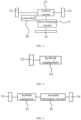
- FIG. 1 is a structural schematic view of an aerosol generating device in an embodiment of the present disclosure.
- the aerosol generating device 1 includes a heater assembly 10, a control assembly 20, and a power supply assembly 30.
- the power supply assembly 30 is connected to the control assembly 20, to supply power to the heater assembly 10 through the control assembly 20.
- the heater assembly 10 may be detachably connected to the control assembly 20, the control assembly 20 may be detachably connected to the power supply assembly 30, so as to replace the heater assembly 10, the control assembly 20, and/or the power supply assembly 30.
- the heater assembly 10 is configured to generate aerosol, and the heater assembly 10 includes a heater 13 and a first interface unit 15.
- the heater assembly 10 defines an accommodating space 12, and the accommodating space 12 is configured for accommodating an aerosol substrate 14 and the heater 13.
- the heater 13 is configured for heating the aerosol substrate 14 at a low-temperature to generate the aerosol.
- the heater assembly 10 may include one heater 13, one end of the heater 13 is disposed close to the aerosol substrate 14 to heat the aerosol substrate 14 at the low-temperature, and the other end of the heater 13 is connected to the control assembly 20.
- the heater assembly 10 may include a plurality of heaters 13, and the plurality of heaters 13 are connected in series or in parallel.
- one end of each of the plurality of heaters 13 is disposed close to the aerosol substrate 14, and the other end of each of the plurality of heaters 13 is sequentially connected to the other end of an adjacent heater 13. The other end of the last heater 13 is connected to the control assembly 20.
- one end of each of the plurality of heaters 13 is disposed close to the aerosol substrate 14, and the other end of each of the plurality of heaters 13 is connected to the control assembly 20.
- the first interface unit 15 is configured for connecting the control assembly 20 to achieve connection between the heater assembly 10 and the control assembly 20.
- the control assembly 20 is connected to the heater assembly 10 and configured for controlling supplying power to the heater assembly 10.
- FIG. 2 is a structural schematic view of a control assembly of FIG. 1 in an embodiment of the present disclosure.
- the control assembly 20 includes a control circuit 22, a second interface unit 23, a third interface unit 24, and a controller 26.
- the second interface unit 23 and the third interface unit 24 are respectively disposed on the two ends of the control assembly 20 close to the heater assembly 10 and the power supply assembly 30, to achieve the connection between the heater assembly 10 and the control assembly 20 and connection between the control assembly 20 and the power supply assembly 30.
- the second interface unit 23 is disposed in couple with the first interface unit 15, so that the control assembly 20 is connected to the heater assembly 10.
- one of the first interface unit 15 and the second interface unit 23 is provided with a first spring pin
- the other of the second interface unit 23 and the first interface unit 15 is provided with a first spring pin interface
- the first spring pin is inserted into the first spring pin interface, so that the first interface unit 15 is connected to the second interface unit 23.
- the first interface unit 15 may also be connected to the second interface unit 23 through other connection elements, and the present disclosure does not limit a connection mode between the first interface unit 15 and the second interface unit 23.
- the control circuit 22 is configured to control the start and stop of supplying power to the heater 13.
- the two ends of the control circuit 22 are respectively connected to the second interface unit 23 and the third interface unit 24, and the third interface unit 24 is configured to connect the power supply assembly 30, thereby achieving connection of the heater assembly 10 and the power supply assembly 30.
- the controller 26 is connected to the control circuit 22 and configured to control an operating state of the control circuit 22, thereby achieving controlling the start and stop of supplying power to the heater 13.
- FIG. 3 is a structural schematic view of the control assembly of FIG. 1 in another embodiment of the present disclosure.
- the control assembly 20 further includes a first charging interface 25 and a first charging circuit 27.
- the first charging circuit 27 is disposed between the control circuit 22 and the first charging interface 25.
- the first charging interface 25 is configured to connect an external power supply.
- One end of the first charging circuit 27 is connected to the external power supply through the first charging interface 25, and the other end of the first charging circuit 27 is connected to the power supply assembly 30 through the control circuit 22, so that the external power supply charges the power supply assembly 30 through the first charging circuit 27.
- FIG. 4 is a structural schematic view of a power supply assembly of FIG. 1 in an embodiment of the present disclosure.
- the power supply assembly 30 includes a hybrid capacitor 32 and a fourth interface unit 33.
- the hybrid capacitor 32 is connected to the fourth interface unit 33, and the fourth interface unit 33 is disposed in couple with the third interface unit 24, so that the control assembly 20 is connected to the power supply assembly 30, and the hybrid capacitor 32 is configured to supply power to the heater 13 through the control assembly 20.
- one of the third interface unit 24 and the fourth interface unit 33 is provided with a second spring pin
- the other of the fourth interface unit 33 and the third interface unit 24 is provided with a second spring pin interface
- the second spring pin is inserted into the second spring pin interface, so that the third interface unit 24 is connected to the fourth interface unit 33.
- the fourth interface unit 33 may also be connected to the third interface unit 24 through other connection elements, and the present disclosure does not limit the connection mode between the fourth interface unit 33 and the third interface unit 24.
- FIG. 5 is a structural schematic view of the power supply assembly of FIG. 1 in another embodiment of the present disclosure.
- the power supply assembly 30 further includes a second charging interface 34 and a second charging circuit 35.
- the second charging circuit 35 is disposed between the hybrid capacitor 32 and the second charging interface 34, and two ends of the second charging circuit 35 are respectively connected to the hybrid capacitor 32 and the second charging interface 34.
- the fourth interface unit 33 is disposed on one end of the power supply assembly 30 close to the control assembly 20, and the second charging interface 34 is disposed on the other end of the power supply assembly 30 away from the control assembly 20.
- the second charging interface 34 is configured for connecting the external power supply, so that the external power supply is connected to the second charging circuit 35, thereby charging the hybrid capacitor 32 through the second charging circuit 35.
- a constant current charging mode or a constant current-constant voltage charging mode may be used.
- the external power supply 2 in the constant current charging mode, the external power supply 2 outputs a constant charging current to the hybrid capacitor 32, until a voltage of the hybrid capacitor 32 reaches a preset value, at which time the charging is completed.
- the external power supply 2 In the constant current-constant voltage charging mode, the external power supply 2 outputs the constant charging current to the hybrid capacitor 32, so that the voltage of the hybrid capacitor 32 reaches a first preset value; and the external power supply 2 performs constant voltage charging, and a charging current gradually decreases at this time. In response to the charging current dropping to zero, the hybrid capacitor 32 is fully charged, and the charging is completed.
- the external power supply may charge the hybrid capacitor 32 through the first charging interface 25 or the second charging interface 34, and a specific charging mode is as follows.
- FIG. 6 is a structural schematic view illustrating charging the power supply assembly in an embodiment of the present disclosure.
- an external power supply 2 is connected to the first charging interface 25, so that the external power supply 2 is connected to the control circuit 22 through the first charging circuit 27, and the control circuit 22 is connected to the hybrid capacitor 32 through the third interface unit 24 and the fourth interface unit 33.
- the controller 26 controls an operation of the first charging circuit 27 through the control circuit 22, so that the first charging circuit 27 receives the charging current input by the external power supply 2, and the hybrid capacitor 32 receives the charging current through the control circuit 22, to achieve charging the hybrid capacitor 32.
- the external power supply 2 includes a plurality of charging assemblies.
- a plurality of power supply assemblies 30 are connected to the plurality of charging assemblies in a one-to-one correspondence manner, so that the external power supply 2 may simultaneously charge a plurality of hybrid capacitors 32, thereby shortening overall required charging time and improve charging efficiency.
- the external power supply 2 may include a charging base and a plurality of charging piles disposed on the charging base, and the plurality of charging piles are inserted into the second charging interface 34 of the power supply assembly 30, so that the external power supply 2 is connected to the second charging circuit 35 through the second charging interface 34, thereby charging the hybrid capacitor 32.
- the plurality of charging piles may be other elements that may be disposed for coupling with the second charging interface 34.
- the external power supply 2 In response to the plurality of power supply assemblies 30 being simultaneously inserted into the charging base, the external power supply 2 simultaneously charges the corresponding power supply assemblies 30 through the plurality of charging piles.
- the external power supply 2 may include a charging cable, and the charging cable is connected to the second charging interface 34, so that the external power supply 2 is connected to the second charging circuit 35 through the second charging interface 34, thereby charging the hybrid capacitor 32.
- the external power supply 2 may be connected to the plurality of power supply assemblies 30 through a plurality of charging cables, so as to simultaneously charge the plurality of power supply assemblies 30.
- the external power supply 2 is directly connected to the hybrid capacitor 32 through the second charging interface 34, the external power supply 2 is provided with a charging circuit, and the external power supply 2 charges the hybrid capacitor 32 through the charging circuit.
- the initial value of the parameter includes any one of an initial voltage, an initial charge quantity, an initial capacity, and initial energy.
- the value of the parameter includes any one of a charge quantity, a capacity, a charging time, and energy.
- a unit of the initial voltage is volt (V).
- a unit of the initial charge quantity is the same as that of the charge quantity, which is coulomb (C).
- a unit of the initial capacity is the same as that of the capacity, which is milliampere/hour (mA/h).
- a unit of the initial energy is the same as that of the energy, which is watt/hour (W/h).
- a unit of the charging time is watt/hour (W/h).
- the external power supply 2 charges the at least one hybrid capacitor 32 through the control circuit 22 until a total charge quantity of the at least one hybrid capacitor 32 reaches a preset value, and the external power supply 2 stops charging.
- the external power supply 2 charges the at least one hybrid capacitor 32 through the control circuit 22 until a total capacity of the at least one hybrid capacitor 32 reaches the preset value, and the external power supply 2 stops charging.
- the external power supply 2 charges the at least one hybrid capacitor 32 through the control circuit 22 until a total charging time of the at least one hybrid capacitor 32 reaches the preset value, and the external power supply 2 stops charging.
- the external power supply 2 charges the at least one hybrid capacitor 32 through the control circuit 22 until the total energy of the at least one hybrid capacitor 32 reaches the preset value, and the external power supply 2 stops charging.
- the external power supply 2 charges the at least one hybrid capacitor 32 through the control circuit 22 until the total charge quantity of the at least one hybrid capacitor 32 reaches the preset value, and the external power supply 2 stops charging.
- the external power supply 2 charges the at least one hybrid capacitor 32 through the control circuit 22 until the total capacity of the at least one hybrid capacitor 32 reaches the preset value, and the external power supply 2 stops charging.
- the external power supply 2 charges the at least one hybrid capacitor 32 through the control circuit 22 until the total charging time of the at least one hybrid capacitor 32 reaches the preset value, and the external power supply 2 stops charging.
- the external power supply 2 charges the at least one hybrid capacitor 32 through the control circuit 22 until the total energy of the at least one hybrid capacitor 32 reaches the preset value, and the external power supply 2 stops charging.
- the external power supply 2 charges the at least one hybrid capacitor 32 through the control circuit 22 until the total charge quantity of the at least one hybrid capacitor 32 reaches the preset value, and the external power supply 2 stops charging.
- the external power supply 2 charges the at least one hybrid capacitor 32 through the control circuit 22 until the total capacity of the at least one hybrid capacitor 32 reaches the preset value, and the external power supply 2 stops charging.
- the external power supply 2 charges the at least one hybrid capacitor 32 through the control circuit 22 until the total charging time of the at least one hybrid capacitor 32 reaches the preset value, and the external power supply 2 stops charging.
- the external power supply 2 charges the at least one hybrid capacitor 32 through the control circuit 22 until the total energy of the at least one hybrid capacitor 32 reaches the preset value, and the external power supply 2 stops charging.
- the external power supply 2 charges the at least one hybrid capacitor 32 through the control circuit 22 until the total charge quantity of the at least one hybrid capacitor 32 reaches the preset value, and the external power supply 2 stops charging.
- the external power supply 2 charges the at least one hybrid capacitor 32 through the control circuit 22 until the total capacity of the at least one hybrid capacitor 32 reaches the preset value, and the external power supply 2 stops charging.
- the power supply assembly 30 may include a second controller, and the second controller confirms the initial value of the parameter and the value of the parameter of the at least one hybrid capacitor 32 as a whole.
- the heater assembly 10, the control assembly 20, and the power supply assembly 30 that are detachably connected to each other form the aerosol generating device 1, which facilitates replacement of the heater assembly 10, the control assembly 20, or the power supply assembly 30.
- a fault problem may be solved by only replacing a corresponding damaged assembly without replacing the whole device, which reduces the use cost.
- FIG. 7 is a structural schematic view of a split-type aerosol generating device in an embodiment of the present disclosure.
- the split-type aerosol generating device 3 includes an aerosol generating device 301 and a charging device 302.
- the aerosol generating device 301 is the aerosol generating device 1 disclosed in any of the above-mentioned embodiments, which may not be repeated here.
- the charging device 302 is connected to the aerosol generating device 301, and configured for charging the hybrid capacitor 32 of the aerosol generating device 301.
- the charging device 302 is a current source power supply device.
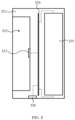
- FIG. 8 is a structural schematic view of a charging device of FIG. 7 in an embodiment of the present disclosure.
- the charging device 302 includes a current source housing 321, a charging compartment 322, a discharging interface 323, a second control circuit 324, and a charging element 325.
- One end of the current source housing 321 defines the charging compartment 322, and the discharging interface 323 is disposed in the charging compartment 322.
- the second control circuit 324 and the charging element 325 are disposed in the current source housing 321.
- the charging compartment 322 is configured for accommodating the aerosol generating device 301.
- the charging compartment 322 defines an opening (not shown in the figures), so that the aerosol generating device 301 is disposed in the charging compartment 322 through the opening.
- the discharging interface 323 is disposed on a side wall of the charging compartment 322 away from the opening.
- the discharging interface 323 is connected to the first charging interface 25 or the second charging interface 34, so that the aerosol generating device 301 is connected to the charging device 302.
- the charging element 325 is configured to provide a charging voltage and configured for supplying power to the hybrid capacitor 32.
- the charging element 325 may be the hybrid capacitor or a rechargeable battery.
- the rechargeable battery may be a lithium battery.
- the second control circuit 324 is connected to the charging element 325 and the discharging interface 323, to control the charging element 325 to release the charging voltage to the hybrid capacitor 32 through the discharging interface 323.
Landscapes
- Engineering & Computer Science (AREA)
- Power Engineering (AREA)
- Charge And Discharge Circuits For Batteries Or The Like (AREA)
Abstract
Description
- The present disclosure relates to the field of electronic atomization devices, and in particular to an aerosol generating device and a split-type aerosol generating device.
- In the related art, most of low-temperature heating devices configured for generating aerosols have integrated structures, that is, a power supply used by the low-temperature heating device is irreplaceable. In response to service life of the power supply being attenuated or the power supply being damaged, the use of the low-temperature heating device is affected, and entire low-temperature heating device needs to be replaced, so that the use cost is relatively high.
- The present disclosure at least provides an aerosol generating device and a split-type aerosol generating device.
- A first aspect of the present disclosure provides an aerosol generating device. The aerosol generating device includes a heater assembly, a control assembly, and a power supply assembly.
- The heater assembly is configured for generating aerosol.
- The control assembly is connected to the heater assembly, and configured for controlling supplying power to the heater assembly.
- The power supply assembly is connected to the control assembly, and configured for supplying power to the heater assembly through the control assembly.
- The heater assembly is detachably connected to the control assembly, and the control assembly is detachably connected to the power supply assembly, so as to facilitate replacement of the heater assembly, the control assembly, and/or the power supply assembly.
- In some embodiments, the heater assembly includes a heater and a first interface unit.
- The heater is configured for heating the aerosol substrate to generate the aerosol.
- The first interface unit is connected to the heater.
- In some embodiments, the heater assembly includes a plurality of heaters, and the plurality of heaters are disposed in parallel or in series.
- In some embodiments, the control assembly includes a second interface unit, a control circuit, and a third interface unit.
- The second interface unit is disposed in couple with the first interface unit, so that the control assembly is connected to the heater assembly.
- The control circuit is connected to the second interface unit, and configured for controlling the start and stop of supplying power to the heater.
- The third interface unit is connected to the control circuit.
- In some embodiments, the power supply assembly includes a fourth interface unit and a hybrid capacitor.
- The fourth interface unit is disposed in couple with the third interface unit, so that the control assembly is connected to the power supply assembly.
- The hybrid capacitor is connected to the fourth interface unit, and configured to supply power to the heater through the control assembly.
- In some embodiments, one of the first interface unit and the second interface unit is provided with a first spring pin, the other of the second interface unit and the first interface unit is provided with a first spring pin interface, and the first spring pin is inserted into the first spring pin interface, so that the first interface unit is connected to the second interface unit.
- One of the third interface unit and the fourth interface unit is provided with a second spring pin, the other of the fourth interface unit and the third interface unit is provided with a second spring pin interface, and the second spring pin is inserted into the second spring pin interface, so that the third interface unit is connected to the fourth interface unit.
- In some embodiments, the control assembly further includes a first charging interface and a first charging circuit.
- One end of the first charging circuit is connected to an external power supply through the first charging interface, and the other end of the first charging circuit is connected to the hybrid capacitor, so that the external power supply charges the hybrid capacitor through the first charging circuit.
- In some embodiments, the power supply assembly further includes a second charging interface and a second charging circuit.
- One end of the second charging circuit is connected to the external power supply through the second charging interface, and the other end of the second charging circuit is connected to the hybrid capacitor, so that the external power supply charges the hybrid capacitor through the second charging circuit.
- In some embodiments, the external power supply includes a plurality of charging assemblies, a plurality of power supply assemblies are connected to the plurality of charging assemblies in a one-to-one correspondence manner, so that the external power supply charges a plurality of hybrid capacitors; and the plurality of charging assemblies include a plurality of charging piles or a plurality of charging cables.
- In some embodiments, the control circuit determines an initial value of a parameter of the hybrid capacitor, and the external power supply charges the aerosol generating device, so that the value of the parameter of the hybrid capacitor reaches a preset value.
- The initial value of the parameter includes any one of an initial voltage, an initial charge quantity, an initial capacity, and initial energy; and the value of the parameter includes any one of a charge quantity, a capacity, a charging time, and energy.
- A second aspect of the present disclosure provides a split-type aerosol generating device. The split-type aerosol generating device includes a charging device and any of the above-mentioned aerosol generating devices. The charging device is connected to the aerosol generating device, and configured for charging the aerosol generating device.
- In some embodiments, the charging device is a current source power supply device.
- The effects of the present disclosure are as follows. Different from the related art, in the present disclosure, the heater assembly, the control assembly, and the power supply assembly that are detachably connected to each other form the aerosol generating device, which facilitates replacement of the heater assembly, the control assembly, or the power supply assembly. In response to a malfunction of any of the heater assembly, the control assembly, and the power supply assembly, a fault problem may be solved by only replacing a corresponding damaged assembly without replacing the whole device, which reduces the use cost.
- It should be understood that the foregoing general description and the following detailed description are exemplary and explanatory only, and do not limit the present disclosure.
- In order to more clearly illustrate the technical solutions in some embodiments of the present disclosure, hereinafter, a brief introduction will be given to the accompanying drawings that are used in the description of some embodiments. Obviously, the accompanying drawings in the description below are merely some embodiments of the present disclosure. For those of ordinary skill in the art, other accompanying drawings may be obtained based on these accompanying drawings without any creative efforts.
-
FIG. 1 is a structural schematic view of an aerosol generating device in an embodiment of the present disclosure. -
FIG. 2 is a structural schematic view of a control assembly ofFIG. 1 in an embodiment of the present disclosure. -
FIG. 3 is a structural schematic view of the control assembly ofFIG. 1 in another embodiment of the present disclosure. -
FIG. 4 is a structural schematic view of a power supply assembly ofFIG. 1 in an embodiment of the present disclosure. -
FIG. 5 is a structural schematic view of the power supply assembly ofFIG. 1 in another embodiment of the present disclosure. -
FIG. 6 is a structural schematic view illustrating charging the power supply assembly in an embodiment of the present disclosure. -
FIG. 7 is a structural schematic view of a split-type aerosol generating device in an embodiment of the present disclosure. -
FIG. 8 is a structural schematic view of a charging device ofFIG. 7 in an embodiment of the present disclosure. - In order for those skilled in the art to better understand the technical solutions of the present disclosure, the aerosol generating device and the split-type aerosol generating device provided in the present disclosure may be further described in detail below with reference to the accompanying drawings and embodiments. It should be understood that the described embodiments are only a part of the embodiments of the present disclosure, and not all embodiments. Based on the embodiments in the present disclosure, all other embodiments obtained by those of ordinary skill in the art without creative effort are within the scope of the present disclosure.
- The terms "first", "second", etc. in the present disclosure are configured to distinguish different objects, not to describe a specific order. In addition, the terms "include", "comprise", and "have", as well as any variations thereof, are intended to cover non-exclusive inclusions. For example, a process, a method, a system, a product, or a device that includes a series of operations or units is not limited to the listed operations or units, but optionally includes operations or units that are not listed, or optionally includes other operations or units that are inherent to these processes, methods, products, or devices.
- As an emerging technology, an electronic atomization device replaces a traditional burning-type cigarette by heating e-liquid or low-temperature heating cigarette. An operating temperature of the electronic atomization device is low, and harmful components in the smoke generated by the electronic atomization device are far less than those of the traditional burning-type cigarette. The use of the electronic atomization device may greatly avoid the adverse effects of cigarettes on the human body, so that smoking by using the electronic atomization device becomes a healthier way of smoking.
- The electronic atomization device includes two types of an electronic atomization smoking device and an aerosol generating device. The aerosol generating device heats a tobacco aerosol generating substrate to form the inhalable smoke by low-temperature heating without burning the tobacco aerosol generating substrate.
- In the related art, most of low-temperature heating devices configured for generating aerosols have integrated structures, that is, a power supply used by the low-temperature heating device is irreplaceable. In response to service life of the power supply being attenuated or the power supply being damaged, the use of the low-temperature heating device is affected, and entire low-temperature heating device needs to be replaced, so that the use cost is relatively high.
- The present disclosure provides an aerosol generating device to solve a problem that entire low-temperature heating device needs to be replaced due to a part being damaged, which makes the use cost higher.
- As illustrated in
FIG. 1, FIG. 1 is a structural schematic view of an aerosol generating device in an embodiment of the present disclosure. As illustrated inFIG. 1 , theaerosol generating device 1 includes aheater assembly 10, acontrol assembly 20, and apower supply assembly 30. Thepower supply assembly 30 is connected to thecontrol assembly 20, to supply power to theheater assembly 10 through thecontrol assembly 20. - The
heater assembly 10 may be detachably connected to thecontrol assembly 20, thecontrol assembly 20 may be detachably connected to thepower supply assembly 30, so as to replace theheater assembly 10, thecontrol assembly 20, and/or thepower supply assembly 30. - In some embodiments, the
heater assembly 10 is configured to generate aerosol, and theheater assembly 10 includes aheater 13 and afirst interface unit 15. - The
heater assembly 10 defines anaccommodating space 12, and theaccommodating space 12 is configured for accommodating anaerosol substrate 14 and theheater 13. - The
heater 13 is configured for heating theaerosol substrate 14 at a low-temperature to generate the aerosol. In the present embodiment, theheater assembly 10 may include oneheater 13, one end of theheater 13 is disposed close to theaerosol substrate 14 to heat theaerosol substrate 14 at the low-temperature, and the other end of theheater 13 is connected to thecontrol assembly 20. - In some embodiments, the
heater assembly 10 may include a plurality ofheaters 13, and the plurality ofheaters 13 are connected in series or in parallel. - In some embodiments, in response to the plurality of
heaters 13 being disposed in series, one end of each of the plurality ofheaters 13 is disposed close to theaerosol substrate 14, and the other end of each of the plurality ofheaters 13 is sequentially connected to the other end of anadjacent heater 13. The other end of thelast heater 13 is connected to thecontrol assembly 20. In response to the plurality ofheaters 13 being disposed in parallel, one end of each of the plurality ofheaters 13 is disposed close to theaerosol substrate 14, and the other end of each of the plurality ofheaters 13 is connected to thecontrol assembly 20. - The
first interface unit 15 is configured for connecting thecontrol assembly 20 to achieve connection between theheater assembly 10 and thecontrol assembly 20. Thecontrol assembly 20 is connected to theheater assembly 10 and configured for controlling supplying power to theheater assembly 10. - As illustrated in
FIG. 1 and FIG. 2, FIG. 2 is a structural schematic view of a control assembly ofFIG. 1 in an embodiment of the present disclosure. As illustrated inFIG. 2 , thecontrol assembly 20 includes acontrol circuit 22, asecond interface unit 23, athird interface unit 24, and acontroller 26. - Two ends of the
control circuit 22 are respectively connected to thesecond interface unit 23 and thethird interface unit 24. Thesecond interface unit 23 and thethird interface unit 24 are respectively disposed on the two ends of thecontrol assembly 20 close to theheater assembly 10 and thepower supply assembly 30, to achieve the connection between theheater assembly 10 and thecontrol assembly 20 and connection between thecontrol assembly 20 and thepower supply assembly 30. - In some embodiments, the
second interface unit 23 is disposed in couple with thefirst interface unit 15, so that thecontrol assembly 20 is connected to theheater assembly 10. In the present embodiment, one of thefirst interface unit 15 and thesecond interface unit 23 is provided with a first spring pin, the other of thesecond interface unit 23 and thefirst interface unit 15 is provided with a first spring pin interface, and the first spring pin is inserted into the first spring pin interface, so that thefirst interface unit 15 is connected to thesecond interface unit 23. In other embodiments, thefirst interface unit 15 may also be connected to thesecond interface unit 23 through other connection elements, and the present disclosure does not limit a connection mode between thefirst interface unit 15 and thesecond interface unit 23. - The
control circuit 22 is configured to control the start and stop of supplying power to theheater 13. The two ends of thecontrol circuit 22 are respectively connected to thesecond interface unit 23 and thethird interface unit 24, and thethird interface unit 24 is configured to connect thepower supply assembly 30, thereby achieving connection of theheater assembly 10 and thepower supply assembly 30. - The
controller 26 is connected to thecontrol circuit 22 and configured to control an operating state of thecontrol circuit 22, thereby achieving controlling the start and stop of supplying power to theheater 13. - As illustrated
FIGS. 1-3 ,FIG. 3 is a structural schematic view of the control assembly ofFIG. 1 in another embodiment of the present disclosure. As illustrated inFIG. 3 , on the basis of the above embodiments, thecontrol assembly 20 further includes afirst charging interface 25 and afirst charging circuit 27. Thefirst charging circuit 27 is disposed between thecontrol circuit 22 and thefirst charging interface 25. - The
first charging interface 25 is configured to connect an external power supply. One end of thefirst charging circuit 27 is connected to the external power supply through thefirst charging interface 25, and the other end of thefirst charging circuit 27 is connected to thepower supply assembly 30 through thecontrol circuit 22, so that the external power supply charges thepower supply assembly 30 through thefirst charging circuit 27. - As illustrated in
FIGS. 1-4 ,FIG. 4 is a structural schematic view of a power supply assembly ofFIG. 1 in an embodiment of the present disclosure. As illustrated inFIG. 4 , thepower supply assembly 30 includes ahybrid capacitor 32 and afourth interface unit 33. - The
hybrid capacitor 32 is connected to thefourth interface unit 33, and thefourth interface unit 33 is disposed in couple with thethird interface unit 24, so that thecontrol assembly 20 is connected to thepower supply assembly 30, and thehybrid capacitor 32 is configured to supply power to theheater 13 through thecontrol assembly 20. - In the present embodiment, one of the
third interface unit 24 and thefourth interface unit 33 is provided with a second spring pin, the other of thefourth interface unit 33 and thethird interface unit 24 is provided with a second spring pin interface, and the second spring pin is inserted into the second spring pin interface, so that thethird interface unit 24 is connected to thefourth interface unit 33. In some embodiments, thefourth interface unit 33 may also be connected to thethird interface unit 24 through other connection elements, and the present disclosure does not limit the connection mode between thefourth interface unit 33 and thethird interface unit 24. - As illustrated in
FIGS. 1-5 ,FIG. 5 is a structural schematic view of the power supply assembly ofFIG. 1 in another embodiment of the present disclosure. As illustrated inFIG. 5 , thepower supply assembly 30 further includes asecond charging interface 34 and asecond charging circuit 35. - The
second charging circuit 35 is disposed between thehybrid capacitor 32 and thesecond charging interface 34, and two ends of thesecond charging circuit 35 are respectively connected to thehybrid capacitor 32 and thesecond charging interface 34. Thefourth interface unit 33 is disposed on one end of thepower supply assembly 30 close to thecontrol assembly 20, and thesecond charging interface 34 is disposed on the other end of thepower supply assembly 30 away from thecontrol assembly 20. Thesecond charging interface 34 is configured for connecting the external power supply, so that the external power supply is connected to thesecond charging circuit 35, thereby charging thehybrid capacitor 32 through thesecond charging circuit 35. - In some embodiments, in response to the
hybrid capacitor 32 being charged by the external power supply, a constant current charging mode or a constant current-constant voltage charging mode may be used. - In some embodiments, in the constant current charging mode, the
external power supply 2 outputs a constant charging current to thehybrid capacitor 32, until a voltage of thehybrid capacitor 32 reaches a preset value, at which time the charging is completed. - In the constant current-constant voltage charging mode, the
external power supply 2 outputs the constant charging current to thehybrid capacitor 32, so that the voltage of thehybrid capacitor 32 reaches a first preset value; and theexternal power supply 2 performs constant voltage charging, and a charging current gradually decreases at this time. In response to the charging current dropping to zero, thehybrid capacitor 32 is fully charged, and the charging is completed. - In the present disclosure, the external power supply may charge the
hybrid capacitor 32 through thefirst charging interface 25 or thesecond charging interface 34, and a specific charging mode is as follows. - As illustrated in
FIGS. 1-6 ,FIG. 6 is a structural schematic view illustrating charging the power supply assembly in an embodiment of the present disclosure. As illustrated inFIG. 6 , anexternal power supply 2 is connected to thefirst charging interface 25, so that theexternal power supply 2 is connected to thecontrol circuit 22 through thefirst charging circuit 27, and thecontrol circuit 22 is connected to thehybrid capacitor 32 through thethird interface unit 24 and thefourth interface unit 33. - The
controller 26 controls an operation of thefirst charging circuit 27 through thecontrol circuit 22, so that thefirst charging circuit 27 receives the charging current input by theexternal power supply 2, and thehybrid capacitor 32 receives the charging current through thecontrol circuit 22, to achieve charging thehybrid capacitor 32. - In some embodiments, the
external power supply 2 includes a plurality of charging assemblies. A plurality ofpower supply assemblies 30 are connected to the plurality of charging assemblies in a one-to-one correspondence manner, so that theexternal power supply 2 may simultaneously charge a plurality ofhybrid capacitors 32, thereby shortening overall required charging time and improve charging efficiency. - In some embodiments, the
external power supply 2 may include a charging base and a plurality of charging piles disposed on the charging base, and the plurality of charging piles are inserted into thesecond charging interface 34 of thepower supply assembly 30, so that theexternal power supply 2 is connected to thesecond charging circuit 35 through thesecond charging interface 34, thereby charging thehybrid capacitor 32. In some embodiments, the plurality of charging piles may be other elements that may be disposed for coupling with thesecond charging interface 34. - In response to the plurality of
power supply assemblies 30 being simultaneously inserted into the charging base, theexternal power supply 2 simultaneously charges the correspondingpower supply assemblies 30 through the plurality of charging piles. - In some embodiments, the
external power supply 2 may include a charging cable, and the charging cable is connected to thesecond charging interface 34, so that theexternal power supply 2 is connected to thesecond charging circuit 35 through thesecond charging interface 34, thereby charging thehybrid capacitor 32. - In some embodiments, the
external power supply 2 may be connected to the plurality ofpower supply assemblies 30 through a plurality of charging cables, so as to simultaneously charge the plurality ofpower supply assemblies 30. - In some embodiments, the
external power supply 2 is directly connected to thehybrid capacitor 32 through thesecond charging interface 34, theexternal power supply 2 is provided with a charging circuit, and theexternal power supply 2 charges thehybrid capacitor 32 through the charging circuit. - In some embodiments, in response to the
aerosol generating device 1 being charged by theexternal power supply 2, operations are as follows. - (1) The
controller 26 determines an initial value of a parameter of at least onehybrid capacitor 32. - (2) The
external power supply 2 charges the at least onehybrid capacitor 32 through thecontrol circuit 22, that is, theaerosol generating device 1 is charged. - (3) The
controller 26 determines that the value of the parameter of the at least onehybrid capacitor 32 reaches a preset value, and theexternal power supply 2 stops charging. - The initial value of the parameter includes any one of an initial voltage, an initial charge quantity, an initial capacity, and initial energy. The value of the parameter includes any one of a charge quantity, a capacity, a charging time, and energy. A unit of the initial voltage is volt (V). A unit of the initial charge quantity is the same as that of the charge quantity, which is coulomb (C). A unit of the initial capacity is the same as that of the capacity, which is milliampere/hour (mA/h). A unit of the initial energy is the same as that of the energy, which is watt/hour (W/h). A unit of the charging time is watt/hour (W/h).
- In some embodiments, after the
controller 26 determines a total initial voltage of the at least onehybrid capacitor 32, theexternal power supply 2 charges the at least onehybrid capacitor 32 through thecontrol circuit 22 until a total charge quantity of the at least onehybrid capacitor 32 reaches a preset value, and theexternal power supply 2 stops charging. - After the
controller 26 determines the total initial voltage of the at least onehybrid capacitor 32, theexternal power supply 2 charges the at least onehybrid capacitor 32 through thecontrol circuit 22 until a total capacity of the at least onehybrid capacitor 32 reaches the preset value, and theexternal power supply 2 stops charging. - After the
controller 26 determines the total initial energy of the at least onehybrid capacitor 32, theexternal power supply 2 charges the at least onehybrid capacitor 32 through thecontrol circuit 22 until a total charging time of the at least onehybrid capacitor 32 reaches the preset value, and theexternal power supply 2 stops charging. - After the
controller 26 determines the total initial energy of the at least onehybrid capacitor 32, theexternal power supply 2 charges the at least onehybrid capacitor 32 through thecontrol circuit 22 until the total energy of the at least onehybrid capacitor 32 reaches the preset value, and theexternal power supply 2 stops charging. - After the
controller 26 determines the total initial energy of the at least onehybrid capacitor 32, theexternal power supply 2 charges the at least onehybrid capacitor 32 through thecontrol circuit 22 until the total charge quantity of the at least onehybrid capacitor 32 reaches the preset value, and theexternal power supply 2 stops charging. - After the
controller 26 determines the total initial energy of the at least onehybrid capacitor 32, theexternal power supply 2 charges the at least onehybrid capacitor 32 through thecontrol circuit 22 until the total capacity of the at least onehybrid capacitor 32 reaches the preset value, and theexternal power supply 2 stops charging. - After the
controller 26 determines the total initial charge quantity of the at least onehybrid capacitor 32, theexternal power supply 2 charges the at least onehybrid capacitor 32 through thecontrol circuit 22 until the total charging time of the at least onehybrid capacitor 32 reaches the preset value, and theexternal power supply 2 stops charging. - After the
controller 26 determines the total initial charge quantity of the at least onehybrid capacitor 32, theexternal power supply 2 charges the at least onehybrid capacitor 32 through thecontrol circuit 22 until the total energy of the at least onehybrid capacitor 32 reaches the preset value, and theexternal power supply 2 stops charging. - After the
controller 26 determines the total initial charge quantity of the at least onehybrid capacitor 32, theexternal power supply 2 charges the at least onehybrid capacitor 32 through thecontrol circuit 22 until the total charge quantity of the at least onehybrid capacitor 32 reaches the preset value, and theexternal power supply 2 stops charging. - After the
controller 26 determines the total initial charge quantity of the at least onehybrid capacitor 32, theexternal power supply 2 charges the at least onehybrid capacitor 32 through thecontrol circuit 22 until the total capacity of the at least onehybrid capacitor 32 reaches the preset value, and theexternal power supply 2 stops charging. - After the
controller 26 determines the total initial capacity of the at least onehybrid capacitor 32, theexternal power supply 2 charges the at least onehybrid capacitor 32 through thecontrol circuit 22 until the total charging time of the at least onehybrid capacitor 32 reaches the preset value, and theexternal power supply 2 stops charging. - After the
controller 26 determines the total initial capacity of the at least onehybrid capacitor 32, theexternal power supply 2 charges the at least onehybrid capacitor 32 through thecontrol circuit 22 until the total energy of the at least onehybrid capacitor 32 reaches the preset value, and theexternal power supply 2 stops charging. - After the
controller 26 determines the total initial capacity of the at least onehybrid capacitor 32, theexternal power supply 2 charges the at least onehybrid capacitor 32 through thecontrol circuit 22 until the total charge quantity of the at least onehybrid capacitor 32 reaches the preset value, and theexternal power supply 2 stops charging. - After the
controller 26 determines the total initial capacity of the at least onehybrid capacitor 32, theexternal power supply 2 charges the at least onehybrid capacitor 32 through thecontrol circuit 22 until the total capacity of the at least onehybrid capacitor 32 reaches the preset value, and theexternal power supply 2 stops charging. - In some embodiments, the
power supply assembly 30 may include a second controller, and the second controller confirms the initial value of the parameter and the value of the parameter of the at least onehybrid capacitor 32 as a whole. - In the present disclosure, the
heater assembly 10, thecontrol assembly 20, and thepower supply assembly 30 that are detachably connected to each other form theaerosol generating device 1, which facilitates replacement of theheater assembly 10, thecontrol assembly 20, or thepower supply assembly 30. In response to a malfunction of any of theheater assembly 10, thecontrol assembly 20, and thepower supply assembly 30, a fault problem may be solved by only replacing a corresponding damaged assembly without replacing the whole device, which reduces the use cost. - The present disclosure further provides a split-type aerosol generating device, as illustrated in
FIG. 7, FIG. 7 is a structural schematic view of a split-type aerosol generating device in an embodiment of the present disclosure. As illustrated inFIG. 7 , the split-typeaerosol generating device 3 includes anaerosol generating device 301 and acharging device 302. Theaerosol generating device 301 is theaerosol generating device 1 disclosed in any of the above-mentioned embodiments, which may not be repeated here. - The charging
device 302 is connected to theaerosol generating device 301, and configured for charging thehybrid capacitor 32 of theaerosol generating device 301. In the present embodiment, the chargingdevice 302 is a current source power supply device. - As illustrated in
FIG. 7 andFIG. 8, FIG. 8 is a structural schematic view of a charging device ofFIG. 7 in an embodiment of the present disclosure. As illustrated inFIG. 8 , the chargingdevice 302 includes acurrent source housing 321, acharging compartment 322, a discharginginterface 323, asecond control circuit 324, and a chargingelement 325. - One end of the
current source housing 321 defines thecharging compartment 322, and the discharginginterface 323 is disposed in thecharging compartment 322. Thesecond control circuit 324 and the chargingelement 325 are disposed in thecurrent source housing 321. - The
charging compartment 322 is configured for accommodating theaerosol generating device 301. Thecharging compartment 322 defines an opening (not shown in the figures), so that theaerosol generating device 301 is disposed in thecharging compartment 322 through the opening. - The discharging
interface 323 is disposed on a side wall of thecharging compartment 322 away from the opening. The discharginginterface 323 is connected to thefirst charging interface 25 or thesecond charging interface 34, so that theaerosol generating device 301 is connected to thecharging device 302. - The charging
element 325 is configured to provide a charging voltage and configured for supplying power to thehybrid capacitor 32. In the present embodiment, the chargingelement 325 may be the hybrid capacitor or a rechargeable battery. In some embodiments, the rechargeable battery may be a lithium battery. - The
second control circuit 324 is connected to the chargingelement 325 and the discharginginterface 323, to control the chargingelement 325 to release the charging voltage to thehybrid capacitor 32 through the discharginginterface 323. - The above description are only some embodiments of the present disclosure, and are not intended to limit the scope of the present disclosure. Any equivalent structure or equivalent flow transformation made by using the contents of the specification and accompanying drawings of the present disclosure, or directly or indirectly applied to other related technical fields, is included in the scope of the patent protection of the present disclosure.
Claims (12)
- An aerosol generating device, characterized by comprising:a heater assembly, configured for generating aerosol;a control assembly, connected to the heater assembly, and configured for controlling supplying power to the heater assembly; anda power supply assembly, connected to the control assembly, and configured for supplying power to the heater assembly through the control assembly;wherein the heater assembly is detachably connected to the control assembly, and the control assembly is detachably connected to the power supply assembly, so as to facilitate replacement of the heater assembly, the control assembly, and/or the power supply assembly.
- The aerosol generating device according to claim 1, wherein the heater assembly comprises:a heater, configured for heating an aerosol substrate to generate the aerosol; anda first interface unit, connected to the heater.
- The aerosol generating device according to claim 2, wherein the heater assembly comprises a plurality of heaters, and the plurality of heaters are disposed in parallel or in series.
- The aerosol generating device according to claim 2, wherein the control assembly comprises:a second interface unit, disposed in couple with the first interface unit, so that the control assembly is connected to the heater assembly;a control circuit, connected to the second interface unit, and configured for controlling the start and stop of supplying power to the heater; anda third interface unit, connected to the control circuit.
- The aerosol generating device according to claim 4, wherein the power supply assembly comprises:a fourth interface unit, disposed in couple with the third interface unit, so that the control assembly is connected to the power supply assembly; anda hybrid capacitor, connected to the fourth interface unit, and configured to supply power to the heater through the control assembly.
- The aerosol generating device according to claim 5, whereinone of the first interface unit and the second interface unit is provided with a first spring pin, the other of the second interface unit and the first interface unit is provided with a first spring pin interface, and the first spring pin is inserted into the first spring pin interface, so that the first interface unit is connected to the second interface unit; and/orone of the third interface unit and the fourth interface unit is provided with a second spring pin, the other of the fourth interface unit and the third interface unit is provided with a second spring pin interface, and the second spring pin is inserted into the second spring pin interface, so that the third interface unit is connected to the fourth interface unit.
- The aerosol generating device according to claim 5, wherein the control assembly further comprises:a first charging interface; anda first charging circuit, wherein one end of the first charging circuit is connected to an external power supply through the first charging interface, and the other end of the first charging circuit is connected to the hybrid capacitor, so that the external power supply charges the hybrid capacitor through the first charging circuit.
- The aerosol generating device according to claim 5, wherein the power supply assembly further comprises:a second charging interface; anda second charging circuit, wherein one end of the second charging circuit is connected to an external power supply through the second charging interface, and the other end of the second charging circuit is connected to the hybrid capacitor, so that the external power supply charges the hybrid capacitor through the second charging circuit.
- The aerosol generating device according to claim 8, wherein the external power supply comprises a plurality of charging assemblies; a plurality of power supply assemblies are connected to the plurality of charging assemblies in a one-to-one correspondence manner, so that the external power supply charges a plurality of hybrid capacitors; and the plurality of charging assemblies comprise a plurality of charging piles or a plurality of charging cables.
- The aerosol generating device according to claim 7 or 8, wherein the control circuit determines an initial value of a parameter of the hybrid capacitor, and the external power supply charges the aerosol generating device, so that the value of the parameter reaches a preset value;
wherein the initial value of the parameter comprises any one of an initial voltage, an initial charge quantity, an initial capacity, and initial energy; and the value of the parameter comprises any one of a charge quantity, a capacity, a charging time, and energy. - A split-type aerosol generating device, characterized comprising:the aerosol generating device according to any one of claims 1 to 10; anda charging device, connected to the aerosol generating device, and configured for charging the aerosol generating device.
- The split-type aerosol generating device according to claim 11, wherein the charging device is a current source power supply device.
Applications Claiming Priority (2)
| Application Number | Priority Date | Filing Date | Title |
|---|---|---|---|
| CN202111074686.5A CN113892684A (en) | 2021-09-14 | 2021-09-14 | Aerosol generating device and split type aerosol generating device |
| PCT/CN2022/115912 WO2023040657A1 (en) | 2021-09-14 | 2022-08-30 | Aerosol generating device and split type aerosol generating device |
Publications (2)
| Publication Number | Publication Date |
|---|---|
| EP4403052A1 true EP4403052A1 (en) | 2024-07-24 |
| EP4403052A4 EP4403052A4 (en) | 2025-01-15 |
Family
ID=79028221
Family Applications (1)
| Application Number | Title | Priority Date | Filing Date |
|---|---|---|---|
| EP22869029.3A Pending EP4403052A4 (en) | 2021-09-14 | 2022-08-30 | Aerosol generating device and split type aerosol generating device |
Country Status (4)
| Country | Link |
|---|---|
| EP (1) | EP4403052A4 (en) |
| JP (1) | JP7774717B2 (en) |
| CN (1) | CN113892684A (en) |
| WO (1) | WO2023040657A1 (en) |
Families Citing this family (3)
| Publication number | Priority date | Publication date | Assignee | Title |
|---|---|---|---|---|
| US12520880B2 (en) | 2021-01-18 | 2026-01-13 | Altria Client Services Llc | Heat-not-burn (HNB) aerosol-generating devices including energy based heater control, and methods of controlling a heater |
| CN113892684A (en) * | 2021-09-14 | 2022-01-07 | 深圳麦时科技有限公司 | Aerosol generating device and split type aerosol generating device |
| CN113892685A (en) * | 2021-09-14 | 2022-01-07 | 深圳麦时科技有限公司 | Split type aerosol generating device |
Family Cites Families (23)
| Publication number | Priority date | Publication date | Assignee | Title |
|---|---|---|---|---|
| US20150224268A1 (en) * | 2014-02-07 | 2015-08-13 | R.J. Reynolds Tobacco Company | Charging Accessory Device for an Aerosol Delivery Device and Related System, Method, Apparatus, and Computer Program Product for Providing Interactive Services for Aerosol Delivery Devices |
| US10091839B2 (en) * | 2014-02-28 | 2018-10-02 | Beyond Twenty Ltd. | Electronic vaporiser system |
| WO2016019546A1 (en) | 2014-08-07 | 2016-02-11 | 惠州市吉瑞科技有限公司 | Electronic cigarette |
| CN104305529A (en) * | 2014-11-05 | 2015-01-28 | 深圳市天劲电子烟科技有限公司 | Electronic cigarette |
| WO2016127401A1 (en) * | 2015-02-13 | 2016-08-18 | 惠州市吉瑞科技有限公司 | Electronic cigarette |
| PL3288403T3 (en) | 2015-04-30 | 2023-04-24 | Philip Morris Products S.A. | Cartridge for an aerosol-generating system |
| CN116965594A (en) * | 2015-06-12 | 2023-10-31 | 深圳市新宜康科技股份有限公司 | Electronic cigarette with removable and replaceable battery |
| CA2986339A1 (en) * | 2015-06-30 | 2017-01-05 | Philip Morris Products S.A. | An aerosol-generating device, system and method with a heated gas sensor |
| WO2017178931A1 (en) * | 2016-04-11 | 2017-10-19 | Philip Morris Products S.A. | Shisha device for heating a substrate without combustion |
| IL297612B2 (en) | 2016-05-25 | 2024-06-01 | Juul Labs Inc | Control of an electronic vaporizer |
| TW201800020A (en) | 2016-06-29 | 2018-01-01 | 菲利浦莫里斯製品股份有限公司 | An electrically operated aerosol-generating system with a rechargeable power supply |
| CN108338414B (en) * | 2017-01-25 | 2022-05-27 | 贵州中烟工业有限责任公司 | Control method and control system for electric heating smoking system |
| TW201843553A (en) | 2017-05-02 | 2018-12-16 | 瑞士商菲利浦莫里斯製品股份有限公司 | Heater assembly for aerosol generating device |
| WO2018217030A1 (en) * | 2017-05-26 | 2018-11-29 | 주식회사 케이티앤지 | System for charging aerosol generation device |
| CN109330027B (en) * | 2018-08-24 | 2022-10-21 | 深圳麦克韦尔科技有限公司 | Electronic smoking set, control method thereof, heating component, electronic equipment and storage medium |
| JP6557393B1 (en) * | 2018-10-31 | 2019-08-07 | 日本たばこ産業株式会社 | Power supply unit for aerosol inhaler, its control method and control program |
| EP3721732A1 (en) * | 2019-04-12 | 2020-10-14 | Nerudia Limited | Charger for smoking substitute device |
| US12268249B2 (en) * | 2019-12-13 | 2025-04-08 | Philip Morris Products S.A. | Aerosol-generating device or case with multiple power sources |
| CN111035075B (en) * | 2020-01-14 | 2025-08-12 | 东莞市麦斯莫科电子科技有限公司 | Modularized electronic cigarette |
| CN212814275U (en) * | 2020-05-21 | 2021-03-30 | 深圳市施美乐科技股份有限公司 | Electric heating suction device |
| CN212488479U (en) * | 2020-07-24 | 2021-02-09 | 深圳市卓力能技术股份有限公司 | Heating element and aerosol generating device |
| CN113171735A (en) * | 2020-12-01 | 2021-07-27 | 深圳市卓力能技术有限公司 | Aerosol generating device |
| CN113892684A (en) * | 2021-09-14 | 2022-01-07 | 深圳麦时科技有限公司 | Aerosol generating device and split type aerosol generating device |
-
2021
- 2021-09-14 CN CN202111074686.5A patent/CN113892684A/en active Pending
-
2022
- 2022-08-30 EP EP22869029.3A patent/EP4403052A4/en active Pending
- 2022-08-30 JP JP2024516456A patent/JP7774717B2/en active Active
- 2022-08-30 WO PCT/CN2022/115912 patent/WO2023040657A1/en not_active Ceased
Also Published As
| Publication number | Publication date |
|---|---|
| WO2023040657A1 (en) | 2023-03-23 |
| CN113892684A (en) | 2022-01-07 |
| JP2024531722A (en) | 2024-08-29 |
| JP7774717B2 (en) | 2025-11-21 |
| EP4403052A4 (en) | 2025-01-15 |
Similar Documents
| Publication | Publication Date | Title |
|---|---|---|
| EP4403052A1 (en) | Aerosol generating device and split type aerosol generating device | |
| EP3675305B1 (en) | Electrical vehicle system | |
| CN108306154A (en) | Charging interface conversion device and vehicle | |
| EP4403051A1 (en) | Aerosol generation apparatus and split-type aerosol generation apparatus thereof | |
| US12542444B2 (en) | Power systems and methods of using the same to deliver power | |
| CN106300539A (en) | A kind of charging system and method | |
| CN108140906A (en) | Intelligent battery and method | |
| WO2015101550A1 (en) | Device and method for supplying emergency power to at least one electric load | |
| WO2018217752A1 (en) | Battery charger with detachable battery | |
| CN105150874A (en) | Power battery management system and power supply control method thereof | |
| EP4403050A1 (en) | Split-type aerosol generating device | |
| CN106911174A (en) | A kind of power-supply management system and method based on wireless power transmission | |
| CN101593992B (en) | Multi-unit parallel heavy-current storage battery charge-discharge control system | |
| CN205565813U (en) | Rechargeable battery group directly balances charging device | |
| US20120256593A1 (en) | Cell charge management system | |
| CN118432223A (en) | An electric energy system in which multiple batteries in an energy storage station can be charged and discharged independently | |
| Kumar et al. | Performance Analysis of Energy Storage Unit with Lead-acid and Lithium Iron Phosphate Battery | |
| CN221929332U (en) | Mobile power supply vehicle for electric hauling excavator | |
| KR102807247B1 (en) | Multi-battery control system for aerosol generator | |
| CN109450040A (en) | It is a kind of can be with the charger of multiple paired runnings | |
| CN211567674U (en) | Electric automobile direct current gets electric installation | |
| KR20190010014A (en) | Power supply for motorcycle start motor | |
| CN208338872U (en) | A kind of electronic cigarette charging system | |
| CN121512235A (en) | Electronic atomizing device and its control method | |
| CN106274758A (en) | Automobile cigarette lighter, mobile unit and automobile |
Legal Events
| Date | Code | Title | Description |
|---|---|---|---|
| STAA | Information on the status of an ep patent application or granted ep patent |
Free format text: STATUS: THE INTERNATIONAL PUBLICATION HAS BEEN MADE |
|
| PUAI | Public reference made under article 153(3) epc to a published international application that has entered the european phase |
Free format text: ORIGINAL CODE: 0009012 |
|
| STAA | Information on the status of an ep patent application or granted ep patent |
Free format text: STATUS: REQUEST FOR EXAMINATION WAS MADE |
|
| 17P | Request for examination filed |
Effective date: 20240411 |
|
| AK | Designated contracting states |
Kind code of ref document: A1 Designated state(s): AL AT BE BG CH CY CZ DE DK EE ES FI FR GB GR HR HU IE IS IT LI LT LU LV MC MK MT NL NO PL PT RO RS SE SI SK SM TR |
|
| DAV | Request for validation of the european patent (deleted) | ||
| DAX | Request for extension of the european patent (deleted) | ||
| A4 | Supplementary search report drawn up and despatched |
Effective date: 20241216 |
|
| RIC1 | Information provided on ipc code assigned before grant |
Ipc: A24F 47/00 20200101ALI20241210BHEP Ipc: A24F 40/50 20200101ALI20241210BHEP Ipc: A24F 40/30 20200101ALI20241210BHEP Ipc: A24F 40/20 20200101ALI20241210BHEP Ipc: A24F 40/10 20200101ALI20241210BHEP Ipc: H02J 7/34 20060101ALI20241210BHEP Ipc: H02J 7/00 20060101ALI20241210BHEP Ipc: A24F 40/90 20200101ALI20241210BHEP Ipc: A24F 40/46 20200101ALI20241210BHEP Ipc: A24F 40/40 20200101AFI20241210BHEP |