EP4401389A1 - 5d ceramic shell structure and 5d ceramic machining process method - Google Patents
5d ceramic shell structure and 5d ceramic machining process method Download PDFInfo
- Publication number
- EP4401389A1 EP4401389A1 EP23814880.3A EP23814880A EP4401389A1 EP 4401389 A1 EP4401389 A1 EP 4401389A1 EP 23814880 A EP23814880 A EP 23814880A EP 4401389 A1 EP4401389 A1 EP 4401389A1
- Authority
- EP
- European Patent Office
- Prior art keywords
- ceramic
- ceramic sheet
- fibers
- housing structure
- thickness
- Prior art date
- Legal status (The legal status is an assumption and is not a legal conclusion. Google has not performed a legal analysis and makes no representation as to the accuracy of the status listed.)
- Granted
Links
Images


Classifications
-
- H—ELECTRICITY
- H04—ELECTRIC COMMUNICATION TECHNIQUE
- H04M—TELEPHONIC COMMUNICATION
- H04M1/00—Substation equipment, e.g. for use by subscribers
- H04M1/02—Constructional features of telephone sets
- H04M1/0202—Portable telephone sets, e.g. cordless phones, mobile phones or bar type handsets
- H04M1/0249—Details of the mechanical connection between the housing parts or relating to the method of assembly
-
- H—ELECTRICITY
- H04—ELECTRIC COMMUNICATION TECHNIQUE
- H04M—TELEPHONIC COMMUNICATION
- H04M1/00—Substation equipment, e.g. for use by subscribers
- H04M1/02—Constructional features of telephone sets
- H04M1/18—Telephone sets specially adapted for use in ships, mines, or other places exposed to adverse environment
-
- B—PERFORMING OPERATIONS; TRANSPORTING
- B28—WORKING CEMENT, CLAY, OR STONE
- B28B—SHAPING CLAY OR OTHER CERAMIC COMPOSITIONS; SHAPING SLAG; SHAPING MIXTURES CONTAINING CEMENTITIOUS MATERIAL, e.g. PLASTER
- B28B11/00—Apparatus or processes for treating or working the shaped or preshaped articles
- B28B11/003—Apparatus or processes for treating or working the shaped or preshaped articles the shaping of preshaped articles, e.g. by bending
- B28B11/005—Using heat to allow reshaping, e.g. to soften ceramic articles
-
- B—PERFORMING OPERATIONS; TRANSPORTING
- B28—WORKING CEMENT, CLAY, OR STONE
- B28B—SHAPING CLAY OR OTHER CERAMIC COMPOSITIONS; SHAPING SLAG; SHAPING MIXTURES CONTAINING CEMENTITIOUS MATERIAL, e.g. PLASTER
- B28B11/00—Apparatus or processes for treating or working the shaped or preshaped articles
- B28B11/08—Apparatus or processes for treating or working the shaped or preshaped articles for reshaping the surface, e.g. smoothing, roughening, corrugating, making screw-threads
-
- B—PERFORMING OPERATIONS; TRANSPORTING
- B28—WORKING CEMENT, CLAY, OR STONE
- B28B—SHAPING CLAY OR OTHER CERAMIC COMPOSITIONS; SHAPING SLAG; SHAPING MIXTURES CONTAINING CEMENTITIOUS MATERIAL, e.g. PLASTER
- B28B11/00—Apparatus or processes for treating or working the shaped or preshaped articles
- B28B11/24—Apparatus or processes for treating or working the shaped or preshaped articles for curing, setting or hardening
- B28B11/243—Setting, e.g. drying, dehydrating or firing ceramic articles
-
- B—PERFORMING OPERATIONS; TRANSPORTING
- B28—WORKING CEMENT, CLAY, OR STONE
- B28B—SHAPING CLAY OR OTHER CERAMIC COMPOSITIONS; SHAPING SLAG; SHAPING MIXTURES CONTAINING CEMENTITIOUS MATERIAL, e.g. PLASTER
- B28B23/00—Arrangements specially adapted for the production of shaped articles with elements wholly or partly embedded in the moulding material; Production of reinforced objects
- B28B23/0006—Arrangements specially adapted for the production of shaped articles with elements wholly or partly embedded in the moulding material; Production of reinforced objects the reinforcement consisting of aligned, non-metal reinforcing elements
-
- B—PERFORMING OPERATIONS; TRANSPORTING
- B32—LAYERED PRODUCTS
- B32B—LAYERED PRODUCTS, i.e. PRODUCTS BUILT-UP OF STRATA OF FLAT OR NON-FLAT, e.g. CELLULAR OR HONEYCOMB, FORM
- B32B5/00—Layered products characterised by the non- homogeneity or physical structure, i.e. comprising a fibrous, filamentary, particulate or foam layer; Layered products characterised by having a layer differing constitutionally or physically in different parts
- B32B5/22—Layered products characterised by the non- homogeneity or physical structure, i.e. comprising a fibrous, filamentary, particulate or foam layer; Layered products characterised by having a layer differing constitutionally or physically in different parts characterised by the presence of two or more layers which are next to each other and are fibrous, filamentary, formed of particles or foamed
- B32B5/24—Layered products characterised by the non- homogeneity or physical structure, i.e. comprising a fibrous, filamentary, particulate or foam layer; Layered products characterised by having a layer differing constitutionally or physically in different parts characterised by the presence of two or more layers which are next to each other and are fibrous, filamentary, formed of particles or foamed one layer being a fibrous or filamentary layer
- B32B5/26—Layered products characterised by the non- homogeneity or physical structure, i.e. comprising a fibrous, filamentary, particulate or foam layer; Layered products characterised by having a layer differing constitutionally or physically in different parts characterised by the presence of two or more layers which are next to each other and are fibrous, filamentary, formed of particles or foamed one layer being a fibrous or filamentary layer another layer next to it also being fibrous or filamentary
- B32B5/262—Layered products characterised by the non- homogeneity or physical structure, i.e. comprising a fibrous, filamentary, particulate or foam layer; Layered products characterised by having a layer differing constitutionally or physically in different parts characterised by the presence of two or more layers which are next to each other and are fibrous, filamentary, formed of particles or foamed one layer being a fibrous or filamentary layer another layer next to it also being fibrous or filamentary characterised by one fibrous or filamentary layer being a woven fabric layer
- B32B5/263—Layered products characterised by the non- homogeneity or physical structure, i.e. comprising a fibrous, filamentary, particulate or foam layer; Layered products characterised by having a layer differing constitutionally or physically in different parts characterised by the presence of two or more layers which are next to each other and are fibrous, filamentary, formed of particles or foamed one layer being a fibrous or filamentary layer another layer next to it also being fibrous or filamentary characterised by one fibrous or filamentary layer being a woven fabric layer next to one or more woven fabric layers
-
- B—PERFORMING OPERATIONS; TRANSPORTING
- B32—LAYERED PRODUCTS
- B32B—LAYERED PRODUCTS, i.e. PRODUCTS BUILT-UP OF STRATA OF FLAT OR NON-FLAT, e.g. CELLULAR OR HONEYCOMB, FORM
- B32B7/00—Layered products characterised by the relation between layers; Layered products characterised by the relative orientation of features between layers, or by the relative values of a measurable parameter between layers, i.e. products comprising layers having different physical, chemical or physicochemical properties; Layered products characterised by the interconnection of layers
- B32B7/04—Interconnection of layers
- B32B7/12—Interconnection of layers using interposed adhesives or interposed materials with bonding properties
-
- B—PERFORMING OPERATIONS; TRANSPORTING
- B32—LAYERED PRODUCTS
- B32B—LAYERED PRODUCTS, i.e. PRODUCTS BUILT-UP OF STRATA OF FLAT OR NON-FLAT, e.g. CELLULAR OR HONEYCOMB, FORM
- B32B9/00—Layered products comprising a layer of a particular substance not covered by groups B32B11/00 - B32B29/00
- B32B9/005—Layered products comprising a layer of a particular substance not covered by groups B32B11/00 - B32B29/00 comprising one layer of ceramic material, e.g. porcelain, ceramic tile
-
- C—CHEMISTRY; METALLURGY
- C04—CEMENTS; CONCRETE; ARTIFICIAL STONE; CERAMICS; REFRACTORIES
- C04B—LIME, MAGNESIA; SLAG; CEMENTS; COMPOSITIONS THEREOF, e.g. MORTARS, CONCRETE OR LIKE BUILDING MATERIALS; ARTIFICIAL STONE; CERAMICS; REFRACTORIES; TREATMENT OF NATURAL STONE
- C04B35/00—Shaped ceramic products characterised by their composition; Ceramics compositions; Processing powders of inorganic compounds preparatory to the manufacturing of ceramic products
- C04B35/01—Shaped ceramic products characterised by their composition; Ceramics compositions; Processing powders of inorganic compounds preparatory to the manufacturing of ceramic products based on oxide ceramics
- C04B35/10—Shaped ceramic products characterised by their composition; Ceramics compositions; Processing powders of inorganic compounds preparatory to the manufacturing of ceramic products based on oxide ceramics based on aluminium oxide
- C04B35/111—Fine ceramics
- C04B35/117—Composites
- C04B35/119—Composites with zirconium oxide
-
- C—CHEMISTRY; METALLURGY
- C04—CEMENTS; CONCRETE; ARTIFICIAL STONE; CERAMICS; REFRACTORIES
- C04B—LIME, MAGNESIA; SLAG; CEMENTS; COMPOSITIONS THEREOF, e.g. MORTARS, CONCRETE OR LIKE BUILDING MATERIALS; ARTIFICIAL STONE; CERAMICS; REFRACTORIES; TREATMENT OF NATURAL STONE
- C04B35/00—Shaped ceramic products characterised by their composition; Ceramics compositions; Processing powders of inorganic compounds preparatory to the manufacturing of ceramic products
- C04B35/622—Forming processes; Processing powders of inorganic compounds preparatory to the manufacturing of ceramic products
- C04B35/64—Burning or sintering processes
-
- C—CHEMISTRY; METALLURGY
- C04—CEMENTS; CONCRETE; ARTIFICIAL STONE; CERAMICS; REFRACTORIES
- C04B—LIME, MAGNESIA; SLAG; CEMENTS; COMPOSITIONS THEREOF, e.g. MORTARS, CONCRETE OR LIKE BUILDING MATERIALS; ARTIFICIAL STONE; CERAMICS; REFRACTORIES; TREATMENT OF NATURAL STONE
- C04B35/00—Shaped ceramic products characterised by their composition; Ceramics compositions; Processing powders of inorganic compounds preparatory to the manufacturing of ceramic products
- C04B35/622—Forming processes; Processing powders of inorganic compounds preparatory to the manufacturing of ceramic products
- C04B35/653—Processes involving a melting step
-
- C—CHEMISTRY; METALLURGY
- C04—CEMENTS; CONCRETE; ARTIFICIAL STONE; CERAMICS; REFRACTORIES
- C04B—LIME, MAGNESIA; SLAG; CEMENTS; COMPOSITIONS THEREOF, e.g. MORTARS, CONCRETE OR LIKE BUILDING MATERIALS; ARTIFICIAL STONE; CERAMICS; REFRACTORIES; TREATMENT OF NATURAL STONE
- C04B41/00—After-treatment of mortars, concrete, artificial stone or ceramics; Treatment of natural stone
- C04B41/0072—Heat treatment
-
- C—CHEMISTRY; METALLURGY
- C04—CEMENTS; CONCRETE; ARTIFICIAL STONE; CERAMICS; REFRACTORIES
- C04B—LIME, MAGNESIA; SLAG; CEMENTS; COMPOSITIONS THEREOF, e.g. MORTARS, CONCRETE OR LIKE BUILDING MATERIALS; ARTIFICIAL STONE; CERAMICS; REFRACTORIES; TREATMENT OF NATURAL STONE
- C04B41/00—After-treatment of mortars, concrete, artificial stone or ceramics; Treatment of natural stone
- C04B41/009—After-treatment of mortars, concrete, artificial stone or ceramics; Treatment of natural stone characterised by the material treated
-
- C—CHEMISTRY; METALLURGY
- C04—CEMENTS; CONCRETE; ARTIFICIAL STONE; CERAMICS; REFRACTORIES
- C04B—LIME, MAGNESIA; SLAG; CEMENTS; COMPOSITIONS THEREOF, e.g. MORTARS, CONCRETE OR LIKE BUILDING MATERIALS; ARTIFICIAL STONE; CERAMICS; REFRACTORIES; TREATMENT OF NATURAL STONE
- C04B41/00—After-treatment of mortars, concrete, artificial stone or ceramics; Treatment of natural stone
- C04B41/45—Coating or impregnating, e.g. injection in masonry, partial coating of green or fired ceramics, organic coating compositions for adhering together two concrete elements
- C04B41/4501—Coating or impregnating, e.g. injection in masonry, partial coating of green or fired ceramics, organic coating compositions for adhering together two concrete elements with preformed sheet-like elements
- C04B41/4503—Coating or impregnating, e.g. injection in masonry, partial coating of green or fired ceramics, organic coating compositions for adhering together two concrete elements with preformed sheet-like elements having an adhesive layer
-
- C—CHEMISTRY; METALLURGY
- C04—CEMENTS; CONCRETE; ARTIFICIAL STONE; CERAMICS; REFRACTORIES
- C04B—LIME, MAGNESIA; SLAG; CEMENTS; COMPOSITIONS THEREOF, e.g. MORTARS, CONCRETE OR LIKE BUILDING MATERIALS; ARTIFICIAL STONE; CERAMICS; REFRACTORIES; TREATMENT OF NATURAL STONE
- C04B41/00—After-treatment of mortars, concrete, artificial stone or ceramics; Treatment of natural stone
- C04B41/45—Coating or impregnating, e.g. injection in masonry, partial coating of green or fired ceramics, organic coating compositions for adhering together two concrete elements
- C04B41/4596—Coating or impregnating, e.g. injection in masonry, partial coating of green or fired ceramics, organic coating compositions for adhering together two concrete elements with fibrous materials or whiskers
-
- C—CHEMISTRY; METALLURGY
- C04—CEMENTS; CONCRETE; ARTIFICIAL STONE; CERAMICS; REFRACTORIES
- C04B—LIME, MAGNESIA; SLAG; CEMENTS; COMPOSITIONS THEREOF, e.g. MORTARS, CONCRETE OR LIKE BUILDING MATERIALS; ARTIFICIAL STONE; CERAMICS; REFRACTORIES; TREATMENT OF NATURAL STONE
- C04B41/00—After-treatment of mortars, concrete, artificial stone or ceramics; Treatment of natural stone
- C04B41/80—After-treatment of mortars, concrete, artificial stone or ceramics; Treatment of natural stone of only ceramics
- C04B41/91—After-treatment of mortars, concrete, artificial stone or ceramics; Treatment of natural stone of only ceramics involving the removal of part of the materials of the treated articles, e.g. etching
-
- H—ELECTRICITY
- H04—ELECTRIC COMMUNICATION TECHNIQUE
- H04M—TELEPHONIC COMMUNICATION
- H04M1/00—Substation equipment, e.g. for use by subscribers
- H04M1/02—Constructional features of telephone sets
-
- B—PERFORMING OPERATIONS; TRANSPORTING
- B32—LAYERED PRODUCTS
- B32B—LAYERED PRODUCTS, i.e. PRODUCTS BUILT-UP OF STRATA OF FLAT OR NON-FLAT, e.g. CELLULAR OR HONEYCOMB, FORM
- B32B2260/00—Layered product comprising an impregnated, embedded, or bonded layer wherein the layer comprises an impregnation, embedding, or binder material
- B32B2260/02—Composition of the impregnated, bonded or embedded layer
- B32B2260/021—Fibrous or filamentary layer
- B32B2260/023—Two or more layers
-
- B—PERFORMING OPERATIONS; TRANSPORTING
- B32—LAYERED PRODUCTS
- B32B—LAYERED PRODUCTS, i.e. PRODUCTS BUILT-UP OF STRATA OF FLAT OR NON-FLAT, e.g. CELLULAR OR HONEYCOMB, FORM
- B32B2260/00—Layered product comprising an impregnated, embedded, or bonded layer wherein the layer comprises an impregnation, embedding, or binder material
- B32B2260/04—Impregnation, embedding, or binder material
- B32B2260/046—Synthetic resin
-
- B—PERFORMING OPERATIONS; TRANSPORTING
- B32—LAYERED PRODUCTS
- B32B—LAYERED PRODUCTS, i.e. PRODUCTS BUILT-UP OF STRATA OF FLAT OR NON-FLAT, e.g. CELLULAR OR HONEYCOMB, FORM
- B32B2262/00—Composition or structural features of fibres which form a fibrous or filamentary layer or are present as additives
- B32B2262/10—Inorganic fibres
- B32B2262/101—Glass fibres
-
- B—PERFORMING OPERATIONS; TRANSPORTING
- B32—LAYERED PRODUCTS
- B32B—LAYERED PRODUCTS, i.e. PRODUCTS BUILT-UP OF STRATA OF FLAT OR NON-FLAT, e.g. CELLULAR OR HONEYCOMB, FORM
- B32B2262/00—Composition or structural features of fibres which form a fibrous or filamentary layer or are present as additives
- B32B2262/10—Inorganic fibres
- B32B2262/106—Carbon fibres, e.g. graphite fibres
-
- B—PERFORMING OPERATIONS; TRANSPORTING
- B32—LAYERED PRODUCTS
- B32B—LAYERED PRODUCTS, i.e. PRODUCTS BUILT-UP OF STRATA OF FLAT OR NON-FLAT, e.g. CELLULAR OR HONEYCOMB, FORM
- B32B2262/00—Composition or structural features of fibres which form a fibrous or filamentary layer or are present as additives
- B32B2262/10—Inorganic fibres
- B32B2262/108—Rockwool fibres
-
- C—CHEMISTRY; METALLURGY
- C04—CEMENTS; CONCRETE; ARTIFICIAL STONE; CERAMICS; REFRACTORIES
- C04B—LIME, MAGNESIA; SLAG; CEMENTS; COMPOSITIONS THEREOF, e.g. MORTARS, CONCRETE OR LIKE BUILDING MATERIALS; ARTIFICIAL STONE; CERAMICS; REFRACTORIES; TREATMENT OF NATURAL STONE
- C04B2235/00—Aspects relating to ceramic starting mixtures or sintered ceramic products
- C04B2235/60—Aspects relating to the preparation, properties or mechanical treatment of green bodies or pre-forms
- C04B2235/602—Making the green bodies or pre-forms by moulding
-
- C—CHEMISTRY; METALLURGY
- C04—CEMENTS; CONCRETE; ARTIFICIAL STONE; CERAMICS; REFRACTORIES
- C04B—LIME, MAGNESIA; SLAG; CEMENTS; COMPOSITIONS THEREOF, e.g. MORTARS, CONCRETE OR LIKE BUILDING MATERIALS; ARTIFICIAL STONE; CERAMICS; REFRACTORIES; TREATMENT OF NATURAL STONE
- C04B2235/00—Aspects relating to ceramic starting mixtures or sintered ceramic products
- C04B2235/60—Aspects relating to the preparation, properties or mechanical treatment of green bodies or pre-forms
- C04B2235/61—Mechanical properties, e.g. fracture toughness, hardness, Young's modulus or strength
-
- C—CHEMISTRY; METALLURGY
- C04—CEMENTS; CONCRETE; ARTIFICIAL STONE; CERAMICS; REFRACTORIES
- C04B—LIME, MAGNESIA; SLAG; CEMENTS; COMPOSITIONS THEREOF, e.g. MORTARS, CONCRETE OR LIKE BUILDING MATERIALS; ARTIFICIAL STONE; CERAMICS; REFRACTORIES; TREATMENT OF NATURAL STONE
- C04B2235/00—Aspects relating to ceramic starting mixtures or sintered ceramic products
- C04B2235/60—Aspects relating to the preparation, properties or mechanical treatment of green bodies or pre-forms
- C04B2235/612—Machining
-
- C—CHEMISTRY; METALLURGY
- C04—CEMENTS; CONCRETE; ARTIFICIAL STONE; CERAMICS; REFRACTORIES
- C04B—LIME, MAGNESIA; SLAG; CEMENTS; COMPOSITIONS THEREOF, e.g. MORTARS, CONCRETE OR LIKE BUILDING MATERIALS; ARTIFICIAL STONE; CERAMICS; REFRACTORIES; TREATMENT OF NATURAL STONE
- C04B2235/00—Aspects relating to ceramic starting mixtures or sintered ceramic products
- C04B2235/65—Aspects relating to heat treatments of ceramic bodies such as green ceramics or pre-sintered ceramics, e.g. burning, sintering or melting processes
- C04B2235/656—Aspects relating to heat treatments of ceramic bodies such as green ceramics or pre-sintered ceramics, e.g. burning, sintering or melting processes characterised by specific heating conditions during heat treatment
- C04B2235/6562—Heating rate
-
- C—CHEMISTRY; METALLURGY
- C04—CEMENTS; CONCRETE; ARTIFICIAL STONE; CERAMICS; REFRACTORIES
- C04B—LIME, MAGNESIA; SLAG; CEMENTS; COMPOSITIONS THEREOF, e.g. MORTARS, CONCRETE OR LIKE BUILDING MATERIALS; ARTIFICIAL STONE; CERAMICS; REFRACTORIES; TREATMENT OF NATURAL STONE
- C04B2235/00—Aspects relating to ceramic starting mixtures or sintered ceramic products
- C04B2235/65—Aspects relating to heat treatments of ceramic bodies such as green ceramics or pre-sintered ceramics, e.g. burning, sintering or melting processes
- C04B2235/656—Aspects relating to heat treatments of ceramic bodies such as green ceramics or pre-sintered ceramics, e.g. burning, sintering or melting processes characterised by specific heating conditions during heat treatment
- C04B2235/6565—Cooling rate
-
- C—CHEMISTRY; METALLURGY
- C04—CEMENTS; CONCRETE; ARTIFICIAL STONE; CERAMICS; REFRACTORIES
- C04B—LIME, MAGNESIA; SLAG; CEMENTS; COMPOSITIONS THEREOF, e.g. MORTARS, CONCRETE OR LIKE BUILDING MATERIALS; ARTIFICIAL STONE; CERAMICS; REFRACTORIES; TREATMENT OF NATURAL STONE
- C04B2235/00—Aspects relating to ceramic starting mixtures or sintered ceramic products
- C04B2235/65—Aspects relating to heat treatments of ceramic bodies such as green ceramics or pre-sintered ceramics, e.g. burning, sintering or melting processes
- C04B2235/656—Aspects relating to heat treatments of ceramic bodies such as green ceramics or pre-sintered ceramics, e.g. burning, sintering or melting processes characterised by specific heating conditions during heat treatment
- C04B2235/6567—Treatment time
-
- C—CHEMISTRY; METALLURGY
- C04—CEMENTS; CONCRETE; ARTIFICIAL STONE; CERAMICS; REFRACTORIES
- C04B—LIME, MAGNESIA; SLAG; CEMENTS; COMPOSITIONS THEREOF, e.g. MORTARS, CONCRETE OR LIKE BUILDING MATERIALS; ARTIFICIAL STONE; CERAMICS; REFRACTORIES; TREATMENT OF NATURAL STONE
- C04B2235/00—Aspects relating to ceramic starting mixtures or sintered ceramic products
- C04B2235/65—Aspects relating to heat treatments of ceramic bodies such as green ceramics or pre-sintered ceramics, e.g. burning, sintering or melting processes
- C04B2235/66—Specific sintering techniques, e.g. centrifugal sintering
-
- C—CHEMISTRY; METALLURGY
- C04—CEMENTS; CONCRETE; ARTIFICIAL STONE; CERAMICS; REFRACTORIES
- C04B—LIME, MAGNESIA; SLAG; CEMENTS; COMPOSITIONS THEREOF, e.g. MORTARS, CONCRETE OR LIKE BUILDING MATERIALS; ARTIFICIAL STONE; CERAMICS; REFRACTORIES; TREATMENT OF NATURAL STONE
- C04B2235/00—Aspects relating to ceramic starting mixtures or sintered ceramic products
- C04B2235/65—Aspects relating to heat treatments of ceramic bodies such as green ceramics or pre-sintered ceramics, e.g. burning, sintering or melting processes
- C04B2235/66—Specific sintering techniques, e.g. centrifugal sintering
- C04B2235/661—Multi-step sintering
-
- C—CHEMISTRY; METALLURGY
- C04—CEMENTS; CONCRETE; ARTIFICIAL STONE; CERAMICS; REFRACTORIES
- C04B—LIME, MAGNESIA; SLAG; CEMENTS; COMPOSITIONS THEREOF, e.g. MORTARS, CONCRETE OR LIKE BUILDING MATERIALS; ARTIFICIAL STONE; CERAMICS; REFRACTORIES; TREATMENT OF NATURAL STONE
- C04B2235/00—Aspects relating to ceramic starting mixtures or sintered ceramic products
- C04B2235/70—Aspects relating to sintered or melt-casted ceramic products
- C04B2235/94—Products characterised by their shape
-
- C—CHEMISTRY; METALLURGY
- C04—CEMENTS; CONCRETE; ARTIFICIAL STONE; CERAMICS; REFRACTORIES
- C04B—LIME, MAGNESIA; SLAG; CEMENTS; COMPOSITIONS THEREOF, e.g. MORTARS, CONCRETE OR LIKE BUILDING MATERIALS; ARTIFICIAL STONE; CERAMICS; REFRACTORIES; TREATMENT OF NATURAL STONE
- C04B2235/00—Aspects relating to ceramic starting mixtures or sintered ceramic products
- C04B2235/70—Aspects relating to sintered or melt-casted ceramic products
- C04B2235/96—Properties of ceramic products, e.g. mechanical properties such as strength, toughness, wear resistance
- C04B2235/9607—Thermal properties, e.g. thermal expansion coefficient
- C04B2235/9615—Linear firing shrinkage
Definitions
- This application relates to the field of ceramic processing processes, and in particular, to a 5D ceramic housing structure and a 5D ceramic processing process method.
- a 5D (5 Dimensions) structure ceramic has high product recognition and a high-grade appearance, and is the ultimate choice for high-end specialty products.
- a mobile phone is used as an example, in the existing 5D forming solutions that have been mass-produced in the industry, for example, as the following forming process steps: dry pressing performed on a clay body; sintering; CNC (Computer numerical control) (clamping for five times, about 80 minutes); and polishing (six times, about 175 minutes). Machining time for the CNC and polishing is long, so that production costs of a housing of the mobile phone are high, and production efficiency is low.
- this application provides a 5D ceramic housing structure and a 5D ceramic processing process method.
- a raw ceramic material is sequentially subjected to casting, pre-sintering of a flat ceramic sheet, 5D heat-bend forming, and fiber prepreg adhesion.
- the 5D ceramic housing structure can be formed by using the foregoing processing process method.
- this application provides a 5D ceramic housing structure, including a ceramic sheet and multi-layer prepreg fibers adhering to an inner surface of the ceramic sheet.
- the ceramic sheet adhered with a fiber structure is used to relieve brittleness performance of the ceramic sheet, and increase processibility of the ceramic housing structure.
- the ceramic sheet in the 5D ceramic housing structure provided in this application includes a first area and a second area.
- the second area surrounds the first area. Thickness of the ceramic sheet located at the first area is equal to thickness of the ceramic sheet located at the second area. Alternatively, thickness of the ceramic sheet located at the first area is smaller than the thickness of the ceramic sheet located at the second area.
- the thickness of the ceramic sheet provided in this application may be identical thickness or different thickness. This is not limited in this application. That the thickness of the ceramic sheet in this application is identical thickness may be understood that the ceramic sheet has equal thickness with a specific error.
- the 5D ceramic housing structure provided in this application further includes an adhesive layer, and the adhesive layer is located between the ceramic sheet and the multi-layer prepreg fibers.
- the ceramic sheet and the multi-layer prepreg fibers are connected to each other by using the adhesive layer, to achieve stability of an overall ceramic housing structure, and reduce brittleness performance of the ceramic sheet.
- the multi-layer prepreg fibers are modified prepreg resin.
- the modified prepreg resin has bonding force of adhering the ceramic housing and the multi-layer prepreg fibers.
- the 5D ceramic housing structure includes a first protruding structure protruding from an outer plane of cameras.
- the first protruding structure may be any structure protruding from an outer surface of the ceramic housing. Structures, shapes, and sizes of the protruding structure are not limited in this application.
- the first protruding structure protruding from the plane includes a crater-liked structure located at the cameras of an electronic device.
- the crater-liked structure is a flared housing structure that is narrow at a top and wide at a bottom.
- a center of the flared housing structure is provided with a through hole that is communicated with the cameras and that is configured to provide viewfinder light.
- An inner wall of the through hole is provided with a second protruding structure protruding from the inner wall and extending toward the center of the flared housing structure.
- the foregoing 5D ceramic housing structure can be formed by using the ceramic housing and a structure adhered with the modified prepreg resin provided in the first aspect of this application, and more 5D appearance can be achieved.
- the foregoing 5D ceramic housing structure can be manufactured by using a solution of the 5D ceramic processing process method in this application, but is limited to the foregoing 5D ceramic housing structure, another 5D ceramic housing structure may alternatively be formed. Structures, shape, and sizes of the another 5D ceramic housing structure are not limited in this application.
- the second protruding structure is an integral annular protruding structure formed along the inner wall.
- the second protruding structure includes a plurality of independent protruding structures formed along the inner wall, and the plurality of independent protruding structures are disposed at intervals.
- the second protruding structure is configured to fit a structure of the cameras of the electronic device, and can be used as a protecting housing of the cameras.
- the multi-layer prepreg fibers have identical thickness of 0.25 mm to 0.35 mm.
- thickness of at least part of area of the multi-layer prepreg fibers is 0.1 mm to 0.3 mm.
- the foregoing identical thickness or different thickness fiber structure is used to match appearance designs of different positions on the electronic device.
- a surface that is of the multi-layer prepreg fibers and that is adhered to the ceramic sheet is provided with an accommodating recess configured to accommodate an antenna; and/or a surface that is of the multi-layer prepreg fibers and that is configured to contact with an inner element of the electronic device is provided with a relief recess.
- accommodating recess or the relief recess are not limited in this application, as long as a function of accommodating a built-in antenna or receiving an interference structure can be achieved.
- a 5D ceramic processing process method provided in this application can form the foregoing 5D ceramic housing.
- the method includes: obtaining a raw ceramic material, that is, a ceramic powder; performing casting processing on the raw ceramic material to obtain a to-be-sintered green-state ceramic sheet; performing flat ceramic sheet pre-sintering on the green-state ceramic sheet to obtain a sintered product with a shrinkage rate of 18% to 23%; performing 5D heat-bend forming on the sintered product to enable the sintered product to be further crystallized and deformed by heating to form a ceramic sheet; performing fiber adhesion on the ceramic sheet; and forming the foregoing 5D ceramic housing structure.
- 5D ceramic appearance profile can be formed at one time, reducing a large amount of processing time of a CNC machine in conventional processes.
- strength of a product is reinforced by using fiber adhesion, so that a weight of a ceramic product can be reduced. In this way, processing time can be reduced from overall to reduce production costs of a product.
- thickness of a cast ceramic sheet in the casting processing is 0.25 mm to 0.45 mm.
- the thickness of the cast ceramic sheet in the casting processing is 0.3 mm.
- the casting processing in the step of performing casting processing on the raw ceramic material to obtain a to-be-sintered green-state ceramic sheet, the casting processing is replaced with dry-pressing flat ceramic sheet.
- sintering conditions of the flat ceramic sheet pre-sintering includes: a pre-sintering temperature is 1200°C to 1400°C, and time for thermal preservation is 60 mins to 120 mins.
- the sintering conditions of the flat ceramic sheet pre-sintering includes: the pre-sintering temperature is 1300°C, and the time for thermal preservation is 80 mins.
- thickness of the ceramic housing is 0.25 mm to 0.45 mm.
- a process of the 5D heat-bend forming includes three processes of heating, thermal preservation, and cooling.
- a highest temperature during the process of heating of the 5D heat-bend forming is lower than or equal to 1400°C, and time for heating is 5 h to 7 h.
- Time for thermal preservation is 1 h to 2 h.
- a lowest temperature during the process of cooling is 50°C to 100°C, time for cooling is 5 h to 8 h.
- a mold material of zirconia-toughened alumina oxide ceramic is used.
- adhesive in the step of performing fiber adhesion on the ceramic sheet, is used to adhere the ceramic housing and multi-layer fibers.
- a main component of the adhesive includes polar groups and non-polar groups both.
- thickness of the adhesive is 0.02 mm to 0.08 mm.
- an adhesive film is used to adhere the ceramic housing and multi-layer fibers.
- a main component of the adhesive film includes polar groups and non-polar groups both.
- thickness of the adhesive film is 0.02 mm to 0.08 mm.
- multi-layer prepreg fibers in the step of performing fiber adhesion on the ceramic sheet, multi-layer prepreg fibers are used, the multi-layer prepreg fibers include a plurality of stacked single-layer prepreg fibers, each single-layer prepreg fibers include prepreg resin and prepreg fibers soaked in the prepreg resin.
- the prepreg resin is directly modified prepreg resin, and the directly modified prepreg resin has bonding force of adhering the ceramic housing and the multi-layer prepreg fibers.
- the single-layer prepreg fibers are glass fibers and/or basalt fibers.
- single-layer prepreg fibers are arranged in an alternating manner of woven fibers and unidirectional fibers.
- single-layer prepreg fibers are arranged in a manner of woven fibers.
- the single-layer prepreg fibers with content of 35% to 40% of the prepreg resin are chosen.
- thickness of cured multi-layer prepreg fibers is 0.3 mm to 0.45 mm.
- the cured multi-layer prepreg fibers are downgauged in a stepwise manner, and the cured multi-layer prepreg fibers after being downgauged may have thickness of 0.1 mm to 0.3 mm.
- the method further includes: performing cutting; cutting the green-state ceramic sheet to obtain a cut green-state ceramic sheet.
- the method further includes: performing flat sheet polishing on the sintered product to obtain a sintered product with enhanced polishing precision.
- the method further includes performing processes of thermoforming, CNC forming, polishing and AF coating in sequence.
- the method further includes a process of processing a built-in antenna on a surface of the multi-layer prepreg fibers in the manner of printing conductive silver paste.
- the method further includes performing processes of thermoforming, CNC forming, CNC fibers local downgauging, and polishing in sequence.
- this application provides a terminal, including the foregoing 5D ceramic housing structure.
- the 5D ceramic housing structure includes a rear cover assembled on a rear side of the terminal. In this way, all effects of the foregoing 5D ceramic housing structure can be achieved.
- a and/or B may represent the following three cases: Only A exists, both A and B exist, and only B exists.
- first the terms “first”, “second”, and the like are intended to distinguish between different objects but do not indicate a particular sequence of the objects.
- a first target object, a second target object, and the like are used to distinguish between different target objects, rather than describing a particular sequence of the target objects.
- the terms such as “example” or “for example” are used to represent giving an example, an illustration, or a description. Any embodiment or design scheme described as “example” or “for example” in embodiments of this application should not be explained as being more preferred or having more advantages than another embodiment or design scheme. Exactly, use of the terms such as “example” and “for example” is intended to present a related concept in a specific manner.
- a plurality of means two or more.
- a plurality of processing units refer to two or more processing units; and a plurality of systems refer to two or more systems.
- Casting It is a thin ceramic sheet forming process. First, ground ceramic powders and an organic dispersant solution are mixed in an appropriate ratio to form a slurry with a specific viscosity. The slurry flows down from a container and is applied to a special base tape with specific thickness by a scraper. After drying and solidification, a thin ceramic sheet that is a green tape is peeled off from the base tape, and then the green tape is punched and processed according to a size and shape of a finished product to obtain a to-be-sintered green-state ceramic sheet.
- Pre-sintering It is a sintering process carried out at a temperature lower than a normal sintering temperature to remove lubricants and forming agents from a compact, or to facilitate processing of semi-finished compacts.
- Heat-bending It is deformation of ceramic under a high temperature.
- the heat-bend forming is performed, by using a heat-bending machine, on a ceramic sheet 1 performed fiber adhesion of this application to form 5D ceramic housing structures with different structures, shapes, and sizes.
- Embodiments of this application provide an electronic device that may be a mobile phone, a tablet computer, a personal digital assistant (personal digital assistant, PDA), a vehicle-mounted computer, a television, a smart wearable device, or the like.
- PDA personal digital assistant
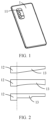
- a specific form of the electronic device is not specially limited in embodiments of this application. As shown in FIG. 1 , for ease of description, an example in which the electronic device is a mobile phone is used for description.
- the mobile phone includes a display screen, a rear housing, a middle frame between the display screen and the rear housing.
- An embodiment of this application provides a 5D ceramic housing structure. Fiber adhesion is performed on a ceramic sheet 1, heat-bend forming is performed on a fiber-adhered ceramic sheet 1, and any needed structure is formed.
- the following describes a structure of a ceramic rear housing and a forming process.
- the 5D ceramic housing structure includes a ceramic sheet and multi-layer prepreg fibers 2 adhering to an inner surface of the ceramic sheet.
- the ceramic sheet 1 adhered with a fiber structure is used to relieve brittleness performance of the ceramic sheet, and increase processibility of the ceramic housing structure.
- the ceramic sheet 1 in the 5D ceramic housing structure provided in this application includes a first area 13 and a second area 12.
- the second area 12 surrounds the first area 13. Thickness of the ceramic sheet 1 located at the first area 13 is equal to thickness of the ceramic sheet 1 located at the second area 12. Alternatively, thickness of the ceramic sheet 1 located at the first area 13 is smaller than the thickness of the ceramic sheet 1 located at the second area 12.
- the first area 13 and the second area 12 are both displayed as a thickness cross section of the 5D ceramic housing structure. According to description of a thickness relationship between the first area 13 and the second area 12, thickness of the 5D ceramic housing structure may be processed based on a requirement.
- the thickness of the ceramic sheet 1 provided in this application may be identical thickness (where the ceramic sheet itself has even identical thickness, and may not need to be processed in size), or may be different thickness (where the ceramic sheet itself has even identical thickness, and may be processed in size).
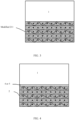
- FIG. 2 shows three forms of a ceramic sheet 2 with different thickness.
- the thickness of the ceramic sheet 1 located at the first area 13 is gradually reduced in a direction away from the second area 12.
- the thickness of the ceramic sheet 1 located at the first area 13 is gradually changed in a parabolic manner.
- the thickness of the ceramic sheet 1 located at the first area 12 is gradually reduced in a stepwise manner.
- the 5D ceramic housing structure provided in this application further includes an adhesive layer, and the adhesive layer is located between the ceramic sheet 1 and the multi-layer prepreg fibers.
- the adhesive layer may be adhesive 4 or an adhesive film.
- the adhesive 4 or the adhesive film 5 refer to the description of the processing method solution.
- the ceramic sheet 1 and the multi-layer prepreg fibers are connected to each other by using the adhesive layer, to achieve stability of an overall ceramic housing structure, and reduce brittleness performance of the ceramic sheet 1.
- the multi-layer prepreg fibers are modified prepreg resin.
- the modified prepreg resin has bonding force of adhering the ceramic housing and the multi-layer prepreg fibers.
- the 5D ceramic housing structure includes a first protruding structure 111 protruding from an outer plane of cameras.
- the first protruding structure 111 may be any structure protruding from an outer surface of the ceramic housing. Structures, shapes, and sizes of the protruding structure are not limited in this application.
- the first protruding structure 111 protruding from the plane includes a crater-liked structure located at the cameras of an electronic device.
- the crater-liked structure is a flared housing structure that is narrow at a top and wide at a bottom.
- a center of the flared housing structure is provided with a through hole that communicates with the cameras and that is configured to provide viewfinder light.
- An inner wall of the through hole is provided with a second protruding structure 1111 protruding from the inner wall and extending toward a center of the flared housing structure.
- the foregoing 5D ceramic housing structure can be formed by using the ceramic housing and a structure adhered with the modified prepreg resin provided in this application, and more 5D appearance can be achieved.
- the foregoing 5D ceramic housing structure can be manufactured by using a solution of the 5D ceramic processing process method in this application, but is limited to the foregoing 5D ceramic housing structure, another 5D ceramic housing structure may alternatively be formed. Structures, shape, and sizes of the another 5D ceramic housing structure are not limited in this application.
- the second protruding structure 1111 is an integral annular protruding structure formed along the inner wall.
- the second protruding structure 1111 includes a plurality of independent protruding structures formed along the inner wall, and the plurality of independent protruding structures are disposed at intervals.
- the second protruding structure 1111 is configured to fit a structure of the cameras of the electronic device, and can be used as a protecting housing of the cameras.
- the multi-layer prepreg fibers 2 have identical thickness of 0.25 mm to 0.35 mm. Alternatively, thickness of at least part of area of the multi-layer prepreg fibers 2 is 0.1 mm to 0.3 mm.
- the foregoing identical thickness or different thickness fiber structure is used to match appearance designs of different positions on the electronic device.
- a surface that is of the multi-layer prepreg fibers 2 and that is adhered to the ceramic sheet 1 is provided with an accommodating recess configured to accommodate an antenna 3; and/or a surface that is of the multi-layer prepreg fibers and that is configured to contact with an inner element of the electronic device is provided with a relief recess.
- accommodating recess or the relief recess are not limited in this application, as long as a function of accommodating a built-in antenna or receiving an interference structure can be achieved.
- the 5D ceramic housing 1 structure includes two layers of structures, an appearance surface layer (that is, the ceramic sheet) and a reinforce layer (that is, the multi-layer prepreg fibers 2).
- the appearance surface layer is a 5D structural ceramic sheet 1 having uniform thickness of 0.25 mm to 0.35 mm.
- the reinforce layer is a fiber layer adhered to an inner surface of ceramic.
- the reinforce layer may be a glass fiber layer, a basalt fiber layer, or a composite fiber layer (a composition of the glass fiber layer and the basalt fiber layer).
- a conventional (a dry pressing method) 5D structure product only includes a layer of structure that is a ceramic structure with different thickness and of which thickness around the perimeter is 0.6 mm to 0.75 mm and thickness of a large surface 0.35 mm to 0.45 mm. Thickness of holes of cameras 11 is designed according to needs of the cameras 11 Deco.
- Thickness of fibers of a product manufactured by using the process method in embodiments of this application may be identical thickness of 0.3 mm to 0.45 mm, or locally downgauged based on identical thickness of a fiber material, for example, downgauged to 0.1 mm to 0.3 mm.
- a feature of fiber downgauging is basically stepwise downgauging, and the ceramic belongs to a brittleness material. Downgauging is a slowed-down process. Ceramic downgauging is for reducing overall weight of a product.
- the product manufactured by using the process method in embodiments of this application may have the foregoing crater-liked structure and a protruding structure formed at any position of the ceramic housing 1, other than a normal 3D structure.
- Embodiments of this application further provide a 5D ceramic processing process method, used for manufacturing the foregoing 5D ceramic housing structure. It should be noted that the 5D ceramic housing structure is not limited to the foregoing defined structure, different structures may be obtained according to the method.
- a solution of the 5D ceramic processing process method provided in this application may include the following.
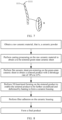
- a raw ceramic material is obtained, that is, a ceramic powder.
- Casting processing is performed on the raw ceramic material to obtain a to-be-sintered green-state ceramic sheet.
- Flat ceramic sheet pre-sintering is performed on the green-state ceramic sheet to obtain a sintered product with a shrinkage rate of 18% to 23%.
- 5D heat-bend forming is performed on the sintered product to enable the sintered product to be further crystallized and deformed by heating to form a ceramic sheet.
- Fiber adhesion is performed on the ceramic sheet.
- a 5D ceramic housing structure is formed.
- the 5D ceramic housing structure in this application may be any 5D ceramic housing structure suitable for a mobile phone structure. This is not limited in this application. For example, refer to FIG. 9 .
- the casting processing may be replaced with dry-pressing flat ceramic sheet.
- ceramic 5D appearance profile can be formed at one time by using the step of 5D heat-bend forming, reducing a large amount of processing time of a CNC machine in conventional processes.
- the step of fiber adhesion can reinforce the strength of a product by using fiber adhesion.
- a weight of the product is reduced.
- processing time can be reduced from overall by using the 5D ceramic processing process method provided in embodiments of this application, so that production costs of a product are reduced.
- casting processing that is, ceramic casting
- a thickness standard is determined with reference to product thickness requirements, a process processing allowance and a shrinkage rate.
- thickness of the cast ceramic sheet in the casting processing may be 0.25 mm to 0.45 mm.
- the thickness of the cast ceramic sheet in the casting processing may be 0.3 mm.
- required thickness of a ceramic product may be 0.3 mm currently, the machining allowance may be 0.13 mm, and a sintering shrinkage rate is 20% to 22%.
- the casting processing may be replaced with dry-pressing flat ceramic sheet.
- a to-be-sintered green-state ceramic sheet can also be obtained.
- Thickness of the obtained to-be-sintered green-state ceramic sheet may also be 0.25 mm to 0.45 mm.
- thickness of the to-be-sintered green-state ceramic sheet obtained by performing the dry-pressing flat ceramic sheet may also be 0.3 mm.
- the pre-sintering mainly controls a temperature of crystallizing and time for thermal preservation of the crystallizing.
- This process is different form conventional ceramic sintering.
- the conventional ceramic is sintered into porcelain at one time in the sintering process. Density of the porcelain reaches density of a final product without shrinking again.
- the pre-sintering in embodiments of this application may be regarded as pre-sintering after casting process, and can also remain an allowance of additional shrinkage and crystallizing for process of 5D heat-bend forming. Otherwise, cracking and excessive aging of ceramic during the heat-bend forming occurs, resulting in reduction of overall strength of the product.
- a shrinkage rate of ceramic casting is generally 20% to 22%.
- a shrinkage rate of the product may be controlled between 18% and 23%, so that deformation is easier to occur during the 5D heat-bending process, thereby meeting the forming process of complex appearance.
- the product also reduces a degree of aging during crystallization of the heat-bending process.
- the step of the flat ceramic sheet pre-sintering includes setting a pre-sintering temperature to 1200°C to 1400°C and the time for thermal preservation to 60 mins to 120 mins. Under the pre-sintering temperature and the time for thermal preservation, a shrinkage rate of the product in a stage of the pre-sintering may be controlled between 18% to 23%.
- the step of the flat ceramic sheet pre-sintering includes Setting pre-sintering temperature to 1300°C and the time for thermal preservation to 80 mins. Under the setting of the pre-sintering temperature and the time for thermal preservation, optimal data within the foregoing shrinkage rate can be obtained.
- the ceramic is a brittleness material, and does not have plasticity.
- a shrinkage rate of the ceramic may be controlled during pre-sintering after casting, and a specific amount of deformation is reserved for the 5D heat-bend forming process to ensure the deformation of the ceramic under a high temperature condition during the heat-bending. Because the amount of deformation of the ceramic is small, thickness of the ceramic directly affects the 5D forming. It is verified that thickness of the 5D forming ceramic is 0.25 mm to 0.45 mm.
- the ceramic may be shaped by using the solution, but flatness after being heat-bent and flatness during reinforcing fiber adhesion cannot be controlled.
- the thickness of the ceramic is thick, for example, the thickness is greater than 0.45 mm, four corners of the product are prone to cracking and the heat-bend forming cannot be performed.
- heat-bending is a process in which ceramic is heated, softened, and deformed while crystallizing and aging under a high temperature condition.
- the heat-bending process may be divided into three processes of heating, thermal preservation and deformation, and temperature reduction.
- a speed of heating or cooling relates to thermal shock resistance of a mold material.
- a rhythm of heating or cooling needs to be controlled.
- time for thermal preservation is shortened as much as possible to reduce a degree of ceramic aging.
- the ceramic aging results in reduction of the strength of the product.
- time for heating may be 7 h
- time for thermal preservation may be 2 h to 3 h
- time for cooling may be 8 h.
- a temperature may be heated up to 1400°C.
- a highest temperature during heating may alternatively be less than 1400°C.
- the time for heating may be 5 h to 7 h.
- time for thermal preservation and deformation in the thermal preservation process of the 5D heat-bend forming may be 1 h to 2 h.
- the time for thermal preservation cannot be short. Excessively short thermal preservation duration may cause a heat-bend formed product to be unqualified in dimension.
- a highest temperature during cooling may be 50°C to 100°C, improving production efficiency of an overall production line and stability of the product.
- time for cooling during the cooling may be 5 h to 8 h.
- the process of the 5D heat-bend forming is a process that ceramic is further be crystallized and deformed by heating.
- a ceramic mold undergoes heating and cooling with the product.
- the mold need to be used many times, so that it is necessary to choose a material that has good thermal shock resistance and does not chemically react with the ceramic.
- the thermal shock resistance when inherent strength of the material is not enough to resist internal stress caused by thermal expansion or contraction of the material caused by a thermal shock temperature difference ⁇ T, the material is caused to be fractured instantaneously, that is, the "thermal shock fracture".
- the thermal shock fracture it is necessary to choose a material with good thermal shock resistance.
- a material with good heat conductivity and a low expansion coefficient is chosen, and generally has good thermal shock resistance.
- zirconia-toughened alumina oxide ceramic satisfies requirements of mold materials.
- the adhesive 4 or the adhesive film 5 may have an effect on adhering a ceramic housing 1 to multi-layer fibers.
- the ceramic is an inorganic non-metal material.
- An outer surface of the multi-layer fibers mainly is resin, and resin is a macromolecular material.
- the feature requires that a main component of the adhesive 4 or the adhesive film 5 needs to include polar groups and non-polar groups both.
- the polar groups have good adhering strength with the ceramic, and the non-polar groups have good adhering force with a fiber material.
- the multi-layer prepreg fibers 2 are used, the multi-layer prepreg fibers 2 include a plurality of stacked single-layer prepreg fibers 21, single-layer prepreg fibers 21 include prepreg resin 211 and prepreg fibers soaked in the prepreg resin 211.
- the prepreg resin 211 is directly modified prepreg resin 211, and the directly modified prepreg resin 211 has bonding force of adhering the ceramic sheet and the multi-layer prepreg fibers 2, so that the multi-layer prepreg fibers have good adhering strength with the ceramic sheet, to save the adhesive 4 or the adhesive film 5.
- an electronic device product has an extreme requirement for thickness.
- thickness of the adhesive 4 or the adhesive film 5 may be 0.02 mm to 0.08 mm. This can ensure the adhering strength, and control the thickness in an acceptable range.
- thickness of the ceramic sheet and thickness of the multi-layer prepreg fibers 2 are designed based on requirements of product strength.
- the multi-layer prepreg fibers 2 are mainly used to reinforce strength of the ceramic housing 1, and the multi-layer prepreg fibers 2 are formed by a plurality of single-layer prepreg fibers 21. Therefore, strength of the single-layer prepreg fibers 21 needs to be focused on.
- fiber types of the single-layer prepreg fibers 21, content of the prepreg resin 211, and thickness of cured multi-layer prepreg fibers 2 have the greatest influence on the strength.
- An alternating arrangement of woven fibers 212 and unidirectional fibers may be used to satisfy a requirement of unit bending resistance strength, to reinforce the strength.
- a manner that a plurality of woven fibers 212 are arranged in a multi-layer manner may be used to reinforce the product.
- the single-layer prepreg fibers 21 are glass fibers and/or basalt fibers.
- the single-layer prepreg fibers may be separate glass fibers, separate basalt fibers, or a composition of the glass fibers and the basalt fibers.
- the content of the prepreg resin 211 is generally between 35% to 65%, and the strength is higher when the content of the prepreg resin 211 is low.
- the single-layer prepreg fibers 21 with a content of 35% to 40% of the prepreg resin 211 is chosen for optimal strength.
- thickness of cured multi-layer prepreg fibers 2 may be 0.3 mm to 0.45 mm.
- a process of fiber adhesion needs to further consider curing conditions.
- Different resins need different curing conditions.
- the curing conditions used are 140°C temperature, 10 kg pressure, and 20 minutes pressure holding time.
- a solution of the 5D ceramic processing process method provided in embodiments of this application may include: obtaining a raw ceramic material, that is, a ceramic powder; performing casting processing on the raw ceramic material to obtain a to-be-sintered green-state ceramic sheet; Cutting, where the green-state ceramic sheet is cut to obtain a cut green-state ceramic sheet; performing flat ceramic sheet pre-sintering on the green-state ceramic sheet to obtain a sintered product with a shrinkage rate of 18% to 23%; performing flat sheet polishing on the sintered product to obtain a sintered product with enhanced polishing precision; performing 5D heat-bend forming to enable the sintered product to be further crystallized and deformed by heating to form a ceramic sheet; performing fiber adhesion on the ceramic sheet 1; and performing processes of thermoforming, CNC forming, polishing, and AF coating are performed in sequence to form a 5D ceramic housing 1 structure.
- steps of flat sheet polishing can reduce polishing time after 5D forming.
- ceramic 5D appearance profile can be formed at one time by using the step of 5D heat-bend forming, reducing a large amount of processing time of a CNC machine in conventional processes.
- the step of fiber adhesion can reinforce the strength of a product by using fiber adhesion.
- a weight of the product is reduced.
- processing time can be reduced from overall by using the 5D ceramic processing process method provided in embodiments of this application, so that production costs of a product are reduced.
- Embodiments of this application further provide another 5D ceramic processing process method, including: obtaining a raw ceramic material; performing casting and cutting; performing flat ceramic sheet pre-sintering; performing flat sheet polishing; performing 5D heat-bend forming; performing a process of processing a built-in antenna 3 on a surface of the multi-layer prepreg fibers 2 in the manner of printing conductive silver paste; performing fiber adhesion; performing thermoforming; performing CNC forming; and performing polishing.
- a process of processing the built-in antenna 3 in the manner of printing conductive silver paste is added after the 5D heat-bend forming is performed on the ceramic, to achieve a same appearance effect as the foregoing process method.
- Embodiments of this application further provide still another 5D ceramic processing process method, including: obtaining a raw ceramic material; performing casting; performing cutting; performing flat ceramic sheet pre-sintering; performing 5D heat-bend forming; performing fiber adhesion; performing thermoforming; performing CNC forming; CNC fiber local downgauging; and performing polishing.
- a process of fiber local downgauging is added, to provide a location for receiving a main board structure, thereby avoiding a problem that thickness of an entire machine is increased due to local interference.
- Embodiments of this application further provides a terminal, including any foregoing 5D ceramic housing structure manufactured by using the foregoing 5D ceramic processing process method.
- the 5D ceramic housing structure includes a rear cover assembled on a rear side of the terminal, to achieve all effects of the foregoing 5D ceramic housing structure. Details are not described herein again.
Landscapes
- Engineering & Computer Science (AREA)
- Chemical & Material Sciences (AREA)
- Ceramic Engineering (AREA)
- Structural Engineering (AREA)
- Materials Engineering (AREA)
- Organic Chemistry (AREA)
- Manufacturing & Machinery (AREA)
- Mechanical Engineering (AREA)
- Signal Processing (AREA)
- Inorganic Chemistry (AREA)
- Textile Engineering (AREA)
- Thermal Sciences (AREA)
- Physics & Mathematics (AREA)
- Composite Materials (AREA)
- Laminated Bodies (AREA)
Abstract
Description
- This application claims priority to
Chinese Patent Application No. 202210602481.8, filed with the China National Intellectual Property Administration on May 30, 2022 - This application relates to the field of ceramic processing processes, and in particular, to a 5D ceramic housing structure and a 5D ceramic processing process method.
- With popularization and application of a terminal, various terminal housings are generated. In existing terminals that various materials are used in, a 5D (5 Dimensions) structure ceramic has high product recognition and a high-grade appearance, and is the ultimate choice for high-end flagship products. A mobile phone is used as an example, in the existing 5D forming solutions that have been mass-produced in the industry, for example, as the following forming process steps: dry pressing performed on a clay body; sintering; CNC (Computer numerical control) (clamping for five times, about 80 minutes); and polishing (six times, about 175 minutes). Machining time for the CNC and polishing is long, so that production costs of a housing of the mobile phone are high, and production efficiency is low.
- To resolve the foregoing technical problems, this application provides a 5D ceramic housing structure and a 5D ceramic processing process method. In the method, a raw ceramic material is sequentially subjected to casting, pre-sintering of a flat ceramic sheet, 5D heat-bend forming, and fiber prepreg adhesion. In this way, processing time for overall process can be reduced, to reduce production costs of a product. The 5D ceramic housing structure can be formed by using the foregoing processing process method.
- According to a first aspect, this application provides a 5D ceramic housing structure, including a ceramic sheet and multi-layer prepreg fibers adhering to an inner surface of the ceramic sheet. For example, the ceramic sheet adhered with a fiber structure is used to relieve brittleness performance of the ceramic sheet, and increase processibility of the ceramic housing structure.
- According to the first aspect, the ceramic sheet in the 5D ceramic housing structure provided in this application includes a first area and a second area. The second area surrounds the first area. Thickness of the ceramic sheet located at the first area is equal to thickness of the ceramic sheet located at the second area. Alternatively, thickness of the ceramic sheet located at the first area is smaller than the thickness of the ceramic sheet located at the second area.
- For example, the thickness of the ceramic sheet provided in this application may be identical thickness or different thickness. This is not limited in this application. That the thickness of the ceramic sheet in this application is identical thickness may be understood that the ceramic sheet has equal thickness with a specific error.
- According to the first aspect or any one of the above implementations in the first aspect, the 5D ceramic housing structure provided in this application further includes an adhesive layer, and the adhesive layer is located between the ceramic sheet and the multi-layer prepreg fibers.
- For example, the ceramic sheet and the multi-layer prepreg fibers are connected to each other by using the adhesive layer, to achieve stability of an overall ceramic housing structure, and reduce brittleness performance of the ceramic sheet.
- According to the first aspect or any one of the above implementations in the first aspect, the multi-layer prepreg fibers are modified prepreg resin.
- For example, the modified prepreg resin has bonding force of adhering the ceramic housing and the multi-layer prepreg fibers.
- According to the first aspect or any one of the above implementations in the first aspect, the 5D ceramic housing structure includes a first protruding structure protruding from an outer plane of cameras.
- For example, the first protruding structure may be any structure protruding from an outer surface of the ceramic housing. Structures, shapes, and sizes of the protruding structure are not limited in this application.
- According to the first aspect or any one of the above implementations in the first aspect, the first protruding structure protruding from the plane includes a crater-liked structure located at the cameras of an electronic device. The crater-liked structure is a flared housing structure that is narrow at a top and wide at a bottom. A center of the flared housing structure is provided with a through hole that is communicated with the cameras and that is configured to provide viewfinder light. An inner wall of the through hole is provided with a second protruding structure protruding from the inner wall and extending toward the center of the flared housing structure.
- For example, the foregoing 5D ceramic housing structure can be formed by using the ceramic housing and a structure adhered with the modified prepreg resin provided in the first aspect of this application, and more 5D appearance can be achieved. The foregoing 5D ceramic housing structure can be manufactured by using a solution of the 5D ceramic processing process method in this application, but is limited to the foregoing 5D ceramic housing structure, another 5D ceramic housing structure may alternatively be formed. Structures, shape, and sizes of the another 5D ceramic housing structure are not limited in this application.
- According to the first aspect or any one of the above implementations in the first aspect, the second protruding structure is an integral annular protruding structure formed along the inner wall. Alternatively, the second protruding structure includes a plurality of independent protruding structures formed along the inner wall, and the plurality of independent protruding structures are disposed at intervals.
- For example, the second protruding structure is configured to fit a structure of the cameras of the electronic device, and can be used as a protecting housing of the cameras.
- According to the first aspect or any one of the above implementations in the first aspect, the multi-layer prepreg fibers have identical thickness of 0.25 mm to 0.35 mm. Alternatively, thickness of at least part of area of the multi-layer prepreg fibers is 0.1 mm to 0.3 mm.
- The foregoing identical thickness or different thickness fiber structure is used to match appearance designs of different positions on the electronic device.
- According to the first aspect or any one of the above implementations in the first aspect, a surface that is of the multi-layer prepreg fibers and that is adhered to the ceramic sheet is provided with an accommodating recess configured to accommodate an antenna; and/or a surface that is of the multi-layer prepreg fibers and that is configured to contact with an inner element of the electronic device is provided with a relief recess.
- For example, specific structures, shapes, and sizes of the accommodating recess or the relief recess are not limited in this application, as long as a function of accommodating a built-in antenna or receiving an interference structure can be achieved.
- According to a second aspect, a 5D ceramic processing process method provided in this application can form the foregoing 5D ceramic housing. The method includes: obtaining a raw ceramic material, that is, a ceramic powder; performing casting processing on the raw ceramic material to obtain a to-be-sintered green-state ceramic sheet; performing flat ceramic sheet pre-sintering on the green-state ceramic sheet to obtain a sintered product with a shrinkage rate of 18% to 23%; performing 5D heat-bend forming on the sintered product to enable the sintered product to be further crystallized and deformed by heating to form a ceramic sheet; performing fiber adhesion on the ceramic sheet; and forming the foregoing 5D ceramic housing structure.
- Using the foregoing ceramic processing process, 5D ceramic appearance profile can be formed at one time, reducing a large amount of processing time of a CNC machine in conventional processes. In addition, strength of a product is reinforced by using fiber adhesion, so that a weight of a ceramic product can be reduced. In this way, processing time can be reduced from overall to reduce production costs of a product.
- According to the second aspect, in the step of performing casting processing on the raw ceramic material to obtain a to-be-sintered green-state ceramic sheet, thickness of a cast ceramic sheet in the casting processing is 0.25 mm to 0.45 mm.
- For example, the thickness of the cast ceramic sheet in the casting processing is 0.3 mm.
- According to the second aspect or any one of the above implementations in the second aspect, in the step of performing casting processing on the raw ceramic material to obtain a to-be-sintered green-state ceramic sheet, the casting processing is replaced with dry-pressing flat ceramic sheet.
- According to the second aspect or any one of the above implementations in the second aspect, in the step of performing flat ceramic sheet pre-sintering on the green-state ceramic sheet to obtain a sintered product with a shrinkage rate of 18% to 23%, sintering conditions of the flat ceramic sheet pre-sintering includes: a pre-sintering temperature is 1200°C to 1400°C, and time for thermal preservation is 60 mins to 120 mins.
- For example, the sintering conditions of the flat ceramic sheet pre-sintering includes: the pre-sintering temperature is 1300°C, and the time for thermal preservation is 80 mins.
- According to the second aspect or any one of the above implementations in the second aspect, in the step of performing 5D heat-bend forming on the sintered product to enable the sintered product to be further crystallized and deformed by heating to form a ceramic sheet, thickness of the ceramic housing is 0.25 mm to 0.45 mm.
- According to the second aspect or any one of the above implementations in the second aspect, in the step of performing 5D heat-bend forming on the sintered product, to enable the sintered product to be further crystallized and deformed by heating to form a ceramic housing, a process of the 5D heat-bend forming includes three processes of heating, thermal preservation, and cooling.
- For example, a highest temperature during the process of heating of the 5D heat-bend forming is lower than or equal to 1400°C, and time for heating is 5 h to 7 h. Time for thermal preservation is 1 h to 2 h. A lowest temperature during the process of cooling is 50°C to 100°C, time for cooling is 5 h to 8 h.
- For example, in the step of 5D heat-bend forming, a mold material of zirconia-toughened alumina oxide ceramic is used.
- According to the second aspect or any one of the above implementations in the second aspect, in the step of performing fiber adhesion on the ceramic sheet, adhesive is used to adhere the ceramic housing and multi-layer fibers. A main component of the adhesive includes polar groups and non-polar groups both.
- For example, thickness of the adhesive is 0.02 mm to 0.08 mm.
- According to the second aspect or any one of the above implementations in the second aspect, in the step of performing fiber adhesion on the ceramic sheet, an adhesive film is used to adhere the ceramic housing and multi-layer fibers. A main component of the adhesive film includes polar groups and non-polar groups both.
- For example, thickness of the adhesive film is 0.02 mm to 0.08 mm.
- According to the second aspect or any one of the above implementations in the second aspect, in the step of performing fiber adhesion on the ceramic sheet, multi-layer prepreg fibers are used, the multi-layer prepreg fibers include a plurality of stacked single-layer prepreg fibers, each single-layer prepreg fibers include prepreg resin and prepreg fibers soaked in the prepreg resin. The prepreg resin is directly modified prepreg resin, and the directly modified prepreg resin has bonding force of adhering the ceramic housing and the multi-layer prepreg fibers.
- According to the second aspect or any one of the above implementations in the second aspect, in the step of performing fiber adhesion on the ceramic housing, and in the step of performing fiber adhesion on the ceramic sheet, the single-layer prepreg fibers are glass fibers and/or basalt fibers. According to the first aspect or any one of the above implementations in the first aspect, single-layer prepreg fibers are arranged in an alternating manner of woven fibers and unidirectional fibers. Alternatively, single-layer prepreg fibers are arranged in a manner of woven fibers.
- According to the second aspect or any one of the above implementations in the second aspect, in the step of performing fiber adhesion on the ceramic sheet, the single-layer prepreg fibers with content of 35% to 40% of the prepreg resin are chosen.
- According to the second aspect or any one of the above implementations in the second aspect, in the step of performing fiber adhesion on the ceramic sheet, thickness of cured multi-layer prepreg fibers is 0.3 mm to 0.45 mm.
- According to the second aspect or any one of the above implementations in the second aspect, in the step of performing fiber adhesion on the ceramic sheet, the cured multi-layer prepreg fibers are downgauged in a stepwise manner, and the cured multi-layer prepreg fibers after being downgauged may have thickness of 0.1 mm to 0.3 mm.
- According to the second aspect or any one of the above implementations in the second aspect, after the step of performing casting processing on the raw ceramic material to obtain a to-be-sintered green-state ceramic sheet, the method further includes: performing cutting; cutting the green-state ceramic sheet to obtain a cut green-state ceramic sheet.
- According to the second aspect or any one of the above implementations in the second aspect, after the step of performing flat ceramic sheet pre-sintering on the green-state ceramic sheet to obtain a sintered product with a shrinkage rate of 18% to 23%, the method further includes: performing flat sheet polishing on the sintered product to obtain a sintered product with enhanced polishing precision.
- According to the second aspect or any one of the above implementations in the second aspect, after the step of performing fiber adhesion on the ceramic sheet, the method further includes performing processes of thermoforming, CNC forming, polishing and AF coating in sequence.
- According to the second aspect or any one of the above implementations in the second aspect, after the step of performing 5D heat-bend forming on the sintered product to enable the sintered product to be further crystallized and deformed by heating to form a ceramic sheet, the method further includes a process of processing a built-in antenna on a surface of the multi-layer prepreg fibers in the manner of printing conductive silver paste.
- According to the second aspect or any one of the above implementations in the second aspect, after the step of performing fiber adhesion on the ceramic sheet, the method further includes performing processes of thermoforming, CNC forming, CNC fibers local downgauging, and polishing in sequence.
- According to a third aspect, this application provides a terminal, including the foregoing 5D ceramic housing structure. The 5D ceramic housing structure includes a rear cover assembled on a rear side of the terminal. In this way, all effects of the foregoing 5D ceramic housing structure can be achieved.
-
-
FIG. 1 is a schematic diagram of a structure of a 5D ceramic housing structure as an example; -
FIG. 2 is a schematic diagram of a different thickness structure of a 5D ceramic housing structure as an example; -
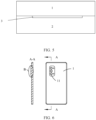
FIG. 3 is a first schematic diagram of a structure of fiber adhesion as an example; -
FIG. 4 is a second schematic diagram of a structure of fiber adhesion as an example; -
FIG. 5 is a schematic diagram of a structure of a 5D ceramic housing structure with a built-in antenna according to an embodiment of this application; -
FIG. 6 is a cross-sectional view of a first protruding structure of a 5D ceramic housing structure as an example; -
FIG. 7 is a schematic diagram of an enlarged structure of a first protruding structure of a 5D ceramic housing structure as an example; -
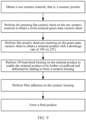
FIG. 8 is a process procedure of a 5D ceramic processing process method as an example; -
FIG. 9 is another process procedure of a 5D ceramic processing process method as an example; -
FIG. 10 is yet another process procedure of a 5D ceramic processing process method as an example; -
FIG. 11 is still another process procedure of a 5D ceramic processing process method as an example; and -
FIG. 12 is a schematic diagram of a structure of single-layer prepreg fibers including woven fibers. - Reference numerals:
- 1: ceramic sheet; 11: camera; 111: first protruding structure; 1111: second protruding structure; 12: second area; 13: first area;
- 2: multi-layer prepreg fibers; 21: single-layer prepreg fibers; 211: prepreg resin; 212: woven fiber;
- antenna; 4: adhesive; 5: adhesive film.
- The technical solutions in embodiments of this application are clearly and completely described below with reference to the accompanying drawings in embodiments of this application. Apparently, the described embodiments are some rather than all of embodiments of this application. All other embodiments obtained by a person of ordinary skill in the art based on embodiments of this application without making creative efforts shall fall within the protection scope of this application.
- The term "and/or" used herein describes only an association relationship between associated objects and represents that three relationships may exist. For example, A and/or B may represent the following three cases: Only A exists, both A and B exist, and only B exists.
- In the specification and claims in embodiments of this application, the terms "first", "second", and the like are intended to distinguish between different objects but do not indicate a particular sequence of the objects. For example, a first target object, a second target object, and the like are used to distinguish between different target objects, rather than describing a particular sequence of the target objects.
- In embodiments of this application, the terms such as "example" or "for example" are used to represent giving an example, an illustration, or a description. Any embodiment or design scheme described as "example" or "for example" in embodiments of this application should not be explained as being more preferred or having more advantages than another embodiment or design scheme. Exactly, use of the terms such as "example" and "for example" is intended to present a related concept in a specific manner.
- In the description of embodiments of this application, unless otherwise stated, "a plurality of" means two or more. For example, a plurality of processing units refer to two or more processing units; and a plurality of systems refer to two or more systems.
- To provide a clear and concise description of the following embodiments, the terms in this application are explained in the following.
- Casting: It is a thin ceramic sheet forming process. First, ground ceramic powders and an organic dispersant solution are mixed in an appropriate ratio to form a slurry with a specific viscosity. The slurry flows down from a container and is applied to a special base tape with specific thickness by a scraper. After drying and solidification, a thin ceramic sheet that is a green tape is peeled off from the base tape, and then the green tape is punched and processed according to a size and shape of a finished product to obtain a to-be-sintered green-state ceramic sheet.
- Pre-sintering: It is a sintering process carried out at a temperature lower than a normal sintering temperature to remove lubricants and forming agents from a compact, or to facilitate processing of semi-finished compacts.
- Heat-bending: It is deformation of ceramic under a high temperature. To be specific, the heat-bend forming is performed, by using a heat-bending machine, on a
ceramic sheet 1 performed fiber adhesion of this application to form 5D ceramic housing structures with different structures, shapes, and sizes. - Embodiments of this application provide an electronic device that may be a mobile phone, a tablet computer, a personal digital assistant (personal digital assistant, PDA), a vehicle-mounted computer, a television, a smart wearable device, or the like. A specific form of the electronic device is not specially limited in embodiments of this application. As shown in
FIG. 1 , for ease of description, an example in which the electronic device is a mobile phone is used for description. - As shown in
FIG. 1 , the mobile phone includes a display screen, a rear housing, a middle frame between the display screen and the rear housing. - With popularization and application of a terminal, various terminal housings that the
ceramic sheet 1 is used in are generated. In existing terminals with various materials, 5D structure ceramic has a high product recognition and a high-grade appearance and is the ultimate choice for high-end flagship products. Using mobile phone as an example, in the existing 5D forming solutions that have been mass-produced in the industry, processes such as dry pressing performed on a clay body, sintering and CNC (clamping for five times, about 80 minutes), and polishing (six times, about 175 minutes) are used for forming a 5D product structure. Machining time for the CNC and polishing is long, so that production costs of a housing of the mobile phone are high, and production efficiency is low. A root cause is that ceramic has high brittleness performance. To resolve existing problems, this application provides the following solutions. - An embodiment of this application provides a 5D ceramic housing structure. Fiber adhesion is performed on a
ceramic sheet 1, heat-bend forming is performed on a fiber-adheredceramic sheet 1, and any needed structure is formed. - The following describes a structure of a ceramic rear housing and a forming process.
- Refer to
FIG. 2 . The 5D ceramic housing structure includes a ceramic sheet andmulti-layer prepreg fibers 2 adhering to an inner surface of the ceramic sheet. For example, theceramic sheet 1 adhered with a fiber structure is used to relieve brittleness performance of the ceramic sheet, and increase processibility of the ceramic housing structure. - The
ceramic sheet 1 in the 5D ceramic housing structure provided in this application includes afirst area 13 and asecond area 12. Thesecond area 12 surrounds thefirst area 13. Thickness of theceramic sheet 1 located at thefirst area 13 is equal to thickness of theceramic sheet 1 located at thesecond area 12. Alternatively, thickness of theceramic sheet 1 located at thefirst area 13 is smaller than the thickness of theceramic sheet 1 located at thesecond area 12. Thefirst area 13 and thesecond area 12 are both displayed as a thickness cross section of the 5D ceramic housing structure. According to description of a thickness relationship between thefirst area 13 and thesecond area 12, thickness of the 5D ceramic housing structure may be processed based on a requirement. - For example, the thickness of the
ceramic sheet 1 provided in this application may be identical thickness (where the ceramic sheet itself has even identical thickness, and may not need to be processed in size), or may be different thickness (where the ceramic sheet itself has even identical thickness, and may be processed in size). This is not limited in this application. That the thickness of theceramic sheet 1 of this application is identical thickness may be understood that the ceramic sheet has equal thickness with a specific error.FIG. 2 shows three forms of aceramic sheet 2 with different thickness. To be specific, the thickness of theceramic sheet 1 located at thefirst area 13 is gradually reduced in a direction away from thesecond area 12. Alternatively, the thickness of theceramic sheet 1 located at thefirst area 13 is gradually changed in a parabolic manner. Alternatively, the thickness of theceramic sheet 1 located at thefirst area 12 is gradually reduced in a stepwise manner. - Refer to
FIG. 4 . The 5D ceramic housing structure provided in this application further includes an adhesive layer, and the adhesive layer is located between theceramic sheet 1 and the multi-layer prepreg fibers. The adhesive layer may be adhesive 4 or an adhesive film. For a limitation of the adhesive 4 or theadhesive film 5, refer to the description of the processing method solution. - For example, the
ceramic sheet 1 and the multi-layer prepreg fibers are connected to each other by using the adhesive layer, to achieve stability of an overall ceramic housing structure, and reduce brittleness performance of theceramic sheet 1. - The multi-layer prepreg fibers are modified prepreg resin. For example, refer to
FIG. 3 . The modified prepreg resin has bonding force of adhering the ceramic housing and the multi-layer prepreg fibers. - Refer to
FIG. 6 andFIG. 7 . The 5D ceramic housing structure includes a firstprotruding structure 111 protruding from an outer plane of cameras. For example, the firstprotruding structure 111 may be any structure protruding from an outer surface of the ceramic housing. Structures, shapes, and sizes of the protruding structure are not limited in this application. - The first
protruding structure 111 protruding from the plane includes a crater-liked structure located at the cameras of an electronic device. The crater-liked structure is a flared housing structure that is narrow at a top and wide at a bottom. A center of the flared housing structure is provided with a through hole that communicates with the cameras and that is configured to provide viewfinder light. An inner wall of the through hole is provided with asecond protruding structure 1111 protruding from the inner wall and extending toward a center of the flared housing structure. - For example, the foregoing 5D ceramic housing structure can be formed by using the ceramic housing and a structure adhered with the modified prepreg resin provided in this application, and more 5D appearance can be achieved. The foregoing 5D ceramic housing structure can be manufactured by using a solution of the 5D ceramic processing process method in this application, but is limited to the foregoing 5D ceramic housing structure, another 5D ceramic housing structure may alternatively be formed. Structures, shape, and sizes of the another 5D ceramic housing structure are not limited in this application.
- The
second protruding structure 1111 is an integral annular protruding structure formed along the inner wall. Alternatively, thesecond protruding structure 1111 includes a plurality of independent protruding structures formed along the inner wall, and the plurality of independent protruding structures are disposed at intervals. - For example, the
second protruding structure 1111 is configured to fit a structure of the cameras of the electronic device, and can be used as a protecting housing of the cameras. - The
multi-layer prepreg fibers 2 have identical thickness of 0.25 mm to 0.35 mm. Alternatively, thickness of at least part of area of themulti-layer prepreg fibers 2 is 0.1 mm to 0.3 mm. - The foregoing identical thickness or different thickness fiber structure is used to match appearance designs of different positions on the electronic device.
- Refer to
FIG. 5 . A surface that is of themulti-layer prepreg fibers 2 and that is adhered to theceramic sheet 1 is provided with an accommodating recess configured to accommodate anantenna 3; and/or a surface that is of the multi-layer prepreg fibers and that is configured to contact with an inner element of the electronic device is provided with a relief recess. - For example, specific structures, shapes, and sizes of the accommodating recess or the relief recess are not limited in this application, as long as a function of accommodating a built-in antenna or receiving an interference structure can be achieved.
- The foregoing is the 5D
ceramic housing 1 structure. Generally, the 5D ceramic housing structure includes two layers of structures, an appearance surface layer (that is, the ceramic sheet) and a reinforce layer (that is, the multi-layer prepreg fibers 2). The appearance surface layer is a 5D structuralceramic sheet 1 having uniform thickness of 0.25 mm to 0.35 mm. The reinforce layer is a fiber layer adhered to an inner surface of ceramic. For example, the reinforce layer may be a glass fiber layer, a basalt fiber layer, or a composite fiber layer (a composition of the glass fiber layer and the basalt fiber layer). In comparison, a conventional (a dry pressing method) 5D structure product only includes a layer of structure that is a ceramic structure with different thickness and of which thickness around the perimeter is 0.6 mm to 0.75 mm and thickness of a large surface 0.35 mm to 0.45 mm. Thickness of holes ofcameras 11 is designed according to needs of thecameras 11 Deco. - Thickness of fibers of a product manufactured by using the process method in embodiments of this application may be identical thickness of 0.3 mm to 0.45 mm, or locally downgauged based on identical thickness of a fiber material, for example, downgauged to 0.1 mm to 0.3 mm. A feature of fiber downgauging is basically stepwise downgauging, and the ceramic belongs to a brittleness material. Downgauging is a slowed-down process. Ceramic downgauging is for reducing overall weight of a product. In addition, the product manufactured by using the process method in embodiments of this application may have the foregoing crater-liked structure and a protruding structure formed at any position of the
ceramic housing 1, other than a normal 3D structure. Embodiments of this application further provide a 5D ceramic processing process method, used for manufacturing the foregoing 5D ceramic housing structure. It should be noted that the 5D ceramic housing structure is not limited to the foregoing defined structure, different structures may be obtained according to the method. - Specifically, a solution of the 5D ceramic processing process method provided in this application may include the following.
- Refer to
FIG. 8 . A raw ceramic material is obtained, that is, a ceramic powder. Casting processing is performed on the raw ceramic material to obtain a to-be-sintered green-state ceramic sheet. Flat ceramic sheet pre-sintering is performed on the green-state ceramic sheet to obtain a sintered product with a shrinkage rate of 18% to 23%. 5D heat-bend forming is performed on the sintered product to enable the sintered product to be further crystallized and deformed by heating to form a ceramic sheet. Fiber adhesion is performed on the ceramic sheet. A 5D ceramic housing structure is formed. The 5D ceramic housing structure in this application may be any 5D ceramic housing structure suitable for a mobile phone structure. This is not limited in this application. For example, refer toFIG. 9 . The casting processing may be replaced with dry-pressing flat ceramic sheet. For example, ceramic 5D appearance profile can be formed at one time by using the step of 5D heat-bend forming, reducing a large amount of processing time of a CNC machine in conventional processes. For example, the step of fiber adhesion can reinforce the strength of a product by using fiber adhesion. In addition, a weight of the product is reduced. In conclusion, processing time can be reduced from overall by using the 5D ceramic processing process method provided in embodiments of this application, so that production costs of a product are reduced. - Specifically, casting processing, that is, ceramic casting, is a thin ceramic sheet forming process. For details, refer to the foregoing description. In the step of casting, focus is on thickness control of cast ceramic sheet. A thickness standard is determined with reference to product thickness requirements, a process processing allowance and a shrinkage rate. For example, thickness of the cast ceramic sheet in the casting processing may be 0.25 mm to 0.45 mm. For example, the thickness of the cast ceramic sheet in the casting processing may be 0.3 mm. To be specific, required thickness of a ceramic product may be 0.3 mm currently, the machining allowance may be 0.13 mm, and a sintering shrinkage rate is 20% to 22%. For example, in the step of performing casting processing on the raw ceramic material to obtain a to-be-sintered green-state ceramic sheet, the casting processing may be replaced with dry-pressing flat ceramic sheet. In this way, a to-be-sintered green-state ceramic sheet can also be obtained. Thickness of the obtained to-be-sintered green-state ceramic sheet may also be 0.25 mm to 0.45 mm. For example, thickness of the to-be-sintered green-state ceramic sheet obtained by performing the dry-pressing flat ceramic sheet may also be 0.3 mm. The following solution in which the casting processing is used as an example for description about subsequent processes.
- Specifically, in a process of flat ceramic sheet pre-sintering, the pre-sintering mainly controls a temperature of crystallizing and time for thermal preservation of the crystallizing. This process is different form conventional ceramic sintering. The conventional ceramic is sintered into porcelain at one time in the sintering process. Density of the porcelain reaches density of a final product without shrinking again. The pre-sintering in embodiments of this application may be regarded as pre-sintering after casting process, and can also remain an allowance of additional shrinkage and crystallizing for process of 5D heat-bend forming. Otherwise, cracking and excessive aging of ceramic during the heat-bend forming occurs, resulting in reduction of overall strength of the product. A shrinkage rate of ceramic casting is generally 20% to 22%. In a stage of the pre-sintering, a shrinkage rate of the product may be controlled between 18% and 23%, so that deformation is easier to occur during the 5D heat-bending process, thereby meeting the forming process of complex appearance. In addition, the product also reduces a degree of aging during crystallization of the heat-bending process.
- For example, the step of the flat ceramic sheet pre-sintering includes setting a pre-sintering temperature to 1200°C to 1400°C and the time for thermal preservation to 60 mins to 120 mins. Under the pre-sintering temperature and the time for thermal preservation, a shrinkage rate of the product in a stage of the pre-sintering may be controlled between 18% to 23%.
- For example, the step of the flat ceramic sheet pre-sintering includes Setting pre-sintering temperature to 1300°C and the time for thermal preservation to 80 mins. Under the setting of the pre-sintering temperature and the time for thermal preservation, optimal data within the foregoing shrinkage rate can be obtained.
- Specifically, in the process of 5D heat-bend forming, the following content needs to be considered: First, the ceramic is a brittleness material, and does not have plasticity. A shrinkage rate of the ceramic may be controlled during pre-sintering after casting, and a specific amount of deformation is reserved for the 5D heat-bend forming process to ensure the deformation of the ceramic under a high temperature condition during the heat-bending. Because the amount of deformation of the ceramic is small, thickness of the ceramic directly affects the 5D forming. It is verified that thickness of the 5D forming ceramic is 0.25 mm to 0.45 mm. For example, if the thickness of the ceramic is thin, for example, the thickness is less than 0.25 mm, the ceramic may be shaped by using the solution, but flatness after being heat-bent and flatness during reinforcing fiber adhesion cannot be controlled. For example, if the thickness of the ceramic is thick, for example, the thickness is greater than 0.45 mm, four corners of the product are prone to cracking and the heat-bend forming cannot be performed.
- Specifically, in the process of 5D heat-bend forming, the following heat-bending parameters need to be considered. First, heat-bending is a process in which ceramic is heated, softened, and deformed while crystallizing and aging under a high temperature condition. The heat-bending process may be divided into three processes of heating, thermal preservation and deformation, and temperature reduction. A speed of heating or cooling relates to thermal shock resistance of a mold material. To prevent a mold from thermal shock fracture, a rhythm of heating or cooling needs to be controlled. In addition, time for thermal preservation is shortened as much as possible to reduce a degree of ceramic aging. For example, the ceramic aging results in reduction of the strength of the product. For example, time for heating may be 7 h, time for thermal preservation may be 2 h to 3 h, and time for cooling may be 8 h.
- For example, in the process of heating in the 5D heat-bend forming, a temperature may be heated up to 1400°C. For example, a highest temperature during heating may alternatively be less than 1400°C. For example, the time for heating may be 5 h to 7 h.
- For example, time for thermal preservation and deformation in the thermal preservation process of the 5D heat-bend forming may be 1 h to 2 h. The time for thermal preservation cannot be short. Excessively short thermal preservation duration may cause a heat-bend formed product to be unqualified in dimension.
- For example, in the process of cooling in the 5D heat-bend forming, that is, the temperature reduction process, a highest temperature during cooling may be 50°C to 100°C, improving production efficiency of an overall production line and stability of the product. For example, time for cooling during the cooling may be 5 h to 8 h.
- Specifically, the process of the 5D heat-bend forming is a process that ceramic is further be crystallized and deformed by heating. A ceramic mold undergoes heating and cooling with the product. The mold need to be used many times, so that it is necessary to choose a material that has good thermal shock resistance and does not chemically react with the ceramic. For the thermal shock resistance, when inherent strength of the material is not enough to resist internal stress caused by thermal expansion or contraction of the material caused by a thermal shock temperature difference ΔT, the material is caused to be fractured instantaneously, that is, the "thermal shock fracture". To avoid a problem of thermal shock fracture, it is necessary to choose a material with good thermal shock resistance. Because the ceramic itself does not undergo chemical reactions, a material with good heat conductivity and a low expansion coefficient is chosen, and generally has good thermal shock resistance. For example, zirconia-toughened alumina oxide ceramic satisfies requirements of mold materials.
- Specifically, in a process of fiber adhesion, the following conditions need to be considered. The adhesive 4 or the
adhesive film 5 may have an effect on adhering aceramic housing 1 to multi-layer fibers. The ceramic is an inorganic non-metal material. An outer surface of the multi-layer fibers mainly is resin, and resin is a macromolecular material. The feature requires that a main component of the adhesive 4 or theadhesive film 5 needs to include polar groups and non-polar groups both. The polar groups have good adhering strength with the ceramic, and the non-polar groups have good adhering force with a fiber material. Alternatively, themulti-layer prepreg fibers 2 are used, themulti-layer prepreg fibers 2 include a plurality of stacked single-layer prepreg fibers 21, single-layer prepreg fibers 21 includeprepreg resin 211 and prepreg fibers soaked in theprepreg resin 211. Theprepreg resin 211 is directly modifiedprepreg resin 211, and the directly modifiedprepreg resin 211 has bonding force of adhering the ceramic sheet and themulti-layer prepreg fibers 2, so that the multi-layer prepreg fibers have good adhering strength with the ceramic sheet, to save the adhesive 4 or theadhesive film 5. In addition, an electronic device product has an extreme requirement for thickness. For example, thickness of the adhesive 4 or theadhesive film 5 may be 0.02 mm to 0.08 mm. This can ensure the adhering strength, and control the thickness in an acceptable range. In addition, thickness of the ceramic sheet and thickness of themulti-layer prepreg fibers 2 are designed based on requirements of product strength. Themulti-layer prepreg fibers 2 are mainly used to reinforce strength of theceramic housing 1, and themulti-layer prepreg fibers 2 are formed by a plurality of single-layer prepreg fibers 21. Therefore, strength of the single-layer prepreg fibers 21 needs to be focused on. However, fiber types of the single-layer prepreg fibers 21, content of theprepreg resin 211, and thickness of curedmulti-layer prepreg fibers 2 have the greatest influence on the strength. For example, refer toFIG. 12 . An alternating arrangement of wovenfibers 212 and unidirectional fibers may be used to satisfy a requirement of unit bending resistance strength, to reinforce the strength. Alternatively, a manner that a plurality of wovenfibers 212 are arranged in a multi-layer manner may be used to reinforce the product. For example, the single-layer prepreg fibers 21 are glass fibers and/or basalt fibers. For example, the single-layer prepreg fibers may be separate glass fibers, separate basalt fibers, or a composition of the glass fibers and the basalt fibers. The content of theprepreg resin 211 is generally between 35% to 65%, and the strength is higher when the content of theprepreg resin 211 is low. For example, regardless of which fiber is used, the single-layer prepreg fibers 21 with a content of 35% to 40% of theprepreg resin 211 is chosen for optimal strength. For example, thickness of curedmulti-layer prepreg fibers 2 may be 0.3 mm to 0.45 mm. - Specifically, a process of fiber adhesion needs to further consider curing conditions. Different resins need different curing conditions. For example, when used resin is thermosetting epoxy resin, the curing conditions used are 140°C temperature, 10 kg pressure, and 20 minutes pressure holding time.
- By using the foregoing processes of casting processing or dry pressing flat ceramic sheet, flat ceramic sheet pre-sintering, 5D heat-bend forming, and fiber adhesion, production efficiency of the product is overall improved and production costs are reduced. Further, the following ceramic housing product can be obtained by using the foregoing processes.
- Refer to
FIG. 11 . A solution of the 5D ceramic processing process method provided in embodiments of this application may include: obtaining a raw ceramic material, that is, a ceramic powder; performing casting processing on the raw ceramic material to obtain a to-be-sintered green-state ceramic sheet; Cutting, where the green-state ceramic sheet is cut to obtain a cut green-state ceramic sheet; performing flat ceramic sheet pre-sintering on the green-state ceramic sheet to obtain a sintered product with a shrinkage rate of 18% to 23%; performing flat sheet polishing on the sintered product to obtain a sintered product with enhanced polishing precision; performing 5D heat-bend forming to enable the sintered product to be further crystallized and deformed by heating to form a ceramic sheet; performing fiber adhesion on theceramic sheet 1; and performing processes of thermoforming, CNC forming, polishing, and AF coating are performed in sequence to form a 5Dceramic housing 1 structure. For example, steps of flat sheet polishing can reduce polishing time after 5D forming. For example, ceramic 5D appearance profile can be formed at one time by using the step of 5D heat-bend forming, reducing a large amount of processing time of a CNC machine in conventional processes. For example, the step of fiber adhesion can reinforce the strength of a product by using fiber adhesion. In addition, a weight of the product is reduced. In conclusion, processing time can be reduced from overall by using the 5D ceramic processing process method provided in embodiments of this application, so that production costs of a product are reduced. - Refer to
FIG. 10 . Embodiments of this application further provide another 5D ceramic processing process method, including: obtaining a raw ceramic material; performing casting and cutting; performing flat ceramic sheet pre-sintering; performing flat sheet polishing; performing 5D heat-bend forming; performing a process of processing a built-inantenna 3 on a surface of themulti-layer prepreg fibers 2 in the manner of printing conductive silver paste; performing fiber adhesion; performing thermoforming; performing CNC forming; and performing polishing. A process of processing the built-inantenna 3 in the manner of printing conductive silver paste is added after the 5D heat-bend forming is performed on the ceramic, to achieve a same appearance effect as the foregoing process method. - Embodiments of this application further provide still another 5D ceramic processing process method, including: obtaining a raw ceramic material; performing casting; performing cutting; performing flat ceramic sheet pre-sintering; performing 5D heat-bend forming; performing fiber adhesion; performing thermoforming; performing CNC forming; CNC fiber local downgauging; and performing polishing. After the step of the CNC forming, a process of fiber local downgauging is added, to provide a location for receiving a main board structure, thereby avoiding a problem that thickness of an entire machine is increased due to local interference.
- Embodiments of this application further provides a terminal, including any foregoing 5D ceramic housing structure manufactured by using the foregoing 5D ceramic processing process method. The 5D ceramic housing structure includes a rear cover assembled on a rear side of the terminal, to achieve all effects of the foregoing 5D ceramic housing structure. Details are not described herein again.
- Embodiments of this application are described above with reference to the accompanying drawings. This application is not limited to the specific implementations described above. The specific implementations described above are merely examples rather than limiting this application. A person of ordinary skill in the art may make various variations under the enlightenment of this application without departing from the spirit of this application and the protection scope of the claims, and such variations shall all fall within the protection scope of this application.
Claims (26)
- A 5D ceramic housing structure, comprising a ceramic sheet and multi-layer prepreg fibers adhering to an inner surface of the ceramic sheet.
- The 5D ceramic housing structure according to claim 1, the ceramic sheet comprising a first area and a second area, wherein the second area surrounds the first area; thickness of the ceramic sheet located at the first area is equal to thickness of the ceramic sheet located at the second area; or thickness of the ceramic sheet located at the first area is smaller than the thickness of the ceramic sheet located at the second area.
- The 5D ceramic housing structure according to claim 1 or 2, wherein the 5D ceramic housing structure further comprises an adhesive layer, and the adhesive layer is located between the ceramic sheet and the multi-layer prepreg fibers.
- The 5D ceramic housing structure according to claim 1 or 2, wherein the multi-layer prepreg fibers are modified prepreg resin.
- The 5D ceramic housing structure according to claim 3 or 4, wherein the 5D ceramic housing structure comprises a first protruding structure protruding from an outer plane of cameras.
- The 5D ceramic housing structure according to claim 5, wherein the first protruding structure protruding from the plane comprises a crater-liked structure located at the cameras of an electronic device, the crater-liked structure is a flared housing structure that is narrow at a top and wide at a bottom, a center of the flared housing structure is provided with a through hole that is communicated with the cameras and that is configured to provide viewfinder light, and an inner wall of the through hole is provided with a second protruding structure protruding from the inner wall and extending toward the center of the flared housing structure.
- The 5D ceramic housing structure according to claim 6, wherein the second protruding structure is an integral annular protruding structure formed along the inner wall; or the second protruding structure comprises a plurality of independent protruding structures formed along the inner wall, and the plurality of independent protruding structures are disposed at intervals.
- The 5D ceramic housing structure according to claim 3 or 4, wherein the multi-layer prepreg fibers have identical thickness of 0.25 mm to 0.35 mm.
- The 5D ceramic housing structure according to claim 3 or 4, wherein thickness of at least part of area of the multi-layer prepreg fibers is 0.1 mm to 0.3 mm.
- The 5D ceramic housing structure according to any one of claims 1 to 9, wherein a surface that is of the multi-layer prepreg fibers and that is adhered to the ceramic sheet is provided with an accommodating recess configured to accommodate an antenna; and/or a surface that is of the multi-layer prepreg fibers and that is configured to contact with an inner element of the electronic device is provided with a relief recess.
- A 5D ceramic processing process method, comprising:obtaining a raw ceramic material, that is, a ceramic powder;performing casting processing on the raw ceramic material to obtain a to-be-sintered green-state ceramic sheet;performing flat ceramic sheet pre-sintering on the green-state ceramic sheet to obtain a sintered product with a shrinkage rate of 18% to 23%;performing 5D heat-bend forming on the sintered product to enable the sintered product to be further crystallized and deformed by heating to form a ceramic sheet;performing fiber adhesion on the ceramic sheet; andforming a 5D ceramic housing structure.
- The method according to claim 11, wherein in the step of performing casting processing on the raw ceramic material to obtain a to-be-sintered green-state ceramic sheet, thickness of a cast ceramic sheet in the casting processing is 0.25 mm to 0.45 mm.
- The method according to claim 12, wherein in the step of performing casting processing on the raw ceramic material to obtain a to-be-sintered green-state ceramic sheet, the thickness of the cast ceramic sheet in the casting processing is 0.3 mm.
- The method according to claim 11, wherein in the step of performing casting processing on the raw ceramic material to obtain a to-be-sintered green-state ceramic sheet, the casting processing is replaced with dry-pressing the flat ceramic sheet.
- The method according to any one of claims 11 to 14, wherein in the step of performing 5D heat-bend forming on the sintered product to enable the sintered product to be further crystallized and deformed by heating to form a ceramic sheet, thickness of the ceramic sheet is 0.25 mm to 0.45 mm.
- The method according to any one of claims 11 to 15, wherein in the step of performing 5D heat-bend forming on the sintered product to enable the sintered product to be further crystallized and deformed by heating to form a ceramic sheet, a process of the 5D heat-bend forming comprises three processes of heating, thermal preservation, and cooling; a highest temperature during the process of heating of the 5D heat-bend forming is lower than or equal to 1400°C, and time for heating is 5 h to 7 h; time for thermal preservation is 1 h to 2 h; and a highest temperature during the process of cooling is 50°C to 100°C, and time for cooling is 5 h to 8 h.
- The method according to claim 16, wherein in the step of performing 5D heat-bend forming on the sintered product to enable the sintered product to be further crystallized and deformed by heating to form a ceramic sheet, a mold material of zirconia-toughened alumina oxide ceramic is used.
- The method according to any one of claims 11 to 17, wherein in the step of performing fiber adhesion on the ceramic sheet, adhesive or an adhesive film is used to adhere the ceramic sheet and multi-layer fibers; and a main component of the adhesive or the adhesive film comprises polar groups and non-polar groups both.
- The method according to claim 18, wherein thickness of the adhesive or the adhesive film is 0.02 mm to 0.08 mm.
- The method according to any one of claims 11 to 19, wherein in the step of performing fiber adhesion on the ceramic sheet, multi-layer prepreg fibers are used, the multi-layer prepreg fibers comprise a plurality of stacked single-layer prepreg fibers, each single-layer prepreg fibers comprise prepreg resin and prepreg fibers soaked in the prepreg resin, the prepreg resin is directly modified prepreg resin, and the directly modified prepreg resin has bonding force of adhering the ceramic sheet and the multi-layer prepreg fibers.
- The method according to claim 20, wherein in the step of performing fiber adhesion on the ceramic sheet, the single-layer prepreg fibers are glass fibers and/or basalt fibers.
- The method according to claim 21, wherein single-layer prepreg fibers are arranged in an alternating manner of woven fibers and unidirectional fibers; or single-layer prepreg fibers are arranged in a manner of woven fibers.
- The method according to claim 22, wherein in the step of performing fiber adhesion on the ceramic sheet, the single-layer prepreg fibers with content of 35% to 40% of the prepreg resin are chosen.
- The method according to any one of claims 20 to 23, wherein in the step of performing fiber adhesion on the ceramic sheet, thickness of cured multi-layer prepreg fibers is 0.3 mm to 0.45 mm.
- The method according to claim 24, wherein in the step of performing fiber adhesion on the ceramic sheet, the cured multi-layer prepreg fibers are downgauged in a stepwise manner, and the cured multi-layer prepreg fibers after being downgauged have thickness of 0.1 mm to 0.3 mm.
- A terminal, comprising the 5D ceramic housing structure according to any one of claims 1 to 10, wherein the 5D ceramic housing structure comprises a rear cover assembled on a rear side of the terminal.
Applications Claiming Priority (2)
| Application Number | Priority Date | Filing Date | Title |
|---|---|---|---|
| CN202210602481.8A CN117201647A (en) | 2022-05-30 | 2022-05-30 | 5D ceramic shell structure and 5D ceramic processing method |
| PCT/CN2023/092302 WO2023231694A1 (en) | 2022-05-30 | 2023-05-05 | 5d ceramic shell structure and 5d ceramic machining process method |
Publications (3)
| Publication Number | Publication Date |
|---|---|
| EP4401389A1 true EP4401389A1 (en) | 2024-07-17 |
| EP4401389A4 EP4401389A4 (en) | 2025-03-19 |
| EP4401389B1 EP4401389B1 (en) | 2026-03-18 |
Family
ID=88985598
Family Applications (1)
| Application Number | Title | Priority Date | Filing Date |
|---|---|---|---|
| EP23814880.3A Active EP4401389B1 (en) | 2022-05-30 | 2023-05-05 | 5d ceramic shell structure and 5d ceramic machining process method |
Country Status (4)
| Country | Link |
|---|---|
| US (1) | US20240422251A1 (en) |
| EP (1) | EP4401389B1 (en) |
| CN (1) | CN117201647A (en) |
| WO (1) | WO2023231694A1 (en) |
Family Cites Families (17)
| Publication number | Priority date | Publication date | Assignee | Title |
|---|---|---|---|---|
| CN102795777A (en) * | 2011-05-27 | 2012-11-28 | 淄博钰晶新型材料科技有限公司 | Production process of ceramic-based microcrystal composite arc-shaped plate |
| CN104378462B (en) * | 2014-10-28 | 2017-09-08 | 广东欧珀移动通信有限公司 | Ceramic mobile terminal housing, mobile terminal and method for manufacturing ceramic housing |
| US11088718B2 (en) * | 2016-09-06 | 2021-08-10 | Apple Inc. | Multi-colored ceramic housings for an electronic device |
| CN107433672A (en) * | 2017-06-22 | 2017-12-05 | 瑞声科技(新加坡)有限公司 | The preparation method of mobile communication equipment shell |
| CN112248339B (en) * | 2019-07-22 | 2022-09-09 | Oppo广东移动通信有限公司 | Housing, method for manufacturing housing, and electronic apparatus |
| CN112297544A (en) * | 2019-07-23 | 2021-02-02 | Oppo广东移动通信有限公司 | Preparation method of ceramic shell, ceramic shell and electronic equipment |
| CN110576520B (en) * | 2019-09-27 | 2021-09-07 | Oppo广东移动通信有限公司 | Housing and preparation method thereof, and electronic device |
| CN110733098B (en) * | 2019-10-08 | 2021-03-23 | Oppo广东移动通信有限公司 | 3D ceramic shell, preparation method thereof and electronic equipment |
| CN110774676B (en) * | 2019-11-29 | 2022-08-02 | Oppo广东移动通信有限公司 | Shell assembly, preparation method and electronic equipment |
| CN110843274A (en) * | 2019-11-29 | 2020-02-28 | Oppo广东移动通信有限公司 | Housing of electronic device, method of making the same, and electronic device |
| CN114477960B (en) * | 2020-10-23 | 2023-04-14 | Oppo广东移动通信有限公司 | Housing, manufacturing method thereof, and electronic device |
| CN114478001A (en) * | 2020-10-23 | 2022-05-13 | Oppo广东移动通信有限公司 | Housing assembly, method of making the same, and electronic device |
| CN215975569U (en) * | 2021-02-27 | 2022-03-08 | Oppo广东移动通信有限公司 | Ceramic shell and electronic equipment |
| CN113199825A (en) * | 2021-05-11 | 2021-08-03 | 广东新秀新材料股份有限公司深圳分公司 | Shell assembly, manufacturing method thereof and electronic equipment |
| CN113890912A (en) * | 2021-06-16 | 2022-01-04 | 荣耀终端有限公司 | Electronic equipment |
| CN113473781B (en) * | 2021-07-27 | 2022-11-11 | Oppo广东移动通信有限公司 | Shell assembly, preparation method thereof and electronic equipment |
| CN113873062A (en) * | 2021-09-01 | 2021-12-31 | Oppo广东移动通信有限公司 | Shell, manufacturing method thereof and electronic equipment |
-
2022
- 2022-05-30 CN CN202210602481.8A patent/CN117201647A/en active Pending
-
2023
- 2023-05-05 US US18/705,298 patent/US20240422251A1/en active Pending
- 2023-05-05 WO PCT/CN2023/092302 patent/WO2023231694A1/en not_active Ceased
- 2023-05-05 EP EP23814880.3A patent/EP4401389B1/en active Active
Also Published As
| Publication number | Publication date |
|---|---|
| CN117201647A (en) | 2023-12-08 |
| EP4401389A4 (en) | 2025-03-19 |
| WO2023231694A1 (en) | 2023-12-07 |
| EP4401389B1 (en) | 2026-03-18 |
| US20240422251A1 (en) | 2024-12-19 |
Similar Documents
| Publication | Publication Date | Title |
|---|---|---|
| TWI548322B (en) | Device housing and manufacture method | |
| EP2587793B1 (en) | Image pickup device and image-pickup device module | |
| US20190392991A1 (en) | Electronic component and method of producing electronic component | |
| US9608020B2 (en) | Imaging element mounting substrate and imaging device | |
| EP2518999B1 (en) | Imaging device | |
| KR101124277B1 (en) | Multilayer ceramic board and process for manufacturing the same | |
| WO2010110201A1 (en) | Dielectric ceramic composition, multilayer dielectric substrate, electronic component, and method for producing dielectric ceramic composition | |
| CN104882663A (en) | Mobile communication terminal, antenna connecting structure thereof, and manufacture method of antenna connecting structure | |
| EP3703128A1 (en) | Imaging-element mounting substrate, imaging device, and imaging module | |
| KR20080025285A (en) | Method for manufacturing case structure with antenna | |
| WO2006114974A1 (en) | Process for producing ceramic substrate, and ceramic substrate | |
| US20240422251A1 (en) | 5d ceramic housing structure and 5d ceramic processing process method | |
| US4750084A (en) | Ceramic laminated capacitor | |
| JP6279769B2 (en) | Piezoelectric device | |
| TW201521063A (en) | Multi layer ceramic capacitor for embedded capacitor and a method for fabricating the same | |
| US8957829B2 (en) | Antenna module and method for making the same | |
| JP3443808B2 (en) | Manufacturing method of laminated substrate and electronic component | |
| US20240087793A1 (en) | Electronic component and method for manufacturing the same | |
| JP3969438B2 (en) | Ceramic substrate and method for manufacturing ceramic substrate | |
| US20240087813A1 (en) | Electronic component and method for manufacturing the same | |
| CN219716866U (en) | Packaging structure | |
| US20080081199A1 (en) | Ceramic substrate and fabricating method thereof | |
| KR20010021219A (en) | Composite laminate and method for making the same | |
| JP2007048844A (en) | Ceramic electronic component and manufacturing method thereof | |
| CN112248339A (en) | Housing, method for manufacturing housing, and electronic apparatus |
Legal Events
| Date | Code | Title | Description |
|---|---|---|---|
| STAA | Information on the status of an ep patent application or granted ep patent |
Free format text: STATUS: THE INTERNATIONAL PUBLICATION HAS BEEN MADE |
|
| PUAI | Public reference made under article 153(3) epc to a published international application that has entered the european phase |
Free format text: ORIGINAL CODE: 0009012 |
|
| STAA | Information on the status of an ep patent application or granted ep patent |
Free format text: STATUS: REQUEST FOR EXAMINATION WAS MADE |
|
| 17P | Request for examination filed |
Effective date: 20240411 |
|
| AK | Designated contracting states |
Kind code of ref document: A1 Designated state(s): AL AT BE BG CH CY CZ DE DK EE ES FI FR GB GR HR HU IE IS IT LI LT LU LV MC ME MK MT NL NO PL PT RO RS SE SI SK SM TR |
|
| A4 | Supplementary search report drawn up and despatched |
Effective date: 20250219 |
|
| RIC1 | Information provided on ipc code assigned before grant |
Ipc: B32B 9/00 20060101ALI20250213BHEP Ipc: B32B 7/12 20060101ALI20250213BHEP Ipc: B32B 5/26 20060101ALI20250213BHEP Ipc: H04M 1/02 20060101AFI20250213BHEP |
|
| DAV | Request for validation of the european patent (deleted) | ||
| DAX | Request for extension of the european patent (deleted) | ||
| RIC1 | Information provided on ipc code assigned before grant |
Ipc: H04M 1/02 20060101AFI20250903BHEP Ipc: B32B 5/26 20060101ALI20250903BHEP Ipc: B32B 7/12 20060101ALI20250903BHEP Ipc: B32B 9/00 20060101ALI20250903BHEP |
|
| GRAP | Despatch of communication of intention to grant a patent |
Free format text: ORIGINAL CODE: EPIDOSNIGR1 |
|
| STAA | Information on the status of an ep patent application or granted ep patent |
Free format text: STATUS: GRANT OF PATENT IS INTENDED |
|
| INTG | Intention to grant announced |
Effective date: 20251017 |
|
| GRAS | Grant fee paid |
Free format text: ORIGINAL CODE: EPIDOSNIGR3 |
|
| GRAA | (expected) grant |
Free format text: ORIGINAL CODE: 0009210 |
|
| STAA | Information on the status of an ep patent application or granted ep patent |
Free format text: STATUS: THE PATENT HAS BEEN GRANTED |
|
| AK | Designated contracting states |
Kind code of ref document: B1 Designated state(s): AL AT BE BG CH CY CZ DE DK EE ES FI FR GB GR HR HU IE IS IT LI LT LU LV MC ME MK MT NL NO PL PT RO RS SE SI SK SM TR |
|
| REG | Reference to a national code |
Ref country code: CH Ref legal event code: F10 Free format text: ST27 STATUS EVENT CODE: U-0-0-F10-F00 (AS PROVIDED BY THE NATIONAL OFFICE) Effective date: 20260318 Ref country code: GB Ref legal event code: FG4D |
|
| REG | Reference to a national code |
Ref country code: IE Ref legal event code: FG4D |
|
| REG | Reference to a national code |
Ref country code: DE Ref legal event code: R096 Ref document number: 602023013861 Country of ref document: DE |