EP4400529A1 - Semi-aromatic polyether ester, preparation method therefor and use thereof - Google Patents
Semi-aromatic polyether ester, preparation method therefor and use thereof Download PDFInfo
- Publication number
- EP4400529A1 EP4400529A1 EP22869138.2A EP22869138A EP4400529A1 EP 4400529 A1 EP4400529 A1 EP 4400529A1 EP 22869138 A EP22869138 A EP 22869138A EP 4400529 A1 EP4400529 A1 EP 4400529A1
- Authority
- EP
- European Patent Office
- Prior art keywords
- acid
- component
- semi
- dimethyl
- aromatic polyether
- Prior art date
- Legal status (The legal status is an assumption and is not a legal conclusion. Google has not performed a legal analysis and makes no representation as to the accuracy of the status listed.)
- Pending
Links
- 150000002148 esters Chemical class 0.000 title claims abstract description 105
- 239000004721 Polyphenylene oxide Substances 0.000 title claims abstract description 85
- 229920000570 polyether Polymers 0.000 title claims abstract description 85
- 238000002360 preparation method Methods 0.000 title abstract description 9
- -1 poly(1,4-butanediol) Polymers 0.000 claims abstract description 96
- WERYXYBDKMZEQL-UHFFFAOYSA-N butane-1,4-diol Chemical compound OCCCCO WERYXYBDKMZEQL-UHFFFAOYSA-N 0.000 claims abstract description 95
- OFOBLEOULBTSOW-UHFFFAOYSA-N Malonic acid Chemical class OC(=O)CC(O)=O OFOBLEOULBTSOW-UHFFFAOYSA-N 0.000 claims abstract description 25
- 150000008064 anhydrides Chemical class 0.000 claims abstract description 21
- 125000003118 aryl group Chemical group 0.000 claims abstract description 9
- 125000001931 aliphatic group Chemical group 0.000 claims abstract description 8
- KKEYFWRCBNTPAC-UHFFFAOYSA-N Terephthalic acid Chemical compound OC(=O)C1=CC=C(C(O)=O)C=C1 KKEYFWRCBNTPAC-UHFFFAOYSA-N 0.000 claims description 62
- WNLRTRBMVRJNCN-UHFFFAOYSA-N adipic acid Chemical compound OC(=O)CCCCC(O)=O WNLRTRBMVRJNCN-UHFFFAOYSA-N 0.000 claims description 62
- PEDCQBHIVMGVHV-UHFFFAOYSA-N Glycerine Chemical compound OCC(O)CO PEDCQBHIVMGVHV-UHFFFAOYSA-N 0.000 claims description 57
- 239000000047 product Substances 0.000 claims description 55
- 238000005886 esterification reaction Methods 0.000 claims description 53
- RFFLAFLAYFXFSW-UHFFFAOYSA-N 1,2-dichlorobenzene Chemical compound ClC1=CC=CC=C1Cl RFFLAFLAYFXFSW-UHFFFAOYSA-N 0.000 claims description 42
- 230000032050 esterification Effects 0.000 claims description 40
- ISWSIDIOOBJBQZ-UHFFFAOYSA-N Phenol Chemical compound OC1=CC=CC=C1 ISWSIDIOOBJBQZ-UHFFFAOYSA-N 0.000 claims description 38
- 238000006068 polycondensation reaction Methods 0.000 claims description 34
- 239000001361 adipic acid Substances 0.000 claims description 31
- 235000011037 adipic acid Nutrition 0.000 claims description 31
- 235000013305 food Nutrition 0.000 claims description 27
- FPCJKVGGYOAWIZ-UHFFFAOYSA-N butan-1-ol;titanium Chemical compound [Ti].CCCCO.CCCCO.CCCCO.CCCCO FPCJKVGGYOAWIZ-UHFFFAOYSA-N 0.000 claims description 25
- XLYOFNOQVPJJNP-UHFFFAOYSA-N water Substances O XLYOFNOQVPJJNP-UHFFFAOYSA-N 0.000 claims description 23
- 238000006243 chemical reaction Methods 0.000 claims description 20
- CXMXRPHRNRROMY-UHFFFAOYSA-N sebacic acid Chemical compound OC(=O)CCCCCCCCC(O)=O CXMXRPHRNRROMY-UHFFFAOYSA-N 0.000 claims description 20
- 125000000118 dimethyl group Chemical group [H]C([H])([H])* 0.000 claims description 19
- 230000014759 maintenance of location Effects 0.000 claims description 19
- 239000007795 chemical reaction product Substances 0.000 claims description 18
- 150000001718 carbodiimides Chemical class 0.000 claims description 17
- 239000000203 mixture Substances 0.000 claims description 16
- 239000003054 catalyst Substances 0.000 claims description 15
- 125000000524 functional group Chemical group 0.000 claims description 15
- ISIJQEHRDSCQIU-UHFFFAOYSA-N tert-butyl 2,7-diazaspiro[4.5]decane-7-carboxylate Chemical compound C1N(C(=O)OC(C)(C)C)CCCC11CNCC1 ISIJQEHRDSCQIU-UHFFFAOYSA-N 0.000 claims description 15
- 239000000539 dimer Substances 0.000 claims description 11
- 229920000305 Nylon 6,10 Polymers 0.000 claims description 10
- 125000003178 carboxy group Chemical group [H]OC(*)=O 0.000 claims description 10
- IMSODMZESSGVBE-UHFFFAOYSA-N 2-Oxazoline Chemical compound C1CN=CO1 IMSODMZESSGVBE-UHFFFAOYSA-N 0.000 claims description 8
- HQHCYKULIHKCEB-UHFFFAOYSA-N tetradecanedioic acid Chemical compound OC(=O)CCCCCCCCCCCCC(O)=O HQHCYKULIHKCEB-UHFFFAOYSA-N 0.000 claims description 8
- 239000012948 isocyanate Substances 0.000 claims description 7
- MUBZPKHOEPUJKR-UHFFFAOYSA-N Oxalic acid Chemical compound OC(=O)C(O)=O MUBZPKHOEPUJKR-UHFFFAOYSA-N 0.000 claims description 6
- 239000002253 acid Substances 0.000 claims description 6
- KRKNYBCHXYNGOX-UHFFFAOYSA-N citric acid Chemical compound OC(=O)CC(O)(C(O)=O)CC(O)=O KRKNYBCHXYNGOX-UHFFFAOYSA-N 0.000 claims description 6
- 229920000642 polymer Polymers 0.000 claims description 6
- 150000003609 titanium compounds Chemical class 0.000 claims description 6
- 239000004970 Chain extender Substances 0.000 claims description 5
- ZJCCRDAZUWHFQH-UHFFFAOYSA-N Trimethylolpropane Chemical compound CCC(CO)(CO)CO ZJCCRDAZUWHFQH-UHFFFAOYSA-N 0.000 claims description 5
- 150000002118 epoxides Chemical class 0.000 claims description 5
- RRAMGCGOFNQTLD-UHFFFAOYSA-N hexamethylene diisocyanate Chemical compound O=C=NCCCCCCN=C=O RRAMGCGOFNQTLD-UHFFFAOYSA-N 0.000 claims description 5
- 150000002513 isocyanates Chemical class 0.000 claims description 5
- 238000000034 method Methods 0.000 claims description 5
- WXZMFSXDPGVJKK-UHFFFAOYSA-N pentaerythritol Chemical compound OCC(CO)(CO)CO WXZMFSXDPGVJKK-UHFFFAOYSA-N 0.000 claims description 5
- WXUAQHNMJWJLTG-UHFFFAOYSA-N 2-methylbutanedioic acid Chemical compound OC(=O)C(C)CC(O)=O WXUAQHNMJWJLTG-UHFFFAOYSA-N 0.000 claims description 4
- XJMMNTGIMDZPMU-UHFFFAOYSA-N 3-methylglutaric acid Chemical compound OC(=O)CC(C)CC(O)=O XJMMNTGIMDZPMU-UHFFFAOYSA-N 0.000 claims description 4
- NBIIXXVUZAFLBC-UHFFFAOYSA-N Phosphoric acid Chemical compound OP(O)(O)=O NBIIXXVUZAFLBC-UHFFFAOYSA-N 0.000 claims description 4
- KDYFGRWQOYBRFD-UHFFFAOYSA-N Succinic acid Natural products OC(=O)CCC(O)=O KDYFGRWQOYBRFD-UHFFFAOYSA-N 0.000 claims description 4
- 150000001399 aluminium compounds Chemical class 0.000 claims description 4
- QMKYBPDZANOJGF-UHFFFAOYSA-N benzene-1,3,5-tricarboxylic acid Chemical compound OC(=O)C1=CC(C(O)=O)=CC(C(O)=O)=C1 QMKYBPDZANOJGF-UHFFFAOYSA-N 0.000 claims description 4
- 239000012965 benzophenone Substances 0.000 claims description 4
- KDYFGRWQOYBRFD-NUQCWPJISA-N butanedioic acid Chemical compound O[14C](=O)CC[14C](O)=O KDYFGRWQOYBRFD-NUQCWPJISA-N 0.000 claims description 4
- VNGOYPQMJFJDLV-UHFFFAOYSA-N dimethyl benzene-1,3-dicarboxylate Chemical compound COC(=O)C1=CC=CC(C(=O)OC)=C1 VNGOYPQMJFJDLV-UHFFFAOYSA-N 0.000 claims description 4
- WOZVHXUHUFLZGK-UHFFFAOYSA-N dimethyl terephthalate Chemical compound COC(=O)C1=CC=C(C(=O)OC)C=C1 WOZVHXUHUFLZGK-UHFFFAOYSA-N 0.000 claims description 4
- TVIDDXQYHWJXFK-UHFFFAOYSA-N dodecanedioic acid Chemical compound OC(=O)CCCCCCCCCCC(O)=O TVIDDXQYHWJXFK-UHFFFAOYSA-N 0.000 claims description 4
- QQHJDPROMQRDLA-UHFFFAOYSA-N hexadecanedioic acid Chemical compound OC(=O)CCCCCCCCCCCCCCC(O)=O QQHJDPROMQRDLA-UHFFFAOYSA-N 0.000 claims description 4
- ZFSLODLOARCGLH-UHFFFAOYSA-N isocyanuric acid Chemical compound OC1=NC(O)=NC(O)=N1 ZFSLODLOARCGLH-UHFFFAOYSA-N 0.000 claims description 4
- QQVIHTHCMHWDBS-UHFFFAOYSA-N isophthalic acid Chemical compound OC(=O)C1=CC=CC(C(O)=O)=C1 QQVIHTHCMHWDBS-UHFFFAOYSA-N 0.000 claims description 4
- BDJRBEYXGGNYIS-UHFFFAOYSA-N nonanedioic acid Chemical compound OC(=O)CCCCCCCC(O)=O BDJRBEYXGGNYIS-UHFFFAOYSA-N 0.000 claims description 4
- WLJVNTCWHIRURA-UHFFFAOYSA-N pimelic acid Chemical compound OC(=O)CCCCCC(O)=O WLJVNTCWHIRURA-UHFFFAOYSA-N 0.000 claims description 4
- CYIDZMCFTVVTJO-UHFFFAOYSA-N pyromellitic acid Chemical compound OC(=O)C1=CC(C(O)=O)=C(C(O)=O)C=C1C(O)=O CYIDZMCFTVVTJO-UHFFFAOYSA-N 0.000 claims description 4
- 230000035484 reaction time Effects 0.000 claims description 4
- TYFQFVWCELRYAO-UHFFFAOYSA-N suberic acid Chemical compound OC(=O)CCCCCCC(O)=O TYFQFVWCELRYAO-UHFFFAOYSA-N 0.000 claims description 4
- ARCGXLSVLAOJQL-UHFFFAOYSA-N trimellitic acid Chemical compound OC(=O)C1=CC=C(C(O)=O)C(C(O)=O)=C1 ARCGXLSVLAOJQL-UHFFFAOYSA-N 0.000 claims description 4
- LWBHHRRTOZQPDM-UHFFFAOYSA-N undecanedioic acid Chemical compound OC(=O)CCCCCCCCCC(O)=O LWBHHRRTOZQPDM-UHFFFAOYSA-N 0.000 claims description 4
- 150000003752 zinc compounds Chemical class 0.000 claims description 4
- BCHZICNRHXRCHY-UHFFFAOYSA-N 2h-oxazine Chemical compound N1OC=CC=C1 BCHZICNRHXRCHY-UHFFFAOYSA-N 0.000 claims description 3
- 239000000654 additive Substances 0.000 claims description 3
- 230000000996 additive effect Effects 0.000 claims description 3
- 239000000835 fiber Substances 0.000 claims description 3
- 238000010438 heat treatment Methods 0.000 claims description 3
- 150000002978 peroxides Chemical class 0.000 claims description 3
- RGCVYEOTYJCNOS-UHFFFAOYSA-N (4-cyano-2-methylphenyl)boronic acid Chemical compound CC1=CC(C#N)=CC=C1B(O)O RGCVYEOTYJCNOS-UHFFFAOYSA-N 0.000 claims description 2
- BJEPYKJPYRNKOW-REOHCLBHSA-N (S)-malic acid Chemical compound OC(=O)[C@@H](O)CC(O)=O BJEPYKJPYRNKOW-REOHCLBHSA-N 0.000 claims description 2
- WVUYYXUATWMVIT-UHFFFAOYSA-N 1-bromo-4-ethoxybenzene Chemical compound CCOC1=CC=C(Br)C=C1 WVUYYXUATWMVIT-UHFFFAOYSA-N 0.000 claims description 2
- VLDPXPPHXDGHEW-UHFFFAOYSA-N 1-chloro-2-dichlorophosphoryloxybenzene Chemical compound ClC1=CC=CC=C1OP(Cl)(Cl)=O VLDPXPPHXDGHEW-UHFFFAOYSA-N 0.000 claims description 2
- RTBFRGCFXZNCOE-UHFFFAOYSA-N 1-methylsulfonylpiperidin-4-one Chemical compound CS(=O)(=O)N1CCC(=O)CC1 RTBFRGCFXZNCOE-UHFFFAOYSA-N 0.000 claims description 2
- ZNMDSQBHOLGTPA-UHFFFAOYSA-N 2,2,5,5-tetramethylhexanedioic acid Chemical compound OC(=O)C(C)(C)CCC(C)(C)C(O)=O ZNMDSQBHOLGTPA-UHFFFAOYSA-N 0.000 claims description 2
- WVDRSXGPQWNUBN-UHFFFAOYSA-N 4-(4-carboxyphenoxy)benzoic acid Chemical compound C1=CC(C(=O)O)=CC=C1OC1=CC=C(C(O)=O)C=C1 WVDRSXGPQWNUBN-UHFFFAOYSA-N 0.000 claims description 2
- VTDMBRAUHKUOON-UHFFFAOYSA-N 4-[(4-carboxyphenyl)methyl]benzoic acid Chemical class C1=CC(C(=O)O)=CC=C1CC1=CC=C(C(O)=O)C=C1 VTDMBRAUHKUOON-UHFFFAOYSA-N 0.000 claims description 2
- GAYWCADKXYCKCG-UHFFFAOYSA-N 5-pyridin-3-yl-1,2-dihydro-1,2,4-triazole-3-thione Chemical compound N1NC(=S)N=C1C1=CC=CN=C1 GAYWCADKXYCKCG-UHFFFAOYSA-N 0.000 claims description 2
- FEWJPZIEWOKRBE-JCYAYHJZSA-N Dextrotartaric acid Chemical compound OC(=O)[C@H](O)[C@@H](O)C(O)=O FEWJPZIEWOKRBE-JCYAYHJZSA-N 0.000 claims description 2
- UDSFAEKRVUSQDD-UHFFFAOYSA-N Dimethyl adipate Chemical compound COC(=O)CCCCC(=O)OC UDSFAEKRVUSQDD-UHFFFAOYSA-N 0.000 claims description 2
- MUXOBHXGJLMRAB-UHFFFAOYSA-N Dimethyl succinate Chemical compound COC(=O)CCC(=O)OC MUXOBHXGJLMRAB-UHFFFAOYSA-N 0.000 claims description 2
- JJOJFIHJIRWASH-UHFFFAOYSA-N Eicosanedioic acid Natural products OC(=O)CCCCCCCCCCCCCCCCCCC(O)=O JJOJFIHJIRWASH-UHFFFAOYSA-N 0.000 claims description 2
- 239000005057 Hexamethylene diisocyanate Substances 0.000 claims description 2
- LOMVENUNSWAXEN-UHFFFAOYSA-N Methyl oxalate Chemical compound COC(=O)C(=O)OC LOMVENUNSWAXEN-UHFFFAOYSA-N 0.000 claims description 2
- DRUKNYVQGHETPO-UHFFFAOYSA-N Nonanedioic acid dimethyl ester Natural products COC(=O)CCCCCCCC(=O)OC DRUKNYVQGHETPO-UHFFFAOYSA-N 0.000 claims description 2
- FEWJPZIEWOKRBE-UHFFFAOYSA-N Tartaric acid Natural products [H+].[H+].[O-]C(=O)C(O)C(O)C([O-])=O FEWJPZIEWOKRBE-UHFFFAOYSA-N 0.000 claims description 2
- XSTXAVWGXDQKEL-UHFFFAOYSA-N Trichloroethylene Chemical compound ClC=C(Cl)Cl XSTXAVWGXDQKEL-UHFFFAOYSA-N 0.000 claims description 2
- 230000009471 action Effects 0.000 claims description 2
- BJEPYKJPYRNKOW-UHFFFAOYSA-N alpha-hydroxysuccinic acid Natural products OC(=O)C(O)CC(O)=O BJEPYKJPYRNKOW-UHFFFAOYSA-N 0.000 claims description 2
- 229910000147 aluminium phosphate Inorganic materials 0.000 claims description 2
- JFCQEDHGNNZCLN-UHFFFAOYSA-N anhydrous glutaric acid Natural products OC(=O)CCCC(O)=O JFCQEDHGNNZCLN-UHFFFAOYSA-N 0.000 claims description 2
- 150000001463 antimony compounds Chemical class 0.000 claims description 2
- SYEOWUNSTUDKGM-UHFFFAOYSA-N beta-methyladipic acid Natural products OC(=O)CC(C)CCC(O)=O SYEOWUNSTUDKGM-UHFFFAOYSA-N 0.000 claims description 2
- ULCGAWLDXLEIIR-UHFFFAOYSA-N bis(2-hydroxyethyl) benzene-1,3-dicarboxylate Chemical compound OCCOC(=O)C1=CC=CC(C(=O)OCCO)=C1 ULCGAWLDXLEIIR-UHFFFAOYSA-N 0.000 claims description 2
- RCZKTFHQZNLYAR-UHFFFAOYSA-N bis(2-hydroxyethyl) hexanedioate Chemical compound OCCOC(=O)CCCCC(=O)OCCO RCZKTFHQZNLYAR-UHFFFAOYSA-N 0.000 claims description 2
- IDLCDDZNXSUZGD-UHFFFAOYSA-N bis(2-hydroxyethyl) pentanedioate Chemical compound OCCOC(=O)CCCC(=O)OCCO IDLCDDZNXSUZGD-UHFFFAOYSA-N 0.000 claims description 2
- QPKOBORKPHRBPS-UHFFFAOYSA-N bis(2-hydroxyethyl) terephthalate Chemical compound OCCOC(=O)C1=CC=C(C(=O)OCCO)C=C1 QPKOBORKPHRBPS-UHFFFAOYSA-N 0.000 claims description 2
- SZQOVRVUEBDBJG-UHFFFAOYSA-N bis(3-hydroxypropyl) benzene-1,3-dicarboxylate Chemical compound OCCCOC(=O)C1=CC=CC(C(=O)OCCCO)=C1 SZQOVRVUEBDBJG-UHFFFAOYSA-N 0.000 claims description 2
- ZHVZTRUUPYIJTQ-UHFFFAOYSA-N bis(3-hydroxypropyl) benzene-1,4-dicarboxylate Chemical compound OCCCOC(=O)C1=CC=C(C(=O)OCCCO)C=C1 ZHVZTRUUPYIJTQ-UHFFFAOYSA-N 0.000 claims description 2
- IVOPGBWYPODUEG-UHFFFAOYSA-N bis(3-hydroxypropyl) hexanedioate Chemical compound OCCCOC(=O)CCCCC(=O)OCCCO IVOPGBWYPODUEG-UHFFFAOYSA-N 0.000 claims description 2
- OQMSQAMZSMWQJM-UHFFFAOYSA-N bis(3-hydroxypropyl) pentanedioate Chemical compound OCCCOC(=O)CCCC(=O)OCCCO OQMSQAMZSMWQJM-UHFFFAOYSA-N 0.000 claims description 2
- ILHNTBVQTUBETD-UHFFFAOYSA-N bis(4-hydroxybutyl) benzene-1,3-dicarboxylate Chemical compound OCCCCOC(=O)C1=CC=CC(C(=O)OCCCCO)=C1 ILHNTBVQTUBETD-UHFFFAOYSA-N 0.000 claims description 2
- MRLFFZIIRRKXBJ-UHFFFAOYSA-N bis(4-hydroxybutyl) benzene-1,4-dicarboxylate Chemical compound OCCCCOC(=O)C1=CC=C(C(=O)OCCCCO)C=C1 MRLFFZIIRRKXBJ-UHFFFAOYSA-N 0.000 claims description 2
- MIPAMDMBINCYQD-UHFFFAOYSA-N bis(4-hydroxybutyl) hexanedioate Chemical compound OCCCCOC(=O)CCCCC(=O)OCCCCO MIPAMDMBINCYQD-UHFFFAOYSA-N 0.000 claims description 2
- KSRQBSGOFBHTOO-UHFFFAOYSA-N bis(4-hydroxybutyl) pentanedioate Chemical compound OCCCCOC(=O)CCCC(=O)OCCCCO KSRQBSGOFBHTOO-UHFFFAOYSA-N 0.000 claims description 2
- 235000015165 citric acid Nutrition 0.000 claims description 2
- 150000001869 cobalt compounds Chemical class 0.000 claims description 2
- BEPAFCGSDWSTEL-UHFFFAOYSA-N dimethyl malonate Chemical compound COC(=O)CC(=O)OC BEPAFCGSDWSTEL-UHFFFAOYSA-N 0.000 claims description 2
- OCSXMIBZIHMVCP-UHFFFAOYSA-N dimethyl naphthalene-1,4-dicarboxylate Chemical class C1=CC=C2C(C(=O)OC)=CC=C(C(=O)OC)C2=C1 OCSXMIBZIHMVCP-UHFFFAOYSA-N 0.000 claims description 2
- XTDYIOOONNVFMA-UHFFFAOYSA-N dimethyl pentanedioate Chemical compound COC(=O)CCCC(=O)OC XTDYIOOONNVFMA-UHFFFAOYSA-N 0.000 claims description 2
- USIUVYZYUHIAEV-UHFFFAOYSA-N diphenyl ether Natural products C=1C=CC=CC=1OC1=CC=CC=C1 USIUVYZYUHIAEV-UHFFFAOYSA-N 0.000 claims description 2
- 239000000945 filler Substances 0.000 claims description 2
- 150000003951 lactams Chemical class 0.000 claims description 2
- 150000002611 lead compounds Chemical class 0.000 claims description 2
- 239000001630 malic acid Substances 0.000 claims description 2
- 235000011090 malic acid Nutrition 0.000 claims description 2
- 238000002156 mixing Methods 0.000 claims description 2
- 238000000465 moulding Methods 0.000 claims description 2
- ABMFBCRYHDZLRD-UHFFFAOYSA-N naphthalene-1,4-dicarboxylic acid Chemical class C1=CC=C2C(C(=O)O)=CC=C(C(O)=O)C2=C1 ABMFBCRYHDZLRD-UHFFFAOYSA-N 0.000 claims description 2
- RXOHFPCZGPKIRD-UHFFFAOYSA-N naphthalene-2,6-dicarboxylic acid Chemical compound C1=C(C(O)=O)C=CC2=CC(C(=O)O)=CC=C21 RXOHFPCZGPKIRD-UHFFFAOYSA-N 0.000 claims description 2
- WPUMVKJOWWJPRK-UHFFFAOYSA-N naphthalene-2,7-dicarboxylic acid Chemical compound C1=CC(C(O)=O)=CC2=CC(C(=O)O)=CC=C21 WPUMVKJOWWJPRK-UHFFFAOYSA-N 0.000 claims description 2
- 235000006408 oxalic acid Nutrition 0.000 claims description 2
- 229910052698 phosphorus Inorganic materials 0.000 claims description 2
- 239000011574 phosphorus Substances 0.000 claims description 2
- 239000012779 reinforcing material Substances 0.000 claims description 2
- 239000011975 tartaric acid Substances 0.000 claims description 2
- 235000002906 tartaric acid Nutrition 0.000 claims description 2
- 150000003606 tin compounds Chemical group 0.000 claims description 2
- VXUYXOFXAQZZMF-UHFFFAOYSA-N titanium(IV) isopropoxide Chemical compound CC(C)O[Ti](OC(C)C)(OC(C)C)OC(C)C VXUYXOFXAQZZMF-UHFFFAOYSA-N 0.000 claims description 2
- DXNCZXXFRKPEPY-UHFFFAOYSA-N tridecanedioic acid Chemical compound OC(=O)CCCCCCCCCCCC(O)=O DXNCZXXFRKPEPY-UHFFFAOYSA-N 0.000 claims description 2
- SRPWOOOHEPICQU-UHFFFAOYSA-N trimellitic anhydride Chemical compound OC(=O)C1=CC=C2C(=O)OC(=O)C2=C1 SRPWOOOHEPICQU-UHFFFAOYSA-N 0.000 claims description 2
- QXJQHYBHAIHNGG-UHFFFAOYSA-N trimethylolethane Chemical compound OCC(C)(CO)CO QXJQHYBHAIHNGG-UHFFFAOYSA-N 0.000 claims description 2
- 239000010408 film Substances 0.000 description 26
- 229910052757 nitrogen Inorganic materials 0.000 description 22
- 239000011541 reaction mixture Substances 0.000 description 22
- RTZKZFJDLAIYFH-UHFFFAOYSA-N ether Substances CCOCC RTZKZFJDLAIYFH-UHFFFAOYSA-N 0.000 description 21
- 230000005012 migration Effects 0.000 description 20
- 238000013508 migration Methods 0.000 description 20
- 230000000052 comparative effect Effects 0.000 description 16
- 239000000853 adhesive Substances 0.000 description 14
- 125000004435 hydrogen atom Chemical group [H]* 0.000 description 14
- 230000015556 catabolic process Effects 0.000 description 13
- 238000006731 degradation reaction Methods 0.000 description 13
- 229920005989 resin Polymers 0.000 description 13
- 239000011347 resin Substances 0.000 description 13
- 229920003023 plastic Polymers 0.000 description 12
- 239000004033 plastic Substances 0.000 description 12
- 238000012360 testing method Methods 0.000 description 12
- 239000006227 byproduct Substances 0.000 description 11
- 239000012467 final product Substances 0.000 description 11
- 239000000463 material Substances 0.000 description 11
- 230000003068 static effect Effects 0.000 description 11
- UHOVQNZJYSORNB-UHFFFAOYSA-N Benzene Chemical compound C1=CC=CC=C1 UHOVQNZJYSORNB-UHFFFAOYSA-N 0.000 description 9
- 229920000728 polyester Polymers 0.000 description 9
- 230000001681 protective effect Effects 0.000 description 8
- 239000002904 solvent Substances 0.000 description 8
- 238000010096 film blowing Methods 0.000 description 7
- 125000004430 oxygen atom Chemical group O* 0.000 description 7
- 229920006346 thermoplastic polyester elastomer Polymers 0.000 description 6
- 125000004432 carbon atom Chemical group C* 0.000 description 5
- 229920001577 copolymer Polymers 0.000 description 5
- 238000001228 spectrum Methods 0.000 description 5
- 238000005160 1H NMR spectroscopy Methods 0.000 description 4
- IJGRMHOSHXDMSA-UHFFFAOYSA-N Atomic nitrogen Chemical compound N#N IJGRMHOSHXDMSA-UHFFFAOYSA-N 0.000 description 4
- WYURNTSHIVDZCO-UHFFFAOYSA-N Tetrahydrofuran Chemical compound C1CCOC1 WYURNTSHIVDZCO-UHFFFAOYSA-N 0.000 description 4
- HEDRZPFGACZZDS-MICDWDOJSA-N Trichloro(2H)methane Chemical compound [2H]C(Cl)(Cl)Cl HEDRZPFGACZZDS-MICDWDOJSA-N 0.000 description 4
- GYZLOYUZLJXAJU-UHFFFAOYSA-N diglycidyl ether Chemical compound C1OC1COCC1CO1 GYZLOYUZLJXAJU-UHFFFAOYSA-N 0.000 description 4
- 238000001704 evaporation Methods 0.000 description 4
- 229920000139 polyethylene terephthalate Polymers 0.000 description 4
- 239000005020 polyethylene terephthalate Substances 0.000 description 4
- 239000002994 raw material Substances 0.000 description 4
- QTBSBXVTEAMEQO-UHFFFAOYSA-N Acetic acid Chemical compound CC(O)=O QTBSBXVTEAMEQO-UHFFFAOYSA-N 0.000 description 3
- 229920001634 Copolyester Polymers 0.000 description 3
- IAZDPXIOMUYVGZ-UHFFFAOYSA-N Dimethylsulphoxide Chemical compound CS(C)=O IAZDPXIOMUYVGZ-UHFFFAOYSA-N 0.000 description 3
- LFQSCWFLJHTTHZ-UHFFFAOYSA-N Ethanol Chemical compound CCO LFQSCWFLJHTTHZ-UHFFFAOYSA-N 0.000 description 3
- 239000005058 Isophorone diisocyanate Substances 0.000 description 3
- 239000004698 Polyethylene Substances 0.000 description 3
- YXFVVABEGXRONW-UHFFFAOYSA-N Toluene Chemical compound CC1=CC=CC=C1 YXFVVABEGXRONW-UHFFFAOYSA-N 0.000 description 3
- 230000015572 biosynthetic process Effects 0.000 description 3
- 125000002915 carbonyl group Chemical group [*:2]C([*:1])=O 0.000 description 3
- 150000001875 compounds Chemical class 0.000 description 3
- 229920001971 elastomer Polymers 0.000 description 3
- 238000001125 extrusion Methods 0.000 description 3
- 239000011521 glass Substances 0.000 description 3
- NIMLQBUJDJZYEJ-UHFFFAOYSA-N isophorone diisocyanate Chemical compound CC1(C)CC(N=C=O)CC(C)(CN=C=O)C1 NIMLQBUJDJZYEJ-UHFFFAOYSA-N 0.000 description 3
- VLKZOEOYAKHREP-UHFFFAOYSA-N n-Hexane Chemical compound CCCCCC VLKZOEOYAKHREP-UHFFFAOYSA-N 0.000 description 3
- 239000003208 petroleum Substances 0.000 description 3
- 125000001997 phenyl group Chemical group [H]C1=C([H])C([H])=C(*)C([H])=C1[H] 0.000 description 3
- 238000006116 polymerization reaction Methods 0.000 description 3
- 230000008569 process Effects 0.000 description 3
- 238000003860 storage Methods 0.000 description 3
- 239000000126 substance Substances 0.000 description 3
- 238000003786 synthesis reaction Methods 0.000 description 3
- 229920001169 thermoplastic Polymers 0.000 description 3
- 239000004416 thermosoftening plastic Substances 0.000 description 3
- JIABEENURMZTTI-UHFFFAOYSA-N 1-isocyanato-2-[(2-isocyanatophenyl)methyl]benzene Chemical compound O=C=NC1=CC=CC=C1CC1=CC=CC=C1N=C=O JIABEENURMZTTI-UHFFFAOYSA-N 0.000 description 2
- LFSYUSUFCBOHGU-UHFFFAOYSA-N 1-isocyanato-2-[(4-isocyanatophenyl)methyl]benzene Chemical compound C1=CC(N=C=O)=CC=C1CC1=CC=CC=C1N=C=O LFSYUSUFCBOHGU-UHFFFAOYSA-N 0.000 description 2
- AOBIOSPNXBMOAT-UHFFFAOYSA-N 2-[2-(oxiran-2-ylmethoxy)ethoxymethyl]oxirane Chemical compound C1OC1COCCOCC1CO1 AOBIOSPNXBMOAT-UHFFFAOYSA-N 0.000 description 2
- UUODQIKUTGWMPT-UHFFFAOYSA-N 2-fluoro-5-(trifluoromethyl)pyridine Chemical compound FC1=CC=C(C(F)(F)F)C=N1 UUODQIKUTGWMPT-UHFFFAOYSA-N 0.000 description 2
- UPMLOUAZCHDJJD-UHFFFAOYSA-N 4,4'-Diphenylmethane Diisocyanate Chemical compound C1=CC(N=C=O)=CC=C1CC1=CC=C(N=C=O)C=C1 UPMLOUAZCHDJJD-UHFFFAOYSA-N 0.000 description 2
- BQKCABNKOFEHEG-UHFFFAOYSA-N 5H-dioxazole Chemical compound O1ON=CC1 BQKCABNKOFEHEG-UHFFFAOYSA-N 0.000 description 2
- HEDRZPFGACZZDS-UHFFFAOYSA-N Chloroform Chemical compound ClC(Cl)Cl HEDRZPFGACZZDS-UHFFFAOYSA-N 0.000 description 2
- QOSSAOTZNIDXMA-UHFFFAOYSA-N Dicylcohexylcarbodiimide Chemical compound C1CCCCC1N=C=NC1CCCCC1 QOSSAOTZNIDXMA-UHFFFAOYSA-N 0.000 description 2
- QIGBRXMKCJKVMJ-UHFFFAOYSA-N Hydroquinone Chemical compound OC1=CC=C(O)C=C1 QIGBRXMKCJKVMJ-UHFFFAOYSA-N 0.000 description 2
- KFZMGEQAYNKOFK-UHFFFAOYSA-N Isopropanol Chemical compound CC(C)O KFZMGEQAYNKOFK-UHFFFAOYSA-N 0.000 description 2
- 238000005481 NMR spectroscopy Methods 0.000 description 2
- 239000002202 Polyethylene glycol Substances 0.000 description 2
- ATUOYWHBWRKTHZ-UHFFFAOYSA-N Propane Chemical compound CCC ATUOYWHBWRKTHZ-UHFFFAOYSA-N 0.000 description 2
- PPBRXRYQALVLMV-UHFFFAOYSA-N Styrene Chemical compound C=CC1=CC=CC=C1 PPBRXRYQALVLMV-UHFFFAOYSA-N 0.000 description 2
- 239000002313 adhesive film Substances 0.000 description 2
- 229920003232 aliphatic polyester Polymers 0.000 description 2
- 230000009286 beneficial effect Effects 0.000 description 2
- 230000008901 benefit Effects 0.000 description 2
- WPYMKLBDIGXBTP-UHFFFAOYSA-N benzoic acid Chemical compound OC(=O)C1=CC=CC=C1 WPYMKLBDIGXBTP-UHFFFAOYSA-N 0.000 description 2
- 229920000229 biodegradable polyester Polymers 0.000 description 2
- 239000004622 biodegradable polyester Substances 0.000 description 2
- 238000006065 biodegradation reaction Methods 0.000 description 2
- 229920001400 block copolymer Polymers 0.000 description 2
- 238000012512 characterization method Methods 0.000 description 2
- 239000002361 compost Substances 0.000 description 2
- 238000009264 composting Methods 0.000 description 2
- KORSJDCBLAPZEQ-UHFFFAOYSA-N dicyclohexylmethane-4,4'-diisocyanate Chemical compound C1CC(N=C=O)CCC1CC1CCC(N=C=O)CC1 KORSJDCBLAPZEQ-UHFFFAOYSA-N 0.000 description 2
- PPSZHCXTGRHULJ-UHFFFAOYSA-N dioxazine Chemical compound O1ON=CC=C1 PPSZHCXTGRHULJ-UHFFFAOYSA-N 0.000 description 2
- 238000001035 drying Methods 0.000 description 2
- 230000000694 effects Effects 0.000 description 2
- 125000003700 epoxy group Chemical group 0.000 description 2
- 230000008020 evaporation Effects 0.000 description 2
- VOZRXNHHFUQHIL-UHFFFAOYSA-N glycidyl methacrylate Chemical compound CC(=C)C(=O)OCC1CO1 VOZRXNHHFUQHIL-UHFFFAOYSA-N 0.000 description 2
- 230000007062 hydrolysis Effects 0.000 description 2
- 238000006460 hydrolysis reaction Methods 0.000 description 2
- 239000007788 liquid Substances 0.000 description 2
- 238000005297 material degradation process Methods 0.000 description 2
- VNWKTOKETHGBQD-UHFFFAOYSA-N methane Chemical compound C VNWKTOKETHGBQD-UHFFFAOYSA-N 0.000 description 2
- HEYRRRCRGGOAJP-UHFFFAOYSA-N n'-(2-methylphenyl)-n-phenylmethanediimine Chemical compound CC1=CC=CC=C1N=C=NC1=CC=CC=C1 HEYRRRCRGGOAJP-UHFFFAOYSA-N 0.000 description 2
- BSIUVPDPDCLYDR-UHFFFAOYSA-N n-cyclohexyl-n'-(2-methylphenyl)methanediimine Chemical compound CC1=CC=CC=C1N=C=NC1CCCCC1 BSIUVPDPDCLYDR-UHFFFAOYSA-N 0.000 description 2
- 239000012785 packaging film Substances 0.000 description 2
- 229920006280 packaging film Polymers 0.000 description 2
- 238000005453 pelletization Methods 0.000 description 2
- 229920001223 polyethylene glycol Polymers 0.000 description 2
- 238000012545 processing Methods 0.000 description 2
- 239000002689 soil Substances 0.000 description 2
- VDZOOKBUILJEDG-UHFFFAOYSA-M tetrabutylammonium hydroxide Chemical compound [OH-].CCCC[N+](CCCC)(CCCC)CCCC VDZOOKBUILJEDG-UHFFFAOYSA-M 0.000 description 2
- YLQBMQCUIZJEEH-UHFFFAOYSA-N tetrahydrofuran Natural products C=1C=COC=1 YLQBMQCUIZJEEH-UHFFFAOYSA-N 0.000 description 2
- WGTYBPLFGIVFAS-UHFFFAOYSA-M tetramethylammonium hydroxide Chemical compound [OH-].C[N+](C)(C)C WGTYBPLFGIVFAS-UHFFFAOYSA-M 0.000 description 2
- OKIRBHVFJGXOIS-UHFFFAOYSA-N 1,2-di(propan-2-yl)benzene Chemical compound CC(C)C1=CC=CC=C1C(C)C OKIRBHVFJGXOIS-UHFFFAOYSA-N 0.000 description 1
- BOSWPVRACYJBSJ-UHFFFAOYSA-N 1,3-di(p-tolyl)carbodiimide Chemical compound C1=CC(C)=CC=C1N=C=NC1=CC=C(C)C=C1 BOSWPVRACYJBSJ-UHFFFAOYSA-N 0.000 description 1
- BDNKZNFMNDZQMI-UHFFFAOYSA-N 1,3-diisopropylcarbodiimide Chemical group CC(C)N=C=NC(C)C BDNKZNFMNDZQMI-UHFFFAOYSA-N 0.000 description 1
- SBJCUZQNHOLYMD-UHFFFAOYSA-N 1,5-Naphthalene diisocyanate Chemical compound C1=CC=C2C(N=C=O)=CC=CC2=C1N=C=O SBJCUZQNHOLYMD-UHFFFAOYSA-N 0.000 description 1
- ZMKVBUOZONDYBW-UHFFFAOYSA-N 1,6-dioxecane-2,5-dione Chemical compound O=C1CCC(=O)OCCCCO1 ZMKVBUOZONDYBW-UHFFFAOYSA-N 0.000 description 1
- LTIKIBFTASQKMM-UHFFFAOYSA-N 1-[bis(4-isocyanatophenyl)methyl]-4-isocyanatobenzene Chemical compound C1=CC(N=C=O)=CC=C1C(C=1C=CC(=CC=1)N=C=O)C1=CC=C(N=C=O)C=C1 LTIKIBFTASQKMM-UHFFFAOYSA-N 0.000 description 1
- PAOHAQSLJSMLAT-UHFFFAOYSA-N 1-butylperoxybutane Chemical compound CCCCOOCCCC PAOHAQSLJSMLAT-UHFFFAOYSA-N 0.000 description 1
- PVBMXMKIKMJQRK-UHFFFAOYSA-N 1-chloro-4-(4-chlorobutoxy)butane Chemical compound ClCCCCOCCCCCl PVBMXMKIKMJQRK-UHFFFAOYSA-N 0.000 description 1
- ZFFMLCVRJBZUDZ-UHFFFAOYSA-N 2,3-dimethylbutane Chemical group CC(C)C(C)C ZFFMLCVRJBZUDZ-UHFFFAOYSA-N 0.000 description 1
- UWNADWZGEHDQAB-UHFFFAOYSA-N 2,5-dimethylhexane Chemical group CC(C)CCC(C)C UWNADWZGEHDQAB-UHFFFAOYSA-N 0.000 description 1
- JPSKCQCQZUGWNM-UHFFFAOYSA-N 2,7-Oxepanedione Chemical class O=C1CCCCC(=O)O1 JPSKCQCQZUGWNM-UHFFFAOYSA-N 0.000 description 1
- XMNIXWIUMCBBBL-UHFFFAOYSA-N 2-(2-phenylpropan-2-ylperoxy)propan-2-ylbenzene Chemical compound C=1C=CC=CC=1C(C)(C)OOC(C)(C)C1=CC=CC=C1 XMNIXWIUMCBBBL-UHFFFAOYSA-N 0.000 description 1
- QEEZSWGDNCHFKC-UHFFFAOYSA-N 2-(4,5-dihydro-1,3-oxazol-2-ylmethyl)-4,5-dihydro-1,3-oxazole Chemical compound N=1CCOC=1CC1=NCCO1 QEEZSWGDNCHFKC-UHFFFAOYSA-N 0.000 description 1
- MIQWTCWXRZROTM-UHFFFAOYSA-N 2-[1-(oxiran-2-ylmethoxy)ethoxymethyl]oxirane Chemical compound C1OC1COC(C)OCC1CO1 MIQWTCWXRZROTM-UHFFFAOYSA-N 0.000 description 1
- HDPLHDGYGLENEI-UHFFFAOYSA-N 2-[1-(oxiran-2-ylmethoxy)propan-2-yloxymethyl]oxirane Chemical compound C1OC1COC(C)COCC1CO1 HDPLHDGYGLENEI-UHFFFAOYSA-N 0.000 description 1
- RQZUWSJHFBOFPI-UHFFFAOYSA-N 2-[1-[1-(oxiran-2-ylmethoxy)propan-2-yloxy]propan-2-yloxymethyl]oxirane Chemical compound C1OC1COC(C)COC(C)COCC1CO1 RQZUWSJHFBOFPI-UHFFFAOYSA-N 0.000 description 1
- KMJHEUHUGMDAIY-UHFFFAOYSA-N 2-[10-(4,5-dihydro-1,3-oxazol-2-yl)decyl]-4,5-dihydro-1,3-oxazole Chemical compound N=1CCOC=1CCCCCCCCCCC1=NCCO1 KMJHEUHUGMDAIY-UHFFFAOYSA-N 0.000 description 1
- KFNAHVKJFHDCSK-UHFFFAOYSA-N 2-[2-(4,5-dihydro-1,3-oxazol-2-yl)ethyl]-4,5-dihydro-1,3-oxazole Chemical compound N=1CCOC=1CCC1=NCCO1 KFNAHVKJFHDCSK-UHFFFAOYSA-N 0.000 description 1
- VOGDKZZTBPDRBD-UHFFFAOYSA-N 2-[2-(4,5-dihydro-1,3-oxazol-2-yl)phenyl]-4,5-dihydro-1,3-oxazole Chemical compound O1CCN=C1C1=CC=CC=C1C1=NCCO1 VOGDKZZTBPDRBD-UHFFFAOYSA-N 0.000 description 1
- MUBZACKCHQIRSY-UHFFFAOYSA-N 2-[3-(4,4-Dimethyl-5H-1,3-oxazol-2-yl)phenyl]-4,4-dimethyl-5H-1,3-oxazole Chemical compound CC1(C)COC(C=2C=C(C=CC=2)C=2OCC(C)(C)N=2)=N1 MUBZACKCHQIRSY-UHFFFAOYSA-N 0.000 description 1
- HMOZDINWBHMBSQ-UHFFFAOYSA-N 2-[3-(4,5-dihydro-1,3-oxazol-2-yl)phenyl]-4,5-dihydro-1,3-oxazole Chemical compound O1CCN=C1C1=CC=CC(C=2OCCN=2)=C1 HMOZDINWBHMBSQ-UHFFFAOYSA-N 0.000 description 1
- XRMPKRMBDKCXII-UHFFFAOYSA-N 2-[3-(4,5-dihydro-1,3-oxazol-2-yl)propyl]-4,5-dihydro-1,3-oxazole Chemical compound N=1CCOC=1CCCC1=NCCO1 XRMPKRMBDKCXII-UHFFFAOYSA-N 0.000 description 1
- UMWUESWLHCAWKP-UHFFFAOYSA-N 2-[4-(4,4-dimethyl-5h-1,3-oxazol-2-yl)butyl]-4,4-dimethyl-5h-1,3-oxazole Chemical compound CC1(C)COC(CCCCC=2OCC(C)(C)N=2)=N1 UMWUESWLHCAWKP-UHFFFAOYSA-N 0.000 description 1
- GATDZUUWVARTOQ-UHFFFAOYSA-N 2-[4-(4,4-dimethyl-5h-1,3-oxazol-2-yl)phenyl]-4,4-dimethyl-5h-1,3-oxazole Chemical compound CC1(C)COC(C=2C=CC(=CC=2)C=2OCC(C)(C)N=2)=N1 GATDZUUWVARTOQ-UHFFFAOYSA-N 0.000 description 1
- GZQKJQLFIGBEIE-UHFFFAOYSA-N 2-[4-(4,5-dihydro-1,3-oxazol-2-yl)butyl]-4,5-dihydro-1,3-oxazole Chemical compound N=1CCOC=1CCCCC1=NCCO1 GZQKJQLFIGBEIE-UHFFFAOYSA-N 0.000 description 1
- ZDNUPMSZKVCETJ-UHFFFAOYSA-N 2-[4-(4,5-dihydro-1,3-oxazol-2-yl)phenyl]-4,5-dihydro-1,3-oxazole Chemical compound O1CCN=C1C1=CC=C(C=2OCCN=2)C=C1 ZDNUPMSZKVCETJ-UHFFFAOYSA-N 0.000 description 1
- LDXQWLJXDIZULP-UHFFFAOYSA-N 2-[6-(4,5-dihydro-1,3-oxazol-2-yl)hexyl]-4,5-dihydro-1,3-oxazole Chemical compound N=1CCOC=1CCCCCCC1=NCCO1 LDXQWLJXDIZULP-UHFFFAOYSA-N 0.000 description 1
- WTYYGFLRBWMFRY-UHFFFAOYSA-N 2-[6-(oxiran-2-ylmethoxy)hexoxymethyl]oxirane Chemical compound C1OC1COCCCCCCOCC1CO1 WTYYGFLRBWMFRY-UHFFFAOYSA-N 0.000 description 1
- MPPNPBNSYXFIBF-UHFFFAOYSA-N 2-[8-(4,5-dihydro-1,3-oxazol-2-yl)octyl]-4,5-dihydro-1,3-oxazole Chemical compound N=1CCOC=1CCCCCCCCC1=NCCO1 MPPNPBNSYXFIBF-UHFFFAOYSA-N 0.000 description 1
- KUAUJXBLDYVELT-UHFFFAOYSA-N 2-[[2,2-dimethyl-3-(oxiran-2-ylmethoxy)propoxy]methyl]oxirane Chemical compound C1OC1COCC(C)(C)COCC1CO1 KUAUJXBLDYVELT-UHFFFAOYSA-N 0.000 description 1
- KRDXTHSSNCTAGY-UHFFFAOYSA-N 2-cyclohexylpyrrolidine Chemical compound C1CCNC1C1CCCCC1 KRDXTHSSNCTAGY-UHFFFAOYSA-N 0.000 description 1
- RWGLROKEYRSHME-UHFFFAOYSA-N 4-benzyl-4,5-dihydro-1,3-oxazole Chemical compound C=1C=CC=CC=1CC1COC=N1 RWGLROKEYRSHME-UHFFFAOYSA-N 0.000 description 1
- VITTZDWCUGTYIB-UHFFFAOYSA-N 4-butyl-4,5-dihydro-1,3-oxazole Chemical compound CCCCC1COC=N1 VITTZDWCUGTYIB-UHFFFAOYSA-N 0.000 description 1
- CJFNLGVLNYZLEA-UHFFFAOYSA-N 4-cyclohexyl-4,5-dihydro-1,3-oxazole Chemical compound C1OC=NC1C1CCCCC1 CJFNLGVLNYZLEA-UHFFFAOYSA-N 0.000 description 1
- RWMKXFCUXJWKBU-UHFFFAOYSA-N 4-ethyl-4,5-dihydro-1,3-oxazole Chemical compound CCC1COC=N1 RWMKXFCUXJWKBU-UHFFFAOYSA-N 0.000 description 1
- YTDWINDMGUQTBS-UHFFFAOYSA-N 4-hexyl-4,5-dihydro-1,3-oxazole Chemical compound CCCCCCC1COC=N1 YTDWINDMGUQTBS-UHFFFAOYSA-N 0.000 description 1
- ZOHPIHQGQUZVNI-UHFFFAOYSA-N 4-methyl-2-[1-(4-methyl-4,5-dihydro-1,3-oxazol-2-yl)ethyl]-4,5-dihydro-1,3-oxazole Chemical compound N=1C(C)COC=1C(C)C1=NC(C)CO1 ZOHPIHQGQUZVNI-UHFFFAOYSA-N 0.000 description 1
- RSCVPGQKACSLBP-UHFFFAOYSA-N 4-methyl-2-[3-(4-methyl-4,5-dihydro-1,3-oxazol-2-yl)phenyl]-4,5-dihydro-1,3-oxazole Chemical compound CC1COC(C=2C=C(C=CC=2)C=2OCC(C)N=2)=N1 RSCVPGQKACSLBP-UHFFFAOYSA-N 0.000 description 1
- FYQUELMPDYVBFY-UHFFFAOYSA-N 4-methyl-2-[4-(4-methyl-4,5-dihydro-1,3-oxazol-2-yl)phenyl]-4,5-dihydro-1,3-oxazole Chemical compound CC1COC(C=2C=CC(=CC=2)C=2OCC(C)N=2)=N1 FYQUELMPDYVBFY-UHFFFAOYSA-N 0.000 description 1
- IFIUFEBEPGGBIJ-UHFFFAOYSA-N 4-methyl-4,5-dihydro-1,3-oxazole Chemical compound CC1COC=N1 IFIUFEBEPGGBIJ-UHFFFAOYSA-N 0.000 description 1
- DBTPMQIQJZFVAB-UHFFFAOYSA-N 4-phenyl-4,5-dihydro-1,3-oxazole Chemical compound C1OC=NC1C1=CC=CC=C1 DBTPMQIQJZFVAB-UHFFFAOYSA-N 0.000 description 1
- HLIYUPUYSLFMEB-UHFFFAOYSA-N 4-propyl-4,5-dihydro-1,3-oxazole Chemical compound CCCC1COC=N1 HLIYUPUYSLFMEB-UHFFFAOYSA-N 0.000 description 1
- RSWGJHLUYNHPMX-UHFFFAOYSA-N Abietic-Saeure Natural products C12CCC(C(C)C)=CC2=CCC2C1(C)CCCC2(C)C(O)=O RSWGJHLUYNHPMX-UHFFFAOYSA-N 0.000 description 1
- NIXOWILDQLNWCW-UHFFFAOYSA-M Acrylate Chemical compound [O-]C(=O)C=C NIXOWILDQLNWCW-UHFFFAOYSA-M 0.000 description 1
- 241000251468 Actinopterygii Species 0.000 description 1
- PAYRUJLWNCNPSJ-UHFFFAOYSA-N Aniline Chemical compound NC1=CC=CC=C1 PAYRUJLWNCNPSJ-UHFFFAOYSA-N 0.000 description 1
- 239000005711 Benzoic acid Substances 0.000 description 1
- 239000004342 Benzoyl peroxide Substances 0.000 description 1
- OMPJBNCRMGITSC-UHFFFAOYSA-N Benzoylperoxide Chemical compound C=1C=CC=CC=1C(=O)OOC(=O)C1=CC=CC=C1 OMPJBNCRMGITSC-UHFFFAOYSA-N 0.000 description 1
- LCFVJGUPQDGYKZ-UHFFFAOYSA-N Bisphenol A diglycidyl ether Chemical class C=1C=C(OCC2OC2)C=CC=1C(C)(C)C(C=C1)=CC=C1OCC1CO1 LCFVJGUPQDGYKZ-UHFFFAOYSA-N 0.000 description 1
- OKJADYKTJJGKDX-UHFFFAOYSA-N Butyl pentanoate Chemical compound CCCCOC(=O)CCCC OKJADYKTJJGKDX-UHFFFAOYSA-N 0.000 description 1
- FBPFZTCFMRRESA-FSIIMWSLSA-N D-Glucitol Natural products OC[C@H](O)[C@H](O)[C@@H](O)[C@H](O)CO FBPFZTCFMRRESA-FSIIMWSLSA-N 0.000 description 1
- OTMSDBZUPAUEDD-UHFFFAOYSA-N Ethane Chemical compound CC OTMSDBZUPAUEDD-UHFFFAOYSA-N 0.000 description 1
- CERQOIWHTDAKMF-UHFFFAOYSA-M Methacrylate Chemical compound CC(=C)C([O-])=O CERQOIWHTDAKMF-UHFFFAOYSA-M 0.000 description 1
- JKIJEFPNVSHHEI-UHFFFAOYSA-N Phenol, 2,4-bis(1,1-dimethylethyl)-, phosphite (3:1) Chemical compound CC(C)(C)C1=CC(C(C)(C)C)=CC=C1OP(OC=1C(=CC(=CC=1)C(C)(C)C)C(C)(C)C)OC1=CC=C(C(C)(C)C)C=C1C(C)(C)C JKIJEFPNVSHHEI-UHFFFAOYSA-N 0.000 description 1
- 239000004743 Polypropylene Substances 0.000 description 1
- KHPCPRHQVVSZAH-HUOMCSJISA-N Rosin Natural products O(C/C=C/c1ccccc1)[C@H]1[C@H](O)[C@@H](O)[C@@H](O)[C@@H](CO)O1 KHPCPRHQVVSZAH-HUOMCSJISA-N 0.000 description 1
- CDBYLPFSWZWCQE-UHFFFAOYSA-L Sodium Carbonate Chemical compound [Na+].[Na+].[O-]C([O-])=O CDBYLPFSWZWCQE-UHFFFAOYSA-L 0.000 description 1
- 229920002472 Starch Polymers 0.000 description 1
- RTAQQCXQSZGOHL-UHFFFAOYSA-N Titanium Chemical compound [Ti] RTAQQCXQSZGOHL-UHFFFAOYSA-N 0.000 description 1
- BGYHLZZASRKEJE-UHFFFAOYSA-N [3-[3-(3,5-ditert-butyl-4-hydroxyphenyl)propanoyloxy]-2,2-bis[3-(3,5-ditert-butyl-4-hydroxyphenyl)propanoyloxymethyl]propyl] 3-(3,5-ditert-butyl-4-hydroxyphenyl)propanoate Chemical compound CC(C)(C)C1=C(O)C(C(C)(C)C)=CC(CCC(=O)OCC(COC(=O)CCC=2C=C(C(O)=C(C=2)C(C)(C)C)C(C)(C)C)(COC(=O)CCC=2C=C(C(O)=C(C=2)C(C)(C)C)C(C)(C)C)COC(=O)CCC=2C=C(C(O)=C(C=2)C(C)(C)C)C(C)(C)C)=C1 BGYHLZZASRKEJE-UHFFFAOYSA-N 0.000 description 1
- 230000032683 aging Effects 0.000 description 1
- 238000005452 bending Methods 0.000 description 1
- 235000010233 benzoic acid Nutrition 0.000 description 1
- 235000019400 benzoyl peroxide Nutrition 0.000 description 1
- NEPKLUNSRVEBIX-UHFFFAOYSA-N bis(oxiran-2-ylmethyl) benzene-1,4-dicarboxylate Chemical compound C=1C=C(C(=O)OCC2OC2)C=CC=1C(=O)OCC1CO1 NEPKLUNSRVEBIX-UHFFFAOYSA-N 0.000 description 1
- KIKYOFDZBWIHTF-UHFFFAOYSA-N bis(oxiran-2-ylmethyl) cyclohex-3-ene-1,2-dicarboxylate Chemical compound C1CC=CC(C(=O)OCC2OC2)C1C(=O)OCC1CO1 KIKYOFDZBWIHTF-UHFFFAOYSA-N 0.000 description 1
- XFUOBHWPTSIEOV-UHFFFAOYSA-N bis(oxiran-2-ylmethyl) cyclohexane-1,2-dicarboxylate Chemical compound C1CCCC(C(=O)OCC2OC2)C1C(=O)OCC1CO1 XFUOBHWPTSIEOV-UHFFFAOYSA-N 0.000 description 1
- 235000008429 bread Nutrition 0.000 description 1
- YHWCPXVTRSHPNY-UHFFFAOYSA-N butan-1-olate;titanium(4+) Chemical compound [Ti+4].CCCC[O-].CCCC[O-].CCCC[O-].CCCC[O-] YHWCPXVTRSHPNY-UHFFFAOYSA-N 0.000 description 1
- 239000001273 butane Substances 0.000 description 1
- 229920002678 cellulose Polymers 0.000 description 1
- 239000001913 cellulose Substances 0.000 description 1
- 239000000919 ceramic Substances 0.000 description 1
- 239000003153 chemical reaction reagent Substances 0.000 description 1
- 238000007334 copolymerization reaction Methods 0.000 description 1
- 239000013039 cover film Substances 0.000 description 1
- 125000004122 cyclic group Chemical group 0.000 description 1
- 125000004177 diethyl group Chemical group [H]C([H])([H])C([H])([H])* 0.000 description 1
- MTHSVFCYNBDYFN-UHFFFAOYSA-N diethylene glycol Chemical compound OCCOCCO MTHSVFCYNBDYFN-UHFFFAOYSA-N 0.000 description 1
- 238000009792 diffusion process Methods 0.000 description 1
- GPLRAVKSCUXZTP-UHFFFAOYSA-N diglycerol Chemical compound OCC(O)COCC(O)CO GPLRAVKSCUXZTP-UHFFFAOYSA-N 0.000 description 1
- BGRWYRAHAFMIBJ-UHFFFAOYSA-N diisopropylcarbodiimide Natural products CC(C)NC(=O)NC(C)C BGRWYRAHAFMIBJ-UHFFFAOYSA-N 0.000 description 1
- 238000006471 dimerization reaction Methods 0.000 description 1
- 239000000428 dust Substances 0.000 description 1
- 235000013399 edible fruits Nutrition 0.000 description 1
- 239000000806 elastomer Substances 0.000 description 1
- 230000007613 environmental effect Effects 0.000 description 1
- 230000006353 environmental stress Effects 0.000 description 1
- 235000019688 fish Nutrition 0.000 description 1
- 230000009477 glass transition Effects 0.000 description 1
- 238000009776 industrial production Methods 0.000 description 1
- 231100000053 low toxicity Toxicity 0.000 description 1
- 238000004519 manufacturing process Methods 0.000 description 1
- 235000013372 meat Nutrition 0.000 description 1
- 239000000155 melt Substances 0.000 description 1
- 238000002844 melting Methods 0.000 description 1
- 230000008018 melting Effects 0.000 description 1
- 229910052751 metal Inorganic materials 0.000 description 1
- 239000002184 metal Substances 0.000 description 1
- MAJAJAXSPRXRRS-UHFFFAOYSA-N methylcyclododecane Chemical compound CC1CCCCCCCCCCC1 MAJAJAXSPRXRRS-UHFFFAOYSA-N 0.000 description 1
- 244000005700 microbiome Species 0.000 description 1
- 239000012046 mixed solvent Substances 0.000 description 1
- 230000004048 modification Effects 0.000 description 1
- 238000012986 modification Methods 0.000 description 1
- SQEHYBILZVXINP-UHFFFAOYSA-N n'-tert-butyl-n-propan-2-ylmethanediimine Chemical compound CC(C)N=C=NC(C)(C)C SQEHYBILZVXINP-UHFFFAOYSA-N 0.000 description 1
- JCNCSCMYYGONLU-UHFFFAOYSA-N n,n'-bis(2-methylphenyl)methanediimine Chemical compound CC1=CC=CC=C1N=C=NC1=CC=CC=C1C JCNCSCMYYGONLU-UHFFFAOYSA-N 0.000 description 1
- JEQPWXGHMRFTRF-UHFFFAOYSA-N n,n'-bis(2-methylpropyl)methanediimine Chemical compound CC(C)CN=C=NCC(C)C JEQPWXGHMRFTRF-UHFFFAOYSA-N 0.000 description 1
- NASVTBDJHWPMOO-UHFFFAOYSA-N n,n'-dimethylmethanediimine Chemical compound CN=C=NC NASVTBDJHWPMOO-UHFFFAOYSA-N 0.000 description 1
- ATYQZACNIHLXIS-UHFFFAOYSA-N n,n'-dinaphthalen-2-ylmethanediimine Chemical compound C1=CC=CC2=CC(N=C=NC3=CC4=CC=CC=C4C=C3)=CC=C21 ATYQZACNIHLXIS-UHFFFAOYSA-N 0.000 description 1
- NWBVGPKHJHHPTA-UHFFFAOYSA-N n,n'-dioctylmethanediimine Chemical compound CCCCCCCCN=C=NCCCCCCCC NWBVGPKHJHHPTA-UHFFFAOYSA-N 0.000 description 1
- CMESPBFFDMPSIY-UHFFFAOYSA-N n,n'-diphenylmethanediimine Chemical compound C1=CC=CC=C1N=C=NC1=CC=CC=C1 CMESPBFFDMPSIY-UHFFFAOYSA-N 0.000 description 1
- IDVWLLCLTVBSCS-UHFFFAOYSA-N n,n'-ditert-butylmethanediimine Chemical compound CC(C)(C)N=C=NC(C)(C)C IDVWLLCLTVBSCS-UHFFFAOYSA-N 0.000 description 1
- LEWFYLHNCUJXQT-UHFFFAOYSA-N n-benzyl-n'-(2-methylphenyl)methanediimine Chemical compound CC1=CC=CC=C1N=C=NCC1=CC=CC=C1 LEWFYLHNCUJXQT-UHFFFAOYSA-N 0.000 description 1
- VQMQCAXAELDDRE-UHFFFAOYSA-N n-benzyl-n'-phenylmethanediimine Chemical compound C=1C=CC=CC=1CN=C=NC1=CC=CC=C1 VQMQCAXAELDDRE-UHFFFAOYSA-N 0.000 description 1
- IJDNQMDRQITEOD-UHFFFAOYSA-N n-butane Chemical compound CCCC IJDNQMDRQITEOD-UHFFFAOYSA-N 0.000 description 1
- ATQZPTJEJUAUPY-UHFFFAOYSA-N n-octadecyl-n'-phenylmethanediimine Chemical compound CCCCCCCCCCCCCCCCCCN=C=NC1=CC=CC=C1 ATQZPTJEJUAUPY-UHFFFAOYSA-N 0.000 description 1
- OFBQJSOFQDEBGM-UHFFFAOYSA-N n-pentane Natural products CCCCC OFBQJSOFQDEBGM-UHFFFAOYSA-N 0.000 description 1
- 235000019645 odor Nutrition 0.000 description 1
- YOURXVGYNVXQKT-UHFFFAOYSA-N oxacycloundecane-2,11-dione Chemical class O=C1CCCCCCCCC(=O)O1 YOURXVGYNVXQKT-UHFFFAOYSA-N 0.000 description 1
- 238000004806 packaging method and process Methods 0.000 description 1
- 238000011056 performance test Methods 0.000 description 1
- 229920001568 phenolic resin Polymers 0.000 description 1
- 239000005011 phenolic resin Substances 0.000 description 1
- 125000000843 phenylene group Chemical group C1(=C(C=CC=C1)*)* 0.000 description 1
- 239000005014 poly(hydroxyalkanoate) Substances 0.000 description 1
- 229920000747 poly(lactic acid) Polymers 0.000 description 1
- 229920001610 polycaprolactone Polymers 0.000 description 1
- 229920000573 polyethylene Polymers 0.000 description 1
- 229920000223 polyglycerol Polymers 0.000 description 1
- 229920000903 polyhydroxyalkanoate Polymers 0.000 description 1
- 239000004626 polylactic acid Substances 0.000 description 1
- 239000002861 polymer material Substances 0.000 description 1
- 229920001451 polypropylene glycol Polymers 0.000 description 1
- 239000004800 polyvinyl chloride Substances 0.000 description 1
- 238000001556 precipitation Methods 0.000 description 1
- 239000001294 propane Substances 0.000 description 1
- 238000000425 proton nuclear magnetic resonance spectrum Methods 0.000 description 1
- 229910052761 rare earth metal Inorganic materials 0.000 description 1
- 238000004064 recycling Methods 0.000 description 1
- 238000005057 refrigeration Methods 0.000 description 1
- 238000007789 sealing Methods 0.000 description 1
- 238000007086 side reaction Methods 0.000 description 1
- 238000002791 soaking Methods 0.000 description 1
- 239000011877 solvent mixture Substances 0.000 description 1
- 239000000600 sorbitol Substances 0.000 description 1
- 239000008107 starch Substances 0.000 description 1
- 235000019698 starch Nutrition 0.000 description 1
- 238000003756 stirring Methods 0.000 description 1
- 150000003505 terpenes Chemical class 0.000 description 1
- 235000007586 terpenes Nutrition 0.000 description 1
- GJBRNHKUVLOCEB-UHFFFAOYSA-N tert-butyl benzenecarboperoxoate Chemical compound CC(C)(C)OOC(=O)C1=CC=CC=C1 GJBRNHKUVLOCEB-UHFFFAOYSA-N 0.000 description 1
- 125000000999 tert-butyl group Chemical group [H]C([H])([H])C(*)(C([H])([H])[H])C([H])([H])[H] 0.000 description 1
- 238000010998 test method Methods 0.000 description 1
- 125000000383 tetramethylene group Chemical group [H]C([H])([*:1])C([H])([H])C([H])([H])C([H])([H])[*:2] 0.000 description 1
- 229920002725 thermoplastic elastomer Polymers 0.000 description 1
- 239000010936 titanium Substances 0.000 description 1
- 229910052719 titanium Inorganic materials 0.000 description 1
- 238000004448 titration Methods 0.000 description 1
- DVKJHBMWWAPEIU-UHFFFAOYSA-N toluene 2,4-diisocyanate Chemical group CC1=CC=C(N=C=O)C=C1N=C=O DVKJHBMWWAPEIU-UHFFFAOYSA-N 0.000 description 1
- RUELTTOHQODFPA-UHFFFAOYSA-N toluene 2,6-diisocyanate Chemical compound CC1=C(N=C=O)C=CC=C1N=C=O RUELTTOHQODFPA-UHFFFAOYSA-N 0.000 description 1
- KHPCPRHQVVSZAH-UHFFFAOYSA-N trans-cinnamyl beta-D-glucopyranoside Natural products OC1C(O)C(O)C(CO)OC1OCC=CC1=CC=CC=C1 KHPCPRHQVVSZAH-UHFFFAOYSA-N 0.000 description 1
- 235000013311 vegetables Nutrition 0.000 description 1
- 239000002699 waste material Substances 0.000 description 1
- 239000008096 xylene Substances 0.000 description 1
Images

Classifications
-
- C—CHEMISTRY; METALLURGY
- C08—ORGANIC MACROMOLECULAR COMPOUNDS; THEIR PREPARATION OR CHEMICAL WORKING-UP; COMPOSITIONS BASED THEREON
- C08J—WORKING-UP; GENERAL PROCESSES OF COMPOUNDING; AFTER-TREATMENT NOT COVERED BY SUBCLASSES C08B, C08C, C08F, C08G or C08H
- C08J5/00—Manufacture of articles or shaped materials containing macromolecular substances
- C08J5/18—Manufacture of films or sheets
-
- C—CHEMISTRY; METALLURGY
- C08—ORGANIC MACROMOLECULAR COMPOUNDS; THEIR PREPARATION OR CHEMICAL WORKING-UP; COMPOSITIONS BASED THEREON
- C08G—MACROMOLECULAR COMPOUNDS OBTAINED OTHERWISE THAN BY REACTIONS ONLY INVOLVING UNSATURATED CARBON-TO-CARBON BONDS
- C08G63/00—Macromolecular compounds obtained by reactions forming a carboxylic ester link in the main chain of the macromolecule
- C08G63/66—Polyesters containing oxygen in the form of ether groups
- C08G63/668—Polyesters containing oxygen in the form of ether groups derived from polycarboxylic acids and polyhydroxy compounds
- C08G63/672—Dicarboxylic acids and dihydroxy compounds
-
- C—CHEMISTRY; METALLURGY
- C08—ORGANIC MACROMOLECULAR COMPOUNDS; THEIR PREPARATION OR CHEMICAL WORKING-UP; COMPOSITIONS BASED THEREON
- C08G—MACROMOLECULAR COMPOUNDS OBTAINED OTHERWISE THAN BY REACTIONS ONLY INVOLVING UNSATURATED CARBON-TO-CARBON BONDS
- C08G63/00—Macromolecular compounds obtained by reactions forming a carboxylic ester link in the main chain of the macromolecule
- C08G63/78—Preparation processes
-
- C—CHEMISTRY; METALLURGY
- C08—ORGANIC MACROMOLECULAR COMPOUNDS; THEIR PREPARATION OR CHEMICAL WORKING-UP; COMPOSITIONS BASED THEREON
- C08G—MACROMOLECULAR COMPOUNDS OBTAINED OTHERWISE THAN BY REACTIONS ONLY INVOLVING UNSATURATED CARBON-TO-CARBON BONDS
- C08G2230/00—Compositions for preparing biodegradable polymers
Definitions
- the present invention belongs to the technical field of biodegradable polyesters, specifically relates to a semi-aromatic polyether ester, a preparation method therefor and use thereof, and more specifically relates to a semi-aromatic polyether ester with a specific content of poly(1,4-butanediol), a preparation method therefor and use thereof.
- thermoplastic aromatic polyesters widely used in industry and daily life have good thermal stability and mechanical properties, and are easy to process and low in price.
- PET polyethylene terephthalate
- PBT poly(1,4-butylene terephthalate)
- Thermoplastic polyester elastomer also called polyester rubber, is a category of linear block copolymers containing a polyester PBT hard segment (a crystalline phase for providing strength) and a polyether soft segment (continuous segment). Rigidity, polarity and crystallinity of the hard segment cause the TPEE to have outstanding strength and better high-temperature resistance, creep resistance, solvent resistance, and impact resistance. Low glass transition temperature and saturability of the polyether soft segment cause it to have fine high-temperature resistance and ageing resistance. TPEE both possesses fine elasticity of rubber and workability of thermoplastics.
- TPEE Compared with other thermoplastic elastomers, TPEE is of distinct advantages in properties such as flexural modulus, flexible fatigue performance, temperature tolerance, gasolene resistance and solvent resistance.
- the amount of the soft segment polyether added is generally up to 20-50 wt% above such that the melting point of polymer reduces and heat resistance declines.
- CN106478930A has disclosed in Example 6 that poly(1,4-butanediol) having a repeating unit of poly(1,4-butanediol) being up to 67 mol% (based on 100 mol% molar content of the dicarboxylic acid) is added to the PBT polymerization system to obtain the thermoplastic PBT-ploy(1,4-butanediol) elastomer with good flexibility.
- a TPEE obviously has no biodegradability due to lack of aliphatic diacids.
- CN1170419A discloses an aliphatic-aromatic polyether ester composition; the molar content of the repeating unit polyethylene glycol added is up to 217-682 mol% (based on 100 mol% molar content of dicarboxylic acid).
- its polymerization product has a lower viscosity number, and the viscosity number of the non-chain extended product is only 60-110 ml/g, and even after experiencing the chain extension with hexamethylene diisocyanate, the product only has a viscosity number of 112 ml/g with poor performance.
- the invention adopts a batchwise polymerization process (gram-scale) in a laboratory scale and thus, is hard to meet the demand for industrial production.
- Self-adhesive outer packaging film can prevent evaporation of water in food during storage in a refrigerator, evaporation of water during the heating process in a microwave oven, diffusion of aroma or taste, or can prevent food from being contaminated by other odors or dust during storage. Therefore, the self-adhesive outer packaging film has been widely applied to homes, restaurants and hotels for food sealing.
- Major textures of the self-adhesive protective film include PP, PE, PET, PVC, and the like.
- Polyethylene self-adhesive film has good characteristics of softness, good toughness, large elongation, easy bending, and good adhesion, and thus, occupies higher market shares in protective films.
- the consumption of the global self-adhesive protective films is about millions of tons per year at present.
- the existing self-adhesive protective films including PE on the market are all nondegradable high polymer materials.
- the plastic protective film is hardly reused and thus, hard to achieve recycling.
- High consumption and shortage of subsequent processing of the plastic protective film result in the waste of the protective film and increasingly serious pollution.
- the protective film has played a role of environmental killer.
- CN112538321A discloses a degradable self-adhesive film material; its tackifying effect is achieved by adding a tackifying resin.
- the tackifying resin is selected from one, two, or more of a C5 petroleum resin, a C9 petroleum resin, a rosin resin, a terpene resin, and an alkyl phenolic resin.
- these tackifying resins are nondegradable, thus boosting the environment stress, on the other hand, there is a possibility that these tackifying resins may be separated out when contacting food, thereby causing a food safety problem.
- the object of the present invention is to overcome the shortcomings of the prior art and to provide a semi-aromatic polyether ester.
- the semi-aromatic polyether ester With a specific content of poly(1,4-butanediol), the semi-aromatic polyether ester enables the film formed thereby to have good self-adhesive property and low overall migration of the polyether ester.
- Another object of the present invention is to provide a preparation method of the above semi-aromatic polyether ester.
- a further object of the present invention is to provide use of the above semi-aromatic polyether ester.
- the present invention provides a semi-aromatic polyether ester, including repeating units derived from the following components:
- the molar content of the repeating unit -CH 2 CH 2 CH 2 CH 2 -O- in the third component C is controlled to 1.5-5.5 mol% such that the film formed possesses good self-adhesive property and low overall migration of the polyether ester.
- the self-adhesive property in the present invention refers that the film is sticky by itself at room temperature, and meanwhile can adhere to glass, ceramic, metal and other materials such that the film is used in the fresh-keeping packaging of food such as vegetables, fruits, fish, meat, and bread during the process of refrigeration and cold storage.
- the self-adhesive property can be generally represented by shear and peel strength with reference to GB 10457-2009 Plastic Cling Wrap film for Keeping Fresh of Food 7.8 Self-Cling (Shear and Peel Strength).
- the component a1) is selected from one or more of oxalic acid, dimethyl oxalate, malonic acid, dimethyl malonate, succinic acid, dimethyl succinate, methylsuccinic acid, glutaric acid, dimethyl glutarate, bis(2-hydroxyethyl) glutarate, bis(3-hydroxypropyl)glutarate, bis(4-hydroxybutyl) glutarate, 2-methylglutaric acid, 3-methylglutaric acid, adipic acid, dimethyl adipate, bis(2-hydroxyethyl) adipate, bis(3-hydroxypropyl) adipate, bis(4-hydroxybutyl) adipate, 3-methyladipic acid, 2,2,5,5-tetramethyladipic acid, pimelic acid, suberic acid, azelaic acid, dimethyl azelate, decanedioic acid, 1,11-undecanedicarboxylic acid, 1,10-decanedicar
- ester derivatives formed by the above aliphatic dicarboxylic acids also fall within the category of the component a1); preferably, the ester derivative of the aliphatic dicarboxylic acid is selected from dialkyl esters formed by aliphatic dicarboxylic acids, for example, dimethyl esters, diethyl esters, di-n-propyl esters, diisopropyl esters, di-n-butyl esters, diisobutyl esters, di-tert butyl esters, di-n-pentyl esters, di-iso-amyl esters, and di-n-hexyl esters.
- dialkyl esters formed by aliphatic dicarboxylic acids for example, dimethyl esters, diethyl esters, di-n-propyl esters, diisopropyl esters, di-n-butyl esters, diisobutyl esters, di-tert butyl esters, di-n-p
- the anhydride derivatives formed by the above aliphatic dicarboxylic acids also fall within the category of the component a1).
- the anhydride derivative formed by the above aliphatic dicarboxylic acids is selected from adipic anhydrides and sebacic anhydrides.
- the aliphatic dicarboxylic acid or the ester derivative thereof or the anhydride derivative thereof in the present invention may be used alone or used in a form of a mixture of two or more thereof.
- the component a2) is selected from one or more of terephthalic acid, dimethyl terephthalate, bis(2-hydroxyethyl) terephthalate, bis(3-hydroxypropyl) terephthalate, bis(4-hydroxybutyl) terephthalate, isophthalic acid, dimethyl isophthalate, bis(2-hydroxyethyl) isophthalate, bis(3-hydroxypropyl) isophthalate, bis(4-hydroxybutyl) isophthalate, 2,6-naphthalenedicarboxylic acid, dimethyl 2,6-benzenedicarboxylate, 2,7-naphthalenedicarboxylic acid, dimethyl 2,7-benzenedicarboxylate, 3,4'-diphenyl ether dicarboxylic acid, dimethyl 3,4'-diphenyl ether dicarboxylate, 4,4'-diphenyl ether dicarboxylic acid, dimethyl 4,4'-diphenyl ether dicarboxylate dicarboxy
- the poly(1,4-butanediol) in the third component C has a molecular formula of HO-(CH 2 CH 2 CH 2 CH 2 -O) n -H, where n is preferably an integer from 2 to 50, more preferably, from 2 to 30. Moreover, based on the total molar weight of the first component A, the molar content of the repeating unit -CH 2 CH 2 CH 2 CH 2 -O- in the third component C is preferably 2.0-5.0 mol%.
- the semi-aromatic polyether ester further includes a fourth component D including at least three functional groups, and preferably three to six functional groups.
- the fourth component D is preferably selected from one or more of tartaric acid, citric acid, malic acid, trimethylolpropane, trimethylolethane, pentaerythritol, polyether triol, glycerol, 1,3,5-benzenetricarboxylic acid, 1,2,4-benzenetricarboxylic acid, 1,2,4-benzenetricarboxylic anhydride, 1,2,4,5-benzenetetracarboxylic acid, and pyromellitic dianhydride; and more preferably, being trimethylolpropane, pentaerythritol, or glycerol.
- the fourth component D has a molar content of 0.01-5.0 mol%, and further preferably 0.02-2.0 mol%.
- the semi-aromatic polyether ester further includes a fifth component E as a chain extender.
- the chain extender is preferably one or a mixture of more of an isocyanate, an isocyanurate, a peroxide, an epoxide, oxazoline, oxazine, lactam, carbodiimide and polycarbodiimide that contain two or more functional groups.
- the isocyanate containing two or more functional groups may be an aromatic isocyanate or an aliphatic isocyanate, and preferably, aromatic diisocyanate or aliphatic diisocyanate.
- the aromatic diisocyanate is toluene 2,4-diisocyanate, toluene 2,6-diisocyanate, diphenylmethane 2,2'-diisocyanate, diphenylmethane 2,4'-diisocyanate, diphenylmethane 4,4'-diisocyanate, naphthalene 1,5-diisocyanate, or xylene diisocyanate.
- the aromatic diisocyanate is diphenylmethane 2,2'-diisocyanate, diphenylmethane 2,4'-diisocyanate, or diphenylmethane 4,4'-diisocyanate.
- the aliphatic diisocyanate is any linear or branched alkylene diisocyanate or cycloalkylene diisocyanate including 2-20 carbon atoms. More preferably, the aliphatic diisocyanate is any linear or branched alkylene diisocyanate or cycloalkylene diisocyanate including 3-12 carbon atoms.
- the aliphatic diisocyanate may be hexamethylene 1,6-diisocyanate, isophorone diisocyanate, or methylenebis(4-isocyanatocyclohexane). Most preferably, the aliphatic diisocyanate is hexamethylene 1,6-diisocyanate, and isophorone diisocyanate.
- the isocyanate including two or more functional groups may be further tri-(4-isocyanatophenyl)methane with three rings.
- the isocyanurate including two or more functional groups may be an aliphatic isocyanurate derived from alkylene diisocyanates and cycloalkylene diisocyanates having 2-20 carbon atoms, and preferably, 3-12 carbon atoms, e.g., isophorone diisocyanate or methylenebis(4-isocyanatocyclohexane).
- the alkylene diisocyanates may be linear or branched compounds, particularly, preferably cyclic tripolymer, pentamer, or higher oligomer isocyanurates based on n-hexamethylene diisocyanates, e.g., hexamethylene 1,6-diisocyanate.
- the peroxide including two or more functional groups is selected from a benzoyl peroxide, 1,1-di(tert-butylperoxo)-3,3,5-trimethylcyclohexane, 1,1-di(tert-butylperoxo)methylcyclododecane, 4,4-di(butylperoxo)n-butyl valerate, dicumyl peroxide, tert-butyl peroxybenzoate, dibutyl peroxide, ⁇ , ⁇ -di(tert-butylperoxo)diisopropylbenzene, 2,5-dimethyl-2,5-di(tert-butylperoxo)hexane, 2,5-dimethyl-2,5-di(tert-butylperoxo)hexyl-3-yne, and tert-butylcumyl peroxide.
- a benzoyl peroxide 1,1-di(tert-
- the epoxide including two or more functional groups is selected from hydroquinone, diglycidyl ether, resorcinol diglycidyl ether, 1,6-hexanediol diglycidyl ether, hydrogenated bisphenol A diglycidyl ether, diglycidyl terephthalate, diglycidyl tetrahydrophthalate, diglycidyl hexahydrophthalate, dimethyl diglycidyl phthalate, phenylene diglycidyl ether, ethylidene diglycidyl ether, trimethylene diglycidyl ether, tetramethylene diglycidyl ether, hexamethylene diglycidyl ether, sorbitol diglycidyl ether, polyglycerol polyglycidyl ether, pentaerythritol polyglycidyl ether, diglycerol polyglycidyl ether, glycerol
- the epoxide including two or more functional groups is further preferably a copolymer based on styrene, acrylate, and/or methacrylate and containing an epoxy group; the epoxy group is preferably glycidyl methacrylate (GMA).
- GMA glycidyl methacrylate
- the beneficial compound is a copolymer having a GMA ratio of higher than 20 wt%, preferably higher than 30 wt%, and more preferably higher than 50 wt%.
- the epoxide equivalent weight in these copolymers is preferably 150-3000 g/equivalent, and more preferably 200-500 g/equivalent.
- the weight-average molecular weight (Mw) of the copolymer is preferably 2,000-25,000, and more preferably 3,000-8,000.
- the number-average molecular weight (Mn) of the copolymer is preferably 400-6,000, and more preferably 1,000-4,000.
- the dioxazoline is selected from 2,2'-di(2-oxazoline), di(2-oxazolinyl)methane, 1,2-di(2-oxazolinyl)ethane, 1,3-di(2-oxazolinyl)propane, 1,4-di(2-oxazolinyl)butane, 2,2'-di(2-oxazoline), 2,2'-di(4-methyl-2-oxazoline), 2,2'-di(4,4'-dimethyl-2-oxazoline), 2,2'-di(4-ethyl-2-oxazoline), 2,2'-di(4,4'-diethyl-2-oxazoline), 2,2'-di(4-propyl-2-oxazoline), 2,2'-di(4-butyl-2-oxazoline), 2,2'-di(4-hexyl-2-oxazoline), 2,2'-di(4-d
- dioxazine is 2,2'-di(2-dioxazine), di(2-dioxazinyl)methane, 1,2-di(2-dioxazinyl)ethane, 1,3-di(2-dioxazinyl)propane, 1,4-di(2-dioxazinyl)butane, 1,4-di(2-dioxazinyl)benzene, 1,2-di(2-dioxazinyl)benzene, or 1,3-di(2-dioxazinyl)benzene; more preferably, being 1,4-di(2-oxazolinyl)benzene, 1,2-di(2-oxazolinyl)benzene, or 1,3-di(2-oxazolinyl)benzene.
- the carbodiimide or polycarbodiimide including two or more functional groups is preferably N,N'-di-2,6-diisopropylphenyl carbodiimide, N,N'-di-o-tolyl carbodiimide, N,N'-diphenyl carbodiimide, N,N'-dioctyldecyl carbodiimide, N,N'-di-2,6-dimethylphenyl carbodiimide, N-tolyl-N'-cyclohexyl carbodiimide, N,N'-di-2,6-di-tert-butylphenyl carbodiimide, N-tolyl-N'-phenyl carbodiimide, N,N'-di-p-nitrophenyl carbodiimide, N,N'-di-p-aminophenyl carbodiimide, N,N'-di-p-hydroxyphenyl carbod
- the content of the fifth component E is 0.01-5.0 mol% of the total molar weight of the first component A.
- the semi-aromatic polyether ester has a carboxyl group content of 5-60 mmol/kg, and further preferably, 10-50 mmol/kg.
- the present invention further provides a method for preparing the above semi-aromatic polyether ester, including the following steps:
- the molar content of the second component B is generally 1.1-3.0 times that of the first component A.
- the catalyst is added in an amount of 0.001-1%, and further preferably, 0.02-0.2% of a final weight of the semi-aromatic polyether ester.
- the amount of the catalyst added is controlled to make the subsequent processing more stable.
- the catalyst is added in an amount of 50-80 wt% of a total weight of the catalyst.
- the catalyst may be a tin compound, an antimony compound, a cobalt compound, a lead compound, a zinc compound, an aluminium compound or a titanium compound, more preferably, a zinc compound, an aluminium compound or a titanium compound, and most preferably, a titanium compound.
- the titanium compound e.g., tetrabutyl orthotitanate or tetraisopropyl orthotitanate, has the advantage of low toxicity of the residue in the product or down-stream product over other compounds. This property is especially important in biodegradable polyesters because it will directly enter the environment in a form of a compost bag or cover film.
- the remaining catalyst may be added if necessary.
- the reaction temperature is more preferably 240-260°C.
- the pressure is generally set as 0.1-0.5 bar, and preferably, 0.2-0.4 bar at the beginning; and the pressure is generally set as 5-200 mbar, and more preferably, 10-100 mbar at the end of the step S2.
- the reaction time is generally 1-5 h; usually, after such a period of time, the reaction system may generate the prepolyether ester having a viscosity number of 20-60 ml/g as determined in a phenol/o-dichlorobenzene solution having a weight ratio of 1:1 in a 25 ⁇ 0.05°C thermostatic water bath according to GB/T 17931-1999.
- the carboxyl group content in the prepolyether ester after the reaction in the S2 is generally 10-60 mmol/kg.
- a passivator may be added to the reaction system if necessary.
- the available passivator is usually a phosphorus compound including phosphoric acid, phosphorous acid, and esters thereof.
- a passivator is usually added in the step S3 when a high-active titanium catalyst is used in the system.
- the reaction temperature of the continuous polycondensation is preferably 230-270°C.
- the pressure is usually controlled within 0.2-5 mbar, and more preferably, 0.5-3 mbar at the beginning.
- the reaction time of the continuous polycondensation is preferably 30-120 min, and more preferably 50-100 min.
- the carboxyl group content in the semi-aromatic polyether ester after the reaction in the S3 is preferably 10-50 mmol/kg.
- the semi-aromatic polyether ester obtained in the step S3 is added to a twin-screw extruder together with the chain extender in an amount of 0.01-5.0 mol% (based on the total molar weight of the first component A) for retention for 0.5-15 min at a reaction temperature of 200-270°C to obtain a semi-aromatic polyether ester;
- the semi-aromatic polyether ester has a viscosity number of 150-350 ml/g as determined in a phenol/o-dichlorobenzene solution having a weight ratio of 1:1 in a 25 ⁇ 0.05°C thermostatic water bath according to GB/T 17931-1999.
- the present invention further provides use of the above semi-aromatic polyether ester in preparing a compost-degradable product;
- the compost-degradable product is a fiber, a film, or a container, etc.
- the present invention further provides use of the above semi-aromatic polyether ester in preparing a food wrap.
- the semi-aromatic polyester may be used as the material for making a food wrap after being blended and modified with polylactic acid (PLA), etc.
- PVA polylactic acid
- the food wrap is required to have certain hydrolysis resistance as it contacts liquid. Moreover, considering the degradable requirement, the hydrolysis resistance should be not too strong, or otherwise the degradation cycle is too long. Based on the practical use, the degradation property is evaluated by testing the 30-day weight retention rate. The 30-day weight retention rate is within a range of 50-60% better, and the higher the retention rate is, the better the degradation property is within such a range.
- the degradation property is poor when the 30-day weight retention rate exceeds 65%; the degradation is too fast when the 30-day weight retention rate is lower than 45%.
- the above semi-aromatic polyether ester has suitable degradation property when applied to the preparation of food wraps.
- the overall migration of the polyether ester is low and meets the requirement, i.e., the overall migration should be not greater than 10 mg/dm 2 as defined in GB4806.7-2016 China's National Food Safety Standard on Plastic Materials and Articles for Food Contact Use.
- the above semi-aromatic polyether ester meets the requirement, i.e., the shear and peel strength of the plastic cling wrap film for keeping fresh of food is not less than 0.5N/cm 2 as defined in GB10457-2009.
- the present invention further provides a semi-aromatic polyether ester molding composition, including the following components in weight percentage:
- the additive and/or other polymers may be, at least one or more components selected from aliphatic polyesters, polycaprolactones, starch, cellulose, polyhydroxyalkanoates, and polylactic acids.
- the present invention provides a semi-aromatic polyether ester, a preparation method therefor and use thereof. Based on the total molar weight of the first component A, the molar content of the repeating unit -CH 2 CH 2 CH 2 CH 2 -O- in the third component C poly(1,4-butanediol) is controlled to 1.5-5.5 mol% such that the film formed possesses good self-adhesive property and low overall migration of the polyether ester.
- Poly(1,4-butanediol) in the examples and comparative examples are all purchased from Badische Anilin Soda Fabrik Ga (BASF).
- 1,4-butanediol, terephthalic acid, adipic acid, decanedioic acid, glycerol, tetrabutyl orthotitanate, phosphorous acid, and other raw materials are all commercially available.
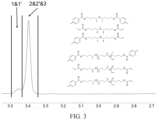
- the molar content of terephthalic acid in PBAT is equal to I T /( I T + I A ) ⁇ 100%
- the molar content of adipic acid in PBAT is equal to I A /( I T + I A ) ⁇ 100%
- the formula (6) is, namely, based on the total molar weight of the first component A (diacid), when n ⁇ 3, the molar content Xc of the repeating unit -CH 2 CH 2 CH 2 CH 2 -O- in the third component C, poly(1,4-butanediol) HO-(CH 2 CH 2 CH 2 CH 2 -O) n -H is calculated by the following formula:
- the viscosity number was determined in a phenol/o-dichlorobenzene solution having a weight ratio of 1:1 in a 25 ⁇ 0.05°C thermostatic water bath in accordance with the provision of GB/T 17931-1999; the sample has a concentration of 5 mg/ml.
- the solvent mixture used includes 1 part by volume of DMSO, 8 parts by volume of isopropanol, and 7 parts by volume of toluene, in a volume of 100 ml.
- 3-6 g of semi-aromatic polyether ester were taken and heated up to 70°C such that all the polymers were totally dissolved to a clean solution. During the titration process, the solution temperature was kept 60-70°C to avoid the precipitation of the polymer.
- the titrating solution is selected from tetrabutylammonium hydroxide instead of highly-toxic tetramethylammonium hydroxide.
- the blank solvent should be heated up to 70°C and then kept for 0.5 h before the blank solvent is titrated.
- the biodegradation test of the semi-aromatic polyether ester is performed by reference to the test of GB/T 19277-2003.
- the semi-aromatic polyether ester test sample was first pressed to a film having a thickness of 0.10 mm, and then cut into a 1.2 cm ⁇ 2.0 cm sample sheet; the sample weight was denoted as a 0 at this time.
- the sample sheets were then embedded into composting soil and put into an incubator; the composting soil was the city compost after being aerated for 56-70 d and sieved; the experimental temperature was kept at (58 ⁇ 2)°C, 30 d later, the composted sample sheets were taken out, washed, dried and weighed; the sample weight was denoted as a 1 at this time.
- the 30-day weight retention rate a 1 / a 0 ⁇ 100%.
- the degradation property is evaluated by testing the 30-day weight retention rate.
- the 30-day weight retention rate is within a range of 50-60% better, and the higher the retention rate is, the better the degradation property is within such a range.
- the 30-day weight retention rate is greater than 65%, the degradation property is too poor, when it is lower than 45%, degradation is too fast.
- the raw material semi-aromatic polyether ester was dried for 4 h at 85°C, and put in a film blowing machine for film blowing.
- the screw diameter is 55 mm; length/diameter ratio is 30:1; the extrusion screw speed is 30 r/min, and the melt temperature is 145°C.
- the blow-up ratio is 3.5.
- Film specification a width of 550 mm and a thickness of 50 ⁇ m.
- the sample should meet the requirement, i.e., the shear and peel strength of the plastic cling wrap film for keeping fresh of food is not less than 0.5N/cm 2 as defined in GB10457-2009.
- the overall migration of the polyether ester was determined by reference to 5.2 Overall Migration Test Conditions of GB 31604.1-2015 China's National Food Safety Standard-General Rules for Migration Test of Food Contact Materials and Articles.
- the migration test conditions were selected as the following: 100°C, 2 h.
- the food simulant is 200 ml of aqueous ethanol in a volume fraction of 10%, and then the sheet film was subjected to the overall migration test.
- the soaking solution after finishing the migration test was placed into a 50 mL of glass evaporating dish which was dried to a constant weight in a 100°C drying oven in advance for several times, and evaporated until there was no obvious liquid in the soak solution, and then placed into a 100°C drying oven and dried for 2 h, and then cooled in a dryer for 0.5 h, and then weighed.
- the weight increment of the glass evaporating dish is denoted as b mg; since the sheet film has two surfaces, its total surface area is 2 dm 2 , and the overall migration is 0.5b mg/dm 2 . 2 parallel tests were performed each time, and an average value was taken. Based on the practical use, the overall migration should meet the requirement, i.e., the overall migration should be not greater than 10 mg/dm 2 as defined in GB4806.7-2016 China's National Food Safety Standard on Plastic Materials and Articles for Food Contact Use.
- the molar content of the repeating unit -CH 2 CH 2 CH 2 CH 2 -O- in the third component C is 1.5-5.5 mol%; the shear and peel strength meets the requirement, i.e., the shear and peel strength of the plastic cling wrap film for keeping fresh of food is not less than 0.5N/cm 2 as defined in GB10457-2009; and the product has suitable degradation property.
- Example 6 when decanedioic acid serves as the aliphatic dicarboxylic acid, the degradation rate is accelerated to some extent (the 30-day weight retention rate declines).
- Example 7 there is no glycerol such that the viscosity number and 30-day weight retention rate all decrease to some extent.
- the content of terephthalic acid is slightly higher and the 30-day weight retention rate increases to some extent.
- Comparative Example 3 the content of terephthalic acid is too high and the resin degradation property is poor; and in Comparative Example 4, the content of terephthalic acid is too low and the resin is degraded too fast.
- the semi-aromatic polyether ester of Example 2 was subjected to film blowing and its overall migration was tested, being 2.5 mg/dm 2 .
- the self-adhesive modified material was subjected to film blowing; its shear and peel strength was tested 0.59 N/cm 2 ; the overall migration was 16 mg/dm 2 .
- Comparative Example 5 the self-adhesive property is improved by a conventional mode of adding a tackifying resin; even though the shear and peel strength is higher, the overall migration exceeds the requirement, i.e., the overall migration should be not greater than 10 mg/dm 2 as defined in GB4806.7-2016 China's National Food Safety Standard on Plastic Materials and Articles for Food Contact Use.
- Example 9 since the semi-aromatic polyether ester copolymerized by poly(1,4-butanediol) is used, the overall migration is very low and thus, the product meets the food contact requirement.
Landscapes
- Chemical & Material Sciences (AREA)
- Health & Medical Sciences (AREA)
- Chemical Kinetics & Catalysis (AREA)
- Medicinal Chemistry (AREA)
- Polymers & Plastics (AREA)
- Organic Chemistry (AREA)
- Engineering & Computer Science (AREA)
- Manufacturing & Machinery (AREA)
- Materials Engineering (AREA)
- Polyesters Or Polycarbonates (AREA)
Abstract
Description
- The present invention belongs to the technical field of biodegradable polyesters, specifically relates to a semi-aromatic polyether ester, a preparation method therefor and use thereof, and more specifically relates to a semi-aromatic polyether ester with a specific content of poly(1,4-butanediol), a preparation method therefor and use thereof.
- Currently, thermoplastic aromatic polyesters widely used in industry and daily life have good thermal stability and mechanical properties, and are easy to process and low in price. For example, polyethylene terephthalate (PET) and poly(1,4-butylene terephthalate) (PBT) have been extensively applied in the manufacture of fibers, films, and containers. However, these aromatic polyesters are hardly degraded after being discarded. Up to now, no microorganism has yet been observed to obviously degrade aromatic polyesters such as, PET and PBT. To balance the excellent performance of aromatic polyesters, those skilled in the art have been devoted to studying the synthesis of aliphatic-aromatic copolyesters since 1980s; that is, aromatic chain segments are introduced into aliphatic polyesters, which ensures that the copolyester not only has excellent performance of aromatic polyesters, but also possesses biodegradability.
- Thermoplastic polyester elastomer (TPEE), also called polyester rubber, is a category of linear block copolymers containing a polyester PBT hard segment (a crystalline phase for providing strength) and a polyether soft segment (continuous segment). Rigidity, polarity and crystallinity of the hard segment cause the TPEE to have outstanding strength and better high-temperature resistance, creep resistance, solvent resistance, and impact resistance. Low glass transition temperature and saturability of the polyether soft segment cause it to have fine high-temperature resistance and ageing resistance. TPEE both possesses fine elasticity of rubber and workability of thermoplastics. Compared with other thermoplastic elastomers, TPEE is of distinct advantages in properties such as flexural modulus, flexible fatigue performance, temperature tolerance, gasolene resistance and solvent resistance. However, to achieve the above effects, the amount of the soft segment polyether added is generally up to 20-50 wt% above such that the melting point of polymer reduces and heat resistance declines. For example,
CN106478930A has disclosed in Example 6 that poly(1,4-butanediol) having a repeating unit of poly(1,4-butanediol) being up to 67 mol% (based on 100 mol% molar content of the dicarboxylic acid) is added to the PBT polymerization system to obtain the thermoplastic PBT-ploy(1,4-butanediol) elastomer with good flexibility. However, such a TPEE obviously has no biodegradability due to lack of aliphatic diacids. -
CN1170419A discloses an aliphatic-aromatic polyether ester composition; the molar content of the repeating unit polyethylene glycol added is up to 217-682 mol% (based on 100 mol% molar content of dicarboxylic acid). In addition, its polymerization product has a lower viscosity number, and the viscosity number of the non-chain extended product is only 60-110 ml/g, and even after experiencing the chain extension with hexamethylene diisocyanate, the product only has a viscosity number of 112 ml/g with poor performance. Moreover, the invention adopts a batchwise polymerization process (gram-scale) in a laboratory scale and thus, is hard to meet the demand for industrial production. - Self-adhesive outer packaging film can prevent evaporation of water in food during storage in a refrigerator, evaporation of water during the heating process in a microwave oven, diffusion of aroma or taste, or can prevent food from being contaminated by other odors or dust during storage. Therefore, the self-adhesive outer packaging film has been widely applied to homes, restaurants and hotels for food sealing. Major textures of the self-adhesive protective film include PP, PE, PET, PVC, and the like. Polyethylene self-adhesive film has good characteristics of softness, good toughness, large elongation, easy bending, and good adhesion, and thus, occupies higher market shares in protective films. The consumption of the global self-adhesive protective films is about millions of tons per year at present. However, the existing self-adhesive protective films including PE on the market are all nondegradable high polymer materials. Compared with ordinary plastics, due to thinner texture and unfixed shape, the plastic protective film is hardly reused and thus, hard to achieve recycling. High consumption and shortage of subsequent processing of the plastic protective film result in the waste of the protective film and increasingly serious pollution. The protective film has played a role of environmental killer.
-
CN112538321A discloses a degradable self-adhesive film material; its tackifying effect is achieved by adding a tackifying resin. The tackifying resin is selected from one, two, or more of a C5 petroleum resin, a C9 petroleum resin, a rosin resin, a terpene resin, and an alkyl phenolic resin. On one hand, these tackifying resins are nondegradable, thus boosting the environment stress, on the other hand, there is a possibility that these tackifying resins may be separated out when contacting food, thereby causing a food safety problem. - The object of the present invention is to overcome the shortcomings of the prior art and to provide a semi-aromatic polyether ester. With a specific content of poly(1,4-butanediol), the semi-aromatic polyether ester enables the film formed thereby to have good self-adhesive property and low overall migration of the polyether ester.
- Another object of the present invention is to provide a preparation method of the above semi-aromatic polyether ester.
- A further object of the present invention is to provide use of the above semi-aromatic polyether ester.
- The aforesaid objects of the present invention are achieved by the following technical solutions:
In one aspect, the present invention provides a semi-aromatic polyether ester, including repeating units derived from the following components: - a first component A, based on a total molar weight of the first component A, including:
- a1) 35-65 mol%, and preferably, 40-60 mol% of at least one aliphatic dicarboxylic acid or an ester derivative thereof or an anhydride derivative thereof,
- a2) 35-65 mol%, and preferably, 40-60 mol% of at least one aromatic dicarboxylic acid or an ester derivative thereof or an anhydride derivative thereof,
- a second component B: 1,4-butanediol; and
- a third component C: poly(1,4-butanediol) having a molecular formula of HO-(CH2CH2CH2CH2-O)n-H, wherein n is an integer from 2 to 200, and based on a total molar weight of the first component A, a molar content of a repeating unit -CH2CH2CH2CH2-O- in the third component C is 1.5-5.5 mol%.
- In the present invention, based on the total molar weight of the first component A, the molar content of the repeating unit -CH2CH2CH2CH2-O- in the third component C is controlled to 1.5-5.5 mol% such that the film formed possesses good self-adhesive property and low overall migration of the polyether ester.
- The self-adhesive property in the present invention refers that the film is sticky by itself at room temperature, and meanwhile can adhere to glass, ceramic, metal and other materials such that the film is used in the fresh-keeping packaging of food such as vegetables, fruits, fish, meat, and bread during the process of refrigeration and cold storage. The self-adhesive property can be generally represented by shear and peel strength with reference to
GB 10457-2009 - In the present invention, the component a1) is selected from one or more of oxalic acid, dimethyl oxalate, malonic acid, dimethyl malonate, succinic acid, dimethyl succinate, methylsuccinic acid, glutaric acid, dimethyl glutarate, bis(2-hydroxyethyl) glutarate, bis(3-hydroxypropyl)glutarate, bis(4-hydroxybutyl) glutarate, 2-methylglutaric acid, 3-methylglutaric acid, adipic acid, dimethyl adipate, bis(2-hydroxyethyl) adipate, bis(3-hydroxypropyl) adipate, bis(4-hydroxybutyl) adipate, 3-methyladipic acid, 2,2,5,5-tetramethyladipic acid, pimelic acid, suberic acid, azelaic acid, dimethyl azelate, decanedioic acid, 1,11-undecanedicarboxylic acid, 1,10-decanedicarboxylic acid, undecandioic acid, 1,12-dodecanedicarboxylic acid, hexadecanedioic acid, eicosandioic acid, tetracosandioic acid, dimer acid, and an ester derivative thereof, and an anhydride derivative thereof; preferably, selected from one or more of succinic acid, adipic acid, decanedioic acid, 1,12-dodecanedicarboxylic acid, and an ester derivative thereof and an anhydride derivative thereof; more preferably, selected from one or two of adipic acid, decanedioic acid, and an ester derivative thereof and an anhydride derivative thereof; and most preferably, being adipic acid, or an ester derivative thereof or an anhydride derivative thereof.
- Meanwhile, the ester derivatives formed by the above aliphatic dicarboxylic acids also fall within the category of the component a1); preferably, the ester derivative of the aliphatic dicarboxylic acid is selected from dialkyl esters formed by aliphatic dicarboxylic acids, for example, dimethyl esters, diethyl esters, di-n-propyl esters, diisopropyl esters, di-n-butyl esters, diisobutyl esters, di-tert butyl esters, di-n-pentyl esters, di-iso-amyl esters, and di-n-hexyl esters.
- Meanwhile, the anhydride derivatives formed by the above aliphatic dicarboxylic acids also fall within the category of the component a1). Preferably, the anhydride derivative formed by the above aliphatic dicarboxylic acids is selected from adipic anhydrides and sebacic anhydrides.
- The aliphatic dicarboxylic acid or the ester derivative thereof or the anhydride derivative thereof in the present invention may be used alone or used in a form of a mixture of two or more thereof.
- In the present invention, the component a2) is selected from one or more of terephthalic acid, dimethyl terephthalate, bis(2-hydroxyethyl) terephthalate, bis(3-hydroxypropyl) terephthalate, bis(4-hydroxybutyl) terephthalate, isophthalic acid, dimethyl isophthalate, bis(2-hydroxyethyl) isophthalate, bis(3-hydroxypropyl) isophthalate, bis(4-hydroxybutyl) isophthalate, 2,6-naphthalenedicarboxylic acid, dimethyl 2,6-benzenedicarboxylate, 2,7-naphthalenedicarboxylic acid, dimethyl 2,7-benzenedicarboxylate, 3,4'-diphenyl ether dicarboxylic acid, dimethyl 3,4'-diphenyl ether dicarboxylate, 4,4'-diphenyl ether dicarboxylic acid, dimethyl 4,4'-diphenyl ether dicarboxylate, 3,4'-phenylthioether dicarboxylic acid, dimethyl 3,4'-phenylthioether dicarboxylate, 4,4'-phenylthioether dicarboxylic acid, dimethyl 4,4'-phenylthioether dicarboxylate, 3,4'-diphenylsulfone dicarboxylic acid, dimethyl 3,4'-diphenylsulfone dicarboxylate, 4,4'-diphenylsulfone dicarboxylic acid, dimethyl 4,4'-diphenylsulfone dicarboxylate, 3,4'-benzophenone dicarboxylic acid, dimethyl 3,4'-benzophenone dicarboxylate, 4,4'-benzophenone dicarboxylic acid, dimethyl 4,4'-benzophenone dicarboxylate, 1,4-naphthalenedicarboxylic acid, dimethyl 1,4-naphthalene dicarboxylate, 4,4'-methylenebis(benzoic acid), 4,4'-methylenebis(dimethyl benzoate), and an ester derivative thereof and an anhydride derivative thereof; and preferably, being terephthalic acid, or an ester derivative thereof or an anhydride derivative thereof.
- In the present invention, the poly(1,4-butanediol) in the third component C has a molecular formula of HO-(CH2CH2CH2CH2-O)n-H, where n is preferably an integer from 2 to 50, more preferably, from 2 to 30. Moreover, based on the total molar weight of the first component A, the molar content of the repeating unit -CH2CH2CH2CH2-O- in the third component C is preferably 2.0-5.0 mol%.
- In an illustrative embodiment, the semi-aromatic polyether ester further includes a fourth component D including at least three functional groups, and preferably three to six functional groups. The fourth component D is preferably selected from one or more of tartaric acid, citric acid, malic acid, trimethylolpropane, trimethylolethane, pentaerythritol, polyether triol, glycerol, 1,3,5-benzenetricarboxylic acid, 1,2,4-benzenetricarboxylic acid, 1,2,4-benzenetricarboxylic anhydride, 1,2,4,5-benzenetetracarboxylic acid, and pyromellitic dianhydride; and more preferably, being trimethylolpropane, pentaerythritol, or glycerol.
- Preferably, based on the total molar weight of the first component A, the fourth component D has a molar content of 0.01-5.0 mol%, and further preferably 0.02-2.0 mol%.
- In an illustrative embodiment, the semi-aromatic polyether ester further includes a fifth component E as a chain extender. The chain extender is preferably one or a mixture of more of an isocyanate, an isocyanurate, a peroxide, an epoxide, oxazoline, oxazine, lactam, carbodiimide and polycarbodiimide that contain two or more functional groups.
- The isocyanate containing two or more functional groups may be an aromatic isocyanate or an aliphatic isocyanate, and preferably, aromatic diisocyanate or aliphatic diisocyanate. Preferably, the aromatic diisocyanate is
toluene 2,4-diisocyanate,toluene 2,6-diisocyanate,diphenylmethane 2,2'-diisocyanate,diphenylmethane 2,4'-diisocyanate, diphenylmethane 4,4'-diisocyanate,naphthalene 1,5-diisocyanate, or xylene diisocyanate. - More preferably, the aromatic diisocyanate is
diphenylmethane 2,2'-diisocyanate,diphenylmethane 2,4'-diisocyanate, or diphenylmethane 4,4'-diisocyanate. - Preferably, the aliphatic diisocyanate is any linear or branched alkylene diisocyanate or cycloalkylene diisocyanate including 2-20 carbon atoms. More preferably, the aliphatic diisocyanate is any linear or branched alkylene diisocyanate or cycloalkylene diisocyanate including 3-12 carbon atoms. The aliphatic diisocyanate may be
hexamethylene 1,6-diisocyanate, isophorone diisocyanate, or methylenebis(4-isocyanatocyclohexane). Most preferably, the aliphatic diisocyanate ishexamethylene 1,6-diisocyanate, and isophorone diisocyanate. - The isocyanate including two or more functional groups may be further tri-(4-isocyanatophenyl)methane with three rings.
- Preferably, the isocyanurate including two or more functional groups may be an aliphatic isocyanurate derived from alkylene diisocyanates and cycloalkylene diisocyanates having 2-20 carbon atoms, and preferably, 3-12 carbon atoms, e.g., isophorone diisocyanate or methylenebis(4-isocyanatocyclohexane). The alkylene diisocyanates may be linear or branched compounds, particularly, preferably cyclic tripolymer, pentamer, or higher oligomer isocyanurates based on n-hexamethylene diisocyanates, e.g.,
hexamethylene 1,6-diisocyanate. - Preferably, the peroxide including two or more functional groups is selected from a benzoyl peroxide, 1,1-di(tert-butylperoxo)-3,3,5-trimethylcyclohexane, 1,1-di(tert-butylperoxo)methylcyclododecane, 4,4-di(butylperoxo)n-butyl valerate, dicumyl peroxide, tert-butyl peroxybenzoate, dibutyl peroxide, α,α-di(tert-butylperoxo)diisopropylbenzene, 2,5-dimethyl-2,5-di(tert-butylperoxo)hexane, 2,5-dimethyl-2,5-di(tert-butylperoxo)hexyl-3-yne, and tert-butylcumyl peroxide.
- Preferably, the epoxide including two or more functional groups is selected from hydroquinone, diglycidyl ether, resorcinol diglycidyl ether, 1,6-hexanediol diglycidyl ether, hydrogenated bisphenol A diglycidyl ether, diglycidyl terephthalate, diglycidyl tetrahydrophthalate, diglycidyl hexahydrophthalate, dimethyl diglycidyl phthalate, phenylene diglycidyl ether, ethylidene diglycidyl ether, trimethylene diglycidyl ether, tetramethylene diglycidyl ether, hexamethylene diglycidyl ether, sorbitol diglycidyl ether, polyglycerol polyglycidyl ether, pentaerythritol polyglycidyl ether, diglycerol polyglycidyl ether, glycerol polyglycidyl ether, trimethylolpropane polyglycidyl ether, resorcinol diglycidyl ether, neopentyl glycol diglycidyl ether, ethanediol diglycidyl ether, diglycol diglycidyl ether, polyethylene glycol diglycidyl ether, propylene glycol diglycidyl ether, dipropylene glycol diglycidyl ether, polypropylene glycol diglycidyl ether, and poly(1,4-butanediol) diglycidyl ether.
- The epoxide including two or more functional groups is further preferably a copolymer based on styrene, acrylate, and/or methacrylate and containing an epoxy group; the epoxy group is preferably glycidyl methacrylate (GMA). It has been proved that the beneficial compound is a copolymer having a GMA ratio of higher than 20 wt%, preferably higher than 30 wt%, and more preferably higher than 50 wt%. The epoxide equivalent weight in these copolymers is preferably 150-3000 g/equivalent, and more preferably 200-500 g/equivalent. The weight-average molecular weight (Mw) of the copolymer is preferably 2,000-25,000, and more preferably 3,000-8,000. The number-average molecular weight (Mn) of the copolymer is preferably 400-6,000, and more preferably 1,000-4,000. Polydispersity index (Q=Mw/Mn) is preferably 1.5-5.
- The oxazoline/oxazine including two or more functional groups is preferably dioxazoline or dioxazine, its bridging portion is a single bond, (CH2)z-alkylene, where z=2, 3 or 4, e.g., methylene, ethyl-1,2-diyl, propyl-1,3-diyl, propyl-1,2-diyl, or phenylene. Specifically, the dioxazoline is selected from 2,2'-di(2-oxazoline), di(2-oxazolinyl)methane, 1,2-di(2-oxazolinyl)ethane, 1,3-di(2-oxazolinyl)propane, 1,4-di(2-oxazolinyl)butane, 2,2'-di(2-oxazoline), 2,2'-di(4-methyl-2-oxazoline), 2,2'-di(4,4'-dimethyl-2-oxazoline), 2,2'-di(4-ethyl-2-oxazoline), 2,2'-di(4,4'-diethyl-2-oxazoline), 2,2'-di(4-propyl-2-oxazoline), 2,2'-di(4-butyl-2-oxazoline), 2,2'-di(4-hexyl-2-oxazoline), 2,2'-di(4-phenyl-2-oxazoline), 2,2'-di(4-cyclohexyl-2-oxazoline), 2,2'-di(4-phenylmethyl-2-oxazoline), 2,2'-p-phenylenedi(4-methyl-2-oxazoline), 2,2'-p-phenylenedi(4,4'-dimethyl-2-oxazoline), 2,2'-m-phenylenedi(4-methyl-2-oxazoline), 2,2'-m-phenylenedi(4,4'-dimethyl-2-oxazoline), 2,2'-hexamethylenedi(2-oxazoline), 2,2'-octamethylenedi(2-oxazoline), 2,2'-decamethylenedi(2-oxazoline), 2,2'-ethylidenedi(4-methyl-2-oxazoline), 2,2'-tetramethylenedi(4,4'-dimethyl-2-oxazoline), 2,2'-9,9'-diphenoxyethanedi(2-oxazoline), 2,2'-cyclohexylenedi(2-oxazoline), and 2,2'-diphenylene(2-oxazoline).
- Specifically, dioxazine is 2,2'-di(2-dioxazine), di(2-dioxazinyl)methane, 1,2-di(2-dioxazinyl)ethane, 1,3-di(2-dioxazinyl)propane, 1,4-di(2-dioxazinyl)butane, 1,4-di(2-dioxazinyl)benzene, 1,2-di(2-dioxazinyl)benzene, or 1,3-di(2-dioxazinyl)benzene;
more preferably, being 1,4-di(2-oxazolinyl)benzene, 1,2-di(2-oxazolinyl)benzene, or 1,3-di(2-oxazolinyl)benzene. - The carbodiimide or polycarbodiimide including two or more functional groups is preferably N,N'-di-2,6-diisopropylphenyl carbodiimide, N,N'-di-o-tolyl carbodiimide, N,N'-diphenyl carbodiimide, N,N'-dioctyldecyl carbodiimide, N,N'-di-2,6-dimethylphenyl carbodiimide, N-tolyl-N'-cyclohexyl carbodiimide, N,N'-di-2,6-di-tert-butylphenyl carbodiimide, N-tolyl-N'-phenyl carbodiimide, N,N'-di-p-nitrophenyl carbodiimide, N,N'-di-p-aminophenyl carbodiimide, N,N'-di-p-hydroxyphenyl carbodiimide, N,N'-dicyclohexyl carbodiimide, N,N'-di-p-tolyl carbodiimide, p-phenylenebis-di-o-tolyl carbodiimide, p-phenylenebis-dicyclohexyl carbodiimide, hexamethylenebis-dicyclohexyl carbodiimide, 4,4'-dicyclohexylmethane carbodiimide, ethylidenebisdiphenyl carbodiimide, N,N'-phenylmethyl-carbodiimide, N-octadecyl-N'-phenyl carbodiimide, N-benzyl-N'-phenyl carbodiimide, N-octadecyl-N"-tolyl carbodiimide, N-cyclohexyl-N'-tolyl carbodiimide, N-phenyl-N'-tolyl carbodiimide, N-benzyl-N'-tolyl carbodiimide, N,N'-di-o-ethylphenyl carbodiimide, N,N'-di-p-ethylphenyl carbodiimide, N,N'-di-o-isopropylphenyl carbodiimide, N,N'-di-p-isopropylphenyl carbodiimide, N,N'-di-o-isobutylphenyl carbodiimide, N,N'-di-p-isobutylphenyl carbodiimide, N,N'-di-2,6-diethylphenyl carbodiimide, N,N'-di-2-ethyl-6-isopropylphenyl carbodiimide, N,N'-di-2-isobutyl-6-isopropylphenyl carbodiimide, N,N'-di-2,4,6-trimethylphenyl carbodiimide, N,N'-di-2,4,6-triisopropylphenyl carbodiimide, N,N'-di-2,4,6-triisobutylphenyl carbodiimide, diisopropyl carbodiimide, dimethyl carbodiimide, diisobutyl carbodiimide, dioctyl carbodiimide, tert-butylisopropyl carbodiimide, di-β-naphthyl carbodiimide, or di-tert-butyl carbodiimide.
- Preferably, the content of the fifth component E is 0.01-5.0 mol% of the total molar weight of the first component A.
- Preferably, the semi-aromatic polyether ester has a viscosity number of 100-350 ml/g as determined in a phenol/o-dichlorobenzene solution having a weight ratio of 1:1 in a 25±0.05°C thermostatic water bath in accordance with the provision of GB/T 17931-1999.
- Preferably, the semi-aromatic polyether ester has a carboxyl group content of 5-60 mmol/kg, and further preferably, 10-50 mmol/kg.
- In another aspect, the present invention further provides a method for preparing the above semi-aromatic polyether ester, including the following steps:
- step S1: mixing the first component A, the second component B, the third component C, and a portion of a catalyst (the fourth component D being also added if necessary), and then heating up to 150-280°C for esterification reaction for 1-2 h in an esterification reactor to obtain an esterification product AB;
- step S2: performing primary polycondensation on the esterification product AB obtained in the step S1 under the action of the remaining catalyst at a reaction temperature of 230-270°C until a reaction product reaches a viscosity number of 20-60 ml/g as determined in a phenol/o-dichlorobenzene solution having a weight ratio of 1:1 in a 25±0.05°C thermostatic water bath in accordance with GB/T 17931-1999;
- step S3: transferring a product obtained from the primary polycondensation in the step S2 into a final polycondensation kettle for continuous polycondensation at a temperature of 220-270°C until a reaction product reaches a viscosity number of 100-250 ml/g as determined in a phenol/o-dichlorobenzene solution having a weight ratio of 1:1 in a 25±0.05°C thermostatic water bath according to GB/T 17931-1999; and the reaction product has a carboxyl group content of 5-60 mmol/kg, to obtain the semi-aromatic polyether ester.
- Preferably, in the step S1, the molar content of the second component B is generally 1.1-3.0 times that of the first component A.
- Preferably, in the step S1, during the preparation of the esterification product AB, the catalyst is added in an amount of 0.001-1%, and further preferably, 0.02-0.2% of a final weight of the semi-aromatic polyether ester. The amount of the catalyst added is controlled to make the subsequent processing more stable. In the step S1, the catalyst is added in an amount of 50-80 wt% of a total weight of the catalyst.
- Further preferably, the catalyst may be a tin compound, an antimony compound, a cobalt compound, a lead compound, a zinc compound, an aluminium compound or a titanium compound, more preferably, a zinc compound, an aluminium compound or a titanium compound, and most preferably, a titanium compound. The titanium compound, e.g., tetrabutyl orthotitanate or tetraisopropyl orthotitanate, has the advantage of low toxicity of the residue in the product or down-stream product over other compounds. This property is especially important in biodegradable polyesters because it will directly enter the environment in a form of a compost bag or cover film.
- In the step S2, the remaining catalyst may be added if necessary. In the step S2, the reaction temperature is more preferably 240-260°C.
- In the step S2, the pressure is generally set as 0.1-0.5 bar, and preferably, 0.2-0.4 bar at the beginning; and the pressure is generally set as 5-200 mbar, and more preferably, 10-100 mbar at the end of the step S2.
- In the step S2, the reaction time is generally 1-5 h; usually, after such a period of time, the reaction system may generate the prepolyether ester having a viscosity number of 20-60 ml/g as determined in a phenol/o-dichlorobenzene solution having a weight ratio of 1:1 in a 25±0.05°C thermostatic water bath according to GB/T 17931-1999. The carboxyl group content in the prepolyether ester after the reaction in the S2 is generally 10-60 mmol/kg.
- In the continuous polycondensation reaction of the step S3, a passivator may be added to the reaction system if necessary. The available passivator is usually a phosphorus compound including phosphoric acid, phosphorous acid, and esters thereof. A passivator is usually added in the step S3 when a high-active titanium catalyst is used in the system.
- In the step S3, the reaction temperature of the continuous polycondensation is preferably 230-270°C. In the step S3, the pressure is usually controlled within 0.2-5 mbar, and more preferably, 0.5-3 mbar at the beginning. The reaction time of the continuous polycondensation is preferably 30-120 min, and more preferably 50-100 min. The carboxyl group content in the semi-aromatic polyether ester after the reaction in the S3 is preferably 10-50 mmol/kg.
- At the end of the step S3, if necessary, the semi-aromatic polyether ester obtained in the step S3 is added to a twin-screw extruder together with the chain extender in an amount of 0.01-5.0 mol% (based on the total molar weight of the first component A) for retention for 0.5-15 min at a reaction temperature of 200-270°C to obtain a semi-aromatic polyether ester; the semi-aromatic polyether ester has a viscosity number of 150-350 ml/g as determined in a phenol/o-dichlorobenzene solution having a weight ratio of 1:1 in a 25±0.05°C thermostatic water bath according to GB/T 17931-1999.
- In a further aspect, the present invention further provides use of the above semi-aromatic polyether ester in preparing a compost-degradable product; the compost-degradable product is a fiber, a film, or a container, etc.
- The present invention further provides use of the above semi-aromatic polyether ester in preparing a food wrap. The semi-aromatic polyester may be used as the material for making a food wrap after being blended and modified with polylactic acid (PLA), etc. The food wrap is required to have certain hydrolysis resistance as it contacts liquid. Moreover, considering the degradable requirement, the hydrolysis resistance should be not too strong, or otherwise the degradation cycle is too long. Based on the practical use, the degradation property is evaluated by testing the 30-day weight retention rate. The 30-day weight retention rate is within a range of 50-60% better, and the higher the retention rate is, the better the degradation property is within such a range. The degradation property is poor when the 30-day weight retention rate exceeds 65%; the degradation is too fast when the 30-day weight retention rate is lower than 45%. The above semi-aromatic polyether ester has suitable degradation property when applied to the preparation of food wraps. Moreover, the overall migration of the polyether ester is low and meets the requirement, i.e., the overall migration should be not greater than 10 mg/dm2 as defined in GB4806.7-2016 China's National Food Safety Standard on Plastic Materials and Articles for Food Contact Use. Furthermore, the above semi-aromatic polyether ester meets the requirement, i.e., the shear and peel strength of the plastic cling wrap film for keeping fresh of food is not less than 0.5N/cm2 as defined in GB10457-2009. In a still further aspect, the present invention further provides a semi-aromatic polyether ester molding composition, including the following components in weight percentage:
- 5-95 wt% of the above semi-aromatic polyether ester;
- 5-95 wt% of an additive and/or other polymers; and
- 0-70 wt% of a reinforcing material and/or a filler.
- As a detailed embodiment, the additive and/or other polymers may be, at least one or more components selected from aliphatic polyesters, polycaprolactones, starch, cellulose, polyhydroxyalkanoates, and polylactic acids.
- Compared with the prior art, the present invention has the following beneficial effects:
The present invention provides a semi-aromatic polyether ester, a preparation method therefor and use thereof. Based on the total molar weight of the first component A, the molar content of the repeating unit -CH2CH2CH2CH2-O- in the third component C poly(1,4-butanediol) is controlled to 1.5-5.5 mol% such that the film formed possesses good self-adhesive property and low overall migration of the polyether ester. -
-
FIG. 1 shows a 1H NMR spectrum of a semi-aromatic polyether ester after being dissolved into 0.6 ml of deuterated chloroform and determined by an AV 500 nuclear magnetic resonance spectrometer from Bruker; -
FIG. 2 shows an HNMR spectrum and affiliation of each key peak of the semi-aromatic polyether ester obtained in Example 5; and -
FIG. 3 shows a typical HNMR spectrum and affiliation of each key peak of the semi-aromatic polyether ester obtained in Example 2. - Raw materials, reagents and solvents used in the present invention, are commercially available without any treatment, unless otherwise specified. The present invention will be further described specifically in combination with examples; however, the embodiments of the present invention are not limited to the following examples. Moreover, any other changes, modifications, replacements, combinations and simplifications without departing from the spirit and principle of the present invention shall be equivalent replacements and thus, shall fall within the scope of protection of the present invention.
- In addition, "part(s)" and "%" in the description, unless otherwise specified, denote "part(s) by mass" and "mass%", respectively.
- Poly(1,4-butanediol) in the examples and comparative examples are all purchased from Badische Anilin Soda Fabrik Ga (BASF). 1,4-butanediol, terephthalic acid, adipic acid, decanedioic acid, glycerol, tetrabutyl orthotitanate, phosphorous acid, and other raw materials are all commercially available.
- Test for determining the content of poly(1,4-butanediol) in the semi-aromatic polyether ester (poly(butylene adipate-co-terephthalate) (PBAT) obtained by the reaction of terephthalic acid, adipic acid and 1,4-butanediol is set as an example):
20 mg of the semi-aromatic polyether ester sample were taken and dissolved into 0.6 ml of deuterated chloroform, and then 1H NMR was measured by an AV 500 nuclear magnetic resonance spectrometer from Bruker at room temperature, and the chloroform solvent peak (7.26 ppm) was calibrated. - As can be seen from the reference: Chen, X; Chen, W.; Zhu, G.; Huang, F.; Zhang, J., Synthesis, 1H-NMR characterization, and biodegradation behavior of aliphatic-aromatic random copolyester. J. Appl. Polym. Sci. 2007, 104(4): 2643-2649 , 4 hydrogen atoms on the benzene ring of the repeating unit of terephthalic acid appeared nearby 8.10 ppm; 4 hydrogen atoms in the two CH2 units adjacent to the carbonyl in the repeating unit of adipic acid appeared nearby 2.33 ppm. The results are shown in
FIG. 1 . As such, the molar content of the two acid components may be denoted by the integral areas (IT and IA ) of the two peaks at 8.10 ppm and 2.33 ppm. - The molar content of terephthalic acid in PBAT is equal to IT /(IT +IA )×100%
- The molar content of adipic acid in PBAT is equal to IA /(IT +IA )×100%
- The poly(1,4-butanediol) and HO-(CH2CH2CH2CH2-O)n-H show different results on the HNMR spectrum when n is different, specifically discussed as follows:
① When the system only contains dimer(1,4-butanediol), i.e., n=2 - As can be seen from the reference: Miles, W. H.; Ruddy, D. A.; Tinorgah, S.; Geisler, R. L., Acylative Dimerization of Tetrahydrofuran Catalyzed by Rare-Earth Triflates. Synth. Commun. 2004, 34(10): 1871-1880 , the 1H NMR chemical shifts (labeled on the corresponding carbon atoms of the structural formula, unit: ppm) of the product generated by dimer(1,4-butanediol), benzoic acid, and acetic acid are shown in the following figure:


FIG. 2 :
It can be thus calculated byFIG. 2 that based on the total molar weight of the first component A (diacid), the molar content Xc of the repeating unit -CH2CH2CH2CH2-O- in the third component C is as follows: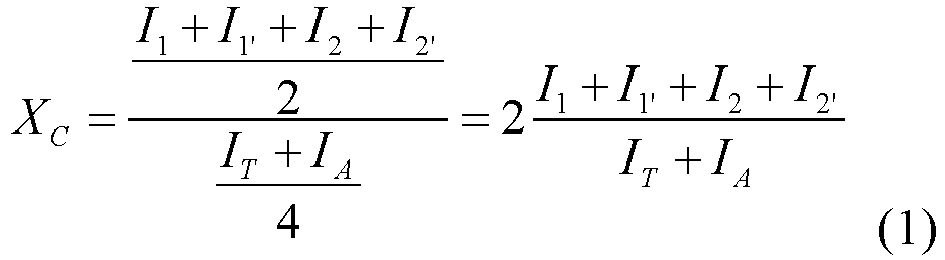
- I 1 and I 1' are integral areas of the peaks of the hydrogen atoms in -CH2- linked to the oxygen atom of the ether bond on the dimer(1,4-butanediol) repeating unit adjacent to terephthalic acid;
- I 2 and I 2' are integral areas of the peaks of the hydrogen atoms in -CH2- unit linked to the oxygen atom of the ether bond in the dimer(1,4-butanediol) repeating unit adjacent to adipic acid;
- I T is an integral area of the 4 hydrogen atoms on the benzene ring of the repeating unit of terephthalic acid;
- IA is an integral area of the 4 hydrogen atoms on the two -CH2- linked to carbonyl of the repeating unit of adipic acid;
- ② When the system contains poly(1,4-butanediol), i.e., n≥ 3
As can be seen from the reference: Park, Y. H.; Cho, C. G., Synthesis and characterization of poly[(butylene succinate)-co-(butylene terephthalate)J-b-poly(tetramethylene glycol) segmented block copolymer. J. Appl. Polym. Sci. 2001, 79(11): 2067-2075., when the number of the repeating units -CH2CH2CH2CH2-O- in poly(1,4-butanediol) is greater than or equal to 3, the 4 hydrogen atoms in the two CH2 units linked to oxygen atom appeared nearby 3.4 ppm, being a single peak. When poly(1,4-butanediol) (n is bout 28) having a molecular weight of 2,000 was used, the typical HNMR spectrum and affiliation of each key peak of the semi-aromatic polyether ester obtained in Example 2 are shown inFIG. 3 :
Based on the total molar weight of the first component A (diacid), the molar content Xc of the repeating unit -CH2CH2CH2CH2-O- in the third component C poly(1,4-butanediol) is calculated by the following formula:
- I 1 and I 1 are integral areas of the peaks of the hydrogen atoms in -CH2- linked to the oxygen atom of the ether bond in the repeating unit of poly(1,4-butanediol) adjacent to terephthalic acid;
- I 2 and I 2' are integral areas of the peaks of the hydrogen atoms in -CH2- linked to the oxygen atom of the ether bond in the repeating unit of poly(1,4-butanediol) adjacent to adipic acid;
- I 3 denotes an integral area of the peaks of the hydrogen atoms in -CH2- linked to the oxygen atom of the ether bond in the repeating unit of poly(1,4-butanediol) not adjacent to terephthalic acid and adipic acid;
- I T is an integral area of the 4 hydrogen atoms on the benzene ring of the repeating unit of terephthalic acid;
- I A is an integral area of the 4 hydrogen atoms on the two -CH2- linked to carbonyl in the repeating unit of adipic acid;
- However, the three peaks of
hydrogen atoms peaks - Given that I 1 and I 1' may also reflect the ratio of the repeating unit of terephthalic acid; I 2 and I 2' may also reflect the ratio of the repeating unit of adipic acid, we obtain the following correlation:

- The formula (3) is simplified to obtain the following:

- Additionally,

- The formulas (4) and (5) are put into the formula (2) to obtain the following:

- The formula (6) is, namely, based on the total molar weight of the first component A (diacid), when n ≥ 3, the molar content Xc of the repeating unit -CH2CH2CH2CH2-O- in the third component C, poly(1,4-butanediol) HO-(CH2CH2CH2CH2-O)n-H is calculated by the following formula:
- The viscosity number was determined in a phenol/o-dichlorobenzene solution having a weight ratio of 1:1 in a 25±0.05°C thermostatic water bath in accordance with the provision of GB/T 17931-1999; the sample has a concentration of 5 mg/ml.
- Acid value AN (mg KOH/g) was first determined according to the DIN EN 12634 in October 1998, and then the carboxyl group content (mmol/kg)=(AN/56)×103. The solvent mixture used includes 1 part by volume of DMSO, 8 parts by volume of isopropanol, and 7 parts by volume of toluene, in a volume of 100 ml. 3-6 g of semi-aromatic polyether ester were taken and heated up to 70°C such that all the polymers were totally dissolved to a clean solution. During the titration process, the solution temperature was kept 60-70°C to avoid the precipitation of the polymer. The titrating solution is selected from tetrabutylammonium hydroxide instead of highly-toxic tetramethylammonium hydroxide. Meanwhile, to prevent the mixed solvent from absorbing the CO2 in the air to affect the volume of the titrating solution consumed by the blank solvent, when the volume of the titrating solution consumed by the blank solvent is about to be determined, the blank solvent should be heated up to 70°C and then kept for 0.5 h before the blank solvent is titrated.
- The biodegradation test of the semi-aromatic polyether ester is performed by reference to the test of GB/T 19277-2003. The semi-aromatic polyether ester test sample was first pressed to a film having a thickness of 0.10 mm, and then cut into a 1.2 cm×2.0 cm sample sheet; the sample weight was denoted as a 0 at this time. The sample sheets were then embedded into composting soil and put into an incubator; the composting soil was the city compost after being aerated for 56-70 d and sieved; the experimental temperature was kept at (58±2)°C, 30 d later, the composted sample sheets were taken out, washed, dried and weighed; the sample weight was denoted as a 1 at this time. The 30-day weight retention rate= a 1/a 0×100%. The higher the 30-day weight retention rate is, the more difficult the material degradation is; and the lower the 30-day weight retention rate is, the faster the material degradation rate is. Based on the practical use, the degradation property is evaluated by testing the 30-day weight retention rate. The 30-day weight retention rate is within a range of 50-60% better, and the higher the retention rate is, the better the degradation property is within such a range. When the 30-day weight retention rate is greater than 65%, the degradation property is too poor, when it is lower than 45%, degradation is too fast.
- The raw material semi-aromatic polyether ester was dried for 4 h at 85°C, and put in a film blowing machine for film blowing. The screw diameter is 55 mm; length/diameter ratio is 30:1; the extrusion screw speed is 30 r/min, and the melt temperature is 145°C. The blow-up ratio is 3.5. Film specification: a width of 550 mm and a thickness of 50 µm.
- 50 µm of the above film blowing sample was used, and tested by reference to GB 10457-2009 Plastic cling wrap film for keeping fresh of food 7.8 Self-cling (shear and peel strength). According to the practical use, the sample should meet the requirement, i.e., the shear and peel strength of the plastic cling wrap film for keeping fresh of food is not less than 0.5N/cm2 as defined in GB10457-2009.
- 50 µm of the above film blowing sample was used and cut into a 10 cm*10 cm sheet film. The overall migration of the polyether ester was determined by reference to 5.2 Overall Migration Test Conditions of GB 31604.1-2015 China's National Food Safety Standard-General Rules for Migration Test of Food Contact Materials and Articles. The migration test conditions were selected as the following: 100°C, 2 h. The food simulant is 200 ml of aqueous ethanol in a volume fraction of 10%, and then the sheet film was subjected to the overall migration test.
- The soaking solution after finishing the migration test was placed into a 50 mL of glass evaporating dish which was dried to a constant weight in a 100°C drying oven in advance for several times, and evaporated until there was no obvious liquid in the soak solution, and then placed into a 100°C drying oven and dried for 2 h, and then cooled in a dryer for 0.5 h, and then weighed. The weight increment of the glass evaporating dish is denoted as b mg; since the sheet film has two surfaces, its total surface area is 2 dm2, and the overall migration is 0.5b mg/dm2. 2 parallel tests were performed each time, and an average value was taken. Based on the practical use, the overall migration should meet the requirement, i.e., the overall migration should be not greater than 10 mg/dm2 as defined in GB4806.7-2016 China's National Food Safety Standard on Plastic Materials and Articles for Food Contact Use.
-
- S1: 437 kg/h of terephthalic acid, 437 kg/h of adipic acid, 690 kg/
h 1,4-butanediol, 4.1 kg/h poly(1,4-butanediol) (BASF, molecular weight: 2000 g/mol), 1.15 kg/h glycerol, and 0.506 kg/h of tetrabutyl orthotitanate were physically mixed in an esterification reactor at room temperature, and then the mixture was subjected to esterification reaction for 60-120 min at 240°C and 0.45 bar, to obtain an esterification product AB; - S2: the esterification product AB entered a vertical-stirred full-mixed reactor after going through a static mixer and heated up to 260°C; at the beginning, the pressure was 0.3 bar; 0.276 kg/h of tetrabutyl orthotitanate were added to the reactor for reacting for 60-120 min; when the pressure reduced to 100 mbar, most of the excessive 1,4-butanediol were distilled off. At this time, the reaction product achieves a viscosity number 24 ml/g as determined in a phenol/o-dichlorobenzene solution having a weight ratio of 1:1 in a 25±0.05°C thermostatic water bath as defined in GB/T 17931-1999;
- S3: 0.23 kg/h of phosphorous acid were added to the reaction mixture, meanwhile, the reaction mixture was transferred to a final polycondensation kettle for further polycondensation for 80-100 min at 260°C and a pressure of 1 mbar; the remaining excessive 1,4-butanediol and other by-products were distilled off; afterwards, the obtained product was granulated by an underwater granulator and dried to obtain the final product semi-aromatic polyether ester. The performance results are shown in Table 1.
-
- S1: 437 kg/h of terephthalic acid, 437 kg/h of adipic acid, 690 kg/
h 1,4-butanediol, 10.8 kg/h poly(1,4-butanediol) (BASF, molecular weight: 2000 g/mol), 1.15 kg/h glycerol, and 0.506 kg/h of tetrabutyl orthotitanate were physically mixed in a first esterification reactor at room temperature, and then the mixture was subjected to esterification reaction for 60-120 min at 240°C and 0.45 bar, to obtain an esterification product AB; - S2: the esterification product AB entered a vertical-stirred full-mixed reactor after going through a static mixer and heated up to 260°C; at the beginning, the pressure was 0.3 bar; 0.276 kg/h of tetrabutyl orthotitanate were added to the reactor for reacting for 60-120 min; when the pressure reduced to 100 mbar, most of the excessive 1,4-butanediol were distilled off. At this time, the reaction product achieves a viscosity number 27 ml/g as determined in a phenol/o-dichlorobenzene solution having a weight ratio of 1:1 in a 25±0.05°C thermostatic water bath as defined in GB/T 17931-1999;
- S3: 0.23 kg/h of phosphorous acid were added to the reaction mixture, meanwhile, the reaction mixture was transferred to a final polycondensation kettle for further polycondensation for 80-100 min at 260°C and a pressure of 1 mbar; the remaining excessive 1,4-butanediol and other by-products were distilled off; afterwards, the obtained product was granulated by an underwater granulator and dried to obtain the final product semi-aromatic polyether ester. The performance results are shown in Table 1.
-
- S1: 437 kg/h of terephthalic acid, 437 kg/h of adipic acid, 690 kg/
h 1,4-butanediol, 17.5 kg/h poly(1,4-butanediol) (BASF, molecular weight: 2000 g/mol), 1.15 kg/h glycerol, and 0.506 kg/h of tetrabutyl orthotitanate were physically mixed in the esterification reactor at room temperature, and then the mixture was subjected to esterification reaction for 60-120 min at 240°C and 0.45 bar, to obtain an esterification product AB; - S2: the esterification product AB entered a vertical-stirred full-mixed reactor after going through a static mixer and heated up to 260°C; at the beginning, the pressure was 0.3 bar; 0.276 kg/h of tetrabutyl orthotitanate were added to the reactor for reacting for 60-120 min; when the pressure reduced to 100 mbar, most of the excessive 1,4-butanediol were distilled off. At this time, the reaction product achieves a viscosity number 26 ml/g as determined in a phenol/o-dichlorobenzene solution having a weight ratio of 1:1 in a 25±0.05°C thermostatic water bath as defined in GB/T 17931-1999;
- S3: 0.23 kg/h of phosphorous acid were added to the reaction mixture, meanwhile, the reaction mixture was transferred to a final polycondensation kettle for further polycondensation for 80-100 min at 260°C and a pressure of 1 mbar; the remaining excessive 1,4-butanediol and other by-products were distilled off. The obtained product was then granulated with an underwater granulator, and dried to obtain the final product semi-aromatic polyether ester. The performance results are shown in Table 1.
-
- S1: 437 kg/h of terephthalic acid, 437 kg/h of adipic acid, 690 kg/
h 1,4-butanediol, 10.9 kg/h poly(1,4-butanediol) (BASF, molecular weight: 1000 g/mol), 1.15 kg/h glycerol, and 0.506 kg/h of tetrabutyl orthotitanate were physically mixed in the esterification reactor at room temperature, and then the mixture was subjected to esterification reaction for 60-120 min at 240°C and 0.45 bar, to obtain an esterification product AB; - S2: the esterification product AB entered a vertical-stirred full-mixed reactor after going through a static mixer and heated up to 260°C; at the beginning, the pressure was 0.3 bar; 0.276 kg/h of tetrabutyl orthotitanate were added to the reactor for reacting for 60-120 min; when the pressure reduced to 100 mbar, most of the excessive 1,4-butanediol were distilled off. At this time, the reaction product achieves a viscosity number 29 ml/g as determined in a phenol/o-dichlorobenzene solution having a weight ratio of 1:1 in a 25±0.05°C thermostatic water bath as defined in GB/T 17931-1999;
- S3: 0.23 kg/h of phosphorous acid were added to the reaction mixture, meanwhile, the reaction mixture was transferred to a final polycondensation kettle for further polycondensation for 80-100 min at 260°C and a pressure of 1 mbar; the remaining excessive 1,4-butanediol and other by-products were distilled off; afterwards, the obtained product was granulated by an underwater granulator and dried to obtain the final product semi-aromatic polyether ester. The performance results are shown in Table 1.
- Dimer(1,4-butanediol), HO-CH2CH2CH2CH2-O-CH2CH2CH2CH2-OH, was synthesized by referring to the reference (Alexander, K.; Schniepp, L. E., 4,4'-Dichlorodibutyl Ether and its Derivatives from Tetrahydrofuran. J. Am. Chem. Soc. 1948, 70(5): 1839-1842.).
- Under the protection of high-purity nitrogen, 2.36 kg of terephthalic acid, 2.36 kg of adipic acid, 4.38 kg of 1,4-butanediol, 65 g of dimer(1,4-butanediol), 6.2 g of glycerol, and 4.2 g of titanium tetrabutoxide were put into a reaction kettle, heated up to 220-240°C and kept for 120 min. 1.25 g of phosphorous acid were put into the reaction kettle. The pressure in the reaction kettle was reduced to 50 Pa below within 30-60 min, and then the above materials were subjected to reaction for 60-120 min at 220-260°C. High-purity nitrogen was introduced into the reaction kettle after stopping stirring, and the resin was squeezed out of the reaction kettle, and water-granulated to obtain the product semi-aromatic polyether ester. The performance results are shown in Table 1.
-
- S1: 437 kg/h of terephthalic acid, 605 kg/h of decanedioic acid, 690 kg/
h 1,4-butanediol, 10.8 kg/h poly(1,4-butanediol) (BASF, molecular weight: 2000 g/mol), 1.15 kg/h glycerol, and 0.506 kg/h of tetrabutyl orthotitanate were physically mixed in the esterification reactor at room temperature, and then the mixture was subjected to esterification reaction for 60-120 min at 240°C and 0.45 bar, to obtain an esterification product AB; - S2: the esterification product AB entered a vertical-stirred full-mixed reactor after going through a static mixer and heated up to 260°C; at the beginning, the pressure was 0.3 bar; 0.276 kg/h of tetrabutyl orthotitanate were added to the reactor for reacting for 60-120 min; when the pressure reduced to 100 mbar, most of the excessive 1,4-butanediol were distilled off. At this time, the reaction product achieves a viscosity number 27 ml/g as determined in a phenol/o-dichlorobenzene solution having a weight ratio of 1:1 in a 25±0.05°C thermostatic water bath as defined in GB/T 17931-1999;
- S3: 0.23 kg/h of phosphorous acid were added to the reaction mixture, meanwhile, the reaction mixture was transferred to a final polycondensation kettle for further polycondensation for 80-100 min at 260°C and a pressure of 1 mbar; the remaining excessive 1,4-butanediol and other by-products were distilled off; afterwards, the obtained product was granulated by an underwater granulator and dried to obtain the final product semi-aromatic polyether ester. The performance results are shown in Table 1.
-
- S1: 437 kg/h of terephthalic acid, 437 kg/h of adipic acid, 690 kg/
h 1,4-butanediol, 10.8 kg/h poly(1,4-butanediol) (BASF, molecular weight: 2000 g/mol), and 0.506 kg/h of tetrabutyl orthotitanate were physically mixed in the esterification reactor at room temperature, and then the mixture was subjected to esterification reaction for 60-120 min at 240°C and 0.45 bar, to obtain an esterification product AB; - S2: the esterification product AB entered a vertical-stirred full-mixed reactor after going through a static mixer and heated up to 260°C; at the beginning, the pressure was 0.3 bar; 0.276 kg/h of tetrabutyl orthotitanate were added to the reactor for reacting for 60-120 min; when the pressure reduced to 100 mbar, most of the excessive 1,4-butanediol were distilled off. At this time, the reaction product achieves a viscosity number 30 ml/g as determined in a phenol/o-dichlorobenzene solution having a weight ratio of 1:1 in a 25±0.05°C thermostatic water bath as defined in GB/T 17931-1999;
- S3: 0.23 kg/h of phosphorous acid were added to the reaction mixture, meanwhile, the reaction mixture was transferred to a final polycondensation kettle for further polycondensation for 80-100 min at 260°C and a pressure of 1 mbar; the remaining excessive 1,4-butanediol and other by-products were distilled off; afterwards, the obtained product was granulated by an underwater granulator and dried to obtain the final product semi-aromatic polyether ester. The performance results are shown in Table 1.
-
- S1: 437 kg/h of terephthalic acid, 325 kg/h of adipic acid, 595 kg/
h 1,4-butanediol, 9.32 kg/h poly(1,4-butanediol) (BASF, molecular weight: 2000 g/mol), 0.994 kg/h of glycerol, and 0.446 kg/h of tetrabutyl orthotitanate were physically mixed in the esterification reactor at room temperature, and then the mixture was subjected to esterification reaction for 60-120 min at 240°C and 0.45 bar, to obtain an esterification product AB; - S2: the esterification product AB entered a vertical-stirred full-mixed reactor after going through a static mixer and heated up to 260°C; at the beginning, the pressure was 0.3 bar; 0.243 kg/h of tetrabutyl orthotitanate were added to the reactor for reacting for 60-120 min; when the pressure reduced to 100 mbar, most of the excessive 1,4-butanediol were distilled off. At this time, the reaction product achieves a viscosity number 24 ml/g as determined in a phenol/o-dichlorobenzene solution having a weight ratio of 1:1 in a 25±0.05°C thermostatic water bath as defined in GB/T 17931-1999;
- S3: 0.20 kg/h of phosphorous acid were added to the reaction mixture, meanwhile, the reaction mixture was transferred to a final polycondensation kettle for further polycondensation for 80-100 min at 260°C and a pressure of 1 mbar; the remaining excessive 1,4-butanediol and other by-products were distilled off; afterwards, the obtained product was granulated by an underwater granulator and dried to obtain the final product semi-aromatic polyether ester. The performance results are shown in Table 1.
-
- S1: 437 kg/h of terephthalic acid, 437 kg/h of adipic acid, 690 kg/h of 1,4-butanediol, 1.15 kg/h glycerol, and 0.506 kg/h of tetrabutyl orthotitanate were physically mixed in the esterification reactor at room temperature, and then the mixture was subjected to esterification reaction for 60-120 min at 240°C and 0.45 bar, to obtain an esterification product AB;
- S2: the esterification product AB entered a vertical-stirred full-mixed reactor after going through a static mixer and heated up to 260°C; at the beginning, the pressure was 0.3 bar; 0.276 kg/h of tetrabutyl orthotitanate were added to the reactor for reacting for 60-120 min; when the pressure reduced to 100 mbar, most of the excessive 1,4-butanediol were distilled off. At this time, the reaction product achieves a viscosity number 26 ml/g as determined in a phenol/o-dichlorobenzene solution having a weight ratio of 1:1 in a 25±0.05°C thermostatic water bath as defined in GB/T 17931-1999;
- S3: 0.23 kg/h of phosphorous acid were added to the reaction mixture, meanwhile, the reaction mixture was transferred to a final polycondensation kettle for further polycondensation for 80-100 min at 260°C and a pressure of 1 mbar; the remaining excessive 1,4-butanediol and other by-products were distilled off; afterwards, the obtained product was granulated by an underwater granulator and dried to obtain the final product polyether ester. The performance results are shown in Table 1.
-
- S1: 437 kg/h of terephthalic acid, 437 kg/h of adipic acid, 690 kg/h of 1,4-butanediol, 24 kg/h of poly(1,4-butanediol) (BASF, molecular weight: 2000 g/mol), 1.15 kg/h glycerol, and 0.506 kg/h of tetrabutyl orthotitanate were physically mixed in the esterification reactor at room temperature, and then the mixture was subjected to esterification reaction for 60-120 min at 240°C and 0.45 bar, to obtain an esterification product AB;
- S2: the esterification product AB entered a vertical-stirred full-mixed reactor after going through a static mixer and heated up to 260°C; at the beginning, the pressure was 0.3 bar; 0.276 kg/h of tetrabutyl orthotitanate were added to the reactor for reacting for 60-120 min; when the pressure reduced to 100 mbar, most of the excessive 1,4-butanediol were distilled off. At this time, the reaction product achieves a viscosity number 24 ml/g as determined in a phenol/o-dichlorobenzene solution having a weight ratio of 1:1 in a 25±0.05°C thermostatic water bath as defined in GB/T 17931-1999;
- S3: 0.23 kg/h of phosphorous acid were added to the reaction mixture, meanwhile, the reaction mixture was transferred to a final polycondensation kettle for further polycondensation for 80-100 min at 260°C and a pressure of 1 mbar; the remaining excessive 1,4-butanediol and other by-products were distilled off; afterwards, the obtained product was granulated by an underwater granulator and dried to obtain the final product polyether ester. The performance results are shown in Table 1.
-
- S1: 437 kg/h of terephthalic acid, 165 kg/h of adipic acid, 460 kg/h of 1,4-butanediol, 7.22 kg/h of poly(1,4-butanediol) (BASF, molecular weight: 2000 g/mol), 0.77 kg/h of glycerol, and 0.337 kg/h of tetrabutyl orthotitanate were physically mixed in the esterification reactor at room temperature, and then the mixture was subjected to esterification reaction for 60-120 min at 240°C and 0.45 bar, to obtain an esterification product AB;
- S2: the esterification product AB entered a vertical-stirred full-mixed reactor after going through a static mixer and heated up to 260°C; at the beginning, the pressure was 0.3 bar; 0.184 kg/h of tetrabutyl orthotitanate were added to the reactor for reacting for 60-120 min; when the pressure reduced to 100 mbar, most of the excessive 1,4-butanediol were distilled off. At this time, the reaction product achieves a viscosity number 26 ml/g as determined in a phenol/o-dichlorobenzene solution having a weight ratio of 1:1 in a 25±0.05°C thermostatic water bath as defined in GB/T 17931-1999;
- S3: 0.153 kg/h of phosphorous acid were added to the reaction mixture, meanwhile, the reaction mixture was transferred to a final polycondensation kettle for further polycondensation for 80-100 min at 260°C and a pressure of 1 mbar; the remaining excessive 1,4-butanediol and other by-products were distilled off; afterwards, the obtained product was granulated by an underwater granulator and dried to obtain the final product polyether ester. The performance results are shown in Table 1.
-
- S1: 437 kg/h of terephthalic acid, 897 kg/h of adipic acid, 1077 kg/h of 1,4-butanediol, 16.85 kg/h of poly(1,4-butanediol) (BASF, molecular weight: 2000 g/mol), 1.791 kg/h of glycerol, and 0.796 kg/h of tetrabutyl orthotitanate were physically mixed in the esterification reactor at room temperature, and then the mixture was subjected to esterification reaction for 60-120 min at 240°C and 0.45 bar, to obtain an esterification product AB;
- S2: the esterification product AB entered a vertical-stirred full-mixed reactor after going through a static mixer and heated up to 260°C; at the beginning, the pressure was 0.3 bar; 0.434 kg/h of tetrabutyl orthotitanate were added to the reactor for reacting for 60-120 min; when the pressure reduced to 100 mbar, most of the excessive 1,4-butanediol were distilled off. At this time, the reaction product achieves a viscosity number 25 ml/g as determined in a phenol/o-dichlorobenzene solution having a weight ratio of 1:1 in a 25±0.05°C thermostatic water bath as defined in GB/T 17931-1999;
- S3: 0.36 kg/h of phosphorous acid were added to the reaction mixture, meanwhile, the reaction mixture was transferred to a final polycondensation kettle for further polycondensation for 80-100 min at 260°C and a pressure of 1 mbar; the remaining excessive 1,4-butanediol and other by-products were distilled off; afterwards, the obtained product was granulated by an underwater granulator and dried to obtain the final product polyether ester. The performance results are shown in Table 1.
- Even through no poly(1,4-butanediol) was added to Comparative Example 1, 0.61 mol% of dimer(1,4-butanediol) repeating unit was found in the obtained product due to the existence of side reaction. Due to its low content, its influence on the shear and peel strength is limited; therefore, the shear and peel strength is lower than the requirement, i.e., the shear and peel strength of the plastic cling wrap film for keeping fresh of food is not less than 0.5N/cm2 as defined in GB10457-2009.
- As can be seen from Examples 1-5 and Comparative Examples 1-2, based on the total molar weight of the first component A, the molar content of the repeating unit -CH2CH2CH2CH2-O- in the third component C is 1.5-5.5 mol%; the shear and peel strength meets the requirement, i.e., the shear and peel strength of the plastic cling wrap film for keeping fresh of food is not less than 0.5N/cm2 as defined in GB10457-2009; and the product has suitable degradation property. In Example 6, when decanedioic acid serves as the aliphatic dicarboxylic acid, the degradation rate is accelerated to some extent (the 30-day weight retention rate declines). In Example 7, there is no glycerol such that the viscosity number and 30-day weight retention rate all decrease to some extent. In Example 8, the content of terephthalic acid is slightly higher and the 30-day weight retention rate increases to some extent.
- In Comparative Example 3, the content of terephthalic acid is too high and the resin degradation property is poor; and in Comparative Example 4, the content of terephthalic acid is too low and the resin is degraded too fast.
- The semi-aromatic polyether ester of Example 2 was subjected to film blowing and its overall migration was tested, being 2.5 mg/dm2.
- 90 parts of the semi-aromatic polyether ester of Comparative Example 1, 10 parts of C5 petroleum resin, 0.1 parts of antioxidant 1010 and 0.2 parts of antioxidant 168 were added to a high-speed mixer, stirred and mixed well, and then transferred to a twin-screw extruder for melt extrusion pelletizing to obtain a self-adhesive modified material; the screw temperature was 180-210°C and the screw speed was 350 rpm during the extrusion pelletizing of the self-adhesive modified material.
- The self-adhesive modified material was subjected to film blowing; its shear and peel strength was tested 0.59 N/cm2; the overall migration was 16 mg/dm2.
- In Comparative Example 5, the self-adhesive property is improved by a conventional mode of adding a tackifying resin; even though the shear and peel strength is higher, the overall migration exceeds the requirement, i.e., the overall migration should be not greater than 10 mg/dm2 as defined in GB4806.7-2016 China's National Food Safety Standard on Plastic Materials and Articles for Food Contact Use. In Example 9, since the semi-aromatic polyether ester copolymerized by poly(1,4-butanediol) is used, the overall migration is very low and thus, the product meets the food contact requirement.
| Example 1 | Example 2 | Example 3 | Example 4 | Example 5 | Example 6 | Example 7 | Example 8 | Comparative Example 1 | Comparative Example 2 | Comparative Example 3 | Comparative Example 4 | |
| Glycerol | Present | Present | Present | Present | Present | Present | Absent | Present | Present | Present | Present | Present |
| Molecular weight of raw material poly(1,4-butanediol) | 2000 | 2000 | 2000 | 1000 | 162 | 2000 | 2000 | 2000 | 2000 | 2000 | 2000 | |
| Terephthalic acid mol% | 46.5 | 46.8 | 46.7 | 46.9 | 46.6 | 46.6 | 46.9 | 54.5 | 46.8 | 46.9 | 70.5 | 30.3 |
| Adipic acid/mol% | 53.5 | 53.2 | 53.3 | 53.1 | 53.4 | 53.1 | 45.5 | 53.2 | 53.1 | 29.5 | 69.7 | |
| Decanedioic acid mol% | 53.4 | |||||||||||
| X C/mol% | 1.62 | 3.22 | 5.28 | 3.26 | 3.25 | 3.27 | 3.21 | 3.22 | 0.61 | 6.44 | 3.27 | 3.29 |
| Carboxyl group/mmol/kg | 21 | 17 | 18 | 21 | 19 | 17 | 20 | 21 | 17 | 21 | 22 | 18 |
| Viscosity number/ml/g | 197 | 201 | 202 | 200 | 199 | 203 | 186 | 198 | 200 | 203 | 200 | 197 |
| 30-day weight retention rate/% | 56 | 54 | 50 | 55 | 53 | 50 | 51 | 63 | 58 | 43 | 82 | 32 |
| Shear and peel strength/N/cm2 | 0.58 | 0.62 | 0.71 | 0.63 | 0.63 | 0.60 | 0.61 | 0.61 | 0.35 | 0.78 | 0.61 | 0.63 |
Claims (11)
- A semi-aromatic polyether ester, comprising repeating units derived from the following components:a first component A, based on a total molar weight of the first component A, comprising:a1) 35-65 mol%, and preferably, 40-60 mol% of at least one aliphatic dicarboxylic acid or an ester derivative thereof or an anhydride derivative thereof,a2) 35-65 mol%, and preferably, 40-60 mol% of at least one aromatic dicarboxylic acid or an ester derivative thereof or an anhydride derivative thereof,a second component B: 1,4-butanediol; anda third component C: poly(1,4-butanediol) having a molecular formula of HO-(CH2CH2CH2CH2-O)n-H, wherein n is an integer from 2 to 200, and based on a total molar weight of the first component A, a molar content of a repeating unit -CH2CH2CH2CH2-O- in the third component C is 1.5-5.5 mol%.
- The semi-aromatic polyether ester according to claim 1, wherein the component a1) is selected from one or more of oxalic acid, dimethyl oxalate, malonic acid, dimethyl malonate, succinic acid, dimethyl succinate, methylsuccinic acid, glutaric acid, dimethyl glutarate, bis(2-hydroxyethyl) glutarate, bis(3-hydroxypropyl)glutarate, bis(4-hydroxybutyl) glutarate, 2-methylglutaric acid, 3-methylglutaric acid, adipic acid, dimethyl adipate, bis(2-hydroxyethyl) adipate, bis(3-hydroxypropyl) adipate, bis(4-hydroxybutyl) adipate, 3-methyladipic acid, 2,2,5,5-tetramethyladipic acid, pimelic acid, suberic acid, azelaic acid, dimethyl azelate, decanedioic acid, 1,11-undecanedicarboxylic acid, 1,10-decanedicarboxylic acid, undecandioic acid, 1,12-dodecanedicarboxylic acid, hexadecanedioic acid, eicosandioic acid, tetracosandioic acid, dimer acid, and an ester derivative thereof and an anhydride derivative thereof; preferably, selected from one or more of succinic acid, adipic acid, decanedioic acid, 1,12-dodecanedicarboxylic acid, and an ester derivative thereof and an anhydride derivative thereof; more preferably, selected from one or two of adipic acid, decanedioic acid, and an ester derivative thereof and an anhydride derivative thereof; and most preferably, being adipic acid, or an ester derivative thereof or an anhydride derivative thereof.
- The semi-aromatic polyether ester according to claim 1 or 2, wherein the component a2) is selected from one or more of terephthalic acid, dimethyl terephthalate, bis(2-hydroxyethyl) terephthalate, bis(3-hydroxypropyl) terephthalate, bis(4-hydroxybutyl) terephthalate, isophthalic acid, dimethyl isophthalate, bis(2-hydroxyethyl) isophthalate, bis(3-hydroxypropyl) isophthalate, bis(4-hydroxybutyl) isophthalate, 2,6-naphthalenedicarboxylic acid, dimethyl 2,6-benzenedicarboxylate, 2,7-naphthalenedicarboxylic acid, dimethyl 2,7-benzenedicarboxylate, 3,4'-diphenylether dicarboxylic acid, dimethyl 3,4'-diphenylether dicarboxylate, 4,4'-diphenylether dicarboxylic acid, dimethyl 4,4'-diphenylether dicarboxylate, 3,4'-phenylthioether dicarboxylic acid, dimethyl 3,4'-phenylthioether dicarboxylate, 4,4'-phenylthioether dicarboxylic acid, dimethyl 4,4'-phenylthioether dicarboxylate, 3,4'-diphenylsulfone dicarboxylic acid, dimethyl 3,4'-diphenylsulfone dicarboxylate, 4,4'-diphenylsulfone dicarboxylic acid, dimethyl 4,4'-diphenylsulfone dicarboxylate, 3,4'-benzophenone dicarboxylic acid, dimethyl 3,4'-benzophenone dicarboxylate, 4,4'-benzophenone dicarboxylic acid, dimethyl 4,4'-benzophenone dicarboxylate, 1,4-naphthalenedicarboxylic acid, dimethyl 1,4-naphthalene dicarboxylate, 4,4'-methylenebis(benzoic acid), 4,4'-methylenebis(dimethyl benzoate), and an ester derivative thereof and an anhydride derivative thereof; and preferably being terephthalic acid, or an ester derivative thereof or an anhydride derivative thereof.
- The semi-aromatic polyether ester according to any one of claims 1-3, wherein, n is an integer from 2 to 50, preferably from 2 to 30.
- The semi-aromatic polyether ester according to any one of claims 1-4, further comprising a fourth component D, wherein the fourth component D comprises at least three functional groups, preferably, three to six functional groups, and preferably, the fourth component D is selected from one or more of tartaric acid, citric acid, malic acid, trimethylolpropane, trimethylolethane, pentaerythritol, polyether triol, glycerol, 1,3,5-benzenetricarboxylic acid, 1,2,4-benzenetricarboxylic acid, 1,2,4-benzenetricarboxylic anhydride, 1,2,4,5-benzenetetracarboxylic acid, and pyromellitic dianhydride; and preferably, the fourth component D is trimethylolpropane, pentaerythritol, or glycerol;
preferably, based on the total molar weight of the first component A, the fourth component D has a molar content of 0.01-5.0 mol%, and further preferably 0.02-2.0 mol%. - The semi-aromatic polyether ester according to any one of claims 1-5, further comprising a fifth component E, wherein the fifth component E is a chain extender, and is preferably selected from one or more of an isocyanate, an isocyanurate, a peroxide, an epoxide, oxazoline, oxazine, lactam, carbodiimide, and polycarbodiimide comprising two or more functional groups; preferably, being an isocyanate comprising two or more functional groups; and more preferably, being hexamethylene diisocyanate;
preferably, based on the total molar weight of the first component A, the fifth component E has a content of 0.01-5.0 mol%. - The semi-aromatic polyether ester according to any one of claims 1-6, wherein the semi-aromatic polyether ester has a viscosity number of 100-350 ml/g as determined in a phenol/o-dichlorobenzene solution having a weight ratio of 1:1 in a 25±0.05°C thermostatic water bath in accordance with the provision of GB/T 17931-1999;
preferably, the semi-aromatic polyether ester has a carboxyl group content of 5-60 mmol/kg, and further preferably, 10-50 mmol/kg. - A method for preparing the semi-aromatic polyether ester according to any one of claims 1-7, comprising the following steps:step S1: mixing the first component A, the second component B, the third component C, and a portion of a catalyst (the fourth component D being also added if necessary), and then heating up to 150-280°C for esterification reaction for 1-2 h in an esterification reactor to obtain an esterification product AB;step S2: performing primary polycondensation on the esterification product AB obtained in the step S1 under the action of the remaining catalyst at a reaction temperature of 230-270°C until a reaction product reaches a viscosity number of 20-60 ml/g as determined in a phenol/o-dichlorobenzene solution having a weight ratio of 1:1 in a 25±0.05°C thermostatic water bath in accordance with the provision of GB/T 17931-1999; andstep S3: transferring a product obtained from the primary polycondensation in the step S2 into a final polycondensation kettle for continuous polycondensation at a temperature of 220-270°C until a reaction product reaches a viscosity number of 100-250 ml/g as determined in a phenol/o-dichlorobenzene solution having a weight ratio of 1:1 in a 25±0.05°C thermostatic water bath in accordance with the provision of GB/T 17931-1999, and the reaction product has a carboxyl group content of 5-60 mmol/kg, to obtain the semi-aromatic polyether ester;wherein preferably, in the step S1, the second component B has a molar content of 1.1-3.0 times that of the first component A;preferably, in the step S1, the catalyst is added in an amount of 0.001-1%, and preferably, 0.02-0.2% of a final weight of the semi-aromatic polyether ester;preferably, in the step S1, the catalyst is added in an amount of 50-80 wt% of a total weight of the catalyst;preferably, in the step S2, the reaction temperature is 240-260°C;preferably, in the step S2, a pressure is 0.1-0.5 bar, and preferably, 0.2-0.4 bar at the beginning; and a pressure is 5-200 mbar, and preferably, 10-100 mbar at the end;preferably, in the step S2, a reaction time is 1-5 h;preferably, in the step S3, the reaction temperature of the continuous polycondensation is 230-270°C;preferably, in the step S3, a pressure is 0.2-5 mbar, and preferably, 0.5-3 mbar at the beginning;preferably, in the step S3, a reaction time is 30-120 min, and preferably 50-100 min;preferably, in the step S3, the reaction product has a carboxyl group content of 10-50 mmol/kg;preferably, the catalyst is a tin compound, an antimony compound, a cobalt compound, a lead compound, a zinc compound, an aluminium compound or a titanium compound, preferably, being a zinc compound, an aluminium compound or a titanium compound, and more preferably, being tetrabutyl orthotitanate or tetraisopropyl orthotitanate;preferably, the step S3 further comprises a step of adding a passivator to a reaction system;preferably, the passivator is a phosphorus compound comprising phosphoric acid, phosphorous acid, and esters thereof; andpreferably, if necessary, at the end of the step S3, the semi-aromatic polyether ester obtained in the step S3 is added to a twin-screw extruder together with the chain extender in an amount of 0.01-5.0 mol% (based on the total molar weight of the first component A) for retention for 0.5-15 min at a reaction temperature of 200-270°C to obtain a semi-aromatic polyether ester, wherein the semi-aromatic polyether has a viscosity number of 150-350 ml/g as determined in a phenol/o-dichlorobenzene solution having a weight ratio of 1:1 in a 25±0.05°C thermostatic water bath in accordance with the provision of GB/T 17931-1999.
- A semi-aromatic polyether ester molding composition, comprising the following components in weight percentage:5-95 wt% of the semi-aromatic polyether ester according to any one of claims 1-7;5-95 wt% of an additive and/or other polymers; and0-70 wt% of a reinforcing material and/or a filler.
- Use of the semi-aromatic polyether ester according to any one of claims 1-7 in preparing a compost-degradable product, wherein the compost-degradable product is a fiber, a film, or a container.
- Use of the semi-aromatic polyether ester according to any one of claims 1-7 in preparing a food wrap.
Applications Claiming Priority (2)
| Application Number | Priority Date | Filing Date | Title |
|---|---|---|---|
| CN202111076714.7A CN115806659B (en) | 2021-09-14 | 2021-09-14 | Semi-aromatic polyether ester and preparation method and application thereof |
| PCT/CN2022/118114 WO2023040769A1 (en) | 2021-09-14 | 2022-09-09 | Semi-aromatic polyether ester, preparation method therefor and use thereof |
Publications (2)
| Publication Number | Publication Date |
|---|---|
| EP4400529A1 true EP4400529A1 (en) | 2024-07-17 |
| EP4400529A4 EP4400529A4 (en) | 2024-12-25 |
Family
ID=85481562
Family Applications (1)
| Application Number | Title | Priority Date | Filing Date |
|---|---|---|---|
| EP22869138.2A Pending EP4400529A4 (en) | 2021-09-14 | 2022-09-09 | SEMI-AROMATIC POLYETHER ESTER, ITS PREPARATION PROCESS AND ITS USE |
Country Status (4)
| Country | Link |
|---|---|
| US (1) | US20240336730A1 (en) |
| EP (1) | EP4400529A4 (en) |
| CN (1) | CN115806659B (en) |
| WO (1) | WO2023040769A1 (en) |
Families Citing this family (3)
| Publication number | Priority date | Publication date | Assignee | Title |
|---|---|---|---|---|
| CN118930823A (en) * | 2023-05-10 | 2024-11-12 | 国高材高分子材料产业创新中心有限公司 | A kind of multi-component copolyester and preparation method thereof |
| CN118206726A (en) * | 2024-04-25 | 2024-06-18 | 金发科技股份有限公司 | Aliphatic-aromatic copolyester and preparation method and application thereof |
| CN119735794A (en) * | 2024-12-26 | 2025-04-01 | 万华化学集团股份有限公司 | A kind of semi-aromatic polyester and preparation method thereof |
Family Cites Families (17)
| Publication number | Priority date | Publication date | Assignee | Title |
|---|---|---|---|---|
| IT1053786B (en) * | 1973-10-29 | 1981-10-10 | Du Pont | COMPOSITIONS OF BLOCK COPOLIESTERS WITH IMPROVED ADHESION |
| US4031165A (en) * | 1974-09-30 | 1977-06-21 | Teijin Limited | Process for preparing polyester elastomers |
| DE4440837A1 (en) | 1994-11-15 | 1996-05-23 | Basf Ag | Biodegradable polymers, processes for their production and their use for the production of biodegradable moldings |
| US20040024102A1 (en) * | 2002-07-30 | 2004-02-05 | Hayes Richard Allen | Sulfonated aliphatic-aromatic polyetherester films, coatings, and laminates |
| DE102005053068B4 (en) * | 2005-11-04 | 2017-05-11 | Basf Se | Sebazic acid-containing polyester and polyester blend, process for their preparation and a Verzweigerbatch and the use of the polyester blend |
| CN102164984A (en) * | 2008-09-29 | 2011-08-24 | 巴斯夫欧洲公司 | Aliphatic-aromatic polyester |
| CN102020772B (en) * | 2009-09-15 | 2012-07-25 | 中国科学院化学研究所 | Biodegradable aliphatic polyester / aromatic polyester multi-block copolymer and preparation method and application thereof |
| US20110237743A1 (en) * | 2010-03-24 | 2011-09-29 | Basf Se | Process for producing clingfilms |
| CN102558519A (en) * | 2010-12-28 | 2012-07-11 | 上海轻工业研究所有限公司 | Aromatic-aliphatic copolyester and synthetic method thereof |
| KR101200824B1 (en) * | 2011-06-03 | 2012-11-13 | 주식회사 지오솔테크 | Hydrolysis resistant and biodegradable aliphatic/aromatic copolyester resin composition |
| US20130158196A1 (en) * | 2011-12-19 | 2013-06-20 | E. I. Du Pont De Nemours And Company | Aliphatic-aromatic copolyetheresters |
| ES2599165T3 (en) * | 2012-10-29 | 2017-01-31 | Uhde Inventa-Fischer Gmbh | Process for the preparation of a high molecular weight polyester or copolyester as well as polymeric mixtures containing them |
| BR112019021814A2 (en) * | 2017-05-10 | 2020-05-05 | Basf Se | polyester, aqueous solution, personal care formulation, use of aqueous solution, use of polyester or formulation, and, process for producing polyester |
| IT201900025471A1 (en) * | 2019-12-24 | 2021-06-24 | Novamont Spa | POLYMER COMPOSITION FOR FILMS WITH IMPROVED MECHANICAL PROPERTIES AND DETACHABILITY |
| CN111978521B (en) * | 2020-08-21 | 2023-03-03 | 万华化学集团股份有限公司 | A kind of copolyester and its preparation method and application |
| CN112538321B (en) | 2020-12-09 | 2022-11-22 | 联泓(江苏)新材料研究院有限公司 | Degradable self-adhesive film material and preparation method and application thereof |
| CN112280026B (en) * | 2020-12-31 | 2021-03-09 | 江苏金发科技新材料有限公司 | Semi-aromatic polyester and preparation method and application thereof |
-
2021
- 2021-09-14 CN CN202111076714.7A patent/CN115806659B/en active Active
-
2022
- 2022-09-09 WO PCT/CN2022/118114 patent/WO2023040769A1/en not_active Ceased
- 2022-09-09 EP EP22869138.2A patent/EP4400529A4/en active Pending
- 2022-09-09 US US18/704,463 patent/US20240336730A1/en active Pending
Also Published As
| Publication number | Publication date |
|---|---|
| WO2023040769A1 (en) | 2023-03-23 |
| CN115806659A (en) | 2023-03-17 |
| CN115806659B (en) | 2023-11-03 |
| EP4400529A4 (en) | 2024-12-25 |
| US20240336730A1 (en) | 2024-10-10 |
Similar Documents
| Publication | Publication Date | Title |
|---|---|---|
| US20240336730A1 (en) | Semi-aromatic polyether ester, preparation method therefor and use thereof | |
| EP0581410B1 (en) | Polyester blow-molded articles | |
| US5714569A (en) | Aliphatic polyester resin and method for producing same | |
| EP4206257B1 (en) | Semiaromatic polyester, and preparation method and application thereof | |
| AU2011327062B2 (en) | Polylactic acid resin, preparation method thereof, and packing film comprising the same | |
| EP4400527A1 (en) | Semi-aromatic polyester, and preparation method therefor and application thereof | |
| EP4400530B1 (en) | Polyester, and preparation method therefor and application thereof | |
| EP4174105B1 (en) | Semi-aromatic polyester and preparation method and application thereof | |
| AU2011341975B2 (en) | Polylactic acid resin composition and packaging film | |
| EP4421106A1 (en) | Semi-aromatic polyester, and preparation method therefor and application thereof | |
| JPH11124495A (en) | Polylactic acid-based polymer composition and molded article | |
| US5658627A (en) | Stretched blow molding articles | |
| US5391644A (en) | Polyester injection-molded articles | |
| US5324556A (en) | Polyester blow-molded articles | |
| EP1564235B1 (en) | Biodegradable film | |
| KR20130139690A (en) | Polylactic acid resin composition and packaging film | |
| KR19980028015A (en) | Method for preparing biodegradable aliphatic polyester |
Legal Events
| Date | Code | Title | Description |
|---|---|---|---|
| STAA | Information on the status of an ep patent application or granted ep patent |
Free format text: STATUS: THE INTERNATIONAL PUBLICATION HAS BEEN MADE |
|
| PUAI | Public reference made under article 153(3) epc to a published international application that has entered the european phase |
Free format text: ORIGINAL CODE: 0009012 |
|
| STAA | Information on the status of an ep patent application or granted ep patent |
Free format text: STATUS: REQUEST FOR EXAMINATION WAS MADE |
|
| 17P | Request for examination filed |
Effective date: 20240412 |
|
| AK | Designated contracting states |
Kind code of ref document: A1 Designated state(s): AL AT BE BG CH CY CZ DE DK EE ES FI FR GB GR HR HU IE IS IT LI LT LU LV MC MK MT NL NO PL PT RO RS SE SI SK SM TR |
|
| DAV | Request for validation of the european patent (deleted) | ||
| DAX | Request for extension of the european patent (deleted) | ||
| A4 | Supplementary search report drawn up and despatched |
Effective date: 20241121 |
|
| RIC1 | Information provided on ipc code assigned before grant |
Ipc: C08L 67/02 20060101ALI20241115BHEP Ipc: C08G 63/85 20060101ALI20241115BHEP Ipc: C08G 63/183 20060101ALI20241115BHEP Ipc: C08G 63/672 20060101AFI20241115BHEP |