EP4400492A1 - Acridine compound - Google Patents
Acridine compound Download PDFInfo
- Publication number
- EP4400492A1 EP4400492A1 EP22864747.5A EP22864747A EP4400492A1 EP 4400492 A1 EP4400492 A1 EP 4400492A1 EP 22864747 A EP22864747 A EP 22864747A EP 4400492 A1 EP4400492 A1 EP 4400492A1
- Authority
- EP
- European Patent Office
- Prior art keywords
- hydrogen
- halogen
- compound
- methyl
- optionally substituted
- Prior art date
- Legal status (The legal status is an assumption and is not a legal conclusion. Google has not performed a legal analysis and makes no representation as to the accuracy of the status listed.)
- Pending
Links
Images

Classifications
-
- B—PERFORMING OPERATIONS; TRANSPORTING
- B01—PHYSICAL OR CHEMICAL PROCESSES OR APPARATUS IN GENERAL
- B01J—CHEMICAL OR PHYSICAL PROCESSES, e.g. CATALYSIS OR COLLOID CHEMISTRY; THEIR RELEVANT APPARATUS
- B01J31/00—Catalysts comprising hydrides, coordination complexes or organic compounds
- B01J31/02—Catalysts comprising hydrides, coordination complexes or organic compounds containing organic compounds or metal hydrides
-
- C—CHEMISTRY; METALLURGY
- C07—ORGANIC CHEMISTRY
- C07D—HETEROCYCLIC COMPOUNDS
- C07D219/00—Heterocyclic compounds containing acridine or hydrogenated acridine ring systems
- C07D219/04—Heterocyclic compounds containing acridine or hydrogenated acridine ring systems with hetero atoms or with carbon atoms having three bonds to hetero atoms with at the most one bond to halogen, e.g. ester or nitrile radicals, directly attached to carbon atoms of the ring system
-
- B—PERFORMING OPERATIONS; TRANSPORTING
- B01—PHYSICAL OR CHEMICAL PROCESSES OR APPARATUS IN GENERAL
- B01J—CHEMICAL OR PHYSICAL PROCESSES, e.g. CATALYSIS OR COLLOID CHEMISTRY; THEIR RELEVANT APPARATUS
- B01J21/00—Catalysts comprising the elements, oxides, or hydroxides of magnesium, boron, aluminium, carbon, silicon, titanium, zirconium, or hafnium
- B01J21/18—Carbon
-
- B—PERFORMING OPERATIONS; TRANSPORTING
- B01—PHYSICAL OR CHEMICAL PROCESSES OR APPARATUS IN GENERAL
- B01J—CHEMICAL OR PHYSICAL PROCESSES, e.g. CATALYSIS OR COLLOID CHEMISTRY; THEIR RELEVANT APPARATUS
- B01J23/00—Catalysts comprising metals or metal oxides or hydroxides, not provided for in group B01J21/00
- B01J23/38—Catalysts comprising metals or metal oxides or hydroxides, not provided for in group B01J21/00 of noble metals
- B01J23/40—Catalysts comprising metals or metal oxides or hydroxides, not provided for in group B01J21/00 of noble metals of the platinum group metals
- B01J23/44—Palladium
-
- B—PERFORMING OPERATIONS; TRANSPORTING
- B01—PHYSICAL OR CHEMICAL PROCESSES OR APPARATUS IN GENERAL
- B01J—CHEMICAL OR PHYSICAL PROCESSES, e.g. CATALYSIS OR COLLOID CHEMISTRY; THEIR RELEVANT APPARATUS
- B01J31/00—Catalysts comprising hydrides, coordination complexes or organic compounds
- B01J31/02—Catalysts comprising hydrides, coordination complexes or organic compounds containing organic compounds or metal hydrides
- B01J31/0234—Nitrogen-, phosphorus-, arsenic- or antimony-containing compounds
- B01J31/0235—Nitrogen containing compounds
- B01J31/0244—Nitrogen containing compounds with nitrogen contained as ring member in aromatic compounds or moieties, e.g. pyridine
-
- B—PERFORMING OPERATIONS; TRANSPORTING
- B01—PHYSICAL OR CHEMICAL PROCESSES OR APPARATUS IN GENERAL
- B01J—CHEMICAL OR PHYSICAL PROCESSES, e.g. CATALYSIS OR COLLOID CHEMISTRY; THEIR RELEVANT APPARATUS
- B01J35/00—Catalysts, in general, characterised by their form or physical properties
- B01J35/30—Catalysts, in general, characterised by their form or physical properties characterised by their physical properties
- B01J35/39—Photocatalytic properties
-
- C—CHEMISTRY; METALLURGY
- C07—ORGANIC CHEMISTRY
- C07C—ACYCLIC OR CARBOCYCLIC COMPOUNDS
- C07C37/00—Preparation of compounds having hydroxy or O-metal groups bound to a carbon atom of a six-membered aromatic ring
- C07C37/58—Preparation of compounds having hydroxy or O-metal groups bound to a carbon atom of a six-membered aromatic ring by oxidation reactions introducing directly hydroxy groups on a =CH-group belonging to a six-membered aromatic ring with the aid of molecular oxygen
-
- C—CHEMISTRY; METALLURGY
- C07—ORGANIC CHEMISTRY
- C07C—ACYCLIC OR CARBOCYCLIC COMPOUNDS
- C07C37/00—Preparation of compounds having hydroxy or O-metal groups bound to a carbon atom of a six-membered aromatic ring
- C07C37/60—Preparation of compounds having hydroxy or O-metal groups bound to a carbon atom of a six-membered aromatic ring by oxidation reactions introducing directly hydroxy groups on a =CH-group belonging to a six-membered aromatic ring with the aid of other oxidants than molecular oxygen or their mixtures with molecular oxygen
-
- C—CHEMISTRY; METALLURGY
- C07—ORGANIC CHEMISTRY
- C07C—ACYCLIC OR CARBOCYCLIC COMPOUNDS
- C07C39/00—Compounds having at least one hydroxy or O-metal group bound to a carbon atom of a six-membered aromatic ring
- C07C39/02—Compounds having at least one hydroxy or O-metal group bound to a carbon atom of a six-membered aromatic ring monocyclic with no unsaturation outside the aromatic ring
- C07C39/04—Phenol
-
- C—CHEMISTRY; METALLURGY
- C07—ORGANIC CHEMISTRY
- C07D—HETEROCYCLIC COMPOUNDS
- C07D219/00—Heterocyclic compounds containing acridine or hydrogenated acridine ring systems
- C07D219/02—Heterocyclic compounds containing acridine or hydrogenated acridine ring systems with only hydrogen, hydrocarbon or substituted hydrocarbon radicals, directly attached to carbon atoms of the ring system
-
- C—CHEMISTRY; METALLURGY
- C07—ORGANIC CHEMISTRY
- C07D—HETEROCYCLIC COMPOUNDS
- C07D219/00—Heterocyclic compounds containing acridine or hydrogenated acridine ring systems
- C07D219/04—Heterocyclic compounds containing acridine or hydrogenated acridine ring systems with hetero atoms or with carbon atoms having three bonds to hetero atoms with at the most one bond to halogen, e.g. ester or nitrile radicals, directly attached to carbon atoms of the ring system
- C07D219/06—Oxygen atoms
-
- C—CHEMISTRY; METALLURGY
- C07—ORGANIC CHEMISTRY
- C07D—HETEROCYCLIC COMPOUNDS
- C07D219/00—Heterocyclic compounds containing acridine or hydrogenated acridine ring systems
- C07D219/04—Heterocyclic compounds containing acridine or hydrogenated acridine ring systems with hetero atoms or with carbon atoms having three bonds to hetero atoms with at the most one bond to halogen, e.g. ester or nitrile radicals, directly attached to carbon atoms of the ring system
- C07D219/08—Nitrogen atoms
-
- B—PERFORMING OPERATIONS; TRANSPORTING
- B01—PHYSICAL OR CHEMICAL PROCESSES OR APPARATUS IN GENERAL
- B01J—CHEMICAL OR PHYSICAL PROCESSES, e.g. CATALYSIS OR COLLOID CHEMISTRY; THEIR RELEVANT APPARATUS
- B01J2231/00—Catalytic reactions performed with catalysts classified in B01J31/00
- B01J2231/70—Oxidation reactions, e.g. epoxidation, (di)hydroxylation, dehydrogenation and analogues
-
- B—PERFORMING OPERATIONS; TRANSPORTING
- B01—PHYSICAL OR CHEMICAL PROCESSES OR APPARATUS IN GENERAL
- B01J—CHEMICAL OR PHYSICAL PROCESSES, e.g. CATALYSIS OR COLLOID CHEMISTRY; THEIR RELEVANT APPARATUS
- B01J2235/00—Indexing scheme associated with group B01J35/00, related to the analysis techniques used to determine the catalysts form or properties
-
- B—PERFORMING OPERATIONS; TRANSPORTING
- B01—PHYSICAL OR CHEMICAL PROCESSES OR APPARATUS IN GENERAL
- B01J—CHEMICAL OR PHYSICAL PROCESSES, e.g. CATALYSIS OR COLLOID CHEMISTRY; THEIR RELEVANT APPARATUS
- B01J2235/00—Indexing scheme associated with group B01J35/00, related to the analysis techniques used to determine the catalysts form or properties
- B01J2235/05—Nuclear magnetic resonance [NMR]
-
- Y—GENERAL TAGGING OF NEW TECHNOLOGICAL DEVELOPMENTS; GENERAL TAGGING OF CROSS-SECTIONAL TECHNOLOGIES SPANNING OVER SEVERAL SECTIONS OF THE IPC; TECHNICAL SUBJECTS COVERED BY FORMER USPC CROSS-REFERENCE ART COLLECTIONS [XRACs] AND DIGESTS
- Y02—TECHNOLOGIES OR APPLICATIONS FOR MITIGATION OR ADAPTATION AGAINST CLIMATE CHANGE
- Y02P—CLIMATE CHANGE MITIGATION TECHNOLOGIES IN THE PRODUCTION OR PROCESSING OF GOODS
- Y02P20/00—Technologies relating to chemical industry
- Y02P20/50—Improvements relating to the production of bulk chemicals
- Y02P20/52—Improvements relating to the production of bulk chemicals using catalysts, e.g. selective catalysts
Definitions
- the present invention relates to an acridine compound.
- Phenols are important compounds widely used for phenol resins, various pharmaceutical products, and various chemical products such as dyes and disinfectants.
- the cumene method is generally known as an industrial synthesis method for phenol, which is a typical compound of the phenol family; however, its production process is complicated.
- Cases using a photoredox catalyst with a quinolinium skeleton are disclosed as methods for producing phenol by direct oxidation of benzene by light irradiation (PTL 1, NPL 1, and NPL 2). These methods are not suitable as production methods since the production of phenol is about 50%.
- photoredox catalysts with an acridinium skeleton for example, 9-phenyl-10-methylacridinium (Acr + -Ph) and 9-mesityl-10-methylacridinium (Acr + -Mes) are known (PTL 2 and PTL 3) .
- a quinolinium derivative represented by chemical formula (A): is a photoredox catalyst with high oxidizing power.
- the production of phenol from benzene using a photocatalyst requires high oxidizing power.
- the maximum absorption wavelength of the quinolinium derivative is about 310 nm, and the present inventors confirmed that the reaction stopped halfway because this wavelength was absorbed by phenol, which is the product.
- the acridine compounds disclosed in PTL 2 and PTL 3 have oxidizing power as photoredox catalysts; however, their oxidizing power is insufficient.
- An object of the present invention is to provide an acridine compound that has a maximum absorption wavelength at a wavelength other than the absorption wavelength of phenol, and that has extremely high oxidizing power as a photoredox catalyst.
- the present invention includes the following embodiments.
- X - is perchlorate ion (ClO 4 - ), hexafluorophosphate ion (PF 6 - ), or tetrafluoroborate ion (BF 4 - ).
- a method for producing phenol from optionally substituted benzene comprising irradiating optionally substituted benzene with visible light in the presence of the compound according to any one of Items 1 to 5.
- the compound of the present invention has extremely high oxidizing power as a photoredox catalyst.
- the use of the compound of the present invention enables the efficient production of phenol by direct photooxidation of benzene.
- halogen is fluorine, chlorine, bromine, or iodine; preferably fluorine, chlorine, or bromine; and more preferably fluorine or chlorine.
- C 1-6 alkyl examples include C 1-6 linear or branched alkyl, and specific examples thereof include methyl, ethyl, n-propyl, isopropyl, n-butyl, isobutyl, sec-butyl, tert-butyl, n-pentyl, isopentyl, neopentyl, n-hexyl, isohexyl, 3-methylpentyl, and the like.
- C 1-6 alkyl also includes C 1-6 alkyl in which 1 to 7 hydrogen atoms are replaced by deuterium atoms.
- C 1-6 alkyl optionally substituted with halogen examples include C 1-6 linear or branched alkyl groups optionally substituted with 1 to 4 halogens. Specific examples thereof include methyl, ethyl, n-propyl, isopropyl, n-butyl, isobutyl, tert-butyl, sec-butyl, n-pentyl, isopentyl, neopentyl, n-hexyl, isohexyl, 3-methylpentyl, fluoromethyl, chloromethyl, bromomethyl, iodomethyl, difluoromethyl, dichloromethyl, dibromomethyl, trifluoromethyl, trichloromethyl, 2-fluoroethyl, 2-chloroethyl, 2,2,2-trifluoroethyl, 2,2,2-trichloroethyl, 1,1,2,2-tetrafluoroethyl, 3-
- C 1-6 alkoxy optionally substituted with halogen examples include C 1-6 linear or branched alkoxy groups optionally substituted with 1 to 4 halogens. Specific examples thereof include methoxy, ethoxy, n-propoxy, isopropoxy, n-butoxy, isobutoxy, tert-butoxy, sec-butoxy, n-pentoxy, isopentoxy, neopentoxy, n-hexyloxy, isohexyloxy, 3-methylpentyloxy, fluoromethoxy, chloromethoxy, bromomethoxy, iodomethoxy, difluoromethoxy, dichloromethoxy, dibromomethoxy, trifluoromethoxy, trichloromethoxy, 2-fluoroethoxy, 2-chloroethoxy, 2,2,2-trifluoroethoxy, 2,2,2-trichloroethoxy, 1,1,2,2-tetrafluoroethoxy, 3-chlor
- sulfanyl optionally substituted with halogen examples include pentafluorosulfanyl and the like.
- optionally substituted benzene is benzene that may have 1 to 5 substituents.
- substituents include alkyl, halogen, an alkyl group having halogen as a substituent, and the like. Specific examples include benzene, toluene, fluorobenzene, chlorobenzene, bromobenzene, o-xylene, m-xylene, p-xylene, trifluoromethyl benzene, benzenesulfonic acid, and the like.
- Lewis acid is an acid defined by G.N. Lewis in 1923. Specific examples include lithium tetrafluoroborate, aluminum chloride, yttrium(III) nitrate, silicon tetrachloride, ruthenium chloride, aluminum isopropoxide, aluminum(III) chloride, aluminum bromide, indium(III) chloride, copper(II) trifluoromethanesulfonate, lanthanum(III) trifluoromethanesulfonate, zinc(II) trifluoromethanesulfonate, silver trifluoromethanesulfonate, ytterbium(III) trifluoromethanesulfonate hydrate, scandium(III) trifluoromethanesulfonate, hafnium(IV) trifluoromethanesulfonate, cerium(III) trifluoromethanesulfonate, neodymium(III) trifluoromethane
- X - is not particularly limited as long as it is an anion.
- examples include fluoride ion (F - ), chloride ion (Cl - ), bromide ion (Br - ), iodide ion (I - ), hydroxide ion (OH - ), cyanide ion (CN - ), nitrate ion (NO 3 - ), nitrite ion (NO 2 - ), hypochlorite ion (ClO - ), chlorite ion (ClO 2 - ), chlorate ion (ClO 3 - ), perchlorate ion (ClO 4 - ), permanganate ion (MnO 4 - ), acetate ion (CH 3 COO - ), bicarbonate ion (HCO 3 - ), dihydrogen phosphate ion (H 2 PO 4 - ), hydrogen sulfon
- perchlorate ion (ClO 4 - ), hexafluorophosphate ion (PF 6 - ), and tetrafluoroborate ion (BF-); and more preferred is perchlorate ion (ClO 4 - ).
- the "base” is not particularly limited, but examples include inorganic bases, organic bases, and the like.
- inorganic bases include alkali metal hydroxides (e.g., lithium hydroxide, sodium hydroxide, and potassium hydroxide), alkaline earth metal hydroxides (e.g., magnesium hydroxide, calcium hydroxide, and barium hydroxide), alkali metal carbonates (e.g., sodium carbonate, potassium carbonate, and cesium carbonate), alkaline earth metal carbonates (e.g., magnesium carbonate, calcium carbonate, and barium carbonate), alkali metal hydrogen carbonates (e.g., sodium hydrogen carbonate and potassium hydrogen carbonate), alkali metal phosphates (e.g., sodium phosphate, potassium phosphate, and cesium phosphate), alkaline earth metal phosphates (e.g., magnesium phosphate and calcium phosphate), alkali metal alkoxides (e.g., sodium methoxide, sodium ethoxide
- organic bases include trialkylamines (e.g., trimethylamine, triethylamine, and N,N-diisopropylethylamine (DIPEA)), dialkylamines (e.g., diethylamine and diisopropylamine), 4-dimethylaminopyridine (DMAP), N-methylmorpholine, picoline, 1,5-diazabicyclo[4.3.0]non-5-ene, 1,4-diazabicyclo[2.2.2]octane, 1,8-diazabicyclo[5.4.0]-7-undecene (DBU), and the like. One or more of these can be appropriately selected and used in combination.
- DIPEA N,N-diisopropylethylamine
- DMAP 4-dimethylaminopyridine
- DMAP 4-dimethylaminopyridine
- picoline 1,5-diazabicyclo[4.3.0]non-5-ene
- “Bronsted base” is a base defined by Bronsted in 1923, and examples include inorganic bases and organic bases.
- inorganic bases include alkali metal hydrides (sodium hydride and potassium hydride) and alkaline earth metal hydrides (calcium hydride).
- organic bases include metal amides (lithium diisopropylamide, potassium hexamethyldisilazide, and lithium 2,2,6,6-tetramethylpiperidide).
- the "palladium catalyst” is not particularly limited, but examples include tetravalent palladium catalysts, such as sodium hexachloropalladate(IV) tetrahydrate and potassium hexachloropalladate(IV); divalent palladium catalysts, such as [1,1'-bis(diphenylphosphino)ferrocene]palladium(II) dichloride dichloromethane adduct (Pd(dppf)Cl 2 ⁇ CH 2 Cl 2 ), (2-dicyclohexylphosphino-2',4',6'-triisopropyl-1,1'-biphenyl)[2-(2'-amino-1,1'-biphenyl)]palladium(II) methanesulfonate (XPhos Pd G3), [(2-dicyclohexylphosphino-3,6-dimethoxy-2',4',6'-triisopropyl
- the "leaving group” include halogen, C 1-18 alkanesulfonyl, lower alkanesulfonyloxy, arylsulfonyloxy, aralkylsulfonyloxy, perhaloalkanesulfonyloxy, sulfonio, toluenesulfoxy, and the like.
- Halogen is preferred as the leaving group in the present reaction.
- halogen is fluorine, chlorine, bromine, or iodine.
- C 1-18 alkanesulfonyl examples include C 1-18 linear or branched alkanesulfonyl, and specific examples thereof include methanesulfonyl, 1-propanesulfonyl, 2-propanesulfonyl, 1-butanesulfonyl, cyclohexanesulfonyl, 1-dodecanesulfonyl, 1-octadecanesulfonyl, and the like.
- lower alkanesulfonyloxy examples include C 1-6 linear or branched alkanesulfonyloxy, and specific examples thereof include methanesulfonyloxy, ethanesulfonyloxy, 1-propanesulfonyloxy, 2-propanesulfonyloxy, 1-butanesulfonyloxy, 3-butanesulfonyloxy, 1-pentanesulfonyloxy, 1-hexanesulfonyloxy, and the like.
- arylsulfonyloxy examples include phenylsulfonyloxy optionally having, on the phenyl ring, 1 to 3 groups selected from the group consisting of C 1-6 linear or branched alkyl, C 1-6 linear or branched alkoxy, nitro, and halogen as substituents, naphthylsulfonyloxy, and the like. Specific examples of the "phenylsulfonyloxy optionally having ...
- substituents include phenylsulfonyloxy, 4-methylphenylsulfonyloxy, 2-methylphenylsulfonyloxy, 4-nitrophenylsulfonyloxy, 4-methoxyphenylsulfonyloxy, 2-nitrophenylsulfonyloxy, 3-chlorophenylsulfonyloxy, and the like.
- naphthylsulfonyloxy examples include ⁇ -naphthylsulfonyloxy, ⁇ -naphthylsulfonyloxy, and the like.
- aralkylsulfonyloxy examples include phenyl-substituted C 1-6 linear or branched alkanesulfonyloxy optionally having, on the phenyl ring, 1 to 3 groups selected from the group consisting of C 1-6 linear or branched alkyl, C 1-6 linear or branched alkoxy, nitro, and halogen as substituents; naphthyl-substituted C 1-6 linear or branched alkanesulfonyloxy optionally having, on the phenyl ring, 1 to 3 groups selected from the group consisting of C 1-6 linear or branched alkyl, C 1-6 linear or branched alkoxy, nitro, and halogen as substituents; and the like.
- phenyl-substituted alkanesulfonyloxy examples include benzylsulfonyloxy, 2-phenylethylsulfonyloxy, 4-phenylbutylsulfonyloxy, 4-methylbenzylsulfonyloxy, 2-methylbenzylsulfonyloxy, 4-nitrobenzylsulfonyloxy, 4-methoxybenzylsulfonyloxy, 3-chlorobenzylsulfonyloxy, and the like.
- naphthyl-substituted alkanesulfonyloxy examples include ⁇ -naphthylmethylsulfonyloxy, ⁇ -naphthylmethylsulfonyloxy, and the like.
- perhaloalkanesulfonyloxy include trifluoromethanesulfonyloxy and the like.
- sulfonio include dimethylsulfonio, diethylsulfonio, dipropylsulfonio, di(2-cyanoethyl)sulfonio, di(2-nitroethyl)sulfonio, di-(aminoethyl)sulfonio, di(2-methylaminoethyl)sulfonio, di-(2-dimethylaminoethyl)sulfonio, di-(2-hydroxyethyl)sulfonio, di-(3-hydroxypropyl)sulfonio, di-(2-methoxyethyl)sulfonio, di-(2-carbamoylethyl)sulfonio, di-(2-carbamoylethyl)sulfonio, di-(2-carboxyethyl)sulfonio, di-(2-methoxyeth
- the "solvent” may be a solvent inert to the reaction.
- examples include water, ethers (e.g., dioxane, tetrahydrofuran, diethyl ether, 1,2-dimethoxyethane, diethylene glycol dimethyl ether, and ethylene glycol dimethyl ether), halogenated hydrocarbons (e.g., methylene chloride, chloroform, 1,2-dichloroethane, and carbon tetrachloride), aromatic hydrocarbons (e.g., benzene, toluene, xylene, and chlorobenzene), C 1-4 alcohols (e.g., methanol, ethanol, and isopropanol), and polar solvents (e.g., N,N-dimethylformamide (DMF), N-methylpyrrolidone (NMP), dimethyl sulfoxide (DMSO), hexamethylphosphoric triamide, and acetonitrile).
- R 12 , R 13 , R 14 , R 15 , and R 16 are the same or different and are each hydrogen, halogen, C 1-6 alkyl optionally substituted with halogen, or C 1-6 alkoxy optionally substituted with halogen; preferably hydrogen, fluorine, chlorine, methyl, t-butyl, trifluoromethyl, or trifluoromethoxy; and more preferably hydrogen, fluorine, methyl, t-butyl, trifluoromethyl, or trifluoromethoxy.
- R 21 , R 22 , and R 23 are the same or different and are each hydrogen, halogen, C 1-6 alkyl optionally substituted with halogen, C 1-6 alkoxy optionally substituted with halogen, sulfanyl optionally substituted with halogen, nitro, or cyano; preferably hydrogen, fluorine, chlorine, bromine, trifluoromethyl, methoxy, pentafluorosulfanyl, nitro, or cyano; and preferably hydrogen or fluorine.
- R 3 is C 1-6 alkyl, and preferably methyl.
- R 3 is wherein R 32 , R 33 , R 34 , R 35 , and R 36 are the same or different and are each hydrogen, halogen, C 1-6 alkyl optionally substituted with halogen, C 1-6 alkoxy optionally substituted with halogen, sulfanyl optionally substituted with halogen, nitro, or cyano; preferably hydrogen, fluorine, chlorine, bromine, methyl, trifluoromethyl, methoxy, pentafluorosulfanyl, nitro, or cyano; more preferably 4-fluorophenyl, 2,4-difluorophenyl, 2,4,6-trifluorophenyl, 2,3,4,5,6-pentafluorophenyl, 4-fluoro-2-methylphenyl, 4-fluoro-2,6-dimethylphenyl, 4-trifluoromethylphenyl, 4-cyanophenyl, 4-nitrophenyl, or 4-pentafluorosulf
- R 12 , R 13 , R 14 , R 15 , R 16 , R 21 , R 22 , and R 23 are hydrogen, and R 3 is methyl or phenyl; all of R 12 , R 14 , R 16 , and R 3 are methyl, and R 23 is hydrogen or fluorine; R 12 is hydrogen or methyl, R 13 is hydrogen or methyl, R 14 is hydrogen or methyl, R 15 is hydrogen or methyl, R 16 is hydrogen or methyl, R 3 is methyl or unsubstituted phenyl, and R 23 is hydrogen; and all of R 12 , R 14 , R 16 , and R 3 are methyl at the same time.
- R 21 and R 22 are hydrogen
- R 23 is halogen, C 1-6 alkyl optionally substituted with halogen, sulfanyl optionally substituted with halogen, nitro, or cyano, and preferably fluorine, chlorine, bromine, trifluoromethyl, pentafluorosulfanyl, nitro, or cyano.
- R 22 and R 23 are hydrogen, and R 21 is halogen, C 1-6 alkyl optionally substituted with halogen, sulfanyl optionally substituted with halogen, nitro, or cyano, and preferably fluorine, chlorine, trifluoromethyl, pentafluorosulfanyl, nitro, or cyano.
- R 21 and R 23 are hydrogen, and R 22 is halogen, C 1-6 alkyl optionally substituted with halogen, sulfanyl optionally substituted with halogen, nitro, or cyano, and preferably fluorine, chlorine, trifluoromethyl, pentafluorosulfanyl, nitro, or cyano.
- R 22 is hydrogen
- R 21 and R 23 are fluorine
- R 23 and R 34 are each hydrogen, halogen, alkyl optionally substituted with halogen, sulfanyl optionally substituted with halogen, cyano, or nitro, and preferably hydrogen, fluorine, trifluoromethyl, pentafluorosulfanyl, cyano, or nitro.
- Preferred specific embodiments are the following compounds.
- the anion (X - ) that forms a salt with an acridine compound is perchlorate ion (ClO 4 - ), hexafluorophosphate ion (PF 6 - ), or tetrafluoroborate ion (BF 4 - ).
- the anion (X - ) that forms a salt with an acridine compound is perchlorate ion (ClO 4 - ).
- presentation of preferred embodiments and options regarding different features of the compound, method, and composition of the present invention also includes presentation of combinations of preferred embodiments and options regarding the different features, as long as these are combinable and consistent.
- Compound [I] can be produced, for example, by any of the production methods shown below.
- the production methods shown below are merely examples, and the method for producing compound [I] is not limited thereto.
- Y 1 is a leaving group, and the other symbols are as defined above.
- Compound [IV] which is an intermediate of compound [I] of the present invention, can be produced by the reaction shown in the above reaction formula. Specifically, compound [II] and compound [III] are subjected to a cross-coupling reaction in the presence of a base using a palladium catalyst in a solvent inert to the reaction, whereby compound [IV] can be produced.
- Compound [II] and compound [III] are both known compounds, or compounds that can be easily produced by known methods.
- reaction temperature reaction temperature, reaction time, etc.
- reaction time reaction time
- Y 2 is a leaving group, and the other symbols are as defined above.
- Compound [VI] which is an intermediate of compound [I] of the present invention, can be produced by the reaction shown in the above reaction formula. Specifically, compound [IV] and compound [V] are reacted in the presence of a Bronsted base in a solvent inert to the reaction, whereby compound [VI] can be produced.
- Compound [V] is a known compound, or a compound that can be easily produced by a known method.
- reaction temperature reaction temperature
- reaction time reaction time
- Y 3 is a leaving group, and the other symbols are as defined above.
- Compound [VI] which is an intermediate of compound [I] of the present invention, can be produced by the reaction shown in the above reaction formula. Specifically, compound [IV] and compound [VII] are reacted in the presence of a base using a palladium catalyst in a solvent inert to the reaction, whereby compound [VI] can be produced.
- Compound [VII] is a known compound, or a compound that can be easily produced by a known method.
- reaction temperature reaction temperature
- reaction time reaction time
- Compound [I] of the present invention can be produced by the reaction shown in the above reaction formula. Specifically, compound [VI] and compound [VIII] are reacted in the presence of a Lewis acid without a solvent or in a solvent inert to the reaction. This step may be performed under microwave irradiation. Further, a salt (R + ⁇ X - ) is acted, whereby compound [I] can be produced.
- R is, for example, an alkali metal atom, and preferably sodium.
- Compound [VIII] is a known compound, or a compound that can be easily produced by a known method.
- reaction temperature reaction temperature
- reaction time reaction time
- Y 5 is a leaving group, and the other symbols are as defined above.
- Compound [I] of the present invention can be produced by the reaction shown in the above reaction formula. Specifically, compound [IX] and compound [X] are reacted in a solvent inert to the reaction, and a salt (R + ⁇ X - ) is further acted, whereby compound [I] can be produced.
- Compound [IX] and compound [X] are both known compounds, or compounds that can be easily produced by known methods.
- Compound [X] can also be produced from its precursor halide and magnesium, and can be used as it is in the present reaction.
- reaction temperature reaction temperature
- reaction time reaction time
- the product in each of the reactions of the above reaction formulas, can be used as the reaction liquid or as the crude product for the next reaction. Alternatively, it can be isolated from the reaction mixture according to a conventional method and easily purified by a general separation method. Examples of general separation methods include recrystallization, distillation, and chromatography.
- the starting raw material compound, intermediate compound, and target compound, as well as compound [I] in each of the above steps include geometric isomers, stereoisomers, optical isomers, and tautomers.
- Various isomers can be separated by common optical resolution methods.
- Such optical isomers can also be produced from suitable optically active raw material compounds.
- Compound [I] can be produced by the synthesis method shown in each of the above reaction formulas or by a method equivalent thereto.
- the raw material compounds in the production of compound [I] may be commercially available or produced according to known methods or equivalent methods, unless a specific production method is described.
- the starting raw material compound and target compound in each of the above steps can be used in appropriate salt forms.
- Such salts include those similar to those exemplified below as salts of compound [I].
- the present invention also includes various hydrates, solvates, and crystal polymorphs of compound [I].
- Compound [I] includes compounds in which one or more atoms are replaced by one or more isotopic atoms.
- isotopic atoms include deuterium ( 2 H), tritium ( 3 H), 13 C, 15 N, 18 O, and the like.
- Compound [I] may be a co-crystal or a co-crystal salt.
- Co-crystals or co-crystal salts refer to crystalline substances composed of two or more unique solids at room temperature, each having different physical properties (e.g., structure, melting point, and heat of fusion).
- Co-crystals and co-crystal salts can be produced by applying known co-crystallization methods.
- the excitation wavelength (maximum absorption wavelength) of compound [I] is visible light (360 nm to 830 nm), and preferably 365 nm to 435 nm, it can be used as a photoredox catalyst to oxidize substances (various compounds).
- compound [I] Since compound [I] has strong oxidizing power, it can be used as a photoredox catalyst to oxidize an aromatic compound, thereby converting the aromatic hydrogen into a hydroxyl group in high yield.
- compound [I] can be used as a photoredox catalyst to produce phenol from benzene in high yield.
- Compound [I] can be used as a photoredox catalyst to produce oxidized metabolites of pharmaceutical products.
- compound [I] when compound [I] is used as a photoredox catalyst, compound [I] can be added in an amount of 0.001 mol to 10 mol equivalent per mol of the substrate.
- the method for producing phenols using compound [I] as a photoredox catalyst is a method for producing phenols, comprising an oxidation step of converting aromatic compounds to phenols by oxidation, characterized in that in the oxidation step, aromatic compounds are oxidized using the photoredox catalyst of the present invention.
- the aromatic compound that serves as a raw material for phenols may have substituents.
- the number of substituents is not limited as long as there is one or more points of conversion to phenols.
- the aromatic compound may have one substituent, or two or more substituents.
- the substituents may be the same or different. Examples of such substituents include halogen, alkyl, alkoxy, carboxy, and the like.
- the aromatic ring serving as the skeleton of the aromatic compound is not particularly limited, but examples include benzene, naphthalene, anthracene, phenanthrene, pyrene, and fullerene.
- aromatic compound examples include benzene, fluorobenzene, chlorobenzene, bromobenzene, toluene, o-xylene, m-xylene, p-xylene, mesitylene, ethylbenzene, naphthalene, 1-chloronaphthalene, 2-chloronaphthalene, 1-bromonaphthalene, 2-bromonaphthalene, 1-methylnaphthalene, 2-methylnaphthalene, anthracene, phenanthrene, pyrene, and the like.
- the photoredox catalyst of the present invention oxidizes aromatic compounds and converts them into phenols, as described above.
- the oxidation reaction proceeds by photoexcitation of the photoredox catalyst of the present invention.
- the irradiation light in the photoreaction is also not particularly limited, but is preferably visible light in terms of further simplicity of the reaction etc. More specifically, it is more preferable that the photoredox catalyst of the present invention has an absorption band in the visible light region and can be excited by visible light.
- wavelengths of the visible light to be irradiated a more preferred wavelength depends on the absorption band of the photoredox catalyst of the present invention; however, it is more preferably, for example, 300 to 450 nm, even more preferably 360 to 450 nm, and particularly preferably 365 to 435 nm.
- the reaction temperature in the oxidation step is also not particularly limited, but is, for example, -100 to 250°C, preferably 0 to 40°C, and more preferably 0 to 30°C.
- the oxidation reaction can be accelerated by irradiation with visible light at room temperature.
- the photoreaction can be easily carried out by using, for example, visible light contained in natural light, such as sunlight.
- natural light such as sunlight.
- a light source such as an LED light, a xenon lamp, a halogen lamp, a fluorescent lamp, or a mercury lamp, may be used as appropriate.
- a filter that cuts off wavelengths other than the necessary wavelengths may be used as appropriate.
- room temperature in the following Examples generally refers to about 10°C to about 35°C. Ratios shown for mixed solvents indicate volume ratios unless otherwise specified. % indicates wt% unless otherwise specified.
- Table 2 shows the structural formulas and physicochemical data of the compounds of Reference Examples 1 to 3.
- Example 1 Production (1) of 2,7-difluoro-10-methyl-9-(perfluorophenyl)acridin-10-ium perchlorate
- Example 1 Production (2) of 2,7-difluoro-10-methyl-9-(perfluorophenyl)acridin-10-ium perchlorate
- Example 2 to 4 Using corresponding raw material compounds, the compounds of Example 2 to 4, 6 to 19, and 21 were produced in the same manner as in Examples 1, 5, and 20.
- Tables 3 to 8 show the structural formula and physicochemical data of the compounds of Examples 1 to 21.
- “Prop 1 (1)” refers to Example 1 (1)
- “Prop 1 (2)” refers to Example 1 (2).
- the compounds of Examples 22 to 40 can be produced in the same manner as in Example 1, 5, or 20.
- Tables 9 to 12 show the structural formulas of the compounds of Examples 22 to 40.
- the compounds of the present invention or the comparative compounds shown in Table 13 below (5 mmol/L) and TBAPF6 (100 mmol/L) were dissolved in acetonitrile (1 mL) to prepare samples.
- E red The one-electron reduction potential
- Each sample was measured using a UV-visible spectroscopy system 8454 (produced by Agilent Technologies).
- Singlet excitation energy was calculated from the maximum absorption wavelength and maximum fluorescence wavelength.
- the singlet excitation energy was added to the one-electron reduction potential determined by cyclic voltammetry to calculate the reduction potential at the singlet excited state.
- the compounds of the present invention (0.1 mmol/L) were each dissolved in acetonitrile (3 mL), sealed in a 1-cm square cell, and replaced in an argon atmosphere to prepare samples.
- the samples were measured using a fluorescence lifetime system (DeltaFlex: produced by HORIBA, Ltd.).
- Fig. 2 shows the measurement results.
- Fig. 1 shows the results.
- the compound of the present invention (8 mol%), benzene (0.1 M), water (72 ⁇ L, optional), and a deuterated acetonitrile solution (2 mL) were irradiated with an LED lamp (product name: Aldrich (trademark) Micro Photochemical Reactor, produced by Merck) in an oxygen atmosphere using the wavelength and irradiation time shown in Table 14. Further, Acr + -Mes (Comparative Example 1) was used for comparison.
- Table 14 shows the results.
- the yield indicates the yield of phenol produced, and the residual ratio indicates the ratio of benzene used as a raw material.
Landscapes
- Chemical & Material Sciences (AREA)
- Organic Chemistry (AREA)
- Chemical Kinetics & Catalysis (AREA)
- Engineering & Computer Science (AREA)
- Materials Engineering (AREA)
- Organic Low-Molecular-Weight Compounds And Preparation Thereof (AREA)
Abstract

Description
- The present invention relates to an acridine compound.
- Phenols are important compounds widely used for phenol resins, various pharmaceutical products, and various chemical products such as dyes and disinfectants. The cumene method is generally known as an industrial synthesis method for phenol, which is a typical compound of the phenol family; however, its production process is complicated.
- Cases using a photoredox catalyst with a quinolinium skeleton are disclosed as methods for producing phenol by direct oxidation of benzene by light irradiation (
PTL 1,NPL 1, and NPL 2). These methods are not suitable as production methods since the production of phenol is about 50%. - As photoredox catalysts with an acridinium skeleton, for example, 9-phenyl-10-methylacridinium (Acr+-Ph) and 9-mesityl-10-methylacridinium (Acr+-Mes) are known (
PTL 2 and PTL 3) . -
- PTL 1:
JP2011-189224A - PTL 2:
JP2005-145853A - PTL 3:
WO2011/034071 -
- NPL 1: Angew. Chem. Int. Ed., 50, 8652 (2011)
- NPL 2: J. Am. Chem. Soc., 135, 5368 (2013)
- A quinolinium derivative represented by chemical formula (A):

- The acridine compounds disclosed in
PTL 2 andPTL 3 have oxidizing power as photoredox catalysts; however, their oxidizing power is insufficient. - An object of the present invention is to provide an acridine compound that has a maximum absorption wavelength at a wavelength other than the absorption wavelength of phenol, and that has extremely high oxidizing power as a photoredox catalyst.
- As a result of repeated studies to solve the above problem, the present inventors succeeded in the synthesis of a novel acridine compound represented by the following formula [I], and found that the compound has extremely high oxidizing power as a photoredox catalyst. The present invention has thus been completed.
- Specifically, the present invention includes the following embodiments.
- A compound represented by formula [I]:

- R12, R13, R14, R15, and R16 are the same or different and are each hydrogen, halogen, C1-6 alkyl optionally substituted with halogen, or C1-6 alkoxy optionally substituted with halogen;
- R21, R22, and R23 are the same or different and are each hydrogen, halogen, C1-6 alkyl optionally substituted with halogen, C1-6 alkoxy optionally substituted with halogen, sulfanyl optionally substituted with halogen, nitro, or cyano;
- R3 is C1-6 alkyl or

- X- is an anion;
- provided that the following cases are excluded:
- 1) all of R12, R13, R14, R15, R16, R21, R22, and R23 are hydrogen, and R3 is methyl or phenyl;
- 2) all of R12, R14, R16, and R3 are methyl, and R23 is hydrogen or fluorine; and
- 3) R12 is hydrogen or methyl, R13 is hydrogen or methyl, R14 is hydrogen or methyl, R15 is hydrogen or methyl, R16 is hydrogen or methyl, R3 is methyl or unsubstituted phenyl, and R23 is hydrogen.
- The compound according to
Item 1, wherein - R12, R13, R14, R15, and R16 are the same or different and are each hydrogen, fluorine, chlorine, methyl, t-butyl, trifluoromethyl, or trifluoromethoxy;
- R21, R22, and R23 are the same or different and are each hydrogen, fluorine, chlorine, bromine, trifluoromethyl, methoxy, pentafluorosulfanyl, nitro, or cyano; and
- R3 is methyl or

- The compound according to
Item - R12, R13, R14, R15, and R16 are the same or different and are each hydrogen, fluorine, methyl, t-butyl, trifluoromethyl, or trifluoromethoxy;
- R21 and R22 are hydrogen, R23 is fluorine; and
- R3 is methyl or 4-fluorophenyl.
- The compound according to any one of
Items 1 to 3 selected from the following:


- The compound according to any one of
Items 1 to 4, wherein X- is perchlorate ion (ClO4 -), hexafluorophosphate ion (PF6 -), or tetrafluoroborate ion (BF4 -). - A photoredox catalyst selected from the compound according to any one of
Items 1 to 5. - Use of the compound according to any one of
Items 1 to 5 as a photoredox catalyst. - A method for producing phenol from optionally substituted benzene, comprising irradiating optionally substituted benzene with visible light in the presence of the compound according to any one of
Items 1 to 5. - The compound of the present invention has extremely high oxidizing power as a photoredox catalyst. In addition, the use of the compound of the present invention enables the efficient production of phenol by direct photooxidation of benzene.
-
-
Fig. 1 is a graph showing the correlation between reduction potential at the singlet excited state and electron affinity. -
Fig. 2 shows graphs of the fluorescence lifetime. - The phrases and terms used in the present specification are described in detail below.
- In the present specification, "halogen" is fluorine, chlorine, bromine, or iodine; preferably fluorine, chlorine, or bromine; and more preferably fluorine or chlorine.
- In the present specification, examples of "C1-6 alkyl" include C1-6 linear or branched alkyl, and specific examples thereof include methyl, ethyl, n-propyl, isopropyl, n-butyl, isobutyl, sec-butyl, tert-butyl, n-pentyl, isopentyl, neopentyl, n-hexyl, isohexyl, 3-methylpentyl, and the like.
- Further, "C1-6 alkyl" also includes C1-6 alkyl in which 1 to 7 hydrogen atoms are replaced by deuterium atoms.
- In the present specification, examples of "C1-6 alkyl optionally substituted with halogen" include C1-6 linear or branched alkyl groups optionally substituted with 1 to 4 halogens. Specific examples thereof include methyl, ethyl, n-propyl, isopropyl, n-butyl, isobutyl, tert-butyl, sec-butyl, n-pentyl, isopentyl, neopentyl, n-hexyl, isohexyl, 3-methylpentyl, fluoromethyl, chloromethyl, bromomethyl, iodomethyl, difluoromethyl, dichloromethyl, dibromomethyl, trifluoromethyl, trichloromethyl, 2-fluoroethyl, 2-chloroethyl, 2,2,2-trifluoroethyl, 2,2,2-trichloroethyl, 1,1,2,2-tetrafluoroethyl, 3-chloropropyl, 2,3-dichloropropyl, 4,4,4-trichlorobutyl, 4-fluorobutyl, 5-chloropentyl, 3-chloro-2-methylpropyl, 5-bromohexyl, 5,6-dibromohexyl, and the like.
- In the present specification, examples of "C1-6 alkoxy optionally substituted with halogen" include C1-6 linear or branched alkoxy groups optionally substituted with 1 to 4 halogens. Specific examples thereof include methoxy, ethoxy, n-propoxy, isopropoxy, n-butoxy, isobutoxy, tert-butoxy, sec-butoxy, n-pentoxy, isopentoxy, neopentoxy, n-hexyloxy, isohexyloxy, 3-methylpentyloxy, fluoromethoxy, chloromethoxy, bromomethoxy, iodomethoxy, difluoromethoxy, dichloromethoxy, dibromomethoxy, trifluoromethoxy, trichloromethoxy, 2-fluoroethoxy, 2-chloroethoxy, 2,2,2-trifluoroethoxy, 2,2,2-trichloroethoxy, 1,1,2,2-tetrafluoroethoxy, 3-chloropropoxy, 2,3-dichloropropoxy, 4,4,4-trichlorobutoxy, 4-fluorobutoxy, 5-chloropentyloxy, 3-chloro-2-methylpropoxy, 5-bromohexyloxy, 5,6-dibromohexyloxy, and the like.
- In the present specification, examples of "sulfanyl optionally substituted with halogen" include pentafluorosulfanyl and the like.
- In the present specification, "optionally substituted benzene" is benzene that may have 1 to 5 substituents. Examples of substituents include alkyl, halogen, an alkyl group having halogen as a substituent, and the like. Specific examples include benzene, toluene, fluorobenzene, chlorobenzene, bromobenzene, o-xylene, m-xylene, p-xylene, trifluoromethyl benzene, benzenesulfonic acid, and the like.
- In the present specification, "Lewis acid" is an acid defined by G.N. Lewis in 1923. Specific examples include lithium tetrafluoroborate, aluminum chloride, yttrium(III) nitrate, silicon tetrachloride, ruthenium chloride, aluminum isopropoxide, aluminum(III) chloride, aluminum bromide, indium(III) chloride, copper(II) trifluoromethanesulfonate, lanthanum(III) trifluoromethanesulfonate, zinc(II) trifluoromethanesulfonate, silver trifluoromethanesulfonate, ytterbium(III) trifluoromethanesulfonate hydrate, scandium(III) trifluoromethanesulfonate, hafnium(IV) trifluoromethanesulfonate, cerium(III) trifluoromethanesulfonate, neodymium(III) trifluoromethanesulfonate, thulium(III) trifluoromethanesulfonate, yttrium(III) trifluoromethanesulfonate, tin(IV) chloride, tetraisopropyl orthotitanate, titanium(IV) chloride, boron trifluoride, and dicyclohexyl(trifluoromethanesulfonyloxy)borane. Preferred are lithium tetrafluoroborate and aluminum chloride, and more preferred is aluminum chloride.
- In the present specification, X- is not particularly limited as long as it is an anion. Examples include fluoride ion (F-), chloride ion (Cl-), bromide ion (Br-), iodide ion (I-), hydroxide ion (OH-), cyanide ion (CN-), nitrate ion (NO3 -), nitrite ion (NO2 -), hypochlorite ion (ClO-), chlorite ion (ClO2 -), chlorate ion (ClO3 -), perchlorate ion (ClO4 -), permanganate ion (MnO4 -), acetate ion (CH3COO-), bicarbonate ion (HCO3 -), dihydrogen phosphate ion (H2PO4 -), hydrogen sulfate ion (HSO4 -), hydrogen sulfide ion (HS-), thiocyanate ion (SCN-), hydrogen oxalate ion (H(COO)2 -), hexafluorophosphate ion (PF6 -), tetrafluoroborate ion (BF4 -), and the like. Preferred are perchlorate ion (ClO4 -), hexafluorophosphate ion (PF6 -), and tetrafluoroborate ion (BF-); and more preferred is perchlorate ion (ClO4 -).
- In the present specification, the "base" is not particularly limited, but examples include inorganic bases, organic bases, and the like. Examples of inorganic bases include alkali metal hydroxides (e.g., lithium hydroxide, sodium hydroxide, and potassium hydroxide), alkaline earth metal hydroxides (e.g., magnesium hydroxide, calcium hydroxide, and barium hydroxide), alkali metal carbonates (e.g., sodium carbonate, potassium carbonate, and cesium carbonate), alkaline earth metal carbonates (e.g., magnesium carbonate, calcium carbonate, and barium carbonate), alkali metal hydrogen carbonates (e.g., sodium hydrogen carbonate and potassium hydrogen carbonate), alkali metal phosphates (e.g., sodium phosphate, potassium phosphate, and cesium phosphate), alkaline earth metal phosphates (e.g., magnesium phosphate and calcium phosphate), alkali metal alkoxides (e.g., sodium methoxide, sodium ethoxide, sodium tert-butoxide, and potassium tert-butoxide), alkali metal hydrides (e.g., sodium hydride and potassium hydride), sodium hydride, and the like. Examples of organic bases include trialkylamines (e.g., trimethylamine, triethylamine, and N,N-diisopropylethylamine (DIPEA)), dialkylamines (e.g., diethylamine and diisopropylamine), 4-dimethylaminopyridine (DMAP), N-methylmorpholine, picoline, 1,5-diazabicyclo[4.3.0]non-5-ene, 1,4-diazabicyclo[2.2.2]octane, 1,8-diazabicyclo[5.4.0]-7-undecene (DBU), and the like. One or more of these can be appropriately selected and used in combination.
- In the present specification, "Bronsted base" is a base defined by Bronsted in 1923, and examples include inorganic bases and organic bases. Specific examples of inorganic bases include alkali metal hydrides (sodium hydride and potassium hydride) and alkaline earth metal hydrides (calcium hydride). Specific examples of organic bases include metal amides (lithium diisopropylamide, potassium hexamethyldisilazide, and
lithium - In the present specification, the "palladium catalyst" is not particularly limited, but examples include tetravalent palladium catalysts, such as sodium hexachloropalladate(IV) tetrahydrate and potassium hexachloropalladate(IV); divalent palladium catalysts, such as [1,1'-bis(diphenylphosphino)ferrocene]palladium(II) dichloride dichloromethane adduct (Pd(dppf)Cl2·CH2Cl2), (2-dicyclohexylphosphino-2',4',6'-triisopropyl-1,1'-biphenyl)[2-(2'-amino-1,1'-biphenyl)]palladium(II) methanesulfonate (XPhos Pd G3), [(2-dicyclohexylphosphino-3,6-dimethoxy-2',4',6'-triisopropyl-1,1'-biphenyl)-2-(2'-amino-1,1'-biphenyl)]palladium(II) methanesulfonate (BrettPhos Pd G3), palladium(II) chloride, palladium(II) bromide, palladium(II) acetate, palladium(II) acetylacetonate, dichlorobis(benzonitrile)palladium (II), dichlorobis(acetonitrile)palladium(II), dichlorobis(triphenylphosphine)palladium(II), dichlorotetraammine palladium(II), dichloro(cycloocta-1,5-diene)palladium(II), palladium(II) trifluoroacetate, and 1,1'-bis(diphenylphosphino)ferrocene dichloropalladium(II)-dichloromethane complex; zero-valent palladium catalysts, such as tris(dibenzylideneacetone)dipalladium(0) (Pd2(dba)3), tris(dibenzylideneacetone)dipalladium(0) chloroform complex, and tetrakis(triphenylphosphine)palladium(0) (Pd(PPh3)4); and the like. These palladium catalysts may be used singly or in combination of two or more.
- In the present specification, specific examples of the "leaving group" include halogen, C1-18 alkanesulfonyl, lower alkanesulfonyloxy, arylsulfonyloxy, aralkylsulfonyloxy, perhaloalkanesulfonyloxy, sulfonio, toluenesulfoxy, and the like. Halogen is preferred as the leaving group in the present reaction.
- The "halogen" is fluorine, chlorine, bromine, or iodine.
- Examples of the "C1-18 alkanesulfonyl" include C1-18 linear or branched alkanesulfonyl, and specific examples thereof include methanesulfonyl, 1-propanesulfonyl, 2-propanesulfonyl, 1-butanesulfonyl, cyclohexanesulfonyl, 1-dodecanesulfonyl, 1-octadecanesulfonyl, and the like.
- Examples of the "lower alkanesulfonyloxy" include C1-6 linear or branched alkanesulfonyloxy, and specific examples thereof include methanesulfonyloxy, ethanesulfonyloxy, 1-propanesulfonyloxy, 2-propanesulfonyloxy, 1-butanesulfonyloxy, 3-butanesulfonyloxy, 1-pentanesulfonyloxy, 1-hexanesulfonyloxy, and the like.
- Examples of the "arylsulfonyloxy" include phenylsulfonyloxy optionally having, on the phenyl ring, 1 to 3 groups selected from the group consisting of C1-6 linear or branched alkyl, C1-6 linear or branched alkoxy, nitro, and halogen as substituents, naphthylsulfonyloxy, and the like. Specific examples of the "phenylsulfonyloxy optionally having ... substituents" include phenylsulfonyloxy, 4-methylphenylsulfonyloxy, 2-methylphenylsulfonyloxy, 4-nitrophenylsulfonyloxy, 4-methoxyphenylsulfonyloxy, 2-nitrophenylsulfonyloxy, 3-chlorophenylsulfonyloxy, and the like.
- Specific examples of the "naphthylsulfonyloxy" include α-naphthylsulfonyloxy, β-naphthylsulfonyloxy, and the like.
- Examples of the "aralkylsulfonyloxy" include phenyl-substituted C1-6 linear or branched alkanesulfonyloxy optionally having, on the phenyl ring, 1 to 3 groups selected from the group consisting of C1-6 linear or branched alkyl, C1-6 linear or branched alkoxy, nitro, and halogen as substituents; naphthyl-substituted C1-6 linear or branched alkanesulfonyloxy optionally having, on the phenyl ring, 1 to 3 groups selected from the group consisting of C1-6 linear or branched alkyl, C1-6 linear or branched alkoxy, nitro, and halogen as substituents; and the like. Specific examples of the "phenyl-substituted alkanesulfonyloxy" include benzylsulfonyloxy, 2-phenylethylsulfonyloxy, 4-phenylbutylsulfonyloxy, 4-methylbenzylsulfonyloxy, 2-methylbenzylsulfonyloxy, 4-nitrobenzylsulfonyloxy, 4-methoxybenzylsulfonyloxy, 3-chlorobenzylsulfonyloxy, and the like. Specific examples of the "naphthyl-substituted alkanesulfonyloxy" include α-naphthylmethylsulfonyloxy, β-naphthylmethylsulfonyloxy, and the like.
- Specific examples of the "perhaloalkanesulfonyloxy" include trifluoromethanesulfonyloxy and the like.
- Specific examples of the "sulfonio" include dimethylsulfonio, diethylsulfonio, dipropylsulfonio, di(2-cyanoethyl)sulfonio, di(2-nitroethyl)sulfonio, di-(aminoethyl)sulfonio, di(2-methylaminoethyl)sulfonio, di-(2-dimethylaminoethyl)sulfonio, di-(2-hydroxyethyl)sulfonio, di-(3-hydroxypropyl)sulfonio, di-(2-methoxyethyl)sulfonio, di-(2-carbamoylethyl)sulfonio, di-(2-carbamoylethyl)sulfonio, di-(2-carboxyethyl)sulfonio, di-(2-methoxycarbonylethyl)sulfonio, diphenylsulfonio, and the like.
- In the present specification, the "solvent" may be a solvent inert to the reaction. Examples include water, ethers (e.g., dioxane, tetrahydrofuran, diethyl ether, 1,2-dimethoxyethane, diethylene glycol dimethyl ether, and ethylene glycol dimethyl ether), halogenated hydrocarbons (e.g., methylene chloride, chloroform, 1,2-dichloroethane, and carbon tetrachloride), aromatic hydrocarbons (e.g., benzene, toluene, xylene, and chlorobenzene), C1-4 alcohols (e.g., methanol, ethanol, and isopropanol), and polar solvents (e.g., N,N-dimethylformamide (DMF), N-methylpyrrolidone (NMP), dimethyl sulfoxide (DMSO), hexamethylphosphoric triamide, and acetonitrile). These solvents may be used singly or in combination of two or more.
- The substituents in the compound represented by formula [I] of the present invention (hereinafter referred to as "compound [I]") are each described below.
- In compound [I], R12, R13, R14, R15, and R16 are the same or different and are each hydrogen, halogen, C1-6 alkyl optionally substituted with halogen, or C1-6 alkoxy optionally substituted with halogen; preferably hydrogen, fluorine, chlorine, methyl, t-butyl, trifluoromethyl, or trifluoromethoxy; and more preferably hydrogen, fluorine, methyl, t-butyl, trifluoromethyl, or trifluoromethoxy.
- In compound [I], R21, R22, and R23 are the same or different and are each hydrogen, halogen, C1-6 alkyl optionally substituted with halogen, C1-6 alkoxy optionally substituted with halogen, sulfanyl optionally substituted with halogen, nitro, or cyano; preferably hydrogen, fluorine, chlorine, bromine, trifluoromethyl, methoxy, pentafluorosulfanyl, nitro, or cyano; and preferably hydrogen or fluorine.
- In compound [I], R3 is C1-6 alkyl, and preferably methyl.
- In another embodiment, in compound [I], R3 is

- However, the following cases are excluded: all of R12, R13, R14, R15, R16, R21, R22, and R23 are hydrogen, and R3 is methyl or phenyl; all of R12, R14, R16, and R3 are methyl, and R23 is hydrogen or fluorine; R12 is hydrogen or methyl, R13 is hydrogen or methyl, R14 is hydrogen or methyl, R15 is hydrogen or methyl, R16 is hydrogen or methyl, R3 is methyl or unsubstituted phenyl, and R23 is hydrogen; and all of R12, R14, R16, and R3 are methyl at the same time.
- In another embodiment, in compound [I], R21 and R22 are hydrogen, and R23 is halogen, C1-6 alkyl optionally substituted with halogen, sulfanyl optionally substituted with halogen, nitro, or cyano, and preferably fluorine, chlorine, bromine, trifluoromethyl, pentafluorosulfanyl, nitro, or cyano.
- In another embodiment, in compound [I], R22 and R23 are hydrogen, and R21 is halogen, C1-6 alkyl optionally substituted with halogen, sulfanyl optionally substituted with halogen, nitro, or cyano, and preferably fluorine, chlorine, trifluoromethyl, pentafluorosulfanyl, nitro, or cyano.
- In another embodiment, in compound [I], R21 and R23 are hydrogen, and R22 is halogen, C1-6 alkyl optionally substituted with halogen, sulfanyl optionally substituted with halogen, nitro, or cyano, and preferably fluorine, chlorine, trifluoromethyl, pentafluorosulfanyl, nitro, or cyano.
- In still another embodiment, in compound [I], R22 is hydrogen, and R21 and R23 are fluorine.
- In another embodiment, in compound [I], R23 and R34 are each hydrogen, halogen, alkyl optionally substituted with halogen, sulfanyl optionally substituted with halogen, cyano, or nitro, and preferably hydrogen, fluorine, trifluoromethyl, pentafluorosulfanyl, cyano, or nitro.
- Preferred specific embodiments are the following compounds.


- In a preferred specific embodiment, the anion (X-) that forms a salt with an acridine compound is perchlorate ion (ClO4 -), hexafluorophosphate ion (PF6 -), or tetrafluoroborate ion (BF4 -).
- In a preferred specific embodiment, the anion (X-) that forms a salt with an acridine compound is perchlorate ion (ClO4 -).
- In the present specification, presentation of preferred embodiments and options regarding different features of the compound, method, and composition of the present invention also includes presentation of combinations of preferred embodiments and options regarding the different features, as long as these are combinable and consistent.
- The method for producing compound [I] is described below. Compound [I] can be produced, for example, by any of the production methods shown below. The production methods shown below are merely examples, and the method for producing compound [I] is not limited thereto.
- In the following reaction formulas, when performing an alkylation reaction, a hydrolysis reaction, an amination reaction, an esterification reaction, an amidation reaction, an etherification reaction, a nucleophilic substitution reaction, an addition reaction, an oxidation reaction, a reduction reaction, etc., these reactions can be performed according to known methods. Examples of such methods include those described in, for example, Experimental Chemistry Course (5th ed., edited by the Chemical Society of Japan, Maruzen Co., Ltd.); Organic Functional Group Preparations, 2nd ed., Academic Press, Inc., published in 1989; Comprehensive Organic Transformations, VCH Publishers Inc., published in 1989; and P.G.M. Wuts and T.W. Greene, "Greene's Protective Groups in Organic Synthesis" (4th ed., 2006).
-

- Compound [IV], which is an intermediate of compound [I] of the present invention, can be produced by the reaction shown in the above reaction formula. Specifically, compound [II] and compound [III] are subjected to a cross-coupling reaction in the presence of a base using a palladium catalyst in a solvent inert to the reaction, whereby compound [IV] can be produced.
- Compound [II] and compound [III] are both known compounds, or compounds that can be easily produced by known methods.
- Other reaction conditions (reaction temperature, reaction time, etc.) can be appropriately determined based on known cross-coupling reactions.
-

- Compound [VI], which is an intermediate of compound [I] of the present invention, can be produced by the reaction shown in the above reaction formula. Specifically, compound [IV] and compound [V] are reacted in the presence of a Bronsted base in a solvent inert to the reaction, whereby compound [VI] can be produced.
- Compound [V] is a known compound, or a compound that can be easily produced by a known method.
- Other reaction conditions (reaction temperature, reaction time, etc.) can be appropriately determined based on known reactions.
-

- Compound [VI], which is an intermediate of compound [I] of the present invention, can be produced by the reaction shown in the above reaction formula. Specifically, compound [IV] and compound [VII] are reacted in the presence of a base using a palladium catalyst in a solvent inert to the reaction, whereby compound [VI] can be produced.
- Compound [VII] is a known compound, or a compound that can be easily produced by a known method.
- Other reaction conditions (reaction temperature, reaction time, etc.) can be appropriately determined based on known reactions.
-

- Compound [I] of the present invention can be produced by the reaction shown in the above reaction formula. Specifically, compound [VI] and compound [VIII] are reacted in the presence of a Lewis acid without a solvent or in a solvent inert to the reaction. This step may be performed under microwave irradiation. Further, a salt (R+·X-) is acted, whereby compound [I] can be produced. Here, R is, for example, an alkali metal atom, and preferably sodium.
- Compound [VIII] is a known compound, or a compound that can be easily produced by a known method.
- Other reaction conditions (reaction temperature, reaction time, etc.) can be appropriately determined based on known reactions.
-

- Compound [I] of the present invention can be produced by the reaction shown in the above reaction formula. Specifically, compound [IX] and compound [X] are reacted in a solvent inert to the reaction, and a salt (R+·X-) is further acted, whereby compound [I] can be produced.
- Compound [IX] and compound [X] are both known compounds, or compounds that can be easily produced by known methods.
- Compound [X] can also be produced from its precursor halide and magnesium, and can be used as it is in the present reaction.
- Other reaction conditions (reaction temperature, reaction time, etc.) can be appropriately determined based on known reactions.
- In each of the reactions of the above reaction formulas, the product can be used as the reaction liquid or as the crude product for the next reaction. Alternatively, it can be isolated from the reaction mixture according to a conventional method and easily purified by a general separation method. Examples of general separation methods include recrystallization, distillation, and chromatography.
- The starting raw material compound, intermediate compound, and target compound, as well as compound [I] in each of the above steps include geometric isomers, stereoisomers, optical isomers, and tautomers. Various isomers can be separated by common optical resolution methods. Such optical isomers can also be produced from suitable optically active raw material compounds.
- Compound [I] can be produced by the synthesis method shown in each of the above reaction formulas or by a method equivalent thereto.
- The raw material compounds in the production of compound [I] may be commercially available or produced according to known methods or equivalent methods, unless a specific production method is described.
- The starting raw material compound and target compound in each of the above steps can be used in appropriate salt forms. Such salts include those similar to those exemplified below as salts of compound [I].
- The present invention also includes various hydrates, solvates, and crystal polymorphs of compound [I].
- Compound [I] includes compounds in which one or more atoms are replaced by one or more isotopic atoms. Examples of isotopic atoms include deuterium (2H), tritium (3H), 13C, 15N, 18O, and the like.
- Compound [I] may be a co-crystal or a co-crystal salt. Co-crystals or co-crystal salts refer to crystalline substances composed of two or more unique solids at room temperature, each having different physical properties (e.g., structure, melting point, and heat of fusion). Co-crystals and co-crystal salts can be produced by applying known co-crystallization methods.
- Since the excitation wavelength (maximum absorption wavelength) of compound [I] is visible light (360 nm to 830 nm), and preferably 365 nm to 435 nm, it can be used as a photoredox catalyst to oxidize substances (various compounds).
- Since compound [I] has strong oxidizing power, it can be used as a photoredox catalyst to oxidize an aromatic compound, thereby converting the aromatic hydrogen into a hydroxyl group in high yield. For example, compound [I] can be used as a photoredox catalyst to produce phenol from benzene in high yield.
- Compound [I] can be used as a photoredox catalyst to produce oxidized metabolites of pharmaceutical products.
- When compound [I] is used as a photoredox catalyst, compound [I] can be added in an amount of 0.001 mol to 10 mol equivalent per mol of the substrate.
- The method for producing phenols using compound [I] as a photoredox catalyst is a method for producing phenols, comprising an oxidation step of converting aromatic compounds to phenols by oxidation, characterized in that in the oxidation step, aromatic compounds are oxidized using the photoredox catalyst of the present invention.
- In the production method of the present invention, the aromatic compound that serves as a raw material for phenols may have substituents. When the aromatic compound has substituents, the number of substituents is not limited as long as there is one or more points of conversion to phenols. Specifically, the aromatic compound may have one substituent, or two or more substituents. When the aromatic compound has two or more substituents, the substituents may be the same or different. Examples of such substituents include halogen, alkyl, alkoxy, carboxy, and the like. The aromatic ring serving as the skeleton of the aromatic compound is not particularly limited, but examples include benzene, naphthalene, anthracene, phenanthrene, pyrene, and fullerene. Specific examples of the aromatic compound include benzene, fluorobenzene, chlorobenzene, bromobenzene, toluene, o-xylene, m-xylene, p-xylene, mesitylene, ethylbenzene, naphthalene, 1-chloronaphthalene, 2-chloronaphthalene, 1-bromonaphthalene, 2-bromonaphthalene, 1-methylnaphthalene, 2-methylnaphthalene, anthracene, phenanthrene, pyrene, and the like.
- In the oxidation step, the photoredox catalyst of the present invention oxidizes aromatic compounds and converts them into phenols, as described above. For example, the oxidation reaction proceeds by photoexcitation of the photoredox catalyst of the present invention. The irradiation light in the photoreaction is also not particularly limited, but is preferably visible light in terms of further simplicity of the reaction etc. More specifically, it is more preferable that the photoredox catalyst of the present invention has an absorption band in the visible light region and can be excited by visible light. Of the wavelengths of the visible light to be irradiated, a more preferred wavelength depends on the absorption band of the photoredox catalyst of the present invention; however, it is more preferably, for example, 300 to 450 nm, even more preferably 360 to 450 nm, and particularly preferably 365 to 435 nm.
- The reaction temperature in the oxidation step is also not particularly limited, but is, for example, -100 to 250°C, preferably 0 to 40°C, and more preferably 0 to 30°C. For example, the oxidation reaction can be accelerated by irradiation with visible light at room temperature.
- The photoreaction can be easily carried out by using, for example, visible light contained in natural light, such as sunlight. Instead of or in addition to the natural light, for example, a light source, such as an LED light, a xenon lamp, a halogen lamp, a fluorescent lamp, or a mercury lamp, may be used as appropriate. Furthermore, a filter that cuts off wavelengths other than the necessary wavelengths may be used as appropriate.
- The disclosures of all patent and non-patent literature cited herein are incorporated herein by reference in their entirety.
- The present invention is described in more detail with reference to the Test Examples, Reference Examples, and Examples shown below. However, these examples do not limit the present invention and may be changed without deviating from the scope of the present invention.
- The following abbreviations may be used in the present specification.
Table 1 Abbreviation Phrase REX Reference Example number EX Example number STR Structural formula RProp Production method (the number indicates that the compound was produced using corresponding raw materials, as in the Reference Example compound having that number as the Reference Example number) Prop Production method (the number indicates that the compound was produced using corresponding raw materials, as in the Example compound having that number as the Example number) Data Physical property data (NMR1: δ (ppm) in 1H-NMR in DMSO-d6; NMR2: δ (ppm) in 1H-NMR in CDCl3; NMR3: δ (ppm) in 1H-NMR in CD3CN) AcOEt Ethyl acetate AlCl3 Aluminum chloride BrettPhos Pd G3 [(2-Di-cyclohexylphosphino-3,6-dimethoxy-2',4',6'-triisopropyl-1,1-biphenyl)-2-(2'-amino-1,1'-biphenyl)]palladium(II) methanesulfonate DCM Dichloromethane Hexane Hexane IPE Isopropyl ether CH3I Methyl iodide NaH Sodium hydride NaClO4 Sodium perchlorate - The term "room temperature" in the following Examples generally refers to about 10°C to about 35°C. Ratios shown for mixed solvents indicate volume ratios unless otherwise specified. % indicates wt% unless otherwise specified.
- 1HNMR (proton nuclear magnetic resonance) spectra were measured by Fourier transform NMR (Bruker AVANCE III 400 (400 MHz) or Bruker AVANCE III HD (500 MHz)).
- 4-Fluoro-N-(4-fluorophenyl)benzenamine (3.80 g) was dissolved in DMF (30 mL), and NaH (2.424 g) was added under ice-cooling, followed by stirring at room temperature for 15 minutes. After ice-cooling again, CH3I (1.389 mL) was added, followed by stirring under ice-cooling for 5 minutes, further followed by stirring at room temperature for 1 hour. Water was added to the reaction liquid under ice-cooling, followed by extraction with AcOEt. The organic layer was concentrated, and the residue was purified in a medium-pressure column (Biotage Sfar D 50g, Hexane/AcOEt), thereby obtaining a target product (3.77 g).
- Using corresponding raw material compounds, the compound of Reference Example 2 was produced in the same manner as in Reference Example 1.
- Bis(4-fluorophenyl)amine (1.0 g) and 2-bromo-5-fluorotoluene (0.724 mL) were dissolved in toluene (5 mL), and BrettPhos Pd G3 (0.022 g) and sodium tert-butoxide (1.171 g) were added, followed by stirring in a nitrogen atmosphere with heating under reflux. The disappearance of the raw materials was confirmed by LC-MS. Water was added to the reaction liquid. After stirring for a while, the resultant was filtered through Celite, and the filtrate was extracted with AcOEt. The organic layer was concentrated, and the residue was purified in a medium-pressure column (Yamazen Hi-Flash Column, 2L, Hexane/AcOEt), thereby obtaining a target product (1.21 g).
- Table 2 shows the structural formulas and physicochemical data of the compounds of Reference Examples 1 to 3.
Table 2 REx Str RProp Data 1 
1 NMR2: 6.99-6.94 (m, 4H), 6.93-6.89 (m, 4H), 3.23(s, 3H) 2 
1 NMR2: 7.00-6.94(m, 2H), 6.83-6.77(m, 4H), 3.22(s, 3H) 3 
3 NMR2: 7.03(dd, J=8.68, 5.44 Hz, 1H), 6.96-6.84(m, 10H) - AlCl3 (0.608 g) was added to a DCM (20 mL) solution of 4-fluoro-N-(4-fluorophenyl)-N-methylaniline (1.0 g), followed by stirring in a nitrogen atmosphere at room temperature for 15 minutes. The reaction liquid was ice-cooled, a DCM (3.0 mL) solution of pentafluorobenzoyl chloride (0.945 mL) was added dropwise with a dropping funnel over 15 minutes, and the mixture was heated to room temperature. After 22 hours, water was added to the reaction liquid, followed by washing with hexane. A 1.0 M NaClO4 aqueous solution was added to the aqueous layer, followed by extraction with DCM. The organic layer was separated and concentrated. The residue was dispersed and washed with IPE, thereby obtaining a target product (0.212 g).
- AlCl3 (547 mg) was added to a mixture of 4-fluoro-N-(4-fluorophenyl)-N-methylaniline (1.00 g) and pentafluorobenzoyl chloride (945 pL), followed by stirring at room temperature. A 1.0 M NaClO4 aqueous solution was added to the reaction liquid, followed by washing with hexane. The target product was extracted with DCM from the aqueous layer. The organic layer was separated and concentrated. The residue was crystallized with DCM/IPE, followed by filtration, thereby obtaining a target product (0.070 g).
- In a MW test tube, 4-fluoro-N-(4-fluorophenyl)-N-methylaniline (300 mg) was dissolved in chlorobenzene (5 mL), and benzoyl chloride (189 µL) and Tf-OH (trifluoromethanesulfonic acid) (122 µL) were added, followed by stirring under microwave irradiation at 160°C for 1 hour. The reaction liquid was diluted with DCM, and the organic layer was washed with water and a 1 M NaClO4 aqueous solution, and concentrated. The residue was dissolved in a small amount of DCM, and IPE was added to precipitate crystals. Then, IPE was further added, and the crystals were filtered and washed with IPE, thereby obtaining a target product (140 mg).
- 10-(4-fluorophenyl)acridin-9(10H)-one (300 mg) was dissolved in THE (10 mL), and phenylmagnesium bromide (691 µL) was added under ice-cooling in a nitrogen atmosphere, followed by stirring at room temperature. The disappearance of the raw materials was confirmed, and the reaction liquid was concentrated. The residue was dissolved in DCM, washed with water and 1 M NaClO4, and concentrated. The residue was dissolved in a small amount of DCM, and IPE was gradually added to precipitate crystals. The crystals were filtered and washed with IPE, thereby obtaining a target product (174 mg).
- Using corresponding raw material compounds, the compounds of Example 2 to 4, 6 to 19, and 21 were produced in the same manner as in Examples 1, 5, and 20.
- Tables 3 to 8 show the structural formula and physicochemical data of the compounds of Examples 1 to 21. In the tables, "Prop 1 (1)" refers to Example 1 (1), and "Prop 1 (2)" refers to Example 1 (2).
Table 3 Ex Str Prop Data 1 
1 (1) NMR1; 9.09 (dd, J = 10. 1, 4.40 Hz, 2H), 8.55-8.51(m, 2H), 8.16(br d, J = 7.25 Hz, 2H), 5.04 (s, 3H) 2 
1 (1) NMR2; 7.97-7.94(m, 4H), 7.74(dd, J = 10.1, 4.43 Hz, 2H), 7.63-7.56(m, 4H) 3 
1 (2) NMR3; 8.78 (dd, J = 10.2, 4.42 Hz, 2H), 8.32-8.27 (m, 2H), 7.80-7.77 (m, 2H), 7.35-7.29 (m, 2H), 4.92 (s, 3H) Table 4 4 
1 (2) NMR2: 8.16(dd, J = 8. 88, 5.02 Hz, 1H), 8.02-7.97(m, 2H), 7.71(dd, J = 10.0, 4.41 Hz, 2H), 7.60(br d, J = 7.26 Hz, 2H), 7.47(td, J = 8.06. 3.10 Hz, 1H), 7.40(dd, J = 8.37, 2.32 Hz, 1H), 1.83(s, 3H) 5 
5 NMR2; 8.83 (dd, J=10.1, 4.31 Hz, 2H), 8.15-8.12 (m, 2H), 7.76-7.12 (m, 3H), 7.54 (dd, J = 8.39, 2.72 Hz, 2H), 7.49 (br d, J = 8.39 Hz, 2H), 5.10 (s, 3H) 6 
5 NMR2; 8.80 (dd, J = 9.97, 4.09 Hz, 2H), 8.16-8.12 (m, 2H), 7.74 (d, J = 7.97 Hz, 2H), 7.63 (dd, J = 8.52, 2.47 Hz, 2H), 7.41 (d, J = 7.97 Hz, 2H), 5.10 (s, 3H), 1.49 (s, 9H) 7 
5 NMR2; 8.84 (dd, J = 9.95, 4.15 Hz, 2H), 8.16-8.12 (m, 2H), 7.68-7.65 (m, 2H), 7.56 (br d, J = 7.05 Hz, 1H), 7.39 (dd, J = 8.14, 2.49 Hz, 2H), 5.12 (s, 3H) Table 5 8 
5 NMR2; 8.75 (dd, J = 9.95, 4.05 Hz, 2H), 8.14-8.10 (m, 2H), 8.07-8.06 (m, 2H), 7.92-7.90 (m, 2H), 7.59-7.57 (m, 2H), 7.23 (dd, J = 8.11, 2.46 Hz, 2H), 5.10 (s, 3H) 9 
5 NMR2; 7.88-7.81 (m, 4H), 7.75-7.74 (m, 3H), 7.70-7.68 (m, 2H), 7.64 (dd, J = 8.51, 2.38 Hz, 2H), 7.59-7.55 (m, 4H) 10 
5 NMR2; 7.97 (dd, J = 8.47, 4.42 Hz, 2H), 7.89-7.85( m, 2H), 7.67 (dd, J = 9.84, 4.17 Hz, 2H), 7.60 (t, J = 8.24 Hz, 2H), 7.47 (dd, J = 8.04, 2.34 Hz, 2H), 7.19 (s, 2H), 2.50 (s, 3H), 1.90 (s, 6H) 11 
5 NMR2; 8.95 (dd, J = 9.93, 4.10 Hz, 2H), 8.19-8.15 (m, 2H), 7.53 (t, J = 8.70 Hz, 1H), 7.37-7.33 (m, 4H), 5.19 (s, 3H), 1.80 (s, 6H) Table 6 12 
5 NMR2; 7.95 (dd, J = 8.63, 4.35 Hz, 2H), 7.89-7.85 (m, 2H), 7.68 (dd, J = 8.90, 4.35 Hz, 2H), 7.59-7.53 (m, 3H), 7.42 (dd, J = 8.08, 2.47 Hz, 2H), 7.38 (d, J = 7.70 Hz, 2H), 1.93 (s, 6H) 13 
5 NMR2; 8.99 (dd, J = 9.96, 4.09 Hz, 2H), 8.18-8.14 (m, 2H), 7.34 (dd, J = 7.96, 2.49 Hz, 2H), 7.11 (d, J = 9.06 Hz, 2H), 5.17 (s, 3H), 1.80 (s, 6H) 14 
5 NMR2; 7.95 (dd, J = 8.70, 4.40 Hz, 2H), 7.90-7.86 (m, 2H), 7.68 (dd, J = 9.91, 4.28 Hz, 2H), 7.58 (t, J = 8.26 Hz, 2H), 7.41 (dd, J = 8.07, 2.53 Hz, 2H), 7.12 (d, J = 9.04 Hz, 2H), 1.94 (s, 6H) 15 
5 NMR2; 8.83 (dd, J = 9.98, 4.17 Hz, 2H), 8.15-8.11 (m, 2H), 7.86 (d, J = 8.40 Hz, 1H), 7.68 (t, J = 7.44 Hz, 1H), 7.43-7.39 (m, 3H), 6.98 (d, J = 7.68 Hz, 2H), 5.14 (s, 3H), 2.49 (s, 3H), 1.00 (s, 9H) Table 7 16 
5 NMR2; 8.24-8.21 (m, 1H), 7.85-7.81 (m, 3H), 7.67 (t, J = 7.42 Hz, 1H), 7.62-7.58(m, 4H), 7.54 (td, J = 8.36, 2.49 Hz, 1H), 7.49-7.46 (m, 3H), 7.41 (d, J = 7.47 Hz, 1H), 5.14 (s, 3H), 1.06 (s, 9H) 17 
5 NMR2; 8.28-8.25 (m, 1H), 7.98 (d, J = 7.65 Hz, 1H), 7.88-7.82 (m, 3H), 7.72 (t, J = 7.66 Hz, 1H), 7.66 (d, J = 8.46 Hz, 1H), 7.63-7.60 (m, 3H), 1.57-7.56 (m, 2H), 7.49 (dd, J = 8.30, 2.39 Hz, 2H) 18 
5 NMR2; 8.32-8.29 (m, 1H), 8.06 (d, J = 7.84 Hz, 1H), 8.02 (d, J = 7.42 Hz, 1H), 7.96 (t, J = 7.44 Hz. 1H), 7.91 (t, J = 7.68 Hz, 1H), 7.86-7.82 (m, 2H), 7.64-7.59 (m, 3H), 7.54 (d, J = 5.61 Hz, 2H), 7.33 (dd, J = 8.12, 2.32 Hz, 2H) 19 
5 NMR2; 7.44-7.38 (m, 3H), 7.26 (dt, J = 6.71, 1.44 Hz, 2H), 6.82 (t, J = 2.18 Hz, 1H), 6.69 (d, J = 2.18 Hz, 2H), 6.43 (d, J = 2.30 Hz, 2H), 6.18 (d, J = 2.30 Hz, 2H), 3.92 (s, 6H), 3.82 (s, 6H), 3.41 (s, 6H) Table 8 20 
20 NMR2; 8.01-8.05 (m, 4H), 7.84-7.81 (m, 2H), 7.77-7.71 (m, 7H), 7.58-7.52 (m, 4H) 21 
1 (1) NMR2; 7.85-7.79 (m, 4H), 7.76-7.68 (m, 4H), 7.62-7.60 (m, 2H), 7.58-7.53 (m, 4H), 1.49 (s, 9H) - Using corresponding raw material compounds, the compounds of Examples 22 to 40 can be produced in the same manner as in Example 1, 5, or 20. Tables 9 to 12 show the structural formulas of the compounds of Examples 22 to 40.
Table 9 Ex Str Ex Str 22 
23 
24 
25 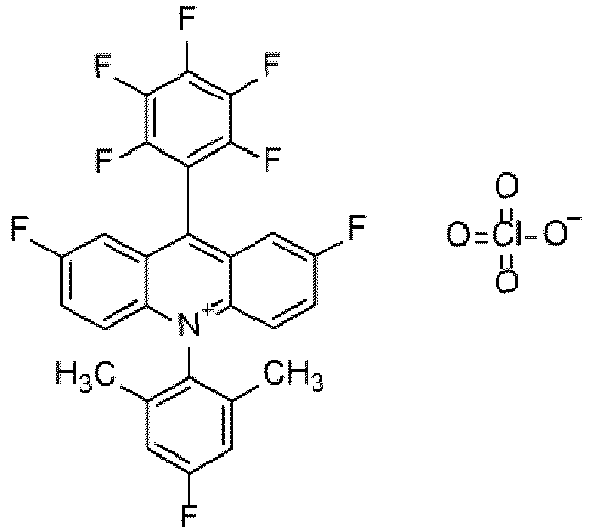
26 
27 
Table 10 28 
29 
30 
31 
32 
33 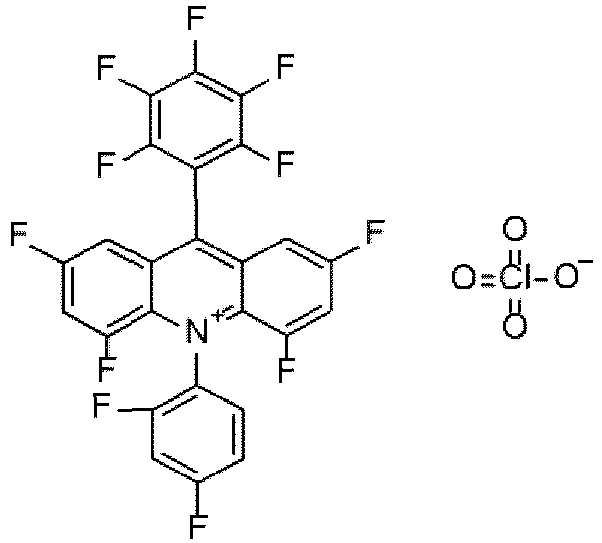
Table 11 34 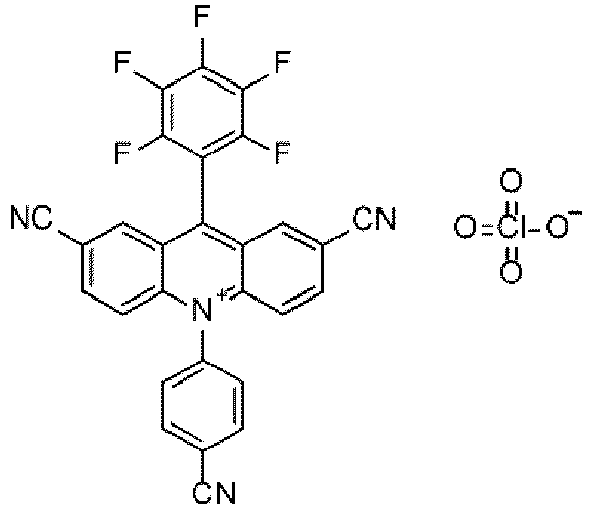
35 
Election Affinity (eV): -6.63 Election Affinity (eV): -6.79 36 
37 
Election Affinity (eV): -6.34 Election Affinity (eV): -6.61 38 
39 
Election Affinity (eV): -6.31 Election Affinity (eV): -6.54 Table 12 40 
41 
Election Affinity (eV): -6.07 Election Affinity (eV): -6.06sh - The test results of representative compounds of the present invention are shown below, and the effects of the compounds are explained; however, the present invention is not limited to these Test Examples.
- The compounds of the present invention or the comparative compounds shown in Table 13 below (5 mmol/L) and TBAPF6 (100 mmol/L) were dissolved in acetonitrile (1 mL) to prepare samples.
- Each sample was injected into a volumetric cell, electrodes were attached in an argon atmosphere, and the cell was set in a device and measured. The one-electron reduction potential (Ered) was determined from the average of the peak potentials.
- Electrolyte: tetrabutylammonium hexafluorophosphate (TBAPF6)
- Working electrode: platinum disk electrode (produced by BAS)
- Counter electrode: platinum wire (produced by BAS)
- Reference electrode: Ag/AgNO3 (produced by BAS)
- Sweep speed: 100 mV/s
- Device: Electrochemical Analyzer Model 610E (produced by BAS)
- Each sample was measured using a UV-visible spectroscopy system 8454 (produced by Agilent Technologies).
- Each sample was measured using a FluoroMax-4P fluorescence spectrometer (produced by HORIBA, Ltd.). - Reduction potential at the singlet excited state was calculated.
- Singlet excitation energy was calculated from the maximum absorption wavelength and maximum fluorescence wavelength. The singlet excitation energy was added to the one-electron reduction potential determined by cyclic voltammetry to calculate the reduction potential at the singlet excited state.
-
Fig. 1 shows the results.Table 13 Comparative Example 1 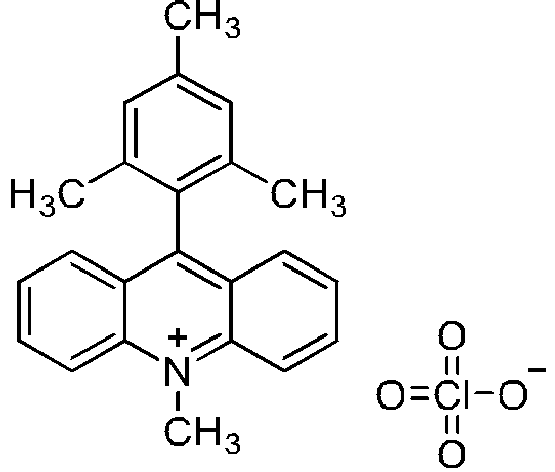
Comparative Example 2 
Comparative Example 3 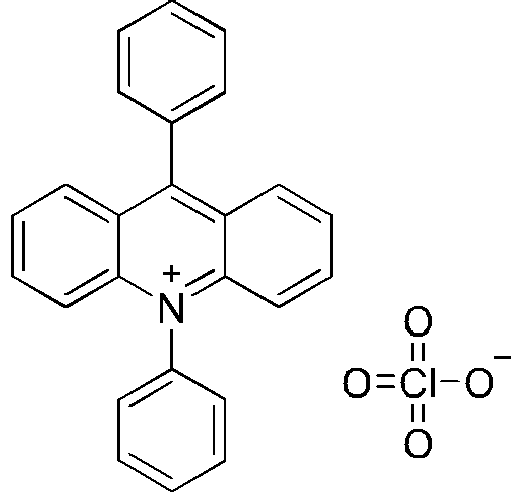
Comparative Example 4 
Comparative Example 5 
- The compounds of the present invention (0.1 mmol/L) were each dissolved in acetonitrile (3 mL), sealed in a 1-cm square cell, and replaced in an argon atmosphere to prepare samples. The samples were measured using a fluorescence lifetime system (DeltaFlex: produced by HORIBA, Ltd.).
-
Fig. 2 shows the measurement results. - DFT calculations were performed using the following system.
- Hardware: High-Performance Computer (produced by HPC Systems, Inc.)
- Software: Gaussian 09 Rev D.01
- 1. Structural optimization (cation) (M06-2X/6-31++G(d)) and energy value
- 2. HOMO and LUMO levels
- 3. Structural optimization (neutral radical) (UM06-2X/6-31++G(d)) and energy value
- 4. Calculation of electron affinity
-
Fig. 1 shows the results. -

- The compound of the present invention (8 mol%), benzene (0.1 M), water (72 µL, optional), and a deuterated acetonitrile solution (2 mL) were irradiated with an LED lamp (product name: Aldrich (trademark) Micro Photochemical Reactor, produced by Merck) in an oxygen atmosphere using the wavelength and irradiation time shown in Table 14. Further, Acr+-Mes (Comparative Example 1) was used for comparison.
- Table 14 shows the results. The yield indicates the yield of phenol produced, and the residual ratio indicates the ratio of benzene used as a raw material.
- The yield and residual ratio were calculated from the NMR chart using 1,3,5-trimethoxybenzene as the internal standard reagent.
Table 14 Example No. Irradiation wavelength (nm) Time (h) Water addition* Yield (%) Residual ratio (%) 1 405 66 Not added 32 2 1 435 66 Not added 24 0 1 365 15 Not added 38 4 1 405 15 Not added 70 15 1 435 15 Not added 73 12 1 435 15 Added 80 12 2 435 15 Added 63 26 Comparative Example 1 365 15 Not added 0 100 Comparative Example 1 405 15 Not added 0 100 * Water was added at the beginning of the reaction and 10 hours after the start of the reaction.
Claims (8)
- A compound represented by formula [I]:
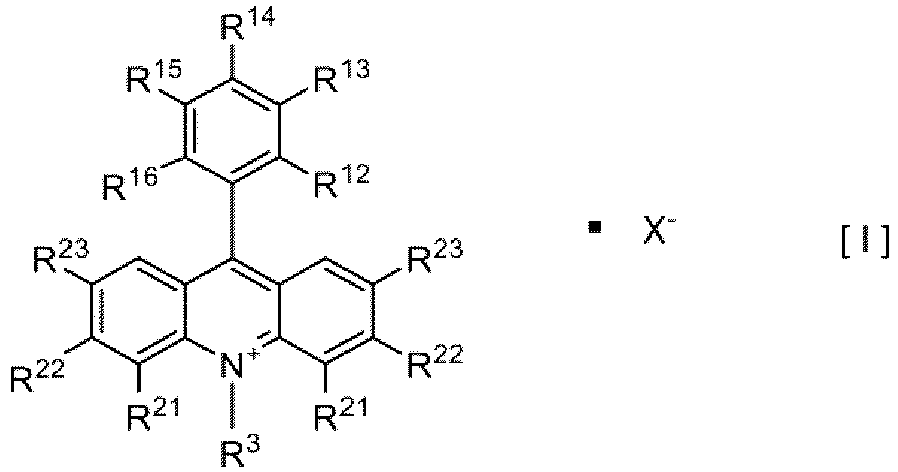 R12, R13, R14, R15, and R16 are the same or different and are each hydrogen, halogen, C1-6 alkyl optionally substituted with halogen, or C1-6 alkoxy optionally substituted with halogen;R21, R22, and R23 are the same or different and are each hydrogen, halogen, C1-6 alkyl optionally substituted with halogen, C1-6 alkoxy optionally substituted with halogen, sulfanyl optionally substituted with halogen, nitro, or cyano;R3 is C1-6 alkyl or
 X- is an anion;provided that the following cases are excluded:1) all of R12, R13, R14, R15, R16, R21, R22, and R23 are hydrogen, and R3 is methyl or phenyl;2) all of R12, R14, R16, and R3 are methyl, and R23 is hydrogen or fluorine; and3) R12 is hydrogen or methyl, R13 is hydrogen or methyl, R14 is hydrogen or methyl, R15 is hydrogen or methyl, R16 is hydrogen or methyl, R3 is methyl or unsubstituted phenyl, and R23 is hydrogen.
 - The compound according to claim 1, whereinR12, R13, R14, R15, and R16 are the same or different and are each hydrogen, fluorine, chlorine, methyl, t-butyl, trifluoromethyl, or trifluoromethoxy;R21, R22, and R23 are the same or different and are each hydrogen, fluorine, chlorine, bromine, trifluoromethyl, methoxy, pentafluorosulfanyl, nitro, or cyano; andR3 is methyl or

- The compound according to claim 1, whereinR12, R13, R14, R15, and R16 are the same or different and are each hydrogen, fluorine, methyl, t-butyl, trifluoromethyl, or trifluoromethoxy;R21 and R22 are hydrogen, R23 is fluorine; andR3 is methyl or 4-fluorophenyl.
- The compound according to claim 1 selected from the following:


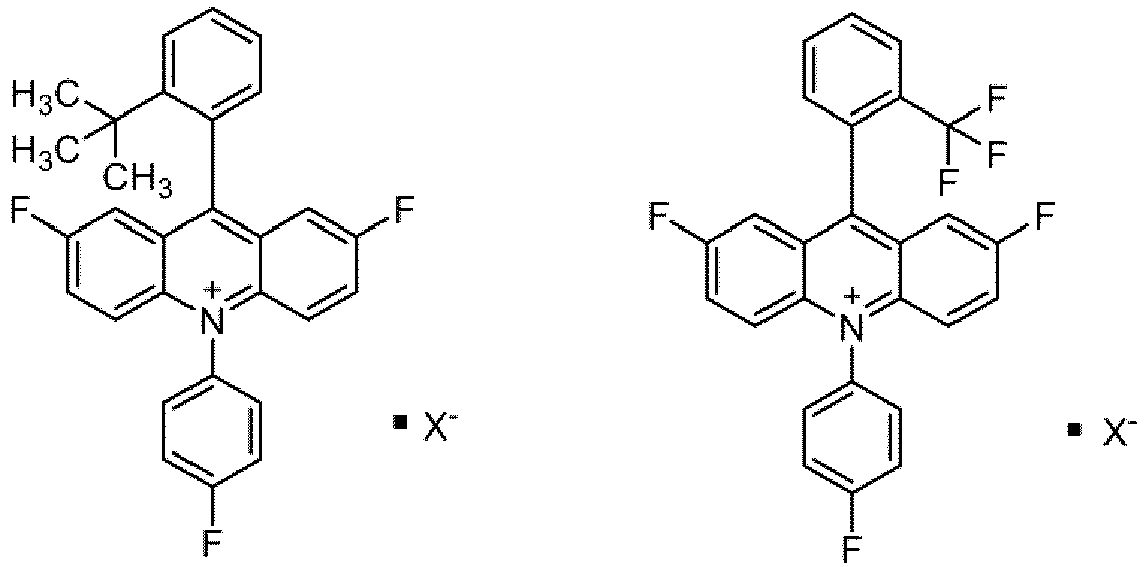
- The compound according to claim 1, wherein X- is perchlorate ion (ClO4 -), hexafluorophosphate ion (PF6 -), or tetrafluoroborate ion (BF4 -).
- A photoredox catalyst selected from the compound according to any one of claims 1 to 5.
- Use of the compound according to any one of claims 1 to 5 as a photoredox catalyst.
- A method for producing phenol from optionally substituted benzene, comprising irradiating optionally substituted benzene with visible light in the presence of the compound according to any one of claims 1 to 5.
Applications Claiming Priority (2)
| Application Number | Priority Date | Filing Date | Title |
|---|---|---|---|
| JP2021144882 | 2021-09-06 | ||
| PCT/JP2022/033207 WO2023033165A1 (en) | 2021-09-06 | 2022-09-05 | Acridine compound |
Publications (2)
| Publication Number | Publication Date |
|---|---|
| EP4400492A1 true EP4400492A1 (en) | 2024-07-17 |
| EP4400492A4 EP4400492A4 (en) | 2025-08-06 |
Family
ID=85412429
Family Applications (1)
| Application Number | Title | Priority Date | Filing Date |
|---|---|---|---|
| EP22864747.5A Pending EP4400492A4 (en) | 2021-09-06 | 2022-09-05 | ACRIDINE COMPOUND |
Country Status (6)
| Country | Link |
|---|---|
| US (1) | US20250129029A1 (en) |
| EP (1) | EP4400492A4 (en) |
| JP (1) | JPWO2023033165A1 (en) |
| KR (1) | KR20240056567A (en) |
| CN (1) | CN117940408A (en) |
| WO (1) | WO2023033165A1 (en) |
Family Cites Families (6)
| Publication number | Priority date | Publication date | Assignee | Title |
|---|---|---|---|---|
| JP2005145853A (en) | 2003-11-13 | 2005-06-09 | Japan Science & Technology Agency | Photocatalyst |
| US20120171111A1 (en) | 2009-09-15 | 2012-07-05 | Osaka University | Process for production of oxidation reaction product of aromatic compound |
| JP5470623B2 (en) | 2010-03-11 | 2014-04-16 | 国立大学法人大阪大学 | Oxidation catalyst, method for producing phenols, and method for producing hydrogen peroxide |
| EP3984995A1 (en) * | 2020-10-15 | 2022-04-20 | Université de Rennes 1 | Acridinium-based photoredox catalysts, synthesis and use thereof in oxidative cleavage of c-o bonds |
| EP4249077A4 (en) * | 2020-11-17 | 2025-02-12 | Shionogi & Co., Ltd | NEW ACRIDINIUM SALT AND ITS PRODUCTION PROCESS |
| CN113121439B (en) * | 2021-04-20 | 2022-05-03 | 山东大学 | A compound, pharmaceutical composition, medicine and application thereof in the preparation of antibacterial products |
-
2022
- 2022-09-05 WO PCT/JP2022/033207 patent/WO2023033165A1/en not_active Ceased
- 2022-09-05 US US18/689,319 patent/US20250129029A1/en active Pending
- 2022-09-05 CN CN202280060016.4A patent/CN117940408A/en active Pending
- 2022-09-05 EP EP22864747.5A patent/EP4400492A4/en active Pending
- 2022-09-05 JP JP2023545707A patent/JPWO2023033165A1/ja active Pending
- 2022-09-05 KR KR1020247011022A patent/KR20240056567A/en active Pending
Also Published As
| Publication number | Publication date |
|---|---|
| WO2023033165A1 (en) | 2023-03-09 |
| CN117940408A (en) | 2024-04-26 |
| JPWO2023033165A1 (en) | 2023-03-09 |
| EP4400492A4 (en) | 2025-08-06 |
| US20250129029A1 (en) | 2025-04-24 |
| KR20240056567A (en) | 2024-04-30 |
Similar Documents
| Publication | Publication Date | Title |
|---|---|---|
| Zhang et al. | Mechanofluorochromic properties of β-iminoenolate boron complexes tuned by the electronic effects of terminal phenothiazine and phenothiazine-S, S-dioxide | |
| JP5959171B2 (en) | PI-conjugated organoboron compound and method for producing the same | |
| Xue et al. | Multicolour-and high-colour-contrast switching in response to force and acid vapour by introducing an asymmetric D–π–A–π–D structure | |
| EP2479160B1 (en) | Process for production of oxidation reaction product of aromatic compound | |
| Alidağı et al. | Synthesis and spectral properties of fluorene substituted cyclic and polymeric phosphazenes | |
| Sørensen et al. | Synthesis and optical properties of trioxatriangulenium dyes with one and two peripheral amino substituents | |
| US10934290B2 (en) | Donor-acceptor nanohoop compounds and methods of making and using the same | |
| CN113089006B (en) | Synthesis method of 4-seleno-1H-pyrazole compound | |
| Behera et al. | Supramolecular complex catalyzed green synthesis of 9-(2-Ethylhexyl) carbazole: structural, optical and DFT investigations | |
| US7977486B2 (en) | Quinolinium ion derivatives, process for the production of the derivatives, products made by using the same, and reduction and oxidation methods with the derivatives | |
| US9181204B2 (en) | Chemical compounds capable of complexing at least one metal element and a coordination complex based on these compounds | |
| Borovik et al. | Hydrogen/Deuterium Exchange Catalyzed by an Unusually Stable Mercury–Toluene Complex | |
| US20250129029A1 (en) | Acridine compound | |
| CN106432316A (en) | Indole piperazoisoindole or benzoindole piperazoisoindole derivative and synthesis method thereof | |
| JP2011189224A (en) | Oxidation catalyst, method of producing phenol and method of producing hydrogen peroxide | |
| EP3676334A1 (en) | Small-molecule organic dyes | |
| EP3782977A1 (en) | Cyclopropanation method and reagent | |
| CN109232515B (en) | Crown ether compound and its preparing method | |
| JP2023006723A (en) | Organic electroluminescence element, electronic device, and manufacturing method for organic electroluminescence element | |
| CN110386903B (en) | Tetrazine-containing oligomeric phenylene acetylene compound and preparation method thereof | |
| CN110437183A (en) | A method of synthesis furfuran compound | |
| CN111704630A (en) | 3-Aroyl naphthisoxazole or 3-aroyl anthraisoxazole derivatives and synthesis method thereof | |
| Xu | Synthesis and Properties of Radical Based Organic Materials | |
| Walsh | Synthesis, structure and function of oligo (1, 8-pyrenylenes) | |
| Xu | Iodonium Salts with Tetraphenylene Motifs: Syntheses and Applications |
Legal Events
| Date | Code | Title | Description |
|---|---|---|---|
| STAA | Information on the status of an ep patent application or granted ep patent |
Free format text: STATUS: THE INTERNATIONAL PUBLICATION HAS BEEN MADE |
|
| PUAI | Public reference made under article 153(3) epc to a published international application that has entered the european phase |
Free format text: ORIGINAL CODE: 0009012 |
|
| STAA | Information on the status of an ep patent application or granted ep patent |
Free format text: STATUS: REQUEST FOR EXAMINATION WAS MADE |
|
| 17P | Request for examination filed |
Effective date: 20240326 |
|
| AK | Designated contracting states |
Kind code of ref document: A1 Designated state(s): AL AT BE BG CH CY CZ DE DK EE ES FI FR GB GR HR HU IE IS IT LI LT LU LV MC MK MT NL NO PL PT RO RS SE SI SK SM TR |
|
| A4 | Supplementary search report drawn up and despatched |
Effective date: 20250704 |
|
| RIC1 | Information provided on ipc code assigned before grant |
Ipc: C07D 219/14 20060101AFI20250630BHEP Ipc: B01J 31/02 20060101ALI20250630BHEP Ipc: C07B 61/00 20060101ALI20250630BHEP Ipc: C07C 37/58 20060101ALI20250630BHEP Ipc: C07C 39/04 20060101ALI20250630BHEP |