EP4398671A2 - Split bearer packet data converge protocol protocol data unit routing - Google Patents
Split bearer packet data converge protocol protocol data unit routing Download PDFInfo
- Publication number
- EP4398671A2 EP4398671A2 EP24177027.0A EP24177027A EP4398671A2 EP 4398671 A2 EP4398671 A2 EP 4398671A2 EP 24177027 A EP24177027 A EP 24177027A EP 4398671 A2 EP4398671 A2 EP 4398671A2
- Authority
- EP
- European Patent Office
- Prior art keywords
- pdu
- routing
- cell group
- data
- rlc
- Prior art date
- Legal status (The legal status is an assumption and is not a legal conclusion. Google has not performed a legal analysis and makes no representation as to the accuracy of the status listed.)
- Pending
Links
Images






Classifications
-
- H—ELECTRICITY
- H04—ELECTRIC COMMUNICATION TECHNIQUE
- H04W—WIRELESS COMMUNICATION NETWORKS
- H04W28/00—Network traffic management; Network resource management
- H04W28/02—Traffic management, e.g. flow control or congestion control
- H04W28/06—Optimizing the usage of the radio link, e.g. header compression, information sizing, discarding information
- H04W28/065—Optimizing the usage of the radio link, e.g. header compression, information sizing, discarding information using assembly or disassembly of packets
-
- H—ELECTRICITY
- H04—ELECTRIC COMMUNICATION TECHNIQUE
- H04W—WIRELESS COMMUNICATION NETWORKS
- H04W72/00—Local resource management
- H04W72/50—Allocation or scheduling criteria for wireless resources
- H04W72/52—Allocation or scheduling criteria for wireless resources based on load
-
- H—ELECTRICITY
- H04—ELECTRIC COMMUNICATION TECHNIQUE
- H04W—WIRELESS COMMUNICATION NETWORKS
- H04W76/00—Connection management
- H04W76/10—Connection setup
- H04W76/15—Setup of multiple wireless link connections
-
- H—ELECTRICITY
- H04—ELECTRIC COMMUNICATION TECHNIQUE
- H04L—TRANSMISSION OF DIGITAL INFORMATION, e.g. TELEGRAPHIC COMMUNICATION
- H04L2101/00—Indexing scheme associated with group H04L61/00
- H04L2101/60—Types of network addresses
- H04L2101/618—Details of network addresses
- H04L2101/622—Layer-2 addresses, e.g. medium access control [MAC] addresses
Definitions
- a module of code may be a single instruction, or many instructions, and may even be distributed over several different code segments, among different programs, and across several memory devices.
- operational data may be identified and illustrated herein within modules, and may be embodied in any suitable form and organized within any suitable type of data structure. The operational data may be collected as a single data set, or may be distributed over different locations including over different computer readable storage devices.
- the software portions are stored on one or more computer readable storage devices.
- the mobile device 110 is in communication with the first cell group/first node 105a and the second cell group/second node 105b.
- the mobile device 110 may perform split bearer transmission, transmitting data of one radio bearer to two or more cell groups 105.
- the mobile device 110 may inaccurately report the quantity of data to be transmitted to each cell group 105, causing each cell group 105 to allocate excessive buffer space for the data.
- the mobile device 110 may be unable to determine the quantity of data that will be transmitted to each cell group 105 before the mobile device 110 receives an Uplink (UL) grant.
- UL Uplink
- FIG. 3 is a schematic block diagram illustrating one embodiment of mobile device transmission layers 300.
- the mobile device transmission layers 300 maybe organized as a combination of data structures, registers, and semiconductor hardware.
- the layers 300 include a PDCP 315, a Radio Link Control (RLC), a MAC for MCG 325a, a MAC for SCG 325b, and a physical (PHY) 325 layers.
- RLC Radio Link Control
- a plurality of PDCP 315 and RLC 320 may be distributed between an MCG Data Radio Bearer (DRB) 305, a split bearer DRB 335, and an SCG DRB 310.
- DRB MCG Data Radio Bearer
- a base station 120 associated with a cell group 105 may direct the mobile device 110 to route 605 the PDCP PDU 250.
- the base station 120 may set the split bearer configuration indicator 215.
- the base station 120 may specify the routing mode 230 to be the method 600 and/or the routing threshold 225.
- a base station 120 may specify the routing threshold 225 for each cell group, e.g., MCG and SCG part of the split bearer, independently.
- the processor 405 may discard 670 the corresponding duplicate PDU 250 queued for transmission to the second cell group 105b and the method 650 ends. In addition, the processor 405 may reorder the sequence numbers (SN) of the discarded PDU 250.
- the method 700 starts, and in one embodiment, the processor 405 duplicates 705 the PDCP PDU 250.
- the processor 405 may continue to duplicate 705 the PDU 250 until the total of PDU 250 and duplicated PDU 250 is determined 710 to exceed the routing threshold 225.
- the routing threshold 225 is a duplicate routing threshold.
- the processor 405 may route 715 the original PDCP PDU 250 to one of the RLC 320/ MAC 325 of the MCG and the RLC 320/ MAC 325 for the SCG, which is referred to hereafter as a first cell group 105a as described for Figure 5C .
- the processor 405 may route 715 the duplicate PDCP PDU 250 to the other one of the RLC 320/MAC 325 of the MCG and the RLC 320/ MAC 325 for the SCG, which is referred to hereafter as a second cell group 105b.
- the processor 405 may transmit 720 the corresponding duplicate PDU 250 queued for transmission to the second cell group 105b as an empty PDU 250 and the method 700 ends.
- a base station 120 associated with a cell group may direct the mobile device 110 to duplicate 705 and route 715 the PDCP PDU 250.
- the base station 120 may set the split bearer configuration indicator 215.
- the base station 120 may specify the routing threshold 225 and set the routing mode 230 to the method 700.
- a base station 120 may specify the routing threshold 225 for each cell group, e.g., MCG and SCG part of the split bearer, independently.
- the PHY 330 may transmit 520 padding in response to the received UL grant.
- the PHY 330 may transmit 520 duplicate PDU 252 instead of padding in response to the received UL grant.
- the mobile device 110 may transmit data to one cell group 105/base station 120 via one of the MCG DRB 305 and SCG DRB 310.
- the mobile device 110 may be only allowed to route PDCP PDUs of the one of MCG DRB 305 and SCG DRB 310 to the RLC 320/ MAC 325 and preprocess the PDCP PDU 250 at the RLC 320/MAC 325 for transmission through the PHY 330 up to a maximum amount of PDCP PDU.
- Figure 5F is a schematic flow chart diagram illustrating one alternate embodiment of a PDU pre-processing method 750.
- the method 750 may perform step 510 of Figure 5A .
- the method 750 may be performed by the mobile device 110 and/or the processor 405.
- the method 750 starts, and in one embodiment, the processor 405 routes 760 the PDU 250 to one of the RLC 320/MAC 325 of the MCG and the RLC 320/MAC 325 for the SCG, which is referred to hereafter as a first cell group 105a.
- the processor 405 may route 775 the PDU 250 to the RLC 320/MAC 325 of the second cell group 105b and the method 750 ends.
- a base station 120 may direct the mobile device 110 to employ the transit timer 255.
- the base station 120 may set the split bearer configuration indicator 215.
- the base station 120 may set the routing mode 230 to the method 750 and specify a duration for the transit timer 255.
- Figure 5G is a schematic flowchart diagram illustrating one embodiment of a split bearer mode management method 800.
- the method 800 may determine the routing mode 234 split bearer transmissions from the mobile device 110.
- the method 800 may be performed by the mobile device 110, the base stations 120 associated with the cell groups 105, and/or processors 405 incorporated therein.
- the mobile device processor 405 may determine 815 the size of the preprocessed PDU 250 for each cell group 105. The mobile device processor 405 may further report 820 the preprocessed PDU size of each cell group 105 to the associated base station 120, which receives 855 the processed PDU size and the method 800 ends.
- the mobile device 110 to route PDU 250 from the PDCP 315 to the RLC 320/MAC 325 for processing requires PDCP 315 to know to which cell group 105 the PDCP SDUs would be transmitted before the UL grant is received.
- Pre-processing by the RLC 320/MAC 325 is not possible for the NR-NR Dual connectivity and LTE-NR Dual connectivity case when UL split bearer operation was applied.
- the mobile device 110 When PDCP Buffer Occupancy (BO) is above a configured threshold as defined for Rel-13 UL bearer split operation, for example if ul-DataSplitThreshold is configured and the data available for transmission in PDCP 315 is larger than or equal to ul-DataSplitThreshold , the mobile device 110 reports to all cell groups 105 the same PDCP data amount for the purpose of buffer status reporting. As a result, the mobile device 110 indicates the data available for transmission in PDCP 315 to both the MAC 325 configured for SCG and the MAC 325 configured for MCG.
- BO PDCP Buffer Occupancy
- the routing of only a limited number of PDCP PDU 250 enables the pre-processing of RLC 320 and MAC 325 layer of the gNB cell group(s) by pre-allocating the PDCP PDUs 250 to the cell group(s) 105 before receiving the UL grant.
Landscapes
- Engineering & Computer Science (AREA)
- Computer Networks & Wireless Communication (AREA)
- Signal Processing (AREA)
- Mobile Radio Communication Systems (AREA)
Abstract
Description
- The subject matter disclosed herein relates to routing Packet Data Converge Protocol (PDCP) Protocol Data Units (PDU) and more particularly relates to split bearer routing of PDCP PDU.
- A mobile device may transmit data to two or more cell groups.
- A method for routing PDCP PDU is disclosed. The method detects, by use of a processor, a split bearer configuration for a mobile device. In response to detecting the split bearer configuration, the method routes PDCP PDU in a Radio Link Control (RLC)/Medium Access Control (MAC) for the at least two cell groups. An apparatus and program product also perform the functions of the method.
- A more particular description of the embodiments briefly described above will be rendered by reference to specific embodiments that are illustrated in the appended drawings. Understanding that these drawings depict only some embodiments and are not therefore to be considered to be limiting of scope, the embodiments will be described and explained with additional specificity and detail through the use of the accompanying drawings, in which:
-
Figure 1 is a schematic block diagram illustrating one embodiment of a communication system; -
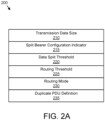
Figure 2A is a schematic block diagram illustrating one embodiment of split bearer data; -
Figure 2B is a schematic block diagram illustrating one embodiment of communication data; -
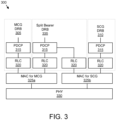
Figure 3 is a schematic block diagram illustrating one embodiment of mobile device transmission layers; -
Figure 4 is a schematic block diagram illustrating one embodiment of a mobile device; -
Figure 5A is a schematic flow chart diagram illustrating one embodiment of a split bearer routing method; -
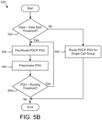
Figure 5B is a schematic flow chart diagram illustrating one embodiment of a PDU routing method; -
Figure 5C is a schematic flow chart diagram illustrating one alternate embodiment of a PDU routing method; -
Figure 5D is a schematic flow chart diagram illustrating one embodiment of a PDU routing method; -
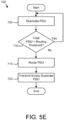
Figure 5E is a schematic flow chart diagram illustrating one alternate embodiment of a PDU routing method; -
Figure 5F is a schematic flow chart diagram illustrating one alternate embodiment of a PDU routing method; and -
Figure 5G is a schematic flowchart diagram illustrating one embodiment of a split bearer mode management method. - As will be appreciated by one skilled in the art, aspects of the embodiments may be embodied as a system, method or program product. Accordingly, embodiments may take the form of an entirely hardware embodiment, an entirely software embodiment (including firmware, resident software, micro-code, etc.) or an embodiment combining software and hardware aspects that may all generally be referred to herein as a "circuit," "module" or "system." Furthermore, embodiments may take the form of a program product embodied in one or more computer readable storage devices storing machine readable code, computer readable code, and/or program code, referred hereafter as code. The storage devices may be tangible, non-transitory, and/or non-transmission. The storage devices may not embody signals. In a certain embodiment, the storage devices only employ signals for accessing code.
- Many of the functional units described in this specification have been labeled as modules, in order to more particularly emphasize their implementation independence. For example, a module may be implemented as a hardware circuit comprising custom VLSI circuits or gate arrays, off-the-shelf semiconductors such as logic chips, transistors, or other discrete components. A module may also be implemented in programmable hardware devices such as field programmable gate arrays, programmable array logic, programmable logic devices or the like.
- Modules may also be implemented in code and/or software for execution by various types of processors. An identified module of code may, for instance, comprise one or more physical or logical blocks of executable code which may, for instance, be organized as an object, procedure, or function. Nevertheless, the executables of an identified module need not be physically located together, but may comprise disparate instructions stored in different locations which, when joined logically together, comprise the module and achieve the stated purpose for the module.
- Indeed, a module of code may be a single instruction, or many instructions, and may even be distributed over several different code segments, among different programs, and across several memory devices. Similarly, operational data may be identified and illustrated herein within modules, and may be embodied in any suitable form and organized within any suitable type of data structure. The operational data may be collected as a single data set, or may be distributed over different locations including over different computer readable storage devices. Where a module or portions of a module are implemented in software, the software portions are stored on one or more computer readable storage devices.
- Any combination of one or more computer readable medium may be utilized. The computer readable medium may be a computer readable storage medium. The computer readable storage medium may be a storage device storing the code. The storage device may be, for example, but not limited to, an electronic, magnetic, optical, electromagnetic, infrared, holographic, micromechanical, or semiconductor system, apparatus, or device, or any suitable combination of the foregoing.
- More specific examples (a non-exhaustive list) of the storage device would include the following: an electrical connection having one or more wires, a portable computer diskette, a hard disk, a random access memory (RAM), a read-only memory (ROM), an erasable programmable read-only memory (EPROM or Flash memory), a portable compact disc read-only memory (CD-ROM), an optical storage device, a magnetic storage device, or any suitable combination of the foregoing. In the context of this document, a computer readable storage medium may be any tangible medium that can contain, or store a program for use by or in connection with an instruction execution system, apparatus, or device.
- Code for carrying out operations for embodiments may be written in any combination of one or more programming languages including an object oriented programming language such as Python, Ruby, Java, Smalltalk, C++, or the like, and conventional procedural programming languages, such as the "C" programming language, or the like, and/or machine languages such as assembly languages. The code may execute entirely on the user's computer, partly on the user's computer, as a stand-alone software package, partly on the user's computer and partly on a remote computer or entirely on the remote computer or server. In the latter scenario, the remote computer may be connected to the user's computer through any type of network, including a local area network (LAN) or a wide area network (WAN), or the connection may be made to an external computer (for example, through the Internet using an Internet Service Provider).
- Reference throughout this specification to "one embodiment," "an embodiment," or similar language means that a particular feature, structure, or characteristic described in connection with the embodiment is included in at least one embodiment. Thus, appearances of the phrases "in one embodiment," "in an embodiment," and similar language throughout this specification may, but do not necessarily, all refer to the same embodiment, but mean "one or more but not all embodiments" unless expressly specified otherwise. The terms "including," "comprising," "having," and variations thereof mean "including but not limited to," unless expressly specified otherwise. An enumerated listing of items does not imply that any or all of the items are mutually exclusive, unless expressly specified otherwise. The terms "a," "an," and "the" also refer to "one or more" unless expressly specified otherwise.
- Furthermore, the described features, structures, or characteristics of the embodiments may be combined in any suitable manner. In the following description, numerous specific details are provided, such as examples of programming, software modules, user selections, network transactions, database queries, database structures, hardware modules, hardware circuits, hardware chips, etc., to provide a thorough understanding of embodiments. One skilled in the relevant art will recognize, however, that embodiments may be practiced without one or more of the specific details, or with other methods, components, materials, and so forth. In other instances, well-known structures, materials, or operations are not shown or described in detail to avoid obscuring aspects of an embodiment.
- Aspects of the embodiments are described below with reference to schematic flowchart diagrams and/or schematic block diagrams of methods, apparatuses, systems, and program products according to embodiments. It will be understood that each block of the schematic flowchart diagrams and/or schematic block diagrams, and combinations of blocks in the schematic flowchart diagrams and/or schematic block diagrams, can be implemented by code. These code may be provided to a processor of a general purpose computer, special purpose computer, or other programmable data processing apparatus to produce a machine, such that the instructions, which execute via the processor of the computer or other programmable data processing apparatus, create means for implementing the functions/acts specified in the schematic flowchart diagrams and/or schematic block diagrams block or blocks.
- The code may also be stored in a storage device that can direct a computer, other programmable data processing apparatus, or other devices to function in a particular manner, such that the instructions stored in the storage device produce an article of manufacture including instructions which implement the function/act specified in the schematic flowchart diagrams and/or schematic block diagrams block or blocks.
- The code may also be loaded onto a computer, other programmable data processing apparatus, or other devices to cause a series of operational steps to be performed on the computer, other programmable apparatus or other devices to produce a computer implemented process such that the code which execute on the computer or other programmable apparatus provide processes for implementing the functions/acts specified in the flowchart and/or block diagram block or blocks.
- The schematic flowchart diagrams and/or schematic block diagrams in the Figures illustrate the architecture, functionality, and operation of possible implementations of apparatuses, systems, methods and program products according to various embodiments. In this regard, each block in the schematic flowchart diagrams and/or schematic block diagrams may represent a module, segment, or portion of code, which comprises one or more executable instructions of the code for implementing the specified logical function(s).
- It should also be noted that, in some alternative implementations, the functions noted in the block may occur out of the order noted in the Figures. For example, two blocks shown in succession may, in fact, be executed substantially concurrently, or the blocks may sometimes be executed in the reverse order, depending upon the functionality involved. Other steps and methods may be conceived that are equivalent in function, logic, or effect to one or more blocks, or portions thereof, of the illustrated Figures.
- Although various arrow types and line types may be employed in the flowchart and/or block diagrams, they are understood not to limit the scope of the corresponding embodiments. Indeed, some arrows or other connectors may be used to indicate only the logical flow of the depicted embodiment. For instance, an arrow may indicate a waiting or monitoring period of unspecified duration between enumerated steps of the depicted embodiment. It will also be noted that each block of the block diagrams and/or flowchart diagrams, and combinations of blocks in the block diagrams and/or flowchart diagrams, can be implemented by special purpose hardware-based systems that perform the specified functions or acts, or combinations of special purpose hardware and code.
- The description of elements in each figure may refer to elements of proceeding figures. Like numbers refer to like elements in all figures, including alternate embodiments of like elements.
-
Figure 1 is a schematic block diagram illustrating one embodiment of acommunication system 100. Thesystem 100 includes two or more base stations 120 and amobile device 110. Themobile device 110 may communicate with the base stations 120 on the cells of a cell groups 105 associated with the base stations 120. The cell groups 105 may be associated with a gNodeB (gNB) base station 120, i.e. New Radio (NR) base station 120, or an enhanced evolved node B (eNB) Long Term Evolution (LTE)base station 120. In one embodiment, afirst cell group 105a may be associated with a Master Node and asecond cell group 105b may be associated with a Secondary Node. The group of the serving cells associated with the Master Node may be a Master Cell Group (MCG), the group of serving cells associated with the Secondary Node may be a Secondary Cell Group (SCG). Themobile device 110 may be a mobile telephone, a machine-type communications (MTC) device, a tablet computer, a laptop computer, and embedded communication devices in automobiles, kiosks, appliances, and the like. - In one embodiment, the
mobile device 110 is in communication with the first cell group/first node 105a and the second cell group/second node 105b. To increase data transmission to the cell groups 105, themobile device 110 may perform split bearer transmission, transmitting data of one radio bearer to two or more cell groups 105. Unfortunately, themobile device 110 may inaccurately report the quantity of data to be transmitted to each cell group 105, causing each cell group 105 to allocate excessive buffer space for the data. In addition, themobile device 110 may be unable to determine the quantity of data that will be transmitted to each cell group 105 before themobile device 110 receives an Uplink (UL) grant. - The embodiments described herein transmit data from the
mobile device 110 to the cell groups 105 in a split bearer mode by routing and/or preprocessing a specified number of Protocol Data Units (PDU) as will be described hereafter. -
Figure 2A is a schematic block diagram illustrating one embodiment ofsplit bearer data 200. Thesplit bearer data 200 maybe organized as a data structure in a memory. In the depicted embodiment, thesplit bearer data 200 includes atransmission data size 210, a split bearer configuration indicator 215, adata split threshold 220, arouting threshold 225, arouting mode 230, and aduplicate PDU definition 235. - The
transmission data size 210 may record the quantity of data that is available for transmission from themobile device 110 to the cell groups 105. Thetransmission data size 210 may be measured in bytes, kilobytes, megabytes, and the like. - The split bearer configuration indicator 215 may indicate that the
mobile device 110 is configured for split bearer data transmission to two or more cell groups 105. The data splitthreshold 220 may indicate a quantity of data that if exceeded, may cause themobile device 110 to communicate the data in a split bearer transmission. In one embodiment, the data splitthreshold 220 is a number of Packet Data Converge Protocol (PDCP) PDU. - The
routing threshold 225 may specify a maximum quantity of PDCP PDU that is routed to afirst cell group 105a and/or to asecond cell group 105b. Therouting threshold 225 may also specify a maximum quantity of data in bytes, kilobytes, megabytes, and the like that is routed to afirst cell group 105a and/or to asecond cell group 105b. Therouting mode 230 may specify a PDU routing method for split bearer transmission. Theduplicate PDU definition 235 may specify the contents of a duplicate PDU. In one embodiment, theduplicate PDU definition 235 specifies that a duplicate PDU be transmitted as an empty PDU that includes only a header and does not include data. -
Figure 2B is a schematic block diagram illustrating one embodiment of communication data. The communication data maybe organized as a data structure in memory and/or wirelessly transmitted. In the depicted embodiment, the communication data includes a PDU 250. In addition, the communication data may include atransit timer 255. Thetransit timer 255 may be a timer and/or a timer register. -
Figure 3 is a schematic block diagram illustrating one embodiment of mobile device transmission layers 300. The mobile device transmission layers 300 maybe organized as a combination of data structures, registers, and semiconductor hardware. In the depicted embodiment, thelayers 300 include aPDCP 315, a Radio Link Control (RLC), a MAC forMCG 325a, a MAC forSCG 325b, and a physical (PHY) 325 layers. A plurality ofPDCP 315 andRLC 320 may be distributed between an MCG Data Radio Bearer (DRB) 305, asplit bearer DRB 335, and anSCG DRB 310. - A
PDCP 315 may generate one or more PDU from data that is to be transmitted from themobile device 110 to the cell groups 105. TheRLC 320 and MAC 325 may generate PDU 250 from the PDCP PDU. ThePHY 330 may transmit the PDU 250 to a cell group respectively the associated node 105. Data may be communicated via one of theMCG DRB 305, splitbearer DRB 335, andSCG DRB 310 as will be described hereafter. -
Figure 4 is a schematic block diagram illustrating one embodiment of a transceiver 400. The transceiver 400 may be themobile device 110. Alternatively, the transceiver 400 may be the cell group 105. In the depicted embodiment, the transceiver 400 includes aprocessor 405, amemory 410,communication hardware 415, atransmitter 420, and areceiver 425. Thememory 410 may be a semiconductor storage device, an optical storage device, micromechanical storage device, a magnetic storage device, or combinations thereof. Thememory 410 may store code. Theprocessor 405 may execute the code. Thecommunication hardware 415 may direct data within themobile device 110. Thetransmitter 420 may transmit PDU 250 to a cell group 105 and/ormobile device 110. Thereceiver 425 may receive PDU 250 from a cell group 105 and/ormobile device 110. -
Figure 5A is a schematic flow chart diagram illustrating one embodiment of a splitbearer routing method 500. Themethod 500 may route PDU 250 to at least two cell groups 105 as a split bearer transmission. Themethod 500 may be performed by themobile device 110 and/or theprocessor 405. - The
method 500 starts, and in one embodiment, theprocessor 405 detects 505 a split bearer configuration for amobile device 110. Theprocessor 405 may query the split bearer configuration indicator to detect 505 the split bearer configuration. - In response to detecting 505 the split bearer configuration, the processor may route 510 PDCP PDU 250 of the
split bearer DRB 335 to theRLC 320/MAC 325 for at least one of the MCG and the SCG. The embodiments of routing of the PDU 250 is described in more detail inFigures 5B-F . In one embodiment, a base station 120 associated with a cell group 105 may direct themobile device 110 to route the PDCP PDU 250. For example, the base station 120 may set the split bearer configuration indicator 215. In addition, the base station 120 may specify therouting mode 230. - The
RLC 320/MAC 325 may preprocess 515 the PDU 250 for transmission. ThePHY 330 may transmit 520 the preprocessed PDU 250 and themethod 500 ends. -
Figure 5B is a schematic flow chart diagram illustrating one embodiment of aPDU routing method 530. Themethod 530 may perform step 510 ofFigure 5A . Themethod 530 may be performed by themobile device 110 and/or theprocessor 405. - The
method 530 starts, and theprocessor 405 determines 540 if thetransmission data size 210 of PDCP PDU 250 exceeds the data splitthreshold 220. If thetransmission data size 210 does not exceed the data splitthreshold 220, theprocessor 405 may route 555 the PDCP PDU 250 through theRLC 320/MAC 325 of either the MCG or the SCG and themethod 530 ends. If thetransmission data size 210 of PDCP PDU 250 exceeds the data splitthreshold 220, theprocessor 405 may pre-route 545 PDCP PDUs to at least one of theRLC 320/MAC 325 of the MCG and theRLC 320/MAC 325 of the SCG and preprocess 547 PDU 250 at theRLC 320/MAC 325 for transmission through thePHY 330. In one embodiment, theprocessor 405 may continue to pre-route 545 and preprocess 547 the PDU 250 until theprocessor 405 determines 550 that the pre-routed PDU(s) 250 exceed therouting threshold 225. If the pre-routed PDU(s) 250 exceed therouting threshold 225, themethod 530 ends. The pre-routed, preprocessed PDU 250 may be transmitted by thePHY 330. - In one embodiment, a bases station 120 associated with a cell group 105 may direct the
mobile device 110 to pre-route 545 the PDCP PDU 250 of a split bearer. For example, the base station 120 may set the split bearer configuration indicator 215. In addition, the base station 120 may specify therouting mode 230 to be themethod 530, the data splitthreshold 220, and/or therouting threshold 225. In one embodiment, a base station 120 may specify therouting threshold 225 for each cell group, e.g., MCG and SCG part of the split bearer, independently. -
Figure 5C is a schematic flow chart diagram illustrating one alternate embodiment of aPDU routing method 600. Themethod 600 may perform step 510 ofFigure 5A . Themethod 600 may be performed by themobile device 110 and/or theprocessor 405. - The
method 600 starts, and in one embodiment, theprocessor 405routes 605 PDCP PDU 250 of thesplit bearer DRB 335 to theRLC 320/MAC 325 of at least one of the MCG and the SCG. Theprocessor 405 may continue to route 605 the PDU 250 until the routed PDU 250 exceed therouting threshold 225 and themethod 600 ends. The preprocessed PDU 250 may be transmitted by thePHY 330. - In one embodiment, a base station 120 associated with a cell group 105 may direct the
mobile device 110 to route 605 the PDCP PDU 250. For example, the base station 120 may set the split bearer configuration indicator 215. In addition, the base station 120 may specify therouting mode 230 to be themethod 600 and/or therouting threshold 225. In one embodiment, a base station 120 may specify therouting threshold 225 for each cell group, e.g., MCG and SCG part of the split bearer, independently. -
Figure 5D is a schematic flow chart diagram illustrating one embodiment of aPDU routing method 650. Themethod 650 may perform step 510 ofFigure 5A . Themethod 650 may be performed by themobile device 110 and/or theprocessor 405. - The
method 650 starts, and in one embodiment, theprocessor 405duplicates 655 the PDCP PDU 250. Theprocessor 405 may continue to duplicate 655 the PDU 250 until determining 660 the total of PDU 250 exceed therouting threshold 225. In one embodiment, therouting threshold 225 is a duplicate routing threshold. - In response to the total PDU 250 exceeding the
routing threshold 225, theprocessor 405 may route 665 the original PDCP PDU 250 to one of theRLC 320/MAC 325 of the MCG and theRLC 320/ MAC 325 of the SCG, which is referred to hereafter as afirst cell group 105a as described forFigure 5C . Theprocessor 405 may route 665 the duplicate PDCP PDU 250 to the other one of theRLC 320/MAC 325 of the MCG and theRLC 320/MAC 325 of the SCG, which is referred to hereafter as asecond cell group 105b. - In response to transmitting a PDU 250 from the
PHY 330 to thefirst cell group 105a, theprocessor 405 may discard 670 the corresponding duplicate PDU 250 queued for transmission to thesecond cell group 105b and themethod 650 ends. In addition, theprocessor 405 may reorder the sequence numbers (SN) of the discarded PDU 250. - In one embodiment, a base station 120 associated with a cell group 105 may direct the
mobile device 110 to duplicate 655 androute 665 the PDCP PDU 250. For example, the base station 120 may set the split bearer configuration indicator 215. In addition, the cell group 105 may specify therouting threshold 225 and set therouting mode 230 to themethod 650. In one embodiment, a base station 120 may specify therouting threshold 225 for each cell group, e.g., MCG and SCG part of the split bearer, independently. -
Figure 5E is a schematic flow chart diagram illustrating one alternate embodiment of aPDU routing method 700. Themethod 700 may perform step 510 ofFigure 5A . Themethod 700 may be performed by themobile device 110 and/or theprocessor 405. - The
method 700 starts, and in one embodiment, theprocessor 405duplicates 705 the PDCP PDU 250. Theprocessor 405 may continue to duplicate 705 the PDU 250 until the total of PDU 250 and duplicated PDU 250 is determined 710 to exceed therouting threshold 225. In one embodiment, therouting threshold 225 is a duplicate routing threshold. - In response to the total PDU 250 exceeding the
routing threshold 225, theprocessor 405 may route 715 the original PDCP PDU 250 to one of theRLC 320/ MAC 325 of the MCG and theRLC 320/ MAC 325 for the SCG, which is referred to hereafter as afirst cell group 105a as described forFigure 5C . Theprocessor 405 may route 715 the duplicate PDCP PDU 250 to the other one of theRLC 320/MAC 325 of the MCG and theRLC 320/ MAC 325 for the SCG, which is referred to hereafter as asecond cell group 105b. - In response to transmitting a PDU 250 from the
PHY 330 to afirst cell group 105a, theprocessor 405 may transmit 720 the corresponding duplicate PDU 250 queued for transmission to thesecond cell group 105b as an empty PDU 250 and themethod 700 ends. - In one embodiment, a base station 120 associated with a cell group may direct the
mobile device 110 to duplicate 705 androute 715 the PDCP PDU 250. For example, the base station 120 may set the split bearer configuration indicator 215. In addition, the base station 120 may specify therouting threshold 225 and set therouting mode 230 to themethod 700. In one embodiment, a base station 120 may specify therouting threshold 225 for each cell group, e.g., MCG and SCG part of the split bearer, independently. - In one embodiment, if the UL grant from a base station 120 associated with one of the
first cell group 105a andsecond cell group 105b exceeds the amount of data available for transmission, thePHY 330 may transmit 520 padding in response to the received UL grant. Alternatively, thePHY 330 may transmit 520 duplicate PDU 252 instead of padding in response to the received UL grant. - In a certain embodiment, the
mobile device 110 may transmit data to one cell group 105/base station 120 via one of theMCG DRB 305 andSCG DRB 310. Themobile device 110 may be only allowed to route PDCP PDUs of the one ofMCG DRB 305 andSCG DRB 310 to theRLC 320/ MAC 325 and preprocess the PDCP PDU 250 at theRLC 320/MAC 325 for transmission through thePHY 330 up to a maximum amount of PDCP PDU. -
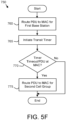
Figure 5F is a schematic flow chart diagram illustrating one alternate embodiment of aPDU pre-processing method 750. Themethod 750 may perform step 510 ofFigure 5A . Themethod 750 may be performed by themobile device 110 and/or theprocessor 405. - The
method 750 starts, and in one embodiment, theprocessor 405routes 760 the PDU 250 to one of theRLC 320/MAC 325 of the MCG and theRLC 320/MAC 325 for the SCG, which is referred to hereafter as afirst cell group 105a. - The
processor 405 may further initiate 765 thetransit timer 255. Theprocessor 405 may determine 770 if thetransit timer 255 times out and the PDU 250 remains in theRLC 320/MAC 325 for thefirst cell group 105a. If thetransit timer 255 does not time out before the PDU 250 is transmitted from the MAC 325 for the first cell group105a, themethod 750 ends. - If the
transit timer 255 times out before the PDU 250 is transmitted from the MAC 325 for thefirst cell group 105a, theprocessor 405 may route 775 the PDU 250 to theRLC 320/MAC 325 of thesecond cell group 105b and themethod 750 ends. - In one embodiment, a base station 120 may direct the
mobile device 110 to employ thetransit timer 255. For example, the base station 120 may set the split bearer configuration indicator 215. In addition, the base station 120 may set therouting mode 230 to themethod 750 and specify a duration for thetransit timer 255. -
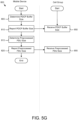
Figure 5G is a schematic flowchart diagram illustrating one embodiment of a split bearermode management method 800. Themethod 800 may determine the routing mode 234 split bearer transmissions from themobile device 110. Themethod 800 may be performed by themobile device 110, the base stations 120 associated with the cell groups 105, and/orprocessors 405 incorporated therein. - The
method 800 starts, and in one embodiment, themobile device processor 405 determines 805 a PDCP buffer size. Themobile device processor 405 may further report 810 the PDCP buffer size to one or more base stations 120 associated with cell groups 105, which receives 850 the PDCP buffer size. - In one embodiment, the
mobile device processor 405 may determine 815 the size of the preprocessed PDU 250 for each cell group 105. Themobile device processor 405 may further report 820 the preprocessed PDU size of each cell group 105 to the associated base station 120, which receives 855 the processed PDU size and themethod 800 ends. - In the past, for the
mobile device 110 to route PDU 250 from thePDCP 315 to theRLC 320/MAC 325 for processing requiresPDCP 315 to know to which cell group 105 the PDCP SDUs would be transmitted before the UL grant is received. Pre-processing by theRLC 320/MAC 325 is not possible for the NR-NR Dual connectivity and LTE-NR Dual connectivity case when UL split bearer operation was applied. When PDCP Buffer Occupancy (BO) is above a configured threshold as defined for Rel-13 UL bearer split operation, for example if ul-DataSplitThreshold is configured and the data available for transmission inPDCP 315 is larger than or equal to ul-DataSplitThreshold, themobile device 110 reports to all cell groups 105 the same PDCP data amount for the purpose of buffer status reporting. As a result, themobile device 110 indicates the data available for transmission inPDCP 315 to both the MAC 325 configured for SCG and the MAC 325 configured for MCG. Transmission takes place according to the received UL grants, with themobile device 110 submitting the PDCP PDU 250 to either the associatedAM RLC 320 configured for SCG or the associatedAM RLC 320 configured for MCG, whichever the PDU 250 were requested by. Hence, themobile device 110 doesn't know which cell group 105 the data will be transmitted to before UL grant reception; therefor pre-processing of PDCP/RLC/MAC header is not possible. The detailedmobile device 110 behavior for UL split bearer operation standardized in Rel.13 can be found in NR specification TS36.323. - The embodiments support split bearer transmission of data from the
mobile device 110 in a split bearer operation to two or more base stations 120/cell groups 105 by routing PDCP PDU 250 toRLC 320/MAC 325 for preprocessing before receiving an UL grant. A limited number of PDCP PDU 250 are routed to theRLC 320/MAC 325 for pre-processing. As a result, when the UL grant is received, the PDU 250 may be rapidly transmitted to the cell group 105, therefore, data transmission to the cell groups 105 is enhanced. By routing only a limited number of PDCP PDU 250 to theRLC 320/MAC 325 for pre-processing themobile device 110 still benefits from being scheduled by both cell groups 105/base stations 120. Themobile device 110 indicates the same PDCP buffer status, i.e. the data available for transmission inPDCP 315 for BSR triggering and Buffer Size calculation, to both the MAC entity 325 configured for SCG and the MAC entity 325 configured for MCG and transmits PDCP SDUs according to received uplink grants. The PDCP PDUs 250 above therouting threshold 225 is kept in the PDCP buffer and only routed to thecorresponding RLC 320/MAC 325 based on the received UL grants. In addition, by not routing all PDCP PDU 250 toRLC 320/MAC 325 for preprocessing, the probability that PDCP PDUs 250 transmitted successfully over one cell group 105 cannot be delivered to an upper layer due to missing PDCP PDUs 250 awaiting transmission via the other cell group 105 is reduced. The amount of routed PDCP PDUs 250 as defined by therouting threshold 225 ensures that a sufficient amount of pre-processing is possible in order to meet the processing timing requirements, i.e. generating the transport block in the given time period. The routing of only a limited number of PDCP PDU 250 enables the pre-processing ofRLC 320 and MAC 325 layer of the gNB cell group(s) by pre-allocating the PDCP PDUs 250 to the cell group(s) 105 before receiving the UL grant. - Embodiments may be practiced in other specific forms. The described embodiments are to be considered in all respects only as illustrative and not restrictive. The scope of the invention is, therefore, indicated by the appended claims rather than by the foregoing description. All changes which come within the meaning and range of equivalency of the claims are to be embraced within their scope.
- Further aspects of the invention are provided by the subject matter of the following numbered clauses:
- 1. A method comprising: detecting, by use of a processor, a split bearer configuration for a mobile device; and in response to detecting the split bearer configuration, routing Packet Data Converge Protocol (PDCP) Protocol Data Units (PDU) to Radio Link Control (RLC)/Medium Access Control (MAC) for the at least two cell groups.
- 2. The method of clause 1, the method further comprising: determining if data that is available for transmission exceeds the data split threshold; and wherein the PDU that does not exceed a routing threshold are pre-routed in response to detecting the split bearer configuration and determining that the data exceeds the data split threshold.
- 3. The method of clause 2, wherein the PDU are routed to a single cell group in response to detecting the split bearer configuration and determining that the data does not exceed the data split threshold.
- 4. The method of clause 1, wherein the PDU that does not exceed a routing threshold are routed.
- 5. The method of clause 1, wherein the routing the PDU comprises: duplicating the PDU, wherein the duplicated PDU does not exceed a routing threshold; routing the duplicated PDU to the RLC/MAC for the first and second cell groups; and in response to transmitting a first PDU to the first cell group, discarding a corresponding duplicate PDU routed to the second cell group.
- 6. The method of clause 1, wherein routing the PDU comprises: duplicating the PDU, wherein the duplicated PDU does not exceed a routing threshold; routing the duplicated PDU to the first and second cell groups; and in response to transmitting a first PDU to the first cell group, transmitting an empty corresponding duplicate PDU to the second cell group.
- 7. The method of clause 1, wherein the method further comprises: initiating a transit timer in response to routing a first PDU to a MAC for a first cell group; and routing the first PDU to a MAC for a second cell group in response to the transit timer timing out before the first PDU is communicated from the MAC for the first cell group.
- 8. An apparatus comprising: a processor performing: detecting a split bearer configuration for a mobile device; and in response to detecting the split bearer configuration, routing Packet Data Converge Protocol (PDCP) Protocol Data Units (PDU) to Radio Link Control (RLC)/Medium Access Control (MAC) for the at least two cell groups.
- 9. The apparatus of clause 8, the processor further performing: determining if data that is available for transmission exceeds the data split threshold; and wherein the PDU that does not exceed a routing threshold are pre-routed in response to detecting the split bearer configuration and determining that the data exceeds the data split threshold.
- 10. The apparatus of clause 9, wherein the PDU are routed to a single cell group in response to detecting the split bearer configuration and determining that the data does not exceed the data split threshold.
- 11. The apparatus of clause 8, wherein the PDU that does not exceed a routing threshold are routed.
- 12. The apparatus of clause 8, wherein the routing the PDU comprises: duplicating the PDU, wherein the duplicated PDU does not exceed a routing threshold; routing the duplicated PDU to the RLC/MAC for the first and second cell groups; and in response to transmitting a first PDU to the first cell group, discarding a corresponding duplicate PDU routed to the second cell group.
- 13. The apparatus of clause 8, wherein routing the PDU comprises: duplicating the PDU, wherein the duplicated PDU does not exceed a routing threshold; routing the duplicated PDU to the first and second cell groups; and in response to transmitting a first PDU to the first cell group, transmitting an empty corresponding duplicate PDU to the second cell group.
- 14. The apparatus of clause 8, wherein the processor further performs: initiating a transit timer in response to routing a first PDU to a MAC for a first cell group; and routing the PDU to a MAC for a second cell group in response to the transit timer timing out before the PDU is communicated from the MAC for the first cell group.
- 15. A program product comprising a computer readable storage medium that stores code executable by a processor, the executable code comprising code to perform: detecting a split bearer configuration for a mobile device; and in response to detecting the split bearer configuration, routing Packet Data Converge Protocol (PDCP) Protocol Data Units (PDU) to Radio Link Control (RLC)/Medium Access Control (MAC) for the at least two cell groups.
- 16. The program product of clause 15, the processor further performing: determining if data that is available for transmission exceeds the data split threshold; and wherein the PDU that does not exceed a routing threshold are pre-routed in response to detecting the split bearer configuration and determining that the data exceeds the data split threshold.
- 17. The program product of clause 16, wherein the PDU are routed to a single cell group in response to detecting the split bearer configuration and determining that the data does not exceed the data split threshold.
- 18. The program product of clause 15, wherein the PDU that does not exceed a routing threshold are routed.
- 19. The program product of clause 15, wherein the routing the PDU comprises: duplicating the PDU, wherein the duplicated PDU exceed a routing threshold; routing the duplicated PDU to the RLC/MAC for the first and second cell groups; and in response to transmitting a first PDU to the first cell group, discarding a corresponding duplicate PDU routed to the second cell group.
- 20. The program product of clause 15, wherein routing the PDU comprises: duplicating the PDU, wherein the duplicated PDU does not exceed a routing threshold; routing the duplicated PDU to the first and second cell groups; and in response to transmitting a first PDU to the first cell group, transmitting an empty corresponding duplicate PDU to the second cell group.
Claims (15)
- A method comprising:detecting, by use of a processor, two Radio Link Control (RLC) entities associated with a Packet Data Converge Protocol (PDCP) and an amount of data available for transmission exceeding a data split threshold; andin response to detecting both the two RLC entities and the amount of data available for transmission exceeding the data split threshold, routing PDCP Protocol Data Units (PDU)s to at least one of the two RLC entities before receiving a request from an associated RLC entity configured for one of a Secondary Cell Group (SCG) and a Master Cell Group (MCG).
- The method of claim 1, wherein an amount of PDUs routed to the at least one of the two RLC entities before the reception of an Uplink (UL) grant are less than a maximum amount.
- The method of claim 1, wherein the PDUs are transmitted to either the MCG or the SCG via a split bearer.
- The method of claim 1, wherein the routing the PDUs comprises:duplicating a PDU to create a first duplicate PDU and a second duplicate PDU; routing the duplicated PDUs to each of a first RLC entity and a second RLC entity; andin response to transmitting the first duplicate PDU, discarding the corresponding second duplicate PDU routed to the second RLC entity.
- The method of claim 1, wherein routing the PDU comprises:duplicating a PDU to create a first duplicate PDU and an empty second duplicate PDU;
routing the duplicated PDU to each of a first RLC entity and a second RLC entity; andin response to transmitting the first duplicate PDU to a first cell group, transmitting the empty corresponding second duplicate PDU to a second cell group, wherein an empty PDU comprises a header and does not comprise data. - The method of claim 1, wherein the method further comprises:initiating a transit timer in response to routing a first PDU from a first RLC entity to a first Medium Access Control (MAC) for a first cell group; androuting the first PDU from a second RLC entity to a second MAC for a second cell group in response to the transit timer timing out before the first PDU is communicated from the first MAC for the first cell group.
- The method of claim 1, wherein each RLC entity communicates PDU through a distinct MAC to a distinct cell group.
- An apparatus comprising:
a processor performing:detecting two Radio Link Control (RLC) entities associated with a Packet Data Converge Protocol (PDCP) and an amount of data available for transmission exceeding a data split threshold; andin response to detecting both the two RLC entities and the amount of data available for transmission exceeding the data split threshold, routing PDCP Protocol Data Units (PDU)s to at least one of the two RLC entities before receiving a request from an associated RLC entity configured for one of a Secondary Cell Group (SCG) and a Master Cell Group (MCG). - The apparatus of claim 8, wherein an amount of PDUs routed to the at least one of the two RLC entities before the reception of an Uplink (UL) grant are less than a maximum amount.
- The apparatus of claim 8, wherein the PDUs are transmitted to either the MCG or the SCG via a split bearer.
- The apparatus of claim 8, wherein the routing the PDUs comprises:duplicating a PDU to create a first duplicate PDU and a second duplicate PDU;routing the duplicated PDUs to each of a first RLC entity and a second RLC entity; andin response to transmitting the first duplicate PDU, discarding the corresponding second duplicate PDU routed to the second RLC entity.
- The apparatus of claim 8, wherein routing the PDU comprises:duplicating a PDU to create a first duplicate PDU and an empty second duplicate PDU;routing the duplicated PDU to each of a first RLC entity and a second RLC entity; andin response to transmitting the first duplicate PDU to a first cell group, transmitting the empty corresponding second duplicate PDU to a second cell group, wherein an empty PDU comprises a header and does not comprise data.
- The apparatus of claim 8, wherein the processor further performs:initiating a transit timer in response to routing a first PDU from a first RLC entity to a first Medium Access Control (MAC) for a first cell group; androuting the first PDU from a second RLC entity to a second MAC for a second cell group in response to the transit timer timing out before the first PDU is communicated from the first MAC for the first cell group.
- A program product comprising a non-transitory computer readable storage medium that stores code executable by a processor, the executable code comprising code to perform:detecting two Radio Link Control (RLC) entities associated with a Packet Data Converge Protocol (PDCP) and an amount of data available for transmission exceeding a data split threshold; andin response to detecting both the two RLC entities and the amount of data available for transmission exceeding the data split threshold, routing PDCP Protocol Data Units (PDU)s to at least one of the two RLC entities before receiving a request from an associated RLC entity configured for one of a Secondary Cell Group (SCG) and a Master Cell Group (MCG).
- The program product of claim 14, wherein an amount of PDUs routed to the at least one of the two RLC entities before the reception of an Uplink (UL) grant are less than a maximum amount.
Applications Claiming Priority (3)
| Application Number | Priority Date | Filing Date | Title |
|---|---|---|---|
| US15/469,325 US10237784B2 (en) | 2017-03-24 | 2017-03-24 | Split bearer packet data converge protocol protocol data unit routing |
| EP18720678.4A EP3603315B1 (en) | 2017-03-24 | 2018-03-26 | Split bearer packet data converge protocol protocol data unit routing |
| PCT/US2018/024367 WO2018176039A1 (en) | 2017-03-24 | 2018-03-26 | Split bearer packet data converge protocol protocol data unit routing |
Related Parent Applications (2)
| Application Number | Title | Priority Date | Filing Date |
|---|---|---|---|
| EP18720678.4A Division EP3603315B1 (en) | 2017-03-24 | 2018-03-26 | Split bearer packet data converge protocol protocol data unit routing |
| EP18720678.4A Division-Into EP3603315B1 (en) | 2017-03-24 | 2018-03-26 | Split bearer packet data converge protocol protocol data unit routing |
Publications (2)
| Publication Number | Publication Date |
|---|---|
| EP4398671A2 true EP4398671A2 (en) | 2024-07-10 |
| EP4398671A3 EP4398671A3 (en) | 2024-10-23 |
Family
ID=62063591
Family Applications (2)
| Application Number | Title | Priority Date | Filing Date |
|---|---|---|---|
| EP18720678.4A Active EP3603315B1 (en) | 2017-03-24 | 2018-03-26 | Split bearer packet data converge protocol protocol data unit routing |
| EP24177027.0A Pending EP4398671A3 (en) | 2017-03-24 | 2018-03-26 | Split bearer packet data converge protocol protocol data unit routing |
Family Applications Before (1)
| Application Number | Title | Priority Date | Filing Date |
|---|---|---|---|
| EP18720678.4A Active EP3603315B1 (en) | 2017-03-24 | 2018-03-26 | Split bearer packet data converge protocol protocol data unit routing |
Country Status (4)
| Country | Link |
|---|---|
| US (3) | US10237784B2 (en) |
| EP (2) | EP3603315B1 (en) |
| CN (1) | CN110402612B (en) |
| WO (1) | WO2018176039A1 (en) |
Families Citing this family (23)
| Publication number | Priority date | Publication date | Assignee | Title |
|---|---|---|---|---|
| CN108702355B (en) * | 2016-02-23 | 2021-08-03 | 瑞典爱立信有限公司 | Method used in user equipment and associated UE |
| US10237784B2 (en) * | 2017-03-24 | 2019-03-19 | Motorola Mobility Llc | Split bearer packet data converge protocol protocol data unit routing |
| US10536878B2 (en) * | 2017-03-24 | 2020-01-14 | Mediatek Inc. | User equipment and methods for PDCP duplication in 5G RAN |
| CN110832927B (en) * | 2017-04-02 | 2023-04-04 | 鸿颖创新有限公司 | Method and wireless communication system for logical channel data packet transmission |
| US10721650B2 (en) * | 2017-06-09 | 2020-07-21 | Samsung Electronics Co., Ltd. | Method and apparatus for accelerating data processing in wireless communication system |
| WO2018227482A1 (en) * | 2017-06-15 | 2018-12-20 | Oppo广东移动通信有限公司 | Resource scheduling method and apparatus for logical channel |
| WO2018232207A1 (en) * | 2017-06-16 | 2018-12-20 | Mediatek Singapore Pte. Ltd. | Method and apparatus for handling data duplication in mobile communications |
| CN110572882B (en) * | 2017-08-11 | 2021-03-05 | 华为技术有限公司 | A communication method, apparatus, computer storage medium and communication system |
| US11202226B2 (en) * | 2017-09-07 | 2021-12-14 | Huawei Technologies Co., Ltd. | Uplink data transmission method, timer configuration method, and related device |
| EP3512140A1 (en) * | 2018-01-11 | 2019-07-17 | Comcast Cable Communications LLC | Cell configuration for packet duplication |
| KR102598001B1 (en) * | 2018-06-18 | 2023-11-06 | 삼성전자 주식회사 | A method and apparatus for efficient packet duplication transmission in a mobile communication system |
| CN112840699A (en) * | 2018-09-29 | 2021-05-25 | Oppo广东移动通信有限公司 | A signaling processing method, device and storage medium |
| CN111132375B (en) * | 2018-10-31 | 2021-09-10 | 维沃移动通信有限公司 | Control method for separated load bearing and related equipment |
| WO2020093230A1 (en) * | 2018-11-06 | 2020-05-14 | Qualcomm Incorporated | Delivering out-of-order packet data convergence protocol (pdcp) protocol data units (pdus) to pdcp |
| WO2020159427A1 (en) * | 2019-02-01 | 2020-08-06 | Telefonaktiebolaget Lm Ericsson (Publ) | First communication device, second communication device and methods performed therein for controlling transmission |
| WO2020191772A1 (en) * | 2019-03-28 | 2020-10-01 | Nokia Shanghai Bell Co., Ltd. | Dynamic threshold for dual-connectivity in unlicensed spectrum |
| US12238580B2 (en) * | 2019-06-19 | 2025-02-25 | Qualcomm Incorporated | System and method for flow control and acknowledgement transmission |
| CN112188553B (en) * | 2019-07-01 | 2022-03-25 | 大唐移动通信设备有限公司 | Data transmission method and device of 5G system |
| KR102789533B1 (en) | 2019-07-17 | 2025-04-03 | 삼성전자 주식회사 | Electronic device for transmitting data by using split bearer and method for the same |
| KR102808951B1 (en) * | 2019-07-17 | 2025-05-16 | 삼성전자 주식회사 | Electronic device for transmitting data by using split bearer and method for the same |
| US11323983B2 (en) | 2019-10-01 | 2022-05-03 | Qualcomm Incorporated | Efficient usage of resources in an uplink split bearer configuration |
| CN114980301B (en) * | 2019-11-08 | 2024-02-13 | Oppo广东移动通信有限公司 | Clock synchronization method and related devices |
| EP4030819B1 (en) * | 2019-11-29 | 2024-05-08 | Guangdong Oppo Mobile Telecommunications Corp., Ltd. | Wireless communication method, terminal device, and network device |
Family Cites Families (99)
| Publication number | Priority date | Publication date | Assignee | Title |
|---|---|---|---|---|
| EP1968277B1 (en) * | 2001-11-24 | 2011-03-16 | LG Electronics, Inc. | Method for transmitting packet data in compressed form in a communication system |
| US8315243B2 (en) * | 2007-08-14 | 2012-11-20 | Qualcomm Incorporated | Transport of PDCP control PDUs within MAC frames |
| BRPI0816033B1 (en) * | 2007-09-28 | 2020-11-10 | Interdigital Patent Holdings, Inc | method for regulating the transmission of packet data packet convergence protocol in a wireless communication |
| PL2208301T3 (en) * | 2007-10-01 | 2019-07-31 | Interdigital Patent Holdings, Inc. | Method and apparatus for pcdp discard |
| US8958411B2 (en) * | 2008-03-17 | 2015-02-17 | Lg Electronics Inc. | Method of transmitting RLC data |
| US20100165992A1 (en) * | 2008-12-29 | 2010-07-01 | Moxa Inc. | Transmission system, device and method that prevent data loss |
| KR101669966B1 (en) * | 2009-05-11 | 2016-10-27 | 엘지전자 주식회사 | Method for transmitting and receiving duplicated data in a multi-carrier supported wireless communication system and appratus for the same |
| KR101480929B1 (en) * | 2010-02-12 | 2015-01-12 | 인터디지탈 테크날러지 코포레이션 | Data split between multiple sites |
| CN102293029B (en) * | 2011-04-26 | 2014-01-01 | 华为技术有限公司 | Method and device for recovering user plane buffer memory |
| US9264353B2 (en) * | 2011-09-22 | 2016-02-16 | Qualcomm Incorporated | Dynamic subflow control for a multipath transport connection in a wireless communication network |
| US20130088960A1 (en) * | 2011-10-07 | 2013-04-11 | Futurewei Technologies, Inc. | System and Method for Information Delivery with Multiple Point Transmission |
| KR101708574B1 (en) * | 2012-08-23 | 2017-02-20 | 인터디지탈 패튼 홀딩스, 인크 | Operating with multiple schedulers in a wireless system |
| EP2982173B1 (en) * | 2013-04-02 | 2018-05-02 | LG Electronics Inc. | Method for performing a cell change procedure in a wireless communication system and a device therefor |
| US9730129B2 (en) * | 2013-04-12 | 2017-08-08 | Nokia Solutions And Networks Oy | PDCP operation for dual connection |
| KR102051504B1 (en) * | 2013-05-15 | 2019-12-03 | 삼성전자주식회사 | Method and apparatus for transmitting and receiving data packets in a wireless communication system |
| US9497682B2 (en) * | 2013-06-07 | 2016-11-15 | Intel Corporation | Central processing unit and methods for supporting coordinated multipoint transmission in an LTE network |
| WO2015012546A1 (en) * | 2013-07-26 | 2015-01-29 | Lg Electronics Inc. | Method for triggering a burffer status reporting and a device therefor |
| EP3031281B1 (en) * | 2013-08-09 | 2021-04-14 | Nokia Solutions and Networks Oy | Use of packet status report from secondary base station to master base station in wireless network |
| US20150089382A1 (en) * | 2013-09-26 | 2015-03-26 | Wu-chi Feng | Application context migration framework and protocol |
| US10362590B2 (en) * | 2013-09-26 | 2019-07-23 | Kt Corporation | Method for transmitting uplink data and apparatus for same |
| EP2854444A1 (en) * | 2013-09-27 | 2015-04-01 | Panasonic Intellectual Property Corporation of America | Efficient uplink scheduling mechanism for dual connectivity |
| US9756531B2 (en) * | 2013-09-30 | 2017-09-05 | Lg Electronics Inc. | Method for determining radio resource control configuration in a wireless communication system supporting dual connectivity and apparatus thereof |
| US9924405B2 (en) * | 2013-10-04 | 2018-03-20 | Industrial Technology Research Institute | Method for buffer status report in dual connectivity |
| US10764870B2 (en) * | 2013-10-21 | 2020-09-01 | Lg Electronics Inc. | Method for transmitting uplink data in a dual connectivity and a device therefor |
| KR102157798B1 (en) * | 2013-10-29 | 2020-09-18 | 삼성전자 주식회사 | Method and apparatus for transmitting and receiving a data using a plurality of carriers in mobilre communication system |
| WO2015065080A1 (en) * | 2013-11-01 | 2015-05-07 | Samsung Electronics Co., Ltd. | Method and apparatus for reconfiguring a bearer |
| GB2520923B (en) * | 2013-11-01 | 2017-07-26 | Samsung Electronics Co Ltd | Bearer reconfiguration |
| CN103580966A (en) * | 2013-11-04 | 2014-02-12 | 惠州Tcl移动通信有限公司 | Wireless link and wire link parallel data transmission method and system |
| US10433176B2 (en) * | 2013-11-11 | 2019-10-01 | Telefonaktiebolaget Lm Ericsson (Publ) | Discarding a duplicate protocol data unit associated with a data transmission via a first signaling radio bearer or a second signaling radio bearer |
| SG10202009141VA (en) * | 2014-01-29 | 2020-11-27 | Interdigital Patent Holdings Inc | Uplink transmissions in wireless communications |
| CN110784919B (en) * | 2014-01-29 | 2022-10-11 | 三星电子株式会社 | Method and apparatus for transmitting data based on multiple carriers in mobile communication system |
| KR20150090804A (en) * | 2014-01-29 | 2015-08-06 | 삼성전자주식회사 | Method and apparatus for transmitting and receiving data using a plurality of carriers in mobilre communication system |
| US20150215840A1 (en) * | 2014-01-30 | 2015-07-30 | Intel IP Corporation | Systems, methods and devices for application specific routing in dual connectivity |
| US10321502B2 (en) * | 2014-01-31 | 2019-06-11 | Sharp Kabushiki Kaisha | Terminal device, base station apparatus, communication system, communication control method, and integrated circuit |
| US10034186B2 (en) * | 2014-02-09 | 2018-07-24 | Lg Electronics Inc. | Method for calculating and submitting an amount of data available for transmission and a device therefor |
| US9635655B2 (en) * | 2014-02-24 | 2017-04-25 | Intel Corporation | Enhancement to the buffer status report for coordinated uplink grant allocation in dual connectivity in an LTE network |
| WO2015127670A1 (en) * | 2014-02-28 | 2015-09-03 | 华为技术有限公司 | Data retransmission method and device |
| US9596707B2 (en) * | 2014-03-13 | 2017-03-14 | Intel Corporation | Bearer mobility and splitting in a radio access network-based, 3rd generation partnership project network having an integrated wireless local area network |
| JP2015177548A (en) * | 2014-03-14 | 2015-10-05 | 宏達國際電子股▲ふん▼有限公司 | Connection change method applicable to user equipment and base station |
| CN104935413B (en) * | 2014-03-19 | 2019-12-27 | 夏普株式会社 | Packet data convergence protocol PDCP entity and execution method thereof |
| US9949297B2 (en) * | 2014-03-19 | 2018-04-17 | Sharp Kabushiki Kaisha | Terminal device, base station apparatus, communication system, communication method, and integrated circuit |
| CN103888222B (en) * | 2014-03-21 | 2017-09-15 | 电信科学技术研究院 | A data packet processing method and device |
| JP6084754B2 (en) * | 2014-05-08 | 2017-02-22 | 京セラ株式会社 | Cellular base station, user terminal, and processor |
| US9838282B2 (en) * | 2014-05-09 | 2017-12-05 | Telefonaktiebolaget Lm Ericsson (Publ) | PDCP and flow control for split bearer |
| CN105282783B (en) * | 2014-07-22 | 2020-03-27 | 中兴通讯股份有限公司 | Method, device and system for reporting power headroom report in dual connectivity |
| JP5852193B1 (en) * | 2014-08-06 | 2016-02-03 | 株式会社Nttドコモ | User equipment |
| HUE047983T2 (en) * | 2014-08-06 | 2020-05-28 | Ntt Docomo Inc | User equipment |
| JP6422514B2 (en) * | 2014-08-07 | 2018-11-14 | エルジー エレクトロニクス インコーポレイティド | Method and apparatus for processing a PDCP PDU in a double connection system by a terminal |
| US10142799B2 (en) * | 2014-08-19 | 2018-11-27 | Qualcomm Incorporated | Multicasting traffic using multi-connectivity |
| US9497299B2 (en) * | 2014-09-18 | 2016-11-15 | Blackberry Limited | Configuring a discard timer |
| US10440765B2 (en) * | 2014-09-24 | 2019-10-08 | Apple Inc. | Multi-RAT radio resource aggregation with split bearer support |
| US10219317B2 (en) * | 2014-09-25 | 2019-02-26 | Lg Electronics Inc. | Method for handling of data transmission and reception for SeNB related bearer release at a user equipment in a dual connectivity system and device therefor |
| US9699800B2 (en) * | 2014-10-23 | 2017-07-04 | Intel IP Corporation | Systems, methods, and appartatuses for bearer splitting in multi-radio HetNet |
| JP2016092700A (en) * | 2014-11-07 | 2016-05-23 | 株式会社Nttドコモ | User device and duplicate packet processing method |
| US9743319B2 (en) * | 2014-11-12 | 2017-08-22 | Htc Corporation | Device and method of handling network configurations |
| US10219178B2 (en) * | 2014-12-02 | 2019-02-26 | Cisco Technology, Inc. | Channel aggregation using Wi-Fi |
| EP3051916B1 (en) * | 2015-01-21 | 2020-11-04 | HTC Corporation | Device and method of handling communication operation with multiple base stations |
| US10869344B2 (en) * | 2015-03-19 | 2020-12-15 | Acer Incorporated | Method of radio bearer transmission in dual connectivity |
| US10264481B2 (en) * | 2015-03-19 | 2019-04-16 | Qualcomm Incorporated | Techniques for managing power operation modes of a user equipment (UE) communicating with a plurality of radio access technologies (RATs) |
| JP6425800B2 (en) * | 2015-04-10 | 2018-11-21 | 京セラ株式会社 | User terminal, communication method and processor |
| EP3282760B1 (en) * | 2015-04-10 | 2020-06-03 | Kyocera Corporation | Method for controlling handover procedure and base station |
| US20160308776A1 (en) * | 2015-04-20 | 2016-10-20 | Qualcomm Incorporated | Enhancements for pdcp layer |
| CN106304342B (en) * | 2015-05-14 | 2020-02-04 | 电信科学技术研究院 | Method and equipment for reporting |
| US20160338074A1 (en) * | 2015-05-15 | 2016-11-17 | Mediatek Inc. | Method and Apparatus of Latency Measurement for LTE-WLAN Aggregation |
| WO2016191985A1 (en) * | 2015-05-29 | 2016-12-08 | Siemens Aktiengesellschaft | Method and device for redundant data transmission over multiple wireless links |
| EP3318097B1 (en) * | 2015-07-01 | 2020-11-11 | LG Electronics Inc. | Method for transmitting data in dual connectivity and a device therefor |
| WO2017007147A1 (en) * | 2015-07-06 | 2017-01-12 | Lg Electronics Inc. | Method for triggering buffer status report in dual connectivity and a device therefor |
| WO2017007171A1 (en) * | 2015-07-06 | 2017-01-12 | Lg Electronics Inc. | Method for triggering a buffer status reporting in dual connectivity and a device therefor |
| US10405225B2 (en) * | 2015-07-08 | 2019-09-03 | Lg Electronics Inc. | Method for triggering a buffer status report in dual connectivity and a device therefor |
| JP2017028589A (en) * | 2015-07-24 | 2017-02-02 | 富士通株式会社 | Communication device, radio communication device, and communication method |
| US9762482B2 (en) * | 2015-07-30 | 2017-09-12 | Qualcomm Incorporated | Smart processing of WWAN packets transmitted over WLAN |
| US10321513B2 (en) * | 2015-08-17 | 2019-06-11 | Samsung Electronics Co., Ltd | Method for PDCP control PDU transmission by user equipment (UE) |
| KR102460350B1 (en) * | 2015-11-06 | 2022-10-28 | 삼성전자주식회사 | Method and apparatus for transmitting and receiving data in communication system |
| CN105517020B (en) * | 2015-12-16 | 2018-09-28 | 京信通信系统(中国)有限公司 | A kind of method and device of update configuration parameter |
| CN106937396B (en) * | 2015-12-31 | 2020-06-30 | 上海无线通信研究中心 | Uplink resource scheduling method, terminal and base station |
| EP3430753A4 (en) * | 2016-03-18 | 2019-11-13 | Qualcomm Incorporated | FLEXIBLE DETERMINATION OF A REORDERING VALUE FOR RADIO LINK CONTROL PROTOCOL DATA UNIT RETRANSMISSIONS |
| US10904793B2 (en) * | 2016-03-23 | 2021-01-26 | Apple Inc. | Systems, methods and devices for uplink bearer split using wireless local area network aggregation |
| WO2017171344A1 (en) * | 2016-03-30 | 2017-10-05 | Lg Electronics Inc. | Method and user equipment device for transmitting buffer status report |
| US10045360B2 (en) * | 2016-04-15 | 2018-08-07 | Mediatek Inc. | Macro-assisted multi-connectivity scheme in multi-RAT cellular systems |
| EP3293910B1 (en) * | 2016-09-08 | 2021-09-08 | HTC Corporation | Device and method of handling cellular-wlan aggregation after handover |
| US10485000B2 (en) * | 2016-09-28 | 2019-11-19 | Sharp Kabushiki Kaisha | User equipment, base stations and methods |
| EP3535877A1 (en) * | 2016-11-04 | 2019-09-11 | Telefonaktiebolaget LM Ericsson (publ) | Enabling efficient handling of redundant packet copies in a wireless communication system |
| WO2018143600A1 (en) * | 2017-02-02 | 2018-08-09 | Lg Electronics Inc. | Method and device for transmitting data unit |
| US10986530B2 (en) * | 2017-03-10 | 2021-04-20 | Kt Corporation | Buffer state report transmission method and device therefor |
| US10716094B2 (en) * | 2017-03-23 | 2020-07-14 | Ofinno, Llc | Packet duplication in a wireless device and wireless network |
| US10536878B2 (en) * | 2017-03-24 | 2020-01-14 | Mediatek Inc. | User equipment and methods for PDCP duplication in 5G RAN |
| US10237784B2 (en) * | 2017-03-24 | 2019-03-19 | Motorola Mobility Llc | Split bearer packet data converge protocol protocol data unit routing |
| BR112019022214A2 (en) * | 2017-04-24 | 2020-05-12 | Motorola Mobility Llc | DUPLICATION OF PDCP PDUS TO A RADIO CARRIER |
| CN108809548B (en) * | 2017-05-05 | 2021-08-20 | 华为技术有限公司 | Copy transmission method and related equipment |
| EP3635896B1 (en) * | 2017-06-02 | 2022-11-30 | Motorola Mobility LLC | Determining data available for transmission |
| SG11201911247VA (en) * | 2017-07-21 | 2020-02-27 | Guangdong Oppo Mobile Telecommunications Corp Ltd | Method and device for processing data |
| WO2019023862A1 (en) * | 2017-07-31 | 2019-02-07 | Oppo广东移动通信有限公司 | Data processing method and product related thereto |
| US11350445B2 (en) * | 2017-08-10 | 2022-05-31 | Kyocera Corporation | Communication control method for controlling a user equipment to perform early data transmission |
| SG11201811738UA (en) * | 2017-08-10 | 2019-03-28 | Lg Electronics Inc | Method for performing a re-establishment of a pdcp entity associated with um rlc entity in wireless communication system and a device therefor |
| US10785778B2 (en) * | 2017-08-12 | 2020-09-22 | Lg Electronics Inc. | Method for handling for an uplink split operation in wireless communication system and a device therefor |
| WO2019137404A1 (en) * | 2018-01-10 | 2019-07-18 | Fg Innovation Ip Company Limited | Methods and devices for packet data convergence protocol (pdcp) data transmission in wireless communication systems |
| WO2019153139A1 (en) * | 2018-02-07 | 2019-08-15 | Oppo广东移动通信有限公司 | Radio link failure handling method and related product |
| US11246178B2 (en) * | 2018-07-06 | 2022-02-08 | Apple Inc. | Balancing uplink transmissions for dual connectivity |
| WO2020175879A1 (en) * | 2019-02-25 | 2020-09-03 | Samsung Electronics Co., Ltd. | Method and apparatus for handling uplink bearer split configuration in multi-connectivity system |
-
2017
- 2017-03-24 US US15/469,325 patent/US10237784B2/en active Active
-
2018
- 2018-03-26 EP EP18720678.4A patent/EP3603315B1/en active Active
- 2018-03-26 EP EP24177027.0A patent/EP4398671A3/en active Pending
- 2018-03-26 WO PCT/US2018/024367 patent/WO2018176039A1/en not_active Ceased
- 2018-03-26 CN CN201880017141.0A patent/CN110402612B/en active Active
- 2018-12-19 US US16/226,379 patent/US10813005B2/en active Active
-
2020
- 2020-09-16 US US17/023,047 patent/US11700548B2/en active Active
Also Published As
| Publication number | Publication date |
|---|---|
| US10237784B2 (en) | 2019-03-19 |
| CN110402612B (en) | 2024-04-26 |
| EP4398671A3 (en) | 2024-10-23 |
| EP3603315C0 (en) | 2024-07-17 |
| EP3603315A1 (en) | 2020-02-05 |
| US10813005B2 (en) | 2020-10-20 |
| WO2018176039A1 (en) | 2018-09-27 |
| US20180279173A1 (en) | 2018-09-27 |
| US20210007009A1 (en) | 2021-01-07 |
| EP3603315B1 (en) | 2024-07-17 |
| US20190124551A1 (en) | 2019-04-25 |
| US11700548B2 (en) | 2023-07-11 |
| CN110402612A (en) | 2019-11-01 |
Similar Documents
| Publication | Publication Date | Title |
|---|---|---|
| US11700548B2 (en) | Split bearer packet data converge protocol protocol data unit routing | |
| US11910223B2 (en) | Packet data converge protocol protocol data unit pre-processing | |
| KR101638195B1 (en) | A method and appratus for flow control between rlc and pdcp in a communication | |
| WO2018082433A1 (en) | Method and system for sending and receiving data | |
| CN107359968B (en) | Data transmission method and device for single-layer serial number | |
| WO2018228549A1 (en) | User equipment and method to support data preprocessing | |
| WO2016119160A1 (en) | Data transmission method and device | |
| WO2016019580A1 (en) | Method and device for reporting buffer status report | |
| CN101686564A (en) | Method and apparatus for generating buffer status in a wireless communication system | |
| CN111937356B (en) | Central unit and distributed unit of radio network node and method thereof | |
| CN108810927B (en) | Method and system for processing a scheduling request | |
| CN116326120A (en) | Communication method and device | |
| CN113015247B (en) | Media access control protocol data unit processing method, terminal and medium | |
| CN107359972B (en) | A kind of data receiver method and device | |
| CN104661315A (en) | Method and user equipment for submitting buffering-state reports | |
| CN108012289A (en) | The sending method and device of PDU, and the method for reseptance and device of PDU | |
| EP3384620B1 (en) | Bidirectional subframe communication | |
| CN111726865B (en) | Medium access control service data unit processing and receiving method, equipment and device | |
| CN102938937A (en) | Method, device and system for reporting scheduling information | |
| CN116033488A (en) | Method, device, processor and computer readable storage medium for realizing RLC reporting to MAC of data quantity to be transmitted | |
| WO2018059414A1 (en) | Data transmission method and device |
Legal Events
| Date | Code | Title | Description |
|---|---|---|---|
| PUAI | Public reference made under article 153(3) epc to a published international application that has entered the european phase |
Free format text: ORIGINAL CODE: 0009012 |
|
| STAA | Information on the status of an ep patent application or granted ep patent |
Free format text: STATUS: THE APPLICATION HAS BEEN PUBLISHED |
|
| AC | Divisional application: reference to earlier application |
Ref document number: 3603315 Country of ref document: EP Kind code of ref document: P |
|
| AK | Designated contracting states |
Kind code of ref document: A2 Designated state(s): AL AT BE BG CH CY CZ DE DK EE ES FI FR GB GR HR HU IE IS IT LI LT LU LV MC MK MT NL NO PL PT RO RS SE SI SK SM TR |
|
| PUAL | Search report despatched |
Free format text: ORIGINAL CODE: 0009013 |
|
| AK | Designated contracting states |
Kind code of ref document: A3 Designated state(s): AL AT BE BG CH CY CZ DE DK EE ES FI FR GB GR HR HU IE IS IT LI LT LU LV MC MK MT NL NO PL PT RO RS SE SI SK SM TR |
|
| RIC1 | Information provided on ipc code assigned before grant |
Ipc: H04W 76/15 20180101AFI20240918BHEP |
|
| STAA | Information on the status of an ep patent application or granted ep patent |
Free format text: STATUS: REQUEST FOR EXAMINATION WAS MADE |
|
| 17P | Request for examination filed |
Effective date: 20250324 |
|
| STAA | Information on the status of an ep patent application or granted ep patent |
Free format text: STATUS: EXAMINATION IS IN PROGRESS |
|
| 17Q | First examination report despatched |
Effective date: 20260316 |