EP4398218A1 - Flight planning through data driven charting - Google Patents
Flight planning through data driven charting Download PDFInfo
- Publication number
- EP4398218A1 EP4398218A1 EP24151029.6A EP24151029A EP4398218A1 EP 4398218 A1 EP4398218 A1 EP 4398218A1 EP 24151029 A EP24151029 A EP 24151029A EP 4398218 A1 EP4398218 A1 EP 4398218A1
- Authority
- EP
- European Patent Office
- Prior art keywords
- processor
- data
- represented
- selectable
- features
- Prior art date
- Legal status (The legal status is an assumption and is not a legal conclusion. Google has not performed a legal analysis and makes no representation as to the accuracy of the status listed.)
- Pending
Links
Images

Classifications
-
- G—PHYSICS
- G08—SIGNALLING
- G08G—TRAFFIC CONTROL SYSTEMS
- G08G5/00—Traffic control systems for aircraft
- G08G5/30—Flight plan management
- G08G5/34—Flight plan management for flight plan modification
-
- G—PHYSICS
- G06—COMPUTING OR CALCULATING; COUNTING
- G06T—IMAGE DATA PROCESSING OR GENERATION, IN GENERAL
- G06T19/00—Manipulating three-dimensional [3D] models or images for computer graphics
- G06T19/006—Mixed reality
-
- G—PHYSICS
- G08—SIGNALLING
- G08G—TRAFFIC CONTROL SYSTEMS
- G08G5/00—Traffic control systems for aircraft
- G08G5/20—Arrangements for acquiring, generating, sharing or displaying traffic information
- G08G5/21—Arrangements for acquiring, generating, sharing or displaying traffic information located onboard the aircraft
-
- G—PHYSICS
- G08—SIGNALLING
- G08G—TRAFFIC CONTROL SYSTEMS
- G08G5/00—Traffic control systems for aircraft
- G08G5/50—Navigation or guidance aids
- G08G5/54—Navigation or guidance aids for approach or landing
-
- G—PHYSICS
- G08—SIGNALLING
- G08G—TRAFFIC CONTROL SYSTEMS
- G08G5/00—Traffic control systems for aircraft
- G08G5/70—Arrangements for monitoring traffic-related situations or conditions
- G08G5/76—Arrangements for monitoring traffic-related situations or conditions for monitoring atmospheric conditions
-
- G—PHYSICS
- G01—MEASURING; TESTING
- G01C—MEASURING DISTANCES, LEVELS OR BEARINGS; SURVEYING; NAVIGATION; GYROSCOPIC INSTRUMENTS; PHOTOGRAMMETRY OR VIDEOGRAMMETRY
- G01C23/00—Combined instruments indicating more than one navigational value, e.g. for aircraft; Combined measuring devices for measuring two or more variables of movement, e.g. distance, speed or acceleration
Definitions
- inventive concepts are not limited in their application to the arrangement of the components or steps or methodologies set forth in the following description or illustrated in the drawings.
- inventive concepts disclosed herein may be practiced without these specific details.
- well-known features may not be described in detail to avoid unnecessarily complicating the instant disclosure.
- inventive concepts disclosed herein are capable of other embodiments or of being practiced or carried out in various ways. Also, it is to be understood that the phraseology and terminology employed herein is for the purpose of description and should not be regarded as limiting.
- any reference to "one embodiment,” or “some embodiments” means that a particular element, feature, structure, or characteristic described in connection with the embodiment is included in at least one embodiment of the inventive concepts disclosed herein.
- the appearances of the phrase “in at least one embodiment” in the specification does not necessarily refer to the same embodiment.
- Embodiments of the inventive concepts disclosed may include one or more of the features expressly described or inherently present herein, or any combination or sub-combination of two or more such features.
Landscapes
- Engineering & Computer Science (AREA)
- Physics & Mathematics (AREA)
- General Physics & Mathematics (AREA)
- Aviation & Aerospace Engineering (AREA)
- General Engineering & Computer Science (AREA)
- Computer Hardware Design (AREA)
- Computer Graphics (AREA)
- Software Systems (AREA)
- Theoretical Computer Science (AREA)
- Traffic Control Systems (AREA)
- Radar, Positioning & Navigation (AREA)
- Remote Sensing (AREA)
- Life Sciences & Earth Sciences (AREA)
- Atmospheric Sciences (AREA)
Abstract
A system and method are provided for selecting features from a digital chart, and entering corresponding flight plan amendments into a flight plan by direct transfer to an FMS. Based on the selection, the system may prompt the user for subsequent selections. Digital charts are generated in dynamically or in real-time according to a set of databases, including the databased used by the FMS. Elements within the databases are characterized so that the flight crew can select which elements are displayed. Features in the digital chart may be made selectable or unselectable based on a filtering process. The filtering process may be based on environmental variables, aircraft capabilities, safety tolerances, etc.
Description
- Existing flight management systems (FMS) receive data from databases such as ARINC 424 aeronautical navigation database that defines different navigational aids, airports, approaches, procedures, etc. in a computer readable format. Such data is not graphical, and therefore not intended to aid the human crew.
- Pilots have traditionally utilized separate charts with human readable representations of the same information. Such charts are becoming digitized, and some are not only pixel representations of the data, but object representations of data which is embedded in the digital chart: rather than just drawing stored lines representing a runway, the rendering device may identify embedded information in the electronic chart corresponding to features of the runway (or text boxes, communications frequencies, airspace representations, etc.), and what the rendered elements actually represent, such as flight segments and their course headings, various navigation radio frequencies, distance measurements to a given point, etc.
- Existing FMS, while having access to similar data, does not interact with digital charts or utilize embedded data from digital charts. FMS utilizes a separate interface to provide flight plan options to the flight crew; the flight crew then determines the appropriate option with respect to charts and other avionics systems and makes selections within the FMS interface.
- It would be advantageous to have a system that allows embedded data from digital charts to be directly used within an FMS interface to make amendments to a flight plan.
- In one aspect, embodiments of the inventive concepts disclosed herein are directed to a system and method of selecting representations from a digital chart, and entering corresponding flight plan amendments into a flight plan by direct transfer to an FMS. Based on the selection, the system may prompt the user for subsequent selections.
- In a further aspect, digital charts are generated in dynamically or in real-time according to a set of databases, including the databased used by the FMS. Elements within the databases are characterized so that the flight crew can select which elements are displayed.
- In a further aspect, representations in the digital chart may be made selectable or unselectable based on a filtering process. The filtering process may be based on environmental variables, aircraft capabilities, safety tolerances, etc.
- It is to be understood that both the foregoing general description and the following detailed description are exemplary and explanatory only and should not restrict the scope of the claims. The accompanying drawings, which are incorporated in and constitute a part of the specification, illustrate exemplary embodiments of the inventive concepts disclosed herein and together with the general description, serve to explain the principles.
- The numerous advantages of the embodiments of the inventive concepts disclosed herein may be better understood by those skilled in the art by reference to the accompanying figures in which:
- FIG. 1
- shows a block diagram of a system suitable for implementing an exemplary embodiment;
- FIG. 2
- shows a digital chart according to an exemplary embodiment;
- FIG. 3
- shows a flowchart of a method according to an exemplary embodiment;
- Before explaining various embodiments of the inventive concepts disclosed herein in detail, it is to be understood that the inventive concepts are not limited in their application to the arrangement of the components or steps or methodologies set forth in the following description or illustrated in the drawings. In the following detailed description of embodiments of the instant inventive concepts, numerous specific details are set forth in order to provide a more thorough understanding of the inventive concepts. However, it will be apparent to one of ordinary skill in the art having the benefit of the instant disclosure that the inventive concepts disclosed herein may be practiced without these specific details. In other instances, well-known features may not be described in detail to avoid unnecessarily complicating the instant disclosure. The inventive concepts disclosed herein are capable of other embodiments or of being practiced or carried out in various ways. Also, it is to be understood that the phraseology and terminology employed herein is for the purpose of description and should not be regarded as limiting.
- As used herein a letter following a reference numeral is intended to reference an embodiment of a feature or element that may be similar, but not necessarily identical, to a previously described element or feature bearing the same reference numeral (e.g., 1, 1a, 1b). Such shorthand notations are used for purposes of convenience only, and should not be construed to limit the inventive concepts disclosed herein in any way unless expressly stated to the contrary.
- Further, unless expressly stated to the contrary, "or" refers to an inclusive or and not to an exclusive or. For example, a condition A or B is satisfied by anyone of the following: A is true (or present) and B is false (or not present), A is false (or not present) and B is true (or present), and both A and B are true (or present).
- In addition, use of "a" or "an" are employed to describe elements and components of embodiments of the instant inventive concepts. This is done merely for convenience and to give a general sense of the inventive concepts, and "a" and "an" are intended to include one or at least one and the singular also includes the plural unless it is obvious that it is meant otherwise.
- Also, while various components may be depicted as being connected directly, direct connection is not a requirement. Components may be in data communication with intervening components that are not illustrated or described.
- Finally, as used herein any reference to "one embodiment," or "some embodiments" means that a particular element, feature, structure, or characteristic described in connection with the embodiment is included in at least one embodiment of the inventive concepts disclosed herein. The appearances of the phrase "in at least one embodiment" in the specification does not necessarily refer to the same embodiment. Embodiments of the inventive concepts disclosed may include one or more of the features expressly described or inherently present herein, or any combination or sub-combination of two or more such features.
- Broadly, embodiments of the inventive concepts disclosed herein are directed to a system and method of selecting representations from a digital chart, and entering corresponding flight plan amendments into a flight plan by direct transfer to an FMS. Based on the selection, the system may prompt the user for subsequent selections. Digital charts are generated in dynamically or in real-time according to a set of databases, including the databased used by the FMS. Elements within the databases are characterized so that the flight crew can select which elements are displayed. Representations in the digital chart may be made selectable or unselectable based on a filtering process. The filtering process may be based on environmental variables, aircraft capabilities, safety tolerances, etc.
- Referring to
FIG. 1 , a block diagram of a system suitable for implementing an exemplary embodiment is shown. The system (which may be embodied in an FMS or configured to interact with an FMS) includes aprocessor 100, amemory 102 connected to theprocessor 100 for embodying processor executable code, adisplay 106 in data communication with theprocessor 100, and adata storage element 104 in data communication with theprocessor 100. - In at least one embodiment, the
processor 100 retrieves a digital chart from thedata storage element 104. The digital chart may comprise data corresponding to elements of the symbology represented on the digital chart. Alternatively, or in addition, theprocessor 100 may retrieve a digital chart and access a separate database of aeronautically significant features (i.e., the ARINC 424 database). Theprocessor 100 may correlate the aeronautically significant features to corresponding representations on the digital chart. - The
processor 100 may define selectable input regions for each representation on the digital chart and define sets of flight plan inputs based on the aeronautically significant features. A pilot or flight crew member may select a representation from the digital chart, and theprocessor 100 will retrieve the corresponding set of flight plan inputs and implement amendments to a current flight plan according to the flight plan inputs to incorporate the selected feature into the current flight plan. For example, a digital chart may include an approach to a runway. The digital chart may include embedded data pertaining to the approach (or the processor may access such data via a separate database) such as a runway, heading, and altitude. Theprocessor 100 may then produce an amendment to a flight plan to execute the approach, and either incorporate the amendment or send it to an FMS to incorporate the amendment. - In at least one embodiment, the
processor 100 may enable or disable the selectable regions based on certain criteria. For example, when producing the selectable regions, theprocessor 100 may compare the flight plan inputs with known capabilities of the aircraft. If the flight plan inputs are not within the capabilities of the aircraft, the selectable region may be disabled. In at least one embodiment, disabled selectable regions may be rendered in a visual distinct manner to indicate to the flight crew that the corresponding features are not useable. In at least one embodiment, theprocessor 100 may continuously monitor environmental criteria and enable or disable selectable representations in the digital chart. - Criteria for determining if selectable representations should be enabled or disabled may include environmental criteria (i.e., weather conditions such as ice, wind, storm cells, visibility, etc.), aircraft criteria (i.e., aircraft capabilities such as climb rate, runway size requirement, etc.), and circumstantial criteria (i.e., does a safe abort option exist, is the feature currently out of service, etc.). Furthermore, the
processor 100 may determine which selectable representations should be enabled or disabled based on information in Notices to Airmen / Notices to Air Missions (NOTAM). NOTAMS may be used to filter out approaches that are not authorized due to published limitations. - In at least one embodiment, the
processor 100 may define regions including notes or published information, and render such regions proximate to the corresponding feature on the digital chart. Such regions may be selectable to provide expanded information to the flight crew as necessary. In at least one embodiment, theprocessor 100 may filter which notes and published information is included based on mission parameters, such as if the aircraft will pass within a threshold distance of the feature. - Referring to
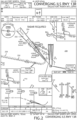
FIG. 2 , adigital chart 200 according to an exemplary embodiment is shown.Digital charts 200 are approaching a state where they include all of the information in the ARINC 424 database. Adigital chart 200 according to an exemplary embodiment includesrepresentations representation - In at least one embodiment, a system may use approach lighting system information, and render a display of such approach lighting system on the digital charts augment a virtual reality display (SVS, EVS, CVS). For example, the system may render an indicator of where to look to find the approach lights. Furthermore, the symbology may reflect the pattern of the lights. Light patterns may not be stored in existing digital charts; in those cases, light patterns may be retrieved and incorporated from separate data sources.
- In at least one embodiment, a system applies
selectable regions representations selectable region corresponding representation - In at least one embodiment, the system may determine if any real features corresponding to the
representations selectable regions representations representation selectable region representation selectable region - In at least one embodiment, serial user selections of
selectable regions - Referring to
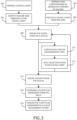
FIG. 3 , a flowchart of a method according to an exemplary embodiment is shown. In at least one embodiment, a system (such as an FMS) retrieves 300 a digital chart and identifies 302 representations on the digital chart with embedded data corresponding to the real features represented. Alternatively, or in addition, the system retrieves 304 data corresponding to the real features from a separate database and produces 306 a digital chart or embeds the data in an existing digital chart. Furthermore, the system may retrieve dynamic data in real time and apply updates to the digital chart. For example, the system may render actual DME as compared to DME target, an actual track as compared to a desired track, actual altitude, etc. Such dynamic updates may be useful for situational awareness. - The system renders 308 the digital chart on a display including selectable regions corresponding to the representations. Each selectable region is associated with a set of flight plan inputs based on the data corresponding to the real features. For example, where an approach is represented on the digital chart, the approach may be associated with a direction and initial altitude.
- When the system receives 314 an input from a user interface device corresponding to a selectable region, the system determines 316 a flight plan amendment. For example, selecting the selectable region corresponding to a represented approach would initiate a flight plan amendment to bring the aircraft in conformity with the associated direction and altitude. The system may then apply the flight plan amendment or provide 318 the flight plan amendment to a separate FMS.
- In at least one embodiment, the system continuously receives 310 environmental data and applies 312 selection filters to the digital chart to disable or enable selectable regions. Such filters may comprise threshold criteria such as wind speed, distance to the nearest storm cell, minimum overcast level, or the like. Likewise, the system may apply 312 filters based on aircraft capabilities such as being unable to utilize certain navaids. Furthermore, the system may apply 312 filters based on circumstantial criteria such as certain represented features being physically unavailable or no safe abort procedure existing. It may be appreciated that categories are not exclusive and are presented for ease of understanding. For example, in some circumstances, an aircraft may have insufficient performance for a second segment climb in the event of a missed approach. In that case, the selectable region for that approach may be disabled.
- It is believed that the inventive concepts disclosed herein and many of their attendant advantages will be understood by the foregoing description of embodiments of the inventive concepts, and it will be apparent that various changes may be made in the form, construction, and arrangement of the components thereof without departing from the broad scope of the inventive concepts disclosed herein or without sacrificing all of their material advantages; and individual features from various embodiments may be combined to arrive at other embodiments. The forms herein before described being merely explanatory embodiments thereof, it is the intention of the following claims to encompass and include such changes. Furthermore, any of the features disclosed in relation to any of the individual embodiments may be incorporated into any other embodiment.
Claims (15)
- A computer apparatus comprising:a display device (106);a data storage element (104); andat least one processor (100) in data communication with a memory (102) storing processor executable code for configuring the at least one processor to:retrieve a digital chart from the data storage element;identify aeronautically significant features represented on the digital chart;identify data associated with the represented features;define selectable regions for each of the represented features;receive a user input to at least one of the selectable regions; andprepare a flight plan amendment based on the data associated with the user selected selectable region.
- The computer apparatus of Claim 1, wherein the at least one processor (100) is further configured to:retrieve the data associated with the represented features from a database; andembed the data in the digital chart.
- The computer apparatus of Claim 1 or 2, wherein the at least one processor (100) is further configured to:
for each of the selectable regions, determine if the selectable region meets some threshold criteria; and
disable the selectable region; and optionally wherein the at least one processor is further configured to render each represented feature associated with a disabled selectable region in a visually distinct manner. - The computer apparatus of Claim 3, wherein:the threshold criteria comprise weather related criteria; andthe at least one processor (100) is further configured to:continuously receive weather related data; andcontinuously compare the received weather related data to the threshold criteria; and/orwherein the threshold criteria comprise aircraft specific capabilities; and/orwherein determining if the selectable region meets some threshold criteria comprises determining if the corresponding represented feature is currently available.
- A method comprising:retrieving a digital chart;identifying aeronautically significant features represented on the digital chart;identifying data associated with the represented features;defining selectable regions for each of the represented features;receiving a user input to at least one of the selectable regions; andpreparing a flight plan amendment based on the data associated with the user selected selectable region.
- The method of Claim 5, further comprising:retrieving the data associated with the represented features from a database; andembedding the data in the digital chart.
- The method of Claim 5 or 6, further comprising:
for each of the selectable regions, determining if the selectable region meets some threshold criteria; and
disabling the selectable region; and optionally further comprising rendering each represented feature associated with a disabled selectable region in a visually distinct manner. - The method of Claim 7, further comprising:retrieving data corresponding to an approach lighting system location from the digital chart; andrendering an indication of the approach lighting system location in an augmented reality system.
- The method of Claim 7 or 8, wherein the threshold criteria comprise aircraft specific capabilities and/or wherein determining if the selectable region meets some threshold criteria comprises determining if the corresponding represented feature is currently available.
- A flight management system comprising:a display device (106);a data storage element (104); andat least one processor (100) in data communication with a memory (102) storing processor executable code for configuring the at least one processor to:retrieve a digital chart from the data storage element;identify aeronautically significant features represented on the digital chart;identify data associated with the represented features;define selectable regions for each of the represented features;receive a user input to at least one of the selectable regions; andprepare a flight plan amendment based on the data associated with the user selected selectable region.
- The flight management system of Claim 10, wherein the at least one processor (100) is further configured to:retrieve the data associated with the represented features from a database; andembed the data in the digital chart.
- The flight management system of Claim 10 or 11, wherein the at least one processor (100) is further configured to:for each of the selectable regions, determine if the selectable region meets some threshold criteria; anddisable the selectable region.
- The flight management system of Claim 12, wherein the at least one processor (100) is further configured to render each represented feature associated with a disabled selectable region in a visually distinct manner.
- The flight management system of Claim 12 or 13, wherein:the threshold criteria comprise weather related criteria; andthe at least one processor (100) is further configured to:continuously receive weather related data; andcontinuously compare the received weather related data to the threshold criteria.
- The flight management system of Claim 12, 13 or 14, wherein the threshold criteria comprise aircraft specific capabilities.
Applications Claiming Priority (1)
| Application Number | Priority Date | Filing Date | Title |
|---|---|---|---|
| US18/094,619 US12293674B2 (en) | 2023-01-09 | 2023-01-09 | Flight planning through data driven charting |
Publications (1)
| Publication Number | Publication Date |
|---|---|
| EP4398218A1 true EP4398218A1 (en) | 2024-07-10 |
Family
ID=89542138
Family Applications (1)
| Application Number | Title | Priority Date | Filing Date |
|---|---|---|---|
| EP24151029.6A Pending EP4398218A1 (en) | 2023-01-09 | 2024-01-09 | Flight planning through data driven charting |
Country Status (2)
| Country | Link |
|---|---|
| US (1) | US12293674B2 (en) |
| EP (1) | EP4398218A1 (en) |
Citations (4)
| Publication number | Priority date | Publication date | Assignee | Title |
|---|---|---|---|---|
| US7693621B1 (en) * | 2006-06-27 | 2010-04-06 | Toyota Motor Sales, U.S.A., Inc. | Apparatus and methods for displaying arrival, approach, and departure information on a display device in an aircraft |
| US9043043B1 (en) * | 2011-09-23 | 2015-05-26 | Rockwell Collins, Inc. | Autonomous flight controls for providing safe mode navigation |
| EP3242280A2 (en) * | 2016-05-03 | 2017-11-08 | Honeywell International Inc. | Methods and systems for conveying destination viability |
| US20170323570A1 (en) * | 2016-05-03 | 2017-11-09 | Rockwell Collins, Inc. | Digital Map Enabled Boundary Search Pattern |
Family Cites Families (21)
| Publication number | Priority date | Publication date | Assignee | Title |
|---|---|---|---|---|
| US953635A (en) | 1908-09-25 | 1910-03-29 | John Muth | Wireless transmitting system. |
| US7342514B1 (en) | 2004-06-30 | 2008-03-11 | Rockwell Collins, Inc. | Display of automatic dependent surveillance (ADS-B) information on head-up display |
| FR2891644B1 (en) | 2005-09-30 | 2011-03-11 | Thales Sa | METHOD AND DEVICE FOR AIDING THE MOVEMENT OF A MOBILE TO THE SURFACE OF AN AIRPORT. |
| US7535381B2 (en) | 2005-12-21 | 2009-05-19 | Honeywell International Inc. | Converting voice weather data into data for display in an aircraft cockpit |
| US7737867B2 (en) * | 2006-04-13 | 2010-06-15 | The United States Of America As Represented By The United States National Aeronautics And Space Administration | Multi-modal cockpit interface for improved airport surface operations |
| FR2902221B1 (en) | 2006-06-08 | 2008-07-11 | Airbus France Sas | METHOD AND DEVICE FOR AIDING NAVIGATION ON THE GROUND OF AN AIRCRAFT ON AN AIRPORT |
| FR2910124B1 (en) | 2006-12-15 | 2009-03-06 | Thales Sa | METHOD FOR CREATING AND UPDATING A REAL-TIME ATC FLIGHT PLAN FOR THE TAKING INTO ACCOUNT OF FLIGHT INSTRUCTIONS AND DEVICE FOR IMPLEMENTING THE SAME |
| US8825238B2 (en) * | 2008-07-22 | 2014-09-02 | Honeywell International Inc. | Aircraft systems and methods for monitoring energy height |
| US8200378B1 (en) | 2009-09-30 | 2012-06-12 | Rockwell Collins, Inc. | System, module, and method for presenting NOTAM information on an aircraft display unit |
| US8565944B1 (en) | 2009-10-13 | 2013-10-22 | The Boeing Company | Alternate diversion airport planner |
| US8060262B2 (en) | 2009-10-30 | 2011-11-15 | Honeywell International Inc. | Airport lighting aid simulation system |
| US20110196598A1 (en) | 2010-02-09 | 2011-08-11 | Honeywell International Inc. | System and methods for rendering taxiway and runway signage in a synthetic display of an airport field |
| US8731811B2 (en) * | 2011-10-20 | 2014-05-20 | Honeywell International Inc. | Methods and systems for displaying a taxi clearance |
| US20130271300A1 (en) | 2012-04-12 | 2013-10-17 | Honeywell International Inc. | Systems and methods for improving runway awareness with takeoff and landing performance data |
| US9041560B2 (en) | 2012-04-24 | 2015-05-26 | Honeywell International Inc. | System and method of displaying a runway temporarily displaced threshold and an aircraft landing aiming point |
| US20130278628A1 (en) | 2012-04-24 | 2013-10-24 | Honeywell International Inc. | Methods and systems for representing segmented circle airport marker information on a cockpit display |
| US20140018979A1 (en) * | 2012-07-13 | 2014-01-16 | Honeywell International Inc. | Autonomous airspace flight planning and virtual airspace containment system |
| US20160140854A1 (en) * | 2013-04-29 | 2016-05-19 | Honeywell International Inc. | Methods and apparatus for determining and using a landing surface friction condition |
| US9082301B2 (en) * | 2013-10-28 | 2015-07-14 | The Boeing Company | Aircraft stopping performance display and warning |
| FR3025385B1 (en) | 2014-09-01 | 2016-08-12 | Thales Sa | METHOD FOR EXECUTING ADAPTIVE REAL-TIME SERVICES, IN PARTICULAR FLIGHT MANAGEMENT, AND REAL-TIME SYSTEM USING SUCH A METHOD |
| EP3444791A3 (en) | 2017-08-13 | 2019-04-24 | IATAS Automatic Air Traffic Control Ltd | System and methods for automated airport air traffic control services |
-
2023
- 2023-01-09 US US18/094,619 patent/US12293674B2/en active Active
-
2024
- 2024-01-09 EP EP24151029.6A patent/EP4398218A1/en active Pending
Patent Citations (4)
| Publication number | Priority date | Publication date | Assignee | Title |
|---|---|---|---|---|
| US7693621B1 (en) * | 2006-06-27 | 2010-04-06 | Toyota Motor Sales, U.S.A., Inc. | Apparatus and methods for displaying arrival, approach, and departure information on a display device in an aircraft |
| US9043043B1 (en) * | 2011-09-23 | 2015-05-26 | Rockwell Collins, Inc. | Autonomous flight controls for providing safe mode navigation |
| EP3242280A2 (en) * | 2016-05-03 | 2017-11-08 | Honeywell International Inc. | Methods and systems for conveying destination viability |
| US20170323570A1 (en) * | 2016-05-03 | 2017-11-09 | Rockwell Collins, Inc. | Digital Map Enabled Boundary Search Pattern |
Also Published As
| Publication number | Publication date |
|---|---|
| US20240233557A1 (en) | 2024-07-11 |
| US12293674B2 (en) | 2025-05-06 |
Similar Documents
| Publication | Publication Date | Title |
|---|---|---|
| CN108460995B (en) | Display system and method for runway intrusion prevention | |
| US10861341B2 (en) | Method and system for prompting aircraft task reminders | |
| EP2561500B1 (en) | Flight planning methods and systems | |
| CN109693797B (en) | Method and system for contextually cascading display, auditory, and voice alerts | |
| US8665121B2 (en) | Systems and methods for aircraft flight tracking and display | |
| CN110910677B (en) | System and method for contextual alerts during ground operations | |
| EP4332943A1 (en) | Aircraft systems and methods with automated runway condition information | |
| WO2006001851A2 (en) | Systems and methods for handling aircraft information received from an off-board source | |
| JP2002528802A (en) | Flight planning objective alert system and method | |
| US20240331552A1 (en) | Digital flight airspace, capacity, and risk management system and method | |
| JP2001110000A (en) | Three-dimensional information processing method and three-dimensional information processing system | |
| US11945582B2 (en) | Coordinating an aerial search among unmanned aerial vehicles | |
| US20220388674A1 (en) | Methods and systems for alerting dynamic changes in flight rules | |
| US12293674B2 (en) | Flight planning through data driven charting | |
| EP4290498A1 (en) | Vehicle systems and related message prioritization methods | |
| US20100161153A1 (en) | Method and apparatus for automatically determining stopover airports for flight planning | |
| EP4099301B1 (en) | Methods and systems for alerting dynamic changes in flight rules | |
| EP4160572A1 (en) | Systems and methods for alerting when an intruder trend vector is predicted to intercept with an aircraft taxi path | |
| Weiß et al. | Detection of UAS Conflicts in Air Traffic over Germany |
Legal Events
| Date | Code | Title | Description |
|---|---|---|---|
| PUAI | Public reference made under article 153(3) epc to a published international application that has entered the european phase |
Free format text: ORIGINAL CODE: 0009012 |
|
| STAA | Information on the status of an ep patent application or granted ep patent |
Free format text: STATUS: THE APPLICATION HAS BEEN PUBLISHED |
|
| AK | Designated contracting states |
Kind code of ref document: A1 Designated state(s): AL AT BE BG CH CY CZ DE DK EE ES FI FR GB GR HR HU IE IS IT LI LT LU LV MC ME MK MT NL NO PL PT RO RS SE SI SK SM TR |
|
| STAA | Information on the status of an ep patent application or granted ep patent |
Free format text: STATUS: REQUEST FOR EXAMINATION WAS MADE |
|
| 17P | Request for examination filed |
Effective date: 20241209 |