EP4398129A1 - Webseitendarstellungsverfahren und -vorrichtung, vorrichtung und speichermedium - Google Patents
Webseitendarstellungsverfahren und -vorrichtung, vorrichtung und speichermedium Download PDFInfo
- Publication number
- EP4398129A1 EP4398129A1 EP22923375.4A EP22923375A EP4398129A1 EP 4398129 A1 EP4398129 A1 EP 4398129A1 EP 22923375 A EP22923375 A EP 22923375A EP 4398129 A1 EP4398129 A1 EP 4398129A1
- Authority
- EP
- European Patent Office
- Prior art keywords
- webpage
- plugin
- server
- rendering
- source code
- Prior art date
- Legal status (The legal status is an assumption and is not a legal conclusion. Google has not performed a legal analysis and makes no representation as to the accuracy of the status listed.)
- Pending
Links
Images




Classifications
-
- G—PHYSICS
- G06—COMPUTING OR CALCULATING; COUNTING
- G06F—ELECTRIC DIGITAL DATA PROCESSING
- G06F16/00—Information retrieval; Database structures therefor; File system structures therefor
- G06F16/90—Details of database functions independent of the retrieved data types
- G06F16/95—Retrieval from the web
- G06F16/958—Organisation or management of web site content, e.g. publishing, maintaining pages or automatic linking
-
- G—PHYSICS
- G06—COMPUTING OR CALCULATING; COUNTING
- G06F—ELECTRIC DIGITAL DATA PROCESSING
- G06F16/00—Information retrieval; Database structures therefor; File system structures therefor
- G06F16/90—Details of database functions independent of the retrieved data types
- G06F16/95—Retrieval from the web
- G06F16/957—Browsing optimisation, e.g. caching or content distillation
-
- G—PHYSICS
- G06—COMPUTING OR CALCULATING; COUNTING
- G06F—ELECTRIC DIGITAL DATA PROCESSING
- G06F9/00—Arrangements for program control, e.g. control units
- G06F9/06—Arrangements for program control, e.g. control units using stored programs, i.e. using an internal store of processing equipment to receive or retain programs
- G06F9/44—Arrangements for executing specific programs
- G06F9/445—Program loading or initiating
- G06F9/44521—Dynamic linking or loading; Link editing at or after load time, e.g. Java class loading
- G06F9/44526—Plug-ins; Add-ons
-
- G—PHYSICS
- G06—COMPUTING OR CALCULATING; COUNTING
- G06F—ELECTRIC DIGITAL DATA PROCESSING
- G06F9/00—Arrangements for program control, e.g. control units
- G06F9/06—Arrangements for program control, e.g. control units using stored programs, i.e. using an internal store of processing equipment to receive or retain programs
- G06F9/44—Arrangements for executing specific programs
- G06F9/451—Execution arrangements for user interfaces
-
- Y—GENERAL TAGGING OF NEW TECHNOLOGICAL DEVELOPMENTS; GENERAL TAGGING OF CROSS-SECTIONAL TECHNOLOGIES SPANNING OVER SEVERAL SECTIONS OF THE IPC; TECHNICAL SUBJECTS COVERED BY FORMER USPC CROSS-REFERENCE ART COLLECTIONS [XRACs] AND DIGESTS
- Y02—TECHNOLOGIES OR APPLICATIONS FOR MITIGATION OR ADAPTATION AGAINST CLIMATE CHANGE
- Y02D—CLIMATE CHANGE MITIGATION TECHNOLOGIES IN INFORMATION AND COMMUNICATION TECHNOLOGIES [ICT], I.E. INFORMATION AND COMMUNICATION TECHNOLOGIES AIMING AT THE REDUCTION OF THEIR OWN ENERGY USE
- Y02D10/00—Energy efficient computing, e.g. low power processors, power management or thermal management
Definitions
- a front-end framework-based server side rendering framework compatible with SSR and CSR achieves the effects of server side source saving, fast server side rendered home screen loading, search engine optimization (SEO), and the like.
- the server side rendering framework can only support a single front-end framework, that is, the server side rendering framework corresponds to the front-end framework in a one-to-one manner, and the server side rendering framework is only applicable to a single front-end framework scenario.
- a webpage rendering method which is executable by a terminal and includes:
- a webpage rendering apparatus which includes:
- the front-end plugin corresponds to a first front-end framework among front-end frameworks used by the front-end application.
- the rendering module includes: a transmission unit, configured to transmit, in response to the open operation for the webpage, a client request to the server-side plugin through the front-end plugin, the client request carrying an application layer protocol information parameter.
- the client request is used for requesting the server-side plugin to render the webpage source code of the webpage, and the application layer protocol information parameter is used for instructing the server-side plugin to determine a rendering mode of the webpage.
- the rendering module includes: a rendering unit, configured to perform client-side rendering based on the degraded rendering result through the front-end plugin to obtain a rendering result of the webpage.
- the webpage source code of the webpage includes a page layout layer code and a page content presentation layer code, the page layout layer code is unrelated to an application logic in the webpage source code, and the page content presentation layer code is related to the application logic in the webpage source code.
- the degraded rendering result is obtained by the server-side plugin by rendering the page layout layer code.
- the rendering module further includes: an acquisition unit, configured to acquire the page content presentation layer code from the server through the front-end plugin.
- a webpage rendering apparatus which includes:
- the server-side plugin corresponds to a first back-end framework among back-end frameworks used by the server.
- Server-side plugins corresponding to different back-end frameworks have the same operation logic and different adaptive designs.
- the rendering module includes:
- a degraded rendering result is obtained in a case that an error occurs during operation of the server-side plugin or during loading of data and the server-side plugin fails to render the webpage source code of the webpage.
- the feedback module is configured to feed back the degraded rendering result to the front-end plugin.
- the webpage source code of the webpage includes a page layout layer code and a page content presentation layer code
- the page layout layer code is a code unrelated to an application logic in the webpage source code
- the page content presentation layer code is a code related to the application logic in the webpage source code
- the degraded rendering result is obtained by the server-side plugin by rendering the page layout layer code.
- a computer device which includes: a processor and a memory, the memory storing at least one piece of computer program that, when loaded and executed by the processor, implements the webpage rendering method according to the foregoing aspect.
- a computer-readable storage medium which stores at least one piece of computer program that, when loaded and executed by a processor, implements the webpage rendering method according to the foregoing aspect.
- a computer program product which includes a computer instruction.
- the computer instruction is stored in a computer-readable storage medium, and a processor of a computer device reads the computer instruction from the computer-readable storage medium and executes the computer instruction to cause the computer device to perform the webpage rendering method according to the foregoing aspect.
- a front-end plugin is operated in a front-end application; a server-side plugin is requested, in response to an open operation for a webpage, to render a webpage source code of the webpage through the front-end plugin; and a rendering result of the webpage fed back by the server-side plugin is received through the front-end plugin.
- server-side rendering of a webpage is realized by inserting plugins into a front-end framework and a back-end framework, so that the front-end framework inserted with the front-end plugins may be applied to a variety of front-end framework scenarios through different front-end plugins.
- the problem of one-to-one correspondence between a front-end framework and a server-side framework in the related technologies is solved, the front-end plugin and the server-side plugin of this application are uncoupled from each other.
- a terminal will use a front-end framework 2 and a front-end plugin 2 corresponding to the front-end framework 2 after replacement, and a server does not need to change an original server-side plugin.
- one server-side plugin corresponds to a plurality of front-end plugins
- one server-side framework corresponds to a plurality of front-end frameworks at the same time.
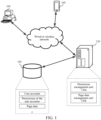
- FIG. 1 is a schematic diagram of a system composition of a webpage rendering system involved in the embodiments of this application.
- the system includes a server 120, a database 140, and several clients 160.
- the server 120 is a single server, a server cluster composed of several servers, a virtualization platform or a cloud computing service center.
- the server 120 may be composed of one or more function units.
- the server 120 may further include: a permission management unit 120a, a page data management unit 120b, and the like.
- the permission management unit 120a is configured to generate, update, and maintain a permission corresponding to each user account, and provide each client 160 with information such as a permission processed by the client 160 in a current login state.
- the page data management unit 120b is configured to manage page data in pages developed by developers, receive a request from the client 160, and transmit page data requested by the client 160 to the client 160, so that the client 160 presents the page data.
- the foregoing database 140 may be a Redis database or a database of another type.
- the database 140 is configured to store various types of data such as user accounts, permissions processed by the user accounts, and page data of pages.
- the client 160 may be a terminal device with the network connection function and page presentation function.
- the client 160 may be a mobile phone, a tablet computer, an ebook reader, smart glasses, a smart watch or an on-board terminal.
- the client 160 may be installed with a browser or other web applications (such as a web client).
- the foregoing wireless network or wired network uses a standard communication technology and/or protocol.
- the network is usually the Internet, and may be any other network, which includes, but is not limited to, a local area network (LAN), a metropolitan area network (MAN), a wide area network (WAN), a mobile, wired or wireless network, or any combination of private networks or virtual private networks.
- data exchanged by using a network may be represented by a technology and/or format such as the HyperText Markup Language (HTML) and Extensible Markup Language (XML).
- HTML HyperText Markup Language
- XML Extensible Markup Language
- all or some links may be encrypted by a conventional encryption technology such as Secure Socket Layer (SSL), Transport Layer Security (TLS), Virtual Private Network (VPN), and Internet Protocol Security (IPsec).
- SSL Secure Socket Layer
- TLS Transport Layer Security
- VPN Virtual Private Network
- IPsec Internet Protocol Security
- the foregoing data communication technologies may also be replaced or supplemented with
- FIG. 2 is a flowchart of a webpage rendering method according to an exemplary embodiment of this application.
- the method may be applied to a terminal to realize rendering of a webpage.
- the foregoing computer device may be the client 160 in the system shown in FIG. 1 .
- the method includes the following steps.
- a front end refers to a foreground part of a website, such as a webpage of the website that is visible to a user.
- the front-end application is run on a terminal, such as a personal computer (PC), a mobile or the like, to display a webpage of the website for a user to browse.
- the front-end application may be a browser.
- a back end refers to a background part of a website, such as functional modules that are invisible to the user and that support functions of the webpage.
- Webpage rendering refers to a process of converting source codes corresponding to page objects in a webpage into a visual image.
- the page objects refer to objects with various granularities in the webpage that may be controlled by the front-end plugin alone.
- the page itself may be taken as a page object
- each page component included in the page may also be taken as a separate page object
- a page element included in each page component may also be taken as a separate page obj ect.
- the page object may be a current page itself, or the page object may be a certain page component in the current page, or the foregoing page object may be an element in the certain page component in the current page.
- the foregoing page component is a container for encapsulating one or more elements.
- the page component may be an input box or a drop-down box in a page.
- the page component may be a webpage component or a web component.
- Step 204 Request, in response to an open operation for a webpage, the server-side plugin to render a webpage source code of the webpage through the front-end plugin.
- the webpage source code refers to a human-readable text written in a specific programming language, and may represent elements (such as pictures, videos, music, and characters) on a webpage as a standard language.
- the server-side plugin in the server acquires a webpage source code of a webpage and renders the webpage source code of the webpage, the server feeds back a rendering result of the webpage to the client after the rendering is completed, and the client receives the rendering result of the webpage fed back by the server-side plugin through the front-end plugin.
- Step 302 Operate a front-end plugin corresponding to a first front-end framework in a front-end application, the first front-end framework being a front-end framework used by the front-end application.
- a front end refers to a foreground part of a website, and is operated on a browser at a personal computer (PC) side, a mobile side or the like to display a webpage for a user to browse.
- PC personal computer
- the front-end plugin refers to a plugin with a customized instruction function and is configured to provide a webpage rendering function at a client side.
- the server-side plugin refers to a plugin with a customized instruction function and is configured to provide a webpage rendering function at a server side.
- the front-end plugin and the server-side plugin cooperatively complete a whole rendering process of a webpage.
- Webpage rendering refers to a process of converting source codes corresponding to page objects in a webpage into a visual image.
- the front-end framework refers to a front-end framework with a customized instruction function, such as the World-Wide-Web development framework React, the progressive front-end framework Vue2.0, and the progressive front-end framework Vue3.0. These frameworks encapsulate some basic functions such as HTML document manipulation and various controls (such as a button and a form).
- different front-end frameworks include at least two of the World-Wide-Web development framework React, the progressive front-end framework Vue2.0, and the progressive front-end framework Vue3.0.
- the front-end framework refers to a front-end development kit including multiple components each encapsulating a function for constructing the front end of the webpage.
- the function may be a customized instruction function.
- a front-end plugin is insertable into the front-end framework.
- the front-end plugin includes, but is not limited to, any one of a World-Wide-Web development framework React plugin 507, a progressive front-end framework Vue2.0 plugin 508, and a progressive front-end framework Vue3.0 plugin 509, which is not defined herein.
- the client transmits, in response to the open operation for the webpage, a client request to the server-side plugin through the front-end plugin, and the client request carries an application layer protocol information parameter.
- the application layer protocol information parameter refers to a parameter that is carried in the client request and used for determining a rendering mode, and includes, but is not limited to, at least one of a request query parameter (query), a request header (header), and request header information (cookie), which is not defined herein.
- query request query parameter
- header request header
- cookie request header information
- the front-end plugin is operated in the front-end application, a rendering mode of a webpage is determined according to an application layer protocol information parameter in a client request transmitted to the server-side plugin through the front-end plugin in response to an open operation for the webpage, and a rendering result of the webpage fed back by the server-side plugin is received through the front-end plugin.
- Step 602 Operate a front-end plugin in a front-end application, the front-end plugin being uncoupled from a server-side plugin operated in a server.
- a front end refers to a foreground part of a website, and is operated on a browser at a personal computer (PC) side, a mobile side or the like to display a webpage for a user to browse.
- PC personal computer
- the front-end plugin refers to a plugin with a customized instruction function and is configured to provide a webpage rendering function at a client side.
- the server-side plugin refers to a plugin with a customized instruction function and is configured to provide a webpage rendering function at a server side.
- the front-end plugin and the server-side plugin cooperatively complete a whole rendering process of a webpage.
- a front-end framework refers to a front-end framework with a customized instruction function, such as the World-Wide-Web development framework React, the progressive front-end framework Vue2.0, and the progressive front-end framework Vue3.0. These frameworks encapsulate some basic functions such as HTML document manipulation and various controls (such as a button and a form).
- the client transmits, in response to the open operation for the webpage, a client request to the server-side plugin through the front-end plugin, and the client request carries an application layer protocol information parameter.
- Step 606 Receive a degraded rendering result fed back by the server-side plugin through the front-end plugin.
- the webpage source code of the webpage includes a page layout layer code (that is, a layout layer code) and a page content presentation layer code (that is, a children layer code), the page layout layer code is a code unrelated to an application logic in the webpage source code, and the page content presentation layer code is a code related to the application logic in the webpage source code.
- the degraded rendering result refers to a rendering result obtained by the server-side plugin by rendering the page layout layer code in a case that the server-side plugin fails to render the webpage source code.
- the server-side plugin in the server acquires a webpage source code of a webpage according to the URL and renders the webpage source code of the webpage, the server feeds back a degraded rendering result of the webpage to the client after the rendering fails, and the client receives the degraded rendering result of the webpage fed back by the server-side plugin through the front-end plugin, that is, the client receives a rendering result obtained by the server-side plugin by rendering a page layout layer code that is fed back by the server-side plugin through the front-end plugin.
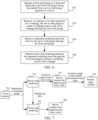
- FIG. 7 is a schematic diagram of a rendering mode degradation process framework
- the client transmits a client request 701 to the server-side plugin through the front-end plugin
- the client request 701 carries an application layer protocol information parameter
- a rendering mode of a webpage is determined according to the application layer protocol information parameter.
- the server-side plugin acquires a page layout layer code and renders the page layout layer code 703, and then acquires a page content presentation layer code and renders the page content presentation layer code 704, that is, renders page content related to an application logic, to finally obtain a rendering result of the webpage.
- the rendering mode of the webpage is degraded from the server-side rendering mode 702 to a client-side rendering mode 705, the server takes a rendering result obtained by the server-side plugin by rendering the page layout layer code as a degraded rendering result, and the front-end plugin further renders the degraded rendering result, that is, the client performs further rendering on the basis of the page layout layer code 706 rendered by the server.
- Step 608 Perform client-side rendering based on the degraded rendering result through the front-end plugin to obtain a rendering result of the webpage.
- the client acquires the page content presentation layer code from the server through the front-end plugin.
- the client renders, by taking the degraded rendering result as a rendered skeleton, page content related to the application logic in the rendered skeleton based on the page content presentation layer code through the front-end plugin to obtain a rendering result of the webpage.
- the skeleton defines a structure of the rendering result of the webpage.
- the skeleton is a structure of the webpage defined by labels, such as an html label, a head label, a title label and a body label.
- FIG. 8 is a schematic diagram of a rendering mode degradation process framework
- a browser is taken as an example
- the client transmits, in response to an open operation for a webpage on the browser, a client request 801 to the server-side plugin through the front-end plugin, the client request 801 carries an application layer protocol information parameter, and a rendering mode of the webpage is determined according to the application layer protocol information parameter.
- the server acquires data 803, that is, the server-side plugin acquires a page layout layer code and a page content presentation layer code, renders page components in the webpage 804, that is, renders the page layout layer code and the page content presentation layer code, to obtain a rendering result of the webpage, and transmits the rendering result of the webpage to the browser in the client, and the browser activates a Document Object Model (DOM) 805 and performs route switching in response to the open operation for the webpage on the browser, that is, jumps to the webpage, so that the client acquires the data 806, that is, the client displays the acquired rendering result on the webpage of the browser.
- the Document Object Model (DOM) refers to a tree-structured model composed of page objects in a webpage and relationships between the page objects.
- the client acquires, by taking the degraded rendering result as a rendered skeleton, the data 809 through the front-end plugin, that is, the client acquires the page content presentation layer code from the server through the front-end plugin, and renders page content related to an application logic in the rendered skeleton based on the page content presentation layer code. That is, the client renders the page components in the webpage 810, and performs route switching, that is, jumps to the webpage, so that the client acquires the data 811 and displays the rendering result on the webpage of the browser.
- server-side rendering of a webpage is realized by inserting plugins into a front-end framework and a back-end framework, and a rendering mode can be quickly switched in a case of failed server-side rendering to ensure normal operation of webpage rendering.
- a front end refers to a foreground part of a website, and is operated on a browser at a personal computer (PC) side, a mobile side or the like to display a webpage for a user to browse.
- PC personal computer
- the front-end plugin refers to a plugin with a customized instruction function and is configured to provide a webpage rendering function at a client side.
- the server-side plugin refers to a plugin with a customized instruction function and is configured to provide a webpage rendering function at a server side.
- the front-end plugin and the server-side plugin cooperatively complete a whole rendering process of a webpage.
- Webpage rendering refers to a process of converting source codes corresponding to page objects in a webpage into a visual image.
- the page objects refer to objects with various granularities in the webpage that may be controlled by the front-end plugin alone.
- the page itself may be taken as a page object
- each page component included in the page may also be taken as a separate page object
- a page element included in each page component may also be taken as a separate page obj ect.
- the page object may be a current page itself, or the page object may be a certain page component in the current page, or the foregoing page object may be an element in the certain page component in the current page.
- the foregoing page component is a container for encapsulating one or more elements.
- the page component may be an input box or a drop-down box in a page.
- the page component may be a webpage component or a web component.
- Uncoupled refers to that a type of the front-end plugin is unrelated to a type of the server-side plugin.
- the front-end plugin and the server-side plugin may be arbitrarily combined.
- the front-end plugin is any one of a World-Wide-Web development framework React plugin, a progressive front-end framework Vue2.0 plugin, and a progressive front-end framework Vue3.0 plugin.
- the server-side plugin is any one of a NestJS development framework plugin and a Midway development framework plugin.
- the front-end plugin is uncoupled from the server-side plugin, so that the webpage rendering method of this application may be applied to all development scenarios.
- Step 904 Render a webpage source code of a webpage requested by the front-end plugin through the server-side plugin to obtain a rendering result of the webpage.
- the webpage source code refers to a human-readable text written in a specific programming language, and may represent elements (such as pictures, videos, music, and characters) on a webpage as a standard language.
- the client requests a page resource from the server
- the server-side plugin acquires the webpage source code of the webpage requested by the front-end plugin, and renders the webpage source code of the webpage to obtain a rendering result of the webpage.
- Step 906 Feed back the rendering result of the webpage to the front-end plugin.
- the server-side plugin in the server acquires the webpage source code of the webpage and renders the webpage source code of the webpage, the server feeds back a rendering result of the webpage to the client after the rendering is completed, and the client receives the rendering result of the webpage fed back by the server-side plugin through the front-end plugin.
- the server-side plugin is operated in the server, a webpage source code of a webpage requested by the front-end plugin is rendered through the server-side plugin to obtain a rendering result of the webpage, and the rendering result of the webpage is fed back to the front-end plugin.
- server-side rendering of a webpage is realized by inserting plugins into a front-end framework and a back-end framework, the server-side plugin renders a webpage source code of a webpage requested by the front-end plugin, and the back-end framework inserted with the server-side plugins enables server-side rendering to be applied to a variety of rendering scenarios through different plugins.
- FIG. 10 is a flowchart of a webpage rendering method according to an exemplary embodiment of this application.
- the method may be applied to a computer device to realize rendering of a webpage.
- the foregoing computer device may be the server 120 in the system shown in FIG. 1 .
- the method includes the following steps.
- Step 1002 Operate a server-side plugin corresponding to a first back-end framework in a server, the first back-end framework being a back-end framework used by the server.
- the server-side plugin refers to a plugin with a customized instruction function and is configured to provide a webpage rendering function at a server side.
- the back-end framework refers to a back-end framework with a customized instruction function, such as a NestJS development framework and a Midway development framework. These frameworks encapsulate some basic functions.
- Step 1004 Render a webpage source code of a webpage requested by a front-end plugin through the server-side plugin to obtain a rendering result of the webpage.
- the server receives a client request transmitted by the front-end plugin through the server-side plugin, and the client request carries an application layer protocol information parameter.
- the client request is used for requesting the server-side plugin to render the webpage source code of the webpage, and the application layer protocol information parameter is used for instructing the server-side plugin to determine a rendering mode of the webpage.
- the application layer protocol information parameter refers to a parameter that is carried in the client request and used for determining a rendering mode, and includes, but is not limited to, at least one of a request query parameter (query), a request header (header), and request header information (cookie), which is not defined herein.
- query request query parameter
- header request header
- cookie request header information
- Step 1006 Feed back the rendering result of the webpage to the front-end plugin.
- the server-side plugin is operated in the server, a client request transmitted by the front-end plugin is received through the server-side plugin, a rendering mode of a webpage is determined according to an application layer protocol information parameter in the received client request, a webpage source code of the webpage is rendered based on the rendering mode to obtain a rendering result of the webpage, and the rendering result of the webpage is fed back to the client.
- FIG. 11 is a flowchart of a webpage rendering method according to an exemplary embodiment of this application.
- the method may be applied to a computer device to realize rendering of a webpage.
- the foregoing computer device may be the server 120 in the system shown in FIG. 1 .
- the method includes the following steps.
- a front end refers to a foreground part of a website, and is operated on a browser at a personal computer (PC) side, a mobile side or the like to display a webpage for a user to browse.
- PC personal computer
- the back-end framework refers to a back-end development kit including multiple components each encapsulating a function for constructing the back end of the website.
- the function may be a customized instruction function.
- the back-end framework may include a NestJS development framework and a Midway development framework. These frameworks encapsulate some basic functions.
- a front-end plugin corresponding to a front-end framework used by the front-end application is operated in the front-end application.
- Front-end plugins corresponding to different front-end frameworks have the same operation logic and different adaptive designs. That is, by replacing different plugins, the webpage rendering process may be applied to a variety of front-end framework scenarios.
- different front-end frameworks include at least two of the World-Wide-Web development framework React, the progressive front-end framework Vue2.0, and the progressive front-end framework Vue3.0.
- Uncoupled refers to that a type of the front-end plugin is unrelated to a type of the server-side plugin.
- the front-end plugin and the server-side plugin may be arbitrarily combined.
- the front-end plugin is any one of a World-Wide-Web development framework React plugin, a progressive front-end framework Vue2.0 plugin, and a progressive front-end framework Vue3.0 plugin.
- the server-side plugin is any one of a NestJS development framework plugin and a Midway development framework plugin.
- the front-end plugin is uncoupled from the server-side plugin, so that the webpage rendering method of this application may be applied to all development scenarios.
- Step 1104 Render a webpage source code of a webpage requested by the front-end plugin through the server-side plugin to obtain a rendering result of the webpage.
- the server receives a client request transmitted by the front-end plugin through the server-side plugin, and the client request carries an application layer protocol information parameter.
- the server-side plugin renders the webpage source code of the webpage based on the rendering mode to obtain a rendering result of the webpage.
- the server-side plugin in the server acquires the webpage source code of the webpage and renders the webpage source code of the webpage, and the server feeds back a degraded rendering result of the webpage to the client after the rendering fails.
- the server-side plugin corresponds to a first back-end framework among back-end frameworks used by the server.
- Server-side plugins corresponding to different back-end frameworks have the same operation logic and different adaptive designs.
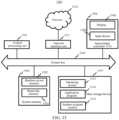
- the basic I/O system 1506 includes a display 1508 configured to display information and an input device 1509 used by a user to input information, such as a mouse and a keyboard.
- the display 1508 and the input device 1509 are both connected to the CPU 1501 by using an input/output controller 1510 connected to the system bus 1505.
- the basic I/O system 1506 may further include the input and output controller 1510 configured to receive and process inputs from a plurality of other devices such as a keyboard, a mouse, and an electronic stylus.
- the input/output controller 1510 further provides an output to a display screen, a printer, or another type of output device.
Landscapes
- Engineering & Computer Science (AREA)
- Theoretical Computer Science (AREA)
- Databases & Information Systems (AREA)
- Physics & Mathematics (AREA)
- General Engineering & Computer Science (AREA)
- General Physics & Mathematics (AREA)
- Software Systems (AREA)
- Data Mining & Analysis (AREA)
- Human Computer Interaction (AREA)
- Information Transfer Between Computers (AREA)
- Stored Programmes (AREA)
Applications Claiming Priority (2)
| Application Number | Priority Date | Filing Date | Title |
|---|---|---|---|
| CN202210090105.5A CN116541622A (zh) | 2022-01-25 | 2022-01-25 | 网页页面的渲染方法、装置、设备及存储介质 |
| PCT/CN2022/129536 WO2023142578A1 (zh) | 2022-01-25 | 2022-11-03 | 网页页面的渲染方法、装置、设备及存储介质 |
Publications (2)
| Publication Number | Publication Date |
|---|---|
| EP4398129A1 true EP4398129A1 (de) | 2024-07-10 |
| EP4398129A4 EP4398129A4 (de) | 2025-02-19 |
Family
ID=87445781
Family Applications (1)
| Application Number | Title | Priority Date | Filing Date |
|---|---|---|---|
| EP22923375.4A Pending EP4398129A4 (de) | 2022-01-25 | 2022-11-03 | Webseitendarstellungsverfahren und -vorrichtung, vorrichtung und speichermedium |
Country Status (4)
| Country | Link |
|---|---|
| US (1) | US20230359688A1 (de) |
| EP (1) | EP4398129A4 (de) |
| CN (1) | CN116541622A (de) |
| WO (1) | WO2023142578A1 (de) |
Families Citing this family (1)
| Publication number | Priority date | Publication date | Assignee | Title |
|---|---|---|---|---|
| CN117332173A (zh) * | 2023-10-31 | 2024-01-02 | 慧之安信息技术股份有限公司 | 基于Vue3组件的页面渲染方法、系统、介质及设备 |
Family Cites Families (18)
| Publication number | Priority date | Publication date | Assignee | Title |
|---|---|---|---|---|
| US7120897B2 (en) * | 2001-07-10 | 2006-10-10 | Microsoft Corporation | User control objects for providing server-side code generation from a user-defined dynamic web page content file |
| US20130145361A1 (en) * | 2011-12-01 | 2013-06-06 | International Business Machines Corporation | Discovering and installing web application plugins |
| US11233841B2 (en) * | 2013-03-15 | 2022-01-25 | Yottaa, Inc. | Systems and methods for configuration-based optimization by an intermediary |
| CN105677307B (zh) * | 2014-11-19 | 2019-03-01 | 上海烟草集团有限责任公司 | 一种移动终端大数据处理方法及系统 |
| US10326759B2 (en) * | 2015-04-02 | 2019-06-18 | Syracuse University | Website authentication using an internet-connected device |
| US20180338166A1 (en) * | 2017-05-22 | 2018-11-22 | Symantec Corporation | Remotely validating a webpage video stream |
| US10592417B2 (en) * | 2017-06-03 | 2020-03-17 | Vmware, Inc. | Video redirection in virtual desktop environments |
| CN107291458B (zh) * | 2017-06-06 | 2020-07-14 | 北京知道创宇信息技术股份有限公司 | 一种Web应用的插件化构建方法、系统及服务器 |
| CN107729516A (zh) * | 2017-10-26 | 2018-02-23 | 北京百度网讯科技有限公司 | 单页应用展示方法和装置、服务器、设备及可读介质 |
| CN108846087A (zh) * | 2018-06-12 | 2018-11-20 | 恒生电子股份有限公司 | 一种页面渲染方法、装置、终端及服务器 |
| CN109117174B (zh) * | 2018-07-04 | 2022-03-29 | 北京德惠众合信息技术有限公司 | 兼容不同引擎的前端页面的系统及方法 |
| CN109274724A (zh) * | 2018-08-30 | 2019-01-25 | 上海艾融软件股份有限公司 | 一种前后端分离架构的实现系统及方法 |
| CN111104587A (zh) * | 2018-10-26 | 2020-05-05 | 北京金山云网络技术有限公司 | 网页显示方法、装置和服务器 |
| CN112699326B (zh) * | 2019-10-23 | 2023-03-14 | 上海哔哩哔哩科技有限公司 | 一种网页页面渲染控制方法及装置 |
| CN113761428B (zh) * | 2020-06-05 | 2024-12-10 | 北京沃东天骏信息技术有限公司 | 页面渲染方法、装置、系统、存储介质及电子设备 |
| CN111880789A (zh) * | 2020-06-12 | 2020-11-03 | 北京三快在线科技有限公司 | 页面渲染方法、装置、服务端和计算机可读存储介质 |
| CN112749358B (zh) * | 2021-01-13 | 2024-12-06 | 中国工商银行股份有限公司 | 页面渲染方法和装置、电子设备以及存储介质 |
| CN113010827B (zh) * | 2021-03-16 | 2024-03-22 | 北京百度网讯科技有限公司 | 页面渲染方法、装置、电子设备以及存储介质 |
-
2022
- 2022-01-25 CN CN202210090105.5A patent/CN116541622A/zh active Pending
- 2022-11-03 EP EP22923375.4A patent/EP4398129A4/de active Pending
- 2022-11-03 WO PCT/CN2022/129536 patent/WO2023142578A1/zh not_active Ceased
-
2023
- 2023-07-10 US US18/349,950 patent/US20230359688A1/en active Pending
Also Published As
| Publication number | Publication date |
|---|---|
| WO2023142578A1 (zh) | 2023-08-03 |
| CN116541622A (zh) | 2023-08-04 |
| EP4398129A4 (de) | 2025-02-19 |
| US20230359688A1 (en) | 2023-11-09 |
Similar Documents
| Publication | Publication Date | Title |
|---|---|---|
| US10545749B2 (en) | System for cloud computing using web components | |
| KR101507629B1 (ko) | 기존 애플리케이션들의 커스터마이징 및 분산을 위한 브라우저-기반 프록시 서버 | |
| US9122650B1 (en) | Web server based on the same paradigms as web clients | |
| US9934007B2 (en) | Method for operating tool in working environment and machine using such method | |
| US9740791B1 (en) | Browser as a service | |
| CN113761428A (zh) | 页面渲染方法、装置、系统、存储介质及电子设备 | |
| CN113535175A (zh) | 应用程序前端代码的生成方法、装置、电子设备及介质 | |
| CN109905753B (zh) | 角标的显示方法和装置、存储介质、电子装置 | |
| US12045631B2 (en) | Page loading method and display apparatus | |
| US20240311097A1 (en) | Cloud Technology-Based Graphics Program Online Development Method and System, and Related Device | |
| EP4398129A1 (de) | Webseitendarstellungsverfahren und -vorrichtung, vorrichtung und speichermedium | |
| US9614900B1 (en) | Multi-process architecture for a split browser | |
| CN113360473A (zh) | 一种面向医学检验图像大数据的云存储计算系统 | |
| KR20090000199A (ko) | 웹 서버 어플리케이션 프레임워크와 상기 프레임워크를이용한 웹 어플리케이션 처리 방법 및 이를 구현할 수 있는컴퓨터로 읽을 수 있는 기록 매체 | |
| Shu et al. | Prototyping efficient desktop-as-a-service for fpga based cloud computing architecture | |
| KR101228877B1 (ko) | 웹 디자인을 이용한 동적 웹 사이트 개발 장치 및 방법 | |
| CN119089064A (zh) | 一种提高Vue框架页面加载速度的处理方法及装置 | |
| US11886532B1 (en) | Technology agnostic page builder architecture | |
| US11758016B2 (en) | Hosted application as web widget toolkit | |
| CN112540803B (zh) | 一种表单设计适配方法、装置、设备及存储介质 | |
| CN113064987B (zh) | 数据处理方法、装置、电子设备、介质和程序产品 | |
| CN119166920A (zh) | 一种页面渲染方法、装置、设备、存储介质及程序产品 | |
| US20130132459A1 (en) | Information-sharing computer system and corresponding method | |
| US20240411830A1 (en) | Omni-channel content mapper framework | |
| US20120209932A1 (en) | Web HTTP-based real-time computer control |
Legal Events
| Date | Code | Title | Description |
|---|---|---|---|
| STAA | Information on the status of an ep patent application or granted ep patent |
Free format text: STATUS: THE INTERNATIONAL PUBLICATION HAS BEEN MADE |
|
| PUAI | Public reference made under article 153(3) epc to a published international application that has entered the european phase |
Free format text: ORIGINAL CODE: 0009012 |
|
| STAA | Information on the status of an ep patent application or granted ep patent |
Free format text: STATUS: REQUEST FOR EXAMINATION WAS MADE |
|
| 17P | Request for examination filed |
Effective date: 20240405 |
|
| AK | Designated contracting states |
Kind code of ref document: A1 Designated state(s): AL AT BE BG CH CY CZ DE DK EE ES FI FR GB GR HR HU IE IS IT LI LT LU LV MC ME MK MT NL NO PL PT RO RS SE SI SK SM TR |
|
| A4 | Supplementary search report drawn up and despatched |
Effective date: 20250117 |
|
| RIC1 | Information provided on ipc code assigned before grant |
Ipc: G06F 16/957 20190101ALI20250114BHEP Ipc: G06F 9/445 20180101ALI20250114BHEP Ipc: G06F 16/958 20190101AFI20250114BHEP |
|
| DAV | Request for validation of the european patent (deleted) | ||
| DAX | Request for extension of the european patent (deleted) |