EP4397649A1 - Method for preparing neopentyl glycol - Google Patents
Method for preparing neopentyl glycol Download PDFInfo
- Publication number
- EP4397649A1 EP4397649A1 EP23863413.3A EP23863413A EP4397649A1 EP 4397649 A1 EP4397649 A1 EP 4397649A1 EP 23863413 A EP23863413 A EP 23863413A EP 4397649 A1 EP4397649 A1 EP 4397649A1
- Authority
- EP
- European Patent Office
- Prior art keywords
- stream
- neopentyl glycol
- hydrogen
- reaction product
- heat exchanger
- Prior art date
- Legal status (The legal status is an assumption and is not a legal conclusion. Google has not performed a legal analysis and makes no representation as to the accuracy of the status listed.)
- Granted
Links
Images

Classifications
-
- C—CHEMISTRY; METALLURGY
- C07—ORGANIC CHEMISTRY
- C07C—ACYCLIC OR CARBOCYCLIC COMPOUNDS
- C07C29/00—Preparation of compounds having hydroxy or O-metal groups bound to a carbon atom not belonging to a six-membered aromatic ring
- C07C29/132—Preparation of compounds having hydroxy or O-metal groups bound to a carbon atom not belonging to a six-membered aromatic ring by reduction of an oxygen containing functional group
- C07C29/136—Preparation of compounds having hydroxy or O-metal groups bound to a carbon atom not belonging to a six-membered aromatic ring by reduction of an oxygen containing functional group of >C=O containing groups, e.g. —COOH
- C07C29/14—Preparation of compounds having hydroxy or O-metal groups bound to a carbon atom not belonging to a six-membered aromatic ring by reduction of an oxygen containing functional group of >C=O containing groups, e.g. —COOH of a —CHO group
- C07C29/141—Preparation of compounds having hydroxy or O-metal groups bound to a carbon atom not belonging to a six-membered aromatic ring by reduction of an oxygen containing functional group of >C=O containing groups, e.g. —COOH of a —CHO group with hydrogen or hydrogen-containing gases
-
- C—CHEMISTRY; METALLURGY
- C07—ORGANIC CHEMISTRY
- C07C—ACYCLIC OR CARBOCYCLIC COMPOUNDS
- C07C29/00—Preparation of compounds having hydroxy or O-metal groups bound to a carbon atom not belonging to a six-membered aromatic ring
- C07C29/74—Separation; Purification; Use of additives, e.g. for stabilisation
- C07C29/76—Separation; Purification; Use of additives, e.g. for stabilisation by physical treatment
- C07C29/80—Separation; Purification; Use of additives, e.g. for stabilisation by physical treatment by distillation
Definitions
- the present invention relates to a method for preparing neopentyl glycol, and more particularly, to a method for stably performing heat control in a hydrogenation reaction.
- Neopentyl glycol may be generally prepared by performing an aldol condensation reaction of isobutyl aldehyde and formaldehyde in the presence of a catalyst to form hydroxypivaldehyde and proceeding with a hydrogenation reaction of the hydroxypivaldehyde.
- an object of the present invention is to provide a method for preparing neopentyl glycol, which may lower a temperature increased by a hydrogenation reaction more stably while obtaining high-purity neopentyl glycol with a high recovery rate.
- a method for preparing neopentyl glycol that includes: supplying a feed stream including hydroxypivaldehyde and a hydrogen supply stream to a first hydrogenation reactor and performing a hydrogenation reaction to obtain a first reaction product including neopentyl glycol; supplying the first reaction product to a flash drum to obtain an upper discharge stream including hydrogen and a first degassed solution stream from which hydrogen has been degassed; supplying an upper discharge stream from the flash drum to a second hydrogenation reactor; supplying the first degassed solution stream to a first heat exchanger to lower the temperature; circulating a part of the first degassed solution stream having the lowered temperature to the first hydrogenation reactor as a first branch stream and supplying the rest to the second hydrogenation reactor as a second branch stream; hydrogenating hydroxypivaldehyde included in the second branch stream in the second hydrogenation reactor using hydrogen included in the upper discharge stream from the flash drum to obtain a second reaction product including neopentyl glycol
- a first reaction product from which gaseous hydrogen is separated by a flash drum is supplied to a first heat exchanger, thereby increasing heat exchange efficiency as compared with a case of providing a separate cooler in a front end of the flash drum.
- gaseous components including gaseous hydrogen are first removed by the flash drum, thereby stably performing temperature control in the first heat exchanger, when a degassed solution from which the gaseous components have been removed is supplied to the first heat exchanger. That is, in lowering the temperature raised by an exothermic reaction in a hydrogenation reaction, the degassed solution from which gaseous hydrogen is first separated is added to the first heat exchanger, thereby improving heat exchange efficiency in the first heat exchanger and performing stable heat control.
- the aldol purification process may be performed by one or two or more aldol purification columns.
- the aldol purification process when the aldol purification process is performed by one aldol purification column, the unreacted IBAL and the catalyst may be separated from an upper portion, and the HPA and the extractant may be separated from a lower portion of the one aldol purification column, respectively.
- the aldol purification process when the aldol purification process is performed in two or more aldol purification columns, it may be performed by one or more aldol purification columns which separate unreacted IBAL to the upper portion and one or more aldol purification columns which separate the catalyst to the upper portion.
- a stream including HPA or the extractant may be separated to the lower portion of the two or more aldol purification columns and discharged, and it may be supplied to the first hydrogenation reactor 100 as the feed stream 1 of the present invention, as described above.
- the stream supplied to the first hydrogenation reactor 100 may be the feed stream 1 and a hydrogen supply stream 3.
- the hydrogen supply stream 3 may include compressed hydrogen
- the compressed hydrogen may be compressed hydrogen in which fresh hydrogen added through a hydrogen addition stream 2 is compressed through a compressor 60.
- a hydrogenation reaction of HPA included in the feed stream 1 and compressed hydrogen included in the hydrogen supply stream 3 proceeds to produce neopentyl glycol (NPG).
- NPG neopentyl glycol
- the hydrogenation reaction may be performed in the presence of a hydrogenation reaction catalyst.
- the catalyst and the extractant separated in the NPG purification process may be subjected to an extractant purification process.
- a fraction including the catalyst and a fraction including the extractant may be separated by distillation performed in the extractant purification process.
- the catalyst may be a small amount of the catalyst which is not separated in the aldol purification process described above.
- the catalyst is separated in the extractant purification process and circulated to the aldol purification process, thereby recovering the catalyst in the system, for example, TEA.
- the second reaction product was supplied to a degassing unit 400 through a fourth heat exchanger 40 as the lower discharge stream 210 from the second hydrogenation reactor. At this time, a temperature of a stream which was passed through the fourth heat exchanger 40 was 40°C.
- the second degassed solution stream 410 from which hydrogen had been further degassed was introduced to a neopentyl glycol purification process to obtain neopentyl glycol.
- a lower discharge stream 110 from a first hydrogenation reactor including a first reaction product was supplied to a cooler 50 to lower the temperature from 160°C to 130°C, and was supplied to a flash drum 300.
- a hydrogen fraction included in the first reaction product (hydrogen fraction in the first reaction product) with respect to the total weight of the first reaction product was 17 ppm. Since the first reaction product was supplied to the cooler 50, the hydrogen fraction of the heat exchanger (cooler) inlet was also 17 ppm.
- Comparative Example 2 reactivity in the first hydrogenation reactor was controlled as compared with Comparative Example 1, thereby adjusting the fraction of hydrogen included in the first reaction product (hydrogen fraction in the first reaction product) to 1% as compared with the total weight of the first reaction product. Since the first reaction product was supplied to the cooler 50, the hydrogen fraction of the heat exchanger (cooler) inlet was also 1%.
- Table 1 shows that the hydrogen fraction in the first reaction product, the hydrogen fraction of the heat exchanger inlet, the vapor fraction of the heat exchanger inlet, the volume increase rate, and the heat recovery amount in the first reaction product of the examples and the comparative examples.
- the vapor fraction of the heat exchanger inlet shows a ratio of the mass flow rate of the gaseous components included in the stream supplied to the heat exchanger as compared with the total mass flow rate of the stream supplied to the heat exchanger.
- the heat exchanger was the first heat exchanger in the examples, and the cooler in the comparative examples.
- the examples are the case of supplying the first reaction product to the flash drum to remove gaseous hydrogen and supplying it to the first heat exchanger, and it was confirmed that there was no vapor fraction in the stream added to the first heat exchanger. In addition, it was confirmed in the examples that waste heat was recovered by using the first heat exchanger (steam generator).
- Example 1 the hydrogen fraction included in the first reaction product was 17 ppm which was a very small amount, and since the hydrogen is present in a liquid phase at this time, it was confirmed that the hydrogen fraction in the stream added to the heat exchanger through the flash drum was the same as the hydrogen fraction included in the first reaction product.
- Example 2 the hydrogen fraction included in the first reaction product was 1%, which was high as compared with Example 1, and when the hydrogen fraction was relatively high as such, both liquid hydrogen and gaseous hydrogen may be present. Therefore, it was confirmed that the first reaction product was supplied to the flash drum to remove gaseous hydrogen, whereby there was no vapor fraction in the stream added to the first heat exchanger. In addition, it was confirmed that hydrogen added to the first heat exchanger was liquid, and the hydrogen fraction in the stream added to the first heat exchanger was 17 ppm.
Landscapes
- Chemical & Material Sciences (AREA)
- Organic Chemistry (AREA)
- Organic Low-Molecular-Weight Compounds And Preparation Thereof (AREA)
- Low-Molecular Organic Synthesis Reactions Using Catalysts (AREA)
Abstract
Description
- The present application claims the benefit of priorities to
Korean Patent Application No. 10-2022-0114486, filed on September 8, 2022 Korean Patent Application No. 10-2023-0111976, filed on August 25, 2023 - The present invention relates to a method for preparing neopentyl glycol, and more particularly, to a method for stably performing heat control in a hydrogenation reaction.
- Neopentyl glycol may be generally prepared by performing an aldol condensation reaction of isobutyl aldehyde and formaldehyde in the presence of a catalyst to form hydroxypivaldehyde and proceeding with a hydrogenation reaction of the hydroxypivaldehyde.
- However, since the hydrogenation reaction is an exothermic reaction, a temperature inside a hydrogenation reactor where the hydrogenation reaction is performed is excessively increased, and thus, safety problems arose. In addition, a large amount of by-products is produced as a side reaction by a temperature rise, and a conversion rate to neopentyl glycol which is a product to be obtained is decreased.
- Therefore, it is a situation in which a process of stably lowering the raised temperature due to the hydrogenation reaction should be introduced.
- In order to solve the problems mentioned in the Background Art, an object of the present invention is to provide a method for preparing neopentyl glycol, which may lower a temperature increased by a hydrogenation reaction more stably while obtaining high-purity neopentyl glycol with a high recovery rate.
- In one general aspect, provided is a method for preparing neopentyl glycol that includes: supplying a feed stream including hydroxypivaldehyde and a hydrogen supply stream to a first hydrogenation reactor and performing a hydrogenation reaction to obtain a first reaction product including neopentyl glycol; supplying the first reaction product to a flash drum to obtain an upper discharge stream including hydrogen and a first degassed solution stream from which hydrogen has been degassed; supplying an upper discharge stream from the flash drum to a second hydrogenation reactor; supplying the first degassed solution stream to a first heat exchanger to lower the temperature; circulating a part of the first degassed solution stream having the lowered temperature to the first hydrogenation reactor as a first branch stream and supplying the rest to the second hydrogenation reactor as a second branch stream; hydrogenating hydroxypivaldehyde included in the second branch stream in the second hydrogenation reactor using hydrogen included in the upper discharge stream from the flash drum to obtain a second reaction product including neopentyl glycol; and introducing the second reaction product to a neopentyl glycol purification process to obtain neopentyl glycol.
- According to the method for preparing neopentyl glycol of the present invention, a first reaction product from which gaseous hydrogen is separated by a flash drum is supplied to a first heat exchanger, thereby increasing heat exchange efficiency as compared with a case of providing a separate cooler in a front end of the flash drum. As such, gaseous components including gaseous hydrogen are first removed by the flash drum, thereby stably performing temperature control in the first heat exchanger, when a degassed solution from which the gaseous components have been removed is supplied to the first heat exchanger. That is, in lowering the temperature raised by an exothermic reaction in a hydrogenation reaction, the degassed solution from which gaseous hydrogen is first separated is added to the first heat exchanger, thereby improving heat exchange efficiency in the first heat exchanger and performing stable heat control.
- Furthermore, waste heat in the first heat exchanger is heat exchanged with a low-temperature steam or heat exchanged with a lower discharge stream from an aldol purification column performed in an aldol purification process, thereby using energy more efficiently.
-
-
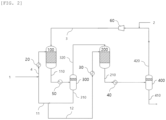
FIG. 1 is a process flow diagram showing a hydrogenation reaction in a method for preparing neopentyl glycol according to an exemplary embodiment of the present invention. -
FIG. 2 is a process flow diagram showing a hydrogenation reaction in a method for preparing neopentyl glycol according to the comparative example of the present invention. - The terms and words used in the description and claims of the present invention are not to be construed limitedly as having general or dictionary meanings but are to be construed as having meanings and concepts meeting the technical ideas of the present invention, based on a principle that the inventors are able to appropriately define the concepts of terms in order to describe their own inventions in the best mode.
- In the present invention, the term "stream" may refer to a fluid flow in a process or may refer to a fluid itself flowing in a pipe. Specifically, the "stream" may refer to both a fluid itself flowing in a pipe connecting each device and a fluid flow. In addition, the fluid may refer to one or more of gas and liquid, and a case in which a solid component is included in the fluid is not excluded.
- Meanwhile, in the devices such as an extraction column, a purification column, a distillation column, a reactor, a flash drum, and a recovery column in the present invention, unless otherwise particularly stated, a "lower portion" of the device refers to a point at a height of 95% to 100% from the top to the bottom of the device, specifically the lowest part (bottom). Likewise, unless otherwise particularly stated, an "upper portion" of the device refers to, a point at a height of 0% to 5% from the top to the bottom of the device, specifically the highest part (top).
- Meanwhile, in the devices such as an extraction column, a purification column, a distillation column, and a recovery column in the present invention, unless otherwise particularly stated, an operating temperature of the device may refer to a temperature in the lower portion of the device. Likewise, unless otherwise particularly stated, an operating pressure of the device may refer to a pressure in the upper portion of the device.
- Hereinafter, the present invention will be described in more detail with reference to the
FIG. 1 for better understanding of the present invention. - According to an exemplary embodiment of the present invention, provided is a method for preparing neopentyl glycol that includes: supplying a feed stream including hydroxypivaldehyde and a hydrogen supply stream to a first hydrogenation reactor and performing a hydrogenation reaction to obtain a first reaction product including neopentyl glycol; supplying the first reaction product to a flash drum to obtain an upper discharge stream including hydrogen and a first degassed solution stream from which hydrogen has been degassed; supplying an upper discharge stream from the flash drum to a second hydrogenation reactor; supplying the first degassed solution stream to a first heat exchanger to lower the temperature; circulating a part of the first degassed solution stream having the lowered temperature to the first hydrogenation reactor as a first branch stream and supplying the rest to the second hydrogenation reactor as a second branch stream; hydrogenating hydroxypivaldehyde included in the second branch stream in the second hydrogenation reactor using hydrogen included in the upper discharge stream from the flash drum to obtain a second reaction product including neopentyl glycol; and introducing the second reaction product to a neopentyl glycol purification process to obtain neopentyl glycol.
- First, the method for preparing neopentyl glycol according to an exemplary embodiment of the present invention may include supplying a feed stream including hydroxypivaldehyde and a hydrogen supply stream including hydrogen to a first hydrogenation reactor and performing a hydrogenation reaction to obtain a first reaction product including neopentyl glycol.
- According to an exemplary embodiment of the present invention, the feed stream including hydroxypivaldehyde may be obtained from a feed stream preparation process performed by including an aldol reaction process of obtaining a condensation reaction product by an aldol condensation reaction of a formaldehyde aqueous solution and isobutyl aldehyde in the presence of a catalyst, an aldol extraction process of bringing the condensation reaction product into contact with an extractant to obtain an extract and a raffinate, a saponification reaction process of reducing the raffinate to a catalyst, and an aldol purification process of distilling the catalyst and the extract to separate a fraction including hydroxypivaldehyde as a feed stream.
- The feed stream preparation process may be a series of processes performed for preparing a feed stream for being supplied to the first hydrogenation reactor. The feed stream preparation process may be performed by including the aldol reaction process, the aldol extraction process, the saponification reaction process, and the aldol purification process.
- Specifically, in the aldol condensation reaction performed in the aldol reaction process, an aldol condensation reaction temperature may be 70°C to 100°C, and an aldol condensation reaction time may be 0.1 hours to 3 hours. In the aldol condensation reaction conditions as such, an aldol condensation reaction of a formaldehyde (FA) aqueous solution and isobutyl aldehyde (IBAL) may be performed in the presence of a catalyst to produce a catalyst salt and hydroxypivaldehyde (HPA).
- Herein, formalin may be used as the formaldehyde aqueous solution, in which a concentration of the formalin of 35 to 45 wt% may be effective in terms of wastewater reduction. The formaldehyde aqueous solution may include water in an amount of 40 to 64 wt%, more specifically 45 to 55 wt% with respect to the total weight of the formaldehyde aqueous solution, and may include methanol for preventing polymerization of formaldehyde. In this case, the content of methanol may be 0.1 to 15 wt%, more specifically 0.1 to 5 wt% with respect to the total weight of formaldehyde aqueous solution.
- The catalyst may be an amine-based compound. Specifically, a tertiary amine compound such as trialkylamine, trimethylamine, triethylamine, tripropylamine, triisopropylamine, and tributylamine may be appropriate. More specifically, the catalyst may include triethyl amine (TEA). In the present invention, since TEA is most efficient in the aldol condensation reaction, it may be used as the catalyst.
- Meanwhile, the catalyst salt may be produced by reacting formic acid produced from a Cannizzaro side reaction occurring in the aldol condensation reaction and the catalyst.
- In addition, hydroxypivalic acid-neopentyl glycol ester (HPNE) may be further produced by a Tishchenko reaction which is another side reaction of the aldol condensation reaction. Therefore, a condensation reaction product including the catalyst salt, HPNE, and HPA may be obtained in the aldol reaction process.
- Subsequently, an aldol extraction process may be performed by bringing the condensation reaction product into contact with an extractant, and an organic phase extract including the catalyst, unreacted IBAL, the extractant, and HPA and a liquid phase raffinate including the catalyst salt may be obtained. Herein, the unreacted IBAL may be unreacted IBAL which is not aldol condensation reacted in the aldol reaction process. The catalyst salt may be present in a state of being dissociated in water, and the water may be derived from a formic acid aqueous solution.
- Herein, the extractant may be aliphatic alcohols, and preferably, may include 2-ethylhexanol (2-EH). Since HPA included in the condensate reaction product is soluble in the 2-EH, it may be preferably used in the aldol extraction process using an extraction device according to a liquid-liquid contact method.
- Meanwhile, an operating temperature of one or two or more aldol extraction columns performed in the aldol extraction process may be 40°C to 90°C. By operating the aldol extraction column within the temperature range, it may be easy to separate the phase into an organic phase and a liquid phase.
- Meanwhile, the raffinate including the catalyst salt is saponified, thereby performing a saponification reaction process of reducing the catalyst salt to a catalyst. In the saponification reaction process, a saponification reaction by a reaction of a separately added inorganic strong base such as sodium hydroxide (NaOH) and the catalyst salt may be performed. Thus, the catalyst salt may be reduced to the catalyst.
- Meanwhile, the aldol purification process may be a process of distilling the reduced catalyst obtained from the saponification reaction process and an extract separated from the aldol extraction process to separate unreacted IBAL and the catalyst, and HPA and the extractant. The separated unreacted IBAL and the catalyst may be circulated to the aldol reaction process and reused as a raw material of the aldol condensation reaction. Meanwhile, the HPA and the extractant separated from unreacted IBAL and the catalyst may be supplied to a
first hydrogenation reactor 100 as afeed stream 1 of the present invention. - Specifically, the aldol purification process may be performed by one or two or more aldol purification columns. First, when the aldol purification process is performed by one aldol purification column, the unreacted IBAL and the catalyst may be separated from an upper portion, and the HPA and the extractant may be separated from a lower portion of the one aldol purification column, respectively. Meanwhile, when the aldol purification process is performed in two or more aldol purification columns, it may be performed by one or more aldol purification columns which separate unreacted IBAL to the upper portion and one or more aldol purification columns which separate the catalyst to the upper portion. A stream including HPA or the extractant may be separated to the lower portion of the two or more aldol purification columns and discharged, and it may be supplied to the
first hydrogenation reactor 100 as thefeed stream 1 of the present invention, as described above. - The stream supplied to the
first hydrogenation reactor 100 may be thefeed stream 1 and ahydrogen supply stream 3. Herein, thehydrogen supply stream 3 may include compressed hydrogen, and the compressed hydrogen may be compressed hydrogen in which fresh hydrogen added through ahydrogen addition stream 2 is compressed through acompressor 60. In thefirst hydrogenation reactor 100, a hydrogenation reaction of HPA included in thefeed stream 1 and compressed hydrogen included in thehydrogen supply stream 3 proceeds to produce neopentyl glycol (NPG). Herein, the hydrogenation reaction may be performed in the presence of a hydrogenation reaction catalyst. - A copper-based catalyst or a nickel catalyst may be used as the hydrogenation reaction catalyst. An example of the copper-based catalyst may be a CuO/BaO/SiO catalyst, and the CuO/BaO/SiO catalyst may be a catalyst of (CuO)x(BaO)y(SiO)z (x, y, and z are wt%, and x:y:z = 10-50:0-10:40-90, 10-50:1-10:40-89, or 29-50:1-10:40-70). The sum of x and y is preferably 20 to 50 (wt%) or 30 to 50 (wt%), based on the sum of x, y, and z (100 wt%), and in this range, performance of the hydrogenation reaction catalyst is excellent and an effect of long life is shown.
- Meanwhile, since the hydrogenation reaction is basically an exothermic reaction, there may be difficulty in controlling the temperature inside the hydrogenation reactor in which a hydrogenation reaction is performed. Therefore, the temperature inside the hydrogenation reactor is excessively raised as the hydrogenation reaction proceeds, and safety problems may arise. In addition, by-products, for example, trimethylpentanediol (2,2,4-trimethyl-1,3-pentanediol, TMPD) are produced by a side reaction due to the temperature rise, so that a conversion rate to NPG to be obtained in the present invention may be lowered. Therefore, heat control to lower the temperature raised by the hydrogenation reaction needs to be performed.
- Meanwhile, the operating temperature of the
first hydrogenation reactor 100 may be 100°C to 200°C, specifically 130°C to 180°C, or 150°C to 170°C, and the operating pressure may be 20 kg/cm2 to 50 kg/cm2, specifically 30 kg/cm2 to 45 kg/cm2, or 35 kg/cm2 to 45 kg/cm2. By operating thefirst hydrogenation reactor 100 within the range, a hydrogenation reaction of reacting HPA and hydrogen may be performed well to obtain NPG with a high conversion rate. - By the hydrogenation reaction performed in the
first hydrogenation reactor 100, the first reaction product including NPG may be obtained. In addition to this, unreacted hydrogen during the hydrogenation reaction may also be included in the first reaction product. Herein, when a hydrogen fraction in thefirst hydrogenation reactor 100 is high depending on the operating situation of the process, a hydrogen fraction included in the first reaction product may also be increased, and when the hydrogen fraction in the first reaction product is high as such, hydrogen may be present as gaseous hydrogen as well as liquid hydrogen. - Subsequently, the method for preparing neopentyl glycol according to an exemplary embodiment of the present invention may include supplying the first reaction product to a
flash drum 300 as adischarge stream 110 from the first hydrogenation reactor to obtain anupper discharge stream 320 including hydrogen and a firstdegassed solution stream 310 from which hydrogen has been degassed. - Specifically, the first reaction product is distilled in the
flash drum 300, thereby separating an upper fraction of the flash drum including gaseous components and a lower fraction of the flash drum including the first degassed solution. Herein, the gaseous components may specifically include gaseous hydrogen. The first degassed solution may be a remainder after removing the gaseous components from the first reaction product, and specifically, may include liquid hydrogen, unreacted HPA, and NPG. - Herein, an operating temperature of the
flash drum 300 may be 100°C to 200°C, specifically 130°C to 180°C, or 150°C to 170°C. An operating pressure of theflash drum 300 may be 20 kg/cm2 to 60 kg/cm2, specifically 25 kg/cm2 to 55 kg/cm2, or 20 kg/cm2 to 40 kg/cm2. The temperature and the pressure of theflash drum 300 are operated within the range, whereby it may be easy to separate gaseous hydrogen in the first reaction product introduced to theflash drum 300. - Meanwhile, the method for preparing neopentyl glycol according to an exemplary embodiment of the present invention may include supplying the
upper discharge stream 320 of the flash drum to asecond hydrogenation reactor 200 and supplying the firstdegassed solution stream 310 to thefirst heat exchanger 10 to lower the temperature. - Specifically, the gaseous upper fraction of the
flash drum 300 may be supplied to thesecond hydrogenation reactor 200 as theupper discharge stream 320 of the flash drum, and the liquid lower fraction of theflash drum 300 may be supplied to thefirst heat exchanger 10 as the firstdegassed solution stream 310. - An amount of liquid hydrogen in the first
degassed solution stream 310 may be 30 ppm or less, 25 ppm or less, or 20 ppm or less. Hydrogen in the firstdegassed solution stream 310 is included within the range, whereby it may be easy to control the temperature of the firstdegassed solution stream 310 supplied to thefirst heat exchanger 10 described later to be within an appropriate range. Herein, the hydrogen included in the firstdegassed solution stream 310 may be present in a liquid phase. - According to an exemplary embodiment of the present invention, the first
degassed solution stream 310 may be supplied to thefirst heat exchanger 10 to lower the temperature. Specifically, since the temperature of the firstdegassed solution stream 310 from which gaseous hydrogen has been removed through theflash drum 300 described above may be lowered in thefirst heat exchanger 10, heat exchange efficiency in thefirst heat exchanger 10 may be increased. For example, when a stream having a high hydrogen fraction is directly added to the heat exchanger without passing through the flash drum, a content of lighter components (lights) is high in the stream having a high hydrogen fraction, which may be a cause of a decrease in a logarithmic mean temperature difference (LMTD) of the heat exchanger, resulting in deterioration of performance of the heat exchanger so that heat control may be difficult. - Therefore, since in the
first heat exchanger 10, the temperature of the firstdegassed solution stream 310 from which gaseous hydrogen has been degassed by theflash drum 300 is lowered, heat control may be stably performed. As described above, the heat control needs to be performed to address a safety problem in the process due to an exothermic reaction, a problem of an unstable process flow, and a problem of a low conversion rate to NPG. Herein, the heat control may be performed in the heat exchanger of the present invention, which may be lowering the temperature raised by the exothermic reaction to an optimal temperature range. - Meanwhile, the first
degassed solution stream 310 is a stream at a relatively high temperature, and when it is cooled in thefirst heat exchanger 10, energy may be used more efficiently by reusing waste heat. - According to the present invention, the
first heat exchanger 10 may be a steam generator, and heat may be stably recovered by the steam generator. As an example, the firstdegassed solution stream 310 exchanges heat with the low-temperature steam through thefirst heat exchanger 10 which is the steam generator, thereby being used in low-pressure steam production. As another example, the firstdegassed solution stream 310 exchanges heat with the lower discharge stream from the aldol purification column in which an aldol purification process is performed, and a part of the lower discharge stream from the aldol purification column is refluxed to the aldol purification column, thereby being used in raising the temperature of the aldol purification column. In this case, thefirst heat exchanger 10 may be a reboiler of one or more aldol purification columns in which the aldol purification process is performed. - Meanwhile, when the heat exchanger is not provided in a downstream of the
flash drum 300 as in the present invention, but provided in a front end of theflash drum 300, that is, in a downstream of thefirst hydrogenation reactor 100, in the case in which the hydrogen fraction in the stream supplied to the heat exchanger is high, the temperature in the heat exchanger should be further lowered for a stable process flow, and thus, a cooler may be used as the heat exchanger. In this case, since the cooler is used as the heat exchanger, it may be impossible to reuse waste heat from the cooler. - Meanwhile, the method for preparing neopentyl glycol of the present invention may include circulating a part of the first degassed solution stream having the lowered temperature to the first hydrogenation reactor as a first branch stream and supplying the rest to the second hydrogenation reactor as a second branch stream.
- Specifically, a part of the first
degassed solution stream 310 of which the temperature is stably lowered in thefirst heat exchanger 10 is branched into thefirst branch stream 11 and the rest is branched into thesecond branch stream 12, and thefirst branch stream 11 is circulated to the first hydrogenation reactor and thesecond branch stream 12 may be introduced to thesecond hydrogenation reactor 200. - Herein, a mass flow rate ratio between a flow rate of the
first branch stream 11 and a flow rate of thesecond branch stream 12 may be 3:1 to 7:1, specifically 4:1 to 6:1. By controlling the mass flow rate ratio to be within the range, two streams branched through thefirst heat exchanger 10, that is, thefirst branch stream 11 and thesecond branch stream 12 may be supplied at an appropriate ratio to thefirst hydrogenation reactor 100 and thesecond hydrogenation reactor 200. Thus, the temperature raised by the hydrogenation reaction in the process may be stably lowered in the heat exchanger. - More specifically, when the mass flow rate ratio is less than 3:1, the flow rate of the
second branch stream 12 is relatively increased, so that the temperature is excessively raised during the hydrogenation reaction in thesecond hydrogenation reactor 200 to which thesecond branch stream 12 is supplied, which may make temperature lowering in afourth heat exchanger 40 difficult. Meanwhile, the mass flow rate ratio is more than 7:1, the flow rate of thefirst branch stream 11 is excessively increased, so that energy may be excessively used in separating a gas phase and a liquid phase in theflash drum 300 and lowering the temperature in thefirst heat exchanger 10, after the hydrogenation reaction in thefirst hydrogenation reactor 100. - In addition, the temperature of the
first branch stream 11 may be 110°C to 140°C. Specifically, the temperature of thefirst branch stream 11 may be 120°C to 135°C or 125°C to 135°C. Thefirst branch stream 11 is supplied to thefirst hydrogenation reactor 100 through thesecond heat exchanger 20 at a temperature within the range, thereby being introduced to thefirst hydrogenation reactor 100 again in a temperature-lowered state even in the case in which the temperature is raised by the hydrogenation reaction, and thus, the temperature of the first reaction product may not be excessively raised. Therefore, when the temperature is lowered, accidents such as fire and explosion due to a runaway reaction may be prevented from occurring. - In addition, the
first branch stream 11 is mixed with thefeed stream 1 to form a mixed stream 4, and the mixed stream 4 may be supplied to thefirst hydrogenation reactor 100 through thesecond heat exchanger 20. Specifically, the temperature of the mixed stream 4 is lowered again in thesecond heat exchanger 20, whereby thelower discharge stream 110 from the first hydrogenation reactor may not be discharged at an excessively high temperature due to the hydrogenation reaction performed in thefirst hydrogenation reactor 100. - Meanwhile, the
second branch stream 12 including the first degassed solution stream of which the temperature is lowered by thefirst heat exchanger 10 may be supplied to thesecond hydrogenation reactor 200 in a temperature-lowered state again through athird heat exchanger 30. - The method for preparing neopentyl glycol according to an exemplary embodiment of the present invention may include hydrogenating HPA included in the
second branch stream 12 in thesecond hydrogenation reactor 200 using hydrogen included in theupper discharge stream 320 of the flash drum to obtain the second reaction product including NPG. Herein, thesecond branch stream 12 may further include NPG produced in thefirst hydrogenation reactor 100. - Meanwhile, the operating temperature of the
second hydrogenation reactor 200 may be 100°C to 200°C, specifically 130°C to 180°C, or 150°C to 170°C, and the operating pressure may be 20 kg/cm2 to 50 kg/cm2, specifically 30 kg/cm2 to 45 kg/cm2, or 35 kg/cm2 to 45 kg/cm2. The operating conditions of thesecond hydrogenation reactor 200 as such may be the same as the operating conditions of thefirst hydrogenation reactor 100. - Meanwhile, NPG may be further produced by the hydrogenation reaction of HPA and hydrogen also in the
second hydrogenation reactor 200, as in the hydrogenation reaction in thefirst hydrogenation reactor 100 described above. The second reaction product including NPG produced as such may be obtained, and the second reaction product may be supplied to adegassing unit 400 through thefourth heat exchanger 40 as thelower discharge stream 210 of the second hydrogenation reactor. The temperature of the second reaction product is lowered in thefourth heat exchanger 40, thereby lowering pressure in the degassing column of thedegassing unit 400 described later to perform degassing better. - According to an exemplary embodiment of the present invention, the second reaction product may be supplied to the
degassing unit 400 to introduce the seconddegassed solution stream 410 from which hydrogen has been degassed to the neopentyl glycol purification process. Herein, the hydrogen may be hydrogen which is not hydrogenated with HPA in thesecond hydrogenation reactor 200, and the hydrogen may be further degassed in thedegassing unit 400. In thedegassing unit 400, degassing may be performed to obtain anupper discharge stream 420 from the degassing unit including hydrogen and a seconddegassed solution stream 410 including NPG. Theupper discharge stream 420 from the degassing unit may be supplied to acompressor 60, and the seconddegassed solution stream 410 may be introduced to the NPG purification process described later. - Herein, the
degassing unit 400 may include one or more degassing columns to perform degassing. For example, the second reaction product may be first degassed in the first degassing column, and the stream discharged to the upper portion of the first degassing column may be degassed once more. As such, the stream degassed once more may be supplied to thefirst hydrogenation reactor 100 through thecompressor 60. Further, a part of the stream discharged through thecompressor 60 may be branched, temperature-lowered through the heat exchanger, and then circulated to the front end of thecompressor 60. Meanwhile, the stream discharged to the lower portion of the first degassing column may also be degassed once more, and the stream from which hydrogen has been degassed as such may be subjected to an NPG purification process. - Subsequently, the method for preparing neopentyl glycol according to an exemplary embodiment may include introducing the second reaction product to the neopentyl glycol purification process to obtain neopentyl glycol.
- Specifically, the NPG purification process for obtaining the NPG from the second
degassed solution stream 410 including NPG may be performed. In addition to this, the seconddegassed solution stream 410 may further include HPNE, the catalyst, and the extractant. - The neopentyl glycol purification process of the present invention may be a process of distilling the second
degassed solution stream 410 to obtain neopentyl glycol. Specifically, in the NPG purification process, the seconddegassed solution stream 410 is distilled to be separated into the catalyst, the extractant, HPNE, and NPG, and NPG separated as such may be obtained as an intended product. - Meanwhile, as described above, the HPNE separated in the NPG purification process is a by-product to NPG which is the intended product, and the stream including HPNE separated in the NPG purification process is subjected to the HPNE purification process, thereby further obtaining NPG which is not recovered in the NPG purification process, and also, recovering HPNE which is a high value-added product itself and using it as a product.
- As an example, in the HPNE purification process, the stream including HPNE separated in the NPG purification process is distilled to separate HPNE and a part of NPG. That is, since the part of NPG which is not obtained in the NPG purification process and separated may be recovered from the HPNE purification process, an NPG recovery rate may be further increased. In addition, since the HPNE may be used as a raw material in another process, for example, as a main raw material of coating and synthesis of polyester, economic feasibility may be improved in terms of using raw materials by the HPNE purification process according to the present invention.
- Meanwhile, according to an exemplary embodiment of the present invention, the catalyst and the extractant separated in the NPG purification process may be subjected to an extractant purification process. A fraction including the catalyst and a fraction including the extractant may be separated by distillation performed in the extractant purification process. Herein, the catalyst may be a small amount of the catalyst which is not separated in the aldol purification process described above. The catalyst is separated in the extractant purification process and circulated to the aldol purification process, thereby recovering the catalyst in the system, for example, TEA.
- Meanwhile, the extractant separated in the extractant purification process may be an unreacted extractant in the aldol extraction process, and may be circulated again to the aldol extraction process. Thus, the extractant, for example, 2-EH may be separated, recovered, and reused.
- Hereinafter, the present invention will be described in more detail by the examples. However, the following examples are provided for illustrating the present invention. It is apparent to a person skilled in the art that various modifications and alterations may be made without departing from the scope and spirit of the present invention, and the scope of the present invention is not limited thereto.
- According to the process flow illustrated in
FIG. 1 , a preparation process of neopentyl glycol (NPG) was simulated, using an Aspen Plus simulator available from Aspen. - A
feed stream 1 including hydroxypivaldehyde (HPA) and ahydrogen supply stream 3 including compressed hydrogen were supplied to thefirst hydrogenation reactor 100, respectively, and were hydrogenated to obtain a first reaction product including neopentyl glycol. At this time, an operating temperature of thefirst hydrogenation reactor 100 was 160°C and an operating pressure thereof was 40 kg/cm2. A hydrogen fraction included in the first reaction product (hydrogen fraction in the first reaction product) with respect to the total weight of the first reaction product was 17 ppm. - The first reaction product was supplied to a
flash drum 300 to obtain anupper discharge stream 320 from the flash drum including hydrogen and a firstdegassed solution stream 310 from which hydrogen had been degassed. At this time, an amount of hydrogen included in the first degassed solution stream 310 (hydrogen fraction of a heat exchanger inlet) was 17 ppm. - Subsequently, the
upper discharge stream 320 from the flash drum was supplied to asecond hydrogenation reactor 200, and the firstdegassed solution stream 310 was supplied to afirst heat exchanger 10 to lower the temperature to 130°C. Thefirst heat exchanger 10 was a steam generator. A part of the first degassed solution stream having the lowered temperature was circulated to thefirst hydrogenation reactor 100 as afirst branch stream 11, and the rest was supplied to thesecond hydrogenation reactor 200 as asecond branch stream 12. - Specifically, the
first branch stream 11 was mixed with thefeed stream 1 and formed a mixed stream 4, and the mixed stream 4 was supplied to thefirst hydrogenation reactor 100 through asecond heat exchanger 20. Meanwhile, thesecond branch stream 12 was supplied to thesecond hydrogenation reactor 200 in a temperature-lowered state again through athird heat exchanger 30. - In the
second hydrogenation reactor 200, HPA included in thesecond branch stream 12 were hydrogenated using hydrogen included in theupper discharge stream 320 from the flash drum to obtain the second reaction product including neopentyl glycol. - The second reaction product was supplied to a
degassing unit 400 through afourth heat exchanger 40 as thelower discharge stream 210 from the second hydrogenation reactor. At this time, a temperature of a stream which was passed through thefourth heat exchanger 40 was 40°C. In thedegassing unit 400, the seconddegassed solution stream 410 from which hydrogen had been further degassed was introduced to a neopentyl glycol purification process to obtain neopentyl glycol. - In Example 2, reactivity in the first hydrogenation reactor was controlled as compared with Example 1, thereby adjusting the fraction of hydrogen included in the first reaction product (hydrogen fraction in the first reaction product) to 1% as compared with the total weight of the first reaction product. In addition, the amount of hydrogen included in the first degassed solution stream 310 (hydrogen fraction of the heat exchanger inlet) was 17 ppm.
- According to the process flow illustrated in
FIG. 2 , a preparation process of neopentyl glycol (NPG) was simulated, using the Aspen Plus simulator available from Aspen. - In Comparative Example 1, a
lower discharge stream 110 from a first hydrogenation reactor including a first reaction product was supplied to a cooler 50 to lower the temperature from 160°C to 130°C, and was supplied to aflash drum 300. - In the flash drum, a first
degassed solution stream 310 from which gaseous hydrogen was removed was obtained, and NPG was prepared by the same process flow as in Example 1, except that a mixed stream 4 in which a part of the firstdegassed solution stream 310 was mixed with a feed stream as afirst branch stream 11 was circulated to afirst hydrogenation reactor 100 through aheat exchanger 20. - As a result, a hydrogen fraction included in the first reaction product (hydrogen fraction in the first reaction product) with respect to the total weight of the first reaction product was 17 ppm. Since the first reaction product was supplied to the cooler 50, the hydrogen fraction of the heat exchanger (cooler) inlet was also 17 ppm.
- In Comparative Example 2, reactivity in the first hydrogenation reactor was controlled as compared with Comparative Example 1, thereby adjusting the fraction of hydrogen included in the first reaction product (hydrogen fraction in the first reaction product) to 1% as compared with the total weight of the first reaction product. Since the first reaction product was supplied to the cooler 50, the hydrogen fraction of the heat exchanger (cooler) inlet was also 1%.
- The following Table 1 shows that the hydrogen fraction in the first reaction product, the hydrogen fraction of the heat exchanger inlet, the vapor fraction of the heat exchanger inlet, the volume increase rate, and the heat recovery amount in the first reaction product of the examples and the comparative examples.
- The vapor fraction of the heat exchanger inlet shows a ratio of the mass flow rate of the gaseous components included in the stream supplied to the heat exchanger as compared with the total mass flow rate of the stream supplied to the heat exchanger. Herein, the heat exchanger was the first heat exchanger in the examples, and the cooler in the comparative examples.
[Table 1] Hydrogen fraction in first reaction product Hydrogen fraction of heat exchanger1) inlet Vapor fraction of heat exchanger1) inlet Volume increase ratio Heat recovery amount Example 1 17 ppm 17 ppm 0 - ○ (5.3754 Gcal/hr) Example 2 1% 17 ppm 0 - ○ (5.2604 Gcal/hr) Comparative Example 1 17 ppm 17 ppm 0 - × Comparative Example 2 1% 1% 0.32 4.5 × 1) The heat exchanger was the first heat exchanger in the examples, and the cooler in the comparative examples. - Referring to Table 1, the examples are the case of supplying the first reaction product to the flash drum to remove gaseous hydrogen and supplying it to the first heat exchanger, and it was confirmed that there was no vapor fraction in the stream added to the first heat exchanger. In addition, it was confirmed in the examples that waste heat was recovered by using the first heat exchanger (steam generator).
- In Example 1, the hydrogen fraction included in the first reaction product was 17 ppm which was a very small amount, and since the hydrogen is present in a liquid phase at this time, it was confirmed that the hydrogen fraction in the stream added to the heat exchanger through the flash drum was the same as the hydrogen fraction included in the first reaction product.
- In Example 2, the hydrogen fraction included in the first reaction product was 1%, which was high as compared with Example 1, and when the hydrogen fraction was relatively high as such, both liquid hydrogen and gaseous hydrogen may be present. Therefore, it was confirmed that the first reaction product was supplied to the flash drum to remove gaseous hydrogen, whereby there was no vapor fraction in the stream added to the first heat exchanger. In addition, it was confirmed that hydrogen added to the first heat exchanger was liquid, and the hydrogen fraction in the stream added to the first heat exchanger was 17 ppm.
- Meanwhile, in the comparative examples, the first reaction product was first supplied to the cooler to lower the temperature and then was supplied to the flash drum, and in Comparative Example 1, since the hydrogen fraction in the first reaction product was very small as in Example 1, there was no gaseous hydrogen, but waste heat was not able to be recovered by providing the cooler for lowering the temperature of the first reaction product.
- In Comparative Example 2, the hydrogen fraction in the first reaction product was high as in Example 2, and both liquid hydrogen and gaseous hydrogen were able to be present together as described above. Since the first reaction product was supplied to the cooler, it was confirmed that the vapor fraction in the stream (first reaction product) added to the cooler was 0.32 and the volume increase fraction was 4.5. The volume increase ratio shows a ratio of a volume of the stream supplied to the heat exchanger (cooler) when the hydrogen fraction of the heat exchanger inlet was 1% (Comparative Example 3) to a volume of the stream supplied to the heat exchanger when the hydrogen fraction of the heat exchanger inlet was 17 ppm (Example 1 and Comparative Example 1). That is, since there was the vapor fraction in the stream supplied to the cooler in Comparative Example 2, gaseous hydrogen was increased, and thus, it was confirmed that the volume of the stream supplied to the cooler was increased as compared with the examples and Comparative Example 1.
Claims (12)
- A method for preparing neopentyl glycol, the method comprising:supplying a feed stream including hydroxypivaldehyde and a hydrogen supply stream to a first hydrogenation reactor and performing a hydrogenation reaction to obtain a first reaction product including neopentyl glycol;supplying the first reaction product to a flash drum to obtain an upper discharge stream including hydrogen and a first degassed solution stream from which hydrogen has been degassed;supplying an upper discharge stream from the flash drum to a second hydrogenation reactor;supplying the first degassed solution stream to a first heat exchanger to lower the temperature;circulating a part of the first degassed solution stream having the lowered temperature to the first hydrogenation reactor as a first branch stream and supplying the rest to the second hydrogenation reactor as a second branch stream;hydrogenating hydroxypivaldehyde included in the second branch stream in the second hydrogenation reactor using hydrogen included in the upper discharge stream from the flash drum to obtain a second reaction product including neopentyl glycol; andintroducing the second reaction product to a neopentyl glycol purification process to obtain neopentyl glycol.
- The method for preparing neopentyl glycol of claim 1, further comprising: supplying the second reaction product to a degassing unit to introduce a second degassed solution stream from which hydrogen has been degassed to the neopentyl glycol purification process.
- The method for preparing neopentyl glycol of claim 1, wherein the first branch stream is mixed with the feed stream to form a mixed stream, and the mixed stream is supplied to the first hydrogenation reactor through a second heat exchanger.
- The method for preparing neopentyl glycol of claim 1, wherein a temperature of the first branch stream is 110°C to 140°C.
- The method for preparing neopentyl glycol of claim 1, wherein the first degassed solution stream exchanges heat with a low-temperature steam through the first heat exchanger or exchanges heat with a lower discharge stream from an aldol purification column.
- The method for preparing neopentyl glycol of claim 1, wherein a content of liquid hydrogen in the first degassed solution stream is 30 ppm or less.
- The method for preparing neopentyl glycol of claim 2, wherein a flow rate ratio between a flow rate of the first branch stream and a flow rate of the second branch stream is 3:1 to 7:1.
- The method for preparing neopentyl glycol of claim 1,
wherein the feed stream including hydroxypivaldehyde is obtained from a feed stream preparation process performed by including:an aldol reaction process of obtaining a condensation reaction product by an aldol condensation reaction of a formaldehyde aqueous solution and isobutyl aldehyde in the presence of a catalyst,an aldol extraction process of bringing the condensation reaction product into contact with an extractant to obtain an extract and a raffinate,a saponification reaction process of reducing the raffinate to a catalyst, andan aldol purification process of distilling the catalyst and the extract to separate a fraction including hydroxypivaldehyde as a feed stream. - The method for preparing neopentyl glycol of claim 8, wherein the catalyst includes triethyl amine (TEA).
- The method for preparing neopentyl glycol of claim 8, wherein the extractant includes 2-ethyl hexnaol (2-EH).
- The method for preparing neopentyl glycol of claim 1, wherein the first heat exchanger is a steam generator.
- The method for preparing neopentyl glycol of claim 1, wherein the neopentyl glycol purification process is a process of distilling the second degassed solution stream to obtain neopentyl glycol.
Applications Claiming Priority (3)
| Application Number | Priority Date | Filing Date | Title |
|---|---|---|---|
| KR20220114486 | 2022-09-08 | ||
| KR1020230111976A KR20240035333A (en) | 2022-09-08 | 2023-08-25 | Method for preparing neopentyl glycol |
| PCT/KR2023/013050 WO2024053937A1 (en) | 2022-09-08 | 2023-09-01 | Method for preparing neopentyl glycol |
Publications (3)
| Publication Number | Publication Date |
|---|---|
| EP4397649A1 true EP4397649A1 (en) | 2024-07-10 |
| EP4397649A4 EP4397649A4 (en) | 2025-05-21 |
| EP4397649B1 EP4397649B1 (en) | 2025-10-29 |
Family
ID=90191336
Family Applications (1)
| Application Number | Title | Priority Date | Filing Date |
|---|---|---|---|
| EP23863413.3A Active EP4397649B1 (en) | 2022-09-08 | 2023-09-01 | Method for preparing neopentyl glycol |
Country Status (4)
| Country | Link |
|---|---|
| US (1) | US20250109084A1 (en) |
| EP (1) | EP4397649B1 (en) |
| JP (1) | JP7729528B2 (en) |
| WO (1) | WO2024053937A1 (en) |
Family Cites Families (12)
| Publication number | Priority date | Publication date | Assignee | Title |
|---|---|---|---|---|
| US4855515A (en) * | 1987-08-12 | 1989-08-08 | Eastman Kodak Company | Process for the production of neopentyl glycol |
| US4851592A (en) * | 1987-10-27 | 1989-07-25 | Eastman Kodak Company | Triethylamine catalyzed neopentyl glycol production utilizing a gas sparged reactor |
| JP3224547B2 (en) * | 1996-10-22 | 2001-10-29 | エルジー・ケミカル・リミテッド | Continuous production method of neopentyl glycol |
| DE19733903A1 (en) * | 1997-08-05 | 1999-02-11 | Basf Ag | Process for the production of hydroxppivalic acid neopentyl glycol ester (HPN) |
| JP2001288131A (en) * | 2000-02-04 | 2001-10-16 | Daicel Chem Ind Ltd | Method for producing purified 1,3-butylene glycol |
| JP4530461B2 (en) * | 2000-02-04 | 2010-08-25 | ダイセル化学工業株式会社 | Method for purifying 1,3-butylene glycol |
| CN202186949U (en) * | 2011-07-06 | 2012-04-11 | 上海焦化有限公司 | Two-step hydrogenization process system for preparing neopentyl glycol |
| US8710278B1 (en) * | 2013-01-31 | 2014-04-29 | Eastman Chemical Company | Process for producing polyols |
| KR101757053B1 (en) * | 2014-09-25 | 2017-07-12 | 주식회사 엘지화학 | High efficient method for preparing neopentyl glycol and manufacturing equipment thereof |
| KR101808248B1 (en) * | 2015-05-13 | 2017-12-12 | 한화케미칼 주식회사 | A continuous process for preparing neopentyl glycol |
| KR101952690B1 (en) * | 2015-09-07 | 2019-02-27 | 주식회사 엘지화학 | Apparatus and method for preparing glycol |
| CN113952895A (en) * | 2021-11-01 | 2022-01-21 | 聊城市鲁西化工工程设计有限责任公司 | Continuous catalytic hydrogenation system and process for hydroxypivalaldehyde |
-
2023
- 2023-09-01 EP EP23863413.3A patent/EP4397649B1/en active Active
- 2023-09-01 WO PCT/KR2023/013050 patent/WO2024053937A1/en not_active Ceased
- 2023-09-01 US US18/703,450 patent/US20250109084A1/en active Pending
- 2023-09-01 JP JP2024520934A patent/JP7729528B2/en active Active
Also Published As
| Publication number | Publication date |
|---|---|
| US20250109084A1 (en) | 2025-04-03 |
| JP7729528B2 (en) | 2025-08-26 |
| WO2024053937A1 (en) | 2024-03-14 |
| JP2024538966A (en) | 2024-10-28 |
| EP4397649A4 (en) | 2025-05-21 |
| EP4397649B1 (en) | 2025-10-29 |
Similar Documents
| Publication | Publication Date | Title |
|---|---|---|
| CN107108413B (en) | Apparatus for producing glycol and process for producing the same | |
| US6433230B1 (en) | Process for conducting an aldol condensation | |
| CN112479841B (en) | Process for synthesizing butyraldehyde by hydroformylation of propylene | |
| US20200189998A1 (en) | Method for preparing trimethylolpropane | |
| EP4397649B1 (en) | Method for preparing neopentyl glycol | |
| KR20240035333A (en) | Method for preparing neopentyl glycol | |
| EP4397648B1 (en) | Method for preparing neopentyl glycol | |
| EP4397647A1 (en) | Method for preparing neopentyl glycol | |
| CN112679318A (en) | Device and method for purifying and recovering circulating solvent in propylene oxide production process | |
| CN118076574A (en) | Method for preparing neopentyl glycol | |
| EP4692034A1 (en) | Method for preparing neopentyl glycol | |
| US20260132095A1 (en) | Method for preparing neopentyl glycol | |
| EP4397630B1 (en) | Method for treating neopentyl glycol wastewater | |
| KR20240035332A (en) | Method for preparing neopentyl glycol | |
| KR20240035331A (en) | Method for preparing neopentyl glycol | |
| CN118119585A (en) | Method for preparing neopentyl glycol | |
| CN118119584A (en) | Preparation method of neopentyl glycol | |
| KR102689377B1 (en) | Manufacturing apparatus of formic acid comprising deaeration tower | |
| EP4692038A1 (en) | Method for preparation of aldehyde | |
| CN116332878B (en) | Propylene oxide separation and purification system and separation and purification method | |
| CN117986087A (en) | A method for preparing 1,3-propylene glycol and producing 4-heterooxyheptanediol as a by-product | |
| CN121266492A (en) | System and method for preparing 1, 3-propylene glycol by propylene method | |
| TW202212311A (en) | Removal of acetals from process streams | |
| CN118615731A (en) | A system and method for separating propylene and propylene oxide in a process for producing propylene oxide by hydrogen peroxide method | |
| KR20260038698A (en) | Method for recovering valuable substance from waste fluid |
Legal Events
| Date | Code | Title | Description |
|---|---|---|---|
| STAA | Information on the status of an ep patent application or granted ep patent |
Free format text: STATUS: THE INTERNATIONAL PUBLICATION HAS BEEN MADE |
|
| PUAI | Public reference made under article 153(3) epc to a published international application that has entered the european phase |
Free format text: ORIGINAL CODE: 0009012 |
|
| STAA | Information on the status of an ep patent application or granted ep patent |
Free format text: STATUS: REQUEST FOR EXAMINATION WAS MADE |
|
| 17P | Request for examination filed |
Effective date: 20240405 |
|
| AK | Designated contracting states |
Kind code of ref document: A1 Designated state(s): AL AT BE BG CH CY CZ DE DK EE ES FI FR GB GR HR HU IE IS IT LI LT LU LV MC ME MK MT NL NO PL PT RO RS SE SI SK SM TR |
|
| A4 | Supplementary search report drawn up and despatched |
Effective date: 20250417 |
|
| RIC1 | Information provided on ipc code assigned before grant |
Ipc: C07C 29/141 20060101ALI20250411BHEP Ipc: C07C 31/20 20060101ALI20250411BHEP Ipc: C07C 29/74 20060101ALI20250411BHEP Ipc: C07C 29/14 20060101AFI20250411BHEP |
|
| GRAP | Despatch of communication of intention to grant a patent |
Free format text: ORIGINAL CODE: EPIDOSNIGR1 |
|
| STAA | Information on the status of an ep patent application or granted ep patent |
Free format text: STATUS: GRANT OF PATENT IS INTENDED |
|
| RIC1 | Information provided on ipc code assigned before grant |
Ipc: C07C 29/141 20060101ALI20250603BHEP Ipc: C07C 31/20 20060101ALI20250603BHEP Ipc: C07C 29/74 20060101ALI20250603BHEP Ipc: C07C 29/14 20060101AFI20250603BHEP |
|
| GRAS | Grant fee paid |
Free format text: ORIGINAL CODE: EPIDOSNIGR3 |
|
| DAV | Request for validation of the european patent (deleted) | ||
| DAX | Request for extension of the european patent (deleted) | ||
| INTG | Intention to grant announced |
Effective date: 20250704 |
|
| GRAA | (expected) grant |
Free format text: ORIGINAL CODE: 0009210 |
|
| STAA | Information on the status of an ep patent application or granted ep patent |
Free format text: STATUS: THE PATENT HAS BEEN GRANTED |
|
| AK | Designated contracting states |
Kind code of ref document: B1 Designated state(s): AL AT BE BG CH CY CZ DE DK EE ES FI FR GB GR HR HU IE IS IT LI LT LU LV MC ME MK MT NL NO PL PT RO RS SE SI SK SM TR |
|
| REG | Reference to a national code |
Ref country code: CH Ref legal event code: F10 Free format text: ST27 STATUS EVENT CODE: U-0-0-F10-F00 (AS PROVIDED BY THE NATIONAL OFFICE) Effective date: 20251029 Ref country code: GB Ref legal event code: FG4D |
|
| REG | Reference to a national code |
Ref country code: DE Ref legal event code: R096 Ref document number: 602023008127 Country of ref document: DE |
|
| REG | Reference to a national code |
Ref country code: IE Ref legal event code: FG4D |
|
| REG | Reference to a national code |
Ref country code: NL Ref legal event code: MP Effective date: 20251029 |
|
| PG25 | Lapsed in a contracting state [announced via postgrant information from national office to epo] |
Ref country code: ES Free format text: LAPSE BECAUSE OF FAILURE TO SUBMIT A TRANSLATION OF THE DESCRIPTION OR TO PAY THE FEE WITHIN THE PRESCRIBED TIME-LIMIT Effective date: 20251029 |
|
| REG | Reference to a national code |
Ref country code: LT Ref legal event code: MG9D |
|
| PG25 | Lapsed in a contracting state [announced via postgrant information from national office to epo] |
Ref country code: NO Free format text: LAPSE BECAUSE OF FAILURE TO SUBMIT A TRANSLATION OF THE DESCRIPTION OR TO PAY THE FEE WITHIN THE PRESCRIBED TIME-LIMIT Effective date: 20260129 |
|
| PG25 | Lapsed in a contracting state [announced via postgrant information from national office to epo] |
Ref country code: AT Free format text: LAPSE BECAUSE OF FAILURE TO SUBMIT A TRANSLATION OF THE DESCRIPTION OR TO PAY THE FEE WITHIN THE PRESCRIBED TIME-LIMIT Effective date: 20251029 Ref country code: FI Free format text: LAPSE BECAUSE OF FAILURE TO SUBMIT A TRANSLATION OF THE DESCRIPTION OR TO PAY THE FEE WITHIN THE PRESCRIBED TIME-LIMIT Effective date: 20251029 Ref country code: HR Free format text: LAPSE BECAUSE OF FAILURE TO SUBMIT A TRANSLATION OF THE DESCRIPTION OR TO PAY THE FEE WITHIN THE PRESCRIBED TIME-LIMIT Effective date: 20251029 |
|
| REG | Reference to a national code |
Ref country code: AT Ref legal event code: MK05 Ref document number: 1851446 Country of ref document: AT Kind code of ref document: T Effective date: 20251029 |
|
| PG25 | Lapsed in a contracting state [announced via postgrant information from national office to epo] |
Ref country code: NL Free format text: LAPSE BECAUSE OF FAILURE TO SUBMIT A TRANSLATION OF THE DESCRIPTION OR TO PAY THE FEE WITHIN THE PRESCRIBED TIME-LIMIT Effective date: 20251029 |
|
| PG25 | Lapsed in a contracting state [announced via postgrant information from national office to epo] |
Ref country code: RS Free format text: LAPSE BECAUSE OF FAILURE TO SUBMIT A TRANSLATION OF THE DESCRIPTION OR TO PAY THE FEE WITHIN THE PRESCRIBED TIME-LIMIT Effective date: 20260129 |
|
| PG25 | Lapsed in a contracting state [announced via postgrant information from national office to epo] |
Ref country code: IS Free format text: LAPSE BECAUSE OF FAILURE TO SUBMIT A TRANSLATION OF THE DESCRIPTION OR TO PAY THE FEE WITHIN THE PRESCRIBED TIME-LIMIT Effective date: 20260228 |
|
| PG25 | Lapsed in a contracting state [announced via postgrant information from national office to epo] |
Ref country code: PT Free format text: LAPSE BECAUSE OF FAILURE TO SUBMIT A TRANSLATION OF THE DESCRIPTION OR TO PAY THE FEE WITHIN THE PRESCRIBED TIME-LIMIT Effective date: 20260302 |
|
| PG25 | Lapsed in a contracting state [announced via postgrant information from national office to epo] |
Ref country code: PL Free format text: LAPSE BECAUSE OF FAILURE TO SUBMIT A TRANSLATION OF THE DESCRIPTION OR TO PAY THE FEE WITHIN THE PRESCRIBED TIME-LIMIT Effective date: 20251029 |
|
| PG25 | Lapsed in a contracting state [announced via postgrant information from national office to epo] |
Ref country code: LV Free format text: LAPSE BECAUSE OF FAILURE TO SUBMIT A TRANSLATION OF THE DESCRIPTION OR TO PAY THE FEE WITHIN THE PRESCRIBED TIME-LIMIT Effective date: 20251029 |
|
| PG25 | Lapsed in a contracting state [announced via postgrant information from national office to epo] |
Ref country code: BG Free format text: LAPSE BECAUSE OF FAILURE TO SUBMIT A TRANSLATION OF THE DESCRIPTION OR TO PAY THE FEE WITHIN THE PRESCRIBED TIME-LIMIT Effective date: 20251029 |