EP4397641A1 - Perovskite-type ceramic compact and method for manufacturing same - Google Patents
Perovskite-type ceramic compact and method for manufacturing same Download PDFInfo
- Publication number
- EP4397641A1 EP4397641A1 EP22864000.9A EP22864000A EP4397641A1 EP 4397641 A1 EP4397641 A1 EP 4397641A1 EP 22864000 A EP22864000 A EP 22864000A EP 4397641 A1 EP4397641 A1 EP 4397641A1
- Authority
- EP
- European Patent Office
- Prior art keywords
- compact
- perovskite
- type ceramic
- precursor
- gel
- Prior art date
- Legal status (The legal status is an assumption and is not a legal conclusion. Google has not performed a legal analysis and makes no representation as to the accuracy of the status listed.)
- Pending
Links
Images



Classifications
-
- C—CHEMISTRY; METALLURGY
- C01—INORGANIC CHEMISTRY
- C01G—COMPOUNDS CONTAINING METALS NOT COVERED BY SUBCLASSES C01D OR C01F
- C01G25/00—Compounds of zirconium
-
- C—CHEMISTRY; METALLURGY
- C01—INORGANIC CHEMISTRY
- C01G—COMPOUNDS CONTAINING METALS NOT COVERED BY SUBCLASSES C01D OR C01F
- C01G25/00—Compounds of zirconium
- C01G25/006—Compounds containing zirconium, with or without oxygen or hydrogen, and containing two or more other elements
-
- C—CHEMISTRY; METALLURGY
- C01—INORGANIC CHEMISTRY
- C01G—COMPOUNDS CONTAINING METALS NOT COVERED BY SUBCLASSES C01D OR C01F
- C01G23/00—Compounds of titanium
- C01G23/003—Titanates
- C01G23/006—Alkaline earth titanates
-
- C—CHEMISTRY; METALLURGY
- C01—INORGANIC CHEMISTRY
- C01G—COMPOUNDS CONTAINING METALS NOT COVERED BY SUBCLASSES C01D OR C01F
- C01G25/00—Compounds of zirconium
- C01G25/02—Oxides
-
- C—CHEMISTRY; METALLURGY
- C01—INORGANIC CHEMISTRY
- C01G—COMPOUNDS CONTAINING METALS NOT COVERED BY SUBCLASSES C01D OR C01F
- C01G27/00—Compounds of hafnium
- C01G27/006—Compounds containing hafnium, with or without oxygen or hydrogen, and containing two or more other elements
-
- C—CHEMISTRY; METALLURGY
- C04—CEMENTS; CONCRETE; ARTIFICIAL STONE; CERAMICS; REFRACTORIES
- C04B—LIME, MAGNESIA; SLAG; CEMENTS; COMPOSITIONS THEREOF, e.g. MORTARS, CONCRETE OR LIKE BUILDING MATERIALS; ARTIFICIAL STONE; CERAMICS; REFRACTORIES; TREATMENT OF NATURAL STONE
- C04B35/00—Shaped ceramic products characterised by their composition; Ceramics compositions; Processing powders of inorganic compounds preparatory to the manufacturing of ceramic products
- C04B35/01—Shaped ceramic products characterised by their composition; Ceramics compositions; Processing powders of inorganic compounds preparatory to the manufacturing of ceramic products based on oxide ceramics
- C04B35/46—Shaped ceramic products characterised by their composition; Ceramics compositions; Processing powders of inorganic compounds preparatory to the manufacturing of ceramic products based on oxide ceramics based on titanium oxides or titanates
- C04B35/462—Shaped ceramic products characterised by their composition; Ceramics compositions; Processing powders of inorganic compounds preparatory to the manufacturing of ceramic products based on oxide ceramics based on titanium oxides or titanates based on titanates
- C04B35/465—Shaped ceramic products characterised by their composition; Ceramics compositions; Processing powders of inorganic compounds preparatory to the manufacturing of ceramic products based on oxide ceramics based on titanium oxides or titanates based on titanates based on alkaline earth metal titanates
- C04B35/468—Shaped ceramic products characterised by their composition; Ceramics compositions; Processing powders of inorganic compounds preparatory to the manufacturing of ceramic products based on oxide ceramics based on titanium oxides or titanates based on titanates based on alkaline earth metal titanates based on barium titanates
- C04B35/4682—Shaped ceramic products characterised by their composition; Ceramics compositions; Processing powders of inorganic compounds preparatory to the manufacturing of ceramic products based on oxide ceramics based on titanium oxides or titanates based on titanates based on alkaline earth metal titanates based on barium titanates based on BaTiO3 perovskite phase
-
- C—CHEMISTRY; METALLURGY
- C04—CEMENTS; CONCRETE; ARTIFICIAL STONE; CERAMICS; REFRACTORIES
- C04B—LIME, MAGNESIA; SLAG; CEMENTS; COMPOSITIONS THEREOF, e.g. MORTARS, CONCRETE OR LIKE BUILDING MATERIALS; ARTIFICIAL STONE; CERAMICS; REFRACTORIES; TREATMENT OF NATURAL STONE
- C04B35/00—Shaped ceramic products characterised by their composition; Ceramics compositions; Processing powders of inorganic compounds preparatory to the manufacturing of ceramic products
- C04B35/01—Shaped ceramic products characterised by their composition; Ceramics compositions; Processing powders of inorganic compounds preparatory to the manufacturing of ceramic products based on oxide ceramics
- C04B35/46—Shaped ceramic products characterised by their composition; Ceramics compositions; Processing powders of inorganic compounds preparatory to the manufacturing of ceramic products based on oxide ceramics based on titanium oxides or titanates
- C04B35/462—Shaped ceramic products characterised by their composition; Ceramics compositions; Processing powders of inorganic compounds preparatory to the manufacturing of ceramic products based on oxide ceramics based on titanium oxides or titanates based on titanates
- C04B35/465—Shaped ceramic products characterised by their composition; Ceramics compositions; Processing powders of inorganic compounds preparatory to the manufacturing of ceramic products based on oxide ceramics based on titanium oxides or titanates based on titanates based on alkaline earth metal titanates
- C04B35/47—Shaped ceramic products characterised by their composition; Ceramics compositions; Processing powders of inorganic compounds preparatory to the manufacturing of ceramic products based on oxide ceramics based on titanium oxides or titanates based on titanates based on alkaline earth metal titanates based on strontium titanates
-
- C—CHEMISTRY; METALLURGY
- C04—CEMENTS; CONCRETE; ARTIFICIAL STONE; CERAMICS; REFRACTORIES
- C04B—LIME, MAGNESIA; SLAG; CEMENTS; COMPOSITIONS THEREOF, e.g. MORTARS, CONCRETE OR LIKE BUILDING MATERIALS; ARTIFICIAL STONE; CERAMICS; REFRACTORIES; TREATMENT OF NATURAL STONE
- C04B35/00—Shaped ceramic products characterised by their composition; Ceramics compositions; Processing powders of inorganic compounds preparatory to the manufacturing of ceramic products
- C04B35/01—Shaped ceramic products characterised by their composition; Ceramics compositions; Processing powders of inorganic compounds preparatory to the manufacturing of ceramic products based on oxide ceramics
- C04B35/48—Shaped ceramic products characterised by their composition; Ceramics compositions; Processing powders of inorganic compounds preparatory to the manufacturing of ceramic products based on oxide ceramics based on zirconium or hafnium oxides, zirconates, zircon or hafnates
- C04B35/486—Fine ceramics
-
- C—CHEMISTRY; METALLURGY
- C04—CEMENTS; CONCRETE; ARTIFICIAL STONE; CERAMICS; REFRACTORIES
- C04B—LIME, MAGNESIA; SLAG; CEMENTS; COMPOSITIONS THEREOF, e.g. MORTARS, CONCRETE OR LIKE BUILDING MATERIALS; ARTIFICIAL STONE; CERAMICS; REFRACTORIES; TREATMENT OF NATURAL STONE
- C04B35/00—Shaped ceramic products characterised by their composition; Ceramics compositions; Processing powders of inorganic compounds preparatory to the manufacturing of ceramic products
- C04B35/622—Forming processes; Processing powders of inorganic compounds preparatory to the manufacturing of ceramic products
- C04B35/624—Sol-gel processing
-
- C—CHEMISTRY; METALLURGY
- C04—CEMENTS; CONCRETE; ARTIFICIAL STONE; CERAMICS; REFRACTORIES
- C04B—LIME, MAGNESIA; SLAG; CEMENTS; COMPOSITIONS THEREOF, e.g. MORTARS, CONCRETE OR LIKE BUILDING MATERIALS; ARTIFICIAL STONE; CERAMICS; REFRACTORIES; TREATMENT OF NATURAL STONE
- C04B35/00—Shaped ceramic products characterised by their composition; Ceramics compositions; Processing powders of inorganic compounds preparatory to the manufacturing of ceramic products
- C04B35/622—Forming processes; Processing powders of inorganic compounds preparatory to the manufacturing of ceramic products
- C04B35/626—Preparing or treating the powders individually or as batches ; preparing or treating macroscopic reinforcing agents for ceramic products, e.g. fibres; mechanical aspects section B
- C04B35/62605—Treating the starting powders individually or as mixtures
- C04B35/6261—Milling
-
- C—CHEMISTRY; METALLURGY
- C01—INORGANIC CHEMISTRY
- C01P—INDEXING SCHEME RELATING TO STRUCTURAL AND PHYSICAL ASPECTS OF SOLID INORGANIC COMPOUNDS
- C01P2002/00—Crystal-structural characteristics
- C01P2002/30—Three-dimensional structures
- C01P2002/34—Three-dimensional structures perovskite-type (ABO3)
-
- C—CHEMISTRY; METALLURGY
- C01—INORGANIC CHEMISTRY
- C01P—INDEXING SCHEME RELATING TO STRUCTURAL AND PHYSICAL ASPECTS OF SOLID INORGANIC COMPOUNDS
- C01P2002/00—Crystal-structural characteristics
- C01P2002/70—Crystal-structural characteristics defined by measured X-ray, neutron or electron diffraction data
- C01P2002/72—Crystal-structural characteristics defined by measured X-ray, neutron or electron diffraction data by d-values or two theta-values, e.g. as X-ray diagram
-
- C—CHEMISTRY; METALLURGY
- C01—INORGANIC CHEMISTRY
- C01P—INDEXING SCHEME RELATING TO STRUCTURAL AND PHYSICAL ASPECTS OF SOLID INORGANIC COMPOUNDS
- C01P2004/00—Particle morphology
- C01P2004/01—Particle morphology depicted by an image
- C01P2004/03—Particle morphology depicted by an image obtained by SEM
-
- C—CHEMISTRY; METALLURGY
- C01—INORGANIC CHEMISTRY
- C01P—INDEXING SCHEME RELATING TO STRUCTURAL AND PHYSICAL ASPECTS OF SOLID INORGANIC COMPOUNDS
- C01P2004/00—Particle morphology
- C01P2004/60—Particles characterised by their size
- C01P2004/61—Micrometer sized, i.e. from 1-100 micrometer
-
- C—CHEMISTRY; METALLURGY
- C01—INORGANIC CHEMISTRY
- C01P—INDEXING SCHEME RELATING TO STRUCTURAL AND PHYSICAL ASPECTS OF SOLID INORGANIC COMPOUNDS
- C01P2004/00—Particle morphology
- C01P2004/60—Particles characterised by their size
- C01P2004/62—Submicrometer sized, i.e. from 0.1-1 micrometer
-
- C—CHEMISTRY; METALLURGY
- C01—INORGANIC CHEMISTRY
- C01P—INDEXING SCHEME RELATING TO STRUCTURAL AND PHYSICAL ASPECTS OF SOLID INORGANIC COMPOUNDS
- C01P2004/00—Particle morphology
- C01P2004/60—Particles characterised by their size
- C01P2004/64—Nanometer sized, i.e. from 1-100 nanometer
-
- C—CHEMISTRY; METALLURGY
- C04—CEMENTS; CONCRETE; ARTIFICIAL STONE; CERAMICS; REFRACTORIES
- C04B—LIME, MAGNESIA; SLAG; CEMENTS; COMPOSITIONS THEREOF, e.g. MORTARS, CONCRETE OR LIKE BUILDING MATERIALS; ARTIFICIAL STONE; CERAMICS; REFRACTORIES; TREATMENT OF NATURAL STONE
- C04B2235/00—Aspects relating to ceramic starting mixtures or sintered ceramic products
- C04B2235/02—Composition of constituents of the starting material or of secondary phases of the final product
- C04B2235/30—Constituents and secondary phases not being of a fibrous nature
- C04B2235/32—Metal oxides, mixed metal oxides, or oxide-forming salts thereof, e.g. carbonates, nitrates, (oxy)hydroxides, chlorides
- C04B2235/3205—Alkaline earth oxides or oxide forming salts thereof, e.g. beryllium oxide
- C04B2235/3215—Barium oxides or oxide-forming salts thereof
-
- C—CHEMISTRY; METALLURGY
- C04—CEMENTS; CONCRETE; ARTIFICIAL STONE; CERAMICS; REFRACTORIES
- C04B—LIME, MAGNESIA; SLAG; CEMENTS; COMPOSITIONS THEREOF, e.g. MORTARS, CONCRETE OR LIKE BUILDING MATERIALS; ARTIFICIAL STONE; CERAMICS; REFRACTORIES; TREATMENT OF NATURAL STONE
- C04B2235/00—Aspects relating to ceramic starting mixtures or sintered ceramic products
- C04B2235/02—Composition of constituents of the starting material or of secondary phases of the final product
- C04B2235/30—Constituents and secondary phases not being of a fibrous nature
- C04B2235/32—Metal oxides, mixed metal oxides, or oxide-forming salts thereof, e.g. carbonates, nitrates, (oxy)hydroxides, chlorides
- C04B2235/3231—Refractory metal oxides, their mixed metal oxides, or oxide-forming salts thereof
- C04B2235/3244—Zirconium oxides, zirconates, hafnium oxides, hafnates, or oxide-forming salts thereof
-
- C—CHEMISTRY; METALLURGY
- C04—CEMENTS; CONCRETE; ARTIFICIAL STONE; CERAMICS; REFRACTORIES
- C04B—LIME, MAGNESIA; SLAG; CEMENTS; COMPOSITIONS THEREOF, e.g. MORTARS, CONCRETE OR LIKE BUILDING MATERIALS; ARTIFICIAL STONE; CERAMICS; REFRACTORIES; TREATMENT OF NATURAL STONE
- C04B2235/00—Aspects relating to ceramic starting mixtures or sintered ceramic products
- C04B2235/02—Composition of constituents of the starting material or of secondary phases of the final product
- C04B2235/30—Constituents and secondary phases not being of a fibrous nature
- C04B2235/32—Metal oxides, mixed metal oxides, or oxide-forming salts thereof, e.g. carbonates, nitrates, (oxy)hydroxides, chlorides
- C04B2235/3231—Refractory metal oxides, their mixed metal oxides, or oxide-forming salts thereof
- C04B2235/3244—Zirconium oxides, zirconates, hafnium oxides, hafnates, or oxide-forming salts thereof
- C04B2235/3248—Zirconates or hafnates, e.g. zircon
-
- C—CHEMISTRY; METALLURGY
- C04—CEMENTS; CONCRETE; ARTIFICIAL STONE; CERAMICS; REFRACTORIES
- C04B—LIME, MAGNESIA; SLAG; CEMENTS; COMPOSITIONS THEREOF, e.g. MORTARS, CONCRETE OR LIKE BUILDING MATERIALS; ARTIFICIAL STONE; CERAMICS; REFRACTORIES; TREATMENT OF NATURAL STONE
- C04B2235/00—Aspects relating to ceramic starting mixtures or sintered ceramic products
- C04B2235/02—Composition of constituents of the starting material or of secondary phases of the final product
- C04B2235/30—Constituents and secondary phases not being of a fibrous nature
- C04B2235/44—Metal salt constituents or additives chosen for the nature of the anions, e.g. hydrides or acetylacetonate
-
- C—CHEMISTRY; METALLURGY
- C04—CEMENTS; CONCRETE; ARTIFICIAL STONE; CERAMICS; REFRACTORIES
- C04B—LIME, MAGNESIA; SLAG; CEMENTS; COMPOSITIONS THEREOF, e.g. MORTARS, CONCRETE OR LIKE BUILDING MATERIALS; ARTIFICIAL STONE; CERAMICS; REFRACTORIES; TREATMENT OF NATURAL STONE
- C04B2235/00—Aspects relating to ceramic starting mixtures or sintered ceramic products
- C04B2235/02—Composition of constituents of the starting material or of secondary phases of the final product
- C04B2235/30—Constituents and secondary phases not being of a fibrous nature
- C04B2235/44—Metal salt constituents or additives chosen for the nature of the anions, e.g. hydrides or acetylacetonate
- C04B2235/444—Halide containing anions, e.g. bromide, iodate, chlorite
-
- C—CHEMISTRY; METALLURGY
- C04—CEMENTS; CONCRETE; ARTIFICIAL STONE; CERAMICS; REFRACTORIES
- C04B—LIME, MAGNESIA; SLAG; CEMENTS; COMPOSITIONS THEREOF, e.g. MORTARS, CONCRETE OR LIKE BUILDING MATERIALS; ARTIFICIAL STONE; CERAMICS; REFRACTORIES; TREATMENT OF NATURAL STONE
- C04B2235/00—Aspects relating to ceramic starting mixtures or sintered ceramic products
- C04B2235/02—Composition of constituents of the starting material or of secondary phases of the final product
- C04B2235/50—Constituents or additives of the starting mixture chosen for their shape or used because of their shape or their physical appearance
- C04B2235/54—Particle size related information
- C04B2235/5418—Particle size related information expressed by the size of the particles or aggregates thereof
- C04B2235/5436—Particle size related information expressed by the size of the particles or aggregates thereof micrometer sized, i.e. from 1 to 100 micron
-
- C—CHEMISTRY; METALLURGY
- C04—CEMENTS; CONCRETE; ARTIFICIAL STONE; CERAMICS; REFRACTORIES
- C04B—LIME, MAGNESIA; SLAG; CEMENTS; COMPOSITIONS THEREOF, e.g. MORTARS, CONCRETE OR LIKE BUILDING MATERIALS; ARTIFICIAL STONE; CERAMICS; REFRACTORIES; TREATMENT OF NATURAL STONE
- C04B2235/00—Aspects relating to ceramic starting mixtures or sintered ceramic products
- C04B2235/02—Composition of constituents of the starting material or of secondary phases of the final product
- C04B2235/50—Constituents or additives of the starting mixture chosen for their shape or used because of their shape or their physical appearance
- C04B2235/54—Particle size related information
- C04B2235/5418—Particle size related information expressed by the size of the particles or aggregates thereof
- C04B2235/5445—Particle size related information expressed by the size of the particles or aggregates thereof submicron sized, i.e. from 0,1 to 1 micron
-
- C—CHEMISTRY; METALLURGY
- C04—CEMENTS; CONCRETE; ARTIFICIAL STONE; CERAMICS; REFRACTORIES
- C04B—LIME, MAGNESIA; SLAG; CEMENTS; COMPOSITIONS THEREOF, e.g. MORTARS, CONCRETE OR LIKE BUILDING MATERIALS; ARTIFICIAL STONE; CERAMICS; REFRACTORIES; TREATMENT OF NATURAL STONE
- C04B2235/00—Aspects relating to ceramic starting mixtures or sintered ceramic products
- C04B2235/02—Composition of constituents of the starting material or of secondary phases of the final product
- C04B2235/50—Constituents or additives of the starting mixture chosen for their shape or used because of their shape or their physical appearance
- C04B2235/54—Particle size related information
- C04B2235/5418—Particle size related information expressed by the size of the particles or aggregates thereof
- C04B2235/5454—Particle size related information expressed by the size of the particles or aggregates thereof nanometer sized, i.e. below 100 nm
-
- C—CHEMISTRY; METALLURGY
- C04—CEMENTS; CONCRETE; ARTIFICIAL STONE; CERAMICS; REFRACTORIES
- C04B—LIME, MAGNESIA; SLAG; CEMENTS; COMPOSITIONS THEREOF, e.g. MORTARS, CONCRETE OR LIKE BUILDING MATERIALS; ARTIFICIAL STONE; CERAMICS; REFRACTORIES; TREATMENT OF NATURAL STONE
- C04B2235/00—Aspects relating to ceramic starting mixtures or sintered ceramic products
- C04B2235/02—Composition of constituents of the starting material or of secondary phases of the final product
- C04B2235/50—Constituents or additives of the starting mixture chosen for their shape or used because of their shape or their physical appearance
- C04B2235/54—Particle size related information
- C04B2235/5463—Particle size distributions
- C04B2235/5481—Monomodal
-
- C—CHEMISTRY; METALLURGY
- C04—CEMENTS; CONCRETE; ARTIFICIAL STONE; CERAMICS; REFRACTORIES
- C04B—LIME, MAGNESIA; SLAG; CEMENTS; COMPOSITIONS THEREOF, e.g. MORTARS, CONCRETE OR LIKE BUILDING MATERIALS; ARTIFICIAL STONE; CERAMICS; REFRACTORIES; TREATMENT OF NATURAL STONE
- C04B2235/00—Aspects relating to ceramic starting mixtures or sintered ceramic products
- C04B2235/60—Aspects relating to the preparation, properties or mechanical treatment of green bodies or pre-forms
- C04B2235/608—Green bodies or pre-forms with well-defined density
-
- C—CHEMISTRY; METALLURGY
- C04—CEMENTS; CONCRETE; ARTIFICIAL STONE; CERAMICS; REFRACTORIES
- C04B—LIME, MAGNESIA; SLAG; CEMENTS; COMPOSITIONS THEREOF, e.g. MORTARS, CONCRETE OR LIKE BUILDING MATERIALS; ARTIFICIAL STONE; CERAMICS; REFRACTORIES; TREATMENT OF NATURAL STONE
- C04B2235/00—Aspects relating to ceramic starting mixtures or sintered ceramic products
- C04B2235/60—Aspects relating to the preparation, properties or mechanical treatment of green bodies or pre-forms
- C04B2235/616—Liquid infiltration of green bodies or pre-forms
-
- C—CHEMISTRY; METALLURGY
- C04—CEMENTS; CONCRETE; ARTIFICIAL STONE; CERAMICS; REFRACTORIES
- C04B—LIME, MAGNESIA; SLAG; CEMENTS; COMPOSITIONS THEREOF, e.g. MORTARS, CONCRETE OR LIKE BUILDING MATERIALS; ARTIFICIAL STONE; CERAMICS; REFRACTORIES; TREATMENT OF NATURAL STONE
- C04B2235/00—Aspects relating to ceramic starting mixtures or sintered ceramic products
- C04B2235/70—Aspects relating to sintered or melt-casted ceramic products
- C04B2235/74—Physical characteristics
- C04B2235/76—Crystal structural characteristics, e.g. symmetry
- C04B2235/768—Perovskite structure ABO3
-
- Y—GENERAL TAGGING OF NEW TECHNOLOGICAL DEVELOPMENTS; GENERAL TAGGING OF CROSS-SECTIONAL TECHNOLOGIES SPANNING OVER SEVERAL SECTIONS OF THE IPC; TECHNICAL SUBJECTS COVERED BY FORMER USPC CROSS-REFERENCE ART COLLECTIONS [XRACs] AND DIGESTS
- Y02—TECHNOLOGIES OR APPLICATIONS FOR MITIGATION OR ADAPTATION AGAINST CLIMATE CHANGE
- Y02E—REDUCTION OF GREENHOUSE GAS [GHG] EMISSIONS, RELATED TO ENERGY GENERATION, TRANSMISSION OR DISTRIBUTION
- Y02E60/00—Enabling technologies; Technologies with a potential or indirect contribution to GHG emissions mitigation
- Y02E60/30—Hydrogen technology
- Y02E60/50—Fuel cells
Definitions
- Non Patent Literature 1 discloses a method for producing a barium zirconate sintered compact, in which the surfaces of particles of barium zirconate are coated with a zirconia gel, the obtained composite particles are then press-molded to form a compact having a predetermined shape, and the compact is then immersed in a saturated aqueous solution of barium hydroxide at a temperature of 75°C.
- a perovskite-type ceramic is an oxide including an alkaline earth metal element, at least one element selected from Ti, Zr, and Hf, and oxygen element, the perovskite-type ceramic being represented by a general formula M 1 M 2 O 3 (wherein M 1 is an alkaline earth metal element, and M 2 is at least one element selected from Ti, Zr, and Hf).
- the alkaline earth metal element M 1 is preferably Ca, Sr, and Ba.
- the production method of a perovskite-type ceramic compact in the present invention includes a contact reaction process in which a precursor compact comprising singly a gel including an oxide of at least one element selected from Ti, Zr, and Hf, and a liquid comprising a hydroxide of the alkaline earth metal element are brought into contact with each other.
- the production method may include, if necessary, a post-treatment process (described later).
- the precursor compact used in the contact reaction process is an article containing the gel alone.
- the phrase "comprising singly a gel” does not mean “consisting only of a gel” not containing other components, and the phrase is intended to exclude a composite containing other components that do not have a configuration of "comprising singly a gel” as a result of obtaining the composite by dispersing the other components in the gel as a matrix.
- the precursor compact according to the present invention is an article that essentially contains the gel and may contain other components.
- the lower limit of the content ratio of the gel particles is preferably 30% by mass, and more preferably 50% by mass with respect to 100% by mass of the total mass of the precursor raw material.
- the perovskite-type ceramic compact of the present invention has a crystal structure including a portion formed by connecting a plurality of domains 2 as illustrated in Figs. 1 and 2 . Electrons generated by irradiating the compact with an electron beam are inelastically scattered, diffracted on the crystal lattice planes, and emitted as reflected electrons having a diffraction pattern called an EBSD pattern, and thus the crystal orientation can be obtained by projecting the reflected electrons and indexing the orientation.
- the orientation of the crystals 1 and the domain 2 formed of an aggregate of the crystals 1 can be confirmed by scanning an electron beam to map an EBSD pattern and obtaining, for example, an inverse pole figure crystal orientation map. It is considered that when the perovskite-type ceramic compact of the present invention has such a structure, variations in ion conduction and polarization directions decrease, and various functions described later improve.
- the alkaline earth metal hydroxide used for producing compacts and the raw material particles as the raw material for producing precursor compacts are described below.
- Zirconium oxychloride manufactured by FUJIFILM Wako Pure Chemical Corporation was added to ion-exchanged water, and stirring was conducted to obtain an aqueous solution. Subsequently, ammonia water was added to this aqueous solution, and reacted at room temperature to obtain a reaction product containing an oxide hydrous gel made of ZrO 2 ⁇ nH 2 O. Thereafter, filtration and water washing were performed to remove by-products, and the oxide hydrous gel was recovered. The recovered gel was then dried at a temperature of 150°C for 12 hours to obtain a solidified gel. The solidified gel was evaluated with X-ray diffraction measurement, and no diffraction peak derived from the crystal was observed, and thus, it was found that the solidified gel was amorphous.
- the mixed solution and zirconia balls (diameter: 0.5 mm) having the same volume as the volume of the mixed solution were then sealed in a zirconia pot.
- the mixture was pulverized at 450 rpm for 3 hours using a planetary ball mill to recover a mixed solution containing pulverized particles.
- the mixed solution and zirconia balls (diameter: 0.1 mm) having the same volume as the mixed solution were sealed in a zirconia pot.
- the mixture was pulverized at 450 rpm for 3 hours using a planetary ball mill to obtain a mixed solution containing pulverized particles (precursor raw material, hereinafter referred to as "raw material particles X2").
- Each of the raw material particles and the like described above was subjected to uniaxial pressing and cold isostatic pressing to obtain a disk-shaped precursor compact (diameter 20 mm, thickness 0.5 to 1.0 mm), and then immersed in a saturated aqueous solution of barium hydroxide octahydrate to obtain a compact made of a crystal of barium zirconate which is a perovskite-type ceramic. After that, the density of the obtained compact was measured, and the relative density was calculated from the ratio of the measured density to the apparent density (3.869 g/cm 3 ) of the oxide hydrous gel and the theoretical density (6.117 g/cm 3 ) of barium zirconate.
- the fracture surface of the precursor compact P1 was observed with a scanning electron microscope, and the image of Fig. 5 was obtained.
- the inside of the precursor compact P1 is densely assembled into fine particles and has a smooth structure.
- the fracture surface of the obtained compact Q1 was observed with a scanning electron microscope, and the images of Figs. 6 and 7 were obtained.
- Fig. 6 coarse particles, pores, and the like are not present.
- Fig. 7 is an enlarged image of Fig. 6 , and it can be seen from Fig. 7 that a dense compact composed of fine crystals was obtained.
- Figs. 8 and 9 were obtained.
- Fig. 9 which is an enlarged view of Fig. 8 that crystal grains having a size of 10 to 100 nm aggregate to form a domain having a size of 0.5 to 10 ⁇ m. It can be seen that adjacent domains are connected to each other and have a tertiary hierarchical form.
- the fracture surface of the compact Q1 was polished to prepare a sample for EBSD measurement, the structure was observed with a thermal field emission scanning electron microscope "JSM-6500F" (model name) manufactured by JEOL Ltd., and the crystal orientation mapping measurement of barium zirconate was performed, and as a result, Fig. 10 was obtained.
- the crystal grains having a size of 10 to 100 nm observed in Figs. 8 and 9 are aggregated, and the crystal enclosures in the domains having a size of 0.5 to 10 ⁇ m to be formed all indicate the same direction, which indicates that the crystal grains having a size of 10 to 100 nm in the domains are oriented and aggregated.
- Perovskite-type ceramic compacts (hereinafter, referred to as "compacts Q2 to Q4") were obtained in the same operation as in Experimental Example 1 except that the reaction time (the immersion time of the precursor compact P1 in a saturated aqueous solution of barium hydroxide octahydrate) was set to 12 hours, 50 hours, and 200 hours, respectively, instead of 100 hours. Then, the relative densities of these compacts Q2 to Q4 were calculated (see Table 1).
- Perovskite-type ceramic compacts (hereinafter, referred to as "compacts Q5 to Q8") were obtained in the same operation as in Experimental Example 1 except that the reaction temperature was set to 150°C instead of 100°C, and the reaction time was set to 12 hours, 70 hours, 100 hours, and 200 hours, respectively. Then, the relative densities of these compacts Q5 to Q8 were calculated (see Table 1 and Fig. 11 ). When the surface of the obtained compact Q8 was observed with an electron microscope, an image of Fig. 12 was obtained. As can be seen from Fig. 12 that the compact is a dense compact composed of fine crystals.
- precursor compact P2 A precursor compact (hereinafter, referred to as "precursor compact P2") was produced in the same operation as in Experimental Example 1 except that the raw material particles X1 (oxide hydrous gel particles) were used instead of the raw material particles X2.
- the precursor compact was immersed in a saturated aqueous solution of barium hydroxide octahydrate, and then washed and dried, in the same manner as in Experimental Example 1 to obtain a perovskite-type ceramic compact (hereinafter, referred to as "compact R1”) composed of dense barium zirconate crystals.
- the density of the precursor compact P2 was 2.646 g/cm 3 , and the relative density was 69.50%.
- the density of the obtained compact R1 was 4.285 g/cm 3 and the relative density was 70.05%.
- the fracture surface of the precursor compact P2 was observed with an electron microscope, and the image of Fig. 13 was obtained.
- large particles and fine particles are mixed in the interior of the precursor compact P2, and these particles are densely assembled to have a smooth structure.
- the fracture surface of the obtained compact R1 was observed with an electron microscope, and the image of Fig. 14 was obtained.
- the compact is a dense compact composed of fine crystals.
- precursor compact P3 A precursor compact (hereinafter, referred to as "precursor compact P3") was obtained in the same operation as in Experimental Example 1 except that a mixture of 52.6% by mass of the raw material particles X1 and 47.4% by mass of barium zirconate particles (that are powder particles obtained by pulverizing the compact R1 and performing heat treatment at a temperature of 1300°C for 10 hours in the air atmosphere, average particle diameter d 50 : 0.969 ⁇ m) was used.
- barium zirconate particles that are powder particles obtained by pulverizing the compact R1 and performing heat treatment at a temperature of 1300°C for 10 hours in the air atmosphere, average particle diameter d 50 : 0.969 ⁇ m
- the precursor compact was immersed in a saturated aqueous solution of barium hydroxide octahydrate, and then washed and dried, in the same manner as in Experimental Example 1, to obtain a perovskite-type ceramic compact (hereinafter, referred to as "compact R2") composed of dense barium zirconate crystals.
- compact R2 a perovskite-type ceramic compact
- the relative density of the precursor compact P3 was 61.25%.
- the relative density of the obtained compact R2 was 73.80%.
- precursor compact P4 A precursor compact (hereinafter, referred to as "precursor compact P4") was obtained in the same operation as in Experimental Example 1 except that a mixture of 82.0% by mass of the raw material particles X1 and 18.0% by mass of barium zirconate particles (that are powder particles obtained by pulverizing the compact R1 and performing heat treatment at a temperature of 1300°C for 10 hours in the air atmosphere, average particle diameter d 50 : 0.969 ⁇ m) was used.
- the precursor compact was immersed in a saturated aqueous solution of barium hydroxide octahydrate, and then washed and dried, in the same manner as in Experimental Example 1 to obtain a perovskite-type ceramic compact (hereinafter, referred to as "compact R3") composed of dense barium zirconate crystals.
- compact R3 a perovskite-type ceramic compact
- the relative density of the precursor compact P4 was 61.39%.
- the density of the obtained compact R3 was 4.569 g/cm 3 and the relative density was 74.69%.
- precursor compact P10 A precursor compact (hereinafter, referred to as "precursor compact P10") was produced in the same operation as in Experimental Example 1 except that the raw material particles Y1 (composite particles) were used instead of the raw material particles X2.
- the precursor compact was immersed in a saturated aqueous solution of barium hydroxide octahydrate, and then washed and dried, in the same manner as in Experimental Example 1 to obtain a perovskite-type ceramic compact (hereinafter, referred to as "compact S1”) composed of dense barium zirconate crystals.
- Fig. 15 The fracture surface of the precursor compact P10 was observed with an electron microscope, and the image of Fig. 15 was obtained. As can be seen from Fig. 15 that the compact is formed of a rough structure. The surface of the obtained compact S1 was observed with an electron microscope, and the images of Figs. 16 and 17 were obtained. As can be seen from Fig. 16 that the resulting compact is not dense but has a brittle form. Fig. 17 is an enlarged image of Fig. 16 , and it can be seen from Fig. 17 that a compact has a large number of pores.
- the perovskite-type ceramic compact of the present invention is dense and therefore it can be used for a dielectric for a ceramic capacitor, an electrolyte for a solid oxide fuel cell, an electrolyte for a gas sensor, an electrode or an electrolyte for an all-solid-state battery, a photocatalyst electrode, and the like.
Landscapes
- Chemical & Material Sciences (AREA)
- Engineering & Computer Science (AREA)
- Organic Chemistry (AREA)
- Ceramic Engineering (AREA)
- Inorganic Chemistry (AREA)
- Manufacturing & Machinery (AREA)
- Materials Engineering (AREA)
- Structural Engineering (AREA)
- Inorganic Compounds Of Heavy Metals (AREA)
- Life Sciences & Earth Sciences (AREA)
- Geology (AREA)
- General Life Sciences & Earth Sciences (AREA)
- Environmental & Geological Engineering (AREA)
- Composite Materials (AREA)
- Dispersion Chemistry (AREA)
Abstract
Description
- The present invention relates to a dense perovskite-type ceramic compact, a method for producing the same, and a raw material for a precursor compact used in the production of the perovskite-type ceramic compact.
- Perovskite-type composite oxides such as barium titanate, barium zirconate, strontium zirconate, and barium calcium zirconate titanate are known as a piezoelectric material, a dielectric material, and the like suitable for electric equipment, electronic products, and the like. The members disposed on these products are preferably formed of a high-density sintered body to sufficiently exhibit the performance. Such a sintered body (sintered compact) has been conventionally produced by mixing powder or particles of a composite oxide with a binder as necessary, forming a compact having a predetermined shape, and then subjecting the compact to a heat treatment at a high temperature of, for example, 1700°C (in the case of barium zirconate).
- Since the production conditions at a high temperature as described above are not economically preferable because a large amount of heat energy is required, a method capable of producing a sintered compact composed of a perovskite-type composite oxide at, for example, 200°C or lower has been required.
- For example,
Non Patent Literature 1 discloses a method for producing a barium zirconate sintered compact, in which the surfaces of particles of barium zirconate are coated with a zirconia gel, the obtained composite particles are then press-molded to form a compact having a predetermined shape, and the compact is then immersed in a saturated aqueous solution of barium hydroxide at a temperature of 75°C. - Non Patent Literature 1: Yuki Yamaguchi, J. Ceram. Soc. Jpn., 128 [10] (2020) 747-755
- An object of the present invention is to provide a method for producing a dense perovskite-type ceramic compact having a relative density of 60% or higher. Another object of the present invention is to provide a raw material for a precursor compact used in the suitable production of a perovskite-type ceramic compact. Further, another object of the present invention is to provide a perovskite-type ceramic compact suitable for an electrolyte or the like of a solid oxide fuel cell due to its high density.
- In the present invention, the relative density of the perovskite-type ceramic is a ratio of the measured density to the theoretical density (6.117 g/cm3 in the case of barium zirconate) obtained by X-ray diffraction measurement and Rietveld analysis. The relative density of an oxide hydrous gel is a ratio of the measured density to the apparent density of the oxide hydrous gel particles (3.869 g/cm3 in the case of zirconia gel) measured by the Archimedes' method. The measured density (hereinafter, also simply referred to as "density") is a bulk density measured by a dimension method.
- The inventors of the present invention have found that a dense perovskite-type ceramic compact having high relative density can be obtained by using only a zirconia gel, that is, particles formed of a gel containing at least one oxide selected from Ti, Zr, and Hf, rather than using the composite particles (that are particles obtained by coating the surfaces of barium zirconate particles with a zirconia gel) described in
Non Patent Literature 1. - The present invention is as follows.
- (1) A method for producing a perovskite-type ceramic compact consisting of a perovskite-type ceramic comprising an alkaline earth metal element, at least one element selected from Ti, Zr, and Hf, and oxygen element, characterized by comprising a contact reaction process in which a precursor compact comprising singly a gel including water and an oxide of at least one element selected from Ti, Zr, and Hf, and a liquid comprising a hydroxide of the alkaline earth metal element are brought into contact with each other.
- (2) The method for producing a perovskite-type ceramic compact according to (1) above, wherein the gel is amorphous.
- (3) The method for producing a perovskite-type ceramic compact according to (1) or (2) above, wherein the precursor compact is a green compact containing particles consisting of the gel.
- (4) The method for producing a perovskite-type ceramic compact according to any one of (1) to (3) above, wherein the precursor compact is a green compact of a mixture of particles consisting of the gel and particles consisting of the perovskite-type ceramic.
- (5) A perovskite-type ceramic compact characterized in that an aggregate of perovskite-type ceramic crystals comprising an alkaline earth metal element, at least one element selected from Ti, Zr, and Hf, and oxygen element forms a domain, and the compact comprises a portion formed by connecting a plurality of the domain, the perovskite-type ceramic compact having a relative density of 60% or higher.
- (6) The perovskite-type ceramic compact according to (5) above, wherein a plurality of the perovskite-type ceramic crystals oriented in a same direction are included in the domains.
- (7) A raw material for a precursor compact used in the method for producing a perovskite-type ceramic compact according to any one of (1) to (4) above, characterized by comprising particles consisting of a gel including water and an oxide of at least one element selected from Ti, Zr, and Hf.
- (8) The raw material for a precursor compact used in the method for producing a perovskite-type ceramic compact according to (7) above, wherein the gel is amorphous.
- (9) The raw material for a precursor compact used in the method for producing a perovskite-type ceramic compact according to (7) or (8) above, wherein an volume average particle diameter of the gel particles is in a range from 0.05 to 10 µm.
- The present invention can efficiently and economically produce a dense perovskite-type ceramic compact in which a crystal (perovskite-type ceramic crystal) composed of a desired perovskite-type oxide is contained at a high density (relative density of 60% or higher) without performing the contact reaction process in a high-temperature condition of, for example, 1000°C or higher, that is, without requiring a large amount of thermal energy. In a preferred embodiment, the relative density can be 80% or higher.
- According to the present invention, the above-described dense perovskite-type ceramic compact can be suitably used for a dielectric for a ceramic capacitor, an electrolyte for a solid oxide fuel cell, an electrolyte for a gas sensor, an electrode or an electrolyte for an all-solid-state battery, a photocatalyst electrode, and the like.
-
-
Fig. 1 is a schematic view illustrating an example of the crystal structure of a perovskite-type ceramic compact of the present invention. -
Fig. 2 is a schematic view illustrating another example of the crystal structure of the perovskite-type ceramic compact of the present invention. -
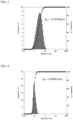
Fig. 3 is a graph illustrating a particle size distribution of raw material particles X1 used in EXAMPLES. -
Fig. 4 is a graph illustrating a particle size distribution of raw material particles X2 used in EXAMPLES. -
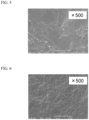
Fig. 5 is an SEM image of a precursor compact P1 used in Experimental Example 1. -
Fig. 6 is an SEM image of a perovskite-type ceramic compact Q1 obtained in Experimental Example 1. -
Fig. 7 is an enlarged image ofFig. 6 . -
Fig. 8 is a high magnification FE-SEM image of the perovskite-type ceramic compact Q1 obtained in Experimental Example 1. -
Fig. 9 is an enlarged image ofFig. 8 . -
Fig. 10 is a diagram of a crystal orientation map of the perovskite-type ceramic compact Q1 obtained in Experimental Example 1. -
Fig. 11 is a graph illustrating relative densities of perovskite-type ceramic compacts Q1 to Q8 obtained in Experimental Examples 1 to 8. -
Fig. 12 is an SEM image of a perovskite-type ceramic compact Q8 obtained in Experimental Example 8. -
Fig. 13 is an SEM image of a precursor compact P2 used in Experimental Example 9. -
Fig. 14 is an SEM image of a perovskite-type ceramic compact R1 obtained in Experimental Example 9. -
Fig. 15 is an SEM image of a precursor compact P10 used in Experimental Example 12. -
Fig. 16 is an SEM image of a perovskite-type ceramic compact S1 obtained in Experimental Example 12. -
Fig. 17 is an enlarged image ofFig. 16 . -
Fig. 18 is an X-ray diffraction pattern of a perovskite-type ceramic obtained in Experimental Example 13. - In the present invention, a perovskite-type ceramic is an oxide including an alkaline earth metal element, at least one element selected from Ti, Zr, and Hf, and oxygen element, the perovskite-type ceramic being represented by a general formula M1M2O3 (wherein M1 is an alkaline earth metal element, and M2 is at least one element selected from Ti, Zr, and Hf). The alkaline earth metal element M1 is preferably Ca, Sr, and Ba.
- The production method of a perovskite-type ceramic compact in the present invention includes a contact reaction process in which a precursor compact comprising singly a gel including an oxide of at least one element selected from Ti, Zr, and Hf, and a liquid comprising a hydroxide of the alkaline earth metal element are brought into contact with each other. The production method may include, if necessary, a post-treatment process (described later).
- The precursor compact used in the contact reaction process is an article containing the gel alone. The phrase "comprising singly a gel" does not mean "consisting only of a gel" not containing other components, and the phrase is intended to exclude a composite containing other components that do not have a configuration of "comprising singly a gel" as a result of obtaining the composite by dispersing the other components in the gel as a matrix. Thus, the precursor compact according to the present invention is an article that essentially contains the gel and may contain other components. In the present invention, a precursor compact of a preferred embodiment is a green compact obtained by press-molding a raw material (meaning another invention that is "raw material for a precursor compact used in the production of the perovskite-type ceramic compact" of the present invention, hereinafter, referred to as "precursor raw material") containing a particulated gel (hereinafter, referred to as "particles formed of gel" or "gel particles"). The gel is preferably amorphous from a viewpoint of the formability of a compact densified by the crystals of the perovskite-type ceramic. In addition, the gel is usually composed of a material represented by a general formula M2O2·nH2O (n is a positive number).
- The shape of the gel particle is not particularly limited, and it may be, for example, spherical shape (including substantially spherical shape), oval sphere shape, linear shape, plate shape, or the like. The shapes of the gel particles contained in the precursor raw material and the precursor compact are not necessarily uniform in all the particles, and the shape may be only one type or two or more types.
- The size of the gel particles is not particularly limited. The maximum length is preferably 100 µm, and more preferably 1 µm since a precursor compact having high density is obtained. However, the minimum length is preferably 1 nm, and more preferably 30 nm. In the case of spherical gel particles, the volume average particle size measured by a laser diffraction method is preferably in a range from 0.01 to 10 µm, and more preferably from 0.05 to 1 µm.
- The precursor raw material may be formed of gel particles, or formed of gel particles and other components. In the latter case, the other components preferably include an inorganic compound that is not denatured by a liquid containing a hydroxide of an alkaline earth metal element. Examples of the inorganic compound include an oxide, a sulfide, a carbide, a nitride, an alkali-resistant metal, or the like. It is preferably an oxide, more preferably a perovskite-type ceramic, and particularly preferably a perovskite-type ceramic to be produced. The other components may be either crystalline or amorphous. In addition, the shape and size of the other components are preferably the above-described shape and size for the gel particles.
- When the precursor raw material is formed of gel particles and other components, the lower limit of the content ratio of the gel particles is preferably 30% by mass, and more preferably 50% by mass with respect to 100% by mass of the total mass of the precursor raw material.
- When the green compact (precursor compact) is produced by press molding, the press molding is preferably conducted at a temperature of 10°C or higher and lower than 150°C to prevent denaturation of the gel. The press molding may be performed by appropriately selecting a method for achieving high density according to the shape of the precursor compact. In the present invention, for example, a method of performing uniaxial molding and cold isostatic molding (CIP) in this order may be applied. When press molding using the gel particles is performed, the gel particles are plastically deformed, and the precursor compact can be densified.
- The relative density of the green compact (precursor compact) is preferably in a range from 45% to 75%, and more preferably from 60% to 75%.
- In the contact reaction process according to the present invention, a liquid containing a hydroxide of an alkaline earth metal element is used. Examples of the hydroxide include calcium hydroxide, strontium hydroxide, barium hydroxide, and the like. The hydroxide may be contained singly or in combination of two or more types thereof in the liquid.
- Examples of the medium contained in the liquid include water, an alcohol containing water, and the like. The liquid may contain other components such as an organic compound as long as the reaction between the hydroxide and the gel constituting the precursor compact is not disturbed.
- The liquid is preferably a saturated aqueous solution of a hydroxide of an alkaline earth metal element.
- The contact method in the contact reaction process is appropriately selected depending on the shape and size of the precursor compact and is not particularly limited. Examples of the contact method include a method of immersing the precursor compact in the liquid, a method of spraying the liquid onto the precursor compact, a method of applying the liquid to the precursor compact, and the like. Of these methods, a method of immersing the precursor compact in the liquid is preferable since a compact containing a perovskite-type ceramic crystal at a high density can be efficiently obtained.
- In a case where the precursor compact is brought into contact with the liquid, the upper limit of the contact temperature is preferably 200°C, more preferably 180°C, and further preferably 160°C, and the lower limit is preferably 20°C, more preferably 50°C, and further preferably 75°C, in order to smoothly proceed the reaction between the hydroxide and the gel contained in the liquid without dissolving the precursor compact, that is, without dissolving the gel contained in the precursor compact.
- The contact time between the liquid and the precursor compact is appropriately selected depending on the shape and size of the precursor compact, but is usually 12 hours or longer, and preferably 50 hours or longer.
- As described above, the method for producing a perovskite-type ceramic compact of the present invention may include a post-treatment process as necessary after the contact reaction process. Examples of the post-treatment process include a cleaning process for removing the excessive liquid adhering to the perovskite-type ceramic compact in the contact reaction process, an adjustment process for adjusting the product form to a predetermined shape and size, and a heat treatment process.
- In the cleaning process, a method of spraying water, an acetic acid aqueous solution, or the like to the perovskite-type ceramic compact with liquid, or immersing the perovskite-type ceramic compact in water, an acetic acid aqueous solution, or the like, and then drying the perovskite-type ceramic compact may be applied. In a case where the perovskite-type ceramic compact is dried, it can be dried at a temperature ranging preferably from 20°C to 200°C, and more preferably from 70°C to 200°C under normal pressure conditions or under reduced pressure conditions.
- In the adjustment process, grinding processing, drilling processing, surface polishing processing, and the like may be performed in order to adjust a product form to a predetermined shape and size.
- The heat treatment process may be a process of heating at a temperature of, for example, in a range from 500°C to 1500°C in the air atmosphere for the growth of internal grains constituting the perovskite-type ceramic compact.
- The perovskite-type ceramic compact obtained by the method for producing a perovskite-type ceramic compact of the present invention is a dense compact in which crystals composed of a perovskite-type oxide such as barium titanate, barium zirconate, strontium zirconate, barium calcium zirconate titanate, strontium titanate, and strontium hafnate are contained at a high density, and no alkaline earth metal carbonate is contained or produced as a by-product. As described above, a precursor raw material formed of gel particles, or a precursor raw material formed of gel particles and other components may be used, but in any case, the obtained compact is dense. In addition, the relative density, which is the ratio of the measured density to the theoretical density, of the compact obtained by the method for producing a perovskite-type ceramic compact of the present invention is preferably 60% or higher, more preferably 70% or higher, and particularly preferably 80% or higher.
- In the perovskite-type ceramic compact of the present invention, as illustrated in
Figs. 1 and 2 , an aggregate of perovskite-type ceramic crystals 1 (in the figure, only some hexagonal portions are indicated by hatching) forms adomain 2, and a portion in which a plurality ofdomains 2 are connected is included.Fig. 1 is a schematic view illustrating a crystal structure of a perovskite-type ceramic compact obtained using a precursor compact of a precursor raw material formed of gel particles, andFig. 2 is a schematic view illustrating a crystal structure of a perovskite-type ceramic compact obtained using a precursor compact of a precursor raw material formed of gel particles and other components. A plurality of crystals included in one domain may be crystals oriented in the same direction as schematically represented by arrows inFigs. 1 and 2 . The size of the crystals is preferably in a range from 1 to 200 nm, and more preferably from 10 to 100 nm. - When EBSD analysis using an electron backscatter diffraction method is conducted, it can be confirmed that the perovskite-type ceramic compact of the present invention has a crystal structure including a portion formed by connecting a plurality of
domains 2 as illustrated inFigs. 1 and 2 . Electrons generated by irradiating the compact with an electron beam are inelastically scattered, diffracted on the crystal lattice planes, and emitted as reflected electrons having a diffraction pattern called an EBSD pattern, and thus the crystal orientation can be obtained by projecting the reflected electrons and indexing the orientation. The orientation of thecrystals 1 and thedomain 2 formed of an aggregate of thecrystals 1 can be confirmed by scanning an electron beam to map an EBSD pattern and obtaining, for example, an inverse pole figure crystal orientation map. It is considered that when the perovskite-type ceramic compact of the present invention has such a structure, variations in ion conduction and polarization directions decrease, and various functions described later improve. - The perovskite-type ceramic compact of the present invention is obtained by the manufacture method of the present invention that does not require a process of setting a temperature to 1500°C or higher at the time of manufacture through typical sintering, that is, does not require a large amount of thermal energy, and can be a compact with a high relative density, and thus it is suitable as a constituent material of a dielectric element, an ion conductive element, an electric conductive element, a piezoelectric element, a ferroelectric element, a ferromagnetic element, a photocatalyst, and the like.
- Hereinafter, production examples of the perovskite-type ceramic compact will be described.
- The alkaline earth metal hydroxide used for producing compacts and the raw material particles as the raw material for producing precursor compacts are described below.
- Barium hydroxide octahydrate manufactured by FUJIFILM Wako Pure Chemical Corporation was used.
- Zirconium oxychloride manufactured by FUJIFILM Wako Pure Chemical Corporation was added to ion-exchanged water, and stirring was conducted to obtain an aqueous solution. Subsequently, ammonia water was added to this aqueous solution, and reacted at room temperature to obtain a reaction product containing an oxide hydrous gel made of ZrO2·nH2O. Thereafter, filtration and water washing were performed to remove by-products, and the oxide hydrous gel was recovered. The recovered gel was then dried at a temperature of 150°C for 12 hours to obtain a solidified gel. The solidified gel was evaluated with X-ray diffraction measurement, and no diffraction peak derived from the crystal was observed, and thus, it was found that the solidified gel was amorphous.
- The solidified gel was preliminarily pulverized using a pestle and mortar. The preliminarily pulverized material and ethanol were then mixed at a mass ratio of 10:90. The mixed solution and zirconia balls (diameter: 5 mm) having the same volume as the mixed solution were sealed in a polyethylene container. After that, the container was rotated at 150 rpm for 10 hours, the solidified gel was pulverized, and a mixed solution containing a pulverized material (precursor raw material, hereinafter referred to as "raw material particles X1") was recovered. The mixed solution and zirconia balls (diameter: 0.5 mm) having the same volume as the volume of the mixed solution were then sealed in a zirconia pot. The mixture was pulverized at 450 rpm for 3 hours using a planetary ball mill to recover a mixed solution containing pulverized particles. Subsequently, the mixed solution and zirconia balls (diameter: 0.1 mm) having the same volume as the mixed solution were sealed in a zirconia pot. The mixture was pulverized at 450 rpm for 3 hours using a planetary ball mill to obtain a mixed solution containing pulverized particles (precursor raw material, hereinafter referred to as "raw material particles X2").
- Ethanol was removed from each of the mixed liquids containing the raw material particles X1 and X2, and these particles were washed and recovered, then dried at a temperature of 150°C, and the particle size distribution was measured using a laser diffraction/scattering type particle size distribution measuring apparatus "LA-960V2" (model name) manufactured by HORIBA, Ltd. (see
Figs. 3 and 4 ). The average particle size d50 was 2.182 µm for the raw material particles X1 and 0.083 µm for the raw material particles X2. - In accordance with description by Yuki Yamaguchi, J. Ceram. Soc. Jpn., 128 [10] (2020) 747-755, a powder obtained by firing barium zirconate synthesized by a solution method at a temperature of 1300°C for 10 hours in the air atmosphere and then pulverizing the barium zirconate and zirconium oxychloride manufactured by FUJIFILM Wako Pure Chemical Corporation were put in ion-exchanged water and stirred to prepare a barium zirconate particle-containing aqueous solution, and then ammonia water was added dropwise to the aqueous solution and reacted at room temperature, thereby obtaining oxide hydrous gel-coated composite particles made of ZrO2·nH2O, which were used as raw material particles Y1. When the particle diameter distribution of the raw material particles Y1 was measured, the average particle diameter d50 was 6.921 µm.
- Each of the raw material particles and the like described above was subjected to uniaxial pressing and cold isostatic pressing to obtain a disk-shaped precursor compact (
diameter 20 mm, thickness 0.5 to 1.0 mm), and then immersed in a saturated aqueous solution of barium hydroxide octahydrate to obtain a compact made of a crystal of barium zirconate which is a perovskite-type ceramic. After that, the density of the obtained compact was measured, and the relative density was calculated from the ratio of the measured density to the apparent density (3.869 g/cm3) of the oxide hydrous gel and the theoretical density (6.117 g/cm3) of barium zirconate. - The raw material particles X2 (oxide hydrous gel particles) in an amount of 0.5 g were subjected to uniaxial pressing (20 kN) and cold isostatic pressing (300 MPa) to obtain a precursor compact (hereinafter, referred to as a "precursor compact P1"). The density of the precursor compact P1 was 2.717 g/cm3, and the relative density was 71.38%.
- Subsequently, the precursor compact P1 and 20 g of a saturated aqueous solution of barium hydroxide octahydrate were placed in a container so that the precursor compact was immersed in the saturated aqueous solution, and the container was allowed to stand at a temperature of 100°C for 100 hours under sealed conditions. After that, washing with water and an aqueous acetic acid solution and drying at 150°C in the air atmosphere were performed to obtain a perovskite-type ceramic compact (hereinafter, referred to as "compact Q1") composed of dense barium zirconate crystals. The density of the compact Q1 was 5.138 g/cm3, and the relative density was 84.00% (see Table 1).
- The fracture surface of the precursor compact P1 was observed with a scanning electron microscope, and the image of
Fig. 5 was obtained. As can be seen fromFig. 5 , the inside of the precursor compact P1 is densely assembled into fine particles and has a smooth structure. The fracture surface of the obtained compact Q1 was observed with a scanning electron microscope, and the images ofFigs. 6 and7 were obtained. As can be seen fromFig. 6 , coarse particles, pores, and the like are not present.Fig. 7 is an enlarged image ofFig. 6 , and it can be seen fromFig. 7 that a dense compact composed of fine crystals was obtained. - Next, the fracture surface of the compact Q1 was observed with a field emission scanning electron microscope "JSM-6330F" (model name) manufactured by JEOL Ltd., and as a result,
Figs. 8 and9 were obtained. As can be seen fromFig. 9 which is an enlarged view ofFig. 8 that crystal grains having a size of 10 to 100 nm aggregate to form a domain having a size of 0.5 to 10 µm. It can be seen that adjacent domains are connected to each other and have a tertiary hierarchical form. On the other hand, the fracture surface of the compact Q1 was polished to prepare a sample for EBSD measurement, the structure was observed with a thermal field emission scanning electron microscope "JSM-6500F" (model name) manufactured by JEOL Ltd., and the crystal orientation mapping measurement of barium zirconate was performed, and as a result,Fig. 10 was obtained. According toFig. 10 , the crystal grains having a size of 10 to 100 nm observed inFigs. 8 and9 are aggregated, and the crystal enclosures in the domains having a size of 0.5 to 10 µm to be formed all indicate the same direction, which indicates that the crystal grains having a size of 10 to 100 nm in the domains are oriented and aggregated. - Perovskite-type ceramic compacts (hereinafter, referred to as "compacts Q2 to Q4") were obtained in the same operation as in Experimental Example 1 except that the reaction time (the immersion time of the precursor compact P1 in a saturated aqueous solution of barium hydroxide octahydrate) was set to 12 hours, 50 hours, and 200 hours, respectively, instead of 100 hours. Then, the relative densities of these compacts Q2 to Q4 were calculated (see Table 1).
- Perovskite-type ceramic compacts (hereinafter, referred to as "compacts Q5 to Q8") were obtained in the same operation as in Experimental Example 1 except that the reaction temperature was set to 150°C instead of 100°C, and the reaction time was set to 12 hours, 70 hours, 100 hours, and 200 hours, respectively. Then, the relative densities of these compacts Q5 to Q8 were calculated (see Table 1 and
Fig. 11 ). When the surface of the obtained compact Q8 was observed with an electron microscope, an image ofFig. 12 was obtained. As can be seen fromFig. 12 that the compact is a dense compact composed of fine crystals.Table 1 Reaction time Reaction temperature 12 hours 50 hours 70 hours 100 hours 200 hours Relative density (%) 61.45 (Compact Q2) 67.10 (Compact Q3) - 84.00 (Compact Q1) 85.40 (Compact Q4) 100°C 62.28 (Compact Q5) - 82.10 (Compact Q6) 89.65 (Compact Q7) 90.04 (Compact Q8) 150°C - A precursor compact (hereinafter, referred to as "precursor compact P2") was produced in the same operation as in Experimental Example 1 except that the raw material particles X1 (oxide hydrous gel particles) were used instead of the raw material particles X2. The precursor compact was immersed in a saturated aqueous solution of barium hydroxide octahydrate, and then washed and dried, in the same manner as in Experimental Example 1 to obtain a perovskite-type ceramic compact (hereinafter, referred to as "compact R1") composed of dense barium zirconate crystals.
- The density of the precursor compact P2 was 2.646 g/cm3, and the relative density was 69.50%. The density of the obtained compact R1 was 4.285 g/cm3 and the relative density was 70.05%.
- The fracture surface of the precursor compact P2 was observed with an electron microscope, and the image of
Fig. 13 was obtained. As can be seen fromFig. 13 , large particles and fine particles are mixed in the interior of the precursor compact P2, and these particles are densely assembled to have a smooth structure. The fracture surface of the obtained compact R1 was observed with an electron microscope, and the image ofFig. 14 was obtained. As can be seen fromFig. 14 that the compact is a dense compact composed of fine crystals. - A precursor compact (hereinafter, referred to as "precursor compact P3") was obtained in the same operation as in Experimental Example 1 except that a mixture of 52.6% by mass of the raw material particles X1 and 47.4% by mass of barium zirconate particles (that are powder particles obtained by pulverizing the compact R1 and performing heat treatment at a temperature of 1300°C for 10 hours in the air atmosphere, average particle diameter d50: 0.969 µm) was used. Subsequently, the precursor compact was immersed in a saturated aqueous solution of barium hydroxide octahydrate, and then washed and dried, in the same manner as in Experimental Example 1, to obtain a perovskite-type ceramic compact (hereinafter, referred to as "compact R2") composed of dense barium zirconate crystals.
- The relative density of the precursor compact P3 was 61.25%. The relative density of the obtained compact R2 was 73.80%.
- A precursor compact (hereinafter, referred to as "precursor compact P4") was obtained in the same operation as in Experimental Example 1 except that a mixture of 82.0% by mass of the raw material particles X1 and 18.0% by mass of barium zirconate particles (that are powder particles obtained by pulverizing the compact R1 and performing heat treatment at a temperature of 1300°C for 10 hours in the air atmosphere, average particle diameter d50: 0.969 µm) was used. The precursor compact was immersed in a saturated aqueous solution of barium hydroxide octahydrate, and then washed and dried, in the same manner as in Experimental Example 1 to obtain a perovskite-type ceramic compact (hereinafter, referred to as "compact R3") composed of dense barium zirconate crystals.
- The relative density of the precursor compact P4 was 61.39%. The density of the obtained compact R3 was 4.569 g/cm3 and the relative density was 74.69%.
- A precursor compact (hereinafter, referred to as "precursor compact P10") was produced in the same operation as in Experimental Example 1 except that the raw material particles Y1 (composite particles) were used instead of the raw material particles X2. The precursor compact was immersed in a saturated aqueous solution of barium hydroxide octahydrate, and then washed and dried, in the same manner as in Experimental Example 1 to obtain a perovskite-type ceramic compact (hereinafter, referred to as "compact S1") composed of dense barium zirconate crystals.
- The density of the precursor compact P10 was 2.579 g/cm3, and the relative density was 53.26%. The density of the obtained compact S1 was 3.291 g/cm3 and the relative density was 53.80%.
- The fracture surface of the precursor compact P10 was observed with an electron microscope, and the image of
Fig. 15 was obtained. As can be seen fromFig. 15 that the compact is formed of a rough structure. The surface of the obtained compact S1 was observed with an electron microscope, and the images ofFigs. 16 and17 were obtained. As can be seen fromFig. 16 that the resulting compact is not dense but has a brittle form.Fig. 17 is an enlarged image ofFig. 16 , and it can be seen fromFig. 17 that a compact has a large number of pores. - The same operation as the procedure in Experimental Example 1 was performed at a reaction temperature of 100°C and a reaction time of 12 hours using each precursor compact obtained by using gel particles represented by a general formula M2O2·nH2O (wherein M2 is at least one element selected from Ti and Hf, and n is a positive number), specifically made of TiO2·nH2O or HfO2·nH2O, and a hydroxide of strontium or barium.
Fig. 18 is an X-ray diffraction pattern of various obtained perovskite-type ceramic compacts. It can be seen fromFig. 18 that strontium titanate, barium titanate, strontium hafnate, and barium hafnate were obtained, similarly to barium zirconate. - The perovskite-type ceramic compact of the present invention is dense and therefore it can be used for a dielectric for a ceramic capacitor, an electrolyte for a solid oxide fuel cell, an electrolyte for a gas sensor, an electrode or an electrolyte for an all-solid-state battery, a photocatalyst electrode, and the like.
-
- 1:
- Crystal
- 2:
- Domain
- 3:
- Another component
Claims (9)
- A method for producing a perovskite-type ceramic compact consisting of a perovskite-type ceramic comprising an alkaline earth metal element, at least one element selected from Ti, Zr, and Hf, and oxygen element, characterized by comprising a contact reaction process in which a precursor compact comprising singly a gel including water and an oxide of at least one element selected from Ti, Zr, and Hf, and a liquid comprising a hydroxide of the alkaline earth metal element are brought into contact with each other.
- The method for producing a perovskite-type ceramic compact according to claim 1, wherein the gel is amorphous.
- The method for producing a perovskite-type ceramic compact according to claim 1 or 2, wherein the precursor compact is a green compact comprising particles consisting of the gel.
- The method for producing a perovskite-type ceramic compact according to any one of claims 1 to 3, wherein the precursor compact is a green compact of a mixture of particles consisting of the gel and particles consisting of the perovskite-type ceramic.
- A perovskite-type ceramic compact characterized in that an aggregate of perovskite-type ceramic crystals comprising an alkaline earth metal element, at least one element selected from Ti, Zr, and Hf, and oxygen element forms a domain, and the compact comprises a portion formed by connecting a plurality of the domain, the perovskite-type ceramic compact having a relative density of 60% or higher.
- The perovskite-type ceramic compact according to claim 5, wherein a plurality of the perovskite-type ceramic crystals oriented in a same direction are included in the domains.
- A raw material for a precursor compact used in the method for producing a perovskite-type ceramic compact according to any one of claims 1 to 4, characterized by comprising particles consisting of a gel including water and an oxide of at least one element selected from Ti, Zr, and Hf.
- The raw material for a precursor compact for producing a perovskite-type ceramic compact according to claim 7, wherein the gel is amorphous.
- The raw material for a precursor compact for producing a perovskite-type ceramic compact according to claim 7 or 8, wherein an volume average particle diameter of the gel particles is in a range from 0.05 to 10 µm.
Applications Claiming Priority (2)
| Application Number | Priority Date | Filing Date | Title |
|---|---|---|---|
| JP2021141254 | 2021-08-31 | ||
| PCT/JP2022/024122 WO2023032412A1 (en) | 2021-08-31 | 2022-06-16 | Perovskite-type ceramic compact and method for manufacturing same |
Publications (2)
| Publication Number | Publication Date |
|---|---|
| EP4397641A1 true EP4397641A1 (en) | 2024-07-10 |
| EP4397641A4 EP4397641A4 (en) | 2025-08-13 |
Family
ID=85411179
Family Applications (1)
| Application Number | Title | Priority Date | Filing Date |
|---|---|---|---|
| EP22864000.9A Pending EP4397641A4 (en) | 2021-08-31 | 2022-06-16 | Perovskite-type ceramic compact and method for producing the same |
Country Status (5)
| Country | Link |
|---|---|
| US (1) | US20240425384A1 (en) |
| EP (1) | EP4397641A4 (en) |
| JP (1) | JP7526531B2 (en) |
| CN (1) | CN117881642B (en) |
| WO (1) | WO2023032412A1 (en) |
Family Cites Families (16)
| Publication number | Priority date | Publication date | Assignee | Title |
|---|---|---|---|---|
| US3577487A (en) * | 1968-05-22 | 1971-05-04 | Grace W R & Co | Preparation of submicron sized alkaline earth titanate and zirconate powders |
| US4293535A (en) * | 1980-08-22 | 1981-10-06 | General Electric Company | Molten salt synthesis of alkaline zirconate powder |
| US4829033A (en) * | 1986-05-05 | 1989-05-09 | Cabot Corporation | Barium titanate powders |
| JP3319795B2 (en) * | 1993-02-03 | 2002-09-03 | チタン工業株式会社 | Perovskite-type compound fine particle powder |
| JPH07277710A (en) * | 1994-04-05 | 1995-10-24 | Kyowa Chem Ind Co Ltd | Method for producing perovskite type complex oxide powder |
| JPH07291607A (en) * | 1994-04-21 | 1995-11-07 | Murata Mfg Co Ltd | Production of ceramic powder |
| JPH09110427A (en) * | 1995-10-19 | 1997-04-28 | Shinko Electric Ind Co Ltd | Ferroelectric precursor and method for producing the same |
| KR20050121679A (en) * | 2003-04-11 | 2005-12-27 | 쇼와 덴코 가부시키가이샤 | Perovskite titanium-containing composite oxide particle, production process and uses thereof |
| JP4671618B2 (en) * | 2003-04-11 | 2011-04-20 | 昭和電工株式会社 | Calcium titanate and method for producing the same |
| JP4556398B2 (en) * | 2003-09-02 | 2010-10-06 | 堺化学工業株式会社 | Method for producing the composition |
| WO2006090488A1 (en) * | 2005-02-25 | 2006-08-31 | Sakai Chemical Industry Co., Ltd. | Method for producing composition |
| JP5488957B2 (en) * | 2009-01-07 | 2014-05-14 | 独立行政法人産業技術総合研究所 | Nanocrystal aggregate and method for producing the same |
| JP5676910B2 (en) * | 2010-04-27 | 2015-02-25 | キヤノン株式会社 | Method for manufacturing ceramics and piezoelectric material |
| JP5490748B2 (en) * | 2011-04-20 | 2014-05-14 | 三井化学株式会社 | Method for producing porous perovskite oxide |
| JP6351147B2 (en) * | 2013-12-10 | 2018-07-04 | サムソン エレクトロ−メカニックス カンパニーリミテッド. | Dielectric ceramic, dielectric ceramic manufacturing method and ceramic electronic component |
| CN109110808B (en) * | 2017-06-22 | 2021-04-06 | 中国石油化工股份有限公司 | A kind of zirconium sol and its preparation method and application |
-
2022
- 2022-06-16 WO PCT/JP2022/024122 patent/WO2023032412A1/en not_active Ceased
- 2022-06-16 US US18/684,957 patent/US20240425384A1/en active Pending
- 2022-06-16 EP EP22864000.9A patent/EP4397641A4/en active Pending
- 2022-06-16 CN CN202280058264.5A patent/CN117881642B/en active Active
- 2022-06-16 JP JP2023545104A patent/JP7526531B2/en active Active
Also Published As
| Publication number | Publication date |
|---|---|
| JP7526531B2 (en) | 2024-08-01 |
| CN117881642A (en) | 2024-04-12 |
| JPWO2023032412A1 (en) | 2023-03-09 |
| CN117881642B (en) | 2026-04-28 |
| WO2023032412A1 (en) | 2023-03-09 |
| EP4397641A4 (en) | 2025-08-13 |
| US20240425384A1 (en) | 2024-12-26 |
Similar Documents
| Publication | Publication Date | Title |
|---|---|---|
| US7271114B2 (en) | Perovskite ceramic powder and electronic component using same and manufacturing methods thereof | |
| Wada et al. | Preparation of (K0. 5Bi0. 5) TiO3 ceramics by polymerized complex method and their properties | |
| CN106588006B (en) | A kind of high dielectric property barium strontium titanate, preparation method and the dielectric ceramic using its preparation | |
| CN117735974B (en) | Leadless high-entropy ferroelectric ceramic material and preparation method and application thereof | |
| JP5114730B2 (en) | Method for manufacturing piezoelectric ceramics | |
| CN103172373A (en) | Ternary ferroelectric solid solution lead niobate ytterbate-lead zinc niobate-lead titanate | |
| JP2005075700A (en) | Method for manufacturing composition | |
| US20240425384A1 (en) | Perovskite-type ceramic compact and method for manufacturing same | |
| Kong et al. | Lead zirconate titanate ceramics achieved by reaction sintering of PbO and high-energy ball milled (ZrTi) O2 nanosized powders | |
| JP3640115B2 (en) | Manufacturing method of ceramic powder | |
| JP2007084408A (en) | Piezoelectric ceramic | |
| Wang | Preparation of barium titanate-based ferroelectric ceramics by solid-phase sintering and its energy storage performance | |
| Akishige et al. | Synthesis of BaTi2O5 nanopowders by sol–gel method and the dielectric properties of the ceramics | |
| JP4375092B2 (en) | Method for producing ceramic composition | |
| Kong et al. | Preparation of antiferroelectric lead zirconate titanate stannate ceramics by high-energy ball milling process | |
| Takeuchi et al. | Rapid preparation of lead titanate sputtering target using spark‐plasma sintering | |
| CN115340375A (en) | Wide-temperature-spectrum sodium bismuth titanate-barium titanate-based ferroelectric ceramic dielectric material and preparation method and application thereof | |
| CN113620703A (en) | B-site local high-entropy ceramic material with nano-polarization structure, and preparation method and application thereof | |
| Bobić et al. | Characterization and properties of barium bismuth titanate | |
| KR100890006B1 (en) | PET-based piezoelectric thick film containing organic material and nano-pores and method for producing same | |
| Bućko et al. | Photoluminescence and electrical properties in Pr-modified (Ba1-xCax) TiO3 multifunctional ceramics | |
| JP2003073173A (en) | Method for producing sintered body, obtained sintered body, and sputtering target using the same | |
| CN116789450B (en) | Non-full tungsten bronze structure high-entropy ferroelectric ceramic material and preparation method and application thereof | |
| CN117383929B (en) | BCZT-based energy storage ceramic material with high breakdown field strength and preparation method thereof | |
| CN119241225B (en) | Bismuth ferrite-barium titanate-based lead-free energy storage relaxation ferroelectric ceramic material and preparation method and application thereof |
Legal Events
| Date | Code | Title | Description |
|---|---|---|---|
| STAA | Information on the status of an ep patent application or granted ep patent |
Free format text: STATUS: THE INTERNATIONAL PUBLICATION HAS BEEN MADE |
|
| PUAI | Public reference made under article 153(3) epc to a published international application that has entered the european phase |
Free format text: ORIGINAL CODE: 0009012 |
|
| STAA | Information on the status of an ep patent application or granted ep patent |
Free format text: STATUS: REQUEST FOR EXAMINATION WAS MADE |
|
| 17P | Request for examination filed |
Effective date: 20240212 |
|
| AK | Designated contracting states |
Kind code of ref document: A1 Designated state(s): AL AT BE BG CH CY CZ DE DK EE ES FI FR GB GR HR HU IE IS IT LI LT LU LV MC MK MT NL NO PL PT RO RS SE SI SK SM TR |
|
| DAV | Request for validation of the european patent (deleted) | ||
| DAX | Request for extension of the european patent (deleted) | ||
| A4 | Supplementary search report drawn up and despatched |
Effective date: 20250711 |
|
| RIC1 | Information provided on ipc code assigned before grant |
Ipc: C04B 35/465 20060101AFI20250707BHEP Ipc: C01G 23/00 20060101ALI20250707BHEP Ipc: C01G 25/02 20060101ALI20250707BHEP Ipc: C01G 27/00 20060101ALI20250707BHEP Ipc: C04B 35/468 20060101ALI20250707BHEP Ipc: C04B 35/47 20060101ALI20250707BHEP Ipc: C04B 35/486 20060101ALI20250707BHEP Ipc: C04B 35/624 20060101ALI20250707BHEP Ipc: C04B 35/626 20060101ALI20250707BHEP |