EP4397625A2 - Separation of bacl2 from cacl2 brine solution - Google Patents
Separation of bacl2 from cacl2 brine solution Download PDFInfo
- Publication number
- EP4397625A2 EP4397625A2 EP24167336.7A EP24167336A EP4397625A2 EP 4397625 A2 EP4397625 A2 EP 4397625A2 EP 24167336 A EP24167336 A EP 24167336A EP 4397625 A2 EP4397625 A2 EP 4397625A2
- Authority
- EP
- European Patent Office
- Prior art keywords
- cacl
- containing material
- brine
- solution
- titanium containing
- Prior art date
- Legal status (The legal status is an assumption and is not a legal conclusion. Google has not performed a legal analysis and makes no representation as to the accuracy of the status listed.)
- Pending
Links
Images

Classifications
-
- C—CHEMISTRY; METALLURGY
- C01—INORGANIC CHEMISTRY
- C01F—COMPOUNDS OF THE METALS BERYLLIUM, MAGNESIUM, ALUMINIUM, CALCIUM, STRONTIUM, BARIUM, RADIUM, THORIUM, OR OF THE RARE-EARTH METALS
- C01F11/00—Compounds of calcium, strontium, or barium
- C01F11/005—Preparation involving liquid-liquid extraction, absorption or ion-exchange
-
- B—PERFORMING OPERATIONS; TRANSPORTING
- B01—PHYSICAL OR CHEMICAL PROCESSES OR APPARATUS IN GENERAL
- B01D—SEPARATION
- B01D15/00—Separating processes involving the treatment of liquids with solid sorbents; Apparatus therefor
- B01D15/08—Selective adsorption, e.g. chromatography
-
- B—PERFORMING OPERATIONS; TRANSPORTING
- B01—PHYSICAL OR CHEMICAL PROCESSES OR APPARATUS IN GENERAL
- B01J—CHEMICAL OR PHYSICAL PROCESSES, e.g. CATALYSIS OR COLLOID CHEMISTRY; THEIR RELEVANT APPARATUS
- B01J20/00—Solid sorbent compositions or filter aid compositions; Sorbents for chromatography; Processes for preparing, regenerating or reactivating thereof
- B01J20/02—Solid sorbent compositions or filter aid compositions; Sorbents for chromatography; Processes for preparing, regenerating or reactivating thereof comprising inorganic material
- B01J20/06—Solid sorbent compositions or filter aid compositions; Sorbents for chromatography; Processes for preparing, regenerating or reactivating thereof comprising inorganic material comprising oxides or hydroxides of metals not provided for in group B01J20/04
-
- B—PERFORMING OPERATIONS; TRANSPORTING
- B01—PHYSICAL OR CHEMICAL PROCESSES OR APPARATUS IN GENERAL
- B01J—CHEMICAL OR PHYSICAL PROCESSES, e.g. CATALYSIS OR COLLOID CHEMISTRY; THEIR RELEVANT APPARATUS
- B01J20/00—Solid sorbent compositions or filter aid compositions; Sorbents for chromatography; Processes for preparing, regenerating or reactivating thereof
- B01J20/28—Solid sorbent compositions or filter aid compositions; Sorbents for chromatography; Processes for preparing, regenerating or reactivating thereof characterised by their form or physical properties
- B01J20/28014—Solid sorbent compositions or filter aid compositions; Sorbents for chromatography; Processes for preparing, regenerating or reactivating thereof characterised by their form or physical properties characterised by their form
- B01J20/28016—Particle form
-
- B—PERFORMING OPERATIONS; TRANSPORTING
- B01—PHYSICAL OR CHEMICAL PROCESSES OR APPARATUS IN GENERAL
- B01J—CHEMICAL OR PHYSICAL PROCESSES, e.g. CATALYSIS OR COLLOID CHEMISTRY; THEIR RELEVANT APPARATUS
- B01J20/00—Solid sorbent compositions or filter aid compositions; Sorbents for chromatography; Processes for preparing, regenerating or reactivating thereof
- B01J20/28—Solid sorbent compositions or filter aid compositions; Sorbents for chromatography; Processes for preparing, regenerating or reactivating thereof characterised by their form or physical properties
- B01J20/28054—Solid sorbent compositions or filter aid compositions; Sorbents for chromatography; Processes for preparing, regenerating or reactivating thereof characterised by their form or physical properties characterised by their surface properties or porosity
- B01J20/28057—Surface area, e.g. B.E.T specific surface area
- B01J20/28061—Surface area, e.g. B.E.T specific surface area being in the range 100-500 m2/g
-
- B—PERFORMING OPERATIONS; TRANSPORTING
- B01—PHYSICAL OR CHEMICAL PROCESSES OR APPARATUS IN GENERAL
- B01J—CHEMICAL OR PHYSICAL PROCESSES, e.g. CATALYSIS OR COLLOID CHEMISTRY; THEIR RELEVANT APPARATUS
- B01J20/00—Solid sorbent compositions or filter aid compositions; Sorbents for chromatography; Processes for preparing, regenerating or reactivating thereof
- B01J20/281—Sorbents specially adapted for preparative, analytical or investigative chromatography
- B01J20/282—Porous sorbents
-
- C—CHEMISTRY; METALLURGY
- C01—INORGANIC CHEMISTRY
- C01F—COMPOUNDS OF THE METALS BERYLLIUM, MAGNESIUM, ALUMINIUM, CALCIUM, STRONTIUM, BARIUM, RADIUM, THORIUM, OR OF THE RARE-EARTH METALS
- C01F11/00—Compounds of calcium, strontium, or barium
- C01F11/20—Halides
- C01F11/24—Chlorides
-
- C—CHEMISTRY; METALLURGY
- C01—INORGANIC CHEMISTRY
- C01F—COMPOUNDS OF THE METALS BERYLLIUM, MAGNESIUM, ALUMINIUM, CALCIUM, STRONTIUM, BARIUM, RADIUM, THORIUM, OR OF THE RARE-EARTH METALS
- C01F11/00—Compounds of calcium, strontium, or barium
- C01F11/20—Halides
- C01F11/24—Chlorides
- C01F11/32—Purification
-
- B—PERFORMING OPERATIONS; TRANSPORTING
- B01—PHYSICAL OR CHEMICAL PROCESSES OR APPARATUS IN GENERAL
- B01J—CHEMICAL OR PHYSICAL PROCESSES, e.g. CATALYSIS OR COLLOID CHEMISTRY; THEIR RELEVANT APPARATUS
- B01J2220/00—Aspects relating to sorbent materials
- B01J2220/50—Aspects relating to the use of sorbent or filter aid materials
- B01J2220/52—Sorbents specially adapted for preparative chromatography
Definitions
- Acidic chloride streams are found as the by-product in many types of industrial scale processes. Neutralization of these streams with Ca(OH) 2 , CaCO 3 or CaO has the opportunity to produce new sources of valuable CaCl 2 brine if the correct quality requirements can be met for the end use.
- One example is the iron chloride co-product stream produced from the Chloride Process in the manufacturing of TiO 2 .
- the invention comprises a method for purifying CaCl 2 brine containing BaCl 2 .
- the method comprises the steps of contacting a CaCl 2 brine containing at least some BaCl 2 with a titanium containing material. Upon contacting the CaCl 2 brine with the titanium containing material, BaCl 2 is removed from the brine.
Landscapes
- Chemical & Material Sciences (AREA)
- Organic Chemistry (AREA)
- Analytical Chemistry (AREA)
- Chemical Kinetics & Catalysis (AREA)
- Inorganic Chemistry (AREA)
- Geology (AREA)
- Life Sciences & Earth Sciences (AREA)
- Manufacture And Refinement Of Metals (AREA)
- Solid-Sorbent Or Filter-Aiding Compositions (AREA)
- Water Treatment By Sorption (AREA)
- Physical Water Treatments (AREA)
- Physical Or Chemical Processes And Apparatus (AREA)
- Heat Treatment Of Water, Waste Water Or Sewage (AREA)
Abstract
Description
- The invention relates to the field of purifying CaCl2 brine solutions containing BaCl2.
- CaCl2 is a widely used industrial chemical. It is produced primarily from three process routes: purification of natural CaCl2 brines, neutralization of HCl with CaCOs, or the Solvay Process which converts NaCl and CaCOs into Na2CO3 and CaCl2. Each of these routes has advantages and disadvantages. CaCl2 brine can be used directly in some applications or converted to a solid hydrated or anhydrous product. The CaCl2 solutions are used in multiple industries including road de-icing, dust control, oil field production, cooling units or food applications. Each application has different quality requirements, but in the United States most require meeting Universal Treatment Standards (UTS) quality such as for road de-icing and oil field applications (see 40 CFR § 268.48 - Universal Treatment Standards) .
- Acidic chloride streams are found as the by-product in many types of industrial scale processes. Neutralization of these streams with Ca(OH)2, CaCO3 or CaO has the opportunity to produce new sources of valuable CaCl2 brine if the correct quality requirements can be met for the end use. One example is the iron chloride co-product stream produced from the Chloride Process in the manufacturing of TiO2.
- In the Chlorination step of the Chloride TiO2 process, a ferrotitanium ore is chlorinated with a mixture of Cl2, coke and heat to form TiCl4 and a mixture of the other chlorinated metals that were present in the original ore. The composition of this mixture depends on the type of ore used such as ilmenite, slags or leucoxines, and the unique impurities in each ore body. These iron chlorides and other impurities are mixed with water to form a low pH aqueous solution. One of the options for this aqueous solution is to neutralize with a calcium base such as Ca(OH)2 which leads to the formation of a iron hydroxide solid and a neutral or basic CaCl2 stream. The majority of the impurities from the original iron chloride mixture are quantitatively removed from the resulting CaCl2 brine solution.
- From the UTS list of elements, one species of concern is Ba present as BaCl2 in the CaCl2 produced from this neutralization route. Ba is frequently an element of concern for quality in other neutralizations as well as in naturally occurring brine sources since the chemistry of Ba and Ca are similar.
- Crystallization of the CaCl2 would allow for separation of the BaCl2 to meet the UTS standards, but this process is energy intensive and would reduce the savings and increase the capital requirements. For applications where a solid CaCl2 product is not required, production of a suitable CaCl2 solution through direct separation of the BaCl2 in solution would allow for the potential of direct sales into UTS markets without crystallization. This separation directly from solution is very challenging due to the chemical similarities between Ba and Ca.
- Crystallization and washing is a known solution for purifying CaCl2. The separation of Ba and Ca ions from aqueous solution can be accomplished using ion exchange resin, but this technique cannot be applied to remove Ba ions from a Ca ion solution (CaCl2 brine) because of the overwhelming Ca concentration and the ion exchange resin removes both types of +2 ions. CaCl2 solution with BaCl2 can be treated with CaSO4 to form the less soluble BaSO4 which can be removed from the CaCl2 solution by filtration. This filtration is challenging due to the fine particle size of the BaSO4 formed and its preference to form deposits inside process equipment. Additionally, this treatment does not allow the UTS goals to be met due to the solubility limits of BaSO4 in CaCl2. The presence of residual BaSO4 in CaCl2 product can also cause issues in use when the CaCl2 solution is diluted because the solubility of BaSO4 goes down and will precipitate, leaving residue build-up in process equipment.
- The invention results in a surprising adsorption of the BaCl2 directly from CaCl2 containing brine using a titanium containing material.
- The invention comprises a method for purifying CaCl2 brine containing BaCl2. The method comprises the steps of contacting a CaCl2 brine containing at least some BaCl2 with a titanium containing material. Upon contacting the CaCl2 brine with the titanium containing material, BaCl2 is removed from the brine.
-
-
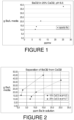
Figure 1 is a graph showing the concentration of Metsorb® HMRG granules used in Example 1. -
Figure 2 is a graph showing the comparison of equilibrium removal of BaCl2 from a 10% and 25% CaCl2 according to Example 2. -
Figure 3 is a graph summarizing the conditions and results from the treatment of 10% CaCl2 solution at pH 6.5 with different concentrations of Metsorb® HMRG granules according to Example 3. -
Figure 4 is a graph showing the results from Example 4. - The invention results in a surprising adsorption of the BaCl2 directly from CaCl2 using a titanium containing material.
- The invention comprises a method for purifying CaCl2 brine containing BaCl2. The method comprises the steps of contacting a CaCl2 brine containing at least some BaCl2 with a titanium containing material. Upon contacting the CaCl2 brine with the titanium containing material the BaCl2 is removed from the brine.
- The titanium containing material can be contacted with the CaCl2 brine in any suitable manner and under any conditions that will result in the removal of at least some BaCl2 from the CaCl2 brine. For example, the titanium containing material can be mixed into or with the CaCl2 brine in a sufficient quantity to result in removal of at least some BaCl2. Suitable weight ratios of the material are, for example, between 0.1 wt % and 5 wt % for batch separations. More preferable for batch separations is contacting the CaCl2 brine with sequential dosing such as practiced in a resin in pulp configuration known to one skilled in the art. The contacting can also be done using a granular form of the titanium material in a column where the CaCl2 brine is passed through a fixed bed either downflow or upflow with a suitable contact time controlled by the flow rate to allow the adsorption of the BaCl2.
- In an aspect of the invention the CaCl2 brine solution has a concentration between about 10% to about 30% CaCl2 at ambient temperature, based on the total weight of the brine solution.
- In an aspect of the invention the CaCl2 brine solution is contacted with the titanium containing material at a temperature between about 10°C to about 75°C. In a further aspect of the invention the CaCl2 brine solution is contacted with the titanium containing material at a temperature between about 20°C to about 65°C.
- The titanium containing material can be hydrated. Moreover, the titanium containing material can comprise TiO2 or Ti(OH)4, or a combination thereof. The titanium containing material can be provided in any suitable form, such as granual or powders, or a combination thereof.
- Combining the titanium containing material with the brine is typically done at ambient pressure and temperature. The brine can be at any suitable pH. In an aspect of the invention the pH is in the range of from about 3 to about 9. In a further aspect of the invention the pH is in the range of from about 5.9 to about 6.9. In a still further aspect of the invention, the brine is at a pH of about 6.5.
- The titanium containing material can be in any suitable form. When the titanium containing material is granules, the granules can have a particle size distribution suitable for loading into a column and passing an appropriate flow of the CaCl2 of the desired concentration through the fixed bed with minimal backpressure. An example of a suitable size would be -16 mesh to 60 mesh material. Other suitable sizes that could be used in commercial equipment such as 8x30 or 12x40 are equally appropriate with the understanding of the relationship between the average surface area and capacity in service. In an aspect of the invention the titanium containing material can have an surface area above 180 m2/g.
- In one aspect of the invention, the titanium containing material is a titanium containing material sold under the tradename Metsorb® HMRG Granular Media produced by Graver Technologies, Inc., located at 200 Lake Drive, Glasgow, DE 19702. Metsorb® HMRG is a hydrated titanium form sold commercially to remove heavy metals such as arsenic and lead from drinking water. Metsorb® HMRG is a crystalline titanium oxide (TiO2) (anatase) with a moisture content of less than 7%, a particle size of from - 16 mesh to +60 mesh, with a surface area of from 200-240 m2/g, a bulk density of 0.65 gram per cc (40 lbs./ft3), a pore volume of from 0.34 to 0.44 cm3/g, and an averge pore size of from 64 to 84 Angstroms.
- The titanium containing material can be contacted with the brine using any suitable method, such as mixing together, or by passing the brine through a column containing the titanium containing material. In an aspect of the invention, the column is of a suitable dimension and is packed with the Metsorb® HMRG granules. The CaCl2 can be passed downflow through the packed bed with a suitable contacting time, under ambient pressure and temperature.
- A 25% CaCl2 brine solution at pH 6.5 is spiked with 324 ppmw Ba as BaCl2. The solution is divided into equal portions and contacted with differing amount of the Metsorb® HMRG granules. No wetting of the granules is required prior to contacting with the CaCl2 solution. The solution is allowed to stir at room temperature for 24 hours, and the resulting concentrations of Ba in the product solutions are measured. Table 1. Summary of Conditions and Results from the Treatment of 25% CaCl2 solution at pH 6.5 with Different Concentrations of Metsorb® HMRG granules.
Table 1 Media weight (g) Starting Measured Ba concentration (ppm) End Measured Ba concentration (ppm) Calculated capacity (g Ba/L media) 1.0344 324 25.2 37.84 2.0064 324 10.6 20.48 3.0287 324 7.77 13.74 4.0471 324 7.07 10.35 - These concentrations are used to prepare the isotherm graph shown in
Figure 1 . From the isotherm, an equilibrium capacity for the Ba can be calculated to be 47 g Ba/L Metsorb® HMRG granules for a starting 30 ppmw solution. This amount of capacity is well into the region that could make a commercially viable separation depending on the specifics of the process. -
Figure 1 shows an example of equilibrium removal of BaCl2 from a 25% CaCl2 solution at room temperature and pH 6.5 with Metsorb® HMRG granules. - In a second example, following the same procedure as the results shown in Table 1 for Example 1, the starting CaCl2 concentration is reduced from 25% to 10% CaCl2. This example demonstrates that the concentration of the CaCl2 solution has an impact on the capacity with higher CaCl2 leading to lower capacity; however, the separation still occurs with significant removal. If the lower capacity is due to the higher viscosity leading to a lower mass transfer rate, higher contact time could increase capacity.
Table 2. Summary of Conditions and Results from the Treatment of 10% CaCl2 solution at pH 6.5 with Different Concentrations of Metsorb® HMRG granules.Table 2 Media weight (g) Starting Measured Ba concentration (ppm) End Measured Ba concentration (ppm) Calculated capacity (g Ba/L media) 1.0213 360 14.7 44.87 2.0412 360 2.62 23.15 3.0195 360 1.67 15.50 -
Figure 2 shows a comparison of equilibrium removal of BaCl2 from a 10% and 25% CaCl2 solution at room temperature and pH 6.5 with Metsorb® HMRG granules and similar starting concentrations. - This example demonstrates that the pH of the CaCl2 solution does have an impact on the equilibrium capacity. The Metsorb® HRMG granules have a natural pH near 6.5 since it is designed for operation in drinking water not a brine solution. The preferred embodiment is near pH 6.5. The separation of Ba is still feasible at a wide range of pHs with test results available between pH 3 and pH 9. The stability of the media would be of concern for long term operation outside that pH range.
- Following the same procedure used in Example 1, a series of tests were done with BaCl2 in 10% CaCl2 solutions. In Table 3, the results are shown for a 10% CaCl2 solution held at pH 6.5 and spiked with 136 ppmw Ba. Table 4, shows the same type of experiment at pH 2.9 and Table 5 shows the results at pH 9.4.
Table 3. Summary of Conditions and Results from the Treatment of 10% CaCl2 solution at pH 6.5 with Different Concentrations of Metsorb® HMRG granules.Table 3 Media weight (g) Starting Measured Ba concentration (ppm) End Measured Ba concentration (ppm) Calculated capacity (g Ba/L media) 1.0217 136 4.55 16.80 2.0069 136 2.06 8.69 3.0704 136 1.63 5.75 Table 4 Media weight (g) Starting Measured Ba concentration (ppm) End Measured Ba concentration (ppm) Calculated capacity (g Ba/L media) 1.0874 41 4.94 4.35 2.0652 41 2.45 2.47 3.0141 41 2.21 1.68 4.0573 41 2.04 1.24 Table 5 Media weight (g) Starting Measured Ba concentration (ppm) End Measured Ba concentration (ppm) Calculated capacity (g Ba/L media) 1.0649 35 5.47 3.63 2.0219 35 2.69 2.08 3.0064 35 2.22 1.42 Figure 3 shows a comparison of equilibrium removal of BaCl2 from a 10% CaCl2 solution at room temperature at a range of starting pHs with Metsorb® HMRG granules and similar starting concentrations. - Another common impurity found in CaCl2 solution (and dry CaCl2) is SrCl2. The presence of SrCl2 does not appear to impact the removal or capacity for BaCl2, but the SrCl2 is also not removed. The other expected impurity, RaCl2 that could be present in CaCl2 solutions might be expected to be removed in this process, but has not be determined at this time.
- This Example demonstrates that the Metsorb® HRMG granules can be loaded into a column to allow for the treatment of a CaCl2 solution continuously. In this example, the Metsorb® HRMG granules were loaded into a chromatography column and allowed to equilibrate at pH 6.5 using standard laboratory practices. A series of stock solutions of 10 wt % CaCl2 were prepared using CaCl2*2H2O and DI water. The solution was spiked with 10 ppmw Ba, added as BaCl2*2H2O. Each solution was adjusted to pH 6.5 with NaOH before introduction to the column. CaCl2 brine was pumped downflow through the column at a flow rate of 0.5 BV/hr to allow the large sized granules to remove the BaCl2 effectively. The series of stock solutions were pumped through the bed until the inlet and outlet Ba concentrations were approximately equal. As shown in
Figure 4 , for the first 50 Bed Volumes (BV), the Ba concentration was <100 ppbw in the outlet CaCl2 solution. As more CaCl2 brine was passed through the column, the measured outlet Ba concentration continued to rise until it reached an equilibrium value at 65 BV. This example shows that BaCl2 can be removed to very low concentrations in CaCl2 brine solutions allowing for purification to levels suitable for UTS applications or other types of application where low Ba levels are required without requiring a crystallization step and the high energy requirements needed. - The following represent preferred items of the present invention:
- 1. A method for separating BaCl2 from a CaCl2 brine solution comprising contacting a titanium containing material with a BaCl2 containing CaCl2 brine solution.
- 2. The method of item 1, wherein the titanium containing material is hydrated.
- 3. The method of item 1, wherein the titanium containing material comprises TiO2.
- 4. The method of item 1, wherein the titanium containing material comprises Ti(OH)4.
- 5. The method of item 3, wherein the titanium containing material further comprises Ti(OH)4.
- 6. The method of item 1, wherein the titanium containing material comprises granules.
- 7. The method of item 1, wherein the titanium containing material comprises powder.
- 8. The method of item 1, wherein the titanium containing material and the CaCl2 brine solution are mixed together.
- 9. The method of item 1, wherein the CaCl2 brine solution is passed through a column packed with the titanium containing material in a granular form.
- 10. The method of item 1, wherein the CaCl2 brine solution is maintained at a pH from about 3 to about 9.
- 11. The method of
item 10, wherein the CaCl2 brine solution is maintained at a pH from about 5.9 to about 6.9. - 12. The method of item 11, wherein the CaCl2 brine solution is maintained at a pH of about 6.5.
- 13. The method of item 1, wherein the CaCl2 brine solution has a concentration between about 10% to about 30% CaCl2 at ambient temperature, based on the total weight of the brine solution.
- 14. The method of item 1, wherein the CaCl2 brine solution is contacted with the titanium containing material at a temperature between 10°C and 75°C.
- 15. The method of item 14, wherein the CaCl2 brine solution is contacted with the titanium containing material at a temperature between 20°C and 65°C.
- 16. The method of item 1, wherein the titanium containing material has a surface area above 180 m2/g.
Claims (10)
- A mixture comprising CaCl2 brine, BaCl2 and a titanium containing material.
- The mixture of claim 1, wherein the titanium containing material comprises TiO2.
- The mixture of claim 1 or 2, wherein the titanium containing material is hydrated.
- The mixture of any one of claims 1 to 3, wherein the titanium containing material further comprises Ti(OH)4.
- The mixture of any one of claims 1 to 4, wherein the titanium containing material comprises granules, or wherein the titanium containing material comprises powder.
- The mixture of any one of claims 1 to 5, wherein the titanium containing material has a surface area above 180 m2/g.
- The mixture of any one of claims 1 to 6 having a pH of from 3 to 9, preferably from 5.9 to 6.9, more preferably of about 6.5.
- The mixture of any one of claims 1 to 7, wherein the CaCl2 brine solution has a concentration between 10% to 30% CaCl2 at ambient temperature, based on the total weight of the brine solution.
- The mixture of any one of claims 1 to 8, wherein the mixture contains 0.1 wt.% to 5 wt.% of the titanium containing material.
- The mixture of any one of claims 1 to 9, wherein at least some of the BaCl2 has been adsorped by the titanium containing material.
Applications Claiming Priority (3)
| Application Number | Priority Date | Filing Date | Title |
|---|---|---|---|
| US201962875120P | 2019-07-17 | 2019-07-17 | |
| PCT/US2020/042256 WO2021011730A1 (en) | 2019-07-17 | 2020-07-16 | SEPARATION OF BaCl2 FROM CaCl2 BRINE SOLUTION |
| EP20750138.8A EP3999471B1 (en) | 2019-07-17 | 2020-07-16 | Separation of bacl2 from cacl2 brine solution |
Related Parent Applications (1)
| Application Number | Title | Priority Date | Filing Date |
|---|---|---|---|
| EP20750138.8A Division EP3999471B1 (en) | 2019-07-17 | 2020-07-16 | Separation of bacl2 from cacl2 brine solution |
Publications (2)
| Publication Number | Publication Date |
|---|---|
| EP4397625A2 true EP4397625A2 (en) | 2024-07-10 |
| EP4397625A3 EP4397625A3 (en) | 2024-10-02 |
Family
ID=71895307
Family Applications (2)
| Application Number | Title | Priority Date | Filing Date |
|---|---|---|---|
| EP20750138.8A Active EP3999471B1 (en) | 2019-07-17 | 2020-07-16 | Separation of bacl2 from cacl2 brine solution |
| EP24167336.7A Pending EP4397625A3 (en) | 2019-07-17 | 2020-07-16 | Separation of bacl2 from cacl2 brine solution |
Family Applications Before (1)
| Application Number | Title | Priority Date | Filing Date |
|---|---|---|---|
| EP20750138.8A Active EP3999471B1 (en) | 2019-07-17 | 2020-07-16 | Separation of bacl2 from cacl2 brine solution |
Country Status (3)
| Country | Link |
|---|---|
| US (2) | US12404181B2 (en) |
| EP (2) | EP3999471B1 (en) |
| WO (1) | WO2021011730A1 (en) |
Family Cites Families (10)
| Publication number | Priority date | Publication date | Assignee | Title |
|---|---|---|---|---|
| US3332737A (en) | 1965-01-28 | 1967-07-25 | Kurt A Kraus | Process for separating inorganic anions with hydrous oxide anion exchangers |
| US3382034A (en) | 1965-01-28 | 1968-05-07 | Kurt A. Kraus | Process for separating inorganic cations from solution with hydrous oxide cation exchangers |
| US3522187A (en) | 1965-01-28 | 1970-07-28 | Kurt A Kraus | Hydrous oxide cation exchangers |
| US4855059A (en) * | 1986-04-11 | 1989-08-08 | Lithium Corporation Of America | Purification of brines with hydrous metal oxide ion exchangers |
| US5618437A (en) | 1994-05-19 | 1997-04-08 | Chemetics International Company Ltd. | Process for removing sulphate from aqueous solution |
| DE19537198C1 (en) * | 1995-10-06 | 1997-02-27 | Durferrit Thermotechnik Gmbh | Process for the recovery of salt components from hardening salt baths |
| JP4438123B2 (en) * | 1999-04-28 | 2010-03-24 | 東ソー株式会社 | Co-production method of advanced bleaching powder and calcium chloride aqueous solution |
| US7473369B2 (en) * | 2002-02-14 | 2009-01-06 | The Trustees Of The Stevens Institute Of Technology | Methods of preparing a surface-activated titanium oxide product and of using same in water treatment processes |
| US7497952B2 (en) * | 2002-02-14 | 2009-03-03 | The Trustees Of Stevens Institute Of Technology | Methods of preparing a surface-activated titanium oxide product and of using same in water treatment processes |
| US20170225968A1 (en) * | 2016-02-04 | 2017-08-10 | Graver Technologies Llc | Filter media for removal of Arsenic from Potable Water with iron-impregnated activated carbon enhanced with titanium oxide |
-
2020
- 2020-07-16 EP EP20750138.8A patent/EP3999471B1/en active Active
- 2020-07-16 WO PCT/US2020/042256 patent/WO2021011730A1/en not_active Ceased
- 2020-07-16 EP EP24167336.7A patent/EP4397625A3/en active Pending
- 2020-07-16 US US17/625,594 patent/US12404181B2/en active Active
-
2025
- 2025-08-04 US US19/289,404 patent/US20250353755A1/en active Pending
Also Published As
| Publication number | Publication date |
|---|---|
| EP4397625A3 (en) | 2024-10-02 |
| EP3999471B1 (en) | 2024-04-10 |
| WO2021011730A1 (en) | 2021-01-21 |
| US20220281754A1 (en) | 2022-09-08 |
| US20250353755A1 (en) | 2025-11-20 |
| EP3999471A1 (en) | 2022-05-25 |
| US12404181B2 (en) | 2025-09-02 |
Similar Documents
| Publication | Publication Date | Title |
|---|---|---|
| US6030537A (en) | Method for removing arsenic from aqueous systems containing competing ions | |
| EP0191893B1 (en) | Process for adsorption treatment of dissolved fluorine | |
| JP7256493B2 (en) | Method for producing adsorbent containing fine hydrotalcite | |
| US20030089665A1 (en) | Arsenic removal media | |
| JP2016195981A (en) | Adsorbent and production method of adsorbent | |
| EP3999471B1 (en) | Separation of bacl2 from cacl2 brine solution | |
| KR102408127B1 (en) | Composition including silicotitanate having sitinakite structure, and production method for same | |
| JP6025795B2 (en) | Method for producing crystalline silicotitanate | |
| US11040903B2 (en) | Purification of NaCl brine containing iodine | |
| KR101176276B1 (en) | Porous iron oxide, process for producing the same, and method of treating water | |
| US4855059A (en) | Purification of brines with hydrous metal oxide ion exchangers | |
| US3872219A (en) | Process for manufacturing of chlorinated lime solution | |
| AU2017246245B2 (en) | Mineral recovery and method for treatment of water having carbonate alkalinity | |
| JP4308810B2 (en) | Method for producing chlorine gas, sodium hypochlorite aqueous solution and liquid chlorine | |
| JP4013646B2 (en) | Anion exchange resin, method for producing the same, and method for producing purified hydrogen peroxide water using the same | |
| US2157558A (en) | Preparation of hypochlorites | |
| JP6356567B2 (en) | Method for producing crystalline silicotitanate | |
| WO2017170785A1 (en) | Metal ion adsorption agent | |
| JPWO2016056530A1 (en) | Adsorbent | |
| JP2017087172A (en) | Strontium adsorbent and cesium adsorbent | |
| US3532460A (en) | Purification of alumina | |
| US2157559A (en) | Method of preparing hypochlorites | |
| JPH0218906B2 (en) | ||
| JP4553187B2 (en) | Method for selective removal of sodium ions | |
| JP2009167050A (en) | Method for producing high purity alkali metal carbonate aqueous solution |
Legal Events
| Date | Code | Title | Description |
|---|---|---|---|
| PUAI | Public reference made under article 153(3) epc to a published international application that has entered the european phase |
Free format text: ORIGINAL CODE: 0009012 |
|
| STAA | Information on the status of an ep patent application or granted ep patent |
Free format text: STATUS: REQUEST FOR EXAMINATION WAS MADE |
|
| 17P | Request for examination filed |
Effective date: 20240328 |
|
| AC | Divisional application: reference to earlier application |
Ref document number: 3999471 Country of ref document: EP Kind code of ref document: P |
|
| AK | Designated contracting states |
Kind code of ref document: A2 Designated state(s): AL AT BE BG CH CY CZ DE DK EE ES FI FR GB GR HR HU IE IS IT LI LT LU LV MC MK MT NL NO PL PT RO RS SE SI SK SM TR |
|
| REG | Reference to a national code |
Ref country code: DE Ref legal event code: R079 Free format text: PREVIOUS MAIN CLASS: C01F0011320000 Ipc: C01D0003060000 |
|
| PUAL | Search report despatched |
Free format text: ORIGINAL CODE: 0009013 |
|
| AK | Designated contracting states |
Kind code of ref document: A3 Designated state(s): AL AT BE BG CH CY CZ DE DK EE ES FI FR GB GR HR HU IE IS IT LI LT LU LV MC MK MT NL NO PL PT RO RS SE SI SK SM TR |
|
| RIC1 | Information provided on ipc code assigned before grant |
Ipc: C01F 11/32 20060101ALI20240828BHEP Ipc: C01F 11/24 20060101ALI20240828BHEP Ipc: C01F 11/00 20060101ALI20240828BHEP Ipc: C01D 3/14 20060101ALI20240828BHEP Ipc: C01D 3/06 20060101AFI20240828BHEP |