EP4394924A1 - Non-woven organic electrode and stretchable battery using same - Google Patents
Non-woven organic electrode and stretchable battery using same Download PDFInfo
- Publication number
- EP4394924A1 EP4394924A1 EP21955171.0A EP21955171A EP4394924A1 EP 4394924 A1 EP4394924 A1 EP 4394924A1 EP 21955171 A EP21955171 A EP 21955171A EP 4394924 A1 EP4394924 A1 EP 4394924A1
- Authority
- EP
- European Patent Office
- Prior art keywords
- copolymers
- based polymers
- poly
- electrode
- polymers
- Prior art date
- Legal status (The legal status is an assumption and is not a legal conclusion. Google has not performed a legal analysis and makes no representation as to the accuracy of the status listed.)
- Pending
Links
Images




Classifications
-
- H—ELECTRICITY
- H01—ELECTRIC ELEMENTS
- H01M—PROCESSES OR MEANS, e.g. BATTERIES, FOR THE DIRECT CONVERSION OF CHEMICAL ENERGY INTO ELECTRICAL ENERGY
- H01M10/00—Secondary cells; Manufacture thereof
- H01M10/05—Accumulators with non-aqueous electrolyte
- H01M10/052—Li-accumulators
- H01M10/0525—Rocking-chair batteries, i.e. batteries with lithium insertion or intercalation in both electrodes; Lithium-ion batteries
-
- H—ELECTRICITY
- H01—ELECTRIC ELEMENTS
- H01M—PROCESSES OR MEANS, e.g. BATTERIES, FOR THE DIRECT CONVERSION OF CHEMICAL ENERGY INTO ELECTRICAL ENERGY
- H01M10/00—Secondary cells; Manufacture thereof
- H01M10/05—Accumulators with non-aqueous electrolyte
- H01M10/056—Accumulators with non-aqueous electrolyte characterised by the materials used as electrolytes, e.g. mixed inorganic/organic electrolytes
- H01M10/0564—Accumulators with non-aqueous electrolyte characterised by the materials used as electrolytes, e.g. mixed inorganic/organic electrolytes the electrolyte being constituted of organic materials only
- H01M10/0565—Polymeric materials, e.g. gel-type or solid-type
-
- H—ELECTRICITY
- H01—ELECTRIC ELEMENTS
- H01M—PROCESSES OR MEANS, e.g. BATTERIES, FOR THE DIRECT CONVERSION OF CHEMICAL ENERGY INTO ELECTRICAL ENERGY
- H01M10/00—Secondary cells; Manufacture thereof
- H01M10/05—Accumulators with non-aqueous electrolyte
- H01M10/058—Construction or manufacture
- H01M10/0585—Construction or manufacture of accumulators having only flat construction elements, i.e. flat positive electrodes, flat negative electrodes and flat separators
-
- H—ELECTRICITY
- H01—ELECTRIC ELEMENTS
- H01M—PROCESSES OR MEANS, e.g. BATTERIES, FOR THE DIRECT CONVERSION OF CHEMICAL ENERGY INTO ELECTRICAL ENERGY
- H01M4/00—Electrodes
- H01M4/02—Electrodes composed of, or comprising, active material
- H01M4/13—Electrodes for accumulators with non-aqueous electrolyte, e.g. for lithium-accumulators; Processes of manufacture thereof
- H01M4/137—Electrodes based on electro-active polymers
-
- H—ELECTRICITY
- H01—ELECTRIC ELEMENTS
- H01M—PROCESSES OR MEANS, e.g. BATTERIES, FOR THE DIRECT CONVERSION OF CHEMICAL ENERGY INTO ELECTRICAL ENERGY
- H01M4/00—Electrodes
- H01M4/02—Electrodes composed of, or comprising, active material
- H01M4/13—Electrodes for accumulators with non-aqueous electrolyte, e.g. for lithium-accumulators; Processes of manufacture thereof
- H01M4/139—Processes of manufacture
- H01M4/1399—Processes of manufacture of electrodes based on electro-active polymers
-
- H—ELECTRICITY
- H01—ELECTRIC ELEMENTS
- H01M—PROCESSES OR MEANS, e.g. BATTERIES, FOR THE DIRECT CONVERSION OF CHEMICAL ENERGY INTO ELECTRICAL ENERGY
- H01M4/00—Electrodes
- H01M4/02—Electrodes composed of, or comprising, active material
- H01M4/36—Selection of substances as active materials, active masses, active liquids
- H01M4/58—Selection of substances as active materials, active masses, active liquids of inorganic compounds other than oxides or hydroxides, e.g. sulfides, selenides, tellurides, halogenides or LiCoFy; of polyanionic structures, e.g. phosphates, silicates or borates
- H01M4/583—Carbonaceous material, e.g. graphite-intercalation compounds or CFx
- H01M4/587—Carbonaceous material, e.g. graphite-intercalation compounds or CFx for inserting or intercalating light metals
-
- H—ELECTRICITY
- H01—ELECTRIC ELEMENTS
- H01M—PROCESSES OR MEANS, e.g. BATTERIES, FOR THE DIRECT CONVERSION OF CHEMICAL ENERGY INTO ELECTRICAL ENERGY
- H01M4/00—Electrodes
- H01M4/02—Electrodes composed of, or comprising, active material
- H01M4/36—Selection of substances as active materials, active masses, active liquids
- H01M4/60—Selection of substances as active materials, active masses, active liquids of organic compounds
- H01M4/602—Polymers
-
- H—ELECTRICITY
- H01—ELECTRIC ELEMENTS
- H01M—PROCESSES OR MEANS, e.g. BATTERIES, FOR THE DIRECT CONVERSION OF CHEMICAL ENERGY INTO ELECTRICAL ENERGY
- H01M4/00—Electrodes
- H01M4/02—Electrodes composed of, or comprising, active material
- H01M4/36—Selection of substances as active materials, active masses, active liquids
- H01M4/60—Selection of substances as active materials, active masses, active liquids of organic compounds
- H01M4/602—Polymers
- H01M4/604—Polymers containing aliphatic main chain polymers
-
- H—ELECTRICITY
- H01—ELECTRIC ELEMENTS
- H01M—PROCESSES OR MEANS, e.g. BATTERIES, FOR THE DIRECT CONVERSION OF CHEMICAL ENERGY INTO ELECTRICAL ENERGY
- H01M4/00—Electrodes
- H01M4/02—Electrodes composed of, or comprising, active material
- H01M4/36—Selection of substances as active materials, active masses, active liquids
- H01M4/60—Selection of substances as active materials, active masses, active liquids of organic compounds
- H01M4/602—Polymers
- H01M4/606—Polymers containing aromatic main chain polymers
- H01M4/608—Polymers containing aromatic main chain polymers containing heterocyclic rings
-
- H—ELECTRICITY
- H01—ELECTRIC ELEMENTS
- H01M—PROCESSES OR MEANS, e.g. BATTERIES, FOR THE DIRECT CONVERSION OF CHEMICAL ENERGY INTO ELECTRICAL ENERGY
- H01M4/00—Electrodes
- H01M4/02—Electrodes composed of, or comprising, active material
- H01M4/62—Selection of inactive substances as ingredients for active masses, e.g. binders, fillers
- H01M4/621—Binders
- H01M4/622—Binders being polymers
-
- H—ELECTRICITY
- H01—ELECTRIC ELEMENTS
- H01M—PROCESSES OR MEANS, e.g. BATTERIES, FOR THE DIRECT CONVERSION OF CHEMICAL ENERGY INTO ELECTRICAL ENERGY
- H01M4/00—Electrodes
- H01M4/02—Electrodes composed of, or comprising, active material
- H01M4/62—Selection of inactive substances as ingredients for active masses, e.g. binders, fillers
- H01M4/621—Binders
- H01M4/622—Binders being polymers
- H01M4/623—Binders being polymers fluorinated polymers
-
- H—ELECTRICITY
- H01—ELECTRIC ELEMENTS
- H01M—PROCESSES OR MEANS, e.g. BATTERIES, FOR THE DIRECT CONVERSION OF CHEMICAL ENERGY INTO ELECTRICAL ENERGY
- H01M4/00—Electrodes
- H01M4/02—Electrodes composed of, or comprising, active material
- H01M4/62—Selection of inactive substances as ingredients for active masses, e.g. binders, fillers
- H01M4/624—Electric conductive fillers
- H01M4/625—Carbon or graphite
-
- H—ELECTRICITY
- H01—ELECTRIC ELEMENTS
- H01M—PROCESSES OR MEANS, e.g. BATTERIES, FOR THE DIRECT CONVERSION OF CHEMICAL ENERGY INTO ELECTRICAL ENERGY
- H01M50/00—Constructional details or processes of manufacture of the non-active parts of electrochemical cells other than fuel cells, e.g. hybrid cells
- H01M50/10—Primary casings; Jackets or wrappings
- H01M50/116—Primary casings; Jackets or wrappings characterised by the material
- H01M50/121—Organic material
-
- H—ELECTRICITY
- H01—ELECTRIC ELEMENTS
- H01M—PROCESSES OR MEANS, e.g. BATTERIES, FOR THE DIRECT CONVERSION OF CHEMICAL ENERGY INTO ELECTRICAL ENERGY
- H01M50/00—Constructional details or processes of manufacture of the non-active parts of electrochemical cells other than fuel cells, e.g. hybrid cells
- H01M50/10—Primary casings; Jackets or wrappings
- H01M50/131—Primary casings; Jackets or wrappings characterised by physical properties, e.g. gas permeability, size or heat resistance
-
- H—ELECTRICITY
- H01—ELECTRIC ELEMENTS
- H01M—PROCESSES OR MEANS, e.g. BATTERIES, FOR THE DIRECT CONVERSION OF CHEMICAL ENERGY INTO ELECTRICAL ENERGY
- H01M50/00—Constructional details or processes of manufacture of the non-active parts of electrochemical cells other than fuel cells, e.g. hybrid cells
- H01M50/10—Primary casings; Jackets or wrappings
- H01M50/131—Primary casings; Jackets or wrappings characterised by physical properties, e.g. gas permeability, size or heat resistance
- H01M50/136—Flexibility or foldability
-
- H—ELECTRICITY
- H01—ELECTRIC ELEMENTS
- H01M—PROCESSES OR MEANS, e.g. BATTERIES, FOR THE DIRECT CONVERSION OF CHEMICAL ENERGY INTO ELECTRICAL ENERGY
- H01M4/00—Electrodes
- H01M4/02—Electrodes composed of, or comprising, active material
- H01M2004/021—Physical characteristics, e.g. porosity, surface area
-
- H—ELECTRICITY
- H01—ELECTRIC ELEMENTS
- H01M—PROCESSES OR MEANS, e.g. BATTERIES, FOR THE DIRECT CONVERSION OF CHEMICAL ENERGY INTO ELECTRICAL ENERGY
- H01M4/00—Electrodes
- H01M4/02—Electrodes composed of, or comprising, active material
- H01M2004/026—Electrodes composed of, or comprising, active material characterised by the polarity
- H01M2004/028—Positive electrodes
-
- H—ELECTRICITY
- H01—ELECTRIC ELEMENTS
- H01M—PROCESSES OR MEANS, e.g. BATTERIES, FOR THE DIRECT CONVERSION OF CHEMICAL ENERGY INTO ELECTRICAL ENERGY
- H01M2300/00—Electrolytes
- H01M2300/0017—Non-aqueous electrolytes
- H01M2300/0065—Solid electrolytes
- H01M2300/0082—Organic polymers
-
- H—ELECTRICITY
- H01—ELECTRIC ELEMENTS
- H01M—PROCESSES OR MEANS, e.g. BATTERIES, FOR THE DIRECT CONVERSION OF CHEMICAL ENERGY INTO ELECTRICAL ENERGY
- H01M2300/00—Electrolytes
- H01M2300/0085—Immobilising or gelification of electrolyte
-
- Y—GENERAL TAGGING OF NEW TECHNOLOGICAL DEVELOPMENTS; GENERAL TAGGING OF CROSS-SECTIONAL TECHNOLOGIES SPANNING OVER SEVERAL SECTIONS OF THE IPC; TECHNICAL SUBJECTS COVERED BY FORMER USPC CROSS-REFERENCE ART COLLECTIONS [XRACs] AND DIGESTS
- Y02—TECHNOLOGIES OR APPLICATIONS FOR MITIGATION OR ADAPTATION AGAINST CLIMATE CHANGE
- Y02E—REDUCTION OF GREENHOUSE GAS [GHG] EMISSIONS, RELATED TO ENERGY GENERATION, TRANSMISSION OR DISTRIBUTION
- Y02E60/00—Enabling technologies; Technologies with a potential or indirect contribution to GHG emissions mitigation
- Y02E60/10—Energy storage using batteries
-
- Y—GENERAL TAGGING OF NEW TECHNOLOGICAL DEVELOPMENTS; GENERAL TAGGING OF CROSS-SECTIONAL TECHNOLOGIES SPANNING OVER SEVERAL SECTIONS OF THE IPC; TECHNICAL SUBJECTS COVERED BY FORMER USPC CROSS-REFERENCE ART COLLECTIONS [XRACs] AND DIGESTS
- Y02—TECHNOLOGIES OR APPLICATIONS FOR MITIGATION OR ADAPTATION AGAINST CLIMATE CHANGE
- Y02P—CLIMATE CHANGE MITIGATION TECHNOLOGIES IN THE PRODUCTION OR PROCESSING OF GOODS
- Y02P70/00—Climate change mitigation technologies in the production process for final industrial or consumer products
- Y02P70/50—Manufacturing or production processes characterised by the final manufactured product
Definitions
- the present disclosure relates to an organic electrode formed into a non-woven type, a stretchable battery utilizing same, which is stretchable and shrinkable, and a method of manufacturing the battery.
- the biggest problem is the breaking of a conductive layer in the process of stretching of an electrode and reducing conductivity to deteriorate electrochemical properties. Accordingly, though a battery is changed, it is necessary to secure the electrochemical performance always constant according to the changed state (for example, stretchable and shrinkable).
- the conventionally used secondary batteries mainly, lithium ion secondary batteries could be manufactured in changeable forms by using an inorganic electrode material, but there are limits in manufacturing lithium ion secondary batteries which are stretchable and shrinkable and secure constant electrochemical performance.
- Patent Document 0001 Korean Patent No.: 10-2017-0072703 (publication date: June 27, 2017 )
- an object of the present disclosure is to provide a stretchable battery which may secure constant electrochemical properties even stretching and shrinking the battery.
- Another object of the present disclosure is to provide a lithium secondary battery including the non-woven-type electrode.
- the organic polymer active material of the stretchable battery for solving the technical tasks of the present disclosure is characterized in being included in a range of 30 wt% to 90 wt%, preferably, 40 wt% to 80 wt% based on the total mass of the electrode.
- the organic polymer active material included in the non-woven electrode is a conductive polymer.
- the conductive polymer may include an aromatic carbon ring.
- a polymer used in the gel polymer may be polyvinylidene fluoride (PVdF)-based polymers or copolymers thereof, polyurethane (PU)-based polymers or copolymers thereof, polyethylene (PE)-based polymers or copolymers thereof, poly(vinylidenefluorideco-trifluoroethylene)-based polymers or copolymers thereof, polyethylene glycol (PEO)-based polymers or copolymers thereof, polyacrylonitrile(PAN)-based polymers or copolymers thereof, poly(methylmethacrylate) (PMMA)-based polymers or copolymers thereof, polyvinyl chloride-based polymers or copolymers thereof, polyvinyl pyrrolidone (PVP)-based polymers or copolymers thereof, polyimide (PI)-based polymers or copolymers thereof, polyethylene (PE)-based polymers or copolymers thereof, polyurethane (PU)-based PVdF)-based poly
- the electrode including the organic polymer active material of the present invention is manufactured through (a) preparing a solution including an organic polymer active material, a carbon-based conductive agent, a polymer binder and a solvent; and (b) applying an electric field to the solution for electro-spinning on a substrate to manufacture a non-woven-type electrode.
- a stretchable battery may be manufactured through (c) stacking the non-woven-type electrode, the gel polymer electrolyte and a graphite-containing non-woven-type electrode in order.
- PTNB Poly[2,3-bis(2,2,6,6-tetramethylpiperidine-N-oxycarbonyl)-norbornene] (PTNB) of a nitroxyl radical structure of Formula 1 below as an organic polymer active material, PVdF-HFP as a polymer binder, and carbon black as a conductive agent were mixed and dissolved in a solvent obtained by mixing N-methyl-2-pyrrolidone and acetone in a ratio of 6:4 to prepare a slurry.
- the organic polymer active material, the polymer binder and the conductive agent were mixed in a ratio of 4:4:2. Then, through an electro-spin method using the slurry, a non-woven-type cathode was manufactured.
- the electro-spin method is a process of spinning a fiber like a thread by applying electric field to the polymer mixture solution slurry, and a voltage applied in this embodiment was 18 kV. (n is 5-1000)
- a gel polymer electrolyte was formed by immersing a PVdF-HFP polymer film in an electrolyte of 1 M LiPF6 and EC/DMC (50:50 (v/v)).
- a stretchable battery was manufactured by the same method as in Example 1 except for using poly(2,2,6,6-tetramethylpiperidine-4-yl-1-oxy vinyl ether) (PVTE) of a nitroxyl radical structure as the organic polymer active material, graphene as the conductive agent, and 1 M LiPF6 in EC/DMC/EMC (1:1:1, v/v/v) as the liquid electrolyte for immersing the gel polymer electrolyte. (n is 5-1000)
- a stretchable battery was manufactured by the same method as in Example 1 except for preparing a slurry by mixing 60 wt% of polyimide (PI) of a conjugated carbonyl structure of Formula 3 below as the organic polymer active material, 20 wt% of PVdF as the binder, and 20 wt% of carbon black as the conductive agent, and using a non-woven-type anode composed of 60 wt% of graphite, 30 wt% of a PVdF-HFP binder and 10 wt% of carbon black, as the anode. (n is 5-1000)
- PTNB Poly[2,3-bis(2,2,6,6-tetramethylpiperidine-N-oxycarbonyl)-norbornene] (PTNB) of a nitroxyl radical structure of Formula 1 as an organic polymer active material, PVdF-HFP as a polymer binder, and carbon black as a conductive agent were mixed and dissolved in a solvent obtained by mixing N-methyl-2-pyrrolidone and acetone in a ratio of 6:4 to prepare a slurry.
- the organic polymer active material, the polymer binder and the conductive agent were mixed in a ratio of 4:4:2.
- the slurry was applied on a current collector (cathode was an Al foil) to a constant thickness using a blade.
- Electrodes were manufactured by the same method as in Examples 2 to 4 except for preparing slurries using the organic polymer active materials of Examples 2 to 4, the binder and the conductive agent, and applying the slurries on a current collector (cathode was an Al foil) to a constant thickness using a blade.
- the electrodes of the Examples were stretchable due to the non-woven-type electrodes, and charging and discharging were performed in a stretched state by 10% through a stretcher.
- the C-rate is a current unit representing a charging and discharging rate and is calculated as the current/rated capacity of battery. That is, the higher C-rate means the shorter charging and discharging time (fast charging and discharging).
- the stretchable battery having the configuration of the present disclosure improves the stretching and shrinking properties which are the defects of the conventional secondary battery electrode and at the same time, stably improves electrochemical properties, and may maintain excellent electrochemical properties in the stretched and shrunk states of the electrode.
- the stretchable battery having the configuration of the present disclosure employs a non-woven-type electrode configuration, and a three-dimensionally well-developed electricity transfer path and an even broader electrode surface area could be secured, thereby securing favorable electrochemical properties.
Landscapes
- Chemical & Material Sciences (AREA)
- Chemical Kinetics & Catalysis (AREA)
- Electrochemistry (AREA)
- General Chemical & Material Sciences (AREA)
- Engineering & Computer Science (AREA)
- Manufacturing & Machinery (AREA)
- Materials Engineering (AREA)
- Inorganic Chemistry (AREA)
- Condensed Matter Physics & Semiconductors (AREA)
- Dispersion Chemistry (AREA)
- General Physics & Mathematics (AREA)
- Physics & Mathematics (AREA)
- Battery Electrode And Active Subsutance (AREA)
- Secondary Cells (AREA)
Abstract
Description
- The present disclosure relates to an organic electrode formed into a non-woven type, a stretchable battery utilizing same, which is stretchable and shrinkable, and a method of manufacturing the battery.
- Recently, according to the development of sensors for healthcare and sensing the changes in the human body, portable medical device market grows rapidly. Particularly, according to the increase on the demands of portable medical devices which could be installed on the body, the demands on a lithium ion secondary battery as an energy source which is capable of supplying power, grow rapidly.
- Most lithium ion secondary batteries used nowadays include cylindrical, prismatic and pouch-type secondary batteries. The lithium ion secondary batteries are classified into a pouch type, a cylindrical and a prismatic type according to the type of exterior materials. The lithium ion secondary batteries are manufactured by installing an electrode assembly composed of an anode, a cathode and a separator in a metal can of cylindrical or prismatic type or a pouch-type case of an aluminum laminate sheet, and injecting an electrolyte into the electrode assembly, and there are advantages in that the manufacturing thereof is easy, and the manufacturing cost is low. However, there are disadvantages in that the change of the shape is limited in the case where a certain space for installing a lithium ion secondary battery is essentially required. Accordingly, for the lithium ion secondary batteries of a cylindrical, prismatic or pouch type have defects acting as a constraint on the development of portable devices with various shapes, and secondary batteries with a novel and easily changeable shape are required.
- In this regard, for the manufacture of a secondary battery with an easily changeable shape, i.e., a flexible battery, the biggest problem is the breaking of a conductive layer in the process of stretching of an electrode and reducing conductivity to deteriorate electrochemical properties. Accordingly, though a battery is changed, it is necessary to secure the electrochemical performance always constant according to the changed state (for example, stretchable and shrinkable). The conventionally used secondary batteries, mainly, lithium ion secondary batteries could be manufactured in changeable forms by using an inorganic electrode material, but there are limits in manufacturing lithium ion secondary batteries which are stretchable and shrinkable and secure constant electrochemical performance.
- (Patent Document 0001)
Korean Patent No.: 10-2017-0072703 (publication date: June 27, 2017 - The present disclosure is designed to solve the above-described defects, and the present disclosure is complected by confirming constant electrochemical properties during stretching and shrinking a battery in case of manufacturing a non-woven-type electrode by using an electro-spin method of an organic polymer material, and using thereof in the battery.
- Accordingly, an object of the present disclosure is to provide a stretchable battery which may secure constant electrochemical properties even stretching and shrinking the battery.
- Another object of the present disclosure is to provide a lithium secondary battery including the non-woven-type electrode.
- To solve the above-described technical tasks, the present disclosure has the configurations below.
- A stretchable battery for solving the technical tasks of the present disclosure is characterized in forming a non-woven type electrode using an organic polymer active material which is capable of performing electrochemical oxidation-reduction reaction, by an electro-spin method.
- The organic polymer active material included in the electrode of the stretchable battery for solving the technical tasks of the present disclosure is preferably characterized in being a polymer of nitroxyl radical and conjugated carbonyl as the active material of the electrode.
- The organic polymer active material of the stretchable battery for solving the technical tasks of the present disclosure is characterized in being included in a range of 30 wt% to 90 wt%, preferably, 40 wt% to 80 wt% based on the total mass of the electrode.
- The stretchable battery for solving the technical tasks of the present disclosure is characterized in using a non-woven-type electrode manufactured by an electro-spin method after mixing the organic polymer active material, a polymer binder, and a carbon conductive agent.
- Exemplary embodiments can be understood in more detail from the following description taken in conjunction with the accompanying drawings, in which:
-
FIG. 1 is a structure diagram of a stretchable battery composed of a non-woven-type organic electrode and a gel polymer electrolyte; -
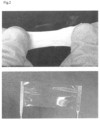
FIG. 2 shows images of a gel polymer electrolyte formed by an electro-spin method (up) and a solution casting method (down); -
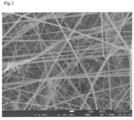
FIG. 3 is a SEM image of a non-woven-type electrode manufactured by using an organic polymer active material of poly[2,3-bis(2,2,6,6-tetramethylpiperidine-N-oxycarbonyl)-norbomene (PTNB) of Formula 1; -
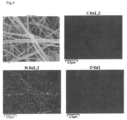
FIG. 4 shows SEM images and EDS elemental analysis results of a non-woven-type electrode manufactured by using an organic polymer active material of poly[2,3-bis(2,2,6,6-tetramethylpiperidine-N-oxycarbonyl)-norbornene (PTNB) of Formula 1; -
FIG. 5 is a SEM image of a non-woven-type electrode manufactured by using an organic polymer active material of poly(2,2,6,6-tetramethylpiperidine-4-yl-1-oxyl vinyl ether) (PTVE) ofFormula 2; -
FIG. 6 is an image showing a stretched state of a non-woven-type organic electrode manufactured using PTNB; -
FIG. 7 is an image showing a stretched state of a stretchable battery composed of a non-woven-type cathode manufactured using PTNB, a graphite anode and a gel polymer electrolyte; -
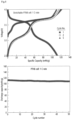
FIG. 8 shows a charge and discharge curve (up) and a life performance graph (down) of a stretchable battery manufactured in Example 1. It could be confirmed that, if evaluated at a high current density of 1 C-rate, the battery of Example 1 showed a reversible capacity of about 112 mAh/g and stably maintained life up to 50 cycles; -
FIG. 9 shows a charge and discharge curve of a stretchable battery manufactured in Example 2. If evaluated at a high current density of 1 C-rate, the battery of Example 2 showed a reversible capacity of about 120 mAh/g; -
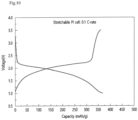
FIG. 10 shows a charge and discharge curve of a stretchable battery manufactured in Example 3. The battery of Example 3 showed a discharge capacity of greater than 350 mAh/g at a current density of 0.1 C; and -
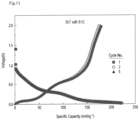
FIG. 11 shows a charge and discharge curve of a stretchable battery manufactured in Example 4. The battery of Example 4 showed a charge capacity of greater than 230 mAh/g at a current density of 0.1 C. - Hereinafter, the present disclosure will be explained in detail referring to embodiments and drawings.
- It will be understood that words or terms used in the description and claims of the present invention shall not be interpreted as the meaning defined in commonly used dictionaries. It will be further understood that the words or terms should be interpreted as having a meaning that is consistent with their meaning of the technical idea of the invention, based on the principle that an inventor may properly define the meaning of the words or terms to best explain the invention.
-
FIG. 1 is a structure diagram of a stretchable battery composed of a non-woven-type organic electrode including an organic polymer active material and a gel polymer electrolyte, and hereinafter, the explanation will be taken based thereon. - In an embodiment of the present disclosure, the non-woven-type electrode is characterized in being an electrode (cathode, anode) manufactured by mixing an organic polymer active material, a carbon-based conductive agent and a polymer binder with a solvent and through an electro-spin method.
- In the present disclosure, the electro-spin method refers to a process of spinning a polymer fiber like a thread through a process of applying an electric field to a polymer mixture solution. In an embodiment of the present disclosure, the voltage of the electric field used in the electro-spin method is 10 to 30 kV, preferably, 15 to 20 kV.
- In an embodiment of the present disclosure, the organic polymer active material included in the non-woven electrode is a conductive polymer.
- The conductive polymer may include an aromatic carbon ring.
- The conductive polymer may include one or more selected from the group consisting of organic polymers having a structure of conjugated hydrocarbon, conjugated amine, conjugated thioether, organodisulfide, thioether, nitroxyl radical, conjugated carbonyl, and sulfonyloxy radical, and derivatives thereof.
- The conductive polymer may preferably include one or more selected from the group consisting of organic materials having a nitroxyl radical, conjugated carbonyl, quinone, or anhydride structure, and derivatives thereof.
- The organic material is contained in the active material of an electrode in the present disclosure, and an organic polymer-containing electrode may be manufactured.
- By using a conductive polymer of not an inorganic material but an organic material, as the active material of the electrode, an electrode may be manufactured by a cost-effective method without a baking process at a high temperature. Further, there are advantages of diversely changing electrochemical properties through structural deformation (for example, the substituent deformation of a conjugated structure responsible for oxidation/reduction) based on the flexibility of an organic material itself.
- Meanwhile, in an embodiment of the present disclosure, the carbon-based conductive agent mixed with the organic polymer active material is one or more carbon-based materials selected from the group consisting of active carbon, graphene, carbon nanotube, acetylene carbon black, amorphous carbon, natural graphite, synthetic graphite, carbon black, ketjen black, and vapor-grown carbon fiber (VGCF).
- In the present disclosure, the binder mixed with the organic polymer active material organically connects active materials to increase the cohesion therebetween, and may use a fluorine resin-based binder including polyvinylidene fluoride (PVdF) or polytetrafluoroethylene (PTFE); a rubber-based binder including styrene butadiene rubber (SBR), acrylonitrile-butadiene rubber, and styrene-isoprene rubber; a cellulose-based binder including carboxyl methyl cellulose (CMC), starch, hydroxypropyl cellulose, and regenerated cellulose; a poly alcohol-based binder; a poly olefin-based binder including polyethylene and polypropylene; a poly amide-based binder; a poly ester-based binder; a polyvinyl chloride-based binder including polyvinyl chloride and carboxylated polyvinyl chloride; a silane-based binder, a polyurethane-based binder, ethylene oxide, an epoxy resin and nylon, mixtures of one or more selected therefrom, or copolymers thereof.
- In an embodiment of the present disclosure, after mixing the above-described organic polymer active material, carbon-based conductive agent and polymer binder with a solvent, a non-woven-type electrode is manufactured using an electro-spin method, and the non-woven-type cathode thus manufactured, an anode and a gel polymer electrolyte are combined to manufacture a stretchable battery.
- Here, the solvent according to an embodiment of the present disclosure is characterized in being N-methyl-2-pyrrolidone (NMP), acetone or a mixture solvent obtained by mixing them in a specific ratio, and is sufficient as long as it dissolves the organic polymer active material, the binder and the conductive agent, without limitation.
- The non-woven type is well-known to effectively disperse stress applied to an electrode while bending or folding (see
FIG. 6 ). By employing such a non-woven-type electrode configuration, an electrode with excellent flexural characteristics and rate-capability may be manufactured. In addition, if a non-woven fabric is utilized as an electrode, a three-dimensionally well-developed electricity transfer path and an even broader electrode surface area could be secured, and such properties may be reflected on the rate-capability of a battery. - Meanwhile, the features of the gel polymer electrolyte used in the stretchable battery of the present disclosure are as follows.
-
FIG. 2 shows images of a gel polymer electrolyte formed by an electro-spin method and/or a solution casting method according to an embodiment of the present disclosure. The gel polymer electrolyte is formed by dissolving a polymer in a solvent, electro-spinning or solution casting, drying to form a polymer film, and impregnating a liquid electrolyte. - In an embodiment of the present disclosure, the gel polymer electrolyte is a gel polymer electrolyte having flexibility, and the gel polymer electrolyte is formed by manufacturing a polymer film using PVdF-HFP as a polymer, and impregnating a liquid phase electrolyte obtained by mixing a certain amount of a lithium salt and an organic solvent.
- In an embodiment of the present disclosure, the polymer film manufactured by an electro-spin method shows a non-woven type in which fibers with a micrometer size are crossed like a net, and the gel polymer electrolyte formed according to the present disclosure has an excellent ion conductivity of 1.0 × 10⁻³ S/cm to 5.0 × 10⁻³ S/cm at room temperature (see
FIG. 3 ). - In an embodiment of the present disclosure, a polymer used in the gel polymer may be polyvinylidene fluoride (PVdF)-based polymers or copolymers thereof, polyurethane (PU)-based polymers or copolymers thereof, polyethylene (PE)-based polymers or copolymers thereof, poly(vinylidenefluorideco-trifluoroethylene)-based polymers or copolymers thereof, polyethylene glycol (PEO)-based polymers or copolymers thereof, polyacrylonitrile(PAN)-based polymers or copolymers thereof, poly(methylmethacrylate) (PMMA)-based polymers or copolymers thereof, polyvinyl chloride-based polymers or copolymers thereof, polyvinyl pyrrolidone (PVP)-based polymers or copolymers thereof, polyimide (PI)-based polymers or copolymers thereof, polyethylene (PE)-based polymers or copolymers thereof, polyurethane (PU)-based polymers or copolymers thereof, polypropylene (PP)-based polymers or copolymers thereof, polypropylene oxide) (PPO)-based polymers or copolymers thereof, poly(ethylene imine) (PEI)-based polymers or copolymers thereof, poly(ethylene sulfide) (PES)-based polymers or copolymers thereof, poly(vinyl acetate) (PVAc)-based polymers or copolymers thereof, poly(ethylenesuccinate) (PESc)-based polymers or copolymers thereof, polyester-based polymers or copolymers thereof, polyamine-based polymers or copolymers thereof, polysulfide-based polymers or copolymers thereof, siloxane-based polymers or copolymers thereof, styrene butadiene rubber (SBR)-based polymers or copolymers thereof, and carboxymethyl cellulose (CMC)-based polymers or copolymers thereof, derivatives thereof, or combinations thereof.
- In an embodiment of the present disclosure, the lithium salt of the electrolyte used for the formation of the gel polymer electrolyte may be LiClO4, LiPF4, LiPF6, LiAsF6, LiTFSI, LiCF3SO3, Li[(C2F5)3PF3](LiFAP), Li[B(C2O4)2](LiBOB), Li[N(SO2F)2](LiFSI), LiBeti(LiN[SO2C2F5]2), or combinations thereof. In addition, a gel polymer film may be immersed in an electrolyte using a sodium salt. The sodium salt used in the electrolyte using a sodium salt may be NaClO4, NaPF4, NaPF6, NaAsF6, NaTFSI, NaCF3SO3, Na[(C2F5)3PF3](NaFAP), Na[B(C2O4)2](NaBOB), Na[N(SO2F)2](NaFSI), NaBeti(NaN[SO2C2F5]2), or combinations thereof.
- In an embodiment of the present disclosure, as a non-aqueous organic solvent of the electrolyte used for the formation of the gel polymer electrolyte may use a carbonate-based, ester-based, ether-based, ketone-based, alcohol-based solvent, or other polar solvents.
- In an embodiment of the present disclosure, the stretchable battery of the present disclosure may include a stretchable exterior material formed using a polymer resin layer for shielding the battery.
- As the stretchable exterior material, one or more selected from the group consisting of poly dimethyl siloxane (PDMS)-based polymers or copolymers thereof, polyurethane (PU)-based polymers or copolymers thereof, polyethylene (PE)-based polymers or copolymers thereof, polyvinylidene fluoride (PVdF)-based polymers or copolymers thereof, poly(vinylidenefluorideco-trifluoroethylene)-based polymers or copolymers thereof, polyethylene glycol (PEO)-based polymers or copolymers thereof, polyacrylonitrile(PAN)-based polymers or copolymers thereof, poly(methylmethacrylate) (PMMA)-based polymers or copolymers thereof, polyvinyl chloride-based polymers or copolymers thereof, polyvinyl pyrrolidone (PVP)-based polymers or copolymers thereof, polyimide (PI)-based polymers or copolymers thereof, polyethylene (PE)-based polymers or copolymers thereof, polyurethane (PU)-based polymers or copolymers thereof, polypropylene (PP)-based polymers or copolymers thereof, poly(propylene oxide) (PPO)-based polymers or copolymers thereof, poly(ethylene imine) (PEI)-based polymers or copolymers thereof, poly(ethylene sulfide) (PES)-based polymers or copolymers thereof, poly(vinyl acetate) (PVAc)-based polymers or copolymers thereof, poly(ethylenesuccinate) (PESc)-based polymers or copolymers thereof, polyester-based polymers or copolymers thereof, polyamine-based polymers or copolymers thereof, polysulfide-based polymers or copolymers thereof, siloxane-based polymers or copolymers thereof, styrene butadiene rubber (SBR)-based polymers or copolymers thereof, carboxymethyl cellulose (CMC)-based polymers and copolymers thereof, and derivatives thereof.
- Meanwhile, the electrode including the organic polymer active material of the present invention is manufactured through (a) preparing a solution including an organic polymer active material, a carbon-based conductive agent, a polymer binder and a solvent; and (b) applying an electric field to the solution for electro-spinning on a substrate to manufacture a non-woven-type electrode.
- As described above, the voltage of the electric field used in the electro-spin method is 10 to 30 kV, preferably, 15 to 20 kV.
- In an embodiment of the present invention, a stretchable battery may be manufactured through (c) stacking the non-woven-type electrode, the gel polymer electrolyte and a graphite-containing non-woven-type electrode in order.
- In this case, the graphite-containing non-woven-type electrode may also be manufactured by preparing a solution including graphite, a polymer binder and a solvent; and applying an electric field to the solution containing the graphite for electro-spinning on a substrate to manufacture a non-woven-type electrode, and the polymer binder, the solvent, or the like may use the same ones as those used for the manufacture of the organic polymer active material electrode. Meanwhile, the graphite may be included in 50 to 90 wt% based on the total mass of the graphite and the polymer binder.
- Hereinafter, preferred embodiments will be suggested to assist the understanding of the present disclosure. The embodiments below are only illustrations of the present disclosure, and it would be apparent to a person skilled in the art that various changes and modifications are possible within the scope and technical range of the present disclosure. Such changes and modifications are included in the claims attached herein.
- Poly[2,3-bis(2,2,6,6-tetramethylpiperidine-N-oxycarbonyl)-norbornene] (PTNB) of a nitroxyl radical structure of
Formula 1 below as an organic polymer active material, PVdF-HFP as a polymer binder, and carbon black as a conductive agent were mixed and dissolved in a solvent obtained by mixing N-methyl-2-pyrrolidone and acetone in a ratio of 6:4 to prepare a slurry. In this case, the organic polymer active material, the polymer binder and the conductive agent were mixed in a ratio of 4:4:2. Then, through an electro-spin method using the slurry, a non-woven-type cathode was manufactured. - As described above, the electro-spin method is a process of spinning a fiber like a thread by applying electric field to the polymer mixture solution slurry, and a voltage applied in this embodiment was 18 kV.


- A gel polymer electrolyte was formed by immersing a PVdF-HFP polymer film in an electrolyte of 1 M LiPF6 and EC/DMC (50:50 (v/v)).
- A non-woven-type anode manufactured by mixing 60 wt% of graphite, and 40 wt% of a PVdF-HFP binder and by an electro-spin method, was prepared.
- Then, a stretchable battery composed of the cathode, anode and polymer electrolyte, thus obtained, was manufactured, and with the battery thus manufactured, electrochemical experiments below were performed.
- A stretchable battery was manufactured by the same method as in Example 1 except for using poly(2,2,6,6-tetramethylpiperidine-4-yl-1-oxy vinyl ether) (PVTE) of a nitroxyl radical structure as the organic polymer active material, graphene as the conductive agent, and 1 M LiPF6 in EC/DMC/EMC (1:1:1, v/v/v) as the liquid electrolyte for immersing the gel polymer electrolyte.


- A stretchable battery was manufactured by the same method as in Example 1 except for preparing a slurry by mixing 60 wt% of polyimide (PI) of a conjugated carbonyl structure of Formula 3 below as the organic polymer active material, 20 wt% of PVdF as the binder, and 20 wt% of carbon black as the conductive agent, and using a non-woven-type anode composed of 60 wt% of graphite, 30 wt% of a PVdF-HFP binder and 10 wt% of carbon black, as the anode.

- A stretchable battery was manufactured by the same method as in Example 1 except for preparing a slurry by mixing 60 wt% of di-lithium terephthalate (DLT) of a conjugated carbonyl structure of Formula 4 below as the organic polymer active material, 20 wt% of PVdF as the binder, and 20 wt% of carbon black as the conductive agent, and using a non-woven-type anode composed of 60 wt% of graphite, 30 wt% of a PVdF-HFP binder and 10 wt% of carbon black, as the anode.

- Poly[2,3-bis(2,2,6,6-tetramethylpiperidine-N-oxycarbonyl)-norbornene] (PTNB) of a nitroxyl radical structure of
Formula 1 as an organic polymer active material, PVdF-HFP as a polymer binder, and carbon black as a conductive agent were mixed and dissolved in a solvent obtained by mixing N-methyl-2-pyrrolidone and acetone in a ratio of 6:4 to prepare a slurry. In this case, the organic polymer active material, the polymer binder and the conductive agent were mixed in a ratio of 4:4:2. Then, the slurry was applied on a current collector (cathode was an Al foil) to a constant thickness using a blade. - Electrodes were manufactured by the same method as in Examples 2 to 4 except for preparing slurries using the organic polymer active materials of Examples 2 to 4, the binder and the conductive agent, and applying the slurries on a current collector (cathode was an Al foil) to a constant thickness using a blade.
- Hereinafter, experiments on the rate-capability and cycleability of the batteries of the Examples and Comparative Examples were conducted, and the experimental results obtained are shown. The electrodes of the Examples were stretchable due to the non-woven-type electrodes, and charging and discharging were performed in a stretched state by 10% through a stretcher. For reference, the C-rate is a current unit representing a charging and discharging rate and is calculated as the current/rated capacity of battery. That is, the higher C-rate means the shorter charging and discharging time (fast charging and discharging).
- As shown below, though electrochemical experiments were performed in a stretched state of the battery, it could be confirmed that the stretchable batteries of the present disclosure maintained electrochemical properties well when compared to the batteries manufactured by the conventional method. It is thought that the effects were shown, because the non-woven-type electrode was employed, stress applied during bending or folding the electrode could be effectively dispersed, and a three-dimensionally well-developed electricity transfer path and an even broader surface area of the electrode could be secured.
-
[Table 1] Examp le 1Examp le 2Examp le 3 Examp le 4 Comparativ e Example 1 Comparativ e Example 2 Comparativ e Example 3 Comparative Example 4 0.1 C-rate reversible capacity (mAh/g) 112 131 350 230 109 110 351 157 1 C-rate reversible capacity (mAh/g) 112 120 354 115 90 85 313 80 50 cycle retention 95.7% 95.4% 84.8% 94.2% 88% 87.5% 82% 79% - The effects of the stretchable battery of the present disclosure are as follows.
- The stretchable battery having the configuration of the present disclosure improves the stretching and shrinking properties which are the defects of the conventional secondary battery electrode and at the same time, stably improves electrochemical properties, and may maintain excellent electrochemical properties in the stretched and shrunk states of the electrode.
- The stretchable battery having the configuration of the present disclosure employs a non-woven-type electrode and may effectively disperse stress applied during bending or folding the electrode, and accordingly, rate-capability during bending and stretching of the electrode are excellent.
- The stretchable battery having the configuration of the present disclosure employs a non-woven-type electrode configuration, and a three-dimensionally well-developed electricity transfer path and an even broader electrode surface area could be secured, thereby securing favorable electrochemical properties.
- Although the embodiments have been described with reference to the specific embodiments, they are not limited thereto. The scope of the present invention is shown by the claims below, and it will be readily understood by those skilled in the art that various modifications and changes can be made thereto without departing from the spirit and scope of the present invention defined by the appended claims.
Claims (16)
- An electrode comprising an organic polymer active material which is capable of performing electrochemical oxidation-reduction reaction, wherein
the electrode has a non-woven fabric-type comprising the organic polymer active material. - The electrode of claim 1, wherein the organic polymer active material is a conductive polymer.
- The electrode of claim 1, wherein the organic polymer active material is one or more selected from the group consisting of organic polymers having a structure of conjugated hydrocarbon, conjugated amine, conjugated thioether, organodisulfide, thioether, nitroxyl radical, conjugated carbonyl, sulfonyloxy radical and quinone, and derivatives thereof.
- The electrode of claim 1, wherein the organic polymer active material is comprised in 40 to 80 wt% based on a total weight of the electrode.
- The electrode of claim 1, wherein the electrode is manufactured by mixing the organic polymer active material, a polymer binder and a carbon conductive agent and by an electro-spin method.
- The electrode of claim 5, wherein the polymer binder is one or more selected from the group consisting of polyvinylidene fluoride (PVdF)-based polymers or copolymers thereof, polyurethane (PU)-based polymers or copolymers thereof, polyethylene (PE)-based polymers or copolymers thereof, poly(vinylidenefluorideco-trifluoroethylene)-based polymers or copolymers thereof, polyethylene glycol (PEO)-based polymers or copolymers thereof, polyacrylonitrile(PAN)-based polymers or copolymers thereof, poly(methylmethacrylate) (PMMA)-based polymers or copolymers thereof, polyvinyl chloride-based polymers or copolymers thereof, polyvinyl pyrrolidone (PVP)-based polymers or copolymers thereof, polyimide (PI)-based polymers or copolymers thereof, polyethylene (PE)-based polymers or copolymers thereof, polyurethane (PU)-based polymers or copolymers thereof, polypropylene (PP)-based polymers or copolymers thereof, polypropylene oxide) (PPO)-based polymers or copolymers thereof, poly(ethylene imine) (PEI)-based polymers or copolymers thereof, poly(ethylene sulfide) (PES)-based polymers or copolymers thereof, poly(vinyl acetate) (PVAc)-based polymers or copolymers thereof, poly(ethylenesuccinate) (PESc)-based polymers or copolymers thereof, polyester-based polymers or copolymers thereof, polyamine-based polymers or copolymers thereof, polysulfide-based polymers or copolymers thereof, siloxane-based polymers or copolymers thereof, styrene butadiene rubber (SBR)-based polymers or copolymers thereof, carboxymethyl cellulose (CMC)-based polymers or copolymers thereof, and derivatives thereof.
- The electrode of claim 1, wherein the carbon-based conductive agent is one or more selected from the group consisting of active carbon, graphene, carbon nanotube, acetylene carbon black, amorphous carbon, natural graphite, synthetic graphite, carbon black, ketjen black, and vapor-grown carbon fiber (VGCF).
- A stretchable battery, comprising:the electrode according to claims 1; anda gel polymer electrolyte.
- The stretchable battery of claim 8, wherein a polymer of the gel polymer electrolyte is one or more selected from the group consisting of polyvinylidene fluoride (PVdF)-based polymers or copolymers thereof, polyurethane (PU)-based polymers or copolymers thereof, polyethylene (PE)-based polymers or copolymers thereof, poly(vinylidenefluorideco-trifluoroethylene)-based polymers or copolymers thereof, polyethylene glycol (PEO)-based polymers or copolymers thereof, polyacrylonitrile(PAN)-based polymers or copolymers thereof, poly(methylmethacrylate) (PMMA)-based polymers or copolymers thereof, polyvinyl chloride-based polymers or copolymers thereof, polyvinyl pyrrolidone (PVP)-based polymers or copolymers thereof, polyimide (PI)-based polymers or copolymers thereof, polyethylene (PE)-based polymers or copolymers thereof, polyurethane (PU)-based polymers or copolymers thereof, polypropylene (PP)-based polymers or copolymers thereof, polypropylene oxide) (PPO)-based polymers or copolymers thereof, poly(ethylene imine) (PEI)-based polymers or copolymers thereof, poly(ethylene sulfide) (PES)-based polymers or copolymers thereof, poly(vinyl acetate) (PVAc)-based polymers or copolymers thereof, poly(ethylenesuccinate) (PESc)-based polymers or copolymers thereof, polyester-based polymers or copolymers thereof, polyamine-based polymers or copolymers thereof, polysulfide-based polymers or copolymers thereof, siloxane-based polymers or copolymers thereof, styrene butadiene rubber (SBR)-based polymers or copolymers thereof, carboxymethyl cellulose (CMC)-based polymers or copolymers thereof, and derivatives thereof.
- The stretchable battery of claim 8, wherein the stretchable battery further comprises a stretchable exterior material containing a polymer resin layer for shielding the battery.
- The stretchable battery of claim 10, wherein the stretchable exterior material is one or more selected from the group consisting of polydimethylsiloxane (PDMS)-based polymers or copolymers thereof, polyurethane (PU)-based polymers or copolymers thereof, polyethylene (PE)-based polymers or copolymers thereof, polyvinylidene fluoride (PVdF)-based polymers or copolymers thereof, poly(vinylidenefluorideco-trifluoroethylene)-based polymers or copolymers thereof, polyethylene glycol (PEO)-based polymers or copolymers thereof, polyacrylonitrile(PAN)-based polymers or copolymers thereof, poly(methylmethacrylate) (PMMA)-based polymers or copolymers thereof, polyvinyl chloride-based polymers or copolymers thereof, polyvinyl pyrrolidone (PVP)-based polymers or copolymers thereof, polyimide (PI)-based polymers or copolymers thereof, polyethylene (PE)-based polymers or copolymers thereof, polyurethane (PU)-based polymers or copolymers thereof, polypropylene (PP)-based polymers or copolymers thereof, poly(propylene oxide) (PPO)-based polymers or copolymers thereof, poly(ethylene imine) (PEI)-based polymers or copolymers thereof, poly(ethylene sulfide) (PES)-based polymers or copolymers thereof, poly(vinyl acetate) (PVAc)-based polymers or copolymers thereof, poly(ethylenesuccinate) (PESc)-based polymers or copolymers thereof, polyester-based polymers or copolymers thereof, polyamine-based polymers or copolymers thereof, polysulfide-based polymers or copolymers thereof, siloxane-based polymers or copolymers thereof, styrene butadiene rubber (SBR)-based polymers or copolymers thereof, carboxymethyl cellulose (CMC)-based polymers or copolymers thereof, and derivatives thereof.
- A method of manufacturing a stretchable battery, the method comprising:(a) preparing a solution comprising an organic polymer active material, a carbon-based conductive agent, a polymer binder and a solvent;(b) applying an electric field to the solution for electro-spinning on a substrate to manufacture a non-woven-type electrode; and(c) stacking the non-woven-type electrode and a gel polymer electrolyte in order.
- The method of manufacturing a stretchable battery of claim 12, further comprising in step (c), stacking a graphite-containing non-woven-type electrode on the gel polymer electrolyte.
- The method of manufacturing a stretchable battery of claim 13, wherein the graphite-containing non-woven-type electrode is manufactured by:(a) preparing a solution comprising graphite, a polymer binder and a solvent; and(b) applying an electric field to the solution for electro-spinning on a substrate to manufacture a non-woven-type electrode.
- The method of manufacturing a stretchable battery of claim 12 or claim 14, wherein the electric field has a size of 10 to 30 kV.
- The method of manufacturing a stretchable battery of claim 12, wherein the organic polymer active material is one or more selected from the group consisting of organic polymers having a structure of conjugated hydrocarbon, conjugated amine, conjugated thioether, organodisulfide, thioether, nitroxyl radical, conjugated carbonyl, sulfonyloxy radical and quinone, and derivatives thereof.
Applications Claiming Priority (2)
| Application Number | Priority Date | Filing Date | Title |
|---|---|---|---|
| KR1020210113327A KR102746364B1 (en) | 2021-08-26 | 2021-08-26 | Non-woven-type Organic Electrode and Stretchable Battery Using Same |
| PCT/KR2021/017542 WO2023027253A1 (en) | 2021-08-26 | 2021-11-25 | Non-woven organic electrode and stretchable battery using same |
Publications (2)
| Publication Number | Publication Date |
|---|---|
| EP4394924A1 true EP4394924A1 (en) | 2024-07-03 |
| EP4394924A4 EP4394924A4 (en) | 2025-11-19 |
Family
ID=85286087
Family Applications (1)
| Application Number | Title | Priority Date | Filing Date |
|---|---|---|---|
| EP21955171.0A Pending EP4394924A4 (en) | 2021-08-26 | 2021-11-25 | ORGANIC FLEECE ELECTRODE AND EXPANDABLE BATTERY SO THAT |
Country Status (4)
| Country | Link |
|---|---|
| US (1) | US12394780B2 (en) |
| EP (1) | EP4394924A4 (en) |
| KR (1) | KR102746364B1 (en) |
| WO (1) | WO2023027253A1 (en) |
Families Citing this family (1)
| Publication number | Priority date | Publication date | Assignee | Title |
|---|---|---|---|---|
| WO2025080646A1 (en) * | 2023-10-09 | 2025-04-17 | NantG Power, LLC | Multifunctional polynorbornene binder system |
Family Cites Families (11)
| Publication number | Priority date | Publication date | Assignee | Title |
|---|---|---|---|---|
| JP3687534B2 (en) | 2000-12-20 | 2005-08-24 | 日本電気株式会社 | battery |
| TWI288495B (en) * | 2003-03-27 | 2007-10-11 | Nec Tokin Corp | Electrode and electrochemical cell therewith |
| JP2004348977A (en) * | 2003-05-16 | 2004-12-09 | Matsushita Electric Ind Co Ltd | Battery package |
| JP4884021B2 (en) * | 2006-02-09 | 2012-02-22 | 株式会社デンソー | Method for manufacturing electrode for secondary battery |
| CN105556713A (en) * | 2013-09-09 | 2016-05-04 | 鲁汶大学 | Hybrid electrode for non-aqueous electrolyte secondary battery |
| WO2015100414A1 (en) | 2013-12-27 | 2015-07-02 | Arizona Board Of Regents On Behalf Of Arizona State University | Deformable origami batteries |
| KR102238115B1 (en) | 2014-11-17 | 2021-04-08 | 주식회사 아모그린텍 | A combined structure of electronic apparatus and electronic apparatus |
| KR102376184B1 (en) | 2015-04-30 | 2022-03-18 | 주식회사 아모그린텍 | Molding imbedded flexible battery and manufacturing method thereof |
| KR102475376B1 (en) | 2015-12-17 | 2022-12-07 | 주식회사 아모그린텍 | Auxiliary battery |
| US10476080B2 (en) * | 2016-01-19 | 2019-11-12 | Samsung Electronics Co., Ltd. | Electrode containing both anion-absorbing and cation-absorbing active materials |
| CN109546110B (en) * | 2018-11-13 | 2020-09-15 | 大同新成新材料股份有限公司 | Preparation method and preparation device of composite graphite electrode |
-
2021
- 2021-08-26 KR KR1020210113327A patent/KR102746364B1/en active Active
- 2021-11-25 WO PCT/KR2021/017542 patent/WO2023027253A1/en not_active Ceased
- 2021-11-25 EP EP21955171.0A patent/EP4394924A4/en active Pending
- 2021-12-07 US US17/544,711 patent/US12394780B2/en active Active
Also Published As
| Publication number | Publication date |
|---|---|
| EP4394924A4 (en) | 2025-11-19 |
| KR102746364B9 (en) | 2025-06-12 |
| KR20230030993A (en) | 2023-03-07 |
| WO2023027253A1 (en) | 2023-03-02 |
| KR102746364B1 (en) | 2024-12-24 |
| US20230069652A1 (en) | 2023-03-02 |
| US12394780B2 (en) | 2025-08-19 |
Similar Documents
| Publication | Publication Date | Title |
|---|---|---|
| CN109314228B (en) | Sulfur-carbon composite and lithium-sulfur battery comprising same | |
| ES3033935T3 (en) | Sulfur-carbon composite, method for preparing same, and lithium secondary battery comprising same | |
| KR101670580B1 (en) | Separator for secondary battery, method of fabricating the same, and lithium secondary battery comprising the same | |
| JP2017526144A (en) | Anode materials for lithium-ion batteries | |
| JP2020535603A (en) | Separation membrane and lithium-sulfur battery containing it | |
| US20200235386A1 (en) | Negative electrode for lithium secondary battery and lithium secondary battery comprising same | |
| CN111065600B (en) | Sulfur-carbon composite material and preparation method thereof | |
| US12034156B2 (en) | Sulfur-carbon composite, preparation method therefor, and lithium secondary battery comprising same | |
| US20240038989A1 (en) | Sulfur-Carbon Composite, Method for Preparing Same and Lithium Secondary Battery Comprising Same | |
| KR20190057923A (en) | Manufacturing method of carbon -surfur complex | |
| ES2975985T3 (en) | Sulfur-carbon composite material and lithium secondary battery comprising the same | |
| Li et al. | Study on fabrication and electrochemical performances of Fe7S8@ C composite materials | |
| CN109417167A (en) | Cladding lithium titanate for lithium ion battery | |
| KR102325631B1 (en) | A carbon -surfur complex, manufacturing method thereof and lithium secondary battery comprising the same | |
| KR20200050560A (en) | A anode for lithium secondary battery, the manufacturing method of the same and lithium secondary battery comprising the same | |
| KR20200060063A (en) | Electrolyte additives for lithium secondary battery, non-aqueous electrolyte for lithium secondary battery and lithium secondary battery comprising the same | |
| US12394780B2 (en) | Non-woven-type organic electrode and stretchable battery using same | |
| Ryu et al. | Effect of solvents on the electrochemical properties of binder-free sulfur cathode films in lithium–sulfur batteries | |
| KR102611620B1 (en) | Method for manufacturing composite cathode active material for lithium ion battery | |
| US10826069B2 (en) | Carbon-based nanocomposite, and electrode and lithium air battery including carbon-based nanocomposite | |
| KR20180103293A (en) | Flexible electrode and method of manufacturing the same | |
| Chen et al. | Flexible Lithium Ion Batteries | |
| CN118591909A (en) | Current collector and preparation method thereof, electrode sheet, secondary battery and electrical device |
Legal Events
| Date | Code | Title | Description |
|---|---|---|---|
| STAA | Information on the status of an ep patent application or granted ep patent |
Free format text: STATUS: THE INTERNATIONAL PUBLICATION HAS BEEN MADE |
|
| PUAI | Public reference made under article 153(3) epc to a published international application that has entered the european phase |
Free format text: ORIGINAL CODE: 0009012 |
|
| STAA | Information on the status of an ep patent application or granted ep patent |
Free format text: STATUS: REQUEST FOR EXAMINATION WAS MADE |
|
| 17P | Request for examination filed |
Effective date: 20240321 |
|
| AK | Designated contracting states |
Kind code of ref document: A1 Designated state(s): AL AT BE BG CH CY CZ DE DK EE ES FI FR GB GR HR HU IE IS IT LI LT LU LV MC MK MT NL NO PL PT RO RS SE SI SK SM TR |
|
| DAV | Request for validation of the european patent (deleted) | ||
| DAX | Request for extension of the european patent (deleted) | ||
| RIC1 | Information provided on ipc code assigned before grant |
Ipc: H01M 4/137 20100101AFI20250723BHEP Ipc: H01M 4/80 20060101ALI20250723BHEP Ipc: H01M 4/62 20060101ALI20250723BHEP Ipc: H01M 10/0565 20100101ALI20250723BHEP Ipc: H01M 10/0525 20100101ALI20250723BHEP Ipc: H01M 10/0585 20100101ALI20250723BHEP Ipc: H01M 4/02 20060101ALI20250723BHEP Ipc: H01M 4/1399 20100101ALI20250723BHEP Ipc: H01M 4/587 20100101ALI20250723BHEP Ipc: H01M 4/60 20060101ALI20250723BHEP Ipc: H01M 50/121 20210101ALI20250723BHEP Ipc: H01M 50/136 20210101ALI20250723BHEP |
|
| A4 | Supplementary search report drawn up and despatched |
Effective date: 20251020 |
|
| RIC1 | Information provided on ipc code assigned before grant |
Ipc: H01M 4/137 20100101AFI20251014BHEP Ipc: H01M 4/80 20060101ALI20251014BHEP Ipc: H01M 4/62 20060101ALI20251014BHEP Ipc: H01M 10/0565 20100101ALI20251014BHEP Ipc: H01M 10/0525 20100101ALI20251014BHEP Ipc: H01M 10/0585 20100101ALI20251014BHEP Ipc: H01M 4/02 20060101ALI20251014BHEP Ipc: H01M 4/1399 20100101ALI20251014BHEP Ipc: H01M 4/587 20100101ALI20251014BHEP Ipc: H01M 4/60 20060101ALI20251014BHEP Ipc: H01M 50/121 20210101ALI20251014BHEP Ipc: H01M 50/136 20210101ALI20251014BHEP |