EP4394635A1 - Datenverwaltungsverfahren und -vorrichtung - Google Patents
Datenverwaltungsverfahren und -vorrichtung Download PDFInfo
- Publication number
- EP4394635A1 EP4394635A1 EP22874582.4A EP22874582A EP4394635A1 EP 4394635 A1 EP4394635 A1 EP 4394635A1 EP 22874582 A EP22874582 A EP 22874582A EP 4394635 A1 EP4394635 A1 EP 4394635A1
- Authority
- EP
- European Patent Office
- Prior art keywords
- data
- node
- request
- data storage
- authorization information
- Prior art date
- Legal status (The legal status is an assumption and is not a legal conclusion. Google has not performed a legal analysis and makes no representation as to the accuracy of the status listed.)
- Pending
Links
Images

Classifications
-
- H—ELECTRICITY
- H04—ELECTRIC COMMUNICATION TECHNIQUE
- H04L—TRANSMISSION OF DIGITAL INFORMATION, e.g. TELEGRAPHIC COMMUNICATION
- H04L63/00—Network architectures or network communication protocols for network security
- H04L63/08—Network architectures or network communication protocols for network security for authentication of entities
-
- G—PHYSICS
- G06—COMPUTING OR CALCULATING; COUNTING
- G06F—ELECTRIC DIGITAL DATA PROCESSING
- G06F16/00—Information retrieval; Database structures therefor; File system structures therefor
- G06F16/20—Information retrieval; Database structures therefor; File system structures therefor of structured data, e.g. relational data
- G06F16/27—Replication, distribution or synchronisation of data between databases or within a distributed database system; Distributed database system architectures therefor
-
- G—PHYSICS
- G06—COMPUTING OR CALCULATING; COUNTING
- G06F—ELECTRIC DIGITAL DATA PROCESSING
- G06F21/00—Security arrangements for protecting computers, components thereof, programs or data against unauthorised activity
- G06F21/60—Protecting data
- G06F21/62—Protecting access to data via a platform, e.g. using keys or access control rules
-
- G—PHYSICS
- G06—COMPUTING OR CALCULATING; COUNTING
- G06F—ELECTRIC DIGITAL DATA PROCESSING
- G06F21/00—Security arrangements for protecting computers, components thereof, programs or data against unauthorised activity
- G06F21/60—Protecting data
- G06F21/64—Protecting data integrity, e.g. using checksums, certificates or signatures
-
- H—ELECTRICITY
- H04—ELECTRIC COMMUNICATION TECHNIQUE
- H04L—TRANSMISSION OF DIGITAL INFORMATION, e.g. TELEGRAPHIC COMMUNICATION
- H04L67/00—Network arrangements or protocols for supporting network services or applications
- H04L67/01—Protocols
- H04L67/02—Protocols based on web technology, e.g. hypertext transfer protocol [HTTP]
- H04L67/025—Protocols based on web technology, e.g. hypertext transfer protocol [HTTP] for remote control or remote monitoring of applications
-
- H—ELECTRICITY
- H04—ELECTRIC COMMUNICATION TECHNIQUE
- H04L—TRANSMISSION OF DIGITAL INFORMATION, e.g. TELEGRAPHIC COMMUNICATION
- H04L67/00—Network arrangements or protocols for supporting network services or applications
- H04L67/01—Protocols
- H04L67/10—Protocols in which an application is distributed across nodes in the network
- H04L67/1097—Protocols in which an application is distributed across nodes in the network for distributed storage of data in networks, e.g. transport arrangements for network file system [NFS], storage area networks [SAN] or network attached storage [NAS]
-
- H—ELECTRICITY
- H04—ELECTRIC COMMUNICATION TECHNIQUE
- H04L—TRANSMISSION OF DIGITAL INFORMATION, e.g. TELEGRAPHIC COMMUNICATION
- H04L67/00—Network arrangements or protocols for supporting network services or applications
- H04L67/01—Protocols
- H04L67/12—Protocols specially adapted for proprietary or special-purpose networking environments, e.g. medical networks, sensor networks, networks in vehicles or remote metering networks
-
- H—ELECTRICITY
- H04—ELECTRIC COMMUNICATION TECHNIQUE
- H04L—TRANSMISSION OF DIGITAL INFORMATION, e.g. TELEGRAPHIC COMMUNICATION
- H04L67/00—Network arrangements or protocols for supporting network services or applications
- H04L67/50—Network services
- H04L67/535—Tracking the activity of the user
-
- H—ELECTRICITY
- H04—ELECTRIC COMMUNICATION TECHNIQUE
- H04L—TRANSMISSION OF DIGITAL INFORMATION, e.g. TELEGRAPHIC COMMUNICATION
- H04L9/00—Cryptographic mechanisms or cryptographic arrangements for secret or secure communications; Network security protocols
- H04L9/32—Cryptographic mechanisms or cryptographic arrangements for secret or secure communications; Network security protocols including means for verifying the identity or authority of a user of the system or for message authentication, e.g. authorization, entity authentication, data integrity or data verification, non-repudiation, key authentication or verification of credentials
- H04L9/3236—Cryptographic mechanisms or cryptographic arrangements for secret or secure communications; Network security protocols including means for verifying the identity or authority of a user of the system or for message authentication, e.g. authorization, entity authentication, data integrity or data verification, non-repudiation, key authentication or verification of credentials using cryptographic hash functions
- H04L9/3239—Cryptographic mechanisms or cryptographic arrangements for secret or secure communications; Network security protocols including means for verifying the identity or authority of a user of the system or for message authentication, e.g. authorization, entity authentication, data integrity or data verification, non-repudiation, key authentication or verification of credentials using cryptographic hash functions involving non-keyed hash functions, e.g. modification detection codes [MDCs], MD5, SHA or RIPEMD
-
- H—ELECTRICITY
- H04—ELECTRIC COMMUNICATION TECHNIQUE
- H04L—TRANSMISSION OF DIGITAL INFORMATION, e.g. TELEGRAPHIC COMMUNICATION
- H04L9/00—Cryptographic mechanisms or cryptographic arrangements for secret or secure communications; Network security protocols
- H04L9/50—Cryptographic mechanisms or cryptographic arrangements for secret or secure communications; Network security protocols using hash chains, e.g. blockchains or hash trees
Definitions
- the first data node may send second request information to the private blockchain platform, where the second request information is used to request authorization for writing the data of the first data node to the data storage node, or the second request information is used to request authorization for requesting the data of the second data node from the data storage node.
- the first data node may further receive the first authorization information from the private blockchain platform.
- the first request information is used to request to store the data of the first data node in the data storage node
- the first authorization information is used to verify whether the first data node is authorized to write the data to the data storage node
- the second authorization information indicates that the first data node is allowed to write the data to the data storage node
- the first data node may further send a first indication to a digital twin corresponding to the first data node, where the first indication is used to notify that the data of the first data node is stored in the data storage node.
- the first request information is used to request the data of the second data node
- the first authorization information is used to verify whether the first data node is authorized to request the data of the second data node from the data storage node
- the second authorization information indicates that the first data node is allowed to request the data of the second data node from the data storage node
- the first data node sends the data of the second data node to a control node, where the data of the second data node is used by the control node to determine a smart contract
- the smart contract indicates the control node to control a third data node to perform a third operation when the control node determines that a first condition is met, and the control node, the first data node, the second data node, and the third data node correspond to a same home.
- this application provides a data management method.
- the method may be performed by a control node.
- the method may include: The control node receives data of a second data node from a first data node.
- the control node may further determine, based on the data of the second data node, that a first condition is met.
- the control node may further send a second indication to a third data node, where the second indication is used by the third data node to perform a third operation, and the control node, the first data node, the second data node, and the third data node correspond to a same home.
- control node may further obtain historical data of the second data node and historical data of the third data node.
- the control node determines a smart contract based on the historical data of the second data node and the historical data of the third data node, where the smart contract indicates the control node to control the third data node to perform the third operation when the control node determines, based on the historical data of the second data node, that the first condition is met.
- the second data node includes at least one of a smart home device, a digital twin of the smart home device, an electronic device, or a digital twin of the electronic device.
- this application provides a data management apparatus.
- the data management apparatus may be configured to implement functions implemented by a first terminal apparatus, the data storage node, or the control node in any one of the first aspect, the second aspect, the third aspect, and the possible designs of the first aspect, the second aspect, and the third aspect.
- the functions may be implemented by hardware, or may be implemented by hardware executing corresponding software.
- the hardware or the software includes one or more modules corresponding to the functions, method steps, or operations in the foregoing aspects and any designs of the foregoing aspects.
- the data management apparatus may include a transceiver, a memory, and a processor.
- the transceiver is used by the data management apparatus to perform communication.
- the memory is configured to store a computer program.
- the processor is configured to run the computer program to implement the function of the first terminal apparatus, the data storage node, or the control node.
- the display 132 may include a display panel, configured to display a user interface.
- the display panel may be a liquid crystal display (liquid crystal display, LCD), an organic light-emitting diode (organic light-emitting diode, OLED), an active-matrix organic light-emitting diode (active-matrix organic light-emitting diode, AMOLED), a flexible light-emitting diode (flexible light-emitting diode, FLED), a mini-LED, a micro-LED, a micro-OLED, a quantum dot light-emitting diode (quantum dot light-emitting diode, QLED), or the like.
- references to "one embodiment” or “some embodiments” described in this specification means that a specific characteristic, structure or feature described in combination with this embodiment is included in one or more embodiments of this application. Therefore, statements such as “in an embodiment”, “in some embodiments”, “in some other embodiments”, and “in other embodiments” that appear at different places in this specification do not necessarily mean referring to a same embodiment, but mean “one or more but not all of embodiments", unless otherwise specifically emphasized in another manner.
- the terms “include”, “contain”, “have”, and variations thereof all mean “include but are not limited to", unless otherwise specifically emphasized in another manner.
- Nodes such as the smart home devices and the user terminal in the home range may be authorized by joining the private blockchain, and become nodes on the private blockchain.
- the nodes on the private blockchain may be classified into full nodes, lightweight nodes, and common users based on computing and storage capabilities. Only a device that is registered on the chain can access a storage device in the private blockchain.
- the data storage node may be a node on the private blockchain, in other words, the data storage node belongs to the private blockchain platform.
- the data storage node may be a storage device on the private blockchain.
- the storage device may be used as a full node.
- the storage device may be configured to locally store data, and may be configured to perform on-chain on an operation record of the device on the data.
- the data storage node may be a node with a strong storage capability on the private blockchain, for example, a home gateway or a mobile phone.
- the data management method provided in embodiments of this application may be used to store and read data of a smart home device and/or a user terminal, to improve reliability of historical data storage, and may be used to control the smart home device and/or the user terminal based on the read data of the smart home device and/or the user terminal, to improve intelligent of smart home control.
- the data management method provided in embodiments of this application may be implemented by using a control node (which may also be referred to as an integrated management and control platform in this application).
- the control node may be a node on a private blockchain.
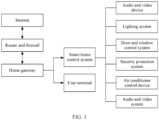
- the control node may be implemented by at least one of a data storage node, a smart home control system, the user terminal, the smart home device, a home gateway, a router, or a firewall.
- the data storage node receives the third authorization information.
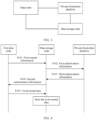
- S104 The data storage node sends second authorization information to the first data node, where the second authorization information indicates that the first data node is allowed to write the data to the data storage node.
- the data storage node receives the to-be-stored data from the first data node.
- the data storage node may further perform a first operation.
- the first operation includes but is not limited to storing the to-be-stored data.
- the data storage node may locally store the to-be-stored data.
- the data storage node may further perform on-chain on a transaction record (which may be referred to as a first transaction record) corresponding to the first operation.
- the first transaction record may include an identifier (or other information indicating an identity of the first data node) of the first data node, a transaction type (for example, indicating that the first operation is a write operation), a user data pointer (used to search for the data) stored in the first operation, a data access policy corresponding to the data, a digital signature (or referred to as a signature) of the first data node, or the like.
- the data access policy corresponding to the data may be used to determine whether reading of the data is allowed.
- the data access policy corresponding to the data may indicate which nodes are allowed or not allowed to access the data written this time.
- the first transaction record may be queried by a node on the private blockchain.
- the first data node may further send a first indication to a digital twin of the first data node, to notify that the data of the first data node is stored in the data storage node, so that the digital twin updates historical data of the first data node.
- the data of the first data node may be obtained through the digital twin when needed.
- a terminal sends a data write permission request (or referred to as second request information) to a private blockchain platform, to request authorization for writing data to a data storage node.
- the terminal may be a smart home device and/or a user terminal.
- the data write permission request is an access permission request (access permission request).
- the private blockchain platform receives the data write permission request.
- the private blockchain platform determines, according to a data access policy, to authorize a data write permission to the terminal.
- the private blockchain platform determines, according to the data access policy, to allow the terminal to write data to the data storage node.
- update, revocation, and authorization of the data access policy need to be implemented by using a policy management transaction.
- the data write permission response may be an access permission response (access permission response)
- the first authorization information may be an access proof of permission (proof of permission, PoP).
- the terminal and a digital twin of the terminal may obtain the data write permission with reference to steps shown in S201 to S203.
- the terminal and the digital twin of the terminal may send the data write permission request and obtain the data write permission when joining the private blockchain (for example, registering with the private blockchain), and then update the data write permission periodically and/or when a specific condition is met. If the terminal has obtained the first authorization information, S201 to S203 may be skipped, and S204 is performed.
- the data storage node sends a data write permission verification request to the private blockchain platform, where the data write permission verification request carries the first authorization information, to request the private blockchain platform to verify whether the terminal is authorized to write the data to the data storage node.
- the terminal receives the data write permission response.
- S209 The terminal sends a data write operation request to the data storage node, where the data write operation request carries to-be-stored data, to request to store the to-be-stored data.
- the data storage node receives the data write operation request.
- the data storage node locally stores the to-be-stored data.
- the data storage node stores a current write record (that is, a first transaction record) in the private blockchain.
- the data storage node may send the write record to the private blockchain platform, and the private blockchain platform stores the write record in the private blockchain.
- the data storage node may send a data storage result, for example, an acknowledge character (acknowledge character, ACK), to the terminal.
- a data storage result for example, an acknowledge character (acknowledge character, ACK)
- ACK acknowledge character
- the terminal receives the data storage result.
- S212 The terminal sends a first indication to the digital twin of the terminal, to notify that the data of the terminal is updated.
- the terminal may perform S212 after receiving the data storage result, or the terminal may perform S212 after S209, and does not need to wait for receiving the data storage result.
- the data management method provided in embodiments of this application further includes a data read (or obtaining) procedure.
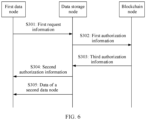
- a data read (or obtaining) procedure In FIG. 6 , an example in which the method is executed by a first data node, a second data node, a data storage node, and a private blockchain platform is used for description.
- the first data node is configured to request to read data of the second data node from the data storage node, where the data of the second data node may be historical data or current data of the second data node.
- the first data node and/or the second data node may be nodes on a private blockchain.
- the first data node and the second data node may be a same device or different devices, for example, the first data node is a digital twin of the second data node, or the first data node and the second data node are a same device, or the first data node is a digital twin of a user.
- the method provided in embodiments of this application may include the following steps.
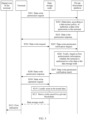
- the first data node sends first request information to the data storage node, where the first request information may include first authorization information, and the first authorization information comes from the private blockchain platform.
- the first request information may be used to request the data of the second data node.
- second request information may include an identifier or other identity information of the second data node.
- the data storage node receives the first request information.
- the data storage node sends the first authorization information to the private blockchain platform, to request the private blockchain platform to verify whether the first data node is authorized to request the data from the data storage node.
- the private blockchain platform receives the first authorization information.
- the private blockchain platform sends third authorization information to the data storage node, where the third authorization information may indicate that the first data node is authorized to request the data from the data storage node.
- the private blockchain platform may verify, based on the first authorization information, that the first data node is authorized to request the data from the data storage node, and send the third authorization information.
- the data storage node receives the third authorization information.
- S304 The data storage node sends second authorization information to the first data node, where the second authorization information indicates that the first data node is allowed to request the data from the data storage node.
- S305 The data storage node sends the data of the second data node to the first data node.
- the first data node receives the data of the second data node from the data storage node.
- a permission of the first data node may be verified by using the private blockchain platform, to prevent a node without a write permission from obtaining the data of the second data node from the data storage node. This improves reliability of a data read process of the smart home device, and avoids data leakage.
- the data storage node may further perform a second operation, where the second operation includes but is not limited to reading and sending the data of the second data node to the first data node.
- the data storage node may further perform on-chain on a transaction record (which may be referred to as a second transaction record) corresponding to the second operation.
- the second transaction record may include an identifier (or other information indicating an identity of the first data node) of the first data node, a transaction type (for example, indicating that the second operation is a read operation), a user data pointer read in the second operation, a digital signature of the first data node, or the like.
- the second transaction record may be queried by a node on the private blockchain.
- the first data node may request a data read permission from the private blockchain platform, to obtain the first authorization information, so as to obtain the data of the second data node from the data storage node based on the first authorization information.
- a first data node is a digital twin of a terminal
- a second data node is the terminal.
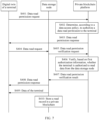
- a process in which the terminal requests a data read permission from a private blockchain platform and reads data after obtaining the data read permission may include the following steps.
- the digital twin of the terminal sends a data read permission request (or referred to as second request information) to the private blockchain platform, to request authorization for reading data from a data storage node.
- the terminal may be a smart home device and/or a user terminal.
- the data read permission request is an access permission request.
- the digital twin of the terminal may receive a first indication from the terminal, where the first indication indicates that data of the terminal is stored in the data storage node. Therefore, the digital twin may perform S401 to initiate a process of obtaining the data of the terminal from the data storage node.
- the first indication refer to the description in S202.
- a process of storing the data of the terminal in the data storage node refer to the description of the data storage process shown in FIG. 4 and/or FIG. 5 . Details are not described herein again.
- the private blockchain platform receives the data read permission request.
- the private blockchain platform determines, according to a data access policy, to authorize a data read permission to the digital twin.
- the private blockchain platform determines, according to the data access policy, to allow the digital twin to read the data from the data storage node.
- For the data access policy refer to the description in S202.
- the private blockchain platform sends a data read permission response to the digital twin, where the data read permission response carries first authorization information, to indicate that the digital twin is allowed to read the data from the data storage node.
- the data read permission response may be an access permission response
- the first authorization information may be a PoP.
- the terminal and the digital twin of the terminal may obtain the data read permission with reference to steps shown in S401 to S403.
- the terminal and the digital twin of the terminal may send the data read permission request and obtain the data read permission when joining the private blockchain (for example, registering with the private blockchain), and then update the data read permission periodically and/or when a specific condition is met. If the terminal has obtained the first authorization information, S401 to S403 may be skipped, and S404 is performed.
- the digital twin sends a data read request to the data storage node, to request to obtain the data of the terminal, where the data read request carries the first authorization information.
- the data read request is a data access request (data access request).
- the data read request may further carry information of to-be-read data, for example, information such as an identifier of the terminal and/or a generation time of the to-be-read data, to request to read the data.
- the data storage node receives the data read request.
- the data storage node sends a data read permission verification request to the private blockchain platform, where the data read permission verification request carries the first authorization information, to request the private blockchain platform to verify whether the digital twin is authorized to read the data from the data storage node.
- the data read permission verification request is carried in an access permission validate message.
- the private blockchain platform After it is verified that the digital twin is authorized to read the data from the data storage node, the private blockchain platform sends the data read permission verification result to the data storage node, where the data read permission verification result carries third authorization information, to indicate that the digital twin is authorized to read the data from the data storage node.
- the data storage node receives the data read permission verification result.
- the data storage node may send the second authorization information to the digital twin when a read condition allowed by the data access policy corresponding to the data is met.
- the digital twin receives the data read permission response.
- S409 The data storage node sends the data of the terminal to the digital twin.
- the data storage node stores a current read record (that is, a second transaction record) in the private blockchain.
- the data storage node may send the read record to the private blockchain platform, and the private blockchain platform stores the read record in the private blockchain.
- the smart home device cannot be controlled based on the user data.
- a process of controlling the smart home device is performed by the user by using an app in a user terminal, and a decision is made by the user in a control process. Therefore, the smart home device cannot be controlled based on historical data of the user.
- the digital twin of the terminal can obtain the data of the terminal, for example, historical data of the terminal, from the data storage node. This makes it possible for the system to predict behavior of the user based on the data of the terminal. Therefore, the smart home device can be controlled based on a prediction result of the behavior of the user. This improves flexibility of smart home device control and implements more intelligent smart home control.
- control node may determine, based on a time at which a lighting system and/or an air conditioner are/is turned on on a workday, a work departure time of the user, and turn on the lighting system and/or the air conditioner on the workday based on the time.
- the method is executed by the control node, and the method may include the following steps.
- the first data node may be a smart home device, a user terminal, a digital twin of the smart home device, or a digital twin of the user terminal.
- the second data node may be a smart home device or a user terminal, and the first data node may be the same as or different from the second data node.
- the first data node may obtain the data of the second data node from a data storage node according to the method shown in FIG. 6 or FIG. 7 , and/or the second data node may store the data in the data storage node according to the method shown in FIG. 4 or FIG. 5 .
- control node may send data request information to the first data node, to request the data of the second data node.
- first data node may send the data of the second data node to the control node based on a specified condition.
- the first data node may send the data of the second data node after a specified time arrives, a specified period is met, or a specified event (for example, a temperature and humidity each reach a specified value) is met.
- At least one first data node may send, to the control node, data of at least one second data node obtained by the at least one first data node.
- a third condition is a threshold condition corresponding to the data of the second data node.
- the control node determines that the first condition is met.
- the second data node is a temperature and humidity sensor.
- the data of the second data node may be a current temperature. If the current temperature reaches 30 degrees, it is determined that the first condition is met.
- S503 The control node sends a second indication to the third data node, where the second indication is used by the third data node to perform a third operation.
- S502 and S503 may be implemented by using a smart contract.
- the smart contract may indicate the control node to send the second indication to the third data node after determining, based on the data of the second data node, that the first condition is met.
- the third data node receives the second indication.
- S504 The third data node performs a third operation based on the second indication.
- the air conditioner is turned on, and a cooling mode is started.
- the first condition is that the current temperature detected by the temperature and humidity sensor reaches 30°C
- the third operation is that the air conditioner starts cooling.
- the control node may control, by using the second indication, the air conditioner to start cooling.
- the smart contract may be preset or generated by the control node.
- the control node may determine the smart contract based on historical data of the second data node and historical data of the third data node. For example, the control node analyzes the historical data of the second data node and the historical data of the third data node. If it is found that when the historical data of the second data node meets the first condition, the user controls the third data node to perform the third operation, the smart contract is generated, to automatically trigger the third data node to perform the third operation when the first condition is met, and the third data node does not need to be controlled by the user to perform the third operation, so that more intelligent home control can be implemented.
- the control node may store the smart contract in a private blockchain.
- historical data of a terminal may be stored in the data storage node.
- the first data node may obtain the historical data of the terminal by using the method shown in FIG. 6 or FIG. 7 .
- the terminal may store the historical data in the data storage node by using the procedure shown in FIG. 4 or FIG. 5 .
- each digital twin may obtain historical data of a terminal corresponding to the digital twin.
- the historical data herein includes scenario data like a temperature and humidity, user behavior data, and the like.
- the control node may obtain the historical data from the digital twin of each terminal, and predict, based on the historical data, behavior of controlling the smart home device by the user.
- the scenario data may be used to determine the first condition
- the user behavior data may be used to determine the third operation that needs to be performed when the first condition is met.
- the scenario data may include temperature and humidity information, a time, a weather, a season, and/or a position of the user terminal.
- the behavior data may include an operation performed by the user on the smart home device and/or the user terminal.
- the digital twin may obtain the data of the terminal and send the data of the terminal to the control node by using the procedure shown in FIG. 8 .
- the control node may obtain the data of the terminal from the data storage node.
- a method for obtaining the data of the terminal by the control node refer to the method for obtaining the data of the terminal by the digital twin of the terminal. Details are not described again.
- the smart contract indicates to turn on the air conditioner when the following condition (namely, the first condition) is met:
- First a temperature and season condition: A temperature detected by the temperature and humidity sensor reaches a temperature threshold corresponding to a season (for example, in summer, a threshold is above 30 degrees; and in winter, a threshold is below 10 degrees).
- the work departure distance condition is, for example, a distance between a position of the user terminal and a home is less than a specific distance threshold, for example, 200 meters.
- the work departure time condition is, for example, a daily work departure (or home arrival) time of the user collected by the user terminal arrives.
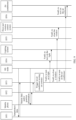
- the control node is a digital twin DT3 of the user
- the user terminal is a mobile phone.
- the temperature and humidity sensor collects an indoor temperature in real time
- a digital twin DT1 of the temperature and humidity sensor obtains indoor temperature data through the data storage node (represented as a DS node in FIG. 9 ).
- the temperature data may be stored in the data storage node by the temperature and humidity sensor by using the method shown in FIG. 4 or FIG. 5
- the DT1 may read the temperature data from the data storage node by using the method shown in FIG. 6 or FIG. 7 .
- the DT1 sends a message to the DT3 to report that the temperature and season condition is met.
- the season may be obtained as follows: A digital twin DT2 of the mobile phone obtains data of the mobile phone, and the DT2 determines a season and indicates the season to the DT1. Similarly, the DT2 may obtain, from the data storage node, position information collected by the mobile phone of the user. When the DT2 determines that a distance between a position of the mobile phone of the user and the home is less than the distance threshold, the DT2 sends a message to the DT3 to report that the work departure distance condition is met, or sends the position information to the DT3.
- the DT3 may compare a current time with the daily work departure time of the user, to determine whether the work departure time condition is met.
- the digital twin of the user determines that both the temperature and season condition and the work departure distance condition and/or work departure time condition are met, the digital twin of the user triggers an air conditioner turning on contract in the smart contract, further controls a door and window control system to close a window, determines, based on the current time and a sunset time, whether a light needs to be turned on, and turns on the air conditioner.
- the DT3 uniformly controls execution of the following actions: notifying a digital twin DT4 of the lighting system, where the DT4 indicates the lighting system to turn on the light; notifying a digital twin DT5 of the door and window control system, where the DT5 indicates the door and window control system to close the window; and notifying a digital twin DT6 of the air conditioner, where the DT6 indicates the air conditioner to turn on and sets the air conditioner at a preset temperature.
- the DT3 may send the second indication to a smart home device by using a corresponding digital twin, to indicate the smart home device to perform a response action.
- the DT3 may send the second indication to the lighting system by using the DT4, to indicate the lighting system to turn on the light.
- the foregoing describes the data management method provided in embodiments of this application with reference to FIG. 1 to FIG. 8 .
- the following describes the data management apparatus provided in embodiments of this application with reference to FIG. 10 and FIG. 11 .
- the apparatus described herein may be configured to perform the data management method provided in embodiments of this application.
- the apparatus may also be referred to as a communication apparatus or the like. This is not specifically limited.
- the apparatus described below may include corresponding hardware structures and/or software modules for performing the functions.
- this application can be implemented by hardware, computer software, or a combination of hardware and computer software. Whether a function is performed by hardware or hardware driven by computer software depends on particular applications and design constraints of the technical solutions.
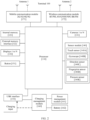
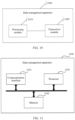
- an embodiment of this application provides a data management apparatus 1000.
- the data management apparatus 1000 may be configured to perform steps performed by the first data node, the data storage node, or the control node in the data management method provided in embodiments of this application.
- FIG. 10 is a schematic diagram of a structure of a possible data management apparatus.
- the structure may include a processing module (or a processing unit) 1010 and a transceiver module (or a transceiver unit) 1020.
- the structure shown in FIG. 10 may be a first data node, a data storage node, or a control node, or may be a chip, a device, a component (or referred to as an assembly), or the like applied to the first data node, the data storage node, or the control node.
- the transceiver module 1020 may be a transceiver.
- the transceiver may include a communication interface, an antenna, a radio frequency circuit, or the like, to support the apparatus in performing communication in a wired and/or wireless manner.
- the processing module 1010 may be a processor, for example, includes one or more central processing units (central processing units, CPUs).
- CPUs central processing units
- the transceiver module 1020 may be an interface circuit, and the processing module 1010 may be a processor.
- the transceiver module 1020 may be an input/output interface of a chip (for example, a baseband chip), and the processing module 1010 may be a processor of the chip system, and may include one or more central processing units. It should be understood that, in this embodiment of this application, the processing module 1010 may be implemented as a processor or a processor-related circuit component, and the transceiver module 1020 may be implemented as a transceiver or a transceiver-related circuit component.
- the processing module 1010 may be configured to perform all operations, except sending and receiving operations, performed by the first data node, the data storage node, or the control node in any embodiment of this application, for example, a processing operation, and/or another process used to support the technology described in this specification, for example, generating a message, information, and/or signaling sent by the transceiver module 1020, and processing a message, information, and/or signaling received by the transceiver module 1020.
- the transceiver module 1020 may be configured to perform all receiving and sending operations performed by the first data node, the data storage node, or the control node in any embodiment of this application, and/or another process used to support the technology described in this specification, for example, data sending and/or receiving.
- the transceiver module 1020 may be a functional module, and the functional module can complete both a sending operation and a receiving operation.
- the transceiver module 1020 may be configured to perform all sending and receiving operations performed by the first data node, the data storage node, or the control node.
- the transceiver module 1020 may be two functional modules, and the transceiver module 1020 may be considered as a general name of the two functional modules.
- the two functional modules are a sending module and a receiving module respectively.
- the transceiver module 1020 may be configured to send first request information to the data storage node, where the first request information may include first authorization information, and the first authorization information comes from a private blockchain platform.
- the transceiver module 1020 may be further configured to receive second authorization information from the data storage node.
- the first authorization information is used to verify whether the first data node is authorized to write the data of the first data node to the data storage node, and the second authorization information indicates that the first data node is allowed to write the data to the data storage node, the first data node sends to-be-stored data to the data storage node, where the data storage node and the first data node correspond to a same home.
- the first request information is used to request data of a second data node
- the first authorization information is used to verify whether the first data node is authorized to request the data of the second data node from the data storage node
- the second authorization information indicates that the first data node is allowed to request the data of the second data node from the data storage node
- the first data node receives the data of the second data node sent by the data storage node, where the data storage node, the first data node, and the second data node correspond to a same home.
- the transceiver module 1020 may further send second request information to the private blockchain platform, where the second request information is used to request authorization for writing the data of the first data node to the data storage node, or the second request information is used to request authorization for requesting the data of the second data node from the data storage node.
- the first data node may further receive the first authorization information from the private blockchain platform.
- the transceiver module 1020 may further send a first indication to a digital twin corresponding to the first data node, where the first indication is used to notify that the data of the first data node is stored in the data storage node.
- the transceiver module 1020 may be configured to receive the first request information from the first data node, where the first request information includes the first authorization information, and the first authorization information comes from the private blockchain platform.
- the data storage node may further send the first authorization information to the private blockchain platform.
- the transceiver module 1020 may be further configured to receive third authorization information from the private blockchain platform, and may be further configured to send the second authorization information to the first data node.
- the processing module 1010 performs a first operation, where the first operation includes storing the to-be-stored data.
- the transceiver module 1020 may further send a first transaction record to the private blockchain platform, where the first transaction record is related to the first operation.
- the processing module 1010 performs a second operation, where the second operation includes sending the data of the second data node to the first data node.
- the transceiver module 1020 may further send a second transaction record to the private blockchain platform, where the second transaction record is related to the second operation.
- the transceiver module 1020 may be configured to receive the data of the second data node from the first data node.
- the processing module 1010 may be further configured to determine, based on the data of the second data node, that the first condition is met.
- the transceiver module 1020 may further send the second indication to the third data node, where the second indication is used by the third data node to perform the third operation, and the control node, the first data node, the second data node, and the third data node correspond to the same home.
- the transceiver module 1020 may further obtain historical data of the second data node and historical data of the third data node.
- the processing module 1010 may be further configured to determine the smart contract based on the historical data of the second data node and the historical data of the third data node, where the smart contract indicates the control node to control the third data node to perform the third operation when the control node determines, based on the historical data of the second data node, that the first condition is met.
- an embodiment of this application provides a data management apparatus 1300.
- the data management apparatus 1300 may be configured to perform steps performed by the first data node, the data storage node, or the control node in the data management method provided in embodiments of this application.
- the data management apparatus 1300 may include a communication interface 1301, a memory 1302, and a processor 1303.
- the communication interface 1301 may be used by the data management apparatus to perform communication, for example, send or receive a signal in a wired and/or wireless manner, to send and/or receive information, data, a message, and the like.
- the memory 1302 is coupled to the processor 1303, and is configured to store a program and data that are required for implementing functions of the data management apparatus 1300.
- the communication interface 1301 may include a wired communication interface, and may be configured to support the data management apparatus 1300 in receiving and sending signaling and/or data in a wired manner.
- the communication interface 1301 may also be referred to as a transceiver unit or a communication unit, and may be considered as a combination of a receiving unit and a sending unit.
- the communication interface 1301 may include a wireless transceiver (for example, include a modem and/or an antenna), and may be configured to support the data management apparatus 1300 in receiving and sending signaling and/or data in a wireless manner.
- the communication interface 1301 may also be referred to as a wireless transceiver or a wireless communication unit.
- the communication interface 1301 may also include a wired transceiver or a wired interface.
- the processor 1303 may be implemented by using a processing chip or a processing circuit.
- the communication interface 1301 may be configured to implement the foregoing actions of the transceiver module 1020, and the processor 1303 may be configured to implement the foregoing actions of the processing module 1010.
- the communication interface 1301 may be configured to implement the foregoing actions of the transceiver module 1020
- the processor 1303 may be configured to implement the foregoing actions of the processing module 1010.
- the computer program instructions may alternatively be loaded onto a computer or another programmable data processing device, so that a series of operations and steps are performed on the computer or the another programmable device, to generate computer-implemented processing. Therefore, the instructions executed on the computer or the another programmable device provide steps for implementing a specific function in one or more procedures in the flowcharts and/or in one or more blocks in the block diagrams.
Landscapes
- Engineering & Computer Science (AREA)
- Computer Networks & Wireless Communication (AREA)
- Signal Processing (AREA)
- Computer Security & Cryptography (AREA)
- Theoretical Computer Science (AREA)
- General Engineering & Computer Science (AREA)
- Computer Hardware Design (AREA)
- General Physics & Mathematics (AREA)
- Physics & Mathematics (AREA)
- General Health & Medical Sciences (AREA)
- Computing Systems (AREA)
- Health & Medical Sciences (AREA)
- Databases & Information Systems (AREA)
- Bioethics (AREA)
- Software Systems (AREA)
- Medical Informatics (AREA)
- Data Mining & Analysis (AREA)
- Information Retrieval, Db Structures And Fs Structures Therefor (AREA)
- Telephonic Communication Services (AREA)
Applications Claiming Priority (2)
| Application Number | Priority Date | Filing Date | Title |
|---|---|---|---|
| CN202111142870.9A CN115879142A (zh) | 2021-09-28 | 2021-09-28 | 一种数据管理方法及装置 |
| PCT/CN2022/117246 WO2023051192A1 (zh) | 2021-09-28 | 2022-09-06 | 一种数据管理方法及装置 |
Publications (2)
| Publication Number | Publication Date |
|---|---|
| EP4394635A1 true EP4394635A1 (de) | 2024-07-03 |
| EP4394635A4 EP4394635A4 (de) | 2024-07-03 |
Family
ID=85763436
Family Applications (1)
| Application Number | Title | Priority Date | Filing Date |
|---|---|---|---|
| EP22874582.4A Pending EP4394635A4 (de) | 2021-09-28 | 2022-09-06 | Datenverwaltungsverfahren und -vorrichtung |
Country Status (3)
| Country | Link |
|---|---|
| EP (1) | EP4394635A4 (de) |
| CN (1) | CN115879142A (de) |
| WO (1) | WO2023051192A1 (de) |
Families Citing this family (1)
| Publication number | Priority date | Publication date | Assignee | Title |
|---|---|---|---|---|
| CN116719480B (zh) * | 2023-08-04 | 2023-11-14 | 青岛鼎信通讯股份有限公司 | 一种基于数据孪生的电能表数据存储方法、装置及介质 |
Family Cites Families (7)
| Publication number | Priority date | Publication date | Assignee | Title |
|---|---|---|---|---|
| US20180285839A1 (en) * | 2017-04-04 | 2018-10-04 | Datient, Inc. | Providing data provenance, permissioning, compliance, and access control for data storage systems using an immutable ledger overlay network |
| US10855446B2 (en) * | 2018-04-24 | 2020-12-01 | Duvon Corporation | Autonomous exchange via entrusted ledger |
| CN109460643A (zh) * | 2018-10-22 | 2019-03-12 | 阿里巴巴集团控股有限公司 | 一种智能设备控制方法、装置及设备 |
| CN109302415B (zh) * | 2018-11-09 | 2019-11-01 | 四川虹微技术有限公司 | 一种认证方法、区块链节点及存储介质 |
| CN110363413A (zh) * | 2019-06-28 | 2019-10-22 | 深圳市元征科技股份有限公司 | 一种志愿服务管理的方法及相关装置 |
| CN110599132B (zh) * | 2019-09-24 | 2024-02-20 | 腾讯科技(深圳)有限公司 | 一种奖励数据的生成方法、装置及计算机可读存储介质 |
| CN111814172A (zh) * | 2020-08-28 | 2020-10-23 | 支付宝(杭州)信息技术有限公司 | 一种数据授权信息的获取方法、装置及设备 |
-
2021
- 2021-09-28 CN CN202111142870.9A patent/CN115879142A/zh active Pending
-
2022
- 2022-09-06 EP EP22874582.4A patent/EP4394635A4/de active Pending
- 2022-09-06 WO PCT/CN2022/117246 patent/WO2023051192A1/zh not_active Ceased
Also Published As
| Publication number | Publication date |
|---|---|
| CN115879142A (zh) | 2023-03-31 |
| WO2023051192A1 (zh) | 2023-04-06 |
| EP4394635A4 (de) | 2024-07-03 |
Similar Documents
| Publication | Publication Date | Title |
|---|---|---|
| CN110568767B (zh) | 一种智能家居设备选择方法及终端 | |
| US9602300B2 (en) | Smart device-based home network system and control method therefor | |
| US11929872B2 (en) | Method for configuring home devices in batches and device | |
| AU2017429200B2 (en) | Display method and apparatus | |
| US20180368058A1 (en) | Method for controlling device access, and related device and system | |
| US9521239B2 (en) | Apparatus and method for automatic discovery and suggesting personalized gesture control based on user's habit and context | |
| JP6986513B2 (ja) | 無線通信システムにおける偽広告者検出装置及び方法 | |
| WO2020253695A1 (zh) | 一种智能家居设备的接入方法及一种电子设备 | |
| US10225719B2 (en) | Method and apparatus for establishing communication between an image photographing apparatus and a user device | |
| CN104159076B (zh) | 摄像装置、视频监控系统以及视频监控方法 | |
| US10891196B2 (en) | Apparatus and method for contents back-up in home network system | |
| US20160323283A1 (en) | Semiconductor device for controlling access right to resource based on pairing technique and method thereof | |
| CN110336720A (zh) | 设备控制方法和设备 | |
| WO2020173375A1 (zh) | 一种多智能设备联动控制的方法、设备以及系统 | |
| US9503893B2 (en) | Communication management system, relay device, communication control system, communication system, communication method, and recording medium storing communication control program | |
| CN106416317A (zh) | 用于提供位置信息的方法和装置 | |
| CN104735814A (zh) | 自动接入WiFi网络的接入方法、系统、和相关装置 | |
| WO2021043045A1 (zh) | 一种网络配置信息的配置方法及设备 | |
| CN105723350A (zh) | 用于连接电子设备的通信的方法和装置 | |
| CN113613247A (zh) | 设备绑定方法和终端设备 | |
| WO2024114274A1 (zh) | IoT设备配网方法及相关装置 | |
| KR102248911B1 (ko) | 전자 장치 및 전자 장치에서 데이터를 처리하는 방법 | |
| WO2023051192A1 (zh) | 一种数据管理方法及装置 | |
| CN118605199B (zh) | 智能家居的远程控制方法、装置、电子设备及存储介质 | |
| US12506633B2 (en) | Device registration method, hub device, and apparatus |
Legal Events
| Date | Code | Title | Description |
|---|---|---|---|
| STAA | Information on the status of an ep patent application or granted ep patent |
Free format text: STATUS: THE INTERNATIONAL PUBLICATION HAS BEEN MADE |
|
| PUAI | Public reference made under article 153(3) epc to a published international application that has entered the european phase |
Free format text: ORIGINAL CODE: 0009012 |
|
| STAA | Information on the status of an ep patent application or granted ep patent |
Free format text: STATUS: REQUEST FOR EXAMINATION WAS MADE |
|
| 17P | Request for examination filed |
Effective date: 20240328 |
|
| A4 | Supplementary search report drawn up and despatched |
Effective date: 20240604 |
|
| AK | Designated contracting states |
Kind code of ref document: A1 Designated state(s): AL AT BE BG CH CY CZ DE DK EE ES FI FR GB GR HR HU IE IS IT LI LT LU LV MC MK MT NL NO PL PT RO RS SE SI SK SM TR |
|
| DAV | Request for validation of the european patent (deleted) | ||
| DAX | Request for extension of the european patent (deleted) | ||
| STAA | Information on the status of an ep patent application or granted ep patent |
Free format text: STATUS: EXAMINATION IS IN PROGRESS |
|
| 17Q | First examination report despatched |
Effective date: 20251024 |