EP4394370A1 - All-solid potassium ion selective electrode, and method for manufacturing all-solid potassium ion selective electrode - Google Patents
All-solid potassium ion selective electrode, and method for manufacturing all-solid potassium ion selective electrode Download PDFInfo
- Publication number
- EP4394370A1 EP4394370A1 EP22861172.9A EP22861172A EP4394370A1 EP 4394370 A1 EP4394370 A1 EP 4394370A1 EP 22861172 A EP22861172 A EP 22861172A EP 4394370 A1 EP4394370 A1 EP 4394370A1
- Authority
- EP
- European Patent Office
- Prior art keywords
- ion
- insertion material
- potassium ion
- selective electrode
- electrode
- Prior art date
- Legal status (The legal status is an assumption and is not a legal conclusion. Google has not performed a legal analysis and makes no representation as to the accuracy of the status listed.)
- Pending
Links
Images




Classifications
-
- G—PHYSICS
- G01—MEASURING; TESTING
- G01N—INVESTIGATING OR ANALYSING MATERIALS BY DETERMINING THEIR CHEMICAL OR PHYSICAL PROPERTIES
- G01N27/00—Investigating or analysing materials by the use of electric, electrochemical, or magnetic means
- G01N27/26—Investigating or analysing materials by the use of electric, electrochemical, or magnetic means by investigating electrochemical variables; by using electrolysis or electrophoresis
- G01N27/28—Electrolytic cell components
- G01N27/30—Electrodes, e.g. test electrodes; Half-cells
- G01N27/333—Ion-selective electrodes or membranes
-
- Y—GENERAL TAGGING OF NEW TECHNOLOGICAL DEVELOPMENTS; GENERAL TAGGING OF CROSS-SECTIONAL TECHNOLOGIES SPANNING OVER SEVERAL SECTIONS OF THE IPC; TECHNICAL SUBJECTS COVERED BY FORMER USPC CROSS-REFERENCE ART COLLECTIONS [XRACs] AND DIGESTS
- Y02—TECHNOLOGIES OR APPLICATIONS FOR MITIGATION OR ADAPTATION AGAINST CLIMATE CHANGE
- Y02E—REDUCTION OF GREENHOUSE GAS [GHG] EMISSIONS, RELATED TO ENERGY GENERATION, TRANSMISSION OR DISTRIBUTION
- Y02E60/00—Enabling technologies; Technologies with a potential or indirect contribution to GHG emissions mitigation
- Y02E60/10—Energy storage using batteries
Definitions
- the present invention relates to an all-solid-state ion-selective electrode having an insertion material, and a method of manufacturing such an all-solid-state ion-selective electrode.
- An ion-selective electrode is used to measure a concentration of ions in a solution.
- the ion-selective electrode, together with a reference electrode, is brought into contact with the solution (i.e., objective liquid) that is an object to be measured, so that a potential difference is generated between the ion-selective electrode and the reference electrode.
- a concentration of specific ions in the solution can be measured based on the potential difference generated.
- Such ion-selective electrode is used in various fields, such as environment, medicine, and agriculture.
- a typical ion-selective electrode is constituted of an ion-sensitive membrane, an internal liquid, and an internal reference electrode.
- an all-solid-state ion-selective electrode that does not use an internal liquid and an internal reference electrode has been developed.
- One example of such an all-solid-state ion-selective electrode is an ion-selective electrode having an electrode substrate directly covered with an ion-sensitive membrane.
- step 1-3 the compound membrane covering the conductor 2 is immersed in a potassium chloride aqueous solution (or a first potassium chloride aqueous solution), so that K + of Prussian blue contained in the compound membrane becomes uniform by conditioning.
- the conditioning is a pretreatment for enabling compound to exhibit its original functions.
- the compound membrane is immersed in a 0.01M potassium chloride aqueous solution (KCl aqueous solution) for 24 hours.
Landscapes
- Chemical & Material Sciences (AREA)
- Life Sciences & Earth Sciences (AREA)
- Health & Medical Sciences (AREA)
- Physics & Mathematics (AREA)
- Chemical Kinetics & Catalysis (AREA)
- Electrochemistry (AREA)
- Molecular Biology (AREA)
- Analytical Chemistry (AREA)
- Biochemistry (AREA)
- General Health & Medical Sciences (AREA)
- General Physics & Mathematics (AREA)
- Immunology (AREA)
- Pathology (AREA)
- Electrochromic Elements, Electrophoresis, Or Variable Reflection Or Absorption Elements (AREA)
Abstract
Description
- The present invention relates to an all-solid-state ion-selective electrode having an insertion material, and a method of manufacturing such an all-solid-state ion-selective electrode.
- An ion-selective electrode is used to measure a concentration of ions in a solution. The ion-selective electrode, together with a reference electrode, is brought into contact with the solution (i.e., objective liquid) that is an object to be measured, so that a potential difference is generated between the ion-selective electrode and the reference electrode. A concentration of specific ions in the solution can be measured based on the potential difference generated. Such ion-selective electrode is used in various fields, such as environment, medicine, and agriculture.
- A typical ion-selective electrode is constituted of an ion-sensitive membrane, an internal liquid, and an internal reference electrode. For the purpose of downsizing, an all-solid-state ion-selective electrode that does not use an internal liquid and an internal reference electrode has been developed. One example of such an all-solid-state ion-selective electrode is an ion-selective electrode having an electrode substrate directly covered with an ion-sensitive membrane.
-
- Patent document 1:
Japanese Examined Patent Publication No. 8-23544 - Patent document 2:
Japanese Examined Patent Publication No. 7-50059 - Patent document 3: International Patent Publication No.
WO 2017/047374 - Patent document 4: Utility model registration No.
2546786 - The ion-selective electrode in which the electrode substrate is directly covered with the ion-sensitive membrane (this type of ion-selective electrode may be hereinafter referred to as conventional electrode) generally has a problem of low potential stability. If the potential stability is low, a detected value will fluctuate due to dark current flowing from a potentiostat or due to vibrations around a measuring system. Furthermore, the conventional electrode has a problem of low long-term stability of detected value. Specifically, even if a sample is immersed in an objective liquid of the same concentration, the detected value will vary greatly after several days. Therefore, each time such ion-selective electrode is used, calibration is required.
- Therefore, the present invention provides an all-solid-state potassium ion-selective electrode with improved potential stability and improved long-term stability of detected value. Furthermore, the present invention provides a method of manufacturing such an all-solid-state potassium ion-selective electrode.
- In an embodiment, there is provided an all-solid-state potassium ion-selective electrode comprising: a conductor; an insertion material formed on a surface of the conductor; and a potassium ion-sensitive membrane covering the insertion material, the insertion material including at least a Prussian blue analog represented by a structural formula KxFe[Fe(CN)6]y·nH2O, where x is a numerical number larger than 0 and less than or equal to 2, y is a numerical number larger than 0 and less than or equal to 1, and n is a numerical number larger than or equal to 0.
- In an embodiment, there is provided a manufacturing method for an all-solid-state potassium ion-selective electrode, comprising: producing slurry containing Prussian blue represented by a structural formula KxFe[Fe(CN)6]y·nH2O, where y is a numerical number larger than 0 and less than or equal to 1, and x is a numerical number larger than 0 and less than or equal to 2, n is a numerical number larger than or equal to 0; supplying the slurry onto a conductor and drying the slurry to form a compound membrane on a surface of the conductor; forming an insertion material on the surface of the conductor by immersing the compound membrane in a first potassium chloride aqueous solution and making K+ of the Prussian blue uniform; forming an ion-sensitive stock membrane on a surface of the insertion material by supplying a potassium ion-sensitive membrane stock liquid to the surface of the insertion material and drying the potassium ion-sensitive membrane stock liquid; and forming a potassium ion-sensitive membrane on the surface of the insertion material by immersing the ion-sensitive stock membrane in a second potassium chloride aqueous solution.
- In an embodiment, the insertion material includes at least a Prussian blue analog represented by a structural formula KxFe[Fe(CN)6]y·nH2O, where x is a numerical number larger than 0 and less than or equal to 2.
- In an embodiment, producing the slurry includes mixing the Prussian blue, multi-wall carbon nanotubes, and polyvinylidene fluoride.
- The all-solid-state ion-selective electrode has the insertion material located between the conductor and the potassium ion-sensitive membrane. With these configurations, electrons are exchanged between the conductor and the potassium ion-sensitive membrane via the insertion material. The insertion material can improve the performance of exchanging the electrons between the conductor and the potassium ion-sensitive membrane and can lower a resistance value of the electrode. In addition, the insertion material can function as an internal reference electrode and can improve the long-term stability of detected value. As a result, the all-solid-state potassium ion-selective electrode can improve the potential stability and the long-term stability of detected value.
-
- [
FIG. 1] FIG. 1 is a plan view showing an embodiment of an all-solid-state ion-selective electrode; - [
FIG. 2] FIG. 2 is a cross-sectional view taken along line A-A inFIG. 1 ; - [
FIG. 3] FIG. 3 is a flowchart illustrating an embodiment of a method of manufacturing the all-solid-state potassium ion-selective electrode; - [
FIG. 4] FIG. 4 is a flow chart explaining an embodiment of a method of producing slurry; - [
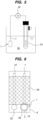
FIG. 5] FIG. 5 is a schematic diagram showing an embodiment of a method of measuring a concentration of ions in a solution; - [
FIG. 6] FIG. 6 is a schematic diagram showing another application example of the all-solid-state ion-selective electrode; - [
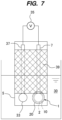
FIG. 7] FIG. 7 is a schematic diagram showing an embodiment of an ion concentration measuring method using the all-solid-state ion-selective electrode shown inFIG. 6 ; - [
FIG. 8] FIG. 8 is a diagram showing a calibration curve (or a standard curve) obtained by measuring potential of all-solid-state potassium ion-selective electrode in a KCl aqueous solution; - [
FIG. 9] FIG. 9 shows a result of evaluating electrical resistance conducted by chronopotentiometry; and - [
FIG. 10] FIG. 10 shows a result of evaluating the resistance of the electrode conducted by AC impedance measurement. - Embodiments of the present invention will be described below with reference to the drawings.
FIG. 1 is a plan view showing an embodiment of an all-solid-state potassium ion-selective electrode 1, andFIG. 2 is a cross-sectional view taken along line A-A inFIG. 1 . Hereinafter, in this specification, the all-solid-state potassium ion-selective electrode 1 may be simply referred to aselectrode 1. - As shown in
FIGS. 1 and 2 , theelectrode 1 includes aconductor 2 fixed to asubstrate 5 which is an insulator, aninsertion material 10 formed on a surface of theconductor 2, and an ion-sensitive membrane 20 formed on a surface of theinsertion material 10. Theconductor 2 is coupled to aconductive wire 7. Theinsertion material 10 is covered with the ion-sensitive membrane 20. In an example, theconductor 2 is made of platinum (Pt). - The ion-
sensitive membrane 20 of this embodiment is a potassium ion-sensitive membrane configured to allow potassium ions (K+) to pass therethrough. Theinsertion material 10 includes a Prussian blue analog. The structural formula of the Prussian blue analog of this embodiment is expressed by
KxFe[Fe(CN)6]y·nH2O (1)
where x is a numerical number larger than 0 and less than or equal to 2, y is a numerical number larger than 0 and less than or equal to 1, and n is a numerical number larger than or equal to 0. Hereinafter, in this specification, theelectrode 1 including the potassium ion-sensitive membrane and the Prussian blue analog represented by the above structural formula (1) is defined as the all-solid-state potassium ion-selective electrode 1. - An embodiment of a method of manufacturing the all-solid-state potassium ion-
selective electrode 1 will be described below with reference to a flowchart shown inFIG. 3 . In step 1-1, a slurry (details will be described later) containing Prussian blue is supplied onto theplatinum conductor 2 that has been formed on thesubstrate 5. Specifically, 1 µL of slurry is dropped onto theconductor 2. The structural formula of Prussian blue in the slurry of this embodiment is expressed by
KxFe[Fe(CN)6]y·nH2O (3)
where x is a numerical number larger than 0 and less than or equal to 2, and n is a numerical number larger than or equal to 0. - In step 1-2, the slurry is dried at room temperature to form a compound membrane on the surface of the
conductor 2. Theconductor 2 is covered with the compound membrane. - In step 1-3, the compound membrane covering the
conductor 2 is immersed in a potassium chloride aqueous solution (or a first potassium chloride aqueous solution), so that K+ of Prussian blue contained in the compound membrane becomes uniform by conditioning. The conditioning is a pretreatment for enabling compound to exhibit its original functions. Specifically, the compound membrane is immersed in a 0.01M potassium chloride aqueous solution (KCl aqueous solution) for 24 hours. - In step 1-4, the
conductor 2 and the compound membrane are removed from the potassium chloride aqueous solution, and the compound membrane is washed with ionexchange water. - In step 1-5, the compound membrane is dried. Specifically, the compound membrane is dried at room temperature for 12 hours. Through the steps 1-3 to 1-5, the
insertion material 10 made of the compound membrane is formed on the surface of theconductor 2. Theconductor 2 is covered with theinsertion material 10. Theinsertion material 10 formed by the above steps 1-3 to 1-5 contains the Prussian blue analog represented by the above-mentioned structural formula (1). - In step 1-6, a potassium ion-sensitive membrane stock liquid (details will be described later) is supplied to the surface of the
insertion material 10. Specifically, 50 µL of the potassium ion-sensitive membrane stock liquid is dropped onto the surface of theinsertion material 10. In step 1-7, the potassium ion-sensitive membrane stock liquid is dried at room temperature to form an ion-sensitive stock membrane on the surface of theinsertion material 10. Theinsertion material 10 is covered with the ion-sensitive stock membrane. - In step 1-8, the ion-sensitive stock membrane covering the
insertion material 10 is immersed in a potassium chloride aqueous solution (or a second potassium chloride aqueous solution). Specifically, the ion-sensitive stock membrane is immersed in a 0.01M potassium chloride aqueous solution (KCl aqueous solution) for 24 hours. As a result of the step 1-8, the potassium ion-sensitive membrane 20 is formed on the surface of theinsertion material 10. Theinsertion material 10 is covered with the potassium ion-sensitive membrane 20. The potassium ion-sensitive membrane 20 formed in the step 1-8 is an ion-sensitive membrane configured to allow potassium ions (K+) to pass therethrough. Through the steps 1-1 to 1-8 discussed above, the all-solid potassium ion-selective electrode 1 is manufactured. - Next, an embodiment of the method of producing the slurry used for manufacturing the all-solid-state potassium ion-selective electrode will be described with reference to a flowchart shown in
FIG. 4 . In step 2-1, Prussian blue represented by the above-mentioned structural formula (3) is prepared. In step 2-2, multi-wall carbon nanotubes (which will be hereinafter referred to as "MWCNT") are mixed with the Prussian blue. The Prussian blue functions as a positive-electrode active material, and MWCNT functions as a conductive material. - In step 2-3, a solution containing polyvinylidene fluoride dispersed in N-methylpyrrolidone is added to and mixed with the mixture of Prussian blue and MWCNT. The N-methylpyrrolidone functions as a dispersion medium, and the polyvinylidene fluoride functions as a binder.
- The potassium ion-sensitive membrane stock liquid is a mixture of ionophore, anion excluder, plasticizer, membrane matrix, and dispersion medium. More specifically, the potassium ion-sensitive membrane stock liquid is produced by mixing bis(benzo-15-crown-5) as the ionophore, potassium tetrakis(4-chlorophenyl) borate as the anion excluder, o-nitrophenyl octyl ether as the plasticizer, polyvinyl chloride as the membrane matrix, and tetrahydrofuran as the dispersion medium for 2 hours. The mixing ratio (weight ratio) of the o-nitrophenyl octyl ether, the bis(benzo-15-crown-5), the potassium tetrakis(4-chlorophenyl) borate, and the polyvinyl chloride is 65.5 : 0.9 : 0.3 : 33.3.
-
FIG. 5 is a schematic diagram showing an embodiment of a method of measuring a concentration of ions in a solution. Theelectrode 1 and areference electrode 33 are coupled to avoltage measuring device 35. In this state, theelectrode 1 and thereference electrode 33 are brought into contact with anobjective liquid 30. A potential difference is generated between theelectrode 1 and thereference electrode 33 depending on the ion concentration to be measured in theobjective liquid 30. This potential difference is measured by thevoltage measuring device 35 and is converted into an ion concentration by an ion concentration converter (not shown). - In the example shown in
FIG. 5 , theelectrode 1 is the all-solid-state potassium ion-selective electrode, and theobjective liquid 30 is a KCl aqueous solution. In the ion-sensitive membrane 20 of theelectrode 1, a membrane potential is generated depending on a difference in K+ activity between theobjective liquid 30 and theinsertion material 10. As a result, the potential difference is generated between theelectrode 1 and thereference electrode 33 depending on the concentration of potassium ions in theobjective liquid 30. -
FIG. 6 is a schematic diagram showing another application example of the all-solid-state ion-selective electrode 1. Configurations of this embodiment, which will not be particularly described, are the same as the configurations described with reference toFIG. 1 and FIG. 2 , and their repetitive descriptions will be omitted.Reference electrode 33 is formed on thesubstrate 5.Conductive wire 7 andconductive wire 37 are fixed to thesubstrate 5 and coupled to theconductor 2 of theelectrode 1 and thereference electrode 33, respectively. A part of theconductive wire 7 and a part of theconductive wire 37 are covered with aprotective film 39 made of an insulator. An example of theprotective film 39 is an epoxy coat. -
FIG. 7 is a schematic diagram showing an embodiment of an ion concentration measuring method using the all-solid-state ion-selective electrode 1 shown inFIG. 6 . Theelectrode 1 and thereference electrode 33 are coupled to thevoltage measuring device 35. In this state, theelectrode 1 and thereference electrode 33 are brought into contact withobjective liquid 30. A potential difference is generated between theelectrode 1 and thereference electrode 33 depending on the ion concentration to be measured in theobjective liquid 30. This potential difference is measured by thevoltage measuring device 35 and is converted into an ion concentration by an ion concentration converter (not shown). -
FIG. 8 is a diagram showing a calibration curve (or a standard curve) obtained by measuring the potential of the all-solid-state potassium ion-selective electrode 1 in KCl aqueous solutions having different concentrations.FIG. 8 and the following drawings show data obtained from an ion-sensitive membrane (Pt/MWCNT-KFeFe/K+-ISM) made of platinum/MWCNT/Prussian blue and reference data obtained from an ion-sensitive membrane (Pt/AB-KFeFe/K+-ISM) made of platinum/acetylene black/Prussian blue using acetylene black as a conductive material. As can be seen inFIG. 8 , the all-solid-state potassium ion-selective electrode 1 shows good linearity in a K+ concentration range of 10-5 to 10-1M, and its slope is close to a theoretical value of 59.2 mV decade which is obtained from the Nernst equation. The result shows the fact that the all-solid-state potassium ion-selective electrode 1 has a good electrochemical response to K+. -
FIG. 9 shows a result of evaluating electrode resistance conducted by chronopotentiometry. The Pt/AB-KFeFe/K+-ISM electrode shows polarization of ±5 mV or more upon application of a minute current, whereas the Pt/MWCNT-KFeFe/K+-ISM electrode shows polarization of ±1 mV or less. It can be seen from this result that the electrode resistance can be significantly reduced by using MWCNT.FIG. 10 shows a result of evaluating the resistance of the electrode conducted by AC impedance measurement. The Pt/MWCNT-KFeFe/K+-ISM electrode has a capacitive semicircle whose diameter is smaller than that of the Pt/AB-KFeFe/K+-ISM electrode. This shows the fact that a significant reduction in electrode resistance can be achieved. Use of MWCNT as a conductive material having a higher conductivity than that of acetylene black (AB) can improve the electronic conductivity of the composite electrode layer, thus making it easier to transfer electrons based on oxidation-reduction of Prussian blue (KFeFe). As a result, it is assumed that an interfacial resistance is significantly reduced and potential stability is greatly improved. It can be concluded from the above results that the potential stability can be improved by using MWCNT as a conductive material of the insertion material. - The all-solid-state ion-
selective electrode 1 according to each of the embodiments described above includes theinsertion material 10 between theconductor 2 and the ion-sensitive membrane 20. The electrons are exchanged between theconductor 2 and the ion-sensitive membrane 20 via theinsertion material 10. Theinsertion material 10 can improve the performance of exchanging the electrons between theconductor 2 and the ion-sensitive membrane 20, and can lower the resistance value of theelectrode 1. As a result, theelectrode 1 can improve the potential stability. Specifically, the detected value of theelectrode 1 is hardly affected by dark current flowing from the potentiostat and vibrations around the measuring system. - Furthermore, the all-solid-state ion-
selective electrode 1 according to each of the embodiments described above can improve the long-term stability of the detected value. Specifically, even if a sample is immersed in an objective liquid of the same concentration, there will be little variation in the detected value for several days. Experiment of evaluating the long-term stability showed a potential fluctuation of about 15 mV over 7 days. The all-solid-state ion-selective electrode using the insertion material has an excellent long-term stability because Prussian blue plays the role of the internal reference electrode. - Although embodiments of the present invention have been discussed above, the present invention is not limited to the above-discussed embodiments and may be implemented in various different forms within the scope of its technical concept.
- The present invention is applicable to an all-solid-state ion-selective electrode having an insertion material, and a method of manufacturing such an all-solid-state ion-selective electrode.
Claims (4)
- An all-solid-state potassium ion-selective electrode comprising:a conductor;an insertion material formed on a surface of the conductor; anda potassium ion-sensitive membrane covering the insertion material,the insertion material including at least a Prussian blue analog represented by a structural formula KxFe[Fe(CN)6]y·nH2O, where x is a numerical number larger than 0 and less than or equal to 2, y is a numerical number larger than 0 and less than or equal to 1, and n is a numerical number larger than or equal to 0.
- A manufacturing method for an all-solid-state potassium ion-selective electrode, comprising:producing slurry containing Prussian blue represented by a structural formula KxFe[Fe(CN)6]y·nH2O, where y is a numerical number larger than 0 and less than or equal to 1, and x is a numerical number larger than 0 and less than or equal to 2, n is a numerical number larger than or equal to 0;supplying the slurry onto a conductor and drying the slurry to form a compound membrane on a surface of the conductor;forming an insertion material on the surface of the conductor by immersing the compound membrane in a first potassium chloride aqueous solution and making K+ of the Prussian blue uniform;forming an ion-sensitive stock membrane on a surface of the insertion material by supplying a potassium ion-sensitive membrane stock liquid to the surface of the insertion material and drying the potassium ion-sensitive membrane stock liquid; andforming a potassium ion-sensitive membrane on the surface of the insertion material by immersing the ion-sensitive stock membrane in a second potassium chloride aqueous solution.
- The manufacturing method according to claim 2, wherein the insertion material includes at least a Prussian blue analog represented by a structural formula KxFe[Fe(CN)6]y·nH2O, where x is a numerical number larger than 0 and less than or equal to 2.
- The manufacturing method according to claim 2 or 3, wherein producing the slurry includes mixing the Prussian blue, multi-wall carbon nanotubes, and polyvinylidene fluoride.
Applications Claiming Priority (2)
| Application Number | Priority Date | Filing Date | Title |
|---|---|---|---|
| JP2021136435A JP7784659B2 (en) | 2021-08-24 | 2021-08-24 | All-solid-state potassium ion-selective electrode and method for manufacturing the all-solid-state potassium ion-selective electrode |
| PCT/JP2022/030856 WO2023026883A1 (en) | 2021-08-24 | 2022-08-15 | All-solid potassium ion selective electrode, and method for manufacturing all-solid potassium ion selective electrode |
Publications (2)
| Publication Number | Publication Date |
|---|---|
| EP4394370A1 true EP4394370A1 (en) | 2024-07-03 |
| EP4394370A4 EP4394370A4 (en) | 2025-07-23 |
Family
ID=85322765
Family Applications (1)
| Application Number | Title | Priority Date | Filing Date |
|---|---|---|---|
| EP22861172.9A Pending EP4394370A4 (en) | 2021-08-24 | 2022-08-15 | Solid-state potassium ion selective electrode and method for producing a solid-state potassium ion selective electrode |
Country Status (4)
| Country | Link |
|---|---|
| US (1) | US20250130197A1 (en) |
| EP (1) | EP4394370A4 (en) |
| JP (1) | JP7784659B2 (en) |
| WO (1) | WO2023026883A1 (en) |
Families Citing this family (2)
| Publication number | Priority date | Publication date | Assignee | Title |
|---|---|---|---|---|
| JP2024031047A (en) * | 2022-08-25 | 2024-03-07 | Koa株式会社 | All-solid-state potassium ion selective electrode |
| JP2024031046A (en) * | 2022-08-25 | 2024-03-07 | Koa株式会社 | All-solid-state potassium ion selective electrode and its manufacturing method |
Family Cites Families (9)
| Publication number | Priority date | Publication date | Assignee | Title |
|---|---|---|---|---|
| EP0230572B1 (en) * | 1985-12-23 | 1990-07-04 | F. Hoffmann-La Roche Ag | A method of manufacturing ion-selective electrodes for analyzing selected ions in solution |
| JPH0823544B2 (en) | 1986-09-18 | 1996-03-06 | 株式会社エー・アンド・デイ | Simple reference electrode |
| JP2546786B2 (en) | 1994-02-10 | 1996-10-23 | 望月 ▲たく▼夫 | Rotary drum type filtration device |
| ES2310476B1 (en) | 2007-05-29 | 2009-11-17 | Universitat Rovira I Virgili | SELECTED ELECTRODES OF SOLID CONTACT IONS BASED ON CARBON NANOTUBES. |
| CN107923866B (en) | 2015-09-14 | 2021-02-26 | 株式会社日立高新技术 | Ion selective electrode, method for producing the same, and electrode cartridge |
| JP7146189B2 (en) | 2018-09-20 | 2022-10-04 | Koa株式会社 | Manufacturing method for all-solid-state ion-selective electrode |
| WO2020249225A1 (en) | 2019-06-14 | 2020-12-17 | Robert Bosch Gmbh | Metal ferrocyanide-doped carbon as transducer for ion selective electrode |
| JP7628508B2 (en) * | 2020-01-10 | 2025-02-10 | シスメックス株式会社 | Electrode, electrode manufacturing method, ion sensor, device and method for measuring components in a living body |
| CN111982994A (en) * | 2020-08-31 | 2020-11-24 | 中国科学院长春应用化学研究所 | An all-solid-state ion-selective electrode for ion detection and its application |
-
2021
- 2021-08-24 JP JP2021136435A patent/JP7784659B2/en active Active
-
2022
- 2022-08-15 WO PCT/JP2022/030856 patent/WO2023026883A1/en not_active Ceased
- 2022-08-15 US US18/684,966 patent/US20250130197A1/en active Pending
- 2022-08-15 EP EP22861172.9A patent/EP4394370A4/en active Pending
Also Published As
| Publication number | Publication date |
|---|---|
| JP7784659B2 (en) | 2025-12-12 |
| JP2023030993A (en) | 2023-03-08 |
| EP4394370A4 (en) | 2025-07-23 |
| WO2023026883A1 (en) | 2023-03-02 |
| US20250130197A1 (en) | 2025-04-24 |
Similar Documents
| Publication | Publication Date | Title |
|---|---|---|
| Sophocleous et al. | A review of screen-printed silver/silver chloride (Ag/AgCl) reference electrodes potentially suitable for environmental potentiometric sensors | |
| Li et al. | All-solid-state potassium-selective electrode using graphene as the solid contact | |
| JP7146189B2 (en) | Manufacturing method for all-solid-state ion-selective electrode | |
| Papp et al. | Lipophilic Multi‐walled Carbon Nanotube‐based Solid Contact Potassium Ion‐selective Electrodes with Reproducible Standard Potentials. A Comparative Study | |
| Ishige et al. | Intercalation Compounds as Inner Reference Electrodes for Reproducible and Robust Solid‐Contact Ion‐Selective Electrodes | |
| CA2085322C (en) | Graphite based solid state polymeric membrane ion-selective electrodes | |
| Paczosa-Bator et al. | Potentiometric sensors with carbon black supporting platinum nanoparticles | |
| CN102507696A (en) | Ion-selective electrode based on graphene electrode and preparation method thereof | |
| US20250130197A1 (en) | All-solid-state potassium ion-selective electrode and method of manufacturing the all-solid-state potassium ion-selective electrode | |
| CN107957440B (en) | Planar ammonia selective sensing electrode and method for making the same | |
| Komoda et al. | Instantaneously usable screen-printed silver/silver sulfate reference electrode with long-term stability | |
| Atkinson et al. | An investigation of the performance characteristics and operational lifetimes of multi-element thick film sensor arrays used in the determination of water quality parameters | |
| Song et al. | All-solid-state carbonate-selective electrode based on a molecular tweezer-type neutral carrier with solvent-soluble conducting polymer solid contact | |
| Velmurugan et al. | Electrochemistry through glass | |
| CA1170722A (en) | Potentiometric electrode | |
| US20260071991A1 (en) | All-solid-state potassium ion selective electrode, and method for producing same | |
| Jain et al. | Highly sensitive and selective voltammetric sensor fullerene modified glassy carbon electrode for determination of cefitizoxime in solubilized system | |
| Yuan et al. | Improved potentiometric response of solid-contact lanthanum (III) selective electrode | |
| Liu et al. | Robust fabrication of nanomaterial-based all-solid-state ion-selective electrodes | |
| Yamada et al. | All‐solid‐state Fluoride Ion‐selective Electrode using LaF3 Single Crystal with Poly (3, 4‐ethylenedioxythiophene) as Solid Contact Layer | |
| Zhang et al. | Miniature Ion‐selective Electrodes with Mesoporous Carbon Black as Solid Contact | |
| Li et al. | Preparation of high‐performance polymer sensitive membrane for rapid and sensitive detection of ammonium ions in aqueous solution | |
| Kalidoss et al. | Solid-state planar reference electrode with ion-selective electrodes for clinical diagnosis | |
| Khaled et al. | Towards disposable sensors for drug quality control: Dextromethorphan screen‐printed electrodes | |
| Wang et al. | Research on a miniature multiparameter water quality sensor chip and a system with a temperature compensation function |
Legal Events
| Date | Code | Title | Description |
|---|---|---|---|
| STAA | Information on the status of an ep patent application or granted ep patent |
Free format text: STATUS: THE INTERNATIONAL PUBLICATION HAS BEEN MADE |
|
| PUAI | Public reference made under article 153(3) epc to a published international application that has entered the european phase |
Free format text: ORIGINAL CODE: 0009012 |
|
| STAA | Information on the status of an ep patent application or granted ep patent |
Free format text: STATUS: REQUEST FOR EXAMINATION WAS MADE |
|
| 17P | Request for examination filed |
Effective date: 20240229 |
|
| AK | Designated contracting states |
Kind code of ref document: A1 Designated state(s): AL AT BE BG CH CY CZ DE DK EE ES FI FR GB GR HR HU IE IS IT LI LT LU LV MC MK MT NL NO PL PT RO RS SE SI SK SM TR |
|
| DAV | Request for validation of the european patent (deleted) | ||
| DAX | Request for extension of the european patent (deleted) | ||
| A4 | Supplementary search report drawn up and despatched |
Effective date: 20250623 |
|
| RIC1 | Information provided on ipc code assigned before grant |
Ipc: G01N 27/333 20060101AFI20250616BHEP Ipc: G01N 27/416 20060101ALI20250616BHEP |