EP4394058A1 - Roller bearing - Google Patents
Roller bearing Download PDFInfo
- Publication number
- EP4394058A1 EP4394058A1 EP22860917.8A EP22860917A EP4394058A1 EP 4394058 A1 EP4394058 A1 EP 4394058A1 EP 22860917 A EP22860917 A EP 22860917A EP 4394058 A1 EP4394058 A1 EP 4394058A1
- Authority
- EP
- European Patent Office
- Prior art keywords
- mass
- solid solution
- rolling bearing
- amount
- spalling
- Prior art date
- Legal status (The legal status is an assumption and is not a legal conclusion. Google has not performed a legal analysis and makes no representation as to the accuracy of the status listed.)
- Pending
Links
Images

Classifications
-
- F—MECHANICAL ENGINEERING; LIGHTING; HEATING; WEAPONS; BLASTING
- F16—ENGINEERING ELEMENTS AND UNITS; GENERAL MEASURES FOR PRODUCING AND MAINTAINING EFFECTIVE FUNCTIONING OF MACHINES OR INSTALLATIONS; THERMAL INSULATION IN GENERAL
- F16C—SHAFTS; FLEXIBLE SHAFTS; ELEMENTS OR CRANKSHAFT MECHANISMS; ROTARY BODIES OTHER THAN GEARING ELEMENTS; BEARINGS
- F16C33/00—Parts of bearings; Special methods for making bearings or parts thereof
- F16C33/30—Parts of ball or roller bearings
- F16C33/58—Raceways; Race rings
- F16C33/62—Selection of substances
-
- C—CHEMISTRY; METALLURGY
- C21—METALLURGY OF IRON
- C21D—MODIFYING THE PHYSICAL STRUCTURE OF FERROUS METALS; GENERAL DEVICES FOR HEAT TREATMENT OF FERROUS OR NON-FERROUS METALS OR ALLOYS; MAKING METAL MALLEABLE, e.g. BY DECARBURISATION OR TEMPERING
- C21D1/00—General methods or devices for heat treatment, e.g. annealing, hardening, quenching or tempering
- C21D1/06—Surface hardening
-
- C—CHEMISTRY; METALLURGY
- C21—METALLURGY OF IRON
- C21D—MODIFYING THE PHYSICAL STRUCTURE OF FERROUS METALS; GENERAL DEVICES FOR HEAT TREATMENT OF FERROUS OR NON-FERROUS METALS OR ALLOYS; MAKING METAL MALLEABLE, e.g. BY DECARBURISATION OR TEMPERING
- C21D1/00—General methods or devices for heat treatment, e.g. annealing, hardening, quenching or tempering
- C21D1/26—Methods of annealing
- C21D1/32—Soft annealing, e.g. spheroidising
-
- C—CHEMISTRY; METALLURGY
- C21—METALLURGY OF IRON
- C21D—MODIFYING THE PHYSICAL STRUCTURE OF FERROUS METALS; GENERAL DEVICES FOR HEAT TREATMENT OF FERROUS OR NON-FERROUS METALS OR ALLOYS; MAKING METAL MALLEABLE, e.g. BY DECARBURISATION OR TEMPERING
- C21D9/00—Heat treatment, e.g. annealing, hardening, quenching or tempering, adapted for particular articles; Furnaces therefor
- C21D9/40—Heat treatment, e.g. annealing, hardening, quenching or tempering, adapted for particular articles; Furnaces therefor for rings; for bearing races
-
- C—CHEMISTRY; METALLURGY
- C22—METALLURGY; FERROUS OR NON-FERROUS ALLOYS; TREATMENT OF ALLOYS OR NON-FERROUS METALS
- C22C—ALLOYS
- C22C38/00—Ferrous alloys, e.g. steel alloys
- C22C38/001—Ferrous alloys, e.g. steel alloys containing N
-
- C—CHEMISTRY; METALLURGY
- C22—METALLURGY; FERROUS OR NON-FERROUS ALLOYS; TREATMENT OF ALLOYS OR NON-FERROUS METALS
- C22C—ALLOYS
- C22C38/00—Ferrous alloys, e.g. steel alloys
- C22C38/02—Ferrous alloys, e.g. steel alloys containing silicon
-
- C—CHEMISTRY; METALLURGY
- C22—METALLURGY; FERROUS OR NON-FERROUS ALLOYS; TREATMENT OF ALLOYS OR NON-FERROUS METALS
- C22C—ALLOYS
- C22C38/00—Ferrous alloys, e.g. steel alloys
- C22C38/04—Ferrous alloys, e.g. steel alloys containing manganese
-
- C—CHEMISTRY; METALLURGY
- C22—METALLURGY; FERROUS OR NON-FERROUS ALLOYS; TREATMENT OF ALLOYS OR NON-FERROUS METALS
- C22C—ALLOYS
- C22C38/00—Ferrous alloys, e.g. steel alloys
- C22C38/18—Ferrous alloys, e.g. steel alloys containing chromium
- C22C38/20—Ferrous alloys, e.g. steel alloys containing chromium with copper
-
- C—CHEMISTRY; METALLURGY
- C22—METALLURGY; FERROUS OR NON-FERROUS ALLOYS; TREATMENT OF ALLOYS OR NON-FERROUS METALS
- C22C—ALLOYS
- C22C38/00—Ferrous alloys, e.g. steel alloys
- C22C38/18—Ferrous alloys, e.g. steel alloys containing chromium
- C22C38/22—Ferrous alloys, e.g. steel alloys containing chromium with molybdenum or tungsten
-
- C—CHEMISTRY; METALLURGY
- C22—METALLURGY; FERROUS OR NON-FERROUS ALLOYS; TREATMENT OF ALLOYS OR NON-FERROUS METALS
- C22C—ALLOYS
- C22C38/00—Ferrous alloys, e.g. steel alloys
- C22C38/18—Ferrous alloys, e.g. steel alloys containing chromium
- C22C38/40—Ferrous alloys, e.g. steel alloys containing chromium with nickel
- C22C38/42—Ferrous alloys, e.g. steel alloys containing chromium with nickel with copper
-
- C—CHEMISTRY; METALLURGY
- C22—METALLURGY; FERROUS OR NON-FERROUS ALLOYS; TREATMENT OF ALLOYS OR NON-FERROUS METALS
- C22C—ALLOYS
- C22C38/00—Ferrous alloys, e.g. steel alloys
- C22C38/18—Ferrous alloys, e.g. steel alloys containing chromium
- C22C38/40—Ferrous alloys, e.g. steel alloys containing chromium with nickel
- C22C38/44—Ferrous alloys, e.g. steel alloys containing chromium with nickel with molybdenum or tungsten
-
- C—CHEMISTRY; METALLURGY
- C22—METALLURGY; FERROUS OR NON-FERROUS ALLOYS; TREATMENT OF ALLOYS OR NON-FERROUS METALS
- C22C—ALLOYS
- C22C38/00—Ferrous alloys, e.g. steel alloys
- C22C38/18—Ferrous alloys, e.g. steel alloys containing chromium
- C22C38/40—Ferrous alloys, e.g. steel alloys containing chromium with nickel
- C22C38/46—Ferrous alloys, e.g. steel alloys containing chromium with nickel with vanadium
-
- F—MECHANICAL ENGINEERING; LIGHTING; HEATING; WEAPONS; BLASTING
- F16—ENGINEERING ELEMENTS AND UNITS; GENERAL MEASURES FOR PRODUCING AND MAINTAINING EFFECTIVE FUNCTIONING OF MACHINES OR INSTALLATIONS; THERMAL INSULATION IN GENERAL
- F16C—SHAFTS; FLEXIBLE SHAFTS; ELEMENTS OR CRANKSHAFT MECHANISMS; ROTARY BODIES OTHER THAN GEARING ELEMENTS; BEARINGS
- F16C33/00—Parts of bearings; Special methods for making bearings or parts thereof
- F16C33/30—Parts of ball or roller bearings
- F16C33/58—Raceways; Race rings
- F16C33/64—Special methods of manufacture
-
- C—CHEMISTRY; METALLURGY
- C21—METALLURGY OF IRON
- C21D—MODIFYING THE PHYSICAL STRUCTURE OF FERROUS METALS; GENERAL DEVICES FOR HEAT TREATMENT OF FERROUS OR NON-FERROUS METALS OR ALLOYS; MAKING METAL MALLEABLE, e.g. BY DECARBURISATION OR TEMPERING
- C21D2211/00—Microstructure comprising significant phases
- C21D2211/008—Martensite
-
- F—MECHANICAL ENGINEERING; LIGHTING; HEATING; WEAPONS; BLASTING
- F16—ENGINEERING ELEMENTS AND UNITS; GENERAL MEASURES FOR PRODUCING AND MAINTAINING EFFECTIVE FUNCTIONING OF MACHINES OR INSTALLATIONS; THERMAL INSULATION IN GENERAL
- F16C—SHAFTS; FLEXIBLE SHAFTS; ELEMENTS OR CRANKSHAFT MECHANISMS; ROTARY BODIES OTHER THAN GEARING ELEMENTS; BEARINGS
- F16C19/00—Bearings with rolling contact, for exclusively rotary movement
-
- F—MECHANICAL ENGINEERING; LIGHTING; HEATING; WEAPONS; BLASTING
- F16—ENGINEERING ELEMENTS AND UNITS; GENERAL MEASURES FOR PRODUCING AND MAINTAINING EFFECTIVE FUNCTIONING OF MACHINES OR INSTALLATIONS; THERMAL INSULATION IN GENERAL
- F16C—SHAFTS; FLEXIBLE SHAFTS; ELEMENTS OR CRANKSHAFT MECHANISMS; ROTARY BODIES OTHER THAN GEARING ELEMENTS; BEARINGS
- F16C2202/00—Solid materials defined by their properties
- F16C2202/02—Mechanical properties
- F16C2202/04—Hardness
-
- F—MECHANICAL ENGINEERING; LIGHTING; HEATING; WEAPONS; BLASTING
- F16—ENGINEERING ELEMENTS AND UNITS; GENERAL MEASURES FOR PRODUCING AND MAINTAINING EFFECTIVE FUNCTIONING OF MACHINES OR INSTALLATIONS; THERMAL INSULATION IN GENERAL
- F16C—SHAFTS; FLEXIBLE SHAFTS; ELEMENTS OR CRANKSHAFT MECHANISMS; ROTARY BODIES OTHER THAN GEARING ELEMENTS; BEARINGS
- F16C2204/00—Metallic materials; Alloys
- F16C2204/60—Ferrous alloys, e.g. steel alloys
- F16C2204/64—Medium carbon steel, i.e. carbon content from 0.4 to 0,8 wt%
-
- F—MECHANICAL ENGINEERING; LIGHTING; HEATING; WEAPONS; BLASTING
- F16—ENGINEERING ELEMENTS AND UNITS; GENERAL MEASURES FOR PRODUCING AND MAINTAINING EFFECTIVE FUNCTIONING OF MACHINES OR INSTALLATIONS; THERMAL INSULATION IN GENERAL
- F16C—SHAFTS; FLEXIBLE SHAFTS; ELEMENTS OR CRANKSHAFT MECHANISMS; ROTARY BODIES OTHER THAN GEARING ELEMENTS; BEARINGS
- F16C2204/00—Metallic materials; Alloys
- F16C2204/60—Ferrous alloys, e.g. steel alloys
- F16C2204/70—Ferrous alloys, e.g. steel alloys with chromium as the next major constituent
-
- F—MECHANICAL ENGINEERING; LIGHTING; HEATING; WEAPONS; BLASTING
- F16—ENGINEERING ELEMENTS AND UNITS; GENERAL MEASURES FOR PRODUCING AND MAINTAINING EFFECTIVE FUNCTIONING OF MACHINES OR INSTALLATIONS; THERMAL INSULATION IN GENERAL
- F16C—SHAFTS; FLEXIBLE SHAFTS; ELEMENTS OR CRANKSHAFT MECHANISMS; ROTARY BODIES OTHER THAN GEARING ELEMENTS; BEARINGS
- F16C2223/00—Surface treatments; Hardening; Coating
- F16C2223/10—Hardening, e.g. carburizing, carbo-nitriding
-
- Y—GENERAL TAGGING OF NEW TECHNOLOGICAL DEVELOPMENTS; GENERAL TAGGING OF CROSS-SECTIONAL TECHNOLOGIES SPANNING OVER SEVERAL SECTIONS OF THE IPC; TECHNICAL SUBJECTS COVERED BY FORMER USPC CROSS-REFERENCE ART COLLECTIONS [XRACs] AND DIGESTS
- Y02—TECHNOLOGIES OR APPLICATIONS FOR MITIGATION OR ADAPTATION AGAINST CLIMATE CHANGE
- Y02P—CLIMATE CHANGE MITIGATION TECHNOLOGIES IN THE PRODUCTION OR PROCESSING OF GOODS
- Y02P10/00—Technologies related to metal processing
- Y02P10/25—Process efficiency
Definitions
- the present invention relates to a rolling bearing.
- the decomposition of the lubricating oil generates hydrogen, and the generated hydrogen enters steel and causes a change in the metallographic structure in some cases.
- the metallographic structure change is a phenomenon in which martensite as a base structure of bearing steel is transformed into fine ferrite particles by the entering hydrogen.
- the rolling bearing causing the metallographic structure change is etched and the metallographic structure is observed, the structure changed portion appears white. Therefore, such a structure is also referred to as a "white structure" or the like.
- PTL 5 optimally distributes Cr to the base structure and carbides, thereby strengthening both the martensitic structure in the base and spheroidized carbides and delaying the formation of the white structure.
- PTLS 6, 7 focus on the amounts of Si, Mn, Cr, Ni, and Mo forming solid solutions in the base structure, and provide a high cleanliness bearing steel having an excellent rolling contact fatigue life in environments where hydrogen enters steel materials, without depending on technologies leading to carbide precipitation reducing the rolling contact fatigue properties or a significant material cost increase.
- the present invention has been made in view of the above-described problems. It is an object of the present invention to provide a rolling bearing capable of suppressing the occurrence of the white structure spalling.
- the present inventors have focused on the state of a structure obtained after heat treatment, particularly the amounts of elements forming solid solutions in a martensitic structure and spheroidized carbides, and have found that the generation of the white structure can be suppressed by appropriately controlling the amounts of the elements forming solid solutions in the martensitic structure and spheroidized carbides.
- inner rings and outer rings for deep groove ball bearing 6206 were first produced by turning steel materials having the alloy compositions shown in Table 1.
- Table 1 the unit of O is mass ppm, and the unit of elements other than O is mass%.
- the produced inner rings and outer rings were subjected to quenching treatment or induction heat treatment, followed by tempering treatment. Further, the treated inner rings and outer rings were polished to have a finished shape, and then combined with a SUJ2 3/8-inch steel ball and a resin cage to produce test bearings.
- test bearings were mounted in a radial type life tester to be subjected to a rolling contact fatigue life test under the following conditions. This test was performed seven times, and the mean value of the life where the cumulative probability of failure reaches 50% (L50) was determined.
- the rolling bearing according to one aspect of the present invention is based on the findings above.
- the rolling bearing according to this embodiment has a structure of a front surface including at least a rolling contact surface, the structure containing the structure having the solid solution carbon amount in the martensitic structure after heat treatment of 0.35 mass% or more and 0.65 mass% or less and the volume ratio of spheroidized carbides having a diameter of 200 nm or more of 4.5% or less.
- the front surface of the rolling bearing where the solid solution carbon amount and the volume ratio of spheroidized carbides are specified is the hardened region of the rolling bearing and is set as appropriate according to uses or standards, e.g., within 1 mm from the front surface.
- the heat treatment methods for the rolling bearing may be any of quenching treatment, carburizing treatment, carbonitriding treatment, and induction hardening treatment.
Landscapes
- Chemical & Material Sciences (AREA)
- Engineering & Computer Science (AREA)
- Mechanical Engineering (AREA)
- Materials Engineering (AREA)
- Metallurgy (AREA)
- Organic Chemistry (AREA)
- General Engineering & Computer Science (AREA)
- Physics & Mathematics (AREA)
- Crystallography & Structural Chemistry (AREA)
- Thermal Sciences (AREA)
- Manufacturing & Machinery (AREA)
- Rolling Contact Bearings (AREA)
- Heat Treatment Of Articles (AREA)
Abstract
Description
- The present invention relates to a rolling bearing.
- In a rolling bearing, metal fatigue occurs due to prolonged use under a load, resulting in the raceway surface spalling in some times. As the mechanism of the raceway surface spalling, "inside starting spalling" and "surface starting spalling" are conventionally well known. The "inside starting spalling" is a phenomenon in which stress concentration occurs around non-metal inclusions inside a material, and fatigue cracks are generated with the stress concentration as the starting point, leading to the spalling. The "surface starting spalling" is a phenomenon in which foreign matter mixed in a lubricating oil causes an indentation on the raceway surface, stress is concentrated on the edge of the indentation, and fatigue cracks are generated with the stress concentration as the starting point, leading to the spalling.
- However, in some uses, the decomposition of the lubricating oil generates hydrogen, and the generated hydrogen enters steel and causes a change in the metallographic structure in some cases. When the change in the metallographic structure occurs, fatigue cracks are generated from the interface between the structure changed portion and a normal portion, and spalling occurs, and therefore the life of the rolling bearing significantly decreases. The metallographic structure change is a phenomenon in which martensite as a base structure of bearing steel is transformed into fine ferrite particles by the entering hydrogen. When the rolling bearing causing the metallographic structure change is etched and the metallographic structure is observed, the structure changed portion appears white. Therefore, such a structure is also referred to as a "white structure" or the like. In the following description, the spalling due to the white structure is referred to as "white structure spalling". The white structure spalling arises through a mechanism different from the mechanisms of the "inside starting spalling" and the "surface starting spalling" described above, and therefore measures to suppress the occurrence of the spalling are completely different.
- As the measures against the white structure spalling, a steel material added with a large amount of Cr is used as described in
PTL 1, for example. However, the addition of a large amount of Cr makes the steel material brittle in a process of manufacturing the steel material, and, further, the quenching temperature to achieve the required hardness is required to increase in a process of manufacturing the bearing, which reduces the productivity in the manufacturing of the bearing.PTLS 2 to 4 adjust not only the Cr amount but the C amount, the Si amount, the Mn amount, and the Mo amount, thereby suppressing the occurrence of the white structure spalling while maintaining the productivity. - Further, PTL 5 optimally distributes Cr to the base structure and carbides, thereby strengthening both the martensitic structure in the base and spheroidized carbides and delaying the formation of the white structure.
-
PTLS -
- PTL 1:
JP 2005-147352 A - PTL 2:
JP 5018995 B - PTL 3:
JP 5803618 B - PTL 4:
JP 6481652 B - PTL 5:
JP 2016-069695 A - PTL 6:
JP 6639839 B - PTL 7:
JP 6846901 B - However, the technologies disclosed in
PTLS 1 to 7 do not sufficiently suppress the occurrence of the white structure spalling, and therefore a technology capable of further suppressing the occurrence of the white structure spalling has been demanded. - Thus, the present invention has been made in view of the above-described problems. It is an object of the present invention to provide a rolling bearing capable of suppressing the occurrence of the white structure spalling.
- One aspect of the present invention provides a rolling bearing having a structure of a front surface including at least a rolling contact surface, the structure containing a structure having a solid solution carbon amount in a martensitic structure after heat treatment of 0.35 mass% or more and 0.65 mass% or less and a volume ratio of spheroidized carbides having a diameter of 200 nm or more of 4.5% or less.
- One aspect of the present invention provides a rolling bearing capable of suppressing the occurrence of the white structure spalling.
-
-
FIG. 1 is a graph showing the relationship between the amount of C forming a solid solution in a martensitic structure and the life ratio between each sample and a G-1 product; -
FIG. 2 is a graph showing the relationship between the total amount of Si, Mn, Cr, and Mo forming solid solutions in the martensitic structure and the life ratio between each sample and the G-1 product; and -
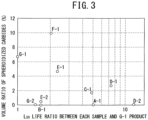
FIG. 3 is a graph showing the relationship between the volume ratio of spheroidized carbides and the life ratio between each sample and the G-1 product. - A detailed description below describes an embodiment of the present invention. The embodiment described below exemplifies devices and methods for embodying the technical idea of the present invention. The technical idea of the present invention does not specify materials, structures, arrangement, and the like of constituent components to the materials, structures, arrangement, and the like described below. The technical idea of the present invention can be variously altered within the technical range defined by Claims.
- With respect to the use of a rolling bearing in which a white structure is generated during the use of the roller beading, leading to early spalling, the present inventors have focused on the state of a structure obtained after heat treatment, particularly the amounts of elements forming solid solutions in a martensitic structure and spheroidized carbides, and have found that the generation of the white structure can be suppressed by appropriately controlling the amounts of the elements forming solid solutions in the martensitic structure and spheroidized carbides.
- Herein, prior to the present invention, the present inventors have conducted a rolling contact fatigue life test with different additive elements, such as C, Cr, Mn, forming solid solutions in a base of the rolling bearing. In this test, inner rings and outer rings for deep groove ball bearing 6206 were first produced by turning steel materials having the alloy compositions shown in Table 1. In Table 1, the unit of O is mass ppm, and the unit of elements other than O is mass%. Subsequently, the produced inner rings and outer rings were subjected to quenching treatment or induction heat treatment, followed by tempering treatment. Further, the treated inner rings and outer rings were polished to have a finished shape, and then combined with a
SUJ2 3/8-inch steel ball and a resin cage to produce test bearings. Then, the test bearings were mounted in a radial type life tester to be subjected to a rolling contact fatigue life test under the following conditions. This test was performed seven times, and the mean value of the life where the cumulative probability of failure reaches 50% (L50) was determined. - · Test load (radial load): 910 kgf
- • Rotation speed: 3000 min-1
- • Lubricating oil: Special lubricating oil likely to generate hydrogen through decomposition of lubricating oil
- Table 2 shows the amounts of C, Si, Mn, Cr, and Mo forming solid solutions in the martensitic structure after the heat treatment, the volume ratio of carbides, the hardness, the residual austenite amount γR, and the rolling contact fatigue life test results. In Table 2, the unit of the solid solution C, the solid solution Si, the solid solution Mn, the solid solution Cr, and the solid solution Mo, which are the amounts of C, Si, Mn, Cr, and Mo forming solid solutions, is mass% and the unit of the residual austenite is vol%. The amounts of solid solution elements in the martensitic structure were calculated by measuring the volume ratio of spheroidized carbides and the amount of each solid solution element in the spheroidized carbides by the EDS analysis, followed by subtraction from the addition amount of each element contained in the steel. The number of the generated white structures is indicated by (Number of bearings in which the white structure was observed)/(Number of bearings subjected to the rolling contact fatigue test). The volume ratio of carbides is intended for carbides having a diameter of 200 nm or more. The alphabet of each sample No. corresponds to the alphabet of each steel material No. Q in the heat treatment column indicates quenching treatment, and IH indicates induction hardening treatment.
FIGS. 1 to 3 show the results of organizing the life ratio between each sample and G-1, which is a standard heat-treated product of a SUJ2 material, in terms of the amount of C forming a solid solution in the martensitic structure, the total amount of alloy elements other than C forming a solid solution, and the volume ratio of carbides, respectively. The volume ratio can be determined from the area ratio appearing in the cross section because an object to be measured is substantially spherical, and is substantially the same value (ratio) as the area ratio.[Table 2] Sample No. Heat treatment Solid solution C Solid solution Si Solid solution Mn Solid solution Cr Solid solution Mo Volume ratio of carbides Hardness γR Number of generated white structures L50 life Life ratio between each sample and 8-1 A-1 Q950°C 0.40 0.44 0.79 2.97 0.35 0.07% 623 HV 6 0/7 726 hr 5.0 B-1 IH 0.53 0.18 0.87 0.15 0.02 0.00% 720 HV 8 0/7 237 hr 1.6 C-1 Q840°C 0.43 0.65 1.11 1.45 0.28 1.71% 713 HV 8 0/7 701 hr 4.9 D-1 Q880°C 0.41 0.44 0.76 2.43 0.29 2.71% 644 HV 6 0/7 1060 hr 7.4 D-2 Q950°C 0.57 0.44 0.79 2.95 0.35 0.10% 700 HV 13 0/7 1728 hr 12.0 E-1 Q880°C 0.46 0.44 0.75 2.15 0.26 4.65% 712 HV 12 1/7 337 hr 2.3 E-2 Q950°C 0.74 0.44 0.66 2.86 0.34 0.50% 716 HV 27 7/7 237 hr 1.6 F-1 Q840°C 0.40 0.43 0.66 1.22 0.21 9.97% 714 HV 11 1/7 293 hr 2.0 G-1 Q840°C 0.59 0.22 0.33 0.84 0.01 6.68% 720 HV 11 7/7 144 hr 1.0 G-2 Q950°C 1.06 0.23 0.38 1.41 0.04 0.05% 688 HV 25 7/7 211 hr 1.5 - The results of investigating whether the white structure was generated focusing on the elements forming solid solutions in the martensitic structure showed that the amount of C forming a solid solution in the martensitic structure and the volume ratio of spheroidized carbides affect the generation of the white structure irrespective of the amounts of Si, Mn, Cr, and Mo forming solid solutions (Table 2). For example, in the sample E-2 in which a large amount of Cr formed a solid solution (2.86 mass%) in the martensitic structure, the white structure is generated in all of the bearings, while the white structure is not observed irrespective of the amounts of Si, Mn, Cr, and Mo in the structures having the solid solution C amount of 0.65 mass% or less and the volume ratio of spheroidized carbides of 4.5% or less as in the samples A-1, B-1, C-1, D-1, and D-2. On the other hand, it is found that, in the case of the sample B-1 in which the amounts of Si, Mn, Cr, and Mo forming solid solutions are equal to or less than those of the comparative material G-1, the life is somewhat extended, but the sample B-1 does not have the life extension effect as compared with the other samples A-1, C-1, D-1, and D-2. This is considered to be because Si, Mn, Cr, and Mo forming solid solutions in the martensitic structure affects the generation or the propagation of cracks.
- The results above show that, as the measures against the white structure spalling due to the entrance of hydrogen, it is essential that the amount of carbon forming a solid solution in the martensitic structure after the heat treatment is 0.35 mass% or more and 0.65 mass% or less and that the volume ratio of spheroidized carbides having a diameter of 200 nm or more is 4.5% or less. As the lower limit of the solid solution carbon amount, the amount of C required to achieve the minimum hardness of 650 HV required for the bearing can be determined by the method described in "Materials Science and Engineering: A Vol. 273-275, No. 15, P. 40-57 (1999), Title: Martensite in steel: strength and structure)". As the amounts of the solid solution elements other than C, the total solid solution amount of at least Si, Mn, Cr, and Mo is preferably 1.0 mass% or more and more preferably 2.0 mass% or more. The life extension effect can be further obtained by forming the structure in which the amounts of the solid solution elements other than C are set in such a range. The elements in which the solid solution amounts are specified as described above as the amounts of the solid solution elements other than C may include N, Ni, V, and Cu, for example, besides Si, Mn, Cr, and Mn. Further, this investigation evaluated the bearings subjected to the quenching treatment or the induction hardening treatment, and then subjected to the tempering treatment. However, heat treatment methods other than the heat treatment methods above, e.g., carburizing treatment or carbonitriding treatment, may be acceptable.
- More specifically, the rolling bearing according to one aspect of the present invention is based on the findings above. The rolling bearing according to this embodiment has a structure of a front surface including at least a rolling contact surface, the structure containing the structure having the solid solution carbon amount in the martensitic structure after heat treatment of 0.35 mass% or more and 0.65 mass% or less and the volume ratio of spheroidized carbides having a diameter of 200 nm or more of 4.5% or less. The front surface of the rolling bearing where the solid solution carbon amount and the volume ratio of spheroidized carbides are specified is the hardened region of the rolling bearing and is set as appropriate according to uses or standards, e.g., within 1 mm from the front surface. The heat treatment methods for the rolling bearing may be any of quenching treatment, carburizing treatment, carbonitriding treatment, and induction hardening treatment.
- Herein, the prior arts as described in the cited
references 1 to 7 are not clear about the amount of carbon forming a solid solution in a base structure, and do not control the solid solution carbon amount. However, this embodiment can further suppress the occurrence of the white structure spalling by controlling the solid solution carbon amount and the volume ratio of the spheroidal carbides of the rolling bearing as described above, and thus can obtain an excellent rolling contact fatigue life. - With respect to the above-described structure of the rolling bearing, Si, Mn, Cr, Mo, N, Ni, V, and Cu as elements other iron and carbon form solid solutions in the martensitic structure in a total proportion of preferably 1.0 mass% or more and more preferably 2.0 mass% or more. It is more preferable in the above-described structure of the rolling bearing that the solid solution carbon amount is 0.40 mass% or more and 0.60 mass% or less and the solid solution Cr amount is 2.40 mass% or more and 2.95 mass% or less. It is still more preferable in the structure where the solid solution carbon amount and the solid solution Cr amount are in the ranges above that the hardness of the front surface including at least the rolling contact surface is 640 HV or more. With such a configuration, further extension of the life of the rolling bearing can be realized.
- The rolling bearing according to this embodiment is applied as bearings for automobiles, agricultural machinery, construction machinery, steel machinery, direct acting devices, and the like, for example. More specifically, the bearing is suitable for automotive electrical auxiliary equipment and wind power generation equipment, e.g., bearings for alternators, bearings for wind turbines, and the like.
| Steel maternal No. | C | Si | Mn | P | S | Cr | Mo | Cu | O |
| A | 0.40 | 0.44 | 0.79 | 0.015 | 0.001 | 2.99 | 0.35 | 0.09 | 4 |
| B | 0.53 | 0.18 | 0.87 | 0.013 | 0.013 | 0.15 | 0.02 | 0.11 | 8 |
| C | 0.53 | 0.65 | 1.22 | 0.021 | 0.001 | 2.10 | 0.35 | 0.08 | 10 |
| D | 0.58 | 0.44 | 0.79 | 0.013 | 0.001 | 2.97 | 0.36 | 0.10 | 4 |
| E | 0.79 | 0.44 | 0.79 | 0.014 | 0.001 | 2.99 | 0.35 | 0.10 | 4 |
| F | 1.03 | 0.46 | 0.80 | 0.014 | 0.001 | 3.05 | 0.35 | 0.09 | 4 |
| G | 1.07 | 0.23 | 0.38 | 0.008 | 0.002 | 1.41 | 0.04 | 0.09 | 5 |
Claims (5)
- A rolling bearing comprising:a structure of a front surface including at least a rolling contact surface,the structure containing a structure having a solid solution carbon amount in a martensitic structure after heat treatment of 0.35 mass% or more and 0.65 mass% or less and a volume ratio of spheroidized carbides having a diameter of 200 nm or more of 4.5% or less.
- The rolling bearing according to claim 1,
wherein Si, Mn, Cr, Mo, N, Ni, V, and Cu forming solid solutions in a total proportion of 1.0 mass% or more in the martensitic structure. - The rolling bearing according to claim 2,
wherein the solid solution carbon amount is 0.40 mass% or more and 0.60 mass% or less, and a solid solution Cr amount is 2.40 mass% or more and 2.95 mass% or less. - The rolling bearing according to claim 3,
wherein the front surface including at least the rolling contact surface has hardness of 640 HV or more. - The rolling bearing according to any one of claim 1 to 4, wherein the heat treatment is any of quenching treatment, carburizing treatment, carbonitriding treatment, and induction hardening treatment.
Applications Claiming Priority (2)
| Application Number | Priority Date | Filing Date | Title |
|---|---|---|---|
| JP2021136612 | 2021-08-24 | ||
| PCT/JP2022/021811 WO2023026621A1 (en) | 2021-08-24 | 2022-05-27 | Roller bearing |
Publications (2)
| Publication Number | Publication Date |
|---|---|
| EP4394058A1 true EP4394058A1 (en) | 2024-07-03 |
| EP4394058A4 EP4394058A4 (en) | 2024-12-18 |
Family
ID=85321783
Family Applications (1)
| Application Number | Title | Priority Date | Filing Date |
|---|---|---|---|
| EP22860917.8A Pending EP4394058A4 (en) | 2021-08-24 | 2022-05-27 | ROLLER BEARING |
Country Status (6)
| Country | Link |
|---|---|
| US (1) | US12392373B2 (en) |
| EP (1) | EP4394058A4 (en) |
| JP (1) | JP7264319B1 (en) |
| KR (1) | KR20240054970A (en) |
| CN (1) | CN117795114A (en) |
| WO (1) | WO2023026621A1 (en) |
Family Cites Families (30)
| Publication number | Priority date | Publication date | Assignee | Title |
|---|---|---|---|---|
| JPS4619425B1 (en) * | 1966-12-29 | 1971-05-31 | Aichi Steel Corp | |
| JPS5018995B1 (en) | 1970-06-08 | 1975-07-03 | ||
| JPS583618U (en) | 1981-06-30 | 1983-01-11 | キンセキ株式会社 | comb filter |
| US4581079A (en) * | 1985-03-27 | 1986-04-08 | Amax Inc. | Bearing steel |
| JPH0181652U (en) | 1987-11-18 | 1989-05-31 | ||
| JP2698438B2 (en) | 1989-07-06 | 1998-01-19 | 森松工業株式会社 | Thermal insulation structure on the bottom of the tank |
| JPH0546901A (en) | 1991-08-09 | 1993-02-26 | Victor Co Of Japan Ltd | Method and apparatus for measuring linearity of recording track |
| JP2002257144A (en) | 2001-02-28 | 2002-09-11 | Nsk Ltd | Rolling bearing |
| CN100400909C (en) * | 2002-03-27 | 2008-07-09 | 日本精工株式会社 | Rolling bearings for belt-type continuously variable transmissions |
| JP2004060797A (en) | 2002-07-30 | 2004-02-26 | Koyo Seiko Co Ltd | Roller member and its manufacturing method |
| JP4390576B2 (en) * | 2003-03-04 | 2009-12-24 | 株式会社小松製作所 | Rolling member |
| JP4252837B2 (en) * | 2003-04-16 | 2009-04-08 | Jfeスチール株式会社 | Steel material with excellent rolling fatigue life and method for producing the same |
| JP2004339575A (en) * | 2003-05-16 | 2004-12-02 | Nsk Ltd | Method of manufacturing rolling device parts |
| JP2005068453A (en) | 2003-08-28 | 2005-03-17 | Nissan Motor Co Ltd | High surface pressure resistant parts and manufacturing method thereof |
| JP2005147352A (en) | 2003-11-19 | 2005-06-09 | Nsk Ltd | Rolling bearing |
| JP4799006B2 (en) | 2004-03-01 | 2011-10-19 | 株式会社小松製作所 | Fe-based seal sliding member and manufacturing method thereof |
| JP5319866B2 (en) | 2004-05-24 | 2013-10-16 | 株式会社小松製作所 | Rolling member and manufacturing method thereof |
| CN100564568C (en) | 2004-05-24 | 2009-12-02 | 株式会社小松制作所 | Revolving member and manufacture method thereof |
| KR20070099534A (en) * | 2004-10-15 | 2007-10-09 | 가부시키가이샤 제이텍트 | Rolling / sliding member, toroidal type continuously variable transmission using same and manufacturing method of rolling / sliding member |
| JP2006291250A (en) * | 2005-04-06 | 2006-10-26 | Nsk Ltd | Rolling bearing unit for wheel support |
| JP5676146B2 (en) * | 2010-05-25 | 2015-02-25 | 株式会社リケン | Pressure ring and manufacturing method thereof |
| KR101551805B1 (en) | 2010-11-29 | 2015-09-09 | 제이에프이 스틸 가부시키가이샤 | Bearing steel being excellent both in workability after spheroidizing-annealing and in hydrogen fatigue resistance property after quenching and tempering |
| KR20140047742A (en) | 2010-11-29 | 2014-04-22 | 제이에프이 스틸 가부시키가이샤 | Bearing steel exhibiting excellent machinability after spheroidizing annealing and excellent resistance to hydrogen fatigue after quenching/tempering |
| JP5966350B2 (en) * | 2011-01-21 | 2016-08-10 | 日本精工株式会社 | Rolling bearing |
| JP5762843B2 (en) * | 2011-06-22 | 2015-08-12 | 株式会社リケン | Pressure ring and manufacturing method thereof |
| JP2016069695A (en) | 2014-09-30 | 2016-05-09 | 日本精工株式会社 | Rolling bearing |
| JP6639839B2 (en) | 2015-09-09 | 2020-02-05 | 山陽特殊製鋼株式会社 | Bearing steel with excellent whitening resistance and exfoliation life |
| JP6481652B2 (en) | 2016-03-31 | 2019-03-13 | Jfeスチール株式会社 | Bearing steel |
| JP6846901B2 (en) | 2016-09-28 | 2021-03-24 | 山陽特殊製鋼株式会社 | High cleanliness bearing steel with excellent rolling fatigue life in hydrogen environment |
| JP7422527B2 (en) * | 2019-12-05 | 2024-01-26 | 日本製鉄株式会社 | Rolling parts and their manufacturing method |
-
2022
- 2022-05-27 EP EP22860917.8A patent/EP4394058A4/en active Pending
- 2022-05-27 WO PCT/JP2022/021811 patent/WO2023026621A1/en not_active Ceased
- 2022-05-27 US US18/683,986 patent/US12392373B2/en active Active
- 2022-05-27 KR KR1020247004718A patent/KR20240054970A/en active Pending
- 2022-05-27 JP JP2022559827A patent/JP7264319B1/en active Active
- 2022-05-27 CN CN202280054829.2A patent/CN117795114A/en active Pending
Also Published As
| Publication number | Publication date |
|---|---|
| WO2023026621A1 (en) | 2023-03-02 |
| JP7264319B1 (en) | 2023-04-25 |
| KR20240054970A (en) | 2024-04-26 |
| EP4394058A4 (en) | 2024-12-18 |
| US20240352973A1 (en) | 2024-10-24 |
| CN117795114A (en) | 2024-03-29 |
| JPWO2023026621A1 (en) | 2023-03-02 |
| US12392373B2 (en) | 2025-08-19 |
Similar Documents
| Publication | Publication Date | Title |
|---|---|---|
| US9394583B2 (en) | Rolling bearing | |
| EP3093363B1 (en) | Bearing part | |
| KR101604938B1 (en) | Steel for bolts, bolt, and method for producing bolt | |
| EP2386669B1 (en) | Constituent member of bearing, process for production of same, and ball-and-roller bearing provided with the constituent member | |
| JP6725235B2 (en) | Rolling sliding member, manufacturing method thereof, and rolling bearing | |
| EP2647734B1 (en) | Bearing steel exhibiting excellent machinability after spheroidizing annealing and excellent resistance to hydrogen fatigue after quenching/tempering | |
| JPWO2012077705A1 (en) | Gas carburized steel parts having excellent surface fatigue strength, steel for gas carburizing, and method for producing gas carburized steel parts | |
| KR20040088016A (en) | Carburized and quenched member and method for production thereof | |
| JP6314648B2 (en) | Surface hardened component and method for manufacturing surface hardened component | |
| WO2022202922A1 (en) | Track wheel and shaft | |
| EP3594375A1 (en) | Steel alloy | |
| JPH11264016A (en) | Method for heat treating stainless steel and heat resistance stainless steel | |
| JP5999485B2 (en) | Carbon nitrided parts with excellent surface fatigue strength of hydrogen embrittlement type | |
| US12392373B2 (en) | Rolling bearing | |
| JP2019026881A (en) | Steel member | |
| JP5668283B2 (en) | Manufacturing method of rolling sliding member | |
| JP3084421B2 (en) | Rolling bearing made of carburized steel | |
| JP2007113027A (en) | Steel heat treatment method, rolling support device manufacturing method, rolling support device | |
| WO2017170435A1 (en) | Environment-resistant bearing steel excellent in producibility and resistance to hydrogen embrittlement | |
| JP2008266683A (en) | Method for manufacturing rolling bearing component and rolling bearing | |
| JP5145774B2 (en) | Method for manufacturing rolling bearing component and rolling bearing | |
| JP6658143B2 (en) | Rolling sliding member and rolling bearing | |
| JP2020051456A (en) | Bearing parts | |
| JP2006299313A (en) | Rolling support device | |
| JP2007239072A (en) | Rolling member manufacturing method, and rolling bearing manufacturing method |
Legal Events
| Date | Code | Title | Description |
|---|---|---|---|
| STAA | Information on the status of an ep patent application or granted ep patent |
Free format text: STATUS: THE INTERNATIONAL PUBLICATION HAS BEEN MADE |
|
| PUAI | Public reference made under article 153(3) epc to a published international application that has entered the european phase |
Free format text: ORIGINAL CODE: 0009012 |
|
| STAA | Information on the status of an ep patent application or granted ep patent |
Free format text: STATUS: REQUEST FOR EXAMINATION WAS MADE |
|
| 17P | Request for examination filed |
Effective date: 20240312 |
|
| AK | Designated contracting states |
Kind code of ref document: A1 Designated state(s): AL AT BE BG CH CY CZ DE DK EE ES FI FR GB GR HR HU IE IS IT LI LT LU LV MC MK MT NL NO PL PT RO RS SE SI SK SM TR |
|
| DAV | Request for validation of the european patent (deleted) | ||
| DAX | Request for extension of the european patent (deleted) | ||
| A4 | Supplementary search report drawn up and despatched |
Effective date: 20241118 |
|
| RIC1 | Information provided on ipc code assigned before grant |
Ipc: C21D 1/32 20060101ALI20241112BHEP Ipc: F16C 33/64 20060101ALI20241112BHEP Ipc: C22C 38/20 20060101ALI20241112BHEP Ipc: C22C 38/04 20060101ALI20241112BHEP Ipc: C22C 38/02 20060101ALI20241112BHEP Ipc: F16C 19/00 20060101ALI20241112BHEP Ipc: C21D 1/06 20060101ALI20241112BHEP Ipc: C22C 38/22 20060101ALI20241112BHEP Ipc: C22C 38/00 20060101ALI20241112BHEP Ipc: F16C 33/62 20060101ALI20241112BHEP Ipc: C21D 9/40 20060101AFI20241112BHEP |