EP4393613A1 - Method for producing extruded multi-hole pipe - Google Patents
Method for producing extruded multi-hole pipe Download PDFInfo
- Publication number
- EP4393613A1 EP4393613A1 EP22883470.1A EP22883470A EP4393613A1 EP 4393613 A1 EP4393613 A1 EP 4393613A1 EP 22883470 A EP22883470 A EP 22883470A EP 4393613 A1 EP4393613 A1 EP 4393613A1
- Authority
- EP
- European Patent Office
- Prior art keywords
- mass
- less
- ingot
- extruded
- content
- Prior art date
- Legal status (The legal status is an assumption and is not a legal conclusion. Google has not performed a legal analysis and makes no representation as to the accuracy of the status listed.)
- Granted
Links
Images
Classifications
-
- C—CHEMISTRY; METALLURGY
- C22—METALLURGY; FERROUS OR NON-FERROUS ALLOYS; TREATMENT OF ALLOYS OR NON-FERROUS METALS
- C22F—CHANGING THE PHYSICAL STRUCTURE OF NON-FERROUS METALS AND NON-FERROUS ALLOYS
- C22F1/00—Changing the physical structure of non-ferrous metals or alloys by heat treatment or by hot or cold working
- C22F1/04—Changing the physical structure of non-ferrous metals or alloys by heat treatment or by hot or cold working of aluminium or alloys based thereon
-
- B—PERFORMING OPERATIONS; TRANSPORTING
- B21—MECHANICAL METAL-WORKING WITHOUT ESSENTIALLY REMOVING MATERIAL; PUNCHING METAL
- B21C—MANUFACTURE OF METAL SHEETS, WIRE, RODS, TUBES, PROFILES OR LIKE SEMI-MANUFACTURED PRODUCTS OTHERWISE THAN BY ROLLING; AUXILIARY OPERATIONS USED IN CONNECTION WITH METAL-WORKING WITHOUT ESSENTIALLY REMOVING MATERIAL
- B21C23/00—Extruding metal; Impact extrusion
- B21C23/002—Extruding materials of special alloys so far as the composition of the alloy requires or permits special extruding methods of sequences
-
- B—PERFORMING OPERATIONS; TRANSPORTING
- B21—MECHANICAL METAL-WORKING WITHOUT ESSENTIALLY REMOVING MATERIAL; PUNCHING METAL
- B21C—MANUFACTURE OF METAL SHEETS, WIRE, RODS, TUBES, PROFILES OR LIKE SEMI-MANUFACTURED PRODUCTS OTHERWISE THAN BY ROLLING; AUXILIARY OPERATIONS USED IN CONNECTION WITH METAL-WORKING WITHOUT ESSENTIALLY REMOVING MATERIAL
- B21C23/00—Extruding metal; Impact extrusion
- B21C23/02—Making uncoated products
- B21C23/04—Making uncoated products by direct extrusion
- B21C23/08—Making wire, rods or tubes
- B21C23/085—Making tubes
-
- B—PERFORMING OPERATIONS; TRANSPORTING
- B22—CASTING; POWDER METALLURGY
- B22D—CASTING OF METALS; CASTING OF OTHER SUBSTANCES BY THE SAME PROCESSES OR DEVICES
- B22D21/00—Casting non-ferrous metals or metallic compounds so far as their metallurgical properties are of importance for the casting procedure; Selection of compositions therefor
- B22D21/002—Castings of light metals
- B22D21/007—Castings of light metals with low melting point, e.g. Al 659 degrees C, Mg 650 degrees C
-
- C—CHEMISTRY; METALLURGY
- C22—METALLURGY; FERROUS OR NON-FERROUS ALLOYS; TREATMENT OF ALLOYS OR NON-FERROUS METALS
- C22C—ALLOYS
- C22C21/00—Alloys based on aluminium
-
- C—CHEMISTRY; METALLURGY
- C22—METALLURGY; FERROUS OR NON-FERROUS ALLOYS; TREATMENT OF ALLOYS OR NON-FERROUS METALS
- C22C—ALLOYS
- C22C21/00—Alloys based on aluminium
- C22C21/02—Alloys based on aluminium with silicon as the next major constituent
-
- C—CHEMISTRY; METALLURGY
- C22—METALLURGY; FERROUS OR NON-FERROUS ALLOYS; TREATMENT OF ALLOYS OR NON-FERROUS METALS
- C22F—CHANGING THE PHYSICAL STRUCTURE OF NON-FERROUS METALS AND NON-FERROUS ALLOYS
- C22F1/00—Changing the physical structure of non-ferrous metals or alloys by heat treatment or by hot or cold working
- C22F1/04—Changing the physical structure of non-ferrous metals or alloys by heat treatment or by hot or cold working of aluminium or alloys based thereon
- C22F1/043—Changing the physical structure of non-ferrous metals or alloys by heat treatment or by hot or cold working of aluminium or alloys based thereon of alloys with silicon as the next major constituent
-
- F—MECHANICAL ENGINEERING; LIGHTING; HEATING; WEAPONS; BLASTING
- F28—HEAT EXCHANGE IN GENERAL
- F28F—DETAILS OF HEAT-EXCHANGE AND HEAT-TRANSFER APPARATUS, OF GENERAL APPLICATION
- F28F1/00—Tubular elements; Assemblies of tubular elements
- F28F1/02—Tubular elements of cross-section which is non-circular
- F28F1/022—Tubular elements of cross-section which is non-circular with multiple channels
-
- F—MECHANICAL ENGINEERING; LIGHTING; HEATING; WEAPONS; BLASTING
- F28—HEAT EXCHANGE IN GENERAL
- F28F—DETAILS OF HEAT-EXCHANGE AND HEAT-TRANSFER APPARATUS, OF GENERAL APPLICATION
- F28F21/00—Constructions of heat-exchange apparatus characterised by the selection of particular materials
- F28F21/08—Constructions of heat-exchange apparatus characterised by the selection of particular materials of metal
- F28F21/081—Heat exchange elements made from metals or metal alloys
- F28F21/084—Heat exchange elements made from metals or metal alloys from aluminium or aluminium alloys
Definitions
- the present invention relates to an extruded, multi-hole-pipe manufacturing method.
- An extruded, multi-hole pipe comprises: an outer-wall portion, which constitutes an outer-perimeter portion thereof; and partition portions, which partition spaces surrounded by the outer-wall portion; and is formed such that a fluid can be caused to flow through passageways surrounded by the outer-wall portion and the partition portions.
- extruded, multi-hole pipes are often constituted from an aluminum alloy having a relatively low alloying-element content and exceling in extrudability.
- Patent Document 1 Japanese Laid-open Patent Publication 2009-46702
- aluminum scrap material contains various elements other than aluminum.
- aluminum scrap material sometimes also contains metal materials other than aluminum, such as iron. Consequently, in situations in which aluminum scrap material is to be reused as a casting material, the content of elements other than aluminum will increase, thereby leading to the occurrence of various problems, such as an increase in deformation resistance during hot extrusion, a decrease in extrusion speed, and the like. For this reason, according to the existing state of the art, in situations in which aluminum scrap material is used as a casting material, it is considered difficult to manufacture an extruded, multi-hole pipe having a complex, cross-sectional shape.
- the present invention was conceived considering this background, and an object of the present invention is to provide an extruded, multi-hole-pipe manufacturing method in which hot extrusion can be performed easily even in the situation in which the content of elements other than aluminum is relatively high.
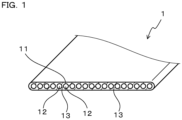
- FIG. 1 is an oblique view of an extruded, multi-hole pipe according to Working Example 1.
- an ingot having the above-mentioned specific chemical composition is prepared.
- the ingot contains one or two or more elements selected from the group consisting of Si, Fe, Cu, Mn, Mg, Cr, Zn, Ti, and B.
- These elements include casting materials such as aluminum metals, aluminum scrap material, intermediate alloys, and the like.
- the elements described above may be derived principally from the aluminum scrap material.
- the Si content becomes excessively high, there is a risk that it will lead to an increase in the deformation resistance of the ingot during hot extrusion, thereby decreasing extrudability.
- the Si content 2.00 mass% or less, preferably 1.50 mass% or less, more preferably 1.40 mass% or less, and yet more preferably 1.30 mass% or less, the strength of the extruded, multi-hole pipe can be increased while curtailing an increase in the deformation resistance of the ingot during hot extrusion.
- the chemical composition when preparing an ingot, in the situation in which the total amount of Mn contained in the aluminum metal and the aluminum scrap material is less than or equal to the total amount of Si, the chemical composition can be adjusted by a method such as adding an intermediate alloy that contains Mn.
- the ingot may contain greater than 0 mass% and 0.60 mass% or less of Cu.
- Cu is an element that is contained in aluminum metals, aluminum scrap material, and the like.
- aluminum scrap material sometimes contains components composed of aluminum alloys (e.g., 2000-series alloys) that contain a large amount of Cu; in the situation in which such an aluminum scrap material is used as the casting material, the Cu content in the ingot tends to become high.
- Cu acts to increase the natural electric potential of the extruded, multi-hole pipe, thereby increasing the corrosion resistance of the extruded, multi-hole pipe.
- the Ti content becomes excessively high, coarse AlTi-series intermetallic compounds tend to be formed in the ingot.
- coarse AlTi-series intermetallic compounds exist in the ingot, there is a risk that cracks will tend to form during hot extrusion or during secondary processing after hot extrusion, which is not preferable.
- the Ti content By making the Ti content to be 0.10 mass% or less, the crystal grains in the metallographic structure of the ingot can be made sufficiently fine while avoiding the formation of coarse AlTi-series intermetallic compounds.
- aluminum scrap material As at least a portion of the casting material.
- end materials and chips produced in manufacturing processes of aluminum products, used aluminum products, aluminum products that have been separated from used products, and the like are included in aluminum scrap material.
- the extruded, multi-hole pipe obtained in this manner may be used as is or may be used after the performance of a postprocess, such as: straightening work for adjusting dimensions, shape, or the like; cutting; a heat treatment to adjust strength; zinc spraying to increase corrosion resistance; coating; or the like.
- a postprocess such as: straightening work for adjusting dimensions, shape, or the like; cutting; a heat treatment to adjust strength; zinc spraying to increase corrosion resistance; coating; or the like.
- the extruded, multi-hole pipe 1 has an outer-wall portion 11, which partitions the exterior space and the interior thereof, and partition portions 13, which partition the space surrounded by the outer-wall portion 11 into nineteen passageways 12.
- Each of the passageways 12 of the extruded, multi-hole pipe 1 in the present example has a circular, cross-sectional shape.
- the thickness of the thinnest portion of the outer-wall portion 11 and the partition portions 13 is, for example, 0.4 mm.
- Test Material R3 because the Mn content was excessively high, extrudability was poor compared with Test Materials S1-S3, and streak patterns occurred on the surface of the test material.
Landscapes
- Chemical & Material Sciences (AREA)
- Engineering & Computer Science (AREA)
- Mechanical Engineering (AREA)
- Metallurgy (AREA)
- Organic Chemistry (AREA)
- Materials Engineering (AREA)
- Physics & Mathematics (AREA)
- Thermal Sciences (AREA)
- Crystallography & Structural Chemistry (AREA)
- General Engineering & Computer Science (AREA)
- Geometry (AREA)
- Extrusion Of Metal (AREA)
- Heat-Exchange Devices With Radiators And Conduit Assemblies (AREA)
Abstract
Description
- The present invention relates to an extruded, multi-hole-pipe manufacturing method.
- An extruded, multi-hole pipe comprises: an outer-wall portion, which constitutes an outer-perimeter portion thereof; and partition portions, which partition spaces surrounded by the outer-wall portion; and is formed such that a fluid can be caused to flow through passageways surrounded by the outer-wall portion and the partition portions. To form a complex, cross-sectional shape having such a fine structure by extrusion, extruded, multi-hole pipes are often constituted from an aluminum alloy having a relatively low alloying-element content and exceling in extrudability.
- For example, in
Patent Document 1, a heat-exchanger, extruded, flat, multi-hole pipe excelling in corrosion resistance is described that is composed of an aluminum alloy that contains, by mass%, Si: 0.01%-0.3%, Fe: 0.01%-0.3%, Cu: 0.05%-0.4%, Mn: 0.05%-0.3%, Zr: 0.05%-0.25%, and Ti: 0%-0.15% and in which the total of Zr and Ti is 0.3% or less, the remainder being composed of Al and unavoidable impurities, wherein, of the particles having a particle surface area of 1.0 µm2 or more that are dispersed in the matrix, the surface-area ratio occupied by an AlFeSi stable phase is 0.1% or more and less than 0.5%. -
Patent Document 1
Japanese Laid-open Patent Publication 2009-46702 - In recent years, owing to the increase in environmental awareness, the importance of techniques to reuse aluminum scrap material as casting material has been increasing. However, aluminum scrap material contains various elements other than aluminum. In addition, depending on the situation, aluminum scrap material sometimes also contains metal materials other than aluminum, such as iron. Consequently, in situations in which aluminum scrap material is to be reused as a casting material, the content of elements other than aluminum will increase, thereby leading to the occurrence of various problems, such as an increase in deformation resistance during hot extrusion, a decrease in extrusion speed, and the like. For this reason, according to the existing state of the art, in situations in which aluminum scrap material is used as a casting material, it is considered difficult to manufacture an extruded, multi-hole pipe having a complex, cross-sectional shape.
- The present invention was conceived considering this background, and an object of the present invention is to provide an extruded, multi-hole-pipe manufacturing method in which hot extrusion can be performed easily even in the situation in which the content of elements other than aluminum is relatively high.
- One aspect of the present invention is an extruded, multi-hole-pipe manufacturing method, comprising:
- preparing an ingot having a chemical composition that contains one or two or more elements selected from the group consisting of Si (silicon): 2.00 mass% or less, Fe (iron): 0.60 mass% or less, Cu (copper): 0.60 mass% or less, Mn (manganese): 2.00 mass% or less, Mg (magnesium): 0.40 mass% or less, Cr (chromium): 0.10 mass% or less, Zn (zinc): 1.50 mass% or less, Ti (titanium): 0.10 mass% or less, and B (boron): 0.10 mass% or less, the remainder being composed of Al (aluminum) and unavoidable impurities, wherein the total of the Si content and the Mn content is 3.20 mass% or less, and the Si content is less than the Mn content;
- performing a first homogenizing process by holding the ingot at a temperature of 550°C or higher and 650°C or lower for 2 h or more;
- subsequently performing a second homogenizing process by holding the ingot at a temperature of 450°C or higher and 540°C or lower for 3 h or more; and
- subsequently preparing an extruded, multi-hole pipe by performing hot extrusion on the ingot.
- In the above-mentioned extruded, multi-hole-pipe manufacturing method, the first homogenizing process and the second homogenizing process are performed on an ingot having a chemical composition within the above-mentioned specific ranges. Thus, by performing the homogenizing process in two stages and by setting the hold temperature and hold time of the homogenizing process in each stage to within the above-mentioned specific ranges, respectively, an increase in deformation resistance during hot extrusion can be curtailed even in the situation in which the content of elements other than aluminum is relatively high.
- According to the above-mentioned aspect as described above, it is possible to provide an extruded, multi-hole-pipe manufacturing method in which hot extrusion can be performed easily even in the situation in which the content of elements other than aluminum is relatively high.
-
FIG. 1 is an oblique view of an extruded, multi-hole pipe according to Working Example 1. - In the above-mentioned extruded, multi-hole-pipe manufacturing method, first, an ingot having the above-mentioned specific chemical composition is prepared. The ingot contains one or two or more elements selected from the group consisting of Si, Fe, Cu, Mn, Mg, Cr, Zn, Ti, and B. These elements include casting materials such as aluminum metals, aluminum scrap material, intermediate alloys, and the like. In the situation in which aluminum scrap material is to be used as the casting material, the elements described above may be derived principally from the aluminum scrap material.
- The ingot may contain greater than 0 mass% and 2.00 mass% or less of Si. Si is an element that is contained in: aluminum metals; Si-containing aluminum alloys (e.g., 4000-series alloy and 6000-series alloy) in aluminum scrap material; intermediate alloys; and the like. Si acts to increase the strength of the extruded, multi-hole pipe. From the viewpoint of further increasing the strength of the extruded, multi-hole pipe, the Si content preferably is 0.20 mass% or more, more preferably is 0.40 mass% or more, yet more preferably is 0.60 mass% or more, particularly preferably is 0.70 mass% or more, and most preferably is 0.80 mass% or more.
- On the other hand, if the Si content becomes excessively high, there is a risk that it will lead to an increase in the deformation resistance of the ingot during hot extrusion, thereby decreasing extrudability. By making the Si content 2.00 mass% or less, preferably 1.50 mass% or less, more preferably 1.40 mass% or less, and yet more preferably 1.30 mass% or less, the strength of the extruded, multi-hole pipe can be increased while curtailing an increase in the deformation resistance of the ingot during hot extrusion.
- The ingot may contain greater than 0 mass% and 2.00 mass% or less of Mn. Mn is an element that is contained in: aluminum metals; Mn-containing aluminum alloys (e.g., 3000-series alloy) in aluminum scrap material; intermediate alloys; and the like. Mn acts to increase the strength of the extruded, multi-hole pipe. From the viewpoint of further increasing the strength of the extruded, multi-hole pipe, the Mn content preferably is 0.40 mass% or more, more preferably is 0.60 mass% or more, yet more preferably is 0.80 mass% or more, particularly preferably is 0.9 mass% or more, and most preferably is 1.00 mass% or more.
- On the other hand, if the Mn content becomes excessively high, there is a risk that it will lead to an increase in the deformation resistance of the ingot during hot extrusion, thereby decreasing extrudability. By making the Mn content 2.00 mass% or less, preferably 1.8 mass% or less, and more preferably 1.70 mass% or less, the strength of the extruded, multi-hole pipe can be increased while curtailing an increase in the deformation resistance of the ingot during hot extrusion.
- In addition, the total of the Si content and the Mn content in the ingot is 3.20 mass% or less, and the Si content is lower than the Mn content. By adding Si and Mn within the above-mentioned specific ranges to the chemical composition of the above-mentioned ingot so as to satisfy the above-described relationship between the Si content and the Mn content, it becomes possible to easily prepare an extruded, multi-hole pipe having a complex, cross-sectional shape while more effectively curtailing an increase in the deformation resistance of the ingot during hot extrusion. From the viewpoint of further enhancing the action described above, the total of the Si content and the Mn content preferably is 3.00 mass% or less.
- In the situation in which the total of the Si content and the Mn content is greater than 3.20 mass%, there is a risk that it will lead to a decrease in extrudability during hot extrusion. In addition, in the situation in which the Si content is greater than or equal to the Mn content, there is a risk that it will become difficult to precipitate fine Al-Mn-Si-series intermetallic compounds in the ingot, which will lead to degradation in extrudability. In addition, in this situation, there is a risk that the extrusion limit speed will tend to decrease, which will lead to a decrease in manufacturing productivity of the extruded, multi-hole pipe. It is noted that, when preparing an ingot, in the situation in which the total amount of Mn contained in the aluminum metal and the aluminum scrap material is less than or equal to the total amount of Si, the chemical composition can be adjusted by a method such as adding an intermediate alloy that contains Mn.
- The ingot may include greater than 0 mass% and 0.60 mass% or less of Fe. Fe is an element that is contained in aluminum metals, aluminum scrap material, and the like. In particular, aluminum scrap material contains components composed of Fe-based metals, and, in situations in which such an aluminum scrap material is used as the casting material, the Fe content in the ingot tends to become high. By making the Fe content preferably to be 0.10 mass% or more, more preferably to be 0.15 mass% or more, yet more preferably to be 0.20 mass% or more, and particularly preferably to be 0.25 mass% or more, it is possible to make the proportion of the aluminum scrap material in the casting material even higher.
- On the other hand, if the Fe content becomes excessively high, coarse AlFe-series intermetallic compounds tend to be formed in the ingot. There is a risk that coarse AlFe-series intermetallic compounds in the ingot will lead to degradation in the surface properties of the extruded, multi-hole pipe, such as an increase in surface roughness, which is not preferable. By making the Fe content to be 0.60 mass% or less and preferably to be 0.50 mass% or less, degradation in surface properties can be avoided.
- The ingot may contain greater than 0 mass% and 0.60 mass% or less of Cu. Cu is an element that is contained in aluminum metals, aluminum scrap material, and the like. In particular, aluminum scrap material sometimes contains components composed of aluminum alloys (e.g., 2000-series alloys) that contain a large amount of Cu; in the situation in which such an aluminum scrap material is used as the casting material, the Cu content in the ingot tends to become high. Cu acts to increase the natural electric potential of the extruded, multi-hole pipe, thereby increasing the corrosion resistance of the extruded, multi-hole pipe. From the viewpoint of further increasing the corrosion resistance of the extruded, multi-hole pipe, the Cu content preferably is 0.05 mass% or more, more preferably is 0.10 mass% or more, yet more preferably is 0.15 mass% or more, and particularly preferably is 0.20 mass% or more. In addition, in this situation, the proportion of the aluminum scrap material in the casting material can be easily made even higher.
- On the other hand, when the Cu content becomes excessively high, the amount of the Cu that has formed a solid solution in the ingot becomes larger, and there is a risk that this will lead to an increase in the deformation resistance of the ingot during hot extrusion and thereby a decrease in extrudability. By making the Cu content to be 0.60 mass% or less and preferably to be 0.40 mass% or less, the corrosion resistance of the extruded, multi-hole pipe can be increased while curtailing an increase in the deformation resistance of the ingot during hot extrusion.
- The ingot may contain greater than 0 mass% and 0.40 mass% or less of Mg. Mg is an element that is contained in aluminum metals, aluminum scrap material, and the like. In particular, aluminum scrap material sometimes contains components composed of aluminum alloys (e.g., 5000-series alloys and 6000-series alloys) that contain a large amount of Mg; in the situation in which such an aluminum scrap material is used as the casting material, the Mg content in the ingot tends to become high. Mg acts to increase the strength of the extruded, multi-hole pipe. From the viewpoint of further increasing the strength of the extruded, multi-hole pipe, the Mg content preferably is 0.03 mass% or more, more preferably is 0.05 mass% or more, and yet more preferably is 0.07 mass% or more. In addition, in this situation, the proportion of the aluminum scrap material in the casting material can be easily made even higher.
- On the other hand, when the Mg content becomes excessively high, the amount of Mg that has formed a solid solution in the ingot becomes large, and there is a risk that this will lead to an increase in the deformation resistance of the ingot during hot extrusion and thereby a decrease in extrudability. By making the Mg content to be 0.40 mass% or less and preferably to be 0.30 mass% or less, an increase in the deformation resistance of the ingot during hot extrusion can be curtailed.
- The ingot may contain greater than 0 mass% and 0.10 mass% or less of Cr. Cr is an element that is contained in aluminum metals, aluminum scrap material, and the like. In particular, aluminum scrap material sometimes contains components composed of aluminum alloys (e.g., 5000-series alloys, 7000-series alloys, and the like) that contain a large amount of Cr; in the situation in which such an aluminum scrap material is used as the casting material, the Cr content in the ingot tends to become high. By making the Cr content preferably to be 0.01 mass% or more, more preferably to be 0.02 mass% or more, and yet more preferably to be 0.03 mass% or more, the proportion of the aluminum scrap material in the casting material can be easily made even higher.
- On the other hand, when the Cr content becomes excessively high, coarse AlCr-series intermetallic compounds tend to form in the ingot. When coarse AlCr-series intermetallic compounds exist in the ingot, there is a risk that cracks will tend to form during hot extrusion or during secondary processing after hot extrusion, which is not preferable. By making the Cr content to be 0.10 mass% or less, the formation of coarse AlCr-series intermetallic compounds can be avoided.
- The above-mentioned ingot may contain greater than 0 mass% and 1.50 mass% or less of Zn. Zn is an element that is contained in aluminum metals, aluminum scrap material, and the like. In particular, aluminum scrap material sometimes contains components composed of aluminum alloys (e.g., 7000-series alloys, and the like) that contain a large amount of Zn; in the situation in which such an aluminum scrap material is used as the casting material, the Zn content in the ingot tends to become high. Zn acts to increase corrosion resistance by making the surface oxide film on the extruded, multi-hole pipe brittle and by distributing the occurrences of pitting corrosion. From the viewpoint of further enhancing such functions and effects, the Zn content preferably is 0.05 mass% or more, more preferably is 0.10 mass% or more, and yet more preferably is 0.15 mass% or more. In addition, in this situation, the proportion of the aluminum scrap material in the casting material can be easily made even higher.
- On the other hand, when the Zn content becomes excessively high, the solidus temperature of the aluminum alloy decreases, and consequently there is a risk that partial melting of the ingot or the extruded, multi-hole pipe will tend to occur during the homogenizing process or during hot extrusion. By making the Zn content to be 1.50 mass% or less and preferably to be 1.00 mass% or less, the functions and effects due to Zn can be obtained while avoiding partial melting of the ingot or the extruded, multi-hole pipe.
- The above-mentioned ingot may contain greater than 0 mass% and 0.10 mass% or less of Ti. Ti acts to increase the fineness of the crystal grains in the metallographic structure of the ingot. From the viewpoint of further enhancing such an effect, the Ti content preferably is 0.005 mass% or more, more preferably is 0.007 mass% or more, and yet more preferably is 0.010 mass% or more.
- On the other hand, when the Ti content becomes excessively high, coarse AlTi-series intermetallic compounds tend to be formed in the ingot. When coarse AlTi-series intermetallic compounds exist in the ingot, there is a risk that cracks will tend to form during hot extrusion or during secondary processing after hot extrusion, which is not preferable. By making the Ti content to be 0.10 mass% or less, the crystal grains in the metallographic structure of the ingot can be made sufficiently fine while avoiding the formation of coarse AlTi-series intermetallic compounds.
- The above-mentioned ingot may contain greater than 0 mass% and 0.10 mass% or less of B. By making the B content in the extruded, multi-hole pipe to be within the above-mentioned specific range, the crystal grains in the metallographic structure of the extruded, multi-hole pipe can be made sufficiently fine. From the viewpoint of more reliably obtaining such functions and effects, the B content in the ingot preferably is 0.005 mass% or more and 0.10 mass% or less.
- The ingot may contain, as unavoidable impurities, elements other than the elements described above. For example, Zr (zirconium), V (vanadium), etc. can be given as examples of such elements. The content of the elements existing as unavoidable impurities should be, for example, 0.05 mass% or less for each element. In addition, the total content of the elements existing as unavoidable impurities should be 0.50 mass% or less.
- From the viewpoint of more reliably obtaining the effect of increasing extrudability described above, the ingot preferably has a chemical composition that contains Si: 0.60 mass% or more and 1.40 mass% or less and Mn: 0.80 mass% or more and 1.80 mass% or less, the remainder being composed of Al and unavoidable impurities, wherein the total of the Si content and the Mn content is 3.20 mass% or less, and the Si content is less than the Mn content. In this situation, the ingot may further contain, as optional components, one or two or more elements selected from the group consisting of Fe: 0.10 mass% or more and 0.50 mass% or less, Cu: 0.05 mass% or more and 0.40 mass% or less, Mg: 0.05 mass% or more and 0.30 mass% or less, Cr: 0.01 mass% or more and 0.10 mass% or less, Zn: 0.10 mass% or more and 1.00 mass% or less, Ti: 0.005 mass% or more and 0.10 mass% or less, and B: 0.005 mass% or more and 0.10 mass% or less.
- From the same viewpoint, the ingot preferably has a chemical composition that essentially contains Si: 0.70 mass% or more and 1.30 mass% or less, Fe: 0.10 mass% or more and 0.50 mass% or less, Cu: 0.05 mass% or more and 0.40 mass% or less, Mn: 0.90 mass% or more and 1.70 mass% or less, Mg: 0.05 mass% or more and 0.30 mass% or less, Cr: 0.01 mass% or more and 0.10 mass% or less, Zn: 0.10 mass% or more and 1.00 mass% or less, Ti: 0.005 mass% or more and 0.10 mass% or less, and B: 0.005 mass% or more and 0.10 mass% or less, the remainder being composed of Al and unavoidable impurities, wherein the total of the Si content and the Mn content is 3.00 mass% or less, and the Si content is less than the Mn content.
- In the preparation of the ingot, a well-known casting method, such as DC casting or CC casting, can be used. For example, aluminum virgin metal, aluminum scrap material, or the like can be used as the casting material when preparing the ingot.
- In the above-mentioned extruded, multi-hole-pipe manufacturing method, it is preferable to use aluminum scrap material as at least a portion of the casting material. Here, end materials and chips produced in manufacturing processes of aluminum products, used aluminum products, aluminum products that have been separated from used products, and the like are included in aluminum scrap material.
- As described above, in the situation in which aluminum scrap material is reused as the casting material, the content of elements other than aluminum becomes high, which leads to the occurrence of various problems such as an increase in deformation resistance during hot extrusion and a decrease in extrusion speed. For this reason, in the existing state of the art, in the situation in which aluminum scrap material is used as the casting material, it is considered difficult to manufacture an extruded, multi-hole pipe having a complex, cross-sectional shape.
- In contrast, in the above-mentioned extruded, multi-hole-pipe manufacturing method, the chemical composition of the ingot is made to be within the above-mentioned specific ranges, and moreover by performing the homogenizing process in two stages as described below, an increase in deformation resistance during hot extrusion can be curtailed even in the situation in which the content of elements other than aluminum is relatively high. For this reason, according to the method of manufacturing in the above-mentioned aspect, even in the situation in which aluminum scrap material is used as at least a portion of the casting material and the content of elements other than aluminum is relatively high, an extruded, multi-hole pipe having a complex, cross-sectional shape can be manufactured easily.
- Furthermore, by using aluminum scrap material as at least a portion of the casting material, the amount of aluminum virgin metal used can be reduced. As a result, the environmental load can be further reduced in manufacturing processes of extruded, multi-hole pipes, and the cost of materials of the extruded, multi-hole pipe can be further lowered. From the viewpoint of further enhancing such effects, the proportion of the aluminum scrap material in the casting material preferably is made to be 35 mass% or more, more preferably is made to be 45 mass% or more, and particularly preferably is made to be 60 mass% or more.
- In the above-mentioned extruded, multi-hole-pipe manufacturing method, after the ingot has been prepared, a first homogenizing process is performed by holding the ingot at a temperature of 550°C or higher and 650°C or lower for 2 h or more. By setting the hold temperature and the hold time in the first homogenizing process respectively to the above-mentioned specific ranges, coarse crystallized products in the ingot can disintegrate, granulate, and thereby once again form a solid solution in the Al parent phase.
- From the viewpoint of further promoting the disintegration and the like of crystallized products in the ingot, it is preferable that the hold temperature in the first homogenizing process is 580°C or higher and 620°C or lower. From the same viewpoint, it is preferable that the hold time in the first homogenizing process is 10 h or more. In addition, the hold time in the first homogenizing process preferably is 24 h or less from the viewpoint of productivity.
- In the situation in which the hold temperature in the first homogenizing process is lower than 550°C or in the situation in which the hold time is less than 2 h, there is a risk that the disintegration and the like of the crystallized products will become insufficient. In the situation in which the hold temperature in the first homogenizing process is higher than 650°C, there is a risk that the ingot will partially melt.
- In the above-mentioned extruded, multi-hole-pipe manufacturing method, a second homogenizing process is performed on the ingot after the first homogenizing process has been performed. The hold temperature in the second homogenizing process is 450°C or higher and 540°C or lower, and the hold time is 3 h or more. As described above, the first homogenizing process is performed for the principal purpose of disintegrating, granulating, and once again forming a solid solution of the coarse crystallized products that crystallized in the ingot during casting. However, in the situation in which the hold temperature and the hold time in the first homogenizing process have been set to within the above-mentioned specific ranges, the disintegration and granulation of the crystallized products and the re-forming of a solid solution are promoted, and the formation of a solid solution of Mn and Si, which are solute elements, in the Al parent phase is also promoted. When the solid solution amounts of solute elements in the Al parent phase becomes excessively large, it leads to a decrease in the speed with which dislocations move in the parent phase during hot extrusion, and thereby deformation resistance tends to increase.
- In contrast, in the second homogenizing process, when the ingot is heated under the above-mentioned specific conditions, the Si and Mn that have formed a solid solution in the Al parent phase in the first homogenizing process can be caused to finely precipitate as Al-Mn-Si-series intermetallic compounds. As a result, the solid solution amounts of solute elements in the Al parent phase can be reduced, and thereby deformation resistance during hot extrusion can be decreased. Accordingly, by performing the second homogenizing process by heating the ingot, under the above-mentioned specific conditions, after the first homogenizing process has been performed, extrudability during hot extrusion can be increased.
- From the viewpoint of further enhancing the effect of increasing extrudability, the hold temperature in the second homogenizing process preferably is 480°C or higher and 520°C or lower. From the same viewpoint, the hold time in the second homogenizing process preferably is 5 h or more. In addition, the hold time in the second homogenizing process preferably is 24 h or less from the viewpoint of productivity, and more preferably is 15 h or less.
- In the situation in which the hold temperature in the second homogenizing process is lower than 450°C, or in the situation in which the hold time is less than 3 h, there is a risk that the precipitated amount of the Al-Mn-Si-series intermetallic compounds will tend to become small, which will lead to degradation in extrudability during hot extrusion. In the situation in which the hold temperature in the second homogenizing process is higher than 540°C, there is a risk that it will become difficult for the Si and Mn that have formed a solid solution in the Al parent phase to form intermetallic compounds, which will lead to degradation in extrudability during hot extrusion.
- In the above-mentioned manufacturing method, the first homogenizing process and the second homogenizing process can be performed in series. Here, performing the first homogenizing process and the second homogenizing process in series means that, after the first homogenizing process has completed, the temperature of the ingot is lowered until the hold temperature of the second homogenizing process, and the second homogenizing process is started at the point in time at which the temperature of the ingot has reached the hold temperature of the second homogenizing process.
- In the situation in which the first homogenizing process and the second homogenizing process are performed in series, after the first homogenizing process has been completed, it is preferable that the above-mentioned ingot is cooled at an average cooling rate of 20°C/h or more and 60°C/h or less until the hold temperature of the above-mentioned second homogenizing process.
- In addition, in the above-mentioned manufacturing method, after the first homogenizing process has been completed, it is also possible to first cool the ingot to a temperature that is lower than the hold temperature of the second homogenizing process and subsequently to perform the second homogenizing process. In this situation, the temperature of the ingot when cooling has completed can be set to, for example, 200°C or lower. When heating the ingot, after completion of the cooling, to the hold temperature of the second homogenizing process, it is preferable to heat the ingot at an average temperature-rise rate of 20°C/h or more and 60°C/h or less to the hold temperature of the second homogenizing process.
- In the above-mentioned extruded, multi-hole-pipe manufacturing method, by performing hot extrusion on the ingot after the second homogenizing process has been performed, the extruded, multi-hole pipe can be obtained. During hot extrusion, the temperature of the ingot at the start of extrusion, the temperature of the extruded, multi-hole pipe at the completion of extrusion, and the like should be set as appropriate in accordance with the chemical composition of the extruded, multi-hole pipe. For example, the temperature of the ingot at the start of extrusion can be set as appropriate to within the range of 450°C or higher and 550°C or lower. The extruded, multi-hole pipe obtained in this manner may be used as is or may be used after the performance of a postprocess, such as: straightening work for adjusting dimensions, shape, or the like; cutting; a heat treatment to adjust strength; zinc spraying to increase corrosion resistance; coating; or the like. These postprocesses can be combined as appropriate in accordance with the application or the like of the extruded, multi-hole pipe.
- The extruded, multi-hole pipe obtained by the above-mentioned manufacturing method has: an outer-wall portion, which partitions the exterior space and the interior of the above-mentioned extruded, multi-hole pipe; and a plurality of partition portions, which partitions the interior space of the above-mentioned outer-wall portion. In addition, the extruded, multi-hole pipe has a plurality of passageways that are surrounded by the outer-wall portion and the partition portions and are configured such that a liquid, a gas, or the like can be caused to circulate through these passageways. The cross-sectional shape of the extruded, multi-hole pipe is not particularly limited and, for example, can take on a variety of cross-sectional shapes such as an elliptical shape, an oblong shape, and the like. In addition, the cross-sectional shape of the passageways of the extruded, multi-hole pipe are likewise not particularly limited and, for example, can take on a variety of cross-sectional shapes such as a circular shape, a triangular shape, a quadrangular shape, and the like.
- The extruded, multi-hole pipe may have a flat, cross-sectional shape. In this situation, the width-to-thickness ratio of the extruded, multi-hole pipe can be made to be 2 or more and 50 or less and preferably to be 3 or more and 30 or less. Generally, in the situation in which the extruded, multi-hole pipe has a flat shape, the higher the width-to-thickness ratio, the more difficult that extrusion becomes, and the greater the extrudability that is required. In the process of manufacturing the above-mentioned extruded, multi-hole pipe, by performing the homogenizing process in two stages on the aluminum-alloy ingot having the above-mentioned specific chemical composition, an increase in deformation resistance during hot extrusion can be curtailed, and thereby extrudability can be increased. For this reason, an extruded, multi-hole pipe having a cross-sectional shape requiring such great extrudability can be obtained easily.
- In addition, the extruded, multi-hole pipe may have an outer-wall portion, which partitions the exterior space and the interior of the above-mentioned extruded, multi-hole pipe, and a plurality of partition portions, which partitions the interior space of the above-mentioned outer-wall portion, wherein the thickness of the above-mentioned outer-wall portion and the above-mentioned partition portions may be 0.10 mm or more and 2.0 mm or less and preferably may be 0.15 mm or more and 1.5 mm or less. In the extruded, multi-hole pipe, the same as in the width-to-thickness ratio described above, the thinner the thickness of the outer-wall portion and the partition portions, the more difficult that extrusion becomes, and the greater the extrudability that is required. In the process of manufacturing the above-mentioned extruded, multi-hole pipe, by performing the homogenizing process in two stages on the aluminum-alloy ingot having the above-mentioned specific chemical composition, an increase in deformation resistance during hot extrusion can be curtailed, and thereby extrudability can be increased. For this reason, an extruded, multi-hole pipe having a cross-sectional shape requiring such great extrudability can be obtained easily.
- A working example of the extruded, multi-hole-pipe manufacturing method is explained below. In the multi-hole-pipe manufacturing method an ingot is prepared having a chemical composition that contains one or two or more elements selected from the group consisting of Si: 2.00 mass% or less, Fe: 0.60 mass% or less, Cu: 0.60 mass% or less, Mn: 2.00 mass% or less, Mg: 0.40 mass% or less, Cr: 0.10 mass% or less, Zn: 1.50 mass% or less, Ti: 0.10 mass% or less, and B: 0.10 mass% or less, the remainder being composed of Al and unavoidable impurities, wherein the total of the Si content and the Mn content is 3.20 mass% or less, and the Si content is less than the Mn content. Subsequently, a first homogenizing process is performed by holding the ingot at a temperature of 550°C or higher and 650°C or lower for 2 h or more. After the first homogenizing process has completed, a second homogenizing process is performed by holding the ingot at a temperature of 450°C or higher and 540°C or lower for 3 h or more. Furthermore, after the second homogenizing process has completed, the extruded, multi-hole pipe is prepared by performing hot extrusion on the ingot.
- As shown in
FIG. 1 , an extruded,multi-hole pipe 1 according to the present example has a flat, cross-sectional shape. More specifically, the extruded,multi-hole pipe 1 has an elliptical, cross-sectional shape. The width of the extruded,multi-hole pipe 1 is, for example, 14.0 mm, and the thickness is, for example, 2.5 mm. - In addition, the extruded,
multi-hole pipe 1 has an outer-wall portion 11, which partitions the exterior space and the interior thereof, andpartition portions 13, which partition the space surrounded by the outer-wall portion 11 into nineteenpassageways 12. Each of thepassageways 12 of the extruded,multi-hole pipe 1 in the present example has a circular, cross-sectional shape. The thickness of the thinnest portion of the outer-wall portion 11 and thepartition portions 13 is, for example, 0.4 mm. - Examples of the extruded, multi-hole-pipe manufacturing method according to the present example are explained more specifically below. First, casting materials containing aluminum scrap material were used to prepare, by DC casting, ingots having the chemical compositions (alloy symbols A1-A3) listed in Table 1. It is noted that "Bal." in Table 1 is a notation indicating that that element is the remainder.
- After the ingots had been prepared, a first homogenizing process was performed by holding the ingots at a temperature of 600°C for 10 h. After the first homogenizing process completed, a second homogenizing process was performed by holding the ingots at a temperature of 500°C for 10 h. The first homogenizing process and the second homogenizing process may be performed in series; or, in the interval from when the first homogenizing process has completed until the second homogenizing process is performed, the temperature of the ingots may be lowered below the hold temperature of the second homogenizing process.
- After the second homogenizing process had completed, the extruded,
multi-hole pipes 1 were prepared by performing hot extrusion on the ingots in the state in which the temperature of the ingots was 500°C. Based on the above, Test Materials S1-S3 listed in Table 2 could be obtained. It is noted that Test Materials R1-R4 listed in Table 2 were test materials for comparison with Test Materials S1-S3. The method of preparing Test Materials R1-R3 was the same as that for Test Materials S1-S3, other than that the chemical compositions of the ingots were changed to Alloy Symbols A4-A6 listed in Table 1. In addition, the method of preparing Test Material R4 was the same as for Test Materials S1-S3, other than that the chemical composition of the ingot was changed to Alloy Symbol A7 listed in Table 1, and that the second homogenizing process was omitted. - The method of evaluating the extrudability of each test material is explained below.
- It was possible to evaluate extrudability based on the external appearance of each test material. More specifically, the external appearance of each test material was observed visually, and the presence/absence of cracks, streak patterns along the extrusion direction, and the like was evaluated. The presence/absence of cracks and streak patterns at the end portion of each test material is listed in Table 2.
Table 1 Alloy Symbol Chemical Composition (mass%) Si + Mn (mass %) Relative Amount Si Fe Mn Mg Cr Zn Ti Al A1 0.98 0.29 1.49 0.10 0.05 0.23 0.05 Bal. 2.47 Si < Mn A2 1.45 0.29 1.58 0.10 0.05 0.24 0.05 Bal. 3.03 Si < Mn A3 1.09 0.30 1.91 0.10 0.05 0.22 0.05 Bal. 3.00 Si < Mn A4 1.31 0.30 0.99 0.10 0.05 0.26 0.05 Bal. 2.30 Si > Mn A5 1.53 0.30 1.70 0.10 0.05 0.23 0.05 Bal. 3.23 Si < Mn A6 0.99 0.29 2.12 0.09 0.05 0.21 0.05 Bal. 3.11 Si < Mn A7 0.98 0.29 1.49 0.10 0.05 0.23 0.05 Bal. 2.47 Si < Mn Table 2 Test Material Symbol Alloy Symbol Second Homogenizing Process Extrudability Cracks in End Portion Streak Pattern S1 Al Performed None None S2 A2 Performed None None S3 A3 Performed None None R1 A4 Performed None Present R2 A5 Performed Present Present R3 A6 Performed None Present R4 A7 Not performed None Present - As shown in Table 1 and Table 2, in the process of manufacturing Test Materials S1-S3, because the first homogenizing process and the second homogenizing process were performed, under the above-mentioned specific conditions, on the ingots having the above-mentioned specific chemical compositions, it was possible to decrease the deformation resistance of each ingot during hot extrusion. For this reason, each of the Test Materials S1-S3 had a satisfactory external appearance.
- On the other hand, with regard to Test Material R1, because the Si content was greater than or equal to the Mn content, extrudability was poor compared with Test Materials S 1-S3, and streak patterns occurred on the surface of the test material.
- With regard to Test Material R2, because the total of the Si content and the Mn content was excessively large, extrudability was poor compared with Test Materials S1-S3, cracks occurred at the end portion of the test material in the width direction, and streak patterns occurred on the surface of the test material.
- With regard to Test Material R3, because the Mn content was excessively high, extrudability was poor compared with Test Materials S1-S3, and streak patterns occurred on the surface of the test material.
- With regard to Test Material R4, because the second homogenizing process was not performed in that manufacturing process, extrudability was poor compared with Test Materials S1-S3, and streak patterns occurred on the surface of the test material.
- Specific aspects of the extruded, multi-hole-pipe manufacturing method according to the present invention were explained above based on the working examples, but the specific aspects of the extruded, multi-hole-pipe manufacturing method according to the present invention are not limited to the aspects of the working examples, and the composition can be modified as appropriate within a range that does not depart from the gist of the present invention.
Claims (6)
- An extruded, multi-hole-pipe manufacturing method, comprising:preparing an ingot having a chemical composition that contains one or two or more elements selected from the group consisting of Si: 2.00 mass% or less, Fe: 0.60 mass% or less, Cu: 0.60 mass% or less, Mn: 2.00 mass% or less, Mg: 0.40 mass% or less, Cr: 0.10 mass% or less, Zn: 1.50 mass% or less, Ti: 0.10 mass% or less, and B: 0.10 mass% or less, the remainder being composed of Al and unavoidable impurities, wherein the total of the Si content and the Mn content is 3.20 mass% or less, and the Si content is less than the Mn content;performing a first homogenizing process by holding the ingot at a temperature of 550°C or higher and 650°C or lower for 2 h or more;subsequently performing a second homogenizing process by holding the ingot at a temperature of 450°C or higher and 540°C or lower for 3 h or more; andsubsequently preparing an extruded, multi-hole pipe by performing hot extrusion on the ingot.
- The extruded, multi-hole-pipe manufacturing method according to claim 1, wherein, after the first homogenizing process has completed, the ingot is cooled at an average cooling rate of 20°C/h or more and 60°C/h or less to the hold temperature of the second homogenizing process.
- The extruded, multi-hole-pipe manufacturing method according to claim 1, wherein, after the first homogenizing process has completed, the ingot is cooled to a temperature that is lower than a treatment temperature of the second homogenizing process, and subsequently the ingot is heated at an average temperature-rise rate of 20°C/h or more and 60°C/h or less to the hold temperature of the second homogenizing process.
- The extruded, multi-hole-pipe manufacturing method according to any one of claims 1-3, wherein, when preparing the ingot, an aluminum scrap material is used as at least a portion of the casting material.
- The extruded, multi-hole-pipe manufacturing method according to any one of claims 1-4, wherein the extruded, multi-hole pipe, which has a flat, cross-sectional shape and has a width-to-thickness ratio of 2 or more and 50 or less, is prepared by the hot extrusion.
- The extruded, multi-hole-pipe manufacturing method according to any one of claims 1-5, wherein the extruded, multi-hole pipe, which has an outer-wall portion that partitions an exterior space and an interior space of the extruded, multi-hole pipe and has a plurality of partition portions that partitions the outer-wall portion and the interior space and in which the thickness of the outer-wall portion and the partition portions is 0.10 mm or more and 2.0 mm or less, is prepared by the hot extrusion.
Applications Claiming Priority (2)
| Application Number | Priority Date | Filing Date | Title |
|---|---|---|---|
| JP2021171856A JP2023061741A (en) | 2021-10-20 | 2021-10-20 | Method for manufacturing extrusion multiple hole pipe |
| PCT/JP2022/038245 WO2023068166A1 (en) | 2021-10-20 | 2022-10-13 | Method for producing extruded multi-hole pipe |
Publications (3)
| Publication Number | Publication Date |
|---|---|
| EP4393613A1 true EP4393613A1 (en) | 2024-07-03 |
| EP4393613A4 EP4393613A4 (en) | 2024-12-18 |
| EP4393613B1 EP4393613B1 (en) | 2025-12-03 |
Family
ID=86059159
Family Applications (1)
| Application Number | Title | Priority Date | Filing Date |
|---|---|---|---|
| EP22883470.1A Active EP4393613B1 (en) | 2021-10-20 | 2022-10-13 | Method for producing extruded multi-hole pipe |
Country Status (5)
| Country | Link |
|---|---|
| US (1) | US20240392423A1 (en) |
| EP (1) | EP4393613B1 (en) |
| JP (1) | JP2023061741A (en) |
| CN (1) | CN117957340A (en) |
| WO (1) | WO2023068166A1 (en) |
Family Cites Families (5)
| Publication number | Priority date | Publication date | Assignee | Title |
|---|---|---|---|---|
| JPH1161312A (en) * | 1997-08-28 | 1999-03-05 | Nippon Steel Corp | Extrusion aluminum alloy and method for producing the same |
| JP4824358B2 (en) * | 2005-07-22 | 2011-11-30 | 株式会社デンソー | Aluminum alloy extruded material with excellent surface properties and method for producing the same, porous tube for heat exchanger, and method for producing heat exchanger incorporating the porous tube |
| JP2009046702A (en) | 2007-08-14 | 2009-03-05 | Mitsubishi Alum Co Ltd | Extruded flat perforated pipe for heat exchanger having excellent corrosion resistance |
| JP5670100B2 (en) * | 2010-05-25 | 2015-02-18 | 株式会社Uacj | Method for producing aluminum alloy heat exchanger |
| JP5906113B2 (en) * | 2012-03-27 | 2016-04-20 | 三菱アルミニウム株式会社 | Extruded heat transfer tube for heat exchanger, heat exchanger, and method for producing extruded heat transfer tube for heat exchanger |
-
2021
- 2021-10-20 JP JP2021171856A patent/JP2023061741A/en active Pending
-
2022
- 2022-10-13 EP EP22883470.1A patent/EP4393613B1/en active Active
- 2022-10-13 US US18/693,192 patent/US20240392423A1/en active Pending
- 2022-10-13 WO PCT/JP2022/038245 patent/WO2023068166A1/en not_active Ceased
- 2022-10-13 CN CN202280063203.8A patent/CN117957340A/en active Pending
Also Published As
| Publication number | Publication date |
|---|---|
| JP2023061741A (en) | 2023-05-02 |
| EP4393613A4 (en) | 2024-12-18 |
| WO2023068166A1 (en) | 2023-04-27 |
| US20240392423A1 (en) | 2024-11-28 |
| CN117957340A (en) | 2024-04-30 |
| EP4393613B1 (en) | 2025-12-03 |
Similar Documents
| Publication | Publication Date | Title |
|---|---|---|
| EP4083244B1 (en) | Heat-resistant powdered aluminium material | |
| EP2664687B1 (en) | Improved free-machining wrought aluminium alloy product and manufacturing process thereof | |
| CN102016089B (en) | Brass alloy powder, brass alloy extruded material and method for producing the brass alloy extruded material | |
| EP2767608B1 (en) | METHOD FOR PRODUCING ALUMINUM ALLOY IN WHICH Al-Fe-Si-BASED COMPOUND AND PRIMARY CRYSTAL Si ARE FINELY DIVIDED | |
| JPS5887244A (en) | Copper base spinodal alloy strip and manufacture | |
| JP2001220639A (en) | Aluminum casting alloy | |
| JP2004084058A (en) | Method for producing aluminum alloy forging for transport structural material and aluminum alloy forging | |
| JP2020125525A (en) | Aluminum alloy forged wheel and its production method, casting billet for producing forged wheel | |
| JP2016079419A (en) | Aluminum alloy continuous cast material and manufacturing method therefor | |
| JP2019183191A (en) | Aluminum alloy powder and manufacturing method therefor, aluminum alloy extrusion material and manufacturing method therefor | |
| JP2012067385A (en) | Brazing sheet and method for producing the same | |
| JP5777782B2 (en) | Manufacturing method of extruded aluminum alloy with excellent machinability | |
| JP2016151044A (en) | Aluminum alloy extruded material excellent in machinability and production method therefor | |
| JP5828657B2 (en) | Aluminum alloy fin material for heat exchanger | |
| JP4852754B2 (en) | Magnesium alloy for drawing, press forming plate material made of the alloy, and method for producing the same | |
| RU2382099C2 (en) | Cast section from brass for manufacturing of rings of synchroniser | |
| EP4393613B1 (en) | Method for producing extruded multi-hole pipe | |
| EP4394066A1 (en) | Extruded multi-hole tube and production method for same | |
| JP3687505B2 (en) | Aluminum alloy for casting forging and method for producing casting forging | |
| JP2020169378A (en) | Aluminum alloy for compressor slide components and compressor slide component forging | |
| KR101639590B1 (en) | Grain refiner for magnesium alloy and grain refinement method for magnesium alloy | |
| WO2019193985A1 (en) | Compressor part for transport aircraft having excellent mechanical properties at high temperature and manufacturing method thereof | |
| JP6017625B2 (en) | Aluminum alloy extruded material with excellent machinability | |
| JP2001152208A (en) | Oxide dispersion strengthened Ni-based alloy wire and method of manufacturing the same | |
| JP7654878B1 (en) | Manufacturing method of aluminum alloy material and manufacturing method of clad material |
Legal Events
| Date | Code | Title | Description |
|---|---|---|---|
| STAA | Information on the status of an ep patent application or granted ep patent |
Free format text: STATUS: THE INTERNATIONAL PUBLICATION HAS BEEN MADE |
|
| PUAI | Public reference made under article 153(3) epc to a published international application that has entered the european phase |
Free format text: ORIGINAL CODE: 0009012 |
|
| STAA | Information on the status of an ep patent application or granted ep patent |
Free format text: STATUS: REQUEST FOR EXAMINATION WAS MADE |
|
| 17P | Request for examination filed |
Effective date: 20240325 |
|
| AK | Designated contracting states |
Kind code of ref document: A1 Designated state(s): AL AT BE BG CH CY CZ DE DK EE ES FI FR GB GR HR HU IE IS IT LI LT LU LV MC ME MK MT NL NO PL PT RO RS SE SI SK SM TR |
|
| A4 | Supplementary search report drawn up and despatched |
Effective date: 20241115 |
|
| RIC1 | Information provided on ipc code assigned before grant |
Ipc: B21C 23/08 20060101ALI20241112BHEP Ipc: B21C 23/00 20060101ALI20241112BHEP Ipc: C22F 1/04 20060101ALI20241112BHEP Ipc: C22F 1/00 20060101ALI20241112BHEP Ipc: F28F 21/08 20060101ALI20241112BHEP Ipc: F28F 1/02 20060101ALI20241112BHEP Ipc: F28D 1/053 20060101ALI20241112BHEP Ipc: C22C 21/00 20060101ALI20241112BHEP Ipc: B21C 25/02 20060101AFI20241112BHEP |
|
| DAV | Request for validation of the european patent (deleted) | ||
| DAX | Request for extension of the european patent (deleted) | ||
| REG | Reference to a national code |
Ref country code: DE Ref legal event code: R079 Free format text: PREVIOUS MAIN CLASS: B21C0025020000 Ipc: B21C0023000000 Ref document number: 602022026351 Country of ref document: DE |
|
| RIC1 | Information provided on ipc code assigned before grant |
Ipc: B21C 23/00 20060101AFI20250610BHEP Ipc: B21C 23/08 20060101ALI20250610BHEP Ipc: C22C 21/00 20060101ALI20250610BHEP Ipc: C22F 1/04 20060101ALI20250610BHEP Ipc: F28F 1/02 20060101ALI20250610BHEP Ipc: F28F 21/08 20060101ALI20250610BHEP Ipc: B22D 21/00 20060101ALI20250610BHEP |
|
| GRAP | Despatch of communication of intention to grant a patent |
Free format text: ORIGINAL CODE: EPIDOSNIGR1 |
|
| STAA | Information on the status of an ep patent application or granted ep patent |
Free format text: STATUS: GRANT OF PATENT IS INTENDED |
|
| INTG | Intention to grant announced |
Effective date: 20250724 |
|
| GRAS | Grant fee paid |
Free format text: ORIGINAL CODE: EPIDOSNIGR3 |
|
| GRAA | (expected) grant |
Free format text: ORIGINAL CODE: 0009210 |
|
| STAA | Information on the status of an ep patent application or granted ep patent |
Free format text: STATUS: THE PATENT HAS BEEN GRANTED |
|
| P01 | Opt-out of the competence of the unified patent court (upc) registered |
Free format text: CASE NUMBER: UPC_APP_0010335_4393613/2025 Effective date: 20251020 |
|
| AK | Designated contracting states |
Kind code of ref document: B1 Designated state(s): AL AT BE BG CH CY CZ DE DK EE ES FI FR GB GR HR HU IE IS IT LI LT LU LV MC ME MK MT NL NO PL PT RO RS SE SI SK SM TR |
|
| REG | Reference to a national code |
Ref country code: CH Ref legal event code: F10 Free format text: ST27 STATUS EVENT CODE: U-0-0-F10-F00 (AS PROVIDED BY THE NATIONAL OFFICE) Effective date: 20251203 Ref country code: GB Ref legal event code: FG4D |
|
| REG | Reference to a national code |
Ref country code: DE Ref legal event code: R096 Ref document number: 602022026351 Country of ref document: DE |
|
| REG | Reference to a national code |
Ref country code: IE Ref legal event code: FG4D |
|
| REG | Reference to a national code |
Ref country code: NL Ref legal event code: MP Effective date: 20251203 |
|
| PG25 | Lapsed in a contracting state [announced via postgrant information from national office to epo] |
Ref country code: ES Free format text: LAPSE BECAUSE OF FAILURE TO SUBMIT A TRANSLATION OF THE DESCRIPTION OR TO PAY THE FEE WITHIN THE PRESCRIBED TIME-LIMIT Effective date: 20251203 |
|
| REG | Reference to a national code |
Ref country code: LT Ref legal event code: MG9D |
|
| PG25 | Lapsed in a contracting state [announced via postgrant information from national office to epo] |
Ref country code: NO Free format text: LAPSE BECAUSE OF FAILURE TO SUBMIT A TRANSLATION OF THE DESCRIPTION OR TO PAY THE FEE WITHIN THE PRESCRIBED TIME-LIMIT Effective date: 20260303 |
|
| PG25 | Lapsed in a contracting state [announced via postgrant information from national office to epo] |
Ref country code: FI Free format text: LAPSE BECAUSE OF FAILURE TO SUBMIT A TRANSLATION OF THE DESCRIPTION OR TO PAY THE FEE WITHIN THE PRESCRIBED TIME-LIMIT Effective date: 20251203 Ref country code: HR Free format text: LAPSE BECAUSE OF FAILURE TO SUBMIT A TRANSLATION OF THE DESCRIPTION OR TO PAY THE FEE WITHIN THE PRESCRIBED TIME-LIMIT Effective date: 20251203 |
|
| PG25 | Lapsed in a contracting state [announced via postgrant information from national office to epo] |
Ref country code: RS Free format text: LAPSE BECAUSE OF FAILURE TO SUBMIT A TRANSLATION OF THE DESCRIPTION OR TO PAY THE FEE WITHIN THE PRESCRIBED TIME-LIMIT Effective date: 20260303 |
|
| PG25 | Lapsed in a contracting state [announced via postgrant information from national office to epo] |
Ref country code: PL Free format text: LAPSE BECAUSE OF FAILURE TO SUBMIT A TRANSLATION OF THE DESCRIPTION OR TO PAY THE FEE WITHIN THE PRESCRIBED TIME-LIMIT Effective date: 20251203 |
|
| PG25 | Lapsed in a contracting state [announced via postgrant information from national office to epo] |
Ref country code: LV Free format text: LAPSE BECAUSE OF FAILURE TO SUBMIT A TRANSLATION OF THE DESCRIPTION OR TO PAY THE FEE WITHIN THE PRESCRIBED TIME-LIMIT Effective date: 20251203 |
|
| PG25 | Lapsed in a contracting state [announced via postgrant information from national office to epo] |
Ref country code: BG Free format text: LAPSE BECAUSE OF FAILURE TO SUBMIT A TRANSLATION OF THE DESCRIPTION OR TO PAY THE FEE WITHIN THE PRESCRIBED TIME-LIMIT Effective date: 20251203 |