EP4390920A2 - Verfahren und vorrichtung zur kodierung von phasendifferenzparametern zwischen kanälen - Google Patents
Verfahren und vorrichtung zur kodierung von phasendifferenzparametern zwischen kanälen Download PDFInfo
- Publication number
- EP4390920A2 EP4390920A2 EP24156328.7A EP24156328A EP4390920A2 EP 4390920 A2 EP4390920 A2 EP 4390920A2 EP 24156328 A EP24156328 A EP 24156328A EP 4390920 A2 EP4390920 A2 EP 4390920A2
- Authority
- EP
- European Patent Office
- Prior art keywords
- current frame
- encoding scheme
- ipd
- parameter
- ipd parameter
- Prior art date
- Legal status (The legal status is an assumption and is not a legal conclusion. Google has not performed a legal analysis and makes no representation as to the accuracy of the status listed.)
- Granted
Links
Images



Classifications
-
- G—PHYSICS
- G10—MUSICAL INSTRUMENTS; ACOUSTICS
- G10L—SPEECH ANALYSIS TECHNIQUES OR SPEECH SYNTHESIS; SPEECH RECOGNITION; SPEECH OR VOICE PROCESSING TECHNIQUES; SPEECH OR AUDIO CODING OR DECODING
- G10L19/00—Speech or audio signals analysis-synthesis techniques for redundancy reduction, e.g. in vocoders; Coding or decoding of speech or audio signals, using source filter models or psychoacoustic analysis
- G10L19/008—Multichannel audio signal coding or decoding using interchannel correlation to reduce redundancy, e.g. joint-stereo, intensity-coding or matrixing
-
- G—PHYSICS
- G10—MUSICAL INSTRUMENTS; ACOUSTICS
- G10L—SPEECH ANALYSIS TECHNIQUES OR SPEECH SYNTHESIS; SPEECH RECOGNITION; SPEECH OR VOICE PROCESSING TECHNIQUES; SPEECH OR AUDIO CODING OR DECODING
- G10L19/00—Speech or audio signals analysis-synthesis techniques for redundancy reduction, e.g. in vocoders; Coding or decoding of speech or audio signals, using source filter models or psychoacoustic analysis
- G10L19/02—Speech or audio signals analysis-synthesis techniques for redundancy reduction, e.g. in vocoders; Coding or decoding of speech or audio signals, using source filter models or psychoacoustic analysis using spectral analysis, e.g. transform vocoders or subband vocoders
- G10L19/032—Quantisation or dequantisation of spectral components
-
- H—ELECTRICITY
- H04—ELECTRIC COMMUNICATION TECHNIQUE
- H04S—STEREOPHONIC SYSTEMS
- H04S3/00—Systems employing more than two channels, e.g. quadraphonic
- H04S3/008—Systems employing more than two channels, e.g. quadraphonic in which the audio signals are in digital form, i.e. employing more than two discrete digital channels
-
- H—ELECTRICITY
- H04—ELECTRIC COMMUNICATION TECHNIQUE
- H04S—STEREOPHONIC SYSTEMS
- H04S2400/00—Details of stereophonic systems covered by H04S but not provided for in its groups
- H04S2400/03—Aspects of down-mixing multi-channel audio to configurations with lower numbers of playback channels, e.g. 7.1 -> 5.1
-
- H—ELECTRICITY
- H04—ELECTRIC COMMUNICATION TECHNIQUE
- H04S—STEREOPHONIC SYSTEMS
- H04S2420/00—Techniques used stereophonic systems covered by H04S but not provided for in its groups
- H04S2420/03—Application of parametric coding in stereophonic audio systems
Definitions
- the present invention relates to the field of communications technologies, and in particular, to an inter-channel phase difference parameter encoding method and apparatus.
- stereo audio presents a sense of orientation and a sense of distribution for each acoustic source, and can improve clarity and intelligibility of audio information and enhance a sense of presence of audio play. Therefore, stereo audio is highly favored by people.
- a parametric stereo (Parametric Stereo, PS) encoding technology is a common stereo encoding technology.
- encoding and decoding processing is performed on a stereo signal (in other words, a multi-channel signal) based on a spatial perception characteristic.
- encoding and decoding of a multi-channel signal are converted into encoding and decoding of a mono audio signal and encoding and decoding of spatial perception parameters.
- the spatial perception parameters in PS encoding include inter-channel correlation (Inter-channel Correlation, IC), an inter-channel level difference (Inter-channel Level Difference, ILD), an inter-channel time difference (Inter-channel Time Difference, ITD), an inter-channel phase difference (Inter-channel Phase Difference, IPD), and the like.
- An ITD parameter and an IPD parameter are spatial perception parameters that indicate horizontal orientation of an acoustic source.
- An ILD parameter, the ITD parameter, and the IPD parameter determine human ear's perception of a location of the acoustic source, and can effectively determine a sound field location and is important for stereo signal restoration. Therefore, determining of parameters such as the IPD parameter is important for stereo signal restoration.
- an IPD parameter of each frame in a stereo signal is calculated, specifically, a time domain signal is transformed into a frequency domain signal, the frequency domain signal is divided into a plurality of subbands, IPD parameters of subbands are calculated one by one, and then the IPD parameters of all subbands are quantized to be used to encode the stereo signal. It can be learned that, calculation of the IPD parameter in the prior art 1 needs to be performed on the subbands one by one. Consequently, a plurality of resources are occupied, and encoding efficiency is low.
- an IPD parameter of each frame in a stereo signal is calculated, specifically, a time domain signal is transformed into a frequency domain signal, an IPD parameter of a stereo signal with one frame is calculated based on the frequency domain signal.
- the IPD parameter of the stereo signal with the frame is a group inter-channel phase difference (namely, group IPD) parameter, and then the group IPD parameter is quantized to be used to encode the stereo signal.
- group IPD group inter-channel phase difference
- This application provides an inter-channel phase difference parameter encoding method and apparatus to increase a diversity of selecting an IPD parameter encoding scheme, better maintain phase information, and improve audio encoding quality.
- an inter-channel phase difference parameter encoding method includes:
- the IPD parameter encoding scheme of the current frame corresponding to the current frame is determined based on the reference parameter, and the IPD parameter of the current frame is processed by using the determined IPD parameter encoding scheme, so that not only the IPD parameter of the current frame can be adaptively processed, but also processing of the IPD parameter of the current frame matches with the current frame, to improve encoding quality of the multi-channel signal.
- the reference parameter includes at least one of a signal characteristic parameter of the current frame and signal characteristic parameters of A frames previous to the current frame, and A is an integer not less than 1.
- the signal characteristic parameter of the current frame includes at least one of a parameter indicating correlation between left channel and right channel of the current frame, a variance of subband IPD parameters of the current frame, a signal type of the current frame, and the inter-channel time difference ITD parameter of the current frame.
- the signal characteristic parameters of the A frames previous to the current frame include at least one of a parameter indicating correlation between left channel and right channel of each of the previous A frames, a variance of subband IPD parameters of each of the previous A frames, an ITD parameter of each of the previous A frames, an IPD parameter encoding scheme of each of the previous A frames, and a signal type of each of the previous A frames.
- the signal type includes a voice type or a music type.
- a value of A may be 1, 2, 3, 4, 5, or the like.
- the IPD parameter encoding scheme of the current frame when the IPD parameter encoding scheme of the current frame is to be determined, not only the signal characteristic parameter of the current frame is used, but also signal characteristic parameters of the A frames previous to the current frame is used, so that the determined IPD parameter encoding scheme of the current frame not only matches with the current frame but also matches with the A frames previous to the current frame, to ensure continuous continuity of the encoding scheme, and further improve encoding quality.
- the reference parameter includes the parameter indicating the correlation between the left channel and right channel of the current frame.
- the IPD parameter encoding scheme of the current frame is a first encoding scheme in the at least two IPD parameter encoding schemes.
- the first threshold is 0.75.
- the reference parameter includes the IPD parameter encoding scheme of each of the previous A frames and the signal type of each of the previous A frames.
- the IPD parameter encoding scheme of each of the previous A frames is the first encoding scheme in the at least two IPD parameter encoding schemes, and the signal type of each of the previous A frames is a music type
- the IPD parameter encoding scheme of the current frame is the first encoding scheme, and the value of A may be 1.
- the reference parameter includes the ITD parameter of the current frame, the variance of the subband IPD parameterss of the current frame, and the signal type of each of the previous A frames.
- the IPD parameter encoding scheme of the current frame is the first encoding scheme in the at least two IPD parameter encoding schemes.
- the first encoding scheme includes any one of the following manners:
- the first encoding scheme may be skipping encoding the IPD parameter, setting the value of the IPD parameter to 0, or the group ID parameter encoding scheme.
- the first encoding scheme is skipping encoding the IPD parameter, all encoding bits can be used to encode a parameter that can improve a decoding effect.
- the encoding bits may alternatively be used as many as possible to encode the parameter that can improve the decoding effect, to improve an encoding effect.
- the processing an IPD parameter of the current frame based on the determined IPD parameter encoding scheme of the current frame includes:
- the IPD parameter encoding scheme of the current frame is not the first encoding scheme
- the IPD parameter encoding scheme of the current frame is a second encoding scheme.
- the second encoding scheme includes an IPD parameter encoding scheme of a subband set, or a subband IPD parameter encoding scheme, and the subband IPD parameter encoding scheme is encoding subband IPD parameters of some or all of subbands of the current frame.
- the second encoding scheme is the subband IPD parameter encoding scheme.
- the processing an IPD parameter of the current frame based on the determined IPD parameter encoding scheme of the current frame includes:
- the second encoding scheme is encoding the IPD parameters of some of the subbands of the left channel frequency domain signal and right channel frequency domain signal of the current frame
- only subband IPD parameters of some subbands that are at a relatively low frequency and that are of the left channel frequency domain signal and right channel frequency domain signal of the current frame may be encoded.
- IPD parameters of remaining subbands different from a subband at the highest frequency and a subband at the second highest frequency may be encoded.
- skipping encoding subband IPD parameters of two subbands can ensure that an encoding bit is used for a parameter that can better improve the encoding effect, to further improve encoding quality.
- the method further includes: performing encoding based on the determined IPD parameter encoding scheme of the current frame.
- an encoding scheme flag bit may be set, and the flag bit occupies one bit, to indicate whether the IPD parameter encoding scheme of the current frame is a first encoding scheme or a second encoding scheme.
- a decoder can determine the IPD parameter encoding scheme of the current frame based on the encoding scheme flag bit, to perform decoding by using a corresponding decoding manner.
- the method before the processing an IPD parameter of the current frame based on the determined IPD parameter encoding scheme of the current frame, the method further includes:
- the processing an IPD parameter of the current frame based on the determined IPD parameter encoding scheme of the current frame includes: processing the IPD parameter of the current frame based on the adjusted IPD parameter encoding scheme of the current frame.
- the determining whether the determined IPD parameter encoding scheme of the current frame needs to be adjusted is performed based on IPD parameter encoding schemes of the A frames previous to the current frame.
- the IPD parameter encoding scheme of the current frame is determined based on the IPD parameter encoding schemes of the A frames previous to the current frame, to ensure a smooth transition between the IPD parameter encoding scheme of the current frame and the IPD parameter encoding schemes of the A frames previous to the current frame, to avoid a sudden change of an encoding effect.
- E l (b) indicates an energy sum of an audio-left channel
- E r (b) indicates an energy sum of an audio-right channel
- L r ( k ) indicates a real part of a k th frequency value of an audio-left channel frequency domain signal
- R r ( k ) indicates a real part of a k th frequency value of an audio-right channel frequency domain signal
- L i ( k ) indicates an imaginary part of the k th frequency value of the audio-left channel frequency domain signal
- R i ( k ) indicates an imaginary part of the k th frequency value of the audio-right channel frequency domain signal
- L indicates a quantity of subband spectral coefficients
- N indicates a quantity of subbands
- n indicates an index value of a time domain signal
- k indicates an index value of a frequency domain signal
- Length indicates a frame length
- x L (n) indicates an audio-left channel time domain signal
- x R (n) indicates an audio
- L indicates a quantity of subband spectral coefficients
- n indicates an index value of a time domain signal
- k indicates an index value of a frequency domain signal
- Length indicates a frame length
- x L ( n ) indicates an audio-left channel time domain signal
- x R ( n ) indicates an audio-right channel time domain signal
- x L ( n ) and x R ( n ) indicate sequences of real numbers.
- L indicates a quantity of subband spectral coefficients
- n indicates an index value of a time domain signal
- k indicates an index value of a frequency domain signal
- Length indicates a frame length
- x L ( n ) indicates an audio-left channel time domain signal
- x R ( n ) indicates an audio-right channel time domain signal
- x L ( n ) and x R ( n ) indicate sequences of real numbers.
- R * ( k ) indicates a conjugate of R ( k ).
- R * ( k ) indicates a conjugate of a k th frequency value of an audio-right channel frequency domain signal.
- an inter-channel phase difference parameter encoding apparatus includes:
- the IPD parameter encoding scheme of the current frame corresponding to the current frame is determined based on the reference parameter, and the IPD parameter of the current frame is processed by using the determined IPD parameter encoding scheme, so that not only the IPD parameter of the current frame can be adaptively processed, but also processing of the IPD parameter of the current frame matches with the current frame, to improve encoding quality of the multi-channel signal.
- the reference parameter includes at least one of a signal characteristic parameter of the current frame and signal characteristic parameters of A frames previous to the current frame, and A is an integer not less than 1.
- the signal characteristic parameter of the current frame includes at least one of a parameter indicating correlation between left channel and right channel of the current frame, a variance of subband IPD parameters of the current frame, a signal type of the current frame, and the inter-channel time difference ITD parameter of the current frame.
- the signal characteristic parameters of the A frames previous to the current frame include at least one of a parameter indicating correlation between left channel and right channel of each of the previous A frames, a variance of subband IPD parameters of each of the previous A frames, an ITD parameter of each of the previous A frames, an IPD parameter encoding scheme of each of the previous A frames, and a signal type of each of the previous A frames.
- the signal type includes a voice type or a music type.
- the IPD parameter encoding scheme of the current frame when the IPD parameter encoding scheme of the current frame is to be determined, not only the signal characteristic parameter of the current frame is used, but also signal characteristic parameters of the A frames previous to the current frame is used, so that the determined IPD parameter encoding scheme of the current frame not only matches with the current frame but also matches with the A frames previous to the current frame, to ensure continuous continuity of the encoding scheme, and further improve encoding quality.
- the reference parameter includes the parameter indicating the correlation between the left channel and right channel of the current frame.
- the IPD parameter encoding scheme of the current frame is a first encoding scheme in the at least two IPD parameter encoding schemes.
- the first threshold is 0.75.
- the reference parameter includes the IPD parameter encoding scheme of each of the previous A frames and the signal type of each of the previous A frames.
- the IPD parameter encoding scheme of each of the previous A frames is the first encoding scheme in the at least two IPD parameter encoding schemes, and the signal type of each of the previous A frames is a music type
- the IPD parameter encoding scheme of the current frame is the first encoding scheme, and the value of A may be 1.
- the reference parameter includes the ITD parameter of the current frame, the variance of the subband IPD parameterss of the current frame, and the signal type of each of the previous A frames,
- the IPD parameter encoding scheme of the current frame is the first encoding scheme in the at least two IPD parameter encoding schemes.
- the first encoding scheme includes any one of the following manners:
- the first encoding scheme may be skipping encoding the IPD parameter, setting the value of the IPD parameter to 0, or the group ID parameter encoding scheme.
- the first encoding scheme is skipping encoding the IPD parameter, all encoding bits can be used to encode a parameter that can improve a decoding effect.
- the encoding bits may alternatively be used as many as possible to encode the parameter that can improve the decoding effect, to improve an encoding effect.
- the IPD parameter encoding scheme of the current frame is not the first encoding scheme
- the IPD parameter encoding scheme of the current frame is a second encoding scheme.
- the second encoding scheme includes an IPD parameter encoding scheme of a subband set, or a subband IPD parameter encoding scheme, and the subband IPD parameter encoding scheme is encoding subband IPD parameters of some or all of subbands of the current frame.
- the second encoding scheme is the subband IPD parameter encoding scheme.
- the processing an IPD parameter of the current frame based on the determined IPD parameter encoding scheme of the current frame includes:
- the second encoding scheme is encoding the IPD parameters of some of the subbands of the left channel frequency domain signal and right channel frequency domain signal of the current frame
- only subband IPD parameters of some subbands that are at a relatively low frequency and that are of the left channel frequency domain signal and right channel frequency domain signal of the current frame may be encoded.
- IPD parameters of remaining subbands different from a subband at the highest frequency and a subband at the second highest frequency may be encoded.
- skipping encoding subband IPD parameters of two subbands can ensure that an encoding bit is used for a parameter that can better improve the encoding effect, to further improve encoding quality.
- the apparatus further includes: an encoding unit, configured to perform encoding based on the determined IPD parameter encoding scheme of the current frame,
- an encoding scheme flag bit may be set, and the flag bit occupies one bit, to indicate whether the IPD parameter encoding scheme of the current frame is a first encoding scheme or a second encoding scheme.
- a decoder can determine the IPD parameter encoding scheme of the current frame based on the encoding scheme flag bit, to perform decoding by using a corresponding decoding manner.
- the determining unit is further configured to determine whether the IPD parameter encoding scheme that is of the current frame and that is determined by the determining unit needs to be adjusted.
- the apparatus further includes:
- the determining whether the determined IPD parameter encoding scheme of the current frame needs to be adjusted is performed based on IPD parameter encoding schemes of the A frames previous to the current frame.
- the IPD parameter encoding scheme of the current frame is determined based on the IPD parameter encoding schemes of the A frames previous to the current frame, to ensure a smooth transition between the IPD parameter encoding scheme of the current frame and the IPD parameter encoding schemes of the A frames previous to the current frame, to avoid a sudden change of an encoding effect.
- E l ( b ) indicates an energy sum of an audio-left channel
- E r ( b ) indicates an energy sum of an audio-right channel
- L r ( k ) indicates a real part of a k th frequency value of an audio-left channel frequency domain signal
- R r ( k ) indicates a real part of a k th frequency value of an audio-right channel frequency domain signal
- L i ( k ) indicates an imaginary part of the k th frequency value of the audio-left channel frequency domain signal
- R i ( k ) indicates an imaginary part of the k th frequency value of the audio-right channel frequency domain signal
- L indicates a quantity of subband spectral coefficients
- N indicates a quantity of subbands
- n indicates an index value of a time domain signal
- k indicates an index value of a frequency domain signal
- Length indicates a frame length
- x L ( n ) indicates an audio-left channel time domain signal
- L indicates a quantity of subband spectral coefficients
- n indicates an index value of a time domain signal
- k indicates an index value of a frequency domain signal
- Length indicates a frame length
- x L ( n ) indicates an audio-left channel time domain signal
- x R ( n ) indicates an audio-right channel time domain signal
- x L ( n ) and x R ( n ) indicate sequences of real numbers.
- L indicates a quantity of subband spectral coefficients
- n indicates an index value of a time domain signal
- k indicates an index value of a frequency domain signal
- Length indicates a frame length
- x L ( n ) indicates an audio-left channel time domain signal
- x R ( n ) indicates an audio-right channel time domain signal
- x L ( n ) and x R ( n ) indicate sequences of real numbers.
- R * ( k ) indicates a conjugate of R ( k ).
- R * ( k ) indicates a conjugate of a k th frequency value of an audio-right channel frequency domain signal.
- a terminal includes a memory and a processor.
- the memory is configured to store a group of executable code.
- the processor is configured to execute the executable code stored in the memory to perform any one of the first aspect or the first implementation to the thirteenth implementation of the first aspect.
- a fourth aspect of the present invention provides a storage medium.
- the storage medium stores executable code. When the executable code is executed, any one of the first aspect or the first implementation to the thirteenth implementation of the first aspect may be performed.
- a computer program may perform any one of the first aspect or the first implementation to the thirteenth implementation of the first aspect.
- the reference parameter is obtained, the IPD parameter encoding scheme of the current frame corresponding to the current frame is determined based on the reference parameter, and the IPD parameter of the current frame is processed by using the determined IPD parameter encoding scheme, so that not only the IPD parameter of the current frame can be adaptively processed, but also processing of the IPD parameter of the current frame matches with the current frame, to improve encoding quality of the multi-channel signal.
- FIG. 1 is a schematic principle diagram of PS encoding.
- an encoder downmixes (downmix) a stereo signal input from a multi-channel (for example, an x1 channel and an x2 channel) into a mono audio signal, extracts spatial perception parameters of the stereo signal through spatial perception parameter analysis, obtains a mono audio bitstream through mono audio signal encoding, and obtains a spatial perception parameter bitstream through spatial perception parameter encoding. Further, the encoder performs bitstream multiplexing on the mono audio bitstream and the spatial perception parameter bitstream to obtain a bitstream for stereo signal encoding.
- a multi-channel for example, an x1 channel and an x2 channel
- FIG. 2 is a schematic principle diagram of PS decoding.
- a decoder performs bitstream demultiplexing on a bitstream for stereo signal encoding to obtain a mono audio bitstream and a spatial perception parameter bitstream, performs mono audio signal decoding on the mono audio bitstream, and performs spatial perception parameter decoding on the spatial perception parameter bitstream. Further, after decoding a mono audio signal, the decoder synthesizes a reconstructed stereo signal by using the spatial perception parameters.
- the spatial perception parameters in the foregoing PS encoding and PS decoding include parameters such as IC, an ILD, an ITD, and an IPD.
- the IC describes an inter-channel correlation or correlation. This parameter determines perception of a sound field range, and can improve a sense of space and sound stability of an audio signal.
- An ILD parameter is used to distinguish between horizontal direction angles of stereo sources and describes an inter-channel intensity difference. This parameter affects frequency components of an entire spectrum.
- An ITD parameter and an IPD parameter are spatial perception parameters that indicate horizontal orientation of an acoustic source.
- the ILD parameter, the ITD parameter, and the IPD parameter determine human ears' perception of a location of a sound source, and can effectively determine a sound field location and is important for stereo signal restoration. Therefore, determining of parameters such as the IPD parameter is important for stereo signal restoration.
- FIG. 3 An application scenario of a solution of the present invention is shown in FIG. 3 .
- a terminal 301 After encoding (including encoding an IPD parameter) a collected multi-channel signal, a terminal 301 sends a code stream obtained through encoding to a radio access network (RAN: Radio Access Network) 302, for example, may directly send the code stream to a based station 3021 in the RAN 302.
- RAN Radio Access Network
- PGW Packet Data Network Gateway
- the code stream is transmitted to a core network 303, and specifically, the code stream may pass through a session border controller (SBC: Session Border Controller) 3031 in the core network 303.
- SBC Session Border Controller
- the code stream passing through the core network 303 enters a RAN 304.
- the RAN 304 includes a PGW 3042 and a base station 3041. After the code stream passes through the PGW 3042 and arrives at the base station 3041, the base station 3041 sends the code stream to a terminal 305, and the terminal 305 decodes the code stream and plays a multi-channel signal obtained through decoding.
- the RAN merely includes an example of two network elements (the base station and the PGW). During actual implementation, the RAN further includes a plurality of other network elements. For ease of description, another network element is omitted in the embodiments of the present invention.
- the core network also merely includes an example of the SBC. For ease of description, another network element is omitted in the embodiments of the present invention.
- network elements in the foregoing network are merely examples, and names of the network elements may be different in different networks.
- the PGW is referred to as an evolved packet data gateway (ePDG: Evolved Packet Data Gateway) in an LTE network.
- ePDG evolved packet data gateway
- a connection manner between the foregoing network elements may also change with evolution of a network. Therefore, in the embodiments of the present invention, an application scenario of the present invention is not limited to the foregoing examples.
- the terminal 301 and the terminal 305 are terminals that have a cellular network access capability, and may be a wearable device, a virtual reality (VR: Virtual Reality) device, an augmented reality (AR: Augmented Reality) device, a mobile phone, a tablet computer (Pad), a notebook computer (NB: Notebook Computer), a personal computer (PC: Personal Computer), or the like.
- VR Virtual Reality
- AR Augmented Reality
- mobile phone a tablet computer (Pad), a notebook computer (NB: Notebook Computer), a personal computer (PC: Personal Computer), or the like.
- PC Personal Computer
- FIG. 4 Another application scenario of a solution of the present invention is shown in FIG. 4 .
- a terminal 401 After encoding (including encoding an IPD parameter) a collected multi-channel signal, a terminal 401 sends the code stream obtained through encoding to a terminal 403 over an Internet 402. The terminal 403 decodes the code stream and plays a multi-channel signal obtained through decoding.
- the terminal 401 and the terminal 403 are terminals having an Internet access capability, and may be wearable devices, VR devices, AR devices, mobile phones, Pads, NBs, PCs, or the like.
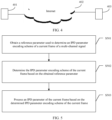
- FIG. 5 is a schematic flowchart of an IPD parameter encoding method according to an embodiment of the present invention. The method includes the following steps.
- the IPD parameter encoding method provided in this embodiment of the present invention may be performed by an encoder that can encode the multi-channel signal. After encoding an IPD parameter of the current frame by using the IPD parameter encoding method provided in this embodiment of the present invention, the encoder transmits the encoded IPD parameter.
- a decoder uses, for stereo synthesis processing, the IPD parameter obtained through decoding. The following describes in detail the IPD parameter encoding method provided in this embodiment of the present invention. It should be noted that the encoder and the decoder in this embodiment of the present invention are merely described in terms of a function, and actual forms of the encoder and the decoder may be the foregoing terminals.
- the terminal may have a function of both an encoder and a decoder.
- the current frame is directly used when the current frame of the multi-channel signal is subsequently described.
- the multi-channel signal in this embodiment of the present invention may specifically be a dual-channel signal, a three-channel signal, a four-channel signal, or the like.
- a specific quantity of channels corresponding to the multi-channel signal is not limited in this embodiment of the present invention.
- the encoder when encoding the IPD parameter of the current frame, may first obtain the reference parameter used to determine the IPD parameter encoding scheme of the current frame, and then determine the IPD parameter encoding scheme of the current frame based on the reference parameter.
- the reference parameter is used to determine the IPD parameter encoding scheme of the current frame.
- the reference parameter may alternatively be used to determine an encoding scheme for another parameter of the current frame.
- the reference parameter is not limited to being used to determine the IPD parameter encoding scheme.
- the reference parameter may include at least one of a signal characteristic parameter of the current frame and signal characteristic parameters of A frames previous to the current frame.
- the reference parameter may include the signal characteristic parameter of the current frame, the signal characteristic parameters of the A frames previous to the current frame, the signal characteristic parameter of the current frame and the signal characteristic parameters of the A frames previous to the current frame, or the like, and may specifically be determined based on an actual application scenario.
- A is an integer not less than 1.
- the A frames previous to the current frame may be one frame, two frames, three frames, or the like previous to the current frame. This is not limited herein.
- the frame previous to the current frame and the current frame are consecutive in a time sequence.
- the two frames previous to the current frame are consecutive in a time sequence and include the frame previous to the current frame.
- the three frames previous to the current frame are consecutive in a time sequence and include the two frames previous to the current frame.
- the signal characteristic parameter of the current frame may include one or more of parameters such as a parameter indicating correlation between left channel and right channel of the current frame, a variance of subband IPD parameters of the current frame, a signal type of the current frame, and an ITD parameter of the current frame.
- the parameter indicating the correlation between the left channel and right channel of the current frame, and the variance of the subband IPD parameterss of the current frame may be obtained through calculation based on left channel frequency domain signal and right channel frequency domain signal of the multi-channel signals.
- the ITD parameter of the current frame may be determined based on a manner of extracting an ITD parameter of the multi-channel signal of the current frame.
- the manner of extracting the ITD parameter of the current frame may include an extraction manner provided in a standard protocol or an extraction manner known to a person skilled in the art. This is not limited herein.
- the signal characteristic parameters of the A frames previous to the current frame include one or more of parameters such as a parameter indicating correlation between left channel and right channel of each of the A frames previous to the current frame, a variance of subband IPD parameters of each of the A frames previous to the current frame, an ITD parameter of each of the A frames previous to the current frame, an IPD parameter encoding scheme of each of the A frames previous to the current frame, and a signal type of each of the A frames previous to the current frame. Selection of a specific parameter or specific parameters may be determined based on an actual application scenario. This is not limited herein.
- the IPD parameter encoding scheme of each of the A frames previous to the current frame may be stored in a cache or a memory.
- the signal type may include a voice type or a music type.
- the signal characteristic parameters of the A frames previous to the current frame may be stored in a cache. It may be understood that, after the signal characteristic parameter of the current frame is obtained, the signal characteristic parameter of the current frame is also stored in the cache to determine an IPD parameter encoding scheme of a following frame.
- the encoder may perform time-frequency transformation on left channel and right channel time domain signals of the multi-channel signal of the current frame to obtain the left channel frequency domain signal and right channel frequency domain signal of the current frame.
- the foregoing time-frequency transformation may be implemented by using an implementation such as fast fourier transformation (Fast Fourier Transformation, FFT) or modified discrete cosine transform (Modified Discrete Cosine Transform, MDCT). This is not limited herein.
- the time-frequency transformation performed on the left channel and right channel time domain signals of the multi-channel signal of the current frame may be performed in a form of a frame or in a form of a subframe.
- One frame may usually include four subframes, two subframes, or eight subframes. A specific quantity of subframes may be determined based on a specific situation.
- the encoder when the encoder transforms the left channel and right channel time domain signals of the multi-channel signal of the current frame into the left channel frequency domain signal and right channel frequency domain signal through the FFT, the following transformation formulas may specifically be used:
- n indicates an index value of a time domain signal
- k indicates an index value of a frequency domain signal
- Length indicates a frame length
- M indicates a time-frequency transformation length for transforming a time domain signal into a frequency domain signal
- x L ( n ) indicates an audio-left channel time domain signal
- x R ( n ) indicates an audio-right channel time domain signal
- L ( k ) indicates a k th frequency value that is of an audio-left channel frequency domain signal and that is used to calculate the IPD parameter
- R ( k ) indicates a k th frequency value that is of an audio-right channel frequency domain signal and that is used to calculate the IPD parameter
- x L ( n ) and x R ( n ) indicate sequences of real numbers.
- a fourier transformation coefficient X(k) of a sequence of real numbers x ( n ) is a complex number, and a real part of the sequence of real numbers x ( n ) has an even symmetry and an imaginary part has an odd symmetry.
- X(k) has a conjugate symmetry.
- the encoder does not need to calculate and store X(k), L /2 + 1 ⁇ k ⁇ L - 1, and imaginary parts of X(0) and X(L/2), but only needs to calculate X(0) to X(L/2), to reduce occupation of a computing resource and a storage resource of the encoder.
- the encoder may calculate, based on the left channel frequency domain signal and right channel frequency domain signal, the parameter indicating the correlation between the left channel and right channel of the current frame.
- E l ( b ) indicates an energy sum of an audio-left channel
- E r ( b ) indicates an energy sum of an audio-right channel
- L r ( k ) indicates a real part of a k th frequency value of an audio-left channel frequency domain signal
- R r ( k ) indicates a real part of a k th frequency value of an audio-right channel frequency domain signal
- L i ( k ) indicates an imaginary part of a k th frequency value of the audio-left channel frequency domain signal
- R i ( k ) indicates an imaginary part of a k th frequency value of the audio-right channel frequency domain signal
- L indicates a quantity of subband spectral coefficients
- N indicates a quantity of subbands.
- R * ( k ) indicates a conjugate of R ( k ).
- R * ( k ) indicates a conjugate of the k th frequency value of the audio-right channel frequency domain signal.
- the encoder may further calculate the variance of the subband IPD parameterss of the current frame based on the left channel frequency domain signal and right channel frequency domain signal. Specifically, the encoder may first divide the left channel frequency domain signal and right channel frequency domain signal of the current frame into at least two subbands (in other words, a plurality of subbands). It is assumed that the left channel frequency domain signal and right channel frequency domain signal are divided into Nsubband subbands, Nsubband where is an integer greater than 2.
- the encoder may calculate IPD parameters of all subbands based on frequency domain signals of the Nsubband subbands obtained through division, and calculate the variance of the subband IPD parameterss of the current frame based on the IPD parameters of the Nsubband subbands obtained through calculation.
- b indicates an index value of a subband
- a frequency included in a subband b is A b -1 ⁇ k ⁇ A b - 1
- Atan2 indicates an arctan function.
- the subband IPD parameter may alternatively be obtained through calculation in another manner.
- a specific calculation manner of the subband IPD parameter is not limited in this embodiment of the present invention.
- the encoder may adaptively select, based on the obtained reference parameter, one of a plurality of preset IPD parameter encoding schemes as the IPD parameter encoding scheme of the current frame,
- the plurality of preset IPD parameter encoding schemes may include a first encoding scheme and a second encoding scheme.
- the first encoding scheme includes a group IPD parameter encoding scheme, skipping encoding an IPD parameter, setting a value of the IPD parameter to 0, or the like.
- the second encoding scheme includes an IPD parameter encoding scheme of a subband set, a subband IPD parameter encoding scheme, or the like.
- the subband IPD parameter encoding scheme may be encoding IPD parameters of all or some of subbands of the left channel frequency domain signal and right channel frequency domain signal of the current frame.
- the encoder may directly determine that an encoding scheme is the group IPD parameter encoding scheme, skipping encoding the IPD parameter, or setting the value of the IPD parameter to 0, and does not need to perform selection from three encoding schemes.
- the second encoding scheme is specifically one of the IPD parameter encoding scheme of the subband set and the subband IPD parameter encoding scheme. Therefore, the encoder may directly determine that an encoding scheme is the IPD parameter encoding scheme of the subband set or the subband IPD parameter encoding scheme, and does not need to perform selection from two encoding schemes.
- the encoder may first determine the first encoding scheme or the second encoding scheme. When determining the first encoding scheme, the encoder selects one of the foregoing three encoding schemes. Correspondingly, when determining the second encoding scheme, the encoder selects one of the foregoing two second encoding schemes.
- the determined IPD parameter encoding scheme of the current frame may be encoded.
- a specific encoding scheme may be setting a preset parameter as a preset value, and indicating different encoding schemes by using different values.
- the IPD parameter encoding scheme of the current frame may be indicated by using an encoding scheme flag bit. The flag bit may occupy one bit. When a value of this bit is 0, it indicates that the IPD parameter encoding scheme of the current frame is the first encoding scheme. When a value of this bit is 1, it indicates that the IPD parameter encoding scheme of the current frame is the second encoding scheme.
- this bit when a value of this bit is 1, it may alternatively indicate that the IPD parameter encoding scheme of the current frame is the first encoding scheme, and when a value of this bit is 0, it may alternatively indicate that the IPD parameter encoding scheme of the current frame is the second encoding scheme.
- the decoder may determine the IPD parameter encoding scheme based on the value of the flag bit, to determine a corresponding decoding manner.
- the reference parameter includes the parameter indicating the correlation between the left channel and right channel of the current frame.
- the parameter indicating the correlation between the left channel and right channel of the current frame may be compared with a predefined first threshold. If a value of the parameter indicating the correlation between the left channel and right channel of the current frame is greater than or equal to the first threshold, the IPD parameter encoding scheme of the current frame is the first encoding scheme.
- the IPD parameter encoding scheme of the current frame is the second encoding scheme.
- a value of the predefined first threshold ranges from 0.6 to 0.95.
- the value may specifically be 0.89, 0.8, 0.75, or the like.
- the reference parameter includes the variance of the subband IPD parameterss of the current frame.
- the variance of the subband IPD parameterss of the current frame may be compared with a predefined second threshold. If a value of the parameter indicating the correlation between the left channel and right channel of the current frame is less than the second threshold, it indicates that the IPD parameter encoding scheme of the current frame is the first encoding scheme. On the contrary, if a value of the parameter indicating the correlation between the left channel and right channel of the current frame is greater than or equal to the second threshold, it indicates that the IPD parameter encoding scheme of the current frame is the second encoding scheme.
- a value of the predefined second threshold ranges from 0.05 to 0.5. For example, the value may specifically be 0.45, 0.25, 0.3, or the like.
- the reference parameter includes the signal type of the current frame.
- the signal type of the current frame when the signal type of the current frame is a voice type, it may be determined that the IPD parameter encoding scheme of the current frame is the second encoding scheme.
- the signal type of the current frame is a music type, it may be determined that the IPD parameter encoding scheme of the current frame is a first IPD parameter encoding scheme.
- the signal type of the current frame is not the only reference parameter for determining the IPD parameter encoding scheme of the current frame.
- the IPD parameter encoding scheme may further be determined with reference to another reference parameter.
- the reference parameter includes an inter-channel time difference ITD parameter of the current frame. If a value of the ITD parameter of the current frame is greater than a preset threshold, it is determined that the IPD parameter encoding scheme of the current frame is the first encoding scheme. Otherwise, the IPD parameter encoding scheme of the current frame is the second encoding scheme.
- the preset threshold may be 1, 2, 3, 4, or 5.
- the signal characteristic parameter of the current frame may include only one of the foregoing parameters.
- the IPD parameter encoding scheme of the current frame may be determined provided that the parameter meets a corresponding parameter condition.
- the signal characteristic parameter of the current frame may alternatively include at least two of the foregoing parameters. In this case, the IPD parameter encoding scheme of the current frame may be determined only when the at least two parameters respectively meet corresponding parameter conditions.
- the reference parameter includes the IPD parameter encoding scheme of each of the A frames previous to the current frame and the signal type of each of the A frames previous to the current frame. In this case, it may be determined whether the IPD parameter encoding scheme of each of the A frames previous to the current frame is a preset IPD parameter encoding scheme and whether the signal type of each of the A frames previous to the current frame is a preset signal type. If the IPD parameter encoding scheme of each of the A frames previous to the current frame is the first encoding scheme, and the signal type of each of the A frames of the current frame is a music type, the IPD parameter encoding scheme of the current frame may be determined as the first encoding scheme.
- the A frames previous to the current frame are one frame previous to the current frame. If the IPD parameter encoding scheme of the frame previous to the current frame is the first encoding scheme, and the signal type of the frame previous to the current frame is a music type, the IPD parameter encoding scheme of the current frame may be determined as the first encoding scheme. Otherwise, it is determined that the IPD parameter encoding scheme of the current frame is not the first encoding scheme, for example, the second encoding scheme.
- the A frames previous to the current frame are two frames previous to the current frame. If IPD parameter encoding schemes of the two frames previous to the current frame both are first encoding schemes, and signal types of the two frames previous to the current frame are music types, the IPD parameter encoding scheme of the current frame may be determined as the first encoding scheme. Otherwise, it is determined that the IPD parameter encoding scheme of the current frame is not the first encoding scheme, for example, the second encoding scheme.
- the reference parameter includes the ITD parameter of the current frame, the variance of the subband IPD parameterss of the current frame, and the signal type of each of the A frames previous to the current frame.
- an absolute value of the ITD parameter of the current frame may be compared with a predefined third threshold
- the variance of the subband IPD parameterss of the current frame is compared with a predefined fourth threshold
- a value of the predefined third threshold may range from 0 to 4.
- the value of the third threshold may be 4, 2, 0, or the like.
- a value of the predefined fourth threshold may range from 0.05 to 0.4.
- the value of the fourth threshold may be 0.4, 0.35, 0.25, 0.05, or the like. If the absolute value of the ITD parameter of the current frame is greater than the third threshold, the variance of the subband IPD parameters of the current frame is less than the fourth threshold, and the signal type of each of the A frames previous to the current frame is a voice type, the IPD parameter encoding scheme of the current frame may be determined as the first encoding scheme. Otherwise, it is determined that the IPD parameter encoding scheme of the current frame is not the first encoding scheme, for example, the second encoding scheme.
- the IPD parameter encoding scheme of the current frame may be determined as the first encoding scheme.
- the IPD parameter encoding scheme of the current frame may be determined as the first encoding scheme.
- the encoder may process the IPD parameter of the current frame based on the first encoding scheme. For example, if the first encoding scheme is skipping encoding the IPD parameter, no operation is performed, to be specific, ending a process corresponding to encoding of the IPD parameter of the current frame. If the first encoding scheme is the group IPD parameter encoding scheme, the group IPD parameter of the current frame may be encoded. The group IPD parameter of the current frame is used as the IPD parameter of the current frame.
- the value of the IPD parameter of the current frame may be set to 0, and then the IPD parameter with a value of 0 is subsequently processed. For example, if the value of the IPD parameter is required as an input during some processing, after the value of the IPD parameter of the current frame is set to 0, 0 may be used as the input of the processing.
- the reference parameter includes the parameter indicating the correlation between the left channel and right channel of the current frame, and may further include the IPD parameter encoding scheme of the frame previous to the current frame and the signal type of the previous frame. If the value of the parameter indicating the correlation between the left channel and right channel of the current frame is greater than or equal to the first threshold, it may be determined that the IPD parameter encoding scheme of the current frame is the first encoding scheme.
- the IPD parameter encoding scheme of the frame previous to the current frame is the first encoding scheme and the signal type of the previous frame is a music signal type
- it may also be determined that the IPD parameter encoding scheme of the current frame is the first encoding scheme. Otherwise, if the value of the parameter indicating the correlation between the left channel and right channel of the current frame is less than the first threshold, and the IPD parameter encoding scheme of the frame previous to the current frame is the second encoding scheme or the signal type of the frame previous to the current frame is a voice type, it is determined that the IPD parameter encoding scheme of the current frame is the second encoding scheme.
- whether to adjust the IPD parameter encoding scheme of the current frame may further be determined based on the IPD parameter encoding schemes of the A frames previous to the current frame. For example, whether to adjust the IPD parameter encoding scheme of the current frame may be determined based on the IPD parameter encoding scheme of the frame, two frames, three frames, four frames, or five frames previous to the current frame. In a possible implementation, if the IPD parameter encoding scheme of the current frame is the same as the IPD parameter encoding scheme of the current frame, the IPD parameter encoding scheme of the current frame does not need to be adjusted.
- the IPD parameter encoding scheme of the current frame is different from the IPD parameter encoding scheme of the current frame, adjusting the IPD parameter encoding scheme of the current frame may be considered.
- the two frames, three frames, four frames, or five frames previous to the current frame, including the frame previous to the current frame use a same IPD parameter encoding scheme.
- the IPD parameter encoding scheme of the current frame may be adjusted.
- the IPD parameter encoding scheme of the current frame is adjusted to be the same as the IPD parameter encoding scheme of the current frame.
- Adjusting the IPD parameter encoding scheme of the current frame may ensure that an encoding scheme of the current frame is kept consistent with that of a previous frame to some extent, so that an encoded code stream can ensure a smooth transition between the previous frame and the current frame during decoding, and auditory perception is better.
- the encoder may extract IPD parameters of at least some subbands of the left channel frequency domain signal and right channel frequency domain signal of the current frame when the encoding scheme is the second encoding scheme.
- the at least some subbands of the left channel frequency domain signal and right channel frequency domain signal of the current frame may specifically include all or some of the Nsubband subbands obtained through division of the left channel frequency domain signal and right channel frequency domain signal of the current frame. This is not limited herein.
- a user may determine, based on encoding requirements such as an encoding rate or encoding quality of multi-channel signal encoding, that a frequency domain range of the left channel frequency domain signal and right channel frequency domain signal that are of the current frame and that are used to encode the group IPD parameter of the current frame includes an entire frequency domain range of the left channel frequency domain signal and right channel frequency domain signal of the current frame, to be specific, frequency domain signals of all subbands in the left channel frequency domain signal and right channel frequency domain signal of the current frame, or includes a specific frequency domain range of the left channel frequency domain signal and right channel frequency domain signal of the current frame, to be specific, frequency domain signals of some frames in the left channel frequency domain signal and right channel frequency domain signal of the current frame.
- the frequency domain signals of some of the frames in the left channel frequency domain signal and right channel frequency domain signal of the current frame are included in the frequency domain signals of some of the subbands of the left channel frequency domain signal and right channel frequency domain signal.
- the encoder may not first extract IPD parameters of all or some of subbands of the left channel frequency domain signal and right channel frequency domain signal of the current frame, and then determine the IPD parameter encoding scheme of the current frame. If the first encoding scheme is skipping encoding the IPD parameter of the current frame, the IPD parameters of all or some of the subbands of the left channel frequency domain signal and right channel frequency domain signal of the current frame may not be directly extracted. In some other implementations, an IPD parameter of each of all or some of the subbands of the left channel frequency domain signal and right channel frequency domain signal of the current frame may alternatively first be extracted, and then the IPD parameter encoding scheme of the current frame is determined.
- the encoder determines that the frequency domain range of the left channel frequency domain signal and right channel frequency domain signal that are of the current frame and that are used to encode the group IPD parameters of the left channel frequency domain signal and right channel frequency domain signal of the current frame is an entire frequency domain range of the left channel frequency domain signal and right channel frequency domain signal of the current frame, an IPD parameter of each of all subbands (to be specific, the Nsubband subbands of the current frame) of the left channel frequency domain signal and right channel frequency domain signal of the current frame may be extracted, an average value of IPD parameters of all extracted subbands may be calculated, and then the obtained average value of the IPD parameters of all of the subbands is used as the group IPD parameter of the current frame.
- G_IPD indicates the group IPD parameter of the current frame, and IPD(b) indicates an IPD parameter of a b th subband.
- the encoder determines that the frequency domain range of the left channel frequency domain signal and right channel frequency domain signal that are the current frame and that are used to encode the group IPD parameters of the left channel frequency domain signal and right channel frequency domain signal of the current frame is a specific frequency domain range of the left channel frequency domain signal and right channel frequency domain signal of the current frame, for example, [k1, k2], to be specific, frequency domain signals between a (k1) th frequency and a (k2) th frequency, an IPD parameter of each of some subbands (to be specific, subbands of the frequency domain signals between the (k1) th frequency and the (k2) th frequency) of the left channel frequency domain signal and right channel frequency domain signal of the current frame may be extracted, an average value of IPD parameters of all extracted subbands may be calculated, and then the obtained average value of the IPD parameters of all of the subbands is used as the group IPD parameter of the current frame.
- the IPD parameters of the subbands of the frequency domain signals between the (k1) th frequency and the (k2) th frequency each may be predefined as an IPD parameter of each frequency.
- calculation of the IPD parameters of the subbands may be replaced with calculation of the IPD parameter of each frequency.
- the group IPD parameter of the current frame is calculated by using the IPD parameter of each frequency as an IPD parameter of each subband.
- ⁇ indicates calculating an angle of a complex number.
- L ( k ) indicates a k th frequency value of an audio-left channel frequency domain signal
- R * ( k ) indicates a conjugate of a k th frequency value of an audio-right channel frequency domain signal.
- IPD(k) may be processed in a preset range (a multi-frame signal of a multi-channel frequency domain signal, including a current frame and A frames previous to the current frame) to obtain the group IPD parameter.
- a preset range a multi-frame signal of a multi-channel frequency domain signal, including a current frame and A frames previous to the current frame
- the specific frequency domain range [k1, k2] is a selection range of each of six frames of left channel frequency domain signal and right channel frequency domain signal
- M IPD 0 indicates an average value of IPD parameters of the current frame
- M IPD ⁇ 1 indicates an average value of IPD parameters of a frame previous to and adjacent to the current frame
- M IPD ⁇ 2 indicates an average value of IPD parameters of a frame previous to and adjacent to the frame previous to and adjacent to the current frame, and so on.
- the second encoding scheme may be an IPD parameter encoding scheme of a subband set, or a subband IPD parameter encoding scheme.
- an IPD parameter encoding scheme of the current frame is a subband IPD parameter extraction manner
- an IPD parameter of each of all or some of subbands of the left channel frequency domain signal and right channel frequency domain signal of the current frame are extracted, and then the IPD parameter of the subband is quantized in any quantization manner. This is not specifically limited.
- FIG. 6 describes a procedure of an IPD parameter encoding method according to another embodiment of the present invention.
- a reference parameter includes: a parameter indicating correlation between left channel and right channel of a current frame, an IPD parameter encoding scheme of a frame previous to the current frame, and a signal type of the frame previous to the current frame, a value of a first threshold is 0.75, and a value of A is 1.
- this embodiment includes the following steps.
- step S602 Determine whether a value of the parameter indicating the correlation between the left channel and right channel of the current frame is greater than or equal to 0.75. If the value of the parameter indicating the correlation between the left channel and right channel is less than 0.75, go to step S603; if the value of the parameter indicating the correlation between the left channel and right channel is greater than or equal to 0.75, go to step S607.
- the IPD parameter encoding scheme of the frame previous to the current frame may be stored in a cache.
- the IPD parameter encoding scheme of the previous frame may be skipping encoding an IPD parameter, or encoding subband IPD parameters of all or some of subbands of left channel frequency domain signal and right channel frequency domain signal.
- step S604 Determine whether the IPD parameter encoding scheme of the frame previous to the current frame is skipping encoding the IPD parameter. If the IPD parameter encoding scheme of the frame previous to the current frame is skipping encoding the IPD parameter, go to step S605. If the IPD parameter encoding scheme of the frame previous to the current frame is not skipping encoding the IPD parameter, go to step S608.
- the signal type of the frame previous to the current frame may be stored in the cache.
- the signal type of the previous frame may be a music signal type or a voice signal type.
- step S606. Determine whether the signal type of the frame previous to the current frame is the music signal type. If the signal type of the frame previous to the current frame is the music signal type, go to step S607; if the signal type of the frame previous to the current frame is not the music signal type, go to step S608.
- to-be-encoded subband IPD parameters of a specific part of subbands may be set based on a requirement. For example, it is assumed that there are a subbands in total, and frequency values of the a subbands gradually increase from a 0 th subband to an (a-1) th subband. In an embodiment, only subband IPD parameters from the 0 th subband to an (a-3) th subband may be encoded. In other words, subband IPD parameters of two subbands respectively with the highest frequency and the second highest frequency are not encoded.
- only subband IPD parameters from a second subband to an (a-1) th subband may be encoded.
- subband IPD parameters of two subbands respectively with the lowest frequency and the second lowest frequency are not encoded.
- subband IPD parameters of any two of the subbands may alternatively not be encoded. It may be understood that, in some embodiments, a quantity of subbands corresponding to encoded subband IPD parameters may be set based on a specific requirement.
- subband IPD parameters of (a-1) subbands in the a subbands may be encoded, or subband IPD parameters of (a-2) subbands in the a subbands may be encoded, or subband IPD parameters of (a-3) subbands in the a subbands may be encoded, or subband IPD parameters of (a-4) subbands in the a subbands may be encoded.
- a performing sequence of obtaining steps S601, S603, and S605 in FIG. 6 is not limited. Any one of the obtaining steps S601, S603, and S605 may be first performed, or the obtaining steps S601, S603, and S605 may be simultaneously performed. Similarly, a performing sequence of determining steps S602, S604, and S606 is not limited, either. Any one of the determining steps S602, S604, and S606 may be first performed, or the determining steps S602, S604, and S606 may be simultaneously performed.
- FIG. 7 describes a procedure of an IPD parameter encoding method according to another embodiment of the present invention. This embodiment includes the following steps.
- step S703. Determine whether the IPD parameter encoding scheme of the current frame is the same as an IPD parameter encoding scheme of a frame previous to the current frame. If the IPD parameter encoding scheme of the current frame is the same as the IPD parameter encoding scheme of the frame previous to the current frame, go to step S704. If the IPD parameter encoding scheme of the current frame is different from the IPD parameter encoding scheme of the frame previous to the current frame, go to step S705.
- the IPD parameter encoding scheme of the current frame does not need to be adjusted.
- step S705. Determine whether a preset value of the counter is less than 5. If the preset value of the counter is less than 5, go to step S706. If the preset value of the counter is greater than or equal to 5, go to step S707.
- step S706 Adjust the IPD parameter encoding scheme of the current frame, and increase the preset value of the counter by 1, and go to step S708.
- the IPD parameter encoding scheme of the current frame is adjusted to a second encoding scheme.
- the IPD parameter encoding scheme of the current frame is adjusted to encoding subband IPD parameters of all or some of subbands of left channel frequency domain signal and right channel frequency domain signal of the current frame.
- the IPD parameter encoding scheme of the current frame is adjusted to a first encoding scheme.
- the IPD parameter encoding scheme of the current frame is encoding subband IPD parameters of all or some of subbands of left channel frequency domain signal and right channel frequency domain signal of the current frame
- the IPD parameter encoding scheme of the current frame is adjusted to skipping encoding an IPD parameter.
- two counters when whether to adjust the IPD parameter encoding scheme of the current frame is to be determined, two counters may be used.
- a specific processing manner is as follows: When the IPD parameter encoding scheme of the current frame and the IPD parameter encoding scheme of the frame previous to the current frame both are first encoding schemes, a value of a first counter is set to 0. If the IPD parameter encoding scheme of the frame previous to the current frame is the first encoding scheme, the IPD parameter encoding scheme of the current frame is the second encoding scheme, and the value of the first counter is less than 5, the IPD parameter encoding scheme of the current frame is adjusted to the first encoding scheme, and the value of the first counter is increased by 1.
- the first encoding scheme may be skipping encoding the IPD parameter
- the second encoding scheme may be encoding the subband IPD parameters of all or some of the subbands of the left channel frequency domain signal and right channel frequency domain signal.
- a value of a second counter is set to 0. If the IPD parameter encoding scheme of the frame previous to the current frame is the second encoding scheme, the IPD parameter encoding scheme of the current frame is the first encoding scheme, and the value of the second counter is less than 5, the IPD parameter encoding scheme of the current frame is adjusted to the second encoding scheme, and the value of the second counter is increased by 1.
- the first encoding scheme may be skipping encoding the IPD parameter
- the second encoding scheme may be encoding the subband IPD parameters of all or some of the subbands of the left channel frequency domain signal and right channel frequency domain signal.
- the adjusted IPD parameter encoding scheme of the current frame is cached.
- an IPD parameter encoding scheme of a frame after the current frame is to be determined refer to the adjusted IPD parameter encoding scheme of the current frame
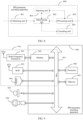
- FIG. 8 is a schematic structural diagram of an embodiment of an IPD parameter encoding apparatus 800 according to an embodiment of the present invention.
- the IPD parameter encoding apparatus 800 includes:
- the determining unit 802 may further be configured to determine whether the determined IPD parameter encoding scheme of the current frame needs to be adjusted.
- the IPD parameter encoding apparatus 800 may further include an adjusting unit 804, configured to adjust the determined IPD parameter encoding scheme of the current frame when the determining unit 802 determines that the determined IPD parameter encoding scheme of the current frame needs to be adjusted.
- the processing unit 803 is specifically configured to process the IPD parameter of the current frame based on the adjusted IPD parameter encoding scheme of the current frame. For how to determine whether the determined IPD parameter encoding scheme of the current frame needs to be adjusted, and how to adjust the IPD parameter encoding scheme of the current frame, refer to description in the method embodiment. Details are not described herein again.
- the IPD parameter encoding apparatus 800 may further include an encoding unit 805, configured to encode the IPD parameter encoding scheme that is of the current frame and that is determined by the determining unit 802. For example, an encoding scheme flag bit may be set, and the flag bit occupies one bit, to indicate whether the IPD parameter encoding scheme of the current frame is a first encoding scheme or a second encoding scheme. In this way, a decoder can determine the IPD parameter encoding scheme of the current frame based on the encoding scheme flag bit, to perform decoding by using a corresponding decoding manner. It may be understood that, in some implementations, the encoding unit 805 and the processing unit 803 may be one logical unit.
- FIG. 9 describes a structure of a terminal according to another embodiment of the present invention.
- the terminal may be a wearable device, a VR device, an AR device, a mobile phone, a pad, a notebook, a PC, or the like.
- the terminal provided in this embodiment of the present invention includes a network interface 910 (as shown in a dotted line box in FIG. 9 ).
- the network interface 910 is configured to send and receive data. For example, when the terminal serves as an encoder, sent data includes a multi-channel signal (carried in a code stream) encoded by the terminal.
- the sent data further includes the IPD parameter (the IPD parameter is also carried in the code stream and may be used as a part of the multi-channel signal).
- received data includes a code stream carrying the multi-channel signal.
- the encoder encodes the IPD parameter
- the received data may further include the IPD parameter.
- a specific form of the network interface 910 may be various, and may specifically be different based on a specific form of the terminal and different application scenarios.
- FIG. 9 shows three examples.
- a first example is a cellular network access module including a radio frequency transceiver (RF Transceiver) 901 and a modem (Modem) 902.
- RF Transceiver radio frequency transceiver
- Modem modem
- the cellular network access module is configured to access a mobile communications network provided by a mobile operator, such as a 2G (2 nd Generation), 3G (3 rd Generation), 4G (4 th Generation), to be specific, a long term evolution (LTE: Long Term Evolution) network, future 5G (5 th Generation) or 6G (6 th Generation) network, or the like.
- a mobile operator such as a 2G (2 nd Generation), 3G (3 rd Generation), 4G (4 th Generation
- LTE Long Term Evolution
- 5G (5 th Generation) or 6G (6 th Generation) network or the like.
- a second example is a wireless fidelity (WiFi: Wireless Fidelity) module 903, configured to access a network by accessing an accessing point (AP: Access Point).
- AP Access Point
- a third example is an Ethernet network adapter 904, configured to access the network by using a twisted pair cable or an optical fiber.
- the terminal does not need to include all of the foregoing three network interfaces, and may include only at least one of the foregoing three network interface terminals, so that the terminal can access the network.
- a network interface included in the terminal may not be one of the foregoing three types, for example, may be a Bluetooth interface or a modem. Therefore, a specific form of the network interface 910 is not limited in this embodiment of the present invention, and implementation of this embodiment of the present invention is not affected provided that the terminal can access the network through the network interface 910.
- the terminal may further include a microphone 905, configured to collect a multi-channel signal.
- An analog-to-digital converter may be built in the microphone 905. Therefore, the microphone may convert a collected multi-channel signal in an analog signal form into a multi-channel signal in a digital signal form.
- no analog-to-digital converter may alternatively be built in the microphone 905.
- the terminal further needs to include an analog-to-digital converter, to perform analog-to-digital conversion on a multi-channel signal in an analog signal form collected by the microphone 905 and obtain a multi-channel signal in a digital signal form.
- a specific quantity of microphones 905 is not limited in this embodiment of the present invention. It may be understood that the terminal may alternatively collect the multi-channel signal by using an external microphone. In this case, the terminal needs to include an adaptation interface of the external microphone, to facilitate insertion of the external microphone and then implement data exchange between the terminal and the external microphone.
- the terminal may further include a loudspeaker 906, configured to play a multi-channel signal obtained through decoding by the terminal. If a bitstream that includes the multi-channel signal and that is received by the terminal includes an IPD parameter, this decoding process may be performed based on the IPD parameter.
- a digital-to-analog converter may be built in the loudspeaker 906.
- the terminal may send a multi-channel signal in a digital signal form to the loudspeaker 906, and the loudspeaker 906 performs analog-to-digital conversion on the multi-channel signal in the digital signal form, to convert the multi-channel signal in the digital signal form into and play a multi-channel signal in an analog signal form.
- the terminal needs to include an analog-to-digital converter to convert the multi-channel signal in the digital signal form into the multi-channel signal in the analog signal form, and sends the multi-channel signal in the analog signal form to the loudspeaker 906 for playing.
- a quantity of loudspeakers 906 is not limited in this embodiment of the present invention.
- the terminal may alternatively play the multi-channel signal by using an external loudspeaker.
- the terminal needs to include an adaptation interface of the external loudspeaker, to facilitate insertion of the external loudspeaker and then implement data exchange with the external loudspeaker.
- the terminal further includes a processor 908 and a memory 909.
- the memory 909 is configured to store code executable by the processor, and the processor 908 is configured to execute the code stored in the memory 909, to implement the method described in the foregoing method embodiments.
- the terminal further includes a bus 907.
- Data exchange between the foregoing components such as the network interface 910, the microphone 905, the loudspeaker 906, the processor 908, and the memory 909 may be performed by using the bus 907.
- FIG. 9 merely describes an example of the structure of the terminal. Some connection relationships in the structure are simplified. During actual application, components such as the network interface 910, the microphone 905, or the loudspeaker 906 may not be directly connected to the bus 907. In other words, data exchange between the components such as the network interface 910, the microphone 905, or the loudspeaker 906 may further need to pass through another component.
- the processor 908 and the memory 909 may further have a data exchange interface. Data exchange between the processor 908 and the memory 909 may be directly performed through the data exchange interface, and does not need to pass through the bus 907, to improve data exchange efficiency between the processor 908 and the memory 909.
- the processor 908 and the memory 909 may be a processor and a memory in a digital signal processor (DSP: Digital Signal Processor).
- DSP Digital Signal Processor
- both the processor 908 and the memory 909 are encapsulated in the DSP.
- data exchange between the processor 908 and the memory 909 may be performed through a data exchange interface inside the DSP.
- the processor 908 and the memory 909 may exchange data with another component through one data exchange interface between the DSP and the bus 907.
- An embodiment of the present invention further provides a computer program.
- the computer program When the computer program is executed, a procedure of any one of the foregoing method embodiments may be executed.
- An embodiment of the present invention further provides a storage medium.
- the storage medium stores executable code, and when the executable code is executed, a procedure in any one of the foregoing method embodiments may be executed.
- the program may be stored in a computer readable storage medium. When the program runs, the procedures of the method in the embodiments are included.
- the storage medium may include: a magnetic disk, an optical disc, a read-only memory (Read-Only Memory, ROM), a random access memory (Random Access Memory, RAM), or the like.
- the terms “first”, “second”, “third”, “fourth”, and the like are intended to distinguish between different objects but do not indicate a specific order.
- the terms “include”, “have”, and any other variant thereof are intended to cover a non-exclusive inclusion.
- a process, a method, a system, a product, or a device that includes a series of steps or units is not limited to the listed steps or units, but optionally further includes a step or unit that is not listed, or optionally further includes another inherent step or unit of the process, method, system, product, or device.
- Embodiment 1 An inter-channel phase difference parameter encoding method, comprising:
- Embodiment 3 The method according to embodiment 2, wherein the reference parameter comprises the parameter indicating the correlation between the left channel and right channel of the current frame; and if a value of the parameter indicating the correlation between the left channel and right channel of the current frame is greater than or equal to a first threshold, the IPD parameter encoding scheme of the current frame is a first encoding scheme in the at least two IPD parameter encoding schemes.
- Embodiment 4 The method according to embodiment 3, wherein the first threshold is 0.75.
- Embodiment 5 The method according to any one of embodiments 2 to 4, wherein the reference parameter comprises the IPD parameter encoding scheme of each of the previous A frames and the signal type of each of the previous A frames; and if the IPD parameter encoding scheme of each of the previous A frames is the first encoding scheme in the at least two IPD parameter encoding schemes, and the signal type of each of the previous A frames is a music type, the IPD parameter encoding scheme of the current frame is the first encoding scheme.
- Embodiment 6 The method according to embodiment 5, wherein a value of A is 1.
- Embodiment 7 The method according to any one of embodiments 3 to 6, wherein the first encoding scheme comprises any one of the following manners:
- Embodiment 8 The method according to any one of embodiments 3 to 7, wherein if the IPD parameter encoding scheme of the current frame is not the first encoding scheme, the IPD parameter encoding scheme of the current frame is a second encoding scheme, wherein the second encoding scheme comprises an IPD parameter encoding scheme of a subband set, or a subband IPD parameter encoding scheme, and the subband IPD parameter encoding scheme is encoding subband IPD parameters of some or all of subbands of the current frame.
- Embodiment 10 The method according to any one of embodiments 1 to 9, wherein the method further comprises: performing encoding based on the determined IPD parameter encoding scheme of the current frame.
- Embodiment 11 The method according to any one of embodiments 1 to 10, wherein before the processing an IPD parameter of the current frame based on the determined IPD parameter encoding scheme of the current frame, the method further comprises:
- Embodiment 12 The method according to embodiment 11, wherein the determining whether the determined IPD parameter encoding scheme of the current frame needs to be adjusted is performed based on IPD parameter encoding schemes of the A frames previous to the current frame.
- Embodiment 14 An inter-channel phase difference parameter encoding apparatus, comprising:
- Embodiment 15 The apparatus according to embodiment 14, wherein the reference parameter comprises at least one of a signal characteristic parameter of the current frame and signal characteristic parameters of A frames previous to the current frame, wherein A is an integer not less than 1;
- Embodiment 16 The apparatus according to embodiment 15, wherein the reference parameter comprises the parameter indicating the correlation between the left channel and right channel of the current frame; and if a value of the parameter indicating the correlation between the left channel and right channel of the current frame is greater than or equal to a first threshold, the IPD parameter encoding scheme of the current frame is a first encoding scheme in the at least two IPD parameter encoding schemes.
- Embodiment 17 The apparatus according to embodiment 16, wherein the first threshold is 0.75.
- Embodiment 18 The apparatus according to any one of embodiments 15 to 17, wherein the reference parameter comprises the IPD parameter encoding scheme of each of the previous A frames and the signal type of each of the previous A frames; and if the IPD parameter encoding scheme of each of the previous A frames is the first encoding scheme in the at least two IPD parameter encoding schemes, and the signal type of each of the previous A frames is a music type, the IPD parameter encoding scheme of the current frame is the first encoding scheme.
- Embodiment 19 The apparatus according to embodiment 18, wherein a value of A is 1.
- Embodiment 20 The apparatus according to any one of embodiments 16 to 19, wherein the first encoding scheme comprises any one of the following manners:
- Embodiment 21 The apparatus according to any one of embodiments 16 to 20, wherein if the IPD parameter encoding scheme of the current frame is not the first encoding scheme,
- Embodiment 22 The apparatus according to embodiment 21, wherein the second encoding scheme is the subband IPD parameter encoding scheme; and the processing an IPD parameter of the current frame based on the determined IPD parameter encoding scheme of the current frame comprises:
- Embodiment 23 The apparatus according to any one of embodiments 14 to 22, wherein the method further comprises: performing encoding based on the determined IPD parameter encoding scheme of the current frame.
- Embodiment 24 The apparatus according to any one of embodiments 14 to 23, wherein the determining unit is further configured to determine whether the IPD parameter encoding scheme that is of the current frame and that is determined by the determining unit needs to be adjusted; and the apparatus further comprises:
- Embodiment 25 The apparatus according to embodiment 24, wherein the determining whether the determined IPD parameter encoding scheme of the current frame needs to be adjusted is performed based on IPD parameter encoding schemes of the A frames previous to the current frame.
Landscapes
- Engineering & Computer Science (AREA)
- Physics & Mathematics (AREA)
- Acoustics & Sound (AREA)
- Multimedia (AREA)
- Signal Processing (AREA)
- Computational Linguistics (AREA)
- Audiology, Speech & Language Pathology (AREA)
- Human Computer Interaction (AREA)
- Health & Medical Sciences (AREA)
- Spectroscopy & Molecular Physics (AREA)
- Mathematical Physics (AREA)
- Compression, Expansion, Code Conversion, And Decoders (AREA)
- Digital Transmission Methods That Use Modulated Carrier Waves (AREA)
- Manipulation Of Pulses (AREA)
- Mobile Radio Communication Systems (AREA)
Applications Claiming Priority (3)
| Application Number | Priority Date | Filing Date | Title |
|---|---|---|---|
| CN201710524352.0A CN109215668B (zh) | 2017-06-30 | 2017-06-30 | 一种声道间相位差参数的编码方法及装置 |
| EP18823145.0A EP3637415B1 (de) | 2017-06-30 | 2018-05-05 | Verfahren und vorrichtung zur kodierung von interkanalphasendifferenzparametern |
| PCT/CN2018/085756 WO2019001142A1 (zh) | 2017-06-30 | 2018-05-05 | 一种声道间相位差参数的编码方法及装置 |
Related Parent Applications (2)
| Application Number | Title | Priority Date | Filing Date |
|---|---|---|---|
| EP18823145.0A Division EP3637415B1 (de) | 2017-06-30 | 2018-05-05 | Verfahren und vorrichtung zur kodierung von interkanalphasendifferenzparametern |
| EP18823145.0A Division-Into EP3637415B1 (de) | 2017-06-30 | 2018-05-05 | Verfahren und vorrichtung zur kodierung von interkanalphasendifferenzparametern |
Related Child Applications (1)
| Application Number | Title | Priority Date | Filing Date |
|---|---|---|---|
| EP25215276.4 Division-Into | 2025-11-12 |
Publications (4)
| Publication Number | Publication Date |
|---|---|
| EP4390920A2 true EP4390920A2 (de) | 2024-06-26 |
| EP4390920A3 EP4390920A3 (de) | 2024-09-04 |
| EP4390920B1 EP4390920B1 (de) | 2025-12-31 |
| EP4390920C0 EP4390920C0 (de) | 2025-12-31 |
Family
ID=64741065
Family Applications (2)
| Application Number | Title | Priority Date | Filing Date |
|---|---|---|---|
| EP18823145.0A Active EP3637415B1 (de) | 2017-06-30 | 2018-05-05 | Verfahren und vorrichtung zur kodierung von interkanalphasendifferenzparametern |
| EP24156328.7A Active EP4390920B1 (de) | 2017-06-30 | 2018-05-05 | Verfahren und vorrichtung zur kodierung von phasendifferenzparametern zwischen kanälen |
Family Applications Before (1)
| Application Number | Title | Priority Date | Filing Date |
|---|---|---|---|
| EP18823145.0A Active EP3637415B1 (de) | 2017-06-30 | 2018-05-05 | Verfahren und vorrichtung zur kodierung von interkanalphasendifferenzparametern |
Country Status (10)
| Country | Link |
|---|---|
| US (5) | US11031021B2 (de) |
| EP (2) | EP3637415B1 (de) |
| JP (4) | JP7080262B2 (de) |
| KR (5) | KR102554892B1 (de) |
| CN (1) | CN109215668B (de) |
| BR (1) | BR112019028256A2 (de) |
| ES (1) | ES2979342T3 (de) |
| RU (1) | RU2769789C2 (de) |
| SG (1) | SG11201913610VA (de) |
| WO (1) | WO2019001142A1 (de) |
Families Citing this family (4)
| Publication number | Priority date | Publication date | Assignee | Title |
|---|---|---|---|---|
| CN109215668B (zh) | 2017-06-30 | 2021-01-05 | 华为技术有限公司 | 一种声道间相位差参数的编码方法及装置 |
| JP7396459B2 (ja) * | 2020-03-09 | 2023-12-12 | 日本電信電話株式会社 | 音信号ダウンミックス方法、音信号符号化方法、音信号ダウンミックス装置、音信号符号化装置、プログラム及び記録媒体 |
| CN115881140B (zh) * | 2021-09-29 | 2025-09-26 | 华为技术有限公司 | 编解码方法、装置、设备、存储介质及计算机程序产品 |
| US20250024216A1 (en) * | 2021-12-03 | 2025-01-16 | Beijing Xiaomi Mobile Software Co., Ltd. | Stereo audio signal processing method, encoding device, and storage medium |
Family Cites Families (17)
| Publication number | Priority date | Publication date | Assignee | Title |
|---|---|---|---|---|
| SE527670C2 (sv) * | 2003-12-19 | 2006-05-09 | Ericsson Telefon Ab L M | Naturtrogenhetsoptimerad kodning med variabel ramlängd |
| TWI396188B (zh) * | 2005-08-02 | 2013-05-11 | Dolby Lab Licensing Corp | 依聆聽事件之函數控制空間音訊編碼參數的技術 |
| EP2144229A1 (de) * | 2008-07-11 | 2010-01-13 | Fraunhofer-Gesellschaft zur Förderung der angewandten Forschung e.V. | Effiziente Nutzung von Phaseninformationen beim Audio-Codieren und -Decodieren |
| KR101108060B1 (ko) * | 2008-09-25 | 2012-01-25 | 엘지전자 주식회사 | 신호 처리 방법 및 이의 장치 |
| EP2169664A3 (de) * | 2008-09-25 | 2010-04-07 | LG Electronics Inc. | Verfahren und Vorrichtung zur Verarbeitung eines Signals |
| US8666752B2 (en) * | 2009-03-18 | 2014-03-04 | Samsung Electronics Co., Ltd. | Apparatus and method for encoding and decoding multi-channel signal |
| GB2470059A (en) * | 2009-05-08 | 2010-11-10 | Nokia Corp | Multi-channel audio processing using an inter-channel prediction model to form an inter-channel parameter |
| US9112591B2 (en) * | 2010-04-16 | 2015-08-18 | Samsung Electronics Co., Ltd. | Apparatus for encoding/decoding multichannel signal and method thereof |
| CN104246873B (zh) * | 2012-02-17 | 2017-02-01 | 华为技术有限公司 | 用于编码多声道音频信号的参数编码器 |
| ES2540215T3 (es) * | 2012-04-05 | 2015-07-09 | Huawei Technologies Co., Ltd. | Método de estimación de diferencia inter-canal y dispositivo de codificación de audio espacial |
| ES2571742T3 (es) * | 2012-04-05 | 2016-05-26 | Huawei Tech Co Ltd | Método de determinación de un parámetro de codificación para una señal de audio multicanal y un codificador de audio multicanal |
| WO2013149671A1 (en) * | 2012-04-05 | 2013-10-10 | Huawei Technologies Co., Ltd. | Multi-channel audio encoder and method for encoding a multi-channel audio signal |
| US9536540B2 (en) * | 2013-07-19 | 2017-01-03 | Knowles Electronics, Llc | Speech signal separation and synthesis based on auditory scene analysis and speech modeling |
| CN104681029B (zh) * | 2013-11-29 | 2018-06-05 | 华为技术有限公司 | 立体声相位参数的编码方法及装置 |
| CN107452387B (zh) * | 2016-05-31 | 2019-11-12 | 华为技术有限公司 | 一种声道间相位差参数的提取方法及装置 |
| US10217467B2 (en) * | 2016-06-20 | 2019-02-26 | Qualcomm Incorporated | Encoding and decoding of interchannel phase differences between audio signals |
| CN109215668B (zh) * | 2017-06-30 | 2021-01-05 | 华为技术有限公司 | 一种声道间相位差参数的编码方法及装置 |
-
2017
- 2017-06-30 CN CN201710524352.0A patent/CN109215668B/zh active Active
-
2018
- 2018-05-05 KR KR1020227025384A patent/KR102554892B1/ko active Active
- 2018-05-05 KR KR1020237023244A patent/KR102697288B1/ko active Active
- 2018-05-05 KR KR1020247027520A patent/KR20240130819A/ko active Pending
- 2018-05-05 EP EP18823145.0A patent/EP3637415B1/de active Active
- 2018-05-05 EP EP24156328.7A patent/EP4390920B1/de active Active
- 2018-05-05 SG SG11201913610VA patent/SG11201913610VA/en unknown
- 2018-05-05 RU RU2020103799A patent/RU2769789C2/ru active
- 2018-05-05 JP JP2019572587A patent/JP7080262B2/ja active Active
- 2018-05-05 ES ES18823145T patent/ES2979342T3/es active Active
- 2018-05-05 KR KR1020217028047A patent/KR102425236B1/ko active Active
- 2018-05-05 BR BR112019028256-4A patent/BR112019028256A2/pt unknown
- 2018-05-05 WO PCT/CN2018/085756 patent/WO2019001142A1/zh not_active Ceased
- 2018-05-05 KR KR1020207001994A patent/KR102299916B1/ko active Active
-
2019
- 2019-12-20 US US16/723,449 patent/US11031021B2/en active Active
-
2021
- 2021-05-13 US US17/319,353 patent/US11568882B2/en active Active
-
2022
- 2022-03-18 JP JP2022044026A patent/JP7439152B2/ja active Active
- 2022-12-21 US US18/069,573 patent/US12067993B2/en active Active
-
2024
- 2024-02-14 JP JP2024020494A patent/JP7741217B2/ja active Active
- 2024-07-03 US US18/763,087 patent/US12387732B2/en active Active
-
2025
- 2025-07-14 US US19/268,726 patent/US20250391416A1/en active Pending
- 2025-09-03 JP JP2025146258A patent/JP2025168499A/ja active Pending
Also Published As
Similar Documents
| Publication | Publication Date | Title |
|---|---|---|
| US12067993B2 (en) | Inter-channel phase difference parameter encoding method and apparatus | |
| US12367885B2 (en) | Inter-channel phase difference parameter extraction method and apparatus | |
| BR122025011908A2 (pt) | Método de codificação de parâmetro de diferença de fase entre canais, terminal e meio de armazenamento |
Legal Events
| Date | Code | Title | Description |
|---|---|---|---|
| PUAI | Public reference made under article 153(3) epc to a published international application that has entered the european phase |
Free format text: ORIGINAL CODE: 0009012 |
|
| STAA | Information on the status of an ep patent application or granted ep patent |
Free format text: STATUS: REQUEST FOR EXAMINATION WAS MADE |
|
| 17P | Request for examination filed |
Effective date: 20240207 |
|
| AC | Divisional application: reference to earlier application |
Ref document number: 3637415 Country of ref document: EP Kind code of ref document: P |
|
| AK | Designated contracting states |
Kind code of ref document: A2 Designated state(s): AL AT BE BG CH CY CZ DE DK EE ES FI FR GB GR HR HU IE IS IT LI LT LU LV MC MK MT NL NO PL PT RO RS SE SI SK SM TR |
|
| PUAL | Search report despatched |
Free format text: ORIGINAL CODE: 0009013 |
|
| AK | Designated contracting states |
Kind code of ref document: A3 Designated state(s): AL AT BE BG CH CY CZ DE DK EE ES FI FR GB GR HR HU IE IS IT LI LT LU LV MC MK MT NL NO PL PT RO RS SE SI SK SM TR |
|
| RIC1 | Information provided on ipc code assigned before grant |
Ipc: G10L 19/008 20130101AFI20240726BHEP |
|
| GRAP | Despatch of communication of intention to grant a patent |
Free format text: ORIGINAL CODE: EPIDOSNIGR1 |
|
| STAA | Information on the status of an ep patent application or granted ep patent |
Free format text: STATUS: GRANT OF PATENT IS INTENDED |
|
| INTG | Intention to grant announced |
Effective date: 20250814 |
|
| GRAS | Grant fee paid |
Free format text: ORIGINAL CODE: EPIDOSNIGR3 |
|
| GRAA | (expected) grant |
Free format text: ORIGINAL CODE: 0009210 |
|
| STAA | Information on the status of an ep patent application or granted ep patent |
Free format text: STATUS: THE PATENT HAS BEEN GRANTED |
|
| AC | Divisional application: reference to earlier application |
Ref document number: 3637415 Country of ref document: EP Kind code of ref document: P |
|
| AK | Designated contracting states |
Kind code of ref document: B1 Designated state(s): AL AT BE BG CH CY CZ DE DK EE ES FI FR GB GR HR HU IE IS IT LI LT LU LV MC MK MT NL NO PL PT RO RS SE SI SK SM TR |
|
| REG | Reference to a national code |
Ref country code: CH Ref legal event code: F10 Free format text: ST27 STATUS EVENT CODE: U-0-0-F10-F00 (AS PROVIDED BY THE NATIONAL OFFICE) Effective date: 20251231 Ref country code: GB Ref legal event code: FG4D |
|
| REG | Reference to a national code |
Ref country code: DE Ref legal event code: R096 Ref document number: 602018088401 Country of ref document: DE |
|
| U01 | Request for unitary effect filed |
Effective date: 20251231 |