EP4389773A1 - Cellulose derivative, and boron adsorbent containing said cellulose derivative - Google Patents
Cellulose derivative, and boron adsorbent containing said cellulose derivative Download PDFInfo
- Publication number
- EP4389773A1 EP4389773A1 EP21954126.5A EP21954126A EP4389773A1 EP 4389773 A1 EP4389773 A1 EP 4389773A1 EP 21954126 A EP21954126 A EP 21954126A EP 4389773 A1 EP4389773 A1 EP 4389773A1
- Authority
- EP
- European Patent Office
- Prior art keywords
- group
- cellulose derivative
- boron
- formula
- following formula
- Prior art date
- Legal status (The legal status is an assumption and is not a legal conclusion. Google has not performed a legal analysis and makes no representation as to the accuracy of the status listed.)
- Withdrawn
Links
Images

Classifications
-
- B—PERFORMING OPERATIONS; TRANSPORTING
- B01—PHYSICAL OR CHEMICAL PROCESSES OR APPARATUS IN GENERAL
- B01J—CHEMICAL OR PHYSICAL PROCESSES, e.g. CATALYSIS OR COLLOID CHEMISTRY; THEIR RELEVANT APPARATUS
- B01J20/00—Solid sorbent compositions or filter aid compositions; Sorbents for chromatography; Processes for preparing, regenerating or reactivating thereof
- B01J20/22—Solid sorbent compositions or filter aid compositions; Sorbents for chromatography; Processes for preparing, regenerating or reactivating thereof comprising organic material
- B01J20/24—Naturally occurring macromolecular compounds, e.g. humic acids or their derivatives
-
- C—CHEMISTRY; METALLURGY
- C02—TREATMENT OF WATER, WASTE WATER, SEWAGE, OR SLUDGE
- C02F—TREATMENT OF WATER, WASTE WATER, SEWAGE, OR SLUDGE
- C02F1/00—Treatment of water, waste water, or sewage
- C02F1/28—Treatment of water, waste water, or sewage by sorption
- C02F1/286—Treatment of water, waste water, or sewage by sorption using natural organic sorbents or derivatives thereof
-
- B—PERFORMING OPERATIONS; TRANSPORTING
- B01—PHYSICAL OR CHEMICAL PROCESSES OR APPARATUS IN GENERAL
- B01J—CHEMICAL OR PHYSICAL PROCESSES, e.g. CATALYSIS OR COLLOID CHEMISTRY; THEIR RELEVANT APPARATUS
- B01J20/00—Solid sorbent compositions or filter aid compositions; Sorbents for chromatography; Processes for preparing, regenerating or reactivating thereof
- B01J20/28—Solid sorbent compositions or filter aid compositions; Sorbents for chromatography; Processes for preparing, regenerating or reactivating thereof characterised by their form or physical properties
- B01J20/28014—Solid sorbent compositions or filter aid compositions; Sorbents for chromatography; Processes for preparing, regenerating or reactivating thereof characterised by their form or physical properties characterised by their form
- B01J20/28016—Particle form
- B01J20/28019—Spherical, ellipsoidal or cylindrical
-
- C—CHEMISTRY; METALLURGY
- C08—ORGANIC MACROMOLECULAR COMPOUNDS; THEIR PREPARATION OR CHEMICAL WORKING-UP; COMPOSITIONS BASED THEREON
- C08B—POLYSACCHARIDES; DERIVATIVES THEREOF
- C08B3/00—Preparation of cellulose esters of organic acids
- C08B3/14—Preparation of cellulose esters of organic acids in which the organic acid residue contains substituents, e.g. NH2, Cl
-
- C—CHEMISTRY; METALLURGY
- C08—ORGANIC MACROMOLECULAR COMPOUNDS; THEIR PREPARATION OR CHEMICAL WORKING-UP; COMPOSITIONS BASED THEREON
- C08L—COMPOSITIONS OF MACROMOLECULAR COMPOUNDS
- C08L1/00—Compositions of cellulose, modified cellulose or cellulose derivatives
- C08L1/08—Cellulose derivatives
- C08L1/10—Esters of organic acids, i.e. acylates
-
- B—PERFORMING OPERATIONS; TRANSPORTING
- B01—PHYSICAL OR CHEMICAL PROCESSES OR APPARATUS IN GENERAL
- B01J—CHEMICAL OR PHYSICAL PROCESSES, e.g. CATALYSIS OR COLLOID CHEMISTRY; THEIR RELEVANT APPARATUS
- B01J2220/00—Aspects relating to sorbent materials
- B01J2220/40—Aspects relating to the composition of sorbent or filter aid materials
- B01J2220/48—Sorbents characterised by the starting material used for their preparation
- B01J2220/4812—Sorbents characterised by the starting material used for their preparation the starting material being of organic character
- B01J2220/4825—Polysaccharides or cellulose materials, e.g. starch, chitin, sawdust, wood, straw, cotton
-
- C—CHEMISTRY; METALLURGY
- C02—TREATMENT OF WATER, WASTE WATER, SEWAGE, OR SLUDGE
- C02F—TREATMENT OF WATER, WASTE WATER, SEWAGE, OR SLUDGE
- C02F2101/00—Nature of the contaminant
- C02F2101/10—Inorganic compounds
- C02F2101/108—Boron compounds
Definitions
- the present disclosure relates to a novel cellulose derivative and a method for producing the cellulose derivative, a boron adsorbent comprising the cellulose derivative, and a method for recovering boron using the cellulose derivative.
- Boron is often used as a raw material for heat insulating materials and glass fibers. In addition, it is also used in the production of special glass such as liquid crystal displays and the like. Therefore, boron is widely present in rivers and seawater via industrial wastewater.
- Boron is an essential trace element for plants, but is known to inhibit plant growth when contained in a large amount in agricultural water. Thus, it is demanded to remove boron contained in water.
- Patent Literature 1 describes an aromatic crosslinked polymer that has hydrophilicity and is capable of recovering boron dissolved and present in water by chelate adsorption.
- the aromatic crosslinked polymer is obtained by introducing a chloromethyl group into a polystyrene-divinylbenzene crosslinked copolymer to produce a chloromethylated polymer, reacting the produced polymer with N-methylglucamine to introduce a chelate adsorption group for boron, and further reacting with a low molecular alkylamine to make it hydrophilic.
- Patent Literature 1 Japanese Patent Laid-Open No. 2005-239961
- the aromatic crosslinked polymer still has low hydrophilicity, and therefore, the recovery of boron takes too long.
- the aromatic crosslinked polymer is immersed in a boron solution for 72 hours to recover boron in the solution.
- the hydrophilicity can be improved by increasing the introduction rate of the hydrophilic group, the amount of the chelate adsorption group introduced declines along with it, making it difficult to obtain high hydrophilicity while maintaining a high amount of the chelate adsorption group introduced.
- an object of the present invention is to provide a cellulose derivative that has a high amount of a chelate adsorption group introduced, has high hydrophilicity, and is capable of efficiently recovering boron.
- Another object of the present disclosure is to provide a method for producing the cellulose derivative.
- Another object of the present disclosure is to provide a boron adsorbent that is capable of efficiently recovering boron.
- Another object of the present disclosure is to provide a method for recovering boron using the cellulose derivative.
- the present disclosure provides a cellulose derivative having a repeating unit represented by the following formula (I-1).
- R a is the same as or different from each other, and is a hydroxyl group or a group represented by the following formula (a). Note that at least one of all R a contained in the cellulose derivative is the group represented by the following formula (a).]
- R 1 represents a hydrogen atom or a methyl group.
- R 2 represents a hydrogen atom or a hydrocarbon group optionally having a hydroxyl group.
- R 3 represents a hydrogen atom or a hydrocarbon group.
- X 1 to X 3 are the same as or different from each other, and each represent a group that forms a complex with a hard acid in the HSAB theory.
- the present disclosure also provides the cellulose derivative, in which the total average degree of substitution with the group represented by the formula (a) is 0.1 to 3.0.
- the present disclosure also provides the cellulose derivative, in which the group represented by the formula (a) is introduced in an amount of 1.5 mol/kg or more.
- the present disclosure also provides a boron adsorbent comprising the cellulose derivative.
- the present disclosure also provides a method for recovering boron, in which boron dissolved in an aqueous solution is adsorbed by the cellulose derivative and recovered.
- the present disclosure also provides a method for producing a cellulose derivative, in which the cellulose derivative is produced through the following steps.
- the cellulose derivative of the present disclosure has a side chain represented by the formula (a).
- the side chain has the property of easily forming a chelate with a hard acid in the HSAB theory. Therefore, by using the cellulose derivative, boron, which is regarded as hard acids in the HSAB theory, can be selectively and efficiently adsorbed and recovered.
- the cellulose derivative is excellent in hydrophilicity, when an aqueous solution containing boron is brought into contact with the cellulose derivative, the aqueous solution containing boron easily and quickly penetrates into the inside of the cellulose derivative, and boron in the aqueous solution is adsorbed and fixed on the side chain represented by the formula (a).
- boron dissolved in the aqueous solution can be adsorbed and recovered in a short time.
- the cellulose derivative can be suitably used for applications in which boron contained in wastewater and the like is selectively and quickly adsorbed and recovered.
- the cellulose derivative does not cause exhaust problems when burned, and the volume reduction by burning the cellulose derivative with adsorbed boron can significantly reduce the cost of disposal, such as landfill and the like.
- cellulose derivative (I) has a repeating unit represented by the following formula (I-1).
- R a is the same as or different from each other, and is a hydroxyl group or a group represented by the following formula (a). Note that at least one of all R a contained in the cellulose derivative is the group represented by the following formula (a).]
- R 1 represents a hydrogen atom or a methyl group.
- R 2 represents a hydrogen atom or a hydrocarbon group optionally having a hydroxyl group.
- R 3 represents a hydrogen atom or a hydrocarbon group.
- X 1 to X 3 are the same as or different from each other, and each represent a group that forms a complex with a hard acid in the HSAB theory.
- R 1 is preferably a hydrogen atom.
- the hydrocarbon group in R 2 include an aliphatic hydrocarbon group, an alicyclic hydrocarbon group, an aromatic hydrocarbon group, and a group in which they are bonded.
- the aliphatic hydrocarbon group is preferably an aliphatic hydrocarbon group having 1 to 20 carbon atoms, and examples thereof include an alkyl group having 1 to 20 (preferably 1 to 10, particularly preferably 1 to 3) carbon atoms such as a methyl group, an ethyl group, a propyl group, an isopropyl group, a butyl group, an isobutyl group, a s-butyl group, a t-butyl group, a pentyl group, a hexyl group, a decyl group, a dodecyl group, and the like; an alkenyl group having 2 to 20 (preferably 2 to 10, particularly preferably 2 to 3) carbon atoms such as a vinyl group, an allyl group, a 1-butenyl group, and the like; an alkynyl group having 2 to 20 (preferably 2 to 10, particularly preferably 2 to 3) carbon atoms such as an ethynyl group, a
- the alicyclic hydrocarbon group is preferably a C 3-20 alicyclic hydrocarbon group, and examples thereof include a 3- to 20-membered (preferably 3- to 15-membered, particularly preferably 5- to 8-membered) cycloalkyl group such as a cyclopropyl group, a cyclobutyl group, a cyclopentyl group, a cyclohexyl group, a cyclooctyl group, and the like; and the like.
- a 3- to 20-membered preferably 3- to 15-membered, particularly preferably 5- to 8-membered
- cycloalkyl group such as a cyclopropyl group, a cyclobutyl group, a cyclopentyl group, a cyclohexyl group, a cyclooctyl group, and the like; and the like.
- the aromatic hydrocarbon group is preferably a C 6-14 (in particular, C 6-10 ) aromatic hydrocarbon group, and examples thereof include a phenyl group, a naphthyl group, and the like.
- the hydrocarbon group in R 2 is preferably an aliphatic hydrocarbon group, particularly preferably an alkyl group, and especially preferably an alkyl group having 1 to 5 carbon atoms.
- R 2 is preferably a hydrocarbon group having a hydroxyl group, more preferably an aliphatic hydrocarbon group having a hydroxyl group, particularly preferably an alkyl group having a hydroxyl group, and especially preferably an alkyl group having 1 to 5 carbon atoms and having a hydroxyl group.
- hydrocarbon group in R 3 examples include the same examples as the hydrocarbon group in R 2 .
- the hydrocarbon group in R 3 is preferably an aliphatic hydrocarbon group, particularly preferably an alkyl group, and especially preferably an alkyl group having 1 to 5 carbon atoms.
- the cellulose derivative (I) having X 1 to X 3 is a hard base in the HSAB theory. Substituents described as X 1 toX 3 in the cellulose derivative (I) forms a complex with a hard acid in the HSAB theory.
- X 1 to X 3 are each a group that forms a complex with a hard acid in the HSAB theory, and examples thereof include a group containing an oxygen atom such as - OR, -OH, and the like, and a group containing a nitrogen atom such as -NH 2 , -NHR, - NR 2 , and the like.
- R represents an alkyl group having 1 to 5 carbon atoms.
- X 1 to X 3 are each preferably a hydroxyl group or an amino group, and particularly preferably a hydroxyl group.
- the group represented by the formula (a) is preferably a group represented by the following formula (a-1).
- R 1 to R 3 are the same as described above.
- the group represented by the formula (a) is particularly preferably a group represented by the following formula (a-2).
- R 1 and R 3 are the same as described above.
- the total average degree of substitution (the total average DS) with the group represented by the formula (a) [preferably the group represented by the formula (a-1), more preferably the group represented by the formula (a-2)] (the average DS of substitution of the hydrogen atoms of the hydroxyl groups at the positions 2, 3 and 6 of the glucose unit constituting the cellulose by the above group) is, for example, 0.1 to 3.0, preferably 1.0 to 3.0, and particularly preferably 2.0 to 3.0.
- the cellulose derivative (I) has the above group in the above range, it can exhibit excellent boron adsorption power.
- the amount of the group represented by the formula (a) [preferably the group represented by the formula (a-1), more preferably the group represented by the formula (a-2)] introduced into the cellulose derivative (I) is, for example, 1.5 mol/kg or more, preferably 2.0 mol/kg or more, particularly preferably 2.5 mol/kg or more, and most preferably 3.0 mol/kg or more. Note that the upper limit value of the amount introduced is, for example, 3.33 mol/kg.
- one cellulose derivative (I) and another cellulose derivative (I) may be bonded to each other via a group represented by the following formula (c-1) and/or a group represented by the following formula (c-2). That is, a crosslinked structures shown below may be formed.
- R 1 and R 1 ' are the same as or different from each other, and each represent a hydrogen atom or a methyl group.
- L represents a single bond or an oxygen atom.
- the cellulose derivative (I) may have, along with the repeating unit represented by the formula (I-1), a repeating unit represented by the following formula (I-2) and/or a repeating unit represented by the following formula (I-3).
- the cellulose derivative (I) having a repeating unit represented by the following formula (I-2) and/or a repeating unit represented by the following formula (I-3) it is difficult to dissolve in water. Therefore, boron dissolved in an aqueous solution can be conveniently and efficiently recovered by solid phase extraction.
- R a , R 1 , R 1 ', and L are the same as described above.
- the shape of the cellulose derivative (I) is not particularly restricted as long as it does not impair the effects of the present disclosure, it is preferably in the form of gel, powder, pellet, thread, or non-woven fabric in that it can be easily recovered from an aqueous solution after boron in the aqueous solution has been adsorbed.
- the cellulose derivative (I) has a group represented by the formula (a), and that group forms a complex with a hard acid in the HSAB theory. Therefore, by using the cellulose derivative (I), it is possible to capture a metalloid (for example, boron) that falls under hard acids in the HSAB theory.
- a metalloid for example, boron
- the adsorption capacity of the cellulose derivative (I) for a metalloid (for example, boron) that falls under hard acids in the HSAB theory is, for example, 0.1 mol/kg or more, preferably 0.5 mol/kg or more, more preferably 1 mol/kg or more, still more preferably 1.5 mol/kg or more, particularly preferably 2.0 mol/kg or more, and most preferably 3.0 mol/kg or more.
- the adsorption capacity for a metalloid or the like by the cellulose derivative (I) is the amount adsorbed when 10 mg of the cellulose derivative (I) is immersed in an aqueous solution (pH 8) in which the concentration of the metalloid or the like is 200 ⁇ mol/L at 25°C and stirred at 200 rpm for 1 hour, and is calculated according to the expression described in Examples.
- the cellulose derivative (I) Since the cellulose derivative (I) has the above characteristics, it can be suitably used as an adsorbent for a metalloid (for example, boron) that falls under hard acids in the HSAB theory.
- a metalloid for example, boron
- the cellulose derivative (I) can be produced through, for example, the following steps [1] and [2].
- R 1 to R 3 and X 1 to X 3 are the same as described above.
- the step [1] is a step of reacting a hydroxyl group of a cellulose with a compound represented by the formula (2) (hereinafter, sometimes referred to as "compound (2)”) to produce a cellulose derivative having a repeating unit represented by the formula (II) (hereinafter, sometimes referred to as "cellulose derivative (II)").
- cellulose for example, cellulose derived from wood pulp (softwood pulp, hardwood pulp) and cotton linter pulp, crystalline cellulose, and the like can be suitably used. They can be used alone as one type, or in combination of two or more types. Note that the pulp may also contain other components such as hemicellulose and the like. As the cellulose, it is preferable to use finely pulverized cellulose (for example, powdered cellulose) by, for example, performing a crushing treatment and the like.
- finely pulverized cellulose for example, powdered cellulose
- the amount of the compound (2) used is, for example, 1 part by weight or more, preferably 2 to 6 parts by weight, per (based on) 1 part by weight of the cellulose.
- the reaction of the step [1] is preferably carried out in the presence of a condensing agent.
- the condensing agent include 1-ethyl-3-(3-dimethylaminopropyl) carbodiimide hydrochloride (EDC-HCl), N,N'-dicyclohexylcarbodiimide, N,N'-diisopropylcarbodiimide, and the like. They can be used alone as one type, or in combination of two or more types.
- the amount of the condensing agent used is, for example, 1 to 10 moles per 1 mole of the compound (2).
- the reaction using the condensing agent is preferably carried out in the presence of a catalyst.
- a catalyst include triethylamine, pyridine, N,N-dimethyl-4-aminopyridine (DMAP), and the like. They can be used alone as one type, or in combination of two or more types.
- the amount of the catalyst used is, for example, 0.01 to 1.0 moles per 1 mole of the compound (2).
- the reaction of the step [1] is preferably carried out in the presence of a base.
- the base includes an organic base and an inorganic base.
- the organic base examples include an aliphatic amine (including, for example, a secondary aliphatic amine such as diisopropylamine and the like, and a tertiary aliphatic amine such as triethylamine, tri-n-propylamine, tri-n-butylamine, tri-s-butylamine, tri-t-butylamine, diisopropylethylamine, dimethylcyclohexylamine, dicyclohexylethylamine, tribenzylamine, benzyldimethylamine, and the like); an aromatic amine (for example, N,N-dimethylaniline, N,N-diethylaniline, diaminodiphenylmethane, methylaniline, and the like); a cyclic amine (for example, 1,5-diazabicyclo[4.3.0]-5-nonene, 1,8-diazabicyclo[5.4.0]-7-undecene, 1,
- the inorganic base examples include an alkali metal alkoxide such as sodium methoxide, sodium ethoxide, potassium t-butoxide, and the like; an alkali metal carbonate such as sodium hydrogen carbonate, sodium carbonate, potassium carbonate, rubidium carbonate, cesium carbonate, and the like; an alkali metal phosphate such as potassium phosphate and the like; an alkali metal hydroxide such as lithium hydroxide, sodium hydroxide, potassium hydroxide, and the like; and the like.
- an alkali metal alkoxide such as sodium methoxide, sodium ethoxide, potassium t-butoxide, and the like
- an alkali metal carbonate such as sodium hydrogen carbonate, sodium carbonate, potassium carbonate, rubidium carbonate, cesium carbonate, and the like
- an alkali metal phosphate such as potassium phosphate and the like
- an alkali metal hydroxide such as lithium hydroxide, sodium hydroxide, potassium hydroxide, and the
- an organic base is preferable and a tertiary amine is particularly preferable in that it is excellent in the reaction promoting effect between the cellulose and the compound (2), and the cellulose derivative (I) having, along with the repeating unit represented by the formula (I-1), the repeating unit represented by the formula (I-2) and/or the repeating unit represented by the formula (I-3) is obtained.
- the amount of the base used is, for example, 0.01 to 1.5 moles per 1 mole of the compound (2).
- the reaction of the step [1] is preferably carried out in the presence of a solvent.
- a solvent include an aliphatic hydrocarbon such as hexane, heptane, octane, and the like; an alicyclic hydrocarbon such as cyclohexane and the like; an aromatic hydrocarbon such as benzene, toluene, xylene, ethylbenzene, and the like; a halogenated hydrocarbon such as chloroform, dichloromethane, 1,2-dichloroethane, and the like; an ether such as diethyl ether, dimethoxyethane, tetrahydrofuran, dioxane, and the like; a ketone such as acetone, methyl ethyl ketone, methyl isobutyl ketone, and the like; an ester such as methyl acetate, ethyl acetate, isopropyl acetate, but
- an amide such as N,N-dimethylacetamide and the like is preferable, and it is particularly preferable to use one in which a lithium salt such as lithium chloride and the like is mixed with the solvent in that the solubility of the cellulose is excellent.
- the lithium salt concentration in the solvent can be adjusted as appropriate to the extent that it does not impair the effect of dissolving the cellulose, and is, for example, 1 to 30% by weight.
- the amount of the solvent used is, for example, 10 to 500 mL, preferably 20 to 100 mL, per 1 g of the cellulose. If the amount of the solvent used is greater than the above range, the concentration of the reaction components tends to be lower and the reaction rate tends to decline.
- the total average DS (the total average degree of substitution) with the group represented by the formula (b) (the average DS of the hydrogen atoms of the hydroxyl groups at the positions 2, 3 and 6 of the glucose unit constituting the cellulose by the above group) in the cellulose derivative (II) obtained through the step [1] is, for example, 0.1 to 3.0, preferably 1.0 to 3.0, and particularly preferably 2.0 to 3.0.
- the step [2] is a step of reacting the cellulose derivative (II) produced through the step [1] with a compound represented by the formula (3) (hereinafter, sometimes referred to as "compound (3)"). Through the step [2], the cellulose derivative (I) is obtained.
- D-glucamine N-methylglucamine, N-ethylglucamine, and the like are preferable.
- the amount of the compound (3) used is, for example, 1.5 parts by weight or more, preferably 1.5 to 5.5 parts by weight, and particularly preferably 2.5 to 5.5 parts by weight, per 1 part by weight of the cellulose derivative (II).
- the reaction of the step [2] is preferably carried out in the presence of a solvent.
- a solvent include an aromatic hydrocarbon such as toluene, xylene, ethylbenzene, and the like; an alcohol such as methanol, ethanol, 2-propanol, isopropyl alcohol, butanol, and the like; and N-methylpyrrolidone, dimethyl sulfoxide, N,N-dimethylformamide, and the like. They can be used alone as one type, or in combination of two or more types.
- the amount of the solvent used is, for example, 10 to 500 mL, preferably 20 to 100 mL, per 1 g of the cellulose derivative (II).
- amount of the solvent used is greater than the above range, the concentration of the reaction components tends to be lower and the reaction rate tends to decline.
- the reaction temperature in the step [2] is, for example, 20 to 80°C.
- the reaction time is, for example, 1 to 72 hours.
- the resulting reaction product can be separated and purified by, for example, a separation means such as filtration, concentration, distillation, extraction, crystallization, adsorption, recrystallization, column chromatography, or the like, or a separation means in which they are combined.
- the boron adsorbent of the present disclosure comprises the cellulose derivative (I).
- the boron adsorbent may contain other components in addition to the cellulose derivative (I), the proportion of the cellulose derivative (I) is, for example, 50% by weight or more, preferably 60% by weight or more, particularly preferably 70% by weight or more, most preferably 80% by weight or more, and especially preferably 90% by weight or more, based on the entire amount of the boron adsorbent. If the proportion of the cellulose derivative (I) is smaller than the above range, it tends to be difficult to efficiently and selectively adsorb boron.
- the boron adsorbent may also contain other cellulose derivatives in addition to the cellulose derivative (I), but the proportion of the cellulose derivative (I) is, for example, 60% by weight or more, preferably 70% by weight or more, particularly preferably 80% by weight or more, most preferably 90% by weight or more, and especially preferably 95% by weight or more, based on the entire amount of the cellulose derivatives contained in the boron adsorbent.
- the proportion of the cellulose derivative (I) is smaller than the above range, it tends to be difficult to efficiently and selectively adsorb boron.
- the formulation of the boron adsorbent there is no particular restriction on the formulation of the boron adsorbent to the extent that it is effective, and examples thereof include powder, pellet, thread, non-woven fabric, and the like.
- the boron adsorbent has the characteristics of the cellulose derivative (I). That is, it has high adsorption power for boron, which falls under hard acids in the HSAB theory. Therefore, it is suitable for applications in which boron is selectively recovered from industrial wastewater, mine wastewater, hot spring water and the like, seawater, and the like.
- boron dissolved in an aqueous solution (or boron contained and present in an aqueous solution) is adsorbed by the cellulose derivative (I) and recovered.
- boron strongly interacts with hydroxyl groups, which are hard bases, and is present as boric acid or tetrahydroxyborate ion. Then, the cellulose derivative (I) adsorbs and recovers boron ion in the form of a chelate complex between the group represented by the formula (a) and boric acid or tetrahydroxyborate ion contained in the aqueous solution, by substitution of hydroxyl groups thereof.
- the method for allowing boron dissolved in an aqueous solution to be adsorbed by the cellulose derivative (I) is not particularly restricted, and examples thereof include a method in which the cellulose derivative (I) is packed in a column or the like and an aqueous solution in which boron is dissolved is poured into it, a method in which the cellulose derivative (I) is added to an aqueous solution in which boron is dissolved and the aqueous solution is stirred, and other methods.
- the pH adjustment of the cellulose derivative can be carried out using a well-known and customary pH adjuster (an acid such as nitric acid and the like, or an alkali such as sodium hydroxide and the like).
- the volume can be remarkably reduced by burning the cellulose derivative (I) with adsorbed boron, thereby reducing the cost of disposal.
- cellulose polymer having a repeating unit represented by the following formula (1-1), 0.421 g, 2.60 mmol
- N,N-dimethylacetamide 13 mL
- the reaction vessel was cooled to 0°C in an ice bath, lithium chloride (0.82 g) was added, and the cellulose was dissolved by stirring while raising the temperature to room temperature (25°C).
- the reaction vessel was cooled again to 0°C in an ice bath, acryloyl chloride (1.18 g, 13.0 mmol) and diisopropylamine (0.79 g, 7.79 mmol) were added, and the mixture was stirred for 18 hours while raising the temperature to room temperature.
- the reaction solution was poured into ethanol, and the solid obtained by reprecipitation was recovered by suction filtration.
- the obtained solid was vacuum dried to obtain cellulose acrylate (polymer having a repeating unit represented by the following formula (II-1), 633 mg, yield: about 80%) as a light orange solid.
- the cellulose acrylate (polymer having a repeating unit represented by the following formula (II-1), 0.300 g, 1.01 mmol) was added to a two-necked eggplant flask, and dimethyl sulfoxide (10 mL) was added to dissolve it. N-methylglucamine (1.18 g, 6.06 mmol) was added and the mixture was stirred at room temperature for 2 hours. The reaction solution was poured into ethanol, and the solid obtained by reprecipitation was recovered by centrifugation and washed with ethanol. The obtained solid was vacuum dried to obtain a cellulose derivative (OH139) (polymer having a repeating unit represented by the following formula (I-1), 547 mg, yield: about 70%) as a colorless powder.
- a cellulose derivative (OH139) (polymer having a repeating unit represented by the following formula (I-1), 547 mg, yield: about 70%) as a colorless powder.
- Cellulose derivatives were obtained in the same manner as in Example 1, except that the reaction conditions in the step I were changed as described in the table below.
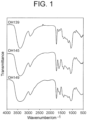
- the IR spectrum of the cellulose derivative (OH145) obtained in Example 2 and the cellulose derivative (OH149) obtained in Example 3 are shown in Figure 1 .
- CRB05 is a polymer in which methylglucamine groups are bonded to a polystyrene crosslinked with divinylbenzene, and the content of the above groups is 0.6 to 1.0 mol/kg.
- Step 1 Reacting a cellulose with a compound represented by the formula (2) to produce a cellulose derivative having a repeating unit represented by the formula (II).
- Step 2 Reacting the cellulose derivative having the repeating unit represented by the formula (II) with a compound represented by the formula (3).
- the cellulose derivative of the present disclosure can be suitably used as a boron adsorbent.
- the boron adsorbent does not cause exhaust problems when burned, and the volume can be reduced by burning it after adsorbing boron, thereby significantly reducing the cost of disposal, such as landfill and the like.
Landscapes
- Chemical & Material Sciences (AREA)
- Organic Chemistry (AREA)
- Chemical Kinetics & Catalysis (AREA)
- Analytical Chemistry (AREA)
- Engineering & Computer Science (AREA)
- Polymers & Plastics (AREA)
- Life Sciences & Earth Sciences (AREA)
- Health & Medical Sciences (AREA)
- Medicinal Chemistry (AREA)
- Hydrology & Water Resources (AREA)
- Environmental & Geological Engineering (AREA)
- Water Supply & Treatment (AREA)
- Biochemistry (AREA)
- Materials Engineering (AREA)
- Polysaccharides And Polysaccharide Derivatives (AREA)
- Solid-Sorbent Or Filter-Aiding Compositions (AREA)
Abstract

Description
- The present disclosure relates to a novel cellulose derivative and a method for producing the cellulose derivative, a boron adsorbent comprising the cellulose derivative, and a method for recovering boron using the cellulose derivative.
- Boron is often used as a raw material for heat insulating materials and glass fibers. In addition, it is also used in the production of special glass such as liquid crystal displays and the like. Therefore, boron is widely present in rivers and seawater via industrial wastewater.
- Boron is an essential trace element for plants, but is known to inhibit plant growth when contained in a large amount in agricultural water. Thus, it is demanded to remove boron contained in water.
-
Patent Literature 1 describes an aromatic crosslinked polymer that has hydrophilicity and is capable of recovering boron dissolved and present in water by chelate adsorption. The aromatic crosslinked polymer is obtained by introducing a chloromethyl group into a polystyrene-divinylbenzene crosslinked copolymer to produce a chloromethylated polymer, reacting the produced polymer with N-methylglucamine to introduce a chelate adsorption group for boron, and further reacting with a low molecular alkylamine to make it hydrophilic. - Patent Literature 1:
Japanese Patent Laid-Open No. 2005-239961 - However, the aromatic crosslinked polymer still has low hydrophilicity, and therefore, the recovery of boron takes too long. In Examples of
Patent Literature 1, the aromatic crosslinked polymer is immersed in a boron solution for 72 hours to recover boron in the solution. Although the hydrophilicity can be improved by increasing the introduction rate of the hydrophilic group, the amount of the chelate adsorption group introduced declines along with it, making it difficult to obtain high hydrophilicity while maintaining a high amount of the chelate adsorption group introduced. - Accordingly, an object of the present invention is to provide a cellulose derivative that has a high amount of a chelate adsorption group introduced, has high hydrophilicity, and is capable of efficiently recovering boron.
- Another object of the present disclosure is to provide a method for producing the cellulose derivative.
- Another object of the present disclosure is to provide a boron adsorbent that is capable of efficiently recovering boron.
- Another object of the present disclosure is to provide a method for recovering boron using the cellulose derivative.
- As a result of diligent studies to solve the above problem, the present inventors have found that, since cellulose has high hydrophilicity, if a chelate adsorption group is introduced into cellulose, a cellulose derivative that possess high hydrophilicity and a high amount of the chelate adsorption group introduced and is excellent in boron adsorption power can be obtained. The present disclosure has been completed based on this finding.
- That is, the present disclosure provides a cellulose derivative having a repeating unit represented by the following formula (I-1).

- [In the formula, Ra is the same as or different from each other, and is a hydroxyl group or a group represented by the following formula (a). Note that at least one of all Ra contained in the cellulose derivative is the group represented by the following formula (a).]


- The present disclosure also provides the cellulose derivative, in which the total average degree of substitution with the group represented by the formula (a) is 0.1 to 3.0.
- The present disclosure also provides the cellulose derivative, in which the group represented by the formula (a) is introduced in an amount of 1.5 mol/kg or more.
- The present disclosure also provides a boron adsorbent comprising the cellulose derivative.
- The present disclosure also provides a method for recovering boron, in which boron dissolved in an aqueous solution is adsorbed by the cellulose derivative and recovered.
- The present disclosure also provides a method for producing a cellulose derivative, in which the cellulose derivative is produced through the following steps.
- [1] Reacting a cellulose with a compound represented by the following formula (2)


Note that at least one of all Rb contained in the cellulose derivative is the group represented by the formula (b).] - [2] Reacting the cellulose derivative having the repeating unit represented by the formula (II) with a compound represented by the following formula (3).

- The cellulose derivative of the present disclosure has a side chain represented by the formula (a). The side chain has the property of easily forming a chelate with a hard acid in the HSAB theory. Therefore, by using the cellulose derivative, boron, which is regarded as hard acids in the HSAB theory, can be selectively and efficiently adsorbed and recovered.
- In addition, since the cellulose derivative is excellent in hydrophilicity, when an aqueous solution containing boron is brought into contact with the cellulose derivative, the aqueous solution containing boron easily and quickly penetrates into the inside of the cellulose derivative, and boron in the aqueous solution is adsorbed and fixed on the side chain represented by the formula (a). Thus, by using the cellulose derivative, boron dissolved in the aqueous solution can be adsorbed and recovered in a short time.
- Accordingly, the cellulose derivative can be suitably used for applications in which boron contained in wastewater and the like is selectively and quickly adsorbed and recovered.
- Furthermore, the cellulose derivative does not cause exhaust problems when burned, and the volume reduction by burning the cellulose derivative with adsorbed boron can significantly reduce the cost of disposal, such as landfill and the like.
-
- [
Figure 1] Figure 1 shows the IR spectrum of the cellulose derivatives obtained in Examples. - [
Figure 2] Figure 2 compares the amount of boron adsorbed by the cellulose derivatives obtained in Examples with that of a previously known boron adsorbent. - The cellulose derivative of the present disclosure (hereinafter, sometimes referred to as "cellulose derivative (I)") has a repeating unit represented by the following formula (I-1).

- [In the formula, Ra is the same as or different from each other, and is a hydroxyl group or a group represented by the following formula (a). Note that at least one of all Ra contained in the cellulose derivative is the group represented by the following formula (a).]

- R1 is preferably a hydrogen atom.
- The hydrocarbon group in R2 include an aliphatic hydrocarbon group, an alicyclic hydrocarbon group, an aromatic hydrocarbon group, and a group in which they are bonded.
- The aliphatic hydrocarbon group is preferably an aliphatic hydrocarbon group having 1 to 20 carbon atoms, and examples thereof include an alkyl group having 1 to 20 (preferably 1 to 10, particularly preferably 1 to 3) carbon atoms such as a methyl group, an ethyl group, a propyl group, an isopropyl group, a butyl group, an isobutyl group, a s-butyl group, a t-butyl group, a pentyl group, a hexyl group, a decyl group, a dodecyl group, and the like; an alkenyl group having 2 to 20 (preferably 2 to 10, particularly preferably 2 to 3) carbon atoms such as a vinyl group, an allyl group, a 1-butenyl group, and the like; an alkynyl group having 2 to 20 (preferably 2 to 10, particularly preferably 2 to 3) carbon atoms such as an ethynyl group, a propynyl group, and the like; and the like.
- The alicyclic hydrocarbon group is preferably a C3-20 alicyclic hydrocarbon group, and examples thereof include a 3- to 20-membered (preferably 3- to 15-membered, particularly preferably 5- to 8-membered) cycloalkyl group such as a cyclopropyl group, a cyclobutyl group, a cyclopentyl group, a cyclohexyl group, a cyclooctyl group, and the like; and the like.
- The aromatic hydrocarbon group is preferably a C6-14 (in particular, C6-10) aromatic hydrocarbon group, and examples thereof include a phenyl group, a naphthyl group, and the like.
- Above all, the hydrocarbon group in R2 is preferably an aliphatic hydrocarbon group, particularly preferably an alkyl group, and especially preferably an alkyl group having 1 to 5 carbon atoms.
- R2 is preferably a hydrocarbon group having a hydroxyl group, more preferably an aliphatic hydrocarbon group having a hydroxyl group, particularly preferably an alkyl group having a hydroxyl group, and especially preferably an alkyl group having 1 to 5 carbon atoms and having a hydroxyl group.
- Examples of the hydrocarbon group in R3 include the same examples as the hydrocarbon group in R2. The hydrocarbon group in R3 is preferably an aliphatic hydrocarbon group, particularly preferably an alkyl group, and especially preferably an alkyl group having 1 to 5 carbon atoms.
- The cellulose derivative (I) having X1 to X3 is a hard base in the HSAB theory. Substituents described as X1 toX3 in the cellulose derivative (I) forms a complex with a hard acid in the HSAB theory.
- X1 to X3 are each a group that forms a complex with a hard acid in the HSAB theory, and examples thereof include a group containing an oxygen atom such as - OR, -OH, and the like, and a group containing a nitrogen atom such as -NH2, -NHR, - NR2, and the like. R represents an alkyl group having 1 to 5 carbon atoms. X1 to X3 are each preferably a hydroxyl group or an amino group, and particularly preferably a hydroxyl group.
- Accordingly, the group represented by the formula (a) is preferably a group represented by the following formula (a-1). In the following formula, R1 to R3 are the same as described above.

- The group represented by the formula (a) is particularly preferably a group represented by the following formula (a-2). In the following formula, R1 and R3 are the same as described above.

- The total average degree of substitution (the total average DS) with the group represented by the formula (a) [preferably the group represented by the formula (a-1), more preferably the group represented by the formula (a-2)] (the average DS of substitution of the hydrogen atoms of the hydroxyl groups at the positions 2, 3 and 6 of the glucose unit constituting the cellulose by the above group) is, for example, 0.1 to 3.0, preferably 1.0 to 3.0, and particularly preferably 2.0 to 3.0. When the cellulose derivative (I) has the above group in the above range, it can exhibit excellent boron adsorption power.
- The amount of the group represented by the formula (a) [preferably the group represented by the formula (a-1), more preferably the group represented by the formula (a-2)] introduced into the cellulose derivative (I) is, for example, 1.5 mol/kg or more, preferably 2.0 mol/kg or more, particularly preferably 2.5 mol/kg or more, and most preferably 3.0 mol/kg or more. Note that the upper limit value of the amount introduced is, for example, 3.33 mol/kg.
- In addition, in the cellulose derivative (I), one cellulose derivative (I) and another cellulose derivative (I) may be bonded to each other via a group represented by the following formula (c-1) and/or a group represented by the following formula (c-2). That is, a crosslinked structures shown below may be formed.

- Accordingly, the cellulose derivative (I) may have, along with the repeating unit represented by the formula (I-1), a repeating unit represented by the following formula (I-2) and/or a repeating unit represented by the following formula (I-3). In the case of the cellulose derivative (I) having a repeating unit represented by the following formula (I-2) and/or a repeating unit represented by the following formula (I-3), it is difficult to dissolve in water. Therefore, boron dissolved in an aqueous solution can be conveniently and efficiently recovered by solid phase extraction. Note that, in the following formulas, Ra, R1, R1', and L are the same as described above.

- Although the shape of the cellulose derivative (I) is not particularly restricted as long as it does not impair the effects of the present disclosure, it is preferably in the form of gel, powder, pellet, thread, or non-woven fabric in that it can be easily recovered from an aqueous solution after boron in the aqueous solution has been adsorbed.
- The cellulose derivative (I) has a group represented by the formula (a), and that group forms a complex with a hard acid in the HSAB theory. Therefore, by using the cellulose derivative (I), it is possible to capture a metalloid (for example, boron) that falls under hard acids in the HSAB theory.
- The adsorption capacity of the cellulose derivative (I) for a metalloid (for example, boron) that falls under hard acids in the HSAB theory is, for example, 0.1 mol/kg or more, preferably 0.5 mol/kg or more, more preferably 1 mol/kg or more, still more preferably 1.5 mol/kg or more, particularly preferably 2.0 mol/kg or more, and most preferably 3.0 mol/kg or more.
- Note that the adsorption capacity for a metalloid or the like by the cellulose derivative (I) is the amount adsorbed when 10 mg of the cellulose derivative (I) is immersed in an aqueous solution (pH 8) in which the concentration of the metalloid or the like is 200 µmol/L at 25°C and stirred at 200 rpm for 1 hour, and is calculated according to the expression described in Examples.
- Since the cellulose derivative (I) has the above characteristics, it can be suitably used as an adsorbent for a metalloid (for example, boron) that falls under hard acids in the HSAB theory.
- The cellulose derivative (I) can be produced through, for example, the following steps [1] and [2].
- [1] Reacting a cellulose with a compound represented by the following formula (2)

to produce a cellulose derivative having a repeating unit represented by the following formula (II).


Note that at least one of all Rb contained in the cellulose derivative is the group represented by the formula (b).] - [2] Reacting the cellulose derivative having the repeating unit represented by the formula (II) with a compound represented by the following formula (3).

- In the formulas, R1 to R3 and X1 to X3 are the same as described above.
- The step [1] is a step of reacting a hydroxyl group of a cellulose with a compound represented by the formula (2) (hereinafter, sometimes referred to as "compound (2)") to produce a cellulose derivative having a repeating unit represented by the formula (II) (hereinafter, sometimes referred to as "cellulose derivative (II)").
- As the cellulose, for example, cellulose derived from wood pulp (softwood pulp, hardwood pulp) and cotton linter pulp, crystalline cellulose, and the like can be suitably used. They can be used alone as one type, or in combination of two or more types. Note that the pulp may also contain other components such as hemicellulose and the like. As the cellulose, it is preferable to use finely pulverized cellulose (for example, powdered cellulose) by, for example, performing a crushing treatment and the like.
- The amount of the compound (2) used is, for example, 1 part by weight or more, preferably 2 to 6 parts by weight, per (based on) 1 part by weight of the cellulose.
- In the case of using a compound in which Y in the formula is a hydroxyl group as the compound (2), the reaction of the step [1] is preferably carried out in the presence of a condensing agent. Examples of the condensing agent include 1-ethyl-3-(3-dimethylaminopropyl) carbodiimide hydrochloride (EDC-HCl), N,N'-dicyclohexylcarbodiimide, N,N'-diisopropylcarbodiimide, and the like. They can be used alone as one type, or in combination of two or more types.
- The amount of the condensing agent used is, for example, 1 to 10 moles per 1 mole of the compound (2).
- In addition, the reaction using the condensing agent is preferably carried out in the presence of a catalyst. Examples of the catalyst include triethylamine, pyridine, N,N-dimethyl-4-aminopyridine (DMAP), and the like. They can be used alone as one type, or in combination of two or more types.
- The amount of the catalyst used is, for example, 0.01 to 1.0 moles per 1 mole of the compound (2).
- Note that, in the case of using a compound in which Y in the formula is a halogen atom as the compound (2), no condensing agent is particularly necessary.
- In the case of using a compound in which Y in the formula is a halogen atom as the compound (2), the reaction of the step [1] is preferably carried out in the presence of a base. The base includes an organic base and an inorganic base.
- Examples of the organic base include an aliphatic amine (including, for example, a secondary aliphatic amine such as diisopropylamine and the like, and a tertiary aliphatic amine such as triethylamine, tri-n-propylamine, tri-n-butylamine, tri-s-butylamine, tri-t-butylamine, diisopropylethylamine, dimethylcyclohexylamine, dicyclohexylethylamine, tribenzylamine, benzyldimethylamine, and the like); an aromatic amine (for example, N,N-dimethylaniline, N,N-diethylaniline, diaminodiphenylmethane, methylaniline, and the like); a cyclic amine (for example, 1,5-diazabicyclo[4.3.0]-5-nonene, 1,8-diazabicyclo[5.4.0]-7-undecene, 1,4-diazabicyclo[2.2.2]octane, N-methylpiperidine, 1,4-dimethylpiperazine, N-methylpyrrolidine, N-methylmorpholine, 1-methyl-2,2,6,6-tetramethylpiperidine, pyridine, 2,6-dimethylpyridine, 2,4,6-trimethylpyridine, 4-dimethylaminopyridine (DMAP), 2,6-di-t-butylpyridine, and the like); and the like.
- Examples of the inorganic base include an alkali metal alkoxide such as sodium methoxide, sodium ethoxide, potassium t-butoxide, and the like; an alkali metal carbonate such as sodium hydrogen carbonate, sodium carbonate, potassium carbonate, rubidium carbonate, cesium carbonate, and the like; an alkali metal phosphate such as potassium phosphate and the like; an alkali metal hydroxide such as lithium hydroxide, sodium hydroxide, potassium hydroxide, and the like; and the like.
- As the base, an organic base is preferable and a tertiary amine is particularly preferable in that it is excellent in the reaction promoting effect between the cellulose and the compound (2), and the cellulose derivative (I) having, along with the repeating unit represented by the formula (I-1), the repeating unit represented by the formula (I-2) and/or the repeating unit represented by the formula (I-3) is obtained.
- The amount of the base used is, for example, 0.01 to 1.5 moles per 1 mole of the compound (2).
- The reaction of the step [1] is preferably carried out in the presence of a solvent. Examples of the solvent include an aliphatic hydrocarbon such as hexane, heptane, octane, and the like; an alicyclic hydrocarbon such as cyclohexane and the like; an aromatic hydrocarbon such as benzene, toluene, xylene, ethylbenzene, and the like; a halogenated hydrocarbon such as chloroform, dichloromethane, 1,2-dichloroethane, and the like; an ether such as diethyl ether, dimethoxyethane, tetrahydrofuran, dioxane, and the like; a ketone such as acetone, methyl ethyl ketone, methyl isobutyl ketone, and the like; an ester such as methyl acetate, ethyl acetate, isopropyl acetate, butyl acetate, and the like; an amide such as N,N-dimethylformamide, N,N-dimethylacetamide, N-methylpyrrolidone, and the like; a nitrile such as acetonitrile, propionitrile, benzonitrile, and the like; an alcohol such as methanol, ethanol, isopropyl alcohol, butanol, and the like; dimethyl sulfoxide; and the like. They can be used alone as one type, or in combination of two or more types.
- As the solvent, an amide such as N,N-dimethylacetamide and the like is preferable, and it is particularly preferable to use one in which a lithium salt such as lithium chloride and the like is mixed with the solvent in that the solubility of the cellulose is excellent. The lithium salt concentration in the solvent can be adjusted as appropriate to the extent that it does not impair the effect of dissolving the cellulose, and is, for example, 1 to 30% by weight.
- The amount of the solvent used is, for example, 10 to 500 mL, preferably 20 to 100 mL, per 1 g of the cellulose. If the amount of the solvent used is greater than the above range, the concentration of the reaction components tends to be lower and the reaction rate tends to decline.
- The total average DS (the total average degree of substitution) with the group represented by the formula (b) (the average DS of the hydrogen atoms of the hydroxyl groups at the positions 2, 3 and 6 of the glucose unit constituting the cellulose by the above group) in the cellulose derivative (II) obtained through the step [1] is, for example, 0.1 to 3.0, preferably 1.0 to 3.0, and particularly preferably 2.0 to 3.0.
- The step [2] is a step of reacting the cellulose derivative (II) produced through the step [1] with a compound represented by the formula (3) (hereinafter, sometimes referred to as "compound (3)"). Through the step [2], the cellulose derivative (I) is obtained.
- As the compound (3), for example, D-glucamine, N-methylglucamine, N-ethylglucamine, and the like are preferable.
- The amount of the compound (3) used is, for example, 1.5 parts by weight or more, preferably 1.5 to 5.5 parts by weight, and particularly preferably 2.5 to 5.5 parts by weight, per 1 part by weight of the cellulose derivative (II).
- The reaction of the step [2] is preferably carried out in the presence of a solvent. Examples of the solvent include an aromatic hydrocarbon such as toluene, xylene, ethylbenzene, and the like; an alcohol such as methanol, ethanol, 2-propanol, isopropyl alcohol, butanol, and the like; and N-methylpyrrolidone, dimethyl sulfoxide, N,N-dimethylformamide, and the like. They can be used alone as one type, or in combination of two or more types.
- The amount of the solvent used is, for example, 10 to 500 mL, preferably 20 to 100 mL, per 1 g of the cellulose derivative (II). When the amount of the solvent used is greater than the above range, the concentration of the reaction components tends to be lower and the reaction rate tends to decline.
- The reaction temperature in the step [2] is, for example, 20 to 80°C. The reaction time is, for example, 1 to 72 hours. After the reaction is completed, the resulting reaction product can be separated and purified by, for example, a separation means such as filtration, concentration, distillation, extraction, crystallization, adsorption, recrystallization, column chromatography, or the like, or a separation means in which they are combined.
- The boron adsorbent of the present disclosure comprises the cellulose derivative (I).
- Although the boron adsorbent may contain other components in addition to the cellulose derivative (I), the proportion of the cellulose derivative (I) is, for example, 50% by weight or more, preferably 60% by weight or more, particularly preferably 70% by weight or more, most preferably 80% by weight or more, and especially preferably 90% by weight or more, based on the entire amount of the boron adsorbent. If the proportion of the cellulose derivative (I) is smaller than the above range, it tends to be difficult to efficiently and selectively adsorb boron.
- Moreover, the boron adsorbent may also contain other cellulose derivatives in addition to the cellulose derivative (I), but the proportion of the cellulose derivative (I) is, for example, 60% by weight or more, preferably 70% by weight or more, particularly preferably 80% by weight or more, most preferably 90% by weight or more, and especially preferably 95% by weight or more, based on the entire amount of the cellulose derivatives contained in the boron adsorbent. When the proportion of the cellulose derivative (I) is smaller than the above range, it tends to be difficult to efficiently and selectively adsorb boron.
- There is no particular restriction on the formulation of the boron adsorbent to the extent that it is effective, and examples thereof include powder, pellet, thread, non-woven fabric, and the like.
- The boron adsorbent has the characteristics of the cellulose derivative (I). That is, it has high adsorption power for boron, which falls under hard acids in the HSAB theory. Therefore, it is suitable for applications in which boron is selectively recovered from industrial wastewater, mine wastewater, hot spring water and the like, seawater, and the like.
- In the method for recovering boron of the present disclosure, boron dissolved in an aqueous solution (or boron contained and present in an aqueous solution) is adsorbed by the cellulose derivative (I) and recovered.
- In an aqueous solution, boron strongly interacts with hydroxyl groups, which are hard bases, and is present as boric acid or tetrahydroxyborate ion. Then, the cellulose derivative (I) adsorbs and recovers boron ion in the form of a chelate complex between the group represented by the formula (a) and boric acid or tetrahydroxyborate ion contained in the aqueous solution, by substitution of hydroxyl groups thereof.
- The method for allowing boron dissolved in an aqueous solution to be adsorbed by the cellulose derivative (I) is not particularly restricted, and examples thereof include a method in which the cellulose derivative (I) is packed in a column or the like and an aqueous solution in which boron is dissolved is poured into it, a method in which the cellulose derivative (I) is added to an aqueous solution in which boron is dissolved and the aqueous solution is stirred, and other methods.
- In the method for recovering boron, it is preferable to adjust the pH of the cellulose derivative (I) to, for example, 6 to 12 (in particular 7 to 10, especially 7 to 9) in that adsorption power for metals can be even further improved and boron can be recovered even more efficiently. Note that the pH adjustment of the cellulose derivative can be carried out using a well-known and customary pH adjuster (an acid such as nitric acid and the like, or an alkali such as sodium hydroxide and the like).
- In addition, after boron is adsorbed by the cellulose derivative (I), the volume can be remarkably reduced by burning the cellulose derivative (I) with adsorbed boron, thereby reducing the cost of disposal.
- Each of the above configurations and combinations thereof, and the like in the present disclosure are only examples, and additions, omissions, substitutions, and modifications to the configuration can be made as appropriate within the scope that does not depart from the gist of the present disclosure. Also, the present disclosure is not limited by embodiments, but only by description of the scope of claims.
- Hereinafter, the present disclosure will be described more specifically by means of Examples, but the present disclosure is not limited by these Examples.
- In a two-necked eggplant flask, cellulose (polymer having a repeating unit represented by the following formula (1-1), 0.421 g, 2.60 mmol) was placed and vacuum dried at 90°C for 2 hours. Under a nitrogen atmosphere, N,N-dimethylacetamide (13 mL) was added and the mixture was stirred for 21 hours. The reaction vessel was cooled to 0°C in an ice bath, lithium chloride (0.82 g) was added, and the cellulose was dissolved by stirring while raising the temperature to room temperature (25°C). The reaction vessel was cooled again to 0°C in an ice bath, acryloyl chloride (1.18 g, 13.0 mmol) and diisopropylamine (0.79 g, 7.79 mmol) were added, and the mixture was stirred for 18 hours while raising the temperature to room temperature. The reaction solution was poured into ethanol, and the solid obtained by reprecipitation was recovered by suction filtration. The obtained solid was vacuum dried to obtain cellulose acrylate (polymer having a repeating unit represented by the following formula (II-1), 633 mg, yield: about 80%) as a light orange solid.
- From the results of 1H-NMR measurement, the total average degree of substitution (DS) with the acryloyl group was calculated to be 2.3 to 2.6.

- 1H-NMR (500 MHz, DMSO-d6, r.t.): δ5.5-6.5 (acryloyl groups), 1.5-5.3 (cellulose, overlapped with residual H2O and DMSO)
- Under a nitrogen atmosphere, the cellulose acrylate (polymer having a repeating unit represented by the following formula (II-1), 0.300 g, 1.01 mmol) was added to a two-necked eggplant flask, and dimethyl sulfoxide (10 mL) was added to dissolve it. N-methylglucamine (1.18 g, 6.06 mmol) was added and the mixture was stirred at room temperature for 2 hours. The reaction solution was poured into ethanol, and the solid obtained by reprecipitation was recovered by centrifugation and washed with ethanol. The obtained solid was vacuum dried to obtain a cellulose derivative (OH139) (polymer having a repeating unit represented by the following formula (I-1), 547 mg, yield: about 70%) as a colorless powder.
- From the results of 1H-NMR measurement, the total average degree of substitution (DS) with the N-methylglucamine group was calculated to be 2.3 to 2.6, and the amount of the N-methylglucamine group introduced was calculated to be 3.1 to 3.2 mol/kg. The IR spectrum of the cellulose derivative (OH139) is shown in
Figure 1 .

- 1H-NMR (500 MHz, DMSO-d6, r.t.): δ4.04-5.00 (br), 3.65-3.75 (br), 3.54-3.64 (br), 3.46-3.53 (br), 3.19-3.45 (br), 2.59-2.81 (br), 2.50 (brs), 2.29-2.40 (br), 2.13-2.29 (br)
- Cellulose derivatives were obtained in the same manner as in Example 1, except that the reaction conditions in the step I were changed as described in the table below. The IR spectrum of the cellulose derivative (OH145) obtained in Example 2 and the cellulose derivative (OH149) obtained in Example 3 are shown in
Figure 1 . -
Table 1 Step I Step II Acrylic compound Base, condensing agent Properties of reaction solution Total average degree of substitution with acryloyl group in product Cellulose derivative No. Total average degree of substitution with glucamine group in product Amount of glucamine group introduced in product (mol/kg) Solubility in water Example 1 Acryloyl chloride (i-Pr)2NH Solution 2.3 to 2.6 OH139 2.3 to 2.6 3.1-3.2 Soluble Example 2 Acryloyl chloride PhNEt2 Gel 2.3 to 2.6 OH145 2.3 to 2.6 3.1-3.2 Insoluble Example 3 Acryloyl chloride (i-Pr)2NEt Gel 2.3 to 2.6 OH149 2.3 to 2.6 3.1-3.2 Insoluble Example 4 Acrylic acid EDC-HCl, DMAP Solution <1 OH129 <1 <2.4 Soluble - In Examples 2 and 3, the reaction solution after the completion of the step [1] was in the form of gel. This suggests that hydroxyl groups of the cellulose are substituted by acryloyl groups and that the cellulose is bonded to each other via the crosslinked structure derived from the acrylic compound.
- For the cellulose derivatives obtained in Examples 2 and 3, and Diaion CRB05 (manufactured by Mitsubishi Chemical Corporation) as Comparative Example, the adsorption capacity for boron was evaluated by the following method (batch method). Note that CRB05 is a polymer in which methylglucamine groups are bonded to a polystyrene crosslinked with divinylbenzene, and the content of the above groups is 0.6 to 1.0 mol/kg.
- To a 100 mL centrifuge tube, 10 mL of a 200 µM boron aqueous solution (pH 8) and 10 mg of the cellulose derivative classified to 212 to 600 µm were added, and stirred at 25°C and 200 rpm for 1 hour.
- Filtration was performed using a membrane filter (nitrocellulose, pore size: 0.45 µm), and the boron ion concentration (Ce: mol/L) in the filtrate was quantified with an ICP emission spectrometer (iCAP 6300 manufactured by Thermo Fischer Scientific). The initial concentration of boron ion in the solution was defined as C0 (mol/L), the volume of the solution added as Vo (L), and the weight of the cellulose derivative used as m (kg), and the adsorption capacity (mol/kg) was calculated according to the following expression.

- The results are shown in
Figure 2 . It can be seen fromFigure 2 that the cellulose derivatives of the present disclosure can adsorb and recover boron with superior efficiency compared to the previously known boron adsorbent. - To summarize the above, the configuration of the present disclosure and its variations are appended below.
- [1] A cellulose derivative having a repeating unit represented by the following formula (I-1).
- [2] The cellulose derivative according to [1], wherein a total average degree of substitution with the group represented by the formula (a) is 0.1 to 3.0.
- [3] The cellulose derivative according to [1] or [2], wherein the group represented by the formula (a) is introduced in an amount of 1.5 mol/kg or more.
- [4] The cellulose derivative according to any one of [1] to [3], further having a repeating unit of at least one selected from the formula (I-2) and the formula (I-3).
- [5] The cellulose derivative according to any one of [1] to [4], which is in the form of powder or pellet.
- [6] The cellulose derivative according to any one of [1] to [5], having an adsorption capacity for a metalloid that corresponds to a hard acid in the HSAB theory of 0.1 mol/kg or more.
- [7] A boron adsorbent comprising the cellulose derivative according to any one of [1] to [6].
- [8] The boron adsorbent according to [7], having an adsorption capacity for boron of 0.1 mol/kg or more.
- [9] The boron adsorbent according to [7] or [8], wherein a content of the cellulose derivative according to any one of [1] to [6] in the boron adsorbent is 50% by weight or more.
- [10] A method for recovering boron, wherein boron dissolved in an aqueous solution is adsorbed by the cellulose derivative according to any one of [1] to [6] and recovered.
- [11] A method for producing a cellulose derivative, wherein the cellulose derivative according to any one of [1] to [6] is produced through the following
steps 1 and 2. - Step 1: Reacting a cellulose with a compound represented by the formula (2) to produce a cellulose derivative having a repeating unit represented by the formula (II).
- Step 2: Reacting the cellulose derivative having the repeating unit represented by the formula (II) with a compound represented by the formula (3).
- The cellulose derivative of the present disclosure can be suitably used as a boron adsorbent. In the case of using the cellulose derivative as a boron adsorbent, the boron adsorbent does not cause exhaust problems when burned, and the volume can be reduced by burning it after adsorbing boron, thereby significantly reducing the cost of disposal, such as landfill and the like.
Claims (6)
- A cellulose derivative having a repeating unit represented by the following formula (I-1):


- The cellulose derivative according to claim 1, wherein a total average degree of substitution with the group represented by the formula (a) is 0.1 to 3.0.
- The cellulose derivative according to claim 1 or 2, wherein the group represented by the formula (a) is introduced in an amount of 1.5 mol/kg or more.
- A boron adsorbent comprising the cellulose derivative according to any one of claims 1 to 3.
- A method for recovering boron, wherein boron dissolved in an aqueous solution is adsorbed by the cellulose derivative according to any one of claims 1 to 3 and recovered.
- A method for producing a cellulose derivative, wherein the cellulose derivative according to any one of claims 1 to 3 is produced through the following steps:[1] reacting a cellulose with a compound represented by the following formula (2):
 wherein R1 represents a hydrogen atom or a methyl group; and Y represents a hydroxyl group or a halogen atom,to produce a cellulose derivative having a repeating unit represented by the following formula (II):
 wherein Rb is the same as or different from each other, and is a hydroxyl group or a group represented by the following formula (b):
 wherein R1 is the same as described above,
provided that at least one of all Rb contained in the cellulose derivative is the group represented by the formula (b);[2] reacting the cellulose derivative having the repeating unit represented by the formula (II) with a compound represented by the following formula (3):wherein R2 represents a hydrogen atom or a hydrocarbon group optionally having a hydroxyl group; R3 represents a hydrogen atom or a hydrocarbon group; and X1 to X3 are the same as or different from each other, and each represent a group that forms a complex with a hard acid in a HSAB theory.
Applications Claiming Priority (1)
| Application Number | Priority Date | Filing Date | Title |
|---|---|---|---|
| PCT/JP2021/029911 WO2023021551A1 (en) | 2021-08-16 | 2021-08-16 | Cellulose derivative, and boron adsorbent containing said cellulose derivative |
Publications (2)
| Publication Number | Publication Date |
|---|---|
| EP4389773A1 true EP4389773A1 (en) | 2024-06-26 |
| EP4389773A4 EP4389773A4 (en) | 2025-06-04 |
Family
ID=85240202
Family Applications (1)
| Application Number | Title | Priority Date | Filing Date |
|---|---|---|---|
| EP21954126.5A Withdrawn EP4389773A4 (en) | 2021-08-16 | 2021-08-16 | CELLULOSE DERIVATIVE AND BORON ADSORBENT CONTAINING SAID CELLULOSE DERIVATIVE |
Country Status (5)
| Country | Link |
|---|---|
| US (1) | US20240226848A1 (en) |
| EP (1) | EP4389773A4 (en) |
| JP (1) | JPWO2023021551A1 (en) |
| CN (1) | CN117836331A (en) |
| WO (1) | WO2023021551A1 (en) |
Families Citing this family (1)
| Publication number | Priority date | Publication date | Assignee | Title |
|---|---|---|---|---|
| WO2025069437A1 (en) * | 2023-09-29 | 2025-04-03 | 国立大学法人金沢大学 | Cellulose derivative and boron adsorbent including said cellulose derivative |
Family Cites Families (7)
| Publication number | Priority date | Publication date | Assignee | Title |
|---|---|---|---|---|
| JP4710233B2 (en) | 2004-02-27 | 2011-06-29 | 三菱化学株式会社 | Aromatic cross-linked polymers and adsorbents having metalloid complex forming groups |
| JP5045269B2 (en) * | 2007-06-29 | 2012-10-10 | 株式会社Nhvコーポレーション | Particulate cellulose-based adsorbent and method for producing the same |
| EA021761B9 (en) * | 2008-12-16 | 2015-12-30 | Карлсберг А/С | Cellulose based polymer material |
| JP5470032B2 (en) * | 2009-08-12 | 2014-04-16 | 富士フイルム株式会社 | Cellulose derivative, thermoforming material, molded body, method for producing the same, and casing for electric and electronic equipment |
| JP5644562B2 (en) * | 2011-02-07 | 2014-12-24 | コニカミノルタ株式会社 | Method for producing organic photoreceptor |
| CN106103491B (en) * | 2014-03-19 | 2022-01-28 | 株式会社大赛璐 | Acylated-oxoalkanoylated cellulose |
| CN108360080A (en) * | 2018-02-12 | 2018-08-03 | 天津工业大学 | A kind of cellulose-acrylate base solid-solid phase transition material and preparation method thereof |
-
2021
- 2021-08-16 JP JP2023542040A patent/JPWO2023021551A1/ja active Pending
- 2021-08-16 WO PCT/JP2021/029911 patent/WO2023021551A1/en not_active Ceased
- 2021-08-16 CN CN202180101591.XA patent/CN117836331A/en active Pending
- 2021-08-16 US US18/684,071 patent/US20240226848A1/en active Pending
- 2021-08-16 EP EP21954126.5A patent/EP4389773A4/en not_active Withdrawn
Also Published As
| Publication number | Publication date |
|---|---|
| WO2023021551A1 (en) | 2023-02-23 |
| JPWO2023021551A1 (en) | 2023-02-23 |
| US20240226848A1 (en) | 2024-07-11 |
| CN117836331A (en) | 2024-04-05 |
| EP4389773A4 (en) | 2025-06-04 |
Similar Documents
| Publication | Publication Date | Title |
|---|---|---|
| Aida et al. | Activation of carbon dioxide with aluminum porphyrin and reaction with epoxide. Studies on (tetraphenylporphinato) aluminum alkoxide having a long oxyalkylene chain as the alkoxide group | |
| CN115836091B (en) | Cellulose derivative and metal adsorbing material comprising the same | |
| US8198312B2 (en) | Compositions and methods of making a photoactive agent | |
| EP2534131B1 (en) | Methods of synthesizing and isolating n-(bromoacetyl)-3,3-dinitroazetidine and a composition including the same | |
| CN111205294A (en) | Preparation method of Reidesciclovir intermediate | |
| EP4230614A1 (en) | Asymmetic linear carbonate and method for preparing asymmetic linear carbonate | |
| CN1288140C (en) | Macro molecular triazine series carbon forming foaming agent and its synthetic method | |
| US20240226848A1 (en) | Cellulose derivative, and boron adsorbent comprising the cellulose derivative | |
| CN112225757B (en) | Preparation method of lobaplatin trihydrate | |
| JP2020019845A (en) | Cellulose derivative, heavy metal removal material containing the same, and heavy metal removing method using the same | |
| CN112300212A (en) | Use of borane-pyridine complexes for the preparation of NK-1 receptor antagonists | |
| CN108484543B (en) | Preparation method of potassium dehydroandrographolide succinate or potassium dehydroandrographolide succinate | |
| JP2020019846A (en) | Cellulose derivative, heavy metal removal material containing the same, and heavy metal removing method using the same | |
| EP4406993A1 (en) | Crosslinked structure, metal scavenging material including said crosslinked structure, method for recovering metal using said metal scavenging material, and method for producing said crosslinked structure | |
| JP7548495B2 (en) | Valuable metal adsorbent and valuable metal recovery method | |
| EP2330107A2 (en) | Improved production method for adefovir dipivoxil | |
| EP2420504B1 (en) | Method for producing tetrahydropyran compound and intermediate thereof | |
| WO2014097306A1 (en) | Stable and pure polymorphic form of bortezomib | |
| EP2457899A1 (en) | Process for production of optically active nipecotamide | |
| EP4554930A1 (en) | Methods of preparation of heterocyclic compounds | |
| WO2018211410A1 (en) | Improved process for preparation of fosaprepitant or salt thereof | |
| CN112552345A (en) | Preparation method of NK-1 receptor antagonist | |
| CN112480172A (en) | Use of borane-pyridine complexes for the preparation of pharmaceutical compounds | |
| CN101735296B (en) | Method for preparing fludarabine | |
| CN112521421A (en) | Preparation method of pharmaceutical compound |
Legal Events
| Date | Code | Title | Description |
|---|---|---|---|
| STAA | Information on the status of an ep patent application or granted ep patent |
Free format text: STATUS: THE INTERNATIONAL PUBLICATION HAS BEEN MADE |
|
| PUAI | Public reference made under article 153(3) epc to a published international application that has entered the european phase |
Free format text: ORIGINAL CODE: 0009012 |
|
| STAA | Information on the status of an ep patent application or granted ep patent |
Free format text: STATUS: REQUEST FOR EXAMINATION WAS MADE |
|
| 17P | Request for examination filed |
Effective date: 20240304 |
|
| AK | Designated contracting states |
Kind code of ref document: A1 Designated state(s): AL AT BE BG CH CY CZ DE DK EE ES FI FR GB GR HR HU IE IS IT LI LT LU LV MC MK MT NL NO PL PT RO RS SE SI SK SM TR |
|
| DAV | Request for validation of the european patent (deleted) | ||
| DAX | Request for extension of the european patent (deleted) | ||
| A4 | Supplementary search report drawn up and despatched |
Effective date: 20250507 |
|
| RIC1 | Information provided on ipc code assigned before grant |
Ipc: C08L 1/10 20060101ALI20250430BHEP Ipc: C08F 8/30 20060101ALI20250430BHEP Ipc: C02F 1/28 20230101ALI20250430BHEP Ipc: C08B 3/14 20060101AFI20250430BHEP |
|
| STAA | Information on the status of an ep patent application or granted ep patent |
Free format text: STATUS: THE APPLICATION IS DEEMED TO BE WITHDRAWN |
|
| 18D | Application deemed to be withdrawn |
Effective date: 20251128 |