EP4389605A2 - Electric aircraft propulsion unit(s) with multiple propulsor rotors - Google Patents
Electric aircraft propulsion unit(s) with multiple propulsor rotors Download PDFInfo
- Publication number
- EP4389605A2 EP4389605A2 EP23219866.3A EP23219866A EP4389605A2 EP 4389605 A2 EP4389605 A2 EP 4389605A2 EP 23219866 A EP23219866 A EP 23219866A EP 4389605 A2 EP4389605 A2 EP 4389605A2
- Authority
- EP
- European Patent Office
- Prior art keywords
- rotor
- propulsor
- electric machine
- motor
- aircraft
- Prior art date
- Legal status (The legal status is an assumption and is not a legal conclusion. Google has not performed a legal analysis and makes no representation as to the accuracy of the status listed.)
- Withdrawn
Links
Images


Classifications
-
- B—PERFORMING OPERATIONS; TRANSPORTING
- B64—AIRCRAFT; AVIATION; COSMONAUTICS
- B64D—EQUIPMENT FOR FITTING IN OR TO AIRCRAFT; FLIGHT SUITS; PARACHUTES; ARRANGEMENT OR MOUNTING OF POWER PLANTS OR PROPULSION TRANSMISSIONS IN AIRCRAFT
- B64D27/00—Arrangement or mounting of power plants in aircraft; Aircraft characterised by the type or position of power plants
- B64D27/02—Aircraft characterised by the type or position of power plants
- B64D27/24—Aircraft characterised by the type or position of power plants using steam or spring force
-
- B—PERFORMING OPERATIONS; TRANSPORTING
- B64—AIRCRAFT; AVIATION; COSMONAUTICS
- B64D—EQUIPMENT FOR FITTING IN OR TO AIRCRAFT; FLIGHT SUITS; PARACHUTES; ARRANGEMENT OR MOUNTING OF POWER PLANTS OR PROPULSION TRANSMISSIONS IN AIRCRAFT
- B64D27/00—Arrangement or mounting of power plants in aircraft; Aircraft characterised by the type or position of power plants
- B64D27/02—Aircraft characterised by the type or position of power plants
- B64D27/30—Aircraft characterised by electric power plants
- B64D27/33—Hybrid electric aircraft
-
- B—PERFORMING OPERATIONS; TRANSPORTING
- B64—AIRCRAFT; AVIATION; COSMONAUTICS
- B64C—AEROPLANES; HELICOPTERS
- B64C1/00—Fuselages; Constructional features common to fuselages, wings, stabilising surfaces or the like
- B64C1/16—Fuselages; Constructional features common to fuselages, wings, stabilising surfaces or the like specially adapted for mounting power plant
-
- B—PERFORMING OPERATIONS; TRANSPORTING
- B64—AIRCRAFT; AVIATION; COSMONAUTICS
- B64C—AEROPLANES; HELICOPTERS
- B64C3/00—Wings
- B64C3/32—Wings specially adapted for mounting power plant
-
- B—PERFORMING OPERATIONS; TRANSPORTING
- B64—AIRCRAFT; AVIATION; COSMONAUTICS
- B64D—EQUIPMENT FOR FITTING IN OR TO AIRCRAFT; FLIGHT SUITS; PARACHUTES; ARRANGEMENT OR MOUNTING OF POWER PLANTS OR PROPULSION TRANSMISSIONS IN AIRCRAFT
- B64D27/00—Arrangement or mounting of power plants in aircraft; Aircraft characterised by the type or position of power plants
- B64D27/02—Aircraft characterised by the type or position of power plants
- B64D27/30—Aircraft characterised by electric power plants
- B64D27/31—Aircraft characterised by electric power plants within, or attached to, wings
-
- B—PERFORMING OPERATIONS; TRANSPORTING
- B64—AIRCRAFT; AVIATION; COSMONAUTICS
- B64D—EQUIPMENT FOR FITTING IN OR TO AIRCRAFT; FLIGHT SUITS; PARACHUTES; ARRANGEMENT OR MOUNTING OF POWER PLANTS OR PROPULSION TRANSMISSIONS IN AIRCRAFT
- B64D35/00—Transmitting power from power plants to propellers or rotors; Arrangements of transmissions
-
- B—PERFORMING OPERATIONS; TRANSPORTING
- B64—AIRCRAFT; AVIATION; COSMONAUTICS
- B64D—EQUIPMENT FOR FITTING IN OR TO AIRCRAFT; FLIGHT SUITS; PARACHUTES; ARRANGEMENT OR MOUNTING OF POWER PLANTS OR PROPULSION TRANSMISSIONS IN AIRCRAFT
- B64D35/00—Transmitting power from power plants to propellers or rotors; Arrangements of transmissions
- B64D35/02—Transmitting power from power plants to propellers or rotors; Arrangements of transmissions specially adapted for specific power plants
- B64D35/021—Transmitting power from power plants to propellers or rotors; Arrangements of transmissions specially adapted for specific power plants for electric power plants
- B64D35/022—Transmitting power from power plants to propellers or rotors; Arrangements of transmissions specially adapted for specific power plants for electric power plants of hybrid-electric type
- B64D35/024—Transmitting power from power plants to propellers or rotors; Arrangements of transmissions specially adapted for specific power plants for electric power plants of hybrid-electric type of series type
-
- B—PERFORMING OPERATIONS; TRANSPORTING
- B64—AIRCRAFT; AVIATION; COSMONAUTICS
- B64D—EQUIPMENT FOR FITTING IN OR TO AIRCRAFT; FLIGHT SUITS; PARACHUTES; ARRANGEMENT OR MOUNTING OF POWER PLANTS OR PROPULSION TRANSMISSIONS IN AIRCRAFT
- B64D35/00—Transmitting power from power plants to propellers or rotors; Arrangements of transmissions
- B64D35/02—Transmitting power from power plants to propellers or rotors; Arrangements of transmissions specially adapted for specific power plants
- B64D35/021—Transmitting power from power plants to propellers or rotors; Arrangements of transmissions specially adapted for specific power plants for electric power plants
- B64D35/026—Transmitting power from power plants to propellers or rotors; Arrangements of transmissions specially adapted for specific power plants for electric power plants the electric power plant being integral with the propeller or rotor
-
- B—PERFORMING OPERATIONS; TRANSPORTING
- B64—AIRCRAFT; AVIATION; COSMONAUTICS
- B64D—EQUIPMENT FOR FITTING IN OR TO AIRCRAFT; FLIGHT SUITS; PARACHUTES; ARRANGEMENT OR MOUNTING OF POWER PLANTS OR PROPULSION TRANSMISSIONS IN AIRCRAFT
- B64D35/00—Transmitting power from power plants to propellers or rotors; Arrangements of transmissions
- B64D35/04—Transmitting power from power plants to propellers or rotors; Arrangements of transmissions characterised by the transmission driving a plurality of propellers or rotors
- B64D35/06—Transmitting power from power plants to propellers or rotors; Arrangements of transmissions characterised by the transmission driving a plurality of propellers or rotors the propellers or rotors being counter-rotating
-
- F—MECHANICAL ENGINEERING; LIGHTING; HEATING; WEAPONS; BLASTING
- F02—COMBUSTION ENGINES; HOT-GAS OR COMBUSTION-PRODUCT ENGINE PLANTS
- F02K—JET-PROPULSION PLANTS
- F02K5/00—Plants including an engine, other than a gas turbine, driving a compressor or a ducted fan
-
- H—ELECTRICITY
- H02—GENERATION; CONVERSION OR DISTRIBUTION OF ELECTRIC POWER
- H02K—DYNAMO-ELECTRIC MACHINES
- H02K16/00—Machines with more than one rotor or stator
- H02K16/02—Machines with one stator and two or more rotors
-
- B—PERFORMING OPERATIONS; TRANSPORTING
- B64—AIRCRAFT; AVIATION; COSMONAUTICS
- B64D—EQUIPMENT FOR FITTING IN OR TO AIRCRAFT; FLIGHT SUITS; PARACHUTES; ARRANGEMENT OR MOUNTING OF POWER PLANTS OR PROPULSION TRANSMISSIONS IN AIRCRAFT
- B64D27/00—Arrangement or mounting of power plants in aircraft; Aircraft characterised by the type or position of power plants
- B64D27/02—Aircraft characterised by the type or position of power plants
- B64D27/026—Aircraft characterised by the type or position of power plants comprising different types of power plants, e.g. combination of a piston engine and a gas-turbine
-
- B—PERFORMING OPERATIONS; TRANSPORTING
- B64—AIRCRAFT; AVIATION; COSMONAUTICS
- B64D—EQUIPMENT FOR FITTING IN OR TO AIRCRAFT; FLIGHT SUITS; PARACHUTES; ARRANGEMENT OR MOUNTING OF POWER PLANTS OR PROPULSION TRANSMISSIONS IN AIRCRAFT
- B64D27/00—Arrangement or mounting of power plants in aircraft; Aircraft characterised by the type or position of power plants
- B64D27/02—Aircraft characterised by the type or position of power plants
- B64D27/10—Aircraft characterised by the type or position of power plants of gas-turbine type
-
- Y—GENERAL TAGGING OF NEW TECHNOLOGICAL DEVELOPMENTS; GENERAL TAGGING OF CROSS-SECTIONAL TECHNOLOGIES SPANNING OVER SEVERAL SECTIONS OF THE IPC; TECHNICAL SUBJECTS COVERED BY FORMER USPC CROSS-REFERENCE ART COLLECTIONS [XRACs] AND DIGESTS
- Y02—TECHNOLOGIES OR APPLICATIONS FOR MITIGATION OR ADAPTATION AGAINST CLIMATE CHANGE
- Y02T—CLIMATE CHANGE MITIGATION TECHNOLOGIES RELATED TO TRANSPORTATION
- Y02T50/00—Aeronautics or air transport
- Y02T50/60—Efficient propulsion technologies, e.g. for aircraft
Definitions
- This invention relates generally to an aircraft and, more particularly, to a propulsion unit for the aircraft with multiple propulsor rotors.
- propulsion systems are known in the art for an aircraft.
- some efforts have been focused to provide propulsion systems with electric motors capable of driving propulsion system propulsor(s). While known propulsion systems with electric motors have various benefits, there is still room in the art for improvement.
- an aircraft system includes a first propulsor rotor, a second propulsor rotor and an electric machine.
- the first propulsor rotor is rotatable about an axis.
- the second propulsor rotor is rotatable about the axis.
- the electric machine includes a first electric machine rotor, a second electric machine rotor and an electric machine stator radially between the first electric machine rotor and the second electric machine rotor.
- the first electric machine rotor is rotatable about the axis and rotatably connected to the first propulsor rotor.
- the first electric machine rotor and the electric machine stator form a first motor configured to drive rotation of the first propulsor rotor.
- the second electric machine rotor are rotatable about the axis and rotatably connected to the second propulsor rotor.
- the second electric machine rotor and the electric machine stator form a second motor configured to drive rotation of the second propulsor rotor.
- another aircraft system includes a propulsion unit and a power source discrete from the propulsion unit.
- the propulsion unit includes a first propulsor rotor, a second propulsor rotor, a first motor and a second motor.
- the first propulsor rotor is rotatable about an axis.
- the second propulsor rotor is rotatable about the axis.
- the first motor includes a first rotor and a stator that circumscribes and extends axially along the first rotor.
- the first motor is configured to drive rotation of the first propulsor rotor.
- the second motor includes the stator and a second rotor that circumscribes and extends axially along the stator.
- the second motor is configured to drive rotation of the second propulsor rotor.
- the power source is electrically coupled to and configured to electrically power the first motor and the second motor.
- another aircraft system includes a fuselage, a wing, a plurality of propulsion units and a power source.
- the wing is connected to and projects out from the fuselage.
- the propulsion units are mounted to the wing.
- Each of the propulsion units includes a first propulsor rotor, a second propulsor rotor, a first motor and a second motor.
- the first propulsor rotor is rotatable about an axis.
- the second propulsor rotor is rotatable about the axis.
- the first motor is coupled to and configured to drive rotation of the first propulsor rotor.
- the second motor is coupled to and configured to drive rotation of the second propulsor rotor.
- the power source is mounted to the wing and electrically coupled to the first motor and the second motor of each of the propulsion units. The power source is spaced from a first of the propulsion units spanwise along the wing.
- the aircraft system may also include a thermal engine configured to power the first motor and the second motor through the power source.
- the first motor may be configured to drive rotation of the first propulsor rotor in a first direction about the axis.
- the second motor may be configured to drive rotation of the second propulsor rotor in a second direction about the axis that is opposite the first direction.
- the first motor may be configured to drive rotation of the first propulsor rotor in a first direction about the axis.
- the second motor may be configured to drive rotation of the second propulsor rotor in the first direction about the axis.
- the electric machine stator may circumscribe the first electric machine rotor.
- the second electric machine rotor may circumscribe the electric machine stator.
- the second propulsor rotor may be arranged axially between the first propulsor rotor and the electric machine.
- the second propulsor rotor may be arranged axially between the first propulsor rotor and the first motor.
- the electric machine stator may extend axially along the first electric machine rotor and the second electric machine rotor.
- the second electric machine rotor may axially overlap the first electric machine rotor.
- the aircraft system may also include a power source electrically coupled to the electric machine and configured to power the first motor and the second motor.
- the power source may include: one or more power storage devices; and/or one or more electrical generators.
- the aircraft system may also include an aircraft fuselage, an aircraft wing and a propulsion unit.
- the aircraft fuselage may house the power source.
- the aircraft wing may project out from the aircraft fuselage.
- the propulsion unit may include the first propulsor rotor, the second propulsor rotor and the electric machine.
- the propulsion unit may be mounted to the aircraft wing.
- the aircraft system may also include a powerplant configured to power the electric machine through the power source.
- the powerplant may be housed within the fuselage.
- the powerplant may be configured as or otherwise include a thermal engine.
- the aircraft system may also include an aircraft fuselage, an aircraft wing and a propulsion unit.
- the aircraft wing may project out from the aircraft fuselage.
- the propulsion unit may include the first propulsor rotor, the second propulsor rotor and the electric machine.
- the propulsion unit may be mounted to the aircraft wing.
- the power source may be mounted to the aircraft wing.
- the aircraft system may also include a powerplant configured to power the electric machine through the power source.
- the powerplant may be mounted to the aircraft wing.
- the powerplant may be configured as or otherwise include a thermal engine.
- the first propulsor rotor may be a first un-ducted rotor.
- the second propulsor rotor may be a second un-ducted rotor.
- the first propulsor rotor may be a first ducted rotor.
- the second propulsor rotor may be a second ducted rotor.
- the aircraft system may also include a first propulsion unit, a second propulsion unit and a power source.
- the first propulsion unit may include the first propulsor rotor, the second propulsor rotor and the electric machine.
- T second propulsion unit may be discrete from the first propulsion unit.
- the second propulsion unit may include a second electric machine.
- the power source may be electrically coupled to the electric machine and the second electric machine.
- the power source may be configured to power the first propulsion unit and the second propulsion unit.
- the present invention may include any one or more of the individual features disclosed above and/or below alone or in any combination thereof.
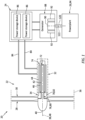
- FIG. 1 illustrates a system 20 for an aircraft such as an airplane.
- This aircraft system 20 may be configured as or otherwise include a propulsion system for the aircraft.
- the aircraft system 20 of FIG. 1 for example, includes an electric propulsion unit 22, a power source 24 and a powerplant 26.
- the propulsion unit 22 includes a first propulsor rotor 28, a second propulsor rotor 30 and an electric machine 32.
- the propulsion unit 22 also includes a drivetrain system 34 operatively connecting the electric machine 32 independently to the first propulsor rotor 28 and the second propulsor rotor 30.
- the first propulsor rotor 28 and the second propulsor rotor 30 are each configured as or otherwise include a bladed rotor.
- Each propulsor rotor 28, 30 may be an open rotor (e.g., an un-ducted rotor) such as a propeller rotor for a propeller propulsion system.
- Other examples of the open rotor include a propulsor rotor for a propfan propulsion system or a propulsor rotor for a pusher fan propulsion system.
- the present disclosure is not limited to such exemplary open rotors nor to open rotor propulsion systems.
- Each propulsor rotor 28, 30, for example, may alternatively be a ducted rotor such as a fan rotor for a fan propulsion system.
- the first propulsor rotor 28 and the second propulsor rotor 30 are each housed within a duct such as a fan duct; e.g., see dashed line 36 in FIG. 1 .
- the first propulsor rotor 28 and the second propulsor rotor 30 are each rotatable about a common (the same) rotational axis 38, which rotational axis 38 may be an axial centerline of the respective propulsor rotor 28, 30.
- the first propulsor rotor 28 may be configured to rotate in a first direction (e.g., a clockwise or counterclockwise direction) about the rotational axis 38.
- the second propulsor rotor 30 may be configured to rotate in a second direction (e.g., a counterclockwise or clockwise direction) about the rotational axis 38, which second direction is opposite from the first direction.
- first propulsor rotor 28 and the second propulsor rotor 30 are arranged as contra-rotating propulsor rotors.
- the present disclosure is not limited to such an exemplary arrangement.
- the first propulsor rotor 28 and the second propulsor rotor 30, for example, may alternatively be configured to rotate in a common (the same) direction about the rotational axis 38.
- the first propulsor rotor 28 and the second propulsor rotor 30 are arranged as co-rotating propulsor rotors.
- the first propulsor rotor 28 and the second propulsor rotor 30 of FIG. 1 are arranged at (e.g., on, adjacent or proximate) an axial forward and/or upstream end 40 of the propulsion unit 22.
- the first propulsor rotor 28 of FIG. 1 is arranged forward and/or upstream of the second propulsor rotor 30 relative to a forward flight direction of the aircraft and/or a flow direction of air across the propulsor rotors 28 and 30.
- This first propulsor rotor 28 may thereby be referred to as a forward and/or upstream propulsor rotor.
- This second propulsor rotor 30 may thereby be referred to as an aft and/or downstream propulsor rotor.
- the present disclosure is not limited to such an exemplary arrangement.
- the electric machine 32 includes a first electric machine rotor 42 ("first machine rotor"), a second electric machine rotor 44 ("second machine rotor”) and an electric machine stator 46.
- the first machine rotor 42 and the second machine rotor 44 are each rotatable about a common (the same) rotational axis 48, which rotational axis 48 may be an axial centerline of one or more of the electric machine members 42, 44 and/or 46 and/or an axial centerline of the entire electric machine 32.
- This rotational axis 48 may also be coaxial with the rotational axis 38.
- the first machine rotor 42 extends axially along the rotational axis 38, 48.
- the first machine rotor 42 extends radially to an outer side 50 of the first machine rotor 42.
- the first machine rotor 42 extends circumferentially about (e.g., completely around) the rotational axis 38, 48.
- the first machine rotor 42 includes a first (e.g., tubular, or cylindrical) hub 52 and one or more first permanent magnets 54 distributed circumferentially about the first hub 52 and the rotational axis 38, 48 in an array. Each of these first permanent magnets 54 is disposed at the first machine rotor outer side 50. Each of the first permanent magnets 54 is fixed to the first hub 52.
- the second machine rotor 44 extends axially along the rotational axis 38, 48.
- the second machine rotor 44 of FIG. 2B also extends axially along (e.g., at least partially or completely overlapping) the first machine rotor 42.
- the second machine rotor 44 extends radially between and to an inner side 56 of the second machine rotor 44 and an outer side 58 of the second machine rotor 44.
- the second machine rotor inner side 56 is disposed radially opposite (e.g., faces) and spaced radially from the first machine rotor outer side 50.
- the second machine rotor 44 extends circumferentially about (e.g., completely around) the rotational axis 38, 48.
- the second machine rotor 44 also extends circumferentially about (e.g., circumscribes) the first machine rotor 42.
- the second machine rotor 44 includes a second (e.g., tubular) hub 60 and one or more second permanent magnets 62 distributed circumferentially about the rotational axis 38, 48 in an annular array.
- Each of these second permanent magnets 62 is disposed at the second machine rotor inner side 56, where the second hub 60 is radially outward of and circumscribes the array of the second permanent magnets 62.
- Each of the second permanent magnets 62 is fixed to the second hub 60.
- the machine stator 46 is arranged radially between the first machine rotor 42 and the second machine rotor 44. This machine stator 46 extends axially along the rotational axis 38, 48.
- the machine stator 46 of FIG. 2B also extend axially along (e.g., at least partially or completely overlapping) the first machine rotor 42 and the second machine rotor 44.
- the machine stator 46 extends radially between and to an inner side 64 of the machine stator 46 and an outer side 66 of the machine stator 46.
- the machine stator inner side 64 is disposed radially opposite (e.g., faces) and (e.g., slightly) spaced from the first machine rotor outer side 50.
- the machine stator outer side 66 is disposed radially opposite (e.g., faces) and (e.g., slightly) spaced from the second machine rotor inner side 56.
- the machine stator 46 is configured as or otherwise includes one or more electrical coils distributed circumferentially about the rotational axis 38, 48.
- the machine stator 46 is configured to (a) induce a first electromagnetic field 68 with the first machine rotor 42 and its first permanent magnets 54 and (b) induce a second electromagnetic field 70 with the second machine rotor 44 and its second permanent magnets 62.
- the electromagnetic interaction between the electric machine members 42 and 46, 44 and 46 drives the first machine rotor 42 and the second machine rotor 44 to rotate in opposite directions (or alternatively, in the same direction) about the rotational axis 38, 48.
- the first machine rotor 42 and the machine stator 46 may thereby form a first electric motor 72 (“first motor) configured to mechanically power the first propulsor rotor 28 of FIG. 1 .
- the second machine rotor 44 and the (same) machine stator 46 may similarly form a second electric motor 74 (“second motor”) configured to mechanically power the second propulsor rotor 30 of FIG. 1 .
- the drivetrain system 34 of FIG. 1 includes a first drivetrain 76 and a second drivetrain 78.
- the first drivetrain 76 is configured to operatively connect the electric machine 32 and its first motor 72 to the first propulsor rotor 28.
- the first drivetrain 76 of FIG. 1 for example, at least (or only) includes a first driveshaft 80 extending axially between and coupled to the first propulsor rotor 28 and the first machine rotor 42.
- the first driveshaft 80 thereby rotatably connects the first machine rotor 42 to the first propulsor rotor 28 such that the electric machine 32 and its first motor 72 may drive rotation of the first propulsor rotor 28.
- the second drivetrain 78 is configured to operatively connect the electric machine 32 and its second motor 74 to the second propulsor rotor 30.
- the second drivetrain 78 of FIG. 1 for example, at least (or only) includes a second driveshaft 82 extending axially between and coupled to the second propulsor rotor 30 and the second machine rotor 44.
- the second driveshaft 82 thereby rotatably connects the second machine rotor 44 to the second propulsor rotor 30 such that the electric machine 32 and its second motor 74 may drive rotation of the second propulsor rotor 30.
- first driveshaft 80 circumscribes the first driveshaft 80, and the first driveshaft 80 projects axially through an inner bore of the second driveshaft 82.
- first drivetrain 76 and/or the second drivetrain 78 may also or alternatively include another power transmission device between the electric machine rotor 42, 44 and the respective propulsor rotor 28, 30.
- the second propulsor rotor 30 of FIG. 1 is arranged axially between the first propulsor rotor 28 and the electric machine 32 along the rotational axis 38, 48. More particularly, the second propulsor rotor 30 is arranged axially between the first propulsor rotor 28 and each electric motor 72, 74 and its respective electric machine rotor 42, 44.
- the propulsion unit 22 may be configured with a relatively compact form in both girth and/or length while providing enhanced (e.g., increased) thrust capability with its multiple propulsor rotors 28 and 30.
- the power source 24 is configured to provide electrical power (electricity) to the electric machine 32 to power the electric motors 72 and 74.
- the power source 24 of FIG. 1 is electrically coupled with the electric machine 32 and its machine stator 46 through one or more electrical leads 84; e.g., high voltage lines.
- the power source 24 may also be configured to store the electrical power.
- the power source 24, for example, may be configured as or otherwise include one or more power storage devices 86; e.g., batteries.
- the power source 24 may also or alternatively be configured as or otherwise include an electrical generator 88.
- the power source 24 of FIG. 1 includes a combination of the power storage devices 86 and the electrical generator 88.
- the electrical generator 88 is configured to generate electrical power and provide the electrical power to one or more of the power storage devices 86.
- the power storage device(s) 86 are configured to store the received electrical power and subsequently provide the stored electrical power to the electric machine 32 (as needed) to power the electric motors 72 and 74.
- the power storage device(s) 86 it is possible for the power storage device(s) 86 to operate as a passthrough and/or conditioner for transferring the electrical power generated by the electrical generator 88 to the electric machine 32 and its electric motors 72 and 74.
- the power storage device(s) 86 of FIG. 1 are electrically coupled between the electric machine 32 and the electrical generator 88.
- the power source 24 may include a bypass to provide the electrical power from the electrical generator 88 to the electric machine 32 without passing through the power storage devices 86.
- the powerplant 26 is configured to mechanically power the electrical generator 88.
- the powerplant 26 of FIG. 1 for example, is configured to drive rotation of a generator rotor 90 within the electrical generator 88.
- This generator rotor 90 induces an electromagnetic field with a generator stator 92 to generate the electrical power during rotation of the generator rotor 90.
- the powerplant 26 may be configured as any apparatus capable of mechanically driving rotation of the generator rotor 90.
- the powerplant 26, for example, may be configured as or otherwise include a thermal engine.
- the thermal engine include, but are not limited to, a gas turbine engine, a reciprocating piston internal combustion engine and a rotary internal combustion engine. This thermal engine may be configured as a traditional thermal engine, or alternatively as a hybrid-electric thermal engine.
- the powerplant 26 may be configured as or otherwise include a fuel cell.
- FIG. 3 illustrates an exemplary gas turbine engine 94 for the powerplant 26.
- This gas turbine engine 94 includes a compressor section 96, a combustor section 97 and a turbine section 98.
- the turbine section 98 may include a high pressure turbine (HPT) section 98A and a low pressure turbine (LPT) section 98B; e.g., a power turbine section.
- the gas turbine engine 94 also includes an engine case 100 housing the engine sections 96-98B; e.g., a core of the gas turbine engine 94.
- the compressor section 96, the combustor section 97, the HPT section 98A and the LPT section 98B are arranged sequentially along a core flowpath 102 (e.g., an annular flowpath) within the gas turbine engine 94.
- This flowpath 102 extends within the gas turbine engine 94 from an upstream airflow inlet 104 into the gas turbine engine 94 to a downstream combustion products exhaust 106 from the gas turbine engine 94.
- Each of the engine sections 96, 98A and 98B includes a respective bladed rotor 108-110.
- Each of these bladed rotors 108-110 includes a plurality of rotor blades arranged circumferentially around and connected to one or more respective rotor disks.
- the rotor blades may be formed integral with or mechanically fastened, welded, brazed, adhered and/or otherwise attached to the respective rotor disk(s).
- the compressor rotor 108 is connected to the HPT rotor 109 through a high speed shaft 112. At least (or only) the compressor rotor 108, the HPT rotor 109 and the high speed shaft 112 may collectively form a high speed rotating structure 114 of the gas turbine engine 94.
- the LPT rotor 110 is connected to a low speed shaft 116, which low speed shaft 116 may extend axially through a bore of the high speed rotating structure 114 and its high speed shaft 112. At least (or only) the LPT rotor 110 and the low speed shaft 116 may collectively form a low speed rotating structure 118.
- This low speed rotating structure 118 may be coupled to and rotatable with the generator rotor 90 of FIG. 1 through a powerplant drivetrain 120.
- the engine rotating structures 114 and 118 and their shafts 112 and 116 of FIG. 3 are supported by a plurality of bearings. Each of these bearings is connected to the engine case 100 by one or more support structures; e.g., struts, frames, etc. With this arrangement, each of the engine rotating structures 114 and 118 of FIG. 3 is rotatable about a common (or respective) rotational axis 122, which rotational axis 122 may also be an axial centerline of the respective rotating structure 114, 118.
- the air within the flowpath 102 may be referred to as "core air”.
- This core air is compressed by the compressor rotor 108 and directed into a combustion chamber 124 (e.g., an annular chamber) of a combustor within the combustor section 97.
- the fuel is injected into the combustion chamber 124 by one or more fuel injectors and mixed with the compressed air to provide a fuel-air mixture.
- This fuel-air mixture is ignited and combustion products thereof flow through and sequentially cause the HPT rotor 109 and the LPT rotor 110 to rotate.
- the rotation of the HPT rotor 109 drives rotation of the compressor rotor 108 and, thus, compression of the air received from the airflow inlet 104.
- the rotation of the LPT rotor 110 and, more generally, the low speed rotating structure 118 provides mechanical power for driving (e.g., rotating) the generator rotor 90 of FIG. 1 .
- the present disclosure is not limited to such an exemplary gas turbine engine configuration, nor to gas turbine engines as discussed above.
- the low speed rotating structure 118 may also include a compressor rotor.
- the low speed rotating structure 118 may be omitted and the high speed rotating structure 114 may be configured for providing the mechanical power for driving the generator rotor 90 of FIG. 1 .
- the powerplant 26 and the power source 24 may be configured to (e.g., only) service (e.g., power) the single propulsion unit 22.
- the powerplant 26 and the power source 24 may be configured to service multiple of the propulsion units 22.
- the powerplant 26 and the power source 24 of FIGS. 4 and 5 are configured to facilitate powering each of the propulsion units 22 arranged with the aircraft 126.
- the aircraft 126 includes multiple power units 128.
- Each power unit 128 includes a respective powerplant 26 and a respective power source 24.
- Each of these power units 128 is configured to service a respective set of one or more propulsion units 22.
- the propulsion units 22 may be configured to counterrotate.
- the first propulsor rotor 28 for each propulsion unit 22 disposed to a first side of an aircraft fuselage 130 may be configured to rotating in a first direction
- the first propulsor rotor 28 for each propulsion unit 22 disposed to a second side of the aircraft fuselage 130 may be configured to rotating in a second direction opposite to the first direction.
- the propulsion units 22 may be configured to corotate.
- the first propulsor rotors 28 for the propulsion units 22 disposed to both sides of the aircraft fuselage 130 may be configured to rotate in a common (the same) direction.
- each of the propulsion units 22 may be arranged with and mounted to a respective aircraft wing 132.
- Each aircraft wing 132 may carry one or more of the propulsion units 22.
- the power unit 128 and its members 24 and/or 26 may be arranged with and mounted to an airframe structure other than the aircraft wing(s) 132 to which the propulsion unit(s) 22 is/are arranged.
- the power unit 128 and its members 24 and/or 26 of FIGS. 4 and 5 are arranged with and mounted to the aircraft fuselage 130. More particularly, the power unit 128 and its members 24 and/or 26 may be housed within (and/or mounted to an exterior of) the aircraft fuselage 130. In other embodiments however, referring to FIG.
- the power unit 128 and its members 24 and/or 26 and the propulsion unit(s) 22 may be arranged and mounted with a common (the same) airframe structure.
- the power unit 128 and its members 24 and/or 26 of FIG. 6 are arranged with and mounted to the same respective aircraft wing 132 as its associated (e.g., electrically coupled) propulsion unit(s) 22.
- the power unit 128 and its members 24 and/or 26 may be disposed laterally between and spaced from its associated propulsion units 22 along a span of the respective aircraft wing 132.
- the present disclosure is not limited to such an exemplary arrangement.
- all associated propulsion units 22 may be disposed to a common lateral side of the power unit 128 and its members 24 and/or 26 along the span of the respective aircraft wing 132.
- the propulsor rotors 28 and 30 may be arranged to a common end (e.g., a forward, upstream end, or an aft, downstream end) of a respective propulsion unit 22.
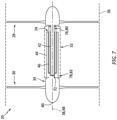
- the propulsor rotors 28 and 30 may be arranged at different ends of the respective propulsion unit 22.
- the first propulsor rotor 28 of FIG. 7 may be arranged at the downstream end of the respective propulsion unit 22, and the second propulsor rotor 30 may be arranged at the upstream end of the respective propulsion unit 22.
- the positions of the propulsor rotors 28 and 30 may be reversed.
- the electric machine 32 is described above as a radial flux electric machine. It is contemplated, however, the electric machine 32 may alternatively be configured as an axial flux electric machine or a transverse flux electric machine.
Landscapes
- Engineering & Computer Science (AREA)
- Mechanical Engineering (AREA)
- Aviation & Aerospace Engineering (AREA)
- Chemical & Material Sciences (AREA)
- Combustion & Propulsion (AREA)
- General Engineering & Computer Science (AREA)
- Power Engineering (AREA)
- Connection Of Motors, Electrical Generators, Mechanical Devices, And The Like (AREA)
Abstract
Description
- This invention relates generally to an aircraft and, more particularly, to a propulsion unit for the aircraft with multiple propulsor rotors.
- Various types and configurations of propulsion systems are known in the art for an aircraft. In an effort to reduce emissions and/or increase efficiency, some efforts have been focused to provide propulsion systems with electric motors capable of driving propulsion system propulsor(s). While known propulsion systems with electric motors have various benefits, there is still room in the art for improvement.
- According to an aspect of the invention, an aircraft system is provided that includes a first propulsor rotor, a second propulsor rotor and an electric machine. The first propulsor rotor is rotatable about an axis. The second propulsor rotor is rotatable about the axis. The electric machine includes a first electric machine rotor, a second electric machine rotor and an electric machine stator radially between the first electric machine rotor and the second electric machine rotor. The first electric machine rotor is rotatable about the axis and rotatably connected to the first propulsor rotor. The first electric machine rotor and the electric machine stator form a first motor configured to drive rotation of the first propulsor rotor. The second electric machine rotor are rotatable about the axis and rotatably connected to the second propulsor rotor. The second electric machine rotor and the electric machine stator form a second motor configured to drive rotation of the second propulsor rotor.
- According to another aspect of the invention, another aircraft system is provided that includes a propulsion unit and a power source discrete from the propulsion unit. The propulsion unit includes a first propulsor rotor, a second propulsor rotor, a first motor and a second motor. The first propulsor rotor is rotatable about an axis. The second propulsor rotor is rotatable about the axis. The first motor includes a first rotor and a stator that circumscribes and extends axially along the first rotor. The first motor is configured to drive rotation of the first propulsor rotor. The second motor includes the stator and a second rotor that circumscribes and extends axially along the stator. The second motor is configured to drive rotation of the second propulsor rotor. The power source is electrically coupled to and configured to electrically power the first motor and the second motor.
- According to still another aspect of the invention, another aircraft system is provided that includes a fuselage, a wing, a plurality of propulsion units and a power source. The wing is connected to and projects out from the fuselage. The propulsion units are mounted to the wing. Each of the propulsion units includes a first propulsor rotor, a second propulsor rotor, a first motor and a second motor. The first propulsor rotor is rotatable about an axis. The second propulsor rotor is rotatable about the axis. The first motor is coupled to and configured to drive rotation of the first propulsor rotor. The second motor is coupled to and configured to drive rotation of the second propulsor rotor. The power source is mounted to the wing and electrically coupled to the first motor and the second motor of each of the propulsion units. The power source is spaced from a first of the propulsion units spanwise along the wing.
- The following optional features may be applied individually, or in any combination, to any of the above aspects of the invention.
- The aircraft system may also include a thermal engine configured to power the first motor and the second motor through the power source.
- The first motor may be configured to drive rotation of the first propulsor rotor in a first direction about the axis. The second motor may be configured to drive rotation of the second propulsor rotor in a second direction about the axis that is opposite the first direction.
- The first motor may be configured to drive rotation of the first propulsor rotor in a first direction about the axis. The second motor may be configured to drive rotation of the second propulsor rotor in the first direction about the axis.
- The electric machine stator may circumscribe the first electric machine rotor. The second electric machine rotor may circumscribe the electric machine stator.
- The second propulsor rotor may be arranged axially between the first propulsor rotor and the electric machine.
- The second propulsor rotor may be arranged axially between the first propulsor rotor and the first motor.
- The electric machine stator may extend axially along the first electric machine rotor and the second electric machine rotor.
- The second electric machine rotor may axially overlap the first electric machine rotor.
- The aircraft system may also include a power source electrically coupled to the electric machine and configured to power the first motor and the second motor.
- The power source may include: one or more power storage devices; and/or one or more electrical generators.
- The aircraft system may also include an aircraft fuselage, an aircraft wing and a propulsion unit. The aircraft fuselage may house the power source. The aircraft wing may project out from the aircraft fuselage. The propulsion unit may include the first propulsor rotor, the second propulsor rotor and the electric machine. The propulsion unit may be mounted to the aircraft wing.
- The aircraft system may also include a powerplant configured to power the electric machine through the power source. The powerplant may be housed within the fuselage.
- The powerplant may be configured as or otherwise include a thermal engine.
- The aircraft system may also include an aircraft fuselage, an aircraft wing and a propulsion unit. The aircraft wing may project out from the aircraft fuselage. The propulsion unit may include the first propulsor rotor, the second propulsor rotor and the electric machine. The propulsion unit may be mounted to the aircraft wing. The power source may be mounted to the aircraft wing.
- The aircraft system may also include a powerplant configured to power the electric machine through the power source. The powerplant may be mounted to the aircraft wing.
- The powerplant may be configured as or otherwise include a thermal engine.
- The first propulsor rotor may be a first un-ducted rotor. In addition or alternatively, the second propulsor rotor may be a second un-ducted rotor.
- The first propulsor rotor may be a first ducted rotor. In addition or alternatively, the second propulsor rotor may be a second ducted rotor.
- The aircraft system may also include a first propulsion unit, a second propulsion unit and a power source. The first propulsion unit may include the first propulsor rotor, the second propulsor rotor and the electric machine. T second propulsion unit may be discrete from the first propulsion unit. The second propulsion unit may include a second electric machine. The power source may be electrically coupled to the electric machine and the second electric machine. The power source may be configured to power the first propulsion unit and the second propulsion unit.
- The present invention may include any one or more of the individual features disclosed above and/or below alone or in any combination thereof.
- The foregoing features and the operation of the invention will become more apparent in light of the following description and the accompanying drawings.
-
-
FIG. 1 is a schematic illustration of an aircraft system. -
FIG. 2A is a cross-sectional illustration of an electric machine. -
FIG. 2B is a partial schematic sectional illustration of the electric machine ofFIG. 2A taken alongline 2B-2B inFIG. 2A . -
FIG. 3 is a schematic sectional illustration of a gas turbine engine. -
FIGS. 4-6 are schematic illustrations of an aircraft with various arrangements of multiple multi-rotor propulsor units. -
FIG. 7 is a schematic illustration of a propulsion unit. -
FIG. 1 illustrates asystem 20 for an aircraft such as an airplane. Thisaircraft system 20 may be configured as or otherwise include a propulsion system for the aircraft. Theaircraft system 20 ofFIG. 1 , for example, includes anelectric propulsion unit 22, apower source 24 and apowerplant 26. - The
propulsion unit 22 includes afirst propulsor rotor 28, asecond propulsor rotor 30 and anelectric machine 32. Thepropulsion unit 22 also includes adrivetrain system 34 operatively connecting theelectric machine 32 independently to thefirst propulsor rotor 28 and thesecond propulsor rotor 30. - The
first propulsor rotor 28 and thesecond propulsor rotor 30 are each configured as or otherwise include a bladed rotor. Eachpropulsor rotor propulsor rotor first propulsor rotor 28 and thesecond propulsor rotor 30 are each housed within a duct such as a fan duct; e.g., see dashedline 36 inFIG. 1 . - The
first propulsor rotor 28 and thesecond propulsor rotor 30 are each rotatable about a common (the same) rotational axis 38, which rotational axis 38 may be an axial centerline of therespective propulsor rotor first propulsor rotor 28 may be configured to rotate in a first direction (e.g., a clockwise or counterclockwise direction) about the rotational axis 38. Thesecond propulsor rotor 30 may be configured to rotate in a second direction (e.g., a counterclockwise or clockwise direction) about the rotational axis 38, which second direction is opposite from the first direction. With such an arrangement, thefirst propulsor rotor 28 and thesecond propulsor rotor 30 are arranged as contra-rotating propulsor rotors. The present disclosure, however, is not limited to such an exemplary arrangement. Thefirst propulsor rotor 28 and thesecond propulsor rotor 30, for example, may alternatively be configured to rotate in a common (the same) direction about the rotational axis 38. With such an arrangement, thefirst propulsor rotor 28 and thesecond propulsor rotor 30 are arranged as co-rotating propulsor rotors. - The
first propulsor rotor 28 and thesecond propulsor rotor 30 ofFIG. 1 are arranged at (e.g., on, adjacent or proximate) an axial forward and/orupstream end 40 of thepropulsion unit 22. With this arrangement, thefirst propulsor rotor 28 ofFIG. 1 is arranged forward and/or upstream of thesecond propulsor rotor 30 relative to a forward flight direction of the aircraft and/or a flow direction of air across thepropulsor rotors first propulsor rotor 28 may thereby be referred to as a forward and/or upstream propulsor rotor. Thesecond propulsor rotor 30 ofFIG. 1 , on the other hand, is arranged aft and/or downstream of thefirst propulsor rotor 28 relative to the forward flight direction of the aircraft and/or the flow direction of air across thepropulsor rotors second propulsor rotor 30 may thereby be referred to as an aft and/or downstream propulsor rotor. The present disclosure, however, is not limited to such an exemplary arrangement. Thefirst propulsor rotor 28 and thesecond propulsor rotor 30, for example, may alternatively be arranged at an aft and/or downstream end of the propulsion unit 22 (e.g., for a propfan or a pusher fan application) such that thesecond propulsor rotor 30 is forward and/or upstream of thefirst propulsor rotor 28; e.g., the orientation of thepropulsion unit 22 ofFIG. 1 may be reversed. - Referring to
FIGS. 2A and 2B , theelectric machine 32 includes a first electric machine rotor 42 ("first machine rotor"), a second electric machine rotor 44 ("second machine rotor") and anelectric machine stator 46. Thefirst machine rotor 42 and thesecond machine rotor 44 are each rotatable about a common (the same) rotational axis 48, which rotational axis 48 may be an axial centerline of one or more of theelectric machine members electric machine 32. This rotational axis 48 may also be coaxial with the rotational axis 38. - Referring to
FIG. 2B , thefirst machine rotor 42 extends axially along the rotational axis 38, 48. Thefirst machine rotor 42 extends radially to anouter side 50 of thefirst machine rotor 42. Thefirst machine rotor 42 extends circumferentially about (e.g., completely around) the rotational axis 38, 48. Thefirst machine rotor 42 includes a first (e.g., tubular, or cylindrical)hub 52 and one or more firstpermanent magnets 54 distributed circumferentially about thefirst hub 52 and the rotational axis 38, 48 in an array. Each of these firstpermanent magnets 54 is disposed at the first machine rotorouter side 50. Each of the firstpermanent magnets 54 is fixed to thefirst hub 52. - The
second machine rotor 44 extends axially along the rotational axis 38, 48. Thesecond machine rotor 44 ofFIG. 2B also extends axially along (e.g., at least partially or completely overlapping) thefirst machine rotor 42. Thesecond machine rotor 44 extends radially between and to aninner side 56 of thesecond machine rotor 44 and anouter side 58 of thesecond machine rotor 44. The second machine rotorinner side 56 is disposed radially opposite (e.g., faces) and spaced radially from the first machine rotorouter side 50. Thesecond machine rotor 44 extends circumferentially about (e.g., completely around) the rotational axis 38, 48. Thesecond machine rotor 44 also extends circumferentially about (e.g., circumscribes) thefirst machine rotor 42. Thesecond machine rotor 44 includes a second (e.g., tubular)hub 60 and one or more secondpermanent magnets 62 distributed circumferentially about the rotational axis 38, 48 in an annular array. Each of these secondpermanent magnets 62 is disposed at the second machine rotorinner side 56, where thesecond hub 60 is radially outward of and circumscribes the array of the secondpermanent magnets 62. Each of the secondpermanent magnets 62 is fixed to thesecond hub 60. - The
machine stator 46 is arranged radially between thefirst machine rotor 42 and thesecond machine rotor 44. Thismachine stator 46 extends axially along the rotational axis 38, 48. Themachine stator 46 ofFIG. 2B also extend axially along (e.g., at least partially or completely overlapping) thefirst machine rotor 42 and thesecond machine rotor 44. Themachine stator 46 extends radially between and to aninner side 64 of themachine stator 46 and anouter side 66 of themachine stator 46. The machine statorinner side 64 is disposed radially opposite (e.g., faces) and (e.g., slightly) spaced from the first machine rotorouter side 50. The machine statorouter side 66 is disposed radially opposite (e.g., faces) and (e.g., slightly) spaced from the second machine rotorinner side 56. Themachine stator 46 is configured as or otherwise includes one or more electrical coils distributed circumferentially about the rotational axis 38, 48. - During operation, the
machine stator 46 is configured to (a) induce a firstelectromagnetic field 68 with thefirst machine rotor 42 and its firstpermanent magnets 54 and (b) induce a second electromagnetic field 70 with thesecond machine rotor 44 and its secondpermanent magnets 62. The electromagnetic interaction between theelectric machine members first machine rotor 42 and thesecond machine rotor 44 to rotate in opposite directions (or alternatively, in the same direction) about the rotational axis 38, 48. Thefirst machine rotor 42 and themachine stator 46 may thereby form a first electric motor 72 ("first motor) configured to mechanically power thefirst propulsor rotor 28 ofFIG. 1 . Thesecond machine rotor 44 and the (same)machine stator 46 may similarly form a second electric motor 74 ("second motor") configured to mechanically power thesecond propulsor rotor 30 ofFIG. 1 . - The
drivetrain system 34 ofFIG. 1 includes a first drivetrain 76 and a second drivetrain 78. The first drivetrain 76 is configured to operatively connect theelectric machine 32 and itsfirst motor 72 to thefirst propulsor rotor 28. The first drivetrain 76 ofFIG. 1 , for example, at least (or only) includes a first driveshaft 80 extending axially between and coupled to thefirst propulsor rotor 28 and thefirst machine rotor 42. The first driveshaft 80 thereby rotatably connects thefirst machine rotor 42 to thefirst propulsor rotor 28 such that theelectric machine 32 and itsfirst motor 72 may drive rotation of thefirst propulsor rotor 28. Similarly, the second drivetrain 78 is configured to operatively connect theelectric machine 32 and itssecond motor 74 to thesecond propulsor rotor 30. The second drivetrain 78 ofFIG. 1 , for example, at least (or only) includes a second driveshaft 82 extending axially between and coupled to thesecond propulsor rotor 30 and thesecond machine rotor 44. The second driveshaft 82 thereby rotatably connects thesecond machine rotor 44 to thesecond propulsor rotor 30 such that theelectric machine 32 and itssecond motor 74 may drive rotation of thesecond propulsor rotor 30. The second driveshaft 82 ofFIG. 1 circumscribes the first driveshaft 80, and the first driveshaft 80 projects axially through an inner bore of the second driveshaft 82. The present disclosure, however, is not limited to the foregoing exemplary drivetrain system arrangement. For example, in other embodiments, the first drivetrain 76 and/or the second drivetrain 78 may also or alternatively include another power transmission device between theelectric machine rotor respective propulsor rotor - The
second propulsor rotor 30 ofFIG. 1 is arranged axially between thefirst propulsor rotor 28 and theelectric machine 32 along the rotational axis 38, 48. More particularly, thesecond propulsor rotor 30 is arranged axially between thefirst propulsor rotor 28 and eachelectric motor electric machine rotor propulsion unit members FIG. 1 , thepropulsion unit 22 may be configured with a relatively compact form in both girth and/or length while providing enhanced (e.g., increased) thrust capability with itsmultiple propulsor rotors - The
power source 24 is configured to provide electrical power (electricity) to theelectric machine 32 to power theelectric motors power source 24 ofFIG. 1 , for example, is electrically coupled with theelectric machine 32 and itsmachine stator 46 through one or moreelectrical leads 84; e.g., high voltage lines. Thepower source 24 may also be configured to store the electrical power. Thepower source 24, for example, may be configured as or otherwise include one or morepower storage devices 86; e.g., batteries. Thepower source 24 may also or alternatively be configured as or otherwise include anelectrical generator 88. - The
power source 24 ofFIG. 1 includes a combination of thepower storage devices 86 and theelectrical generator 88. Theelectrical generator 88 is configured to generate electrical power and provide the electrical power to one or more of thepower storage devices 86. The power storage device(s) 86 are configured to store the received electrical power and subsequently provide the stored electrical power to the electric machine 32 (as needed) to power theelectric motors electrical generator 88 to theelectric machine 32 and itselectric motors - The power storage device(s) 86 of
FIG. 1 are electrically coupled between theelectric machine 32 and theelectrical generator 88. However, in other embodiments, thepower source 24 may include a bypass to provide the electrical power from theelectrical generator 88 to theelectric machine 32 without passing through thepower storage devices 86. - The
powerplant 26 is configured to mechanically power theelectrical generator 88. Thepowerplant 26 ofFIG. 1 , for example, is configured to drive rotation of agenerator rotor 90 within theelectrical generator 88. Thisgenerator rotor 90 induces an electromagnetic field with agenerator stator 92 to generate the electrical power during rotation of thegenerator rotor 90. - The
powerplant 26 may be configured as any apparatus capable of mechanically driving rotation of thegenerator rotor 90. Thepowerplant 26, for example, may be configured as or otherwise include a thermal engine. Examples of the thermal engine include, but are not limited to, a gas turbine engine, a reciprocating piston internal combustion engine and a rotary internal combustion engine. This thermal engine may be configured as a traditional thermal engine, or alternatively as a hybrid-electric thermal engine. In another example, thepowerplant 26 may be configured as or otherwise include a fuel cell. -
FIG. 3 illustrates an exemplary gas turbine engine 94 for thepowerplant 26. This gas turbine engine 94 includes acompressor section 96, acombustor section 97 and aturbine section 98. Theturbine section 98 may include a high pressure turbine (HPT)section 98A and a low pressure turbine (LPT)section 98B; e.g., a power turbine section. The gas turbine engine 94 also includes anengine case 100 housing the engine sections 96-98B; e.g., a core of the gas turbine engine 94. - The
compressor section 96, thecombustor section 97, theHPT section 98A and theLPT section 98B are arranged sequentially along a core flowpath 102 (e.g., an annular flowpath) within the gas turbine engine 94. Thisflowpath 102 extends within the gas turbine engine 94 from anupstream airflow inlet 104 into the gas turbine engine 94 to a downstream combustion products exhaust 106 from the gas turbine engine 94. - Each of the
engine sections - The
compressor rotor 108 is connected to theHPT rotor 109 through ahigh speed shaft 112. At least (or only) thecompressor rotor 108, theHPT rotor 109 and thehigh speed shaft 112 may collectively form a highspeed rotating structure 114 of the gas turbine engine 94. TheLPT rotor 110 is connected to alow speed shaft 116, whichlow speed shaft 116 may extend axially through a bore of the highspeed rotating structure 114 and itshigh speed shaft 112. At least (or only) theLPT rotor 110 and thelow speed shaft 116 may collectively form a lowspeed rotating structure 118. This lowspeed rotating structure 118 may be coupled to and rotatable with thegenerator rotor 90 ofFIG. 1 through apowerplant drivetrain 120. - The
engine rotating structures shafts FIG. 3 are supported by a plurality of bearings. Each of these bearings is connected to theengine case 100 by one or more support structures; e.g., struts, frames, etc. With this arrangement, each of theengine rotating structures FIG. 3 is rotatable about a common (or respective)rotational axis 122, whichrotational axis 122 may also be an axial centerline of the respectiverotating structure - During gas turbine engine 94 operation, air enters the
flowpath 102 through theairflow inlet 104 and is directed into thecompressor section 96. The air within theflowpath 102 may be referred to as "core air". This core air is compressed by thecompressor rotor 108 and directed into a combustion chamber 124 (e.g., an annular chamber) of a combustor within thecombustor section 97. The fuel is injected into thecombustion chamber 124 by one or more fuel injectors and mixed with the compressed air to provide a fuel-air mixture. This fuel-air mixture is ignited and combustion products thereof flow through and sequentially cause theHPT rotor 109 and theLPT rotor 110 to rotate. The rotation of theHPT rotor 109 drives rotation of thecompressor rotor 108 and, thus, compression of the air received from theairflow inlet 104. The rotation of theLPT rotor 110 and, more generally, the lowspeed rotating structure 118 provides mechanical power for driving (e.g., rotating) thegenerator rotor 90 ofFIG. 1 . The present disclosure, however, is not limited to such an exemplary gas turbine engine configuration, nor to gas turbine engines as discussed above. For example, in other embodiments, the lowspeed rotating structure 118 may also include a compressor rotor. In still other embodiments, the lowspeed rotating structure 118 may be omitted and the highspeed rotating structure 114 may be configured for providing the mechanical power for driving thegenerator rotor 90 ofFIG. 1 . - In some embodiments, referring to
FIG. 1 , thepowerplant 26 and thepower source 24 may be configured to (e.g., only) service (e.g., power) thesingle propulsion unit 22. In other embodiments, referring toFIGS. 4-6 , thepowerplant 26 and thepower source 24 may be configured to service multiple of thepropulsion units 22. For example, thepowerplant 26 and thepower source 24 ofFIGS. 4 and5 are configured to facilitate powering each of thepropulsion units 22 arranged with theaircraft 126. In another example, referring toFIG. 6 , theaircraft 126 includesmultiple power units 128. Eachpower unit 128 includes arespective powerplant 26 and arespective power source 24. Each of thesepower units 128 is configured to service a respective set of one ormore propulsion units 22. - In some embodiments, the
propulsion units 22 may be configured to counterrotate. For example, thefirst propulsor rotor 28 for eachpropulsion unit 22 disposed to a first side of anaircraft fuselage 130 may be configured to rotating in a first direction, whereas thefirst propulsor rotor 28 for eachpropulsion unit 22 disposed to a second side of theaircraft fuselage 130 may be configured to rotating in a second direction opposite to the first direction. In other embodiments, thepropulsion units 22 may be configured to corotate. For example, thefirst propulsor rotors 28 for thepropulsion units 22 disposed to both sides of theaircraft fuselage 130 may be configured to rotate in a common (the same) direction. - In some embodiments, referring to
FIGS. 4-6 , each of thepropulsion units 22 may be arranged with and mounted to arespective aircraft wing 132. Eachaircraft wing 132, for example, may carry one or more of thepropulsion units 22. - In some embodiments, referring to
FIGS. 4 and5 , thepower unit 128 and itsmembers 24 and/or 26 may be arranged with and mounted to an airframe structure other than the aircraft wing(s) 132 to which the propulsion unit(s) 22 is/are arranged. Thepower unit 128 and itsmembers 24 and/or 26 ofFIGS. 4 and5 , for example, are arranged with and mounted to theaircraft fuselage 130. More particularly, thepower unit 128 and itsmembers 24 and/or 26 may be housed within (and/or mounted to an exterior of) theaircraft fuselage 130. In other embodiments however, referring toFIG. 6 , thepower unit 128 and itsmembers 24 and/or 26 and the propulsion unit(s) 22 may be arranged and mounted with a common (the same) airframe structure. Thepower unit 128 and itsmembers 24 and/or 26 ofFIG. 6 , for example, are arranged with and mounted to the samerespective aircraft wing 132 as its associated (e.g., electrically coupled) propulsion unit(s) 22. More particularly, thepower unit 128 and itsmembers 24 and/or 26 may be disposed laterally between and spaced from its associatedpropulsion units 22 along a span of therespective aircraft wing 132. The present disclosure, however, is not limited to such an exemplary arrangement. For example, in other embodiments, all associatedpropulsion units 22 may be disposed to a common lateral side of thepower unit 128 and itsmembers 24 and/or 26 along the span of therespective aircraft wing 132. - In some embodiments, referring to
FIG. 1 , thepropulsor rotors respective propulsion unit 22. In other embodiments however, referring toFIG. 7 , thepropulsor rotors respective propulsion unit 22. Thefirst propulsor rotor 28 ofFIG. 7 , for example, may be arranged at the downstream end of therespective propulsion unit 22, and thesecond propulsor rotor 30 may be arranged at the upstream end of therespective propulsion unit 22. Of course, in other embodiments, the positions of thepropulsor rotors - The
electric machine 32 is described above as a radial flux electric machine. It is contemplated, however, theelectric machine 32 may alternatively be configured as an axial flux electric machine or a transverse flux electric machine. - While various embodiments of the present disclosure have been described, it will be apparent to those of ordinary skill in the art that many more embodiments and implementations are possible within the scope of the disclosure. For example, the present disclosure as described herein includes several aspects and embodiments that include particular features. Although these features may be described individually, it is within the scope of the present disclosure that some or all of these features may be combined with any one of the aspects and remain within the scope of the disclosure. Accordingly, the present disclosure is not to be restricted except in light of the attached claims and their equivalents.
Claims (15)
- An aircraft system (20), comprising:a first propulsor rotor (28) rotatable about an axis (38);a second propulsor rotor (30) rotatable about the axis (38); andan electric machine (32) including a first electric machine rotor (42), a second electric machine rotor (44) and an electric machine stator (46) radially between the first electric machine rotor (42) and the second electric machine rotor (44);the first electric machine rotor (42) rotatable about the axis (38) and rotatably connected to the first propulsor rotor (28), and the first electric machine rotor (42) and the electric machine stator (46) forming a first motor (72) configured to drive rotation of the first propulsor rotor (28); andthe second electric machine rotor (44) rotatable about the axis (38) and rotatably connected to the second propulsor rotor (30), and the second electric machine rotor (44) and the electric machine stator (46) forming a second motor (74) configured to drive rotation of the second propulsor rotor (30).
- The aircraft system (20) of claim 1, wherein:the first motor (72) is configured to drive rotation of the first propulsor rotor (28) in a first direction about the axis (38); andthe second motor (74) is configured to drive rotation of the second propulsor rotor (30) in a second direction about the axis (38) that is opposite to the first direction.
- The aircraft system (20) of claim 1, wherein:the first motor (72) is configured to drive rotation of the first propulsor rotor (28) in a first direction about the axis (38); andthe second motor (74) is configured to drive rotation of the second propulsor rotor (30) in the first direction about the axis (38).
- The aircraft system (20) of any preceding claim, wherein:the electric machine stator (46) circumscribes the first electric machine rotor (42); andthe second electric machine rotor (44) circumscribes the electric machine stator (46).
- The aircraft system (20) of any preceding claim, wherein:the second propulsor rotor (30) is arranged axially between the first propulsor rotor (28) and the electric machine (32); orthe second propulsor rotor (30) is arranged axially between the first propulsor rotor (28) and the first motor (72).
- The aircraft system (20) of any preceding claim, wherein the electric machine stator (46) extends axially along the first electric machine rotor (42) and the second electric machine rotor (44).
- The aircraft system (20) of any preceding claim, wherein the second electric machine rotor (44) axially overlaps the first electric machine rotor (42).
- The aircraft system (20) of any preceding claim, further comprising a power source (24) electrically coupled to the electric machine (32) and configured to power the first motor (72) and the second motor (74), optionally wherein the power source (24) comprises:one or more power storage devices (86); and/orone or more electrical generators.
- The aircraft system (20) of claim 8, further comprising:an aircraft fuselage (130) housing the power source (24);an aircraft wing (132) projecting out from the aircraft fuselage (130);a first propulsion unit (22) including the first propulsor rotor (28), the second propulsor rotor (30) and the electric machine (32), the first propulsion unit (22) mounted to the aircraft wing (132).
- The aircraft system of claim 9, further comprising a powerplant (26) configured to power the electric machine (32) through the power source (24), the powerplant (26) housed within the fuselage.
- The aircraft system (20) of claim 8, further comprising:an aircraft fuselage (130);an aircraft wing (132) projecting out from the aircraft fuselage (130); anda first propulsion unit (22) including the first propulsor rotor (28), the second propulsor rotor (30) and the electric machine (32), the first propulsion unit (22) mounted to the aircraft wing (132), wherein the power source (24) is mounted to the aircraft wing (132); and optionallya powerplant (26) configured to power the electric machine (32) through the power source (24), the powerplant (26) mounted to the aircraft wing (132).
- The aircraft system (20) of any preceding claim, wherein:the first propulsor rotor (28) is a first un-ducted, or ducted, rotor; and/orthe second propulsor rotor (30) is a second un-ducted, or ducted, rotor.
- The aircraft system (20) of any preceding claim, further comprising:a or the first propulsion unit (22) including the first propulsor rotor (28), the second propulsor rotor (30) and the electric machine (32);a second propulsion unit (22) discrete from the first propulsion unit (22), the second propulsion unit (22) comprising a second electric machine (32); anda or the power source (24) electrically coupled to the electric machine (32) and the second electric machine (32), the power source (24) configured to power the first propulsion unit (22) and the second propulsion unit (22).
- An aircraft system (20) comprising:a propulsion unit (22) including a first propulsor rotor (28), a second propulsor rotor (30), a first motor (72) and a second motor (74), wherein:the first propulsor rotor (28) is rotatable about an axis (38);the second propulsor rotor (30) is rotatable about the axis (38);the first motor (72) includes a first rotor (42) and a stator (46) that circumscribes and extends axially along the first rotor (42), the first motor (72) configured to drive rotation of the first propulsor rotor (28); andthe second motor (74) includes the stator (46) and a second rotor (44) that circumscribes and extends axially along the stator (46), the second motor (74) configured to drive rotation of the second propulsor rotor (30); anda power source (24) discrete from the propulsion unit (22), the power source (24) electrically coupled to and configured to electrically power the first motor (72) and the second motor (74), and optionally:
a thermal engine configured to power the first motor (72) and the second motor (74) through the power source (24). - An aircraft system (20) comprising:a fuselage (130);a wing (132) connected to and projecting out from the fuselage (130);a plurality of propulsion units (22) mounted to the wing, each of the plurality of propulsion units (22) including:a first propulsor rotor (28) rotatable about an axis (38);a second propulsor rotor (30) rotatable about the axis (38);a first motor (72) coupled to and configured to drive rotation of the first propulsor rotor (28); anda second motor (74) coupled to and configured to drive rotation of the second propulsor rotor (30); anda power source (24) mounted to the wing (132) and electrically coupled to the first motor (72) and the second motor (74) of each of the plurality of propulsion units (22), and the power source (24) spaced from a first of the plurality of propulsion units (22) spanwise along the wing (132).
Priority Applications (1)
| Application Number | Priority Date | Filing Date | Title |
|---|---|---|---|
| EP26171052.9A EP4757148A2 (en) | 2022-12-23 | 2023-12-22 | Electric aircraft propulsion unit(s) with multiple propulsor rotors |
Applications Claiming Priority (1)
| Application Number | Priority Date | Filing Date | Title |
|---|---|---|---|
| US18/088,249 US20240208657A1 (en) | 2022-12-23 | 2022-12-23 | Electric aircraft propulsion unit(s) with multiple propulsor rotors |
Related Child Applications (1)
| Application Number | Title | Priority Date | Filing Date |
|---|---|---|---|
| EP26171052.9A Division EP4757148A2 (en) | 2022-12-23 | 2023-12-22 | Electric aircraft propulsion unit(s) with multiple propulsor rotors |
Publications (2)
| Publication Number | Publication Date |
|---|---|
| EP4389605A2 true EP4389605A2 (en) | 2024-06-26 |
| EP4389605A3 EP4389605A3 (en) | 2024-10-30 |
Family
ID=89321552
Family Applications (2)
| Application Number | Title | Priority Date | Filing Date |
|---|---|---|---|
| EP26171052.9A Pending EP4757148A2 (en) | 2022-12-23 | 2023-12-22 | Electric aircraft propulsion unit(s) with multiple propulsor rotors |
| EP23219866.3A Withdrawn EP4389605A3 (en) | 2022-12-23 | 2023-12-22 | Electric aircraft propulsion unit(s) with multiple propulsor rotors |
Family Applications Before (1)
| Application Number | Title | Priority Date | Filing Date |
|---|---|---|---|
| EP26171052.9A Pending EP4757148A2 (en) | 2022-12-23 | 2023-12-22 | Electric aircraft propulsion unit(s) with multiple propulsor rotors |
Country Status (3)
| Country | Link |
|---|---|
| US (1) | US20240208657A1 (en) |
| EP (2) | EP4757148A2 (en) |
| CA (1) | CA3221928A1 (en) |
Families Citing this family (1)
| Publication number | Priority date | Publication date | Assignee | Title |
|---|---|---|---|---|
| US20250269956A1 (en) * | 2024-02-27 | 2025-08-28 | Brett Cryer | Compact Aircraft and Novel Methods of Manufacture Thereof |
Family Cites Families (12)
| Publication number | Priority date | Publication date | Assignee | Title |
|---|---|---|---|---|
| US1874523A (en) * | 1930-07-08 | 1932-08-30 | Curtiss Aeroplane & Motor Co | Aircraft cowling for tandem motors |
| US2462201A (en) * | 1943-02-02 | 1949-02-22 | Westinghouse Electric Corp | Electrical airplane propulsion |
| US2691356A (en) * | 1950-11-28 | 1954-10-12 | Waterval William | Multiple propeller drive for ships |
| JP5223475B2 (en) * | 2008-06-09 | 2013-06-26 | 日産自動車株式会社 | Counter rotating screw mechanism |
| US20130181562A1 (en) * | 2012-01-17 | 2013-07-18 | Hamilton Sundstrand Corporation | Dual-rotor machine |
| FR3006292B1 (en) * | 2013-05-30 | 2017-01-27 | Eurocopter France | ROTARY SAILING GIRAVION WITH A PLURALITY OF PROPELLERS |
| WO2018027017A1 (en) * | 2016-08-05 | 2018-02-08 | Textron Aviation Inc. | Hybrid aircraft with transversely oriented engine |
| US11149578B2 (en) * | 2017-02-10 | 2021-10-19 | General Electric Company | Propulsion system for an aircraft |
| EP3594107A1 (en) * | 2018-07-13 | 2020-01-15 | Rolls-Royce plc | Vertical take-off and landing aircraft |
| GB201814869D0 (en) * | 2018-09-03 | 2018-10-31 | Rolls Royce Plc | Aircraft Propulsion System |
| US20200216183A1 (en) * | 2019-01-08 | 2020-07-09 | Hamilton Sundstrand Corporation | Rotary propulsion systems and methods of propelling vehicles using rotary propulsion systems |
| FR3108891B1 (en) * | 2020-04-01 | 2022-05-06 | Safran | Propulsion system for fixed-wing aircraft, and related aircraft |
-
2022
- 2022-12-23 US US18/088,249 patent/US20240208657A1/en active Pending
-
2023
- 2023-12-04 CA CA3221928A patent/CA3221928A1/en active Pending
- 2023-12-22 EP EP26171052.9A patent/EP4757148A2/en active Pending
- 2023-12-22 EP EP23219866.3A patent/EP4389605A3/en not_active Withdrawn
Also Published As
| Publication number | Publication date |
|---|---|
| US20240208657A1 (en) | 2024-06-27 |
| EP4757148A2 (en) | 2026-06-10 |
| CA3221928A1 (en) | 2024-06-23 |
| EP4389605A3 (en) | 2024-10-30 |
Similar Documents
| Publication | Publication Date | Title |
|---|---|---|
| EP3832089B1 (en) | Systems and methods for hybrid electric turbine engines | |
| US10767566B2 (en) | Electric propulsion motor cooling system and method | |
| EP3335995A1 (en) | Hybrid-electric drive system | |
| US20240208663A1 (en) | Hybrid aircraft propulsion system with remotely located electric machine | |
| US12583609B2 (en) | Exhaust duct for hybrid aircraft powerplant | |
| US20250101921A1 (en) | Inter-rotating assembly power coupling system for turbine engine | |
| US20240243632A1 (en) | Electrical energy system having different axial lengths for efficient power generation | |
| US20240208657A1 (en) | Electric aircraft propulsion unit(s) with multiple propulsor rotors | |
| US20230387750A1 (en) | Gas turbine engine with electric machine in engine core | |
| EP4509703A1 (en) | Aircraft powerplant with electric powertrain | |
| EP4607007A1 (en) | Exhaust duct mounting structure for hybrid aircraft powerplant | |
| US12595765B2 (en) | Bifurcation integrated electrical system for hybrid aircraft propulsion system | |
| US12385434B2 (en) | Aircraft powerplant with boosted gas turbine engine | |
| US12428986B2 (en) | Aircraft propulsion system engine with multiple independent rotating structures | |
| US12595746B2 (en) | Aircraft propulsion system with clocked electric machine and accessory gearbox | |
| US12523161B1 (en) | Aircraft powerplant gearbox with selectable power coupler | |
| US12404811B1 (en) | Aircraft powerplant gearbox with selectable power coupler | |
| US20260139629A1 (en) | Accessory gearbox with multiple power transfer systems | |
| EP4653681A2 (en) | Differential geartrain for aircraft propulsion system | |
| EP4438879A1 (en) | Power coupling between engine rotating assembly and external device | |
| EP4682349A1 (en) | Tie shaft for an engine rotor assembly | |
| EP4495383A1 (en) | Turbine engine vane array structure with air particle separator |
Legal Events
| Date | Code | Title | Description |
|---|---|---|---|
| PUAI | Public reference made under article 153(3) epc to a published international application that has entered the european phase |
Free format text: ORIGINAL CODE: 0009012 |
|
| STAA | Information on the status of an ep patent application or granted ep patent |
Free format text: STATUS: THE APPLICATION HAS BEEN PUBLISHED |
|
| AK | Designated contracting states |
Kind code of ref document: A2 Designated state(s): AL AT BE BG CH CY CZ DE DK EE ES FI FR GB GR HR HU IE IS IT LI LT LU LV MC ME MK MT NL NO PL PT RO RS SE SI SK SM TR |
|
| PUAL | Search report despatched |
Free format text: ORIGINAL CODE: 0009013 |
|
| AK | Designated contracting states |
Kind code of ref document: A3 Designated state(s): AL AT BE BG CH CY CZ DE DK EE ES FI FR GB GR HR HU IE IS IT LI LT LU LV MC ME MK MT NL NO PL PT RO RS SE SI SK SM TR |
|
| RIC1 | Information provided on ipc code assigned before grant |
Ipc: H02K 16/02 20060101ALI20240923BHEP Ipc: B64D 35/06 20060101ALI20240923BHEP Ipc: B64D 35/026 20240101ALI20240923BHEP Ipc: B64D 35/024 20240101ALI20240923BHEP Ipc: B64D 27/33 20240101ALI20240923BHEP Ipc: B64D 27/31 20240101AFI20240923BHEP |
|
| STAA | Information on the status of an ep patent application or granted ep patent |
Free format text: STATUS: REQUEST FOR EXAMINATION WAS MADE |
|
| 17P | Request for examination filed |
Effective date: 20250430 |
|
| STAA | Information on the status of an ep patent application or granted ep patent |
Free format text: STATUS: EXAMINATION IS IN PROGRESS |
|
| 17Q | First examination report despatched |
Effective date: 20251006 |
|
| STAA | Information on the status of an ep patent application or granted ep patent |
Free format text: STATUS: THE APPLICATION HAS BEEN WITHDRAWN |
|
| 18W | Application withdrawn |
Effective date: 20260407 |